JESUS CLAIMS #1 SPOT FOR HIS FOLLOWERS

carryingthecross-2

At some point, anyone who calls himself or herself a Christian is faced with a call to daily deny himself or herself, die to self, be willing to actually die, and follow Jesus. This isn’t just theoretical. It will affect the way we relate to other people. It will affect what kind of jobs we take, and when and where we take them. It should make an impact on how much we indulge ourselves. It may even at some point cost us our lives.


To listen to the sermon, click the play button:

To download, right click on the link (or do whatever you do on a Mac) and save it to your computer: Download Matthew Part 35


Matthew #35. Matthew 10:32-42

Remember, Matthew chapter 10 begins with Jesus sending his disciples out on a training mission. He gave them certain instructions, from which we can gain certain principles, and we looked at those already. Last time, we looked at the words of warning that Jesus gave his disciples. He told them to expect persecution and trouble. But he also gave them (and, by extension, us) many wonderful words of comfort and promise, words which we can hold on to in times of trouble.

After these comforting promises, Jesus begins with this: “Therefore…” One of my old Bible school teachers always used to say “What is that therefore there for?” It’s a useful little question. In this case, it is to remind us that what Jesus is going to say next is connected with what he has already said. In other words, because we have these warnings, and especially because we have these promises, Jesus says this:

“Therefore, everyone who will acknowledge Me before men, I will also acknowledge him before My Father in heaven. But whoever denies Me before men, I will also deny him before My Father in heaven. (Matt 10:32-33, HCSB)

Jesus doesn’t simply say, “Acknowledge me before men.” He first gives us instructions, and a sure and beautiful promise of his presence and his grace to us in the middle of hard times. Considering those things, he now says, “All these promises are connected to me. To receive them, you must confess me. You must put me before all things.”

The Greek word that is here translated “acknowledge,” might also be “confess.” The two root words of the Greek term, put together, really mean “to say the same thing as,” or “to speak with.” Some translations make it “confess.” I like this better than “acknowledge.” We are to confess Jesus. Confession means not only to admit something, but also to agree with something or someone. We are to say the same things that Jesus says, to agree with him. Jesus makes it clear that we are to do so not only privately, but also in public.

Jesus goes on. He makes reference to a verse in the book of Micah, implying that it is a messianic verse and he is fulfilling it:

Surely a son considers his father a fool, a daughter opposes her mother, and a daughter-in-law is against her mother-in-law; a man’s enemies are the men of his own household. But I will look to the LORD; I will wait for the God of my salvation. My God will hear me. Do not rejoice over me, my enemy! Though I have fallen, I will stand up; though I sit in darkness, the LORD will be my light. (Mic 7:6-8, HCSB)

He also says “Don’t assume that I came to bring peace on the earth. I did not come to bring peace, but a sword.” This is one of those things Jesus said that many people don’t seem to know about. You don’t have to go far to hear Christians and non-Christians alike saying, “Why do conservative Christians have to stir up so much trouble? Christians are supposed to get along with everybody. It isn’t Christian to cause controversy.” In light of these verses, I guess maybe Jesus wasn’t a Christian. He is quite clear: He is a polarizing personality; those who follow him will find themselves at times embroiled in conflict, even within their own families. This isn’t an endorsement of violence in any way, shape or form. It isn’t a license to be rude, or to bully. But Jesus does want us to recognize that following him can lead to controversy and difficult relationships.

I don’t believe I’ve ever heard this preached by anyone else before. But obviously, it is right here in the text. If Jesus said anything at all, he said this as well. We can’t ignore it. These days, when we agree with (that is, confess) the things that Jesus said, or the things that his Holy Spirit inspired his apostles to write, it is easy to draw flak. If we agree with the Bible about what the Holy Spirit calls “sin,” we are called hatemongers. If we agree with what Jesus actually said about himself, we are called narrow-minded and intolerant. Following Jesus does indeed lead us to be peaceful and loving. But it does not mean that others will see us that way, or even that our lives will be free from conflict with those who do not follow Jesus or his word.

Now, Jesus ratchets it up a notch. Not only does he suggest that following him can lead us into conflict, but he demands that when there is a conflict, we choose him above anything and anybody else.

The person who loves father or mother more than Me is not worthy of Me; the person who loves son or daughter more than Me is not worthy of Me. (Matt 10:37, HCSB)

It’s easy to breeze through these words of Jesus. But hold on a minute: we are supposed to choose Jesus even above our own children? That is what He says here. Now obviously, much of the time we are not faced with choices like this. Following Jesus is usually compatible with loving our children. But Jesus is saying, flat out, that we should always love him more than we love our own children, or anyone else for that matter.

Let’s step back a minute and look at this message. This is not merely a great moral teaching about loving other people. It is, in fact, a demand that we love Jesus, and that we do so at a higher level than we love anyone else. Unless Jesus is God, this teaching is either nonsense or pure evil. There is no sense in which Jesus is saying “Follow your own path to enlightenment.” He is not saying, “Follow me, follow Buddha, it makes no difference as long as you are sincere.” He is not saying, “Just love everybody else and you’ll be fine.” Instead, he is clearly saying: “Everything comes down to how you relate to me. I am the basis upon which you must prioritize your life and make your decisions.” To put it another way, the central teachings of Jesus are about himself. No wonder he was such a polarizing figure.

Next he says this:

And whoever doesn’t take up his cross and follow Me is not worthy of Me. Anyone finding his life will lose it, and anyone losing his life because of Me will find it. (Matt 10:38-39, HCSB)

Over the years, this little part of what Jesus said has morphed into this: “I have my own cross to bear.” But this is not at all the meaning that Jesus had in mind. It’s true, each person has their own unique struggles in life; I think it’s fine to recognize that. But when Jesus was talking about taking up our cross, he wasn’t talking about that. This was the period in history when the Romans used crucifixion as a method of execution. Typically, if the condemned person was healthy enough, he had to carry the instrument of his own death to the place of execution. In other words, condemned people could be seen from time to time carrying the crosses upon which they were to be killed. To carry a cross was to be on your way to death. So when Jesus tells us that we must pick up our crosses and follow him, he is saying that we must follow in his example of dying.

I think it is appropriate to understand that Jesus means, among other things, that we must die to our own ambitions, comforts, and goals. Jesus actually repeats this teaching again later on in his ministry. Luke records that the second time Jesus said it, it was “let him deny himself and take up his cross daily and follow me.” I think this definitely captures the meaning. Taking up our cross means that we deny ourselves. We don’t deny ourselves just to show that we are self-disciplined, but we put Jesus’ goals and ambitions and desires for us ahead of our own. I think it’s useful that Luke says this needs to happen “daily.” But even more than dying to our own desires, right here, Jesus is telling us that in order to follow him we need to be willing to go as far as actual physical death. Throughout the past 2000 years, many Christians have been faced with the choice to either deny Jesus or give up their physical lives. I live in a time and a place where that is unlikely to happen, even so, Jesus wants my willingness. Not even continuing to live should be more important to me than Jesus Christ. As Jesus says, if you save your own life, by compromising your relationship with him, you have actually lost it.

In the next few verses Jesus’ claim is emphasized once more. He says that he is so central to everything, that when people offer respect, regard, or even a cup of water, to his followers, because they are his followers, they will be rewarded. The point here is not the reward, it is the fact of people recognizing who Jesus is and honoring that in the way they relate to his followers. It is about honoring Jesus.

I hope you understand that these words of Jesus are confrontational. He is presenting us with a choice: does he have the preeminent place in our lives? Do we love him more than we love anyone else? Is Jesus our number one priority? He is claiming here that he should be. This isn’t about following a moral code, it isn’t about living according to some sort of principle. It is about making Jesus Christ, the person, number one in our lives.

When controversy comes because you confess Jesus Christ, or you agree with what he says, what is your response? It isn’t wrong to seek peace with those with whom you disagree. But when peace is impossible, when agreement cannot be reached, Jesus unequivocally calls us to side with him.

At some point, anyone who calls himself or herself a Christian is faced with a call to daily deny himself or herself, die to self, be willing to actually die, and follow Jesus. This isn’t just theoretical. It will affect the way we relate to other people. It will affect what kind of jobs we take, and when and where we take them. It should make an impact on how much we indulge ourselves. It may even at some point cost us our lives.

Now of course, we can’t be perfect in putting Jesus first. I know I fail to do that in many ways. I believe Jesus offers me grace and forgiveness when I fail. But I do think he wants me to make the choice to put him above everything, even if at times I fail in following through. It is good to know, that my failures are not the final word.

Once again, we do not have the comfortable choice of viewing Jesus as a kind, harmless moral teacher. In some ways, he has been at the center of controversy for the past 2000 years. We can reject what he has said here, and call him a lunatic, or a megalomaniac. Or, we can receive him as our Lord, take up our crosses, and follow him.

WHAT IS MORE IMPORTANT THAN JESUS?

no-excuses

Jesus did not give people the option of being half-hearted about Him. We cannot escape the fact that receiving the grace we find in Jesus is inextricably connected, by Jesus Himself, to following and obeying Him, even when it means we have to give up many significant things in this life.

To listen to the sermon, click the play button:

To download, right click on the link (or do whatever you do on a Mac) and save it to your computer: Download Matthew Part 27


Matthew #27 . Matthew 8:14-22

When Jesus went into Peter’s house, He saw his mother-in-law lying in bed with a fever. So He touched her hand, and the fever left her. Then she got up and began to serve Him. When evening came, they brought to Him many who were demon-possessed. He drove out the spirits with a word and healed all who were sick, so that what was spoken through the prophet Isaiah might be fulfilled: He Himself took our weaknesses and carried our diseases.

Starting at the beginning of chapter eight, Matthew has been telling us of several healing incidents. Some commentators like to point out that the first two healings were done to people who were outcasts in the eyes of normal Jewish society at the time, so they say that Peter’s mother-in-law was also a kind of outcast – in that she was a woman. However, you can’t get this idea from either the text itself, or from actual historical evidence. In point of fact, given that Peter’s mother-in-law serves Jesus as soon as she is well (presumably meaning she cooked and served his dinner) and the fact that she lives with Peter, it’s pretty ridiculous to view her as some kind of outcast. I bring this up merely to caution us against trying to make the bible fit neatly with our pre-conceived patterns or biases. It’s unfortunate, but true, that sometimes people misinterpret, or even make up, historical and cultural details in order to get the bible to support their own agenda.

The point here is that Jesus didn’t just heal two outcasts – he healed a whole bunch of people, including good Jewish people like Peter’s mother-in-law. Even more than that, Matthew points out that this is a fulfillment of another prophecy about the Messiah, this time from Isaiah 53:4

Yet He Himself bore our sicknesses, and He carried our pains

In other words, Jesus’ healing miracles provided yet another confirmation of who He truly was, and backed up his claims to have the authority of God Himself.

It also says that people brought many to Him who were demon-possessed, and Jesus drove out the spirits with a word. There has been some confusion for many Christians about the condition of being “demon-possessed.” The Greek word here is daimonidzomenous, which could be literally translated “being oppressed by demons.” A good shorthand translation of the root word would be “demonized.” The point I want to make is this. The New Testament does not usually paint a picture of someone being completely “taken over” or “inhabited” by demons (though there are a few exceptions). In most cases, when we see “demon possessed” in English, we should probably read it as meaning, “harassed by demons.” The ESV does a good job with this word, often translating it “oppressed by demons.”

I have some friends who have a son. Several years ago, the boy was exhibiting huge behavioral problems, and he was diagnosed by psychiatrists as having a condition called “reactive detachment disorder.” The parents didn’t know what to do, and had very little hope – they had tried everything that psychiatry and medicine had to offer. I talked to them about the possibility that their son was harassed by demons. They said, “We don’t think so. If we know anything, we do know that he truly trusts in Jesus.” They believed, as many Christians do, that a Jesus-follower cannot be possessed by a demon. I believe that too, but I do think that Jesus-followers can be harassed by demons, or, “demonized,” and the language of the New Testament suggests that is true; in fact, that is most often what daimonidzomai means. Anyway, we got together with the parents, their son, and some other friends, and confronted the demonic harassment in the name of Jesus, and their son’s life was transformed. We witnessed a genuine, New Testament miracle brought about by Jesus Christ.

I share all this for two reasons. First, so that if you are struggling with something that seems very difficult to get handle on, and nothing else seems to work, you may consider the possibility of demonic harassment. I certainly don’t think that all mental illnesses or behavioral issues are demon-induced. However, even among Christians, there is that possibility. The second thing is, Jesus is here present with us just as fully as he was in Peter’s house that evening, and through us He can and will still remove demonic oppression and set people free.

When Jesus saw large crowds around Him, He gave the order to go to the other side of the sea. A scribe approached Him and said, “Teacher, I will follow You wherever You go! ” Jesus told him, “Foxes have dens and birds of the sky have nests, but the Son of Man has no place to lay His head.”

“Lord,” another of His disciples said, “first let me go bury my father.” But Jesus told him, “Follow Me, and let the dead bury their own dead.”

It appears that Jesus was not entirely happy about having crowds of people following him. These days, we think that the bigger a ministry or church is, the better and more effective it must be. Jesus didn’t seem to think so. He wanted to get away from them, and (it seems, from what follows) even thin out their ranks a little bit.

A man in the crowd comes to him. This individual was a scribe, which makes him one of the educated elite, and probably even wealthy. He calls Jesus “Rabbi,” or, “teacher.” He seems enthusiastic as he declares his commitment to Jesus and you would think Jesus would want to encourage him. These days, if an educated elite person came to a modern Christian pastor and enthusiastically said he wanted to join the church, most of us would say, “Oh Absolutely! I know you are going to love being part of our community. Please just let us know how we can minister to you.” Initially, we would talk about the benefits of following Jesus and of joining our church. We would probably feel nervous about suggesting ways that such a person might contribute until he had been with us for a while, and it would probably be even longer than that, if ever, before we pointed out how it might negatively affect his standing in the community and his financial security.

But Jesus’ response to this man amounts to basically this: “Whatever. You aren’t going to be able to keep your home if you follow me.”

If you have never noticed this side of Jesus before, I want you to pay attention now. He is shocking, almost rude. It almost seems like He doesn’t care if the man follows Him or not. I could quickly name a hundred or more church-goers and even church leaders who would chastise any pastor who acted like Jesus did in this situation; but actually, I’m not sure I know any pastor who would risk it.

But the truth is, all four gospels record Jesus behaving like this. Rather than trying to make discipleship appealing, he often seems to say things to discourage people from “joining the movement.” He consistently avoided and distrusted large crowds of people who appeared to be excited about him, at least, at a superficial level. In America, for a whole generation, Christian leaders have been trying to gather large, superficial crowds, hoping that they will move from shallow, non-committal church goers into true disciples. We challenge them only reluctantly and even then we do it very, very gently. However, Jesus immediately confronts people with the cost and commitment level required to follow him.

A second person was with Jesus. Matthew calls him a “disciple” and records that he calls Jesus “Lord.” The ancient church leader, Clement of Alexandria, writing about this passage one-hundred and fifty years later, records a tradition that says this was actually Philip, one of Jesus’ first two disciples, and one of the “twelve,” but we can’t know for sure.

This disciple says that he needs to bury his father before he can come with Jesus. Some commentators have speculated that the man’s father was not actually dead yet, but was elderly, and expected to die soon. In this case, the disciple was saying, “I’ll follow you, but not until I after I have finished dealing with my dad’s illness and eventual death.” The other possibility is that this disciple’s father had just died, and the burial was about to happen, and so he was saying to Jesus that he couldn’t go across the lake with him just now, because he had to go to the funeral.

Either way, Jesus’ response is once again shocking and rude: “Follow me, and let the dead bury their own dead.” This is another one of those places that is not great moral teaching, or wise philosophy, or a kind outlook. In these two incidents Jesus plainly puts it to people that what he wants from them is to obey Him, and put Him above everything else. It is not good teaching or wise philosophy unless Jesus is in fact, the Messiah, God-in-the-flesh.

Could I put it this way? Jesus is not trying sell people on the benefits of being his disciple. He is up front about how hard it is. The reason to follow him is not because it will benefit you. The reason to follow him is because he is the Messiah, the Savior of the World, God the Son come in flesh.

The Word of God is always relevant. Just this week as I was preparing this sermon, one of the leaders of the largest church in the United States made a statement that the real reason to follow God and worship Him is for what we get out it, because it benefits us, and makes us happy, and that’s what makes God happy. All you have to do is read these verses to know how distorted that message is.

There’s more. This passage is not a specific command for every Christian to sell her house, or let her parents die unattended. But Matthew uses these as examples of the fact that Jesus intends us to put Him in front of absolutely everything and everyone else, and that there are times when doing that results in radical obedience that involves very difficult choices, and giving up things that are very dear to us.

At some point, following Jesus will cost us. Nothing should be more important to us than Jesus, and if it comes to it, yes, we should leave our family in His hands and follow Him, or be willing to give up our home and our financial security to follow him. It may cost us family members or friends, or a career, or the kind of life we think we want.

Let me be a little bold. I know many people who call themselves Christians who have a very difficult time taking even just a couple hours a week to worship Jesus with other believers, let alone dedicating any other time to serving Him. Something like giving up financial security to follow Jesus is not even on the horizons of their minds. Sports get in the way, especially sports for children. Families will think nothing of running their nine-year-old children to practices and games that chew up six to twenty hours in a week, and then say they are too tired to spend an hour or two learning more about Jesus and worshipping him with other believers, or even just hanging out with other Christians who need emotional or spiritual support. Jobs and careers interfere. People get busy with all sort of things: hobbies, home-improvement, social events, entertainment, even television.

Here we read that Jesus confronted one man about having a home, and a second about going to his father’s funeral. What do you think he has to say to you about your excuses for not following him, and not being more involved with others who do?

Following Jesus means he comes first, before everything and everyone. He comes before your home. Before your family, your friends or career. He comes before getting a sports scholarship for your child. He comes before your comfort, your security, your preferences, your plans.

We want to give half-hearted Christians an option. In part, we pastors allow half-hearted Christians in our churches because it feels safer, financially. Honestly, if I had whole bunch of half-hearted Christians in my church who would at least just give some money, I would feel better off financially than I am with these few whole-hearted Jesus-followers. If just don’t offend them, everything will be stable for me We also do it in the name of compassion. We don’t want people to feel bad about the choices they are making, especially if they are not choices to sin overtly. I mean, what’s so bad about sports?

But do we really think we are more compassionate than Jesus? Isn’t it compassion to tell someone the truth? Would you want a doctor to tell you that you were absolutely fine, when in reality you were suffering from cancer, and needed treatment immediately if you were to be cured? Compassion would speak the hard truth: “You need treatment, and you need it now.”

Jesus did not give people an option to be half-hearted about Him. “You want to follow me, you will have no house.” Or, “You want to follow me, you won’t be able to take care of your elderly father, or even go to his funeral.” This is not an obscure teaching of Jesus. We will revisit it again in the book of Matthew, and it appears all throughout the New Testament. Still to come (in just Matthew) are: “You want to follow me, you have to put me above father, mother, husband, wife, children, sister and brother,” and “You want to follow me, be willing to die – to give up everything for me – every single day.” The compassion of Jesus tells us this: If He is not first, if he does not come before everything, we are in danger, and we need treatment.

Now, there is grace to us when we fail to put Jesus first. Let’s suppose for moment that the second man here, the disciple, was in fact Philip. He had been putting his father first. Jesus confronted him about it. We know that Philip humbly received that correction, and he went on to become an important leader in the early church, responsible for sending Christianity to Africa for the very first time. I fail to put Jesus first sometimes. I imagine we all do. He has compassion on us, and forgives us, but he does also call us to correct the mistake.

It often seems like we have made the faith into a set of intellectual beliefs which to which we subscribe. And that’s comfortable, because we can say believe those things, no matter what our behavior. But what the bible calls faith is really just following Jesus. We cannot escape the fact that receiving the grace we find in Jesus is inextricably connected by Jesus Himself to following and obeying Him, even when it means we have to give up many significant things in this life.

“Happy are they who, knowing that grace, can live in the world without being of it, who, by following Jesus Christ are so assured of their heavenly citizenship that they are truly free to live their lives in this world. Happy are those who know that discipleship simply means the life that springs from grace, and that grace simply means discipleship. Happy are they who have become Christians in this sense of the word. For them the word of grace has proved a fount of mercy.” Dietrich Bonhoeffer, The Cost of Discipleship

Thanks again for making use of Clear Bible.

I want to remind you again that we are a listener-supported ministry, and that means, first and foremost, that we are supported by your prayers. We need and value your prayers for us.

Please pray that this ministry will continue to be a blessing to those who hear it. Ask God, if it is his will, to touch even more lives with these messages. Ask him to use this ministry in making disciples of Jesus Christ.

Please also pray for our finances. Pray for us to receive what we need. Please pray for us in this way before you give anything. And then, as you pray, if the Lord leads you to give us a gift, please go ahead and do that. But if he doesn’t want you to give to us, that is absolutely fine. We don’t want you to feel bad about it. We want you to follow Jesus in this matter. But do continue to pray for our finances.

If the Lord does lead you to give, just use the Paypal Donate button on the right hand side of the page. You don’t have to have a Paypal account – you can use a credit card, if you prefer. You can also set up a recurring donation through Paypal.

You could also send a check to:

New Joy Fellowship

625 Spring Creek Road

Lebanon, TN 37087

Just “Clear Bible” in the memo. Your check will be tax-deductible. Unfortunately, we cannot do the tax deductible option with the paypal donate button, however the money does go directly to support this ministry.


Thank for your prayers, and your support!

SINGLE PURPOSE

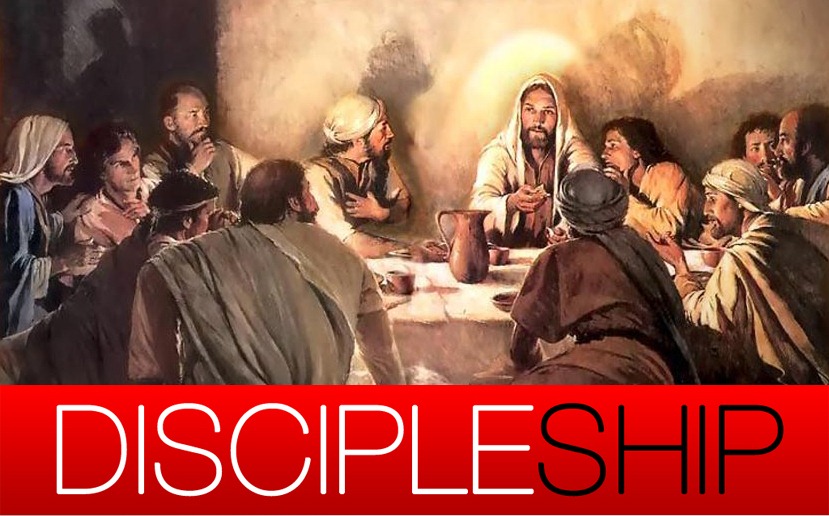
Jesus with the Disciples_discipleship

Jesus is calling you – not just to be a member of a church, not only to repent of your sins and receive his forgiveness. He is calling you to walk with him daily; To have a relationship with him that is more important to you than anyone or anything else in this life.

Click in the video to play it.

To listen to audio only, click this play button:

To download audio, right click on the link (or do whatever you do on a Mac) and save it to your computer: Download Experiencing Life Together Part 5

Sign up for the podcast on iTunes. Search for “Clear Bible Tom Hilpert”

Experiencing Life Together #5: Single Purpose

John 18:36; Ephesians 2:10

The very first Christians exhibited a very important characteristic. Their lives had a single focus:

The believers had a single purpose, and went to the temple courts every day. They were joyful and humble as they ate at each other’s homes and shared their food. (Acts 2:46)

The key phrase here is “single purpose.” Their lives were aimed at one target. Their focus both individually, and as a church, was on one thing. They were led by this purpose in everything they did, and every decision they made. Their purpose was discipleship. Jesus told them to be disciples, and to make disciples.

Then Jesus came to them and said, “All authority in heaven and on earth has been given to me. Therefore go and make disciples of all nations, baptizing them in the name of the Father and of the Son and of the Holy Spirit, and teaching them to obey everything I have commanded you. And surely I am with you always, to the very end of the age.” (Matthew 28:18-20)

The word “disciple” in Greek is closely associated with learning from a teacher. As we look at Jesus’ disciples in the gospels, we see that they listened to his teaching and tried to put it into practice (Mark 3:31-34). They were “followers” of Jesus’ teachings. The disciples often asked Jesus questions, but didn’t understand when he explained the answers to them (Matthew 16:5-12; Mark 4:10-14). Even so, though they had their struggles, they made his teaching central to their lives.

They not only followed his teaching, but they followed Jesus physically, wherever he went. They shared his life and had experiences with him. They walked together with Jesus on the rough mountain roads of Galilee. They lodged together, ate together and talked together.

They went across the lake with him, and experienced the storm, and then were awed by his power over it. They went to a lonely place with him, and saw him feed 5,000 people. They watched him drive demons out of people, and heal others. They went to Jerusalem and saw him die and later they saw him alive again.

Jesus’ disciples also had relationships with each other. They weren’t isolated in their relationship with Jesus. They talked with each other, fought with each other and helped each other. Jesus called them (and us) to love each other (John 13:34-35).

Besides teaching and sharing his life, Jesus also trained his disciples. He recruited them for the same work that he was engaged in – spreading the good news (Luke 10:1-24). He involved them in exercises of faith and ministry (Matt 14:18). He gave them instructions, sent them out on tasks, and then debriefed them (Luke 10:1-24).

Jesus wanted his relationship with his disciples to be the closest, most important relationship they had. He was dramatic in stating this. He said that in comparison to their relationship with Him, it would seem like they hated their own families (Matt 10:37-39; Matt 12:48). All this is to say that He became absolutely the most important person in their lives. He took precedence in everything.

Even before he returned to heaven, Jesus gave his disciples authority to be a part of His mission, authority to accomplish His purposes in the world (Matt 10:1). He promised that he would be with them spiritually at all times (Matthew 28:18-20).They were witnesses to His life, death resurrection and power (Acts 1:8), and they had a responsibility to tell about their life with Jesus, and to recruit new disciples to Him.

In John chapter 15, Jesus called his disciples to “abide” in him. He said this just a few hours before he was captured and crucified. One of the things he meant by it, was that the disciples were to keep on being his disciples, even after his death and resurrection. Their relationship – the sharing of Jesus teaching and their lives together – would go on. Jesus would come and live with them again, this time in their spirits, through His Holy Spirit. Discipleship goes on.

So what does it all mean for us? Now that we see how the first disciples were, how can we be disciples? How can we live with a single purpose? First, I think we ought to recognize that Christians were called “disciples” before they were ever called “Christians” (Acts 11:25). In other words, the very first followers of Jesus understood that it was not about being a member of a church, or even of being converts, but rather of being learners who lived life in the midst of their on-going relationship with Jesus.

Jesus is calling you – not just to keep things as they are, not just to be a member of a church, not only to repent of your sins and receive his forgiveness. He is calling you to walk with him daily. To have a relationship with him that is more important to you than anyone or anything else in this life. To engage with him as you work, as you eat, as you rest. To be trained and equipped by him to take your part in recruiting and training more disciples. He is calling you to listen to, and follow his teachings. He is calling you to be a part of a group of disciples – folks who are a bit rough around the edges maybe, but who love one another and love Jesus like you do.

When you are a disciple, everything in your life is filtered through your relationship with Jesus. We still have to go to work, and pay the bills, and deal with crises. But we do all these things with an awareness that we are not living our own life anymore. We are here to let Jesus live his life through us. That is our single purpose in everything.

When you let Jesus live your life, that is, when you live as his disciple, you are immediately confronted by the temptations and challenges of what life offers us apart from Jesus. If we live for the single-purpose of discipleship, we might find that many things we are used to doing are actually at cross purposes with the life of Jesus. Sin, of course, diverts us from the purpose of Jesus in us. But sometimes, I think the biggest threat to Christians is not outright sin, but rather, good things; things, however, that Jesus does not want us to waste our time with. Jesus said something very challenging:

“My kingdom is not of this world,” said Jesus. “If My kingdom were of this world, My servants would fight, so that I wouldn’t be handed over to the Jews. As it is, My kingdom does not have its origin here.” (John 18:36, HCSB)

Are you struggling and fighting for something in this world? I know I can get sucked into this all too easily. I want to follow Jesus, yes, but I also want other things: comfort and security while I am on earth. The moment I pursue comfort and security in addition to being a disciple, is the moment I lose my single purpose. That takes me a step backward in following Jesus. Jesus’ kingdom, his life and purpose are far beyond the temporary, cheap things of this world.

This is one of the reasons the Christian faith has always appealed to the poor more than the rich. If your life right now is a struggle, and you have little hope of improving it, it is easier to place your hope more fully in eternity. Poor folks know that security in this life is not really attainable. People with more resources tend to keep believing that their salvation is in this life. They tend to keep striving for the temporary treasures and goals that this life offers.

Ephesians 2:10 says this:

“For we are God’s workmanship, created in Christ Jesus to do good works, which God prepared in advance for us to do.”

Have you ever wondered about your purpose in life? Well there it is – to do the “good works” which God created you to do. And those good works ultimately all lead to encouraging believers and reaching out to those who don’t believe. This was the single purpose of the church in Acts 2:42-47. This is what they lived for. This purpose influenced all of their decisions, particularly decisions about the use of time.

Especially in America, living with a single purpose has enormous implications for the way we use our time. I am convinced that most of us try to live with more than one purpose in life. When I try to do that, if I was honest, my purpose in life could be described as: “ To serve God, and to be comfortable.” The first part is OK, but that “to be comfortable” makes it a dual purpose. And that causes problems when the purposes conflict with each other. What if being comfortable isn’t conducive to serving God, or vice versa? Others might want to “serve God, and have a good career” or “Be a disciple, make disciples, and achieve certain financial goals.” There is nothing Biblical about this. Sometimes, God makes his servants comfortable. Sometimes he gives them fulfilling careers, or wealth. But we need to pursue God – not the other things. If wants to give the other things also, well and good. If not, can we still say, “well and good”?

Others of us really do live to “be a disciple and make disciples”. But we fall into the trap of doing many good things, instead of the two or three best things. We might run all over town participating in workshops, ministries and conferences – all good and wonderful things. But often these wonderful spiritual things, keep us from truly connecting with Jesus, and concentrating on the two or three things that will be most effective, and are most important. Many times, perhaps almost always, we need to turn down the good things for the best things; the non-essential for the essential.

In most house-churches, things are deliberately structured so that members focus on just two or three important things in the process of becoming and making disciples. They generally don’t have “programs”. They focus on ministry in the group, outreach, and equipping (worship & prayer are underlying elements of all of these). None of these things should be “programmatic” – instead they are structured so that they take place in the context of lives that are lived with a single purpose. Thus, our “community life” can be oriented to that single purpose; and we are not so distracted with the “busyness” of many other things going on all the time.

Our personal lives ought to be structured this way as well. America is the land of opportunity, but enough already! We put our three-year-olds in T-ball in spite of the fact that they will almost certainly never become professional athletes. We put in extra hours in case we miss the opportunity to make more money. We run from activity to activity and it absolutely drains us spiritually and emotionally. The crucial and difficult task in learning to orient our lives around a single purpose, is saying “no” to things that are good, but which are not best, or essential.

We strongly encourage you to pray about this during the next week, and then ask your house church for help and prayer in determining what is essential and best for you to be doing at this point in your life. Make sure to address that question with an open Bible and an open heart.