WHAT SHOULD CHRISTIANS FIGHT ABOUT?

tugofwar

To listen to the sermon, click the play button:

To download, right click on the link (or do whatever you do on a Mac) and save it to your computer:
Download Overlooked Letters Part

2 John #2. Remaining in the Truth

Last week we talked about the importance of being “in truth.” Next time we will explore more about how being in truth allows us to truly love one another. But the importance of truth, and seriousness of John’s command to not even welcome someone who doesn’t believe and live according Christ’s teaching, calls for a bit more consideration.

Obviously, John is concerned that both individual Christians and even whole churches might be led away from true faith if we welcome as Christians those who are not “in the truth.” He lays out the issue in verses 7-11.

  • There are many deceivers. Those who don’t confess the coming of Jesus in the flesh represent the message of the anti-Christ.
  • If you don’t remain in Christ’s teaching, but go beyond it, you don’t have God
  • If you remain in Christ’s teaching you have the Father and the Son
  • If someone doesn’t bring Christ’s teaching, don’t welcome him into your church

This is an important message for many Christian churches today. Far too many Christians and churches seem almost terrified of coming across as narrow-minded or bigoted. They seem to be afraid of hurting the feelings of those who believe or live differently. Let’s call these, “Wishy-washy Christians” (WWCs). They minimize the importance of truth. If someone asks a WWC, “Do you believe that anyone goes to a real hell, a place of torment for those who reject Jesus?” they might respond with something like, “Well, I believe God is a God of love, and we can’t put limits on that love.” WWCs typically shy away from the hard truths that the Bible teaches about human sins (particularly sexual sins), or the demands of Jesus that we give him our whole lives, and die to ourselves as we follow him. They try to help people avoid feeling guilty about not praying, not reading the Bible, not going to Church, not being involved in real Christian community.

WWCs often say things like “Everyone is welcome! You don’t have to change your life or lifestyle, just come be a part of our community. Of course, Jesus said it differently: “If anyone wants to come after me, let him take up cross, die to himself, and follow me.”

WWCs might say things like: “We don’t judge you just because you have a different opinion about Jesus, or how to be close to God.  Jesus, again, says it differently: “I am the way, the truth, the life. No one comes to the Father except through me.”

John’s words are certainly aimed at Wishy-washy Christians.

Though many churches today seem to shy away from admitting it, the fact is, Jesus calls us to hard choices. When we don’t insist upon truth in our churches, we obscure that, and we are in danger of not remaining in Jesus.

But where, exactly, do we draw the line? How do we apply this business of remaining in truth? How can we insist upon truth, and yet not become a cult that suspects all outsiders?

Because, unfortunately, there are many other Christians who seem to have the opposite problem. These folks can take up ten blog pages explaining how the worship song “Ten Thousand Reasons” will lead to the downfall of Christianity across the entire globe. Let’s call them “Divisive Christians,” (DCs). DCs seem determined in all cases to throw out the baby with the bathwater. So if a movement arises that is leading people to the Lord and helping thousands of people to become true and better disciples of Jesus, but that movement also involves speaking in tongues, DCs seem perfectly willing to warn all Christians that it is probably the work of the devil. DCs are after a pure, untainted theology. What makes up a pure and untainted theology, none of them can seem to agree upon. At their worst, DCs can become cult-like, believing that no one but themselves has a true understanding of Jesus’ teachings.

So how can we apply John’s commands to remain in the truth of Jesus’ and teaching, without becoming either a Wishy-washy Christian, or a Divisive Christian? There is no cut and dried, easy way, but I think there are some principles that could be quite helpful to us. To WWCs, these will probably seem to rigid and judgmental. To DCs, they will undoubtedly seem not rigid enough. I realize I am moving off the text of 2 John as we do this, but I think it is important, and certainly, I think it is relevant to John’s concerns about truth and love.

The New Testament contains many commands to insist upon sound doctrine and Biblical teaching. It tells Christians leaders to contend for the faith, and rebuke and teach those who are wrong. 2 Timothy 4:1-5 is just one of many similar passages:

1I solemnly charge you before God and Christ Jesus, who is going to judge the living and the dead, and because of His appearing and His kingdom:2Proclaim the message; persist in it whether convenient or not; rebuke, correct, and encourage with great patience and teaching.3For the time will come when they will not tolerate sound doctrine, but according to their own desires, will multiply teachers for themselves because they have an itch to hear something new.4They will turn away from hearing the truth and will turn aside to myths.5But as for you, be serious about everything, endure hardship, do the work of an evangelist, fulfill your ministry. (2Tim 4:1-5, HCSB)

At the same time, many, many New Testament passages warn Christians not be involved in frivolous disputes:

23But reject foolish and ignorant disputes, knowing that they breed quarrels.24The Lord’s slave must not quarrel, but must be gentle to everyone, able to teach, and patient,25instructing his opponents with gentleness. Perhaps God will grant them repentance leading them to the knowledge of the truth.26Then they may come to their senses and escape the Devil’s trap, having been captured by him to do his will. (2Tim 2:23-26, HCSB)

 14Remind them of these things, charging them before God not to fight about words; this is in no way profitable and leads to the ruin of the hearers.15Be diligent to present yourself approved to God, a worker who doesn’t need to be ashamed, correctly teaching the word of truth.16But avoid irreverent, empty speech, for this will produce an even greater measure of godlessness. (2 Tim 2:14-16)

So what is worth fighting about? What do we insist upon as the truth that all Christians should walk in, and what things should we not quarrel about? At what point do we refuse to welcome people who call themselves Christians, but differ from us? At what point do we say, “those differences don’t have to divide us?

I think it helps to think of Christian beliefs on four different “levels.” The first level includes those things that we must believe in order to be Biblical Christians. I call this “foundational level” truth. We must insist upon agreement when it involves foundational-level issues, like:

  1. When the self-revelation of God is at stake. The universe exists for the glory of God. Anything that makes him less, that lifts up something higher than God, that makes something other than God and his glory a higher priority, is worth fighting about.
  2. When the revelation of Jesus Christ is at stake. Anything that makes Jesus less than Lord, Messiah, Savior, God-the-Son is worth fighting about. John makes this clear in 2 John 7.
  3. When the Gospel is at stake. Anything that claims we can be saved without Jesus’ death and resurrection, saved without repentance and gracious obedience, is worth fighting about.
  4. When the integrity of the Bible is at stake. We know and believe 1, 2 and 3 because of the Bible. Anything that generally undermines the truth or reliability of scripture therefore also undermines those things. Note, I don’t mean things that undermine a particular interpretation of one or more passages. I mean teachings or behavior that results in the bible as whole being viewed as less reliable or true.

When there is disagreement about things on this “first level” we need to obey the command of 2 John 10-11, and refuse to welcome the dissenters as Christians. If they do not claim to be Christians, we can still welcome them as visitors.

There is a second level of important Christian beliefs. I believe these things are also necessary to agree about among true Christians. Second-level Christian truths may not be entirely central to the faith, but if can’t agree on these things, Christian faith becomes basically meaningless. I call this second level “Doctrinal level” truth (“Doctrine” means “teaching.”)

For instance, the Bible contains many clear verses about Christian sexual morality. Now, we are not saved by obeying the Bible’s teaching about sexuality. We must also admit that this topic is not directly about the nature of God, or the work of Jesus. Even so, the Bible’s teaching on sexuality is so clear and straightforward that if we reject it, we are basically rejecting the Bible as a source of spiritual truth. If we do that, we end up having no basis to believe what the Bible says about God, Jesus, sin or salvation. All of the moral teachings of the Bible (not just sexual morality) fall into this doctrinal level of truth.

One thing that is helpful about doctrinal level truth is that we have 2,000 years of Christian history to help us. The core of Christian belief has been tested by 20 centuries of disagreements and discussions. Doctrinal level truth includes those things that we call “orthodox Christianity” – beliefs that all Christians have agreed upon throughout history.

Let’s make sure we are very clear about this. I don’t mean we should go around automatically condemning those who fail to live according to Biblical morality. I don’t mean we should demand that Christians be perfect. But we must insist that the Bible’s teachings on these issues are good, right and true. In other words, we let the words of the Bible judge our behavior and belief in these matters. If someone rejects these teachings of the Bible as not good, or invalid, we cannot call that person a fellow-Christian. This isn’t about performance, it is about Biblical truth.

There is another “level” of Christian belief. At this third level, we can disagree and still accept each other as Christians, yet the disagreement is serious. Therefore, I call it,  “Contention level,” truth, because at this level, we need to contend for (that is, make arguments for) a true understanding of the Bible. It is different from foundational and doctrinal level truth, because disputes at this level do not mean that one group are true Christians, and the other is not. Even so, we recognize that in contention level truth, usually, one party is in error, and that error should be corrected.

For example, consider the teaching of the “prosperity gospel.” The focus of prosperity gospel is all about this life. It minimizes the eternal hope we have in Jesus. It tends to reduce God to some sort of slot machine that we can manipulate in order to get what we want. I think the teaching of the prosperity gospel is wrong. I think it is dangerous, and tends to lead people farther away from Jesus, rather than closer.

Even so, I am sure that almost all of those with prosperity gospel beliefs are still real Christians. They agree with orthodox Christianity about foundational level and doctrinal level truth. This means that even though they are in error, they are still fellow-Christians. We shouldn’t welcome their teachings, but we can welcome them personally as fellow Jesus-followers.

Again, history can guide us. Orthodox Christianity (that is the core of agreed-upon Christian beliefs) has never included the prosperity gospel as correct.

At a fourth level we find teachings that are in the Bible, but about which many Christians have disagreed about for centuries. I call this “theological level,” truth, because the main people who get worked up about it are professional theologians. It is not necessary that we agree upon all theological level truth in order for us to have good Christian fellowship. We can accept as fellow-Christians people who disagree with us in these fourth level issues. Though we may have our strong opinions, at the theological level, we need to recognize that perhaps our opinions are wrong.

Two examples of this “theological level truth” are the doctrines of Baptism and Communion. The Bible teaches about these things. But some aspects of the Bible’s teaching about these two subjects are not quite clear. Good Christians have disagreed with each other for centuries about these two areas. People who were baptized as babies, and believe that infant baptism is valid, are going to be in heaven. There will also be people in heaven who believe that only adults should be baptized. There is a legitimate case to be made – from the Bible – for both positions. Most importantly, history shows that neither position undermines either foundational or doctrinal level truth, or tends to weaken any part of the Christian message more than the other.

Theological level disputes should not be allowed to cause deep divisions among Christians. Once more, the history of Christian orthodoxy is helpful. 2,000 years have shown us that these disagreements have remained, and have not harmed the core of the Christian faith.

At the fifth level, we find things that definitely should not be an issue between true Jesus followers. I call this the “liberty level” of truth, because the Bible clearly allows Christians to make individual decisions about a number of different things; that is, we have liberty to make our own choices, while remaining good Christians. Liberty level truth includes things like worship styles, and particular ceremonies for worship or other occasions. Special festivals, liturgies, or church seasons should not be issues that divide us, nor should we try to impose them on each other. We have liberty in what we eat, and how (and when) we eat it. There is liberty in whether Christians choose to view movies (and which ones) and in the sorts of music we listen to. There is liberty in whether or not we consume alcohol (as long as we are not getting drunk). There is liberty in whether Christians go out dancing, or play cards, or in a huge number of individual decisions in which we exercise our best judgement as we live our lives of faith in Jesus Christ.

There is a very old saying, dating back about four hundred years: “In essentials Unity, in non-essentials Liberty, and in all Things, Love.” This is a good, quick way to summarize what we’ve been learning here. Let the Holy Spirit continue to lead you as you meditate on these things.

FOUNDATIONAL TRUTH

complex answer

Truth provides the context for love. Truth is where love can thrive. This also means that love can only thrive where there is truth.

To listen to the sermon, click the play button:

To download, right click on the link (or do whatever you do on a Mac) and save it to your computer:
Download Overlooked Letters Part 1

2 John #1:Truth & Love

I want to engage in another short series, this time, one centered on three often-overlooked books of the Bible. If you have followed my sermons for very long, you know that I believe that everything in the Bible is there because the Lord has chosen to put it there, and he can (and does) use every part of it to speak into our lives today. Two verses that remind us of this are Hebrews 4:12, and 2 Timothy 3:16-17

12For the word of God is living and effective and sharper than any double-edged sword, penetrating as far as the separation of soul and spirit, joints and marrow. It is able to judge the ideas and thoughts of the heart. (Heb 4:12, HCSB)

 16All Scripture is inspired by God and is profitable for teaching, for rebuking, for correcting, for training in righteousness, 17so that the man of God may be complete, equipped for every good work. (2Tim 3:16-17, HCSB)

But there are three little books of the New Testament that seem to me to be generally ignored, at least in comparison to the rest of the New Testament. These are the second and third letters of John, and the letter of Jude. I cannot recall reading or hearing a single sermon that was based on one of these three books. And yet, these three books are part of the inspired Word of God. Therefore, I will do my part to explore what the Lord might have to say to us through them.

Let’s start with the second letter of John. First John, of course, is a well-known, often-preached-from book. All common-sense New Testament scholarship agrees that there is a high probability that the Apostle John (as in, “Peter, James & John,” or “John, son of Zebedee”) wrote the gospel of John, and all three letters that are attributed to him.

I think it is likely that 2nd John and 3rd John (as they are called) were written fairly late in John’s life. One reason I think so, is because he calls himself “the Elder.” There were of course, many “elders” in many local churches, long before the apostles passed away, and have been ever since, and even so, today. So who could claim to be “The Elder” and expect to his readers to know who he was? The logical answer would be “the last living apostle.” By apostle, I mean, “those who personally knew Jesus.” It is widely accepted that John was the last apostle to die, therefore at some point, when he was old, John would have been in a unique position as the pre-eminent elder of the entire Christian movement.

John writes to “the elect lady, and her children.” When we read the rest of the letter, it becomes fairly clear that John is not talking to a specific person, and he is not writing a “personal” letter, but one that is to a community of people. It seems clear enough that  the “elect lady” is a church, or group of churches in a particular place, and “her children” are the members of the church/churches.

Please pause right now, and read through all of 2 John – it’s only 13 verses. Then, ask the Lord to speak to you as you read this message, and meditate on what the verses say.

John’s major concern in this letter is that these Jesus-followers believe, and live, in truth and love.

Love and truth  are foundational to Christian belief. They are also foundational to Christian living and behavior. This is because truth and love are fundamental parts of God’s character, as revealed in the Bible.

I want look at 2 John in three parts. First, we will look at the importance of truth. Second, we will consider some practical things about how to apply truth. Third, we will look at what John says about love. However, even though I am dividing the book into three sermons, I want us to understand that truth and love can’t really be separated like that. They go hand in hand.

John shows us that by the way he begins the letter:

1The Elder: To the elect lady and her children: I love all of you in the truth — and not only I, but also all who have come to know the truth — 2because of the truth that remains in us and will be with us forever. 3Grace, mercy, and peace will be with us from God the Father and from Jesus Christ, the Son of the Father, in truth and love. (2John 1:1-3, HCSB)

He says that he loves them “in truth.” John sometimes employs double meanings, and I suspect he is doing that here. I think, in the first sense, he means that he truly loves them. I think he also means that his love springs from the fact that they are all living “in The truth,” that is, according to their common faith in Jesus Christ. Truth provides the context for love. Truth is where love can thrive. This also means that love can only thrive where there is truth.

So what is this truth that John talks about, and what is his concern about it? A few verses from John’s other writings can give us the idea of what he means by “truth.”

6Jesus told him, “I am the way, the truth, and the life. No one comes to the Father except through Me. (John 14:6, HCSB)

 8If we say, “We have no sin,” we are deceiving ourselves, and the truth is not in us. 9If we confess our sins, He is faithful and righteous to forgive us our sins and to cleanse us from all unrighteousness. (1John 1:8-9, HCSB)

 10The one who believes in the Son of God has this testimony within him. The one who does not believe God has made Him a liar, because he has not believed in the testimony God has given about His Son. 11And this is the testimony: God has given us eternal life, and this life is in His Son. 12The one who has the Son has life. The one who doesn’t have the Son of God does not have life. 13I have written these things to you who believe in the name of the Son of God, so that you may know that you have eternal life. (1John 5:10-13, HCSB)

So, by “the truth,” John means:

  • The Person of Jesus Christ and faith in Him
  • The teachings of Christ, and about Christ; in other words: the New Testament

In verses 9-11 of our text today, John explains the importance of remaining in Christ’s teaching:

9Anyone who does not remain in Christ’s teaching but goes beyond it, does not have God. The one who remains in that teaching, this one has both the Father and the Son. 10If anyone comes to you and does not bring this teaching, do not receive him into your home, and don’t say, “Welcome,” to him; 11for the one who says, “Welcome,” to him shares in his evil works. (2John 1:9-11, HCSB)

Let’s make sure we understand the background to John’s words here. All churches during John’s lifetime (and for two hundred years afterwards) met in homes. House church wasn’t weird – it was how church was done. So when John says “do not receive him into your home,” we should read: “do not receive him into your church.

So, John is not saying “Don’t invite unbelievers over for dinner.” But he is saying: “Don’t welcome people into your church who claim to be believers, but who don’t have faith in Jesus, and who don’t hold to his teachings.” If someone comes along, claiming to be in the truth, but does not remain in Christ’s teaching (the truth) then that person cannot be included in Christian love and fellowship.

I hope you have a whole bunch of questions about that. It sounds kind of shocking to our modern ears, at least in 21st Century America and Europe. Just in case you wondered, however, this is not some isolated teaching found only this obscure little letter. It is a widespread, common teaching of the New Testament. Jesus commanded us to practice what we call “church discipline” in Matthew 18:15-18, which included, if necessary, asking people to leave the church (also Matthew 16:19, and John 20:23). Many other verses command Jesus’ followers to separate themselves from those who claim to be Christians, but do not follow the teaching of Jesus. Just a few of them are: 2 Corinthians 6:14-15; Galatians 6:1; 2 Thessalonians 3:6, and 3:14-15; 1 Timothy 5:20; 1 Timothy 6:3-5; Titus 3:10-11.

Now, we should be clear, this is about people who claim to be Christians, but do not believe what the Bible says, and/or willfully and persistently disobey God’s moral standards. It isn’t about someone who struggles and is honest in that struggle, and is seeking to believe and live in the truth. And it isn’t about non-Christians. Paul puts it like this:

9I wrote to you in a letter not to associate with sexually immoral people. 10I did not mean the immoral people of this world or the greedy and swindlers or idolaters; otherwise you would have to leave the world. 11But now I am writing you not to associate with anyone who claims to be a believer who is sexually immoral or greedy, an idolater or verbally abusive, a drunkard or a swindler. Do not even eat with such a person. 12For what business is it of mine to judge outsiders? Don’t you judge those who are inside? 13But God judges outsiders. Put away the evil person from among yourselves. (1Cor 5:9-13, HCSB bold/italic format added for emphasis)

In the churches that I have served, I know for a fact that we have had people who were adulterers, murderers, drug addicts, greedy, gossipers, and a whole host of other things. We even have had people who did not believe in Jesus.

But there are two important things about most of these folks. Most of them are honest about what they have been in the past, and they have given all those things up so that they could enter into the freedom and forgiveness that Jesus offers.

The people who have not given them up, or who don’t trust Jesus, are often honest about that. They are also welcome in our churches, provided they do not pretend to be what they are not. That is John’s big problem with those who don’t hold to the teaching of and about Jesus. In the churches to which he writes, there are people who claim to be Christians – but they don’t believe what Christians believe, or they don’t act like Christians act. These people are problem for churches.

Imagine you  are an alcoholic. You went for a long time without wanting to admit it to yourself. You went even longer before you were willing to admit it to anyone else. But finally, broken, humbled, a little bit afraid, you go to Alcoholics Anonymous. The people there welcome you. You are just beginning to realize that maybe you aren’t alone, maybe there are others who understand, and might be able to help you. Then you meet a guy named Joe.

Joe tells you “You know, I come here because my family wants me to, but it’s all a load of horse-manure. I’m not helpless and broken. You aren’t either. We don’t need this AA junk to fix us. We’re just fine as we are. Say, you wanna grab a beer afterwards?”

The leader comes up, and Joe starts talking like he’s been sober for six months, and it’s struggle but it is so worth it. In other words, he pretends he’s there because he wants to be. He pretends he’s a part of it, when, in fact, he scorns it.

Now, Joe could be right (he isn’t). But even if he was right, everything he is saying and doing is completely contrary to the principles of AA. If the meeting was full of people like Joe, no one would get any help at all. Even with just Joe there, he might derail someone like you, who are just beginning to get the help you need.

Now, Joe is entitled to his opinion. If I was the AA leader, I would encourage Joe to be honest about where he is really at. But Joe is not entitled to try and make AA meetings conform to his opinion, and he is not entitled to come to AA and work against everything AA stands for, and most especially, he is allowed to come to AA and tell lies about who he is and what he thinks. It doesn’t help anyone, least of all himself. If you can see that it is reasonable for an AA group to have some sort of standard, certainly it must also be reasonable for a church.

This isn’t about being perfect. It isn’t about getting your act together before you can be part of a church. Instead it is about living in truth. I already quoted John’s first letter, but it is worth looking at again:

5Now this is the message we have heard from Him and declare to you: God is light, and there is absolutely no darkness in Him. 6If we say, “We have fellowship with Him,” yet we walk in darkness, we are lying and are not practicing the truth. 7But if we walk in the light as He Himself is in the light, we have fellowship with one another, and the blood of Jesus His Son cleanses us from all sin.

 8If we say, “We have no sin,” we are deceiving ourselves, and the truth is not in us. 9If we confess our sins, He is faithful and righteous to forgive us our sins and to cleanse us from all unrighteousness.

 10If we say, “We don’t have any sin,” we make Him a liar, and His word is not in us.

 1My little children, I am writing you these things so that you may not sin. But if anyone does sin, we have an advocate with the Father — Jesus Christ the Righteous One. 2He Himself is the propitiation for our sins, and not only for ours, but also for those of the whole world. (1John 1:5-2:2, HCSB)

So John is not saying we have to be perfect. But we do need to be honest; that is, we need to be in the truth. We need to believe and admit the truth that we have sinned, and we need to go on admitting it when we sin again. We need to believe the truth that our sin is serious, and our only hope of cleansing is through Jesus. And we need to trust that the love and sacrifice of Jesus does, in fact, completely cleanse us. We need to live in the truth of the fact that we are now forgiven people, made holy by the efforts of Jesus. As we truly trust that, we will find ourselves sinning less, and growing closer to God.

May the Holy Spirit establish you in the truth more and more, this week, and forever!

JOHN PIPER ON THE “FIERY TRIALS”

I begin my Sabbatical this week; I won’t be posting my own sermons for the next six weeks or so. In the meantime, continuing on the theme of suffering, I want to direct you to one of the great Bible Teachers of this generation: John Piper. This is one of Piper’s sermons on suffering.

John Piper’s Sermon on the Fiery Trials.

A few notes:

  1. The link above will take you to a page where you can listen to the audio only, or watch the video, or download either one, or read a shorter, written, version of Piper’s sermon.
  2. If you choose to listen, be warned: it is an hour long. All of it is very good. If an hour is just too much, then I suggest that you to start at the sixteen minute mark. The first sixteen minutes are very good, but they are mostly introductory. They cover the cultural changes that have altered the role of Christianity in our society. The main sermon starts right at about 16 minutes.
  3. Though the written version is good, I think the spoken sermon is a bit better.


Grace and Peace to you all. I may post some other sermons by other people (or perhaps Piper again) but in the meantime, I’ll see you in May!

HOW CAN A GOOD GOD ALLOW SUFFERING?

suffering - mother and baby

When we reject the God of the Bible because of suffering, what we are really saying is that we will not accept a God who is greater than our own minds. We are saying that if we cannot work out a purpose or good outcome for suffering, then no such good outcome is possible.

And it is only in Christianity that suffering is redeemed by a God who has suffered himself, and who promises to impart meaning, significance and a good outcome from our own trials.

To listen to the sermon, click the play button:

To download, right click on the link (or do whatever you do on a Mac) and save it to your computer:
Download Suffering Part 2

Suffering #2. WHY DOES GOD ALLOW SUFFERING?

 Last time, we considered the fact that New Testament clearly teaches that suffering is a normal part of being  a follower of Jesus. I want to unpack that more, later in this series. I believe that trust in Jesus gives us tremendous hope and grace when we experience suffering. But many people have trouble seeing it that way. One of the most common questions that both Christians and non-Christians have about suffering is this: How can a God who is good, loving, and all-powerful allow some of the terrible suffering that we see in the world?

This isn’t just a theoretical question. Many people turn away from the Christian faith because they feel that God has abandoned them in their suffering. Many others use some version of this question to keep God at a distance, and claim it as a reason they could never become Jesus-followers.

This issue of God’s role in human suffering is very deep, and dozens (if not hundreds) of books have been written on the subject, most by people who are much smarter than I am. I don’t want to pretend to have all the answers, because I don’t. But sometimes, I think we make this more complicated than it has to be.

One thing I find interesting is that usually, the people who turn away from Christianity because of suffering have not really considered what they are turning toward. In other words, what are the alternatives to the Christian view of suffering? Just so that we are thorough, I want us to briefly think about how other world-views and religions approach suffering. Obviously, this is all vastly simplified, but I think we can get to the basic idea of each. See if these other approaches can really bring you any better satisfaction than the Christian view.

Buddhism, and many similar religions, take the approach that the physical world is meaningless. The way to deal with suffering is to learn to not let it bother you. So when a five year old boy is repeatedly abused by his step-father, it isn’t a tragedy – it is meaningless. Don’t allow it to affect you. If you let such things bother you, you will never find ultimate peace. In addition, Buddhists generally subscribe to the idea of karma. From the website Buddhanet.net:

Karma is the law that every cause has an effect, i.e., our actions have results. This simple law explains a number of things: inequality in the world, why some are born handicapped and some gifted, why some live only a short life.

In other words, people suffer because they deserve to suffer (possibly because of actions in previous lives).

Hinduism, and many philosophies like it, also view suffering around the idea of karma. So, in both Hinduism and Buddhism, the little boy who is abused by his step-father deserves it. Eventually, (in Hinduism) after about  8.4 million lifetimes of suffering, you’ll finally be free. But in the meantime, you should accept it in your own life, and in that of others, as justly deserved. Is this more satisfying to you than the Christian God, who offers us His presence in the middle of suffering, and even suffers on our behalf?

Secularism (which is more or less based upon atheism) sees suffering as a senseless tragedy. Secularists are motivated to try and minimize future suffering, for the good of the human race. So secularists respond to child-abuse by making laws against such things. They want to build a society of laws and technology to benefit all humanity. But secularists don’t have any compelling reason for why we should care about the human race in the first place, or build that better society. Most would object to that statement, but if we are just the product of a random series of events, there is no meaning to life, nor any value to it.

Secularists may want to make the world a better place, but they don’t have much in the way of comfort for someone who suffers anyway. So, the little boy who is abused is suffering from senseless tragedy. There really isn’t anything to make it OK. And yet, on the other hand, there is no compelling moral logic telling us to care about him in the first place. Is senseless suffering more comforting to you than a God who can impart meaning and significance to pain?

Some religions, like Islam, are more or less fatalistic. Suffering just is what it is, and all we can do is get through it as best we can. God has his reasons, which we won’t understand. So the little boy must simply endure it well. There is no sense that God shares our pain, or participates in suffering on our behalf. While it is noble to suffer well, there is no real assurance that it means anything, or accomplishes anything.

Only in Christianity is suffering redeemed by a God who has suffered himself, and who promises to impart meaning, significance and a good outcome from our own trials.

Now, I know that this is still hard to swallow. What good outcome could possibly justify the repeated abuse of a little child?

The answer is quite simple: I don’t know. I don’t think anyone knows.

But the God of the Bible is not only revealed as good, he is also revealed as infinite

For everything was created by Him in heaven and on earth, the visible and invisible, whether thrones or dominions or rulers or authorities – all things have been created through Him and for him. He is before all things, and by Him all things hold together. (Colossians 1:16-17)

15God will bring this about in His own time. He is the blessed and only Sovereign, the King of kings, and the Lord of lords, 16the only One who has immortality, dwelling in unapproachable light; no one has seen or can see Him, to Him be honor and eternal might. Amen. (1Tim 6:15-16, HCSB)

3He heals the brokenhearted and binds up their wounds. 4He counts the number of the stars; He gives names to all of them. 5Our Lord is great, vast in power; His understanding is infinite. (Ps 147:3-5, HCSB)

3Do not boast so proudly, or let arrogant words come out of your mouth, for the LORD is a God of knowledge, and actions are weighed by Him. (1Sam 2:3, HCSB)

8“For My thoughts are not your thoughts, and your ways are not My ways.” This is the LORD’s declaration. 9“For as heaven is higher than earth, so My ways are higher than your ways, and My thoughts than your thoughts. (Isa 55:8-9, HCSB)

We human beings are not infinite – there are definite limits to our physical bodies, to our brains, even to our souls. This means that we can only ever grasp a very, very, tiny piece of God. When we reject the God of the Bible because of suffering, what we are really saying is that we will not accept a God who is greater than our own minds. We are saying that if we cannot work out a purpose or good outcome for suffering, then no such good outcome is possible. We are demanding that an infinite God must act in such a way we tiny, finite creatures can understand with our tiny little minds. That is not the God described by the Bible.

All of this is addressed in one of the oldest books of the Bible: Job. Job is good man, with a good life, when God deliberately allows him to suffer terrible tragedies, one after the other. Four friends come to be with Job in his suffering. Job speaks out about his anguish, and he demands an explanation from God. Job’s friends rebuke him, arguing that Job is suffering (basically) as the result of his own karma – in other words, he deserves it. Job disagrees, and maintains that God must explain Himself, and show him the reasons for his suffering. They argue back and forth about this for most of the book. Finally, in chapter 38 of the book, God breaks His silence.

Who are you to question my wisdom with your ignorant empty words? Now stand up straight, and answer the questions I ask you.

Were you there when I made the world? If you know so much, tell me about it. Who decided how large it would be? Who stretched the measuring line over it? Do you know all the answers? What holds up the pillars that support the earth? Who laid the cornerstone of the world?

In the dawn of that day the stars sang together, and the heavenly beings shouted for joy. (Job 38:1-7, Today’s English Version)

I can just hear someone saying, “Ha! We do know better than God: we know the earth isn’t supported by pillars!” That sort of response is a bit silly. This is clearly poetic language, expressing the main idea that next to God we know nothing.

After going on for four chapters reminding Job of all that he doesn’t know, God stops a moment. Job repents. Next God rebukes Job’s friends, who had insisted that Job’s suffering was essentially the result of karma. He spoke to the friend named Eliphaz:

“I am angry with you and your two friends, for you have not spoken the truth about me, as my servant Job has.” (Job 42:7, HCSB)

He tells them to offer sacrifices, and to beg Job to pray for them:

“Then my servant Job will pray for you. I will surely accept his prayer, and not deal with you as your folly deserves, for you  have not spoken the truth about me, as my servant Job has.” (42:8, HCSB).

Job did not have the right to an explanation, but in all his demands, he did not say anything untruthful about God. But God says that Job’s three friends – who said many things that some modern Christians often say – were wrong in what they said about God. Note the final twist of the knife against the idea of karma – God says he will not punish Job’s friends, even though they deserve it. The message is clear:

  1. We will not always have an explanation for suffering. We cannot begin to understand God’s perspective, and we are simply not smart enough to comprehend God’s reasons for allowing suffering.
  2. The idea that suffering is always the result of what we do, or don’t do (in this life, or in past ones) is simply wrong. We often have no control whatsoever over our own suffering.

This is the starting point for a Christian view of suffering: God is bigger than we are. He is infinite, we are not, and so we cannot possibly understand the reasons for everything he does, or does not, do. The rest of the Bible, however, calls us to trust this God that we cannot understand. He is willing to suffer Himself, on our behalf. He promises to redeem and make good come from all of our suffering, if we trust Him. Trusting God when we don’t understand may be difficult, but it is not complicated. You don’t have to be a genius to deal with the questions of suffering – you simply need to trust – something any child knows how to do.

I do know – from personal experience – that sometimes trust is a tall order. I haven’t always been able to trust God in the midst of suffering. But when I can, it changes everything. It helps tremendously to remember that Himself has suffered.

18For since He Himself was tested and has suffered, He is able to help those who are tested. (Heb 2:18, HCSB)

God, and His actions are beyond our understanding. But He isn’t just some distant puppet-master. He himself entered into our suffering, and suffered on our behalf. He has helped many millions of people in the midst of their suffering. I know he can help us, also. I know He is trustworthy to do so. Won’t you trust Him yourself?

THE PEOPLE OF HOPE

resurrectionmatt2017

You may not believe Jesus was actually, physically raised from the dead. But there is no question that every single writer of the New Testament did believe it – and most of them claimed to be eye-witnesses. True or not, this isn’t a fairy tale, or an allegory.

To download, right click on the link (or do whatever you do on a Mac) and save it to your computer:
Download Matthew Part 99

Matthew #99.  Matthew 27:62-28:15

Many people seem to have the feeling that the Bible is a bit like a fairy tale. In a fairy tale, all sorts of strange and magical things happen. In the Bible, all sorts of strange and miraculous things happen. It’s somewhat understandable that some people get confused, especially if they don’t read fairy tales, or the Bible, very often.

Even so, the Bible is very unlike a fairy tale in several respects. In the first place, fairy tales take place in a vague and imaginary place. The classic beginning to one is “once upon a time, in a kingdom far away,” or some such variation. If you searched for the time and place where the events in a fairy tale took place, you would not be able to find them: they don’t physically exist.

The same is true of the people in the stories. When did Snow White live? Where was she born? In what year did the evil queen take power? It is silly to ask such questions, because clearly, when you are dealing with a fairy tale, you aren’t supposed to think it really happened.

Another thing is that in fairy tales, we accept magical and improbable events as simply ordinary parts of the story. Returning to Snow White, there is no explanation given as to why a mirror could talk to a queen. These things aren’t considered out of the ordinary, in the context of the tale. Of course the mirror can talk. The story doesn’t tell us how or why.

Let’s set this in contrast to our text today. Matthew 28:1-8 tells of a miracle. You might say, it tells of THE miracle, the most significant one that has ever happened: the resurrection of Jesus Christ from death.

THE miracle didn’t happen “Once upon a time,” or “far away in a strange Kingdom.” Matthew tells us where it happened: Jerusalem. The place where it happened still exists today. The people in the story of the resurrection are likewise real people. Pontius Pilate was really a Roman governor – all historians agree about that. Romans really did crucify people. Caiaphas really was a High Priest in Jerusalem. There really was a temple there. People really did and said the kinds of things that Matthew describes. The only resemblance to a fairy tale is that Matthew says something unusual happened: Jesus Christ was truly physically dead, and then later, he was truly physically alive.

However, the miracle of the resurrection is not treated as if such things happen all the time. Matthew records it as amazing and astonishing to everyone who learned of it. No one in the story of Snow White is amazed that the mirror talks, or that a kiss could cure a fatal illness. But miracles in the Bible, including the resurrection, are always treated as remarkable. It’s not like, according to the Bible, people rise from the dead all the time. In fact, no miracle is considered “commonplace;” by definition a miracle is something extremely unusual and amazing.

Matthew also deals with the skepticism of his readers. There was a counter story, circulated by some, that the disciples had stolen the body. Matthew tells us about it and explains how the story was concocted. How did Matthew know all this? Remember two of Jesus followers – Joseph of Arimathea, and Nicodemus – were members of the Jewish ruling council. They were probably there as these decisions were made.

By the way, when Matthew says the story is told “even today” that “today” was only twenty years after Jesus was raised from the dead. I don’t know about you, but I can easily remember the major events in my life from twenty years ago. My oldest child was three, and my youngest was one. I had recently started a church in which many wonderful things took place. Almost all of those who were part of that church are still around, and could verify the many stories I tell about it. The same was true with Matthew. Most of those who witnessed the resurrection (more than 500, before Jesus returned to heaven) were still alive at this point. The apostle Paul explains, a few years after Matthew wrote his gospel:

3For I delivered to you as of first importance what I also received: that Christ died for our sins in accordance with the Scriptures, 4that he was buried, that he was raised on the third day in accordance with the Scriptures, 5and that he appeared to Cephas, then to the twelve. 6Then he appeared to more than five hundred brothers at one time, most of whom are still alive, though some have fallen asleep. 7Then he appeared to James, then to all the apostles. 8Last of all, as to one untimely born, he appeared also to me. (1Cor 15:3-8, ESV2011)

You may not believe Jesus was actually, physically raised from the dead. But there is no question that every single writer of the New Testament did believe it – and most of them claimed to be eye-witnesses. True or not, this isn’t a fairy tale, or an allegory. If the New Testament described what it does, only without miracles, everyone would believe it: it describes real places, real people, and real first-century culture. People only disbelieve parts of it because they have a pre-existing bias against miracles.

The point of all of Jesus’ teaching hinges on the resurrection. We have seen throughout the book of Matthew that in a variety of different ways, Jesus claimed to be one with God. He continually acted as if the most important thing was how people responded to Him. Numerous times, he predicted not only his own death, but also his resurrection. If he wasn’t God, and he wasn’t raised from the dead, then much of his teaching doesn’t really make sense, and he would have to be considered an arrogant narcissist. We would also have to admit, that his major prediction – that of his resurrection – didn’t come true, so he certainly couldn’t be Divine.

This means that resurrection is incredibly powerful, and incredibly joyful. It means that what Jesus said is true! We are forgiven for our sins! We are empowered by the Holy Spirit to forgive and love others! If we submit our hearts, minds and souls to Jesus, we, like him, will be raised from the dead ourselves!

The first people to see Him alive – the women – responded with fear and joy. The fear part is that you don’t see a dead person come to life…really, ever. It filled them with awe. The joy is that everything he said was now proved to be true, and this man who filled them with peace, grace and love was still alive!

Christians, more than any other group on earth, are people of hope. The ultimate hope of Hindus is to cease to exist as individual personalities. The hope of Buddhists is to cease to exist entirely. Atheists have no real hope – they believe that death means the end of existence, which, though they usually refuse to admit it – makes all of life meaningless. Jews believe in a resurrection, but it’s a bit tough to know if you really qualify. Muslims hope they’ve been good enough to live in paradise, but the end, even for good Muslims, is very much in doubt. Allah makes no promises.

Only Christians, out of all the major world religions, have the concrete hope that we will be resurrected with new bodies to inhabit a new creation and live glorious eternal life, free from pain and sorrow. And that hope is based entirely upon the resurrection of Jesus, and therefore, our relation to him. If we entrust ourselves entirely to Jesus, and give him free reign in our lives, we are promised that wonderful, eternal future.

That promise makes a difference, even here and now. As I write this in February of 2017, I have been struggling with chronic pain for more than two years. For the past 8 months or so, it has become much worse. Even doctors at the world-renowned Mayo Clinic will not promise me that I will ever be free of this pain. But Jesus does. I may not be free of it in this life, but I will in the next. Through Jesus resurrection, I have the assurance that I will have  new body, perfected, and ideally suited to the new creation. There is more out there than this life can offer me. That gives me hope to endure anything. It can do the same for you.

THE MOST IMPORTANT MOMENT IN HISTORY

centurion-at-cross

It is very important for us to understand that death of Jesus fundamentally changed forever the way human beings relate to God. We live after that world-changing event, after his death has broken every barrier between us and God.

To listen to the sermon, click the play button:

To download, right click on the link (or do whatever you do on a Mac) and save it to your computer:
Download Matthew Part

Matthew #98.  Matthew 27:51-61

Christianity is a faith deeply grounded in, and connected to history. The Bible is not a book of fairy tales. Scholars have confirmed, countless times, that the people in the Bible were real people, the places were real places and the events that are recorded actually happened.

According to our faith, the death and resurrection of Jesus were the pivotal moments in all history. Something happened at that time in Jerusalem that is unique in all of human existence. You might expect that a moment so special might look or feel different than other moments. All four gospel writers confirm that it did indeed.

Matthew, Mark and Luke all record a three hour darkness, leading up to the death of Jesus, from the sixth, to the ninth hour. (Matt 27:45; Mark 15:33; Luke 23:44). This was not an eclipse: eclipses do not last that long. It may have been simply heavy cloud cover, but that’s not exactly what they say. Also, cloud cover that is that dark usually turns into a storm quickly, and passes quickly, but everyone agrees that this darkness lasted three hours. At the very least, we could say that it wasn’t coincidence that the clouds were so heavy that day that it felt like darkness.

At the moment of Jesus’ death, the curtain in the temple was torn into two (more on that in a moment) and there was an earthquake that split open rocks. Earthquakes are not unknown in Jerusalem, but it is interesting, to say the least, that one occurred the very moment of Jesus’ death. Also, in order to split rocks, it would have to be a very violent earthquake indeed. Matthew also says many dead people came alive from their tombs, but he also mentions that they showed up after the resurrection, not immediately after Jesus’ death.

He also writes this:

54When the centurion and those with him, who were guarding Jesus, saw the earthquake and the things that had happened, they were terrified and said, “This man really was God’s Son! ” (Matt 27:54, HCSB)

Luke and Mark also tell us about this centurion. A centurion in the Roman legions was something like a Master Sergeant in the Marines today. He had the primary responsibility for one-hundred, hard-bitten, violent, unruly legionnaires. It was up to him to make sure that his “century” (100 men) obeyed the orders of officers, kept their equipment maintained, marched in formation, and maintained discipline. He had to force these mean, angry, violent men to do what he told them to. He had probably seen men die, and certainly, he had seen men beaten and whipped. He’d probably been in some brawls and seen and done some nasty things. In other words, a centurion had to be one tough, no-nonsense son-of-gun.

Something about the way Jesus died touched this hard-bitten, cynical, violent man to the core. He makes what is in the New Testament, a basic declaration of faith: “Surely this man (Jesus) was really God’s Son!” We don’t know what all went into this man’s faith. I tend to believe it was a combination of the way Jesus handled himself on the cross, along with the physical signs of darkness and violent earthquake.

We don’t know a lot more about this centurion, but I have some speculations. John records one moment when he and Jesus’ mother were close enough to the cross to hear Jesus speak. Mathew, Mark and Luke tell us that most of the time, the women were all standing off, watching at a distance. So, how do the gospel-writers know what Jesus said and did on the cross? How do they know what he said and did at Pontius Pilate’s trial? I suspect that this centurion ended up as a member of the early church. He was certainly there, right at the foot of the cross. He was probably there at Roman headquarters, when Pilate questioned Jesus. He may be the source of some of that information. Of course, Jesus himself could also be the source of that information, after his resurrection. In any case, I think it is testimony to the uniqueness of Jesus’ death that a Roman centurion came to faith because he witnessed it.

Another one of the unique events was that the curtain in the temple sanctuary was torn in two (Luke 23:45; Matt 27:51; Mark 15:38). This is actually a tremendously significant event, but we need to understand more about the temple to know why.

The temple at the time of Jesus was actually a complex of buildings. There were two large courtyards which contained various covered porticos, and other rooms and smaller courts around the edges, but within the walls of the larger courtyards. One courtyard was generally for women and Gentiles, with a sub-court for lepers. A second, more exclusive courtyard was for only Israelite men. Within this inner courtyard was the “sanctuary” which we might think of as the “main building” of the temple. The sanctuary was also called ‘the holy place” (actually, the English word “sanctuary” comes directly from the Latin for “holy place.”) Only priests could enter the sanctuary, where they would change out bread on the altar of bread, and offer incense on the altar designated for that, and light candles. The priests were divided into divisions for these duties, and then chosen by lot. To enter the sanctuary was probably a once-in-a-lifetime event, even for priests. The sanctuary was a large rectangular room. One end of the sanctuary was curtained off, from wall to wall, and floor to ceiling. Behind that curtain was the “most holy place,” or “holy of holies” (sanctum santorum, in Latin – a phrase some people still use in different contexts). It was believed by the Israelites that the very presence of God dwelt in the most holy place of the temple. Only the high priest could enter the most holy place, and only once each year, to offer atonement for the sins of the people.

The message of all this was that the presence God was separated from the vast majority of the people at all times. Women, gentiles and lepers could not even enter the courtyard that surrounded the sanctuary. Israelite men couldn’t enter the sanctuary. Even priests almost never got to go into the sanctuary, and inside the sanctuary, the curtain kept them from the most holy place.

It is very important for us to understand that death of Jesus fundamentally changed forever the way human beings relate to God. We live after that world-changing event, so we can’t really conceive of what it was like before. But the Old Testament gives us glimpses of it. Before the death of Jesus, some tribes of people were so beyond redemption that they had to be entirely wiped out (Deuteronomy 7:1-6). Before Jesus’ crucifixion, God’s holiness could kill you if you simply worshipped at the wrong time, or in the wrong way (Leviticus 10:1-3). Before Jesus, God’s holiness could kill if you simply reached out to prevent a holy artifact from falling off a cart (2 Samuel 6:1-7). Before the death of Jesus, more than half of those who wanted to worship could not even enter the courtyard where the sanctuary was built. Almost all of the remaining half could not enter the sanctuary itself. The message was this: “We need God, but his holiness destroys us, because of our sin. We have to stay separated from him in order to be safe.”

But Jesus, by his death, ripped down the barrier between us and God. The physical tearing of the curtain in the sanctuary was a manifestation of the spiritual reality that Jesus accomplished by his death. He has definitely destroyed the barriers between us and God.

Now, let’s make this real in our own lives. What are the barriers that you feel between you and God? What keeps you distant from him? I want you to pause and think about this. Let the Holy Spirit bring things to mind.

After you have thought about that for a moment, ask yourself this question: “Did the death of Jesus remove this barrier?” (Hint: the answer is “yes.”)

The next question is this: if the death of Jesus removed the barriers between me and God, how do I “take hold” of that? What I mean is, it’s fine to say the barrier was removed, but what if I feel like it is still there? How do I live in the truth that it is gone?

The centurion shows us the way: repentance and faith. If you hold on to your sin – that is, you do not repent, and turn away (however imperfectly), then  you yourself are holding the barrier in place. Repentance drops that barrier. Faith – as the centurion shows us – is simply trusting it is true. Yes, Jesus is the son of God. Yes, his death did remove the barrier between me and God. I am going to act and feel as if this was really true. The more you do so as an act of will, the more real it becomes in your life.

The death of Jesus changed history. It changed everything. Will you let it change you?

GRACE: FREE TO US, COSTLY TO HIM

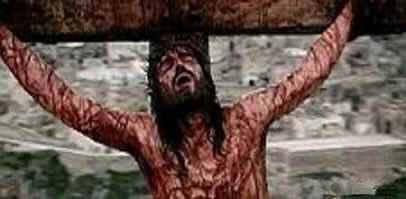
crucifixion

God’s grace is free to us, but it was not free to Him. It was very costly. It is free in the same sense that a diamond is free to the girl who is getting engaged. It is freely given, but it cost the giver a great deal. And like the diamond engagement ring, it is offered not just as a trinket, but as an invitation into a lifelong relationship that will change the course of our future forever.

To listen to the sermon, click the play button:

To download, right click on the link (or do whatever you do on a Mac) and save it to your computer:
Download Matthew Part 97

Matthew #97  Matthew 27:11-50

[This is a slightly longer message than usual. Be prepared, if you are listening, to take 35 minutes or so. If you are reading, please be ready for just a few more words than normal.]

At this point, I want to consider the extreme suffering of Jesus – all of which was for us. Some of you will read this long after I post it. In “real time,” as I write, it is only a few weeks until Christmas. This may seem like a weird topic to cover during this season of joy and goodwill. But consider this: I have already mentioned that in Jesus’ life on earth, every single moment that included physical or emotional pain, was suffering on our behalf. Even a stubbed toe was suffering that Jesus did not have to experience, but that he endured for our sake. So, in a way, his atonement for our sin began with his birth.

Of course the atonement could not be complete without his death. He came into the world for exactly this purpose: to die, to receive in himself what we deserved. Let’s consider what that meant for him, physically, spiritually and emotionally. As always, many other sermons might be preached on these same verses. I am choosing to focus on just the one thing, although I do think it is the most important thing in this text. By the way, even if you don’t normally “share” things online, I think this would be a good one to share.

Jesus was killed by torture. There is really no other way to say it. It began with three beatings during the course of about eighteen hours. First, Jesus was taken to the high priest’s house – and you can bet they weren’t gentle in the taking. Most likely they pushed him and perhaps even struck him on their way there. After the mock trial, he was surrounded by an angry mob, and beaten with fists (Matthew 26:67-68; Mark 14:65; Luke 22:63-64). At least some of the blows were to his head. This kind of beating alone would probably put most of us in the hospital, at least overnight. Picture an LA street gang finding the member of a rival gang alone, and deciding to teach him a lesson. You can imagine several people holding the poor man up, while others took turns punching him. It is possible that Jesus sustained a concussion from this, and certainly he received multiple bruises; possibly even broken ribs or teeth. Remember, there was no pain medication in those days.

Next, they took him to the Roman governor, Pontius Pilate, who did not live in Jerusalem, but was there to try and keep the peace during the Passover festival. A standard Roman response to suspected trouble makers was to have them “scourged.” Pilate had this done to Jesus. In common language, this means he was whipped – that is, beaten with an instrument designed to inflict pain on human beings. Instead of one “tail” to the whip, it had several strips leather. At the end of each strip was fastened rocks or bits of glass or even pieces of lead. So each strike of the whip caused multiple gashes, laying open the flesh, and bruising the muscles as well. Most probably Jesus was given the 39 lashes, which had been known to kill people occasionally. Remember, Jesus had been beaten up by a mob, just hours earlier. In addition to his other injuries, Jesus certainly lost a lot of blood from the whipping, and perhaps sustained more broken ribs. Between these two beatings, the overall physical shock to his body was enormous. Coming so close together, there is no doubt that many men would have died from the combination of these two traumas.

After that, Jesus was turned over to the Roman cohort for crucifixion. Before they did their job, however, the entire cohort had fun mocking him; a cohort was made up of about 500 brutal, hardened soldiers. They jammed a crown made of thorns on his head. They took a staff most likely made out of a cane stem (something like bamboo, but smaller in diameter) and gave it to him, and then took it away and used it to beat him over the head. This cane rod would probably not have created any serious injury, unless it was used to strike Jesus on the face, and thus open up cuts on his cheeks. Even so, they were likely hitting the crown of thorns, driving thorns into his head, and the direct blows themselves would have been very painful.

But all that stuff – physical punishment which could easily have killed many men – was only preliminary to the suffering which killed the Son of God. After these severe beatings, they strapped a big beam to his back and made him carry it a mile or two. The beam was likely equivalent to a 4”x4”, perhaps six or eight feet long. Considering what he had been through, it was no wonder he needed help. When they got to the place, they put metal spikes through his hands, into the crosspiece. Though tradition pictures these as going through the palms of the hands, it is more likely that they put the spikes through his wrists between the two bones of the forearm, so that the flesh would not tear away and drop him from the cross. Either way, that alone would have been painful beyond belief. His legs were slightly bent, and then they pressed his feet, one on top of the other, and drove a spike through them into the upright beam of the cross. Tradition pictures a kind of triangular piece of wood for his feet to rest on, but this is doubtful. Then they raised it up.

At this point, Jesus had two choices. He could let the weight of his body hang from his wrists, tearing away at the flesh, and rubbing on bare bone. Or he could straighten his legs, and push up against the spike driven through his feet, inflaming the wounds there, and grinding against broken metatarsals and tendons. Each movement probably drove splinters into his raw, lacerated back. If he had an itch, he couldn’t even scratch it. If he had to go to the bathroom, it would be right there in front of everyone.

Over time, victims of crucifixion spend more and more time hanging from their arms, since pushing up on the spike through the feet was intensely painful, and required effort. As Jesus’ body weight pulled on his arms, and kept them above shoulder-level, his lungs gradually began to fill with fluid, and breathing became difficult. The only relief for this came from thrusting against the spike in the feet. By pushing himself up this way, he could straighten his body and breathe more freely. But the pain was such that no one could endure this for long. It also required strength and energy. He was undoubtedly weakened by his beatings to start with, and as his body grew weaker through this torture, he got less and less air. In this position, fluid also collected around his heart, putting pressure on it. As a result the organs slowly got less blood and oxygen.

Incidentally, this was why, late in the day, they broke the legs of the other men who were crucified alongside Jesus. By breaking their legs, it became impossible for them to straighten up and get air, and so they died more rapidly.

Jesus was taken to the Roman governor early in the morning. He was put up on the cross before noon, possibly as early as eight or nine in the morning. He endured this suffering until it killed him, about eight hours later. It killed him, either by filling his lungs with fluid and suffocating him, or by the pressure of the fluids surrounding his heart, which could have caused it to stop.

This was actually a relatively short time for death by crucifixion. When we read the gospels, we find that Pilate was surprised when he heard that Jesus had died by late afternoon. But then, most people being crucified were not beaten three times within hours before they were put on the cross.

But the suffering wasn’t only physical. He also went through emotional and spiritual agony.

First, he endured the anticipation of suffering. He knew, long before what happened, what was waiting for him. When I have some special event approaching in the future, anticipation is almost half the joy of it. I enjoy the feeling of looking forward to a good thing coming. But the reverse is also true. If you know about something you dread that is coming up, part of the negative experience is anticipating what you don’t want to go through. It is clear that Jesus knew about his approaching suffering, and that he dreaded it. That is why he said hours before he experienced any physical torment:

“My soul is overwhelmed with sorrow to the point of death. Stay here and keep watch with me.”

39 Going a little farther, he fell with his face to the ground and prayed, “My Father, if it is possible, may this cup be taken from me. Yet not as I will, but as you will.” (Matt 26:36-39)

He also experienced humiliation. He was the King of the Universe, the very One whom everyone around him professed to worship. And yet, in order to accomplish his purpose, he had to allow them to mock him, to spit on him, to humiliate him as if they were right and he was wrong. There was a physical aspect to the humiliation as well. It is a terrible experience to be a man, and be struck, and yet not be able to strike back. Also, they almost certainly stripped him completely naked when the put him on the cross, again a humiliating experience.

In addition, Jesus experienced abandonment. All his followers ran away and left him to his fate. His faithful lieutenant, Peter, denied him publicly. But even worse, he was abandoned by God. 2 Corinthians 5:20 says this:

God made him who had no sin to be sin for us, so that in him we might become the righteousness of God.

God the Father abandoned Jesus the Son in a way that he has never abandoned any human being, ever, nor ever will. The bible teaches us that if we choose to reject God’s grace through Jesus, then ultimately God allows us to do that. In other words, God doesn’t reject us, but he gives us the freedom to reject Him. If we choose that, we will experience what it is like to be without God – but it will be our doing not His. He does not willingly forsake us. But in the case of Jesus on the cross, it was the opposite. Jesus never turned away from the Father. He followed him obediently, and perfectly to the end. But when the Father made Jesus into sin – for our sake – He turned away and abandoned him. He had to, if Jesus indeed took our sin on himself. This is why Jesus cries out:

46About three in the afternoon Jesus cried out with a loud voice, “Elí, Elí, lemá sabachtháni?” that is, “My God, My God, why have You forsaken Me?” (Matt 27:46, HCSB)

Now, I want us to consider something. When I think about the horrible suffering that Jesus experienced, it’s hard to contemplate. But there are many other things in this life that are hard to contemplate as well. For instance, it is hard to contemplate the horror of rape. It is hard to truly grasp the awfulness of murder. We don’t like to think this way, but even the sins which we think aren’t so bad are so far removed from God’s holiness that they are as fully horrific to God as the suffering Jesus experienced. The extremity of Jesus’ suffering shows us the extremity of our sin. All this is the depth of God’s love for us. This is picture of the true horror of our sin. This crucifixion is the gulf that would exist between us and God if Jesus had not taken our place.

The cross is also justice for sin. This is what makes forgiveness possible. We can’t just wave our hands and say “it doesn’t matter.” When we hurt others, it matters. When we offend God, it makes a difference. There are a lot of people who like to say, “It’s OK to do whatever you like, as long as you don’t hurt anyone.” But what if you hurt God? He has told us, in the bible what matters to Him, what drives a wedge between us and him. Why is it OK to hurt him, but not anyone else? A sin that is only against God is just as much a sin as something which hurts another person.

Jesus, by his suffering, has endured what sin deserves – all sin. I can forgive the person who did something horrible to me because there was punishment and suffering for the evil that was done. It was made right, and justice was done for that sin, to Jesus, on the cross.

23For all have sinned and fall short of the glory of God. 24They are justified freely by His grace through the redemption that is in Christ Jesus. 25God presented Him as a propitiation through faith in His blood, to demonstrate His righteousness, because in His restraint God passed over the sins previously committed. 26God presented Him to demonstrate His righteousness at the present time, so that He would be righteous and declare righteous the one who has faith in Jesus. (Rom 3:23-26, HCSB)

No other faith takes sin or forgiveness seriously enough. You can’t just wave your hand and say, “it doesn’t matter,” as Buddhism does. One reason Buddhist monks dedicate their lives to separation from the world and to meditation is that you have to concentrate very hard and remain very isolated to believe that the suffering caused by sin in this world doesn’t matter.

You can’t say, “You’ll make it up next time you’re re-incarnated,” as Hinduism does. Since nobody is perfect, all you would do is rack up more “karma-debt” with each new life. Even Islam and Judaism say, essentially: “Well, you do your best, and God forgives the rest.” But why? On what basis can God allow un-holiness into his holy presence? If he could do such a thing, it means that God isn’t really holy, and therefore that moral standards are not actually real; in short, that anything goes. We like “anything goes” if it means we can do whatever we want, but it becomes intolerable when someone else can do whatever they like to us with no consequences. If there is no moral standard, we live a world of senseless brutality, and all kindness and love mean nothing. Even what think of as moral good is meaningless. If nothing is evil, nothing is good either.

That is why it was necessary for sin to be accounted for. Justice must be done. Sin must have consequences. If not, there is no such thing as goodness or grace. If not, we cannot survive in the presence of a holy God. It is only through this extreme suffering of Jesus that sin could be dealt with. The Lord has made a way to take away the power of sin, and still allow goodness and grace and love to flourish.

There is one more thing about the cross. Scripture tells us that there is a mysterious spiritual truth: when we trust that Jesus did this for us, it was not only he who died there. We too, died with Jesus to sin.

Or are you unaware that all of us who were baptized into Christ Jesus were baptized into His death? Therefore we were buried with Him by baptism into death, in order that, just as Christ was raised from the dead by the glory of the Father, so we too may walk in a new way of life. For if we have been joined with Him in the likeness of His death, we will certainly also be in the likeness of His resurrection. For we know that our old self was crucified with Him in order that sin’s dominion over the body may be abolished, so that we may no longer be enslaved to sin, since a person who has died is freed from sin’s claims. Now if we died with Christ, we believe that we will also live with Him, because we know that Christ, having been raised from the dead, will not die again. Death no longer rules over Him. For in light of the fact that He died, He died to sin once for all; but in light of the fact that He lives, He lives to God. So, you too consider yourselves dead to sin but alive to God in Christ Jesus.  (Rom 6:3-11, HCSB)

This cross that killed Jesus also killed our sin. This is now also our death. This is why we can be free from guilt – our sins were punished with this severe and just punishment. About a year ago, I was speaking with a murderer. I mean it, this man was just released from prison after doing time for murder. He was marveling at the fact that he could be forgiven. It was this horrible crucifixion death that punished his terrible sin of murder, and he is putting his faith in Jesus that this is so. He doesn’t need to feel guilt anymore, because his murder was paid for – not by his ten years of prison time, but by the death of Jesus. I think when we feel guilt, it is usually because we have not considered how fully our sin was punished on the cross. The extreme suffering of the Perfect Man was enough for you, for me, for the world.

As we consider all this, I want us to be very aware of one thing. God’s grace is free to us, but it was not free to Him. It was very costly. It is free in the same sense that a diamond is free to the girl who is getting engaged. It is freely given, but it cost the giver a great deal. And like the diamond engagement ring, it is offered not just as a trinket, but as an invitation into a lifelong relationship that will change the course of our future forever. A single woman doesn’t accept a diamond ring from the man she loves and then go on in her life without him, except for maybe occasionally remembering him fondly. No, the diamond is not just a gift – it is an invitation to a new life. When she accepts that gift, she also accepts that invitation, and enters a new relationship, a relationship that is strengthened and reaffirmed daily as they make their lives together. The acceptance of that gift is life-changing.

What Jesus did for us on the cross – the grace that God offer us – is far more precious than any diamond ring that ever has, or ever will, exist. It should not be received any less casually than a marriage proposal. To receive this gift is also to accept the invitation to a new life. It is to give your life to Jesus, to commit to Him for forever, to live in a daily relationship with him. It is life-transforming.

If you’ve never received that gift, never really accepted that invitation to a new life, now is the time. Pause and do it now. There are no special words, just your willingness and acceptance and surrender to God’s love.

Let us thank him for that gift today!

WHAT’S THE DIFFERENCE BETWEEN PETER AND JUDAS?

peter-denies

Peter is my hero. He seems to mess up more than any of the other disciples, but he is my hero because of what he does after he makes mistakes. Every time, he repents, and goes back to Jesus in humility and faith. It’s not about how often you fall down: it’s about what you do after you fall. And Peter always does the right thing after he falls. He’s a terrific example for us.

To listen to the sermon, click the play button:

To download, right click on the link (or do whatever you do on a Mac) and save it to your computer:
Download Matthew Part

Matthew #96. Matthew 26:69-27:10

There is a lot going on here. Matthew tells the tale as it happened, so we are jumping back and forth between various events. So far, I have not spoken about the physical suffering that Jesus experienced, beginning with his arrest. I will continue to put that off until another message, and this time, instead, we will concentrate on Peter and Judas.

In the book of Acts, Luke describes the fate of Judas in these terms:

18Now this man acquired a field with his unrighteous wages. He fell headfirst and burst open in the middle, and all his insides spilled out. 19This became known to all the residents of Jerusalem, so that in their own language that field is called Hakeldama (that is, Field of Blood). (Acts 1:18-19, HCSB)

This is not necessarily incompatible with Matthew’s account. I will warn you that there are some gruesome thoughts in this paragraph. Here’s one way to reconcile the two. It may be that the body of Judas hung, unattended, until it began to decompose. Then, whenever it fell down “bursting open” would be a normal sort of thing to happen. At that point, the field in which it happened would have been, for Jews, ceremonially contaminated by contact with the dead body. For the Jewish religious rulers, the ideal solution to both the money (which they couldn’t use for themselves or the treasury) and the contamination, would be to buy the field as a burial ground for foreigners, since it was no good to Jews anyway. The one slight variation to this theory could be that when Judas went to hang himself, he did so at the edge of some sort of cliff, and instead of succeeding, the rope broke, and he fell to his death. After that, the same logic takes over for the rest of it.

In any case, I don’t think we have to imagine the entire sequence of Judas as happening on the very same night when Jesus was tried. I believe Matthew included it here to wrap up the history of what happened to him, but I tend to think it did not all occur on the same day Jesus was crucified. After all, the religious leaders were busy with that, and then with the Sabbath, and it is doubtful they would have taken time to debate about what to do with the money on that very day. I would say it is likely that Judas changed his mind and committed suicide within a week or two of Jesus’ crucifixion.

A lot of people use this passage to “rehabilitate” Judas, so to speak. They point out that Judas felt regret because, he says, “I have betrayed innocent blood.” Using that, many people speculate the Judas betrayed Jesus because he thought that the betrayal would provoke Jesus into some spectacular action that would then prove he was the Messiah. In other words, Judas really believed in Jesus, and just thought he needed a little “push” to start the war with the Romans. The argument boils down to this: Judas had really good intentions, and just went about it the wrong way.

However, both John and Luke tell us that it was Satan who motivated Judas to betray Jesus (John 13:27; Luke 22:3). I think that pretty conclusively ends the argument that he was just a misunderstood man with good motives.

I don’t think it is an accident that Matthew puts the story of Peter’s betrayal next to the story of Judas’ end. We have very important similarities, and also very important contrasts between the two disciples. It’s true that Judas’ betrayal is premeditated. Jesus gave him at least two opportunities that very night to repent. However, you could say the same thing about Peter. Jesus warned Peter about what was coming. When Peter denied Jesus the first time, you might say it was the heat of the moment. But there was time before his next denial, and time again before the third. After each one, Peter might have re-considered. He too, was given every chance to do it differently, and yet he too, in his own way, betrayed Jesus.

So what was different? Why is it that Judas committed suicide, while Peter went on to become the leader of Jesus’ church?

I think it boils down to the essence of what the Bible teaches: repentance and faith. [By the way, before we get into this, let me say that I am not talking in general about people who commit suicide. I am talking about Judas, specifically.]

Let’s start with repentance. Matthew says that Judas felt remorse for what he did.  The word is metamelaytheis. It is only used six times in the New Testament: the HCSB translates it three times as “changed his mind,” here as “remorse” and twice as “regretted.” The ESV translates it here as “changed his mind.” Though it is related, it is not the same word as “repentance.”

At some level, Judas felt bad about what he had done. So bad, in fact, that he committed suicide. But in all his bad feeling, he never turned back to Jesus. He regretted, but he did not repent.

Regret eats away at you. It doesn’t help you change, or lead you to anything positive. You just sit there, wishing you had done differently. Regret means you wish it hadn’t happened, but it doesn’t mean you are sorry, or that you are willing to change. That is why “regret” is one of the favorite words used by politicians in meaningless “apologies.” Over and over, you hear some Pol, caught in a scandal, say something like, “I regret what happened,” or “I regret that people were hurt.” This isn’t the same thing as saying, “I’m sorry,” or, “It is my fault; please forgive me,” or, “I am going to change.”

Since both Luke and John tell us that Judas was deeply influenced by Satan, I think we can assume that this regret was deepened, worsened, and played on demonically, over and over.

There may be something else, too. The regret of Judas was focused on the fact that he had done something wrong. Maybe you could put it this way (please pay attention to the italic emphasis):

Peter sat there, thinking, “I’ve betrayed Jesus!”

Judas sat there, thinking, “I’ve betrayed Jesus!”

What I’m getting at is this: It could be that Judas was more upset about the fact that he screwed up than the fact that it was a sin against Jesus. For Judas, it was about himself. He had regret, but not repentance. He did not humble himself before God. Though he regretted the incident (deeply) there is no evidence that he repented.

For Peter, it was that he had hurt the man he had come to know and love. The point wasn’t that he screwed up (Peter might have been used to that by now!) but that he had hurt Jesus. He wasn’t just sorry that he had made a mistake – he was sorry he had hurt his Lord. Regret is self-focused, but repentance is God-focused.

By the way, some of you have mentioned that I seem to enjoy picking on Peter. Actually, Peter is my hero. He seems to mess up more than any of the other disciples, but he is my hero because of what he does after he makes mistakes. Every time, he repents, and goes back to Jesus in humility and faith. It’s not about how often you fall down: it’s about what you do after you fall. And Peter always does the right thing after he falls. He’s a terrific example for us.

It takes humility to repent. When you repent, you are fully owning the fact that you are wrong, and in addition, humbling yourself by asking for forgiveness. You are putting yourself in a position of need in relationship to the person you hurt. You are saying that you need their forgiveness, and that you have no right to be forgiven, and no power to make them do so. You are, in a sense, offering them power over you. Peter was very humble. He knows what he is talking about when he writes, years later:

God resists the proud but gives grace to the humble. 6Humble yourselves, therefore, under the mighty hand of God, so that He may exalt you at the proper time, 7casting all your care on Him, because He cares about you. (1Pet 5:5-7, HCSB)

The second difference between Judas and Peter was faith. Despite the fact that Jesus predicted it all, neither Judas nor Peter understood what was happening when Jesus was put to death. But somehow, though he couldn’t see how, Peter believed that Jesus could overcome. He believed that Jesus would have mercy on him, and forgive his failure.

Judas, clearly, did not believe he could be forgiven. I believe he could have been. I believe that Jesus, with his question in the garden “Why have you come?” was inviting Judas to repent, even after his deed was done. Even after, Judas had the same opportunity that Peter had. But the truth was, he simply did not believe in Jesus, which is why he betrayed him in the first place.

So how do we apply these things to our lives today? I’ll offer a few thoughts, but let the Holy Spirit take you wherever he wants with this. Here are my thoughts:

The Bible says we have all sinned:

9What then? Are we any better? Not at all! For we have previously charged that both Jews and Gentiles are all under sin, 10as it is written: There is no one righteous, not even one. 11There is no one who understands; there is no one who seeks God. 12All have turned away; all alike have become useless. There is no one who does what is good, not even one. (Rom 3:9-12, HCSB)

We aren’t any better than Judas or Peter. We all stand on the same ground. The question is, will we be more like Judas, or Peter? Obviously, we want to be like Peter, but how?

  1. Seek repentance, and beware of regret. Regret doesn’t help you in any way. It leaves you with nothing. Repentance motivates, and brings you back to the Lord. If you find you are regretful but not repentant, I encourage you to ask God to help you repent instead. Repentance means you change, you turn away from your sin and toward God, even if that means sacrificing other things to do so.
  2. Seek humility. You cannot repent without humility. In repentance you admit your faults, you admit that your actions (or inactions) are wrong, and you are truly sorry for them. In addition, you give God (and sometimes other people) power over your life by admitting that you stand helplessly in need of his (and possibly their) forgiveness. To do that, you need humility.
  3. Believe that Jesus’ death was truly enough to make up for your sins. Trust what the Bible says:

Everyone who believes has God’s approval through faith in Jesus Christ.  There is no difference between people.  Because all people have sinned, they have fallen short of God’s glory.  They receive God’s approval freely by God’s grace through the price Christ Jesus paid to set us free from sin. (Romans 3:22-24, God’s Word Version)

Sometimes when I see people struggling to accept that God really forgives them, I ask this: “Are you saying that what Jesus suffered wasn’t enough for your sin? Are you saying he should have suffered more? Are you saying that what he did was somehow incomplete? If not, then stop messing around, and believe you are forgiven. Take him at his word, and receive his forgiveness.”

Peter humbly took Jesus as his word. More than that, he trusted the character of Jesus, that somehow, he could make it all OK. And that’s exactly what Jesus was doing at the very time that Peter betrayed him: making it all OK for anyone and everyone who will trust him.

WE NEED RESOURCES TO DO GOD’S WORK…..RIGHT?

judas-betrays-jesus

We think we could do a lot for God’s kingdom with twelve legions of angels. Or twelve million dollars, or twelve thousand people in our congregation, or – you get the picture. We think big and powerful is always good. We think we could do so much for God if only we had ______. But Jesus didn’t have ______.  Alone, with no weapons, no money, no power, Jesus accomplished the greatest thing for God’s kingdom that has ever been done.

To listen to the sermon, click the play button:

To download, right click on the link (or do whatever you do on a Mac) and save it to your computer:
Download Matthew Part 94

Matthew #94.  Matthew 26:47-74

A lot of the so-called “contradictions” of the Bible take place in this section of the gospels. There are small details that differ between Matthew, Mark, Luke and John. Some are details about what time certain things happened, or where exactly Jesus was taken, and when. For instance, John records that they took Jesus first to the house of Annas, who was the former High-Priest, and father-in-law to the current High-Priest, Caiaphas. John says that after that, they took him also to the house of Caiaphas. The other gospels record only that Jesus was taken to the house of Caiaphas. This isn’t actually a contradiction, but merely an omission. Matthew doesn’t say that Jesus was not taken to Annas, but rather, he simply doesn’t mention it. John agrees with the others that Jesus was also taken to the house of Caiaphas.

I haven’t examined each so-called contradiction in that much detail, but I suspect that they could all be reconciled in similar ways. The truth is, all four gospels substantially agree about what was said and done during this twenty-four hour period. In a court of law, four eye-witnesses that agreed so thoroughly would be considered very powerful evidence. The fact that each gospel writer has his own unique perspective of those events is normal, and to be expected. In addition, the fact that there are small differences is powerful evidence that the gospels were not made up after the fact. If it really happened, you would expect everyone to have some slightly different memories of it. If it was made up, or edited later, all four gospels would say exactly the same thing. Once more, we find what we would expect to find if the Bible is what it claims to be.

As we examine the text, again I remind you that there might be dozens of worthwhile teachings from this passage, all of which would be good and useful for disciples of Jesus. I’m simply giving you what the Holy Spirit gives me about this text at this time.

The first thing that jumps out to me are Jesus’ words to Judas: “Friend, why have you come?” Jesus knew why Judas had come. He already knew that Judas would betray him – we saw that in 26:21-25. So, why ask the question?

I think it is one more final opportunity for Judas to repent. We saw how Jesus gave Judas the opportunity to repent during the last supper (see Matthew #91), but once more Jesus is opening the door for Judas. I think he is saying, “Why did you follow through? Why, after I warned you, did you still do this? You should have stayed away.” I think even at this point, Judas could have repented. Jesus still would have been captured, but Judas could have broken down, asked Jesus for forgiveness, and come back to him. As we will see, he did not.

Next, comes the swordplay. John tells us that it was Peter who struck the blow, and that the man who lost his ear was a man named Malchus, a servant of the high priest. Luke tells us that Jesus healed the man. They all four tell us that Jesus put a stop to the violence almost immediately.

52Then Jesus told him, “Put your sword back in its place because all who take up a sword will perish by a sword. 53Or do you think that I cannot call on My Father, and He will provide Me at once with more than 12 legions of angels? 54How, then, would the Scriptures be fulfilled that say it must happen this way? ”

 55At that time Jesus said to the crowds, “Have you come out with swords and clubs, as if I were a criminal, to capture Me? Every day I used to sit, teaching in the temple complex, and you didn’t arrest Me. 56But all this has happened so that the prophetic Scriptureswould be fulfilled.”

Then all the disciples deserted Him and ran away. (Matt 26:52-56, HCSB)

Verse 52, of course, is the source of the famous quote: “Those who live by the sword will die by the sword.” I think this is worth unpacking a little bit.

First, we see in the New Testament a change from the Old. During Old Testament times, the people of Israel were often used by God militarily to punish rebellious nations. God even used the armies of pagan nations to discipline Israel. But in the New Testament, we have a change. Jesus now says that those who live by the sword will die by the sword. In other words, the time for God’s people to use physical violence for God’s purposes is over.

In political and religious discussions, it is common for non-Christians to say: “The Bible teaches violence to God’s enemies. How can you be so critical of other religions like Islam, which teaches the same?” But the Christian Bible does not approve violence as a means for Christians to advance God’s Kingdom. In Christianity, the New Testament supersedes the Old Testament; that is, we interpret the Old Testament through the lens of the New. If there is a difference, the New Testament supersedes the Old. Therefore, we see that Jesus taught that now, since His own death and resurrection that redeemed us, violence is not an appropriate way to advance the kingdom of God. I can only say that though Christians have sometimes claimed the support of the Bible in using violence, they did so in ignorance of the teaching of Jesus, who, after all, also told us to turn the other cheek when we are struck, and to love our enemies.  In addition, the New Testament teaches us that the real battle is not physical, but spiritual. Paul writes:

10Finally, be strengthened by the Lord and by His vast strength. 11Put on the full armor of God so that you can stand against the tactics of the Devil. 12For our battle is not against flesh and blood, but against the rulers, against the authorities, against the world powers of this darkness, against the spiritual forces of evil in the heavens. (Eph 6:10-12, HCSB)

Christians, either in the past, or in the present, who interpret the Bible  to condone violence (except in self-defense) are using bad and invalid interpretation practices. They are out of step with the entire history of Christian theology. Though the crusades and the Spanish Inquisition used violence in the name of Jesus, it cannot be justified with consistent Bible interpretation; it can’t be justified with words of Jesus himself. Christian theology has always been consistent on this.

Jesus, in his words to Peter about the sword, is saying this: “That isn’t how it works, Peter. If it worked that way, I could call down legions of angels to force people to submit to me.” Instead, in the spiritual battle, Jesus chose the way of humility, submission and even suffering. God’s kingdom comes about through those sorts of things.  We see that Peter, later in life, learned this lesson well. He writes to Christians in Asia Minor:

19For it brings favor if, mindful of God’s will, someone endures grief from suffering unjustly. 20For what credit is there if you sin and are punished, and you endure it? But when you do what is good and suffer, if you endure it, this brings favor with God. 21For you were called to this, because Christ also suffered for you, leaving you an example, so that you should follow in His steps.

22He did not commit sin, and no deceit was found in His mouth; 23when He was reviled, He did not revile in return; when He was suffering, He did not threaten but entrusted Himself to the One who judges justly.

 24He Himself bore our sins in His body on the tree, so that, having died to sins, we might live for righteousness; you have been healed by His wounds. 25For you were like sheep going astray, but you have now returned to the Shepherd and Guardian of your souls. (1Pet 2:19-25, HCSB, some parts made bold by me for emphasis)

I think there is a related lesson here, also. The kingdom of God is not made real, or advanced, through human beings forcing it. James writes:

for man’s anger does not accomplish God’s righteousness. James 1:20  (HCSB)

Jesus himself says, “How would the scriptures be fulfilled if I used all of the tremendous force at my disposal? How could the Kingdom of God be accomplished?”

We don’t think this way. We think we could do a lot for God’s kingdom with twelve legions of angels. Or twelve million dollars, or twelve thousand people in our congregation, or – you get the picture. We think big and powerful is always good. We think we could do so much for God if only we had ______. But Jesus didn’t have ______.  Alone, with no weapons, no money, no power, Jesus accomplished the greatest thing for God’s kingdom that has ever been done.

The kingdom is advanced, as Peter says, when we follow in Christ’s footsteps of suffering and humility. Many times I have seen people seek to advance the kingdom, not through violence per se, but through what I would call “force.”

I think I may have done that myself. I fancy myself a pretty intelligent guy. I’ve read a few books in my time, and I remember a lot of what I read. Every so often I meet someone who claims to be an atheist. This used to get me very excited, because I have yet to meet someone who can out-argue me about the reality of God and the reliability of the Bible. But the truth is, my arguments – which have plenty of intellectual “force” – have never convinced anyone to become a Christian. I have helped to lead a number of people into God’s kingdom, but it never came about through any kind of “force” at all. The kingdom of God doesn’t happen through violence or force.

I’ll leave you with one additional thought. The kingdom of God comes through suffering and humility: and that is scary. As Jesus embraced this right before their very eyes, as he declared that the scriptures were being fulfilled in their presence, the disciples ran away. I can’t help but think that if they had really known the end of the story, they might have stuck around. But even though Jesus had told them it would all be OK in the end, they were so shocked and terrified by what was happening, they fled. It was a mistake they never made again afterwards.

Sometimes, the suffering and humility that goes along with following Jesus might be scary or unpleasant. But Jesus has already told us how it will end. There is no reason to fear. To run away would be silly. It sometimes feels horrible in the middle of it, but the ending is better than we can imagine.

Let the Holy Spirit continue to speak to you about these verses today.

HOW DO YOU KNOW GOD LOVES YOU?

gethsemane2

All of the suffering that Jesus endured (and we haven’t even got to the worst of it, yet), he did for you. Every moment of his life, every stubbed toe, headache, splinter or cold, every time he was tired, hungry, lonely or in pain – it was all voluntary, and all of it was for you.Sometimes God is a mystery, and it seems like he’s distant, like he doesn’t care about us. The actions of Jesus show us definitively and conclusively that he loves us.

To listen to the sermon, click the play button:

To download, right click on the link (or do whatever you do on a Mac) and save it to your computer:
Download Matthew Part

Matthew #93.  Matthew 26:31-45

With these verses, we enter the time period  that is often called “the passion of our Lord.” I don’t like the expression, because it comes from people showing off their ancient language skills, and frankly, it doesn’t really make sense in English. Here’s why people call it “the passion.” One of the Greek words for suffering is “patho;” it is often found in the form “pascho.” In addition, one of the Latin words for suffering is “passio” (and Latin was used almost exclusively in the Medieval Church). From these, we get our English word, “passion.” However, the meaning of “passion” in English has changed. These days “passion” does not mean “suffering.” Even so, now you understand why the suffering of Jesus is called his “passion” by silly people who don’t care if they are understood by the general population.

As always, I want to remind you that several legitimate, Biblically-sound sermons might be preached on any given passage of scripture. In these last few chapters of Matthew especially, we could easily spend several weeks finding new and important things in just one passage. We could talk about prayer, or the weakness of the disciples. As I’ve prayed and studied this time, however, what the Holy Spirit has impressed upon me is to focus on Jesus, and his suffering for us.

I want to make sure we have the correct understanding of the suffering of Jesus. It would be easy to say, “You know, I don’t know what the big deal is. Jesus was God, so how hard was it, really, to go through the crucifixion?” I am going to explain this as non-theologically as possible. In some ways, maybe what I say will be simplistic, but I think it might help us.

When Jesus entered Mary’s womb, not only was he gaining his human body, but he was also leaving heaven, and all of its advantages, behind him. Paul describes it like this, writing to the Philippians:

5Make your own attitude that of Christ Jesus, 6who, existing in the form of God, did not consider equality with God as something to be used for His own advantage. 7Instead He emptied Himself by assuming the form of a slave, taking on the likeness of men. And when He had come as a man in His external form, 8He humbled Himself by becoming obedient to the point of death — even to death on a cross. (Phil 2:5-8, HCSB)

You may have heard the expression, “I’ll take you on with one hand tied behind my back!” In a real sense, that’s what Jesus was doing. In taking on human flesh, Jesus also voluntarily left behind all the power and privilege of his divine nature. He kept his own divinity “tied behind his back,” so to speak. He voluntarily limited himself to complete dependence on the Father.

So, for example, when Jesus did miracles, he wasn’t doing them with his own divine power as God-the-Son. Instead, the Father was doing them through Jesus, as Jesus trusted the Father and allowed Him to work. When Jesus knew what was coming in the future and prophesied about it, it wasn’t because he was making use of his own divine knowledge as God-the-Son. Instead, he knew these things only because the Father chose to reveal them to him. In the same way, there were some things that the Father did not choose to reveal to Jesus – such as the time of his return to earth (Matthew 24:36). Jesus chose to do and know only what the Father directed. The apostle John records several times when Jesus referred to this state of things:

19So Jesus said to them, “Truly, truly, I say to you, the Son can do nothing of his own accord, but only what he sees the Father doing. For whatever the Father does, that the Son does likewise. For the Father loves the Son and shows him all that he himself is doing. And greater works than these will he show him, so that you may marvel. (John 5:19-20, ESV2011)

36But the testimony that I have is greater than that of John. For the works that the Father has given me to accomplish, the very works that I am doing, bear witness about me that the Father has sent me. (John 5:36, ESV2011)

28So Jesus said to them, “When you lift up the Son of Man, then you will know that I am He, and that I do nothing on My own. But just as the Father taught Me, I say these things. 29The One who sent Me is with Me. He has not left Me alone, because I always do what pleases Him.” (John 8:28-29, HCSB)

All of this was completely voluntary on the part of Jesus. He did not have to do it. Without sinning or doing any sort of wrong, he could have said, “You know what, Father? I’m tired of living without indoor plumbing. Take me home.” He could have said, “I’m sick of being insulted and mocked by these ignorant, rebellious, arrogant people. Let’s pull the plug on this operation.”

Of course, if Jesus had done that, we would all be destined to burn in Hell for eternity. But that’s what we deserve, anyway. It would not have been wrong for Jesus to leave us to that fate. His entire life on earth was by his own choice, and it was all done for my sake and yours. Every headache, every splinter and stubbed toe, every moment of loneliness, every hunger-pang – every single moment of it was voluntary. He never would have had to experience fatigue, or sickness or grief or pain. Every time he was misunderstood, mocked, insulted or mistreated, it was his own choice to remain on earth and endure it – for our sake. Sometimes, we consider the suffering of a little baby who was born with a disease, and think how terrible and pointless that such a young an innocent child should be afflicted. Yet Jesus was more innocent than even a newborn baby. His suffering was even less deserved.

So first, we understand that the voluntary and innocent suffering of Jesus began at the moment of his birth, and continued throughout his entire life. As I said, every stubbed toe and every headache, cold, splinter, or fever, was undeserved suffering. And now, in Matthew 26, Jesus is coming to the very worst of it all. Let me make this clear – not only did Jesus suffer tremendously for our sake, and not for himself in any way – but at any moment, he had the option of ending it, and not going through the suffering. This must have been an enormously appealing option during the worst of his afflictions, and one that he could have taken without doing any wrong. Part of his suffering, therefore, involved denying himself the righteous option of getting out of it.

I think that sometime between when Judas left to get the temple soldiers, and when Jesus entered the Garden of Gethsemane, was the beginning of the final, and most intense suffering of Jesus on our behalf. Once more, I want to make it clear that every single moment of his time on earth was a voluntary hardship, and part of his overall suffering for us. But, of course, there is no doubt that the last eighteen hours or so, were an incredibly intense conclusion, without which, the other suffering would have been pointless.

This last, intense suffering starts with betrayal, weakness and abandonment among Jesus’ closest friends. It’s easy to look at Jesus as above all human emotion, but I don’t think so at all. He willingly subjected himself to everything it means to be human.

17Therefore, He had to be like His brothers in every way, so that He could become a merciful and faithful high priest in service to God, to make propitiation for the sins of the people. 18For since He Himself was tested and has suffered, He is able to help those who are tested. (Heb 2:17-18, HCSB)

And so, though we look at Judas through the lens of twenty centuries, Judas was, in fact, one of Jesus’ best friends. It must have been very, very hard for Jesus to realize that someone whom he has spent so much time with, someone he had invested so much in, had utterly rejected him.

Next, came the knowledge that his other followers, though they didn’t deliberately betray him, were ultimately going to abandon him in his hour of need.

Most of us have not experienced the kind of physical pain that Jesus did. We haven’t experienced the depth of emotional suffering – but we have experienced some of the same kinds of things. Our friends did not betray and leave us while we were dying (you couldn’t be reading this, otherwise), but if you live very long, you will experience that loneliness that comes with feeling that someone has abandoned you, or failed to care for you the way you expected. Jesus experienced that with an intensity that was incredibly deep. No one stood beside him in his hour of need. His closest friends couldn’t even stay awake while he agonized in prayer, and they abandoned him shortly after.

Not only was Jesus abandoned by his disciples, but also by God himself. We know that at some point, God-the-Father withdrew his presence and support from Jesus. We know that the arrangement was that God laid upon Jesus all of the sins of the world – our sins, and treated him as our sins deserved:

 He made the One who did not know sin to be sin for us, so that we might become the righteousness of God in Him. (2Cor 5:21, HCSB)

God presented Him as a propitiation through faith in His blood, to demonstrate His righteousness, because in His restraint God passed over the sins previously committed. (Rom 3:25, HCSB)

This necessarily meant separation from the Father. For all of eternity, the Father, Son and Holy Spirit had lived in unbroken fellowship and one-ness. Even when Jesus came to earth as a human, though the relationship had to be different, there still was fellowship. But sometime during this night – I think, perhaps, not long after Judas left the supper – the Father deliberately withdrew his presence. For the first time in eternity, Jesus was completely separated from God – in a way that no human being has yet experienced. Romans 3:25 above says that God withheld the full punishment for human sin, and laid it all on Jesus. That means that no one has felt the full consequences of sin to the extent experienced by Jesus. No one has been cut off from God in the way Jesus was. No one has yet been so thoroughly rejected by God, as Jesus. The Bible says that at the end of time, those who do not repent and trust Jesus will also experience the hell of eternal separation from God. But until that time, only Jesus has experienced what that is like.

I think that the intensity and grief of Jesus’ prayers in the garden reflect that this separation had either begun, or had happened by that point.

So, what do we do with all of this? What does it mean for us? First, I think we can be quite confident that Jesus understands everything you may be going through when you struggle in your relationships with other people. He’s been lonely. He’s been betrayed. He’s been abandoned. The people closest to him didn’t seem to care.

Jesus also understands what it feels like to be abandoned by God – in ways that we may never feel. He can empathize with every kind of relationship-pain we might suffer.

Another thing I take away is this: Jesus is for you; he loves you. All of this that he went through (and we haven’t even got to the worst of it, yet), he did for you. Sometimes God is a mystery, and it seems like he’s distant, like he doesn’t care about us. The actions of Jesus show us definitively and conclusively that he loves us.

Let the Holy Spirit speak to you today.