2 SAMUEL #28: THE LORD SAVES

The very end of the book of Samuel encourages us to put our hope in the only appropriate place: God’s mercy. We don’t need to waste time wishing for a great leader. We don’t need to waste our hopes and dreams on things that will always, eventually, let us down. Instead, the Lord is continually calling us to look to him for our greatest and most enduring hope. Sometimes that call from the Lord comes through judgment, but even then, the ultimate purpose is to bring us back to the Lord.

To listen to the sermon, click the play button:

For some people, the player above may not work. If that happens to you, use the link below to either download, or open a player in a new page to listen. You can also find us on Spotify at https://open.spotify.com/show/6KKzSHPFT466aXfNT2r9OD

To download, right click on the link (or do whatever you do on a Mac) and save it to your computer: Download 2 Samuel Part 28

2 SAMUEL #28. 2 SAMUEL 24:1-25

This is our very last sermon on the book of Samuel (which includes both 1st and 2nd Samuel). Remember it began with the prayer of a godly woman, who desperately wanted a baby, but, at the same time, she wanted it only on God’s terms. So the Lord gave her Samuel, who became a great prophet and leader for Israel. As Samuel grew older, the people began to fear. His sons were nothing like him, and the people were worried about what would happen when Samuel left. So, they asked for a king. In Saul they got the kind of king they wanted: Big, and impressive looking. But Saul had deep fears and insecurities, and time and time again, he refused to trust the Lord. Instead, when he was worried, he took control of things, rather than trusting the Lord, or doing things the way the Lord commanded. Then came David, and we followed his life from the time he was an unknown shepherd, through his slaying of Goliath, his many victories as a battle-leader for Saul, and then his trials and sufferings when Saul tried for years to have him killed. Then David became king, and in general, he was a good one, deeply concerned, above all, with what the Lord wanted. David failed horribly during his middle-aged years, but he returned to whole-heartedly following the Lord.

When we read 2 Samuel chapter 24, it seems like the whole book of Samuel ends rather abruptly. But when we understand that it is the final part of a six-part epilogue, it begins to make more sense.

Up through the end of the chronological narrative, in chapter twenty, David appears to be an inspiring hero, a wise and just leader. Yes, we learned of his failings during the years with Bathsheba, but following that, he returned to being the man whose one goal was to please the Lord. By the end of 2 Samuel chapter 20 (the end of the chronological narrative) readers are bound to be very impressed by David, because he really was an extraordinary and admirable person.

David’s amazingness is one reason for the epilogue at the end of the book. The author of Samuel wants to make sure we aren’t confused. This book isn’t about David, it’s about the Lord. So the author is using this epilogue to show us that not even an earthly leader like David is the answer for our hopes and fears. He keeps pointing us back to the Lord himself. Remember that this epilogue is written in ancient chiastic structure, which involves sections that mirror one another. The very first part of the epilogue told of a famine that came upon the land because of a terrible sin committed by Saul. This last part, which mirrors the first, is about a plague that came upon the land because of a sin committed by David. In the first part, we learned that the only way they could atone for Saul’s sin was to execute seven men from his family. Now we learn that at some point, David also committed a similar sin that affected the entire country. I feel pretty confident that this was not at the end of David’s life, but rather some point when he was younger. Remember, this epilogue is not set out chronologically.

This same incident is also recorded in 1 Chronicles 21. I’ll be using some things from that passage to help us understand the situation. It says in this text that the Lord was angry at Israel, and stirred up David to take a census. In 1 Chronicles 21, it says that Satan, plotting against Israel, incited David to sin by taking a census. Either way, we can see that the consequence of David’s sin was that all Israel suffered. I think one of the first questions should be, “Was it God or was it Satan?” As I have mentioned in previous messages, there are several other places in the Old Testament where the Lord used evil spirits to accomplish his purposes: Judges 9:23-24, 1 Kings 22:18-23, 1 Samuel 16:14, and Job 1:6-12. In each case the picture we get is the Lord allowing an evil spirit to affect a particular person or group. In each case, the evil spirit wants to do the evil, but must get permission from God first. God’s permission to the evil spirit seems to be limited to what will accomplish his (God’s) purpose. In most of these cases, the purpose is to bring judgment, and if possible, repentance. [For a longer discussion of this issue please go to one of my previous sermons: Does God Send Evil Spirits?]

So it is entirely consistent to see God allowing a limited evil influence upon David in order to accomplish his purposes. It was Satan who tempted David, but it was ultimately God who allowed that temptation to happen. The answer to our first question then is: both. It was both God and the devil.

The next natural question is, “Why did God let this happen?” My most honest answer is, “I don’t know for sure.” I do have some ideas, however.

Clearly, the Lord felt that, at this point in time, there was something not right in David’s heart – and also not right in the hearts of the people. Again, we don’t know exactly when this happened. In fact, I suspect that this may have happened before David sinned with Bathsheba, during the time when he had begun to drift away from the Lord for a season.

Let’s start with a clear biblical understanding of sin and punishment and judgment. There is only one satisfactory and just punishment for sin. According to the Bible that one appropriate punishment is eternal separation from God. Since God is the source of all Life and all Good, that separation means death and unimaginable suffering. So if David and the people of Israel were not killed and sent away from God’s presence forever (that is, hell) then they were not being punished for doing wrong. They were being judged. There is a difference. It was God’s punishment for our sins that Jesus took upon himself.

In the Bible, God’s judgment establishes that his actions are right and good, and that ours are wrong and sinful. God uses judgment to try and get people to repent and turn to Him and receive life, hope and forgiveness through Jesus. Judgment always has this purpose: to turn people back to the Lord. It isn’t vindictiveness or anger or even righteous punishment. It is an extreme measure of love. It is like amputating a limb to keep the deadly cancer from spreading, or taking the car keys away from someone who drinks too much. It seems harsh, but it is intended for good, for love.

So God allowed the sin in the hearts of David and his people to be revealed through temptation, and then he brought judgment to turn them back to Himself.

When I was fifteen I tore open the back of my heel in an accident, and had to have stitches. It was in Papua New Guinea, and the healthcare I received was, unfortunately, typical for third world countries at the time. The wound became infected. It sealed up on the outside, but underneath, it was filled with pus and infection. Left alone, it would have looked all right, but eventually it would have developed gangrene and rotted my foot and leg, finally killing me. My dad realized what was happening. He made me lie down, while he clamped my leg to hold it still. He squeezed around the wound and it was incredibly painful. The wound burst open and what came out was truly disgusting. For almost a week afterward I had a gaping, weeping hole in my heel. I still have a scar there. But it was absolutely necessary that the infection be exposed and cleaned out.

So, the Lord exposed what was hidden in the hearts of David and of the people, and then cleaned the infection, though it was a painful, awful-seeming process. My dad inflicted pain upon me in order to bring about my healing. He didn’t cause the infection, but he did cause me pain in order to first expose it, and then eliminate it. So God did not cause the problem in the hearts of his people, but he loved them enough to engage in the painful process of exposing it and judging it, to bring them back to himself.

Now, another question that I have is: what was so bad about taking a census? Moses did it twice – because God told him to. So why shouldn’t David do it? How did the census expose the sin of David and of Israel? I think this is also an important question to ask.

I have to admit, this part is speculative. Here are some possible reasons. Perhaps it was pride. Maybe David wanted to know how great his kingdom was. Or maybe he was contemplating a new conquest that was not sanctioned by the Lord, and he wanted to know if his army was big enough to do it. Another possibility is that he was afraid of rebellion, and was using the census to ferret out any potential enemies. The men of Judah and those of the other tribes were recorded separately. So maybe David was afraid, and was trying to see if the men of Judah had enough soldiers to defeat the other tribes if it came to civil war again.

In any case, it did not arise from faith. Romans 14:23 says: “For whatever does not proceed from faith is sin.” We want a book of rules, so we can just take care of things on our own, and not make the effort of staying close to the Lord. Rule 447, paragraph 8, section c: “Do not ever take a census.” But living that way actually separates us from God, because it allows us to function “righteously” without really interacting with him. Even if we do the right thing, it needs to be because we are living in right relationship. Taking a census is not always wrong. But David was not walking in faith.

Here is one other possible problem with this census, and it is the one I am inclined to think most likely. It could be that David ordered it to be conducted in a way that violated something the Lord said in Exodus 30:11-16.

The LORD spoke to Moses: “When you take a census of the Israelites to register them, each of the men must pay a ransom for himself to the LORD as they are registered. Then no plague will come on them as they are registered. Everyone who is registered must pay half a shekel according to the sanctuary shekel. This half shekel is a contribution to the LORD. Each man who is registered, 20 years old or more, must give this contribution to the LORD. The wealthy may not give more and the poor may not give less than half a shekel when giving the contribution to the LORD to atone for your lives. Take the atonement money from the Israelites and use it for the service of the tent of meeting. It will serve as a reminder for the Israelites before the LORD to atone for your lives.”  (Exod 30:11-16, HCSB)

The point of this was to recognize that the Lord owns all of the people. They don’t own themselves – they owe their lives to the Lord. In the same way, no leader (for example, like David) owns the people – they all belong to God. It may be that the people did not want to pay the census fee, nor did David want to require it of them. This exposed that in their hearts they were not serious about belonging to God as a people. This may be the sin in the hearts of the people that God was exposing.

With the sin exposed, God acted in judgment, to bring the people back to himself. Because David repented so quickly, the Lord gave David a choice about the form of judgment: three months of rebellion and battle, or three years of famine, or three days of a plague. David chose the last one, as I would have. He trusted God’s mercy (in the form of the plague) more than the “mercy” of a human enemy.

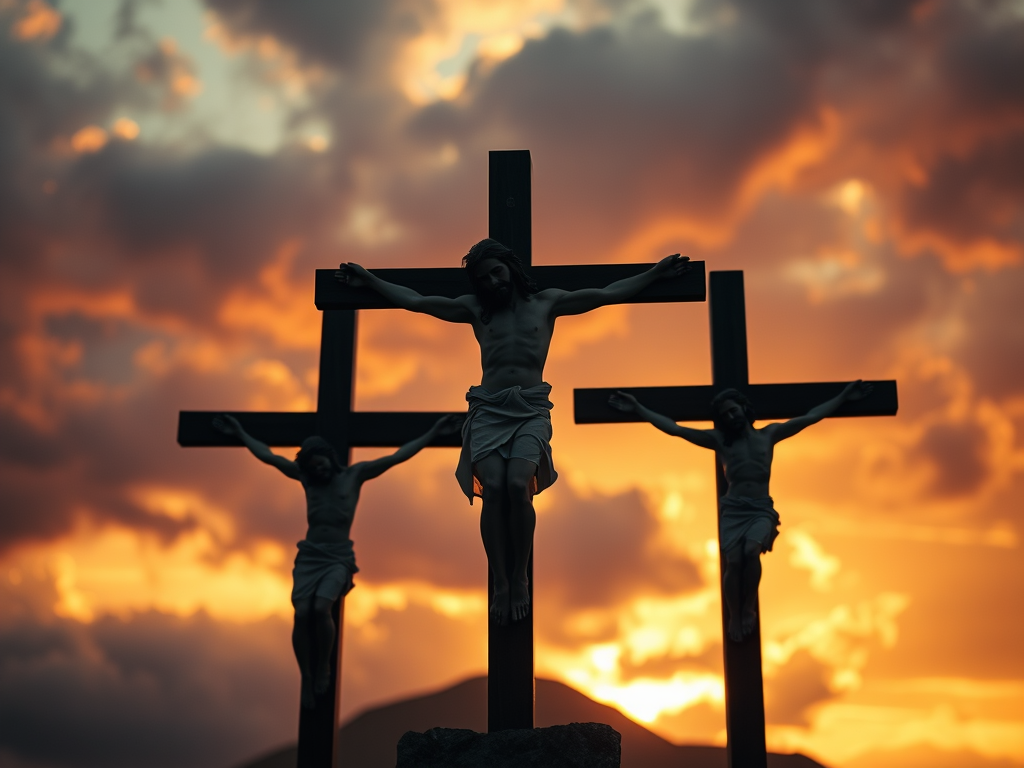
As the plague was coming to Jerusalem, David apparently had a vision of God’s angel striking the people. He cried out for mercy for them, pleading with God to limit the judgment to himself, to strike him and save the people. God did not do that—not yet—but he did end the plague at that point. The angel in the vision stopped. David’s plea to be punished instead of the people echoes the heart of the ultimate chosen one, Jesus, whom God did punish in place of all sinful people.

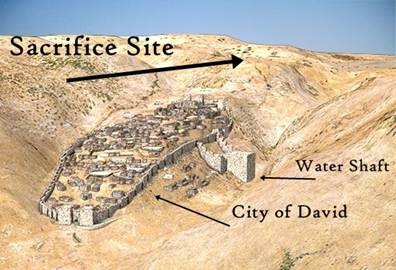
What follows is very interesting. The Lord sent the prophet Gad, who told David to make sacrifices and offerings on the spot where he saw the angel stop. If you remember, Jerusalem in David’s time was fairly small, maybe ten or fifteen acres. It was on the tip of a ridge, with deep ravines to the east and west and south. Behind David’s city to the north, the ridge rose to the top of the mountain. It was there, at the top of that ridge or mountain, where David went to offer his sacrifices. This was about 1/3 of a mile from the north wall. The picture below gives you a rough sense of the geography, though it is not 100% accurate.

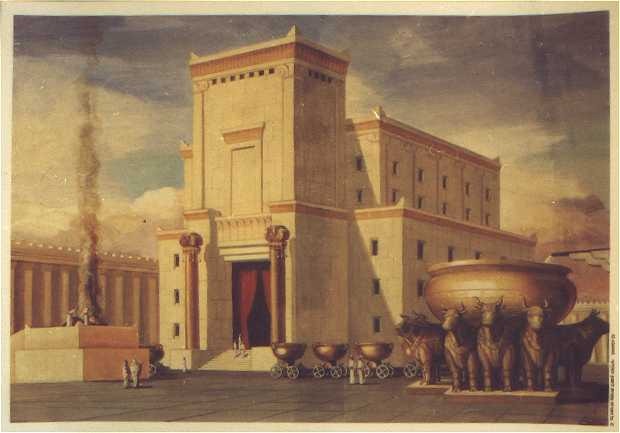
David found the land was owned by a Jebusite, not an Israelite. Refusing to take it as a gift, David purchased the land, and made offerings and sacrifices there. This ridge-top was the very place where Abraham had taken his son Isaac, when he obeyed God’s call to sacrifice him. On that mountaintop, Isaac, not knowing what was to come, asked what they were going to use for a sacrifice. Abraham answered prophetically, saying, “God Himself will provide the lamb for the burnt offering, my son.” (Gen 22:8, HCSB). God stopped Abraham when he saw that he was willing to give up even his son. Instead, God planned to give his own son. And so on this same spot, almost eight hundred years later, the plague was stopped. On this same spot, David offered his life in exchange for his people, but again, the Lord refused that sacrifice, looking ahead to the time he would offer his own son. On this same spot, purchased by David, Solomon later built the temple of the Lord. This temple became a meeting place between the Lord and his people, a place where sacrifices were offered to reconcile the people with the Lord and each other. So, the author of Samuel, who lived in the next generation after the temple was built, is saying: “Don’t waste your energy wanting another king like David. Instead, pay attention to the presence of God among his people.”

The New Testament teaches us that those sacrifices were all a shadow, pointing toward the ultimate sacrifice of Jesus to save people from their sins. The writer of Hebrews writes about the temple, and its purpose:

9 This is an illustration pointing to the present time. For the gifts and sacrifices that the priests offer are not able to cleanse the consciences of the people who bring them. 10 For that old system deals only with food and drink and various cleansing ceremonies—physical regulations that were in effect only until a better system could be established.
11 So Christ has now become the High Priest over all the good things that have come. He has entered that greater, more perfect Tabernacle in heaven, which was not made by human hands and is not part of this created world. 12 With his own blood—not the blood of goats and calves—he entered the Most Holy Place once for all time and secured our redemption forever. (Hebrews 9:9-12, NLT)

In other words, even though the writer of Samuel did not know it, this epilogue points beyond David, even beyond the temple, and to the eternal atonement that Jesus secured for us. The message is that we need atonement, and only God himself can truly provide it. And not only that, but God has provided it, through Jesus Christ, the descendant of David.

We human beings tend to make the same mistakes in each generation. Many people in our country are very focused on politics and on the “culture wars.” But our main focus should be on Jesus Christ, and reconciliation with the Lord through him.

What are the things you tend to put your hope in? A job? Your skill or experience? Your family? Your investments, your house? All these are good things when they are held in the right place of importance in our lives. But as good as it is to enjoy the blessings God gives us, our only hope should be found in Jesus Christ alone.

How has the Lord spoken to you through the book of Samuel?
2 SAMUEL #9: GOD’S HOUSE?

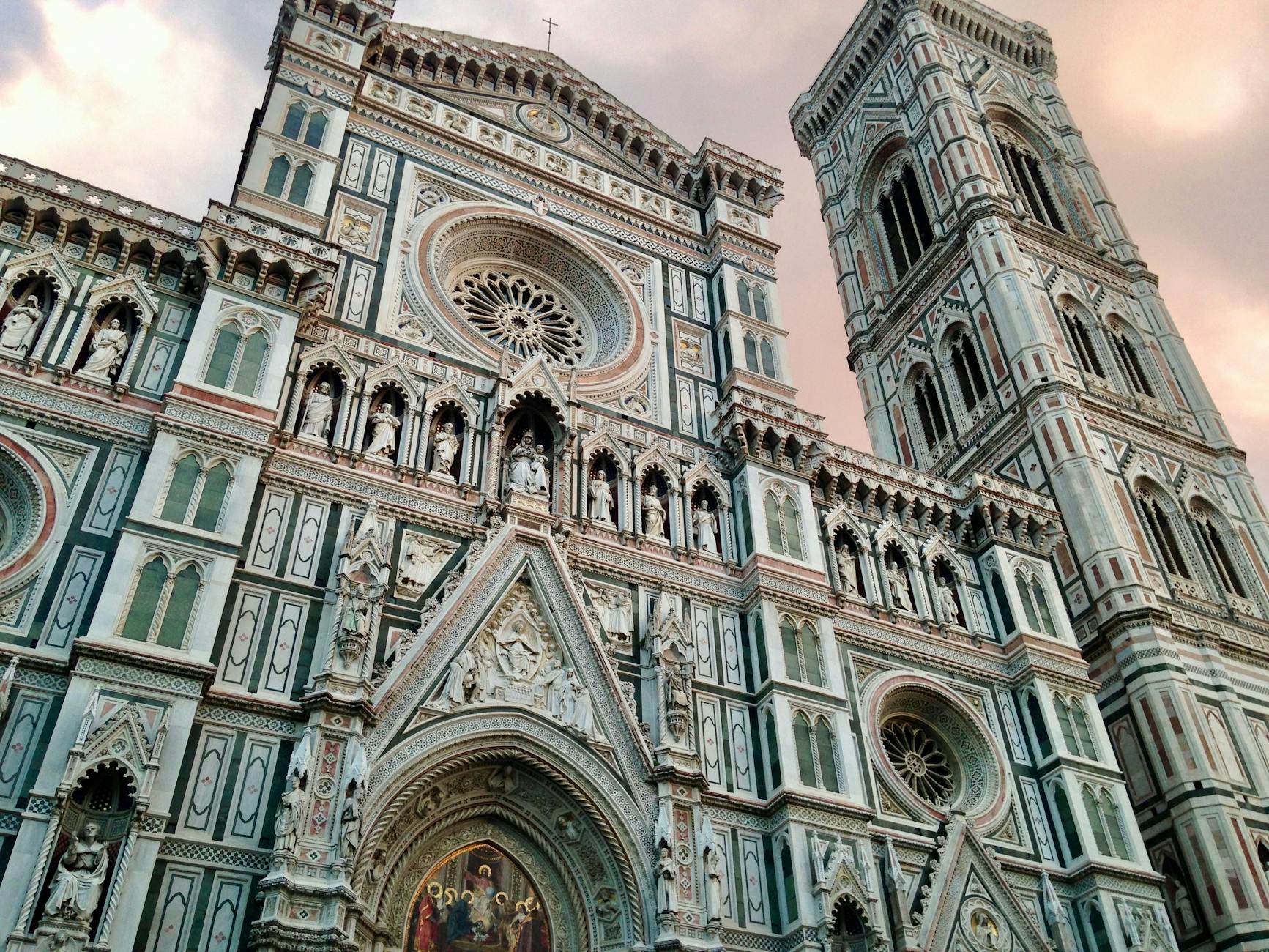
Photo by Filippo Bergamaschi on Pexels.com

God’s true presence is not found inside of special buildings, but rather, within the community of his people as they gather together to worship, learn and serve.

To listen to the sermon, click the play button:

For some people, the player above may not work. If that happens to you, use the link below to either download, or open a player in a new page to listen.

To download, right click on the link (or do whatever you do on a Mac) and save it to your computer: Download 2 Samuel Part 9

2 Samuel #9 .  2 Samuel Chapter 7:1-29 ; 1 Chronicles 17:1-26

Last time we examined the covenant the Lord established with David: to make one of his descendants the Messiah, the forever-King and savior of God’s people. We also considered God’s over the top grace offered to David and to us, and the security knowing that when we want to do God’s will, even if, by mistake, we try to do the wrong thing, the Lord will make sure to keep us from pursuing it. I think there is yet one more lesson to glean from this passage.

David set up various full-time ministries for the tent of meeting, and then he wanted to build the Lord a permanent temple in Jerusalem. The prophet Nathan agreed with David, and they were ready to start the project when the Lord spoke to Nathan, and told them to wait.

It wasn’t that David’s heart was in the wrong place, or Nathan’s instincts. They just didn’t fully understand the Lord (no one ever does, of course). The Lord wanted to show David and Nathan a few things. The first thing the Lord wanted to make sure they knew is this: He doesn’t need a house. He says this:

5 “Go and tell my servant David, ‘This is what the LORD has declared: Are you the one to build a house for me to live in? 6 I have never lived in a house, from the day I brought the Israelites out of Egypt until this very day. I have always moved from one place to another with a tent and a Tabernacle as my dwelling. 7 Yet no matter where I have gone with the Israelites, I have never once complained to Israel’s tribal leaders, the shepherds of my people Israel. I have never asked them, “Why haven’t you built me a beautiful cedar house?”’ (2 Samuel 7:5-7, NLT)

During the historical period in which David lived, most people believed that gods were attached to specific places and people-groups. This is important in understanding the Old Testament. The Philistines had a primary god named “Dagon.” They built a temple for him, and made an idol of him. The Canaanite peoples who lived nearby also believed in Dagon—but not as their god. He was the god of the Philistines, and no one needed to worry about him—unless you went into Philistine territory. If you did that, then you needed to respect Dagon, because that was where he lived. The Ammonites, who lived on the other side of the Jordan river, and to the south, worshipped a god named Moloch. For their part, the Philistines theoretically believed that Moloch was a deity, but they didn’t worship him because his territory was some distance from where they lived. There were various other gods in the region as well, including the one known as Baal. It is likely that all of the non-Israeli people around the area had some level of belief in Yahweh, the God of Israel. But they thought of him like every other ‘god.’ To them, he must be just the god of the Israelites, and only really powerful in Israelite territory.

The Israelites were continually tempted to believe in the Lord in the same way: as their personal god, one among many, generally most powerful only in their own territory. But the Lord had been continually trying to get them to see the truth: that there is only one real God, the Lord Himself, and that he is God over every people and place. That was one reason the Lord had never, before this, asked his people to build a temple for him. I think God was trying to stop the Israelites from getting the idea that he really was just like all the gods of the people who lived around and near the Israelites. They might tend to get stuck on that idea if there was a permanent temple in which he “lived.” The idea that the Lord traveled with Israel wherever they went was entirely new and unique in the ancient world. No one had ever heard of a God who went with his people, wandering anywhere he chose, even into the territory of other gods. No one had ever really conceived of the idea that there was only one true God. So, a temple might tempt the Israelites to think of God as only a local, Israelite deity.

By the way, the Canaanites worshipped a god they called “Baal.” In the ancient Canaanite legends, Baal demanded a bigger and better temple. So the Lord’s response also shows David how different he is from the supposed “god” of the people who lived nearby.

Now, eventually, of course, Solomon, David’s son, did build a temple to the Lord. Why would God do that? Did he change his mind? One way in which it was very different from the temples of the gods of the surrounding people is that there was no statue (idol) of God anywhere. But I think the main issue was this: During Solomon’s reign there was much more peace with surrounding cultures, because the Israelites had conquered them. Because they lived at peace, the Israelites started befriending their non-Israelite neighbors, and going with them to worship sites on top of high hills, where the heathen people worshipped their false gods. Therefore, one purpose of the temple in Solomon’s time was to bring the Israelites together to worship the Lord alone. Even though, as we know, a person can worship the Lord anywhere, the Israelites were being drawn to worship false gods when they went to other places. The temple, when Solomon finally built it, was intended to make sure they would worship the Lord only, and do so together as one people. Even so, in the end, that didn’t really work out. Solomon himself recognized the limits of a temple. After it was built, he prayed:

18 “But will God indeed dwell with man on the earth? Behold, heaven and the highest heaven cannot contain you, how much less this house that I have built! (2Chr 6:18, ESV)

So God wants us to understand that he lives everywhere. He doesn’t need a dwelling place on earth. I get a little crazy when I hear Christians calling their church buildings “the house of God.” No church building, not even the most magnificent cathedral, is a place where God “lives.” If you want to see “the house of God,” look around at your fellow believers, and look in the mirror.

19 Don’t you realize that your body is the temple of the Holy Spirit, who lives in you and was given to you by God? You do not belong to yourself, 20 for God bought you with a high price. So you must honor God with your body. (1 Corinthians 6:19-20, NLT)

We believers are individually temples of the Holy Spirit, but most especially, believers who live and worship together are the place where the Holy Spirit “lives.” The Lord lives “in his body,” and his body is made up of the people of the church (not the building).

27 Now you are the body of Christ and individually members of it. (1 Corinthians 12:27, ESV)

11 Now these are the gifts Christ gave to the church: the apostles, the prophets, the evangelists, and the pastors and teachers. 12 Their responsibility is to equip God’s people to do his work and build up the church, the body of Christ. 13 This will continue until we all come to such unity in our faith and knowledge of God’s Son that we will be mature in the Lord, measuring up to the full and complete standard of Christ.
14 Then we will no longer be immature like children. We won’t be tossed and blown about by every wind of new teaching. We will not be influenced when people try to trick us with lies so clever they sound like the truth. 15 Instead, we will speak the truth in love, growing in every way more and more like Christ, who is the head of his body, the church. 16 He makes the whole body fit together perfectly. As each part does its own special work, it helps the other parts grow, so that the whole body is healthy and growing and full of love. (Ephesians 4:11-16, NLT)

God “lives” in each of us individually, and also in a special way with all of us together. None of this has anything to do with physical buildings. So this was one reason God didn’t want David to build a temple.

This might sound a bit startling, but stay with me: a building accomplishes nothing spiritual.

A building is completely unnecessary to real church, and often has a negative impact on making disciples. History bears out what I am saying here. It was precisely at that point in time – during the time of Solomon and his temple – when the people of Israel began to go astray again and worship other things. The temple did not help in the least, and an argument might be made that it hurt. Solomon’s temple was destroyed four hundred years later, and about a century after that, another was made. Four hundred years after that, king Herod built a  third temple to please the Jewish people who were his subjects. It was even more magnificent than Solomon’s temple. Even with these amazing temples, the Jews utterly failed to walk with God. Let me make it very clear – the magnificent temple of the Jews did not help them when it came to actually receiving God’s salvation in Jesus Christ.

Jesus himself found the most receptive hearts far away from the temple – in the outlying areas of Palestine, not in Jerusalem. The temple, as God gave it to the people, was intended to help people recognize the Messiah when he came to earth. But most people missed the point entirely, and instead made the temple itself into a kind of idol.

Some people make church buildings into an idol as well. The closest thing in the New Testament that we have to modern church buildings is the synagogue. Jesus apparently was regular in going to the synagogues. But most of his real ministry and disciple-making took place outside of weekly worship services.

After the time of Jesus, the church worshipped in private homes, in small groups, for almost three hundred years. Even now, that period stands as one of the most effective disciple-making eras in history. After Christianity finally became legal in the Roman empire, Christians began creating buildings for their church meetings. The emergence of this trend of constructing dedicated physical church buildings coincides with the beginning of a long decline in Christianity. In fact, it wasn’t long after this that Europe entered what we call “the dark ages.” We can’t blame all of the problems of the dark ages on church buildings, but it was a period where Christianity was focused on buildings and institutions, and did very little real disciple-making that truly transformed lives.

A building dedicated to worship sometimes has practical value. However, a lot of church buildings are used for only a few hours each week – which doesn’t seem very practical after all. If the bible and history teach us anything about worship-buildings, it is that they often lead believers to live with the wrong focus, and sometimes to entirely miss the point.

I want to be honest here. I think one of the reasons New Joy Fellowship (our church here in Lebanon, TN) has not grown much numerically is because we have not built a church building. I think a lot of folks would be up for that – to build something we could look at and see and touch and say “We did that. That’s ours.” I deeply wish that people would be that committed to building a life that belongs entirely to Jesus and to living for his purposes. I think a lot of people who might otherwise come back to our worship after visiting just don’t feel like it is really “church” without a church building. I want to be blunt: when we have a building, we can divert our attention to religious activity that keeps God at arm’s length. But when there is no building, we are confronted with what it is really about: walking with God, walking in fellowship with each other, and working in God’s kingdom. If you have a building you can “have church” without those things. But if you don’t have a building, and you don’t have those things, you don’t have a church. It’s easier to have a building – you can pretend to be a church without really engaging with Jesus.

I’m not saying it is wrong for churches to build their own buildings to worship in. But I am saying it is unnecessary, and often it slows down spiritual growth and disciple-making.

Let’s see what Jesus said about worshipping in a particular building:

21 Jesus said to her, “Woman, believe me, the hour is coming when neither on this mountain nor in Jerusalem will you worship the Father. 22 You worship what you do not know; we worship what we know, for salvation is from the Jews. 23 But the hour is coming, and is now here, when the true worshipers will worship the Father in spirit and truth, for the Father is seeking such people to worship him. 24 God is spirit, and those who worship him must worship in spirit and truth.” (John 4:21-24)

Jesus essentially says here that worship is not about a place. It is about turning to God in spirit and truth. In fact, that is the kind of worship God is seeking, not people who just want to go to a certain place. God said to David, look, the place of worship for the past four-hundred years has been that moldy tent, wherever it happens to be parked. Why do you suddenly think that isn’t good enough?

So, what does all this do for your relationship with God today? First, I want to encourage you to hold on to the understanding that a real church is a community of people who trust Jesus and walk in fellowship with God, and in fellowship with one another, and allow God to use their lives for his kingdom purposes. It has nothing to do with where, when or in what building they worship.

There are people who take things too far the other way. They claim it is not important to have dedicated times of worship with other believers. They think “Hey, my body is a temple of the Holy Spirit. I don’t need to be part of a worshipping community.” But that picture is not Biblical either. Such a thing would not even have occurred to the apostles, or any Christians throughout history, until quite recently. Historically, all cultures were very communal, and the idea of an individual who doesn’t need a community was entirely unknown in Biblical times, and even for centuries afterwards. So, to be clear, though Christians don’t need a church building, they do need a church—that is, a community of people with whom they regularly worship and serve.

David and Nathan were both godly men who thought at first that a building for God was important. So don’t feel bad if you have thought that in the past. But understand, God told Nathan and David, “No, it isn’t important. I don’t want a building right now.”

The focus that God wanted was on his work to bring salvation into the world. He wanted his people to receive the Messiah and put their trust in him. That is the focus he wants for us also.  Jesus said:

19 Again, I assure you: If two of you on earth agree about any matter that you pray for, it will be done for you by My Father in heaven. 20 For where two or three are gathered together in My name, I am there among them.” (Matt 18:19-20, HCSB)

The word “where” means “whatever place you happen to be in.” The full presence of God, and full authority of heaven is found among God’s people gathered together, not in a building somewhere.

Now, I want to speak directly to New Joy Fellowship and to the people of Life Together Churches for a few moments. It’s easy to say “come help us build a building.” People understand that. It’s a helpful thing to motivate people. It is a simple vision to grasp and it is less threatening than real discipleship.

But I want to challenge you to present new people with a vision to “come help us build disciples.” Think about it this way. Not a single church building that now exists will be there in the New Creation. Not. One. But every single disciple that we make will be there with us. Let’s not waste time and money building what is after all, a fake church. I mean it. A building is not a church, no matter how many crosses and altars you slap on it. Let’s put our time into real church. We can present the vision clearly and simply. We want to make disciples. We do that by walking with God, walking with others and working in the kingdom. Let’s build a real house of God in that way!

JESUS INVADES YOUR “SACRED SPACE”


Sometimes, I think we forget this side of Jesus. In Jesus, both God’s judgement, and also his grace, are perfectly in harmony. Jesus’ actions weren’t reasonable. They weren’t nuanced. But they were righteous

To listen to the sermon, click the play button:

To download, right click on the link (or do whatever you do on a Mac) and save it to your computer:

Download Matthew Part 73

Matthew #73 Matthew 21:12-17

As often happens, there is more than one layer to what Jesus was doing and saying in this passage. The first layer is that Jesus is setting the political wheels in motion which will lead to his crucifixion. He is now becoming much more public and noticeable in his ministry, for the very deliberate purpose of provoking the religious leaders. He is getting in their faces, beginning the process that will force them to make a choice about him. It began with his ostentatious entry into Jerusalem. He continues it now by challenging the institution that was at the very heart of the religious elite in his day – the temple. He is actively pursuing the path that leads to crucifixion.

The second layer is that while he is doing this so that he can suffer and die as he was meant to, he is also doing it in a way that is completely righteous. Everything he says and does here is right and good and legitimate. He is not taking the attitude of “the ends justify the means.” He isn’t doing something wrong when he confronts the religious leaders in this way. His “means” of speaking truth to the leaders are just as good and righteous as his goal of dying for the sin of the world.

Sometimes, I think we forget this side of Jesus. In Jesus, both God’s judgement, and also his grace, are perfectly in harmony. Most Christians tend toward one or the other. Some of us focus on what we’re doing wrong, and how we need to fix that, and we lose sight of God’s incredible grace, forgiveness and love. Other Christians focus on the love and forgiveness so much that we lose sight of God’s holiness and the seriousness of our sin. We end up watering it down so much that we are in danger of losing sight of the truth.

Though Jesus is headed towards the cross in order to make his grace and love freely available, during this last week of his life, he often reminds us of why the cross is necessary; of how serious our sin is, and how absolute God’s holiness is. That is true in the incident we are looking at today.

Let’s start by understanding what was going on in the temple in those days.

The Old Testament commands God’s people to make animal sacrifices as a reminder of how serious their sin is, and how holy God is. The people were commanded to bring various types of animals for sacrifice, depending on the type of sacrifice, and the financial means of those coming to worship. Normally, you would sacrifice a goat or sheep at the temple. However, not everyone could afford that, so poor families were allowed to bring a pair of doves or pigeons, as it says in Leviticus:

7“But if he cannot afford an animal from the flock, then he may bring to the LORD two turtledoves or two young pigeons as restitution for his sin — one as a sin offering and the other as a burnt offering. (Lev 5:7, HCSB)

First, the animal brought for sacrifice had to be inspected by a priest to make sure it was without blemish, as was commanded in the law of Moses. However, by the time of Jesus, this system had become corrupt. Some of the priests turned away perfectly good animals, and then recommended that the family buy a different animal from one of the livestock merchants on the temple grounds. The priests would get a financial reward, or “kickback” from the merchants for every sale that was made in this way. In this way, the merchants and the priests were using the laws of Moses to extort people.

A second thing was also offensive. Since the Passover drew so many people to Jerusalem, it was the normal time when people paid their half-shekel temple tax. The specific wording of this law comes from Exodus 30:13

13Everyone who is registered must pay half a shekel according to the sanctuary shekel (20 gerahs to the shekel). This half shekel is a contribution to the LORD. (Exod 30:13, HCSB)

Over time, “the sanctuary shekel” became its own unit of currency. People couldn’t pay the tax with the money they made in everyday life. They had to have their money converted to “sanctuary shekels” in order to pay. Eventually money changers set up on the temple grounds and they charged a fee to convert the real money into “sanctuary money.” Sanctuary money was no good for anything but the temple tax, so the money changers made out like, well, thieves.

The third thing that was generally offensive was that the temple became a marketplace. Some people did not bother to bring animals at all, but planned to buy them at the temple. And who could blame them, since the priests were likely to rip them off if they brought their own animal? Merchants hawked doves to the poorer families, and doubtless everyone paid much more for “temple animals” then they would have anywhere else in the country. God’s holy place of worship became one of the busiest marketplaces in Jerusalem during the Passover season.

I’d like to point something out here. All four gospels make it clear that Jesus substantially interfered with all of this sort of “temple business” that was going on that day. He overturned the tables of the money changers, spilling their coins everywhere. He knocked over the stalls of those who sold pigeons and doves. He made them leave the temple complex. John records that Jesus even drove out the sheep and oxen. It would only be natural for these merchants and money changers to resist him, to try and stop him. For one man to do all this, it must have taken a great deal of physical strength, and even violence. In fact, it was a remarkable feat of physical power. I think a lot of people picture Jesus as a sort of wimpy, sensitive guy, but this gives us convincing evidence that he was capable of great strength when he wanted to be.

Now, I want us to see Jesus’ actions for what they are: extremism. God’s holiness is extreme, and uncompromising. We don’t like to remember this. I think if Jesus did something equivalent in the church today, it would meet with widespread disapproval. Let’s start with an obvious one. Jesus drove out those who sold doves, and doves were the sacrifice of choice for poor people. I can see someone saying: “Where are the lower income folks supposed to get their doves now? How could this be a loving action? It hurts the poor! What about all those who traveled from home without animals, expecting to be able to buy one at the temple? How were they supposed to make a sacrifice if they couldn’t buy their animals? You have to be reasonable. Your response has to take all the nuances into account.”

I can see other people saying, “Look, I know having a marketplace in the outer courts isn’t ideal, but ultimately it allows a greater number of people to come and worship here. It makes it easier on worshipers; it makes us more seeker friendly.”

I can see yet others saying, “Yes, I know that some of the merchants, and even some of the priests, are over-charging people. That’s deplorable, and I condemn it. But we can’t expect a perfect system in this imperfect world. It is what it is, and really, it isn’t that bad. We have to be reasonable.”

Jesus’ actions weren’t reasonable. They weren’t nuanced. But they were righteous. This was about the holiness of God. Holiness isn’t nuanced. It isn’t reasonable. It is absolute.

Jesus quoted to them from Jeremiah. Matthew records only the tail end of the passage in Jeremiah, but I want to share the beginning of it with you here:

9“Do you steal, murder, commit adultery, swear falsely, burn incense to Baal, and follow other gods that you have not known? 10Then do you come and stand before Me in this house called by My name and say, ‘We are delivered, so we can continue doing all these detestable acts’? 11Has this house, which is called by My name, become a den of robbers in your view? Yes, I too have seen it.” This is the LORD‘s declaration. (Jer 7:9-11, HCSB)

Today, we do not have a temple where we worship. We don’t have money changers who charge to turn real money into “church money.” But we have different ways in which we degrade the holiness of God through our worship. Let me suggest a few of them.

Here where I live in the Southeastern USA, a lot of people still go to church because it is considered the right thing to do. Many of those same church-goers spend the rest of the week living as if they were not Christians at all: They get drunk, they have sex outside of marriage, they make shady business deals, they treat people badly, they gossip and slander. These verses from Jeremiah are for people like that:

10Then do you come and stand before Me in this house called by My name and say, ‘We are delivered, so we can continue doing all these detestable acts’?

Going to worship will not save you if you have not humbly repented and submitted your life to Jesus Christ. You cannot be a Christian, and at the same time, live however you please. When you submit your life to Jesus Christ, you will, however slowly and imperfectly, be led to change. Don’t think you can come to church, and then say “We are delivered!” when he has no say whatsoever in how you actually live. If your faith doesn’t change you, it isn’t real faith. Jesus drove such people out of the temple.

Before some of us start feeling smug, let me speak to another group of people. To set it up, let me give you an analogy. Imagine I meet someone who tells me that he is in the United States Marine Corps.

“Wow!” I say. “Where are you stationed?”

“Well, I’m not really a part of any organized unit at the moment.”

“Oh,” I say, puzzled. “How does that work?”

“Well, the actual organization of the Marine Corps does a lot of stupid things. I don’t like to salute. I think it’s stupid. Saluting has nothing to do with actually being a Marine. On the battlefield, that stuff doesn’t matter.”

“Go on.”

“Also, when you join the Marines, they force you to make your bed perfectly, and iron your clothes perfectly, and shine your shoes and boots. None of that has anything to do with being a real Marine. Your boots aren’t going to be polished in the middle of a battle. I think it’s fake and hypocritical.”

“So you are a Marine, but you don’t actually belong to the Marine Corps.”

“That’s another stupid thing. Why should I have to sign up, and complete boot camp and do all that? I don’t enjoy all the rigid structure. That’s not the essence of being a Marine.”

“So what makes you a Marine?”

“I believe in the mission of the Corps, to protect and defend America. Sometimes I do some pushups, you know, to keep in shape.”

“So, if the Marines go into battle, they can’t count on you.”

“Oh they can count on me. I’ll fight the battles too. In my own way.”

“But not alongside them.”

“No. Because they would make me jump through all those stupid hoops.”

You get the idea. This guy is not a Marine, and never will be. It doesn’t matter how much breath he wastes claiming that he is. There are a large number of people in our Western culture who are just like him, only they apply it to being a Christian. They say something like this : “I’m a Christian, but I don’t go to church. I don’t want to be a part of all that hypocrisy, and all those politics.” So they live their own lives, giving nothing of value to the church, which the Holy Spirit calls “the body of Christ.” They think they can claim Christ while having nothing to do with his mission or his followers; his very Body. They deceive themselves, like my hypothetical “Marine Corps” solider. Again, the words of Jeremiah are chilling:

10Then do you come and stand before Me in this house called by My name and say, ‘We are delivered, so we can continue doing all these detestable acts’?

A Christian who is not connected to other Christians in regular fellowship and worship won’t be a real Christian for very long.

Let me give you one more general thought about Jesus’ actions here. By doing this, he was challenging the heart of the religious leadership. This was their sacred place, and he came busting in, acting like he had the right do whatever he pleased there – and indeed, he did have that right. So I want us to consider this question: Where is Jesus challenging your “sacred place” and asserting his right to be true God, truly in charge of your entire life? Maybe it is in one of the things already mentioned here. Maybe it is in some other area. But the big question is this: will you recognize that Jesus has the right to come and upset your world, just as he turned over the tables in the temple? Will you receive what he wants to do in your life?

In Jesus we have both God’s holiness – which brings judgement upon the entire world – and also his grace and forgiveness. We need to be reminded from this passage that our sin is nothing less than evil. You are not “OK,” you are not graded on a curve, and you are (on your own) separated from a Holy and Righteous God. If you don’t want to trust Jesus and submit to him as ruler of your life, you are like those people he drove out of the temple. Not everyone goes to heaven, Jesus made that very clear:

13“Enter through the narrow gate. For the gate is wide and the road is broad that leads to destruction, and there are many who go through it. 14How narrow is the gate and difficult the road that leads to life, and few find it. (Matt 7:13-14, HCSB)

Just let that sink in for a moment.

Now, I’m not a fan of just saying “You’re going to hell,” because you don’t have to. In Jesus, your sin is not excused, or explained away, or ignored – it is punished by crucifixion. In Jesus death, righteousness is satisfied so that you are now free to live in the grace, forgiveness and righteousness that Jesus obtained for you. It is simple to receive. What I mean is, it is not complicated – though it usually involves a battle of surrendering your will and your desires. All we need to do is repent, surrender our will to Jesus, and trust that through his work, we are indeed make right with God, and given eternal life. We don’t have to be perfect – Jesus was perfect on our behalf. But our faith in Him, and our surrender to him, will lead us to live lives that are increasingly more holy, more in line with what the Bible teaches, more in accordance with our Holy God. It happens very slowly at times, and we often fall down, or even take steps backward, but when we truly trust Jesus, it does happen – the speed at which it happens is not the important thing, but rather, that it is happening.

Many of you reading have already repented and given your lives to Jesus. If you haven’t, I encourage you to do so right now.

For those of us who have already done so, we may still need to repent of certain sins or certain areas where we have been holding out on God. Let’s do that now. Let’s allow Jesus to come into our “sacred place” and challenge even the things we hold very dear. He has the right. Let’s receive what he is doing in us.

And let’s all of us trust and receive that grace that came through Jesus so that the Holiness of God is no longer a problem for us, but rather, part of our own inheritance now and in the future.

GRACE IN JUDGMENT

census-workers1

Judgment always has this purpose: to turn people back to God, where they can find joy and grace.

To listen to the sermon, click the play button:

To download, right click on the link (or do whatever you do on a Mac) and save it to your computer: Download 2 Samuel Part 22

2 Samuel #22 . 2 Samuel Chapter 24

This is yet one more of those difficult passages in Samuel. Thankfully, it is the very last chapter of the book J. Even so, as with the other difficult parts, there are rich and grace-filled lessons to be learned here.

This same incident is also recorded in 1 Chronicles 21. I’ll be using both passages to help us understand. It says here that the Lord was angry at Israel, and stirred up David to take a census. In Chronicles, it says that Satan, plotting against Israel, incited David to sin by taking a census. Either way, we can see that the consequence of David’s sin was that all Israel suffered. I think one of the first questions should be, “Was it God or was it Satan?” As I have mentioned in previous messages, there are several other places in the Old Testament where the Lord used evil spirits to accomplish his purposes: Judges 9:23-24, 1 Kings 22:18-23 1 Samuel 16:14, and Job 1:6-12. In each case the picture we get is the Lord allowing an evil spirit to affect a particular person or group. In each case, the evil spirit wants to do the evil, but must get permission from God first. God’s permission seems to be limited to what will accomplish his purpose. In most of these cases, the purpose is to bring judgment, and if possible, repentance. [For a longer discussion of this issue please go to one of my previous sermons: Does God Send Evil Spirits?]

So it is entirely consistent to see God allowing a limited evil influence upon David in order to accomplish his purposes. It was Satan who tempted David, but it was ultimately God who allowed it. The answer to our first question then is: both. It was both God and the devil.

The next natural question is, “Why did God let this happen?” My most honest answer is, “I don’t know for sure.” I do have some ideas, however.

Clearly, the Lord felt that there was something not right in David’s heart – and also not right in the hearts of the people. Let’s start with an clear biblical understanding of sin and punishment and judgment. There is only one satisfactory and just punishment for sin. According to the Bible that one appropriate punishment is eternal separation from God. Since God is the source of all Life and all Good, that separation means death and unimaginable suffering. So if David and the people of Israel were not killed and sent away from God’s presence forever (that is, hell) then they were not being punished for doing wrong. They were being judged. There is a difference. In fact, it was God’s punishment for our sins that Jesus took upon himself.

In the Bible, God’s judgment establishes that his actions are right and good, and that ours are wrong and sinful. God uses judgment to try and get people to repent and turn to Him and receive life, hope and forgiveness in Jesus. Judgment always has this purpose: to turn people back to God. It isn’t vindictiveness or anger or even righteous punishment. It is an extreme measure of love. It is like amputating a limb to keep the deadly cancer from spreading, or taking the cars keys away from someone who drinks too much. It seems harsh, but it is intended for good, for love.

So God allowed the sin in the hearts of David and his people to be revealed through temptation, and then he brought judgment to turn them back to Himself.

When I was fifteen I tore open the back of my heel in accident, and had to have stitches. The wound became infected. It sealed up on the outside, but underneath, it was filled pus and infection. Left alone, it would have looked all right, but eventually it would have developed gangrene and rotted my foot and leg, finally killing me. My dad realized what was happening. He made me lie down, while he clamped my leg to hold it still. He squeezed around the wound and it was incredibly painful. The wound burst open and what came out was truly disgusting. For almost a week afterward I had a gaping hole in my heel. I still have a scar. But it was absolutely necessary that the infection be exposed and cleaned out.

So, the Lord exposed what was hidden in the hearts of David and of the people, and then cleaned the infection, though it was a painful, awful-seeming process. My dad inflicted pain upon me in order to bring about my healing. He didn’t cause the infection, but he did cause me pain in order to first expose it, and then eliminate it. So God did not cause the problem in the hearts of his people, but he loved them enough to engage in the painful process of exposing it and judging it, to bring them back to himself.

Now, another question that I have is, what was so bad about taking a census? Moses did it twice – because God told him to. So why shouldn’t David do it? How did the census expose the sin of David and of Israel? I think this is an important question to ask.

I want to admit, this part is speculative. Here are some possible reasons. Perhaps it was pride. Maybe David wanted to know how great his kingdom was. Or maybe he was contemplating a new conquest that was not sanctioned by the Lord, and he wanted to know if his army was big enough to do it. Another possibility is that he was afraid of another rebellion, and was using the census to ferret out any potential enemies. The men of Judah and those of the other tribes were recorded separately. So maybe David was afraid, and was trying to see if the men of Judah had enough soldiers to defeat the other tribes if it came to civil war again.

In any case, it did not arise from faith. Romans 14:23 says: “For whatever does not proceed from faith is sin.” We want a book of rules, so we can just take care of things on our own, and not make the effort of staying close to the Lord. Rule 447, paragraph 8, section c: “Do not ever take a census.” But living that way actually separates us from God, because it allows us to function “righteously” without really interacting with him. Even if we do the right thing, it needs to be because we are living in right relationship. Taking a census is not always wrong. But David was not walking in faith.

Here is one other possibility with this census. It could be that David ordered it to be conducted in a way that violated something the Lord said in Exodus 30:11-16.

The LORD spoke to Moses: “When you take a census of the Israelites to register them, each of the men must pay a ransom for himself to the LORD as they are registered. Then no plague will come on them as they are registered. Everyone who is registered must pay half a shekel according to the sanctuary shekel. This half shekel is a contribution to the LORD. Each man who is registered, 20 years old or more, must give this contribution to the LORD. The wealthy may not give more and the poor may not give less than half a shekel when giving the contribution to the LORD to atone for your lives. Take the atonement money from the Israelites and use it for the service of the tent of meeting. It will serve as a reminder for the Israelites before the LORD to atone for your lives.” (Exod 30:11-16, HCSB)

The point of this was to recognize that the Lord owns all of the people. They don’t own themselves – they owe their lives to the Lord. In the same way, no leader owns the people – they all belong to God. It may be that the people did not want to pay the census fee, nor did David want to require it of them. This exposed that in their hearts they were not serious about belonging to God as a people. This may be the sin in the hearts of the poeple that God was exposing.

With the sin exposed, God acted in judgment, to bring the people back to himself. Because David repented so quickly, the Lord gave David a choice about the form of judgment: three months more of rebellion and battle, or three years of famine, or three days of a plague. David chose the last one, as I would have. He trusted God’s mercy (in the form of the plague) more than the “mercy” of a human enemy.

As the plague was coming to Jerusalem, David apparently had a vision of God’s angel striking the people. He cried out for mercy for them, pleading with God to limit the judgment to himself, to strike him and save the people. God did not do that, but he did end the plague at that point. The angel in the vision stopped. David’s plea to be punished instead of the people echoes the heart of the ultimate chosen one, Jesus, whom God did strike in place of all sinful people.

What follows is very interesting. The Lord sent the prophet Gad, who told David to make sacrifices and offerings on the spot where he saw the angel stop. If you remember, Jerusalem in David’s time was fairly small, maybe ten or fifteen acres. It was on the tip of a ridge, with deep ravines to the east and west and south. Behind David’s city to the north, the ridge rose to the top of the mountain. It was there, at the top of that ridge or mountain, where David went to offer his sacrifices. This was about 1/3 of a mile from the south wall. The picture below gives you a rough sense of the geography, though it is not 100% accurate.

clip_image002

He found the land was owned by a Jebusite, not an Israelite. Refusing to take it as a gift, David purchased the land, and made offerings and sacrifices there. This ridge-top was the very place where Abraham had taken his son Isaac, when he obeyed God’s call to sacrifice him. On that mountaintop, Isaac, not knowing what was to come, asked what they were going to use for a sacrifice. Abraham answered prophetically, saying, “God Himself will provide the lamb for the burnt offering, my son.” (Gen 22:8, HCSB). God stopped Abraham when he saw that he was willing to give up even his son. Instead, God planned to give his own son. And so on this same spot, almost eight hundred years later, the plague was stopped. On this same spot, David offered his life in exchange for his people, but again, the Lord refused that sacrifice, looking ahead to the time he would offer his own son. And this same spot, purchased by David, Solomon built the temple of the Lord, where for years they offered sacrifices that were all a shadow, pointing toward the ultimate sacrifice of Jesus to save people from their sins.

So David ended his reign, still being used by the Lord to point toward the ultimate messiah. 2 Samuel 23 records the last psalm he wrote:

These are the last words of David: The declaration of David son of Jesse, the declaration of the man raised on high, the one anointed by the God of Jacob, the favorite singer of Israel:

The Spirit of the LORD spoke through me, His word was on my tongue.

The God of Israel spoke; the Rock of Israel said to me, “The one who rules the people with justice, who rules in the fear of God, is like the morning light when the sun rises on a cloudless morning, the glisten of rain on sprouting grass.

Is it not true my house is with God? For He has established an everlasting covenant with me, ordered and secured in every detail.

Will He not bring about my whole salvation and my every desire? (2Sam 23:1-5, HCSB)

The church is STILL not a building!

For the first time ever, I actually preached the same sermon twice in a row. This is because I believe in this so strongly. If you want to hear the second sermon rather than the first, here it is

(the written version is the same, and can be found at https://revth.wordpress.com/2012/07/21/the-church-is-not-a-building/)


To listen to the sermon (the second time through), click the play button:

To download, right click on the link (or do whatever you do on a Mac) and save it to your computer: Download 2 Samuel Part

The Church is NOT a building

firsttemple

Not a single church building that now exists will remain after Jesus returns. NOT ONE. But every single disciple that we make will be there with us. Let’s not waste time and money building what is after all, a fake church. I mean it. A building is not a church, no matter how many crosses and altars you slap on it. Let’s put our time into building disciples. We do that by walking with God, walking with others and working in the kingdom. Let’s build a real house of God in that way!

To listen to the sermon, click the play button:

To download, right click on the link (or do whatever you do on a Mac) and save it to your computer: Download 2 Samuel Part 7

2 Samuel #7 . 2 Samuel Chapter 7; 1 Chronicles 17

Last time we looked at how the ark of the covenant was brought to Jerusalem. 2 Samuel describes the event with one chapter. However, 1 Chronicles takes three chapters to recount the same thing. What we learn from 1 Chronicles is that David set up various ministries for the priests and Levites: not just the priests who offer sacrifices, but also professional worship musicians and song-writers, full time door-keepers, administrators and so on. There were probably more than 100 full time ministers taking care of the ark and of the tabernacle. But after all, when it was all said and done, the place for all this amazing ministry was just a very old tent.

The tent was put together in the days of Moses, more than four-hundred years before. Israel has a dry climate, but I have to imagine that sometime during four-hundred years, there had been mold. I’m sure there were rips and scuffs, and it is a good guess that there were a lot of patches by this point in time. David talked to Nathan about it. He said, “Look, here I am in a palace – and God lives in a tent.” The implication, not spoken explicitly, is that it is time to build a permanent place of worship. Nathan the prophet said, “Go and do all that is on your heart, for the LORD is with you.”

I want to talk about Nathan’s response here. I understand it pretty well. It is a no-brainer at so many levels. First, Nathan felt (rightly) that David was in tune with the Lord and walking with him. Nathan said, “the Lord is with you.” I’ve said things like that to people. I will say “I know that you are in tune with the Lord – you aren’t just going off your own way. So stay in tune with him, and trust that he will lead you as you do what you feel you are supposed to do.” I don’t say that to everyone, by the way, but David was not just anyone – he was in tune with God. So, when a person who is humbly walking with God feels that she wants to honor God in some particular way, it’s an easy call – God probably put it on her heart. So, in such situations, I usually say, go for it. That’s exactly what Nathan said to David.

Second, David’s intention appeared to be obviously the right thing to do. How can it be right that David lives in a palace, while the place to worship the God of the entire universe is literally an old, moldy, patched tent? God deserves our best, right? How could it ever be a bad thing to build a really nice place of worship? How could it ever be a good thing to have to worship in an old tent? So Nathan answered immediately – before even talking to God about it. I mean some things, are obvious, aren’t they?

Wrong.

God had something in mind much bigger than just a place of worship. He had in mind the transformation of the human race. That transformation has everything to do with the Messiah – the Savior – and nothing at all to do with the building where people worship. And so, contrary to all expectations and common sense, both David and Nathan were wrong.

Now, this topic is one of my “pet subjects,” theologically. Even so, please don’t check out at this point, and say, “Oh that’s just an axe he likes to grind.” I have good biblical and historical reasons for grinding this particular axe. Let me start with this statement: a building accomplishes nothing spiritual. God said to Nathan and David:

Are you to build a house for Me to live in? 6 From the time I brought the Israelites out of Egypt until today I have not lived in a house; instead, I have been moving around with a tent as My dwelling. 7 In all My journeys with all the Israelites, have I ever asked anyone among the tribes of Israel, whom I commanded to shepherd My people Israel: Why haven’t you built Me a house of cedar? ’ (2Sam 7:5-7, HCSB)

A building is completely unnecessary to real church, and often has a negative impact on making disciples. History bears out what I am saying here. Now some of you may argue that later on God did have Solomon build a temple. But the events that followed that only bolster my argument here. Solomon did indeed build a magnificent temple. But listen to what Solomon himself said:

18 “But will God indeed dwell with man on the earth? Behold, heaven and the highest heaven cannot contain you, how much less this house that I have built! (2Chr 6:18, ESV)

Even more important, it was precisely at that point in time – during the time of Solomon and his temple – when the people of Israel began to go astray again and worship other things. The temple did not help in the least, and an argument might be made that it hurt. Solomon’s temple was destroyed four hundred years later, and another was made. Four hundred years after that, king Herod built a third temple to please the Jewish people who were his subjects. It was even more magnificent than Solomon’s temple. Even with these amazing temples, the Jews utterly failed to walk with God. Let me make it very clear – the magnificent temple of the Jews did not help them when it came to actually receiving God’s salvation in Jesus Christ.

Jesus himself found the most receptive hearts far away from the temple – in the outlying areas of Palestine, not in Jerusalem. The temple did not help people recognize who Jesus was. Not only that, but there is something else. Jesus apparently was regular in going to the synagogues. But most of his real ministry and disciple-making took place outside of weekly worship services.

After the time of Jesus, the church worshipped in private homes, in small groups, for almost three hundred years. Even now, that period stands as one of the most effective disciple-making eras in history. After Christianity finally became legal in the Roman empire, Christians began building buildings for their churches. The emergence of this trend of building physical church buildings coincides with the beginning of a long decline in Christianity. In fact, it wasn’t long after this that Europe entered what we call “the dark ages.” We can’t blame all of the problems of the dark ages on church buildings, but it was a period where Christianity was focused on buildings and institutions, and did very little real disciple-making that truly transformed lives.

A building dedicated to worship sometimes has practical value. However, a lot of church buildings are used for only a few hours each week – which doesn’t seem very practical after all. If the bible and history teach us anything about worship-buildings, it is that they often lead believers to live with the wrong focus, and sometimes to entirely miss the point.

I want to be honest here. I think one of the reasons New Joy Fellowship (our church here in Lebanon, TN) has not grown much numerically is because we have not built a church building. I think a lot of folks were up for that – to build something we could look at and see and touch and say “We did that. That’s ours.” I deeply wish that people would be that committed to building a life that belongs entirely to Jesus and to living for his purposes. I think a lot of people who might otherwise come back to our worship after visiting just don’t feel like it is really “church” without a church building. I want to be blunt – this is because they don’t understand what church really is. You see when we have a building, we can divert our attention to religious activity that keeps God at arm’s length. But when there is no building, you are confronted with what it is really about: walking with God, walking in fellowship with each other, and working in God’s kingdom. If you have a building you can “have church” without those things. But if you don’t have a building, and you don’t have those things, you don’t have a church. It’s easier to have a building – you can pretend to be a church without really engaging with Jesus.

I’m not saying it is wrong for churches to build their own buildings to worship in. But I am saying it is unnecessary, and often it slows down spiritual growth and disciple-making.

Let’s see what Jesus said about worshipping in a particular building:

21 Jesus said to her, “Woman, believe me, the hour is coming when neither on this mountain nor in Jerusalem will you worship the Father. 22 You worship what you do not know; we worship what we know, for salvation is from the Jews. 23 But the hour is coming, and is now here, when the true worshipers will worship the Father in spirit and truth, for the Father is seeking such people to worship him. 24 God is spirit, and those who worship him must worship in spirit and truth.” (John 4:21-24)

Jesus essentially says here that worship is not about a place. It is about turning to God in spirit and truth. In fact, that is the kind of worship God is seeking, not people who just want to go to a certain place. God said to David, look, the place of worship for the past four-hundred years has been that moldy tent, wherever it happens to be parked. Why do you suddenly think that isn’t good enough?

So, what does all this do for your relationship with God today? First, I want to encourage you to hold on to the understanding that a real church is a community of people who trust Jesus and walk in fellowship with God, and in fellowship with one another, and allow God to use their lives for his kingdom purposes. It has nothing to do with where, when or in what building they worship.

David and Nathan were both godly men who thought at first that a building for God was important. So don’t feel bad if you have thought that in the past. But understand, God told Nathan and David, “No, it isn’t important. I don’t want a building right now.”

The focus that God wanted (which we will examine more next week) was on his work to bring salvation into the world. He wanted his people receive the Messiah and put their trust in him. That is the focus he wants for us also. Jesus said:

19 Again, I assure you: If two of you on earth agree about any matter that you pray for, it will be done for you by My Father in heaven. 20 For where two or three are gathered together in My name, I am there among them.” (Matt 18:19-20, HCSB)

The word “where” means “whatever place you happen to be in.” The full presence of God, and full authority of heaven is found among God’s people gathered together, not in a building somewhere.

Now, I want to speak directly to New Joy Fellowship and to the people of Life Together Churches for a few moments. It’s easy to say “come help us build a building.” People understand that. It’s a helpful thing to motivate people. It is a simple vision to grasp and it is less threatening than real discipleship.

But I want to challenge you to present new people with a vision to “come help us build disciples.” Think about it this way. Not a single church building that now exists will be there in the New Creation. Not – One. But every single disciple that we make will be there with us. Let’s not waste time and money building what is after all, a fake church. I mean it. A building is not a church, no matter how many crosses and altars you slap on it. Let’s put our time into real church. We can present the vision clearly and simply. We want to make disciples. We do that by walking with God, walking with others and working in the kingdom. Let’s build a real house of God in that way!