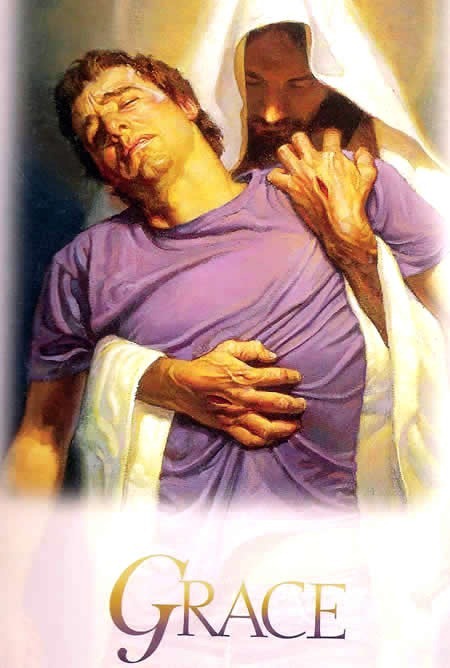
FRUIT, OR FLESH?

fruit

When you are facing a choice or considering whether or not something is from the Lord, ask yourself: “Does it look more like the flesh, or more like the fruit?” The fruits of Spirit are the manifestations of the character of Jesus in us.

To listen to the sermon, click the play button:

To download, right click on the link (or do whatever you do on a Mac) and save it to your computer: Download Galatians Part 22

Galatians # 22 . Chapter 5:22

We’ll consider the other fruits of the Spirit this time, and possibly even wrap up chapter 5.

The next is patience. The New Testament uses this word in connection with two main things. The first, is to describe the patience of God, when he withholds judgment (Rom 2:4; 9:22; 1 Peter 3:20; 2 Peter 3:15). In that context, it has the idea of withholding punishment, putting up with us and forbearing.

This saying is trustworthy and deserving of full acceptance: “Christ Jesus came into the world to save sinners” — and I am the worst of them. But I received mercy for this reason, so that in me, the worst of them, Christ Jesus might demonstrate His extraordinary patience as an example to those who would believe in Him for eternal life. (1Tim 1:15-16, HCSB)

There are many other verses using the same Greek word. Often it used just like it is here (2 Cor 6:6, Eph 4:2; Col 1:10-12).The Christian Life should be characterized by it:

Walk worthy of the Lord, fully pleasing to Him, bearing fruit in every good work and growing in the knowledge of God. May you be strengthened with all power, according to His glorious might, for all endurance and patience, with joy giving thanks to the Father, who has enabled you to share in the saints’ inheritance in the light. (Col 1:10-12, HCSB)

Patience is not the same as mere restraint. I think one key to understanding it is that there is waiting involved. Patience doesn’t give up – it waits with expectation, but it waits without agitation. You can’t manufacture Holy Spirit-patience. The only way to get it is to keep on getting closer to Jesus.

Kindness is an interesting Greek word: chrestotes. If you know any other languages, you know that sometimes a direct word-to-word translation is impossible. Some languages have words that others simply don’t have. I think chrestotes is probably one of those words. A few versions of the bible translate the word as “graciousness.” The word means something like “moral excellence, combined with compassionate intentions and actions.” In other words, it isn’t just blindly being nice to people. It is moral goodness combined with benevolent actions or intentions. The “moral excellence” is a very important part of this word.

Or do you despise the riches of His kindness, restraint, and patience, not recognizing that God’s kindness is intended to lead you to repentance? (Rom 2:3-4, HCSB)

Another way to describe kindness might be “righteousness combined with compassion.”

Goodness. “Good” is such a common word, both in Greek and English, that is sometimes hard to get a handle on it. What does it mean that goodness should be growing in us like a fruit? Moral “rightness” is part of goodness. A sense of being blessed is associated with what we call goodness. In this case, your goodness will give others a sense of being blessed through you. I know a few people that I would describe as good. You know, almost right away, that they are trustworthy. You know that they will do the right thing. You know you are safe around them.

Faith is the Greek word pistis, which I have often mentioned in the past. I contend that most often, it should be translated to mean “trust in Jesus.” In this context, however, we assume that you won’t have any fruit of the Spirit at all, unless you first trust Jesus. So here, I think Paul means a practical, daily trust, an entrusting of your everyday life to Jesus, his will and his purposes. It means you trust him with your problems and relationships, you trust his guidance and what he says through the Bible. You release control of your life to Jesus.

Gentleness. 1 Peter 3:16; 2 Timothy 2:25 and Galatians 6:1 all talk about gentleness in the context of correcting others. We are supposed to hold firmly to our beliefs. But we are not supposed to be harsh with those who are going astray.

Always be ready to give a defense to anyone who asks you for a reason for the hope that is in you. However, do this with gentleness and respect, keeping your conscience clear, so that when you are accused, those who denounce your Christian life will be put to shame. (1Pet 3:15-16, HCSB)

In other verses, gentleness is supposed to generally characterize how we treat each other.

Self-Control is not a compound word in Greek, as it is in English. It implies that you are master of your own desires. Remember, the flesh gratifies itself. But the Spirit exerts control over desires of the flesh. As the Spirit grows in you, you become more able to say “no” to the flesh and “no” to your immediate desires.

As I mentioned last week, all of these thing grow in us, if we remain in Jesus. I also suspect that the different kinds of fruit grow at different rates in each person. I know people who seem to exude peace, but they don’t have much self-control. I know others who have a lot of self-control, but joy is still a very small and immature fruit in their lives. That’s probably normal. We do want all the fruit of the Spirit to keep growing in us, but I think it is OK to accept that some kinds will grow faster than others, and that other people will have different strengths and weaknesses.

Let’s back up and remember the context for all of this. Paul has said we do not live any more by law. This isn’t an excuse to gratify or indulge the flesh. Instead, now, free from the law, we walk by the Spirit. The Holy Spirit, working through our spirits, leads us. More than that, the Holy Spirit is putting the character of Jesus into our lives.

Remember what Paul said in Galatians 2:20

For through the law I have died to the law, so that I might live for God. I have been crucified with Christ and I no longer live, but Christ lives in me. The life I now live in the body, I live by faith in the Son of God, who loved me and gave Himself for me. (Gal 2:19-20, HCSB. Italic formatting added for emphasis)

To put it another way, the fruits of Spirit are the manifestations of the character of Jesus in us. That character is being formed in us by the power of the Holy Spirit. This is important for several reasons.

First, this gives us a little bit of help in knowing where we stand with Jesus. The law can’t help us, but the evidence of Jesus’ character in us can. Paul says the works of the flesh are obvious. If we see those having power in our lives, we know that there is problem. Jesus, living in us, does not do the works of the flesh. On the other hand, when we see the fruit of the Spirit growing – even if it is small and unripe – we know that Jesus is at work in us. The point here is not how much you have, but rather, how much it is growing. The question is not, “How much peace do you have?” Rather, the appropriate thing to ask is “Do you have more peace now than you did last time you faced this kind of situation?”

It is helpful to remember the fruit of the Spirit when you are looking for guidance. I actually knew a Christian once who claimed that God led him to have an affair. He was out of a job, and we prayed for him to find a new job. He did, and he felt like God gave him that job. The first person he met at the new job was a woman, and they really connected. So, he reasoned that God wanted them to meet, and to have an affair. But if he had been willing to pay attention, this passage would have showed immediately that God was not leading him to sin. That is clearly listed as one of the works of the flesh. It was his flesh, not the character of Jesus, which led him.

Say you have to make a decision, and you want to walk by the Spirit, not by the flesh. If you think you are being led, make sure, first of all that your choice will not result in the works of the flesh. Then, look at the fruits of the Spirit. Is there joy associated with one choice? Joy is a fruit of the spirit, so the Spirit may be leading you in that direction. Is what you want to do motivated by self-sacrificing love, love that puts the welfare of others before your own? If so, it may be the work of the Spirit. Do you have peace as you move forward in this direction? True peace comes from the Spirit, so it may be him. Are your desires, and the desires of the flesh, under control, or is this about self-gratification? Does your choice involve moral excellence or kindness or gentleness? We can learn to recognize Jesus at work in us, showing his character, to point us in the right direction. To sum it up, when you are facing a choice or considering whether or not something is from the Lord, ask yourself: “Does it look more like the flesh, or more like the fruit?”

There is another place where knowing about the fruit of the Spirit can be helpful. True Christian maturity is measured in terms of the fruit of the Spirit. A lot of folks like to measure it by the gifts the Spirit, or even by outward appearances. But the Lord gives different gifts and abilities and looks. A mature Christian may or not be a dynamic preacher. A mature Christian may or may not be gifted in making people comfortable. He might not have a gift of making others feel good about themselves. A mature Christian may or may not have the gift of tongues, or the gift of healing. A mature Christian might not be outwardly successful. She might be fit, or might be a little bit overweight. She might be plain, or beautiful. None of these things have to do with maturity.

And just because someone does have the gift of healing, or does have a successful ministry, does not make them mature. I know of two different individuals who have a proven gift of healing. When they pray for people, those people are genuinely healed of real physical ailments and diseases. It’s amazing. And yet, both of these individuals are significantly immature in the fruit of the Spirit.

We don’t measure Christian maturity in terms of gifts, skills or talents or success. We don’t measure it by outward appearances. We measure Christian maturity by these things right here: the fruits of Spirit. That is because these fruits are manifestations of the life of Jesus inside of us.

Paul finishes with this thought:

Now those who belong to Christ Jesus have crucified the flesh with its passions and desires. Since we live by the Spirit, we must also follow the Spirit. We must not become conceited, provoking one another, envying one another. (Gal 5:24-26, HCSB)

In many ways, this verse reiterates what Paul said in Galatians 2:20. We are dead to the law. Our flesh is also dead to us. As I’ve said before in this series, our flesh is actually physically dying. Let its passions and desires die with it. Now, I know that all sounds fine and noble, but the truth is, Paul describes it as a crucifixion. Our flesh is crucified with Jesus. But when deny our flesh, it does hurt. It is hard. Crucifixion is painful. So, I’m not saying it is easy. But it is a matter of focusing on who you truly are, in Jesus.

Paul said something very similar in Romans:

For those who live according to the flesh set their minds on the things of the flesh, but those who live according to the Spirit set their minds on the things of the Spirit. For to set the mind on the flesh is death, but to set the mind on the Spirit is life and peace. For the mind that is set on the flesh is hostile to God, for it does not submit to God’s law; indeed, it cannot. Those who are in the flesh cannot please God. You, however, are not in the flesh but in the Spirit, if in fact the Spirit of God dwells in you. Anyone who does not have the Spirit of Christ does not belong to him. But if Christ is in you, although the body is dead because of sin, the Spirit is life because of righteousness. (Rom 8:5-10, ESV2011)

We need to set our minds on the things of the Spirit. We need to focus on who we really are, in Jesus. What are those things? Well, a great place to start is right here in Galatians 5:22, with the fruit of Spirit.

Ask the Lord to speak to you about this today.

AN INVITATION!

group hands

My first title for this post was: “Give us Money and You’ll get a Special Place in Heaven.” Some people did not think that was as funny as I did. So it has been renamed. It really is an invitation to partner with us in prayer and in giving.

To listen to the message, click the play button:

To download, right click on the link (or do whatever you do on a Mac) and save it to your computer: Download This Message

We’re just kidding about the place in heaven of course. But we do want to make you aware of a real need.

For the past several years, this website and these podcasts have been offered, free of charge, as a ministry of New Joy Fellowship and me, Pastor Tom Hilpert. We will continue to offer them freely.

At the same time, we want to make you aware of the fact that right now, our ministry is in a time of transition, and quite frankly, we are in a place of financial need.

We thought about telling you that you would have a special place in heaven if you sent us some money. Another idea we floated, was to tell you that you might go to hell if you didn’t send a gift.

As attractive as those ideas are, we decided instead, to say this: would you please pray about giving to this ministry? If you visit this website very often, chances are, the Lord has blessed you through these messages. The truth is, he blesses a lot of others through them as well. More than 200 unique people visit this blog site each week. Almost 400 people are subscribed to receive new posts through email.

Over the years these messages have gone out all over the United States, and overseas to places like Finland, Brazil, India and the U.K. The only person who ever offered to send us money was a pastor in India, and at that time, we said no.

But we have come to a point where the blog/podcast audience is much bigger than our little church, New Joy Fellowship. Our church is going through some tough times, and they haven’t been able to pay me (Pastor Tom) my normal salary (which was not extravagant to begin with).

We’d like to ask you to consider three things:

1. (and this really is number one): Please pray for us. Pray for our church, and for our family, that we will receive what we need.

2. Pray about and consider giving a one-time gift

3. Pray about and consider sending us monthly support.

If the Lord leads you to give, there are two ways. You can scroll down a little, and on the right hand side of the page is a “Paypal donate” button. You can donate through that with a credit card, bank account or your own paypal account. This gift goes directly to me; therefore it is not tax deductible.

The second way to give is to send a check to

New Joy Fellowship

3029 Kelly Lynn Court

Lebanon, TN 37090

Your gift sent in this way is tax deductible. Just write “Clear Bible” in the memo for our records.

Thank you for your prayers and support!

FOCUSING ON THE TRUTH

walk-in-the-spirit-logo

The flesh is loud and insistent. It demands its own way. Above all, the flesh wants self-gratification. The Spirit is quiet, but clear. Above all, the Spirit wants to bring you closer to Jesus, and to bring others closer to Jesus through you.

To listen to the sermon, click the play button:

To download, right click on the link (or do whatever you do on a Mac) and save it to your computer: Download Galatians Part 18

GALATIANS #18. GALATIANS 5:16-18

I say then, walk by the Spirit and you will not carry out the desire of the flesh. For the flesh desires what is against the Spirit, and the Spirit desires what is against the flesh; these are opposed to each other, so that you don’t do what you want. But if you are led by the Spirit, you are not under the law. (Gal 5:16-18, HCSB)

I have struggled to prepare this message, because what is said is here actually quite simple, but at the same time, it is very deep. It isn’t hard to grasp the obvious meaning, but sometimes it is hard to grasp how profoundly this could affect our lives.

We need a little background as we talk about flesh and spirit. The bible describes human beings as made up of Spirit, Soul and Body (Hebrews 4:12; 1 Thessalonians 5:23-24; numerous other verses). We each have a body. We know what that is. Our body life is what our body does – what we do and say, how we behave. We also have a soul. The Greek word in the New Testament for “soul” is “psuche” which we have changed in English to “psyche.” Just like that English word, the soul is your personality, your emotions, your thoughts and decisions. The third part of a human being is the Spirit. The New Testament word for Spirit is a lot like the word for breath. The spirit is the part of the human that interacts directly with God.

Your flesh is located in your body. The soul – your emotions, thoughts and decisions – is the battleground between flesh and spirit. Your soul can give attention and power to the flesh, or to the spirit. Before you are in Jesus, your spirit is dead. The flesh has free reign to do what it wants. The soul may occasionally make an effort to do some good thing, or refrain from something especially bad, but it is not empowered by God to that. It has nothing to go on but what it gets from the body, and that is heavily influenced by the flesh. However, when we come to Jesus, he makes us fully alive, fully perfect in spirit. Now, God’s Holy Spirit has a means to speak to us, to our souls, through our spirits. Now, the battle is on.

It is important to remember that the Spirit is eternal. The soul is also eternal. But the body, and the flesh, are dying, even as you read this. What that means is that the flesh is not the “real you.” The real you is going to live on eternity, either with Jesus, if you continue to trust him, or in the eternal torment of separation from him. If you are with Jesus, your spirit and soul will get a new body at the resurrection, a body that is free from what we call “the flesh.” This idea that the Spirit is the “real you” is very important when it comes to walking by the Spirit and not by the flesh.

I think one of the first questions I have about Paul’s statement, is: “how do we recognize the Spirit?” In order to help us understand, I want to reference a text that I preached on about two years ago. Bear with me if you know it, because I think it will help us. Turn to 1 Kings 19:1-13 (if you are new to the Bible, that means the book of “1 Kings,” chapter number 19, verses 1 through 13). This is a story about the prophet Elijah.

Elijah had some tremendous victories in his life. There were times when he was full of faith, and God did amazing things through him. But there were also times when things were not going well for him at all. His life was a little bit like a roller coaster – up, because things were good, and down, because things were bad. At one point, he got so down that he ran away and lived in a cave. After a time of recovery, the Lord spoke to him, and told him to come to the entrance of the cave, because he was going to reveal his presence to Elijah.

And he said, “Go out and stand on the mount before the LORD.” And behold, the LORD passed by, and a great and strong wind tore the mountains and broke in pieces the rocks before the LORD, but the LORD was not in the wind. And after the wind an earthquake, but the LORD was not in the earthquake. And after the earthquake a fire, but the LORD was not in the fire. And after the fire, a thin silence. When Elijah heard it, he wrapped his face in his mantle and went out and stood at the entrance of the cave. (1Kgs 19:13, HCSB)

I think the Lord was making a point. Elijah was drawing his life from what was going on externally. When things were going well on the outside, Elijah was doing well. When God was working miracles and Elijah was feeling bold, everything was great. But when things were going badly, Elijah was not doing well. We might say, “So what?” Isn’t it normal to do well when things are good, and to feel discouraged when things are not good?”

God was saying to Elijah: “No. It doesn’t have to be that way. My life is not in the external things. My Life is not in things going well, and my life is not absent when things are bad.”

And so God sent a storm. Raging wind, splitting rocks, this beats any tornado you’ve ever heard of. It was noise, excitement, huge, awe-inspiring. But the LORD was not in the storm. So he sent an earthquake. Nothing is solid anymore, everything is shaken. There is nothing to hold on to, no security. But the LORD was not in the earthquake. Then came the fire. I’ve heard many people – even preachers – pray for God to “send your fire.” But the LORD was not in the fire.

Now, obviously, God sent the wind, caused the earthquake, lit the fire. So he was in them in a sense – they resulted from his action. But the true presence of God was not in those things that he sent and did. The true presence of God was a silent, calm voice that spoke into Elijah’s spirit.

What this story shows us, is the difference between flesh and spirit. Flesh is loud and insistent, even demanding. Elijah, even though he was a prophet, had been living according to the flesh. When things were good, he was OK. When things were bad, he was not. His focus was on the clamoring, demanding flesh. But what God showed him is that God’s truest presence is in the spirit. And the spirit is not loud, noisy, or demanding.

I’m reminded of a line from song by the Indigo Girls:

Now darkness has a hunger that’s insatiable;

And lightness has a call that’s hard to hear

I don’t know why that should be true, but it certainly is. This passage calls the call of God a “still small voice.” But it is an odd Hebrew expression that is hard to capture. I’m not much of a Hebrew scholar, so I’m mostly relying on the research of others. But a literal rendering might be “a voice, silent and intangible.” The voice of the spirit is like that. It wasn’t in all the ups and down of Elijah’s circumstances. It wasn’t even in the wind or fire or earthquake. It was a quiet whisper from God’s Spirit to Elijah’s spirit.

But here is something very important: Elijah recognized it. It was small. It was silent and intangible. And yet, it was truly there, and when it came, Elijah knew it. The New Testament seems to take for granted that we too, will recognize the voice of God’s Spirit, when we are in Jesus.

Paul gives us another clue. He says the Spirit and the Flesh are opposed to one another. They desire things that are opposite to each other. So here is a very practical help: If you sense a battle within you, if you want two different things, then one of those things is the voice of the Spirit; the other is the voice of the flesh. Now, I’m not talking about ordinary decisions, like what brand of jeans you should buy, or things like that. But if you are in Jesus, and you are presented with a choice of the flesh, there will be another voice, almost intangible, but recognizable, wanting to make a different choice. That is the voice of the Spirit.

The flesh is loud and insistent. It demands its own way. Above all, the flesh wants self-gratification. The flesh wants to do whatever is necessary – including sin – to gratify itself. Bear in mind, the flesh doesn’t always want to sin overtly. This is not the devil, but rather your corrupted flesh. Flesh just wants to get what it wants. It doesn’t care if it sins to do it, but it doesn’t have to sin to do it. So, you can do some things that appear to be good, and still be doing them in the flesh. I know of a large ministry that is built upon the flesh of the founder. The founding pastor may not be overtly sinning. He’s building a large ministry, which undoubtedly has some positive influence on some folks. But he’s doing it out of his own effort, his own focus on outward success, and ultimately, for his own gratification. It may look outwardly good, but it is still flesh.

The Spirit is quiet, but clear. There is a sense of “goodness” and “rightness” to what the Spirit wants. I don’t mean a religious goodness – I mean a clear, positive feeling, thought or conviction that what it wants is good – good as in positive, and good as in morally right. The Spirit’s goal is not your personal success or immediate gratification. Instead, what the Holy Spirit wants, is to bring you closer to Jesus, and to bring others closer to Jesus through you. Sometimes outward success will do that. Sometimes it won’t.

A lot of what it means to walk by the Spirit has to do with belief and focus. You need to trust it is true when the Bible tells you that the flesh is not the real you:

From now on, therefore, we regard no one according to the flesh. Even though we once regarded Christ according to the flesh, we regard him thus no longer. Therefore, if anyone is in Christ, he is a new creation. The old has passed away; behold, the new has come. (2Cor 5:16-17, ESV2011)

We don’t consider the flesh to be our true selves any more. We need to trust this, trust Jesus has really done this for us.

For all that is in the world— the desires of the flesh and the desires of the eyes and pride of life—is not from the Father but is from the world. And the world is passing away along with its desires, but whoever does the will of God abides forever. (1John 2:16-17, ESV2011)

As we trust that Jesus has dealt with our sin and our flesh is on the way out, we start to see ourselves the way God sees us. The more you realize and trust that Jesus has made your righteous, the easier and more natural it will be for you to behave accordingly. We don’t need to struggle and strive with our flesh to change our behavior. Instead, we trust Jesus and what he has done for us. We cling to the truth that he has not only forgiven us, but he has changed us in the inmost being and through Him we have put off the old self and put on the new, which is righteous, holy and pure like God himself. And through the power of the Holy Spirit, we will begin to act as we believe. Paul says it like this to the Colossians:

If then you have been raised with Christ, seek the things that are above, where Christ is, seated at the right hand of God. Set your minds on things that are above, not on things that are on earth. For you have died, and your life is hidden with Christ in God. When Christ who is your life appears, then you also will appear with him in glory. Put to death therefore what is earthly in you: sexual immorality, impurity, passion, evil desire, and covetousness, which is idolatry. (Col 3:1-5, ESV emphasis added)

Very few translations include this, but in verse 5, it says literally: “put to death your body parts, the earthly ones…” In other words, the sins Paul names afterward are sins of the flesh and body. And the way to deal with these, the way to put them to death, he tells us in the preceding verses: set your minds on things above. Set your minds on the fact that you died and your real life is hidden with Christ in God. You fight temptation by believing that Jesus has already broken your connection with sin. You walk by the Spirit when you believe that you don’t have to gratify every impulse of your flesh, because real life is in the spirit, and in the spirit you are perfect and complete, and God has already met every need.

Part of this is about focus. We should seek the things that are above. We should set our minds on the things of the Spirit. Paul puts it like this to the Romans:

For those who live according to the flesh set their minds on the things of the flesh, but those who live according to the Spirit set their minds on the things of the Spirit. (Rom 8:5, ESV2011)

As I write this, I am on a “detox diet” with my wife. There are certain foods that I am avoiding for a certain period of time. I am hungry right at this moment. The truth is, I really want some pizza, but I’m not supposed to have any. There’s no good pretending I’m not hungry. And there’s no good pretending I don’t want pizza. But there is also no point in fantasizing about a crisp crust and Italian sausage and jalapenos and the most wonderful cheese. The more I do that, the more I want it, and eventually, it will lead me to go get pizza and ruin the effect of the detox.

I have three things that help me in this situation. First, I recognize that though I want it, I don’t have to have it. I’m not going to die without it. It won’t hurt me at all to abstain, and it will probably be good for me. So I commit to something higher than my own immediate gratification. Second, except for the purposes of this illustration, I refuse to focus on what I should not have. I know it’s available. I know I want it. But I’m not going to waste my time or sap my willpower by continuing to think about it. Third, I am going to get up as soon as I’m done here, and go eat some of the good satisfying food that I am perfectly free to have.

I think walking by the Spirit is very much like that. Of course we are tempted to gratify the flesh. That’s why Paul writes about this. But temptation isn’t sin. You’ll be tempted, so what? It won’t hurt you to abstain, and you can commit to something higher than your own immediate gratification. Second, refuse to focus on it. Instead, focus on the good things you already have in Jesus, and the more good that he wants to give you. Third, satisfy yourself in Jesus with the good that he provides, and especially with his presence and his Word.

Paul also says walking by the Spirit means you are not under law. I think there are two things we should think about in connection with this. First don’t worry about messing up. God’s moral law has not changed. It cannot change, because it is a reflection of his holiness. But Jesus has met that standard on our behalf. If, as we try and walk by the Spirit, we screw up and give in to the flesh, you are not now obligated to be perfect again. Romans 8:1-4 says this:

There is therefore now no condemnation for those who are in Christ Jesus. For the law of the Spirit of life has set you free in Christ Jesus from the law of sin and death. For God has done what the law, weakened by the flesh, could not do. By sending his own Son in the likeness of sinful flesh and for sin, he condemned sin in the flesh, in order that the righteous requirement of the law might be fulfilled in us, who walk not according to the flesh but according to the Spirit. (Rom 8:1-4, ESV2011)

We shouldn’t deliberately continue in a pattern of fleshly living. To do so takes us farther away from Jesus. But if we screw up sometimes, we are not condemned. Sin has already been dealt with for those who walk according to the Spirit. When you fail, get back up and move on in the Spirit. Don’t waste a lot of time condemning yourself, because in Jesus, there is no condemnation.

Second, the fact that we are not under law means we don’t live by a list that tells us how to behave in every situation. Instead, we make our goal to stick close to Jesus, to pay attention to the spirit. If we do that, the Spirit himself will guide us, and we don’t need a set of rules for every situation.

There is a lot here in these two verses this week. Let the Holy Spirit talk to you about it right now.

THE RACE

marathon

Jesus has done everything for us. But being Christian is not really just about agreeing to the fact that Jesus has done it all. It is about personally trusting Jesus. It isn’t about a fact, it is about a person. We aren’t saved by facts; we are saved by Jesus himself.

To listen to the sermon, click the play button:

To download, right click on the link (or do whatever you do on a Mac) and save it to your computer: Download Galatians Part 16

Galatians # 16 . Chapter 5:7-12

You were running well. Who prevented you from obeying the truth? This persuasion did not come from the One who called you.

Paul says that up until this point, the Galatians had been running well. I want to talk about that word-picture he uses: running. The Christian life is not a one-time ticket-purchase. It is a race. And I will add that it is not a sprint, but a marathon. There are several places where Paul makes this analogy, and the writer of Hebrews also uses it.

Don’t you know that the runners in a stadium all race, but only one receives the prize? Run in such a way to win the prize. Now everyone who competes exercises self-control in everything. However, they do it to receive a crown that will fade away, but we a crown that will never fade away. Therefore I do not run like one who runs aimlessly or box like one beating the air. Instead, I discipline my body and bring it under strict control, so that after preaching to others, I myself will not be disqualified. (1Cor 9:24-27, HCSB)

Therefore, since we also have such a large cloud of witnesses surrounding us, let us lay aside every weight and the sin that so easily ensnares us. Let us run with endurance the race that lies before us. (Heb 12:1, HCSB)

Too many “Christians” look at Christianity like life-insurance. Their attitude is, “Sure, it’s something you need, but you don’t really benefit until you die.” So they get baptized, or “make a decision” or get “confirmed” or something like that, and then they ignore Jesus for the rest of their lives, unless, of course, they get into trouble and need his help. Some of these folks think that “going to church” is part of the ticket price, so they may go to church too, but it doesn’t affect how they live here and now. Incidentally, it is those people, and their typical pattern of behavior, who are mostly responsible for giving Christians such a bad name.

But Paul says, “No, that’s not how it is. This is a race we have entered.” We are supposed to remain in the race, committed to, and focused on the goal. It isn’t a little side-part of our lives. It is our life. It isn’t life insurance. It isn’t something we do when the mood strikes us. Yes, we still go to work and pay our bills and take vacations, but all these things now come under the context of the marathon, the race we are running toward heaven. As Paul says, we don’t live aimlessly any more. We aren’t running for no purpose. Marathon runners are not people who just get up on day and say, “I feel like running twenty-six miles today.” They train. They focus. No real marathon runner starts the race, and then, half a mile later, says, “I’m stopping for coffee. Maybe I’ll get back in the race later on.” No, once they are in the race, they don’t stop until they cross the finish line.

That is what it is like to become a Christian. We have entered something. We are engaged upon a lifelong quest. We don’t embark upon it lightly, and we don’t abandon it lightly.

We Christians have sometimes mixed up the gospel. Becoming a Christian is not primarily about agreeing to a certain set of facts. You’ll meet people who present it this way. If you believe A, B, and C, and utter prayer D, then you are a Christian. I remember in college, getting some training in evangelism. That’s how they trained us. We were supposed to share certain facts with people, support the facts with bible verses, and ask for their agreement:

A. The bible says that all people, including you, have sinned (Rom 3:23).

B. Our sin means we are under condemnation from God (Rom 6:23). We can’t fix it ourselves (Eph 2:8-9)

C. God took it upon himself to restore us to him, by coming as Jesus the Son (John 3:16).

D. Everyone who believes in Jesus is saved from their sins and will have eternal life (1 John 5:11-12; Rom 10:8-13).

E. Do you believe this? If so, say this prayer with me….

These things are all true. But the way I first learned to present them might very well have given someone the impression that all they had to do was agree with the facts, say the prayer, and then get on with life.

I don’t want us to get confused in the series on Galatians. Jesus has done everything for us. But being Christian is not really just about agreeing that Jesus has done it all. It is about personally trusting Jesus. It isn’t about a fact, it is about a person. Because it is about a person, it is about personal trust and personal relationship with the One who has saved us. Don’t get me wrong: the things that I preach about Jesus are factually true. But we aren’t saved by facts; we are saved by Jesus himself.

The goal of all we have been learning so far in Galatians is not to get people to say, “Great! I agree that Jesus took care of all it for me. Now I’m off to do my own thing.” No. The goal is for all of us learn to trust and love Jesus. If we already do, it is to increase our trust and love for him. The facts should be inspiration and motivation to do that.

So Paul says that the Galatians were in the race, running well. He goes on:

Who prevented you from obeying the truth? This persuasion did not come from the One who called you. A little yeast leavens the whole lump of dough. I have confidence in the Lord you will not accept any other view. But whoever it is that is confusing you will pay the penalty. (Gal 5:7-10, HCSB)

When he was with them, it seemed that they got it. But now suddenly someone has cut them off, changed their conviction. Paul says that the persuasion that is changing their minds is not from Jesus. He then quotes a proverb that Jesus himself said: “a little yeast leavens the whole lump of dough.” We make bread in much the same way that people did in New Testament times. You combine, flour, water, oil, honey salt and yeast. In a 1kilo (2 pound) lump of dough, you use about 10 grams of yeast (1 tablespoon). By weight, that means the yeast makes up about 1% of all the bread. And yet it profoundly affects every bit of the dough, changing it dramatically. Both Jesus and Paul meant two things by turning this into a proverb:

First, like yeast, false teaching tends to spread and have a much wider influence than you might expect. It only takes a little bit of false teaching to start affecting a lot of people.

Second, I think this comparison shows that many times, false teaching might be just a little bit of lie combined with a lot of good truth. This is one of the favorite tricks of the devil. When he came to Adam and Eve, he said: “Did God really say, ‘You can’t eat from any tree in the garden’? ” Of course, God said they couldn’t eat from just one tree, that was true. But he insinuated the lie that God had forbidden all trees. Then he said,

“No! You will not die,” the serpent said to the woman. “In fact, God knows that when you eat it your eyes will be opened and you will be like God, knowing good and evil.” (Gen 3:4-5, HCSB)

That’s true, in a way. Once they sinned, suddenly they knew about evil in a way that they never did before. They had a greater understanding. But it wasn’t the kind of understanding that the devil led them to believe it was. It was a half-truth. False teaching and temptation often work like this.

One of the most prevalent false teachings in America now is the “prosperity gospel.” It comes in several different forms, but basically it goes like this: “God loves you, and wants to bless you. If you get right with him, and have the right attitude of faith, if you claim what is yours in faith, he will bless you financially.” Subtler forms of this message might end instead with he will heal you; or, he will give you what you want; or, he will make your life easy. There are many different things people add in there. Now, in many ways, a lot of this is true. God does love us. He does want to bless us. We should approach him in faith. There are just two small lies here. The first lie is that if you simply do your part by having enough faith, or the right kind of faith, or testifying to your faith in the right way, God will always do what you want him to. That’s not true. Faith is not lever that we pull to manipulate God. It is the abandonment of ourselves to the One we trust.

The second small lie is that the blessings we want to have are exactly the same as the blessings that God wants to give us. Many times, we want things that, for reasons we may never understand, are not what God wants to do for us right now.

In any case, the point is, false teaching – whatever the specific lie – is very dangerous and powerful. It is often just a few small lies combined with a lot of truth. Paul says those who are doing this – leading the Galatians astray – will pay the penalty. He doesn’t specify what the penalty is, but we can assume it isn’t good.

Paul goes on,

Now brothers, if I still preach circumcision, why am I still persecuted? In that case the offense of the cross has been abolished. (Gal 5:11, HCSB)

The doctrine of the cross of Christ is offensive. To the Jews, it was offensive to say that the law was irrelevant, that you could be saved through trusting Jesus rather than doing the law. It took away the power and influence of the leaders of Jewish religion. In fact, it was a fundamental change.

But it is offensive to others in other ways too. For some people, it is offensive to say that Jesus is the only way to God and to eternal life. We covered that in more depth last week, if you want to go back and read it. Another offensive idea is this: there is something fundamental in each one of us that deserves crucifixion. The cross shows us how evil and ugly sin is. In fact, the cross was the physical judgment of sin, so in the cross sin is judged to be sinful. When we tell people that their favorite, self-serving or sinful activities need the forgiveness brought by Jesus’ death, they often get offended. A lot of folks are willing to acknowledge some petty little sin, or something they don’t mind not doing, or giving up. But if the cross shows up the sinfulness of their lifestyle or of a cherished activity, watch out! It is offensive.

Paul is entirely willing to suffer persecution for the sake of Jesus. That doesn’t stop him from being a human person who was irritated with those who oppose him. His final thought of these verses deserves mention:

I wish those who are disturbing you might also get themselves castrated! (Gal 5:12, HCSB)

With that pleasant thought, let’s pause and listen to what the Holy Spirit may be saying to us.

Have you been looking at following Jesus as sort of ticket that you bought for heaven, or a kind of part time hobby that you do when you feel like it? Let the Holy Spirit correct you and speak to you about that. Let him also speak forgiveness and restoration to you. Trust Jesus, personally.

Are you in danger of believing a lie because it sounds good, or because at least part of it is true? Let the Lord protect you and speak to you about that too.

Finally, are you prepared for the fact that the cross of Christ is offensive to people? Are you ready to run the race, in spite of the scorn and anger of others?

Above all, remember, all this is not about a set of facts, it is about a person, Jesus Christ, who love you, who gave up his life to save you and so that you could be with him.

THE PATH OF SELF-EFFORT, OR THE PATH OF GRACE?

GODS-GRACE

The problem we often have with grace, is that when we depend upon it, we aren’t in control anymore. But when we embrace it, grace brings tremendous freedom and joy, precisely because we don’t have to be in control any more.

To listen to the sermon, click the play button:


To download, right click on the link (or do whatever you do on a Mac) and save it to your computer:
Download Galatians Part 13

GALATIANS #13

GALATIANS 4:17-31

At the beginning of the letter, Paul says, “There are some who are troubling you and want to change the good news” (1:7). In 3:1, he writes, “Who has hypnotized you?” We are reading between the lines here, but it seems apparent that in the Galatian churches were some folks who claimed to be leaders or apostles, and were leading the people astray; specifically, they were trying to make the people conform to Jewish law in order to be saved. Paul must have some information that these people were very convincing and charismatic, saying how much they cared about the Galatians. They appeared to be “zealous” for the Galatians. But Paul says that the zeal of these false teachers has a purpose: they want to isolate the Galatians.

I want to pause here and echo something Paul said in the first chapter. There is only one message of salvation, and it does not come from human beings. Paul says, “These folks want to isolate you from the truth. Don’t believe them. They are not helping you.” We talked about all that, earlier in the series. If you hear anyone – including me – preaching a different message, do not listen to it, don’t fear it, don’t follow it. This is one reason why it is so important for each one of you to know the bible for yourself. If you know what the bible actually says, you will not easily be led astray.

Let me be very direct. I have seen many posts on Facebook, and in blogs, and in internet forums, that demonstrate a HUGE ignorance of what the bible actually says, while claiming that they are getting their thoughts from the bible. You can’t get your information exclusively from internet. Even if you follow this blog, understand, I am not the authority. The Bible is. Don’t just take my word for your spiritual information – read the bible for yourself. Don’t ever assume you know much about it, unless you have actually read the bible yourself.

If you rely on me, or any other human, for your spiritual information, you are putting yourself at risk. What if I’m wrong? What if those others are wrong? Even worse, what if some supposed “bible teacher” is deliberately leading you astray? Go to the source.

Now, of course, I believe there is a use for those who teach and preach biblical truth. The Holy Spirit calls, gives talents to, and empowers, all kinds of different people, for all kinds of work. Teaching the bible is one of those callings. We teachers can point out insights that the Holy Spirit has given us. The good bible teachers have spent the time to understand the background, culture and language – things that are not contained in the text itself. Since I know the bible well, I can often point out other parts of it that help us dig deeper into whichever passage we are studying. All that knowledge is very useful when we want to understand certain parts of the bible. The working of the Holy Spirit through teachers and preachers he has called can be a powerful thing We can point you in the right direction when you have spiritual questions. But ultimately, we are only here to help you and encourage you to know Jesus better for yourself. The final authority is the Word of God itself, not what we say about it.

Next, Paul uses an illustration from the Old Testament. Just to refresh your memory, I’ll summarize what he is talking about. When God first called Abraham, he was childless. God promised, among other things, that He would give Abraham, and his wife Sarah, many descendants. Abraham and Sarah followed God, and did what he asked, and generally lived a life of faith. But God didn’t give them any children. Years went by. Abraham got older. Sarah went through menopause. Now it was too late. There would be no children, so they thought. They gave up on God’s promise. They stopped believing that he would really do it for them.

Now, they didn’t entirely abandon God – they just began to believe that it was up to them to take care of things, up to them to make sure God’s promise was fulfilled. Does this sound familiar?

So they found a solution. Sarah had a slave girl named Hagar. She told Abraham to sleep with Hagar, and have a child with her. Then, Abraham and Sarah would consider that child theirs; Hagar’s child would be their heir. They took matters into their own hands, and did this. The son that was born to Hagar was called Ishmael.

Ishmael was the result of their planning and effort to make things happen. But he wasn’t God’s plan. When Ishmael was fourteen years old, when Sarah was ninety, Abraham and Sarah conceived, and she had Isaac. Isaac was the child that God had promised. He came in God’s timing, not in response to their efforts.

As it turns out, God blessed Ishmael, their mistake, because God is a gracious and loving God. But he chose Isaac, before he was even born, and it was through Isaac that the people of Israel, God’s chosen people, came into being. It was through Isaac that Jesus came, and therefore through Isaac, the child of God’s promise, that all people of the world were blessed. So, Ishmael, though he was also blessed by God, was sent away from Abraham, and he was not considered part of God’s specially chosen people.

Now Paul is using this story from Genesis as a picture. The Galatians want to be thought of as Jews – particularly, Abraham’s descendants. “Well,” says Paul, “Abraham has two kinds of descendants: a child of slavery to self-effort, or a child of trust in God’s goodness and his promise. One of them was born was born to a slave, and was the result of self-effort, work, and lack of trust in God. One was born out of God’s goodness and grace.” Paul says that Ishmael was a child born “according to the flesh,” and Isaac born “according to the Spirit” (v 29). The path of self-effort, self-reliance, work and pressure, is the path of the flesh. The path of trust and waiting for God is the path of the Holy Spirit. Ishmael came about because Abraham, Sarah and Hagar tried to make the promise appear by their own efforts. Isaac came about because God made him happen.

Paul says that the Jews of his time, regardless of the fact that they physically came from Isaac, are living like the children of Ishmael. Trying to be justified with God by obeying the Jewish law is the path of self-effort and slavery; the path of the flesh. He says to the Galatians:

Now you, brothers, like Isaac, are children of promise. (Gal 4:28, HCSB)

The Galatians had two paths in front of them. They became believers through God’s choice, through God’s grace, not through their own efforts and goodness. But these false teachers were trying to lead them in a different direction. They suggested instead, that the Galatians should make their own plans for getting God’s promised blessings. They taught that people need to work and earn God’s favor and goodness.

I think most Christians are aware of the obvious trap of thinking we can earn God’s favor for salvation. But far too many of us, once we are saved, act like we must take matters into our own hands in order to live the Christian life or get the Blessings that God has promised.

Just think of this for a moment. Abraham and Sarah longed desperately for a child. They felt like life could not possibly be complete without a son. But they couldn’t make it happen. God did not seem to make it happen for them either. Their only choice was to sin, in order to get what they longed for. So they tried that. Even though the Lord took care of their mistake and blessed the child that resulted, it still did not get them what they really wanted. They had to trust the Lord and his gracious timing and provision.

I want to point out one more thing. Paul says: “the child born according to the flesh persecuted the child born according to the spirit, and so also now.” This is true in several ways, more ways than Paul even knew. The descendants of Ishmael are the people that today we call Arabs. Even as we speak, those descendants are enemies of Isaac’s descendants, modern-day Jews. So Abraham’s reliance on the flesh to bring about the work of God has had extremely long term and far-reaching consequences.

Paul of course, has something more spiritual in mind. Those who live by self-effort and works of the flesh typically do not appreciate those who live by grace. Grace is outrageous, offensive at times. A drug addicted prostitute can come to Jesus just as she is and be forgiven and accepted, while the hard-working pillar of the community who is too proud to admit her fundamental need for Jesus cannot come to feast unless she admits her need and turns her life over to the control of Jesus. Paul quotes Isaiah 54:1 proclaiming honor and blessing for a childless woman. In those days, childlessness was a big deal, even seen as a curse and a mark of shame. Paul is reminding them of the grace of God, that can give such a woman honor.

The other problem we often have with grace, is that when we depend upon it, we aren’t in control anymore. We don’t get to demand what we want, when we want it. And we can’t control others either. We are all on equal ground, standing a place of need and dependence upon God. But when we embrace it, grace brings tremendous freedom and joy, precisely because we don’t have to be in control any more. It doesn’t have to be up to you. You don’t have to deserve it. In fact, you don’t deserve it, and you can’t make yourself good enough to. You can only surrender and receive.

WHEN TRADITION HURTS FAITH

traditions

To listen to the sermon, click the play button:

To download, right click on the link (or do whatever you do on a Mac) and save it to your computer: Download Galatians Part 11

GALATIANS #11 . Chapter #4:8-11

8 But in the past, when you didn’t know God, you were enslaved to things3 that by nature are not gods. 9 But now, since you know God, or rather have become known by God, how can you turn back again to the weak and bankrupt elemental forces? Do you want to be enslaved to them all over again? 10 You observe special days, months, seasons, and years. 11 I am fearful for you, that perhaps my labor for you has been wasted.

The Galatians probably worshipped the Roman/Greek pagan gods, and this is mostly likely what Paul is referring to when he refers to their past. But this makes it an interesting statement. The Galatians are not trying to go back and worship pagan gods – they are trying to follow Jewish Laws and earn something from the true God. But Paul says, this would be just the same as going back to the pagan gods. He says “How can you go back again to these bankrupt elemental principles?” Elemental principles is that word “stoikeon,” which we talked about last time. It is the idea that one thing necessarily follows another; the idea that you earn what you get, and you get what you deserve. Although many things in the universe do generally operate this way, Paul explained last time that this is not how God operates spiritually with those who are in Jesus Christ. Last time we saw that what God says to us is this: “Stoikeon doesn’t work for you, because you aren’t able to do anything of real value to me. So instead, we’ll let Jesus do all the work, and through Him, I’ll adopt you as my dearly beloved children. Let’s have no more of this ‘you do something for me, and in return I’ll do something for you.’ Instead, through Jesus, I’ll treat you as my kids, and you treat me as your daddy.”

Paul says here that going back to that idea of trying to do something for God in order to get him to do something for us, is the same as going back to the old pagan worship that the Galatians used to practice. Even if they are following Jewish Law, they are doing it with the same attitude and relationship with God that is exhibited in their old pagan worship. Pagan worship was all about “stoikeon” or “sequential principles.” If you wanted the help of a god, then you made some sort of sacrifice or vow to the deity you need to please, and you got his or her help in return. Usually in pagan worship, you had to follow the rituals of worship precisely. You had to do and say the right things at the right time in order to get the desired result.

Paul says that when they seek to follow the Jewish law, the Galatians are doing exactly the same kind of thing. They are attempting to do things for God so he will do things for them. Jewish Law emphasizes following certain rituals, and doing things the right way. Paul says, “You observe special days, months, seasons and years.” And he says that the fact that they do this scares him. It makes him think they are losing their faith.

What were the special days and seasons they were observing? The entire letter was written because the Galatians were starting to believe that in addition to believing in Jesus, they had to follow the Jewish law. We need to understand a little bit about Jewish law. The Old Testament, of course, contains many rituals and laws that Jews were supposed to keep. But there is more to it than that. Over the years, Jewish rabbis taught extensively about the Old Testament, and their teachings were passed down orally from one generation to the next. These teachings, or commentaries on the Old Testament, came to be seen as an essential part of Jewish doctrine. Eventually, these commentaries were written down and collected, and today they are called “the Talmud.” So Jewish law came to mean much more than even just the Old Testament. Paul himself, before converting to Christianity, was a rising star in the Talmudic tradition of Hillel.

Though the Talmud was still in development during New Testament times, many of its teachings were already established at that time. So, for instance, the Old Testament commands us to remember the Sabbath and keep it holy. Over the centuries, the Jews grappled with what exactly that means, in practical terms. By the time of Jesus, most Jews accepted to remember the Sabbath and keep it holy, there were “sub-rules,” you had to follow, rules found in Talmudic teaching. For instance, you could only take a certain number of steps, or carry certain things.

I suspect that the Galatians were following both Old Testament commands, and also commands and rituals that were part of the Talmudic tradition. They probably followed a strict Talmudic interpretation of the Sabbath, and celebrated the Jewish events like New Moon, the first and seventh month and the Feasts of Unleavened Bread, Pentecost, and the festival of Booths. Paul writes about these things more specifically to the Colossians:

Therefore let no one pass judgment on you in questions of food and drink, or with regard to a festival or a new moon or a Sabbath. These are a shadow of the things to come, but the substance belongs to Christ. (Col 2:16-17, ESV2011)

Now, it isn’t that these things are bad in and of themselves. Our church, New Joy Fellowship, celebrates the Jewish Feast of Passover every year. But there are two important things to remember, and this is what Paul is getting at:

  1. Such things, in and of themselves do not contribute to our salvation or worth in God’s eyes. Celebrate the Passover, or don’t. Eat Pork, or not – it doesn’t matter, spiritually. You won’t be more holy if you do these things; you won’t be less holy if you do. Following laws and traditions will not get God to love you more, and they won’t manipulate God into blessing you. God doesn’t relate to us according to sequential principles.
  2. Such things are shadows; the substance is Christ. Sometimes they are helpful, but they are only helpful if they point us to the real thing, which is Christ. Tradition is nothing, Christ is everything. Tradition is great if it points us to Christ, it is inherently spiritually dangerous if it does anything other than that.

I heard a great quote last week. A pastor at a conference said, “Tradition is the living faith of dead people, but traditionalism is the dead faith of living people.” Tradition can be good. When we remember how people who have gone before us lived their lives in faith and hope, it encourages hope and faith in us. We can use memories and repeated traditions to remind us of those faithful believers who have gone on to their reward. We can use traditions to keep pointing us toward the substance, which is Jesus Christ. But sometimes our faith becomes tied to the traditions. We start to feel that we must keep certain traditions, and if we don’t, we haven’t done it right. We sort of get the idea not that traditions is there to help encourage us, but rather, that certain traditions are a necessary part of our faith. This is what Paul is so concerned about.

Let me give a few examples of good traditions that can lead us astray when we think they are necessary. One of those is the altar call. That is a tradition in most Baptist churches. Sometimes it is helpful. But if you find yourself thinking that no worship service is truly complete without an altar call, you are in danger. If you think the only proper way to get saved is to come to the front of church during an altar call, you are in grave of becoming traditionalist, of confusing living faith with tradition. Lutherans have a lot of traditions in worship too. Some of them can be helpful at times. But if we get the idea that it isn’t really a worship service unless we say the Lord’s prayer, or stand for the reading of the gospel, we are in danger of confusing living faith with tradition.

Our church typically doesn’t fight over these kinds of things, but there are thousands of churches that do fight over traditions; things that are not necessary to true and living faith in Jesus Christ. The reason it becomes such a big deal is that people start thinking traditions are the same thing as faith. They are not. They are only there to aid it, and when they are not useful, they should not be used. The danger of relying too much on tradition is that some people end up with only tradition, and no real faith that is active and alive.

Picture a battery powered radio, the kind of thing we used to call a “boom box.” Imagine someone brought one of these radios to a remote village in Papua New Guinea where there was no electricity. Picture the villagers amazed and thrilled as they hear the music coming from the radio. Imagine the hours they spend, uplifted and made joyful by the music. Every evening at the same time, after they are done with their hard work, the villagers gather together around the radio to listen to the music. They call it “music time.”

But as time goes on, those batteries will die. Picture a time when the music starts to fade, and then imagine one day, it is gone. Now, what will those villagers do? If they are sensible, they will make their own music and enjoy it, and perhaps hope for a time when someone will bring new batteries to the village, so that the radio may be refreshed. But it is entirely possible that after a long time of gathering together every night to listen to the music, they may retain the habit, even after the batteries die. The radio is no longer bringing them music, but still they gather and look at it. Eventually, the villagers may even forget why they gather each night to look at the radio. It’s just what they do. If asked, many of them will say they do it because of music. As they forget, they have started to think of the evening time gathered around the radio as their “music time,” even though music has long ceased to be a part of it.

That is how some of us are with traditions. Tradition is there to bring us the “music” of faith. But tradition itself is not the same as faith. It can bring the music, but it is not music in itself. Sometimes we continue to follow traditions long after they have ceased to encourage our faith. Sometimes we get mixed up, and we forget that our faith is something greater and more alive than the traditions that once helped us in it. We even sometimes start to think that the traditions are faith, or at least an inseparable part of it.

So, we think we haven’t worshipped if we didn’t say a certain prayer or have an altar call or sing a certain song. We think it is isn’t a real church if it doesn’t have candles, or an altar, or a cross, or if it is in someone’s home, or…[you fill in the blank]. We start to think you have to have a guitar, or you can’t have a guitar and many other silly things.

Now, let me be clear. When tradition brings you closer to Jesus and makes you more open to the Holy Spirit, it is a wonderful and useful thing. There is nothing wrong with embracing those kinds of traditions. We need all the help we can get. But we need to be careful that we do not start to think that traditions are necessary to faith, or that they are the same thing as faith.

This is a normal, human tendency, and this is why Paul was so frightened when he heard about the Galatians mindlessly following the Jewish traditions. They were perverting the true gospel, adding on requirements, as if what Jesus did was not enough. They were confusing things that were designed to help faith, with the substance of faith itself.

DADDY TIME!

daddy&baby


To listen to the sermon, click the play button:


To download, right click on the link (or do whatever you do on a Mac) and save it to your computer: Download Galatians Part 10


Galatians #10 . Chapter 4:1-7

1 Now I say that as long as the heir is a child, he differs in no way from a * slave, though he is the owner of everything. 2 Instead, he is under guardians and stewards until the time set by his father. 3 In the same way we also, when we were children, were in slavery under the elemental forces1 of the world. 4 When the time came to completion, God sent His Son, born of a woman, born under the law, 5 to * redeem those under the law, so that we might receive adoption as sons. 6 And because you are sons, God has sent the Spirit of His Son into our2 hearts, crying, “* Abba, Father! ” 7 So you are no longer a slave but a son, and if a son, then an heir through God

The last thing we looked at was how Paul describes the law as a Chaperone, or Guardian. This is a continuation of that thought. He says that the heir lives as a slave until he comes into inheritance at the time set by the father. The heir is not free when he is a child – he needs to obey the guardians and stewards in his life.

So, Paul points out that even the chosen people of God (the Jews) were “slaves” in a sense – slaves to the guardian, the Law. We too, before coming into the full inheritance of Jesus Christ, were slaves. We were slaves to the “elementary forces” of the world. The Greek word is “stoikeon” (stoiceion, if anyone cares). Essentially it means “basic, sequential principles.” You might say it is the idea of “one thing leads to another.”

Here is an example of stoikeos in action. You bend down to pick something up off the floor in the kitchen. Next, someone opens a drawer above you. Then, you straighten up and hit your head. Finally, your head hurts. Next time you are there when a friend or family member bangs her head, and exclaims that it hurts, say, “that’s just stoikeos in action.” She’ll appreciate it greatly.

If you take two things and add two more things, you have four things. That’s stoikeon. You might even call it natural law. Here’s another example of a stoikeon: If you sin, the presence of God is so holy that it will destroy you. Sin separates you from God. The spiritual side of stoikeos, is that you get what you deserve. You earn God’s favor and blessing, or his wrath. That’s the natural state of things. It is similar to the idea of karma – you get what you deserve. Your actions lead to either things that are good for yourself, or bad for you.

That is how the law works. If you do the right thing, you get the good thing. If you do the wrong thing, you get the bad thing. Remember, the law isn’t bad. It isn’t wrong or inaccurate. It just isn’t possible for us. Because of that, this arrangement really didn’t work out for us.

Paul has been telling us that there is a new arrangement. The law can’t be eliminated. But we can’t do it. So Jesus did it on our behalf. And he took on himself, our consequences for failing to do it. The law is now satisfied, not broken. And we can move on, in the presence of God, without being destroyed.

Now, I don’t mean to say that now we should sin all we want to. I have talked about this in every message for the past several weeks. We admit we cannot do it; we believe that Jesus can and will do it for us, and we trust him to do it in us and through us.

But a lot of believers are mistaken about how things work now. We think, “OK, Jesus saved us from being destroyed by God’s presence. Now, I am in relationship with God. If I take care of his stuff, he’ll take care of mine.” This is a trap. We think that if we are good little boys and girls, then God will reward us with candy: that is, earthly blessings. Then, when that doesn’t work out the way we think it should, we get angry and upset and disappointed with God. We did our part, why didn’t God do his part? Or, maybe we didn’t do our part, because we didn’t hear from him what we were supposed to do. Why didn’t he make it more clear?

We do not live in relationship of karma. We don’t have the kind of relationship with God where if we do something for him, he does something for us. Instead, God says, “That won’t work, because you can’t do anything that is worthwhile to me. How about instead, I treat you as my children, my heirs? I will do for you what I know is best for your eternal self, and you just keep trusting that what I am doing is good, and good for you.”

We sometimes say, “I don’t care about my ‘eternal self,’ I just want to feel good now.” I understand that attitude. I’ve had it at many points in my life, and I won’t say I’ll never have it again. But it is not a mature attitude. It isn’t wise, or even smart. We see this in three year olds, who think they want many things that will not actually make them happy. Three-year-olds aren’t mature enough to distinguish what is truly best for them, so wise, loving parents do not always give them what they want.

Now, I am not saying that there is no order in the universe. Often times, one thing really does lead to another. If you manage your money wisely, it is likely that you will have enough. If you spend your money frivolously and without thought, you might end up short. Even morally, there is order. Wrong-doing tends to lead to bad results. Avoiding sins like drunkenness and promiscuity and dishonesty often leads to a better life here and now than engaging in those things. That’s because that is how the universe works – God made it that way.

But we don’t have a quid-pro-quo relationship with God. It isn’t “I’ll scratch your back, you scratch mine.” It is, this: “Lord, I owe you everything and I can’t repay it. I trust you. I’m in your hands.”

Jesus was born under the law, as we are. He was born of a woman – that is, in addition to being Divine, he was also human, like us. Because of that, he could fulfill the law. The result is our adoption as sons.

I pointed this out last time, but it bears repeating. We are all sons. Not that we are all male-children, but that we are all the legitimate inheritors of God’s family name, the legitimate inheritors of his riches and grace. Through Jesus Christ, we truly belong to God, and belong in his family.

Paul adds this:

And because you are sons, God has sent the Spirit of His Son into our hearts, crying, “Abba, Father! ” (Gal 4:6, HCSB)

“Abba” is basically the Aramaic word for “Daddy.” Through Jesus, we are such legitimate, dearly loved children, that we can call God “Daddy.” Paul writes something very similar in Romans chapter 8:

For you did not receive a spirit of slavery to fall back into fear, but you received the Spirit of adoption, by whom we cry out, “Abba, Father! ” The Spirit Himself testifies together with our spirit that we are God’s children, (Rom 8:15-16, HCSB)

I am fortunate in that my earthly, physical, father has always been an overwhelmingly positive influence in my life. But I know many people who do not have a positive view of fathers, because their own dad was distant, or troubled, or even abusive. Some people respond to this by saying we should not talk about God as a Father, because that is negative for a lot of folks. Nobody has a perfect dad – not even my kids. So, for some, the picture of God as a father may at first be negative or scary or distant. But the point is, God is a perfect father. He loves us perfectly. He cares for us more than any earthly father is capable of. What your earthly father lacked, God does not lack. What your earthly father did wrong, God does not do. The love, attention and affection you may have craved and never received from your earthly dad, is available to you now, in your heavenly Daddy.

Take a moment to Listen to the Father’s heart:

“But now, this is what the Lord says – he who created you, O Jacob, he who formed you O Israel: Fear not, for I have redeemed you; I have summoned you by name; you are mine…

Since you are precious and honored in my sight, and because I love you, I will give men in exchange for you, and people in exchange for your life. Do not be afraid, for I am with you; I will bring your children from the east and gather you from the west. I will say to the north, ‘Give them up!’ and to the south, ‘Do not hold them back.’ Bring my sons from afar and my daughters from the ends of the earth – everyone who is called by my name…” (Isaiah 43:1,4-7)

This is God’s attitude toward us – his children. He calls us his sons and daughters and he says we are precious and honored in his sight. He says we are his. He loves us and is willing to make huge sacrifices for us. He is on your side. You can feel safe when you talk with him.

I took a break from writing this to pick out the songs for the service this week. I realize we don’t have many songs written specifically to God the Father. We praise the Lord and we worship God. We praise Jesus quite frequently. There are a few songs that praise God as Father, Son and Holy Spirit, but very few indeed that invite us to worship and praise the Father in his Fatherhood. Even the old hymns don’t have a lot of this.

But this is a tremendous gift.

Jesus once told the parable of the prodigal’s son. When the younger, irresponsible brother returned, the Father embraced him, loved on him, and threw him a party. But the older brother was not pleased.

But he replied to his father, ‘Look, I have been slaving many years for you, and I have never disobeyed your orders, yet you never gave me a young goat so I could celebrate with my friends. But when this son of yours came, who has devoured your assets with prostitutes, you slaughtered the fattened calf for him.’ “ ‘Son,’ he said to him, ‘you are always with me, and everything I have is yours. (Luke 15:29-31, HCSB)

The tragedy is this: The older brother had been living like a slave, when he was truly a son. So Paul says to us in verse seven:

So you are no longer a slave but a son, and if a son, then an heir through God

You are no longer a slave, but a son. Again, not necessarily, a male, but the bearer of God’s family name, a dearly beloved child who can walk into the Father’s presence and say, “Hi, Daddy!” Your position as a dear child is not based upon your performance. It is based upon the performance of Jesus.

You don’t have to live like a slave. All that the Father has is yours, in Jesus.

LIFE

resurrection2

Heaven starts now. Our spirit-life with Jesus, our eternal, indestructible-life, starts when we trust him. It doesn’t start in our circumstances, or our material-life or even our soul-life. It starts in the new and holy spirit that we receive when we trust Jesus.

To listen to the sermon, click the play button:

To download, right click on the link (or do whatever you do on a Mac) and save it to your computer: Download Easter 2013

EASTER 2013

Let’s talk about life.

Easter – Resurrection Sunday – is the day Christians celebrate life, more than any other. It hasn’t become as commercialized as Christmas. But then, it doesn’t seem to excite us as much, either. Why is that? Why do we celebrate a resurrection with chocolate, ham and a ho-hum attitude?

I suspect it is a symptom of three main things. First, sometimes, I wonder if we really understand the resurrection and what it means. Second, some people may not really believe it, not in a way that makes any real difference for life. Third, I think a lot of time, we are focused on the wrong kind of life, so the resurrection life doesn’t excite us that much.

I usually preach on the first two topics I just mentioned, on Resurrection Sunday each year. So this year, I thought I’d take a look at the third.

The New Testament uses three main words for “life.” The first one I want to talk about is the Greek word “bios.” This isn’t actually used that often in the New Testament, but the concept is important for people in Western culture today. Bios could be translated, “stuff of life,” or “physical things of life.” In the bible, this word is almost always used in the context of correcting people who are too focused on material livelihood. For instance:

As for the seed that fell among thorns, these are the ones who, when they have heard, go on their way and are choked with worries, riches, and pleasures of bios, and produce no mature fruit. (Luke 8:14, HCSB)

“Be on your guard, so that your minds are not dulled from carousing, drunkenness, and worries of bios, or that day will come on you unexpectedly like a trap. For it will come on all who live on the face of the whole earth. (Luke 21:34-35, HCSB)

Do not love the world or the things that belong to the world. If anyone loves the world, love for the Father is not in him. For everything that belongs to the world — the lust of the flesh, the lust of the eyes, and the pride in one’s bios — is not from the Father, but is from the world. And the world with its lust is passing away, but the one who does God’s will remains forever. (1John 2:15-17, HCSB)

Bios is about life in the here and now. It is about paying bills and owning houses and eating and drinking. Paul chided the Corinthians for engaging in lawsuits about bios. It is part of life, of course. We have to deal with bios to some extent, but it is not the essence of life. Mostly, it distracts us from the real thing. The consistent message of scripture is that bios-life is temporary, and it is spiritually dangerous to become too focused on it.

One of the most commonly used words for life in the New Testament is “psuche.” This is where we get our English word, “psyche.” Your psuche represents your personhood, including your personality and your existence as a unique individual. It is more than just physical existence. You might say it is your soul-life (and indeed, the New Testament often translates the word as “soul”).

Then He said to His disciples: “Therefore I tell you, don’t worry about your psuche, what you will eat; or about the body, what you will wear. For psuche is more than food and the body more than clothing. (Luke 12:22-23, HCSB)

So it is written: The first man Adam became a living psuche; the last Adam became a life-giving Spirit. (1Cor 15:45, HCSB)

Jesus came to earth as a psuche – a living, soul-man. All human beings have that kind of life. And while he was here, he had to deal with bios, just as we do. But Jesus had within him something more than psuche, more than bios. He had eternal indestructible, spirit-life. The Greek word for this kind of life is zoe (pronounced “dz-oh-ay”).

For just as the Father has zoe in Himself, so also He has granted to the Son to have zoe in Himself (John 5:26).

Zoe was in Him, and that zoe was the light of men. (John 1:4, HCSB)

Jesus came to earth to make possible a different kind of life. He didn’t come primarily to make bios-life easier for us to get. He did not even come to give us psuche-life. He came to give us eternal life. Jesus said,

A thief comes only to steal and to kill and to destroy. I have come so that they may have zoe and have it in abundance. (John 10:10, HCSB)

Jesus didn’t come to give us abundant bios, or even psuche. He came first and foremost so that we could have zoe, spirit-life. In fact, he taught that you had to give up psuche to get zoe:

The one who loves his psuche will lose it, and the one who hates his psuche in this world will keep it for zoe. (John 12:25, HCSB)

Jesus himself came to die, to give up his psuche so that we could all have zoe:

just as the Son of Man did not come to be served, but to serve, and to give His psuche — a ransom for many.” (Matt 20:28, HCSB)

“I am the good shepherd. The good shepherd lays down his psuche for the sheep. (John 10:11, HCSB)

This is why the Father loves Me, because I am laying down My psuche so I may take it up again. No one takes it from Me, but I lay it down on My own. I have the right to lay it down, and I have the right to take it up again. I have received this command from My Father.” (John 10:17-18, HCSB)

One reason we don’t get excited about resurrection is because we aren’t excited about zoe-life. We already have bios-life. We already have psuche-life. Too often, all we really want is for God to make that kind of life better and easier for us. If it doesn’t immediately help us deal with bills and rebellious children and difficult work situations, we aren’t that interested. Or maybe, we get beyond that, and what we want is personal fulfillment or happiness right here, right now. But we’re still looking at psuche, not zoe.

The other thing, is that we tend to think that zoe-life is just like psuche-life and bios-life, only longer, and with less hassle. Frankly, if that’s the case, I’d say, why not just give me less hassle right now? And so, there doesn’t seem to be a whole lot to get excited about. We think it’s just more of the same, only easier.

It’s like we think a piece of painted plastic jewelry is prettier than the tarnished silver ring, at least for now. We want God to improve the tents we live in at the edge of the garbage dump, while we remain barely interested in the Spirit’s description of a permanent log-home set on a lake in the mountains.

I’ve heard people say something much like this: “Oh, I’ll enjoy heaven when I get there. But for now, I want to enjoy earth.”

But our spirit-life with Jesus, our eternal, indestructible-life, starts when we trust him. Heaven starts now. It doesn’t start in our circumstances, or our bios-life or even our psuche life. It starts in the new and holy spirit that we receive when we trust Jesus.That zoe-life can begin to grow and shape your soul-life and your material-life. And we can’t really get it, as Jesus points out, until we are willing to let go of our psuche life:

Remember Lot’s wife! Whoever tries to make his psuche secure will lose it, and whoever loses his life will preserve it. (Luke 17:32-33, HCSB)

Imagine you found out that in a foreign country, you are descended from the Royal Family. The Monarchy still exists and rules in that country. The king and all the people have told you that you will be welcomed there as princes and princesses. You are to travel there soon. But before you do, in the meantime, the king wants you to do some things for him where you are.

Think about this. Would you learn the language of the country where you are a princess? Would you familiarize yourself with the customs of the place where you are a prince? Would you be interested to know the geography and culture? Would you correspond with anyone there, or call them on the phone? Would you be interested to know what it’s like there? Could you get excited about being a member of the royal family? Would you be more interested in improving your life in the garbage heap, or in preparing for your life as a royal?

Too many Christians could care less. It is as if they are saying, “I won’t care about that stupid old place until I get there. Who needs to know the language? They’ll teach me when I get there, I expect. Who cares what the place is like? I don’t have time for anyone else in my life right now. Let them wait until I get there. Time enough to learn all about it then. Right now, what I really need is a bigger tent that is a little farther away from the smelly part of the garbage dump.”

What does zoe-life mean right now?

First, it means that your circumstances, whatever they may be, are not the most important thing. Sometimes you have to deal with things, for sure, but what you are going through is temporary. It is weak in power, compared to zoe-life. So Paul, who was beaten by mobs, arrested, threatened, attacked by bandits and wild animals, shipwrecked, snake-bitten can say:

For I consider that the sufferings of this present time are not worth comparing with the glory that is going to be revealed to us. (Rom 8:18, HCSB)

Paul didn’t just have a good attitude. He was drawing upon the zoe-life of Jesus in himself. He also wrote:

We are pressured in every way but not crushed; we are perplexed but not in despair; we are persecuted but not abandoned; we are struck down but not destroyed. We always carry the death of Jesus in our body, so that the life of Jesus may also be revealed in our body. (2Cor 4:8-11, HCSB)

The “life” of Jesus, is of course, the “zoe” of Jesus, in Greek.

I used to scuba dive. I learned that at thirty-three feet under water, the pressure upon you doubles. At thirty-three feet, everything is under twice as much pressure – weight – pushing on it from all sides, as at the surface. At 66 feet, the pressure is three times as great as it is at the surface. It continues on like this. Several hundred feet below the water, the pressure is so great that even if a human being could breathe, she would be killed. The pressure would compress her body like a steam-roller.

Now, picture a paper-cup, the kind of thing you might get take-out coffee in. You can turn that cup upside down and push it under water so that there is a pocket of air inside. If you maintain the size of that air pocket, and also maintain the pressure of the air in the cup, you could take that flimsy paper cup all the way down to the bottom of the deepest part of the ocean, and the pressure would not crush it. The material of the cup doesn’t matter. What matters is the strength of what is inside the cup.

If we let it, the zoe life of Jesus inside of us can be stronger than anything we encounter in bios-life or psuche-life. Jesus said it could become a well of fresh water, flowing from inside us. It is a quality of life that depends upon the strength, grace and joy of God, rather than anything in us, or in this mortal world.

Zoe-life is now is a down-payment of the full zoe-life that we will have later. The New Testament tells us that our bodies will be changed. Paul says, along with Jesus, that our psuche and bios life dies so that we can be raised in complete zoe life.

What you sow does not come to life unless it dies. And as for what you sow — you are not sowing the future body, but only a seed, perhaps of wheat or another grain. (1Cor 15:36-37, HCSB)

Jesus, in his zoe-life after the resurrection had a physical body. He was able to enjoy the pleasures of food. He was recognizable to those who had known him before He had pusche-life again – in other words, he was still Jesus, the person his disciples had known. But his body was immortal. He could pass from place to place instantly. Locked doors were not a barrier to him. Let me close with a few more words from the bible about what our zoe-life will eventually be like:

Then I saw a new heaven and a new earth, for the first heaven and the first earth had passed away, and the sea no longer existed. I also saw the Holy City, new Jerusalem, coming down out of heaven from God, prepared like a bride adorned for her husband. Then I heard a loud voice from the throne: Look! God’s dwelling is with humanity, and He will live with them. They will be His people, and God Himself will be with them and be their God. He will wipe away every tear from their eyes. Death will no longer exist; grief, crying, and pain will exist no longer, because the previous things have passed away. Then the One seated on the throne said, “Look! I am making everything new.” He also said, “Write, because these words are faithful and true.” And He said to me, “It is done! I am the Alpha and the Omega, the Beginning and the End. I will give water as a gift to the thirsty from the spring of life. (Rev 21:1-6, HCSB)

Then he showed me the river of living water, sparkling like crystal, flowing from the throne of God and of the Lamb down the middle of the broad street of the city. The tree of life was on both sides of the river, bearing 12 kinds of fruit, producing its fruit every month. The leaves of the tree are for healing the nations, and there will no longer be any curse. The throne of God and of the Lamb will be in the city, and His slaves will serve Him. They will see His face, and His name will be on their foreheads. Night will no longer exist, and people will not need lamplight or sunlight, because the Lord God will give them light. And they will reign forever and ever. Then he said to me, “These words are faithful and true. And the Lord, the God of the spirits of the prophets, has sent His angel to show His slaves what must quickly take place.” “Look, I am coming quickly! The one who keeps the prophetic words of this book is blessed.” (Rev 22:1-7, HCSB)

HOW DO WE LIVE BY THE PROMISE?

lighthouse

The law is still right. It is still good. It still reflects the character of God. But it is no longer something external to us. When we trust Jesus, The character of Jesus is being formed inside us. We learn to rely on the Spirit within us to guide us; we learn to listen and respond obediently to his prompting. We no longer consult a rule-book. We consult a person.

To listen to the sermon, click the play button:

To download, right click on the link (or do whatever you do on a Mac) and save it to your computer: Download Galatians Part 9

GALATIANS #9

The Law shows the absolute necessity of the promise. The law shows us our need for the promise. If we didn’t have the law, we wouldn’t understand the holy character of God. If we didn’t have the law, we would not realize that sin is a problem, and one we cannot overcome. The Law isn’t wrong. The problem is, we can’t do it.

The Law is not in contradiction to the promise. It was given as complement, to show that the promise was needed. God gave the promise first, to invite his people to live by faith. But he gave the law later, to help them understand why they needed to live by faith.

In Galatians 3:24 it says that the law was our guardian. Although the Greek word sounds like “pedagogue,” (which in English means “instructor of children,” or “teacher”) it has a different meaning here. The best English translation might be chaperone.

In the culture of New Testament times, the guardian, or chaperone, was there to make sure that boys who were intended to be great and noble did not “go bad.” They were there to keep them from making stupid mistakes, or compromising moral character. They protected them from both physical harm and moral harm.

That was the purpose of the law, and in some ways, is the continuing purpose of the law. Sometimes we view the law as a restriction – it seems to be a fence, keeping us in, restricting our freedom. But what there is a cliff on the other side? What if the wall is actually preventing us from great harm?

We considered the first commandment last time. Let’s look at it again. “You shall have no other Gods besides me.” This means that God is supposed to be the most important thing in our lives. He is to be number one, to have precedence over everything. Now, we could look at this and say, “Hey, that’s not fair. What if I want to make sports my number one priority – at least for a period of time? What if I want to make money, or my career or my spouse or my pleasure to be first priority? What’s wrong with going for it? Didn’t God make me with certain desires? Why shouldn’t I embrace them to the fullest?”

All right, let’s say you did make sports your number one priority. What happens when you get too old to compete with younger, fitter people? Your whole life crumbles. You are still alive, but you can’t live for sports anymore. The command protects you from this.

Suppose I decide that being a pastor should be the most important thing for me. That sounds good and reasonable, doesn’t it? But if I put that in front of my relationship with God, look at what happens. If the church does well, I am doing well. But if someone complains, or people start leaving, it destroys my whole world. I have nothing left if I can’t succeed as a pastor. The first commandment protects me from that. If God is the first thing, the most important thing, than no matter what else in the world crumbles, I am ultimately OK.

The other commandments protect us in similar ways. I am sure that adultery must be pleasurable and exciting. But ultimately it destroys marriages, it handicaps the lives of the children conceived by it, and the lives of the children whose parents divorce because of it. It often spreads diseases. Eventually, it destroys society as a whole, and we are even now starting to see the unraveling of Western culture because so many people have run away from the protection of the commandment against adultery. Now, let’s be clear that God forgives it, and works in the lives of those who have failed to obey it, and brings healing and redemption. But my point is that the commandment is to protect us, not to spoil our fun.

So Paul says, the law was a chaperone, a protector. In Greek and Roman culture, the chaperone’s job ended when the child became a man. The idea was that by that time, the young man had internalized good moral character. He knew right from wrong, and was willing to do right. He was strong enough to protect himself from physical harm also. It isn’t that he should no longer live morally or safely. The idea was that now those attitudes were inside of him; he would behave that way because of the character that been formed in him.

The law is still right. It is still good. It still reflects the character of God. Our lives should still look more and more like the character of God as shown in the law. But it is no longer something external to us. When we trust Jesus, The character of Jesus is being formed inside us. We learn to rely on the Spirit within us to guide us; we learn to listen and respond obediently to his prompting. We no longer consult a rule-book. We consult a person. The prophet Jeremiah prophesied about this new relationship to the law:

“Look, the days are coming” — this is the LORD’s declaration — “when I will make a new covenant with the house of Israel and with the house of Judah. This one will not be like the covenant I made with their ancestors when I took them by the hand to bring them out of the land of Egypt — a covenant they broke even though I had married them” — the LORD’s declaration. “Instead, this is the covenant I will make with the house of Israel after those days” — the LORD’s declaration. “I will put My teaching within them and write it on their hearts. I will be their God, and they will be My people. No longer will one teach his neighbor or his brother, saying, ‘Know the LORD,’ for they will all know Me, from the least to the greatest of them” — this is the LORD’s declaration. “For I will forgive their wrongdoing and never again remember their sin.” (Jer 31:31-34, HCSB)

In the case of the noble Greek and Roman families, the chaperone/guardian did not take a child and turn him into a nobleman. No, the child was born a nobleman. They did not become noble by following the guidance of the guardian; rather, they were made noble by their birth. Something preceded the guardian, and that was noble birth.

So with Christians, following the guardian (that is, the law) is not what makes us Christians. It is our spiritual re-birth into Jesus –what we call “being born again.” We are born according to God’s promise to save and transform all who trust in Jesus Christ. The law is good and right. But the promise is greater. The law serves the promise, not vice versa.

Paul puts it this way:

The law, then, was our guardian until Christ, so that we could be justified by faith. But since that faith has come, we are no longer under a guardian, for you are all sons of God through faith in Christ Jesus. For as many of you as have been baptized into Christ have put on Christ like a garment. There is no Jew or Greek, slave or free, male or female; for you are all one in Christ Jesus. And if you belong to Christ, then you are Abraham’s seed, heirs according to the promise. (Gal 3:24-29, HCSB)

In the Greco-Roman culture of the Galatians, the sons in the family were the ones who inherited everything and carried the family name. But they did not have the rights and privileges of sons until they reached adulthood Until then, they were still under the authority of their chaperone. So Paul says – we are all “sons.” I think he means sons who have come into adulthood. We are no longer under the chaperone of the law, but in the trust-relationship of the promise. When he says were are “sons,” he doesn’t mean we are all male, he means that all of us – whether male or female, Jewish or not, slave or free – are inheriting the grace of God through Jesus Christ. We are all counted as legitimate and free, we all carry God’s family name, through faith in Jesus Christ. The Jews in Galatia have been telling the Christians that being Jewish is necessary and important, that anyone who is not Jewish is, in a sense, “illegitimate.” But Paul says, “No. We are all the same in Jesus Christ. We are all legitimate in Jesus Christ. Jews aren’t better than Gentiles. Free people aren’t better than slaves. Men aren’t better than women. The only thing that counts is Jesus Christ. In him, we are all legitimate inheritors, legitimate bearers of the family name of God.”

Paul wraps it up by saying that if you are in Christ (that is, if you trust Jesus) you are a true Jew – you are a “descendant” of Abraham. You stand in the true tradition of Abraham, which is salvation by trust in God’s promises, especially trust in the promises that were fulfilled in Jesus.

So, what does this mean for all of us today?

First, it is important to realize that the law is good and right. But we don’t become righteous through it, because we cannot do it all, or consistently. We don’t live by a set of rules. We live by a relationship of trust in Jesus, and reliance upon the Holy Spirit. He has already fulfilled the law for us. We are already completely righteous through him. He will guide us so that our lives do reflect the character of God as expressed in the law. But that character and that behavior forms in us not through our strenuous efforts, but through listening to the Holy Spirit and obeying his guidance.

How does this work? Some things are quite obvious. It’s silly to pray, “Jesus, do you want me to commit adultery?” Of course he does not. Although the law can’t save us, it is still true and right and good. A better prayer might be “Jesus, prevent me from even having the opportunity to commit adultery.” Or, “Jesus I give you my will and my body, to use as you want. Keep me from sinning.” Remember and recognize that through Jesus, you are already holy in spirit. Keep up that conversational prayer. It’s hard to be talking to Jesus, while at the very same time you are doing something unrighteous and unholy. His character within you doesn’t want to do it. If you feel a strong desire to sin, be honest with him about that, and keep up that conversational prayer.

Second, as I read these verses, I have a strong sense that some of you need to hear this: you are legitimate. You aren’t second class. You are a full heir of God, you carry His family name. No one who trusts Jesus is any worse – or any better – than you. There are no second-class citizens in the kingdom of God. Your failures are irrelevant. Your socio-economic position is irrelevant. Your gender is irrelevant. Your ethnicity is irrelevant. Through Jesus, you have become one of God’s Chosen Ones.

HOW DO YOU LIVE BY FAITH?

live by faith

Living by faith means we depend upon God; particularly we depend upon his mercy, forgiveness and underserved kindness to us in every situation and on into eternity. It means we depend on him when things are good, and when they are not good. It means we trust even when we don’t understand.

To listen to the sermon, click the play button:


To download, right click on the link (or do whatever you do on a Mac) and save it to your computer:
Download Galatians Part 7
Galatians #7 . Chapter 2:19-21

For through the law I died to the law, so that I might live to God. I have been crucified with Christ. It is no longer I who live, but Christ who lives in me. And the life I now live in the flesh I live by faith in the Son of God, who loved me and gave himself for me. I do not nullify the grace of God, for if righteousness were through the law, then Christ died for no purpose. (Gal 2:19-21, ESV2011)

Last week in our small-group, someone raised this question about trust: How do we do it? It’s a good question. Paul said in the verses we studied last time, that we are justified by faith. We looked at what that means. Now, in these verses, he says that we “live by faith in the Son of God.” So how do we “do” trust? How do we live by faith?

Paul says here that living in faith/trust starts with dying. He says he died to the law. He was crucified with Christ. I think being crucified with Christ means several things. First, that is how God accomplished our justification. When we trust Jesus, we were punished by Christ’s crucifixion. We deserved to die because we cannot meet the holiness standard* (*see last week’s message). So we did die – through Jesus.

Laws only apply to live people. You can’t serve a prison term if you are dead. You can’t obey traffic laws if you are dead. There is no relationship between the law and dead people. So, because we died in Jesus, we are dead to the law. According to the law, we were punished and killed and buried with Christ. So living in faith means we are done with the law. We are done with thinking we can make ourselves holy. We are done with thinking we can earn something from God.

Therefore, part of living in faith, means recognizing that we can’t do anything. We always want God to do things for us. But dying to the law and living in faith means that we can’t get him to do anything for us. Our own resources are useless. There’s no plan, and no back-up plan. We have to abandon ourselves to Him.

I have met people who seem to turn “live by faith” back into a law. They suggest that the reason you don’t have enough money is because you aren’t claiming it by faith. Others might say that if you are sick, it is because you have not claimed your healing by faith. Their idea is this: you must “speak the word of faith” and believe it with all your might; also, you must avoid speaking or thinking words of doubt.

These people frequently says things like this: “I am not accepting this diagnosis of appendicitis. I am speaking against it in the name of Jesus. I claim his healing, and I am believing on Jesus for it.” Then, if they are healed, they chalk it up to their exertion of faith. If they are not healed, and have to have surgery, they think they somehow failed to have enough faith, or maybe they didn’t speak the right promise.

It sounds exhausting to me. In fact, it sounds a lot like living by law. If this is how to “live by faith” then it is still all up to you. If have the right kind of faith and speak the right words and avoid saying things that express doubt about an outcome, then God has to respond by making everything right for you. But if you fail to do these things, then the bad outcome is your own fault. Brothers and sisters, this is just another version of the law. The good news is, it isn’t up to us. But the scary thing is, it isn’t up to us. We can’t control God either by obeying the law or by “speaking in faith.” Living by faith means we allow him to be in control.

We have to depend on his choice of mercy and grace, even when we don’t understand why he makes certain choices. We have to trust that he truly does love us with an unimaginably great love, that he always has our best in mind. We have to trust those things to be true, even when we don’t understand what we are going through in life. Living by faith means we depend upon God; particularly we depend upon his mercy, forgiveness and underserved kindness to us in every situation and on into eternity. It means we depend on him when things are good, and when they are not good. It means we trust even when we don’t understand.

Now, I realize that some people may read this and say, “but you still aren’t telling me how to do it. What do I do?” I am very cautious about giving specifics, because we could easily turn them back to into laws that we think we have to obey to get right with God. If I give you seven steps to living in faith, will you really live by faith, or will you live by those seven steps?

It’s a little bit like gardening. How do you make flowers or vegetables grow? You don’t. You can prepare the soil. You can water the plants. You can plant seeds in places that get the right amounts of sunlight and soil drainage. But you can’t make them grow. Nobody grows anything. We tend to things that grow. But the growth itself is beyond us. All we can do is try to maximize conditions for growth to take place.

Living by faith is exactly like that. You can take advantage of certain things so that you are in a position to live by faith. But the life – according to Paul – is lived by Jesus, not by you. Jesus has to do it. All we can do is maximize conditions for him to live our lives. This is what he means when he writes: “It is no longer I who live, but Christ who lives in me.”

A friend of mine, and one of my mentors in ministry, wrote this on Facebook this week. It is a specific example of what I am talking about:

“I am experimenting asking Jesus if He wants me to give to those standing at stop signs on street corners. I do not meant to sound spiritual with this. I am seriously asking Jesus what He wants me to do. Sometimes I hear yes, sometimes I hear, you decide, sometimes I hear nothing. The question is not, “What would Jesus do WWJD??” but what does Jesus want me to do? I am learning how to live my life in the kingdom with Jesus as Jesus would live my life if He were who I am.” – Pastor Joe Johnson (emphasis added)

It is no longer Joe who lives, but Jesus who lives in Joe. What Pastor Joe wants, is to let Jesus have the freedom to express himself through Joe’s life. That is what it means to live by faith. It has nothing to do with pleasing God. It has nothing to do with controlling life, or using God to make life work out better. It is about depending on the Lord, so that he can do in you and through what he wants.

So please don’t turn what follows into rules that please God. You can’t please God. Jesus did that for you. You can’t live like Christ. Instead, Jesus Christ uses your life to express his own will and intentions in the world. All we can do is let him – or not.

With all that in mind, here are some things we can do that help us to allow him to live his life more fully through us.

Read the Bible. The bible reveals Jesus to us. If we want to live in dependence on him, it is helpful to know him. Reading the bible doesn’t make you a better person. But it does help you get to know Jesus, and the better you know him, the easier it is to trust him. It isn’t a law or a rule. But it’s hard to trust a stranger. So as you read the bible, Jesus becomes more real, more familiar and trust is easier. The Bible is one of the primary ways, and is certainly the most reliable and important way, that God speaks to you. If you never hear someone talk, it will be hard to get to know him. Reading the bible is like listening to the Lord. Sometimes he says things that we don’t understand, or that seem irrelevant. That is just because we are very young spiritual children. As we grow, we will gradually understand more and more. So regular contact with the bible is for us, what sunshine is for plants. It will cause us to grow. Here are two tips: ask God to reveal himself whenever you read the bible. If you aren’t a big reader, just read a chapter or less at one sitting. Or, get the bible on CD or MP3 and listen to it while you drive. It’s not a law. But it will really help you to live by faith.

Pray conversationally. I have had one long ongoing conversation with God going back to at least 1979. A lot of it is pretty stupid, and from one angle, embarrassing. I remember asking him for things that I am now glad he didn’t give me. I think once I asked him to help me win at marbles. I was playing a kid whose parents were Hindu. I didn’t ask for the kid or his family to become Christians. I just wanted to win his marbles. A lot of my prayers over the years have been like that: childish, selfish and ignorant. A lot of them probably still are. Most of them missed the point. But they had one redeeming quality that overrides all the problems: they were the expression of a life of faith. What I mean is, I was always relating to the Lord. He was always with me. He was there, so I talked to him. I didn’t know Him as well as I do now. I understood Him even less. But I treated him as if he were real and he was with me, and indeed, he was and is. I didn’t have to get it all right. The important thing was, I was constantly living in trust. I wasn’t always living in understanding. I wasn’t always living in external righteousness. But I was living in faith. That’s all he wants. If we live in faith, he can take care of the other stuff. So talk to him. He’s there. Talk to him just like you would any other friend. You can’t get this wrong.

Engage in real relationships with other Christians. Jesus designed the church – the community of those who follow him. He says he is committed to building it. The church is body of Christ, and the Bride of Christ. Jesus says he is with us in a special way when we gather together in his name. So, if you truly want to let Jesus live his life through you, we need to recognize that he really enjoys hanging out with people who are gathered to together to worship him and listen to him. No church is perfect, because we keep getting in the way of Jesus living his life through our lives. But as we truly commit to each other to love each other, in spite of our annoying habits and serious flaws; as we commit to supporting each other as we struggle with life in general and faith in particular, Jesus is with us in a special way. We can learn from each other. Even the flaws and failings of other Christians can be used by Jesus help us to grow. When we stumble the other Jesus-followers around us can help us back to our feet.

By the way, the best place I know of for real, authentic Christian relationships is in small groups of other Christians – fifteen or fewer people gathered together to hang out with Jesus and help each other along.

Music. The first three things to help us live in faith are for everyone. There is no one on earth who would not benefit from all three of those, in terms of getting closer to Jesus. Music isn’t for everyone. It doesn’t do anything for some people. But for a large majority of people, music can help us connect with the life of Jesus in a special way. It doesn’t have to be particularly Christian music either. I know that there is music out there that glorifies violence, or that glorifies and encourages immoral sexuality. Obviously, that kind of thing probably won’t help you to depend upon Jesus in faith. But there are many other songs and musical pieces that can encourage your faith, even if they aren’t explicitly Christian. If you find it helps you feel close to Jesus, make use of it. I suggest that you invite Jesus into your ears as you listen. Say to him, “hey, I love this song. What do you think of it?”

Beauty/Joy. I find my trust in Jesus encouraged by experiences of beauty and joy. I can put myself in a position to experience these things, and thus increase my trust in Jesus. I can’t always have an experience like I want to, but I have discovered certain things that often lift my heart and increase my faith. More often than not, when I am alone at a place of beautiful scenery, I feel closer to Jesus. When I am in the wilderness, I feel it. When I connect with nature through the feel of a fish on the end of my line, I experience a kind of joy and often feel more thankful to Jesus. For some people, they feel it when they exercise. Others get it by building something, or by being with certain people, or by helping folks who need it. Some get it by creating works of art, and others by admiring those works of art. If you start paying attention, you’ll soon learn the kinds of things that are helpful for you.

Christian faith is not a method for getting God to do what you want him to do. It is a life of dependence on Jesus, and learning to let him do what he wants to do through you.