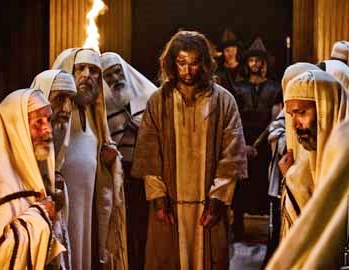
1 SAMUEL #26: ABIGAIL SAVES THE DAY

Image generated by Microsoft CoPilot

Faced with a similar situation to the time Saul was in his cave, this time David almost failed, and took things into his own hands. Thankfully, the Lord sent a gracious, wise woman to remind him of right and wrong, and of the Lord’s promises. What about you and me? How do we respond when we are angry, or when we want to control things? Just as David was an example for us last time, Abigail is the one to imitate this time: to graciously speak the truth, and entrust ourselves to the Lord with the results.

To listen to the sermon, click the play button:

For some people, the player above may not work. If that happens to you, use the link below to either download, or open a player in a new page to listen.

To download, right click on the link (or do whatever you do on a Mac) and save it to your computer: Download 1 Samuel Part 26

1 SAMUEL #26. 1 SAMUEL 25:1-38

As always, I strongly encourage you to read all of the text for this time, which is 1 Samuel chapter 25:1-38. It’s a little long to include as part of the text of the message here. Depending on what version you use, some things might be a little bit unclear, so let me set the stage. After the incident when David spared Saul’s life, Saul left David alone for a while, but apparently their issues were not really resolved. He didn’t invite David back to rejoin him in peace, and David didn’t push his luck. Instead, David and his men retreated further into the wilderness at the southern edge of Israel, the wilderness of Paran. This is desolate country, and it goes almost all the way down to the northeast corner of the Red Sea. It included some of the region where the Israelites wandered for forty years with Moses. In David’s time, it might have been a bit more green than now, however, it was still at least semi-arid, and people who kept large herds of sheep had to wander far into this wilderness in pursuit of water and food for the animals. There were no permanent towns or settlements there; it was kind of a no man’s land.

There was a man named Nabal who lived at the northern edge of this wilderness. He was very wealthy, and had large flocks of sheep and goats. Apparently, he regularly sent hired shepherds out into the wilderness of Paran with his flocks. They generally spent months at a time out with the flocks in this area. It was lonely and dangerous work for the shepherds. From time to time lions, bears and other animals attacked the sheep. At times lawless bandits would swoop down out of nowhere and steal some of the animals. In the spring time, the shepherds would return north with the sheep, bringing them back to the town of Carmel, where Nabal, the owner, would have them sheared, sell the wool, and butcher some of them also, and feast on the bounty of the harvest.

While Nabal’s shepherds and flocks were out in the wilderness, they encountered David and his men. At this point, David’s band numbered about six hundred. There was no way they could hunt and gather enough food to supply so many, therefore, it is certain that David and his men relied upon the kindness and generosity of others who lived at the edge of the wilderness. In spite of their need, they did not take any of Nabal’s sheep or goats when they encountered them. They certainly could have simply taken as many of the animals as they wanted – no small band of shepherds could have prevented them. Instead, they helped guard Nabal’s flocks against bandits and wild animals. In the springtime, when the herds were brought back from the wilderness, no doubt there were more than usual, since David’s men had helped protect them from the normal losses due to wild animals and bandits.

The owner of these animals, Nabal, was now cashing in on the bounty that David had helped to secure. So David sent word to Nabal respectfully asking for help for his men. He probably felt that one good turn deserved another. He could have demanded a certain percentage. He could have held all of the flocks of sheep for ransom in the wilderness until Nabal agreed to help him. Or, he could have simply taken them all. Instead, he basically said, “I have freely given protection to your people and animals. Ask your shepherds, and they will tell you. Now, would you please give us whatever you think is appropriate.”

Nabal responded with contempt and derision. He not only refused to help, but he deliberately insulted David.

Remember the previous chapter? Saul was trying to find and kill David. Though David had never done him wrong, and in fact, had risked his life time and again in Saul’s service, Saul was hell-bent on destroying David. (I am not swearing when I say “hell-bent,” I mean it literally. Saul’s rejection of God left him with a soul that was twisted to the purposes of hell). Even so, when David had the chance to fight back and destroy Saul, he did not do it. Instead, he said, “Let the Lord judge between me and you. Let the Lord bring about vengeance, if that is what he wants to do, but my hand will never be against you.” He rested in the Lord’s purposes, and refused to take matters into his own hands.

Well, here we are in a similar situation. Another powerful man had treated David unfairly. David had the ability to do something about it. But this time, David lost his cool. Rather than trusting the Lord to judge Nabal, he got into a towering rage, and started north with four-hundred of his men to destroy Nabal and his little empire.

And then comes the real heroine of the story, Abigail. She was Nabal’s wife. Some of Nabal’s men came to her, and explained what had happened. She made some immediate emergency decisions, and went out to meet David with plenty of food and supplies for his men.

Some of you have heard me preach through New Testament passages that teach us about biblical roles for women and for men. I think of Abigail as an amazing example of a woman who was used by God as a woman – not as a man. This is how it might look sometimes as we engage in the gender dance the Lord has designed for us. Abigail was wiser than everyone around her at this point in time. For a while, she was the only one who was truly committed to doing what was righteous, and she had to deal with two men in leadership who both wanted to do wrong (that is David, and Nabal). But she approached the situation with an amazing womanly grace and uniquely feminine strength.

She offered David gifts for himself and his men, which was the right thing to do. She also apologized for her husband. There is a play on words here. His name, Nabal, would have been pronounced “nu-bawl.” A Hebrew word for foolish or worthless is pronounced “nu-bawl-uh.” It’s a little like saying “Stu is acting just like his name: stupid.” (Deepest apologies to anyone named Stu who might be reading this).

Throughout the narrative it is clear that Abigail placed herself in David’s hands, and under his authority. However, while she was clearly submissive, she was not subservient. She did not hold back from exhorting David to do what was right. She reminded him of God’s promises to him. In particular, she gently reminded him that up until this point, he had fought only the Lord’s battles, and this battle he was going toward at that moment was not the Lord’s fight.

28 Please forgive my offense. The LORD will certainly give you, sir, a lasting dynasty, because you are fighting the LORD’s battles. May evil never be found in you as long as you live. 29 Even though someone pursued you and sought your life, your life is wrapped in the bundle of life which comes from the LORD your God. But he will dispose of the lives of your enemies like stones thrown from a sling. 30 When the LORD does all the good he promised and makes you ruler of Israel, 31 you shouldn’t have a troubled conscience because you spilled blood for no good reason and claimed your own victory. (1 Samuel 25:28-31, God’s Word)

You can see that she reminded him of the incident with Saul that we read about in the previous chapter. That might have been months, or even years, ago by this time. She pointed out that David was once again in the same kind of situation. She encouraged David to trust the Lord, not his own strength, and to trust the Lord’s promises to him. She pointed out gently that destroying Nabal would be something he would regret later, and it would be a shameful blemish on his record of trusting the Lord. She did it all with womanly grace and attractiveness.

There is no doubt that Abigail was in the right, while both David and her husband were wrong. Even so, there is no sense in this narrative that Abigail has somehow taken on the role of a man, or that she was imposing some sort of authority or leadership over either one of them. This is one example of what biblical submission can look like. You can see it is not subservience, or rolling over and accepting whatever men want to say or do. In her submission, her grace and wisdom were powerful and attractive. Abigail is a beautiful example of a woman who plays a significant role in God’s kingdom without violating what the Holy Spirit says elsewhere in scripture about gender roles.

And here is something important: she really got David’s attention. I suspect that David, being in the foul mood he was in, would have reacted angrily to a man who came and told him he was being stupid and making a mistake. But Abigail, with her womanly grace, completely disarmed him. He repented, and freely confessed that she was right and he was wrong.

They parted, but obviously, David never forgot the exchange. Abigail went home. She was still in a tough place, because now that she had dealt with one angry man, she had to deal with another, her husband. We have to read between the lines, but everything I see here suggests that Abigail was trusting the Lord to work out that conversation also. The next morning she told her husband, straight out, what she had done. Apparently very soon after, he had a seizure from which he never recovered. The Lord took care of it for her. I think the last time I preached about male and female roles it was from 1 Peter chapter 3. One thing I said there is that women are not being asked to trust their husbands, rather, they are asked to trust the Lord. Abigail did exactly that.

So, a couple thoughts for application. I like knowing that David needed help. Here was the man who would become the greatest king known to Israel, and not only is he in hiding, but he is barely holding on, dependent upon donations from kind friends and strangers. David wasn’t just a lucky guy who had everything fall into place for him. He spent a significant portion of time in real need, and he never would have made it without help. This is humbling, but the fact that David lived this way encourages me when I feel humbled by my own needs.

When I was preparing this sermon, I wrote the paragraph after this one, and then took a break. During the break I found out that the person who repaired my wife’s computer not only failed to fix it, but also told us that her hard drive was dead (it was working just fine when we turned it in). In addition, without mentioning it, he removed her original hard drive, which was 256GB, and replaced it with one that was half the size. For the privilege of secretly taking our hard drive in exchange for a smaller one, and not fixing the computer, they charged us almost $200. Did they think we wouldn’t notice that it was a different hard drive? Were they treating us like idiots? I was caught up in thinking about all the things I would like to say to them, and the review I would write, and maybe a phone call to the appropriate authorities. In that frame of mind, I returned to work on this sermon, and read the following paragraph, which I had written just before the break:

I think the more important message, the main one, is about trusting the Lord, and not taking matters into our own hands. David made a great choice with regard to that in the incident with Saul. But this time, David let the situation get to him. Abigail had to remind him to leave it with the Lord, or he surely would have done something that he later regretted.

Sometimes, it’s hard to be a preacher. Seriously, this sort of situation really gets under my skin, and in the past I have sometimes said things (or said them in a particular tone) that would make me embarrassed to later tell the person I am in conflict with that I am a Christian and a pastor. I have never sworn at anyone, but I have certainly been angry, and said things that were unkind and unchristian.

I let things sit for a day or two, and then all the way to the shop I prayed that I would not be a poor representative of Jesus to the repair guy. The situation is still ongoing as I write this, but I can report that I didn’t say or do anything I regret, and even after our encounter, I wouldn’t be ashamed to tell the guy that I am a pastor.

As it turns out the message from this chapter of scripture is one that is repeated in many places throughout the Bible:

35 Vengeance and retribution belong to me [says the Lord]. (Deuteronomy 32:35, ESV)
22 Do not say, “I will repay evil”;
wait for the LORD, and he will deliver you. (Proverbs 20:22, ESV)
29 Do not say, “I’ll do to them as they have done to me;
I’ll pay them back for what they did.” (Proverbs 24:29, ESV)
17 Repay no one evil for evil, but give thought to do what is honorable in the sight of all. 18 If possible, so far as it depends on you, live peaceably with all. 19 Beloved, never avenge yourselves, but leave it to the wrath of God, for it is written, “Vengeance is mine, I will repay, says the Lord.” (Romans 12:17-19, ESV)
19 Remember this, my dear friends! Everyone must be quick to listen, but slow to speak and slow to become angry. 20 Human anger does not achieve God’s righteous purpose. (James 1:19-20, GNT)

Maybe you don’t tend to lose your cool, like I do. Many people who remain calm still struggle with the impulse to control everything. You might feel uncomfortable waiting for God to do his thing, maybe you wonder if he is ever even going to act, and so you take matters into your own hands, in order to make sure that it does get done, and gets done the way you want it to be. I think this passage is for you folks, as well. Part of David’s problem was uncontrolled anger. But the text clearly shows that part of the danger for him was the temptation to take matters into his own hands. I have observed that many people struggle with that same temptation.

Of course, there is a balance. We aren’t supposed to sit on our hands and never do anything. At times, following Jesus means we ought to do something in various situations. But even when we act, we need to do it with a sense that Jesus is acting through us. If you struggle to tell the difference between controlling things for yourself, or acting in response to faith in Jesus, ask yourself this question: Are you OK if things turn out differently than you intended them to? If you aren’t, you might be trying to control things. On the other hand, if you are OK no matter how things turn out, then you are probably acting from a place of faith.

One of the encouraging things here is that David blew it here, but someone else came along to graciously steer him away from doing the wrong thing. The Lord knows we are not perfect, and he has never expected his people to follow him without help. He gives us the help of the Holy Spirit inside us, and also, as demonstrated in this text, he gives the help of other people who are also trying to follow him.

Listen to what he has to say to you today.

1 SAMUEL #25: HISTORY’S MOST EXCITING POTTY BREAK

David once again shows us what genuine trust in the Lord looks like. He apparently had an amazing opportunity to end his troubles and enter his destiny as God’s chosen king. However, David refused to take it, because it involved harming the man who was trying to kill him. It was more important to him to be right with the Lord than to achieve his ambitions. He trusted that the Lord would bring it about in His own time, and he, David, would not have to compromise to receive what God had promised.

To listen to the sermon, click the play button:

For some people, the player above may not work. If that happens to you, use the link below to either download, or open a player in a new page to listen.

To download, right click on the link (or do whatever you do on a Mac) and save it to your computer: Download 1 Samuel Part 25

1 SAMUEL #25. CHAPTER 24:1-22

This is one of my favorite stories in the entire history of David. I think what David does, and what he refrains from doing in 1 Samuel 24, shows more courage, faith and heart for God than any of his amazing feats in battle. This is David at his best.

I want to briefly summarize the end of chapter 23, since we did not cover it in detail anywhere else. After David left the town of Keilah, he took his men and went into the wilderness on the other side of the Judean mountains. It may have been more green there 3,000 years ago, but these days, it is mostly desert. It was farther away from Saul, and in terrain that was significantly more rugged. Even so, Saul pursued David there several times, hoping to capture or kill him. During this time, Jonathan came secretly to David, and “encouraged him in his faith in God.”

I think I mistakenly said in an earlier sermon that the last time David and Jonathan ever saw each other alive was recorded in chapter 20. I was wrong, obviously. However this, here, in chapter 24, was indeed the last time the Bible records them being together. I want to focus for a minute on this last meeting of the two friends:

15 David was in the Wilderness of Ziph in Horesh when he saw that Saul had come out to take his life. 16 Then Saul’s son Jonathan came to David in Horesh and encouraged him in his faith in God, 17 saying, “Don’t be afraid, for my father Saul will never lay a hand on you. You yourself will be king over Israel, and I’ll be your second-in-command. Even my father Saul knows it is true.” 18 Then the two of them made a covenant in the LORD’S presence. Afterward, David remained in Horesh, while Jonathan went home. (1 Samuel 23:15-18, HCSB)

Remember, Jonathan, like David, had a heart for God. Like David, he was filled with faith, and confident that God would fulfill his plan. In fact, Jonathan was entirely at peace with the idea that David, not he, himself, should be the next king. What a contrast between Saul and his son! Saul thought David might be God’s next chosen king, and his reaction was to be filled with hate and fear, and to try and kill David. Jonathan thought the same thing, but his reaction was to encourage David. Jonathan’s faith is even more amazing when you think about the fact that at this time, David was running for his life. It sure didn’t look like David was ever going to be king. Even so, Jonathan had confidence that the Lord would take care of David, and that he would make sure his plan indeed happened. Jonathan himself encouraged David with this attitude.

I love that one line: Jonathan encouraged David in his faith in God. Even David, man of God, sometimes needed encouragement to continue to trust the Lord. If that was true of David, how much more so of us.

The people of the region betrayed David, as the citizens of Keilah had done. When you read the Psalms that David wrote, you will often find references to treacherous people, liars and friends who betray. This is because this sort of thing happened to David astonishingly often. In spite of his integrity and the help he brought to others, in spite of his faithfulness to God and respect for Saul as king, people were quick to believe the worst of him, and spread lies about him, and betray him to Saul.

I don’t know about you, but this encourages me. I think my natural expectation is that if I surrender my life to Jesus and have integrity in letting him live through me, people will see it, and like it, and praise God for it. I expect a positive response to God’s life shining through me. I expect good results, and favor with people. But Jesus said we ought to expect the opposite:

18 “If the world hates you, understand that it hated Me before it hated you. 19 If you were of the world, the world would love you as its own. However, because you are not of the world, but I have chosen you out of it, the world hates you. 20 Remember the word I spoke to you: ‘A slave is not greater than his master.’ If they persecuted Me, they will also persecute you. If they kept My word, they will also keep yours. 21 But they will do all these things to you on account of My name, because they don’t know the One who sent Me. (John 15:18-21, HCSB)

He explains that there is blessing for us in this situation:

10 Those who are persecuted for righteousness are blessed, for the kingdom of heaven is theirs. 11 “You are blessed when they insult and persecute you and falsely say every kind of evil against you because of Me. 12 Be glad and rejoice, because your reward is great in heaven. For that is how they persecuted the prophets who were before you. (Matt 5:10-12, HCSB)

Peter, in his first letter, also talks about this:

19 For it brings favor if, mindful of God’s will, someone endures grief from suffering unjustly. 20 For what credit is there if you sin and are punished, and you endure it? But when you do what is good and suffer, if you endure it, this brings favor with God. (1Pet 2:19-20, HCSB)
13 And who will harm you if you are deeply committed to what is good? 14 But even if you should suffer for righteousness, you are blessed. Do not fear what they fear or be disturbed, (1Pet 3:13-14, HCSB)

Seeing the life of David, and hearing what the New Testament says, gives me hope. Being a person with a heart for God is not necessarily a way to get a whole bunch of people to like you. It isn’t a road to sure success. It is often the opposite. But I cling to these promises that there is great blessing for us in those sorts of trials, sooner or later. At this point for David, he experienced the persecution, but not the blessing.

At one point, David was almost caught. He and his men were in a valley or canyon, and Saul and his men were coming down another valley on the opposite side of the mountain. They were gaining on David. But before they could close, messengers found Saul, reporting that the Philistines were attacking elsewhere in Israel. Saul had to break off the pursuit. Once again, I want to point out that David did not know what his future held. He didn’t know for sure what God was doing, and he might very well have been caught. In that particular incident, it must have seemed like it was merely lucky timing that saved him.

And then we come to the incident described in chapter 24. Saul was back to his new hobby of trying to find David and kill him. He and his men were traipsing around the rugged desert and mountain terrain where, according to rumour, David was hiding. They weren’t having any luck. David appeared to be miles away. One day, Saul had to relieve himself, and he went into a cave alone for privacy. It just happened to be the cave where David and some of his men were holed up.

I want to make sure we understand the scenario. David was anointed by Samuel to be God’s chosen instrument. David and his brothers (who were there at the anointing, and with him in his trials) probably assumed that the anointing also meant that he was supposed to be Israel’s next king. Jonathan certainly thought so, and so did Saul, and probably, along with his brothers, the rest of David’s men. Israel’s present king – Saul – who was no longer God’s instrument, has been trying for a long time to kill David. Now Saul was alone, unarmed and unaware, standing right in front of David, sun-blind in the dark cave, back-turned with his pants down. Saul could not have been more helpless.

David could not have possibly have had a better opportunity to kill Saul without hurting anyone else.

David’s men believed that this was a gift from God. Surely Now was the time for David to kill Saul, and become king himself. I suspect that nine people out of ten would agree with David’s men. Killing Saul at that moment would have been easily justifiable self-defense – after all, Saul was there for the express purpose of killing David. Saul was acting contrary to God’s stated will and purposes – he was trying to kill God’s chosen instrument. So killing Saul would be not only self-defense, but also protection of God’s work in the world. I don’t believe there was a person living at the time who would have blamed David.

Hopefully, you have read the scripture. You know what happens: David creeps forward, knife held low and ready. He raises his arm to strike…and then lowers it, and quietly cuts off the corner of Saul’s robe. He creeps back to his men, and a furious but quiet argument ensues. Now David’s men, seeing that he will not kill Saul, are eager to do the deed themselves. Once again, who could have blamed David if he had let one of his men do it? Not only would he have the justifications listed already, but he could always claim that it wasn’t actually him who killed Saul, and he really didn’t want it to happen. But David argues vehemently, and commands his men not to touch Saul. Finally, Saul leaves the cave and the opportunity is lost.

I picture that the cave was up on the slope of a hill or something. After Saul has gone down a little ways, David emerges, and calls to Saul. He bows low to the ground in respect. Then he shows Saul the corner of his robe and says:

11 See, my father! Look at the corner of your robe in my hand, for I cut it off, but I didn’t kill you. Look and recognize that there is no evil or rebellion in me. I haven’t sinned against you even though you are hunting me down to take my life. 12 “May the LORD judge between you and me, and may the LORD take vengeance on you for me, but my hand will never be against you. 13 As the old proverb says, ‘Wickedness comes from wicked people.’ My hand will never be against you. (1Sam 24:11-13, HCSB)

All this wisdom from a man not yet thirty years old. But of course, it wasn’t really David’s wisdom – it was the Spirit of God at work within David. I think the key is verse 12: “May the Lord judge between you and me, and may the Lord take vengeance on you for me, but my hand will never be against you.” David literally refused to take matters into his own hands. Remember when Saul was about to lose the entire southern portion of Israel? His army was deserting him, Samuel wasn’t showing up, and so Saulheld a worship service merely for the purpose of getting people to stick around. Saul took matters into his own hands. But David would not do that. His trust was not in what he could do, but in what the Lord said the Lord would do.

We tend to look at circumstances as if they “prove” what God wants us to do. I think this is a very dangerous tendency. I knew a man who thought God was calling him to have an affair, because he felt that circumstances had so clearly put him and the other woman together. He thought it must be God. I am not making this up. It might be better to wonder if circumstances are being used by the devil to tempt us. Now, I’m not saying that circumstances never align with God’s will, but it should not be our default position to think that.

However, there is a natural question. When God sends your enemy into your cave with his pants down, unable to see in the dark, facing away from you, how do you know that it isn’t God’s will for you to kill him? I mean, we’ve already offered many reasons why no one would condemn David for doing it. So how did David know he shouldn’t do it?

I think there are two answers. The first is one that I never get tired of talking about: we need to live in a day-by-day, moment-by-moment relationship with the Lord. The ten commandments told David not to murder, but it would have been easy to justify it as self-defense, or war, not murder. David, like us, had to rely on a connection of faith with the Lord. Through that faith, the Lord communicated to him that it would be wrong. In the first place, let’s get real: if stabbing an unarmed, unaware person in the back isn’t murder, what is? David knew that the word of God was against murder.

We might say also, that David knew in his heart that to kill Saul was wrong. However the reason he knew it in his heart is because he knew the word of the Lord (in this case, “do not murder”), and he knew the Lord himself. It isn’t some mystery. If we want to know the will of the Lord, we too need to know His Word (the Bible) and spend time with him in prayer, worship and fellowship with other believers. Without that, what we “know in our hearts” might be very, very wrong.

I also think that for David, the Lord guided him in this situation through other “ordinary” factors. David, at least for a while, viewed Saul like a second father. Though Saul seemed to hate David, David did not hate in return. He still respected him, and had affection for him, and he was sad that they couldn’t have the relationship they used to have. In addition, I think David probably thought something like this: “How could I ever look my best friend Jonathan in the eye again, if I kill his father?” These might seem like very ordinary, “unspiritual” factors to go into such an important decision, but I think that the Lord uses exactly such things to guide us at times. He made each one of us. He knows the way each of us tends to make decisions, and honestly, I think we are too quick to put things into the category of “spiritual” and “unspiritual.” In my own opinion, everything is spiritual, because all of life belongs to the Lord.

Another thing is this: I think the Lord allowed David to see that to kill Saul at this point would be taking matters into his own hands, rather than trusting. I believe that there are times when God calls us to act speedily and courageously without hesitation. But there are also times when the Lord calls us to let opportunities pass by, and trust Him to bring about his purposes in his own way. Personally, I think the second way is harder, and in our culture we almost never think that way. We typically assume that if we see a means to meet our goals, it is God giving us that chance, and we should take it. Sometimes, that may indeed be true. But sometimes the Lord calls us to wait and trust so we can receive it from him, not get it by our own effort. Especially in our world today, I think we need to consider waiting on God as a first option, and only act if we are sure God wants us to. I say this because our culture will never encourage us to do that. We are taught by everything around us to act rather than wait.

Consider this: if David had killed Saul at this point, he might always afterwards wonder if God really wanted him to be king, or, if he had simply made himself king. And there was something that was more important to David than reaching his goal of becoming king. It was more important to him to be right with the Lord than to achieve his ambitions. So he said, “Yes, I’d like the Lord to judge you Saul, for what you’ve done. But my priority is not to judge you, nor to make my goals happen. My priority is to be right with the Lord.”

I want to point out that David did not meekly accept the way Saul was abusing him. He confronted Saul about how unjust he was being. He had proved his loyalty, and proved Saul’s own suspicions to be false, and he pointed those things out to Saul. He confronted Saul with the truth, but he left judgement to the Lord. So, when we are treated badly, it is not necessarily wrong to  speak out against it. It’s not necessarily wrong to get out of a bad situation if we can. But like David, we can leave judgment to God.

So, today, what’s your priority? Think of something that you really, truly want. Now imagine that you have the power to make it happen, right now. It would be easy. Would you do it, even if you knew in your heart that God didn’t want you to?

Now, I don’t want the message to be that we are just not as righteous as David. That’s not actually true. David wasn’t any better than us. He just learned to trust God, and he made that trust the primary and most important part of his life. But he wasn’t perfect. In fact, we’ll see in the next chapter that David forgot every thing he had demonstrated here, and had to be reminded of it. So, the message is: Trust God. I’ll say it again: Trust God. The thing that you want so much, the thing that you are convinced is even God’s will for you – God will take care of that. David eventually did become king. It didn’t happen that day. In fact it was still years away. But God did take care of it. He worked it out the best way possible.

I want to add something else. Maybe you’ve tried to trust God, and you haven’t been able to do it like David did. Understand this: David trusted God by the power of the Holy Spirit. If we want to trust God, it is more about surrender to the work of the Holy Spirit in us than about us trying hard. It’s about giving permission to the Lord to lead you. Once you give that permission, and you surrender your choice to God’s best will, search the scriptures, and if you have no definitive answer from that, do what seems best, trusting that the Lord is leading you.

Also, we need to remember that when we fail, we have the Anointed One, Jesus, who trusted God perfectly, on our behalf. He did what we could not do, so that when we fail (not if!), we can trust that he has made it right between us and God. To do better next time, the main thing we need is more trust.

So trust him.

1 SAMUEL #22: FOLLOWING AN EXILED KING

Picture generated by Microsoft Copilot

David and his men teach us some things about Jesus and his followers. Like the followers of David, we come to Jesus desperate and poor. Like David’s men, following Jesus means we are “all in,” with no backup plan. We are called to wholehearted commitment to Jesus. When we answer that call, even our ordinary lives are significant in the spiritual realm.

To listen to the sermon, click the play button:

For some people, the player above may not work. If that happens to you, use the link below to either download, or open a player in a new page to listen.

To download, right click on the link (or do whatever you do on a Mac) and save it to your computer: Download 1 Samuel Part 22

1 SAMUEL #22. 1 SAMUEL 22:1-12

1 David departed from there and escaped to the cave of Adullam. And when his brothers and all his father's house heard it, they went down there to him. 2 And everyone who was in distress, and everyone who was in debt, and everyone who was bitter in soul, gathered to him. And he became commander over them. And there were with him about four hundred men. 1 Samuel 22:1-2

In the previous message we saw how David took the time to stop at the tabernacle to worship the Lord. This almost certainly cost him the chance to go home to Bethlehem for a final time before his exile. He did this because he wanted to be in the presence of the Lord once more. He wanted to hear what God had to say to him in this difficult circumstance. Those things were more important to him than home, family or even the certain help he would have received in Bethlehem. After stopping at the tabernacle, he went to Philistine territory, but found life among his enemies to be very insecure. Realizing he’d made a mistake, he fled from there, and ended up hiding and living in a cave near a place called Adullam. In fact we now know that there is a whole network of caves in that area.

Pause for a moment and consider how low David has fallen. He was anointed to be God’s chosen instrument, ultimately, to be the king. He served as a feared and honored warrior – he was, in fact, a national hero. He was the son in law of the king. He had lived in comfort and honor. Now he is hiding for fear of his life, in a cave. Caves are not known for their comfort. There is nothing soft to sleep on. There is no natural light. There are no bathrooms, so after a while of living there, it would smell pretty ripe. And yet, David’s heart didn’t falter. He did not appear to think he was somehow too good to live that way. Arthur W. Pink commented on this:

“The high favorites of Heaven are sometimes to be located in queer and unexpected places. Joseph in prison, the descendants of Abraham laboring in the brick-kilns of Egypt, Daniel in the lions’ den, Jonah in the great fish’s belly, Paul clinging to a spar in the sea, forcibly illustrate this principle. Then let us not murmur because we do not now live in as fine a house as do some of the ungodly; our “mansions” are in Heaven!”

Sometimes I think we Christians in the Western world are a little soft. God loves to bless his people, but his main purpose for us in this world is not that we merely feel comfortable. David was God’s chosen instrument, just as we Christians are today. And the Lord was with him in the cave, perhaps even more potently than when David finally lived in a palace. We need to take the long view, the view of eternity. What happens here and now is not the end. I like where I live right now, but it is a dump compared to my permanent home in heaven. David knew that was true for him as well.

There are two Psalms that show in the superscription that they were written by David “in the cave.” Unfortunately for David, he spent time hiding in several different caves, and at different periods in his life. So we can’t know for sure that these were written in the caves near Adullam at this particular time. But there’s a good chance that  either one or both of Psalm 57 and 142 were written at this point in his life. Remember, the Psalms are not collected in chronological order, so 142 could easily have been written before 57.

Both Psalms start with David expressing fear and anguish at his dangerous and uncertain situation. But both end with him declaring his trust in the Lord, and his praise to him. Psalm 142 seems particularly appropriate for David’s situation in 1 Samuel 22.  The last line of Psalm 142 says, “The righteous will gather around me; because you deal generously with me.”

 This is a declaration of trust. It is also an optimistic take on what actually happened shortly afterwards. David’s brothers and his father’s whole family came to live with him in the cave. He was no longer all alone – his family shared in his hardship and persecutions. In addition, more men joined him until there were about 400 altogether. The text says that these men were all either “desperate, in debt or discontented.” It doesn’t sound exactly like “the righteous.” It sounds more like a ragtag band of malcontents and ne’er-do-wells. David’s family aside, these sound not like the cream of the crop, but rather the sludge of society.

However, they all agreed upon one thing – David was now their leader. This was actually a pretty big deal. As we will learn next time, Saul the King felt that anyone who helped David was committing treason, and he sentenced them to death. So when these men gave their allegiance to David, they forfeited their lives. There was no going back. If David was not vindicated, if he didn’t end up as the true king, they were dead men.

In the Old Testament, sometimes we encounter people or events that theologians call “a type of Christ.” What they mean is, sometimes God used historical events or individuals to show the world what Jesus was like, even though Jesus had not come yet. It is a foreshadowing – a partial picture of what the real messiah will look like. These “types of Christ” serve two purposes. First they were for the people in Old Testament times, to help them understand what God is really like, and how he really saves people. Remember, Romans 3:25-26 tells us that even people in Old Testament times were saved through Jesus, as God looked ahead to what he was going to do at the cross. And so there are these shadows and parts of pictures that gave people a sense of what was to come. Second, these “types” are there to strengthen our faith. Even the Old Testament is all about Jesus, and so when we read it, we should be looking for Jesus and how it shows Him to us.

By the time Jesus walked the earth, even the Jewish Pharisees believed that many of the people and incidents in the Old Testament were pictures of the coming Messiah. In particular, the Jews felt that David’s life and character would help them to identify what the Messiah was like. David was anointed with oil and with the Holy Spirit to be God’s uniquely chosen instrument. Both the Hebrew word “Messiah” and the Greek “Christ” mean simply “anointed one.” Jesus Christ means “Jesus, Anointed One.” So some of the life of David, the anointed one, looks ahead to the ultimate Anointed One.

In this particular case, there are several significant comparisons. David was God’s chosen anointed one, and yet he was rejected by the leader of the nation. He lived with integrity and didn’t do anything wrong, yet he was forced to live as an outcast. Jesus was God in flesh, the Ultimate Anointed One, and yet he was rejected by the status quo of Israel. He too was an outcast. David accomplished miraculous things in battle against the Philistines. Jesus also performed many miraculous signs – healings, driving out demons, calming storms and more. He destroyed demonic enemy strongholds.

There is one “type of Christ” in this passage that I want to dwell on a little bit longer, and that is the followers of God’s anointed. The men that followed David were of no account. They were shiftless and in trouble, the dregs of society. And yet mostly from these ragtag 400, came some of the mightiest names in the history of Israel. There was an exclusive trio of warriors, known as “the three.” One of the three was the warrior Eleazar. Once he and David were surrounded by Philistines in an open field. They stood back to back, just the two of them, and fought against dozens, or possibly hundreds, of enemies. They prevailed and all their enemies were killed (1 Chronicles 11:12-14; 2 Samuel 23:9-10). There was a larger elite force of “thirty mighty men.” From what we can tell, they all started out among this group of no-name, no-account people who came to David long before he actually became king.

In the same way, the important members of society did not join the ragtag band of Jesus’ disciples. Instead he got tax-collectors, prostitutes and smelly, calloused fishermen. He had his “three” – Peter, James and John. He had his twelve then beyond that, a few more.

The followers of David had to be kind of desperate to go to him. They were literally giving up everything to join him. If he didn’t come through, they were lost. There was no halfway commitment. This wasn’t, “I’ll go hang with David for a while, and if it doesn’t work out, I can always go back.” No it was an irrevocable alignment with David, breaking off the loyalties of the past.

Jesus calls for that kind of allegiance from us also. He doesn’t want us to come to him, keeping our options open in case something we like better comes along.

37 Whoever loves father or mother more than me is not worthy of me, and whoever loves son or daughter more than me is not worthy of me. 38 And whoever does not take his cross and follow me is not worthy of me. 39 Whoever finds his life will lose it, and whoever loses his life for my sake will find it. (Matthew 10:37-39, ESV)
24 Then Jesus told his disciples, “If anyone would come after me, let him deny himself and take up his cross and follow me. 25 For whoever would save his life will lose it, but whoever loses his life for my sake will find it. Matthew 16:24-25

Peter and the twelve, like the first followers of David, went all in. Peter expressed the kind of commitment they made to him:

After this many of his disciples turned back and no longer walked with him. So Jesus said to the Twelve, “Do you want to go away as well?” Simon Peter answered him, “Lord, to whom shall we go? You have the words of eternal life, and we have believed, and have come to know, that you are the Holy One of God.” (John 6:66-69, ESV)

Peter was saying “We have nowhere else to go. We’re with you all the way – we have no backup plan.”

Just as David’s followers were desperate and poor, Jesus calls to the broken and poor in spirit. Let’s face it, it is hard to really give ourselves over to Jesus unless we realize that without him, we are lost. Paul describes it like this:

26 Brothers, consider your calling: Not many are wise from a human perspective, not many powerful, not many of noble birth. 27 Instead, God has chosen what is foolish in the world to shame the wise, and God has chosen what is weak in the world to shame the strong. 28 God has chosen what is insignificant and despised in the world — what is viewed as nothing — to bring to nothing what is viewed as something, 29 so that no one can boast in His presence. 30 But it is from Him that you are in Christ Jesus, who became God-given wisdom for us — our righteousness, sanctification, and redemption, 31 in order that, as it is written: The one who boasts must boast in the Lord. (1Cor 1:26-31, HCSB)

Now, let’s be honest. Sometimes it seems like it might be more exciting to be one of David’s men than to follow Jesus. I mean, as I read this, I think about David and Eleazar fighting back to back against the Philistines. It’s like a scene out of Lord of the Rings or some other action movie involving heroic hand-to-hand combat. It’s amazing. I often wonder if this real history might have been the inspiration for the legend of Robin Hood. Even if Robin Hood was real, he might have been inspired to his deeds by this very story. There are battles, betrayals, secret hiding places, defections. It is all very well to say David is a type of Christ, but most of us will go through our entire lives without these types of exciting events. Following Jesus can seem almost boring. I mean we go to work or school and come home and do stuff, go to bed and then get up and do it all again. Sometimes we’re so bored, we make excitement for ourselves, even when it’s self-destructive.

I think that is all because we fail to recognize the spiritual reality that exists with and alongside our world, hidden, but no less real. What David and his followers were involved with physically, Jesus and his followers are engaged in spiritually. David was the king who was chosen by God, but rejected by many of the people. He lived almost as an agent in enemy territory, gathering those few worthless people who had nowhere else to turn to help him. In the same way, C.S. Lewis describes our life of following Jesus like this:

Enemy occupied territory – that’s what this world is. Christianity is the story of how the rightful King has landed, you might say landed in disguise, and is calling us all to take part in a great campaign of sabotage.

–C. S. Lewis, Mere Christianity

You see, though the battle is more spiritual than physical, it is no less real for all that. We have a faithful, loving intrepid leader. We are undercover – living as part of society, but not living for the same purposes as the rest of the world. Sometimes perhaps we need to wake up, and open up our lives to be more engaged in this secret mission. We need to be more aware of how the Lord wants to work, to be more aware of the people he is bringing across our paths and into our lives. I think when we are in the new creation we will be amazed at how significant our ordinary lives were. We’ll see how amazing it was that we said that encouraging word, or spoke the truth into a hostile situation, or forgave others, or showed them compassion. I think in the spiritual realm, these sorts of things are actually great battles, moments that will amaze us as much as we are amazed by the exploits of David’s mighty men – or maybe even more.

Joining the Rebel King paints a target on our backs, a target his enemies would love to use. But if we trust him and submit to his leadership, he will mold us into mighty men and women of faith, significant in God’s kingdom forever.

If you have never done it, would you consider going “all in” on Jesus, right now? I mean burn your bridges, like the followers of David did. Have no backup plan if Jesus disappoints you in the short term. Give yourself fully to Jesus, and break forever from every other means of feeling good about your life. You won’t fit in very well with the world when you do this. But you gain far more than this broken world could ever offer.

HEAVEN, PART 3. WHAT DID JESUS HIMSELF PROMISE US?

Photo by Asad Photo Maldives on Pexels.com

Greetings, and Happy New Year!

This is the third (of four) in the series about Heaven from pastor Peter Churness.

To listen to the sermon, click the play button:

For some people, the player above may not work. If that happens to you, use the link below to either download, or open a player in a new page to listen.

To download, right click on the link (or do whatever you do on a Mac) and save it to your computer: Download Heaven Part 3

Peter preaches from an outline, and does not provide a written version, but below is a rough outline.

Jesus promised three major things about life after death:

  • 1. A home.
  • 2. Rewards
  • 3. A wedding (his own presence, fully with us).

Three major application points:

  • 1. Cultivate longing for your eternal home.
  • 2. Live in both worlds at once
  • 3. Evaluate your eternal investment portfolio.

PALM SUNDAY 2023

To listen to the sermon, click the play button:

To download, right click on the link (or do whatever you do on a Mac) and save it to your computer:
Download Palm Sunday 2023

Palm Sunday, 2023. Matthew 21:1-11

 This week we celebrate Palm Sunday. In many churches, Palm Sunday is celebrated with waving palm branches, songs of joy and praise and a big celebration. I’ve been in churches where someone actually rides a donkey down the aisle; I’ve seen camels in church (excerpt from building committee minutes “…discussed how to remove camel dung from carpeting in narthex…”) and just big Palm Sunday productions in general. I think Palm Sunday appeals especially to American Christians. It’s loud. It’s super-sized. It’s positive and fun. It’s a big ol’ church party.

Picture it. A swarming, wiggling mass of humanity has gathered near Jerusalem, to celebrate the Passover in the Holy City. The crowd struggles to squirm through the ancient gates. This is Christmas, only better, because it’s a week long. Some of the out-of-towners are telling stories about a man they’ve seen out in the countryside, near their homes. They tell that this man, named Jesus, borrowed a little boy’s lunch and fed 5,000 people with it. Some of the people in the crowd had personal contact with this Jesus character, and were healed of various diseases and ailments. One man in the crowd claims he was leper until Jesus healed him – some of the people move uneasily away from that one.

Now some of these country folk meet up with people who live nearby, in the town called Bethany. They recount how one of their own hometown boys, a guy named Lazarus, recently died of an illness. They buried him, naturally, and four days later, along comes Jesus, and raises Lazarus from the dead.

Soon a good portion of that boisterous, loud, pushy crowd is shouting back and forth snippets of gossip about Jesus. And then suddenly, from the middle of the crowd, the yelling rises above the usual raucous level. People ask their neighbors what’s going on. Soon the word comes back.

“That Jesus guy is here. He’s riding a donkey over there. Look at him!”

“He’s got a kingly bearing.”

“Who but God’s chosen messiah could do the things he’s done?”

“Jesus! Jesus!”

“Praise God! The messiah is here! Alleluia!”

The shouting catches on. The crowd sees a few Roman soldiers nearby and yells even louder, in defiance of their oppressors. Soon the whole crowd is cheering in one sustained unquenchable voice. The excitement grows. What a King Jesus will be! He’ll end hunger and poverty – after all he fed the 5,000. He’ll end sickness and disease – he’s done it before! And when we fight the Roman oppressors and kick them out – well if any of us get killed by the soldiers, Jesus will just bring us back to life and we’ll go on. With him as our King, we’ll be unstoppable! And so the crowd cheers. They cheer because it seems like God is about do something for his people Israel, once more. They cheer because they want their lives to be better, and for the moment, it seems like it is about to become so. They cheer because their neighbors are cheering. They cheer because they are stuck in this big hot crowd, and it relieves the boredom. They cheer because it gives vent to inarticulate passions that gnaw unfulfilled inside them. They cheer because they hate the Romans.

But in all that great thronging mass there is one man who is not cheering. He doesn’t rejoice with the crowd. The excitement and noise utterly fail to touch him. Their desire to overthrow the Romans doesn’t even begin to move him. The man who seems so different from the rest of the crowd, so disconnected from their excitement is right there in the middle of it all, even so.

He is the man on the donkey. Jesus.

Because he is a man of infinite compassion, Jesus, when he saw people who were hungry, fed them. Because he cares more deeply than other being that exists, Jesus healed sick people when he was near them. Because of his great friendship with Mary and Martha, Jesus raised their brother Lazarus from the dead.

But he didn’t come into the world mainly to heal people and feed them. He didn’t come to raise people from the dead and place them back into this mortal life of pain, sin and suffering – a two-edged resurrection if ever there was such a thing. And so, in the middle of that rollicking crowd, he’s the only one who truly understands that he is entering Jerusalem not as a King, but as a sacrifice. He came for something better than temporary healing, more satisfying than temporary food and more eternal than temporary resurrection. He came to give these people life that was far greater, deeper and permanent – life far more wonderful than what they are cheering about.

Lloyd Douglas, in his excellent novel, The Robe describes how a fictional Corinthian slave named Demetrius made eye contact with Jesus on “palm Sunday.”

The eyes calmly appraised Demetrius. They neither widened nor smiled, but in some indefinable manner, they held Demetrius in a grip so firm it was almost a physical compulsion. The message they communicated was something other than sympathy, something more vital than friendly concern, a sort of stabilizing power that swept away all such negations as slavery, poverty, or any other afflicting circumstance. Demetrius was suffused with the glow of this curious kinship. Blind with sudden tears, he elbowed through the throng and reached the roadside. The uncouth Athenian, bursting with curiosity, inopportunely accosted him.

“See him – close up?” He asked.

Demetrius nodded; and turning away, began to retrace his steps toward his abandoned duty.

“Crazy?” persisted the Athenian, trudging alongside.

“No.”

“King?”

“No,” muttered Demetrius soberly — “not a king.”

“What is he then?” demanded the Athenian, piqued by the Corinthian’s aloofness.

“I don’t know,” mumbled Demetrius in a puzzled voice, “ but – he is something more important than a king.”

The Robe, Lloyd Douglas

I think that often, I am like that Palm Sunday crowd. I cheer for Jesus because of what I think he will do for me – provide for me financially, or heal me, or get me out of the mess I’m in, or squash the people I don’t like. I am often interested in Jesus because he can make my life more comfortable right now. But Jesus — on that first Palm Sunday, and today as well – is interested far more real, eternal, life for me. That life starts right now – not when I die. But that doesn’t mean I automatically get to be more comfortable here. It’s sort of like asking him to get you an air mattress for the tent you live in next to the city dump, when all the while, he’s building you a 3 million dollar house in the countryside. The difficult part is, you have to give up the dump before you can move the country, before you can even see what the country is like. And you might have to go without the air-mattress so you can learn to want a feather-bed.

Jesus knew that to get that life for the crowd, he had to die. They thought he was coming as a king. He knew that he was coming to die a gruesome, ignoble, humiliating death. That Sunday was the same day that most people drove the lambs into Jerusalem – the Passover lambs that would be killed to remember God’s deliverance of his people. Jesus came into town like them – not gentle and fearful like a lamb – but like a Passover lamb in just this one respect – he was a sacrifice that would save all people from death and deliver us from our slavery to sin and grant us a new life.

There is indeed a lot to cheer about here – but it is not the stuff we most often dwell upon, or think about yelling for. As we celebrate Jesus today, let’s celebrate not so much the earthly, temporary things he could get us, but rather the eternal, unbreakable life, and forgiveness that he won for us, riding a little donkey toward his own painful death.

1 PETER #31: HUMILITY

The Bible

Jesus explicitly taught his disciples to be humble. Humility is not the same as humiliation. Jesus, being who he was, understood that he was, in fact, the most amazing being in the universe. Yet, he did not insist that others recognize him as such, even though he knew it to be true. The essence of humility is trusting God to make all things right, in his own time.

To listen to the sermon, click the play button:

For some people, the player above may not work. If that happens to you, use the link below to either download, or open a player in a new page to listen.

To download, right click on the link (or do whatever you do on a Mac) and save it to your computer: Download 1 Peter Part 31

Humility is a challenging topic for me to teach about, because it’s so difficult to be humble when you are as amazing as me. (Sorry, I had to do that one – it was so obvious!) Actually, when I think of how bad I am at humility, I am humbled. (OK, I’ll quit now). All right, on a serious note, I do actually struggle with the whole topic of humility, because I struggle with the idea of injustice. It seems wrong to me – unjust – when people are not recognized for their amazing gifts, achievements, or personalities, while other people, less deserving, get credit when they don’t really deserve it. However, Jesus and his apostles are crystal clear about humility: Humility is part of the character of Jesus, and therefore it should be part of the character of every Christian. Paul explains this in many places, but perhaps nowhere better than in his letter to the Philippians:

3 Do nothing from selfish ambition or conceit, but in humility count others more significant than yourselves. 4 Let each of you look not only to his own interests, but also to the interests of others. 5 Have this mind among yourselves, which is yours in Christ Jesus, 6 who, though he was in the form of God, did not count equality with God a thing to be grasped, 7 but emptied himself, by taking the form of a servant, being born in the likeness of men. 8 And being found in human form, he humbled himself by becoming obedient to the point of death, even death on a cross. 9 Therefore God has highly exalted him and bestowed on him the name that is above every name, 10 so that at the name of Jesus every knee should bow, in heaven and on earth and under the earth, 11 and every tongue confess that Jesus Christ is Lord, to the glory of God the Father.

(Philippians 2:3-11, ESV)

Jesus himself explained the importance of humility to his disciples many times:

7 Now he told a parable to those who were invited, when he noticed how they chose the places of honor, saying to them, 8 “When you are invited by someone to a wedding feast, do not sit down in a place of honor, lest someone more distinguished than you be invited by him, 9 and he who invited you both will come and say to you, ‘Give your place to this person,’ and then you will begin with shame to take the lowest place. 10 But when you are invited, go and sit in the lowest place, so that when your host comes he may say to you, ‘Friend, move up higher.’ Then you will be honored in the presence of all who sit at table with you. 11 For everyone who exalts himself will be humbled, and he who humbles himself will be exalted.”

(Luke 14:7-11, ESV)

Jesus’ own life was one huge example of humility. Being God, the Creator and Ruler of the universe, he humbly confined himself to the limits of human flesh. Even when he did that, he did not choose to be born in Rome, or Athens, which were the centers of power and culture in those days. He did not become the son of a king, emperor, or even just a noble family. Instead, he became the son of a poor family. Not only was he not born in a palace, he wasn’t even born in an ordinary house, but rather a stable. He grew up in Nazareth, which was a no-account town in a no-account region in a no-account country. When he spoke, it was with a Galilean accent, which sounded to the people of Jerusalem like a hillbilly/redneck way of talking. He washed the feet of his disciples as if he was a common servant. He was put on trial and mocked by people who should have fallen on their faces to worship him. The wood that was used to crucify him came from a tree that would not have existed if he hadn’t caused it to be. And even today his name is mocked. This is how it is supposed to be, for now, says Jesus:

25 But Jesus called them to him and said, “You know that the rulers of the Gentiles lord it over them, and their great ones exercise authority over them. 26 It shall not be so among you. But whoever would be great among you must be your servant, 27 and whoever would be first among you must be your slave, 28 even as the Son of Man came not to be served but to serve, and to give his life as a ransom for many.”

(Matthew 20:25-28, ESV)

Now, I do think sometimes we misunderstand humility. Perhaps we think it is similar to humiliation. We might imagine that to be humble means to have a low opinion of ourselves, or even hate ourselves. But if we look at Jesus as the greatest example of humility, I think we can see more clearly.

Jesus did not have a low opinion of himself. He did not think of himself as worthless, useless or pointless. If you took every human being who ever lived, and every great work of art, culture, literature or engineering that was ever made, and threw in all the gold and jewels and real estate in all of the history of the entire world, all of it together is not as valuable as the life of Jesus. And if Jesus is who the Bible says he is, he must have known that. He knew that he was the most amazing human being to ever walk on the surface of this planet. He knew that the entire planet was not equal in worth to a single drop of his own blood.

So Biblical humility does not mean self-hatred. It does not mean you pretend you are worthless when you know you are not. But Jesus, being who he was, knowing who he was, did not insist that everyone else acknowledge that. He had self-respect, but he did not demand that others treat him with the respect he deserved. In the verses from Matthew chapter 20 (above) he says: “I didn’t come to be served, but to serve, and to give my life as a ransom for many.”

When we are humble, we do not insist upon our own way, even when we could rightfully do so. We do not insist upon getting credit for something, even when we deserve that credit. When we are humble we patiently endure it when others treat us unjustly and unfairly, knowing that one way or another, God will eventually make all things right. We don’t have to defend ourselves, our abilities, our work, or our reputation, because God will do so in his time and in his way.

This leads us to another important aspect of humility. In order to truly be humble, we need to trust God. We need to trust that he will look out for our interests, for our credit, for our good and safety. If we think we are on our own, if it is up to us to look out for ourselves, we cannot be humble, because the world will run over us, and we won’t get what we need and deserve. But if we trust that God will look out for us, we can let go of the need to make sure we get “our rightful share” of everything in life.

On the other hand, in order to trust God, we need to be humble. Humility says, “I need God. I am not enough on my own. I need grace and forgiveness.”

I recently watched a TV show. The story was about a woman named Donna who was married to a violently abusive husband. She had an affair, and got pregnant from the affair. A teenage girl found out, and threatened to tell her husband, so Donna killed the girl. She allowed an innocent man to be convicted of the murder, and that man served twenty-years in prison for Donna’s crime, until she was found out.

When the police finally found out that Donna was the murderer, she blamed everyone but herself. She said it was her abusive husband’s fault. She said it was the girl’s fault for threatening to tell. It was the fault of the man she had an affair with. It was the police’s fault for not making her feel safe from her husband (though she never told anyone, until after he died, that he was abusive).

After serving a few years in prison herself, she developed terminal cancer. The sister of the girl who she murdered came to see Donna, to tell her that she forgave her. Donna’s response was “-—you, and -—forgiveness!” (“—” stands for a swearword). I think this portrays a very real kind of attitude. You see, in order to receive forgiveness, Donna would have to admit that the murder was indeed her fault. She would have to give up defending herself. She would have to put herself in a place of need that she could not fill herself. In short, she would have had to humble herself, and she refused to be humble.

I know that’s only a story, but like all good stories, it connects us to something real about life. Most of us have not committed murder. Even so, we need forgiveness no less than the character of Donna in the story. But in order to be forgiven, we have to admit that we have a need for it, and we cannot meet that need ourselves. Humility means we must depend upon God – we can’t do it alone. We have to rely on him for something – we cannot rely on ourselves alone. We need forgiveness, but we don’t deserve forgiveness, and we are at the mercy of God’s willingness to give it to us. That is a place of humility, and many, many people refuse to be so humble.

We will spend next week on the phrase “casting all your anxieties on him, because he cares for you.” But for now, I want to point out that to cast our anxieties upon God requires humility. We have to admit that we can’t handle it all. We have to give up trying ourselves to make life work, and trust God. That requires humility.

Peter urges us to be humble not only toward God, but also toward one another. A few weeks ago in one of our local house churches, someone shared some very personal struggles they were having. This person was allowing us to see that they didn’t have it all together, admitting that they had needs that they themselves could not fill. I was struck by two things. First, it required real humility to be so open and vulnerable with us. That person’s open sharing was a demonstration of humility in action. They were willing for us to see their personal struggles, willing to show that they did not have life all working well. Second, it struck me that this kind of humility requires great courage and strength. We tend to think of people who keep it all in as “strong, silent types.” But I realized, while the person was sharing, that I was seeing incredible bravery and incredible inner strength on display. I think it takes much more courage and inner fortitude to be openly humble like that than it does to keep silent.

So humility can be difficult. It requires vulnerability and trust. But Peter tells us that we will not have to humble ourselves forever. Right now, it is the attitude we should have. But what Jesus and his disciples taught, and what the Old Testament teaches also, is that when we humble ourselves, we are trusting ourselves into God’s hands. If we will trust him by being humble, he will make sure that in his own time, we are lifted up. That of course, is what Peter says in the text today: humble yourselves, and then God, in his time, will lift you up. That is the implication of what Paul writes in Philippians: Jesus humbled himself, and then God lifted him up and gave him honor, and he will receive even more honor when  he returns. Many Old Testament scriptures teach the same thing:

6 Though the LORD is great, he cares for the humble,
but he keeps his distance from the proud. (Psalms 138:6, NLT)
15 For thus says the One who is high and lifted up,
who inhabits eternity, whose name is Holy:
“I dwell in the high and holy place,
and also with him who is of a contrite and lowly spirit,
to revive the spirit of the lowly,
and to revive the heart of the contrite. (Isaiah 57:15, ESV)
34 He mocks those who mock,
but gives grace to the humble.( Proverbs 3:34, HCSB)

We need to trust that he will indeed “lift us up” when the time comes.

A few thoughts for application: As you have been reading this, is there some way in which the Holy Spirit is prompting you to be humble? Is he asking you to be vulnerable about something with other believers? Is he gently calling you to let go of getting your own way in something? Perhaps he wants you to hold your peace when someone less deserving gets credit for something.

On a different line of thought: how is the Lord calling you to humbly trust him right now? Do you need to let go of pride, or self-sufficiency?

Let the Spirit speak to you today!

1 PETER #25: THE MEANING OF BAPTISM.

Photo by Su Casa Panamu00e1 on Pexels.com

Using this text as our starting point, we are going to take a deep dive into the meaning and practice of baptism. Before we do, I want to make sure some things are very clear. For several centuries now, good and true Christians have disagreed about baptism – what exactly it is and what it means. It is not necessary, therefore, at New Joy Fellowship, or the Life Together Churches network, that everyone hold the same view about baptism.  What is necessary with regard to this issue, is that we treat each other with respect, and allow the same differences of opinion that the Lord has allowed in his church for the past five centuries. Since so many great Christians of the past have disagreed about this issue, it would be a tragic mistake to let differences of opinion on baptism divide New Joy Fellowship.

However, let us also not let different opinions keep us from seeking what the Bible says about it. If we end up disagreeing, that’s OK. It won’t divide us. But we can still seek the best understanding possible about baptism. I think we can all agree that the goal is to search the scriptures with an open mind, and a desire to know what it really teaches.

To listen to the sermon, click the play button: For some people, the player above may not work. If that happens to you, use the link below to either download, or open a player in a new page to listen. To download, right click on the link (or do whatever you do on a Mac) and save it to your computer: Download 1 Peter Part 24

1 PETER #24. 1 PETER 3:18-22

Our focus this time is on verses 21-22. In verse 20, Peter uses the people who disobeyed during the time of Noah as an example of the types of people to whom Jesus proclaimed the gospel in hell. I think Peter uses Noah’s time particularly, because he wants to introduce the next thought, which is about baptism. In Noah’s time, the flood killed almost everyone by drowning. But the water also washed the earth clean of wickedness and filth, and it lifted up the ark and carried it, causing the people within it to be saved. Peter says “this corresponds to baptism.” Or, in other words, “it gives us a picture of baptism.” The water brought a special kind of cleansing. Before, Noah and his family lived in a horribly depraved, sinful world. Then, through water, and a special vehicle (the ark), they were brought into a world that had been renewed by God. How does this paint a picture of baptism? We live in a horribly depraved, sinful world. Through water, combined with a special vehicle (the promise of God) baptism cleanses us, lifts us from the dying, sinful world, into the Kingdom of God.

Using this text as our starting point, we are going to take a deep dive into the meaning and practice of baptism. Before we do, I want to make sure some things are very clear. For several centuries now, good and true Christians have disagreed about baptism – what exactly it is and what it means. Since it has not been necessary for about 500 years that Christians agree about this, it is not necessary, at New Joy Fellowship, or the Life Together Churches network, that everyone hold the same view about baptism.  What is necessary with regard to this issue, is that we treat each other with respect, and allow the same differences of opinion that the Lord has allowed in his church for the past five centuries. Since so many great Christians of the past have disagreed about this issue, it would be a tragic mistake to let differences of opinion on baptism divide New Joy Fellowship.

Having said that, I will present my understanding of the Bible, and of history, with the same force and rigor that I try to use with every sermon. In my own mind, the most important things about baptism are quite clear from the scripture. Please understand, however, that if you disagree with me about baptism, it is not a problem. I have my opinions, but I recognize many of the great Christians of the past five hundred years have had different ones about this topic. Though I think I’m right, and I might come on strong, I’m telling you right now that I realize I could be wrong. So, let’s give each other grace here.

In the meantime, I want to teach clearly what I really think the Bible says about baptism, because it seems to me that these days, many things about baptism often get confused, and distorted. Sometimes, some of the most powerful scriptures about baptism are not even part of the conversation.

When it comes to baptism, I think there are three main issues: 1. What, exactly is baptism? What kind of meaning does the Bible attach to it? 2. Who should be baptized (for instance what about infants in believing families?) 3. How should we go about baptizing people?

The truth is, there is quite a bit of Biblical material about the first question. The biblical information about the second two questions is much more thin, and harder to process. Therefore, today, we’ll try to consider the first. What is baptism? What does the Bible say about it? I want to point out that today, what we cover should not be particularly controversial. We’ll simply be looking at the things the bible clearly teaches about the nature of baptism.

The English word baptism comes directly from the Greek word in the Bible. We don’t really have a good single English word for all the Biblical meanings. In general, it means “a ceremonial, or religious washing with water.” The International Standard Bible Encyclopedia says this:

The Greek words from which our English “baptism” has been formed are used by Greek writers, in classical antiquity, in the LXX and in the NT, with a great latitude of meaning. It is not possible to exhaust their meaning by any single English term. The action which the Greek words express may be performed by plunging, drenching, staining, dipping, sprinkling.

(International Standard Bible Encyclopedia, article on Baptism)

“The LXX” means: “the ancient Greek version of the Old Testament.” So, even before the time of Jesus, Greek-speaking Jews used the words baptize/baptism to mean a wide variety of things, but the common idea was some kind of ceremonial, or ritual, washing with water. The Easton’s Bible Dictionary agrees, saying:

Baptists say that it means “to dip,” and nothing else. That is an incorrect view of the meaning of the word. It means both (1) to dip a thing into an element or liquid, and (2) to put an element or liquid over or on it. Nothing therefore as to the mode of baptism can be concluded from the mere word used. The word has a wide latitude of meaning, not only in the New Testament, but also in the LXX Version of the Old Testament, where it is used of the ablutions and baptisms required by the Mosaic law. These were effected by immersion, and by affusion and sprinkling; and the same word, “washings” (Heb. 9:10, 13, 19, 21) or “baptisms,” designates them all.

(Easton’s Bible Dictionary, article on Baptism)

So, we don’t get a ton of help from the word itself. As the two quotes above point out, in the Greek version of the Old Testament (which was probably used by most of the early Christians) the word generally used for rituals involving cleansing with water was “baptism.” Again, it can mean immersion, dipping, pouring or sprinkling.

John the Baptist used baptism in his ministry. For those who received it, it meant that they were repenting of their old way of life, receiving forgiveness of sins, and entering into a new mode of living. Baptism was a kind of “initiation” into that  new way of life.

4 John appeared, baptizing in the wilderness and proclaiming a baptism of repentance for the forgiveness of sins. 5 And all the country of Judea and all Jerusalem were going out to him and were being baptized by him in the river Jordan, confessing their sins. 6 Now John was clothed with camel’s hair and wore a leather belt around his waist and ate locusts and wild honey. 7 And he preached, saying, “After me comes he who is mightier than I, the strap of whose sandals I am not worthy to stoop down and untie. 8 I have baptized you with water, but he will baptize you with the Holy Spirit.”

(Mark 1:4-8, ESV)

This concept of initiation into a new way of life seems to be a key factor with regard to baptism. Also, put a little mental note on the part where John says that Jesus will baptize with the Holy Spirit. Mark records these words of Jesus:

28 I tell you, of all who have ever lived, none is greater than John. Yet even the least person in the Kingdom of God is greater than he is!”
29 When they heard this, all the people—even the tax collectors—agreed that God’s way was right, for they had been baptized by John. 30 But the Pharisees and experts in religious law rejected God’s plan for them, for they had refused John’s baptism.

(Luke 7:28-30, NLT)

The people, by being baptized, had aligned themselves with John, they were, in a sense, one with him. By refusing baptism, the religious leaders made it clear that they were not aligned with him. They did not want to be part of him or his movement. So baptism initiates you into something, aligns you with it. Christian baptism means you have been joined with Jesus Christ, and with his people. Galatians makes the same sort of argument about Christian baptism. We weren’t just “baptized” in some vague, general way. We were baptized into Christ.

26 It is through faith that all of you are God’s children in union with Christ Jesus. 27 You were baptized into union with Christ, and now you are clothed, so to speak, with the life of Christ himself. 28 So there is no difference between Jews and Gentiles, between slaves and free people, between men and women; you are all one in union with Christ Jesus. 29 If you belong to Christ, then you are the descendants of Abraham and will receive what God has promised.

(Galatians 3:26-29, GNT)

So, being baptized into Christ means that you become “part of Christ,” in some way – you were baptized into union with Christ. You are initiated into him. Paul uses this same concept of being brought into union with someone or something in 1 Corinthians 10:1-5. He affirms this again in 1 Corinthians chapter 12:

12 For just as the body is one and has many members, and all the members of the body, though many, are one body, so it is with Christ. 13 For in one Spirit we were all baptized into one body—Jews or Greeks, slaves or free—and all were made to drink of one Spirit.

(1 Corinthians 12:12-13, ESV)

We were all baptized into something. We are brought into union with Christ, and brought into the body of Christ (that is, true spiritual fellowship with everyone who trusts Jesus). In Romans, Paul says that part of the meaning of baptism is that we were united with Christ specifically in his death and resurrection.

3 Do you not know that all of us who have been baptized into Christ Jesus were baptized into his death? 4 We were buried therefore with him by baptism into death, in order that, just as Christ was raised from the dead by the glory of the Father, we too might walk in newness of life.

(Romans 6:3-4, ESV)

He says something similar in Colossians:

11 In him you were also circumcised. It was not a circumcision performed by human hands. But it was a removal of the corrupt nature in the circumcision performed by Christ. 12 This happened when you were placed in the tomb with Christ through baptism. In baptism you were also brought back to life with Christ through faith in the power of God, who brought him back to life.

(Colossians 2:11-12, God’s Word version, bold formatting added by me)

So baptism unites us with Christ in a general way. It also, in a special way, applies his crucifixion and resurrection to us, or unites us with them. God does something in us when we are baptized. This leads to another thought. No one baptizes themselves. Baptism is something that is done to us, and for us.

I want to pause and point out a few things. Some people view baptism as a kind of testimony – something we do for God to show that we do indeed have faith. That could be a part of it. But clearly, in the New Testament, baptism is also much more than our testimony of faith and obedience. In fact, it is portrayed mainly as something that God does for us.

Baptism brings you into union with Christ. It identifies you with the death and resurrection of Christ. It initiates you into the body of Christ. All that should be plain from a straightforward reading of the texts above.

But wait! There’s more! In the New Testament, baptism is often also connected to forgiveness of sins:

37 Now when they heard this they were cut to the heart, and said to Peter and the rest of the apostles, “Brothers, what shall we do?” 38 And Peter said to them, “Repent and be baptized every one of you in the name of Jesus Christ for the forgiveness of your sins, and you will receive the gift of the Holy Spirit. 39 For the promise is for you and for your children and for all who are far off, everyone whom the Lord our God calls to himself.”

(Acts 2:37-39, ESV)

16 And now why do you wait? Rise and be baptized and wash away your sins, calling on his name.’

(Acts 22:16, ESV)

The early church took this very seriously. Sometimes too seriously, in fact, or at least, too literally. The only arguments critical of infant baptism during the first 1,500 years of the church were about this. Some few people thought that since baptism washes away sins, it was a waste to baptize infants, since they were certainly going to sin again as they got older. Instead, these folks argued, baptism should be delayed as long as possible, so that the baptized person had a chance of dying before they sinned again.

Finally, there are many promises connecting the Holy Spirit to baptism. Acts 2:37-39, already quoted above, seems to say that the Holy Spirit is connected in some way to baptism. Mark 1:4-8 (return to the mental note I told you to make) supports this. Jesus himself had a special encounter with the Spirit at his baptism, and he involves the Holy Spirit in his command to baptize:

19 Go therefore and make disciples of all nations, baptizing them in the name of the Father and of the Son and of the Holy Spirit, 20 teaching them to observe all that I have commanded you. And behold, I am with you always, to the end of the age.”

(Matthew 28:19-20, ESV)

Paul found some people who were baptized with John the Baptist’s baptism. He demonstrated that they needed to be baptized into Jesus, after which they received the Holy Spirit:

1 And it happened that while Apollos was at Corinth, Paul passed through the inland country and came to Ephesus. There he found some disciples. 2 And he said to them, “Did you receive the Holy Spirit when you believed?” And they said, “No, we have not even heard that there is a Holy Spirit.” 3 And he said, “Into what then were you baptized?” They said, “Into John’s baptism.” 4 And Paul said, “John baptized with the baptism of repentance, telling the people to believe in the one who was to come after him, that is, Jesus.” 5 On hearing this, they were baptized in the name of the Lord Jesus. 6 And when Paul had laid his hands on them, the Holy Spirit came on them, and they began speaking in tongues and prophesying.

(Acts 19:1-6, ESV)

The apostle Peter preached to some Gentiles. The people heard and believed, and it became clear to Peter that they had been given the Holy Spirit, so he ordered them to be baptized. Later, he explained this to the Jewish church:

15 As I began to speak, the Holy Spirit fell on them just as on us at the beginning. 16 And I remembered the word of the Lord, how he said, John baptized with water, but you will be baptized with the Holy Spirit.’ 17 If then God gave the same gift to them as he gave to us when we believed in the Lord Jesus Christ, who was I that I could stand in God’s way?”

(Acts 11:15-17, ESV)

To reiterate what we’ve learned so far. Baptism is an initiation into Jesus. It unites us with his death, his resurrection, and his life. It unites us to other Christians. It is connected in some way to the forgiveness of sins, and to the Holy Spirit.

I also want to make it clear that these verses, along with many others, show that baptism is a part of the salvation process. If you are a follower of Jesus, you should be baptized. It’s part of the deal. Jesus commanded us to baptize as part of the process of making disciples (Matthew 28:1-20, quoted above).

Also, much like with salvation in general, we cannot receive any of the gifts given to us by baptism unless we repent of our sins and put our trust in Jesus Christ. Jesus died for all people, whether or not they repent and trust him. If someone does not repent, and does not trust, she will not receive any benefit from the death of Jesus. The benefit is there. But without faith, it is not applied to a person. The person cannot “take hold of” salvation, except through faith. So, in a similar way, when we are baptized, all of the benefits of baptism are made available to us. But they do us no good unless we receive them in repentance and faith.

We’ll talk more about infant baptism next time, but there is an important point here. Those who support infant baptism do so with the understanding that the baby will be brought up to, and taught, a life of repentance and faith, so that the child can take hold of the wonderful promises given to him at his baptism. No real Christians believe that baptism works like magic. Those who baptize infants simply believe that faith can begin very early.

In brief then, we can see that baptism is a ritual that involves water connected to the promises of God. Water, combined with the Ark was, in a sense, a gateway from the old world to the new for Noah’s family. In the same way, water, combined with the promises of God (that is, baptism) is a kind of gateway from our old life, a life that was oriented on our sinful flesh into our new life – into the life of Jesus himself, who lives in and through us. Peter is saying that, combined with faith, this baptism is part of the process God uses to save us, through the death and resurrection of Jesus.

One useful way to think about baptism is to compare it to a passport given to a child that was born outside of his home country. As a citizen of his own country, but living elsewhere, that child needs a passport. He doesn’t earn it for himself – it is given to him as part of his citizenship. It allows him to go back to his country of citizenship when the time comes. The passport means he belongs to his home country. The passport enables him to live where he is, but it gives him all the rights and privileges of his home country.

In the same way, we are children born again as citizens of heaven. We don’t yet live in our real country, our true home. But baptism marks us as belonging to God through Jesus Christ. Baptism grants us the rights and privileges of the children of God, even while we live this mortal life.

A couple of possibilities for application: first, if you are a follower of Jesus and have not been baptized, I strongly encourage you to be baptized soon. Second, for those of us who have been baptized, let’s learn to appreciate and understand all that God has given us through baptism and faith. He has dealt with the problem of our sinful flesh, by crucifying it with Jesus in baptism. He lives his new life in us by the Holy Spirit, through baptism. We have been initiated into Christ – we belong in the kingdom of God. Baptism is our passport, our certificate of birth and citizenship. Take hold of these things by thanking God for them!

1 PETER #16: GOD AND GOVERNMENT

Photo by Pixabay on Pexels.com

I am free, no matter what kind of government exists in the country I live in. I am a servant of Christ, no matter how free I am politically. I am a follower of Jesus, who endured injustice, and instigated a kingdom that is not of this world. These things have profound impacts on how I relate to the governments of this world.

To listen to the sermon, click the play button: For some people, the player above may not work. If that happens to you, use the link below to either download, or open a player in a new page to listen. To download, right click on the link (or do whatever you do on a Mac) and save it to your computer: Download 1 Peter Part 16

1 PETER #16. 1 PETER 2:13-17

I will take this next section piece by piece, but we should keep in mind the whole section from verses 13 through 25, because we need to keep the context clear to understand it properly. Please read all of those verses (13-25) before continuing.

The ESV says “be subject to…” Other translations might say “submit to.” The thing we are told to submit to is “every human institution.” Just to clarify, Peter names the types of things he means: emperors and governors. In other words: “be subject to the government.” Right away, I would expect most Americans to bristle at this idea. I know I do, and I was not even raised in America. I don’t want to “be subject” to anyone. I want to be free. It gets worse when I find that it is the government to which I should submit.

Let’s start out with the qualifiers, exceptions, and objections – there are legitimate ones. Peter himself, on several different occasions, refused to obey governing authorities. If you want to find a couple of those, please read Acts 4:18-21, and Acts 5:27-29. In those cases, Peter and the other apostles were doing what Jesus told them to do: preaching repentance, forgiveness and salvation, in the name of Jesus. The authorities told them not to do it. Peter responded, in Acts 4:19: “”You yourselves judge which is right in God’s sight—to obey you or to obey God.”

This gives us a clear understanding of certain situations. If obeying the governing authorities would lead us to disobey God, we calmly choose to obey God. In addition, we accept the consequences of disobeying the government. Peter and the other apostles were in and out of prison, and sometimes beaten or whipped, for their continual civil disobedience in this way. They never said: “You don’t have the right to imprison us!” They never reacted violently. However, they continued to obey God when there was a conflict between following Jesus and submitting to the governing authorities. You might say this principle in short is: “Obey God, and accept the consequences.”

I want to make sure this is clear, however. This civil disobedience came about only from a direct conflict between following Jesus and obeying the authorities. In other words, they didn’t disobey the government simply because they perceived it to be unfair, or unjust, or even criminal. The only cause for disobedience was when obedience to the government meant disobedience toward God. In other words they disobeyed only if the authorities were telling them to stop doing something that they must do as followers of Jesus, or to do something that God says is wrong (that is, sinful). So, if the government tells you your taxes are going up, or that you aren’t allowed to raise chickens in your neighborhood, or that you can’t park wherever you feel like, you have no Biblical case to disobey.

On the other hand, if the government tells you to stop reading your Bible, or to stop participating in church, or stop telling others about Jesus, you can disobey with a clear conscience – although you should also be ready to accept the consequences of your civil disobedience. In the second category, if the government tells you to do something wrong, like murdering someone, or lying, it is appropriate to disobey the government. Again, however, don’t be surprised if you end up in trouble for it. Peter’s point is that following Jesus is worth the trouble. We do need to understand that following Jesus won’t necessarily keep us out of trouble with the government, or our bosses at work.

There’s another caveat to add. The apostles and early Christians apparently saw nothing wrong with doing what they could to avoid conflict, and even to avoid unjust punishment from the government. When a great persecution broke out in Jerusalem, many Christians fled from there to other areas, and that, in fact, helped the gospel to spread. In plain terms, they ran away before they could be caught and thrown into prison (Acts 8:1-3). The Bible does not condemn them for that, and in fact, seems to see it positively.

Shortly after Paul became a Christian, he began to preach in the city of Damascus. The authorities came after him, and Paul’s friends helped him escape one night by lowering him over the city wall in a basket (Acts 9:23-25). So, again, this is an example of someone running away from the governing authorities, and he is not condemned for it.

One of the times Peter was imprisoned is recorded in Acts 12:1-19. The apostle James was executed. The authorities were going to kill Peter, also, but, as the church prayed for him, an angel released him from prison. I want to point out that the church did not lead an insurrection that led to Peter’s release. No, they prayed for him, and trusted God with the result. After going to the house-church and telling them he was safe, Peter hid from the authorities. The Bible never suggests that it was wrong of Peter to hide for a while after escaping from prison.

Also, whenever possible, Christians used the mechanisms of the government to get relief from persecution. Several times Paul used his Roman citizenship to force the authorities to treat him better (Acts 16:37) and give him a fair trial (Acts 21:22-29). So it isn’t wrong to dispute with the government through proper legal mechanisms.

It is important to understand these types of exceptions and qualifications. But the fact remains that, in general, we are supposed to be subject to the governing authorities. Paul too, affirmed that this is normal Christian practice (Romans 13:1-7) In teaching this, Peter and Paul were only passing on the teaching of Jesus himself.  When Jesus was questioned about paying taxes, he said, in no uncertain terms, that people should pay them. These taxes were manifestly unfair to start with, and were collected by corrupt people who charged extra in order to line their own pockets. But Jesus told his followers to pay them anyway, and focus instead on the kingdom of God:

13 Then they sent some of the Pharisees and the Herodians to Jesus to trap him in his words. 14 When they came, they said to him, “Teacher, we know you are truthful and don’t care what anyone thinks, nor do you show partiality but teach the way of God truthfully. Is it lawful to pay taxes to Caesar or not? Should we pay or shouldn’t we? ”
15 But knowing their hypocrisy, he said to them, “Why are you testing me? Bring me a denarius to look at.” 16 They brought a coin. “Whose image and inscription is this? ” he asked them.
“Caesar’s,” they replied.
17 Jesus told them, “Give to Caesar the things that are Caesar’s, and to God the things that are God’s.” And they were utterly amazed at him.

(Mark 12:13-17, CSB)

In a way, Jesus was saying, “The government is irrelevant. The corruption is irrelevant. None of that can stop the kingdom of God. None of that matters as much as your citizenship in heaven.”

So, the whole point behind the Christian attitude toward government is that we are, first and foremost, citizens of the Kingdom of God. We need to live like that, and that means that the actions of any particular government are not as important to us as our callings in God’s Kingdom.

The government when Peter wrote these verses was made up of layers of dictatorships upon dictatorships, and corruption upon corruption. The common people had very little freedom or opportunity. In other words, they put up with a lot of – [insert your own adjective] – stuff from the government, and Peter says, “obey the government anyway.”

If it is any comfort, you don’t have to like it. But the truth is, as much as I like to complain, I am still better off under the American government today than I am under any other government in the world at this time. In fact, I am better off under the American government today than I would have been in any other place in the world, at any other time in history, except possibly the American government of forty to fifty-seven years ago. (If you go back to earlier than 1964, you will find that the U.S. government legally allowed the oppression of minorities and women). So, compared to Peter, and compared to most of the population of the world throughout history, and even today, we don’t have much to complain about.

The point is though, even when we do have legitimate complaints about earthly government, our focus as followers of Jesus should be on our citizenship in heaven. Peter writes: “Live as free people, but don’t use your freedom to cover up evil. Live as servants of God.” So we are free, no matter what the government does to us. And yet, even if we live in a wonderfully free society, we are bound to the Lord, and are His servants. Peter gives us the key: “Be subject, for the Lord’s sake, to every human institution…” We don’t submit to the government because it’s a good government. We do it for the sake of the Lord. After all, we are followers of Jesus. We should expect to live life as he did. This is the way Jesus lived with regard to the authorities:

21For to this you have been called, because Christ also suffered for you, leaving you an example, so that you might follow in his steps. 22 He committed no sin, neither was deceit found in his mouth. 23 When he was reviled, he did not revile in return; when he suffered, he did not threaten, but continued entrusting himself to him who judges justly.

(1 Peter 2:21-23)

It is not that we expect the government to always be good and just. It is rather that we entrust ourselves to God. And even when injustice occurs (as it certainly did, in the crucifixion of Jesus) God will bring goodness, glory and grace out of it, sooner or later.

Peter also uses as an example the instance of a Roman slave who is treated unjustly. He says, to such a person, “There is something bigger here than your experience of injustice. God will deal with the injustice, and it will be sorted out in the end. In the meantime, when you suffer unjustly, it is a credit to you, and there is grace for you in following in the way of Jesus.”

We often want to make our submission conditional upon whether or not the authority we submit to is good. We’re willing  to submit when we can see why it’s a good idea, or if we can see the position of the government is just. But if we think it is wrong, or unfair, we are inclined to think, “I don’t have to obey, because it isn’t just or fair.”

However, if you only submit to those authorities that you judge are good, you are left with a huge problem. Who, aside from Jesus, is truly good? You could find fault with any authority whatsoever, because all human beings are corrupted by sin. Not only that, but we are human beings, so we could not even claim that individuals should have authority over themselves, because we ourselves are also corrupted by sin, and if we are “in charge of ourselves,” so to speak, that means that we are under a corrupt authority. No, there is no legitimacy in obeying only when we think it’s fair. Again, we submit not because we approve of the government, but because of the Lord.

I say all this with a great deal of trepidation. It seems to me that the rules are rapidly changing, and the American government and institutions are rapidly pursuing a course that will result in a great deal more legal injustice, even though they claim it is in the name of justice. I think it is a very real possibility that before long I will be confronted with whether or not I can follow my own teaching in this matter. Of course, I hope it isn’t my teaching, but that of the Bible. My point is, we live in a generation where this teaching will be severely tested.

Probably within eighteen months of when Peter wrote this, Emperor Nero began a horrific persecution of Christians in Rome, the city where Peter wrote this letter. During the worst part of it, Nero had Christians tied to stakes, and then burned alive, in order to light up the palace gardens at night. This was the emperor at the time when Peter wrote: “obey the governing authorities.”

Legend has it that Peter decided to flee Rome, along with thousands of other Christians. While he was on the way, he was met by a vision of Jesus. Jesus said, “Where are you going, Peter?” Peter took that as Jesus telling him to remain in Rome, and accept the consequences. Whether or not Peter had that vision, he certainly did stay in Rome, and he was killed by the Emperor that he told his readers to obey. He absolutely put his own words into practice.

So, too, we must be prepared to accept the consequences which come, which might involve the loss of a job, or even a career. In some instances, it might involve being fined, taxed unfairly, and possibly even imprisoned. Our own property might be taken from us. We Christians have a history  of peaceful resistance that spans millennia, and even today, Christians in various parts of the world are imprisoned, lose their own rightful property, and sometimes are killed, as they follow Jesus, and refuse to return violence for violence.

Again, there are clearly instances where we will have to disobey governing authorities. And again, I say that according to the Bible, this must be a peaceful disobedience, one that accepts the consequences without returning violence for violence

I have occasionally heard American Christians say things like: “If they come to take my guns, they can have them by the end that shoots the bullets.” Or, “They better bring an army when they come for my house.” Believe me, I understand the sentiments. I truly do. I feel those same feelings. It feels like there could be a time when our very freedom is at stake. But Jesus has made us different than that, better than that. Because we belong to Jesus, we are free, no matter what kind of government we live under. We can allow our property to be confiscated because we have “property” in the New Creation that can never be taken from us. Everything we have in this life is only borrowed, anyway.

Certainly, if such a thing happens to me, I will fight it by every legal and peaceful means I can employ. But in the end, the way to achieve freedom is to follow in the way of Jesus Christ. If we taught more and more people in our country to follow Jesus, political freedom would  not be an issue. Even secular writer Alexis de Tocqueville wrote that the freedom experienced by Americans was directly connected to the fact that so many Americans were Christians at that time. If you want to “fight for freedom,” live like a follower of Jesus, and encourage others to do the same. If enough people follow Jesus, government won’t be an issue. However, according to Jesus, government isn’t an issue in any case.

In the meantime the point is, I am a citizen of God’s Kingdom before and after I am a citizen of any country on earth. Obeying the government whenever I can, and peacefully disobeying when there is a conflict with following God, becomes a way to follow in the path of Jesus, and to proclaim to the world that we have found something far better than anything this world has to offer.

1 PETER #13: THE ROCK-HARD TRUTH

Photo by Angelo Duranti on Pexels.com

Many people, both past and present, recognize that Christianity has been a greater force for good in this world than any other religion or worldview. But some people want to have the benefits of Christianity without the difficult, almost embarrassing, business of actually entrusting their lives to Jesus Christ. That is, they want to stop short of having faith. However, Jesus’ chief apostle, Peter, presents us with something we in the modern world seem to hate: a binary choice. Jesus is the cornerstone, the foundation upon which everything depends. Those who trust in him will not be put to shame. Those who reject him will find themselves destroyed by that rejection. To be a Christian is to trust Jesus. Without that, there is no Christianity.

To listen to the sermon, click the play button: To download, right click on the link (or do whatever you do on a Mac) and save it to your computer: Download 1 Peter Part 13

1 PETER 13: 1 PETER 2:6-8

Every year, during the week leading up to Easter, there are always a number of articles about Christianity written by public intellectuals. (According to Kari, I am not a public intellectual, but I am a private intellectual. I’m still not sure what to make of that…)

This past week I read an article by Tim DeRoche, a writer who is wrestling with Christianity. He recognizes that many intelligent people, even today, acknowledge the power for good that is found in Christianity, and how faith in Jesus Christ: “over the last 2,000 years has largely been correlated with decreasing levels of slavery, war, crime, poverty, and general suffering.” He is not the first person to recognize this, and it is not a matter of opinion, but rather, established historical fact.

At the same time, this writer seems to want the benefits of Christianity without insisting that we actually have to have faith in Jesus. DeRoche considers the modern philosophers who are also wrestling with the fact that Christianity has been such a tremendous force for good in the world. He writes:

Instead of arguing that Christianity is factually accurate or literally true, they show us how and why Christianity works—for the individual and for the common good. 

So where do I stand now? Am I a “believer” or a “nonbeliever”? I don’t know. I’m not sure it matters all that much.

(https://bariweiss.substack.com/p/the-secular-case-for-christianity?s=r)

At a different point, he tries to argue that the Christian and secular worldviews have been “falsely” separated by – if you can imagine – “belief.” I appreciate DeRoche’s interest and honesty, but unfortunately, he is utterly confused. He is not remotely the first person to want to have the good parts of Christianity without the difficult, self-denying leap of faith. But our verses today clearly point out that faith in Jesus Christ is something that irrevocably separates Christians from non-Christians. Jesus is the cornerstone. Those who trust him will not be put to shame, and those who do not will be undone by Him.

To help us understand this Bible concept, below is a picture showing a “cornerstone.”

The illustration shows the cornerstone as the largest stone in the middle of the picture. As you can see, the cornerstone is generally quite large compared to the other stones, and it supports the entire wall along both sides. In fact, in ancient building techniques, all four walls ultimately depend upon the cornerstone. If you were to remove the cornerstone, all the other walls would collapse, at least to some extent. So, the structural integrity of the entire building rests upon the cornerstone. It is, for all intents and purposes, the foundation of the building.

There are three important implications of this picture of Jesus as the cornerstone.

First, it means that everything depends upon Jesus. He is the foundation. Without him, there is no Christian faith. When I read the article by Tim DeRoche, (quoted above) I appreciated his interest in Christianity, and his openness and honesty. But it seemed like he has no understanding of what Christianity actually is. It is faith in Jesus Christ. Without that, there is no foundation, Everything falls apart.

Imagine I said: “I can see the benefits of technology. Electricity, running water, medical devices, computers and the internet have benefitted millions. I can agree with that. But I don’t like this business of science. I want to have the technology without all that troublesome science.” That is silly, of course. Without the science, the technology would never have happened.

That is what it sounds like when someone says they want the benefits of Christianity without having to have faith in Jesus. It simply doesn’t work that way. Without the faith, there would be no benefits. The Christianity that changed the world, the religion that has led to greater freedom for billions, more economic security, the end of slavery, the reduction of crime and suffering, is faith in Jesus Christ. Without people who actually trusted Jesus Christ, none of the benefits of Christianity would ever have come to be. You cannot be a Christian without having actual faith in Jesus Christ.

Second, when we trust him, when we build our lives upon him, we are ultimately secure. We can rely upon him. We won’t be put to shame. This doesn’t mean we will never suffer, or that life will always go well for us. But when we trust Jesus, ultimately we will be vindicated for doing so. Certainly if not before, our trust will be vindicated at the final judgment, which is where it matters most. Peter’s readers were a tiny religious minority in a culture that at times ignored them, and other times mocked them, or even persecuted them. Peter is telling them: don’t worry about that. Your trust in Jesus will turn out to be the most important thing in eternity. When life is over, the only thing that will matter is whether or not you trusted him. At that point everyone will see and be unable to deny that trusting Jesus was more important than any lost opportunity, any insult, any harm suffered for his sake.

The trajectory of our lives is bound to that of Jesus Christ:

who, though he was in the form of God, did not count equality with God a thing to be grasped, 7 but emptied himself, by taking the form of a servant, being born in the likeness of men. 8 And being found in human form, he humbled himself by becoming obedient to the point of death, even death on a cross. 9 Therefore God has highly exalted him and bestowed on him the name that is above every name, 10 so that at the name of Jesus every knee should bow, in heaven and on earth and under the earth, 11 and every tongue confess that Jesus Christ is Lord, to the glory of God the Father.

(Philippians 2:6-11, ESV)

There may be a time where we are humbled by our faith in Jesus, when we may have to suffer, when it may look like the enemies of Christ are winning. But eventually, all humanity will have to acknowledge the victory of Christ. Eventually, just as we may be included in the path of his suffering, those of us who trust in him will also be included in the victory he has achieved.

This leads us to the third thing: the person of Jesus Christ is unmoving and unyielding. All who oppose him will ultimately be destroyed. Imagine trying to fight a rock with nothing more than your body. If a giant rock and your body collide, it is your body that will be destroyed, not the rock. So, Peter writes this:

7 So the honor is for you who believe, but for those who do not believe,
“The stone that the builders rejected
has become the cornerstone,”8 and  “A stone of stumbling, and a rock of offense.”
They stumble because they disobey the word, as they were destined to do.

(1 Peter 2:7-8, ESV)

I’m sure Peter was thinking of Jesus’ own words when he wrote this. Here’s how Jesus himself put it:

42 Jesus said to them, “Have you never read in the Scriptures:
The stone that the builders rejected has become the cornerstone. This is what the Lord has done
and it is wonderful in our eyes?
43 Therefore I tell you, the kingdom of God will be taken away from you and given to a people producing its fruit. 44 Whoever falls on this stone will be broken to pieces; but on whomever it falls, it will shatter him.”

(Matthew 21:42-44, CSB)

Those who reject Jesus will eventually be broken by him. Right now, we live in a time of grace. As long as you are still alive, you have the chance to repent, and to trust Jesus. But when Jesus returns, or, when you die (either of which could happen at any time), if you have rejected Jesus, you will be broken to pieces and shattered by the cornerstone.

We don’t have the option of saying, “I’ll take Christianity, except without all the business about whether or not I actually believe.” Christianity is trusting Jesus. Jesus himself, in the passage I just quoted, made it clear that if we do not trust him, we will be destroyed. If you simply read the gospels, this is all quite clear. Jesus himself was the one who claimed that he was the only way to be saved. He consistently taught, time and time again, that our eternal future depends upon how we respond to him. That is the essential core of Christianity.

This business of being destroyed is not a threat. Christian theology has never allowed us to try and convert anyone by fear or by force. (History records Christians occasionally trying to convert people by force or coercion. But those who did so were defying the teachings of the Bible).

The situation is like this: you are in the middle of the Pacific Ocean, and your ship has sunk. There is nothing around you but empty ocean for three-thousand miles in every direction. There is only one lifeboat. If  you want to be saved, that lifeboat is your only option, and there is plenty of room on it. Anyone who is willing to get on it will be helped to do so. If you don’t like the idea of being in that particular boat, or you don’t like the people on it, you don’t have to get in it. But it is the only option if you want to live. If the words of Jesus are correct, he is the only lifeboat in the entire ocean. If you reject him, you have refused your only chance of living. The result will be predictable.

That might sound arrogant – to say that Jesus is the only way to be saved. But that is the claim of Jesus himself, given in his own words, and also in the words of those who knew him personally, and knew what he taught about himself:

6 Jesus told him, “I am the way, the truth, and the life. No one comes to the Father except through me. (John 14:6, CSB)

1 This Jesus is the stone rejected by you builders, which has become the cornerstone.
12 There is salvation in no one else, for there is no other name under heaven given to people by which we must be saved.” (Acts 4:11-12, CSB. This was said by Peter, who wrote the letter we are studying)

11 And this is the testimony: God has given us eternal life, and this life is in his Son. 12 The one who has the Son has life. The one who does not have the Son of God does not have life. 13 I have written these things to you who believe in the name of the Son of God so that you may know that you have eternal life. (1 John 5:11-13, CSB)

There are many other places in which Jesus clearly taught that the only important thing was how people responded to him. The heart of the teaching of Jesus is that we must trust him to be saved. There is no Christianity without that.

Some people might be troubled by Peter’s words in verse eight. It makes it sound as if some people were born to go to hell. I  find the words of Matthew Henry to be helpful here:

God himself hath appointed everlasting destruction to all those who stumble at the word, being disobedient. All those who go on resolutely in their infidelity and contempt of the gospel are appointed to eternal destruction; and God from eternity knows who they are.

1 Peter 2:4 – Matthew Henry’s Complete Commentary on the Bible

As Matthew Henry points out, God knows who will receive Jesus, and who will reject him. So, in that sense certain people were always going to end up in hell. But even so, they go there by their own choice. What God foreordains is not who goes, but rather where they go. Those who reject Jesus are destined to be lost, because they have refused the only way of salvation.

So where are we today? Perhaps this idea of Jesus as the cornerstone is new to you. Perhaps you didn’t realize that Jesus calls each person to have allegiance to Himself above all others. Maybe you didn’t realize that Christianity without faith in Jesus is no longer Christianity. Maybe you need to hear his call today. He is either who he claimed to be, or he is a liar, or a crazy person. He doesn’t sound like a liar or crazy person, though.

The movement Jesus founded has unquestionably brought immense good into the world. It sounds bigoted to say this next thing, but it is indisputably true: Christianity has brought more good into the world, and has resulted in more human flourishing, than any other religion or worldview. Though Hinduism and Islam were dominant in the country of India for many centuries before Christianity, it was Christians who built the first hospitals and universities in India. It was Christians who turned Hindi and Urdu into written languages and taught Indians to read. It was a Christian woman (Mother Theresa) – not a Hindu mystic – who founded the first and most famous organization to bless the poorest of the poor in India. The same kinds of stories can be repeated about almost every country in the world. It is hard to believe that a liar or crazy person would have such an incredibly positive influence on the world. Maybe it’s time you came to grips with the real Person, Jesus Christ.

Perhaps you have already trusted Jesus with your life. But maybe you need to hear again today that those – like you – who trust in him, will not be put to shame. Life can be hard and cruel sometimes. It’s easy to feel abandoned by God. But we have a promise that we will be ultimately vindicated. Our trust in him is not misplaced. We may sometimes walk in the valley of the shadow of death, but we do not need to fear any evil there. Jesus too, walked through that valley, and he does so still – alongside his people who are suffering. We have eternal promises that can never be broken by this world. Our hope is in the right place, and will be rewarded with more than we could ask or imagine.

Finally, perhaps some of you need to hear that the choice is binary, because Jesus himself makes it binary. To choose against Jesus is to choose ultimate suffering, and blackest darkness, forever. This doesn’t sound like much of a choice, but that doesn’t really matter if it is a reflection of reality. If you decide you don’t like the binary confines of gravity, and you jump off a cliff, you will die, whether that seems fair to you, or not. Truth matters, and sometimes truth is hard. The incredible grace of God is that, in the person of Jesus Christ, he reconciled the truth of our rebellion against him with the truth of his immeasurable love for us. His tortuous death shows us just how serious our rebellion against God is. It also shows us how much God loves us – how much he went through to save us. The cross, and the resurrection, offer us a gateway to new life, to a new kind of life. Perhaps today is the day you will decide to receive it.

Let the Holy Spirit speak to you today!

LENT #4: THE SURPRISING GRACE OF TEMPTATION

Photo by Tijana Drndarski on Pexels.com

Whatever our temptations, and whatever our failures to pass the test, remember that Jesus faced the same temptations, and for our sake, he did pass every test. He accomplished what we could not, and he did it on our behalf. Because we cannot live perfect lives, Jesus lived a perfect life in our place. Now, we are released from having to meet that standard of perfection on our own. Instead, through faith, by God’s grace, we are judged not on our own performance, but the performance of Jesus.

To listen to the sermon, click the play button: To download, right click on the link (or do whatever you do on a Mac) and save it to your computer: Download Lent Part 4

LENT #4. LUKE 4:1-14

We have been using our passage as a jumping off point for various topics that are associated with the season of Lent: Suffering, Fasting, and Solitude. Now, we will return to the text and consider the encounter Jesus had with the devil. Most translations make it seem like Jesus spent forty days in solitude and fasting, and then, when he was just about done, the devil came and tempted him. That is a possible interpretation – there is room in the Greek for that. However, in Greek, it looks much more like the devil was bothering him the whole time. Apparently, when he came back, he told his apostles about three particular kinds of temptations that he faced. The NET captures this fairly well:

1 Then Jesus, full of the Holy Spirit, returned from the Jordan River and was led by the Spirit in the wilderness, 2 where for forty days he endured temptations from the devil. (Luke 4:1-2, NET)

I want to say a few words about temptation. In the first place, the Greek word normally used for temptation has a wider range of meaning than we typically give to our English word. It seems to me that we think of “temptation” as being enticed into doing something we should not do. We’re tempted to eat ice cream when we are on a keto diet. We are tempted to lust, or to have an affair. We are tempted to cheat or lie when it seems clear we could get away with it. In English, temptation is all about an alluring opportunity to do the wrong thing. Temptation attracts us toward the wrong thing, the sinful thing.

This is part of the meaning of the Greek word. But in Greek, the main emphasis is not about desire, or enticement. Instead, in Greek, the idea of temptation is about testing something to prove what it is made of. Another good word might be trials. When engineers make some new kind of device to make cars more safe, they have to do safety trials in order to find out if their device works. When scientists develop a new drug, they have drug trials, to test it, to make sure it does indeed work. That idea of a trial – putting something through a test, to see how it does – is the essence of the New Testament word for temptation.

Now, of course, the test does consist of being enticed to do something that God says we should not do, but we should keep in mind that temptation is not all negative. When we pass the test, it glorifies God, and brings grace to us. Temptation has a positive outcome in mind. It isn’t just about avoiding evil – it is about proving what is good.

This brings up something very important: temptation is not the same as sin. Jesus was tempted in every way, but was without sin:

15 For we do not have a high priest who is unable to sympathize with our weaknesses, but one who in every respect has been tempted as we are, yet without sin. 16 Let us then with confidence draw near to the throne of grace, that we may receive mercy and find grace to help in time of need. Hebrews 4:15-16, ESV

7 Therefore, He had to be like His brothers in every way, so that He could become a merciful and faithful high priest in service to God, to make propitiation for the sins of the people. 18 For since He Himself was tested and has suffered, He is able to help those who are tested. (Hebrews 2:17-18, HCSB)

And yes, the word the HCSB translates “tested” (above) is the same word many Bibles translate as “tempted.” So, if Jesus was tempted/tested in every way, but did not sin, that means that being tempted to do something is not, in and of itself, sinful.

I’m going to use a particular temptation that I am familiar with as an illustration. It is generally more true of men, but I think you women can still understand it, because the main points apply to both male and female. Over the years I have spoken with many men who struggle particularly with the sin of lust. I myself have had a significant battle with it at times. I think many men who struggle this way fall prey to a trick of the devil. It is normal male biology to notice attractive women – that’s part of the nature of male levels of testosterone. It is especially normal for men to notice women who are displaying a lot of skin, or emphasizing their various physical “assets” in some way. A lot of men look at such women more or less involuntarily. In some cases, it’s very hard to avoid looking twice.

Now, having seen a woman in such circumstances, the temptation comes along. The devil, or our own flesh (it doesn’t really matter which) raises up these kinds of thoughts: “Let’s think about what she would look like if she was wearing even less. Let’s think about what it would be like to be with her.” Most of the time, such things sound like our own thoughts.

Here’s the important part: so far, the man has not sinned. It is not a sin to be tempted. But I know many men who think they have already failed at this point, simply because they have looked, and were tempted by such thoughts. What often happens then, is the guy thinks, “I’ve already blown it. I might as well go ahead and enjoy the fantasy.” And then, of course, he does sin. But I want to reiterate: temptation is not sin. Jesus was tempted, but did not sin. So, the fact that such things interest or entice you does not mean you have failed.

Now, I got very specific there, but this applies to any temptation we might experience. Perhaps you struggle with gossip and slander – this could be equally true of men or women. You are tempted to use your words to cut other people down, to show the world that they are not so great after all. You hear something about someone you know, someone who is far too uppity. It’s a juicy bit of information, and you could use it to teach that person a little much-needed humility. In fact, you want to use the information, you want to say something. But you haven’t yet sinned. You have been convinced by the devil that you want to use your words in a hurtful way, but you haven’t done it yet. Don’t be discouraged: temptation is not sin. You haven’t sinned yet. The attraction you have to do the wrong thing is not the same as actually doing it.

We face temptations from three sources: The world, the flesh and the devil. They are all connected. Perhaps we internalize messages from our ungodly culture. Or maybe something in our sinful flesh draws us toward sin. It might also be the devil, or one of his servants – and they use our sinful flesh to whisper into our minds. Either way, scripture makes it clear that the primary battle takes place in our minds:

3 For though we walk in the flesh, we are not waging war according to the flesh. 4 For the weapons of our warfare are not of the flesh but have divine power to destroy strongholds. 5 We destroy arguments and every lofty opinion raised against the knowledge of God, and take every thought captive to obey Christ, (2 Corinthians 10:3-5, ESV)

On the positive side, this is a test. By not doing the wrong thing, by doing what God wants instead, you are accomplishing good things spiritually. You are bringing glory to God. By using the resources of the Holy Spirit to battle the tests of the world, the flesh and the devil, we show the world the greatness of Jesus Christ. And of course, all sin is ultimately very bad for us, so we help ourselves when we pass the test.

Let’s look at the first test that Luke records for Jesus:

1 And Jesus, full of the Holy Spirit, returned from the Jordan and was led by the Spirit in the wilderness 2 for forty days, being tempted by the devil. And he ate nothing during those days. And when they were ended, he was hungry. 3 The devil said to him, “If you are the Son of God, command this stone to become bread.” 4 And Jesus answered him, “It is written, Man shall not live by bread alone.’” (Luke 4:1-4, ESV)

There is a lot of significance packed into these few words. Of course, Jesus was hungry, but the temptation was not really for Jesus to break his fast. Instead, there were two things the devil was trying to do here.

Remember, before Jesus went into the wilderness, he was baptized, and God spoke from the heavens, saying “You are my beloved Son; with you I am well pleased.” After being in the wilderness with no food, the devil came at Jesus. He wanted to place doubt in Jesus’ mind about what God had said. If you are the son of God…prove it! Turn these stones to bread.

The devil was saying: At your baptism, it was one quick sentence. Did God really say that? Wasn’t it maybe just a rumble of thunder? If God is pleased with you, why are you out here all alone and hungry? Can you really believe what you heard?

This temptation to doubt God’s word is the very first way in which Satan assaulted human beings:

He said to the woman, “Did God actually say, ‘You shall not eat of any tree in the garden’?” (Genesis 3:1, ESV)

This temptation comes in many flavors, but underneath it is one of the most common attacks of the devil: casting doubt on what God has revealed through his Word.

  • How can God actually love you? You know you aren’t loveable, so what it says in the Bible about God loving you can’t really be true, can it?
  • Does God really forgive your sins? Isn’t that too easy? You can’t really trust what the Bible says about this, can you?
  • It’s not really a sin to get drunk is it – does the Bible really say that?
  • Did God really say you should save sex for marriage?

And so on. There is a place for honest questions. It is normal to want to understand where the Bible – God’s Word – comes from, and why we should trust it. If you have those honest questions, please contact me about a sermon series on that subject. Also, feel free to check out my book: Who Cares About the Bible?

However, this temptation of Satan is not about asking honest questions. At the heart of it is a desire to doubt, a desire to believe that the Bible is not trustworthy. There may be a lurking bitterness, almost an eagerness to say: “See! I told you that you couldn’t trust God to be good, told you that you couldn’t trust what God says!”

So the first part of the trial/test/temptation is to doubt God’s word. The second part is this: because you doubt God’s word, you really should take matters into your own hands. So, in the case of Jesus, first the devil casts doubt on what God clearly said to Jesus. Then, he says, “Since you can’t trust God, you better take care of yourself. Don’t wait for God to provide for you, don’t wait for God to show the world who you are – make your own bread. Prove to yourself and to the world that you are God’s son, and satisfy your hunger the same time.”

The devil offers a “solution” for both problems. First, if Jesus were to turn the stones into bread, it would prove that he is indeed God’s son. Second, it would provide what Jesus needs (food) since (according to the devil) God won’t provide it.

Again, remember that Jesus was voluntarily limiting himself to the resources of only his human nature. The devil was trying to get him to stop living in that human dependence on the Father, and instead tap into his own divine nature, his God-nature. If Jesus had done that, he could not have been the perfect sacrifice for human sin. It would have undone the whole reason he was here on earth.

If all of that sounds really tricky and nasty, you are getting the idea. The devil’s tempting can be deep and complex, and he doesn’t play fair.

Jesus’ reply to the devil destroys both lines of temptation. He says: “It is written, Man shall not live by bread alone.” Let’s unpack this. Remember, the devil is trying to get Jesus to doubt what God says. Jesus responds with “It is written.” In other words, he is reaffirming his trust in God’s Word. It’s almost like he is saying: “You want to talk about what God said? I can do that: What God said is written down.”

The second part of what Jesus said – that is, the scripture he quotes – is also a deadly response to the devil: “Man shall not live by bread alone.” Actually, Luke gives us the shortened version. Matthew adds the next phrase. I think it is useful for us to see the specific passage from Deuteronomy that Jesus is quoting, because both Jesus and the devil knew it well:

3 He humbled you by letting you go hungry; then He gave you manna to eat, which you and your fathers had not known, so that you might learn that man does not live on bread alone but on every word that comes from the mouth of the LORD. (Deuteronomy 8:3, HCSB)

Jesus is reaffirming his dependence on God. As we saw in the message about fasting, this is the essence of fasting: to recognize our dependence on God, to recognize that we actually need God even more than we need food. More specifically, the scripture quoted by Jesus says that we need the Word of God even more than we need food. So, he is telling the devil: “Yes, God did say those things, and I believe him. In fact, I count the Word of God as more important than food. I am hungry because God is in control, and His Word says he wants me to wait patiently, learning that I can trust him not only for physical food, but for spiritual food, His Word.”

This is a massive reaffirmation of Jesus’ trust in the Father, and of his intention to live, like all human beings, in dependence on the Father.

Where are you tempted to doubt what God has said? Is it what the bible says about what is right or wrong? Or are you tempted to doubt God’s word about forgiveness and love?

In what ways are you tempted to satisfy your own needs apart from the provision of God? There are scripture passages that say everyone who is able should work and provide for their family, so it isn’t wrong to work to provide for your physical needs. But I think some people are tempted to trust in their own finances more than in God. Others are tempted to  satisfy their relational needs in ways that God says are sinful. Or, here’s one that I have struggled with: Like every human being, I have a legitimate physical need to eat. But I am often tempted to eat more than I need.

Whatever our temptations, and whatever our failures to pass the test, remember that Jesus faced the same temptations, and for our sake, he did pass every test. He accomplished what we could not, and he did it on our behalf. Because we cannot live perfect lives, Jesus did live a perfect life in our place. Now, we are released from having to meet that standard of perfection on our own. Instead, through faith, by God’s grace, we are judged not on our own performance, but the performance of Jesus.

1 Christ was without sin, but for our sake God made him share our sin in order that in union with him we might share the righteousness of God. (2 Corinthians 5:21, GNT)

Let us remember that God has indeed told us these things, and let us cling to them, even when the devil tempts us to doubt what God has said. Let us remember, when we are tested, that God has already provided all we need. Once again, look at what God’s Word says:

This High Priest of ours understands our weaknesses, for he faced all of the same testings we do, yet he did not sin. 16 So let us come boldly to the throne of our gracious God. There we will receive his mercy, and we will find grace to help us when we need it most. (Hebrews 4:15-16, NLT)

Let the Holy Spirit speak to you about all this, today.