2 SAMUEL #7: GOD’S HOLINESS AND WORSHIP

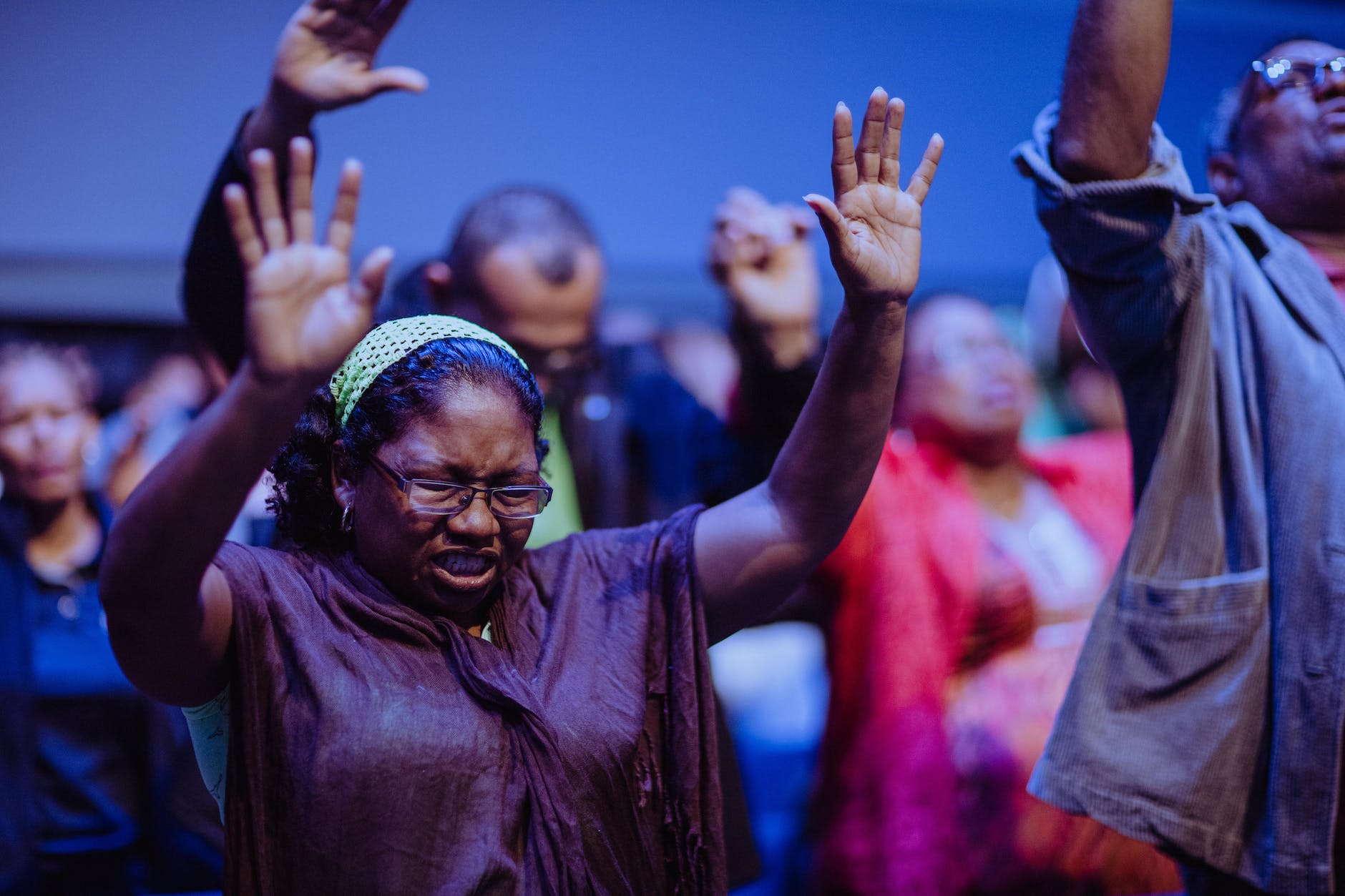
Photo by Luis Quintero on Pexels.com

Worship is not necessarily an expression of spontaneous feelings, though that can be part of it. One of the things that liturgical churches get right is that we can make a plan for how to worship God, and follow through on it, regardless of how we feel. Worship is based upon the objective truth that God is God. He is Holy, whether we really get that or not. He is good, whether we feel that at the moment, or not. All of the good things in our lives have come about because of him, whether we recognize that or not. And so, we can decide to worship God, even when we “don’t feel like it.”

To listen to the sermon, click the play button:

For some people, the player above may not work. If that happens to you, use the link below to either download, or open a player in a new page to listen.

To download, right click on the link (or do whatever you do on a Mac) and save it to your computer: Download 2 Samuel Part 7

Second Samuel# 7. 2 Samuel 6:12-23

Last time we considered the holiness of God. When we realize how holy God is, and how sinful we are, and how much Jesus has done for us, the appropriate response is worship and thanksgiving.

I want to return to God’s holiness before we talk more about worship. Last time we mostly considered how God’s holiness is a problem for sinful humans (which means: all humans). We talked about how God’s holiness destroys sin. But it’s an even bigger problem than that. Bear with me as we look at it another way.

Pause, and try to think of a time when you were filled with some deep, positive emotion. Maybe it was profound gratitude as you held your kids or grandkids on your lap. Perhaps it was an inward delight as you listened to some really good music. It could have been a time when you were the one playing the music, and everything came together, and you felt lifted above yourself. Another such moment might come when you are looking at beautiful scenery, or, perhaps, some stunning artwork. Possibly, you felt a kind of inward rush of admiration and awe when you read a great book, or saw an amazing movie. Maybe it was a recognition of how blessed you are to be loved by the important people in your life. It could also be that time you were at a sporting event, and together with the whole crowd, you were there for an amazing win, even though your team was the underdog. I could go on, but I hope you know what I’m talking about. There are moments in life when we experience joy, or hope, or longing, or some kind of sweet, deep emotion. Think about something like one of these things. Picture it, especially how you felt. Stop reading and just enter that wonderful memory for a little while.

OK, now what I want to say is this: That terrific moment, that amazing feeling you had, originated from the holy presence of God. James writes this:

16 Do not be deceived, my dear friends! 17 Every good gift and every perfect present comes from heaven; it comes down from God, the Creator of the heavenly lights, who does not change or cause darkness by turning. 18 By his own will he brought us into being through the word of truth, so that we should have first place among all his creatures. (James 1:16-18, GNT)

The apostle Paul, preaching to people in the town of Lystra about God, put it like this:

17 But he has always given evidence of his existence by the good things he does: he gives you rain from heaven and crops at the right times; he gives you food and fills your hearts with happiness.” (Acts 14:17, GNT)

Everything good, beautiful, praiseworthy, excellent, joyful, gratitude-inducing comes from the presence of God. In fact, it may be that everything that brings us true joy is a by-product of God’s holiness. That doesn’t mean that all of these things are automatically righteous. For instance, I can imagine that someone having an extra-marital affair might feel real joy in being loved by their lover. That doesn’t mean God has approved and blessed the adulterous relationship. It just means the joy of feeling loved is an echo of the fact that we were made for the love of God. But that echo doesn’t mean it’s righteous – it means that God has created us for relationship, and even in illicit relationships what we are really seeking is God himself. The euphoria of affairs wear off eventually, and they tend to be wildly self-destructive to the closest people in your life. My main argument is that joy always points toward God, but it doesn’t necessarily mean everything that gives you joy is blessed and approved by God.

God scatters these moments to all people, whether or not they have trusted Jesus. But they are always temporary, sometimes only momentary. And that hints at the problem: Without the intervention of Jesus, eventually we would be separated from all such joy, happiness, contentment, goodness, and so on, forever. It isn’t just that we will be separated from an uncomprehensible God who is “other” in his holiness. It is that, because of our inborn sin, we would be separated from everything we crave, everything we love and find joy in, everything we so deeply need.

In our text today, the Lord offers David and his people just a hint of that. This terrible and holy Ark, the instrument of the death of Uzzah, is also the instrument of tremendous blessing to Obed-edom, on whose land the Ark now stood. His whole family was blessed by good fortune. David was encouraged by this. He saw that God is not just holy, but is also loving and good. In fact, the love and goodness are part of the holiness. So David returned to the Ark with many people to joyfully bring it to Jerusalem, to be a blessing available to all of the people of Israel.

Verse 13 shows us that David, or the priests, or both, had searched the scriptures to see what they had done wrong the first time. They now knew it should be carried with poles through the rings that were secured to the four corners of the Ark. And that is what they did.

After the first six steps, the priests carrying it stopped, while the people sacrificed a bull. There is significance to the number six. In six days, God created the earth, and on the seventh, he rested. He set aside the seventh day as holy. Seven was considered the number representing God’s perfect work. So David and the priests set aside the seventh step as holy, and offered an approved sacrifice for worship. As they proceeded, David and the others with him were filled with joy and thankfulness to God.

5 David and the whole house of Israel were celebrating before the LORD with all kinds of fir wood instruments, lyres, harps, tambourines, sistrums, and cymbals. (2Sam 6:5, HCSB)

14David was dancing with all his might before the LORD wearing a linen ephod.15He and the whole house of Israel were bringing up the ark of the LORD with shouts and the sound of the ram’s horn. (2 Samuel 6:14-15).

David, filled with the Holy Spirit, understood more than probably anyone else in his generation that God is wonderful and  good. And so he entered whole-heartedly into worship. There is a sense of extravagance and freedom here. There are all sorts of instruments. People are shouting, and dancing and blowing horns. God’s grace and joy are filling the people.

Now, I want to point out a few things about this. First, it shows us that we don’t have to be narrow in how we worship God. Some people sang. Others danced. We have six different instruments named, and it sounds like there may have been others used that weren’t specified. Worship, as described here, included free and open expressions of joy through music and dancing. The instruments listed here are a lot more like guitars, bass and drum than they are like a pipe organ. It looks like there was a lot of spontaneity also.

David’s first wife, Michal, did not approve. She told David that he made a fool of himself. David’s response is one of the best verses in 2 Samuel:

21 David replied to Michal, “I was dancing before the LORD who chose me over your father and his whole family to appoint me ruler over the LORD’s people Israel. I will celebrate before the LORD, 22 and I will humble myself even more and humiliate myself. (2Sam 6:21-22, HCSB)

David understood that the only opinion about worship that matters is God’s opinion. He worshipped the way he did for the Lord, not for anyone else. He was willing to go even further, and look even more foolish for the Lord. David understood the awesome power of God’s holiness, and how gracious God is to come close to us anyway. Not only that, but David also understood that part of God’s holiness is his sheer goodness. In David’s mind, nothing at all could compare with the wonder, goodness, glory and holiness of God. He refused to hold back anything from the Lord.

I think we need to be encouraged by this to give honor and worship to God, even if it means looking silly to the people around us. If you are worried about how you look, you will not be able to fully worship God. When I’m not playing guitar, sometimes I raise my hands. I do this sometimes even when I’m not “feeling the vibe.” I do it because God is worthy to raise my hands to – he deserves that kind of honor, and, in fact, much more. I do it to remind myself to quit thinking what others around me might be thinking, and wonder instead what God thinks. Worship should not be governed by what we think is socially expected, but rather by how we can truly honor God.

The second point is this: Worship should not be governed by what we think is socially expected, but rather by how we can truly honor God. Yes, I know I just said that, but this time, turn it around the other way. I’ve been in worship services where the social expectation is that you raise your hands and dance and jump up and down. I think that is terrific if those things are the way you express honor to God. But sometimes, I want to honor God by kneeling quietly, or bowing my head and standing still, or just singing with all my heart. I should not allow social expectations to force me to raise my hands or dance, any more than I should allow them to stop me from doing those things.

Now, please don’t use that as an excuse to stand with your hands in your pocket, refusing to give God the honor he deserves. I’m just saying, don’t let what others think you should do, or what others are doing (or not doing) be your guide for how you worship. Freely and fully express yourself to God in keeping with the person he made you to be. Sometimes the Holy Spirit may nudge you to go out on a limb and be more expressive, even if what he wants you to do feels a bit uncomfortable or unnatural. You might, in fact, look foolish if you worship that way. David shows us the way. If your choice is between looking like a fool to other human beings, or looking like a fool to the Lord, it’s obvious that we should choose the first.

Sometimes the Spirit may nudge you and remind you not to put on a show for others, but to focus on Him alone. Listen to that too.

I do want to make sure we understand worship. You can worship through singing, but worship incorporates more than just singing. As we receive the Lord’s Supper in faith, we are worshipping. When we thank God for a meal, or for a good gift of any kind, we are worshipping. The heart of worship is thanking God for all of his good gifts, and, above all, thanking God for who he is, which is sometimes called “giving glory to God.” Those thanks, and that “giving glory” can be offered in a variety of ways: singing, praying, saying liturgy, reading scripture out loud, having a time of silence.

One way to worship is to enjoy God’s gifts while consciously acknowledging the fact that they come from him. For example, I used to worship while I was skiing in the Cascade Mountains. I recognized that the mountains, and my ability to enjoy them that moment while skiing, were gifts from God. My heart was lifted up to God while I skied.

The Bible also teaches us that worship is most unique and precious when it is done alongside other believers. Something special happens when believers worship together that is more meaningful and powerful than worshipping alone. Being with other believers helps to keep us humble–because we need each other to worship God in the way that delights him most. While there are examples of believers worshipping alone in the Bible, by far the most numerous examples of worship involve more than one person. People who suggest that the only worship that they “need” to do is being in nature by themselves misunderstand the nature of worship. As deeply introverted as I am, I cannot deny that God created us, and redeemed us, to worship him alongside others of his people.

Also, worship is not necessarily an expression of spontaneous feelings, though that can be part of it. One of the things that liturgical churches get right is that we can make a plan for how to worship God, and follow through on it, regardless of how we feel. Worship is based upon the objective truth that God is God. He is Holy, whether we really get that or not. He is good, whether we feel that at the moment, or not. All of the good things in our lives have come about because of him, whether we recognize that or not. And so, we can decide to worship God, even when we don’t “feel” like it.

Our God is holy. I think one reason David and his people worshipped so extravagantly, is because they had a very recent reminder of how holy God is, and how big the gap was between them; and yet they also had a reminder of how good and gracious he is to bridge that gap himself.

Let the Holy Spirit speak to you about this today.

2 SAMUEL #6: THE SHOCKING PROBLEM WITH HOLINESS

This text shows us just how vast is the distance between God and us. It shows how much we need Jesus and just how much God went through in order to bring us back to him.

To listen to the sermon, click the play button:

For some people, the player above may not work. If that happens to you, use the link below to either download, or open a player in a new page to listen.

To download, right click on the link (or do whatever you do on a Mac) and save it to your computer: Download 2 Samuel Part 6

2 Samuel #6. 2 Samuel 6:1-10

After David defeated the Philistines decisively and captured Jerusalem, he decided that he should bring the Ark of the Lord to Jerusalem, the new capital city of Israel. Remember, the Ark was a wooden box plated with gold, with carved angel’s wings over it. Inside the box were the stone tablets of the ten commandments, and possibly part the staff that Aaron, the High Priest, had used. At this point in time, the Ark would have been about four-hundred years old. If you remember, back even before Saul became the first king of Israel, the Israelites had taken the Ark into battle with them, trusting in the Ark to save them. The Lord was not pleased by this, because they were treating the Ark as if it were an idol, using it the way the pagan people around them used idols. So the Lord let them be defeated, since they were not actually trusting the Lord Himself. During the battle, the Philistines captured the Ark. After this the Lord showed his power to the Philistines, and wherever they put the Ark, trouble came upon them. Finally, they sent the Ark back to the Israelites. That story is told in 1 Samuel chapters 4-6, and we covered it in part 4 of the sermon series on 1 Samuel. The ark ended up at a place in Israel called Kiriath-jearim (also called Baalah of Judah).

Now, a few decades later, David and his elite warriors went to that place to bring the Ark back to Jerusalem. It was on the property of a man named Abinadab. His sons, Uzzah and Ahio walked beside the cart that held the Ark while David and his men celebrated along the way. And then this happened:

6 But when they arrived at the threshing floor of Nacon, the oxen stumbled, and Uzzah reached out his hand and steadied the Ark of God. 7 Then the LORD’s anger was aroused against Uzzah, and God struck him dead because of this. So Uzzah died right there beside the Ark of God.
8 David was angry because the LORD’s anger had burst out against Uzzah. He named that place Perez-uzzah (which means “to burst out against Uzzah”), as it is still called today.
9 David was now afraid of the LORD, and he asked, “How can I ever bring the Ark of the LORD back into my care?” 10 So David decided not to move the Ark of the LORD into the City of David. Instead, he took it to the house of Obed-edom of Gath. 11 The Ark of the LORD remained there in Obed-edom’s house for three months, and the LORD blessed Obed-edom and his entire household. (2 Samuel 6:5-11, NLT)

Here we have the two major themes of this text. First is this: God is so Holy, so different and “other” that he is inapproachable. If it means death to touch the mere representation of God’s presence, who can endure his actual presence? This was shocking and horrifying to David. It even made him angry. I think we forget that the Holiness of God is shocking, terrifying and horrifying. It may even make us angry. Why does God behave so inexplicably?

One of the things that makes the Bible unique is that it contains things like David’s response. The story isn’t only that God killed Uzzah. Part of the story is also that this event made David angry and upset. That is a comfort to me, because it kind of makes me upset, also. It shows us that it isn’t wrong for this sort of thing to get our attention, and it isn’t wrong even for it to bother us.

I don’t want us to gloss over this too quickly. Many people read these types of things in the Bible and think they are the first ones ever to be shocked by this sort of thing, or to question God about it. But here is David, shocked and angry at God in the very moment that this happened. It is shocking. If we are not shocked by this, we don’t really get the message. God’s holiness is shocking, terrifying, unfathomable. It should leave us saying, “Well then how could we ever be close to God? How could anyone ever please him?”

So, don’t feel bad if, like David, these kinds of things in the Bible upset you. That’s normal. But don’t stop with simply being upset by it. Pursue it. Ask the Lord to help you understand such things. Let’s pursue it together right now.

One thing we ought to know right away is that David, his men, and the priests were not transporting the Ark the way God had commanded through Moses. Moses was very clear about how the ark was to be moved from place to place:

12 You shall cast four rings of gold for it and put them on its four feet, two rings on the one side of it, and two rings on the other side of it. 13 You shall make poles of acacia wood and overlay them with gold. 14 And you shall put the poles into the rings on the sides of the ark to carry the ark by them. 15 The poles shall remain in the rings of the ark; they shall not be taken from it. (Exodus 25:12-15, NLT)

However, David and his men put the ark in a cart. If the Ark had been carried by the poles—as God commanded—no one would have had to worry about it slipping off a cart and falling to the ground. So, in the first place, they were ignoring God’s command, which is never a wise thing to do. We won’t cover the latter part of the chapter until next time, but we see that this error was corrected when they moved the Ark again later. Verse 13 shows us that this second move was accomplished with human beings carrying the Ark by the poles, not riding in an ox-cart. In any case, it does seem that this incident would have been avoided if they had taken God’s commands seriously. When God commanded the Ark be moved this way, it was to protect people from accidentally touching it. We often don’t realize, or perhaps we just forget, that God’s commands are there to protect us.

One of the things that might bother us is that Uzzah himself was only trying to protect the Ark. He didn’t want it to fall on the ground. How can that be such a terrible thing? However, by doing this, there were two assumptions that Uzzah was making. First, he assumed that God himself was incapable of protecting the Ark. He thought it was up to him to protect God’s glory. This reveals a lack of faith. Remember the recent history: The enemies of Israel had captured the Ark, but God used it to show them his glory, and then also he made sure that the Ark was returned to Israel. In spite of that, Uzzah assumed that in this instance, God would not take care of his glory, or the Ark. In other words, he didn’t have real faith in God.

The second assumption Uzzah made is that it would be better for the Ark to touch him than to touch the ground. He thought he himself was more holy and sanctified than the very earth that was created by God. In other words he didn’t really believe in his own sinfulness, nor in God’s complete holiness.

Now, even with that explained, I still think this passage is troubling. I suspect the reason it bothers us so much is because it is about the Holiness of God, and that is not something we truly understand, or even think about much.

Sometimes I think because of the grace given in Jesus, we forget why that grace is so important and so unbelievable. We forget the huge gulf that separated human beings from God. Without Jesus, if we were simply to wrongly touch a representation of a holy God, we could be killed, like Uzzah. There was an irreconcilable gap between us and God. But since Jesus intervened, we no longer live in that situation, and we often forget how serious the problem would be without him.

One question that I hear quite often is, “Doesn’t God just accept us as we are?” Actually, no. If he could do that, there would have been no need for Jesus to sacrifice himself. Well then, can’t God do anything? Why couldn’t he have made it so that he could just accept us?

God can do anything, but the one thing he will not do is change his own nature. God is the most wonderful, glorious, amazing, loving being in all of existence. To change his nature would be to change the very nature of reality, and it would be an unbelievably terrible thing for all creation if God changed his nature. If God changed his nature, there would be no hope that human beings would ever be better than they have been. Hatred, jealousy, strife, murder, rape, torture, selfishness and so on would become eternal, with no hope of any change, ever. So, because of our sinful flesh, God instead chose to sacrifice himself in order to change our nature.

At times, we might be tempted to think, “Are we really so bad? I mean I can be a bit selfish sometimes, but am I really so awful that my very nature had to be changed?” But we often forget that the problem is deeper than our behavior. Individual sins are about what we do, and some people are pretty good at minimizing those—at least the ones that others can see. But Jesus made it clear that sin is not only about behavior, it is also about what is in our hearts. So, he said, for example, that the Law of Moses tells us not to murder. But if we have murder in our hearts, even if we don’t act on it, we are guilty.

21 “You have heard that it was said to your ancestors, ‘Never murder. Whoever murders will answer for it in court.’ 22 But I can guarantee that whoever is angry with another believer will answer for it in court. Whoever calls another believer an insulting name will answer for it in the highest court. Whoever calls another believer a fool will answer for it in hellfire. (Matthew 5:21-22, GW)

You see, sin is a disease that is passed on genetically to every human being. In some people, that disease has obvious and radical effects. In others, we don’t see much of it on the outside. But every single person carries the disease. The thing that made Hitler such a monster is inside all of us. Most of us don’t let it get so out of control, but it’s there:

20 And then Jesus added, “It is what comes from inside that defiles you. 21 For from within, out of a person’s heart, come evil thoughts, sexual immorality, theft, murder, 22 adultery, greed, wickedness, deceit, lustful desires, envy, slander, pride, and foolishness. 23 All these vile things come from within; they are what defile you.” (Mark 7:20-23, NLT)

Because sin is inside of every human, we would be destroyed by the presence of God. God has to change us before he can welcome us into his presence. Through Jesus, it is the power of God that does the changing, not our own work and effort. Without that work, God’s holiness would destroy us, just like it did to Uzzah.

There is nothing I can think of that really illustrates the holiness of God adequately. But let me take a few tries at it. I’ve mentioned in other sermons about the chemical reaction that occurs when pure sodium is put into water. Sodium is a soft metal, a chemical element. It literally explodes when it comes into contact with water. When you are done reading this sermon, do an internet search for pure sodium and water, and watch a few videos; they are highly entertaining. I found one in which the reaction blows up a toilet. The point is because of the laws of physics and chemistry, sodium cannot exist in its pure form in water. If you bring the two substances together, the sodium explodes. The intrinsic properties of each substance prevents them from being together.

In the same way, sin cannot continue to exist in the presence of God’s holiness. You might say that it, too, explodes. This is because of the intrinsic nature of sin, and of God’s holiness. You might say that if a sinful person touched even a representation of the one true holy God (as Uzzah did) that person would die instantly. That’s what happened in our passage today.

Here’s another illustration. Though we don’t do it any longer, for a number of years we raised goats, pigs, and chickens on our little farm. Except for when we had to bottle feed baby animals, we did not generally allow these animals in the house with us. Think about it for a minute. Why don’t we allow pigs in the kitchen? Why don’t we allow goats to stand on our table and eat with us? Why do we care if they defecate on the table while we eat?

It starts with this – we are other than these animals. They are fundamentally different than us. I think most people would be willing to agree that pigs are not humans, and that goats do not behave according to human standards. Even though goats often stand and poop into their own food trough, and that is quite natural for them, there is something in us that rebels against having a farm animal defecate on the table where we eat. We simply do not tolerate it. It revolts us. This revulsion is deep and instinctive, showing us that the differences between us and our animals are also deep and persistent. We love our animals but we can still be revolted by their behavior. We love them, but we refuse to let their behavior into our home. We must place limits on how and when those animals can be with us.

We do allow some animals in our home – dogs and cats. But part of why we allow this is because we train them to behave according to our standards. Even so, most people still don’t allow dogs or cats to eat food off the table, and certainly they aren’t allowed to defecate on it.

When our dog Mario went out and rolled in manure – as dogs like to do naturally at times – we insisted upon cleaning him up before we let him back in the house. Imagine that instead, after rolling in manure, he decided to try and clean himself up, still having no more than a dog’s understanding of the world. Dogs lick themselves a little bit, but they can’t reach most of their backs, or any of their heads, and they don’t clean themselves even as much as cats do. Mario might lick his own tail a little bit, and then think his efforts should make him acceptable to us, but there’s no way he could actually clean himself well enough to meet our standards. We had to do the work of making him clean. And we were willing to do that work, to make him clean, because we loved him and wanted him to be with us. But he couldn’t be with us while he was covered in manure. Our human nature would not tolerate it. It was unacceptable.

Why can’t we just accept the animals as they are, and allow the goats to defecate in our food, and the dog to come into the house covered in manure? Sometimes it is hard to explain why we can’t allow such things, but we can’t. We are too different.  It is simply not in our nature to accept such things, while it is in the nature of the animals to do such things.

So, because we are born sinful in nature, it is natural for us to behave in ways that God simply cannot accept. Remember, though, it’s not just about what we do. Sin is inside us, even when we behave properly. God’s nature is even more different from ours than a pig’s nature is different from a human’s. Our sin is far worse to God than manure on a dog is to us. The idea of an animal pooping in our food is only a poor reflection of how revolting our sin is.

Our attempts to clean ourselves up are as pathetic as our dog Mario’s attempts. On our own, we don’t even really understand what it is to be cleansed. We need God to do the work of cleaning us up. And he is willing to do that work, because he loves us and wants us to be with him.

Once in a while, our dog would manage to sneak into the house covered in manure. On those occasions  my reaction was swift and shocking. I moved quickly and loudly to keep him from transferring manure to our carpet, or to us. He couldn’t have understood me if I had tried to explain it to him reasonably, so I had to get his attention in a way that might have seemed shocking and horrifying to him.

So it is with God. His response to Uzzah is shocking and horrifying. David became afraid, and even angry, when he saw it, and said, “how can the ark of the Lord ever come to me?” Meaning, “how could I ever be close to a God who is like this?”

But what the Lord did for us in Jesus is to give us a new nature. This is one of the reasons I think it is so important to realize that when we are in Jesus, (that is, when we have received him through faith) we are no longer fundamentally sinful. God cannot fellowship with fundamentally sinful beings. He has cleaned us up, changed us in ways we could not change ourselves.

Even though that was still in the future during the time of David, the Lord found ways to communicate that was his plan. And he included even those who lived before the time of Jesus in that plan:

For God presented Jesus as the sacrifice for sin. People are made right with God when they believe that Jesus sacrificed his life, shedding his blood. This sacrifice shows that God was being fair when he held back and did not punish those who sinned in times past, for he was looking ahead and including them in what he would do in this present time. (Romans 3:25-26)

So, if God has taken care of the problem, why is this text in 2 Samuel still here for us, who have trusted in Jesus to do these things for us? Why do we need this part of the Bible?

Imagine a friend comes over to your house, and while you are doing something else, he notices a bill open on your table. He decides to pay it for you. If that was a thirty-dollar phone bill, you’d be grateful, but not wildly so. It would be really sweet of him to pay that bill, and you’d thank him, and it would be a fairly restrained thankfulness. But imagine instead, he paid your mortgage. Not your monthly payment, but the whole mortgage—all $200,000 that you still owe on your house. That would be an entirely different kind of situation, with an entirely different level of thankfulness. Texts like this one in 1 Samuel Six show us just how much God has done for us, of how overwhelmingly thankful we ought to be.

I think we can view this text with three thoughts: First, we often need to be reminded of God’s precious holiness. God has not changed. He is still as holy now as he was then. When we understand his greatness, his “other-ness” it should lead us to be in awe of him. Scripture says in several places that “the fear of the Lord is the beginning of wisdom” (e.g. Proverbs 9:10 & 15:33; Psalm 111:10). We need to relearn that God is awesome, powerful, and that without Jesus we are incapable of interacting with him on our own terms.

Second, we need to remember how truly horrible and unacceptable our sin is. If you imagine how  revolting it would be to eat food in which pigs have defecated, you are only beginning to think of how horrible our sins are to a holy God. Our sins keep us from fellowship with God. Imagine your dog covered in manure, standing on your  table, pooping in your food. Would you hug that dog before getting him off the table and cleaning him up? Our sin is worse than that for God’s holy nature.

Third, we need to remember how amazing God’s grace is. He came as a human so that he could take our sin upon himself. He sacrificed himself to make us into new people who can now fellowship with God. He didn’t just pay a phone bill, he paid off our entire debt. And then on top of that, ensured that we will never owe anything again, and on top of that, he has piled blessing after blessing. When we know the size of our debt, the huge gap that was between us and God, we can begin to be appropriately thankful.

Thanks to Jesus, we can have God’s presence in our lives. He has done the work to clean us. He has changed our nature so that we are not destroyed by God’s holiness if we get close to him.

21 Christ was without sin, but for our sake God made him share our sin in order that in union with him we might share the righteousness of God. (2 Corinthians 5:21, GNT)

Let’s thank him and praise him right now! Next time we will consider what all this means for worship.

1 SAMUEL #5. THE POEPLE WHO REPENTED

Photo by Luis Quintero on Pexels.com

The ancient Israelites faced tremendous cultural pressure to worship false gods. But even when they finally resolved to follow the Lord with all of their hearts, things did not go well for them at first. This passage reminds us of God’s holiness. It reminds us that we need Jesus. It shows us the parallels between the ancient Israelites, and us today. It shows us that it is good and helpful to deliberately reminisce about times past when we had powerful experiences with God.

To listen to the sermon, click the play button:

For some people, the player above may not work. If that happens to you, use the link below to either download, or open a player in a new page to listen.

To download, right click on the link (or do whatever you do on a Mac) and save it to your computer: Download 1 Samuel Part 5

First Samuel #5. 1 Samuel 6:13-7:17. Repentance.

We left off last time where the Philistines put the Ark of the Covenant into a cart, and hooked it up to two cows who had been separated from their calves. Rather than return home to their calves, the cows pulled the cart into Israelite territory. They stopped near the town of Beth-shemesh, which was a town given to the tribe of Levi. The tribe of Levi (Levites) were the priests for the people of Israel.

13 The people of Beth-shemesh were harvesting wheat in the valley, and when they looked up and saw the ark, they were overjoyed to see it. 14 The cart came to the field of Joshua of Beth-shemesh and stopped there near a large rock. The people of the city chopped up the cart and offered the cows as a burnt offering to the LORD. 15 The Levites removed the ark of the LORD, along with the box containing the gold objects, and placed them on the large rock. That day the men of Beth-shemesh offered burnt offerings and made sacrifices to the LORD. (1 Samuel 6:13-15, HCSB)

The Ark had come home, so to speak. Remember, the Lord had refused to let the Israelites manipulate him through the Ark; he had erased their idea that it was a kind of lucky rabbit’s foot. Next, he used the Ark to show the Philistines that he was more real and powerful than the idols and demons they worshiped. And now, he brought it back to Israel. Even so, the Lord does not seem to be finished with the lesson. This perplexing incident is recorded:

And he struck some of the men of Beth-shemesh, because they looked upon the ark of the LORD. He struck seventy men of them, and the people mourned because the LORD had struck the people with a great blow. Then the men of Beth-shemesh said, “Who is able to stand before the LORD, this holy God? And to whom shall he go up away from us?” So they sent messengers to the inhabitants of Kiriath-jearim, saying, “The Philistines have returned the ark of the LORD. Come down and take it up to you.” (1Sam 6:19-21, ESV)

The Old Testament has several stories like this. They can be confusing and perplexing. A few years ago I was reading through Leviticus for my daily devotions. I did this almost to dare God to speak to me through Leviticus, which is some pretty dry reading at the points when you can even understand it. I got nothing out of it for almost two weeks. Then I read a story from chapter ten. Two priests sacrificed “unauthorized incense” and God burned them up instantly. I said, “What’s up with that, Lord? That doesn’t sound like you. It doesn’t sound like my Father, my Comforter, my never failing Friend.” Then I read Leviticus 10:3

I will show my holiness among those who come to me. I will show my glory to all the people.

So also, the Israelites say when they are struck down for disrespecting the ark: “Who is able to stand before the Lord, this holy God?

When I was a teenager, my High School science teacher took a very small piece of pure sodium (which exists as a soft metal) and put it into a tub of water. It immediately began to hiss and steam, and then suddenly the sodium exploded into flames. Pure sodium cannot exist in water. It burns up and explodes in the presence of water, becoming a different chemical in the process.

Just for grins, below is a video of two guys dropping pure sodium into a toilet. It’s pretty dramatic, especially if you start at about 3:10 into the video.

All right, hope you enjoyed that. The video was kind of fun and whimsical, but it portrays a physical reality: two elements that simply cannot coexist. In the same way, though we often forget it, sin cannot exist in the presence of God. It burns up, explodes and is destroyed. It isn’t a matter of God not tolerating sin – the very nature of God destroys it. The problem however, is that we human beings are born in sinful flesh – from our very birth, we are corrupted by a nature that rebels against God. This means that there is no way for us to get close to God without being destroyed. Who is able to stand before the Lord, this holy God? Who indeed? Certainly, no one with sin in him or her. So in the time of the Old Testament, unless people took the extreme precautions laid out by God, they were destroyed if they even did something like touch the ark improperly, or offer unauthorized incense. In the case of our text today, it might be that some people actually looked inside the ark at the stone tablets, or possibly that they gloated over the fact that they were now in charge of it.

The difference between these incidents I read about in the Old Testament, and my own experience of relationship with God, is the work of Jesus. Jesus took all of our sin – past, present and future – into himself. When Jesus took that sin into himself,

“God made him who knew no sin, to be sin for us, so that we might become the righteousness of God,” (2 Corinthians 5:21).

Because Jesus was in nature God, and as a human was not himself sinful, the sin which God laid on him could be destroyed without destroying Jesus also.

So now, through Jesus, we are no longer in a situation where the presence of God destroys us. Now his holiness is not a problem that keeps us apart, because our sin has been removed. This is one reason why I say that if we are in Jesus, we don’t have a sinful nature anymore. If we did, the Holy Spirit could not live in us, and we would be destroyed by God’s presence. We continue to battle with the effects of a body corrupted by sin, but in Christ we have been given a spirit that is holy in God’s sight.

In any case, the point I’m making is this: the way the Old Testament describes God is not inconsistent with the way God is revealed by the New Testament. They are not two different Gods. In fact, we don’t really understand how much we need Jesus without passages like this in the Old Testament. Now, through faith in Jesus, we are reconciled to the holiness of God in a way that in those days, people were not. This passage, above all, reminds me of my deep need for Jesus.

The writer of 1 Samuel continues the narrative, twenty years later. An entire new generation grew up. Previously, under the leadership of Eli, Hopni and Phinehas, the people were disconnected from God, and they didn’t care. They were arrogant, sure of themselves, sure they could manipulate God through the ark. They blamed God in their defeat, and tried to force him to give them victory.

But after their defeat, and their difficult experiences with the ark, the new generation grew up in humility. By the way, this was Samuel’s generation. He was probably in the middle of it, age-wise, and he led them spiritually. This generation didn’t take anything for granted.

2 A long time passed after the ark came to stay at Kiriath Jearim. For 20 years the entire nation of Israel mournfully sought the LORD. (1 Samuel 7:2, GW)

Finally, for a sustained period of time, the Israelites were humbly seeking God. For once it appears that it wasn’t their circumstances that they were upset about. They truly repented. They actually wanted to be close to the Lord. Samuel told them that they needed to get rid of the idols in their lives, to stop seeking comfort and hope in anything that was not the Lord.

And Samuel said to all the house of Israel, “If you are returning to the LORD with all your heart, then put away the foreign gods and the Ashtaroth from among you and direct your heart to the LORD and serve him only, and he will deliver you out of the hand of the Philistines.” So the people of Israel put away the Baals and the Ashtaroth, and they served the LORD only. (1 Sam 7:3-4)

The “Ashtaroth” means the idols made in the image of the goddess Ashtoreth, a Canaanite deity of war and fertility. Baal was the most important male god, and Ashtoreth the most important female one. Typically, every family had copies of idols to these gods. It may seem obvious to us that the Israelites should get rid of these false gods if they wanted to worship the Lord. But if we think that, we may not really understand the culture of that time.

We need to remember that in the first place, four-hundred years before, the Israelites had failed to do as God commanded, and displace the Canaanite peoples (like the Philistines) who lived in the Promised Land. As a result, for four hundred years the people of Israel had been influenced by the pagan cultures that lived around them. Though they often had small wars, just as often they traded with the pagan peoples, and sometimes, even though they weren’t supposed to, they married people from these pagan groups. In other words, there was a lot of peaceful interaction between the Israelites, and those who worshipped pagan gods. This interaction exerted a lot of cultural pressure on God’s people.

The Israelites were literally the only people in the entire world who were supposed to believe in only one God. The kind of cultural pressure they felt to at least believe that there were other gods is similar to the type of cultural pressure we might feel today if we believed the world is flat. Israelites would have felt inferior, not smarter, for believing in just one God.

“Of course there are other gods,” said the people around them. “Everyone knows that. It’s obvious. Yahweh might be the god of Israel, but he can’t be the only god. That’s ridiculous. You might as well say the sky is brown. You people are ignorant twits.”

Practically speaking, a lot of Israelites caved into this pressure. Many of them probably believed that Yahweh was indeed Israel’s special god, but that, obviously, other gods must exist. And the gods Baal and Ashtoreth had been in the land long before the Israelites and Yahweh came along. It made sense, even if you were going to worship Yahweh primarily, to make sure you didn’t get on the bad side of the local gods that were here before you and your god.

It made even more sense when you realized that if you worshipped other gods, you’d get to eat meat more often. People didn’t eat meat very often in every day life. But animal sacrifice and then feasting on the animal, were a regular part of many worship rituals. So, if you worshipped lots of gods, you got to eat meat more frequently.

Some pagan gods were also worshipped with fertility rituals. In these, women were encouraged to have sex with any man at the festival who wanted to, in order to get the god/goddess to bless the harvest. If you lusted after the spouse of one of your neighbors, you might get a chance to indulge your lust if you all worshipped these pagan gods. Even if your lust was more general, there were obvious reasons to participate in these rituals. It’s possible that some of the cultural pressure even came from pagan women inviting Israelite men to such ceremonies. And actually, these festivals were not exclusively heterosexual, either.

I hope you can see that actually, the Israelites faced the same types of cultural pressures that Biblical Christians face today. After about 500 CE, up until quite recently, a lot of the dominant cultures in the world believed in only one true God. But we’re back to ancient times again, now, in that respect. Christians are considered strange and backwards for believing that there is only one way to God, or even just one God. It’s hard to maintain our true beliefs when everyone around us thinks we are obviously wrong, and also thinks we are ignorant and bigoted for believing as we do.

We’re also back to a culture that thinks we are stupid for not indulging our every desire as fully as we want to. How silly is it to only have sex within marriage? There are plenty of temptations and opportunities to do otherwise. How silly is it not to indulge your every desire whenever you can?

Everyone around us is doing it. Everyone around us thinks we are stupid, and even dangerous for our beliefs. So, it shouldn’t be too hard to understand the ancient Israelites.

In Samuel’s generation, however, under his leadership, the people found courage. They listened to Samuel, and quit worshipping the false gods, and remained faithful to the one true God.

What happened next is something that I think surprises most of us in America these days. They turned to the Lord with their whole hearts and then things got worse. While they were gathered to worship God, the Philistines attacked. For some reason, preachers in America have been telling us for awhile now that if you just start following Jesus, everything will go well for you. Funny thing – Jesus never said that. Following Jesus, giving their whole lives to him, brought plenty of trouble to Peter, Paul, John James, Barnabas and many others. Following God brought trouble and hardship to Jeremiah, Ezekiel and yes, to Samuel’s generation.

It’s a bad idea to turn back to God in the hope that doing so will make your life go more smoothly. It just ain’t necessarily so. The great thing about Samuel and his generation was that they wanted to follow God because they believed he was the one true God. They dedicated their lives to him because it was good and right, and their hope was in God alone. If he gave them victory, that would be very good indeed. But they planned to follow him regardless. They turned their hearts to the Lord before Samuel told them that he would deliver them.

One of the reasons I get so angry at people who preach that following Jesus brings mainly prosperity and peace is that when trouble comes, those who believe that lie are undone spiritually and emotionally. A common reaction among those who believe this is that if they experience trouble, either they must have failed to follow God, or God is not truly real. They won’t allow for the idea that God might lead us directly into trouble sometimes.

The truth is, not only did Jesus promise persecution and trouble (Matt 6:10-11; John 16:33), but we also have spiritual enemies who will do whatever they can to make trouble for us – the devil and his demons (Eph 6:12; 1 Peter 5:8-10). The older I get, the more I think we should be surprised if we are truly seeking the Lord with all our hearts, and we experience no opposition at all. At the very least, we should be deeply grateful for those times. I’m not trying to make you depressed. I’m only suggesting that we take what Jesus said seriously:

 I have said these things to you, so that in me you may have peace. In the world you will have tribulation. But take heart; I have overcome the world.” (John 16:33, ESV)

So how did Samuel’s generation react when the Philistines attacked them? Naturally, they were afraid. No one with any sense at all wants to fight in a war. No one really wants suffering or tribulation. At the same time, they faced it with courage, and asked the Lord humbly for help. They didn’t assume he would deliver them, but they asked for it, in case he would. They didn’t try to manipulate him; they didn’t blame him. They just asked for his help, and they seemed ready to trust him and follow him whether or not he gave it at that particular time.

As it happened, the Lord helped them. The text says that he “thundered against the Philistines with a great and loud voice” (7:10). As I have pointed out before, these older manuscripts were often originally written on either papyrus, or animal skins. If you wanted to explain things in detail, you had to go out and kill another animal to make another manuscript. In the case of papyrus, though it was a paper-like substance, it was also time consuming and costly to make, and it wore out quickly. So you didn’t write down any more than you really had to. Therefore, the thunder is not explained, because the writer didn’t think it was as important as the main thing, which is that God did something to deliver his people. It may even be an expression that was common in those days, something almost like slang, that we don’t understand the full meaning for nowadays. In any case, it was clear that the Lord intervened, and protected his people on that occasion.

As the Philistines, fled, the Israelites chased them. Where the battle stopped, Samuel set up a stone, and called it “Ebenezer,” which means, “stone of help.” It was a way for the people to remember how God helped them that day.

Sometimes it may be helpful for people of faith these days to have our own “stones of help” – something that reminds us of specific times when God helped us. This sort of remembrance can be helpful when we face the pressures of a culture that mocks and denigrates us for worshipping the God of the Bible.

One way to set up an “Ebenezer” is to keep a journal, and record the times when God helped. For other folks, it might be a song that you listened to frequently during a time when God was especially present or helpful. I know of some Christians who collect rocks, and each rock reminds them of something the Lord has done. These days, photographs aren’t a bad way to remember what God has done for you, though you might want to create a special “Ebenezer” album to preserve photos that remind you of what God has done for you. The principle is to have a helpful, concrete way to remember times when God’s presence was obvious to you.

Take a minute to reflect on what the Lord is saying to you through 1 Samuel 6:13 through 7:15. Do you need to be reminded of your need for Jesus? Do you need to remember that in Jesus, your sin has been thoroughly removed and is no longer a barrier between you and the Lord? Is the Lord calling you to come back to him with your whole heart, like Samuel’s generation? Maybe you are really feeling the culture’s pressure to believe there are many ways to God, or many lifestyles that are equally acceptable for those who follow Jesus (in spite of what the Bible says about that). Maybe you need to be encouraged to stay strong.

Perhaps you need to be reminded that trouble is a normal part of life, even when you are walking with the Lord. Or perhaps today you need to set up an “Ebenezer” – a reminder of God’s presence and help in your life. Let him speak to you.

1 PETER #14: AN ETHNICITY OF HOLINESS

Photo by Angela Roma on Pexels.com

Jesus is the way of salvation, the only way. Every other path is doomed to keep a person separated from the goodness of God. If you reject Jesus, there are severe natural consequences – even more severe than rejecting gravity at the top of a cliff.

But rejecting Jesus is not the only possibility. Even those who once rejected him have the opportunity to turn back (that is, repent) and receive him, as long as they are still drawing breath. For those who do receive him, the consequences are wonderful: we are specially selected children, we are inducted into the priest-order of King Jesus, we are an ethnicity of holiness, and God’s specially-obtained people.

To listen to the sermon, click the play button:

For some people, the player above may not work. If that happens to you, click below to either download, or play from a new page:

To download, right click on the link (or do whatever you do on a Mac) and save it to your computer: Download 1 Peter Part 15

1 PETER #14. 1 PETER 2:9-10

There are many advantages to going verse by verse through books of the Bible. There are also a few disadvantages. One potential drawback is that we might forget the larger context of a passage. It’s all there, if we go back and look at it, and it’s all there within the overall sermon series – but sometimes individual sermons are focused on very small portions of the text, as we are today.

Therefore, let me remind you of our context. The verses just before this were about the contrast between those who receive Jesus, the cornerstone, the foundation of everything, and those who reject him. We focused last time on those who reject Jesus. Truth is sometimes hard. Only one person actually wins a race. That’s tough on everyone else who competes. Two plus two equals four; not three, not five, and six is right out. If you choose to “reject gravity,” and jump off a cliff you will fall downwards, and your body will suffer severe consequences, and this will happen to every single person who tries it. Not a single person will get to fall upwards, just by chance. So, Jesus is the way of salvation, the only way. Every other path is doomed to keep a person separated from the goodness of God. If you reject Jesus, there are severe consequences – even more severe than rejecting gravity at the top of a cliff.

But rejecting Jesus is not the only possibility. For those who receive him, the consequences are wonderful. And even those who once rejected him have the opportunity to turn back (that is, repent) and receive him, as long as they are still drawing breath. Also, the larger context is talking about how we who trust Jesus are God’s people, people that God is blessing, and using to show the world his glory. It is in this context, and after speaking about the consequences of rejecting Jesus, that Peter writes these verses:

9 But you are a chosen race, a royal priesthood, a holy nation, a people for his possession, so that you may proclaim the praises of the one who called you out of darkness into his marvelous light. 10 Once you were not a people, but now you are God’s people; you had not received mercy, but now you have received mercy.

(1 Peter 2:9-10, CSB)

In some ways, the key to these words is in verse 10, so I’ll go backwards. Peter is writing to primarily Gentile (that is, non-Jewish) Christians – this is obvious from verse 10:

Once you were not a people, but now you are God’s people; you had not received mercy, but now you have received mercy.

God made many promises to the physical descendants of Abraham. He chose them out of all the people of the world to be his own special people, to show His glory, grace and goodness to the world. They were special, in a way that no other people were special. It was widely believed by the Jews that no one else could be called “God’s special people.”

Now, says Peter, all of those promises made to the physical descendants of Abraham are applied to those who receive Jesus – whether or not they are physical descendants of Abraham. Belonging to God is not about ethnicity, or ancestry, but about your standing with Jesus Christ.

So, when we read verse nine, we need to understand that Peter is talking about promises that were once thought to apply only to the people of Israel, and now, he is describing how they apply to everyone who receives Jesus Christ.

When we receive Jesus, a number of consequences cascade into place. First, we are a chosen race. In my amateur, Greek-hacker way, I might put the Greek like this: “specially-selected descendants.” Through Jesus, God has specially selected us to be his children. We find that all along, God wanted us. It is not a matter of an indifferent God waiting around to see if we would choose him. No, He was the one who chose us the whole time. I’m sure Peter had in mind some of the verses of the Old Testament:

Yet the LORD set his heart in love on your fathers and chose their offspring after them, you above all peoples, as you are this day.

(Deut 10:15, ESV)

And you shall be to me a kingdom of priests and a holy nation.’ These are the words that you shall speak to the people of Israel.”

(Exodus 19:6, ESV)

We are chosen in Jesus. Because we have entrusted ourselves to Jesus, we have become the specially selected children of God. The promises above are for us.

Second, we are a kingly priesthood. In the Old Testament, there was an ancestral separation between those who could become priests, and those who could become kings. Priests had to be from the tribe of Levi, and from the clan of Aaron. In ancient Israel, no one else could be a legitimate priest. Kings, on the other hand were supposed to be from the tribe of Judah, descended from David. No priest could be a king, and vice versa. But in Jesus, the two came together. He is the rightful king because he is a descendant of David. He is the rightful High Priest because his sacrifice once and for all established the forgiveness of sins. So now God has chosen new “descendants of Jesus” who can be both royal, and priestly at the same time. Isaiah spoke prophetically about this:

but you shall be called the priests of the LORD;
they shall speak of you as the ministers of our God;

(Isaiah 61:6, ESV)

John mentions it in Revelation – not prophetically, but rather as one of the things established by the work of Jesus:

To him who loves us and has set us free from our sins by his blood, 6 and made us a kingdom, priests to his God and Father ​— ​to him be glory and dominion forever and ever. Amen.

(Revelation 1:5-6, CSB)

We talked about what it means to be priests in #12 of this series on 1 Peter. The short version is that it means: 1. We have direct access to God, 2. We have an indispensable place in the church, which is called “the body of Christ,” 3. We are all God’s representatives in the world and, 4. We offer spiritual sacrifices to God: through praising him, submitting to God’s will, and giving him our very selves.

Peter adds here that our priesthood is “royal.” This is added first and foremost to show that we are not priests like the Old Testaments Levites, nor even the descendants of Aaron. We are priests in the line of Jesus. He is the only royal priest, and so, we too, are royal, because we are in Jesus.

The next result of being in Jesus is that we are a holy people. The more-or-less literal Greek reads: “an ethnicity of holiness.” To be Christian has nothing to do with physical ethnicity. Christianity, from the very beginning, has been a religion of every nation, ethnicity and language, and our vision of heaven is firmly multi-ethnic. Part of the reason for this is that our physical/genetic ethnicity is now not as important as our spiritual ethnicity. Our spiritual ethnicity is the ethnicity of holiness. Another way of saying this is that our “true ethnicity” is based not upon physical birth, but upon spiritual birth; that is, upon the fact that Jesus Christ has made us holy.

We can praise God for our physical ancestry. We can see how God worked in our ancestors to bring glory to Himself, and grace to us. It’s good to celebrate it. It is also good to celebrate our positive or neutral cultural differences as part of the multi-faceted glory of God. So, for instance, be proud of being African-American. Be in awe of the glory of God that preserved your ancestors through slavery to bring you to this point in time. Enjoy your cultural traditions. Invite friends of different ethnic groups.

Or, be proud of your scrappy Irish ancestors, who overcame all sorts of obstacles in the past to bring you to where you are today. Celebrate St. Patrick’s day (as a Christian). Or, if you are a Scandinavian, celebrate your heritage with lutefisk festivals. You Germans, and German-descended, celebrate Bach, polka, and sauerkraut. Again, everyone invite your friends of different cultural backgrounds to celebrate together with you (except you Scandinavians: lutefisk could start a war).

However, all of us should recognize that there is something much greater and more glorious, and far more important than our physical ancestry: our spiritual ethnicity. If we are Christians, our spiritual heritage, our ethnicity as God’s people, trumps everything else. Peter is saying that all of us can claim the spiritual heritage of the Old Testament (and, of course, the new). The promises made to God’s people are made to us. Our identity as the specially selected people of God is more important, and should be more dominant, than any other possible identity.

On the negative side, I might put it like this: If you feel like race or culture separates you from a fellow-Christian, you have not fully embraced God’s promises.

On the positive side, we need to recognize that we have more in common (for instance) with a Christian from thousands of miles away, who is from a different country, and speaks a different language, than we do with a non-Christian neighbor who looks and sounds just like us. This isn’t to say that we should be uncaring toward our non-Christian neighbor. But our “primary group” so to speak, the group we call “our people,” is not defined by physical ethnicity, culture or language. It is defined by Jesus Christ.

The phrase is “ethnicity of holiness.” We’ve just talked about the “ethnicity” part of that. Let’s consider the “holiness” part. I think a lot of Christians, upon hearing that word, might say, “well, that’s not me then, because I am not holy.” My dear fellow holy-people, we really need to get over ourselves. The holiness of God’s people is not our own. I am not considered holy because I have been a particularly good person. I am holy for one reason only: because I belong to Jesus, and he has imparted his own holiness to me. For a Christian, being holy does not start with our behavior – it starts with the behavior of Jesus Christ.

Consider the following analogy: I am an indifferent gardener. Sometimes, I might leave a garden hose, with a sprayer nozzle attached to it, lying in the dirt for months at a time. When I finally decide to water something, I attach the hose to the tap, and then turn it on. It takes several seconds for the water to come through. When the water starts to come out of the sprayer, it comes in fits and starts, because the other end of the hose has dirt in it. Also, parts of the sprayer are clogged with dirt. Sometimes the hose is kinked, and I have to straighten it out to get more than a few drips. The water isn’t coming through steadily, and what does come through is actually kind of dirty. Now, does this mean the water coming out of the tap is dirty, or that the pressure is bad? Of course not. It is the hose that is kinked and dirty, and also the sprayer, and the dirt and kinks impair the flow of the water, and makes it look dirty. But the water itself is pure and clean at the source. Over time, I find the kinks and straighten them, and the water washes the dirt out of the hose, and out of the sprayer, and eventually, I have clean water coming through a fully functioning sprayer.

The hose is not the source of the water – it is merely a vehicle for the water. The same is true of the sprayer-attachment.

The water is the holiness of Christ. We are the hose and the sprayer. We don’t generate holiness – it comes through us. At first, that holiness doesn’t look very “holy,” because we have plenty of dirt in us. At first, it only comes through in dirty-looking drips and drabs. Over time, the holiness of Christ begins to unkink us, and clean us up from the inside out. Unfortunately, it takes a lifetime – the dirt is caked on thick and tough, and the kinks are hardened in. But over time, the holiness does begin to flow better, and look cleaner. Again, however, that is not because we are generating holiness ourselves – it is the holiness of Christ working its way through us.

I don’t think it is very helpful to ask how close we are to having pure water. The more helpful thing to do is to surrender ourselves more and more fully to Jesus, and let him take care of the unkinking, let him worry about how quickly, or slowly, the dirt is removed, so that the water flows freely.

The third thing is that we are a people for his possession. Another way to express the Greek is that we were “specially-obtained” by and for God. He went to great lengths to get us, to make us his own.

All that brings us to the final thing. There is a purpose for God making us his specially selected children, a royal priesthood, an ethnicity of holiness, specially obtained by and for God. To paraphrase the end of verse nine, the purpose is so that God can use us to show the world how wonderful He is.

Sometimes, I end with practical suggestions for applying scripture to our lives. Today my practical suggestion is this: Believe the word of God. Trust that it is true. God has specially selected you to be part of his people. Trust it! Lean into it! God has inducted you into a holy priesthood in the order of King Jesus. Believe it, then act like you believe it. The Father has made you an ethnicity of holiness. Trust it is true, and act as you believe. Receive your fellow Christians as family, no matter what they look like or sound like. The Father has gone to great lengths to make us his people. Believe it! Receive his special attention and love. Finally, let him work through you to show the world how wonderful he is. If we believe and trust all that these verses say, then we will naturally be letting God show his glory to the world.

1 PETER #7: HOPE RESULTS IN HOLINESS

Photo by KoolShooters on Pexels.com

Because we have an expectation that our amazing future will indeed come to pass, we will make different choices than those who have no such hope. And that will make us look different, sometimes, even strange, to those who do not share our hope. That differentness is a picture of the holiness of God.

To listen to the sermon, click the play button: To download, right click on the link (or do whatever you do on a Mac) and save it to your computer: Download 1 Peter Part 7

1 PETER #7. 1 PETER 1:14-16

There is a reason we have spent so much time in 1 Peter looking at the hope we have as Christians. In order to understand our next verses, we have to have that hope firmly in mind. After telling us to fix our hope firmly on the grace that will be ours when all things are made new (the revelation of Jesus Christ) Peter goes on:

14 As obedient children, do not be conformed to the passions of your former ignorance, 15 but as he who called you is holy, you also be holy in all your conduct, 16 since it is written, “You shall be holy, for I am holy.”

If we did not have the foundation of hope, these verses might sound to us like some kind of difficult and hard duty that we have to perform in order to please God: “Now look, people, you’ve got to do the right thing. You have to be holy. Get it together.”

But we need to remember that all of this begins with the grace that God has already given us, and the hope that we have in Jesus.

Before I go on, let me make sure we define “hope” a little bit. Let’s contrast it to a wish. A wish is something that would be nice if it happened, but for which you have very little expectation. I might wish to win five million dollars at the lottery. I might wish I was six inches taller, or wasn’t losing my hair. I have no real expectation of having those wishes fulfilled. In fact, my wish about the lottery is so weak that I don’t even buy lottery tickets. Wishes don’t change the way we live.

A hope is a reasonable expectation of something that will one day come to be in reality. It is still in the future, but we have a strong belief that it will, in fact, come to pass. Because hope expects fulfillment, it influences and changes the way we behave.

When I was at Oregon State University, I happened to have two friends who were on the women’s gymnastics team. At that time, OSU (Oregon, not Ohio) had a stellar women’s gymnastics program. The team was typically in the top five in the nation, for several years in row, number one, more than once.

One of my friends won the title of top female college gymnast in the country just a month before I met her. My other gymnast friend was a couple years younger, and she went on to win the national solo title the year after I met her. As I mentioned, their whole team also won the gold medal a few times.

Both of these women were part of my “core friends” group. This group of friends would get together, hang out, grab pizza, do Bible study, and even take trips together. But our two gymnast friends lived different lives than the rest of us. I had no hopes of ever becoming a top-ranked college gymnast. But my friends had legitimate hopes of being on the medal podium, when the NCAA gymnastics tournament came around. Their hope led them to make choices that made them different from the rest of us. Sometimes, they didn’t eat the pizza we had ordered. Sometimes, they couldn’t get together with the rest of us, because they had to practice. While the rest of us did our normal things, they spent hours doing abnormal things, like hurling their bodies into the air, twisting, flipping and turning, and landing on their feet.

Don’t miss the point: their hopes directed them to lead different lives. They didn’t practice for hours because “it was the right thing to do.” They didn’t do flips and twists in the air because that’s what good people are supposed to do. They did it because they had a wonderful, amazing hope, one which they fully expected would come to pass: that they would be on the medal podium, come tournament time. And so, they lived in continual expectation of that hope.

Significant hope changes how you live. If you have hopes that are different from those around you, you will live a life that looks different. Peter tells us that we should have every expectation of the fulfillment of our amazing hope. That leads us to live differently, to behave differently than we did before we had this hope. So, in the first place, we need to let go of the way we lived before the hope. At that time, we lived according to whatever passions motivated us. In other words, we lived to satisfy our own desires as best as we could. We decided on hopes that we thought might be workable, and lived for small things, mostly for ways to satisfy our own desires and needs.

Peter tells us that now, we should live as children who love their Father, and want to be like Him. In other words, this change of behavior comes out of love and hope, not law. When I was young, there were two men that I loved with all my heart, and looked up to: my father, and my maternal grandfather. They were different from each other in some ways, but I loved and respected both of them so much, I wanted to be like them. I didn’t try to be like them because someone told me that was the rule. I didn’t do it “because that’s what good people do.” I imitated them as a result of love and respect. I was tremendously blessed by God in that I knew for certain that both my earthly father, and my grandfather, loved me. And because they loved me, I loved them back, and I wanted to be like them.

That’s supposed to be the motivating factor with God. Now, I know not all of you were as blessed as I was by your earthly fathers or grandfathers. Some of you did not have that love growing up. But you can trust the love of your heavenly Father. He proved his love to you beyond any doubt by sending Jesus to suffer death in your place. Let the Holy Spirit pour that love into your heart and convince you of his Father-love for you.

2 Through him we have also obtained access by faith into this grace in which we stand, and we rejoice in hope of the glory of God. 3 Not only that, but we rejoice in our sufferings, knowing that suffering produces endurance, 4 and endurance produces character, and character produces hope, 5 and hope does not put us to shame, because God's love has been poured into our hearts through the Holy Spirit who has been given to us. (Romans 5:2-5, ESV)

So, we live different lives, holy lives, because we know that God loves us, and we love him back. We live different lives because we have a different hope. Now, let’s talk about holiness for a moment. Peter writes:

15 but as he who called you is holy, you also be holy in all your conduct, 16 since it is written, “You shall be holy, for I am holy.”

Remember, one of the key things about holiness is that it is different, set apart. I have previously used the analogy of clothing. Most of us in the Western world have “everyday clothes,” and then also “fancy clothes.” We reserve our fancy clothes for special occasions. They are set-apart – they are different, intended to be special, to celebrate special occasions. When we wear those clothes, we are sending the message that something special and important is going on. Or think of it this way: Many years ago, some friends gave us a very special set of plates, glasses and eating utensils. This set of dishes is very fancy, and each piece needs to be washed by hand. We don’t put those plates in the microwave either. Those dishes are set apart – they are intended for special occasions: Thanksgiving, Christmas, Passover, and so on. When we use them, it says: “Pay attention! Something important and out of the ordinary is going on right now!”

In the same way, we have already been set apart by God. We saw in 1 Peter 1:2 that God was the one who set us apart, who has made us holy through Jesus Christ. So, we don’t have to become holy – God has already made us that way. But what we are called to do is live out that holiness, that differentness. And, as I have just mentioned, part of living as holy people is driven by our hope of something different than the world hopes for. If we live according to our hope, we will also be living out the holiness that God has imparted to us. It will look different to the world, not “everyday.” We won’t cheat someone when it’s obvious that we could get away with it – not even the government or a large corporation. We won’t use alcohol or drugs, or sex, in inappropriate ways, (for instance, to numb the pain of this life), but instead we will rely on the hope of the grace of God that is coming. We won’t take the opportunity to indulge our sinful desires, even when we think we could “get away with it” without consequence. Because we have an expectation that our amazing future will indeed come to pass, we will make different choices than those who have no such hope. And that will make us look different, sometimes, even strange, to those who do not share our hope. That differentness is a picture of the holiness of God.

At a few different times in my life, I was making a living apart from ministry. In almost any job I had, others would comment about the fact that I behaved differently from most of our coworkers. I didn’t behave that way simply as a point of honor. I did it because I have a hope that my coworkers didn’t have. The same was true of another group of friends I had in college. These were not my “core group” but they were people I ate with regularly, and with whom I hung out occasionally; I don’t think any of them were Christians. Three of us were named Tom. One “Tom” was in the agricultural program, and wore a Stetson hat, so everyone felt the obvious way to distinguish him from the other Toms was to call him: “cowboy Tom.” They had a name for me, too: “holy Tom.” I don’t remember anyone discussing this much, or asking why they should call me “holy;” everyone else seemed to think it just fit, just like we thought “cowboy Tom,” was obvious. I was the only one who objected to that name. But they could see something that I didn’t yet understand: I was different. I wasn’t trying to be that different – but my hope made me different. In fact, I understand now that it was God Himself who makes us different – that is, holy – when we receive Him in faith.

Don’t misunderstand me. I’m not trying to say I was in complete control of my behavior, or that I tried to put on a good front to impress people. In fact, I’m saying the opposite. It was the hope I have, and the love that God has for me, that made me look different to my coworkers and friends. They recognized something in me as “holy,” when I was not even consciously trying to look that way.

Remember, this different behavior proceeds not from laws about what we ought to do, but rather from our hope, and from our love for God. If you find yourself struggling to bring your behavior in line, I recommend meditating on your hope, and upon the love of God. There is a place for self-discipline, a place to have integrity for the sake of your own self-regard, but the engines that really drive our behavior should be hope and love. If we have a behavior problem, it might be that we have a problem connecting with the love of God, or with the amazing hope of our future in the New Creation.

So don’t be afraid to read:  “but as he who called you is holy, you also be holy in all your conduct, since it is written, “You shall be holy, for I am holy.” I’ll say it again: it isn’t about trying with your own strength to make yourself behave. The key to holiness is hope and love.

That last part “you shall be holy,” is also a kind of promise. We shall be holy, because God has already made us Holy in our spirits, giving us His own Holy Spirit as kind of a down payment on the promised hope.

And when you believed in Christ, he identified you as his own by giving you the Holy Spirit, whom he promised long ago. 14 The Spirit is God’s guarantee that he will give us the inheritance he promised and that he has purchased us to be his own people. He did this so we would praise and glorify him. (Ephesians 1:13-14, NLT)

To encourage our resolve to live different lives according to our hope, let’s end with another statement of that hope:

1 For we know that when this earthly tent we live in is taken down (that is, when we die and leave this earthly body), we will have a house in heaven, an eternal body made for us by God himself and not by human hands. 2 We grow weary in our present bodies, and we long to put on our heavenly bodies like new clothing. 3 For we will put on heavenly bodies; we will not be spirits without bodies. 4 While we live in these earthly bodies, we groan and sigh, but it’s not that we want to die and get rid of these bodies that clothe us. Rather, we want to put on our new bodies so that these dying bodies will be swallowed up by life. 5 God himself has prepared us for this, and as a guarantee he has given us his Holy Spirit. (2 Corinthians 5:1-5, NLT)

LIVING CRUCIFIED #7: SIN and GRACE

Photo by Bianca Salgado on Pexels.com

Being a Christian is not primarily about sinning less, or sinning less grievously. Being a Christian is about being immersed into the love, grace, beauty, truth and joy that are found in Jesus Christ alone. When we are deeply connected to the love of God through Jesus Christ, when we truly trust that he has crucified our old person, and resurrected a new, holy spirit in place of the old, one result is that we will begin to sin less often, and less grievously. But reducing sin is a side effect of being in Jesus. Let’s talk about how all this looks.

To listen to the sermon, click the play button: To download, right click on the link (or do whatever you do on a Mac) and save it to your computer: Download Living Crucified Part 7

I want to add a few more brief thoughts about fighting sin. The first is this: being a Christian is not primarily about sinning less, or sinning less grievously. Being a Christian is about being immersed into the love, grace, beauty, truth and joy that are found in Jesus Christ alone. When we are deeply connected to the love of God through Jesus Christ, when we truly trust that he has crucified our old person, and resurrected a new, holy spirit in place of the old, one result is that we will begin to sin less often, and less grievously. But reducing sin is a side effect of being in Jesus.

It is easy to get confused about this, for a couple of different reasons. First, it is our sin that separates us from God. Our sin is the problem that keeps us apart from ultimate joy, which is found only in the presence of God. It is also sin that makes the world such a terrible place at times. All war is caused by sin. All violence grows out of sin. Selfish actions, abuse of children, rapacious greed, exploitation, racism, sexism, and hatred are all outgrowths of the root of sin. Depression, self-loathing, self-centeredness, apathy, lack of love – all this proceeds from sin. Even disease and accidents are the result of the fact that sin is embedded in the world.

Since sin is the major problem, it is natural to make the mistake of believing that the solution is to commit fewer sins. And that leads to the second thing that confuses us: many churches do indeed seem to be teaching that the whole point of being a Christian is to control sin. Now, if we could, in fact, control our own sin, that would be a good thing to do. But, if you have tried very hard to do it, you realize that doesn’t get you very far. Even if you can control your behavior (and some people are quite good at that) when you look into your heart honestly, you recognize a deep commitment to get your own needs met, no matter what it takes.

Some people don’t realize what a problem this is, because they can get their needs met through things that are outwardly righteous. But even if the means are righteous, the heart that uses them is not. So maybe you go around helping people and quoting Bible verses in all circumstances. Both of those things are good to do. But it might be that you do them because it makes you feel secure, and good about yourself. It makes you feel like no one can find fault with you. So, even though the activities aren’t wrong, you are doing them for the wrong reasons. It is wrong to get your sense of security, or self-worth, from anywhere but God Himself. It is wrong to believe you can be justified by your own actions.

The bottom line is that every one of us is committed to ourselves, and to making sure that we get our own needs met, no matter what it takes. That is the essence of what the bible calls “flesh,” and we all have it.

As we have been learning through this series, God has dealt with human sin through Jesus. In a spiritual way, God crucified our own sinful hearts on the cross with Jesus. We died with him, and so now we are dead to sin. The way to “control” sin is not to think about it all the time, but rather, to immerse ourselves into the love and joy and grace that are found in Jesus Christ. We trust what the bible says: that we are new creations in Christ Jesus, holy, and blameless. We let Jesus live his life through us. The more we trust him to do that, the more we turn toward him, the less we are controlled by sin.

I want to use Romans chapter 7 to help us understand all this. Please take the time to read all of Romans 7:4 – 8:17. It is about the length of one chapter of scripture. Please do stop reading this right now, and open your Bible and read that. Seriously. Please stop reading this, and go read the scripture passage. Please?

Thanks for reading that. This is a section of scripture that is often misunderstood. In the first place, we ought to read the section I just gave you as one unit. The verse and chapter markings we find in our modern bibles are not part of the original. In other words, they were added to make it convenient for us to quickly find places in the Bible, but they were not inspired by God. So, if I were the one dividing up the book of Romans, I would have the section I just gave you as all belonging together. It would be a mistake to read chapter 7, and then stop without reading any of chapter 8.

In the first part of chapter 7, Paul is making two main points. First, that law is good. It was given by God to show us what sin is. Second, though the law is good, it shows us that we are not good, and the law cannot help us to become any better.

Next comes a section with which we are all familiar:

14 So the trouble is not with the law, for it is spiritual and good. The trouble is with me, for I am all too human, a slave to sin. 15 I don’t really understand myself, for I want to do what is right, but I don’t do it. Instead, I do what I hate. 16 But if I know that what I am doing is wrong, this shows that I agree that the law is good. 17 So I am not the one doing wrong; it is sin living in me that does it.
18 And I know that nothing good lives in me, that is, in my sinful nature. I want to do what is right, but I can’t. 19 I want to do what is good, but I don’t. I don’t want to do what is wrong, but I do it anyway. 20 But if I do what I don’t want to do, I am not really the one doing wrong; it is sin living in me that does it.
21 I have discovered this principle of life—that when I want to do what is right, I inevitably do what is wrong. 22 I love God’s law with all my heart. 23 But there is another power within me that is at war with my mind. This power makes me a slave to the sin that is still within me. (Romans 7:14-23, NLT)

We usually read this and think: “Yup. That’s me. I want to do the right thing, but I just can’t get it together. I keep sinning and sinning.” So far so good. But many people miss the main point Paul is making. He repeats it over and over again. The point is not that he sins all the time. The point is this: he wants to do what is right.

I had friend once who was not a Christian. After a lot of time and people praying for him, and some long conversations, he gave his heart to Jesus. Afterward, we started to meet together to pray and talk about the Bible and generally encourage each other in faith. One time the subject of lust came up. He said, “You know, before I became a Christian, I did not struggle with lust. Now I struggle with it all the time.”

I was shocked. What had we done wrong? I asked him to explain.

“Well, before I was a Christian,” he said, “there wasn’t any struggle. I lusted, and it didn’t bother me. But since I came to Jesus, it bothers me when I lust because I don’t want to do that now.”

You see the fact that he didn’t want to sin any more was proof that he had died to sin. In his deepest heart, he knew that he didn’t desire sin. In his inner being, he delighted in God’s perfect standard and holiness.

So, in Romans 7, Paul’s main point is not that he sins all the time. The main point is that now, he does not want to sin all the time. That fact shows that he has died to sin, and has been raised to be with Christ. He has a new heart, a new Spirit, and his new self does not want to sin.

Now, it is natural to ask: “If I am already dead to sin, if I’m already a new creation, freed from sin, why do I keep sinning? If I don’t want to sin, why do I do it anyway? Doesn’t this prove I am half-sinner, half-redeemed?”

No. Although I like the New Living Translation (used above) it does have a major drawback. In verse eighteen, the right translation is this: “For I know that nothing good dwells in me, that is, in my flesh (Romans 7:18, ESV; formatting added for emphasis). In the original Greek it never, anywhere in the New Testament, uses a term like “sinful nature.” The problem is not that we have “bad self,” along with a “redeemed self.” What we have is a part of us that is that vulnerable to sin, called flesh. I mentioned in the beginning that one characteristic of what the bible calls “flesh” is that it is utterly committed to getting our needs (and wants) met, even if it means going against what God says. We all inherited this kind “flesh” from Adam and Eve. Before we became Christians, we all lived according to the flesh. We all found ways to do what it takes to feel better. We all depended upon ourselves, rather than God, to get our needs met. Sometimes we did that in ways that didn’t look so bad (like being a good student to gain approval from adults). Sometimes we did it ways that were clearly wrong (like getting drunk to numb our emotional pain, feel good, and gain acceptance from our peers). But both the good student, and the drinker, were looking to something other than God to meet their needs, and lead them to a satisfying life.

In addition to the word “flesh” Paul also says sin is located in his “members.” The Greek word is usually used as a generic term for “body parts.” In Matthew 5, when Jesus said it is better to lose an eye than to be thrown into hell, he calls the eye a “member.” He also calls a right hand a “member.” James calls the tongue a member of the body.

So, sin does not live any more in what we call our “(figurative) hearts”. It certainly does not live in our spirit. It camps out in our bodies. Let’s not forget that the brain is part of the body. Our brains are usually the main problem. So the problem is not that we have two natures. The problem is that we inhabit sinful bodies, with sinful brains. In fact, Paul makes this quite clear in Romans 7:24 (which you just read):

24 Wretched man that I am! Who will deliver me from this body of death? (Romans 7:24, ESV)

What are some important things we know about bodies? First, we know that human beings are more than our bodies. Our physical appearance is not the real us. It is, in fact, one of the most shallow things about the true people that we are in our hearts. And that is where sin is located. Sin is not part of your nature anymore than your hair is a part of your nature. Sometimes you have to deal with your hair (or lack thereof). In interacting with others, it is good to maintain a decent appearance. You might fail to get the job you are supposed to if you show up to the interview with your hair wild and askew. But your hair does not really say anything about the real you.

Now you might be tempted to say: “Well, if I have sin in my brain, that is a real problem, because my brain directs everything I do.” That’s not exactly true. This is a little bit complex, but the truth is often complex. There is a difference between your brain, and your mind. Your brain is a physical organ that operates on electrical-chemical systems. Your mind is your sense of self-awareness. Your mind uses your brain, and is linked to it, but your mind is greater than the physical electrical-chemical processes that occur in the brain. The ideas you have are more than electro-chemical processes. Your thoughts and ideas have existence apart from the physical processes that created them. In addition, your will – your capacity to make decisions and follow through on them – is part of your mind, but not your brain. Yes, your brain does exert influence on your mind (and will). But your mind, and your will are greater than your brain. They will live on when your brain (along with the rest of your body) dies. If you don’t believe that, you are an atheist. Therefore, says our text today, we set our minds upon the Spirit, not the flesh.

5 For those who live according to the flesh set their minds on the things of the flesh, but those who live according to the Spirit set their minds on the things of the Spirit. 6 For to set the mind on the flesh is death, but to set the mind on the Spirit is life and peace. 7 For the mind that is set on the flesh is hostile to God, for it does not submit to God's law; indeed, it cannot. 8 Those who are in the flesh cannot please God.
9 You, however, are not in the flesh but in the Spirit, if in fact the Spirit of God dwells in you. Anyone who does not have the Spirit of Christ does not belong to him. 10 But if Christ is in you, although the body is dead because of sin, the Spirit is life because of righteousness. 11 If the Spirit of him who raised Jesus from the dead dwells in you, he who raised Christ Jesus from the dead will also give life to your mortal bodies through his Spirit who dwells in you.( Romans 8:5-11, ESV)

Notice that Paul, also, distinguishes between mind and brain (because our brains are part of our flesh).

When we are in Jesus, the sin that was in our souls and spirits has been crucified – killed and done away with. Our minds, too, have been awakened to God. The only sin left in us is found in our physical bodies. When our bodies die, what remains of sin will die with them. Then we will be raised again with new bodies, uncorrupted by sin. But we already have spiritual life, spiritual holiness, as a kind of down-payment of what is coming. The most important part of you – the part of you that you think of as “yourself” has already been crucified with Christ, and raised again in holiness. There is no connection between the “essential you” and sin. If there was, the Holy Spirit could not live in you without destroying you (Since the presence of God destroys sin).

So, let’s find some practical suggestions for setting your mind on the spirit, not the flesh. When you are tempted to sin, try having a little conversation with yourself.

“This is not what the real me wants to do. This is what my corrupted brain and body think will make me happy. But they are wrong. I don’t need to do this, because in Jesus, I am already whole and complete. This sin will not actually help me.”

Or: “You – my sinful body – are dying already, and everything you want leads to death. But the real me doesn’t want to do this. The fact that I don’t want to do this is proof that the most important part of me is already holy in Christ. I am going to act like I am already holy in Christ.”

Remember this: you don’t have to feel like this is true. You merely need to believe that it is true, and then act according to what you believe. We are talking about a mindset, not an emotion. We are talking about continually trusting that what the scripture says is true. You will not feel that continually, but your feelings can go jump in a lake.

Think about it like this. Have you ever met someone who felt things that are not true? Of course. Many people feel unloved even when they are deeply loved by others. Many people feel worthless when their friends and family value them greatly. Feelings are not a reliable guide to reality. God’s Word is. When you believe what God has done for you, it ultimately changes everything.  We will talk more specifics next time.

LIVING CRUCIFIED #6. TRULY FREE TO LOVE.

Photo by Anastasiya Lobanovskaya on Pexels.com

God’s grace is so outrageous that we are totally freed from sin. Often, we think we are in a cycle that goes something like this: God makes us clean, and then we get dirty again, and so God makes us clean again, and then we get dirty again…and so on. But that is not what the Bible describes at all. We have been made clean once and for all. The sins we commit now don’t “count” against us at all.
This naturally leads to a question: Does this mean we can sin all we want with no consequence?  Not exactly. After we become Christians, the consequence of sinning is that we injure our relationship with God. It drives a wedge between us. Sin is not a problem of breaking laws any more, but it does reveal that we haven’t fully loved God, or fully trusted what he has done for us. The more we believe that God has truly separated us from our sins, and the more we learn to love God, the less we will want to sin, and the less sinning we will actually do.

To listen to the sermon, click the play button: To download, right click on the link (or do whatever you do on a Mac) and save it to your computer: Download Living Crucified Part 6

Living Crucified #6. Romans 6:1 – 7:6

Let’s recap what we have been learning so far in this sermon series. We began by revisiting what it means to be a Christian in the first place: we repent (that is, turn away) from our sins, and trust God (not our own efforts) to save us through Jesus Christ. Next we looked at the nature of reality: there is our visible, physical reality. In this visible reality, things change. Some things begin, and then later end. People grow older. Everything, sooner or later, decays. Time moves from beginning to end. There is also another part to reality that is harder to grasp. This is the spiritual realm, which we cannot physically see. The spiritual realm is a powerful part of reality, and there, the glory and power of God is fully present. The spiritual realm does not break-down, or end. It lasts eternally. What exists in the spiritual realm is more lasting, more potent, than what occurs in the physical.

After learning about the two realms, we looked at the example of  Elijah, who learned that true, lasting life could only be found in the spiritual realm. Life in the physical has ups and downs. Sometimes it is good, sometimes it is not, but Elijah could not rely on what happens in the physical. God spoke to him in the spiritual realm, and he learned to draw life from there. Then we saw Leah, who learned the practical lesson of how to draw on that spiritual, eternal life: by putting what God says after the “but.”

After that, we considered something specific that God says: and that is the we (who have trusted Jesus) have been crucified with Christ. That means we are dead to sin, and dead in the eyes of any law that would condemn us. Through this death, which is accomplished through the death of Jesus, we have been set free from sin and the law. (Romans 6:7,14,18; Romans 7:4,6) Last time I shared no less than one dozen scriptures that teach explicitly that in Christ we have died.

The picture Paul gives us at the beginning of Romans 7:2-3 is of marriage. When two people are married in the eyes of the law, they are married. It would be a sin to marry someone else at the same time. But if the husband dies, the laws regarding marriage no longer apply. Because of the death, the law doesn’t apply any more. It would no longer be sinful or illegal for the woman to marry someone else. The law was made irrelevant by death.

In the same way, the power of sin to bring us condemnation through the law has been destroyed by the death of Jesus, and by our death which happened in Jesus, as we have trusted him. We can’t be condemned as sinners anymore, because as Paul writes:

Likewise, my brothers, you also have died to the law through the body of Christ, so that you may belong to another, to him who has been raised from the dead, in order that we may bear fruit for God. (Rom 7:4, ESV)

Imagine I was serving a life-sentence for murder. When I die, the life-sentence is over. That’s all the law can require. If I were to somehow be raised to life again, I wouldn’t have to be in prison any more, because I am dead in relationship to the law that once applied to me. In fact, according to the law (which does not recognize the possibility of resurrection) I remain dead. So whatever I do now has no relationship to any laws. In fact, if I died, and then returned, I could do anything I want, without fear from any laws, because laws do not apply to dead people.

Now, when you really get this, there is a natural question that arises. Does this mean I can sin all I want, because the law no longer applies to me? One way you can know that we are interpreting these scriptures correctly is that Paul, also, anticipates that this question will arise (Romans 6:1, and 6;15). Stick with me here. I am going to give you an answer that may surprise you, but you need to follow through the ENTIRE message I am about to give.

Technically, the answer is: Yes. Yes, you can sin all you want. If you are in Jesus, your sins don’t “count” anymore. In the eyes of the law, you are dead, so the law cannot be used to condemn you for anything you do now.

Imagine I steal something. Someone comes to me and says: “That’s against God’s moral law.”

I could rightly reply: “But I’m dead to that law. That law applied to the old Tom. The old Tom is dead. Punish that dead Tom, if you can, but the law doesn’t apply to me.” Technically, I would be correct.

Now, that is a shocking answer. It isn’t the whole story yet, and I want you to stick with me as I give some further explanation in a moment. But just pause here for a moment. Do you see how outrageous the grace of God is? He has made it so that if you simply continue to trust Him, you cannot fail. Even when you do fail, it isn’t counted as you anymore. If you sin, it is counted against the old you, the dead you. That “you” has already been punished for sin – in fact that “you” was executed for sin. Sin has no relationship with the new you. The law has no relationship with the new you.

 That’s why we see all those passages in the New Testament saying that when we are in Christ we are New Creations, we are holy, we are blameless in God’s sight, and so on.

I think a lot of people misunderstand this concept. They think of it like this: “God wiped away all my sins, and gave me a clean slate, a chance to start again. Now, I messed up the clean slate already, so he has to wipe it clean again, and I’ll try harder this time.” This cycle gets repeated over and over again. Listen carefully, brothers and sisters: that is not how it is.

All of the sins you commit now don’t count against the new you. There is only one clean slate, and it always stays clean. The sinful you has been crucified. The sins you commit now don’t count against you. They’ve already been nailed to the cross (even the ones you will do tomorrow).

You see it isn’t our job to work ourselves into a state of holiness. God has already put us into a state of holiness, in our spirits. Our only job is to keep believing that he has done this, and through that faith, He will continue to work the holiness deeper and deeper into our soul and body life.

I use the expression keep believing quite deliberately. It is a daily (sometimes hourly) habit of continuing to believe who Jesus is, what he has done for us, how he feels about us, and continuing to rest upon it. This is not a one shot deal. Although our salvation is accomplished once, for all, our trusting is an ongoing process.

This is a process of continually putting our trust in Jesus, day by day. That is what it means to be “in Jesus” and all these things are ours, only in Jesus. I’m not saying that you have to work hard and live the Christian life on your own strength in order to be in Jesus. But I am saying that to be in Jesus, you need to continually rest in Him with trust in what his Word says, and in what he has done for us. It’s not working hard. It is trusting; it is putting what God says over the many “buts” that arise throughout each day. It is putting God’s word above outward appearances. It is trusting that what God did in the spiritual realm will work its way out into the physical.

Last week I spent some time talking about how what we believe profoundly shapes what we do. So the next part of the answer comes here. Technically, you can sin all you want, and it doesn’t count against you. But if you really believe that God has freed you from sin, that you have already been made holy, you will be far less inclined to sin than if you believe you are still fundamentally a sinner. You act as you believe. When you really believe what the scripture says: that in Christ, you have been made holy – you will begin to act holy. Holiness, by the way, is not at all like “holier-than-thou.” When you meet someone living out of the holiness of Christ, they are kind, and humble and loving, and somehow also pure and good. Not perfect, but they look a lot like Jesus.

If you believe you are half sinner, and half saint, then it is only natural for you to go through life sinning half the time. If you believe that, and you sin less than half the time, I commend you for your great will power, though it is misguided. The bible does not say you are half sinner, half saint. It says that if you are in Jesus, then in the most essential part of your being, the part that doesn’t change, the part that already has a solid connection to eternity – your spirit – you are entirely holy. You are completely separated from sin and the law.

When you believe what the Bible says – that there is no relationship between you and sin, that you have died to sin and to the law, that you are free – you will sin less, not more, because action follows belief. If you find that you are sinning a lot, what you need is not to try harder to stop, but to believe more fully what God says about you.

Now, there is another thing that will eventually restrain our sinful actions. There is a movie from the 1990s called Groundhog Day. In it, a weather reporter named Phil gets trapped in an endlessly repeating day – February 2 1993, to be precise. Only Phil is trapped in this day. Every day, the other people he meets are living the day as if it is their first February 2, 1993. The only thing that carries over from day to day is Phil’s memory. Naturally, at first he is depressed. One night he is drowning his sorrows in drink, and he says out loud: “What if nothing you did mattered. What if you woke up every morning as if the previous day had never happened?”

One of the other drinkers in the bar said, “That would mean there would be no consequences. You could do anything you like.”

Phil catches on to this idea, and at first, he abuses the fact that there are no consequences for his actions. He gets drunk, commits crimes, and does many morally reprehensible things. After a while all that loses its luster, because he realizes there is no life there. Even though he was free to be selfish without consequences, he found it is all meaningless and useless. So he tries to commit suicide. He kills himself dozens of times, but always wakes up the next morning at 6:00am on February 2, 1993.

But finally, truly knowing there are no consequences, he begins to live for love. Repeating this day endlessly with one of his co-workers, he falls in love with her. And knowing it doesn’t matter what he does, he finally chooses, because of love, to do what is good and right and noble. He devotes himself to literature and music. He tries as much as possible to help others. Every day he saves the same boy from breaking his leg, and the same man from choking. Every day, he tries to save the life of the same old bum who dies on February 2, 1993. Day after day, he tries to bless the people that he is stuck with.

I suggest that if you are really in Jesus, and you really know you are free from sin, you will discover quickly that there is no real life in sin, and the pleasure you get from it is false and always disappoints you. When you really know you are free from sin and law, you will find yourself more often drawn to the Lord and REAL life, than the shallow, brief and bitter pleasures of sin. And when we learn to love God, we find that living for love naturally moves us away from what would hurt our loved ones, and toward things that are good and right and noble.

Here’s another analogy. I am married to Kari. We have a legal marriage license from the state of Illinois. Suppose we went to a marriage counselor and I said: “Kari committed to be my wife, ’till death do us part. We are legally married, and there is no part of the legal document that specifies what I must do, or what I may not do. So does that mean I can stay out until 3 AM every night and party all I want? Can I stop working, and let her provide all of our finances? Can I spend all our money however I want, without talking to her about it? Can I leave dirty dishes and smelly laundry all over the house?” I could go on, but you get the picture.

Marriage is not about a legal contract in which I fulfill my duties or else face the consequences. I could technically do all those things and remain legally married to Kari. But what kind of relationship is that? I refrain from those things because I love Kari. Now there are times when either Kari or I do things that hurt each other. When that happens, we have to talk about it, and ask forgiveness, and give forgiveness, and heal the relationship. But we don’t say sorry because we have rules about saying sorry. I don’t clean up after myself because there is a rule that I have to. But I know it is helpful for our relationship if I do. I am motivated by love.

This is the picture the New Testament gives us of our relationship with God. Truly, if you are in Jesus Christ, sin is irrelevant. But what is relevant is your relationship with him, your love for him.

Paul describes it almost exactly this way. He uses the analogy of a woman whose husband dies, and then she is free to marry someone else. Paul says:

 Likewise, my brothers, you also have died to the law through the body of Christ, so that you may belong to another, to him who has been raised from the dead, in order that we may bear fruit for God. (Rom 7:4, ESV)

We died to sin and to the law so that we could be raised into relationship.

If you are looking to find out how much sin you can get away with, then you are still trying to live by rules. You are looking for a rule about how many rules you can break. You are still living by law, not by grace. If this message leads you to be happy that you can get away with sinning all the time, then I think your relationship with God is on rocky ground.

So, to go back to the sin question, since you are free from sin, dead to it, is there a problem if you sin? Well, is there a problem in your marriage if you cheat on your spouse? Of course there is. But it isn’t a law problem, it’s a love problem. Cheating on your spouse shows that you don’t love him/her enough to die to your own temptations and desires.

So, when we sin, it isn’t a law problem, it is a love problem, and a trust problem. We sin because we don’t really believe God when he says he has crucified us with Christ, and made us holy, and alive for Him. We sin because we want what we want more than we love God. But we need to understand that it isn’t about performing correctly for God or reforming ourselves or making ourselves holy. It is about believing Him and loving him. The answer is not “obey better.” The answer is “trust more,” and when we trust Him, we learn to love him more, and when we love him more, our behavior changes.

I don’t like it when I hurt Kari’s feelings. I hate the feeling when we are fighting and our relationship isn’t right. I feel the same way with the Lord. And the truth is this. If I say something hurtful to Kari, and I never say sorry and seek her forgiveness, it puts a barrier in our relationship. The more I hurt her and refuse to resolve the hurt I’ve done or acknowledge my mistake, the more distant our relationship will become. Eventually all the hurts and barriers and distance add up, and if we let it go, we might end up divorced. But you can’t divorced without signing papers. It can’t happen without you knowing about it and agreeing to it.

In the same way, if we continue to live in such a way as to hurt our relationship with God, we will become more and more distant from him. Eventually, we may be so distant that we get no benefit from our relationship with Him. The prodigal son left his father. The father still loved his son, and called him his son, but the son got no benefit from it. Even though he was the son of a loving, kind and generous father, he was living with pigs and eating pig food to survive. He might have died that way, and so, through his neglect of the relationship, never received anything more from his father.

Some of you reading this believe you can never lose your salvation. Some of you believe you can. Wherever you come down, the Bible is very clear that it is a very serious thing to be distant from God. The bible exhorts us to continue to have a daily relationship with Him, through faith.

But once more, I want to emphasize that if you truly believe how outrageous God’s grace is, when you truly know that He really has freed you from sin, you will not be motivated to sin nearly as often as before. The more you believe, the less you want to injure that relationship with God, and the more quickly you will seek healing and resolution when you do hurt that relationship.

We don’t fight sin by trying to be good with our own willpower. We don’t conquer temptation by gritting our teeth and getting over it. We start by believing that we are already holy, that in fact, we don’t have any relationship to sin any more. We live now in relationship to God, a relationship of faith that is based upon unconditional love, not rules.

Now, there is another question we need to address. If we are already holy, and already free from sin, why do we sin anymore at all? I apologize, but this message is getting long, and so I will answer that question next time.

COLOSSIANS #8: RECONCILED


Even though we were hostile toward God, and alienated from Him, he gave his life to restore us to Himself. He is the Lord and Master of the universe, and when we receive him, he also becomes the Lord of our lives. Though this can be scary, we can trust his love for us, because he loved us before we cared about him. Continuing on in faith means that trusting Jesus is not a single, one-time thing, but, rather a lifelong journey that affects every aspect of our lives. When you receive Jesus, the “truest you” has already been made holy and blameless. That reality is more powerful than our experiences of struggle here on earth.
To listen to the sermon, click the play button:

To download, right click on the link (or do whatever you do on a Mac) and save it to your computer:
Download Colossians Part 8

Paul is moving in a clear direction. He starts with Jesus as the Creator of all things. He is God in a visible form. He holds the highest rank in the universe. Then, Paul gets more personal. Jesus is the head of the body, the church. We are related to him. He is not just chief of the universe, he is our chief, our leader. Paul moves from the impersonal toward more and more personal. Jesus is not only our leader in the church, he is our leader in resurrection. In verse 19, Paul makes sure we understand, once more that if we are looking at Jesus, we are looking at God himself: “For in him all the fullness of God was pleased to dwell.” After this reminder, he gets even more personal. Jesus is not just the Creator, not just the highest rank in all creation, not just the leader of the church, but also, it is through Jesus that we are brought close to God. He is the one who has reconciled us to God. He is our savior.

This is the wonder of Jesus – he is both Higher and more Majestic than we can imagine, and yet, at the same time, he  cares for you, personally. He is Lord and master of the universe, and also, the one who loves you, personally. He inhabits and fills the entire cosmos – and yet he also makes his home in your very soul. The very leader of the world is also your friend.

Sometimes people make a distinction between Jesus as savior, and Jesus as Lord. There are Christians who appear to believe that you can receive Jesus as savior, but still not have him as Lord. Paul reverses this. He makes sure we understand that first, Jesus is Lord of all: Lord of All Creation, Lord of the church, Lord of Us – only when we have that straight does Paul talk about Jesus as savior. He is not savior unless he is Lord. If he is not Lord, he cannot be savior – the two go together. What this means practically is this: If you want to be a true Christian, it means surrendering your entire self – your will, your heart, your mind, your life – to Jesus. This doesn’t earn salvation, but it is the only way to receive salvation. If we retain control, we are not trusting Jesus, and if we don’t trust Jesus, we aren’t saved.

Now, I don’t mean that we do this perfectly. But it is our intention to let Jesus have our lives, even if in reality, we sometimes try to regain control. Failing is normal. But you cannot say, “I’ll take salvation please, but I withhold the right to live however I want to.” Salvation involves giving up on ourselves, and putting all our hope in Jesus. Paul makes sure that we know that Jesus is worthy of our trust. He is creator, chief, first in all things. He went through death before us. He went through resurrection before us. He does not ask of us anything that he himself did not do first. We can trust him with our lives, because he has already done all that we needed.

Paul says that the Colossians were once hostile and alienated in their minds. This is true of us, even if we have followed Jesus for as long as we can remember. We were born with a spiritual genetic defect called sin. Our condition at birth was alienated from God, and hostile in our minds. That is every single human’s “natural condition.” Children do not need to be taught how to be selfish, or mean, or angry or how to lose self-control. All of that comes naturally. But children do need to be taught how to be kind, to share, to think of others and how to control themselves. Every single human being is born alienated from God, hostile in mind to him.

God did not wait for us to shape up:

6 For while we were still weak, at the right time Christ died for the ungodly. 7 For one will scarcely die for a righteous person—though perhaps for a good person one would dare even to die— 8 but God shows his love for us in that while we were still sinners, Christ died for us. 9 Since, therefore, we have now been justified by his blood, much more shall we be saved by him from the wrath of God. 10 For if while we were enemies we were reconciled to God by the death of his Son, much more, now that we are reconciled, shall we be saved by his life. 11 More than that, we also rejoice in God through our Lord Jesus Christ, through whom we have now received reconciliation. (ESV) Romans 5:6-11

Here in Colossians, Paul describes that process in more detail:

22 [you] he has now reconciled in his body of flesh by his death, in order to present you holy and blameless and above reproach before him

When Jesus died physically by crucifixion, there was something else going on spiritually. In the spirit realm, he included all those who would trust in him in his death and resurrection. When Jesus died on the cross, for all intents and purposes, our sinful flesh was punished and killed along with Jesus. Through faith, this is the truth: we died with Jesus on the cross. Our sin was punished on the cross by his death.

Being born in sin, we were helpless to do anything to make ourselves better. Jesus did that for us. We don’t deserve it. We cannot earn it. There is nothing in the universe more valuable than the life of Jesus, so there is nothing we could possibly earn or borrow or even steal to pay for our salvation. We receive it as a gift, or not at all.

By the way, this is why Christianity is the source of the concept of human equality. The teaching is that we are all equally lost. No one can claim to be intrinsically better than anyone else. And our salvation is not earned, so not even anyone who is saved can claim to be a better person – we are what we are by God’s grace alone. The death of Jesus declares that we are equally helpless. It also shows us that he puts such value on every human being that he was willing to give his own life to save us. At the foot of the cross, the ground is perfectly level.

Jesus reconciled us in order to present us to God as holy, blameless and above reproach. This is already the second time we have encountered this idea in Colossians, and we aren’t out of the first chapter yet. It will come again later on. We live in two worlds at once: the physical world, and also the spiritual world. In the physical, natural world, we look around and say, “I am not holy and blameless. I am not above reproach. So this text must be wrong.” But in the spiritual realm, you already are holy and blameless and above reproach. The bible teaches us that the spiritual, unseen world is greater, and more permanent than the world we see.

It’s a little bit like the movie, the Matrix. People are living lives, falling in love, fighting, struggling and so on in a world that is imaginary. They are wired to a virtual reality. It looks and feels real to them. But if they could escape, they would find there is a more powerful reality, and what happens there can change everything in the virtual world. For our purposes, the physical world is like the Matrix, and the spiritual world is the “real world.” Paul describes elsewhere like this:

17 For this light momentary affliction is preparing for us an eternal weight of glory beyond all comparison, 18 as we look not to the things that are seen but to the things that are unseen. For the things that are seen are transient, but the things that are unseen are eternal. (ESV, 2 Corinthians 4:17-18)

The things that are seen (the physical world) are transient. That word means, “temporary, of short duration. Not permanent.” But the unseen world – the spiritual realm – is eternal. It lasts forever. So when we look at ourselves in the physical realm and see someone who is far from holy, we need to understand that such a thing is temporary. Yes, for now, for a short time, we don’t look holy and blameless. But in the spiritual realm, the world that lasts forever, we are already holy and blameless. And that realm is greater, and lasts longer.

Paul ends this section with a final thought:

23 if indeed you continue in the faith, stable and steadfast, not shifting from the hope of the gospel that you heard, which has been proclaimed in all creation under heaven, and of which I, Paul, became a minister. (ESV) Colossians 1:18-23

You are reconciled to God, you are holy and blameless and above reproach before God, if indeed you continue in the faith, not shifting from the hope of the gospel. It is important for us to understand this. Being reconciled to God and being made holy and blameless are things that come through Jesus Christ alone. We receive them by trusting in Jesus. If we were to shift our trust from Jesus onto someone or something else, we cannot receive these things. It is not that we earn them by trusting Jesus. It is not that God punishes us by taking them away if we stop trusting Jesus. But Jesus is the only way to receive these things. So, if we refuse to get them through him, there is no other way to get them.

Imagine a beautiful island in the ocean, with some of the most stunning scenery in the world. There is no bridge to it – it is too far out into the ocean. There is no airstrip on the island. It is privately owned. The owner welcomes guests, and he accommodates them, provides rest and entertainment and delicious food, all for no charge. Regularly, he sends a ferry to the mainland to pick up whoever wants to come. But some people don’t like the look of the ferry: they think it doesn’t look comfortable enough for their tastes. Some people think it doesn’t look seaworthy, and they don’t trust it to keep from sinking. Others just don’t want to travel by sea – they’d prefer to fly. But this island is private property. The Owner doesn’t have to allow anyone at all to come there. If you want to go, he has provided the ferry. If you refuse to take the ferry, then there is no other way to get there. He isn’t mean or exclusive: anyone who wants to can use it. Many have, and they’ve told others that it is just fine. But if you reject the only way to get there, you have excluded yourself from the island. Everything is free, but you can’t receive it unless you take the ferry.

So it is with Jesus. We must continue on in faith, because without faith, we cannot receive all that Jesus does and is for us. Paul says we must continue, because it isn’t a one time deal. It is not all like buying a ticket for heaven, or life insurance. No, if we truly trust Jesus, it changes our whole life. It effects how live and the decisions we make for the rest of our lives. If it does not have that effect on our lives, then I question whether or not we truly believe it. I don’t mean that we will suddenly behave perfectly. But when we truly believe something this big and important, it will have an effect on us. It won’t make us immediately perfect in this natural world, but it will begin to work on us.

For now, I want us to focus on this fact: In the eternal spiritual realm, you are already holy and blameless. You are above reproach. That “you” is more real and permanent than the “you” that keeps failing. Jesus has given those gifts to the spiritual you, and he wants them to define who you are. Trust him!

Colossians Part 2: IN CHRIST, IN THE WORLD

photo of woman and inverted buildings
Photo by Inzmam Khan on Pexels.com

To listen to the sermon, click the play button:

To download, right click on the link (or do whatever you do on a Mac) and save it to your computer:
Download Colossians Part 2

Colossians, in many ways, is all about what it means to be in Christ, and, at the same time, in the world. We generally understand the second part. We know we sin. We know we hunger, thirst, and experience pain and sorrow. We also experience joy and happiness in the world. But we often struggle to know what it means to be in Christ at the same time. This is one of those cases where we must first trust it is true before we can begin to experience what it means. God is calling us to trust him when he says we are holy, and that he offers us the same Grace and Peace that are found in Jesus Christ.

COLOSSIANS PART 2: COLOSSIANS 1:1-2

Paul, an apostle of Christ Jesus by the will of God, and Timothy our brother, to the saints and faithful brothers in Christ at Colossae: Grace to you and peace from God our Father.

The letter begins with Paul who also says Timothy is also writing. There are two reasons that Timothy is mentioned. In the first place, from very early on, Paul was a mentor to Timothy. He regarded him almost as an adopted son, and he appeared to be grooming Timothy to replace himself when he died. So several of his letters are  sent from both Paul and Timothy. Also, Timothy already had a special connection and ministry to the City of Ephesus, which was the only big city near Colossae. The Colossians might have already known who Timothy was. In any case, this is not just Paul’s letter, it is a letter containing true Christian teaching, approved not just by Paul, but by the other Christians who were with him there in Rome when he wrote.

The second reason Timothy might be mentioned is that it was probably Timothy who actually physically wrote the letter, while Paul dictated. It appears that Paul dictated most of letters, while others did the actual physical writing of what he said. So for example, at the end of the book of Romans, Paul is greeting the Christians in Rome, and then there is this:

22 I Tertius, who wrote this letter, greet you in the Lord. (ESV Romans 16:22).

Tertius doesn’t mean that Paul didn’t compose the letter; it is just that Tertius is the one who took Paul’s dictation.

Often, Paul wrote a line or two of greeting in his own handwriting, even when the rest of the letter was dictated. Consider these examples:

17 I, Paul, write this greeting with my own hand. This is the sign of genuineness in every letter of mine; it is the way I write. (ESV. 2 Thessalonians 3:17)

21 I, Paul, write this greeting with my own hand. (ESV. 1 Corinthians 16:21)

11 See with what large letters I am writing to you with my own hand. 12 (ESV. Galatians 6:11-12)

Remember, the manuscripts that we have today are copies of copies, so we don’t have an actual sample of Paul’s handwriting. But it appears that he was a little self-conscious about it. Personally, I think he had problems with his eyes, which made it difficult for him to write well.

Let’s move on.

2 To the saints and faithful brothers in Christ at Colossae:  Grace to you and peace from God our Father.

I want to say a word about gender language here. I remember a time, when I was growing up, that the normal usage in language was to write “he/him/his” when the person involved was generic – that is, it could be either a a male or a female. So you might write: “A traveler could very easily lose his luggage in place like Baghdad. He should never take his eyes off his bags.” Now, the traveler could be male or female – it didn’t matter. This was not offensive to anyone at the time. Everyone understood you had to use some kind of pronoun, and he/she was awkward, so it was “he.” However, these days, we have become extremely sensitive, and easily offended, so that sort of thing doesn’t fly anymore. Even so, English still does not have a singular generic and neither does ancient koine Greek. So, when it says, “brothers” everyone in those days would have understood that this included both men and women. Almost every time it says “brothers” in the New Testament, what it really means is “fellow Christians, both male and female.”

So Paul writes this to “the saints and faithful fellow Christians in Colossae.” I don’t love how this sounds in English, because it makes it seems as if we have two groups: saints, and then faithful brothers and sisters in Christ. Actually, it leaves room for a potential third group: fellow brothers and sisters who are not faithful. However, Paul clearly did not intend us to think there was a such thing as a Christian who is not faithful, and he did not even mean us to think there is a difference between “saints,” and “fellow Christians.” The Greek word for “faithful” could actually be translated as “believing.” The word “and” is actually a very flexible conjunction, and in this context, I don’t think it means “in addition to.”

So, I think what Paul means to say is this: “I write to the saints – that is, those who put their faith in Christ.”

I don’t want to breeze over the word “saints.” According to the Bible, every Christian is a “saint.” The word “saints” in Greek (agiois) is literally “holies.” If you have surrendered your life to Jesus, you are a “holy one.” This is not a special privilege given to people who have proven themselves to be a cut above the rest. This is the title given to every single person who has faith in Jesus. If you are in Christ, you are a “holy one.” When you trust Jesus, you receive the very holiness of Jesus. This is going to come up again, later in Colossians.

Holiness is a concept that we don’t talk about very much. Of course, part of it is a sort of “goodness” – an unusual, special kind of goodness. Part of being holy is also about being different. Holy things are not like every day things. Holiness makes something special, set apart.

Many years ago, a friend of mine – let’s call her “Jane” –  had the experience of being made into one of God’s holy ones. We were praying for every individual in our house church meeting. For each person, I was praying, “Holy Spirit, pour out yourself on [this person].” When we came to my friend Jane, I paused. She was not yet a Christian. My theological side thought, “The Holy Spirit cannot come into Jane, because she hasn’t yet received Jesus.” But, I thought it would make her feel awkward if I prayed anything different, so I asked the Holy Spirit to pour himself into Jane, also. Afterwards, she said to me: “When you prayed that prayer, He really did!” You see, when I asked the Lord to do that, Jane believed that he did do it. And by that believing, she received it.

She went home that night, and said to her boyfriend, “Honey, I love you, but we can’t sleep together anymore, or live together, until we are married.” When he asked why, she said, “Everything is different. I have the holy Spirit in me now.”

That’s exactly the heart of holiness. When we belong to God, everything is different. We aren’t like everyone else in the world. God lives inside of us through his Spirit, making us holy, set apart, different. When my friend Jane believed this, it became a reality to her. Listen – brothers and sisters in Christ – it is also a reality for each one of us. I know we see things that appear to contradict that reality. But God’s word is more powerful than those temporary setbacks. When we believe we are holy, we begin to act like we are holy – just as Jane did. And God says it, so we ought to believe it.

There is another thing about the people to whom this letter is written. Greek, of course, has different rules than English. This opening phrase does something interesting in Greek that it cannot properly do in English. Let me try to give you  sense of it.  Paul says he writes to the:

In Christ holy-ones, that is, the believing brothers In Colossae.” These believers are right in the middle of two important places. They are In Christ, and they are In Colossae. Literally, in the Greek, they are in between Christ and Colossae. This is kind of picture of where and how we live out the Christian life. We Christians are in Christ, and we are also in the world. We have a heavenly home. Our future is in heaven. As we will see later in Colossians, in some ways, our life is already in heaven, in Christ. And yet we also live right here on planet earth where we have to pay bills, and eat, and where we can still find joy and happiness. The whole letter of Colossians, in some ways is about what it means to be In Christ, in Colossae. Though we aren’t in Colossae (any followers in Turkey, please give me shout!), thankfully, the Colossians were human beings, and human nature doesn’t change that much. In this letter we will find valuable lessons about what it is to be In Christ, in whatever situation we find ourselves. I am in Christ, in Lebanon, TN. You might be in Christ, in Southern CA, or in Chennai, India, or anywhere else. The things that the Holy Spirit said to the Colossians will help us still today. We are in Christ, and In the world. Following Jesus is really all about figuring out what it means to be both of those things at the same time.

For myself, and most of those I know, the primary difficulty is about what it means to be “in Christ.” We  know we are in the world. We know we sin, we know we get hungry, and have needs, and experience sorrow and pain. But we are different from those who do not yet have Christ. We aren’t only in the world. God calls us his holy ones. At the very end of verse two, we are offered grace and peace from God our Father. That offer comes through Jesus Christ, because of Jesus Christ. So, for those who are in Christ, we have the very grace and peace that God the Father gives Jesus his son.

I mentioned the story of what happened when one woman who believed it. She was in the world, for sure. She had her struggles with addictions, immorality, anger, selfishness, depression, all of it. But when she believed that she was in Christ, when she believed that God had made her one of his holy ones, it changed everything.

So today I ask you: believe it. Count on it. God has granted you grace and peace. He has made you one of his holy ones, part of his family. We can count on this, not because or our own strength or any kind of quality in ourselves. We count on it because of Jesus. I paraphrase Martin Luther when I say: “If I look at myself, I cannot see how I could possibly be saved. But when I look at Jesus, I cannot see how I could possibly not be saved.” Our faith is sure because of Jesus. Though we are in the world, we are in Christ Jesus.

As we close today, I want us to meditate on what it means to both in Christ, and in the world, to be one of God’s holy ones. Hear the Father’s welcome: “Grace and Peace to you, my child!”


JESUS INVADES YOUR “SACRED SPACE”


Sometimes, I think we forget this side of Jesus. In Jesus, both God’s judgement, and also his grace, are perfectly in harmony. Jesus’ actions weren’t reasonable. They weren’t nuanced. But they were righteous

To listen to the sermon, click the play button:

To download, right click on the link (or do whatever you do on a Mac) and save it to your computer:

Download Matthew Part 73

Matthew #73 Matthew 21:12-17

As often happens, there is more than one layer to what Jesus was doing and saying in this passage. The first layer is that Jesus is setting the political wheels in motion which will lead to his crucifixion. He is now becoming much more public and noticeable in his ministry, for the very deliberate purpose of provoking the religious leaders. He is getting in their faces, beginning the process that will force them to make a choice about him. It began with his ostentatious entry into Jerusalem. He continues it now by challenging the institution that was at the very heart of the religious elite in his day – the temple. He is actively pursuing the path that leads to crucifixion.

The second layer is that while he is doing this so that he can suffer and die as he was meant to, he is also doing it in a way that is completely righteous. Everything he says and does here is right and good and legitimate. He is not taking the attitude of “the ends justify the means.” He isn’t doing something wrong when he confronts the religious leaders in this way. His “means” of speaking truth to the leaders are just as good and righteous as his goal of dying for the sin of the world.

Sometimes, I think we forget this side of Jesus. In Jesus, both God’s judgement, and also his grace, are perfectly in harmony. Most Christians tend toward one or the other. Some of us focus on what we’re doing wrong, and how we need to fix that, and we lose sight of God’s incredible grace, forgiveness and love. Other Christians focus on the love and forgiveness so much that we lose sight of God’s holiness and the seriousness of our sin. We end up watering it down so much that we are in danger of losing sight of the truth.

Though Jesus is headed towards the cross in order to make his grace and love freely available, during this last week of his life, he often reminds us of why the cross is necessary; of how serious our sin is, and how absolute God’s holiness is. That is true in the incident we are looking at today.

Let’s start by understanding what was going on in the temple in those days.

The Old Testament commands God’s people to make animal sacrifices as a reminder of how serious their sin is, and how holy God is. The people were commanded to bring various types of animals for sacrifice, depending on the type of sacrifice, and the financial means of those coming to worship. Normally, you would sacrifice a goat or sheep at the temple. However, not everyone could afford that, so poor families were allowed to bring a pair of doves or pigeons, as it says in Leviticus:

7“But if he cannot afford an animal from the flock, then he may bring to the LORD two turtledoves or two young pigeons as restitution for his sin — one as a sin offering and the other as a burnt offering. (Lev 5:7, HCSB)

First, the animal brought for sacrifice had to be inspected by a priest to make sure it was without blemish, as was commanded in the law of Moses. However, by the time of Jesus, this system had become corrupt. Some of the priests turned away perfectly good animals, and then recommended that the family buy a different animal from one of the livestock merchants on the temple grounds. The priests would get a financial reward, or “kickback” from the merchants for every sale that was made in this way. In this way, the merchants and the priests were using the laws of Moses to extort people.

A second thing was also offensive. Since the Passover drew so many people to Jerusalem, it was the normal time when people paid their half-shekel temple tax. The specific wording of this law comes from Exodus 30:13

13Everyone who is registered must pay half a shekel according to the sanctuary shekel (20 gerahs to the shekel). This half shekel is a contribution to the LORD. (Exod 30:13, HCSB)

Over time, “the sanctuary shekel” became its own unit of currency. People couldn’t pay the tax with the money they made in everyday life. They had to have their money converted to “sanctuary shekels” in order to pay. Eventually money changers set up on the temple grounds and they charged a fee to convert the real money into “sanctuary money.” Sanctuary money was no good for anything but the temple tax, so the money changers made out like, well, thieves.

The third thing that was generally offensive was that the temple became a marketplace. Some people did not bother to bring animals at all, but planned to buy them at the temple. And who could blame them, since the priests were likely to rip them off if they brought their own animal? Merchants hawked doves to the poorer families, and doubtless everyone paid much more for “temple animals” then they would have anywhere else in the country. God’s holy place of worship became one of the busiest marketplaces in Jerusalem during the Passover season.

I’d like to point something out here. All four gospels make it clear that Jesus substantially interfered with all of this sort of “temple business” that was going on that day. He overturned the tables of the money changers, spilling their coins everywhere. He knocked over the stalls of those who sold pigeons and doves. He made them leave the temple complex. John records that Jesus even drove out the sheep and oxen. It would only be natural for these merchants and money changers to resist him, to try and stop him. For one man to do all this, it must have taken a great deal of physical strength, and even violence. In fact, it was a remarkable feat of physical power. I think a lot of people picture Jesus as a sort of wimpy, sensitive guy, but this gives us convincing evidence that he was capable of great strength when he wanted to be.

Now, I want us to see Jesus’ actions for what they are: extremism. God’s holiness is extreme, and uncompromising. We don’t like to remember this. I think if Jesus did something equivalent in the church today, it would meet with widespread disapproval. Let’s start with an obvious one. Jesus drove out those who sold doves, and doves were the sacrifice of choice for poor people. I can see someone saying: “Where are the lower income folks supposed to get their doves now? How could this be a loving action? It hurts the poor! What about all those who traveled from home without animals, expecting to be able to buy one at the temple? How were they supposed to make a sacrifice if they couldn’t buy their animals? You have to be reasonable. Your response has to take all the nuances into account.”

I can see other people saying, “Look, I know having a marketplace in the outer courts isn’t ideal, but ultimately it allows a greater number of people to come and worship here. It makes it easier on worshipers; it makes us more seeker friendly.”

I can see yet others saying, “Yes, I know that some of the merchants, and even some of the priests, are over-charging people. That’s deplorable, and I condemn it. But we can’t expect a perfect system in this imperfect world. It is what it is, and really, it isn’t that bad. We have to be reasonable.”

Jesus’ actions weren’t reasonable. They weren’t nuanced. But they were righteous. This was about the holiness of God. Holiness isn’t nuanced. It isn’t reasonable. It is absolute.

Jesus quoted to them from Jeremiah. Matthew records only the tail end of the passage in Jeremiah, but I want to share the beginning of it with you here:

9“Do you steal, murder, commit adultery, swear falsely, burn incense to Baal, and follow other gods that you have not known? 10Then do you come and stand before Me in this house called by My name and say, ‘We are delivered, so we can continue doing all these detestable acts’? 11Has this house, which is called by My name, become a den of robbers in your view? Yes, I too have seen it.” This is the LORD‘s declaration. (Jer 7:9-11, HCSB)

Today, we do not have a temple where we worship. We don’t have money changers who charge to turn real money into “church money.” But we have different ways in which we degrade the holiness of God through our worship. Let me suggest a few of them.

Here where I live in the Southeastern USA, a lot of people still go to church because it is considered the right thing to do. Many of those same church-goers spend the rest of the week living as if they were not Christians at all: They get drunk, they have sex outside of marriage, they make shady business deals, they treat people badly, they gossip and slander. These verses from Jeremiah are for people like that:

10Then do you come and stand before Me in this house called by My name and say, ‘We are delivered, so we can continue doing all these detestable acts’?

Going to worship will not save you if you have not humbly repented and submitted your life to Jesus Christ. You cannot be a Christian, and at the same time, live however you please. When you submit your life to Jesus Christ, you will, however slowly and imperfectly, be led to change. Don’t think you can come to church, and then say “We are delivered!” when he has no say whatsoever in how you actually live. If your faith doesn’t change you, it isn’t real faith. Jesus drove such people out of the temple.

Before some of us start feeling smug, let me speak to another group of people. To set it up, let me give you an analogy. Imagine I meet someone who tells me that he is in the United States Marine Corps.

“Wow!” I say. “Where are you stationed?”

“Well, I’m not really a part of any organized unit at the moment.”

“Oh,” I say, puzzled. “How does that work?”

“Well, the actual organization of the Marine Corps does a lot of stupid things. I don’t like to salute. I think it’s stupid. Saluting has nothing to do with actually being a Marine. On the battlefield, that stuff doesn’t matter.”

“Go on.”

“Also, when you join the Marines, they force you to make your bed perfectly, and iron your clothes perfectly, and shine your shoes and boots. None of that has anything to do with being a real Marine. Your boots aren’t going to be polished in the middle of a battle. I think it’s fake and hypocritical.”

“So you are a Marine, but you don’t actually belong to the Marine Corps.”

“That’s another stupid thing. Why should I have to sign up, and complete boot camp and do all that? I don’t enjoy all the rigid structure. That’s not the essence of being a Marine.”

“So what makes you a Marine?”

“I believe in the mission of the Corps, to protect and defend America. Sometimes I do some pushups, you know, to keep in shape.”

“So, if the Marines go into battle, they can’t count on you.”

“Oh they can count on me. I’ll fight the battles too. In my own way.”

“But not alongside them.”

“No. Because they would make me jump through all those stupid hoops.”

You get the idea. This guy is not a Marine, and never will be. It doesn’t matter how much breath he wastes claiming that he is. There are a large number of people in our Western culture who are just like him, only they apply it to being a Christian. They say something like this : “I’m a Christian, but I don’t go to church. I don’t want to be a part of all that hypocrisy, and all those politics.” So they live their own lives, giving nothing of value to the church, which the Holy Spirit calls “the body of Christ.” They think they can claim Christ while having nothing to do with his mission or his followers; his very Body. They deceive themselves, like my hypothetical “Marine Corps” solider. Again, the words of Jeremiah are chilling:

10Then do you come and stand before Me in this house called by My name and say, ‘We are delivered, so we can continue doing all these detestable acts’?

A Christian who is not connected to other Christians in regular fellowship and worship won’t be a real Christian for very long.

Let me give you one more general thought about Jesus’ actions here. By doing this, he was challenging the heart of the religious leadership. This was their sacred place, and he came busting in, acting like he had the right do whatever he pleased there – and indeed, he did have that right. So I want us to consider this question: Where is Jesus challenging your “sacred place” and asserting his right to be true God, truly in charge of your entire life? Maybe it is in one of the things already mentioned here. Maybe it is in some other area. But the big question is this: will you recognize that Jesus has the right to come and upset your world, just as he turned over the tables in the temple? Will you receive what he wants to do in your life?

In Jesus we have both God’s holiness – which brings judgement upon the entire world – and also his grace and forgiveness. We need to be reminded from this passage that our sin is nothing less than evil. You are not “OK,” you are not graded on a curve, and you are (on your own) separated from a Holy and Righteous God. If you don’t want to trust Jesus and submit to him as ruler of your life, you are like those people he drove out of the temple. Not everyone goes to heaven, Jesus made that very clear:

13“Enter through the narrow gate. For the gate is wide and the road is broad that leads to destruction, and there are many who go through it. 14How narrow is the gate and difficult the road that leads to life, and few find it. (Matt 7:13-14, HCSB)

Just let that sink in for a moment.

Now, I’m not a fan of just saying “You’re going to hell,” because you don’t have to. In Jesus, your sin is not excused, or explained away, or ignored – it is punished by crucifixion. In Jesus death, righteousness is satisfied so that you are now free to live in the grace, forgiveness and righteousness that Jesus obtained for you. It is simple to receive. What I mean is, it is not complicated – though it usually involves a battle of surrendering your will and your desires. All we need to do is repent, surrender our will to Jesus, and trust that through his work, we are indeed make right with God, and given eternal life. We don’t have to be perfect – Jesus was perfect on our behalf. But our faith in Him, and our surrender to him, will lead us to live lives that are increasingly more holy, more in line with what the Bible teaches, more in accordance with our Holy God. It happens very slowly at times, and we often fall down, or even take steps backward, but when we truly trust Jesus, it does happen – the speed at which it happens is not the important thing, but rather, that it is happening.

Many of you reading have already repented and given your lives to Jesus. If you haven’t, I encourage you to do so right now.

For those of us who have already done so, we may still need to repent of certain sins or certain areas where we have been holding out on God. Let’s do that now. Let’s allow Jesus to come into our “sacred place” and challenge even the things we hold very dear. He has the right. Let’s receive what he is doing in us.

And let’s all of us trust and receive that grace that came through Jesus so that the Holiness of God is no longer a problem for us, but rather, part of our own inheritance now and in the future.