RESURRECTION: DON’T LOSE HOPE, DON’T GIVE IN TO DISAPPOINTMENT

heaven

In our everyday life experience, we may feel far removed from the resurrection of Jesus. We may feel like it has nothing to do with us, like from now on we just have to get on with life as best we can. But Jesus is walking right next to us. Feeling or no feeling, whether we can perceive it somehow or not, the Resurrection of Jesus was real, and the resurrection life that he offers us is just as real. Don’t settle for anything less than Him, and his Resurrection Life.

To listen to the sermon, click the play button:

To download, right click on the link (or do whatever you do on a Mac) and save it to your computer:
Download Easter 2018

EASTER SUNDAY, 2018.

Luke 24:13-35; John 14:1-7; John 16:33

It’s always a challenge for me to preach about the Resurrection of Jesus. It is the central truth of our faith. Jesus physically rose from death; you either believe it or you don’t. In the past I have offered many facts and logical arguments that tell us it is reasonable to believe it. But this year I want to look at the difference it makes in our lives. It makes a huge difference in eternity, of course – the difference between heaven and hell. But it starts to make a difference right now, in the choices we make, and in how we deal with disappoint and grief here in this life.

Please read Luke 14:13-35. This is not the usual story you hear on Easter, but it is one of the Resurrection appearances that Jesus made the very same day he rose. I want you to hear the confusion of these disciples: Cleopas, and his unnamed friend. Things didn’t turn out the way they thought. They were processing, but it sounds like they were about to give up hope.

One of my favorite movies of all time is Cast Away starring Tom Hanks. Hanks’ character, named “Chuck,” is on the verge of proposing to his girlfriend Kelly, the love of his life. But he has to take a business trip first. Over the Pacific Ocean, his plane goes down. He survives the next four years completely alone on a deserted island. Finally, he is rescued. But four years with no word is a long time. When he returns, he finds that everyone had given up on him, and considered him dead. Even his true love Kelly, had mourned him, and then moved on. She is now married, with a toddler.

Naturally, when Chuck returns – from the dead, so to speak – it is traumatic to both of them. Chuck drives to see Kelly at her house in the middle of the night, as the rain pours down. They both say goodbye in a heartbreaking scene, where much is left unsaid. Then, as Chuck pulls down the driveway, Kelly comes running out in the rain, calling his name. They stand in the rain, hugging and kissing. Then Kelly says:

“I always knew you were alive, I knew it. But everybody said I had to stop saying that, that I had to let you go.” Kelly pauses while they stare at each other. “I love you. You’re the love of my life.”

After another long pause while they look at each other, Chuck says, “I love you too Kelly, more than you’ll ever know.”

They get into Chuck’s car and sit in silence. But they both know that Kelly has to go back home, that it is too late for them to ever be together like that again. And so he drives her back up the driveway, and leaves her there.

There is a lot of tragedy in this scene that is simply the result of circumstances that neither one of them could control. But there is also the tragedy that Kelly gave up on Chuck, even when deep in her heart, she knew that she shouldn’t stop hoping. So she settled for life as best as she could get it. She quit working on her dream to be a professor. She married a decent man (not her true love) and had a child. And so when Chuck came back – the true love of her life – it was too late. She had already made another life for herself, and there was no place for Chuck in it anymore.

This is heartbreaking, but it is, after all, just a movie. Even so, I think this part of the movie taps into a spiritual truth. It reveals the struggle of faith that we have sometimes as Christians. Our Lover – Jesus – has  been gone for a long time now. All around us, voices tell us to give up, to move on, to settle for life as best as we can get it. But if we do that, we find, like Kelly, that when Jesus returns, we have no room for him in our lives anymore.

Jesus’ very first disciples struggled with this. They traveled with Jesus, watched his miracles and heard him preach. They came to believe that he was God’s chosen Messiah – true God in the flesh, their only true hope for salvation and real life. And then he was killed. Now they didn’t know what to do with all their hopes and dreams. It was all over. So, on the third day after his death, Cleopas and his friend went on a short journey. A stranger joined them as they walked and asked them why they seemed so sad. They told the stranger about Jesus and all he had done and said, and then they told him how Jesus had been handed over and killed. They end with a brief and poignant expression of their loss and confusion:

“But we were hoping that he was the one who was about to redeem Israel.”

You can almost hear the pain in their words. Things didn’t turn out the way they planned. They were sure they were following God. They were sure they had it right, and that their future was bright with their savior. They were hurt and lost. They had put their hope in Jesus, and now Jesus wasn’t there anymore.

Only he was.

He was right next to them. He was the very stranger that they were talking to. This is extremely important. In our everyday life experience, we may feel far removed from the resurrection of Jesus. We may feel like it has nothing to do with us, like from now on we just have to get on with life as best we can. But Jesus is walking right next to us. Feeling or no feeling, whether we can perceive it somehow or not, the Resurrection of Jesus was real, and the resurrection life that he offers us is just as real.

The disciples’ lack of faith is surprising. Jesus told them exactly what was going to happen. He said several times that he would be taken captive by the authorities and executed, and then that he would rise from death on the third day. They didn’t want to believe the part about him dying, until they had no choice. They wouldn’t accept what he was saying. Peter told him not to have such a negative outlook. The others heard too, but it bounced off their skulls like water off a duck. They simply didn’t get it. And then when he did die, they still didn’t believe the part where he told them he would rise again physically. So the death of Jesus destroyed them mentally and emotionally. They were completely lost.

Sometimes, we are like those disciples. Jesus told us exactly what is going to happen. He said we would have trouble in this world (John 16:33), but he also told us not to let our hearts be troubled (John 14:1). Living in a world of sin, we will experience sorrow and grief. But living in faith in Jesus Christ, those sorrows and griefs are not the final word. They are not as real as the great reality that is coming for those who trust Jesus. The pain and severe disappointment experienced by those disciples walking along the road was real. But the man walking beside them was real too, and he had already overcome their grief, even before they were aware of it. The reality of his resurrection was greater than the reality of their sorrow, whether they knew it or not.

I think the danger we face as believers in the risen Messiah is that, like those other disciples, we forget the promises of Jesus, or we think he is not close, not next to us. And so, in the meantime, we try to just go on and get some kind of life and hope for ourselves.

There is another poignant scene in the film Cast Away. For four years alone on the island, Chuck had no companion. So he began to talk to a volleyball that had a face-shaped bloodstain on it. He called it Wilson. In a strange way, he grew to care for the volleyball and became deeply attached to it. When he is sailing to try and find help, the volleyball comes loose from where it is tied. Chuck tries to swim after it but he is held back by a rope that attaches him to the raft. He finally needs to make a choice whether to hold on to raft, which is his only chance at living and seeing Kelly again – or swimming after the volleyball, and drowning with it in his arms.

He reluctantly chooses life, but he cries his heart out at the loss of Wilson. It may be just a stupid volleyball, but it is all he has had for four long years. It is hard to blame Chuck for being so broken up after he lets Wilson go. We can understand it and even feel some of his pain. In the context of the whole movie, it is actually a very moving scene. And yet even though it is perfectly understandable, we know (and even the character Chuck knows) that ultimately, it is just a volleyball. It isn’t a real person. It isn’t worth giving your life for.

Sometimes I think we spend half our lives like Chuck in that scene, tugging on the end of the rope, not quite sure whether we are going to give up the raft, or give up the volleyball. Chuck’s problem was that after four years alone, part of him actually believed that Wilson was a real person. He wasn’t sure of the truth. He may not have been fully convinced that the raft would really bring him back to civilization and real people. Because of his experience, Wilson seemed more real, more important than the raft.

We are like that sometimes. This life sometimes seems so much more real than the Resurrection Life that Jesus told us about. The things we can have here tempt us to believe the lie that they are more real and more important than our eternal future. This is understandable. It is understandable also to have a hard time giving them up, just like Chuck had difficulty letting go of Wilson. But even though we understand, and it is hard, the choice is perfectly and completely clear. There is nothing in this life that is worth holding on to if it keeps us from the real Life that Jesus offers us.

Will we hold onto something that is ultimately worthless, or will we give it up for real life? To give it up requires faith. It requires us to trust that there is a real resurrection, that real life is still waiting for us. We can see and touch the fake things, like Chuck could touch and see the volleyball Wilson. But those things are not as real and true as what awaits us when we trust in Jesus. Jesus said:

1 “Your heart must not be troubled. Trust in God; trust also in Me. 2 In My Father’s house are many dwelling places; if not, I would have told you. I am going away to prepare a place for you. 3 If I go away and prepare a place for you, I will come back and receive you to Myself, so that where I am you may be also. 4 You know the way to where I am going.”

5 “Lord,” Thomas said, “we don’t know where You’re going. How can we know the way? ” 6 Jesus told him, “I am the way, the truth, and the life. No one comes to the Father except through Me. 7 “If you know Me, you will also know My Father. From now on you do know Him and have seen Him.” (John 14:1-7)

The fact of the resurrection tells us that there is real life waiting for us. There is still true love possible. Our dreams have not been shattered and lost. We just need to recognize that the time is not yet. We are in the dress rehearsal, the practice before the real game begins. We are living in a deserted island in a cave, not in our real home. We are practicing to love, practicing to be great.

One of the things that helped Chuck through, was his hope of the life that existed away from his island. So I want us to dwell for a little bit on the resurrection life that waits for us, away from this little island that we mistakenly call life.

I think a lot Christians have the feeling that the resurrection life will be a never ending worship service. Let me be honest with you. I am a pastor, and that thought does not excite me. Don’t get me wrong, I love to worship the Lord with other believers. But I also love to fish, to hike and come around the corner of ridge to a new vista I’ve never seen before. I love to just hang out and laugh with my family and close friends. I like to write, and read and experience moving stories. I believe amazing worship will be part of our experience of resurrection life. But I think there will also be so much more.

John Eldredge writes that you cannot hope for something you do not desire. The overwhelmingly good news is that resurrection life is where our deepest, strongest, purest desires are fulfilled. The desire for intimacy that sometimes we get confused with a desire for only sex – that intimacy will be fulfilled in resurrection life. The desire to be deeply connected to beauty – the thing that causes us to ache when see a beautiful person, or an awe-inspiring view, or hear uplifting music – that will be fulfilled. The desire to be significant, to be recognized for who you are and for the God-given gifts you have – that will be fulfilled in resurrection life. That thing in you that loves to rise to the occasion and meet challenges – that will find its ultimate expression in resurrection life.

We won’t be ghosts or angels, floating around somewhere. Jesus was not resurrected as a spirit – he had a physical body. On several occasions after he was raised, he sat down and ate with the disciples. He promises us resurrection bodies also (1 Corinthians 15). He promises us a new heavens and new earth (Revelation 21 & 22) where will live and love and do the things we love to do, and be connected to God and to each other without the destruction and cruelty of sin and sorrow.

I will never get the love I am seeking from human beings. I may never be recognized for who I am I this life. My talents might go unappreciated. I might have to toil and spend a lot of time doing things I don’t really want to do. If this life is all there is, that would be tragic. But if all that is fulfilled in the next life, in my resurrection, which Jesus made possible – then what I face here and now is bearable. It isn’t the final word. I’m not getting too old – I’m actually getting closer to the fulfillment of all I want as I age.

I’ve heard an expression: “Some people are so heavenly-minded, they are no earthly good.” I detest that expression. It is entirely false. I have never met anyone who is too heavenly-minded. And the most resurrection-oriented people I know are the ones who have done the most for the Lord and for their fellow human beings here and now. It is only when we lost sight of resurrection that we become focused on making ourselves happy here and now, whatever the cost.

Think back to Kelly, from Cast Away. Deep in her heart, she knew Chuck was alive. But she lost faith. She gave up that hope and settled for what she could get at the moment. Because of that, she missed out forever on the life she might have had with Chuck if she had only held on.

Think about the disciples. Jesus was right at their shoulder during the moment they were ready to give up on him. He is right at your shoulder too. They didn’t sense him, but that didn’t have anything to do with the actual facts of the matter. He was there the whole time. He is here the whole time. Don’t give up. Don’t settle for less than Him, and His resurrection life.

We who are Christians know that Jesus is alive. We know it through faith. We know there is more life, better life waiting for us with him. We know it. But everyone keeps saying we have to move on. Everyone tells us we shouldn’t spend so much time thinking about it. Sometimes it feels like God hasn’t come through. But we know better. Don’t let go of that knowledge. Don’t give up that hope. Don’t fill your life with other things, don’t make yourself a life apart from the one who truly loves you and is coming back for you, no matter how long it seems.

He is Risen!

THE MOST IMPORTANT MOMENT IN HISTORY

centurion-at-cross

It is very important for us to understand that death of Jesus fundamentally changed forever the way human beings relate to God. We live after that world-changing event, after his death has broken every barrier between us and God.

To listen to the sermon, click the play button:

To download, right click on the link (or do whatever you do on a Mac) and save it to your computer:
Download Matthew Part

Matthew #98.  Matthew 27:51-61

Christianity is a faith deeply grounded in, and connected to history. The Bible is not a book of fairy tales. Scholars have confirmed, countless times, that the people in the Bible were real people, the places were real places and the events that are recorded actually happened.

According to our faith, the death and resurrection of Jesus were the pivotal moments in all history. Something happened at that time in Jerusalem that is unique in all of human existence. You might expect that a moment so special might look or feel different than other moments. All four gospel writers confirm that it did indeed.

Matthew, Mark and Luke all record a three hour darkness, leading up to the death of Jesus, from the sixth, to the ninth hour. (Matt 27:45; Mark 15:33; Luke 23:44). This was not an eclipse: eclipses do not last that long. It may have been simply heavy cloud cover, but that’s not exactly what they say. Also, cloud cover that is that dark usually turns into a storm quickly, and passes quickly, but everyone agrees that this darkness lasted three hours. At the very least, we could say that it wasn’t coincidence that the clouds were so heavy that day that it felt like darkness.

At the moment of Jesus’ death, the curtain in the temple was torn into two (more on that in a moment) and there was an earthquake that split open rocks. Earthquakes are not unknown in Jerusalem, but it is interesting, to say the least, that one occurred the very moment of Jesus’ death. Also, in order to split rocks, it would have to be a very violent earthquake indeed. Matthew also says many dead people came alive from their tombs, but he also mentions that they showed up after the resurrection, not immediately after Jesus’ death.

He also writes this:

54When the centurion and those with him, who were guarding Jesus, saw the earthquake and the things that had happened, they were terrified and said, “This man really was God’s Son! ” (Matt 27:54, HCSB)

Luke and Mark also tell us about this centurion. A centurion in the Roman legions was something like a Master Sergeant in the Marines today. He had the primary responsibility for one-hundred, hard-bitten, violent, unruly legionnaires. It was up to him to make sure that his “century” (100 men) obeyed the orders of officers, kept their equipment maintained, marched in formation, and maintained discipline. He had to force these mean, angry, violent men to do what he told them to. He had probably seen men die, and certainly, he had seen men beaten and whipped. He’d probably been in some brawls and seen and done some nasty things. In other words, a centurion had to be one tough, no-nonsense son-of-gun.

Something about the way Jesus died touched this hard-bitten, cynical, violent man to the core. He makes what is in the New Testament, a basic declaration of faith: “Surely this man (Jesus) was really God’s Son!” We don’t know what all went into this man’s faith. I tend to believe it was a combination of the way Jesus handled himself on the cross, along with the physical signs of darkness and violent earthquake.

We don’t know a lot more about this centurion, but I have some speculations. John records one moment when he and Jesus’ mother were close enough to the cross to hear Jesus speak. Mathew, Mark and Luke tell us that most of the time, the women were all standing off, watching at a distance. So, how do the gospel-writers know what Jesus said and did on the cross? How do they know what he said and did at Pontius Pilate’s trial? I suspect that this centurion ended up as a member of the early church. He was certainly there, right at the foot of the cross. He was probably there at Roman headquarters, when Pilate questioned Jesus. He may be the source of some of that information. Of course, Jesus himself could also be the source of that information, after his resurrection. In any case, I think it is testimony to the uniqueness of Jesus’ death that a Roman centurion came to faith because he witnessed it.

Another one of the unique events was that the curtain in the temple sanctuary was torn in two (Luke 23:45; Matt 27:51; Mark 15:38). This is actually a tremendously significant event, but we need to understand more about the temple to know why.

The temple at the time of Jesus was actually a complex of buildings. There were two large courtyards which contained various covered porticos, and other rooms and smaller courts around the edges, but within the walls of the larger courtyards. One courtyard was generally for women and Gentiles, with a sub-court for lepers. A second, more exclusive courtyard was for only Israelite men. Within this inner courtyard was the “sanctuary” which we might think of as the “main building” of the temple. The sanctuary was also called ‘the holy place” (actually, the English word “sanctuary” comes directly from the Latin for “holy place.”) Only priests could enter the sanctuary, where they would change out bread on the altar of bread, and offer incense on the altar designated for that, and light candles. The priests were divided into divisions for these duties, and then chosen by lot. To enter the sanctuary was probably a once-in-a-lifetime event, even for priests. The sanctuary was a large rectangular room. One end of the sanctuary was curtained off, from wall to wall, and floor to ceiling. Behind that curtain was the “most holy place,” or “holy of holies” (sanctum santorum, in Latin – a phrase some people still use in different contexts). It was believed by the Israelites that the very presence of God dwelt in the most holy place of the temple. Only the high priest could enter the most holy place, and only once each year, to offer atonement for the sins of the people.

The message of all this was that the presence God was separated from the vast majority of the people at all times. Women, gentiles and lepers could not even enter the courtyard that surrounded the sanctuary. Israelite men couldn’t enter the sanctuary. Even priests almost never got to go into the sanctuary, and inside the sanctuary, the curtain kept them from the most holy place.

It is very important for us to understand that death of Jesus fundamentally changed forever the way human beings relate to God. We live after that world-changing event, so we can’t really conceive of what it was like before. But the Old Testament gives us glimpses of it. Before the death of Jesus, some tribes of people were so beyond redemption that they had to be entirely wiped out (Deuteronomy 7:1-6). Before Jesus’ crucifixion, God’s holiness could kill you if you simply worshipped at the wrong time, or in the wrong way (Leviticus 10:1-3). Before Jesus, God’s holiness could kill if you simply reached out to prevent a holy artifact from falling off a cart (2 Samuel 6:1-7). Before the death of Jesus, more than half of those who wanted to worship could not even enter the courtyard where the sanctuary was built. Almost all of the remaining half could not enter the sanctuary itself. The message was this: “We need God, but his holiness destroys us, because of our sin. We have to stay separated from him in order to be safe.”

But Jesus, by his death, ripped down the barrier between us and God. The physical tearing of the curtain in the sanctuary was a manifestation of the spiritual reality that Jesus accomplished by his death. He has definitely destroyed the barriers between us and God.

Now, let’s make this real in our own lives. What are the barriers that you feel between you and God? What keeps you distant from him? I want you to pause and think about this. Let the Holy Spirit bring things to mind.

After you have thought about that for a moment, ask yourself this question: “Did the death of Jesus remove this barrier?” (Hint: the answer is “yes.”)

The next question is this: if the death of Jesus removed the barriers between me and God, how do I “take hold” of that? What I mean is, it’s fine to say the barrier was removed, but what if I feel like it is still there? How do I live in the truth that it is gone?

The centurion shows us the way: repentance and faith. If you hold on to your sin – that is, you do not repent, and turn away (however imperfectly), then  you yourself are holding the barrier in place. Repentance drops that barrier. Faith – as the centurion shows us – is simply trusting it is true. Yes, Jesus is the son of God. Yes, his death did remove the barrier between me and God. I am going to act and feel as if this was really true. The more you do so as an act of will, the more real it becomes in your life.

The death of Jesus changed history. It changed everything. Will you let it change you?

THE GOOD NEWS INVOLVES REPENTANCE

repentance-cross2

To hear many churches, the message of the gospel is this: “Jesus loves you. Now you are free to do whatever you want, as long as admit that you are a sinner, counting on Jesus to forgive you.” Brothers and sisters, that is not the message of the Gospel of Grace. That is not what Jesus preached, and it not what the apostles preached. Jesus and the apostles preached repentance and faith.

To listen to the sermon, click the play button:


To download, right click on the link (or do whatever you do on a Mac) and save it to your computer:

Download Matthew Part 76

Matthew #76  Matthew 21:28-45

I want to remind all of you that we most certainly depend upon your prayers for us, in very real and practical ways. Right now we could use prayers for guidance, encouragement and for the Lord to continue to use these messages as he wants. We would also appreciate it if you would pray for financial provision for us as we move into the summer months, which are always harder, financially. If you would like to partner with us financially, please click the “donate” tab, above to learn how. Thank you for your prayers!

I want us to remember that the verses today are continuation of Jesus’ conversation with the religious leaders about John the Baptist, and whether or not he (and Jesus) preached with the authority of God.

Jesus continues that discussion by laying out an allegory; sometimes we call it the parable of the two sons. He makes it clear how that parable applies to the religious leaders. Next, he tells another parable. There are two important themes running throughout all of Jesus’ words today: Repentance and Faith.

In the story about the two sons, the key thing about the first son is that he changed his mind (verse 29). Jesus then reminds the people that when John came along, preaching repentance, the tax collectors and prostitutes believed him. They repented and they believed. But the religious leaders did not believe John, and they did not change their minds.

I want us to be clear on this. A number of people are fatally confused about the attitude of Jesus towards sinners on the one hand, and Pharisees and religious leaders on the other. The sinners to whom Jesus refers here are not entering the kingdom of God because they are sinners. They are entering because they repented and believed. The religious leaders are not excluded because they are religious. They are excluded because they will not repent and trust Jesus.

Too often, people take this attitude: “Well, Jesus really didn’t like religious people, but he liked sinners. I’m a sinner, so I’m probably better off than all those church goers.” But that misses the point. No one is better off without repentance and faith. Being religious does not help you. Being a sinner does not help you. Your only hope is repentance and faith.

The vineyard story is also all about repentance, and the lack thereof. The vineyard Owner sends two groups of servants. Each time the tenants of the vineyard, who owe a debt to the owner, mistreat and reject them. Finally, the Owner sends his son. Not only do they reject him, but they kill him.

The Owner was very kind and patient. He gave the tenants many opportunities to repent – but they reject every single change they were given. As a result, the Owner destroys them, and seeks new tenants.

We in the Western world have become confused about Jesus and his teaching. To hear many churches, the message of the gospel is this: Jesus loves you. Now you are free to do whatever you want, as long as admit that you are a sinner, counting on Jesus to forgive you.

Brothers and sisters, that is not the message of the Gospel of Grace. That is not what Jesus preached, and it not what the apostles preached. Jesus and the apostles preached repentance and faith. They call us to turn away from our sins and from living for ourselves, and to put all of our hope and trust in Jesus Christ alone, and to live for Him. That is the message Jesus is giving to the religious leaders here. He is pointing out how they have failed to repent, and how they have failed to trust Him. In case this passage alone does not convince you, let me remind you of a few others. Jesus himself consistently calls people to repentance:

31 Jesus replied to them, “The healthy don’t need a doctor, but the sick do. 32I have not come to call the righteous, but sinners to repentance. (Luke 5:31-32, HCSB)

 20 Then He proceeded to denounce the towns where most of His miracles were done, because they did not repent (Matt 11:20, HCSB)

17 From then on Jesus began to preach, “Repent, because the kingdom of heaven has come near! ” (Matt 4:17, HCSB)

At that time, some people came and reported to Him about the Galileans whose blood Pilate had mixed with their sacrifices. 2And He responded to them, “Do you think that these Galileans were more sinful than all Galileans because they suffered these things? 3No, I tell you; but unless you repent, you will all perish as well! 4Or those 18 that the tower in Siloam fell on and killed — do you think they were more sinful than all the people who live in Jerusalem? 5No, I tell you; but unless you repent, you will all perish as well! (Luke 13:1-5, HCSB)

Jesus also taught his disciples to teach others to repent. He did this both before and after his resurrection:

 12 So they went out and preached that people should repent. (Mark 6:12, HCSB)

44 Then He told them, “These are My words that I spoke to you while I was still with you — that everything written about Me in the Law of Moses, the Prophets, and the Psalms must be fulfilled.” 45Then He opened their minds to understand the Scriptures. 46He also said to them, “This is what is written: The Messiah would suffer and rise from the dead the third day, 47and repentance for forgiveness of sins would be proclaimed in His name to all the nations, beginning at Jerusalem. 48You are witnesses of these things. (Luke 24:44-48, HCSB)

Repentance was a key part of the message that the apostles consistently taught after the resurrection of Jesus and the coming of the Holy Spirit:

38Repent,” Peter said to them, “and be baptized, each of you, in the name of Jesus Christ for the forgiveness of your sins, and you will receive the gift of the Holy Spirit. 39For the promise is for you and for your children, and for all who are far off, as many as the Lord our God will call.” 40And with many other words he testified and strongly urged them, saying, “Be saved from this corrupt generation! ” (Acts 2:38-40, HCSB)

19 Therefore repent and turn back, so that your sins may be wiped out, that seasons of refreshing may come from the presence of the Lord” (Acts 3:19, HCSB)

30 “Therefore, having overlooked the times of ignorance, God now commands all people everywhere to repent, 31because He has set a day when He is going to judge the world in righteousness by the Man He has appointed. He has provided proof of this to everyone by raising Him from the dead.” (Acts 17:30-31, HCSB)

20 Instead, I preached to those in Damascus first, and to those in Jerusalem and in all the region of Judea, and to the Gentiles, that they should repent and turn to God, and do works worthy of repentance. (Acts 26:20, HCSB)

Repentance is not a work we do to earn our way into heaven. It the humbling of ourselves, giving up both our pride and efforts to be self-righteous, and also giving up our sins. To repent means to turn back, to go a completely different way. If you can read these words, it is not too late for you to repent. Jesus can handle whatever horrible thing you’ve done, whatever you’ve left undone, and even whatever terrible thing was done to you. But you need to drop it, to turn away from it, and turn to Him. To repent is to fully own the fact that you have been wrong, with no excuses, and then to turn away from it, for all intents, forever.

Now, our turning away forever almost never happens perfectly. But it does mean that you are going a different direction now. You may fall down sometimes as you walk in the new direction. You probably won’t walk it perfectly. But after you repent, your direction is different than it was before. Once in a while, perhaps, you fall back into the same actions as before. But your overall direction is new, oriented toward God, not away from him.

Let me give you an example. Suppose there is a Christian man who wants more of Jesus in his marriage. He is not happy with his marriage. He is unhappy with his wife. Now, the Holy Spirit, working in this man, shows him that he often makes cutting remarks to and about his wife. The Holy Spirit is calling him to repent. Repentance is not saying “Yeah, I know that’s wrong. It’s just hard because she never does what I want. Sorry.” It is isn’t even saying “I admit that I do that, and I admit that it’s wrong.” I repeat: To repent is to fully own the fact that you have been wrong, with no excuses, and then to turn away from it, for all intents, forever.

Again this doesn’t happen perfectly at first. In the case of the man with the unhappy marriage, he commits to turning away from cutting down his wife. Suppose normally he makes an average of six cutting remarks each day. When he first repents, he is so sincere that for a week, he makes none. But after a while, he loses some of his focus, and he goes back to making some cutting remarks, but maybe now only three each day. The Holy Spirit reminds him again, and he renews his repentance and consciously relies on the Holy Spirit to help him, and he gets it down to two cutting remarks each day. He realizes he needs help, and so he asks a Christian friend to pray for him about this, and to hold him accountable by asking him about it regularly. Now, the man usually does not make any cutting remarks to or about his wife at all. As time goes on, prompted by the life of Jesus inside him, he begins to actually compliment and encourage his wife. From time to time, he still slips and makes a nasty comment, but it is no longer a habit, and for the most part, he has become kind and encouraging to his wife. Within a year or two, his attitude is transformed, and he and his wife are closer than they have been for years.

I think that is a realistic picture of what the fruit of repentance looks like. Sometimes Jesus transforms us dramatically in a single moment. But a lot of the time, what is actually happening is that  he starts the process all, in one moment, and then for a period of time we are “working out our salvation” (Philippians 2:12).

A lot of people admit their sins, but do not really repent of them. Many people feel, in the heat of a moment, that they want to do better next time, and even resolve to do so, but they do not fundamentally commit to going a different way forever. If you are a Christian, and have struggled with the same thing over and over again, and you don’t seem to make any progress, ask the Lord to show you if you have truly repented in that area of your life. If the Bible says you need to repent, or if the Holy Spirit shows that you need to repent, then make a decision to turn back from that (action, habit, attitude) forever. Don’t worry about whether you will fail again at times: make the commitment to turn away from it forever, and invite the Holy Spirit to give you the strength to keep that commitment.

Let me add one more thing. What Jesus and the apostles preached was repentance accompanied by faith. Truly repenting of our sins is impossible without the help of the Holy Spirit. We repent away from sin, and toward Jesus. This is why Jesus quoted Psalm 118 to the religious leaders. Here’s the quote, in context:

19 Open the gates of righteousness for me;

I will enter through them

and give thanks to the LORD.

 20 This is the gate of the LORD;

the righteous will enter through it.

 21 I will give thanks to You

because You have answered me

and have become my salvation.

 22 The stone that the builders rejected

has become the cornerstone.

 23 This came from the LORD;

it is wonderful in our eyes. (Psalm 118:19-23, HCSB)

Jesus quotes this to show them quite clearly that he is the gate through which everyone enters. He is salvation. He is the cornerstone, which, though rejected by many, is the object of true faith and salvation. Matthew records that the religious leaders understood what he was saying, and hated him for it (Matt 21:45-46).

But the fact remains that we are called not only to repentance, but also to faith. The Greek New Testament generally uses the same word for belief, trust and faith. Theologically speaking, when we are talking about Jesus, I think the most appropriate word is trust. When we trust someone, we are giving them power over our lives.

For example, if we trust a bank with our money, that means that the bank, not us, keeps our money on our behalf. When we trust a friend to drive us someplace, that means the friend has control of the car, and where it goes. When we trust someone to run and errand for us, we have given that person the power to take care of whatever that errand is.

So Jesus invites us to turn away from our sins, and turn toward him in trust. Paul describes his experience of doing this as follows:

I have been crucified with Christ 20 and I no longer live, but Christ lives in me. The life I now live in the body, I live by faith in the Son of God, who loved me and gave Himself for me. (Gal 2:19-20, HCSB)

Paul is “crucified with Christ” – that is repentance, a complete turning away from his old life where he was in charge. Now he lives by faith – trust – in the Son of God. Jesus has control of his life.

You may wonder, “how can I get that for myself?” The Holy Spirit grants us both repentance and faith. If you want them, ask for them! I promise you, that is a prayer he will answer.

THROWING MOUNTAINS AROUND


Many people interpret this to mean that we can do whatever we want to through faith. I think a much more accurate way to look at it is that the Father can do through us whatever he wants to, if we live in the total dependence of trust in him. So we see, this is not a blank check for us to do whatever we want to do in prayer as long as we drum up enough faith to accomplish it. It isn’t about manufacturing faith, or a feeling of faith. It isn’t about believing really hard. It is about living in total dependence upon the Father.

To listen to the sermon, click the play button:

To download, right click on the link (or do whatever you do on a Mac) and save it to your computer:

Download Matthew Part 74


Matthew #74. Matthew 21:18-22

18Early in the morning, as He was returning to the city, He was hungry. 19Seeing a lone fig tree by the road, He went up to it and found nothing on it except leaves. And He said to it, “May no fruit ever come from you again! ” At once the fig tree withered.

20When the disciples saw it, they were amazed and said, “How did the fig tree wither so quickly? “

21Jesus answered them, “I assure you: If you have faith and do not doubt, you will not only do what was done to the fig tree, but even if you tell this mountain, ‘Be lifted up and thrown into the sea,’ it will be done. 22And if you believe, you will receive whatever you ask for in prayer.” (Matt 21:18-22, HCSB)

For me, this has always been one of the most troubling incidents in the life of Jesus. In the first place, it seems so arbitrary – almost like Jesus is throwing a fit because he didn’t get the fruit he wanted. In the second place, what Jesus says afterwards about faith and prayer seems so contrary to my own experience.

Let’s begin with the first issue. What was wrong with the fig tree? Why would Jesus be angry at it? We should know something about fig trees, before we proceed. In that area of the world, the fruit of the fig tree appears at just about the same time as the leaves. So, if one saw a fig tree in which the leaves were fully mature, one would expect to find figs on it. Matthew records, as does Mark, that this tree had leaves on it. If the tree was showing leaves, it ought also to have had fruit – at least the first, young fruit. However, this tree had leaves but no fruit at all. You might say, in a way, that the tree was deceptive. It wasn’t fulfilling the purpose for which it had been created, though in a sense, it was pretending to, by showing leaves.

The Bible tells us that not only did God create the earth, but he continues to actively sustain and uphold the cosmos. As Augustine said, “God is not a workman who, when he has completed his work, leaves it to itself and goes his way.” Jesus, as God-the-Son, is intimately involved with this ongoing sustaining of everything in the universe.

16For everything was created by Him, in heaven and on earth, the visible and the invisible, whether thrones or dominions or rulers or authorities — all things have been created through Him and for Him. 17He is before all things, and by Him all things hold together. (Col 1:16-17, HCSB)

28And why do you worry about clothes? Learn how the wildflowers of the field grow: they don’t labor or spin thread. 29Yet I tell you that not even Solomon in all his splendor was adorned like one of these!
30
If that’s how God clothes the grass of the field, which is here today and thrown into the furnace tomorrow, won’t He do much more for you — you of little faith? (Matt 6:28-30, HCSB)

1Long ago God spoke to the fathers by the prophets at different times and in different ways. 2In these last days, He has spoken to us by His Son. God has appointed Him heir of all things and made the universe through Him. 3The Son is the radiance of God’s glory and the exact expression of His nature, sustaining all things by His powerful word.
(Heb 1:1-3, HCSB)

So, you might say that one of the “jobs” of Jesus included even the little detail of checking on whether or not this fig tree bore fruit, as it was intended to. Jesus finds that here is a tree that is not maturing according to its created nature. For whatever reason, it is not fulfilling its purpose. And so Jesus, as sustainer of all creation, puts an end to it.

Now of course, the tree was not doing this consciously. So, is Jesus throwing a fit, like a spoiled child? I don’t think so. I think Jesus took this opportunity to create an object-lesson. He used the fig tree to demonstrate at least two things.

Remember the context of our passage. Just before this, Jesus was in the temple. He was very upset at how the temple no longer demonstrated the holiness of God. It was no longer serving the purpose for which it was originally intended. God’s people, Israel, were treating the temple like a marketplace. Last time, we looked at the verses which Jesus quoted from Jeremiah, and saw that one of the things upsetting him was the profound hypocrisy of the religious leaders. They thought they could live however they wanted, and then come to the temple and say “we are delivered!” God set aside the people of Israel to show his grace, holiness, and redemption to the world. But they were no longer serving that purpose. In some ways, perhaps they looked like they were still doing that, but they were not bearing any useful fruit. They were not serving the purpose for which Israel was created.

I believe that Jesus was thinking about the people of Israel, and the temple, when he withered the fig tree. Like the fig tree, they had leaves, but no fruit. They had the appearance of holiness, the appearance of following God’s will, but nothing truly useful or meaningful resulted from their activity. They were not fulfilling the mandate for which the people of Israel were created, when God spoke to Abram and said:

2I will make you into a great nation, I will bless you, I will make your name great, and you will be a blessing. 3I will bless those who bless you, I will curse those who treat you with contempt, and all the peoples on earth will be blessed through you. (Gen 12:2-3, HCSB)

At the time of Jesus, the people of Israel were not particularly interested in being a blessing to all the peoples of the earth. They were more interested in securing their own blessing. Jesus uses the fig tree as a warning. In fact, Luke records that at some point, Jesus even told a parable about a fig tree, and how it was doomed to destruction unless it bore fruit. In that parable, the fig tree is unquestionably the people of Israel. So here, Jesus acts out the parable. In fact, I think Jesus had in mind a prophecy from the prophet Micah:

1How sad for me! For I am like one who — when the summer fruit has been gathered after the gleaning of the grape harvest — finds no grape cluster to eat,

no early fig, which I crave.

2Godly people have vanished from the land;

there is no one upright among the people.

All of them wait in ambush to shed blood; they hunt each other with a net.

3Both hands are good at accomplishing evil: the official and the judge demand a bribe; when the powerful man communicates his evil desire, they plot it together.

4The best of them is like a brier; the most upright is worse than a hedge of thorns.

The day of your watchmen, the day of your punishment, is coming; at this time their panic is here. (Mic 7:1-4, HCSB)

Micah records that God was looking for good fruit from the people of Israel and found none. Instead of godly people, he found immorality, and he warns that punishment and destruction is coming as a result of their failure to bear the fruit which they were created to bear.

I believe all this matches up very well with the message of Matthew 21:12-17, which we considered last time. It is in fact, a continuation of the same theme. So the first reason Jesus withers the fig tree, is because it is an object lesson for the people of God. Lest we Christians start to feel smug, let’s remember that we are now the called people of God, and we are in this world to bring God’s blessing to all humankind. Like Israel, like the fig tree, God is hoping for fruit from us. Before you get too scared, however, remember that even bearing fruit is the result of God’s work in us. Jesus has already met the standard of perfection, and so we do not have to be perfect. What Jesus tells us, is that in order to bear fruit, we must remain connected to him:

4Remain in Me, and I in you. Just as a branch is unable to produce fruit by itself unless it remains on the vine, so neither can you unless you remain in Me. 5“I am the vine; you are the branches. The one who remains in Me and I in him produces much fruit, because you can do nothing without Me. (John 15:4-5, HCSB)

If we remain in Jesus, if we stay connected to him through reading the Bible, prayer, and fellowship with other believers, he will use us to bear fruit. I know that many Christians get discouraged about how little fruit they think are bearing, or what quality that fruit is. I don’t believe that we are called to judge our own fruit. We are called to remain connected to Jesus, and by doing that, to allow him to bear the fruit from us.

From time to time, I have had the wonderful experience of hearing from people about how God has used me to bless their lives. I am always deeply humbled and filled with joy, but above all, surprised, to hear these sorts of stories. God often works through us when we do not realize he is doing so. If we remain in Jesus, we will bear the fruit that he wants us to bear.

Now it seems to me that as usual, the disciples missed the main point of what Jesus was doing. I don’t think they connected the fig tree to the temple, or to Israel, or bearing spiritual fruit, until later on. What really got their attention at the time was the power of the miracle. So Jesus uses that to teach them something else, something about prayer and faith.

Now, I’ll be honest with you: these words of Jesus about prayer and faith trouble me, because they don’t necessarily reflect my experience. Not only that, but I see these words abused. Sometimes, I feel full of faith, and yet what I pray for does not come to pass. At other times I offer up a halfhearted, faithless prayer, and it is answered resoundingly exactly as I ask.

But I think that Jesus is talking about something much deeper here. He is talking about the kind of total dependence upon, and connection with, the Father that he has. Jesus didn’t curse the fig tree whimsically, it didn’t just occur to him to do. Every action of Jesus on earth proceeded from dependence and trust on the Father, not on his own divinity or idea:

5Make your own attitude that of Christ Jesus, 6who, existing in the form of God, did not consider equality with God as something to be used for His own advantage. 7Instead He emptied Himself by assuming the form of a slave, taking on the likeness of men. And when He had come as a man in His external form, 8He humbled Himself by becoming obedient to the point of death — even to death on a cross. (Phil 2:5-8, HCSB)

Jesus was truly God. Even so, while he was on earth, none of his miracles were accomplished by his own power, or on his own initiative. He chose to live like Adam, who was created without sin. Only, unlike Adam, Jesus never did sin. And so while he was on earth, he was in continual, ongoing, complete dependence upon the Father. The miracles that he did were accomplished by the Father working through him, while Jesus trusted in him. You might say that Jesus came and lived and fulfilled his mission with both hands tied behind his back; specifically the “hands” of his own divine nature.

19Then Jesus replied, “I assure you: The Son is not able to do anything on His own, but only what He sees the Father doing. For whatever the Father does, the Son also does these things in the same way. (John 5:19, HCSB)

36“But I have a greater testimony than John’s because of the works that the Father has given Me to accomplish. These very works I am doing testify about Me that the Father has sent Me. (John 5:36, HCSB)

27They did not know He was speaking to them about the Father. 28So Jesus said to them, “When you lift up the Son of Man, then you will know that I am He, and that I do nothing on My own. But just as the Father taught Me, I say these things. (John 8:27-28, HCSB)

I speak what I have seen in the presence of the Father
(John 8:38, HCSB)

32Jesus replied, “I have shown you many good works from the Father. Which of these works are you stoning Me for? “ (John 10:32, HCSB)

And so, when the disciples are amazed at the withering of the fig tree, Jesus is reminding them that it was accomplished by his trust and dependence upon the Father. It was not accomplished by Jesus’ divine nature, but by trust. Jesus chose not to use any power except that which is also available to any human being who trusts the Father.

This idea of close connection and total dependence upon the Father helps me as I seek to understand this passage. Jesus spoke to the fig tree, not because he was irritated with it, not because he felt like it, but because the Father wanted to wither it as an object lesson. In accomplishing this miracle, he was doing the will of the Father.

Many people interpret this to mean that we can do whatever we want to through faith. I think a much more accurate way to look at it is that the Father can do through us whatever he wants to, if we live in the total dependence of trust in him. So we see, this is not a blank check for us to do whatever we want to do in prayer as long as we drum up enough faith to accomplish it. It isn’t about manufacturing faith, or a feeling of faith. It isn’t about believing really hard. It is about living in total dependence upon the Father.

In other words, it isn’t about God answering our prayers to accomplish what we want, it is about us being used by God, to accomplish what he wants. In fact, we have here the same lesson as the one on fruit-bearing: that we must remain deeply connected to the Lord.

All right, let’s start thinking about this in our own lives. As a result of what you have received from God’s Word today, what do you think He is giving you to believe or do in the coming week?

Is he speaking to you about bearing fruit? Have you been holding out on him? Have you been thinking you can live your own life, claiming him as Savior, claiming your salvation from him, without submitting to him as your Lord? Have you been so disconnected from Jesus that he has not had the opportunity to use you to bear fruit? If so, hear him call you to repentance from his word today.

Perhaps the Lord is reminding you that he is the Lord of all creation, and that nothing, not even a little fig tree, escapes his care and notice. If so, hear him call you to trust him with all the details of your life today.

Maybe, like the disciples, you are interested in the power that Jesus exerted in this miracle. Maybe you are moved by the idea that your prayers could be answered as thoroughly and dramatically as those of Jesus. If so, hear him call you to a deeper connection with himself.

In fact, if there is one theme that runs through all of this, it is that we must remain deeply connected to Jesus. The word of God invites us to believe that today, to repent of the times we turned away from that, and to receive his power to renew and maintain that connection.

Step-Dad to God’s Son

DF-09134
Nativity
,  
May 18, 2006
Photo by Jaimie Trueblood/newline.wireimage.com

To license this image (9139053), contact NewLine:
U.S. +1-212-686-8900 / U.K. +44-207 659 2815 / Australia +61-2-8262-9222 / Japan: +81-3-5464-7020
+1 212-686-8901 (fax)
info@wireimage.com (e-mail)
NewLine.wireimage.com (web site)

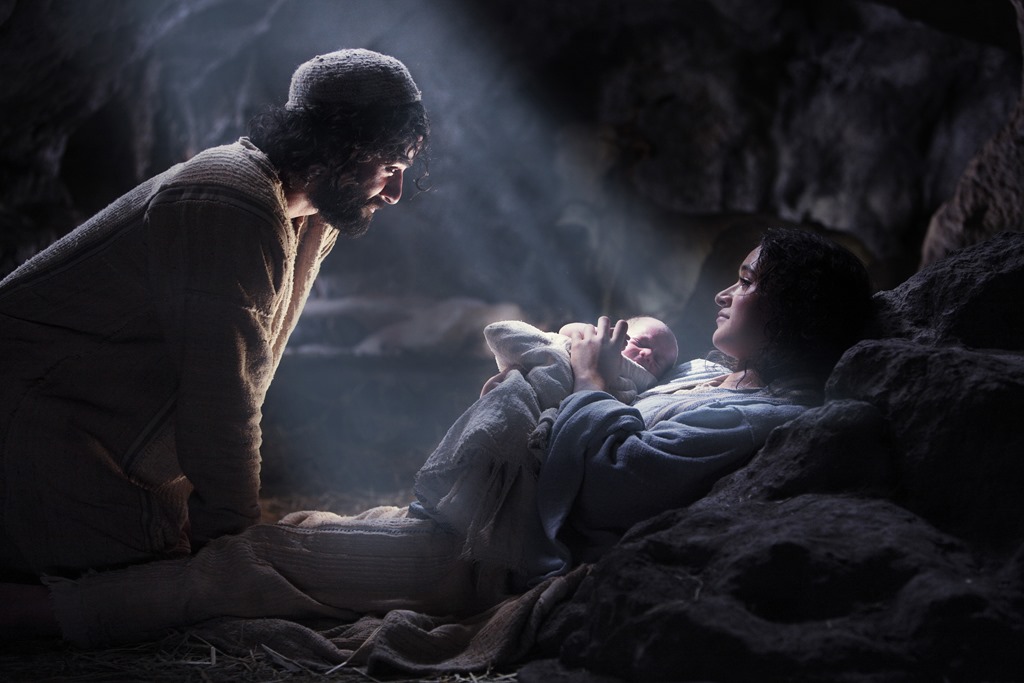
The Christmas Story in the Bible has a lot of heroes, and few villains, but one of the most overlooked heroes is the Step-Father of God’s son – Joseph. The fact is, Joseph is man of profound faith and steadfastness. His example is one that could help us.


To listen to the sermon, click the play button:

To download, right click on the link (or do whatever you do on a Mac) and save it to your computer: Download Christmas 2015

Christmas Eve 2015


Matthew 1:18-25; 2:13-15; 2:19-23

The Christmas Story in the Bible has a lot of heroes, and few villains, but one of the most overlooked heroes is the Step-Father of God’s son – Joseph. The fact is, Joseph is man of profound faith and steadfastness. His example is one that could help us.

Let’s consider his situation. Back in those days, engagement was a big deal – in fact it was almost as big of a deal as marriage. So when it says Joseph was engaged to Mary, this was no casual thing. Engagement involved what we might consider marriage vows, and engagements were not usually broken off except for some very serious causes, like the discovery that one partner was unfaithful. An engaged couple still hadn’t had the ceremony and begun to live together, but in general, they were considered to be as committed to each other as a married couple. Unwed pregnancy was also a very big deal in those days. Jewish law actually provided that a woman who was unfaithful to her husband could be stoned to death. By the time of the New Testament, that didn’t happen very often any more, partly because the Romans put a stop to it, but it was still there in the Jewish law. Even without that, it was a major scandal for an unmarried woman to have a child.

So here is Joseph, engaged, and he finds out his fiancée is pregnant – and of course, it wasn’t his baby. Even in this day and age, that would be enough for most men to call off a relationship.

A few years ago, I shared what the wedding day would have meant to Mary – it would have been the biggest, best day of her life. But this was also true of Joseph. On that day – and most likely, only on that day, in his entire life – he would feel like a king, and eat like a king. Your wedding was the highlight of life in a place where the poverty was soul-crushing. I’m sure Joseph was looking forward to that day.

Everything we read about Joseph tells us he was a good, decent man. He still cares enough for Mary that he doesn’t want her to suffer public disgrace, so he plans to break of the engagement quietly and discreetly. Even so, think of the hurt and humiliation he must feel! Even before they are properly married, this woman has cheated on him. All his happy dreams for the future are shattered around him by this humiliating betrayal.

So, after making his plans, he goes to bed. He has a dream in which an angel of the Lord tells him what’s really going on with Mary. Now, I want you to consider something. They knew just as much about the birds and bees back then as we do now. It’s not like they thought, “Oh sure, every so often you’re gonna have a virgin get pregnant, even though she’s never been with a man.” And in Hebrew culture, the idea of God impregnating someone was borderline blasphemy. The ancient Greeks worshiped Gods who were sort of like really big and powerful human beings. Their gods, from time to time, would get enamored with some beautiful human woman and come down and have an affair. But this is not at all the type of God that the Jews (or we) believe in. To a Jewish man, this is a strange and almost blasphemous idea.

So here’s Joseph. In his mind, he’s already been made a fool and rejected. Now some sort of angelic being comes in a dream, and says, “don’t worry, she’s still a virgin, she hasn’t been unfaithful. God put the baby in there through his Holy Spirit.”

I think my response might have been, “Yeah, right. Whatever.” But here is Joseph, being played for an even bigger fool than before, and what is his response?

“When Joseph got up from sleeping, he did as the Lord’s angel had commanded him. He married her, but did not know her intimately until she gave birth to a son. And he named him Jesus. (Matt 1:24-25)

Joseph was confronted with a crisis of faith. He had a choice. He could follow proper social convention and save face for himself and protect his injured pride. Or he could step out into the wild abyss of faith, risking ridicule and humiliation. He chose faith. And though we don’t often make a big deal of it, he is truly one of the heroes of faith in the Bible.

There’s another thing, too. Okay, he accepts in faith that God is in this. But now, think of it: Joseph was going to be God’s step-dad. Seriously! There’s a song by Michael Card that I love. The picture is of Joseph standing there, holding Jesus as a baby, rocking him to sleep. And he’s thinking, “How can I do this? How can I be a father to the son of God?” Again, he faced the choice. He could have said, “This is ridiculous. I can’t do this!” He could have made all kinds of objections: “I can’t provide him with the education he will need. I can’t even be sure I’ll be able to feed and clothe this child. How do I raise him? How do I discipline him? Will I need to discipline him?”

But, as before, he responded in faith. The first few chapters of Matthew show us a man who relied on God, was sensitive to him, and responded quickly and obediently to the prompting of the Holy Spirit. He marries Mary, just as the angel told him, though it is almost certain that the ceremony was nothing like the celebration involved in a normal Jewish wedding.

Mary has the baby, and they stay in Bethlehem for about two years. Then, after a visit from the Magi, the Lord tells Jospeh to move the whole family down to Egypt. This is a major journey. And of course, Egypt is a whole other country. But Joseph doesn’t hesitate. The same thing happens a few years later: the Holy Spirit tells him to go back, and even which town to settle in. Joseph does it.

I think that it is no accident that Joseph was the kind of man who heard from God. God picked not only Mary, but Mary and Joseph together. Joseph was ready to hear from God. He was probably the sort of man who wanted to be closer to God, wanted to hear from him. He remained sensitive to him and willing to make the hard choices of faith over feelings, faith over conventional wisdom, faith over fear. He made the choice of faith time after time.

Joseph is great example to us. Christmas can give us sweet, warm fuzzy feelings. But when we really think about it, that little child is confronting us with a choice. Will we believe and accept that the Creator of the universe willingly joined himself to a human egg, laid aside the privileges of divinity, and became this little baby? We really believe that here, in this frail, impoverished child, with the young, inexperienced mother and the plain, ordinary step-father, is the salvation of the world? Are we willing to take action on that choice of faith?

I hope Joseph’s example will encourage us to say, “yes.” If Joseph can look that stupid, so can we. If he can marry a pregnant woman, be step-father to God’s son, move all around the world because he heard something in a dream, we can certainly give up our pride, and trust this little child Jesus with our lives now, and our eternal future.

WHY DON’T GOOD PEOPLE GO TO HEAVEN?

good-person

The Old Testament commands concerning relationship with God are all fulfilled in trusting and obeying Jesus. What the rich young ruler lacks is not outward behavior, but an internal commitment to the Lord as his one and only true God. Even so, in Jesus, we don’t have to be perfect – we trust that he meets that standard for us. This isn’t license to sin, rather, it is a comfort to sinners who want to do right, but fail sometimes. It is reassurance that our only “goodness” comes from the only One who is good.


To listen to the sermon, click the play button:

To download, right click on the link (or do whatever you do on a Mac) and save it to your computer: Download Matthew Part 67


Matthew #67 Matthew 19:13-22

Verses 13 through 15 record an incident with little children. This is similar to what came previously, in chapter 18, and we spoke about it then. Again, Jesus states that the kingdom of heaven belongs to those who are like children. In addition, we can see that Jesus does indeed value and love actual little children.

After this, Matthew records an incident that is also covered by Mark and Luke. I want to point out that we have here one of the “contradictions” that skeptics are always talking about. Matthew remembers that the young man asks “Teacher, what good must I do to inherit eternal life?” One the other hand, Mark and Luke record the shocking difference that the young man says: “Good teacher, what must I do to inherit eternal life?” You talk about a contradiction. Wow. People often say “the bible is full of contradictions.” They usually can’t give many specific examples (that is, they really don’t know what they are talking about), but this is one them. As you can see, the contradiction makes no difference. In fact, Matthew does not claim that the young man never called Jesus “good teacher,” so actually there is no necessary contradiction.

I believe that this is an incredibly relevant passage of Scripture, precisely because the discussion is about “goodness.” Goodness is at the heart of the point of this passage, and is also at the heart of the divide between Christianity and all other religions. It isn’t so much that we disagree about what goodness is (although there is a certain amount of disagreement there), but Christianity has a fundamentally different understanding of how to achieve goodness, and the role that goodness plays in our relationship to God.

I want to pause for a moment, and thank those of you who are praying for the ministry of Clear Bible and supporting us financially also. It’s easy to skip the piece I usually put in at the end about prayer and support, but we really do need your prayers, and we really do appreciate them. It’s not that we are in crisis, but we are in spiritual work, and spiritual work needs spiritual support – that is prayers. I am being honest when I say that we also need material support – that is, financial support. But I believe that if you join us in praying for that, as well as for the ministry in general, the Lord will provide what we need. If he leads you to be a part of that provision, you can use the donate button here on the blog, or you can send a check to New Joy Fellowship; 917 Canyon Creek Drive; Lebanon, TN 37087. Just put “Clear Bible” in the memo. Your check will be tax-deductible.

All right, let’s get back to the text. Virtually every other religion on earth besides Christianity has this basic proposition: “Your behavior will determine your eternal destiny. Behave well, and you will reach the goal you are seeking; behave badly, and you will fail.” What many people don’t notice about this, is that it means you are in control. If you just do certain things, you win the prize. Religion is humans trying, through their own efforts to become good, and then immortal (though in the case of Buddhism, humans are trying to become immortally nothing). It is about human effort and human goodness.

This is the attitude of the young man who approaches Jesus. His question is “What [good] must I do to enter eternal life?” In other words, his underlying assumption is that he is able to control his eternal future, if he just does the right things. Jesus’ response is very interesting.

17“Why do you ask Me about what is good? ” He said to him. “There is only One who is good.

Right away, Jesus is confronting the man’s assumption. The implication of what he is saying is that the young man can’t be good, since there is only One who is good – and that would be God. In other words, Jesus is already hinting that it isn’t about doing good, but rather, knowing the One who is good and giving your allegiance to Him. But Jesus’ next words seem almost like a contradiction, not only to his first sentence, but also to what Christians have believed and taught for 2000 years:

If you want to enter into life, keep the commandments.”

It sounds like what Jesus is saying here is that you have to obey the commandments in order to get eternal life. However, I think Jesus is answering the young man’s question on the young man’s terms. In other words, he is saying: “If you wanted to get into heaven by being good, you have to obey all the commandments.” I don’t think Jesus means that we really can achieve eternal life that way. Paul talks about this in the book of Galatians:

1Christ has liberated us to be free. Stand firm then and don’t submit again to a yoke of slavery.2Take note! I, Paul, tell you that if you get yourselves circumcised, Christ will not benefit you at all.3Again I testify to every man who gets himself circumcised that he is obligated to keep the entire law.4You who are trying to be justified by the law are alienated from Christ; you have fallen from grace. (Gal 5:1-5, HCSB)

In other words, theoretically, you could reach eternal life by being perfect. However, if you are going to go the route of trying to earn your salvation through your own goodness, then you must keep the law perfectly. I think that is what Jesus is saying to this young man.

But, as Paul points out in numerous places, nobody can actually do it in practice. Here are two references:

9What then? Are we any better? Not at all! For we have previously charged that both Jews and Gentiles are all under sin,10as it is written: There is no one righteous, not even one.11There is no one who understands; there is no one who seeks God.12All have turned away; all alike have become useless. There is no one who does what is good, not even one. (Rom 3:9-12, HCSB)


15We who are Jews by birth and not “Gentile sinners”16know that no one is justified by the works of the law but by faith in Jesus Christ. And we have believed in Christ Jesus so that we might be justified by faith in Christ and not by the works of the law, because by the works of the law no human being will be justified. (Gal 2:15-16, HCSB)

So, it is clear that Jesus is engaging with this young man on a more or less theoretical level; but that is where the man starts the conversation, so Jesus meets him where he is. Next, the man asks a very interesting question: “which commandments do I have to follow?” This question is not as hypocritical as it might sound at first. By the time of Jesus, the Jews had developed a huge body of rules and regulations that they claimed needed to be followed. I’ve mentioned this in a number of sermons on the book of Matthew. So the Jewish religion was no longer simply based upon the Old Testament, but also on the collected teachings of various rabbis, and numerous traditions and regulations that have been handed down. Modern Jewish rabbis will readily admit that no one could possibly follow all of these things consistently. So the young man is probably thinking of many things besides simply the 10 Commandments. Jesus, as he always does in such situations, brings it back to God’s word as it was given in the Old Testament:

1 Jesus answered: Do not murder; do not commit adultery; do not steal; do not bear false witness;19honor your father and your mother; and love your neighbor as yourself. (Matt 19:17-19, HCSB)

There is a fascinating subtext here. Do you notice anything missing? Jesus has left out every command that pertains to following, loving and obeying God. In the 10 Commandments, God told the people to have no other gods besides him; to neither create nor worship idols (things that represent God to us, but are not him); to honor, and not misuse the name of the Lord; and to remember the Sabbath and keep it holy. These are the first four Commandments, and they all have to do with our relationship with God, and Jesus says nothing about them.

Why?

The commandments that Jesus told the young man to follow are quite similar to the basic moral code for Hindus, Buddhists and Muslims, and of course, Jews. Apart from the second one that he named, almost anyone in Western culture today, Christian or not, would be happy to agree with Jesus’ response. Even atheists are generally against murder, stealing, and lying for gain; and they are generally for being good to your family and loving others. This is the type of thing that leads people to ask: “Aren’t all religions the same?”

But Jesus is about to burst the bubble of the rich young man, and along with it, the bubble of those who think all religions are the same. He was a brilliant teacher, and part of his brilliance was helping people to come to the right conclusion through their own thought process. You can see it happening in this young man right before our eyes:

“I have kept all these,” the young man told Him. “What do I still lack? ” (Matt 19:20, HCSB)

I don’t think we need to criticize the young man for saying that he is kept all the commandments the Jesus named – millions of people think they do this, at least, externally. But I want us to see what Jesus has done to him. This guy knows that there is another shoe that hasn’t dropped yet. If he was a good Jew, he certainly knew that Jesus had left out the first four Commandments. By leaving them out, Jesus has called his attention to the fact that he is missing something, and so he asks “What do I still lack? What am I still missing?”

21“If you want to be perfect,” Jesus said to him, “go, sell your belongings and give to the poor, and you will have treasure in heaven. Then come, follow Me.” (Matt 19:21, HCSB)

What is Jesus saying? First, he is saying that in order to have eternal life, the young man must be perfect. He is spelling out what I mentioned before: if you want to try to get eternal life in this way, you must be perfect. Second, Jesus is telling him to obey, in a practical way, those first four commands that he omitted to mention before. This young man was rich, and his money was both a God to him, and an idol. For this man to obey: “you shall not worship an idol,” he had to sell all of his possessions. For this man to have no other gods, he had to get rid of his wealth. For this man to honor the name of the Lord, to trust him above all, he had to become poor so that his wealth would not tempt him. For this man to worship, to honor the Sabbath and rest, he had to give to others, and free himself from the cares and worry that came from being rich. And above all, Jesus is claiming his ultimate allegiance: “Come and follow me.” This is yet one more place where Jesus claims to be the Lord, the God of the Old Testament. He is telling this young man that the command: “I am the Lord, you have no other gods before you,” is practically fulfilled in following Jesus. The Old Testament commands concerning relationship with God are all fulfilled in trusting and obeying Jesus. Jesus makes that clear here.

What the rich young ruler lacks is not outward behavior, but an internal commitment to the Lord as his one and only true God. He needs to get rid of everything that is standing between him and following Jesus, and then follow.

This is an answer for those who ask: “What about the good Buddhist, who lives a moral life? How will he be kept from heaven?” First of all, if someone is a good Buddhist, he doesn’t want to go to heaven. He wants to eternally cease to exist. Seriously, that’s the goal, and when people ask that question, they are only revealing their ignorance of religion. But there is a valid point there, so let’s replace “a good Buddhist, with “a good Muslim.” I know Islam has a lot of negatives, but I have met many Muslim men who basically want to live good, moral lives. The commands that Jesus lists here not so different for Muslims. So, Jesus could be talking to a good Muslim in this passage. The one thing such a person lacks is total commitment to Jesus as Lord. And Jesus makes clear that that is the one thing necessary for eternal life.

So, to be clear, there are two answers in this text to the question: “Why can’t a good, moral person who does not believe in Jesus go to heaven?” The first, is that Jesus says only God himself can be good enough. If you want to get into heaven by your good works, the standard is perfection. I don’t care who you are, no “good moral person” is perfect, and Jesus says here that in fact no one is even good, except God.

Second, Jesus also makes it clear that the only way to eternal life is to give all of your allegiance to him. We must get rid of what comes in between us and following Jesus, and then follow him. When we do that, we are not judged based on our perfection, but rather on our faith in, and allegiance to, Jesus. This is the message of the entire New Testament, and in fact the entire Bible. Re-read Galatians 2:15-16 above. Here’s another from 1 John 5:10-13

10Whoever believes in the Son of God has the testimony in himself. Whoever does not believe God has made him a liar, because he has not believed in the testimony that God has borne concerning his Son.11And this is the testimony, that God gave us eternal life, and this life is in his Son.12Whoever has the Son has life; whoever does not have the Son of God does not have life.13I write these things to you who believe in the name of the Son of God that you may know that you have eternal life. (1John 5:10-13, ESV2011)

Though it isn’t spelled out in Matthew 19, the rest of the New Testament teaches true goodness is a gift from God that we receive when we trust Jesus Christ, and follow him. Trust in Jesus comes first, and what we call “morality,” or “doing good” comes about as a result of that faith. Doing good without faith will never be good enough, because, as Jesus said here “Only One is good.”

So, let’s makes this practical for us today. The rich young man was prepared to do good, but he was not prepared to give up his wealth in order to follow Jesus. He was not prepared to give his ultimate allegiance to Jesus. It isn’t a command for all Christians to be poor, rather, it is an example of how we might be called to give something up for Jesus. So, what is it in your life that keeps you from following Jesus? What are the things that tempt you not to give your ultimate allegiance to him?

For some, it may be a relationship. You are afraid you might lose your spouse, or your lover, or your group of friends if you really gave your whole life to Jesus. For others it might be a lifestyle choice. You’d have to give up whatever Jesus wanted you to give up, and there are some things that, frankly, you are not willing to let go of, even for the sake of Jesus Christ. It might be alcohol, or drugs, or sex outside of marriage. It might be that you want to remain master of you own destiny, and if you follow Jesus you are afraid your life might be boring, or you might not get to do what you want in terms of your career. It doesn’t necessarily have to be sin. Kristen Powers, an anchor for Fox News, had an intense struggle before becoming a Christian, in part because she, and everyone in her circles, despised Evangelicals. She had to be willing to give up her reputation to follow Jesus. Wealth, in and of itself, is not necessarily sinful, but that was what was keeping the young man in the text from following Jesus. Remember what Jesus said, at least twice already in the book of Matthew:

8If your hand or your foot causes your downfall, cut it off and throw it away. It is better for you to enter life maimed or lame, than to have two hands or two feet and be thrown into the eternal fire.9And if your eye causes your downfall, gouge it out and throw it away. It is better for you to enter life with one eye, rather than to have two eyes and be thrown into hellfire! (Matt 18:8-9, HCSB)

37The person who loves father or mother more than Me is not worthy of Me; the person who loves son or daughter more than Me is not worthy of Me.38And whoever doesn’t take up his cross and follow Me is not worthy of Me.39Anyone finding his life will lose it, and anyone losing his life because of Me will find it. (Matt 10:37-39, HCSB)

In essence, he is making these word practical, specifically for the rich young man: “get rid of your wealth, because it is keeping you from following Me, keeping you from having no gods before Me.”

I want to make something clear here. When we do give our trust and ultimate allegiance to Jesus, he meets the standard of perfection on our behalf. I mentioned a number of things above that might keep us from following Jesus. Even after we trust him and start to follow, some of those things may still be a problem for us. But if we are following, after we fail and fall down, we get back up with the help of Jesus, and continue on following him. In Jesus, we don’t have to be perfect – we trust that he meets that standard for us. This isn’t license to sin, rather, it is a comfort to sinners who want to do right, but fail sometimes. It is reassurance that our only “goodness” comes from the only One who is good.

With that in mind, hear Jesus’ call to surrender everything to him, and follow him.

FAITH IN THE REAL WORLD

faith1

Faith isn’t a magic pill that gives us the power or right to accomplish whatever we want. But the faith of Jesus-followers is a wonderful means through which God wants to act in this world, and has acted in this world for two-thousand years. Having faith does not enable you to do whatever you want – it enables God to do whatever He wants, in and through you.


To listen to the sermon, click the play button:

To download, right click on the link (or do whatever you do on a Mac) and save it to your computer: Download Matthew Part 59


There is a persistent, widespread belief that the New Testament was written, or edited, by people who had an agenda, people who wanted to use it to manipulate others. Therefore, before we dive in to the main text today, I want to mention verse 21, because it is the kind of thing that more or less takes all the air out of that silly notion. When we see the actual facts, we know that we can have confidence that the New Testament we have today really is what the apostles – those who actually knew Jesus – wrote.

The Holman Christian Standard Bible (HCSB) puts brackets around verse 21, and makes a footnote about it, which reads: “other mss omit bracketed text.” The NIV has it only as a footnote. The English Standard Version (ESV) also has it as a footnote. Their footnotes read something like this: “some manuscripts insert verse 21: But this kind never comes out except by prayer and fasting.

This is what we in the exciting business of Bible Teaching call “a major textual variant.” I have mentioned before that there are almost six thousand ancient manuscripts and partial manuscripts of the Greek New Testament. Scholars have been comparing them to one another for many years now, and have found very few variations between them. What this means is that long before Christianity was legal in the Roman Empire, all Christians were using the same New Testament we use today. It wasn’t changed to suit the purposes of people in power. It wasn’t shaped by various faith communities to suit their particular agendas. All Christians have been working from the same text for almost two-thousand years, from a time hundreds of years before following the words of Jesus provided anyone any sort of prestige or power.

But there are some variations. This is an example of what is considered a major variation. The earliest complete manuscript of the New Testament does not have the words “But this kind never comes out except by prayer and fasting,” in the book of Matthew. A large number of later manuscripts do have those words in Matthew.

Mark records the same incident in chapter nine of his gospel. Every text of Mark 9:29 has this:“This kind can come out by nothing but prayer.” Some variants of Mark 9:29 add “and fasting.”

So first, let’s look at the big picture. The use of prayer and fasting while performing exorcisms is not a major Christian doctrine. If we take this out altogether, we have not really changed Christianity in any significant way.

Second, it is clear that Jesus did actually say, “This kind can come out by nothing but prayer,” – it’s just that it is unlikely that Matthew recorded those words – probably only Mark did. So, actually, the only thing we aren’t sure Jesus said was “and fasting.”

Do you see what’s going on here? Nothing. This is considered a major textual variant and yet it doesn’t affect any significant Christian belief. The only real question we are left with is whether Matthew wrote it (we know Mark did) and whether Jesus says it is helpful, in addition to praying, to also fast while driving out demons.

All right, on to the main text today:

14 When they reached the crowd, a man approached and knelt down before Him. 15 “Lord,” he said, “have mercy on my son, because he has seizures and suffers severely. He often falls into the fire and often into the water. 16 I brought him to Your disciples, but they couldn’t heal him.”

17 Jesus replied, “You unbelieving and rebellious generation! How long will I be with you? How long must I put up with you? Bring him here to Me.” 18 Then Jesus rebuked the demon, and it came out of him, and from that moment the boy was healed.

19 Then the disciples approached Jesus privately and said, “Why couldn’t we drive it out? ”

20 “Because of your little faith,” He told them. “For I assure you: If you have faith the size of a mustard seed, you will tell this mountain, ‘Move from here to there,’ and it will move. Nothing will be impossible for you.

Mark records that the failure of the disciples to drive out the demon led to a dispute between them and some of the religious leaders (Mark 9:14-16).

14 When they came to the disciples, they saw a large crowd around them and scribes disputing with them. 15 All of a sudden, when the whole crowd saw Him, they were amazed and ran to greet Him. 16 Then He asked them, “What are you arguing with them about? ”

Let’s use our imagination here, and I think we might find a familiar scenario. Imagine this: John Smith is a skeptic. He doesn’t know if he really believes in God, and is not sure at all that God will help when someone asks. John has a friend named Fred Jones, who gets very sick. John asks his Christian friends to pray for Fred, and then when Fred isn’t immediately healed in the way John wants, John gets mad at God for not doing anything. I’ve been involved in several scenarios like that, and I think there is a little bit of something I might call “perversity” in that. If you really don’t believe, why do you ask for, much less expect, any help? How can you seek help from a place of faithlessness, and then turn around and hold God responsible for not doing what you never trusted him to do in the first place? How can you blame him if you don’t believe in him?

I suspect that this is what was going on between the disciples and the religious leaders, and this is what Jesus ran into when he came down the mountain. I think it is this attitude that he called “unbelieving and rebellious.” The translation above (HCSB) translates the Greek word “rebellious,” while others use “perverse,” but the root word means “to distort.” That is exactly what is going on. The people were using the failure of the disciples as an occasion to distort the truth about Jesus.

I think the disciples provide an admirable example to us when they go to Jesus and humbly admit that they failed, and seek the reason why. The world is already generally inclined to reject Jesus and persecute his followers, but we don’t need to give them unnecessary reasons. A little humility, and some genuine honesty about our failures doesn’t hurt, and may help at least a few people to be more open to the message of the grace of God in Jesus Christ. At the very least, it is helpful to us spiritually both to admit that we have failed, and also to bring those failures to Jesus.

Jesus’ reply to them is one of the few places where I think the HCSB really misses the obvious meaning of the Greek. It says “Because of your little faith.” Little faith doesn’t capture it at all. This is not the same word Jesus used during the calming of the storm when he said “you of little faith, (Matt 8:26),” or when Peter started to sink after walking on water (Matt 14:31), or when the disciples were talking about the yeast of the Pharisees (Matt 16:8).

The Greek word for faith (or trust) is pistis. Here, Jesus uses a single word for the “little faith” of disciples: apistis. In Greek, an “a” in front of a word generally means “the opposite of” or “the absence of” or “the contradiction to.” In other words, Jesus is not saying the disciples had very little faith – he is saying they had none at all (at least in this situation). Everywhere else in the New Testament, the HCSB translates apistis as “unbelief.” I believe it should have been the same here, or maybe, “lack of faith.”

I think this puts things in a different light. It is not that the disciples had some faith, but not quite enough for the healing of the demon-possessed boy. In fact, they had no faith at all. That is why Jesus uses the analogy of the mustard seed. A mustard seed is about one-third the size of a grain of rice. Not much bigger, really, than a grain of sand. In those days before microscopes or magnifying glasses, the mustard seed would be one of the smallest visible objects in the world. Jesus doesn’t mean their faith was even smaller than that – he means they had none.

I don’t know about you, but telling them “it is because you have no faith,” seems a little harsh. Remember, they had left homes and careers to follow Jesus. They had seen some incredible miracles. None of the others objected when Peter said Jesus was the Messiah, the Son of God, and it seems likely that many, if not all, agreed with him. We know that Andrew (Peter’s brother) thought Jesus was the Messiah from the very first day (John 1:41). Also, Philip told Nathaniel that he believed Jesus was the one predicted by the Old Testament. So how can Jesus say they had no faith?

I think Jesus probably means something like this: “You may believe that I can do miracles when I am present. You may believe that I am the Messiah, the Son of the Living God. But you still do not have faith that this means anything real and practical for you right now, in the situations you face. When it comes to your real life and the problems you face, you have no faith that I am available to you, that I will make an actual difference for you.”

RT France writes about this text:

“It is a striking illustration of the fact that faith is, for Jesus, not a matter of intellectual assent, but of a practical reliance on a living God.”

The disciples were probably willing to give their intellectual assent to the idea that Jesus is the Messiah. But they had not yet learned to practically rely on the Lord in real life situations. Their doctrine is correct, but it doesn’t yet make a difference in how they live or deal with life.

So Jesus tells them, “if you have even a tiny amount of faith (any faith at all) you could move mountains.” By the way, the moving of a mountain is a proverbial saying. It’s like saying, “if I’ve told you once, I’ve told you a million times.” When you say that, you don’t mean that you have literally repeated yourself 1,000,000 times. It’s a common saying that uses exaggeration to make a point. In the same way, in those days in Israel there was a common saying, or proverb, about moving mountain, and that is what Jesus is using here. I do not believe it is meant to be taken at face value. I think the point Jesus is making is that any amount of faith allows us to access the unlimited power of God.

I want to make sure we understand what Jesus is communicating here. Some people take all this as if faith is a means to harness the power of God to do whatever we want done (as long as it isn’t overtly sinful). You hear people say things like “I’m just standing in faith that the Lord will provide a new car for you,” or “I will not receive this diagnosis of cancer.” You may even hear people say “You have to stand in faith. Don’t doubt! Don’t speak doubt. God will act if you just stand in faith.” God may indeed want to give someone a new car, or heal someone of cancer. However, I think these sorts of statements often represent a misunderstanding of faith. Having faith does not enable you to do whatever you want – it enables God to do whatever He wants, in and through you. Through faith, you give God permission (and therefore power) to act as He pleases. Faith begins with the understanding that it isn’t up to you, it’s up to God.

Perhaps you want to move a mountain. Faith doesn’t give you power do that. You will never have that sort of power. That power is God’s. Also, faith doesn’t give you the right to go around re-arranging the landscape. They aren’t your mountains – they are God’s. The mountain is only moved by God’s power, and only if it is God’s desire to move it. Faith is simply opening the door to him. Faith isn’t a means to control God or “harness” his power – it is simply asking him and trusting him to act as he pleases in and through us.

This is one of those things in the Christian life that calls for balance. We don’t control God. We don’t control our circumstances through faith. The Lord never promised us freedom from all trouble, hardship or sickness in this mortal life. And yet, he does want us to rely upon him in practical ways in this mortal life. Though we should not lose our eternal perspective, we should also realize he does often want to act in us and through us while we are alive on earth. He wants to heal people through us. He wants to deliver people from demonic oppression through us. He wants to communicate his grace and love to others through us. He wants to comfort others through us. He also sometimes want to do these same things for us. Sometimes, he wants even to provide for our physical needs. All of these things happen when by faith we open the door for him to act. Faith isn’t a magic pill that gives us the power or right to accomplish whatever we want. But the faith of Jesus-followers is a wonderful means through which God wants to act in this world, and has acted in this world for two-thousand years.

Our faith should make a difference in real life. Jesus wants us to learn to rely upon him practically in all things. I don’t know about you, but sometimes I feel alone in attempting to really rely upon Jesus. It seems like people either think faith is a way to personally control the power of God, or faith has no practical value here on earth. But there are people who take a balanced approach. Their hope and goal is heaven. And yet, here and now, they live in daily dependence upon the Lord. One group of people who live like this are the missionaries of the World Mission Prayer League. They have been relying on Jesus in practical and balanced ways for almost ninety years. Here are some excerpts from World Mission Prayer League Documents:

We want to communicate our dependence upon God, as well. We want our prayers and communications to demonstrate that we have no hope but heaven, no resource but God, and no guarantee but his faithful promises…

We choose to depend upon Jesus, for all things at all times. Jesus secures our redemption and has become our eternal hope. We may count on him to provide as well everything necessary for life and service (2 Peter 1:3)…

The dependable grace of Jesus frees us from the anxious need to supply ourselves from the limited store of our own abilities….

Dependence upon “the dependable grace of Jesus” is a choice. It is a practice and a lifestyle.

It is something that we learn… And it is, of course, a kind of mystery, too. It is the mystery of faith itself, in a way. It is one of the irreducibly untidy things that I love about the Prayer League…

Dependence on Christ as gracious Lord sustains us in our calling when other ties may fail. Christ makes us heirs of the kingdom of heaven! Now we may face hardship with joy, endure privation with contentment, and suffer loneliness and adversity with the courage of faith. Funds might run short and fail. The Mission may disappoint us, or even cease to exist. Yet the Lord will never fail us (Deuteronomy 31:8). We may put our trust in him above all…

This fundamental relationship of faith will challenge our attitudes and shape our behaviors at every turn.

World Mission Prayer League lives and does business by these principles every day, even now in 2015. To support their work around the world, they need about $70,000 per month. Over more than eight decades, the only person they have ever asked for money is God. If they need more missionaries, they pray. If they need money to support a new missionary, they pray. If they need a new computer system, they ask Jesus for it.

Now, I don’t share this because I think the people of the World Mission Prayer League are perfect. They are flawed human beings like everyone else. But they are human beings whom I know, who really do live their lives in the flesh by faith in Jesus Christ. People really do live in practical dependence upon Jesus. It can be done in a biblical, balanced way. By the grace of God, many people even today are living that way. By the grace of God YOU can live the life of faith well. As the Prayer League said, this approach to faith should challenge our attitudes and shape our behaviors at every turn.

Let the Holy Spirit Speak to you now.

~

Thanks again for making use of Clear Bible.

I want to remind you again that we are a listener-supported ministry, and that means, first and foremost, that we are supported by your prayers. We need and value your prayers for us.

Please pray that this ministry will continue to be a blessing to those who hear it. Ask God, if it is his will, to touch even more lives with these messages. Ask him to use this ministry in making disciples of Jesus Christ.

Please also pray for our finances. Pray for us to receive what we need. Please pray for us in this way before you give anything. And then, as you pray, if the Lord leads you to give us a gift, please go ahead and do that. But if he doesn’t want you to give to us, that is absolutely fine. We don’t want you to feel bad about it. We want you to follow Jesus in this matter. But do continue to pray for our finances.

If the Lord does lead you to give, just use the Paypal Donate button on the right hand side of the page. You don’t have to have a Paypal account – you can use a credit card, if you prefer. You can also set up a recurring donation through Paypal. We can make this tax-deductible if you just mention that it want it to be so in the “note” part of the transaction.

You could also send a check to:

New Joy Fellowship

917 Canyon Creek Drive

Lebanon, TN 37087

Just put “Clear Bible” in the memo. Your check will be tax-deductible.

Thank for your prayers, and your support!

IN THE MIDDLE OF YOUR STORM, WHERE IS JESUS?

storm


To listen to the sermon, click the play button:

To download, right click on the link (or do whatever you do on a Mac) and save it to your computer: Download Matthew Part 28


Matthew #28 . Matthew 8:23-27

I want to do something different this week. If you normally read this, rather than listening, I want to strongly encourage you to take a little extra time this session, and listen to the sermon, instead of reading it. I also want to encourage you to listen at a time when you can be alone and undisturbed. Basically, rather than teaching about this passage, what I want to do is lead you in a meditation on it. It will help you enter in to the meditation if you can close your eyes and visualize with your imagination, just following the meditation part along with your ears.

To listen to the sermon, click the play button:

To download, right click on the link (or do whatever you do on a Mac) and save it to your computer: Download Matthew Part 28

I am going to provide a written version as well, because I know that some of our blog followers don’t have an internet connection that allows them to stream audio, and others may want to translate this into other languages. But for the rest of you who are still reading, I encourage you to stop, and click on the play button instead. If you insist on reading, please take time to pause and visualize, and then also pause and listen to how the Lord speaks to you.

There are many different ways we can internalize and absorb what God wants to say to us through the Bible. My default approach is to try to understand it thoroughly, and then “listen” for how the Holy Spirit wants to apply it to my life right now. Another way is to memorize portions that seem particularly important to you at this point in your life. Still one more approach, very useful for narrative parts of the bible, is to use your imagination, to put yourself right into the sights and sounds and smells of what is happening in a text. That is what I want us to do, today.

You are one of Jesus’ disciples. The last few days have been both thrilling and exhausting. He preached this awesome, thought-provoking, paradigm-busting sermon up on the ridge just south of Capernaum. Then when he came back to town, the circus started. He healed a leper. Then he healed some guy from a distance – you just heard about that one a few hours ago – a friend of yours who does chores for the Roman garrison heard that the servant of the centurion who talked with Jesus was healed while the officer was talking with him. Then the world went crazy, with crowds of people coming to be healed, and people getting more and more excited all the time. It’s hot and there are people pressing all around you for a chance to look at Jesus, or maybe feel his healing touch. It’s almost a relief to hear that Jesus wants to get away, across the lake the for a while.

Finally, Jesus finishes with the last sick person, and giving him a big smile, turns to you and the others, hops in the boat and says, “Let’s go!”

You never did travel much by boat until you started following Jesus. Peter and James and their brothers were all fisherman, so they are used to it, but it’s still a unique feeling for you – a little exciting, and a little scary too, since you don’t know how to swim. Once you start moving, the breeze across the water is incredibly refreshing, and you feel yourself relaxing. There are hours to go with nothing to do. After talking for a while, Jesus stretches out near the bow. He must be exhausted, after days of giving his full attention to hundreds of people each day. You don’t blame him when you notice he has dozed off.

Now you are a long way from shore. You look around nervously, but Peter, James and the other fisherman seem pretty relaxed, so you sigh and let go. You can smell the fresh water, mixed with the slight scent of fish, but it isn’t unpleasant. You turn and talk with some of the others for a while, wondering what Jesus will do next, and what it might mean for your lives.

Now you are almost in the exact middle of the lake – several miles from shore in any direction. You realize that the breeze has become stronger, without you really noticing. The boat leans over as the wind pushes harder against the sails. Quite suddenly, the sky darkens. John says something sharply to James, while Peter and Andrew scramble to their feet and start doing something with the ropes that hold the sails. They are experienced sailors, you think. They’ll handle whatever it is.

But whatever it is, turns out to be too big. A violent gust pushes the boat far over to the side, and it seems to last forever. The other men are shouting and Peter and Andrew are still trying to fix it with the ropes, and it looks like the boat is going to be turned all way over when with a flat cracking sound, the sail rips right down the middle; in a matter of minutes the wind has torn it to shreds. John shouts something about not being able to steer without any sail, and that is when you notice that the little vessel is starting to heave and buck like a young camel. A big cold wall of spray blasts you in the face. With no way to steer, you can tell that the boat is wallowing sideways and the waves, getting bigger all the time, are now starting to come over the gunwale of the boat. The wind is so loud that people have to shout to be heard. Nathaniel hands you a bucket, and says something you can’t hear.

“What?” You shout.

“Bail!” He shouts back. “Use this to scoop the water out of the boat.”

You jump to it, driven by a sudden surge of adrenaline and fear. For a minute, it looks like you and the other bailers are making progress, and then a big wave pours over the side, and just like that, the vessel is half-full, riding low, a sitting duck for one or two more waves to put it under. Some of the men are madly paddling with oars, trying to position the boat bow-on to the waves in the vain hope of preventing more waves of coming over like that. The others are bailing with all their strength. The wind is screaming across the dark sky, unbound ropes are whipping wildly in the air and the waves heave higher and higher as the boat sinks lower and lower.

And you can’t swim.

Your relaxing afternoon has become a nightmare. This looks like the end. And then the thought comes to you: Where is Jesus?

Where is Jesus indeed?

You glance around, expecting to see him bailing, or maybe helping Peter with the ropes, or paddling. But in between heaving water out of the boat as you bounce up and down like a cork, you notice a dim shape, still stretched out near the front. Jesus is still with you, but it looks like he is asleep.

“Jesus!” you call. “Jesus!” The others hear you, and they start shouting too. James is already in the bow, and he turns with amazement, noticing for the first time that Jesus is there. He drops the rope he is holding and shakes Jesus awake with both hands.

“We’re about to go under! Is there anything you can do?”

Jesus stands up, swaying and balancing with the insane rhythm of the waves, surveying the wild storm and the mad activity of all of you trying to save yourselves. Incredibly, while you watch, he throws his arms open to the wind and laughs.

“Why are you afraid?” he calls in a big booming voice that penetrates the roaring wind. “Don’t you trust me?” Then, in a different voice, he says, “Enough. Be still.”

You are thrown off balance because the next big wave you expected never appears or shakes the boat. The wind fades back into a gentle breeze. In a matter of minutes you are able to empty the boat of most of the water, while the fishermen hoist a new sail. Everything is calm and peaceful again, and you are safe.

Now, keep yourself in the middle of this story. But while you are there in the boat with Jesus, I want you to think about some things. What is the storm you are in right now? What threatens you? What howls around you like the wind? What do you fear like the deep water that will swallow you up and drown you? What security seems about to crumble and disappear like the boat beneath you? What loneliness or hopelessness pulls at you, threatening to suck you under the dark water? Pause and think about this. Be honest with yourself.

Now, ask yourself this: where is Jesus in all this? Have you forgotten that he is right there with you in the middle of it?

Does it seem like he’s gone? You know he won’t desert you, but maybe it seems like he’s…asleep. Go ahead and wake him up. Draw his attention to the storm. Now, how does he respond to your storm? What does he say to the storm? Pause and listen.

And then, what does he say to you? Again, pause, and listen.

To the disciples he said: “Why are you afraid, you of little trust?” What does that mean to you, in your situation right now?

Listen to His voice right now.

Thanks again for making use of Clear Bible.

I want to remind you again that we are a listener-supported ministry, and that means, first and foremost, that we are supported by your prayers. We need and value your prayers for us.

Please pray that this ministry will continue to be a blessing to those who hear it. Ask God, if it is his will, to touch even more lives with these messages. Ask him to use this ministry in making disciples of Jesus Christ.

Please also pray for our finances. Pray for us to receive what we need. Please pray for us in this way before you give anything. And then, as you pray, if the Lord leads you to give us a gift, please go ahead and do that. But if he doesn’t want you to give to us, that is absolutely fine. We don’t want you to feel bad about it. We want you to follow Jesus in this matter. But do continue to pray for our finances.

If the Lord does lead you to give, just use the Paypal Donate button on the right hand side of the page. You don’t have to have a Paypal account – you can use a credit card, if you prefer. You can also set up a recurring donation through Paypal.

You could also send a check to:

New Joy Fellowship

625 Spring Creek Road

Lebanon, TN 37087

Just “Clear Bible” in the memo. Your check will be tax-deductible. Unfortunately, we cannot do the tax deductible option with the paypal donate button, however the money does go directly to support this ministry.


Thank for your prayers, and your support!

WHICH IS MORE IMPORTANT: LOVE OR TRUTH?


truth-love (1)

The fact is this: Love and Truth are equally important. We need to hold on to both. Love without truth is just meaningless and ineffective sentiment. Truth without love is arrogant and cruel.


To listen to the sermon, click the play button:

To download, right click on the link (or do whatever you do on a Mac) and save it to your computer: Download Matthew Part 26


Matthew #26 . Matthew 8:5-13

When He entered Capernaum, a centurion came to Him, pleading with Him, “Lord, my servant is lying at home paralyzed, in terrible agony! ”

“I will come and heal him,” He told him.

“Lord,” the centurion replied, “I am not worthy to have You come under my roof. But only say the word, and my servant will be cured. For I too am a man under authority, having soldiers under my command. I say to this one, ‘Go! ’ and he goes; and to another, ‘Come! ’ and he comes; and to my slave, ‘Do this! ’ and he does it.”

Hearing this, Jesus was amazed and said to those following Him, “I assure you: I have not found anyone in Israel with so great a faith! I tell you that many will come from east and west, and recline at the table with Abraham, Isaac, and Jacob in the kingdom of heaven. But the sons of the kingdom will be thrown into the outer darkness. In that place there will be weeping and gnashing of teeth.” Then Jesus told the centurion, “Go. As you have believed, let it be done for you.” And his servant was cured that very moment. (Matt 8:5-13, HCSB)

Last time we saw how Jesus reached out and physically and spiritually touched someone who was literally untouchable – a leper. Now Matthew records another incident where Jesus interacted with someone whom the Jewish culture of his time saw as unacceptable. The man in question is a centurion – an army officer. Automatically, this means two things. First, he was not Jewish. The Jews at the time were an occupied people, a people under the oppression of Rome and Rome’s vassals. The Jews were not permitted to have their own army, so any army officer would certainly be a Gentile.

Second, because he was an army officer, not only was this centurion a non-Jew, but he was also one of the oppressors. Part of his job was to enforce laws that the Jewish people had not made, and to keep them from rebelling. He was part of the conquering and occupying army that was kept in the Jewish homeland. He would have been viewed by the Jews much the same way patriotic Frenchmen would have viewed a German officer in the army that occupied France during the Second World War. To put it another way – he was the enemy.

So here is Jesus, heading home with his Jewish disciples, and along comes the enemy. I think it is worthwhile to look both at how the man approached Jesus, and what Jesus said to him and about him.

Let’s begin with the centurion. He was probably in charge of the local garrison of soldiers. Jesus was a young, homeless, Jewish Rabbi with no official standing. The centurion could have come to Jesus and said, “Look, I’m the law in the town. Some officials might consider you a troublemaker. But I could make things easier for you if you take care of me, too.”

Instead, he came to Jesus and called him “Lord.” We’ve already talked about what this word means in Greek. It could mean “sir,” or it could mean “The Lord” as in, God. Even for a Gentile army officer to call a homeless Jewish Rabbit “Sir” is startling. But I think as we go through the text, we’ll see that this Centurion meant not only “Sir” but also “Lord” in the sense that he personally believed that Jesus was The Lord.

Let’s continue to look at the humility of this man. He doesn’t even actually make a request of Jesus. He simply tells him the problem. He says, “My servant is paralyzed with pain.” He doesn’t tell Jesus what to do about it – he just brings his burden to the Lord. I think this is very useful to us when we come to God in prayer. So often I am tempted to tell the Lord how to deal my prayer request: “Sally has leukemia, Lord, would you please touch her bone-marrow and remove the problem, and let those white and red blood cells come into balance?” But this Centurion shows us the way of simple trust. He simply says, “Lord, my servant is ill and in pain.” He figures that Jesus will know exactly what to do about it. He seems to think that simply just bringing the problem to Jesus will be enough. I can learn a lot from this.

Jesus, confronted by this enemy soldier, by a man who enforces the oppression of his people and who, by his cooperation, keeps them in crushing poverty, responds immediately: “I will come and heal him.”

The Centurion again displays both humility and faith. First, he knows that if Jesus enters his house, it will cause trouble for Jesus. Jews were not supposed to go into the houses of Gentiles. In those days, that would make them ceremonially unclean, and they would have to go through a cleansing ritual before they could worship again, or even eat with other Jews.

So the Centurion demurs. He could have said, “My servant is not worth all that trouble,” but what he actually said was, “I am not worthy, and besides, there is no need.” This is where he reveals that he already sees Jesus as the “The Lord.” He describes his own command. He is in Palestine under the orders of the Roman Caesar, and so he has authority to tell his soldiers what to do. He recognizes that Jesus is on earth under the orders of God the Father, and so Jesus has the authority to tell the very creation what to do. He only needs to give the order, and the sickness will leave.

Most of the New Testament was originally written on a paper-like material called “Papyrus.” It was much more rare and expensive than paper and ink today. So Matthew doesn’t take the time to give us this man’s back story. But clearly, he had spent some time around Jesus, and he believed absolutely that Jesus had all the authority of God.

The next line is worth analyzing a little bit. It says that Jesus was amazed. The Greek doesn’t have a direct English equivalent, but it might be best translated, “Hearing this, Jesus marveled at it, and said…” You almost get the sense that Jesus was surprised. But how could Jesus be at the same time the one true omniscient God, and yet also be surprised? I think this question is very important, so we’ll take it as a side-topic for a minute. When Jesus came to earth, though he came in the fullness of his God-nature (Colossians 1:16-20) he chose, for the entire time he was on earth, to set aside all the advantages of being God, and to remain every bit as dependent upon the Father as we are (Philippians 2:6-11). And so, every miracle He did, He did not from His own power as God the Son, but rather, as any human would do – by completely depending upon the Father:

Then Jesus replied, “I assure you: The Son is not able to do anything on His own, but only what He sees the Father doing. For whatever the Father does, the Son also does these things in the same way. For the Father loves the Son and shows Him everything He is doing, and He will show Him greater works than these so that you will be amazed. (John 5:19-20, HCSB)

So Jesus was not using his divine omniscience when he spoke with the Centurion. He had chosen to set that aside, and not use it. Therefore, he did not know the future any more than you or I, except when the Father chose to reveal it to him. This was part of Jesus’ sacrifice for us – that he became like us, even to the extent of setting aside his Godly powers, and depending instead on the Father, just like any other human being must do. Remember the temptations of Satan in Matthew chapter four? They were aimed at trying to get Jesus to use his own power, rather than depending upon the Father. Jesus agreed to live a life that required trust in the Father, so that he was like us in every way.

Now since the children have flesh and blood in common, Jesus also shared in these, so that through His death He might destroy the one holding the power of death — that is, the Devil — and free those who were held in slavery all their lives by the fear of death. For it is clear that He does not reach out to help angels, but to help Abraham’s offspring. Therefore, He had to be like His brothers in every way, so that He could become a merciful and faithful high priest in service to God, to make propitiation for the sins of the people. For since He Himself was tested and has suffered, He is able to help those who are tested. (Heb 2:14-18, HCSB)

This business of being amazed at the Centurion is just one example of how Jesus made himself like us, dependent on the Father. He knows what it is like to not know what God is going to do. He knows what it is like to blindly trust that God will do the right thing, the best thing, even when he personally doesn’t know what that will be. He has truly “walked in our shoes.”

With that, let’s get back to the Centurion. Speaking (as always) what the Father leads him to speak, Jesus makes a statement that would have been startling, and even offensive, to many of the Jews around him.

First, Jesus unequivocally makes trust in Him the requirement for entering the Kingdom. Second, he adds, basically, “A lot of non-Jewish people will be there in the Final Kingdom of Heaven – and many Jewish people will not be there.”

Over the fifteen-hundred from Moses to Jesus, the Jewish people went through an difficult and tragic arc in their attitudes toward non-Jews. God’s promise to Abraham was designed to bless both Abraham’s descendants, and the nations around them. The laws given through Moses commanded the people of Israel to be different from those around them, in order to show the nations something of what God was like, and so encourage those pagan people to come into God’s blessing. But the Hebrew people did not really obey those laws. Instead, after they entered the promised land, they embraced the cultures around them and let go of the things that made them unique, the things that would show foreigners the truth of God. They let the cultures around them influence them, and ultimately, lead them astray into abandoning the One true God. They went through many cycles of repenting and coming back to God, and then straying away again. Finally, they were utterly destroyed as nation roughly 587 years before Jesus (587 BC). When the nation was re-formed seventy years later, it seemed they had finally learned their lesson. The Jews after that maintained a very distinct identity. They no longer seemed inclined to mix with the cultures around them, nor worship false gods. But now, they went too far in the opposite direction. Not only did they not mix with the non-Jews around them, but they no longer cared if those outsiders ever learned anything about the One true God. They became self-satisfied, and by the time of Jesus, felt that Heaven was the birthright of all Jews, and all those who were not born Jewish were generally out of luck. It is true, there were still converts to the Jewish religion from other nations, but as whole, at the time of Jesus, Jews did not pursue non-Jews or make much effort to tell them about God. If an outsider expressed a passionate interest in Judaism, he could probably find a Jewish person to help him convert, but in general Jewish folks were not very eager to spread the word, being content to have it to themselves.

So when Jesus states that many Gentiles (non-Jews) will be in heaven, and many Jews will not, this was a shocking and offensive idea. Many people may have felt that they would automatically be in Heaven, just because they were Jews by birth. By the same token, they felt that non-Jews would not be there, simply because they were born to the wrong kind of parents. But Jesus challenges their entire basis for salvation and heaven. He says it is about trusting Him.

There are so many applications to this passage. Let’s go back to the Centurion. He was a soldier in an especially brutal army in an especially brutal era of history. Sometimes we think, “I want to follow Jesus, but it’s really tough to do that in my profession. No one around me understands. It just doesn’t fit my circumstance.” But this man in the Roman Army found it possible to trust Jesus and follow him, even in his exceptionally brutal and profane circumstances. If you find yourself saying, “It’s hard to follow Jesus while I do _______ for a living,” I encourage you to pause and consider this Centurion.

Now let’s think about Jesus welcoming this enemy soldier, this oppressor, when he comes in faith. We Christians struggle with both of the same extremes with which the Jews had difficulties. When Jesus welcomes this outsider, this enemy, it reminds us of his words that we should love our enemies. It challenges us to welcome and accept people who are very different from us, people whom we might even tend to think of as enemies. Have we become self-satisfied and content to believe we are going to Heaven because we go to a Christian church, while meanwhile, we don’t care if our friends and neighbors and co-workers take the road to hell? Too many Christians seem to have this attitude. We think it is about organizational membership, rather than trust in the person, Jesus Christ.

We forget that Jesus Himself tells us to reach out and tell those who don’t know Him yet. Are you willing to tell Muslims about the grace of God that comes through Jesus Christ? What about black folks or white people? Are you ready to show God’s grace and love and forgiveness to gay people and Democrats? Or maybe your problem is with people who oppose gay marriage, or with Republicans, or members of the National Rifle Association – can you show them the love and truth of God?

But there is another side to all this, one that we must not forget. The Jewish people before 587 BC had a problem too, and it was the opposite problem. They welcomed all cultures, regardless of the Truth, regardless of their attitudes toward the One true God; and they let those cultures influence their own beliefs and their own relationship with God. This passage does not teach us that everyone is saved, regardless of their attitude to Jesus. It does not tell us to give up truth or give up the standards of the bible. Instead, it teaches us that we are all the same in our need for Jesus. The Centurion did not come to Jesus and say, “This is who I am and I’m not gonna change for you. You must accept me, but you may not change me or command me.” Instead, as we have seen, the Centurion came to Jesus in trust and humility.

Many Christians these days have difficulty accepting this. They can accept people who are different from them, and even embrace different cultures. But they have a hard time insisting that all people must repent of their sins and receive Jesus in trust. Jesus welcomed this Centurion precisely because he trusted Him in humility. If we welcome people regardless of their attitude toward Jesus, we are not helping them. If we tell people who are sinning that they are not sinning, we ourselves are distorting God’s Word and are endangering our own position of humbly trusting Jesus and what He says.

The fact is this: Love and Truth are equally important. We need to hold on to both. Love without truth is meaningless and ineffective sentiment. Truth without love is arrogant and cruel.

This incident with the Centurion challenges us to hold on to the truth that to enter the Kingdom of Heaven, we must trust Jesus and humbly receive Him and His truth. At the same time, it also challenges us to accept anyone in the world who wants to come to Jesus with faith and humility. It encourages us to bring our burdens to Jesus with humble faith.

Listen to the Holy Spirit today as He uses this passage to speak to you.

Thanks again for making use of Clear Bible.

I want to remind you again that we are a listener-supported ministry, and that means, first and foremost, that we are supported by your prayers. We need and value your prayers for us.

Please pray that this ministry will continue to be a blessing to those who hear it. Ask God, if it is his will, to touch even more lives with these messages. Ask him to use this ministry in making disciples of Jesus Christ.

Please also pray for our finances. Pray for us to receive what we need. Please pray for us in this way before you give anything. And then, as you pray, if the Lord leads you to give us a gift, please go ahead and do that. But if he doesn’t want you to give to us, that is absolutely fine. We don’t want you to feel bad about it. We want you to follow Jesus in this matter. But do continue to pray for our finances.

If the Lord does lead you to give, just use the Paypal Donate button on the right hand side of the page. You don’t have to have a Paypal account – you can use a credit card, if you prefer. You can also set up a recurring donation through Paypal.

You could also send a check to:

New Joy Fellowship

625 Spring Creek Road

Lebanon, TN 37087

Just “Clear Bible” in the memo. Your check will be tax-deductible. Unfortunately, we cannot do the tax deductible option with the paypal donate button, however the money does go directly to support this ministry.

HOW STUPID DO YOU LOOK?

be stupid

Joseph, husband of Mary, risked shame and humiliation, and stepped into the wild abyss of faith in God. It made his life uncomfortable at times, but it also made him a hero, honored by his step-son, Jesus.

To listen to the sermon, click the play button:


To download, right click on the link (or do whatever you do on a Mac) and save it to your computer: Download Matthew Part 2

Matthew #2. 1:18-25

The first installment on the book of Matthew got a little long, and I did not have a chance to tell you about Matthew himself, or anything general about the book.

There is nothing in the book of Matthew itself that tells us who wrote it. However, all of the writings of the early Church assume that it was Matthew, apostle of Jesus. In fact, Matthew is the most quoted book of the New Testament among the early church writings. We have no evidence that proves them wrong in thinking that Matthew was the author, and there are some facts that suggest logically that he was. For instance, Matthew was Jew, but as a tax collector, he would have had extensive dealings with non-Jews, which means he would have been even more fluent in Greek than many of his fellow Jews, certainly more so than John, who grew up in Galilee. And indeed we find that his Greek is indeed more polished and literate than any of John’s writings.

In Matthew 9:9, the author records this incident:

As Jesus went on from there, He saw a man named Matthew sitting at the tax office, and He said to him, “Follow Me! ” So he got up and followed Him. (Matt 9:9, HCSB)

Both Luke and Mark record this same incident, but they call the person in question by the name “Levi.”

In all the lists of the twelve apostles (Matt 10:2-24; Mark 3:16-19; Luke 6:13-16; Acts 1:13) Matthew is mentioned, but no Levi. However, Matthew 10:3 points out that this Matthew was previously a tax collector. All the evidence then, is that Levi and Matthew are one and the same person, known by two different names. Perhaps, like Paul and Peter, this “Levi” preferred to take on a new name after following Jesus, to separate himself from his old life. Certainly, as a former tax-collector, hated by all, he had many reasons to want to go by a new name.

Luke and Mark (as well as Matthew) record that this individual left tax-collecting and began to follow Jesus. Tax collectors were considered to be particularly despicable people. The Roman empire demanded taxes from the provinces to run the empire, and the rulers of the provinces demanded additional taxes to run the province. They empowered some people to be tax collectors on their behalf to acquire this money. The tax collectors could call upon soldiers if someone refused to pay, so they were feared and hated. In this way, tax collectors were considered traitors – they collaborated with foreign rulers against their own people. Not only that, but the government did not care if the tax-man collected “extra” for himself. The government wanted what it asked for, but beyond that, it was up to the tax collector to decide if he wanted to keep more for himself. Needless to say, most tax collectors made themselves rich by over-taxing the people. It was nothing less than legalized robbery. If anyone objected, the tax-man would have them arrested and imprisoned. Several times throughout the gospels it mentions sinners…and tax collectors. In other words, tax collectors were in a class of evil all by themselves. Matthew Mark and Luke all record this incident:

After this, Jesus went out and saw a tax collector named Levi sitting at the tax office, and He said to him, “Follow Me! ” So, leaving everything behind, he got up and began to follow Him. Then Levi hosted a grand banquet for Him at his house. Now there was a large crowd of tax collectors and others who were guests with them. But the Pharisees and their scribes were complaining to His disciples, “Why do you eat and drink with tax collectors and sinners? ” Jesus replied to them, “The healthy don’t need a doctor, but the sick do. I have not come to call the righteous, but sinners to repentance.” (Luke 5:27-32, HCSB)

Matthew was generally hated by all, considered by his fellow Jews to be a traitor, collaborator and thief. He was in a specially bad class of sinners. This made his experience with Jesus all the more powerful. Jesus came to him at the tax office. In fact, Jesus might have been there to pay his own taxes, and even as Matthew robbed him shamelessly, Jesus called him to follow him. Jesus accepted his invitation to come to his house, and ate with him. When questioned, Jesus said he came exactly to save such people. This must have affected Matthew deeply. Certainly, it changed the direction of his entire life.

Throughout the gospel, Matthew quotes the Old Testament frequently. Remember, at that time, there were two versions of the Old Testament. One was the Hebrew text, used in synagogues in Judea and Galilee and surrounding areas. But there was also the Septuagint, the Greek translation of the Old Testament, used in Egypt, and in other areas of the world, father away from the Jewish nation. Matthew quotes sometimes from the Hebrew, and sometimes from the Septuagint, as it seems to please him. This shows that he was very familiar with both versions. Maybe one way to look at this is how I use the New Testament in my sermons. Frequently, I quote an English version of the New Testament when I’m referring to it. But occasionally, I study the Greek closely, and I use my own translation of the Greek. So Matthew sometimes quotes the Septuagint, but other times appears to be quoting the Hebrew version (which, of course, he translates back into Greek, since his entire writing is in Greek). Again, we have the impression of a man who is literate, and well educated.

Most people think Matthew was writing for Jewish Christians, since he talks so much about the Old Testament. They may be right, since he describes some Jewish customs and words that he does not bother to explain. But the fact that he uses the Old Testament so much should be important even to Gentile Christians. Particularly today, it is helpful for us to understand how the Old Testament bears witness to the Messiah, Jesus Christ.

Now, let’s move on to the next few verses: Chapter 1:18-25

Concerning the birth of Jesus, Luke’s gospel tells us a lot about the perspective of Mary. Many scholars think, probably correctly, that Luke met Mary while she was still living, and heard her stories. But Matthew gives us more of Joseph’s point of view. All four gospels speak of Jesus interacting with his mother and brothers when he is grown up, but there is no mention of Joseph after Jesus was about twelve years old. This suggests very strongly that Joseph had died by the time Jesus started his ministry at age thirty. So where did Matthew get his information about Joseph? The logical conclusion is that Jesus himself told his disciples about his step-dad. I find this fascinating, and it makes me all the more interested in the little that we know of Joseph.

In my opinion, Joseph, step-father to Jesus, is one of the most overlooked and under-appreciated heroes of faith. He was a man of profound faith and steadfastness. His example is one that could help us.

Let’s consider his situation. Back in those days, engagement was a big deal – in fact it was almost as big of a deal as marriage. So when it says Joseph was engaged to Mary, this was no casual thing. Engagement involved what we might consider marriage vows, and engagements were not usually broken off except for some very serious causes, like the discovery that one partner was unfaithful. An engaged couple still hadn’t had the ceremony and begun to live together, but in general, they were considered to be as committed to each other as a married couple. Unwed pregnancy was also a very big deal in those days. Jewish law actually provided that a woman who was unfaithful to her husband could be stoned to death. By the time of the New Testament, that didn’t happen very often any more, partly because the Romans put a stop to it, but it was still there in the Jewish law. Even without that, it was a major scandal for an unmarried woman to have a child.

So here is Joseph, engaged, and he finds out his fiancée is pregnant – and of course, it wasn’t his baby. Even in this day and age, that would be enough for most men to call off a relationship. Everything we read about Joseph tells us he was a good, decent man. He still cares enough for Mary that he doesn’t want her to suffer public disgrace, so he plans to break of the engagement quietly and discreetly. Even so, think of the hurt and humiliation he must feel! Even before they are properly married, this woman has cheated on him. All his happy dreams for the future are shattered around him by this humiliating betrayal.

So, after making his plans, he goes to bed. He has a dream in which an angel of the Lord tells him what’s really going on with Mary. Now, I want you to consider something. They knew just as much about the birds and bees back then as we do now. It’s not like they thought, “Oh sure, every so often you’re gonna have a virgin get pregnant, even though she’s never been with a man.” And in Hebrew culture, the idea of God impregnating someone was borderline blasphemy. The ancient Greeks worshiped Gods who were sort of like really big and powerful human beings. Their gods, from time to time, would get enamored with some beautiful human woman and come down and have an affair. But this is not at all the type of God that the Jews (or we) believe in. To a Jewish man, this is a strange and almost blasphemous idea.

DF-03244
Nativity
,  
May 18, 2006
Photo by Jaimie Trueblood/newline.wireimage.com

To license this image (8837793), contact NewLine:
U.S. +1-212-686-8900 / U.K. +44-207 659 2815 / Australia +61-2-8262-9222 / Japan: +81-3-5464-7020
+1 212-686-8901 (fax)
info@wireimage.com (e-mail)
NewLine.wireimage.com (web site)

Matthew enters his first Old Testament reference in this account of the birth of Jesus. It comes from Isaiah 7:14

See, the virgin will become pregnant; and give birth to a son, and they will name Him Immanuel (which means, “God is with us”)

So here’s Joseph. In his mind, he’s already been made a fool and rejected. Now some sort of angelic being comes in a dream, and says, “don’t worry, she’s still a virgin, she hasn’t been unfaithful. God put the baby in there through his Holy Spirit.”

I think my response might have been, “Yeah, right. Whatever.” But here is Joseph, being played for an even bigger fool than before, and what is his response?

“When Joseph got up from sleeping, he did as the Lord’s angel had commanded him. He married her, but did not know her intimately until she gave birth to a son. And he named him Jesus. (Matt 1:24-25)

Joseph was confronted with a crisis of faith. He had a choice. He could follow proper social convention and save face for himself and protect his injured pride. Or he could step out into the wild abyss of faith, risking ridicule and humiliation. He chose faith. Remember, Joseph didn’t even have a waking angel visitation. It was all in a dream. But he clearly received what the scripture said, the quotation from Isaiah. He chose to trust what God had said in the bible, even though it made him look a fool. And Jesus, his step-son remembered him, and commended him for it. Though we don’t often make a big deal of it, Joseph is truly one of the heroes of faith in the Bible.

There’s another thing, too. Okay, he accepts in faith that God is in this. But now, think of it: Joseph was going to be God’s step-dad. Seriously! There’s a song by Michael Card that I love. The picture is of Joseph standing there, holding Jesus as a baby, rocking him to sleep. And he’s thinking, “How can I do this? How can I be a father to the son of God?” Again, he faced the choice. He could have said, “This is ridiculous. I can’t do this!” He could have made all kinds of objections: “I can’t provide him with the education he will need. I can’t even be sure I’ll be able to feed and clothe this child. How do I raise him? How do I discipline him? Will I need to discipline him?”

But, as before, he responded in faith. The first few chapters of Matthew show us a man who relied on God, was sensitive to him, and responded quickly and obediently to the prompting of the Holy Spirit.

I also think that it is no accident that Joseph heard from God. God picked not only Mary, but Mary and Joseph together. Joseph was ready to hear from God. He was probably the sort of man who wanted to be closer to God, wanted to hear from him. He remained sensitive to him and willing to make the hard choices of faith over feelings, faith over conventional wisdom, faith over fear. He made the choice of faith time after time.

Joseph is great example to us. We think about the birth of Jesus in connection with Christmas, and warm fuzzy feelings. But when we really think about it, that little child is confronting us with a choice. Will we believe and accept that the Creator of the universe willingly joined himself to a human egg, laid aside the privileges of divinity, and became this little baby? We really believe that here, in this frail, impoverished child, with the young, inexperienced mother and the plain, ordinary step-father, is the salvation of the world? Are we willing to take action on that choice of faith?

I hope Joseph’s example will encourage us to say, “yes.” If Joseph can look that stupid, so can we. If he can marry a pregnant woman, be step-father to God’s son, move all around the world because he heard something in a dream, we can certainly give up our pride, and trust this little child Jesus with our lives now, and our eternal future.