The Boy Who Listened

1 SAMUEL #2. 1 SAMUEL CHAPTERS 2 &3

samuelHEARS

To listen to the sermon, click the play button:

To download, right click on the link (or do whatever you do on a Mac) and save it to your computer: Download 1 Samuel Part 2


1 The boy Samuel served the LORD in Eli’s presence. In those days the word of the LORD was rare and prophetic visions were not widespread.

Times were bad in Israel. There was an old man who was supposed to teach everyone about God, kind of like a pastor, except he was the pastor for the whole country. His name was Eli. Eli had two sons, named Hophni and Phineas. These two sons were grown men, and they were supposed to help their father Eli with the work of teaching people about God and leading them in worship. Instead, they made everyone do what they wanted them to. They took food from people who had saved money all year so they could bring the food to the place of worship and celebrate with God. When people complained, Hophni and Phineas told them that they were working for God, and so the people had to do what they said. They did even worse things than taking food.

Their father Eli did not stop them. He told them that what they did was wrong, but they didn’t stop doing it, and Eli didn’t do anything more about it. As we look at 1 Samuel chapters 1-3, it seems like Eli is not a bad man, but he was weak-willed and he did not do a good job raising his own children.

This wasn’t the only reason times were bad. The text says, “In those days the word of the Lord was rare and prophetic visions were not widespread.” In other words, no one was paying attention to God, and so no one knew what he wanted to say or do. Jeremiah 29:13-14 says this:

You will seek me and find me, when you seek me with all your heart. I will be found by you, declares the LORD (Jer 29:13-14, ESV)

Jesus put it this way:

And I tell you, ask, and it will be given to you; seek, and you will find; knock, and it will be opened to you. For everyone who asks receives, and the one who seeks finds, and to the one who knocks it will be opened. (Luke 11:9-10, ESV)

So God says, if you look for him, you’ll find him, if you are looking with all your heart. If you want to hear what says, you will, if you really truly want to, and you listen to what he says in the Bible, and when he speaks in your heart. But in those days, no one was doing that.So it wasn’t because God was ignoring his people. People didn’t hear from God because they weren’t listening. They did not really truly want to know God better; they didn’t really want to know what he had to say to them.

But one person started to listen. It wasn’t Hophni and Phineas, the bad priests who were abusing their power and position. It wasn’t Eli, the old man who was supposed to lead the country in following God. It wasn’t a mighty warrior or a great scholar.

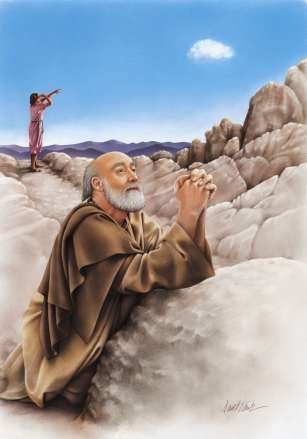
The one person who started to listen was a young boy. His name was Samuel. Last week we learned how his mother held on to her desire to have a son, abut also surrendered that desire to God. Because of that, after Samuel was born, when he was about three years old, she let God adopt him. Of course it was Eli, the old chief priest who took care of him and taught him at the house of God, but it was really as if Samuel was adopted by God. When Samuel started to listen to God, he was still only a young boy. Both the Hebrew Text and the Greek Old Testament (called the Septuagint) agree on this point. The Greek uses a word that means “young child.” The Hebrew uses a word that can mean any child younger than thirteen years old. But he is definitely not a grown up; not even a teenager. It isn’t any more specific than that. He could have been twelve years old, or he could have been six. But we know he was only a kid.

Many of us know the story. It is right there in 1 Samuel chapter 3. One night Samuel was sleeping and he heard a voice call him. He thought it was Eli, the old priest. Now Eli took care of Samuel, and made sure he was fed and washed, taken care of educated. But Samuel also took care of Eli, because Eli could not see very well. So Samuel thought it was Eli who called him. Maybe Eli need some help finding something or walking somewhere in the dark. Probably there were times when Eli did call him to come help for things like that.

So Samuel got up to see what Eli needed. Only Eli had not called him. He sent Samuel back to bed. A little while later, Samuel heard a voice calling his name again. He got up and ran to Eli once more. Once more Eli sent him back to bed.

Then it happened again. Eli had his problems, but he wasn’t an entirely bad person, and it seemed like when he was caring for Samuel, he avoided the mistakes he must have made with his own sons. Eli realized that it must be God speaking to Samuel. So he sent Samuel back again, but this time, he told Samuel to ask God to keep speaking, and to listen to what God says.

Now there is something interesting about this story. I think a lot of people feel that if God speaks to them, it is going to be easy to hear him and easy to know that it IS God who is giving them the message. But that wasn’t the case with Samuel. It really was God. He was even speaking in a voice that Samuel heard audibly. Even so, it took both Samuel and Eli several tries until they realized that God was at work.

Many times, I think we don’t hear God because we think it should be easy. We think, “if God wants to say something to me, well, he can.” But that isn’t really seeking God, like Jeremiah and Jesus talked about. And even with Samuel, it took some time and energy to discern that God was speaking. It is good to not assume that everything that comes into our heads came from God. But at the same time, it is good to take a little time and energy to evaluate unusual thoughts or experiences, in case the Lord does want to speak to us through them. We evaluate it first of all through comparing what we think we heard, with the Bible. If it came from God, it won’t contradict the bible. Of course there are some things that aren’t in the bible, like what job we should take or where we should go to school. We should pray about those things too, and ask for God to speak to us, and then listen. When we think we hear something, we should talk with other Christians about it, and pray about what we heard, asking God to confirm it or not.

In Samuel’s case, what he heard was very much like something that another man of God had heard a few years before: Eli and his sons were going to be judged. The sons would be judged for the evil they were doing. Eli would be judged for allowing that evil to continue. This wasn’t actually a very nice or comforting thing to hear from God.

This is where Eli did teach Samuel an important lesson. The next morning, Samuel didn’t want to tell Eli what God said, because it was all about Eli and his family, and it was bad news for them. But Eli told Samuel that when God speaks, it is important to tell others what he said – even if it may be hard for some of them to hear. This is still true today.

And even though it was hard for Eli and his grown sons to hear, it was actually a very encouraging message for the rest of the people. Eli’s sons were bad men, and no one was stopping them. It was a good thing for the people to hear that God himself was bringing their evil ways to an end. It meant that God cared about his people, and would not let someone treat them unjustly.

So what can we learn from all this? Are you like the people of Israel in those times? Could it be that you don’t hear from God and you don’t see him at work in your life because you really haven’t devoted much time or energy to seeking him? I don’t mean this to sound judgmental or condemning. I just mean that this passage shows us a connection between hearing God and seeking God. It shows that even when God is speaking to us, it takes some effort and focus to realize that, and to hear what he is saying. It isn’t like a lightning bolt spelling something out in letters in the sky. We need to devote our attention to it.

Here’s another thing. It doesn’t matter who you are, or how old you are – God can speak to you. Samuel was a young boy. He was not and adult. He did not have the respect of a grown up or experience to convince people that they ought to listen to him. But God spoke to him. He chose him, out of all the people in Israel, to listen to God and to tell others what God was saying. You may think, “I’m just a kid,” or “I’m not a preacher” or “I don’t know much about the bible.” But all those were true of Samuel also. God can use any of us. In fact, he wants to use each one of us, in different ways.

I mentioned last time that these were some of the darkest days in the history of Israel. But because of one young boy, all that was about to change. People were going to begin to hear God again. I pray that we can all be like the young boy Samuel.


The Woman Who Wanted

mother


To listen to the sermon, click the play button:


To download, right click on the link (or do whatever you do on a Mac) and save it to your computer: Download 1 Samuel Part 1


This is the first in a new series on the book of 1 Samuel. This is an exciting and interesting historical book, and many of the most famous bible stories come from it. It is always important to have a little background about a biblical book, so that we can understand it in context. The events recorded in 1 Samuel took place roughly three-thousand years ago.

This was a very unsettling time in the history of the people of Israel. It was roughly four-hundred years after the time of Moses and the Exodus. The Israelites certainly had their problems in the wilderness, but at the end of it all, they had entered the promised land as a united nation, under strong leadership. However, once they began to settle the land, they splintered back into a loose confederation of tribes. Worse, they ignored the Lord’s command to drive out and completely eliminate the pagan cultures around them in the land. What followed was a few hundred years of the darkest times in their history. They forgot God, and began to adopt the pagan practices of the peoples around them – the very people whom they were supposed to drive out. They were oppressed by those same people, and frequently various areas and tribes of Israel were almost slaves to other cultures. God did not forget them. He used the negative circumstances to remind them about Him. When they prayed for his help, He answered and saved them, but usually within a generation or so, they forgot Him again, and went back to a cycle of worshiping false gods, being oppressed by the surrounding people. Then they remembered God again, and asked for his help, and so the cycle continued. The people were ignorant of God, brutal, and divided. At the time recorded by 1 Samuel this had been going on for long, most people probably felt like this was just how life was. There was certainly no reason to hope or expect that anything could ever change and be permanently different.

The nation of Israel was supposed to be united by their common faith, and they were meant to function as a nation by following God, as they had during the Exodus. Because God was supposed to be the King, technically they were all free. But because they weren’t following the Lord, it wasn’t working. Instead of freedom, they generally alternated between chaos and oppression.

At the time that this particular historical record begins, the spiritual leadership was as bad as the rest of the country. Eli, the High Priest was short-sighted and a weak leader. His sons Hophni and Phineas were self serving – they took every opportunity to abuse the power they had over the people. None of them actively led the country from a position of faith in the Lord or obedience to Him.

1 Samuel 1:1-2:11 records how the Lord began to change all this, not just for a few years, or even just a generation but for the long term. It was an unlikely and surprising beginning. God didn’t call a hero to defeat the enemies of Israel (he had already done that many times over the past few hundred years, and it never lasted). He did not raise up someone to campaign for unity among the tribes. God did not lead anyone to go on a crusade to clean up corruption among the priests, or to start a movement to educate the ignorant children in the outlying areas. If Hollywood screenwriters were making a movie, any one of those choices might be their storyline.

But God did something different and unexpected. He began with a woman who just wanted to be a mother. Her name was Hannah. Her deepest desire was to have a child. She turned her desire over to the Lord, even while continuing to desperately want it. And the Lord pursued his goals through her life and those desires.

Hannah was married to a man named Elkanah. He had a second wife, called Peninnah. He almost certainly married Peninnah only because Hannah couldn’t have children. Chapter 1:5 and 1:8 record that Elkanah loved Hannah deeply. But in those days, having children was simply not considered optional. The culture considered it a curse from the Lord if a couple could not conceive. God blessed Adam and Eve and told them to be fruitful and multiply (Genesis 1:28). If someone could not do that, they figured it must mean that God’s blessing wasn’t on them. Besides that, children were the only source of “social security.” When someone got too old to work, he relied on his children to take care of him. Finally, having children ensured that the family name would continue, and be included among God’s people (Israel) for another generation.

All this is why a man like Elkanah, who seemed to have a genuine love for Hannah, would go the length of marrying a second woman just to have children. By the way, some folks say that the Old Testament endorses polygamy without reservation. That is not exactly true. It records that some men had many wives, and it does not condemn them, but it almost always also describes that situation in a negative light. This is true here also. Elkanah had two wives, and there was rivalry and jealousy and strife between them. This was true also of Jacob, even though his wives were sisters. Solomon, had hundreds of wives and scripture makes it clear that it was his downfall.

Anyway, Hannah’s lack of children meant several things to her. First, she thought it meant God somehow had something against her. It had led to the destruction of her married happiness and love with Elkanah. Finally, if Elkanah were die before she did, there would be no one to take care of her in old age. As we can see, the issue was both emotional and practical. There was deep hurt and pain wrapped up in Hannah’s barrenness, as well as practical concern about the future.

One year, when the family was at the annual worship pilgrimage, Hannah reached a breaking point. I love her attitude in 1:9-18. She is another one of those unsung heroines of the faith. I think what makes her so special is that she surrenders her desire to the Lord, while at the same time, she honestly acknowledges it. She tells Eli, the priest:

I am a woman with a broken heart. I haven’t had any wine or beer; I’ve been pouring out my heart before the Lord. Don’t think of me as a wicked woman; I’ve been praying from the depth of my anguish and resentment. (1 Samuel 1:15-16)

Many Christians in this day and age would encourage you to pursue your desire as if it was somehow holy just because you had it. They paint a picture of God as if he was there for the sole purpose of making your life comfortable and giving you anything you want. They preach a gospel of personal gain here and now. There are other Christians (though less common these days) who treat every personal desire as if it is evil; they suggest the only way to deal with any desire for anything personal is to get rid of it.

Hannah did not follow either path. She desired a child. She wasn’t going to pretend that she didn’t, and she wasn’t going to pretend that she thought her desire was wrong or sinful. She let God hear her anger, anguish and resentment. At the same time, as she asked God to fulfill her desire, she surrendered it back to him. Verses 10-11 in the message version record it this way:

Crushed in soul, Hannah prayed to God and cried and cried — inconsolably. Then she made a vow:

“Oh, God-of-the-Angel-Armies, If you’ll take a good, hard look at my pain, If you’ll quit neglecting me and go into action for me By giving me a son, I’ll give him completely, unreservedly to you. I’ll set him apart for a life of holy discipline.” (1 Sam 1:10-11)

Some people may look at this part of Hannah’s prayer as making a bargain with God. But I think it is a little different than that. Hannah will not let go of her desire. She’s asking for a son, not the strength to go on being barren. And yet, while not letting go, she does surrender that desire to God. It isn’t completely clear in the Message version of the bible, but what she is pledging is that when he is old enough, she will physically bring the child to the tent of meeting and he will stay there with the priests and serve the Lord. The child will not stay with Hannah or her family. In a sense, Hannah is saying, “I want to be a mother. But I also want to surrender to you. So if you do make me a mother, I will turn around and live as I was not a mother again. You will gain a child Lord, not me.” So, yes, in a sense it was a bargain. But I don’t see how else Hannah could both hold on to her desire and surrender it at the same time. It is this bravery and honesty that makes her a great woman of faith in my eyes.

To help us understand what Hannah did, I want to put in simplistic and shallow terms. It is as if you prayed, “Lord, please give me one million dollars. If you do, I will give all one million dollars to the church.” Now, looking at it that way, you may say, “What would be the point of that?” We see no point in that because our desire is either not real or not surrendered. If our desire isn’t real, then we don’t want one million dollars so badly that we’re willing to give it all up again just to say we did have it once. If it is isn’t surrendered, then we don’t want one million dollars unless we can keep some of it, or all of it.

Hannah’s desire was real, and it was truly surrendered. The result of that true and surrendered desire was a baby boy named Samuel. Because Hannah surrendered him to the Lord, the Lord was able to use him to change the course of Israel’s history.

The Lord needed both Hannah’s desire AND her surrender to do what he did through her. If she had kept the desire for a child, but did not give that up to the Lord, Samuel would not have been raised in the house of the Lord and become the greatest spiritual leader since Moses. If Hannah had not truly desired a child as deeply as she did, she probably would not have been driven to surrender him in the first place.

Israel was in a bad place spiritually and politically. Society was fractured, life was dangerous, people were ignorant. God did change everything for them. And he did it through a simple woman who was honest about her desire to be a mother while also surrendering that desire. That’s not how we expect Him to save society. But he often works in these unexpected ways.

So what about you? What are the deep desires of your heart? Are you willing to be honest about them? And are you willing to surrender them to the Lord at the same time? God needs people who are willing to follow in Hannah’s footsteps. I think the psalmist was talking about people like Hannah when he wrote:

Delight yourself in the LORD, and he will give you the desires of your heart. (Ps 37:4, ESV)

THE WHOLE PIE

LIVING IN REVERSE, PART 8

To listen to the sermon, click the play button:


To download, right click on the link (or do whatever you do on a Mac) and save it to your computer: Download Living in Reverse Part 8


If Jesus is really going to live his life through us, it can’t be only on Sunday mornings. It can’t be just when you have your quiet time with God each day. It can’t be only Sunday mornings, quiet times and small group meetings. It can’t be only after work. It can’t be only on weekends or mission trips.

You see, in America especially, we tend to have our own goals and ambitions, and we try to wedge God into our life as one piece of a very full pie. We’d be quite happy to let Jesus have more of us, but we just don’t have the time. Our plates our full. Our time and energy is used up.

I want to challenge you to be honest with yourself for just a moment. What is it all for? What is your time used for? What do you spend your energy on? What is your busyness accomplishing? Jesus said:

“My kingdom is not of this world,” said Jesus. “If My kingdom were of this world, My servants would fight, so that I wouldn’t be handed over to the Jews. As it is, My kingdom does not have its origin here.” (John 18:36, HCSB)

Yet, we seem to be fighting and struggling to make ourselves and our loved ones a comfortable place in this world. We can’t have both our own agenda, and the agenda of Jesus.

When I graduated from High School, the senior class had an official all night party. To make things more fun (as the organizers said) we were given fake money. We could beg for more, play games for more, or make trades. At the end of the night we could use the fake money to bid in an auction for real things, like a $100 gasoline card or even a motor scooter.

A friend of mine set his heart on the motor scooter. He spent all night working like crazy to get more fake money, so he could bid on the scooter. He hardly saw his friends. He hated card games, but he played endlessly to get more fake money.

At the end of the night he had a nice little pile of fake money. Even so, a few other people pooled their fake money, and outbid everyone else, including my friend. When it was all over, he threw his fake money in the garbage, and walked away with nothing but the memory of a wasted night.

There are several key differences between my senior class party and life as we know it. One of them is that, at the end of it all, you cannot use this world’s money, goods or accomplishments to bid on anything real that lasts for eternity. What we “gain” on earth is worth even less than the fake money at that party was worth. Remember what we learned through this series on living in reverse: “Don’t work for food that perishes!” (John 6:27)

Many of us who are grown ups, and particularly Christians, have started living for our kids. We aren’t living selfishly, we are truly not. We are sacrificing our time and energy and possessions for our children. That can’t be a bad thing, can it?

I want to be compassionate and flexible here, but also bold and honest. Sometime we say we are sacrificing for our children, but we are simply using them as an excuse for why we need to work longer hours or make more money. A lot of kids would be happier with less stuff, fewer opportunities and activities and more time with their parents. Some kids know this consciously. Others don’t know they would be happier that way, because everyone else runs around busy too, and they’ve never known anything different.

Some of what we say we are doing for the sake of our children doesn’t make that much sense in the long run. When my son was nine years old, we got him involved in a local community baseball team. They practiced for two hours every Saturday. They played two evening games a week, each one usually lasting about 90 minutes. By the time we drove back and forth everywhere, we were spending about eight hours a week for a nine year old child to play a game that was he somewhat indifferent about. If we had done that for every child in our household at the same time, we would have spent almost the same amount of time as a full time job, just keeping our children in sports.

99.8% of people will never be professional sport players. The skills we encourage our kids spend countless hours developing are for playing games. I know sports teach things like hard work and teamwork and integrity. But do you honestly think that kids can’t learn those things from you, in your family at home? I guarantee you that as a child, Abraham Lincoln did not play on a school team, nor a traveling team for any sport. I am certain that the apostle Paul didn’t either, nor Jesus himself, nor Martin Luther or Florence Nightingale or any of the people who truly shaped the world in which we live today.

Sometimes sports may be a way to college scholarships, I understand that. I can’t say too much about that, since I have no idea how my kids will pay for college. But I do know this: If Jesus, living his life through them, wants to go to college, he’ll go. He’ll make a way for them. But if I haven’t taken the time to teach them about Jesus, to let them develop an life that comes from within, from His Spirit, then even if they get a fully paid scholarship to Yale, I’ve failed.

I want to say one more thing. It isn’t uncommon for a family to spend ten, twenty or even more hours per week on activities and sports. If that is you, let me ask you, what are teaching your kids, by focusing so much on external activities? Do you spend an equal amount of time teaching them to read the bible and pray and listen to the Lord? Do you teach them how to be content and to draw life from the Lord when there is nothing going on externally?

Sometimes the reason we are so busy is because we are trying to get life out of external things. David Wilcox has a great line in the song Hurricane. He writes: “When hope is gone, she confessed, that when you lay your dream to rest, you can get what’s second best, but it’s hard to get enough.”

When we try to get life externally, we need a lot of external activity, a lot of external things going on. It’s hard to get enough, because it isn’t real life. Our busyness is often a cover up, a way to avoid dealing with the fact that we are missing the internal life. And by our busyness, we often are teaching our children to seek life externally also.

CLICK TO FINISH READING THE MESSAGE:

Continue reading “THE WHOLE PIE”

JESUS WANTS TO LIVE YOUR LIFE

christinme

To listen to the sermon, click the play button:


To download, right click on the link (or do whatever you do on a Mac) and save it to your computer: Download Living in Reverse Part 7


LIVING IN REVERSE PART 7. JESUS LIVES YOUR LIFE

We’ve been moving through this series about Living in Reverse. We’ve learned to put what God says after the “but…” – to agree with Him, and to let our dominant reality be determined by God’s Word and God’s actions. We’ve learned to draw life from the Spirit, not from our outward circumstances – not even the good ones. We’ve learned that when we are in Christ, our old self has been crucified, and we are dead to sin to the law. We’ve begun to learn how to fight the ongoing temptations that would try remove us from all these truths we’ve been talking about. We have begun to explore our new life as citizens of heaven, and all the resources we now have in Christ. We’ve been learning our new identity.

All this is leading toward an ultimate purpose: so that Jesus Christ can express His Life through you. Let me put a different way: The purpose of it here on earth is so that Jesus Christ can live your life. Paul puts it like this:

I have been crucified with Christ. It is no longer I who live, but Christ who lives in me. And the life I now live in the flesh I live by faith in the Son of God, who loved me and gave himself for me. (Gal 2:20, ESV)

Now, as I have preached these messages, I have noticed that some people have a certain amount of fear. I have had some fear of my own. That fear is that if we believe that sin is truly taken care of we (or maybe other Christians) will sort of go crazy and completely indulge ourselves in a lifestyle of sin. Now, I’ve addressed that in other messages, by trying to explain the relational connection we now have with God. But I want to point that there are two probable roots to this kind of fear.

The first root is control. Believe it or not, a lot people feel more comfortable with the idea that spiritual things are up to them. If I have to somehow measure up, then I have some control – I can work to make sure that I do in fact measure up. Some folks are very uncomfortable with the idea that they can’t do anything about their spiritual condition – not even after they are Christians. Some people would rather check spiritual items off a list than actually interact with the living God in a daily, personal way.

The second reason we often fear grace, is that we don’t really trust that Jesus will live his life through us and other Christians. I had neighbors once who weren’t Christians. The woman was pretty much a pagan feminist. We prayed for her and her husband for years. Eventually she started coming to our church. One night in our small group she confessed to us, and to the Lord that she was a Wiccan – a witch. She asked for God’s forgiveness. The next day she renounced Wicca and burned her Wiccan books. Not long after that, she completely gave her life to Jesus.

Shortly after she became a Christian we had a conversation, and I realized that she still held a lot of pagan and feminist views. She believed that there was nothing wrong homosexual behavior or abortion. I thought, “Oh my goodness, she’s a Christian now, but she still has all these pagan attitudes.” I had no idea where to start with her.

You see this really works. When we are truly surrendered to Jesus, he really will live his life through us.

I didn’t have to. Over the next year or so the Lord worked within her to change her attitudes. I don’t know exactly when or how it happened, but Jesus living within her made sure that she did not continue in unbiblical beliefs or practices.

I didn’t even know she was a Wiccan, before she told us, but the Lord did. He worked within her to change that. The Lord knew before I did the thoughts and attitudes she held that were wrong. He worked within her to change that. She had been a feminist, but before any of us more mature believers talked to her about that, she felt the Lord leading her to change her feminist attitudes and actions toward her husband. That change led him to become a Christian a few months later.

You see this really works. When we are truly surrendered to Jesus, he really will live his life through us. I didn’t have to lay out religious rules for my neighbor to follow – I just had to introduce her to Jesus, and once she surrendered to Him, He began to live his life through her.

We had another lady who started coming to a cell group in that church. She had been raised in a Christian home, but as far as we could tell, she didn’t have a living faith. She lived with her boyfriend and thought nothing was wrong with that. One night she wanted prayer to receive the Holy Spirit. I thought that was jumping the gun a little bit, since she didn’t really know Jesus. But we prayed. When we were done she said, “when you prayed for me, I really did get the Holy Spirit.” I didn’t think so, but I didn’t want to burst her bubble, so I didn’t say anything.

The next day she called me. “I just told my boyfriend he had to move out,” she said. “I have the Holy Spirit now, and the Holy Spirit doesn’t want to live like that.” She told me some other changes she was making in her life. I was floored. She really did have the Spirit!

Once she was surrendered to Jesus, once he lived in her through the Spirit, I did not have to tell her it was wrong to live with her boyfriend. The Spirit showed her.

Now I am not saying there is no use in knowing what the Bible says. The Spirit works through the Word to guide, correct and teach us. Both of these women got extensive Bible teaching and mentoring. But the changes in their lives were brought about not by other Christians giving them rules to follow, nor by them making a tremendous effort, but rather Jesus living his life through them. Their main work was simply to trust Jesus and respond to him as he led them.

I could tell you more true stories but my hope is that if you are a believer, you will see for yourself that Jesus will live his life through you if you let him. And this is why we don’t need to focus on whether or not we are sinning. If we are focused on Jesus and if we respond to him as he teaches us and leads us, we are not going to sin very often. You see, if Jesus is the one living your life, Jesus isn’t going to sin. It’s only when we stop believing it, and stop responding in faith to Jesus that we get into trouble. We get into trouble when WE try to live our OWN lives. Even when we are trying live our lives in a holy way, if we are doing it on our own, we tend to get into trouble.

READ ON TO FINISH THE MESSAGE….

Continue reading “JESUS WANTS TO LIVE YOUR LIFE”

YOUR IDENTITY IS DETERMINED BY YOUR BIRTH

new birth

Living in Reverse Part 6: Born Again.

To listen to the sermon, click the play button:


Right click and save the link below to download the audio:

Download Living in Reverse Part 6


We’ve been moving through this series about Living in Reverse. We’ve learned to put what God says after the “but…” – to agree with Him, and to let our dominant reality be determined by God’s Word and God’s actions. We’ve learned to draw life from the Spirit, not from our outward circumstances – not even the good ones. We’ve learned that when we are in Christ, our old self has been crucified, and we are dead to sin to the law. We’ve begun to learn how to fight the ongoing temptations that would try remove us from all these truths we’ve been talking about.

Some of you may have been trying to put some of this into practice recently. Maybe you’ve been facing temptation and saying, “I’m dead to sin, I don’t want to do that anymore,” but it hasn’t always worked for you. Maybe you’ve been trying to believe desperately, who you really are in Christ, but you still have doubts. And because you don’t fully believe, your actions still don’t look like someone who is dead to sin. If sin is still a struggle, I want to preach the good news to you again today. We’ve discussed why and how it can be problem. We’ve talked about how to fight it. But remember, we are dead to it. I want to start now, talking about our new life. We died to sin, but what are we alive to?

. Maybe you don’t need this today. If not, save this sermon for some time in the future when you do need it.

There is one other thing I think we ought to consider before we jump into the scriptures I want to share. And that is, spiritually speaking, we are often terribly confused about the place of our actions. We understand that our actions are of no value in getting salvation for ourselves. Salvation is a free a gift of God, and it cannot be earned through good deeds (Ephesians 2:8-9). It is appropriated through faith. In other words, we get it when we believe that we need it, and that God has really done this for us.

But now, after we are in Christ, we think our actions determine everything. We think our actions determine who we are. If we act sinful, we think we are fundamentally sinners. If we act righteous, we feel good about ourselves and think we are, by our own efforts, incorporating the righteousness of Christ into our lives. It is to people acting like this that Paul writes:

I only want to learn this from you: Did you receive the Spirit by the works of the law or by hearing with faith? Are you so foolish? After beginning with the Spirit, are you now going to be made complete by the flesh? Did you suffer so much for nothing — if in fact it was for nothing? So then, does God supply you with the Spirit and work miracles among you by the works of the law or by hearing with faith? (Gal 3:2-5, HCSB)

You see, your actions do not determine who you are. Instead, your identity is determined by your birth. I was born in the United States of America. But when I was very young, my family went overseas to be missionaries. The majority of my childhood was spent in other countries.

By the time I was sixteen I did not sound like an American – I actually had an Australian accent. I didn’t really know American culture. My first few years in the US, I didn’t get most of the jokes and wise-cracks, because humor is one of the most culture-specific things there is. I didn’t dress in American fashion.

My memories were not of America. In fact my memories and experiences were in a place that was radically different in very fundamental ways from the United States. In short, America had very limited role in shaping my thoughts, actions, personality, memory or experience. I did not feel like an American at all.

For that reason, did I cease to be an American? Not at all. My citizenship was determined by the country I was born into – not by my feelings, not even by actions. The key was my birth.

Even though I didn’t feel American, I recognized that America offered me more opportunity than anywhere else in the world. I saw my citizenship here as a gift that I could use. I believed what my parents told me, that I was an American citizen. I believed my American passport was valid. So I came to America, in faith that my birth certificate and passport were valid. And now, because I believed that my birth determined my citizenship, I have received many benefits from being American.

Spiritually speaking we need to recognize that it our birth, not our actions, which determines our identity.

Remember, action follows belief. And Romans chapter ten tells us that the kind of belief we need for this comes from hearing the word of God. So I am going to dwell on some more truth from God’s Word today. If we have trusted in Jesus, the bible is very clear about our birth:

Jesus answered him, “Truly, truly, I say to you, unless one is born again he cannot see the kingdom of God.” Nicodemus said to him, “How can a man be born when he is old? Can he enter a second time into his mother’s womb and be born?” Jesus answered, “Truly, truly, I say to you, unless one is born of water and the Spirit, he cannot enter the kingdom of God. That which is born of the flesh is flesh, and that which is born of the Spirit is spirit. (John 3:3-6)

Blessed be the God and Father of our Lord Jesus Christ! According to his great mercy, he has caused us to be born again to a living hope through the resurrection of Jesus Christ from the dead, (1Pet 1:3, ESV)

Since you have been born again — not of perishable seed but of imperishable — through the living and enduring word of God. (1Pet 1:23, HCSB)

Everyone who believes that Jesus is the Messiah has been born of God, and everyone who loves the Father also loves the one born of Him. (1John 5:1, HCSB)

For through him we both have access in one Spirit to the Father. So then you are no longer strangers and aliens, but you are fellow citizens with the saints and members of the household of God, (Eph 2:18-19, ESV)

But our citizenship is in heaven, and from it we await a Savior, the Lord Jesus Christ, (Phil 3:20, ESV)

We have been crucified with Christ. The old has gone. The new you has been born into a new life. We have born citizens of heaven, members of God’s household. Regardless of what we know about heaven, regardless of how we sometimes act like we are from someplace else, Heaven is the place of our citizenship. Our birth certificate proclaims it, our passport affirms it. All of the resources of heaven are ours.

Now, one of the problems, is that sometimes we don’t know our own birth rights. We are like princes and princess who have born to inherit a kingdom. But we were kidnapped as babies, and raised in poverty. Now, our Father, the king has found us and brought us back to the palace. But we don’t even know the rights and privileges and tasks that are ours as royal children. We don’t know the vast resources we have now to fulfill those things. In the same way, so often Christians don’t even know everything that is ours, in Christ Jesus. So Paul writes to the Ephesians:

I pray that the God of our Lord Jesus Christ, the glorious Father, would give you a spirit of wisdom and revelation in the knowledge of Him. I pray that the perception of your mind may be enlightened so you may know what is the hope of His calling, what are the glorious riches of His inheritance among the saints, and what is the immeasurable greatness of His power to us who believe, according to the working of His vast strength. (Eph 1:17-19, HCSB)

His prayer is that they (and all followers of Jesus) can know these things. He wants us to know our birthrights, now that we have been born again. So I am going to share with you, some of the riches that are yours and mine when we are in Christ. This is what it means to be born again as a citizen of heaven:

In Christ, we are holy, blameless, righteous and above reproach (Eph 5:4; 2 Cor 5:21; Col 3:12; 1 Cor 6;19).

He has now reconciled in his body of flesh by his death, in order to present you holy and blameless and above reproach before him, if indeed you continue in the faith, stable and steadfast, not shifting from the hope of the gospel that you heard, which has been proclaimed in all creation under heaven, and of which I, Paul, became a minister. (Col 1:22-23)

The “if you continue” is clearly about continuing in faith and hope. It is not continue to “act righteous” but continue to hold fast to the faith that this is true, that Christ has done this for you. A wise pastor named Dan Stone wrote: “It is not your striving that releases Christ’s life through you. It is your trusting.” We are in Christ when we continue to trust Him and rest in Him day by day. And in Christ, we are holy and blameless.

In Christ, we are safe and free. I am free from condemnation. I am free from sin and death. I cannot be separated from the love of God (Romans 8:1-2; also 8:31-39). God works for my good in all circumstances (Romans 8:28). I have been established, anointed and sealed by God. (2 Corinthians 1:21-22). I can approach God with freedom, confidence and boldness (Eph 3;12; Hebrews 4:16). My real life is already hidden away with Christ in God (Colossians 3:1-4). I am born of God and the evil one cannot touch me. (1 John 5:18).

In Christ, we are significant and important. I am a branch of Jesus Christ, the true vine, and a channel of His life (John 15:5). I have been chosen and appointed to bear fruit (John 15:16). I am God’s temple (1 Corinthians 3:16). I am a minister of reconciliation for God (2 Corinthians 5:17-21). I am seated with Jesus Christ in the heavenly realm (Ephesians 2:6). I am God’s workmanship; created by Him to do good works, which he has already prepared for me to do (Ephesians 2:10).

These are just a few of many verses and concepts that describe who we are when we are born into Christ and into citizenship in Heaven. This is the real you, the you that is more real more powerful than what you see in the flesh or feel in the soul. If you continue in faith (that is, if you continue to believe, to trust Jesus and trust that this is all true in Him) then this you will last forever, and ultimately will be expressed through a transformed soul and a new, eternal body.

You may still act or think like a foreigner, from time to time. But if you trust Jesus, you have born again as a citizen of heaven. All this is truly yours, even though your actions may not yet reflect it perfectly.

All this is leading toward an ultimate purpose: so that Jesus Christ can express His Life through you. Let me put a different way: The purpose of it here on earth is so that Jesus Christ can live your life. That is what we will explore next week.

WHY DO WE SIN? HOW CAN WE FIGHT IT?

LIVING IN REVERSE PART 5.

To listen to the sermon, click the play button:

Right click the link to download: Download Living in Reverse Part 5

Now, there is another question we need to address. If we are already holy, and already free from sin, why do we sin anymore at all? And how do we deal with it?

I’m so glad you ask, because the answer is found in a passage of scripture that is frequently misunderstood: Romans chapter 7:15-20.

For I do not understand my own actions. For I do not do what I want, but I do the very thing I hate.

Now if I do what I do not want, I agree with the law, that it is good. So now it is no longer I who do it, but sin that dwells within me. For I know that nothing good dwells in me, that is, in my flesh. For I have the desire to do what is right, but not the ability to carry it out. For I do not do the good I want, but the evil I do not want is what I keep on doing. Now if I do what I do not want, it is no longer I who do it, but sin that dwells within me. (Rom 7:15-20, ESV)

We read this and we say, “Yeah, I understand that, that’s me.” And we hear Paul say “sin is living me” and “nothing good lives in me” we think: “See? Isn’t that a sinful nature?”

But this passage is frequently misinterpreted. First, in verses 7-14, Paul is talking about the past, about how life was before Jesus. In verse 15, he begins to speak in the present tense, but it isn’t clear if he has switched to his present circumstances, even after salvation, or if he is still explaining the past. Just to move the discussion along, let’s say that in verse 15, Paul is talking about sins he commits as a Christian.

We always need to interpret scripture in context. The entire context of chapter seven is actually chapters six, seven and the first part of chapter eight. The chapters and verse marks were not inspired by God. They were put in by monks 1000 years after the New Testament was written, to help us in navigating around the bible. So pretend they aren’t there, and you can clearly see that the first several paragraphs of chapter 8 are still on the same subject as chapters six and seven.

So with that in mind, what is the general topic that Paul keeps coming around to? You are dead to sin, dead to the law, and alive to Jesus. Therefore, when Paul describes his struggle with sin here, he is not contradicting himself. It is the in the same letter, in the same section, talking about the same subject as when he said: “Likewise, you also have died to the law.”

Therefore, clearly Paul is not turning around and saying “You have not died to the law. You are not free from sin. Your old self is alive and well.” That would be ridiculous and unsustainable biblical interpretation.

I used to believe I had a sinful nature that was alive and well. So when I read this, I was focused on Paul saying “I do bad things…even though I don’t want to.” Actually, Paul’s emphasis is not that he is sinning, but rather that he doesn’t want to commit these sins. What Paul is saying is, “In the deepest part of me, I don’t want to sin. This shows that this part of me is holy and agrees with God. In my deepest nature, I am not a sinner.” He says, in verse 22: “For I delight in the law of God in my inner being.”

And so he says in 8:1-3

There is therefore now no condemnation for those who are in Christ Jesus. For the law of the Spirit of life has set you free in Christ Jesus from the law of sin and death. For God has done what the law, weakened by the flesh, could not do. By sending his own Son in the likeness of sinful flesh and for sin, he condemned sin in the flesh, (Rom 8:1-3, ESV)

I had friend once who was not a Christian. After a lot of time and people praying for him, and some long conversations, he gave his heart to Jesus. Afterward, we started to meet together to pray and talk about the Bible and generally encourage each other in faith. One time the subject of lust came up. He said, “You know, before I became a Christian, I did not struggle with lust. Now I struggle with it all the time.”

I was shocked. What had we done wrong? I asked him to explain.

“Well, before I was Christian,” he said, “there wasn’t any struggle. I lusted, and it didn’t bother me. But since I came to Jesus, it bothers me when I lust because I don’t want to do that now.”

You see the fact that he didn’t want to sin any more was proof that he had died to sin. In his deepest heart, he knew that he didn’t desire sin. In his inner being, he delighted in God’s perfect standard and holiness.

Continue reading “WHY DO WE SIN? HOW CAN WE FIGHT IT?”

If I’m Dead to Sin, Can I sin all the time now?

LIVING IN REVERSE, PART 4. ROMANS 6:12-23

dead-alive


To listen to the sermon, click the play button:

To download, right click the link and save: Download Living in Reverse Part 4

Last time we considered the New Testament teaching that in Jesus we died to sin and to the law. Through this death, which is accomplished through the death of Jesus, we have been set free from sin and the law. (Romans 6:7,14,18; Romans 7:4,6) Last week I shared no less than one dozen scriptures that teach explicitly that in Christ we have died.

The picture Paul gives us at the beginning of Romans 7:2-3 is of marriage. When two people are married in the eyes of the law, they are married. It would be a sin to marry someone else at the same time. But if the husband dies, the laws regarding marriage no long apply. Because of the death, the law doesn’t apply any more. It would no longer be sinful or illegal for the woman to marry someone else. The law was made irrelevant by death.

In the same way, the power of sin to bring us condemnation through the law has been destroyed by the death of Jesus, and by our death which happened in Jesus, as we have trusted him. We can’t be condemned as sinners anymore, because as Paul writes:

Likewise, my brothers, you also have died to the law through the body of Christ, so that you may belong to another, to him who has been raised from the dead, in order that we may bear fruit for God. (Rom 7:4, ESV)

Now, when you really get this, there is a natural question that arises. Does this mean I can sin all I want, because the law no longer applies to me? Now stick with me here. I am going to give you an answer that may surprise you, but you need to follow through the ENTIRE answer I am about to give.

Technically, the answer is, Yes, you can sin all you want. If you are in Jesus, your sins don’t “count” anymore. In the eyes of the law, you are dead, so the law cannot be used to condemn you for anything you do now.

Now, that is a shocking answer. It isn’t the whole story yet, and I want you to stick with me as I give some further explanation in a moment. But just pause here for a moment. Do you see how outrageous the grace of God is? He has made it so that if you simply continue to trust Him, you cannot fail. Even when you do fail, it isn’t counted as you anymore. That’s why we see all those passages in the New Testament saying that when we are in Christ we are New Creation, we are Holy, we are Blameless and so on.

You see it isn’t our job to work ourselves into a state of holiness. God has already put us into a state of holiness, in our spirits. Our only job is to keep believing that he has done this, and through that faith, He will continue to work the holiness deeper and deeper into our soul and body life.

I use the expression keep believing quite deliberately. It is a daily (sometimes hourly) habit of continuing to believe who Jesus is, what he has done for us, how he feels about us, and continuing to rest upon it. This is not a one shot deal. This is not a situation where you just say, “Well I got baptized, so I’m good now.” Or “Well, I got saved five years ago, so I’m good now.” This is a process of continually putting our trust in Jesus, day by day. That is what it means to be “in Jesus” and all these things are ours, only in Jesus. I’m not saying that you have to work hard and live the Christian life on your own strength in order to be in Jesus. But I am saying that to be in Jesus, you need to continually rest in Him with trust in what his Word says, and in what he has done for us.

Last week I spent some time talking about how what we believe profoundly shapes what we do. So the next part of the answer comes here. Technically, you can sin all you want, and it doesn’t count against you. But if you really believe that God has freed you from sin, that you have already been made holy, you will be far less inclined to sin than if you believe you are still fundamentally a sinner.

If you believe you are half sinner, and half saint, then it is only natural for you to go through life sinning half the time. If you believe that, and you sin less than half the time, I commend you for your great will power, though it is misguided. The bible does not say you are half sinner, half saint. It says that if you are in Jesus, then in the most essential part of your being, the part that doesn’t change, the part that already has a solid connection to eternity – your spirit – you are entirely holy. You are completely separated from sin and the law.

When you believe what the Bible says – that the essential you is already holy and is free from sin – you will sin less, not more, because action follows belief. If you find that you are sinning a lot, what you need is not to try harder to stop, but to believe more fully what God says about you.

Now, there is another thing that will eventually restrain our sinful actions. There is a movie from the 1990s called Groundhog Day. In it, a weather reporter named Phil gets trapped in an endlessly repeating day – February 2 1993, to be precise. Only Phil is trapped in this day. Every day, the other people he meets are living the day as if it is their first February 2, 1993. The only thing that carries over from day to day is Phil’s memory. Naturally, at first he is depressed. One night he is drowning his sorrows in drink, and he says out loud: “What if nothing you did mattered. What if you woke up every morning as if the previous day had never happened?”

One of the other drinkers in the bar said, “That would mean there would be no consequences. You could do anything you like.”

Phil catches on to this idea, and at first, he abuses the fact that there are no consequences for his actions. He gets drunk, commits crimes, and does many morally reprehensible things. After a while all that loses its luster, because he realizes there is no life there. So he tries to commit suicide. He kills himself dozens of times, but always wakes up the next morning at 6:00am on February 2, 1993.

But finally, truly knowing there are no consequences, he begins to live for love. Repeating this day endlessly with one of his co-workers, he falls in love with her. And knowing it doesn’t matter what he does, he finally chooses, because of love, to do what is good and right and noble. He devotes himself to literature and music. He tries as much as possible to help others. Every day he says the same boy from breaking his leg, and the same man from choking. Every day, he tries to save the life of the same old bum who dies on February 2, 1993. Day after day, he tries to bless the people that he is stuck with.

I suggest that you are really in Jesus, and you really know you are free from sin, you will discover quickly that there is no real life in sin, and the pleasure you get from it is false and always disappoints you. When you really know you are free from sin and law, you will find yourself more often drawn to the Lord and REAL life, than the shallow, brief and bitter pleasures of sin. And when we learn to love God, we find that living for love naturally moves us away from what would hurt our loved one, and toward things that are good and right and noble.

Here’s another analogy. I am married to Kari. We have a legal marriage license from the state of Illinois. Suppose we went to a marriage counselor and I said: “Kari committed to be my wife, ’till death do us part. We are legally married, and there is no part of the legal document that specifies what I must do, or what I may not do. So does that mean I can stay out until 3 AM every night and party all I want? Can I stop working, and let her provide all of our finances? Can I spend all our money however I want, without talking to her about it? Can I leave dirty dishes and smelly laundry all over the house?” I could go on, but you get the picture.

Marriage is not about a legal contract in which I fulfill my duties or else face the consequences. I could technically do all those things and remain legally married to Kari. But what kind of relationship is that? I don’t do those things (except leaving the occasional dirty dish) because I love Kari. Now there are times when either Kari or I do things that hurt each other. When that happens, we have to talk about it, and ask forgiveness, and give forgiveness, and heal the relationship. But we don’t say sorry because we have rules about saying sorry. I don’t clean up after myself (a lot of the time, anyway) because there is a rule that I have to. But I know it is helpful for our relationship if I do. I am motivated by love.

This is the picture the New Testament gives us of our relationship with God. Truly, if you are in Jesus Christ, sin is irrelevant. But what is relevant is your relationship with him, your love for him.

Paul describes it almost exactly this way. He uses the analogy of a woman who husband dies, and then she is free to marry someone else. Paul says:

Likewise, my brothers, you also have died to the law through the body of Christ, so that you may belong to another, to him who has been raised from the dead, in order that we may bear fruit for God. (Rom 7:4, ESV)

We died to sin and to the law so that we could be raised into relationship.

If you are looking to find out how much sin you can get away with, then I question whether you actually are in relationship with God. I would say at the very least, you relationship with him is in very serious trouble. And, believe it or not, that is really the question of someone who is still trying to live by the law. You want a rule about how many rules you can break and still be OK. You aren’t really in relationship with God.

So, to go back to the sin question, since you are free from sin, dead to it, is there a problem if you sin? Well, is there a problem in your marriage if you cheat on your spouse? Of course there is. It isn’t a law problem, it is a problem that shows lack of belief in what God says, and lack of love for him. But we need to understand that it isn’t about performing correctly for God or reforming ourselves or making ourselves holy. It is about believing Him and loving him.

I don’t like it when I hurt Kari feelings. I hate the feeling when we are fighting and our relationship isn’t right. I feel the same way with the Lord. And the truth is this. If I say something hurtful to Kari, and I never say sorry and seek her forgiveness, it puts a barrier in our relationship. The more I hurt her and refuse to resolve the hurt I’ve done or acknowledge my mistake, the more distant our relationship will become. Eventually all the hurts and barriers and distance add up, and if we let it go, we might end up divorced. But you can’t divorced without signing papers. It can’t happen without you knowing about it and agreeing to it.

In the same way, if we continue to live in such a way as to hurt our relationship with God, we will become more and more distant from him. Eventually, we may be so distant that we get no benefit from our relationship with Him. The prodigal son left his father. The father still loved his son, and called him his son, but the son got no benefit from it. Even though he was the son of a loving, kind and generous father, he was living with pigs and eating pig food to survive. He might have died that way, and so, through his neglect of the relationship, never received anything more from his father.

Some of you reading this believe you can never lose your salvation. Some of you believe you can. Wherever you come down, the Bible is very clear that it is very serious thing to be distant from God. The bible exhorts us to continue to have a daily relationship with Him, through faith.

But once more, I want to emphasize that if you truly believe how outrageous God’s grace is, when you truly know that He really has freed you from sin, you will not be motivated to sin nearly as often as before. The more you believe, the less you injure that relationship with God, and the more quickly you will seek healing and resolution when you do hurt that relationship.

We don’t fight sin by trying be good with our own willpower. We don’t conquer temptation by gritting our teeth and getting over it. We start by believing that we are already holy, that in fact, we don’t have any relationship to sin any more. We live now in relationship to God, a relationship of faith that is based upon unconditional love, not rules.

Now, there is another question we need to address. If we are already holy, and already free from sin, why do we sin anymore at all? I apologize, but this message is getting long, and so I will answer that question next time.

YOU’RE DEAD MEAT!!

To listen to the sermon, click the play button:

Download “Living in Reverse Part 3

LIVING IN REVERSE PART 3.

This is actually the third part in a series called Living in Reverse, but due to a speaking engagement, a vacation and then an illness, it has been almost a month since the second part was posted. So I want to remind us of where we are. We began the series by looking at the life of Leah, and how she learned to make God’s love and God’s view of her more important than her life circumstances. We call this “Living after the But.” We need to understand that the final and most important factor in any situation, feeling, thought or circumstance, is what God says and does. Second, we looked at the life of Elijah, and how God showed him that true Life is not in our external circumstances – not even in how God may or may be changing them. True Life is found in the Spirit, and God designed it to flow through our spirits into our souls and then our behavior.

With all that in mind, we will move on. I want us to begin this time by considering how much our actions are affected by what we believe.

In the 1850s, people began to keep track of how fast a man could run one mile. The time-pieces back then were fully accurate enough to make across the board comparisons to modern times. For almost a hundred years, no one was able to run a mile faster than four minutes and several seconds. There was a general consensus that no human being could run a mile in less time than four minutes.

One of the fastest mile-runners in the world in the 1950s was Roger Bannister. On 2 May 1953, he made an attempt on the British record at Oxford. Bannister ran 4:03.6, shattering a previous record set in 1945. "This race made me realize that the four-minute mile was not out of reach," said Bannister. What I want to point out is that it was at this point that Bannister began to believe that he could run a mile in less than four minutes.

A year later, on May 6, 1954, Roger Bannister broke the four minute mile barrier, completing it in 3:59.4. I contend that he was able to do this simply because he believed he could. For a hundred years, no had run a mile in less than four minutes. Most people believed it couldn’t be done. Bannister believed, and a year later it became reality. Now, once Bannister proved a man could run a mile in less than four minutes, what do you think happened? Now everyone believed it could be done. Bannister’s record was broken less than two months after he set it. His record and subsequent faster records were broken five more times during the next decade. In a hundred years, no one had run a four minute mile. But once one man did it, and others believed it could be done, dozens began to do it. During the past sixty years, it is estimated that more than 850 people have run a sub four minute mile. Let me state it clearly: In the first hundred years, not a single person ran a sub-four minute mile. In the past sixty years since that record was first broken, almost nine-hundred people have done it.

Now you could probably make a case for nutrition and a more sports-oriented culture to explain some of this. But I personally believe that the biggest difference between the first hundred years of records, and the last sixty, is that now people believe it can be done.

Your belief affects how you act, what you attempt, and what you achieve. If you want to change the results you are getting, you must start by changing your belief. At the family camp where I recently spoke, another speaker observed that preachers have two basic options: to ask you to do something, or to ask you to believe something. I would add that we can also impart information and inspiration. This week, I will give you some information, but my main purpose is to encourage you to believe something that God says in the Bible. When you believe it, it may change your life. You may find that you are living with a perspective that you used to think was impossible.

This what I am asking you to believe: When you trust Jesus, you are dead to sin.

Many of us come out of a Lutheran background. The writers of the old “Green Hymnal” did not do us any favors when they had us say, week after week, for decades: “I am in bondage to sin.” Many us, Lutheran or not, have used the NIV bible translation for years. The NIV is generally a great translation, but they didn’t do us any favors when they translated the Greek word “sarx” as “sinful nature” when really what it means is “flesh.”

There is another problem. Our experience tells us that we are capable of sinning a lot, and sinning horribly. We get angry. We lie. We cheat. We are dishonest. We lust. We get drunk. When we combine the reality that we still sin, with the concept of bondage to sin and sinful nature, we have an entire generation – maybe two – of Christians who have grown up believing that even after we have come to Jesus, we are fundamentally sinful beings.

We recognize that the Bible actually says something that sounds different than this. And so we reconcile it by saying this: “I know I am redeemed by Jesus. But I also have this sinful nature living in me that I will have to fight with until I die.” But brothers and sisters, the story is different than that. Read carefully:

  • By no means! How can we who died to sin still live in it? Do you not know that all of us who have been baptized into Christ Jesus were baptized into his death? We were buried therefore with him by baptism into death.. (Rom 6:2-4 ESV)

  • We know that our old self was crucified with him in order that the body of sin might be brought to nothing, so that we would no longer be enslaved to sin. For one who has died has been set free from sin (Romans 6:6-7)

  • So you also must consider yourselves dead to sin and alive to God in Christ Jesus (Romans 6:11)

  • Likewise, my brothers, you also have died to the law through the body of Christ, so that you may belong to another, to him who has been raised from the dead, in order that we may bear fruit for God (Romans 7:4)

  • But now we are released from the law, having died to that which held us captive, so that we serve in the new way of the Spirit and not in the old way of the written code (Romans 7:6)

  • Set your minds on things that are above, not on things that are on earth. For you have died, and your life is hidden with Christ in God. (Colossians 3:3)

  • For through the law I died to the law, so that I might live to God. I have been crucified with Christ. (Gal 2:19-20, ESV)

  • If with Christ you died to the elemental spirits of the world, why, as if you were still alive in the world, do you submit to regulations (Col 2:20, ESV)

  • The saying is trustworthy, for: ​​​​​​​​​​​​​​​​​​​​​​​​​If we have died with him, we will also live with him; ​​​ (2 Tim 2:11, ESV)

  • He Himself bore our sins in His body on the tree, so that, having died to sins, we might live for righteousness (1 Pet 2:24, HCSB)

  • For the love of Christ controls us, because we have concluded this: that one has died for all, therefore all have died; and he died for all, that those who live might no longer live for themselves but for him who for their sake died and was raised. From now on, therefore, we regard no one according to the flesh. Even though we once regarded Christ according to the flesh, we regard him thus no longer. Therefore, if anyone is in Christ, he is a new creation. The old has passed away; behold, the new has come. (2 Cor 5:14-17, ESV)

Just a quick note. I have run into some folks who want to debate what part of us, exactly, was crucified with Christ. What died? I think this is a little bit beside the point. Paul says variously, “our old self” or “I” or “you.” He is not terribly specific or theological about it. I have my professional theological opinion, but let’s not get side tracked.

The point is, in Jesus Christ, you have died in such a way that the connection between you and sin is broken. Paul says we are dead to the law. Think about it. There are no laws for dead people. A dead person is beyond the law. Imagine you committed a horrible crime, and you were sentenced to life in prison without the possibility of parole. Once you are dead, your sentence is over. They bury you in the prison graveyard, and you are done. Once you are dead, the law can require nothing more from you. Paul says “You are released from the law. You died to what held you captive.”

And we are dead to sin: “So you also must consider yourselves dead to sin and alive to God in Christ Jesus.” He says this in several places. Peter also says it.

The point then, is not really what part of us died. The point is that we need go forward, from this point, believing that in Jesus Christ, we have died to sin and to the law that keeps us on the hook for sins we commit. The connection between us and sin, us and the law is so thoroughly broken, it is like trying to get a dead person to keep serving a prison sentence. It’s over. There is no more connection.

You see, I spent years trying to make myself behave better. I thought my old self was still alive. I thought I still had some deep internal connection to sin. And so I kept trying to reform myself, and always failing Finally, I saw that God doesn’t try to reform the Tom. Instead, he killed him. In Jesus, the new Tom – at least the spirit of the new Tom – has already been raised. And there is no connection between that new Tom and sin. When I began to really believe that – that I am truly dead to sin – I began to sin less.

Do you believe that your old self is dead and buried with Christ through his death? Do you believe that you are dead to sin? Do believe that you are no longer enslaved to sin? Do you believe that the old has passed away and the new has come? Do you count yourself dead to sin but alive to Jesus?

I find that the biggest objection this idea is that it is not usually our daily experience. We feel like the old us is still there. We don’t feel like we are free from sin. We feel like the law still applies to us and holds us captive. We don’t feel new, and like we are living according the Spirit and not flesh.

Now is the time we must remember the first two messages in this series. If you never heard them or read them, stop reading this, and go back and get those first two messages. You see? Our experience is telling us one thing and God is telling us another. What should we put after the but? Our experience, or God’s word? God’s word, of course. We should say it something like this. “I know that in my flesh, there is still a struggle with sin – BUT God says I am dead to sin. I know I feel like I have sinful nature – BUT God says my old self was crucified with Christ.”

Then, remember Elijah. Where does real life come from – the flesh and the soul, or the spirit? The spirit, of course. What is eternal, and more powerful? The spirit. And where is is that the old self is dead and the new is come? The spirit. The spirit trumps flesh and soul.

Now, this is a deep concept. I will take next week to talk about the struggles with have with sin, and how that fits into it all.

But for now, I am calling you to believe what God says, and give it more power than your feelings and your experiences. I am calling you to draw life not from what is happening in soul and flesh, but in what God has done and is doing in your spirit.

You see, if you believe that you have a sinful nature, how are you going to act? You are going to sin, of course, because that is what someone with a sinful nature does. As I said at the beginning, what you believe ultimately determines how you will act. You cannot consistently or for very long, act in opposition to what you truly believe.

If you trust Jesus, at the most important place, in the heart of your being, you are not a sinner. I am not saying you never commit sins. But you are not a sinful nature. And the part of you that is holy and blameless and perfect will outlast the part of you that still struggles. The place in which you are dead to sin is more powerful, more enduring and more important than the place where you struggle. Life comes from the Lord, through place where you are already dead to sin.

We need to believe that when God says we died with Christ, we really did die.

I killed a snake one time. I blew it half with a shotgun. The snake was dead, there was absolutely no question about that. There was a the head, with a little piece of neck, and there was the body, completely separate. But the mouth kept opening and closing like it was trying to bite something. The body twisted and coiled and uncoiled for ten or fifteen minutes afterward.

All that twisting and coiling and movement looked like life – but it wasn’t life. It was merely the death throes. If I was a really dumb veterinarian, I could have wasted time and energy treating the dead snake that acted like it was alive. But there was no life there.

Our old person can sometimes act as if it is still alive. We still get the impulses and signals that seem to show that our old self is alive and well. But this is nothing but death throes. There is no life there. If we work to try and kill it again, or try and reform it, we are wasting time and energy in a futile exercise.

Paul says, “don’t gratify the flesh.” Our old body is rotting in the prison graveyard. We don’t have to follow the prison rules any more. We don’t have to try and make up for the laws we broke before. Satan is the one who comes to you and says: see all the twisting and turning and activity – you have a sinful nature and it is alive and well. But the Bible never says anywhere that our old self got un-crucified. It never suggests that the old nature got resurrected. It is is a lie of the devil. He’s trying to get you to live as if you are still alive, back in the prison of your sinful self.

Here’s the thing: he can’t put you back in prison. But if you don’t believe what God says – if you don’t put God’s word after the but – the devil and your flesh can trick you into living as if you were still in prison.

Now, I will talk next week more about this struggle with the devil and the flesh, and how it all fits together. But for this week I am calling you to faith. I am asking to believe that what God says is really true:

In Christ, you have already died. In Christ you are not sinful. You are not divided into good and evil. You are holy and blameless and without reproach.

Yes sin in your flesh is still writhing around in its death throes. But it is already dead. Pay it no mind. Instead fix your eyes on Jesus, put your focus on the unseen and eternal truth – you old self is dead and your true self is alive in perfection with Jesus.

REAL LIFE

LIVING IN REVERSE PART II: ELIJAH AND THE TRUE SOURCE OF LIFE

1 KINGS 19:1-13. JOHN 6:26-36


Download “Living in Reverse Part II”

Elijah-cloud-cmg

There is a story from the Old Testament that has always fascinated me. It’s about the prophet Elijah. God used Elijah to confront Ahab, king of Israel, and his evil wife Jezebel, who were worshiping false gods, and leading the whole country away from God. God told Elijah that it wouldn’t rain for three years. Elijah had enough faith to tell the king and queen that this would happen, and that it was God’s judgment. This was a great act of faith and courage. Even so, he hid from the king and queen for most of the time of the drought.

At the end of three years, God told him to stop hiding and confront them. In that confrontation, God showed himself powerful, and the false gods, of course, proved false. All the people were ready to listen to Elijah, rather than the king. So, in accordance with Old Testament law, he had them execute all the false prophets for blasphemy.

Next, Elijah prayed for God to make it rain again. It didn’t happen at first, but Elijah persevered in prayer, and the cloud formed and a great storm broke. This was an amazing victory for God, and Elijah was central to it.

Immediately afterward, the queen sent Elijah a message. She had already killed many of the prophets of the Lord, and she told Elijah that he was dead meat. She was sending men to kill him.

The great prophet, flush with all the amazing things God had just done….ran away. He went a very long distance away. At first God just patiently comforted him. Elijah went further. Then God came and told Elijah to get ready. He said he was about show Elijah His presence.

And he said, “Go out and stand on the mount before the LORD.” And behold, the LORD passed by, and a great and strong wind tore the mountains and broke in pieces the rocks before the LORD, but the LORD was not in the wind. And after the wind an earthquake, but the LORD was not in the earthquake. And after the earthquake a fire, but the LORD was not in the fire. And after the fire, a thin silence.

Many translations say, “a still small voice.” But it is an odd Hebrew expression that is hard to capture. I’m not much of a Hebrew scholar, so I’m mostly relying on the research of others. But a literal rendering might be “a voice, silent and intangible.” What is a “silent voice?” But what is fascinating, is that when Elijah heard the silent voice, he went out and listened to the Lord. The presence of God was in calm silent voice in a way that it was not in all kinds of noise and thunder.

There was a great wind – strong enough to split rocks. Obviously God’s presence was around, but the heart of God was not in the wind. The same was true of the earthquake and the fire.

Now, why did God do this? Why send the wind and the earthquake and the fire. Did he need to impress Elijah? And why send those things, if that was not really his presence?

I think there was a lesson here for Elijah.

Remember Elijah’s recent life. He confronted the king and queen – that was awesome! God was with him. But they didn’t listen That was a real letdown. Then he predicted and prayed in drought and famine as judgment. God was at work again, making things happen – how thrilling. But the king and queen still didn’t listen, and continued in their evil, idol-worshiping ways, and Elijah ran away in fear. That was a bust. After three years in hiding, he confronted the rulers again. God showed up by burning up Elijah’s sacrifice! The people followed his commands! Then when Elijah prayed, God ended the drought. This was amazing!

But the queen remained evil, and killed many other followers of God, and put out a contract to kill Elijah. All the fire and excitement went out of Elijah, leaving him like a wet kitten. He ran in fear for his life.

You see what was going on? Elijah was drawing his life from what was going on externally. When things were going well on the outside, Elijah was doing well. When God was working miracles and Elijah was feeling bold, everything was great. But when things were going badly, Elijah was not doing well. When the king and queen refused to repent, when they threatened him, he was discouraged. He was a coward.

We might say, “So what?” Isn’t it normal to do well when things are good, and to feel discouraged when things are not good?”

God was saying to Elijah: “No. It doesn’t have to be that way. My life is not in the external things. My Life is not in things going well, and my life is not absent when things are bad.”

And so God sent a storm. Raging wind, splitting rocks, this beats any tornado you’ve ever heard of. It was noise, excitement, huge, awe-inspiring. But the LORD was not in the storm. So he sent an earthquake. Nothing is solid anymore, everything is shaken. There is nothing to hold on to, no security. But the LORD was not in the earthquake. Then came the fire. I’ve heard many people – even preachers – pray for God to “send your fire.” But the LORD was not in the fire.

Now, obviously, God sent the wind, caused the earthquake, lit the fire. So he was in them in a sense – they resulted from his action. But the true presence of God was not in those things that he sent and did. The true presence of God was a silent, calm voice that spoke into Elijah’s spirit.

We look for God in action. We want Him to do external things for us and for others. We want Him to show off His power. And there are times when that is exactly what He also wants to do, and He does it. But we need to understand – the deepest presence of God cannot be found in external things. It is found as he communicates with our spirit. And in the spirit, it doesn’t matter what storms, what fires, what earthquakes are happening on the outside – for bad or for good. In the spirit, where true life can always be found through Jesus, it is calm and still.

We seek life externally. We try to stop the downs and live in the ups. We try to organize our physical environment. We try to reform our behavior, to learn to how cope. But God is not in the externals, not in the deepest sense. Elijah’s externals were not all bad. In fact, some of the miracles God did through him were downright awesome. But they were still externals. God did them, yes. God used them, yes. But the Lord showed Elijah that those external things could not be a source of life and power for him. You can’t draw life from Externals.

We keep trying to live like Elijah. We want to maximize the victories, and minimize the defeats. We want it to be all “wow! God!” times, and no “uh-oh, Jezebel” times. But just stop and think about this for a moment. Has anyone, in the history of mankind, ever been able to make that happen? Has anyone ever lived moving only from victory to victory, all ups, no downs? Of course not. Elijah didn’t. Peter didn’t. Paul didn’t. Jesus in his physical life here on earth, had his setbacks here on earth. His hometown wouldn’t accept him, and their lack of faith prevented him from working the way he wanted to there. The leaders of the people – including the religious elite – rejected him. His own closest disciples consistently misunderstood him and his message. The book of Hebrews tells us that Jesus was tested in every way, just as we were (Hebrews 4;15). The word for “tested” or “tempted” is the Greek word pronounced “peiradzo.” Some English translations say “tempted” but it doesn’t really mean just temptation to sin. It means undergoing trials to determine an outcome. In other words, this is life. Everyone faces the trials. No one, not the prophets, not the apostles, not even the Son of God is exempt .

If Jesus could not throw a lasso around life and make it behave for him, do you really think you can?

Now, when we face the idea that this is just how life is – that can be a daunting idea. You mean the rest of my life, I’m going to go up, and down, and up and down? I’m going to win victories – and then be defeated. I’m going to see God at work…and then I won’t see him at work. I’m going to live a holy life — and then I’m going to sin. And then I’m going live holy again.

The reason that idea is so daunting to us, is because we are trying to get life here and now. We are trying to get life out of our behavior. We are trying to get life out of our externals, like money, or success or relationships, or sex or drugs or alcohol or even…religion.

Brothers and sisters, there is no life there. There is no life in mood-altering substances. That’s easy, we know that – even addicts know it, but they can’t seem to stop looking there. There is no life in money or success or accomplishment. Read Ecclesiastes. It’s been tried. There is no life in partying. There is no life in abstaining. I’m not saying that they are morally equal – but I am saying that you can’t get real life out of either excess or self-denial.

There is no life in “living for God.” That’s right. If you are living for God with your own will and effort, you will not find life in it – not lasting life, not the streams of living water which flow from within and cause you to never thirst again.

To understand all this fully we need a brief lesson on our human anatomy, at least from God’s perspective. There are three essential parts to a human being: body, soul and spirit.

For the word of God is living and active, sharper than any two-edged sword, piercing to the division of soul and of spirit, of joints and of marrow, and discerning the thoughts and intentions of the heart. Heb 4:12 (ESV)

May God himself, the God of peace, sanctify you through and through. May your whole spirit soul and body be kept blameless at the coming of your Lord Jesus Christ. The one who calls you is faithful, and he will do it. (1 Thessalonians 5:23-24)

We each have a body. We know what that is. Our body life is what our body does – what we do and say, how we behave. We also have a soul. The Greek word in the New Testament for “soul” is “psuche” which have changed in English to “psyche.” Just like that English word, the soul is your personality, your emotions, your thoughts and decisions.

The third part of a human being is the Spirit. The New Testament word for Spirit is a lot like the word for breath. The spirit is the part of the human that interacts directly with God.

Your soul provides the connection between spirit and body. It functions almost like a valve through which the life of the spirit can flow to our behavior.

We are aware of our bodies. We are aware of what is going on in our souls. But we are less aware of our spirit. Just like Elijah.

One of the problems with living our lives with an external focus, is that we can only get external results by doing that. Jesus pointed it out to his disciples:

“Be careful not to practice your righteousness in front of people, to be seen by them. Otherwise, you will have no reward from your Father in heaven. So whenever you give to the poor, don’t sound a trumpet before you, as the hypocrites do in the synagogues and on the streets, to be applauded by people. I assure you: They’ve got their reward! But when you give to the poor, don’t let your left hand know what your right hand is doing,so that your giving may be in secret. And your Father who sees in secret will reward you. “Whenever you pray, you must not be like the hypocrites, because they love to pray standing in the synagogues and on the street corners to be seen by people. I assure you: They’ve got their reward! But when you pray, go into your private room, shut your door, and pray to your Father who is in secret. And your Father who sees in secret will reward you. (Matthew 6:1-7 emphasis added)

He says the same sorts of things about other observances. Notice the contrast – the people who focus on externals get an external reward – that is, they get the result of their behavior here and now on earth. Their reward – at best – is temporary. Those who focus on the spiritual reality get an eternal reward from their Father in heaven. When we live our life from externals, then that’s all we get – the external result. That’s our reward. And that is temporary, not eternal.

God says the Spirit is what is most important.

Therefore we do not give up. Even though our outer person is being destroyed, our inner person is being renewed day by day.For our momentary light affliction is producing for us an absolutely incomparable eternal weight of glory.So we do not focus on what is seen, but on what is unseen. For what is seen is temporary, but what is unseen is eternal. (2 Cor 4:16-18)

And it is from the spirit – connected to His Holy Spirit through the work of Jesus – that life comes; real life, life that does not change and fluctuate and sometimes desert us. Once we are in Jesus, that life is always there. It is always available, though we often forget it. That is because it doesn’t come from our behavior. We can’t control it by manipulating our circumstances, or even our own actions. It doesn’t come from our thoughts or feelings. It comes from the spirit – a place that Elijah found was still and silent, and the voice of God is quiet. And the only way we can access it is by believing that what God says is true. We receive it only through faith.

Jesus talked about this with some people one time. They had just eaten a big meal that he provided for them. We call it the feeding of the 5,000. He said to them:

“I assure you: You are looking for Me, not because you saw the signs, but because you ate the loaves and were filled. Don’t work for the food that perishes but for the food that lasts for eternal life, which the Son of Man will give you, because God the Father has set His seal of approval on Him.”

“What can we do to perform the works of God? ” they asked.

Jesus replied, “This is the work of God — that you believe in the One He has sent.”

“What sign then are You going to do so we may see and believe You? ” they asked. “What are You going to perform?Our fathers ate the manna in the wilderness, just as it is written: He gave them bread from heaven to eat.

Jesus said to them, “I assure you: Moses didn’t give you the bread from heaven, but My Father gives you the real bread from heaven. For the bread of God is the One who comes down from heaven and gives life to the world.”

Then they said, “Sir, give us this bread always! ”

These people experienced a little of how Jesus could change their body life and maybe their soul life. But they don’t know anything about the spirit. Jesus challenges them on it. He says “don’t work for food that perishes.” In other words, don’t look for life in the body or the soul.

So they said, basically, “what should we work for? How do we get life?”

His reply is crystal clear: “This is the work of God — that you believe in the One He has sent.” But they utterly miss the point. They go right back to looking for body and soul life. They say “show us! Prove it to us in the body. After some more conversation, Jesus again makes it clear:

“I am the bread of life,” Jesus told them. “No one who comes to Me will ever be hungry, and no one who believes in Me will ever be thirsty again. But as I told you, you’ve seen Me, and yet you do not believe.”

The life is not in your behavior. It is not in your thoughts and feelings. It is in Jesus, and the only way to get it is to believe he offers it to you!

LIVING LIFE IN REVERSE

PART I:  GET YOUR BUT IN LINE

Genesis 29:16-35


Download “Living in Reverse Part I”

We know that God loves us. We know that through Jesus, we are forgiven. We keep our faith in Him. But where we really struggle, is with ourselves. I’m glad I’m forgiven. And I know that I am. But (notice that pernicious little word!) I wish I didn’t sin so much. I wish my life was easier to live. I wish I didn’t worry. I wish I was more compassionate. I wish I wasn’t so lazy.

I know (or at least I think I do) how God wants me to be. So I try to be more like that, but I often fail. After I fail, I say sorry to God. I know that I have forgiveness in Jesus, and that forgiveness is always available. So I get that forgiveness, and then off I go to try again. Sometimes I even try harder. I might even get it together for awhile, but sooner or later I crash and burn again.

Maybe after awhile, I realize I haven’t been very bright. I think, “Ohhh…Jesus has given me the Holy Spirit to help me!” So I get back on the horse, determined to try harder, and succeed this time with the Spirit’s help. And maybe for awhile it goes better. I stop and consciously ask for God’s help to live the life of a Christian. I ask for help when I am tempted. Maybe I also get connected to other Christians, and seek help and support from them. That helps too, because God has given us each for that very purpose.

Now it goes better. But the truth is, it is still a lot of work. And the truth is, though maybe I fail less frequently, I still fail plenty often.

Whole shelves of books have been dedicated to help people like me pull it together. Some of them are quite helpful. Somehow though, I can’t seem to make the improvements permanent or consistent.

Andrew Murray seems to know what I’m going through. He puts it like this:

“The idea they have of grace is this – that their conversion and pardon are God’s work, but that now, in gratitude to God, it is their work to live as Christians, and follow Jesus. There is always the thought of a work to be done, and even though they pray for help, still the work is theirs. They fail continually, and become hopeless; and the despondency only increases the helplessness.” (Abide in Christ)

We tend of think of it like this: ultimate failure, and the power of death and hell, are defeated through Jesus. Now, once we trust in Jesus we can play the game “safely” so to speak. So we can try and fail and try and fail as much as we need to, without being in danger of going to hell.

But does that really sound like “good news?” We are “free” to pursue a cycle of failure? Andrew Murray adds this:

“Dear souls! How little they know that the abiding in Christ is just meant for the weak, and so beautifully suited to their feebleness. It is not the doing of some great thing, and does not demand that we first lead a very holy and devoted life. No, it is simply weakness entrusting itself to a Mighty One to be kept – the unfaithful one casting self on One who is altogether trustworthy and true. Abiding in him [living the Christian life] is not a work that we have to do as the condition for enjoying his salvation, but a consenting to let Him do all for us, and in us, and through us. It is a work he does for us – the fruit and the power of His redeeming love. Our part is simply to yield, to trust and to wait for what He has engaged to perform.” (Abide in Christ).

Now that sounds like good news. Maybe too good. In order to lay hold of this, we need to begin by talking about your but.

Before you can truly grasp everything that Jesus has done for us; before you can take hold of the riches we have in Christ, you need to get your but straightened out.

I am talking, of course, about your B-U-T, not your b-u-t-t. What were you thinking?

We all have buts in life. (All right, insert whatever joke you like here, and then move on). What I mean is, we all say things like this:

Things are going well now, but who knows what will happen in the future?

I know God promises to take care of me, but things aren’t going well right now.

Generally, I have a good marriage, but sometimes he drives me crazy.

I would love to read my bible more, but I just don’t have the time.

I know God has forgiven me, but I still sin, and I don’t always feel forgiven.

There is something I have noticed – we give the most power, the most credibility, to what we put after the but. What we say after the but is what we think is the dominant thing about our reality. The first thing may be some kind of factor, but what we put after the but is more or less the final word on the subject.

What we need to learn, is to put what God says after the but. This is an act of will, but before that even, it is an act of faith. Nothing you hear this weekend will make sense until you agree to put God’s Word after the but.

I want us to look at the life of someone in the Bible who learned to do this. She is one of the least known, least talked-about heroines of faith in the Bible. Her name is Leah. Leah was the daughter of a man named Laban. Her story picks up in Genesis chapter 29. The bible says Leah had “weak eyes.” We don’t really know what this means, but it seems to mean that she was ugly. Right after this it says: “but her sister Rachel was shapely and beautiful.” Notice the but. It was probably one of the dominant “buts” in Leah’s life.

One day their cousin Jacob, whom they had never met, came from a far country. Jacob ended up working for his uncle Laban (Leah’s father). Jacob fell in love with Rachel, Leah’s sister. He told his uncle he would work for seven years as a dowry, and Laban agreed. Only, when the time came, Laban tricked Jacob. Brides in those days were heavily veiled, and the wedding took place at night – and there was no electricity. So Laban gave his older daughter, Leah, in marriage to Jacob, and Jacob didn’t find out until the light of the next morning. Laban offered to let Jacob marry Rachel too, if he worked another seven years. So after Jacob and Leah had been married just one week, a new wedding took place, and Jacob got Rachel at last. Then he had another seven years to work.

Needless to say, they were not one big happy family. We don’t know if Leah loved Jacob, or wanted to marry him. But we do know that Jacob did not love Leah, and had never wanted to marry her. Almost certainly, the reason her father had tricked Jacob in that way was because he thought it was unlikely that he would ever be able to marry her off. In other words, she was so ugly, her father had to trick someone into marrying her. Almost certainly, Leah knew this. She was ugly, not stupid.

Naturally, Jacob favored Rachel. He loved her, not Leah. Leah’s only consolation was that she had children fairly easily, while Rachel went for a long time with none. When Leah’s first son (Reuben) was born, she said, “The Lord has seen my affliction; surely my husband will love me now (Genesis 29:32).” Notice that her focus was on her unhappy situation, and she hopes the fact that she bore him the first child will change it. When her second son (Simeon) came along she said, “The Lord heard I was unloved, and gave me this son also (Genesis 29:33).” Still, her dominant reality is that Jacob doesn’t love her. After her third son was born, she was still focused on her struggles, saying, “at last my husband will become attached to me, because I have borne him three sons (Genesis 29:34).”

Now we know that it takes nine months to make a baby. There was no birth control in those days, but in general, when a woman is breastfeeding, that sometimes helps prevent pregnancy. Back in those days, children were probably breastfed pretty consistently for at least a year. So it reasonable to assume at least two years between each child. When you throw in the fact that Jacob had another wife, and everything that was involved in the family dynamics, it may have been more like three years, or even more between children. So Leah went between six and nine years, while the dominant fact in her life was that her husband did not love her.

But (notice the but) by the time her fourth son arrives, something has changed. There is no evidence that Jacob ever changed his attitude very much toward her. Reasonably, at least eight years might have passed by this point, perhaps a many as twelve or more. Say, a decade; ten long years of realizing her marriage will never be what she dreamed it might be. But listen to what she says when this fourth son, Judah, is born: “This time, I will praise the Lord (29:35).”

Leah is no longer fixated on what she lacks in her life. She isn’t trying to get Jacob to change anymore. Instead, her focus is on the Lord, and his love and favor for her. Her struggle had been with God and with her husband. But when she gave birth to Judah, she has given up the fight – in a positive way. Her troubles have led her to a place where she looks to God to meet her needs, and can receive his love and mercy with joy and thankfulness. I’m sure that Leah still struggled. I think it is only reasonable to assume that emotionally, her situation never changed much. Certainly, the Bible never records that Jacob changed his attitude toward her. But she came to the point where the dominant thing in her life was not her struggle, or her unfilled needs, but rather, God’s awesome love for her.

Genesis 29:31 says that when the Lord saw that Leah was unloved, he opened her womb. In other words, the Lord was the one who gave Leah these children; and even more, he gave them to her because he saw that her husband did not love her. Now, at first, her response was basically this: “Good! This child will change my situation. This child will make my husband love me.” But think about it. God gave the children to Leah, not as tools to coerce Jacob’s love – the Lord gave Leah children because the Lord loved her. He was showing her that regardless of what Jacob thought of her, He loved her. She was not unloved. At first she missed the point. She was still putting Jacob’s lack of love after the but. Finally however, she got it. When Judah was born, she praised the Lord. She finally saw that these children would not make her loved – they showed her that she was already loved.

Sometimes when we pray, God changes our situation, and makes it better. Sometimes, he leaves us in the same circumstances. When he does that, his desire is that our lives can be so filled with him, that the negative aspects of our situation pale in comparison. When Kari and I first started dating, I was in job situation that I didn’t like, living in a city I didn’t care for, with few real friends nearby. I remember sitting in a meeting at work, filled with joy. I wasn’t joyful because I was in the meeting. I wasn’t joyful because I liked where I was living, or because I was making much money, or that I liked my work. None of those things were true. But I was joyful because I knew that wherever I was, whatever I was doing, Kari loved me.

Now, I don’t mean to be negative, but the kind of joy that came when I first knew that Kari loved me, does not sustain me in the same way eighteen years later. We still love each other. It is still a big thing in my life that Kari loves me. But no human being has the power to fill you with joy consistently for a long period of time. Only God’s love is that strong.

I think that was the kind of place Leah finally reached. Jacob still didn’t love her. He probably never would. But God did, and the fact that God loved her was more important than the fact that her husband did not.

This is the key to “Living after the But.” Remember, whatever you put after “but” is the dominant reality to you. For many years, Leah probably said something like this: “I know God loves me, but my husband does not. I’m just a third wheel.” Finally, after the birth of Judah, she started thinking this way: “I know Jacob never wanted to marry me. He may never love me the way I want him to. But God loves me and cares for me.” The only thing that really changed for Leah is which thing she put after the “But.” However, I think it transformed everything for her.

I suspect that in the next few messages I have to preach, you might hear some things that cause you to think “but….” I want you to remind yourself to put the correct thing after the but.

The apostle Paul said something very important in 2 Corinthians 4:16-18:

Therefore we do not give up. Even though our outer person is being destroyed, our inner person is being renewed day by day. For our momentary light affliction is producing for us an absolutely incomparable eternal weight of glory. So we do not focus on what is seen, but on what is unseen. For what is seen is temporary, but what is unseen is eternal.

This verse teaches us something important about the nature of reality. Part of reality is seen. That is, we can perceive it with the senses. This part of reality changes. It proceeds through time. It has a beginning and an end. We might call it the “natural realm” or “this world,” Paul says that this part of reality is temporary. That doesn’t mean it is meaningless. In the broad scheme of things, this seen and temporary part of reality is where God works in us and through us for his own glory. What happens in the seen, in the here and now of time, has an effect on where we are in the other part of reality. In this world, we have struggle and change and process and need and growing and sowing and reaping.

The other part of reality is unseen and eternal. It is outside of time. We might call it the eternal realm, or eternity. It is the realm of the uncreated, of ultimate reality, of complete and wholeness where things are settled. This is the ultimate dwelling of God. When God appeared to Moses and Moses asked him his name, God said “I AM.” That is an idea of the eternal realm. There is no time there.

The bible says that Jesus Christ is the same yesterday today and forever (Hebrews 13:8). That is is not true in this world, in the temporary part of reality. Jesus is not walking around Palestine today like he was two thousand years ago. When he was thirty he was physically changed from how he looked and acted when he was three. But in the eternal realm, that is true. Jesus existed before the creation of the earth. He exists now. He always will exist. His eternal spirit never has changed, never will change.

Maybe this is obvious, but these verses in 2 Corinthians show us that the eternal realm is greater, more powerful, and more permanent than the temporary realm of this world. We don’t mean that this world doesn’t matter or is an illusion. God made it. God even entered it himself as a human being, bound in time. So it is important. We are just acknowledging that what the bible says is true: the unseen realm is greater than the seen. We are supposed to focus on the unseen more than on the seen.

Both realms co-exist. They interact with each other. The bible teaches that we live in both at the same time – even as Jesus did. But simply for illustration it may help to think of a line between them. Above the line is the eternal, unseen realm. Below the line is the temporary, seen world.

In these terms, we need to put the truths that exist “above the line” – the eternal unchanging truths – after the but.

We deal with things below the line constantly. That’s what Paul was talking about in 2 Corinthians 4:16-18. His outer person (below the line) was being destroyed. But…BUT his inner person (above the line) was being constantly renewed. His affliction is momentary – but the glory is eternal. He focuses therefore on what is unseen and eternal. He puts those things after the but.

Now, I want the Holy Spirit to make this practical for you. What have you been putting after the but? Has your dominant reality been what God says? Or have you given more power and credence to your circumstances, or how you feel, or what your mind tells you logically? Take a moment to think about it. Let the Lord bring to mind what you have reversed right now.

Your dominant reality might be very negative, and very powerful. Leah spent her whole life thinking, “but I’m ugly.” Long years of marriage only added, “and I’m unwanted, and I’ll never get the chance to be with someone who does want me.” That’s powerful stuff. And it was all true. She never was loved by her husband or anyone else in that way.

But…BUT – there was another thing that was true. It was true that she was made in the image of God. It was true that God loved her. It was true that God wanted her. She let God’s love become her dominant reality. She let his word be the final word.

We need to learn to believe that what God says is more real than what we think or feel.

I am not saying that your struggles aren’t real. I am not saying that you aren’t dealing with things that are truly bad, or difficult or wrong. But I am saying that God’s Word is more true, more powerful. It is an act of faith to believe it.