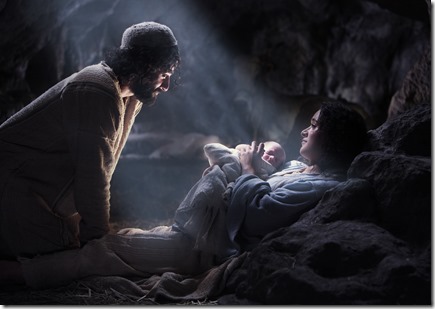
2025 ADVENT WEEK 4: ALMOST THERE

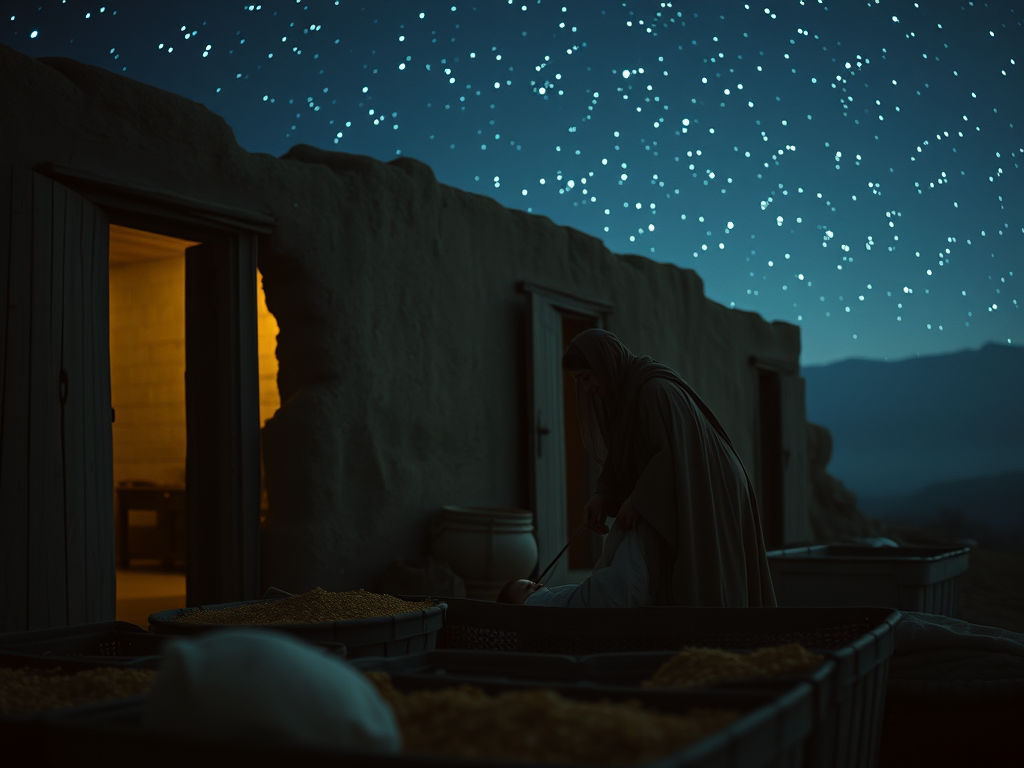
Photo by Adi K on Pexels.com

This is the final advent sermon of Wade Jones, friend to me (Tom) and to the Life Together Churches network.

We are almost there. And it is appropriate in this Advent season to take that expression several different ways. We are almost to that moment when we celebrate the birth of the Incarnate God in Jesus the Messiah. We are almost to that moment when He breaks into our lives to win a decisive victory. We are almost to that moment when He makes all creation new and right under His complete authority and the new life begins in all its fullness. We are almost there…but we are not there yet. And God uses this Advent season so richly in my life, and in our lives, to help us experience the tension that comes from living in a space where the light is always just beginning to dawn. The sun has not risen yet, but He is about to rise. And as certain as we are of the dawn that is coming, as much as we are able to see by the glow that is beginning to give light, we still live in a world with shadows and dimness. As the Apostle Paul says in First Corinthians 13:12, “For now we see in a mirror, dimly, but then face to face.”

As I write this, Tom and Kari’s daughter Elise is back in the hospital, and she is struggling. By the time you read and discuss this, she may be back home and doing much better. That’s what I am praying for. We know that eventually she will be fully healed. That’s where our hope ultimately lives. But in the dimness now, we don’t know what the next days, weeks, and months hold. What a strange thing it is to live in the timelines of God, where our state a thousand years from now is in some ways more certain than our state tomorrow. And that is where we are. We wait for God to finish forever what He has begun in Jesus.

Once again, it is good to be with you at New Joy Fellowship and the other churches in Tom’s network. I am Wade Jones, a pastor at Priest Lake Christian Fellowship and part of the Hilperts’ extended family. And today we will engage the last Sunday of Advent together. It’s interesting to me the way I have bounced around the gospel of Matthew in this Advent season – beginning in chapter 24, then going back to chapter 3, forward again to chapter 11, and now, as Advent draws to a close, we go to almost the beginning of the gospel. We are going to skip reading the genealogy part, although there is much to learn from it. In fact, the Swiss reformer Zwingli said, “The Genealogy of Jesus, if understood correctly, contains the essential theology or the main message of the Reformation.” I won’t get into all that today, but I will point out that Matthew is grounding today’s passage in the history of Israel, beginning with Abraham, the father of the nation, going through David, the great king, to the lesser-known figures after the return from exile, and finally bringing us to Joseph, who is the husband of Mary, the mother of Jesus the Messiah.

For Matthew, it is critical to situate the life and work of Jesus firmly in the history of God’s work through His people Israel. Jesus is not some sudden departure from what God has been doing for centuries; rather, He is the culmination of all that God has been doing from the very beginning.  We will talk about some of that as we go through this passage today. Let’s go to the text now. I am going to read from the Gospel of Matthew 1:18-25.

18 The birth of Jesus Christ came about this way: After His mother Mary had been engaged to Joseph, it was discovered before they came together that she was pregnant by the Holy Spirit. 19 So her husband Joseph, being a righteous man, and not wanting to disgrace her publicly, decided to divorce her secretly.

20 But after he had considered these things, an angel of the Lord suddenly appeared to him in a dream, saying, “Joseph, son of David, don’t be afraid to take Mary as your wife, because what has been conceived in her is by the Holy Spirit. 21 She will give birth to a son, and you are to name Him Jesus, because He will save His people from their sins.”

22 Now all this took place to fulfill what was spoken by the Lord through the prophet:

23 See, the virgin will become pregnant
and give birth to a son,
and they will name Him Immanuel,

which is translated “God is with us.”

24 When Joseph got up from sleeping, he did as the Lord’s angel had commanded him. He married her 25 but did not know her intimately until she gave birth to a son. And he named Him Jesus.”

After taking us through the genealogy, Matthew begins this passage with another Old Testament allusion. He chooses the Greek word genesis for the birth of Jesus. This is not an unusual word choice, to be sure, but for any Jewish readers it would immediately connect them to the very beginning of the story. “In the beginning…” from Genesis 1:1, and now a new genesis, a new beginning, a new entry of God into His creation is here. The echoes of Creation surround the Incarnation and birth of the Son of God.

Matthew tells us this story primarily through Joseph’s eyes. In most of our Christmas storybooks or plays, we combine Luke and Matthew’s information so that we don’t leave anything out, but today I want to pay attention to how Matthew, under the inspiration of the Holy Spirit, has chosen to tell the story. Why does he share from Joseph’s perspective? I think he is being pretty intentional with this choice. And it connects to the genealogy he has just taken his readers through.

For us, as twenty-first century Gentile readers, the title “Son of David” is one we could acknowledge belongs to Jesus, but it’s one we don’t think about very much. In fact, at times, the Gentile church has tended to overlook (at best) the Jewish nature of our Messiah. We can forget that we are grafted into the root that God established in Israel, and sometimes that forgetting has had tragic consequences. But if when we read Matthew’s gospel, he is going to make it very clear that Jesus is the climax of a plan that God has been working on for generations, for centuries. And that plan is rooted in the children of Abraham.

For first-century Jews, the title “Son of David” was not an afterthought. It was a key component of their Messianic expectations. When the Messiah comes, He is going to be another David. And while Jesus will redirect some of those expectations, and outright refuse others, God’s people were right to expect King David’s successor to appear. Jesus is coming as the answer to hundreds of years of prayer and prophecy, which Matthew is going to repeatedly point out – including explicitly in this passage. So, it is important to Matthew and his readers to know that the lineage of Jesus through Joseph, who was His father legally if not biologically, can be traced back to David. Jesus is a descendant of the great king.

By pointing us to Joseph, Matthew may also be highlighting one of the aspects of response to God. In Luke’s gospel, Mary is more passive – she receives what God is doing in her and through her. In Matthew’s gospel, God acts, and His actions call for Joseph to take action in response.

(As an aside, neither of these are better or worse ways to respond. Both are appropriate ways that both men and women will respond to God at times. God is always the primary actor, but sometimes His actions call for us to wait patiently for Him to act, and sometimes His actions call for us to act in response. Matthew tends to emphasize the ways we can act in response – think about the judgment scene in Matthew 25, for example. We cannot act to deliver ourselves, but we can and do sometimes act in response to the deliverance that God has provided.)

So, who is this Joseph, besides a many-times-great-grandson of King David? Matthew describes him as a man who is righteous or just. That is, someone who is concerned with obedience to God. Don’t hear this in legalistic terms. Think about Psalm 119: the longest chapter in the Bible filled with 176 verses of inspired affirmation of the goodness of knowing what God wants from His children. Like the psalmist, Joseph knows that the way to a real life is through doing what God has asked us to do. And part of that is the sexual integrity He expects from His children.

Now, Joseph has found out that his fiancée is pregnant, and he is one of two people who can be absolutely certain that the baby is not his. At this point, he has the right to make this a scandal and make Mary pay for her betrayal, but, because he is a man who seeks the heart of God, he has decided not to make this any worse for her than it has to be. He is going to end the engagement quietly and let her go. (Many of you already know this: first-century Jewish culture took engagement very seriously. It was almost a marriage except that the bride and groom did not live together or have a sexual relationship until the wedding day. But in other ways, their commitment to each other was already considered to be in place. From all Joseph could have known, Mary had to have violated this covenant agreement – whether willingly or unwillingly — so he couldn’t, in good conscience, go forward with the marriage.)

Think about how painful this must have been for Joseph! We know how the story is going to develop, so it’s easy for us to just move right one from verse 18 to verse 20. But Joseph had to live in verses 18 and 19 for at least a little while. We don’t know how long. But even if it was just one afternoon, what a miserable, disappointing, heartbreaking afternoon that must have been for him. And Matthew doesn’t give us a calendar. This part of the hurt may have lasted for days or weeks before God tells him more of the story.

I want to sit with that thought for a moment. Joseph had done nothing wrong. He wasn’t jumping to any conclusions based on gossip. And the emotions he felt, the struggle he faced, was one I think many of us can identify with on at least some level. What do you do when it seems that a decision you thought you had made well, made prayerfully, made in line with God’s will, turns out to be something completely different than what you had expected? Yes, God is going to make it all right (at least as far as Joseph’s relationship with Mary). But that doesn’t negate the wrestling that Joseph had to do in the meantime, as he lived through verse 19.

And it’s likely that we are all going to spend significant parts of our lives in our own versions of verse 19. We’ve made thoughtful decisions. We have sought the will of God and wise counsel. We’ve prayed about it and set out on a course of action, confident that we are walking in the will of the God we honor. And then things take a turn. The business goes under. The friendship falls apart. The new house has black mold. And while we believe that God will always act to redeem, we don’t know what the timetable will be. How will we react in the meantime? As we wait through Advent, can we be okay as people who can still wait on God in trust when things appear to be falling apart?

Waiting doesn’t always mean passivity. Joseph is taking steps to deal with the crisis in his life, and he is trying to take them in ways that honor God. I find great comfort in this part of the story. When Joseph is about to miss what God is doing, even though he is trying to follow Him, God shows up. He doesn’t leave him hanging out there forever (maybe for a while – a painful while, but not forever). Instead, He shows up to Joseph with an angelic messenger in a dream – the first of three times that a messenger of God will appear to Joseph in a dream. And each time, God tells him to change course – to stop something he was planning to do or doing and begin to do something different. In a way, there is an echo here of what it will mean when John and then Jesus tell Israel to “Repent, for the kingdom of heaven is at hand.” It’s time to turn your head, change your direction, and go a different way so that you can participate fully in the surprising thing that your God is doing.

In this case, once he comes to terms with what God is telling him, I imagine this “repentance” would have been pleasant for Joseph. No, you don’t have to abandon this woman that you were planning to spend your life with. And no, she hasn’t been unfaithful to you. This is actually something that I have caused to happen. So, stop planning for the divorce, and resume your plans for the wedding and the marriage. You and Mary still have work to do together.

By the way, notice here that Matthew does not really try to explain or defend the birth of Jesus to a virgin mother. He, like Luke, just accepts it as something that is known by faithful believers to be true. The gospels give us hints that questions – and not polite ones – were asked about the circumstances of Jesus’ birth, and to an extent, the gospel writers are just setting the record straight. “This is what it was actually like.” No pagan mythological encounters. No detailed biological mechanics. Just a straightforward statement that God did this, and we accept it. Honestly, when we look at the rest of Jesus’ life, death, and finally resurrection, this is just one incredible part of a long miraculous story. And if our modern ears have trouble with it, that says more about us than it does about Jesus. If we are Christians, we believe in a God who does impossible things. The virgin birth is one of them.

Now, I do wonder if it was hard for Joseph to accept this at first. I mean, it does seem rather strange to us. But remember (and hear Matthew’s intended echoes here), this is not the first time that God has been involved in the conception of a child. Yes, this One is different. This One is unique – the unique Son of the Father who has existed together with Him and the Holy Spirit since well before the creation began. And also, this difference is in line with ways that God has acted throughout the history of His people. Joseph, as a righteous Jewish man, would have known that. Go back to the beginning of Israel, with Abram and Sarai (yes, before their names changed). God promised a son to a couple that was way too old to have a child. They struggled to believe it and even tried to find ways to help God with His plan (which was a terrible idea, as it generally is). But eventually, God gave Isaac. And He gave Samsom to Manoah and his anonymous wife. And He gave Samuel to Hannah and Elkanah. Does Joseph fully grasp the mystery that the Eternal God is already incarnate in his fiancée’s womb? I seriously doubt it. Does he know that he serves a God who has caused miraculous births before? Absolutely he does. And based on that knowledge of what God has done in the past, he is ready to accept that He is doing something similar now, and that God wants him – Joseph – to be a part of it.

So, Joseph acts. Now remember, his action is in response to God’s. Joseph doesn’t cause the Incarnation. Joseph doesn’t bring God to be Immanuel with His people, present with them as an embodied part of Israel. But he does have a part to play. And he does it. He puts down the idea of divorce and picks up his pregnant fiancée, along with the snide comments, and damage to his reputation, and possible loss of business that will come with it. He marries her and takes cold showers until the child is born. He accepts a burden that he can’t even imagine at this point, although it will start to become clear early on when he and his family have to flee the country. And in doing so, he becomes the man that will raise the Son of David and the Son of God.

Church, what surprising thing is God asking you to respond to in this Advent season? Oh, He isn’t going to ask any of us to raise His Son – that job only needed to be done once. But I assume that most everyone listening to or reading this message is trying to live a righteous and just life in response to the love of God shown to us in Christ Jesus. He has come, as this passage says, to save His people from their sins. And there are ways He would like us to respond to that. There are good works, as the Apostle Paul says in Ephesians 2:10, “which God prepared beforehand that we should walk in them.” A lot of them are going to be like the life Joseph was living before the dream. We listen to the Word of God and do what He says. Love our neighbors and our enemies, put off anger and drunkenness and greed, put on humility and gentleness and peace. But sometimes – and maybe more often than we might expect – there will be something specific. Something unique. A work that God prepared ahead of time planning for you – no one else, you – to do.

That work may be like what He asked of Joseph. It may require you to lay aside legitimate emotional hurt. It may require you to ignore the way it will look to others. It may mean that you end up having to leave a relatively settled, comfortable life behind for a few years or longer. It might even mean you attract the unwanted attention of the wealthy and powerful when your obedience threatens the cultural or political narratives that serve their purposes.

Here’s what we know. If we listen to God, what He accomplishes in and through us will be good. Not necessarily my specific good – I’m not sure what Joseph personally got out of all this. But the good of His people. The good of His creation. The good of His purpose and plan to “gather together in one all things in Christ, both which are in heaven and which are on earth – in Him.” (Ephesians 1:10)

Jesus is coming. The new Creation is coming. The day of the Lord is coming. And if we listen to Him, if we respond to Him, if we lay aside our own agendas to agree with Him and live His way – we will rejoice when the sun finally does crest the top of the hill and we are fully immersed in the Light. Until then, we respond to Him and we wait.

THE DYSFUNCTIONAL FAMILY OF JESUS

To listen to the sermon, click the play button:

For some people, the player above may not work. If that happens to you, use the link below to either download, or open a player in a new page to listen.

To download, right click on the link (or do whatever you do on a Mac) and save it to your computer: Download Christmas 2024

2024 Christmas Eve. Matthew 1:1-17

Matthew begins his book with a list of some of Jesus’ ancestors. He lists three “sets” of fourteen generations each. These should not be taken as only father-to-son generations. In one place, we know for certain from the books of Kings and Chronicles that Matthew skips from one man to his great-great grandson. So when it says “Uzziah, the father of Jotham” it would be more accurate to say, “Uzziah, the ancestor of Jotham.” Most likely, Matthew simply wants to highlight the main, or most significant, people in the line of Jesus. In the Jewish thinking of that day, it was entirely legitimate to skip a few generations when listing a family history. The Greek word that is translated “was the father of” by the ESV is literally something like “generated,” or, “procreated.” In fact, in this passage, Matthew does not use the Greek word for “father” at all. Writing in this way allows Matthew to make his point, without being overly technical about every single ancestor.

Now, some people might realize that this is Joseph’s family and Jesus was not blood-related to Joseph. That’s true, of course. But Jesus was adopted by Joseph. The adopted child is just as much an heir as the child by blood. Through adoption, these are the legitimate ancestors of Jesus Christ; just as, through spiritual adoption, we are the legitimate heirs of God’s kingdom through Jesus.

Jesus Christ was born into a human family. His human ancestors included kings. You may wonder how it was that a descendant of the ancient kings was unknown, and unrecognized as royal. Let me give you an illustration of how this could be: I am the king of Serbia. Really. Well, actually, I would be the king of Serbia, if Serbia was still a monarchy, and if several thousand people who are ahead of me in the line of succession were to die, including my own mother and sister and nephew. So, although my ancestry can be traced back (on one side of the family) to a Serbian king, it doesn’t really matter because Serbia doesn’t have kings any more, and even if they did, there are other people more directly in the line of descent.

So, with Jesus, his ancestors can be traced back to King David and beyond, but many other people could claim more or less the same thing. Also, of course, the Jewish people had not had a king for 500 years before Jesus came into the world.

This list of Jesus’ human ancestors includes some shocking people, and some seemingly insignificant ones too. Matthew starts the list with Abraham. Abraham was a man of faith. But he had his failures. He slept with his slave Hagar; in fear, he lied to kings about his wife Sarah, telling them she was his sister. Isaac, Abraham’s son, was a pretty solid guy. But Jacob, the next in line was a trickster, a con man. He had two wives, and also slept with two different slave girls.

Judah was the next ancestor of Jesus. He was one of the ten brothers who sold their own sibling, Joseph, as a slave. Matthew records that the line is traced through Judah’s son Perez, who was born to him by a woman named Tamar. Tamar was actually Judah’s daughter in law. After her first two husbands died (Judah’s two oldest sons), Judah would not allow her to marry his last son (which, by law, he was supposed to do). So she disguised herself as a prostitute, wearing a heavy veil, and Judah, not recognizing her, slept with her, and so the next ancestor of Jesus – Perez – was conceived. Not exactly the kind of family history you proudly tell your grandkids.

A few generations later came Salmon. Salmon married a former prostitute named Rahab. Not only had she been a prostitute, but she was also not an Israelite. That was a very big deal in those days—she wasn’t even one of God’s chosen people. Don’t miss the significance here: so far, TWO of the ancestors of Jesus were prostitutes!

One of the descendants of Salman and Rahab was Boaz. Boaz, like his ancestor, married a foreigner, someone who did not belong to the people of God. Her name was Ruth. Not only was Ruth not an Israelite, but she had also been married once before. Boaz and Ruth had Obed, who became the grandfather of king David.

David was perhaps the most noble ancestor Jesus had. Yet he had major moral failures also. He committed adultery and murdered the husband of the woman he had sinned with. Then he married that woman, and she became the mother of the next ancestor of Jesus Christ. That’s right, at least one set of Jesus’ ancestors were adulterers. Matthew even remembers her, not as the Queen, nor as David’s wife, but rather “the wife of Uriah” (Uriah was her first husband, the one David had killed).

In fact, in this entire list, Matthew mentions only four mothers: Tamar, Rahab, Ruth, and the wife of Uriah (who was called Bathsheba). Aside from Ruth, the most significant thing about these women is that they were involved in major sins committed by both the mothers and fathers mentioned here. And even Ruth was a foreigner, an outsider to the people of Israel. In other words, it almost seems like Matthew is trying to draw attention to the checkered past of Jesus’ family.

In 1:7-11, Matthew continues with a recitation of the royal ancestors of Jesus proceeding from David until the time of the Babylonian Exile. There are a couple of great kings in this list. Hezekiah was a good ruler and man of faith. Josiah was too. But both of them failed to raise their children in faith. And most of this list is a remembrance of bad kings. Here are a couple of the individuals mentioned:

  • Manasseh did evil in the eyes of the Lord (2 Kings 21:2)
  • Ahaz was twenty years old when he began to reign, and he reigned sixteen years in Jerusalem. And he did not do what was right in the eyes of the LORD his God, as his father David had done, but he walked in the way of the kings of Israel. He even burned his son as an offering, according to the despicable practices of the nations whom the LORD drove out before the people of Israel. (2 Kings 16:2-3)
  • And he [Joram] walked in the way of the kings of Israel, as the house of Ahab had done, for the daughter of Ahab was his wife. And he did what was evil in the sight of the LORD. (2 Kings 8:18)
  • And he [Amon] did what was evil in the sight of the LORD, as Manasseh his father had done. He walked in all the way in which his father walked and served the idols that his father served and worshiped them. (2 Kings 20:20-21).

You get the picture. Let’s put it plainly. The human ancestors of Jesus the Messiah were a bunch of lecherous, fornicating, murdering, idol-worshiping, faithless thugs. This is the heritage that Jesus was born into. You see it’s not just that Jesus was born into poverty and humility in human terms. He was also born into a heritage of spiritual poverty and spiritual shame. This is the heritage that we all share as human beings. This is what Jesus took upon himself.

When I consider all of this, three things occur to me. The first is that Jesus’ humanity extended to having a dysfunctional family, and relatives who did shameful things. Although he himself committed no sins, the sin that corrupted the entire human race was a part of his human heritage. For our sake, he took that heritage upon himself. It says in 2 Corinthians:

God made him who had no sin, to be sin for us, that we might become the righteousness of God. (2 Cor 5:21)

That began at the moment of Jesus’ conception. That sin-heritage was completely and inextricably bound with the humanity that Jesus inherited from Mary, and even from his adopted family in Joseph.

Second, it seems clear that the Holy Spirit inspired Matthew to deliberately include these particular people in the recounting of Jesus’ human heritage. The Lord seems to be pointing out that he can, and does, use even deeply flawed people. Some of these ancestors of Jesus never repented, and everything I know about the bible suggests that many of them will be in hell, not heaven. But even so, God used them, willing or unwilling.

Third, even these deeply flawed people can be redeemed. As I just mentioned, some of them rejected God’s grace. But others – like Judah and Tamar, Rahab, David and Josiah – repented and received redemption. In fact, that is why Jesus came – to bring the redemption that had to come both from humanity and from God. Jesus, eternally God, but born human on a particular day in history, is the only one who could make that redemption total and effective. He bore in his nature the weakness of humanity and the strength of divinity.

Consider this: alone, out of every human that has ever been born, Jesus got to choose his own birth family. And this is the one he chose. These are his people. These liars, cheats, and thugs, these rejected outsiders and failures are his people – by choice!

You and I are his people. One of the greatest tragedies that I ever see is people thinking that they are not “good enough” for Jesus. If you are a cheat, an adulterer, a murderer, an outsider, come join the family. You’ll fit right in with Jesus’ people. I know the church sometimes makes it hard, because we do try to behave better than that, and we know the standard is better than that. Some people even get judgmental. But, if it helps, try to remember that they are sinners too; their sin might be hypocrisy and pride. Maybe your sin isn’t hypocrisy, like theirs, but that doesn’t make either one of you better than the other. The starting place for everyone in relationship to Jesus is right where you are, at this very moment. Jesus didn’t wait for his family to get cleaned up before he joined them. He didn’t wait for them to stop being hypocrites, or hateful, or lustful, or greedy. Instead, he joined them; then he cleaned them up himself.

Maybe you know someone who feels like they already have too many disadvantages to ever become a redeemed, holy follower of Jesus. Maybe you feel like that. Maybe you feel like you could never have anything to do with a Holy God. Well, just look at where this Holy Messiah came from. He didn’t have a better family than you. He wasn’t born in a nicer place. He took on all the disadvantages that humanity has to offer, so that HE could offer YOU every advantage of heaven. all you need to do is have the faith to believe the gift is truly given to you, and to reach out and receive it.

OFFENSIVE FOOLISHNESS: CHRISTMAS 2023

The heart of the Christian message has always been foolish and offensive. God enters the world as a baby? The victorious messiah conquers by being tortured to death? It sounds nuts. But there is a deeper wisdom here, a strength that is beyond comprehension. For those who receive it, the benefits are beyond comparison.

To listen to the sermon, click the play button:

For some people, the player above may not work. If that happens to you, use the link below to either download, or open a player in a new page to listen.

To download, right click on the link (or do whatever you do on a Mac) and save it to your computer: Download Christmas 2023

CHRISTMAS 2023. MATTHEW 2:1-20. LUKE 2:34-35. 1 CORINTHIANS 1:18-31.

At Christmas time we like to have warm cozy feelings about stars and mangers and babies. And those feelings have their place. Childbirth is a natural time for tender feelings. I believe the power of our feelings at Christmas is an echo of the incredible power of the moment when God took on human flesh. But sometimes, we use those warm cozy thoughts to affirm our own self-oriented ways. Christmas becomes a moment each year when we feel good and peaceful, regardless of the state of our souls.

I’m all for feeling good and peaceful, but let’s feel that way for the right reasons. If they are true Biblical reasons, we can feel peaceful at any time of year, not just Christmas. If they are the wrong reasons, it will be a false, deceptive peace. The angels declared “Peace on earth,” to the shepherds. but it wasn’t a general peace. It was peace specifically among those with whom God is pleased. In other words, peace among those who have received the Messiah as the Lord.

The fact is that baby entering the world helplessly was the opening salvo of a tremendous spiritual battle. Responding with “Aww, how sweet,” is not really an option Jesus gives us. Simeon puts his finger on the heart of the matter: We stand or fall based upon how we react to him.

When we look at the whole Christmas story, told between both Matthew and Luke, we get a snapshot of how different people responded to God’s unfathomable appearance as a baby born in poverty and humility. We have Mary, Elizabeth and Zachariah, Joseph, Simeon and Anna. We also have Herod, the leaders in Jerusalem, the Magi, and the shepherds. I want to look at how some of them responded to Jesus, and then think about our own response to him.

Even before he was born, Jesus shattered and reoriented the lives of the people around him. It is virtually certain that almost no one believed Mary when she claimed to still be a virgin. By accepting Jesus into her body and her life, Mary lost the respect of her entire town, and probably also many friendships.

Joseph also lost the respect of the town. He had to give up his business in Nazareth, and later, he and his family had to flee for their lives.

When he was eight days old, Joseph and Mary took Jesus to the temple in Jerusalem, which was about five miles away from Bethlehem. While they were there, they encountered an old man named Simeon. The Holy Spirit revealed to Simeon that the little baby was the promised messiah. Simeon praised God, and then:

34 Then Simeon blessed them and said to Mary, his mother, “This child is the reason that many people in Israel will be condemned and many others will be saved. He will be a sign that will expose 35 the thoughts of those who reject him. And a sword will pierce your heart.” (Luke 2:34-35, GW)

Simeon didn’t see only a sweet little baby. He saw in Jesus the crossroads of life. He understood prophetically that the way people chose to respond to Jesus would become the most important thing.

When Jesus himself grew up, he made it clear, over and over again, that he agreed with Simeon. He plainly thought the fate of every human being would be determined by how they responded to him.

32 So everyone who acknowledges me before men, I also will acknowledge before my Father who is in heaven, 33 but whoever denies me before men, I also will deny before my Father who is in heaven.

34 “Do not think that I have come to bring peace to the earth. I have not come to bring peace, but a sword. 35 For I have come to set a man against his father, and a daughter against her mother, and a daughter-in-law against her mother-in-law. 36 And a person’s enemies will be those of his own household. 37 Whoever loves father or mother more than me is not worthy of me, and whoever loves son or daughter more than me is not worthy of me. 38 And whoever does not take his cross and follow me is not worthy of me. 39 Whoever finds his life will lose it, and whoever loses his life for my sake will find it.

MATTHEW 10:32-39, ESV

Listen to him. He’s saying: “You must love me more than anyone else in the world. You must be ready to choose me over even your own family. You must be ready to die for my sake.” These aren’t the words of a mellow “everyone get along” type of spiritual guru. This is someone who clearly believes that he stands in the place of God. He might be a egomaniac, or he might be God in the flesh, but he doesn’t leave us the option of seeing him as some sort of metaphor of love, or the goodness of all mankind. We must either condemn him as a dangerous sociopath, or worship him as God.

The point I’m getting at here is that even when he was a baby, people were forced to make that choice. From his very conception, he was the reason people were either saved or condemned. The way others responded to him exposed their inward state of mind. Hundreds of years before the day of Jesus’ birth, the prophet Isaiah spoke about the coming messiah:

12 Do not call everything a conspiracy that these people say is a conspiracy.
Do not fear what they fear; do not be terrified.
13 You are to regard only the LORD of Armies as holy. Only he should be feared; only he should be held in awe.
14 He will be a sanctuary;
but for the two houses of Israel, he will be a stone to stumble over and a rock to trip over, and a trap and a snare to the inhabitants of Jerusalem.
15 Many will stumble over these; they will fall and be broken; they will be snared and captured. (Isaiah 8:12-15, CSB)

He will be a sanctuary to those who receive him. The center of joy and peace. But he will also be “a snare to the inhabitants of Jerusalem,” who rejected him. We find that this is quite literally true not only when Jesus was grown, but even when he was first born. Herod, king in Jerusalem, heard of this child in the most unsettling way possible. Magi came from a far country, seeking to worship a recently-born king. Matthew 2:3 says: “When King Herod and all Jerusalem heard about this, they became disturbed.” Herod and his cronies saw this only as a threat to his own power (a conspiracy?), and to the future of his dynasty. The innocent child, simply by being who he was, provoked Herod to immediate contempt, fear and hatred. Herod’s malice failed to eliminate the threat. Instead, he perpetrated a horrible atrocity to no purpose.

Herod fell in relationship to this Baby. When the Baby had grown into a child, Herod died. Even those who eventually succeeded in killing the messiah are long dead, while the messiah himself lives.

These days, we think humility is good. We think it’s cool that lowly shepherds were given the good news while princes were ignored. We think it’s wonderful that in the birth of the messiah, God honored the poor, while leaving the rich to their own devices. But we only think this way because of the Baby Himself, and we don’t always realize that.

People in those days honored noble blood and wealth. The idea that God did not was unthinkable. God, born in a stable? Ridiculous! The messiah part of a poor family? No way. God, dying for his enemies, killed by his enemies, rather than he killing them? Never!

That little stable 2,000 years ago turned much of what was believed to be true on its head.

Let’s be honest. Even today, the idea that God came into the world as a human baby sounds incredibly far-fetched. The claim that he obtained victory by being publicly humiliated and killed is ridiculous. To insist that we will stand or fall based upon how we respond to him is offensive. It’s foolish to worship one little baby from one poor family. The apostles of this messiah agreed:

18 The message about the cross is nonsense to those who are being destroyed, but it is God’s power to us who are being saved. 19 Scripture says,
“I will destroy the wisdom of the wise.
I will reject the intelligence of intelligent people.”
20 Where is the wise person? Where is the scholar? Where is the persuasive speaker of our time? Hasn’t God turned the wisdom of the world into nonsense? 21 The world with its wisdom was unable to recognize God in terms of his own wisdom. So God decided to use the nonsense of the Good News we speak to save those who believe. 22 Jews ask for miraculous signs, and Greeks look for wisdom, 23 but our message is that Christ was crucified. This offends Jewish people and makes no sense to people who are not Jewish. 24 But to those Jews and Greeks who are called, he is Christ, God’s power and God’s wisdom. 25 God’s nonsense is wiser than human wisdom, and God’s weakness is stronger than human strength.
26 Brothers and sisters, consider what you were when God called you to be Christians. Not many of you were wise from a human point of view. You were not in powerful positions or in the upper social classes. 27 But God chose what the world considers nonsense to put wise people to shame. God chose what the world considers weak to put what is strong to shame. 28 God chose what the world considers ordinary and what it despises—what it considers to be nothing—in order to destroy what it considers to be something. 29 As a result, no one can brag in God’s presence. 30 You are partners with Christ Jesus because of God. Jesus has become our wisdom sent from God, our approval, our holiness, and our ransom from sin. 31 As Scripture says, “Whoever brags must brag about what the Lord has done.” (1 Corinthians 1:18-31, GW)

It is foolish. It is offensive. And God made it that way deliberately. God chose an ordinary poor family, the kind of people who are despised by elites. He chose a humiliating death to bring about eternal abundant life. He chose to be a baby in a stable, to be part of a family with no home of their own, so that we could have an everlasting home. There is sweetness and tenderness to the scene of Mary, Joseph, and the little baby. But those things are just extras. The magnificent power of God was infused into that simple, humble moment. And the way we respond to that baby means everything to our future.

She never knew it during her earthly life, but even though Mary lost the respect of the people of Nazareth, she gained the respect of untold millions throughout all generations since then. So did Joseph. Herod, however, rightly went down in history as the murdering despot that he was. We celebrate the wisdom of the Magi, and shake our heads at the Jerusalem rulers. But for all of us there comes a moment when we become aware that we are asked to take a leap of faith. There’s a moment when we realize, “This is offensive. This is crazy. This turns the wisdom of the world on its head.”

What could give us the strength to choose this weakness, this foolishness, this offensive trust? The certainty of God’s love. He came as that little baby and died for all of us long before we were even born. Knowing the times we would reject him, knowing the ways we would hurt him, he went through it all any way. He willingly suffered to save us. Knowing that can give us the courage to choose him, even when we feel foolish, even when it might offend those around us. He loved us first. He loves us still, whether or not we know it.

So, I pray that when we experience those moments of opportunity to trust him, we will not be like Herod, having contempt for this child, despising and fearing him. Instead, let’s be like Simeon, who rejoiced, and who recognized that what is most important is how we receive the incredible gift of this child. Don’t worry about the times in the past we’ve ignored him. Trust him now. Receive him now. Let his grace cover the times we have failed.

This isn’t a one time thing. Over and over in our lives, there are moments when we can receive God’s will and work in our lives, or turn away from it. Let’s make it a habit to receive the wonderful gift of this child, over and over again, now and every day.

Merry Christmas

PAGAN PRIESTS FIND JESUS THROUGH ASTROLOGY…?

Photo by Frank Cone on Pexels.com

To listen to the sermon, click the play button:

For some people, the player above may not work. If that happens to you, use the link below to either download, or open a player in a new page to listen.

To download, right click on the link (or do whatever you do on a Mac) and save it to your computer: Download Christmas 2022

2022 Christmas Eve. The Wise Men, Matthew Chapter 2:1-12

I think it is significant that even people who do not trust Jesus are affected by Christmas. In Europe, North America, Australia and New Zealand, the six weeks or so before Christmas are noticeably different from the rest of the year. This is true in a lot of South American countries, also. South Korea is less than thirty percent Christian, but the whole population is aware of the Christmas season. We celebrated Christmas in Papua New Guinea, too. It wasn’t really like Christmas in North America, but there was something different about the season.

When I think about the record of the Wise Men, I’m reminded that Christmas is indeed for the whole world. Now, to be honest with you, if I was God, inspiring people to write the Bible, I would either keep the wise men out of the gospel of Matthew, or I would explain more about them.

Only two out of the four gospels tell us much about the birth of Jesus in the first place – Matthew and Luke. Matthew leaves out the shepherds; Luke leaves out the wise men. In the first six chapters of his gospel, Matthew takes great care to point out how the birth and early life of Jesus fulfilled various prophecies about the Messiah from the Old Testament. In fact, in the first two chapters, Matthew points out four specific instances where prophecies were fulfilled. Surely, if there was a prophecy in the Old Testament about these visitors from the east, Matthew would have mentioned it. But he doesn’t.

Not only does this incident have nothing to do with prophecy, at first blush it seems to have nothing to do with Biblical Christianity or even Orthodox Judaism. The term translated “Wise men” or “Magi” usually refers to a sort of Babylonian priest or scholar who was especially acquainted with the study and interpretation of the stars, and of dreams and things like that. In different times or places they might have been called Shamans, or Druids, or Seers, or even Magicians. That’s right. The Babylonian or Arabian Magi held roughly the same position in their society as Druids did in Celtic society. Do you understand? – we are talking about pagan priests coming to see Jesus.

Not only are these people pagan priests, but somehow, they have learned about Jesus’ birth – through astrology. It was the behavior of the stars which told them that someone very important and significant was born. The stars even told them generally where in the world to look for the child. As far as we know, it was not because they searched the scriptures, or listened to a Jewish preacher, or anything else. The wise men don’t really fit into my typical way of looking at world. Pagan priests are drawn to Jesus through astrology?! I think what bothers me most is this question: does this mean that all religions really do lead to the same God?

First, I want to point out that this is another one of those passages that seems to confirm the authenticity of the New Testament. If we are honest, we must admit that it raises troubling questions and ideas. If the New Testament were made up, or if the stories about Jesus were extensively edited and changed, this story would have been one of the first to be cut. In other words, there seems to be no reason to have this here unless it really happened, and God wants us to learn something from it.

I want to briefly set up the historical timeline here. Matthew makes it clear this occurs after Jesus was born (2:1). Herod asks the Magi when the star appeared. When the Magi find Jesus, he is living with his parents in a house (not a stable). Later, based upon what the Magi told him, Herod thinks that Jesus might be up to two years old (2:16). So, while it is very picturesque to imagine the wise-men standing in the stable with the shepherds and donkeys on the night of Jesus’ birth, that is probably not how it actually happened.

So, what does the Lord want to say to us through this little section of scripture? First, and probably most importantly, the message is this: This little baby, born in Bethlehem, in accordance with the prophecies for the Jewish Messiah, is for all people. His life, death and resurrection and his teaching also, are not intended only for the Jews and the small nation of Israel. From birth, his influence and significance are there for the whole world. The wise men were not Jews by religion nor by birth. But Jesus was for them too. We call Christmas a “Christian” Holiday. But God calls it a gift for the whole world; a gift for all people – including pagan priests. Even today, it affects millions of people who are not themselves Christians. Even today, anyone who desires to can receive Jesus in faith, no matter what they have done, no matter where they are from, or what religion they were born into.

Second, let’s look at those wise men. By the way, the Bible does not actually tell us how many of them there are, or what their names were. All of that is folk legend. Probably, the idea of three wise men came about because three kinds of gifts were presented: gold, frankincense and myrrh. We only know that there was more than one (the Greek word for Magi is plural), and it is reasonable to suppose that it wasn’t an extremely large group either. In any case, we can be reasonably sure that not every pagan priest in the region came to see Jesus. Presumably, other pagan priests also studied the stars. They saw what the traveling wise men saw. But why did only these particular men come to see Jesus?

I think the answer is this. These men saw Jesus in the stars because in their hearts, they were honestly seeking the truth and they were hungering for God. When they made it to Jerusalem, they told Herod they were there to worship the child revealed in the stars. When they actually found Jesus, that is exactly what they did – they worshiped him. You see, I don’t think this is an affirmation of pagan religion. Instead, it is an affirmation of honest seeking. These pagans didn’t know any of the Bible. They had never heard of the Messiah. But in their hearts, they hungered for God, and they pursued him honestly and diligently. And even though they were looking in the wrong places, they really were looking. Since there were no other means available, God used the stars to direct them to him.

This is in contrast to Herod and the Jewish leaders. Herod wasn’t a Jew, but he was surrounded by Jews and easily could have learned about God if he chose. The Jewish leaders studied the scriptures. They knew that Messiah was supposed to be born in Bethlehem. In fact, Matthew lists the scripture here, allowing us to see yet another way in Jesus fulfilled Old Testament prophecy. But the Jewish leaders at that time weren’t seeking God. Instead, it was pagan priests, completely ignorant of the Bible, who found God when he came into the world. Jeremiah 29:13-14 says this:

If you look for me wholeheartedly, you will find me. I will be found by you,” says the Lord.

Jesus says it like this:

Keep asking, and it will be given to you. Keep searching, and you will find. Keep knocking, and the door will be opened to you. For everyone who asks receives, and the one who searches finds, and to the one who knocks, the door will be opened. (Matthew 7:7-8)

The wise men were seeking. And in accordance with the promises listed above, when they looked wholeheartedly, they found the true God. It wasn’t their pagan religion that led them to “the same God worshiped by all religions.” Instead, it was that their seeking, hungering hearts led them to true faith in Jesus Christ. Other pagans didn’t come to Bethlehem, even though they had the same information. Those men didn’t have the same hearts. Herod didn’t come, and neither did the Jewish leaders – even after they heard what the Magi had to say. They didn’t have seeking hearts as the Magi.

 The wise men who saw Jesus didn’t go to Bethlehem and then perform pagan worship rituals. They went to Bethlehem, put their faith in Jesus, and worshiped Him, specifically. To express it another way, the moment they worshiped Jesus, they were no longer pagans, but Christians.

That may answer the question about other religions. I think the idea is sort of this: a true seeker will not remain in a false religion, but that false religion may be the initial point from which a true seeker eventually comes to know Jesus. The wise men didn’t receive eternal life through pagan religion – they received it through faith in Jesus. A Hindu won’t get to heaven by being a good Hindu. But suppose something in Hinduism leads him to find out about Jesus. Suppose he eventually puts his faith in Jesus – then he would have eternal life. It would not be Hinduism that saved him, but Jesus. By and large, Hinduism does not point to Jesus; but God could certainly use some aspect of it to draw a true seeker to the truth and salvation found only in Jesus Christ. That is very much like what he did for the Magi.

What initially drew the Magi to study the stars was only a shadow of the reality found in Jesus, who is called the Bright Morning Star (Numbers 24:17; Revelation 22:16). The Christmas tree is a pagan symbol too. But maybe the pagan imagery of tree worship, like that of astrology, is just a memory of the real thing, which goes farther back still, all the way to the Garden and the tree of life. The real thing is what those pagan priests sought.

So, with these strange pagan shamans in mind, I think there is a question worth considering: What are you seeking these days? Are you interested in finding the truth? Do you really want God himself, or do you just want God to do something for you? Maybe, like Herod or the Jewish leaders, your biggest concern is how Jesus might affect the plans and ambitions you have for your life.

What has led you to this place? Family, friends or your horoscope? The hope of a day’s comfort? Whatever it might be, let go of the shadow, and see the true reality that the Magi saw –  the little toddler, invested with all the fullness of God. True hope. True life. True love. With the wise men, fall down, and exchange the empty shadows for the truth. Worship him. Receive him.

CHRISTMAS 2021: THE WILD GOD

Photo by Benjamin Suter on Pexels.com

To listen to the sermon, click the play button: To download, right click on the link (or do whatever you do on a Mac) and save it to your computer: Download Christmas 2021

Christmas Eve 2021. John 1:1-14

(if you are not listening, please read John 1:1-14 before the rest of the sermon. Use a standard translation, rather than “The Message”)

We have certain traditions, expectations and feelings about Christmas. As Christians, we know the picture that is supposed to be central: it’s a sweet scene. A young father and mother, a little baby, bathed in light and surrounded by gentle animals, and angels, and men who emit the strong fragrance of sheep.

The verses I’m using this time from the gospel of John are not traditional Christmas verses, but they are a true and legitimate description of the Christmas story. You see, sometimes, this peaceful, idyllic manger scene doesn’t seem to have much to do with what is actually going on with us. For instance, this has been a hard year for me. My chronic pain has only gotten worse. I’ve experienced deep, soul-crushing depression. The kind of year I’ve had is the kind of thing that can make you wonder if God really does love you, after all. I mean, I would never put anyone I loved through what God has allowed me to experience. Shoot, I wouldn’t even do these things to a stranger I cared nothing about. And I can easily think of about ten people I know personally who, I think, have it worse than me. If I applied myself, I’m sure I could think of many more. In other words, it’s been tough for a lot of people. It’s not hard to start wondering what God is up to. It’s not hard to picture the Christmas manger scene, and think, “So?”

But when I read the scripture, I see a God who is wild. He isn’t predictable, and he can’t be controlled. He does things we don’t expect. These verses in John tell the stunning story of the God who created the world entering his creation. We have rebelled, but he invaded this rebel planet. Only…he invades as a baby. That’s a little crazy. It seems that he’s been doing wild things like this from the very beginning. He separates a seventeen-year old rising-star from his family, and then lets him live first as a slave, and then as a prisoner, for years. Just when it seems like finally, God is going to rescue him, he lets him sit in prison for another few years. That’s the story of Joseph, at the end of Genesis, by the way.

Or, four hundred years later, after all kinds of trouble and hassle for everyone on all sides, God brings his chosen people out of Egypt. But, with the army of the Egyptians hard on their heels, he leads his people up to a dead end at the shore of the sea. That’s the story of the first part of Exodus.

Here’s another one: God chooses a sturdy teenage shepherd lad to be the next king of his people. The young man has a heart of gold, and a heart for God, and he is brave, strong, and a natural leader. So, of course, what happens next is that after a few victories, poor young David spends almost a decade running from his own people, hiding in caves, even living with his enemies for a while. That’s the story of King David, in case you didn’t pick that up.

He made the prophet Ezekiel sleep on only one side for six months (if you’ve ever had a shoulder issue, you’ll feel that one). He made Isaiah walk around naked in the middle of the city for a few days (first recorded nudist in history – but he didn’t’ want to be). Also during Isaiah’s life, we have Hezekiah, one of the best, most God-fearing Kings to live since the aforementioned David. Though he did everything he was supposed to, Hezekiah found himself surrounded by the most powerful and brutal army that the world had ever known at that point: the Assyrians, led by Emperor Sennacherib.

As long as we’re working our way through Biblical history, we might as well mention the people of God who were brought back to Jerusalem after a dark period of defeat and exile. They were led by people like Ezra, Nehemiah, and Zerubbabel. At that point in history, it seemed like things were finally about to get back on track for the people of God. But then they were surrounded by powerful warlords who threatened them on all sides.

When we start to look at things in this light, it looks like God is kind of hard on those who are truly doing their best to follow him. We wouldn’t treat our faithful friends this way. When we find ourselves in hard times, at least we’re in good company with the saints of the Bible, but still, it’s a little rough to be doing our best to follow God and end up working on sermons at one AM because that’s the first time you’ve felt OK in forty-eight hours.

But now the meaning of that stable scene becomes relevant. God’s entry into a human body means that He himself has suffered, just as we do. He does not ask anything of us that He himself won’t do. And even more, because of what he did for us while in that human body, he is with us. In all our trials, he is with us. That’s one of the names for Jesus: Immanuel, which means “God is with us.”

I have an uncle who was an officer in Vietnam. Early on, he ordered one of his men to do something, and, to his horror, he saw the man killed, trying to carry out the order. He cared deeply for his men, and faced with the realities of war, he decided to make it his practice to never ask his men to do something that he himself wasn’t willing to do. He backed up that principle with action, and was wounded three times, most likely doing things he could have asked his men to do.

I think, in that respect, my uncle was reflecting the character of the God who made him. God does indeed allow his people to walk into some dark places and deep holes. But God never sends us where he himself will not go, and, in fact, he goes with us.

Two thousand years ago, he proved it beyond any doubt. God did not create some system for human beings to reconnect with him and then leave us to work it out. He did not create the system and explain it. He did not even simply send a messenger to explain things. He himself came to be with us, and He himself became the way. The way is not a system, it is a person. God himself took on human flesh, and faced what we humans face.

14 Because God’s children are human beings—made of flesh and blood—the Son also became flesh and blood. For only as a human being could he die, and only by dying could he break the power of the devil, who had the power of death. 15 Only in this way could he set free all who have lived their lives as slaves to the fear of dying.
16 We also know that the Son did not come to help angels; he came to help the descendants of Abraham. 17 Therefore, it was necessary for him to be made in every respect like us, his brothers and sisters, so that he could be our merciful and faithful High Priest before God. Then he could offer a sacrifice that would take away the sins of the people. 18 Since he himself has gone through suffering and testing, he is able to help us when we are being tested.

(Hebrews 2:14-18, NLT)

So, he came into the world, and experienced the same sufferings and trials that he sometimes allows us to face. He isn’t up there, all remote and mighty. No. He never asks us to do remotely as much as he himself has done. He didn’t enter the world to give us warm feelings in the early winter. No. He came to suffer with us, and then to suffer for us, so that he could give us his presence always.

Now, we might be tempted to say, “Ah, but he was still God, at the same time. So it was still easier for him.” But actually, that was something Jesus had to deal with that we did not. He had the constant temptation to use his God-nature, though he did not do it. To put this in simple terms, the “deal” about Jesus becoming human was that, for the entire time he lived on earth, he limited himself to his human nature, and did not use his divine power. The miracles he did were not from his own divine nature – he relied on God the Father to do those miracles through him, just the way we have to pray and ask God to work through us. When Jesus was tempted by the devil in the wilderness, that was the very first thing the devil tempted him with. The devil said: “You’re God the Son. If you are hungry, just turn these rocks into bread. You know you have the power.” But Jesus’ response to that was that part of his mission was to live in dependence on God, just as all other humans must do (Matthew 4:1-4). So, he didn’t use his divine power. He limited himself to the same limitations we have.

I want you to think about this for a moment. The God who created the universe knows what it is like to wear a dirty diaper. He knows what it feels like to get a splinter, and a stubbed toe. He lived under a brutal and oppressive government. He saw violence and atrocity, and later experienced it firsthand. He lived in crushing poverty, and experienced grief, suffering and sorrow. He knows how it feels to be rejected. He went ahead of us through death, and he went to hell so that no one who entrusts themselves to him would have to. That alone is infinitely more than he asks of anyone else.

By the way, in case it slipped your mind, I didn’t really finish any of the pieces of Bible history I shared. Joseph did indeed suffer a lot of injustice. But as it ended up, God used his suffering to make him the second-most powerful person in the world at the time. As I’m sure you remember, the people of Israel at the edge of the sea were delivered by the parting of the waters, which closed again, and drowned their enemies behind them. David did indeed become King: the greatest King Israel ever had in its long history. Poor Ezekiel became one of the greatest prophets who ever lived, as did Isaiah. King Hezekiah and his people were saved from the brutal Assyrians without losing a single casualty of their own. The people who came to rebuild the temple in Jerusalem were protected, and they successfully rebuilt both the city and the temple. Their descendants live in Israel today, while their enemies’ descendants are forever lost to history.

It’s Christmas. We want to be left with warm fuzzy feelings that are in accordance with the lights, the food, the music and presents. That’s fine. We can get back to that happy, peaceful place in a moment. But let’s remember that Christmas – the birth of Jesus – is really just the beginning. If we compare it to war, Christmas was D-Day, the invasion. It had to happen. Without it, no victory could have been possible. But it was the important beginning of a new phase of the war, not the conclusion. It was the beginning of God’s proof that no matter what he asks of us, he himself has done more. It is proof that no matter how we feel, the truth is this:

31 What, then, are we to say about these things? If God is for us, who is against us? 32 He did not even spare his own Son but gave him up for us all. How will he not also with him grant us everything? 33 Who can bring an accusation against God’s elect? God is the one who justifies. 34 Who is the one who condemns? Christ Jesus is the one who died, but even more, has been raised; he also is at the right hand of God and intercedes for us. 35 Who can separate us from the love of Christ? Can affliction or distress or persecution or famine or nakedness or danger or sword? 36 As it is written:
Because of you we are being put to death all day long; we are counted as sheep to be slaughtered. [This is how God’s people might have felt in some of those situations I mentioned. Sometimes it is how we feel, too. But read on!]
37 No, in all these things we are more than conquerors through him who loved us. 38 For I am persuaded that neither death nor life, nor angels nor rulers, nor things present nor things to come, nor powers, 39 nor height nor depth, nor any other created thing will be able to separate us from the love of God that is in Christ Jesus our Lord.

(Romans 8:31-39, CSB)

We can count on this because Jesus Christ himself has faced all of those things, and emerged victorious. We can count on it because the Word became flesh, became the little baby in the barn with the family, and animals and smelly men. That scene is relevant to us, because it proves how much God loves us.

So, tonight, we celebrate and remember: The remarkable, if humble, birth of the child is the powerful invasion of God into our rebel planet. God has not abandoned us. It is OK if you feel like he has sometimes, but don’t let those feelings define your reality. Instead, let the actions of God himself define your reality: he has already done more for you than he would ever ask you to go through. His love for you is beyond question. The little baby in the barn proves it.

Merry Christmas!

This is Not How it was Supposed to Be

Photo by Skitterphoto on Pexels.com

Sometimes it seems like so much is wrong, so many things are not the way they are supposed to be. It feels like the world is spinning in chaos, out of control. But God is still in charge. He is working out everything according to his plan, and that is good for all who love God. During that first Christmas, it seemed like nothing was working out the way it was supposed to. But God was powerfully working all things according to his plan.

To listen to the sermon, click the play button: To download, right click on the link (or do whatever you do on a Mac) and save it to your computer: Download Christmas 2020

Christmas 2020

This is not the way it was supposed to be. Not still. Not at Christmas. I don’t know when you’ll read this sermon, but you probably won’t hear it on Christmas Eve, gathered together in the same place with your church, the way it was supposed to be. Here in my church, we’re supposed to be gathered all in our big living room, a little crowded. The fire is supposed to be crackling, warm and orange with the smell of woodsmoke and winter. Candles and Christmas lights are supposed to illuminate the faces we have come to know and love. Our voices are supposed to rise in three dimensional sound all around us. We’re supposed to share stories and snacks and laughs as we hang around afterwards and talk.

Instead we’ll have Christmas Eve via Zoom. This, this looking at each other on a flat screen, tinny voices playing through computer speakers, never shaking a hand, never patting a shoulder, never hugging; this distance is not the way it was supposed to be.

It may surprise you to learn that Christian History is full of “this is not the way it was supposed to be’s.” Abraham and Sarah weren’t supposed to be so old, and they thought they were supposed to have more than one child. Jacob wasn’t supposed to marry Leah. Joseph wasn’t supposed to be sold as slave, and later he wasn’t supposed to be thrown in prison too – he deserved none of it. The people of Israel weren’t supposed to be slaves in Egypt. The twelve tribes weren’t supposed to be oppressed by the surrounding peoples. The shepherd boy wasn’t supposed to fight the giant warrior. The anointed King, David, wasn’t supposed to have to run for his life in the wilderness. The prophets weren’t supposed to be rejected.

I’m sure a lot of the people involved in the very first Christmas might have felt the same way. Let’s hear from some of them, and imagine how they might have been thinking:

(Zechariah and) Elizabeth: We were supposed to be parents. We would have a house full of laughing, running children. Little girls that I would teach to sew and cook and clean. Little boys that Zechariah would teach to care for the animals and the house. Boys and girls both that we would teach the Law and the Prophets. Instead, now we are old. It is a joy, I am sure, to have a child, even now, but we were supposed to be young and fit. We were supposed to run with our children, and take them on picnics, and journeys to the temple, and play. But now, our bones are old, and we need our rest. This is no time to have a child. This is not how it was supposed to be.

Joseph: This was not the way it was supposed to be. On my wedding night, I was to be the man of the hour, honored, celebrated. I was supposed to be serenaded by the wedding party outside my house. Then we were supposed to process through town singing songs and laughing and joking, and then we’d arrive at Mary’s house. She would come out, radiant, beautiful, perfect. We’d join hands and parade joyfully back to my house, the toast of the town, and then the feast. We would laugh and dance and eat until our stomachs and hearts were full to bursting. Then, we would go to the marriage bed, pure and uncomplicated, and consummate the joy of God’s gift of marriage.

Instead, we had to leave Nazareth under a cloud of shame. No procession, no singing, dancing or feasting, just contempt and disgust on the faces of our friends and families. Mary’s young body is already stretched and changed by a child, and I’ve never even so much as kissed her lips. Instead of a parade of laughter and joy and singing, we are on this journey of cold and hardship and not much to eat, going to a town I barely remember from my childhood, a town where no one knows us enough to take us in, a town where we can’t even find paid lodging at an inn.

And then this! This birth. Mary heard from the angel, and I heard from the angel, and at least we knew this child was to be special. This is God’s own king, the promised Messiah. But there is not even a cradle or bed for him. We have to make do with an animal’s feed stall. No kings or princes are here, only plain shepherds who are even worse off than ourselves. Surely this is not the way it was supposed to be.

We all have those moments: It wasn’t supposed to be like this. This wasn’t supposed to happen. One of the most powerful scenes in Forrest Gump (my favorite movie of all time) is when Lieutenant Dan Taylor pulls Forrest out of bed in the middle of night. Taylor has just lost his legs in combat. He feels that his destiny has been stolen from him, and with that he has lost not only his legs, but everything that matters in life. He says in despair. “This wasn’t supposed to happen. Not to me.” And later: “What am I going to do now?”

My own life feels like it has plenty of “this was not the way it was supposed to be” factors. I wasn’t supposed to be facing the rest of my life with grinding, unrelenting pain. My son wasn’t supposed to be diagnosed with a serious lifelong illness, nor another of my children with her physical struggles. Our church wasn’t supposed to do life together through a computer screen.

I’m sure each one of you could list all sorts of this is not the way it was supposed to be’s for your own lives. I can think of several big ones for some of you. Sometimes it seems like the whole of 2020 is one giant “this is now how it was supposed to be.”

The ultimate: “This wasn’t the way it was supposed to be,” occurred almost two thousand years ago now. The God of the universe wasn’t supposed to come into the world, and he certainly wasn’t supposed to die, certainly he wasn’t supposed to die like that, because of injustice. He wasn’t supposed to be the victim of a cruel, tortuous murder.

Or was he?

All praise to God, the Father of our Lord Jesus Christ, who has blessed us with every spiritual blessing in the heavenly realms because we are united with Christ. Even before he made the world, God loved us and chose us in Christ to be holy and without fault in his eyes. God decided in advance to adopt us into his own family by bringing us to himself through Jesus Christ. This is what he wanted to do, and it gave him great pleasure. So we praise God for the glorious grace he has poured out on us who belong to his dear Son. He is so rich in kindness and grace that he purchased our freedom with the blood of his Son and forgave our sins. He has showered his kindness on us, along with all wisdom and understanding.
God has now revealed to us his mysterious will regarding Christ—which is to fulfill his own good plan. And this is the plan: At the right time he will bring everything together under the authority of Christ—everything in heaven and on earth. Furthermore, because we are united with Christ, we have received an inheritance from God, for he chose us in advance, and he makes everything work out according to his plan.

(NLT, Ephesians 1:3-11, italic formatting added to some parts for emphasis)

So many things that seem like they weren’t supposed to happen, at least not like this. But God makes everything work out according to his plan. We are never outside of God’s reach. Even when everything screams at you that it was not supposed to be this way, God is at work.

It is good and healthy to leave room for grief and sadness about how it was supposed to be. It is not wrong to mourn the things that are lost, to be upset about the way things turned out. That’s one of the things I love the most about that scene from Forrest Gump. It gives the grief room to breathe, but sorrow is not the last word. When the grieving is done, we find that God is still at work. The world is not spinning away, flying by accident out of His reach. No. every moment that seemed like it wasn’t supposed to be that way turned out to be God working all things out according to his plan. He tells us himself that this is true:

28 And we know that God causes everything to work together for the good of those who love God and are called according to his purpose for them. 29 For God knew his people in advance, and he chose them to become like his Son, so that his Son would be the firstborn among many brothers and sisters. 30 And having chosen them, he called them to come to him. And having called them, he gave them right standing with himself. And having given them right standing, he gave them his glory.

(NLT, Romans 8:28-30)

R.C. Lenski, the great Lutheran Bible scholar, has this to say about these verses:

So here the thought is simple and appropriate: God’s loving providence takes perfect care of those who love God. The idea is just as natural as that a father should keep his own beloved and loving children…

“All things are working together for good,” all of them without exception operate together to produce “good” in the sense of what is beneficial for God’s lovers. This includes every kind of painful experience in Christian lives, all those that press groans from our lips and make us groan inwardly in unuttered and unutterable distress. Some of the things that Paul has in mind he states in v. 38, 39. The Old Testament story of Joseph is a striking example of the mysterious and the wonderful way in which God makes the evil done to us eventuate for our good. Another instance is the story of the persecution precipitated by Saul. It scattered the great congregation at Jerusalem to distant parts, it seemed to be a calamity but served only for the good of the church by planting it in a hundred new places to flourish more than ever.

(Lenski’s commentary on the New Testament, Romans 8:28)

Maybe, just maybe, God is still in charge. Maybe, just maybe, when things go wrong, God is still working all things out according to his plan. Maybe, just maybe, the Bible is true when it tells us that God’s plan creates the best possible good for us.

God’s son was more innocent than the youngest, sweetest child. His life was more precious than all the children in the world together. He deserves more honor than all the heroes in history put together. Yet he was beaten, mocked, insulted, spit upon. He was whipped and nailed to one of the most horrific instruments of torture ever devised. Surely that wasn’t how it was supposed to be.

But it was.

In that horrendous moment of shocking injustice and gruesome, violent, torture, God was working out all things according to his plan. It was surely the most appalling this is not the way it was supposed to be moments that ever occurred in history. And yet it was also the moment that God used defeat evil, to allow justice and love to exist peacefully together forever.

Return again to that scene on that cold night in Bethlehem. The son of God entering the world in an obscure town in an obscure country, not even recognized by the people right next door, let alone the powerful and influential people of the world.

If we humans were setting it up, there would have been a warm, bright room in a palace in the most important city in the world, and servants standing by, and a doctor and nurses and a host of people making sure everything went just right. But in reality, they didn’t even have a proper room. No bed, no clean sheets. It seemed they were abandoned and forgotten, alone.

But in all of it, God was working out everything according to his plan. What looked like a mistake, an oversight, a failure – was actually the unseen hand of God.

God is still at work. He is working out everything according to his plan, and for the good of his people. Much as we may feel it sometimes, we are not abandoned, not alone, not forgotten. From the distance of two-thousand years we can look back at Zechariah and Elizabeth, Joseph and Mary, and say, “Don’t sweat it. God is in control. I know it seems weird, but actually this is exactly the way it is supposed to be. I know you can’t see it or feel it at this exact moment, but you are right in the heart  of God’s plan.”

Perhaps we can see the faithful, powerful working of God that very first Christmas, and step back and say the same thing to ourselves, and to each other. It seems like it wasn’t supposed to be this way. It looks like we are alone and abandoned. But that has never stopped God. In fact, it is in the moments like this when he seems to work most powerfully.

All that was required for Elizabeth and Zechariah, Joseph and Mary, was to trust God. He said he would do it. He assured them that he had a plan, and he would carry it out. That is all that is required of us, as well. Look back at that first Christmas, a birth that looked like it happened at the worst possible time, in the worst possible way, and learn to trust that nothing is beyond God’s reach. He is working out all things according to his plan. All that we need to do to be a part of that, it to trust Him. Will you do that right now? Take a moment of silence and tell him that you do trust him, and you will continue to trust him, with his help.

Merry Christmas!

ADVENT #4: SECOND CHRISTMAS

Enjoy Christmas this year.  But keep your eyes on the real promise – the Second Christmas, the return of the One who came the first time as a little baby. The promise of second Christmas can sustain us and help us to be at peace and gracious to others, because we can trust the one who made the promise.

To listen to the sermon, click the play button: To download, right click on the link (or do whatever you do on a Mac) and save it to your computer: Download Advent Week 4

2 Peter 3:1-18.  Advent Week 4, 2020

Remember when you were a kid, and it seemed like Christmas would never come?  I sometimes enjoy the movie A Christmas Story.  It really captures the combination of yearning, excitement and apprehension that some children feel about the holiday.  In that movie, Ralph, a young boy, desperately wants a BB gun.  He needs it.  His heart will not be at peace until he possesses it.  Throughout the whole movie he is aching for Christmas to come, but also a bit fearful that he’ll be disappointed. 

As I have pointed out during the past few weeks, Jesus also promised us a “second Christmas.”  He said he would return some day.  In some ways, I think we look at the return of Jesus the same way Ralph in A Christmas Story looks at Christmas.  We want the gifts we might get:  eternal life, an end to sorrow and suffering, being reunited with those we loved and have lost.  Revelation 21:1-5 puts it like this:

Then I saw a new heaven and a new earth, for the first heaven and the first earth had passed away, and there was no longer any sea.  2 I saw the Holy City, the new Jerusalem, coming down out of heaven from God, prepared as a bride beautifully dressed for her husband.  3 And I heard a loud voice from the throne saying, “Now the dwelling of God is with men, and he will live with them. They will be his people, and God himself will be with them and be their God.  4 He will wipe every tear from their eyes. There will be no more death or mourning or crying or pain, for the old order of things has passed away.”

5 He who was seated on the throne said, “I am making everything new!” Then he said, “Write this down, for these words are trustworthy and true.”

That sounds exciting.  That sounds like a present we could really look forward to.  In fact, in my better moments, I yearn for this.  I know my soul won’t be at rest until I receive it.

But at the same time, we have a certain amount of apprehension about second Christmas.  What if, when it comes, we are disappointed?  What if Jesus was just messing with us when he promised to take us to be with him (John 14:1-6)?  I think our fears about his return fall into a few different categories.  I fear that won’t enjoy the time leading up to it.  The holidays between Thanksgiving and Christmas can get hectic and stressful.  In the same way, the Bible indicates that the time before Jesus returns will be stressful.

Another thing we tend to worry about it, is this:  will heaven really be all it cracked up to be?  I mean, I might get bored, singing in the choir, after a thousand years or so.  Is our “second Christmas” present really as good as we think it is?

Finally, I think some us worry about this:  will we really get the present we want?  Or will we be left out?  Jesus promised, but what could be taking him so long?  Is the promise really for me?  Is he even coming back at all?

The apostle Peter, in his second general letter to Christians, addressed some of these issues in 2 Peter 3:1-18.  When Jesus first promised to come back, the apostles and the early church expected him within their lifetimes.  No one ever dreamed he would wait for 2,000 years or more.  So many Christians had begun to doubt, or at least wonder, about this promise.  They were excited, but also worried.  Here are several points from what Peter writes, that might help us as we look forward to the second Christmas.

1.  Second Christmas (the return of Jesus) is going to come.  Scoffers are mocking the promise of Jesus, saying he is never really going to come back.  But Peter reminds us that God is not bound by the same rules of time that bind us.  A thousand years might be like a day to the Lord, or vice versa.  If that is the case, the church of Jesus Christ has only been waiting two days for him to return.  It seems like forever – just like Christmas seemed forever away when you were a kid – but it is not forever.  God doesn’t count time the same way we do, just like adults see time differently than kids.  But he has not forgotten or changed his promise.  He will come back. The time-delay is because of God’s mercy and grace (2 Peter 3:9 & 15).  He doesn’t want anyone to miss out on a chance to receive the incredible gifts he is bringing.  So he is giving the world a chance to repent of sins and self-centeredness, and receive him.  We may be apprehensive, but we are dealing with a loving and gracious God.

2. It really will be good. In fact, it will be better than we can fully understand. This world is full of things that disappoint us. Remember that Christmas present you yearned for as a kid? How much joy does it bring you on a day-to-day basis today? By the time we are adults, if we are wise, we have learned that lasting joy does not come from temporary things. However, heaven is the opposite of temporary. We are promised eternal life, eternal joy. C.S. Lewis, among several other great Christian writers, suggests that our deepest desires are signals to us of what will be fulfilled in heaven:

Now, if we are made for heaven, the desire for our proper place will be already in us, but not yet attached to the true object, and will even appear as the rival of that object.

Heaven is not a place where we wear robes and sing in a choir all day. It is the place where our entire purpose for existence is consummated. Our deepest desires are mere echoes of the great Reality that awaits us on the other side of time. Let me give you a specific and surprising example: A lot of people wonder if there will be sex in heaven. The  biblical picture we have is unclear. But what is quite clear to me is that the joy and pleasure and intimacy with another person that we want to experience through sex is a pale, weak shadow compared to the stunning fulfilment we will find in heaven. The kinds of questions we raise about heaven are like a little child who is on his way to visit his grandparents, and wants to know if he will still be able to talk to them on the phone when he gets there. We are promised that it is better than we can ask or imagine. C.S. Lewis puts it this way:

These things – the beauty, the memory of our own past – are good images of what we really desire; but if they are mistaken for the thing itself, they turn into dumb idols breaking the hearts of their worshipers. For they are not the thing itself; they are only the scent of a flower we have not found, the echo of a tune we have not heard, news from a country we have never visited.

3. This Gift has been promised to us, and we can rely on the promise. Peter says the earth and sky will be consumed in fire, but: “In keeping with his promise we are looking forward to a new heaven and a new earth, the home of righteousness. (2 Peter 3:13)”  Again this is the same promise reiterated in Revelation 21, quoted above.  It is unimaginably good; better than we could ask or conceive of.

4.  The expectation of second Christmas should affect how we live today (2 Peter 3:14).

14 So then, dear friends, since you are looking forward to this, make every effort to be found spotless, blameless and at peace with him.

Let’s understand something clearly.  Too many people get the cart before the horse.  We don’t make efforts to be blameless and at peace with God in order to get to heaven and receive these promises.  No. It goes like this:  because we have these promises, and because we believe Jesus has given them to us out of his grace, our response to get ready for the life he offers.  We don’t try to act right in order to receive God’s grace – we receive God’s grace first, and as a result, we make every effort to be blameless and at peace with him.  The promise of Christmas can have a wonderful effect on young children.  Sometimes, it is because they think they must be good in order to get good presents.  But more often, it is the knowledge that at this time of the year, there is plenty of goodness and to go around.  They are going to get goodness, and their response is often to be good in return.  Ours should be the same, whether we are adults or children.  The Lord has promised good to us (Jeremiah 29:11) – let that goodness flow back to him in a response of gratitude.

The fact is this:  if we really are looking forward to the return of Jesus as the ultimate Christmas present, it should affect our lives.  Worries that might otherwise be a big deal, don’t have to be so dominant.  Things that others to do hurt me, don’t have to be unforgivable.  God is being generous with me at Second Christmas, so I can spare some of the goodwill, and be generous with love and forgiveness toward others.  There are a lot of things we get all tied in knots about, that simply won’t matter very much once Second Christmas comes.

5.  We can be secure in grace. (2 Peter 3:17-18)

17 Therefore, dear friends, since you already know this, be on your guard so that you may not be carried away by the error of lawless men and fall from your secure position.  18 But grow in the grace and knowledge of our Lord and Savior Jesus Christ. To him be glory both now and forever! Amen.

Peter writes that we should be on our guard.  We are not invincible.  We might be carried away by the opinions of others, or our own love of sin.  However, though we are not invulnerable, we can be secure – Peter himself calls our position secure.  He tells us to grow in grace.  What does that mean?  I think it means that we grow in our understanding of how powerful and incredible God’s grace and love are.  Because of what Jesus has done, there is no sin you commit than cannot be forgiven if you repent.  There is nothing that can keep God’s love from you.  Second Christmas is coming, and it is good, and the promise is yours simply by trusting that it is for you.  These verses are about the end of the world.  But they are not meant to scare us – they are written to encourage us, and comfort us.

Enjoy Christmas this year.  But keep your eyes on the real promise – the Second Christmas, the return of the One who came the first time as a little baby. To focus our thoughts right now, let me close with two more quotes from C.S. Lewis and the weight of glory:

At present we are on the outside of the world, the wrong side of the door. We discern the freshness and purity of the morning, but they do not make us fresh and pure. We cannot mingle with the splendors we see. But all the leaves of the New Testament are rustling with the rumor that it will not always be so someday, God willing, we shall get in.

Nature is mortal; we shall outlive her. When all the suns and nublae have passed away, each one of you will still be alive. Nature is only the image, the symbol; but it is the symbol Scripture invites us to use. We are summoned to pass in through nature, beyond her, into that splendor which she fitfully reflects.

Merry Christmas!

ADVENT #1: TOO OLD?

Photo by Pixabay on Pexels.com

Due to the changing of the season, and upcoming medical procedures, we will observe the church season of Advent this year, using sermons I have prepared in the past. I will be continuing to work on our Colossians series as I am able, and we will return to that book after Christmas.

This week we will look at the father of John the Baptist: Zachariah the Priest.

To listen to the sermon, click the play button:

To download, right click on the link (or do whatever you do on a Mac) and save it to your computer:
Download Advent Week 1

Advent 2020 #1 .  Luke 1:5-25; 57-80

Bear with me a few moments while I explain what we call “The Church Year.” After Christianity became legal in the Roman empire, Christian churches began to have more contact with one another, and it wasn’t long before “the church” was also an institution with an organizational structure and a hierarchy. There were, of course, a lot of negatives about this. However, one of the positives was a sense of unity that extended among virtually all Christians. One way that unity was preserved was through having all churches reading the same scriptures as other churches each week; this later became known as “the lectionary.” The lectionary was organized around “church seasons.” There are some small variations, but in general the seasons are: Advent, Christmas, Epiphany, Lent, Easter, Pentecost and “after Pentecost,” (sometimes call “ordinary time”). Each season has a kind “character” to it. For instance, Christmas is all about the birth of Jesus and the significance of His incarnation. Lent is a time many Christians use to reflect on the suffering of Jesus, and to engage in personal repentance. Easter is about the resurrection, and so on.

I want to emphasize that these church seasons are not given to us by the bible; they are traditions, and no true Christian would say that it is necessary to observe them in order to be a follower of Jesus. One of the negatives of the church year is that it means that huge portions of the bible will never be read in churches which strictly observe it, since those churches focus only on the lectionaries given for each season. Even so, I think we can benefit at times from the traditions associated with the church year.

For me particularly, Advent is one of the seasons that I find very helpful. Advent actually marks the beginning of the church year, and starts four Sundays prior to Christmas. I use the season of Advent, with its traditional readings, to help me get the most out of what the rest of the world calls “the holiday season.”

The focus of Advent is helpful to me, because it takes my eyes off of the commercial aspects of Christmas and the holidays. It even takes me out of simply sentimentally reflecting on the birth of Jesus Christ. The theme and scriptures of Advent remind me that Jesus has promised to return. They encourage me to focus on what Jesus is still doing, and will do in the future. It keeps my hope focused on eternity, and my work focused on how God would use me here and now.

Now, I am going to go ahead and show the weakness of the church year by using some scripture that is not in any of the traditional Advent readings. I think, however, that these verses can help us get our focus in order for this season.

One of the overlooked figures surrounding the birth of Jesus Christ is the father of Jesus’ cousin John. John’s father was Zechariah, a priest. In the year when both Jesus and John were born, Zechariah was chosen for the rare honor of offering incense during the sacrifice. Priesthood was determined by birth – they had to be descended from the first priest, Aaron. Each priest served with others in his division for two weeks every year; Zechariah was in the division of Abijah. Duties were assigned by random lot. Jewish documents suggest that at that time, a priest would have such an honor only once in his entire lifetime, and many priests never had the chance. To be chosen for this duty would be the highlight of Zechariah’s life.

One interesting note is that from all this we might take a stab at finding out what time of year Jesus was actually born. Zechariah’s priestly division was the eighth out of twenty-four, and so we can estimate when he was serving at the temple. The Jewish new year varied a little bit each year, but the best guess for that year would be that Zechariah encountered the angel sometime in May or June. Luke says “after those days,” Zechariah’s wife Elizabeth conceived John. Five months later, the angel visited Mary, and then Luke says “in those days” Mary came to Elizabeth’s house. So if it all happened immediately, that would mean John was born in April of the following year, and Jesus in September. But we don’t know exactly how much “after those days” and “in those days” really means. If there was a lag time of just two months total in those two flexible periods, then Jesus was indeed born in December. The exact date of his birth doesn’t really matter, of course. I just think it is interesting, after all the years I’ve heard “Jesus wasn’t even born on Christmas” to find that the evidence shows it is quite possible, maybe even likely, that he was born, if not on December 25, sometime close to it.

Back to Zechariah. The innermost part of the temple was called “the holy of holies,” or, “most holy place.” In it (originally, before they were lost) was the ark of the covenant, a pot of manna and the staff of Aaron. This was where the Hebrews believed that God’s presence remained. A thick curtain separated the “most holy place” from the “holy place.” In this second, larger space stood a table with bread, which was renewed every seven days. Also here was a seven branched golden lampstand (something like a Menorah) and finally, the altar of incense. Zechariah would have been accompanied into the Holy Place by two assistants carrying coals and incense, whom would withdraw and leave Zechariah alone in the sanctuary to complete the ceremony. Meanwhile, a large gathering was worshipping out in the courtyard, which means it may have been a Sabbath day.

Now, I want to set the stage a little bit. Zechariah and Elizabeth are described as “blameless.” I don’t think Luke means they never sinned, but rather, they conducted themselves in faith and integrity for their whole lives. This is significant when we learn that they don’t have any children. In the first chapter of Genesis, God blessed the first human beings and told them to “be fruitful and multiply.” For thousands of years, Jewish culture saw this as a sign that children are God’s blessing; they also believed that when people could not have children, it was because God was somehow displeased with them. Many people felt that such couples must have sinned in some way, so that God prevented them from having this blessing. It is true that Abraham and Sarah did not have children until old age, and Hannah, the mother of Samuel also was barren for a long time before Samuel. Even so, it is virtually certain that their childlessness was a source of very real emotional pain for Zechariah and Elizabeth. They must have wondered what they had done wrong. It is quite possible that others in their community thought that they had been particularly sinful, for God to withhold children from them. Zechariah and Elizabeth may even have felt angry with God – after all, they had lived in faith and integrity, but still, God withheld this blessing from them. By the time Zechariah was chosen to burn incense in the temple, both of them were obviously older than normal child-bearing age. In fact, a fair description of them would be “old.”

In temple alone, Zechariah would have been praying for the worshipers and for the nation of Israel. At this point, an angel appears to him. I think it is interesting to note that Luke records that it appears “to the right” of the altar of incense. There is nothing particularly significant about the position of the angel, and that reinforces the authenticity of this scripture. Luke is carefully recording a story that had been told and remembered in detail, even unimportant details. For me, it is one of those hundreds of little things that rings true in the biblical accounts of history.

As recorded elsewhere in scripture, the appearance of the angel was awe-inspiring, provoking a kind of fear. Like so many angels before, this one begins by saying: “Do not fear.” The angel goes on, telling Zechariah, “your prayer has been heard,” and then explaining that he is about to become a father. One thing that isn’t clear is what Zechariah’s prayer actually was. As a priest, it was his duty to pray for the people. He might also have been praying for himself and his wife. The fact is, God’s answer, foretold through the angel, addresses both Zechariah’s personal desires, and his prayers for people of God. On the personal level, Zechariah and Elizabeth are going to have the joy of parenthood. On the larger level, their child will be used by God to do significant spiritual things for the people of Israel. By the way, this follows a familiar pattern from the Old Testament. Sarah and Abraham longed for a child of their own, and in finally fulfilling their desires, God began the nation of Israel. Samson’s parents were also childless until an angel announced to his parents that he would be born; but Samson wasn’t just for his parents – he would also be used by God to deliver Israel. Hannah was full of grief because she could not have children, and finally God answered her prayers and gave her a child, Samuel. But Samuel was not just a blessing to his mother – he became one of the greatest prophet-leaders in history.

In light of all the people in Israel’s history who had famous babies after long barrenness, Zechariah’s response might seem surprising. He questions how it can happen, since both he and Elizabeth are getting along in years. But at another level, I think it is entirely understandable. First, there is the issue of age. In ancient Israel, older people were given respect, and yet, at another level no one expected much of them. Healthcare then was not anything like it is today, and people then could not expect to remain active as long as they do today. So, Zechariah knows that he is nearing the twilight of his life. Since that is the case, why would God possibly choose him, not only to be a father, but to be the father of someone that God was going to use in great ways? It just didn’t seem likely. In his response to the angel, he mentions Elizabeth. It is clear that he thinks of her in the same way as he thinks of himself: too old.

Second, and I am reading into the text a little bit here, I wonder if Zechariah, at some level, thought that God was being too good to him. Here he was, in the holy place of the temple, standing where very few Israelites would ever get to stand in their lifetimes. He is been blessed with this great honor, and now God is coming along saying “I’m going to bless you even more.” It just seemed too good to be true.

Third, in spite of the fact that in the past God granted previously barren women the ability to have children, he certainly did not do that for every barren woman in history. In addition, all of that happened a very long time before Zechariah was born. The latest incident that I mentioned above was that of Hannah and Samuel, and that occurred about 1000 years before Zechariah stood in the temple that day. In other words, though I’m sure Zechariah believed that God had done this sort of thing in the past, and he probably even believed that theoretically, God could do it now, it was a whole different thing to believe that God was actually going to do it now, and for him. I mean, I have a hard enough time believing that God will repeat miracles that I have seen with my own eyes in my own lifetime, so I can’t blame Zechariah for saying “How can I know this will happen?”

Now, I want us to see how God responds to Zachariah’s weakness. First, of course, Zechariah is rebuked for his lack of faith. Then, as now, the Lord is seeking people who will trust him wholeheartedly, and he makes it clear that Zachariah failed in this. This is an important message for us: all the Lord wants from us is trust. He wants us to trust his promises, to trust his goodness, to trust his word.

But I want us to see the incredible grace that God gives to this old man. First, we need to understand, it was not that Zachariah had no faith at all, but his faith was weak. I’m sure he wanted to believe it. He did not say “I don’t believe a word of it.” Instead, his question was: “how can I know for sure?” God’s response is both a rebuke for Zachariah’s failure to trust wholeheartedly and at the same time a gracious answer to Zachariah’s desire to know for sure that God was going to do this:

20Now listen! You will become silent and unable to speak until the day these things take place, because you did not believe my words, which will be fulfilled in their proper time.” (Luke 1:20, HCSB)

Do you see what is going on here? His lack of faith is both disciplined, and answered. The angel made it so he couldn’t talk. Certainly, this must have involved some hardship for Zachariah, but it was not, after all a very terrible thing, and it was temporary. I think most of us could learn a lot, and even perhaps find some unexpected peace, if we were forced into nine months of silence. [Spouses, insert your jokes at each other’s expense here] At the same time, the fact that he couldn’t talk would have been a constant reminder to him that the words of God were true and trustworthy. Even while disciplining Zachariah, God gave him the answer that he desired.

Afterwards, when the child was born Zachariah demonstrated his faith by naming him what the angel told him to name him. At this point, he was released from his silence. Luke records that Zachariah was filled with the Holy Spirit, and began to praise God. I think this is very important. When Zachariah was focused on what he wanted, and upon his own unworthiness and unfitness, his faith was weak. But now his focus is all on God; his focus is not on the gift of his son John, but on the giver of the gift: God himself. The words he spoke at this point have lived on for 2000 years in Luke’s gospel.

So, what is all this have to do with us? What would the Holy Spirit say to you through the Scriptures?

The first and most obvious one to me is that God can use anyone. Think about what God was doing at this point in history. He used an Emperor to take a census which ultimately caused the Messiah to be born in Bethlehem in fulfillment of prophecy. He used an unwed teenage girl to become the mother of his own Son. He used a humble carpenter to become the stepfather of the son of God. And he used an old man and an old woman who had already had a full and blessed life to bring even greater blessing into the world: John the Baptist, who in turn prepared the way for the Messiah.

Not too long ago, Yogi Berra, the famous baseball player, died. One of his famous sayings was: “It ain’t over till it’s over.” For a guy who said a lot of silly things, that one is very profound. If you are alive enough to read or listen to this sermon, it ain’t over for you, not yet. The Lord still wants to bless the world through you. Before you say, “But how can he possibly use me?” I want to remind you that that is more or less what Zachariah was asking. I’ll be honest: I don’t know how he will use every single person. However, I do have a suggestion: pray. Prayer, in and of itself, is a powerful force for God’s work in the world. When you pray, you invite God into the things you are praying for, and he shows up where he’s invited, and where he shows up, he does his work and accomplishes his purposes. When you pray you are partnering with God to release his power into the world. Every single one of us can pray, which means that God can use every single one of us in amazing ways. In addition, it was as Zachariah prayed that the Lord showed him what else he wanted to do in and through his life.

Another thing I get from the story of Zachariah is that God is good; so very, very good. Zachariah had already received the honor of burning incense in the holy place. He lived a long and full life. Then he was promised a son, and when he doubted the promise he was given a sign to show him that it was true, and to help his faith. This is one blessing after another heaped upon Zachariah and Elizabeth, even towards the end of a blessed life. This encourages me to trust the goodness of God.

Finally, Zachariah reminds me to focus more on the giver then on the gift. John was a tremendous gift for Zachariah and Elizabeth. But by the time he was born, Zachariah had learned that the greatest gift he would ever have was the grace and love of God, and nothing could ever take that away. I hope and pray that you and I can also have that same perspective.

As we consider that Jesus not only came 2000 years ago, but also promised to return, let’s try to learn from Zechariah. God is still working in the world. He wants to involve you in what he is doing, no matter how unqualified you might feel.

Let the Holy Spirit speak to you now.

THE SHOCK-WAVES OF A SINGLE CHILD

mary2

If God really came into the world, we would expect that to create some changes. The event would reverberate through history. In fact, that is exactly what we find.

To listen to the sermon, click the play button:

To download, right click on the link (or do whatever you do on a Mac) and save it to your computer:
Download The Immanuel Effect

CHRISTMAS 2019: THE SHOCK-WAVES OF A SINGLE CHILD

18 Now the birth of Jesus Christ took place in this way. When his mother Mary had been betrothed to Joseph, before they came together she was found to be with child from the Holy Spirit. 19 And her husband Joseph, being a just man and unwilling to put her to shame, resolved to divorce her quietly. 20 But as he considered these things, behold, an angel of the Lord appeared to him in a dream, saying, “Joseph, son of David, do not fear to take Mary as your wife, for that which is conceived in her is from the Holy Spirit. 21 She will bear a son, and you shall call his name Jesus, for he will save his people from their sins.” 22 All this took place to fulfill what the Lord had spoken by the prophet:
23 “Behold, the virgin shall conceive and bear a son,
and they shall call his name Immanuel”
(which means, God with us).

24 When Joseph woke from sleep, he did as the angel of the Lord commanded him: he took his wife, 25 but knew her not until she had given birth to a son. And he called his name Jesus. (Matthew 1:18-25, ESV)

The central claim of Christmas is that at a certain point in time, at a certain place in history, God himself came to earth as a baby. Matthew said that this God-child will be called Immanuel, which means: God with us. It is a stunning claim; if it is true, there are huge implications for every area of existence. Think about it this way: if God came to earth, it would be like dropping a boulder into a still, calm pond. The ripples would go out in every direction and disturb and change the surface of the pond. If God came to earth, it would change everything, and the changes would continue to be felt, long after the event.

So, what do we find? The God-child went around with the name Jesus. Jesus grew into a man who gathered followers, and he taught them God’s truth. Part of the truth that he taught them was about his own identity as God-in-the-flesh. Part of his mission was not just teaching, but also to die on our behalf, and he fulfilled that mission. What effect did all this have on the course of human history? Can we see any ripples in the course of human history?

I’m going to start with something that is frivolous, but actually somewhat remarkable, if you think about it. It is now roughly 2,000 years since Jesus was born. Even today, even in 2019, when we enter the season of remembering the birth of Jesus, millions of people behave better than at other times of the year. Throughout late November and December, people in the Western world are typically much more generous to each other, and to those less fortunate. We do little favors for strangers. We feed the poor. We give to charities. We overlook little offenses because we are influenced by the “season.” I think that the power of that original event can still be scene in how millions of people are a little bit more kind, caring and loving when we remember the birth of Jesus. That little child entered the world twenty centuries ago, and we still feel the shock-waves of it at the end of every year.

There are bigger things, also. One of the central truths that Jesus imparted to his followers was that all human beings are equal in value. Nowadays, we in the Western world take this for granted. But in the history of human cultures, this is a unique idea that came from one source: the teachings of Jesus Christ. Before Jesus, people in every culture, all over the world, took it for granted that human beings were NOT equal. Generally speaking, women were considered second-class. Noblemen were more valuable than peasants. Slaves existed to serve their betters. Adults were better than children. No one questioned this view of the world.

In recent years, as our culture has grown less Christian, some academics have tried to suggest that modern democracy arose only from ancient Greece, and Rome. They don’t want to credit Christianity with anything positive. It is true that the creators of modern democracy found inspiration in some of the writings of those ancients. But even the most enlightened of the ancient Greeks and Romans approved of killing unwanted babies (especially girls); of pederasty (that is men, sexually abusing boys); of slavery; and of the second-class status of peasants and women. They believed in a ruling class that was intrinsically better than anyone else. If there was a country today that practiced democracy in the same way as ancient Athens, that country would be condemned by the Western world for abuse of human rights.

No, the idea that all human beings are equally valuable came from Jesus Christ alone. That one idea has created innumerable ripples throughout human history. The teachings of Jesus on this issue elevated the status of women. His teachings are the source of the idea that children are precious and should be protected.

During the 1700s in the American colonies a revival of Christianity occurred. This was known as the first Great Awakening. It was the power of Christianity, bolstered by the first Great Awakening, that led the founding fathers to create modern democracy. Author Dinesh D’Souza writes:

The first great awakening, a Christian revival that swept the country in the mid eighteenth century, created the moral foundation of the American revolution.

…Historian Paul Johnson writes that the American revolution is “inconceivable… Without this religious background.”

Even before the Great Awakening, the political philosophers who inspired the American revolution (people like John Locke) were applying their devout Christian faith to political systems. The very idea of limited government, with rights to individual people, is a result of the teaching of Jesus. To put it simply: one of the ripples of the Christ-child is modern democracy. Millions of people live in freedom today because of that child born in Bethlehem.

In 1785, a British politician became a true follower of Jesus. The influence of Jesus on his life led him to believe that slavery was morally wrong, because, in the sight of God, all people are equally valuable. The name of the politician was William Wilberforce, and his Christian faith led him and sustained him as he created a movement that ended slavery in the British empire.

The abolition of slavery in the United States was largely a result of the second Great Awakening. Again, D’Souza writes:

The second Great Awakening, which started in the early nineteenth century and coursed through new England and New York and then through the interior of the country, left in its wake the temperance movement, the movement for women’s suffrage, and most important, the abolitionist movement.

Another one of the great ripples of this child coming to earth, was literal freedom for slaves. Slaves were freed only in countries where there was a significant Christian presence. Elsewhere in the world, slavery was ended only when Christian nations used their power and wealth to pressure other nations into freeing slaves.

Before Jesus, the Greeks and Romans had a few small facilities to take care of wounded soldiers. However, nothing like hospitals existed anywhere in the world. It was people who were trying to apply the teachings of Jesus who created the first hospitals; hospitals that were open for anyone in need. Even today, there are hospitals that exist for profit, and those that are run as charities (that is, they are not trying to make a profit, but rather simply to serve the community). Christian charitable hospitals outnumber all other charitable hospitals by a crushing majority. The compassion to help the sick, merely for the sake of helping them, is just one more ripple of this God-child.

In fact, there are so many significant ripples, that there really is not time to tell about all of them, nor to go into how they all came about. Universities would not be in this world if it were not for this God-child. Modern science would not have been possible without him. The whole idea of nuclear family, which is the only solid building block for stable, free societies, arose from this God-child. Our economic system, which recognizes human selfishness and manipulates it for human good, and has led to best standard of living the world has ever known, was made possible only by a Christian view of the world, which was only possible because of the child in the stable. Without that child, most of us would not be able to afford the presents under the tree.

Many of us don’t know a lot about history, or about other cultures. We may not have realized just how brutal and unfair life was before Jesus Christ came into the world. But his entry into history has profoundly changed the entire course of human culture. That is what we would expect to find if the claim is true.

Part of the power of this Child is that he not only entered history: he also enters the hearts and lives of all who will receive him. Just as his entry into the world caused profound changes, so also, his entry into our lives, personally, creates deep changes in us. When we invite him in, he brings love, joy, peace, patience, kindness, gentleness, faithfulness and self-control. He changes our eternal future. He brings internal freedom, and wisdom, and compassion for others.

My prayer for you this Christmas is that he will indeed enter your hearts, and that you will continually receive, and rejoice in, the power of God with us. If you allow him to, you will find that it is the best Christmas present you have ever received.

MERRY CHRISTMAS!

PREPARING FOR SECOND CHRISTMAS

woman doing gift wrapping

Photo by freestocks.org on Pexels.com

Sometimes it can feel like the Christian life might be a bit repetitive and boring. But we cannot live on continual excitement. We have to keep returning to get our spiritual fuel replenished, and sometimes that involves very ordinary, everyday sorts of things. Part of being ready for Jesus involves being faithful, day in, and day out. If we seek Him, he has the resources we need to remain faithful and ready.

To listen to the sermon, click the play button:

To download, right click on the link (or do whatever you do on a Mac) and save it to your computer:
Download Advent 2019 1

Advent, Week 3. Matthew 25:1-13

Advent is a time for preparation. The original “advent” was a time when many different prophecies were being fulfilled. Magi in Persia recognized an unusual configuration of stars, which signaled something portentous. Zechariah the Priest, and his wife Elizabeth, conceived a child, and Zechariah himself was struck dumb by a prophecy. Augustus Caesar got antsy about his empire, and called a census that made a descendant of King David return to his hometown of Bethlehem, along with his pregnant wife. When we read the New Testament narratives of Christmas, and the coming of the messiah, we get the sense that something big was coming, that the world was filled with anticipation.

In a sense, that was very true. But it seems clear that hardly anyone picked up on the fact that big events were brewing, that God was moving in history. No one recognized the Messiah when he came.

We recognize now that he came. We can trace back to the prophecies in Isaiah and from Moses and others, and we see how Jesus fulfilled them. But back then, very few people caught on. Jesus, while he was still on earth physically, promised that he would come back again some day. And he warned us that the day of his return will catch many people unprepared, just like the day of his birth. In the closing chapters of his book, the Apostle Matthew recorded some of the things Jesus said about his return. Today, we will look at one parable that Jesus used to describe this event. This the the parable of the ten bridesmaids in Matthew 25:1-13.

Back in those days, weddings were a very big deal. Many people were bone-cracking poor, but a wedding gave them a genuine reason to celebrate. In addition, most people were likely to get a lot more food at weddings than they usually would. In some cases the feast would go on for seven days, so those who were lucky enough to partake, may have counted on a wedding to help them through hungry times. All in all you might say that folks looked forward to a wedding the way we might look forward to… Christmas. Interesting, right?

The “business” of the marriage – the ceremony, you might say – took place between the groom and the bride’s parents, some of it up to a year before the marriage was consummated. After that year was concluded, there was a procession, usually after nightfall. The bridegroom would travel from his house to a place where he met up with the attendants of the bride (not exactly bridesmaids as we think of them, but close enough). The “bridesmaids” all carried lamps, or torches made from oil-soaked rags. Generally, these lights burned for about 15 minutes. When the bridegroom came, they formed a lighted procession around him, which traveled to the home of the bride. While they went along, others joined them, it became kind of a traveling party. They arrived at the Bride’s home, and she joined her husband, and from there, they all paraded joyfully back to the house of the groom. Immediately, the feast and week-long celebration began.

Jesus describes ten bridesmaids. They probably had their lamps lit in expectation of the bridegroom, because he says “they went out to meet the groom.” But he was delayed. Remember, this is a third world country, two-thousand years ago, before the invention of clocks or watches. Things happened when they happened. Usually, they happened on the correct day, but it was very hard to nail people down to specific times. Anyway, while they waited, either their lamps went out, or they eventually put them out. The groom was so long in coming that they fell asleep. When at last he came, they lit their lights again. Five wise bridesmaids had brought extra oil, and their lights were replenished, and ready to burn for as long as was necessary again. But the five others had no light left. By the time they had found oil, it was too late, and they were excluded from the feast.

Jesus tells this story as part of his teaching about his eventual return to earth. Most parables are told just to make a few simple points, and this is no exception.

First, there seems to me to be a strong correlation between “oil” and the Holy Spirit. In the Old Testament, Kings and Priests were anointed with oil, to signify the Spirit of God. In fact, the word “anointed” came to signify “filled with the Holy Spirit.” I think Jesus was deliberate about choosing a story in which the presence of oil was the key point; and I think he did so because one of his main teachings here is about the Holy Spirit.

The message is here simple, but profound: You can’t get by on a one-time experience with God. Sooner or later, you’ll run out of spiritual fuel, and you could end up missing the Ultimate Wedding Feast, the return of Jesus.

Often, when you start your spiritual life with Jesus, it is very exciting. It changes everything. Sometimes, we experience a renewal of our faith, and that is also very exhilarating. But we can’t live on excitement forever. And it is exhausting to try to artificially generate new excitement to keep us going. At some point, the rubber meets the road. The bridesmaids were thinking, “I thought something was supposed to happen by now. This is dull, and boring.” It’s easy for us to begin to feel that way, spiritually.

However, we need to live what we know, day by day. Sometimes daily grind gets ordinary and boring, but it is where life is lived. Going to work, coming home, running errands, spending time in Christian Fellowship, serving others. It can feel like we get stuck in a rut, sometimes. And sometimes we do get in an unproductive rut. However, far more often, it is not a rut, it is just real life, and we need to be faithful, patient and persevering.

To make it through times like that, we need enough oil for our lamps – in fact, we need the Holy Spirit. If we hang around until the excitement fades, and then go look for more excitement somewhere else, we are acting like the five foolish bridesmaids. While they were out looking for something they had run out of, the wedding procession began, and they were left out of the feast.

Clearly, according to this parable, one experience with God is not enough. Ephesians 5:18 tells us to “keep on being filled with the Holy Spirit.” As we have seen somewhat recently, the apostles in Acts experienced a filling of the Holy Spirit over and over. So how do you get your lamp refilled?

We know the basics, right? We need to be regularly reading, or listening to, the Bible. We need to be regularly connected with other Christians in genuine fellowship, and worship the Lord together with them. We need to allow the Lord to use our lives to serve others. Some of that is what feels like a rut, sometimes, but we cannot hope to keep our lamps full without these things.

There are other things that can be added to these to help us. I think these others things could be different for different people. I can get refilled by reading a really good Christian book – something like “Waking the Dead” by John Eldredge, or “The Pursuit of God” by AW Tozer, or “Abide in Christ” by Andrew Murray. I have also found that the Lord often refills me through new music. I get refilled by being in nature, by thinking and writing.

Other folks get refilled in different ways – by exercising, or by making something with their hands, or writing poetry. For some it comes through times of concentrated prayer and fasting. Fasting is always good to try, if you are really stuck. Others, obviously, find it very useful to listen to sermons on the TV, radio, or the Internet. I am positive that if you ask God how he wants to replenish your oil, he will tell you, and make it available to you. Ask him, and then watch for his answer.

Here’s something else from this parable: No one else can be filled on your behalf. Remember that the 5 wise bridesmaids did not have enough oil to spare for the 5 foolish ones? Jesus included that detail in order to illustrate this point. You have to take responsibility for yourself to get the oil you need on an ongoing basis. No one else can do it for you, any more than they can eat a meal to satisfy your hunger.

Finally the time to replenish your oil is now. One of Jesus stated points is: “Therefore be alert because you do not know either the day or the hour.” Don’t think, “well, I’ll deal with my spiritual issues after Christmas.” Christmas might not come this year. Jesus may come back first. Even if he doesn’t, any person could die at any moment in an accident. Refilling your oil – getting refilled by the Holy Spirit – needs to be a priority.