Take the poll to help us choose the next sermon series that will be posted here. Feel free to comment also!

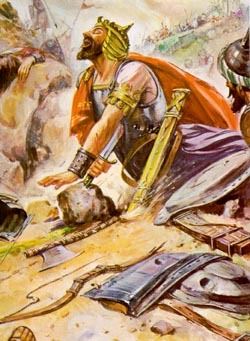
The Lord is constantly there, always waiting for an opportunity to forgive us, be gracious to us and receive us into His Life and Joy. The tragedy of Saul’s life is that to the bitter end he chose to go his own way instead. The Lord did not rejoice at the death of the self-absorbed, manipulative man. Instead, He grieved.
To listen to the sermon, click the play button:
To download, right click on the link (or do whatever you do on a Mac) and save it to your computer: Download 1 Samuel Part 30
1 Samuel #30. The Death of Saul
1 Samuel ends with the death of king Saul, recorded in chapter 31. While David was returning home, and then pursuing the Amalekites who had destroyed his town and taken his family, the Philistines and the Israelites began a great battle.
As I mentioned before, the Philistines were in the valley of Jezreel, which was the only relatively easy way to get from the Mediterranean coast into the Jordan Valley of Israel. Saul’s forces were on a mountain ridge to the south of the valley, a place called Mount Gilboa. When the Philistines began to move east toward the Jordan, Saul moved to attack them and block them.
The picture below is of the actual area (with present day roads, reservoirs and buildings that would not have been there at the time, of course). The Philistines were invading through the valley in the left of the picture, starting in the foreground and pushing toward the Jordan valley in the distance. The Israelites were positioned on the ridges to the right. The little hill labeled “Tell Jezreel” was probably not there.

The massive Philistine army turned to destroy the Israelites. This was a good strategic move, because if they left them alone on the mountain, the Philistines couldn’t be secure in the valley. It was a rout. Israel’s army fell apart. Jonathan and his brothers were killed. I want us to consider some things in the following verses:
3 When the battle intensified against Saul, the archers caught up with him and severely wounded him. 4 Then Saul said to his armor-bearer, “Draw your sword and run me through with it, or these uncircumcised men will come and run me through and torture me.” But his armor-bearer would not do it because he was terrified. Then Saul took his sword and fell on it. 5 When his armor-bearer saw that Saul was dead, he also fell on his own sword and died with him. 6 So on that day, Saul died together with his three sons, his armor-bearer, and all his men. (1Sam 31:3-6, HCSB)
Verse 3 contains some ambiguous Hebrew expressions. Most English translations make it seem like Saul was severely wounded before he committed suicide. That is certainly one possible way of translating it, and probably a good one. But even so, it is quite possible that Saul was not wounded at all, but only in despair. An almost literal translation would be this:
“The battle became a great burden upon Saul. When the archers came within range of him, he was deeply traumatized.”
The “burden” of battle could be intense physical combat. However, that doesn’t make sense when we learn that the enemy archers have only just come into range. If he was fighting hand to hand, archers would be irrelevant. They would not shoot, for fear of hitting their own men. So Saul was not even involved in actual combat. Therefore the “intensity” of the battle, was purely psychological for Saul.
It says that Saul was deeply traumatized. We already know that the intensity of the battle is psychological for Saul, not physical. “Traumatized” can mean physically wounded of course, and it isn’t wrong to translate it that way. Even so, knowing that what is happening with Saul is already psychological, it is not wrong either to interpret the trauma as emotional distress, rather than a physical wound.
I believe that this is reinforced by his armor-bearer’s response, when Saul asked him to kill him. The armor-bearer would not kill Saul, “because he was terrified,” (verse 4). What was he afraid of? If Saul was mortally wounded, why would the armor bearer be afraid to finish what was inevitable anyway? No, I think Saul’s mood and his words are what scared the armor-bearer.
The night before the battle is when Saul went to the witch of Endor, and consulted with a demonic spirit who masqueraded as Samuel. If you remember, that spirit had spoken only words of condemnation and despair to Saul. Saul accepted this message and believed it as if it was truly Samuel speaking. So, here’s how I think it went down: You have a man who has his entire life been insecure, erratic and manipulative. He is a control freak in a situation where he does not have control. He has recently accepted and believed the words of a demon. He is deeply emotionally troubled by the battle long before it even comes near him. When he sees that the archers are finally in range, he suffers deep psychological trauma – and then takes his own life. In other words, he gave up even before all was truly lost. The words of the demon were a self-fulfilling prophecy, in large part because Saul believed them and acted accordingly.
Now, I want to write about something that most Christians don’t talk much about: Suicide. It’s right there in the text, so I think the Holy Spirit wants to deal with the subject. But before we get into it, let’s get one thing clear. You may have known someone who committed suicide. Sadly, I’ve known several. It doesn’t do anyone any good to wonder whether that person died in faith, or if he went to hell. That’s not the point of what we are about to consider. What’s done is done. I cling to the biblical truth that God is far more gracious and merciful than I can comprehend.
But right now, I want to talk to and about the living. If you are reading this, you are alive, and these words are for you, not for someone who has already died. Don’t waste your wondering how to apply these words to someone else – these are for you, for me, for the living.
Saul’s suicide was clearly an evil, demonically influenced act. It was his lack of faith that prompted him to take his own life. It was his lack of trust in the Lord, combined with the fact that he believed and agreed with demonic words. He acted as he believed. If you are ever tempted to suicide, please understand – you are being tempted by a demonic power. Do not listen to demons. Do not agree with them.
In the 1990’s Dr. Jack Kevorkian became famous for helping 120 people patients commit suicide. It opened up a national debate about a person’s “right” to deliberately take her own life. But G.K. Chesterton has some insightful thoughts about killing oneself. He says:
The man who kills a man, kills a man. The man who kills himself, kills all men; as far as he is concerned, he wipes out the whole world.
His point is clear, but we don’t often think about it. The person who commits suicide does not merely kill herself. From her point of view, she is killing the whole world. Her intentions are as demonic as Hitler’s (who also committed suicide, by the way). Suicide looks at the world and says, “As far as I am concerned, there is nothing worthwhile in the entire universe. I would be just as well off if the whole world is destroyed.” If that doesn’t sound like Satan, I don’t know what does.
It is not a private decision that affects only yourself. It is a cruel and arrogant judgment against the entire world. Sometimes the suicidal person knows this. They are angry at loved ones, and they want to hurt those people as well as themselves. Suicide is not just self-destruction – it destroys everyone who knows you. If that doesn’t sound demonic, I don’t know what does.
Some Christians may say: “Well, I want to get to heaven. I’m tired of the struggles of this world – I want to be in the peace and rest of eternity with Jesus.” But that is so much like Saul’s attitude. Saul always insisted upon his own way. He manipulated, fumed and got depressed and sought help from demons – all to get his own way. Like the ultimate spoiled brat, when he realized that this time there is simply no way it is going to happen, he would rather die. We Christians are supposed to live in trust – not in control. We don’t get to determine how and when we die. To do that is to put yourself the place of God.
Now, Jonathan and his brothers died too. Their result was the same as Saul’s. And yet it was entirely different. They died fighting for their country and for each other. Chesterton writes about such people:
A martyr is a man who cares so much for something outside of him, that he forgets his own personal life. A suicide is a man who cares so little for anything outside him, that he wants to see the last of everything.
He even mentions the battlefield. This is how Jonathan acted, and how Saul should have acted.
A solider surrounded by enemies, if he is to cut his way out, needs to combine a strong desire for living with a strange careless about dying. He must not merely cling to life, for then he will be a coward and will not escape. He must not merely wait for death, for then he will be a suicide and will not escape. He must seek his life in a spirit of furious indifference to it; he must desire life like water and yet drink death like wine.
Jonathan showed courage. Saul showed demonic self-centeredness. I don’t think Saul’s death was the result of God’s judgment. It was the result of a lifetime of Saul’s self-absorbed choices, culminating in the final ultimate act of selfishness. About Saul, you can say for certain, “he chose his own fate.”
Even so, Saul’s story ends with people who loved God mourning for him. I think this is because they were led by the Holy Spirit. God always wanted Saul to turn to Him and trust him. And so after he dies, the Spirit of God moved two groups of people to honor Saul in a special way.
After the battle, the Israelites in the nearby parts of Jordan valley fled. The Philistines took over their towns, among them a town named Beth-Shan, which has been the site of an archeological dig for many years in modern times. They found Saul’s body, cut off his head, and hung the corpse on the wall of Beth-Shan. There is a reason that we call brutal, ignorant cruel people “Philistines,” even today. They did the same with Saul’s sons.
The residents of town further south in the hills on the other side of the Jordan heard about this. That town was Jabesh-Gilead – the place of Saul’s very first battle, the town that had been shamed for centuries, but which Saul had rescued. They remembered how Saul had saved them and finally removed their shame. So they sent a commando-type unit through the night to Beth-Shan. They stole Saul’s body, and those of his sons, from the Philistines, and brought them back to Jabesh-Gilead. They burned the bodies and then buried the bones with honor. It was a bittersweet end to the reign of Saul, coming full circle to the beginning when he was younger, and did trust God. I think their actions were a reflection of the Lord’s sorrow at Saul’s choices. Saul chose his own way, and he suffered the consequences. But I do not believe that was God wanted. He gave the Saul the freedom to choose, and I believe he was sorrowful for what the king chose. The Lord reveals this same attitude in Ezekiel 33:11
11 Tell them: As I live” — the declaration of the Lord GOD — “I take no pleasure in the death of the wicked, but rather that the wicked person should turn from his way and live. Repent, repent of your evil ways! Why will you die, house of Israel? (Ezek 33:11, HCSB)
A second person who reveals this attitude toward Saul is David. Remember, David had the Spirit of God in a way that was special in those days. Often, he is a type of Christ – he reveals the kinds of actions and attitudes that the true Messiah has. And so when he heard of Saul’s death, he wept in sorrow. Because he was human, I’m sure he was more upset about the loss of his friend Jonathan than the death of Saul. But he reveals the heart of God. The Lord was never against Saul. He always wanted him to turn back, repent and receive grace. Inspired by God, David wrote a beautiful lament, recorded in 2 Samuel 1:19-27
19 The splendor of Israel lies slain on your heights.
How the mighty have fallen!
don’t announce it in the marketplaces of Ashkelon,
or the daughters of the Philistines will rejoice,
and the daughters of the uncircumcised will gloat.
let no dew or rain be on you,
or fields of offerings,
for there the shield of the mighty was defiled —
the shield of Saul, no longer anointed with oil.
22 Jonathan’s bow never retreated,
Saul’s sword never returned unstained,
from the blood of the slain,
from the bodies of the mighty.
loved and delightful,
they were not parted in life or in death.
They were swifter than eagles, stronger than lions.
24 Daughters of Israel, weep for Saul,
who clothed you in scarlet, with luxurious things,
who decked your garments with gold ornaments.
25 How the mighty have fallen in the thick of battle!
Jonathan lies slain on your heights.
26 I grieve for you, Jonathan, my brother.
You were such a friend to me.
Your love for me was more wonderful
than the love of women.
and the weapons of war have perished!
The greatest tragedy of Saul’s life is that the Lord always loved him, continually reached out to him, never stopped offering his grace – and yet Saul refused it, preferring to try and control things himself. He did not surrender his own will to God. But God’s love and grace and forgiveness were never more than heartbeat away, if only he had turned to receive them. And so when Saul died, the heart of God was to lament his loss.

David’s undeserved generosity is a picture of the grace of God to us – who do not deserve the goodness God gives us.
To listen to the sermon, click the play button:
To download, right click on the link (or do whatever you do on a Mac) and save it to your computer: Download 1 Samuel Part 29
1 Samuel #29. Chapter 30
Remember last week, we read that David traveled 130 miles or so north with the Philistine army, and then returned. It took them three days on the return trip. That’s a pace of around 40 or more miles per day. Because of events which happened later on, I assume that they had some beasts of burden with them – either donkeys or camels or both (horses were never used widely in ancient Israel). That’s a very fast walk or slow jog for 10 hours (not counting rests) for humans. It is basically the same for either donkeys or camels. Even if they rode the entire way, they were being bounced and swayed for hour upon hour, probably traveling from just before dawn to a little after dark.
It was long distance at an exhausting pace. And when they got home, they found their town burned to the ground, and their wives and children taken for slaves.
Last time we examined David’s reactions in detail. After grieving, and after holding on to the Lord with all his strength, David and his men worshipped, and ask God what he wanted to do.
When he was convinced that God did indeed want him to pursue the Amalekites, David and his men set out again, possibly late on the same day that they arrived home. They came to a place called Wadi Besor. It’s hard to pin down the exact location today, but it was somewhere in what is now southern Israel, probably near Gaza, but further inland. My best guess is that it formed a kind of psychological border between the dry land and the extreme desert. Now remember, they have come from the northern part of Israel (where they were with the Philistines) to the extreme south. Two-hundred of the six-hundred men were too exhausted to continue. These men had traveled a round trip of almost 300 miles in a matter of days, either by foot, or by slow, uncomfortable animals. Exhaustion was nothing to be ashamed of. David left them with some of their provisions, and carried on, lighter and faster.
They encountered a lone Egyptian slave out in the desert, almost dead from hunger, thirst and exposure. David and his men treated him kindly, giving him food and water. As he revived, they asked for information. There is no doubt that they hoped to get good intelligence from him when they stopped to help him, but even so, they helped him before they knew he could help them. This is in stark contrast to how the Amalekites had treated this slave. Though they had plenty of loot, when he took sick, they left him in the desert with nothing.
As it turns out, the Egyptian helped them find the place where the Amalekites had stopped. No doubt they figured both Philistines and Israelites (whom they had raided) were still engaged in battle (as indeed they were). The Amalekites thought they were safe, so they stopped to celebrate their victory, to engage in eating and drinking what they had won, and probably to do worse things with the women they had captured.
David and his men fell upon them like an avenging fury. Four hundred Amalekites escaped, but the rest were killed. That statistic tells you something about the kind of warrior David was, and the men he had with him. The number of Amalekites that escaped was equal to the total number of men that David used in the attack. In other words, the Amalekites outnumbered David’s men considerably. David and his men had traveled several hundred miles in a matter of days, and yet David achieved total victory. It is true that David and some of his men were exceptional warriors. But I think it is impossible to look at this without seeing a miracle of God.
David recovered not only his own family and those of his men, but virtually everything that the Amalekites had taken from them. In addition, they recovered the loot that the Amalekites had taken from the Philistines and other Israelites in their expedition. So they ended up with far more than they had even before Ziklag was destroyed. The end of chapter thirty devotes some time to talking about what happened to all this stuff. There is a reason for that, so we will look at it too.
First, some of David’s men were not inclined to share with those who collapsed in exhaustion at the edge of the desert. David could have gone along with that, and no one would have blamed him. On the other hand, he would also have been within his rights as their leader to rebuke the miserly ones harshly, if he did not like their attitudes. Again, he chooses neither typical reaction. Instead, he speaks as a companion, urging them to do right:
23 But David said, “My brothers, you must not do this with what the LORD has given us. He protected us and handed over to us the raiders who came against us. 24 Who can agree to your proposal? The share of the one who goes into battle is to be the same as the share of the one who remains with the supplies. They will share equally.” (1Sam 30:23-24, HCSB)
His main point is very important. David feels clearly that it was the Lord who gave them the victory; therefore all that they gained from the Amalekites belongs not to them, but to God. It is the Lord’s loot, so to speak. Yes they worked for it. But even so, it was given by God. He says they shouldn’t be selfish “with what the Lord has given us.” David wants to distribute his gains with an understanding that it all came from the Lord.
It was not the fault of the 200 that they were not strong enough. And they did play an important strategic purpose, guarding a portion of their equipment. And it isn’t as if they those 200 had not already shared in many battles and hardships with the others. David would rather err on the side of kindness and generosity. This policy apparently become law when David was king – the ones who guarded the baggage received an equal share with those who fought.
There are two important points in connection with this. First, it shows that David continually placed his trust in God, not in his own strength or the strength of his warriors. In some ways, giving the baggage-guards equal shares would make some people more inclined to stay back and guard in the future. After all, guarding the baggage is safer than fighting the battle, and the pay will now be the same. But David is not worried about weakening his army. He trusts God – he doesn’t have to try and motivate people to help him – he trusts that God will be all the help he needs.
Second, this is where David again shows us a type of Christ. Jesus told a parable about workers in a field in Matthew 20:1-16. The basic point Jesus made is that the person who comes to him at the end of her life will receive the same eternal life as the one who followed Jesus for all her days. This can be seen as offensive. When I work harder than another person, but I get paid the same amount, something in me doesn’t like that – even if I agreed beforehand to work for that amount. But what David’s actions show us is a picture of the grace of God. God’s grace is not fair. If it was fair, no one would be allowed to have it all, and it wouldn’t be grace. No, God graciously gives us what we do not deserve at all – and so here David mirrors that. The bible clearly says that no one has the capacity to be good enough to get to heaven or earn God’s love or favor. But when something concrete like this happens, it forces us to see what that really means.
After everyone has received his own possessions back, plus a share of spoils, there is still more left over. David also uses this extra wealth as if it belongs to God, not to him.
First, he sent a portion to the elders at Bethel (verse 27). This could be the town of Bethel. But in Hebrew “Beth-el” means “house of God.” So far, we don’t know of any special connection between David and the town of Bethel. Considering that, and knowing David’s heart for God, I think that probably the best translation is that David’s first gifts were given to the “house of God” – meaning the tabernacle where the Ark was kept and where all Israel went to worship God.
Next, he sent gifts to a variety of towns and people. I think verse 31 sums up what he was doing. He was giving back “to all the places where David and his men had roamed.” He had depended on the generosity of others for years. Now, as soon as he has the chance, he returns the generosity. I don’t think he is trying to pay them back – I think it is gift of thanks, in honor of God.
Now, what do we do with this?
I have met people before who are proud of what they have accomplished, and who are unwilling to admit that they ever had God’s help with anything. “I’ve worked hard for what I have” is their underlying attitude. But David and his men clearly worked hard for what they gained also. They traveled 300 miles and fought a battle at the end of it. But even so, David receives it not as something he got for himself, but as a gift from God.
I want to encourage all of us to understand that everything we have ultimately comes from God – even if we feel we worked hard for it. A lot of people in this world work harder every day than your toughest day at work, and barely get enough to stay warm and fed. What makes your hard work better than theirs? Nothing, of course.
Now, I am not trying to condemn anyone. The point I want to make however, is that even the opportunity to be rewarded for hard work comes from the Lord. What I want us to understand is that everything that we have has been loaned to us by God, even if we work for it. It is His, not ours. If you aren’t sure about this, just ask yourself – how long do you get to keep what you have worked for? When you die, it isn’t yours anymore. It’s all given to us in trust, for us to use for God’s purposes. So like David, this first thing to do with it, is give some back to His work, and then to bless those we are led to bless, and then yes, to keep some to enjoy for ourselves.
The most important thing for us to understand from 1 Samuel 30, however, is God’s grace. We don’t deserve it. No one does. The men who waited at the edge of the desert simply failed physically. They couldn’t keep up. They didn’t journey as far. They didn’t risk their lives fighting to recover even their own families and goods, let alone the extra goods. Notice that those men did not speak up or argue, because the others were correct. But David spoke up for them, on their behalf. God shows his gracious heart through his servant David.
We have all failed, like those men. We haven’t done what we needed to do to get salvation for ourselves or our loved ones. We don’t have any excuse, or any claim upon the goodness of God. And yet, God gives us what we do not deserve. He blesses us abundantly with his love, his forgiveness, his acceptance, his favor, the material things we need to live, and especially his presence in our lives. I exhort you, receive from Him in faith right now, everything you need physically, spiritually and emotionally.
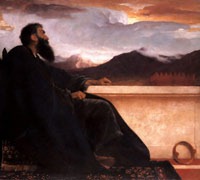
When we are faced with trouble we have several options. Maybe we blame and abuse ourselves and slip into self-absorbed despair. Perhaps we blame others and feel better by thinking about that. Maybe we are more positive, and jump and try to control and fix the situation. David did not do any of these things. Instead, he simply held on to God.
To listen to the sermon, click the play button:
To download, right click on the link (or do whatever you do on a Mac) and save it to your computer: Download 1 Samuel Part 28
1 Samuel #28. 1 Samuel Chapter 29. David in Jeopardy (again).
A few weeks ago we observed that though David went to live among the Philistines without consulting God, things seemed to go well for him. But starting this chapter, and culminating in the next two, we will learn why it was a mistake. Remember, though, even though David made this mistake, God was gracious and continued to work for David and through him.
At the beginning of chapter 28, David gets put in a very difficult position. He has deceived king Achish of Gath into believing that he has been attacking Israelites. So when all the Philistines together begin a campaign against the Israelites, Achish invites David along. In fact, it sounds almost like a test of loyalty. He says to David, “you know of course, you and your men must come along with me.” I love David’s answer. “Good. You will find out what I can do.” Notice, he doesn’t say who he is going to do it to. I think David secretly meant, “Good, you’ll find out what kind of warrior I am when I have to fight you.” Achish, believing as he does that David has truly defected to the Philistines, does not catch the possible double meaning. Instead, he feels that David has passed the test of loyalty, and he even offers David to be his lifetime bodyguard. So David is on his way to the war between the Philistines and Israelites – but he is on the wrong side.
Now, I want you to picture how it was for David and his men. David has consistently refused to hurt Saul. They have never attacked fellow Israelites. But now, suddenly, they are marching to war against Saul and the people of Israel, allied with their long-time hated enemies, the Philistines. I can’t imagine that David’s men were happy about this.
They will have two choices. First, they could do what they appear to be doing, which is, to remain allies with the Philistines, and fight on their side during the battle. This could create considerable emotional and spiritual turmoil. They may find themselves facing friends and relatives, and truthfully, they don’t believe in the righteousness of the Philistine cause for war. If they do this, they will be traitors, and Saul, for all his unfair suspicions in the past, will be proved right in the end. If they win, they will have destroyed their country, and no on in Israel would ever accept David as king again. If they lose, they will have destroyed themselves.
Their second choice is to betray the Philistines in the middle of the battle. But that would be problematic for several reasons. First, it shows them as faithless to the Philistines who have treated them fairly kindly for more than a year. Also, if they do that, they will be immediately fighting behind enemy lines, surrounded by the enemy army. Casualties would be very heavy. Another thing is, the Israelites may not understand what David’s men were doing, and if they were able to fight through and link up with Saul’s army, the Israelites might start fighting them anyway. Remember there were no cell phones or radios for them to communicate their intentions to the Israelite army. Finally, Saul’s history shows that even extreme demonstrations of loyalty do not convince him for long. There is no guarantee that turning on the Philistines would actually win Saul’s favor. Saul might even take the battle as an opportunity to kill David, even if he knows that David is helping him.
This is not a good time for David. It is possible that he wrote Psalm 38 at this time (though not certain):
1 O LORD, rebuke me not in your anger,
nor discipline me in your wrath!
2 For your arrows have sunk into me,
and your hand has come down on me.
3 There is no soundness in my flesh
because of your indignation;
there is no health in my bones
because of my sin.
4 For my iniquities have gone over my head;
like a heavy burden, they are too heavy for me.
…..
12 Those who seek my life lay their snares
those who seek my hurt speak of ruin
and meditate treachery all day long.
We don’t know what David would have done – it is not clear in the text. I suspect that he had some vague thought that Saul might be killed in the battle, and then he could rally the Israelites himself. We’ll never know, however, because the Philistines interfered. David was allied with king Achish of Gath. But there were five Philistine kings all together. Each Philistine King ruled over a city and some surrounding territory. When the other four kings saw that Achish had David and 600 Hebrew warriors with him, they objected strenuously. They couldn’t trust him, and so reluctantly, Achish sent David back to the town he had given him, Ziklag. David objects to Achish, and I’m not sure if the objection was genuine, or merely to maintain the deception that he was truly loyal.
In any case, it seems to me that the Lord arranged things to get David out of a very difficult position. David had placed himself there, by deceiving Achish about who he was raiding over the past year. It was his own fault that he was between a rock and hard place. But the Lord extricated him anyway. This is more evidence of God’s incredible, undeserved grace.
So David and his men did not take part in the battle, but traveled home to Ziklag. It took them three days to get back, and when they arrived they received a horrible shock – it was burned to the ground, and all their wives, children and possessions were gone. The Amalekites were very wily. They had seen that the Philistines and Israelites had focused all their attention on one another. So they raided all the through the southern territories of both peoples, finding only defenseless towns and villages, for all the men had gone off to war.
David and his men were devastated at the loss of their families. It says:
4 Then David and the people who were with him raised their voices and wept until they had no more strength to weep. (1Sam 30:4, ESV)
When the grief was over, anger kicked in. But it was chiefly anger against David. His men had fairly good reasons to complain. David had led them to settle with the Philistines in the first place. David had not let them be at peace in Ziklag, but had raided the Amalekites, arousing their ire. David had decided to deceive the Philistines into thinking they were allies. Therefore it was David’s fault that they had marched away with the Philistine armies, leaving their families defenseless. The men talked not just of mutiny, but of stoning David to death. Stoning wasn’t considered murder – it was considered just punishment for gross wrongdoing.
Try and get inside the mind of David for a minute. There is no doubt that he himself had made a mess of things. He didn’t have many good options to start with, with Saul chasing him, and people betraying him, but even so, all his choices of the past 18 months had led to this mess. He had lost his own family. He had lost the families of his faithful men, and all the possessions they had finally been able to accumulate after years of homelessness. Now his men were turning on him.
There were several options for David at that point. He could have said, “yes, go ahead and stone me.” That would have been the response of despair and giving up. He could have been angry. War leaders in those days had a great deal of authority over their men. He was, after all, God’s anointed. He could have rebuked his men, and blamed them for some of what happened. After all, there is no doubt that they had been happier in Ziklag than wandering homeless in the desert. He would have been within his rights to execute the ringleaders of the rebellion. He could have tried to fix the problem himself immediately, trusting in his own strength and wisdom to pull off some kind of miracle.
Instead, it says:
But David strengthened himself in the LORD his God. (1 Samuel 30:6)
The word “strengthened himself” is the Hebrew word transliterated “chazaq.” It means to seize upon, to lay hold of with obstinate persistence. The sense it gives us, is that David focused and fastened his heart, mind, soul and strength on God and God alone, and held on for dear life. He did not immediately try to fix anything or even to defend himself. He just held on to the Lord.
Once more, we see evidence of David’s faith-filled heart. There is no doubt that he has already made some very bad decisions in his life. He is in a mess created by some of those unfortunate choices right now. But his instinct is always to turn back to the Lord. That is the life of faith. It isn’t about performing perfectly, or even performing well. It is about grabbing ahold of the Lord through faith, and holding on for dear life, through good and bad, through the evil brought about by others and the messes brought about by yourself. This, and this alone, is what made David such a great man.
We can see how David’s focus on the Lord brought him back on track. He already knew that the Amalekites were God’s enemies. Clearly, they have already attacked, and this is war. It was certainly David’s right to pursue them and bring them to battle if he could. It would be easy just to assume, and then act. But David, after strengthening himself in the Lord, also humbles himself, assuming nothing, wanting earnestly to hear from God. So before doing anything else, he inquires of the Lord.
Once more, “inquiring of the Lord” most likely involved a sacrifice and a worship service, and possibly even a fellowship meal. It wasn’t a quick thing. But David took the time to worship the Lord, and to lead his men to do the same, before anything else was done.
I want to pause and consider a few things here. I hope David’s life is showing us that perfection is not necessary – only faith is. But think for a moment about your typical response when you are in difficulties. Do you waste time and energy blaming yourself? Do you tend to trust yourself to come up with a solution? Do you want to control the situation and work it out, essentially save yourself? Or maybe your response is depression and despair. You might tend to think the worst will happen to you, so you may as well get resigned to your fate. Perhaps you even blame yourself and accept that you deserve the disaster because you brought it on yourself. Maybe you typically take another approach – you blame others, and get angry at them when things don’t go well. It helps you feel better or more righteous to say it is someone else’s fault.
I think we all tend toward one or more of these things when trouble comes. I want to encourage us, however, to be more like David. He didn’t do any of these. Instead, he fastened his hope and trust on the Lord. Like a bulldog latching on and not letting go, he focused on God with all his soul, heart and strength. All the energy that he might have put into controlling the situation, or blaming others or blaming himself – he put into holding on to the Lord. Don’t put your energy into blame, or self-abuse. Don’t even put your energy into fixing things. Put all your focus into obstinate faith. This is just as true even when you know it is all your own fault.
It is also possible that David wrote Psalm 91 somewhere around this time, either while he strengthened himself in the Lord, or perhaps after his battle with the Amalekites. But whether or not he wrote it, then it is relevant here:
1 He who dwells in the shelter of the Most High; will abide in the shadow of the Almighty.
2 I will say to the LORD, “My refuge and my fortress, my God, in whom I trust.”
3 For he will deliver you from the snare of the fowler; and from the deadly pestilence.
4 He will cover you with his pinions,
and under his wings you will find refuge; his faithfulness is a shield and buckler.
5 You will not fear the terror of the night, nor the arrow that flies by day,
6 nor the pestilence that stalks in darkness, nor the destruction that wastes at noonday.
7 A thousand may fall at your side,
ten thousand at your right hand,
but it will not come near you.
8 You will only look with your eyes
and see the recompense of the wicked.
9 Because you have made the LORD your dwelling place-
the Most High, who is my refuge-
10 no evil shall be allowed to befall you, no plague come near your tent.
11 For he will command his angels concerning you; to guard you in all your ways.
12 On their hands they will bear you up, lest you strike your foot against a stone.
13 You will tread on the lion and the adder; the young lion and the serpent you will trample underfoot.
14 “Because he holds fast to me in love, I will deliver him; I will protect him, because he knows my name.
15 When he calls to me, I will answer him;
I will be with him in trouble;
I will rescue him and honor him.
16 With long life I will satisfy him
and show him my salvation
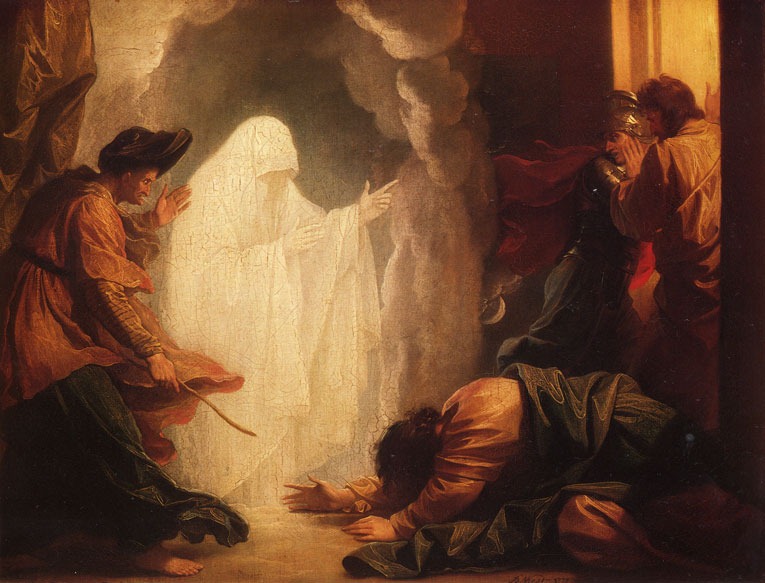
Saul begins to reap the deadly benefits of religion without relationship.
To listen to the sermon, click the play button:
To download, right click on the link (or do whatever you do on a Mac) and save it to your computer: Download 1 Samuel Part 27
1 SAMUEL PART#27. Chapter 28
Remember all that we have learned about king Saul. One of the most important things we discovered is that he was a religious man, but not a man of faith. Time after time, when he felt he could somehow use or exploit God, he did so. But when he was confident in himself, or when he felt that God had nothing to offer him, he ignored God. He had the trappings of religion and he used them to control others and manipulate God. But he did not live in a day to day walk of faith, trusting God in all things, relating to him, loving him. The depths of Saul’s spiritual poverty are revealed in 1 Samuel chapter 28.
Saul, having no real trust in God, was terrified when he saw the Philistines. Now consider something. Every time Saul was involved in a battle with the Philistines up to this point, God saved the Israelites. The Lord used Jonathan in chapter 13, and David in chapter 17, and several other times. But none of that seemed to make any difference to Saul. He was just as scared and faithless as he had always been.
I want to pause and say something about that here. Sometimes we think that if God just did a miracle for us, then we would really trust him. If we saw the Lord do something really great, then we wouldn’t doubt, then we wouldn’t disobey or draw back in fear. But that wasn’t the case with Saul. God’s previous miracles didn’t matter. The same was true with the first Israelites who came out of Egypt. They saw many miracles. Their food and water were daily miracles. And yet it did not help them to have faith and surrender to the Lord.
Jesus addressed this issue in his own ministry. Though he did many miracles, often people came and demanded miracles on the spot – basically asking him to prove himself to them. Jesus addressed this Luke 11:27-29:
27 As He was saying these things, a woman from the crowd raised her voice and said to Him, “The womb that bore You and the one who nursed You are blessed! ” 28 He said, “Even more, those who hear the word of God and keep it are blessed! ” 29 As the crowds were increasing, He began saying: “This generation is an evil generation. It demands a sign, but no sign will be given to it except the sign of Jonah. (Luke 11:27-29, HCSB)
John records that many miracles (‘signs’) still did not convince people who did not want to be convinced:
37 Even though He had performed so many signs in their presence, they did not believe in Him. (John 12:37, HCSB)
In another place, Jesus told a story about a poor man named Lazarus, and a rich man. At the end of the story, the rich man found himself in hell. He begged that someone be sent from heaven to tell his family the truth about the afterlife. Jesus concludes the story like this:
31 “But he told him, ‘If they don’t listen to Moses and the prophets, they will not be persuaded if someone rises from the dead.’ ” (Luke 16:31, HCSB)
When people in the New Testament say “Moses and the Prophets” they mean “the bible” since that was as much Bible as they had at that time. What Jesus is saying is this: if you don’t trust God’s word and the promises in scripture, no amount of miracles will cause you to trust.” The problem can’t be fixed by a miracle. That is both hard and good for us to remember. Seeing is not believing. With God, believing is seeing.
So Saul, in spite of all that he has seen God do, is a religious pretender, not a man of real faith. Therefore, now, facing the Philistines, he is quaking in fear. It says that he inquired of the Lord. As before, Saul doesn’t go to the Lord unless he thinks God can do something for him. So now, he inquires of the Lord only out of fear and a desire to manipulate God. It doesn’t tell us what Saul was asking God. I think it is most likely that he made an animal sacrifice to the Lord, and was hoping for some prophecy that God was pleased with the sacrifice, and would give Saul the victory. But he didn’t hear anything by way of the “sacred dice” (the urim and thummin) or through prophets, or in dreams. Basically, Saul is demanding another sign here, before he will really trust God. He has had God’s help all his life, but he still won’t trust the Lord without some kind of additional sign.
God has been working on Saul all of his life. Remember how he called him to be king? Remember how he gave him the victory at Jabesh Gilead? Remember how even after Saul proved to be useless to God, God kept pursuing Saul’s heart, sending him a troubling spirit to get him to turn to the Holy Spirit for relief? Saul has had decades to surrender his heart to the Lord. The Lord has never quit trying to win him over. I think this lack of a sign is one more chance for Saul to surrender his heart. The Lord has put him in a crisis where he has the same two choices he has always had: 1. Trust God, or 2. Manipulate God and other people to control his own destiny, and get the outcome he wants. Before this, Saul has always chosen #2. He doesn’t know it, but this will be his last chance to give his heart to the Lord.
Tragically, Saul once again chooses to try to control his own life and outcomes, rather than trusting God. When he doesn’t hear from the Lord, trust is not even an option. Saul simply must find some way to manipulate God into saying what he wants to hear, or doing what he wants God to do. So he seeks out a medium, or witch, or spiritist, or whatever you want to call it.
Deuteronomy 18:9-14 says this:
10 There shall not be found among you anyone who burns his son or his daughter as an offering, anyone who practices divination or tells fortunes or interprets omens, or a sorcerer 11 or a charmer or a medium or a necromancer or one who inquires of the dead, 12 for whoever does these things is an abomination to the LORD. And because of these abominations the LORD your God is driving them out before you. 13 You shall be blameless before the LORD your God, 14 for these nations, which you are about to dispossess, listen to fortune-tellers and to diviners. But as for you, the LORD your God has not allowed you to do this.
These practices were part of the reason for Holy War, which Saul failed to carry out as king. Not only were the people of God not supposed to do these things, they were supposed to wipe out those who did. Such things separate people from God and put them under the influence of hell. Saul did make some attempt to stamp out the practice of the occult, but obviously he wasn’t entirely successful. And now he is willing to deliberately abandon faith in God, abandon his previous laws against these things, and seek help from the dead.
Here is the final proof of Saul’s internal condition. Religion is just something to be used and manipulated, and if one approach doesn’t work to accomplish his aim, he’ll try another. So he and a few of his men disguise themselves and go to the witch. The disguise is actually pretty pathetic. The woman lives not far from the battlefield. Her visitor is the tallest man she’s ever seen, and he wants to talk to the ghost of the prophet Samuel. It doesn’t take a genius to figure out it is Saul. So at first she thinks it is a trap. Then when she is convinced, she pretends that the ghost of Samuel told her who Saul was.
Now it is natural to wonder, what really happened here? Was the woman a charlatan who made it all up? Was there really a spiritual presence there? And if so, was it really Samuel?
To answer that, we need to consider what the Bible says about life after death. Certainly, the entire New Testament teaches that at the end of time, there will be a judgment day. Those who rejected Jesus will be thrown into a lake of fire with the devil and his demons. Those who receive him will be physically resurrected to an eternal, joyful existence.
But there is that period of time in between. Samuel was in the period, as is every person who has died up until today (except for Jesus). Some people believe that in that “between-time,” you are unaware of existence until judgment day, at the end of time. Others believe, as I do, that there is a period of time when dead souls are either with Jesus in joy and freedom, or in hell. The presence of Moses and Elijah with Jesus in Matthew 17, suggests this very strongly. Jesus painted this picture of life after death in his story of Lazarus and the rich man. Revelation 6:9-11 shows people who have died, yet are aware and are waiting for the final judgment day and the resurrection. Actually several passages in Revelation suggest that there is life with Jesus between death and the physical resurrection that will occur at the end of time.
Therefore in order to believe that it really was the spirit of Samuel, we have to believe that some people on earth – mediums, fortune tellers etc. – have the power to pull people out of the presence of God and back to earth so we can talk to them. I don’t buy it for second.
There is another reason to believe that this was not really Samuel. God chose not to answer Saul when Saul wanted some reassurance. He did not answer through the urim, or through the prophets or in dreams. If God would chose not to speak to Saul through these holy and righteous means, why would he then work through the unrighteous means of a medium – basically rewarding Saul’s wicked behavior?
Even beyond these most significant facts, there are other things in the text which suggest that this was not Samuel. Saul himself could not see the spirit – he had to ask the medium what he looked like. Her reply was very vague: “An old man wearing robes.” That’s pretty much how I picture Samuel myself. Saul accepted this description as true, but there is nothing in it that actually identifies Samuel personally.
Finally, there is the message that Saul got from this apparition. Once again we need to question why God would speak through this illegitimate means after not answering by any legitimate route. But secondly, listen to the tone of the message. It is angry, bitter and hopeless. There is no encouragement. There is not even any opportunity for repentance. Not too long after this, Saul becomes wounded and commits suicide, rather than fight on with courage. I personally believe that his encounter with this evil spirit contributed to that act.
I do believe that there was something spiritual going on here – something creepy and utterly evil. Remember the other Saul, in the New Testament, the one who repented and came to Jesus, and later was known as Paul? He encountered a girl who could tell the future. But it was an evil spirit that gave her the power of limited fortune telling (Acts 16:16-19). I met someone once, who used to be involved in fortune telling, and spirit communication for money. She became a Christian and rejected all that. We asked her what was involved in it. She said that sometimes, she was just tricking people by being observant, and making vague statements combined with educated guesses. But she also told us that sometimes, she was aware of a spiritual presence which gave her information – which she now realizes was a demon.
I personally believe that Saul unknowingly sought (and received) an audience with a demon, masquerading as Samuel. Saul was rewarded with the kind of the thing you would expect from a demon: condemnation and hopelessness. By turning to witchcraft and séance to try and control his life, he was turning his back utterly on God and seeking help from hell. And he got exactly what you might expect from hell.
So where to do we go with this text?
First, if this isn’t too obvious, don’t play around with séances, spirit-guides, mediums, psychics and so on. That stuff comes straight out of the pit of hell, and you are inviting the depths of hell into your life if you fool with it. Saul’s results were dramatic and self-destructive.
I find some reminders here about religion. There are many people like Saul who go to church and talk the religious talk as a way to manipulate God or influence others. It became a way of life for Saul, and ultimately it destroyed him. God never gave up on him, but by his empty religious spirit, Saul took himself out of God’s jurisdiction. I hate religion. I love Jesus, but I hate religion. I think maybe God hates it too. Religion is about appearance and manipulation. Real faith is about surrendering your heart to the One who created you, and cares about you more than anyone else in the universe. Saul had plenty of religion. David had faith.
There is also a caution here about how you view miracles. I’ve seen miracles. I love it when God does them. But my faith does not depend on them, and I know I cannot demand them from God, on my cue. We sometimes think (like Mike and the Mechanics) that all we need is a miracle. Not so. All we need is the Lord, and to get him all we need is faith to believe he is there and to trust him. Miracles are real, and great, but if we make them necessary to trusting God, we are in trouble. Jesus himself warned against that attitude.
I think there are many times when we get ourselves into situations like Saul’s. We come face to face with a problem. We can try to manage and control life ourselves; or we can trust the Lord and surrender to him. I pray that we make the second choice, not the first.
I guess the main message is the same message we hear over and over through scripture: Trust the Lord. Base that trust on his word and his promises, not on anything else.

1 SAMUEL #26. CHAPTER 27:1-12
David was not a great hero of the faith because he was particularly righteous. He became one of the Bible’s great ones because whenever he failed, he returned to the Lord seeking mercy, and went back to trusting God again.
To listen to the sermon, click the play button:
To download, right click on the link (or do whatever you do on a Mac) and save it to your computer: Download 1 Samuel Part 26
Many people have the misunderstanding that David only failed spiritually once in his life, in the matter with Bathsheba. If you have been following this sermon series, however, you will have noticed that in fact, David has already failed a number times in his life, both spiritually and in terms of achieving his goals. The picture we have of David is not a man who was almost perfect. Instead, he is a very flawed human being. But he was a person who was always willing to admit his mistakes, and he continually looked to the Lord (not to himself or to others) for forgiveness, help and encouragement.
Chapter twenty-seven records yet another time when David failed spiritually. The last time the Lord spoke to David about where he should be making his base, he said, through the prophet Gad, that David should stay in the land of Israel, in the territory of the Tribe of Judah (1 Samuel 22:5).
David did that for several years, but it was brutal. He and his men couldn’t live in a town for fear that Saul would catch them. If they stayed in a town, but escaped before Saul got to them, it was likely that Saul would punish the citizens of that place. So David and his men lived in caves and outdoors. They couldn’t farm to support themselves. There were six-hundred of them, so they couldn’t hunt or gather enough food either. They relied on friends and strangers to help them through their tough times. But often, the people alerted Saul to their location, and they found themselves running for their lives. They continued to barely survive, but it didn’t look (at least on the outside) like they were doing anything constructive.
At one point, it looked like David had convinced Saul to leave him alone, by sparing Saul’s life in the cave. But Saul eventually came back, and David was so surprised, he had to go see for himself. Last time we saw how David once again dramatically showed Saul that he meant him no harm. This caused Saul to leave again, but you can almost see the wheels turning in David’s head, as he realizes that Saul will never leave him alone for good. If sparing his life the first time would not convince Saul that David was a loyal subject, nothing could.
There is something else that the text mentions that we haven’t talked about yet. These men were young, but many of them, including David, had families (v.2). Living like they were, it must have been hard on their wives and children.
So David does something uncharacteristic – he makes a unilateral decision without consulting the Lord. The last thing he heard on the subject was that he should stay in the territory of Judah. Without asking God again, he takes his men and their families and goes to the territory of the Philistines. The Hebrew shows David’s thoughts to be something like this: “There is nothing good left for me. So I’ll go to the Philistines.”
Now, we should be careful stating absolutely that David was sinning here. The scripture doesn’t say one way or the other. But I think we can say that to do this without asking God was unusual for David, and it did not reflect the relationship of trust in the Lord that he normally had. In fact, it seems more like something that Saul would do, than David. At the very least, it looks like David made a decision that was based more on fear, hopelessness and weariness than on faith. We can also see that as a result, he put himself in a position where he had to be deceptive.
He went back to Achish, king of the Philistine city of Gath – the same place he went when he first fled from Saul (chapter 21). No doubt Achish has heard what David has been doing since he left last time, and he knows now that David is not insane. Even so, David might be a powerful ally. He is bringing six-hundred men who have been hardened by the wilderness and by some battles. He is technically the enemy of Saul, king of Israel. So Achish once again allows David to take refuge in his territory. He sees the potential in an alliance, and also the potential danger in picking a fight with David and his six-hundred hard men.
This time, however, David is a little wiser, and seeks to keep physical distance between himself and the king. He asks if he and his men can stay in some town out in the country, away from the capital, Gath. So Achish gave David the town of Ziklag to live in.
Four hundred years before, when Joshua led the people of Israel across the Jordan river, the entire land was given to the Israelites by God. They still had to enter in and take possession of the land by driving out the pagan tribes – but the Lord promised to be with them and help them do that. However, no tribe truly trusted God enough to fully possess what he had promised. So the town of Ziklag was supposed to belong to the tribe of Judah – but they had never actually taken possession of it, being too afraid to challenge the Philistines. Now, David – a man from the tribe of Judah – receives this little town as a gift, without any fight at all.
We could look at this and say, “Oh, I guess David did the right thing after all, because things began to work out for him.” But I don’t think so. Just a little more than a year after David went to the Philistines, David’s problem with Saul was solved, and he was free to live in any city in Israel. This would have happened whether or not he had gone to live in Philistine territory. So I don’t think the gift of Ziklag was God’s endorsement on David’s actions. Instead, I think it shows us how gracious God is. Even when David was afraid and more or less ran away, the Lord blessed him, and through him, blessed his people. The Lord did not allow David’s fear and lack of faith to hinder what He (God) wanted to do. Though David didn’t deserve it, God used him anyway. Though David didn’t deserve it, God allowed he and his men to have a time of relative rest and stability. God continues to work, no matter what happens. Our own failure will never stop him from being at work.
There is something else that strikes me. Right or wrong, now that David has done this, the Lord moves forward from here, and he leads David to do the same. Remember in chapter 15, earlier in Saul’s reign, the Lord told Saul to wipe out the tribe called the Amalekites? Saul only partly obeyed. He didn’t carry out the war the way the Lord asked. But now David begins a campaign of raids against the Amalekite clans. In each raid, he completely wiped out everyone he found. This was something that God wanted to happen. We don’t have time and space to re-hash all the discussion about Holy War, where we considered why God might want to do this. Go back to http://tinyurl.com/7zuaqcv to review this subject. The point here, is that David, even after he messed up, is back on track. He is letting the Lord accomplish his purposes through his (David’s) life. David and his men were warriors, with the hearts and desires that go along with that. So the Lord used them just as he made them. Even so, there is an obedience here. They weren’t fighting just anyone they could find. They were letting the Lord fight His battles through them, making war only when and where the Lord led them to.
Unfortunately, David had to engage is some deliberate deception at this point. King Achish wanted to know what he was up to. So David replied accurately, but deceptively. He said he was raiding in the southern territories of Judah and Israel. Technically, that was true. All that land was supposed to belong to Israel, including the places where David fought the Amalekites. But he certainly was not fighting other Israelites. Even so, he let Achish believe that he was making war on his own countrymen.
Now, we might say that David’s deception was part of the war between Israel and the Philistines, and therefore it is justified. After all, Achish was actually David’s enemy, though they were in a temporary truce. So it is almost like a spy lying to the enemy – it is an act of war, not a sin. I won’t say that interpretation is definitely wrong. And in the short term, David’s deception allowed him and his men to be at peace, and to advance God’s agenda.
Even so, David’s deception led to problems in the future – even as it had in the past. It put him in a very awkward position not too long after this. He had to be saved from that position by people and circumstances beyond his control. In fact, I suspect it was the Lord who saved him from the consequences of his own lies.
In the long run, true honesty is always the best policy. The fact that David put himself in a position where he basically had to lie, is one reason that I suspect that God did not lead him to go live among the Philistines. In addition, I am not sure why David and his men could not have raided the Amalekites from their base in the Wilderness of Judah, and thus gained much needed supplies and food.
Here are some things that I personally take away from this passage:
One thing that strikes me is how the Lord moves forward with us and with his plan, even when we take a wrong turn. We don’t go back to where we screwed up and do it over. Instead, the Lord mercifully picks us up where we are, gets us back on track. He didn’t make David go back to Judah and start over. Instead he adapted his plan, accounting for David’s mistake.
As we have seen before, the main goal in the life of faith is to trust God. If we do that, our behavior will naturally be pleasing to God. And even when we fail, if we return to a place of faith and trust, God is overwhelmingly gracious. Despite David’s failure, God gave him stability and rest, and through him, restored to Israel one of the towns that had been given them. Despite David’s failure, he continued to use him and bless him. I can trust that the Lord will deal with me in the same. I know I am not perfect – not in behavior, not even in how well I trust God. Because of Jesus, my failure is not the final word, not the most important factor. God’s grace is always a bigger factor than my failure. God has a way of turning failure into gracious victory and blessing. That takes a lot of pressure off me.
What is the Holy Spirit saying to you?

IT USUALLY TAKES MORE COURAGE TO REFRAIN FROM ANGER AND RETRIBUTION, THAN TO ACT ON IT
To listen to the sermon, click the play button:
To download, right click on the link (or do whatever you do on a Mac) and save it to your computer: Download 1 Samuel Part 25
1 Samuel #25. 1 Samuel Chapter 26:1-25
Often when I teach through the Bible, I am looking for tightly focused themes and messages in each passage. That works pretty well in the teaching portions of scripture. But often, when we get to narrative history, I feel like each passage is a box of chocolates: a lot of variety, a few surprises, but all of it is sweet.
I want to point out again David’s precarious situation. He trying to lead and support 600 men who can’t stay in one place. In fact, they can’t stay in any civilized place, because the king has declared him an outlaw, under the death sentence. He is dependent upon gifts from friends and strangers. He is also vulnerable to these same people, if they choose to betray them. We don’t know for sure how long David lived this way, but it was certainly years – maybe even as long as a decade.
One of the reasons I like to point this out is because many churches and popular preachers seem to suggest that if you have faith in God, everything will always go well for you. By implication, if things do not go well with you, it must because you don’t have enough faith, or you are not righteous enough. David was an imperfect human being, but he did live in faith. In fact he had a great deal of trust in the Lord, and always repented from his sins, and was willing to humbly learn to do better.
Even so, for many years, it did NOT go well with David. I just want to make sure that no one reading this ever falls prey to the teaching that if life is tough on you, it is because you don’t have enough faith, or you are a bad Christian or something like that. Also, I want to make sure you don’t believe that you can earn favors from God by being righteous, or saying the right words or having the right kind of faith.
I do want to say, however, that David became the great man he was because of faith. Sometimes things went very well for him and sometimes they didn’t. But how it was going on the outside was not as important to David as the quality of his relationship with the Lord. And because that relationship was more important to David than anything else, God was able to use him in amazing ways, and also to bless David without David thinking he had earned it.
Wouldn’t it be wonderful to receive all of life as blessing, whether or not it looks that way outwardly? If we could do that, it wouldn’t matter much to us whether circumstances were good or bad. We would always be experiencing life as blessing. David was getting there.
In chapter 26, David is still in a time of outward difficulty. But we will quickly see that things are very good with his heart. Once more, the Ziphites betrayed David – the same people who almost got him killed in chapter 23. They knew where David was, and they told Saul to come and get him. As far as we know, Saul had left David alone since the incident when David spared his life in the cave. But the Ziphites basically tempted Saul to sin. Having betrayed David once, this group of people probably thought that if David were not killed, he would take retribution on them if he had the chance, so they may have been quite urgent and persuasive in trying to get Saul to start hunting David again.
David can hardly believe it, so he takes a few men on a reconnaissance mission to see if Saul really has come. One of them is Abishai. Abishai is the son of David’s sister Zeruiah, which made him David’s nephew. Since David was the youngest of ten, it is quite possible that he and Abishai are basically the same age, or even that Abishai is a little older. They might have spent a lot of time together as boys. At this point, they are both probably in their early or mid-twenties, in the prime of physical power and maybe a little inclined to try something crazy.
The two of them decide to sneak into the heart of Saul’s encampment at night. This is the desert, so the soldiers probably did not have tents. The picture seems to be that Saul chose his sleeping spot, and then the whole army arranged themselves around him, with his bodyguard closest to him and the rest around them in a rough circle. David and Abishai crept through the entire circle of sleeping men and came to Saul sleeping soundly, along with Abner, the chief of Saul’s bodyguard.
All this appears somewhat similar to chapter 24, but only superficially. Almost every detail is different. Saul doesn’t come alone into the cave where David and his men were waiting. Instead David creeps with only one companion into the middle of Saul’s camp. This time it wasn’t Saul almost finding David where he was hiding, it was David finding Saul where he was camped openly. Before, David was passive. This time he initiated the action.
I think that it is not coincidence that this happened shortly after David’s interactions with Nabal. In chapter 24, we have the record of how David was tested, in the cave with Saul, and he passed that test. But with Nabal, he failed. He fully intended to take matters into his own hands regarding Nabal, and was saved from sin only by the wisdom of Abigail. Now, once more, he gets the chance to take matters into his own hands, or trust the Lord.
Verse 12 says that the Lord put a deep sleep on Saul and the army, which made this whole incident possible. It is almost as if the Lord is giving David a chance to see if he really learned his lesson with Nabal. It isn’t just a test – obviously, God knew what was in David’s heart. But David may not have been sure of himself. He may have had times where he thought about the incident with Nabal, and condemned himself, and wished he had behaved differently. The Lord is giving him a second chance, a “do-over.”
Abishai hasn’t matured in that way at any rate. He asks permission to kill Saul. It would be all over. The good times could begin. The days of wandering homeless, despised by people around, in danger all the time, could all be ended by one swift spear thrust. As before, it was a powerful temptation. Who could blame David? In Saul’s mind, anyway, they were enemies. It would be an act of war. It wouldn’t even be David who struck the blow.
But David has learned his lesson thoroughly. He says:
10“As the LORD lives, the LORD will certainly strike him down: either his day will come and he will die, or he will go into battle and perish. 11 However, because of the LORD, I will never lift my hand against the LORD’s anointed. Instead, take the spear and the water jug by his head, and let’s go.” (1Sam 26:10-11, HCSB)
He saw the battle with Goliath as the Lord’s fight. So he sees the struggle with Saul. It isn’t his, really – it is God’s business, and David trusts God to take care of it in His own time and in His own way.
As morning breaks, from a safe distance, David calls and awakens the camp. He shows them the spear and the water jug he has taken from Saul’s side. David is young and strong, and he has accomplished an amazing, bloodless feat of arms. So he teases Abner, Saul’s commander for a moment. I get the feeling he is rejoicing in what he and Abishai just did. But then, once again he respectfully confronts Saul with his wrongdoing. Like Abigail did with David, so David does with his king, Saul. He shows Saul he is wrong; he reminds him of true righteousness in God’s eyes – but he does it all with respect. You might say that David is submissive to the authority of Saul, but he is not subservient or a doormat.
At the end of the discussion, David shows where his trust is:
23 May the LORD repay every man for his righteousness and his loyalty. I wasn’t willing to lift my hand against the LORD’s anointed, even though the LORD handed you over to me today. 24 Just as I considered your life valuable today, so may the LORD consider my life valuable and rescue me from all trouble.” (1Sam 26:23-24, HCSB)
He doesn’t ask Saul to treat him the way he treated Saul. Instead, he declares that he trusts the Lord to treat him with righteousness and love.
Throughout this, Saul seemed to be full of remorse. But he was remorseful last time two, after David spared his life in the cave. David has learned something important from Saul: Remorse is not the same as repentance. Saul let his emotions rage through him uncontrolled. Sometimes he was full of murderous fury; sometimes he was full of regret and sorrow. But the regret and sorrow did not lead to true repentance for Saul – they were just feelings he had sometimes. So, even though Saul invites David to come back with him, David does not do it. Saul is in God’s hands, but David is wise enough not to trust him.
It’s another great story, and I love it just for the daring deeds and passion and trust in God. But what does it mean for us now? What does the Lord want to say to us through this passage today?
One of the things that catches my attention here is that David and Abishai accomplished a daring exploit, a great feat of war – yet without violence or bloodshed. If you are a young man, particularly, you may sometimes yearn to do something daring or great. Often it is easiest to imagine doing this in the context of some kind of violence – saving comrades during a battle, or saving your family from the bad guys. There is nothing wrong with the desire to do daring deeds, or with having a warrior-spirit. In fact, it is a good thing, used by god. By trusting the Lord, David allowed his warrior-spirit to be used and satisfied without committing violence.
Along with that, David shows that withholding violence takes more courage than doing something violent. With one violent act, his troubles could have over. It was much harder – it was a much greater deed – to leave Saul unharmed. I think we can all learn from that. Jesus told us to turn the other cheek. It takes a lot more courage to do that than to take matters into our hands, and protect ourselves. It takes courage not to reply with harsh words or gossip when someone hurts us. It takes courage to not repay hurt with hurt.
As we read the Old Testament especially, I think it is helpful to ask: “Where is Jesus in this text?” Remember, David is sometimes a “type of Christ.” What this means is that God used David at times to show the world what the real Messiah (Jesus) is like – to people who would never get the chance to know Jesus in their earthly life.
This passage does show us a little bit of what Jesus is like. Like David, Jesus is a mighty warrior, forever in the prime of life, full of bravery and wisdom; ultimately and absolutely victorious over his enemies.
David held back from harming Saul, who, without a doubt, deserved to be harmed by David. In the same way Jesus holds back the punishment that we all richly deserve. Jesus told us to love our enemies, to pay back evil with good. David did that very thing. Jesus forgave the people who were crucifying him, even as they did the deed.
Here’s something else that I think is very significant. David did not know at the time that the Lord was using him to show the world what Jesus was like. He didn’t realize how significant his actions were. But because he lived in trust and obedience, many people in his generation, and for a thousand years after, had some idea of what the Messiah was like.
We don’t always know when someone has a chance to see Jesus through us. We can’t always tell when the Lord is doing that. Very often the opportunity comes when we least feel like it. There was a huge temptation for David to act precisely opposite of how Jesus is. So in the same way, it may be in our toughest moments that God uses us to show Jesus to the world.
What is the Holy Spirit saying to you right now?
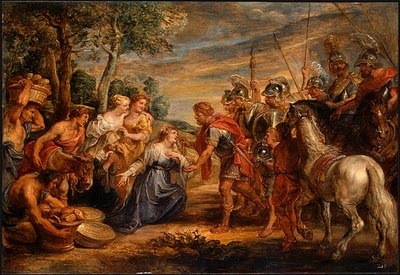
Abigail is a true hero of faith, a woman, full of womanly grace and wisdom, who saved the day as only a woman could.
1 SAMUEL #24
To listen to the sermon, click the play button:
To download, right click on the link (or do whatever you do on a Mac) and save it to your computer: Download 1 Samuel Part 24
This is another one of those delightful incidents recorded in 1 Samuel. One of the reasons I love it is because once more, this is not a story that anyone near that time in history would make up. It shows up the champion David as an impulsive hothead, and the real hero of this incident is a woman.
As we know, David and his six hundred men were hiding out in wilderness areas. Saul had been shamed into leaving him alone, since David refused to kill him when he had the chance. Even so, David did not settle in a town or with others. Obviously, things with Saul were not completely resolved, and he did not want to endanger any town or family by living with them. Though David was living in wild areas, he and his men did have some contact with others. Shepherds took flocks into the wilderness to graze, sometimes for months at a time. When David and his men encountered them, they protected them and their flocks from wild animals and robbers.
It takes a lot of food to keep six hundred men on their feet, and it doesn’t seem likely that they could have hunted and gathered enough. It is almost certain that David’s men had to rely upon the generosity and kindness of others to keep them supplied. Even so, they never took what wasn’t theirs, but protected the property of those they encountered.
I like knowing this about David. Here was the man who would become the greatest king known to Israel, and not only is he in hiding, but he is barely holding on, dependent upon donations from kind friends and strangers. David wasn’t just a lucky guy who had everything fall into place for him. He spent a significant portion of time in real need, and he never would have made it without help. This is humbling, but the fact that David lived this way encourages me when I feel humbled by my own needs.
After they had been protecting the shepherds and flocks of a wealthy man named Nabal for some time, David sent messengers, asking if Nabal could help him. The messengers pointed out that not only had David never taken anything from him, but had protected his property from bandits and other dangers. At the time, Nabal was cashing in by selling fleeces from sheep that David had protected, and also slaughtering many sheep and feasting. It was a time of great plenty for Nabal, who had a small empire of flocks, herds and servants.
Now it says that Nabal was a harsh man, evil in his dealings. His response shows that this bad reputation was justified. Not only did he refuse to give anything to David, he deliberately and provocatively insulted him and his men. In short, he was a jerk.
David’s response was understandable. Even so, it was not righteous. He left 200 men to guard their hideout, and took 400 men to destroy all that Nabal owned, and to kill him. Nabal’s behavior was despicable. It’s easy to see why David flew into a rage. But that does not justify David’s intent to destroy the man.
At that point, we meet the heroine, Abigail. She is Nabal’s wife. Some of Nabal’s men come to her, and explain what has happened. She makes some immediate emergency decisions, and goes out to meet David with plenty of food and supplies for his men.
Now, some of you have heard me preach through New Testament passages that teach us about biblical roles for women and for men. I think of Abigail as an amazing example of a woman who was used by God as a woman – not as a man. This is how it might look sometimes as we engage in the gender dance the Lord has designed for us. Abigail is smarter than everyone around her at this point in time. She is wiser. For a while, she is the only one who is truly committed to doing what is righteous, and she had to deal with two men in leadership who both wanted to do wrong. But she approaches the situation with an amazing womanly grace and uniquely feminine strength.
She offers David gifts for himself and his men, which was the right thing to do. She also apologized for her husband. There is a play on words here. His name, Nabal, would have been pronounced “nu-bawl.” A Hebrew word for foolish or worthless is pronounced “nu-bawl-uh.” It’s a little like saying “Stu is just like his name: stupid.” (Deepest apologies to anyone named Stu who might be reading this).
Throughout the narrative it is clear that Abigail places herself in David’s hands, and under his authority. However, while she is clearly submissive, she is not subservient. She does not hold back from exhorting David to do what is right. She reminds him of God’s promises to him. She reminds him that he himself knew it was wrong to take things into his own hands by killing Saul. This is a similar situation. She encourages him to trust the Lord, not his own strength, and to trust the Lord’s promises to him. She points out gently that destroying Nabal is something he will probably regret later, and would be a shameful blemish on his record of trusting the Lord. She does it all with womanly grace and attractiveness.
There is no doubt that Abigail was in the right, while both David and her husband were wrong. Even so, there is no sense in this narrative that Abigail has somehow taken on the role of a man, or acted out of a sense of authority or leadership over either one of them. This is one example of what biblical submission can look like. You can see it is not subservience, or rolling over and accepting whatever men want to say or do. In her submission, her grace and wisdom were powerful and attractive. Abigail is a beautiful example of a woman who plays a significant role in God’s kingdom without violating what the Holy Spirit says elsewhere in scripture about gender roles.
And here is something significant: she really got David’s attention. I suspect that David, being in the foul mood he was in, would have reacted angrily to a man who came and told him he was being stupid and making a mistake. But Abigail, with her womanly grace, completely disarmed him. He repented, and freely confessed that she was right and he was wrong.
32 Then David said to Abigail, “Praise to the LORD God of Israel, who sent you to meet me today! 33 Your discernment is blessed, and you are blessed. Today you kept me from participating in bloodshed and avenging myself by my own hand. (1Sam 25:32-33, HCSB)
They parted, but obviously, David never forgot the exchange. Abigail went home. She was in a tough place, because now that she had dealt with one angry man, she had to deal with another. We have to read between the lines, but everything I see here suggests that Abigail was trusting the Lord to work out that conversation also. The next morning she told her husband straight out, what she had done. He had a seizure from which he never recovered. The Lord took care of it for her.
When David heard Nabal was dead, presumably after the period of mourning, he asked Abigail to be his wife, and she consented. I think it is obvious that David was deeply impressed by her grace and wisdom.
Now, since it comes up at the end of this passage, I’ll comment briefly on polygamy (having multiple wives). David was married to Michal, Saul’s daughter, but after David fled, Saul married her off to someone else. So when David married Abigail, he was technically unmarried. However, he also married another woman during this same general period of time, Ahinoam.
The Bible does record many men, some of them heroes of the faith like David, having more than one wife. Sometimes, no comment is made upon whether this is a good thing or bad thing. However, the majority of the time, the Bible records that polygamy generally leads to bad results. Jacob had two wives, and the bible records that as a result, there was a huge amount of family strife. Samuel’s father had two wives, and the bible records that it led to family strife. Solomon had nine-hundred wives, and it destroyed his faith, and led the whole country astray. The result of David’s several wives was also ultimately strife between the half-brothers that were his sons. So it is true that the bible doesn’t specifically condemn polygamy – but it certainly doesn’t endorse it either. It happened, and the bible records things that really happened.
One final thought: Jesus clearly taught that marriage was originally intended by God to be between a single man and a single woman. The rest of the New Testament also affirms that in marriage, two are to become one. That idea doesn’t fit at all with polygamy.
So what do we do with all this? If you are a man considering having more than one wife, forget it. But seriously, what does the Lord say to us here?
I do think Abigail can be a great example for girls and women to aspire to. She had beauty, wisdom and courage and she used them all graciously as only a woman could.
For both men and women, perhaps you find yourself between a rock and a hard place like Abigail was. She didn’t waste time trying to figure it all out. She trusted the Lord, and did the first thing that needed to be done. In the end, the Lord took care of it all.
Maybe like me, you are encouraged by David’s humble life at this point. If God’s chosen instrument had to ask for help, it must be OK for us to also ask for help at times. True, it is humbling, but that isn’t usually a bad thing.
Perhaps like David, you might be tricked into responding to someone or some event with rage and anger and hasty action. Maybe the Lord is telling you to slow down and take a step back and ask him what true wisdom is in this situation.
As him now, what he wants to say to you
How do you react to broken dreams? Do you seek life in things and people apart from Jesus, or do you recognize that True Life is only in him. We have movie clips this, so enjoy the message!
To listen to the sermon, click the play button:
To download, right click on the link (or do whatever you do on a Mac) and save it to your computer:
Download the Easter Message
It’s always a challenge for me to preach about the Resurrection of Jesus. It is the central truth of our faith. Jesus physically rose from death; you either believe it or you don’t. In the past I have offered many facts and logical arguments that tell us it is reasonable to believe it. But this year I want to look at the difference it makes in our lives. It makes a huge difference in eternity, of course – the difference between heaven and hell. But it starts to make a difference right now, in the choices we make, and in how we deal with disappoint and grief here in this life.
One of my favorite movies of all time is Cast Away starring Tom Hanks. Hanks’ character, named “Chuck,” is on the verge of proposing to his girlfriend Kelly, the love of his life. But he has to take a business trip first. Over the Pacific Ocean, his plane goes down. He survives the next four years completely alone on a deserted island. Finally, he is rescued. But four years with no word is a long time. When he returns, he finds that everyone had given up on him, and considered him dead. Even his true love Kelly, had mourned him, and then moved on. She is now married, with a toddler.
Naturally, when Chuck returns – from the dead, so to speak – it is traumatic to both of them. Chuck drives to see Kelly at her house in the middle of the night, as the rain pours down. They both say goodbye in a heartbreaking scene, where much is left unsaid. Then, as Chuck pulls down the driveway, Kelly comes running out in the rain, calling his name. They stand in the rain, hugging and kissing. Then Kelly says:
“I always knew you were alive, I knew it. But everybody said I had to stop saying that, that I had to let you go.” Kelly pauses while they stare at each other. “I love you. You’re the love of my life.”
After another long pause while they look at each other, Chuck says, “I love you too Kelly, more than you’ll ever know.”
They get into Chuck’s car and sit in silence. But they both know that Kelly has to go back home, that it is too late for them to ever be together like that again. And so he drives her back up the driveway, and leaves her there.
There is a lot of tragedy in this scene that is simply the result of circumstances that neither one of them could control. But there is also the tragedy that Kelly gave up on Chuck, even when deep in her heart, she knew that she shouldn’t stop hoping. So she settled for life as best as she could get it. She quit working on her dream to be a professor. She married a decent man and had a child. And so when Chuck came back, it was too late. She had already made another life for herself, and there was no place for Chuck in it anymore.
This is heartbreaking, but it is, after all, just a movie. Even so, I think this part of the movie taps into a spiritual truth. It reveals the struggle of faith that we have sometimes as Christians. Our Lover – Jesus – has been gone for a long time now. All around us, voices tell us to give up, to move on, to settle for life as best as we can get it. But if we do that, we find, like Kelly, that when Jesus returns, we have no room for him in our lives anymore.
Jesus’ very first disciples struggled with this. They traveled with Jesus, watched his miracles and heard him preach. They came to believe that he was God’s chosen Messiah – true God in the flesh, their only true hope for salvation and real life. And then he was killed. Now they didn’t know what to do with all their hopes and dreams. It was all over. On the third day after his death, some of these disciples went on a short journey. A stranger joined them as they walked and asked them why they seemed so sad. They told the stranger about Jesus and all he had done and said, and then they told him how Jesus had been handed over and killed. They end with a brief and poignant expression of their loss and confusion:
“But we were hoping that he was the one who was about to redeem Israel.”
You can almost hear the pain in their words. Things didn’t turn out the way they planned. They were sure they were following God. They were sure they had it right, and that their future was bright with their savior. They are hurt and lost. They had put their hope in Jesus, and now Jesus wasn’t there anymore.
Only he was.
He was right next to them. He was the very stranger that they were talking to. This is extremely important. In our everyday life experience, we may feel far removed from the resurrection of Jesus. We may feel like it has nothing to do with us, like from now on we just have to get on with life as best we can. But Jesus is walking right next to us. Feeling or no feeling, whether we can perceive it somehow or not, the Resurrection of Jesus was real, and the resurrection life that he offers us is just as real.
The disciples’ lack of faith is surprising. Jesus told them exactly what was going to happen. He said several times that he would be taken captive by the authorities and executed, and then that he would rise from death on the third day. They didn’t want to believe the part about him dying, until they had no choice. They wouldn’t accept what he was saying. Peter told him not to have such a negative outlook. The others heard too, but it bounced off their skulls like water off a duck. They simply didn’t get it. And then when he did die, they still didn’t believe the part where he told them he would rise again physically. So the death of Jesus destroyed them mentally and emotionally. They were completely lost.
Sometimes, we are like those disciples. Jesus told us exactly what is going to happen. He said we would have trouble in this world (John 16:33), but he also told us not to let our hearts be troubled (John 14:1). Living in a world of sin, we will experience sorrow and grief. But living in faith in Jesus Christ, those sorrows and griefs are not the final word. They are not as real as the great reality that is coming for those who trust Jesus. The pain and severe disappointment experienced by those disciples walking along the road was real. But the man walking beside them was real too, and he had already overcome their grief, even before they were aware of it. The reality of his resurrection was greater than the reality of their sorrow, whether they knew it or not.
I think the danger we face as believers in the risen Messiah is that, like those other disciples, we forget the promises of Jesus, or we think he is not close, not next to us. And so, in the meantime, we try to just go on and get some kind of life and hope for ourselves.
There is another poignant scene in the film Cast Away. For four years alone on the island, Chuck had no companion. So he began to talk to a volleyball that had a face-shaped bloodstain on it. He called it Wilson. In a strange way, he grew to care for the volleyball and became deeply attached to it. When he is sailing to try and find help, the volleyball comes loose from where it is tied. Chuck tries to swim after it but he is held back by a rope that attaches him to the raft. He finally needs to make a choice whether to hold on to raft, which is his only chance at living and seeing Kelly again – or swimming after the volleyball, and drowning with it in his arms.
He reluctantly chooses life, but he cries his heart out at the loss of Wilson. It may be just a stupid volleyball, but it is all he has had for four long years. It is hard to blame Chuck for being so broken up after he lets Wilson go. We can understand it and even feel some of his pain. In the context of the whole movie, it is actually a very moving scene. And yet even though it is perfectly understandable, we know (and even the character Chuck knows) that ultimately, it is just a volleyball. It isn’t a real person. It isn’t worth giving your life for.
Sometimes I think we spend half our lives like Chuck in that scene, tugging on the end of the rope, not quite sure whether we are going to give up the raft, or give up the volleyball. Chuck’s problem was that after four years alone, part of him actually believed that Wilson was a real person. He wasn’t sure of the truth. He may not have been fully convinced that the raft would really bring him back to civilization and real people. Because of his experience, Wilson seemed more real, more important than the raft.
We are like that sometimes. This life sometimes seems so much more real than the Resurrection Life that Jesus told us about. The things we can have here tempt us to believe the lie that they are more real and more important than our eternal future. This is understandable. It is understandable also to have a hard time giving them up, just like Chuck had difficulty letting go of Wilson. But even though we understand, and it is hard, the choice is perfectly and completely clear. There is nothing in this life that is worth holding on to if it keep us from the real Life that Jesus offers us.
Will we hold onto something that is ultimately worthless, or will we give it up for real life? To give it up requires faith. It requires us to trust that there is a real resurrection, that real life is still waiting for us. We can see and touch the fake things, like Chuck could touch and see the volleyball Wilson. But those things are not as real and true as what awaits us when we trust in Jesus. Jesus said:
1 “Your heart must not be troubled. Trust in God; trust also in Me. 2 In My Father’s house are many dwelling places; if not, I would have told you. I am going away to prepare a place for you. 3 If I go away and prepare a place for you, I will come back and receive you to Myself, so that where I am you may be also. 4 You know the way to where I am going.”
5 “Lord,” Thomas said, “we don’t know where You’re going. How can we know the way? ” 6 Jesus told him, “I am the way, the truth, and the life. No one comes to the Father except through Me. 7 “If you know Me, you will also know My Father. From now on you do know Him and have seen Him.” (John 14:1-7)
The fact of the resurrection tells us that there is real life waiting for us. There is still true love possible. Our dreams have not been shattered and lost. We just need to recognize that the time is not yet. We are in the dress rehearsal, the practice before the real game begins. We are camping in a tent, not living in our home. We are practicing to love, practicing to be great.
One of the things that helped Chuck through, was his hope of the life that existed away from his island. So I want us to dwell for a little bit on the resurrection life that waits for us, away from this little island that we mistakenly call life.
I think a lot Christians have the feeling that the resurrection life will be a never ending worship service. Let me be honest with you. I am a pastor, and that thought does not excite me. Don’t get me wrong, I love to worship the Lord with other believers. But I also love to fish, to hike and come around the corner of ridge to a new vista I’ve never seen before. I love to just hang out and laugh with my family and close friends. I like to write, and read and experience moving stories. I believe amazing worship will be part of our experience of resurrection life. But I think there will also be so much more.
John Eldredge writes that you cannot hope for something you do not desire. The overwhelmingly good news is that resurrection life is where our deepest, strongest, purest desires are fulfilled. The desire for intimacy that sometimes we get confused with a desire for only sex – that intimacy will be fulfilled in resurrection life. The desire to be deeply connected to beauty – the thing that causes us to ache when see a beautiful person, or an awe-inspiring view, or hear uplifting music – that will be fulfilled. The desire to be significant, to be recognized for who you are and for the God-given gifts you have – that will be fulfilled in resurrection life. That thing in your that loves to rise to the occasion and meet challenges – that will find its ultimate expression in resurrection life.
We won’t be ghosts or angels, floating around somewhere. Jesus was not resurrected as a spirit – he had a physical body. On several occasions after he was raised, he sat down and ate with the disciples. He promises us resurrection bodies also (1 Corinthians 15). He promises us a new heavens and new earth (Revelation 21 & 22) where will live and love and do the things we love to do, and be connected to God and to each other without the destruction and cruelty of sin and sorrow.
I will never get the love I am seeking from human beings. I may never be recognized for who I am I this life. My talents might go unappreciated. I might have to toil and spend a lot of time doing things I don’t really want to do. If this life is all there is, that would be tragic. But if all that is fulfilled in the next life, in my resurrection, which Jesus made possible – then what I face here and now is bearable. It isn’t the final word. I’m not getting too old – I’m actually getting closer to the fulfillment of all I want as I age.
I’ve heard an expression: “Some people are so heavenly-minded, they are no earthly good.” I detest that expression. It is entirely false. I have never met anyone who is too heavenly-minded. And the most resurrection-oriented people I know are the ones who have done the most for the Lord and for their fellow human beings here and now. It is only when we lost sight of resurrection that we become focused on making ourselves happy here and now, whatever the cost.
Think back to Kelly, from Cast Away. Deep in her heart, she knew Chuck was alive. But she lost faith. She gave up that hope and settled for what she could get at the moment. Because of that, she missed out forever on the life she might have had with Chuck if she had only held on.
We who are Christians know that Jesus is alive. We know it through faith. We know there is more life, better life waiting for us with him. We know it. But everyone keeps saying we have to move on. Everyone tells us we shouldn’t spend so much time thinking about it. Sometimes it feels like God hasn’t come through. But we know better. Don’t let go of that knowledge. Don’t give up that hope. Don’t fill your life with other things, don’t make yourself a life apart from the one who truly loves you and is coming back for you, no matter how long it seems.
He is Risen!

Sometimes the big crowd is all excited about Jesus, but for the wrong reasons. We aren’t aware of, or we don’t accept Jesus’ real agenda.
To listen to the sermon, click the play button:
To download, right click on the link (or do whatever you do on a Mac) and save it to your computer:
Download Palm Sunday 2012
Palm Sunday, 2012 (Luke 19:28-44)
Most of us are familiar with the story of Palm Sunday: Jesus sends his disciples to get a mysteriously available young donkey. He gets on the donkey and rides to Jerusalem. As he does so, people start throwing down cloaks and branches to create a kind of “red carpet” as he goes along, and they all start cheering and praising him.
But have you ever wondered, why? What was the point of it all? Why is this story preserved for us in the Bible? First of all, we haven’t named it well. It isn’t “palm” Sunday at all – palm trees don’t even grow near Jerusalem, so the branches they cut were from other kinds of plants. But most importantly – why did Jesus do it? What was it all about?
One startling thought was that maybe Jesus wanted to ride the donkey because he was tired. Jesus and the disciples walked everywhere they went (except when they were in Galilee, where they occasionally rode in boats). Maybe he wanted to sit down and experience the entry into Jerusalem without thinking how much his feet hurt. This isn’t as flippant as it sounds. Jesus was God in human flesh, true. But he did have a human body too – just like yours and mine until his resurrection. Sometimes we forget that, but I guarantee you, he didn’t.
I think it goes beyond that, however. Jesus must have been familiar with the prophecy of Zechariah 9:9 which says:
Rejoice greatly, O Daughter of Zion! Shout, Daughter of Jerusalem! See, your king comes to you,
righteous and having salvation, gentle and riding on a donkey, on a colt, the foal of a donkey.
I don’t know if he was going out of his way to fulfill this prophecy or not. He certainly had no control over whether the crowd shouted, or what they said. But in any case, this procession into Jerusalem fulfilled a prediction about the messiah.
The symbolism of the donkey is somewhat important too. In that culture, when a leader entered a city as a conqueror or military hero, he rode a horse or in a chariot. When a leader came on a donkey it was an indication of peace and mercy for the people. Riding a donkey conveyed a promise of graciousness and mercy from a ruler. It was not a challenge or a military assertion.
So, he was tired. He was fulfilling prophecy. He was also conveying his intention to offer people grace and mercy. But I think there is also one more thing going on here. If you are familiar with other parts of Matthew, Mark, Luke and John, you may remember that often times, when Jesus did miracles, he told people to keep it quiet (for example, the leper in Mark 1:44). He was reluctant to turn water into wine (John 3). When Peter said that Jesus was the messiah, the Son of God, Jesus told them all not to tell anyone else (Matt 16:20). When he fed the 5,000, the people wanted to make him king, but he slipped away. He always seems so modest and humble, like he wants to keep his power and his identity a secret. But now suddenly, he is perfectly willing to be the cause of a big uproar at the beginning of the most crowed week of the year in Jerusalem, the capital of the region. It seems almost out of character. He spends three years, mostly away from Jerusalem, almost like he is hiding, and now in one day he blows his cover.
I believe Jesus allowed the crowd to go wild, in order to create the pressure on the Jewish leaders that would ultimately lead to his crucifixion. What I mean is this: Before, the time was not right. He was still training his disciples, and it wasn’t yet time for him to die. But now, this week, this “palm” Sunday, he is coming to Jerusalem in order to die. In fact, his mission on earth would fail if he does not die. So he allows the Jewish and Roman leaders to be confronted with who he really is – knowing full well that they will do what they can to eliminate him as a threat to their power. In other words, by riding in a royal procession, surrounded by a cheering crowd, he is deliberately provoking the leadership of Jerusalem into having him executed.
Luke gives us a few verses that shed a little bit of light on Jesus’ attitude toward this triumphant procession.
39 Some of the Pharisees in the crowd said to Jesus, “Teacher, rebuke your disciples!”
40 “I tell you,” he replied, “if they keep quiet, the stones will cry out.”
41 As he approached Jerusalem and saw the city, he wept over it 42 and said, “If you, even you, had only known on this day what would bring you peace—but now it is hidden from your eyes. 43 The days will come upon you when your enemies will build an embankment against you and encircle you and hem you in on every side. 44 They will dash you to the ground, you and the children within your walls. They will not leave one stone on another, because you did not recognize the time of God’s coming to you.” (Luke 19:39-44)
I think we can learn two things about Jesus’ attitude from this. First, he fully accepts that it is good and right for the people to praise him the way they were doing. You see if Jesus really was God (as Christians believe he was and is) then it was not wrong or blasphemous for people to praise him and worship him. He didn’t stop them. He never stopped anyone from worshiping him before either, but on previous occasions he tried to keep his identity quiet. So at this time, he feels that the cheering crowd is entirely appropriate. In fact, he implies that as Lord of creation, even the rocks owe him their worship.
Second, even while the crowd is doing the right thing (praising Jesus), Jesus can see that they are doing it for the wrong reasons. What he says indicates that they do not understand what is going on, or what he is all about. He says Jerusalem will be destroyed “because you did not recognize the time of God’s coming to you.” So even though they are praising him and that is good and proper, they do not understand his mission, or why he is there, or what it means. And they don’t accept it.
So at the one level, his triumphant entry is good and right – he is the messiah, after all, God in human flesh – and he deserves the adulation of the crowd. But at another level, the cheering crowd really doesn’t connect with why Jesus is there. They don’t accept that he has come to defeat sin and the devil – they are more concerned about food in their bellies and freedom from Rome. They want victory and excitement, but they know nothing about the coming crucifixion, and would be repulsed by it if they had known it. They certainly didn’t hang around the cross when Friday came.
What does all this mean for us, two-thousand years later? Well, maybe we just need to be reminded that Jesus experienced the same things we experience as human beings. It might be a comfort to know that he got tired and had sore feet sometimes. Or perhaps you needed to hear how Jesus fulfilled a four-hundred year old prophecy when he rode down the path on that donkey with people shouting and singing all around him.
For me, one of the big applications is how the crowd was doing the right thing, praising God for Jesus, and yet they totally missed the priorities and goals that Jesus had. By coming on a donkey, he was implying that he came in peace – but they ignored that, and still wanted him to militarily overthrow the Romans. Even more telling, they were caught up in excitement and busyness and noise, and because of that, they missed out on how God was really working. The whole, time, what Jesus was really doing was coming to die. They missed that in all the activity.
I think we can miss the point of Jesus sometimes also. Jesus does want to fulfill us, because he made us to be vessels of his grace and glory, and when are fulfilled in him, it brings glory to him. And maybe we get excited and praise God for the things he can do for us, to make our lives more comfortable right now. But he also wants to crucify our flesh. We often forget that. The real reason to praise God is because he has delivered us from ourselves, from sin, our fallen flesh and the devil. And sometimes, he is riding in to town so that the parts of us that are still in rebellion to God can be crucified. Let’s not miss that point, like most of the crowd did that day. We need to be in tune with His mission, not our own goals or comforts.
There’s another temptation for churches and Christians in America today. If we can create lots of busyness and excitement and action, it appears that we are really participating in the kingdom of God. But I think when we gravitate to action and excitement, for the sake of those things in themselves, we often miss out on what God is really doing. I think sometimes he works more through the quiet, unrecognized ways than through the really splashy programs. He’s often at work when a few friends get together for breakfast or coffee to pray and read the Bible. He’s at work when we talk to our kids, and the friends of our kids, about Jesus. He’s at work when take time to make a phone call and see how we can encourage someone else in faith, or when we spend a minute or two praying for someone else. He works in our small groups.
So, it’s good and right to praise Jesus. It’s even better to praise him for the right reasons, and accept that his mission is far greater than our temporary comfort on earth. I’m not saying he won’t do anything for you in the here and now. But when Good Friday and the cross came, this crowd didn’t understand, and for the most part, gave up their hope in Jesus. But for Jesus, the cross was the whole point of the thing in the first place. So let’s remember that, and praise God while accepting His mission in our life is to crucify our flesh, use us to glorify Himself and bring us to eternal, joyful life in the coming new creation.
 Clear Bible