THE ONCE AND FUTURE PROPHECY

destruction of Jerusalem

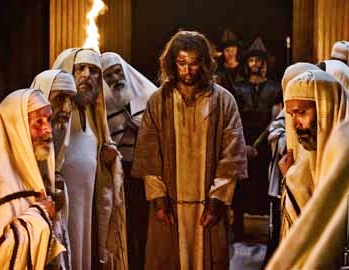
Our passage today contains a remarkable feature: a specific prophecy which we know was fulfilled as Jesus predicted. Read on to learn how we know, and what it means for us today.

To listen to the sermon, click the play button:

To download, right click on the link (or do whatever you do on a Mac) and save it to your computer:
Download Matthew Part 84
Matthew #84  Matthew 24:1-14

Our passage today contains a remarkable feature: a specific prophecy which we know was fulfilled as Jesus predicted. Jesus tells his disciples that the temple will be destroyed, even while some of those alive at the time (“this generation”) are still living. In fact, between 35 and 40 years after Jesus spoke these words, the Jewish nation rebelled, and the Romans responded brutally, utterly destroying the temple in 70 A.D., slaughtering thousands, and sending a large number of the remaining Jewish people into exile in other countries. Some of you have heard about the Jewish Battle of Masada: that took place shortly after 70 A.D., and was part of the same brutal Roman response to the Jewish rebellion.

So Jesus predicts a specific event within a specific timeframe, and we know that that event did indeed occur within that timeframe. This is just one of hundreds of reasons we can trust that the Bible is reliable, and that the words of Jesus are true.

Perhaps you know someone who is skeptical about this. I would like to spend a little time responding to such skepticism, because it speaks to the reliability of the Bible and therefore, the assurance of our faith. A skeptic might say: “Someone just went back and put in this prophecy after the temple had already been destroyed. Or perhaps, Matthew didn’t even write this until after the temple was destroyed.”

First, let me say that the skeptic starts with absolutely no evidence in support of either idea. The only reason to hold the opinion that the book of Matthew was either changed, or written after the destruction of the Temple, is because the skeptic has already decided she doesn’t believe in miracles like predictive prophecy. In other words, with regards to this subject, skepticism is a matter of belief, not evidence.

Let me explain further, starting with the first objection: the idea that the book of Matthew was edited later on. We have many hundreds of ancient copies, and partial copies, of the book of Matthew. They are all virtually exactly the same. In other words, there is no evidence whatsoever that someone went back and “edited” Matthew’s gospel, or indeed, any part of the New Testament. No “early copy” of Matthew exists; all of the copies are the same. Thus, there is absolutely no evidence that what Matthew wrote was changed in any way, at any point in history.

Now, let’s consider the second idea: Was the book of Matthew written after the destruction of the temple? New Testament authors did not provide dates on their manuscripts; I often wish they had. In the absence of exact dates, we have to take what we know of history, and compare it to what is written, and then speculate about whether it was written before or after a particular historical event. In the case of Matthew, we find that in many, many places, he writes about issues that would have been either unimportant, or would require more explanation, after the destruction of the Temple. Here are just a few:

23So if you are offering your gift on the altar, and there you remember that your brother has something against you, 24leave your gift there in front of the altar. First go and be reconciled with your brother, and then come and offer your gift. (Matt 5:23-24, HCSB)

The “altar” in this case, is the altar in the temple. If the temple was already destroyed, it would have been strange for Matthew to include these words of Jesus; certainly he should have offered some explanation. After 70 A.D. it would not be safe for him to assume that his readers knew what he was talking about.

Here is another, one which we considered quite recently:

16“Woe to you, blind guides, who say, ‘Whoever takes an oath by the sanctuary, it means nothing. But whoever takes an oath by the gold of the sanctuary is bound by his oath.’ 17Blind fools! For which is greater, the gold or the sanctuary that sanctified the gold? 18Also, ‘Whoever takes an oath by the altar, it means nothing. But whoever takes an oath by the gift that is on it is bound by his oath.’ 19Blind people! For which is greater, the gift or the altar that sanctifies the gift? 20Therefore, the one who takes an oath by the altar takes an oath by it and by everything on it. 21The one who takes an oath by the sanctuary takes an oath by it and by Him who dwells in it. 22And the one who takes an oath by heaven takes an oath by God’s throne and by Him who sits on it. (Matt 23:16-22, HCSB)

Again, if the temple had already been destroyed, it is surprising that Matthew would have included these words without explaining them. There are, of course, principles here that apply to all generations. Even so, if the temple had been destroyed before he wrote this, it is strange that Matthew neither mentioned it, nor explained the practice in order to make the principle more clear. Now consider this one:

4For God said: Honor your father and your mother; and, The one who speaks evil of father or mother must be put to death. 5But you say, ‘Whoever tells his father or mother, “Whatever benefit you might have received from me is a gift committed to the temple” — 6he does not have to honor his father.’ In this way, you have revoked God’s word because of your tradition. (Matt 15:3-6, HCSB)

Again, no comment about the status of the temple, and no explanation of the practice in question. If Matthew wrote after 70 A.D., he would have been writing primarily for Gentiles who would not have understood these sorts of things. As it is, the entire book of Matthew reads as if it was written for Jews, or at the very least, people very familiar with Jewish culture and practices, including those that involved the temple in Jerusalem.

There are several others, however, I will include just this one more:

24When they came to Capernaum, those who collected the double-drachma tax approached Peter and said, “Doesn’t your Teacher pay the double-drachma tax? ” 25“Yes,” he said. When he went into the house, Jesus spoke to him first, “What do you think, Simon? Who do earthly kings collect tariffs or taxes from? From their sons or from strangers? ” 26“From strangers,” he said. “Then the sons are free,” Jesus told him. 27“But, so we won’t offend them, go to the sea, cast in a fishhook, and take the first fish that you catch. When you open its mouth you’ll find a coin. Take it and give it to them for Me and you.” (Matt 17:24-27, HCSB)

After 70 A.D. (when the temple was destroyed), the Romans taxed their subjects to maintain the temple of Jupiter, in Rome. If that was happening at the time Matthew wrote, he surely would have made some sort of comment, or explained the situation further.

We know that the book of John was written about 20 years after the destruction of the Temple in Jerusalem. John explains many things to his readers about Jewish customs; Matthew offers no such explanations. All of this is powerful evidence that Matthew wrote before the destruction of the Temple in 70 A.D.. The evidence against that conclusion is merely the baseless belief of someone who does not want to accept the supernatural. In other words, nothing credible suggests that Matthew wrote his book after this prophecy of Jesus was fulfilled.

There’s another important thought. Jesus seems to be talking both about the destruction of the temple, and of the nation of Israel, in 70 A.D., and also the end of time. If Matthew wrote all this after the destruction of the Temple, he would have known that the other things mentioned by Jesus were not fulfilled at the same time, and, if he was writing after the fact, trying to make it look like Jesus prophesied accurately, he surely would have left out these other words of Jesus which did not necessarily happen until later on, or have not even happened yet.

Let’s look more carefully at the text. I have spoken before about the “telescoping” nature of prophecy. In other words, a prophet may jumble together predictions of the near future, predictions of the far-off future, and predictions of the end of the world. From a distance (that is, from the prophet’s perspective) it may look like all these things will happen at the same time; it is like looking at a distant range of mountains, where all the peaks and ridges look almost like cardboard cutouts standing next to each other. Now, some people may object that in this passage we are not dealing with an ordinary prophet: this is Jesus. How could Jesus be confused about which things will happen sooner, and which things will happen at the end of the world? The answer comes in Matthew 24:36.

“Now concerning that day and hour no one knows — neither the angels in heaven, nor the Son — except the Father only. (Matt 24:36, HCSB)

Part of the deal with Jesus coming to earth, is that he laid aside his own power, and chose to live like any other human being: completely dependent upon the Father. In this case, the Father chose not to reveal the date of the end of time to Jesus while he was still on earth. So, through the Father, Jesus understands that some of these things will come upon the generation of those who are alive while he is speaking. He understands that some of them will come at the end of time. But, because he limited himself to only what the Father showed him, and because the Father did not show him the exact date of the end of time, even Jesus cannot tell for sure when each of these things will be.

So Jesus prophesies the destruction of the temple, and also events that presumably have not even occurred yet by 2016. I think he shares these things together because they have a common theme. The things that will come on the generation to whom he speaks, and the things that will come at the end of the world, are connected theologically. We are not meant to assume that they are connected chronologically.

This is the theological connection: the judgment of God upon those who reject him. First, judgment on the people who were alive when Jesus still walked the earth (whom he calls “this generation”), and second, the judgement at the end of the world upon all those who reject God. Jesus lumps them together because they are both about God’s judgment upon those who reject him.

Let me say a quick word about that judgment: It – is – optional. The whole Bible is very clear that if we repent, and turn to Jesus in trust and humility, he will forgive us and reconcile us to God, and give us eternal life. You don’t have to experience his judgement, or the punishment of hell. If we repent and trust, he graciously forgives us, comforts us and brings us into His kingdom.

I think there are several very important things that we need to hear from this passage. First, Jesus says this:

“Watch out that no one deceives you. 5For many will come in My name, saying, ‘I am the Messiah,’ and they will deceive many. 6You are going to hear of wars and rumors of wars. See that you are not alarmed, because these things must take place, but the end is not yet. (Matt 24:4-6, HCSB)

There is always a certain element of Christianity that seems ready to declare that the end of the world has come. Jesus tells us here not to jump to such conclusions. In fact, as I have already pointed out, in verse 36 Jesus says that no one knows the day or the hour. So one thing we should get from this passage is to not be alarmed, and to understand that we cannot build a timeline for the end of the world.

A second thing that we should pay attention to is that Jesus describes the kinds of things that will happen before the end of the world. The types of events he describes indicate that we are getting near to the very beginning of the end, not that we are at the end. He says there will be:

  • wars
  • famines
  • earthquakes
  • persecution
  • hatred towards his followers
  • betrayal, hatred and strife
  • false prophets
  • lawlessness
  • many people who fall away from him

When we experience these things we should not be surprised, and we should not feel that God has abandoned us – he told us these things were going to happen. It should be a comfort to know that even when these terrible things happen, God is in control, he is not forgotten us, and he will work all of this to the good of his own plans, and to our own good (Romans 8:28). He tells us that there will be deliverance and salvation for those who endure to the end (v. 13).

Finally, he says that the good news of the kingdom will be proclaimed in all the world as a testimony to all nations and then the end will come. Have you ever thought of it like this? If you want the bad things in the world to come to an end, if you want Jesus to come back soon and take us all to be with him in the new heavens and new earth, the only way we can help that happen more quickly is to proclaim the good news of the kingdom in all the world.

We’ve covered a lot of ground, but just to summarize: 1. This shows us that Jesus and the Bible are reliable. 2. Don’t be deceived into thinking the end of the world is here just because others say so. 3. Don’t be alarmed by the events which Jesus mentions. They are part of the plan. Our part is to endure to the end, to hold on to Jesus through it all. 4. If we would like these difficult events to be shorter, we should assist those who are proclaiming the good news of the Kingdom.

As you take time to pray about these things, please also take time to pray for this ministry. Pray for wisdom and encouragement. Pray for financial provision. Pray that the Lord uses these messages to their full potential in the lives of those who need them. If, as you pray, you feel led to help us financially, you can click on the word “donate” at the top of the page, and it will explain how you can do that. But before giving financially, please pray for our needs, and whether or not He wants you to give. God loves a cheerful giver, and so do we!

Thank You!

THE PROBLEM OF GOD’S LOVE

god's love

If God loves his people so much, what is the problem? Why can’t he just accept them as they are: sins and all, and just love them? If he cares so much, can’t he just overlook our sins? 

You cannot repeatedly ignore and hurt someone, and at the same time have a healthy, loving relationship with them. You cannot have self-respect, and also have a good relationship with someone who consistently treats you poorly. Therefore God’s love, far from making sin OK, is exactly what makes it a huge obstacle in our relationship with him. It is because he loves us that our sin and rebellion hurts him. When we also consider God’s righteous self-respect, we see that he cannot simply say: “It doesn’t matter if you are unfaithful to me. It doesn’t matter if you sin.”

To listen to the sermon, click the play button:

To download, right click on the link (or do whatever you do on a Mac) and save it to your computer:
Download Matthew Part 83

Matthew #83  Matthew 23:37-39

 37“Jerusalem, Jerusalem! She who kills the prophets and stones those who are sent to her. How often I wanted to gather your children together, as a hen gathers her chicks under her wings, yet you were not willing! 38See, your house is left to you desolate. 39For I tell you, you will never see Me again until you say, ‘He who comes in the name of the Lord is the blessed One’! ” (Matt 23:36-39, HCSB)

I believe that God inspired the entire Bible, and, aside from a few small copying errors, everything in the Bible was intended by Him, for our benefit. In other words, it is all God’s Word. Even so, there are some parts of the Bible that capture essential truths more clearly and succinctly than others. I believe our text for this time is one place where, in just a few lines, we have the heart of God’s relationship with humankind.

These words of Jesus provide an all-important context to what he has just said, and what he is about to say. He has just spoken very harshly to the religious leaders, in a last-ditch effort to bring them to repentance. After this, he will give them a glimpse of what is coming because of their lack of repentance. But he pauses here, and shows us his heart of love, and tenderness, and also shows us that repentance is not optional.

Jesus sounds like a number of Old Testament prophets at this point. He should, since he is God, and God inspired the prophets to speak. Listen to the appeal that the Holy Spirit makes to his people through the prophets. Hear his love and compassion, and also his unyielding will to make his people holy.

God said through Ezekiel:

11Tell them: As I live” — the declaration of the Lord GOD — “I take no pleasure in the death of the wicked, but rather that the wicked person should turn from his way and live. Repent, repent of your evil ways! Why will you die, house of Israel? (Ezekiel 33:11)

Isaiah prophesied:

9  For they are a rebellious people, lying children,

children unwilling to hear the instruction of the LORD;
 10  who say to the seers, “Do not see,” and to the prophets, “Do not prophesy to us what is right;

speak to us smooth things, prophesy illusions, 11 leave the way, turn aside from the path,

let us hear no more about the Holy One of Israel.”
 12 Therefore thus says the Holy One of Israel,

“Because you despise this word

and trust in oppression and perverseness and rely on them,
 13 therefore this iniquity shall be to you like a breach in a high wall, bulging out, and about to collapse,

whose breaking comes suddenly, in an instant;
 14 and its breaking is like that of a potter’s vessel

that is smashed so ruthlessly that among its fragments not a shard is found with which to take fire from the hearth, or to dip up water out of the cistern.”

 15 For thus said the Lord GOD, the Holy One of Israel,

“In returning and rest you shall be saved;

in quietness and in trust shall be your strength.”

But you were unwilling, 16 and you said,

“No! We will flee upon horses” (Isaiah 30:9-16)

The prophet Hosea said it this way:

1 When Israel was a child, I loved him, and out of Egypt I called my son.
 2  The more they were called, the more they went away;

they kept sacrificing to the Baals and burning offerings to idols.

 3 Yet it was I who taught Ephraim to walk; I took them up by their arms,

but they did not know that I healed them.
 4  I led them with cords of kindness, with the bands of love,

and I became to them as one who eases the yoke on their jaws,

and I bent down to them and fed them.

 5 They shall not return to the land of Egypt, but Assyria shall be their king, because they have refused to return to me.
 6  The sword shall rage against their cities, consume the bars of their gates, and devour them because of their own counsels.
 7 My people are bent on turning away from me,

and though they call out to the Most High,

he shall not raise them up at all.

8 How can I give you up, O Ephraim? How can I hand you over, O Israel?

How can I make you like Admah? How can I treat you like Zeboiim?

My heart recoils within me; my compassion grows warm and tender. (Hosea 11:1-8)

These days, many people are confused about the message of these verses. If God loves his people so much, what is the problem? Why can’t he just accept them as they are: sins and all, and just love them? If he cares so much, can’t he just overlook our sins?

In another place in Ezekiel, (chapter 16) the Lord speaks through the prophet in the form of an allegorical story. God comes along and finds Israel: rejected, abandoned, alone, and left to die. He saves her, and cares for her, and gives her his love and tenderness; he becomes a husband to her. Under his care, she grows beautiful. He clothes her in rich garments, and gives her wonderful shoes, earrings and jewelry. But now, healthy and beautiful, she ignores him, and instead seeks after other lovers. In fact, she has so many other lovers that she might as well be a prostitute, except that she demands no payment for her favors.

Let me ask you this: Do you think the wife has the right to say: “What’s the problem, Honey? You said you loved me, no matter what. Why can’t you just let it go, let me do what I feel like?” Do you think a husband in this situation should “just forgive?”

This woman owes everything she has and is to her husband. He loved her when no one else wanted her. He saved her, and he still loves her. Do you think the fact that he loves her should mean that her faithless behavior is no problem? Should he just overlook her sins, accept her as she is and “let love conquer?” For him, that would mean sitting at home every night, knowing his wife was out having sex with other men. Does that sound like love is “conquering?”

You know that isn’t how love works. It is the very fact that he does love her that makes her behavior a problem. If he didn’t love her, if he wasn’t her husband, it wouldn’t matter to him what she did. But because he does love her, and because she is his wife, her behavior is incredibly hurtful, and it is a huge problem in their relationship. They cannot have a healthy, loving relationship while she behaves in this manner.

You cannot repeatedly ignore and hurt someone, and at the same time have a good relationship with them. But that is what people seem to want to do with God. Some people say things like: “God is love. He loves us all, no matter what we do; therefore, it really doesn’t matter what I do. He’s still going to love me anyway.” In all these verses I shared from the prophets, God’s love is evident. He doesn’t stop loving his people when they sin.

But that does not mean that it is okay to sin. It does not mean that there are no consequences to your sin. It is like saying: “My wife loves me. Therefore, it is not a problem if I commit adultery. She’ll still love me.” In many cases, that is true. A wife does not stop loving her husband the moment she finds out that he has committed adultery. Even so, if he does not repent, change his ways, and try to be a good husband, her love will not be enough to fix the relationship. In spite of her love, if he persists in committing adultery, it will destroy the relationship. Therefore we find that in most of these verses, God’s judgment is also evident.

We would probably say that someone who unconditionally accepts an adulterous spouse has very little self-esteem, and certainly no self-respect. You cannot have self-respect, and also have a good relationship with someone who consistently treats you poorly. If you value yourself, you cannot allow another person to treat you like that. No one is more worthy of respect and esteem than God himself. You might say, in a way, that no one in the universe has more self-respect and self-esteem than God; and that is exactly as it should be, for One who is truly God.

Do you see now why sin is such a major problem? Can you understand that God’s love, far from making sin OK, is exactly what makes it a huge obstacle in our relationship with him? When we also consider God’s righteous self-respect, we see that it is impossible for him to simply say: “It doesn’t matter if you are unfaithful to me. It doesn’t matter if you sin.”

And so, through the prophets, and through Jesus here in this text today, the Lord says this: “I love you. I deeply desire to have a wonderful relationship with you. But you were not willing. Therefore, because you would not repent, you will be forever separated from me.”

That was the message of the prophets to the people Israel. That was the message of Jesus to the religious leaders of his day. “God loves you, but to receive any benefit from that love you must repent; you must stop hurting and rejecting him.”

That is in fact the essence of the gospel. God does love us. His love is unconditional. But because of his love, and because of his Godly self-respect, our sins separate us from him. Jesus, by his death and resurrection, has made a way for our sins to be nullified. If we turn from our sins, trusting Jesus, God is delighted to welcome us back into relationship with himself. John put it this way:

5Now this is the message we have heard from Him and declare to you: God is light, and there is absolutely no darkness in Him. 6If we say, “We have fellowship with Him,” yet we walk in darkness, we are lying and are not practicing the truth. 7But if we walk in the light as He Himself is in the light, we have fellowship with one another, and the blood of Jesus His Son cleanses us from all sin. 8If we say, “We have no sin,” we are deceiving ourselves, and the truth is not in us. 9If we confess our sins, He is faithful and righteous to forgive us our sins and to cleanse us from all unrighteousness. (1John 1:5-9, HCSB)

I have spoken about repentance many times. Repentance is not perfection. Through Jesus we can be forgiven again and again. But repentance does mean that the direction of our lives is now toward Jesus. It means that we do not usually ignore him, and that we care about pleasing him, because our relationship with him is more important to us than anything else.

Have you experienced this kind of repentance? If you have not, and you want to, let me suggest that you pray for God to give you the gift of repentance. The alternative is not simply a life without God, lived on your own terms. According to Jesus and the prophets, the alternative is that ultimately you will be separated from God, and destroyed by his holiness. I know that people these days don’t like fire and brimstone sermons. But I can’t help believing that it would be extremely unloving of me, if I believe you might spend eternity in hell, to keep silent about it and affirm you as you are. So I say: Repentance is not optional. It is the very love of God that means he cannot simply ignore our sin.

Many of us have repented and received forgiveness through Jesus. But we may get afraid when we fail and fall, and we start to question whether or not we have truly repented. If that sounds like you, my counsel is that you ask God about it. Ask him to show you where you really stand. And then, read the Bible to see what he says about it. For my part, I know that though I fail, I am, however weakly and imperfectly, moving towards God, and not away from him. I know that I’m not holding back some part of myself from him. In short, I know that I am His. And I believe anyone who wants to can also have that same assurance. You don’t have to live in fear, always questioning whether or not you have truly repented. [If you cannot seem to get that assurance, please feel free to email or message me; I’d be happy to help.] As Isaiah said:

15 For thus said the Lord GOD, the Holy One of Israel,

“In returning and rest you shall be saved;

in quietness and in trust shall be your strength.” (Isaiah 30:15)

Let’s allow all of this to sink in now. Let the Holy Spirit continue to speak to you

WOE, IS ME!

woe

The Pharisees and religious leaders. They are bad and wrong, and by pointing out exactly how so, Jesus is warning us about other leaders like them. He is also warning us about becoming like them ourselves. In other words, Jesus, as God-the-Son, is expressing his very real, and thoroughly righteous anger against sin. Let’s consider how the Holy Spirit might want to speak to us through these ‘woes.’
To listen to the sermon, click the play button:

To download, right click on the link (or do whatever you do on a Mac) and save it to your computer:
Download Matthew Part 82

Matthew #82.  Matthew 23:13-36

We are in the middle of a long rant that Jesus makes against the religious leaders of his time. Frankly, when I just read through quickly, I don’t get a lot out of this portion of Matthew. The Pharisees are bad, Jesus is mad, end of story, right?

Whenever I encounter a piece of scripture that leaves me cold, like this, I often find it useful to pause and ask some questions. Why exactly does Jesus rant and rave like this? Is he just angry? Is he just venting? What is the purpose of this section of scripture – why did the Holy Spirit preserve these words of Jesus for Christians throughout the ages?

As I do that with this particular passage, I think the Spirit can show us several things.

First, there is the straightforward issue of the behavior of the Pharisees and religious leaders. They are bad and wrong, and by pointing out exactly how so, Jesus is warning us about other leaders like them. He is also warning us about becoming like them ourselves. In other words, Jesus, as God-the-Son, is expressing his very real, and thoroughly righteous anger against sin. Let’s consider how these woes might affect us as well.

Jesus points out seven or eight areas where the religious leaders are in deep trouble. He begins each one with the phrase: “Woe to you, Scribes and Pharisees, hypocrites!”

First, let’s talk about the word “woe.” It can mean: “trouble, sorrow and distress.” There is often an element of sorrow associated with this word, both in Greek and in English; it can be a lament, like “Alas!” So, in Matthew 24:19, Jesus says:

“Woe to pregnant women and nursing mothers in those days! Pray that your escape may not be in winter or on a Sabbath.”

But I think here, in this passage, Jesus is adding a sense of warning and judgment with it. The “woe” upon the pregnant women and nursing mothers was not because of anything they did. But here, Jesus clearly connects each woe to the behavior of the religious leaders. I still think he speaks with sorrow; I don’t think he is happy about it. Even so, clearly, he is enumerating their sins, and pronouncing that they will experience trouble and sorrow as judgement for them.

The first woe and sorrow (in verse 13) is because they refuse to enter the kingdom of heaven, and stop others from entering in. This is Jesus’ core issue with the Pharisees. They warned people against the only way of salvation, which is Jesus himself. Instead, they believed that they did not need him. Specifically, they taught (and obviously believed) that they could earn their salvation by behaving well. In a more general sense, this woe applies to anyone who leads others to believe that they can be saved by any other path than repentance from sin, and trust in Jesus. So Paul reiterates this woe in the first chapter of Galatians:

6I am amazed that you are so quickly turning away from Him who called you by the grace of Christ and are turning to a different gospel — 7not that there is another gospel, but there are some who are troubling you and want to change the good news about the Messiah. 8But even if we or an angel from heaven should preach to you a gospel other than what we have preached to you, a curse be on him! 9As we have said before, I now say again: If anyone preaches to you a gospel contrary to what you received, a curse be on him! (Gal 1:6-9, HCSB)

Make no mistake. Christianity has always insisted that Jesus Christ is the only way to forgiveness, reconciliation with God, and eternal life:

5“Lord,” Thomas said, “we don’t know where You’re going. How can we know the way? ” 6Jesus told him, “I am the way, the truth, and the life. No one comes to the Father except through Me. 7“If you know Me, you will also know My Father. From now on you do know Him and have seen Him.” (John 14:5-7, HCSB)

 11And this is the testimony: God has given us eternal life, and this life is in His Son. 12The one who has the Son has life. The one who doesn’t have the Son of God does not have life. 13I have written these things to you who believe in the name of the Son of God, so that you may know that you have eternal life. (1John 5:11-13, HCSB)

11This Jesus is the stone rejected by you builders, which has become the cornerstone. 12There is salvation in no one else, for there is no other name under heaven given to people, and we must be saved by it.” (Acts 4:11-12, HCSB)

The Pharisees and Scribes rejected Jesus, and therefore rejected salvation, and led others to do so as well. Today, Christians must remember that our core belief is grace, forgiveness and salvation through Jesus Christ alone. We don’t have forgiveness or life because “God is love, and just wouldn’t send anyone to hell.” That lie is just as bad as anything the Pharisees taught: Woe to anyone who tells it! We are not saved because we “have lived a good life, and tried to do the right thing.” We are not forgiven because we “aren’t worse than anyone else.” Sin is much more serious than that. We aren’t forgiven because we make sacrifices, or take mission trips, or because we “speak the words of truth.” We are saved through Jesus Christ alone, and we receive that salvation by grace when we repent and trust him. Woe to anyone else who teaches otherwise!

The second woe is found in verse 15. Some of you may not have verse 14 in your Bibles: it will skip from 13 to 15. Verse 14 is actually one of those places where there is a dispute about the original manuscript of the New Testament. The oldest and best manuscripts do not contain it. The textus receptus (which is the source for the King James version of the Bible), does contain it, as do some other later manuscripts. I think the best evidence suggests that this was not originally part of the book of Matthew. This is one example of why I am not a fan of the King James version. Even so, I’d like to point out that whether you leave verse 15 in, or take it out, it does not change very much at all; certainly it changes no Christian doctrine. This is considered a major variant, and once again we see that even major variants are actually extremely minor. We can have great confidence that the New Testament we read today is, in fact, what was written by the apostles.

In any case, I will move on to verse 15, where Jesus pronounces judgment upon the religious leaders for converting even non-Jews to the belief that they can earn their way into God’s favor, and eternal life. This is very much like the first woe, the main difference being who gets led astray: Jews, or non-Jews. For our purposes, it is a warning that if we get people to join our church, but do not teach them that forgiveness, life and salvation are found only in Jesus, given to us by grace through faith, we would be better off not bringing the new people in the first place.

The third woe is described in verses 16 through 22. Basically, Jesus is giving an example of how the teachers of the law, and Pharisees twist and undermine God’s word. Many times I have given you the example of the Sabbath, and how they added their own laws on top of the commands of God. Here, Jesus is referring to the way that they do mental gymnastics in order to benefit themselves in the matter of taking oaths. They argued that certain kinds of vows were not binding, and made fine distinctions that sounded intellectual, but were completely against all common sense.

These days, we don’t often make vows, particularly not religious vows. I made vows when I was married, and when I was ordained as a pastor. However, even in those cases, I did not swear by or on anything; I simply said: “I will, and I ask God to help me.” So the practice of swearing by (or on) something is no longer a big issue, at least not in Western culture. True, some folks might say something like: “I swear by my mother’s grave.” I don’t think anyone takes them seriously. Even so, I think we can learn something from this particular woe. The underlying issue is that the teachers of the law and the Pharisees were playing games with the truth. As Jesus points out, clearly, if you swear by the altar in the temple, really, you are swearing by God. But the religious leaders came up with all sorts of obscure reasoning to avoid that obvious, common-sense conclusion.

I think that today this woe could refer to the way some people treat the Bible. Unfortunately, I have many times read Bible commentaries that tried to say that certain verses mean the exact opposite of what they clearly say. Now, you know that I’m all for thoughtful, scholarly Bible interpretation. Not all Bible verses are obvious in meaning. Even so, there are many people today, whom I can only call false teachers, who twist the words of the Bible, play games with the truth, and do mental gymnastics in order to eliminate the plain, common sense meaning of God’s Word. What they are doing is not careful interpretation, but rather, twisting the obvious truth. I think Jesus would say to them: “Woe to you!”

The fourth woe is essentially captured by Jesus’ words in verse 24:

24Blind guides! You strain out a gnat, yet gulp down a camel! (Matt 23:24, HCSB)

The religious leaders spent a great deal of energy on relatively trivial matters, while ignoring the more important things. Notice that Jesus says that the trivial things are, in fact, good to do; but the important things should have first priority. I want to try and finish the woes in this sermon, so I won’t go into this one in great depth, but there are many, obvious applications for it. Woe to the church that is more concerned about the color of their carpet than about the homeless population all around it. Woe to the leaders who police the kinds of clothes people wear, and ignore the lust in their own hearts. I could spend all day on this one, but I believe you will be able to think of your own examples without too much effort. I do want to point out that this particular woe contains much of what really turns people off about churches and Christians. I think it’s good to know that Jesus hates it when people focus on minor things, while neglecting the things that are most important to true faith.

The fifth woe, found in verses 25-26, is much like the one before it. The religious leaders are concerned about looking good. They are focused on outward appearances, while they ignore the filth inside of their own hearts. Probably, Jesus is referring to the Jewish tradition of ceremonially washing cups. Mark records a different instance, where Jesus spoke about this at greater length. After discussion about ceremonial washing with the religious leaders, Jesus said this to his disciples:

18And He said to them, “Are you also as lacking in understanding? Don’t you realize that nothing going into a man from the outside can defile him? 19For it doesn’t go into his heart but into the stomach and is eliminated.” (As a result, He made all foods clean.) 20Then He said, “What comes out of a person — that defiles him. 21For from within, out of people’s hearts, come evil thoughts, sexual immoralities, thefts, murders, 22adulteries, greed, evil actions, deceit, promiscuity, stinginess, blasphemy, pride, and foolishness. 23All these evil things come from within and defile a person.” (Mark 7:18-23, HCSB)

The sixth woe, is also similar. This time, Jesus describes them as whitewashed tombs, which look good on the outside, but inside are filled with rotten flesh and bone. I’m going to get personal for a moment. I don’t want to be offensive, but I do want us to get the full impact of the words of Jesus here. Here in the Southeastern USA, we have a somewhat religious culture. Even in areas where the culture at large is not particularly Christian, some churches can have a religious culture within their community. I personally know many people who are like these whitewashed tombs. They go to church and they talk a good talk. As far as the people that they go to church with know, these are wonderful Christian folks. But during the week they have affairs, they do drugs, they get drunk, they run businesses that are dishonest, they cheat people, and they are stingy and miserly. Of course, everyone struggles with sin. I’m not talking about Christians who have surrendered their lives to Jesus, but who sometimes fail and fall. I’m talking about people who pretend; people who talk the talk, but do not let Jesus have any real influence in their lives. Jesus says to such people: “Woe to you!”

Finally, Jesus says: “Woe to you who reject God’s messengers!” (verses 29-34). That is what this seventh woe is all about: rejecting those whom God has sent, and rejecting his message through them. In the Western world, thankfully, people do not kill, crucify, or whip Christian teachers and preachers. However, I think it is important for us to remember that this still happens regularly in other places in the world. And even in the Western world, often times those who seek to be vocal about their faith in Jesus are treated with contempt and derision. As one small, and relatively insignificant example, I offer Tim Tebow, former NFL quarterback. Tebow had a year or two as a starting quarterback in the NFL. It was his habit to kneel down as a sign of humility, and praise to the Lord, whenever his team scored. That may or may not be a silly thing; but it was relatively harmless. However, Tebow received a huge amount of criticism for this, and for his outspoken faith. In fact, he received more negative media coverage than many NFL stars at the time who were accused of things like drunk driving, drug possession, assault and rape. Woe to a culture that is more concerned about a public expression of Christian faith than about crimes that deeply hurt others!

Let me say another thing about mistreating God’s messengers. I will admit that this one feels a little personal with me, but that does not make it untrue. I also want to say that I am not complaining, and for the most part I have been very blessed to not experience too much of what I’m about to share with you. Even so, it is shameful – I can think of no better word – the way that many Christians and churches treat their pastors and teachers. Of course there are some bad pastors, and bad leaders, just as there are bad bartenders, truck drivers and school teachers. Even so, many of the pastors who are mistreated by their congregations have good hearts, pure motives, and have done no wrong. Sometimes people direct hateful and hurtful words towards them for doing and saying what they believe God wants them to do and say. Sometimes people slander them. Sometimes people try to run them out of a job, for no reason other than that the pastor has threatened their sense of personal power within the congregation. Sometimes pastors are threatened after teaching something unpopular that the word of God says. Quite often, pastors are underpaid, and it is unusual to find anyone who cares, in most churches, whether or not a pastor is being appropriately compensated. Almost all the time at least some people are critical of their pastor, without doing the least thing to help him.

When I look at these seven woes spoken by Jesus, I think of it as an extreme measure he is taking in order to bring the religious leaders to repentance.

Let me try and illustrate what I mean. About a year ago, I began to have constant pain in one of my kidneys, like I was having a kidney stone. After a long and difficult time, doctors finally determined that some of my nerves have been damaged by frequent kidney stones. I sat down with a pain specialist, and he outlined a number of steps to help me deal with the pain that I still have.

First, we will try a very safe, well-tested, inexpensive medication that has very few side effects. If that works, great! If not the next step is to try a second medication. The second drug is more expensive, and has not been tested for as long as the first. It has more side effects and risk factors. If the second drug works, great! However, if not, there is another step, involving directly stimulating the nerve. This is a more invasive procedure, with greater risks. There is another step after that, and another. Each new step is more drastic, increasingly invasive, and carries greater and greater risk. The final step involves “killing” the nerve that serves my kidney.

When Jesus confronts the religious leaders during these last few days of his life, he is taking the final and most drastic step in trying to bring them to repentance, faith, and salvation. He lived among them, letting his life be a testimony, but that was not enough. He gave them his preaching and his teaching, but they did not respond. He showed them miracles, and the power of God, but they turned away. And so now, he is directly confronting them with their sin. It is their last chance, and he says that if they do not take it, judgment will come upon them. He will “kill” the problem, if it can’t be fixed any other way.

In fact, he says: “I assure you, all these things will come on this generation.” I want to point out two things about this. First, it was literally fulfilled among those who heard Jesus say these words. Jesus was crucified sometime around 30-35 AD. In 70 AD, while that generation still lived, the Romans utterly crushed the Jewish people, slaughtering huge numbers, destroying the temple, and sending the Jews that survived into an exile that lasted almost 2000 years. That generation of unbelieving Jews was indeed judged.

Second, because of how Jesus said it, these words are also for us. Whether or not we are judged as a group, when it comes to the end of our life, when our “generation” passes, we will stand before the judgment seat of God. This is true of every generation that reads Jesus’ words. Let his words sink in. They are drastic, yes. But they are spoken in order to ultimately lead is into the grace of God by driving us to Jesus as our hope, life and salvation.


THERE’S A NEW MESSIAH IN TOWN…

messiah

Jesus consistently claimed that he should have the first place, and primary authority, in our lives. He did not say, “God loves you, now go do whatever you want, as long as it is loving and kind.” He said, “God loves you. Now, let me own your life in such a way that you are living for my purposes, under my authority.” Like it or not, that is what the statement about the Messiah being the Lord means. Later on, he calls himself “the master” (23:10). Is he your master? Is he not only your savior, but your Lord, your commander in chief? If not I encourage you to repent, and let him be.

To listen to the sermon, click the play button:

To download, right click on the link (or do whatever you do on a Mac) and save it to your computer:
Download Matthew Part 81

Matthew #81.  Matthew 22:41-6; 23:1-12

Starting in the middle of chapter 21, the conflict between Jesus and the religious leaders begins to heat up. We have seen that most of chapter 23 covers a series of ways in which the religious leaders tried to trick Jesus into saying something that would either make him unpopular, or force the authorities to arrest him. They were trying to put Jesus on the defensive.

At the end of the chapter, after answering their malicious questions, Jesus begins firing back.

He starts with a question about the Messiah. His quote is from Psalm 110. The Jews in the time of Jesus most definitely considered this psalm to be a prophecy about the Messiah. In this instance, Jesus has the leaders caught both coming and going.

In the first place, one of the reasons the Pharisees were upset with Jesus is because, starting just a day or two before this, the crowds were calling him “the Son of David,” which was basically the same thing as calling him “Messiah.”

9Then the crowds who went ahead of Him and those who followed kept shouting: Hosanna to the Son of David! He who comes in the name of the Lord is the blessed One! Hosanna in the highest heaven! (Matt 21:9, HCSB)

15When the chief priests and the scribes saw the wonders that He did and the children shouting in the temple complex, “Hosanna to the Son of David! ” they were indignant 16and said to Him, “Do You hear what these children are saying? ” (Matt 21:15-16, HCSB)

(By the way “son,” in this case, is just a metaphorical way of saying “direct descendant.”) By bringing up the question, “Whose son is the Messiah,” Jesus was be reminding the religious leaders of who the people thought he was. But they could not deny what everyone knew about Messianic prophecy, so they reluctantly admit that the Messiah will be called a “Son of David.”

But now, Jesus does something surprising. The crowds have been calling him “Son of David.” He has forced the Pharisees to admit that the Messiah is supposed to be “a Son of David.” Already, Jesus has made his point: He is claiming to be the Messiah. But he doesn’t stop there. He adds something that none of his listeners expect. Using this well-known Messianic Psalm (Psalm 110), he shows that David calls the Messiah “Lord.” In other words, the Messiah is not only the son of David, but also, the Son of God. Jesus is claiming even greater authority than most people at that time would attribute to the Messiah. Even so, the Pharisees cannot dispute what the Psalm says, nor how Jesus interprets it. For the people who heard this dialogue, most of them knowledgeable concerning the Bible, Jesus was saying, clear as could be:

  1. I am the Messiah.
  2. As Messiah, I am the same in nature as God himself.

The thing that drove the religious leaders crazy is that they couldn’t actually dispute his logic. They didn’t believe he was the Son of David, of course, but they didn’t really have any way to argue with him.

Jesus doesn’t stop there. Having established that he is the Messiah and that he has the authority of God, he starts to attack the illegitimate authority of the religious leaders. Even so, he begins by acknowledging that they do have a certain, limited authority. He says they are “seated in the chair of Moses.”

2“The scribes and the Pharisees are seated in the chair of Moses. 3Therefore do whatever they tell you, and observe it. But don’t do what they do, because they don’t practice what they teach. (Matt 23:2-3, HCSB)

I think “the chair of Moses” meant probably one of two things (or possibly, both). First, it appears that in synagogues in those days, there was actually a special chair in which teachers would sit while they taught the scriptures. The word “scribes” in this text is sometimes translated “teachers of the law,” which is basically accurate. So Jesus might be saying, “When they are teaching the scriptures, you should listen to them.” The fact is, for the most part, Jesus agreed with the theology of the Pharisees and scribes. When they taught the scriptures, they were worth listening to, although, obviously, he did not approve of it when they went beyond what the Bible says, and began teaching man-made regulations.

Second, I think that Jesus may have had in mind the following passage from the book of Deuteronomy:

8“If a case is too difficult for you — concerning bloodshed, lawsuits, or assaults — cases disputed at your gates, you must go up to the place the LORD your God chooses. 9You are to go to the Levitical priests and to the judge who presides at that time. Ask, and they will give you a verdict in the case. 10You must abide by the verdict they give you at the place the LORD chooses. Be careful to do exactly as they instruct you. 11You must abide by the instruction they give you and the verdict they announce to you. Do not turn to the right or the left from the decision they declare to you. 12The person who acts arrogantly, refusing to listen either to the priest who stands there serving the LORD your God or to the judge, must die. You must purge the evil from Israel. 13Then all the people will hear about it, be afraid, and no longer behave arrogantly. (Deut 17:8-13, HCSB)

So, Jesus might also be saying that people should abide by the “legal” decisions that were given by the religious leaders, because that was good and proper to do, and was helpful in keeping the peace.

It may be that he meant one or the other of these two things, or possibly, both. If I had to decide, I would guess that Jesus was talking mainly about their religious authority to settle disputes.

Even so, after pointing out that the religious leaders have a certain, limited, legitimate authority, he goes on to show the many ways in which their practice and teaching is not legitimate.

First, he says, they don’t practice what they themselves teach. He will expound on this later in chapter 23. Second, he says they put burdens on people, but won’t help them. This is in stark contrast to Jesus’ own words from Matthew 11:28-30

28“Come to Me, all of you who are weary and burdened, and I will give you rest. 29All of you, take up My yoke and learn from Me, because I am gentle and humble in heart, and you will find rest for yourselves. 30For My yoke is easy and My burden is light.” (Matt 11:28-30, HCSB)

The Pharisees and scribes made following God all about rules and regulations. As if there were not enough difficult things to follow already, they added things. They “explained” the laws of the Old Testament by adding their own rules about what it meant to follow those laws. So, in the example I have used before, “Remember the Sabbath and keep it holy” became a very long list of things you had to do, and refrain from doing. The things on that list were not originally commanded by God; rather they were added by the religious leaders.

In addition to adding their own rules and pretending that they were God’s commands, the religious leaders were all about their own power and position. Jesus says they love to be observed by others.  Verse 5 says they “enlarge their phylacteries.” A phylactery was a little leather box containing portions of scripture. It was a misguided, very literal, fulfillment of Deuteronomy 6:4-9:

4“Listen, Israel: The LORD our God, the LORD is One. 5Love the LORD your God with all your heart, with all your soul, and with all your strength. 6These words that I am giving you today are to be in your heart. 7Repeat them to your children. Talk about them when you sit in your house and when you walk along the road, when you lie down and when you get up. 8Bind them as a sign on your hand and let them be a symbol on your forehead. 9Write them on the doorposts of your house and on your gates. (Deut 6:4-9, HCSB)

So the religious leaders literally created little boxes, put portions of the scripture in them (often verses 4-5, above) and tied them on their heads and arms, and put them on doorposts and gates. In the time of Jesus, some of the leaders were making these boxes (phylacteries) very big and noticeable. Jesus, is probably slyly pointing out that though they make their phylacteries ostentatious, they are not taking seriously the command to let God’s words be in their hearts. The leaders are doing it simply in order to be noticed and praised by people.

The tassels were a similar phenomenon, made to remind the people of Israel of God’s commands. Again, the leaders in Jesus’ time were making very large noticeable tassels to make sure everyone knew that they were really religious.

Jesus also points out how the leaders love the places of honor at banquets, in synagogues, and to be recognized in the marketplace as particularly religious people. He then instructs his own followers to be different. I want us to pay special attention to verses 8-12:

8“But as for you, do not be called ‘Rabbi,’ because you have one Teacher, and you are all brothers. 9Do not call anyone on earth your father, because you have one Father, who is in heaven. 10And do not be called masters either, because you have one Master, the Messiah. 11The greatest among you will be your servant. 12Whoever exalts himself will be humbled, and whoever humbles himself will be exalted. (Matt 23:8-12, HCSB)

In some ways, this statement represents God as a Trinity. The Father, is obviously God the Father, and “Master,” says Jesus, is himself, the Messiah. But the “Teacher” is the Holy Spirit. Consider these words of Jesus, recorded by John:

12“I still have many things to tell you, but you can’t bear them now. 13When the Spirit of truth comes, He will guide you into all the truth. For He will not speak on His own, but He will speak whatever He hears. He will also declare to you what is to come. 14He will glorify Me, because He will take from what is Mine and declare it to you. (John 16:12-14, HCSB)

So Jesus says, you have one teacher, God the Holy Spirit, one Father, God the Father, and one Master, Jesus Messiah, God the Son. Although the Christian doctrine of God as a Trinity is not explicitly spelled out here, clearly, Jesus has it in mind. In addition, his message is plain: leaders do not stand in the place of God.

I want to point something out, before we get to applications. There are many people who believe that the Bible was either written, or at least heavily edited, by church leaders, in order to give themselves power. If that were so, they surely should have removed this passage, because it says that we all should humble ourselves before God, and even that leaders should not take special titles. In particular, since Jesus says no one should be called “father,” you would think that the Roman Catholics, who call their priests “father,” would have removed this verse. This is one of the many, many places where it is obvious that the Bible was not shaped by religious leaders for their own power or benefit.

Now, let’s look at applications. First, I think we need to see that Jesus consistently claimed that he should have the first place, and primary authority, in our lives. He did not say, “God loves you, now go do whatever you want, as long as it is loving and kind.” He said, “God loves you. Now, let me own your life in such a way that you are living for my purposes, under my authority.” That is what the statement about the Messiah being the Lord means. Later on, he calls himself “the master” (23:10). Is he your master? Is he not only your savior, but your Lord, your commander in chief? If not I encourage you to repent, and let him be.

Second, when I see Jesus’ criticisms of the religious leaders, I notice that he does not throw out the baby with the bathwater. In other words, he says, “They do say some things that are good and right. They do have a measure of proper authority.” Too often, I think we tend to judge people and their words and actions with an “all or nothing approach.” Either we accept all of what they say and do, or we reject all of it. Jesus did not do that, even with these leaders for whom he has many harsh words. When the leaders appropriately express the Word of God, Jesus says that his followers should listen. When people exercise authority that is properly given to them, we should obey. Obviously, when people go beyond their proper authority, or teachers go beyond the Word of God, we no longer have to listen and obey. But we should keep in mind that God can use anyone, and just because someone is rude, or mean, or angry, that doesn’t mean that everything he says is completely wrong.

Third, when Jesus refers to the burden that the leaders put on the people, I cannot help but remember his own invitation, which I mentioned earlier, to come to Him and find rest for our souls. In contrast to the religious leaders, He invites us not to do more, but rather to trust more. Is there some area of your life where he is inviting you to trust him, and rest from doing it for yourself?

Finally, in the last few verses, he makes it very clear that God holds all authority, and human beings do not. He invites us all to become humble, and to serve. Is there some place where you have been tempted to “exalt yourself?” Or, perhaps, is Jesus using the text today to encourage and bless you for being humble?

Let the Holy Spirit continue to speak to you about these things.

LOVE IS THE ANSWER. BUT WHAT WAS THE QUESTION?

Love concept

We are to love God with all of our being. According to Jesus, nothing is more important than this. If we love God with our entire being and put him first in our lives, everything else will flow out of that in a way that fulfills what God wants. If we don’t love him, we are just a clanging gong; nothing. We are not to act religious for the sake of being religious. It is meaningless to follow Christian morality unless we do it out of love for God.

If you truly love God, and also your neighbor, you will fulfill, not ignore, the moral teachings of the Bible. 

To listen to the sermon, click the play button:

To download, right click on the link (or do whatever you do on a Mac) and save it to your computer:
Download Matthew Part 80

Matthew #80  Matthew 22:34-45

The third question with which the religious leaders tried to trap Jesus was about the law. Among Jews in those days, it was legitimate to discuss which commands were harder to keep than others, or which ones were more “weighty,” but most Jews felt that all of the commands of the Old Testament were equally valid. Jesus had to watch his answer carefully. If he suggested that one command was more important than another, he might be accused of heresy.

37He said to him, “Love the Lord your God with all your heart, with all your soul, and with all your mind. 38This is the greatest and most important command. 39The second is like it: Love your neighbor as yourself. 40All the Law and the Prophets depend on these two commands.” (Matt 22:37-40, HCSB)

We need to understand what Jesus did here. He says, “There is a command that is most important, and a second one also. But the reason they are more important is because all of the other commands are contained in these two.” In other words, he answered their trick question in a way that they cannot criticize; but in so doing he also teaches us something very important.

Loving God and loving your neighbor: all of the commands are summed up in love. The Holy Spirit inspired Paul to write this:

1If I speak human or angelic languages but do not have love, I am a sounding gong or a clanging cymbal. 2If I have the gift of prophecy and understand all mysteries and all knowledge, and if I have all faith so that I can move mountains but do not have love, I am nothing. 3And if I donate all my goods to feed the poor, and if I give my body in order to boast but do not have love, I gain nothing. 4Love is patient, love is kind. Love does not envy, is not boastful, is not conceited, 5does not act improperly, is not selfish, is not provoked, and does not keep a record of wrongs. 6Love finds no joy in unrighteousness but rejoices in the truth. (1Cor 13:1-7, HCSB)

The attitude and choices of our hearts toward God and toward our neighbor are very important. We can do the right things with the wrong motives. The goal of all that God asks of us is love. We don’t try to live good, moral lives so that we can boast about it. The reason to live as the Bible tells us to is because that is the best way to love God, and to love those around us.

Even so, I think a large number of people in Western culture are very confused about what Jesus taught about love. I think that over the past several decades, the message of the Bible about love has been misunderstood and distorted.

First, I think we must remember that the most important command – as Jesus himself said – is to love the Lord with all your heart and all your soul and with all your mind. A lot of people these days sort of skip that part, and jump right into loving our neighbor. But Jesus said we need to love God with our entire being, and put him above all things in our lives. We are to love him emotionally, intellectually and spiritually. The word for “soul” is the Greek “psuche,” which has developed into the modern English word “psyche.” It means all of what makes you, you. This means we are to love God with all of our being. According to Jesus, nothing is more important than this. If we love God with our entire being and put him first in our lives, everything else will flow out of that in a way that fulfills what God wants. If we don’t love him, we are just a clanging gong; nothing. We are not to act religious for the sake of being religious. It is meaningless to follow Christian morality unless we do it out of love for God.

Look at it this way. My motivation to be a good husband to Kari is not out of fear that she will punish me. It isn’t just because it is a good moral way to behave, in the abstract. Most of my positive behavior as a husband is because I love my wife. No doubt, there are times when I don’t feel particularly loving, but even in those times I motivated by the fact that my love is more than just feelings; it is also a lifetime commitment to honor and value her. So, even when I don’t feel like it, my loving behavior proceeds from true love. When I am a bad husband, it is usually because I am not behaving in a loving way. The key to my behavior is love. In the same way, the key to my behavior as a follower of Jesus is love for the Lord.

When it comes to the second most important command, love for our neighbor, I think we have become confused about what love means. For many people influenced by popular culture, love means unconditional affirmation. In other words, a lot of folks think that if you love someone, it means that you must endorse everything they do, no matter what. I cannot tell you the number of times I have heard that it is not loving, or even that it is hateful, to tell someone that I cannot endorse all of their lifestyle choices as good and righteous.

But both common sense and the scriptures tell us very clearly that real love for neighbor is not the same thing as unconditional affirmation. The verses above state that love finds no joy in unrighteousness, but that it rejoices in truth. That means that true love cannot approve falsehood, and it cannot approve that which it believes to be unrighteous. It would not be real love if it did approve those things.

Consider this example: I have four children, all of whom I deeply love. Suppose one of my kids becomes a drug addict. Would it be loving for me to affirm her lifestyle as a drug addict? Of course not. The loving thing to do would be to help her confront her addiction and get free from it. The hateful thing to do would be to affirm her choices, and encourage her to continue on a path that I believe will ultimately destroy her. It would be hateful to affirm the lies in her life that tell her that addiction is not a problem. Affirmation and encouragement are not always loving. Love is not always affirming or endorsing.

As author Rick Warren says:

“Our culture has accepted two huge lies. The first is that if you disagree with someone’s lifestyle, you must fear or hate them. The second is that to love someone means you agree with everything they believe or do. Both are nonsense”

In addition, when I really love someone or something, it often means that I want them to change. When I don’t mind if someone changes or not, it often means that I don’t care about them. To illustrate this, Let me offer another analogy. I know this is somewhat frivolous, but please bear with me and I think you’ll understand my main point.

Somehow, years ago, I became a fan of the Minnesota Vikings NFL team. You might say I love the Vikings (I know this is silly, but stay with me). I don’t love them because they are so great. No one would love them for that, because, frankly, they aren’t. But I care about the Vikings, and because I do, I want them to be better than they are. I don’t require them to change before I will love them, but rather, because I already love them, I want them to improve.

The Cleveland Browns is another NFL team that hasn’t won very often over the years. However, I don’t mind if the Browns never change. Is that because I love the Browns unconditionally, in a way that I don’t love the Vikings? No, it is exactly the opposite. It is because I don’t care about the Browns that I don’t mind if they never change (apologies to my many readers in NE Ohio, it’s nothing personal). I don’t necessarily want the best for the Browns, and so I can affirm how they are, with no desire to see them become different.

You see, love often seeks change, precisely because love seeks the best for the beloved. So I repeat: loving your neighbor does not always mean affirmation and endorsement; these are not always loving.

I feel the need to explain a little bit more. I am not giving you a license to nag your loved ones, or to be cruel to anyone who lives in such a way that you disapprove. Some people are harsh and judgmental, and even if their words contain truth, they do not speak them out of love, but rather out of fear or anger. Do not use what I say here as an excuse to be that way. Love genuinely wants change, because love genuinely wants the best for the beloved. But love is also patient, gentle, and kind (see the verses quoted from 1 Corinthians 13, above).

So our culture when it hears “Love your neighbor,” often misunderstands this to mean “affirm and endorse whatever your neighbor chooses to do.” However, this is not what it means.

There is another way in which our culture misunderstands what Jesus said here. Many people think that when Jesus says “The law is summed up by ‘love God and love your neighbor,’” it means that this cancels out the specific moral guidelines of the Bible. In other words, people think Jesus was saying, “Forget all that stuff about traditional morality. Just love.”

If this was the case, we wouldn’t have to worry about it when the Bible says, “don’t bear false witness,” as long as we tell lies only for reasons that are loving. Or, it wouldn’t matter whom we have sex with, or even whether or not they are married to us (or another person) as long as we simply love them. Or, we wouldn’t have to worry about foul language coming from us, as long as we love God. Or, it wouldn’t matter if we stole something, as long as we did it with a loving heart.

But this is not what Jesus meant at all. He said all of the law “hangs” on these two commands. It is not that love replaces the other commandments, it is that if you truly love God and your neighbor, you will fulfill those commandments. For instance, if you love your neighbor and God, you won’t steal from your neighbor. Or, if you truly love God, you will put him first, above all things in your life.

These days, the cry of the new sexual ethics is “It’s all about love.” But Jesus is saying here that if you love God and your neighbor, you will lovingly, voluntarily, keep your sexual activity within marriage. “Love” does not mean “sleep with anyone with whom you fall in love.” What Jesus is saying is that real love for God and neighbor will result in keeping the command: “do not commit adultery.” Love for God and neighbor will result in keeping the commands: “Do not covet,” and “remember the Sabbath and keep it holy.”

If you truly love God, and also your neighbor, you will fulfill, not ignore, the moral teachings of the Bible. Paul explains this more fully in his letter to the Romans:

8Do not owe anyone anything, except to love one another, for the one who loves another has fulfilled the law. 9The commandments: Do not commit adultery; do not murder; do not steal; do not covet; and whatever other commandment — all are summed up by this: Love your neighbor as yourself. 10Love does no wrong to a neighbor. Love, therefore, is the fulfillment of the law. (Rom 13:8-10, HCSB)

This helps me, because I realize that when I sin, one of the underlying things going on with me is that I am not loving God, or my neighbor, or sometimes, either one. It isn’t just that I need to behave better externally (though that is true) – it is also that I need to love God and my neighbor more. Over the course of my life, I have learned to see this problem, and to ask God not only to help me not to sin, but also to increase the love I have for Him and for my neighbor. I am convinced that is a prayer he is happy to answer.

Our love comes from the Lord in the first place, and so, if we ask him, we can trust him to give us the love that we need; for Him, and for our neighbor, to live as he wants us to.

WHAT IS HEAVEN LIKE?

heaven

We are like caterpillars, wondering if we will still get to munch leaves when we emerge from the cocoon, but we haven’t even dreamed of the possibility of drinking nectar from flowers. In other words, I think the kinds of questions we have probably don’t even apply.

But we Christians are people of real hope. What awaits us cannot be understood, on this side of the border, but the only One who has truly been both places has given us glimpses, glimpses that are intended for our joy.
To listen to the sermon, click the play button:

To download, right click on the link (or do whatever you do on a Mac) and save it to your computer:
Download Matthew Part 79

Matthew #79  Matthew 22:23-33

Matthew 22:15-40 records three instances where the religious leaders tried to trap Jesus with difficult questions. They were attempting to make him either discredit himself in front of the people, or trick him into saying something that would get him arrested by the authorities.

Last time we covered the question of taxes. One thing I failed to mention was this: at this point, Jesus was probably not terribly concerned about getting arrested. The time had come. So his response, showing us that politics are basically irrelevant for his followers, was given not to keep himself out of prison, but rather, to teach his followers to trust God, not government.

The next question comes from a group called the Sadducees. The Sadducees did not believe in the resurrection (that’s why they were so sad, you see?). They were sort of social and cultural Jews, more than anything. They didn’t really take God or spiritual things very seriously. To whatever extent they actually engaged in religion, they only really paid attention to the first five books of the Bible, known as the Torah, or Law. In many ways, that makes them a little bit like the  liberal “Reformed” Jews of today. The text that the Sadducees refer to is Deuteronomy 25:5.

5“When brothers live on the same property and one of them dies without a son, the wife of the dead man may not marry a stranger outside the family. Her brother-in-law is to take her as his wife, have sexual relations with her, and perform the duty of a brother-in-law for her. 6The first son she bears will carry on the name of the dead brother, so his name will not be blotted out from Israel. (Deut 25:5-6, HCSB)

There were two issues that were addressed by this law in ancient Israel. The first was one of the inheritance of the land. The land was God’s direct, physical gift to the ancient people of Israel. They did not buy and sell property as casually as we do today. Every tribe, and even every family, had a plot of land that was their special inheritance from the Lord. If a particular family had no son, the land of the father’s family was in danger of being lost. In addition, the family name would no longer be remembered – it would be a dead-end, so to speak. So it was the duty of the closest relative who was willing, to marry the widow, and provide an heir to the dead man. The firstborn son of the widow and the relative (her new husband) would be considered not the man’s son, but rather, the son of the widow’s first husband. This meant that the land-inheritance would remain in the family, and also that the dead man’s family line would be continued.

The second issue that this addressed was the status of the widow. With neither son nor husband to take care of her, such a widow would be in a difficult situation. Women did not usually inherit property on their own, so she would have no home, and no real place in society. This law was intended to protect such widows, and keep them on the family land. The book of Ruth in the Old Testament is much concerned with this law. Ruth provided a real service to her mother-in-law, Naomi, by staying with her after they were both widowed, and marrying the nearest relative of her dead husband. This insured the family line of Naomi’s dead husband and sons would be continued. The man who married Ruth, by doing so, also saved Ruth and Naomi from a life of poverty and danger.

By the time of Jesus, however, this ancient law was no longer in common use. For one thing, the Jews no longer had direct control over their own land, so the problem of inheriting land was not as pressing. The law still taught the principle that God’s people should care for widows and the destitute in society, but it was no longer a matter of obeying the law literally through the marriage of relatives.

I think the Sadducees presented this question to Jesus for three reasons. First, they were trying to trap Jesus in the same way that people try to ‘trap’ Christians today. I hear these types of things all the time today: “Doesn’t the Bible say we should kill all of our enemies? Doesn’t it say we should execute homosexuals?” It is the practice of taking verses out of textual and historical context, and trying to trick someone into saying something stupid. But even by the time of Jesus, these types of verses were not applied directly and literally. It is not merely a matter of what it says, but also of how we interpret it.

Secondly, their argument was that Moses commanded this law so that the name of the dead brother “will not be blotted out from Israel.” In other words, they are saying that the only “life after death” in the eyes of the ancients was that the family name should be carried on. The law seemed to be given, in their eyes, precisely because there was no resurrection.

Finally, their question was a kind of sly mockery: “When a widow or widower remarries, won’t the resurrection be a mess? Who is married to whom?” They want to show that the resurrection is a silly idea.

Let’s take the biggest issue first: the fact that the scripture does teach resurrection from the dead. The resurrection is central to the teaching of Jesus, and also to the teachings of the apostles, and to all true Christians throughout history. As the apostle Paul writes:

12Now if Christ is proclaimed as raised from the dead, how can some of you say, “There is no resurrection of the dead”? 13But if there is no resurrection of the dead, then Christ has not been raised; 14and if Christ has not been raised, then our proclamation is without foundation, and so is your faith. (1Cor 15:12-14, HCSB)

No resurrection, no Christian faith. It is as simple as that. I have preached extensively on the resurrection in the past, and I will do so again later on in this sermon-series on Matthew. For now, let’s consider Jesus’ response to the Sadducees. As I mentioned, they typically only recognized that Torah (the first five books of the Bible) as legitimate. Jesus quoted extensively from the other books of the Old Testament, so clearly, he disagreed with them about that. Even so, he meets them on their own turf. He says, basically, “You want to talk about resurrection, but you want to limit the debate to the Torah? How about this one: ‘I am the God of Abraham, Isaac and Jacob.’”

In case you miss the significance of what Jesus is saying, let me spell it out. When God appeared to Moses, he did not say, “I was the God of Abraham, Isaac and Jacob.” He did not say, “Abraham followed me, back when he was alive.” Instead, the Torah records that God used the present tense, indicating that Abraham, Isaac and Jacob were somehow still alive, more than four hundred years after they died. According to God, he still was their God. How could he be their God, unless they were still, in some way, alive? That is the point Jesus is making.

I want us to notice something about all this. Clearly, Jesus treated the scriptures with great respect. He shows us there is sometimes significance even in the tense of the words used in the Bible.

Now, sometimes I think for Christians today, we tend to say, “Yes, yes, I believe in the resurrection, but what is this business about no marriage?” If your marriage is difficult, perhaps this sounds like good news. But if you have a good marriage, this seems like kind of a sad revelation. If you are single, you might also be disappointed, lest you die before you experience marriage. For a large number of people, marriage greatly enhances the joy and satisfaction of life. Let’s be honest about something else: this also makes some people wonder about sex in heaven. The Bible says that the only time sex is good and right is within marriage. Some people may wonder if this passage means that there is no sex in heaven, and some might be disappointed with that thought. All of these questions come down to this: How can heaven be, well, heaven, without marriage and/or sex?

The answer is something like this: we cannot really understand what it is going to be like, but it will be better than we can imagine. John writes:

Dear friends, we are God’s children now, and what we will be has not yet been revealed. We know that when He appears, we will be like Him because we will see Him as He is. (1 John 3:2 HCSB)

Jesus said we will be like the angels, but that is not particularly helpful. John, talking about the return of Jesus, says, “we don’t yet know what we will be.”

Paul considers the same issue in 1 Corinthians 15. The following passage is rather long, but I think it’s worth including the whole thing:

35But someone will say, “How are the dead raised? What kind of body will they have when they come? ” 36Foolish one! What you sow does not come to life unless it dies. 37And as for what you sow — you are not sowing the future body, but only a seed, perhaps of wheat or another grain. 38But God gives it a body as He wants, and to each of the seeds its own body.

39Not all flesh is the same flesh; there is one flesh for humans, another for animals, another for birds, and another for fish. 40There are heavenly bodies and earthly bodies, but the splendor of the heavenly bodies is different from that of the earthly ones. 41There is a splendor of the sun, another of the moon, and another of the stars; for one star differs from another star in splendor.

42So it is with the resurrection of the dead: Sown in corruption, raised in incorruption; 43sown in dishonor, raised in glory; sown in weakness, raised in power; 44sown a natural body, raised a spiritual body. If there is a natural body, there is also a spiritual body. 45So it is written: The first man Adam became a living being; the last Adam became a life-giving Spirit. 46However, the spiritual is not first, but the natural, then the spiritual. 47The first man was from the earth and made of dust; the second man is from heaven. 48Like the man made of dust, so are those who are made of dust; like the heavenly man, so are those who are heavenly. 49And just as we have borne the image of the man made of dust, we will also bear the image of the heavenly man.

50Brothers, I tell you this: Flesh and blood cannot inherit the kingdom of God, and corruption cannot inherit incorruption. (1Cor 15:35-50, HCSB)

We are like seeds, wondering what happens after we are planted, but having no point of reference. I once grew zucchini squash in my garden. The seeds are smooth and flat, roughly the size of a fingernail, but oval shaped. There is a kind of beveled border all around the edge of the seed. The seed is cream colored. Now, that seed is pure zucchini. There is nothing in the seed that is anything other than zucchini. It contains every part of the DNA of a full zucchini plant. And yet, the seed is nothing at all like the whole plant – in fact it isn’t even very much like the zucchini squash. The plant is green. It grows to over two feet tall, and more than four feet around of spreading green stalks and leaves. The flowers are long and yellow or orange. The zucchini “fruit” is a foot long or more, with white flesh and dark green skin. The seeds do not change their essential nature. The DNA of the grown plant is the same as the DNA of the seed that dies to produce the plant. You might say the plant is the seed, as it was meant to become. Yet the plant is also so much more than the seed. And no matter how long you took, you would never be able to imagine the plant merely from looking at the seed.

Another illustration comes from the caterpillar and the butterfly. The caterpillar is not much like a butterfly. It is slow and ugly and it must crawl on the ground. The butterfly is pretty. It flies, flitting nimbly from flower to flower. And yet they are the same. The caterpillar becomes the butterfly. The butterfly that emerges is the caterpillar, but transformed into an entirely different mode of existence.

We are like caterpillars, wondering if we will still get to munch leaves when we emerge from the cocoon, but we haven’t even dreamed of the possibility of drinking nectar from flowers. In other words, I think the kinds of questions we have probably don’t even apply. There may not be munching leaves after the chrysalis, but there is flying, and drinking nectar. There may not be marriage in heaven, but there may be something better, something so much better that we haven’t even imagined it. In fact, I think we can count on that.

For myself, I see three or four areas where the Holy Spirit speaks to me through this text. First, I recognize that many people today use the same sort of “trap” used by the Sadducees. They take a scripture out of its historical, cultural and textual context, and then try to play “gotcha.” I love Jesus’ response: “You are deceived, because you don’t know the Scriptures or the power of God.” He wasn’t just being mean, he was stating the facts. We need to remember that many people are deceived and don’t know either the scriptures, nor the power of God. We should not let them discourage us.

Jesus responds to these ignorant, deceived people by instructing them. He pays careful attention to the scripture, and honors what it says. I don’t know that any of them changed their minds, but I’m sure it encouraged the disciples, and it did, at least, provide the Sadducees with the opportunity to hear the truth and repent.

This passage also encourages me to think about the resurrection. God himself speaks of the dead as if they were still alive! Christianity is a faith that is built upon the hope of a good, eternal future where our very selves are purified, redeemed and continue on in glorious existence.

We may not be aware of how unique this is, even among world religions. Hindus believe that it takes approximately 8,400,000 reincarnations before you can reach nirvana. Therefore, the chances are not very good that you are anywhere close to the ultimate goal. Even then, the Hindu vision of the ultimate goal is that you lose your sense of individuality and become absorbed into the impersonal, cosmic one-ness that is God. In other words, for all intents and purposes, you will cease to exist as you. That doesn’t sound very hopeful.

Tibetan Buddhists, likewise, have this as their goal: to utterly cease to exist. They believe that the only way to escape suffering is to do so. Again, this is not what I would consider true hope.

In Islam, there is a vision of an eternal paradise in which people continue to exist as individuals. However, in Muslim heaven it is much better to be a man than a woman. Unlike the Christian vision of the resurrection which we have been considering, it just sounds a lot like a nice life on earth, especially for men. Also, though one can wish for paradise, there are very few ways to have real hope that you will get there. It is almost always an uncertainty, which is perhaps, why proportionately more Muslims are willing to die for the “cause,” since that way offers more of a guarantee of heaven.

But we Christians are people of real hope. What awaits us cannot be understood, on this side of the border, but the only One who has truly been both places has given us glimpses, glimpses that are intended for our joy and hope.

Jesus Supports Big Government!

caesar denarius

Please do not comment on the title. Read the whole blog first!

Christianity is not a political revolutionary movement, or a political movement of any sort. We do not achieve our goals through government, and we are not stopped from achieving them by government. We should pray for, and be at peace with, governing authorities, as much as we can be without disobeying Jesus. But generally, government just doesn’t matter. What does matter is this: human beings are made in the image of God. We owe our ultimate allegiance to Him. 

To listen to the sermon, click the play button:

To download, right click on the link (or do whatever you do on a Mac) and save it to your computer:
Download Matthew Part

Matthew #78. Matthew 22:15-22

I want to humbly ask you to remember us in your prayers. We are sustained physically and spiritually as you pray for us, and for this ministry. Continue to ask the Lord to fulfill every purpose he has for each of these messages, and to use them to make and build-up disciples of Jesus Christ. Please continue to remember our financial needs in your prayers as well. If you feel led to give as well as praying, use the “donate” tab at the top of the blog, and the page there will tell you how. We would love it if you would pick a day of the week to remember us in prayer!

In verses 22:15-45, Matthew records three incidents in which the religious leaders tried to embarrass Jesus with a trick question, and one instance where Jesus, in a way, gets them back with his own question.

The first question comes from the representatives of the Pharisees, accompanied by the Herodians. A little cultural/historical background is helpful here. The Herodians were those people who openly supported the ruler-ship of the family of King Herod the Great. I think it is no mistake that the Pharisees sent their representatives with the Herodians, rather than coming themselves. Herod’s family, and the Herodians who supported them, were generally hated. Imagine your country has been invaded and conquered by a foreign power. The conquerors have installed a new government that will do what they want, and they will try to control you through this new government. The people who support the new government are the Herodians.

The reason the Pharisees are doing anything with them at all is to try and trap Jesus with a trick question. If he endorses taxation, it will be unpopular with the people, and it may even be seen as an endorsement of the oppression of the Romans and Herodians. But if he openly says there should be no taxation, the Herodians will be right there to witness it, and it could very likely lead to his imprisonment by either them, or the Romans. Remember, this was not a free society, where anyone had the right to say what he pleased. If the Romans or Herodians didn’t like what Jesus was saying, they would have no reservations about putting him in prison, and there were no laws stopping them from doing so.

It seems like the perfect trap. Either he gets put in prison, or he publicly supports a hugely unpopular government, and loses a large number of his own followers.

In those days there were a number of different sorts of coins (there was no paper money). Some of the coins were used only in local regions or provinces; these were stamped with the image of the governor or ruler of the province. There were other coins that were used throughout the Roman empire. These coins were stamped with the image of the Emperor. Obviously, when paying taxes to the Roman Empire, one used the Roman coins which were stamped with the Emperor’s image.

Jesus points this out, and then says his famous line, “Give to Caesar the things that are Caesar’s.” But it is his second line that contains the real zinger. Most of the Jews who were listening probably knew the Old Testament pretty well; certainly the representatives of the Pharisees did. Genesis 1:27 says this:

27So God created man in His own image; in the image of God he created him; male and female he created them. (Genesis 1:27)

It is a foundational fact of both Jewish and Christian theology that human beings are created “in the image of God.” Therefore, when Jesus adds: “and give to God what is God’s,” everyone listening would have understood that Jesus was referring to Genesis 1:27, and the fact that human beings bear God’s image. So coins have the Emperor’s image; Jesus says, “Fine, give them to the Emperor.” But people bear God’s image, therefore, human beings belong not to the government, but to God. We may owe taxes to Caesar, but we owe our very lives to God.

As I write these words, I am thoroughly disgusted with the political and governmental climate in the country where I live – and yet, it is probably better here than most other places in the world. I think, in this day and age, it is important to remember how Jesus viewed government. I believe I can sum up Jesus’ attitude toward human government in one word: irrelevant.

The government at the time of Jesus was incredibly corrupt and oppressive. There was no free speech. Freedom of religion was limited. Taxation was crushing. Laws were arbitrary and brutally enforced. The rich and powerful were firmly in control, and they arranged things for their own benefit, and were, to a large extent, above the law. In the midst of this situation, enters the Son of God, with the power of God, on the mission of God, and he did not do anything to change the government. In fact, he rejected the times when people attempted to get him involved in government:

14When the people saw the sign He had done, they said, “This really is the Prophet who was to come into the world! ” 15Therefore, when Jesus knew that they were about to come and take Him by force to make Him king, He withdrew again to the mountain by Himself. (John 6:14-15, HCSB)

Jesus had opportunities to make political changes. He deliberately rejected these opportunities. Time and time again Jesus spoke about a government, a “kingdom,” but it was not an earthly kingdom. He was concerned with the kingdom of Heaven. He never suggested that earthly government should be used to create or support, or accomplish the purposes of His kingdom. When questioned by governmental authorities about his political position, this is what Jesus said:

36Jesus answered, “My kingdom is not of this world. If my kingdom were of this world, my servants would have been fighting, that I might not be delivered over to the Jews. But my kingdom is not from the world.” (John 18:36, ESV2011)

When questioned about taxes, as here in this passage today, Jesus says, basically: “Pay your taxes. But give your life to God.”

I think Christians, particularly in the Western world, would do well to pay close attention to this. Christian Conservatives need to hear this: The government in Jesus’ time was large, inefficient and imposed unjust taxation. It limited freedom of speech and religion. Yet, Jesus did not try to reform the government. His goal was not (is not!) to create a wonderful, free, political system. He came for human beings, made in the image of God.

Christian liberals also need to hear something. During the time of Jesus, the people in power were the rich fat-cats who controlled everything for their own benefit. The government did nothing for the poor. The government was fundamentally unfair, and it allowed rampant unfairness to flourish. Yet, Jesus did not try to reform the government. His words about loving and caring for others were not spoken to representatives of government, but rather, to his followers. He never advocated for government as a solution for poverty, or in fact, anything.

Not only did Jesus not advocate the government as a solution for anything, but also he did not speak out against it as a problem. He treats government almost like the weather: it is what it is. Jesus spoke truth to power. But in his teachings, government is more or less irrelevant as a means to helping human beings.

Unless you are reading this from someplace where you could go to prison for speaking the thoughts I am expressing here, you are in a better political system than Jesus. But in that situation, Jesus didn’t try to make things politically fair. His concern is much bigger than politics.

I want us to remember that the church that Jesus established has always survived, and even thrived, in places where the government was powerful and unjust. For the first three hundred years after Jesus, it was illegal to be Christian in the Roman Empire, and often, Christians were brutally persecuted. After Islam took over most of the Middle East in the seventh century, the government was generally oppressive toward followers of Jesus. Christians have not enjoyed much freedom in communist countries. There has never been a time when Christians enjoyed political freedom all over the entire world. There is always someplace where culture, or government, or both, is unfavorable to Jesus followers, and to our ministry of hope in Jesus Christ. And that government opposition has always been completely ineffective in silencing the message of the gospel.

The Bible teaches that we should be good citizens, as far as it is possible without disobeying God.

13Submit to every human authority because of the Lord, whether to the Emperor as the supreme authority 14or to governors as those sent out by him to punish those who do what is evil and to praise those who do what is good. 15For it is God’s will that you silence the ignorance of foolish people by doing good. 16As God’s slaves, live as free people, but don’t use your freedom as a way to conceal evil. 17Honor everyone. Love the brotherhood. Fear God. Honor the Emperor. (1Pet 2:13-17, HCSB)

Scripture also tells us to pray for those who have political power:

1First of all, then, I urge that petitions, prayers, intercessions, and thanksgivings be made for everyone, 2for kings and all those who are in authority, so that we may lead a tranquil and quiet life in all godliness and dignity. 3This is good, and it pleases God our Savior, 4who wants everyone to be saved and to come to the knowledge of the truth. (1Tim 2:1-4, HCSB)


It also teaches us to speak truth to those in power, and stand up against the government when it tries to make us disobey God, or silence the message of Jesus Christ.

27“For, in fact, in this city both Herod and Pontius Pilate, with the Gentiles and the people of Israel, assembled together against Your holy Servant Jesus, whom You anointed, 28to do whatever Your hand and Your plan had predestined to take place. 29And now, Lord, consider their threats, and grant that Your slaves may speak Your message with complete boldness. (Acts 4:27-29, HCSB)

 26Then the commander went with the temple police and brought them in without force, because they were afraid the people might stone them. 27After they brought them in, they had them stand before the Sanhedrin, and the high priest asked, 28“Didn’t we strictly order you not to teach in this name? And look, you have filled Jerusalem with your teaching and are determined to bring this man’s blood on us! ” 29But Peter and the apostles replied, “We must obey God rather than men. (Acts 5:26-29, HCSB)

I don’t believe it is a bad thing to be politically active, if you feel the Lord calling you to it. These days, in many places in the world, we have wonderful governmental systems that allow ordinary citizens to work for change. It is entirely appropriate, at times, to make use of those opportunities. It is good and right to speak truth to those in power. But as we do that, we need to remember several things.

  1. Our hope is not in government, nor in political change.
  2. Neither government nor politics can stop the ongoing work of Jesus in this world.
  3. Our mission as Jesus followers is not to create a better government, but to make disciples of all peoples. Jesus did not suggest government as a means for doing this.

Christianity is not a political revolutionary movement, or a political movement of any sort. We do not achieve our goals through government, and we are not stopped from achieving them by government. We should pray for, and be at peace with, governing authorities, as much as we can do so without disobeying Jesus. But generally, government just doesn’t matter.

What does matter is this: human beings are made in the image of God. We owe our ultimate allegiance to Him. As I write this, we are in an election year in the United States. A lot of American Christians are pretty upset about what has happened both this year, and in recent years, with politics.

Let me suggest a few questions to help us gain the perspective of Jesus about government.

Maybe you are upset that the system seems to reward big corporations, and make the rich richer. But are you as concerned about selfishness and greed in your own life as you are about those things in politics?

Perhaps you feel that the political elites in this country seem to be able to do as they please. But are you as interested in holding yourself accountable as you are in holding them accountable?

Are you upset about taxation, and having your money go to things that you don’t support, like abortion? What about this: where else does your money go right now? Are you using it to support missions? Are you using it to help impoverished families around the world? Are you using it to support the teaching and preaching of the gospel?

Some folks are concerned about the possibility that freedom of speech and religion is diminishing in the Western world. But let me ask this: are you even using it? Are you sharing your faith with your co-workers and friends and neighbors? Are you offering to pray for them? If you aren’t doing it now, why does it matter if someone makes a law against it?

You see, the things we get upset about in government are sometimes the things that Jesus wants to address in our lives.

We belong to God, not the government. I’ve shared some of the correction that Jesus’ words here bring to us. But his words also bring hope. We belong to God. Human beings do not have any ultimate power over us. We can be at peace, regardless of what happens politically. As Jesus said, earlier in Matthew:

28Don’t fear those who kill the body but are not able to kill the soul; rather, fear Him who is able to destroy both soul and body in hell. 29Aren’t two sparrows sold for a penny? Yet not one of them falls to the ground without your Father’s consent. 30But even the hairs of your head have all been counted. 31So don’t be afraid therefore; you are worth more than many sparrows. (Matt 10:28-31, HCSB)

No matter what happens, we are in His hands, and he cares for us more than any government ever could.

You’re invited to the Feast!


To listen to the sermon, click the play button:

To download, right click on the link (or do whatever you do on a Mac) and save it to your computer:
Download Matthew Part 77

Matthew #77 Matthew 22:1-14

When we deal with texts that are longer than just a few verses, I don’t usually include them in the written version of the notes. I think it would help you if you opened your Bible and read the text yourself, and follow along as we go over it.

This chapter begins with some important words: “Once more, Jesus spoke to them in parables.” This is important because when we read the Bible, we need to pay attention to the genre of what we are reading; Matthew tells us it is a parable. A parable is a story that is told to illustrate just a few main points. The story is not meant to correspond to reality in every detail, and we can misinterpret a parable if we try to find meaning in each small detail. For instance, we may read verse six and say: “That’s not realistic. They would never mistreat or kill the king’s messengers, just because they were invited to a wedding they didn’t want to attend.”

Of course it isn’t realistic: it is a parable. The story is told to illustrate spiritual truths. It is not intended to be understood literally. On the other hand, this over-the-top treatment of the messengers is meant to illustrate something: that the behavior of those who reject God’s invitation is outrageous, as offensive as the behavior of the people in the story.

This is the third parable in a row in this part of Matthew. Like the other two, it is aimed at those who claim to be God’s people but do not act like it. In the parable of the two sons, the main point was the difference between saying you will do what God wants, and actually doing it. In the parable of the vineyard tenants, it was similar: God gives his people all that is necessary to produce good fruit, and expects to see that fruit. Here, Jesus addresses the relationship between God and his people.

He says the kingdom of heaven may be compared to a King throwing a wedding feast for his son. I think he has in mind God the Father inviting his people to the great celebration of the redemption accomplished by Jesus Christ, who is the Son.

First, the original guests were invited. Here, I believe Jesus was speaking to his immediate audience: the religious leadership. He has been doing so all along, and there is no indication that his audience has changed. So, he is illustrating the fact that the people of Israel were chosen by God. They were the first to be invited to the feast. But they rejected the invitation. Many of them simply weren’t interested – they had other things they wanted to do. Some of them were offensive about it – they mistreated, and even killed the messengers sent by the King. I think Jesus wants to remind his listeners of the many prophets who were rejected by God’s people. Most certainly, he is pointing out that they have rejected the Son of the king.

In the next part of the parable, the king sends messengers to invite “everyone you find.” Jesus says they gathered everyone they found: “both evil and good.” In other words, this invitation is open to everyone.

However, the fact that the invitation is open to all does not mean that there are no standards for the wedding feast. The expectation is that the guests should be wearing clothing that is appropriate to the occasion.

The great Christian thinker, Augustine, suggested that on such an occasion, the host of the wedding feast would provide a “wedding garment.” Therefore, if someone was not wearing “wedding clothes,” they had overtly and deliberately rejected what was provided by the host. Unfortunately, Augustine lived about 300 years after the time of Jesus, and does not tell us how he knows that this was the case during the time of Jesus. I myself could not find any reliable evidence one way or another about whether the clothing was supposed to be provided by the host or the guests.

Even so, I don’t think it matters much either way. Remember, we are dealing with a parable. I don’t think we need to get bogged down in details like where the appropriate clothes were supposed to come from. I think it is safe to assume that one way or another, the person who was not wearing the right clothing had made a deliberate choice about what to wear.

I think even today we can see how offensive this would be. Imagine you are invited to a Royal wedding, like the wedding of Prince William of England to Kate. Would you show up to such an event wearing ratty old jeans with holes in them, and a dirty T-shirt? Of course you wouldn’t; and the reason is that you know it would be disrespectful. Wouldn’t the royal family have every right to turn you away if you showed up to the wedding in those types of clothes? After all, it is their private family occasion; you are there by invitation, not because you have a right to be there.

Or, suppose one of the movie stars from Star Wars decided to hold a party. Anyone is welcome, however, everyone must be dressed like one of the characters from the movies. The rich and famous are going to be at that party. You might meet any number of movie stars. The food and drink will be awesome; the evening will be one to remember for your whole life. Is it too much to ask that you dress as the host requested? Would it not be ungrateful to show up in ordinary clothes? Wouldn’t the host have every right to kick you out if you made no effort to comply with his wishes?

So, it seems to me that the parable is making these three main points:

  • The Jewish people, God’s chosen ones, did not respond to him, and in some cases, even violently rejected his messengers.
  • God is seeking out those who will respond to him. The invitation is open to everyone.
  • Though the invitation is open to everyone (“both good and evil”), it is still required that we accept it on God’s terms.

I think it is hard for us today to understand how radical it was for Jewish people in the first century to accept that God now wanted to treat even non-Jews as his chosen people. The religious leaders at that time felt secure in that they had the temple; they also felt secure as God’s specially chosen people. However, as in the previous two parables, Jesus is saying: “None of that matters if you actually reject God. And not only that, the time has come when God is going to welcome anyone who will receive Me in faith.”

Now, of course this is not particularly radical to modern Christians. So how does the first part of this parable apply to us today? Just as in Israel during Jesus time, today there are many people who feel secure because they are religious in one way or another; however, in spite of their religion (or perhaps because of it), they have rejected God’s will and purposes for their lives. Jesus’ words were offensive to the religious leaders of his day. My next words may be offensive to some of you. I’m not setting out to be offensive, I only want to make sure that we get the full impact of the teaching of Jesus in our lives today.

Just as in Jesus’ time, some people today feel spiritually safe and self-satisfied for all of the wrong reasons. Some of them say things like: “I go to church pretty regularly. All in all, I’m a pretty decent person. I’ve done the best I can.”

Others might say: “Well, at least I’m not a hypocrite. I’ve never pretended to be a better person than I am. And I try to do right. The Bible says God is loving, and people who follow him are supposed to be loving; well, I am loving. I’m probably better off than a lot of those hypocritical church-goers.”

Still others might say: “I got saved when I was 13 years old. I prayed the prayer, and I got baptized. I know I haven’t been perfect since then but praise God, when I die I’m going to heaven.” Now, someone like this might indeed be going to heaven. But if their lives show no evidence at all that Jesus is living in them, and leading them into greater holiness, then I’m concerned for them. “Getting saved” is not a ticket that you buy, after which you can live however you want. If you are really saved, it means that Jesus owns your life.

The problem with each one of these things, is that while the people may trust in one form or another of religion, or right-living, they’re rejecting the life of faith and obedience in Jesus Christ.

Some of the people in Jesus’ parable chose not to come to the wedding because they were busy with their lives. Everyday things interfered with them accepting the King’s gracious invitation. At one level, they were supposed to be the friends and guests of the King. But when it came to actually doing something with the King, they preferred other things. This part of the parable concerns me greatly. Everywhere I look, I see people who say they are Christians, but their lives are really no different from others who say they aren’t Christians. They are still living essentially for their own goals and purposes. Sometimes those goals and purposes are not bad. They want a good family, and a stable, secure life. God is fine, as long as he is merely an accessory to that life, or perhaps as a means to getting that life. But they don’t want a King who has the right to tell them to change that life in any way he pleases. They don’t actually want a regular, meaningful relationship with the King.

I think the very last part of the parable goes along with the first. The man who went to the feast without any concern or respect for the King is also someone that we can learn from. Too many people today talk and act as if God must accept us based upon our standards, rather than his own. We think the deal is that Jesus died for our sins, and now we can live however we please. We think that receiving salvation from Jesus does not have to involve any change in our lives. The last part of the parable shows us that this is not true. Trusting Jesus should change us. The change may be slow, it may come in fits and starts, but if we truly trust Jesus, if we have truly allowed him to be our king, it will make a difference in our lives. And if our faith makes no difference in our lives, it is a warning sign.

There are two types of people who read this blog, who might misunderstand what I’m saying here. Some of you are dear, beloved Jesus-followers, but you are afraid that you are not. Every time you hear a sermon like this one you think: “Is that me? Has Jesus really changed me at all?” Let me remind you that Jesus has already reached the perfect standard on our behalf. You don’t have to be perfect. In addition, it is often hard for us to see, from within, what Jesus is doing in our lives. We often are not the best judges of whether or not we are bearing fruit.

Others who read this blog may be very inclined to excuse themselves. Their reaction might be: “At first I thought maybe that was me. But then I remembered the basic thing is just that God loves me, so I’m fine as I am.” These are people who either justify, or blow off the fact that they live in a regular pattern of ongoing sin.

The apostle Paul has some words for both types of people.

16I say then, walk by the Spirit and you will not carry out the desire of the flesh. 17For the flesh desires what is against the Spirit, and the Spirit desires what is against the flesh; these are opposed to each other, so that you don’t do what you want. 18But if you are led by the Spirit, you are not under the law.

The desires of the Spirit and flesh are opposed to each other. So if you desire what the Spirit desires, your heart can be at rest. If, when you fail and engage in works of the flesh, you are upset, and think, “I didn’t want to do that,” then you know that the Spirit is at work in you, making you desire what is right. Paul goes on:

19Now the works of the flesh are obvious: sexual immorality, moral impurity, promiscuity, 20idolatry, sorcery, hatreds, strife, jealousy, outbursts of anger, selfish ambitions, dissensions, factions, 21envy, drunkenness, carousing, and anything similar. I tell you about these things in advance — as I told you before — that those who practice such things will not inherit the kingdom of God.

We don’t have to wonder – the works of the flesh are obvious. Many of them are listed right here. If you practice such things – that is, if they are a regular part of your life – then you should be concerned. Next, Paul describes the life that is surrendered to Jesus:

22But the fruit of the Spirit is love, joy, peace, patience, kindness, goodness, faith, 23gentleness, self-control. Against such things there is no law.

24Now those who belong to Christ Jesus have crucified the flesh with its passions and desires. 25Since we live by the Spirit, we must also follow the Spirit (Gal 5:16-25, HCSB)

The basic point is that the works of the Holy Spirit, and the works of the flesh, are obvious. If the fruit of the Spirit are increasing in you – even in small amounts – that’s a very good sign. If you desire to be better than you are – more like the Spirit, less like the flesh, then that is also a very good sign.

But if you are practicing (verse 21) – that is, repeated engaging in, living in a pattern of – the works of the flesh, then in all honesty, you ought to be concerned.

The point is, it should be pretty obvious whether the fruit of the Spirit is gradually increasing in you, or whether the works of the flesh are present in the regular pattern of your life. Even your reaction when you sin can guide you. If you think “Rats, I really wish I hadn’t done that. I really want to be better,” the Spirit of God is at work in you. But if you think “No big deal. Everyone does it,” then you are in spiritual danger.

But this parable can be good news, very, very good news for us. The party is open to everyone. Everyone. Jesus even says: “both evil and good.” Your sin, your failures do not disqualify you, if you are willing to come on God’s terms. Of course, if we come, he will change us from evil into good, but we don’t have to make that change ahead of time. Instead, we come as we are, and allow him to make those changes in our lives. Those who are willing to come, and come on his terms, are welcomed into his joy.

THE GOOD NEWS INVOLVES REPENTANCE

repentance-cross2

To hear many churches, the message of the gospel is this: “Jesus loves you. Now you are free to do whatever you want, as long as admit that you are a sinner, counting on Jesus to forgive you.” Brothers and sisters, that is not the message of the Gospel of Grace. That is not what Jesus preached, and it not what the apostles preached. Jesus and the apostles preached repentance and faith.

To listen to the sermon, click the play button:


To download, right click on the link (or do whatever you do on a Mac) and save it to your computer:

Download Matthew Part 76

Matthew #76  Matthew 21:28-45

I want to remind all of you that we most certainly depend upon your prayers for us, in very real and practical ways. Right now we could use prayers for guidance, encouragement and for the Lord to continue to use these messages as he wants. We would also appreciate it if you would pray for financial provision for us as we move into the summer months, which are always harder, financially. If you would like to partner with us financially, please click the “donate” tab, above to learn how. Thank you for your prayers!

I want us to remember that the verses today are continuation of Jesus’ conversation with the religious leaders about John the Baptist, and whether or not he (and Jesus) preached with the authority of God.

Jesus continues that discussion by laying out an allegory; sometimes we call it the parable of the two sons. He makes it clear how that parable applies to the religious leaders. Next, he tells another parable. There are two important themes running throughout all of Jesus’ words today: Repentance and Faith.

In the story about the two sons, the key thing about the first son is that he changed his mind (verse 29). Jesus then reminds the people that when John came along, preaching repentance, the tax collectors and prostitutes believed him. They repented and they believed. But the religious leaders did not believe John, and they did not change their minds.

I want us to be clear on this. A number of people are fatally confused about the attitude of Jesus towards sinners on the one hand, and Pharisees and religious leaders on the other. The sinners to whom Jesus refers here are not entering the kingdom of God because they are sinners. They are entering because they repented and believed. The religious leaders are not excluded because they are religious. They are excluded because they will not repent and trust Jesus.

Too often, people take this attitude: “Well, Jesus really didn’t like religious people, but he liked sinners. I’m a sinner, so I’m probably better off than all those church goers.” But that misses the point. No one is better off without repentance and faith. Being religious does not help you. Being a sinner does not help you. Your only hope is repentance and faith.

The vineyard story is also all about repentance, and the lack thereof. The vineyard Owner sends two groups of servants. Each time the tenants of the vineyard, who owe a debt to the owner, mistreat and reject them. Finally, the Owner sends his son. Not only do they reject him, but they kill him.

The Owner was very kind and patient. He gave the tenants many opportunities to repent – but they reject every single change they were given. As a result, the Owner destroys them, and seeks new tenants.

We in the Western world have become confused about Jesus and his teaching. To hear many churches, the message of the gospel is this: Jesus loves you. Now you are free to do whatever you want, as long as admit that you are a sinner, counting on Jesus to forgive you.

Brothers and sisters, that is not the message of the Gospel of Grace. That is not what Jesus preached, and it not what the apostles preached. Jesus and the apostles preached repentance and faith. They call us to turn away from our sins and from living for ourselves, and to put all of our hope and trust in Jesus Christ alone, and to live for Him. That is the message Jesus is giving to the religious leaders here. He is pointing out how they have failed to repent, and how they have failed to trust Him. In case this passage alone does not convince you, let me remind you of a few others. Jesus himself consistently calls people to repentance:

31 Jesus replied to them, “The healthy don’t need a doctor, but the sick do. 32I have not come to call the righteous, but sinners to repentance. (Luke 5:31-32, HCSB)

 20 Then He proceeded to denounce the towns where most of His miracles were done, because they did not repent (Matt 11:20, HCSB)

17 From then on Jesus began to preach, “Repent, because the kingdom of heaven has come near! ” (Matt 4:17, HCSB)

At that time, some people came and reported to Him about the Galileans whose blood Pilate had mixed with their sacrifices. 2And He responded to them, “Do you think that these Galileans were more sinful than all Galileans because they suffered these things? 3No, I tell you; but unless you repent, you will all perish as well! 4Or those 18 that the tower in Siloam fell on and killed — do you think they were more sinful than all the people who live in Jerusalem? 5No, I tell you; but unless you repent, you will all perish as well! (Luke 13:1-5, HCSB)

Jesus also taught his disciples to teach others to repent. He did this both before and after his resurrection:

 12 So they went out and preached that people should repent. (Mark 6:12, HCSB)

44 Then He told them, “These are My words that I spoke to you while I was still with you — that everything written about Me in the Law of Moses, the Prophets, and the Psalms must be fulfilled.” 45Then He opened their minds to understand the Scriptures. 46He also said to them, “This is what is written: The Messiah would suffer and rise from the dead the third day, 47and repentance for forgiveness of sins would be proclaimed in His name to all the nations, beginning at Jerusalem. 48You are witnesses of these things. (Luke 24:44-48, HCSB)

Repentance was a key part of the message that the apostles consistently taught after the resurrection of Jesus and the coming of the Holy Spirit:

38Repent,” Peter said to them, “and be baptized, each of you, in the name of Jesus Christ for the forgiveness of your sins, and you will receive the gift of the Holy Spirit. 39For the promise is for you and for your children, and for all who are far off, as many as the Lord our God will call.” 40And with many other words he testified and strongly urged them, saying, “Be saved from this corrupt generation! ” (Acts 2:38-40, HCSB)

19 Therefore repent and turn back, so that your sins may be wiped out, that seasons of refreshing may come from the presence of the Lord” (Acts 3:19, HCSB)

30 “Therefore, having overlooked the times of ignorance, God now commands all people everywhere to repent, 31because He has set a day when He is going to judge the world in righteousness by the Man He has appointed. He has provided proof of this to everyone by raising Him from the dead.” (Acts 17:30-31, HCSB)

20 Instead, I preached to those in Damascus first, and to those in Jerusalem and in all the region of Judea, and to the Gentiles, that they should repent and turn to God, and do works worthy of repentance. (Acts 26:20, HCSB)

Repentance is not a work we do to earn our way into heaven. It the humbling of ourselves, giving up both our pride and efforts to be self-righteous, and also giving up our sins. To repent means to turn back, to go a completely different way. If you can read these words, it is not too late for you to repent. Jesus can handle whatever horrible thing you’ve done, whatever you’ve left undone, and even whatever terrible thing was done to you. But you need to drop it, to turn away from it, and turn to Him. To repent is to fully own the fact that you have been wrong, with no excuses, and then to turn away from it, for all intents, forever.

Now, our turning away forever almost never happens perfectly. But it does mean that you are going a different direction now. You may fall down sometimes as you walk in the new direction. You probably won’t walk it perfectly. But after you repent, your direction is different than it was before. Once in a while, perhaps, you fall back into the same actions as before. But your overall direction is new, oriented toward God, not away from him.

Let me give you an example. Suppose there is a Christian man who wants more of Jesus in his marriage. He is not happy with his marriage. He is unhappy with his wife. Now, the Holy Spirit, working in this man, shows him that he often makes cutting remarks to and about his wife. The Holy Spirit is calling him to repent. Repentance is not saying “Yeah, I know that’s wrong. It’s just hard because she never does what I want. Sorry.” It is isn’t even saying “I admit that I do that, and I admit that it’s wrong.” I repeat: To repent is to fully own the fact that you have been wrong, with no excuses, and then to turn away from it, for all intents, forever.

Again this doesn’t happen perfectly at first. In the case of the man with the unhappy marriage, he commits to turning away from cutting down his wife. Suppose normally he makes an average of six cutting remarks each day. When he first repents, he is so sincere that for a week, he makes none. But after a while, he loses some of his focus, and he goes back to making some cutting remarks, but maybe now only three each day. The Holy Spirit reminds him again, and he renews his repentance and consciously relies on the Holy Spirit to help him, and he gets it down to two cutting remarks each day. He realizes he needs help, and so he asks a Christian friend to pray for him about this, and to hold him accountable by asking him about it regularly. Now, the man usually does not make any cutting remarks to or about his wife at all. As time goes on, prompted by the life of Jesus inside him, he begins to actually compliment and encourage his wife. From time to time, he still slips and makes a nasty comment, but it is no longer a habit, and for the most part, he has become kind and encouraging to his wife. Within a year or two, his attitude is transformed, and he and his wife are closer than they have been for years.

I think that is a realistic picture of what the fruit of repentance looks like. Sometimes Jesus transforms us dramatically in a single moment. But a lot of the time, what is actually happening is that  he starts the process all, in one moment, and then for a period of time we are “working out our salvation” (Philippians 2:12).

A lot of people admit their sins, but do not really repent of them. Many people feel, in the heat of a moment, that they want to do better next time, and even resolve to do so, but they do not fundamentally commit to going a different way forever. If you are a Christian, and have struggled with the same thing over and over again, and you don’t seem to make any progress, ask the Lord to show you if you have truly repented in that area of your life. If the Bible says you need to repent, or if the Holy Spirit shows that you need to repent, then make a decision to turn back from that (action, habit, attitude) forever. Don’t worry about whether you will fail again at times: make the commitment to turn away from it forever, and invite the Holy Spirit to give you the strength to keep that commitment.

Let me add one more thing. What Jesus and the apostles preached was repentance accompanied by faith. Truly repenting of our sins is impossible without the help of the Holy Spirit. We repent away from sin, and toward Jesus. This is why Jesus quoted Psalm 118 to the religious leaders. Here’s the quote, in context:

19 Open the gates of righteousness for me;

I will enter through them

and give thanks to the LORD.

 20 This is the gate of the LORD;

the righteous will enter through it.

 21 I will give thanks to You

because You have answered me

and have become my salvation.

 22 The stone that the builders rejected

has become the cornerstone.

 23 This came from the LORD;

it is wonderful in our eyes. (Psalm 118:19-23, HCSB)

Jesus quotes this to show them quite clearly that he is the gate through which everyone enters. He is salvation. He is the cornerstone, which, though rejected by many, is the object of true faith and salvation. Matthew records that the religious leaders understood what he was saying, and hated him for it (Matt 21:45-46).

But the fact remains that we are called not only to repentance, but also to faith. The Greek New Testament generally uses the same word for belief, trust and faith. Theologically speaking, when we are talking about Jesus, I think the most appropriate word is trust. When we trust someone, we are giving them power over our lives.

For example, if we trust a bank with our money, that means that the bank, not us, keeps our money on our behalf. When we trust a friend to drive us someplace, that means the friend has control of the car, and where it goes. When we trust someone to run and errand for us, we have given that person the power to take care of whatever that errand is.

So Jesus invites us to turn away from our sins, and turn toward him in trust. Paul describes his experience of doing this as follows:

I have been crucified with Christ 20 and I no longer live, but Christ lives in me. The life I now live in the body, I live by faith in the Son of God, who loved me and gave Himself for me. (Gal 2:19-20, HCSB)

Paul is “crucified with Christ” – that is repentance, a complete turning away from his old life where he was in charge. Now he lives by faith – trust – in the Son of God. Jesus has control of his life.

You may wonder, “how can I get that for myself?” The Holy Spirit grants us both repentance and faith. If you want them, ask for them! I promise you, that is a prayer he will answer.

DOES JESUS HAVE AUTHORITY IN YOUR LIFE?

jesus teaching in temple

We need to understand that Jesus didn’t welcome sinners simply because they were sinners – he welcomed them because they humbly recognized that they needed forgiveness, repented, and put all their hope in Him. They let him change their lives. They submitted to his authority.

To listen to the sermon, click the play button:

To download, right click on the link (or do whatever you do on a Mac) and save it to your computer:
Download Matthew Part 75


Matthew #75. Matthew 21:23-27

I trust that you have noticed as we’ve gone through Matthew 21, that there are certain themes running throughout the chapter. One, is that Jesus is becoming very deliberately confrontational towards the religious leadership in Jerusalem. He is doing so in order to force them to make a choice about him, a choice which he knows will end in his own crucifixion. A second theme is that even though Jesus is doing this in order to fulfill his mission to die for the sins of the world, everything he says and does is righteous. In other words, he is not wrong to confront the religious leaders in the way that he does. I think it is appropriate to take this even a step further, and say that not only is it not wrong, it is good and righteous. The things that he says to them need to be said. They are part of his mission, not only in the sense of forcing the religious leaders to make a choice, but also in that his words are truth that needed to be spoken, and later written down by his apostles. What I mean is, if we did not need to hear the same words today, the Holy Spirit would not have inspired Matthew and the other apostles to remember them.

During this second day of Jesus’ ministry, Jesus was found teaching in the temple. It is as he is teaching that the chief priests and elders – that is, the religious leaders – confront him and ask the question of the day: “By what authority are you doing these things? Who gave you this authority?”

These are the people who feel a certain amount of ownership of their own religion, and religious observance. Jesus entered the temple, and let little children sing praises to him. He caused a riot, driving out the money changers and livestock merchants. The feeling of the religious leaders is that he has come into their place, and is acting as if he owns it. Why does he get to decide that the moneychangers shouldn’t be there? Where does he get off, teaching that the people of Israel were not fulfilling the purpose for which God created them?

One thing we should know is that already by this point in history the Jewish people had begun to develop the habit of teaching by quoting “authority.” Suppose, for instance a rabbi (which simply means “teacher) was discussing the Sabbath. The rabbi might say: “The great Rabbi Hillel used to say about the Sabbath that the chief purpose of it is rest for the soul.” The rabbi would then go on discussing Hillel’s ideas, and perhaps offering quotes from other rabbis with different ideas, and maybe finally adding his own thoughts. Rabbis most definitely did not say things like: “This is what I think about the Sabbath.” They always quoted others; that is, they taught in reference to other “authorities.”

This was not how Jesus taught at all. Earlier in Matthew, we have a great deal of Jesus’ teaching, and we see that sometimes Jesus would even go out of his way to show that he was not quoting authorities. For instance, in the sermon on the Mount, several times, he said “You have heard it said…, But I say to you…”

So the religious leaders in Jerusalem are offended by Jesus’ style of teaching, in which he seems to regard himself as the authority, and also by the way he seemed to treat the temple as if it was his own house. By confronting him while he is teaching, the religious leaders are trying to expose him in front of those he is teaching. They’re trying to remind the listeners that he is not quoting authorities.

Jesus turns the question back on them. He asks, “Where did John’s baptism come from? From heaven or from men?”

I think it is likely that many people knew that John the Baptist, before his death, had endorsed Jesus. It is unclear how many people knew that they were relatives, but many of Jesus’ disciples had started out by following John the Baptist. In a way, this is a big endorsement of the ministry of John the Baptist. Jesus is saying that John’s ministry came from the same source as his own.

This caused a big problem for the religious leaders. Many people have forgotten it now, but John the Baptist sparked a movement that lasted for more than a generation. At this point in time, John, and his ministry, were still a very big deal. John the Baptist represented a significant religious and cultural movement within Judaism.

So, the elitist leaders are afraid to say “John the Baptist was not legitimately sent by God,” because they know that will make a lot of people very angry, and they might lose their power over the people. But if they say, “John was from God,” then they would have to explain why they didn’t listen to what John said about repentance, and even more importantly, what John said about Jesus.

Like the politicians they really are, the religious leaders give an evasive answer: “We don’t know.” So Jesus responds in kind: “If you won’t answer about John’s teaching, then I won’t answer about mine.”

Has it ever occurred to you to wonder why Jesus didn’t just answer them directly? Why wouldn’t he just say: “My authority comes from God”? Before this, he was trying to lay low and finish training the disciples, and so sometimes he was evasive or enigmatic. But at this point, he knows he has less than a week to live. Why not just come out and say it? I can imagine that perhaps Jesus wanted to make sure he wasn’t arrested until after he had eaten the Passover with his disciples. Even so, directly saying “My authority comes from God” would probably not have made them arrest him much faster than they did. As it turned out, they arrested him in secret, since they were afraid of the support he had from the ordinary people. I doubt it would have happened any differently if he had answered them directly at this point. So why did he take this approach with them?

I can think of one possible reasons. First, he may have done this in order to expose their own internal dishonesty. Rather than just answering the question, he made them think. His question forced them to become aware of the choice they were making about him, and what was going on in their hearts. They couldn’t pretend they were defending the sacredness of their own religion, or the temple. They had to decide: “Are we going to accept Jesus as sent from God, or not? Does God’s authority even matter to us in this case?”

They understood that if they accepted his authority as from God, they would have to listen to him and obey him. His question made them face that, and decide.

In all of this section of Matthew – almost a quarter of the book – Jesus often sounds harsh and confrontational. As I have said, there is a practical purpose to this, in that it led to his crucifixion. But we need to realize that these words are still relevant today. When people were humble, repentant and desperate, we see Jesus being gracious, loving and compassionate. But when he encountered people who wanted to live their own lives, who rejected his authority, he made them face their true attitudes, often by speaking in ways that seem harsh to us. Jesus still presents people with a choice today: Will you accept his authority in your life, or will you hedge your bets, stall, or evade the question?

These days, we still have religious hypocrites who reject the real work of Jesus in their lives. What I see here in the Southeastern USA, is that a large number of people attend church and claim to be Christians, but in reality, they live their lives however they please. They often don’t wield religious power, but they claim, to one degree or another, that they are people of faith in Jesus. However, when they are confronted with something that Jesus says through the scripture, like: “Don’t get drunk,” or “Don’t gossip and slander,” or “Don’t have sex outside of marriage,” or “Don’t pursue money or wealth,” they are like the religious leaders Jesus confronts. Their internal attitudes are: “Nobody has the authority to tell me how to live my life,” or, “Is that part of the Bible really even relevant anymore?”

When I read these verses in Matthew, I am reminded of a similar attitude toward the authority of God and his word to his people.

1Now the serpent was the most cunning of all the wild animals that the LORD God had made. He said to the woman, “Did God really say, ‘You can’t eat from any tree in the garden’? ”

2The woman said to the serpent, “We may eat the fruit from the trees in the garden. 3But about the fruit of the tree in the middle of the garden, God said, ‘You must not eat it or touch it, or you will die.’ ”

4“No! You will not die,” the serpent said to the woman. 5“In fact, God knows that when you eat it your eyes will be opened and you will be like God, knowing good and evil.” (Gen 3:1-5, HCSB)

From the beginning, Satan has been casting doubt on the authority and reliability of what God said. Like with Adam and Eve, like the religious leaders in Jesus’ day, he tempts us to listen and agree when the serpent whispers: “Did God really say that? Do you really have to pay attention to it? Actually, God is just trying to hold you back. You’ll be better off if you don’t pay attention.”

Some people read these parts of the gospels and think, “Jesus is taking down religious people. Go Jesus!” But the problem with these leaders is not that they are religious, but that they have rejected the authority of Jesus in their life. There are plenty of people in the workplace, in bars, at the gym, in our families, who are not religious, but who reject the authority of Jesus in their lives. They are just as proud and stubborn as the religious leaders during Jesus’ time.

We need to understand that Jesus didn’t welcome sinners simply because they were sinners – he welcomed them because they humbly recognized that they needed forgiveness, repented, and put all their hope in Him. They let him change their lives. They submitted to his authority. Unlike the religious leaders, they did not say: “Where do you get the authority to tell me how to live?” Instead, they said: “I need you, your love and forgiveness. Take my life and do whatever you want with it.”

Obviously, no one is perfect. Even those of us who generally are sincere about our faith often fail to live as Jesus wants us to. They key is what happens when Jesus confronts us about it through the scripture, or other believers who are sharing scriptures. Do we hedge, and say, “Do I really have to accept the authority of Jesus [through the Bible] in this matter?” Do we listen to the serpent? Or do we say, “I’m sorry Lord! Forgive me. You have the right to every part of my life.”

I don’t think we need to be afraid every minute that we might be rejecting the authority of Jesus. The religious leaders probably were not thinking consciously about what they were doing, but Jesus, by his question, drew their attention to it. He made sure that they understood the choice they were making. He will do the same for us – if we have a problem, He will make it clear.

Perhaps he is using this scripture passage, and this sermon, to make something clear to you right now. Is there some area of your life where you are tempted to reject the authority of Jesus? Is there some way in which you are saying, “Do I really have to pay attention to that part of the Bible?”

Before we close I want to remind us again that He is merciful and gracious, and loves to show compassion to those who humbly repent and receive him. With that in mind, let him speak to you about these things right now.