WHAT IS GOSSIP?

gossip

You don’t have to bury all conflict or hurt. But you should share your hurts and conflicts and struggles with the appropriate person, rather than talking about it with someone else.

To listen to the sermon, click the play button:


To download, right click on the link (or do whatever you do on a Mac) and save it to your computer: Download Experiencing Life Together Part 10


Experiencing Life Together #10. Biblical Communication in the Church

Matthew 5:23-24; Matthew 18:15-17

What I am about to discuss here cannot be properly put into action without a strong commitment to loving others in the house-church. In order for the following principles to be practiced in a way that honors God, they must be used in the context of a commitment to value others – that is, in the context of Christian love.

Within churches in the United States, there is a pervasive unwillingness to deal openly with sin and/or conflict. This unwillingness is not only unhealthy, but it is also unbiblical, and unchristian. Many times, churches have been torn apart by conflicts that could have been resolved peacefully following biblical directives. Let me describe what commonly happens, and then we will look at what God would like to happen.

Linda was a member of Rachel’s house church. They had never been best friends, but they got along OK until Rachel invited every child in the group to her daughter’s birthday party – every child except Linda’s twins, who were the same age as Rachel’s daughter. Linda was enraged – the next week she could hardly look at Rachel. The following week she missed church, because she couldn’t stand to be around that snobby, stuck up woman. So full of hurt and anger, she couldn’t contain it, Linda called her friend Susan, also a member of the house church. In her anger, Linda had begun to see more of Rachel’s faults, and she sounded off at length to Susan, who listened sympathetically, promising not to pass any of it on to Rachel. Linda felt better for a while after this, but she could never be more than cold toward Rachel, and she stopped sharing anything personal or significant with the house church meeting. In the meantime, Susan was burdened with the rift between her two house-church mates. In a chance conversation with Rachel, Susan hinted that someone was upset with her. When Rachel wanted to know who, and why, Susan refused to tell, because she “didn’t want to gossip.” Rachel was puzzled and hurt, and she too, stopped sharing anything significant in church. This affected the rest of the group, and soon sharing and praying was just superficial.

This is just a hypothetical story, but it portrays a very real phenomenon. Not only that, but we could carry it on, ad infinitum. Susan may share with a friend in another house-church what is going on, and that person may call the pastor and sworn to “secrecy,” simply tell the pastor that there’s a big problem with the other house-church group. This sort of backward communication weaves an intricate and love-killing web. The Bible has a name for it – it is called gossip.

Paul saw it at work in several churches, among them, the Corinthian house churches:

For I fear that perhaps when I come I may find you not as I wish, and that you may find me not as you wish—that perhaps there may be quarreling, jealousy, anger, hostility, slander, gossip, conceit, and disorder. (2Cor 12:20, ESV2011)

He knew that it all goes together: gossip, quarreling, jealousy hostility and anger.

Now, some of you may have been shocked to hear this called “gossip.” Many people think that gossip is simply sharing vicious or dirty secrets that shouldn’t be shared. While that is also part of gossip, I believe that gossip, in essence, is saying what shouldn’t be said to anyone, or saying what should be said to the wrong person. Some of you may protest and object that Linda should have the right to express her frustration to her friend whenever she wants to. The truth is, Linda does not have the right to say anything about Rachel that she has not already said to her face. She should not share her frustration with anyone until she has first brought it to Rachel herself. The only possible exception to this is her spouse, if it is understood that he is one with Linda, and will not share it with anyone else, and will encourage her to go to Rachel.

It is important also to note that two people committed the sin of gossip in the above story. Linda was the first, and Susan was the second. As unfair as it sounds, listening to gossip is a sin in the same way that speaking gossip is. Without a listener, there can be no gossip. Not only that, but by listening, Susan provided an inappropriate emotional outlet for Linda’s anger. The appropriate outlet would be for her to lovingly confront Rachel. But instead, she felt a bit better after talking to Susan, and so did not feel the need to talk directly with Rachel. Thus, by listening, Susan gave tension and hidden conflict a place to grow. By listening, Susan perpetuated and strengthened an unhealthy pattern of communication. Not only did her listening do further damage to the relationship between Rachel and Linda, but it also did damage to the whole house-church group. What happened between Linda, Rachel and Susan is a well-known communication pattern, referred to in psychological jargon as “triangulation.” You see, it is not only sinful – it is also recognized in secular psychological circles as an unhealthy and destructive way of relating. It ruins families and house-church groups wherever it occurs.

In contrast to this, let us look at God’s design for conflict resolution in Matthew 18:15-17.

“If your brother sins against you, go and show him his fault just between the two of you. If he listens to you, you have won your brother over. But if he will not listen, take one or two others along so that every matter may be established by the testimony of two or three witnesses. If he refuses to listen to them, tell it to the church; and if he refuses to listen even to the church, treat him as you would a pagan or a tax collector.” (emphasis mine)

First we need to recognize that these instructions were intended for a situation in which one person is actually sinning. I’m not sure that snubbing someone at a birthday party qualifies as a sin. However, it may in fact, qualify as a sin against you even if it is not against God. In addition, sin or no sin, this passage also contains some universal principles relating to conflict resolution and communication. And the basic underlying principle is to talk with the person directly, one on one. There is no thought, Biblically, of going to someone other than who you have the problem with – at least not until you have tried going to them directly. Even after this has been done, there is not really room to gossip – instead the idea is to bring a few more people, and again, talk to the person directly. Talking about the person to someone else simply has no place. The difficulty is, of course, that it is a scary and unpleasant thing to go directly to someone you have an issue with. Some people, faced with either sinning when they tell someone else about their conflict, or facing the other person directly, choose to do neither. Now, this is fine if you can forgive the other person, and get over the issue, and move on. But if your anger continues to burn inside, and you find yourself treating the person who hurt you differently than before, these are signals that you need to talk to them directly. Clamming up may not be sinful in the same way that gossip is, but it can be nearly as destructive if you are unable to forgive and move on. Matthew 5:23-24 speaks of this:

“Therefore, if you are offering your gift at the altar and there remember that your brother has something against you, leave your gift there in front of the altar. First go and be reconciled to your brother; then come and offer your gift.”

The basic point is, we cannot worship God when our grudges remain unsettled. Worship is something we Christians do together, in community, and it is very hard to do that when we remain angry or unforgiving toward someone who is worshipping with us. If we cannot truly forgive it and move on, we need to settle it by going directly to the one we have a conflict with – as soon as humanly possible. Jesus uses as an example someone who is in the very act of bringing a sacrifice to the temple, and he urges such a person to break off their worship until reconciliation can be made.

As always, this applies to us as individual Christians, but it also applies to our churches. I want you to know that it is absolutely possible to have a church that does not engage in gossip. I’ve been in such churches. It starts when people rely on the Holy Spirit to stop them from saying what they should not say (or saying it to the wrong person), and also from listening to something they should not be involved in. For those of us in Life Together Churches, I want to encourage you to be that sort of church.

I don’t mean you should bury all conflict or hurt. I mean you should share your hurts and conflicts and struggles with the appropriate person, rather than talking about it with someone else. If that person does not listen, share it with them again, only this time feel free to bring along one or two trusted others.

I realize that some folks really would rather avoid the hassle that comes from talking one-on-one with someone with whom you have an issue. But the truth is, talking directly with a person about an area of significant conflict, is far more loving than suppressing it. When you deal directly with people, you are investing in your relationship with them. You are saying that this person is worth the hassle, worth working it out. When you suppress the conflict without being able to get over it, you are saying “this person is not worth the trouble. I’d rather be superficial with them my whole life, than invest the time and energy in working out our differences.” It is love that leads us to deal honestly and openly with each other.

Some people do find this whole topic a bit confusing. Can you ever listen to someone’s frustrations with another person? Can you ever share your aggravation with a non-involved party? One good way to determine whether you are saying something that ought to be said to a different person, is to imagine what you would feel if the person you are talking about were to overhear your conversation.

Suppose you are mad at Bob about something. You are at a coffee shop, talking to your friend Rex about Bob. Now, suddenly, you realize that Bob is sitting in the booth right behind you, and he’s heard everything you’ve said. Are you embarrassed? Are you sorry that Bob heard you saying that? Do you feel a little awkward? If the answer is “yes” to any of those questions, then you have been engaged in gossip.

Or suppose you are Rex, listening to your friend talk about Bob. If you suddenly noticed Bob in the booth behind your friend, would you feel badly? If so, you need to stop your friend, and ask him gently to go see Bob first, before you can have this conversation. Gossip cannot spread if no one will listen to it.

Large churches can sometimes get away with gossip. It is still a sin, but in a large congregation, two people can attend without really have a relationship with each other. However, in networked house-churches, gossip and talk-behind-backs will absolutely kill a house church. It is too small to avoid somebody. It is too intimate to be so superficial. Since the New Testament was written by and for people in house-churches, we need take what it says about gossip and slander very seriously.

Ask for guidance from the Holy Spirit as you seek to apply what he has already said through the Word, which we have looked at this week.

WORSHIP IN SPIRIT AND IN TRUTH

worship
Worship in spirit involves giving ourselves wholly over to God and abandoning ourselves to his mercy, grace and joy. Worship in truth means our worship is based upon the revelation of Jesus in the Bible.

To listen to the sermon, click the play button:

To download, right click on the link (or do whatever you do on a Mac) and save it to your computer: Download Experiencing Life Together Part 9

Experiencing Life Together #9. Worship

Worship is central to what we do together as a church, and therefore it is central to what house churches do together. Unfortunately, the average, modern-day American Christian has become somewhat confused by the bewildering amount of information about worship. “Worship” can now refer to a style of contemporary Christian music. “Worship” has also been artificially distinguished from something else called “praise.” For many people, worship is synonymous with singing. For many others, worship involves litanies, bowing, sitting, kneeling and standing. For some, worship is something that we do for God. For others, worship is something God does for us. It is time for some clarity concerning worship in general, and hopefully this clarity can lead us to a practical way to truly worship God in our house churches.

What is worship? At the risk of muddying the waters even further, consider this simple definition of worship: Worship is our response to God’s presence and activity in our lives. This is a very basic, obvious understanding of what worship is; in fact as you read the scriptures it becomes almost self-evident, although sometimes it gets lost in the commercialized “worship movement” of our day. The book of Psalms is sometimes called the “hymnal” of the Bible. Throughout the Psalms you see various calls to worship and almost always the pattern goes something like this:

Sing joyfully to the Lord you righteous; it is fitting for the upright to praise him.

Praise the Lord with the harp; make music to him on the ten-stringed lyre.

Sing to him a new song; play skillfully and shout for joy.

For the word of the Lord is right and true; he is faithful in all he does. (Psalm 33:1-4, emphasis added)

What we have here is the psalmist calling believers in God to worship. He is in essence calling them to respond to the goodness and faithfulness of the Lord. And that is what worship is. Here is another example from the Psalms:

Sing to the Lord a new song, for he has done marvelous things; his right hand and his holy arm have worked salvation for him. (Psalm 98:1)

There are far too many references of this sort to list in full. Again, the point is that worship is an interaction between God and us. God does something for his people, or he reveals a certain attribute of his nature, or he makes his presence known or felt in some way and then his people respond through singing, praying, kneeling, playing instruments, dancing or in a variety of other ways that are all exhibited in Scripture.

We also find in the book of Psalms people crying out to God for help. This too, is a form of worship, and it involves the same elements of worship. When we cry out to God for help, we are actually exhibiting faith in his goodness and his power to help us.

So how do we worship? As mentioned briefly above, there are a variety of ways described in Scripture in which people worship the Lord. Singing, dancing, playing instruments, lying flat on the ground, clapping, raising hands, giving tithes and offerings — all of these are ways (recorded by Scripture), in which God’s people worship him. It seems safe to say that if we use Scripture as our guide there are many possible activities and styles by which we might respond to God in worship. Jesus, when he speaks about worship in John Chapter four, appears to be more concerned with what is going on in the heart when people worship than with the external expression of worship:

Yet a time is coming and has now come, when the true worshipers will worship the Father in spirit and truth, for they are the kind of worshipers the Father seeks. God is spirit, and his worshipers must worship in spirit and in truth. (John 4: 23-24)

What exactly did Jesus mean by this? When Jesus said we must worship in truth, he meant that worship must proceed from an acknowledgment and acceptance of the truth about ourselves, God, and this world. And the truth about those things comes from the Bible. The Bible says the only way we can have a relationship with God is by God’s grace through faith in Jesus Christ (Ephesians 2: 8-9). Therefore, true worship cannot take place without faith in Jesus Christ. Without faith in Jesus Christ we are “dead in our transgressions” (Ephesians 2: 1), that is, spiritually dead. To truly worship God we must be reconciled with him through the death and resurrection of Jesus Christ. If we do have this faith and we are reconciled with him then true worship is possible, and it is based, not on correctly performing external ceremonies or singing certain kinds of songs, but rather on the truth that we are sinful people who have been saved by God’s grace through the death and resurrection of Jesus Christ on the Cross. In addition, worship must have at its heart the central truths and themes of Scripture: God’s goodness, our need for him, his love and joy, and so on.

Worship in spirit means that we are responding to God in a way that goes beyond simply thinking about him with our mind or going through external motions. Worship in spirit involves giving ourselves wholly over to God and abandoning ourselves to his mercy, grace and joy. It means that we have allowed the truth of God’s word to penetrate our lives to such an extent that our will and emotions respond. Worship in spirit is relational as we truly interact spiritually with the living God. To worship in Spirit also means that we allow God’s Spirit – the Holy Spirit – to direct our hearts and minds as we respond to Him.

Worship without Spirit is dead formalism. You may have experienced such a thing at times, where it felt to you like you were simply going through the motions with no enthusiasm. Worship without truth is empty emotionalism. This too is an experience some people have. You may feel like all the hype and excitement is really empty and pointless. Real worship involves both Spirit and truth.

We need to remember that worship is not a neutral activity. One way of looking at it is that worship stirs things up in the spiritual realm. Worship can help us feel closer to God, it can lead us to a place of repentance and it can often release spiritual power. The devil does not want these things to happen, nor does our sin-riddled flesh. Therefore, when we set out to worship it is normal to expect a certain kind of opposition. We need to recognize this and rebuke the devil and resist the impulses of our own flesh.

Following are four steps to take to help us worship more fully in spirit and in truth:

1. Kill the flesh (sinful nature) – eliminate the opposition. This is an act of Will. Practically, this might mean an internal dialogue like this: “I don’t feel like worshiping right now. I’m distracted by all sorts of other things. But I am making a choice to ignore my feelings and other distractions. I make a choice to give God the honor and glory that he deserves.”

2. Remember and Think about the greatness of God. This involves recalling the truth, reading and listening to Scripture, and it is an act of the mind. This means, we don’t just sit around and wait for some worshipful emotion to strike us. We actively read and listen to scripture, we actively think about God, who he is and what he has done.

3. Experience and visualize (enter in to) His presence. This is an act of emotion. In other words, let your emotions get engaged, if you can. God’s love is truly overwhelming. Many people have no trouble getting very excited at a sports game, but allow themselves to feel nothing when they come into the presence of the God who created the entire universe. When emotion is guided by a will and mind for worship, it is a good thing. Sometimes it is useful to use your body to help focus your emotions on worship. When I am not playing guitar, I often lift my hands in worship. I almost always do that, not because I feel tremendous emotion, but because I know that if I honor God with my body (the lifting of hands, or lying or kneeling) emotions of worship often follow. And that is what often happens.

4. Release the Spirit to lead. This is a spiritual act. It is also an act of faith. To let the spirit lead is to consciously invite him to lead your thoughts, will and emotions. When you get a little idea or picture or feeling that you think might be the Spirit, go ahead and follow it. The great thing about house-churches is that you can do that, and if you make a mistake, it’s okay. You and your church will figure it out. So maybe, at the Spirit’s leading, you suggest singing a song, or repeating a verse, or praying.

Here’s a practical example of letting the Spirit lead. Last Sunday, I did not pick the songs for worship. For various reasons, I didn’t even know what the songs would be until about an hour before-hand. I’m sorry to say, I was busy getting ready for church, so I just printed them out. But during our singing time, one of the songs was “Surrender.” As we were singing it, I felt the Lord prompting me to pause and invite people to name things that they wanted to surrender to the Lord. So I did that. The great thing about house-church is, it doesn’t have to always be the worship or music leader who does this. Anyone can be prompted by the Holy Spirit.

When we approach worship this way, we find that style becomes far less important. It is true that some people prefer contemporary praise songs, while others prefer litanies and hymns. There is nothing wrong with these preferences as long as we are willing to subordinate them to the greater cause, which is to worship the Lord. The main thing is what we’re doing (worshiping the Lord), not how we’re doing it.

By the way, that last paragraph is a challenge for me. When I visit other churches, or attend conferences, I often find myself not appreciating the style of worship. I’m not much for liturgy, but a lot of contemporary worship seems to me to be performed too loudly, and in musical keys that are far too high for the average person to sing comfortably. I get the message that my singing is not really intended to be part of the worship service, because I can’t even hear myself, let alone the people around me, and often the band will go off into a solo while the rest of us just sort of stand around.

Now, as a pastor and theologian, I have issues with that approach to worship. However, as a worshiper, I have learned that I can worship in that environment anyway. Because worship is more than singing, and more than style. If I apply my will, my mind, and my emotions to worship, and follow the Spirit, I can worship in Spirit and in Truth, even when the style bothers me a little bit.

DO MIRACLES HAPPEN TODAY?

miracleheartwaterdrop

To listen to the audio only of the sermon, click the play button:

To download the audio only, right click on the link (or do whatever you do on a Mac) and save it to your computer: Download Experiencing Life Together Part 6

EXPERIENCING LIFE TOGETHER #6.

AWE & WONDERS

Acts 2:43 “Everyone was filled with awe, and many wonders and miraculous signs were done by the apostles.”

We have examined the four things that the first Church was devoted to. I hope you’ll agree that any church and even any Christian ought to be growing in devotion to the Word, Fellowship, Intimacy with Jesus (characterized by the Lord’s Supper) and Prayer. These things are essential to what it means to have a relationship with Jesus Christ. They are therefore also central to the community life of those who know Jesus. The first Church was also characterized by living for a single purpose. This too is part of the core of Christian discipleship. In addition to these, however, there are a few other things that characterized that very first Christian church. These other things are also meant to be characteristic of all Christians and all churches. The first of these that the text mentions is a sense of awe, which is accompanied by “wonders and miraculous signs.”

The word translated as “awe” in the NIV Bible is actually the Greek word “phobos” from which we get the English “phobia.” In other words, the word means fear. I think that we in modern American culture are afraid (no pun intended!) to use this word in connection with our experience of God. It sounds like the dark ages somehow – “they were filled with fear.” However, it is a Biblical word, and it is used many times to describe people’s relationship with God. A God we fear is not an altogether comfortable God. He is not the kind of God we can control. Now I don’t believe that this whole concept of “fear of God” is meant to be negative. Perhaps the best rendering of the concept I ever heard comes through the children’s books written by C.S. Lewis: The Chronicles of Narnia. In these stories there is a character called Aslan, the Son of the Great Emperor-over-the-Sea. Aslan was intended by Lewis to be a picture of what Jesus is like. And one more thing – Aslan is a lion. In the stories, people who haven’t met Aslan want to know what he’s like. Upon hearing that he is lion, one character asks about him:

“Then, isn’t he safe?” said Lucy.

“Safe?” said Mr. Beaver; “don’t you hear what Mrs. Beaver tells you? Who said anything about safe? ‘Course he isn’t safe. But he’s good. He’s the King, I tell you.”

I think that Lewis has really captured what the fear of God is about. God is out of our control. He is powerful, and, dare I say, even a little wild, like a lion. He isn’t quite safe because of his great power and his complete otherness. But he is good. This was the kind of “fear” that everyone was filled with in Acts 2:43 – the fear of God who is not quite safe, but is good. We Americans are not usually comfortable with this (which is sort of the point). We like to think that we can respect anyone who is worthy of it, but that we fear no one. But when we try to reduce the fear of God to mere “respect” we have lost part of the true Biblical understanding of who God is. Now the “fear of God” is not the same as being afraid of Him. We do not need to fear that He won’t love us or forgive us. But at some level the thought of what God can really do – how completely at His mercy we are – ought to give us a kind of thrilled fear. He is God and we are truly nothing in comparison.

The first Christian church was characterized by this sort of “fear.” I think it probably influenced how they worshipped and prayed in very positive ways – they did not take God for granted. I think this sense of “fear” also made the miracle of their salvation even more wonderful and incredible to them. The fruit of their fear was altogether positive. Their fear of God only led to a greater wonder that He would consider them worth loving and dying for. Personally, I think it heightened their joy at knowing Jesus as well as their thankfulness to him.

Accompanying this very positive fear, were wonders and miraculous signs. I have no doubt that these manifestations of supernatural things helped them to continue in this positive sort of “fear-of-God.”

Perhaps three main questions can help us to dive more deeply into the question of wonders and miracles: What were the signs and wonders? And, Do signs and wonders still happen today? And, Are we meant to experience them as well?

First, what were they? There is no doubt among any serious scholars that the text is referring to God’s supernatural working. The specific things that He did supernaturally remain somewhat vague in this passage; but we can infer what they were from other passages, with a high probability of being correct. In Acts, we see two primary supernatural manifestations of Gods power: healings and exorcisms. You can bet that these two things were part of what is being referred to in Acts 2:43. In fact, in the passage immediately following this one, the apostle Peter was used by God to heal a crippled man (Acts 3:1-10. For an example of exorcism, see Acts 16;16-18). But Acts also records other things. The great outpouring of the Holy Spirit was accompanied by the miraculous sign of tongues – people from all over the world heard the apostles speaking in their own languages when they preached (Acts 2:5-12). In Acts chapter 12 Peter was miraculously freed from prison. The Holy Spirit gave a word of prophecy to the congregation at Antioch in Acts 13. Paul was bitten by a poisonous snake but suffered no ill effects (Acts 28:3-5). The rest of New Testament also records other sorts of miracles, signs and supernatural workings apart from healings and the driving out of evil spirits. The important thing is not really what the specific events entailed – instead the point is that God intervened in ways that were clearly supernatural. Another significant point is the choice of the words “miraculous signs.” The effect of these things was to strengthen the faith of the believers, and to help in bringing unbelievers to faith. Even today, the fastest growing churches worldwide are those where God is doing supernatural things. The first Church clearly viewed the miracles and wonders as portents of God’s presence. The supernatural events gave them opportunities to preach (Acts 3) and often helped convince unbelievers (Acts 8:9-13).

Now, do these things still happen today? I must be fair and tell you that there are people who genuinely know and love Jesus, who believe that God no longer does miracles like these. For theological support, they point out that in this passage, it only mentions the apostles as those who did the miracles, and since the apostles are now with the Lord, there are no more miracles. They claim that these supernatural actions were merely intended to help the very first church establish itself. Now that the church worldwide is no longer in danger of not being established, miracles aren’t needed. I believe that these people are sincerely misled. There are plenty of other New Testament passages (including some in Acts) that demonstrate that supernatural things are done by God through people other than the apostles. In 1 Corinthians chapters 12-14, Paul clearly expects non-apostolic, ordinary Corinthian house-church members to exhibit miraculous gifts of various sorts. In John, Jesus said this:

“I assure you: The one who believes in Me will also do the works that I do. And he will do even greater works than these, because I am going to the Father. Whatever you ask in My name, I will do it so that the Father may be glorified in the Son. If you ask Me anything in My name, I will do it. (John 14:12-14, HCSB)

Jesus expected that the kinds of things he did, would also be done by his Holy Spirit-empowered disciples. The truth is, the church needs to be re-established in every generation. The Christian message is no more secure now than it was in the time of the apostles – the gospel needs to be communicated again and again to each generation, or it will be lost. There are plenty of local churches that are closing their doors, precisely because they have not done this. We are certainly not in any less need than the first Christians for supernatural power to assist us in our efforts to introduce people to Jesus.

In addition, the evidence demands that we take seriously the premise that God still works supernaturally. As G.K. Chesterton points out,

There is a choking cataract of human testimony in favour of the supernatural.

The fact is… the believers in miracles accept them (rightly or wrongly) because they have evidence for them. The disbelievers in miracles deny them (rightly or wrongly) because they have a doctrine against them. The open, obvious thing is to believe an old apple-woman when she bears testimony to a miracle, just as you would believe an old apple-woman when she bears testimony to a murder.

Recent studies have even confirmed that hospital patients recover more quickly, with fewer complications and have an better overall chance of recovery, when they are prayed for. The studies included people who were being prayed for, but were not aware of that fact. They included people who do not believe in the power of prayer. It is indeed accurate to say that God’s supernatural power is alive and still active in our world.

I think part of the difficulty that many people have with miracles is that they seem so unreliable. Let’s be honest. Sometimes, it seems like the perfect situation for God to do a miracle, and yet, he does not. Other times, he may do something that even seems almost unnecessary. I mean, Jesus didn’t have to feed the five thousand. They might have gone hungry that day, but no one was going to starve to death. They would have made it home and found something to eat the next day at the latest. Also, He certainly didn’t have to walk on water. So we hear about miracles that happen for others, and think, “I need a miracle even more than that.” And yet, we don’t get one.

This problem of miracles being unreliable is hangover from our scientific world view. We think if anything is real, we should be able to reliably duplicate the results. But if you think about it, this lack of “reliability” is exactly what makes a miracle miraculous. It can’t be duplicated, because it is an instance of God’s intervention – it isn’t “normal.” In addition, we can’t duplicate it, because we cannot control God, who is the main variable in the experiment.

I suffer from chronic kidney stones. They are extraordinarily painful, and usually, they do not pass for many days. One time, I developed a kidney stone just as I was about to start speaking at a retreat. The people there prayed for me, and within seconds, the pain disappeared. The kidney stone was gone, as quickly as that. I’ve never personally experienced anything like it, before or since. I feel like I sound foolish, sharing this. But it really happened. About six months later, I developed another stone. This time it was a Sunday morning, right before I was about to preach. It was basically the same situation as before. The same group of people prayed for me, and nothing happened. I went home and spent three days of misery until that stone passed. There is no doubt that God healed me from the one stone. There is no doubt that he did not deliver me from the next one. To this day I don’t know why. What I do know, is that God does do miracles, and also that we cannot control when and where he does them.

So, what is our part in all this? Does God want us to be involved in these kinds of things? If you feel a little thrill of fear at that thought, then you’re on the right track! The answer is of course, YES! God wants to do incredible things through us. Of course sometimes we want to “move in the supernatural” all the time and never “come back to earth” – that is not God’s plan either. God uses the supernatural for three main purposes: to set people free (either from sickness, emotional pain or demonization); to strengthen the faith of believers; and to help unbelievers come to faith. He doesn’t work supernaturally simply to give us another cool experience. He wants his children to grow to the point where we walk by faith and not by sight. So the first part of allowing God to work miracles is to release control to Him. Many of us who have had some supernatural experience try to control Him by attempting to arrange things so he’ll come do it again. But we can’t make Him do a miracle. At the same time, we should not try to prevent his working because we are afraid. Primarily what he wants from us in the arena of miracles is an openness, a willingness to be used (or not used), and a sense of fear and awe, that at any time He can come and do whatever He wants.

If we are willing for God to work in ways that might inspire holy fear, what is our part in making that happen? We need to ask him to act, invite him to work. Do we want him to set people free, to strengthen and encourage our faith, and to bring unbelievers to faith? Well, then ask him for a miracle. Ask him to physically heal someone. Ask him to deliver your friend from addiction to drugs or alcohol. Ask him to encourage someone who is struggling. Ask him to find a job for someone who has lost his. The result is up to God, not to us. He is not a machine that we can manipulate. Sometimes he WILL do a miracle. Sometimes he won’t. But, for whatever reason, God has chosen work through us as we are open and as we ask. he best way I know of to PREVENT miracles, is to not ask God for them. So go ahead and ask.

If you are in a house-church, I want to remind you that you are in the perfect context for God to do awe-inspiring things. It was a house church that prayed for the release of Peter when he was imprisoned by Herod. Even so, they did not believe at first the miraculous release that occurred. It was in a house church where a young boy fell out of a high window and died, and Paul prayed and he was made alive again. Prophecies, and the Lord speaking, came often in those first New Testament house-churches. I personally know a man who was instantly delivered from addiction to cigarettes when his house-church prayed for him. I was there when it happened, and frankly, I didn’t believe it at first, but the man hasn’t had a smoke since that night, fourteen years ago.

I encourage you to be open to these types of things that the Lord does. If the thought brings a little thrill of fear, then you are probably on the right track.

SINGLE PURPOSE

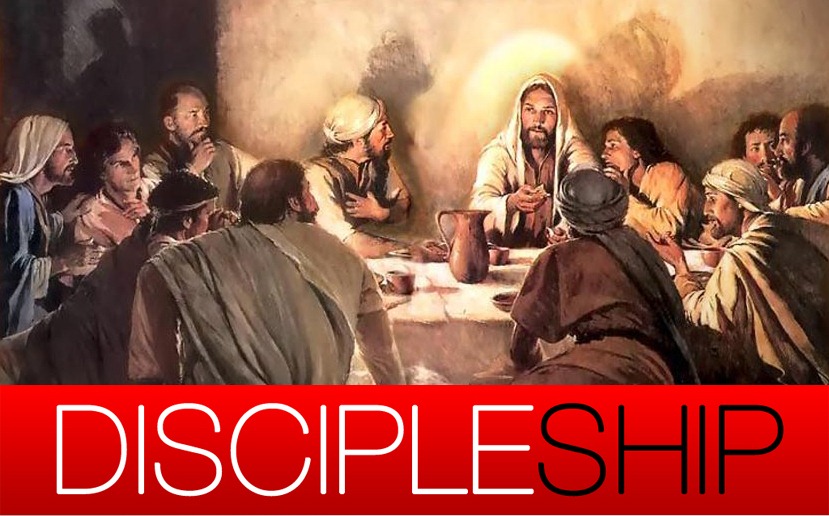
Jesus with the Disciples_discipleship

Jesus is calling you – not just to be a member of a church, not only to repent of your sins and receive his forgiveness. He is calling you to walk with him daily; To have a relationship with him that is more important to you than anyone or anything else in this life.

Click in the video to play it.

To listen to audio only, click this play button:

To download audio, right click on the link (or do whatever you do on a Mac) and save it to your computer: Download Experiencing Life Together Part 5

Sign up for the podcast on iTunes. Search for “Clear Bible Tom Hilpert”

Experiencing Life Together #5: Single Purpose

John 18:36; Ephesians 2:10

The very first Christians exhibited a very important characteristic. Their lives had a single focus:

The believers had a single purpose, and went to the temple courts every day. They were joyful and humble as they ate at each other’s homes and shared their food. (Acts 2:46)

The key phrase here is “single purpose.” Their lives were aimed at one target. Their focus both individually, and as a church, was on one thing. They were led by this purpose in everything they did, and every decision they made. Their purpose was discipleship. Jesus told them to be disciples, and to make disciples.

Then Jesus came to them and said, “All authority in heaven and on earth has been given to me. Therefore go and make disciples of all nations, baptizing them in the name of the Father and of the Son and of the Holy Spirit, and teaching them to obey everything I have commanded you. And surely I am with you always, to the very end of the age.” (Matthew 28:18-20)

The word “disciple” in Greek is closely associated with learning from a teacher. As we look at Jesus’ disciples in the gospels, we see that they listened to his teaching and tried to put it into practice (Mark 3:31-34). They were “followers” of Jesus’ teachings. The disciples often asked Jesus questions, but didn’t understand when he explained the answers to them (Matthew 16:5-12; Mark 4:10-14). Even so, though they had their struggles, they made his teaching central to their lives.

They not only followed his teaching, but they followed Jesus physically, wherever he went. They shared his life and had experiences with him. They walked together with Jesus on the rough mountain roads of Galilee. They lodged together, ate together and talked together.

They went across the lake with him, and experienced the storm, and then were awed by his power over it. They went to a lonely place with him, and saw him feed 5,000 people. They watched him drive demons out of people, and heal others. They went to Jerusalem and saw him die and later they saw him alive again.

Jesus’ disciples also had relationships with each other. They weren’t isolated in their relationship with Jesus. They talked with each other, fought with each other and helped each other. Jesus called them (and us) to love each other (John 13:34-35).

Besides teaching and sharing his life, Jesus also trained his disciples. He recruited them for the same work that he was engaged in – spreading the good news (Luke 10:1-24). He involved them in exercises of faith and ministry (Matt 14:18). He gave them instructions, sent them out on tasks, and then debriefed them (Luke 10:1-24).

Jesus wanted his relationship with his disciples to be the closest, most important relationship they had. He was dramatic in stating this. He said that in comparison to their relationship with Him, it would seem like they hated their own families (Matt 10:37-39; Matt 12:48). All this is to say that He became absolutely the most important person in their lives. He took precedence in everything.

Even before he returned to heaven, Jesus gave his disciples authority to be a part of His mission, authority to accomplish His purposes in the world (Matt 10:1). He promised that he would be with them spiritually at all times (Matthew 28:18-20).They were witnesses to His life, death resurrection and power (Acts 1:8), and they had a responsibility to tell about their life with Jesus, and to recruit new disciples to Him.

In John chapter 15, Jesus called his disciples to “abide” in him. He said this just a few hours before he was captured and crucified. One of the things he meant by it, was that the disciples were to keep on being his disciples, even after his death and resurrection. Their relationship – the sharing of Jesus teaching and their lives together – would go on. Jesus would come and live with them again, this time in their spirits, through His Holy Spirit. Discipleship goes on.

So what does it all mean for us? Now that we see how the first disciples were, how can we be disciples? How can we live with a single purpose? First, I think we ought to recognize that Christians were called “disciples” before they were ever called “Christians” (Acts 11:25). In other words, the very first followers of Jesus understood that it was not about being a member of a church, or even of being converts, but rather of being learners who lived life in the midst of their on-going relationship with Jesus.

Jesus is calling you – not just to keep things as they are, not just to be a member of a church, not only to repent of your sins and receive his forgiveness. He is calling you to walk with him daily. To have a relationship with him that is more important to you than anyone or anything else in this life. To engage with him as you work, as you eat, as you rest. To be trained and equipped by him to take your part in recruiting and training more disciples. He is calling you to listen to, and follow his teachings. He is calling you to be a part of a group of disciples – folks who are a bit rough around the edges maybe, but who love one another and love Jesus like you do.

When you are a disciple, everything in your life is filtered through your relationship with Jesus. We still have to go to work, and pay the bills, and deal with crises. But we do all these things with an awareness that we are not living our own life anymore. We are here to let Jesus live his life through us. That is our single purpose in everything.

When you let Jesus live your life, that is, when you live as his disciple, you are immediately confronted by the temptations and challenges of what life offers us apart from Jesus. If we live for the single-purpose of discipleship, we might find that many things we are used to doing are actually at cross purposes with the life of Jesus. Sin, of course, diverts us from the purpose of Jesus in us. But sometimes, I think the biggest threat to Christians is not outright sin, but rather, good things; things, however, that Jesus does not want us to waste our time with. Jesus said something very challenging:

“My kingdom is not of this world,” said Jesus. “If My kingdom were of this world, My servants would fight, so that I wouldn’t be handed over to the Jews. As it is, My kingdom does not have its origin here.” (John 18:36, HCSB)

Are you struggling and fighting for something in this world? I know I can get sucked into this all too easily. I want to follow Jesus, yes, but I also want other things: comfort and security while I am on earth. The moment I pursue comfort and security in addition to being a disciple, is the moment I lose my single purpose. That takes me a step backward in following Jesus. Jesus’ kingdom, his life and purpose are far beyond the temporary, cheap things of this world.

This is one of the reasons the Christian faith has always appealed to the poor more than the rich. If your life right now is a struggle, and you have little hope of improving it, it is easier to place your hope more fully in eternity. Poor folks know that security in this life is not really attainable. People with more resources tend to keep believing that their salvation is in this life. They tend to keep striving for the temporary treasures and goals that this life offers.

Ephesians 2:10 says this:

“For we are God’s workmanship, created in Christ Jesus to do good works, which God prepared in advance for us to do.”

Have you ever wondered about your purpose in life? Well there it is – to do the “good works” which God created you to do. And those good works ultimately all lead to encouraging believers and reaching out to those who don’t believe. This was the single purpose of the church in Acts 2:42-47. This is what they lived for. This purpose influenced all of their decisions, particularly decisions about the use of time.

Especially in America, living with a single purpose has enormous implications for the way we use our time. I am convinced that most of us try to live with more than one purpose in life. When I try to do that, if I was honest, my purpose in life could be described as: “ To serve God, and to be comfortable.” The first part is OK, but that “to be comfortable” makes it a dual purpose. And that causes problems when the purposes conflict with each other. What if being comfortable isn’t conducive to serving God, or vice versa? Others might want to “serve God, and have a good career” or “Be a disciple, make disciples, and achieve certain financial goals.” There is nothing Biblical about this. Sometimes, God makes his servants comfortable. Sometimes he gives them fulfilling careers, or wealth. But we need to pursue God – not the other things. If wants to give the other things also, well and good. If not, can we still say, “well and good”?

Others of us really do live to “be a disciple and make disciples”. But we fall into the trap of doing many good things, instead of the two or three best things. We might run all over town participating in workshops, ministries and conferences – all good and wonderful things. But often these wonderful spiritual things, keep us from truly connecting with Jesus, and concentrating on the two or three things that will be most effective, and are most important. Many times, perhaps almost always, we need to turn down the good things for the best things; the non-essential for the essential.

In most house-churches, things are deliberately structured so that members focus on just two or three important things in the process of becoming and making disciples. They generally don’t have “programs”. They focus on ministry in the group, outreach, and equipping (worship & prayer are underlying elements of all of these). None of these things should be “programmatic” – instead they are structured so that they take place in the context of lives that are lived with a single purpose. Thus, our “community life” can be oriented to that single purpose; and we are not so distracted with the “busyness” of many other things going on all the time.

Our personal lives ought to be structured this way as well. America is the land of opportunity, but enough already! We put our three-year-olds in T-ball in spite of the fact that they will almost certainly never become professional athletes. We put in extra hours in case we miss the opportunity to make more money. We run from activity to activity and it absolutely drains us spiritually and emotionally. The crucial and difficult task in learning to orient our lives around a single purpose, is saying “no” to things that are good, but which are not best, or essential.

We strongly encourage you to pray about this during the next week, and then ask your house church for help and prayer in determining what is essential and best for you to be doing at this point in your life. Make sure to address that question with an open Bible and an open heart.

FOUR CHARACTERISTICS OF THE EARLY CHURCH

biblehands

Fellowship (love in action) does not always come easily to the church, and perhaps it did not come easily even for the very first group of believers. Even so, this was something they persisted in and stuck with, in spite of difficulty at times.

To listen to the sermon, click the play button:

To download, right click on the link (or do whatever you do on a Mac) and save it to your computer: Download Experiencing Life Together Part 3

Experiencing Life Together #3

FOUR THINGS TO WHICH THE EARLY CHURCH WAS DEVOTED. Acts 2:42

As we come together to experience the Power, Presence and Purpose of Jesus, it may be useful to consider any Biblical patterns that exist for the Church. Biblically speaking, a lot of freedom is given to believers in how they structure local congregations. However there is a pretty clear Biblical pattern for the values that ought to drive local churches, and the practical results that those values ought to show. Perhaps one of the most useful and descriptive passages in discovering God’s pattern for the church is found in acts Chapter 2:42-47. This is a descriptive passage, not a prescriptive one; even so, we can learn from the example presented here and it seems wise to consider carefully the characteristics of that first growing Christian congregation.

“They devoted themselves to the apostles’ teaching and to the fellowship, to the breaking of bread and to prayer.

Everyone was filled with awe, and many wonders and miraculous signs were done by the apostles. All the believers were together and had everything in common. Selling their possessions and goods, they gave to anyone as he had need. Every day they continued to meet together in the temple courts. They broke bread in their homes and ate together with glad and sincere hearts, praising God and enjoying the favor of all the people. And the Lord added to their number daily those who were being saved.”

In this passage, we find four things that the early church was devoted to and three things that resulted from such devotion. We will examine each of the seven characteristics one by one . This week, we will consider the four things the church was devoted to. Next week, we will focus especially on one of those four things — prayer. And after that, we will consider the three things their resulted from their devotion.

First, I want to mention this word, “devoted.” The idea behind the Greek term, is a that a group of people are together earnest, persevering, diligent and devoted to something. In other words, they didn’t just “say a prayer.” They were earnest and diligent about praying; they persisted and persevered in their prayers, even when they did not receive immediate answers. They didn’t just “listen to a sermon.” They diligently persevered in learning what Jesus said and did, and what it meant. They persisted in applying it to their lives, even when at first it didn’t feel like it made anything better.

I think this idea is very important. What we really believe as Christians is that spiritual reality is more real and important than what we call “physical” reality. I don’t mean the physical isn’t real, or that it doesn’t matter; but Christians believe the spiritual is the more powerful of the two. That means we persist in our devotion to these things, even when the physical reality is whispering to us that we are stupid and silly to do so. We persist in them because they make a difference in spiritual reality Eventually, that difference will also affect the physical realm, but even if it does not do so during our lifetimes, we trust in what we don’t see. That is what faith is: “the reality of what is hoped for; the certainty of what is not seen.” (Hebrews 11:1)

1. They devoted themselves to the apostles teaching. The early church was founded on the testimony of the apostles. They listened as Peter, James and John and others repeated to them the teachings of Jesus. They heard these great leaders expounding upon those teachings and explaining the meaning of the death and resurrection of Jesus Christ. The apostles also taught the early church the meaning of the Old Testament and how Jesus fulfilled its promises and prophecies. Unfortunately, today we no longer have the apostles. But we do still have their teachings — they are found in the New Testament. The New Testament is in fact the written form of the teaching of the apostles. It is not much of a leap to say that when we see that the first characteristic of the early church was that they were devoted to the apostles teaching, the parallel characteristic for the present-day church should be that we are devoted to the Bible. How can we do this practically in our church, and specifically in the house-church?

a. We ought to commit to the authority of the scriptures. The church was founded on the teaching of the Bible, and so also should our lives be founded on the teachings of the Bible. The Bible is the final authority in all things for all believers. Practically speaking, the house-church should have an understanding that scripture is the basis for everything we do and say in our group. This doesn’t mean we never talk about football scores, but it does mean that as we encourage one another and share with one another, we do so with a sense that we are all together under the authority of scripture.

b. We study scripture. To some of you, “study” may sound like a dirty word. It doesn’t have to be that way however. Try setting aside a special time each week (like Sunday nights) to study the Bible. As a starting point, read the scripture passage that goes with that week’s sermon notes, think about it, and then read the sermon notes over. The “Word” time during the house-church meeting is supposed to be mainly for application, rather than study. If you come to house-church and you haven’t read the sermon notes or the passage, you will probably not get much out of the word time, and the other people in the house-church will miss out on the insight and thoughts you might have had for them, if you had taken just a bit of time to read. I don’t think reading them on the way to house-church gives God’s Word the respect such a remarkable book deserves.

c. Apply the scripture to your life. After you have studied scripture, you should ask “what does it mean to me? How should I live differently or what comfort should I take from this?” Although God’s word is supposed to inform our thinking, the great value of it is that it not only transforms our minds, but our very lives as well. God’s word illuminates our path – what we are to do, how we are to live.

2. The second characteristic of the early church is that they were devoted to fellowship. The Greek word used in Acts 2:42 for “fellowship” is Koinonia. A helpful way to translate this word might be “community.” Now it is obvious from the context that the word does not mean “town” or “locality” so we might clarify things by saying it means Christian community. In other words, these first Christians devoted themselves to each other. In fact, this was their way of living out in a practically what Jesus said in John 13:24-25:

A new command I give you: Love one another. As I have loved you, so you must love one another. By this all men will know that you are my disciples, if you love one another.

Fellowship is just Christian love in action. It is the “nuts and bolts” of people in the body of Christ (the church) loving each other. In this context, It is helpful to remember that when they devoted themselves to the fellowship, the word “devoted” implies that this was something they worked on and stuck with, “in spite of resistance or struggle.” Fellowship (love in action) does not always come easily to the church, and perhaps it did not come easily even for the very first group of believers. Even so, this was something they persisted in and stuck with, in spite of difficulty at times.

3. The third characteristic of the early church is that they were devoted to the “breaking of bread.” This phrase (“the breaking of the bread”) refers to the Celebration of the Lord’s Supper. Paul uses it in 1 Corinthians to describe Holy Communion, and the language parallels that of the gospels as well. It took some years before it was called anything but “the breaking of the bread.” How can this be made a practical characteristic of house-church life? First, I believe it meant that the message of human sin and God’s sacrifice to forgive that sin, was central to their lives. The Lord’s Supper tells this basic message of Christianity every time it is celebrated. Second, I believe their devotion to the Lord’s Supper was evidence of an ongoing hunger and thirst for more of God in their lives. The central meaning of the Lord’s Supper is the Presence of Jesus. So in house-church, we can be intentional about the core Christian message of man’s sin and God’s loving forgiveness, and we can be intentional about nurturing a hunger for Jesus.

4. The fourth thing that the early church was devoted to is prayer. Prayer, both together and alone, was central to their experience of church. Because prayer is so important to the life of any house-church, we will devote a week entirely to that subject (next week).

As you consider this passage of scripture, allow yourself to dream. What would your house-church look like if you were devoted to the Bible, to fellowship, to the breaking of bread, and to prayer? Does this vision excite you at all? How would your life be different if you are a part of such a dynamic group? And, how will you be a part of making this happen?

WHERE ARE YOUR INVESTMENTS?

moneyheart

Today let us live not as citizens of earth trying to make it to heaven, but like citizens of heaven sojourning on earth.

To listen to the sermon, click the play button:

To download, right click on the link (or do whatever you do on a Mac) and save it to your computer: Download Galatians Part 24

Galatians #24 . Chapter 6:6-10

Paul is finishing his letter with some practical instructions for Christian living, and for functioning as a church. Verse six is basically a command for the Galatians to provide material/financial support to those who teach them the Bible. It’s a little awkward, because in some ways, this passage is about me. I am a teacher/preacher of the bible. But I want to remind you of this: it is about you, too. You are one who is taught.

Before I dive into this, I want to make a deal with you. I will try to be as objective and “disinterested” about this as I can. I’ll try not to be self-serving in how I teach this. But here’s the deal – I want to ask the same of you. This passage is about you as much as me. So I’m asking you to try and be as objective as you can, and really listen to what the Lord wants to say to you. Try not to be self-serving in how you receive this.

For the record, I do believe that even if I received no money from teaching the Bible, I would still say the same things. More significantly, Paul said the same thing to a group of people from whom he refused to receive money: the Corinthians.

Who ever goes to war at his own expense? Who plants a vineyard and does not eat its fruit? Or who shepherds a flock and does not drink the milk from the flock? Am I saying this from a human perspective? Doesn’t the law also say the same thing? For it is written in the law of Moses, Do not muzzle an ox while it treads out grain. Is God really concerned with oxen? Or isn’t He really saying it for us? Yes, this is written for us, because he who plows ought to plow in hope, and he who threshes should do so in hope of sharing the crop. If we have sown spiritual things for you, is it too much if we reap material benefits from you? If others have this right to receive benefits from you, don’t we even more?

However, we have not made use of this right; instead we endure everything so that we will not hinder the gospel of Christ. Don’t you know that those who perform the temple services eat the food from the temple, and those who serve at the altar share in the offerings of the altar? In the same way, the Lord has commanded that those who preach the gospel should earn their living by the gospel. (1Cor 9:7-14, HCSB)

Paul chose not to ask for support from the Corinthians. Many Christians make a big deal out of that. I say, “Good for Paul.” But I want to point out two things:

First, Paul’s main point is that, properly, they were supposed to support him. None of what he is saying makes sense unless that is true. In other words, this passage from Corinthians teaches that the normal thing is for local churches to support local bible teachers, and apostles.

Second, though Paul supported himself through tent-making (or, leatherworking) for a short time when he was in Corinth, he did not do so for very long. After a short while, he devoted his full time to teaching the word (Acts 18:5). It is almost certain that Silas and Timothy brought gifts from other churches that allowed Paul to do this. So, though he was not supported by the Corinthians, he was supported by other churches during most of his ministry. In any case, the main point of the Corinthian passage is that it is God’s design that those who preach the gospel make their living at it.

1 Timothy 5:17-18 says,

The elders who are good leaders should be considered worthy of an ample honorarium, especially those who work hard at preaching and teaching. For the Scripture says: Do not muzzle an ox while it is treading out the grain, and, the worker is worthy of his wages. (1Tim 5:17-18, HCSB)

Taken together, these three passages present a clear, consistent, unambiguous picture: Some people are called to be full-time Bible teachers and preachers; and in most cases these people are supposed to receive their living (financial and material support) from those they teach. This is good and right, both practically speaking, and in God’s eyes.

This isn’t a call for everyone who gets the fancy. It isn’t a frivolous thing to be a bible teacher. James wrote this:

Not many of you should become teachers, my brothers, for you know that we who teach will be judged with greater strictness. (Jas 3:1, ESV2011)

In other words, this is a specific and unique calling, not given to every Christian, and perhaps not given to very many at all, proportionally, speaking. I will say from experience that it is not as easy as it looks from the outside. My advice to any people who are wondering if they are called to do this, is, try to do something else. Twice in my life I myself have tried to do something else, and the Lord has compelled me to come to back teaching and preaching. If you are called, you won’t be able to avoid it. So go ahead and try to avoid it, and see what happens.

In recent years, I have noticed that many people seem to look down people who are called to study, teach and preach the bible full-time. I’ve heard people mis-quote Paul from the Corinthians passage above, and suggest that no one is called to full-time bible teaching. For me, that only illustrates the need for good teachers, since it is the exact opposite of what the passage clearly says; and is in fact the opposite of the way Paul lived. I’ve seen many people who definitely should not have presumed to teach. Some people seem to think that any old fool can get up and talk about the bible. I suppose, in one way, that’s true, and you’ll hear almost any old foolish thing come out of their mouths. I’ve heard false teaching, and even heresy from such people. I would not want to be in their shoes when they have to explain themselves to the Lord. But the biblical position is that some few people are called to the unique ministry of teaching, and they should be provided for by churches, so that they can devote a great deal of time and prayer to it.

Every Christian should learn how to study the bible for himself or herself. We should all take personal responsibility for following Jesus and being better disciples. But that does not eliminate this special ministry of teaching. Ideally, we take what the teachers give us, and incorporate it into our own walk of faith. Paul’s point to the Galatians, Corinthians and Timothy is that the teacher offers spiritual blessing, and the churches offer material blessing in return so that the teacher can continue to give that spiritual blessing.

Both here in Galatians, and in the Corinthian passage, Paul refers to sowing and reaping. “Sowing” is another way of saying “planting seeds.” The bible uses it often to mean “investing for the future.” “Reaping” means “gathering the harvest.” It refers to getting the results of what you sowed.

There is no doubt in my mind that Paul is talking generally about where you invest your time, energy, talent and focus. However, there is also no doubt in my mind that he is also talking about how you use your money. Jesus talked extensively about investing earthly money in spiritual things. The entire parable of the shrewd manager (Luke 16) is about that. Jesus summed it up at the end:

And I tell you, make friends for yourselves by means of the unrighteous money so that when it fails, they may welcome you into eternal dwellings. Whoever is faithful in very little is also faithful in much, and whoever is unrighteous in very little is also unrighteous in much. So if you have not been faithful with the unrighteous money, who will trust you with what is genuine? And if you have not been faithful with what belongs to someone else, who will give you what is your own? No household slave can be the slave of two masters, since either he will hate one and love the other, or he will be devoted to one and despise the other. You can’t be slaves to both God and money.” (Luke 16:9-13, HCSB)

Jesus seems to be saying that you can use money (which he calls “unrighteous”) to gain a spiritual result. This isn’t about buying your way into heaven. It is about investing your money (along with the rest of the life) in spiritual, eternal things. He told the rich young ruler that giving money away could help him to have eternal treasure:

“If you want to be perfect,” Jesus said to him, “go, sell your belongings and give to the poor, and you will have treasure in heaven. Then come, follow Me.” (Matt 19:21, HCSB)

Let’s be completely honest. We sow most of our money to the flesh. In other words, we generally spend money in ways that gratify our external, earthly desires, or the desires of our loved ones. When we do that, the payoff is in the flesh. That means our reward is temporary, fleeting and fading away. Gratifying your flesh now, gets you nothing in eternity. Jesus said:

“Don’t collect for yourselves treasures on earth, where moth and rust destroy and where thieves break in and steal. But collect for yourselves treasures in heaven, where neither moth nor rust destroys, and where thieves don’t break in and steal. For where your treasure is, there your heart will be also. (Matt 6:19-21, HCSB)

And again:

“But seek His kingdom, and these things will be provided for you. Don’t be afraid, little flock, because your Father delights to give you the kingdom. Sell your possessions and give to the poor. Make money-bags for yourselves that won’t grow old, an inexhaustible treasure in heaven, where no thief comes near and no moth destroys. For where your treasure is, there your heart will be also. (Luke 12:31-34, HCSB)

Jesus actually suggests that we trade earthly money for inexhaustible, eternal treasure in heaven. Some people teach that if you give away earthly money, God will give it back to you, plus interest – in earthly money. Jesus doesn’t say exactly that. He tells us not worry about our physical needs, and tells us that we can invest in eternity with our earthly money. Again, this is not about buying your way into heaven. It is about weakening the connection between you and your flesh. It is about breaking the hold that money has on us, and strengthening the hold that heaven has on us. It is about consciously actiquarter in god we trustng as if your real treasure is in heaven; because it is. Every time you give money for spiritual purposes you are affirming that you are really a citizen of heaven. You are agreeing that your real retirement begins, not in your sixties, but after you shed your flesh through death, and step into the new creation.

One final thought, and this is why I took the time to talk about money here:

But those who want to be rich fall into temptation, a trap, and many foolish and harmful desires, which plunge people into ruin and destruction. For the love of money is a root of all kinds of evil, and by craving it, some have wandered away from the faith and pierced themselves with many pains. (1Tim 6:9-10, HCSB)

So, it is clear to me that Paul is saying, “Look, your teachers and preachers should receive support from you. And to spend money for a spiritual purpose leads to a spiritual result, an eternal result. You store up treasure in heaven for yourself when you do that.”

Now, I do think Paul is also talking about more than money. I think when he talks about sowing and reaping, he means this: “You can invest in the flesh, or you can invest in the Spirit.” We can spend our time, money and energy on self-gratification (flesh-gratification) or on spiritual things. Another way to invest in spiritual things, according to these verses, is to “do good,” and “work for the good of all, especially for those who belong to the household of faith.” The Christian church should be like a family, and we should consider it a priority to bless each other, and work for the good of each other. That’s a spiritual investment. Sometimes that may mean saying an uplifting word, or writing a note. It may mean helping someone fix their home or car. We could work for good for each other by staying in touch and encouraging each other, by sharing our time, knowledge and abilities with each other. There are many, many ways.

I’ve tried flesh-gratification from time to time. It never seems to last very long. It doesn’t produce any long term benefits even in this life, let alone for eternity. Paul says that investing in the spirit yields eternal life. I have noticed that when I invest in spiritual things, it begins to yield positive and lasting results, even now. Paul says, therefore:

we must not get tired of doing good, for we will reap at the proper time if we don’t give up. Therefore, as we have opportunity, we must work for the good of all, especially for those who belong to the household of faith. (Gal 6:6-10, HCSB)

Flesh-gratification is immediate. Sowing to the Spirit is a long-term proposition. Immediate results are fun, but we probably should not expect them. We shouldn’t expect the final and full results until after this mortal life is over. We Christians are a people of hope, and that means that our desires and investments come to fruition in the future, not now. As a friend of mine said on facebook this week:

Today let us live not as citizens of earth trying to make it to heaven, but like citizens of heaven sojourning on earth.

With that in mind, with our focus on the hope and life to come, we can ignore the call to self-gratification and seek instead, to bring good to others.

FRUIT, OR FLESH?

fruit

When you are facing a choice or considering whether or not something is from the Lord, ask yourself: “Does it look more like the flesh, or more like the fruit?” The fruits of Spirit are the manifestations of the character of Jesus in us.

To listen to the sermon, click the play button:

To download, right click on the link (or do whatever you do on a Mac) and save it to your computer: Download Galatians Part 22

Galatians # 22 . Chapter 5:22

We’ll consider the other fruits of the Spirit this time, and possibly even wrap up chapter 5.

The next is patience. The New Testament uses this word in connection with two main things. The first, is to describe the patience of God, when he withholds judgment (Rom 2:4; 9:22; 1 Peter 3:20; 2 Peter 3:15). In that context, it has the idea of withholding punishment, putting up with us and forbearing.

This saying is trustworthy and deserving of full acceptance: “Christ Jesus came into the world to save sinners” — and I am the worst of them. But I received mercy for this reason, so that in me, the worst of them, Christ Jesus might demonstrate His extraordinary patience as an example to those who would believe in Him for eternal life. (1Tim 1:15-16, HCSB)

There are many other verses using the same Greek word. Often it used just like it is here (2 Cor 6:6, Eph 4:2; Col 1:10-12).The Christian Life should be characterized by it:

Walk worthy of the Lord, fully pleasing to Him, bearing fruit in every good work and growing in the knowledge of God. May you be strengthened with all power, according to His glorious might, for all endurance and patience, with joy giving thanks to the Father, who has enabled you to share in the saints’ inheritance in the light. (Col 1:10-12, HCSB)

Patience is not the same as mere restraint. I think one key to understanding it is that there is waiting involved. Patience doesn’t give up – it waits with expectation, but it waits without agitation. You can’t manufacture Holy Spirit-patience. The only way to get it is to keep on getting closer to Jesus.

Kindness is an interesting Greek word: chrestotes. If you know any other languages, you know that sometimes a direct word-to-word translation is impossible. Some languages have words that others simply don’t have. I think chrestotes is probably one of those words. A few versions of the bible translate the word as “graciousness.” The word means something like “moral excellence, combined with compassionate intentions and actions.” In other words, it isn’t just blindly being nice to people. It is moral goodness combined with benevolent actions or intentions. The “moral excellence” is a very important part of this word.

Or do you despise the riches of His kindness, restraint, and patience, not recognizing that God’s kindness is intended to lead you to repentance? (Rom 2:3-4, HCSB)

Another way to describe kindness might be “righteousness combined with compassion.”

Goodness. “Good” is such a common word, both in Greek and English, that is sometimes hard to get a handle on it. What does it mean that goodness should be growing in us like a fruit? Moral “rightness” is part of goodness. A sense of being blessed is associated with what we call goodness. In this case, your goodness will give others a sense of being blessed through you. I know a few people that I would describe as good. You know, almost right away, that they are trustworthy. You know that they will do the right thing. You know you are safe around them.

Faith is the Greek word pistis, which I have often mentioned in the past. I contend that most often, it should be translated to mean “trust in Jesus.” In this context, however, we assume that you won’t have any fruit of the Spirit at all, unless you first trust Jesus. So here, I think Paul means a practical, daily trust, an entrusting of your everyday life to Jesus, his will and his purposes. It means you trust him with your problems and relationships, you trust his guidance and what he says through the Bible. You release control of your life to Jesus.

Gentleness. 1 Peter 3:16; 2 Timothy 2:25 and Galatians 6:1 all talk about gentleness in the context of correcting others. We are supposed to hold firmly to our beliefs. But we are not supposed to be harsh with those who are going astray.

Always be ready to give a defense to anyone who asks you for a reason for the hope that is in you. However, do this with gentleness and respect, keeping your conscience clear, so that when you are accused, those who denounce your Christian life will be put to shame. (1Pet 3:15-16, HCSB)

In other verses, gentleness is supposed to generally characterize how we treat each other.

Self-Control is not a compound word in Greek, as it is in English. It implies that you are master of your own desires. Remember, the flesh gratifies itself. But the Spirit exerts control over desires of the flesh. As the Spirit grows in you, you become more able to say “no” to the flesh and “no” to your immediate desires.

As I mentioned last week, all of these thing grow in us, if we remain in Jesus. I also suspect that the different kinds of fruit grow at different rates in each person. I know people who seem to exude peace, but they don’t have much self-control. I know others who have a lot of self-control, but joy is still a very small and immature fruit in their lives. That’s probably normal. We do want all the fruit of the Spirit to keep growing in us, but I think it is OK to accept that some kinds will grow faster than others, and that other people will have different strengths and weaknesses.

Let’s back up and remember the context for all of this. Paul has said we do not live any more by law. This isn’t an excuse to gratify or indulge the flesh. Instead, now, free from the law, we walk by the Spirit. The Holy Spirit, working through our spirits, leads us. More than that, the Holy Spirit is putting the character of Jesus into our lives.

Remember what Paul said in Galatians 2:20

For through the law I have died to the law, so that I might live for God. I have been crucified with Christ and I no longer live, but Christ lives in me. The life I now live in the body, I live by faith in the Son of God, who loved me and gave Himself for me. (Gal 2:19-20, HCSB. Italic formatting added for emphasis)

To put it another way, the fruits of Spirit are the manifestations of the character of Jesus in us. That character is being formed in us by the power of the Holy Spirit. This is important for several reasons.

First, this gives us a little bit of help in knowing where we stand with Jesus. The law can’t help us, but the evidence of Jesus’ character in us can. Paul says the works of the flesh are obvious. If we see those having power in our lives, we know that there is problem. Jesus, living in us, does not do the works of the flesh. On the other hand, when we see the fruit of the Spirit growing – even if it is small and unripe – we know that Jesus is at work in us. The point here is not how much you have, but rather, how much it is growing. The question is not, “How much peace do you have?” Rather, the appropriate thing to ask is “Do you have more peace now than you did last time you faced this kind of situation?”

It is helpful to remember the fruit of the Spirit when you are looking for guidance. I actually knew a Christian once who claimed that God led him to have an affair. He was out of a job, and we prayed for him to find a new job. He did, and he felt like God gave him that job. The first person he met at the new job was a woman, and they really connected. So, he reasoned that God wanted them to meet, and to have an affair. But if he had been willing to pay attention, this passage would have showed immediately that God was not leading him to sin. That is clearly listed as one of the works of the flesh. It was his flesh, not the character of Jesus, which led him.

Say you have to make a decision, and you want to walk by the Spirit, not by the flesh. If you think you are being led, make sure, first of all that your choice will not result in the works of the flesh. Then, look at the fruits of the Spirit. Is there joy associated with one choice? Joy is a fruit of the spirit, so the Spirit may be leading you in that direction. Is what you want to do motivated by self-sacrificing love, love that puts the welfare of others before your own? If so, it may be the work of the Spirit. Do you have peace as you move forward in this direction? True peace comes from the Spirit, so it may be him. Are your desires, and the desires of the flesh, under control, or is this about self-gratification? Does your choice involve moral excellence or kindness or gentleness? We can learn to recognize Jesus at work in us, showing his character, to point us in the right direction. To sum it up, when you are facing a choice or considering whether or not something is from the Lord, ask yourself: “Does it look more like the flesh, or more like the fruit?”

There is another place where knowing about the fruit of the Spirit can be helpful. True Christian maturity is measured in terms of the fruit of the Spirit. A lot of folks like to measure it by the gifts the Spirit, or even by outward appearances. But the Lord gives different gifts and abilities and looks. A mature Christian may or not be a dynamic preacher. A mature Christian may or may not be gifted in making people comfortable. He might not have a gift of making others feel good about themselves. A mature Christian may or may not have the gift of tongues, or the gift of healing. A mature Christian might not be outwardly successful. She might be fit, or might be a little bit overweight. She might be plain, or beautiful. None of these things have to do with maturity.

And just because someone does have the gift of healing, or does have a successful ministry, does not make them mature. I know of two different individuals who have a proven gift of healing. When they pray for people, those people are genuinely healed of real physical ailments and diseases. It’s amazing. And yet, both of these individuals are significantly immature in the fruit of the Spirit.

We don’t measure Christian maturity in terms of gifts, skills or talents or success. We don’t measure it by outward appearances. We measure Christian maturity by these things right here: the fruits of Spirit. That is because these fruits are manifestations of the life of Jesus inside of us.

Paul finishes with this thought:

Now those who belong to Christ Jesus have crucified the flesh with its passions and desires. Since we live by the Spirit, we must also follow the Spirit. We must not become conceited, provoking one another, envying one another. (Gal 5:24-26, HCSB)

In many ways, this verse reiterates what Paul said in Galatians 2:20. We are dead to the law. Our flesh is also dead to us. As I’ve said before in this series, our flesh is actually physically dying. Let its passions and desires die with it. Now, I know that all sounds fine and noble, but the truth is, Paul describes it as a crucifixion. Our flesh is crucified with Jesus. But when deny our flesh, it does hurt. It is hard. Crucifixion is painful. So, I’m not saying it is easy. But it is a matter of focusing on who you truly are, in Jesus.

Paul said something very similar in Romans:

For those who live according to the flesh set their minds on the things of the flesh, but those who live according to the Spirit set their minds on the things of the Spirit. For to set the mind on the flesh is death, but to set the mind on the Spirit is life and peace. For the mind that is set on the flesh is hostile to God, for it does not submit to God’s law; indeed, it cannot. Those who are in the flesh cannot please God. You, however, are not in the flesh but in the Spirit, if in fact the Spirit of God dwells in you. Anyone who does not have the Spirit of Christ does not belong to him. But if Christ is in you, although the body is dead because of sin, the Spirit is life because of righteousness. (Rom 8:5-10, ESV2011)

We need to set our minds on the things of the Spirit. We need to focus on who we really are, in Jesus. What are those things? Well, a great place to start is right here in Galatians 5:22, with the fruit of Spirit.

Ask the Lord to speak to you about this today.

FREEDOM, OR LICENSE?

Love_One_Another-760x504

Loving others is another antidote for the flesh. The flesh is focused on itself, on getting what it wants. But love is focused on others, on serving, encouraging and honoring them.

To listen to the sermon, click the play button:

To download, right click on the link (or do whatever you do on a Mac) and save it to your computer: Download Galatians Part 17

Galatians #17 . Chapter 5:13-15

For you were called to be free, brothers; only don’t use this freedom as an opportunity for the flesh, but serve one another through love. For the entire law is fulfilled in one statement: Love your neighbor as yourself. But if you bite and devour one another, watch out, or you will be consumed by one another. (Gal 5:13-15, HCSB)

Picture a man who is addicted to drugs. He lives for the high that comes from the drugs. He hates the low that comes afterwards. But love it or hate it, he is a slave to it. He has to have it. Now, imagine that God came to this man, and set him free from his addiction. He doesn’t have to have it any more. He’s free from the need. He doesn’t have to have the high anymore. He’s free from the awful lows. He’s been saved and healed from a life of slavery to the drug. He didn’t do it, God did it for him. There’s nothing he could have done to earn it. His relationship with drugs has been broken. There is no more connection between this man and drugs.

Now, picture the man, full of gratitude for his deliverance. He says, “I’ve been set free! I can do whatever I want now. The impact of drugs has been removed from me!”

After considering for a little bit, he says, “Since I’m free, I’m going to go celebrate by getting high!”

How foolish that would be! God delivered him from slavery to drugs, but he’s going right back to it. He’ll end up addicted again, enslaved again. He’s throwing away what God gave him. What’s the point of being freed from drugs if he’s just going go back and become enslaved all over again?

Paul is shifting his thoughts from explaining the freedom that Jesus got for us by dying, and moving to some ideas about how to live in that freedom.

His first concern is that the Galatians do not use their freedom in Christ as an “opportunity for the flesh.” We need to consider what Paul means by “flesh.” The Greek word is sarx and it just means, essentially, “meat” or “muscle.” The apostle John uses it as a neutral term, generally meaning physical body. Paul sometimes uses it that way also. But more often, and certainly in Galatians, Paul uses “flesh” as a special theological term. He usually means basically, an orientation that is based upon outward things, and is turned away from God. There are several important things to understand here. First, Paul sees that orientation as coming from your physical life; and from a focus on your physical life. He doesn’t mean that your body is evil. But he means that once you are in Jesus, the most common pathway for sin is through your body and your physical mind. We’ll get into this in greater depth in a week or two, but listen to what Paul says about the flesh a few verses later:

Now the works of the flesh are obvious: sexual immorality, moral impurity, promiscuity, idolatry, sorcery, hatreds, strife, jealousy, outbursts of anger, selfish ambitions, dissensions, factions, envy, drunkenness, carousing, and anything similar. I tell you about these things in advance — as I told you before — that those who practice such things will not inherit the kingdom of God. (Gal 5:19-21, HCSB)

Obviously, these things are sinful. They drive a wedge between us and God. They hurt ourselves and others. Ultimately, they separate us from God completely – but we’ll talk about that next time. For now, we just need to understand that these are typical works of the flesh. They aren’t the flesh exactly, but they are results of allowing the flesh to have its way.

So, Paul is saying, “This freedom that we have in Jesus is not an excuse to indulge the flesh. Don’t let the flesh use this as an opportunity.” It’s like the drug addict who was freed from addiction. It makes no sense to use your freedom from drugs as an opportunity to take drugs. You are just entering into slavery to drugs again. You might as well not be free in the first place.

Now, sometimes, I understand, you don’t feel completely free from sin in the first place. Something in you still seems to want to sin. So are you really free? Listen carefully: that “something” inside you that still wants to sin is what Paul calls the flesh. If you are in Jesus, you are free from sin in your spirit. The deepest part of you doesn’t want to do it. The penalty has already been paid for it. You aren’t an addict anymore. Your deepest, most true identity is “New Creation in Christ.”

The flesh will say, “we must have this. We need it.” Paul recognizes that when we first hear that in Christ everything has already been accomplished for us, the flesh will say, “We are now free to satisfy ourselves however we want.” But it’s a trick. First it is a trick, because indulging the flesh never actually satisfies you. There may be a moment or two when you think you are satisfied, but it doesn’t last long, and there is always something missing.

Secondly it’s a trick, because if you follow that road, you will eventually end up enslaved to sin again. Note my words: “follow that road.” We all screw up from time to time. I’m not talking about that, and I don’t think Paul is either. What Paul is talking about is a deliberate, long-term pattern of indulging what the flesh wants, and choosing that consistently over what the Holy Spirit wants.

Paul wrote about this elsewhere. So did Peter and Jude:

Therefore do not let sin reign in your mortal body, so that you obey its desires. And do not offer any parts of it to sin as weapons for unrighteousness. But as those who are alive from the dead, offer yourselves to God, and all the parts of yourselves to God as weapons for righteousness. For sin will not rule over you, because you are not under law but under grace.

What then? Should we sin because we are not under law but under grace? Absolutely not! Don’t you know that if you offer yourselves to someone as obedient slaves, you are slaves of that one you obey — either of sin leading to death or of obedience leading to righteousness? (Rom 6:12-16, HCSB)

Live as free people, not using your freedom as a pretext for evil, but as God’s slaves. (1Pet 2:16, NET)

For certain men have secretly slipped in among you – men who long ago were marked out for the condemnation I am about to describe – ungodly men who have turned the grace of our God into a license for evil and who deny our only Master and Lord, Jesus Christ. (Jude 1:4, NET)

Fighting temptation is tough anyway. But don’t give the devil another weapon by saying, “Well, if I’m truly free in Christ, I can do whatever I want, can’t I? And what I really want, is to get drunk.” Fill in whatever temptation you have for “get drunk.” See that’s the thing: It’s your flesh that really wants to get drunk (or whatever your temptation is). It isn’t the deepest truest part of you. It isn’t your redeemed spirit. It isn’t Jesus living in you who wants that. So Paul says, “Deny your flesh. Don’t give it that excuse.” The trick is to listen to the truth of God’s word, and pay attention to that, while at the same time, ignoring the insistent loud cries and desires of the flesh. God’s word says now, you are holy.

You still fight with the desires you used to give in to. You still fight with the ways you learned to sort of satisfy your flesh. But that truest, most authentic part of you is not your flesh – not anymore, if you are in Jesus Christ. So let the flesh whine, and ignore it as much as possible. Focus on the truth that in Christ you are a new creation (2 Corinthians 5:17).

Look at it this way: your flesh dying. That’s right. It’s your flesh that is doomed to die. If you are in Christ, your spirit and your soul will live on, and you’ll get a new body that is free from what we call “the flesh.” The flesh is dying, so let it go ahead and die. All that noise and temptation and activity is just the death throes of the flesh.

Now, we have been focused on one half one sentence: don’t use your freedom as an opportunity for the flesh. The second half says this: “but serve one another through love.”

Loving others is another antidote for the flesh. The flesh is focused on itself, on getting what it wants. But love is focused on others, on serving, encouraging and honoring them. Paul repeats something here that Jesus also said: “For the entire law is fulfilled in one statement: Love your neighbor as yourself” (Gal 5:14). I spoke last week about how this is sometimes generalized to become almost meaningless. This isn’t some vague principle about “as long as what I do is loving, it is righteous.”

Love always honors and seeks the very best for the person that is loved.

Love is patient, love is kind. Love does not envy, is not boastful, is not conceited, does not act improperly, is not selfish, is not provoked, and does not keep a record of wrongs. Love finds no joy in unrighteousness but rejoices in the truth. It bears all things, believes all things, hopes all things, endures all things. (1Cor 13:4-7, HCSB)

In fact, let’s cut to the chase. The main thing everyone wants to be free to do, is to have sex with whomever they want. Isn’t sex loving? Doesn’t that make it OK?

Sex outside of marriage is not loving. Yes, I just wrote that. Why not? Because there is no permanent, unconditional commitment to the highest good of the other person. If there is no marriage involved, ultimately, the message is, “I am keeping my options open. I may be committed to you for now, but I’m not ready to commit to you in lifelong love.” Marriage is supposed to be the declaration of a lifelong, unconditional commitment. It is that decisive, unchanging commitment that is true love. Feelings are great, but they aren’t love. Love is commitment. Of course, our society has mostly ruined marriage, and it doesn’t really mean that to most people. But it should still mean that to people who are in Christ.

Sex in any other context is physical and emotional bond that falls short of true love. Because sex is so powerful, entering that bond without true love (commitment-love, that is marriage) ends up scarring people emotionally and making them harder; eventually it makes people less able to love in a commitment relationship.

Of course, Paul isn’t only talking about marriage when he talks about love. He is talking about Christian community. How about affirming others? Isn’t it always loving to affirm other people in whatever choices they make? Let’s go back to the drug addict. Which is more loving:

  • a. Telling the drug addict that he’s special to you, and you support whatever choices in life he wants to make, including destroying his life with drugs.
  • b. Telling the drug addict that he is wrong, and you will not encourage him or support him or give him comfort as he destroys himself.

It’s hard, but option b is almost always the more loving choice.

Loving others also means getting involved in their lives. It’s hard to love someone you don’t see very often. You can’t really have community with people you don’t know at all. Paul is saying, don’t focus on indulging yourself. Focus on valuing, honoring and blessing others. Be in community with them. Commit yourself to the good of those in your community.

Early Christians all correctly understood that one of the first places for this Christian love to play out was in their church community. Typically, they met in small churches in the homes of their members. They shared their lives and struggles with each other; their joys, hopes and disappointments. Their love for each other (which Jesus commanded) was supposed to spill out, and show the world what Jesus is like. Real love does that. But it started in the church community.

The call is to really love each other. This doesn’t mean we just endorse each other, or lie to each other that we think everything is great. It doesn’t mean everything is OK, as long as we can slap a “love” label on it. This is a commitment to honor and value one another; to keep the real best interests of others in your church community at heart.

If we can learn to love each other, I think we will naturally learn to love others outside of our community as well. In fact, that process is a reflection of the nature of God. God exists in three Persons: The Father, the Son and the Holy Spirit. They love each other. There is true loving community at the heart of God’s nature. But his love couldn’t be contained there. It spilled out to create and love the universe and all its creatures. If we welcome his love in our midst, it will spill out and bless others also.

SELF-JUSTIFICATION, OR JESUS-JUSTIFICATION?

what-is-justification-by-faith-part-5-21502697

Only Jesus can satisfy the demands of the law. Only Jesus can make you holy. Only he can make you good. You don’t have to try any more.

To listen to the sermon, click the play button:

To download, right click on the link (or do whatever you do on a Mac) and save it to your computer: Download Galatians Part 15

GALATIANS #15

Galatians Chapter 5:2-6

Look: I, Paul, say to you that if you accept circumcision, Christ will be of no advantage to you. I testify again to every man who accepts circumcision that he is obligated to keep the whole law. You are severed from Christ, you who would be justified by the law; you have fallen away from grace. (Gal 5:2-4, ESV2011)

Before all you ladies quit reading, I want to make it clear that these verses have to do with some timeless and important principles. It isn’t really about the male anatomy at all. Remember, the situation in Galatia is that some false teachers have come in and are saying that although Jesus is the Messiah, in order to be right with God and be truly saved, you must follow Jewish law. For men, that meant that they must be circumcised. Some of these folks were in Jerusalem with Paul at one time:

But some of the believers from the party of the Pharisees stood up and said, “It is necessary to circumcise them and to command them to keep the law of Moses! ” (Acts 15:5, HCSB)

Now, let’s be clear. Paul himself was circumcised. At one point, he had his helper, Timothy, circumcised, so that he could stay the houses of non-Christian Jews (Acts 16:3). So clearly, Paul did not view circumcision itself as evil or always wrong. The problem was, the Galatians were starting to believe that circumcision was necessary (for men) to get right with God. For both men and women, they felt it was necessary to follow Jewish law.

Paul is saying this: “We are saved by Jesus plus nothing. If you want to count circumcision or the Jewish Law toward your salvation, then you can’t count Jesus. If you want to follow the law, you have to follow the whole thing perfectly, your entire life.” Jesus presents us with an either/or proposition. Either we receive him, and him alone as our only hope, or we try and get right with God through our own efforts. But we can’t do both.

If you think anything other than the death and resurrection of Jesus will get you right with God, then you are on your own. If you say, “well, God needs to let my aunt into heaven because she was so kind and generous,” you are really claiming that one way to get right with God is kindness and generosity. Paul, Jesus and entire New Testament disagree.

You can come to God through Jesus, have no other claim or hope; or, you can come to God with anything else you want, but not Jesus. Jesus is exclusive. Martin Luther, writing about these verses, put it this way:

“This teaching is the touchstone by which we can judge most surely and freely about all doctrines, works, forms of worship, and ceremonies of men. Whoever (whether he be a papist, a Jew, a Turk, or a sectarian) teaches that anything beyond the Gospel of Christ is to necessary to attain salvation; whoever establishes any work or form of worship; whoever observes any rule, tradition or ceremony with the opinion that thereby he will obtain the forgiveness of sins, righteousness and eternal life – will hear the judgment of the Holy Spirit pronounced against him here by the apostle: that Christ is of no advantage to him at all.” (Martin Luther).

People these days do not like the idea that there is only one way to God, and therefore only one way to heaven. According to the Bible, there is only one way to God, and that is through Jesus Christ. Jesus said it himself:

“I am the way, the truth and the life. No one comes to the Father except by me” (John 14:6).

“Enter through the narrow gate. For the gate is wide and the road is broad that leads to destruction, and there are many who go through it. How narrow is the gate and difficult the road that leads to life, and few find it. (Matt 7:13-14, HCSB)

The apostles all reiterated this teaching of Jesus. John wrote:

And this is the testimony: God has given us eternal life, and this life is in His Son. The one who has the Son has life. The one who doesn’t have the Son of God does not have life. (1John 5:11-12, HCSB)

The reason Jesus is the only way, is because it is only through his life, death and resurrection that God’s holy standard is satisfied. God is holy. Holiness destroys sin. If we come into God’s presence with sin in us, we will be destroyed. Jesus embodied both the holiness of God the flesh of sinful humanity. Because of who he was, his life, death and resurrection satisfied the holy standards of God’s nature. He was the only one who could do that. As we trust him, he includes us in what he has done. But if we try and justify ourselves in any way, Jesus is useless to us. The Galatians were trying to do it through Jewish law. Let me share a few ways I’ve heard people these days try to justify themselves apart from Jesus:

“Well, I’m basically a good person.”

“I’m no saint, but I’m no worse than anyone else.”

“I’m no saint, but at least I’m not a hypocrite.”

“I’ve gone to church all my life.”

“I take care of the people around me. The bible says to love your neighbor, and I do that, probably better than a lot of church people.”

Folks, this is all self-justification. These statements are all about getting into heaven by your own merit, or at least your own merit compared to other people (but not compared to God’s Holy Standard). This is living by law. In terms of relating to God, it is no different from insisting upon following Jewish law. It is up to you to be good enough, or to be at least no worse than others, or to behave religiously. Paul says that if you rely on such things, Jesus Christ is of no value to you.

Some people look for justification in other religions. They may say that all religions lead to the same goal. I always find that idea kind of humorous, because the one thing all religions seem to agree upon is that the other ones are wrong. Islam claims to be the one right way. Jesus himself excluded any other way but himself. That means you can follow other religions if you want, but you won’t have anything to do with Jesus. Even Hinduism and Buddhism, which many people think are so inclusive, are not really that way. They might be willing to includes Jesus as another one of their thousands of Deities, but they absolutely refuse to let him claim the exclusivity that he claims. In other words, they are inclusive only if you accept their way of looking at things, which of course, means they aren’t that inclusive.

There is one more thing people do to justify themselves. They simply change the standard. Listen carefully here, because it doesn’t sound like living by law, but it is. The ten commandments command us to put God first, to not make or worship idols, to not take the name of the Lord in vain and to observe a day set aside for rest and worship. They tell us we should honor our parents. They say we should not murder, commit adultery, steal, lie or covet. Jesus said they were all summed up by these two ideas: Love God, and Love your Neighbor.

So our current culture says “It’s all about love. As long as you act ‘loving,’ you are a good person.” So, you can cheat and steal and lie as long as you do it to the government or a large corporation, where no one (that you know about) gets personally hurt. You’ll still be a good person. You can have sex with someone you aren’t married to, as long as it is loving. You can have greed and envy and hatred in your heart, as long you don’t hurt anyone. You can gossip, or get drunk, or lie to your boss about why you weren’t there. Our culture has reduced holiness to innocuousness.

Now, all this is still self-justification. We aren’t putting our hope in Jesus to forgive us and make us good from the inside out. We are changing the standard of goodness and holiness so that it describes the way we prefer to behave. We are trying to make ourselves righteous by changing what righteousness is. This isn’t putting our hope in Christ – it is putting our hope in the fact that we can, through our own efforts, meet the reduced standards. If this is our approach to God, we are trying to be right with him so other way than Jesus. Paul says, if that is so, we are cut off from Christ.

Now, again, circumcision in itself is not the problem. Paul writes:

For in Christ Jesus neither circumcision nor uncircumcision accomplishes anything; what matters is faith working through love. (Gal 5:6, HCSB)

The issue is self-justification. Circumcision might be a good thing for hygiene or even something that helps some people remember they belong to God. But it can’t be a law, or a means to get right with God.

There are many things like circumcision. Fasting can be helpful to focus our hearts and minds upon the Lord. Certain forms of worship and spiritual disciplines can really help us grow closer to the Lord. But if you ever find yourself thinking “If I just do this, I’ll be OK with God,” watch out! The devil is lying to you. If you think, “Only people who do this activity, or observe this ceremony, are real Christians,” you are in deep spiritual danger!

Let me be even more clear. Not even keeping the ten commandments will get you right with God. First, if you are old enough to read these words, you have already failed to keep the ten commandments. It’s already over – you haven’t kept the whole law perfectly for your whole life. You aren’t holy enough to come into the presence of God. You never will be. It’s good to follow the ten commandments – the Holy Spirit, living inside Christians, wants to do them. But if you are trying to follow the ten commandments in order to keep God from smiting you, you are out of luck. The smiting is coming, unless you are in Jesus.

Only Jesus can satisfy the demands of the law. Only Jesus can make you holy. Only he can make you good.

When you are in Jesus, as you submit to the prompting of the Holy Spirit, you will start to look a little more holy, because he wants to live his holy life through you. But it won’t be you trying to be good in order to please God or get to heaven. It will be Jesus in you, being good, as you. And you won’t trust your own goodness or worry if your own goodness is enough – because the goodness of Jesus is enough for you.

I know you screw up, because I know I screw up. I know that even though Jesus has made me good, I don’t always act like it. Paul knew this about himself too. And that is why he wrote verse 5:

For through the Spirit, by faith, we eagerly wait for the hope of righteousness. (Gal 5:5, HCSB)

The Greek word there for “eagerly wait,” frequently refers to waiting for the fulfillment of something that has been promised, but hasn’t happened yet. We have this righteousness through Jesus, and yet it isn’t fully complete at this time. So we anticipate it eagerly. Paul wrote about this in 1 Corinthians 1:7; Philippians 3:20 and Hebrews 9:28. He wrote this to the Christians in Rome:

For the creation eagerly waits with anticipation for God’s sons to be revealed. For the creation was subjected to futility — not willingly, but because of Him who subjected it — in the hope that the creation itself will also be set free from the bondage of corruption into the glorious freedom of God’s children. For we know that the whole creation has been groaning together with labor pains until now. And not only that, but we ourselves who have the Spirit as the firstfruits — we also groan within ourselves, eagerly waiting for adoption, the redemption of our bodies. Now in this hope we were saved, yet hope that is seen is not hope, because who hopes for what he sees? But if we hope for what we do not see, we eagerly wait for it with patience. (Rom 8:19-25, HCSB)

So what does all this mean for us now? Paul talked about freedom in verse 1. What freedom it is to be done with justifying yourself! You aren’t letting yourself off the hook – you are admitting that you can’t get off the hook and you need Jesus to save you. You are admitting you cannot do it. There is great freedom in that.

There is a warning here, too. If you think you can add to what Jesus had done for you, or if you think you have a part to play in saving yourself, you are in grave spiritual danger. And there is a warning also, to not make good things into necessary things.

Finally, there is this business of eagerly waiting. I see a lot of people who call themselves Christians who do not seem interested, let alone eager, in Jesus bringing his righteousness into their lives. It makes me wonder how much room he really has in their hearts. We don’t need to be perfect. We don’t need to strive to make ourselves good. But we should eagerly anticipate the work of the Holy Spirit in our hearts to do those things. We can be looking for it, praying for it, ready to respond right away as the Spirit prompts us to do something, or refrain from doing something else. We are not supposed to wander off and say, “Well, let Jesus make me righteous if he can, I’m off to do my own thing. Good luck to him.” No, Paul says that we who are in Jesus should be anticipating his work in us, eager to see it come about.

What is the Spirit saying to you today?

FREEDOM!

freedom_chains

To listen to the sermon, click the play button:

To download, right click on the link (or do whatever you do on a Mac) and save it to your computer: Download Galatians Part 14

Galatians #14 . Chapter 5:1

Christ has liberated us to be free. Stand firm then and don’t submit again to a yoke of slavery. (Gal 5:1, HCSB)

These two sentences are extremely powerful. I want to pause and unpack them a little bit. Paul says that Christ has liberated us. One natural question is – how has he done that? Colossians 2:13-18 gives us a clue:

And when you were dead in trespasses and in the uncircumcision of your flesh, He made you alive with Him and forgave us all our trespasses. He erased the certificate of debt, with its obligations, that was against us and opposed to us, and has taken it out of the way by nailing it to the cross. He disarmed the rulers and authorities and disgraced them publicly; He triumphed over them by Him.

Therefore, don’t let anyone judge you in regard to food and drink or in the matter of a festival or a new moon or a Sabbath day. These are a shadow of what was to come; the substance is the Messiah. Let no one disqualify you, insisting on ascetic practices and the worship of angels, claiming access to a visionary realm and inflated without cause by his unspiritual mind. (Col 2:13-18, HCSB)

Through the cross, Jesus Christ has liberated us. His death fulfilled the law, and erased our debt and obligation to it. His death triumphed over, and disarmed, the demonic powers that were free to torment us for our failure to keep the law.

Paul says we are liberated to be free. Two more useful questions are, “What are we free from? What are we freed to?”

I’m so glad you asked. What follows all applies to me as much as to you, but I am going to write it as “you” so that you can appreciate the full impact of your freedom. As you consider your freedom, remember this is freedom that you have only in Christ. You didn’t get it. You didn’t earn it. You don’t get to keep it apart from Christ. But in Christ, you are indeed free. Let me explain what I mean by in Christ. You are in Christ when you keep on trusting him. I use the expression keep on trusting quite deliberately. It is a daily (sometimes hourly) habit of continuing to believe who Jesus is, what he has done for us, how he feels about us, and continuing to rest upon it. This is not a one shot deal. This is not a situation where you just say, “Well I got baptized, so I’m good now.” Or “Well, I got saved five years ago, so I’m good now.” This is a process of continually putting our trust in Jesus, day by day. That is what it means to be “in Jesus” and all these things are ours, only in Jesus. I’m not saying that you have to work hard and live the Christian life on your own strength in order to be in Jesus. But I am saying that to be in Jesus, you need to continually rest in Him with trust in what his Word says, and in what he has done for us.

So, in Christ Jesus, you are free.

You are free from the obligations of the Jewish ceremonial law, as Paul has made very clear throughout this letter.

You are free from subservience to the little regulations that religious people sometimes put on you. Things like: The way you dress. What you eat. The way you express worship. Dancing. The manner in which you pray. The music you listen to. Acting externally religious or pious. You don’t have to keep a formula to be right with God. You don’t have to follow man-made rules. Paul wrote to the Colossians:

If you died with the Messiah to the elemental forces of this world, why do you live as if you still belonged to the world? Why do you submit to regulations: “Don’t handle, don’t taste, don’t touch”? All these regulations refer to what is destroyed by being used up; they are commands and doctrines of men. Although these have a reputation of wisdom by promoting ascetic practices, humility, and severe treatment of the body, they are not of any value in curbing self-indulgence. (Col 2:20-23, HCSB

But wait, there’s more.

You are free from the eternal consequences of the fact that you have broken God’s moral law. That’s right, your sins no longer determine your status with God. No, they do not. If Jesus lives in you, he will want to express his life through you in a way that honors God’s moral law. But your failures at times do not determine your status with God. You are free from being defined by your failures and sins.

You are free from trying to make yourself good. Don’t you argue with me, yes you are. In Jesus Christ, God has already made you good. You are free from having to do that.

You are free from shame.

You are free from shame.

In Jesus, there is nothing wrong with who you are. You are not judged based upon your sins, or your failures, or your flaws. You are judged on the basis of the righteousness of Jesus.

You are free from the way others view you. You are even free from the way you view yourself. Now, you can accept the way God views you – which is through the “lens” of Jesus. It’s a little bit like this. When you are in Christ, God looks for you, and finds you there, in Jesus Christ. And what he sees you there, what he sees is Jesus. So he looks at you, and sees the righteousness of Jesus, the love of Jesus, the strength of Jesus, the honor of Jesus. If you are in him, you have the life of Jesus in you. God isn’t deceived when he sees all that, because it is there.

You are free to have joy without guilt. You are free to love yourself, because you are in Christ, and he is in you. You are free to follow the leading of Holy Spirit without beating yourself up for your failures. You are free to wallow with happiness in the fact that you are loved at the deepest core of your being. You are free to live as the person that God made you to be, and not according to the expectations of others.

You are free from trying to get God to bless you. Receive the blessings he chooses to give with joy, and trust him to bless because he is good, not because you are.

You are free from trying to get it right all the time. Let Jesus get it right through you, by continuing on, in Him.

You are free from figuring it out, managing it, controlling it. What is “it?” you ask? Only everything.

Really? Is all this true, without reservation?

Yes.

Paul will go on and talk about walking according to the Holy Spirit – what we might call, “Christian Living.” We’ll see how all that works when we get to that point. But before we move on and talk about Christian living, we have to make sure that we understand this freedom we have in Jesus. You are free. Don’t submit again to slavery. Stand firm.

The word “yoke” in the New Testament usually implies a sense of servitude or slavery. Jesus invited us to take his yoke, and Paul, later considered himself a servant or slave of Jesus. But Jesus said “slavery” to Him was easy, and the burden is light. Other New Testament passages use the word “yoke” with negative connotations about hard service. The Greek version of the Old Testament, also frequently uses the same word this way. So we have two paths: we can be bound to Jesus, but his yoke is easy and light; or, we can be bound in slavery to having to measure up. Listen to how Jesus invites us:

Come to me, all who labor and are heavy laden, and I will give you rest. Take my yoke upon you, and learn from me, for I am gentle and lowly in heart, and you will find rest for your souls. For my yoke is easy, and my burden is light.” (Matt 11:28-30, ESV2011)

Paul says, stand firm in the free and easy, restful yoke of Jesus. How do we do that? First, I think it is important to recognize that our battle is not against flesh and blood. The verses I just shared from Colossians show us that Jesus has disarmed the demonic powers. So, having been disarmed, their strategy now is to lie to you. They will come to you say, “I know Tom said you were free from shame, but he doesn’t know who you really are inside. You know that you deserve to live in shame.” This will sound like you, talking to yourself, but it is a lie from the pit of hell. Stand firm. Don’t submit to that slavery any more.

They will come and say, “It’s all good to say that you are free from trying to make yourself good, but after all, the bible tells you to follow certain standards of behavior.” In a few weeks we will get into all the stuff about Christian Living and Christian Behavior. Jesus wants to live his life through you, so of course, your behavior should look more and more like Jesus. But you don’t accomplish that by your efforts. You accomplish it by embracing who you are in Jesus, and continuing to trust him. Actually, Jesus accomplishes the “Christian living” through you. All you have to do is trust him, and let him do what he wants to in and through you.

To fight these lies, we should cling to the truth. Jesus said,

So Jesus said to the Jews who had believed Him, “If you continue in My word, you really are My disciples. You will know the truth, and the truth will set you free.” (John 8:31-32, HCSB)

If we continue in his word – this is part of what it means to be in Jesus Christ. We continue to trust him, and trust his word. His Word tells us the truth, and the truth sets us free. Practically speaking, that means that one very important way to stand firm in our freedom is to know the Bible, and continue to know it even better. Read it. If you aren’t a reader, there are plenty of great CD’s and MP3’s you can get so that you can listen to the Bible. Talk about it with your Christian friends. Grab a devotional that points back to the bible. Stand firm by staying in touch with what the Holy Spirit says through the bible.

It’s also helpful to have allies. Other believers who are continuing on in Jesus can encourage you as you do the same. Listening to these messages, praying together, talking about your struggles and joys – all these help you stand firm.

Sometimes, one of the best ways to stand firm in our freedom is to thank God for it, regularly. Often times, truth really seeps into the soul through the power of thankfulness. If you don’t thank someone for a gift, either you don’t like that person, or you don’t like the gift, or you don’t really believe it has been given you. Thanking God for all this freedom is one way of really grabbing hold of it.

In Jesus, you truly are free. Stand firm in it. Rejoice in it.