PAGAN PRIESTS FIND JESUS THROUGH HOROSCOPE

Astrologer

The story of the Magi is actually kind of strange and disturbing when you think about it. Pagan Shamans were led to Jesus through astrology. What can we learn from this?

To listen to the sermon, click the play button:

To download, right click on the link (or do whatever you do on a Mac) and save it to your computer: Download Matthew Part 3

Matthew #3 . Chapter 2:1-12

To be honest with you, if I was God, inspiring people to write the Bible, I would either keep the wise men out of the gospel of Matthew, or I would explain more about them.

Only two out of the four gospels tell us much about the birth of Jesus in the first place – Matthew and Luke. Matthew leaves out the shepherds; Luke leaves out the wise men. In the first six chapters of his gospel, Matthew takes great care to point out how the birth and early life of Jesus fulfilled various prophecies about the Messiah from the Old Testament. In fact, in the first two chapters, Matthew points out four specific instances where prophecies were fulfilled. Surely, if there was a prophecy in the Old Testament about these visitors from the east, Matthew would have mentioned it.

Not only does this incident have nothing to do with prophecy, at first blush it seems to have nothing to do with Biblical Christianity or even Orthodox Judaism. The term translated “Wise men” or “Magi” usually refers to a sort of Babylonian priest or scholar who was especially acquainted with the study and interpretation of the stars, and of dreams and things like that. In different times or places they might have been called Shamans, or Druids, or Seers, or even Magicians. That’s right. The Babylonian or Arabian Magi held roughly the same position in their society as Druids did in Celtic society. Do you understand? – we are talking about pagan priests, coming to see Jesus. Now are you interested?

Not only are these people pagan priests, but somehow, they have learned about Jesus’ birth – through astrology. It was the behavior of the stars which told them that someone very important and significant was born. The stars even told them generally where in the world to look for the child. As far as we know, it was not because they searched the scriptures, or listened to a Jewish preacher on TV or anything else. The wise men don’t really fit into my typical way of looking at world. Pagan priests are drawn to Jesus through astrology?! I think what bothers me most is this question: does this mean that all religions really do lead to the same God?

First, I want to point out that this is another one of those passages that seems to confirm the authenticity of the New Testament. If we are honest, we must admit that it raises troubling questions and ideas. If the New Testament were made up, or if the stories about Jesus were extensively edited and changed, this story would have been one of the first to be cut. In other words, there seems to be no reason to have this here unless it really happened, and God wants us to learn something from it.

I want to briefly set up the historical timeline here. Matthew makes it clear this occurs after Jesus was born (2:1). Herod asks the Magi when the star appeared. When the Magi find Jesus, he is living with his parents in a house (not a stable). Later, Herod thinks that Jesus might be up to two years old (2:16). So, while it is very picturesque to imagine the wise-men standing in the stable with the shepherds and donkeys on Christmas night, that is almost certainly not how it actually happened.

So, what does the Lord want to say to us through this little section of scripture? First, and probably most importantly, the message is this: This little baby, born in Bethlehem, in accordance with the prophecies for the Jewish Messiah, is for all people. His life, death and resurrection and his teaching also, are not intended only for the Jews and the small nation of Israel. From birth, his influence and significance are there for the whole world. The wise men were not Jews by religion nor by birth. But Jesus was for them too. We call Christmas a “Christian” Holiday. But God calls it a gift for the whole world; a gift for all people – including pagan priests.

Second, let’s look at those wise men. By the way, the Bible does not actually tell us how many of them there are, or what their names were. All of that is folk legend. Probably, the idea of three wise men came about because three kinds of gifts were presented: gold, frankincense and myrrh. We only know that there was more than one (the Greek word for Magi is plural), and it is reasonable to suppose that it wasn’t an extremely large group either. In any case, we can be reasonably sure that not every pagan priest in the region came to see Jesus. Presumably, other pagan priests also studied the stars. They saw what the traveling wise men saw. But why did only these particular men come to see Jesus?

I think the answer is this. These men saw Jesus in the stars because in their hearts, they were honestly seeking the truth and they were hungering for God. When they made it to Jerusalem, they told Herod they were there to worship the child revealed in the stars. When they actually found Jesus, that is exactly what they did – they worshiped him. You see, I don’t think this is an affirmation of pagan religion. Instead, it is an affirmation of honest seeking. These pagans didn’t know any of the Bible. They had never heard of the Messiah. But in their hearts, they hungered for God, and they pursued him honestly and diligently. And even though they were looking in the wrong places, they really were looking. Since there were no other means available, God used the stars to direct them to him.

This is in contrast to Herod and the Jewish leaders. Herod wasn’t a Jew, but he was surrounded by them and easily could have learned about God if he chose. The Jewish leaders studied the scriptures. They knew that Messiah was supposed to be born in Bethlehem. In fact, Matthew lists the scripture here, allowing us to see yet another way in Jesus fulfilled Old Testament prophecy. But the Jewish leaders at that time weren’t seeking God. Instead, it was pagan priests, completely ignorant of the Bible, who found God when he came into the world. Jeremiah 29:13-14 says this:

If you look for me wholeheartedly, you will find me. I will be found by you,” says the Lord.

Jesus says it like this:

Keep asking, and it will be given to you. Keep searching, and you will find. Keep knocking, and the door will be opened to you. For everyone who asks receives, and the one who searches finds, and to the one who knocks, the door will be opened. (Matthew 7:7-8)

The wise men were seeking. And in accordance with the promises listed above, when they looked wholeheartedly, they found the true God. It wasn’t their pagan religion that led them to “the same God worshiped by all religions.” Instead, it was that their seeking, hungering hearts led them to true faith in Jesus Christ. Other pagans didn’t come to Bethlehem, even though they had the same information. Those men didn’t have the same hearts. Herod didn’t come, and neither did the Jewish leaders – even after they heard what the Magi had to say. They didn’t have seeking hearts as the Magi.

The wise men who saw Jesus didn’t go to Bethlehem and then perform pagan worship rituals. They went to Bethlehem, put their faith in Jesus, and worshiped Him, specifically. To express it another way, the moment they worshiped Jesus, they were no longer pagans, but Christians.

That may answer the question about other religions. I think the idea is sort of this: a true seeker will not remain in a false religion, but that false religion may be the initial point from which a true seeker eventually comes to know Jesus. The wise men didn’t receive eternal life through pagan religion – they received it through faith in Jesus. A Hindu won’t get to heaven by being a good Hindu. But suppose something in Hinduism leads him to find out about Jesus. Suppose he eventually puts his faith in Jesus – then he would have eternal life. It would not be Hinduism that saved him, but Jesus. By and large, Hinduism does not point to Jesus; but God could certainly use some aspect of it to draw a true seeker to the truth and salvation found only in Jesus Christ. That is very much like what he did for the Magi.

What initially drew the Magi to study the stars was only a shadow of the reality found in Jesus, who is called the Bright Morning Star (Numbers 24:17; Revelation 22:16). The Christmas tree is a pagan symbol too. But maybe the pagan imagery of tree worship, like that of astrology, is just a memory of the real thing, which goes farther back still, all the way to the Garden and the tree of life. The real thing is what those pagan priests sought.

So, with these strange pagan shamans in mind, I think there is a question worth considering: What are you seeking these days? Are you interested in finding the truth? Do you really want God himself, or do you just want God to do something for you? Maybe, like Herod or the Jewish leaders, your biggest concern is how Jesus might affect the plans and ambitions you have for your life.

What has led you to this place? Family, friends or your horoscope? The hope of a day’s comfort? Whatever it might be, let go of the shadow, and see the true reality that the Magi saw – the little toddler, invested with all the fullness of God. True hope. True life. True love. With the wise men, fall down, and exchange the empty shadows for the truth. Worship him. Receive him.

HOW STUPID DO YOU LOOK?

be stupid

Joseph, husband of Mary, risked shame and humiliation, and stepped into the wild abyss of faith in God. It made his life uncomfortable at times, but it also made him a hero, honored by his step-son, Jesus.

To listen to the sermon, click the play button:


To download, right click on the link (or do whatever you do on a Mac) and save it to your computer: Download Matthew Part 2

Matthew #2. 1:18-25

The first installment on the book of Matthew got a little long, and I did not have a chance to tell you about Matthew himself, or anything general about the book.

There is nothing in the book of Matthew itself that tells us who wrote it. However, all of the writings of the early Church assume that it was Matthew, apostle of Jesus. In fact, Matthew is the most quoted book of the New Testament among the early church writings. We have no evidence that proves them wrong in thinking that Matthew was the author, and there are some facts that suggest logically that he was. For instance, Matthew was Jew, but as a tax collector, he would have had extensive dealings with non-Jews, which means he would have been even more fluent in Greek than many of his fellow Jews, certainly more so than John, who grew up in Galilee. And indeed we find that his Greek is indeed more polished and literate than any of John’s writings.

In Matthew 9:9, the author records this incident:

As Jesus went on from there, He saw a man named Matthew sitting at the tax office, and He said to him, “Follow Me! ” So he got up and followed Him. (Matt 9:9, HCSB)

Both Luke and Mark record this same incident, but they call the person in question by the name “Levi.”

In all the lists of the twelve apostles (Matt 10:2-24; Mark 3:16-19; Luke 6:13-16; Acts 1:13) Matthew is mentioned, but no Levi. However, Matthew 10:3 points out that this Matthew was previously a tax collector. All the evidence then, is that Levi and Matthew are one and the same person, known by two different names. Perhaps, like Paul and Peter, this “Levi” preferred to take on a new name after following Jesus, to separate himself from his old life. Certainly, as a former tax-collector, hated by all, he had many reasons to want to go by a new name.

Luke and Mark (as well as Matthew) record that this individual left tax-collecting and began to follow Jesus. Tax collectors were considered to be particularly despicable people. The Roman empire demanded taxes from the provinces to run the empire, and the rulers of the provinces demanded additional taxes to run the province. They empowered some people to be tax collectors on their behalf to acquire this money. The tax collectors could call upon soldiers if someone refused to pay, so they were feared and hated. In this way, tax collectors were considered traitors – they collaborated with foreign rulers against their own people. Not only that, but the government did not care if the tax-man collected “extra” for himself. The government wanted what it asked for, but beyond that, it was up to the tax collector to decide if he wanted to keep more for himself. Needless to say, most tax collectors made themselves rich by over-taxing the people. It was nothing less than legalized robbery. If anyone objected, the tax-man would have them arrested and imprisoned. Several times throughout the gospels it mentions sinners…and tax collectors. In other words, tax collectors were in a class of evil all by themselves. Matthew Mark and Luke all record this incident:

After this, Jesus went out and saw a tax collector named Levi sitting at the tax office, and He said to him, “Follow Me! ” So, leaving everything behind, he got up and began to follow Him. Then Levi hosted a grand banquet for Him at his house. Now there was a large crowd of tax collectors and others who were guests with them. But the Pharisees and their scribes were complaining to His disciples, “Why do you eat and drink with tax collectors and sinners? ” Jesus replied to them, “The healthy don’t need a doctor, but the sick do. I have not come to call the righteous, but sinners to repentance.” (Luke 5:27-32, HCSB)

Matthew was generally hated by all, considered by his fellow Jews to be a traitor, collaborator and thief. He was in a specially bad class of sinners. This made his experience with Jesus all the more powerful. Jesus came to him at the tax office. In fact, Jesus might have been there to pay his own taxes, and even as Matthew robbed him shamelessly, Jesus called him to follow him. Jesus accepted his invitation to come to his house, and ate with him. When questioned, Jesus said he came exactly to save such people. This must have affected Matthew deeply. Certainly, it changed the direction of his entire life.

Throughout the gospel, Matthew quotes the Old Testament frequently. Remember, at that time, there were two versions of the Old Testament. One was the Hebrew text, used in synagogues in Judea and Galilee and surrounding areas. But there was also the Septuagint, the Greek translation of the Old Testament, used in Egypt, and in other areas of the world, father away from the Jewish nation. Matthew quotes sometimes from the Hebrew, and sometimes from the Septuagint, as it seems to please him. This shows that he was very familiar with both versions. Maybe one way to look at this is how I use the New Testament in my sermons. Frequently, I quote an English version of the New Testament when I’m referring to it. But occasionally, I study the Greek closely, and I use my own translation of the Greek. So Matthew sometimes quotes the Septuagint, but other times appears to be quoting the Hebrew version (which, of course, he translates back into Greek, since his entire writing is in Greek). Again, we have the impression of a man who is literate, and well educated.

Most people think Matthew was writing for Jewish Christians, since he talks so much about the Old Testament. They may be right, since he describes some Jewish customs and words that he does not bother to explain. But the fact that he uses the Old Testament so much should be important even to Gentile Christians. Particularly today, it is helpful for us to understand how the Old Testament bears witness to the Messiah, Jesus Christ.

Now, let’s move on to the next few verses: Chapter 1:18-25

Concerning the birth of Jesus, Luke’s gospel tells us a lot about the perspective of Mary. Many scholars think, probably correctly, that Luke met Mary while she was still living, and heard her stories. But Matthew gives us more of Joseph’s point of view. All four gospels speak of Jesus interacting with his mother and brothers when he is grown up, but there is no mention of Joseph after Jesus was about twelve years old. This suggests very strongly that Joseph had died by the time Jesus started his ministry at age thirty. So where did Matthew get his information about Joseph? The logical conclusion is that Jesus himself told his disciples about his step-dad. I find this fascinating, and it makes me all the more interested in the little that we know of Joseph.

In my opinion, Joseph, step-father to Jesus, is one of the most overlooked and under-appreciated heroes of faith. He was a man of profound faith and steadfastness. His example is one that could help us.

Let’s consider his situation. Back in those days, engagement was a big deal – in fact it was almost as big of a deal as marriage. So when it says Joseph was engaged to Mary, this was no casual thing. Engagement involved what we might consider marriage vows, and engagements were not usually broken off except for some very serious causes, like the discovery that one partner was unfaithful. An engaged couple still hadn’t had the ceremony and begun to live together, but in general, they were considered to be as committed to each other as a married couple. Unwed pregnancy was also a very big deal in those days. Jewish law actually provided that a woman who was unfaithful to her husband could be stoned to death. By the time of the New Testament, that didn’t happen very often any more, partly because the Romans put a stop to it, but it was still there in the Jewish law. Even without that, it was a major scandal for an unmarried woman to have a child.

So here is Joseph, engaged, and he finds out his fiancée is pregnant – and of course, it wasn’t his baby. Even in this day and age, that would be enough for most men to call off a relationship. Everything we read about Joseph tells us he was a good, decent man. He still cares enough for Mary that he doesn’t want her to suffer public disgrace, so he plans to break of the engagement quietly and discreetly. Even so, think of the hurt and humiliation he must feel! Even before they are properly married, this woman has cheated on him. All his happy dreams for the future are shattered around him by this humiliating betrayal.

So, after making his plans, he goes to bed. He has a dream in which an angel of the Lord tells him what’s really going on with Mary. Now, I want you to consider something. They knew just as much about the birds and bees back then as we do now. It’s not like they thought, “Oh sure, every so often you’re gonna have a virgin get pregnant, even though she’s never been with a man.” And in Hebrew culture, the idea of God impregnating someone was borderline blasphemy. The ancient Greeks worshiped Gods who were sort of like really big and powerful human beings. Their gods, from time to time, would get enamored with some beautiful human woman and come down and have an affair. But this is not at all the type of God that the Jews (or we) believe in. To a Jewish man, this is a strange and almost blasphemous idea.

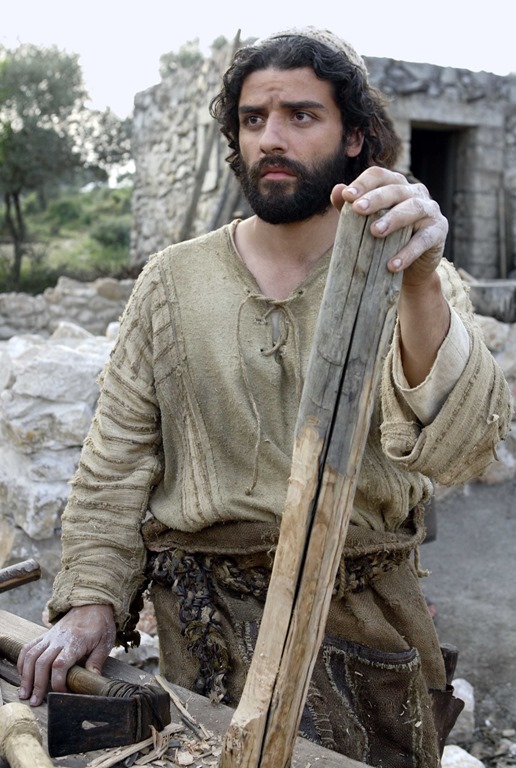
DF-03244
Nativity
,  
May 18, 2006
Photo by Jaimie Trueblood/newline.wireimage.com

To license this image (8837793), contact NewLine:
U.S. +1-212-686-8900 / U.K. +44-207 659 2815 / Australia +61-2-8262-9222 / Japan: +81-3-5464-7020
+1 212-686-8901 (fax)
info@wireimage.com (e-mail)
NewLine.wireimage.com (web site)

Matthew enters his first Old Testament reference in this account of the birth of Jesus. It comes from Isaiah 7:14

See, the virgin will become pregnant; and give birth to a son, and they will name Him Immanuel (which means, “God is with us”)

So here’s Joseph. In his mind, he’s already been made a fool and rejected. Now some sort of angelic being comes in a dream, and says, “don’t worry, she’s still a virgin, she hasn’t been unfaithful. God put the baby in there through his Holy Spirit.”

I think my response might have been, “Yeah, right. Whatever.” But here is Joseph, being played for an even bigger fool than before, and what is his response?

“When Joseph got up from sleeping, he did as the Lord’s angel had commanded him. He married her, but did not know her intimately until she gave birth to a son. And he named him Jesus. (Matt 1:24-25)

Joseph was confronted with a crisis of faith. He had a choice. He could follow proper social convention and save face for himself and protect his injured pride. Or he could step out into the wild abyss of faith, risking ridicule and humiliation. He chose faith. Remember, Joseph didn’t even have a waking angel visitation. It was all in a dream. But he clearly received what the scripture said, the quotation from Isaiah. He chose to trust what God had said in the bible, even though it made him look a fool. And Jesus, his step-son remembered him, and commended him for it. Though we don’t often make a big deal of it, Joseph is truly one of the heroes of faith in the Bible.

There’s another thing, too. Okay, he accepts in faith that God is in this. But now, think of it: Joseph was going to be God’s step-dad. Seriously! There’s a song by Michael Card that I love. The picture is of Joseph standing there, holding Jesus as a baby, rocking him to sleep. And he’s thinking, “How can I do this? How can I be a father to the son of God?” Again, he faced the choice. He could have said, “This is ridiculous. I can’t do this!” He could have made all kinds of objections: “I can’t provide him with the education he will need. I can’t even be sure I’ll be able to feed and clothe this child. How do I raise him? How do I discipline him? Will I need to discipline him?”

But, as before, he responded in faith. The first few chapters of Matthew show us a man who relied on God, was sensitive to him, and responded quickly and obediently to the prompting of the Holy Spirit.

I also think that it is no accident that Joseph heard from God. God picked not only Mary, but Mary and Joseph together. Joseph was ready to hear from God. He was probably the sort of man who wanted to be closer to God, wanted to hear from him. He remained sensitive to him and willing to make the hard choices of faith over feelings, faith over conventional wisdom, faith over fear. He made the choice of faith time after time.

Joseph is great example to us. We think about the birth of Jesus in connection with Christmas, and warm fuzzy feelings. But when we really think about it, that little child is confronting us with a choice. Will we believe and accept that the Creator of the universe willingly joined himself to a human egg, laid aside the privileges of divinity, and became this little baby? We really believe that here, in this frail, impoverished child, with the young, inexperienced mother and the plain, ordinary step-father, is the salvation of the world? Are we willing to take action on that choice of faith?

I hope Joseph’s example will encourage us to say, “yes.” If Joseph can look that stupid, so can we. If he can marry a pregnant woman, be step-father to God’s son, move all around the world because he heard something in a dream, we can certainly give up our pride, and trust this little child Jesus with our lives now, and our eternal future.

DYSFUNCTIONAL FAMILY TREE

geneaology

Jesus looked at this family of cheats, liars, adulterers; broken by sin, riddled with failures, and said “these are my people.”


To listen to the sermon, click the play button:


To download, right click on the link (or do whatever you do on a Mac) and save it to your computer: Download Matthew Part 1


Matthew #1 . Introduction, and Chapter 1:1

We are going to begin a study of Matthew, the first book of the New Testament. In order to understand it better, I want us to begin with some historical and cultural background.

There are roughly four-hundred years between the last historical events recorded in the Old Testament, and the time of Jesus’ birth. A lot happened during that time. I can’t go over it all in detail, but I’ll try to sketch out a rough outline of it, highlighting the things that are important for us to keep in mind as we read the New Testament, and the book of Matthew in particular. This background will come up several different times as we go through Matthew, so keep a copy of this handy, or bookmark this page on the internet.

The last thing recorded in the Old Testament is the return of the exiled Jews from Babylon/Persia. Ezra, Nehemiah and a few of the prophets speak about this time, when the Jews were granted special privileges in the Persian empire, and allowed to rebuild Jerusalem and the temple, which had been destroyed by the Babylonians. During the time of the exile, and afterwards, Jews began building and using synagogues. even after a new temple was built, there were now Jews living all over the world. So they used synagogues – kind of like a “local church” as a place to gather and worship and teach about God.

The Jews living in their homeland were not independent, exactly. They were under the authority of Persian governors. But communication was slow, and the vast Persian empire was fairly inefficient, so they had a measure of autonomy. The language used through the Persian empire was Aramaic. That was the language used in government communications and business transactions. All around the Jews were communities of other groups of people, also under the Persian empire. They had to use Aramaic to communicate with these people. As generations passed, Aramaic became the main language spoken by the Jews. Hebrew was still used in the synagogues for the most part, and some people still spoke it. It wasn’t a dead language, exactly, but Aramaic was usually the primary language spoken by the Jews. However, by 200 years before Jesus, so few of the Jews who lived in Egypt spoke Hebrew that they translated the Hebrew scriptures (the Old Testament) into Greek.

Even before Alexander the Great, the Persian empire had begun to crumble, as Greek civilization flourished and grew in strength. Eventually, the Jewish homeland came under the control of Greek rulers. The Greeks deliberately tried to spread their values, language and way of life to the areas they had conquered. This practice of spreading Greek culture is called “Hellenization.” Certainly by the time of Jesus, the language that everyone used for business and government was Greek.

About 160 years before Jesus, one of the Greek rulers of the Jewish homeland became very aggressive in Hellenizing the Jews. He got personally involved in appointing the Jewish high priest. Some Jews embraced the Greek way of life, and were willing to compromise their faith in accepting it. Others remained staunchly committed to the true faith. Eventually the Greek ruler, sick of all the unrest, decided to stamp out the entire Jewish religion. He entered the temple and desecrated it, offering a blasphemous sacrifice on the altar. But he had gone too far. The whole country revolted, led by a Jewish priest named Judas Maccabaeus. The Greek ruler eventually relented, and on December 25, 165 BC, the temple was cleansed and rededicated. Even today, the Jewish people – including non-religious ones – celebrate this event. It is called Hanukkah.

Judas Maccabaeus, however wanted more than just religious freedom. He continued to lead the rebellion to get political freedom also. He died before that goal was achieved, but the fight was carried on by his family, who are called Hasmoneans. One of his brothers eventually won independence for the Jews. The Hasmoneans were a priestly family, descended from Aaron. The office of priest was supposed to be hereditary, from the tribe of Levi. The High Priest was supposed to be descended from Aaron, brother of Moses. Therefore the first Hasmonean ruler, and all those after him, functioned as both King, and High Priest.

The Jews had independence for about seventy years. They even expanded their kingdom somewhat, dominating the territory formerly known as Edom, now Idumea. The Idumeans were historic rivals of the Jews, dating back the time they descended from Jacob’s brother, Esau.

Outside of their homeland, the Greek empires fell to the power of Rome, although the Romans embraced Greek culture, and approved of Hellenization, continuing to spread it in their conquests. Meanwhile, the Hasmoneans began fighting each other for power. In this power struggle, one of the Hasmonean contenders fled to Idumea, and sought help from the governor there, Antipater.

Seeing the turmoil in the area, the Roman General Pompey led an army into the Jewish homeland, put an end to all the fighting, and himself entered the temple, and stood personally in the Holy of Holies, to show his dominance. This was another desecration, though not as bad as the last. It embittered the Jews against the Romans, however.

The Roman empire went through some internal struggles (between Pompey and Julius Caesar). The Idumean governor, Antipater, threw his support behind Caesar. Caesar was victorious. It is unlikely that Caesar knew much about the Jewish religion. He probably viewed Antipater as a Jew. He rewarded Antipater by granting Jews everywhere special privileges, and making him governor of Judea. The Jews, however, saw Antipater as a pretender, and indeed, the new governor was not a Jew either by birth (he was an Idumean/Edomite) or by practice of religion. They poisoned him.

More fighting and rebellion broke out. One of Antipater’s sons, Herod, escaped the turmoil and made his way to Rome, where he had an audience with Caesar’s successor, Antony. Antony appointed Herod King of Judea in 40 BC. Three years later, with the help of the Romans, Herod conquered the kingdom that had been given to him. This is the Herod who was king (by the support, and under the authority, of Rome) when Jesus was born. He is known as “Herod the Great.”

Herod tried to please his Jewish subjects by building them a new and magnificent temple. But remembering that the Hasmoneans had been both priests and kings, he was afraid to let them continue as high priests. Instead of allowing the Jewish practice of the High Priesthood being passed along through family, Herod took upon himself the authority of appointing the Jewish high priests. Thus, he exerted control over the Jewish religion, though he himself was not a Jew and did not practice it. Not surprisingly, the Jews hated him.

Herod taxed the people in order to administer his kingdom, and frankly, to increase his own wealth. The Romans taxed the province to cover their own expenses also. The tax collectors at every level took extra for themselves. So the people were oppressed by foreign powers, and kept in crushing poverty by unjust, overwhelming taxation. Not so long ago, their ancestors had been free. It is no wonder that they were looking for a Messiah to deliver them.

As I mentioned, the Greeks succeeded in making Greek the language used in business, government, and interactions between people with different primary languages. Therefore, Matthew, and all of the New Testament writers, wrote in Greek.

Matthew begins the book like this: The book of the genealogy of Jesus Christ, son of Abraham, son of David. Considering that a genealogy follows this verse, that’s probably right. But there is a nuance here. The Greek word for genealogy is “genesis.” At its basic level, it means, beginning, or origin. The word that Matthew uses is also the title of the first book of the Old Testament in Greek – the book of Genesis. It is possible that Matthew used this word to imply that in Jesus Christ, there is a new beginning. We’ve had the genesis of the creation of the world, and now, Matthew is bringing us the genesis of the redemption of the world.

As we go through the book of Matthew, we’ll find that he often points out things that are of particular concern to Jewish people (as opposed to Gentiles). No place is more true of that than this genealogy. He begins by pointing out that Jesus is a son of Abraham – that is a true Jew, unlike king Herod. He then calls Jesus the son of David – that is, he has the true lineage of a king, unlike Judas Maccabaeus and the Hasmoneans, who were descended from the wrong tribe to be kings.

Matthew list three “sets” of fourteen generations. These should not be taken as only father-to-son generations. In one place, we know from the books of Kings and Chronicles that Matthew skips from one man to his great-great grandson. So when it says “Uzziah, the father of Jotham” it would more accurate to say, “Uzziah, the ancestor of Jotham.” Most likely, Most likely simply wants to highlight the main people in the line of Jesus. In the Jewish thinking of that day, it is entirely legitimate to skip a few generations when listing a family history. Doing that allows Matthew to make his point, without being overly technical.

Now, some of you may say, “This is Joseph’s family. Jesus was not blood-related to Joseph.” That’s true, of course. But Jesus was adopted by Joseph. The adopted child is just as much an heir as the child by blood. Through adoption, these are the legitimate ancestors of Jesus Christ; just as, through spiritual adoption, we are the legitimate heirs of God’s kingdom through Jesus.

Jesus Christ was born into a human family. His human ancestors included kings. You may wonder how it was that a descendant of the ancient kings was unknown, and unrecognized as royal. Let me give you an illustration of how this could be: I am the king of Serbia. Really. Well, actually, I would be the king of Serbia, if Serbia was still a monarchy, and if several thousand people who are ahead of me in the line of succession were to die, including my own mother and sister and nephew. So, although my ancestry can be traced back (on one side of the family) to a Serbian king, it doesn’t really matter because Serbia doesn’t have kings any more, and even if they did, there are other people more directly in the line of descent.

So, with Jesus, his ancestors can be traced back to King David and beyond, but that doesn’t mean he was in the direct line of inheritance for the throne, and anyway, the Jewish people had not had a king for 500 years before Jesus came into the world.

This list of Jesus’ human ancestors includes some shocking people, and some seemingly insignificant ones too. Matthew starts the list with Abraham. Abraham was a man of faith. But he had his failures. He slept with his slave Hagar; in fear, he lied to kings about his wife Sarah, telling them she was his sister. Isaac, Abraham’s son, was a pretty solid guy. But Jacob, the next in line was a trickster, a con man. He had two wives, and also slept with two different slave girls.

Judah was the next ancestor of Jesus. He was one of the ten brothers who sold their own sibling Joseph as a slave. Matthew records that the line is traced through Judah’s son Perez, who was born to him by Tamar. Tamar was actually Judah’s daughter in law. After her first two husbands died, Judah would not allow her to marry his last son (which, by law, he was supposed to do). So she disguised herself as a prostitute, and Judah, not recognizing her, slept with her, and so the next ancestor of Jesus – Perez – was conceived.

A few generations later came Salmon. Salmon married a prostitute named Rahab (and she wasn’t even an Israelite either) and they had Boaz. Boaz married a foreigner who had been married before, and they had the next ancestor of Jesus.

A while later came King David. David was perhaps the most noble ancestor Jesus had. Yet he had major moral failures also. He committed adultery and murdered the husband of the woman he had sinned with. Then he married that woman, and she became the mother of the next ancestor of Jesus Christ. That’s right, at least one set of Jesus’ ancestors were adulterers. Matthew even remembers her, not as the Queen, nor as David’s wife, but rather “the wife of Uriah” (Uriah was her first husband, the one David had killed).

In fact, in this entire list, Matthew mentions only four mothers: Tamar, Rahab, Ruth, and the wife of Uriah (who was called Bathsheba). Aside from Ruth, the most significant thing about these women is that they were involved in major sins committed by both the mothers and fathers mentioned here. And even Ruth was a foreigner, an outsider to the people of Israel. In other words, it almost seems like Matthew is trying to draw attention to the checkered past of Jesus’ family.

In 1:7-11, Matthew continues with a recitation of the royal ancestors of Jesus proceeding from David until the time of Exile. There are a couple of great kings in this list. Hezekiah was a good ruler and man of faith. Josiah was too. But both of them failed to raise their children in faith. And most of this list is a remembrance of bad kings. Here are a couple of the individuals mentioned:

Manasseh did evil in the eyes of the Lord (2 Kings 21:2)

Ahaz was twenty years old when he began to reign, and he reigned sixteen years in Jerusalem. And he did not do what was right in the eyes of the LORD his God, as his father David had done, but he walked in the way of the kings of Israel. He even burned his son as an offering, according to the despicable practices of the nations whom the LORD drove out before the people of Israel. (2 Kings 16:2-3)

And he [Joram] walked in the way of the kings of Israel, as the house of Ahab had done, for the daughter of Ahab was his wife. And he did what was evil in the sight of the LORD. (2 Kings 8:18)

And he [Amon] did what was evil in the sight of the LORD, as Manasseh his father had done.He walked in all the way in which his father walked and served the idols that his father served and worshiped them. (2 Kings 20:20-21).

You get the picture. Let’s put it plainly. The human ancestors of Jesus the Messiah were a bunch of lecherous, fornicating, murdering, idol-worshiping, faithless thugs. This is the heritage that Jesus was born into. You see it’s not just that Jesus was born into poverty and humility in human terms. He was also born into a heritage of spiritual poverty and spiritual shame. This is the heritage that we all share as human beings. This is what Jesus took upon himself.

When I consider all these, three things occur to me. The first is that Jesus’ humanity extended to having a dysfunctional family, and relatives that did shameful things. Although he himself committed no sins, the sin that corrupted the entire human race was a part of his human heritage. For our sake, he took that heritage upon himself.

God made him who had no sin, to be sin for us, that we might become the righteousness of God. (2 Cor 5:21)

That began at the moment of Jesus’ conception. That sin-heritage was completely and inextricably bound with the humanity that Jesus inherited from Mary, and even from his adopted family in Joseph.

Second, it seems clear that the Holy Spirit inspired Matthew to deliberately include these particular people in the recounting of Jesus’ human heritage. The Lord seems to be pointing out that he can and does use even deeply flawed people. Some of these ancestors of Jesus never repented, and everything I know about the bible suggests that many of them will be in Hell, not heaven. But even so, God used them, willing or unwilling.

Third, even these deeply flawed people can be redeemed. As I just mentioned, some of them rejected God’s grace. But others – like Judah and David and Josiah – repented and received redemption. In fact, that is why Jesus came – to bring the redemption that had to come both from humanity and from God. Jesus, eternally God, but born human on a particular day in history, is the only way for that redemption to be total and effective. He bore in his nature the weakness of humanity and the strength of divinity.

I want you to think about it like this: alone, out of every human that has ever been born, Jesus got to choose his own birth family. And this is the one he chose. These are his people. These liars, cheats, and thugs, these rejected outsiders and failures are his people – by choice!

You and I are his people. One of the greatest tragedies that I ever see is people thinking that they are not “good enough” for Jesus. If you are a cheat, an adulterer, a murderer, an outsider, come join the family. You’ll fit right in with Jesus’ family. I know the church sometimes makes it hard, because we do try to behave better than that, and we know the standard is better than that. But the starting place for everyone in relationship to Jesus is right where you are, at this very moment. Jesus didn’t wait for his family to get cleaned up before he joined them. Instead, he joined them; then he cleaned them up himself.

Maybe you know someone who feels like they already have too many disadvantages to ever become a redeemed, holy follower of Jesus. Maybe you feel like that. Maybe you feel like you could never have anything to do with a Holy God. Well, just look at where this Holy Messiah came from. He didn’t have a better family than you. He wasn’t born in a nicer place. He took on all the disadvantages that humanity has to offer, so that HE could offer YOU every advantage of heaven. all you need to do is have the faith to believe the gift is truly given to you, and to reach out and receive it.


~

I want to briefly make you aware of our situation. This ministry (Clear Bible) until recently was supported by our local church. However, we have had some changes there, and we are now a house church. Today, we have about 8 families. Our church cannot fully support me financially any longer.


In contrast, about 430 people subscribe to this blog, and an additional 300 or so each week come and visit the site. In other words, by far, most of the people who benefit from this ministry are not part of our little church.


I’m asking you internet readers/listeners to pray for us. Seriously, before you give any financial support, please give us some prayer support. I value that more than anything else. Pray for this ministry to touch lives. Pray also for financial provision for my family and me.

But then, as you pray, do ask the Lord if he wants you to give financially as well. Be assured, after a small fee to Paypal, 100% of your donations will go to help support my family and me in ministry. In turn, supporting this blog means that you are helping to bless more than 15,000 people each year who visit this blog.


Some of you may have noticed that I am also a novelist. Often, people have misconceptions about authors. Most of us, including me, make a part-time income through writing, and no more. In other words, we aren’t “raking it in” somewhere else. Now, we trust the Lord to provide, and I don’t want you to give out of guilt or fear. I just don’t want you to get the idea that your donations will only be an “extra” for us somehow.


If most of our subscribers gave just five or ten dollars each month, (or even less, if everyone pitched in) we would be in good shape. It’s easy to set up a recurring donation when you click the Paypal donate button that is located on the right hand side of this page, down just a little ways.


You could also send a check to:

New Joy Fellowship

625 Spring Creek Road

Lebanon, TN 37087


Your check will be tax-deductible. Unfortunately, we cannot do the tax deductible option with the paypal donate button, however the money does go directly to support my family and me.


Thank for your prayers, and your support!

PRACTICAL BIBLE STUDY TOOLS

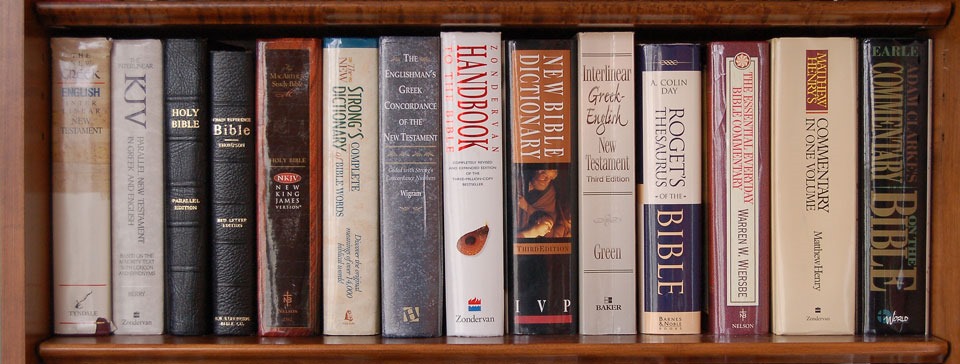
bible-study-960.6062528

Here are some practical resources and tools for understanding the bible better.

To listen to the sermon, click the play button:

To download, right click on the link (or do whatever you do on a Mac) and save it to your computer: Download Understanding the Bible Part 10

Understanding the Bible #10.

To close out our series on understanding the bible, I want to offer you some practical things that will help you understand and study the bible for yourself.

First, to really get a grasp on things, you need the right tools. Though a lot of the bible is easy to understand, bible scholarship is, in fact an ancient and scholarly discipline. You don’t need an advanced degree to get a lot out of the bible, but it really is worth a little time and effort on your part to understand it better. In other words, if you are going to look at the bible as a primary source of wisdom and guidance for your life (and I highly recommend that you do; not only that, the first message in this series explains why you should consider doing so) you should take it seriously.

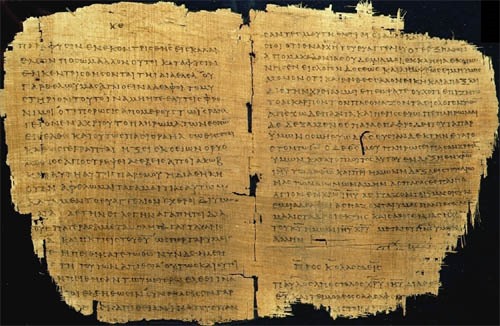
Start with a high-quality, understandable modern-English translation. I know about the King-James-Version-only people out there. I’m not trying to make anyone angry, but frankly the arguments for using the King James translation are short-sighted, ignorant, and mostly just plain wrong. The most “intellectual” sounding argument for the KJV is that it is based on a certain set of Greek Texts known as the Textus Receptus. The KJV-only crowd maintains that the other Greek Texts are corrupted by false-doctrine. I’ve already explained to you about the huge number of ancient copies of the New Testament in Greek (in part 3 of this series). The textual variants (also spoken of in part 3) are stunningly insignificant. In other words, there is not actually much difference between the textus recptus and what we call the “majority text” (which is the basis for most other bible translations). From time to time, when I’m studying the bible, I compare the two. This isn’t a comprehensive study, but I’ve found only two “significant” differences, and in both cases, it was proven long ago that the textus receptus was altered. Even so, those differences do not change any major doctrine.

Of course, all that is for the New Testament. The source-documents of the Old Testament is the same for virtually all bibles.

If the majority text was so different from the textus receptus, then long ago, two branches of Christianity would have developed, based upon the two different textual traditions. That hasn’t happened, because the only major difference between the King James Version (KJV) and modern English translations, is that the KJV has to be translated not only from Greek to English, but also from early 17th century English into modern English. In other words, the main difference is that the KJV isn’t very understandable to modern English speakers.

Sorry for the rant. To continue, I highly recommend the English Standard Version (ESV) and also the Holman Christian Standard Bible (HCSB). Both of them are highly accurate compared with the original Greek and Hebrew. The ESV renders the Greek and Hebrew a little more literally – as much like “word for word” as possible. The HCSB is also very accurate, but is willing to “bend” a little to make it more readable.

You can buy both of these bible versions online, or at many local bookstores or bookstore chains. You can also get them free with various bible apps or software programs. I highly recommend getting a study bible version of one of these translations. A study bible is a bible that has notes (usually on the lower half of the page) giving background and explanation about the verses you are reading. Study bibles are a very helpful tool when you are just getting started, and even as you learn more. I’ve placed a “Bible Study Resources” page into my Amazon a-store. Most of the resources I mention here are available for sale there, including the ESV Study Bible, the HSCB Apologetics Study Bible, and my standard from about 1986-2007, the Concordia Self-Study Bible. If you click through from here, the price will be the same as directly from Amazon, but I’ll get a few nickels for commission.

I have an inexpensive Android tablet, and on it, I use the free Olive Tree Bible Study app (I don’t get a commission for anything but the resources on my Amazon a-store. I’m just sharing resources that I think are good). Look it up in Google Play, or from your apple device. The link here will take you to their free Bible translations page, which includes my two favorite translations, the ESV and the HCSB. I paid extra to get the ESV Study Bible notes, to attach to whatever translation I’m reading in the app.

I also found a great web-based study bible, built on the HCSB, at https://www.mystudybible.com/

Many of you have asked about how to learn the cultural and historical background that is so important for understanding the bible. Certainly, blogs like this one, and reliable, solid preachers and teachers are a good place to start. I also recently found Fred Wright’s Manners and Customs of Bible Times as a free PDF download. You can right-click the link in the previous sentence, and download it. It’s a great historical/cultural resource. It was written in 1953, but all bible-times were before that, so it’s still accurate!

I also highly recommend Eerdmans’ Handbook to the Bible, which is easy to find in my a-store. I own the British version of this, which was given to me by my parents when I was thirteen years old. The information I learned from it is still helpful to me today, and I still occasionally use it as a reference. Zondervan’s Handbook to the Bible is the latest version of that, but I have not personally looked at it to see what they might have changed.

Another very helpful Bible Study tool in this day and age is a good computer program for Bible Study. Over the years, I have paid hundreds of dollars for various versions of three different programs (QuickVerse, PC Study Bible and Logos). However, three years ago I settled on a fourth, free program that is truly excellent: The Word. If you do end up using and appreciating The Word, I encourage you to donate something to the program’s creator Konstantinos Stergiou – I did (and I get nothing from this – I just think the guy deserves to be blessed for his amazing work, offered for free). The program may take a little while to learn, but it’s worth it. There are hundreds of free add-on resources you can use with The Word to enhance your Bible Study, and there are paid modules as well, if you are interested.

If you are staying “old school” and prefer physical books, I do recommend that you get a bible that includes both cross references, and a concordance in the back. A cross reference is like a footnote – it is a suggestion of other bible verses that talk about the same topic as the verse that is noted. You can learn a lot by following the cross references to other parts of the bible. This helps the bible to “explain itself,” so to speak. A concordance is a list of words that appear in the bible, and where. There are some stand-alone exhaustive concordances, but most study bibles have decent partial-concordances in the back. They are helpful for finding verses if you only remember a key word, or for helping you understand how certain words are used throughout scripture.

Come back to this sermon series from time to time – we’ve covered a lot of ground that should help you understand the bible better as you encounter parts of it that seem difficult.

All right, let’s say you have assembled your tools. You have a book on the historical and cultural background of the bible. You have a study bible, or bible app, with the ability to find cross references and search for specific words. Maybe you have a computer program, or a web-based bible-software program. Now what?

Let me give you simple way to get more out of your bible.

Remember, as you read, read it in context. Learn about the history and culture, as necessary. Pay attention to the genre. Check cross references. Remember to use the clear parts of the bible to help you understand what is not clear. Look up key words in a dictionary and concordance. And then do this: SPECK.

Look at the passage you want to study, and go through SPECK, one letter at time.

S – read the verses and see if there is a sin identified here. Is the Lord calling you to repent of it? Is he warning you to stay away from it?

P – read the verses again, this time looking for promises. Is the Lord speaking to you through a promise here? If you are ambitious, you can also look for prophecies (which also begin with “p”).

E – read the verses yet again, now looking for encouragement and exhortation. How does the Lord want to cheer you on through these verses? How is he calling you to keep going?

C – now read through your passage and see if there any commands to consider. Is the Lord asking you to respond to him in a certain way through these verses?

K – read a fifth time. Is there any information or knowledge that you have gained from these verses?

After you SPECK, I encourage you to write a short note/prayer to the Lord. Something simple like this:

Lord, as I read John 3:16-18, I see that sometimes I sin by not trusting you. But I also hear your promise that as I trust you, you save me. You don’t condemn me. Thank you for your mercy and grace! Increase my trust in you! Help me to trust you in these things that are going on in my life right now, as well as for eternal life. AMEN

Writing down your thoughts or prayers help to solidify God’s word to you in your mind and heart. If you do it regularly over time, later it becomes a source of encouragement and hope to go back and see how God has spoken to you throughout the years.

I hope this series has been of help you to you understanding where the bible came from, why we can trust it, and how to understand it. I’d love to hear your comments and questions.

~

I want to briefly make you aware of our situation. This ministry (Clear Bible) until recently was supported by our local church. However, we have had some changes there, and we are now a house church. Today, we have about 8 families. Our church cannot fully support me financially any longer.

 In contrast, about 430 people subscribe to this blog, and an additional 300 or so each week come and visit the site. In other words, by far, most of the people who benefit from this ministry are not part of our little church.

 I’m asking you internet readers/listeners to pray for us. Seriously, before you give any financial support, please give us some prayer support. I value that more than anything else. Pray for this ministry to touch lives. Pray also for financial provision for my family and me.

But then, as you pray, do ask the Lord if he wants you to give financially as well. Be assured, after a small fee to Paypal, 100% of your donations will go to help support my family and me in ministry. In turn, supporting this blog means that you are helping to bless more than 15,000 people each year who visit this blog.


Some of you may have noticed that I am also a novelist. Often, people have misconceptions about authors. Most of us, including me, make a part-time income through writing, and no more. In other words, we aren’t “raking it in” somewhere else. Now, we trust the Lord to provide, and I don’t want you to give out of guilt or fear. I just don’t want you to get the idea that your donations will only be an “extra” for us somehow.

 If most of our subscribers gave just five or ten dollars each month, (or even less, if everyone pitched in) we would be in good shape. It’s easy to set up a recurring donation when you click the Paypal donate button that is located on the right hand side of this page, down just a little ways.

 You could also send a check to:

New Joy Fellowship

625 Spring Creek Road

Lebanon, TN 37087

 Your check will be tax-deductible. Unfortunately, we cannot do the tax deductible option with the paypal donate button, however the money does go directly to support my family and me.

 Thank for your prayers, and your support!

WHAT IF JESUS DIDN’T SAY IT?

words in red

We tend to place a high value on Jesus’ words – the “words in red,” and we should. But we should place the same value on the entire New Testament. After all, the source is exactly the same.


To listen to the sermon, click the play button:

To download, right click on the link (or do whatever you do on a Mac) and save it to your computer: Download Understanding the Bible Part 9


Understanding the Bible #9.

As we’ve gone through this series, I’ve heard a few questions people have asked that I think are worth delving into. Recently, someone showed me a post on Facebook. The caption said: “What Jesus said about Homosexuality” Underneath it was…nothing. That’s accurate, in a technical sense, but not the complete story. For one thing, Jesus’ apostles did say some things about the subject, elsewhere in the New Testament. In any case, the point, presumably, is that Christians should not be saying anything about it, since Jesus didn’t. A similar issue was raised by an Albanian man that I spoke with in Corfu, Greece last fall. He argued that Jesus never claimed to be God – instead, that claim was made by the apostles, not Jesus himself.

Both of these arguments depend upon the same kind of faulty reasoning, and the same silly and inconsistent approach to the bible. The first part of it goes like this: “It’s supposed to be all about Jesus, right? So I’ll listen only to the words of Jesus. What the apostles wrote doesn’t matter.”

Let’s look at this by using another issue, one that is not controversial today. Here it is, another thing that is technically true: Jesus never said anything about slavery. Think about that for a moment. What does that mean? Did Jesus endorse slavery? Does that mean we Christians should not call slave-trading wrong and sinful?

Now, class it’s time to see if you’ve been paying attention. Does anyone remember where the New Testament came from? How is that we know what Jesus said in the first place? The apostles heard it, taught it, and wrote it down. To put it another way, it is the apostles who gave us the words of Jesus. If you don’t want to pay attention to what the apostles wrote, than you cannot pay attention to what Jesus said either, since we got that from the apostles.

Let’s look at it another way. Earlier in this series, we found a lot of evidence to suggest that the apostles wrote reliably and accurately about real historical events and situations, and also about Jesus and his teaching. There is no legitimate reason to accept the gospels, which were written by his apostles, but not the other writings of the other apostles. If you believe that the apostles correctly recorded that Jesus said, “Love your neighbor,” you have exactly the same reasons for believing that the apostles are passing on the teaching of Jesus when they tell us that slave-trading is evil (1 Timothy 1:10) – even though we cannot find Jesus directly saying so in the gospels.

To put it simply: the entire New Testament is the teaching of, and about Jesus. It all comes from the same source – the Holy Spirit, who inspired the apostles to remember and write. We know what Jesus said, because the apostles wrote it down. Although the letters of the New Testament are in a different form than the gospels, they are still the teachings of Jesus, passed on by the apostles. In other words, what Paul writes in Romans should be just as important to us as what Jesus says in the book of Mark.

There’s another thing. John makes it clear that his own gospel does contain every single word that Jesus ever said. The way he puts it, not even the other three gospels would suffice to write down everything Jesus did and said:

And there are also many other things that Jesus did, which, if they were written one by one, I suppose not even the world itself could contain the books that would be written. (John 21:25, HCSB)

Jesus told the apostles that the Holy Spirit would remind them of what he said, and make it clear to them, and also tell them other things that they need to know:

“I still have many things to tell you, but you can’t bear them now. When the Spirit of truth comes, He will guide you into all the truth. For He will not speak on His own, but He will speak whatever He hears. He will also declare to you what is to come. He will glorify Me, because He will take from what is Mine and declare it to you. Everything the Father has is Mine. This is why I told you that He takes from what is Mine and will declare it to you. (John 16:12-15, HCSB)

We believe, as Jesus said, that the Holy Spirit reminded the apostles what Jesus said, and also revealed other important truth to them, and guided them as they wrote it down. That applies, not just to the gospels, but to the entire New Testament. In this passage, Jesus himself says that after he leaves this world, the Spirit would guide them into truth that they had not yet received from him. So, if you don’t believe the Holy Spirit inspired Paul to write what Jesus thinks about slave-trading, why do you believe he inspired Luke to write that Jesus has concern for the poor?

The first answer to the person who claims that Jesus said nothing about a given topic is to see whether that topic shows up anywhere else in the New Testament. If it does, than you can be sure, it is the teaching of Jesus. Technically, it’s true that Matthew, Mark, Luke and John do not record any direct quotes of Jesus that use the word “slave-trader.” But Paul, inspired by the Holy Spirit to share the teaching of and about Jesus, does say something about it.

Some people will argue that Paul did not know Jesus personally, and so his letters are not the real teaching of Jesus. We went over all that in part #3 of this series. Paul claimed that Jesus appeared to him specially, quite some time after his resurrection, and opened his mind to know and understand the Good News (Gal 12:1-16; 1 Corinthians 15:8-10; 2 Corinthians 12:1-7). The other apostles, the ones who had actually known Jesus, affirmed that Paul was preaching and teaching the true message of Jesus (Gal 2:6-10; 2 Peter 3:15-16; Acts 9:22-30; 15:1-35). In fact, all throughout the book of Acts we have ample evidence that Paul was accepted early on as an apostle of Jesus, and his teaching was in accord with the rest of the apostles.

Let me say it again: the entire New Testament, including the letters of Paul, is the teaching of Jesus, passed on by the Holy Spirit, through the apostles. We have all sorts evidence to affirm this, and none to contradict it.

Saying “I only believe or follow the words in red [Jesus’ words],” is in fact, silly and illogical. The “words in red” came from the same place as the rest of the New Testament – the apostles. If you don’t believe the apostles were inspired by the Holy Spirit and the memory of Jesus’ teachings to write what they wrote in their letters, there is no reason to believe that they got the words of Jesus in the gospels correct either. Of course, I’ve already shared, earlier in the series, the many reasons I think the apostles got it all right.

This series has been here to answer questions you might have about the bible, or how to understand it. Because of that, I want to explore one more side of the “Jesus didn’t say anything about this…” question. Last week, in a small group meeting, I pointed out that Jesus never said anything about slavery. One of our excellent teenagers said, “Yeah, but doesn’t the golden rule kind of cover that?” In words, though he didn’t specifically talk about slavery, Jesus did say, “Do unto others as you would have them do unto you.” In other words, according to the teaching of Jesus, if you don’t think you’d like being a slave yourself, you shouldn’t make slaves of anyone else.

This is a great point. Jesus did not overtly condemn prostitution, child-pornography, or incest, either. But you don’t have to be a trained theologian to recognize that Jesus often said things that apply to a whole host of different situations. In Matthew 19:1-6. Jesus made a broad, sweeping statement about human sexual relationships. He said that God created sex for marriage between a man and a woman. Any kind of sex outside of the marriage relationship is called, in Greek, “porneia.” The most popular English bibles translate this “sexual immorality,” or “immorality.” Jesus didn’t name all the possibilities included in “sexual immorality,” but he made it clear that he meant anything sexual outside of one-woman/one man marriage. In Matthew 15:19, among other places, he makes it clear that all sexual immorality creates a problem with God’s moral law. Now, Jesus fulfilled the moral law on our behalf, and if we trust him, we are forgiven. If we really do trust him, he is now living inside us, and he doesn’t want our lives to be used in that way anymore – it goes against his Holy nature, and he has placed that Holy nature inside of us. Therefore, as Jesus-followers, we are supposed to stop it if we’ve done it, and stay away from it from now on. If we need help to do so, we can receive that help from the Holy Spirit and from other believers. The rest of the New Testament affirms all this.

The point is not to condemn anyone who has sinned in this way. The point is, Jesus did in fact teach about all human sexuality, even if he didn’t specifically name certain sins. If we claim to follow him, we should at least be heading in the direction he points, even if we follow imperfectly.

This turns out be the case concerning most of the other things that Jesus did not specifically talk about. And, as we have said, even when Jesus didn’t say something specifically in one of the gospels, we have the rest of the New Testament which also reliably passes on the teaching of and about Jesus.

~

A completely different question was raised in one our discussions in our house-church. Some people wanted to know more about what we call “apocalyptic prophecy.” I mentioned this kind of scripture briefly in part six of the series. We’ll go over it again here with a little more depth because some folks had further questions about it, and truthfully, apocalyptic prophecy represents one of the most misunderstood and misused parts of the bible.

Apocalyptic prophecy is fairly rare in the bible. Most of it is found in parts of Ezekiel, Daniel, Zechariah and revelation (and a few other chapters, scattered throughout some of the other prophetic books). This genre features vivid imagery, key numbers and tends to be extremely confusing. Apocalyptic often reads like someone’s strange dream. The apocalyptic parts of the bible often appear to be talking about the “end times” (the period of history right before the end of the world), and they are frequently used by cults to come up with all sorts of weird doctrines.

We have to read it in context. Particularly important is to understand the historical and cultural context in which the prophet lived. We need to understand that the language of apocalyptic is definitely not literal, or teaching or even narrative. It is poetic and even mystical. We need to hold firmly to the clear and easily understandable portions of the bible, and use those to aid our understanding of apocalyptic prophecy. With apocalyptic, I am even willing say that we should be open to the possibility that we won’t completely clearly understand what is meant. We should never use apocalyptic in a way that contradicts what is already clear in different parts of the bible.

One of the worst abuses of apocalyptic prophecy is to use it as kind of a road-map, or detailed timeline of the end-times. It is most definitely not intended to be anything like that. Concerning the end of the world, and his return, Jesus said,

“Now concerning that day and hour no one knows — neither the angels in heaven, nor the Son — except the Father only. (Matt 24:36, HCSB)

That is clear. Therefore, we should not interpret apocalyptic prophecy as a definitive roadmap to the end times. If it clearly gave us a timeline to the return of Jesus and the end of the old world, then Jesus would have been wrong in saying that no one can know for sure when it will be. Apocalyptic prophecy may tell us the types of things that will happening, but it certainly can’t be specific enough so that people will then be able to say “Aha! According to Revelation, the world will definitely end within the next three to five years!”

The main apocalyptic parts of the bible were prophesied to God’s people when they were severely oppressed by powerful foreign empires. Ezekiel and Daniel spoke to those who lived as captives under the Babylonians, Persians and Medes. Zechariah, not long after, prophesied to people who were trying to re-establish a colony of Jews in Israel, surrounded by powerful and lawless nations around them. John wrote Revelation at a time when the Roman Emperor, Domitian, pursued the active persecution of Christians. Domitian was aided in this by some Jewish communities who saw Christianity as blasphemy, and wanted it destroyed.

Because virtually all apocalyptic prophecy was written in similar historical circumstances, there are certain features that we can learn about all of it. Because it was written to people under foreign oppression, it contains images and pictures that would have been understandable to those who heard them, but almost incomprehensible to outsiders. In other words, apocalyptic was a kind of code language to people in persecution. The code is not about some secret key to the end-times – what the code hides are words of judgment upon the oppressors, and encouragement and hope for the oppressed.

The problem is that we today, are mostly outsiders. It’s hard for us to understand the significance of the weird visions and dreams of apocalyptic literature. The first step in understanding is to realize that we do not understand, and we need to investigate a lot more before we can see these prophecies the same way the original hearers understood them.

But here is one thing that can help: The main message of the apocalyptic prophecies is consistently one of hope; God has not forgotten his people, and he will take steps to deliver them and to bring justice against those who have persecuted them. He is still active in history, he still has plans, and he intends to carry them out.

We get caught up in what, specifically, those plans are. But the point is more that God has them, than that we are supposed to know them in great detail. Take, for example, the book of Revelation. It was written to Christians who were suffering under the oppression Roman government, which was aided by angry Jewish communities. When we look at the book from a big-picture perspective, we see that again and again, it repeats these messages:

  • · The Lord knows that you are suffering, and he hasn’t forgotten you.
  • · Those who oppress you will be judged for what they have done
  • · God has a plan to redeem and save you
  • · God hasn’t stopped acting in history. He has plans to bring human history to the place where he wants it to be
  • · Death, and the end of history are things for believers to look forward to – God’s plans for you are wonderful, and go far beyond this life on our present earth.

These are the main things we are supposed to get from Revelation. Often we fail to get these wonderful messages of grace, because we are too caught up in things like trying to figure out which individual the anti-Christ is. But all we really need to know is that the anti-Christ is bad, and God has plans for defeating him and protecting you from him. While he does that, you will not be forgotten, and the Lord will be with you in your trials.

Let me try and give you an example of understanding apocalyptic prophecy. Revelation 13:1-10 describes a “beast.” I’m almost certain that the first readers of Revelation would have understood that the “beast” was a code word for the Roman Empire and its emperor, Domitian. Domitian demanded that everyone in the Roman world worship the Emperor as a divine being. He severely persecuted everyone who refused to do so (Jews were exempted from this, but not Christians). The first Christians to read Revelation would easily have identified what John’s vision described.

But in this day and age, the same message could apply to Christians who suffer under Islamic persecution. In such places, Muslims demand that everyone must confess: “Allah is God, and Mohammed is his Prophet.” Like the beast of Revelation 13, Islam has authority in many places to blaspheme (according to Christians) and to persecute those who do not agree with them or worship as Muslims.

In this way, we can see that apocalyptic prophecy can remain relevant and encouraging to Christians throughout history. My advice is to consider apocalyptic prophecy in this way, and abandon any silly attempts to use it as a timeline of the end times.

Well, we’ve covered a lot of ground this time. Hopefully, it all helps as we learn to understand the bible.

DID JESUS REALLY COME TO BRING PEACE ON EARTH?

mary_2

This little baby presents each one of us with a difficult choice. Even Mary, his mother, was faced with the same choice.

To listen to the sermon, click the play button:


To download, right click on the link (or do whatever you do on a Mac) and save it to your computer: Download Christmas 2013


Christmas Eve 2013

Luke 1:26-38. Mary

Tonight, I’d like to focus a little on Mary, the mother of Jesus. We think of her as holy and exalted. She carried the divine nature of God, joined to her egg, within her very body. She shared her own blood with Jesus. Think of it – the blood that he shed for the salvation of the world came originally from her. After he was born, she nursed him, feeding him still from her own body. She wiped his bottom when he did what all babies do. And yet, he was ultimately her Lord, her creator, her savior. In some ways, Mary must have had the most unique relationship with Jesus that any human being has ever had.

Even so, I think we can learn from Mary. In many other ways, her experiences were exactly like our own. One of the messages of Christmas, of Jesus coming to earth, is that we are faced with a choice. He isn’t just a sweet little baby. He himself said:

“Do not think that I have come to bring peace to the earth. I have not come to bring peace, but a sword. For I have come to set a man against his father, and a daughter against her mother, and a daughter-in-law against her mother-in-law. And a person’s enemies will be those of his own household. Whoever loves father or mother more than me is not worthy of me, and whoever loves son or daughter more than me is not worthy of me. And whoever does not take his cross and follow me is not worthy of me. Whoever finds his life will lose it, and whoever loses his life for my sake will find it. (Matt 10:34-39, ESV2011)

And yet, we think of Christmas as a time for “peace on earth.” The truth is, Jesus is divisive, because he calls us to respond to him. Even Mary, who, for more than anyone, had a real relationship with a sweet little baby, found that even Jesus as a baby, as an unborn baby, presented her with a difficult choice.

Let’s back up to a young woman entering adulthood. We make much of the fact that Mary was only a teenager, but in her culture, she was considered an adult. She was betrothed to Joseph, a carpenter. In that culture, her betrothal meant several things. First, it meant that the marriage was a done deal. Solemn promises and vows had already been exchanged. The only thing different between betrothal and marriage was that the couple did not yet live together, and had not consummated the marriage. Breaking a betrothal was like getting a divorce.

Generally, the betrothal period lasted about a year. I’m not sure why. It’s likely that it might take that much time for bridegroom to raise the necessary money for the bride-price and for the wedding festivities. It would probably also take several months to spread the word and gather any relatives who lived far away.

Wedding festivities lasted for week. The actual “wedding” began with an extensive parade through the town. The bridegroom paraded to the house of his wife, with friends and family accompanying him and celebrating along the way. It was obviously a very public occasion; in a small town, a wedding would be almost like a holiday.

On this occasion, the bride would be wearing the beautiful clothing that she could possibly obtain. Her hair would be elaborately styled, and all in all, she would feel as beautiful as she ever would in this life. For this one day, all eyes would see her as beautiful.

After meeting at her family’s house, the bride and groom would parade back through the town, again with singing and celebrating, to the home of the groom. Again, they would be surrounded with the joyful faces of friends and families, singing, shouting and joking.

Back at the groom’s home, they would eat one of the most lavish and delicious meals of their lives. A wedding in those difficult times was one of the few places you could count on to eat more than enough of your favorite foods. Guests would look forward to the food alone for months ahead of time. Surrounded by loving family and friends, the bride and groom would be blessed, prayed for and toasted. They wore crowns, and were treated like royalty on this day. After that, after the guests departed, the couple would consummate the marriage, and they would be officially husband and wife.

The angel came to Mary sometime during the year of betrothal. Aside from whatever daily chores she had to do, her life would have been consumed with the details of the coming wedding. In dirt-poor Nazareth, her wedding was one of the only major life-events that Mary had to really look forward to. No one took vacations or pleasure trips, or had the resources for such things. For a young woman like Mary, her wedding was going to be the highlight of her entire life.

Now, enter the angel. He told her that she would become pregnant. It was obvious that he meant right now, not after she was officially married, but now, before she had ever been with a man. We know from Matthew’s account that Joseph found out Mary was pregnant some time before the wedding celebration, so this may have happened fairly early during the year of betrothal.

And just like that, there went the one thing in all her life that Mary had to look forward to. She didn’t know Joseph very well – engaged couples were seldom in love, or even close to each other, before the marriage. The safe assumption was that Joseph would divorce her before the wedding day.

We know that a quiet divorce was, in fact, Joseph’s plan. God intervened and angel appeared to him also. Trusting God, Joseph did not divorce her. Matthew records that he took her as his wife, but that they did not consummate the marriage until after Jesus was born (Matthew 1:24-25). He doesn’t give any great detail about the timeline – in other words we don’t actually when they were married. Luke, with a little more detail, suggests that they were still only engaged when Jesus was born (Luke 2:1-7).

I think it is quite probable that Mary never got her “event-of-a-lifetime” wedding. In fact, I doubt they had any wedding celebration at all. It was highly unlikely that they would do so, because it would only highlight the shameful and disgraceful fact of her pregnancy. If they had the celebration after Jesus was born, it would have been just as bad. Of course, Joseph and Mary knew that there was nothing shameful or wrong going on, but no one else was likely to believe them. If they had a wedding celebration, many guests might have refused to come.

I think this is one reason why both Joseph and Mary went to Bethlehem for the census. It was probably sufficient for Joseph to go alone, but they were probably both eager to get out of Nazareth and the shame and disgrace they were under. There are indications that they lived in Bethlehem for almost two years after Jesus was born. The census certainly did not require them to move there. I think they weren’t excited to get back to Nazareth.

Now, understanding the background, I want to say this a different way. When Mary received Jesus into her body and her life, it meant she lost the one cherished event in her whole life that she was really looking forward to. It meant she was exposing herself to disgrace and ridicule, and accepting a very uncertain future. It wasn’t as easy as saying “I get to be the Messiah’s mother? Cool! Bring it on!” By agreeing, Mary was inviting, divorce (without ever getting the fun of the wedding), ridicule and shame. She was relinquishing her only chance to have just one beautiful shining week in a life that was otherwise filled with crushing poverty.

I’ve thought before, the angel said that Mary had God’s favor. God has a funny way of showing his favor. It probably wasn’t what Mary would have chosen for herself.

With all that in mind, listen to her reply:

And Mary said, “Behold, I am the servant of the Lord; let it be to me according to your word.” (Luke 1:38, ESV2011)

Mary’s sacrifice is something we often overlook in the warm-fuzzies of Christmas. We are happy enough to contemplate the little baby Jesus, all clean and quiet. We could hold that little child and feel all peaceful and happy. Mary did. But she also gave up her own dreams to do so, and received much hardship and disgrace in their place. It really cost her something to receive Jesus.

Are we ready to recognize that receiving Jesus costs us our own agenda, or own control over our lives? Mary took Jesus on God’s terms, not her own. It meant giving up something she really wanted, but she was willing to do so. Are you ready to do the same? Can you receive Jesus on God’s terms, and give up your requirements?

The good news, is that when Mary did that, she found incredible grace and joy. A few months later, talking to her relative, Elizabeth, she said:

And Mary said, “My soul magnifies the Lord, ​and my spirit rejoices in God my Savior,

for he has looked on the humble estate of his servant.

For behold, from now on all generations will call me blessed;

for he who is mighty has done great things for me, and holy is his name. (Luke 1:46-49, ESV2011)

When we give up our agenda, and humbly say, “I’m your servant, Lord. I’ll receive you on your terms,” we may lose some cherished dream, or control over life the way we want it. But in turn, we do receive the Savior, the healer of our souls, the unending source of grace and unquenchable joy. Mary could have had a week of joy during her wedding feast. She gave that up for an eternity of joy in presence of God. Losing her wedding, being subject to disgrace, she actually felt blessed, because what she received was greater than what she gave up.

My prayer for all of us this Christmas is that we make the same choice as Mary, and unconditionally receive into our lives the Savior of the world, the Lord of our lives, Jesus Christ.

HOW CAN WE UNDERSTAND THE BIBLE?

do-not-judge.001

The bible has been proved historically reliable many times, but it does get misused an awful lot. Sometimes, people don’t want to believe it because they don’t really understand it. Too many people read the bible to use it in arguments, instead of reading it to get to know Jesus better.

To listen to the sermon, click the play button:


To download, right click on the link (or do whatever you do on a Mac) and save it to your computer:
Download Understanding the Bible Part
Understanding the Bible #5

We’ve learned where the Old and New Testaments came from. We know by objective, scientific criteria that the documents we have today are accurately preserved copies of what was first written or spoken. We understand from archaeology that both the Old and New Testaments are historically reliable. These things are facts, not religious opinion. Most of these facts were discovered by people who were trying to prove the opposite.

Though the bible is completely reliable in the history that it records, it isn’t simply a book of history. It tells us other things that we cannot verify with science; things about God, human nature, human relationships and human-God interactions. It even talks about things that we rarely see (if at all) in our lifetimes: the parting of the Red Sea, the feeding of the five thousand, healings and exorcisms. I think this is one of the main reasons people ignore the bible. These aren’t every day events. It’s hard to believe that stuff like that ever happened. Maybe you have struggled with the same thing.

Let me address that briefly. Consider a person whom you think is entirely reliable. If she tells you that chicken is only $0.99/pound at Kroger on Wednesday, you know that you can go to Kroger and find chicken for exactly that price. If she tells you that she once met the mayor of New York City, it does not surprise you at all when she produces a picture of her with the Mayor, and a signed note from him to her. If you ask her to give you the square root of 361, you can bet your next paycheck that she’ll say 19.

Now, suppose, one day, your friend tells you that she just found out she has cancer. You know she wouldn’t lie to you. You know she wouldn’t be mistaken. You absolutely believe she has cancer. A few weeks later, she tells you that she went to a prayer meeting, and people prayed for her healing. A few days after that, she went to the doctor, and found out she is now entirely cancer-free. She claims she has been miraculously healed. Would you believe her?

You would believe your friend about the price of chicken, the mayor of New York and square root of 361. You would believe her when she told you she had cancer. So why wouldn’t you believe her when she says she was miraculously healed?

If you would not believe in the miracle, I suggest to you that there is only one reason: you have a pre-existing bias against miracles. Your friend has proven many times to be reliable about things you believe in. The only reason to disbelieve her now is because she is saying something that you have already decided you will not believe.

Your friend is just like the bible. The bible has proven many times to be entirely reliable about things like the culture of the ancient middle east, the existence of specific cities and specific people. It has shown again and again to be a reliable record of battles, and kings and wars. We know it records the truth of those kinds of things. The only reason to doubt what it says about God, human nature and miracles is because we have already decided that we do not want to believe those things. This is a silly, irrational, illogical position to take.

I mean it: logic is on the side of miracles.

Having said all that, the bible does get misused an awful lot. Sometimes, people don’t want to believe it because they don’t really understand it. We began the last few weeks, to talk about how we actually understand the bible. The first step is understanding that the purpose of the entire bible is to reveal Jesus to us. We read it so we can know him, and know him better, and follow him more fully.

One thing that happens with the bible is that a lot of people do strange things with it. Mostly, it is pretty straightforward and easy to understand. However, there are some parts of the bible that are more difficult to comprehend. It doesn’t help that because it is a religious book, people seem to forget common sense rules of reading books. I want us to learn how to understand the bible properly. So, for the next few weeks, we will consider some common sense practices that we ought to use when we read the bible.

READ THE BIBLE IN CONTEXT

Read it in Context with the Surrounding Verses

Imagine that you are reading a book about penguins, written by one person, a penguin expert who spent years studying the birds in Antarctica. The book was written in 1965. Suppose in one section of the book, she writes “Penguins are large, flightless birds.”

Later in the book, she describes her feeling of joy and awe as she watches the birds “spreading their wings as they dive and soar through the open blue.”

How do you handle this apparent contradiction? Do penguins fly, or don’t they?

Too many people, if they treated this book like the bible, would say, “This book is full of contradictions. I don’t believe anything it says about penguins.”

Others might really want to believe that penguins can fly. They would say: “Penguins are birds – the book says so. Birds fly. Penguins have wings – the book even says that. Wings are for flying. To top it off, she writes about them soaring through the open blue. This book teaches us that penguins fly.”

What about the bit about them being flightless birds? “Maybe that was an error. Or maybe she just didn’t understand penguins as well as we do, nowadays. Science has come a long ways since 1965.”

Of course the whole idea of someone with those attitudes is silly. Most people, reading the book as they read most books, won’t even notice the contradiction, because they will read the book in context. In other words, they won’t just take a few sentences of it here and there from different chapters, and use those to make broad declarations about penguins, or broad declarations about the book contradicting itself. So, instead of reading an isolated sentence about penguins soaring through the open blue, they will read the entire chapter in which the author describes SCUBA diving while she watches the penguins swim around her in the clear, blue sea. In context, “soaring through the open blue” is clearly about swimming, not flying.

The problem is, too many people read the bible to use it in arguments, instead of reading it to get to know Jesus better. So, instead of reading it in context, they go searching for a verse or a few verses that seem to say what they want the bible to say. Others want to discredit the bible altogether, because they don’t like what it says, so they go searching for isolated verses which sound like they contradict each other. But to someone who knows the bible, it usually sounds as silly as someone trying to use a well-researched book about penguins to prove that penguins fly.

This is one reason I so strongly recommend that you work your way around the bible by reading in one book (say, Matthew) until you’ve read that whole book, and then pick another book and do the same. Maybe you only have time to read a chapter, or just a few verses each day. That’s fine. But read (however slowly) through one book at time, moving from the beginning to the end of the book (I don’t mean the whole bible – I mean a book within the bible). If you don’t, you will have great difficulty understanding what you read, because it won’t be in context.

If everyone in the world who quotes the bible did this, my blood pressure would be significantly lower. Honestly, I’d like to say that “Read the Bible in Context” is the first, second and third rule of common sense bible understanding.

Let me give you an example of context. Suppose a friend of mine claims to be a Christian, but he watches pornographic movies and visits nude-bars. He sees nothing wrong with doing these things. I might say to him, “You claim to follow Jesus. But the lust in your heart is something wrong, Jesus died to make it right. You shouldn’t continue to feed your lust that way. Jesus is calling you to repent.”

Suppose he replies to me (quoting the bible) “Jesus said, ‘Don’t judge others!’”

Do you know the context for those words of Jesus? He said it in Matthew 7:1, during the famous “Sermon on the Mount.” Do you know what else he said in that very same sermon? He said he had not come to abolish the law, and anyone who relaxed the standards of the law was in trouble (Matthew 5:17-20). He also said lust was wrong (Matthew 5:27-30).

In fact, let’s look at the entire section where Jesus supposedly told us not to judge.

Judge not, that you be not judged. For with the judgment you pronounce you will be judged, and with the measure you use it will be measured to you. Why do you see the speck that is in your brother’s eye, but do not notice the log that is in your own eye? Or how can you say to your brother, ‘Let me take the speck out of your eye,’ when there is the log in your own eye? You hypocrite, first take the log out of your own eye, and then you will see clearly to take the speck out of your brother’s eye.

Do not give dogs what is holy, and do not throw your pearls before pigs, lest they trample them underfoot and turn to attack you.

The context of “do not judge” is the whole sermon on the mount, as I mentioned. In that context, there is simply no way that my friend can defend his activities as righteous and OK. “Judge not” does not make him free to do whatever he wants. But it doesn’t even have to silence me. Even in this smaller context, we can see that it is not as simple as “don’t judge.” Jesus actually says we should examine ourselves first, and then we will be able to help someone else who has a problem. He says we should recognize that the same standards apply to us, as well as the other person. In other words, we need to be humble, and recognize our own faults before we approach someone else to help them with their problem. But Jesus’ words here (in context) assume that we should still approach the person, once we are appropriately humble.

The last sentence gives us some additional information. Jesus seems to be saying that it is pointless to “judge” where the person is not interested in receiving it. It’s like giving jewelry to pigs – you are wasting your time. Such people will not appreciate the precious words of God, and instead will get angry at you. In context then, “Do not judge,” means:

· Be humble, and willing to acknowledge your own faults before you talk to someone else about his. You should still talk to the other person, once you are appropriately humble.

· Do not bother to judge those who are proud, unwilling to admit to their faults, or uninterested in what the bible has to say. One thing I take away from this, is that is pointless to try to get people who do not want to be Christian, to stop sinning.

There is more to be said about this passage, and more we can learn from other bible-reading techniques, but merely reading the context makes this often-misused quote much more clear and understandable.

Read the Bible in Cultural/Historical Context

The most important thing, is to read the context in the bible itself, as described above. However, the historical situation and the cultural context often shed a tremendous amount of light on a given passage. Therefore, we should also read the bible in historical and cultural context.

For instance, let’s talk for a minute about when Jesus said, “Do not judge.” Would it make a difference whether the people he was speaking to were inclined to be judgmental? Would it matter what they were inclined to make their judgments on? Of course.

If we know something about 1st Century Judaism, we would realize that the Jews Jesus was speaking to were generally very religious and legalistic about silly little rules. In fact, we would find out that often times, they condemned others for not following man-made rules, rules that had nothing to do with what God actually said. For instance, Exodus 20:8-11 says to remember the Sabbath, and keep it holy. By the time of Jesus, the Jews had made up an extensive list of rules which detailed exactly how they were supposed to keep the Sabbath holy. The problem was, those rules did not come from God, or the bible. The Jewish rules were made up by human beings, and added to the inspired word of God. So, the Jews said, you can only walk a certain number of steps on the Sabbath. You can do this, but not that. The Jews judged others based on how well they followed these kinds of rules. But those rules didn’t even come from God in the first place. It is to people like this that Jesus says “do not make judgments.” This is why Jesus talks about logs and splinters in the eye. The Jews were concerned about how well others followed man-made rules, while they ignored what the bible said about the Messiah, and faith, and real sin, forgiveness and relationship with God.

So, the “log in your own eye” that Jesus refers to is the tendency to completely ignore Jesus himself, while focusing on petty little things that aren’t even in the bible.

Knowing the cultural/historical context, we now understand that Jesus isn’t saying that we should not tell a fellow Christian that lust is sinful. He is saying that we should keep our priorities straight, and not judge others for meaningless things. Some Christians have made up rules – you must dress a certain way, or avoid certain kinds of movies, or avoid drinking even one glass of wine with dinner, or listen only to certain kinds of music. These are specks that some people try to pick out of the eyes of others. But the log in the eye is this: how do you respond to Jesus? How do you respond to his message of sin and redemption?

Do you see how the historical context can help you understand a passage more fully?

People often ask me, “Tom, where do we find out historical and cultural information like that?” The bad news is, there isn’t just one easy source for it. But the good news is, I was once asking the same question, and I over the years, I have learned a lot.

If I was starting out, the first thing I would do is get a good, high quality study bible. I highly recommend The ESV Study Bible. There are helpful notes and commentary at the bottom of each page. Not all of the commentary is about the cultural background, of course, but often there are helpful things about the culture there.

You might also google “Manners and Customs of Bible Times” there are several good resources that will show up. Unfortunately, some people create these resources with a theological axe to grind, so to speak. For example, I was personally disappointed by the Inter-Varsity Press Bible Background Commentary. Generally, the older the publishing date, the less biased one way or the other it is likely to be. “Manners and Customs of Bible Times” by Fred Wright is available online for free. I’ve used that from time to time. Eerdman’s Handbook to the Bible is another good general resource, as is Halley’s Bible Handbook.

It will take time to work your way through these resources. That’s OK, you have your whole life to study the bible. It is also helpful to listen to sermons. Many pastors, like me, have spent a great deal of time learning this stuff. Pay attention to the preachers that explain the historical and cultural context, because, as I’ve been saying, it’s important. If you think you might forget it, make notes of the things you think are significant. Over time, you will build up your own body of knowledge about bible history and culture.

Remember, read the bible in context. Understand that each book within the bible was written as a whole, and read it the same way. Also, read the bible in historical and cultural context. When we do these things, the verses that people use to prove contradictions look as silly as the claim that penguins can fly.

What is the Historical Basis for the New Testament?

NT Old MSS

The actual facts obliterate the claims of skeptics. We know for certain that New Testament as we have it today was actually written by the apostles and those who knew Jesus. And it did not give them control or power over others – it led to their martyrdom.

To listen to the sermon, click the play button:

To download, right click on the link (or do whatever you do on a Mac) and save it to your computer: Download Understanding the Bible Part 3

Understanding the Bible #3.

Last time, we looked at the origins of the Old Testament. We will come back to the Old Testament, and talk about how to understand the various kinds of writing we find there. However, for Christians, the key to understanding the Old Testament is found in the New Testament, so we’ll look at that this week.

I’m a mystery novelist. If you haven’t already, I’d love it if you can help me become rich and famous by buying my books and then telling everyone you know about them, and posting about them online. But that’s not my point. My point is, when I write a book, the mystery is not revealed until near the end. If you read two-thirds of one of my books, and then stopped, the story-line would not make sense. You can’t fully understand the beginning until you have read the entire book.

On the other hand, if you read the last one-third of one of my books, but not the beginning, you would get the main gist of the story. You would understand the basic, underlying plot, and the mystery would be unveiled for you. However, you would miss out on many rich nuances and many enjoyable parts of the story. If you hadn’t read the beginning, you might not understand why some of the events at the end were so significant for the characters. You’d get the idea, but you would still be missing out on a lot.

The bible is not a novel. I don’t recommend reading it from beginning to end. Even so, you cannot get the whole “story” of the bible until you have read the New Testament. The Old Testament is the record of how God prepared the world. He laid the foundations of culture and history and geopolitics until the world was uniquely primed to understand and spread the message of his grace. Then he sent Jesus. Jesus is the revelation of what God was doing. He is the solution to the mystery. The New Testament writers even refer to the message about Jesus as a “mystery”:

By reading this you are able to understand my insight about the mystery of the Messiah. This was not made known to people in other generations as it is now revealed to His holy apostles and prophets by the Spirit: (Eph 3:4-5, HCSB)

Instead we speak the wisdom of God, hidden in a mystery, that God determined before the ages for our glory. None of the rulers of this age understood it. If they had known it, they would not have crucified the Lord of glory. (1Cor 2:7-8, NET)

This idea of “mystery” is one of the keys to understanding the relationship between the Old and New Testaments. The New Testament is the revelation of the mystery. It shows us what God was ultimately aiming at, in the Old Testament. We cannot understand the Old Testament without the New Testament. You can get the basic message from the New Testament, even if you haven’t read the Old. In fact, I think it is best to read the New Testament first. It won’t “spoil the ending,” in fact, it will help you to understand the whole bible. But you won’t understand the incredible grace and wisdom and power of God unless you read both the Old and the New Testaments.

So, with that in mind, where did the New Testament come from?

The short answer is this: Jesus chose twelve people who knew him personally to be his apostles. Later, he chose another, Paul. He lived with them, taught them and trained them. He sent his Holy Spirit to reveal his truth to them. After Jesus left his earth, his apostles taught and wrote about him. The apostles wrote down their teaching in letters. These writings about Jesus became what we call the New Testament.

The apostle Paul did not know Jesus while he walked on the earth. But Jesus called him specially, and revealed things to him by his Holy Spirit. Paul wrote:

Now God has revealed these things to us by the Spirit, for the Spirit searches everything, even the depths of God. For who among men knows the thoughts of a man except the spirit of the man that is in him? In the same way, no one knows the thoughts of God except the Spirit of God. Now we have not received the spirit of the world, but the Spirit who comes from God, so that we may understand what has been freely given to us by God. We also speak these things, not in words taught by human wisdom, but in those taught by the Spirit, explaining spiritual things to spiritual people. (1Cor 2:10-13, HCSB)

If you studied Galatians with me, you know that the revelation Paul received was affirmed and agreed with by the apostles who had been with Jesus personally.

Besides Paul, there are four authors in the New Testament who were not in the group of original apostles. Mark (who wrote the gospel of Mark) was not in that group. However, he traveled with Paul and Barnabas, and spent extensive time with the apostle Peter. His gospel is believed to be a basic summary of the things he heard Peter say about Jesus.

The man who wrote the book of James was not James the apostle. The apostle James was beheaded within about ten years of Jesus’ death. But the James who wrote the book was the son of Mary, mother of Jesus. In other words, he was Jesus’ half-brother (Galatians 1:19). Obviously, he knew him, and James experienced a special encounter with Jesus after the resurrection (1 Corinthians 15:7). James’ brother Jude (thus, another one of Jesus’ half-brothers) wrote a short letter.

Luke was the only other person who contributed to the New Testament. He wrote the gospel of Luke, and the book of Acts. It is clear from both that he spent extensive time with the apostle Paul, and with many other Christians, including Mary, mother of Jesus.

No one knows for sure who wrote the letter to the Hebrews. Many people believe it was Paul, though it is missing Paul’s usual personal greetings. Others think it might have been James, or another of the apostles. We do know however, that it has been accepted as a genuine apostolic letter for as long as the other books in the New Testament.

That brings us to the next point. How do we know that the teachings of these people who knew Jesus are, in fact accurately preserved?

Skeptics generally criticize the New Testament with these ideas: [They say] it was created a long time after Jesus, by people who never knew him. If there was any truth to it, it has been distorted by people who changed the stories to suit their own purposes. Usually, they say the reason it was created was to give power and control to religious leaders.

The actual facts obliterate these ideas. In the first place, the idea that New Testament was created to give control to religious people, is nonsensical. We can trace many New Testament books (in their present form) back to around 150 AD. It is well established that the entire New Testament as we know it was used from 250 AD onwards. The problem for skeptics is that up until 320 AD, Christianity itself was illegal in the Roman empire (which is where it began). It is well established that during this time in history, Christians were often deprived of freedom and property. Christian leaders were sometimes tortured and martyred. Far from giving them power, the New Testament gave them the status of outcasts. If the original purpose for the present-day New Testament was power for religious leaders, it would contain verses affirming Emperor-worship and pagan gods. Instead, during the time it was supposedly “made up,” it led to the opposite of power and control.

Secondly, we can know for sure that the stories and teachings of Jesus, and the teachings about him, were not changed and distorted. Ancient documents were written by hand. Because writing materials wear out, when those documents started to degrade, new copies were made. The New Testament was the same. In addition, because Christianity is faith that is supposed to spread, numerous copies were made, and carried all over the known world. Not only that, but the New Testament was also translated into several languages, and copies were made, and recopied in those other languages, also.

If you can find numerous copies of an ancient document, you can compare them to each other, to see if they are same. It helps if they come from different places and different time periods.

Much of what we know of the history of 0-100 AD comes from just a few ancient documents. One of them is called Annals. A Roman named Tacitus wrote it in about A.D. 100. Tacitus is considered to be a very good historical source for that period. Today, twenty ancient texts of Tacitus’ writing exist. The oldest is a copy that was made in 1100 A.D. — 1000 years after Tacitus wrote the original. With regard to Annals, no historian seriously disputes that they were indeed written by Tacitus. Scholars have compared the twenty surviving ancient manuscripts, and most accept that what Tacitus originally wrote has been accurately preserved.

There is no document that old (besides the New Testament) that has even 300 ancient copies of it still in existence. There is no document that old (besides the New Testament) in which the copies date within 500 years of the original.

Compare this to the New Testament. between 50 and 100 A.D. There are more than five thousand six hundred (5,686, to be exact) ancient copies of these documents. The oldest copy of any part of the New Testament is a fragment of the book of John (known as the Rylands Manuscript) which is dated very close to the time which John actually wrote the book – certainly within forty years, but possibly even part of the original. Another fragment of Matthew is believed to be so close as to be part of the original gospel as written down by Matthew himself. Many of the books exist in copies that were made within 100 years of the original. There are complete New Testament manuscripts – i.e. all the books gathered together as part of one document – that date merely 225 years after the time of the apostles. In addition to all this, we have ancient translations of the New Testament in Latin, Coptic (an ancient Egyptian language), Arabic, Slavic, Armenian and several more languages. In fact there are 19,284 ancient copies of all or part of the New Testament in languages other than Greek. The oldest are in Latin and Syriac, and are dated around 150 AD – or, less than 100 years after the originals were written in Greek.

To put it another way, there are 284 times more copies of the Greek New Testament than there are of Tacitus. And the age of the copies is almost a thousand times better. That makes the New Testament a much better historical document (hundreds of times better) than the best other documents from that same period.

The fact that there are so many ancient copies also makes it possible to know with a good deal of certainty what the original documents said. In other words, with so many good copies out there, we can compare the texts and see if they are the same or not. If all or most of the texts show that John wrote “Jesus wept,” than we can be very sure that John did in fact write, “Jesus wept.” People have now been comparing and compiling these ancient manuscripts for some time and we can be very confident that what we read in English has been translated from a Greek text that would be probably 99% exactly the same as what was originally written. There are some differences between ancient copies, of course. Some of them are easily identified as copying errors. Some of the differences show up in only a few of the manuscripts, while all of the others agree. But there are a few differences in ancient copies of the New Testament that can’t be easily resolved. None of those textual differences have any impact on any major Christian beliefs. None of them change doctrine. The NIV Bible translation makes of a note of any major differences between ancient Greek manuscripts. One example is Luke 23:42. Luke writes that the thief on the cross said, “Jesus remember me when you come into your kingdom.” The NIV makes a note at the bottom that there is enough evidence to note a variant manuscript reading. The variant would read like this: “Jesus remember me when you come with your kingly power.” You may say: “What’s the big deal with that? What’s so different about it? What does it change? Doesn’t it mean the same thing?” That, of course, is the point. It changes nothing significant. Nor do any of the “significant” variants. If you have an NIV Bible you can scan the bottom of the text as you flip through the pages and see all the significant variants.

Probably the biggest significant variant comes from John 7:53-8:11. The NIV makes this note: “The earliest and most reliable manuscripts and other ancient witnesses do not have John 7:53-8:11.” In all probability this little section was not included by John when he wrote the gospel. It may have been a story told by John, that was well known to those who knew John. After his death, they might have included in the gospel so that the story would not be lost. It might have been written by John some other time, or by one of the other apostles and included in John’s gospel so the story wouldn’t get lost. But even if you take this little section out of the Bible, it doesn’t change any major doctrine.

In addition to the all the copies of the New Testament, we have surviving letters and writings of early Christian leaders. These early Christians quoted both the Old and New Testaments extensively in their writings. It is obvious from this that the books of the New Testament must have existed during the lifetimes of the people who quoted them. Since we know when these early church leaders lived, we know that the New Testament is at least as old as they are. The oldest of these is Clement of Rome, who died in 99 AD. Thus we know that books of the New Testament that he quoted had to exist before the year 99. Another early church leader was Ignatius of Antioch, who died, at latest, in 116 AD (he may have died as much as twenty years earlier).

There are other ancient writings about Jesus – writings that were not included in the New Testament. These include The Shepherd of Hermas, Didache, Apocalypse of Peter, The Gospel of Judas, The Gnostic Gospel of Thomas and several more. These texts do not boast the same number of ancient copies New Testament books do, nor are they well preserved or as close to the time of the originals. These writings generally have no historical validation whatsoever, certainly none of the type enjoyed by the New Testament writings.

There were several things that caused a book to be included in the New Testament.

  1. The New Testament book had to be connected to an apostle, or someone closely connected to Jesus (we looked at this earlier). The Apocalypse of Peter, though it names an apostle in the title, was never recognized in any early writing or by any evidence as having anything to do with the real historical Peter. It was rejected because the people at the time knew that Peter had no connection to it.
  2. The New Testament book had to enjoy widespread use among churches. (for example, the Gospel of John was used and recognized in churches all over the known world by a very early date; whereas the “Gospel of Judas” was never really recognized outside of Alexandria, Egypt and that at a fairly late date, by people who weren’t even Christians.)
  3. The New Testament writings had to agree with generally accepted Christian doctrine. In the 140s AD a man named Marcion came up with his own very twisted version of Christianity and listed various writings which he thought should be considered sacred. He and his “New Testament” were rejected because they were contrary to the teachings that the churches had held since the time of the apostles.

So you see, when it comes to something like The DaVinci code, or National Geographic’s Judas Gospels there is a little bit of truth, mixed with a lot of big lies. The little bit of truth is that there are indeed ancient writings other than the New Testament, which talk about Jesus. The big lie is the idea that those other writings are validated or historical in any way. They don’t have the historical or documentary qualifications which the New Testament does. Compared side by side, the New Testament wins every time.

The point of everything we’ve learned so far is this: There are some very good reasons to believe that what the Bible says is true, accurate and important. Ultimately we do have to take a step of faith. But perhaps you haven’t realized until now, that that step of faith is not as big as many people think it is. We have sound scientific and historical reasons to believe what the Bible tells us. I don’t think we can call it absolute proof, because God does want us to trust him, and in order to trust, there has to be the possibility of doubt. But even though that possibility of doubt remains, all of the evidence points to the conclusion that the Bible is true, trustworthy and reliable.

Next time, we’ll talk more about the “mystery” of Jesus, and how that helps us to understand the whole bible.

WHY SHOULD WE LISTEN TO THE BIBLE?

oldbible

The Bible is unique among religious books. We will start to learn why, with this post.

To listen to the sermon, click the play button:

To download, right click on the link (or do whatever you do on a Mac) and save it to your computer: Download Understanding the Bible Part 1

UNDERSTANDING THE BIBLE #1

Someone recently liked this blog, and as I often do, I went over to his blog, to check out what he was writing about. I noticed a post with an eye-catching title, and I read it. What I found is similar to many blogs and Facebook posts that I have seen over the past few years. The basic argument went something like this:

  • Many Christians claim that, according to the bible, [enter something here that the bible says, which you don’t like].
  • But the bible also says lots of goofy things, like:
    • Rapists can pay their victims’ parents 50 shekels, and get off the hook (the writer mis-quoted Deuteronomy 21, but I think he was referring to chapter 22).
    • It’s OK to sell daughters into slavery (Exodus 21:7)
    • It’s OK to marry multiple wives (21:10)
  • Since we don’t agree with these goofy things in the bible, we shouldn’t pay attention to what the bible says about sex before marriage.

I’ve seen this sort of argument before. Most commonly, it is made in order to justify sinning in whatever way you prefer to sin. But logically, if that argument was valid (it isn’t) there would be no reason to pay attention to any part of the bible at all. If that blogger is right, we ought to just ignore it altogether as irrelevant. If he’s right, we shouldn’t pay attention to what the bible says about Jesus, or  forgiveness, or love, either. To be fair, he wasn’t saying that in his blog, but it is the logical conclusion.

Here’s what I wonder: do you know why the blogger’s argument is invalid? Do you understand how to answer the questions of someone who has this attitude? Do you have a firm grasp on what the Bible is, how we got it, and how to understand it?

If you answered “no” to any of those questions, I think you’ll find this sermon series helpful, and even enjoy it. By the way, I have two helpful and reasonable answers to the guy who posted the blog entry I mentioned above. I could explain it in about five minutes. But rather than do that, what I want to do is help you learn enough about the Bible, and how to understand it, so that you can answer questions like that yourselves. You’ve heard the old proverb: “Give a man a fish, and he’ll eat for a day; teach a man to fish, and he’ll spend all his nights and weekends in the boat, and his family will never see him anymore.”

Actually, I think the second part is “teach a man to fish, and he’ll eat for the rest of his life.”

I want to teach you to “fish.” I could give you the answers the questions posed by the blog entry I mentioned above. But then, when you encounter new questions, you’ll be dependent upon me, or someone like me, to give you answers again. I’d rather help you understand enough so that you can do some digging, and find the answers for yourselves.

It might take a little while. I’ve been studying the bible seriously for more than twenty-five years. It won’t take you that long to get started and to begin finding answers yourself, but I do hope you look on the bible as a source that you can and should continue to study for the rest of your life. I think that over the course of the next few weeks, you can learn enough about the Bible to begin.

The best place to start, as is often the case, is at the beginning. What is the Bible? Where did it come from? Who wrote it, and what is its purpose?

The bible is not actually one book. It is a collection of books. That is one reason why I never recommend starting in Genesis (the first book), and trying to read it straight through all the way to Revelation (the last book). It won’t make sense that way, because it isn’t that kind of book.

The very earliest parts of the bible were handed down as oral traditions, and later were written down. Even today Hebrew scholars of very moderate learning can see linguistic evidence that much of the first five books of the Bible were originally memorized orally. We’ll talk about what that means, next time. The oral traditions, and some new material were first written down, probably by one man named Moses, sometime around 1400 B.C.

By the way, many scholars now prefer to note dates as “BCE” and “CE” (“Before Common Era,” and “Common Era,” respectively). However, BCE is exactly the same as “BC” and “Common Era” means the same thing as AD. It is downright silly to pretend that “common era” is defined by anything other than historical life of Jesus Christ. Whether or not you believe in him as anything other than a man, whether or not you like it, the world numbers history by the life of Jesus Christ.

Back to the Bible. More history and more oral tradition were recorded by another man, probably the prophet Samuel, sometime around 1000 B.C. Samuel also recorded many of the current events of his time. As the monarchy in Israel took shape, court historians kept records of happenings, and further unknown writers recorded more of we know call the Bible. Prophets spoke, and scribes wrote down what they said. Later, the New Testament was formed from letters and writings of those associated with Jesus Christ.

All in all, the Bible was written by several dozen different people. It was written in three different languages (Hebrew, Aramaic and Greek). The people who wrote it were from all different walks of life: Farmers, shepherds, kings, court officials, prophets, fisherman, doctors, prisoners, church leaders and more. Some of them were rich, some were poor, some were in between. The writers came from different cultures, different countries and different continents. There is no sense in which one can say that the Bible was just made up by one person, or even one small group of people at one time. It does not claim that it was dictated in secret by angels.

These facts about the formation of the Bible have never been secret. Scholars have known these things for many centuries. Archeology has consistently confirmed all this. Manuscript study and comparisons also confirm it. These facts are not hidden away somewhere; they are not closely guarded secrets. They are well established.

Now, let’s look at the bible in comparison to some other ancient writings. This is not to “slam” anybody, but rather for the sake of knowledge, let’s compare the Bible to two other well-known Holy Books: The Koran, and the Book of Mormon. Hinduism and Buddhism do not have authoritative scriptures that they hold in the same way as do Christians, Jews, Muslims and Mormons. Therefore the Koran and the Book of Mormon are really the only other major books that claim the same sort of authority as the Bible.

The Koran was formed in this way: During the early 600s (AD), a man named Mohammed, a former resident of the city of Mecca in Arabia, went into a cave. He came out with the Koran, claiming that an angel had dictated it to him. Much of the Koran appears to be a copy of parts of the Old and New Testaments, although often distorted. Other parts of the Koran are quite different. It is not a very large book. Muslims also receive a lot of direction from the sayings of Mohammed (Hadith) and the biographies of Mohammed. As with the Koran, these all depend upon the words of a single man.

The Book of Mormon was “given” to Joseph Smith on golden tablets in 1823. Again, Mormonism uses Christianity as a jumping off point, but contains many things which contradict the Christian/Jewish bible.

No Muslim denies that the Koran came through just one man at one particular time in history. They do not deny that it was written in only one language, in one place and arose from one culture. The Book of Mormon is similar: by the admission of Mormons it was revealed to just one man in one time and in one place.

Now, you might ask, what difference does it make whether one person wrote the bible, or dozens did? Why does it matter if the bible was written over the course of 1500 years, or just in one lifetime? What is the significance of what we’ve just learned? Why does it matter?

Alexander McCall Smith is the author of many fiction novels set in Africa. In one of his novels, the main character has these reflections on morality (from Morality for Beautiful Girls page 77-78)

Most morality, thought Mma Ramotswe, was about doing the right thing because it had been identified as such by a long process of acceptance and observance. You simply could not create your own morality because your experience would never be enough to do so. What gives you the right to say that you know better than your ancestors? Morality is for everybody, and this means that the views of more than one person are needed to create it. That was what made the modern morality, with its emphasis on individuals, and the working out of an individual position, so weak.

If you gave people the chance to work out their morality, then they would work out the version which was easiest for them and which allowed them to do what suited them for as much of the time as possible. That, in Mma Ramotswe’s view was simple selfishness, whatever grand name one gave to it.

Mr. Smith gives us a tremendous and profound insight here. Moral authority cannot come from one person. No single human being, by himself or herself, has the breadth of experience, nor the wisdom, nor the character, to create morality. Yet in Islam, all moral and spiritual authority comes from one man. Likewise with Mormonism. The same thing is true of atheists, agnostics and secular humanists.

If you are agnostic or atheistic, in a very real way you are saying that you know better than everybody else. You, in your few years of life upon this earth, are claiming to have wisdom, experience and authority greater than that of the collective wisdom and experience of entire cultures of people whose lives spanned more than a millennium and a half, whose morality and wisdom still profoundly shape the world we live in.

When I was in high school, the teachers said to us kids that we needed to decide for ourselves what is right or wrong. We were told to create our own morality. The very thought of such a thing is nothing less than overwhelming, towering, ugly, arrogant pride. “Hubris” is another word for it. What, in all the universe, makes us think that we, in 16 years, could match the wisdom and experience that spanned 16 centuries and survived thousands of years? What makes us think even a 90 year old person could match all that? Only ugly pride.

Remember, just for today we are trying to evaluate this from a secular position, rather than a spiritual one. Does it seem rational to suppose that one person, in one lifetime, however varied her experience, however deep her wisdom, could match the wisdom and morality and experience contained in the Bible? Of course not. It’s simple logic. And in this same respect, the Bible is logically superior to those other “holy books” which were brought into the world by single individuals.

Now some folks may say, “well, I look at what’s in the Bible, and make use of all that experience, but I still decide what is right for me.” On the one hand, of course everybody does have to decide whether or not they will accept what is written in the Bible. But nonetheless, it seems awfully arrogant to say, “I know what the Bible says, but I still think I am wiser than Moses, Isaiah, Paul, Samuel, David, Peter, John, and Jesus (plus about two dozen more) all put together.”

You see, even from a secular standpoint, the Bible is unique in history. There is no other ancient document so well preserved, so thoroughly verified as genuine by legitimate scholarly work (more on that in in the near future). There is no other source of moral and spiritual authority that has so much objective logic to back up its claim. Here is a quote from it, which seems rather fitting:

For my thoughts are not your thoughts, neither are your ways my ways, declares the Lord

As the heavens are higher than the earth, so my ways are higher than your ways, and my thoughts

than your thoughts. (Isaiah 55:8-9)

This book, this Bible, goes far beyond the thoughts or ways of any one human being. Next week we’ll begin to see how it goes beyond even collective human morality.

SOWING THE SEED

sowingseed

To listen to the sermon, click the play button:

To download, right click on the link (or do whatever you do on a Mac) and save it to your computer: Download Experiencing Life Together Part 12

EXPERIENCING LIFE TOGETHTER #12

You are almost at the end of 15 weeks of a cell/house church experience. Hopefully this is been a positive experience. If things have gone as they often do, you might not want this experience to end; you might want this group to continue to meet together. That is generally a good thing, and our hope is that your group does continue for many months to come. In many ways a house church group that has been together for 15 weeks is only just beginning, and there might be months, or even a year or two of meeting as you are. But in the life of every house church group there comes a time when things ought to change. Your group leader has probably spoken about this already during one of the previous house church group meetings. In house church group circles this change is called “multiplication.” Generally, a healthy house church group in the United States should multiply after it has been together for between nine months and two years. So your 15 week group is probably not ready to multiply, and that’s okay. But this business of multiplication is sometimes hard to understand and even harder to accept, and so as we reach the end of this group curriculum it is an important topic to devote some time to.

Just in case anyone is still confused about what “multiplication” or “multiplying” is, let’s review it briefly. House church groups are supposed to be small groups. Technically a small group consists of 15 members or less. There is a certain dynamic in a group of this size that helps it to feel “small.” This dynamic is what facilitates the ministry of house church groups. In a small group all members are more likely to feel included. In a small group, it is easier for members to use their gifts to serve one another. In a small group sharing and praying take place on a deeper level. In a small group it is easier to recognize and welcome new visitors, and to devote the energies of the group to minister to particularly needy families. Of course the true key to house-church ministry is the Lord working in and amongst the members of the house church group. But this working is greatly facilitated by keeping the size of the group relatively small.

When the group has more than 15 members, the group dynamics change. There are so many different possible relationships, that the group no longer feels small; often, sub-groups start to form. It becomes harder to tell if someone within the group is hurting and sometimes absences may even go unnoticed; needs may go un-ministered to. When the group is large enough for people to sit back passively and not participate, they do not usually grow as disciples very much. A large group certainly has its purposes. Notably, it is often more fun to worship in a large group and it is more effective to teach a large number of people at one time. But a large group is not the most effective weekly context for making disciples. A large group does not make a good house church. Therefore when a house church group grows by reaching out to new people, eventually it becomes time to take what has become a large group and make it into two new small groups. This is what we mean when we say multiplication — the one group multiplies into two.

There are a few common objections that people offer to multiplication. Many people feel that the new group, because it is missing some of the members of the old group, could never be as close or effective in ministry as the old group was. Other people simply enjoy the group so much they don’t want anything to change. It is easy to empathize with these feelings — none of us enjoys changing things that don’t appear to need change. We all like to feel secure and have a group with whom we feel safe. Others fear that relationships will be lost without the continuity of a regular group meeting.

All these fears arise when we are focused upon ourselves, our desires, and our comfort. But Jesus calls us not to be comfortable, but to let him live his life out through us. Paul put it like this:

I have been crucified with Christ. It is no longer I who live, but Christ who lives in me. And the life I now live in the flesh I live by faith in the Son of God, who loved me and gave himself for me. (Gal 2:20, ESV2011)

We are here to let Christ live in and through us. His purpose is to make disciples. He said:

All authority in heaven and on earth has been given to me. Therefore go and make disciples of all nations, baptizing them in the name of the father and of the sun and of the holy spirit, and teaching them to obey everything I’ve commanded you. And surely I am with you always, to the very end of the age (Matthew 28:18-20).

The church is not on earth to please itself. If we are Christians, our purpose in life should not be to make ourselves more comfortable. Every single believer in Jesus Christ should be about at least some aspect of the business of making disciples of Jesus Christ. We need to be about this business even when it involves sacrifice and discomfort for ourselves. After all, Jesus made the ultimate sacrifice for us. Jesus describes his own sacrifice, and the call to live for his purposes, like this:

I tell you the truth, unless a kernel of wheat falls to the ground and dies, it remains only a single seed. But if it dies, it produces many seeds. The man who loves his life will lose it, while the man who hates his life in this world will keep it for eternal life (John 12:24-25).

Jesus is explaining that in order to bear fruit for the Kingdom of God, God’s people must sometimes make sacrifices. A way of paraphrasing this for house church groups might be as follows:

I tell you the truth, unless the members of a house church group are willing to move out of their own comfort zones and multiply, the house church group remains only a single group and its influence for the Kingdom of God is limited to just the members of that group. But if the members are willing, and the group grows and multiplies, many more groups may be formed as a result and many more lives may be touched by Jesus. For if group wants to stay together for its own sake eventually it will become stale and stagnant and may even end. But those who are willing to multiply will find that they have fellowship with their dear friends even if they are not in the same group, and will find the reward of serving their Lord and Savior.

Over the past few months, we’ve looked a little bit at early church in Jerusalem, as described in the first few chapters of Acts. It was surely one of the most wonderful churches that anyone could be a part of. They had such sweet fellowship, and everything seemed to work together. And yet, the Lord allowed persecution to break out against that church, and it was scattered. This appeared to be a negative thing and it appeared as though their sweet fellowship had been broken. And yet, as a result of this scattering of the church, many more people in other places were given the chance to know Jesus.

On that day a severe persecution broke out against the church in Jerusalem, and all except the apostles were scattered throughout the land of Judea and Samaria…

So those who were scattered went on their way preaching the message of good news…

Philip went down to a city in Samaria and proclaimed the Messiah to them…

So there was great joy in that city (excerpts from Acts 8:1-8)

The breaking up of the sweet fellowship in Jerusalem resulted in the spreading of the good news, and the joy of salvation in other places. They were scattered, like seed, and that seed took root, and bore even more fruit.

The 12 apostles, while they had their occasional quarrels, must surely have been a tight group. And yet, once the Holy Spirit came upon them, they never were all together again — they never were the same small group that they had once been. While they could have chosen to look on this as personal tragedy, instead they accepted what the Lord was doing, and as a result, we know Jesus today. If those first Christians had not been open to multiplication, we probably would not be Christians today. Consider what results may occur years down the road if you too, are open, as they were.

The truth is, those that fear a new house-church group could never be the same as the old, overlook the fact that the power, and joy and love that they feel in a house church group comes not from the members, but really from God through the Holy Spirit as he works in and through the members of the group. And when a group multiplies, the Holy Spirit goes with each new group. Therefore the same love, the same power, and the same fellowship are all present in the new group just as they were in the old.

Some of you reading these notes may not even be in a house-church. How does this apply to you? At a personal level, these verses call all believers, wherever they are, to be ready to let Jesus work in them, and through them, even if it involves sacrifice. Some people, even today (in some areas of the world), give up their very lives for the sake of Jesus. At the very least, we should be willing to give up our personal comfort, so that someone else might be able become his disciple.

But I want to encourage each one of you, our comfort really comes from the presence of God, and his Holy Spirit goes with us, even when we leave our comfort zone. Jesus’ mission was to leave his comfort zone, and reach out to those who would receive him. Now, he lives in us, through the Holy Spirit, and he still wants to fulfill that same mission. There is joy and grace for us when we let him do that through us.