DO MIRACLES HAPPEN TODAY?

miracleheartwaterdrop

To listen to the audio only of the sermon, click the play button:

To download the audio only, right click on the link (or do whatever you do on a Mac) and save it to your computer: Download Experiencing Life Together Part 6

EXPERIENCING LIFE TOGETHER #6.

AWE & WONDERS

Acts 2:43 “Everyone was filled with awe, and many wonders and miraculous signs were done by the apostles.”

We have examined the four things that the first Church was devoted to. I hope you’ll agree that any church and even any Christian ought to be growing in devotion to the Word, Fellowship, Intimacy with Jesus (characterized by the Lord’s Supper) and Prayer. These things are essential to what it means to have a relationship with Jesus Christ. They are therefore also central to the community life of those who know Jesus. The first Church was also characterized by living for a single purpose. This too is part of the core of Christian discipleship. In addition to these, however, there are a few other things that characterized that very first Christian church. These other things are also meant to be characteristic of all Christians and all churches. The first of these that the text mentions is a sense of awe, which is accompanied by “wonders and miraculous signs.”

The word translated as “awe” in the NIV Bible is actually the Greek word “phobos” from which we get the English “phobia.” In other words, the word means fear. I think that we in modern American culture are afraid (no pun intended!) to use this word in connection with our experience of God. It sounds like the dark ages somehow – “they were filled with fear.” However, it is a Biblical word, and it is used many times to describe people’s relationship with God. A God we fear is not an altogether comfortable God. He is not the kind of God we can control. Now I don’t believe that this whole concept of “fear of God” is meant to be negative. Perhaps the best rendering of the concept I ever heard comes through the children’s books written by C.S. Lewis: The Chronicles of Narnia. In these stories there is a character called Aslan, the Son of the Great Emperor-over-the-Sea. Aslan was intended by Lewis to be a picture of what Jesus is like. And one more thing – Aslan is a lion. In the stories, people who haven’t met Aslan want to know what he’s like. Upon hearing that he is lion, one character asks about him:

“Then, isn’t he safe?” said Lucy.

“Safe?” said Mr. Beaver; “don’t you hear what Mrs. Beaver tells you? Who said anything about safe? ‘Course he isn’t safe. But he’s good. He’s the King, I tell you.”

I think that Lewis has really captured what the fear of God is about. God is out of our control. He is powerful, and, dare I say, even a little wild, like a lion. He isn’t quite safe because of his great power and his complete otherness. But he is good. This was the kind of “fear” that everyone was filled with in Acts 2:43 – the fear of God who is not quite safe, but is good. We Americans are not usually comfortable with this (which is sort of the point). We like to think that we can respect anyone who is worthy of it, but that we fear no one. But when we try to reduce the fear of God to mere “respect” we have lost part of the true Biblical understanding of who God is. Now the “fear of God” is not the same as being afraid of Him. We do not need to fear that He won’t love us or forgive us. But at some level the thought of what God can really do – how completely at His mercy we are – ought to give us a kind of thrilled fear. He is God and we are truly nothing in comparison.

The first Christian church was characterized by this sort of “fear.” I think it probably influenced how they worshipped and prayed in very positive ways – they did not take God for granted. I think this sense of “fear” also made the miracle of their salvation even more wonderful and incredible to them. The fruit of their fear was altogether positive. Their fear of God only led to a greater wonder that He would consider them worth loving and dying for. Personally, I think it heightened their joy at knowing Jesus as well as their thankfulness to him.

Accompanying this very positive fear, were wonders and miraculous signs. I have no doubt that these manifestations of supernatural things helped them to continue in this positive sort of “fear-of-God.”

Perhaps three main questions can help us to dive more deeply into the question of wonders and miracles: What were the signs and wonders? And, Do signs and wonders still happen today? And, Are we meant to experience them as well?

First, what were they? There is no doubt among any serious scholars that the text is referring to God’s supernatural working. The specific things that He did supernaturally remain somewhat vague in this passage; but we can infer what they were from other passages, with a high probability of being correct. In Acts, we see two primary supernatural manifestations of Gods power: healings and exorcisms. You can bet that these two things were part of what is being referred to in Acts 2:43. In fact, in the passage immediately following this one, the apostle Peter was used by God to heal a crippled man (Acts 3:1-10. For an example of exorcism, see Acts 16;16-18). But Acts also records other things. The great outpouring of the Holy Spirit was accompanied by the miraculous sign of tongues – people from all over the world heard the apostles speaking in their own languages when they preached (Acts 2:5-12). In Acts chapter 12 Peter was miraculously freed from prison. The Holy Spirit gave a word of prophecy to the congregation at Antioch in Acts 13. Paul was bitten by a poisonous snake but suffered no ill effects (Acts 28:3-5). The rest of New Testament also records other sorts of miracles, signs and supernatural workings apart from healings and the driving out of evil spirits. The important thing is not really what the specific events entailed – instead the point is that God intervened in ways that were clearly supernatural. Another significant point is the choice of the words “miraculous signs.” The effect of these things was to strengthen the faith of the believers, and to help in bringing unbelievers to faith. Even today, the fastest growing churches worldwide are those where God is doing supernatural things. The first Church clearly viewed the miracles and wonders as portents of God’s presence. The supernatural events gave them opportunities to preach (Acts 3) and often helped convince unbelievers (Acts 8:9-13).

Now, do these things still happen today? I must be fair and tell you that there are people who genuinely know and love Jesus, who believe that God no longer does miracles like these. For theological support, they point out that in this passage, it only mentions the apostles as those who did the miracles, and since the apostles are now with the Lord, there are no more miracles. They claim that these supernatural actions were merely intended to help the very first church establish itself. Now that the church worldwide is no longer in danger of not being established, miracles aren’t needed. I believe that these people are sincerely misled. There are plenty of other New Testament passages (including some in Acts) that demonstrate that supernatural things are done by God through people other than the apostles. In 1 Corinthians chapters 12-14, Paul clearly expects non-apostolic, ordinary Corinthian house-church members to exhibit miraculous gifts of various sorts. In John, Jesus said this:

“I assure you: The one who believes in Me will also do the works that I do. And he will do even greater works than these, because I am going to the Father. Whatever you ask in My name, I will do it so that the Father may be glorified in the Son. If you ask Me anything in My name, I will do it. (John 14:12-14, HCSB)

Jesus expected that the kinds of things he did, would also be done by his Holy Spirit-empowered disciples. The truth is, the church needs to be re-established in every generation. The Christian message is no more secure now than it was in the time of the apostles – the gospel needs to be communicated again and again to each generation, or it will be lost. There are plenty of local churches that are closing their doors, precisely because they have not done this. We are certainly not in any less need than the first Christians for supernatural power to assist us in our efforts to introduce people to Jesus.

In addition, the evidence demands that we take seriously the premise that God still works supernaturally. As G.K. Chesterton points out,

There is a choking cataract of human testimony in favour of the supernatural.

The fact is… the believers in miracles accept them (rightly or wrongly) because they have evidence for them. The disbelievers in miracles deny them (rightly or wrongly) because they have a doctrine against them. The open, obvious thing is to believe an old apple-woman when she bears testimony to a miracle, just as you would believe an old apple-woman when she bears testimony to a murder.

Recent studies have even confirmed that hospital patients recover more quickly, with fewer complications and have an better overall chance of recovery, when they are prayed for. The studies included people who were being prayed for, but were not aware of that fact. They included people who do not believe in the power of prayer. It is indeed accurate to say that God’s supernatural power is alive and still active in our world.

I think part of the difficulty that many people have with miracles is that they seem so unreliable. Let’s be honest. Sometimes, it seems like the perfect situation for God to do a miracle, and yet, he does not. Other times, he may do something that even seems almost unnecessary. I mean, Jesus didn’t have to feed the five thousand. They might have gone hungry that day, but no one was going to starve to death. They would have made it home and found something to eat the next day at the latest. Also, He certainly didn’t have to walk on water. So we hear about miracles that happen for others, and think, “I need a miracle even more than that.” And yet, we don’t get one.

This problem of miracles being unreliable is hangover from our scientific world view. We think if anything is real, we should be able to reliably duplicate the results. But if you think about it, this lack of “reliability” is exactly what makes a miracle miraculous. It can’t be duplicated, because it is an instance of God’s intervention – it isn’t “normal.” In addition, we can’t duplicate it, because we cannot control God, who is the main variable in the experiment.

I suffer from chronic kidney stones. They are extraordinarily painful, and usually, they do not pass for many days. One time, I developed a kidney stone just as I was about to start speaking at a retreat. The people there prayed for me, and within seconds, the pain disappeared. The kidney stone was gone, as quickly as that. I’ve never personally experienced anything like it, before or since. I feel like I sound foolish, sharing this. But it really happened. About six months later, I developed another stone. This time it was a Sunday morning, right before I was about to preach. It was basically the same situation as before. The same group of people prayed for me, and nothing happened. I went home and spent three days of misery until that stone passed. There is no doubt that God healed me from the one stone. There is no doubt that he did not deliver me from the next one. To this day I don’t know why. What I do know, is that God does do miracles, and also that we cannot control when and where he does them.

So, what is our part in all this? Does God want us to be involved in these kinds of things? If you feel a little thrill of fear at that thought, then you’re on the right track! The answer is of course, YES! God wants to do incredible things through us. Of course sometimes we want to “move in the supernatural” all the time and never “come back to earth” – that is not God’s plan either. God uses the supernatural for three main purposes: to set people free (either from sickness, emotional pain or demonization); to strengthen the faith of believers; and to help unbelievers come to faith. He doesn’t work supernaturally simply to give us another cool experience. He wants his children to grow to the point where we walk by faith and not by sight. So the first part of allowing God to work miracles is to release control to Him. Many of us who have had some supernatural experience try to control Him by attempting to arrange things so he’ll come do it again. But we can’t make Him do a miracle. At the same time, we should not try to prevent his working because we are afraid. Primarily what he wants from us in the arena of miracles is an openness, a willingness to be used (or not used), and a sense of fear and awe, that at any time He can come and do whatever He wants.

If we are willing for God to work in ways that might inspire holy fear, what is our part in making that happen? We need to ask him to act, invite him to work. Do we want him to set people free, to strengthen and encourage our faith, and to bring unbelievers to faith? Well, then ask him for a miracle. Ask him to physically heal someone. Ask him to deliver your friend from addiction to drugs or alcohol. Ask him to encourage someone who is struggling. Ask him to find a job for someone who has lost his. The result is up to God, not to us. He is not a machine that we can manipulate. Sometimes he WILL do a miracle. Sometimes he won’t. But, for whatever reason, God has chosen work through us as we are open and as we ask. he best way I know of to PREVENT miracles, is to not ask God for them. So go ahead and ask.

If you are in a house-church, I want to remind you that you are in the perfect context for God to do awe-inspiring things. It was a house church that prayed for the release of Peter when he was imprisoned by Herod. Even so, they did not believe at first the miraculous release that occurred. It was in a house church where a young boy fell out of a high window and died, and Paul prayed and he was made alive again. Prophecies, and the Lord speaking, came often in those first New Testament house-churches. I personally know a man who was instantly delivered from addiction to cigarettes when his house-church prayed for him. I was there when it happened, and frankly, I didn’t believe it at first, but the man hasn’t had a smoke since that night, fourteen years ago.

I encourage you to be open to these types of things that the Lord does. If the thought brings a little thrill of fear, then you are probably on the right track.

SINGLE PURPOSE

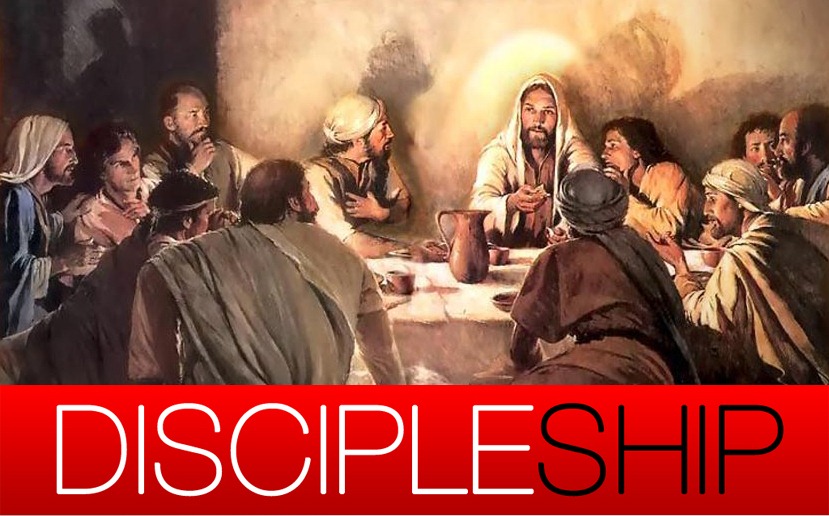
Jesus with the Disciples_discipleship

Jesus is calling you – not just to be a member of a church, not only to repent of your sins and receive his forgiveness. He is calling you to walk with him daily; To have a relationship with him that is more important to you than anyone or anything else in this life.

Click in the video to play it.

To listen to audio only, click this play button:

To download audio, right click on the link (or do whatever you do on a Mac) and save it to your computer: Download Experiencing Life Together Part 5

Sign up for the podcast on iTunes. Search for “Clear Bible Tom Hilpert”

Experiencing Life Together #5: Single Purpose

John 18:36; Ephesians 2:10

The very first Christians exhibited a very important characteristic. Their lives had a single focus:

The believers had a single purpose, and went to the temple courts every day. They were joyful and humble as they ate at each other’s homes and shared their food. (Acts 2:46)

The key phrase here is “single purpose.” Their lives were aimed at one target. Their focus both individually, and as a church, was on one thing. They were led by this purpose in everything they did, and every decision they made. Their purpose was discipleship. Jesus told them to be disciples, and to make disciples.

Then Jesus came to them and said, “All authority in heaven and on earth has been given to me. Therefore go and make disciples of all nations, baptizing them in the name of the Father and of the Son and of the Holy Spirit, and teaching them to obey everything I have commanded you. And surely I am with you always, to the very end of the age.” (Matthew 28:18-20)

The word “disciple” in Greek is closely associated with learning from a teacher. As we look at Jesus’ disciples in the gospels, we see that they listened to his teaching and tried to put it into practice (Mark 3:31-34). They were “followers” of Jesus’ teachings. The disciples often asked Jesus questions, but didn’t understand when he explained the answers to them (Matthew 16:5-12; Mark 4:10-14). Even so, though they had their struggles, they made his teaching central to their lives.

They not only followed his teaching, but they followed Jesus physically, wherever he went. They shared his life and had experiences with him. They walked together with Jesus on the rough mountain roads of Galilee. They lodged together, ate together and talked together.

They went across the lake with him, and experienced the storm, and then were awed by his power over it. They went to a lonely place with him, and saw him feed 5,000 people. They watched him drive demons out of people, and heal others. They went to Jerusalem and saw him die and later they saw him alive again.

Jesus’ disciples also had relationships with each other. They weren’t isolated in their relationship with Jesus. They talked with each other, fought with each other and helped each other. Jesus called them (and us) to love each other (John 13:34-35).

Besides teaching and sharing his life, Jesus also trained his disciples. He recruited them for the same work that he was engaged in – spreading the good news (Luke 10:1-24). He involved them in exercises of faith and ministry (Matt 14:18). He gave them instructions, sent them out on tasks, and then debriefed them (Luke 10:1-24).

Jesus wanted his relationship with his disciples to be the closest, most important relationship they had. He was dramatic in stating this. He said that in comparison to their relationship with Him, it would seem like they hated their own families (Matt 10:37-39; Matt 12:48). All this is to say that He became absolutely the most important person in their lives. He took precedence in everything.

Even before he returned to heaven, Jesus gave his disciples authority to be a part of His mission, authority to accomplish His purposes in the world (Matt 10:1). He promised that he would be with them spiritually at all times (Matthew 28:18-20).They were witnesses to His life, death resurrection and power (Acts 1:8), and they had a responsibility to tell about their life with Jesus, and to recruit new disciples to Him.

In John chapter 15, Jesus called his disciples to “abide” in him. He said this just a few hours before he was captured and crucified. One of the things he meant by it, was that the disciples were to keep on being his disciples, even after his death and resurrection. Their relationship – the sharing of Jesus teaching and their lives together – would go on. Jesus would come and live with them again, this time in their spirits, through His Holy Spirit. Discipleship goes on.

So what does it all mean for us? Now that we see how the first disciples were, how can we be disciples? How can we live with a single purpose? First, I think we ought to recognize that Christians were called “disciples” before they were ever called “Christians” (Acts 11:25). In other words, the very first followers of Jesus understood that it was not about being a member of a church, or even of being converts, but rather of being learners who lived life in the midst of their on-going relationship with Jesus.

Jesus is calling you – not just to keep things as they are, not just to be a member of a church, not only to repent of your sins and receive his forgiveness. He is calling you to walk with him daily. To have a relationship with him that is more important to you than anyone or anything else in this life. To engage with him as you work, as you eat, as you rest. To be trained and equipped by him to take your part in recruiting and training more disciples. He is calling you to listen to, and follow his teachings. He is calling you to be a part of a group of disciples – folks who are a bit rough around the edges maybe, but who love one another and love Jesus like you do.

When you are a disciple, everything in your life is filtered through your relationship with Jesus. We still have to go to work, and pay the bills, and deal with crises. But we do all these things with an awareness that we are not living our own life anymore. We are here to let Jesus live his life through us. That is our single purpose in everything.

When you let Jesus live your life, that is, when you live as his disciple, you are immediately confronted by the temptations and challenges of what life offers us apart from Jesus. If we live for the single-purpose of discipleship, we might find that many things we are used to doing are actually at cross purposes with the life of Jesus. Sin, of course, diverts us from the purpose of Jesus in us. But sometimes, I think the biggest threat to Christians is not outright sin, but rather, good things; things, however, that Jesus does not want us to waste our time with. Jesus said something very challenging:

“My kingdom is not of this world,” said Jesus. “If My kingdom were of this world, My servants would fight, so that I wouldn’t be handed over to the Jews. As it is, My kingdom does not have its origin here.” (John 18:36, HCSB)

Are you struggling and fighting for something in this world? I know I can get sucked into this all too easily. I want to follow Jesus, yes, but I also want other things: comfort and security while I am on earth. The moment I pursue comfort and security in addition to being a disciple, is the moment I lose my single purpose. That takes me a step backward in following Jesus. Jesus’ kingdom, his life and purpose are far beyond the temporary, cheap things of this world.

This is one of the reasons the Christian faith has always appealed to the poor more than the rich. If your life right now is a struggle, and you have little hope of improving it, it is easier to place your hope more fully in eternity. Poor folks know that security in this life is not really attainable. People with more resources tend to keep believing that their salvation is in this life. They tend to keep striving for the temporary treasures and goals that this life offers.

Ephesians 2:10 says this:

“For we are God’s workmanship, created in Christ Jesus to do good works, which God prepared in advance for us to do.”

Have you ever wondered about your purpose in life? Well there it is – to do the “good works” which God created you to do. And those good works ultimately all lead to encouraging believers and reaching out to those who don’t believe. This was the single purpose of the church in Acts 2:42-47. This is what they lived for. This purpose influenced all of their decisions, particularly decisions about the use of time.

Especially in America, living with a single purpose has enormous implications for the way we use our time. I am convinced that most of us try to live with more than one purpose in life. When I try to do that, if I was honest, my purpose in life could be described as: “ To serve God, and to be comfortable.” The first part is OK, but that “to be comfortable” makes it a dual purpose. And that causes problems when the purposes conflict with each other. What if being comfortable isn’t conducive to serving God, or vice versa? Others might want to “serve God, and have a good career” or “Be a disciple, make disciples, and achieve certain financial goals.” There is nothing Biblical about this. Sometimes, God makes his servants comfortable. Sometimes he gives them fulfilling careers, or wealth. But we need to pursue God – not the other things. If wants to give the other things also, well and good. If not, can we still say, “well and good”?

Others of us really do live to “be a disciple and make disciples”. But we fall into the trap of doing many good things, instead of the two or three best things. We might run all over town participating in workshops, ministries and conferences – all good and wonderful things. But often these wonderful spiritual things, keep us from truly connecting with Jesus, and concentrating on the two or three things that will be most effective, and are most important. Many times, perhaps almost always, we need to turn down the good things for the best things; the non-essential for the essential.

In most house-churches, things are deliberately structured so that members focus on just two or three important things in the process of becoming and making disciples. They generally don’t have “programs”. They focus on ministry in the group, outreach, and equipping (worship & prayer are underlying elements of all of these). None of these things should be “programmatic” – instead they are structured so that they take place in the context of lives that are lived with a single purpose. Thus, our “community life” can be oriented to that single purpose; and we are not so distracted with the “busyness” of many other things going on all the time.

Our personal lives ought to be structured this way as well. America is the land of opportunity, but enough already! We put our three-year-olds in T-ball in spite of the fact that they will almost certainly never become professional athletes. We put in extra hours in case we miss the opportunity to make more money. We run from activity to activity and it absolutely drains us spiritually and emotionally. The crucial and difficult task in learning to orient our lives around a single purpose, is saying “no” to things that are good, but which are not best, or essential.

We strongly encourage you to pray about this during the next week, and then ask your house church for help and prayer in determining what is essential and best for you to be doing at this point in your life. Make sure to address that question with an open Bible and an open heart.

GOD’S CHOSEN ONES

chosen people

God had us in mind, all throughout history. You are specially chosen by God. Jew or not, circumcised or not, regardless of what kind of ancestors you had, you are one God’s specially chosen people, if you trust Jesus.

To listen to the sermon, click the play button:

To download, right click on the link (or do whatever you do on a Mac) and save it to your computer: Download Galatians Part 25

Galatians #25 . Chapter 6:11-17

Look at what large letters I use as I write to you in my own handwriting. Those who want to make a good impression in the flesh are the ones who would compel you to be circumcised — but only to avoid being persecuted for the cross of Christ. For even the circumcised don’t keep the law themselves; however, they want you to be circumcised in order to boast about your flesh. (Galatians 6:11-13)

I’ve mentioned verse 11 before. I think it is evidence that Paul had some sort of vision problem, and that he was slightly self-conscious about it. In most of his letters he has something like this:

This greeting is in my own hand — Paul. This is a sign in every letter; this is how I write. (2Thess 3:17, HCSB)

So his handwriting was somewhat distinctive, and perhaps not very good. That’s one of the blessing of our modern times – most of you will never know what my handwriting looks like! In any case, Paul may have a reason for referring to his handwriting here. It was, as I have said, apparently awkward and not very skillful. He is saying, “Look at my handwriting – it looks childish! I’m not trying to impress anyone. Those who want to impress you are the ones you need to watch out for!” He is referring, of course, to the false teachers who are trying to make the Galatians believe that they must not only trust Jesus, but also keep the Jewish law.

Paul makes three claims about the Galatian false teachers. First, he says that they want to make a good impression in the flesh, in order to avoid persecution. In the early days of Christianity, most of the persecution of Christians was instigated by Jews. Many Jewish people felt that the teaching about salvation through Jesus was a corruption of Judaism, a blasphemous heresy. They didn’t see it as a separate religion (and to be fair, neither did the Christians, at first). Christianity is based upon the Jewish Bible (which we call the Old Testament), as well as the teachings of the apostles (which we call the New Testament). So the Jews thought they needed to stamp out this Jewish blasphemy. They were frequently directly violent toward Christians. In places where Roman law was strongly in place, they used Roman regulations to get the Christians imprisoned, whipped and punished. Paul himself had once been a Jew whose life mission was to persecute and destroy Christianity.

Paul claims that the real motivation of the Galatian false teachers is to prove that they are good Jews, and thus avoid being persecuted. So they were willing to trust Jesus, as long as it didn’t cost them anything. But when society started moving against them, they compromised the message of grace in order to avoid the difficulties of being opposed to the Jews.

I have never been seriously persecuted for the message of grace in Jesus. I have, however, seen people who share my faith mocked and derided, and even called “dangerous” in the media. They often make fun of us in films and television. I have been called names and had people swear at me because of my faith, but nothing more serious than that. But even at that level of social pressure, there is temptation to compromise. The true message of the gospel is that there is no other way to be saved, except through Jesus. That sounds narrow-minded and ignorant to our culture today. I would feel a lot less pressure if I didn’t insist on that part of my doctrine.

The bible says we all sin, and that is a problem that can only be fixed by Jesus. But there are several things that the Bible calls “sin” that our society likes to practice and approve: sexual sins of all types, drunkenness, to name a few. I’m not trying to get non-Christians to live out Christian morality, but Christians at least, need to know what the bible says, and we should do our best to live by it. However, even many Christians do not want to acknowledge the truth of the Bible when it calls certain behaviors sinful. When I insist that we need the forgiveness and salvation of Jesus because of such things, I get a lot of angry push back. It would be a lot easier for me if I quit believing that some of those things are sinful. But Paul has harsh words for those who compromise or cave in to pressure and persecution.

Paul also says that the Galatian false teachers are hypocrites. They don’t actually keep the Jewish law, they just pretend enough to avoid persecution. Third, he says that they simply want to boast about the Galatians. Specifically, they want to boast to Jews that they caused the Galatians to become circumcised.

Now, as I’ve said many times throughout this series, we don’t have a big problem anymore with Christians insisting that we follow the Jewish Talmud and ceremonial laws. But we still have false teachers. One example of false teaching is what I call the “prosperity gospel.” I pick on this one often, because it is one of the most influential false teachings within the Christian church in America today.

As a sort of practice run for identifying false teaching, let’s look at the prosperity gospel according to these three things that Paul says about false teachers.

How does the prosperity gospel relate to persecution? Well, the main message is that if you follow God, things will go well for you. They talk a little bit about Jesus, as the Galatian false teachers did. But the main message is not the inner transformation of your spirit through the death and resurrection of Jesus. Sin, isn’t presented as a moral issue, as much as it is something that prevents you from getting the life you want, here and now. In other words, the things that offend people and draw persecution: the centrality of Jesus Christ, and the problem of sin – are not central to the prosperity gospel. The message of grace in Jesus Christ is not the main thing. Instead the main thing is improving your life here and now. Most people are already seeking a better life here and now. Most people want to find a good way to health, wealth and general prosperity. There is nothing offensive about that. There is nothing to persecute, because the goal of the prosperity gospel is the same as the goal of most secular Americans: to be prosperous and have a good life here and now.

What about hypocrisy? I suggest that you find out what you can about the regular lives of the people you listen to. If they aren’t open and honest, I would be wary of their teachings. One very popular teacher who tends to give the prosperity message was recently asked about his marriage. He said, on camera, with a straight face, that he and his wife had never had any struggles in their marriage. The interviewer questioned him, asking “Not ever?” He repeated, “never.” Now, I don’t know the details of his marriage, so theoretically, that could be true. But I know human nature, and if it is true of any married couple, they are the rarest people in the history of the world. I’m not willing to say he’s lying, but I wouldn’t trust a man who says that. As it turns out, this same man has made statements about what the bible says that are completely false, so my distrust has been justified. I suspect that this man felt compelled to say he had never experienced difficulty in his marriage because his overall message is that if you follow God, you will not have trouble here on earth. False messages breed false living.

And finally, the message of the prosperity gospel directs people to focus on themselves, rather than the cross of Jesus Christ. The ultimate goal is for my life to be better. The true gospel glorifies Jesus, glories in him and his suffering, as Paul did. The prosperity gospel glorifies what happens in my life. They praise God, certainly, but the praise him because of how he makes their lives better (sometimes). The focus on my life, not Jesus’ death. The boasting is in the details of my life, not in the cross of Christ.

I think these three things: avoiding hard parts of the gospel message, dishonesty or hypocrisy and focus on something other than Jesus, are helpful markers for us to identify false teaching. The bottom line is, we should watch out for things that pander to our flesh.

Paul goes on:

But as for me, I will never boast about anything except the cross of our Lord Jesus Christ. The world has been crucified to me through the cross, and I to the world. (Gal 6:14, HCSB)

Paul says to the world, “you’re dead to me. I’m dead to you.” I don’t think he means nature or “the planet.” I think when he says “the world” here, he means all the ways and customs and habits of living for the flesh, for self-gratification. Money, power, status, security, comfort, self-indulgence, excess, focus on pleasure – all these are “the world.” These are the things that Paul says he is dead to. He says that the work of Jesus on the cross has separated him from such things. Paul is not supposed to be a super-Christian. If, through the cross, Paul was crucified to the world, than we too, can experience the same thing, but it happened for Paul, through Jesus Christ.

A lot of times I catch myself wanting power, status, security, comfort etc. But oh, what joy and peace I have when I am free from those desires! I believe I can have that freedom more and more, as I trust Jesus more and more, and let him be the dominant thing in my life. You can have that same freedom too, the same way as Paul. Paul’s point in saying that was to encourage the Galatians to have the same attitude.

Affirming that point, Paul says:

For both circumcision and uncircumcision mean nothing; what matters instead is a new creation. (Galatians 6:15)

What matters is what Jesus is doing to transform you from the inside out. Paul put it this way to the Corinthians:

From now on, therefore, we regard no one according to the flesh. Even though we once regarded Christ according to the flesh, we regard him thus no longer. Therefore, if anyone is in Christ, he is a new creation. The old has passed away; behold, the new has come. (2Cor 5:16-17, ESV2011)

Paul lived, believing that was true. Through his words, the Holy Spirit calls us to live that way also. Remember, the deepest, truest, most real you, is not your flesh, if you are in Jesus. The real you, if you are in Jesus, is a new creation in Him. That’s what matters.

Just as the real you is a new creation in Christ, so the real people of God are all those who trust Jesus Christ. Paul says:

May peace come to all those who follow this standard, and mercy to the Israel of God! (Galatians 6:16)

When Paul says “The Israel of God” he is making a distinction between the physical Israel and the spiritual one. The physical Israel are those who are physically descended through Abraham and Isaac. But the spiritual people Israel, the “Israel of God” are those who, like Abraham, have faith. Remember, Paul wrote earlier:

And if you belong to Christ, then you are Abraham’s seed, heirs according to the promise. (Gal 3:29, HCSB)

Paul said the Romans:

This is why the promise is by faith, so that it may be according to grace, to guarantee it to all the descendants — not only to those who are of the law but also to those who are of Abraham’s faith. He is the father of us all in God’s sight. (Rom 4:16-17, HCSB)

There are two reasons this is important today. The first is that it changes the way we look at the Old Testament. The promises given to the people of Israel are also given to all who trust Jesus. The Old Testament is relevant, because we are the chosen people of God.

And that brings us to the second reason this is important: God had us in mind, all throughout history. He didn’t choose merely the Israelites as his specially chosen people – he also chose you, if you trust Jesus. You are specially chosen by God. Jew or not, circumcised or not, regardless of what kind of ancestors you had, you are one God’s specially chosen people, if you trust Jesus.

Paul closes with finality:

From now on, let no one cause me trouble, because I bear on my body scars for the cause of Jesus. Brothers, the grace of our Lord Jesus Christ be with your spirit. Amen. (Gal 6:15-18, HCSB)

What is the Holy Spirit saying to you today? Have you been trying to make a good impression in the flesh? Perhaps you’ve been tempted to avoid ridicule by softening the message of Jesus. Or maybe you need to identify false teaching that has swayed you away from the central gospel message. Do you need to hear that you truly are a new creation in Jesus Christ? Do you need to hear that you are truly one of God’s chosen people? Maybe you need to live in the truth that you are dead to the world, or something else. Let the Spirit speak right now.