LOYALTY IS TESTED ONLY IN TIMES OF DISAGREEMENT OR TROUBLE

I understand the hurt feelings we can have sometimes when God doesn’t come through the way we think he ought to. I’ve had them myself, frequently. But he is the king. He can do what he wants to. He is wiser than us, and he sees things we don’t. It’s better to trust him and stay engaged.
sheba-rebellion

To listen to the sermon, click the play button:

To download, right click on the link (or do whatever you do on a Mac) and save it to your computer: Download 2 Samuel Part 20

2 Samuel #20 . 2 Samuel Chapter 20

Last week we spoke of the political situation at this point in time in Ancient Israel. There are more politics here, but be patient, I think we’ll find some good stuff. After David returned, having reached out the leaders of the tribe of Judah, who were in shame, the leaders of the other tribes were offended. They had not provided the key support of Absalom’s rebellion, like Judah had; they had talked of bringing David back before Judah had. So they were offended that David reached out to Judah and gave them the honor of escorting him back to Jerusalem.

Apparently while David was returning to Jerusalem and all this was being discussed, a man named Sheba, from the tribe of Benjamin (Saul’s tribe), stepped up and said, essentially, “Fine then. If that’s how David wants it, let’s leave.”

He left, and most of the people of the other ten tribes followed him. Now, at this point, as I read this text, they were simply choosing not to escort David to Jerusalem. Most of the leaders of the tribes were willing to express their displeasure with Judah and with David’s forgiveness in this way. So they all went home and left the leaders of Judah to escort David.

But Sheba, the man who instigated the walk-out, wanted to take it one step further. He wanted to immediately start another rebellion. For David, this was one thing after another. However, Sheba was not like Absalom. This was not a carefully laid plot with long preparation. He was only able to get the Berites to join him. The “Berites” were probably citizens of the town of Beeroth in Benjamin; it was almost certainly Sheba’s hometown. So his influence was quite limited.

Even so, David thought it best to stamp out the small rebellion quickly. He didn’t want to give it a chance to spread. So he ordered his new military commander, Amasa, to gather the troops.

When Absalom rebelled, he had chosen Amasa to be his general. After the rebellion failed, one of the ways that David reached out to the tribe of Judah was by promising Amasa that he was forgiven, and that he would command the army in place of Joab. Joab had murdered Abner years before this, and at that point he had David’s tolerance, but never again did David approve of him. More recently, Joab murdered David’s own son, Absalom. Now, I know it was when they were at war with Absalom, but when Joab came upon him, the battle had already been won, and Absalom was alone, unarmed and helpless. Moreover, David had commanded Joab to capture and spare Absalom if he could. Instead, Joab killed him while he hung helpless and trapped in a tree. So Joab was in disgrace, and David wanted no more part of him.

Another reason David made Amasa the new general, was to try and mend the relationships he had with the leaders of the tribe of Judah. It was a peace offering to them, showing them he had forgiven them, restoring them to normal relations. In addition, Amasa, like Joab, was one of David’s nephews. In fact, he was Joab’s cousin.

Amasa took too long to gather the army, so in the meantime, David sent Abishai, Joab’s brother, after the rebel, with David’s personal force of elite warriors. Joab went along. Eventually, Amasa and the army he had raised, met up with David’s forces under Abishai. Joab went up to Amasa. He deliberately allowed his sword to fall out of its sheath as he approached his cousin. He bent down and picked it up, and then, still holding the sword, reached out as if to greet Amasa. Instead, he stabbed him, killing him. This was very similar to what he had done to Abner. Immediately, he took control of the whole army again. He had one his loyal followers cry out

“Whoever favors Joab and whoever is for David, follow Joab! ” (2Sam 20:11, HCSB)

The implication is that if you didn’t follow Joab you were against David and for the rebel that they were pursuing. Eventually, Joab’s flunky hid the body of Amasa, so it wouldn’t distract the soldiers as they marched by.

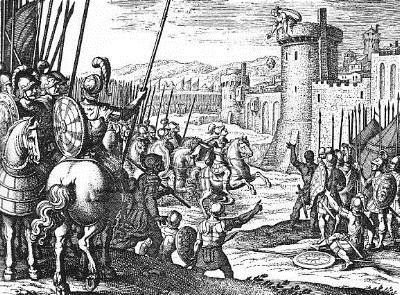
They pursued Sheba and his followers to the northern borders of Israel, where he took refuge in a walled city. There Joab negotiated with a woman with a reputation for wisdom. She begged Joab not to destroy the city. Joab made it clear that their war was against the rebel, not the city. So the citizens executed Sheba, and thus ended the rebellion, and saved their city from destruction.

Now, what do we make of this? It’s a petty, bloody and gruesome chapter in the history of Israel. What would the Lord say to us through it? Well, let’s remember that the whole bible is about Jesus. This chapter is here to show us something about Jesus, or something about ourselves and how we relate to him.

Let’s start with the people from the ten tribes. They began by insisting how much they wanted to honor David, but ended up snubbing him deliberately because they were offended and hurt by the way he forgave his enemies.

Sometimes we might be tempted to behave this way with Jesus. It’s easy to get disappointed with him when he behaves in ways we don’t expect. Sometimes it’s hard to accept that he loves our enemies as much as he loves us. Sometimes what he does or doesn’t do, or the things he allows to happen in our lives, are difficult to understand. Often we respond by withdrawing from him. Maybe we aren’t overtly rejecting him or rebelling, but we just “go home.” We back off. I understand the hurt feelings we can have sometimes when God doesn’t come through the way we think he ought to. I’ve had them myself, frequently. But he is the king. He can do what he wants to. He is wiser than us, and he sees things we don’t. It’s better to trust him and stay engaged.

Maybe it’s not even Jesus himself, but something he’s doing that he wanted us to be involved in. For example, suppose you feel called to help out with a ministry to the poor. You do, and you truly make a significant difference, but no one recognizes your efforts. In the meantime, they honor people who seem to deserve it less than you. So you back off. I understand backing off a situation like that. But the question is: did the Lord call you to back off, or are you just withdrawing because your feelings were hurt? That can be tough, but the way of maturity in Jesus is to listen to him more than your emotions.

What about Joab? Joab comes across as someone who was always loyal to David, even though David did things he didn’t like. But was it really loyalty? He was loyal when he agreed with David. But we see now, for at least the third time, that when Joab had different ideas, he chose his own way. He did what he wanted, no matter what the king commanded. Loyalty and submission to leadership are only really revealed in hardship and especially in disagreement. But whenever there was disagreement, Joab chose himself over David.

By and large, Joab looked like a loyal and faithful servant. And, throughout his life, he did a lot for David. But ultimately, he did not buy into who David was and what he was all about. He was offended by David’s compassion and forgiveness. He liked the part where they got to kill their enemies together. He didn’t like the forgiveness part, so he didn’t do that, and he did not let David’s will thwart his own designs. Joab was aligned with the right side. But his heart was all about Joab and what he felt and what he wanted. He did not actually accept David’s wisdom and judgment if it was different from his own.

Sometimes Christians can be that way with Jesus. Usually, these days, it is the reverse of Joab. We like the love and forgiveness stuff. But when it comes to giving up our favorite sins, we choose our own way. Or maybe we’re fine to go to church and sing songs. But when it comes to forgiving someone who has hurt us badly, we hold on to the right to nurse our grudges. We like to be perceived by others as believers, but we won’t listen to the Spirit’s call to be intimately involved in the lives of other believers, or to study the bible. Jesus said something very scary in Matthew chapter seven:

“Not everyone who says to Me, ‘Lord, Lord! ’ will enter the kingdom of heaven, but only the one who does the will of My Father in heaven. On that day many will say to Me, ‘Lord, Lord, didn’t we prophesy in Your name, drive out demons in Your name, and do many miracles in Your name? ’ Then I will announce to them, ‘I never knew you! Depart from Me, you lawbreakers!’” (Matt 7:21-23, HCSB)

You can look like a Christian, act like a Christian and talk like one, but not really allow Jesus to change your life. You can even do things for Jesus, but those things won’t count if you don’t really receive him as your savior and king. Joab looked like a friend, but his actions revealed him here as someone completely separated from David and his values. We see how terrible and ugly that was in Joab. We see that the fruit of it was pure evil. The same is true for us: the fruit of our own self-will when it is asserted as better than the will of Jesus, is never good.

Finally, consider the wise woman in the town of Abel. At first, they probably received Sheba into their town willingly. But when the realized the destruction he would bring and that there was no righteousness to his cause, they were willing to get rid of him in a very final way.

This also reminds me of something Jesus said:

If your right eye causes you to sin, gouge it out and throw it away. For it is better that you lose one of the parts of your body than for your whole body to be thrown into hell. And if your right hand causes you to sin, cut it off and throw it away. For it is better that you lose one of the parts of your body than for your whole body to go into hell! (Matt 5:29-30, HCSB)

The people of Abel realized that they had something in their midst that would lead to their downfall. They got rid of it with awful finality. Sometimes maybe we need to something similar. Maybe you have a habit of going out after work and having a few drinks before you head home. Maybe you fudge the numbers a little bit at work. Perhaps you have some activity or habit that seems OK at first, and you like it, but Jesus has made you aware that this is a problem in your life. The time to get rid of it is right now, with finality. The people of Abel were considered wise for choosing to get rid of the rebel rather than having their town destroyed. We too, sometimes need to make a wise choice that is hard, even drastic.

Let the Spirit speak to you through the text today.
OFFENSIVE FORGIVENESS

shimei-curses-david

Sometimes the love and grace of God is given to people who are so undeserving that it seems offensive. But Jesus’ love and forgiveness is given time and again to those who don’t deserve it – because no one deserves it. So, if you think you are unworthy, you are correct. But that doesn’t stop Jesus from giving you grace and forgiveness anyway. On the other hand, if his grace offends you, maybe you don’t yet know how much you yourself need it.

To listen to the sermon, click the play button:

To download, right click on the link (or do whatever you do on a Mac) and save it to your computer:
Download 2 Samuel Part 19

The second half of chapter 19 appears to be mostly a detailed record of the political history of that time. This was valuable and significant to the ancient Israelites who lived not long after David’s time. It is still interesting today to historians, and bible-geeks like me. But what is the point of it really?

I know I’ve mentioned this before, but I think it is important to revisit it periodically. We all tend to forget. The Holy Spirit made sure first that this history was written; second, that it was preserved through the years; and third, that it was included in the bible. So there must be some reason for this. There must be some way the Lord wants to speak through it to Christians living today.

Sometimes, in order to hear what the Lord wants to say today, we first need to understand it better. So please bear with me. I think we’ll find some fruitful bible application here if we pay attention to details that might otherwise seem tedious.

Here’s the situation. David’s army has defeated and killed Absalom, who had rebelled against him and set himself up as king in David’s place. There were no computers or telephones or newspapers in those days, so it took a while for the news of David’s victory to spread. Meanwhile, David seems to have waited. This might seem a little bit strange. But remember who David is. He has many faults, to be sure, but he has never grasped at power. Instead, he always waited for the Lord, even refusing to take opportunities to gain the kingdom. So here, he once more waits until he is sure that Lord still wants him as king. He doesn’t want the civil war to continue, so he waits until he is sure he can return in peace. This David once more at his best, trusting the Lord.

The writer of Samuel often makes a distinction between the tribe of Judah and the other eleven tribes of Israel. Often when he writes “Israel” he appears to mean the tribes as distinct from the tribe of Judah. This shows us that there was some tension between those two factions even in the time of David. In the time of David’s grandson, the nation was split. Judah absorbed most of the tribe of Benjamin and became a separate nation named “Judah” (from which we get the word, “Jew”). The other ten tribes formed a kingdom to the north of Judah, which was called “Israel.”

After Absalom’s rebellion, people from the other tribes began talking about inviting David back officially, and officially receiving him once more as king.

Now Israel had fled every man to his own home.  9 And all the people were arguing throughout all the tribes of Israel, saying, “The king delivered us from the hand of our enemies and saved us from the hand of the Philistines, and now he has fled out of the land from Absalom.  10 But Absalom, whom we anointed over us, is dead in battle. Now therefore why do you say nothing about bringing the king back?”

Apparently, the people really had committed to Absalom. They said he was the one they had anointed to be king over them. This wasn’t as strange as it might seem. After all, he was the king’s son and heir. I’m sure many people assumed that sooner or later, Absalom would be king anyway, and why not have him in the full vigor of his youth? But now, he was gone. I would have thought that at this point it was a clear choice to go back to David, but the people still seemed at a loss. Even so, from most of the tribes, sentiment turned back toward David.

But the tribe of Judah did not seem to know what to do. At first, this seems strange, since David was from the tribe of Judah. But then, so was Absalom. Absalom’s rebellion was conceived and carried out in Hebron, the chief city of Judah. His military commander, Amasa, was a relative of his (and David’s) from the tribe. In fact, most of his inner circle were probably from Judah. In other words, although they were David’s people, they were also Absalom’s people, and they were probably chiefly responsible for the rebellion.

David reached out them. He sent a message to the leaders of the tribe of Judah, saying,

‘Why should you be the last to restore the king to his palace? The talk of all Israel has reached the king at his house. 12 You are my brothers, my flesh and blood. So why should you be the last to restore the king? ’ 13 And tell Amasa, ‘Aren’t you my flesh and blood? May God punish me and do so severely if you don’t become commander of the army from now on instead of Joab! ’ ” 14 So he won over all the men of Judah, and they sent word to the king: “Come back, you and all your servants.” (2Sam 19:11-14, HCSB)

As David makes his way back, he is met at the Jordan river by a host of people who want the honor of escorting him to Jerusalem. What follows is a slightly sickening display of sycophancy. People end up arguing amongst themselves about who gets to show David honor, and who is honoring him more (19:40-43).

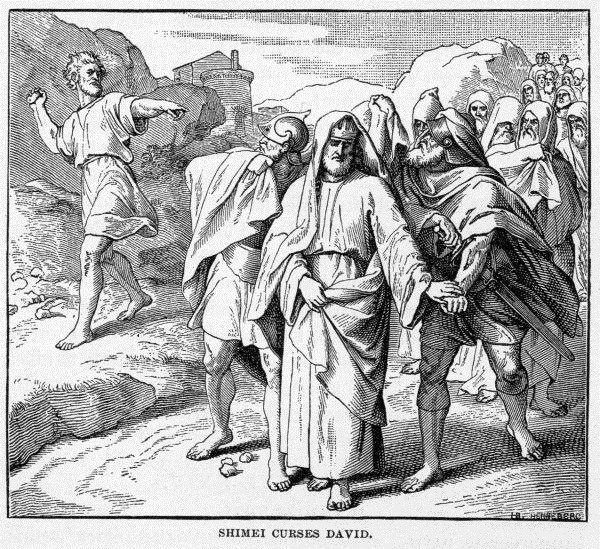
Along with the leaders of the tribe of Judah, one of the first people to come meet him is Shimei. You may remember him from 2 Samuel 16:5-13. This was the man who cursed David and pelted him with rocks and dust as he fled from Absalom. When David was down, he piled on with insults and taunting. Shimei did not just screw up and make a mistake – what he did was clear and deliberate. Now that David is king again, he comes fawning to him like a disobedient dog, and begs forgiveness. I don’t know about you, but I think that Shimei was pond-scum. His behavior and attitude are despicable, detestable, the lowest and ugliest forms of hypocrisy and cowardice. He is a jerk, plain a simple, the kind of person I want nothing to do with.

And David forgives him.

Stop for a second, and think on that. Let it sink in.

Let’s be honest. David’s forgiveness and compassion are offensive. Abishai, brother of Joab suggests, as he did before, that Shimei would be a more attractive person if his head was removed. I tend to agree with Abishai. But David did not.

Does this remind you of anything? The love and compassion of Jesus were also offensive. The Pharisees were offended that he would eat with tax collectors and known sinners. He allowed a prostitute to kiss his feet in public, and wash them. It offended them.

I think once more, this text is a far-off picture of Jesus, the ultimate anointed savior of God’s people. It isn’t really about David, it is about Jesus, his wisdom and love, and how people respond to him. So let’s consider the rest of this text in that light.

We’ve been talking about Shimei. His sin was obvious and deliberate. There was no excuse for it. It wasn’t a momentary slip. It revealed an ugly character. Even so, David offers him forgiveness and redemption. Jesus does the same. That’s right, Jesus came to redeem and forgive class-A jerks, cowards and crawling hypocrites. It is offensive sometimes, to think Jesus would forgive someone that I want to hate so much. But he does.

Abishai was like me. Shimei’s character was clear to him. He was offended by David’s compassion and mercy. But David rebuked him. Sometimes we really are offended by the idea that Jesus would forgive certain people. Would he forgive a child-molester? Based on what I know of the bible, the answer is “yes.” Jesus is king, and he can forgive who he pleases. He does not answer to us.

But as an illustration, I do want to finish the story of Shimei, though it does not end for many years. When David was dying, he told Solomon to watch out for Shimei. So, even though David forgave him, he certainly saw the truth about what kind of person he was. Solomon made a just and fair ruling for Shimei, allowing him to live in peace if he would show his obedience and faithfulness by never leaving Jerusalem. Shimei ignored that when it became inconvenient, and Solomon had him executed. So in the end, forgiveness did Shimei no good, because he did not allow it to touch his heart and change the kind of person he was.

In the same way, the forgiveness of Jesus does not help those who don’t truly repent, who don’t allow him to work in their lives. Jesus sees all, let ultimate judgment rest with him.

Back to David, the next person to arrive was Ziba. At this point, Ziba was revealed as a trickster and manipulator, because right behind him was Mephibosheth, whom Ziba was supposed to serve. Mephibosheth revealed how Ziba took advantage of his disability, and took the donkey that was supposed to be for him, and told David that Mephibosheth rejoiced over David’s trouble. David does not seem to know who to believe, but he reverses his earlier decision that gave all of Mephibosheth’s land to Ziba. Now, instead, he tells Mephibosheth to divide the land between them. Even so, this amounts to forgiveness for the trickster and manipulator, Ziba. There it is again, that offensive forgiveness.

Mephibosheth’s response shows that his loyalty was always true. He doesn’t care about the land, as long as David is safe, and king again. I mentioned before that Mephibosheth is a great picture of God’s grace. Unlike Shimei, the grace he received through David changed him permanently. He doesn’t just want what David can give him. He wants the best for the king that saved him, and he wants fellowship with him, whether he has blessings from him or not. Mephibosheth rejoiced that David was back and safe, far more than he rejoiced about being vindicated in the dispute with Ziba.

This is an encouragement to me to have a similar attitude. It isn’t about what Jesus can do for me in this life. It isn’t about me getting what I think I deserve, or being proved right. It is about loving Jesus and being in relationship with him. You can’t manufacture that. It only comes when you love Jesus for who he is. If you feel like you lack that kind of love (as I often do), ask the Holy Spirit to give it to you.

One of the people who helped David in his exile was an old man named Barzillai. David blessed him and rewarded him, though again, Barzillai wanted no other reward than the safety of the king, and in fact, was too old to enjoy any of the blessings David wants to bestow. So too, I find it helpful to remember that even though Jesus sometimes offends me by his radical forgiveness of people whom I think are undeserving, he does also love his faithful servants. He does not forget them, or offer them less than anyone else. Maybe, like Barzillai, we don’t enjoy the blessings in the this life. Even so, Jesus offers us blessing and joy that can never spoil or fade.

Another group to consider is the leaders of the tribe of Judah. They made a deliberate choice to follow Absalom instead of David. But before they even repented, David was reaching out to them, forgiving them, restoring them to a relationship with him. So Paul writes about Jesus in Romans 5:

For while we were still helpless, at the appointed moment, Christ died for the ungodly. For rarely will someone die for a just person — though for a good person perhaps someone might even dare to die. But God proves His own love for us in that while we were still sinners, Christ died for us! (Rom 5:6-8, HCSB)

Jesus’ love and forgiveness is given time and again to those who don’t deserve it – because no one deserves it. So, if you think you are unworthy, you are correct. But that doesn’t stop Jesus from giving you grace and forgiveness anyway.

Abishai was not the only one who took offense at the mercy of God that David showed to all who would see. The ten other tribes of Israel were also offended that even though they were the ones who first talked of bringing David back, it was the tribes of Judah and Benjamin who got the honor of doing so.

In Jesus’ time, the Pharisees were also offended at Jesus’ grace. That was because they did not believe they had need of it themselves. I think that may be a key. If the forgiveness and mercy of God to others offends you, is it possible that perhaps you do not realize how much you yourself need that same grace?

Let the Spirit speak to you today.

Does God Hate Anyone?

absalom-death-granger


There are people who have turned their backs on God. God doesn’t hate them. There are people who mock God and rejoice at insulting and offending and even persecuting those who follow Him. God doesn’t hate them. People may set themselves up as enemies of God, but God does not see it that way. He does see the reality – that some people hate him and have rebelled against him, even as Absalom did to David. But he also looks at each one of them and sees a unique human being whom he loves deeply.


To listen to the sermon, click the play button:


To download, right click on the link (or do whatever you do on a Mac) and save it to your computer: Download 2 Samuel Part 18


2 Samuel #18 . 2 Samuel Chapter 18

Second Samuel chapter eighteen records the end of Absalom’s rebellion, and of Absalom himself. If you remember, David fled for his life across the Jordan river and to the city of Mahanaim. This was about ten miles east of the Jordan river, up in the mountains, about halfway between the Dead Sea and the Sea of Galilee. It was within the nation Israel at the time (now it is part of Jordan) but a fair distance over rough country from Jerusalem, if you were traveling on foot.


Mahanaim1

There, David gathered an army of those who were still loyal to him. Six-hundred to one-thousand soldiers had fled with David. The bible doesn’t tell us how many more he found, but the Jewish historian Josephus says that he had four thousand men when he went to fight the army of his son Absalom (I don’t know where Josephus got his information). The bible doesn’t tell us how many men Absalom had either. David ordered his men, devised a battle plan, and prepared to go out. But his men convinced him to stay in the city while they fought on his behalf. This made sense. Absalom had to kill only one man – David – in order to win. David had the humility and wisdom to recognize this, and so he listened to his men and stayed behind. But he gave his three chief commanders clear orders to “deal gently, for my sake, with the young man, Absalom” (2 Samuel 18:5).


Many of those who fought for David were probably veterans of his earlier campaigns. They remain today some of the most famous warriors in history. Certainly David had most of the best military commanders of the nation on his side, even though he was at a disadvantage in numbers. Their strategy had been devised with the help of David himself. It is quite likely that David chose to go to the city of Mahanaim precisely because it was in the Forest of Ephraim. The area is not forested today, but it remains rugged and mountainous, as it was in those times also. In the rough terrain and the forest, the advantage of greater numbers that Absalom had might have been largely neutralized. David’s smaller, more experienced force had a better chance there than in a pitched battle in an open area.

Absalom’s army was out-maneuvered, out-led and out-fought. They were defeated. The scripture records that many men perished in the rough terrain. The text records that 20,000 men perished, more killed by forest than by the battle. In previous teachings I have explained the difficulties of numbers in Hebrew. If you think it would be more realistic if the number was 2,000 men, by all means, go with that. The Hebrew could read either way.

This rough terrain was forested in David’s time

In the defeat, Absalom fled on his mule. He went under the twisted, low-hanging branches of an oak tree, and his head was caught in the branches. The mule kept going, and left him hanging there, unable to touch the ground, and apparently unable to extricate himself from the tree. The text simply says that Absalom was caught by his head. It is the Jewish historian Josephus who claims it was, in particular, Absalom’s beautiful thick hair, about which he was so conceited, that trapped him.

Remember, David wanted his men to deal gently with Absalom. In a pitched battle, that could have been very difficult. If he was well and wielding weapons, and defended by others, it might have been impossible to take him prisoner without severely wounding him or even killing him. But here was the perfect opportunity to bring him back to David whole and unharmed. He was helpless and disarmed, a threat to no one. The first Israelite to discover this, found Joab, David’s chief general, and told him. But Joab, instead of seeing this a stroke of extreme good fortune to capture Absalom without anyone getting hurt, took advantage of his helplessness and attacked him as he hung there. No doubt not wanting to be the only guilty party, he recruited ten young soldiers to assist him, so that the blame was shared. Absalom was struck dead. Now I want to point out that there was probably some bad blood between Absalom and Joab. Joab had apparently had a soft spot for him. He helped Absalom get permission to return to Israel after he had murdered his brother. Joab helped David and Absalom reunite. But Absalom had been arrogant and high-handed with Joab, and it was doubtful he had ever thanked him. So I think it is quite likely that Joab bore special grudge against him, and that he killed him as much for his own sake as for David’s.

David first heard the news that the battle was won, and he was glad. But shortly after that, he heard that his son had been killed. He was overcome by grief and he lamented loudly. As a result, the victorious army marched into the city without the celebration and joy that were normal when the battle was won.

Joab, never deterred, rebuked David. He pointed out, probably correctly, that it was almost an insult to his men. Then Joab expresses what is really on his heart:

6 You love your enemies and hate those who love you! Today you have made it clear that the commanders and soldiers mean nothing to you. In fact, today I know that if Absalom were alive and all of us were dead, it would be fine with you!

Joab never understood David’s kindness and love toward those who tried to destroy him: Saul, Abner and Ish-bosheth, to name a few. The world was black and white to Joab – those with us, and those against us. But David was God’s chosen instrument because he had a heart that God could use to show the world what the coming savior was really like. David, expressing God’s heart, saw very few people that he truly hated or called enemies. Even so, David was not a blind idealist. He did what had to be done. So he fought when it was necessary. But he always wished for reconciliation, and the death of those who called themselves his enemies grieved him. In this case, although he still grieved for his son, he was humble enough to recognize that Joab was right, and he was shaming the men who had risked their lives for him. So he went out to them and congratulated them.

I really want us to hear the heart of God through this part of David’s life. There are people who have turned their backs on God. God doesn’t hate them. There are people who mock God and rejoice at insulting and offending and even persecuting those who follow Him. God doesn’t hate them. There are people who have twisted the truth about God into manipulative and evil false religions that oppress millions of people. God doesn’t hate them. People may set themselves up as enemies of God, but God does not see it that way. He does see the reality – that some people hate him and have rebelled against him, even as Absalom did to David. But he also looks at each one of them and sees a unique human being whom he loves deeply.

10 For if, while we were enemies, we were reconciled to God through the death of His Son, then how much more, having been reconciled, will we be saved by His life! (Rom 5:10, HCSB)

The bible is clear that some human beings can and do choose their own destruction rather than admit their need for God. God allows them to do that, or else love for God could never be real. But like David, he grieves deeply when people choose their own destruction. It happens, but he is never happy about it.

11 Tell them: As I live” — the declaration of the Lord GOD — “I take no pleasure in the death of the wicked, but rather that the wicked person should turn from his way and live. Repent, repent of your evil ways! Why will you die, house of Israel? (Ezek 33:11, HCSB)

Sometimes when we’ve been wandering away from God, we stay away because we think that God feels about us the way we deserve. Sometimes we think he feels about us the way we have felt against him. The prodigal son went home with a prepared speech, hoping he might be given a place among his father’s servants. But his father saw him from a distance and ran toward him, arms thrown open to welcome him back and to restore him to the family. That is how he is with us.

But while the son was still a long way off, his father saw him and was filled with compassion. He ran, threw his arms around his neck, and kissed him. (Luke 15:20, HCSB)

While Jesus was being tortured to death, he prayed for the people who were killing him, saying, “Father, forgive them!” (Luke 24:34).

Peter betrayed Jesus in his darkest hour. Jesus forgave him and restored him. He welcomed him back into a relationship of trust, even after what Peter did. Paul persecuted those who trusted Jesus. He had them arrested and even executed. But Jesus welcomed him and forgave him when Paul repented. Jesus himself said:

7 I tell you, in the same way, there will be more joy in heaven over one sinner who repents than over 99 righteous people who don’t need repentance. (Luke 15:7, HCSB)

The plan, of course, is that the 99 righteous people, already living in God’s grace, rejoice along with Jesus and the angels of heaven.

David knew that he had been forgiven much. He had sinned horribly and yet, repented and received forgiveness. He hoped for the same thing for Absalom. This is a reflection of Jesus’ hope for us. Jesus sees us as we are, but he loves us anyway. He doesn’t hate you, and he never will. He wants the best for you, and he knows that comes only when you trust him. If you have already returned to him, why don’t you share the good news with others who also may not know

WHERE IS YOUR HOPE?

David, fleeing from Jerusalem, is cursed by Shimei.  William Hole, Old Testament History (Eyre and Spottiswoode, c 1925 )

Leaders and governments come and go. So do countries and nations. Israel’s hope was not in David’s leadership, but in God’s faithfulness and sovereignty. Our hope is the same. If we are shaken by an election, for good or for bad, then to that extent, our faith is not truly grounded in an eternal God who promises us an eternal hope. This isn’t just about elections. This is about anything in life that threatens to shake us.

To listen to the sermon, click the play button:

To download, right click on the link (or do whatever you do on a Mac) and save it to your computer: Download 2 Samuel Part 17

2 Samuel #17 . 2 Samuel Chapter 17

This is not a political sermon, so just bear with me through the first few paragraphs, and you’ll see that there is some rich spiritual application.

I think it is safe to say that the election in the United States this past week reveals that we often deeply divided as a nation. Although the electoral college victory for Barak Obama was clear and decisive, the margin int he popular vote was less than 3%. These division may cause us dismay. Sometimes it may seem that the atmosphere is far to bitter and partisan. Many people are dismayed by politicians themselves — so many of them seem willing to push the envelope of ethical behavior extremely far.

The scripture that we are looking at today is especially relevant in these times. David was good king; in fact, he was God’s choice for king. But Absalom sounded good, looked good and deceived enough good people, and recruited enough schemers, to take power and send his dad David running for his life. Politically, things looked bad for Israel. How could the country be so ignorant as to let this smooth-talking, charming megalomaniac come to power? Obviously, there were still many who supported David, and who felt that Absalom was a very bad choice for king. But they were defeated and silenced. God’s choice no longer mattered. Righteousness and right didn’t matter. Instead, power went to the one who was most ruthless and clever. Those who were wise and aware in Israel, who trusted the Lord, must have been deeply dismayed.

At the end of 2 Samuel chapter 15, we learn that when David fled from his son Absalom, he left behind a kind of spy network. Two priests who were loyal to David stayed in the city – Zadok and Abiathar. Their two sons – Ahimaaz and Jonathan stayed outside the city, ready to relay messages to David. David also had a friend and advisor named Hushai. Hushai stayed behind and pretended to betray David, and so became an false advisor to Absalom, a kind of double agent.

David had another close friend who was an advisor. This man was named Ahithophel. 2 Samuel 16:23 says this:

Now the advice Ahithophel gave in those days was like someone asking about a word from God — such was the regard that both David and Absalom had for Ahithophel’s advice. (2Sam 16:23, HCSB)

This man truly did betray David. He supported Absalom and threw his lot in entirely with him. It is quite likely that when David wrote psalm 55, it was primarily Ahithophel whom he had in mind. He said these things:

Now it is not an enemy who insults me — otherwise I could bear it; it is not a foe who rises up against me — otherwise I could hide from him. But it is you, a man who is my peer, my companion and good friend! We used to have close fellowship; we walked with the crowd into the house of God. (Ps 55:12-14, HCSB)

…My friend acts violently against those at peace with him; he violates his covenant. His buttery words are smooth, but war is in his heart. His words are softer than oil, but they are drawn swords. (Psalm 55:20-21)

When David first heard that Ahithophel had betrayed him, he prayed for the Lord to confound his advice and to defeat him. He says similar things in Psalm 55. There is something here that intrigues me. If you read the Psalms especially, David is never shy about praying for destruction to come upon evil and evil-doers. Whenever I read such things, I cringe a little bit. I think most modern Christians do. It sounds so simplistic to our sophisticated ears. These types of prayers seem to assume that we are good, not bad, and we have the ability to discern who the bad ones are. I don’t think I’ve ever heard modern Christians pray that way. Now, Jesus did say to love our enemies and to pray for those who persecute us. So I think we ought to do that. But have we ever considered that part of our prayers could be asking God to frustrate and confound the schemes of unrighteous and wicked people? Here’s another sample from David:

Let those who seek to take my life be disgraced and confounded. Let those who wish me harm be driven back and humiliated. Let those who say to me, “Aha, aha! ” be horrified because of their shame. (Ps 40:14-15, HCSB)

If we pray in faith, trusting that God knows who truly needs to be confounded frustrated, and who doesn’t I think it is appropriate at times to pray against the success of those who appear to be against God. I’m not saying that we get to judge who those people are – I’m just saying that we can appeal to God to restrain and defeat wickedness, trusting him to judge who is wicked and who is not.

Ahithophel certainly appeared to become a wicked person. His first advice to Absalom was that he publicly violate the women of David’s harem, who had been left behind when David fled. This was a symbolic cultural gesture, expressing contempt for David, and showing the people that he had completely cowed and defeated him. The possession of the King’s wives was a way of solidifying his own claim to be the new king.

Absalom took that advice, fulfilling Nathan’s prophecy that David’s wives would be treated publicly as David treated Uriah’s wife privately. The Hebrew leaves a little bit of room for interpretation. Absalom’s men pitched tents in public view – on the roof of the palace. The text says that Absalom “went in” to the women. It could mean that he raped them. But in the customs of those days, when a married woman was alone with a man who was not her husband, it was a disgrace. Whether or not anything happened, it was assumed that something had. So, whatever happened, from that time forth, those women were treated as if they had been raped. In those days, the custom (not biblical, just cultural) was that no other man would ever again be with them. They would have no place with their previous husband, nor any chance of a new one. However, after the rebellion was all over, David made sure that they were well cared for for the rest of their lives.

Ahithophel’s next advice was cunning and probably would have been effective. He told Absalom to pursue David quickly, to strike and kill him while he was still on the run, and end any doubt about who was king. But Absalom chose to also ask Hushai, David’s secret agent in the palace. Hushai gave advice that sounded excellent. He reminded Absalom that David was a cunning, fearsome old warrior, and that some of the Thirty were also with him. It would be no small thing to take such heroes on without enough preparation or force. David and Abishai (who was with him) had once killed six hundred men in a single battle, just between the two of them. Hushai suggested that Absalom could not risk bad news like a battle gone wrong, so early in his bid for power. The Lord heard David’s prayer, and Ahithophel’s scheme was frustrated.

Ahithophel’s reaction seems completely out of proportion. He goes and hangs himself. The text doesn’t really tell us why. I have a few theories, but they are only guesses. One thought is that Ahithophel reacted a little bit like Judas did one thousand years later, when he betrayed Jesus. Ahithophel may have realized that what he had done was wrong, and failed to believe that he could be forgiven and restored. So rather than repent and trust the mercy of God, he listened to lies of the devil that there was no forgiveness or hope, and destroyed himself.

The text does give us one clue. It says that Ahithophel did killed himself after he realized that his advice had not been followed. It could be that in his wisdom, he realized even at that early stage that if they didn’t kill David quickly, then they would inevitably lose. He may have seen right then that Absalom’s rebellion was doomed to failure. Rather than wait through all the turmoil and then be executed by David, he decided to put his affairs in order and deprive David the satisfaction of doing justice upon his body.

In any case, David’s prayer against evil was answered quite clearly.

Chapter 17 verses 17-29 read like an adventure novel. Hushai didn’t know at this point if Absalom would follow his advice or Ahithophel’s, and so he activated the spy network, warning David to flee across the Jordan river that very night. A servant girl went out from the palace bearing a message to the sons of the two priests. But the activity was noticed, and the two young men were pursued as they carried the message to the fleeing king. They took refuge in the courtyard of a friend, hiding in the well. The woman of the house spread canvas out over the well, and covered it with grain, so that no one even knew it was there. The soldiers of Absalom searched, but failed to discover the hidden well. Afterward, the young men continued on and successfully delivered their message, with the result that David and his household fled further on to safety.

So what do we do with all this? Let me be clear as I offer the first application. I am not saying that president Barak Obama is evil or unrighteous or that he is not God’s choice for president. I am not saying either that he is God’s first choice to be our president. But I know that whether or not he is God’s choice for president, many informed faithful Christians are very concerned that he has been reelected.

I want to point out that people have been following the Lord for thousands of years, and really only in the last three hundred years have human beings had consistent opportunities to choose their own government. Christian faith thrives in freedom. Christian faith thrives in oppression. God is not hindered by unrighteous rulers – if he were, Christianity would never have survived. So if you are thrilled that president Obama has been reelected, good. Just remember your hope should be in the Lord, not in a ruler. If you are dismayed, remember the same thing.

Leaders and governments come and go. So do countries and nations. Israel’s hope was not in David’s leadership, but in God’s faithfulness and sovereignty. Our hope is the same. If we are shaken by an election, for good or for bad, then to that extent, our faith is not truly grounded in an eternal God who promises us an eternal hope. David, as he fled from his murderous son, wrote this:

Cast your burden on the LORD, and He will sustain you; He will never allow the righteous to be shaken. (Psalm 55:22)

This isn’t just about elections. This is about anything in life that threatens to shake us. What does it mean, “he will never allow the righteous to be shaken?” When David wrote that, he had lost all that he had worked so hard for decades to attain. He was in danger of losing his life. His own son was trying to kill him. But he says, “the Lord will never allow the righteous to be shaken.” Obviously, he did not mean that things would never be hard. Obviously, he did not meant that the future on earth would never look bleak. What he meant is that our faith in the Lord looks beyond the here and now. You may wonder, “am I one of ‘the righteous’?” You are, if you trust Jesus. The promise of scripture is that Jesus imparts his own righteousness to us. This is not based upon what we have done, but rather on our faith in what he has done for us.

I think it is helpful to see David’s heart of faith in his extremely difficult and discouraging circumstance. Paul writes to the Philippians. He mentions people who are focused mainly on what is happening here and now:

They are focused on earthly things,but our citizenship is in heaven, from which we also eagerly wait for a Savior, the Lord Jesus Christ. (Philippians 3:20)

We are citizens of heaven. We have the same eternal king today that we had two weeks ago, the same leader that our predecessors in faith had two thousand years ago. Our best future is ahead of us, and nothing can take it away. It is difficult when life is unpleasant, or hard, or full of sorrow. But circumstances did not fundamentally shake David. They don’t have to shake your either. Set your hope fully in your eternal future with Jesus.

On the Road Again

Absalom's_rebellion_1334


When we expect all our hopes to be fulfilled within this life alone, we set ourselves up for disappointment, stress and fear. David’s hope went beyond this life, and he shows us how to have grace under pressure.


To listen to the sermon, click the play button:

To download, right click on the link (or do whatever you do on a Mac) and save it to your computer: Download 2 Samuel Part 16


2 Samuel #16 . 2 Samuel Chapters 15 & 16

Some weeks we get into details about a text. This week, we’re going to fly through two chapters. Even so, we’re only going to cover one part of a much larger story concerning David’s son Absalom. There is kind of smorgasbord of spiritual truths here. Feast on whatever the Lord has to say to you through this today.

After David restored Absalom to his official position as prince, Absalom began laying the groundwork for a coup. He starts by running a popularity contest with David – a contest David didn’t even know was going on.

Absalom was good looking. Once he was “official” again, he began to charming also. He spent time with the people. He appeared to sympathize with their problems. Very subtly, he planted doubts in their minds about David. When they tried to honor him as their prince, he forestalled them, and treated them as equals and good friends. By doing this, Absalom won the hearts of a great many people.

David was a worshipper of God and a warrior. Though he failed at times, he rarely compromised his principles. Almost always, David cared much more about what God thought of him, than what the people thought. It wasn’t that he didn’t care about his people – it’s just that his way of caring and leading was oriented toward seeking the Lord, and leading the nation based upon what God wanted. For David, it wasn’t about being popular or satisfying the desires of the people. He felt, rightly, that if he was right with the Lord, then the Lord could use him to do his will for the nation of Israel.

However, the people were not as concerned with God as they were with themselves. So they were susceptible to someone like Absalom, who also appeared to be concerned with their desires. Absalom made sure he looked good. He always appeared sympathetic and engaging.

David was old school. He wasn’t a friend to the people – he was a leader. He stuck to his guns, because he believed right was right.

The people loved Absalom because they loved themselves more than God. If it was a choice between someone who followed God or someone who made them feel good, they wanted the one who made them feel good. We’ve already seen some things about Absalom’s character. He is ambitious for himself. He is arrogant. He wants his own way, and works to get it, regardless of the cost to others. But the people saw only the engaging, personable, friendly guy. They were too concerned with outward appearances.

There is no record of Absalom ever consulting the Lord about anything. And ultimately, he was not the Lord’s choice for king. But the people didn’t think about such things. They were already ready to repeat the mistake they made with Saul.

There is a classic scene in J.R.R. Tolkein’s Lord of the Rings. The four hobbits have met a tall, stern, grim looking man. He tells them that he was sent by their friend, the wizard Gandalf to help them. They discuss whether or not they can trust him. Finally, Frodo, leader of the hobbits says something like this:

“I think one of the enemy’s spies would – well, seem fairer and feel fouler, if you understand.”

In other words appearances are often deceiving. So it was with Absalom. He seemed fairer and better than David. But on the inside he was already rotten. He looked and seemed like the better leader. But it was the grim, steadfast old David who was the best king the people could have had, in fact, as history showed, one of the best kings Israel ever had.

I spend time on all this because I think we are often like the people who were duped by Absalom. It’s so easy to judge by external things like looks and charm. It’s so easy to fall for a leader or lover who looks good and makes you feel good about yourself and himself – at least superficially. The Indigo Girls have an old song with line that goes like this:

Darkness has a hunger that’s insatiable; And lightness has a call that’s hard to hear.

I want to encourage the people of God to not judge by shallow things like appearance or personal charm, or even by feelings. Sometimes it takes some hard work to realize that goodness doesn’t always immediately feel good.

In any case, Absalom was able to win over enough people to attempt a coup to dethrone David (and probably kill him). It is interesting to see David’s attitude toward his son. He had no illusions about Absalom. As soon as he heard the news, he knew that his son would kill him if he could. Even so, that never changed David’s love for him. Later we’ll see that when it came to battle, David tried to protect Absalom, and he was deeply grieved when his son was killed. David did what he had to, to protect himself and take care of the kingdom God has given him – but he never wavered in his love for his son.

That is sometimes how it is with us and the Lord. The Lord has no illusions about us. He knows who we truly are – the good, and also the bad. And yet, God loves us with an unwavering love anyway. He’s always hoping we can be saved from destroying ourselves. He’s always hoping we will reconcile with him rather than be killed.

In the meantime, David has to run for his life. This had to be tough for him. When David was a young man, for more than a decade he had lived on the run in the wilderness. Life was physically difficult in those days. He was not respected or honored for who God made him to be. He was not recognized for his gifts. God’s promises did not seem to be fulfilled. Finally, he came through all of that and became king. A few years later, he ended up back in one of his old hide-outs, eluding the Philistine invaders. He came through that. And now, well into middle age – perhaps almost sixty years old, he’s back again, running for his life, not respected, not living out what God had promised him. In some ways, this might have been even harder. He isn’t on his own any more. When he was young, he didn’t know exactly how it would feel to be king. But now, he has tasted what he has lost. And now too, he has a family to take care of. He brought his wives with him. Solomon might have been a little boy at this point. There were other children also.

But David did not turn away from the Lord. This would have been a time when it would be very easy to be bitter. David followed God faithfully for most of his life. True, he had failed at times, but he certainly had more than his share of trouble. Following God did not spare him from trouble and hardship. But he had a better hope than just a comfortable life on earth. And so as he goes, you can see the grace oozing out of him. When people insult him, he is not angry. He doesn’t demand help from anyone. He goes out in humility and trust.

The people seemed to have had three basic reactions to David during this period of his life. The first is shown to us in the person of Ziba. If you remember, Ziba was the man who was to be the manager of the estate of Mephibosheth, son of Saul, whom David had treated so kindly. Ziba gathered some much needed supplies and brought them to David. This was a welcome thing, and a great help to David. But it turns out that Ziba did this deceptively, for his own gain. He claimed that Mephibosheth was overjoyed that David has to flee, and that he, Ziba, has taken it upon himself to help David. But we learn in chapter 19 that in fact, Mephibosheth went into mourning the day David left. The whole time David was in jeopardy, he had not taken care of his feet, his hair and beard, or his clothes. You might make a false claim about your sorrow, but you can’t fake a long beard or toenails. This proves that Ziba lied about Mephibosheth, hoping that if David triumphed over Abasalom, he would be rewarded with Mephibosheth’s estate. Mephibosheth, if you remember, was lame, and Ziba took advantage of that to come see David, not allowing his master to come. So Ziba supports David, but with the purpose of gaining something in the end. On the other hand he likely has very little to lose by doing what he did, if David never comes back. There were others who doubtless supported David by way of hedging their bets, hoping to gain his favor if he triumphed, and having little to lose if he didn’t.

There was second common reaction to David in all of this. Shimei was a relative of Saul’s, and he cursed David, throwing dust and stones at him as he left Jerusalem. David’s response reveals that he is once more a man whose heart belongs entirely to God. David’s nephew Abishai, one his great warriors, offers to go relieve Shimei of his head. But David restrains him. Nathan had told David (2 Samuel 12:10-12) that one of the consequences of his sin would be rebellion from within his own family. David is back to his good place in his relationship with God. His circumstances are a mess, but once more, his heart is fixed entirely on the Lord. So when Shimei curses him, David humbly accepts whatever the Lord is doing. He trusts the Lord to straighten things out, if Shimei is wrong. There were others, obviously, who sided with Absalom and rebelled against David. David’s personal advisor, Ahithophel was one prominent one. It may be that David wrote Psalm 55 at this point. The close friend that David refers to in that Psalm was very likely Ahithophel.

Finally, a third group of people remained steadfastly with David, come what may. Ittai was a Philistine warrior who had left his home; he led a battalion of six hundred Philistines who had pledged allegiance to David. David released them from their pledge and urged them to return to their homeland, but they refused. For them it was not about being blessed or having good times. They were in it for forever, for good or for bad, no matter what. The two priests, Zadok and Abiathar, were like that, as was one of David’s advisors, Hushai. David sent them back to Jerusalem as spies, and they remained loyal to him.

Remember how David is a “type of Christ?” It shows up again here. Jesus did not return the curses and insults of those who reviled him. I think it is helpful for us to look at how people responded to David, and see ourselves, in how we respond to Jesus.

There are some people who follow Jesus, or at least, who are sympathetic to him, because even though they aren’t sure about him, they want to keep their options open. Maybe they want something from him. So they hedge their bets. They come to church. The try to manipulate him into blessing them, in case he is in a position to do so. But they aren’t following him because he is the chosen one of God. They are doing it in hope for their own gain.

Others simply reject Jesus, particularly when it seems like he’s not a winner. These folks may seem to go along with the Lord for a while. But when something comes along that seems more attractive, or that makes them feel better about themselves, they desert the Lord and go along with the new thing. Sometimes they may reject Jesus because they mistakenly thought that the main thing he was supposed to do was make their lives on earth better, and when trouble came, they weren’t spiritually prepared.

And finally, there are those who remain faithful through everything. Sometimes their faithfulness costs them a great deal of suffering and hardship. Sometimes it brings peace or joy. But they follow in the certain hope that this life could never hold everything they want or desire. They are seeking their heavenly home. The book of Hebrews talks about them, and people like those loyal to David:

These all died in faith without having received the promises, but they saw them from a distance, greeted them, and confessed that they were foreigners and temporary residents on the earth. Now those who say such things make it clear that they are seeking a homeland. If they were thinking about where they came from, they would have had an opportunity to return. But they now desire a better place — a heavenly one. Therefore God is not ashamed to be called their God, for He has prepared a city for them. (Heb 11:13-16, HCSB)

Let the Holy Spirit speak to you today. Maybe you need correction because your focus is on external things. Perhaps you are swayed but what looks good or what makes you feel good. Or maybe you need to be reminded that the life of faith always has ups and downs; that real saints throughout the ages have had many struggles in their lives. The trick is not to avoid struggles, but to let God’s grace come out when you are in them. Or perhaps you are being challenged about the way you follow Jesus. Maybe you have been focusing more on your own personal gain. Perhaps you are susceptible, because of pain or struggle, to rejecting Jesus all together. Hear God’s gracious invitation to faith today.

FORGIVENESS WITHOUT REPENTANCE

absalom2

If God is so loving, why can’t He just forgive us, no matter what? Why do we have to repent? Why does he require us to believe and to trust him? Absalom shows us the answer to that question.

To listen to the sermon, click the play button:

To download, right click on the link (or do whatever you do on a Mac) and save it to your computer: Download 2 Samuel Part 15

2 SAMUEL #15. CHAPTER 14.

The next five chapters of 2 Samuel all relate to David’s son, Absalom. In some ways, even the last chapter (13) was the beginning of his story. If you remember, Absalom’s half-brother, Amnon raped Tamar, who was Absalom’s full sister. Absalom waited, and plotted, and then had Amnon killed – thus taking revenge, and at the same time, becoming the next heir to the throne. However, when it was done, Absalom fled in fear to Geshur, the kingdom of his grandfather Talmai (his mother’s father).

After three years, David finally came to terms with the death of his firstborn son, Amnon. Then he began to realize that he had also lost his next son, Absalom, because of his crime. The scripture says that his heart went out to his son Absalom. Chapter fourteen tells the story of how Absalom was restored to David. But it also shows us that the restoration was not complete on Absalom’s part.

The commander of David’s army’s was Joab. He was also David’s nephew, and companion through most of David’s life. The text says that he observed how David’s heart went out to Absalom. Joab resolved to do something about this. Joab is a complex character, and it is hard to say what his true motivation might have been. He might have been trying get back into David’s good graces. If you remember, since Joab murdered Saul’s old general, Abner, David had distanced himself from him. On the other hand, maybe Joab thought, “David is getting old, and it would be a good idea if the next king felt indebted to me.” Finally, Joab probably had known Absalom since he was a baby, and perhaps the old warrior had a soft spot for the charismatic young prince. Joab had a history of deceptive, manipulative behavior, and perhaps he was even proud of Absalom for murdering his brother Amnon like he did. Finally, it is possible that somehow Absalom contacted Joab in secret and asked for his assistance. In any case, Joab decided to help Absalom.

Notice right away that Joab did not approach David directly. This suggests that the relationship between he and David was indeed under strain. So Joab found a woman who was clever and a good actress, and they set up a scenario. Their approach is actually very similar to that of Nathan the prophet. The woman told David a story about how one of her sons killed the other. Now, everyone wanted to put the living son to death, which would leave her twice bereaved. David, unsuspecting, pronounced judgment, declaring that the surviving son should be protected. The woman even got him to swear by the Lord that he would stand by his judgment. Immediately afterwards, prompted by Joab, she asks David why then, he has not dealt with his own son in the same way. Here, she says something very perceptive.

We will certainly die and be like water poured out on the ground, which can’t be recovered. But God would not take away a life; He would devise plans so that the one banished from Him does not remain banished. (2Sam 14:14, HCSB)

This is actually a kind of prophecy. The woman is right about the heart of God. God did indeed devise a plan to bring back the ones banished from him. As I said last time, this all helps us to understand why Jesus came and died. So, once more, this text is showing us Jesus. I won’t preach the same sermon again, but it is strongly represented again here in this text. Our own sin has cut us off from God. We are banished from his presence. Yet he deeply loves us. So he devised a way to be reconciled to us again. That Way, is Jesus Christ.

Unfortunately for him, the account of Absalom is all about what happens when someone ultimately rejects that reconciliation. David brought him back to Jerusalem. But David is not God. His heart goes out to his son, but he doesn’t know what to do with the sin in his son. So Absalom is allowed to live in Jerusalem, but he is not allowed into the royal presence.

Now, we start to see a little bit of the character of Absalom. There is no record of him ever repenting of his sin of murder. There is no record of him even acknowledging that it was wrong or even a mistake. He certainly did not plead his case with David, or anyone else. Instead the text reveals him as a man who was determined to get what he wanted out of life, and to achieve his own ambitions.

Being allowed to return home was not enough for Absalom. He wanted to be back in David’s favor. Clearly, as we read on in the text, we see that his goal is not to be reconciled to his father, but rather to become the next heir to the throne. He wants to have David’s official approval, so that he can be king after him.

Absalom sends for Joab, to have him intercede on his behalf once more. But Joab stays away. There are several possibilities for Joab’s reaction. Absalom, being who he was, had probably never even thanked Joab for bringing him back from exile. Joab may be upset with him for that. Also, since David had distanced himself from Absalom, perhaps Joab thought it best if he stayed away too, considering the tension that already existed between himself and the king.

The prince (Absalom) had a few alternatives when Joab did not respond to his summons. He could have sent thanks and apologies to him. He could have sent him gifts. He could have at least humbly acknowledged his indebtedness and his ongoing need of Joab. Instead, he set fire to one of Joab’s fields. That tells you something about the character of Absalom. He is too proud to humble himself. He doesn’t care very much about the struggle and suffering of others. He is quick to action, perhaps even arrogant. He never even apologizes to Joab – in fact, he blames him, implying that is was Joab’s own failure to respond that got his barely field burned.

All he cares about is getting what he wants. He wanted Joab’s attention, so he got it – at Joab’s expense. Joab accedes to Absalom’s request, and gets him an audience with the king. David officially forgives his son and restores him to his princely position.

The text tells us something else about Absalom. We know from chapter 13 that his sister was exceptionally beautiful. Now we learn that he names his daughter after her, and she is also very beautiful. And Absalom himself is a flawless physical specimen. In other words, he is just like me. (For those of you who don’t know me well, that was a hilarious joke). Absalom is a beautiful person, from a family of beautiful people. He is rich and famous. The closest I could come with a modern-day analogy would be a member of the Kennedy family.

But like Saul before him, Absalom’s appearance is not a reflection of his inner character. As the subsequent chapters show, Absalom was all about Absalom. Being a “beautiful person” on the outside only hid the ugliness on the inside. For just a small insight into what he was really like, think about this. The text says he shaved his head every year. A year’s growth of his hair weighed five pounds, based on the royal standard (v.26). How did the writer know what it weighed? Because Absalom weighed it himself (same verse). This guy was full of himself.

Now, Absalom’s life was not over at this point. But, just as with Saul, there are some warning signs that he going the wrong direction. Think about it this way. He was not interested in a close relationship with his father. Instead, his main interest was what his father would do for him, and how he could use his father to get the life he wanted.

Sadly, this is how many people relate to God. We want him to forgive our sins so we can go to heaven, not hell. We want him to do certain things for us so that our lives go the way we want them to. We want to use him as a tool, an assistant to help us accomplish our goals. The goal of being close to God is way down the list, if it is even on the list. And we often assume that the best way for us to feel close to him, is for him to bless us.

Absalom could have made the case that what he wanted was good and right. After all, surely his brother Amnon – a rapist – should not have been allowed to become king. And regardless, now that Amnon is dead, it is Absalom’s right and privilege to become David’s heir, and the next king. But he did not trust his father to do what is right – he decided he knew better than the king. He chose to take care of things himself, to put himself in a position to be the crown-prince again, not to humbly wait and receive it as a gift. He was arranging his own life the way he wanted. In this, he was completely the opposite of David, who always waited patiently for God to use him however God wanted.

Sometimes we can be like Absalom. Maybe we feel that what we want for ourselves is good and righteous. Maybe, it even is! Even so, do we try to arrange for it ourselves, or do we put our trust the Lord to do in and through us what he wants to accomplish? Certainly, there is a time for action. But I think if we look inside ourselves, we can tell the difference between when we are responding to the prompting of the Holy Spirit, and when we are stressing and scheming and arranging things so that we get what we want.

There is something else here that is important for us to notice. Absalom’s father, the true king, forgave him for his horrible sin. He restored him to a place of honor. But pay attention – Absalom never did repent. When David was confronted with his sin, he confessed that what he did was wrong. He took responsibility for it. His heart was deeply moved with sorrow for what he had done. He humbly threw himself on the mercy of God and sought forgiveness. Absalom did none of these things.

I’ve often heard people ask something like this: “If God is so loving, why can’t He just forgive us, no matter what? Why do we have to repent? Why does he require us to believe and to trust him?” Absalom shows us the answer to that question. David forgave him, without requiring him to turn away from his sin. He forgave him without making Absalom return to a positive relationship with himself. Ultimately, it did Absalom no good, and in fact, it allowed him to hurt many others until he finally destroyed himself.

Absalom is a living illustration of the fact that when a person receives forgiveness without repenting and trusting, that forgiveness ultimately cannot help him. David’s forgiveness did not require Absalom to change. Certainly, David must have hoped that he would change, but he didn’t require it. As we will see when we read on, because Absalom did not repent and did not change, his relationship with his father remained broken. The forgiveness that David offered him could not save him from the brutal death that he deserved, and in fact, received.

It is the same with the Lord. As the wise woman prophesied, God has made a way to bring back his banished ones. In the person of Jesus, by his torturous death on the cross, God has reconciled both justice and love. Now, through Jesus, he offers that forgiveness to every human being. However, the forgiveness does not help those who refuse to repent. It won’t save those who refuse to admit their real need for forgiveness, who are unwilling to let God restore the broken relationship between them. When we insist upon our own way, as Absalom did, the father sadly allows us to have it, but it brings only destruction upon ourselves and those around us.

Let the Holy Spirit speak to you today.

JUSTICE VS LOVE? WHICH SHOULD WIN?

Tamar

The horrible crimes described here cry out for justice. But how can we reconcile justice and love?

To listen to the sermon, click the play button:

To download, right click on the link (or do whatever you do on a Mac) and save it to your computer: Download 2 Samuel Part 14

2 SAMUEL PART 14 (Chapter 13)

This is surely one of the most difficult passages in the entire bible. There are a few others like it, but that doesn’t make it any better. The first twenty verses describe a rape. The detail of the actual sin is not graphic, but the writer takes time to describe the premeditation that went before it. It is all the more awful because it is also incestuous. David’s son Amnon assaults his half-sister, Tamar.

Leviticus 18:9 and 20:17 expressly forbid sexual relationships between brother and sister – even half-siblings. In fact, it is forbidden, even between adopted siblings. And of course rape – of any person – is always forbidden. But this is one of the cases where even the most non-religious do not need have to be told that this was a vile, despicable, evil act. Even without the bible, the vast majority of human beings still know that this is wrong at every level.

Amnon, the one who committed the crime, was the firstborn son of David, and heir to the throne. He was the crown prince. Chileab, David’s second son, is not mentioned anywhere here, so it is probable that he died when he was younger. Therefore, the next in line is Absalom, David’s third’s son, full brother of Tamar.

This had to be hard for David. Amnon followed in his father’s footsteps. He sees a woman he wants, and he takes her. Only it is even worse than David, because it is rape and it is his half-sister. So David’s sin has been multiplied and is worse in the second generation.

Then comes the murder – also mirroring David’s crime. Absalom, furious with his half-brother, and probably ambitious also, bides his time, and then invites Amnon to a feast, where he has him murdered.

If you pay attention, there is something troubling that stands out in this text. I think if we pay it some attention, it may be rewarding. The troubling thing is this: David, apparently, did not do anything about the rape. Why is this? It seemed to frustrate Absalom, and lead him to the sin of murder, and later on, rebellion. So what do we make of David’s inaction?

There are several possible explanations, of course, but I want to focus on three main ones.

First, in all fairness, the text doesn’t actually say when David learned of the crime. It just says that he was furious when he found out. So there is the possibility that he found out only shortly before Absalom held his murderous feast. David hesitates when Absalom wants to invite Amnon, perhaps thinking of the crime, and wondering if there would be strife. In that case, Absalom took matters into his own hands before David could do anything.

A second way to look at it is this: Amnon has committed a terrible crime. But David did something similar, himself. Thus he finds it too difficult to be a hypocrite and judge his son harshly for doing something like what he himself did. What David did was lust. Lust is not merely sexual – lust means demanding that we have what we want, on our own terms, no matter what. So you can lust after food, power, money, success, the perfect body – anything that you demand to have and work to get, regardless of the consequence. So the root sin – lust was the same in both David and his son Amnon, though it took different outward forms. Therefore, David’s own sin may have cost him the moral fortitude to be a just and righteous ruler of his own family and kingdom. I see this quite often in our own culture. There is so much sin going around, that everyone is afraid to call any of it wrong, because people might point the finger back and say, “what about you?”

But if we have accepted God’s judgment of our sin, repented and received forgiveness, we should not feel bad calling sin the evil that it is. If we can agree that it is evil in us, it shouldn’t be a problem saying it is evil everywhere.

But there is a third possibility, and this is the one I favor, because I think it is true to the character of David, and to the overall message of scripture. I think David did not hold Amnon accountable, because he was trying (though failing) to reconcile justice and mercy; truth and forgiveness. The crime was real, and heinous. It had to be punished. And yet the punishment, at the very least, (according to Leviticus 18:29) was that Amnon should be stripped of all rights and exiled for life. Some interpretations of the law might have meant the death penalty. So to bring justice meant that David would be separated forever from his first born son. David clearly loved Amnon, as shown by the fact that he grieved for him for three years after his death. David, manifesting the heart of God, had a deep commitment to justice. David, manifesting the heart of God, had a deep love for his children. But that justice and that love could not be reconciled. To follow love would mean justice would not be satisfied. To follow justice meant love would be forsaken.

And here, once again, is Jesus. God faced the same dilemma as David, only on a much larger scale. All of his children – all of us – have harbored sin and wickedness in our hearts. We have all fallen. We may not have sinned as heinously as Amnon, but the thing in Amnon’s heart that made him sin is also in our hearts. Amnon manifests what it in every human heart, and show us the deep need for justice. The law says we should be punished by eternal separation from our heavenly king and father. God will not violate that law. But he also loves us with an everlasting, deep, wild, love. David could not reconcile love and justice, so he did nothing. But God did something to reconcile the two. He sent Jesus. Justice for all of our sins was done – upon Jesus. Our unrighteousness was severely punished. It was punished – in the person of Jesus Christ. Justice was done upon his body and soul. Jesus became a human precisely so that he could take that punishment upon himself. But because he was pure and remained God, that punishment did not destroy him like would have destroyed us. And so, because of Jesus, justice was done. And because of Jesus, God can show his love to us, with no barrier.

We are made right with God by placing our faith in Jesus Christ. And this is true for everyone who believes, no matter who we are.

For everyone has sinned; we all fall short of God’s glorious standard. Yet God, with undeserved kindness, declares that we are righteous. He did this through Christ Jesus when he freed us from the penalty for our sins. For God presented Jesus as the sacrifice for sin. People are made right with God when they believe that Jesus sacrificed his life, shedding his blood. This sacrifice shows that God was being fair when he held back and did not punish those who sinned in times past, for he was looking ahead and including them in what he would do in this present time. God did this to demonstrate his righteousness, for he himself is fair and just, and he declares sinners to be right in his sight when they believe in Jesus. Romans 3:22-26 (New Living Translation)

As I said last time, we do need to receive, through faith, the justice and love offered by God. It has been accomplished for us, but if we do not believe we need it, or if we do not trust we have it, or if we don’t want it – it does us no good.

Unfortunately for him, Absalom shows us that this is true. He did not seek justice from his father. He did not trust the king to satisfy the demands of justice. Instead, he took matters into his own hands. In the next chapter, we see that when Absalom wanted something from David he knew how to get it. When he wanted to be pardoned, and later restored, he was persistent and cunning and until David responded. But in the case of Amnon and Tamar, Absalom never even tried to get David to do anything. In fact, from the start, he pretended that incident meant nothing to him.

Perhaps he didn’t trust David to be both loving and just. I think also, he didn’t trust his father, the king to take care of him.

It may also be that Absalom realized he might be able to kill Amnon and become the crown prince himself, the next king of Israel. Tamar’s rape gave him an excuse to remove Amnon, the one person ahead of him in the succession, so that it would not look like ambition, but rather an attempt at justice. The reason Absalom had for murdering his brother might just make David and the people sympathetic enough so that when it was all over, they would still accept Absalom as the next heir to the throne. I think is I likely that at some point, Absalom decided to do this for both revenge and in order to become the next king.

Absalom did not seek justice from David for his sister. But even if he had, and David refused, it did not give him the right to commit a sin himself. We might do this with God in lesser ways and in lesser situations, and some ways, it is worse for all that. David was king. He had the right to deal with Amnon however he saw fit, even it if didn’t meet Absalom’s expectations. As it turned out, David gave Absalom himself mercy rather than justice. He hardly had the right to demand that David withhold mercy from someone else.

God is our king. He has the right to deal with his creations however he sees fit. When it comes down to it, at great cost to himself God offers us mercy rather than justice. Do we have the right to demand justice for some person or situation, even while we depend upon his mercy for ourselves?

Sometimes we try to take matters into our own hands because God doesn’t seem to be doing anything. I think when we do that, it can lead us down a path toward rebellion, just as it did with Absalom.

What Amnon did demands justice. Justice was given, through Jesus. That allows love to also be given. Let the Holy Spirit speak to you today about the need for both, and about accepting both things from the Lord.

TRUTH AND CONSEQUENCES

Nathan_confronts_David

Do not let the consequences of your sins make you doubt God’s forgiveness. Sometimes, when we experience the difficult consequences of what we’ve done, or failed to do, it feels like God is still mad us, like maybe we are not forgiven. That’s a trap of the devil. If you have repented in faith, you are forgiven. But sometimes, those consequences remain. The Lord will give you extra grace to face those things also, if you seek him.

To listen to the sermon, click the play button:

To download, right click on the link (or do whatever you do on a Mac) and save it to your computer: Download 2 Samuel Part 13

2 SAMUEL #13. 2 SAMUEL CHAPTER 12

If you are reading this, please pause, and read 2 Samuel chapter 12 first. The message in the text is pretty plain, and I am not going to go over the whole story in detail. So read the chapter, then come back and read the rest of this.

The story at the very beginning of 2 Samuel 12 is a wonderful portion of scripture in many ways. The prophet Nathan tells the story to David. It’s an allegory, or a parable. The beauty of it, is that David hears the story and engages fully with it. He absorbs what happened, and feels very strongly about it. And then, Nathan turns it around and says, “You are the man! The story is about you.”

Besides being a very powerful part of this chapter, I think Nathan’s approach tells us something about the bible. I have said before, and I stand by it, that the whole bible, including the Old Testament, is about Jesus. The first and most important purpose of the bible is to introduce us to Jesus, and to help us get to know him better. So whenever we read any part of the bible, we should ask the Holy Spirit: “Where is Jesus here? Show me Jesus.” But part of getting to know Jesus is also about getting to know the things in our own lives that either help or hurt our relationship with him. So the famous Danish theologian and philosopher, Soren Kierkegaard, told people that when they read the bible, they should say, “this is about me.” And I agree with that, at least in the way that he meant. It is about Jesus first, but in a secondary way, related to that, the bible exposes our own attitudes, thoughts and ways of approaching life. In a way, the bible is to us, what Nathan’s story is to David. We are supposed to read and engage. We should ask “where is Jesus?” But we should also ask, “where I am, here? What does this bible passage tell me about myself, in relationship to Jesus?”

Nathan goes on and catalogues the outrageous sins of David. But I don’t think he needed to. Almost all people have a deeply seated sense of justice. Nathan appealed to that in David through the story, and I think David was convicted as soon as Nathan said, “you are the man.”

13 David responded to Nathan, “I have sinned against the LORD.”

Then Nathan replied to David, “The LORD has taken away your sin; you will not die. 14 However, because you treated the LORD with such contempt in this matter, the son born to you will die.”

Now, the statement “I have sinned against the Lord,” seems a little inadequate, considering what David had done. I would have wanted more. But God knew what was in David’s heart. And we know what was in his heart at this point in time, because immediately after this, David wrote it down. You can find in the bible in Psalm 51. This psalm was written right after Nathan confronted him about Bathsheba. The whole psalm is still today one of the most powerful expressions of repentance every written. Here is just part of it:

1 Be gracious to me, God,

according to Your faithful love;

according to Your abundant compassion,

blot out my rebellion.

2 Wash away my guilt

and cleanse me from my sin.

3 For I am conscious of my rebellion,

and my sin is always before me.

4 Against You — You alone — I have sinned

and done this evil in Your sight.

So You are right when You pass sentence;

You are blameless when You judge.

God knew that David had repented truly in his heart, and so David was forgiven. I want to remind you how huge this forgiveness is, how amazing God’s grace is. Remember that God didn’t send Nathan to confront David about Bathsheba and Uriah until after the child was born. I suspect that prior to committing adultery, David had been drifting away from the Lord. Probably nothing dramatic, but I would guess that as life got easier and more full for him, he focused less and less on God. In time, he drifted far enough to commit the dramatic sins he did: adultery, lying, conspiracy to murder, deceiving others into conspiracy to murder. Then nine more months passed, without him returning to the Lord or repenting on his own. All told, I would guess that it was a least a year – perhaps several – that David was really not at all on track with God.

I think this is important, because the depth and depravity of David’s sin show us the vastness of God’s forgiveness and grace. This wasn’t just a little slip. This was an attitude of lust, murder, lying and self-reliance that continued for some time. God did not forgive David because it was just a little slip up. He forgave him, because you can’t out-sin God’s grace.

If God can forgive David – who spent at least a year turning his back on God, and did such horrible things – he will certainly also forgive us when we repent. Don’t believe the lie that you have fallen too far, or been away from God for too long. His grace is bigger than that.

Now, David was truly forgiven. But his sin resulted in some bad things. When we read this, it sounds like God said, “I forgive you, but I’m still going to punish you.” Here’s where we must interpret the Old Testament in the light of the New Testament. I don’t think it is so much God actively punishing David, as David reaping what he has sowed.

Think of it this way: If you throw a rock and break a window, the owner of the window may forgive you. But the window will still be broken. Because of the window-owner’s forgiveness, you won’t be prosecuted for vandalism. Because of that forgiveness, you won’t have to pay for the window. But forgiveness does not un-break the glass. There will still be a mess to clean up and a gaping hole in the house.

Or suppose I tell my young child not to touch a hot stove. The child does so. Now, she has disobeyed me. She has also burned her hand. Did I burn her hand as a punishment for disobedience? Of course not. The burn was a natural and unavoidable consequence when she chose not to obey me. In fact, the very reason form my commandment “do not touch the stove” was to keep her from suffering any burn. I will certainly forgive her for disobeying me. But that won’t change the fact that she burned her hand.

Remember, David’s greatest failure prior to this was also due to his sin concerning his relationships with women. He had married six wives prior to this (2 Samuel 3:2-5), and in addition, had several concubines, who were, in effect, legalized mistresses. All this was in clear violation of what the Lord had said through Moses (Deuteronomy 17:14-17). I think when Nathan tells David what is going to happen in his family, it is not just about Bathsheba – it is about his whole problem of lust and ignoring God’s word about marriage. When David committed adultery with Bathsheba, it was only another manifestation of what he had been doing already by marrying more than one wife. And so I think the “punishment” here is simply a natural result of what David has done wrong for many years.

There are reasons for what the Lord tells us to do, and to avoid. Very often, he is trying to help us avoid painful consequences.

Now, what about the child dying? How is that a mere consequence of David’s sin? Honestly, I don’t have the answers, I just know Jesus, who does. He doesn’t always share them with us. But I have two thoughts.

First, infant mortality was fairly high in those days. It may be that the child was going to die anyway, and the Lord was simply predicting it, and telling David ahead of time that he wouldn’t change his mind.

Second, in those days it was a very shameful thing to be born as a result of adultery. This is what we call an “illegitimate child.” The other word for such a child is “bastard.” I’m not being crude – that’s what the word means. The fact that even today, that word is a very derogatory and demeaning insult, shows how shameful it was in times past. I’m not saying it makes sense – it is never the child’s fault, of course. But an illegitimate child in those days would have suffered for the sins of his parents all his life. If that child went on to be with Jesus, it was a mercy that he didn’t live long enough to be reviled and cursed and shamed all his life.

Now, I said you can’t out-sin God’s grace. That’s true. I want you to hear that and believe it. You cannot do something that Jesus’ death on the cross did not pay for. But there are two important things to bear in mind, things that are taught by this passage.

First, David was able to receive God’s grace because he admitted he was wrong, admitted his need for forgiveness, and turned away from sin. In short, he repented. You can’t out-sin God’s grace, but God’s grace does you no good if you pretend that you don’t need it. It does you no good if you do not accept God’s judgment upon the evil of your sin, and repent of it. Grace is there and there is plenty of it, but we can only receive it through repentance and faith. I’m not putting it all back on you to repent correctly. But I’m just trying to make sure everyone understands – this isn’t universalism. God offers grace to everyone, but not everyone believes they need it, and not everyone believes he offers it, or that it is sufficient. If someone writes me a check for a million dollars, it doesn’t do me any good unless I

a. Want the money in the first place. This starts with me believing I have a need for it.

b. Believe that the check is valid

c. Put a and b to work by going to the bank and depositing the check.

There is a second thing here. David, when he was confronted with sin, repented. He believed he needed forgiveness. He sought that forgiveness from God, and he received it. He was forgiven. Most of the evidence seems to indicate that after this, he went back to trusting the Lord with all of his heart. Psalm 51 certainly seems to show us that. In addition, when David faces the consequences that Nathan predicts, he remains steadfast in faith, responding like the David of old to trouble and adversity.

So what does all this say to you?

First, read the bible. The bible serves us like Nathan the prophet served David. It shows us God’s perspective on things, it helps us to see things in a new light.

Second, this passage shows us the importance of repentance. Through Jesus, God has done everything needed to restore our relationship with him, and forgive us. But we need to believe we need and to believe he offers it. We need to turn away from our own selfish life, and let our life belong fully to the Lord.

Third, do not let the consequences of your sins make you doubt God’s forgiveness. Sometimes, when we experience the difficult consequences of what we’ve done, or failed to do, it feels like God is still mad us, like maybe we are not forgiven. That’s a trap of the devil. If you have repented in faith, you are forgiven. But sometimes, those consequences remain. The Lord will give you extra grace to face those things also, if you seek him.

Pause right now, and ask the Holy Spirit to speak to you.

David & Bathsheba

davidandbathsheba

Even in this dark time of selfish passion, betrayal, conspiracy and murder, God shows us that he is never far, that his love is constant and always available.


To listen to the sermon, click the play button:


To download, right click on the link (or do whatever you do on a Mac) and save it to your computer: Download 2 Samuel Part 12


2 Samuel #12 . 2 Samuel Chapter 11

Unfortunately for David, this is the second most well-known incident in his life. Most of us know how he killed the giant when he was a boy. And most of us know how he committed adultery as a middle-aged man. Hopefully we have learned there is so much more to him than those two things, but there is no doubt that 2 Samuel chapter 11 records a very dark time in David’s spiritual life.

Since we’ve been going through the book sequentially, we can set in its context. Chapter 10 records a war started by the Ammonites. For perhaps a year, David’s army fought the Arameans – allies of the Ammonites. After they were defeated, David sent his military commander, Joab, after the Ammonites themselves. Many preachers have made a big deal out of the fact that David didn’t go with the army this time. I’m not sure how important that was. He did not go out with them the year before this either, at least, not at first (2 Samuel 10:7 & 17). David was maybe around fifty years old at this point, and it would be natural for campaigns to start to get physically more demanding for him. Not only that, but as king of a growing nation, he certainly had responsibilities other than war. In any case, when the army went off to war, David stayed in Jerusalem. I think the main reason this is significant is because of what happened to Bathsheba’s husband later.

One evening, walking on the roof of the palace, David observes a beautiful woman bathing in a nearby dwelling.

3 So David sent someone to inquire about her, and he reported, “This is Bathsheba, daughter of Eliam and wife of Uriah the Hittite.”

Bathsheba’s identity is interesting. She was the wife of Uriah the Hittite. Uriah was one of David’s “thirty mighty men,” among the most famous and honorable warriors in Israel, part of the faithful band that fought alongside David and did great deeds. “The thirty” (there were actually 31) are listed in 2 Samuel 23 and again in 1 Chronicles 11. Bathsheba is also the daughter of Eliam. That name appears elsewhere only as another one of the thirty. Not all of them survived as long as David, and it seems that perhaps not all of them had been with David since his days in hiding – some might have become part of “the thirty” later on. So the picture we get is that Bathsheba was the daughter of one of David’s elite warriors, probably one from the very beginning. When she grew up, she married another one of that elite band (who may have been considerably younger than both David and her father). She had might have met David when she was a child, but if so, he probably had not seen her since she grew up and got married. In any case, her family life had probably been bound up with David as long as she could remember.

When David finds out who she is, he sends for her. In his own mind, he may have fooled himself into thinking he only wanted to greet her and remember her father with her – we don’t really know. But when she came to the palace, he slept with her.

It’s hard to know what part Bathsheba played in all this. There are some scholars who believe that this was basically rape. He sent for her, and she came and was forced to do his bidding. Certainly, his proposal would have put her in a very difficult position in those days it was a pretty big deal to defy your king. In addition, given her identity, David would have been the bright star in her sky all of her life – both the life of her father and her husband had been intimately bound to him. So she may have been a little star-struck. And there is no doubt that David was the initiator of the sin. It would not have happened without him pursuing it.

But on the other hand, it’s hard to imagine a woman bathing naked (as she probably was) without checking all angles to make sure no one could see her. So she may have let David see her. In addition, there is no record of her protesting. Knowing David, if Bathsheba had reminded him of the right thing to do, as Abigail once had (1 Samuel 25:26-31), it is likely that David would have repented of his intentions and praised her righteousness, as he did in the case of Abigail (1 Samuel 25:32-34). We also know that none of the Old Testament writers, including the one who wrote 2 Samuel, were shy about calling rape what it was (cf. 2 Samuel 13:14). However, that is not what they called this. My conclusion is that they both sinned deliberately, but that David was the one who really made it happen.

Now David compounded the sexual sin with several others, and I want to talk about those things. But I don’t want to gloss over the first sin here. One of the reasons the church is now on the ropes in our culture, barely able to continue to maintain that homosexual behavior is sinful, is that decades ago, we quit publicly emphasizing that sex was made for marriage, and marriage alone. Adultery is a sin. Sex between umarried people is also a sin, according to the bible. The New Testament calls it “porneia.” Old English translations write is “fornication” and newer ones call it “sexual immorality.” In some ways “sexual immorality” is a better translation, because the word really means “any sexual activity that is not between a man and the woman he is married to.”

So “porneia” includes lust, sex before marriage, adultery, homosexual sex and all shades of those things. Jesus said it was evil in Mark 7:21-23. Some of the other verse that condemn porneia as sinful are: Romans 13:3, 1 Corinthians 6:9-18; Galatians 5:19; Ephesians 5:5 and many more. You have heard it here, if nowhere else: the bible teaches that God created sex, and that it is good. Also, and very important, it was created for marriage, and any kind of sex outside of marriage is sinful. You may disagree with that idea, but that is what the Bible actually says. Sex in marriage is good. Sex outside of marriage, in any form, is sinful. So don’t listen to anyone who says David’s main sin was lying, covering up and then the murder. Those were sins too. But the first sin, just as bad as all the rest, was sex with someone he was not married to.

As I pointed out, David didn’t stop there. After the deed was done, Bathsheba sent him word that she was pregnant. Now it wasn’t just a problem of sinning against God, Bathsheba and her husband. It was a problem of other people finding out about it. I think this attitude is very revealing. It is utterly unlike David for most of his life, but in this case, he is far more concerned about what others think than he is about what God thinks. God already knew about the sin, but David didn’t seem worried until he realized that others would find out.

Now, there was something very serious about others finding out. The penalty for adultery in ancient Israel was supposed to be death. Both David and Bathsheba were supposed to be stoned to death, according to the laws of Moses. (Deuteronomy 22:22). So in David’s mind, their own lives were at stake.

Everything that happened after Bathsheba got pregnant was the result of David trying to handle the situation himself, with his own resources. He tried to correct the situation without admitting his guilt or seeking forgiveness.

So his first attempt is essentially to try and undo what he did. He brings Uriah home to be with his wife, so everyone will think the baby is legitimate. It an almost childish effort to make things right. You can picture David thinking (but not saying) “I slept with your wife. But it should have been you, so now you do it.” But unfortunately for everyone, Uriah had apparently taken vows that were common for elite soldiers in those days. Such warriors sometimes pledged to not sleep with their wives until the war was won, and the whole army was home again. This cut back on desertions (because they’d be breaking a vow if they went home and resumed normal relations with their wives), motivated soldiers to fight, and contributed to a sense of camaraderie. Uriah was a man of great integrity, committed to keeping his vows. David even enticed into getting drunk (thus causing him to sin in that way); but even in his drunken state, he would not go home.

Notice the difference here. Uriah knows that if he goes home and sees his wife, he is very likely to give in to temptation. So he doesn’t even go there. David, on the other hand, in a premeditated act, brought the woman into his home. Temptation is easiest to resist on the very front end. If you take a spoonful of ice-cream, it is much harder to resist having a big bowl. It’s easier to refrain if you don’t even taste it.

So David’s first plan didn’t work. Instead of confessing and repenting, he keeps trying to fix it on his own. No doubt, certain thoughts had probably crossed his mind. If only Uriah were killed in battle, then I could marry Bathsheba and the baby would be legitimate. He is a soldier, after all. These things do happen. From that sort of thinking, it isn’t such a stretch to move to actually giving some orders to make that more likely. It was a cruel irony that David trusted Uriah himself to carry the orders for his own death to Joab, the commander of the army.

It is uncertain how much Joab knew. He knew Uriah had been recalled to Jerusalem. So when he got the orders, he probably assumed that Uriah had displeased David in some way, but that David preferred him to die in battle, rather than to dishonor one of the thirty through public execution. Afterwards, of course, Joab had to have figured out what happened. But in this way David tricked Joab into being an accomplice in murder. Joab did as David asked, and put Uriah in a difficult place in the battle, where he was killed. Unfortunately, Uriah didn’t die alone, but other soldiers died alongside him, unnecessarily.

So David committed adultery, got Uriah to sin by becoming drunk, got Joab to sin as an accomplice to murder, and then got Uriah and several others killed to cover it all up. As the final verse of the chapter says:

However, the LORD considered what David had done to be evil. (2 Samuel 11:27)

So, what does all this mean for us today?

One thing, as I have said, is that it is a reminder of God’s standard for sexual morality. It doesn’t matter what the culture says. Sex was made by God, to be celebrated in marriage between one man and one woman. Anything other than that is sin. Period. That really is what the bible says. If you doubt me, look up the verses I referenced earlier, or email me or comment, and I’ll show you even more. As Christians, we need to hold to that standard. Our failure to do so is part of what is wrong with our culture today.

Something else we might get out of this, is a strategy for dealing with temptation. David first looked. Then he investigated. Then he brought Bathsheba closer, and then he sinned. If, as soon as he saw her, he had turned away, perhaps spent some time with one of his many wives, he probably would not have done all the evil that he did. It is easier to resist temptation at the very beginning. Don’t play with the idea of doing something you know is wrong – it will burn you.

There is another thing I noticed here. It is interesting to realize when this happens. It isn’t when David is afraid for his life. It isn’t when people are betraying him, or when after twenty years, he finds himself back in a cave again. No, David’s failure was during time of prosperity and security. We almost always look on struggle as bad and lack of struggle as good. Don’t get me wrong. I’m the same way. I like it when everything is going my way without a bump in the road. But the truth is, times of prosperity and security can be the most dangerous spiritual times of all. Jospeh Excell, a bible commentator of the nineteenth century, said it like this:

“The likelihood is that the great prosperity that was now flowing in upon David in every direction had had an unfavourable effect upon his soul.”

Sometimes, we think the goal is to get to a place where everything is smooth and there are no struggles. But maybe that’s like thinking how safe we would be if only we could get to the very edge of a cliff and sleep there. Physical prosperity and ease are not always good for the soul.

How about this: where is Jesus in this passage? In some ways, that isn’t quite a fair question, because the story is longer than just chapter 11. The whole passage goes on. But we can see Jesus quite clearly here too. However, this time, it isn’t in David. That’s important. David was not the Messiah. God often used him to show the world what the Messiah was like, but God was not dependent upon David alone. In this passage, he shows us Jesus through the good man, Uriah.

Uriah did not do anything wrong. In fact, it was both David and Bathsheba who wronged Uriah. By the law of Moses, they were supposed to die for the sin they committed against him. But instead, he died for them. He did no wrong, even when he was tempted. He was obedient, and carried the orders for his own execution with him. When ordered by Joab, he went into battle, to his death, in order to save those who had sinned against him.

This is exactly what Jesus did for us. We have sinned against God (Romans 3:23). We deserve death and hell as penalty for our sin (Romans 6:23). Jesus came to earth in obedience to the Father, carrying the orders for his own execution(Philippians 2:8). When he was tempted he did no wrong (Hebrews 4:15). And yet Jesus died instead of us, so that we could live eternally (Romans 3:25; 1 Timothy 2:6; John 3:16).

Jesus is constantly calling to us, reminding us who he is, and how much he cares for us. Even in this awful story of betrayal and murder, Jesus is calling to us, saying “See how I love you! See what I was willing to do for you, even in face of the worst evil you could conceive.” No evil can overcome that kind of grace and good. That grace is ours if we simply confess we need it, turn way from our sins, and receive it.

WHAT IF SOMEONE REJECTS GOD’S LOVE?

halfbeard

Last time, we considered the amazing love of God, showered on those who do not deserve or expect it. What if God does that and someone rejects it? This incident from David’s life sheds light on that issue.

To listen to the sermon, click the play button:

To download, right click on the link (or do whatever you do on a Mac) and save it to your computer: Download 2 Samuel Part 11

2 Samuel #11 . 2 Samuel Chapter 10

I want to begin this time with a little bit of my own personal interaction with this text. Last time I made the point that the whole Old Testament points to Jesus, and everything in it is helpful for us who trust in him. In all honesty, I was regretting that statement this week as I looked at 2 Samuel chapter 10. I felt like I had painted myself into a corner, because I didn’t want to preach on this text. The reason I didn’t want to preach on it is because I was having a hard time seeing what value there is in these verses. I started to wonder: are there any texts that were really more for the people back in ancient Israel, or even Jesus’ time, and now, these days, we don’t need them anymore?

I don’t know about absolutely needing these texts, but the Lord immediately brought several New Testament verses to my mind:

27 And beginning with Moses and all the Prophets, [Jesus] interpreted to them in all the Scriptures the things concerning himself. (Luke 24:27, ESV2011)

14 But as for you, continue in what you have learned and firmly believed. You know those who taught you, 15 and you know that from childhood you have known the sacred Scriptures, which are able to give you wisdom for salvation through faith in Christ Jesus. 16 All Scripture is inspired by God and is profitable for teaching, for rebuking, for correcting, for training in righteousness, 17 so that the man of God may be complete, equipped for every good work. (2Tim 3:14-17, HCSB)

4 For whatever was written in the past was written for our instruction, so that we may have hope through endurance and through the encouragement from the Scriptures. (Rom 15:4, HCSB)

12 For the word of God is living and effective and sharper than any double-edged sword, penetrating as far as the separation of soul and spirit, joints and marrow. It is able to judge the ideas and thoughts of the heart. (Heb 4:12, HCSB)

I have underlined several words here that show that these things refer to all scripture. Hebrews says the scripture is living and active – meaning, among other things, that it continues to be relevant for every generation. So I couldn’t just say “there is no point in studying 2 Samuel Chapter 10.” There is a clear principle taught in the New Testament that it is all worth studying and knowing, and it can all be used to teach us, correct us and draw us closer to Jesus.

So, trapped by my own words last week, I started asking the Holy Spirit to show me the point of 2 Samuel 10 for us today. I sure didn’t see it at first. But let me share with you what the Lord showed me as he began to open my eyes.

First, this is still all ultimately about Jesus. It should help us get to know him better. Last week, we saw that David revealed the heart of God’s ultimate Messiah, Jesus. The heart of Jesus is to find the lost and broken and show them God’s everlasting and faithful love. David lived that out, and Mephibosheth received that love.

But there is another possible outcome. Jesus wants to show God’s faithful and everlasting love to each person. But what about the person that doesn’t want it, who won’t receive it? That is what 2 Samuel 10 is all about. It is the other side of the same coin, the second part in the same story of God’s love for people.

You’ll notice that 2 Samuel 10 begins with the same basic idea as the last chapter. David, led by the Holy Spirit to show us what Jesus is like, seeks another person whom he can show God’s love and favor to. Many English bibles say that David wanted to show “kindness” to Hanun, the king of the Ammonites. This is the same Hebrew word we talked about last time: chesed. It certainly can mean simply kindness, but it can also mean “the faithful eternal love of God.” In the Psalms chesed is used more than 100 times, and almost always it is translated “faithful love,” “unfailing love” or “enduring love.” So David is still showing us how Jesus reaches out to show his love.

In 2 Samuel 10, the one David is reaching out to is Hanun, son of Nahash, king of the Ammonites. Hanun’s father Nahash was the first enemy that king Saul met in battle. Nahash was a cruel king who besieged the Israelite city of Jabesh-Gilead and tried to humiliate the residents. Saul defeated him. We don’t know what Nahash did for David – it isn’t recorded, so he may not have helped him very much, but obviously, he gave him some support, probably when David was on the run from Saul. Even so, it would be a stretch to suggest that the Ammonites were allies of Israel at any time in recent history. Now David reaches out to the Ammonite Hanun, sending representatives to express his condolences on the death of his father. Just as most kings would have considered Mephibosheth a threat, most would also have considered Hanun an enemy. In addition, the Ammonites were among those Canaanite tribes who worshipped idols and at times led the people of Israel away from the Lord. But David reaches out to Hanun in his grief, seeking to show him the faithful love of God.

However, Hanun responds in a way that is entirely different from Mephibosheth. If you remember from last time, Mephibosheth was overwhelmed with David’s kindness. He came when he was summoned and he gratefully received what David gave, and entered into a lifelong relationship with him, eating at his table every day. Hanun’s response is more like saying: “Up yours! Screw you!” and then spitting in David’s face. The shaving of the beards and the cutting of the clothes of David’s emissaries was a deadly insult.

Now, it is true, Hanun received some bad advice. But even so, he believed his advisors, rather than the emissaries of the kind king, and the responsibility for that belief was all on him. Yes, he had people lying to him. But he also had David’s men telling him the truth, and Hanun made a choice to believe the lies rather than the truth. The consequences were all his own fault.

Now, I don’t know what would have happened if Hanun had repented and sent messengers to David acknowledging his wrong and asking for forgiveness. But Hanun, realizing that he had done wrong, proceeded to do even more wrong. He armed for war, and called on allies to help him. He was proud and stubborn and was willing to make both soldiers and civilians pay for his own mistakes.

The consequences were severe. David sent his army to besiege the capital city. Joab and his brother Abishai commanded the armies, and they defeated the Aramean allies of Hanun, while the army of Hanun fled back inside the walled city. Then the Arameans were upset, and sent another army. David himself took charge of the army of Israel, and the Arameans were defeated a second time. They never again helped the Ammonites.

Ultimately, though it took at least a year, the Ammonites themselves were utterly defeated and their capital city destroyed. Hanun lost his crown, and possibly his head; while his people were made into heavy-laborers for the Israelites (these final events are recorded in 2 Samuel 12).

Hanun demonstrates for us what happens when we reject the faithful love of God that is offered through his chosen messiah, Jesus. Mephibosheth humbly received that love, and it blessed him for his entire life. But Hanun rejected it. It took some time, but ultimately, because he rejected it, he lost everything, and ruined the lives of tens of thousands of others.

We like to talk about the love and mercy and grace of God. I know I do. And it is ours if we will trust the good heart of Jesus. When we receive it, we are brought into a daily relationship with Jesus, just as Mephibosheth had a daily relationship with David.

But the other side of the story is this: it does not go well for those who reject the love of God offered in Jesus Christ. Yes, it’s true, people lied to Hanun about David and his intentions. And the devil will use people to lie to us about Jesus. But ultimately the truth was there for Hanun to choose, if he would just trust David. And the truth about Jesus is there, if we will just trust him. When we refuse to do that, we are inviting destruction upon ourselves. None of our allies or misplaced hopes will be able to save us.

This isn’t just an Old Testament teaching either. The writer of Hebrews says this:

1 Therefore, while the promise to enter His rest remains, let us fear that none of you should miss it. 2 For we also have received the good news just as they did; but the message they heard did not benefit them, since they were not united with those who heard it in faith 3 (for we who have believed enter the rest), in keeping with what He has said: “So I swore in My anger, they will not enter My rest.”

…..5 Again, in that passage He says, They will never enter My rest. 6 Since it remains for some to enter it, and those who formerly received the good news did not enter because of disobedience, 7 again, He specifies a certain day — today — speaking through David after such a long time, as previously stated:

Today, if you hear His voice, do not harden your hearts.

…..10 For the person who has entered His rest has rested from his own works, just as God did from His. 11 Let us then make every effort to enter that rest, so that no one will fall into the same pattern of disobedience. (Hebrews 4:1-8)

This is pretty clear: we need to rest from our own self-life, our own works and ambitions, and rest in God’s great love for us, surrendering to him. If we don’t, we are in a pattern of disobedience and the good news we have heard about Jesus does not help us. Paul writes something similar in 1 Corinthians:

1 Now I want you to know, brothers, that our fathers were all under the cloud, all passed through the sea, 2 and all were baptized into Moses in the cloud and in the sea. 3 They all ate the same spiritual food, 4 and all drank the same spiritual drink. For they drank from a spiritual rock that followed them, and that rock was Christ. 5 But God was not pleased with most of them, for they were struck down in the wilderness.

6 Now these things became examples for us, so that we will not desire evil things as they did.

Isaiah wrote:

In repentance and rest is your salvation. In quietness and trust is your strength. But you would have none of it. (Isaiah 30:15)

Jesus himself mourned because the people of Jerusalem refused to receive him, and he said that as a result they would experience much suffering and sorrow. He also said this:

16 “For God loved the world in this way: He gave His One and Only Son, so that everyone who believes in Him will not perish but have eternal life. 17 For God did not send His Son into the world that He might condemn the world, but that the world might be saved through Him. 18 Anyone who believes in Him is not condemned, but anyone who does not believe is already condemned, because he has not believed in the name of the One and Only Son of God.

We usually only read verse 16. But verse 18 adds that if we reject God’s chosen messiah, we have condemned ourselves. About 75% of all Americans think there is a heaven, and they will go there when they die. 40% of people think it doesn’t even matter how you relate to God, he’ll accept everyone anyway. But the bible is clear: grace and truth and eternal life are offered through Jesus Christ alone. When you reject Jesus, you reject God, and you condemn yourself. John wrote:

11 And this is the testimony: God has given us eternal life, and this life is in His Son. 12 The one who has the Son has life. The one who doesn’t have the Son of God does not have life. 13 I have written these things to you who believe in the name of the Son of God, so that you may know that you have eternal life. (1John 5:11-13, HCSB)

Hanun shows us the route of “not-life.” It is real. Some people do reject Jesus. Believing the lies someone told them is not an excuse for people when they also have the truth in front of them. You have the truth in front of you if you are reading this now.

Jesus Christ does offer forgiveness, second, third and 233rd chances, love, grace and peace. He offers us daily relationship with himself, and joy. But outside of Jesus, none of that is ours. It all comes only in and through Jesus. If we reject Jesus, we reject it all, and none of the other things we rely on will be able to save us. So let’s pay attention to the writer of Hebrews, and today, let us not harden our hearts. Let’s be like Mephibosheth, not Hanun.