

I feel that at least on this occasion, we should look at this text in the way that Paul clearly meant the Philippians to understand it. He wasn’t trying to write a hymn. If he was using a piece of an existing hymn, that is beside the point. He wasn’t creating a theology of Jesus, either. Instead, he was urging the Philippians to be humble in practical, loving ways.
To listen to the sermon, click the play button: You can also find us on Spotify at https://open.spotify.com/show/6KKzSHPFT466aXfNT2r9OD (This will open to the latest sermon. You can search from there if you are looking for a previous one)To download, right click on the link (or do whatever you do on a Mac) and save it to your computer: Download Philippians Part 7
Philippians #7. Philippians 2:1-10
1 So if there is any encouragement in Christ, any comfort from love, any participation in the Spirit, any affection and sympathy, 2 complete my joy by being of the same mind, having the same love, being in full accord and of one mind. 3 Do nothing from selfish ambition or conceit, but in humility count others more significant than yourselves. 4 Let each of you look not only to his own interests, but also to the interests of others. 5 Have this mind among yourselves, which is yours in Christ Jesus, 6 who, though he was in the form of God, did not count equality with God a thing to be grasped, 7 but emptied himself, by taking the form of a servant, being born in the likeness of men. 8 And being found in human form, he humbled himself by becoming obedient to the point of death, even death on a cross. 9 Therefore God has highly exalted him and bestowed on him the name that is above every name, 10 so that at the name of Jesus every knee should bow, in heaven and on earth and under the earth, 11 and every tongue confess that Jesus Christ is Lord, to the glory of God the Father. (Philippians 2:1-11, ESV)
Philippians 2:6-11 (the last half of our text today) is very significant for Christian theology about Jesus Christ. Many commentators also point out that those verses appear to be an ancient hymn. In Greek, the words in verses 6-8 create a rhythm, and they seem to be very deliberately chosen and placed to balance one another. However, commentators disagree on where the “hymn” starts and ends.
Also, of course, this text tells us some important things about Jesus, especially, that he is God, who came to earth as a man. There have been volumes written, fleshing out the theological implications of it.
However, I feel that at least on this occasion, we should look at this text in the way that Paul clearly meant the Philippians to understand it. He wasn’t trying to write a hymn. If he was using a piece of an existing hymn, that is beside the point. He wasn’t creating a theology of Jesus, either. Instead, he was urging the Philippians to be humble in practical, loving ways.
Paul has just been encouraging the Philippians to live as citizens of the gospel of Christ in a way that shows Christ as worthy above all. Remember, this letter is addressed to a group of Christians. Now Paul begins to explain that they are not just individual Christians who happen to go to church together; no, they are called to communal life together in unity and humility and truth. The way they are with one another communally is deeply connected to living as citizens of the kingdom of Christ.
Paul begins this section with a kind of rhetorical way of speaking, but his point is that we have been given so much through Jesus Christ. In him we have encouragement, comfort from love, participation in the Spirit, and sympathy. We have these things not only as individuals, but also together with one another. Let’s look at what Paul mentions:
The word encouragement means literally “coming alongside.” The idea here is that Christ comes alongside us through the Holy Spirit to comfort and encourage us. Not only that but in Christ, we have one another, and so we, too, come alongside one another. Many of you have come alongside us as we have dealt with the cancer of my daughter. I have a friend who has chronic head pain. Right now he is going through a tough time, and I’ve been coming alongside him, just letting him know he is not alone, that we are standing with him in spirit and in prayer.
Comfort from love. I prefer the HCSB: “consolation of love.” The Greek word for “comfort/consolation” means to speak tenderly alongside. Imagine a father with his arm around his five year old daughter after her beloved hamster has died. That’s an example of the consolation of love. We have that from Jesus, and through Christ, we can offer that to one another.
Participation in the spirit. The Greek word translated “participation” is koinonia, which includes a very strong idea of community and fellowship. Together, in the spirit, we have fellowship—close community—with God, and also with our fellow Christians.
Affection and sympathy. The word for affection is literally “intestines.” In English, “guts” are intestines, but “guts” can also mean courage. Some Australians and British, when they are deeply upset, may say that they are “gutted.” In a similar way, in ancient Greek, “guts” also meant, “deep feeling.” Personally, I think “affection” doesn’t convey the depth of feeling meant by the Greek word. Maybe it should be something more like “deeply caring.” It is combined with another Greek word here, which means mercy, or compassion. I don’t like the ESV translating this as “sympathy,” because the word “sympathy” comes almost directly from a different Greek word. So, I would call this “deep compassion,” or “deep caring.”
Paul is saying: “Have you received any of this through Christ?” The answer is meant to be an obvious “yes.” And then: “Do you have these things along with, and partially through, other believers?” Again the answer is “yes.” Then, because that is so, he says:
“complete my joy by being of the same mind, having the same love, being in full accord and of one mind.” (Philippians 2:2, ESV)
I spent a ridiculous amount of time with the Greek, because, as the ESV correctly translates, it says “of the same mind,” and then “of one mind.” Why basically the same thing twice? The first “being of the same mind” could maybe be captured by “have the same mindset amongst yourselves.” It’s not about thinking thoughts, so much as it is about attitude. The second “one mind” is telling them to think about things in the same way. What things? What attitude? I’m so glad you asked, because the answer is in the following verses:
3 Do nothing from selfish ambition or conceit, but in humility count others more significant than yourselves. 4 Let each of you look not only to his own interests, but also to the interests of others. (Philippians 2:3-4, ESV)
I bet that almost anyone reading this today feels that it is in poor taste to boast, or to be conceited. Most people do not respect someone who boasts, or who is conceited. We tend to approve of people who are humble, especially when they might have reasons not to be. But that was not true in the ancient world. The powerful people never got tired of telling everyone else how great they were. Humility was not seen as a virtue. Philippi, that proud Roman colony, did not have time for humility. They were Roman citizens, better than everyone else who lived around them. The glory of Rome was their glory. But Paul tells them instead to be humble. The reason almost all modern Western people think of humility as good is because of passages like this one in the Bible. We don’t even realize how much the bible has influenced even secular people. What I’m trying to say is that this teaching would have been stunningly radical to those who first heard it.
I don’t know about you, but verses 3-4 above really cut to my heart, because I don’t want to live by them. I have had a certain amount of selfish ambition in my life, and it dies hard. I always had an ambition to be a famous author. If I’m honest, though I don’t know if today it remains an ambition, exactly, I still would really like to sell millions of my books. Then, I have such a high opinion of myself, and I find it challenging to think of others as more significant than me. I often don’t feel like my own interests are being sufficiently considered, so it’s hard to put the interest of others at the same level as my own. Then Paul really hits us:
5 Have this mind among yourselves, which is yours in Christ Jesus, 6 who, though he was in the form of God, did not count equality with God a thing to be grasped, 7 but emptied himself, by taking the form of a servant, being born in the likeness of men. 8 And being found in human form, he humbled himself by becoming obedient to the point of death, even death on a cross. 9 Therefore God has highly exalted him and bestowed on him the name that is above every name, 10 so that at the name of Jesus every knee should bow, in heaven and on earth and under the earth, 11 and every tongue confess that Jesus Christ is Lord, to the glory of God the Father. (Philippians 2:5-11).
This is a profound passage. It provides a foundation for several important parts of Christian theology. But as we look at it today, I want us to remember it’s place in context. In context, Paul was not writing directly about the divinity of Jesus. As we have already begun to see, Paul wrote this to urge the Philippians to be humble. That’s how we’ll look at it today.
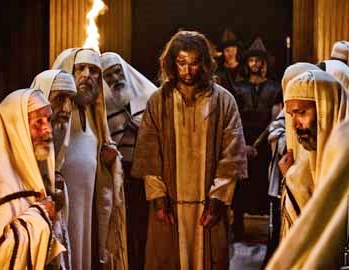
My Lord and savior, my ultimate hero, was profoundly humble. He was God in the flesh, and prior to his incarnation, he existed in a form that clearly showed his power and majesty. Jesus called himself “the son of man.” The son of man, in the Old Testament, was someone who appeared to various prophets in visions, shining in glory that so bright that it was painful to the eyes. But though Jesus could have come to earth “wearing” that unmistakable glory, instead he took on a form that no one paid any attention to: the form of a human, with no additional glory peeping through.
Though Jesus created all things, the rich and powerful and ambitious people had no time for him. He had every right in the universe, and yet he gave up every right. He submitted himself to the most horrific and humiliating form of death, death by crucifixion. Crucifixion was meant to kill, but slowly, agonizingly. In addition to the agony, it was meant to humiliate. Though all of our pictures of Jesus on the cross modestly cover his “private parts,” he was almost certainly completely naked on the cross. When he died, if not before, it is likely that his bowels and bladder emptied. This sort of thing is awful to think about, but sometimes we sort of romanticize the cross. It was not romantic. Certainly, the people who lived in the Roman empire at that time could not imagine a more agonizing or humiliating way to die. I’m still not sure I can. And this is what the most glorious being in existence submitted himself to, out of love for you and me.
Let’s consider this picture of humility. In the first place, it doesn’t mean thinking you are somehow worth less than others, or a poor excuse for a person. To think those things about himself would have been a sin, for Jesus, a lie. In Mere Christianity, C.S. Lewis said:
Do not imagine that if you meet a really humble man he will be what most people call “humble” nowadays: he will not be a sort of greasy, smarmy person, who is always telling you that, of course, he is nobody. Probably all you will think about him is that he seemed a cheerful, intelligent chap who took a real interest in what you said to him. If you do dislike him it will be because you feel a little envious of anyone who seems to enjoy life so easily. He will not be thinking about humility: he will not be thinking about himself at all.
A humble person is interested in others as much as, or more then, herself. She will think that what others have to say is as important as what she might say. To her, the lives of others have as much right to be seen and respected as her own life.
I think one key aspect of what Paul is describing in this passage is that Jesus was secure in who he was. He was not insecure. He knew he was worthy, therefore, he didn’t need others to constantly affirm it. He knew he was God, and so, for his sense of personal well-being, it didn’t matter whether anyone else thought so. His only reason for wanting others to see that part of him was so that they would be saved. His own strong sense of self was the stable platform that allowed him to serve others, even if they never recognized him as God, or even as great.
In addition, Jesus trusted God to honor him at the right time and the right way. Even now, Jesus is not fully honored for who he is, and what he did for the human race. But, Paul explains that eventually, every knee will bow, every tongue will confess that Jesus Christ is Lord.
By the way, I don’t think that this is teaching that all people will be saved. It seems to me that some people will confess that Jesus Christ is Lord and be filled with joy about it. For them, that confession will be the glad exclamation after a lifetime of following him, rejoicing that now all people who have ever lived are recognizing who He is.
But others will confess the truth about Jesus reluctantly, angrily, horrified that they must admit it is true. They will admit the truth, but it will only make them more angry, bitter and hateful. My point is that Paul is not teaching that every person who ever lives will welcome Jesus gladly and be saved. Everyone, whether they want to, or not, will be forced to admit who Jesus is: the Lord of all creation, the savior of those who trust in him. Those who are being saved will confess it with joy, but those who are not being saved will confess it with savage anger and hatred. When they confess, it will also be an admission that they were wrong in their attitude toward Jesus.
So Jesus was able to be humble because he knew who he was, and because he entrusted his honor and success to the Father. He was relaxed, not needing to insist that everyone treat him as he deserved to be treated.
We are called to the same kind of humility: that’s what Paul means when he says: “Have this mind among yourselves, which is yours in Christ Jesus..” But it can be daunting. Jesus was secure in who he was. He trusted the Father with all things, so he could be humble. But what if I’m not quite as secure in myself? What if I feel that I need to look out for my own interests, because no one else will?
Here’s the thing: Jesus offers us that same security and stability that he himself has. The Lord sees who we truly are, and he loves us. If that is true, it really does not matter what anyone else thinks of us. Through Jesus, we can be secure in ourselves, in our worth as human beings loved by God. Through Jesus we can learn to trust him to look after our interests for us. Jesus, for the most part, did not receive the respect he deserved during his life on earth. He trusted that his Father would work it all out in the light of eternity. So, we too, don’t have to get everything we want or deserve in this life. Our lives are bound up with Jesus, and we will be part of the Father’s exaltation of Jesus in the new creation.
Several years ago, before we transitioned to house church here in Tennessee, I preached “live” every Sunday morning. One week, I was really excited about what the Lord had showed me in the text, and eager to give the sermon. However, that morning, the weather was really bad, and it was a holiday weekend to boot. I found myself standing up to preach in front of my family and about five other people. I was disappointed that so few people were going to hear the cool stuff the Lord had showed me from the text. I prayed silently: Really Lord? You want me to preach this for five people, plus my family?
I felt the reply: What if you were only preaching to an audience of one?
What do you mean, Lord?
What if I was the only one you were preaching for? Would that be enough?
It occurred to me that if I was called to preach only to the President of the United States, I would feel honored. Shouldn’t I feel even more honored to preach for the Master and Creator of the Universe?
My sermons are for the Lord, which is a great honor for me. I can relax about who, or how many others hear/read them. I can stop thinking about myself. I wish I could tell you that I always feel that way. Truthfully, it’s still a struggle. But I find that the more my sense of security and self is grounded in the Lord, the less I worry about myself, and the more appropriately humble I can be. I’m not claiming to have this down all the time. But I think one of the keys to humility is to learn to be secure in the love of the Lord for me, and the value that he puts on me. Then, I don’t have to defend myself, or promote myself.
I find this is most difficult as an author. Since I’m not very famous, most people have not heard of me, and won’t go buy my books, because they don’t even know my books exist. The way of the world is to promote not only my books, but myself. I think this is true of most artistic endeavors, like music, graphic art, filmmaking, performing arts (like acting and dance), and so on. I don’t really know what to do about it, other than to be aware of the potential problem, and consciously invite the Lord into the process of marketing my artistic endeavors.
Over the years, many people that I know met my dad. After about the first ten times, I began to get used to the fact that people were almost universally positively impressed by him. I can’t count the number of times people would say something like: “Your dad is a pretty amazing guy, isn’t he?” He was. He led a full and adventurous life, and he had so many varied and interesting experiences. He was very intelligent, and well read, and thoughtful. But I think what actually made such an impression on people is that he was humble. He was genuinely interested in what other people thought, and who they were. He set aside his own agenda and interests to listen to others, and ask them questions.
To be humble we have to trust God with our own needs; we need to let him take care of our rights, and privileges and honor. Then, we are free to focus on others. Paul shows us what happens because Jesus did that. He did not insist upon his own, rightful honor. Instead he humbled himself, even submitted himself to humiliation and death. Therefore, says the scripture, God (the Father) will exalt him, and everyone on earth will recognize his true greatness and glory.
Even more amazing, to my mind, is that he will include us in bringing glory to him!
Let the Holy Spirit speak to you today.








 Clear Bible