SELF-JUSTIFICATION, OR JESUS-JUSTIFICATION?

what-is-justification-by-faith-part-5-21502697

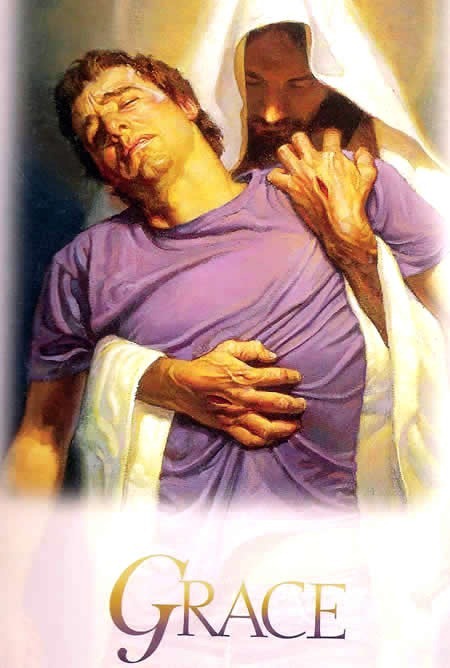
Only Jesus can satisfy the demands of the law. Only Jesus can make you holy. Only he can make you good. You don’t have to try any more.

To listen to the sermon, click the play button:

To download, right click on the link (or do whatever you do on a Mac) and save it to your computer: Download Galatians Part 15

GALATIANS #15

Galatians Chapter 5:2-6

Look: I, Paul, say to you that if you accept circumcision, Christ will be of no advantage to you. I testify again to every man who accepts circumcision that he is obligated to keep the whole law. You are severed from Christ, you who would be justified by the law; you have fallen away from grace. (Gal 5:2-4, ESV2011)

Before all you ladies quit reading, I want to make it clear that these verses have to do with some timeless and important principles. It isn’t really about the male anatomy at all. Remember, the situation in Galatia is that some false teachers have come in and are saying that although Jesus is the Messiah, in order to be right with God and be truly saved, you must follow Jewish law. For men, that meant that they must be circumcised. Some of these folks were in Jerusalem with Paul at one time:

But some of the believers from the party of the Pharisees stood up and said, “It is necessary to circumcise them and to command them to keep the law of Moses! ” (Acts 15:5, HCSB)

Now, let’s be clear. Paul himself was circumcised. At one point, he had his helper, Timothy, circumcised, so that he could stay the houses of non-Christian Jews (Acts 16:3). So clearly, Paul did not view circumcision itself as evil or always wrong. The problem was, the Galatians were starting to believe that circumcision was necessary (for men) to get right with God. For both men and women, they felt it was necessary to follow Jewish law.

Paul is saying this: “We are saved by Jesus plus nothing. If you want to count circumcision or the Jewish Law toward your salvation, then you can’t count Jesus. If you want to follow the law, you have to follow the whole thing perfectly, your entire life.” Jesus presents us with an either/or proposition. Either we receive him, and him alone as our only hope, or we try and get right with God through our own efforts. But we can’t do both.

If you think anything other than the death and resurrection of Jesus will get you right with God, then you are on your own. If you say, “well, God needs to let my aunt into heaven because she was so kind and generous,” you are really claiming that one way to get right with God is kindness and generosity. Paul, Jesus and entire New Testament disagree.

You can come to God through Jesus, have no other claim or hope; or, you can come to God with anything else you want, but not Jesus. Jesus is exclusive. Martin Luther, writing about these verses, put it this way:

“This teaching is the touchstone by which we can judge most surely and freely about all doctrines, works, forms of worship, and ceremonies of men. Whoever (whether he be a papist, a Jew, a Turk, or a sectarian) teaches that anything beyond the Gospel of Christ is to necessary to attain salvation; whoever establishes any work or form of worship; whoever observes any rule, tradition or ceremony with the opinion that thereby he will obtain the forgiveness of sins, righteousness and eternal life – will hear the judgment of the Holy Spirit pronounced against him here by the apostle: that Christ is of no advantage to him at all.” (Martin Luther).

People these days do not like the idea that there is only one way to God, and therefore only one way to heaven. According to the Bible, there is only one way to God, and that is through Jesus Christ. Jesus said it himself:

“I am the way, the truth and the life. No one comes to the Father except by me” (John 14:6).

“Enter through the narrow gate. For the gate is wide and the road is broad that leads to destruction, and there are many who go through it. How narrow is the gate and difficult the road that leads to life, and few find it. (Matt 7:13-14, HCSB)

The apostles all reiterated this teaching of Jesus. John wrote:

And this is the testimony: God has given us eternal life, and this life is in His Son. The one who has the Son has life. The one who doesn’t have the Son of God does not have life. (1John 5:11-12, HCSB)

The reason Jesus is the only way, is because it is only through his life, death and resurrection that God’s holy standard is satisfied. God is holy. Holiness destroys sin. If we come into God’s presence with sin in us, we will be destroyed. Jesus embodied both the holiness of God the flesh of sinful humanity. Because of who he was, his life, death and resurrection satisfied the holy standards of God’s nature. He was the only one who could do that. As we trust him, he includes us in what he has done. But if we try and justify ourselves in any way, Jesus is useless to us. The Galatians were trying to do it through Jewish law. Let me share a few ways I’ve heard people these days try to justify themselves apart from Jesus:

“Well, I’m basically a good person.”

“I’m no saint, but I’m no worse than anyone else.”

“I’m no saint, but at least I’m not a hypocrite.”

“I’ve gone to church all my life.”

“I take care of the people around me. The bible says to love your neighbor, and I do that, probably better than a lot of church people.”

Folks, this is all self-justification. These statements are all about getting into heaven by your own merit, or at least your own merit compared to other people (but not compared to God’s Holy Standard). This is living by law. In terms of relating to God, it is no different from insisting upon following Jewish law. It is up to you to be good enough, or to be at least no worse than others, or to behave religiously. Paul says that if you rely on such things, Jesus Christ is of no value to you.

Some people look for justification in other religions. They may say that all religions lead to the same goal. I always find that idea kind of humorous, because the one thing all religions seem to agree upon is that the other ones are wrong. Islam claims to be the one right way. Jesus himself excluded any other way but himself. That means you can follow other religions if you want, but you won’t have anything to do with Jesus. Even Hinduism and Buddhism, which many people think are so inclusive, are not really that way. They might be willing to includes Jesus as another one of their thousands of Deities, but they absolutely refuse to let him claim the exclusivity that he claims. In other words, they are inclusive only if you accept their way of looking at things, which of course, means they aren’t that inclusive.

There is one more thing people do to justify themselves. They simply change the standard. Listen carefully here, because it doesn’t sound like living by law, but it is. The ten commandments command us to put God first, to not make or worship idols, to not take the name of the Lord in vain and to observe a day set aside for rest and worship. They tell us we should honor our parents. They say we should not murder, commit adultery, steal, lie or covet. Jesus said they were all summed up by these two ideas: Love God, and Love your Neighbor.

So our current culture says “It’s all about love. As long as you act ‘loving,’ you are a good person.” So, you can cheat and steal and lie as long as you do it to the government or a large corporation, where no one (that you know about) gets personally hurt. You’ll still be a good person. You can have sex with someone you aren’t married to, as long as it is loving. You can have greed and envy and hatred in your heart, as long you don’t hurt anyone. You can gossip, or get drunk, or lie to your boss about why you weren’t there. Our culture has reduced holiness to innocuousness.

Now, all this is still self-justification. We aren’t putting our hope in Jesus to forgive us and make us good from the inside out. We are changing the standard of goodness and holiness so that it describes the way we prefer to behave. We are trying to make ourselves righteous by changing what righteousness is. This isn’t putting our hope in Christ – it is putting our hope in the fact that we can, through our own efforts, meet the reduced standards. If this is our approach to God, we are trying to be right with him so other way than Jesus. Paul says, if that is so, we are cut off from Christ.

Now, again, circumcision in itself is not the problem. Paul writes:

For in Christ Jesus neither circumcision nor uncircumcision accomplishes anything; what matters is faith working through love. (Gal 5:6, HCSB)

The issue is self-justification. Circumcision might be a good thing for hygiene or even something that helps some people remember they belong to God. But it can’t be a law, or a means to get right with God.

There are many things like circumcision. Fasting can be helpful to focus our hearts and minds upon the Lord. Certain forms of worship and spiritual disciplines can really help us grow closer to the Lord. But if you ever find yourself thinking “If I just do this, I’ll be OK with God,” watch out! The devil is lying to you. If you think, “Only people who do this activity, or observe this ceremony, are real Christians,” you are in deep spiritual danger!

Let me be even more clear. Not even keeping the ten commandments will get you right with God. First, if you are old enough to read these words, you have already failed to keep the ten commandments. It’s already over – you haven’t kept the whole law perfectly for your whole life. You aren’t holy enough to come into the presence of God. You never will be. It’s good to follow the ten commandments – the Holy Spirit, living inside Christians, wants to do them. But if you are trying to follow the ten commandments in order to keep God from smiting you, you are out of luck. The smiting is coming, unless you are in Jesus.

Only Jesus can satisfy the demands of the law. Only Jesus can make you holy. Only he can make you good.

When you are in Jesus, as you submit to the prompting of the Holy Spirit, you will start to look a little more holy, because he wants to live his holy life through you. But it won’t be you trying to be good in order to please God or get to heaven. It will be Jesus in you, being good, as you. And you won’t trust your own goodness or worry if your own goodness is enough – because the goodness of Jesus is enough for you.

I know you screw up, because I know I screw up. I know that even though Jesus has made me good, I don’t always act like it. Paul knew this about himself too. And that is why he wrote verse 5:

For through the Spirit, by faith, we eagerly wait for the hope of righteousness. (Gal 5:5, HCSB)

The Greek word there for “eagerly wait,” frequently refers to waiting for the fulfillment of something that has been promised, but hasn’t happened yet. We have this righteousness through Jesus, and yet it isn’t fully complete at this time. So we anticipate it eagerly. Paul wrote about this in 1 Corinthians 1:7; Philippians 3:20 and Hebrews 9:28. He wrote this to the Christians in Rome:

For the creation eagerly waits with anticipation for God’s sons to be revealed. For the creation was subjected to futility — not willingly, but because of Him who subjected it — in the hope that the creation itself will also be set free from the bondage of corruption into the glorious freedom of God’s children. For we know that the whole creation has been groaning together with labor pains until now. And not only that, but we ourselves who have the Spirit as the firstfruits — we also groan within ourselves, eagerly waiting for adoption, the redemption of our bodies. Now in this hope we were saved, yet hope that is seen is not hope, because who hopes for what he sees? But if we hope for what we do not see, we eagerly wait for it with patience. (Rom 8:19-25, HCSB)

So what does all this mean for us now? Paul talked about freedom in verse 1. What freedom it is to be done with justifying yourself! You aren’t letting yourself off the hook – you are admitting that you can’t get off the hook and you need Jesus to save you. You are admitting you cannot do it. There is great freedom in that.

There is a warning here, too. If you think you can add to what Jesus had done for you, or if you think you have a part to play in saving yourself, you are in grave spiritual danger. And there is a warning also, to not make good things into necessary things.

Finally, there is this business of eagerly waiting. I see a lot of people who call themselves Christians who do not seem interested, let alone eager, in Jesus bringing his righteousness into their lives. It makes me wonder how much room he really has in their hearts. We don’t need to be perfect. We don’t need to strive to make ourselves good. But we should eagerly anticipate the work of the Holy Spirit in our hearts to do those things. We can be looking for it, praying for it, ready to respond right away as the Spirit prompts us to do something, or refrain from doing something else. We are not supposed to wander off and say, “Well, let Jesus make me righteous if he can, I’m off to do my own thing. Good luck to him.” No, Paul says that we who are in Jesus should be anticipating his work in us, eager to see it come about.

What is the Spirit saying to you today?

FREEDOM!

freedom_chains

To listen to the sermon, click the play button:

To download, right click on the link (or do whatever you do on a Mac) and save it to your computer: Download Galatians Part 14

Galatians #14 . Chapter 5:1

Christ has liberated us to be free. Stand firm then and don’t submit again to a yoke of slavery. (Gal 5:1, HCSB)

These two sentences are extremely powerful. I want to pause and unpack them a little bit. Paul says that Christ has liberated us. One natural question is – how has he done that? Colossians 2:13-18 gives us a clue:

And when you were dead in trespasses and in the uncircumcision of your flesh, He made you alive with Him and forgave us all our trespasses. He erased the certificate of debt, with its obligations, that was against us and opposed to us, and has taken it out of the way by nailing it to the cross. He disarmed the rulers and authorities and disgraced them publicly; He triumphed over them by Him.

Therefore, don’t let anyone judge you in regard to food and drink or in the matter of a festival or a new moon or a Sabbath day. These are a shadow of what was to come; the substance is the Messiah. Let no one disqualify you, insisting on ascetic practices and the worship of angels, claiming access to a visionary realm and inflated without cause by his unspiritual mind. (Col 2:13-18, HCSB)

Through the cross, Jesus Christ has liberated us. His death fulfilled the law, and erased our debt and obligation to it. His death triumphed over, and disarmed, the demonic powers that were free to torment us for our failure to keep the law.

Paul says we are liberated to be free. Two more useful questions are, “What are we free from? What are we freed to?”

I’m so glad you asked. What follows all applies to me as much as to you, but I am going to write it as “you” so that you can appreciate the full impact of your freedom. As you consider your freedom, remember this is freedom that you have only in Christ. You didn’t get it. You didn’t earn it. You don’t get to keep it apart from Christ. But in Christ, you are indeed free. Let me explain what I mean by in Christ. You are in Christ when you keep on trusting him. I use the expression keep on trusting quite deliberately. It is a daily (sometimes hourly) habit of continuing to believe who Jesus is, what he has done for us, how he feels about us, and continuing to rest upon it. This is not a one shot deal. This is not a situation where you just say, “Well I got baptized, so I’m good now.” Or “Well, I got saved five years ago, so I’m good now.” This is a process of continually putting our trust in Jesus, day by day. That is what it means to be “in Jesus” and all these things are ours, only in Jesus. I’m not saying that you have to work hard and live the Christian life on your own strength in order to be in Jesus. But I am saying that to be in Jesus, you need to continually rest in Him with trust in what his Word says, and in what he has done for us.

So, in Christ Jesus, you are free.

You are free from the obligations of the Jewish ceremonial law, as Paul has made very clear throughout this letter.

You are free from subservience to the little regulations that religious people sometimes put on you. Things like: The way you dress. What you eat. The way you express worship. Dancing. The manner in which you pray. The music you listen to. Acting externally religious or pious. You don’t have to keep a formula to be right with God. You don’t have to follow man-made rules. Paul wrote to the Colossians:

If you died with the Messiah to the elemental forces of this world, why do you live as if you still belonged to the world? Why do you submit to regulations: “Don’t handle, don’t taste, don’t touch”? All these regulations refer to what is destroyed by being used up; they are commands and doctrines of men. Although these have a reputation of wisdom by promoting ascetic practices, humility, and severe treatment of the body, they are not of any value in curbing self-indulgence. (Col 2:20-23, HCSB

But wait, there’s more.

You are free from the eternal consequences of the fact that you have broken God’s moral law. That’s right, your sins no longer determine your status with God. No, they do not. If Jesus lives in you, he will want to express his life through you in a way that honors God’s moral law. But your failures at times do not determine your status with God. You are free from being defined by your failures and sins.

You are free from trying to make yourself good. Don’t you argue with me, yes you are. In Jesus Christ, God has already made you good. You are free from having to do that.

You are free from shame.

You are free from shame.

In Jesus, there is nothing wrong with who you are. You are not judged based upon your sins, or your failures, or your flaws. You are judged on the basis of the righteousness of Jesus.

You are free from the way others view you. You are even free from the way you view yourself. Now, you can accept the way God views you – which is through the “lens” of Jesus. It’s a little bit like this. When you are in Christ, God looks for you, and finds you there, in Jesus Christ. And what he sees you there, what he sees is Jesus. So he looks at you, and sees the righteousness of Jesus, the love of Jesus, the strength of Jesus, the honor of Jesus. If you are in him, you have the life of Jesus in you. God isn’t deceived when he sees all that, because it is there.

You are free to have joy without guilt. You are free to love yourself, because you are in Christ, and he is in you. You are free to follow the leading of Holy Spirit without beating yourself up for your failures. You are free to wallow with happiness in the fact that you are loved at the deepest core of your being. You are free to live as the person that God made you to be, and not according to the expectations of others.

You are free from trying to get God to bless you. Receive the blessings he chooses to give with joy, and trust him to bless because he is good, not because you are.

You are free from trying to get it right all the time. Let Jesus get it right through you, by continuing on, in Him.

You are free from figuring it out, managing it, controlling it. What is “it?” you ask? Only everything.

Really? Is all this true, without reservation?

Yes.

Paul will go on and talk about walking according to the Holy Spirit – what we might call, “Christian Living.” We’ll see how all that works when we get to that point. But before we move on and talk about Christian living, we have to make sure that we understand this freedom we have in Jesus. You are free. Don’t submit again to slavery. Stand firm.

The word “yoke” in the New Testament usually implies a sense of servitude or slavery. Jesus invited us to take his yoke, and Paul, later considered himself a servant or slave of Jesus. But Jesus said “slavery” to Him was easy, and the burden is light. Other New Testament passages use the word “yoke” with negative connotations about hard service. The Greek version of the Old Testament, also frequently uses the same word this way. So we have two paths: we can be bound to Jesus, but his yoke is easy and light; or, we can be bound in slavery to having to measure up. Listen to how Jesus invites us:

Come to me, all who labor and are heavy laden, and I will give you rest. Take my yoke upon you, and learn from me, for I am gentle and lowly in heart, and you will find rest for your souls. For my yoke is easy, and my burden is light.” (Matt 11:28-30, ESV2011)

Paul says, stand firm in the free and easy, restful yoke of Jesus. How do we do that? First, I think it is important to recognize that our battle is not against flesh and blood. The verses I just shared from Colossians show us that Jesus has disarmed the demonic powers. So, having been disarmed, their strategy now is to lie to you. They will come to you say, “I know Tom said you were free from shame, but he doesn’t know who you really are inside. You know that you deserve to live in shame.” This will sound like you, talking to yourself, but it is a lie from the pit of hell. Stand firm. Don’t submit to that slavery any more.

They will come and say, “It’s all good to say that you are free from trying to make yourself good, but after all, the bible tells you to follow certain standards of behavior.” In a few weeks we will get into all the stuff about Christian Living and Christian Behavior. Jesus wants to live his life through you, so of course, your behavior should look more and more like Jesus. But you don’t accomplish that by your efforts. You accomplish it by embracing who you are in Jesus, and continuing to trust him. Actually, Jesus accomplishes the “Christian living” through you. All you have to do is trust him, and let him do what he wants to in and through you.

To fight these lies, we should cling to the truth. Jesus said,

So Jesus said to the Jews who had believed Him, “If you continue in My word, you really are My disciples. You will know the truth, and the truth will set you free.” (John 8:31-32, HCSB)

If we continue in his word – this is part of what it means to be in Jesus Christ. We continue to trust him, and trust his word. His Word tells us the truth, and the truth sets us free. Practically speaking, that means that one very important way to stand firm in our freedom is to know the Bible, and continue to know it even better. Read it. If you aren’t a reader, there are plenty of great CD’s and MP3’s you can get so that you can listen to the Bible. Talk about it with your Christian friends. Grab a devotional that points back to the bible. Stand firm by staying in touch with what the Holy Spirit says through the bible.

It’s also helpful to have allies. Other believers who are continuing on in Jesus can encourage you as you do the same. Listening to these messages, praying together, talking about your struggles and joys – all these help you stand firm.

Sometimes, one of the best ways to stand firm in our freedom is to thank God for it, regularly. Often times, truth really seeps into the soul through the power of thankfulness. If you don’t thank someone for a gift, either you don’t like that person, or you don’t like the gift, or you don’t really believe it has been given you. Thanking God for all this freedom is one way of really grabbing hold of it.

In Jesus, you truly are free. Stand firm in it. Rejoice in it.

THE PATH OF SELF-EFFORT, OR THE PATH OF GRACE?

GODS-GRACE

The problem we often have with grace, is that when we depend upon it, we aren’t in control anymore. But when we embrace it, grace brings tremendous freedom and joy, precisely because we don’t have to be in control any more.

To listen to the sermon, click the play button:


To download, right click on the link (or do whatever you do on a Mac) and save it to your computer:
Download Galatians Part 13

GALATIANS #13

GALATIANS 4:17-31

At the beginning of the letter, Paul says, “There are some who are troubling you and want to change the good news” (1:7). In 3:1, he writes, “Who has hypnotized you?” We are reading between the lines here, but it seems apparent that in the Galatian churches were some folks who claimed to be leaders or apostles, and were leading the people astray; specifically, they were trying to make the people conform to Jewish law in order to be saved. Paul must have some information that these people were very convincing and charismatic, saying how much they cared about the Galatians. They appeared to be “zealous” for the Galatians. But Paul says that the zeal of these false teachers has a purpose: they want to isolate the Galatians.

I want to pause here and echo something Paul said in the first chapter. There is only one message of salvation, and it does not come from human beings. Paul says, “These folks want to isolate you from the truth. Don’t believe them. They are not helping you.” We talked about all that, earlier in the series. If you hear anyone – including me – preaching a different message, do not listen to it, don’t fear it, don’t follow it. This is one reason why it is so important for each one of you to know the bible for yourself. If you know what the bible actually says, you will not easily be led astray.

Let me be very direct. I have seen many posts on Facebook, and in blogs, and in internet forums, that demonstrate a HUGE ignorance of what the bible actually says, while claiming that they are getting their thoughts from the bible. You can’t get your information exclusively from internet. Even if you follow this blog, understand, I am not the authority. The Bible is. Don’t just take my word for your spiritual information – read the bible for yourself. Don’t ever assume you know much about it, unless you have actually read the bible yourself.

If you rely on me, or any other human, for your spiritual information, you are putting yourself at risk. What if I’m wrong? What if those others are wrong? Even worse, what if some supposed “bible teacher” is deliberately leading you astray? Go to the source.

Now, of course, I believe there is a use for those who teach and preach biblical truth. The Holy Spirit calls, gives talents to, and empowers, all kinds of different people, for all kinds of work. Teaching the bible is one of those callings. We teachers can point out insights that the Holy Spirit has given us. The good bible teachers have spent the time to understand the background, culture and language – things that are not contained in the text itself. Since I know the bible well, I can often point out other parts of it that help us dig deeper into whichever passage we are studying. All that knowledge is very useful when we want to understand certain parts of the bible. The working of the Holy Spirit through teachers and preachers he has called can be a powerful thing We can point you in the right direction when you have spiritual questions. But ultimately, we are only here to help you and encourage you to know Jesus better for yourself. The final authority is the Word of God itself, not what we say about it.

Next, Paul uses an illustration from the Old Testament. Just to refresh your memory, I’ll summarize what he is talking about. When God first called Abraham, he was childless. God promised, among other things, that He would give Abraham, and his wife Sarah, many descendants. Abraham and Sarah followed God, and did what he asked, and generally lived a life of faith. But God didn’t give them any children. Years went by. Abraham got older. Sarah went through menopause. Now it was too late. There would be no children, so they thought. They gave up on God’s promise. They stopped believing that he would really do it for them.

Now, they didn’t entirely abandon God – they just began to believe that it was up to them to take care of things, up to them to make sure God’s promise was fulfilled. Does this sound familiar?

So they found a solution. Sarah had a slave girl named Hagar. She told Abraham to sleep with Hagar, and have a child with her. Then, Abraham and Sarah would consider that child theirs; Hagar’s child would be their heir. They took matters into their own hands, and did this. The son that was born to Hagar was called Ishmael.

Ishmael was the result of their planning and effort to make things happen. But he wasn’t God’s plan. When Ishmael was fourteen years old, when Sarah was ninety, Abraham and Sarah conceived, and she had Isaac. Isaac was the child that God had promised. He came in God’s timing, not in response to their efforts.

As it turns out, God blessed Ishmael, their mistake, because God is a gracious and loving God. But he chose Isaac, before he was even born, and it was through Isaac that the people of Israel, God’s chosen people, came into being. It was through Isaac that Jesus came, and therefore through Isaac, the child of God’s promise, that all people of the world were blessed. So, Ishmael, though he was also blessed by God, was sent away from Abraham, and he was not considered part of God’s specially chosen people.

Now Paul is using this story from Genesis as a picture. The Galatians want to be thought of as Jews – particularly, Abraham’s descendants. “Well,” says Paul, “Abraham has two kinds of descendants: a child of slavery to self-effort, or a child of trust in God’s goodness and his promise. One of them was born was born to a slave, and was the result of self-effort, work, and lack of trust in God. One was born out of God’s goodness and grace.” Paul says that Ishmael was a child born “according to the flesh,” and Isaac born “according to the Spirit” (v 29). The path of self-effort, self-reliance, work and pressure, is the path of the flesh. The path of trust and waiting for God is the path of the Holy Spirit. Ishmael came about because Abraham, Sarah and Hagar tried to make the promise appear by their own efforts. Isaac came about because God made him happen.

Paul says that the Jews of his time, regardless of the fact that they physically came from Isaac, are living like the children of Ishmael. Trying to be justified with God by obeying the Jewish law is the path of self-effort and slavery; the path of the flesh. He says to the Galatians:

Now you, brothers, like Isaac, are children of promise. (Gal 4:28, HCSB)

The Galatians had two paths in front of them. They became believers through God’s choice, through God’s grace, not through their own efforts and goodness. But these false teachers were trying to lead them in a different direction. They suggested instead, that the Galatians should make their own plans for getting God’s promised blessings. They taught that people need to work and earn God’s favor and goodness.

I think most Christians are aware of the obvious trap of thinking we can earn God’s favor for salvation. But far too many of us, once we are saved, act like we must take matters into our own hands in order to live the Christian life or get the Blessings that God has promised.

Just think of this for a moment. Abraham and Sarah longed desperately for a child. They felt like life could not possibly be complete without a son. But they couldn’t make it happen. God did not seem to make it happen for them either. Their only choice was to sin, in order to get what they longed for. So they tried that. Even though the Lord took care of their mistake and blessed the child that resulted, it still did not get them what they really wanted. They had to trust the Lord and his gracious timing and provision.

I want to point out one more thing. Paul says: “the child born according to the flesh persecuted the child born according to the spirit, and so also now.” This is true in several ways, more ways than Paul even knew. The descendants of Ishmael are the people that today we call Arabs. Even as we speak, those descendants are enemies of Isaac’s descendants, modern-day Jews. So Abraham’s reliance on the flesh to bring about the work of God has had extremely long term and far-reaching consequences.

Paul of course, has something more spiritual in mind. Those who live by self-effort and works of the flesh typically do not appreciate those who live by grace. Grace is outrageous, offensive at times. A drug addicted prostitute can come to Jesus just as she is and be forgiven and accepted, while the hard-working pillar of the community who is too proud to admit her fundamental need for Jesus cannot come to feast unless she admits her need and turns her life over to the control of Jesus. Paul quotes Isaiah 54:1 proclaiming honor and blessing for a childless woman. In those days, childlessness was a big deal, even seen as a curse and a mark of shame. Paul is reminding them of the grace of God, that can give such a woman honor.

The other problem we often have with grace, is that when we depend upon it, we aren’t in control anymore. We don’t get to demand what we want, when we want it. And we can’t control others either. We are all on equal ground, standing a place of need and dependence upon God. But when we embrace it, grace brings tremendous freedom and joy, precisely because we don’t have to be in control any more. It doesn’t have to be up to you. You don’t have to deserve it. In fact, you don’t deserve it, and you can’t make yourself good enough to. You can only surrender and receive.

Do you have a Sense of Blessedness?

blessed

The sense of being blessed is one of the key differences between living by law and living by grace. If you think it is up to you live the Christian life, up to you to please God, it will be hard to feel blessed.

To listen to the sermon, click the play button:

To download, right click on the link (or do whatever you do on a Mac) and save it to your computer: Download Galatians Part 12

Galatians # 12. Chapter 4:12-16

This next little section of Galatians is a very personal appeal from Paul, and it contains a kind of buffet of several different spiritual truths. Please ask the Holy Spirit to show you what he wants to show you here, and then we’ll dig in.

Up until this point, Paul has been pretty stern with the Galatians. Here is a sampling of his tone so far:

As we have said before, I now say again: If anyone preaches to you a gospel contrary to what you received, a curse be on him! For am I now trying to win the favor of people, or God? Or am I striving to please people? If I were still trying to please people, I would not be a slave of Christ. (Gal 1:9-10, HCSB)

Now from those recognized as important (what they really were makes no difference to me; God does not show favoritism) — they added nothing to me. (Gal 2:6, HCSB)

You foolish Galatians! Who has hypnotized you, before whose eyes Jesus Christ was vividly portrayed as crucified? I only want to learn this from you: Did you receive the Spirit by the works of the law or by hearing with faith? Are you so foolish? (Gal 3:1-3, HCSB)

Paul was clearly upset about what was happening in the Galatian churches. He wasted no time in telling them how wrong and foolish they were. But at this point, (4:11 and following) he moderates his tone a little bit. First, he says, “Become like me, for I became like you.”

I think Paul is referring to the fact that although he was a Jew and Pharisee, he lived with, ate with and associated with the non-Jewish Galatians. He became like them, living as if we were not Jewish. Through Christ, he had the freedom to do this. Now, he urges them to do the same. Remember, certain leaders in these Churches were telling them they had to obey all the Jewish laws to be a Christian. Paul reminds them, that was not how he behaved. He was like them. He is saying, “Look, I was Jewish, and I became like a Gentile. Now you, who have been trying to be Jewish, become like Gentiles again!”

Now, most of us have already become like Paul, in the sense that we don’t strictly follow Jewish regulations. But I think there are two places where this might possibly to speak to us. First, I think it says something about reaching out to others. People do not have to act like us, look like us, talk like us or dress like us before they can become part of our church. They didn’t have to become like Paul – that is, Jewish – in order to receive Jesus. If anything, Paul became more like them. There are, of course some bottom-line aspects to Christianity. To be a Christian, you have to trust Jesus, and surrender your life to him. But once a person does that, we can trust the Holy Spirit to begin manifesting the life of Jesus in that person. We can trust the Holy Spirit to lead that person away from sin. But it doesn’t say anything in the Bible about us all looking the same. The life of Jesus is available to anyone who is willing to surrender control of his or her own life to Him.

Second, it is a reiteration of our freedom in Christ. Some Christians try to put rules on silly things. For instance, you must dress a certain way at church (or all the time); you cannot drink, even in moderation without getting drunk; you can’t watch certain movies, or listen to certain types of music, or dance, or….you fill in the blank. These things are not essential to faith in Jesus Christ. They are external rules. Paul says in Colossians that these rules have little value, spiritually speaking:

If you died with the Messiah to the elemental forces of this world, why do you live as if you still belonged to the world? Why do you submit to regulations: “Don’t handle, don’t taste, don’t touch”? All these regulations refer to what is destroyed by being used up; they are commands and doctrines of men. Although these have a reputation of wisdom by promoting ascetic practices, humility, and severe treatment of the body, they are not of any value in curbing self-indulgence. (Col 2:20-23, HCSB)

Next, Paul makes this statement:

You have not wronged me; you know that previously I preached the gospel to you because of a physical illness. You did not despise or reject me though my physical condition was a trial for you.

Bible scholars debate what exactly Paul’s physical ailment was. Martin Luther believes that when Paul came to the Galatians, he was suffering from the effects of physical persecution. We know that many times Paul was beaten up by mobs. Sometimes he was arrested and whipped. Several times he was imprisoned, and we can assume during some of those incidents, he suffered at the hands of the jailers and the other prisoners. In the Galatian area, in one place he was stoned and left for dead (Acts 14:19).

Other people thought that Paul had a recurring illness. In 2 Corinthians 12:7, Paul speaks of a “thorn in the flesh,” that sounds like it might be a recurring physical problem. Many people suspect that he had some disease of the eyes. We know that on the road to Damascus, Paul was blinded for three days. Here in this passage, he says the Galatians would have torn out their own eyes to give to him. At the end of the letter, he writes this:

Look at what large letters I use as I write to you in my own handwriting. (Gal 6:11, HCSB)

Most of Paul’s letters were actually written down by other people (often, his friend and colleague, Silas). Usually, he just signed them personally at the end. 2 Thessalonians 3:17 is typical of the end of many of his letters:

This greeting is in my own hand — Paul. This is a sign in every letter; this is how I write. (2Thess 3:17, HCSB)

All this suggests that maybe Paul’s vision was not very good, and perhaps he had a condition that flared up and worsened at times. In any case, far from coming to them as strong and having it all together, he first came to them in weakness and in need. This again, is a helpful thing for us as we consider how to reach out to people who don’t know Jesus yet. We don’t have to have it all put together. In fact, sometimes, when we have some kind of need, it opens a door to relationship with others, and opens a door for us to share Jesus with those who help us.

Paul’s other point here is that in spite of all of his rebukes and strong language, he is not upset about their personal interactions. His intensity is not about personality conflicts. It is about the truth of the good news of Jesus Christ. He is saying, “Look, this isn’t personal. I know how you cared for me.” He is reminding them of the joy and friendship that existed between them when they were together. He doesn’t want them to think he is angry for some offense against himself. It is about the truth, not personal conflict. In verse sixteen He says, “Have I become your enemy by telling you the truth?”

I have to say, I have very strong feelings about this subject. Paul is making a distinction here that is absolutely critical for Christians in the world today. In essence, he is saying this: “I love you and appreciate you as people. We have a wonderful friendship. I am even indebted to you. What I say to you does not negate that. You do need to know, however, that your belief, and the direction that your life is going, is wrong.”

The fact that he calls them wrong, takes nothing away from his love for them. In his mind, at least, it doesn’t affect their friendship and the close feelings that existed between Paul and the Galatian Christians. It is simply that, because he loves them, he must make sure that they know the truth. The world rarely understands this. Rick Warren, author of the Purpose Driven Life puts it like this:

Our culture has accepted two huge lies. The first is that if you disagree with someone’s lifestyle, you must fear or hate them. The second is that to love someone means you agree with everything they believe or do. Both are nonsense

That is exactly what Paul is saying here to the Galatians. He is saying, “I love you and appreciate you. This letter isn’t about that. But this letter is about the truth of what we believe and how we live.” The world usually doesn’t understand this attitude. But it is something that we Christians need to keep practicing anyway. Perhaps you have friends or family members who claim to be Christians and are living together, but are not married. The truth is, according to the Bible, that is a sin. But there is no sense in which we should hate someone who does this. There is no way in which we should ever treat them badly, or speak to them hurtfully. If the subject comes up, or if the Holy Spirit leads you to bring it up, we do need to tell the truth. But the fact that we believe as we do does NOT mean that we hate everyone who disagrees with us, or who lives according to different moral standards.

The big moral issue of our present time, of course, is homosexuality. Genesis 19; Leviticus 18:22 and 20:13; Romans 1:27-29; 1 Corinthians 6:9 and Jude 1:9 all teach that homosexual sex is sinful. The bible doesn’t say it is wrong to be tempted, or to consider oneself gay, but it does teach that rather than engage in gay sex, people should remain celibate. Now, many people who call themselves Christian disagree with me. They either ignore some or all of those verses, or they have a different way of interpreting them. For many reasons, I think their bible scholarship and interpretation is very poorly done; and of course, they don’t like my way of understanding the Bible.

But I don’t think acting on gay feelings is worse than any other sin. We are all saved only through Jesus, and I am no better than anyone else. I do not hate gay people. No Christian should. I do not fear them, or what they represent. We shouldn’t mock or hurt gay folks, or deprive them of any civil right. In a free society, everyone ought to have the right to live as they see fit. I have gay people in my family, and I love, respect, and accept them as they are. And we should not hate people who disagree with us about this issue. I certainly don’t.

I’m sure many people have difficulty understanding this, but disagreement is not the same thing as hate or bigotry. If it was, everybody would have to hate billions of people for millions of reasons. If you think you have to agree fully with someone before you can love them or they you, you are in a sad, sad situation. The world is a very big, very diverse place. There are very few people in any group in the world who agree upon everything. If you threatened by people who disagree with you, maybe you need to get out more, and spend more time around such folks. We don’t have to be enemies. In fact, for our part, Christians should not think of anyone besides the devil and his cohorts as the enemy.

Let me give you one more example, as long as I’m in the middle of such controversy. In the course of my life, I have had many friendships with Muslim people. They honestly believe I am going to hell for believing that Jesus is in nature, God. I believe they are going to hell for refusing to receive God’s grace and forgiveness through Jesus. I have discussed these things openly with every Muslim friend I have had. And it has never been a problem for those friendships. I know there are Muslim extremists out there, obviously. But I am telling you, in my personal experience with Muslim people, this is how it has been.

If Muslims and Christians can disagree so fundamentally, and still accept each other, and get along and be friends, certainly we Christians ought to be able to do that with people who are more similar to us. Actually, we are supposed to do that with everyone.

I want to look at one more thing in this passage. In Galatians 4:15 Paul says to the Galatians:

What happened to this sense of being blessed that you had?

This is an important part of the entire message of the book of Galatians. The sense of being blessed is one of the key differences between living by law and living by grace. If you think it is up to you live the Christian life, up to you to please God, it will be hard to feel blessed. If it is up to you to get God to act on your behalf, you might feel obligation. You probably, at some point, feel fear, guilt and especially shame that you aren’t good enough. Sometimes, maybe, you manage to do pretty well, or at least to think you are doing pretty well. Then you might feel self-satisfied; you might even fall into sinful pride. Even so, you’ll feel the pressure to keep doing well. But either way, you probably won’t feel blessed.

We feel blessed when we know – truly know – that we are loved. We feel blessed when we know we have received far more than we could ever earn or deserve, and that it is all given freely, with no thought that we could, or even should, try to repay it. We feel blessed when we are secure in the love and grace and approval of God. All this comes only through Jesus; we get it when we trust him and surrender control of our life to him.

Do you have a sense of being blessed? Or is your life all obligation, shame and fear, or self-satisfaction and pride? At times we lose the sense of being blessed because Jesus is not a very big deal in our lives. We sweep him off into a corner of our lives that we call “religion” or “church.” If he doesn’t have much room to be in your life, naturally, there is not a large sense of being blessed.

For others, sometimes, even after we receive Jesus, he needs to work healing in us, to deal with shame and guilt that is left from our past. But through him, we can receive that sense of being blessed.

Take a minute now, to let God show you that because of Jesus, he approves of you. That’s right, through Jesus, we have God’s approval. Let that sink in, and receive again that sense of being blessed.

WHEN TRADITION HURTS FAITH

traditions

To listen to the sermon, click the play button:

To download, right click on the link (or do whatever you do on a Mac) and save it to your computer: Download Galatians Part 11

GALATIANS #11 . Chapter #4:8-11

8 But in the past, when you didn’t know God, you were enslaved to things3 that by nature are not gods. 9 But now, since you know God, or rather have become known by God, how can you turn back again to the weak and bankrupt elemental forces? Do you want to be enslaved to them all over again? 10 You observe special days, months, seasons, and years. 11 I am fearful for you, that perhaps my labor for you has been wasted.

The Galatians probably worshipped the Roman/Greek pagan gods, and this is mostly likely what Paul is referring to when he refers to their past. But this makes it an interesting statement. The Galatians are not trying to go back and worship pagan gods – they are trying to follow Jewish Laws and earn something from the true God. But Paul says, this would be just the same as going back to the pagan gods. He says “How can you go back again to these bankrupt elemental principles?” Elemental principles is that word “stoikeon,” which we talked about last time. It is the idea that one thing necessarily follows another; the idea that you earn what you get, and you get what you deserve. Although many things in the universe do generally operate this way, Paul explained last time that this is not how God operates spiritually with those who are in Jesus Christ. Last time we saw that what God says to us is this: “Stoikeon doesn’t work for you, because you aren’t able to do anything of real value to me. So instead, we’ll let Jesus do all the work, and through Him, I’ll adopt you as my dearly beloved children. Let’s have no more of this ‘you do something for me, and in return I’ll do something for you.’ Instead, through Jesus, I’ll treat you as my kids, and you treat me as your daddy.”

Paul says here that going back to that idea of trying to do something for God in order to get him to do something for us, is the same as going back to the old pagan worship that the Galatians used to practice. Even if they are following Jewish Law, they are doing it with the same attitude and relationship with God that is exhibited in their old pagan worship. Pagan worship was all about “stoikeon” or “sequential principles.” If you wanted the help of a god, then you made some sort of sacrifice or vow to the deity you need to please, and you got his or her help in return. Usually in pagan worship, you had to follow the rituals of worship precisely. You had to do and say the right things at the right time in order to get the desired result.

Paul says that when they seek to follow the Jewish law, the Galatians are doing exactly the same kind of thing. They are attempting to do things for God so he will do things for them. Jewish Law emphasizes following certain rituals, and doing things the right way. Paul says, “You observe special days, months, seasons and years.” And he says that the fact that they do this scares him. It makes him think they are losing their faith.

What were the special days and seasons they were observing? The entire letter was written because the Galatians were starting to believe that in addition to believing in Jesus, they had to follow the Jewish law. We need to understand a little bit about Jewish law. The Old Testament, of course, contains many rituals and laws that Jews were supposed to keep. But there is more to it than that. Over the years, Jewish rabbis taught extensively about the Old Testament, and their teachings were passed down orally from one generation to the next. These teachings, or commentaries on the Old Testament, came to be seen as an essential part of Jewish doctrine. Eventually, these commentaries were written down and collected, and today they are called “the Talmud.” So Jewish law came to mean much more than even just the Old Testament. Paul himself, before converting to Christianity, was a rising star in the Talmudic tradition of Hillel.

Though the Talmud was still in development during New Testament times, many of its teachings were already established at that time. So, for instance, the Old Testament commands us to remember the Sabbath and keep it holy. Over the centuries, the Jews grappled with what exactly that means, in practical terms. By the time of Jesus, most Jews accepted to remember the Sabbath and keep it holy, there were “sub-rules,” you had to follow, rules found in Talmudic teaching. For instance, you could only take a certain number of steps, or carry certain things.

I suspect that the Galatians were following both Old Testament commands, and also commands and rituals that were part of the Talmudic tradition. They probably followed a strict Talmudic interpretation of the Sabbath, and celebrated the Jewish events like New Moon, the first and seventh month and the Feasts of Unleavened Bread, Pentecost, and the festival of Booths. Paul writes about these things more specifically to the Colossians:

Therefore let no one pass judgment on you in questions of food and drink, or with regard to a festival or a new moon or a Sabbath. These are a shadow of the things to come, but the substance belongs to Christ. (Col 2:16-17, ESV2011)

Now, it isn’t that these things are bad in and of themselves. Our church, New Joy Fellowship, celebrates the Jewish Feast of Passover every year. But there are two important things to remember, and this is what Paul is getting at:

  1. Such things, in and of themselves do not contribute to our salvation or worth in God’s eyes. Celebrate the Passover, or don’t. Eat Pork, or not – it doesn’t matter, spiritually. You won’t be more holy if you do these things; you won’t be less holy if you do. Following laws and traditions will not get God to love you more, and they won’t manipulate God into blessing you. God doesn’t relate to us according to sequential principles.
  2. Such things are shadows; the substance is Christ. Sometimes they are helpful, but they are only helpful if they point us to the real thing, which is Christ. Tradition is nothing, Christ is everything. Tradition is great if it points us to Christ, it is inherently spiritually dangerous if it does anything other than that.

I heard a great quote last week. A pastor at a conference said, “Tradition is the living faith of dead people, but traditionalism is the dead faith of living people.” Tradition can be good. When we remember how people who have gone before us lived their lives in faith and hope, it encourages hope and faith in us. We can use memories and repeated traditions to remind us of those faithful believers who have gone on to their reward. We can use traditions to keep pointing us toward the substance, which is Jesus Christ. But sometimes our faith becomes tied to the traditions. We start to feel that we must keep certain traditions, and if we don’t, we haven’t done it right. We sort of get the idea not that traditions is there to help encourage us, but rather, that certain traditions are a necessary part of our faith. This is what Paul is so concerned about.

Let me give a few examples of good traditions that can lead us astray when we think they are necessary. One of those is the altar call. That is a tradition in most Baptist churches. Sometimes it is helpful. But if you find yourself thinking that no worship service is truly complete without an altar call, you are in danger. If you think the only proper way to get saved is to come to the front of church during an altar call, you are in grave of becoming traditionalist, of confusing living faith with tradition. Lutherans have a lot of traditions in worship too. Some of them can be helpful at times. But if we get the idea that it isn’t really a worship service unless we say the Lord’s prayer, or stand for the reading of the gospel, we are in danger of confusing living faith with tradition.

Our church typically doesn’t fight over these kinds of things, but there are thousands of churches that do fight over traditions; things that are not necessary to true and living faith in Jesus Christ. The reason it becomes such a big deal is that people start thinking traditions are the same thing as faith. They are not. They are only there to aid it, and when they are not useful, they should not be used. The danger of relying too much on tradition is that some people end up with only tradition, and no real faith that is active and alive.

Picture a battery powered radio, the kind of thing we used to call a “boom box.” Imagine someone brought one of these radios to a remote village in Papua New Guinea where there was no electricity. Picture the villagers amazed and thrilled as they hear the music coming from the radio. Imagine the hours they spend, uplifted and made joyful by the music. Every evening at the same time, after they are done with their hard work, the villagers gather together around the radio to listen to the music. They call it “music time.”

But as time goes on, those batteries will die. Picture a time when the music starts to fade, and then imagine one day, it is gone. Now, what will those villagers do? If they are sensible, they will make their own music and enjoy it, and perhaps hope for a time when someone will bring new batteries to the village, so that the radio may be refreshed. But it is entirely possible that after a long time of gathering together every night to listen to the music, they may retain the habit, even after the batteries die. The radio is no longer bringing them music, but still they gather and look at it. Eventually, the villagers may even forget why they gather each night to look at the radio. It’s just what they do. If asked, many of them will say they do it because of music. As they forget, they have started to think of the evening time gathered around the radio as their “music time,” even though music has long ceased to be a part of it.

That is how some of us are with traditions. Tradition is there to bring us the “music” of faith. But tradition itself is not the same as faith. It can bring the music, but it is not music in itself. Sometimes we continue to follow traditions long after they have ceased to encourage our faith. Sometimes we get mixed up, and we forget that our faith is something greater and more alive than the traditions that once helped us in it. We even sometimes start to think that the traditions are faith, or at least an inseparable part of it.

So, we think we haven’t worshipped if we didn’t say a certain prayer or have an altar call or sing a certain song. We think it is isn’t a real church if it doesn’t have candles, or an altar, or a cross, or if it is in someone’s home, or…[you fill in the blank]. We start to think you have to have a guitar, or you can’t have a guitar and many other silly things.

Now, let me be clear. When tradition brings you closer to Jesus and makes you more open to the Holy Spirit, it is a wonderful and useful thing. There is nothing wrong with embracing those kinds of traditions. We need all the help we can get. But we need to be careful that we do not start to think that traditions are necessary to faith, or that they are the same thing as faith.

This is a normal, human tendency, and this is why Paul was so frightened when he heard about the Galatians mindlessly following the Jewish traditions. They were perverting the true gospel, adding on requirements, as if what Jesus did was not enough. They were confusing things that were designed to help faith, with the substance of faith itself.

DADDY TIME!

daddy&baby


To listen to the sermon, click the play button:


To download, right click on the link (or do whatever you do on a Mac) and save it to your computer: Download Galatians Part 10


Galatians #10 . Chapter 4:1-7

1 Now I say that as long as the heir is a child, he differs in no way from a * slave, though he is the owner of everything. 2 Instead, he is under guardians and stewards until the time set by his father. 3 In the same way we also, when we were children, were in slavery under the elemental forces1 of the world. 4 When the time came to completion, God sent His Son, born of a woman, born under the law, 5 to * redeem those under the law, so that we might receive adoption as sons. 6 And because you are sons, God has sent the Spirit of His Son into our2 hearts, crying, “* Abba, Father! ” 7 So you are no longer a slave but a son, and if a son, then an heir through God

The last thing we looked at was how Paul describes the law as a Chaperone, or Guardian. This is a continuation of that thought. He says that the heir lives as a slave until he comes into inheritance at the time set by the father. The heir is not free when he is a child – he needs to obey the guardians and stewards in his life.

So, Paul points out that even the chosen people of God (the Jews) were “slaves” in a sense – slaves to the guardian, the Law. We too, before coming into the full inheritance of Jesus Christ, were slaves. We were slaves to the “elementary forces” of the world. The Greek word is “stoikeon” (stoiceion, if anyone cares). Essentially it means “basic, sequential principles.” You might say it is the idea of “one thing leads to another.”

Here is an example of stoikeos in action. You bend down to pick something up off the floor in the kitchen. Next, someone opens a drawer above you. Then, you straighten up and hit your head. Finally, your head hurts. Next time you are there when a friend or family member bangs her head, and exclaims that it hurts, say, “that’s just stoikeos in action.” She’ll appreciate it greatly.

If you take two things and add two more things, you have four things. That’s stoikeon. You might even call it natural law. Here’s another example of a stoikeon: If you sin, the presence of God is so holy that it will destroy you. Sin separates you from God. The spiritual side of stoikeos, is that you get what you deserve. You earn God’s favor and blessing, or his wrath. That’s the natural state of things. It is similar to the idea of karma – you get what you deserve. Your actions lead to either things that are good for yourself, or bad for you.

That is how the law works. If you do the right thing, you get the good thing. If you do the wrong thing, you get the bad thing. Remember, the law isn’t bad. It isn’t wrong or inaccurate. It just isn’t possible for us. Because of that, this arrangement really didn’t work out for us.

Paul has been telling us that there is a new arrangement. The law can’t be eliminated. But we can’t do it. So Jesus did it on our behalf. And he took on himself, our consequences for failing to do it. The law is now satisfied, not broken. And we can move on, in the presence of God, without being destroyed.

Now, I don’t mean to say that now we should sin all we want to. I have talked about this in every message for the past several weeks. We admit we cannot do it; we believe that Jesus can and will do it for us, and we trust him to do it in us and through us.

But a lot of believers are mistaken about how things work now. We think, “OK, Jesus saved us from being destroyed by God’s presence. Now, I am in relationship with God. If I take care of his stuff, he’ll take care of mine.” This is a trap. We think that if we are good little boys and girls, then God will reward us with candy: that is, earthly blessings. Then, when that doesn’t work out the way we think it should, we get angry and upset and disappointed with God. We did our part, why didn’t God do his part? Or, maybe we didn’t do our part, because we didn’t hear from him what we were supposed to do. Why didn’t he make it more clear?

We do not live in relationship of karma. We don’t have the kind of relationship with God where if we do something for him, he does something for us. Instead, God says, “That won’t work, because you can’t do anything that is worthwhile to me. How about instead, I treat you as my children, my heirs? I will do for you what I know is best for your eternal self, and you just keep trusting that what I am doing is good, and good for you.”

We sometimes say, “I don’t care about my ‘eternal self,’ I just want to feel good now.” I understand that attitude. I’ve had it at many points in my life, and I won’t say I’ll never have it again. But it is not a mature attitude. It isn’t wise, or even smart. We see this in three year olds, who think they want many things that will not actually make them happy. Three-year-olds aren’t mature enough to distinguish what is truly best for them, so wise, loving parents do not always give them what they want.

Now, I am not saying that there is no order in the universe. Often times, one thing really does lead to another. If you manage your money wisely, it is likely that you will have enough. If you spend your money frivolously and without thought, you might end up short. Even morally, there is order. Wrong-doing tends to lead to bad results. Avoiding sins like drunkenness and promiscuity and dishonesty often leads to a better life here and now than engaging in those things. That’s because that is how the universe works – God made it that way.

But we don’t have a quid-pro-quo relationship with God. It isn’t “I’ll scratch your back, you scratch mine.” It is, this: “Lord, I owe you everything and I can’t repay it. I trust you. I’m in your hands.”

Jesus was born under the law, as we are. He was born of a woman – that is, in addition to being Divine, he was also human, like us. Because of that, he could fulfill the law. The result is our adoption as sons.

I pointed this out last time, but it bears repeating. We are all sons. Not that we are all male-children, but that we are all the legitimate inheritors of God’s family name, the legitimate inheritors of his riches and grace. Through Jesus Christ, we truly belong to God, and belong in his family.

Paul adds this:

And because you are sons, God has sent the Spirit of His Son into our hearts, crying, “Abba, Father! ” (Gal 4:6, HCSB)

“Abba” is basically the Aramaic word for “Daddy.” Through Jesus, we are such legitimate, dearly loved children, that we can call God “Daddy.” Paul writes something very similar in Romans chapter 8:

For you did not receive a spirit of slavery to fall back into fear, but you received the Spirit of adoption, by whom we cry out, “Abba, Father! ” The Spirit Himself testifies together with our spirit that we are God’s children, (Rom 8:15-16, HCSB)

I am fortunate in that my earthly, physical, father has always been an overwhelmingly positive influence in my life. But I know many people who do not have a positive view of fathers, because their own dad was distant, or troubled, or even abusive. Some people respond to this by saying we should not talk about God as a Father, because that is negative for a lot of folks. Nobody has a perfect dad – not even my kids. So, for some, the picture of God as a father may at first be negative or scary or distant. But the point is, God is a perfect father. He loves us perfectly. He cares for us more than any earthly father is capable of. What your earthly father lacked, God does not lack. What your earthly father did wrong, God does not do. The love, attention and affection you may have craved and never received from your earthly dad, is available to you now, in your heavenly Daddy.

Take a moment to Listen to the Father’s heart:

“But now, this is what the Lord says – he who created you, O Jacob, he who formed you O Israel: Fear not, for I have redeemed you; I have summoned you by name; you are mine…

Since you are precious and honored in my sight, and because I love you, I will give men in exchange for you, and people in exchange for your life. Do not be afraid, for I am with you; I will bring your children from the east and gather you from the west. I will say to the north, ‘Give them up!’ and to the south, ‘Do not hold them back.’ Bring my sons from afar and my daughters from the ends of the earth – everyone who is called by my name…” (Isaiah 43:1,4-7)

This is God’s attitude toward us – his children. He calls us his sons and daughters and he says we are precious and honored in his sight. He says we are his. He loves us and is willing to make huge sacrifices for us. He is on your side. You can feel safe when you talk with him.

I took a break from writing this to pick out the songs for the service this week. I realize we don’t have many songs written specifically to God the Father. We praise the Lord and we worship God. We praise Jesus quite frequently. There are a few songs that praise God as Father, Son and Holy Spirit, but very few indeed that invite us to worship and praise the Father in his Fatherhood. Even the old hymns don’t have a lot of this.

But this is a tremendous gift.

Jesus once told the parable of the prodigal’s son. When the younger, irresponsible brother returned, the Father embraced him, loved on him, and threw him a party. But the older brother was not pleased.

But he replied to his father, ‘Look, I have been slaving many years for you, and I have never disobeyed your orders, yet you never gave me a young goat so I could celebrate with my friends. But when this son of yours came, who has devoured your assets with prostitutes, you slaughtered the fattened calf for him.’ “ ‘Son,’ he said to him, ‘you are always with me, and everything I have is yours. (Luke 15:29-31, HCSB)

The tragedy is this: The older brother had been living like a slave, when he was truly a son. So Paul says to us in verse seven:

So you are no longer a slave but a son, and if a son, then an heir through God

You are no longer a slave, but a son. Again, not necessarily, a male, but the bearer of God’s family name, a dearly beloved child who can walk into the Father’s presence and say, “Hi, Daddy!” Your position as a dear child is not based upon your performance. It is based upon the performance of Jesus.

You don’t have to live like a slave. All that the Father has is yours, in Jesus.

HOW DO WE LIVE BY THE PROMISE?

lighthouse

The law is still right. It is still good. It still reflects the character of God. But it is no longer something external to us. When we trust Jesus, The character of Jesus is being formed inside us. We learn to rely on the Spirit within us to guide us; we learn to listen and respond obediently to his prompting. We no longer consult a rule-book. We consult a person.

To listen to the sermon, click the play button:

To download, right click on the link (or do whatever you do on a Mac) and save it to your computer: Download Galatians Part 9

GALATIANS #9

The Law shows the absolute necessity of the promise. The law shows us our need for the promise. If we didn’t have the law, we wouldn’t understand the holy character of God. If we didn’t have the law, we would not realize that sin is a problem, and one we cannot overcome. The Law isn’t wrong. The problem is, we can’t do it.

The Law is not in contradiction to the promise. It was given as complement, to show that the promise was needed. God gave the promise first, to invite his people to live by faith. But he gave the law later, to help them understand why they needed to live by faith.

In Galatians 3:24 it says that the law was our guardian. Although the Greek word sounds like “pedagogue,” (which in English means “instructor of children,” or “teacher”) it has a different meaning here. The best English translation might be chaperone.

In the culture of New Testament times, the guardian, or chaperone, was there to make sure that boys who were intended to be great and noble did not “go bad.” They were there to keep them from making stupid mistakes, or compromising moral character. They protected them from both physical harm and moral harm.

That was the purpose of the law, and in some ways, is the continuing purpose of the law. Sometimes we view the law as a restriction – it seems to be a fence, keeping us in, restricting our freedom. But what there is a cliff on the other side? What if the wall is actually preventing us from great harm?

We considered the first commandment last time. Let’s look at it again. “You shall have no other Gods besides me.” This means that God is supposed to be the most important thing in our lives. He is to be number one, to have precedence over everything. Now, we could look at this and say, “Hey, that’s not fair. What if I want to make sports my number one priority – at least for a period of time? What if I want to make money, or my career or my spouse or my pleasure to be first priority? What’s wrong with going for it? Didn’t God make me with certain desires? Why shouldn’t I embrace them to the fullest?”

All right, let’s say you did make sports your number one priority. What happens when you get too old to compete with younger, fitter people? Your whole life crumbles. You are still alive, but you can’t live for sports anymore. The command protects you from this.

Suppose I decide that being a pastor should be the most important thing for me. That sounds good and reasonable, doesn’t it? But if I put that in front of my relationship with God, look at what happens. If the church does well, I am doing well. But if someone complains, or people start leaving, it destroys my whole world. I have nothing left if I can’t succeed as a pastor. The first commandment protects me from that. If God is the first thing, the most important thing, than no matter what else in the world crumbles, I am ultimately OK.

The other commandments protect us in similar ways. I am sure that adultery must be pleasurable and exciting. But ultimately it destroys marriages, it handicaps the lives of the children conceived by it, and the lives of the children whose parents divorce because of it. It often spreads diseases. Eventually, it destroys society as a whole, and we are even now starting to see the unraveling of Western culture because so many people have run away from the protection of the commandment against adultery. Now, let’s be clear that God forgives it, and works in the lives of those who have failed to obey it, and brings healing and redemption. But my point is that the commandment is to protect us, not to spoil our fun.

So Paul says, the law was a chaperone, a protector. In Greek and Roman culture, the chaperone’s job ended when the child became a man. The idea was that by that time, the young man had internalized good moral character. He knew right from wrong, and was willing to do right. He was strong enough to protect himself from physical harm also. It isn’t that he should no longer live morally or safely. The idea was that now those attitudes were inside of him; he would behave that way because of the character that been formed in him.

The law is still right. It is still good. It still reflects the character of God. Our lives should still look more and more like the character of God as shown in the law. But it is no longer something external to us. When we trust Jesus, The character of Jesus is being formed inside us. We learn to rely on the Spirit within us to guide us; we learn to listen and respond obediently to his prompting. We no longer consult a rule-book. We consult a person. The prophet Jeremiah prophesied about this new relationship to the law:

“Look, the days are coming” — this is the LORD’s declaration — “when I will make a new covenant with the house of Israel and with the house of Judah. This one will not be like the covenant I made with their ancestors when I took them by the hand to bring them out of the land of Egypt — a covenant they broke even though I had married them” — the LORD’s declaration. “Instead, this is the covenant I will make with the house of Israel after those days” — the LORD’s declaration. “I will put My teaching within them and write it on their hearts. I will be their God, and they will be My people. No longer will one teach his neighbor or his brother, saying, ‘Know the LORD,’ for they will all know Me, from the least to the greatest of them” — this is the LORD’s declaration. “For I will forgive their wrongdoing and never again remember their sin.” (Jer 31:31-34, HCSB)

In the case of the noble Greek and Roman families, the chaperone/guardian did not take a child and turn him into a nobleman. No, the child was born a nobleman. They did not become noble by following the guidance of the guardian; rather, they were made noble by their birth. Something preceded the guardian, and that was noble birth.

So with Christians, following the guardian (that is, the law) is not what makes us Christians. It is our spiritual re-birth into Jesus –what we call “being born again.” We are born according to God’s promise to save and transform all who trust in Jesus Christ. The law is good and right. But the promise is greater. The law serves the promise, not vice versa.

Paul puts it this way:

The law, then, was our guardian until Christ, so that we could be justified by faith. But since that faith has come, we are no longer under a guardian, for you are all sons of God through faith in Christ Jesus. For as many of you as have been baptized into Christ have put on Christ like a garment. There is no Jew or Greek, slave or free, male or female; for you are all one in Christ Jesus. And if you belong to Christ, then you are Abraham’s seed, heirs according to the promise. (Gal 3:24-29, HCSB)

In the Greco-Roman culture of the Galatians, the sons in the family were the ones who inherited everything and carried the family name. But they did not have the rights and privileges of sons until they reached adulthood Until then, they were still under the authority of their chaperone. So Paul says – we are all “sons.” I think he means sons who have come into adulthood. We are no longer under the chaperone of the law, but in the trust-relationship of the promise. When he says were are “sons,” he doesn’t mean we are all male, he means that all of us – whether male or female, Jewish or not, slave or free – are inheriting the grace of God through Jesus Christ. We are all counted as legitimate and free, we all carry God’s family name, through faith in Jesus Christ. The Jews in Galatia have been telling the Christians that being Jewish is necessary and important, that anyone who is not Jewish is, in a sense, “illegitimate.” But Paul says, “No. We are all the same in Jesus Christ. We are all legitimate in Jesus Christ. Jews aren’t better than Gentiles. Free people aren’t better than slaves. Men aren’t better than women. The only thing that counts is Jesus Christ. In him, we are all legitimate inheritors, legitimate bearers of the family name of God.”

Paul wraps it up by saying that if you are in Christ (that is, if you trust Jesus) you are a true Jew – you are a “descendant” of Abraham. You stand in the true tradition of Abraham, which is salvation by trust in God’s promises, especially trust in the promises that were fulfilled in Jesus.

So, what does this mean for all of us today?

First, it is important to realize that the law is good and right. But we don’t become righteous through it, because we cannot do it all, or consistently. We don’t live by a set of rules. We live by a relationship of trust in Jesus, and reliance upon the Holy Spirit. He has already fulfilled the law for us. We are already completely righteous through him. He will guide us so that our lives do reflect the character of God as expressed in the law. But that character and that behavior forms in us not through our strenuous efforts, but through listening to the Holy Spirit and obeying his guidance.

How does this work? Some things are quite obvious. It’s silly to pray, “Jesus, do you want me to commit adultery?” Of course he does not. Although the law can’t save us, it is still true and right and good. A better prayer might be “Jesus, prevent me from even having the opportunity to commit adultery.” Or, “Jesus I give you my will and my body, to use as you want. Keep me from sinning.” Remember and recognize that through Jesus, you are already holy in spirit. Keep up that conversational prayer. It’s hard to be talking to Jesus, while at the very same time you are doing something unrighteous and unholy. His character within you doesn’t want to do it. If you feel a strong desire to sin, be honest with him about that, and keep up that conversational prayer.

Second, as I read these verses, I have a strong sense that some of you need to hear this: you are legitimate. You aren’t second class. You are a full heir of God, you carry His family name. No one who trusts Jesus is any worse – or any better – than you. There are no second-class citizens in the kingdom of God. Your failures are irrelevant. Your socio-economic position is irrelevant. Your gender is irrelevant. Your ethnicity is irrelevant. Through Jesus, you have become one of God’s Chosen Ones.

LIVING THE LIFE OF FAITH

Jesus Comforting Kids

The Christian life continues in the same way as Christian salvation. We keep coming to Jesus with all our inner emptiness, with all our desire for sin, all our hypocrisy, our lack of will-power. He takes us each moment, as we truly are, and his presence, through the Holy Spirit, does the work of forming the character of Jesus within us.

To listen to the sermon, click the play button:

To download, right click on the link (or do whatever you do on a Mac) and save it to your computer: Download Galatians Part 8

Galatians #8 . Chapter 3

You foolish Galatians! Who has hypnotized you, before whose eyes Jesus Christ was vividly portrayed as crucified? I only want to learn this from you: Did you receive the Spirit by the works of the law or by hearing with faith? Are you so foolish? After beginning with the Spirit, are you now going to be made complete by the flesh? Did you suffer so much for nothing — if in fact it was for nothing? So then, does God supply you with the Spirit and work miracles among you by the works of the law or by hearing with faith? (Gal 3:1-5, HCSB)

In many ways, the things we spoke about last week are also applicable here. Paul is continuing on his theme of living by faith. But here, he makes a clear parallel between being saved by faith, and living by faith. Most protestant Christians understand that we are saved by grace through faith in Jesus Christ. With our minds at least, we believe that there is nothing we can do to earn God’s forgiveness. We recognize (to some degree) that we can’t address the holiness problem, and Jesus did that for us.

But far too many Christians proceed from there like the Galatians. The Galatians seem to have had some vague idea that it was necessary to believe in Jesus Christ for salvation, but that they had to continue on afterwards by obeying the Jewish law. The idea was this: “OK, Christ gives us salvation. But now that we are part of God’s people, we must act like it by obeying the Jewish law.” In other words: salvation is up to Jesus. Holy living afterwards is up to us.” Many Christians still think this way. Most do not think we need to obey the Jewish law. But there is a moral code, given in the Old Testament and reiterated in the New Testament. It is true that our lives should reflect the moral standards of God’s character. But, too often, we think it is up to us. We think we can get our lives to conform to those standards by our own efforts. We some kind of vague idea that Jesus’ part was to save us from hell, in and in return, our part is to put for the effort to become holy.

Brothers and sisters, that is lie from the pit of hell. I say it is from hell because it leads to the destruction of many lives, and even the destruction of faith. What happens when we believe this depends on the person.

Some people come from a relatively healthy home and are born with a strong will. These folks can push along for quite some time without screwing up in a major way. They don’t have affairs. They don’t get drunk or cheat their employers. They live productive, even giving, lives. Truly, it is better to live this way than not. A good, upright life generally leads to stable, loving relationships and benefits society as a whole. But this is far short of the real holiness that is necessary to stay in the presence of God. Those who do not realize how far short of holiness they still are, tend to become superior and legalistic. They may use their “success” at religion to put others down, and even control them. They put pressure on others to “just do it.” But even when you seem to be able to do it, it is a lot of work and a lot of pressure to feel that it is all up to you to keep on this way. These people are never at peace, never at rest. The closest they come to peace is a kind of smugness.

Other folks seem to screw up a lot more. In despair, they feel like they are poor excuses for Christians. Some of these people pretend they have it together. Then, when they are found out, non-Christians accuse them of being the worst kind of hypocrites.

Sometimes a person who fails at lot at living a holy, Christian, life ends up just giving up altogether. She might say, “Christianity isn’t for me – I just can’t seem to do it. It doesn’t work for me.”

Another person who often fails might say, “Well, I guess I’ll just squeak into heaven by the skin of my teeth. I’m just a dirty rotten sinner, and that’s all I’ll ever be until I get to heaven.” Then that person decides to go ahead and get drunk (or whatever his area of failure is), because he knows he’ll do it sooner or later anyway. He has no hope of seeing the character of Christ formed inside of him during this mortal life.

But all of these people have one thing in common: they are trying to live the Christian life by their own effort. In effect, having been saved by grace, they are now trying to live by law and works. That’s exactly what the Galatians were doing. Paul calls them foolish. He says:

After beginning with the Spirit, are you now going to be made complete by the flesh?

In salvation, we come to God as we are: snotty nosed, selfish, dirty and smelling of rotten garbage; unable to clean ourselves up. We come, and he takes us in his arms, snot and smell and all, and we realize that through Jesus, he has transformed us into clean, beautiful children. The Christian life continues in the same way. We keep coming to him with all our inner emptiness, with all our desire for sin, all our hypocrisy, our lack of will-power. He takes us each moment, as we truly are, and his presence, through the Holy Spirit, does the work of forming his moral character within us.

The reason so many Christians struggle to live the Christian life, is because they are still struggling to live the Christian life. What I mean is, they still think they can pull it off. They can’t. You can’t. You live the Christian life the same way you got salvation – through trusting in Jesus. As Paul says, it happens when you hear the word of God, and trust it (Galatians 3:5).

Now, shouldn’t we do the right thing? There are a lot of verses in the New Testament telling us to avoid sins, and to practice good works. But the question isn’t whether we should do them. The question is how. Do we live the Christian life by our own effort (which Paul calls “flesh” in the passage) or do we do we trust Jesus to live his life through us?

This is important, so please pay attention. A lot of folks feel that Christian faith ends up being just another set of requirements that we follow imperfectly at best. It’s true that we Christians aren’t perfect. But the Christian life isn’t about following a set of requirements. It is entirely about trusting a person: Jesus Christ.

We need to admit that we are powerless to manifest the character of God and his holiness. Even after salvation, we are powerless to do this. Then we need to trust God to do it for us, to turn it over to him, and rely upon him daily to live his life through us.

Does that sound a little vague? A little like hocus-pocus religious crap? Tell that to the hundreds of millions of people who have overcome drug and alcohol addictions in exactly this way. I just gave you the first three steps of the Alcoholics Anonymous (AA) twelve step program. Not coincidentally, AA was created by a Christian, and the twelve steps came directly from the bible. Alcoholics in AA don’t say, “Well I’m powerless to change on my own, so I might as well just keep drinking.” No, recognizing that they can’t control it, and say, “therefore, I will trust God, rather than my own efforts.”

You see, when you give up hope of doing it yourself and put your trust in Jesus, he can, and he will change your life. Giving up, when combined with trust in God, does not lead to despair or dissolution. It doesn’t lead to more sin and failure. It leads to healing and wholeness, to recovery. It is self-effort and moral self-reliance that leads to failure.

The wonderful thing too, is that in giving up on our own resources and efforts, we can experience tremendous freedom. The burden is lifted. The pressure is off. It isn’t up to you to do it. It is up to you only to trust Jesus to do it.

Just in case, you aren’t convinced, let’s follow Paul’s argument a little further. Remember, the Galatians were kind of wanna-be Jews. They thought you had to be Jewish to be a Christian. Now, one definition of a Jew was “descendant of Abraham.” So Paul says, “Do you want to be connected with Abraham? Do you want to be counted as one of his descendants? The understand, the only way for that to happen is through faith.”

Paul quotes Genesis 15:6, which says that God considered Abraham to be righteous, not because Abraham always behaved well, but because he trusted God. So, all those who have faith in Jesus are the true spiritual descendants of Abraham. They are the “true Jews.” I’m not trying to be offensive to any Jewish people. Paul is pointing out the spiritual heritage of being a descendant of Abraham is not about physical ethnicity, but about trusting God. It isn’t about observing certain rules or rites, it is about trusting God. In verse 11, Paul quotes from Habakkuk 2:4 – the “righteous shall live by faith.” What makes them righteous? What they do? No: they are righteous because of whom they trust.

By contrast, if you want to live by the law, you must live by the whole law. A lot of people don’t realize what this means. They say, “well, I’ve never committed adultery. I’ve never stolen anything. I’ve never lied or murdered.” Come on, people, those are the easy ones. How about this: has anything in your life ever been more important to you than God? If so, you’ve blown the very first commandment, and you are already out of the race. Jesus pointed this out to a man whom we call “the rich young ruler.” This guy came to Jesus and said, “Look, I’ve kept the commandments. I haven’t stolen, I’ve honored my parents, I haven’t lied, murdered or committed adultery.” Jesus said, “Good. Now, how about the first commandment? God in the flesh is standing before you. Put me first. Sell everything you have, and have only me instead.” Jesus was referring to the first commandment, of course. And the young man failed. He couldn’t put Jesus before his money (Paraphrase of Luke 18:19-23). If you’ve ever put anything in front of Jesus, you’ve already failed to keep the law.

So you’ve never stolen. That’s good. But have you ever wanted something that someone else had? If so, you’ve failed to keep the tenth commandment, and you are already out of the race. Folks, if you want credit with God for what you do (that is, for works) you have to do it all, without ever failing once. It’s an all-or-nothing proposition. You have a choice. If you want to be self-righteous, then you need to be nothing less than perfect. Or, you can admit your problem, admit your inability to fix it, and trust Jesus to take care of it as you surrender your life to him.

I’m not talking about despair. I am not talking about using our inability to be good as an excuse to be bad. I am talking about giving up hope in ourselves, while at the same time, putting hope and trust in Jesus, who can and will transform you by his power, not your effort.

Recently, a family from our town moved to Florida. I did not know this family, but several friends of mine knew them well. The wife of the family was pregnant with their fifth child. She gave birth shortly after they moved to Florida – just a couple weeks ago. There were complications, and for the past week she has been in a coma, fighting for clip_image002her life. Just a few days ago, she died. A friend posted this heartbreaking picture of the newborn baby with the mama she will never know. The family did all the right things. Thousands of people prayed. They trusted the Lord. But nothing they could do saved this woman from death. We live by trusting, not doing. Yesterday, the husband wrote this note:

Two days ago I spent some time next to the shell of my best friend as she lay in the hospital. While I was devastated, my last words to her were “I will see you in heaven.” These have been the most difficult days of my life and I am facing a huge void that has been created. I wake up in the morning and realize that it is not a dream. Many of you have shared tragedies that have occurred in your life: The loss of a child, parent or a spouse; a painful divorce, or a battle with depression. These things we are going through are all things that as humans we are guaranteed to experience. I will be the first to admit that in the past when I have faced difficult circumstances I have many times tried to shoulder them on my own, or maybe question God and why he would let these things happen. The fact is we live in a fallen and broken world. I want to tell you that I have felt God’s presence in my life that passes my understanding. While I have my moments where I come apart, the presence of the Lord comforts me, putting me back together and assures me that a level path lies ahead.

These are not the words of a man who just happens to be very emotionally strong. These are words from someone who trusts Jesus, who is allowing Jesus to transform him and comfort him. That, my friends, is living by faith.

HOW DO YOU LIVE BY FAITH?

live by faith

Living by faith means we depend upon God; particularly we depend upon his mercy, forgiveness and underserved kindness to us in every situation and on into eternity. It means we depend on him when things are good, and when they are not good. It means we trust even when we don’t understand.

To listen to the sermon, click the play button:


To download, right click on the link (or do whatever you do on a Mac) and save it to your computer:
Download Galatians Part 7
Galatians #7 . Chapter 2:19-21

For through the law I died to the law, so that I might live to God. I have been crucified with Christ. It is no longer I who live, but Christ who lives in me. And the life I now live in the flesh I live by faith in the Son of God, who loved me and gave himself for me. I do not nullify the grace of God, for if righteousness were through the law, then Christ died for no purpose. (Gal 2:19-21, ESV2011)

Last week in our small-group, someone raised this question about trust: How do we do it? It’s a good question. Paul said in the verses we studied last time, that we are justified by faith. We looked at what that means. Now, in these verses, he says that we “live by faith in the Son of God.” So how do we “do” trust? How do we live by faith?

Paul says here that living in faith/trust starts with dying. He says he died to the law. He was crucified with Christ. I think being crucified with Christ means several things. First, that is how God accomplished our justification. When we trust Jesus, we were punished by Christ’s crucifixion. We deserved to die because we cannot meet the holiness standard* (*see last week’s message). So we did die – through Jesus.

Laws only apply to live people. You can’t serve a prison term if you are dead. You can’t obey traffic laws if you are dead. There is no relationship between the law and dead people. So, because we died in Jesus, we are dead to the law. According to the law, we were punished and killed and buried with Christ. So living in faith means we are done with the law. We are done with thinking we can make ourselves holy. We are done with thinking we can earn something from God.

Therefore, part of living in faith, means recognizing that we can’t do anything. We always want God to do things for us. But dying to the law and living in faith means that we can’t get him to do anything for us. Our own resources are useless. There’s no plan, and no back-up plan. We have to abandon ourselves to Him.

I have met people who seem to turn “live by faith” back into a law. They suggest that the reason you don’t have enough money is because you aren’t claiming it by faith. Others might say that if you are sick, it is because you have not claimed your healing by faith. Their idea is this: you must “speak the word of faith” and believe it with all your might; also, you must avoid speaking or thinking words of doubt.

These people frequently says things like this: “I am not accepting this diagnosis of appendicitis. I am speaking against it in the name of Jesus. I claim his healing, and I am believing on Jesus for it.” Then, if they are healed, they chalk it up to their exertion of faith. If they are not healed, and have to have surgery, they think they somehow failed to have enough faith, or maybe they didn’t speak the right promise.

It sounds exhausting to me. In fact, it sounds a lot like living by law. If this is how to “live by faith” then it is still all up to you. If have the right kind of faith and speak the right words and avoid saying things that express doubt about an outcome, then God has to respond by making everything right for you. But if you fail to do these things, then the bad outcome is your own fault. Brothers and sisters, this is just another version of the law. The good news is, it isn’t up to us. But the scary thing is, it isn’t up to us. We can’t control God either by obeying the law or by “speaking in faith.” Living by faith means we allow him to be in control.

We have to depend on his choice of mercy and grace, even when we don’t understand why he makes certain choices. We have to trust that he truly does love us with an unimaginably great love, that he always has our best in mind. We have to trust those things to be true, even when we don’t understand what we are going through in life. Living by faith means we depend upon God; particularly we depend upon his mercy, forgiveness and underserved kindness to us in every situation and on into eternity. It means we depend on him when things are good, and when they are not good. It means we trust even when we don’t understand.

Now, I realize that some people may read this and say, “but you still aren’t telling me how to do it. What do I do?” I am very cautious about giving specifics, because we could easily turn them back to into laws that we think we have to obey to get right with God. If I give you seven steps to living in faith, will you really live by faith, or will you live by those seven steps?

It’s a little bit like gardening. How do you make flowers or vegetables grow? You don’t. You can prepare the soil. You can water the plants. You can plant seeds in places that get the right amounts of sunlight and soil drainage. But you can’t make them grow. Nobody grows anything. We tend to things that grow. But the growth itself is beyond us. All we can do is try to maximize conditions for growth to take place.

Living by faith is exactly like that. You can take advantage of certain things so that you are in a position to live by faith. But the life – according to Paul – is lived by Jesus, not by you. Jesus has to do it. All we can do is maximize conditions for him to live our lives. This is what he means when he writes: “It is no longer I who live, but Christ who lives in me.”

A friend of mine, and one of my mentors in ministry, wrote this on Facebook this week. It is a specific example of what I am talking about:

“I am experimenting asking Jesus if He wants me to give to those standing at stop signs on street corners. I do not meant to sound spiritual with this. I am seriously asking Jesus what He wants me to do. Sometimes I hear yes, sometimes I hear, you decide, sometimes I hear nothing. The question is not, “What would Jesus do WWJD??” but what does Jesus want me to do? I am learning how to live my life in the kingdom with Jesus as Jesus would live my life if He were who I am.” – Pastor Joe Johnson (emphasis added)

It is no longer Joe who lives, but Jesus who lives in Joe. What Pastor Joe wants, is to let Jesus have the freedom to express himself through Joe’s life. That is what it means to live by faith. It has nothing to do with pleasing God. It has nothing to do with controlling life, or using God to make life work out better. It is about depending on the Lord, so that he can do in you and through what he wants.

So please don’t turn what follows into rules that please God. You can’t please God. Jesus did that for you. You can’t live like Christ. Instead, Jesus Christ uses your life to express his own will and intentions in the world. All we can do is let him – or not.

With all that in mind, here are some things we can do that help us to allow him to live his life more fully through us.

Read the Bible. The bible reveals Jesus to us. If we want to live in dependence on him, it is helpful to know him. Reading the bible doesn’t make you a better person. But it does help you get to know Jesus, and the better you know him, the easier it is to trust him. It isn’t a law or a rule. But it’s hard to trust a stranger. So as you read the bible, Jesus becomes more real, more familiar and trust is easier. The Bible is one of the primary ways, and is certainly the most reliable and important way, that God speaks to you. If you never hear someone talk, it will be hard to get to know him. Reading the bible is like listening to the Lord. Sometimes he says things that we don’t understand, or that seem irrelevant. That is just because we are very young spiritual children. As we grow, we will gradually understand more and more. So regular contact with the bible is for us, what sunshine is for plants. It will cause us to grow. Here are two tips: ask God to reveal himself whenever you read the bible. If you aren’t a big reader, just read a chapter or less at one sitting. Or, get the bible on CD or MP3 and listen to it while you drive. It’s not a law. But it will really help you to live by faith.

Pray conversationally. I have had one long ongoing conversation with God going back to at least 1979. A lot of it is pretty stupid, and from one angle, embarrassing. I remember asking him for things that I am now glad he didn’t give me. I think once I asked him to help me win at marbles. I was playing a kid whose parents were Hindu. I didn’t ask for the kid or his family to become Christians. I just wanted to win his marbles. A lot of my prayers over the years have been like that: childish, selfish and ignorant. A lot of them probably still are. Most of them missed the point. But they had one redeeming quality that overrides all the problems: they were the expression of a life of faith. What I mean is, I was always relating to the Lord. He was always with me. He was there, so I talked to him. I didn’t know Him as well as I do now. I understood Him even less. But I treated him as if he were real and he was with me, and indeed, he was and is. I didn’t have to get it all right. The important thing was, I was constantly living in trust. I wasn’t always living in understanding. I wasn’t always living in external righteousness. But I was living in faith. That’s all he wants. If we live in faith, he can take care of the other stuff. So talk to him. He’s there. Talk to him just like you would any other friend. You can’t get this wrong.

Engage in real relationships with other Christians. Jesus designed the church – the community of those who follow him. He says he is committed to building it. The church is body of Christ, and the Bride of Christ. Jesus says he is with us in a special way when we gather together in his name. So, if you truly want to let Jesus live his life through you, we need to recognize that he really enjoys hanging out with people who are gathered to together to worship him and listen to him. No church is perfect, because we keep getting in the way of Jesus living his life through our lives. But as we truly commit to each other to love each other, in spite of our annoying habits and serious flaws; as we commit to supporting each other as we struggle with life in general and faith in particular, Jesus is with us in a special way. We can learn from each other. Even the flaws and failings of other Christians can be used by Jesus help us to grow. When we stumble the other Jesus-followers around us can help us back to our feet.

By the way, the best place I know of for real, authentic Christian relationships is in small groups of other Christians – fifteen or fewer people gathered together to hang out with Jesus and help each other along.

Music. The first three things to help us live in faith are for everyone. There is no one on earth who would not benefit from all three of those, in terms of getting closer to Jesus. Music isn’t for everyone. It doesn’t do anything for some people. But for a large majority of people, music can help us connect with the life of Jesus in a special way. It doesn’t have to be particularly Christian music either. I know that there is music out there that glorifies violence, or that glorifies and encourages immoral sexuality. Obviously, that kind of thing probably won’t help you to depend upon Jesus in faith. But there are many other songs and musical pieces that can encourage your faith, even if they aren’t explicitly Christian. If you find it helps you feel close to Jesus, make use of it. I suggest that you invite Jesus into your ears as you listen. Say to him, “hey, I love this song. What do you think of it?”

Beauty/Joy. I find my trust in Jesus encouraged by experiences of beauty and joy. I can put myself in a position to experience these things, and thus increase my trust in Jesus. I can’t always have an experience like I want to, but I have discovered certain things that often lift my heart and increase my faith. More often than not, when I am alone at a place of beautiful scenery, I feel closer to Jesus. When I am in the wilderness, I feel it. When I connect with nature through the feel of a fish on the end of my line, I experience a kind of joy and often feel more thankful to Jesus. For some people, they feel it when they exercise. Others get it by building something, or by being with certain people, or by helping folks who need it. Some get it by creating works of art, and others by admiring those works of art. If you start paying attention, you’ll soon learn the kinds of things that are helpful for you.

Christian faith is not a method for getting God to do what you want him to do. It is a life of dependence on Jesus, and learning to let him do what he wants to do through you.

A MATTER OF OPINION?

argument-380x258

A man was meant to be doubtful about himself, but undoubting about the truth; this has been exactly reversed. – G.K. Chesterton

To listen to the sermon, click the play button:

To download, right click on the link (or do whatever you do on a Mac) and save it to your computer:

Download Galatians Part 5

Galatians #5. Chapter 2:6-14

This time around, I’d like to take these verse one piece at a time. The overall message from 1:6 to 2:14, is that there is one true gospel, and Paul received that gospel from Jesus Himself, and preaches it to all people, including the Galatians. But within that overall message and context, there are several “lesser” messages that contain a lot of wisdom for us. We need to keep the context in mind, so we don’t mistake what the Bible is actually saying; however, I would like to look at each of these smaller bits of wisdom also.

This whole section is one where it is easy to misunderstand Paul and his attitude. He says the apostles added nothing to his message. He says “what they are makes no difference to me.” He tells us that he refused to bow to pressure about circumcising Titus, and later, rebuked Peter in front of a whole church.

When we read this quickly, we tend toward two opposite extremes. Some people read it and say, “Whoa! Paul is an arrogant little twerp. He has no respect for anything or anyone except himself.” Other people read this and say, “I like this Paul guy. He doesn’t let anybody push him around. That affirms my own attitude. I don’t take crap from anyone, and I’m proud of it.”

But I think both of those views of Paul are misinformed. Let’s look at this carefully. In verse six Paul says:

 Now from those recognized as important (what they really were makes no difference to me; God does not show favoritism1 ) — they added nothing to me.

It sounds arrogant. But it has nothing to do with personal pride. Paul is actually referencing Deuteronomy 10:17 which says:

For the LORD your God is the God of gods and Lord of lords, the great, mighty, and awesome God, showing no partiality and taking no bribe. (Deut 10:17, HCSB)

Paul’s point is this: The apostles hold important positions. But that does not make them, personally, more important to God than anyone else. What God does through the apostles is good and important. But it is God’s work that is important, not the people themselves. Martin Luther, interpreting and applying this verse in his own time said this:

I am not to fear the judge or love the judge; but my fear and my trust are to be in someone else beyond the judge, namely, in God, who is the real Judge. I ought to respect and honor the civil judge, who is the mask of God, for the sake of God. But my conscience dare not repose its trust in his justice; nor dare it be intimidated by his tyranny.

Paul is not advocating disrespect for authority, nor is he even acting disrespectful personally. His point is, people are people, either used by God, or not. The person we ought to fear and obey is the Lord himself. We listen to the apostles not because they are great people, or even because they are apostles, but because the Lord is speaking through them.

In the HBO miniseries, Band of Brothers, there is a junior officer who is reluctant to salute a senior officer whom he disrespects. The senior officer stops and says, “You salute the rank, not the man.” His point is, your respect should be for the military, for its authority. You don’t salute a person whom you have personal feelings about. You salute the ranks that are above you in authority. Paul’s point is actually quite similar. What he respects is the true gospel. The people who bring the gospel are instruments – what is most important is the true message.

More than a hundred years ago, G.K. Chesterton said this:

A man was meant to be doubtful about himself, but undoubting about the truth; this has been exactly reversed.

Paul was not arrogant about himself. He was undoubting and unyielding concerning the truth of the gospel message. These days, we often say of things that we believe, “that’s just my opinion.” Well, of course it is your opinion. Whatever you believe is your opinion. But you are not the important factor here. The important question is this: is it the truth? If the gospel is just your opinion, you’re sunk. Paul says, “personal opinions don’t matter. It doesn’t matter what or who the apostles are, because the gospel is not just their opinion. It came from Jesus himself. What matters is the truth of the gospel.” If it’s true, it’s true, and it doesn’t matter who you are.

It is not arrogant to say “this is the truth.” But it is arrogant in the extreme to say, “this is just my opinion.” Your opinion? Twenty-five thousand ancient, verified manuscripts testify the same gospel message. This is not opinion. Thousands of archaeological discoveries confirm that it is trustworthy even in small details. That is not opinion. The gospel has been believed and taught by billions of people – billions – through two-thousand years of history. Men, women and children from every country on earth have come to see it as truth. From starving peasants in India to rich kings and queens in Europe, humans from every walk of life have put it to the test and believed it. Uncounted miracles have been reported in connection with this gospel. This gospel message has fundamentally transformed cultures. It led to the abolition of slavery in Europe and North America. It was the catalyst for modern democracy. Millions have suffered for holding fast to the gospel message, and hundreds of thousands of people have died for it. And you call it “your opinion?”

Saying “that’s my opinion,” is not humble, it is arrogant. It puts the focus on you, instead of the message. This passage is a call to us in our generation to get beyond ourselves, to stake a claim of unwavering faith on the truth of gospel message. Paul says elsewhere that he is not ashamed of the gospel. We should not be ashamed of it either. Who we are doesn’t matter. It doesn’t matter who holds to it – the power and reality are in the truth of gospel, not in any person’s opinion of it.

There is a second thing I want to highlight in this passage. Paul says that when he explained what he had been preaching, the other apostles “added nothing to it.” In other words, they agreed that Paul had the true gospel from Jesus. But they did something else. They affirmed Paul’s calling to preach the gospel to the Gentiles. Now this was personal, because it was about the role that Jesus wanted to play specifically through Paul. They agreed that Paul had been called to preach this true gospel to the Gentiles, just as Peter had been called to preach it to Jews. Jesus had already told Paul that, seventeen years before. But it was still good for other believers to affirm that they saw what Jesus was doing in Paul.

There are two important things that I draw from this. First, it means that not every Christian has the same calling. Paul was called to the Gentiles, while Peter was called to the Jews. I can’t tell you how many Christians I meet who think that everyone else ought to be doing what Jesus has called them, personally to do. The first Christians did not behave this way. When the church wanted the apostles to get deeply involved in food-distribution for the poor they said, “It is not right that we should give up preaching the word of God to serve tables. (Acts 6:2)” In other words, “that is not our calling, and we cannot abandon our calling in order to do it.” The other apostles recognized Paul’s calling. They didn’t say, “Aw shoot, I haven’t been going to the Gentiles, I’m a terrible Christian.” And Paul didn’t say, “You people need to be preaching to the Gentiles – just like I am.” Instead, they recognized that the Lord accomplishes different parts of his work through different people.

But there is a second thing here. The apostles didn’t just say, “OK, well the Gentiles are your thing. See ya in heaven.” Although it wasn’t their personal call, they recognized that it was the call of Jesus on Paul’s life. Therefore, they gave Paul encouragement and affirmation. They supported was he was doing, and agreed that it was from God.

Though people have different callings, we are supposed to support and affirm one another in our callings. No one should be a lone ranger. If you think the Lord has called you to a particular ministry, it is very good and wise to seek affirmation of that call from other believers. And as fellow members of God’s family, we should encourage and support each other in our different callings.

Finally, I want to deal with verses 11-14, where Paul records his rebuke of Peter. Paul has just explained how he went to Jerusalem, and was recognized as an apostle to the Gentiles. Afterward, Peter came and spent some time with Paul and the church at Antioch. He joined Paul in eating with the Gentile Christians, which was against Jewish ceremonial law. Although Peter had preached to non-Jews (Acts 10), he wasn’t used to Gentile ministry. He was used to living as a Jew among Jews. So when some hard-line Jewish people came from the church in Jerusalem, Peter grew nervous about not following the Jewish law, and he stopped eating with the Gentile Christians, and started overtly observing the law.

Paul saw this as threat – not to him, but to the true gospel. It could send the wrong idea to the new Gentile believers. It gave the impression that it was somehow necessary, or at least important, to observe Jewish ceremonial law.

Paul has already been affirmed as someone called to be an apostle to the Gentiles. His deepest concern is the true gospel. So he asserts his authority as an apostle to the Gentiles. This is his own sphere of influence, so to speak, not Peter’s. But more importantly, he asserts the truth of gospel, that doing good works and following laws will not help any person become saved by Jesus.

This context is important, because Paul’s willingness to take on Peter was all about the truth of the gospel. It was not about personal preference or personality clashes. It was about preserving the gospel. Paul was not arrogant. And we can’t use him as justification for acting like a jerk. The bible never says, “don’t take crap from anyone,” and that wasn’t Paul’s attitude. He wasn’t unyielding in his personality or his personal preferences. He was unyielding in holding to the true gospel.

We don’t need to proud or arrogant. We don’t have to refuse to budge on personal issues. Instead, let’s be unwavering in our trust in Jesus.

Let the Holy Spirit speak to you through these verses.