JUSTICE VS LOVE? WHICH SHOULD WIN?

Tamar

The horrible crimes described here cry out for justice. But how can we reconcile justice and love?

To listen to the sermon, click the play button:

To download, right click on the link (or do whatever you do on a Mac) and save it to your computer: Download 2 Samuel Part 14

2 SAMUEL PART 14 (Chapter 13)

This is surely one of the most difficult passages in the entire bible. There are a few others like it, but that doesn’t make it any better. The first twenty verses describe a rape. The detail of the actual sin is not graphic, but the writer takes time to describe the premeditation that went before it. It is all the more awful because it is also incestuous. David’s son Amnon assaults his half-sister, Tamar.

Leviticus 18:9 and 20:17 expressly forbid sexual relationships between brother and sister – even half-siblings. In fact, it is forbidden, even between adopted siblings. And of course rape – of any person – is always forbidden. But this is one of the cases where even the most non-religious do not need have to be told that this was a vile, despicable, evil act. Even without the bible, the vast majority of human beings still know that this is wrong at every level.

Amnon, the one who committed the crime, was the firstborn son of David, and heir to the throne. He was the crown prince. Chileab, David’s second son, is not mentioned anywhere here, so it is probable that he died when he was younger. Therefore, the next in line is Absalom, David’s third’s son, full brother of Tamar.

This had to be hard for David. Amnon followed in his father’s footsteps. He sees a woman he wants, and he takes her. Only it is even worse than David, because it is rape and it is his half-sister. So David’s sin has been multiplied and is worse in the second generation.

Then comes the murder – also mirroring David’s crime. Absalom, furious with his half-brother, and probably ambitious also, bides his time, and then invites Amnon to a feast, where he has him murdered.

If you pay attention, there is something troubling that stands out in this text. I think if we pay it some attention, it may be rewarding. The troubling thing is this: David, apparently, did not do anything about the rape. Why is this? It seemed to frustrate Absalom, and lead him to the sin of murder, and later on, rebellion. So what do we make of David’s inaction?

There are several possible explanations, of course, but I want to focus on three main ones.

First, in all fairness, the text doesn’t actually say when David learned of the crime. It just says that he was furious when he found out. So there is the possibility that he found out only shortly before Absalom held his murderous feast. David hesitates when Absalom wants to invite Amnon, perhaps thinking of the crime, and wondering if there would be strife. In that case, Absalom took matters into his own hands before David could do anything.

A second way to look at it is this: Amnon has committed a terrible crime. But David did something similar, himself. Thus he finds it too difficult to be a hypocrite and judge his son harshly for doing something like what he himself did. What David did was lust. Lust is not merely sexual – lust means demanding that we have what we want, on our own terms, no matter what. So you can lust after food, power, money, success, the perfect body – anything that you demand to have and work to get, regardless of the consequence. So the root sin – lust was the same in both David and his son Amnon, though it took different outward forms. Therefore, David’s own sin may have cost him the moral fortitude to be a just and righteous ruler of his own family and kingdom. I see this quite often in our own culture. There is so much sin going around, that everyone is afraid to call any of it wrong, because people might point the finger back and say, “what about you?”

But if we have accepted God’s judgment of our sin, repented and received forgiveness, we should not feel bad calling sin the evil that it is. If we can agree that it is evil in us, it shouldn’t be a problem saying it is evil everywhere.

But there is a third possibility, and this is the one I favor, because I think it is true to the character of David, and to the overall message of scripture. I think David did not hold Amnon accountable, because he was trying (though failing) to reconcile justice and mercy; truth and forgiveness. The crime was real, and heinous. It had to be punished. And yet the punishment, at the very least, (according to Leviticus 18:29) was that Amnon should be stripped of all rights and exiled for life. Some interpretations of the law might have meant the death penalty. So to bring justice meant that David would be separated forever from his first born son. David clearly loved Amnon, as shown by the fact that he grieved for him for three years after his death. David, manifesting the heart of God, had a deep commitment to justice. David, manifesting the heart of God, had a deep love for his children. But that justice and that love could not be reconciled. To follow love would mean justice would not be satisfied. To follow justice meant love would be forsaken.

And here, once again, is Jesus. God faced the same dilemma as David, only on a much larger scale. All of his children – all of us – have harbored sin and wickedness in our hearts. We have all fallen. We may not have sinned as heinously as Amnon, but the thing in Amnon’s heart that made him sin is also in our hearts. Amnon manifests what it in every human heart, and show us the deep need for justice. The law says we should be punished by eternal separation from our heavenly king and father. God will not violate that law. But he also loves us with an everlasting, deep, wild, love. David could not reconcile love and justice, so he did nothing. But God did something to reconcile the two. He sent Jesus. Justice for all of our sins was done – upon Jesus. Our unrighteousness was severely punished. It was punished – in the person of Jesus Christ. Justice was done upon his body and soul. Jesus became a human precisely so that he could take that punishment upon himself. But because he was pure and remained God, that punishment did not destroy him like would have destroyed us. And so, because of Jesus, justice was done. And because of Jesus, God can show his love to us, with no barrier.

We are made right with God by placing our faith in Jesus Christ. And this is true for everyone who believes, no matter who we are.

For everyone has sinned; we all fall short of God’s glorious standard. Yet God, with undeserved kindness, declares that we are righteous. He did this through Christ Jesus when he freed us from the penalty for our sins. For God presented Jesus as the sacrifice for sin. People are made right with God when they believe that Jesus sacrificed his life, shedding his blood. This sacrifice shows that God was being fair when he held back and did not punish those who sinned in times past, for he was looking ahead and including them in what he would do in this present time. God did this to demonstrate his righteousness, for he himself is fair and just, and he declares sinners to be right in his sight when they believe in Jesus. Romans 3:22-26 (New Living Translation)

As I said last time, we do need to receive, through faith, the justice and love offered by God. It has been accomplished for us, but if we do not believe we need it, or if we do not trust we have it, or if we don’t want it – it does us no good.

Unfortunately for him, Absalom shows us that this is true. He did not seek justice from his father. He did not trust the king to satisfy the demands of justice. Instead, he took matters into his own hands. In the next chapter, we see that when Absalom wanted something from David he knew how to get it. When he wanted to be pardoned, and later restored, he was persistent and cunning and until David responded. But in the case of Amnon and Tamar, Absalom never even tried to get David to do anything. In fact, from the start, he pretended that incident meant nothing to him.

Perhaps he didn’t trust David to be both loving and just. I think also, he didn’t trust his father, the king to take care of him.

It may also be that Absalom realized he might be able to kill Amnon and become the crown prince himself, the next king of Israel. Tamar’s rape gave him an excuse to remove Amnon, the one person ahead of him in the succession, so that it would not look like ambition, but rather an attempt at justice. The reason Absalom had for murdering his brother might just make David and the people sympathetic enough so that when it was all over, they would still accept Absalom as the next heir to the throne. I think is I likely that at some point, Absalom decided to do this for both revenge and in order to become the next king.

Absalom did not seek justice from David for his sister. But even if he had, and David refused, it did not give him the right to commit a sin himself. We might do this with God in lesser ways and in lesser situations, and some ways, it is worse for all that. David was king. He had the right to deal with Amnon however he saw fit, even it if didn’t meet Absalom’s expectations. As it turned out, David gave Absalom himself mercy rather than justice. He hardly had the right to demand that David withhold mercy from someone else.

God is our king. He has the right to deal with his creations however he sees fit. When it comes down to it, at great cost to himself God offers us mercy rather than justice. Do we have the right to demand justice for some person or situation, even while we depend upon his mercy for ourselves?

Sometimes we try to take matters into our own hands because God doesn’t seem to be doing anything. I think when we do that, it can lead us down a path toward rebellion, just as it did with Absalom.

What Amnon did demands justice. Justice was given, through Jesus. That allows love to also be given. Let the Holy Spirit speak to you today about the need for both, and about accepting both things from the Lord.

WHAT IF SOMEONE REJECTS GOD’S LOVE?

halfbeard

Last time, we considered the amazing love of God, showered on those who do not deserve or expect it. What if God does that and someone rejects it? This incident from David’s life sheds light on that issue.

To listen to the sermon, click the play button:

To download, right click on the link (or do whatever you do on a Mac) and save it to your computer: Download 2 Samuel Part 11

2 Samuel #11 . 2 Samuel Chapter 10

I want to begin this time with a little bit of my own personal interaction with this text. Last time I made the point that the whole Old Testament points to Jesus, and everything in it is helpful for us who trust in him. In all honesty, I was regretting that statement this week as I looked at 2 Samuel chapter 10. I felt like I had painted myself into a corner, because I didn’t want to preach on this text. The reason I didn’t want to preach on it is because I was having a hard time seeing what value there is in these verses. I started to wonder: are there any texts that were really more for the people back in ancient Israel, or even Jesus’ time, and now, these days, we don’t need them anymore?

I don’t know about absolutely needing these texts, but the Lord immediately brought several New Testament verses to my mind:

27 And beginning with Moses and all the Prophets, [Jesus] interpreted to them in all the Scriptures the things concerning himself. (Luke 24:27, ESV2011)

14 But as for you, continue in what you have learned and firmly believed. You know those who taught you, 15 and you know that from childhood you have known the sacred Scriptures, which are able to give you wisdom for salvation through faith in Christ Jesus. 16 All Scripture is inspired by God and is profitable for teaching, for rebuking, for correcting, for training in righteousness, 17 so that the man of God may be complete, equipped for every good work. (2Tim 3:14-17, HCSB)

4 For whatever was written in the past was written for our instruction, so that we may have hope through endurance and through the encouragement from the Scriptures. (Rom 15:4, HCSB)

12 For the word of God is living and effective and sharper than any double-edged sword, penetrating as far as the separation of soul and spirit, joints and marrow. It is able to judge the ideas and thoughts of the heart. (Heb 4:12, HCSB)

I have underlined several words here that show that these things refer to all scripture. Hebrews says the scripture is living and active – meaning, among other things, that it continues to be relevant for every generation. So I couldn’t just say “there is no point in studying 2 Samuel Chapter 10.” There is a clear principle taught in the New Testament that it is all worth studying and knowing, and it can all be used to teach us, correct us and draw us closer to Jesus.

So, trapped by my own words last week, I started asking the Holy Spirit to show me the point of 2 Samuel 10 for us today. I sure didn’t see it at first. But let me share with you what the Lord showed me as he began to open my eyes.

First, this is still all ultimately about Jesus. It should help us get to know him better. Last week, we saw that David revealed the heart of God’s ultimate Messiah, Jesus. The heart of Jesus is to find the lost and broken and show them God’s everlasting and faithful love. David lived that out, and Mephibosheth received that love.

But there is another possible outcome. Jesus wants to show God’s faithful and everlasting love to each person. But what about the person that doesn’t want it, who won’t receive it? That is what 2 Samuel 10 is all about. It is the other side of the same coin, the second part in the same story of God’s love for people.

You’ll notice that 2 Samuel 10 begins with the same basic idea as the last chapter. David, led by the Holy Spirit to show us what Jesus is like, seeks another person whom he can show God’s love and favor to. Many English bibles say that David wanted to show “kindness” to Hanun, the king of the Ammonites. This is the same Hebrew word we talked about last time: chesed. It certainly can mean simply kindness, but it can also mean “the faithful eternal love of God.” In the Psalms chesed is used more than 100 times, and almost always it is translated “faithful love,” “unfailing love” or “enduring love.” So David is still showing us how Jesus reaches out to show his love.

In 2 Samuel 10, the one David is reaching out to is Hanun, son of Nahash, king of the Ammonites. Hanun’s father Nahash was the first enemy that king Saul met in battle. Nahash was a cruel king who besieged the Israelite city of Jabesh-Gilead and tried to humiliate the residents. Saul defeated him. We don’t know what Nahash did for David – it isn’t recorded, so he may not have helped him very much, but obviously, he gave him some support, probably when David was on the run from Saul. Even so, it would be a stretch to suggest that the Ammonites were allies of Israel at any time in recent history. Now David reaches out to the Ammonite Hanun, sending representatives to express his condolences on the death of his father. Just as most kings would have considered Mephibosheth a threat, most would also have considered Hanun an enemy. In addition, the Ammonites were among those Canaanite tribes who worshipped idols and at times led the people of Israel away from the Lord. But David reaches out to Hanun in his grief, seeking to show him the faithful love of God.

However, Hanun responds in a way that is entirely different from Mephibosheth. If you remember from last time, Mephibosheth was overwhelmed with David’s kindness. He came when he was summoned and he gratefully received what David gave, and entered into a lifelong relationship with him, eating at his table every day. Hanun’s response is more like saying: “Up yours! Screw you!” and then spitting in David’s face. The shaving of the beards and the cutting of the clothes of David’s emissaries was a deadly insult.

Now, it is true, Hanun received some bad advice. But even so, he believed his advisors, rather than the emissaries of the kind king, and the responsibility for that belief was all on him. Yes, he had people lying to him. But he also had David’s men telling him the truth, and Hanun made a choice to believe the lies rather than the truth. The consequences were all his own fault.

Now, I don’t know what would have happened if Hanun had repented and sent messengers to David acknowledging his wrong and asking for forgiveness. But Hanun, realizing that he had done wrong, proceeded to do even more wrong. He armed for war, and called on allies to help him. He was proud and stubborn and was willing to make both soldiers and civilians pay for his own mistakes.

The consequences were severe. David sent his army to besiege the capital city. Joab and his brother Abishai commanded the armies, and they defeated the Aramean allies of Hanun, while the army of Hanun fled back inside the walled city. Then the Arameans were upset, and sent another army. David himself took charge of the army of Israel, and the Arameans were defeated a second time. They never again helped the Ammonites.

Ultimately, though it took at least a year, the Ammonites themselves were utterly defeated and their capital city destroyed. Hanun lost his crown, and possibly his head; while his people were made into heavy-laborers for the Israelites (these final events are recorded in 2 Samuel 12).

Hanun demonstrates for us what happens when we reject the faithful love of God that is offered through his chosen messiah, Jesus. Mephibosheth humbly received that love, and it blessed him for his entire life. But Hanun rejected it. It took some time, but ultimately, because he rejected it, he lost everything, and ruined the lives of tens of thousands of others.

We like to talk about the love and mercy and grace of God. I know I do. And it is ours if we will trust the good heart of Jesus. When we receive it, we are brought into a daily relationship with Jesus, just as Mephibosheth had a daily relationship with David.

But the other side of the story is this: it does not go well for those who reject the love of God offered in Jesus Christ. Yes, it’s true, people lied to Hanun about David and his intentions. And the devil will use people to lie to us about Jesus. But ultimately the truth was there for Hanun to choose, if he would just trust David. And the truth about Jesus is there, if we will just trust him. When we refuse to do that, we are inviting destruction upon ourselves. None of our allies or misplaced hopes will be able to save us.

This isn’t just an Old Testament teaching either. The writer of Hebrews says this:

1 Therefore, while the promise to enter His rest remains, let us fear that none of you should miss it. 2 For we also have received the good news just as they did; but the message they heard did not benefit them, since they were not united with those who heard it in faith 3 (for we who have believed enter the rest), in keeping with what He has said: “So I swore in My anger, they will not enter My rest.”

…..5 Again, in that passage He says, They will never enter My rest. 6 Since it remains for some to enter it, and those who formerly received the good news did not enter because of disobedience, 7 again, He specifies a certain day — today — speaking through David after such a long time, as previously stated:

Today, if you hear His voice, do not harden your hearts.

…..10 For the person who has entered His rest has rested from his own works, just as God did from His. 11 Let us then make every effort to enter that rest, so that no one will fall into the same pattern of disobedience. (Hebrews 4:1-8)

This is pretty clear: we need to rest from our own self-life, our own works and ambitions, and rest in God’s great love for us, surrendering to him. If we don’t, we are in a pattern of disobedience and the good news we have heard about Jesus does not help us. Paul writes something similar in 1 Corinthians:

1 Now I want you to know, brothers, that our fathers were all under the cloud, all passed through the sea, 2 and all were baptized into Moses in the cloud and in the sea. 3 They all ate the same spiritual food, 4 and all drank the same spiritual drink. For they drank from a spiritual rock that followed them, and that rock was Christ. 5 But God was not pleased with most of them, for they were struck down in the wilderness.

6 Now these things became examples for us, so that we will not desire evil things as they did.

Isaiah wrote:

In repentance and rest is your salvation. In quietness and trust is your strength. But you would have none of it. (Isaiah 30:15)

Jesus himself mourned because the people of Jerusalem refused to receive him, and he said that as a result they would experience much suffering and sorrow. He also said this:

16 “For God loved the world in this way: He gave His One and Only Son, so that everyone who believes in Him will not perish but have eternal life. 17 For God did not send His Son into the world that He might condemn the world, but that the world might be saved through Him. 18 Anyone who believes in Him is not condemned, but anyone who does not believe is already condemned, because he has not believed in the name of the One and Only Son of God.

We usually only read verse 16. But verse 18 adds that if we reject God’s chosen messiah, we have condemned ourselves. About 75% of all Americans think there is a heaven, and they will go there when they die. 40% of people think it doesn’t even matter how you relate to God, he’ll accept everyone anyway. But the bible is clear: grace and truth and eternal life are offered through Jesus Christ alone. When you reject Jesus, you reject God, and you condemn yourself. John wrote:

11 And this is the testimony: God has given us eternal life, and this life is in His Son. 12 The one who has the Son has life. The one who doesn’t have the Son of God does not have life. 13 I have written these things to you who believe in the name of the Son of God, so that you may know that you have eternal life. (1John 5:11-13, HCSB)

Hanun shows us the route of “not-life.” It is real. Some people do reject Jesus. Believing the lies someone told them is not an excuse for people when they also have the truth in front of them. You have the truth in front of you if you are reading this now.

Jesus Christ does offer forgiveness, second, third and 233rd chances, love, grace and peace. He offers us daily relationship with himself, and joy. But outside of Jesus, none of that is ours. It all comes only in and through Jesus. If we reject Jesus, we reject it all, and none of the other things we rely on will be able to save us. So let’s pay attention to the writer of Hebrews, and today, let us not harden our hearts. Let’s be like Mephibosheth, not Hanun.

Professional Level Prayer?

prayer

Too many Christians pray out loud in ways that are downright silly. We use fancy words. We repeat ourselves like idiots. Jesus told us not to do that. He taught us to pray simply and directly.

Next week, I’ll preach a real sermon again. This week we did some work-shopping in church about sermon from last time. So for the blog, I’ll post some thoughts I’ve been chewing on lately.

I’ve spent a fair amount of time lately, thinking about how people pray publicly. It’s a bad habit I have. What strikes is me is how common it is for Christians to ignore what Jesus said about public prayer. And the worst offenders are usually the “very holy and mature” believers. This often makes other Christians feel unworthy and second class, because they can’t pray like these believers who really know how to “pray up a storm.”

I recently took a Sunday off and attended a different church. They had a guest speaker who was very inspiring and entertaining. Afterwards, he invited people up for prayer and ministry. He had them stand in a group, and he prayed over them through the microphone. He probably prayed for five or ten minutes. His prayer was powerful – at least externally. His prayer was full of emotion. His prayer was full of words. His prayer wore me out, and I wasn’t even one of the people who went up for ministry.

I am continually struck by the widespread ignorance among “mature” Christians concerning Jesus’ own words about prayer, and about Jesus’ own actions when it came to bringing healing and deliverance.

Here’s what Jesus said:

1 “Beware of practicing your righteousness before other people in order to be seen by them, for then you will have no reward from your Father who is in heaven. (Matthew 6:1)

5 “And when you pray, you must not be like the hypocrites. For they love to stand and pray in the synagogues and at the street corners, that they may be seen by others. Truly, I say to you, they have received their reward. 6 But when you pray, go into your room and shut the door and pray to your Father who is in secret. And your Father who sees in secret will reward you.

7 “And when you pray, do not heap up empty phrases as the Gentiles do, for they think that they will be heard for their many words. 8 Do not be like them, for your Father knows what you need before you ask him. (Matthew 6:5-8. Followed by the Lord’s Prayer)

Let me tell you, I’ve heard a lot of people pray in a way that seems aimed at showing others that they are good at it. I’ve heard an awful lot of empty phrases and extra words heaped up over the years. I have several thoughts about this.

First, I wonder this: do these people even know that Jesus said these things? These words of Jesus come from one of the best known portions of scripture: The Sermon on the Mount. Specifically, Jesus spoke them right before “the Lord’s prayer” in Matthew chapter six. So these people who pray such impressive sounding prayers may actually be very young in the faith and even ignorant of the bible. If you hear someone praying in a way that seems designed to impress others, you should understand, that is not the prayer of a mature believer. If you hear someone heaping up words and fine-sounding phrases, that person still has a lot of growing to do. Don’t be intimidated by them. PLEASE, don’t feel like you have to copy them.

Now, I have no doubt that some of these professional-level creators of empty phrases know what Jesus said. If so, then they are being disobedient. They are like Moses, who didn’t believe it was enough to simply speak to the rock, but also had to put on a show, striking the rock twice and acting out in front of the Israelites (Numbers 20:1-12). Jesus said, do not be like them. Do not be like the people who think they will be heard because of their many words. Do not be like the people who heap up empty phrases when they pray. And yet so many Christians – even leaders of churches and ministries – are exactly like this when they pray.

Another question is raised in my mind. What kind of relationship do these folks have with Jesus that they talk to him in this way? Jesus invites us into an intimate, real, loving daily relationship with himself. He came explicitly to remove the barriers between us and God. Yet when people heap up these empty phrases and pray impressively in front of others, it doesn’t sound like they are particularly close to him. I have never, not even when I was very young, gone to my human father and spoken like this:

“Father, Oh Father who gave birth to me; Father you have provided for me, father; Father, I just want you, father, to reach out, father, and touch me father, and just give me a peanut butter sandwich. Because, father, you are the king of peanut butter sandwiches. As far as I know, you invented peanut butter. As far as I know, you invented bread. You are the one who feeds me, you are the one who makes the money, and then you take the money and deposit it in the bank, O father, because you are wise. And then father, you take your debit card, and you are the one who goes to the store, you are the one who buys the bread and the peanut butter. You might buy Jiffy, or Peter Pan or even the generic store brand father, but you are the one who does it. And then you take it home in our 2005 Buick, father, because in your wisdom, that is the car you chose to purchase. And then father, you are the one who takes the bread, and the knife and the peanut butter and creates the sandwich, all for me. Even though I don’t deserve it father, because I failed to clean my room this morning. From my birth you have been giving me these delicious sandwiches, father, and I want you now father, to give me another one. Peanut Butter. Oh I ask you for peanut butter. I yearn for peanut butter, father. Peanut butter; peanut butter; peanut butter.”

If I did speak to my earthly father in this way, what would it say about the kind of relationship I have with him? Unless I was joking around with him, it would reveal that our relationship is strange and twisted; almost certainly unhealthy. This kind of talk shows that I

don’t interact at a very intimate level with my father. In fact, it strongly suggests that I am very uncomfortable relating to him. I am speaking to him in a way that I would never use to speak to a close friend. It unveils a belief that I think I must use a lot of words and a lot of inane flattery to get him to do what almost any other father would do if his child simply said, “Dad, could you make me a peanut butter sandwich?” Jesus said much the same thing:


11 What father among you, if his son asks for a fish, will give him a snake instead of a fish? 12 Or if he asks for an egg, will give him a scorpion? (Luke 11:11-12).

These long, repetitive, wordy prayers are either mere show for others, or they reveal a distant, impoverished relationship with God that is completely unlike the one that Jesus came to give us.

Now, I have had conversations with people who make the point that sometimes we are praying not just to God for ourselves, but to God on behalf of others and in front of others. Therefore, the way we pray out loud can be used to encourage those around us. I agree with this entirely. Jesus prayed out loud to encourage his followers in their faith. Here is one example:

“Father, I thank You that You heard Me. 42 I know that You always hear Me, but because of the crowd standing here I said this, so they may believe You sent Me.” 43 After He said this, He shouted with a loud voice, “Lazarus, come out! ”

This doesn’t sound much like most of the public prayers I hear in churches and prayer meetings. It’s simple. “Father, I am praying this out loud so others can hear and believe that you are working through my prayer.” Then the ministry time, the altar call for all who need a resurrection in their life. It consists of three words. Three.

You see, if we are praying out loud to encourage others to put their trust in Jesus and to get closer to him, we should consider if our words actually do that or not. A long prayer with a lot of empty and fine sounding phrases – what does that communicate to those who listen? I think it gives listeners these kinds of ideas:

Prayer is a skill. It takes a lot of work. It takes a lot of repetition. We can’t just ask for what we need – we must set it in a context, we must use holy words and phrases, we must prove our earnestness by making it long. We need to keep talking to make God show up and do something.

In fact, Jesus didn’t pray that way, and he didn’t teach us to pray that way either. To repeat:

Do not be like them, for your Father knows what you need before you ask him.

So if you are praying out loud to benefit others (which I agree is a good thing) remember – it does NOT benefit others if you are praying like a pagan with a lot of fancy words and fine phrases. It doesn’t benefit others to make prayer sound like a professional-level skill.

We often make the same mistakes in prayer and altar ministry. I am continually struck by the fact that when I offer to pray for others, either God will show up, or he won’t. For example, I’ve prayed for many people to receive the gift of tongues. Many times, the Lord has given the person I’m praying for that gift. Sometimes, he has not given it. Whether it happens or not, I always pray basically the same prayer: “Lord, please give (name) the gift of tongues right now. Amen.” Our Father knows if the person needs the gift or not. I don’t have to stand there thinking up words to say while God makes up his mind. If he wants to do it, he does. If he doesn’t, my long winded prayers won’t change his mind.

Look at the way Jesus did ministry:

“Lazarus, come out.” (resurrection ministry)

“Get up and walk” (healing ministry)

“Little girl, get up” (resurrection ministry)

“Thank you father for the food. Please bless it” (providence ministry for five thousand)

“Come out of him,” (deliverance ministry)

“Receive the Holy Spirit (baptism in the Holy Spirit)

In these examples, Jesus uses an average of eight words. I have to admit, I made up the prayer about the feeding of the five thousand – it could have been a lot longer. Or a lot shorter. But the others are verbatim quotes from the gospels. Jesus is simple and direct.

You see, I think we, like Moses, are afraid to leave it that simple. If we keep talking, maybe God will show up just to make us quit. Or, if we keep talking, maybe we can cover up the fact that no one is getting healed tonight.

Thus, our ministry times often reflect a confusing contradictory message. The overall gist of it goes like this: “God has a gift he wants to give you now. He wants to give it to you, so come up to receive it. Now, once you come up to receive it you can’t just receive it. We have to work hard and pray long so that you can get it.”

Jesus never did ministry that way. The disciples after Pentecost never did ministry that way. And the fact that so many churches do engage in ministry that way sends the wrong message to people about prayer and about Jesus himself.

I think two of the biggest causes for this kind of praying and ministry are fear and self-reliance. If we keep it short and simple, will God really do it? Maybe if we pray long and hard, we can kind of motivate God to do what we ask. We are afraid to simply say, “Jesus come and do this please,” because what if he doesn’t? The reason that scares us is because we have forgotten that this is all about him, not us. We will end up looking silly if we speak less than fifteen words during our ministry time and nothing happens. But it isn’t supposed to be about how we look. It is supposed to be about what Jesus wants to do.

And so we buy into the idea that a longer, better-sounding prayer is in fact a better prayer. Because that gives us a measure of control. We start to believe we can make it happen if only we pray correctly. We want to believe that we can do something to make God show up. Because doing something is easier than waiting quietly in faith.

Most of the people I know who pray and do ministry with heaps of empty words are good-hearted people. I believe that many of them have a much closer relationship with Jesus than their prayers would lead you to suspect. But I think they are sincerely misled in this matter. Maybe you have been too. It isn’t complicated. Jesus made it quite clear in his teachings and in his examples: Keep it short and simple and trust God to do what you are asking.

The Church is NOT a building

firsttemple

Not a single church building that now exists will remain after Jesus returns. NOT ONE. But every single disciple that we make will be there with us. Let’s not waste time and money building what is after all, a fake church. I mean it. A building is not a church, no matter how many crosses and altars you slap on it. Let’s put our time into building disciples. We do that by walking with God, walking with others and working in the kingdom. Let’s build a real house of God in that way!

To listen to the sermon, click the play button:

To download, right click on the link (or do whatever you do on a Mac) and save it to your computer: Download 2 Samuel Part 7

2 Samuel #7 . 2 Samuel Chapter 7; 1 Chronicles 17

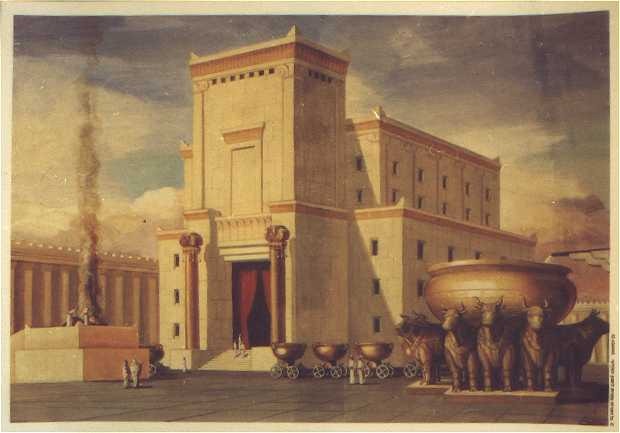
Last time we looked at how the ark of the covenant was brought to Jerusalem. 2 Samuel describes the event with one chapter. However, 1 Chronicles takes three chapters to recount the same thing. What we learn from 1 Chronicles is that David set up various ministries for the priests and Levites: not just the priests who offer sacrifices, but also professional worship musicians and song-writers, full time door-keepers, administrators and so on. There were probably more than 100 full time ministers taking care of the ark and of the tabernacle. But after all, when it was all said and done, the place for all this amazing ministry was just a very old tent.

The tent was put together in the days of Moses, more than four-hundred years before. Israel has a dry climate, but I have to imagine that sometime during four-hundred years, there had been mold. I’m sure there were rips and scuffs, and it is a good guess that there were a lot of patches by this point in time. David talked to Nathan about it. He said, “Look, here I am in a palace – and God lives in a tent.” The implication, not spoken explicitly, is that it is time to build a permanent place of worship. Nathan the prophet said, “Go and do all that is on your heart, for the LORD is with you.”

I want to talk about Nathan’s response here. I understand it pretty well. It is a no-brainer at so many levels. First, Nathan felt (rightly) that David was in tune with the Lord and walking with him. Nathan said, “the Lord is with you.” I’ve said things like that to people. I will say “I know that you are in tune with the Lord – you aren’t just going off your own way. So stay in tune with him, and trust that he will lead you as you do what you feel you are supposed to do.” I don’t say that to everyone, by the way, but David was not just anyone – he was in tune with God. So, when a person who is humbly walking with God feels that she wants to honor God in some particular way, it’s an easy call – God probably put it on her heart. So, in such situations, I usually say, go for it. That’s exactly what Nathan said to David.

Second, David’s intention appeared to be obviously the right thing to do. How can it be right that David lives in a palace, while the place to worship the God of the entire universe is literally an old, moldy, patched tent? God deserves our best, right? How could it ever be a bad thing to build a really nice place of worship? How could it ever be a good thing to have to worship in an old tent? So Nathan answered immediately – before even talking to God about it. I mean some things, are obvious, aren’t they?

Wrong.

God had something in mind much bigger than just a place of worship. He had in mind the transformation of the human race. That transformation has everything to do with the Messiah – the Savior – and nothing at all to do with the building where people worship. And so, contrary to all expectations and common sense, both David and Nathan were wrong.

Now, this topic is one of my “pet subjects,” theologically. Even so, please don’t check out at this point, and say, “Oh that’s just an axe he likes to grind.” I have good biblical and historical reasons for grinding this particular axe. Let me start with this statement: a building accomplishes nothing spiritual. God said to Nathan and David:

Are you to build a house for Me to live in? 6 From the time I brought the Israelites out of Egypt until today I have not lived in a house; instead, I have been moving around with a tent as My dwelling. 7 In all My journeys with all the Israelites, have I ever asked anyone among the tribes of Israel, whom I commanded to shepherd My people Israel: Why haven’t you built Me a house of cedar? ’ (2Sam 7:5-7, HCSB)

A building is completely unnecessary to real church, and often has a negative impact on making disciples. History bears out what I am saying here. Now some of you may argue that later on God did have Solomon build a temple. But the events that followed that only bolster my argument here. Solomon did indeed build a magnificent temple. But listen to what Solomon himself said:

18 “But will God indeed dwell with man on the earth? Behold, heaven and the highest heaven cannot contain you, how much less this house that I have built! (2Chr 6:18, ESV)

Even more important, it was precisely at that point in time – during the time of Solomon and his temple – when the people of Israel began to go astray again and worship other things. The temple did not help in the least, and an argument might be made that it hurt. Solomon’s temple was destroyed four hundred years later, and another was made. Four hundred years after that, king Herod built a third temple to please the Jewish people who were his subjects. It was even more magnificent than Solomon’s temple. Even with these amazing temples, the Jews utterly failed to walk with God. Let me make it very clear – the magnificent temple of the Jews did not help them when it came to actually receiving God’s salvation in Jesus Christ.

Jesus himself found the most receptive hearts far away from the temple – in the outlying areas of Palestine, not in Jerusalem. The temple did not help people recognize who Jesus was. Not only that, but there is something else. Jesus apparently was regular in going to the synagogues. But most of his real ministry and disciple-making took place outside of weekly worship services.

After the time of Jesus, the church worshipped in private homes, in small groups, for almost three hundred years. Even now, that period stands as one of the most effective disciple-making eras in history. After Christianity finally became legal in the Roman empire, Christians began building buildings for their churches. The emergence of this trend of building physical church buildings coincides with the beginning of a long decline in Christianity. In fact, it wasn’t long after this that Europe entered what we call “the dark ages.” We can’t blame all of the problems of the dark ages on church buildings, but it was a period where Christianity was focused on buildings and institutions, and did very little real disciple-making that truly transformed lives.

A building dedicated to worship sometimes has practical value. However, a lot of church buildings are used for only a few hours each week – which doesn’t seem very practical after all. If the bible and history teach us anything about worship-buildings, it is that they often lead believers to live with the wrong focus, and sometimes to entirely miss the point.

I want to be honest here. I think one of the reasons New Joy Fellowship (our church here in Lebanon, TN) has not grown much numerically is because we have not built a church building. I think a lot of folks were up for that – to build something we could look at and see and touch and say “We did that. That’s ours.” I deeply wish that people would be that committed to building a life that belongs entirely to Jesus and to living for his purposes. I think a lot of people who might otherwise come back to our worship after visiting just don’t feel like it is really “church” without a church building. I want to be blunt – this is because they don’t understand what church really is. You see when we have a building, we can divert our attention to religious activity that keeps God at arm’s length. But when there is no building, you are confronted with what it is really about: walking with God, walking in fellowship with each other, and working in God’s kingdom. If you have a building you can “have church” without those things. But if you don’t have a building, and you don’t have those things, you don’t have a church. It’s easier to have a building – you can pretend to be a church without really engaging with Jesus.

I’m not saying it is wrong for churches to build their own buildings to worship in. But I am saying it is unnecessary, and often it slows down spiritual growth and disciple-making.

Let’s see what Jesus said about worshipping in a particular building:

21 Jesus said to her, “Woman, believe me, the hour is coming when neither on this mountain nor in Jerusalem will you worship the Father. 22 You worship what you do not know; we worship what we know, for salvation is from the Jews. 23 But the hour is coming, and is now here, when the true worshipers will worship the Father in spirit and truth, for the Father is seeking such people to worship him. 24 God is spirit, and those who worship him must worship in spirit and truth.” (John 4:21-24)

Jesus essentially says here that worship is not about a place. It is about turning to God in spirit and truth. In fact, that is the kind of worship God is seeking, not people who just want to go to a certain place. God said to David, look, the place of worship for the past four-hundred years has been that moldy tent, wherever it happens to be parked. Why do you suddenly think that isn’t good enough?

So, what does all this do for your relationship with God today? First, I want to encourage you to hold on to the understanding that a real church is a community of people who trust Jesus and walk in fellowship with God, and in fellowship with one another, and allow God to use their lives for his kingdom purposes. It has nothing to do with where, when or in what building they worship.

David and Nathan were both godly men who thought at first that a building for God was important. So don’t feel bad if you have thought that in the past. But understand, God told Nathan and David, “No, it isn’t important. I don’t want a building right now.”

The focus that God wanted (which we will examine more next week) was on his work to bring salvation into the world. He wanted his people receive the Messiah and put their trust in him. That is the focus he wants for us also. Jesus said:

19 Again, I assure you: If two of you on earth agree about any matter that you pray for, it will be done for you by My Father in heaven. 20 For where two or three are gathered together in My name, I am there among them.” (Matt 18:19-20, HCSB)

The word “where” means “whatever place you happen to be in.” The full presence of God, and full authority of heaven is found among God’s people gathered together, not in a building somewhere.

Now, I want to speak directly to New Joy Fellowship and to the people of Life Together Churches for a few moments. It’s easy to say “come help us build a building.” People understand that. It’s a helpful thing to motivate people. It is a simple vision to grasp and it is less threatening than real discipleship.

But I want to challenge you to present new people with a vision to “come help us build disciples.” Think about it this way. Not a single church building that now exists will be there in the New Creation. Not – One. But every single disciple that we make will be there with us. Let’s not waste time and money building what is after all, a fake church. I mean it. A building is not a church, no matter how many crosses and altars you slap on it. Let’s put our time into real church. We can present the vision clearly and simply. We want to make disciples. We do that by walking with God, walking with others and working in the kingdom. Let’s build a real house of God in that way!

THE SHOCKING, HORRIFYING HOLINESS OF GOD

ark of covenant1

Sometimes the holiness of God is revealed to us in ways that horrify us, and even makes us angry. It is comforting to know that this is a normal reaction – even David had it. But God’s holiness reveals some deep and important truths about us and our needs.

To listen to the sermon, click the play button:

To download, right click on the link (or do whatever you do on a Mac) and save it to your computer:

Download 2 Samuel Part 6

8 David was angry because of the LORD’s outburst against Uzzah, so he named that place an Outburst Against Uzzah, as it is today. 9 David feared the LORD that day and said, “How can the ark of the LORD ever come to me? ” 10 So he was not willing to move the ark of the LORD to the city of David; instead, he took it to the house of Obed-edom the Gittite. 11 The ark of the LORD remained in his house three months, and the LORD blessed Obed-edom and his whole family. (2Sam 6:8-11, HCSB)

Here we have the two major themes of this text. First is this: God is so Holy, so different and “other” that he is inapproachable. If it means death to touch the mere representation of God’s presence, who can endure his actual presence? This was shocking and horrifying to David. It even made him angry. I think we forget that the Holiness of God is shocking, terrifying and horrifying. It may even make us angry. Why does God behave so inexplicably?

Sometimes I think because of the grace given in Jesus, we forget why that grace was so important and so unbelievable. I am in my forties, and I remember a time when the Soviet Union was the biggest threat that existed to the freedom and stability of the world in general. The Soviet government tortured and killed people who dared to question them. In fact, they killed almost as many of their own Soviet citizens as the Nazis killed during the battles of World War 2. They dominated the countries around them, creating an Eastern European alliance of oppressive communist governments. They built walls and guard towers and minefields to keep their citizens from escaping to the freedom of Western Democracies. In 1986, I personally stood at the edge of a minefield, watching a communist soldier manning a machine gun in a tower that was behind a mesh and barbed wire fence. It looked like a maximum security prison. I imagined the millions of people trapped behind that fence, people who would be gunned down or blown up if they wanted to be free.

Today, Soviet Communism is still around in little pockets, but it simply cannot threaten the free world in the way that it used to do. My kids find it difficult to look at the Russian Federation with the same kind of dread I used to feel for the Soviet Union – and they shouldn’t. But I do want to them appreciate that the world is a better place today than it was thirty years ago, because people they never knew made sacrifices and choices that led to freedom for Eastern Europe. It is too easy to forget how real the threat was, and to not be grateful that it is over.

The same is true when it comes to the work of Jesus. Without Jesus, if we were simply to wrongly touch a representation of a holy God, we could be killed, like Uzzah. There was an irreconcilable gap between us and him. But since Jesus intervened, we often forget how serious the problem would be without him.

Now, one question that I hear quite often is, “doesn’t God just accept us as we are?” Actually, no. If he did, there would have been no need for Jesus to sacrifice himself. He has to change us before he can accept us. Through Jesus, it is the power of God that does the changing, not our own work and effort.

There is nothing I can think of that really illustrates the holiness of God adequately. But let me take a few tries at it. We raise goats, pigs, and chickens on our little farm. We do not allow these animals in the house with us. Think about it for a minute. Why don’t we allow pigs in the kitchen? Why don’t we allow goats to stand on our table and eat with us? Why do we care if they defecate on the table while we eat?

It starts with this – we are other than these animals. They are fundamentally different than us. I think most people would be willing to agree that pigs are not humans, and that goats do not behave according to human standards. Even though it is quite natural for them, there is something in us that rebels against having a farm animal defecate on the table where we eat. We simply do not tolerate it. It revolts us. This revulsion is deep and instinctive, showing us that the differences between us and our animals are also deep and persistent. We love our animals. But we can still be revolted by their behavior. We love them, but we refuse to let their behavior into our home. We must place limits on how and when those animals can be with us.

We do allow some animals in our home – dogs and cats. But part of why we allow this, is because we can train them to behave according to our standards. Even so, most people don’t allow dogs to sit at the table and eat with them. Most people don’t allow cats on the dinner table either. When our dog Mario goes out and rolls in manure – as dogs like to do naturally at times – we insist upon cleaning him up before we let him back in the house. He can lick himself a little bit, but there is no way he can adequately clean himself up to meet our standards. We have to do the work of making him clean.

Why can’t we just accept the animals as they are, and allow the goats to defecate in our food, and the dog to come into the house covered in manure? Sometimes it is hard to explain why we can’t allow such things, but we can’t. We are too different. It is simply not in our nature to accept such things, while it is in the nature of the animals to do such things.

So, because we are born sinful in nature, it is natural for us to behave in ways that God simply cannot accept. His nature is as different from our nature, as a goat’s nature is different from mine. When our dog manages to sneak into the house covered in manure, my reaction is swift and shocking. I move quickly and loudly to keep him from transferring manure to our carpet. He can’t understand me if I try to explain it to him reasonably, so I have to get his attention in a way that may seem shocking and horrifying to him.

So it is with God. His response to Uzzah is shocking and horrifying. David became afraid when he saw it, and said, “how can the ark of the Lord ever come to me?” Meaning, “how could I ever be close to a God who is like this?”

But what the Lord did for us in Jesus is to give us a new nature. This is one of the reasons I think it is so important to realize that when we are in Jesus, (that is, when we have received him through faith) we are no longer fundamentally sinful. God cannot fellowship with fundamentally sinful beings. He has cleaned us up, changed us in ways we could not change ourselves.

Even though that was still in the future during the time of David, the Lord found ways to communicate that was his plan. And he included even those who lived before the time of Jesus in that plan:

For God presented Jesus as the sacrifice for sin. People are made right with God when they believe that Jesus sacrificed his life, shedding his blood. This sacrifice shows that God was being fair when he held back and did not punish those who sinned in times past, for he was looking ahead and including them in what he would do in this present time. (Romans 3:25-26)

That grace is evident in this passage too. There is the shocking, horrifying holiness of God, the realization that we are fundamentally different and separated from him. But there is also a revelation here of his great goodness and love for his people. This holy, righteous, dangerous and incomprehensible God is also very, very good. He blessed the home, property and family of Obed-edom simply because the representation of his presence was left there. This is almost the opposite of David’s first problem. If the mere representation of God’s presence brings joy and grace and blessing, how can we not want God’s actual presence with us?

And so David is encouraged in his faith, and decides to bring the ark back to Jerusalem after all. As they proceed, David and the others with him are filled with joy and thankfulness to God.

5 David and the whole house of Israel were celebrating before the LORD with all kinds of fir wood instruments, lyres, harps, tambourines, sistrums, and cymbals. (2Sam 6:5, HCSB)

14 David was dancing with all his might before the LORD wearing a linen ephod. 15 He and the whole house of Israel were bringing up the ark of the LORD with shouts and the sound of the ram’s horn. (2 Samuel 6:14-15).

There is a sense of extravagance and freedom here. There are all sorts of instruments. People are shouting, and dancing and blowing horns. God’s grace and joy are filling the people.

Now, I want to point a few things about this. First, it shows us that we don’t have to be narrow in how we worship God. Some people sang. Others danced. We have six different instruments named, and it sounds like there may have others used that weren’t specified. Worship, as described here, included free and open expressions of joy through music and dancing. The instruments listed here are a lot more like guitars, bass and drum than they are like a pipe organ. It looks there was a lot of spontaneity also.

David’s first wife, Michal, did not approve. She told David that he made a fool of himself. David’s response is one of the best verses in 2 Samuel:

21 David replied to Michal, “I was dancing before the LORD who chose me over your father and his whole family to appoint me ruler over the LORD’s people Israel. I will celebrate before the LORD, 22 and I will humble myself even more and humiliate myself. (2Sam 6:21-22, HCSB)

David understood that the only opinion about worship that matters is God’s opinion. He worshipped the way he did for the Lord, not for anyone else. He was willing to go even further, and look even more foolish for the Lord.

This is very important, and in more ways than you might realize. First, I think we need to be encouraged by this to give honor and worship to God, even if it means looking silly to the people around us. If you are worried about how you look, you will not be able to fully worship God. When I’m not playing guitar, sometimes I raise my hands. I do this sometimes even when I’m not “feeling the vibe.” I do it because God is worthy to raise my hands to – he deserves that kind of honor. I do it to remind myself to quit thinking what others around me might be thinking, and wonder instead what God thinks. Worship should not be governed by what we think is socially expected, but rather by how we can truly honor God.

The second point is this: Worship should not be governed by what we think is socially expected, but rather by how we can truly honor God. Yes, I know I just said that, but this time, turn it around the other way. I’ve been in worship services where the social expectation is that you raise your hands and dance and jump up and down. I think that is terrific if those things are the way you express honor to God. But sometimes, I want to honor God by kneeling quietly, or bowing my head and standing still, or just singing with all my heart. I should not allow social expectations to force me to raise my hands or dance, any more than I should allow them to stop me from doing those things.

Now, please don’t use that as an excuse to stand with your hands in your pocket, refusing to give God the honor he deserves. I’m just saying, don’t let what others think you should do, or what others are doing (or not doing) be your guide for how you worship. Freely and fully express yourself to God in keeping with the person he made you to be. Sometimes the Holy Spirit may nudge you to go out on a limb and be more expressive – if he does, do it. Sometimes the Spirit may nudge you and remind you not to put on a show for others, but to focus on Him alone. Listen to that too.

Our God is holy. I think one reason David and his people worshipped so extravagantly, is because they had a very recent reminder of how holy God is, and how big the gap was between them; and yet they also had a reminder of how good and gracious he is to bridge that gap himself.

Let the Holy Spirit speak to you about this today.

WHO IS THE HERO OF YOUR STORY?

Rephaim Canyon 2

David rarely viewed his life as a story with himself as the Hero. The story of his life was consistently about God, not David. This enabled him to face outward troubles with inner conviction and peace.

2 SAMUEL #5

To listen to the sermon, click the play button:

To download, right click on the link (or do whatever you do on a Mac) and save it to your computer: Download 2 Samuel Part 5

2 Samuel #5 . 2 Samuel 5:12-25; 1 Chronicles 11:15-19; 1 Chronicles 14:1-17

I want to revisit something we skipped over rather quickly last time. 2 Samuel 5:12 says this:

“Then David knew that the Lord had established him as king over Israel and had exalted his kingdom for the sake of His people Israel.” (italics added for emphasis)

I think this is a key to most of this chapter, and actually, to the entire life of David. David did not consider his monarchy to be his doing, or his kingdom. David did not consider his life to be about himself. The Lord was the main character in the story of the David’s life. David wasn’t king for fifteen years because God didn’t want him to be king yet. When he finally became king, it was because God wanted him to be king. The Lord did it, for the Lord’s own glory and purposes. It wasn’t about David. It was about God.

The incidents that follow this verse confirm that David maintained this attitude, especially about his kingdom.

5:17-25 appears to describe the same event as 1 Chronicles 11:15-20, and also 1 Chronicles 14:1-17. What happened is this. When Saul was king of Israel, David was his enemy. For the Philistines, that meant that Israel was divided, and less of a threat. But now David alone is king over a united Israel. The Philistines rightly perceive this as a threat to them, so they immediately go looking for David, to bring him to battle and kill him if possible.

The Philistines invaded by coming up a valley that led from their lands by the coast, up into the highlands that were controlled by the Israelis. They did this once before, early in the reign of Saul. The valley the Philistines used against David is called “Rephaim.” There is no place with that name any more, but scholars feel pretty sure that the lower end of the valley comes out on the plains by modern-day Beit Shemesh – or, as it is called in Samuel, Beth Shemesh. There are two main branches to this valley, one that comes out to the north of Ancient Jerusalem, and one that leads to a point to the south of Jerusalem, just north of Bethlehem. My personal opinion from reading the text is that Philistines were in between Jerusalem and Bethlehem. In fact, 1 Chronicles 11 says that when they invaded up the valley of Rephaim, they took over Bethlehem and kept a garrison of soldiers there.

Some scholars feel that all this happened was before David captured Jerusalem, but it isn’t clear. One reason to think it was before the capture of Jerusalem is that Jerusalem was such a fortress, David didn’t need to go to a different stronghold. However, David, being the great tactician he was, may have decided he didn’t want his troops trapped in the city where he could not effectively do battle, and so he took them down to the south of the Philistine advance. There is no way to know for sure.

In any case, it appears that David took his army back to one of his old haunts – the Cave of Adullam, where he had previously hidden from both Saul and the Philistines (1 Samuel 22). Let’s pause here and consider a few things.

After probably fifteen years of running, hiding, eking out existence and barely surviving, David became king of Judah. After seven years as king of half of all he surveyed, he finally received the fulfillment of the Lord’s call on his life. Finally, he became king of all Israel.

The confetti had hardly settled to the ground before he was invaded. In short order indeed, David was right back to hiding in caves. Maybe an economic analogy would help us understand how this could have affected David. Think of a person who spent half her life in poverty, working steadily at a plan to build wealth, but seeing few results. None of the breaks ever seemed to come her way. After years, she finally reached the upper middle class. At last, seven years after that, she made her first million. Three weeks later she was flat broke again.

It had to be an awful feeling for David to find himself back in the caves where he hid from his enemies fifteen years or more before. If he was like me, he would have spent a lot of time whining to God about how he had done everything that was asked for him, and why couldn’t he ever catch a break? If he were like me, he would explained to the Lord that he had already been here and already learned this lesson, and what was the freaking point of this kind of hardship anyway? But David was not like me. He was like I want to become. He was like the person the Holy Spirit was showing the world through him – the true Messiah.

So when David went to the cave, he continued to trust the Lord. He asked God a simple question: What do you want to do here? What are you after in this situation? Shall I go and fight these guys or not?

By the way, there’s a cool story about something that happened while David was in the cave during the invasion. There is no doubt that he did experience distress – he was a human being, after all. The enemy were camped in his own home-town (Bethlehem, in case you have forgotten). It was a hot and dry day, and David said (this was as close as he got to complaining) “I wish I could get a drink from the well at Bethlehem.” I think he is expressing that he is hot and thirsty. I think he is also expressing sorrow that Bethlehem – his own town – is an enemy camp. I think he’s saying, “Wouldn’t it be wonderful, right now, if we could just walk up to that beautiful cold well in Bethlehem and have a drink? Wouldn’t it be great if there were no invasion at all?”

David was a fearsome warrior, and he led a bunch of other very powerful warriors. Three of the mightiest took David at his word, and broke through the Philistine lines and brought David a drink from the well at Bethlehem. David’s response is interesting:

They brought it back to David, but he refused to drink it. Instead, he poured it out to the LORD. 19 David said, “I would never do such a thing in the presence of God! How can I drink the blood of these men who risked their lives? ” For they brought it at the risk of their lives. So he would not drink it. Such were the exploits of the three warriors. (1 Chronicles 11:18-19)

When I first read this, I thought, “I’d be angry if I were one of those three warriors.” But actually, I think what David was saying was this: “I am not worthy of such a costly drink. I can’t claim it. Only the Lord is worthy of that kind of effort and self-sacrifice.” He was actually honoring the men more by pouring it out than by drinking it. He “poured it out to the Lord.” There was a actually a type of offering called a drink offering, where a drink (usually wine) was poured into the ground. The idea was to say, “this is God’s, not mine, and I pour it out to show that everything I drink ultimately comes from God.” So David did not consider himself worthy of that kind of sacrifice from his men, and he directed their attention to the Lord. Life wasn’t about him, it was about God. God was the one who gave them the strength and flat-out guts to do this amazing deed. He was the one who was to be honored, not David.

The hero of this entire story is the Lord. David consciously realized this, and made statements to draw the attention to the Lord, not himself. We think of God as loving and gracious and giving and kind – like the best possible parent. And yet, he is also just the best. No NBA superstar has more game than the Holy Spirit. No downhill skier can take a mogul like God. No warrior can be more ferocious and cunning than Jesus. No writer can craft a better story, no historian can plumb more significance from events than the Father. Our Triune God is not just the writer and director of the play – he himself is the star performer, and he is brilliant at all he does.

I don’t know about you, but at my age, I don’t go in for hero-worship. Actually, I never did. Human heroes always suffer from significant flaws, and we get disappointed when we really give them our admiration. But there is one Person who is worthy of our hero-worship. David understood that, and he also understood who it was. It wasn’t him. The amazing feats we see in other people – or the amazing things we can do ourselves – are just tiny reflections of the overwhelming awesomeness of God.

So David hears that God wants to drive the Philistines out of Israel, and David obediently attacks. The Philistines were defeated, and David named the spot, “The Lord Breaks Out” (that’s what “baal-perazim” means). Not “I have gotten victory.” Not even, “God helped me get a victory,” or even yet, “God got victory – for me.” No – it was God’s victory for God’s purposes and God’s glory. David and his men got to be the fierce warriors that they were created to be – but it was all about the Lord and for the Lord.

The Philistines made a second try. I love the fact that David did not assume that he should do the same thing again, just because it was the same situation. Instead, once more, he asked God what he wanted to do. The Lord did want him to fight again, but he gave David a specific battle plan, along with the promise that God would be marching out in front of him, doing the real work of winning the battle.

So what do we take away from all this? The first thing I need to get straight is this business that my life is here for God’s plan, God’s purposes and his glory. None of what I am supposed to do is about me. Now God is amazing and gracious, and so even while he makes use of our lives for his own purposes, he blesses us in the midst of that. David got to be the king and lead like he was made to lead; he got to fight like the warrior he was created to be. I get to study the bible and think and use my brain and then share it with people who are willing to sit and listen to me. I get to sit here and tap on my keyboard and express the thoughts that the Lord gives me to express. I love it – I really do. It isn’t my message, and it isn’t about me, but I get blessed when I let God do his thing with my life. You will get blessed when you let him do his thing with your life – which is almost certainly going to look different from everybody else, because God has a unique purpose for each one of us. I don’t necessarily mean financially blessed – we Americans, especially think that’s the main kind of blessing (it’s not). But you will experience the grace and favor of God if you let him be the hero of your life’s story. You’ll appreciate the story he writes through you.

Second, I need to remember that one kind of hero-worship IS acceptable. I need to pay more attention to how skilled, talented, smart, funny, tender, fierce and truly excellent God is. He deserves my worship and admiration. He is the best – at everything.

Third, when life takes a turn for the worse – as it did for David, many times in his life – I need to remember that this is all in God’s hands. If he wants to hide this great leader of men, this fearsome warrior, in a cave, that’s his business – David is his man. If he wants to allow hardship in my life, I will certainly pray for it to be cut short, and I will certainly believe that he will bring better times too. But I will also trust in the meantime that he knows what he is doing and I am ALWAYS in his hands.

Finally, I want to take this away from the text: God is the one who fights the battles I have to be involved in. There are some battles we don’t have to fight. Sometimes we go to war without asking God, and so we end up fighting for ourselves. But David went to war only when God directed him. And when he did that, it was God who fought his battles for him. So if you are in a battle that you have to be in, one that you are supposed to fight, remember, it is God who really achieves the victory. All we need to do is show up and let him use us. I take great comfort in that.

What is the Lord saying to you today?

Is Jesus Really King?

Mt Zion

Christianity isn’t about gritting our teeth and trying to be good. It is about surrendering to Jesus as the king of our lives.

To listen to the sermon, click the play button:

To download, right click on the link (or do whatever you do on a Mac) and save it to your computer: Download 2 Samuel Part 4

2 Samuel #4 . 2 Samuel Chapter 5.

After Abner died, his coalition fell apart, and the leaders of Israel came to David to ask him to become their king. 1 Chronicles 12:23-40 describes this incident in more detail than 2 Samuel 5. (By the way, it appears that the books of Samuel are more chronologically-oriented than 1 Chronicles. Also, the writer of Samuel is far more critical of David than the writer of Chronicles.) In Chronicles, specific leaders and groups of leaders are named, showing that a large number of influential people from all twelve tribes came to make David king. Chronicles records that they feasted and celebrated joyfully.

Back to the text in 2 Samuel. These leaders gave three reasons why they wanted to finally receive David as their king. First, they said, “you are our flesh and blood.” They were saying, “you aren’t a foreigner, that we should fight you – we are all Israelites after all. Judah is part of Israel.” They were recognizing that Saul’s attitude was wrong.

Second, the leaders said to David, “you were the one who used to lead us out to battle, and bring us back safely.” They are remembering his faithful service to Saul, which perhaps David thought had gone forgotten and unrewarded. David had already been their leader in the past, though that service was not officially acknowledged up until now. As a leader, he had accomplished great victories, and brought the troops back more safely that he would have in defeat.

Finally, they were acknowledging that God himself had chosen David to be their king. They were at last submitting to God’s plan for his people. They said: The LORD also said to you, ‘You will shepherd My people Israel and be ruler over Israel.’ ” They are acknowledging at last that God had a call on David’s life, and it was God’s will for him to be their king.

As always, I think it is helpful when we read to the Old Testament, to ask “where is Jesus here? How does this reveal Jesus to me?” Well, Jesus, is the rightful king of every Christian. That is God’s desire for us. He should be the ruler over everything in our lives. But even though David was chosen by God to be the king, he waited patiently until the people accepted that and submitted their lives to him joyfully. Even though the Lordship of Jesus is God’s will for us, we have not all submitted to that. Jesus is waiting patiently for us to submit all areas of our lives joyfully to him. Does Jesus determine how you spend your money? Does he determine how you spend your time or energy? Is it the words of Jesus that you speak to you family and friends and co-workers?

Jesus should be king over our lives for some of the same reasons that Israelites gave for submitting to David. Jesus is fully God, yes, but it is also our flesh and blood – he is fully human, just like us Hebrews 2:14-18 says:

14 Now since the children have flesh and blood in common, Jesus also shared in these, so that through His death He might destroy the one holding the power of death — that is, the Devil — 15 and free those who were held in slavery all their lives by the fear of death. 16 For it is clear that He does not reach out to help angels, but to help Abraham’s offspring. 17 Therefore, He had to be like His brothers in every way, so that He could become a merciful and faithful high priest in service to God, to make propitiation for the sins of the people. 18 For since He Himself was tested and has suffered, He is able to help those who are tested. (Heb 2:14-18, HCSB)

Jesus is our flesh and blood. He belongs to us and we to him. In Jesus, God became more accessible, more understandable, by taking on, forever, human nature. He has a right to be king of humans, because he is a human. He can sympathize with us and understand our struggles.

Second, Jesus is originator and creator of everything. He is our protector and sustainer. He has already helped us, already served us, already kept us safe. He has already suffered and died on our behalf. By virtue of how he has already served us, he deserves to be our Lord.

Finally, it God’s desire that we surrender entirely to Jesus (Philippians 2:9-11). He is the rightful and chosen king of our lives. This is God’s desire – that we allow Jesus to live his life through us, as the owner of our lives. If you feel a little frustrated for David that it took the Israelites so long to accept what God was doing, consider accepting what God wants for your own life!

Verses 6-12 of 2 Samuel 5 tells us about Jerusalem. Up until that time, Jerusalem was controlled by a pagan tribe of people known as the Jebusites. They were a sub-tribe of Amorites – one of the non-Israelites tribes that the Israelites were supposed to conquer and drive out. However, there were steep ravines to the south, west and east of Jerusalem, and at the top of the slope, the walls began.

Jebusite Jerusalem Diagram

It was a formidable fortress. The Israelites had defeated several kings of Jerusalem and had burned the city itself once (perhaps before it had walls), but they had never managed to capture it and hold it. Now, with walls, the Jebusites are confident that no one could take it. We should understand that it was much smaller in those days. The Jebusite City of Jerusalem covered only about 12 acres on the very top of the end of the ridge. This area is known as Mount Zion. In the following years, the city spread out greatly, and in modern times, Mt Zion is just one hill in the very large metropolis that is Jerusalem.

In spite of its reputation and history of being impossible to conquer, one of David’s first acts as king of all Israel was to attempt it. David shows here that he is smart and cunning, as well as courageous and strong. Water for the city was collected from the spring of Gihon, which was near the bottom of the Kidron valley, on the east side of the city.

waterway diagram jerusalem

There was a shaft or tunnel that went through the hill down to the spring, so that the Jebusites could get water without going outside the city walls. David learned of this. It is quite possible that he observed Jebusites drawing water there back when he was worshipping God at the tabernacle, when it was kept across the Kidron valley, at Nob (now known as the Mount of Olives). In any case, he determined that the way to take the city was to infiltrate men up the water tunnel. It was a very narrow space, and the men would certainly have had to go one by one, gathering at the top before the assault. That is what David did, with his nephew Joab leading the way and killing the first enemy. By doing that, Joab cemented his position as commander of David’s armies. The city fell without any destruction to the walls, and David made it the new capital of Israel.

These are the actions of a brilliant leader. First, it was terrific military strategy to make use of the water shaft, and attack the Jebusites from within the city. Second, Jerusalem was still an impregnable fortress, an excellent choice for the seat of government in troubled times. Afterward, David built towers covering the entrance to the water shaft, so no one would take the city the same way he had.

Third, it was an extraordinary diplomatic move. David was from the tribe of Judah and up until this time, his capital was a city of Judah. Saul had been from Benjamin, and had made his home town into the center of power. But Jerusalem did not belong to any of the tribes – it was held by the Jebusites. So when David captured it, it became truly an Israelite city. No tribe could claim it, and no tribe would be offended that it was the capital city. It belonged no one, and yet at the same time, to everyone. It was not quite centrally located, but it was close.

By the way, some secular archaeologists dispute the existence of David (they choose to ignore the incredible documentary reliability of the Old Testament). However, a water shaft from the spring of Gihon leading up to Mount Zion was discovered in the 1860s. It doesn’t have David’s name on it, of course, but once more, the Bible told us of it before archeologists discovered it. joab_water_shaft

In the 1980’s archaeologists were convinced that this shaft was dug after the time of David. But more recent work suggests that the water tunnel originally occurred naturally, long before David’s time. It also now appears that it being used by humans before the time David came along.

The point is, the book of Samuel describes things that are actually still there. In a sense you might say that if the bible is right, there should be evidence of a water shaft in that location, and sure enough, there is not only evidence, but the actual tunnel itself.

Now, once more, let’s ask the question: How does this part of the text reveal Jesus to us? What does it say about him, or our relationship with him?

Sometimes we really want Jesus to be king over all our lives, but there are parts our lives that seem like they will never be changed. Maybe you think you will never be able to stop drinking. Some folks struggle with other particular sins that they feel they can never conquer. Perhaps you think, “I am a person who easily gets depressed. That’s just who I am. Nothing is going to change that.” Or, “I’m angry. That’s just my nature, and it’s never going to change.” We might feel like there are parts of our lives that Jesus simply won’t be able to conquer, places where we just can’t let him be king. Maybe you feel like that about some loved one in your life. You think “Jesus can never get into his life.”

The Jebusites thought they were invulnerable. They had an impressive fortress. But one crack, big enough to fit one man at a time, led to their downfall, and then the city belonged to the king. Jesus is a warrior like David. He is wise and cunning like David. If there is just one little crack, one place where you can say “yes” to Jesus, he can exploit it, and use it to conquer the evil in your life. He can get to people that you think are invulnerable to him.

So if you are concerned about someone else in your life, I say trust him. Ask him to do his work on your loved one. And if the problem is in your own life, I say, simply give him a “yes.” Find some way to say “yes, Jesus. I don’t think I can ever give up drinking [or whatever], but I give you permission to try and take over that part of my life.” Watch what he can do if you just give him the tiny crack of your willingness.

So, where you can, welcome Jesus as your king. Surrender your life to him, submit to him. Let it be his life from now on. And where you can’t do that, where there is a fortress around your heart, just give him a tiny crack. Just be willing for him to make the attempt.

How is the Holy Spirit speaking to you today?

SAUL’S FINAL CHOICE

saul's death

The Lord is constantly there, always waiting for an opportunity to forgive us, be gracious to us and receive us into His Life and Joy. The tragedy of  Saul’s life is that to the bitter end he chose to go his own way instead. The Lord did not rejoice at the death of the self-absorbed, manipulative man. Instead, He grieved.

To listen to the sermon, click the play button:

To download, right click on the link (or do whatever you do on a Mac) and save it to your computer: Download 1 Samuel Part 30

1 Samuel #30. The Death of Saul

1 Samuel ends with the death of king Saul, recorded in chapter 31. While David was returning home, and then pursuing the Amalekites who had destroyed his town and taken his family, the Philistines and the Israelites began a great battle.

As I mentioned before, the Philistines were in the valley of Jezreel, which was the only relatively easy way to get from the Mediterranean coast into the Jordan Valley of Israel. Saul’s forces were on a mountain ridge to the south of the valley, a place called Mount Gilboa. When the Philistines began to move east toward the Jordan, Saul moved to attack them and block them.

The picture below is of the actual area (with present day roads, reservoirs and buildings that would not have been there at the time, of course). The Philistines were invading through the valley in the left of the picture, starting in the foreground and pushing toward the Jordan valley in the distance. The Israelites were positioned on the ridges to the right. The little hill labeled “Tell Jezreel” was probably not there.

clip_image002

The massive Philistine army turned to destroy the Israelites. This was a good strategic move, because if they left them alone on the mountain, the Philistines couldn’t be secure in the valley. It was a rout. Israel’s army fell apart. Jonathan and his brothers were killed. I want us to consider some things in the following verses:

3 When the battle intensified against Saul, the archers caught up with him and severely wounded him. 4 Then Saul said to his armor-bearer, “Draw your sword and run me through with it, or these uncircumcised men will come and run me through and torture me.” But his armor-bearer would not do it because he was terrified. Then Saul took his sword and fell on it. 5 When his armor-bearer saw that Saul was dead, he also fell on his own sword and died with him. 6 So on that day, Saul died together with his three sons, his armor-bearer, and all his men. (1Sam 31:3-6, HCSB)

Verse 3 contains some ambiguous Hebrew expressions. Most English translations make it seem like Saul was severely wounded before he committed suicide. That is certainly one possible way of translating it, and probably a good one. But even so, it is quite possible that Saul was not wounded at all, but only in despair. An almost literal translation would be this:

“The battle became a great burden upon Saul. When the archers came within range of him, he was deeply traumatized.”

The “burden” of battle could be intense physical combat. However, that doesn’t make sense when we learn that the enemy archers have only just come into range. If he was fighting hand to hand, archers would be irrelevant. They would not shoot, for fear of hitting their own men. So Saul was not even involved in actual combat. Therefore the “intensity” of the battle, was purely psychological for Saul.

It says that Saul was deeply traumatized. We already know that the intensity of the battle is psychological for Saul, not physical. “Traumatized” can mean physically wounded of course, and it isn’t wrong to translate it that way. Even so, knowing that what is happening with Saul is already psychological, it is not wrong either to interpret the trauma as emotional distress, rather than a physical wound.

I believe that this is reinforced by his armor-bearer’s response, when Saul asked him to kill him. The armor-bearer would not kill Saul, “because he was terrified,” (verse 4). What was he afraid of? If Saul was mortally wounded, why would the armor bearer be afraid to finish what was inevitable anyway? No, I think Saul’s mood and his words are what scared the armor-bearer.

The night before the battle is when Saul went to the witch of Endor, and consulted with a demonic spirit who masqueraded as Samuel. If you remember, that spirit had spoken only words of condemnation and despair to Saul. Saul accepted this message and believed it as if it was truly Samuel speaking. So, here’s how I think it went down: You have a man who has his entire life been insecure, erratic and manipulative. He is a control freak in a situation where he does not have control. He has recently accepted and believed the words of a demon. He is deeply emotionally troubled by the battle long before it even comes near him. When he sees that the archers are finally in range, he suffers deep psychological trauma – and then takes his own life. In other words, he gave up even before all was truly lost. The words of the demon were a self-fulfilling prophecy, in large part because Saul believed them and acted accordingly.

Now, I want to write about something that most Christians don’t talk much about: Suicide. It’s right there in the text, so I think the Holy Spirit wants to deal with the subject. But before we get into it, let’s get one thing clear. You may have known someone who committed suicide. Sadly, I’ve known several. It doesn’t do anyone any good to wonder whether that person died in faith, or if he went to hell. That’s not the point of what we are about to consider. What’s done is done. I cling to the biblical truth that God is far more gracious and merciful than I can comprehend.

But right now, I want to talk to and about the living. If you are reading this, you are alive, and these words are for you, not for someone who has already died. Don’t waste your wondering how to apply these words to someone else – these are for you, for me, for the living.

Saul’s suicide was clearly an evil, demonically influenced act. It was his lack of faith that prompted him to take his own life. It was his lack of trust in the Lord, combined with the fact that he believed and agreed with demonic words. He acted as he believed. If you are ever tempted to suicide, please understand – you are being tempted by a demonic power. Do not listen to demons. Do not agree with them.

In the 1990’s Dr. Jack Kevorkian became famous for helping 120 people patients commit suicide. It opened up a national debate about a person’s “right” to deliberately take her own life. But G.K. Chesterton has some insightful thoughts about killing oneself. He says:

The man who kills a man, kills a man. The man who kills himself, kills all men; as far as he is concerned, he wipes out the whole world.

His point is clear, but we don’t often think about it. The person who commits suicide does not merely kill herself. From her point of view, she is killing the whole world. Her intentions are as demonic as Hitler’s (who also committed suicide, by the way). Suicide looks at the world and says, “As far as I am concerned, there is nothing worthwhile in the entire universe. I would be just as well off if the whole world is destroyed.” If that doesn’t sound like Satan, I don’t know what does.

It is not a private decision that affects only yourself. It is a cruel and arrogant judgment against the entire world. Sometimes the suicidal person knows this. They are angry at loved ones, and they want to hurt those people as well as themselves. Suicide is not just self-destruction – it destroys everyone who knows you. If that doesn’t sound demonic, I don’t know what does.

Some Christians may say: “Well, I want to get to heaven. I’m tired of the struggles of this world – I want to be in the peace and rest of eternity with Jesus.” But that is so much like Saul’s attitude. Saul always insisted upon his own way. He manipulated, fumed and got depressed and sought help from demons – all to get his own way. Like the ultimate spoiled brat, when he realized that this time there is simply no way it is going to happen, he would rather die. We Christians are supposed to live in trust – not in control. We don’t get to determine how and when we die. To do that is to put yourself the place of God.

Now, Jonathan and his brothers died too. Their result was the same as Saul’s. And yet it was entirely different. They died fighting for their country and for each other. Chesterton writes about such people:

A martyr is a man who cares so much for something outside of him, that he forgets his own personal life. A suicide is a man who cares so little for anything outside him, that he wants to see the last of everything.

He even mentions the battlefield. This is how Jonathan acted, and how Saul should have acted.

A solider surrounded by enemies, if he is to cut his way out, needs to combine a strong desire for living with a strange careless about dying. He must not merely cling to life, for then he will be a coward and will not escape. He must not merely wait for death, for then he will be a suicide and will not escape. He must seek his life in a spirit of furious indifference to it; he must desire life like water and yet drink death like wine.

Jonathan showed courage. Saul showed demonic self-centeredness. I don’t think Saul’s death was the result of God’s judgment. It was the result of a lifetime of Saul’s self-absorbed choices, culminating in the final ultimate act of selfishness. About Saul, you can say for certain, “he chose his own fate.”

Even so, Saul’s story ends with people who loved God mourning for him. I think this is because they were led by the Holy Spirit. God always wanted Saul to turn to Him and trust him. And so after he dies, the Spirit of God moved two groups of people to honor Saul in a special way.

After the battle, the Israelites in the nearby parts of Jordan valley fled. The Philistines took over their towns, among them a town named Beth-Shan, which has been the site of an archeological dig for many years in modern times. They found Saul’s body, cut off his head, and hung the corpse on the wall of Beth-Shan. There is a reason that we call brutal, ignorant cruel people “Philistines,” even today. They did the same with Saul’s sons.

The residents of town further south in the hills on the other side of the Jordan heard about this. That town was Jabesh-Gilead – the place of Saul’s very first battle, the town that had been shamed for centuries, but which Saul had rescued. They remembered how Saul had saved them and finally removed their shame. So they sent a commando-type unit through the night to Beth-Shan. They stole Saul’s body, and those of his sons, from the Philistines, and brought them back to Jabesh-Gilead. They burned the bodies and then buried the bones with honor. It was a bittersweet end to the reign of Saul, coming full circle to the beginning when he was younger, and did trust God. I think their actions were a reflection of the Lord’s sorrow at Saul’s choices. Saul chose his own way, and he suffered the consequences. But I do not believe that was God wanted. He gave the Saul the freedom to choose, and I believe he was sorrowful for what the king chose. The Lord reveals this same attitude in Ezekiel 33:11

11 Tell them: As I live” — the declaration of the Lord GOD — “I take no pleasure in the death of the wicked, but rather that the wicked person should turn from his way and live. Repent, repent of your evil ways! Why will you die, house of Israel? (Ezek 33:11, HCSB)

A second person who reveals this attitude toward Saul is David. Remember, David had the Spirit of God in a way that was special in those days. Often, he is a type of Christ – he reveals the kinds of actions and attitudes that the true Messiah has. And so when he heard of Saul’s death, he wept in sorrow. Because he was human, I’m sure he was more upset about the loss of his friend Jonathan than the death of Saul. But he reveals the heart of God. The Lord was never against Saul. He always wanted him to turn back, repent and receive grace. Inspired by God, David wrote a beautiful lament, recorded in 2 Samuel 1:19-27

19 The splendor of Israel lies slain on your heights.

How the mighty have fallen!

20 Do not tell it in Gath,

don’t announce it in the marketplaces of Ashkelon,

or the daughters of the Philistines will rejoice,

and the daughters of the uncircumcised will gloat.

21 Mountains of Gilboa,

let no dew or rain be on you,

or fields of offerings,

for there the shield of the mighty was defiled —

the shield of Saul, no longer anointed with oil.

22 Jonathan’s bow never retreated,

Saul’s sword never returned unstained,

from the blood of the slain,

from the bodies of the mighty.

23 Saul and Jonathan,

loved and delightful,

they were not parted in life or in death.

They were swifter than eagles, stronger than lions.

24 Daughters of Israel, weep for Saul,

who clothed you in scarlet, with luxurious things,

who decked your garments with gold ornaments.

25 How the mighty have fallen in the thick of battle!

Jonathan lies slain on your heights.

26 I grieve for you, Jonathan, my brother.

You were such a friend to me.

Your love for me was more wonderful

than the love of women.

27 How the mighty have fallen

and the weapons of war have perished!

The greatest tragedy of Saul’s life is that the Lord always loved him, continually reached out to him, never stopped offering his grace – and yet Saul refused it, preferring to try and control things himself. He did not surrender his own will to God. But God’s love and grace and forgiveness were never more than heartbeat away, if only he had turned to receive them. And so when Saul died, the heart of God was to lament his loss.

WELL-GOTTEN GAINS

WadiBesor


David’s undeserved generosity is a picture of the grace of God to us – who do not deserve the goodness God gives us.


To listen to the sermon, click the play button:


To download, right click on the link (or do whatever you do on a Mac) and save it to your computer: Download 1 Samuel Part 29


1 Samuel #29. Chapter 30

Remember last week, we read that David traveled 130 miles or so north with the Philistine army, and then returned. It took them three days on the return trip. That’s a pace of around 40 or more miles per day. Because of events which happened later on, I assume that they had some beasts of burden with them – either donkeys or camels or both (horses were never used widely in ancient Israel). That’s a very fast walk or slow jog for 10 hours (not counting rests) for humans. It is basically the same for either donkeys or camels. Even if they rode the entire way, they were being bounced and swayed for hour upon hour, probably traveling from just before dawn to a little after dark.

It was long distance at an exhausting pace. And when they got home, they found their town burned to the ground, and their wives and children taken for slaves.

Last time we examined David’s reactions in detail. After grieving, and after holding on to the Lord with all his strength, David and his men worshipped, and ask God what he wanted to do.

When he was convinced that God did indeed want him to pursue the Amalekites, David and his men set out again, possibly late on the same day that they arrived home. They came to a place called Wadi Besor. It’s hard to pin down the exact location today, but it was somewhere in what is now southern Israel, probably near Gaza, but further inland. My best guess is that it formed a kind of psychological border between the dry land and the extreme desert. Now remember, they have come from the northern part of Israel (where they were with the Philistines) to the extreme south. Two-hundred of the six-hundred men were too exhausted to continue. These men had traveled a round trip of almost 300 miles in a matter of days, either by foot, or by slow, uncomfortable animals. Exhaustion was nothing to be ashamed of. David left them with some of their provisions, and carried on, lighter and faster.

They encountered a lone Egyptian slave out in the desert, almost dead from hunger, thirst and exposure. David and his men treated him kindly, giving him food and water. As he revived, they asked for information. There is no doubt that they hoped to get good intelligence from him when they stopped to help him, but even so, they helped him before they knew he could help them. This is in stark contrast to how the Amalekites had treated this slave. Though they had plenty of loot, when he took sick, they left him in the desert with nothing.

As it turns out, the Egyptian helped them find the place where the Amalekites had stopped. No doubt they figured both Philistines and Israelites (whom they had raided) were still engaged in battle (as indeed they were). The Amalekites thought they were safe, so they stopped to celebrate their victory, to engage in eating and drinking what they had won, and probably to do worse things with the women they had captured.

David and his men fell upon them like an avenging fury. Four hundred Amalekites escaped, but the rest were killed. That statistic tells you something about the kind of warrior David was, and the men he had with him. The number of Amalekites that escaped was equal to the total number of men that David used in the attack. In other words, the Amalekites outnumbered David’s men considerably. David and his men had traveled several hundred miles in a matter of days, and yet David achieved total victory. It is true that David and some of his men were exceptional warriors. But I think it is impossible to look at this without seeing a miracle of God.

David recovered not only his own family and those of his men, but virtually everything that the Amalekites had taken from them. In addition, they recovered the loot that the Amalekites had taken from the Philistines and other Israelites in their expedition. So they ended up with far more than they had even before Ziklag was destroyed. The end of chapter thirty devotes some time to talking about what happened to all this stuff. There is a reason for that, so we will look at it too.

First, some of David’s men were not inclined to share with those who collapsed in exhaustion at the edge of the desert. David could have gone along with that, and no one would have blamed him. On the other hand, he would also have been within his rights as their leader to rebuke the miserly ones harshly, if he did not like their attitudes. Again, he chooses neither typical reaction. Instead, he speaks as a companion, urging them to do right:

23 But David said, “My brothers, you must not do this with what the LORD has given us. He protected us and handed over to us the raiders who came against us. 24 Who can agree to your proposal? The share of the one who goes into battle is to be the same as the share of the one who remains with the supplies. They will share equally.” (1Sam 30:23-24, HCSB)

His main point is very important. David feels clearly that it was the Lord who gave them the victory; therefore all that they gained from the Amalekites belongs not to them, but to God. It is the Lord’s loot, so to speak. Yes they worked for it. But even so, it was given by God. He says they shouldn’t be selfish “with what the Lord has given us.” David wants to distribute his gains with an understanding that it all came from the Lord.

It was not the fault of the 200 that they were not strong enough. And they did play an important strategic purpose, guarding a portion of their equipment. And it isn’t as if they those 200 had not already shared in many battles and hardships with the others. David would rather err on the side of kindness and generosity. This policy apparently become law when David was king – the ones who guarded the baggage received an equal share with those who fought.

There are two important points in connection with this. First, it shows that David continually placed his trust in God, not in his own strength or the strength of his warriors. In some ways, giving the baggage-guards equal shares would make some people more inclined to stay back and guard in the future. After all, guarding the baggage is safer than fighting the battle, and the pay will now be the same. But David is not worried about weakening his army. He trusts God – he doesn’t have to try and motivate people to help him – he trusts that God will be all the help he needs.

Second, this is where David again shows us a type of Christ. Jesus told a parable about workers in a field in Matthew 20:1-16. The basic point Jesus made is that the person who comes to him at the end of her life will receive the same eternal life as the one who followed Jesus for all her days. This can be seen as offensive. When I work harder than another person, but I get paid the same amount, something in me doesn’t like that – even if I agreed beforehand to work for that amount. But what David’s actions show us is a picture of the grace of God. God’s grace is not fair. If it was fair, no one would be allowed to have it all, and it wouldn’t be grace. No, God graciously gives us what we do not deserve at all – and so here David mirrors that. The bible clearly says that no one has the capacity to be good enough to get to heaven or earn God’s love or favor. But when something concrete like this happens, it forces us to see what that really means.

After everyone has received his own possessions back, plus a share of spoils, there is still more left over. David also uses this extra wealth as if it belongs to God, not to him.

First, he sent a portion to the elders at Bethel (verse 27). This could be the town of Bethel. But in Hebrew “Beth-el” means “house of God.” So far, we don’t know of any special connection between David and the town of Bethel. Considering that, and knowing David’s heart for God, I think that probably the best translation is that David’s first gifts were given to the “house of God” – meaning the tabernacle where the Ark was kept and where all Israel went to worship God.

Next, he sent gifts to a variety of towns and people. I think verse 31 sums up what he was doing. He was giving back “to all the places where David and his men had roamed.” He had depended on the generosity of others for years. Now, as soon as he has the chance, he returns the generosity. I don’t think he is trying to pay them back – I think it is gift of thanks, in honor of God.

Now, what do we do with this?

I have met people before who are proud of what they have accomplished, and who are unwilling to admit that they ever had God’s help with anything. “I’ve worked hard for what I have” is their underlying attitude. But David and his men clearly worked hard for what they gained also. They traveled 300 miles and fought a battle at the end of it. But even so, David receives it not as something he got for himself, but as a gift from God.

I want to encourage all of us to understand that everything we have ultimately comes from God – even if we feel we worked hard for it. A lot of people in this world work harder every day than your toughest day at work, and barely get enough to stay warm and fed. What makes your hard work better than theirs? Nothing, of course.

Now, I am not trying to condemn anyone. The point I want to make however, is that even the opportunity to be rewarded for hard work comes from the Lord. What I want us to understand is that everything that we have has been loaned to us by God, even if we work for it. It is His, not ours. If you aren’t sure about this, just ask yourself – how long do you get to keep what you have worked for? When you die, it isn’t yours anymore. It’s all given to us in trust, for us to use for God’s purposes. So like David, this first thing to do with it, is give some back to His work, and then to bless those we are led to bless, and then yes, to keep some to enjoy for ourselves.

The most important thing for us to understand from 1 Samuel 30, however, is God’s grace. We don’t deserve it. No one does. The men who waited at the edge of the desert simply failed physically. They couldn’t keep up. They didn’t journey as far. They didn’t risk their lives fighting to recover even their own families and goods, let alone the extra goods. Notice that those men did not speak up or argue, because the others were correct. But David spoke up for them, on their behalf. God shows his gracious heart through his servant David.

We have all failed, like those men. We haven’t done what we needed to do to get salvation for ourselves or our loved ones. We don’t have any excuse, or any claim upon the goodness of God. And yet, God gives us what we do not deserve. He blesses us abundantly with his love, his forgiveness, his acceptance, his favor, the material things we need to live, and especially his presence in our lives. I exhort you, receive from Him in faith right now, everything you need physically, spiritually and emotionally.

The Grace-Full Woman

abigail&david


Abigail is a true hero of faith, a woman, full of womanly grace and wisdom, who saved the day as only a woman could.


1 SAMUEL #24

To listen to the sermon, click the play button:


To download, right click on the link (or do whatever you do on a Mac) and save it to your computer: Download 1 Samuel Part 24


This is another one of those delightful incidents recorded in 1 Samuel. One of the reasons I love it is because once more, this is not a story that anyone near that time in history would make up. It shows up the champion David as an impulsive hothead, and the real hero of this incident is a woman.

As we know, David and his six hundred men were hiding out in wilderness areas. Saul had been shamed into leaving him alone, since David refused to kill him when he had the chance. Even so, David did not settle in a town or with others. Obviously, things with Saul were not completely resolved, and he did not want to endanger any town or family by living with them. Though David was living in wild areas, he and his men did have some contact with others. Shepherds took flocks into the wilderness to graze, sometimes for months at a time. When David and his men encountered them, they protected them and their flocks from wild animals and robbers.

It takes a lot of food to keep six hundred men on their feet, and it doesn’t seem likely that they could have hunted and gathered enough. It is almost certain that David’s men had to rely upon the generosity and kindness of others to keep them supplied. Even so, they never took what wasn’t theirs, but protected the property of those they encountered.

I like knowing this about David. Here was the man who would become the greatest king known to Israel, and not only is he in hiding, but he is barely holding on, dependent upon donations from kind friends and strangers. David wasn’t just a lucky guy who had everything fall into place for him. He spent a significant portion of time in real need, and he never would have made it without help. This is humbling, but the fact that David lived this way encourages me when I feel humbled by my own needs.

After they had been protecting the shepherds and flocks of a wealthy man named Nabal for some time, David sent messengers, asking if Nabal could help him. The messengers pointed out that not only had David never taken anything from him, but had protected his property from bandits and other dangers. At the time, Nabal was cashing in by selling fleeces from sheep that David had protected, and also slaughtering many sheep and feasting. It was a time of great plenty for Nabal, who had a small empire of flocks, herds and servants.

Now it says that Nabal was a harsh man, evil in his dealings. His response shows that this bad reputation was justified. Not only did he refuse to give anything to David, he deliberately and provocatively insulted him and his men. In short, he was a jerk.

David’s response was understandable. Even so, it was not righteous. He left 200 men to guard their hideout, and took 400 men to destroy all that Nabal owned, and to kill him. Nabal’s behavior was despicable. It’s easy to see why David flew into a rage. But that does not justify David’s intent to destroy the man.

At that point, we meet the heroine, Abigail. She is Nabal’s wife. Some of Nabal’s men come to her, and explain what has happened. She makes some immediate emergency decisions, and goes out to meet David with plenty of food and supplies for his men.

Now, some of you have heard me preach through New Testament passages that teach us about biblical roles for women and for men. I think of Abigail as an amazing example of a woman who was used by God as a woman – not as a man. This is how it might look sometimes as we engage in the gender dance the Lord has designed for us. Abigail is smarter than everyone around her at this point in time. She is wiser. For a while, she is the only one who is truly committed to doing what is righteous, and she had to deal with two men in leadership who both wanted to do wrong. But she approaches the situation with an amazing womanly grace and uniquely feminine strength.

She offers David gifts for himself and his men, which was the right thing to do. She also apologized for her husband. There is a play on words here. His name, Nabal, would have been pronounced “nu-bawl.” A Hebrew word for foolish or worthless is pronounced “nu-bawl-uh.” It’s a little like saying “Stu is just like his name: stupid.” (Deepest apologies to anyone named Stu who might be reading this).

Throughout the narrative it is clear that Abigail places herself in David’s hands, and under his authority. However, while she is clearly submissive, she is not subservient. She does not hold back from exhorting David to do what is right. She reminds him of God’s promises to him. She reminds him that he himself knew it was wrong to take things into his own hands by killing Saul. This is a similar situation. She encourages him to trust the Lord, not his own strength, and to trust the Lord’s promises to him. She points out gently that destroying Nabal is something he will probably regret later, and would be a shameful blemish on his record of trusting the Lord. She does it all with womanly grace and attractiveness.

There is no doubt that Abigail was in the right, while both David and her husband were wrong. Even so, there is no sense in this narrative that Abigail has somehow taken on the role of a man, or acted out of a sense of authority or leadership over either one of them. This is one example of what biblical submission can look like. You can see it is not subservience, or rolling over and accepting whatever men want to say or do. In her submission, her grace and wisdom were powerful and attractive. Abigail is a beautiful example of a woman who plays a significant role in God’s kingdom without violating what the Holy Spirit says elsewhere in scripture about gender roles.

And here is something significant: she really got David’s attention. I suspect that David, being in the foul mood he was in, would have reacted angrily to a man who came and told him he was being stupid and making a mistake. But Abigail, with her womanly grace, completely disarmed him. He repented, and freely confessed that she was right and he was wrong.

32 Then David said to Abigail, “Praise to the LORD God of Israel, who sent you to meet me today! 33 Your discernment is blessed, and you are blessed. Today you kept me from participating in bloodshed and avenging myself by my own hand. (1Sam 25:32-33, HCSB)

They parted, but obviously, David never forgot the exchange. Abigail went home. She was in a tough place, because now that she had dealt with one angry man, she had to deal with another. We have to read between the lines, but everything I see here suggests that Abigail was trusting the Lord to work out that conversation also. The next morning she told her husband straight out, what she had done. He had a seizure from which he never recovered. The Lord took care of it for her.

When David heard Nabal was dead, presumably after the period of mourning, he asked Abigail to be his wife, and she consented. I think it is obvious that David was deeply impressed by her grace and wisdom.

Now, since it comes up at the end of this passage, I’ll comment briefly on polygamy (having multiple wives). David was married to Michal, Saul’s daughter, but after David fled, Saul married her off to someone else. So when David married Abigail, he was technically unmarried. However, he also married another woman during this same general period of time, Ahinoam.

The Bible does record many men, some of them heroes of the faith like David, having more than one wife. Sometimes, no comment is made upon whether this is a good thing or bad thing. However, the majority of the time, the Bible records that polygamy generally leads to bad results. Jacob had two wives, and the bible records that as a result, there was a huge amount of family strife. Samuel’s father had two wives, and the bible records that it led to family strife. Solomon had nine-hundred wives, and it destroyed his faith, and led the whole country astray. The result of David’s several wives was also ultimately strife between the half-brothers that were his sons. So it is true that the bible doesn’t specifically condemn polygamy – but it certainly doesn’t endorse it either. It happened, and the bible records things that really happened.

One final thought: Jesus clearly taught that marriage was originally intended by God to be between a single man and a single woman. The rest of the New Testament also affirms that in marriage, two are to become one. That idea doesn’t fit at all with polygamy.

So what do we do with all this? If you are a man considering having more than one wife, forget it. But seriously, what does the Lord say to us here?

I do think Abigail can be a great example for girls and women to aspire to. She had beauty, wisdom and courage and she used them all graciously as only a woman could.

For both men and women, perhaps you find yourself between a rock and a hard place like Abigail was. She didn’t waste time trying to figure it all out. She trusted the Lord, and did the first thing that needed to be done. In the end, the Lord took care of it all.

Maybe like me, you are encouraged by David’s humble life at this point. If God’s chosen instrument had to ask for help, it must be OK for us to also ask for help at times. True, it is humbling, but that isn’t usually a bad thing.

Perhaps like David, you might be tricked into responding to someone or some event with rage and anger and hasty action. Maybe the Lord is telling you to slow down and take a step back and ask him what true wisdom is in this situation.

As him now, what he wants to say to you