WHO IS THE HERO OF YOUR STORY?

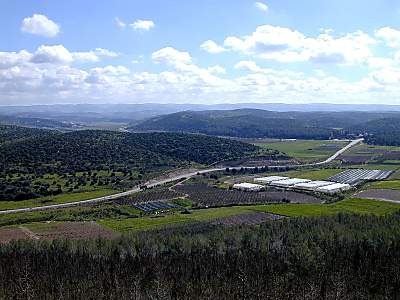
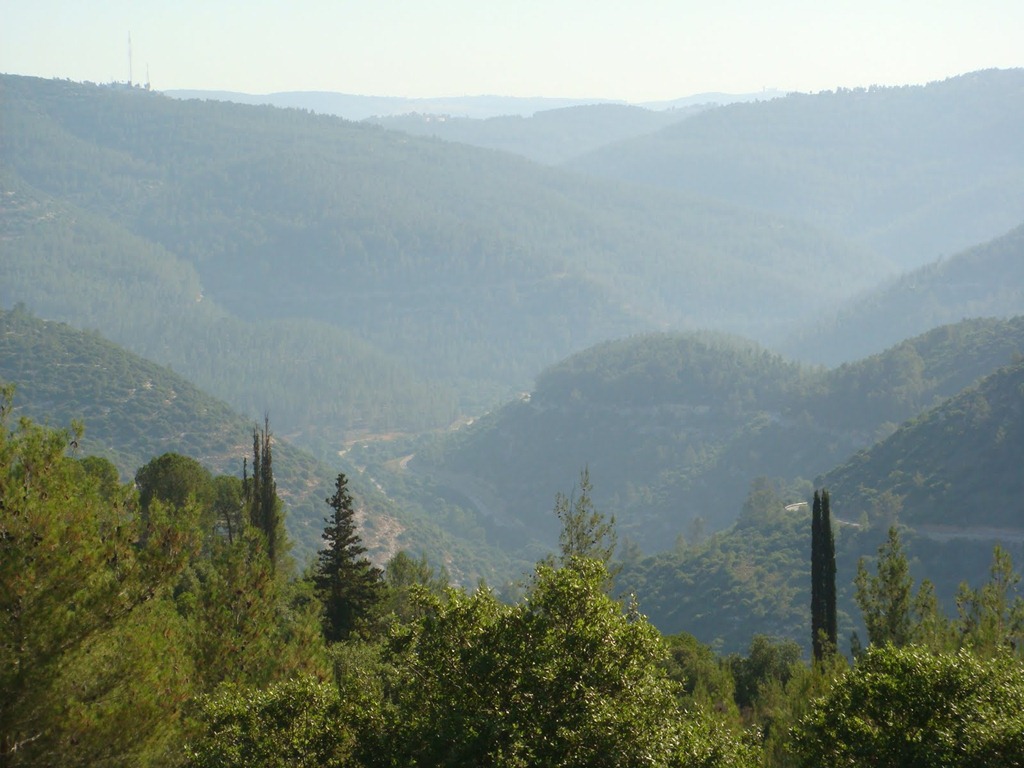
Rephaim Canyon 2

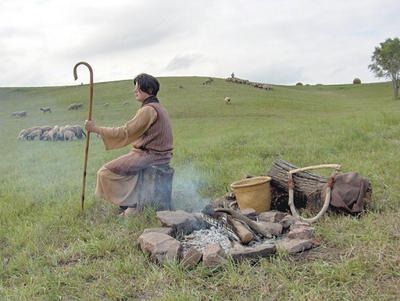
David rarely viewed his life as a story with himself as the Hero. The story of his life was consistently about God, not David. This enabled him to face outward troubles with inner conviction and peace.

2 SAMUEL #5

To listen to the sermon, click the play button:

To download, right click on the link (or do whatever you do on a Mac) and save it to your computer: Download 2 Samuel Part 5

2 Samuel #5 . 2 Samuel 5:12-25; 1 Chronicles 11:15-19; 1 Chronicles 14:1-17

I want to revisit something we skipped over rather quickly last time. 2 Samuel 5:12 says this:

“Then David knew that the Lord had established him as king over Israel and had exalted his kingdom for the sake of His people Israel.” (italics added for emphasis)

I think this is a key to most of this chapter, and actually, to the entire life of David. David did not consider his monarchy to be his doing, or his kingdom. David did not consider his life to be about himself. The Lord was the main character in the story of the David’s life. David wasn’t king for fifteen years because God didn’t want him to be king yet. When he finally became king, it was because God wanted him to be king. The Lord did it, for the Lord’s own glory and purposes. It wasn’t about David. It was about God.

The incidents that follow this verse confirm that David maintained this attitude, especially about his kingdom.

5:17-25 appears to describe the same event as 1 Chronicles 11:15-20, and also 1 Chronicles 14:1-17. What happened is this. When Saul was king of Israel, David was his enemy. For the Philistines, that meant that Israel was divided, and less of a threat. But now David alone is king over a united Israel. The Philistines rightly perceive this as a threat to them, so they immediately go looking for David, to bring him to battle and kill him if possible.

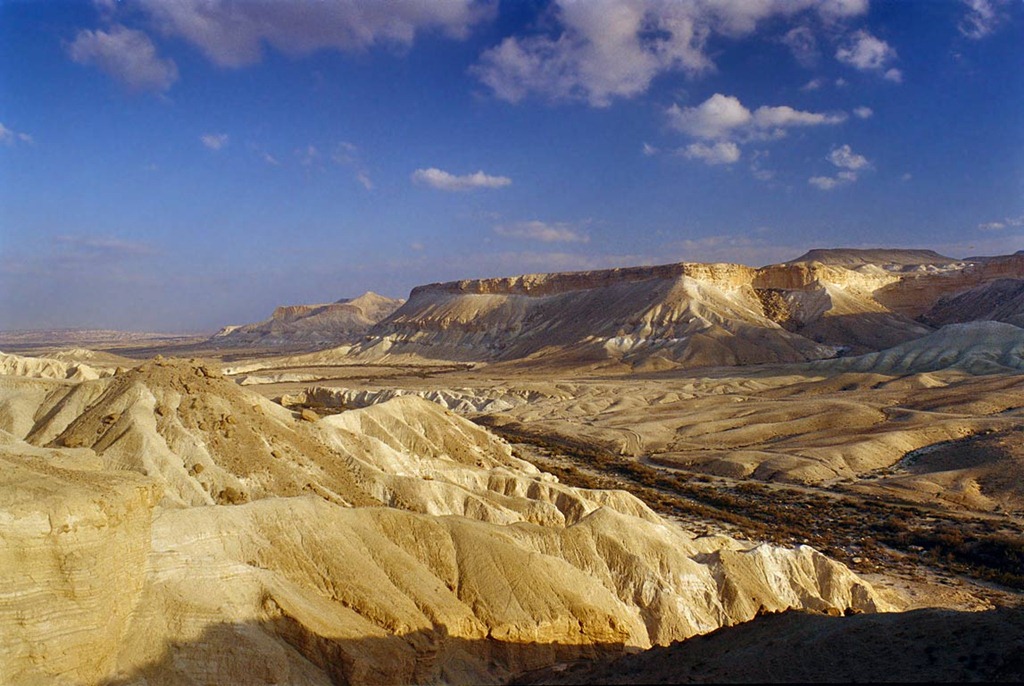
The Philistines invaded by coming up a valley that led from their lands by the coast, up into the highlands that were controlled by the Israelis. They did this once before, early in the reign of Saul. The valley the Philistines used against David is called “Rephaim.” There is no place with that name any more, but scholars feel pretty sure that the lower end of the valley comes out on the plains by modern-day Beit Shemesh – or, as it is called in Samuel, Beth Shemesh. There are two main branches to this valley, one that comes out to the north of Ancient Jerusalem, and one that leads to a point to the south of Jerusalem, just north of Bethlehem. My personal opinion from reading the text is that Philistines were in between Jerusalem and Bethlehem. In fact, 1 Chronicles 11 says that when they invaded up the valley of Rephaim, they took over Bethlehem and kept a garrison of soldiers there.

Some scholars feel that all this happened was before David captured Jerusalem, but it isn’t clear. One reason to think it was before the capture of Jerusalem is that Jerusalem was such a fortress, David didn’t need to go to a different stronghold. However, David, being the great tactician he was, may have decided he didn’t want his troops trapped in the city where he could not effectively do battle, and so he took them down to the south of the Philistine advance. There is no way to know for sure.

In any case, it appears that David took his army back to one of his old haunts – the Cave of Adullam, where he had previously hidden from both Saul and the Philistines (1 Samuel 22). Let’s pause here and consider a few things.

After probably fifteen years of running, hiding, eking out existence and barely surviving, David became king of Judah. After seven years as king of half of all he surveyed, he finally received the fulfillment of the Lord’s call on his life. Finally, he became king of all Israel.

The confetti had hardly settled to the ground before he was invaded. In short order indeed, David was right back to hiding in caves. Maybe an economic analogy would help us understand how this could have affected David. Think of a person who spent half her life in poverty, working steadily at a plan to build wealth, but seeing few results. None of the breaks ever seemed to come her way. After years, she finally reached the upper middle class. At last, seven years after that, she made her first million. Three weeks later she was flat broke again.

It had to be an awful feeling for David to find himself back in the caves where he hid from his enemies fifteen years or more before. If he was like me, he would have spent a lot of time whining to God about how he had done everything that was asked for him, and why couldn’t he ever catch a break? If he were like me, he would explained to the Lord that he had already been here and already learned this lesson, and what was the freaking point of this kind of hardship anyway? But David was not like me. He was like I want to become. He was like the person the Holy Spirit was showing the world through him – the true Messiah.

So when David went to the cave, he continued to trust the Lord. He asked God a simple question: What do you want to do here? What are you after in this situation? Shall I go and fight these guys or not?

By the way, there’s a cool story about something that happened while David was in the cave during the invasion. There is no doubt that he did experience distress – he was a human being, after all. The enemy were camped in his own home-town (Bethlehem, in case you have forgotten). It was a hot and dry day, and David said (this was as close as he got to complaining) “I wish I could get a drink from the well at Bethlehem.” I think he is expressing that he is hot and thirsty. I think he is also expressing sorrow that Bethlehem – his own town – is an enemy camp. I think he’s saying, “Wouldn’t it be wonderful, right now, if we could just walk up to that beautiful cold well in Bethlehem and have a drink? Wouldn’t it be great if there were no invasion at all?”

David was a fearsome warrior, and he led a bunch of other very powerful warriors. Three of the mightiest took David at his word, and broke through the Philistine lines and brought David a drink from the well at Bethlehem. David’s response is interesting:

They brought it back to David, but he refused to drink it. Instead, he poured it out to the LORD. 19 David said, “I would never do such a thing in the presence of God! How can I drink the blood of these men who risked their lives? ” For they brought it at the risk of their lives. So he would not drink it. Such were the exploits of the three warriors. (1 Chronicles 11:18-19)

When I first read this, I thought, “I’d be angry if I were one of those three warriors.” But actually, I think what David was saying was this: “I am not worthy of such a costly drink. I can’t claim it. Only the Lord is worthy of that kind of effort and self-sacrifice.” He was actually honoring the men more by pouring it out than by drinking it. He “poured it out to the Lord.” There was a actually a type of offering called a drink offering, where a drink (usually wine) was poured into the ground. The idea was to say, “this is God’s, not mine, and I pour it out to show that everything I drink ultimately comes from God.” So David did not consider himself worthy of that kind of sacrifice from his men, and he directed their attention to the Lord. Life wasn’t about him, it was about God. God was the one who gave them the strength and flat-out guts to do this amazing deed. He was the one who was to be honored, not David.

The hero of this entire story is the Lord. David consciously realized this, and made statements to draw the attention to the Lord, not himself. We think of God as loving and gracious and giving and kind – like the best possible parent. And yet, he is also just the best. No NBA superstar has more game than the Holy Spirit. No downhill skier can take a mogul like God. No warrior can be more ferocious and cunning than Jesus. No writer can craft a better story, no historian can plumb more significance from events than the Father. Our Triune God is not just the writer and director of the play – he himself is the star performer, and he is brilliant at all he does.

I don’t know about you, but at my age, I don’t go in for hero-worship. Actually, I never did. Human heroes always suffer from significant flaws, and we get disappointed when we really give them our admiration. But there is one Person who is worthy of our hero-worship. David understood that, and he also understood who it was. It wasn’t him. The amazing feats we see in other people – or the amazing things we can do ourselves – are just tiny reflections of the overwhelming awesomeness of God.

So David hears that God wants to drive the Philistines out of Israel, and David obediently attacks. The Philistines were defeated, and David named the spot, “The Lord Breaks Out” (that’s what “baal-perazim” means). Not “I have gotten victory.” Not even, “God helped me get a victory,” or even yet, “God got victory – for me.” No – it was God’s victory for God’s purposes and God’s glory. David and his men got to be the fierce warriors that they were created to be – but it was all about the Lord and for the Lord.

The Philistines made a second try. I love the fact that David did not assume that he should do the same thing again, just because it was the same situation. Instead, once more, he asked God what he wanted to do. The Lord did want him to fight again, but he gave David a specific battle plan, along with the promise that God would be marching out in front of him, doing the real work of winning the battle.

So what do we take away from all this? The first thing I need to get straight is this business that my life is here for God’s plan, God’s purposes and his glory. None of what I am supposed to do is about me. Now God is amazing and gracious, and so even while he makes use of our lives for his own purposes, he blesses us in the midst of that. David got to be the king and lead like he was made to lead; he got to fight like the warrior he was created to be. I get to study the bible and think and use my brain and then share it with people who are willing to sit and listen to me. I get to sit here and tap on my keyboard and express the thoughts that the Lord gives me to express. I love it – I really do. It isn’t my message, and it isn’t about me, but I get blessed when I let God do his thing with my life. You will get blessed when you let him do his thing with your life – which is almost certainly going to look different from everybody else, because God has a unique purpose for each one of us. I don’t necessarily mean financially blessed – we Americans, especially think that’s the main kind of blessing (it’s not). But you will experience the grace and favor of God if you let him be the hero of your life’s story. You’ll appreciate the story he writes through you.

Second, I need to remember that one kind of hero-worship IS acceptable. I need to pay more attention to how skilled, talented, smart, funny, tender, fierce and truly excellent God is. He deserves my worship and admiration. He is the best – at everything.

Third, when life takes a turn for the worse – as it did for David, many times in his life – I need to remember that this is all in God’s hands. If he wants to hide this great leader of men, this fearsome warrior, in a cave, that’s his business – David is his man. If he wants to allow hardship in my life, I will certainly pray for it to be cut short, and I will certainly believe that he will bring better times too. But I will also trust in the meantime that he knows what he is doing and I am ALWAYS in his hands.

Finally, I want to take this away from the text: God is the one who fights the battles I have to be involved in. There are some battles we don’t have to fight. Sometimes we go to war without asking God, and so we end up fighting for ourselves. But David went to war only when God directed him. And when he did that, it was God who fought his battles for him. So if you are in a battle that you have to be in, one that you are supposed to fight, remember, it is God who really achieves the victory. All we need to do is show up and let him use us. I take great comfort in that.

What is the Lord saying to you today?

Is Jesus Really King?

Mt Zion

Christianity isn’t about gritting our teeth and trying to be good. It is about surrendering to Jesus as the king of our lives.

To listen to the sermon, click the play button:

To download, right click on the link (or do whatever you do on a Mac) and save it to your computer: Download 2 Samuel Part 4

2 Samuel #4 . 2 Samuel Chapter 5.

After Abner died, his coalition fell apart, and the leaders of Israel came to David to ask him to become their king. 1 Chronicles 12:23-40 describes this incident in more detail than 2 Samuel 5. (By the way, it appears that the books of Samuel are more chronologically-oriented than 1 Chronicles. Also, the writer of Samuel is far more critical of David than the writer of Chronicles.) In Chronicles, specific leaders and groups of leaders are named, showing that a large number of influential people from all twelve tribes came to make David king. Chronicles records that they feasted and celebrated joyfully.

Back to the text in 2 Samuel. These leaders gave three reasons why they wanted to finally receive David as their king. First, they said, “you are our flesh and blood.” They were saying, “you aren’t a foreigner, that we should fight you – we are all Israelites after all. Judah is part of Israel.” They were recognizing that Saul’s attitude was wrong.

Second, the leaders said to David, “you were the one who used to lead us out to battle, and bring us back safely.” They are remembering his faithful service to Saul, which perhaps David thought had gone forgotten and unrewarded. David had already been their leader in the past, though that service was not officially acknowledged up until now. As a leader, he had accomplished great victories, and brought the troops back more safely that he would have in defeat.

Finally, they were acknowledging that God himself had chosen David to be their king. They were at last submitting to God’s plan for his people. They said: The LORD also said to you, ‘You will shepherd My people Israel and be ruler over Israel.’ ” They are acknowledging at last that God had a call on David’s life, and it was God’s will for him to be their king.

As always, I think it is helpful when we read to the Old Testament, to ask “where is Jesus here? How does this reveal Jesus to me?” Well, Jesus, is the rightful king of every Christian. That is God’s desire for us. He should be the ruler over everything in our lives. But even though David was chosen by God to be the king, he waited patiently until the people accepted that and submitted their lives to him joyfully. Even though the Lordship of Jesus is God’s will for us, we have not all submitted to that. Jesus is waiting patiently for us to submit all areas of our lives joyfully to him. Does Jesus determine how you spend your money? Does he determine how you spend your time or energy? Is it the words of Jesus that you speak to you family and friends and co-workers?

Jesus should be king over our lives for some of the same reasons that Israelites gave for submitting to David. Jesus is fully God, yes, but it is also our flesh and blood – he is fully human, just like us Hebrews 2:14-18 says:

14 Now since the children have flesh and blood in common, Jesus also shared in these, so that through His death He might destroy the one holding the power of death — that is, the Devil — 15 and free those who were held in slavery all their lives by the fear of death. 16 For it is clear that He does not reach out to help angels, but to help Abraham’s offspring. 17 Therefore, He had to be like His brothers in every way, so that He could become a merciful and faithful high priest in service to God, to make propitiation for the sins of the people. 18 For since He Himself was tested and has suffered, He is able to help those who are tested. (Heb 2:14-18, HCSB)

Jesus is our flesh and blood. He belongs to us and we to him. In Jesus, God became more accessible, more understandable, by taking on, forever, human nature. He has a right to be king of humans, because he is a human. He can sympathize with us and understand our struggles.

Second, Jesus is originator and creator of everything. He is our protector and sustainer. He has already helped us, already served us, already kept us safe. He has already suffered and died on our behalf. By virtue of how he has already served us, he deserves to be our Lord.

Finally, it God’s desire that we surrender entirely to Jesus (Philippians 2:9-11). He is the rightful and chosen king of our lives. This is God’s desire – that we allow Jesus to live his life through us, as the owner of our lives. If you feel a little frustrated for David that it took the Israelites so long to accept what God was doing, consider accepting what God wants for your own life!

Verses 6-12 of 2 Samuel 5 tells us about Jerusalem. Up until that time, Jerusalem was controlled by a pagan tribe of people known as the Jebusites. They were a sub-tribe of Amorites – one of the non-Israelites tribes that the Israelites were supposed to conquer and drive out. However, there were steep ravines to the south, west and east of Jerusalem, and at the top of the slope, the walls began.

Jebusite Jerusalem Diagram

It was a formidable fortress. The Israelites had defeated several kings of Jerusalem and had burned the city itself once (perhaps before it had walls), but they had never managed to capture it and hold it. Now, with walls, the Jebusites are confident that no one could take it. We should understand that it was much smaller in those days. The Jebusite City of Jerusalem covered only about 12 acres on the very top of the end of the ridge. This area is known as Mount Zion. In the following years, the city spread out greatly, and in modern times, Mt Zion is just one hill in the very large metropolis that is Jerusalem.

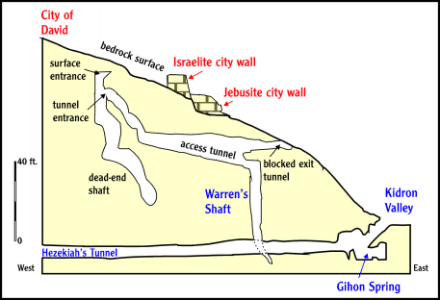
In spite of its reputation and history of being impossible to conquer, one of David’s first acts as king of all Israel was to attempt it. David shows here that he is smart and cunning, as well as courageous and strong. Water for the city was collected from the spring of Gihon, which was near the bottom of the Kidron valley, on the east side of the city.

waterway diagram jerusalem

There was a shaft or tunnel that went through the hill down to the spring, so that the Jebusites could get water without going outside the city walls. David learned of this. It is quite possible that he observed Jebusites drawing water there back when he was worshipping God at the tabernacle, when it was kept across the Kidron valley, at Nob (now known as the Mount of Olives). In any case, he determined that the way to take the city was to infiltrate men up the water tunnel. It was a very narrow space, and the men would certainly have had to go one by one, gathering at the top before the assault. That is what David did, with his nephew Joab leading the way and killing the first enemy. By doing that, Joab cemented his position as commander of David’s armies. The city fell without any destruction to the walls, and David made it the new capital of Israel.

These are the actions of a brilliant leader. First, it was terrific military strategy to make use of the water shaft, and attack the Jebusites from within the city. Second, Jerusalem was still an impregnable fortress, an excellent choice for the seat of government in troubled times. Afterward, David built towers covering the entrance to the water shaft, so no one would take the city the same way he had.

Third, it was an extraordinary diplomatic move. David was from the tribe of Judah and up until this time, his capital was a city of Judah. Saul had been from Benjamin, and had made his home town into the center of power. But Jerusalem did not belong to any of the tribes – it was held by the Jebusites. So when David captured it, it became truly an Israelite city. No tribe could claim it, and no tribe would be offended that it was the capital city. It belonged no one, and yet at the same time, to everyone. It was not quite centrally located, but it was close.

By the way, some secular archaeologists dispute the existence of David (they choose to ignore the incredible documentary reliability of the Old Testament). However, a water shaft from the spring of Gihon leading up to Mount Zion was discovered in the 1860s. It doesn’t have David’s name on it, of course, but once more, the Bible told us of it before archeologists discovered it. joab_water_shaft

In the 1980’s archaeologists were convinced that this shaft was dug after the time of David. But more recent work suggests that the water tunnel originally occurred naturally, long before David’s time. It also now appears that it being used by humans before the time David came along.

The point is, the book of Samuel describes things that are actually still there. In a sense you might say that if the bible is right, there should be evidence of a water shaft in that location, and sure enough, there is not only evidence, but the actual tunnel itself.

Now, once more, let’s ask the question: How does this part of the text reveal Jesus to us? What does it say about him, or our relationship with him?

Sometimes we really want Jesus to be king over all our lives, but there are parts our lives that seem like they will never be changed. Maybe you think you will never be able to stop drinking. Some folks struggle with other particular sins that they feel they can never conquer. Perhaps you think, “I am a person who easily gets depressed. That’s just who I am. Nothing is going to change that.” Or, “I’m angry. That’s just my nature, and it’s never going to change.” We might feel like there are parts of our lives that Jesus simply won’t be able to conquer, places where we just can’t let him be king. Maybe you feel like that about some loved one in your life. You think “Jesus can never get into his life.”

The Jebusites thought they were invulnerable. They had an impressive fortress. But one crack, big enough to fit one man at a time, led to their downfall, and then the city belonged to the king. Jesus is a warrior like David. He is wise and cunning like David. If there is just one little crack, one place where you can say “yes” to Jesus, he can exploit it, and use it to conquer the evil in your life. He can get to people that you think are invulnerable to him.

So if you are concerned about someone else in your life, I say trust him. Ask him to do his work on your loved one. And if the problem is in your own life, I say, simply give him a “yes.” Find some way to say “yes, Jesus. I don’t think I can ever give up drinking [or whatever], but I give you permission to try and take over that part of my life.” Watch what he can do if you just give him the tiny crack of your willingness.

So, where you can, welcome Jesus as your king. Surrender your life to him, submit to him. Let it be his life from now on. And where you can’t do that, where there is a fortress around your heart, just give him a tiny crack. Just be willing for him to make the attempt.

How is the Holy Spirit speaking to you today?

SAUL’S FINAL CHOICE

saul's death

The Lord is constantly there, always waiting for an opportunity to forgive us, be gracious to us and receive us into His Life and Joy. The tragedy of  Saul’s life is that to the bitter end he chose to go his own way instead. The Lord did not rejoice at the death of the self-absorbed, manipulative man. Instead, He grieved.

To listen to the sermon, click the play button:

To download, right click on the link (or do whatever you do on a Mac) and save it to your computer: Download 1 Samuel Part 30

1 Samuel #30. The Death of Saul

1 Samuel ends with the death of king Saul, recorded in chapter 31. While David was returning home, and then pursuing the Amalekites who had destroyed his town and taken his family, the Philistines and the Israelites began a great battle.

As I mentioned before, the Philistines were in the valley of Jezreel, which was the only relatively easy way to get from the Mediterranean coast into the Jordan Valley of Israel. Saul’s forces were on a mountain ridge to the south of the valley, a place called Mount Gilboa. When the Philistines began to move east toward the Jordan, Saul moved to attack them and block them.

The picture below is of the actual area (with present day roads, reservoirs and buildings that would not have been there at the time, of course). The Philistines were invading through the valley in the left of the picture, starting in the foreground and pushing toward the Jordan valley in the distance. The Israelites were positioned on the ridges to the right. The little hill labeled “Tell Jezreel” was probably not there.

clip_image002

The massive Philistine army turned to destroy the Israelites. This was a good strategic move, because if they left them alone on the mountain, the Philistines couldn’t be secure in the valley. It was a rout. Israel’s army fell apart. Jonathan and his brothers were killed. I want us to consider some things in the following verses:

3 When the battle intensified against Saul, the archers caught up with him and severely wounded him. 4 Then Saul said to his armor-bearer, “Draw your sword and run me through with it, or these uncircumcised men will come and run me through and torture me.” But his armor-bearer would not do it because he was terrified. Then Saul took his sword and fell on it. 5 When his armor-bearer saw that Saul was dead, he also fell on his own sword and died with him. 6 So on that day, Saul died together with his three sons, his armor-bearer, and all his men. (1Sam 31:3-6, HCSB)

Verse 3 contains some ambiguous Hebrew expressions. Most English translations make it seem like Saul was severely wounded before he committed suicide. That is certainly one possible way of translating it, and probably a good one. But even so, it is quite possible that Saul was not wounded at all, but only in despair. An almost literal translation would be this:

“The battle became a great burden upon Saul. When the archers came within range of him, he was deeply traumatized.”

The “burden” of battle could be intense physical combat. However, that doesn’t make sense when we learn that the enemy archers have only just come into range. If he was fighting hand to hand, archers would be irrelevant. They would not shoot, for fear of hitting their own men. So Saul was not even involved in actual combat. Therefore the “intensity” of the battle, was purely psychological for Saul.

It says that Saul was deeply traumatized. We already know that the intensity of the battle is psychological for Saul, not physical. “Traumatized” can mean physically wounded of course, and it isn’t wrong to translate it that way. Even so, knowing that what is happening with Saul is already psychological, it is not wrong either to interpret the trauma as emotional distress, rather than a physical wound.

I believe that this is reinforced by his armor-bearer’s response, when Saul asked him to kill him. The armor-bearer would not kill Saul, “because he was terrified,” (verse 4). What was he afraid of? If Saul was mortally wounded, why would the armor bearer be afraid to finish what was inevitable anyway? No, I think Saul’s mood and his words are what scared the armor-bearer.

The night before the battle is when Saul went to the witch of Endor, and consulted with a demonic spirit who masqueraded as Samuel. If you remember, that spirit had spoken only words of condemnation and despair to Saul. Saul accepted this message and believed it as if it was truly Samuel speaking. So, here’s how I think it went down: You have a man who has his entire life been insecure, erratic and manipulative. He is a control freak in a situation where he does not have control. He has recently accepted and believed the words of a demon. He is deeply emotionally troubled by the battle long before it even comes near him. When he sees that the archers are finally in range, he suffers deep psychological trauma – and then takes his own life. In other words, he gave up even before all was truly lost. The words of the demon were a self-fulfilling prophecy, in large part because Saul believed them and acted accordingly.

Now, I want to write about something that most Christians don’t talk much about: Suicide. It’s right there in the text, so I think the Holy Spirit wants to deal with the subject. But before we get into it, let’s get one thing clear. You may have known someone who committed suicide. Sadly, I’ve known several. It doesn’t do anyone any good to wonder whether that person died in faith, or if he went to hell. That’s not the point of what we are about to consider. What’s done is done. I cling to the biblical truth that God is far more gracious and merciful than I can comprehend.

But right now, I want to talk to and about the living. If you are reading this, you are alive, and these words are for you, not for someone who has already died. Don’t waste your wondering how to apply these words to someone else – these are for you, for me, for the living.

Saul’s suicide was clearly an evil, demonically influenced act. It was his lack of faith that prompted him to take his own life. It was his lack of trust in the Lord, combined with the fact that he believed and agreed with demonic words. He acted as he believed. If you are ever tempted to suicide, please understand – you are being tempted by a demonic power. Do not listen to demons. Do not agree with them.

In the 1990’s Dr. Jack Kevorkian became famous for helping 120 people patients commit suicide. It opened up a national debate about a person’s “right” to deliberately take her own life. But G.K. Chesterton has some insightful thoughts about killing oneself. He says:

The man who kills a man, kills a man. The man who kills himself, kills all men; as far as he is concerned, he wipes out the whole world.

His point is clear, but we don’t often think about it. The person who commits suicide does not merely kill herself. From her point of view, she is killing the whole world. Her intentions are as demonic as Hitler’s (who also committed suicide, by the way). Suicide looks at the world and says, “As far as I am concerned, there is nothing worthwhile in the entire universe. I would be just as well off if the whole world is destroyed.” If that doesn’t sound like Satan, I don’t know what does.

It is not a private decision that affects only yourself. It is a cruel and arrogant judgment against the entire world. Sometimes the suicidal person knows this. They are angry at loved ones, and they want to hurt those people as well as themselves. Suicide is not just self-destruction – it destroys everyone who knows you. If that doesn’t sound demonic, I don’t know what does.

Some Christians may say: “Well, I want to get to heaven. I’m tired of the struggles of this world – I want to be in the peace and rest of eternity with Jesus.” But that is so much like Saul’s attitude. Saul always insisted upon his own way. He manipulated, fumed and got depressed and sought help from demons – all to get his own way. Like the ultimate spoiled brat, when he realized that this time there is simply no way it is going to happen, he would rather die. We Christians are supposed to live in trust – not in control. We don’t get to determine how and when we die. To do that is to put yourself the place of God.

Now, Jonathan and his brothers died too. Their result was the same as Saul’s. And yet it was entirely different. They died fighting for their country and for each other. Chesterton writes about such people:

A martyr is a man who cares so much for something outside of him, that he forgets his own personal life. A suicide is a man who cares so little for anything outside him, that he wants to see the last of everything.

He even mentions the battlefield. This is how Jonathan acted, and how Saul should have acted.

A solider surrounded by enemies, if he is to cut his way out, needs to combine a strong desire for living with a strange careless about dying. He must not merely cling to life, for then he will be a coward and will not escape. He must not merely wait for death, for then he will be a suicide and will not escape. He must seek his life in a spirit of furious indifference to it; he must desire life like water and yet drink death like wine.

Jonathan showed courage. Saul showed demonic self-centeredness. I don’t think Saul’s death was the result of God’s judgment. It was the result of a lifetime of Saul’s self-absorbed choices, culminating in the final ultimate act of selfishness. About Saul, you can say for certain, “he chose his own fate.”

Even so, Saul’s story ends with people who loved God mourning for him. I think this is because they were led by the Holy Spirit. God always wanted Saul to turn to Him and trust him. And so after he dies, the Spirit of God moved two groups of people to honor Saul in a special way.

After the battle, the Israelites in the nearby parts of Jordan valley fled. The Philistines took over their towns, among them a town named Beth-Shan, which has been the site of an archeological dig for many years in modern times. They found Saul’s body, cut off his head, and hung the corpse on the wall of Beth-Shan. There is a reason that we call brutal, ignorant cruel people “Philistines,” even today. They did the same with Saul’s sons.

The residents of town further south in the hills on the other side of the Jordan heard about this. That town was Jabesh-Gilead – the place of Saul’s very first battle, the town that had been shamed for centuries, but which Saul had rescued. They remembered how Saul had saved them and finally removed their shame. So they sent a commando-type unit through the night to Beth-Shan. They stole Saul’s body, and those of his sons, from the Philistines, and brought them back to Jabesh-Gilead. They burned the bodies and then buried the bones with honor. It was a bittersweet end to the reign of Saul, coming full circle to the beginning when he was younger, and did trust God. I think their actions were a reflection of the Lord’s sorrow at Saul’s choices. Saul chose his own way, and he suffered the consequences. But I do not believe that was God wanted. He gave the Saul the freedom to choose, and I believe he was sorrowful for what the king chose. The Lord reveals this same attitude in Ezekiel 33:11

11 Tell them: As I live” — the declaration of the Lord GOD — “I take no pleasure in the death of the wicked, but rather that the wicked person should turn from his way and live. Repent, repent of your evil ways! Why will you die, house of Israel? (Ezek 33:11, HCSB)

A second person who reveals this attitude toward Saul is David. Remember, David had the Spirit of God in a way that was special in those days. Often, he is a type of Christ – he reveals the kinds of actions and attitudes that the true Messiah has. And so when he heard of Saul’s death, he wept in sorrow. Because he was human, I’m sure he was more upset about the loss of his friend Jonathan than the death of Saul. But he reveals the heart of God. The Lord was never against Saul. He always wanted him to turn back, repent and receive grace. Inspired by God, David wrote a beautiful lament, recorded in 2 Samuel 1:19-27

19 The splendor of Israel lies slain on your heights.

How the mighty have fallen!

20 Do not tell it in Gath,

don’t announce it in the marketplaces of Ashkelon,

or the daughters of the Philistines will rejoice,

and the daughters of the uncircumcised will gloat.

21 Mountains of Gilboa,

let no dew or rain be on you,

or fields of offerings,

for there the shield of the mighty was defiled —

the shield of Saul, no longer anointed with oil.

22 Jonathan’s bow never retreated,

Saul’s sword never returned unstained,

from the blood of the slain,

from the bodies of the mighty.

23 Saul and Jonathan,

loved and delightful,

they were not parted in life or in death.

They were swifter than eagles, stronger than lions.

24 Daughters of Israel, weep for Saul,

who clothed you in scarlet, with luxurious things,

who decked your garments with gold ornaments.

25 How the mighty have fallen in the thick of battle!

Jonathan lies slain on your heights.

26 I grieve for you, Jonathan, my brother.

You were such a friend to me.

Your love for me was more wonderful

than the love of women.

27 How the mighty have fallen

and the weapons of war have perished!

The greatest tragedy of Saul’s life is that the Lord always loved him, continually reached out to him, never stopped offering his grace – and yet Saul refused it, preferring to try and control things himself. He did not surrender his own will to God. But God’s love and grace and forgiveness were never more than heartbeat away, if only he had turned to receive them. And so when Saul died, the heart of God was to lament his loss.

WELL-GOTTEN GAINS

WadiBesor


David’s undeserved generosity is a picture of the grace of God to us – who do not deserve the goodness God gives us.


To listen to the sermon, click the play button:


To download, right click on the link (or do whatever you do on a Mac) and save it to your computer: Download 1 Samuel Part 29


1 Samuel #29. Chapter 30

Remember last week, we read that David traveled 130 miles or so north with the Philistine army, and then returned. It took them three days on the return trip. That’s a pace of around 40 or more miles per day. Because of events which happened later on, I assume that they had some beasts of burden with them – either donkeys or camels or both (horses were never used widely in ancient Israel). That’s a very fast walk or slow jog for 10 hours (not counting rests) for humans. It is basically the same for either donkeys or camels. Even if they rode the entire way, they were being bounced and swayed for hour upon hour, probably traveling from just before dawn to a little after dark.

It was long distance at an exhausting pace. And when they got home, they found their town burned to the ground, and their wives and children taken for slaves.

Last time we examined David’s reactions in detail. After grieving, and after holding on to the Lord with all his strength, David and his men worshipped, and ask God what he wanted to do.

When he was convinced that God did indeed want him to pursue the Amalekites, David and his men set out again, possibly late on the same day that they arrived home. They came to a place called Wadi Besor. It’s hard to pin down the exact location today, but it was somewhere in what is now southern Israel, probably near Gaza, but further inland. My best guess is that it formed a kind of psychological border between the dry land and the extreme desert. Now remember, they have come from the northern part of Israel (where they were with the Philistines) to the extreme south. Two-hundred of the six-hundred men were too exhausted to continue. These men had traveled a round trip of almost 300 miles in a matter of days, either by foot, or by slow, uncomfortable animals. Exhaustion was nothing to be ashamed of. David left them with some of their provisions, and carried on, lighter and faster.

They encountered a lone Egyptian slave out in the desert, almost dead from hunger, thirst and exposure. David and his men treated him kindly, giving him food and water. As he revived, they asked for information. There is no doubt that they hoped to get good intelligence from him when they stopped to help him, but even so, they helped him before they knew he could help them. This is in stark contrast to how the Amalekites had treated this slave. Though they had plenty of loot, when he took sick, they left him in the desert with nothing.

As it turns out, the Egyptian helped them find the place where the Amalekites had stopped. No doubt they figured both Philistines and Israelites (whom they had raided) were still engaged in battle (as indeed they were). The Amalekites thought they were safe, so they stopped to celebrate their victory, to engage in eating and drinking what they had won, and probably to do worse things with the women they had captured.

David and his men fell upon them like an avenging fury. Four hundred Amalekites escaped, but the rest were killed. That statistic tells you something about the kind of warrior David was, and the men he had with him. The number of Amalekites that escaped was equal to the total number of men that David used in the attack. In other words, the Amalekites outnumbered David’s men considerably. David and his men had traveled several hundred miles in a matter of days, and yet David achieved total victory. It is true that David and some of his men were exceptional warriors. But I think it is impossible to look at this without seeing a miracle of God.

David recovered not only his own family and those of his men, but virtually everything that the Amalekites had taken from them. In addition, they recovered the loot that the Amalekites had taken from the Philistines and other Israelites in their expedition. So they ended up with far more than they had even before Ziklag was destroyed. The end of chapter thirty devotes some time to talking about what happened to all this stuff. There is a reason for that, so we will look at it too.

First, some of David’s men were not inclined to share with those who collapsed in exhaustion at the edge of the desert. David could have gone along with that, and no one would have blamed him. On the other hand, he would also have been within his rights as their leader to rebuke the miserly ones harshly, if he did not like their attitudes. Again, he chooses neither typical reaction. Instead, he speaks as a companion, urging them to do right:

23 But David said, “My brothers, you must not do this with what the LORD has given us. He protected us and handed over to us the raiders who came against us. 24 Who can agree to your proposal? The share of the one who goes into battle is to be the same as the share of the one who remains with the supplies. They will share equally.” (1Sam 30:23-24, HCSB)

His main point is very important. David feels clearly that it was the Lord who gave them the victory; therefore all that they gained from the Amalekites belongs not to them, but to God. It is the Lord’s loot, so to speak. Yes they worked for it. But even so, it was given by God. He says they shouldn’t be selfish “with what the Lord has given us.” David wants to distribute his gains with an understanding that it all came from the Lord.

It was not the fault of the 200 that they were not strong enough. And they did play an important strategic purpose, guarding a portion of their equipment. And it isn’t as if they those 200 had not already shared in many battles and hardships with the others. David would rather err on the side of kindness and generosity. This policy apparently become law when David was king – the ones who guarded the baggage received an equal share with those who fought.

There are two important points in connection with this. First, it shows that David continually placed his trust in God, not in his own strength or the strength of his warriors. In some ways, giving the baggage-guards equal shares would make some people more inclined to stay back and guard in the future. After all, guarding the baggage is safer than fighting the battle, and the pay will now be the same. But David is not worried about weakening his army. He trusts God – he doesn’t have to try and motivate people to help him – he trusts that God will be all the help he needs.

Second, this is where David again shows us a type of Christ. Jesus told a parable about workers in a field in Matthew 20:1-16. The basic point Jesus made is that the person who comes to him at the end of her life will receive the same eternal life as the one who followed Jesus for all her days. This can be seen as offensive. When I work harder than another person, but I get paid the same amount, something in me doesn’t like that – even if I agreed beforehand to work for that amount. But what David’s actions show us is a picture of the grace of God. God’s grace is not fair. If it was fair, no one would be allowed to have it all, and it wouldn’t be grace. No, God graciously gives us what we do not deserve at all – and so here David mirrors that. The bible clearly says that no one has the capacity to be good enough to get to heaven or earn God’s love or favor. But when something concrete like this happens, it forces us to see what that really means.

After everyone has received his own possessions back, plus a share of spoils, there is still more left over. David also uses this extra wealth as if it belongs to God, not to him.

First, he sent a portion to the elders at Bethel (verse 27). This could be the town of Bethel. But in Hebrew “Beth-el” means “house of God.” So far, we don’t know of any special connection between David and the town of Bethel. Considering that, and knowing David’s heart for God, I think that probably the best translation is that David’s first gifts were given to the “house of God” – meaning the tabernacle where the Ark was kept and where all Israel went to worship God.

Next, he sent gifts to a variety of towns and people. I think verse 31 sums up what he was doing. He was giving back “to all the places where David and his men had roamed.” He had depended on the generosity of others for years. Now, as soon as he has the chance, he returns the generosity. I don’t think he is trying to pay them back – I think it is gift of thanks, in honor of God.

Now, what do we do with this?

I have met people before who are proud of what they have accomplished, and who are unwilling to admit that they ever had God’s help with anything. “I’ve worked hard for what I have” is their underlying attitude. But David and his men clearly worked hard for what they gained also. They traveled 300 miles and fought a battle at the end of it. But even so, David receives it not as something he got for himself, but as a gift from God.

I want to encourage all of us to understand that everything we have ultimately comes from God – even if we feel we worked hard for it. A lot of people in this world work harder every day than your toughest day at work, and barely get enough to stay warm and fed. What makes your hard work better than theirs? Nothing, of course.

Now, I am not trying to condemn anyone. The point I want to make however, is that even the opportunity to be rewarded for hard work comes from the Lord. What I want us to understand is that everything that we have has been loaned to us by God, even if we work for it. It is His, not ours. If you aren’t sure about this, just ask yourself – how long do you get to keep what you have worked for? When you die, it isn’t yours anymore. It’s all given to us in trust, for us to use for God’s purposes. So like David, this first thing to do with it, is give some back to His work, and then to bless those we are led to bless, and then yes, to keep some to enjoy for ourselves.

The most important thing for us to understand from 1 Samuel 30, however, is God’s grace. We don’t deserve it. No one does. The men who waited at the edge of the desert simply failed physically. They couldn’t keep up. They didn’t journey as far. They didn’t risk their lives fighting to recover even their own families and goods, let alone the extra goods. Notice that those men did not speak up or argue, because the others were correct. But David spoke up for them, on their behalf. God shows his gracious heart through his servant David.

We have all failed, like those men. We haven’t done what we needed to do to get salvation for ourselves or our loved ones. We don’t have any excuse, or any claim upon the goodness of God. And yet, God gives us what we do not deserve. He blesses us abundantly with his love, his forgiveness, his acceptance, his favor, the material things we need to live, and especially his presence in our lives. I exhort you, receive from Him in faith right now, everything you need physically, spiritually and emotionally.

The Grace-Full Woman

abigail&david


Abigail is a true hero of faith, a woman, full of womanly grace and wisdom, who saved the day as only a woman could.


1 SAMUEL #24

To listen to the sermon, click the play button:


To download, right click on the link (or do whatever you do on a Mac) and save it to your computer: Download 1 Samuel Part 24


This is another one of those delightful incidents recorded in 1 Samuel. One of the reasons I love it is because once more, this is not a story that anyone near that time in history would make up. It shows up the champion David as an impulsive hothead, and the real hero of this incident is a woman.

As we know, David and his six hundred men were hiding out in wilderness areas. Saul had been shamed into leaving him alone, since David refused to kill him when he had the chance. Even so, David did not settle in a town or with others. Obviously, things with Saul were not completely resolved, and he did not want to endanger any town or family by living with them. Though David was living in wild areas, he and his men did have some contact with others. Shepherds took flocks into the wilderness to graze, sometimes for months at a time. When David and his men encountered them, they protected them and their flocks from wild animals and robbers.

It takes a lot of food to keep six hundred men on their feet, and it doesn’t seem likely that they could have hunted and gathered enough. It is almost certain that David’s men had to rely upon the generosity and kindness of others to keep them supplied. Even so, they never took what wasn’t theirs, but protected the property of those they encountered.

I like knowing this about David. Here was the man who would become the greatest king known to Israel, and not only is he in hiding, but he is barely holding on, dependent upon donations from kind friends and strangers. David wasn’t just a lucky guy who had everything fall into place for him. He spent a significant portion of time in real need, and he never would have made it without help. This is humbling, but the fact that David lived this way encourages me when I feel humbled by my own needs.

After they had been protecting the shepherds and flocks of a wealthy man named Nabal for some time, David sent messengers, asking if Nabal could help him. The messengers pointed out that not only had David never taken anything from him, but had protected his property from bandits and other dangers. At the time, Nabal was cashing in by selling fleeces from sheep that David had protected, and also slaughtering many sheep and feasting. It was a time of great plenty for Nabal, who had a small empire of flocks, herds and servants.

Now it says that Nabal was a harsh man, evil in his dealings. His response shows that this bad reputation was justified. Not only did he refuse to give anything to David, he deliberately and provocatively insulted him and his men. In short, he was a jerk.

David’s response was understandable. Even so, it was not righteous. He left 200 men to guard their hideout, and took 400 men to destroy all that Nabal owned, and to kill him. Nabal’s behavior was despicable. It’s easy to see why David flew into a rage. But that does not justify David’s intent to destroy the man.

At that point, we meet the heroine, Abigail. She is Nabal’s wife. Some of Nabal’s men come to her, and explain what has happened. She makes some immediate emergency decisions, and goes out to meet David with plenty of food and supplies for his men.

Now, some of you have heard me preach through New Testament passages that teach us about biblical roles for women and for men. I think of Abigail as an amazing example of a woman who was used by God as a woman – not as a man. This is how it might look sometimes as we engage in the gender dance the Lord has designed for us. Abigail is smarter than everyone around her at this point in time. She is wiser. For a while, she is the only one who is truly committed to doing what is righteous, and she had to deal with two men in leadership who both wanted to do wrong. But she approaches the situation with an amazing womanly grace and uniquely feminine strength.

She offers David gifts for himself and his men, which was the right thing to do. She also apologized for her husband. There is a play on words here. His name, Nabal, would have been pronounced “nu-bawl.” A Hebrew word for foolish or worthless is pronounced “nu-bawl-uh.” It’s a little like saying “Stu is just like his name: stupid.” (Deepest apologies to anyone named Stu who might be reading this).

Throughout the narrative it is clear that Abigail places herself in David’s hands, and under his authority. However, while she is clearly submissive, she is not subservient. She does not hold back from exhorting David to do what is right. She reminds him of God’s promises to him. She reminds him that he himself knew it was wrong to take things into his own hands by killing Saul. This is a similar situation. She encourages him to trust the Lord, not his own strength, and to trust the Lord’s promises to him. She points out gently that destroying Nabal is something he will probably regret later, and would be a shameful blemish on his record of trusting the Lord. She does it all with womanly grace and attractiveness.

There is no doubt that Abigail was in the right, while both David and her husband were wrong. Even so, there is no sense in this narrative that Abigail has somehow taken on the role of a man, or acted out of a sense of authority or leadership over either one of them. This is one example of what biblical submission can look like. You can see it is not subservience, or rolling over and accepting whatever men want to say or do. In her submission, her grace and wisdom were powerful and attractive. Abigail is a beautiful example of a woman who plays a significant role in God’s kingdom without violating what the Holy Spirit says elsewhere in scripture about gender roles.

And here is something significant: she really got David’s attention. I suspect that David, being in the foul mood he was in, would have reacted angrily to a man who came and told him he was being stupid and making a mistake. But Abigail, with her womanly grace, completely disarmed him. He repented, and freely confessed that she was right and he was wrong.

32 Then David said to Abigail, “Praise to the LORD God of Israel, who sent you to meet me today! 33 Your discernment is blessed, and you are blessed. Today you kept me from participating in bloodshed and avenging myself by my own hand. (1Sam 25:32-33, HCSB)

They parted, but obviously, David never forgot the exchange. Abigail went home. She was in a tough place, because now that she had dealt with one angry man, she had to deal with another. We have to read between the lines, but everything I see here suggests that Abigail was trusting the Lord to work out that conversation also. The next morning she told her husband straight out, what she had done. He had a seizure from which he never recovered. The Lord took care of it for her.

When David heard Nabal was dead, presumably after the period of mourning, he asked Abigail to be his wife, and she consented. I think it is obvious that David was deeply impressed by her grace and wisdom.

Now, since it comes up at the end of this passage, I’ll comment briefly on polygamy (having multiple wives). David was married to Michal, Saul’s daughter, but after David fled, Saul married her off to someone else. So when David married Abigail, he was technically unmarried. However, he also married another woman during this same general period of time, Ahinoam.

The Bible does record many men, some of them heroes of the faith like David, having more than one wife. Sometimes, no comment is made upon whether this is a good thing or bad thing. However, the majority of the time, the Bible records that polygamy generally leads to bad results. Jacob had two wives, and the bible records that as a result, there was a huge amount of family strife. Samuel’s father had two wives, and the bible records that it led to family strife. Solomon had nine-hundred wives, and it destroyed his faith, and led the whole country astray. The result of David’s several wives was also ultimately strife between the half-brothers that were his sons. So it is true that the bible doesn’t specifically condemn polygamy – but it certainly doesn’t endorse it either. It happened, and the bible records things that really happened.

One final thought: Jesus clearly taught that marriage was originally intended by God to be between a single man and a single woman. The rest of the New Testament also affirms that in marriage, two are to become one. That idea doesn’t fit at all with polygamy.

So what do we do with all this? If you are a man considering having more than one wife, forget it. But seriously, what does the Lord say to us here?

I do think Abigail can be a great example for girls and women to aspire to. She had beauty, wisdom and courage and she used them all graciously as only a woman could.

For both men and women, perhaps you find yourself between a rock and a hard place like Abigail was. She didn’t waste time trying to figure it all out. She trusted the Lord, and did the first thing that needed to be done. In the end, the Lord took care of it all.

Maybe like me, you are encouraged by David’s humble life at this point. If God’s chosen instrument had to ask for help, it must be OK for us to also ask for help at times. True, it is humbling, but that isn’t usually a bad thing.

Perhaps like David, you might be tricked into responding to someone or some event with rage and anger and hasty action. Maybe the Lord is telling you to slow down and take a step back and ask him what true wisdom is in this situation.

As him now, what he wants to say to you

REBEL WITH A CAUSE

Adullam-Cave-interior_fjenkins 090211

David was God’s chosen king, the rightful heir to the throne of Israel. But for a time he had to live hiding in his own kingdom. While he did a few unlikely characters joined him, and were molded into the future heroes of Israel.

The rightful King of this world, Jesus, is here incognito, so to speak, and he calls us to join him in a campaign of rebellion against the usurper, Satan.

To listen to the sermon, click the play button:

To download, right click on the link (or do whatever you do on a Mac) and save it to your computer: Download 1 Samuel Part 20

1 Samuel #20. 1 Samuel 22:1-2

Last time we saw how David took the time to make one last stop to worship the Lord. He almost certainly lost a chance to go home to Bethlehem one last time. He did this because he wanted to be in the presence of the Lord once more. He wanted to hear what God had to say to him in this difficult circumstance. Those things were more important to him than home, family or even the certain help he would have received in Bethlehem. After stopping at the temple, he spent some time in Philistine territory. Realizing he’d made a mistake, he fled from there, and ended up hiding and living in a cave near a place called Adullam.

Elah_Valley_from_Azekah_tb_n022201

Pause for a moment and consider how low David has fallen. He was anointed to be God’s chosen instrument, ultimately, to be the king. He served as a feared and honored warrior – he was, in fact, a national hero. He was the son in law of the king. He had lived in comfort and honor. Now he is hiding for fear of his life, in a cave. Caves are not known for their comfort. There is nothing soft to sleep on. There is no natural light. There are no bathrooms, so after a while of living there, it would smell pretty ripe. And yet, David’s heart didn’t falter. He did not appear to think he was somehow too good to live that way. Arthur W. Pink commented on this:

“The high favorites of Heaven are sometimes to be located in queer and unexpected places. Joseph in prison, the descendants of Abraham laboring in the brick-kilns of Egypt, Daniel in the lions’ den, Jonah in the great fish’s belly, Paul clinging to a spar in the sea, forcibly illustrate this principle. Then let us not murmur because we do not now live in as fine a house as do some of the ungodly; our “mansions” are in Heaven!”

Sometimes I think we Christians in the Western world are a little soft. God loves to bless his people, but his main purpose for us in this world is not that we merely feel comfortable. David was God’s chosen instrument, just as we Christians are today. And the Lord was with him in the cave, perhaps even more potently than when David finally lived in a palace. We need to take the long view, the view of eternity. What happens here and now is not the end. I like where I live right now, but it is a dump compared to my permanent home in heaven. David knew that was true for him as well.

There are two Psalms that show in the title that they were written by David “in the cave.” Unfortunately for David, he spent time hiding in several different caves, at different periods in his life. So we can’t know for sure that these were written in the caves near Adullam. But there’s a good chance that either one or both of Psalm 57 and 142 were written at this point in his life. Remember, the Psalms are not collected in chronological order, so 142 could easily have been written before 57.

Both Psalms start with David expressing fear and anguish at his dangerous and uncertain situation. But both end with him declaring his trust in the Lord, and his praise to him. The last line of Psalm 142 says, “The righteous will gather around me; because you deal generously with me.”

This is a declaration of trust. It is also an optimistic take on what actually happened shortly afterwards. David’s brothers and his father’s whole family came to live with him in the cave. He was no longer all alone – his family shared in his hardship and persecutions. In addition, more men joined him until there were about 400 altogether. The text says that these men were all either “desperate, in debt or discontented.” It doesn’t sound exactly like “the righteous.” It sounds more like a ragtag band of malcontents and ne’er-do-wells. David’s family aside, these sound not like the cream of the crop, but rather the sludge of society.

However, they all agreed upon one thing – David was now their leader. This was actually a pretty big deal. As we will learn in a moment, Saul the King felt that anyone who helped David was committing treason, and he sentenced them to death. So when these men gave their allegiance to David, they forfeited their lives. There was no going back. If David failed to vindicate himself, they were dead men.

In the Old Testament, sometimes we encounter people or events that theologians call “a type of Christ.” What they mean is, sometimes God used historical events or individuals to show the world what Jesus was like, even though Jesus had not come yet. It is a foreshadowing – a partial picture of what the real messiah will look like. These “types of Christ” serve two purposes. First they were for the people in Old Testament times, to help them understand what God is really like, and how he really saves people. Remember, Romans 3:25-26 tells us that even people in Old Testament times were saved through Jesus, as God looked ahead to what he was going to do at the cross. And so there are these shadows and parts of pictures that gave people a sense of what was to come. Second, these “types” are there to strengthen our faith. Even the Old Testament is all about Jesus, and so when we read it, we should be looking for Jesus and how it shows Him to us.

By the time Jesus walked the earth, even the Jewish Pharisees believed that many of the people and incidents in the Old Testament were pictures of the coming Messiah. In particular, the Jews felt that David’s life and character would help them to identify what the Messiah was like. David was anointed with oil and with the Holy Spirit to be God’s uniquely chosen instrument. Both the Hebrew word “Messiah” and the Greek “Christ” mean simply “anointed one.” Jesus Christ means “Jesus, Anointed One.” So some of the life of David, the anointed one, looks ahead to the ultimate Anointed One.

In this particular case, there are several significant comparisons. David was God’s chosen anointed one, and yet he was rejected by the leader of the nation. He lived with integrity and didn’t do anything wrong, yet he was forced to live as an outcast. Jesus was God in flesh, the Ultimate Anointed One, and yet he was rejected by the status quo of Israel. He too was an outcast. David accomplished miraculous things in battle against the Philistines. Once he and another warrior were surrounded by Philistines in an open field. They stood back to back and killed three hundred enemies that day.

Jesus also performed many miraculous signs – healings, driving out demons, calming storms and more. He destroyed demonic enemy strongholds.

There is one “type of Christ” in this passage that I want to dwell on a little bit longer, and that is the followers of God’s anointed. The men that followed David were of no account. They were shiftless and in trouble, the dregs of society. And yet mostly from these ragtag 400, came some of the mightiest names in the history of Israel. There was an exclusive trio of warriors, known as “the three.” One of these was the warrior that stood back to back with David when they were surrounded. There was a larger elite force of “thirty mighty men.” From what we can tell, they all started out among this group of no-name, no-account people.

In the same way, the important members of society did not join the ragtag band of Jesus’ disciples. Instead he got tax-collectors, prostitutes and smelly, calloused fishermen. He had his “three” – Peter, James and John. He had his twelve then beyond that, a few more.

The followers of David had to be kind of desperate to go to him. They were literally giving up everything to join him. If he didn’t come through, they were lost. There was no halfway commitment. This wasn’t, “I’ll go hang with David for a while, and if it doesn’t work out, I can always go back.” No it was an irrevocable alignment with David, breaking off the loyalties of the past.

Jesus calls for that kind of allegiance from us also. He doesn’t want us to come to him, keeping our options open in case something we like better comes along. Jesus talked to his disciples about this very thing, and Peter expressed the kind of commitment they made to him:

66 After this many of his disciples turned back and no longer walked with him. 67 So Jesus said to the Twelve, “Do you want to go away as well?” 68 Simon Peter answered him, “Lord, to whom shall we go? You have the words of eternal life, 69 and we have believed, and have come to know, that you are the Holy One of God.” (John 6:66-69, ESV)

Just as David’s followers were desperate and poor, Jesus calls to the broken and poor in spirit. Let’s face it, it hard to really give ourselves over to Jesus unless we realize that without him, we are lost. Paul describes it like this:

26 Brothers, consider your calling: Not many are wise from a human perspective, not many powerful, not many of noble birth. 27 Instead, God has chosen what is foolish in the world to shame the wise, and God has chosen what is weak in the world to shame the strong. 28 God has chosen what is insignificant and despised in the world — what is viewed as nothing — to bring to nothing what is viewed as something, 29 so that no one can boast in His presence. 30 But it is from Him that you are in Christ Jesus, who became God-given wisdom for us — our righteousness, sanctification, and redemption, 31 in order that, as it is written: The one who boasts must boast in the Lord. (1Cor 1:26-31, HCSB)

Let’s be honest. Sometimes it seems like it might be more exciting to be one of David’s men than to follow Jesus. I mean, as I read this, I think this real history was likely the inspiration for the legend of Robin Hood, and even if Robin Hood was real, he might have been inspired to his deeds by this very story. There are battles, betrayals, secret hiding places, defections. It is all very well to say David is a type of Christ, but following Jesus might sometimes seem more boring. I mean we go to work or school and come home and do stuff, go to bed and then get up and do it all again. Sometimes we’re so bored, we make excitement for ourselves.

I think that is all because we fail to recognize the spiritual reality that exists with and alongside our world, hidden, but no less real. What David was involved with physically, we are engaged in spiritually. David was the king who was chosen by God, but rejected by many of the people. He lived almost as an agent in enemy territory, gathering those few worthless people who had nowhere else to turn to help him. In the same way, C.S. Lewis describes our life of following Jesus like this:

Enemy occupied territory – that’s what this world is. Christianity is the story of how the rightful King has landed, you might say landed in disguise, and is calling us all to take part in a great campaign of sabotage.

–C. S. Lewis, Mere Christianity

You see, though the battle is more spiritual than physical, it is no less real for all that. We have a faithful, loving intrepid leader. We are undercover – living as part of society, but not living for the same purposes as the rest of the world. Sometimes perhaps we need to wake up, and open up our lives to be more engaged in this secret mission. We need to be more aware of how the Lord wants to work, to be more aware of the people he is bringing across our paths and into our lives.

Joining the Rebel King paints a target on our backs, a target his enemies would love to use. But if we trust him and submit to his leadership, he will mold us into mighty men and women of faith, significant in God’s kingdom forever.

WHERE DO YOU RUN TO?

david323


What or who do you turn to in trouble or hardship? Why?

1 Samuel #19. God as Refuge 1 Samuel Chapter 21

To listen to the sermon, click the play button:

To download, right click on the link (or do whatever you do on a Mac) and save it to your computer: Download 1 Samuel Part 19

The excitement, adventure and romance of David’s life are not over yet – not by a long shot. So I encourage you to take to hear the message of these true stories. When something grabs your attention, shocks you, or stirs your heart, pause and ask the Lord to speak to you through it. Pay attention to how the Lord is appealing to your heart through the life of David. I trust that you can and will continue to do that, even when we move through the text a little more pedantically.

We left David just after he made a daring midnight escape, assisted by his young wife. He fled to the tabernacle of the Lord, which was being kept at a place called Nob, outside of Jerusalem. In fact, Nob was probably located at the place we now call the Mount of Olives. We are so used to thinking of the biblical capital city of Israel as Jerusalem, but Jerusalem at this time was controlled by foreigners known as Jebusites. David, at the time of his escape, was in Saul’s home-town, Gibeah, which was north of Nob.

The logical thing for David to do first was to stop at his home in Bethlehem, just a few miles further on from Nob. There, it is certain that his family would supply him for a longer journey. However, by stopping at Nob, even though it was on the way, David probably delayed long enough for Saul’s men to get to Bethlehem before him – any reasonably smart person would assume that David would go there first. In other words, by stopping, David gave up his chance to go home and get certain help from people loyal to him by blood. So why did he go to Nob and give up that up?

We can certainly speculate about the answer to that question. He might have been afraid that Saul would punish his family. Even so, there is no reason Saul wouldn’t punish them anyway, because Saul could not have been sure that David had not, in fact, been to Bethlehem. Perhaps David was being cunning, and staying away from places he’d be expected. That’s definitely a possibility, but I think we can learn the real answer from the words of David himself.

1 O God, You are my God; I eagerly seek You.

I thirst for You;

my body faints for You

in a land that is dry, desolate, and without water.

2 So I gaze on You in the sanctuary

to see Your strength and Your glory.

3 My lips will glorify You

because Your faithful love is better than life. (Psalm 63:1-3)

Or again:

1 I am at rest in God alone;

my salvation comes from Him.

2 He alone is my rock and my salvation,

my stronghold; I will never be shaken. (Psalm 62:1-2)

For David, God was his family. He was the most important family, and the most certain help in times of trouble. Even though David went far beyond most of his contemporaries in his relationship with God, we need to remember that in those days, worship was oriented at the tabernacle. The presence of God was believed to be most real there. And before the time of Jesus, there was something unique and special about the tabernacle (and later, the temple). And so David was faced with a choice. He could go into exile and hiding without ever seeing his family again, or without ever worshipping at the tabernacle again. He chose God over his family. He couldn’t stand the thought of leaving without spending one more time in the presence of God in a special way.

In addition, he saw the Lord as a very real help in times of trouble. And so he chose to seek whatever help he might get from the Lord, trusting in the Lord’s help even more than the certain assistance he would have received from his family. Besides what we know of David’s heart from the psalms, the confirmation is also given in the next chapter. In 1 Samuel 22:10 we learn that David “inquired of the Lord” while he was there.

From verse 2 onwards, David refers to companions who are with him. So apparently a few people loyal to him went along when he fled. If we read this in isolation, we might think that David was embellishing the story for Ahimelech, the chief priest. In fact, Jesus refers to this very incident, and confirms that David had some men with him.

Another thing we notice in this text is that David tells a lie. He claims to be on a mission for Saul. I’m ashamed to say that when I first read this, I excused this behavior, because after all, he was fleeing for his life. But David’s lie leads to an awful slaughter, later on. The priest Ahimelech, and almost his entire family, were later murdered by Saul for helping David. Now Ahimelech, had he known the truth, may still have chosen to help David. But in that case, his death would have been the result of his own choice. As it was, David, by his lie, made the choice that led to the tragedy later on. It may seem harsh to point out that David sinned here. But you see, David had the right to risk his own life. He did not have the right to deceive someone else into risking his own life, and the lives of his wife and children. He ought to have given Ahimelech that choice by telling him the truth.

The priest gives David and his men some of the holy bread. In the tabernacle, (and later, in the temple) there was a table that held twelve loaves of bread. This was called the “bread of the presence.” The twelve loaves represented the twelve tribes of Israel, sitting in the presence of the Lord. Each week, the priests baked twelve fresh loaves, and took the old ones off. Those old loaves were supposed to be eaten only be the priests and their families, since they were consecrated and considered holy. Ahimelech makes the choice to give some of this consecrated bread to David and his men. 1000 years later, Jesus officially approved this action. He taught that this incident demonstrates that the goal of worship activities is to bring us closer to God – not to serve empty religion and mindless tradition.

In addition to the bread, David obtains the sword of Goliath. Obviously, at some point, he had given it to the priests. This again shows us something about David’s heart. He never looked at his victory over the giant as his personal success. It was God’s victory, on behalf of the entire nation. So he placed the sword in the Lord’s sanctuary, so that all who worshiped could see a physical reminder of God’s power and grace and care for his people.

However, at this point his life, David needs a weapon. So he takes the sword back. It must have done the same thing for him that it did for the worshipers. It would have reminded him of how the Lord cared about him, and fought his battles for him.

After this David fled to the only place he thought he could be safe from Saul – to the Philistines. Once again, we are limited by writers who did not take the time or sheepskin for complete explanations about what happened, or what David could possibly have been thinking. It’s true that now David was Saul’s enemy. As the old saying goes, “the enemy of my enemy, is my friend.” And so he may have expected the Philistines to welcome him. In addition, war in those days was conducted very differently. There were often rules and even a kind of etiquette. It is possible that it would have been very bad form to kill an enemy when you met him away from the battle field; even more so if he came to your town of his own free will.

Even so, David seems to have overlooked the fact that he has killed thousands of Philistines in battle. Though they did not immediately kill or imprison him, the Philistine leaders felt pretty sour about their king welcoming the man who had killed so many of their soldiers and friends. They reminded the king of this, and David realizes that he is not in a good position. So he pretends to be insane until they let him wander off and escape once more.

One of the most remarkable aspects of this part of David’s tumultuous life is his attitude and heart through it all. It is true that he failed and gave in to fear by lying to Ahimelech. But through the rest of it, his heart remained steadfast, trusting in God alone for help. He wrote a psalm shortly after he escaped from the Philistines. Considering his circumstances, what he wrote is remarkable. Here is part of it:

1 I will praise the LORD at all times; His praise will always be on my lips.

2 I will boast in the LORD; the humble will hear and be glad.

3 Proclaim Yahweh’s greatness with me; let us exalt His name together.

4 I sought the LORD, and He answered me and delivered me from all my fears.

5 Those who look to Him are radiant with joy; their faces will never be ashamed.

6 This poor man cried, and the LORD heard him and saved him from all his troubles.

7 The Angel of the LORD encamps around those who fear Him, and rescues them.

8 Taste and see that the LORD is good. How happy is the man who takes refuge in Him! 9 You who are His holy ones, fear Yahweh, for those who fear Him lack nothing. (Ps 34:1-9, HCSB)

Let’s listen to the Lord for what he would say to us through 1 Samuel 21. Consider some of these questions:

Where do you run to when you are in trouble? Who, or what do you see as your most reliable help in trouble? Is it to the Lord? If not, why not? Take heart from David’s example, and let it encourage you to consider the Lord your best and most certain help. Learn from David that seeking the Lord is even more important than any other kind of assistance you might find.

Maybe your temptation is to cave in to fear, like David did when he lied. His lie had awful consequences. We don’t get to know what would have happened if he had told Ahimelech the truth, but it could hardly have been any worse than what did happen. Maybe the Lord is calling you to be honest in a situation where honesty could ruin a relationship or at least get you in trouble. But before you do, remember the awful consequences to dishonesty.

And what reminds you of God’s power, grace and help given to you in the past? What can encourage you like Goliath’s sword encouraged David? Take a few minutes now to listen to the Lord.

THE BATTLE GOES ON

saul

Christians need to recognized that we are not in neutral territory. We are in the middle of a spiritual war.

1 Samuel #17 Wars within and Without. 1 Samuel chapter 18

To listen to the sermon, click the play button:

To download, right click on the link (or do whatever you do on a Mac) and save it to your computer: Download 1 Samuel Part 17

1 Samuel chapter 18 is part of a larger section that records the development of David as a warrior and leader, and the increasing tension between Saul and David.

In number 10 in this series, we looked at 1 Samuel chapter 14, and saw that Jonathan, son of Saul was a very different man from his father. Jonathan was a man of faith. He trusted that if God wanted to deliver his people, he could do it, whatever the odds. I have wondered at times, why Jonathan, being the man he was, did not fight Goliath. The bible doesn’t tell us, but I suspect that Saul might have forbidden him to do it. In any case, it was God’s desire to use David in that situation.

David approached Goliath with exactly the same kind of faith that Jonathan had when fought the Philistines earlier. Jonathan recognized the faith of David and recognized in him, a kindred spirit. Without any pretensions as the king’s son, and in self-confident humility, Jonathan honored David and made a covenant with him. A “covenant” was a solemn agreement. It doesn’t spell out here what exactly the covenant was. I think we can assume that it was a little bit like the old native American tradition of becoming blood brothers. Certainly, they became lifelong friends, inseparable in spirit, loyal to each other in spite of the difficult circumstances that could have come between them. In addition, after the victory over Goliath and the Philistine armies, Jonathan gave David his precious iron-age battle equipment.

Saul had made a vow to honor the giant-killer with marriage to his daughter, and riches, and exemption from royal taxes (17:24-27). But there is a great contrast between Saul and his son. Jonathan made no vow, and yet rewarded David with honor, and such gifts as he had power to give. Saul made promises, and then reneged on them.

After Goliath was killed, the armies of Israel pursued the Philistines to the gates of two of their cities. Previously, Israel had won only defensive victories – they had driven the Philistines out of the hill country when the Philistines invaded. However, this time, spurred by David’s feat of faith, they took the battle into Philistine territory. As they returned from the fight, the people celebrated and sang songs and verses. In their songs they sang that Saul had killed thousands, and David tens of thousands.

This was a faith opportunity for Saul. He could trust that God was Lord of both him and David, and that God would be merciful and good to him even now. But instead, Saul gave in to fear and doubt and insecurity – as he always did. 18:10 says this:

10 The next day an evil spirit sent from God took control of Saul, and he began to rave inside the palace. David was playing the lyre as usual, but Saul was holding a spear, 11 and he threw it, thinking, “I’ll pin David to the wall.” But David got away from him twice. (1Sam 18:10-11, HCSB)

Previously, when the Lord used the evil spirit to try and bring Saul to repentance, Saul was able to find hope and relief by God’s spirit working through David’s music. But this time, Saul utterly rejected God’s spirit. He chose to not live by faith. He chose to try and control his own fate, apart from God’s plans. And so when David played the lyre for him after this, there was no relief, because Saul cut off all of God’s efforts to reach him.

I want to point out a few things that come out of this particular incident. First, when we close the door on God, it means we open a door to the realm of Satan and evil spirits. I don’t mean that this happens every time we make a single mistake and choose wrongly or fall into sin. But Saul persistently and deliberately rejected God over a long period of time. It seems to me that chapter 18 records a time when Saul makes a firm, final decision to not trust God. Therefore, God had no way to reach him anymore. And since Saul put himself beyond God’s reach, he was a sitting duck for the devil.

Second, we see the intention of all evil spirits – to destroy the work of the Holy Spirit. David was the instrument of the Holy Spirit at that time. The evil spirit, when given control took the most direct route – destroy God’s chosen instrument.

I think it is important for us to recognize the spiritual war that this reveals. David was aware of it in the battle against Goliath. Jonathan was aware of it in his earlier battles. The devil wants to destroy the work of God. Jesus said, talking about Satan in John 10:10 said, “a thief comes to kill, steal and destroy.” Peter wrote this:

8 Be serious! Be alert! Your adversary the Devil is prowling around like a roaring lion, looking for anyone he can devour. (1Pet 5:8, HCSB)

This world is not neutral territory – it is a battle ground. All of us who trust in Jesus are now the chosen instruments of the Holy Spirit. The devil cannot kill us all. But he seeks to undo the work that God wants to do in and through us. We don’t need to fear the devil – Jesus told us that he has won the definitive victory over Satan.

18 And he said to them, “I saw Satan fall like lightning from heaven. 19 Behold, I have given you authority to tread on serpents and scorpions, and over all the power of the enemy, and nothing shall hurt you. 20 Nevertheless, do not rejoice in this, that the spirits are subject to you, but rejoice that your names are written in heaven.” (Luke 10:18-20, ESV)

Satan cannot harm us if we remain in Jesus. Therefore the New Testament tells us to be alert (1 Peter 5:8), to remain in Jesus (John 15:1), to resist the devil (1 Peter 5:9 and James 4:7) and to take our stand against all the powers of evil in the spiritual realms (Ephesians 6:10-18). We don’t need to be afraid, but we shouldn’t be naïve either. If the devil could, he would drive a spear through you too. Saul shows us the only way the devil can get at us – when we shut God out.

When you feel particularly angry, ask yourself – is my anger level unreasonable? Could the devil be tweaking an already tense situation? Perhaps you feel a weight of sadness and depression that is out of proportion to the situation you are in. Pay attention to it. Don’t just submit to it and let it hang like a cloud over your life – ask the Lord about it. Maybe when you try to move ahead with what the Lord has for you, you encounter continual discouragement — maybe even physical roadblocks. Don’t just accept this. Ask the Lord about it, and you may need to pray specifically against spiritual opposition. Satan’s biggest weapon is deception. If he can get us to believe he isn’t involved, we will never kick him out of places where he doesn’t belong.

Consider David for a moment. He was God’s chosen instrument. He killed the giant. But after the party, the biggest result is that now the king hates him. Reading on, we see more opposition. Saul promised his eldest daughter in marriage to the giant killer. But he reneged on it, and had her marry someone else. As it turns out, that was OK, because Saul’s younger daughter, Michal, loved David. When this came up, Saul, no doubt realizing that not keeping his promises would make him unpopular, proposes that those two marry.

Now, in those days, in that part of the world, a prospective groom was supposed to give goods and property to the father of the bride. This gift was called the “Bride Price.” They did the same thing in Papua New Guinea where I grew up. In New Guinea, the price was usually paid in livestock and other property, and ancient Israel was probably similar. In chapter 17, the wording implies that killing Goliath is more or less equal to providing the bride price. However, in chapter 18:23-25, an additional bride price was clearly part of the negotiations. David said basically, he couldn’t afford to become the king’s son in law. This means two things: first, Saul is now requiring something more from David than the death of Goliath. Second, it means that Saul also went back on his promise to make the giant killer a wealthy man (17:25) – since David had no resources to pay the Bride price.

Saul now requires a new price – that David kill 100 Philistines, and bring back a certain gruesome proof of each death. He was hoping that the extreme danger involved in doing this would actually put an end to David.

None of this is fair. None of Saul’s treatment of David from here on out is righteous or godly. David is God’s chosen instrument – and yet through Saul, the devil is continually cheating him and threatening his life.

Even so, David did not become bitter, or even disrespectful toward Saul. He did not even confront him about his false promises. He continued to trust the Lord to work in him and through him. He continued to do what the Lord put in front of him to do. And through the Lord, he was protected and blessed in his endeavors. He and his men killed not 100, but 200 Philistines. While he remained trusting in the Lord, the devil could not get to him.

So I have a few thoughts for application here. Are you engaged in the mission that God wants to accomplish through your life? If you don’t know, I challenge you to pause and ask God about it right now. If you know you aren’t, I want to warn you that you are endangering the work of God, and yourself.

In addition, when we are letting the Lord live his life through us, we ought to heed the warnings of the New Testament. We need to be alert and aware that the devil is out to attack the work of the Holy Spirit. He wants to stop you from experiencing grace. He wants to stop you from the mission God has for your life – from touching others the way God wants you to. We aren’t in neutral territory – we need to be aware that the devil will try to use every discouragement, every burst of anger, unforgiveness, hate, envy, discord – anything we do not turn over to the Lord.

FACING THE GIANT

david_goliath-1


1 Samuel #16. David & Goliath. 1 Samuel Chapter 17

1 Samuel chapter 17 contains one of the most familiar incidents in the whole bible: the fight between David and Goliath. There is one puzzling thing about the text, and I want to deal with that first, so that we conclude by focusing on what the Lord is saying to us through it.

After the whole thing is over, Saul asks his military commander a strange question: “Whose son is this youth, Abner?”

The question is strange because at the end of chapter sixteen, prior to the fight with Goliath, David was brought to court to play the lyre and sing for Saul. The text even says that Saul loved him. And David’s father, Jesse, is mentioned by Saul’s courtiers in chapter 16. This is one of those places where some people claim that the Bible contradicts itself. I want to point out to begin with that there is no theological or spiritual significance to this “contradiction” even if it exists.

Some scholars speculate that chapter 16 and chapter 17 came from two different sources, and the source for chapter 17 was unaware of the account of how David came to court as a singer. The problem with this theory is that whoever put the sources together, right next to each other, must surely have seen the apparent contradictions – but they made no attempt to explain it. Therefore it is safe to assume that whoever wrote the history that we call “1 Samuel” saw no necessary contradiction between these two chapters, and in fact, assumed that readers would be able to understand the differences. And in fact, there are several possible explanations.

Chapter sixteen records how Saul was afflicted with an evil spirit. The manifestation of this was apparently some kind of mental illness. In fact, continuing on through 1 Samuel, Saul exhibits some of the classic symptoms of paranoid-schizophrenia. To put it simply, sometimes, he was a few sandwiches short of a picnic, and confusion went along with that. So his question may have been partly a result of that affliction.

Notice also that David’s brothers are verbally tearing him down. That shows that there is a kind of jealousy there. It hints at the idea that at some point David had been called back home, and the older brothers were concerned about him getting uppity because of his previous time in the court of the King. So it is also quite likely that Saul hasn’t seen David in a while. Since David was still a teenager, he had probably changed a great deal in a short amount of time.

In addition, Saul had promised a reward to the person who killed Goliath. He said the warrior who did it would be married to his daughter. He also said that the whole family of the victor would be exempt from taxes. In order to keep these promises, he needed to officially verify the identity of David’s father, since the father was the key figure in both the marriage arrangements and tax exemption. Remember, Saul doesn’t ask, “who is that young man?” – he asks, “who is his father?

The man Saul asked was Abner, who was commander of the Army. Saul may have been further confused, because he did not think of David as a warrior, but rather as a minstrel. So when he seems him accomplish a great feat of war, he thinks, “Is that David? Can’t be.” He is seeing him in a whole different context; he has never thought of David as a warrior. So he asks Abner, but he, as military commander, has had nothing to do with David up until now.

All this is to point out once more, that an apparent contradiction in the bible has no spiritual significance, and actually, does not have to be a contradiction at all.

Now, most of us know the story outline pretty well: a young man (almost certainly a teenager) defeats a hardened warrior twice his size. I want to point out a few things that we don’t always consider.

Goliath was about nine feet, six inches tall – almost three meters. He was huge. But Israel had a huge man on their side also – King Saul was likely around seven feet. Certainly, that was smaller than Goliath, but he was bigger than anyone else in the Israeli army. He would have been the natural choice to face Goliath. But Saul was afraid just like everyone else. By this point, he had already rejected his role as God’s chosen instrument.

The bible describes Goliath’s armor. Only two people in the Israeli army had equipment like it: Saul and Jonathan. The armor and weaponry was iron age technology. The rest of the Israelis were using bronze age weapons. The difference, and the advantage it gave the Philistines was a little bit like the difference between muskets and modern semi-automatic rifles. Both can kill you, in roughly the same way, but the more modern weapon is far more deadly.

Saul tried to get David to wear his armor, to even out the advantage. David ultimately rejected it for three reasons. First, it didn’t fit him. Saul was a much bigger man. Second, it was not David’s style. David had fought for his life before, and he didn’t use that sort of thing. God used him differently. Third, David did not believe he was at a disadvantage.

Everyone else looked at the external situation. Here was a man almost twice as big as anyone else. He was well armored, with potent modern weapons that others would have a hard time even lifting. It was like fighting an intelligent, well armored grizzly bear. To send a boy with a sling against a giant with armor was crazy. The odds were completely in favor of the giant.

But David saw it primarily as a spiritual battle. What it looked like on the outside made no difference to him. In David’s eyes, Goliath wasn’t challenging him, or Israel – he was challenging God. So it wasn’t a boy against a giant. It was an arrogant giant…against the Creator of the Universe. All David had to do was give God a chance to strike Goliath down. It didn’t matter what weapons or armor he had. Using the sling wasn’t a clever surprise tactic. It was just the tool that was most handy and familiar to David. The real weapon, in David’s eyes, was the power of God.

Then David said to the Philistine, “You come to me with a sword and with a spear and with a javelin, but I come to you in the name of the LORD of hosts, the God of the armies of Israel, whom you have defied. (1Sam 17:45, ESV)

The outcome, of course, made history. David killed Goliath with a stone slung into the skull. He completed the job for certain by cutting off the giant’s head with his own giant sword. David predicts what will happen, and why:

47 and this whole assembly will know that it is not by sword or by spear that the LORD saves, for the battle is the LORD’s. He will hand you over to us.” (1Sam 17:47, HCSB)

I invite you to pause for a moment to consider what the Lord might say to you through this. What are you facing in your life that seems like a giant threat? Is there any place where you feel that the odds are stacked against you doing what God wants you to do? I encourage you to see God’s battles from God’s perspective. Now, sometimes we are fighting battles that are not God’s – that is a whole separate issue. But if we are walking in faith, letting Jesus live his life through us, the battles we encounter in the course of doing what He wants to do in us and through us – those are battles that He will fight. All we need to do is grab whatever is most handy and comfortable, and let the Lord do the fighting.

There is a related truth here. God will use you – the unique person that he has made you to be. Others pressed David to take Saul’s armor, to fight the way everyone thought he should fight. David politely but firmly declined. He was just fine for the job, being who God made him to be. So when it comes time to rise to the challenge, I am not saying you should despise advice. But it is OK to approach your challenges as the person that God made you to be. You don’t have to pray in the fashion of “all good prayer warriors.” You don’t have to look or sound exactly like other good Christians as you face your giants. But do listen to the Lord, and do what he tells you.

Do you realize also, like David did, that our battle is not in the arena of flesh and blood, but is actually a spiritual conflict? David actually had to fight a flesh and blood conflict. Even so, he recognized that it was primarily about what was happening spiritually. So, we have to face trials and difficulties of various kinds – and yet it is good to remember the spiritual reality behind it all. Maybe we have to pay bills and it is hard to make ends meet. That is flesh and blood. But there is a battle that goes along with that – the battle of discouragement and hopelessness and the challenge to trust God as provider. Yes, we must deal with the flesh and blood, but the battle is spiritual.

Maybe you have to deal with someone in your life who is difficult, or troublesome or who causes you anguish. Obviously, you encounter that in flesh and blood situations. But the real battle is to trust God, to continually allow God’s power to forgive that person, to recognize that the devil wants you to hold on to rage and bitterness.

Right now, my wife and I both have health issues going on. Nothing life threatening, but they do affect our active lifestyle, and place a financial burden on us. Both of our issues are difficult, complicated and expensive to deal with. We have to deal with them in the realm of flesh and blood. But at the same time, there is a spiritual battle to make us discouraged and hopeless. That’s the real battle and that’s the battle that Lord will win for us every time we let him.

Let the Lord speak to you now about giants and battles!

THE HEART OF THE MATTER

God is not concerned with your appearance or religious activities. He wants your heart.

1 SAMUEL #14


david1


To listen to the sermon, click the play button:

To download, right click on the link (or do whatever you do on a Mac) and save it to your computer: Download 1 Samuel Part 14


I mentioned last time how we need to understand the Old Testament in the light of the New Testament. It contains the first two acts of a three-act play. It won’t make sense until you also see the end. It is all about Jesus. If we just read the Old Testament alone, we get a message that seems to contain a lot about following rules and a mean, incomprehensible God. But every once in a while we get a hint that this is a set up for something more to come – the more that was fully explained and fulfilled in Jesus. In 1 Samuel 16, we get another of these hints.

Saul struggled with insecurity. In his fears he did not turn to God for mercy and grace – instead, he tried to control and manipulate God through religion. He did not want a relationship of trust in the Almighty – he just wanted an Almighty who would do what he (Saul) wanted him to. When it came right down to it, Saul wanted God to serve him, not the reverse. Ultimately, he rejected God, and so God let him go his own way.

The prophet Samuel grieved over this turn of events, and even over Saul personally. This shows us something of the man Samuel was. He knew it was wrong for the people to want a king. He knew that Saul was insecure and not a true follower of the Lord. But Samuel hated to see him fail, hated that he had turned away from God. He knew that because of Saul’s own choices, God could not do anything more with him, but even so, he was sad for Saul.

The Lord told Samuel to go anoint the one who would be the next king of Israel. It is interesting to note that Samuel, for all his care for Saul, had no illusions about what kind of man he was. He thought Saul would have him killed if he found out he was anointing another person to be king. Even so, he obeyed and went to the home of Jesse, a descendant of Judah who lived in Bethlehem.

He had Jesse bring his sons with him to a sacrifice that they offered to the Lord. When Samuel saw Jesse’s oldest son, he was impressed.

When they came, he looked on Eliab and thought, “Surely the LORD’s anointed is before him.” But the LORD said to Samuel, “Do not look on his appearance or on the height of his stature, because I have rejected him. For the LORD sees not as man sees: man looks on the outward appearance, but the LORD looks on the heart.” (1 Sam 16:6-7, ESV)

This one of those times when the curtain is drawn back, the Old Testament shows plainly what God is after. It may be one of the most important verses in the Old Testament. God looks at the heart. The word for “heart” is a form of the Hebrew word “leb.” This is a word with a rich meaning, just as “heart” is in English. In German leben – a very similar sounding word – means life. In Hebrew this word means innermost being, intellect, the center of a person or thing.

Writer Brent Curtis points out how important the heart is:

We describe a person without compassion as “heartless,” and we urge him or her to “have a heart.” Our deepest hurts we call “heartaches.” Jilted lovers are “brokenhearted.” Courageous soldiers are “bravehearted.” The truly evil are ‘black-hearted” and saints have “hearts of gold.” If we need to speak at the most intimate level we ask for a “heart-to-heart” talk. “Lighthearted” is how we feel on vacation. And when we love someone as truly as we may, we love “with all our heart.” But when we lose our passion for life, when a deadness sets in which we cannot seem to shake, we confess, “My heart’s just not in it.”

Curtis adds, “it is in our heart that we first hear the voice of God and it is in the heart that we come to know him and live in his love…For above all else, the Christian life is a love affair of the heart.”

Brent Curtis & John Eldredge, The Sacred Romance

Continue reading “THE HEART OF THE MATTER”