
DOES JESUS FORGIVE RACISTS?


Sterling Racist

(picture from cnn.com)


By rushing to agree with everyone else and pile on with the condemnations, Christians often lose a chance to show the character of Jesus to the world.


To listen to the sermon, click the play button:

To download, right click on the link (or do whatever you do on a Mac) and save it to your computer: Download Matthew Part 12


Matthew #12 . Chapter 5:1-12

It seems to me that we could spend one week on each beatitude, however that would probably mean we’d never get to the rest of the Sermon on the Mount, let alone the rest of Matthew. So we are going to try to briefly examine the last five Christian character traits today.

First, a quick review. Jesus-followers should be spiritually poor, acknowledging our true position before God and our need of Jesus. Next, we should mourn our spiritual poverty (among other things) and bewail the sin that brought us to this place. We should face loss and brokenness with courage and determination to walk through it as we look to Jesus as the source of all comfort. In addition, we should wait quietly and meekly for God’s deliverance, not trusting in our own strength or resources to save us.

I want to make sure we understand that most of these things are very counter-cultural. Our culture blesses people who have it together, not the spiritually destitute. Our culture teaches us to avoid almost all mourning, in any way possible. Certainly, we do not learn from society to mourn sin and brokenness. Our culture teaches assertiveness and “going for it;” not humbly waiting on God to give “it” to you.

With that we come to the fourth character trait and its accompanying blessing: “blessed are those who hunger and thirst for righteousness, for they will be filled” (matt 5:6). This is the natural continuation of the spiritual condition that is poor, mourning and meek. Once more, let me remind you that this character trait is not natural to our culture. What does our culture teach us to hunger and thirst for? Pleasure, comfort, wealth and recognition. It has been a very long time indeed since society at large has held up moral righteousness as goal to strive for, something to hunger after.

What does this character trait really mean? What does it look like in a 21st century disciple?

I see a several aspects of righteousness that seem to apply here. The first is that the true disciple does more than just acknowledge his position before God, mourn his sin, and wait quietly. The true disciple yearns to be truly right with God. The righteousness that is so eagerly desired here is the very thing that is given to us by Jesus because of his death on the cross and resurrection to eternal life. It is the righteousness that is ours by faith. As an old praise song says:

I am covered over with the robe of righteousness that Jesus gives to me.

I am covered over with the precious blood of Jesus and He lives in me.

Oh, what a joy it is to know my Heavenly Father loves me so, He gives to me my Jesus.

And when He looks at me, He sees not what I used to be, but He sees Jesus.

The person who is truly spiritually poor, who truly mourns for her sins, who meekly waits for God, also desperately wants her condition changed. Such a person wants his old deeds to be wiped away as if they had never happened. He wants to stand tall without shame. Such a person hungers for the righteousness of Christ.

A second aspect of righteousness is that of continuing to do right. The disciple of Jesus, the person who follows him, has already been given the righteousness of faith. But the disciple doesn’t only want past sins covered by Jesus’ righteousness – those who trust in Jesus have the Holy Spirit, and the Spirit creates a yearning within us to live uprightly. Thus, I believe the Good News Bible is right in translating this verse:

“Happy are those whose greatest desire is to do what God requires; God will satisfy them fully!”

God’s satisfaction of this desire to live righteously is vitally important. We can’t live in a righteous way apart from God any more than we can attain our salvation apart from him. But when we hunger and thirst for righteousness, he releases his power through the Holy Spirit to enable us live rightly. We shall be satisfied!

“Blessed are the merciful, for they will be shown mercy” (Matt 5:7).

At first glance, this one does not seem so counter-cultural. The truth is, however, our culture isn’t merciful – it just has different standards than the bible. For example, modern society is not merciful to people who commit sexual sin. It’s just that the dominant idea is that there are no real sexual sins anymore. In other words it isn’t mercy that causes our culture to refrain from condemning people for sexual sin. It is simply that they agree in with what people are doing. Read carefully here, and learn what this means: You can’t give mercy to someone unless you think they deserve condemnation in the first place. Mercy is forgiving people who have truly done wrong.

We can test this idea when see how society reacts to people who do something that is actually considered a sin by the culture. For example, just this week (as I write this) the owner of the LA Clippers (an NBA Basketball team) was caught on tape making racist comments. There has been no mercy for him from anybody. Sadly, even Christians have joined in with the condemnation.

Some of you may say, “But wait a minute. Christians don’t support racism.” Of course we don’t. But the whole point of mercy is that it is given to someone who doesn’t deserve it, someone who has done wrong. You can’t give mercy to a person unless you think they deserve condemnation in the first place. The truth is, if Christians were going to condemn this man, we should have been doing so long before his racism came to light. He openly sinned (according to the Bible’s definition of sin) in many other ways before his racism was publicly known. The fact that Christians are now joining in the universal condemnation is a sign that we have drifted far from Biblical faith, and we are more concerned about being called racists than we are about manifesting the love of Jesus to sinners.

I affirm that racism is sinful and evil. As a Jesus follower, I also affirm that I must be ready to show mercy to anyone who will receive it. It may be offensive to say this, but I truly believe that Jesus would be merciful to a racist, if the racist gave him a chance by repenting. Now, I don’t have any evidence that this man has repented of racism, or of any of his other sins, either. That’s a whole different story. But I bring this all up to point out that our culture is not merciful at all; and if we intend to be merciful to people who don’t deserve it, it will offend people.

Jesus makes forgiving others central to the gospel message:

“For if you forgive men when they sin against you, your heavenly father will also forgive you. But if you do not forgive men their sins, your father will not forgive your sins.” (Matthew 6:14-15)

Forgiving others is not an option for the Christian. If we refuse to forgive, than we cannot receive forgiveness ourselves. I will deal with this subject in detail when we reach Matthew 6.


“Blessed are the pure in heart, for they will see God” (Matt 5:8). Jesus was speaking to a crowd of Jewish people who were very concerned with external purity. He announces his counter-cultural aims by speaking of a purity of the heart. Even though the Old Testament speaks quite a bit about purity of heart, the Jewish religion by the time of Jesus had already begun to move beyond the Old Testament alone, and had started to rely on non-scriptural rabbinical proclamations and commentary. In other words, though Jesus’ focus on internal purity was a not a new teaching, it was a teaching largely ignored by Jews in Jesus day, and to some extent, since that time as well. If a person washed according to the proper ceremony, and ate kosher food and avoided dead bodies and so on, then he was pure. But Jesus, throughout the gospels, contests this idea, insisting that God is a God of relationship, not just ceremony, and what matters is what is in the heart.

I believe that in context, this purity of heart also refers to how Christians should deal with each other, and other people. What this means is that a follower of Jesus should be completely honest, sincere and well-intentioned in all dealings with others. We should not be hypocritical, or pretend to be a sort of person we are not.

“Blessed are the peacemakers, for they will be called sons of God” (Matthew 5:9). As always, there are two points to make. First, I believe that Jesus is talking here about evangelism. Peace with God was a promise foretold by the ancient prophets, (see Ezekiel 37:26 for example) and fulfilled in Jesus Christ. Romans 5:1 says,

“Therefore since we have been justified through faith, we have peace with God through our Lord Jesus Christ.”

A peacemaker is therefore one who helps to spread this peace-with-God – a person who assists in the reconciliation (peacemaking) between God and human beings. This is to be characteristic of all Christians. I can think of no other good reason why the peacemaker should be called a ‘son of God.’

Second, a peacemaker is someone who helps reconcile people to other people. Now, there are many caveats (“buts”) to this sort of peacemaking. It does not mean compromising the truth. It does not mean appeasing rage-filled unrepentant sinners. Peacemaking does not forbid us from ever taking a stand, or standing our ground. It is not “peace at all costs.” And many times, it involves a painful process. As John Stott says:

“When we are ourselves involved in a quarrel there will be either the pain of apologizing to the person we have injured or the pain of rebuking the person who has injured us.”

We are, however called to try to end discord, rather than to create and perpetuate it by gossip, slander or even silence.

“Blessed are those who are persecuted because of righteousness, for theirs is the kingdom of heaven” (Matt 5:10). Jesus qualifies his statement here by saying “because of righteousness” because there is no special blessing in being persecuted when we deserve it – the blessing comes when we don’t. As Peter writes:

“For it is commendable if a man bears up under the pain of unjust suffering because he is conscious of God. But how is it to your credit if you receive a beating for doing wrong and endure it? But if you suffer for doing good and endure it, this is commendable before God. To this you were called, because Christ suffered for you, leaving you an example that you should follow in his steps.” (1 Peter 2:19-21).

This is becoming more and more relevant to our times. Christians, even in the Western World, are increasingly insulted and falsely accused. More and more people are willing to say “every kind of evil” against us when we take a stand for what the Bible actually says. I want to say that this is unfortunate; however Jesus says there is actually blessing in it.

Although many of us have experienced the pain of having our beliefs publicly distorted and derided, none of us in the Western world (as far as I know) have yet suffered physical persecution for following Jesus. Other brothers and sisters elsewhere in the world have, however. Throughout both communist and Muslim countries, Christians are censured, deprived of rights, imprisoned and sometimes even killed for their faith. The testimony of Richard Wurmbrand, a Lutheran pastor who was tortured by the communists in Romania, is that the presence of Jesus came in an incredibly tangible, special way when he was being tormented. He did indeed, testify that this special sense of God’s presence was a blessing that accompanied his persecution. I can only believe him and trust Jesus’ words. In the book of Revelation we also see a special honor reserved for martyrs of the faith. Persecution is something I tend to fear, but Jesus actually wants his followers to look upon it in a positive light as condition that is marked by his special blessing.

Now, I think Jesus provides us with an excellent summary to all this in the next few verses: we’ll look at that next time. But for now I want to reiterate something else: We can’t do this. There is no way we can really hunger for the righteousness we need, show the mercy we should show, be pure in heart, be a true peacemaker, or endure persecution as blessing. There is no way that we can form that sort of character inside of us just by trying harder.

This is the character that Jesus wants to form inside of us through the power of the Holy Spirit. Trying won’t get us there. What will get us there is surrendering to Jesus, saying to him: “Yes, I agree that this is the sort of person you want me to be. I agree that I want to be this sort of person. I can’t do it, but I ask you to do it, and I say ‘yes’ to you when you want to change me.”

Why don’t you take a minute and ask him to do that right now?
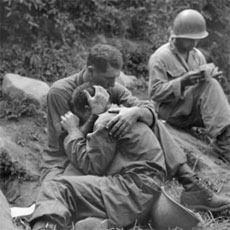
COMFORT IN MOURNING

mourn


Therefore, as with all of these blessings, it is not so much the condition described which brings blessing, but rather, being in that condition at the same time as knowing and trusting Jesus


To listen to the sermon, click the play button:

To download, right click on the link (or do whatever you do on a Mac) and save it to your computer: Download Matthew Part 11


Matthew #11 . 5:4-5

As we return to Matthew this week, let me remind us where we are. Jesus has climbed a small mountain with his disciples, and he is teaching them what Jesus followers “look like” and how they are to live. He has begun with a list of character traits, which nowadays, for obscure reasons, we call “the beatitudes.” These character traits are key to understanding the entire sermon on the mount. In fact, one way to look at it is like this:

· Jesus first explains that these character traits (the beatitudes) should be part of the life of every disciple.

· Following that, in the rest of the sermon, he gives practical examples of these character traits in action.

For example, in chapter 6, he talks about depending upon the Father for everything we need in life – including finances and other material resources. We can’t totally rely on the Father like that unless we become “poor in spirit” – understanding our complete dependence upon the Lord, and his gracious desire to take care of us. “Blessed are the poor in spirit” is of course, the first character trait that Jesus spoke about, which we looked at last time. For now, we will move on to two more of these Jesus-follower character traits.

Blessed are those who mourn for they will be comforted.

This statement of Jesus is full of meaning. I believe Jesus may have been thinking of several different kinds of “mourning” including:

a. The grief of lost loved ones. The Greek word used here for “mourn” describes lamenting for someone who has died. It is the sort of grief that consumes a person, and cannot be hidden. Therefore I believe that among other things, Jesus was referring literally to people who had lost loved ones to death. This is stunningly counter-cultural for me – how can we say someone who has lost a husband, a wife, a child, a sibling or a parent is blessed? The point is, of course, we can’t say that – but Jesus can. And the reason he does say it is simply and only because of his own resurrection. Remember, Jesus is talking here to Christians – people who know him, who have placed all their hope in him alone. Therefore, as with all of these blessings, it is not so much the condition described which brings blessing, but rather, being in that condition at the same time as knowing and trusting Jesus. In other words, not everyone who mourns the loss of a loved one is blessed – it is only those who know Jesus who receive true comfort for their mourning. When we lose a loved one who is in the care of Jesus, we know that we will see that person again. We know that in fact, we get to spend eternity with our Christian loved ones in the presence of God. We know that even before that, our loved ones are in a better place. Now, on the other hand I have often struggled with the idea of losing a loved one who doesn’t know Jesus – there doesn’t seem to be much comfort there. And yet, I receive in faith the promises of Revelation 21:4

“He [God] will wipe every tear from their eyes. There will be no more death or mourning or crying or pain, for the old order of things has passed away.”

There is a tremendous grief in losing someone who is close to you, but the blessing comes in the fact that this grief is temporary – for they shall be comforted.

b. There is another kind of mourning that brings blessing in Jesus. I call it the grief of brokenness. This is not so much mourning about losing someone else, but rather losing something inside yourself, or something that you desperately wanted or needed. For some, it might be that they didn’t receive the approval they sought from their parents. For others, perhaps they simply do not feel loved for who they are. Still others might be seeking self-significance, or a marriage partner, or healthy family relationships. What the world around us counsels in these situations is to do whatever it takes to make up for the loss in our lives. So people needing approval try to become successful or famous, hoping the adulation of the crowds will fill them up. Some try to make other people give them what they want – this is where we see unhealthy patterns of relationships developing. Jesus counsels us instead to mourn. The key to being comforted is first to mourn. So many of us (myself included) do not like to acknowledge those areas where we are truly weak and needy – it isn’t pleasant to go there. So we try to by-pass the mourning part, and go straight to the comfort. Unfortunately, it doesn’t work that way. But when we acknowledge our brokenness, when we truly mourn the fact that we did not, and will not, get what we needed from circumstances or other people – then Jesus has an opportunity to heal us, and to bring comfort. This is a very deep truth, but very important. We can’t receive the blessing of comfort that Jesus promises unless we first learn to mourn. The mourning of brokenness, like the mourning of lost loved ones, is an acknowledgement that we can’t do anything about the situation, and that it grieves us to the core. It is only when we give up control that Jesus can begin to comfort. We must learn to mourn by giving up the right to try and fix ourselves. When we do mourn our own losses of love, approval, significance, relationship or anything else, we find the comfort of Jesus.

c. The grief of sin. The third sort of mourning I believe Jesus is talking about is heartfelt sadness and repentance for the sins we have committed. Our society has undergone a tremendous transformation in its attitude toward sin. Forty years ago, no one wanted to be a sinner, because everyone understood that there were consequences for sin. People cared about sin – it mattered. Today, most people freely acknowledge that they are sinners – but they don’t seem to care about it, and it doesn’t seem to matter to them. In short, although many people freely admit to sinning, they do not mourn about it. Sin does not grieve their hearts. Jesus is offering a better way. Listen to what James, the brother of Jesus writes about mourning for sin:

God opposes the proud, but gives grace to the humble. Submit yourselves then to God. Resist the devil and he will flee from you. Come near to God and he will come near to you. Wash your hands you sinners, and purify your hearts you double-minded. Grieve, mourn and wail. Change your laughter to mourning and your joy to gloom. Humble yourselves before the Lord and he will lift you up. (James 4:6-10, italics added by me)

When we truly, in our hearts, mourn for the sins we have committed, Jesus offers comfort. When we are sorrowful and grief stricken for the crimes we have perpetrated against Jesus and against our fellow human beings, God gives grace. We shall be comforted.

Very briefly, I want to consider the next blessing –unless we begin to move a little faster, we will never get through the sermon on the mount, let alone the book of Matthew.


Blessed are the gentle, for they shall inherit the earth. The way most of us remember this verse is something like “blessed are the meek…” This verse used to bother me, along with the poem “Gentle Jesus, meek and mild…” Meekness is not something which is initially attractive to me – frankly, it sounds wimpy. But what does Jesus mean by it? I think it is obvious when we read the gospels that Jesus was no wimp. So what does he mean when offers this meekness, or gentleness as an important trait of a disciple? While researching the Greek word for gentle/meek (“pra-us,” if anyone cares) I found an excellent definition that seems to me to really get at the heart of what Jesus is saying here in Matthew 5:5. I’m not sure that I could word it any better than the lexicon, so instead I will quote at length:

Meekness toward God is that disposition of spirit in which we accept His dealings with us as good, and therefore without disputing or resisting…The meek are those wholly relying on God rather than their own strength to defend them against injustice. Thus, meekness toward evil people means knowing God is permitting the injuries they inflict, that He is using them to purify His elect, and that He will deliver His elect in His time. (Is. 41:17, Lu. 18:1-8) Gentleness or meekness is the opposite to self-assertiveness and self-interest. It stems from trust in God’s goodness and control over the situation. The gentle person is not occupied with self at all. This is a work of the Holy Spirit, not of the human will. (Gal. 5:23)[1]

Therefore the key to gentleness and meekness is to trust God to act on our behalf and to not rely on our own strength, which in comparison to God’s, is pitiful anyway. The result of such meekness, such trust? We inherit the earth, or in other words, the promised land. The promise is very germane to the business of trusting and being meek, because we cannot grab the land, or get it for ourselves. We receive it only as we trust God to get it for us.

I want to remind us again, that we cannot, simply through sheer effort, manifest these character traits in ourselves. We can’t just suddenly feel blessed as we mourn, or suddenly give up our own self-interests. Instead, remember, these are character traits of Jesus himself. The way we “get them” is first. to trust Jesus, and second, to allow him to own our lives, and to express His life and will through us.

May we be blessed this week as we mourn and remain humble and trusting!

Thanks again for making use of Clear Bible.

I want to remind you again that we are a listener-supported ministry, and that means, first and foremost, that we are supported by your prayers. We need and value your prayers for us.

Please pray that this ministry will continue to be a blessing to those who hear it. Ask God, if it is his will, to touch even more lives with these messages. Ask him to use this ministry in making disciples of Jesus Christ.

Please also pray for our finances. Pray for us to receive what we need. Please pray for us in this way before you give anything. And then, as you pray, if the Lord leads you to give us a gift, please go ahead and do that. But if he doesn’t want you to give to us, that is absolutely fine. We don’t want you to feel bad about it. We want you to follow Jesus in this matter. But do continue to pray for our finances.

If the Lord does lead you to give, just use the Paypal Donate button on the right hand side of the page. You don’t have to have a Paypal account – you can use a credit card, if you prefer. You can also set up a recurring donation through Paypal.

You could also send a check to:

New Joy Fellowship

625 Spring Creek Road

Lebanon, TN 37087

Just “Clear Bible” in the memo. Your check will be tax-deductible. Unfortunately, we cannot do the tax deductible option with the paypal donate button, however the money does go directly to support this ministry.

Thank for your prayers, and your support!


[1]Enhanced Strong’s Lexicon, (Oak Harbor, WA: Logos Research Systems, Inc.) 1995, emphasis added by me.

WHY CRUCIFIXION?

jesus-crucifixion-wallpapers-1501

Jesus was killed by torture. There is really no other way to say it. It began with three beatings during the course of about eighteen hours.

On Good Friday, we remember the crucifixion of Jesus – how we was killed by torture on a Roman cross. On Easter Sunday, we celebrate his resurrection – the fact that he physically came alive again and appeared to many of his followers. But the truth is, the two go together. If we had a crucifixion with no resurrection, the result would be simply despair. It would mean that Jesus was not who he said he was, and there would be no hope for us for forgiveness or eternal life. But a resurrection without the crucifixion first would also be meaningless. Jesus wouldn’t be dead in the first place, so there would be no need for one. But if Jesus simply revealed his full glory, and then went back to heaven, it would be great for him, and everything he said would be proven true…but we would still have no way of receiving forgiveness or eternal life.

Jesus was killed by torture. There is really no other way to say it. It began with three beatings during the course of about eighteen hours. First, Jesus was taken to the high priest’s house – and you can bet they weren’t gentle in the taking. Most likely they pushed him and perhaps even struck him on their way there. Once there, he was surrounded by an angry mob, and beaten with fists (Matthew 26:67-68; Mark 14:65; Luke 22:63-64). At least some of the blows were to his head. This kind of beating alone would probably put most of us in the hospital, at least overnight. Picture an LA street gang finding the member of a rival gang alone, and deciding to teach him a lesson. You can imagine several people holding the poor man up, while others took turns punching him. It is possible that Jesus sustained a concussion from this, and certainly he received multiple bruises; possibly even broken ribs or teeth. Remember, there was no pain medication in those days.

After a mock trial from the Jewish religious leaders, they took him to the Roman governor, Pontius Pilate, who did not live in Jerusalem, but was there to try and keep the peace during the Passover festival. A standard Roman response to suspected trouble makers was to have them “scourged.” Pilate had this done to Jesus. In common language, this means he was whipped – not horse-whipped, but beaten with an instrument designed to inflict pain on human beings. Instead of one “tail” to the whip, it had several strips leather. At the end of each strip was fastened rocks or bits of glass or even pieces of lead. So each strike of the whip caused multiple gashes, laying open the flesh, and bruising the muscles as well. Most probably Jesus was given the 39 lashes, which had been known to kill people occasionally. Remember, Jesus had been beaten up by a mob, just hours earlier. In addition to his other injuries, Jesus certainly lost a lot of blood from the whipping, and perhaps sustained more broken ribs. Between these two beatings, the overall physical shock to his body was enormous. Coming so close together, there is no doubt that many men would have died from the combination of these two traumas.

After that, Jesus was turned over to the Roman cohort for crucifixion. Before they did their job, however, the entire cohort had fun mocking him. This involved about 600 brutal, hardened soldiers. They jammed a crown made of thorns on his head. They took a staff most likely made out of a cane stem (something like bamboo, but smaller in diameter) and gave it to him, and then took it away and used it to beat him over the head. This cane rod would probably not have created any serious injury, unless it was used to strike Jesus on the face, and thus open up cuts on his cheeks. Even so, they were likely hitting the crown of thorns, driving thorns into his head, and the direct blows themselves would have been very painful.

But all that stuff – physical punishment which could easily have killed many men – was only preliminary to the suffering which killed the Son of God. After these severe beatings, they strapped a big beam to his back and made him carry it a mile or two. The beam was likely equivalent to a 4”x4”, perhaps six or eight feet long. Considering what he had been through, it was no wonder he needed help. When they got to the place, they put metal spikes through his hands, into the crosspiece. Though tradition pictures these as going through the palms of the hands, it is more likely that they put the spikes through his wrists between the two bones of the forearm, so that the flesh would not tear away and drop him from the cross. Either way, that alone would have been painful beyond belief. His legs were slightly bent, and then they pressed his feet, one on top of the other, and drove a spike through them into the upright beam of the cross. Tradition pictures a kind of triangular piece of wood for his feet to rest on, but this is doubtful. Then they raised it up.

At this point, Jesus had two choices. He could let the weight of his body hang from his wrists, tearing away at the flesh, and rubbing on bare bone. Or he could straighten his legs, and push up against the spike driven through his feet, inflaming the wounds there, and grinding against broken metatarsals and tendons. Each movement probably drove splinters into his raw, lacerated back. If he he had an itch, he couldn’t even scratch it. If he had to go to the bathroom, it would be right there in front of everyone.

Over time, victims of crucifixion spend more and more time hanging from their arms, since pushing up on the spike through the feet was intensely painful, and required effort. As Jesus’ body weight pulled on his arms, and kept them above shoulder-level, his lungs gradually began to fill with fluid, and breathing became difficult. The only relief for this came from thrusting against the spike in the feet. By pushing himself up this way, he could straighten his body and breathe more freely. But the pain was such that no one could endure this for long. It also required strength and energy. He was undoubtedly weakened by his beatings to start with, and as his body grew weaker through this torture, he got less and less air. In this position, fluid also collected around his heart, putting pressure on it. As a result the organs slowly got less blood and oxygen.

Incidentally, this was why, late in the day, they broke the legs of the other men who were crucified alongside Jesus. By breaking their legs, it became impossible for them to straighten up and get air, and so they died more rapidly.

Jesus was taken to the Roman governor early in the morning. He was put up on the cross before noon, possibly as early as eight or nine in the morning. He endured this suffering until it killed him, about eight hours later. It killed him, either by filling his lungs with fluid and suffocating him, or by the pressure of the fluids surrounding his heart, which could have caused it to stop.

This was actually a relatively short time for death by crucifixion. When we read the gospels, we find that Pilate was surprised when he heard that Jesus had died by late afternoon. But then, most people being crucified were not beaten three times with hours before they were put on the cross. Jesus’ suffering began not when he was put on the cross, but in the early hours of the morning, with the first beating.

But the suffering wasn’t only physical. He also went through emotional and spiritual agony.

First, he endured the anticipation of suffering. He knew, long before what happened, what was waiting for him. When I have some special event approaching in the future, anticipation is almost half the joy of it. I enjoy the feeling of looking forward to a good thing coming. But the reverse is also true. If you know about something you dread that is coming up, part of the negative experience is anticipating what you don’t want to go through. It is clear that Jesus knew about his approaching suffering, and that he dreaded it. That is why he said hours before he experienced any physical torment:

“My soul is overwhelmed with sorrow to the point of death. Stay here and keep watch with me.”

39 Going a little farther, he fell with his face to the ground and prayed, “My Father, if it is possible, may this cup be taken from me. Yet not as I will, but as you will.” (Matt 26:36-39)

He also experienced humiliation. He was the King of the Universe, the very One whom everyone around him professed to worship. And yet, in order to accomplish his purpose, he had to allow them to mock him, to spit on him, to humiliate him as if they were right and he was wrong. There was a physical aspect to the humiliation as well. It is a terrible experience to be a man, and be struck, and yet not be able to strike back. In addition, they almost certainly stripped him completely naked when the put him on the cross.

In addition, Jesus experienced abandonment. All his followers ran away and left him to his fate. His faithful lieutenant, Peter, denied him publicly. But even worse, he was abandoned by God. 2 Corinthians 5:20 says this:

God made him who had no sin to be sin for us, so that in him we might become the righteousness of God.

God the Father abandoned Jesus the Son in a way that he has never abandoned any human being, ever, nor ever will. The bible teaches us that if we choose to reject God’s grace through Jesus, then ultimately God allows us to do that. In other words, God doesn’t reject us, but he gives us the freedom to reject Him. If we choose that, we will experience what it is like to be without God – but it will be our doing not His. He does not willingly forsake us. But in the case of Jesus on the cross, it was the opposite. Jesus never turned away from the Father. He followed him obediently, and perfectly to the end. But when the Father made Jesus into sin – for our sake – He turned away and abandoned him. He had to, if Jesus indeed took our sin on himself.

All this is the depth of God’s love for us. This is picture of the true horror of our sin. This crucifixion is the gulf that would exist between us and God if Jesus had not taken our place.

But the devil mis-stepped. Death is Satan’s most potent weapon. But it didn’t work on someone who had never sinned. When he twisted Judas into betraying Jesus, when he gloried in the sadistic death that he had no doubt inspired the Romans to develop, when he rejoiced at the evil that destroyed the physical body of God’s son, he was actually embracing a time-bomb. The bible suggests that Jesus descended to hell (1 Peter 3:18-20). I think he went to hell, and there it all blew up in the devil’s face.

I’ve preached at length in the past about how all the evidence points to an actual, physical resurrection of the body of Jesus. He was raised by God. His body was the same and yet different, just like the grain of wheat, and the wheat plant, are both completely wheat, and yet the plant is more, different and better than the single grain from which it rose.

Jesus’ resurrection proved that his suffering was not in vain. It means that it truly was all on our behalf, and not for his own sake. It means that death is not longer the end, or just the dark doorway into into an evil eternity of suffering or oblivion, but rather just a portal that we pass through into eternal life and joy. As the writer of Hebrews says:

Let us fix our eyes on Jesus, the author and perfecter of our faith, who for the joy set before him endured the cross, scorning its shame, and sat down at the right hand of the throne of God. (Hebrews 12:2)

As we consider all this, I want us to be very aware of one thing. God’s grace is free to us, but it was not free to Him. It was very costly. It is free in the same sense that a diamond is free to the girl who is getting engaged. It is free, but it still costs a lot. And like the diamond engagement ring, it is offered not just as a trinket, but as an invitation into a lifelong relationship that will change the course of our future forever. A single woman doesn’t accept a diamond ring from the man she loves and then go on in her life without him, except for maybe occasionally remembering him fondly. No, when she accepts that gift, she enters a new relationship, a relationship that is strengthened and reaffirmed daily as they make their lives together. The acceptance of that gift is life-changing.

What Jesus did for us on the cross – the grace that God offer us – is far more precious than any diamond ring that ever has, or ever will, exist. It should not be received any less casually than a marriage proposal. To receive this gift is to give your life to Jesus, to commit to Him for forever, to live in a daily relationship with him. It is life-transforming.

JESUS AND FISHING

jesus fisherman


From the very beginning, Jesus invited all of his followers into the his own mission: to reach the world with the good news of forgiveness and grace through Him. This was not true only for Jesus’ twelve apostles, or for those with a special call to vocational ministry, but also for every Christian.

To listen to the sermon, click the play button:

To download, right click on the link (or do whatever you do on a Mac) and save it to your computer: Download Matthew Part 9


Matthew #9. Chapter 4:17-25

The Light that came to Galilee in fulfilment of Isaiah’s prophecy was Jesus Christ himself. Matthew 4:17-25 records how he began his ministry. The essence of his message, at least at first, was much like the message of John the Baptist: “Repent, for the Kingdom of Heaven is near.” I think that brief sentence summarizes the main point of Jesus’ first preaching in Galilee. He is trying to raise awareness that God is near, and actively working, and the appropriate response to the presence of God in our lives is to turn away from our sins and turn toward God. Jesus has not yet broadcast to the general public that He himself is God the Son, one of the Three Persons who make up the one true God. However, he is sending the message that God is at work and it is time for people to repent and submit themselves to God’s ruler-ship.

In verses 18-22, Matthew records an encounter between Jesus and four other men: Simon (Peter) Andrew, James and John. This was not the first encounter between Jesus and at least some of these men. Before John the Baptist was put into prison, he pointed Jesus out to Andrew and another unnamed person. Since it is the apostle John who records this (John 1:35-42) it is likely that he (John the apostle) was the unnamed person. Andrew introduced his brother Simon (who later became known as Peter) to Jesus. Peter, Andrew and John spent at least a day with Jesus at that time. So did two other individuals, Philip and Nathaniel. All this probably happened in Judea, south of Galilee, before John the Baptist was put into prison.

What this means is that Jesus was not a stranger when he called Peter, Andrew, James and John to follow him. John the Baptist had told them he was the Messiah. They had spent time with him. They may have even heard some of Jesus’ preaching in Galilee (as recorded in verse 17) before he called them.

In fact, Luke 5:1-10 fills out this incident for us. Both sets of brothers made a living as commercial fishermen. Peter and Andrew were on shore, messing with their nets. Jesus, knowing them from before, borrowed one of the boats belonging to them, and used it as a platform to preach a sermon to a crowd that had gathered along the lakeshore. After he was done, he told the fishermen to try fishing one last time. Peter objected, but obeyed anyway. The result was a huge catch of fish – so large that they had to call in their partners for help. Their partners happened to be James and John. In fact the catch was so enormous, and the whole incident so unusual that the fishermen clearly regarded it as a miracle. When the fish were all in, Jesus called the four of them to follow him. He said their new job was to bring in people, not fish. They immediately left work and went with Jesus.

After this, Jesus continued to travel around in the region of Galilee, preaching. Apparently, Peter, Andrew, James and John went with him from that time forward. Jesus’ preaching was accompanied by miracles, especially healing and deliverance from demonic oppression. In a time before antibiotics or pain medications, the prospects of getting healing or relief were normally very dim. So, Jesus’ reputation as a healer drew huge crowds from all over the region, and even from Judea in the south.

Now, let’s unpack this text a little bit.

First, Jesus’ message of the Kingdom of Heaven and Repentance. By his death on the cross, Jesus made it possible for us to be forgiven. Many times he demonstrated God’s love and grace. Many times, he spoke about that same love and grace and goodness. But Matthew reminds us here that the very first thing he preached was repentance. Repentance opens the door to God’s love and grace. If we refuse to repent, the door stays shut, and God’s love doesn’t do us any good. When God comes near, the very first order of business is repentance. We covered the topic of repentance in some depth in part 5 of our series on Matthew. Some things are worth repeating, however.

To repent means to turn back, to go a completely different way. If you can read these words, it is not too late for you to repent. Jesus can handle whatever horrible thing you’ve done, whatever you’ve left undone, and even whatever terrible thing was done to you. But you need to drop it, to turn away from it, and turn to Him. To repent is to fully own the fact that you have been wrong, with no excuses, and then to turn away from it, for all intents, forever.

Now, our turning away forever almost never happens perfectly. But it does mean that you are going a different direction now. You may fall down sometimes as you walk in the new direction. You probably won’t walk it perfectly. But after you repent, your direction is different than it was before. Once in a while, perhaps, you fall back into the same actions as before. But your overall direction is new, oriented toward God, not away from him.

Many of you reading this blog have already repented and turned to Jesus, and received him as your Lord and your salvation. That’s wonderful. But for us who have done that, Jesus is still at hand. He still wants to show up in our lives in greater and more profound ways. He wants to give us even more grace, more joy, more peace, a more abundant life in Him. To receive these things from him, our path is the same: repent!

Now, let’s look Jesus’ call to the fishing brothers. I think there are two important things we find here. First, this demonstrates that Jesus has a unique calling for some individuals to leave ordinary employment, and work for him full time. We describe this as a calling to vocational ministry. Peter, Andrew, James and John (and others who came later) left their vocations and jobs, and dedicated themselves full-time to the mission of Jesus. Jesus asked them to do this. He did not ask everyone he encountered to do it, even if they believed in him, and became his disciples. Jesus once delivered a man from many demons. The man wanted to leave everything and become a full-time minister.

As He was getting into the boat, the man who had been demon-possessed kept begging Him to be with Him. But He would not let him; instead, He told him, “Go back home to your own people, and report to them how much the Lord has done for you and how He has had mercy on you.” (Mark 5:18-19, HCSB)

Jesus wanted the man to continue to follow him in faith; he wanted the man to engage in His mission and tell others the good news, but Jesus asked him to do it right where he was, in his everyday life.

Twenty years ago, I might not have bothered to point out that the four fisherman had a unique call to vocational ministry, and I doubt I would have thought it necessary to make the case that some Christians in every generation have a similar call. But in our post-modern, anti-authoritarian culture, I think we have gone too far. We are becoming so anti-institutional that many people have become suspicious of those who are called into vocational ministry. I’m not a fan of institutions or hierarchies myself. But the bible does clearly teach that God calls certain individuals to specially dedicate their lives to teaching and training other Christians.

Paul says:

Who ever goes to war at his own expense? Who plants a vineyard and does not eat its fruit? Or who shepherds a flock and does not drink the milk from the flock? Am I saying this from a human perspective? Doesn’t the law also say the same thing? For it is written in the law of Moses, Do not muzzle an ox while it treads out grain. Is God really concerned with oxen? Or isn’t He really saying it for us? Yes, this is written for us, because he who plows ought to plow in hope, and he who threshes should do so in hope of sharing the crop. If we have sown spiritual things for you, is it too much if we reap material benefits from you? (1Cor 9:6-11, HCSB)

Don’t you know that those who perform the temple services eat the food from the temple, and those who serve at the altar share in the offerings of the altar? In the same way, the Lord has commanded that those who preach the gospel should earn their living by the gospel. (1Cor 9:13-14, HCSB)

James says this:

Not many of you should become teachers, my brothers, for you know that we who teach will be judged with greater strictness. (Jas 3:1, ESV2011)

The author of Hebrews says:

Obey your leaders and submit to them, for they are keeping watch over your souls, as those who will have to give an account. Let them do this with joy and not with groaning, for that would be of no advantage to you. (Heb 13:17, ESV2011)

Ephesians 4:11-12 says this:

And He personally gave some to be apostles, some prophets, some evangelists, some pastors and teachers, for the training of the saints in the work of ministry, to build up the body of Christ (Eph 4:11-12, HCSB)

There are many more verses like this, which demonstrate the same point. Now, it is true that being called to full-time ministry does not make anyone a better or more important person. It is true that every Christian should be reading the bible individually, and engaging with others in the mission of Jesus. It’s true that every Christian should be willing and able to talk with others about Jesus. But there is a unique calling to teaching and equipping that is given to a relatively small number of people. I’ve seen individuals struggle and be led astray because some person just decided that he would start a church, or start preaching, without truly being called to it. I’ve heard and read a lot of bad, unbiblical teaching over the years because people have not appreciated that you should take a preaching/teaching equipping ministry very seriously; and few are called to it. I’ve also seen churches flounder because they reject a godly, biblical leadership model.

Now, I’m going to turn it around and try and have it both ways, because I think the text has it both ways. Just as this text shows us that some people are called uniquely to vocational ministry, it also shows us that everyone who trusts Jesus is called to participate in His mission. Not everyone is called to leave his or her career. However, all Christians are called to follow Jesus. For most, that means, among other things, expressing your faith and living for his purpose as you fulfill your everyday responsibilities at home and at work. It means being a disciple of Jesus when you are with your family, your friends, when you are at work, when you are driving, playing golf, fishing – in fact, all the time.

It is obvious that all New Testament Christians believed this and practiced it (Matthew 28:16-19; Acts 11:19-26; 1 Peter 2:12-15, 3:15-16). From the very beginning, Jesus invited all of his followers into the his own mission: to reach the world with the good news of forgiveness and grace through Him. This was not true only for Jesus’ twelve apostles, or for those with a special call to vocational ministry, but also for every Christian. For most Christians, the context for the mission of Jesus is your everyday life. Regardless, we should embrace that mission as part of embracing Jesus and his grace and forgiveness to us.

WHAT ABOUT THE NO-ACCOUNT, GOOD-FOR-NOTHING PEOPLE?

food-center-lottridgejpg-3029818111ede755_large

Jesus came first to the backwaters; the boondocks; the sticks. He went to where people felt shame and humiliation and hopelessness. He brought light to dark places. He still does.

To listen to the sermon, click the play button:

To download, right click on the link (or do whatever you do on a Mac) and save it to your computer: Download Matthew Part 8

Matthew #8 . Matthew 4:12-16

We’re going to cover some historical and cultural details this week. Please have patience with this. First, I believe it will pay off in understanding what the Holy Spirit might want to say to you today, through these verses. Second, this information will useful many times as we continue our study of Matthew’s Gospel.

Apparently some time passed between chapter four, verse eleven, and verse twelve; we don’t know how much. We do know that the gospel of John records events that must have occurred between Jesus’ baptism and the beginning of his ministry in Galilee. Particularly, John the Baptist pointed out Jesus to Andrew and Philip, who then introduced him to Peter and Nathaniel and perhaps others. In any case, after a period of time, John the Baptist was put into prison by Herod Antipas, son of Herod the Great who had killed all the babies in Bethlehem. At that time, Jesus went back to the region of Galilee, and remained there for some time.

The region is named for the Sea of Galilee, which is a very large freshwater lake. At its widest points, the lake is thirteen miles long, north to south (21 km) and eight miles wide, east to west (13 km). The total surface area is about sixty-four square miles (166 square km). If you walked the entire shoreline of the lake, you would go about fifty-one miles.

Just to be confusing, the Sea of Galilee is also called Lake Tiberias and the lake of Gennesaret. In modern Israel it is sometimes known as Kinneret. To make matters even worse, the New Testament also refers to two towns (on the shore of the lake) with the same names as the lake: Tiberias and Gennesaret.

By the time of Jesus, the area around the lake had a checkered past and a questionable reputation. It was the ancestral home of the tribes of Zebulon, Napthali and Mannaseh. After the time of Solomon, when the Israelites split into two kingdoms, this area, being in the north, went with the Northern kingdom, of course (usually known as “Israel” while the Southern kingdom was called “Judah.”). The Northern kingdom was ruled from the city of Samaria, which was some distance from the lake. During its existence, The kings of Israel did not want their people going south to Jerusalem to worship (because it was in the kingdom of Judah), so they set up their own worship system in the north. They quickly became corrupted in their beliefs, and began to abandon worship of the One true God, instead, worshiping like the pagans. Though prophets called them to repent, they did not, and the Northern Kingdom was eventually wiped out by Assyrian invaders in about 723 BC (in other words, more than 700 years before Jesus was born). The people were deported and scattered around the Assyrian Empire.

The Assyrians resettled people from other places into the region of the old Northern Kingdom of Israel. There were still a few Israelites living there, and they began to intermarry with the foreigners. As time went on, they developed a kind of hybrid-Israelite religion, believing in the first five books of the Old Testament, but interpreting them differently, and not accepting the books of the prophets (i.e. the rest of the Old Testament). These hybrid-Israelites with their hybrid-religion became known as Samaritans, because Samaria was still the chief city of the area (all this is a simplification, but it gives you the general idea).

In terms of theology, it might have been a bit like the differences between Mormons and Christians. Mormons and Christians have a lot of outward similarities. At times, Mormons will even call themselves Christians. However, Christians know that there are profound differences between the Christian faith and the Mormon religion. We would say that it is totally inaccurate to consider Mormons the same as Christians. In the same way, Samaritans regarded themselves as a division of Judaism, but the Jews did not feel that way.

North of Samaria was the sea of Galilee. For a long time, no Israelites or Jews lived there, but a few hundred years before Jesus, Jews began to re-colonize the area around the lake. Those people saw themselves as connected with Jerusalem and Judea (previously known as “Judah”) in the south, and not a part of their nearer neighbors, the Samaritans, who were in between them and Judea. Immediately surrounding Galilee were other foreign powers. In fact, Jewish Galilee could really only claim the west side of the lake. The other parts of the lake, and the regions to the north, east and south-east were all inhabited by Gentiles (non-Jews).

Here is a map that roughly shows the territories involved. You can see Galilee near the top.

clip_image002

When Jesus was a boy in Egypt, the Jews in Galilee, being some distance from Judea, had tried to rebel the son of Herod the Great. It was a bloody, violent rebellion, and was put down ruthlessly, with the assistance of the Romans.

When you put this all together, it is not surprising that, although it was an area full of natural beauty, Galilee was considered to be an undesirable, no-account sort of place. It was surrounded by foreigners who did not worship God. It was far from the center of power and learning (Jerusalem). It had a history of violence and war and turning away from God. People in Jerusalem thought of Galilee the same way that people in New York City might think of the remote valleys of Appalachia. It may be pretty, but who would want to actually live there? The whole region was depressed, with nothing worthwhile going on, it was populated by “rednecks.”

If wanted to start a movement, and really influence people; if you really wanted to be someone, Galilee was not the place to go. It had been a no-account backwards place for seven-hundred years. But Jesus specifically chose Galilee as the starting place for his ministry. This depressed, hillbilly haven was where people first heard the good news of Jesus Christ. Jesus’ first miracle was performed in one of its towns (Cana). The Messiah grew up there. The light of the world (as John calls Jesus) first shined in this place. Matthew records that this fulfilled another Old Testament prophecy, Isaiah 9:1-2.

Land of Zebulun and land of Naphtali, along the sea road, beyond the Jordan, Galilee of the Gentiles! The people who live in darkness have seen a great light, and for those living in the shadowland of death, light has dawned. (Matt 4:15-16, HCSB)

Let’s just pause here a moment and see if the Lord has anything to say to you through this. It isn’t just about where Jesus chose to live. It is about the fact that he knew that this place and these people were held in contempt; he knew that they felt shame, and that is why he went there. He did this because He cares deeply about people who are overlooked by others, people who are living in shame, people who are considered no-account.

Perhaps you have felt overlooked. Maybe you’ve believed that you are unimportant. Maybe you have shame placed upon from something you’ve done, or by how others have treated you. Jesus isn’t afraid of your shame; he’s not worried about being tainted by your humiliation. He comes to you, deliberately, and says, “Let me remove your shame. Let me shine the light of my grace into your life. Let me show you that you are important to me, and I am the only one that really matters.”

Possibly you feel that you have been “walking in darkness” for a while now. Could it be that the Lord is saying to you: “A light is coming to you. You won’t be in darkness forever!”

As for being unimportant, or doing unimportant things, listen to what the Holy Spirit says through Paul in 1 Corinthians 1:26-30

Brothers, consider your calling: Not many are wise from a human perspective, not many powerful, not many of noble birth. Instead, God has chosen what is foolish in the world to shame the wise, and God has chosen what is weak in the world to shame the strong. God has chosen what is insignificant and despised in the world — what is viewed as nothing — to bring to nothing what is viewed as something, so that no one can boast in His presence. But it is from Him that you are in Christ Jesus, who became God-given wisdom for us — our righteousness, sanctification, and redemption, (1Cor 1:26-30, HCSB)

Jesus came to take our shame and humiliation upon himself. He came to take our checkered pasts, our sordid family histories. He came to shine light into places that may have been dark for centuries. If you think you are of no account, or you are not worthy, then know this: he came exactly for you. He comes to us all, continually. Open your heart to the light.

~

Clear Bible is a listener supported ministry. We reach more than 15,000 people each year with clear, understandable bible teaching.

 We ask you internet readers/listeners to pray for us. Seriously, before you give any financial support, please give us some prayer support. We value that more than anything else. Pray for this ministry to touch lives. Pray also for financial provision for my family and me.

But then, as you pray, do ask the Lord if he wants you to give financially as well. Be assured, after a small fee to Paypal, 100% of your donations will go to help support my family and me in ministry. In turn, supporting this blog means that you are helping to bless more than 15,000 people each year who visit this blog.

 If most of our subscribers gave just five or ten dollars each month, (or even less, if everyone pitched in) we would be in good shape. It’s easy to set up a recurring donation when you click the Paypal donate button that is located on the right hand side of this page, down just a little ways.

 You could also send a check to:

New Joy Fellowship

625 Spring Creek Road

Lebanon, TN 37087

 Your check will be tax-deductible. Unfortunately, we cannot do the tax deductible option with the paypal donate button, however the money does go directly to support my family and me.

 Thank for your prayers, and your support!

TEMPTATIONS


TEMPTATION

Jesus faced some powerful temptations. We face the same kinds of tests. The way that he overcame them can help us to trust him to overcome them in our lives also.


To listen to the sermon, click the play button:

To download, right click on the link (or do whatever you do on a Mac) and save it to your computer: Download Matthew Part


Matthew #7 . 4:1-11

Last time we saw how, at the baptism of Jesus, the Father and the Spirit showed how pleased they were with him. The next thing Matthew records is that the Spirit led Jesus into the wilderness to be tempted by the devil. Mark records that this happened immediately after:

Immediately the Spirit drove Him into the wilderness. (Mark 1:12, HCSB)

There is an important point here. It isn’t the main message of the text, but I think it is very significant for many of us. The Father was pleased with Jesus. The Spirit was with him, leading him. And he was brought into a desert wasteland where he had no food and had to fight with devil.

You don’t have to go very far in America to hear a Christian says something like this: “If you just follow God, he’ll take care of you. Your life will go better.” The Father was pleased with Jesus. The Spirit was leading him. However, his life did not get better, but harder. Following God is not a guarantee that everything will go well for you. That’s hard, but it’s the truth. When we follow God, his goal is to lead us to the place where we understand that this life on earth is not the main focus.

There is something else that many people may need to hear today: Our circumstances do not necessarily reflect how God feels about us. Jesus had nothing to eat. He was assailed by the devil, and living in a desert wasteland. And the Father was so pleased with him; the Spirit was with him. The Father has his reasons for allowing Jesus to go through that. But his reasons had nothing to do with his delight in Jesus.

Sometimes, when I’m going through tough times, I think maybe God is mad at me, or perhaps I’ve done something that has caused him to teach me a lesson. Another thought I have sometimes is that I’m going through hard times because I’ve made the wrong choice, and not listened to the Holy Spirit. But that could not have been the case with Jesus. The Father was pleased with him. The Spirit was leading him.

I think this passage calls us to dare to look at our circumstances differently. In Jesus, the Father is pleased with us, too. What we are going through is not necessarily a sign of how God feels about us. It’s true that, unlike Jesus, we sin. Sometimes we go astray and hard circumstances are a result of our bad choices. But Jesus shows us that you can follow the Spirit and still end up in wasteland with no food and the devil attacking you constantly. Just because you are in a hard time does not mean that God is displeased with you. Trust his love and grace to you!

Now, let’s take a look at some of the specific temptations faced by Jesus at this point. By the way, Matthew does not claim that these were the only ways Jesus was tempted by the devil. These are just a few of the many. But they were very powerful and difficult. You could classify these three incidents as temptation to doubt God’s provision, his protection and his purpose. But I think it’s worth looking at all three more closely.

Jesus was fasting. In some ways, fasting is all about dependence upon God. It’s almost like saying, “I need you more even, than I need food!” In my experience, when done right, fasting leads me to a greater sense of dependence upon God, regardless of what needs I may perceive in my life.

4:2 says that Jesus was hungry. Satan came along and said, “Why don’t you just create some food for yourself? You are God in human flesh, after all.” Pay attention, now. Being hungry isn’t a sin. It was natural for Jesus to be hungry. He was hungry because He himself had created the human body to need food. So, the temptation here is not about eating – it is about control. Satan was saying, “You’re hungry. You can satisfy your own hunger. Just reach out and do it – meet your own needs.”

Jesus, in taking on human nature, committed himself to live in complete dependence upon the Father, even as we humans are called to live in dependence upon him. To live as a human, to fulfill his mission, he had to trust in the Father to take care of him. In reply to the devil, Jesus quotes Deuteronomy 8:3. The whole verse says this:

He humbled you by letting you go hungry; then He gave you manna to eat, which you and your fathers had not known, so that you might learn that man does not live on bread alone but on every word that comes from the mouth of the LORD. (Deut 8:3, HCSB)

In that verse, Moses was reminding the people of Israel how God dealt with them in their desert wanderings. The point is, the hunger came about as a result of God’s work, and the hunger was ultimately satisfied by God. Jesus was saying: I will not meet my own needs. I will allow the Father to put me in a place of need, and I will allow Him to meet those needs in His way, and His time.

We experience similar situations, even when we aren’t fasting. Maybe it is in regard to physical needs, like hunger, or physical intimacy. Or maybe we are “hungry” for emotional needs. God wants us to depend on him to satisfy our needs in his way and in his time. Satan wants us to insist upon our needs getting met in our way and in our time. The temptation is to take control of the situation rather than trusting God. Jesus chose to trust God even while his need to eat was not being met. He calls us to that same kind of faith. Can we trust God to meet our need for love, even when we feel unloved? Can we trust him to take care of us, even while we can’t pay the bills?

We can’t manufacture that kind of faith. But Jesus has that sort of trust in the Father, and he put it into action as a human. And if he we trust Jesus, his strength, faith and integrity are available to us. Through faith, we can let Jesus, living inside us, overcome those temptations and bring us to a place of trust in the Father.

The next temptation recorded may not seem like much of a temptation to most of us. The devil suggests that Jesus should throw himself off the highest place in Jerusalem. From there, he would certainly die, unless God saved him. I think there are several temptations here. One is an inducement to suicide. Jesus faced some incredible hardships within a few years. It would be easy to simply retreat from life, and go back to heaven through death.

Without contradicting that, there are other things going here also. I think the devil was trying to cast doubt on Jesus’ sense of identity as the Son of God. He says, “If you are the Son of God, throw yourself down…” In other words: “You think you are God’s beloved Son? Prove it.” Again, the devil is inviting Jesus to doubt God, to doubt what had been said at Jesus’ baptism. As an evil twist, he is also casting doubt about whether the Father really would rescue Jesus, really protect him.

As a final, diabolical element, Satan quotes scripture, twisting its meaning and purpose, to try and convince Jesus to do it. I think that is a very important point. In this world of sin, anyone’s words can be twisted and misused, even God’s. Psalm 91 (quoted here by Satan) is an assurance of God’s care for his people. It is not an invitation to commit suicide and see if God will stop you. It’s not an invitation to force God to prove something.

But I think we all have the temptation sometimes to want God to prove himself to us. Sometimes we all doubt whether God will really keep his promises, and we think it would be nice if we could make him show us. We also feel the temptation to doubt who we are in Jesus. The bible says that in Jesus, we have forgiveness and redemption; we are holy and blameless; we have every spiritual blessing; we are more than conquerors; we have rest for our souls; we are the righteousness of God; we are a new creation, we have real life, everlasting life; we have peace; we have grace; we stand in God’s favor…and much, much more. It all seems too good to be true. That can’t really be us. The devil will tempt you to believe that it IS too good to be true. He’ll make you doubt your true identity in Christ. When he does, ignore him, and trust Jesus in you to send him packing.

In verses 8-10 the devil makes Jesus an offer: “Worship me, and you can have the world.” I think we read this and sometimes think, “That’s silly! Jesus is Lord, why would he worship the devil?” Remember, however, when Jesus lived on earth, he made himself completely dependent upon the Father, just as we are completely dependent upon him. The Father had a mission for him, and it involved a lot of hard work and pain and suffering. What the devil offered Jesus was a shortcut. Jesus came to save the world. The devil says, “I’ll give you the world without all that suffering. Just call me ‘Lord.’”

Remember, the previous two temptations questioned Jesus’ very identity. Now, the devil is trying to assume he has succeeded, and Jesus is willing to doubt himself enough to do that. Along with that, he is offering the inducement of an easy way out. He’s saying, “You can accomplish your mission without all that hardship and pain and suffering. I’ll just hand it all over to you. The Father is trying to make you jump through hoops – I won’t do that. Just worship me, and I’ll take care of everything else.”

Since the time of Jesus, there have been many stories about people “selling their soul to the devil” in exchange for some wonderful thing. But the truth is, the temptation is not usually so blatant as that. I think it is more like these examples:

You really just need to relax and “check out” of all the stress for a while. You want some peace. There’s pill you can take, or a joint you can smoke that will take care of it all, or you could drink enough alcohol to “take the edge off.” Smoking, pot, taking the pill, or having a few drinks is easy. It’s deals with the pain or the stress quickly. But it doesn’t really deal with it – not permanently. And in exchange, you give up control and end up needing the pot or the pill, or the booze. You trade more and more of your life away in order to keep those things in your life. You think it’s a momentary out, a harmless short-cut. But you are trading your life to the devil in exchange for it.

Let me say something briefly about marijuana. Everyone I’ve spoken with who smokes it tells me that it is not addictive. I think it’s true that physically, there are no withdrawal symptoms if you quit. But the same people who say it isn’t addictive keep smoking it, even when it costs them their jobs or their relationships and even sometimes their freedom. If you are willing to give up friendships and livelihood for it, you are addicted, no ifs, ands or buts.

Here’s another soul-trade. You want security in your life. You want to make sure that you will never be in a place of need. So you work long hours. You give your life to your career, and exchange you get a savings or investment account. But it turns out, no amount is enough to make you feel secure. You work harder, and trade more time with your family, more time with God – more and more of your life – for this security. It’s a deal with the devil. It costs too much.

People do the same thing with status and fame and power. Maybe a little bit of “tough business practice” which is really just cheating, will allow you to get where you want to be. Maybe just a little more time away from the family.

Sometimes people even think they can accomplish God’s mission but do it the easy way. Just go to church, throw some money in the offering plate, and then you can ignore God the rest of the week. It’s easy.

Now, I don’t mean to say that it’s never easy to do what God wants of you. Sometimes it is extremely grace-filled and easy. But we need to pay attention to the deals we make to get what we want.

Real peace comes from trusting Jesus in the middle of hard times. Real security comes from trusting Jesus in hard times. Sometimes God just gives peace, or sometimes he just gives us sense of security. But those things come as we trust him, not from taking short-cuts.

When we look to anything but God for peace, security or comfort, we are in danger of looking to that thing as an idol. I don’t mean that we can only have peace or comfort through severe meditation and scripture study. The Lord may touch you through music, or a friendship, or a good book or movie, or a meal enjoyed (without gluttony). The Lord blesses us through all sorts of things. But we need to look beyond the things themselves to the Lord who gives them. And certain things and activities are just deals with the devil.

Jesus overcame this the third temptation the way he did the other two – he relied upon the scripture, throwing the truth at the temptation. This is one reason why it is important for us to know the bible for ourselves. It is vital ammunition in the spiritual battles we face.

One final thought from this passage. The temptation, the fasting and the desert wasteland were a season for Jesus. It came to end. The trials do not last forever. When it was over, angels came and ministered to Jesus – in other words there was relief from the difficulties that Jesus had faced. Some of us need to hear this – that our hard time does have an ending. We can’t predict when that will be, but there is light at the end of the tunnel, and it isn’t just an oncoming train.

Let the Holy Spirit speak to you right now.

WAS JESUS JUDGEMENTAL?

winnow3

While Jesus is not a judgmental figure, the whole world is judged by its response to him. He does “separate the wheat from the chaff,” simply by being who he is.

When we trust Jesus and continue on in that trust, God the Father includes us in all the grace and blessings of Jesus.

To listen to the sermon, click the play button:

To download, right click on the link (or do whatever you do on a Mac) and save it to your computer: Download Matthew Part 6

Matthew #6. 3:11-17

Some people have called John the Baptist “The Last Old Testament Prophet.” The Old Testament prophets often pointed out the sins of the Israelites, and of the nations around them, and warned that God would bring judgment upon them if they did not repent. John had a similar message, but there were two key differences. First, while the Old Testament prophets aimed their message at whole nations, John’s message is for individuals. He isn’t calling the nation of Israel to repent – he is calling you to repent. Second, the Old Testament prophets predicted (correctly, it turns out) that judgment would come about through war and destruction. But the judgment that John saw coming was to come about from an individual – the Messiah.

Matthew records a difference between John’s baptism and that of Jesus: John’s was symbolic of repentance; the baptism of Jesus would accomplish something internally – it would bring “the Holy Spirit and fire.” John says some things about Jesus that may seem a little strange to us:

“His winnowing shovel is in his hand, and he will clear his threshing floor and gather his wheat into the barn. But the chaff he will burn up with fire that never goes out.”

First, this is strange to us, because we don’t know what a winnowing shovel is, and maybe not even chaff. Back in those days, when people harvested wheat, they would generally take it to a threshing floor. Usually, this was simply a wheatheadcleared, flat area on a hilltop. They would beat the heads of the grain, either by gathering stalks and bashing the heads on the ground, or maybe by hitting the heads with a stick or wooden hammer. They would throw the empty stalks aside. What was left was a mixture of wheat grains, very short pieces of stalk and pieces of the outer part of the wheat seed structure, called “chaff.” At this point, the famers would take a winnowing shovel. They would scoop up the mixture of wheat grains and chaff, and throw it up into the wind that blew across the hilltop. The chaff is lighter than the wheat grain, so the wind would carry that away, while the grain fell back to the ground on the threshing floor. Obviously, the grain was collected and stored. The chaff was sometimes burned up. This picture is one of getting rid of useless material that you do not want, and refining and saving what you do want.

winnow1

Now that we understand what John is saying, it is still strange to us, in that we often do not think of Jesus as bringing judgment. There is no question that judgment is what John means. Those who belong to God are going to found and refined and saved, and those who do not are going to blow off in the wind, and, after, be burned in the fire. John’s main point is: “It’s time to get ready! Repent, be among those who are saved!”

I think in our modern times, we view Jesus as just mellow and loving and sort of “all encompassing.” That is reinforced by many bible verses in which Jesus declares God’s love, and many other bible verses which teach that grace and forgiveness come through Jesus Christ.

But the bible also teaches that Jesus is the dividing point between those who will be saved, and those who won’t. Jesus is the meeting point for both grace and judgment, salvation and condemnation. Even Jesus taught this:

Jesus told him, “I am the way, the truth, and the life. No one comes to the Father except through Me. (John 14:6, HCSB)

In Jesus, we know the way, the truth and life. But without Jesus, we are lost. This is both grace and judgment. It is important to understand though, that the judgment and condemnation come only when we reject Jesus. John explains in his gospel:

For God did not send His Son into the world that He might condemn the world, but that the world might be saved through Him. Anyone who believes in Him is not condemned, but anyone who does not believe is already condemned, because he has not believed in the name of the One and Only Son of God. “This, then, is the judgment: The light has come into the world, and people loved darkness rather than the light because their deeds were evil. (John 3:17-19, HCSB)

Thus, everyone in the whole world is judged by how they respond to Jesus. If they respond in faith, the result is grace and salvation. But those who reject Jesus are separating themselves from God’s grace and life:

And this is the testimony: God has given us eternal life, and this life is in His Son. The one who has the Son has life. The one who doesn’t have the Son of God does not have life. I have written these things to you who believe in the name of the Son of God, so that you may know that you have eternal life. (1John 5:11-13, HCSB)

So, while Jesus is not a judgmental figure, the whole world is judged by its response to him. He does “separate the wheat from the chaff,” simply by being who he is. If you are in Jesus, you are the wheat, you are safe in God’s storehouse. If you are not in Jesus, you are the chaff.

Throughout history, Jesus has been this dividing point. Many people are willing to look at Jesus as a good moral teacher. Many more are happy to acknowledge him as a prophet. But when it comes to putting faith in Him as fully God (God the Son, one God along with the Father and the Spirit) and as a personal savior, many people seem to balk. I have had many cordial conversations about religion with my Muslim friends. One time, a friend and I had a long talk, and he said, “Tom, we have so much in common. But there is just one point that is a problem. You worship Jesus as God. According to Islam this is the one thing that will send you to hell.”

I said to him, “That’s interesting, Abdul, because that is the one problem I see, also. You don’t worship Jesus as God, and according to Christianity, this is the one thing that will send you to hell.”

Neither one of us was upset with the other. Most Muslims I have met in America are very open to talk about religion without getting upset. But we had both arrived at the same conclusion: Jesus was the point of division. How we respond to Jesus meant life or death, heaven or hell. Though we differed on which response went which way, we agreed that our attitude toward Jesus was the defining thing. Jesus’ very life and message sorts out who belongs to God and who does not.

If you haven’t put your trust in Jesus, if you haven’t surrendered your life to him, now would be the time. You are either in Christ, or you are not. If you are in Jesus, you are in God’s favor. If you are not in Jesus, you are not in God’s favor, and you are in judgment.

By in Jesus, I mean you are continually trusting him as you go through life. It is a daily (sometimes hourly) habit of continuing to believe who Jesus is, what he has done for us, how he feels about us, and continuing to rest upon it. This is not a one shot deal. This is not a situation where you just say, “Well I got baptized, so I’m good now.” Or “Well, I got saved five years ago, so I’m good now.” This is a process of continually putting our trust in Jesus, day by day. That is what it means to be “in Jesus,” and we are saved and safe, only in Jesus. I’m not saying that you have to work hard and live the Christian life on your own strength in order to be in Jesus. But I am saying that to be in Jesus, you need to continually rest in Him with trust in what his Word says, and in what he has done for us.

After John has been talking about Jesus, Jesus himself showed up and asked to be baptized. I’ve mentioned previously that John and Jesus probably knew each other before this; in fact John responded in faith to Jesus when they were both still babies in the womb! So when Jesus asks to be baptized, John is shocked.

But John tried to stop Him, saying, “I need to be baptized by You, and yet You come to me? ” Jesus answered him, “Allow it for now, because this is the way for us to fulfill all righteousness.” Then he allowed Him to be baptized. (Matt 3:14-15, HCSB)

I think what Jesus was saying there was all about his mission, his very reason for coming into the world. He came to take on humanity, and the sin of humanity. Jesus entered into repentance for that on our behalf. He identified with us through John’s baptism. It was the first public step in fulfilling his mission to bring righteousness to the world. 2 Corinthians 5:21 says:

God made the One who did not know sin to be sin for us, so that we might become the righteousness of God in Him. (2Cor 5:21, HCSB)

Jesus was baptized as part of that “becoming sin” for us. I don’t mean he became sinful, but I mean he identified with our sinful humanity, and God eventually (at the cross) placed all of the sin of the world upon him, so that we could be called righteous by placing our faith in him.

Matthew writes:

After Jesus was baptized, He went up immediately from the water. The heavens suddenly opened for Him, and He saw the Spirit of God descending like a dove and coming down on Him. And there came a voice from heaven: This is My beloved Son. I take delight in Him! (Matt 3:16-17, HCSB)

“This is my Beloved son, I take delight in him!” These words came from heaven not only at Jesus’ baptism, but also again, on a mountainside, as recorded in Matthew 17:5-6.

While he was still speaking, suddenly a bright cloud covered them, and a voice from the cloud said: This is My beloved Son. I take delight in Him. Listen to Him! When the disciples heard it, they fell facedown and were terrified. (Matt 17:5-6, HCSB)

The apostle Peter wrote about this in his second letter. He says that the repetition of this voice from heaven means that the message is “strongly confirmed.”

For we did not follow cleverly contrived myths when we made known to you the power and coming of our Lord Jesus Christ; instead, we were eyewitnesses of His majesty. For when He received honor and glory from God the Father, a voice came to Him from the Majestic Glory: This is My beloved Son. I take delight in Him! And we heard this voice when it came from heaven while we were with Him on the holy mountain. So we have the prophetic word strongly confirmed. You will do well to pay attention to it, as to a lamp shining in a dismal place, until the day dawns and the morning star rises in your hearts. (2Pet 1:16-19, HCSB)

Peter says we would do well to pay attention to this. So let’s pay attention to it.

First, I think this reminds us that it’s all about Jesus. Sometimes we get confused, and we think faith is all about what Jesus did for us. That’s important, but when we look at things that way, it puts the focus on ourselves. Quite apart from us, Jesus is focal point of history. This word from heaven reminds us that.

Second in Jesus (see above) this is God’s attitude toward us. When we trust Jesus and continue on in that trust, God the Father includes us in all the grace and blessings of Jesus.

Praise the God and Father of our Lord Jesus Christ, who has blessed us in Christ with every spiritual blessing in the heavens. For He chose us in Him, before the foundation of the world, to be holy and blameless in His sight. In love He predestined us to be adopted through Jesus Christ for Himself, according to His favor and will, to the praise of His glorious grace that He favored us with in the Beloved. We have redemption in Him through His blood, the forgiveness of our trespasses, according to the riches of His grace that He lavished on us with all wisdom and understanding… We have also received an inheritance in Him (Eph 1:3-8,11 HCSB)

The New Testament is full of verses explaining that in Christ, we have what God gives Christ. In other words, if we are in Christ, God looks at us, and has the same attitude toward us that he has toward Jesus himself. So, in Jesus, God is looking at us, and saying “You are my son, my daughter. I am so pleased with you.” Really. I know we are inclined to think that can’t be right, but listen to the Holy Spirit through Isaiah:

Let the wicked one abandon his way and the sinful one his thoughts; let him return to the LORD, so He may have compassion on him, and to our God, for He will freely forgive. “For My thoughts are not your thoughts, and your ways are not My ways.” This is the LORD’s declaration. (Isa 55:7-8, HCSB)

God viewing us “through the lens of Jesus,” so to speak, doesn’t make sense to us. But it makes sense to him. So, if you trust Jesus today, I want you to hear these words spoken to Jesus, applied also to you: You are his beloved son or daughter. He looks at you, in Jesus Christ, and say, “I am so pleased with you.”

~

Clear Bible is a listener supported ministry. We reach more than 15,000 people each year with clear, understandable bible teaching.

 We ask you internet readers/listeners to pray for us. Seriously, before you give any financial support, please give us some prayer support. We value that more than anything else. Pray for this ministry to touch lives. Pray also for financial provision for my family and me.

But then, as you pray, do ask the Lord if he wants you to give financially as well. Be assured, after a small fee to Paypal, 100% of your donations will go to help support my family and me in ministry. In turn, supporting this blog means that you are helping to bless more than 15,000 people each year who visit this blog.

 Some of you may have noticed that I am also a novelist. Often, people have misconceptions about authors. Most of us, including me, make a part-time income through writing, and no more. In other words, we aren’t “raking it in” somewhere else. Now, we trust the Lord to provide, and I don’t want you to give out of guilt or fear. I just don’t want you to get the idea that your donations will only be an “extra” for us somehow.

 If most of our subscribers gave just five or ten dollars each month, (or even less, if everyone pitched in) we would be in good shape. It’s easy to set up a recurring donation when you click the Paypal donate button that is located on the right hand side of this page, down just a little ways.

 You could also send a check to:

New Joy Fellowship

625 Spring Creek Road

Lebanon, TN 37087

 Your check will be tax-deductible. Unfortunately, we cannot do the tax deductible option with the paypal donate button, however the money does go directly to support my family and me.

 Thank for your prayers, and your support!

WELCOMING JESUS

002-john-baptist

The kingdom of Heaven is still at hand. The Lord still wants to work more fully in your life. We can still help prepare the way and welcome him in by repentance. The Holy Spirit does the work, all he needs is our willingness.

To listen to the sermon, click the play button:

To download, right click on the link (or do whatever you do on a Mac) and save it to your computer: Download Matthew Part 5

Matthew #5 . Chapter 3:1-10

I want to remind you that when I preach, I am really trying to do two things. First, I want to make sure we understand the basic background of passage, and the basic meaning of it. Second, I am always “listening” to see what the Holy Spirit might want to say to us through it. Sometimes I focus more on the first thing, and sometimes more on the latter. I guess my point is, I doubt that any single thirty-minute-teaching can capture everything there is to capture about a bible passage. So, I assume that in some ways I am leaving some things out that might be said about any bible passage. Just keep it mind – there’s always more to learn, even from bible passages you know pretty well.

At this point, Matthew skips from the early childhood of Jesus directly to his adulthood. Luke tells us that John the Baptist was the son of Zechariah the priest and his wife Elizabeth. Elizabeth was related to Jesus’ mother, Mary, and in fact, Mary spent some months with her while they were both pregnant. According to Luke, John responded to Jesus, even when they were both unborn babies.

In those days Mary arose and went with haste into the hill country, to a town in Judah, and she entered the house of Zechariah and greeted Elizabeth. And when Elizabeth heard the greeting of Mary, the baby leaped in her womb. And Elizabeth was filled with the Holy Spirit, and she exclaimed with a loud cry, “Blessed are you among women, and blessed is the fruit of your womb! And why is this granted to me that the mother of my Lord should come to me? For behold, when the sound of your greeting came to my ears, the baby in my womb leaped for joy. (Luke 1:39-44, ESV2011)

Because their mothers obviously had a close relationship, it is almost certain that John and Jesus knew each other as children. Certainly, by the time they were adults, before John began to preach, John knew Jesus personally (Matt 3:14), and believed he was the Messiah.

John’s father was a priest, descended from Aaron. This meant that John would have been technically eligible to serve as the high priest. Instead, however, he went into the wilderness of Judea and began to preach. It’s hard to pin down exactly where he was. In the Old Testament, “the wilderness of Judea” referred to an area south and east of Jerusalem, in the vicinity of the Dead Sea. However, it records that John baptized people in the Jordan river, which is north of the Dead sea. Most likely, John wandered around for a little bit.

Not much is said here, but John’s ministry was very remarkable in many ways. The journey from Jerusalem to the Jordan river where John preached was extremely rough. To go from Jerusalem to listen to John would have involved a round trip of several days, and it included very hard travel and the danger of bandits along the way. And yet, his preaching was so compelling that many people made the trip to hear him. Jewish historian Josephus records that John began a significant movement that lasted even into the 100’s AD. Obviously, many of his followers missed his message about Jesus as the Messiah, and started their own sect of Judaism. John the Baptist was a very big deal. Matthew’s concern, however, is not with John himself, but his role in preparing people for the Messiah, Jesus.

Matthew says:

3 For he is the one spoken of through the prophet Isaiah, who said:

A voice of one crying out in the wilderness:

Prepare the way for the Lord;

make His paths straight!

This is the eighth fulfilled prophecy that Matthew refers to. Besides reinforcing his theme of fulfilled prophecy, Matthew shares this to explain that John’s remarkable ministry was all aimed at preparing people to receive the Messiah when he arrived.

How, exactly, did John prepare people to receive Jesus? Matthew says the basic message was: “Repent, because the Kingdom of Heaven has come near” (3:1). That’s a very brief summary, of course. I think the idea was that John preached that God wanted to do something for people personally, that he was drawing near to His people. The appropriate response to the presence of God is realize how we’ve strayed away from him, and turn back to him, away from our sins and wanderings.

The people responded by confessing their sins, and being baptized to show that they were repenting. By the way, the New Testament makes a distinction between the baptism of John, which was for repentance, and baptism into Jesus (see Matthew 3:11; Matthew 28:19; Acts 2:38; Acts 19:4; Romans 6:3).

When the religious leaders came to see John, and to be baptized by him, he had some harsh words for them. As I mentioned earlier, John was enormously influential and popular with ordinary Jewish people. Most likely, the religious leaders came to be baptized by him in order to gain popularity with the “regular folks.” But John saw through that, and castigated them for it.

His response to them made two basic points. First, he told them to “produce fruit consistent with repentance. (verse 8).” In other words, “if you are truly repentant, act like it.” Second, he warned them not rely on their ancestry as Jews to do them any good with God (verse 9).

Let’s stop here for this time, and try and unpack what the Lord might say to us through this text.

First, is the Kingdom of Heaven near? I believe since the coming of the Holy Spirit in about 30 AD, the Kingdom of Heaven has always been near to anyone willing to receive it. If you are reading this and you have never turned your life over to Jesus, he is coming to you right now. He wants to shower you with his own real presence, with grace, joy and a new start on life. The way to receive that is the same way shown in this text: to repent. To repent means to turn back, to go a completely different way. If you can read these words, it is not too late for you to repent. Jesus can handle whatever horrible thing you’ve done, whatever you’ve left undone, and even whatever terrible thing was done to you. But you need to drop it, to turn away from it, and turn to Him.

Many of you reading this blog have already repented and turned to Jesus, and received him as your Lord and your salvation. That’s wonderful. But for us who have done that, Jesus is still at hand. He still wants to show up in our lives in greater and more profound ways. He wants to give us even more grace, more joy, more peace, a more abundant life in Him. To receive these things from him, our path is the same: repent!

Let me give you an example. Suppose there is a Christian man who wants more of Jesus in his marriage. He is not happy with his marriage. He is unhappy with his wife. Jesus wants to come into this part of his life – the kingdom of heaven is near. Now, the Holy Spirit, working in this man, shows him that he often makes cutting remarks to and about his wife. The Holy Spirit is calling him to repent. Repentance is not saying “Yeah, I know that’s wrong. It’s just hard because she never does what I want. Sorry.” It is isn’t even saying “I admit that I do that, and I admit that it’s wrong.” To repent is to fully own the fact that you have been wrong, with no excuses, and then to turn away from it, for all intents, forever.

Now, our turning away forever almost never happens perfectly. In the case of the man with the unhappy marriage, he commits to turning away from cutting down his wife. Suppose normally he makes an average of six cutting remarks each day. When he first repents, he is so sincere that for a week, he makes none. But after a while, he loses some of his focus, and he goes back to making some cutting remarks, but maybe now only three each day. The Holy Spirit reminds him again, and he renews his repentance and consciously relies on the Holy Spirit to help him, and he gets it down to two cutting remarks each day. He realizes he needs help, and so he asks a Christian friend to pray for him about this, and to hold him accountable by asking him about it regularly. Now, the man usually does not make any cutting remarks to or about his wife at all. As time goes on, prompted by the life of Jesus inside him, he begins to actually compliment and encourage his wife. From time to time, he still slips and makes a nasty comment, but it is no longer a habit, and for the most part, he has become kind and encouraging to his wife. Within a year or two, his attitude is transformed, and he and his wife are closer than they have been for years.

I think that is a realistic picture of what the fruit of repentance looks like. Sometimes Jesus transforms us dramatically in a single moment. But a lot of the time, what is actually happening is that we are “working out our salvation” (Philippians 2:12). What I mean is, the Lord uses gradual transformation like this to strengthen our hearts and minds and to make us more like him. When you repent you are on a new path. You may not walk the path perfectly, but you are no longer going the old direction. Your your progress, however slow, however often you might fall down, is in the new direction, toward Jesus.

I want to make something clear however. A lot of people admit their sins, but do not really repent of them. A lot of people feel, in the heat of a moment, that they want to do better next time, and even resolve to do so, but they do not fundamentally commit to going a different way forever. If you are a Christian, and have struggled with the same thing over and over again, and you don’t seem to make any progress, ask the Lord to show you if you have truly repented in that area of your life. If the bible says you need to repent, or if the Holy Spirit shows that you need to repent, then make a decision to turn back from that (action, habit, attitude) forever. Don’t worry about whether you will fail again at times: make the commitment to turn away from it forever, and invite the Holy Spirit to give you the strength to keep that commitment.

John the Baptist had some very harsh words for religious people who did not really want to repent, but only wanted to pretend to do so to look good to other people. Unfortunately, there are still a number of people who take this approach. Let me say with John the Baptist: Give it up. Pretending to repent without really doing it is pointless, and it will not save you or help you in any way.

I will add that people who pretend are the ones that typically give Christians a bad reputation. So you are hurting not only yourself, but others too.

The good news, it is never too late to truly repent, not as long as you are still alive. Jesus wants to come to us; some of you for the first time, others in new and deeper ways. How do you need to prepare for him? Where can you make the way more straight for him through repentance?

~

I want to briefly make you aware of our situation. This ministry (Clear Bible) until recently was supported by our local church. However, we have had some changes there, and we are now a house church. Today, we have about 8 families. Our church cannot fully support me financially any longer.

 In contrast, about 430 people subscribe to this blog, and an additional 300 or so each week come and visit the site. In other words, by far, most of the people who benefit from this ministry are not part of our little church.

 I’m asking you internet readers/listeners to pray for us. Seriously, before you give any financial support, please give us some prayer support. I value that more than anything else. Pray for this ministry to touch lives. Pray also for financial provision for my family and me.

But then, as you pray, do ask the Lord if he wants you to give financially as well. Be assured, after a small fee to Paypal, 100% of your donations will go to help support my family and me in ministry. In turn, supporting this blog means that you are helping to bless more than 15,000 people each year who visit this blog.

 Some of you may have noticed that I am also a novelist. Often, people have misconceptions about authors. Most of us, including me, make a part-time income through writing, and no more. In other words, we aren’t “raking it in” somewhere else. Now, we trust the Lord to provide, and I don’t want you to give out of guilt or fear. I just don’t want you to get the idea that your donations will only be an “extra” for us somehow.

 If most of our subscribers gave just five or ten dollars each month, (or even less, if everyone pitched in) we would be in good shape. It’s easy to set up a recurring donation when you click the Paypal donate button that is located on the right hand side of this page, down just a little ways.

 You could also send a check to:

New Joy Fellowship

625 Spring Creek Road

Lebanon, TN 37087

 Your check will be tax-deductible. Unfortunately, we cannot do the tax deductible option with the paypal donate button, however the money does go directly to support my family and me.

 Thank for your prayers, and your support!

PAGAN PRIESTS FIND JESUS THROUGH HOROSCOPE

Astrologer

The story of the Magi is actually kind of strange and disturbing when you think about it. Pagan Shamans were led to Jesus through astrology. What can we learn from this?

To listen to the sermon, click the play button:

To download, right click on the link (or do whatever you do on a Mac) and save it to your computer: Download Matthew Part 3

Matthew #3 . Chapter 2:1-12

To be honest with you, if I was God, inspiring people to write the Bible, I would either keep the wise men out of the gospel of Matthew, or I would explain more about them.

Only two out of the four gospels tell us much about the birth of Jesus in the first place – Matthew and Luke. Matthew leaves out the shepherds; Luke leaves out the wise men. In the first six chapters of his gospel, Matthew takes great care to point out how the birth and early life of Jesus fulfilled various prophecies about the Messiah from the Old Testament. In fact, in the first two chapters, Matthew points out four specific instances where prophecies were fulfilled. Surely, if there was a prophecy in the Old Testament about these visitors from the east, Matthew would have mentioned it.

Not only does this incident have nothing to do with prophecy, at first blush it seems to have nothing to do with Biblical Christianity or even Orthodox Judaism. The term translated “Wise men” or “Magi” usually refers to a sort of Babylonian priest or scholar who was especially acquainted with the study and interpretation of the stars, and of dreams and things like that. In different times or places they might have been called Shamans, or Druids, or Seers, or even Magicians. That’s right. The Babylonian or Arabian Magi held roughly the same position in their society as Druids did in Celtic society. Do you understand? – we are talking about pagan priests, coming to see Jesus. Now are you interested?

Not only are these people pagan priests, but somehow, they have learned about Jesus’ birth – through astrology. It was the behavior of the stars which told them that someone very important and significant was born. The stars even told them generally where in the world to look for the child. As far as we know, it was not because they searched the scriptures, or listened to a Jewish preacher on TV or anything else. The wise men don’t really fit into my typical way of looking at world. Pagan priests are drawn to Jesus through astrology?! I think what bothers me most is this question: does this mean that all religions really do lead to the same God?

First, I want to point out that this is another one of those passages that seems to confirm the authenticity of the New Testament. If we are honest, we must admit that it raises troubling questions and ideas. If the New Testament were made up, or if the stories about Jesus were extensively edited and changed, this story would have been one of the first to be cut. In other words, there seems to be no reason to have this here unless it really happened, and God wants us to learn something from it.

I want to briefly set up the historical timeline here. Matthew makes it clear this occurs after Jesus was born (2:1). Herod asks the Magi when the star appeared. When the Magi find Jesus, he is living with his parents in a house (not a stable). Later, Herod thinks that Jesus might be up to two years old (2:16). So, while it is very picturesque to imagine the wise-men standing in the stable with the shepherds and donkeys on Christmas night, that is almost certainly not how it actually happened.

So, what does the Lord want to say to us through this little section of scripture? First, and probably most importantly, the message is this: This little baby, born in Bethlehem, in accordance with the prophecies for the Jewish Messiah, is for all people. His life, death and resurrection and his teaching also, are not intended only for the Jews and the small nation of Israel. From birth, his influence and significance are there for the whole world. The wise men were not Jews by religion nor by birth. But Jesus was for them too. We call Christmas a “Christian” Holiday. But God calls it a gift for the whole world; a gift for all people – including pagan priests.

Second, let’s look at those wise men. By the way, the Bible does not actually tell us how many of them there are, or what their names were. All of that is folk legend. Probably, the idea of three wise men came about because three kinds of gifts were presented: gold, frankincense and myrrh. We only know that there was more than one (the Greek word for Magi is plural), and it is reasonable to suppose that it wasn’t an extremely large group either. In any case, we can be reasonably sure that not every pagan priest in the region came to see Jesus. Presumably, other pagan priests also studied the stars. They saw what the traveling wise men saw. But why did only these particular men come to see Jesus?

I think the answer is this. These men saw Jesus in the stars because in their hearts, they were honestly seeking the truth and they were hungering for God. When they made it to Jerusalem, they told Herod they were there to worship the child revealed in the stars. When they actually found Jesus, that is exactly what they did – they worshiped him. You see, I don’t think this is an affirmation of pagan religion. Instead, it is an affirmation of honest seeking. These pagans didn’t know any of the Bible. They had never heard of the Messiah. But in their hearts, they hungered for God, and they pursued him honestly and diligently. And even though they were looking in the wrong places, they really were looking. Since there were no other means available, God used the stars to direct them to him.

This is in contrast to Herod and the Jewish leaders. Herod wasn’t a Jew, but he was surrounded by them and easily could have learned about God if he chose. The Jewish leaders studied the scriptures. They knew that Messiah was supposed to be born in Bethlehem. In fact, Matthew lists the scripture here, allowing us to see yet another way in Jesus fulfilled Old Testament prophecy. But the Jewish leaders at that time weren’t seeking God. Instead, it was pagan priests, completely ignorant of the Bible, who found God when he came into the world. Jeremiah 29:13-14 says this:

If you look for me wholeheartedly, you will find me. I will be found by you,” says the Lord.

Jesus says it like this:

Keep asking, and it will be given to you. Keep searching, and you will find. Keep knocking, and the door will be opened to you. For everyone who asks receives, and the one who searches finds, and to the one who knocks, the door will be opened. (Matthew 7:7-8)

The wise men were seeking. And in accordance with the promises listed above, when they looked wholeheartedly, they found the true God. It wasn’t their pagan religion that led them to “the same God worshiped by all religions.” Instead, it was that their seeking, hungering hearts led them to true faith in Jesus Christ. Other pagans didn’t come to Bethlehem, even though they had the same information. Those men didn’t have the same hearts. Herod didn’t come, and neither did the Jewish leaders – even after they heard what the Magi had to say. They didn’t have seeking hearts as the Magi.

The wise men who saw Jesus didn’t go to Bethlehem and then perform pagan worship rituals. They went to Bethlehem, put their faith in Jesus, and worshiped Him, specifically. To express it another way, the moment they worshiped Jesus, they were no longer pagans, but Christians.

That may answer the question about other religions. I think the idea is sort of this: a true seeker will not remain in a false religion, but that false religion may be the initial point from which a true seeker eventually comes to know Jesus. The wise men didn’t receive eternal life through pagan religion – they received it through faith in Jesus. A Hindu won’t get to heaven by being a good Hindu. But suppose something in Hinduism leads him to find out about Jesus. Suppose he eventually puts his faith in Jesus – then he would have eternal life. It would not be Hinduism that saved him, but Jesus. By and large, Hinduism does not point to Jesus; but God could certainly use some aspect of it to draw a true seeker to the truth and salvation found only in Jesus Christ. That is very much like what he did for the Magi.

What initially drew the Magi to study the stars was only a shadow of the reality found in Jesus, who is called the Bright Morning Star (Numbers 24:17; Revelation 22:16). The Christmas tree is a pagan symbol too. But maybe the pagan imagery of tree worship, like that of astrology, is just a memory of the real thing, which goes farther back still, all the way to the Garden and the tree of life. The real thing is what those pagan priests sought.

So, with these strange pagan shamans in mind, I think there is a question worth considering: What are you seeking these days? Are you interested in finding the truth? Do you really want God himself, or do you just want God to do something for you? Maybe, like Herod or the Jewish leaders, your biggest concern is how Jesus might affect the plans and ambitions you have for your life.

What has led you to this place? Family, friends or your horoscope? The hope of a day’s comfort? Whatever it might be, let go of the shadow, and see the true reality that the Magi saw – the little toddler, invested with all the fullness of God. True hope. True life. True love. With the wise men, fall down, and exchange the empty shadows for the truth. Worship him. Receive him.

HOW STUPID DO YOU LOOK?

be stupid

Joseph, husband of Mary, risked shame and humiliation, and stepped into the wild abyss of faith in God. It made his life uncomfortable at times, but it also made him a hero, honored by his step-son, Jesus.

To listen to the sermon, click the play button:


To download, right click on the link (or do whatever you do on a Mac) and save it to your computer: Download Matthew Part 2

Matthew #2. 1:18-25

The first installment on the book of Matthew got a little long, and I did not have a chance to tell you about Matthew himself, or anything general about the book.

There is nothing in the book of Matthew itself that tells us who wrote it. However, all of the writings of the early Church assume that it was Matthew, apostle of Jesus. In fact, Matthew is the most quoted book of the New Testament among the early church writings. We have no evidence that proves them wrong in thinking that Matthew was the author, and there are some facts that suggest logically that he was. For instance, Matthew was Jew, but as a tax collector, he would have had extensive dealings with non-Jews, which means he would have been even more fluent in Greek than many of his fellow Jews, certainly more so than John, who grew up in Galilee. And indeed we find that his Greek is indeed more polished and literate than any of John’s writings.

In Matthew 9:9, the author records this incident:

As Jesus went on from there, He saw a man named Matthew sitting at the tax office, and He said to him, “Follow Me! ” So he got up and followed Him. (Matt 9:9, HCSB)

Both Luke and Mark record this same incident, but they call the person in question by the name “Levi.”

In all the lists of the twelve apostles (Matt 10:2-24; Mark 3:16-19; Luke 6:13-16; Acts 1:13) Matthew is mentioned, but no Levi. However, Matthew 10:3 points out that this Matthew was previously a tax collector. All the evidence then, is that Levi and Matthew are one and the same person, known by two different names. Perhaps, like Paul and Peter, this “Levi” preferred to take on a new name after following Jesus, to separate himself from his old life. Certainly, as a former tax-collector, hated by all, he had many reasons to want to go by a new name.

Luke and Mark (as well as Matthew) record that this individual left tax-collecting and began to follow Jesus. Tax collectors were considered to be particularly despicable people. The Roman empire demanded taxes from the provinces to run the empire, and the rulers of the provinces demanded additional taxes to run the province. They empowered some people to be tax collectors on their behalf to acquire this money. The tax collectors could call upon soldiers if someone refused to pay, so they were feared and hated. In this way, tax collectors were considered traitors – they collaborated with foreign rulers against their own people. Not only that, but the government did not care if the tax-man collected “extra” for himself. The government wanted what it asked for, but beyond that, it was up to the tax collector to decide if he wanted to keep more for himself. Needless to say, most tax collectors made themselves rich by over-taxing the people. It was nothing less than legalized robbery. If anyone objected, the tax-man would have them arrested and imprisoned. Several times throughout the gospels it mentions sinners…and tax collectors. In other words, tax collectors were in a class of evil all by themselves. Matthew Mark and Luke all record this incident:

After this, Jesus went out and saw a tax collector named Levi sitting at the tax office, and He said to him, “Follow Me! ” So, leaving everything behind, he got up and began to follow Him. Then Levi hosted a grand banquet for Him at his house. Now there was a large crowd of tax collectors and others who were guests with them. But the Pharisees and their scribes were complaining to His disciples, “Why do you eat and drink with tax collectors and sinners? ” Jesus replied to them, “The healthy don’t need a doctor, but the sick do. I have not come to call the righteous, but sinners to repentance.” (Luke 5:27-32, HCSB)

Matthew was generally hated by all, considered by his fellow Jews to be a traitor, collaborator and thief. He was in a specially bad class of sinners. This made his experience with Jesus all the more powerful. Jesus came to him at the tax office. In fact, Jesus might have been there to pay his own taxes, and even as Matthew robbed him shamelessly, Jesus called him to follow him. Jesus accepted his invitation to come to his house, and ate with him. When questioned, Jesus said he came exactly to save such people. This must have affected Matthew deeply. Certainly, it changed the direction of his entire life.

Throughout the gospel, Matthew quotes the Old Testament frequently. Remember, at that time, there were two versions of the Old Testament. One was the Hebrew text, used in synagogues in Judea and Galilee and surrounding areas. But there was also the Septuagint, the Greek translation of the Old Testament, used in Egypt, and in other areas of the world, father away from the Jewish nation. Matthew quotes sometimes from the Hebrew, and sometimes from the Septuagint, as it seems to please him. This shows that he was very familiar with both versions. Maybe one way to look at this is how I use the New Testament in my sermons. Frequently, I quote an English version of the New Testament when I’m referring to it. But occasionally, I study the Greek closely, and I use my own translation of the Greek. So Matthew sometimes quotes the Septuagint, but other times appears to be quoting the Hebrew version (which, of course, he translates back into Greek, since his entire writing is in Greek). Again, we have the impression of a man who is literate, and well educated.

Most people think Matthew was writing for Jewish Christians, since he talks so much about the Old Testament. They may be right, since he describes some Jewish customs and words that he does not bother to explain. But the fact that he uses the Old Testament so much should be important even to Gentile Christians. Particularly today, it is helpful for us to understand how the Old Testament bears witness to the Messiah, Jesus Christ.

Now, let’s move on to the next few verses: Chapter 1:18-25

Concerning the birth of Jesus, Luke’s gospel tells us a lot about the perspective of Mary. Many scholars think, probably correctly, that Luke met Mary while she was still living, and heard her stories. But Matthew gives us more of Joseph’s point of view. All four gospels speak of Jesus interacting with his mother and brothers when he is grown up, but there is no mention of Joseph after Jesus was about twelve years old. This suggests very strongly that Joseph had died by the time Jesus started his ministry at age thirty. So where did Matthew get his information about Joseph? The logical conclusion is that Jesus himself told his disciples about his step-dad. I find this fascinating, and it makes me all the more interested in the little that we know of Joseph.

In my opinion, Joseph, step-father to Jesus, is one of the most overlooked and under-appreciated heroes of faith. He was a man of profound faith and steadfastness. His example is one that could help us.

Let’s consider his situation. Back in those days, engagement was a big deal – in fact it was almost as big of a deal as marriage. So when it says Joseph was engaged to Mary, this was no casual thing. Engagement involved what we might consider marriage vows, and engagements were not usually broken off except for some very serious causes, like the discovery that one partner was unfaithful. An engaged couple still hadn’t had the ceremony and begun to live together, but in general, they were considered to be as committed to each other as a married couple. Unwed pregnancy was also a very big deal in those days. Jewish law actually provided that a woman who was unfaithful to her husband could be stoned to death. By the time of the New Testament, that didn’t happen very often any more, partly because the Romans put a stop to it, but it was still there in the Jewish law. Even without that, it was a major scandal for an unmarried woman to have a child.

So here is Joseph, engaged, and he finds out his fiancée is pregnant – and of course, it wasn’t his baby. Even in this day and age, that would be enough for most men to call off a relationship. Everything we read about Joseph tells us he was a good, decent man. He still cares enough for Mary that he doesn’t want her to suffer public disgrace, so he plans to break of the engagement quietly and discreetly. Even so, think of the hurt and humiliation he must feel! Even before they are properly married, this woman has cheated on him. All his happy dreams for the future are shattered around him by this humiliating betrayal.

So, after making his plans, he goes to bed. He has a dream in which an angel of the Lord tells him what’s really going on with Mary. Now, I want you to consider something. They knew just as much about the birds and bees back then as we do now. It’s not like they thought, “Oh sure, every so often you’re gonna have a virgin get pregnant, even though she’s never been with a man.” And in Hebrew culture, the idea of God impregnating someone was borderline blasphemy. The ancient Greeks worshiped Gods who were sort of like really big and powerful human beings. Their gods, from time to time, would get enamored with some beautiful human woman and come down and have an affair. But this is not at all the type of God that the Jews (or we) believe in. To a Jewish man, this is a strange and almost blasphemous idea.

DF-03244
Nativity
,  
May 18, 2006
Photo by Jaimie Trueblood/newline.wireimage.com

To license this image (8837793), contact NewLine:
U.S. +1-212-686-8900 / U.K. +44-207 659 2815 / Australia +61-2-8262-9222 / Japan: +81-3-5464-7020
+1 212-686-8901 (fax)
info@wireimage.com (e-mail)
NewLine.wireimage.com (web site)

Matthew enters his first Old Testament reference in this account of the birth of Jesus. It comes from Isaiah 7:14

See, the virgin will become pregnant; and give birth to a son, and they will name Him Immanuel (which means, “God is with us”)

So here’s Joseph. In his mind, he’s already been made a fool and rejected. Now some sort of angelic being comes in a dream, and says, “don’t worry, she’s still a virgin, she hasn’t been unfaithful. God put the baby in there through his Holy Spirit.”

I think my response might have been, “Yeah, right. Whatever.” But here is Joseph, being played for an even bigger fool than before, and what is his response?

“When Joseph got up from sleeping, he did as the Lord’s angel had commanded him. He married her, but did not know her intimately until she gave birth to a son. And he named him Jesus. (Matt 1:24-25)

Joseph was confronted with a crisis of faith. He had a choice. He could follow proper social convention and save face for himself and protect his injured pride. Or he could step out into the wild abyss of faith, risking ridicule and humiliation. He chose faith. Remember, Joseph didn’t even have a waking angel visitation. It was all in a dream. But he clearly received what the scripture said, the quotation from Isaiah. He chose to trust what God had said in the bible, even though it made him look a fool. And Jesus, his step-son remembered him, and commended him for it. Though we don’t often make a big deal of it, Joseph is truly one of the heroes of faith in the Bible.

There’s another thing, too. Okay, he accepts in faith that God is in this. But now, think of it: Joseph was going to be God’s step-dad. Seriously! There’s a song by Michael Card that I love. The picture is of Joseph standing there, holding Jesus as a baby, rocking him to sleep. And he’s thinking, “How can I do this? How can I be a father to the son of God?” Again, he faced the choice. He could have said, “This is ridiculous. I can’t do this!” He could have made all kinds of objections: “I can’t provide him with the education he will need. I can’t even be sure I’ll be able to feed and clothe this child. How do I raise him? How do I discipline him? Will I need to discipline him?”

But, as before, he responded in faith. The first few chapters of Matthew show us a man who relied on God, was sensitive to him, and responded quickly and obediently to the prompting of the Holy Spirit.

I also think that it is no accident that Joseph heard from God. God picked not only Mary, but Mary and Joseph together. Joseph was ready to hear from God. He was probably the sort of man who wanted to be closer to God, wanted to hear from him. He remained sensitive to him and willing to make the hard choices of faith over feelings, faith over conventional wisdom, faith over fear. He made the choice of faith time after time.

Joseph is great example to us. We think about the birth of Jesus in connection with Christmas, and warm fuzzy feelings. But when we really think about it, that little child is confronting us with a choice. Will we believe and accept that the Creator of the universe willingly joined himself to a human egg, laid aside the privileges of divinity, and became this little baby? We really believe that here, in this frail, impoverished child, with the young, inexperienced mother and the plain, ordinary step-father, is the salvation of the world? Are we willing to take action on that choice of faith?

I hope Joseph’s example will encourage us to say, “yes.” If Joseph can look that stupid, so can we. If he can marry a pregnant woman, be step-father to God’s son, move all around the world because he heard something in a dream, we can certainly give up our pride, and trust this little child Jesus with our lives now, and our eternal future.