1 SAMUEL #5. THE POEPLE WHO REPENTED

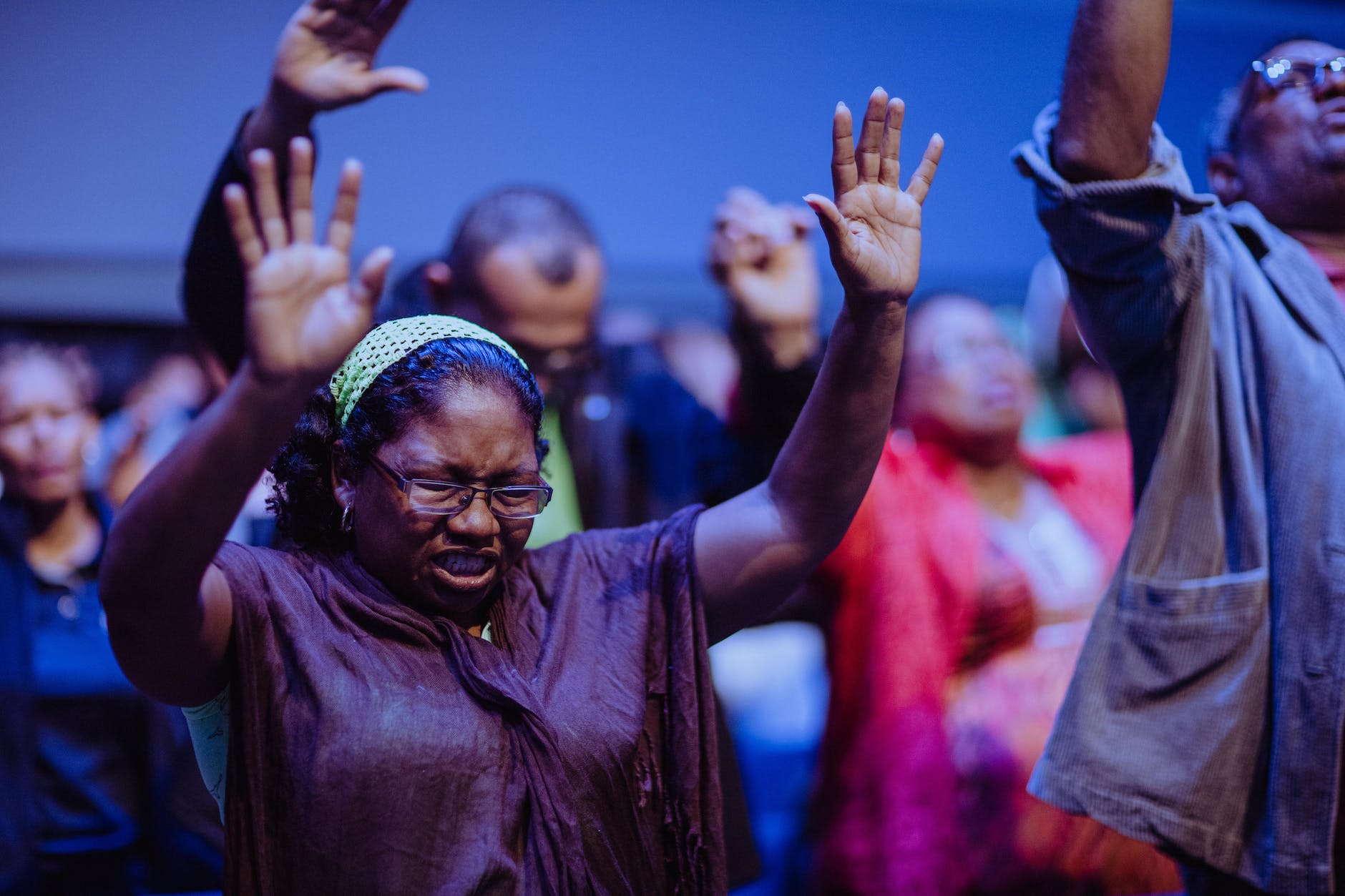
Photo by Luis Quintero on Pexels.com

The ancient Israelites faced tremendous cultural pressure to worship false gods. But even when they finally resolved to follow the Lord with all of their hearts, things did not go well for them at first. This passage reminds us of God’s holiness. It reminds us that we need Jesus. It shows us the parallels between the ancient Israelites, and us today. It shows us that it is good and helpful to deliberately reminisce about times past when we had powerful experiences with God.

To listen to the sermon, click the play button:

For some people, the player above may not work. If that happens to you, use the link below to either download, or open a player in a new page to listen.

To download, right click on the link (or do whatever you do on a Mac) and save it to your computer: Download 1 Samuel Part 5

First Samuel #5. 1 Samuel 6:13-7:17. Repentance.

We left off last time where the Philistines put the Ark of the Covenant into a cart, and hooked it up to two cows who had been separated from their calves. Rather than return home to their calves, the cows pulled the cart into Israelite territory. They stopped near the town of Beth-shemesh, which was a town given to the tribe of Levi. The tribe of Levi (Levites) were the priests for the people of Israel.

13 The people of Beth-shemesh were harvesting wheat in the valley, and when they looked up and saw the ark, they were overjoyed to see it. 14 The cart came to the field of Joshua of Beth-shemesh and stopped there near a large rock. The people of the city chopped up the cart and offered the cows as a burnt offering to the LORD. 15 The Levites removed the ark of the LORD, along with the box containing the gold objects, and placed them on the large rock. That day the men of Beth-shemesh offered burnt offerings and made sacrifices to the LORD. (1 Samuel 6:13-15, HCSB)

The Ark had come home, so to speak. Remember, the Lord had refused to let the Israelites manipulate him through the Ark; he had erased their idea that it was a kind of lucky rabbit’s foot. Next, he used the Ark to show the Philistines that he was more real and powerful than the idols and demons they worshiped. And now, he brought it back to Israel. Even so, the Lord does not seem to be finished with the lesson. This perplexing incident is recorded:

And he struck some of the men of Beth-shemesh, because they looked upon the ark of the LORD. He struck seventy men of them, and the people mourned because the LORD had struck the people with a great blow. Then the men of Beth-shemesh said, “Who is able to stand before the LORD, this holy God? And to whom shall he go up away from us?” So they sent messengers to the inhabitants of Kiriath-jearim, saying, “The Philistines have returned the ark of the LORD. Come down and take it up to you.” (1Sam 6:19-21, ESV)

The Old Testament has several stories like this. They can be confusing and perplexing. A few years ago I was reading through Leviticus for my daily devotions. I did this almost to dare God to speak to me through Leviticus, which is some pretty dry reading at the points when you can even understand it. I got nothing out of it for almost two weeks. Then I read a story from chapter ten. Two priests sacrificed “unauthorized incense” and God burned them up instantly. I said, “What’s up with that, Lord? That doesn’t sound like you. It doesn’t sound like my Father, my Comforter, my never failing Friend.” Then I read Leviticus 10:3

I will show my holiness among those who come to me. I will show my glory to all the people.

So also, the Israelites say when they are struck down for disrespecting the ark: “Who is able to stand before the Lord, this holy God?

When I was a teenager, my High School science teacher took a very small piece of pure sodium (which exists as a soft metal) and put it into a tub of water. It immediately began to hiss and steam, and then suddenly the sodium exploded into flames. Pure sodium cannot exist in water. It burns up and explodes in the presence of water, becoming a different chemical in the process.

Just for grins, below is a video of two guys dropping pure sodium into a toilet. It’s pretty dramatic, especially if you start at about 3:10 into the video.

All right, hope you enjoyed that. The video was kind of fun and whimsical, but it portrays a physical reality: two elements that simply cannot coexist. In the same way, though we often forget it, sin cannot exist in the presence of God. It burns up, explodes and is destroyed. It isn’t a matter of God not tolerating sin – the very nature of God destroys it. The problem however, is that we human beings are born in sinful flesh – from our very birth, we are corrupted by a nature that rebels against God. This means that there is no way for us to get close to God without being destroyed. Who is able to stand before the Lord, this holy God? Who indeed? Certainly, no one with sin in him or her. So in the time of the Old Testament, unless people took the extreme precautions laid out by God, they were destroyed if they even did something like touch the ark improperly, or offer unauthorized incense. In the case of our text today, it might be that some people actually looked inside the ark at the stone tablets, or possibly that they gloated over the fact that they were now in charge of it.

The difference between these incidents I read about in the Old Testament, and my own experience of relationship with God, is the work of Jesus. Jesus took all of our sin – past, present and future – into himself. When Jesus took that sin into himself,

“God made him who knew no sin, to be sin for us, so that we might become the righteousness of God,” (2 Corinthians 5:21).

Because Jesus was in nature God, and as a human was not himself sinful, the sin which God laid on him could be destroyed without destroying Jesus also.

So now, through Jesus, we are no longer in a situation where the presence of God destroys us. Now his holiness is not a problem that keeps us apart, because our sin has been removed. This is one reason why I say that if we are in Jesus, we don’t have a sinful nature anymore. If we did, the Holy Spirit could not live in us, and we would be destroyed by God’s presence. We continue to battle with the effects of a body corrupted by sin, but in Christ we have been given a spirit that is holy in God’s sight.

In any case, the point I’m making is this: the way the Old Testament describes God is not inconsistent with the way God is revealed by the New Testament. They are not two different Gods. In fact, we don’t really understand how much we need Jesus without passages like this in the Old Testament. Now, through faith in Jesus, we are reconciled to the holiness of God in a way that in those days, people were not. This passage, above all, reminds me of my deep need for Jesus.

The writer of 1 Samuel continues the narrative, twenty years later. An entire new generation grew up. Previously, under the leadership of Eli, Hopni and Phinehas, the people were disconnected from God, and they didn’t care. They were arrogant, sure of themselves, sure they could manipulate God through the ark. They blamed God in their defeat, and tried to force him to give them victory.

But after their defeat, and their difficult experiences with the ark, the new generation grew up in humility. By the way, this was Samuel’s generation. He was probably in the middle of it, age-wise, and he led them spiritually. This generation didn’t take anything for granted.

2 A long time passed after the ark came to stay at Kiriath Jearim. For 20 years the entire nation of Israel mournfully sought the LORD. (1 Samuel 7:2, GW)

Finally, for a sustained period of time, the Israelites were humbly seeking God. For once it appears that it wasn’t their circumstances that they were upset about. They truly repented. They actually wanted to be close to the Lord. Samuel told them that they needed to get rid of the idols in their lives, to stop seeking comfort and hope in anything that was not the Lord.

And Samuel said to all the house of Israel, “If you are returning to the LORD with all your heart, then put away the foreign gods and the Ashtaroth from among you and direct your heart to the LORD and serve him only, and he will deliver you out of the hand of the Philistines.” So the people of Israel put away the Baals and the Ashtaroth, and they served the LORD only. (1 Sam 7:3-4)

The “Ashtaroth” means the idols made in the image of the goddess Ashtoreth, a Canaanite deity of war and fertility. Baal was the most important male god, and Ashtoreth the most important female one. Typically, every family had copies of idols to these gods. It may seem obvious to us that the Israelites should get rid of these false gods if they wanted to worship the Lord. But if we think that, we may not really understand the culture of that time.

We need to remember that in the first place, four-hundred years before, the Israelites had failed to do as God commanded, and displace the Canaanite peoples (like the Philistines) who lived in the Promised Land. As a result, for four hundred years the people of Israel had been influenced by the pagan cultures that lived around them. Though they often had small wars, just as often they traded with the pagan peoples, and sometimes, even though they weren’t supposed to, they married people from these pagan groups. In other words, there was a lot of peaceful interaction between the Israelites, and those who worshipped pagan gods. This interaction exerted a lot of cultural pressure on God’s people.

The Israelites were literally the only people in the entire world who were supposed to believe in only one God. The kind of cultural pressure they felt to at least believe that there were other gods is similar to the type of cultural pressure we might feel today if we believed the world is flat. Israelites would have felt inferior, not smarter, for believing in just one God.

“Of course there are other gods,” said the people around them. “Everyone knows that. It’s obvious. Yahweh might be the god of Israel, but he can’t be the only god. That’s ridiculous. You might as well say the sky is brown. You people are ignorant twits.”

Practically speaking, a lot of Israelites caved into this pressure. Many of them probably believed that Yahweh was indeed Israel’s special god, but that, obviously, other gods must exist. And the gods Baal and Ashtoreth had been in the land long before the Israelites and Yahweh came along. It made sense, even if you were going to worship Yahweh primarily, to make sure you didn’t get on the bad side of the local gods that were here before you and your god.

It made even more sense when you realized that if you worshipped other gods, you’d get to eat meat more often. People didn’t eat meat very often in every day life. But animal sacrifice and then feasting on the animal, were a regular part of many worship rituals. So, if you worshipped lots of gods, you got to eat meat more frequently.

Some pagan gods were also worshipped with fertility rituals. In these, women were encouraged to have sex with any man at the festival who wanted to, in order to get the god/goddess to bless the harvest. If you lusted after the spouse of one of your neighbors, you might get a chance to indulge your lust if you all worshipped these pagan gods. Even if your lust was more general, there were obvious reasons to participate in these rituals. It’s possible that some of the cultural pressure even came from pagan women inviting Israelite men to such ceremonies. And actually, these festivals were not exclusively heterosexual, either.

I hope you can see that actually, the Israelites faced the same types of cultural pressures that Biblical Christians face today. After about 500 CE, up until quite recently, a lot of the dominant cultures in the world believed in only one true God. But we’re back to ancient times again, now, in that respect. Christians are considered strange and backwards for believing that there is only one way to God, or even just one God. It’s hard to maintain our true beliefs when everyone around us thinks we are obviously wrong, and also thinks we are ignorant and bigoted for believing as we do.

We’re also back to a culture that thinks we are stupid for not indulging our every desire as fully as we want to. How silly is it to only have sex within marriage? There are plenty of temptations and opportunities to do otherwise. How silly is it not to indulge your every desire whenever you can?

Everyone around us is doing it. Everyone around us thinks we are stupid, and even dangerous for our beliefs. So, it shouldn’t be too hard to understand the ancient Israelites.

In Samuel’s generation, however, under his leadership, the people found courage. They listened to Samuel, and quit worshipping the false gods, and remained faithful to the one true God.

What happened next is something that I think surprises most of us in America these days. They turned to the Lord with their whole hearts and then things got worse. While they were gathered to worship God, the Philistines attacked. For some reason, preachers in America have been telling us for awhile now that if you just start following Jesus, everything will go well for you. Funny thing – Jesus never said that. Following Jesus, giving their whole lives to him, brought plenty of trouble to Peter, Paul, John James, Barnabas and many others. Following God brought trouble and hardship to Jeremiah, Ezekiel and yes, to Samuel’s generation.

It’s a bad idea to turn back to God in the hope that doing so will make your life go more smoothly. It just ain’t necessarily so. The great thing about Samuel and his generation was that they wanted to follow God because they believed he was the one true God. They dedicated their lives to him because it was good and right, and their hope was in God alone. If he gave them victory, that would be very good indeed. But they planned to follow him regardless. They turned their hearts to the Lord before Samuel told them that he would deliver them.

One of the reasons I get so angry at people who preach that following Jesus brings mainly prosperity and peace is that when trouble comes, those who believe that lie are undone spiritually and emotionally. A common reaction among those who believe this is that if they experience trouble, either they must have failed to follow God, or God is not truly real. They won’t allow for the idea that God might lead us directly into trouble sometimes.

The truth is, not only did Jesus promise persecution and trouble (Matt 6:10-11; John 16:33), but we also have spiritual enemies who will do whatever they can to make trouble for us – the devil and his demons (Eph 6:12; 1 Peter 5:8-10). The older I get, the more I think we should be surprised if we are truly seeking the Lord with all our hearts, and we experience no opposition at all. At the very least, we should be deeply grateful for those times. I’m not trying to make you depressed. I’m only suggesting that we take what Jesus said seriously:

 I have said these things to you, so that in me you may have peace. In the world you will have tribulation. But take heart; I have overcome the world.” (John 16:33, ESV)

So how did Samuel’s generation react when the Philistines attacked them? Naturally, they were afraid. No one with any sense at all wants to fight in a war. No one really wants suffering or tribulation. At the same time, they faced it with courage, and asked the Lord humbly for help. They didn’t assume he would deliver them, but they asked for it, in case he would. They didn’t try to manipulate him; they didn’t blame him. They just asked for his help, and they seemed ready to trust him and follow him whether or not he gave it at that particular time.

As it happened, the Lord helped them. The text says that he “thundered against the Philistines with a great and loud voice” (7:10). As I have pointed out before, these older manuscripts were often originally written on either papyrus, or animal skins. If you wanted to explain things in detail, you had to go out and kill another animal to make another manuscript. In the case of papyrus, though it was a paper-like substance, it was also time consuming and costly to make, and it wore out quickly. So you didn’t write down any more than you really had to. Therefore, the thunder is not explained, because the writer didn’t think it was as important as the main thing, which is that God did something to deliver his people. It may even be an expression that was common in those days, something almost like slang, that we don’t understand the full meaning for nowadays. In any case, it was clear that the Lord intervened, and protected his people on that occasion.

As the Philistines, fled, the Israelites chased them. Where the battle stopped, Samuel set up a stone, and called it “Ebenezer,” which means, “stone of help.” It was a way for the people to remember how God helped them that day.

Sometimes it may be helpful for people of faith these days to have our own “stones of help” – something that reminds us of specific times when God helped us. This sort of remembrance can be helpful when we face the pressures of a culture that mocks and denigrates us for worshipping the God of the Bible.

One way to set up an “Ebenezer” is to keep a journal, and record the times when God helped. For other folks, it might be a song that you listened to frequently during a time when God was especially present or helpful. I know of some Christians who collect rocks, and each rock reminds them of something the Lord has done. These days, photographs aren’t a bad way to remember what God has done for you, though you might want to create a special “Ebenezer” album to preserve photos that remind you of what God has done for you. The principle is to have a helpful, concrete way to remember times when God’s presence was obvious to you.

Take a minute to reflect on what the Lord is saying to you through 1 Samuel 6:13 through 7:15. Do you need to be reminded of your need for Jesus? Do you need to remember that in Jesus, your sin has been thoroughly removed and is no longer a barrier between you and the Lord? Is the Lord calling you to come back to him with your whole heart, like Samuel’s generation? Maybe you are really feeling the culture’s pressure to believe there are many ways to God, or many lifestyles that are equally acceptable for those who follow Jesus (in spite of what the Bible says about that). Maybe you need to be encouraged to stay strong.

Perhaps you need to be reminded that trouble is a normal part of life, even when you are walking with the Lord. Or perhaps today you need to set up an “Ebenezer” – a reminder of God’s presence and help in your life. Let him speak to you.

1 SAMUEL #4: THE GOD-IN-THE-BOX

Sometimes we confuse good spiritual things with God himself. We put our trust in things like baptism, or prayer, or “getting saved” rather than trusting in the Lord himself. We also, at times, make the mistake of thinking that God is on our side, rather than asking if we are on his side. Our text today shows us the pitfalls of that sort of thinking, and encourages us to find a better way.

To listen to the sermon, click the play button:

For some people, the player above may not work. If that happens to you, use the link below to either download, or open a player in a new page to listen.

To download, right click on the link (or do whatever you do on a Mac) and save it to your computer: Download 1 Samuel Part 4

1 SAMUEL #4. PLEASE READ 1 SAMUEL 4:1-6:21.

When I was a kid, I was a little bit scared of lightning. But somewhere I had heard that rubber or plastic could protect you from electricity. Now there is a kernel of truth in that. If the rubber is between you and the electric current, the electricity can’t even reach you. Or, if the rubber is between you and the ground, the electricity won’t pass through you, and it will cause no harm. In other words, it insulates you from electricity. But as a child, I didn’t have the complete picture. I thought that simply holding something made out of plastic or rubber would protect me from any form of electricity, no matter what direction it came from.

I had a toy tomahawk that was made out of rubber. It said so, right next to “made in Hong Kong” (which is where I got it). I believed without question that if I held this tomahawk, I was safe from electricity. In New Guinea it rained a lot, and puddles formed on the top of the ground very quickly. It wasn’t uncommon for a large area in a flat field to be covered by a foot of water or more, at least for a few hours. The ditches and low places would quickly fill up to three or four feet of water sometimes, creating instant, temporary swimming holes. The rain was warm, so my friends and I actually swam in the low places in the fields and ditches. At times the rain would be accompanied by lightning and thunder. In those circumstances, I took my tomahawk with me. I would frequently stand up to my knees in water in the middle of a thunderstorm, secure in the knowledge that I wouldn’t be hit by lightning because I was holding my toy rubber tomahawk.

Now, I had a piece of the truth here. It is true that rubber won’t conduct electricity. I was close to something real. But even though there was something true about rubber protecting me from electricity, I had twisted that truth into a practical application that was nothing more than superstition. It is only by God’s grace that I was never struck by lightning. The rubber tomahawk had nothing to do with it.

1 Samuel chapters 4-6 describe a series of events where the people of Israel were close to something real and true about God, and yet they twisted it into mere superstition. Unlike me, they paid a difficult price for it.

As we go through 1 Samuel I want to occasionally point out some important thoughts for bible study and reading. The Jews in Jesus’ time divided the Old Testament into two parts: The Law (which was the first five books of the Bible) and The Prophets (everything else). That means that even though 1 Samuel is basically a history book, it was considered by the Jews to be “prophetic” in the sense that the history recorded here teaches us many things about God. I myself might call it, “prophetic history.”

We need to read prophetic history with a different approach than we might read most of the New Testament. The truths about God are contained in the telling of historical narratives, rather than in a straightforward letter or in teachings given by Jesus. “Narrative” is another word for “true story.” So when we are looking at the New Testament, you may have noticed that we often spend a great deal of time on just a few verses. Now, as we study prophetic history, I think that generally we need to look at whole narratives, rather than merely the individual verses within those stories. I think when we read this part of the Bible, we will miss the main meanings unless we consider things in the context of the overall historical narrative that is being told.

This week, the narrative happens to span three chapters – four, five and six – of first Samuel. You may remember that as a very young boy Samuel started hearing God speak. One of the first things God told him was that Eli and his sons were going to be judged for being such bad leaders. This is how that happened, and more.

One of the problems that the people of Israel had at this point in history is that they had not obeyed God and driven out all the pagan people who lived in the land. As a result, they were surrounded by people who worshiped false gods and demons. When the Israelites made friends with these people, they were led away from God into the worship of these demonic pagan gods. When the Israelites “woke up” and remembered the Lord, they refused to worship with their pagan neighbors, and then those people became enemies of the Israelites, and made war on them.

One of these pagan people groups was called the Philistines. They lived in an area along the Mediterranean coast of Israel, where they had five main cities, with five main Chieftains for each one. They worshiped two main false gods: Dagon and Ashtaroth. During the time of Samuel and the history recorded here, the Philistines were the biggest threat to the people of Israel.

War broke out between the Philistines and Israelites, as it often did. The Israelites were defeated in battle. They asked an interesting question:

And when the troops came to the camp, the elders of Israel said, “Why has the LORD defeated us today before the Philistines?

(1 Samuel 4:3)

Another translation says, “why did the Lord let us be defeated today?” They blamed God for their defeat. They didn’t come back and say, “we stink as warriors,” or “the Philistines are really good.” They said, “it’s God’s fault.”

In a sense, I understand this. God could have given them the victory, but he did not. Since it was in his power, and he didn’t do it, they blamed him. But it isn’t exactly that God made them fail. He simply did not intervene to make them succeed.

They had forgotten something that happened centuries before, when the Israelites first came into the land. At that time, their leader Joshua experienced an interesting incident:

When Joshua was near Jericho, he looked up and saw a man standing in front of him with a drawn sword in His hand. Joshua approached Him and asked, “Are You for us or for our enemies? ”

“Neither,” He replied. “I have now come as commander of the LORD’s army.” Then Joshua bowed with his face to the ground in worship and asked Him, “What does my Lord want to say to His servant? ”

(Josh 5:13-14, HCSB)

You see the proper perspective is not “Is God on my side or not?” but rather, “Am I on God’s side or not?” In the battle with the Philistines, the Israelites blamed God for not being on their side. But they never confronted the idea that they were not necessarily on God’s side.

Isn’t this what people still do in so many situations these days? We moan and gripe: “Why didn’t God let me see the policeman before I ran the red light?” That one may seem a bit obvious – because you should not have run the red light!

 But maybe our situation is more serious and complex: “Why didn’t God heal my mother?” Believe me, I understand that those types of questions can be real and difficult. You know that I live with this kind of question on a daily basis. In some ways, such questions are natural. And yet, I think we have the wrong perspective if we think that God is obligated to help us and do what we want him to, rather than the other way around. The question is never “Is God on our side?” If you insist on thinking in that way, the only appropriate question is, “Am I on His side?” Personally, I think the whole question of “sides” is counterproductive. We don’t want God to control us and make us do only the things he wants us to do. As it happens, God does not do that to us. So why do we think we should get to control him, and make him do only what we want him to?

Instead of confronting this problem in their relationship with God, the Israelites did something to avoid it. They decided to ignore the problem in their relationship with God, and put their trust, not in God himself, but rather in a shadow of him, a symbol: the ark of the covenant.

The ark of the covenant was a carved wooden box, about four feet long, overlaid with gold. Inside the box were the tablets on which Moses had carved the ten commandments. It was a symbol of God’s presence with his people, a symbol of the agreement that he made with them at Mount Sinai. It may have looked a little bit like the picture at the top of this post.

The leaders of Israel decided to bring this box into battle with them. The idea was, if the ark was there, God must be there with them. This way, they didn’t have to face the fact that they had turned away from him. They didn’t have to deal with all those uncomfortable ideas like repentance, and surrender to God’s purposes for their lives. All they had to do was bring a box into battle, and God would automatically fight for them.

Some of the other leaders, perhaps some of the priests, probably thought about it in a slightly more complex way. They thought that by bringing the ark into battle, they could manipulate God into fighting on their side. After all, if God didn’t fight and protect the ark, it would send a message to the Philistines that God either wasn’t real or wasn’t very strong. So even if the Israelites didn’t repent and seek out a true faith-relationship with the Lord, he would still have to fight for them, to protect his own honor, in the form of the ark, to make sure the truth about him was known.

So they sent the ark into battle. Along with it, went Hophni and Phinehas, priests, the sinful, unrepentant sons of Eli, the chief priest. Obviously, those two did not take relationship with God seriously.

Here’s one lesson from this incident: never try to manipulate God.

The Israelites lost the battle. In fact, the writer records “a very great slaughter.” Among those killed were the evil priests, Hophni and Phinehas. When the news was carried to their father Eli, he fell and died. His daughter-in-law, the wife of Phinehas, went into premature labor, and she died. As she died she said, “The glory of the Lord has departed Israel.” This reveals what she and most of the people around her believed – that God lived in that box called the ark. The deaths of this priestly family fulfilled those first words that Samuel had heard from God.

Now, God did indeed want to show the Philistines that he was real, and all powerful. But he could not do that through the Israelites, because they had rejected a true faith relationship with Him. He could not reward the Israelites for putting their faith in a gold-covered wooden box. He needed to reveal the poverty of their faith. So they lost the battle and the ark was captured.

Even so, once the Philistines had the ark, God began to confront them with their own false worship. They took it first to the temple of their idol, Dagon, probably as a representation that Dagon was greater than the Lord, and had arranged for the Lord to be captured. The next morning, the statue of Dagon was found toppled over, face down in front of the Ark. The Philistines put it back. But the morning after that Dagon had fallen again, and broken into pieces.

In addition to the problem with their idol, the Philistines began to get sick. Somewhat skeptical, they sent the ark to a different Philistine city, but got the same results. Finally, they decided to see if God wanted the Ark back in Israel. They put it on a cart with some offerings of gold. They hitched the cart up to two cows that had never pulled anything. They took the calves of those cows, and penned them up at home.

In fact, this shows us that the priests of the Philistines really did not want anyone to believe that it was the Lord who was behind the sickness in their cities. They said, “if the cows take the cart to Israeli territory, then we know it was the Lord. But if they don’t, we’ll know it wasn’t him. This is sort of like saying: “If we toss a coin and it lands on heads, I win. If it lands on tails, I also win. But if it lands on the edge, you win.”

We had a cow with a calf on our little farm a couple of times. One time, the mother cow was keeping her calf far from the safety of our barn, so I picked it up and carried it to the barn. Let me tell you, that mother followed uncomfortably close behind! (She had horns, too). In the normal course of things, cows do not leave their calves behind. That’s why the Philistines did this. They really wanted to make it unlikely that the ark would go back to Israel. In fact, in the normal course of things, this was a totally rigged experiment. In such a scenario, the cows should always return to their homes, and their calves. Even so, these cows walked away from their home pastures and their calves and went straight to an Israelite town on the border, a town that was originally set aside for the Israeli priests. The Philistine priests must have been flabbergasted and enraged.

So God made it clear that he was real. He made it clear that there was significance to the agreement he had made with Israel, the agreement which the ark represented. But at the same time, he did not affirm or reward the superstition and manipulation of the Israelites.

You see the Israelites were close to something real and true. God had made promises to be in a special relationship with them. That was true. God often intervenes to help his people. That was also true. But there were some other truths that they ignored – that the special relationship with God involves faith and surrender on the part of God’s people. By surrender, I mean that God’s people are supposed to make their lives available for God to use and work through. The old time language for this is “obedience.” Sometimes that gives us the idea that we have to obey God in order to be holy, but that isn’t it. Through Jesus we have already been made holy. Our obedience is so that God can live his life through us.

These days, we are often as superstitious and manipulative as those Israelites. If you come from Lutheran, Presbyterian or Episcopal traditions, you might feel that if you just get baptized as a baby, confirmed as a teen and take communion sometimes, you will be saved. Baptism and communion and confirmation are all useful things, and they are engaged with true spiritual reality. But they are useless without faith. By themselves they won’t help you at all. If you use them and receive them in a way that strengthens your relationship of faith and obedience/surrender, then they will indeed be helpful. But if you do them for their own sake, without faith, you might as well forget it.

Those from the Baptist/Methodist/Church of Christ type traditions do the same thing, usually with an event called “getting saved.” I’ve met many people who “got saved” when they were twelve or fifteen years old. Since then, they’ve had nothing to do with God, but they are putting their trust in the fact that one day in their distant past, they walked down the aisle and “got saved.” I’m afraid this is nothing more than empty superstition. There’s something real and true that can happen when a person is saved, but it must involve true faith and surrender to the living God.

Other people might do this with a special kind of prayer. A few years back there was a whole thing about “the prayer of Jabez.” People were buying books and learning how to pray a certain way, because it was supposed to get the kind of results people wanted. Traditional Roman Catholics might do this with the rosary, or “hail Mary.”

Others do it with going to church. I think there are many positive reasons to come to church on a regular basis, but if you are doing it to try and get God on your side, or for him to do you a favor, I’m afraid you are in for disappointment.

All these things are like expecting a rubber tomahawk to protect you from lightning. There is something true about rubber and electricity, but it doesn’t work like a magic wand. The rubber and the electricity need to be in the right relationship to each other for the insulating power of rubber to work. There is something real and true about getting saved, baptism and the Lord’s Supper, prayer, and coming to church, but it all has to come in the context of faith and surrender in relationship to Jesus Christ.

So what is the Lord saying to you right now? Have you been upset with Him because he’s not acting like he’s on your side? Have you been putting your faith in religious activity or a religious symbol instead of in Him alone? Take a moment right now to surrender your life to him in faith.

1 SAMUEL #1: THE WOMAN WHO WANTED

Photo by cottonbro studio on Pexels.com

To listen to the sermon, click the play button:

For some people, the player above may not work. If that happens to you, use the link below to either download, or open a player in a new page to listen.

To download, right click on the link (or do whatever you do on a Mac) and save it to your computer: Download 1 Samuel Part 1

1 SAMUEL #1. 1 SAMUEL 1:1-127

Hannah honestly admitted to her desire, and the pain it caused her. At the same time, she fully surrendered that desire of the Lord. Because of that, the Lord used her to change the course of history, and Hannah became one of the great heroines of the faith.

We are doing something unusual with the next sermon series: we will be redoing the books of first and second Samuel. I want to do this for several reasons. First, as we have recently been in the book of Psalms, we have touched on the life of David several times. The many questions and comments I have had about David’s life have helped me realize that it might be worthwhile to examine his life again.

Second, David is very important because he is one of the clearest Old Testament examples of a “type of Christ.” The Holy Spirit, working through the writers of 1-2 Samuel shows us, through David, a little bit of what Jesus is like. Because these things are so clear in David’s life, they can help us to learn to read the Old Testament while “looking for Jesus” as we do so. In other words, these scriptures help us learn to see messages about Jesus even in the Old Testament. In a sense, they teach us how to read the Old Testament as Christians.

Third, though I did preach through 1-2 Samuel about eleven years ago, the audio for those messages has been lost. Because the series seemed so rich and helpful back then, I would like to have audio to go with it.

There is an interesting note at the end of the book of 2 Chronicles. It says this:

29 Now the acts of King David, from first to last, are written in the Chronicles of Samuel the seer, and in the Chronicles of Nathan the prophet, and in the Chronicles of Gad the seer, 30 with accounts of all his rule and his might and of the circumstances that came upon him and upon Israel and upon all the kingdoms of the countries. 1 Chronicles 29:29-30, CSB)

This is probably a summary of how we got the books of First and Second Samuel. By the way even though our English versions split the story between First, and Second, Samuel, originally it was probably all one book: the Book of Samuel. The verse I just quoted tells us how the book came about: some of it was told by Samuel, some of it by Nathan, and other parts of it by Gad. I say it was “told” because at least some parts of the book(s) of Samuel were probably memorized as oral history. In Hebrew, you can see in those parts that the text includes little tricks for memorization, and for delivery as a spoken story. Other parts were probably written down pretty close to the actual events. Eventually, of course, all of it was written down, and the material was put into its final written form during the days of David’s grandson, Rehoboam. There are convincing reasons to believe that, but I won’t bore you with the details unless I run out of other ideas when we get to 1 Samuel chapter 27.

The book of Samuel begins at a very unsettling time in the history of the people of Israel. It was roughly four-hundred years after the time of Moses and the Exodus. The Israelites certainly had their problems in the wilderness, but at the end of it all, they had entered the promised land as a united nation, under strong leadership. However, once they began to settle the land, they splintered back into a loose confederation of tribes. Worse, they ignored the Lord’s command to drive out and completely eliminate the pagan cultures around them in the land. What followed was a few hundred years of the darkest times in their history. They forgot God, and began to adopt the pagan practices of the peoples around them – the very people whom they were supposed to drive out. They were oppressed by those same people, and frequently various areas and tribes of Israel were almost slaves to other cultures. God did not forget them. He used the negative circumstances to remind them about Him. When they prayed for his help, He answered and saved them, but usually within a generation or so, they forgot Him again, and went back to a cycle of worshiping false gods, being oppressed by the surrounding people. Then they remembered God again, and asked for his help, and so the cycle continued. The people were ignorant of God, brutal, and divided.  At the time recorded by 1 Samuel this had been going on for so long, most people probably felt like this was just how life was. There was certainly no reason to hope or expect that anything could ever change and be permanently different.

The nation of Israel was supposed to be united by their common faith, and they were meant to function as a nation by following God, as they had during the Exodus. Because God was supposed to be the King, technically they were all free. But because they weren’t following the Lord, it wasn’t working. Instead of freedom, they generally alternated between chaos and oppression.

At the time that this particular historical record begins, the spiritual leadership was as bad as the rest of the country. Eli, the High Priest was short-sighted and a weak leader. His sons Hophni and Phineas were self serving bullies – they took every opportunity to abuse the power they had over the people. None of them actively led the country from a position of faith in the Lord or obedience to Him.

1 Samuel 1:1-27 records how the Lord began to change all this, not just for a few years, or even just a generation but for the long term. It was an unlikely and surprising beginning. God didn’t call a hero to defeat the enemies of Israel (he had already done that many times over the past few hundred years, and it never lasted). He did not raise up someone to campaign for unity among the tribes. God did not lead anyone to go on a crusade to clean up corruption among the priests, or to start a movement to educate the ignorant children in the outlying areas. If Hollywood screenwriters were making a movie, any one of those choices might be their storyline.

But God did something different and unexpected. He began with a woman who just wanted to be a mother. Her name was Hannah. Her deepest desire was to have a child. She turned her desire over to the Lord, even while continuing to desperately want it. And the Lord pursued his goals through her life and those desires.

Hannah was married to a man named Elkanah. He had a second wife, called Peninnah. He almost certainly married Peninnah only because Hannah couldn’t have children. Chapter 1:5 and 1:8 record that Elkanah loved Hannah deeply. But in those days, having children was simply not considered optional. The culture considered it a curse from the Lord if a couple could not conceive. God blessed Adam and Eve and told them to be fruitful and multiply (Genesis 1:28). If someone could not do that, they figured it must mean that God’s blessing wasn’t on them. Besides that, children were the only source of “social security.” When someone got too old to work, he relied on his children to take care of him. Finally, having children ensured that the family name would continue, and be included among God’s people (Israel) for another generation.

 All this is why a man like Elkanah, who seemed to have a genuine love for Hannah, would go the length of marrying a second woman just to have children. By the way, some folks say that the Old Testament endorses polygamy without reservation. That is not exactly true. It records that some men had many wives, and it does not condemn them, but it also almost always describes that situation in a negative light. This is true here as well. Elkanah had two wives, and there was rivalry and jealousy and strife between them. This was true also of Jacob, even though his wives were sisters. Solomon, had hundreds of wives and scripture makes it clear that it was his downfall.

Anyway, Hannah’s lack of children meant several things to her. First, she thought it meant God somehow had something against her. It had led to the destruction of her married happiness and love with Elkanah. Finally, if Elkanah were to die before she did, there would be no one to take care of her in old age. As we can see, the issue was both emotional and practical. There was deep hurt and pain wrapped up in Hannah’s barrenness, as well as practical concern about the future.

One year, when the family was at the annual worship pilgrimage,  Hannah reached a breaking point. I love her attitude in 1:9-18. She is another one of those unsung heroines of the faith. I think what makes her so special is that she honestly acknowledgesher desire to the Lord, while at the same time, she surrenders it. She tells Eli, the priest:

I am a woman with a broken heart. I haven’t had any wine or beer; I’ve been pouring out my heart before the Lord. Don’t think of me as a wicked woman; I’ve been praying from the depth of my anguish and resentment. (1 Samuel 1:15-16)

Many Christians in this day and age would encourage you to pursue your desire as if it was somehow holy just because you had it. They paint a picture of God as if he was there for the sole purpose of making your life comfortable and giving you anything you want. They preach a gospel of personal gain here and now. There are other Christians (though less common these days) who treat every personal desire as if it is evil; they suggest the only way to deal with any desire for anything personal is to get rid of it.

Hannah did not follow either path. She desired a child. She wasn’t going to pretend that she didn’t, and she wasn’t going to pretend that she thought her desire was wrong or sinful. She let God hear her anger, anguish and resentment. At the same time, as she asked God to fulfill her desire, she surrendered it back to him. Verses 10-11 in the message version record it this way:

Crushed in soul, Hannah prayed to God and cried and cried — inconsolably. Then she made a vow:

“Oh, God-of-the-Angel-Armies, If you’ll take a good, hard look at my pain, If you’ll quit neglecting me and go into action for me By giving me a son, I’ll give him completely, unreservedly to you. I’ll set him apart for a life of holy discipline.” (1 Sam 1:10-11)

Some people may look at this part of Hannah’s prayer as making a bargain with God. But I think it is a little different than that. Hannah will not let go of her desire. She’s asking for a son, not the strength to go on being barren. And yet, while not letting go, she does surrender that desire to God. It isn’t completely clear in the Message version of the bible, but what she is pledging is that when he is old enough, she will physically bring the child to the tent of meeting and he will stay there with the priests and serve the Lord. The child will not stay with Hannah or her family. In a sense, Hannah is saying, “I want to be a mother. But I also want to surrender to you. So if you do make me a mother, I will turn around and live as if I was not a mother again. You will gain a child Lord, not me.” So, yes, in a sense it was a bargain. But I don’t see how else Hannah could both hold on to her desire and surrender it at the same time. It is this bravery and honesty that makes her a great woman of faith in my eyes.

To help us understand what Hannah did, I want to put it in simplistic and shallow terms. It is as if you prayed, “Lord, please give me one million dollars. If you do, I will give all one million dollars to the church.” Now, looking at it that way, you may say, “What would be the point of that?” We see no point in that because our desire is either not real or not surrendered. If our desire isn’t real, then we don’t want one million dollars so badly that we’re willing to give it all up again just to say we did have it once. If it isn’t surrendered, then we don’t want one million dollars unless we can keep some of it, or all of it.

By the way, this text brings up something obvious and important. In this day and age, women have the freedom to pursue any career they choose, and they often do. I am in my early fifties, and I cannot remember a time when anyone seriously suggested that women should not have careers. But sometimes, I wonder if our culture has gone too far that direction. What I mean is, sometimes, women whose primary desire is to be wives and mothers are mocked, belittled, or questioned, as if motherhood is not something worthwhile to aspire to. I know some women who primarily want to be mothers, and others speak of them as if they are somehow throwing their lives away, selling themselves short. I think that is wrong.  Motherhood was Hannah’s deep desire, and through that desire, God changed history. Hannah is in the Bible precisely because she was a faithful mother.

I have no problem with women who want careers. I also have no problem with women who want to devote their lives to their families. Such women often change history, though we often don’t recognize it. I think it is wrongheaded to pressure women into careers if their strongest sense of calling is to the home. I don’t think that honors women or offers them freedom at all.

Hannah’s desire was real, and it was truly surrendered. The result of that true and surrendered desire was a baby boy named Samuel. Because Hannah surrendered him to the Lord, the Lord was able to use him to change the course of Israel’s history.

The Lord needed both Hannah’s desire AND her surrender to do what he did through her. If she had kept the desire for a child, but did not give that up to the Lord, Samuel would not have been raised in the house of the Lord and become the greatest spiritual leader since Moses. If Hannah had not truly desired a child as deeply as she did, she probably would not have been driven to surrender him in the first place.

Israel was in a bad place spiritually and politically. Society was fractured, life was dangerous, people were ignorant. God did change everything for them. And he did it through a simple woman who was honest about her desire to be a mother while also surrendering that desire. That’s not how we expect Him to save society. But he often works in these unexpected ways.

So what about you? What are the deep desires of your heart? Are you willing to be honest about them? And are you willing to surrender them to the Lord at the same time? God needs people who are willing to follow in Hannah’s footsteps.

What about desires that are sinful? What do we do with them? I think we do the same thing, although we also aim for a third step, which is to totally give up the sinful desire. But we can’t do that until we are honest that we do indeed desire it. So we confess that sinful desire to the Lord, being honest that we do want it, and even honest about how much we want it. Then, we also confess that we know it is sinful, and, instead of seeking it for ourselves, we surrender it to the Lord. Finally, we allow the Lord to lead us to desire good things.

I think the psalmist was talking about people like Hannah when he wrote:

Delight yourself in the LORD, and he will give you the desires of your heart.  (Ps 37:4, ESV)

PSALMS #7. PSALM 51: A BATH GONE HORRIBLY WRONG

Photo by Vlada Karpovich on Pexels.com

Psalm 51 is a remarkable part of scripture. David committed horrific sins, including murder. And yet the Holy Spirit did not give up on him, and eventually brought forth this precious and powerful psalm as a result of that horrible sin and tragedy. David identifies the deepest need of anyone who really understands themselves: a new heart, a clean spirit. And through David and Bathsheba physically, God brought a savior to the world who gives us that new heart.

To listen to the sermon, click the play button:

For some people, the player above may not work. If that happens to you, use the link below to either download, or open a player in a new page to listen.

To download, right click on the link (or do whatever you do on a Mac) and save it to your computer: Download Psalms Part 7

PSALMS #7: PSALM 51.

King David is famous for many things: killing Goliath, being a great warrior and leader, being fair and just. He was not only a manly man, but also a sensitive and passionate one: he was a skilled musician and prolific songwriter, and his heart was constantly oriented toward worship and spiritual things. Unfortunately, along with all the good, David is also known for a spectacular failure: his affair with Bathsheba, and the killing of her husband.

David spent years in a tough situation, hiding from both king Saul, and the Philistines. Then in a battle that was disastrous for Israel, Saul was killed. Finally, the way was open for David to step into his destiny as the next king of Israel. There were still significant bumps on the road, but at last David became king of all Israel, and he led his people into becoming the dominant power in the region. He eliminated the immediate threats to Israel, and then began attacking countries further away, expanding the kingdom. Although he was a formidable warrior and great leader, at some point, his advisors made him stop participating in battles personally, because the whole country depended on his leadership, so it was too risky for him to be exposed to the weapons of the enemy.

So it was that David found himself in Jerusalem while his army was away elsewhere, conquering more territory. This man of action suddenly had a lot of time on his hands. One evening, from his palace, probably the tallest building in Jerusalem, he noticed a beautiful woman, bathing. Most likely, he saw her naked, since people don’t usually bathe with their clothes on. David immediately ordered his men to find her, and bring her to him. The woman, as we know, was named Bathsheba, and her husband, Uriah, was away at the war. It is possible that David seduced her, but it is also possible that Bathsheba could not have said “no” even if she wanted to. Even if she did, technically, have the choice to not sleep with him, David was the most famous and powerful man in the entire region. She would have felt a great deal of pressure to please him.

The affair was bad enough. But then she got pregnant. David, like so many men after him, decided to try and cover it up. He brought Uriah back from the war, and urged him to go home and sleep with his wife, Bathsheba. The plan, obviously, would be for Bathsheba to pretend that the child was Uriah’s, not David’s. However, in those days, it was traditional for soldiers to abstain from sex until after the battle was over. Back on the front line, Uriah’s fellow soldiers were still in danger, and in solidarity with them, and possibly also out of a superstitious fear that he might jeopardize victory, Uriah chose not to sleep with his wife. David even got him drunk, and sent him home, hoping that would erode his self control, but Uriah remained steadfast.

That self-control and integrity cost Uriah not only his wife, but his life. David gave up, and sent Uriah back to the front line. He had Uriah carry sealed orders to the commanding officer. Those orders were that Uriah should be sent to the fiercest part of the battle, and then his fellow soldiers were to withdraw from him, so that he would be killed in battle. In other words, David made Uriah carry the orders for his own murder.

It’s even worse when we realize that Uriah was one of David’s “thirty mighty men,” part of a faithful core of warriors who had been loyal to David in the difficult days before he became king. He was David’s faithful follower, who had endured many hardships with, and for, David, and now David slept with his wife, and then had him killed.

David did not appear to repent. Not long after this, the prophet Nathan came to the king. He told David about a rich man in Israel who had a great flock of sheep, goats and other animals, and a poor man who had nothing except one little lamb who was his beloved pet. The rich man had a visitor, and he was obliged to feed the visitor. But rather than take one of his own vast herd, he extorted the one beloved pet from the poor man, killed it, and fed it to his visitor, while the poor man was helpless to prevent it.

David was enraged by the injustice of what the rich man had done, and furious that such a thing would happen in Israel, where he was king. He demanded to know the name of the rich man, so he could punish him for such blatant extortion and injustice.

Nathan said: “You are the man.”

Shocked and horrified, David finally admitted his terrible sins. He repented, and he expressed his remorse and repentance by writing Psalm 51.

I think Psalm 51 is amazing at so many levels. It is a powerful part of scripture, and contains much important truth. And yet, this amazing and helpful part of the Bible came about because of terrible sins. Therefore, one of the things this psalm shows us is that God can bring good out of any situation, even good out of our own horrible, deliberate sins.

The important truths begin with the very first verse, in the way that David asks for forgiveness. He could have said, “Forgive me, Lord. After all, I am your chosen king.” He might have written: “Lord, if you don’t forgive me, all the amazing things you’ve done in my life up until now would be wasted.” Another possibility: “Forgive me, or the enemies of Israel will be encouraged. If you let something bad happen to me because of this sin, your people will be without a leader.”

He could also have made the claim – correctly – that compared to others, he had lived a mostly righteous life. Before this, he had followed the Lord even in spite of great suffering. He had refused to kill king Saul – twice – when he had him in his power. There was a lot of credit he could have claimed. But instead he asks for forgiveness on the basis of one thing alone: God’s hesed; that is, the covenant love that God has for his people. By doing so, David is saying: “I have no claim on you for forgiveness. I don’t deserve it. I dare to ask for forgiveness only because I know that you are a loving God. Please forgive me because of your own good and loving character.”

One of the things that is so amazing here is that it is a thousand years before Jesus. We might have expected David to offer sacrifices at the tabernacle, and then consider that he had fulfilled his duty. In other words, he might have expected God to forgive him based on offering the right sacrifices. But he recognizes (and he says it explicitly in verses 16-17) that sacrifices mean nothing unless his heart is in it. He knows that there is nothing he can do to earn God’s forgiveness, and no good he has done in the past is enough to “make up” for his sin. His only hope is that God will have mercy on him. This is one half of the very same gospel preached by Jesus and the apostles a thousand years later. No one can be righteous enough to please God. Instead, we depend entirely on God’s willingness to have mercy on us.

In verses 3-6 David expounds on this. He fully confesses his sin and brokenness, and he goes out of this way to show that he is not making excuses. There is no hope in excuses. There is no excuse. When speaking of his sin, David uses three words, translated by the ESV as: “transgression,” “iniquity,” and “sin.”  Transgression describes a moral revolt against God. This is the part inside of us that rises up and says, “I know what’s right and wrong, but I want what I want, and I’m going to get it for myself even if it’s wrong.”

Iniquity describes an internal character of sinfulness. David says: “I was born in iniquity,” (verse 5). He means he was born with a flawed and sinful nature. The New Testament describes this as our sinful flesh. We are all deeply flawed, and not all of those flaws are wonderful and beautiful. Some part of us is broken and twisted from birth, always oriented away from God.

Finally, David uses the word “sin.” Sin (or sins) describes the wrong, bad action. His affair was a sin. The arranged murder was a sin. But it is important to see that sin is just the tip of the iceberg. It starts with a broken and twisted internal character, and then desire that rises up in rebellion against God, and bears fruit with the actual wrong action. This reminds me of what James wrote:

13 And remember, when you are being tempted, do not say, “God is tempting me.” God is never tempted to do wrong, and he never tempts anyone else. 14 Temptation comes from our own desires, which entice us and drag us away. 15 These desires give birth to sinful actions. And when sin is allowed to grow, it gives birth to death. (James 1:13-15, NLT)

David says something interesting in verse 4: “Against you, you only, have I sinned and done what is evil in your sight, so that you may be justified in your words and blameless in your judgment.” When we first read this, it can sound surprising. Surely David sinned against Uriah as well, by committing adultery with his wife, and then by having him killed! How is it that David says his sin is against only God? Although this sounds wrong at first, it turns out to be quite accurate, and important – perhaps even more important today than it was when David wrote it.

In the first place, think of it like this: If there was no God, there would be no such thing as sin. Atheists believe this, and if they were right about the non-existence of God, they would also be correct about the non-existence of sin. If there is no God, even the idea that it is wrong to hurt someone else is just an arbitrary, made up human rule. If there was no God, what David did to Uriah would be a tragedy for Uriah personally, but without God, who has the authority or power to declare it was a sin? David got away with it, after all, and he was the most powerful person in the region. Without God, that’s just the way the world works, and we need to live with it. So, you see, it can’t be a real sin unless there is some absolute standard.

The Bible tells us that the absolute standard is God’s holy character. Therefore, all sins are ultimately and finally sins against God. They are a violation of God’s holy character, and against his design for the human beings he made. There is no way to sin against another person without sinning against God as well.

Next, ask which is worse: violating the trust of another human being, or violating God’s? As a very imperfect analogy, suppose you kill your neighbor’s dog. Obviously, this is terrible for the dog, and it was wrong for you to hurt the dog. But the heart of your sin is really against your neighbor who loves the dog and is responsible for it. Obviously any human is more important than a dog, and in the same way, God is infinitely more important than any human being.

David is not saying that he did not wrong Uriah. Instead his point is that all sin is ultimately against God, and since God is infinitely greater, his sin against God is the heart of the issue. If he had not sinned against God, he certainly would not have sinned against Uriah.

This is especially important because in our world today, many people claim that nothing is really sinful if it doesn’t “hurt someone else.” So, for example, it is claimed, pornography doesn’t hurt anyone, so it’s not wrong to view it. Of course, they are wrong about pornography not hurting anyone. Hundreds, if not thousands, of former porn stars have testified that performing porn devastated them emotionally, spiritually, and sometimes physically. In addition, some of the performers are undoubtedly women who are forced or coerced into it one way or another; no better off than sex slaves. But even if everyone was truly willing to do it, and happy about it later in life, porn is still a sin against God. We can’t say “it doesn’t hurt anyone,” because even if we lived in a fantasy world where it didn’t, it would still be a sin against God.

The same arguments are made about virtually any activity engaged in by consenting adults. We claim that the only sin is when someone doesn’t consent. But David puts us straight: all sin is sin against God. Even if Bathsheba went along with it willingly, they were both sinning, because God’s holy character intends sex for marriage alone. We can’t get ourselves off the hook by saying “I didn’t hurt anyone,” or even “I didn’t coerce anyone.” No, because all sin is against God, we have no defense. David, for his part, did not pretend to have a defense. He says: “therefore you are right when you speak, and justified when you judge me.”

In verse seven, David again affirms that it must be God who cleanses him; God alone can forgive and purify, and no one can earn it. David can’t make up for what he’s done. Verses 10-12 are the heart of this hard-hitting psalm:

10 Create in me a clean heart, O God,
and renew a right spirit within me.
11 Cast me not away from your presence,
and take not your Holy Spirit from me.
12 Restore to me the joy of your salvation,
and uphold me with a willing spirit. (Psalms 51:10-12, ESV)

The problem is not just our actions. Our actions come from what is inside of us. David wants an enduring solution. I know many well-meaning Christians who get this confused. Many people, after sinning like David, might say something like this. “OK, from now on, I’m not going to go up on my rooftop alone. I’ll always have a guy with me up there, to make sure I’m not watching women bathe. In fact, I’ll give my wife the key to my rooftop, and she can go up there anytime, to make sure I don’t have any views of women’s bath houses, and we’ll build a wall if I do. Next, I’m going to have Nathan as my accountability partner. Finally, I won’t stay home from the wars anymore, because I might get bored and so get into trouble.”

All that is reasonably good, but it misses the point. David didn’t sin because he happened to see Bathsheba naked. He sinned because from birth, his heart was filled with iniquity. He sinned because he didn’t take that inborn iniquity seriously. Now, after these terrible actions, David knows that the problem is inside. It’s a problem he, personally, cannot fix. So he asks the Lord to give him a new heart, a righteous spirit.

I have never committed adultery, nor conspired to have someone murdered. But my heart is no better than David’s. The same transgression inside David that led him to rebel against God is inside me, also. I’m not just saying that as a theological truth – I know myself well enough to know, experientially, that it’s true about my heart. It is good to protect ourselves against temptation. But it is not enough. We need, along with David, to ask for a brand new heart from the Lord.

God answered David’s prayer for a new and clean heart. He answered that prayer for all mankind through Jesus. When Jesus came, he made it clear that the human heart is the real problem; and that is exactly why he came to redeem us. And the power of God for redemption is so great that it was both David and Bathsheba who became physical ancestors of Jesus who brought us that salvation. If he can turn their sin around and provide, through it, salvation for all humankind, he can also renew our hearts and spirits. Like David, let’s ask him.

PSALMS #4: A SECURE, JOYFUL LIFE: PSALM SIXTEEN.

Photo by Jill Wellington on Pexels.com

David shows us what it looks like to have a life that is fully centered on the Lord, and on the love, security and joy that we can find only in Him.

To listen to the sermon, click the play button:

For some people, the player above may not work. If that happens to you, use the link below to either download, or open a player in a new page to listen.

To download, right click on the link (or do whatever you do on a Mac) and save it to your computer: Download Psalms Part 4

PSALMS #4. PSALM 16:1-11

Once again, I want us to begin by letting this psalm engage us at the level of heart and soul. Stop, and pray, and ask the Lord to engage your spirit and emotions as you read this psalm. Now read it. I have formatted it below to try and show the poetic parallels.

PSALM 16: A MIKTAM OF DAVID.

1 Preserve me, O God, for in you I take refuge.
     2 I say to the LORD, “You are my Lord;
     I have no good apart from you.”

3 As for the saints in the land, 
     they are the excellent ones,
     in whom is all my delight.

4 The sorrows of those who run after another god shall multiply;
     their drink offerings of blood I will not pour out
     or take their names on my lips.

5 The LORD is my chosen portion and my cup;
     you hold my lot.
     6 The lines have fallen for me in pleasant places;
     indeed, I have a beautiful inheritance.

7 I bless the LORD 
     who gives me counsel;
     in the night also my heart instructs me.

8 I have set the LORD always before me;
     because he is at my right hand, I shall not be shaken.
     9 Therefore my heart is glad, and my whole being rejoices;
     my flesh also dwells secure.

10 For you will not abandon my soul to Sheol,
or let your holy one see corruption.

11 You make known to me the path of life;
in your presence there is fullness of joy;
at your right hand are pleasures forevermore.

This psalm is a song of praise, and also a declaration of trust in the Lord. It is attributed to David, and the apostle Peter also confirms that David wrote it (more on that below). The very first line is “Preserve me, O God, for in you I take refuge.” I don’t think this means that David is in trouble when he writes this psalm – the rest of it, for the most part is joyful and peaceful. But it is a declaration of trust. David is announcing that his security is in God, not in any earthly thing. The remainder of the psalm makes this quite clear. He declares his full allegiance to God: “You alone are my Lord.”

David also says, “I have no good apart from you.” I don’t think David means that his life is so terrible that he has nothing good going on except God. Instead, what he means is that every good thing he has in life comes through the hands of God, and is a gift from God. Every good thing in his life has only one source: God. This reminds me of something written by James:

16 So don’t be misled, my dear brothers and sisters. 17 Whatever is good and perfect is a gift coming down to us from God our Father, who created all the lights in the heavens. He never changes or casts a shifting shadow.

(James 1:16-17, NLT)

Among the gifts to enjoy for those who love God are other people who also love God. That’s the point of verse three. David delights in those who, like him, have God as their greatest treasure. Verse four gives us a contrast: if we learn to love God himself as our greatest treasure, and we treasure others who do so, we find that we do not want to participate with those who are pursuing other things. We may be friends with such people, and even love them, but we do not go the way they are going, or pursue the things they pursue.

However, I don’t think we should miss the main point David is making: the greatest treasure is God himself, not his gifts. He demonstrates this again in verse five. Let’s start with the idea of “cup,” as David means it here. In the Bible, sometimes the word “cup” is used in a metaphysical way. In psalm 23, David says, in a way similar to here: “my cup overflows.” At other times, the prophets speak about the “cup of God’s wrath.” When James and John ask Jesus for a special position in the Kingdom of God, Jesus asks: “Are you able to drink the cup that I drink?” So, used as it is in psalm sixteen, the cup means: “the present and future that God has planned for me.” David is saying: I choose the cup that God offers me. I will drink in the life that he gives me, including all the blessings he chooses to give, and all the hardship that he allows. As it turned out, David’s life included both many hardships and many blessings. His life was very full, and almost never boring.

David also uses three key terms: portion, lot, and boundary lines. When the people of Israel came into the land of Canaan, God, through Moses, gave careful instructions about how the land was to be divided up between the tribes, and clans and families of Israel. Portions, lots, and boundary lines all refer to the dividing, and inheritance, of the land. In those days, in that part of the world, virtually all wealth came from land. Land allowed you to grow grain and pasture animals, so that you had enough to eat. It was security. It was sacred. Someone without land had nothing. Land-inheritance was a sacred right for Israelites; the land was given to them, and their families, in perpetuity, by God himself.

Now, David writes that he finds his inheritance beautiful. That could mean he is delighted with his ancestral lands. However, the way he puts it makes me think that he is saying something that would be shocking to those who first heard it. He says first: “The Lord is my chosen portion and my cup; you hold my lot.” I think he is saying, “rather than my ancestral land, I choose the Lord. I choose him even above my land. He is the inheritance I want, and He is beautiful. He is everything I want and need.”

This fits with the psalm as a whole. To understand how shocking this sentiment is, imagine someone who inherits a sizable amount of money from his or her parents. With diligent management, that money will provide a lifelong income for this person. But that person says: “Forget the money. All I want is the Lord. He is worth more to me than my inheritance. I choose Him as my inheritance.”

David goes on to bless the Lord for counsel. God directs him, and gives him wisdom. It seems to me that is a wisdom that comes through the head, and thinking. I find it interesting that he adds: “In the night also, my heart instructs me.” He had an instinctive awareness that God speaks to us through our hearts, as well as our heads. This is part of his joyful experience of following the Lord: the Lord speaks to his head, and to his heart.

Again in verse eight he declares that his faith gives him more security than land, or anything else on earth. He once more proclaims his delight in God’s presence with him. He has chosen God above all else, and this means that his greatest treasure cannot be taken from him. He rejoices in God with everything within himself.

The last three verses are very interesting. From David’s perspective, it looks like, because of his faith in God, he is not afraid to die. The writers of the New Testament saw this part of the psalm as a prophecy about Jesus, and the resurrection of Jesus. In the book of Acts, after the Holy Spirit was poured on the apostles and the group of close disciples, the apostle Peter preached a sermon. He explained what was happening with the Holy Spirit being poured out on the believers, and then he spoke about the resurrection of Jesus. He quoted directly from this psalm, psalm sixteen, and after quoting it, he said:

29 “My friends, I must speak to you plainly about our famous ancestor King David. He died and was buried, and his grave is here with us to this very day. 30 He was a prophet, and he knew what God had promised him: God had made a vow that he would make one of David’s descendants a king, just as David was. 31 David saw what God was going to do in the future, and so he spoke about the resurrection of the Messiah when he said,
‘He was not abandoned in the world of the dead;
his body did not rot in the grave.’
32 God has raised this very Jesus from death, and we are all witnesses to this fact. 33 He has been raised to the right side of God, his Father, and has received from him the Holy Spirit, as he had promised. What you now see and hear is his gift that he has poured out on us.

(Acts 2:29-33, GNT)

So what does all this mean for us?

I think David is a model for us. He shows us the joy, comfort and security we have when we choose the Lord above all else. The best this world can offer us is only temporary joy, temporary pleasure, temporary security. But when our deepest treasure is God, we can be joyful and secure even when things are not great in our outward circumstances. He writes:

8 I have set the LORD always before me;

because he is at my right hand, I shall not be shaken.

9 Therefore my heart is glad, and my whole being rejoices;

my flesh also dwells secure.

As it turned out for David, this was an extremely important lesson, one that he must have relied on again and again during the many occasions when his life was in danger, and he had nothing to his name. He writes that because the Lord is at his right hand, he shall not be shaken. Well, we know that his circumstances were shaken again and again. But he was not shaken, because everything he really wanted and needed he had in the Lord.

Something else is worth remembering here. David is saying that his entire life is centered around the Lord. As we think about this we should remember that David was not a priest, nor was he any kind of full time minister for his vocation. David felt this way about the Lord, and arranged his life around his relationship with the Lord, and he kept up that heartfelt attitude to the Lord in the midst of “ordinary life.” He didn’t retire to a monastery (those hadn’t yet been invented). We know that David loved to worship with others who loved the Lord, and he did so joyfully whenever he had the chance. But his life was spent mostly as a warrior, and a king (and also a short gig as a professional musician).

As I just mentioned, for a time he was a professional musician for King Saul. He also engaged in military maneuvers, and in battles. He spent many years actively running for his life from other military units. Later, he became a king, and he had to have meetings with advisors, and engage in formal ceremonies, and do a lot of administration. In short, he always had a “secular job.” He wasn’t just sitting around praying, and contemplating God. And yet, whatever he was doing (with the exception of one or two horrible sins) he did with an awareness of God’s presence, and a desire to be used by God. He was a full-time God lover in all that he did.

I think this is a very important point. Sometimes, we compartmentalize our faith. On Sundays, we get encouraged in faith, and we seriously think about the role of the Lord in our life. But it’s easy to forget the presence of God in the middle of a phone call with a superior who is blaming you to cover her own mistakes. It’s easy to forget that we can be secure in the Lord when we’ve just been laid off, or when someone we love tells us that they are angry with us. It’s also easy to forget our Lord when we are kicking back with our friends and some cold beverages.

But the kind of faith that we read about in the Bible is meant to be for every day, and every situation. We are followers of Jesus (who is the Lord) at all times: at work, with our families, and when we are relaxing, or with friends. David understood, and rejoiced, that faith is a way of life. We don’t merely “practice it” on Sunday mornings, or whenever we happen to remember. It is full time. David shows us that anyone, no matter what their circumstances can live a life that is centered on the Lord.

I also think it is really important to connect with David’s word: “Apart from you, I have no good thing.” This doesn’t mean that the only good in the world comes through Christians, or things created by Christians; that is not remotely what it says. But it does mean that every bit of true joy we’ve ever had was originated by God, and brought to us by God, whether we know it or not. Paul, preaching a sermon in the town of Lystra, said this:

We are here to announce the Good News, to turn you away from these worthless things to the living God, who made heaven, earth, sea, and all that is in them. 16 In the past he allowed all people to go their own way. 17 But he has always given evidence of his existence by the good things he does: he gives you rain from heaven and crops at the right times; he gives you food and fills your hearts with happiness.”

(Acts 14:15-17, GNT)

All good things come originally from God, and we can and should receive them as such. I receive a lot of music as goodness from God, even when I know the musicians don’t believe in Him. He exists, and he is kind to us, and sometimes uses us to bless others, whether we believe it or not. The same is true of many books I read. It is true in the company of the people we love, and in awe-inspiring encounters with nature. These moments of joy, happiness and goodness are hints of what life is like in the full presence of God. Right now, our sin prevents us from experiencing more, but we are promised the fullness of God’s joy in the New Creation. I think that is what David means when he writes:

in your presence there is fullness of joy;

at your right hand are pleasures forevermore. (Psalm 16:11, ESV)

I think it is good for us to learn to recognize the goodness of God in every moment of joy and happiness we experience. The more we do so, the more we will start to feel the way David feels, as expressed in this psalm. It is easier to love God, and choose him above all else, when we realize how wonderful he is, and how kind he has been to us. This is not something we can do just once. I think the key is to develop a habit of gratitude, and a habit of recognizing the hand of God in everything around us.

Let the Holy Spirit speak to you right now!

1 PETER #32: GOD CARES FOR YOU

Photo by Pixabay on Pexels.com

The key to balancing our understanding of God’s care for us is to remember to humble ourselves before God, recognizing that life is not about you or me. At the same time we are called to trust that he does, in fact, care for us. Humility means we do not demand that God serve us, and especially, we do not insist that he must answer our prayers only in the way we intend. We come to him humbly, in awe and wonder at the fact that he really does care for us, knowing that we do not deserve it, but trusting that he does care all the same. We come to him humbly, agreeing that we do need his help and love and grace. And we come to him in trust, relying on him to care for us, knowing for certain he does, because of Jesus.

To listen to the sermon, click the play button:

For some people, the player above may not work. If that happens to you, use the link below to either download, or open a player in a new page to listen.

To download, right click on the link (or do whatever you do on a Mac) and save it to your computer: Download 1 Peter Part 32

1 Peter #32. 1 Peter 5:6-7

Last time we discussed humility. We noted that there is a connection between humility, and casting your anxieties on God, because in order to give our cares to Him, we must admit that we can’t handle them ourselves. This topic reminds me of the poorly worded church sign that said “Don’t let worry destroy you – our church can help!”

There are two possible errors when we consider the idea that God truly cares for us. The first is to believe that this is the main thing about God. We can begin to believe that God’s main purpose is to care for us; that this is what God is for. We start to think that this is what being a Christian is all about – having a God who will take care of our problems.

Making this error leads to all sorts of problems. The first, and biggest, is that we believe that life is all about us. People think that God is there to serve them, so naturally that means that they, and their needs, desires and problems, are the most important things about faith in God. Now, they probably wouldn’t actually put it that way so bluntly to themselves. But when people make this error, the way they pray, and pursue God, shows that they think God is primarily there to help and serve them (and, to be fair, other believers). This is really where the “prosperity gospel” comes from. One of the big dangers of it is that it is often so close to the truth, yet distorted in significant ways. If the main thing about God is that he exists to care for them, then what they really need is to find a way to get access to God’s caring and blessing. They might do this by reducing how much they sin. After all, (the thinking goes) sin gets in the way of God giving them what they need. Now, reducing sin is a good thing. I’m all for it. But the reason we try to sin less is because God is holy, because some things are right and some are wrong, not because it will help us get more stuff that we want.

People might try to get more of God’s blessing and care through prayer and worship – prayer and worship unlock God’s blessing (so many people would put it). Again, I think prayer and worship are good things. But we should do them because God is God, and deserves our worship, and much more besides. It is true that sometimes we are blessed through prayer and worship. However, doing such things mainly in order to get more blessings is a serious distortion of what the Bible teaches.

People who buy into this error go to church primarily in order to learn how to “release” more of God’s care and blessing into their lives. They give their tithe not because God is God, and owns everything, but rather, they give primarily in order to get greater blessing back.

Many churches and ministries that take this approach are very large and outwardly successful. This is because the whole idea appeals to human selfishness. Instead of dealing with the basic sin of self-centeredness, ministries actually appeal to it in order to get people to do religious things, and to grow the church. It’s easier to grow a ministry if you encourage and manipulate the sinful desires people have, rather than confronting them with the gospel.

When we look at our text today, we can see the main mistake. People who make this error keep “God cares for you,” but they ignore “humble yourself before God.”

The other major problem that comes out of thinking that God is mainly there to take care of us is that when he doesn’t take care of us the way we think he should, our faith is shaken. I have met many, many people who turned away from God, in essence, because they felt like God let them down. He didn’t care for them in the way they wanted to, or in a way that they could understand. It is a fragile and unstable foundation for faith.

I’ll be honest, I do not remotely understand how to reconcile these thoughts: 1) God cares for me. 2) God is all powerful. 3) God has not healed me from my constant, brutal pain. If I thought God’s primary job was taking care of me, I would be tempted to think he’s pretty bad at it, and I might want to abandon my faith. As it is, though I do believe God cares for me, I also believe that his ultimate purposes are bigger than just me, and that, because he is God, I should not expect to understand everything he does, or does not, do. I can trust him beyond what I can understand.

There is another error that people sometimes make about these verses. Some people find it very hard to believe that God actually does care for individuals, families and small groups. They understand that God is God, all right, but they can’t believe he has any true interest in dealing with eight billion separate people, nor yet the time to do it.

This error is also dangerous. It is a rejection of what the Bible actually says. As incredible as it seems, God actually cares what happens in the lives of individual people:

16 But I will call on God,
and the LORD will rescue me.
17 Morning, noon, and night
I cry out in my distress,
and the LORD hears my voice. (Psalms 55:16-17, NLT)
17 As for me, I am poor and needy,
but the Lord takes thought for me.
You are my help and my deliverer;
do not delay, O my God! (Psalms 40:17, ESV)
8 Your Father knows what you need before you ask him. (Matthew 6:8, ESV)
26 Look at the birds of the air: they neither sow nor reap nor gather into barns, and yet your heavenly Father feeds them. Are you not of more value than they? 27 And which of you by being anxious can add a single hour to his span of life? 28 And why are you anxious about clothing? Consider the lilies of the field, how they grow: they neither toil nor spin, 29 yet I tell you, even Solomon in all his glory was not arrayed like one of these. 30 But if God so clothes the grass of the field, which today is alive and tomorrow is thrown into the oven, will he not much more clothe you, O you of little faith? 31 Therefore do not be anxious, saying, ‘What shall we eat?’ or ‘What shall we drink?’ or ‘What shall we wear?’ 32 For the Gentiles seek after all these things, and your heavenly Father knows that you need them all. (Matthew 6:26-32, ESV)

As you might imagine, there are many other such verses. According to the Bible, God really does care for each person in the world. The details of our lives, and our struggles, are important to Him.

 In 2017, we were incredibly blessed to take a one month sabbatical in Europe. My wife Kari was struggling to believe this very thing: how can God really care for each one of the billions of people on earth? How can he even keep track of them all? Traveling often brings this up. When you travel, you realize how many people and places there are in the world. It seems impossible for God to keep track of everyone.

We had two surprising experiences in which God showed us once again that he is God. At one point, we went to Venice, Italy, where we stayed in a Methodist guest house. Breakfast was included with the cost of the stay, and one morning we ate next to a German family. I was excited to practice my German, so I spoke to them. The man asked me where I learned German, and I explained that I grew up in Papua New Guinea (PNG), and many of our friends there, including our neighbors, were Germans. To shorten the story, it turned out that he had worked, in Germany, with one of my former German neighbors for several years! The odds of bumping into someone who knows someone else from PNG are astronomically small anywhere in the world. The odds that it would be someone who knew my actual neighbor are infinitesimally small. You would be a fool to bet any amount of money on such a thing happening by random coincidence.  

Another “coincidence” began about a week later, when we were in southern Italy on a ferry boat. On the boat, we got to talking with a friendly couple from Australia, and we enjoyed our time with one another. We left them once we reached shore, and didn’t see them again. A week after that, we were in the Rome airport, to take our flight back to the U.S.. That particular airport is stunningly gigantic. We went through all sorts of lines, and rushed from one point to another, passing thousands of people, until we came to the international departures checkpoint. There were several hundred people in the line, which snaked back and forth over a huge area. We got settled into the line, and took a moment to catch our breath. We turned around, only to find the Australian couple immediately behind us. I wouldn’t know how to begin to calculate how unlikely this was. If I put this sort of coincidence in one of my books, people would call it bad writing; they would say that as the author, I am clearly manipulating the plot in an unbelievable way. Perhaps that is exactly what it was, with, of course, God being the author of our experiences, manipulating things so that we can catch a glimpse of him.

Speaking of writing, my own experience as an author has helped me to see how God can care for each individual person. Suppose I am writing a scene in which my main character (Jonah Borden) meets another key character in the story, named Peter. Jonah goes on a hike, and coming around a corner, he meets Peter. In the pages of my book, all this happens instantaneously. But in my life, as the author, I can write (speaking as Jonah) “I came to a fork in the trail, and took it. Around the next bend, I met a man.” Then, I can stop, and take two days to think about Peter, and his motivations and needs, and how he came to be there at that particular time, and everything else about Peter’s life, and how his life will affect Jonah’s life, and vice-versa. In the time-frame of the book, it all happens from one moment to the next. But I can step out of the pages of the book, into my own time-location and take all the time I want to work all this out. I am not bound by the time-frame of the people in the story.

If Jonah believed in me as the god of his world, he could pray, “O Author, please let me meet someone in the next five minutes who will help me with my troubles.” I could take as much time as I need to set up an answer for him, even though only five minutes (or less) elapsed for him, in my story. Or, alternatively, I could see that Jonah’s request doesn’t work with the story I am telling, and so I would not have him meet anyone, but that doesn’t mean I don’t care for him. In fact, he is my creation, and I am pretty fond of him, to be honest, but that doesn’t stop me from putting him into a lot of difficult situations.

In the same way, God is not bound by our time frame. He has all the time in the world to hear my prayer, and yours, and the prayers of believers in China, and India, and South America. He has all the time there is to arrange for us to meet someone significant at just the right time and place. He has much more time, in fact, than I do as an author. God is infinite, and we are not, and so he has, literally, more than enough time, and more than enough capacity, to care for not just eight billion people at once, but even trillions and trillions more.

The ultimate demonstration of God’s love for us is the death of Jesus Christ. God did not have to save us. Jesus did not have to die. He chose to die, and he did so because he loves us.

6 When we were utterly helpless, Christ came at just the right time and died for us sinners. 7 Now, most people would not be willing to die for an upright person, though someone might perhaps be willing to die for a person who is especially good. 8 But God showed his great love for us by sending Christ to die for us while we were still sinners. 9 And since we have been made right in God’s sight by the blood of Christ, he will certainly save us from God’s condemnation. 10 For since our friendship with God was restored by the death of his Son while we were still his enemies, we will certainly be saved through the life of his Son. (Romans 5:6-10, NLT)

He has already proven his love for us, and if we ever doubt it, we can remember the cross, the torture and suffering, the incredible spiritual agony that he endured for you and me. Look at the cross, and see how much he cares for us.

We are called not just to know that God cares for us, but to actively cast our cares upon him. Peter obviously means that we should pray about the things that burden us. Paul says something similar:

6 Don’t worry about anything; instead, pray about everything. Tell God what you need, and thank him for all he has done. 7 Then you will experience God’s peace, which exceeds anything we can understand. His peace will guard your hearts and minds as you live in Christ Jesus. (Philippians 4:6-7, NLT)

 Unburden yourself to the Lord. Tell him, in plain language, in your own words, what is troubling you. But there is a second part of casting your cares on the Lord that we often forget. If we cast our cares upon God, that means we have to let go of them. The same word is used in Luke when the disciples threw their cloaks onto the donkey that Jesus rode. They couldn’t throw their cloaks onto the animal, and still wear them, or hold onto them at the same time. To cast your cares on God means to release them into his hands. If you tell God what concerns you, and then you continue to worry and think and imagine about it, you haven’t really cast your cares on him, have you? You’ve just given him a look at your worries, while you still hold them tight. He can’t carry your burden for you if you insist on carrying it yourself.

Now, I do know that this is easier said than done. But the first step toward really giving God your concerns is to recognize that once you have prayed, you must let go of them. I think that sometimes, worrying is our way of trying to control the uncontrollable. We can’t actually stop a loved one from getting into a car accident, but it almost feels like if we worry about it, we have some measure of control. To cast your cares on the Lord, you have to humble yourself to the point where you give up the idea of controlling what happens. You have to trust him.

I have a few practical suggestions about how to actually do that. In the first place, pray to God for the ability to trust him, and the capacity to give up control. Seriously, ask him to help you. As much as you can, give him your willingness to change. I think this is probably the best thing we can do.

Another thing that sometimes helps me is to set a timer for how long I will pray about something that really bothers me. When the timer is done, my time is up. It’s in God’s hands, no take-backs. At other times, I might write down my deep concerns, and, after praying, physically burn them in order to leave them with God. At other times, if I am walking and praying. I might pick up a rock, and use it to represent my anxieties. After praying, I will throw the rock away from me as far as I can.

As I mentioned a while ago, the key to balancing our understanding of God’s care for us is to remember both to humble ourselves before God, and also to trust that he does, in fact, care for us. The humility means we do not demand that God serve us, and especially, we do not insist that he must answer our prayers only in the way we intend. We come to him humbly, in awe and wonder at the fact that he really does care for us, knowing that we do not deserve it, but trusting that he does care all the same. We come to him humbly, agreeing that we do need his help and love and grace. And we come to him in trust, relying on him to care for us, knowing for certain he does, because of Jesus.

1 PETER #27: DEEP PASSIONS & DESIRES VS. SELF-CONTROL & LOVE

Photo by elifskies on Pexels.com

It is easy to forget, but we Christians are really called to be strange compared to those who do not follow Jesus. We live with a completely different set of assumptions about life, a different way of looking at the world. Peter is calling us all to make a clean break with the ways of the world.

If God is in fact – well, God – then submitting to his will for us is the only path to true freedom. If we make life about our own deep passions and desires, it will wear us out, consume us, and leave us anxious and empty. In fact, today we have billions of people who feel exactly that way: weary, consumed, anxious and empty, always striving for something they can’t quite get ahold of.

Peter points us to a better way, a way based not upon feelings (no matter how deeply held), not based on the idea that we are free from all constraints, but on truth that exists outside of ourselves: instead of living for our passions, we live for God’s purposes. We let God set limits on us, because we trust that he is good, and has our best interests in his heart. We let God, who not only created us, but died to save us, define who we truly are.

To listen to the sermon, click the play button: For some people, the player above may not work. If that happens to you, use the link below to either download, or open a player in a new page to listen. To download, right click on the link (or do whatever you do on a Mac) and save it to your computer: Download 1 Peter Part 27

1 PETER #27. 1 PETER 4:1-11

Last time we took a close look at what Peter says about suffering. As we look at the “big picture” of verses 1-11 today, we might summarize it like this: “Be done with the things of ungodly culture, with the values and passions of those who don’t know Jesus (verses 1-6). Instead, live in response to Jesus Christ, and according to the values that Jesus teaches us, and by which his Holy Spirit leads us (verses 7-11).”

Let’s start with the first part of that: We should be done with the values, passions and habits of people who don’t follow God. In verse 1, Peter says that we should equip ourselves with the mindset of Christ. In view of God’s promises to us, we should be willing to suffer temporary troubles. They are temporary even if they last for our whole life in the flesh. Our struggles and sufferings will end at the resurrection, but the goodness to come will never end. With this in mind, we should be done with the ungodly world, and ungodly ways of thinking. The New Living Translation does an excellent job capturing the meaning of the Greek in verses 2-3:

2 You won’t spend the rest of your lives chasing your own desires, but you will be anxious to do the will of God. 3 You have had enough in the past of the evil things that godless people enjoy—their immorality and lust, their feasting and drunkenness and wild parties, and their terrible worship of idols. (1 Peter 4:2-3, NLT)

Peter is drawing out a significant difference between human culture (without God) and those who follow Jesus. Human culture ends up following their own passions and desires. Followers of Jesus, on the other hand, look at the world in such a way that we live in self-control, and love.

People in ungodly culture, Peter says, live for human passions. The NLT puts it “chasing your desires,” above. Our movies, music, politics, and even education, are relentlessly selling the message that in fact, we should live for our desires, whatever those desires happen to be. If we desire it (so the message goes) it is automatically right. The message seems to be that if we feel deeply in any particular way, about anything, it must automatically be good and right.

Let’s do a thought experiment. Imagine a forty year old single man named George who is deeply passionate about American Girl Dolls (this is a line of toy dolls intended generally for little girls, for anyone who doesn’t know). He collects them. He has all the books of stories about the dolls. He spends countless hours on the internet researching the dolls, the company, the stories, and finding and buying dolls. He even plays with the dolls. He frequently dresses up as one or another of the doll-characters. This passion consumes him. Most of his money ends up being used for this passion, one way or another. For George, life is about American girl dolls.

I think most of us would be tempted to say something like this: “Hey, it’s not for me, but, I’m not gonna judge. Everyone dances to a different beat, and if it makes him happy, and he’s not hurting anyone, good for him for not letting anyone talk him out of it.” I think we respond that way because we have been trained to believe that any deeply held passion must be automatically good. Certainly, we have been trained to believe that it is utterly wrong to criticize the passion of someone else. Even so, some of us might privately think that there is something that feels “unhealthy” about George’s passion.

Now, change the object of his passion. Instead of American girl dolls, suppose his passion is Harley-Davidson motorcycles. In that scenario, I believe we would be even less inclined to criticize. If some dude wants to give his life to motorcycles, and a particular motorcycle company, who are we to judge? Shift the passion to something in art, or music, or politics, and we don’t even notice that there is anything unusual.

But this is exactly what the Bible means by idolatry. Peter actually mentions the worship of idols in connection with ungodly passions. When we are so passionate about something that we live for those moments when we can indulge our passion, that thing, if it is not Jesus, is an idol.

I’ve spent some time with songwriters and musicians in Nashville. It is quite clear to me that for many people in Nashville, music is an idol. When we gather to sing, and listen, and share songs, that is their worship service. They live for music. This is hard. I think music can be an incredibly powerful force for good. I myself am passionate about music. But when we let any passion, even the passion for something good, like music, become the driving force in our lives, it can become an idol. When we live for it, it is an ungodly passion.

By the way, folks in our church here near Nashville sometimes hang out and sing and play, for the sheer joy of music. I’m not talking about that. We are doing so with a continuing recognition that music is so wonderful because it reflects the Spirit of God. We don’t worship music, but the God who made it, and we enjoy music as one of his gifts. Any gift of God might be properly enjoyed this way.

In contrast, what I’m talking about is letting your passions rule you. When your passion for something becomes more important than God, that’s when the problem begins. In fact, I would say the problem begins when any passion interferes with God’s design for your life. So, if George’s passion for American Girl Dolls takes so much time and energy that it keeps him from engaging in a community of Christians, if it interferes in his relationships with family, if it prevents him from holding a full time job, there is a problem. The same would be true if he had a similarly consuming passion for motorcycles, or a sports team.

Peter also specifically names sexual passions as problematic. Again, this strikes at the heart of our current culture. It is especially about sexuality that our culture says: “If you genuinely feel it, it must be good and right.” Our culture has come to believe that there is almost no such thing as an unhealthy sexual desire. If your desire is for someone other than your spouse, our culture says that it is the marriage that is the problem, not the desire. If your desire is for something that the Bible says is sinful, the culture tells us to get rid of the Bible, or to find a way to make it irrelevant to your desire.

Now, everyone does eventually draw the line somewhere. Almost no one agrees that it’s a good thing if adults feel deep sexual passion for children. Just about everyone draws the line there. But, without God, that line is arbitrary. Today, that particular moral line seems obvious to us. However, in the past, there were many, many other moral lines that seemed obvious to everyone, and those have now been erased in order to serve human desires. Unless we allow something or someone outside of ourselves to set the moral lines, those lines are always shifting. Unless we learn to stop living for human passions, eventually absolutely everything will be acceptable, as long as it proceeds from deep passion.

The problem with following human passion is that it is all about me. I become the final arbiter of what is good, and right and acceptable. I accept no authority over me, and it becomes my responsibility to discover my desires and their meanings. This is true of every individual in our modern society. The path of following my desires makes me into the god of my own life. Talk about lawless idolatry!

I want to emphasize that this is the real issue in our current culture. We follow our passions, and refuse to call any of them wrong, because we believe that each individual should be free to determine for themselves what is right, what is wrong, who they are, and what they want to do. God might be welcome as an advisor and assistant, someone to help people “become the people they want to be.” But people in our culture are not interested in a God who actually has the authority to say: “You must not do this,” or “You must do this.” We certainly don’t want God to impose any parameters on us about who we are supposed to be.

But if God is in fact – well, God – then submitting to his will for us is the only path to true freedom. If we make life about our own deep passions and desires, it will wear us out, consume us, and leave us anxious and empty. In fact, today we have billions of people who feel exactly that way: weary, consumed, anxious and empty, always striving for something they can’t quite get ahold of.

Peter points us to a better way, a way based not upon feelings (no matter how deeply held), not based on the idea that we are free from all constraints, but on truth that exists outside of ourselves: instead of living for our passions, we live for God’s purposes. We let God set limits on us, because we trust that he is good, and has our best interests in his heart. We let God, who not only created us, but died to save us, define who we truly are.

This begins, as Peter points out, with self-control: in other words, the opposite of simply following your passions and desires. Instead of letting them lead us, we – by the power of the Holy Spirit working in us – control our desires and passions. We are not our own gods. Instead, through Jesus Christ, we have been adopted into the family of God, and God (not our desires) is the one who directs and leads us.

This is completely against the culture of our times, just as it was in the days of Peter. Peter points out that when we control ourselves, ungodly people are surprised, and they malign us. The Greek word for “malign” is actually the root of our English: “blaspheme.” In other words, Peter is saying that people speak against us in ways that are filled with malice, with a desire to hurt us and tear us down; their verbal attack on us is wicked, wrong and unholy. But, says Peter, they will have to stand before God almighty and explain themselves. Even before then, by God’s mercy, it seems that God will give them one last chance to repent (verse 6).

Getting back to self-control, it is one of the fruits of the Holy Spirit. The more we allow the Spirit of God into our lives, the easier it is for us to say “no” to passions and desires. No one controls their passions perfectly – certainly not me! But as we follow Jesus, and we let him, our passions have less and less control, and God has more.

Self control is not just a technique to stop eating too much, or start exercising, or stop sinning. Self-control represents a new paradigm, a whole different way of thinking, of looking at the world. Self control only makes sense if God exists, and sets limits on us for our own good. When we engage in self control, it is an act of faith. We are saying, “I would prefer to do one thing, but I believe God when he says (through the Bible) that it is not good for me to do it. I trust that God’s limits are good, in fact, I trust that they are best for me.” Therefore, by controlling myself, I put my trust in God into action, and I accept the limits he asks me to accept. We all fail to control ourselves at specific times and points, but the point is to accept that God does indeed have the right to ask us to limit ourselves, that he knows far better than we do what is best for us.

Next, Peter urges us to love one another. Love is the second piece of the new paradigm, the new way of looking at the world, one that sets us apart from the culture around us. The word used for “love” here is agape. Agape is a choice; a commitment to treat someone as valuable, to be committed to what is best for the person you agape. So if we are living in love, we are acting in the best interests of others. We are committed to valuing others. This is entirely different from following our own passions and desires.

If we live for our own passions, we will make choices in favor of those passions, even if those choices hurt our family and our community. The highest good that we live for is to satisfy our own deeply held feelings. We are trying to fulfill ourselves. When I was at university, the term they used was “self-actualization” – I live to become the best “Tom” that I can be. That would mean that if necessary, I would leave my marriage to pursue “my best self.” If necessary, I would abandon my friends and family and community in order to have the kind of career, relationship and life that fulfills me.

But love, like self-control, is the opposite of pursuing self-fulfillment. Love pursues the best good  of others. Love is not focused on me. If our paradigm (the way we look at the world) is love, even though we fail to love perfectly, we are not primarily pursuing our own desires and self-fulfillment. Again, like with self-control, love requires that we trust. In order to pursue the best good of others, we have to trust that God will take care of our own needs. We have to trust, in fact, that God loves us, and so we can relax about getting our own needs met in our terms and in our ways.

Peter mentions that love “covers a multitude of sins.” Let’s not misunderstand this. I do not believe that Peter means if we love others, we will cover up their sins. Instead, what he is saying is that love counteracts some sins in specific ways.

First, as with self-control, if we live in love (the way the bible defines love), we will not be living for our passions and desires. This reduces sinning.

Next, if you live in love, you will, as a consequence, avoid many different types of sin. For instance, if you love the community of believers, both as a whole, and also the individuals in it, you won’t engage in gossip, or slander. Jesus said that if we truly love God, and truly love our neighbors, we will fulfill the law and the prophets (Matthew 22:34-40). If we love God, we will have no other gods before him, and make no idols, and we won’t take his name in vain. If we love our neighbors, we don’t steal from them, or want what they have for our own, or sleep with their spouses, or lie to them, or hate them.

Finally, I think Peter also means this: love bears with the faults and failings of others, offering grace and forgiveness. If I don’t love, I will very quickly become impatient and angry when someone fails or sins in a way that impacts me personally. But if I love the person who sinned, I will have compassion. I will bear with their issues patiently, and offer them forgiveness. This takes away a lot of the power of sin to divide and destroy the community of faith.

We will discuss verses 9-11 next time, but I think we have enough to begin application for now. It is easy to forget, but we Christians are really called to be strange compared to those who do not follow Jesus. We live with a completely different set of assumptions about life, a different way of looking at the world. Peter is calling us all to make a clean break with the ways of the world.

I have to admit, I personally get tempted to see the world the way ungodly culture does. Sometimes it seems so attractive to live for my deep passions and desires. I mean, I do feel things deeply, and want certain things with a great longing. Even when I know it’s all based on a false way of looking at the world, I still sometimes “flirt” with the culture, and with the ungodly way of living for deep passions and desires. This text is telling me it’s time to make a clean break, to accept God’s paradigm for my life. It’s time to give up the way of the world and be all in with Jesus.

Now, as I mentioned earlier, at times we might be tempted to use God as the means to fulfill our passions and desires. It’s sort of a religiously acceptable way of still remaining focused on our deep desires. So, we need to make sure we aren’t just using God to try to accomplish the purposes of self-fulfillment. But the thing is, when we do accept God’s way, it is ultimately the best thing for us. It is, in fact the ultimate path to becoming who we were made to be. But we need to be careful not to follow God for mainly that reason. Instead, we trust God because we believe he really is God, and we accept his way (as revealed through the Bible) because we believe it is the truth. If we pursue it in order to fulfill ourselves, we’ll get off track. But we trust that he will, in his own time and way, bring us to contentment and fulfillment. And we also recognize that such a thing cannot truly happen until these bodies of flesh die, and are resurrected in immortality.

Some thoughts for application: In what way does this text challenge you to separate yourself from the passions and desires and paradigms of the world? What are specific things that you need to keep in mind when turning away from the way our culture views life?

What is your biggest challenge in accepting the paradigm of self-control? Why is it so hard to accept God’s limits on us? What can we do to encourage one another in self-control?

What is most important to you about living in love? How can we as believers better love one another? How does living in love help you (personally) to live differently from people who don’t follow Jesus?

A HOPEFUL WAY TO SUFFER

As most of you know, if you have followed my writing for very long, I suffer from a fairly extreme kind of ongoing pain. That pain has begun to limit how often I am writing and recording sermons. Even so, I am trying to make the most of the time when I feel up to it, so I am continuing to do sermons, and to write books.

Not only that, but I’m trying to turn lemons into lemonade. I’ve had a lot of time to think about suffering, and difficult times, and how those relate to faith, and peace and hope. With the help of my good friend, Wade Jones, who is also a pastor, and happens to be the father-in-law of one of my daughters, I have been working on a podcast about suffering and hope. I have literally lived the things we talk about.

In the unlikely event that you miss the sound of my voice, you can hear it in the podcasts. If you are interested in how the Lord has guided my journey of pain and suffering, the podcast is for you. Especially, the podcast is for you if you want to prepare yourself for future suffering; or if you, or a loved one, is already suffering. It isn’t easy. But there is joy, peace, and hope, even in the middle of suffering.

Below is a link to the first episode of the podcast, on a platform called substack. Once you click the link, you will be able to listen to the podcast right there on the substack website. You will also have the chance to load it into your favorite podcast app. Before you do any of that, however, be sure to click the “subscribe” button on the substack page, to make sure you don’t miss any episodes.

If you are a podcast veteran, the show is also available on Apple, Spotify, and Google podcasts. Search “Hope in Hard Times Tom Hilpert.”

You will also find, on the show’s web page, a title at the top labeled “It is Well With My Soul.” I will be posting a written version of the content there. If you want to read that regularly, please click on that title, and then subscribe to that, also. If you want those writings, you have to subscribe to that in addition to subscribing to the podcast, or you won’t get the written content.

I hope these things will be a blessing to many of you. Please feel free to pass them on to anyone who might be encouraged by them!

— Tom.

Here’s the link:

https://hopefulsuffering.substack.com/p/the-beginning-of-pain-and-hope-c11

The main page for the whole project is here:

https://hopefulsuffering.substack.com/

P.S. If you know what to do with a podcast feed, here you go (note: don’t click on it. Copy it into your favorite podcast app)

https://hopefulsuffering.substack.com/feed

GOD’S GLORY FOR OUR GOOD

Photo by Jaime Reimer on Pexels.com

To listen to the sermon, click the play button:

For some people, the player above may not work. If that happens to you, use the link below to either download, or open a player in a new page to listen.

To download, right click on the link (or do whatever you do on a Mac) and save it to your computer: Download God’s Glory, Our Good

3 Praise the God and Father of our Lord Jesus Christ, who has blessed us in Christ with every spiritual blessing in the heavens. 4 For He chose us in Him, before the foundation of the world, to be holy and blameless in His sight. In love 5 He predestined us to be adopted through Jesus Christ for Himself, according to His favor and will, 6 to the praise of His glorious grace that He favored us with in the Beloved. (Ephesians 1:3-6, HCSB)

11 We have also received an inheritance in Him, predestined according to the purpose of the One who works out everything in agreement with the decision of His will, 12 so that we who had already put our hope in the Messiah might bring praise to His glory.
13 When you heard the message of truth, the gospel of your salvation, and when you believed in Him, you were also sealed with the promised Holy Spirit. 14 He is the down payment of our inheritance, for the redemption of the possession, to the praise of His glory. (Ephesians 1:11-14, HCSB)

4 But God, who is rich in mercy, because of His great love that He had for us, 5 made us alive with the Messiah even though we were dead in trespasses. You are saved by grace! 6 Together with Christ Jesus He also raised us up and seated us in the heavens, 7 so that in the coming ages He might display the immeasurable riches of His grace through His kindness to us in Christ Jesus.(Ephesians 2:4-7, HCSB)

I want to share some things this time that the Lord has been showing me. I don’t want to pretend that this is something new. Many, many people have written about what I am going to say here. Even so, it is a subject that is often neglected in churches these days. Also, I think I have a piece to share that makes the main lesson a bit more concrete and personal.

I have highlighted several phrases from the first two chapters of Ephesians. Here’s the first thing I want us to notice from the verses above: God wants to display his glory and his grace to the universe he created.

God is the best, most beautiful, most wonderful, amazing, superlative being in all of existence. There is nothing better than him. Nothing more beautiful. Nothing more wonderful. Nothing more worthy of praise or attention. He is the highest and best good. Therefore, the highest and supreme good, the most wonderful thing that can ever happen at any time, is that God’s wonderfulness and goodness and amazingness is displayed to, and known by, all of creation. For short, we can call this: “God is glorified.” When God is glorified, it means that his goodness, wonderfulness (and so on) is being displayed, and recognized.

Think of it like this. Just as we should seek to honor and glorify God because he is the Supreme Good, so he should seek to bring honor and glory to himself – for the same reason. That is God’s focus. That is His continual, ongoing activity. In a big-picture sense, this is always what God is up to: bringing glory to himself. This is always the end result that he has in mind, because it the best thing that can happen in the universe, and it is the best thing for the universe. The best thing that can ever happen, in any situation, at any time, is that God is glorified. This is always God’s end-goal, in every situation. Scripture tells that:

10 at the name of Jesus
every knee will bow —
of those who are in heaven and on earth
and under the earth —
11 and every tongue should confess
that Jesus Christ is Lord,
to the glory of God the Father. (Philippians 2:9-11, HCSB)

25 For Christ must reign until he humbles all his enemies beneath his feet. 26 And the last enemy to be destroyed is death. 27 For the Scriptures say, “God has put all things under his authority.” (Of course, when it says “all things are under his authority,” that does not include God himself, who gave Christ his authority.) 28 Then, when all things are under his authority, the Son will put himself under God’s authority, so that God, who gave his Son authority over all things, will be utterly supreme over everything everywhere. (1 Corinthians 15:25-28, NLT)

33 Oh, how great are God’s riches and wisdom and knowledge! How impossible it is for us to understand his decisions and his ways!
34 For who can know the LORD’s thoughts?
Who knows enough to give him advice?
35 And who has given him so much
that he needs to pay it back?
36 For everything comes from him and exists by his power and is intended for his glory. All glory to him forever! Amen. (Romans 11:33-36, NLT)

Stay with me here, because I think the end result will bless you. We have a bit of mind-work to do first, however. If God’s main purpose is to show his glory, then that is the thing that will most certainly happen. Nothing compares to God, and the scripture says he does not change or waver. So, we can count on the fact that God will be glorified. It is more certain, even, than death or taxes. Nothing will prevent God from ultimately being glorified in all things. His own nature and his own purpose guarantee it.

Now, if you are a self-centered creature like me, or maybe even if you are just hurting, you might say, “I can recognize that God’s goal is to be glorified, and, with my mind, I can even agree with that goal. But I don’t see how it helps me when God is glorified.” I know this is a shallow, selfish approach, but I can’t help feeling that way at times. I might think: “Good for God, that he gets the glory that he deserves. But in the meantime, I’m suffering.” If you know me, you know that I mean that part quite literally. I am physically suffering right now, as I write this. But even if you aren’t suffering, you might wonder: “What does God’s glory have to do with me?” It’s nice for God that his purpose will not be thwarted. It’s great for him that ultimately he will be glorified. But life is hard right now. Sometimes, I wonder if the idea of God working so that his wonderfulness is displayed to all creation really does much for me.

But it does.

You see, what the verses I quoted in the beginning (from Ephesians) tell us is not just that God is glorifying himself. They tell us the way he goes about bringing glory to himself. And, simply because he chose to do so, he has decided that he will make loving us a central part of his own glory. The foundation of God’s glory is his love. So, when he glorifies himself, he does it through love. Particularly, he does it by loving human beings. Even more specifically, he does it through loving you and me.

This means that God’s love is not based on something so shallow as our own lovableness, or even our own need. No, he has connected loving us to the eternal good purpose of showing his glory. He will never stop loving us, because he will never stop showing his glory. He has made his love for us central to his own nature, and integral to his own best purpose for the universe.

So now, we can say that because God will always be glorified, God will always love you. Not because you deserve it. Not even because you need it. But because God’s love for you is built into the very purpose for the universe.

This has several implications for us. First, and I mean this is a very positive way, life is not about you. This is in contrast to the message we generally get from our culture, which is all about people being the “best authentic selves” that they can be. However, for Christians, self-fulfillment can be a by-product of trusting God, but it should never be our goal. God does not exist to help you become a fulfilled person. He does not exist to fix the people around you, or to make your circumstances better. He exists to glorify himself. But because of his very nature, when he glorifies himself, you will be loved. We are safe to live not for ourselves, but for God, because God has us at the center of his own purpose. When we let God become the center of everything, our own lives in are in their proper place. It frees us from being focused on ourselves. God’s got us, because we are part of us his purpose and plan. We can relax, and let him do his work in us and through us.

Second, it means that we can trust that God is working for our good in all things. In fact, he has tied our own good to the highest good and purpose of the universe – his own glory. So Paul writes:

28 We know that all things work together for the good of those who love God: those who are called according to His purpose. 29 For those He foreknew He also predestined to be conformed to the image of His Son, so that He would be the firstborn among many brothers. 30 And those He predestined, He also called; and those He called, He also justified; and those He justified, He also glorified.
(Romans 8:28-30, HCSB)

Not only does God love us for his own glory, but he invites us to partake in that glory! This is not theoretical for me, and I don’t want it to be theoretical for you, either. Simply put, it means that no matter what we might experience – even very difficult things – it will be used for God’s glory, and for our good.

Most of you know that I am in a very difficult season of life. Every day I experience hours of excruciating pain. Doctors cannot figure out exactly way – the best they come up with are guesses. Doctors can’t make it stop, either – they can only provide medicine that eases it a bit, a couple times a day.

If I did not have the confidence that God was using my suffering for his glory, and my good, I would be going crazy. I would feel like these hours and hours of pain (more than 61,000 hours at this point. Not that I’m keeping track) are pointless, meaningless. I would be angry, and bitter, and I’m sure that would filter into my relationships, and make my life even worse.

But as it is, because of God’s word I know this: God will use my pain for his own glory, and for my good. He will do so not because I am worthy, but rather, because it is according to his own nature, and his own unchanging purpose.

I certainly hope you aren’t experiencing physical pain like mine. But you might be experiencing other difficult things in your life. It might be grief and loss. It might be uncertainty, or fear. It might be broken relationships, or a struggle of some other sort. You can have confidence that in every situation, God will be glorifying himself. That means that every situation, he will be glorifying himself by loving you and blessing you. Glory for him means goodness and grace for us. So in every single situation, God will bring goodness and grace to you.

I cannot guarantee that you will always understand exactly how God is making that happen. I can’t guarantee that you will always feel like God is doing good things through our pain, sorrow and struggles. But God himself guarantees that he is, in fact, glorifying himself, and bringing grace to you. He guarantees it by his own nature.

16 Now when people take an oath, they call on someone greater than themselves to hold them to it. And without any question that oath is binding. 17 God also bound himself with an oath, so that those who received the promise could be perfectly sure that he would never change his mind. 18 So God has given both his promise and his oath. These two things are unchangeable because it is impossible for God to lie. Therefore, we who have fled to him for refuge can have great confidence as we hold to the hope that lies before us. (Hebrews 6:16-18, NLT)

God has got this. He’s got it because his very nature means that he will glorify himself by being loving and good to us. Therefore, we can be patient in difficult times. We can be at peace and trust God.

16 That is why we are not discouraged. Though outwardly we are wearing out, inwardly we are renewed day by day. 17 Our suffering is light and temporary and is producing for us an eternal glory that is greater than anything we can imagine. 18 We don’t look for things that can be seen but for things that can’t be seen. Things that can be seen are only temporary. But things that can’t be seen last forever. (2 Corinthians 4:16-18, GW)

1 PETER #17: REMEMBER YOUR TRUE AUTHORITY

Photo by Pixabay on Pexels.com

Many of Peter’s first readers were living in a time when they didn’t have much control over their own lives. They had almost zero influence on what the Roman government did, and almost as little over their own local governments. Peter says, “Don’t worry about that. Obey the government, and entrust yourself to God.”

Now, he is writing to those who have even less control over their lives – slaves. He gives the same advice. We need to remember that there is something much more important here than the twisted natures of those who are in charge. This is a chance to show people what Jesus is like. This is a chance for Jesus to manifest his life through you.

To listen to the sermon, click the play button: For some people, the player above may not work. If that happens to you, use the link below to either download, or open a player in a new page to listen. To download, right click on the link (or do whatever you do on a Mac) and save it to your computer: Download 1 Peter Part 17

1 PETER #17: 1 PETER 2:18-25

Peter is flowing through a series of thoughts, each one connected to the one before. So, after talking about how God has made us his people, he then encouraged us to act like the people of God, citizens of heaven. Next, he explained that, as citizens of heaven, we should live peacefully and respectfully with regard to governments here on earth, submitting to them not because of any inherent goodness found in any particular government, or any kind of government, but rather, submitting for the sake of the Lord.

Peter now expands on the theme of submitting for the sake of the Lord, and he takes us to the case of slaves. I want to remind us a little bit about slavery in that time and place. There were two kinds of slavery in the ancient Roman empire. One kind involved slaves who served on Roman warships and in Roman mines, and a few other places. These were generally prisoners of war, or condemned criminals, and they served lives of hard labor and incredible suffering until they died. It would have been more or less impossible for this type of slave to be part of a Christian house church, because they generally lived their entire lives chained up like animals either on the ships, or in the place where they were used for hard labor. It’s just an unfortunate historical reality that we don’t have much information about whether or not the gospel spread to these types of slaves.

The second type of slavery was much more common in populated areas of the Empire, and it was very different from the slavery that existed in the American south until the mid nineteenth century, or anywhere else in the world, for that matter. Slaves could be of any ethnicity – that is, slavery wasn’t race based. Most slaves in the Roman empire were not slaves for life. Some of them sold themselves into slavery in order to pay their debts, or to avoid starvation. Even while they were slaves, they were paid wages, in addition to being given food and housing. Slaves could conduct business in their own names, and own property – though many did not have much free time for such activities. In fact, some well-off slaves even owned other slaves themselves! Slave owners could not break up, or sell off, the family members of slaves. Most slaves in the Roman empire eventually became free again, either by gift from their master,  or by contract, or by saving up their wages and buying back their freedom. The average length of time most slaves spent in slavery was about twenty years. Some had the chance to be free, but instead made a deliberate choice to serve beloved masters for life.

Peter uses a specific term in Greek to show he is talking to the second type of slave, not the slave-laborers who were effectively prisoners with no rights. Though the typical Roman slave was better off than most slaves elsewhere in the world for most of history, we should remember that Roman slaves did not have the same freedoms as totally free people. Though they were paid, they worked for their masters, not themselves. Their time was not their own, unless they were given free time by their masters. They had to do what they were told to do, even if it was unpleasant or dangerous, and masters had wide latitude to punish slaves who displeased them.

Maybe the closest thing we have today to New Testament-times slavery is military service. When you join the military you receive some clothing, housing and an income, and even food. In return, you place yourself at the service of the military branch that you joined, for example, the Army. You can’t leave your Army post without permission. You can’t live just anywhere you want to, and you must do what the Army tells you to do, and you can be punished, even imprisoned, if you refuse to obey. Until your term of service is over, you are not entirely “your own person,” so to speak. Yet, there are limits to what the Army can make you do. That’s a pretty similar picture to slavery in the world of the New Testament. Let’s remember, however, though it was far better than what we might normally think of when we hear the word “slavery,” it was not usually a cushy, sought-after position. Maybe it would be useful to adopt the ESV’s translation of “servants,” rather than slaves. With that understanding, let’s get into Peter’s words.

18 Servants, be subject to your masters with all respect, not only to the good and gentle but also to the unjust. 19 For this is a gracious thing, when, mindful of God, one endures sorrows while suffering unjustly. 20 For what credit is it if, when you sin and are beaten for it, you endure? But if when you do good and suffer for it you endure, this is a gracious thing in the sight of God. 21 For to this you have been called, because Christ also suffered for you, leaving you an example, so that you might follow in his steps. 22 He committed no sin, neither was deceit found in his mouth. 23 When he was reviled, he did not revile in return; when he suffered, he did not threaten, but continued entrusting himself to him who judges justly. 24 He himself bore our sins in his body on the tree, that we might die to sin and live to righteousness. By his wounds you have been healed. 25 For you were straying like sheep, but have now returned to the Shepherd and Overseer of your souls.

(1 Peter 2:18-25, ESV)

Peter is telling us that because we are the people of God, we see all human relationships through the lens of our position in God’s kingdom. So, in the normal course of the world, you respect people who earn your respect, and grumble about people who mistreat you. Peter says, however, that Christians are different: “slaves, be submissive to your masters with all respect, not only to the good, but also to those who are unjust.” Actually, the literal translation of “unjust” in this verse would be “twisted.” Peter is saying, “Your master might be a severely twisted individual, but you submit to him, and serve him, not because of him, but because of the Lord.”

Now, if we talk of submitting to someone who is twisted, how far should we take that? Last time we considered the exceptions when it comes to submitting to government. We don’t submit when the government tells us to sin. We don’t agree to sin either by doing something wrong, or by not doing something we are supposed to do. The same principles hold when we are talking about submission to any authority less than God. However, when there is no conflict between following Jesus and submitting to proper authorities, we submit, and we do so, not because the one we submit to is worthy in some way, but rather, for the sake of the Lord Himself.

Also, of course, this applies to proper authorities. So for example, I don’t have to obey the instructions of an Army officer, because I am not in the Army. But I do have to obey the lawful instructions of a police officer who is within jurisdiction. I don’t have to pay property tax in California, but I do have to pay taxes in Tennessee, and so on.

There is another important point to be made, which Peter himself makes. He is not talking about cases where a servant is being punished for doing wrong. He comments: “How is there any credit to either you or God if you endure punishment for doing wrong? The situation here is when a master is twisted. The master is likely going to be unfair to the servant, no matter what the servant does. So, the servant might be tempted to think: “Why should I bother doing the right thing if I’m going to be punished anyway? Why not serve badly? If he treats me badly, I will return that injustice with bad service.” This kind of thing, says Peter, gives the servant no credit, and brings no glory to God. Anyone in the world, whether Christian or not, can take that attitude. No, says Peter, Jesus so transforms everything about us that we can patiently endure injustice without doing wrong in return. In fact, he says, twice, that to endure suffering for the sake of God, with the grief that often entails, is a gracious thing to God.

All of this lays the groundwork for some important principles of Christian suffering. First, our suffering for Christ need not be the direct result of persecution. Peter is not suggesting that the master might be mistreating the servant because the servant is a Christian. Instead, the problem is the master is twisted – he’s generally just a nasty sort of person. Because it is not about persecution, this means that whatever suffering we endure can be redeemed as suffering for and with Christ – which, difficult as it might be, becomes a thing of grace.

So, for instance, you might think that having a nasty boss could not be considered “suffering for the sake of Christ.” But Peter says: “It can be.” If we endure while still working as if we are working for Christ, (even though in reality we are working for a twisted jerk) our trials bring glory to God. If we can get free from such a situation, there is nothing wrong with doing so. In writing to slaves, however, Peter is talking to people who are stuck, at least for a couple of decades.

If we encounter any kind of undeserved hardship, and endure it as we look to God, bearing up under it the way Jesus did, it becomes a thing of glory to God and grace to us. Peter says we have been called to this, because we are followers of Christ who suffered when he did not deserve it.

That brings us to an uncomfortable thought. We follow Jesus. What was the earthly life of Jesus like? He lived on this sin-corrupted earth as if he was a citizen of heaven, which, of course, he was. That meant he did not live for temporary pleasure, temporary riches or temporary glory. He lived in the light of eternity, which meant he was willing to endure suffering here and now.

Our lives will not exactly look like that of Jesus. Most of us will not be itinerant rabbis in the country of Israel. But the qualities of Jesus should be manifest in us. The way we handle various situations will remind other people about Jesus. They might think: “I don’t know why, but something about the way she responded makes me think of Jesus.” Some people might not even recognize it as a  quality of Jesus, but merely something that impresses them and appeals to them somehow.

In any case, one of the characteristics of Jesus was that he endured suffering patiently, entrusting himself to God. We Christians ought to approach suffering in the same way. When we endure suffering while also holding God in mind, and our citizenship in heaven, there is grace.

Many of Peter’s first readers were living in a time when they didn’t have much control over their own lives. They had almost zero influence on what the Roman government did, and almost as little over their own local governments. Peter says, “Don’t worry about that. Obey the government, and entrust yourself to God.”

Now, he is writing to those who have even less control over their lives – slaves. He gives the same advice. We need to remember that there is something much more important here than the twisted natures of those who are in charge. This is a chance to show people what Jesus is like. This is a chance for Jesus to manifest his life through you.

I believe this extends to any situation where we might be suffering, and where we have little control. In fact, I think it even extends to situations where you might have some control. After all, Jesus certainly could have destroyed his evil enemies with a mere wink. And yet, aware of God’s will, he chose to suffer in order to bring glory to God.

All of this would be incredibly difficult, except for two things. First, we need to remember, and remain aware of, something Peter has already explained:

Now we live with great expectation, and we have a priceless inheritance—an inheritance that is kept in heaven for you, pure and undefiled, beyond the reach of change and decay. And through your faith, God is protecting you by his power until you receive this salvation, which is ready to be revealed on the last day for all to see.

So be truly glad. There is wonderful joy ahead, even though you must endure many trials for a little while. These trials will show that your faith is genuine. It is being tested as fire tests and purifies gold—though your faith is far more precious than mere gold. So when your faith remains strong through many trials, it will bring you much praise and glory and honor on the day when Jesus Christ is revealed to the whole world.

(1 Peter 1:3b-7, NLT).

Second, we need to remember that it is not up to us to endure suffering graciously through our own difficult effort. Instead, we rely on the Holy Spirit to manifest the nature of Jesus in us and through us. Practically, what that means might include praying something like this: “Lord, I cannot face this situation with grace or patience. But I know that you can. Would you please live through me right now, so that your grace and your patience are evident to everyone around me? Would you please sustain me through this? I have no other hope but you.”

Some of the trials might include the necessity of dealing with someone in your life who is twisted. The trials will often be things over which we have little or no control. What we can control, is how we respond to them, and we can respond to them with the nature of Jesus, who lives within us. Again, we do that by asking, and trusting, the Holy Spirit to make it so. We have so much more waiting for us than anything that can be found in this life. Think of the very best life you could imagine having on earth, then multiply the goodness and joy of that by a thousand, and you still haven’t even begun to touch what it will be like when we come into our eternal inheritance.

Let the Holy Spirit speak to you right now.