WE NEED RESOURCES TO DO GOD’S WORK…..RIGHT?

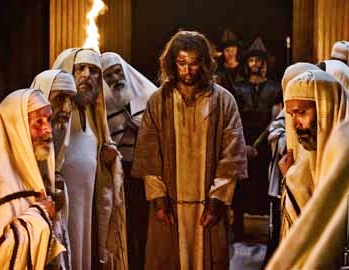
judas-betrays-jesus

We think we could do a lot for God’s kingdom with twelve legions of angels. Or twelve million dollars, or twelve thousand people in our congregation, or – you get the picture. We think big and powerful is always good. We think we could do so much for God if only we had ______. But Jesus didn’t have ______.  Alone, with no weapons, no money, no power, Jesus accomplished the greatest thing for God’s kingdom that has ever been done.

To listen to the sermon, click the play button:

To download, right click on the link (or do whatever you do on a Mac) and save it to your computer:
Download Matthew Part 94

Matthew #94.  Matthew 26:47-74

A lot of the so-called “contradictions” of the Bible take place in this section of the gospels. There are small details that differ between Matthew, Mark, Luke and John. Some are details about what time certain things happened, or where exactly Jesus was taken, and when. For instance, John records that they took Jesus first to the house of Annas, who was the former High-Priest, and father-in-law to the current High-Priest, Caiaphas. John says that after that, they took him also to the house of Caiaphas. The other gospels record only that Jesus was taken to the house of Caiaphas. This isn’t actually a contradiction, but merely an omission. Matthew doesn’t say that Jesus was not taken to Annas, but rather, he simply doesn’t mention it. John agrees with the others that Jesus was also taken to the house of Caiaphas.

I haven’t examined each so-called contradiction in that much detail, but I suspect that they could all be reconciled in similar ways. The truth is, all four gospels substantially agree about what was said and done during this twenty-four hour period. In a court of law, four eye-witnesses that agreed so thoroughly would be considered very powerful evidence. The fact that each gospel writer has his own unique perspective of those events is normal, and to be expected. In addition, the fact that there are small differences is powerful evidence that the gospels were not made up after the fact. If it really happened, you would expect everyone to have some slightly different memories of it. If it was made up, or edited later, all four gospels would say exactly the same thing. Once more, we find what we would expect to find if the Bible is what it claims to be.

As we examine the text, again I remind you that there might be dozens of worthwhile teachings from this passage, all of which would be good and useful for disciples of Jesus. I’m simply giving you what the Holy Spirit gives me about this text at this time.

The first thing that jumps out to me are Jesus’ words to Judas: “Friend, why have you come?” Jesus knew why Judas had come. He already knew that Judas would betray him – we saw that in 26:21-25. So, why ask the question?

I think it is one more final opportunity for Judas to repent. We saw how Jesus gave Judas the opportunity to repent during the last supper (see Matthew #91), but once more Jesus is opening the door for Judas. I think he is saying, “Why did you follow through? Why, after I warned you, did you still do this? You should have stayed away.” I think even at this point, Judas could have repented. Jesus still would have been captured, but Judas could have broken down, asked Jesus for forgiveness, and come back to him. As we will see, he did not.

Next, comes the swordplay. John tells us that it was Peter who struck the blow, and that the man who lost his ear was a man named Malchus, a servant of the high priest. Luke tells us that Jesus healed the man. They all four tell us that Jesus put a stop to the violence almost immediately.

52Then Jesus told him, “Put your sword back in its place because all who take up a sword will perish by a sword. 53Or do you think that I cannot call on My Father, and He will provide Me at once with more than 12 legions of angels? 54How, then, would the Scriptures be fulfilled that say it must happen this way? ”

 55At that time Jesus said to the crowds, “Have you come out with swords and clubs, as if I were a criminal, to capture Me? Every day I used to sit, teaching in the temple complex, and you didn’t arrest Me. 56But all this has happened so that the prophetic Scriptureswould be fulfilled.”

Then all the disciples deserted Him and ran away. (Matt 26:52-56, HCSB)

Verse 52, of course, is the source of the famous quote: “Those who live by the sword will die by the sword.” I think this is worth unpacking a little bit.

First, we see in the New Testament a change from the Old. During Old Testament times, the people of Israel were often used by God militarily to punish rebellious nations. God even used the armies of pagan nations to discipline Israel. But in the New Testament, we have a change. Jesus now says that those who live by the sword will die by the sword. In other words, the time for God’s people to use physical violence for God’s purposes is over.

In political and religious discussions, it is common for non-Christians to say: “The Bible teaches violence to God’s enemies. How can you be so critical of other religions like Islam, which teaches the same?” But the Christian Bible does not approve violence as a means for Christians to advance God’s Kingdom. In Christianity, the New Testament supersedes the Old Testament; that is, we interpret the Old Testament through the lens of the New. If there is a difference, the New Testament supersedes the Old. Therefore, we see that Jesus taught that now, since His own death and resurrection that redeemed us, violence is not an appropriate way to advance the kingdom of God. I can only say that though Christians have sometimes claimed the support of the Bible in using violence, they did so in ignorance of the teaching of Jesus, who, after all, also told us to turn the other cheek when we are struck, and to love our enemies.  In addition, the New Testament teaches us that the real battle is not physical, but spiritual. Paul writes:

10Finally, be strengthened by the Lord and by His vast strength. 11Put on the full armor of God so that you can stand against the tactics of the Devil. 12For our battle is not against flesh and blood, but against the rulers, against the authorities, against the world powers of this darkness, against the spiritual forces of evil in the heavens. (Eph 6:10-12, HCSB)

Christians, either in the past, or in the present, who interpret the Bible  to condone violence (except in self-defense) are using bad and invalid interpretation practices. They are out of step with the entire history of Christian theology. Though the crusades and the Spanish Inquisition used violence in the name of Jesus, it cannot be justified with consistent Bible interpretation; it can’t be justified with words of Jesus himself. Christian theology has always been consistent on this.

Jesus, in his words to Peter about the sword, is saying this: “That isn’t how it works, Peter. If it worked that way, I could call down legions of angels to force people to submit to me.” Instead, in the spiritual battle, Jesus chose the way of humility, submission and even suffering. God’s kingdom comes about through those sorts of things.  We see that Peter, later in life, learned this lesson well. He writes to Christians in Asia Minor:

19For it brings favor if, mindful of God’s will, someone endures grief from suffering unjustly. 20For what credit is there if you sin and are punished, and you endure it? But when you do what is good and suffer, if you endure it, this brings favor with God. 21For you were called to this, because Christ also suffered for you, leaving you an example, so that you should follow in His steps.

22He did not commit sin, and no deceit was found in His mouth; 23when He was reviled, He did not revile in return; when He was suffering, He did not threaten but entrusted Himself to the One who judges justly.

 24He Himself bore our sins in His body on the tree, so that, having died to sins, we might live for righteousness; you have been healed by His wounds. 25For you were like sheep going astray, but you have now returned to the Shepherd and Guardian of your souls. (1Pet 2:19-25, HCSB, some parts made bold by me for emphasis)

I think there is a related lesson here, also. The kingdom of God is not made real, or advanced, through human beings forcing it. James writes:

for man’s anger does not accomplish God’s righteousness. James 1:20  (HCSB)

Jesus himself says, “How would the scriptures be fulfilled if I used all of the tremendous force at my disposal? How could the Kingdom of God be accomplished?”

We don’t think this way. We think we could do a lot for God’s kingdom with twelve legions of angels. Or twelve million dollars, or twelve thousand people in our congregation, or – you get the picture. We think big and powerful is always good. We think we could do so much for God if only we had ______. But Jesus didn’t have ______.  Alone, with no weapons, no money, no power, Jesus accomplished the greatest thing for God’s kingdom that has ever been done.

The kingdom is advanced, as Peter says, when we follow in Christ’s footsteps of suffering and humility. Many times I have seen people seek to advance the kingdom, not through violence per se, but through what I would call “force.”

I think I may have done that myself. I fancy myself a pretty intelligent guy. I’ve read a few books in my time, and I remember a lot of what I read. Every so often I meet someone who claims to be an atheist. This used to get me very excited, because I have yet to meet someone who can out-argue me about the reality of God and the reliability of the Bible. But the truth is, my arguments – which have plenty of intellectual “force” – have never convinced anyone to become a Christian. I have helped to lead a number of people into God’s kingdom, but it never came about through any kind of “force” at all. The kingdom of God doesn’t happen through violence or force.

I’ll leave you with one additional thought. The kingdom of God comes through suffering and humility: and that is scary. As Jesus embraced this right before their very eyes, as he declared that the scriptures were being fulfilled in their presence, the disciples ran away. I can’t help but think that if they had really known the end of the story, they might have stuck around. But even though Jesus had told them it would all be OK in the end, they were so shocked and terrified by what was happening, they fled. It was a mistake they never made again afterwards.

Sometimes, the suffering and humility that goes along with following Jesus might be scary or unpleasant. But Jesus has already told us how it will end. There is no reason to fear. To run away would be silly. It sometimes feels horrible in the middle of it, but the ending is better than we can imagine.

Let the Holy Spirit continue to speak to you about these verses today.

HOW DO YOU KNOW GOD LOVES YOU?

gethsemane2

All of the suffering that Jesus endured (and we haven’t even got to the worst of it, yet), he did for you. Every moment of his life, every stubbed toe, headache, splinter or cold, every time he was tired, hungry, lonely or in pain – it was all voluntary, and all of it was for you.Sometimes God is a mystery, and it seems like he’s distant, like he doesn’t care about us. The actions of Jesus show us definitively and conclusively that he loves us.

To listen to the sermon, click the play button:

To download, right click on the link (or do whatever you do on a Mac) and save it to your computer:
Download Matthew Part

Matthew #93.  Matthew 26:31-45

With these verses, we enter the time period  that is often called “the passion of our Lord.” I don’t like the expression, because it comes from people showing off their ancient language skills, and frankly, it doesn’t really make sense in English. Here’s why people call it “the passion.” One of the Greek words for suffering is “patho;” it is often found in the form “pascho.” In addition, one of the Latin words for suffering is “passio” (and Latin was used almost exclusively in the Medieval Church). From these, we get our English word, “passion.” However, the meaning of “passion” in English has changed. These days “passion” does not mean “suffering.” Even so, now you understand why the suffering of Jesus is called his “passion” by silly people who don’t care if they are understood by the general population.

As always, I want to remind you that several legitimate, Biblically-sound sermons might be preached on any given passage of scripture. In these last few chapters of Matthew especially, we could easily spend several weeks finding new and important things in just one passage. We could talk about prayer, or the weakness of the disciples. As I’ve prayed and studied this time, however, what the Holy Spirit has impressed upon me is to focus on Jesus, and his suffering for us.

I want to make sure we have the correct understanding of the suffering of Jesus. It would be easy to say, “You know, I don’t know what the big deal is. Jesus was God, so how hard was it, really, to go through the crucifixion?” I am going to explain this as non-theologically as possible. In some ways, maybe what I say will be simplistic, but I think it might help us.

When Jesus entered Mary’s womb, not only was he gaining his human body, but he was also leaving heaven, and all of its advantages, behind him. Paul describes it like this, writing to the Philippians:

5Make your own attitude that of Christ Jesus, 6who, existing in the form of God, did not consider equality with God as something to be used for His own advantage. 7Instead He emptied Himself by assuming the form of a slave, taking on the likeness of men. And when He had come as a man in His external form, 8He humbled Himself by becoming obedient to the point of death — even to death on a cross. (Phil 2:5-8, HCSB)

You may have heard the expression, “I’ll take you on with one hand tied behind my back!” In a real sense, that’s what Jesus was doing. In taking on human flesh, Jesus also voluntarily left behind all the power and privilege of his divine nature. He kept his own divinity “tied behind his back,” so to speak. He voluntarily limited himself to complete dependence on the Father.

So, for example, when Jesus did miracles, he wasn’t doing them with his own divine power as God-the-Son. Instead, the Father was doing them through Jesus, as Jesus trusted the Father and allowed Him to work. When Jesus knew what was coming in the future and prophesied about it, it wasn’t because he was making use of his own divine knowledge as God-the-Son. Instead, he knew these things only because the Father chose to reveal them to him. In the same way, there were some things that the Father did not choose to reveal to Jesus – such as the time of his return to earth (Matthew 24:36). Jesus chose to do and know only what the Father directed. The apostle John records several times when Jesus referred to this state of things:

19So Jesus said to them, “Truly, truly, I say to you, the Son can do nothing of his own accord, but only what he sees the Father doing. For whatever the Father does, that the Son does likewise. For the Father loves the Son and shows him all that he himself is doing. And greater works than these will he show him, so that you may marvel. (John 5:19-20, ESV2011)

36But the testimony that I have is greater than that of John. For the works that the Father has given me to accomplish, the very works that I am doing, bear witness about me that the Father has sent me. (John 5:36, ESV2011)

28So Jesus said to them, “When you lift up the Son of Man, then you will know that I am He, and that I do nothing on My own. But just as the Father taught Me, I say these things. 29The One who sent Me is with Me. He has not left Me alone, because I always do what pleases Him.” (John 8:28-29, HCSB)

All of this was completely voluntary on the part of Jesus. He did not have to do it. Without sinning or doing any sort of wrong, he could have said, “You know what, Father? I’m tired of living without indoor plumbing. Take me home.” He could have said, “I’m sick of being insulted and mocked by these ignorant, rebellious, arrogant people. Let’s pull the plug on this operation.”

Of course, if Jesus had done that, we would all be destined to burn in Hell for eternity. But that’s what we deserve, anyway. It would not have been wrong for Jesus to leave us to that fate. His entire life on earth was by his own choice, and it was all done for my sake and yours. Every headache, every splinter and stubbed toe, every moment of loneliness, every hunger-pang – every single moment of it was voluntary. He never would have had to experience fatigue, or sickness or grief or pain. Every time he was misunderstood, mocked, insulted or mistreated, it was his own choice to remain on earth and endure it – for our sake. Sometimes, we consider the suffering of a little baby who was born with a disease, and think how terrible and pointless that such a young an innocent child should be afflicted. Yet Jesus was more innocent than even a newborn baby. His suffering was even less deserved.

So first, we understand that the voluntary and innocent suffering of Jesus began at the moment of his birth, and continued throughout his entire life. As I said, every stubbed toe and every headache, cold, splinter, or fever, was undeserved suffering. And now, in Matthew 26, Jesus is coming to the very worst of it all. Let me make this clear – not only did Jesus suffer tremendously for our sake, and not for himself in any way – but at any moment, he had the option of ending it, and not going through the suffering. This must have been an enormously appealing option during the worst of his afflictions, and one that he could have taken without doing any wrong. Part of his suffering, therefore, involved denying himself the righteous option of getting out of it.

I think that sometime between when Judas left to get the temple soldiers, and when Jesus entered the Garden of Gethsemane, was the beginning of the final, and most intense suffering of Jesus on our behalf. Once more, I want to make it clear that every single moment of his time on earth was a voluntary hardship, and part of his overall suffering for us. But, of course, there is no doubt that the last eighteen hours or so, were an incredibly intense conclusion, without which, the other suffering would have been pointless.

This last, intense suffering starts with betrayal, weakness and abandonment among Jesus’ closest friends. It’s easy to look at Jesus as above all human emotion, but I don’t think so at all. He willingly subjected himself to everything it means to be human.

17Therefore, He had to be like His brothers in every way, so that He could become a merciful and faithful high priest in service to God, to make propitiation for the sins of the people. 18For since He Himself was tested and has suffered, He is able to help those who are tested. (Heb 2:17-18, HCSB)

And so, though we look at Judas through the lens of twenty centuries, Judas was, in fact, one of Jesus’ best friends. It must have been very, very hard for Jesus to realize that someone whom he has spent so much time with, someone he had invested so much in, had utterly rejected him.

Next, came the knowledge that his other followers, though they didn’t deliberately betray him, were ultimately going to abandon him in his hour of need.

Most of us have not experienced the kind of physical pain that Jesus did. We haven’t experienced the depth of emotional suffering – but we have experienced some of the same kinds of things. Our friends did not betray and leave us while we were dying (you couldn’t be reading this, otherwise), but if you live very long, you will experience that loneliness that comes with feeling that someone has abandoned you, or failed to care for you the way you expected. Jesus experienced that with an intensity that was incredibly deep. No one stood beside him in his hour of need. His closest friends couldn’t even stay awake while he agonized in prayer, and they abandoned him shortly after.

Not only was Jesus abandoned by his disciples, but also by God himself. We know that at some point, God-the-Father withdrew his presence and support from Jesus. We know that the arrangement was that God laid upon Jesus all of the sins of the world – our sins, and treated him as our sins deserved:

 He made the One who did not know sin to be sin for us, so that we might become the righteousness of God in Him. (2Cor 5:21, HCSB)

God presented Him as a propitiation through faith in His blood, to demonstrate His righteousness, because in His restraint God passed over the sins previously committed. (Rom 3:25, HCSB)

This necessarily meant separation from the Father. For all of eternity, the Father, Son and Holy Spirit had lived in unbroken fellowship and one-ness. Even when Jesus came to earth as a human, though the relationship had to be different, there still was fellowship. But sometime during this night – I think, perhaps, not long after Judas left the supper – the Father deliberately withdrew his presence. For the first time in eternity, Jesus was completely separated from God – in a way that no human being has yet experienced. Romans 3:25 above says that God withheld the full punishment for human sin, and laid it all on Jesus. That means that no one has felt the full consequences of sin to the extent experienced by Jesus. No one has been cut off from God in the way Jesus was. No one has yet been so thoroughly rejected by God, as Jesus. The Bible says that at the end of time, those who do not repent and trust Jesus will also experience the hell of eternal separation from God. But until that time, only Jesus has experienced what that is like.

I think that the intensity and grief of Jesus’ prayers in the garden reflect that this separation had either begun, or had happened by that point.

So, what do we do with all of this? What does it mean for us? First, I think we can be quite confident that Jesus understands everything you may be going through when you struggle in your relationships with other people. He’s been lonely. He’s been betrayed. He’s been abandoned. The people closest to him didn’t seem to care.

Jesus also understands what it feels like to be abandoned by God – in ways that we may never feel. He can empathize with every kind of relationship-pain we might suffer.

Another thing I take away is this: Jesus is for you; he loves you. All of this that he went through (and we haven’t even got to the worst of it, yet), he did for you. Sometimes God is a mystery, and it seems like he’s distant, like he doesn’t care about us. The actions of Jesus show us definitively and conclusively that he loves us.

Let the Holy Spirit speak to you today.

BLOOD OATH

blood-drop

Jesus is taking the meaning of the Passover covenant and saying that it is fulfilled in his own life and death. We are saved and delivered from bondage to sin by His death, not the death of a lamb. We have fellowship and a good relationship with God through Him. By our own failings, the covenant was broken, but He made up for that in His own blood. Just as the people of Israel were saved from death and delivered from slavery by the first Passover, so we are saved from eternal death and delivered from slavery to sin by Jesus Christ. Their entry point into relationship with God was the Passover; so our entry point into relationship with God is the “second Passover” – the crucifixion.

To listen to the sermon, click the play button:

To download, right click on the link (or do whatever you do on a Mac) and save it to your computer:
Download Matthew Part 92

Matthew #92. Matthew 26:20-30

26As they were eating, Jesus took bread, blessed and broke it, gave it to the disciples, and said, “Take and eat it; this is My body.” 27Then He took a cup, and after giving thanks, He gave it to them and said, “Drink from it, all of you. 28For this is My blood that establishes the covenant; it is shed for many for the forgiveness of sins. 29But I tell you, from this moment I will not drink of this fruit of the vine until that day when I drink it in a new way in My Father’s kingdom with you.” 30After singing psalms, they went out to the Mount of Olives. (Matt 26:26-30, HCSB)

Our text for this week is Matthew’s remembrance of how Jesus celebrated the Passover with the disciples the night before he was crucified. I want to focus on the meaning of what Jesus said and did at that meal. In order to do so, I think it is important for us to understand the cultural and historical background of the Passover.

Let’s start with the history. Sometime around 1800 BC, the family of the patriarch Jacob moved from Palestine to Egypt to escape a great famine. Jacob’s family was well received by the Egyptians, because one of his sons (Joseph) had risen to become the highest official in Egypt apart from the king. Jacob’s family (there were about 70 of them when they came to Egypt) maintained a distinct ethnic and religious identity in Egypt. This was most probably because they were committed to the worship of the one true God, and so avoided the ways of the Egyptians, who worshipped a pantheon of false gods and idols. Over the years, the family of Jacob became a numerous race and they were known as Hebrews. Sometimes they were also called the Israelites, or the “children of Israel” because Jacob had been known as “Israel” during his lifetime.

During the next four hundred years, the Egyptian attitude of tolerance for the Israelites turned to fear. They began to oppress them and made them into a slave-race in order to build great monuments in Egypt. The Israelites cried out to God, and God called Moses, whom he used to deliver the people of Israel from slavery and bondage in Egypt.

The deliverance, however, was something of a process. Pharaoh (all Egyptian kings were called Pharaoh) would not willingly release such a vast resource of cheap labor, and so he repeatedly refused the request of Moses for freedom for the Israelites. Each time Pharaoh refused, God struck the Egyptians with a plague. This happened ten times.

What is not well known about the ten plagues is that each plague struck at a specific “god” that the Egyptians worshipped. For instance, the plague of darkness made a mockery of Ra, the Egyptian “sun-god.” The fact that the God of Israel could make darkness come over Egypt at His whim, showed that Ra had no power, and was in fact, a false god. Likewise, the plague of frogs struck at the god and goddess of fertility (Hapi and Heqt respectively) who were symbolized in Egyptian worship by frogs. Each plague struck similarly at the false religion of the Egyptians, showing the powerlessness of their so-called gods.

After God thoroughly judged the false gods and false religion of the Egyptians, Pharaoh still refused to let the Israelites leave. It was this stubborn refusal that brought about the tragedy and triumph that was the Passover. The Passover was, in fact, the tenth plague. This plague brought about the death of every firstborn male in Egypt. In order to protect the Israelites from the death of their own firstborn males, God gave the people special instructions through Moses.

The people were told to kill a young lamb, which was to be the substitute for the death of the first son. The lamb in question was supposed to be an animal without disease or blemish, one that ordinarily would not have been eaten. The blood of the lamb was daubed on the top, and each side, of the doorposts (interestingly, though they didn’t know it, the Israelites were tracing the sign of the cross in the air as they painted the blood). The blood of the lamb was the seal on their households that protected them from death. Death “passed over” the houses that were protected by the blood of the lamb. After slaughtering the lamb, they roasted it and ate it. Along with the lamb they had vegetables, and a flat bread that was baked without yeast. The reason the bread was without yeast was that God told them to be ready to leave in a hurry – they didn’t have time to wait for bread to rise.

That very night, God delivered the Israelites from slavery in Egypt. Pharaoh, in sorrow at the death of his firstborn son, called Moses in the middle of the night and told him to take the Israelites and get out. Not only that, but the Egyptians showered their wealth on the Israelites as they left, hoping to appease the wrath that had killed their firstborn sons. And so they left as free men and women.  Not only that, but they entered freedom with great riches at their disposal.

Later, God told the Israelites to remember the Passover each year with a special meal commemorating their deliverance. To this day, Jews celebrate the Passover with that in mind.

It is helpful also to understand the cultural background of animal sacrifice, because some of the words of Jesus make use of this. In the very ancient middle east, during the time of the first Passover, when two people, or two entities (like, for instance, two nations) made a solemn agreement, they usually sealed the agreement through the sacrifice of one or more animals. The idea behind it was something like this: “This agreement is so important to me, that it requires the shedding of blood. In fact, if the agreement is broken, more blood will be shed – either mine or yours.” So the killing of animals solemnized and formalized ancient agreements. We might call these sorts of agreements “covenants.”

If the two parties to the agreement were equals, the expectation was that whoever broke the agreement would deserve to shed his own blood to “pay” for the broken agreement. The death of the animals symbolized this. If the covenant was between a greater and lesser party (say, a king, and a nobleman who owed him allegiance), then the lesser party would be expected to shed his own blood if the covenant was broken – no matter which party broke it. Again, this was symbolized by the killing of the animals to formalize the covenant.

There was often another piece involved as well. In addition to the shedding of blood as a declaration of the seriousness of the agreement, usually the two parties would then eat together. Most often, what they ate was the animal (or animals) that had been killed as part of the covenant. This eating together indicated that the two parties now had fellowship with one another. There was now a positive relationship present. The meal was a celebration of that good relationship. So solemn agreements – covenants – were formalized by the killing and eating of animals.

With this understanding, now we can see this: the Passover was the formalizing of God’s covenant with his people. God was saying to his people: “I will stand by this covenant that I am making with you. If necessary, blood will be shed in order to satisfy this agreement.” So the people killed the lambs, and celebrated the agreement with the Passover meal. In addition, as I have already mentioned, the death of the lamb protected the people of Israel, and delivered them from slavery in Egypt. I also want to point out, that this covenant-agreement between God and his people came before the laws which were given at Mount Sinai (the 10 Commandments etc.). God made a similar covenant with Abraham (Genesis 15), and the Passover was, in a sense, a reiteration of that covenant; only this time it was made with all of God’s people as a whole. My point is, this covenant was established before the people had done anything to please God or follow his laws. It is a covenant of God’s promise to save and deliver his people; a covenant of Grace. It was the entry point into their relationship with God.

Each time the people of Israel celebrated the Passover, it was, in a sense, a renewal of the covenant that God had made with them. The shedding of the blood of the lamb reminded them of the seriousness of the agreement. The eating was a celebration of their fellowship with God, and with each other.

Now we have a better basis on which to evaluate the words of Jesus. There are two moments within the Passover meal when bread is formally broken and shared by all those present. The first is towards the beginning. Part of the broken bread is taken and hidden away, and is afterwards called the “afikomen,” or “bread of life.” Later, that piece is taken out and shared among all of those present. It is probably this piece – the bread of life – about which Jesus said: “Take and eat it; this is my body.” What Jesus is doing is putting himself into the middle of God’s covenant with his people. He is saying: “This meal, this covenant-agreement, is about me.”

His next action makes it even more clear. He takes the cup, and says: “Drink from it, all of you. For this is My blood that establishes the covenant; it is shed for many for the forgiveness of sins.”

Jesus is clearly saying that the original Passover-covenant between God and his people is established not by the sacrifice of lambs, but by his own sacrificial death. He is taking the meaning of the Passover covenant and saying that it is fulfilled in his own life and death. We are saved and delivered from bondage to sin by His death, not the death of a lamb. We have fellowship and a good relationship with God through Him. By our own failings, the covenant was broken, but He made up for that in His own blood. Just as the people of Israel were saved from death and delivered from slavery by the first Passover, so we are saved from eternal death, and delivered from slavery to sin, by Jesus Christ. Their entry point into relationship with God was the Passover; so our entry point into relationship with God is the “second Passover” – the crucifixion.

Just as the first Israelites celebrated their fellowship with God by eating the Passover lamb, so, in Communion (also called “The Lord’s Supper” or “the Eucharist”), we celebrate our fellowship with God that is made possible by the death of Jesus.

Just as the Passover was a renewal and reminder for the Israelites of God’s covenant with his people, so our own celebration of the Lord’s Supper is a renewal, reminder and acceptance of God’s covenant with us through the blood of Jesus Christ.

This is the meaning of Communion. This is why Paul says:

For as often as you eat this bread and drink the cup, you proclaim the Lord’s death until he comes. (1Cor 11:26, ESV2011)

Now, one more thing. Some people get caught up in arguments about what, exactly, happens, when we take the bread and wine. The Roman Catholic view is that the bread and the wine essentially turn into the physical presence of Jesus (i.e. the bread and wine turn into the body and blood). After all, Jesus said “This is my body…this is my blood.” In our Matthew text for today (and also the parallel text in Mark), he does not add “do this in remembrance of me.” The Reformed view (most Baptists, Evangelical Free etc.) is that the bread and the wine simply remind us of the presence of Jesus: all it is, is a remembrance. The Lutheran view (which I subscribe to) is that the bread and the wine are somehow used as a means to bring us the presence of Jesus.

A helpful way of understanding this is to picture a radio. When you turn it on, what happens? In the Catholic view, when you turn it on, the radio becomes music. In the reformed view, when you turn it on, the radio reminds us of music. In the Lutheran view, when you turn it on, the radio becomes the vehicle which brings us music.  Thus, in the Lord’s Supper, we don’t believe that the bread and the wine actually change into flesh and blood. Neither do we believe that it is only a symbol – a reminder of Jesus’ sacrifice. Instead, we believe that through eating the bread and drinking the wine in faith, Jesus comes to us. The bread and the wine are vehicles of God’s gracious presence. He uses them to come to us in a special, tangible way. We don’t pretend to know how, but he has promised his presence with the bread and the wine. All we need to do is to receive it in faith. And so, though we don’t explain it perfectly, we believe that when you get the bread and the wine, you are getting Jesus too. You are renewing the covenant which he made with you, a covenant established by his death and resurrection. You are celebrating the fellowship you have with God, and with one another.

An additional thought. Jesus taught his disciples to do this. After his resurrection, they did that, and taught the next generation to do the same. That generation carried it on to the next, and so on. What this means is that in every celebration of the Lord’s Supper, we could trace it back, hand to hand, person to person, generation to generation, to the very supper that Jesus had with Peter, James, John, Matthew and the others. There is a real-life historical connection to Jesus every time we take Communion. It connects us to all of Christianity throughout the ages, and to the physical life on earth of Jesus Christ himself.

What a gift! This is one reason the early Christian church made Communion (“the breaking of the bread”) central to their life and worship (Acts 2:42). Perhaps we should do the same.

The accidental betrayal?

betrayal

When Jesus predicts his betrayal, his disciples don’t doubt his words. But each one doubts himself. Each one thinks: “I know I love him. How could I ever do that to him? And yet, I know, I really do know, what is inside me. I know I’m capable of it. But please don’t let it be me.”

They were making a mistake. What they were actually afraid of was failing. But what Jesus was talking about was not failing. They were not going to accidentally betray him. The betrayer knew what he was doing when he did it. It was deliberate, and pre-meditated; a clear choice to make a break with Jesus.

To listen to the sermon, click the play button:

To download, right click on the link (or do whatever you do on a Mac) and save it to your computer:
Download Matthew Part

Matthew #91.  Matthew 26:14-25; 31-35

In chapter 26, Matthew begins to tell of the events that led up to the death of Jesus. The story of Judas is told in bits and pieces, because it was happening behind the scenes, at the same time as other events.

The chief priests and the Jewish religious ruling council (also called the Sanhedrin) decided to eliminate the Jesus problem. They were probably provoked by Jesus’ triumphal entrance to Jerusalem. Remember, though Matthew (and we) take a long time to get through the events of Jesus’ last days, we are talking about less than a week. Jesus rode into town on Sunday. During the next few days, he cleared the merchants out of the temple, and taught several parables that directly confronted the ways of the religious leaders. It was on Wednesday that the religious rulers gathered and decided to get rid of him:

3Then the chief priests and the elders of the people assembled in the palace of the high priest, who was called Caiaphas, 4and they conspired to arrest Jesus in a treacherous way and kill Him. 5“Not during the festival,” they said, “so there won’t be rioting among the people.” (Matt 26:3-5, HCSB)

They had two major problems. The first was that Jesus was extremely popular with the crowds: the Sunday afternoon entrance to Jerusalem had proved that. It was easy enough to find him when he was teaching people, but if they arrested him in public, in front of the people, it would provoke a riot, and get the religious leaders into trouble with the Romans, who had the ultimate political authority in Jerusalem. The Romans did not tolerate public uprisings. So they needed a way to lay hands on Jesus in some quiet, out-of-the-way location.

The second problem is that they did not technically have the authority to put Jesus to death. Matthew’s narrative explains how they overcame that issue, later on.

In stepped Judas, who declared himself willing to solve the first problem for them. He said he would take them to Jesus when the Lord was in some quiet, unpopulated location. For his service, he agreed to take thirty pieces of silver. This is equivalent to about $15,000 in 2016 America. The amount seems to be prophetic, but we won’t get the full understanding of just how until chapter 27:

12Then I said to them, “If it seems right to you, give me my wages; but if not, keep them.” So they weighed my wages, 30 pieces of silver. 13“Throw it to the potter,” the LORD said to me — this magnificent price I was valued by them. So I took the 30 pieces of silver and threw it into the house of the LORD, to the potter. (Zech 11:12-13, HCSB)

There has been a lot of discussion through the centuries about the motives of Judas. When we get to chapter 27, we will see that he felt a certain amount of remorse about what he did. I intend to preach an entire message on that, so I won’t go into it here. I will say, however, that John records that Judas was a thief, who helped himself privately from the common funds used to support Jesus and the disciples in their ministry (John 12:4-6). In addition, all of the apostles attribute bad motives to him. Luke records that he was influenced by Satan (Luke 22:3) and John agrees with this (John 13:2, also verse 27).

In the meantime, the Passover meal is prepared. Jesus and his disciples go to celebrate it. The Passover is most definitely supposed to be a happy time – a time when God’s people remember and celebrate what God has done for them. But Jesus, at some point during the meal, makes his statement that one of the twelve would betray him.

As the questions come up, he says: “The one who dipped his hand with me in the bowl – he will betray me.” Matthew is giving us his own perspective of that night. John remembers it slightly differently. Speaking of himself, he writes:

25So he leaned back against Jesus and asked Him, “Lord, who is it? ” 26Jesus replied, “He’s the one I give the piece of bread to after I have dipped it.” When He had dipped the bread, He gave it to Judas, Simon Iscariot’s son. 27After Judas ate the piece of bread, Satan entered him. Therefore Jesus told him, “What you’re doing, do quickly.” (John 13:25-27, HCSB)

Obviously, the others didn’t quite catch the whole exchange. In fact, the way meals were eaten in those days, pretty much everyone would have been breaking off pieces of unleavened bread and dipping them into common bowls of charoset (an apple mixture), or meat broth, or spices. So it wasn’t like Judas was the only one to have done it during the meal. This, however fulfilled another prophecy from the Old Testament:

9Even my friend in whom I trusted, one who ate my bread, has raised his heel against me. (Ps 41:9, HCSB)

Just pause for a moment here, and picture the scene. These men have been with Jesus for three years. They have absolutely uprooted their lives for him. They’ve left businesses and families and lives back home, just to be with him. There have been compensations. Something about Jesus makes them feel that they are in the presence of true goodness. Something about him is just right, and it is very powerful. They know how much he loves them. They’ve seen miracles and heard the very words of God. They don’t always understand him, but they do love Him. And now, this man that they love like a Father – maybe even like a Master – is telling them that one of them will betray Him.

This is hard news. They still can’t quite accept that he is going to die. They are still holding on to the idea that all his predictions about his upcoming death were figurative, not literal. But this betrayal thing is serious.

The reaction of the eleven innocent apostles is beautiful and touching. Each one says in turn to Jesus, “Is it I, Lord?”

Notice that they don’t doubt his words. But each one doubts himself. Each one thinks: “I know I love him. How could I ever do that to him? And yet, I know, I really do know, what is inside me. I know I’m capable of it. But please don’t let it be me.”

They were making a mistake. What they were actually afraid of was failing. But what Jesus was talking about was not failing. They were not going to accidentally betray him. The betrayer knew what he was doing when he did it. It was deliberate, and pre-meditated; a clear choice to make a break with Jesus.

And that brings us to one of the reasons Jesus brought up the subject, and Matthew recorded it for us. Judas, like the others, asked “Is it I?” Of course, he was only trying to keep up appearances. He had already taken the money to do the deed. He knew it was himself. But Jesus shows Judas that he also knows. Jesus’ response is two Greek words: “You say.” It could be translated as either “So you say,” or “You said it.” John records that after this, Jesus told Judas:

Jesus said to him, “What you are going to do, do quickly.” Now no one at the table knew why he said this to him. Some thought that, because Judas had the moneybag, Jesus was telling him, “Buy what we need for the feast,” or that he should give something to the poor. (John 13:27-29, ESV2011)

So Jesus clearly let Judas know that he knew. I believe that in this moment, Jesus was giving Judas one last chance to repent. He was giving Judas every opportunity to turn away from his betrayal – even just a few hours before Judas did his deed.

Let’s make all of this practical in our lives now. I have met many, many, Christians who are afraid that they will betray Jesus; in short, they are afraid that they will utterly reject him, and lose their salvation.

Now, of course, there are two schools of thought about this. One is that once you are saved, you can’t lose your salvation. Without debating the various verses, let me say that sometimes this results in people who think that they have a guaranteed ticket to heaven, even though they do not actually trust Jesus in their everyday lives. At one particular moment in their lives, they felt some emotion, and walked down the aisle, and “got saved;” maybe even baptized, too. However, it has been a long time since they have had much to do with Jesus. They live as they please; their lives are about their own ambitions and desires. God doesn’t really figure into their lives, not in a real way. They ignore the sin in their lives; in fact, sin doesn’t really bother them. The fact that their lives are distant from Jesus doesn’t really bother them.

Some folks might say these are Christians who have fallen away. Others might say that those folks probably weren’t ever true believers in the first place. I don’t think we have to quantify that. What may have happened in the past is needless speculation. All I know is this: If people can live in an ongoing pattern of sin without their consciences troubling them, then it is very doubtful that Jesus lives within them presently, and doubtful that they are saved at this point in time.

Now, I do think there are some genuine Jesus-followers who try to live in sin for a while, but it tears them apart inside, at least in the beginning, because they know they are sinning, and the Holy Spirit inside them keeps asking them to stop. If, however, a person is content to live in an ongoing pattern of sin, and it does not bother that person’s conscience, such an individual is probably not someone who genuinely trusts Jesus; at least not any more.

But I want to speak to the other group: these are people who have indeed trusted Jesus, and surrendered their lives to him. However, at times they are weak, and they fail. They worry that in their failure, they will utterly reject Jesus. I think this is something like what the disciples were feeling when each of them asked, “Is it I, Lord?”

But look at this from the outside. There was no way they could accidentally do what Jesus was talking about. What Judas did was pre-meditated and deliberate. In the same way, I do not believe that a genuine Christian can “accidentally” reject Jesus and turn away. Unfortunately we can (and do!) fail; sometimes frequently. But that is a different matter. Jesus addressed this at the end of the supper, when he told them that Peter would deny him, and the others would all desert him:

31 Then Jesus said to them, “Tonight all of you will run away because of Me, for it is written: I will strike the shepherd, and the sheep of the flock will be scattered. 32 But after I have been resurrected, I will go ahead of you to Galilee.”

 33 Peter told Him, “Even if everyone runs away because of You, I will never run away! ”

 34 “I assure you,” Jesus said to him, “tonight, before the rooster crows, you will deny Me three times! ”

 35 “Even if I have to die with You,” Peter told Him, “I will never deny You! ” And all the disciples said the same thing.

Jesus knew they would fail. They didn’t reject Him, but in their moments of weakness, they did not stand by Him. It was a failure; a big one. It did need to be forgiven, and it was ultimately forgiven. Jesus instructs them to meet up with Him again in Galilee, after it is all over: in other words, “I know you are going to mess up, but come back to me. Don’t stay away from me. Come on back and meet me, and receive my grace again.”

It is good and right to try not to sin. But I do not believe that those of us who trust Jesus need to live in constant fear that we will somehow reject Jesus altogether. No matter what your theology tells about whether or not that happens at all, I think we can all agree that that sort of thing can’t happen by accident.

If you are still worried about these things, the only antidote I know is to actually trust the words of the Bible. Even if you don’t worry about this often, it is a wonderful thing to pause and meditate upon the many wonderful promises of God’s love and forgiveness:

1My little children, I am writing you these things so that you may not sin. But if anyone does sin, we have an advocate with the Father — Jesus Christ the Righteous One. 2 He Himself is the propitiation for our sins .(1John 2:1, HCSB)

 13And when you were dead in trespasses and in the uncircumcision of your flesh, He made you alive with Him and forgave us all our trespasses. 14He erased the certificate of debt, with its obligations, that was against us and opposed to us, and has taken it out of the way by nailing it to the cross. 15He disarmed the rulers and authorities and disgraced them publicly; He triumphed over them by Him. (Col 2:13-15, HCSB)

31What then are we to say about these things? If God is for us, who is against us? 32He did not even spare His own Son but offered Him up for us all; how will He not also with Him grant us everything? 33Who can bring an accusation against God’s elect? God is the One who justifies. 34Who is the one who condemns? Christ Jesus is the One who died, but even more, has been raised; He also is at the right hand of God and intercedes for us. 35Who can separate us from the love of Christ? Can affliction or anguish or persecution or famine or nakedness or danger or sword? 36As it is written: Because of You we are being put to death all day long; we are counted as sheep to be slaughtered. 37No, in all these things we are more than victorious through Him who loved us. 38For I am persuaded that not even death or life, angels or rulers, things present or things to come, hostile powers, 39height or depth, or any other created thing will have the power to separate us from the love of God that is in Christ Jesus our Lord! (Rom 8:31-39, HCSB)


WHY WOULD A LOVING GOD SEND ANYONE TO HELL?

hell

OK, the part about hell is a little ways into the message. But here’s a teaser: The essence of love is choice. For love to be real there must be an alternative to it, some other choice that could be made. It is that choice, choosing a person when you don’t have to, that is the essence of love.So what is the alternative to loving God?  What would it be like to be completely separate from the loving Creator of the universe, to be apart from every good, loving, holy thing that exists in the universe? That alternative is what we call “hell.” Hell exists precisely because God is truly loving. If there was no hell, there would be no true love.  

To listen to the sermon, click the play button:

To download, right click on the link (or do whatever you do on a Mac) and save it to your computer:
Download Matthew Part 89

Matthew #89  Matthew 25:31-46

We considered the parable of the sheep and the goats last time. There are still a few things about the text that I would like to talk about. I realize that when we read this parable, it will naturally raise a number of questions about things that are really outside the scope of the text alone. The two that stand out to me are these: “Do good works get us into heaven?” And, “Is hell real?” Since those related questions are pretty important to the Christian faith, I want to look at them before we move on from this text.

At first reading, the passage makes it sound like people will get into heaven based entirely upon how they treat the poor and needy. As we learned last time, we need to refine that to “poor and needy fellow Christians.” Even so, that still leaves us with the problem that it looks like we get into heaven based upon our own good works. Is it true? Did Jesus really teach that we enter heaven based upon what we do?

Now, I did refer to the answer to this question when we talked about the parable of the talents. But even if you already know the answer, I think it is helpful to go through the process, so that as you do, you “practice” interpreting the Bible.

First, let’s look at a possible answer from the text itself. Consider verse 34:

34Then the King will say to those on his right, ‘Come, you who are blessed by my Father, inherit the kingdom prepared for you from the foundation of the world. (Matt 25:34, ESV2011)

We tend to read over such things quickly, but there is something startling here. The sheep are invited to enter “the kingdom prepared for you from the foundation of the world.” This makes it sound like these people were chosen for the kingdom long before they did any good works; in fact, before they were born.

When we study difficult things in scripture, it is helpful to look at other verses that address the same subject. With that in mind, let’s consider what Paul writes in Ephesians (I’ll italicize parts, for emphasis):

4For He chose us in Him, before the foundation of the world, to be holy and blameless in His sight. In love 5He predestined us to be adopted through Jesus Christ for Himself, according to His favor and will, 6to the praise of His glorious grace that He favored us with in the Beloved. (Ephesians 1:4-6 HCSB)

Now, this brings up another difficult subject, that of predestination. I don’t intend to get into that just now, but my point is, Jesus said that the kingdom was prepared for his own people (the sheep) from the foundation of the world. Paul, inspired by the Holy Spirit, and passing on to us and explaining the teaching of Jesus, says the same thing. So the sheep could not be chosen, or saved, by anything they did. Their salvation was given to them first, long before they did anything. Their actions simply reflected the fact that they belonged to that kingdom.

So the kingdom was given to them by grace, not by any works they had done. But they did their good works because they already belonged to the kingdom. This reminds me of another verse from Ephesians:

8For you are saved by grace through faith, and this is not from yourselves; it is God’s gift — 9not from works, so that no one can boast. 10For we are His creation, created in Christ Jesus for good works, which God prepared ahead of time so that we should walk in them. (Eph 2:8-10, HCSB)

The good works that the sheep did were prepared ahead of time for them by God, just like the Kingdom they were invited to enter.

Let’s make sure we have all of this very clear. The New Testament teaches that we cannot earn our salvation. We are forgiven for our sins, restored to a healthy, joyous relationship with God, and given eternal life, only because of the work Jesus has already done for us. We receive those gifts only by God’s grace, through trusting Jesus Christ, not through any works that we do. Here are some of the verses which teach this clearly. I’ve italicized parts of them, for emphasis:

We too all previously lived among them in our fleshly desires, carrying out the inclinations of our flesh and thoughts, and we were by nature children under wrath as the others were also. But God, who is rich in mercy, because of His great love that He had for us, made us alive with the Messiah even though we were dead in trespasses. You are saved by grace! Together with Christ Jesus He also raised us up and seated us in the heavens, so that in the coming ages He might display the immeasurable riches of His grace through His kindness to us in Christ Jesus. For you are saved by grace through faith, and this is not from yourselves; it is God’s gift — not from works, so that no one can boast. (Eph 2:3-9, HCSB)

Where then is boasting? It is excluded. By what kind of law? By one of works? No, on the contrary, by a law of faith. For we conclude that a man is justified by faith apart from the works of the law. (Rom 3:27-28, HCSB)

He has saved us and called us with a holy calling, not according to our works, but according to His own purpose and grace, which was given to us in Christ Jesus before time began. This has now been made evident through the appearing of our Savior Christ Jesus, who has abolished death and has brought life and immortality to light through the gospel. (2Tim 1:9-10, HCSB)

He saved us — not by works of righteousness that we had done, but according to His mercy, through the washing of regeneration and renewal by the Holy Spirit. He poured out this Spirit on us abundantly through Jesus Christ our Savior, so that having been justified by His grace, we may become heirs with the hope of eternal life. (Titus 3:5-7, HCSB)

Yet we know that no one is justified by the works of the law but by faith in Jesus Christ. And we have believed in Christ Jesus, so that we might be justified by faith in Christ and not by the works of the law, because by the works of the law no human being will be justified. (Gal 2:16-17, ESV)

So we have these many, clear verses telling us that salvation is a gracious gift, not a reward for good works. But then we have this passage here in Matthew, and several other passages in the New Testament, that seem very concerned with how we behave:

I say then, walk by the Spirit and you will not carry out the desire of the flesh. For the flesh desires what is against the Spirit, and the Spirit desires what is against the flesh; these are opposed to each other, so that you don’t do what you want. But if you are led by the Spirit, you are not under the law.

Now the works of the flesh are obvious: sexual immorality, moral impurity, promiscuity, idolatry, sorcery, hatreds, strife, jealousy, outbursts of anger, selfish ambitions, dissensions, factions, envy, drunkenness, carousing, and anything similar. I tell you about these things in advance — as I told you before — that those who practice such things will not inherit the kingdom of God.

But the fruit of the Spirit is love, joy, peace, patience, kindness, goodness, faith, gentleness, self-control. Against such things there is no law. Now those who belong to Christ Jesus have crucified the flesh with its passions and desires. Since we live by the Spirit, we must also follow the Spirit. We must not become conceited, provoking one another, envying one another. (Gal 5:16-26, HCSB)

20If anyone says, “I love God,” yet hates his brother, he is a liar. For the person who does not love his brother he has seen cannot love the God he has not seen. 21And we have this command from Him: The one who loves God must also love his brother. (1John 4:20-21, HCSB)

14What good is it, my brothers, if someone says he has faith but does not have works? Can his faith save him?

15If a brother or sister is without clothes and lacks daily food 16and one of you says to them, “Go in peace, keep warm, and eat well,” but you don’t give them what the body needs, what good is it?

17In the same way faith, if it doesn’t have works, is dead by itself. 18But someone will say, “You have faith, and I have works.” Show me your faith without works, and I will show you faith from my works. 19You believe that God is one; you do well. The demons also believe — and they shudder.

20Foolish man! Are you willing to learn that faith without works is useless? 21Wasn’t Abraham our father justified by works when he offered Isaac his son on the altar?

22You see that faith was active together with his works, and by works, faith was perfected. (Jas 2:14-22, HCSB)

Forgiveness and salvation are offered to us as God’s free gift in Jesus Christ. We don’t earn it in any way. But we also need to understand this: a true, living faith will result in good works. A true living faith will express itself in love for fellow-Christians. A true and living faith will fight against sin in your life.

If you continue to live in an ongoing pattern of sin, or if you do not love your fellow Jesus-followers, it may be because you do not have true faith in Jesus Christ. As James says: What good is it, my brothers, if someone says he has faith but does not have works? Faith without works is not real faith.

Now, I don’t mean to imply that when you are a Christian, you just can’t help yourself from doing good works, and you should sit on your hands until the impulse to do good overtakes you. Good works often require self-discipline. They aren’t always enjoyable. Sometimes you must make yourself do them even when you don’t feel like it. But the point is, you do them because you love and trust Jesus, not because you think they will earn you special points with God. You do them because it is in you to do them (even if that “in you” looks like self-discipline). And it is in you to do them because your faith is real. Again, particularly in this passage of Matthew, the good works we are talking about is to love, and do good to other Christians.

Now, there is an important contrast between the fate of the sheep and that of the goats. The place of the sheep was prepared for them from the foundation of the world. But the place to which the goats were sent was not originally intended for them. Listen to what Jesus says:

41“Then he will say to those on his left, ‘Depart from me, you cursed, into the eternal fire prepared for the devil and his angels. (Matt 25:41, ESV2011)

There is the contrast. The kingdom of God’s people has been prepared “for you” from the foundation of the world. The eternal fire was prepared “for the devil and his angels.” In other words, though people will be sent there, God intended it originally for the devil and demons, not for human beings. I want to tread lightly here, since we are touching on some very profound subjects. But I think we should understand this: God’s desire is for all people to be saved.

3This is good, and it is pleasing in the sight of God our Savior, 4who desires all people to be saved and to come to the knowledge of the truth. 5For there is one God, and there is one mediator between God and men, the man Christ Jesus, 6who gave himself as a ransom for all, which is the testimony given at the proper time. 7For this I was appointed a preacher and an apostle ( I am telling the truth, I am not lying), a teacher of the Gentiles in faith and truth. (1Tim 2:3-7, ESV2011)

Although this is God’s desire, many, many people thwart God’s desire, and he allows them to do so. Clearly, in this parable, as well as many other points throughout the gospels, Jesus thinks of hell as a real place into which some human beings will go. Just in case you aren’t sure, consider these other verses, just from the book of Matthew alone (there are more in the other gospels, also):

13 “Enter by the narrow gate. For the gate is wide and the way is easy that leads to destruction, and those who enter by it are many. 14For the gate is narrow and the way is hard that leads to life, and those who find it are few. (Matt 7:13-14, ESV2011)

If your right eye causes you to sin, gouge it out and throw it away. For it is better that you lose one of the parts of your body than for your whole body to be thrown into hell. And if your right hand causes you to sin, cut it off and throw it away. For it is better that you lose one of the parts of your body than for your whole body to go into hell!  (Matt 5:29-30, HCSB)

Don’t fear those who kill the body but are not able to kill the soul; rather, fear Him who is able to destroy both soul and body in hell.  (Matt 10:28, HCSB)

The rest of the New Testament also affirms the teachings of Jesus about hell. Even so, recently it has become unfashionable to believe in hell. The endlessly repeated question is this: “If God is so loving, why does he send some people to hell?”

That question reveals our huge cultural misunderstanding of love. Love is not something you “fall into.” Love is not something you “can’t help.” The essence of love is choice. If you know someone has no choice but to “love” you, you do not feel loved at all. You feel loved when you know the other person has the alternative not to love you, but does anyway. Think about it: Forcing someone to love you is technically impossible. The very idea of forcing is antithetical to love. For love to be real there must be an alternative to it, some other choice that could be made. It is that choice, choosing a person when you don’t have to, that is the essence of love.

So, God doesn’t have to love us. We don’t have to love God. But what is the alternative choice to God’s love, and loving him back? What does rejecting God mean? What would it be like to be completely separate from the loving Creator of the universe, to be apart from every good, loving, holy thing that exists in the universe? That alternative is what we call “hell.”

Hell exists precisely because God is truly loving.

If there was no hell, there would be no true love.

And now we are back to the parable of the sheep and the goats. The exact difference between them is that the sheep exhibited the love of God in action to fellow Jesus-followers, and the goats did not do so. Their actions revealed their inner choices about God’s love.

Let’s make sure we have this all straight:

  • Salvation is a free, unearned gift of God, offered in the context of love.
  • Those who reject that gift, who choose not to love God, will go to hell, which the New Testament teaches is a real place, or state of being, that is utterly separated from God and all goodness.
  • Those who receive God’s salvation in faith will express it by loving their fellow Christians.
  • Those who do not love their fellow-Christians are shown, by that lack of love, to not have true faith.


I think we have plenty to chew on for this time!


LOVE IN ACTION

love-in-action

What Jesus and the apostles consistently taught is that love-in-action should be expressed first toward our fellow-Christians. It can (and should) overflow to our world-at-large, but it will only truly do so if we actually love one another. I realize that this is almost counter-cultural, at least to American Christians these days. But it is unquestionably what the New Testament teaches.

To listen to the sermon, click the play button:

To download, right click on the link (or do whatever you do on a Mac) and save it to your computer:
Download Matthew Part 88

Matthew #88. Matthew 25:31-46

PLEASE BEGIN BY READING MATTHEW 25:31-46

Our passage for this time is a parable, and parables are usually intended only to make one or two main points. When we get down to it, the points Jesus is making are pretty broad and straightforward.

I do realize that other issues are raised by this story, but I want to start by taking the text for what it is. If we need to, I’ll address the other issues in the next sermon.

First, let’s remember our context. Jesus has been talking about the end of the world, and the fact that his followers need to be prepared for it. In verses 14-30, he tells a parable to illustrate what he means about being prepared: we should use our lives, and everything we have been given as managers. We don’t own what we call our “stuff,” and we don’t even own our lives; therefore we should invest what we have been given in the interests of the Master.

In the next parable – our text for this time – he is now giving us a specific example of what it means to invest ourselves in God’s kingdom. The example he gives is this: we should care for our fellow Jesus-followers.

I think many of us, when we read the passage today, have a certain picture of what this looks like. We think we are supposed to go out on the streets and find people who are hungry, or inadequately clothed, and give them food and clothing. We think we should go visit random people in jail or hospital. If we examine our thoughts carefully, we would find a disconnect between doing those things, and how we live our daily lives. Even at best, most of us probably picture dashing out and doing “homeless ministry” once a week, and then coming back to our “normal life.”

Those sorts of thoughts would have been strange to most Christians in New Testament times, but not for the reasons you might imagine.  Some of you may be a little unfocused, and perhaps you didn’t notice something important about Jesus’ words. Let me say it again with emphasis: this parable teaches us that we should care for our fellow Christians.

Let’s look at the text:

40“And the King will answer them, ‘I assure you: Whatever you did for one of the least of these brothers of Mine, you did for Me.’ (Matt 25:40, HCSB)

In the New Testament, the Greek word adelphon (“brothers”) can mean, obviously, “male siblings.” Far more often, throughout the New Testament, the word is used to mean, in general, “followers of Jesus, whether male or female.” Now, unless Jesus is talking specifically about James, and Jude (his half-brothers, each of whom wrote a book of the New Testament), he means “my followers.” The context shows us that he was obviously not talking about James and Jude. The “sheep” in this parable are commended for feeding, clothing, welcoming and visiting followers of Jesus, specifically.

One of the great tragedies of modern Christianity is that we have lost this understanding. We think we should do good “for the poor and needy.” Then, we fervently hope that the “poor and needy” are some remote group out there that we can keep separate from our own lives. We have no actual relationship with the poor and needy, and we typically skip over helping people with whom we do have relationships. Far too often people in churches throw money at a problem, or rush out and spend an evening serving food to the homeless, or spend two weeks on a mission trip, but we always go back to a kind of status quo of not really living in meaningful community with one another. We’ll serve food to the homeless, but ignore the lonely single person in our church who would enjoy coming over for dinner once in a while. We pay a pastor to go visit the sick and those in prison, and we thank the Lord that we, personally don’t have to do such things, because we just don’t have the time. We will give money to a homeless shelter, but balk at opening our home to a visiting missionary.

Don’t misunderstand me, I think it is good to give money to organizations that genuinely help to relieve poverty in the world (like Compassion International). I think it is worthwhile to go serve supper to strangers at a homeless shelter. Short term mission trips don’t usually give much real, long-term help to the people in the countries that are visited, but they do have some value in opening the eyes of Americans to different cultures and conditions around the world.

So those are OK. But did you know that virtually every example of charitable giving in the New Testament, and almost every single instruction about such giving, refers to either providing financial support to those who teach the Bible, or to helping other Christians?

What Jesus and the apostles consistently taught is that love-in-action should be expressed first toward our fellow-Christians. It can (and should) overflow to our world-at-large, but it will only truly do so if we actually love one another. I realize that this is almost counter-cultural, at least to American Christians these days. But it is unquestionably what the New Testament teaches. It is certainly what Jesus is teaching in this parable, as I have already pointed out, by saying “to the least of these, my brothers.”

Consider these other verses, which are only a few of many. Bear in mind that “brothers” in each of these verses means “fellow Christians.” I have italicized certain parts to make my point clear. The first is another one from Jesus, found earlier in the book of Matthew:

40 “The one who welcomes you welcomes Me, and the one who welcomes Me welcomes Him who sent Me. 41 Anyone who welcomes a prophet because he is a prophet  will receive a prophet’s reward. And anyone who welcomes a righteous person because he’s righteous will receive a righteous person’s reward. 42 And whoever gives just a cup of cold water to one of these little ones because he is a disciple — I assure you: He will never lose his reward! ”

Again, Jesus is teaching the value of love-in-action toward other people who follow Him. Next, John records these words of Jesus:

34“I give you a new command: Love one another. Just as I have loved you, you must also love one another. 35By this all people will know that you are My disciples, if you have love for one another.” (John 13:34-35, HCSB)

This verse is frequently ignored. The world does not know we are His disciples because we do good deeds for the world, or show the world how much we love them. Instead, the world will see Christians loving and caring for each other, and the beauty of that testimony will show outsiders that we follow Jesus. Trust me, when the world sees Christians fighting, and gossiping and hurting one another, they are not seeing Jesus there. Who would want to become a Jesus follower, if it means joining a group that barely tolerates its members, but tries to show love only toward outsiders? Or who would want to join a “community” where you will hardly get to know each other? The first Christian church grew, in part, because people were attracted by the warm, loving, family-style relationships they found there.

Here are a few more passages:

6 The one who is taught the message must share all his good things with the teacher. 7Don’t be deceived: God is not mocked. For whatever a man sows he will also reap, 8because the one who sows to his flesh will reap corruption from the flesh, but the one who sows to the Spirit will reap eternal life from the Spirit. 9So we must not get tired of doing good, for we will reap at the proper time if we don’t give up. 10Therefore, as we have opportunity, we must work for the good of all, especially for those who belong to the household of faith. (Gal 6:6-10, HCSB)

10Love consists in this: not that we loved God, but that He loved us and sent His Son to be the propitiation for our sins. 11Dear friends, if God loved us in this way, we also must love one another. 12No one has ever seen God. If we love one another, God remains in us and His love is perfected in us. (1John 4:10-12, HCSB)

20If anyone says, “I love God,” yet hates his brother, he is a liar. For the person who does not love his brother he has seen cannot love the God he has not seen. 21And we have this command from Him: The one who loves God must also love his brother. (1John 4:20-21, HCSB)

14What good is it, my brothers, if someone says he has faith but does not have works? Can his faith save him? 15If a brother or sister is without clothes and lacks daily food 16and one of you says to them, “Go in peace, keep warm, and eat well,” but you don’t give them what the body needs, what good is it? 17In the same way faith, if it doesn’t have works, is dead by itself. (James 2:14-15)

Am I wrong about all this? Aren’t these all commands for Christians to love each other? Don’t you dare say, “Yes, sure, but we must also love the world.”  Don’t you dismiss this lightly! You need to start where Jesus and the apostles start, which is this: love your fellow Christians. You cannot properly love those outside the faith if you don’t love your fellow-Christians.

In fact, the whole point of our text today is that if you don’t love your fellow Christians, there is probably something wrong with your faith, and with the relationship you have with God. Lack of love for fellow Christians may be a symptom of the fact that you are a goat, not a sheep.

The church in New Testament times became like a family for those who followed Jesus. Sometimes you fight and wrangle with those in your family. But in the end, you are committed to one another, and you take care of each other.

One reason we have such trouble loving each other is because, by and large, we don’t have these close, family-style relationships with other Christians. The way we engage in church is often a major obstacle to this. Worshipping together is one part of loving fellow believers. But it is only one small part. The first Christians understood this, and they not only worshipped together, but they shared their lives with each other.

8We cared so much for you that we were pleased to share with you not only the gospel of God but also our own lives, because you had become dear to us. (1Thess 2:8, HCSB)

 42And they devoted themselves to the apostles’ teaching, to the fellowship, to the breaking of bread, and to the prayers. 43Then fear came over everyone, and many wonders and signs were being performed through the apostles. 44Now all the believers were together and held all things in common. 45They sold their possessions and property and distributed the proceeds to all, as anyone had a need. 46Every day they devoted themselves to meeting together in the temple complex, and broke bread from house to house. They ate their food with a joyful and humble attitude, 47praising God and having favor with all the people. And every day the Lord added to them those who were being saved. (Acts 2:42-47, HCSB)

Even Christians who were strangers to each other recognized that they were bound together in love and common faith. On one of their journeys, Paul and his companions arrived in a strange city, and sought out the Christians in that place. There they fellowshipped, and stayed with these strangers for a week. Luke describes it:

2Finding a ship crossing over to Phoenicia, we boarded and set sail. 3After we sighted Cyprus, leaving it on the left, we sailed on to Syria and arrived at Tyre, because the ship was to unload its cargo there. 4So we found some disciples and stayed there seven days. Through the Spirit they told Paul not to go to Jerusalem. 5When our days there were over, we left to continue our journey, while all of them, with their wives and children, escorted us out of the city. After kneeling down on the beach to pray, 6we said good-bye to one another. Then we boarded the ship, and they returned home. (Acts 21:2-6, HCSB)

These days, most of us just go to church on Sunday, and then go home. That is not Christian fellowship, and real Christian love doesn’t develop well in those circumstances. In contrast, the Christians of the New Testament walked through life together. They spent time in each other’s homes, they ate together, they laughed together, they fought with each other at times, they forgave each other, they grieved together and celebrated together. If one of them was in need, they helped each other. They lived in real Christian community, and developed real love for each other.

Notice that in the parable of Jesus, the sheep are surprised. “When did I do that?” they ask. This is because when you are in real, loving community with others, good works come naturally. Visiting sick people that you love comes naturally. Visiting prisoners that you love is easy. When someone you love is in need, the normal, natural thing to do is to help them.

Some folks might say, “OK, but in my circle of Christian community, everyone has enough food, clothing and a place to live. So how can I really practice this?”

That’s an excellent question, and I’m so glad you asked it. There are two answers that might be helpful. First, perhaps your Christian community needs to be open to welcoming some Christian brothers and sisters who don’t have it all together yet. In other words, maybe, as a group, you need to include some Christian people who aren’t like you.

Second, I believe that the needs listed in Jesus’ parable can also be understood spiritually. Perhaps there is a person in your group who is not literally a stranger, but who feels lonely. You can minister to them as “the stranger,” in this parable, and invite them to be more a part of your lives. Maybe there is someone else who is not literally in prison, but who suffers from the “imprisonment” of depression. You could make room in your schedule to spend more time with that person. There are all sorts of spiritual and emotional needs that we could minister to, even among those who are physically OK.

If we are to really live as this ministering Christian community, however, several things must happen. First, we must find a relatively small group of Christians with whom to be in community. You can’t have real community and fellowship with a hundred people at once. Second, within that community, we must commit to being vulnerable and open about our struggles. This is an emotional and psychological risk, but we can’t minister to one another if we don’t know what each person needs. Third, all of this takes time. Most people in America probably need to cut something else out of their schedule in order to have real Christian community, and thus to minister in the ways Jesus is talking about. We need to be available to each other outside of Sunday morning.

Now, you might consider all this and say: “Wow. I’m in trouble. I don’t much care for my fellow Christians, and I’m not really in true fellowship or community with other believers.” So what do you do about it?

Here’s my advice, for what it’s worth. First, do not try and fake it. I mean seriously, do you think God won’t know whether or not your love for your fellow Christians is genuine? If your good works do not come from genuine trust in Jesus, and real love for fellow-believers, you aren’t going to fool God.

Second, admit that you have a problem. Confess it to God, and, if it seems appropriate, to others.

Third, ask God for help. Part of this means giving God permission to change your lifestyle. I remember a time when I realized I didn’t really love my Christian brothers and sisters. I also realized that if I was really going to learn to do it, I would have to change my lifestyle, so that I could be in real Christian community with others. I’m an introvert, and that thought was extremely scary. But I confessed my sin, I asked God for help, and I gave him permission to work in my life as He pleased. God responded to those prayers. My comfortable, introverted little life was changed, and to my great surprise, I have been consistently grateful that it did. I feel tremendously blessed by all the people I have come to know so well, and I can honestly say that I love them. I’ve never wanted to go back to the “faith in isolation” that I used to have.

Let the Lord speak to you about this right now.

TALENT ON LOAN FROM GOD

Burying-His-Talent

We don’t do good works in order to be saved, we do good works because we are saved. Good works indicate that Jesus is alive and active within you, and is conforming you to His character. Understanding that, you need to realize your entire life, and all that is “you,” and all that is available to you, is on loan from God, and is a talent to be invested for His kingdom.

 
To listen to the sermon, click the play button:

To download, right click on the link (or do whatever you do on a Mac) and save it to your computer:
Download Matthew Part 87

Matthew #87. Matthew 25:1-13

Jesus has been talking about his return, and the importance of being ready. It’s always helpful to remember that the verses and chapter divisions in our modern Bibles were not there originally. Personally, I think Matthew 25:1-13 belong with the words of Jesus that came at the end of chapter 24. It is, in fact, one more admonition to us to be ready for his return. Let us look at it briefly.

The setting is a Jewish wedding. In those days, in much of Israel, weddings were the most important social events, after religious festivals. A large proportion of the population lived in poverty, and even, at times, on the brink of starvation. A wedding was a chance for them to eat their fill of good food. Most people had to work hard from sunrise to sunset, but a wedding was a chance to relax and celebrate. The 10 virgins that Jesus is talking about were part of the wedding procession – roughly equivalent to bridesmaids in the present day (though not exactly the same). This was a rare moment in their lives when they got to dress up, relax and have fun, and eat their fill of good food. It would be bitterly disappointing for such girls to miss out on a wedding where they were bridesmaids.

One of the key parts of weddings in ancient Israel was the procession of the bridegroom. He paraded through town to the place where his bride waited, and then they paraded together, accompanied by the “bridesmaids,” and others, to his home, and to the feast! This procession took place after dark. Anyone who was part of the wedding would be expected to carry lights to add to the joy and festivity of the procession. If someone was out on the streets without a light, they would rightly be considered a stranger, someone who was not part of the wedding.

People in those days did not have watches or clocks, so time was a pretty fluid thing. As the bridegroom progressed through the streets of the town to his bride, he might pause to greet friends and family, or stop off at various houses to receive blessings and gifts from various people. Therefore, no one knew exactly when a given bridegroom would arrive, and when the procession with the bride (and after, the feast) would begin. The bridesmaids waiting to meet them would have to be ready, because no one knew exactly when he would come.

In the parable, some of the bridesmaids were not prepared to wait for very long: they did not have enough oil to keep their lamps burning for a long period of time. Without lights, they would be considered strangers, and not accepted in the wedding party. Because they were not prepared, they had to leave to get more oil for their lamps, and when they got back they found out that they had missed out, the gates were closed and they would not get to participate in the wedding feast. There would be no leisure, no celebration, no joy, no good food. It’s hard to emphasize how deeply disappointed these girls would be.

I want to point out a few things about this parable.

First, it is told for people who think, “I’ll wait until the end of my life is closer,” or “I’ll get right with God someday – just not right now.” You never know when Jesus is coming, and it will be too late to get your spiritual affairs in order once he is here. Jesus is telling us to be prepared, now and always.

Second, in this parable, part of being prepared includes being ready for it to take a long time. The five foolish virgins were ready at first, but they weren’t in it for the long haul. If the Christian life is a race, it is a marathon, not a sprint. Sometimes life can feel long and difficult – part of being ready for Jesus is about being able to endure through those times.

Third (and this is my favorite part of this parable), before this, Jesus has been telling us to be prepared in order to avoid the negative consequences. This parable, however, paints his return in a positive light. This is something we won’t want to miss out on. There will be joy, and laughter, and feasting and celebrating. It is like a long awaited vacation. This is something we should be looking forward to, something we will want to be a part of. A wedding, for most of Jesus’ listeners, would have been one of the most fun, satisfying and joyful events that they could look forward to. Heaven should be that for us – only not “one of” the best things to look forward to, but rather “the very best thing” we have to anticipate.

So, up until this point, Jesus has been telling his disciples – and us – to be prepared for him at all times. Starting in 25:15, he begins to tell us how to be prepared. What does it mean to be ready? What does it look like? He starts with another parable, the parable of the talents. I want you to read the parable yourself. It is a little long, and I don’t want to use up the space here. Read Matthew 25:15-30, and then come back and finish reading this message.

Let’s make sure we understand the parable. Our English word “talent,” as in “ability,” can be traced back to this parable of Jesus, since he clearly intended us to understand this is about how we use what God has given us (and not only about money). But at the time Jesus told this story, a “talent” was simply a measurement of money, roughly equal to about 6,000 denarii. Isn’t that helpful? Well maybe, if you know that a single denarius was acceptable pay for one day’s wages for a manual-laborer (see Matthew 20:1-2). In today’s money, if we assume a manual laborer makes $80 per day, one talent is roughly equal to $480,000. If you assume a laborer makes $100 per day, then a talent would be more like $600,000. Another way to calculate it is that one talent represents the total earnings from 16-20 years-worth of manual labor.

To make it simple, it is reasonable to picture it like this (as of 2016 in America): The man with one talent had roughly $500,000; the one with two had $1 Million; and the man with five had about $2.5 Million. In other words, this is a significant amount for investment. Even the one who had the least was dealing with a sum equal to twenty years-worth of earnings. Now, obviously, this parable is not about money. Very few people in any generation are given that sort of money all at once. Jesus was talking to his disciples, and none of them ever had nearly that much money. But the point is this: What God has given you is very valuable. Even the least amount is still worth a very great deal. And he wants us all to use what he has given, for his glory and his purposes.

So what are your “talents”? Your natural abilities are certainly part of what the Master has entrusted to you, to use for his purposes. Maybe it is musical or athletic ability. Perhaps it is the way people look to you for advice or for comfort. It might be your ability to listen, or to talk, or to sing, or dance, or make others laugh, or to be real. If you know how to put people at ease, that is a talent on loan from God. If you know how to appropriately challenge people and encourage them to grow, that is also from God. Your personality, your voice, your face, your body, your intelligence – all these are on loan from God, and are supposed to be used for His purposes. Don’t insult your own body, or any of your talents: to do so is to insult God, who made them, and has a purpose for them.

Some people are given monetary wealth. This too, is on loan from God, and is intended for use and investment in His Kingdom. Your situation in life is also part of what God has given you. Many of my readers were born in the United States of America, and that gives you opportunities and privileges not found in many parts of the world. You may not feel privileged, but you are. Even the poorest Americans have more wealth and opportunity than much of the world. Those opportunities and privileges, like your natural abilities, are “on loan” from God, and he expects us to use them for His purposes. Esther was given this sort of “talent,” and God wanted her to use it. She was made a queen, with a position of influence. When there was trouble for God’s people, Mordecai, her uncle, told her this:

If you keep silent at this time, liberation and deliverance will come to the Jewish people from another place, but you and your father’s house will be destroyed. Who knows, perhaps you have come to your royal position for such a time as this.” (Esth 4:14, HCSB)

In other words: “The opportunity and privilege you have has been given by God. Use it for Him. If you don’t, God will still deliver his people, but it won’t help you. But perhaps God has given you this privileged position for this very moment in time.” So we too, who are better off in this world, are supposed to use that privilege for God’s purposes.

Our relationships, our connections, are also gifts of God to be used for Him. Can I make it simple? your entire life, and all that is “you,” and all that is available to you, is on loan from God, and is a talent to be invested for His kingdom.

Now, I hope you have a few questions. The big one is this: doesn’t this parable make it sound like we will be welcomed into heaven if we use what God has given us for His glory, and we will not enter in if we don’t? In other words, doesn’t it seem like we are saved, not by God’s grace, but by what we do? It seems to contradict what the Bible says elsewhere:

For you are saved by grace through faith, and this is not from yourselves; it is God’s gift — not from works, so that no one can boast (Ephesians 2:8-9)

I understand why, at first glance, someone might think there is a contradiction here. In order to resolve it, we need to understand the role of “good works” (good things, done in the name of Jesus) in the Christian life. This will be very important when we look at the next parable, also.

I think you should write this down somewhere, because it will help you through so many parts of the Bible: Good works indicate that Jesus is alive and active within you, and is conforming you to His character.

Good works are not absolute proof that you are a Jesus-follower – many non-Christians do all sorts of good works. But if you claim to be a Jesus-follower, and your life shows no evidence of the character of Jesus, there is a problem. You might say that the presence of good works does not necessarily prove anything, but the absence of good works is a strong indication that something is spiritually wrong. Let’s look at the verse from Ephesians again, only this time, I’ll include the part I left off:

For you are saved by grace through faith, and this is not from yourselves; it is God’s gift — not from works, so that no one can boast. For we are His creation, created in Christ Jesus for good works, which God prepared ahead of time so that we should walk in them. (Ephesians 2:8-10, HCSB, emphasis mine)

Being saved by grace (not by works) goes hand in hand with walking in the good works that God has already prepared for us to do. Salvation and good works go together. We don’t do good works in order to be saved, we do good works because we are saved.

When we refuse to use what God has given us for God’s purpose, it shows us that there is a problem in our relationship with God. We are telling him that we aren’t interested in what he wants. So the man who refused to invest his talent was rejected, not because he failed to make an investment, but because, by his refusal, he showed that he wanted nothing to do with the Master.

So where does all this leave us today? Are you ready? Are you in this for the long haul? And do you use your life like it belongs to God, and is only on loan from Him? If you don’t, why don’t you? What prevents you?

What is the Lord saying to you today, through the Scripture? Spend some time praying about it, right now.

Lord help us to recognize that all we have belongs to you. Help us to recognize that you have saved us for a purpose. Let us realize that you want to use all you have given us for that purpose. Help us to allow you to do so. Where we have been selfish, and withheld from you, please forgive us, and restore us to a right, healthy relationship with you.

As you continue praying, please also remember this ministry in your prayers. Through this ministry, we are trying to do what the parable speaks about – invest our talents for God’s purposes. Please pray that the investment here is fruitful, that we continue to have all that we need to do his work. Thank you!


PREPARE FOR THE END OF THE WORLD!

end-of-the-world

Jesus tells us how to prepare for the end of the world. It may not be what you think. 

To listen to the sermon, click the play button:

To download, right click on the link (or do whatever you do on a Mac) and save it to your computer:
Download Matthew Part 86

Matthew #86.  Matthew 24:36-51

 Among followers of Jesus, these may be some of his most-ignored words. You can hardly swing a stick in an Evangelical church without hitting two or three people (at least) who are “into the end times.” Some remarkable things have happened during the past fifty years or so, and many people try and fit those events into some sort of timeline for the end of the world. They pore over passages from Daniel and Revelation, and also study some of the things that Jesus says, here at the end of Matthew. From these obscure, and difficult-to-understand passages, they build a scenario that will indicate to them when the world will end.

It’s a tempting hobby. In fact, it is often fascinating and exciting. I think the best of it is that it gives people hope, and helps them to see that God is still active in human history. But there is a downside too. Some people may become disillusioned, and perhaps even lose faith, when the world doesn’t end on their timetable. Their main faith is not in Jesus Christ, the Person, but rather in their theoretical constructions of the end times. And even more common, I think, is that “studying the end times” becomes a way to avoid really living as a Jesus-follower in everyday life. It gratifies a sense of religious duty (“I’m studying the Bible!”) without challenging anyone to actual obedience to Jesus at any specific point. Years ago, someone left our church because I (as the pastor) did not have the same specific view of end-times as he did. I think he was a good guy, but that is no reason to break fellowship. I wonder sometimes if he would leave a church that agreed with him on end times, but taught that sex outside of marriage is not sinful.

My point is, “end times” theology is very sketchy, and neither Jesus nor the apostles define it as closely as many people do today. How can I say that? Because Jesus said it! Just in case you didn’t open your Bible for this one, here it is:

36“Now concerning that day and hour no one knows — neither the angels in heaven, nor the Son — except the Father only. (Matt 24:36, HCSB)

Unless you are God the Father (and trust me, you’re not), you don’t have a clue when the end of the world will be. The entire section of verses 36-44 is Jesus belaboring that exact point. He says it will be like the days of Noah. God told Noah the flood was coming. Jesus has told us that He will return. Noah prepared for the flood, following God’s instructions, but he did not know when it would be, until the very moment when God told him to get on the ark. The other people had no awareness of the coming of the flood until it happened. Jesus says “so this is the way the coming of the Son of Man will be (verse 39).” He describes people going about their everyday lives until the very moment he returns. In verse 42 he says: “Therefore, be alert, since you don’t know what day your Lord is coming.” In case we somehow missed the point, Jesus says it again in verse 44: “This is why you also must be ready, because the Son of Man is coming at an hour you do not expect.”

Some people may try to find wiggle-room. They might say, “Jesus says we won’t know the exact day, or the exact hour of the day. But we could still find out the year, or possibly even the month.” I say: Nonsense! In the first place, just back up and read the passage for what it is. His main point is quite obvious: You are not going to be able to figure out, when he will return. If you were to say, “We can’t figure out the exact day, but we can know the year, (or even the decade),” it overturns the entire point that Jesus is making here.

Let’s put this to bed once and for all. The Greek word used for “day” is hemera. It can mean a literal 24 hour day, of course. But it is also used figuratively to mean “time period.” In Romans 3:13, Paul instructs us to “walk in the day.” Obviously he doesn’t mean a specific, literal day. The New Testament uses the word for the “Day of the Lord” and for the “day of God’s wrath,” which are obviously time periods, not literal 24 hour days. Zechariah says Elizabeth is far along in “days” (meaning years; Luke 1:18). Jesus, in Luke 17:28, refers to the “days of Lot.” Hebrews 5:7 uses the word to talk about the whole earthly life of Jesus. So when Jesus says we won’t know the day, He is using the word figuratively. He is saying, you won’t know when it will be.

The Greek for “hour” is similar – it can be either literal or figurative. In Matthew 10:19, Jesus tells us that when we are persecuted, we don’t have to worry about what we will say “in that hour.” He doesn’t mean that his followers will only suffer sixty minutes of persecution. He means “when the time comes.” In Mark 14:35, in the garden of Gethsemane, Jesus prayed that the “hour” of his suffering might pass from him.  He didn’t mean he would only suffer for sixty minutes – in fact the suffering of his crucifixion, and the beatings that went before it, was much longer than that.

Folks, I don’t know how to be more clear than Jesus. You cannot know when he will return. He says so, three times in eight verses. It is a waste of time, and a diversion of your spiritual energy, to try and build a timeline for the end of the world, or to try and figure out which current events are represented in apocalyptic prophecy. It takes you away from the important, everyday challenges of following Jesus in real life.

Even so, there is something you should do about the end times. The fact that Jesus is returning, and the fact that we don’t know when, should lead us to live a certain way.

Two times in the verses, Jesus tells us to be ready.

Therefore be alert, since you don’t know what day your Lord is coming (Matt 24:42 HCSB).

 This is why you also must be ready, because the Son of Man is coming at an hour you do not expect. (Matt 24:44, HCSB)

In verses 45-51, Jesus tells us what it means to be alert, and to be ready. He uses an analogy that would have been familiar to his disciples, but maybe not so much for us: a slave entrusted with great responsibility by his master. Slavery at the time of Jesus was not exactly like the slavery of the 19th century in America, or European slavery of the 18th century, or earlier. In the ancient Roman world, it is true, there were some type of slaves who were severely oppressed, and given no hope. Those were usually either criminals who were enslaved as punishment, or enemies captured in war and enslaved (armies in those days generally either killed their enemies, or enslaved them. There were no “prisoners of war”).

However, unlike 19th century America, there was no major industry (like producing sugar, or cotton) that depended heavily upon the work of slaves. Instead the majority of slaves in Jesus’ time were people who served their masters with a great deal of personal freedom. Many of them, in fact, had sold themselves into slavery for a period of time in order to pay debts, and had hope of obtaining freedom. Rather than what we normally think of when we hear the word “slavery,” it was more like indentured servitude. Now, I am not saying slavery was wonderful back then, but it probably wasn’t as bad for most slaves in Biblical times, as it was for those who worked on American cotton plantations in the 1800s.

Often times, a wealthy man had a slave who served as “director of operations” for his business and household. That slave could arrange his day as best as he saw fit, as long as he was diligent about his master’s business. He could conduct business transactions in the name of his master, and generally look after his master’s affairs. Such a slave was often in charge of other slaves (such as those who cleaned the master’s house, or transported his goods and so on). He had a respectable position of responsibility, and was often well rewarded for it.

If such a slave abused his position, however, he did not have the rights of a free citizen. His master would be fully justified in selling him as a galley-slave, or to the salt mines, where existence was miserable, and life was short.

Maybe another way to summarize Jesus’ words are this: “You never know when I will return. So live each day as if it will be today. Live in such a way that you will not be ashamed or afraid if I should return at this very moment.”

What does that mean, practically? Well, like the “operations manager,” Jesus has given all of us certain responsibilities. Some of those responsibilities are the same for all Jesus-followers. It starts with receiving His grace through repentance and trust, not as a result of anything we ourselves have done, or could do. Then, we are to keep on learning more of what he has said through the Bible, and learn to obey him. We are supposed to have close fellowship with other believers, and live out our faith in the context of Christian community and service.  We are also supposed to share God’s truth and His love with those that God has put into our lives. All of these are things that should become lifetime practices for everyone who calls themselves Christians. That’s how you prepare for the end of the world.

It might be easy to get caught up into thinking, “But should I take this job, or that one? Should I go on the mission field, or serve by staying here, and supporting missionaries through prayer and giving? Should I go to college? If so, which one?” Sometimes, those specific questions can be unnecessarily distracting. I think if we focus on what I just said: Trust, Obedience, Learning, Christian community and Christian service; all the other things will fall into place. I think that is the point Jesus is making. Don’t get distracted. Keep to the main things, remain faithful.

What if we do all these things, and yet we die before Jesus returns? Practically speaking, for us, the day of our death is essentially the same as the day of Jesus’ returning. I don’t mean Jesus won’t come back one day, and bring about the end of the world as we know it. I just mean that my own death brings about basically the same result, for me, as the day of His return. For my lifetime, and at that moment (either my death, or his return) have I been faithfully going about his business? That’s the question for all of us. That’s how we determine if we are ready for the end of the world.


WAR AND HOPE

Temple _Destruction

The words of Jesus in this passage are intended to help us stand steadfast in trouble, they are intended to give us hope. Even in the middle of great tribulation we can have hope, knowing that God is in charge, that he cares about us, and has not forgotten us. Above all, Jesus’ promise to return again and make all things right, is something to give us hope and peace. The fact that he is already been right about some of the things he prophesied should encourage us.

To listen to the sermon, click the play button:

To download, right click on the link (or do whatever you do on a Mac) and save it to your computer:
Download Matthew Part 85

Matthew #85. Matthew 24:15-34

In the very first part of this chapter, Jesus told his disciples that the temple was going to be destroyed, while some of “this present generation” were still alive. Certainly, the apostle John lived to see it happen, and survived even twenty years longer, after the event.

I also mentioned the fact that in this section of Scripture Jesus appears to be jumbling together both the destruction of Jerusalem, and what we call “the end of the world.” When we get to our text for next time, it will become clear that Jesus, remaining in complete dependence upon the Father, was not told by the Father when the end of the world would come (24:36). However, it is also clear (from verse 34) that Jesus himself did know that the destruction of Jerusalem in 70 A.D. was not going to be at the same time as the end of the world. Though he talks about the details of the two things together, when we examine the text closely, it is obvious that he knows that they are two different sets of events.

In our passage today, it is very helpful to understand some in-depth background. Stick with me through that, and I think you’ll find greater understanding and encouragement from these scriptures.

Much of what we know of the Jewish-Roman war of 66-73 A.D. comes from the Jewish-Born man, Titus Flavius Josephus. Josephus was a Jewish General in Galilee, who fought against the Romans in the war of 66-73 A.D.. He was captured in 67 by the Romans, after a six-week siege of the town of Jotopata, where he led the resistance. He then ingratiated himself with the Romans by claiming that it was prophesied that Vespasian, the Roman general who was leading the war in Palestine, would become Emperor. He was made the slave of Vespasian, and later Vespasian’s son Titus, and served as a translator for the remainder of the war. Vespasian did, in fact, become Emperor as Josephus predicted, in the year 69, and he granted Josephus his freedom. Josephus continued to serve the Romans, taking on Vespasian’s family name, Flavius. He became a historian, writing a very large volume about the Jewish wars, and also another volume of ancient Jewish history. I will share more from Josephus’ writings in a little while.

For now, let’s turn to our text. All throughout this passage, Jesus is using ideas and images that come from the book of Daniel, chapters 9, 11, and 12. Daniel, living in the Persian Empire, prophesied about the future tribulations of the Jewish people. Daniel 12:1 says:

1At that time Michael the great prince who stands watch over your people will rise up. There will be a time of distress such as never has occurred since nations came into being until that time. But at that time all your people who are found written in the book will escape. (Dan 12:1, HCSB)

This sounds a lot like what Jesus is saying in our passage today:

21For at that time there will be great tribulation, the kind that hasn’t taken place from the beginning of the world until now and never will again! 22Unless those days were limited, no one would survive. But those days will be limited because of the elect. (Matt 24:21-22, HCSB)

In verse 15, Jesus says:

15“So when you see the abomination that causes desolation, spoken of by the prophet Daniel, standing in the holy place” (let the reader understand), 16“then those in Judea must flee to the mountains! (Matt 24:15-16, HCSB)

The first time I read this, I was about thirteen years old, and I did not understand, and that bothered me. I think I comprehend a bit more today, so let me help you. Here’s what Daniel says in the prophecies to which Jesus is referring:

31His forces will rise up and desecrate the temple fortress. They will abolish the daily sacrifice and set up the abomination of desolation. (Dan 11:31, HCSB)

 27He will make a firm covenant with many for one week, but in the middle of the week he will put a stop to sacrifice and offering. And the abomination of desolation will be on a wing of the temple until the decreed destruction is poured out on the desolator.” (Dan 9:27, HCSB)

The Jewish people at the time of Jesus generally felt that Daniel’s prophecies had already been fulfilled. About 200 years prior, when the Jews were under Greek/Seleucid rule, the Greek leader Antiochus Epiphanes entered the temple and built a statue there. This desecrated the temple, making it unclean, and it was an abomination to all the Jewish people. It was the year 167 B.C. This led to the Maccabean rebellion, which led to a brief period of Jewish independence (See my first message on the book of Matthew for more background).

Jesus did not say, “Let the reader understand.” That was Matthew’s insertion. He wanted his readers to realize that Jesus was saying that Daniel’s prophecy had not yet been fulfilled.

The desecration of the temple in 167 B.C. may have been a partial fulfillment, but Matthew wants his readers to understand that something like those events was going to happen again. In fact, the Jewish war with the Romans of 66-73 A.D. looked a lot more like a fulfillment of Daniel than the events of 167 B.C., when Antiochus desecrated the temple.

In July of A.D. 70, the Roman general Titus set fire to the temple, slaughtered those within it, and had the Roman standards brought into the Most Holy Place. The Roman standards were poles with various decorations on them. The kind most likely brought into the temple sanctuary would have had a square flag, hanging from a crossbar near the top of the pole. Stitched on the flag would be the name of the unit and probably an image of a god, or perhaps even the Emperor (who was considered a god). It might also have had a carved image of the Roman Eagle at the top of the pole. These sorts of Roman standards were considered to be idolatrous by the Jews, and by bringing them into the Most Holy Place, Titus desecrated the temple, much as Antiochus Epiphanes did 237 years before him.

Therefore, to unwind these words of Jesus, and the parenthetical comment of Matthew, it is something like this: “When you see the Roman legions marching, carrying the standards of the Emperor, flee!” I think that the Jewish people at the time would have understood these things much more easily than us.

Later, Jesus says:

19Woe to pregnant women and nursing mothers in those days! 20Pray that your escape may not be in winter or on a Sabbath. 21For at that time there will be great tribulation, the kind that hasn’t taken place from the beginning of the world until now and never will again! 22Unless those days were limited, no one would survive. But those days will be limited because of the elect. (Matt 24:19-22, HCSB)

You might think that Jesus has begun talking about the end of the world again, but I don’t think so. First, he encouraged his followers to pray that it wouldn’t happen in winter. That doesn’t make sense for the end of the world: the weather really won’t matter. But in 1st Century Israel, winter rains made most roads impassible with mud, and cold could kill those forced to camp outside with no shelter. Perhaps many people did pray, because, in fact, the worst part of the war was in spring, and the temple was not desecrated until July, and not fully destroyed until after that.

Historian Josephus, although somewhat familiar with the life of Jesus of Nazareth, was not a Christian; Christianity remained illegal in the Roman empire during his lifetime. Even so, the way he describes the war sounds very much like what Jesus predicted. Jesus said, “Woe to pregnant women and nursing mothers!”

In a section about the siege engines used by the Romans against him in Jotopata, Josephus writes (warning: these words contain matter-of-fact graphic violence):

And any one may learn the force of the engines by what happened this very night; for as one of those that stood round about Josephus was near the wall, his head was carried away by such a stone, and his skull was flung as far as three furlongs. In the day time also, a woman with child had her belly so violently struck, as she was just come out of her house, that the infant was carried to the distance of half a furlong, so great was the force of that engine. (Josephus, The Wars of the Jews. Book 3, chapter 7, paragraph 23).

Josephus describes many such terrible and heart-wrenching events. It was a brutal, horrific conflict. When Jerusalem was besieged, people became lawless, and many took food and other things from mothers and babies, and did violence to them. In fact, some historians have described the Jewish-Roman War as the worst massacre of ancient times. Jesus is not wrong to call it a “great tribulation.”

Josephus also describes the kinds of natural disturbances that Jesus mentions:

There broke out a prodigious storm in the night, with the utmost violence, and very strong winds, with the largest showers of rain, with continued lightnings, terrible thunderings, and amazing concussions and bellowings of the earth, that was in an earthquake. These things were a manifest indication that some destruction was coming upon men, when the system of the world was put into this disorder; and any one would guess that these wonders foreshowed some grand calamities that were coming. (Josephus, The Wars of the Jews, Book 4, chapter 4, paragraph five)

Some of the language that Jesus uses in our passage today is probably exaggerated imagery (in other words, he did not mean everything literally), but given the writings of Josephus, I think it is worth noting that Jesus predicted a horrific, unbelievable tribulation, and that is exactly what happened.

In verses 23-30 it seems clear that Jesus turns to talking about the end of the world. In fact, he is warning his disciples not to confuse the coming turmoil in Israel with his own return at the end of the world. This is the second time in the same discussion that Jesus has warned us not to be taken in by false prophets and deceivers who claim that the end of the world has come, or who claim to be Jesus himself, returned for his people. He makes it clear that when he comes back again, no one can miss it:

27For as the lightning comes from the east and flashes as far as the west, so will be the coming of the Son of Man. (Matt 24:27, HCSB)

In verse 32, he may be returning to the discussion about the coming destruction of the nation of Israel. The fig tree is a useful analogy: just as we can tell the season from looking at the trees, those who hear him should be able to recognize the signs that these things are about to take place. For my part, I would think that as soon as I heard of the Jewish rebellion that led to the war, it would seem to me a sign that Jerusalem would soon be destroyed.

Verse 34 clearly refers back to the first part of the discussion, about the coming tribulation to the Jewish nation. This is clear both from what Jesus said about his own return (it will be unmistakable) and also what he says later on in verse 36 when he insists that the Father has not revealed the day or the hour to him. If the Father hasn’t told him when the end of the world is, Jesus certainly can’t claim to know it will happen before the present generation passes away. Therefore that comment must refer to the events of verses 15-22.  The short discussion from verse 32-33 is a warning not to be mistaken about the coming of Jesus.

Even though much of our passage today is concerned with events that have already occurred, I think we can learn a great deal from it, and be encouraged by it.

First, as I said last time, this is very good evidence that Jesus is reliable when he speaks prophetically. Since he also prophesied that he would return, and that we would recognize his return, I think we can bank on that, and look forward to it. Though there may be difficult times we have to endure, we can trust his promise to deliver us, and to bring us into his eternal kingdom.

A second thing gets my attention from this text. Jesus told his followers to pray that these events did not happen in winter. As it turns out, they did not happen in winter. I can’t help wondering if many Jesus-followers did, in fact pray, and so influenced the events to happen in summer. It encourages me to believe in the power of prayer.

Another thing I get from the text is this: If we find ourselves in the middle of trouble and tribulation, it isn’t wrong to try and get out of it. We may not be able to escape it; it may not be God’s will for us to escape it. Even so, it isn’t wrong to try (as long as it does not involve sinning).

The analogy of the fig tree is also helpful for me. As we will see next time, it is absolutely pointless to try and build a timeline for the end of the world. Even so, verses 32 and 33 show us that it is possible to recognize the “signs of the times.” In other words, we can look at history, and culture, and current events, and evaluate them with wisdom.

Overall, the words of Jesus here are not intended to scare us. They are intended to help us stand steadfast in trouble, they are intended to give us hope. Certainly, many Jesus-followers left Jerusalem before all this took place. They escaped this terrible tribulation. And even in the middle of great tribulation we can have hope, knowing that God is in charge, that he cares about us, and has not forgotten us. Above all, Jesus’ promise to return again and make all things right, is something to give us hope and peace. The fact that he is already been right about some of the things he prophesied should encourage us.

Allow the Holy Spirit to speak to you about all of this right now.


THE ONCE AND FUTURE PROPHECY

destruction of Jerusalem

Our passage today contains a remarkable feature: a specific prophecy which we know was fulfilled as Jesus predicted. Read on to learn how we know, and what it means for us today.

To listen to the sermon, click the play button:

To download, right click on the link (or do whatever you do on a Mac) and save it to your computer:
Download Matthew Part 84
Matthew #84  Matthew 24:1-14

Our passage today contains a remarkable feature: a specific prophecy which we know was fulfilled as Jesus predicted. Jesus tells his disciples that the temple will be destroyed, even while some of those alive at the time (“this generation”) are still living. In fact, between 35 and 40 years after Jesus spoke these words, the Jewish nation rebelled, and the Romans responded brutally, utterly destroying the temple in 70 A.D., slaughtering thousands, and sending a large number of the remaining Jewish people into exile in other countries. Some of you have heard about the Jewish Battle of Masada: that took place shortly after 70 A.D., and was part of the same brutal Roman response to the Jewish rebellion.

So Jesus predicts a specific event within a specific timeframe, and we know that that event did indeed occur within that timeframe. This is just one of hundreds of reasons we can trust that the Bible is reliable, and that the words of Jesus are true.

Perhaps you know someone who is skeptical about this. I would like to spend a little time responding to such skepticism, because it speaks to the reliability of the Bible and therefore, the assurance of our faith. A skeptic might say: “Someone just went back and put in this prophecy after the temple had already been destroyed. Or perhaps, Matthew didn’t even write this until after the temple was destroyed.”

First, let me say that the skeptic starts with absolutely no evidence in support of either idea. The only reason to hold the opinion that the book of Matthew was either changed, or written after the destruction of the Temple, is because the skeptic has already decided she doesn’t believe in miracles like predictive prophecy. In other words, with regards to this subject, skepticism is a matter of belief, not evidence.

Let me explain further, starting with the first objection: the idea that the book of Matthew was edited later on. We have many hundreds of ancient copies, and partial copies, of the book of Matthew. They are all virtually exactly the same. In other words, there is no evidence whatsoever that someone went back and “edited” Matthew’s gospel, or indeed, any part of the New Testament. No “early copy” of Matthew exists; all of the copies are the same. Thus, there is absolutely no evidence that what Matthew wrote was changed in any way, at any point in history.

Now, let’s consider the second idea: Was the book of Matthew written after the destruction of the temple? New Testament authors did not provide dates on their manuscripts; I often wish they had. In the absence of exact dates, we have to take what we know of history, and compare it to what is written, and then speculate about whether it was written before or after a particular historical event. In the case of Matthew, we find that in many, many places, he writes about issues that would have been either unimportant, or would require more explanation, after the destruction of the Temple. Here are just a few:

23So if you are offering your gift on the altar, and there you remember that your brother has something against you, 24leave your gift there in front of the altar. First go and be reconciled with your brother, and then come and offer your gift. (Matt 5:23-24, HCSB)

The “altar” in this case, is the altar in the temple. If the temple was already destroyed, it would have been strange for Matthew to include these words of Jesus; certainly he should have offered some explanation. After 70 A.D. it would not be safe for him to assume that his readers knew what he was talking about.

Here is another, one which we considered quite recently:

16“Woe to you, blind guides, who say, ‘Whoever takes an oath by the sanctuary, it means nothing. But whoever takes an oath by the gold of the sanctuary is bound by his oath.’ 17Blind fools! For which is greater, the gold or the sanctuary that sanctified the gold? 18Also, ‘Whoever takes an oath by the altar, it means nothing. But whoever takes an oath by the gift that is on it is bound by his oath.’ 19Blind people! For which is greater, the gift or the altar that sanctifies the gift? 20Therefore, the one who takes an oath by the altar takes an oath by it and by everything on it. 21The one who takes an oath by the sanctuary takes an oath by it and by Him who dwells in it. 22And the one who takes an oath by heaven takes an oath by God’s throne and by Him who sits on it. (Matt 23:16-22, HCSB)

Again, if the temple had already been destroyed, it is surprising that Matthew would have included these words without explaining them. There are, of course, principles here that apply to all generations. Even so, if the temple had been destroyed before he wrote this, it is strange that Matthew neither mentioned it, nor explained the practice in order to make the principle more clear. Now consider this one:

4For God said: Honor your father and your mother; and, The one who speaks evil of father or mother must be put to death. 5But you say, ‘Whoever tells his father or mother, “Whatever benefit you might have received from me is a gift committed to the temple” — 6he does not have to honor his father.’ In this way, you have revoked God’s word because of your tradition. (Matt 15:3-6, HCSB)

Again, no comment about the status of the temple, and no explanation of the practice in question. If Matthew wrote after 70 A.D., he would have been writing primarily for Gentiles who would not have understood these sorts of things. As it is, the entire book of Matthew reads as if it was written for Jews, or at the very least, people very familiar with Jewish culture and practices, including those that involved the temple in Jerusalem.

There are several others, however, I will include just this one more:

24When they came to Capernaum, those who collected the double-drachma tax approached Peter and said, “Doesn’t your Teacher pay the double-drachma tax? ” 25“Yes,” he said. When he went into the house, Jesus spoke to him first, “What do you think, Simon? Who do earthly kings collect tariffs or taxes from? From their sons or from strangers? ” 26“From strangers,” he said. “Then the sons are free,” Jesus told him. 27“But, so we won’t offend them, go to the sea, cast in a fishhook, and take the first fish that you catch. When you open its mouth you’ll find a coin. Take it and give it to them for Me and you.” (Matt 17:24-27, HCSB)

After 70 A.D. (when the temple was destroyed), the Romans taxed their subjects to maintain the temple of Jupiter, in Rome. If that was happening at the time Matthew wrote, he surely would have made some sort of comment, or explained the situation further.

We know that the book of John was written about 20 years after the destruction of the Temple in Jerusalem. John explains many things to his readers about Jewish customs; Matthew offers no such explanations. All of this is powerful evidence that Matthew wrote before the destruction of the Temple in 70 A.D.. The evidence against that conclusion is merely the baseless belief of someone who does not want to accept the supernatural. In other words, nothing credible suggests that Matthew wrote his book after this prophecy of Jesus was fulfilled.

There’s another important thought. Jesus seems to be talking both about the destruction of the temple, and of the nation of Israel, in 70 A.D., and also the end of time. If Matthew wrote all this after the destruction of the Temple, he would have known that the other things mentioned by Jesus were not fulfilled at the same time, and, if he was writing after the fact, trying to make it look like Jesus prophesied accurately, he surely would have left out these other words of Jesus which did not necessarily happen until later on, or have not even happened yet.

Let’s look more carefully at the text. I have spoken before about the “telescoping” nature of prophecy. In other words, a prophet may jumble together predictions of the near future, predictions of the far-off future, and predictions of the end of the world. From a distance (that is, from the prophet’s perspective) it may look like all these things will happen at the same time; it is like looking at a distant range of mountains, where all the peaks and ridges look almost like cardboard cutouts standing next to each other. Now, some people may object that in this passage we are not dealing with an ordinary prophet: this is Jesus. How could Jesus be confused about which things will happen sooner, and which things will happen at the end of the world? The answer comes in Matthew 24:36.

“Now concerning that day and hour no one knows — neither the angels in heaven, nor the Son — except the Father only. (Matt 24:36, HCSB)

Part of the deal with Jesus coming to earth, is that he laid aside his own power, and chose to live like any other human being: completely dependent upon the Father. In this case, the Father chose not to reveal the date of the end of time to Jesus while he was still on earth. So, through the Father, Jesus understands that some of these things will come upon the generation of those who are alive while he is speaking. He understands that some of them will come at the end of time. But, because he limited himself to only what the Father showed him, and because the Father did not show him the exact date of the end of time, even Jesus cannot tell for sure when each of these things will be.

So Jesus prophesies the destruction of the temple, and also events that presumably have not even occurred yet by 2016. I think he shares these things together because they have a common theme. The things that will come on the generation to whom he speaks, and the things that will come at the end of the world, are connected theologically. We are not meant to assume that they are connected chronologically.

This is the theological connection: the judgment of God upon those who reject him. First, judgment on the people who were alive when Jesus still walked the earth (whom he calls “this generation”), and second, the judgement at the end of the world upon all those who reject God. Jesus lumps them together because they are both about God’s judgment upon those who reject him.

Let me say a quick word about that judgment: It – is – optional. The whole Bible is very clear that if we repent, and turn to Jesus in trust and humility, he will forgive us and reconcile us to God, and give us eternal life. You don’t have to experience his judgement, or the punishment of hell. If we repent and trust, he graciously forgives us, comforts us and brings us into His kingdom.

I think there are several very important things that we need to hear from this passage. First, Jesus says this:

“Watch out that no one deceives you. 5For many will come in My name, saying, ‘I am the Messiah,’ and they will deceive many. 6You are going to hear of wars and rumors of wars. See that you are not alarmed, because these things must take place, but the end is not yet. (Matt 24:4-6, HCSB)

There is always a certain element of Christianity that seems ready to declare that the end of the world has come. Jesus tells us here not to jump to such conclusions. In fact, as I have already pointed out, in verse 36 Jesus says that no one knows the day or the hour. So one thing we should get from this passage is to not be alarmed, and to understand that we cannot build a timeline for the end of the world.

A second thing that we should pay attention to is that Jesus describes the kinds of things that will happen before the end of the world. The types of events he describes indicate that we are getting near to the very beginning of the end, not that we are at the end. He says there will be:

  • wars
  • famines
  • earthquakes
  • persecution
  • hatred towards his followers
  • betrayal, hatred and strife
  • false prophets
  • lawlessness
  • many people who fall away from him

When we experience these things we should not be surprised, and we should not feel that God has abandoned us – he told us these things were going to happen. It should be a comfort to know that even when these terrible things happen, God is in control, he is not forgotten us, and he will work all of this to the good of his own plans, and to our own good (Romans 8:28). He tells us that there will be deliverance and salvation for those who endure to the end (v. 13).

Finally, he says that the good news of the kingdom will be proclaimed in all the world as a testimony to all nations and then the end will come. Have you ever thought of it like this? If you want the bad things in the world to come to an end, if you want Jesus to come back soon and take us all to be with him in the new heavens and new earth, the only way we can help that happen more quickly is to proclaim the good news of the kingdom in all the world.

We’ve covered a lot of ground, but just to summarize: 1. This shows us that Jesus and the Bible are reliable. 2. Don’t be deceived into thinking the end of the world is here just because others say so. 3. Don’t be alarmed by the events which Jesus mentions. They are part of the plan. Our part is to endure to the end, to hold on to Jesus through it all. 4. If we would like these difficult events to be shorter, we should assist those who are proclaiming the good news of the Kingdom.

As you take time to pray about these things, please also take time to pray for this ministry. Pray for wisdom and encouragement. Pray for financial provision. Pray that the Lord uses these messages to their full potential in the lives of those who need them. If, as you pray, you feel led to help us financially, you can click on the word “donate” at the top of the page, and it will explain how you can do that. But before giving financially, please pray for our needs, and whether or not He wants you to give. God loves a cheerful giver, and so do we!

Thank You!