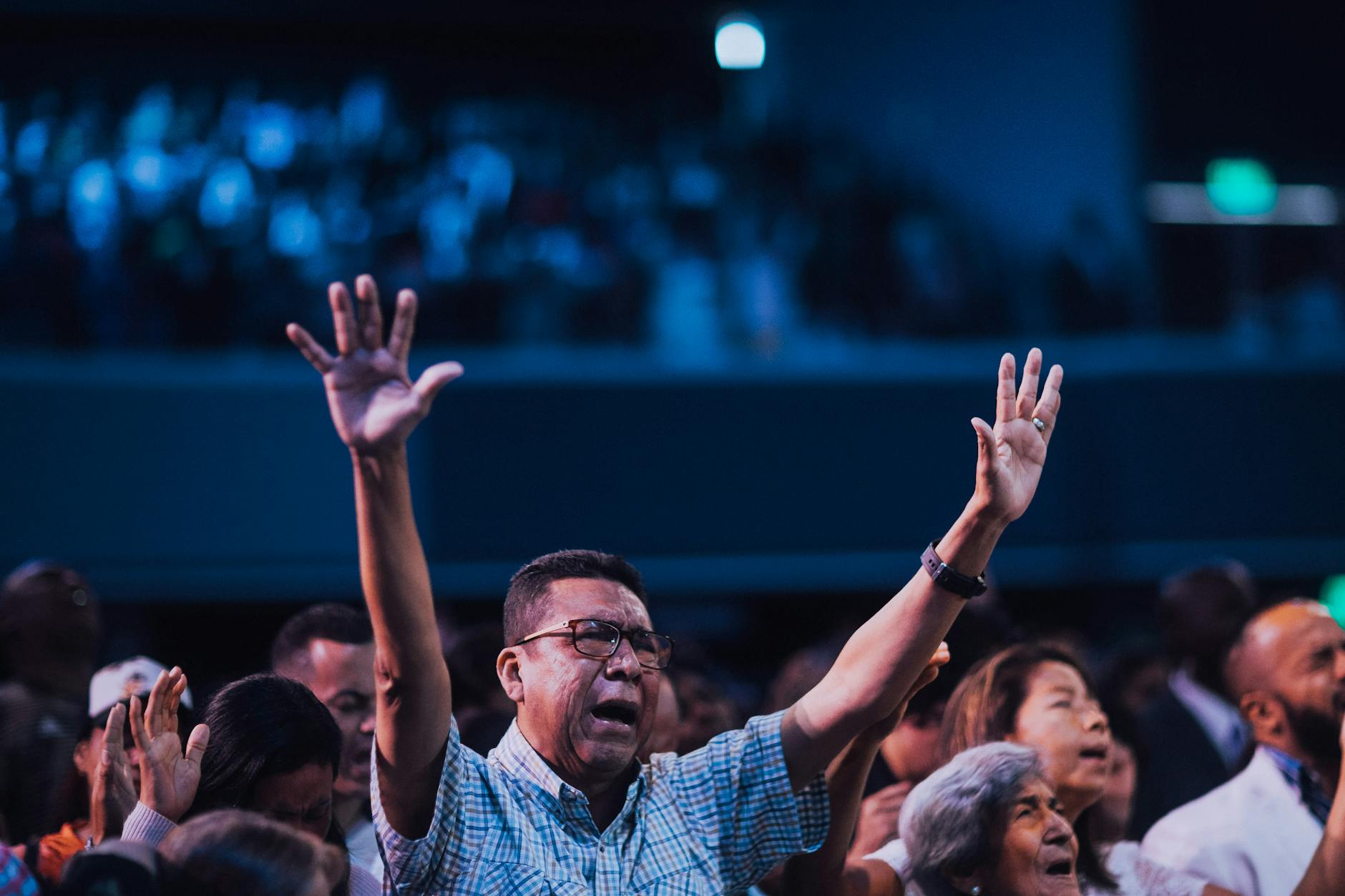
2 SAMUEL #7: GOD’S HOLINESS AND WORSHIP

Photo by Luis Quintero on Pexels.com

Worship is not necessarily an expression of spontaneous feelings, though that can be part of it. One of the things that liturgical churches get right is that we can make a plan for how to worship God, and follow through on it, regardless of how we feel. Worship is based upon the objective truth that God is God. He is Holy, whether we really get that or not. He is good, whether we feel that at the moment, or not. All of the good things in our lives have come about because of him, whether we recognize that or not. And so, we can decide to worship God, even when we “don’t feel like it.”

To listen to the sermon, click the play button:

For some people, the player above may not work. If that happens to you, use the link below to either download, or open a player in a new page to listen.

To download, right click on the link (or do whatever you do on a Mac) and save it to your computer: Download 2 Samuel Part 7

Second Samuel# 7. 2 Samuel 6:12-23

Last time we considered the holiness of God. When we realize how holy God is, and how sinful we are, and how much Jesus has done for us, the appropriate response is worship and thanksgiving.

I want to return to God’s holiness before we talk more about worship. Last time we mostly considered how God’s holiness is a problem for sinful humans (which means: all humans). We talked about how God’s holiness destroys sin. But it’s an even bigger problem than that. Bear with me as we look at it another way.

Pause, and try to think of a time when you were filled with some deep, positive emotion. Maybe it was profound gratitude as you held your kids or grandkids on your lap. Perhaps it was an inward delight as you listened to some really good music. It could have been a time when you were the one playing the music, and everything came together, and you felt lifted above yourself. Another such moment might come when you are looking at beautiful scenery, or, perhaps, some stunning artwork. Possibly, you felt a kind of inward rush of admiration and awe when you read a great book, or saw an amazing movie. Maybe it was a recognition of how blessed you are to be loved by the important people in your life. It could also be that time you were at a sporting event, and together with the whole crowd, you were there for an amazing win, even though your team was the underdog. I could go on, but I hope you know what I’m talking about. There are moments in life when we experience joy, or hope, or longing, or some kind of sweet, deep emotion. Think about something like one of these things. Picture it, especially how you felt. Stop reading and just enter that wonderful memory for a little while.

OK, now what I want to say is this: That terrific moment, that amazing feeling you had, originated from the holy presence of God. James writes this:

16 Do not be deceived, my dear friends! 17 Every good gift and every perfect present comes from heaven; it comes down from God, the Creator of the heavenly lights, who does not change or cause darkness by turning. 18 By his own will he brought us into being through the word of truth, so that we should have first place among all his creatures. (James 1:16-18, GNT)

The apostle Paul, preaching to people in the town of Lystra about God, put it like this:

17 But he has always given evidence of his existence by the good things he does: he gives you rain from heaven and crops at the right times; he gives you food and fills your hearts with happiness.” (Acts 14:17, GNT)

Everything good, beautiful, praiseworthy, excellent, joyful, gratitude-inducing comes from the presence of God. In fact, it may be that everything that brings us true joy is a by-product of God’s holiness. That doesn’t mean that all of these things are automatically righteous. For instance, I can imagine that someone having an extra-marital affair might feel real joy in being loved by their lover. That doesn’t mean God has approved and blessed the adulterous relationship. It just means the joy of feeling loved is an echo of the fact that we were made for the love of God. But that echo doesn’t mean it’s righteous – it means that God has created us for relationship, and even in illicit relationships what we are really seeking is God himself. The euphoria of affairs wear off eventually, and they tend to be wildly self-destructive to the closest people in your life. My main argument is that joy always points toward God, but it doesn’t necessarily mean everything that gives you joy is blessed and approved by God.

God scatters these moments to all people, whether or not they have trusted Jesus. But they are always temporary, sometimes only momentary. And that hints at the problem: Without the intervention of Jesus, eventually we would be separated from all such joy, happiness, contentment, goodness, and so on, forever. It isn’t just that we will be separated from an uncomprehensible God who is “other” in his holiness. It is that, because of our inborn sin, we would be separated from everything we crave, everything we love and find joy in, everything we so deeply need.

In our text today, the Lord offers David and his people just a hint of that. This terrible and holy Ark, the instrument of the death of Uzzah, is also the instrument of tremendous blessing to Obed-edom, on whose land the Ark now stood. His whole family was blessed by good fortune. David was encouraged by this. He saw that God is not just holy, but is also loving and good. In fact, the love and goodness are part of the holiness. So David returned to the Ark with many people to joyfully bring it to Jerusalem, to be a blessing available to all of the people of Israel.

Verse 13 shows us that David, or the priests, or both, had searched the scriptures to see what they had done wrong the first time. They now knew it should be carried with poles through the rings that were secured to the four corners of the Ark. And that is what they did.

After the first six steps, the priests carrying it stopped, while the people sacrificed a bull. There is significance to the number six. In six days, God created the earth, and on the seventh, he rested. He set aside the seventh day as holy. Seven was considered the number representing God’s perfect work. So David and the priests set aside the seventh step as holy, and offered an approved sacrifice for worship. As they proceeded, David and the others with him were filled with joy and thankfulness to God.

5 David and the whole house of Israel were celebrating before the LORD with all kinds of fir wood instruments, lyres, harps, tambourines, sistrums, and cymbals. (2Sam 6:5, HCSB)

14David was dancing with all his might before the LORD wearing a linen ephod.15He and the whole house of Israel were bringing up the ark of the LORD with shouts and the sound of the ram’s horn. (2 Samuel 6:14-15).

David, filled with the Holy Spirit, understood more than probably anyone else in his generation that God is wonderful and  good. And so he entered whole-heartedly into worship. There is a sense of extravagance and freedom here. There are all sorts of instruments. People are shouting, and dancing and blowing horns. God’s grace and joy are filling the people.

Now, I want to point out a few things about this. First, it shows us that we don’t have to be narrow in how we worship God. Some people sang. Others danced. We have six different instruments named, and it sounds like there may have been others used that weren’t specified. Worship, as described here, included free and open expressions of joy through music and dancing. The instruments listed here are a lot more like guitars, bass and drum than they are like a pipe organ. It looks like there was a lot of spontaneity also.

David’s first wife, Michal, did not approve. She told David that he made a fool of himself. David’s response is one of the best verses in 2 Samuel:

21 David replied to Michal, “I was dancing before the LORD who chose me over your father and his whole family to appoint me ruler over the LORD’s people Israel. I will celebrate before the LORD, 22 and I will humble myself even more and humiliate myself. (2Sam 6:21-22, HCSB)

David understood that the only opinion about worship that matters is God’s opinion. He worshipped the way he did for the Lord, not for anyone else. He was willing to go even further, and look even more foolish for the Lord. David understood the awesome power of God’s holiness, and how gracious God is to come close to us anyway. Not only that, but David also understood that part of God’s holiness is his sheer goodness. In David’s mind, nothing at all could compare with the wonder, goodness, glory and holiness of God. He refused to hold back anything from the Lord.

I think we need to be encouraged by this to give honor and worship to God, even if it means looking silly to the people around us. If you are worried about how you look, you will not be able to fully worship God. When I’m not playing guitar, sometimes I raise my hands. I do this sometimes even when I’m not “feeling the vibe.” I do it because God is worthy to raise my hands to – he deserves that kind of honor, and, in fact, much more. I do it to remind myself to quit thinking what others around me might be thinking, and wonder instead what God thinks. Worship should not be governed by what we think is socially expected, but rather by how we can truly honor God.

The second point is this: Worship should not be governed by what we think is socially expected, but rather by how we can truly honor God. Yes, I know I just said that, but this time, turn it around the other way. I’ve been in worship services where the social expectation is that you raise your hands and dance and jump up and down. I think that is terrific if those things are the way you express honor to God. But sometimes, I want to honor God by kneeling quietly, or bowing my head and standing still, or just singing with all my heart. I should not allow social expectations to force me to raise my hands or dance, any more than I should allow them to stop me from doing those things.

Now, please don’t use that as an excuse to stand with your hands in your pocket, refusing to give God the honor he deserves. I’m just saying, don’t let what others think you should do, or what others are doing (or not doing) be your guide for how you worship. Freely and fully express yourself to God in keeping with the person he made you to be. Sometimes the Holy Spirit may nudge you to go out on a limb and be more expressive, even if what he wants you to do feels a bit uncomfortable or unnatural. You might, in fact, look foolish if you worship that way. David shows us the way. If your choice is between looking like a fool to other human beings, or looking like a fool to the Lord, it’s obvious that we should choose the first.

Sometimes the Spirit may nudge you and remind you not to put on a show for others, but to focus on Him alone. Listen to that too.

I do want to make sure we understand worship. You can worship through singing, but worship incorporates more than just singing. As we receive the Lord’s Supper in faith, we are worshipping. When we thank God for a meal, or for a good gift of any kind, we are worshipping. The heart of worship is thanking God for all of his good gifts, and, above all, thanking God for who he is, which is sometimes called “giving glory to God.” Those thanks, and that “giving glory” can be offered in a variety of ways: singing, praying, saying liturgy, reading scripture out loud, having a time of silence.

One way to worship is to enjoy God’s gifts while consciously acknowledging the fact that they come from him. For example, I used to worship while I was skiing in the Cascade Mountains. I recognized that the mountains, and my ability to enjoy them that moment while skiing, were gifts from God. My heart was lifted up to God while I skied.

The Bible also teaches us that worship is most unique and precious when it is done alongside other believers. Something special happens when believers worship together that is more meaningful and powerful than worshipping alone. Being with other believers helps to keep us humble–because we need each other to worship God in the way that delights him most. While there are examples of believers worshipping alone in the Bible, by far the most numerous examples of worship involve more than one person. People who suggest that the only worship that they “need” to do is being in nature by themselves misunderstand the nature of worship. As deeply introverted as I am, I cannot deny that God created us, and redeemed us, to worship him alongside others of his people.

Also, worship is not necessarily an expression of spontaneous feelings, though that can be part of it. One of the things that liturgical churches get right is that we can make a plan for how to worship God, and follow through on it, regardless of how we feel. Worship is based upon the objective truth that God is God. He is Holy, whether we really get that or not. He is good, whether we feel that at the moment, or not. All of the good things in our lives have come about because of him, whether we recognize that or not. And so, we can decide to worship God, even when we don’t “feel” like it.

Our God is holy. I think one reason David and his people worshipped so extravagantly, is because they had a very recent reminder of how holy God is, and how big the gap was between them; and yet they also had a reminder of how good and gracious he is to bridge that gap himself.

Let the Holy Spirit speak to you about this today.

1 SAMUEL #27: DARING DEEDS BY DAVID

Photo by Belle Co on Pexels.com

Saul had abused his power and mistreated David in several despicable ways. But David’s main complaint was that Saul was cutting him off from worshipping in God’s sanctuary, and from God’s people. Even so, once again David refrained from harming Saul when he had the chance. In this incident David reminds us that we need fellowship with God’s people. He also shows again what Jesus is like: he does not treat us as our sins deserve, but instead showers grace on us unconditionally.

To listen to the sermon, click the play button:

For some people, the player above may not work. If that happens to you, use the link below to either download, or open a player in a new page to listen.

To download, right click on the link (or do whatever you do on a Mac) and save it to your computer: Download 1 Samuel Part 27

1 SAMUEL #27. 1 SAMUEL CHAPTER 26;1-25

Often when I teach through the Bible, I am looking for tightly focused themes and messages in each passage. That works pretty well when we encounter the teaching genre in scripture. But often, when we get to narrative history, I feel like each passage is a box of chocolates: a lot of variety, a few surprises, but all of it is sweet.

I want to point out again David’s precarious situation. He was trying to lead and support 600 men who couldn’t stay in one place. In fact, they couldn’t stay in any civilized place, because the king had declared David an outlaw, under a death sentence. He was dependent upon gifts from friends and strangers. He was also vulnerable to those same people if they chose to betray David and his men. We don’t know for sure how long David lived this way, but it was certainly years – maybe even as long as a decade.

One of the reasons I like to point this out is because many churches and popular preachers seem to suggest that if you have faith in God, everything will always go well for you. By implication, if things do not go well with you, it must be because you don’t have enough faith, or you are not righteous enough. David was an imperfect human being, but he did live in faith. In fact he had a great deal of trust in the Lord, and always repented from his sins, and was willing to humbly learn to do better.

 Even so, for many years, it did NOT go well with David. I just want to make sure that no one reading this ever falls prey to the teaching that if life is tough on you, it is automatically because you don’t have enough faith, or you are a bad Christian or something like that. Sometimes, by our own choices, we do make life harder than it needs to be. But sometimes, life is just hard, for no reason that we can understand. Certainly David had a heart for God and a great deal of integrity, and those did not save him from trouble and hardship.

Also, I want to make sure you don’t believe that you can earn favors from God by being righteous, or saying the right words or having the right kind of faith. We live by God’s grace. If we had to earn God’s favor, no one would ever earn anything good. You don’t understand the gospel if you think you can earn blessings by being righteous, or saying the right things, or having the right kind of faith. David was not the only person in the Bible who had great faith, but a difficult life.

I do want to say, however, that David became the great man he was because of his faith. Sometimes things went very well for him and sometimes they didn’t. But how it was going on the outside was not as important to David as the quality of his relationship with the Lord. And because that relationship was more important to David than anything else, God was able to use him in amazing ways, and also to bless David without David thinking he had earned it.

Wouldn’t it be wonderful to receive all of life as blessing, whether or not it looks that way outwardly? If we could do that, it wouldn’t matter much to us whether circumstances were good or bad. We would always be experiencing life as blessing. David was getting there.

In chapter 26, David was still in a time of outward difficulty. But we will quickly see that things were very good with his heart. Once more, the Ziphites betrayed David – the same people who almost got him killed in chapter 23:19. They knew where David was, and they told Saul to come and get him. As far as we know, Saul had left David alone since the incident when David spared his life in the cave. But the Ziphites basically tempted Saul to sin. Having betrayed David once, this group of people probably thought that if David were not killed, he would take retribution on them if he had the chance, so they may have been quite urgent and persuasive in trying to get Saul to start hunting David again.

Apparently, David could hardly believe it, so he took a few men on a reconnaissance mission to see if Saul had really started hunting him again. One of the men he brought with him was Abishai. Abishai was one of the sons of David’s sister Zeruiah, which made him David’s nephew. Abishai’s brother Joab became the commander of David’s armies later on. If you remember, among David’s men eventually there were “the Three” who became outstanding warriors, and then “the Thirty” who were also an elite force of great fighters among David’s other men. Here is what it says about Abishai elsewhere:

18 Abishai, Joab’s brother and son of Zeruiah, was leader of the Three. He raised his spear against 300 men and killed them, gaining a reputation among the Three. 19 Was he not more honored than the Three? He became their commander even though he did not become one of the Three. (2 Samuel 23:18-19, HCSB)

Now, for those of you who are Bible geeks, like me, you might find a translation that says Abishai was commander of the thirty, rather than the three. In fact, the translators of the ESV couldn’t make up their minds about this, and older editions read like the HCSB (above) and newer editions have Abishai as commander of the thirty, rather than the three. The problem is that while most ancient texts read like the HCSB (quoted above) two well regarded ancient texts have it the other way, and it seems to make a bit more sense the other way – how could he be chief of the three, if he wasn’t one of the three? This is one of those “major issues” in Bible translation, but of course, it isn’t really that important. What is clear, no matter which way is correct, is that Abishai is one of the greatest warriors alive during David’s lifetime.

Since David was the youngest of ten, it is possible that even though he was technically Abishai’s uncle the two of them might have been basically the same age. It is even possible that Abishai was a little older. They might have spent a lot of time together as boys. At this point, they were both probably in their early or mid-twenties, in the prime of physical power and maybe a little inclined to try something crazy.

The two of them decided to sneak into the heart of Saul’s encampment at night. This was the desert, so the soldiers probably did not have tents. The picture seems to be that Saul chose his sleeping spot, and then the whole army arranged themselves around him, with his bodyguard closest to him and the rest spread around them generally. David and Abishai crept through the entire group of three thousand sleeping men and came to Saul sleeping soundly, along with Abner, the chief of Saul’s bodyguard.

This incident appears somewhat similar to the one in chapter 24. Certainly, the result, and the main point (David sparing Saul) is virtually the same. However, other than that, almost every detail is different. Saul didn’t come alone into a cave where David and his men were waiting. Instead David crept with only one companion into the middle of Saul’s camp. This time it wasn’t Saul almost finding David where he was hiding, it was David finding Saul where he was camped openly. Before, David was passive. This time he initiated the action.

I think that it is no coincidence that this second opportunity to harm Saul was given to David after his interactions with Nabal and Abigail. In chapter 24, we have the record of how David was tested in the cave with Saul, and he passed that test. But with Nabal, he failed. He fully intended to take matters into his own hands regarding Nabal, and was saved from sin only by the wisdom of Abigail. Now, once more, he gets the chance to either take matters into his own hands, or trust the Lord.

It is almost as if the Lord was giving David a chance to see if he really had learned his lesson from the incident with Nabal. It isn’t just a test – obviously, God already knew what was in David’s heart. But David may not have been sure of himself. He may have had times where he thought about the incident with Nabal, and condemned himself, and wished he had behaved differently. The Lord was giving him a second chance, a “do-over.” In the Torah, it says all legal issues must be established by at least two witnesses. Now there were two occasions that “witnessed” David’s commitment to not harm Saul, and to not take matters into his own hands. Those incidents were witnessed by both Saul’s men, and David’s followers also.

Abishai however, did not yet have David’s wisdom. He asked permission to kill Saul with Saul’s own spear. By the way, in one of Abishai’s exploits (recorded elsewhere) he killed three hundred men with a spear in one battle, so he knew how to use that weapon. He’s not just boasting when he says one thrust would do it. It would be all over. The good times could begin. The days of wandering homeless, despised by people around them, in danger all the time, could all be ended by one swift spear thrust. As before, it was a powerful temptation. Who could blame David? In Saul’s mind, anyway, they were enemies. It would be an act of war. It wouldn’t even be David who struck the blow.

But David had learned his lesson thoroughly. He said:

10“As the LORD lives, the LORD will certainly strike him down: either his day will come and he will die, or he will go into battle and perish. 11 However, because of the LORD, I will never lift my hand against the LORD’s anointed. Instead, take the spear and the water jug by his head, and let’s go.” (1Sam 26:10-11, HCSB)

He saw the battle with Goliath as the Lord’s fight. So now he sees the struggle with Saul. It isn’t his own fight at all, really – it is God’s business, and David trusted God to take care of it in His own time and in His own way.

As morning broke, from a safe distance, David called and awakened the camp. He showed them the spear and the water jug he had taken from Saul’s side. David was young and strong, and he had accomplished an amazing, bloodless feat of arms. So he teased Abner, Saul’s commander for a moment. I get the feeling he was rejoicing in what he and Abishai just did. Maybe he was “crowing” just a little bit. But then, once again he respectfully confronted Saul with his wrongdoing. Like Abigail did with David, so David now did with his king, Saul. He showed Saul he was wrong; he reminded him of true righteousness in God’s eyes – but he did it all with respect. You might say that similar to Abigail’s attitude toward David, David was submissive to the authority of Saul, but he was not subservient or a doormat.

Review the history of abuse Saul has heaped on David: He refused to honor his promises to the conqueror of Goliath. He didn’t reward him with money for killing Goliath, like he had promised to do. He initially didn’t allow David to marry his daughter (as he had promised). Then he made David pay a bride price for the privilege, even though he had promised that killing Goliath satisfied the bride price. He sent David on the most dangerous missions against the Philistines. He threw a spear at him, twice. He tried to have him killed. Then after David fled, several times Saul pursued him with thousands of warriors, to try and kill him.  Even after David spared his life in the cave, here is Saul again, trying to kill him.

But listen to what David’s biggest complaint about Saul is:

For they have driven me from my home, so I can no longer live among the LORD’s people, and they have said, ‘Go, worship pagan gods.’ 20 Must I die on foreign soil, far from the presence of the LORD? (1 Samuel 26:19-20, NLT)

Saul’s worst offense, in David’s eyes, is that he is cutting him off from the people of God. David can’t go and worship at the sanctuary any more. Remember, things were different before Jesus came. God’s presence was in the sanctuary in a special way, and David was denied access to that. This is his biggest concern.

At the end of the discussion, David showed where his trust is:

23 May the LORD repay every man for his righteousness and his loyalty. I wasn’t willing to lift my hand against the LORD’s anointed, even though the LORD handed you over to me today. 24 Just as I considered your life valuable today, so may the LORD consider my life valuable and rescue me from all trouble.” (1Sam 26:23-24, HCSB)

He didn’t ask Saul to treat him the way he treated Saul. Instead, he declared that he trusted the Lord to treat him with righteousness and love.

Throughout this, Saul seemed to be full of remorse. But he was remorseful last time too, after David spared his life in the cave. David has learned something important from Saul: Remorse is not the same as repentance. Saul let his emotions rage through him uncontrolled. Sometimes he was full of murderous fury; sometimes he was full of regret and sorrow. But the regret and sorrow did not lead to true repentance for Saul – they were just feelings he had sometimes. So, even though Saul invited David to come back with him, David did not do it. Saul was in God’s hands, but David was wise enough not to trust him.

It’s another great story, and I love it just for the daring deeds and passion and trust in God. But what does it mean for us now? What does the Lord want to say to us through this passage today?

When I read this at first, I am tempted to see it as a reason to admire David and Abishai. Here are two deadly warriors who, between just the two of them, can overcome hundreds of enemies at a time. And now, they seem to be showing us that in addition to a capacity for incredible violence on the battlefield, they can move as silently as stalking cats. But verse twelve paints us a different picture. It says that it was the Lord who made this whole incident possible. It was the Lord who made a deep sleep fall on the entire army. It wasn’t the skill of David and Abishai. This was an opportunity given by the Lord.

David shows that withholding violence takes more courage than doing something violent. With one violent act, his troubles could have been over. It was much harder – it was a much greater deed – to leave Saul unharmed. I think we can all learn from that. Jesus told us to turn the other cheek. It takes a lot more courage to do that than to take matters into our hands, and protect ourselves. It takes courage not to reply with harsh words or gossip when someone hurts us. It takes courage to not repay hurt with hurt.

As we read the Old Testament especially, I think it is helpful to ask: “Where is Jesus in this text?” Remember, David is sometimes a “type of Christ.” What this means is that God used David at times to show the world what the real Messiah (Jesus) is like – to people who would never get the chance to know Jesus in their earthly life.

This passage does show us a little bit of what Jesus is like. Like David, Jesus is a mighty warrior, forever in the prime of life, full of bravery and wisdom; ultimately and absolutely victorious over his enemies.

David held back from harming Saul, who, without a doubt, deserved to be harmed by David. In the same way Jesus holds back the punishment that we all richly deserve. Jesus told us to love our enemies, to pay back evil with good. David did that very thing. Jesus forgave the people who were crucifying him, even as they did the deed.

Here’s something else that I think is very significant. David did not know at the time that the Lord was using him to show the world what Jesus was like. He didn’t realize how significant his actions were. But because he lived in trust and obedience, many people in his generation, and for a thousand years after, had some idea of what the Messiah was like.

We don’t always know when someone has a chance to see Jesus through us. We can’t always tell when the Lord is doing that. Very often the opportunity comes when we least feel like it. There was a huge temptation for David to act precisely opposite of how Jesus is. So in the same way, it may be in our toughest moments that God uses us to show Jesus to the world.

The other thing that speaks to me here is David’s strong desire to worship God with other believers, his desire to be counted among all God’s people. I think today in the Western world, we sometimes forget how important this is. Through Jesus, the Holy Spirit lives inside of us, so it’s easy to begin to think we don’t need any other Christians to help us. But David had the Holy Spirit, also, and the Spirit caused him to yearn to be in fellowship with God’s people, and to worship with them. Sometimes the way we do church in the Western world is a bit messed up, and it doesn’t really reflect God’s design for church. I have a friend who has several valid criticisms of Evangelicals in America. But my friend takes it too far. He says that he is “in church” whenever he has coffee with fellow Christians, or goes to a barbeque with them, so he doesn’t need to be part of a local church. That is not what scripture says. It is vitally important for believers to be in real community with other believers, and especially to learn the Bible together, worship and pray together, and together renew Jesus’ covenant with us through the Lord’s Supper (Acts 2:42). David understood how important it was to worship with, and be connected to, God’s people.

What is the Holy Spirit saying to you right now?

COLOSSIANS #36: THE LIFE SPIRITUAL

Photo by Public Domain Pictures on Pexels.com

We are called to live a life bathed in prayer and worship. This is something to persist in, persevere in, even when answers don’t come easily. We are to watch over and guard our spiritual lives, and pray also for the teaching and spreading of God’s word. We cannot do any of this on our own. We need the power of the Holy Spirit in us to live this way.

To listen to the sermon, click the play button: To download, right click on the link (or do whatever you do on a Mac) and save it to your computer: Download Colossians Part 36

COLOSSIANS #36. COLOSSIANS 4:2-4

After dealing with seven whole verses last time, we will turn our focus to three more verses: Colossians 4:2-4. As always, remember the context. This is part of what it means to do all things for the sake of Jesus, and in reliance upon Jesus. Chapter 3 started with the general idea: since our real life is hidden with Christ in God, focus on the things above, where Christ is, where our real life is. Then throughout chapter three, Paul began to spell out some specific scenarios, so that we could understand what that idea means in our relationships with other Christians, and then in our family relationships, and following that, in our relationships at our jobs. Now, he caps off the entire section with 4:2. The Greek uses only seven words in this verse, but four of those words are densely packed with meaning. So, I offer you my “amplified” translation.  Again, I am not claiming to be a Greek scholar, but I want us to understand what this sounded like to the first people who read it:

“As to prayer and worship – in fact, your whole spiritual life – be always sticking with it, be continually persevering in it, staying awake and alive in it, guarding your spiritual life, all with thankfulness.”

I “translated” it this way so that we can see several important things that we might otherwise miss in English. First, the word for “prayer” includes more than bowing our heads and reciting words to God. It points to the entire life of worship and devotion to God, both for individuals, and for the church as a whole. So it isn’t only about “saying prayers.” It is also about worshipping God alone while you are driving, and worshipping God with other Christians while you sing with your church. It is about asking God to intervene in specific ways, and is also about keeping an informal conversation with God going at all times. It is talking about life with a Christian friend, and then praying about your concerns together before you move on. It involves reading the scriptures, and talking about God with fellow Christians, as well as those who don’t believe yet.

Second, in my translation, I make it clear (as the Greek does) that this should be an ongoing, never-ending process. This isn’t a religious duty that you do, and then you’re done. Of course, that should be obvious by now, since Paul has been applying faith to all of life. But these verbs are in the present tense, active mood, which means these are real, actual, actions that should be carried out continually. It isn’t theoretical, or abstract. It is also ongoing.

Now to a couple of the important words. The word translated by the ESV as “continue steadfastly” is the same word used in Acts 2:42, where it says “they devoted themselves to the apostles’ teaching, and the fellowship, to the breaking of bread, and prayer.” The idea behind the Greek term is a that a group of people are together earnest, persevering, diligent and utterly committed to something. In other words, they didn’t just “say a prayer.” They were earnest and diligent about praying; they persisted and persevered in their prayers, even when they did not receive immediate answers. They didn’t just “listen to a sermon.” They diligently persevered in learning what Jesus said and did, and what it meant. They persisted in applying it to their lives, even when at first it didn’t feel like it made anything better.

I think this idea is very important. What we really believe as Christians is that spiritual reality is more real and important than what we call “physical” reality. I don’t mean the physical isn’t real, or that it doesn’t matter; but Christians believe the spiritual is the more powerful of the two and certainly the more lasting. That means we persist in our devotion to spiritual life even when the physical reality is whispering to us that we are stupid and silly to do so. We persist in this because it makes a difference in spiritual reality Eventually, that difference will also affect the physical realm, but even if it does not do so during our lifetimes, we trust in what we don’t see. That is what faith is: “the reality of what is hoped for; the certainty of what is not seen.” (Hebrews 11:1).

Next we have the term “being watchful.” This word is used fairly often by Jesus himself, when he teaches us to be alert and expectant about his return to earth. Peter uses it in his first letter:

8 Be sober-minded; be watchful. Your adversary the devil prowls around like a roaring lion, seeking someone to devour. 9 Resist him, firm in your faith (1 Peter 5:8-9, ESV)

So the word means to remain awake and alert, to be diligent in guarding or watching over something. In this case, we are to be alert and diligent in watching over our spiritual life with Jesus, our life of prayer and worship, both public and private and all the time.

And we are to do this, with thankfulness. This is the seventh time Paul has mentioned gratitude in this short letter of  Colossians. I think we should pay attention. Our entire spiritual life – and even the guarding of our spiritual life – should be deeply soaked in thankfulness to God. Bible scholar R.C. Lenski says:

This indicates Paul’s meaning: our great thankfulness for all that Christ has done for us and all with which he has filled us (2:9); see also 3:15, 17. He has freed us from all superstitious fears; he has placed us into the pure and happy Christian life. Cling to him in prayer and watch that nothing removes us from him and constantly thank him for all that we have in him. (Lenski’s Commentary on the New Testament, Colossians 4:2)

I have said it before, but I even need to remind myself, so I’ll remind you too: Thankfulness helps us to take hold of spiritual blessings. Sometimes we don’t know exactly how grasp the wonderful promises of God in scripture. We struggle to make them real in our life. Thanksgiving is the answer. Thanksgiving makes us like sponges, so that we can absorb the goodness that God is showering on us through Jesus Christ. Sometimes, it seems to me that we pray for things that are deeply concerning to us, and when we are done, we feel no better. I wonder if perhaps that is because we are not thanking God at the same time. Perhaps if thankfulness was a part of all our praying, we might find a greater rest for our souls through prayer.

Paul adds something interesting in verses 3-4:

At the same time, pray also for us, that God may open to us a door for the word, to declare the mystery of Christ, on account of which I am in prison— 4 that I may make it clear, which is how I ought to speak. (ESV, Colossians 4:3-4)

In addition to the life of prayer and worship, Paul asks Christians to pray for him, and for his ministry of declaring God’s word. I do not think that we still need to be praying for the apostle Paul. But I think we can learn a few things from these verses. First, though Paul is gone, the ministry of declaring God’s word clearly remains. I think it is still good and right and appropriate for us to pray that God’s word will be made clear all over the world. All Christians should be interested and invested the spreading of God’s word, and all of us can be involved in that through prayer.

In addition, part of that includes praying for the individuals who are called to the ministry of teaching God’s word. In fact, I ask, without embarrassment, that you include me in those prayers. God has called me to make his word known, as clearly as I can, to the best of my ability. You may have noticed that the name of my sermon blog is “Clear Bible.” That comes directly from this idea here in our text. Obviously, I am not the only person called to this – not remotely so! But as you pray for God’s word to made known all of the world, I deeply appreciate it if you include me in those prayers.

I think this also gives us a standard for the declaration of God’s word. It should be done clearly. One of the reasons I was never able to become an academic theologian is because I am impatient with the tendency of such people to make the bible more obscure, rather than clear. The Bible was not written for scholars, but for ordinary people, and the ministry of the word should help make it more clear. That doesn’t mean there is nothing complicated or difficult in the Bible, but a minister of the word should be able to help others through those parts, not make it worse.

On the other hand, I do think that those who declare God’s word should have at least some education, especially training in how to interpret the Bible, and how to communicate with people, including how to adapt your communication to the people whom you serve. I have met many preachers who have no training in these things, and frankly, in their own way, they are as bad as the overly-academic types. They don’t understand the word well enough to make it clear in all of its fullness and grace. If you have never learned about the culture of Bible times, if you know nothing of the Biblical languages, or history, or if you don’t know the basics of how to study something, you are sure to misunderstand many parts of the Bible. If you are also a preacher, you are going to pass those misunderstandings on to others. You will tend to be more easily influenced by people around you. Instead of diving deeply into God’s word, you will tend to accept and repeat whatever interpretations are most popular among your peer group, and you won’t be equipped to evaluate whether or not they are true, good and helpful.

You see why Bible teachers need prayer? It’s a big and important responsibility. Along with praying in general for God’s word to be taught clearly, and along with praying for the specific Bible-teachers in your life, I think from these verses we can see that it is important to pray for the word of God to spread all over the world.  Jesus told his followers to make disciples of all nations. He gave John a heavenly vision where people from all ethnic groups would be together in heaven. In order to make those things a reality, the word has to be brought to people who have never heard it before, specifically, people in places of the world where Christianity has not yet been present.

I believe God sometimes makes concrete changes in the world through prayer; that is, in response to our prayers, he makes things happen, or stops things from happening.  What an honor we have to be part of God’s work in the world! But persisting steadfastly in prayer and worship also changes the hearts of God’s people. It deepens our connection with God, and, if we do it with thankfulness, increases our peace and trust in him.

As usual, all of this seems like a tall order. It is not something we can do on our own, with our own willpower. Our failings in the life of prayer and worship should draw us back to Jesus. We need to lean in on his grace, and lean on the power of the Holy Spirit to make us into people who are devoted to prayer.  We can’t do it on our own, but the power of the Lord in us can make us into the people he wants us to be.

WORSHIP IN SPIRIT AND IN TRUTH

worship
Worship in spirit involves giving ourselves wholly over to God and abandoning ourselves to his mercy, grace and joy. Worship in truth means our worship is based upon the revelation of Jesus in the Bible.

To listen to the sermon, click the play button:

To download, right click on the link (or do whatever you do on a Mac) and save it to your computer: Download Experiencing Life Together Part 9

Experiencing Life Together #9. Worship

Worship is central to what we do together as a church, and therefore it is central to what house churches do together. Unfortunately, the average, modern-day American Christian has become somewhat confused by the bewildering amount of information about worship. “Worship” can now refer to a style of contemporary Christian music. “Worship” has also been artificially distinguished from something else called “praise.” For many people, worship is synonymous with singing. For many others, worship involves litanies, bowing, sitting, kneeling and standing. For some, worship is something that we do for God. For others, worship is something God does for us. It is time for some clarity concerning worship in general, and hopefully this clarity can lead us to a practical way to truly worship God in our house churches.

What is worship? At the risk of muddying the waters even further, consider this simple definition of worship: Worship is our response to God’s presence and activity in our lives. This is a very basic, obvious understanding of what worship is; in fact as you read the scriptures it becomes almost self-evident, although sometimes it gets lost in the commercialized “worship movement” of our day. The book of Psalms is sometimes called the “hymnal” of the Bible. Throughout the Psalms you see various calls to worship and almost always the pattern goes something like this:

Sing joyfully to the Lord you righteous; it is fitting for the upright to praise him.

Praise the Lord with the harp; make music to him on the ten-stringed lyre.

Sing to him a new song; play skillfully and shout for joy.

For the word of the Lord is right and true; he is faithful in all he does. (Psalm 33:1-4, emphasis added)

What we have here is the psalmist calling believers in God to worship. He is in essence calling them to respond to the goodness and faithfulness of the Lord. And that is what worship is. Here is another example from the Psalms:

Sing to the Lord a new song, for he has done marvelous things; his right hand and his holy arm have worked salvation for him. (Psalm 98:1)

There are far too many references of this sort to list in full. Again, the point is that worship is an interaction between God and us. God does something for his people, or he reveals a certain attribute of his nature, or he makes his presence known or felt in some way and then his people respond through singing, praying, kneeling, playing instruments, dancing or in a variety of other ways that are all exhibited in Scripture.

We also find in the book of Psalms people crying out to God for help. This too, is a form of worship, and it involves the same elements of worship. When we cry out to God for help, we are actually exhibiting faith in his goodness and his power to help us.

So how do we worship? As mentioned briefly above, there are a variety of ways described in Scripture in which people worship the Lord. Singing, dancing, playing instruments, lying flat on the ground, clapping, raising hands, giving tithes and offerings — all of these are ways (recorded by Scripture), in which God’s people worship him. It seems safe to say that if we use Scripture as our guide there are many possible activities and styles by which we might respond to God in worship. Jesus, when he speaks about worship in John Chapter four, appears to be more concerned with what is going on in the heart when people worship than with the external expression of worship:

Yet a time is coming and has now come, when the true worshipers will worship the Father in spirit and truth, for they are the kind of worshipers the Father seeks. God is spirit, and his worshipers must worship in spirit and in truth. (John 4: 23-24)

What exactly did Jesus mean by this? When Jesus said we must worship in truth, he meant that worship must proceed from an acknowledgment and acceptance of the truth about ourselves, God, and this world. And the truth about those things comes from the Bible. The Bible says the only way we can have a relationship with God is by God’s grace through faith in Jesus Christ (Ephesians 2: 8-9). Therefore, true worship cannot take place without faith in Jesus Christ. Without faith in Jesus Christ we are “dead in our transgressions” (Ephesians 2: 1), that is, spiritually dead. To truly worship God we must be reconciled with him through the death and resurrection of Jesus Christ. If we do have this faith and we are reconciled with him then true worship is possible, and it is based, not on correctly performing external ceremonies or singing certain kinds of songs, but rather on the truth that we are sinful people who have been saved by God’s grace through the death and resurrection of Jesus Christ on the Cross. In addition, worship must have at its heart the central truths and themes of Scripture: God’s goodness, our need for him, his love and joy, and so on.

Worship in spirit means that we are responding to God in a way that goes beyond simply thinking about him with our mind or going through external motions. Worship in spirit involves giving ourselves wholly over to God and abandoning ourselves to his mercy, grace and joy. It means that we have allowed the truth of God’s word to penetrate our lives to such an extent that our will and emotions respond. Worship in spirit is relational as we truly interact spiritually with the living God. To worship in Spirit also means that we allow God’s Spirit – the Holy Spirit – to direct our hearts and minds as we respond to Him.

Worship without Spirit is dead formalism. You may have experienced such a thing at times, where it felt to you like you were simply going through the motions with no enthusiasm. Worship without truth is empty emotionalism. This too is an experience some people have. You may feel like all the hype and excitement is really empty and pointless. Real worship involves both Spirit and truth.

We need to remember that worship is not a neutral activity. One way of looking at it is that worship stirs things up in the spiritual realm. Worship can help us feel closer to God, it can lead us to a place of repentance and it can often release spiritual power. The devil does not want these things to happen, nor does our sin-riddled flesh. Therefore, when we set out to worship it is normal to expect a certain kind of opposition. We need to recognize this and rebuke the devil and resist the impulses of our own flesh.

Following are four steps to take to help us worship more fully in spirit and in truth:

1. Kill the flesh (sinful nature) – eliminate the opposition. This is an act of Will. Practically, this might mean an internal dialogue like this: “I don’t feel like worshiping right now. I’m distracted by all sorts of other things. But I am making a choice to ignore my feelings and other distractions. I make a choice to give God the honor and glory that he deserves.”

2. Remember and Think about the greatness of God. This involves recalling the truth, reading and listening to Scripture, and it is an act of the mind. This means, we don’t just sit around and wait for some worshipful emotion to strike us. We actively read and listen to scripture, we actively think about God, who he is and what he has done.

3. Experience and visualize (enter in to) His presence. This is an act of emotion. In other words, let your emotions get engaged, if you can. God’s love is truly overwhelming. Many people have no trouble getting very excited at a sports game, but allow themselves to feel nothing when they come into the presence of the God who created the entire universe. When emotion is guided by a will and mind for worship, it is a good thing. Sometimes it is useful to use your body to help focus your emotions on worship. When I am not playing guitar, I often lift my hands in worship. I almost always do that, not because I feel tremendous emotion, but because I know that if I honor God with my body (the lifting of hands, or lying or kneeling) emotions of worship often follow. And that is what often happens.

4. Release the Spirit to lead. This is a spiritual act. It is also an act of faith. To let the spirit lead is to consciously invite him to lead your thoughts, will and emotions. When you get a little idea or picture or feeling that you think might be the Spirit, go ahead and follow it. The great thing about house-churches is that you can do that, and if you make a mistake, it’s okay. You and your church will figure it out. So maybe, at the Spirit’s leading, you suggest singing a song, or repeating a verse, or praying.

Here’s a practical example of letting the Spirit lead. Last Sunday, I did not pick the songs for worship. For various reasons, I didn’t even know what the songs would be until about an hour before-hand. I’m sorry to say, I was busy getting ready for church, so I just printed them out. But during our singing time, one of the songs was “Surrender.” As we were singing it, I felt the Lord prompting me to pause and invite people to name things that they wanted to surrender to the Lord. So I did that. The great thing about house-church is, it doesn’t have to always be the worship or music leader who does this. Anyone can be prompted by the Holy Spirit.

When we approach worship this way, we find that style becomes far less important. It is true that some people prefer contemporary praise songs, while others prefer litanies and hymns. There is nothing wrong with these preferences as long as we are willing to subordinate them to the greater cause, which is to worship the Lord. The main thing is what we’re doing (worshiping the Lord), not how we’re doing it.

By the way, that last paragraph is a challenge for me. When I visit other churches, or attend conferences, I often find myself not appreciating the style of worship. I’m not much for liturgy, but a lot of contemporary worship seems to me to be performed too loudly, and in musical keys that are far too high for the average person to sing comfortably. I get the message that my singing is not really intended to be part of the worship service, because I can’t even hear myself, let alone the people around me, and often the band will go off into a solo while the rest of us just sort of stand around.

Now, as a pastor and theologian, I have issues with that approach to worship. However, as a worshiper, I have learned that I can worship in that environment anyway. Because worship is more than singing, and more than style. If I apply my will, my mind, and my emotions to worship, and follow the Spirit, I can worship in Spirit and in Truth, even when the style bothers me a little bit.