PHILIPPIANS #17: ELIMINATING ANXIETY

Person standing on a grassy hilltop looking at sunrise over foggy mountains
A hiker enjoys a breathtaking sunrise above a cloud-filled mountain valley.

Anxiety does not simply go away when we pray to God for our concerns. It goes when we worship God, thank him, and we allow him to be truly King of our lives, and of the Universe. When we worship and thank the Lord, we are undermining our reasons to be anxious. The bigger God is in our own hearts, the less room there is in our hearts for anxiety.

To listen to the sermon, click the play button:

You can also find us on Spotify at https://open.spotify.com/show/6KKzSHPFT466aXfNT2r9OD (This will open to the latest sermon. You can search from there if you are looking for a previous one)

To download, right click on the link (or do whatever you do on a Mac) and save it to your computer: Download Philippians Part 17

When we have encountered other passages of scripture that teach the counter-cultural message that men and women are to have some unique roles in the family and in the church, I have not shied away from teaching and explaining it. There is an often repeated teaching that men are to serve their families and churches in spiritual leadership. Paul says, on more than one occasion “Man is the head of woman,” meaning spiritual head (as Christ is head of the church).

However, though fewer and fewer churches in the Western world are willing to keep teaching this, there are some who do, and among them, at times, they take it too far. It would be utterly wrong and unbiblical to suggest that women are somehow lesser in status, or less capable. Though, according to scripture, roles involving “spiritual headship” belong to men alone, from the very beginning of Christianity, women were vitally involved in all sorts of different important ministries and Christian service.

From within scripture we know that some women provided financial and practical support to Jesus and the disciples. Later, women opened their homes in hospitality to fellow believers, both for church services, and also as places where Christian ministers were welcome to stay. They prayed, both privately, and out loud during worship, and some were called by God to be prophetesses. Some women labored side by side with their husbands in discipling believers. Women taught and discipled other women, and children. Some women were considered deaconesses, which was a role that involved coordinating practical, and sometimes financial, matters for the church.. Some women served as messengers between Christians in various cities. A woman named Phoebe carried Paul’s letter to the Romans from Corinth to Rome.

We know from the writings of early Christians that some women had ministries visiting the sick, and prisoners, and helping to see to their needs. Women brought communion from church services to give to those who couldn’t be there, for whatever reason. They ministered to orphans and widows. Though such things aren’t often mentioned, no doubt some women ministered through music, and others through art, and others through particular skills they had, like weaving or sewing.

Jesus, and his teachings through the apostles, elevated the status of women and marriage, and women responded by trusting and serving him whole-heartedly.

So, it should not surprise us to see that Paul testifies that these two women, Euodia and Syntyche, have labored for the gospel side by side with Paul. Whatever Paul’s own teaching about male spiritual headship means, it does not mean that women cannot have important roles in ministry, or the church. Clearly, Paul expected women to be deeply involved in the mission of Christ, just as he also expected that of men.

Unfortunately the two women who are the subject of verse 2 were not getting along with each other. There has been a lot of speculation about what the problem might have been, but no firm evidence. Paul’s exhortation is for them to put aside their differences and agree in the Lord.

Next, Paul says another thing that has caused a great deal of speculation.

Yes, I also ask you, true partner, to help these women

It stands out in the text. He has been speaking in the plural to the Philippians, and now suddenly he speaks to a single individual, whom he calls “my true partner.” More literally, the Greek is something like, “My legitimate yoke-partner.” The idea of a yoke partner comes from agriculture. Often two oxen would be selected for similar size and strength, and complementary temperaments. The oxen would be harnessed to each other with a wooden yoke, and with the yoke, they would work together to pull things. See the picture below. Speaking of people, it means that they are linked together in some way for a common purpose.
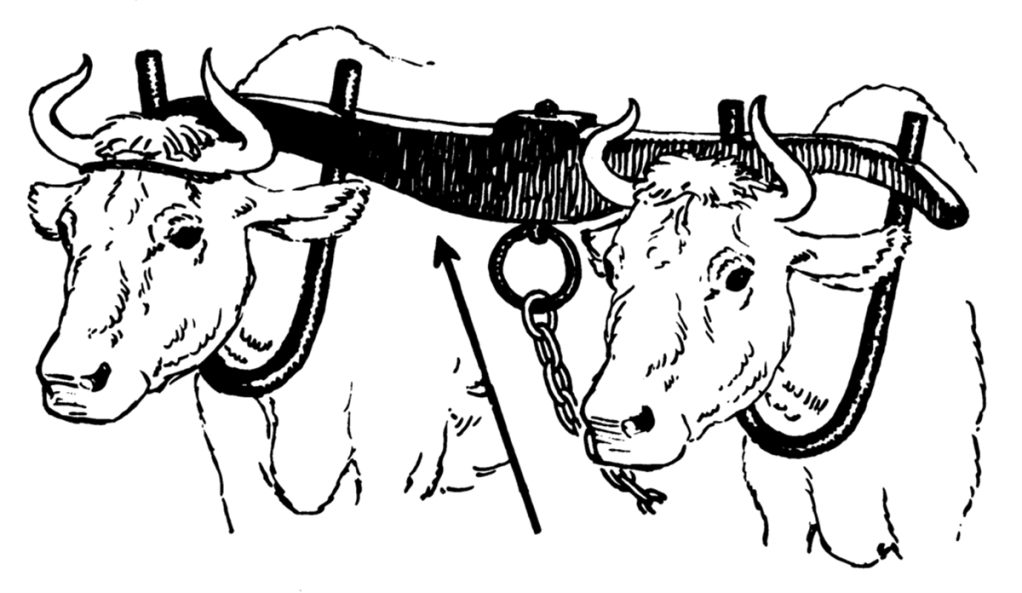
So who was this “legitimate yoke-partner?”

One fascinating possibility is that it could be Paul’s wife. It is clear that Paul was not married when he wrote 1 Corinthians (read 1 Corinthians 7:8). But that was almost ten years before he wrote this letter to the Philippians. He could have gotten married in the interim. The term “legitimate yoke-partner” does evoke thoughts of marriage. Clement of Alexandria, writing about a hundred years later, thinks that this might be the case. It would also add a new layer to the way Paul was reassuring them at the beginning of the letter that things would probably turn out well for him. It would also make sense that he is asking his wife to help sort out a dispute between two women.

But if Paul was married by this time, it seems strange that his wife would not be mentioned at all in the book of Acts, which followed Paul all the way up to the time he was imprisoned in Rome (from where he is writing this letter). There are reasons I could think of why she wouldn’t be mentioned, but I’m not sure they are more likely than the fact that he actually remained single his whole life.

Some commentators think that Paul is writing directly to Epaphroditus, but that seems strange, since Epaphroditus was carrying the letter. Paul could have spoken to him face to face about the matter. Others suggest Timothy, but the same thing applies to him.

One possibility, that I think is more likely, is that he is speaking to Luke. Luke spent at least 8 years in Philippi, and he might have actually been from there originally. I suspect anyway that Luke returned to Philippi, after he saw Paul brought safely to Rome (which Luke writes about at the end of Acts.)

One other possibility is that it is Lydia, who hosted the first house church in Philippi. I don’t really have reason to think it is her, other than that she lived there, and was one of the first Christians, and opened her home to Paul and his companions. It also makes sense, as I mentioned above, to ask a woman to intervene between two women. However, if it is Lydia, Paul’s language of “legitimate yoke-partner” again raises the question of whether he had married her.

I think the most likely thing is actually very mundane and a bit of a let down. The term “yoke-partner” is one word in Greek : Syzygos. It could be simply someone’s name. So, Paul is saying, “I ask you, faithful Syzygos, to help these women…” Now, it’s true, there is no record in any other ancient Greek literature of Syzygos as a name. But we don’t actually have a way to know every single name that was used in antiquity. And it might even be a nickname.

One reason I think it’s a name is because Paul is making a point about names. He names the two women, then (in my opinion) Syzygos, and then Clement, and then: “the rest of my coworkers whose names are in the book of life.”

That’s the big deal here: their names are written in the book of life. That should be far more important than any dispute.  That should help to mitigate any issue between the two women. So, the message goes sort of like this: “Think about your dispute with the perspective that both of your names are written in the book of life, along with these others. Surely, in light of that, you can find a way to resolve things.”

Paul continues with more truth that far outshines any disputes:

4 Rejoice in the Lord always; again I will say, rejoice. 5 Let your reasonableness be known to everyone. The Lord is at hand; 6 do not be anxious about anything, but in everything by prayer and supplication with thanksgiving let your requests be made known to God. 7 And the peace of God, which surpasses all understanding, will guard your hearts and your minds in Christ Jesus. Philippians 4:4-7, CSB

We have already talked about what it means to rejoice in the Lord, so I won’t repeat that here. If you missed it, go back and read, or listen to, Philippians #11. So we come to one of the most quoted verses in the Bible, verses 6-7, above.

I’ve been a pastor  long enough to know that some people read verses 6-7, and say, “Yeah. Right. Just ‘don’t worry.’ Like that’s ever going to happen. I do pray, but I don’t have this amazing peace.”

I think sometimes we rush this process. We are anxious about something, and so we say something like “Lord, please fix this. Please, please, fix this the way I want you to fix this. Amen.” When our prayers do not result in the unusual peace of God, I think it is because we are ignoring a lot of what it actually says here. I want to dig into the Greek briefly, and then make this practical.

As you may have noticed, depending on which translation you have, there appear to be three words for prayer here. The CSB, quoted above has: prayer, supplication (thanksgiving) and requests. But actually, I think these words have slightly different meanings. Here is my own rough, literal-ish translation:

“Do not, in even one thing, be anxious, but in all things, through worship, in prayer, permeated with thanksgiving, let your requests be known to God.”

The word often translated “prayer” is actually closer to “worship.” I’m talking about the Greek word: “proseuche.” In our modern way of talking sometimes “worship” means an entire worship service, including singing, prayer, fellowship, communion and hearing a sermon. At other times, when people use the same word—worship—they mean only the singing part of a church service. So, in the same way, sometimes the Greek word proseuche means specifically and only prayer, and at other times it encompasses all that might be included in “worship.”

I think, given that Paul uses two other words for types of praying, that Paul is using the word proseuche (“prayer” in the CSB) he means not only prayer, but worship in general. This is why: When we experience anxiety, the first line of defense is not asking God for stuff, but, rather, worship. When we worship God, we admit that he is God, and we are not. We remind ourselves of who he is. Among other things, he is the Creator and Master of the universe, infinitely more wonderful, wise, holy and good than we can ever comprehend. You can see, when you think about it, that when we worship, we are undermining our reasons for anxiety. God is so much bigger than our troubles. His goodness so far outweighs our sufferings that our sufferings are hardly worth mentioning. When we worship the Lord, we are resetting our perspective, reminding ourselves of God’s infinite goodness and his wonderful, eternal plans for us. When God is big in our hearts, there is very little room left over for anxiety.

I think this concept is also found in the Lord’s Prayer, as taught by Jesus. We start our prayer (or worship) by praising God as our Father, and then praising and seeking his holiness and goodness to be revealed in our lives, and the lives of others. We want him glorified. Next, we ask for his kingdom—his rule and his purposes—to be manifested in this world. Then we ask for his will to be done in all things, including our own hearts, minds and lives. Then, and only then, after we have set our perspective in terms of God’s greatness, love, holiness and purposes on earth, can we turn to our specific requests for our “daily bread.”

As Jesus taught about praying for daily bread, Paul says here that there is also a place to unburden ourselves to the Lord (“supplication”). We are to cast our cares on him, trusting that he does care for us (1 Peter 5:7). It is good and right to express our fears and failings and needs to the Lord. He is ready to hear, and he remembers that we struggle. We don’t need to hold back. When we bring our supplications to God after we have worshipped, we will already be on the path away from worry.

But, if we really want to let go of anxiety and experience God’s peace, even when we pray, we do so by permeating our prayer and worship with thanksgiving.

When we thank God, we are taking a concrete step of trust. Thanking him is one of the big ways in which we actually “take hold of” his promises. Thanking him opens a two-way portal by which we transfer our troubles to the Lord, and leave them there with him, and he, for his part, returns peace to us.

Many people have discovered that thankfulness can absolutely transform your life. So, for example, say you have a job that you really hate. But, if you start each day by thanking God for the things you don’t hate, you find that it balances out the negatives in your life, or at least, it does to some degree. I often start my thanksgiving with something small, like hot water as I take a morning shower, and towels, and coffee. The more I thank the Lord, the more I think of other things I can thank him for. Soon, it’s not just that I have thanked God for many specific things, but I find my heart being drawn into an entire attitude of thanksgiving. And it is very hard to be both extremely grateful and extremely anxious at the same time. Many, many people have found this sort of thing to be very helpful in maintaining a peaceful heart and positive attitude.

I want to challenge us to push the envelope on giving thanks. I speak from personal experience when I say that I have learned to thank God even for things that I really, really don’t like. To do so, is an act of trust. When I thank God for something that I wish he would change, I am acknowledging that He is in control, and I am not. I am reorienting myself around the truth that he knows better than I do. I am agreeing with his Word, that:

We know that all things work together for the good of those who love God, who are called according to his purpose.

This can be tremendously freeing. It can create a vast reservoir of peace and joy in your life. I know this to be true, because I have experienced it. In my struggle with chronic pain, I began to find real peace and joy when I started to thank God not, in spite of the pain, but for the pain. At the same time I began to thank him for all of the other stupid stuff that was going on in my life that I wished was different.

When I started doing this, it was a pure act of will. I didn’t feel grateful for my pain, or any of the other stuff. I said, “I think I need to do this Lord. So, I don’t feel thankful, but even so, as an act of will, or intent, I am thanking you for this pain.” I went on and thanked him for financial hardship, and several other things. One of the first times I did this, Kari and I did it together. I won’t say we ended by feeling truly thankful, but we did start to feel a little bit more peace.

I have been living with kidney-stone-level-intense pain for almost eleven years. I’m in pain right now, as I write this. I spend hours out of every day just trying to cope with the pain. How could I have peace about such a thing? By remembering that God is God, and I am not. By thanking God that he works all things (even this pain) for my good. And by and large, though many days are just plain physically difficult to deal with, I do have peace about my pain.

My daughter has cancer, and this week has been a difficult one. I am not yet to the point of thanking God for the cancer. I don’t think he sent it to her. But I am at least thanking him for how well my daughter has handled the pain, humiliation and difficulty of this disease. I thank him that she is still with us in this mortal life. I thank him for how the beauty of her character shines as she rests in the Lord for all things. This is a beauty that no one might see, unless she had cancer.

I don’t think anyone gives thanks with 100% purity of heart, 100% of the time. We have grace to fail. But if you are struggling with anxiety, if you are not experiencing God’s peace, I know of no better way to begin to change that other than by developing a habit of thankfulness to God. And if you are not interested in learning to give thanks in all things, I think you should not expect to find peace, or to be free of anxiety. Presenting your requests without worship and without thankfulness is not a Biblical pathway to the peace of God that passes understanding.

If this is difficult for you, I have one final suggestion: ask God for help in becoming more grateful, and when you do, thank him for hearing your prayer. I’m completely serious. We can do nothing useful on a spiritual level without the work of the Holy Spirit in us. So ask for the Holy Spirit to give you an attitude of thankfulness.

And then, as much as possible try to put this into effect. Don’t just ask God for stuff, or pray about what bothers you. Worship him, remind yourself that He is God, and he is a good Father, and he is holy, and all of life was created for his purposes, and to bring him glory. Then, when your heart is settled in the fact that God is God, and you are not, go ahead and unburden yourself to him. Finally, leave those burdens with him by thanking him.


PHILIPPIANS #3: A BUFFET OF THANKSGIVING

Today we will consider Paul’s introductory prayer, offered right after his first greeting to the Philippians. These nine verses are filled with important ideas and rich food for our souls. Think of it as a kind of buffet. You may feel more hungry for the steak than the salad, and that’s fine. Maybe not every part of this passage will be equally meaningful for you. But let’s dig in and see what is on offer here.

To listen to the sermon, click the play button:


For some people, the player above may not work. If that happens to you, use the link to either download, or open a player in a new page to listen.

You can also find us on Spotify at https://open.spotify.com/show/6KKzSHPFT466aXfNT2r9OD

(This will open to the latest sermon. You can search from there if you are looking for a previous one)

PHILIPPIANS 1:3-11

3 I thank my God in all my remembrance of you, 4 always in every prayer of mine for you all making my prayer with joy, 5 because of your partnership in the gospel from the first day until now. 6 And I am sure of this, that he who began a good work in you will bring it to completion at the day of Jesus Christ. 7 It is right for me to feel this way about you all, because I hold you in my heart, for you are all partakers with me of grace, both in my imprisonment and in the defense and confirmation of the gospel. 8 For God is my witness, how I yearn for you all with the affection of Christ Jesus. 9 And it is my prayer that your love may abound more and more, with knowledge and all discernment, 10 so that you may approve what is excellent, and so be pure and blameless for the day of Christ, 11 filled with the fruit of righteousness that comes through Jesus Christ, to the glory and praise of God. (Philippians 1:3-11, ESV)

As I said in the introduction, the Philippians were a church with which Paul had few, if any, theological issues. He had deep, affectionate relationships with many in the church. So, he begins by mentioning that whenever he prays for them, he thanks the Lord, and prays with joy. Later in the letter, he will remind them explicitly that when they pray, they should do so with thanksgiving and joy.

I’ll say more about joy and thanksgiving in prayer when we get to that passage, but I do want to say something here, because it’s worth saying more than once. Sometimes, I pray about something, and when I’m done, I feel just as worried and bothered by it as I did before I prayed. But at other times, when I pray, I feel so much better afterwards. I think the difference is that during the times I don’t feel at peace, I have forgotten to thank the Lord when I pray.

When we give thanks as we pray, we are encouraging our hearts to trust the Lord. When I ask for the Lord’s help, adding “thank you,” is like saying, “I trust you to deal with this, Lord. I’ve asked you to do something, and I’m thanking you, because I trust that you have heard me, you understand my concerns, and you will do what is best.” When we thank him, we are putting the matter in the Lord’s hands, and leaving it with him. Just to be perfectly clear: saying “Thank you,” does not mean that I think the Lord will respond exactly how I want him to. It means I trust him to work in the best way, even if I don’t recognize it as the best way at this point in time. Thanking the Lord is a concrete way of releasing our concerns into the hands of the Lord.

Paul says he is thankful for the Philippians’ partnership in the gospel. The word for “partnership” is a pretty flexible word. In general it describes a close fellowship, an involvement with one another’s lives. I think Paul means a number of things by this word.

The first Philippian to become a Christian was a businesswoman called Lydia. As soon as she received Jesus, she invited Paul and his companions to stay with her. She said: “If you consider me a believer in the Lord, come and stay at my house” (Acts 16:15, HCSB). Her newfound faith immediately led her to reach out to Paul and the missionaries and partner with them by giving them a place to stay. So, from the very first day, Lydia became a partner in the gospel. Apparently the other Philippians responded in a similar way.

The partnership undoubtedly included fellowship and friendship as well. The long, ongoing connection between Paul and the Philippians testifies to genuine love and concern for one another. And, for these Philippians, the partnership also included financial giving to enable Paul to continue to preach the gospel. If you remember, one of the reasons Paul  is writing this letter is because the Philippians sent  him a financial gift, and he wants to thank them. This was not the first time they gave him financial support. At the end of the letter, Paul again thanks them, explicitly, for their financial gift. He says:

5 And you Philippians yourselves know that in the beginning of the gospel, when I left Macedonia, no church entered into partnership with me in giving and receiving, except you only. 16 Even in Thessalonica you sent me help for my needs once and again. (Philippians 4:15-16, ESV)

We’ll talk about all this more when we get to those verses, but I want to make a few quick observations. In Paul’s mind, one way to be “a partner in the gospel” is to give financially, and one of the reasons he thanks the Lord for the Philippians is because they have partnered with him in that way from the very beginning of their Christian lives. This partnership of financial giving is not something that Paul demanded, but rather, the Philippians freely chose to enter into it. We’ll unpack more about this when we get to the end of the letter.

Next Paul writes one of the most comforting verses in the New Testament:

“And I am sure of this, that he who began a good work in you will bring it to completion at the day of Jesus Christ.”

Their partnership in the gospel (and Paul’s too) began with God’s work in them. It continues until Jesus returns, and it continues as the work of the Lord. In other words, Paul is not saying, “I’m sure you will all be good Christians until Jesus returns. No, he says: “The Lord (not you), began the work within you, and it will be the Lord himself who brings it to completion.”

Sometimes we Christians get messed up in our theology. We think “Jesus forgave all of my sins by dying on the cross. Now, it’s up to me to live a good life to honor what Jesus did for me.” But that’s not the Biblical picture at all. Jesus did all that was needed to save us, and he also provides all that is needed for us to live as his people for the rest of our lives. We do not “complete” the work of Jesus by being good people after we’re saved. Jesus himself is the one who completes the work in us. From start to finish, the work is His.

Now, this is all a bit tricky. I’ve mentioned before that there are many tensions in the teaching of the Bible. This is one of them. We are saved entirely by grace. Not only that, but we live as Jesus wants us to live entirely by grace. Jesus is the one who does it within us. At the same time, we have the ability to either allow Jesus to complete his work, or to hinder him from doing the work within us. Our main job is to allow Jesus to do within us what he wants to. Sometimes, that means saying “no” to things we’d like to do, but which will hinder his work in us. Sometimes, that means saying “yes” to things we feel like we’d rather not do. It is all the work of Jesus, a work of grace. But we do have to be diligent about allowing Jesus to do what he wants to do in us and through us. And yet, don’t let this sound like a law you must follow. It is the Lord who provides the power and energy for us to be the people he wants us to be. Our part is to allow him to be at work in us. Our part is not so much to be good people, as it is just to not hinder him from making us into his people. Maybe what I’m trying to say is this: if you belong to Jesus, you will want him to guide you, and empower you to follow him. If you are consistently going your own way, and not too concerned about it, there is something wrong. On the other hand, if you belong to Jesus, he himself will empower you through the Holy Spirit to become more and more the person he wants you to be. You can allow your soul to rest as you trust him to do what you cannot do anyway.

Paul continues on in his gratefulness for the Philippians:

7 It is right for me to feel this way about you all, because I hold you in my heart, for you are all partakers with me of grace, both in my imprisonment and in the defense and confirmation of the gospel. 8 For God is my witness, how I yearn for you all with the affection of Christ Jesus.

Paul reaffirms the sense of fellowship and partnership he feels with them in the gospel. This is important. Christians are supposed to live in fellowship and partnership with other Christians. The idea of someone who is a Christian but does not belong to a church is wildly unbiblical. Even the idea of belonging to a church, but not really knowing or being involved in the lives of your fellow believers is completely against the Biblical view. When you become a Christian, you become part of the family of God, and you are supposed to become anchored to some specific part of that (i.e., a local church, and/or a small group in that church). Being a follower of Jesus involves being a partaker in the lives of other believers. This is not optional. If we don’t love others who belong to Jesus, then we need to seriously wonder if we even love Jesus.

7 Dear friends, let us love one another, because love is from God, and everyone who loves has been born of God and knows God. 8 The one who does not love does not know God, because God is love. 9 God’s love was revealed among us in this way: God sent His One and Only Son into the world so that we might live through Him. 10 Love consists in this: not that we loved God, but that He loved us and sent His Son to be the propitiation for our sins. 11 Dear friends, if God loved us in this way, we also must love one another. 12 No one has ever seen God. If we love one another, God remains in us and His love is perfected in us. (1 John 4:7-12, HCSB)

20 If anyone says, “I love God,” yet hates his brother, he is a liar. For the person who does not love his brother he has seen cannot love the God he has not seen. 21 And we have this command from Him: The one who loves God must also love his brother. (1 John 4:20-21, HCSB)

Paul’s words demonstrate his love for the Philippians. A bit later in the letter we will see that the Philippian church is not perfect, by any means, and there are struggles in the way they love one another. Even so, they kept at it, and Paul reveals his own love for Jesus by showing us that he loves his fellow-believers.

Paul adds this to his prayer for the Philippians:

9And it is my prayer that your love may abound more and more, with knowledge and all discernment, 10 so that you may approve what is excellent, and so be pure and blameless for the day of Christ, 11 filled with the fruit of righteousness that comes through Jesus Christ, to the glory and praise of God.

The first part of the prayer is about this business of loving other believers. Love should abound (that is, be plentiful, and even increase). Love should also be accompanied by knowledge and discernment. In other words, there is a time and place to discern whom we love, and how, and whether or not our fellowship with them is based upon truth and excellence. Our love should grow, and so should our discernment about who we welcome as fellow followers of Jesus. To make it clear: love does not mean that we should accept the corruption of the truth. It does not mean that we should never try to discern with whom we should fellowship. In fact, in addition to love, we need knowledge and discernment.

So, for instance, there are people who call themselves Christians who do not believe that Jesus is the only way to God. There are some who flatly deny parts of what the bible teaches: for instance, the teachings about sexuality which are so out of step with our current culture. But they have no reason for denying the Bible’s teaching on sexuality, while not denying what it says about God’s love. We can and should exercise discernment in our fellowship. I don’t have to judge the status of their salvation, but I can say that through knowledge and discernment, it is appropriate that I don’t have a great deal of fellowship with such people.

Paul ends his prayer with the hope that they will be “pure and blameless for the day of Christ, filled with the fruit of righteousness that comes through Jesus Christ, to the glory and praise of God.”

Once again we return to the comfort of verse six. The fruit of righteousness comes through Christ Jesus, not through our own efforts. The very last phrase is important as well: “to the glory and praise of God.” This is also a comfort: God’s ultimate design is that we glorify him. And he has made it so that when we are glorifying him, it is also the best thing possible for us. Because it is about God’s glory, we can be sure that God himself will complete his work in us. And because it is about God’s glory, we can trust that God’s will is good for us.

So what is the Lord speaking to you about today? Do you need to be reminded to pray with thanksgiving? Again, if you find that your prayers are not bringing you to the peace you hope for, it might be because you need to thank the Lord as you pray?

Maybe you need to be reminded about partnership in the gospel. When we become believers, we join a family, and that ultimately leads to a deep fellowship and partnership with a small group of other followers of Jesus. That partnership shares in joy and pain, in plenty and in times of need. It involves the sharing of all of our lives with one another in the cause of the gospel. Do you hear the gracious invitation of Jesus to “plug-in,” to go all in with other believers? The idea of following Jesus mostly on your own, apart from other believers, is not a Biblical idea. It is directly contrary to scripture.

I think sooner or later we all need to hear the deep comfort of verse six: It is Jesus himself who began his good work in us, and it is Jesus himself who will complete it. God’s love for us, and our future as his people, rest upon Jesus Christ, not upon our own efforts. We trust Jesus to do what needs doing in us. Our main task is to not hinder him; that is to say yes to him.

Maybe we are eager to  partner with other Christians, but we need to be reminded that discernment and knowledge are also important. There is such a thing as truth, and it matters, and even at times, knowledge and discernment should lead us into deep fellowship with some believers, and not with others who claim to be Christian.

Finally, do you need to be reminded that you were created to show a piece of God’s glory? It is a wonderful thing to remember, because it means that your whole life is God’s own project, for God’s own purposes, and those are good and wonderful.

THANKSGIVING NEVER GETS OLD (Thanksgiving Weekend, 2021)

We need to accept that God is truly good, he truly loves us, and he really does have our eternal best interests in mind. Giving thanks to God accomplishes that in a powerful way. Thanksgiving moves the promises of God from our heads into our hearts. (A reprise of a sermon from a few years ago)

To listen to the sermon, click the play button: To download, right click on the link (or do whatever you do on a Mac) and save it to your computer: Download Thanksgiving 2021

GIVING THANKS – 2021

Rejoice always! Pray constantly. Give thanks in everything, for this is God’s will for you in Christ Jesus.  (1Thess 5:16-18, HCSB)

And let the peace of the Messiah, to which you were also called in one body, control your hearts. Be thankful. Let the message about the Messiah dwell richly among you, teaching and admonishing one another in all wisdom, and singing psalms, hymns, and spiritual songs, with gratitude in your hearts to God. And whatever you do, in word or in deed, do everything in the name of the Lord Jesus, giving thanks to God the Father through Him.  (Col 3:15-17, HCSB)

Devote yourselves to prayer; stay alert in it with thanksgiving.  (Col 4:2, HCSB)

4 Rejoice in the Lord always. I will say it again: Rejoice! 5 Let your graciousness be known to everyone. The Lord is near. 6 Don’t worry about anything, but in everything, through prayer and petition with thanksgiving, let your requests be made known to God. 7 And the peace of God, which surpasses every thought, will guard your hearts and minds in Christ Jesus.
8 Finally brothers, whatever is true, whatever is honorable, whatever is just, whatever is pure, whatever is lovely, whatever is commendable — if there is any moral excellence and if there is any praise — dwell on these things. (Philippians 4:4-8 HSCB)

6 So then, just as you received Christ Jesus as Lord, continue to live your lives in him, 7 rooted and built up in him, strengthened in the faith as you were taught, and overflowing with thankfulness. (Colossians 2:6-7 NIV)

Literally hundreds of times, the Bible exhorts Christians to be thankful. As we look at the small sample of such verses above, it is clear that Christians are supposed to be people who live with an attitude of continual thankfulness toward God. I want to talk about why it is so important, what it means be give thanks continually, and how to implement it.

WHY IT IS SO IMPORTANT

The older I get, the more I am inclined to believe that thankfulness is a key part in receiving the grace and love and joy that are offered to us through Jesus Christ. When we thank God, we are, in a way, reaching out and receiving what we thank him for. We are agreeing with what the Bible says about his graciousness and love toward us; we affirming something true about the nature of God. We are saying, “Yes, I have received your love and grace,” and as we declare that to be true, it somehow becomes more real to us.

In order to find Joy in God, we need to see Him as an ally, not an adversary. If we see him as something or someone that stands in our way, we cannot receive grace from him.

We need to accept that God is truly good, he truly loves us, and he really does have our eternal best interests in mind. Giving thanks to God accomplishes that in a powerful way.

When we thank him, we acknowledge that He knows more than we do about what is best for us. Thanksgiving opens the door to trusting God, even when we don’t understand. When we thank him, we begin to pay attention to the multitude of good things he has already given. When we thank him, our soul slowly begins to align with God’s purposes and plans.

Thanksgiving moves the promises of God from our heads into our hearts.

 WHAT IT MEANS TO GIVE THANKS

Many people feel that it is hard to be thankful unless you have a lot to be thankful for. I believe that is a very misleading idea. The American holiday and tradition of Thanksgiving originates from Christian spiritual roots. In addition, that tradition was born in the middle of deep hardship.

The “original thanksgiving” took place in the New England settlement of Pilgrims during the sixteen-hundreds. It is true that at the time they celebrated, they had a good harvest. But they had just gone through an incredibly difficult year in which large numbers of the Pilgrims had perished from disease and malnutrition. From a simple cataloging of bad events versus good, they had much more to be upset about than to be thankful for. Yet they held a three day feast, thanking God for his blessings.

The first national day of thanksgiving was proclaimed by the brand-new American government in 1777. It is true, at the time many people were elated by the American victory over the British at Saratoga. But also at the time of the proclamation, the British still occupied the capital city of the new country (which was Philadelphia at that point) and also held New York City and several significant southern cities. The war was far from over, and times were still quite desperate, and yet they called for a national day of prayer, thankfulness, and repentance toward God.

Considering this history, perhaps it is appropriate that Thanksgiving became an official national holiday during the middle of the Civil War. Once again, the war was far from over, and many desperate times and terrible battles were both behind and ahead. Yet President Lincoln wrote of the many blessings that persisted in spite of war, and said:

It has seemed to me fit and proper that they should be solemnly, reverently and gratefully acknowledged as with one heart and voice by the whole American people. I do therefore invite my fellow citizens in every part of the United States, and also those who are at sea and those who are sojourning in foreign lands, to set apart and observe the last Thursday of November next, as a day of Thanksgiving and Praise to our beneficent Father who dwelleth in the Heavens. And I recommend to them that while offering up the ascriptions justly due to Him for such singular deliverances and blessings, they do also, with humble penitence for our national perverseness and disobedience, commend to his tender care all those who have become widows, orphans, mourners or sufferers in the lamentable civil strife in which we are unavoidably engaged, and fervently implore the interposition of the Almighty Hand to heal the wounds of the nation and to restore it as soon as may be consistent with the Divine purposes to the full enjoyment of peace, harmony, tranquility and Union.

It isn’t my intention to give a history lesson. But I want to point out explicitly that the early Americans seemed eager and able to thank God, even in the middle of significant hardship. In fact, the American Thanksgiving tradition arose more from hardship and war than from peace and prosperity. Even more, I want to point out that this idea of thanking God at all times, even in difficult circumstances, is a biblical practice. Job chapter one records a series of calamities that befall Job, a righteous man. At the end of it all, this is what he did:

20 At this, Job got up and tore his robe and shaved his head. Then he fell to the ground in worship 21 and said:

“Naked I came from my mother’s womb,

and naked I will depart.

The LORD gave and the LORD has taken away;

may the name of the LORD be praised.”

Psalm 69 was written by someone who felt he was “poor and in pain.” His appropriate response was to thank the Lord:

But as for me — poor and in pain — let Your salvation protect me, God. I will praise God’s name with song and exalt Him with thanksgiving.  (Ps 69:29-30, HCSB)

Paul says, “Good, bad, normal, it doesn’t matter. Give thanks all the time.”

Rejoice always! Pray constantly. Give thanks in everything, for this is God’s will for you in Christ Jesus.  (1Thess 5:16-18, HCSB)

And let the peace of the Messiah, to which you were also called in one body, control your hearts. Be thankful. Let the message about the Messiah dwell richly among you, teaching and admonishing one another in all wisdom, and singing psalms, hymns, and spiritual songs, with gratitude in your hearts to God. And whatever you do, in word or in deed, do everything in the name of the Lord Jesus, giving thanks to God the Father through Him.  (Col 3:15-17, HCSB)

Devote yourselves to prayer; stay alert in it with thanksgiving.  (Col 4:2, HCSB)

When we give thanks in all things – especially in hard things – the love of God begins to take root deeply in our hearts.

Thankfulness also leads to peace and contentment. Philippians 4:5-7 teaches that thankful prayer is an antidote to worry:

Let your graciousness be known to everyone. The Lord is near. Don’t worry about anything, but in everything, through prayer and petition with thanksgiving, let your requests be made known to God. And the peace of God, which surpasses every thought, will guard your hearts and minds in Christ Jesus.  (Phil 4:5-7, HCSB)

Yes, it is good and proper to ask God for what we need, and to share our burdens with him. It is also important to thank him as we offer up those prayers. Through turning our burdens over with thankfulness, we experience the peace of God, which is beyond understanding. The fact that it is beyond understanding means that sometimes we will experience peace when our circumstances suggest that we shouldn’t be able to do so. It is thankfulness, at least in part, which leads to this sort of peace in all circumstances.

Many of you know of my own struggle with chronic pain. I hate the pain. I hate what it is doing to my body. But I have learned to be truly, genuinely thankful to God in the midst of it – not ignoring it. I feel closer to God today than ever before.

So giving thanks does not mean that everything is just the way we want it. Giving thanks is an expression of trust in a God who is beyond human understanding.

HOW TO LIVE A LIFE OF THANKFULNESS

I want to hasten to say that I am no expert on thankfulness. Many of you are probably better at it than I. What follows are merely suggestions from one who is still learning to live in thankfulness. I have found that thankfulness (and the benefits of peace, grace and faith which come with it) can be encouraged by some self-discipline. Sometimes, it is helpful to just make myself start thanking God. I don’t like mornings, and I’m not usually very happy until after mid-morning. But, stepping into the shower grumpy and irritated, I can begin by thanking the Lord for running hot water, and then soap, and then a towel. I can thank him that I have my own bathroom. That reminds me that I have my own house to live in, and it is plenty for my whole family. I can go on, and thank the Lord for warm, clean socks, and the existence of coffee, and then for my wife and children. You see how it goes: once we get started, there are an endless stream of things to thank the Lord for. I think one thing that is Biblically appropriate is to frequently thank Jesus for his sacrifice for us, and for his promise of eternal life to us.

When you read the Bible, or a devotional, stop and thank the Lord for what you are reading. Pay attention to anything that jumps out at you, and thank him. Even if the Bible passage is describing something difficult, you could pray something like: “Lord thank you that you are with me in all the difficulties and hardships that I face. Thank you that this passage shows me that it is normal for us to face hard times, even when we follow you.”

Thank the Lord today, and this week, and every day. Let him encourage thankfulness in your heart!


GIVING THANKS FOR THE BAD THINGS

achievement confident free freedom

Photo by Snapwire on Pexels.com

To listen to the sermon, click the play button:

To download, right click on the link (or do whatever you do on a Mac) and save it to your computer:
Download Giving Thanks 2019

THANKFULNESS 2019

This will not be a normal, full-length sermon. I want to spend this week in Thankfulness. Although Thanksgiving is not one of the feasts given in the Law of Moses, it is certainly a Biblical idea. Look at a small sample of verses about thankfulness from the New Testament:

Rejoice always! Pray constantly. Give thanks in everything, for this is God’s will for you in Christ Jesus.  (1Thess 5:16-18, HCSB)

And let the peace of the Messiah, to which you were also called in one body, control your hearts. Be thankful. Let the message about the Messiah dwell richly among you, teaching and admonishing one another in all wisdom, and singing psalms, hymns, and spiritual songs, with gratitude in your hearts to God. And whatever you do, in word or in deed, do everything in the name of the Lord Jesus, giving thanks to God the Father through Him.  (Col 3:15-17, HCSB)

Devote yourselves to prayer; stay alert in it with thanksgiving.  (Col 4:2, HCSB)

4 Rejoice in the Lord always. I will say it again: Rejoice! 5 Let your graciousness be known to everyone. The Lord is near. 6 Don’t worry about anything, but in everything, through prayer and petition with thanksgiving, let your requests be made known to God. 7 And the peace of God, which surpasses every thought, will guard your hearts and minds in Christ Jesus.
8 Finally brothers, whatever is true, whatever is honorable, whatever is just, whatever is pure, whatever is lovely, whatever is commendable — if there is any moral excellence and if there is any praise — dwell on these things. (Philippians 4:4-8 HSCB)

6 So then, just as you received Christ Jesus as Lord, continue to live your lives in him, 7 rooted and built up in him, strengthened in the faith as you were taught, and overflowing with thankfulness. (Colossians 2:6-7 NIV)

Literally hundreds of times, the Bible exhorts Christians to be thankful. As we look at the small sample of such verses above, it is clear that Christians are supposed to be people who live with an attitude of continual thankfulness toward God. Taking it one step further, to having a feast-day for thanksgiving is only natural. It should never be consider necessary, however: Jesus has done all that is necessary. But a festival of thanksgiving can certainly be useful in orienting our hearts toward God in the right way.

This year, I want us to spend some time in real thanksgiving. I’ll offer some thoughts to help keep us focused and oriented. Many people have discovered that thankfulness can absolutely transform your life. So, for example, say you have a job that you really hate. But, if you start each day by thanking God for the things you don’t hate, you find that it balances out the negatives in your life, or at least, it does to some degree. I often start my thanksgiving with something small, like hot water as I take a morning shower, and towels, and coffee. The more I thank the Lord, the more I think of other things I can thank him for. Many, many people have found this sort of thing to be very helpful in maintaining a peaceful heart and positive attitude.

I want to challenge us this year to take it one step further. I speak from personal experience when I say that I have learned to thank God even for things that I really, really don’t like. To do so, is an act of trust. When I thank God for something that I wish he would change, I am acknowledging that He is in control, and I am not. I am reorienting myself around the truth that he knows better than I do. I am agreeing with his Word, that:

We know that all things work together for the good of those who love God, who are called according to his purpose.

This can be tremendously freeing. It can create a vast reservoir of peace and joy in your life. I know this to be true, because I have experienced it. In my struggle with chronic pain, I began to find real peace and joy when I started to thank God not, in spite of the pain, but for the pain. At the same time I began to thank him for all of the other stupid stuff that was going on my life that I wished was different.

When I started doing this, it was  pure act of will. I said, “I think I need to do this Lord. So, I don’t feel thankful, but even so, I am thanking you for this pain.” I went on and thanked him for financial hardship, and several other things. One of the first times I did this, Kari and I did it together. I won’t say we ended by feeling truly thankful, but we did start to feel a little bit more peace.

As it became more of a habit, I can now say that I am truly thankful for the pain (not just in spite of it). The pain is still there. I still have to figure out how to cope with it. But the fact that I am suffering is not a source of angst or frustration with me. God is working through it to create the best possible outcome for me, and I am so thankful for that.

So, this season, won’t you join me? Join me not only in focusing on the good things, but also in thanking God for the things we wish he would change.

I recognize that I didn’t arrive at this point on my own. It was a gift of God, who, by the Holy Spirit, empowered me to begin thanking him in this way. If you are willing, he will give you the same gift. Let’s ask him to do that right now, so that we can begin to experience the height of joy and depth of peace that thankfulness can bring.

GIVING THANKS LEADS TO MORE PEACE

Photo 42774317 / Thank You © Tanialerro | Dreamstime.com

We need to accept that God is truly good, he truly loves us, and he really does have our eternal best interests in mind. Giving thanks to God accomplishes that in a powerful way. Thanksgiving moves the promises of God from our heads into our hearts.

To listen to the sermon, click the play button:

To download, right click on the link (or do whatever you do on a Mac) and save it to your computer:

Download Thanksgiving 2018

GIVING THANKS – 2018

Rejoice always! Pray constantly. Give thanks in everything, for this is God’s will for you in Christ Jesus.  (1Thess 5:16-18, HCSB)

And let the peace of the Messiah, to which you were also called in one body, control your hearts. Be thankful. Let the message about the Messiah dwell richly among you, teaching and admonishing one another in all wisdom, and singing psalms, hymns, and spiritual songs, with gratitude in your hearts to God. And whatever you do, in word or in deed, do everything in the name of the Lord Jesus, giving thanks to God the Father through Him.  (Col 3:15-17, HCSB)

Devote yourselves to prayer; stay alert in it with thanksgiving.  (Col 4:2, HCSB)

4 Rejoice in the Lord always. I will say it again: Rejoice! 5 Let your graciousness be known to everyone. The Lord is near. 6 Don’t worry about anything, but in everything, through prayer and petition with thanksgiving, let your requests be made known to God. 7 And the peace of God, which surpasses every thought, will guard your hearts and minds in Christ Jesus.
8 Finally brothers, whatever is true, whatever is honorable, whatever is just, whatever is pure, whatever is lovely, whatever is commendable — if there is any moral excellence and if there is any praise — dwell on these things. (Philippians 4:4-8 HSCB)

6 So then, just as you received Christ Jesus as Lord, continue to live your lives in him, 7 rooted and built up in him, strengthened in the faith as you were taught, and overflowing with thankfulness. (Colossians 2:6-7 NIV)

Literally hundreds of times, the Bible exhorts Christians to be thankful. As we look at the small sample of such verses above, it is clear that Christians are supposed to be people who live with an attitude of continual thankfulness toward God. I want to talk about why it is so important, what it means be give thanks continually, and how to implement it.

WHY IT IS SO IMPORTANT

The older I get, the more I am inclined to believe that thankfulness is a key part in receiving the grace and love and joy that are offered to us through Jesus Christ. When we thank God, we are, in a way, reaching out and receiving what we thank him for. We are agreeing with what the Bible says about his graciousness and love toward us; we affirming something true about the nature of God. We are saying, “Yes, I have received your love and grace,” and as we declare that to be true, it somehow becomes more real to us.

In order to find Joy in God, we need to see Him as an ally, not an adversary. If we see him as something or someone that stands in our way, we cannot receive grace from him.

We need to accept that God is truly good, he truly loves us, and he really does have our eternal best interests in mind. Giving thanks to God accomplishes that in a powerful way.

When we thank him, we acknowledge that He knows more than we do about what is best for us. Thanksgiving opens the door to trusting God, even when we don’t understand. When we thank him, we begin to pay attention to the multitude of good things he has already given. When we thank him, our soul slowly begins to align with God’s purposes and plans.

Thanksgiving moves the promises of God from our heads into our hearts.

 WHAT IT MEANS TO GIVE THANKS

Many people feel that it is hard to be thankful unless you have a lot to be thankful for. I believe that is a very misleading idea. The American holiday and tradition of Thanksgiving originates from Christian spiritual roots. In addition, that tradition was born in the middle of deep hardship.

The “original thanksgiving” took place in the New England settlement of Pilgrims during the sixteen-hundreds. It is true that at the time they celebrated, they had a good harvest. But they had just gone through an incredibly difficult year in which large numbers of the Pilgrims had perished from disease and malnutrition. From a simple cataloging of bad events versus good, they had much more to be upset about than to be thankful for. Yet they held a three day feast, thanking God for his blessings.

The first national day of thanksgiving was proclaimed by the brand-new American government in 1777. It is true, at the time many people were elated by the American victory over the British at Saratoga. But also at the time of the proclamation, the British still occupied the capital city of the new country (which was Philadelphia at that point) and also held New York City and several significant southern cities. The war was far from over, and times were still quite desperate, and yet they called for a national day of prayer, thankfulness, and repentance toward God.

Considering this history, perhaps it is appropriate that Thanksgiving became an official national holiday during the middle of the Civil War. Once again, the war was far from over, and many desperate times and terrible battles were both behind and ahead. Yet President Lincoln wrote of the many blessings that persisted in spite of war, and said:

It has seemed to me fit and proper that they should be solemnly, reverently and gratefully acknowledged as with one heart and voice by the whole American people. I do therefore invite my fellow citizens in every part of the United States, and also those who are at sea and those who are sojourning in foreign lands, to set apart and observe the last Thursday of November next, as a day of Thanksgiving and Praise to our beneficent Father who dwelleth in the Heavens. And I recommend to them that while offering up the ascriptions justly due to Him for such singular deliverances and blessings, they do also, with humble penitence for our national perverseness and disobedience, commend to his tender care all those who have become widows, orphans, mourners or sufferers in the lamentable civil strife in which we are unavoidably engaged, and fervently implore the interposition of the Almighty Hand to heal the wounds of the nation and to restore it as soon as may be consistent with the Divine purposes to the full enjoyment of peace, harmony, tranquility and Union.

It isn’t my intention to give a history lesson. But I want to point out explicitly that the early Americans seemed eager and able to thank God, even in the middle of significant hardship. In fact, the American Thanksgiving tradition arose more from hardship and war than from peace and prosperity. Even more, I want to point out that this idea of thanking God at all times, even in difficult circumstances, is a biblical practice. Job chapter one records a series of calamities that befall Job, a righteous man. At the end of it all, this is what he did:

20 At this, Job got up and tore his robe and shaved his head. Then he fell to the ground in worship 21 and said:

“Naked I came from my mother’s womb,

and naked I will depart.

The LORD gave and the LORD has taken away;

may the name of the LORD be praised.”

Psalm 69 was written by someone who felt he was “poor and in pain.” His appropriate response was to thank the Lord:

But as for me — poor and in pain — let Your salvation protect me, God. I will praise God’s name with song and exalt Him with thanksgiving.  (Ps 69:29-30, HCSB)

Paul says, “Good, bad, normal, it doesn’t matter. Give thanks all the time.”

Rejoice always! Pray constantly. Give thanks in everything, for this is God’s will for you in Christ Jesus.  (1Thess 5:16-18, HCSB)

And let the peace of the Messiah, to which you were also called in one body, control your hearts. Be thankful. Let the message about the Messiah dwell richly among you, teaching and admonishing one another in all wisdom, and singing psalms, hymns, and spiritual songs, with gratitude in your hearts to God. And whatever you do, in word or in deed, do everything in the name of the Lord Jesus, giving thanks to God the Father through Him.  (Col 3:15-17, HCSB)

Devote yourselves to prayer; stay alert in it with thanksgiving.  (Col 4:2, HCSB)

When we give thanks in all things – especially in hard things – the love of God begins to take root deeply in our hearts.

Thankfulness also leads to peace and contentment. Philippians 4:5-7 teaches that thankful prayer is an antidote to worry:

Let your graciousness be known to everyone. The Lord is near. Don’t worry about anything, but in everything, through prayer and petition with thanksgiving, let your requests be made known to God. And the peace of God, which surpasses every thought, will guard your hearts and minds in Christ Jesus.  (Phil 4:5-7, HCSB)

Yes, it is good and proper to ask God for what we need, and to share our burdens with him. It is also important to thank him as we offer up those prayers. Through turning our burdens over with thankfulness, we experience the peace of God, which is beyond understanding. The fact that it is beyond understanding means that sometimes we will experience peace when our circumstances suggest that we shouldn’t be able to do so. It is thankfulness, at least in part, which leads to this sort of peace in all circumstances.

Many of you know of my own struggle with chronic pain. I hate the pain. I hate what it is doing to my body. But I have learned to be truly, genuinely thankful to God in the midst of it – not ignoring it. I feel closer to God today than ever before.

So giving thanks does not mean that everything is just the way we want it. Giving thanks is an expression of trust in a God who is beyond human understanding.

HOW TO LIVE A LIFE OF THANKFULNESS

I want to hasten to say that I am no expert on thankfulness. Many of you are probably better at it than I. What follows are merely suggestions from one who is still learning to live in thankfulness. I have found that thankfulness (and the benefits of peace, grace and faith which come with it) can be encouraged by some self-discipline. Sometimes, it is helpful to just make myself start thanking God. I don’t like mornings, and I’m not usually very happy until after mid-morning. But, stepping into the shower grumpy and irritated, I can begin by thanking the Lord for running hot water, and then soap, and then a towel. I can thank him that I have my own bathroom. That reminds me that I have my own house to live in, and it is plenty for my whole family. I can go on, and thank the Lord for warm, clean socks, and the existence of coffee, and then for my wife and children. You see how it goes: once we get started, there are an endless stream of things to thank the Lord for. I think one thing that is Biblically appropriate is to frequently thank Jesus for his sacrifice for us, and for his promise of eternal life to us.

When you read the Bible, or a devotional, stop and thank the Lord for what you are reading. Pay attention to anything that jumps out at you, and thank him. Even if the Bible passage is describing something difficult, you could pray something like: “Lord thank you that you are with me in all the difficulties and hardships that I face. Thank you that this passage shows me that it is normal for us to face hard times, even when we follow you.”

Thank the Lord today, and this week, and every day. Let him encourage thankfulness in your heart!


THANKFULNESS

thankful-kneeling

The older I get, the more I am inclined to believe that thankfulness is a key part in receiving the grace and love and joy that are offered to us through Jesus Christ. When we thank God, we are, in a way, reaching out and receiving what we thank him for. We are agreeing with what the Bible says about his graciousness and love toward us; we affirming something true about the nature of God. We are saying, “Yes, I have received your love and grace,” and as we declare that to be true, it somehow becomes more real to us.

To listen to the sermon, click the play button:

To download, right click on the link (or do whatever you do on a Mac) and save it to your computer:
Download Thanksgiving Message

THANKSGIVING

[I preached this two years ago, and if anything, it is even more relevant today. In case you didn’t memorize at the time, here, once again, are some helpful, Biblical thoughts about giving thanks].

Thanksgiving has become an American holiday and tradition, but it does originate from deep, Christian spiritual roots. One of the things that I find interesting is that many of significant Thanksgiving celebrations early in the history of America took place in the middle of very difficult times.

The “original thanksgiving” took place in the New England settlement of Pilgrims during the sixteen-hundreds. It is true that at the time they celebrated, they had a good harvest. But they had just gone through an incredibly difficult year in which large numbers of the Pilgrims had perished from disease and malnutrition. From a simple cataloging of bad events versus good, they had much more to be upset about than to be thankful for. Yet they held a three day feast, thanking God for his blessings.

The first national day of thanksgiving was proclaimed by the brand-new American government in 1777. It is true, at the time many people were elated by the American victory over the British at Saratoga. But also at the time of the proclamation, the British still occupied the capital city of the new country (which was Philadelphia at that point) and also held New York City and several significant southern cities. The war was far from over, and times were still quite desperate, and yet they called for a national day of prayer, thankfulness, and repentance toward God.

Considering this history, perhaps it is appropriate that Thanksgiving became an official national holiday during the middle of the Civil War. Once again, the war was far from over, and many desperate times and terrible battles were both behind and ahead. Yet President Lincoln wrote of the many blessings that persisted in spite of war, and said:

It has seemed to me fit and proper that they should be solemnly, reverently and gratefully acknowledged as with one heart and voice by the whole American people. I do therefore invite my fellow citizens in every part of the United States, and also those who are at sea and those who are sojourning in foreign lands, to set apart and observe the last Thursday of November next, as a day of Thanksgiving and Praise to our beneficent Father who dwelleth in the Heavens. And I recommend to them that while offering up the ascriptions justly due to Him for such singular deliverances and blessings, they do also, with humble penitence for our national perverseness and disobedience, commend to his tender care all those who have become widows, orphans, mourners or sufferers in the lamentable civil strife in which we are unavoidably engaged, and fervently implore the interposition of the Almighty Hand to heal the wounds of the nation and to restore it as soon as may be consistent with the Divine purposes to the full enjoyment of peace, harmony, tranquility and Union.

It isn’t my intention to give a history lesson. But I want to point out explicitly that the early Americans seemed eager and able to thank God, even in the middle of significant hardship. In fact, the American Thanksgiving tradition arose more from hardship and war than from peace and prosperity. Even more, I want to point out that this idea of thanking God at all times, even in difficult circumstances, is a biblical practice.

Job chapter one records a series of calamities that befall Job, a righteous man. At the end of it all, this is what he did:

20 At this, Job got up and tore his robe and shaved his head. Then he fell to the ground in worship 21 and said:

“Naked I came from my mother’s womb,

and naked I will depart.

The LORD gave and the LORD has taken away;

may the name of the LORD be praised.”

Psalm 69 was written by someone who felt he was “poor and in pain.” His appropriate response was to thank the Lord:

But as for me — poor and in pain — let Your salvation protect me, God. I will praise God’s name with song and exalt Him with thanksgiving.  (Ps 69:29-30, HCSB)

Paul says, “Good, bad, normal, it doesn’t matter. Give thanks all the time.”

Rejoice always! Pray constantly. Give thanks in everything, for this is God’s will for you in Christ Jesus.  (1Thess 5:16-18, HCSB)

And let the peace of the Messiah, to which you were also called in one body, control your hearts. Be thankful. Let the message about the Messiah dwell richly among you, teaching and admonishing one another in all wisdom, and singing psalms, hymns, and spiritual songs, with gratitude in your hearts to God. And whatever you do, in word or in deed, do everything in the name of the Lord Jesus, giving thanks to God the Father through Him.  (Col 3:15-17, HCSB)

Devote yourselves to prayer; stay alert in it with thanksgiving.  (Col 4:2, HCSB)

The older I get, the more I am inclined to believe that thankfulness is a key part in receiving the grace and love and joy that are offered to us through Jesus Christ. I have long known that when I confess my sins to the Lord and repent, what really helps me to feel forgiven is the act of thanking him for that forgiveness. When we thank God, we are, in a way, reaching out and receiving what we thank him for. We are agreeing with what the Bible says about his graciousness and love toward us; we affirming something true about the nature of God. We are saying, “Yes, I have received your love and grace,” and as we declare that to be true, it somehow becomes more real to us. I think this is one of the reasons that the New Testament is so clear about the fact that whenever we pray, part of our praying should involve thankfulness to the Lord. Thankfulness breeds faith and grace.

Thankfulness also leads to peace and contentment. Philippians 4:5-7 teaches that thankful prayer is an antidote to worry:

Let your graciousness be known to everyone. The Lord is near. Don’t worry about anything, but in everything, through prayer and petition with thanksgiving, let your requests be made known to God. And the peace of God, which surpasses every thought, will guard your hearts and minds in Christ Jesus.  (Phil 4:5-7, HCSB)

Yes, it is good and proper to ask God for what we need, and to share our burdens with him. It is also important to thank him as we offer up those prayers. Through turning our burdens over with thankfulness, we experience the peace of God, which is beyond understanding. The fact that it is beyond understanding means that sometimes we will experience peace when our circumstances suggest that we shouldn’t be able to do so. It is thankfulness, at least in part, which leads to this sort of peace in all circumstances.

I have found that thankfulness (and the benefits of peace, grace and faith which come with it) can be encouraged by some self-discipline. Sometimes, it is helpful to just make myself start thanking God. I don’t like mornings, and I’m not usually very happy until after mid-morning. But, stepping into the shower grumpy and irritated, I can begin by thanking the Lord for running hot water, and then soap, and then a towel. I can thank him that I have my own bathroom. That reminds me that I have my own house to live in, and it is plenty for my whole family. I can go on, and thank the Lord for warm, clean socks, and the existence of coffee, and then for my wife and children. You see how it goes: once we get started, there are an endless stream of things to thank the Lord for. I think one thing that is Biblically appropriate is to frequently thank Jesus for his sacrifice for us, and for his promise of eternal life to us.

Thank the Lord today and this week, and let him encourage thankfulness in your heart!

GIVING THANKS EVEN WHEN IT’S HARD

tgiving

Giving thanks is a way to really take hold of, and receive, what God has done and who he is. It is a key component in faith, grace and peace.


To listen to the sermon, click the play button:

To download, right click on the link (or do whatever you do on a Mac) and save it to your computer: Download Thanksgiving 2014 Sermon


THANKSGIVING

Thanksgiving has become an American holiday and tradition, but it does originate from deep, Christian spiritual roots. One of the things that I find interesting is that many of significant Thanksgiving celebrations early in the history of America took place in the middle of very difficult times.

The “original thanksgiving” took place in the New England settlement of Pilgrims during the sixteen-hundreds. It is true that at the time they celebrated, they had a good harvest. But they had just gone through an incredibly difficult year in which large numbers of the Pilgrims had perished from disease and malnutrition. From a simple cataloging of bad events versus good, they had much more to be upset about than to be thankful for. Yet they held a three day feast, thanking God for his blessings.

The first national day of thanksgiving was proclaimed by the brand-new American government in 1777. It is true, at the time many people were elated by the American victory over the British at Saratoga. But also at the time of the proclamation, the British still occupied the capital city of the new country (which was Philadelphia at that point) and also held New York City and several significant southern cities. The war was far from over, and times were still quite desperate, and yet they called for a national day of prayer, thankfulness, and repentance toward God.

Considering this history, perhaps it is appropriate that Thanksgiving became an official national holiday during the middle of the Civil War. Once again, the war was far from over, and many desperate times and terrible battles were both behind and ahead. Yet President Lincoln wrote of the many blessings that persisted in spite of war, and said:

It has seemed to me fit and proper that they should be solemnly, reverently and gratefully acknowledged as with one heart and voice by the whole American people. I do therefore invite my fellow citizens in every part of the United States, and also those who are at sea and those who are sojourning in foreign lands, to set apart and observe the last Thursday of November next, as a day of Thanksgiving and Praise to our beneficent Father who dwelleth in the Heavens. And I recommend to them that while offering up the ascriptions justly due to Him for such singular deliverances and blessings, they do also, with humble penitence for our national perverseness and disobedience, commend to his tender care all those who have become widows, orphans, mourners or sufferers in the lamentable civil strife in which we are unavoidably engaged, and fervently implore the interposition of the Almighty Hand to heal the wounds of the nation and to restore it as soon as may be consistent with the Divine purposes to the full enjoyment of peace, harmony, tranquility and Union.

It isn’t my intention to give a history lesson. But I want to point out explicitly that the early Americans seemed eager and able to thank God, even in the middle of significant hardship. In fact, the American Thanksgiving tradition arose more from hardship and war than from peace and prosperity. Even more, I want to point out that this idea of thanking God at all times, even in difficult circumstances, is a biblical practice.

Job chapter one records a series of calamites that befall Job, a righteous man. At the end of it all, this is what he did:

20 At this, Job got up and tore his robe and shaved his head. Then he fell to the ground in worship 21 and said:

“Naked I came from my mother’s womb,

and naked I will depart.

The LORD gave and the LORD has taken away;

may the name of the LORD be praised.”

Psalm 69 was written by someone who felt he was “poor and in pain.” His appropriate response was to thank the Lord:

But as for me — poor and in pain — let Your salvation protect me, God. I will praise God’s name with song and exalt Him with thanksgiving. (Ps 69:29-30, HCSB)

Paul says, “Good, bad, normal, it doesn’t matter. Give thanks all the time.”

Rejoice always! Pray constantly. Give thanks in everything, for this is God’s will for you in Christ Jesus. (1Thess 5:16-18, HCSB)

And let the peace of the Messiah, to which you were also called in one body, control your hearts. Be thankful. Let the message about the Messiah dwell richly among you, teaching and admonishing one another in all wisdom, and singing psalms, hymns, and spiritual songs, with gratitude in your hearts to God. And whatever you do, in word or in deed, do everything in the name of the Lord Jesus, giving thanks to God the Father through Him. (Col 3:15-17, HCSB)

Devote yourselves to prayer; stay alert in it with thanksgiving. (Col 4:2, HCSB)

The older I get, the more I am inclined to believe that thankfulness is a key part in receiving the grace and love and joy that are offered to us through Jesus Christ. I have long known that when I confess my sins to the Lord and repent, what really helps me to feel forgiven is the act of thanking him for that forgiveness. When we thank God, we are, in a way, reaching out and receiving what we thank him for. We are agreeing with what the Bible says about his graciousness and love toward us; we affirming something true about the nature of God. We are saying, “Yes, I have received your love and grace,” and as we declare that to be true, it somehow becomes more real to us. I think this is one of the reasons that the New Testament is so clear about the fact that whenever we pray, part of our praying should involve thankfulness to the Lord. Thankfulness breeds faith and grace.

Thankfulness also leads to peace and contentment. Philippians 4:5-7 teaches that thankful prayer is an antidote to worry:

Let your graciousness be known to everyone. The Lord is near. Don’t worry about anything, but in everything, through prayer and petition with thanksgiving, let your requests be made known to God. And the peace of God, which surpasses every thought, will guard your hearts and minds in Christ Jesus. (Phil 4:5-7, HCSB)

Yes, it is good and proper to ask God for what we need, and to share our burdens with him. It is also important to thank him as we offer up those prayers. Through turning our burdens over with thankfulness, we experience the peace of God, which is beyond understanding. The fact that it is beyond understanding means that sometimes we will experience peace when our circumstances suggest that we shouldn’t be able to do so. It is thankfulness, at least in part, which leads to this sort of peace in all circumstances.

I have found that thankfulness (and the benefits of peace, grace and faith which come with it) can be encouraged by some self-discipline. Sometimes, it is helpful to just make myself start thanking God. I don’t like mornings, and I’m not usually very happy until after mid-morning. But, stepping into the shower grumpy and irritated, I can begin by thanking the Lord for running hot water, and then soap, and then a towel. I can thank him that I have my own bathroom. That reminds me that I have my own house to live in, and it is plenty for my whole family. I can go on, and thank the Lord for warm, clean socks, and the existence of coffee, and then for my wife and children. You see how it goes: once we get started, there are an endless stream of things to thank the Lord for. I think one thing that is biblically appropriate is to frequently thank Jesus for his sacrifice for us, and for his promise of eternal life to us.

Thank the Lord today and this week, and let him encourage thankfulness in your heart!

Thanks again for making use of Clear Bible.

I want to remind you again that we are a listener-supported ministry, and that means, first and foremost, that we are supported by your prayers. We need and value your prayers for us.

Please pray that this ministry will continue to be a blessing to those who hear it. Ask God, if it is his will, to touch even more lives with these messages. Ask him to use this ministry in making disciples of Jesus Christ.

Please also pray for our finances. Pray for us to receive what we need. Please pray for us in this way before you give anything. And then, as you pray, if the Lord leads you to give us a gift, please go ahead and do that. But if he doesn’t want you to give to us, that is absolutely fine. We don’t want you to feel bad about it. We want you to follow Jesus in this matter. But do continue to pray for our finances.

If the Lord does lead you to give, just use the Paypal Donate button on the right hand side of the page. You don’t have to have a Paypal account – you can use a credit card, if you prefer. You can also set up a recurring donation through Paypal.

You could also send a check to:

New Joy Fellowship

625 Spring Creek Road

Lebanon, TN 37087

Just put “Clear Bible” in the memo. Your check will be tax-deductible. Unfortunately, we cannot do the tax deductible option with the paypal donate button, however the money does go directly to support this ministry.


Thank for your prayers, and your support!