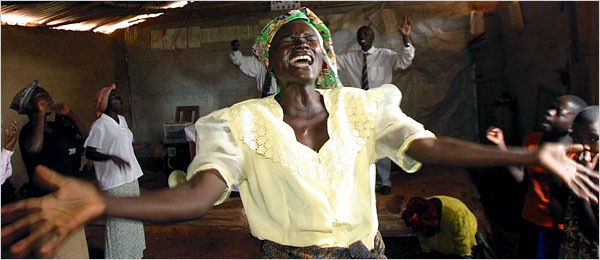
RELIGIOUS RULES ARE USELESS

Religious-Circumcision

Following rules and regulations cannot make us close to God. Only Jesus can do that.

To listen to the sermon, click the play button:


To download, right click on the link (or do whatever you do on a Mac) and save it to your computer: Download Galatians Part 4


Galatians #4 . Chapter 2:1-5


Last time we considered Paul’s claim that he received the gospel from Jesus alone, not from any human being.

He makes three basic points. 1. If he got it from a human source, it hasn’t resulted in him pleasing other human beings (1:10). 2. The message that he preaches was revealed to him directly by Jesus, in his experience on the way to Damascus. He began preaching immediately after that, before receiving any instruction from humans. 3. He didn’t consult with anyone right away. Three years after his conversion, and after he began preaching, he did meet with the apostle Peter privately. But he remained unknown by and unconnected to the other apostles and the Jewish churches in Judea.

Chapter two continues Paul’s thoughts about these matters. He explains that fourteen years after his visit with Peter, (seventeen years altogether after his conversion) he went back to Jerusalem and met with the apostles.

I went up according to a revelation and presented to them the gospel I preach among the Gentiles — but privately to those recognized as leaders — so that I might not be running, or have run the race, in vain. (Gal 2:2, HCSB)

He says he did this because he had a revelation, or vision. He does not explain if he had a new revelation about the gospel, or if the Lord told him in a vision to go to Jerusalem. But in any case, at this point, seventeen years after he was converted and began preaching the gospel, he takes the opportunity to compare notes, to make sure that what he was preaching was in fact the true gospel. The apostles affirmed that Paul was called by God to the Gentiles, and that he was preaching the true gospel (2:6-10).

While Paul was in Jerusalem, the very issue that concerns the Galatians was brought up. Paul explains:

But not even Titus who was with me, though he was a Greek, was compelled to be circumcised. This issue arose because of false brothers smuggled in, who came in secretly to spy on the freedom that we have in Christ Jesus, in order to enslave us. But we did not give up and submit to these people for even an hour, so that the truth of the gospel would be preserved for you. (Gal 2:3-5, HCSB)

Since Paul talks about circumcision quite a bit, let’s clarify what it was all about. Circumcision was part of the Jewish law. It involves removing a little bit of extra skin from a body part that only males have. According to Jewish law, all men and boys had to be circumcised, or they could not be part of God’s people. Even if man ate according to kosher regulations, and followed all the Jewish rules, he would not considered Jewish, or capable of pleasing God, unless he was circumcised first.

Think of it like this. When I lived in Minnesota, there were a few times when I happened to go fishing the same day that a professional fishing tournament was held. Once, the next day, I picked up the newspaper and found out that I caught more and bigger fish than anyone in the tournament. But I didn’t get any prize money, because I was not officially part of the tournament. I had never registered. It didn’t matter how many fish I caught, or how big they were. It didn’t count, because I wasn’t part of the tournament in the first place. In this analogy, circumcision would be like registering for the tournament. Fishing afterwards would be like keeping the other Jewish regulations. You have to do the first thing before you can do the second. If you choose to fish without being part of the tournament, that’s fine – but in that case your fishing has no relationship to the contest. If you choose to be kosher, that’s fine. But if you aren’t circumcised, that has nothing to do with Jewish law.

The reason Paul uses circumcision to make his argument is because it is the most basic requirement of Jewish law (at least for men). So he says, “Look, not only did Titus not have to be kosher, he didn’t even have to be circumcised. The very first and most basic requirement of the law did not apply to him.” There was pressure by “false brothers” to make Titus get circumcised. But Paul did not bend to it, and neither did the other apostles in Jerusalem.

Undoubtedly, one of you bright readers will come across Acts 16:1-2, and find out that later on, Paul mentored a young man named from Galatia named Timothy, and he encouraged Timothy to get circumcised. So what does that mean? Did Paul change his mind after he wrote this letter to the Galatians?

In the case of Timothy, I believe that both Paul and Timothy felt that it would be helpful for his ministry if he was circumcised. They were sometimes staying with Jewish people who weren’t Christians. Good Jews could not allow a Gentile to spend the night in their home, or even eat with him. Circumcision gave Timothy greater flexibility in reaching out to those Jews who did not yet trust Jesus. So he was circumcised – not in order to be saved, nor to keep the law, but because the Holy Spirit led him to do it in order to be more effective in reaching people for Jesus.

Our family has celebrated Passover every year for the past seventeen years. We do it because we enjoy it and it encourages us a Christians. But we don’t think it is required. If we didn’t do it this year, we would miss it, but no one in our family would think that we’d be in trouble with God if we failed to do it.The point is this: You do not have to keep any part of the Jewish law in order be saved through faith in Jesus Christ. In fact, keeping the law won’t help you in the least. But you are allowed to follow some or all of Jewish law – if you want to, and if you do it for some other reason than because you think it is required in order to be saved.

We no longer have a law that says you must be circumcised. But neither do we have a law that says you cannot be circumcised. The important point here is that following rules and regulations cannot make us close to God. Only Jesus can do that. So when it was all about salvation and the true gospel, as it was in the case of Titus, Paul refused to budge. But when the Holy Spirit led Timothy to get circumcised in order to be more effective at reaching people for Jesus, Paul encouraged him to do it. You see, certain things are useful in our lives, to keep us close to Jesus. But only one thing is necessary: to trust Jesus. There is not law you can keep, no good deed you can do that will help you receive salvation. You can only trust Jesus, and trust that he did it all for you.

When we really understand this, I think there are two very common responses. The first is say, “OK, got it. I trust Jesus. I’m saved. Now I am going to go off live however I please, because I don’t get to heaven by being good anyway.”

A huge number of people who call themselves Christians seem to have that response. I have used the analogy before, but I’ll use it again because it is both helpful and biblical. That approach is like saying: “OK, I’m married now. Now, I’m going to go live my own life. I’m not really interested in spending time with my wife or being faithful to her and all that. She said ‘I do,’ and so we’re good. When it’s time to retire, she’ll be there for me to nurse me in my failing years. If I get into a crisis before then, I’ll call. But until I hit retirement or a crisis, I’ve got better things to do than hang around with this woman.”

The natural questions are: Do you really truly your wife? Do you really have a relationship with her? Can you honestly call that relationship “marriage” when you have no intention of making a life together?

In the same way, “Christians” who have nothing to do with Jesus probably don’t really trust him in the first place. I doubt very much if their faith is genuine when they treat him like that. This group of people is not focused on Jesus, but on their own selfish behavior. They are fixated on the things they want to do.

But there is another response that some Christians have. They look at the first group of people and say, correctly, “That’s wrong. I don’t want to be like that.” Their solution, however, is to create a list of things to do that ensure you don’t become one of the first group. Like circumcision was for Timothy, some of these things can be genuinely helpful in your relationship with Jesus. Others are actually a natural part of a real relationship of faith – like praying, and listening to God through the bible, and living in community with other Christians.

But we cannot make them into laws. This second group can also end up focused on behavior – in their case, it is good behavior. But it is not Jesus himself.

This is where trust comes in. We have to trust that as we fix our eyes on Jesus, rather than our own behavior, He will make things right. We trusted him to make things right for our past sins. We need to do the same for our present behavior as well. It is only common sense to do things that are helpful, like praying, and reading the bible and fellowshipping with other believers. But we can’t trust in those things to keep us in Jesus. We trust Jesus himself, not any part of our own behavior.

If you are truly focused on Jesus, not on how you want to behave, you will begin to sin less. Jesus will work from the inside out and your goals will come from him, not your selfish desires. If you are truly focused on Jesus, not your behavior, you will begin to find more joy and freedom. You won’t worry so much about how you’re doing, because you are full of Jesus, not your own performance.

I play tennis. There are certain stances and racquet positions that are important in that game. Good footwork is helpful. But if you keep looking at your feet and hands and racquet, you will absolutely fail at tennis. Once you learn the basics, you need to watch the ball, always. If you watch the ball, the other stuff kind of takes care of itself. That’s a simplification of the sport of course, but it holds an important true lesson. When we are fixed on Jesus, not our behavior, he takes care of the behavior.

Martin Luther describes a similar situation in his own lifetime:

“In the same way we today do not reject fasting and other pious practices as something damnable, but we do teach that by these practices we do not obtain the forgiveness of sins.”

Luther says, basically: Look fasting and prayer and so on can be very helpful for living in relationship with Jesus. But they do not get you that relationship; they do not help Jesus to forgive you. They don’t contribute to your salvation.

Remember the illustration I gave a few weeks ago. Jesus has come all the way; he has closed the entire gap between us and God. We can’t do any of it for ourselves, whether by fasting or by circumcision or by any other good work.

Paul’s hard-line approach is not about being confident in himself or sick of opposition. It is his confidence in Jesus, and the importance of this issue that lead him to come across this way.

But we did not give up and submit to these people for even an hour, so that the truth of the gospel would be preserved for you. (Gal 2:5, HCSB) emphasis added

Let’s understand the issue. It is that Jesus alone has done everything that is necessary to bring us into relationship with God. Our only “work” according to Jesus, (and to Paul) is to trust him (John 6:29). This isn’t about “being free” or “standing up for my rights.” It is nothing less than defending the truth of the Gospel.


The Woman Who Wanted

mother


To listen to the sermon, click the play button:


To download, right click on the link (or do whatever you do on a Mac) and save it to your computer: Download 1 Samuel Part 1


This is the first in a new series on the book of 1 Samuel. This is an exciting and interesting historical book, and many of the most famous bible stories come from it. It is always important to have a little background about a biblical book, so that we can understand it in context. The events recorded in 1 Samuel took place roughly three-thousand years ago.

This was a very unsettling time in the history of the people of Israel. It was roughly four-hundred years after the time of Moses and the Exodus. The Israelites certainly had their problems in the wilderness, but at the end of it all, they had entered the promised land as a united nation, under strong leadership. However, once they began to settle the land, they splintered back into a loose confederation of tribes. Worse, they ignored the Lord’s command to drive out and completely eliminate the pagan cultures around them in the land. What followed was a few hundred years of the darkest times in their history. They forgot God, and began to adopt the pagan practices of the peoples around them – the very people whom they were supposed to drive out. They were oppressed by those same people, and frequently various areas and tribes of Israel were almost slaves to other cultures. God did not forget them. He used the negative circumstances to remind them about Him. When they prayed for his help, He answered and saved them, but usually within a generation or so, they forgot Him again, and went back to a cycle of worshiping false gods, being oppressed by the surrounding people. Then they remembered God again, and asked for his help, and so the cycle continued. The people were ignorant of God, brutal, and divided. At the time recorded by 1 Samuel this had been going on for long, most people probably felt like this was just how life was. There was certainly no reason to hope or expect that anything could ever change and be permanently different.

The nation of Israel was supposed to be united by their common faith, and they were meant to function as a nation by following God, as they had during the Exodus. Because God was supposed to be the King, technically they were all free. But because they weren’t following the Lord, it wasn’t working. Instead of freedom, they generally alternated between chaos and oppression.

At the time that this particular historical record begins, the spiritual leadership was as bad as the rest of the country. Eli, the High Priest was short-sighted and a weak leader. His sons Hophni and Phineas were self serving – they took every opportunity to abuse the power they had over the people. None of them actively led the country from a position of faith in the Lord or obedience to Him.

1 Samuel 1:1-2:11 records how the Lord began to change all this, not just for a few years, or even just a generation but for the long term. It was an unlikely and surprising beginning. God didn’t call a hero to defeat the enemies of Israel (he had already done that many times over the past few hundred years, and it never lasted). He did not raise up someone to campaign for unity among the tribes. God did not lead anyone to go on a crusade to clean up corruption among the priests, or to start a movement to educate the ignorant children in the outlying areas. If Hollywood screenwriters were making a movie, any one of those choices might be their storyline.

But God did something different and unexpected. He began with a woman who just wanted to be a mother. Her name was Hannah. Her deepest desire was to have a child. She turned her desire over to the Lord, even while continuing to desperately want it. And the Lord pursued his goals through her life and those desires.

Hannah was married to a man named Elkanah. He had a second wife, called Peninnah. He almost certainly married Peninnah only because Hannah couldn’t have children. Chapter 1:5 and 1:8 record that Elkanah loved Hannah deeply. But in those days, having children was simply not considered optional. The culture considered it a curse from the Lord if a couple could not conceive. God blessed Adam and Eve and told them to be fruitful and multiply (Genesis 1:28). If someone could not do that, they figured it must mean that God’s blessing wasn’t on them. Besides that, children were the only source of “social security.” When someone got too old to work, he relied on his children to take care of him. Finally, having children ensured that the family name would continue, and be included among God’s people (Israel) for another generation.

All this is why a man like Elkanah, who seemed to have a genuine love for Hannah, would go the length of marrying a second woman just to have children. By the way, some folks say that the Old Testament endorses polygamy without reservation. That is not exactly true. It records that some men had many wives, and it does not condemn them, but it almost always also describes that situation in a negative light. This is true here also. Elkanah had two wives, and there was rivalry and jealousy and strife between them. This was true also of Jacob, even though his wives were sisters. Solomon, had hundreds of wives and scripture makes it clear that it was his downfall.

Anyway, Hannah’s lack of children meant several things to her. First, she thought it meant God somehow had something against her. It had led to the destruction of her married happiness and love with Elkanah. Finally, if Elkanah were die before she did, there would be no one to take care of her in old age. As we can see, the issue was both emotional and practical. There was deep hurt and pain wrapped up in Hannah’s barrenness, as well as practical concern about the future.

One year, when the family was at the annual worship pilgrimage, Hannah reached a breaking point. I love her attitude in 1:9-18. She is another one of those unsung heroines of the faith. I think what makes her so special is that she surrenders her desire to the Lord, while at the same time, she honestly acknowledges it. She tells Eli, the priest:

I am a woman with a broken heart. I haven’t had any wine or beer; I’ve been pouring out my heart before the Lord. Don’t think of me as a wicked woman; I’ve been praying from the depth of my anguish and resentment. (1 Samuel 1:15-16)

Many Christians in this day and age would encourage you to pursue your desire as if it was somehow holy just because you had it. They paint a picture of God as if he was there for the sole purpose of making your life comfortable and giving you anything you want. They preach a gospel of personal gain here and now. There are other Christians (though less common these days) who treat every personal desire as if it is evil; they suggest the only way to deal with any desire for anything personal is to get rid of it.

Hannah did not follow either path. She desired a child. She wasn’t going to pretend that she didn’t, and she wasn’t going to pretend that she thought her desire was wrong or sinful. She let God hear her anger, anguish and resentment. At the same time, as she asked God to fulfill her desire, she surrendered it back to him. Verses 10-11 in the message version record it this way:

Crushed in soul, Hannah prayed to God and cried and cried — inconsolably. Then she made a vow:

“Oh, God-of-the-Angel-Armies, If you’ll take a good, hard look at my pain, If you’ll quit neglecting me and go into action for me By giving me a son, I’ll give him completely, unreservedly to you. I’ll set him apart for a life of holy discipline.” (1 Sam 1:10-11)

Some people may look at this part of Hannah’s prayer as making a bargain with God. But I think it is a little different than that. Hannah will not let go of her desire. She’s asking for a son, not the strength to go on being barren. And yet, while not letting go, she does surrender that desire to God. It isn’t completely clear in the Message version of the bible, but what she is pledging is that when he is old enough, she will physically bring the child to the tent of meeting and he will stay there with the priests and serve the Lord. The child will not stay with Hannah or her family. In a sense, Hannah is saying, “I want to be a mother. But I also want to surrender to you. So if you do make me a mother, I will turn around and live as I was not a mother again. You will gain a child Lord, not me.” So, yes, in a sense it was a bargain. But I don’t see how else Hannah could both hold on to her desire and surrender it at the same time. It is this bravery and honesty that makes her a great woman of faith in my eyes.

To help us understand what Hannah did, I want to put in simplistic and shallow terms. It is as if you prayed, “Lord, please give me one million dollars. If you do, I will give all one million dollars to the church.” Now, looking at it that way, you may say, “What would be the point of that?” We see no point in that because our desire is either not real or not surrendered. If our desire isn’t real, then we don’t want one million dollars so badly that we’re willing to give it all up again just to say we did have it once. If it is isn’t surrendered, then we don’t want one million dollars unless we can keep some of it, or all of it.

Hannah’s desire was real, and it was truly surrendered. The result of that true and surrendered desire was a baby boy named Samuel. Because Hannah surrendered him to the Lord, the Lord was able to use him to change the course of Israel’s history.

The Lord needed both Hannah’s desire AND her surrender to do what he did through her. If she had kept the desire for a child, but did not give that up to the Lord, Samuel would not have been raised in the house of the Lord and become the greatest spiritual leader since Moses. If Hannah had not truly desired a child as deeply as she did, she probably would not have been driven to surrender him in the first place.

Israel was in a bad place spiritually and politically. Society was fractured, life was dangerous, people were ignorant. God did change everything for them. And he did it through a simple woman who was honest about her desire to be a mother while also surrendering that desire. That’s not how we expect Him to save society. But he often works in these unexpected ways.

So what about you? What are the deep desires of your heart? Are you willing to be honest about them? And are you willing to surrender them to the Lord at the same time? God needs people who are willing to follow in Hannah’s footsteps. I think the psalmist was talking about people like Hannah when he wrote:

Delight yourself in the LORD, and he will give you the desires of your heart. (Ps 37:4, ESV)

THE WHOLE PIE

LIVING IN REVERSE, PART 8

To listen to the sermon, click the play button:


To download, right click on the link (or do whatever you do on a Mac) and save it to your computer: Download Living in Reverse Part 8


If Jesus is really going to live his life through us, it can’t be only on Sunday mornings. It can’t be just when you have your quiet time with God each day. It can’t be only Sunday mornings, quiet times and small group meetings. It can’t be only after work. It can’t be only on weekends or mission trips.

You see, in America especially, we tend to have our own goals and ambitions, and we try to wedge God into our life as one piece of a very full pie. We’d be quite happy to let Jesus have more of us, but we just don’t have the time. Our plates our full. Our time and energy is used up.

I want to challenge you to be honest with yourself for just a moment. What is it all for? What is your time used for? What do you spend your energy on? What is your busyness accomplishing? Jesus said:

“My kingdom is not of this world,” said Jesus. “If My kingdom were of this world, My servants would fight, so that I wouldn’t be handed over to the Jews. As it is, My kingdom does not have its origin here.” (John 18:36, HCSB)

Yet, we seem to be fighting and struggling to make ourselves and our loved ones a comfortable place in this world. We can’t have both our own agenda, and the agenda of Jesus.

When I graduated from High School, the senior class had an official all night party. To make things more fun (as the organizers said) we were given fake money. We could beg for more, play games for more, or make trades. At the end of the night we could use the fake money to bid in an auction for real things, like a $100 gasoline card or even a motor scooter.

A friend of mine set his heart on the motor scooter. He spent all night working like crazy to get more fake money, so he could bid on the scooter. He hardly saw his friends. He hated card games, but he played endlessly to get more fake money.

At the end of the night he had a nice little pile of fake money. Even so, a few other people pooled their fake money, and outbid everyone else, including my friend. When it was all over, he threw his fake money in the garbage, and walked away with nothing but the memory of a wasted night.

There are several key differences between my senior class party and life as we know it. One of them is that, at the end of it all, you cannot use this world’s money, goods or accomplishments to bid on anything real that lasts for eternity. What we “gain” on earth is worth even less than the fake money at that party was worth. Remember what we learned through this series on living in reverse: “Don’t work for food that perishes!” (John 6:27)

Many of us who are grown ups, and particularly Christians, have started living for our kids. We aren’t living selfishly, we are truly not. We are sacrificing our time and energy and possessions for our children. That can’t be a bad thing, can it?

I want to be compassionate and flexible here, but also bold and honest. Sometime we say we are sacrificing for our children, but we are simply using them as an excuse for why we need to work longer hours or make more money. A lot of kids would be happier with less stuff, fewer opportunities and activities and more time with their parents. Some kids know this consciously. Others don’t know they would be happier that way, because everyone else runs around busy too, and they’ve never known anything different.

Some of what we say we are doing for the sake of our children doesn’t make that much sense in the long run. When my son was nine years old, we got him involved in a local community baseball team. They practiced for two hours every Saturday. They played two evening games a week, each one usually lasting about 90 minutes. By the time we drove back and forth everywhere, we were spending about eight hours a week for a nine year old child to play a game that was he somewhat indifferent about. If we had done that for every child in our household at the same time, we would have spent almost the same amount of time as a full time job, just keeping our children in sports.

99.8% of people will never be professional sport players. The skills we encourage our kids spend countless hours developing are for playing games. I know sports teach things like hard work and teamwork and integrity. But do you honestly think that kids can’t learn those things from you, in your family at home? I guarantee you that as a child, Abraham Lincoln did not play on a school team, nor a traveling team for any sport. I am certain that the apostle Paul didn’t either, nor Jesus himself, nor Martin Luther or Florence Nightingale or any of the people who truly shaped the world in which we live today.

Sometimes sports may be a way to college scholarships, I understand that. I can’t say too much about that, since I have no idea how my kids will pay for college. But I do know this: If Jesus, living his life through them, wants to go to college, he’ll go. He’ll make a way for them. But if I haven’t taken the time to teach them about Jesus, to let them develop an life that comes from within, from His Spirit, then even if they get a fully paid scholarship to Yale, I’ve failed.

I want to say one more thing. It isn’t uncommon for a family to spend ten, twenty or even more hours per week on activities and sports. If that is you, let me ask you, what are teaching your kids, by focusing so much on external activities? Do you spend an equal amount of time teaching them to read the bible and pray and listen to the Lord? Do you teach them how to be content and to draw life from the Lord when there is nothing going on externally?

Sometimes the reason we are so busy is because we are trying to get life out of external things. David Wilcox has a great line in the song Hurricane. He writes: “When hope is gone, she confessed, that when you lay your dream to rest, you can get what’s second best, but it’s hard to get enough.”

When we try to get life externally, we need a lot of external activity, a lot of external things going on. It’s hard to get enough, because it isn’t real life. Our busyness is often a cover up, a way to avoid dealing with the fact that we are missing the internal life. And by our busyness, we often are teaching our children to seek life externally also.

CLICK TO FINISH READING THE MESSAGE:

Continue reading “THE WHOLE PIE”

LIVING LIFE IN REVERSE

PART I:  GET YOUR BUT IN LINE

Genesis 29:16-35


Download “Living in Reverse Part I”

We know that God loves us. We know that through Jesus, we are forgiven. We keep our faith in Him. But where we really struggle, is with ourselves. I’m glad I’m forgiven. And I know that I am. But (notice that pernicious little word!) I wish I didn’t sin so much. I wish my life was easier to live. I wish I didn’t worry. I wish I was more compassionate. I wish I wasn’t so lazy.

I know (or at least I think I do) how God wants me to be. So I try to be more like that, but I often fail. After I fail, I say sorry to God. I know that I have forgiveness in Jesus, and that forgiveness is always available. So I get that forgiveness, and then off I go to try again. Sometimes I even try harder. I might even get it together for awhile, but sooner or later I crash and burn again.

Maybe after awhile, I realize I haven’t been very bright. I think, “Ohhh…Jesus has given me the Holy Spirit to help me!” So I get back on the horse, determined to try harder, and succeed this time with the Spirit’s help. And maybe for awhile it goes better. I stop and consciously ask for God’s help to live the life of a Christian. I ask for help when I am tempted. Maybe I also get connected to other Christians, and seek help and support from them. That helps too, because God has given us each for that very purpose.

Now it goes better. But the truth is, it is still a lot of work. And the truth is, though maybe I fail less frequently, I still fail plenty often.

Whole shelves of books have been dedicated to help people like me pull it together. Some of them are quite helpful. Somehow though, I can’t seem to make the improvements permanent or consistent.

Andrew Murray seems to know what I’m going through. He puts it like this:

“The idea they have of grace is this – that their conversion and pardon are God’s work, but that now, in gratitude to God, it is their work to live as Christians, and follow Jesus. There is always the thought of a work to be done, and even though they pray for help, still the work is theirs. They fail continually, and become hopeless; and the despondency only increases the helplessness.” (Abide in Christ)

We tend of think of it like this: ultimate failure, and the power of death and hell, are defeated through Jesus. Now, once we trust in Jesus we can play the game “safely” so to speak. So we can try and fail and try and fail as much as we need to, without being in danger of going to hell.

But does that really sound like “good news?” We are “free” to pursue a cycle of failure? Andrew Murray adds this:

“Dear souls! How little they know that the abiding in Christ is just meant for the weak, and so beautifully suited to their feebleness. It is not the doing of some great thing, and does not demand that we first lead a very holy and devoted life. No, it is simply weakness entrusting itself to a Mighty One to be kept – the unfaithful one casting self on One who is altogether trustworthy and true. Abiding in him [living the Christian life] is not a work that we have to do as the condition for enjoying his salvation, but a consenting to let Him do all for us, and in us, and through us. It is a work he does for us – the fruit and the power of His redeeming love. Our part is simply to yield, to trust and to wait for what He has engaged to perform.” (Abide in Christ).

Now that sounds like good news. Maybe too good. In order to lay hold of this, we need to begin by talking about your but.

Before you can truly grasp everything that Jesus has done for us; before you can take hold of the riches we have in Christ, you need to get your but straightened out.

I am talking, of course, about your B-U-T, not your b-u-t-t. What were you thinking?

We all have buts in life. (All right, insert whatever joke you like here, and then move on). What I mean is, we all say things like this:

Things are going well now, but who knows what will happen in the future?

I know God promises to take care of me, but things aren’t going well right now.

Generally, I have a good marriage, but sometimes he drives me crazy.

I would love to read my bible more, but I just don’t have the time.

I know God has forgiven me, but I still sin, and I don’t always feel forgiven.

There is something I have noticed – we give the most power, the most credibility, to what we put after the but. What we say after the but is what we think is the dominant thing about our reality. The first thing may be some kind of factor, but what we put after the but is more or less the final word on the subject.

What we need to learn, is to put what God says after the but. This is an act of will, but before that even, it is an act of faith. Nothing you hear this weekend will make sense until you agree to put God’s Word after the but.

I want us to look at the life of someone in the Bible who learned to do this. She is one of the least known, least talked-about heroines of faith in the Bible. Her name is Leah. Leah was the daughter of a man named Laban. Her story picks up in Genesis chapter 29. The bible says Leah had “weak eyes.” We don’t really know what this means, but it seems to mean that she was ugly. Right after this it says: “but her sister Rachel was shapely and beautiful.” Notice the but. It was probably one of the dominant “buts” in Leah’s life.

One day their cousin Jacob, whom they had never met, came from a far country. Jacob ended up working for his uncle Laban (Leah’s father). Jacob fell in love with Rachel, Leah’s sister. He told his uncle he would work for seven years as a dowry, and Laban agreed. Only, when the time came, Laban tricked Jacob. Brides in those days were heavily veiled, and the wedding took place at night – and there was no electricity. So Laban gave his older daughter, Leah, in marriage to Jacob, and Jacob didn’t find out until the light of the next morning. Laban offered to let Jacob marry Rachel too, if he worked another seven years. So after Jacob and Leah had been married just one week, a new wedding took place, and Jacob got Rachel at last. Then he had another seven years to work.

Needless to say, they were not one big happy family. We don’t know if Leah loved Jacob, or wanted to marry him. But we do know that Jacob did not love Leah, and had never wanted to marry her. Almost certainly, the reason her father had tricked Jacob in that way was because he thought it was unlikely that he would ever be able to marry her off. In other words, she was so ugly, her father had to trick someone into marrying her. Almost certainly, Leah knew this. She was ugly, not stupid.

Naturally, Jacob favored Rachel. He loved her, not Leah. Leah’s only consolation was that she had children fairly easily, while Rachel went for a long time with none. When Leah’s first son (Reuben) was born, she said, “The Lord has seen my affliction; surely my husband will love me now (Genesis 29:32).” Notice that her focus was on her unhappy situation, and she hopes the fact that she bore him the first child will change it. When her second son (Simeon) came along she said, “The Lord heard I was unloved, and gave me this son also (Genesis 29:33).” Still, her dominant reality is that Jacob doesn’t love her. After her third son was born, she was still focused on her struggles, saying, “at last my husband will become attached to me, because I have borne him three sons (Genesis 29:34).”

Now we know that it takes nine months to make a baby. There was no birth control in those days, but in general, when a woman is breastfeeding, that sometimes helps prevent pregnancy. Back in those days, children were probably breastfed pretty consistently for at least a year. So it reasonable to assume at least two years between each child. When you throw in the fact that Jacob had another wife, and everything that was involved in the family dynamics, it may have been more like three years, or even more between children. So Leah went between six and nine years, while the dominant fact in her life was that her husband did not love her.

But (notice the but) by the time her fourth son arrives, something has changed. There is no evidence that Jacob ever changed his attitude very much toward her. Reasonably, at least eight years might have passed by this point, perhaps a many as twelve or more. Say, a decade; ten long years of realizing her marriage will never be what she dreamed it might be. But listen to what she says when this fourth son, Judah, is born: “This time, I will praise the Lord (29:35).”

Leah is no longer fixated on what she lacks in her life. She isn’t trying to get Jacob to change anymore. Instead, her focus is on the Lord, and his love and favor for her. Her struggle had been with God and with her husband. But when she gave birth to Judah, she has given up the fight – in a positive way. Her troubles have led her to a place where she looks to God to meet her needs, and can receive his love and mercy with joy and thankfulness. I’m sure that Leah still struggled. I think it is only reasonable to assume that emotionally, her situation never changed much. Certainly, the Bible never records that Jacob changed his attitude toward her. But she came to the point where the dominant thing in her life was not her struggle, or her unfilled needs, but rather, God’s awesome love for her.

Genesis 29:31 says that when the Lord saw that Leah was unloved, he opened her womb. In other words, the Lord was the one who gave Leah these children; and even more, he gave them to her because he saw that her husband did not love her. Now, at first, her response was basically this: “Good! This child will change my situation. This child will make my husband love me.” But think about it. God gave the children to Leah, not as tools to coerce Jacob’s love – the Lord gave Leah children because the Lord loved her. He was showing her that regardless of what Jacob thought of her, He loved her. She was not unloved. At first she missed the point. She was still putting Jacob’s lack of love after the but. Finally however, she got it. When Judah was born, she praised the Lord. She finally saw that these children would not make her loved – they showed her that she was already loved.

Sometimes when we pray, God changes our situation, and makes it better. Sometimes, he leaves us in the same circumstances. When he does that, his desire is that our lives can be so filled with him, that the negative aspects of our situation pale in comparison. When Kari and I first started dating, I was in job situation that I didn’t like, living in a city I didn’t care for, with few real friends nearby. I remember sitting in a meeting at work, filled with joy. I wasn’t joyful because I was in the meeting. I wasn’t joyful because I liked where I was living, or because I was making much money, or that I liked my work. None of those things were true. But I was joyful because I knew that wherever I was, whatever I was doing, Kari loved me.

Now, I don’t mean to be negative, but the kind of joy that came when I first knew that Kari loved me, does not sustain me in the same way eighteen years later. We still love each other. It is still a big thing in my life that Kari loves me. But no human being has the power to fill you with joy consistently for a long period of time. Only God’s love is that strong.

I think that was the kind of place Leah finally reached. Jacob still didn’t love her. He probably never would. But God did, and the fact that God loved her was more important than the fact that her husband did not.

This is the key to “Living after the But.” Remember, whatever you put after “but” is the dominant reality to you. For many years, Leah probably said something like this: “I know God loves me, but my husband does not. I’m just a third wheel.” Finally, after the birth of Judah, she started thinking this way: “I know Jacob never wanted to marry me. He may never love me the way I want him to. But God loves me and cares for me.” The only thing that really changed for Leah is which thing she put after the “But.” However, I think it transformed everything for her.

I suspect that in the next few messages I have to preach, you might hear some things that cause you to think “but….” I want you to remind yourself to put the correct thing after the but.

The apostle Paul said something very important in 2 Corinthians 4:16-18:

Therefore we do not give up. Even though our outer person is being destroyed, our inner person is being renewed day by day. For our momentary light affliction is producing for us an absolutely incomparable eternal weight of glory. So we do not focus on what is seen, but on what is unseen. For what is seen is temporary, but what is unseen is eternal.

This verse teaches us something important about the nature of reality. Part of reality is seen. That is, we can perceive it with the senses. This part of reality changes. It proceeds through time. It has a beginning and an end. We might call it the “natural realm” or “this world,” Paul says that this part of reality is temporary. That doesn’t mean it is meaningless. In the broad scheme of things, this seen and temporary part of reality is where God works in us and through us for his own glory. What happens in the seen, in the here and now of time, has an effect on where we are in the other part of reality. In this world, we have struggle and change and process and need and growing and sowing and reaping.

The other part of reality is unseen and eternal. It is outside of time. We might call it the eternal realm, or eternity. It is the realm of the uncreated, of ultimate reality, of complete and wholeness where things are settled. This is the ultimate dwelling of God. When God appeared to Moses and Moses asked him his name, God said “I AM.” That is an idea of the eternal realm. There is no time there.

The bible says that Jesus Christ is the same yesterday today and forever (Hebrews 13:8). That is is not true in this world, in the temporary part of reality. Jesus is not walking around Palestine today like he was two thousand years ago. When he was thirty he was physically changed from how he looked and acted when he was three. But in the eternal realm, that is true. Jesus existed before the creation of the earth. He exists now. He always will exist. His eternal spirit never has changed, never will change.

Maybe this is obvious, but these verses in 2 Corinthians show us that the eternal realm is greater, more powerful, and more permanent than the temporary realm of this world. We don’t mean that this world doesn’t matter or is an illusion. God made it. God even entered it himself as a human being, bound in time. So it is important. We are just acknowledging that what the bible says is true: the unseen realm is greater than the seen. We are supposed to focus on the unseen more than on the seen.

Both realms co-exist. They interact with each other. The bible teaches that we live in both at the same time – even as Jesus did. But simply for illustration it may help to think of a line between them. Above the line is the eternal, unseen realm. Below the line is the temporary, seen world.

In these terms, we need to put the truths that exist “above the line” – the eternal unchanging truths – after the but.

We deal with things below the line constantly. That’s what Paul was talking about in 2 Corinthians 4:16-18. His outer person (below the line) was being destroyed. But…BUT his inner person (above the line) was being constantly renewed. His affliction is momentary – but the glory is eternal. He focuses therefore on what is unseen and eternal. He puts those things after the but.

Now, I want the Holy Spirit to make this practical for you. What have you been putting after the but? Has your dominant reality been what God says? Or have you given more power and credence to your circumstances, or how you feel, or what your mind tells you logically? Take a moment to think about it. Let the Lord bring to mind what you have reversed right now.

Your dominant reality might be very negative, and very powerful. Leah spent her whole life thinking, “but I’m ugly.” Long years of marriage only added, “and I’m unwanted, and I’ll never get the chance to be with someone who does want me.” That’s powerful stuff. And it was all true. She never was loved by her husband or anyone else in that way.

But…BUT – there was another thing that was true. It was true that she was made in the image of God. It was true that God loved her. It was true that God wanted her. She let God’s love become her dominant reality. She let his word be the final word.

We need to learn to believe that what God says is more real than what we think or feel.

I am not saying that your struggles aren’t real. I am not saying that you aren’t dealing with things that are truly bad, or difficult or wrong. But I am saying that God’s Word is more true, more powerful. It is an act of faith to believe it.

Tongues. 1 Corinthians #25 (1 Cor 14:1-25)

…to another speaking in different kinds of tongues, and to still another the interpretation of tongues.” (1 Corinthians 12:10)

tongues


To listen to the sermon, click the play button:

To download, right click on the link (or do whatever you do on a Mac) and save it to your computer:
Download 1 Corinthians Part 25

This week we come to the oft-maligned, oft-spoken about, gift of tongues. Simply put, the gift of tongues is a gift which God gives to a believer, that allows that person to speak out, or pray in, a language unknown to that person.

Just like there are apparently three distinct kinds of prophecy, the New Testament seems to describe three distinct gifts of ‘tongues’:

a. When someone speaks out in tongues, others hear it as a language belonging to another part of the earth (i.e. Chinese). Its use here is in evangelism and missions. The first use of tongues that the New Testament records was on the day of Pentecost, when the apostles received the Holy Spirit. They spoke out in tongues, and people from all over the civilized world heard them speaking in their own dialects. Both the wonder of this phenomenon and the message it contained, brought many people to faith in Jesus (Acts 2:1-13). This was a gift from God, for the apostles had not known the languages they were speaking.

b. A special word from God to a group of believers. In the case of this kind of gift of tongues, It must be accompanied by an interpretation. There is no way the special word can be understood without the interpretation. This is the ‘normal’ public use of tongues. Paul describes this in 1 Corinthians 14:13 and 14:27-28. Apparently, at times, believers were inspired to speak out loudly in tongues. Then they, or someone else present, would receive the meaning of what was said, from the Lord. I know that several people in our church have witnessed this at times in a powerful way.

c. A private, spiritual “prayer language.” This is the ‘normal’ private use of tongues. It is useful here if the individual is at a loss for words to pray or praise with, or for prayer for a very difficult situation, or simply to help draw a person closer to Jesus. Scripture describes this in Romans 8:26-27 (the Spirit interceding with intercessions that are beyond our capability to express) and in 1 Corinthians 14:1-18, where Paul clearly describes tongues as prayer from the Spirit, not the mind, which builds up the individual Christian and should not be used in public assemblies.

In general, most of the gifts described in this passage do not “belong" to individuals, but are given to us to bless other people with. It seems that the gift of tongues is a little bit different. The fist two gifts of tongues (see a. and b. above) are gifts that are given on a situation-by-situation basis. For example, Ted Hilpert received the gift of interpretation of tongues once, but he would not describe himself as an Interpreter. The gift was given him in just one specific instance, and has not been given since. Years ago I met a retired Lutheran Pastor named Herb Mirud (who has since gone to be with Jesus) who prayed out loud in tongues on a mission trip to Mongolia, and the Mongolians heard him speaking their language. That was the only time such a thing happened for him.

However, the third kind of tongues – the personal ‘prayer language’ that builds up the individual believer, appears to be given to those who have it, for life. The reason for this is that it is an a gift that builds up the individual so a person can use it anytime. It might also be used by one person to pray for another, and again, this can happen anytime the person decides to use it. It is a grace of God given to people to help them pray with their spirits, and not just with their minds.

There is great value in God’s gift of tongues to the church, but for some reason, tongues has been one of the most controversial topics in the church for the past forty years or so. Tongues has been maligned by all sorts of people, misunderstood, and misused. I believe this has happened in large part because of the persistent rejection of the Bible’s teaching about tongues by many charismatic and Pentecostal churches. I believe that if we who accept the supernatural workings of the Holy Spirit, taught and practiced the scriptural principles given concerning tongues, other Christians and churches would not be so quick to malign the work of the Spirit in this way.

Charismatics and Pentecostals typically make two errors regarding tongues. The first, and most dangerous theologically, is the belief that the gift of tongues is the sign of a sort of “second salvation". Some Pentecostals teach that if you do not speak in tongues, you have not been ‘fully’ saved. This view proposes that there are two stages of salvation. They would say (and I do NOT agree) that Faith in Jesus is the first, the Baptism of the Holy Spirit is the second. For them, exhibiting the gift of tongues "proves’ that you have been fully saved (in both stages). There is absolutely no Biblical justification for this teaching. In fact, in 1 Corinthians 12, Paul uses tongues as an example of a gift that not everyone has. In 1 Cor 12:30, Paul asks, “Do all speak in tongues?” The question is rhetorical, because answer in Paul’s mind is obviously “no.” A teaching related to the ‘second salvation’ falsehood, is the idea that if a person does not speak in tongues, he/she has not received the Fullness of the Holy Spirit (or the ‘Baptism’ of the Spirit). This false teaching is answered by the same scriptures I have just mentioned.

I believe that the pervasiveness of the “second salvation" idea is one of the reasons why tongues has caused so much confusion and strife. People who hear this kind of false doctrine are naturally upset, for the teaching implies that if you do not have the gift of tongues, you are not a ‘complete’ Christian, or at the very least, you are a lesser Christian. Those who know they are saved, (but have not been given tongues) come out of an experience with this kind of church with a distaste for the supernatural work of the Holy Spirit in general, and for the gift of tongues in particular.

The second error, committed by almost every charismatic church I have ever been in, is the rejection of Paul’s instructions for the use of tongues in worship. Throughout 1 Corinthians 14, Paul instructs us about tongues, its use and its place. Paul sees it as of great value in the life of the individual, but of little value in either the small group or large group unless interpretation is present. There is nothing unclear about his instructions:

If anyone speaks in a tongue, two-or at the most three-should speak, one at a time, and someone must interpret. If there is no interpreter, the speaker should keep quiet in the church and speak to himself and God. (1 Cor 14:27-28)

Charismatic churches across the board have willfully ignored this clear instruction as well as the reasons the Bible gives for the instruction. Let us examine the reasons given for being careful about the use of tongues in public:

a) An episode of tongues without interpretation is unintelligible, and is of no value for

building up the church as a whole (1 Cor 14:2,4, 6-17)

b) Tongues without interpretation are disastrous for evangelism (1 Cor 14:23).

c) Many people speaking in tongues simultaneously, and/or without interpretation is disorderly, and does not reflect God’s character, or the Holy Spirit’s desire for order in worship (1 Cor 14:33).

And yet, if you step into virtually any Charismatic worship service, at some point, you will hear the whole congregation speaking out or singing out in tongues, all at the same time. Many people describe this as a beautiful sound of praise. Sometimes, I am inclined to agree. But that does not deal with what Paul teaches here. I have heard people say that since everyone is praising God, this is just fine. That argument makes no sense to me. It is in contradiction with all three points made by these passages (above). Paul writes:

What am I to do? I will pray with my spirit, but I will pray with my mind also; I will sing praise with my spirit, but I will sing with my mind also. Otherwise, if you give thanks with your spirit, how can anyone in the position of an outsider say “Amen” to your thanksgiving when he does not know what you are saying? For you may be giving thanks well enough, but the other person is not being built up. (1 Cor 14:15-17)

His final thought about the matter is this:

If any speak in a tongue, let there be only two or at most three, and each in turn, and let someone interpret. But if there is no one to interpret, let each of them keep silent in church and speak to himself and to God. (1 Cor 14:27-28)

I sometimes wonder if many charismatic churches even know that these verses are here! Don’t get me wrong. I believe the gift of tongues is a wonderful blessing from the Lord. I personally have the third gift of tongues (the “prayer language” gift). I use it regularly. Paul says, “now I wish that you all would speak in tongues…” and I agree that it is a valuable thing. But it seems like Charismatic churches try to “prove” that they are charismatic by abusing and misusing this gift, and it grieves my heart. If you are right about something, but you resort to telling a lie in order to prove your point, in the end you only hurt your cause, even though you are correct. Charismatic churches are right to value the gift of tongues. But they hurt the work of the Holy Spirit when they so flagrantly ignore what the Bible says about where, when and how the gift is to be used. Since so many churches have flagrantly ignored scripture’s instruction in this manner, is it any wonder that the gift causes controversy?

However, simply because tongues has been misused, does not negate the fact that God offers a true gift, and the gift has great potential for benefit. Understanding the good side of tongues is just as important as being aware of the dangers.

Jackie Pullinger was a missionary to Hong Kong in the 1970s. She ended up working with many heroin addicts. She didn’t know anything about helping people kick the heroin habit. So she prayed for the addicts to receive the gift of tongues (the prayer-language gift), and then told them to pray in tongues for 15 minutes a day. When they did that, they were able to come out of addiction with no additional help.

Another friend of ours prayed in tongues to help when she experienced panic attacks, which can’t be tamed by logic. Others use it to strengthen their prayer life, or in spiritual warfare.

But I think there is even more to it than that. Paul writes that tongues is also a “sign for unbelievers” (1 Cor 14:22). What is that all about? I think it is a little like this. If you hear a group of people speaking in a foreign language, it is an indication to you that those people come from another place. Now, not all Christians, speak in tongues, but many do. This is a sign that all Christians are citizens of another place. We don’t actually belong here. Once Jesus owns us, we “ain’t from around here” any more. Our true home is in heaven (Hebrews 11:13-16).

While I don’t believe that the gift of tongues is given to all Christians, any more than the gift of prophecy, I do believe that many could have it, if they simply ask. After you ask, you need to give God your voice. What I mean is, go someplace private, and open up your mouth and vocalize. If God has given you the gift of tongues, you’ll find sounds that seem to be words coming out. Don’t worry too much about what language it may sound like.

I have heard dozens of languages in my lifetime. About one third of the world’s languages come from the Island of New Guinea, where I grew up. When you don’t know them, some of them sound like people just pretending to talk a foreign language – but they are really communicating with each other. So, when you first start praying in tongues, you may feel like it couldn’t possibly be a real language that God understands. I say, if earthly languages can sound funny, so can heavenly ones.

One time someone approached a pastor I knew and said, “I don’t get this gift of tongues. When I hear people praying in tongues, it sounds to me like baby talk.”

The pastor said, “Yeah. I think that’s exactly what it is.” His point was, even if that’s all it is, isn’t that great? Parents and grandparents love to hold a little baby who babbles and coos at them. I think God loves to hold us, even if that’s what we’re doing to interact with him when we pray in tongues.

What’s Love Got to do with It? 1 Corinthians #24

CLICK ON THE PLAYER TO LISTEN TO THE AUDIO VERSION OF THE SERMON:

Download 1 Corinthians Part 24

lovepic

1 Corinthians 13:1-13.

1 Corinthians chapter 13 might be the most famous chapter in the Bible. It is often read at weddings, even when the people getting married aren’t really Christians. And truthfully, most people who aren’t believers like this chapter, and they might even feel that they agree with it. Certainly Christians like this passage also. I have used this passage when preaching at weddings. I have heard other preachers read it, and replace the word “love” with the name “Jesus.” Certainly this does tell us about love in marriage. Obviously, it teaches us about God’s love.

However, in order to understand any bible passage thoroughly, we need to pay attention to the context. Because we’ve been going through 1 Corinthians, if you’ve been with us for a while, you know the context here. This was written to the Corinthians. They were dividing over various preachers. They were suing each other. They were accepting flagrant, open, unrepentant sin. They were making a mess of the Lord’s supper. Paul just spent some time trying to make sure that they would not be ignorant of spiritual things. He told them all about prophecies, miracles, healings, tongues, words of knowledge and discernment. He admonished them to see themselves and each other as indispensable members of the body of Christ. And then he says this: “And I will show you a still more excellent way.” And then he writes what many people call “The love chapter.”

What we need to understand therefore, is this: the love chapter was written first and foremost to Christians concerning how they should love each other in the church community. It’s good to apply this to marriage. It isn’t wrong to apply this to loving all people. It’s helpful to understand God’s love in the light of this chapter. But we must understand that the primary application is to understand this and put it into practice in our own church. This is about how we relate to fellow-believers in our church community. I will suggest some other ways that this is relevant, but to really get it, let’s not lose sight of the context.

The New Testament uses three different Greek words that are translated “love.” There is eros (from which we get the English “erotic”) which is romantic or even sexual love. There is also philia which is brotherly love (hence “Philadelphia” is the “city of brotherly love”). But the word which Paul uses in 1 Corinthians 13 is agape (pronounced uh-gah-pay). It means unconditional, unselfish, sacrificial love. This is the word almost always used to describe God’s love for us. In 1 Corinthians 13, Paul is telling Christians to love each other in this way.

The apostle John writes to fellow Christians:

For this is the message that you have heard from the beginning, that we should love one another. (1 John 3:11)

John uses the word agape. In fact, throughout 1 John, he reiterates how important it is for Christians to agape (love) one another. He basically says Christianity consists in trusting and loving Jesus, and loving our fellow Christians.

This is not the only place in the New Testament that gives us that command. Jesus said:

“A new command I give you: Love one another. As I have loved you, so you must love one another. By this all men will know that you are my disciples, if you love one another.” (John 13:34-35)

Jesus’ word is also agape. Read it carefully. He is saying that it is of prime importance that we love one another. We often jump over this detail, but he makes a distinction between his disciples and the world. He doesn’t say that that others will recognize us as his disciples because we love them – but because we love each other. Of course we should show love to people outside the church. But too often we concentrate on that, and we lose sight of the fact that the command of Jesus to love those inside the church.

We may think this it could hurt our outreach if we are focused on loving each other. However, I suspect that when we are good at loving each other, the church will have a lot more appeal for people who aren’t part of it yet. Who wants to join a church where the members are always talking badly about each other? Who wants to join a church where everyone is cold to each other? And I think that until we do truly practice love for each other within the church, our ability to love those outside it is limited. Love starts at home.

The first point Paul makes is basically this: all the talent and effort in the world is pointless if we don’t engage in genuine love for each other. Paul has just finished talking about prophecy; words of knowledge and wisdom; tongues; and the spiritual gift of faith. He says all of these are worthless without love.

Notice that even things that look like love (giving away your goods and possessions, giving your body to the flames) can be done without actual love. This means that love is not just action. There is an inner commitment that distinguishes love from religious actions. I think if we look at this passage objectively, we can see that love is not just a feeling either. No feeling lasts forever – part of the nature of emotions is that they change. But Paul says agape love perseveres. He says love will still be present after the end of this world. What he is describing here simply just doesn’t fit a mere emotion. I like to define it this way: Love is a decision and commitment to value another person greatly. If it is a decision and a commitment, it doesn’t depend on how we feel. Neither does it depend on what the other person does.

Think of it — Jesus probably did not experience loving feelings while he was being crucified. People were spitting on him and mocking him, yet his death on the cross was the ultimate expression of how much he valued those very same people, as well as us. It didn’t matter what he was feeling. It didn’t matter what the people were doing to him. He was living out his commitment to value us.

Love is a decision and commitment to value another person greatly. This is not how our culture defines it. When I was a youth worker I once asked a group of teenage boys to define love. After a little thought, one of them said “Christie Brinkley.” Unfortunately, he was in tune with our culture. Our movies, our television, our music and to some extent even our books, all seem to offer the unified message that all there is to love is eros – romantic/sexual love. Once in awhile we may catch the hint that there is some other sort of love – philia – friendly, or brotherly love. There is another common expression of love in our culture which I call “selfish” love. In selfish love, I experience feelings of love because what you do for me makes me feel good. With this kind of love, you hang out with someone because generally, you feel good when you are with them. But basically, our culture thinks love is feeling. We have to identify this, and then reject it. Eros love is primarily a feeling. It has its place in marriage. But even marriage can’t be sustained only by sexual feelings. A lasting marriage needs the solid foundation of agape, which is not a feeling, but a commitment to value and honor another.

I won’t spend a lot of time on every aspect of love that Paul lists here, but I want to pick out just a few of the qualities that he names, not necessarily in any particular order:

Love is patient. One thing I’ve noticed about my fellow-Christians is that they aren’t as great as me. I want them to get with the program. I want them to grow and mature. I want them to quit fooling around with their lives and really live entirely for Jesus. I want them to quit swearing, quit getting drunk, quit falling into temptations. I want them read their bibles every day, to be consistent in coming to small groups, to be consistent coming to Sunday worship. But the truth is, God has been so patient with me in all these areas. We can be patient with each other when people don’t seem to change as fast as we want.

Some years ago I counseled with a couple who wanted to get married. There were some obstacles. The timing wasn’t quite right. The woman called me during this time, very anxious. She seemed almost desperate to get married right away. I said, “What are you worried about? If your love won’t last for two years while you wait for these things to get worked out, then you’d be better off not getting married in the first place. But if what you have is real love, you’ll still have it in two years.”

I want to be straightforward with some of the young people who read these sermon notes also. If you are in a relationship and you feel like you can’t wait until you are married until you have sex, then understand, that feeling is not love. Love is patient. If your boyfriend or girlfriend can’t wait, then understand – he or she is not motivated by love. Love is patient!

Paul also says love is not envious. That one nailed me just this week. As a man I sometimes fall into the trap of feeling like I’m validated (or not) by how successful I am. A pastor I know in our area is younger than me. He started a church about the same time as New Joy was started. I just heard again this week about how well his church is doing. I know he’s doing pretty well financially too. But agape love is not envious of the good fortune or success of others. I should be happy that God is using him. Just as I was writing this, I paused to ask the Lord for forgiveness, and to give me agape love for my fellow pastor, and brother in the Lord.

That brings me another point. As a standard of behavior, we cannot possibly hope to obtain agape love through our own human effort. We need the Holy Spirit to give us his love to love others with. He will, if we ask him, and receive it willingly.

Another thing Paul says about love is that it “keeps no record of wrongs.” In other words, love results in true forgiveness. There is no resentment or ongoing bitterness in it. This is very important when it comes to relationships in churches. Because of Jesus, God holds no record of your wrongs. How then can you, who have been so completely forgiven, refuse to let go of the wrongs that have been done to you? If you get close to people – and in church, we are supposed to get close to each other – we will get hurt from time to time. We must learn to forgive, and let those hurts go.

Paul writes in verse 7 that loves endures all things. Looking at the Greek, it might be put like this: “love always perseveres.” We don’t give up on each other. We don’t say “that’s it, I’ve had it with you, we’re done.” No, agape love perseveres through all things. This is related to what Paul says when he writes: “love never fails.” Another way to put it might be this: “love never falls from grace; it never loses its position or compromises its virtue.”

Erotic love, friendly love and selfish love are all real, and they contain parts of what love in general can be (although the Bible makes it clear that the expression of erotic love is to come within marriage only). It is tough going when you love someone who never makes you feel good. It is normal to value people with whom you have positive experiences. It is only natural to seek as a mate someone who is physically attractive to you. But these kinds of love so venerated by our culture, cannot ultimately last without agape, and they can become quite self-oriented. People have divorced their spouses to seek erotic love elsewhere when the glow faded for a time. When the sexual urge is satisfied, or at the very least in those times when the partner somehow becomes less attractive, erotic love is out the window. Others have divorced, or cut off friendships simply because “he didn’t make me feel good any more, and I need to do what is best for me” or because “the spark was gone.” This sort of love only lasts as long as you are able to perform for each other. As soon as you stop doing things that make me feel good, I will no longer feel love for you, and vice versa. In the final analysis, without the rock solid basis of a decision and commitment to value someone, (that is, agape love) all other forms of love are conditional.

Agape love can be hard work – anything that is not self-oriented can be hard work. To value someone when you do not feel particularly fond of them is not the easiest thing in the world. To serve someone when you feel almost as tired as they do, is not always immediately rewarding. But the minute we go back to relying solely on how it feels is the minute we abandon true Biblical love.

True love is not a noun, but a verb. Love is an action word. It is not really about all those nice feelings. When you truly love, you will get those neat feelings from time to time, but the substance of love is not in those feelings. The true stuff of love is in the commitment to value others.

This is the way God loves us. This is how we can be loved, even when we know that we are not loveable. God has made an ultimate commitment to us, to value us above all else. He was willing to die for the sake of that commitment. His love does not depend on us doing things to please Him or make Him feel good. His love does not depend on the attractiveness of our personality, or on any physical beauty. His love depends solely on His own will, and His will eternally is to value us and treat us as of great worth. As the writer of Hebrews says:

Because God wanted to make the unchanging nature of his purpose very clear to the heirs of what was promised, he confirmed it with an oath. God did this so that, by two unchangeable things in which it is impossible for God to lie, we who have fled to take hold of the hope offered to us may be greatly encouraged. (Hebrews 6:17-18)

God loves us with an unchanging commitment. The only way we can ever learn to love others in that way is to receive God’s love, and let Him love others through us, and allow Him to make good on our desire to make a commitment to value others.

You are Vitally Important! 1 Corinthians #23

1 Corinthians 12:12-31

bodyofchrist


Download 1 Corinthians Part 23

John J. Spillane was almost drafted twice. Two major league baseball teams wanted him because of his excellent fielding and throwing ability. But instead, the United States drafted him to fight in the Second World War.

When the U.S. Invaded Tarawa on November 20th 1943, Spillane was a corporal on board one of the few amphibious assault vehicles that made it all the way to the beach in the first wave. More than twenty Marines were inside. Once there, the vehicle stalled against a Japanese defensive wall. The Japanese soldiers began lobbing grenades into the open box of the vehicle. Spillane picked up the first one like a hot ground-ball, and threw it back. He caught the second one in mid-air, and returned that one also. He fielded another, and then another, and then yet one more. The grenades exploded back among the Japanese defenses, injuring and killing the enemies who had thrown them. One of the returned grenades silenced a machine gun. While Spillane played the deadly game of catch like a madman, his fellow Marines leaped out of the vehicle, found cover and continued their assault. A sixth grenade flew into the vehicle, and Spillane caught this one also, but the enemy had delayed before lobbing it, and it went off in Spillane’s hand. Corporal Spillane survived, though he lost his right hand. He received the Navy Cross for his valor.

This is a true story. But I want you to consider the possibilities if Corporal Spillane had chosen to respond differently.

What if Spillane had said, “I know I belong to the Marine Corps, but what I really love is baseball. I don’t see how my skills can help in this invasion. I’ll think about going along, but don’t count on me to be any use.” How wrong he would have been! It was precisely his hand-eye coordination which both made him a great baseball player and ultimately, a hero and a life saver.

What if, when the grenades started flying, he had said, “I’m not a sergeant and I’m not an officer. It’s not my job to catch these grenades. They get paid more than me, let them catch them.” Maybe there was even an officer there who would have been willing to try. It’s doubtful that he would have had enough talent to save those twenty marines that Spillane saved.

How about if Spillane had this attitude: “I know I would be the best one to save the lives of these men in this situation, but no one has ordered me to use my skills.”

What if, instead of catching grenades, he had been checking to make sure the sergeant and lieutenant were doing their jobs and getting the men out of the vehicle?

If Spillane had taken any of these attitudes, twenty men would have died in that vehicle that day. Maybe many, many more would have died because those twenty weren’t alive to carry out their combat tasks.

For almost seventeen centuries, the devil has been lying to the church, telling her that she only needs a pastor, or maybe a pastor plus a couple Sunday School Teachers. And by and large, we have bought into the lie. The result is that our individual congregations are full of talented John Spillanes who sit on their hands, watching the grenades fall while they do nothing about it. Sometimes they don’t know what incredible good they are capable of. Often times, they just think it doesn’t have anything to do with them. Other times, they try and to get others to do what they were born to do. Still others won’t step in and use their gifts unless someone else orders them to. As result, thousands perish who might have been saved.

Paul’s picture in 1 Corinthians 12:1-31 is of a body. The illustration he uses is actually quite ludicrous. Would a foot really say that it doesn’t belong to the body, just because it isn’t a hand? Would an eye say that it doesn’t need any hands? Of course not. Such a body could barely function. The whole idea is silly.

And that is exactly Paul’s point. The idea of Christians who pretend they have nothing to offer the church is plain silly. The thought that the mission of the church can be carried out by just a few individuals like pastors or deacons is just as ludicrous. The whole thing would be as tragic as a baseball player saying he can’t catch grenades and throw them back to save the lives of his friends.

Sometimes it seems like American Church in general is barely functional. At times, even individual churches appear barely functional. If a church is just kind of limping along, maybe that is because they have feet claiming they aren’t part of the body, and eyes claiming that they need no ears in the body. It is because the John Spillanes of the church are doing nothing, believing the lies that they are meant for baseball rather than life-saving.

Paul makes it very clear: each one of us has a role to play. Each one of us has something vital to offer the church, the body of Christ. We all belong. The body cannot get along without each one. The body cannot be healthy if some of its members are acting as if they aren’t needed. The body of Christ is stumbling around in the world, lame, deaf and disabled because many Christians have ignored the fact that each individual believer is called to serve a vital role in the church.

Another important point is this: we don’t all have the same function (1 Corinthians12:14-19). If someone else had tried to catch the grenades that day on Tarawa, more people probably would have died. If Spillane had tried to do the lieutenant’s job, the result would have been disastrous. Problems occur when we try to fill the role that God has given to someone else, instead of trying to live out the calling he has given us. As Paul puts its:

If the whole body were an eye, where would be the sense of hearing? If the whole body were an ear, where would be the sense of smell? (v.17)

I know I am not the only pastor in the world. But I am the only pastor who has my unique gifts, calling and experience. I will not amputate a part of the body of Christ by trying be like every other pastor, or by not fulfilling my call to teach, preach and write. You may not be the only person in the world who has a passion for social gatherings. But you may be the only one in your church with your unique approach to bringing people together for fun and fellowship. There may be someone who will never come to know Jesus except beginning through a gathering that you inspire and organize. You may be one of many people who works with kids. But there may be three or four children who need exactly your unique blend of fun, teaching and love in order to put their faith in Jesus for a lifetime.

Every person in the church is uniquely important and necessary. The body of Christ needs you.

If things had been different for John Spillane, he might have been a great baseball player. He might have been as famous as Babe Ruth, or Cal Ripken. But no matter how many fly balls he caught, no matter how many runners he threw out or home runs he hit, would they ever have amounted to the value of even one of the twenty lives he saved? He could have played a game, or saved lives. He did what was for more serious, and far more important.

My challenge to you is this: Stop playing games. Stop fooling around. Start living out your call and purpose. Your purpose in life isn’t to make money. It isn’t to be comfortable or to be prestigious. You aren’t destined for baseball, but for eternal life-saving. Paul writes this to Timothy:

Share in suffering as a good soldier of Christ Jesus. No soldier gets entangled in civilian pursuits, since his aim is to please the one who enlisted him. An athlete is not crowned unless he competes according to the rules. It is the hard-working farmer who ought to have the first share of the crops. Think over what I say, for the Lord will give you understanding in everything. (2 Timothy 2:3-7)

Peter says:

But you are a chosen race, a royal priesthood, a holy nation, a people for his own possession, that you may proclaim the excellencies of him who called you out of darkness into his marvelous light.(1 Peter 2:9)

Some of you have never really thought about the call that God has on your life. Maybe you are hearing it for the first time right now. Maybe you don’t really know what your place in the body of Christ is. Maybe you don’t see how you can be used. You will find out only if you first accept that there is a call on your life, surrender to that, and then ask the Lord to reveal it you.

I highly doubt that John Spillane had any idea beforehand what he would do in the battle for Tarawa. But when the time came, he stepped up, because he was willing, and God put into him the perfect situation to use his talents to save lives. He will do the same for you, if you ask him, and let him answer.

Is Prophecy Real Today? How can you tell? 1 Corinthians #22.


Download 1 Corinthians Part 22

Prophecy is one of the more complex “things of the Spirit” that Paul talks about here. Prophecy figures very importantly in the New Testament. Later in 1 Corinthians, Paul says:

So, my brothers, earnestly desire to prophesy, and do not forbid speaking in tongues (1 Corinthians 14:39)

He lists Prophets alongside Apostles, Pastor-Teachers and Evangelists as special gifts that God has given the church to equip the whole church for ministry.

Most of us tend to think of prophecy as predicting the future. However, there is more to it than that. In fact, there are three distinct variations in the gift of prophecy described in the New Testament.

The first sort of manifestation of prophecy is the traditional “foretelling” gift, wherein God reveals the future to the prophet, and the prophet tells others. I will call this predictive prophecy. One person through whom God gave his people the gift of predictive prophecy was Agabus. In Acts 11:28 we learn that Agabus, through the Spirit of God stood up and predicted a severe famine. Luke notes that the famine did come, during the reign of Roman Emperor Claudius. How did this gift build up the Church? First, Christians were encouraged to set aside gifts for the needy during the coming famine (Acts 11:29). Second, when the famine came to pass it must have been a faith strengthening experience for believers everywhere – God still really speaks to and through people! And finally, the fact that the famine was predicted by God must have been a source of comfort as believers realized that God not only knew about their situation, but saw it before they did. They must have felt very much in His hands.

Predictive prophecy is the easiest sort of prophecy to distinguish. The formula is very simple and is given as far back as Deuteronomy 18:21-22. If a predictive prophet’s message does not come to pass, then the Lord has not spoken and believers should not listen to him.

On the other hand, scripture teaches that even if a prophet successfully predicts the future, and yet leads people away from the Lord in some manner, that prophet is not from God (Deuteronomy 13:1-5). Pauls says something like this Galatians 1:8-9

But even if we or an angel from heaven should preach to you a gospel contrary to the one we preached to you, let him be accursed. As we have said before, so now I say again: If anyone is preaching to you a gospel contrary to the one you received, let him be accursed.

Therefore we see again the “Lordship test” of 1 Corinthians 12:1-3 at work: if a prophet somehow leads people away from honoring Jesus and his name, then that particular prophecy is not from God.

A second sort of prophecy that the new Testament speaks about is when God reveals his will for a specific situation. I call this present prophecy, because it is something God is saying he wants to do, or begin to do, right now, rather than in the future. The prime example of this in the New Testament is in Acts 13:1-3.

“In the church at Antioch there were prophets and teachers: Barnabas, Simeon called Niger, Lucius of Cyrene, Manaen (who had been brought up with Herod the tetrarch) and Saul. While they were worshipping the Lord and fasting, the Holy Spirit said, ‘Set apart for me Barnabas and Saul for the work to which I have called them.’ So after they had fasted and prayed, they placed their hands on them and sent them off.”

The prophecy uttered here is not so much a prediction of the future as it is a direction for the present. The Holy Spirit, through the gift of prophecy, revealed his will for the congregation at Antioch. We can see first that this revelation of God’s will was consistent with his Word (that is, the Bible), honored Jesus, and recognized and utilized the variety in the Body of Christ. All that is to indicate that there was good reason to trust this as a genuine prophecy. Results are not always indicative of this sort of prophecy, for I can imagine all sorts of things which might have prevented God from doing what he wanted through Barnabas and Saul (their own potential sin being one of them). In spite of that, however, the results of obedience to this prophecy were pretty spectacular in the long run!

Some of you analytical types may be wondering what the difference is between present prophecy and, say, a word of knowledge or wisdom. Ultimately, if it is a message from God, does it matter which specific name we call it? Of course not. However, it seems to me, for you categorical types, that the primary distinction is that present prophecy implies an instruction which should be followed – like sending out Barnabas and Saul.

The third sort of prophecy described by the New Testament is what Paul describes in 1 Corinthians 14:3

“But everyone who prophecies speaks to men for their strengthening, encouragement and comfort.”

This is prophecy of exhortation. This is a potent gift if you hear someone using it. It can come in a variety of styles, and can actually often appear very low key. The essence of prophecy is not how it is delivered, but rather its effect in building up the church. A prophecy of exhortation might sound like this:

I think the Lord wants us to know that we are in the center of his will right now, and that he is pleased with us. He doesn’t want us to give up hope – he wants us to press on, to stay consistent, to keep reading, praying and meeting together. He isn’t done with us yet.

Revelation chapters 2-3 contain basically prophecies of exhortation for the seven churches that John is writing to.

One person you may have heard of. whom I consider to have this sort of prophetic gift is Jack Hayford. Often musicians use their music prophetically – that is, for the strengthening, encouraging and comfort of the body of Christ. I would consider both Michael Card and the group Delirious (especially in The Cutting Edge) to have prophetic ministries through music.

Now, I have no doubt that the Lord wants to continue to use this “spiritual thing” prophecy – in our churches today. Like all of the gifts, one of the best places for it is in a small group.

However, there is a down side to prophecy, and I believe this is why it began to fall into disuse. Because it is a powerful gift, it is also powerfully attacked by the devil, and can be powerfully corrupted by people who lack integrity. Shortly after the time of the apostles some people claiming to prophets, tried to lead Christians astray (they were known as Montanists). They almost destroyed Christianity.

However, the Holy Spirit had anticipated this evil, and before this happened, inspired the writers of the New Testament to say these things:

Do not quench the Spirit. Do not despise prophecies,but test everything; hold fast what is good.Abstain from every form of evil. (1 Thessalonians 5:19-22)

But false prophets also arose among the people, just as there will be false teachers among you, who will secretly bring in destructive heresies, even denying the Master who bought them, bringing upon themselves swift destruction.And many will follow their sensuality, and because of them the way of truth will be blasphemed.And in their greed they will exploit you with false words. Their condemnation from long ago is not idle, and their destruction is not asleep. (2 Peter 2:1-3)

So the scripture clearly places a high value on prophecy, but also places a high value on testing potential prophecy, to make sure it really comes from God.

How do we know a false prophet? How do we “test everything?” Well, we just saw that we need to consider if a prediction comes true. If it is present prophecy or a prophecy of exhortation, we need Paul has already us in this passage how to know if it comes from the Holy Spirit. If the effect is to glorify Jesus (not the prophet) if it leads to people allowing Jesus to be Lord of their personal lives more and more, it’s probably from the Lord. If it has the effect of building up the church, it’s probably from God. If the opposite things are true, we should ignore it, or, in some cases, denounce it.

Some of you may be thinking, “well, I’ll probably never hear a prophet, so I don’t need to worry about it.” Don’t be too sure! I’ve heard plenty of preachers on the Television, radio and Internet, who claim to be speaking what God wants them say. Sometimes what they say results in people allowing Jesus to be Lord of their lives more fully. Sometimes they build up the church. Sometimes the main result is that the preacher gets more popular and influential and more wealthy, but there isn’t a clear sign that it really helps anyone, or glorifies God. These people need to be tested, and, as Paul says, we need to hold on to the good.

Faith Healing? Miracles? 1 Corinthians #21


Download 1 Corinthians Part 21


To another faith by the same Spirit, to another gifts of healing by that one Spirit, to another miraculous powers…” (1Cor 12:9-10)

healing


We have been looking at “spiritual things.” Paul tells the Corinthians he does not want them to be ignorant of them. I think it is safe to say that we should not be ignorant of them either. Because the goal of this passage is to alleviate our ignorance, these next two messages or so will seem very informational in style. Even so, as you read this, pray that the Lord not only informs you, but also inspires you and fills you. We don’t want to only know about spiritual things – we want these things of the Holy Spirit to be active and real in our own lives.

A gift of faith. When Paul includes faith among his examples of the workings of the Holy Spirit, he clearly does not mean saving faith in Jesus Christ. The faith we place in Jesus, the faith we exercise in giving Jesus control of our entire life, is indeed a gift of God, and it is a gift which is given to all who will receive it. In other words, if you are a Christian, you already have the gift of saving faith – faith that trusts everything to Jesus alone. The point Paul is illustrating is that God gives many different kinds of gifts, and they are all given to the church as whole. No single individual exhibits every possible gift of God for touching lives. Therefore, here, Paul is speaking about a gift of faith that some Christians do not possess – a faith that blesses the Church in a unique way beyond the faith that entrusts one’s life to Jesus. Perhaps the best way to describe this gift of faith is to offer some examples of Christians who possessed it.

James Hudson Taylor was a missionary to China in the nineteenth century, who clearly possessed the gift of faith. Hudson Taylor founded one of the world’s largest and most effective missionary societies in the face of a complete absence of financial backing, while holding to a principle that forbade members of the society to ask for any kind of material support. Taylor had only a firm conviction (a gift of faith) about God’s desire for the China Inland Mission to be formed – while all of common sense, and past history suggested that his goal was impossible. The gift of faith through J. Hudson Taylor was used by God to bless the church at large in mighty ways. Many Chinese met Jesus through the work of the China Inland Mission (CIM); many new missionary organizations were formed, inspired by God’s provision for CIM; glory was given to God as He was given opportunity to show how He provides for his children. The work of the China Inland Mission continues today, though under a different name. The gift God gave the church was one of faith to lay hold of something beyond human vision, and the result was that lives were touched!

George Müller was another through whom God gave the church at large the gift of faith. Müller founded and maintained a large orphanage, depending on God in prayer alone, for the resources to build buildings, maintain facilities and operate from day to day. The orphanages he founded, provided for and ministered to literally thousands of children in Müller’s lifetime, and the work has been continued (albeit in different form) to this day.

We can see then, that the gift of faith is given by God to his Church, to touch lives by trusting God for things that may seem impossible, perhaps even things that have never been done before. The gift of faith may be given to someone in the church for the salvation of someone who seems absolutely beyond hope. The gift of faith is exercised in starting new churches and ministries. It is a powerful gift.

Graces of healings”. The next “grace” mentioned is healing. It is interesting to note that in the Greek, both “graces” and “healings” are plural. The implication is that rather than giving one individual a certain “gift of healing,” God considers each time a person is miraculously healed to be a gift. There are some individuals through whom the gift of healing seems to be given fairly often. However the emphasis seems to be on the incidence the healing itself, rather than the person through whom it comes. Though some people clearly have “healing ministries,” any Christian might be used to bring this gift to another as they lay hands on, and pray for, a sick person.

When I pray for others to be healed, I usually do it in a small group. The Lord has healed a few of people I have prayed for in this way. Once we prayed for a lady with Crohn’s disease, the night before she was to have surgery. The next day, the doctors sent her home, saying she didn’t need surgery any more. I once prayed for a friend who was trying to quit smoking, but couldn’t seem to do it. That was 15 years ago, and he hasn’t had a cigarette since that prayer.

There is just one time in my life when I am positive I experienced miraculous healing myself. Some of you were there – it was at a church retreat a few years ago, and I was immediately healed from a kidney stone.

But quite often, when I pray for people to be healed, I don’t see anything happen. The same is usually true when others pray for healing for me. I am not alone in my mixed experiences. You could fill a library with books written about this subject. Some people claim that the problem is lack of faith. I don’t buy it. I had no faith that my friend would quit smoking when I prayed for him. I didn’t even ask for prayer about my kidney stone – I asked for pain meds (some of you can testify to this). At other times I have felt tremendous faith, either in praying for others, or in being prayed for – and nothing has happened.

I don’t think we can boil it down to a formula that always works. That is the nature of our faith-relationship with Jesus. If we had a formula for healing, then who needs Jesus? Jesus told us many times to keep praying and not give up. So I keep praying, and though sometimes people are not healed, sometimes they are.

It is important also to remember that any healing that takes place during our life on earth, (whether supernatural or “normal”) is always temporary. Jesus raised Lazarus from the dead, but eventually, years later, Lazarus died again. The judgment of sin on our physical bodies is death, and death’s effects will always be manifested sooner or later. There is no such thing as truly complete physical healing until Jesus gives us new bodies when he comes again. Perhaps this is one of the reasons Jesus did not devote his full energy to healing while he was on earth.

Miraculous powers. The Greek term describing this action of the Holy Spirit conveys the sense of dynamic power in operation. Since the term is distinguished from healing, we must assume that Paul is speaking of supernatural power manifested in some way other than healing. The New Testament brings to mind several incidences of such power. After a shipwreck, Paul was bitten by a poisonous snake and suffered no ill effects. On the island of Cyprus, Paul caused the “magician” Elymas to be struck blind. But the most pervasive New Testament example of the Spirit’s dynamic power (apart from healings and conversions) is exorcism. Jesus dramatically and unequivocally demonstrated his power by casting out evil spirits. He himself connects the exorcism of demons with the life changing activity of the Holy Spirit saying, “But if I drive out demons by the Spirit of God, then the kingdom of God has come upon you” (Matthew 12:28). The apostles, at Jesus’ command, made exorcism a significant part of their ministry, both before and after his death and resurrection. There can be no doubt that the Lord wants to continue the offensive against the powers of evil, and that he wants to do so by power of the Holy Spirit through His Church. He may indeed want to bless us with miracles of many kinds, but it is also safe to say that he wants gifts of exorcism (power) to be part of the pattern of a church that touches lives.

My former professor and mentor, Dr. Eugene Bunkowske, was a missionary in Nigeria for 22 years. When he first went there, he moved in among a tribe which had no Christians. The most prominent witch doctor of the area heard they were coming. He said, “I will put a curse on this man’s wife and his children, they will get sick and they will die, and then the missionary will go back to where he came from.”

Shortly after Bunkowske arrived, the witch doctor got sick; and then he died. Many people came to Jesus as a result of seeing the power of God manifested in this way. My friend only found out about the witch-doctor’s words later, but he believes firmly that it was the Lord, demonstrating his power and relevance to people who had been trapped in animistic religion.

More needs to be said about using the gift of powers, particularly exorcism. Jesus gives all of those who know him, spiritual authority over evil spirits. The principle is simply that Jesus is in us, and His power is greater than that of the devil (1 John 4:4). Our power is not sufficient to drive out Satan or demons, as the sons of Sceva found out (Acts 19:13-16). Jesus does promise us the power to overcome evil (Luke 10:18-20), but he cautions that if we simply drive out an evil spirit and do not see that the Holy Spirit enters in afterward, the individual will be no better off than before (Luke 11:24-26). We must also use discernment (that gift will be discussed later) in determining whether the problem is truly caused by the presence of demonic power, or something else.

There are some individuals who have a special calling to help others address demonic strongholds. It is an exhausting ministry, but also intensely rewarding. Our neighbors a few years ago were people with that calling. Some other friends of ours were struggling with their adopted son. He was diagnosed with reactive-detachment disorder, a traumatic and violent psychological syndrome that is very difficult to treat. Our friends were in despair over their son, and were on the verge of placing him permanently in an institution. I suggested that before they did that, we should take him to our neighbors who had the gift of dealing with demonic issues. We spent about three hours with boy. I can’t say it was a comfortable time. But when we were done, he no longer had the disorder. A psychaitrist later confirmed that he no longer had it. The boy’s life, and the lives of his parents, were completely changed. This is a wonderful gift for the body of Christ!

Years ago, I preached through this passage of 1 Corinthians with the goal that the church I was leading at that time should learn about these “things of the Holy Spirit.” The church was full of ordinary people. They weren’t super-Christians. They had jobs, and rent payments and car trouble and kids, just like most people. But we all agreed that we wanted the Lord to be doing these “spiritual things” among us, just as he did in the early church. And so, when someone wondered once if just maybe God wanted to say something, he spoke up, and it turned out to be a message of wisdom from the Lord. Another person was physically ill, and we laid hands on him, and prayed for him, and he was healed. Over time, the Lord did all kinds of amazing things in that church because the people were informed about these spiritual things, and they asked God to do them among us, and they were willing to take risks and possibly look foolish in order to learn.

The Lord can do that anywhere, if he has people who are willing. I pray that you are willing.


The Purpose of “things of the Spirit” 1 Corinthians #19. 1 Cor 12:1-7


Download 1 Corinthians Part 19

Paul has been talking to the Corinthians about several different topics that arose because of their letter to him, and the visit that he had with some members of the church. It is unclear whether or not the Corinthians had questions about what is in this next section (roughly, chapters 12 – 14) but in any case Paul begins by saying: “About spiritual things brothers, I do not want you to be unknowing.” Whether or not they asked, these things are important for them to know, if they want to be disciples of Jesus.

Paul begins alleviating their ignorance with this interesting statement:

No one speaking by the Spirit of God says “Jesus is cursed,” and no one can say “Jesus is Lord” except by the Holy Spirit. (v 3)

I don’t think Paul means that no one can physically utter the phrase “Jesus is Lord” without the Holy Spirit. He means, rather, that no one can truly affirm in his/her heart and believe in the Lordship of Jesus unless he/she has the Holy Spirit. There is a practical side of this. If someone claims to be a prophet and speaks a prophecy that has the ultimate result of making people more independent from God and the Lordship of Jesus, then that prophecy did not come from the Holy Spirit. If someone claims to have a new revelation from God that rejects what the Bible teaches about Jesus, and rejects Jesus as true God and true man, then that revelation did not come from the Lord. In case you are wondering how that is applicable, bear in mind that the Jehovah’s Witnesses and the Mormons have done exactly that. We can tell they are false teachings because they reject the Lordship of Jesus Christ. Their “prophetic utterances” are not from God, because they do not affirm that Jesus is Lord. Even more recently, Gwen Shamblin, founder of the Weigh Down Workshops has started a cult, rejecting the Lordship of Jesus. So if anyone is claiming to be an instrument of the Holy Spirit the end result should be that Jesus is lifted up as Lord.

Even on a more personal level, we should apply this test to people who claim to be speaking or working for God. I knew a lady once who claimed to be a prophetess. But much of her speaking seemed to glorify herself. She also claimed to have the gift of healing. One time, she retold the story of the woman who was healed when she pressed through the crowds to touch the edge of Jesus’ cloak. She then invited all the listeners to crowd around her, and touch her own clothing and be healed. The effect was that the focus was all on her. She was glorifying herself, not Jesus.

If my own preaching and teaching seems primarily to glorify myself; particularly if it seems to draw more attention to me than to Jesus, then what I say is probably not by Holy Spirit. If my preaching or teaching seems to lift up or draw attention to another human being or human institution, rather than Jesus Christ, then I may not be speaking by the Spirit of God.

You might find a church or a religious group that does not glorify a person or institution, but their teaching ends up somehow minimizing Jesus. I attended a group meeting once where three preachers spoke. Each one urged us to make ourselves better by our own efforts. Each one told us that we had the power and responsibility to make ourselves holy – on our own. They did not lift up what Jesus did for us on the cross. They did not publicly proclaim that our holiness comes only through Jesus. The Lordship of Jesus was minimized – our own efforts and good works were the main things that were lifted up. I think they were not speaking by the Spirit of God.

On the other side of things, when Jesus Christ is glorified and lifted up, we have good reason to trust the source. When credit is given to the Lord, and the human beings involved are viewed as lowly unworthy instruments who happened to be used by Him, then we can remember that Paul says, no one can truly believe and truly express the Lordship of Jesus unless the Spirit of God is in that person.

Paul adds another thought about “spiritual things:”

Now there are varieties of gifts, but the same Spirit; and there are varieties of service, but the same Lord;and there are varieties of activities, but it is the same God who empowers them all in everyone. To each is given the manifestation of the Spirit for the common good.

Paul lists three categories of things here. The first is gifts. Literally, the word used is “graces.” Many Christians call these “spiritual gifts” but because of the Greek, I prefer the term “grace-gifts.” We don’t know for sure what Paul means by “graces,” but he does use this exact word referring to healing both in verse 9 and in verse 27. The second category of “spiritual things” is service. The word used here is actually plural, and it could also be translated “ministries.” I think this is a broad category suggesting that the Holy Spirit works through those who serve the church in various capacities. Don’t be fooled by the term “ministry.” It mean service. If you serve God or others in some way, the bible calls it a “ministry.” Paul says that all these different kinds of ministries come from the Holy Spirit. The third category Paul mentions is “activities.” A more literal translation might be “energies” or “empowerments.” The word is all about supernatural power. Linguistically, this has a clear connection to obvious miracles and to exorcism (the driving out of demons).

In the following verses, Paul does not say which particular things are grace-gifts, which are ministries, and which are empowerments. The main point is, they all come from the Holy Spirit.

Now, these “spiritual things” or “things of the Spirit” have been somewhat controversial in Christian history. Some Christians claim that God doesn’t do anything miraculous anymore (although most of those folks would still agree that God sometimes heals miraculously). So to them, the entire passage that follows is basically irrelevant. But one of the reasons people came to feel that way is because other Christians have sometimes ignored the important points Paul makes here about things of the Spirit, and the result is that they fake spiritual gifts, or try to manipulate them, or take them as a sign of some special Christian status. But Paul says that the point of all these “things of the spirit” is that they glorify Jesus, and they work for the common good of those who trust him.

“Spiritual gifts” as they are often called, are not a sign of maturity. Since Paul writes about these things, it is a pretty good bet that the Corinthian Christians had these “things of the spirit.” And yet we know from the rest of the letter that in many ways they were spiritually immature, and even wrong in both their theology and practice. So we won’t make the mistake of thinking that because someone has the gift of prophecy, or tongues or healing, that it automatically means that such a person is mature in following Jesus. We will also, as we examine the next few chapters of 1 Corinthians, pay attention to what Paul says about these things and how to put them into practice. We won’t fake theses things of spirit. We won’t try to manipulate them.

On the other hand, according to the bible these things do actually exist, and when they are used according to the direction given by the Spirit through the bible (as in this passage), they bring great benefit to the whole Church. So we won’t throw out the baby with the bath water. We will seek these things of the spirit, as Paul tells us to in 12:31. And as we do, we will glorify Jesus.

As usual, Eugene Petersen, in the Message, has a pretty good handle on the meaning of these verses:

God’s various gifts are handed out everywhere; but they all originate in God’s Spirit. God’s various ministries are carried out everywhere; but they all originate in God’s Spirit. God’s various expressions of power are in action everywhere; but God himself is behind it all. Each person is given something to do that shows who God is: Everyone gets in on it, everyone benefits. All kinds of things are handed out by the Spirit, and to all kinds of people!