The church is STILL not a building!

For the first time ever, I actually preached the same sermon twice in a row. This is because I believe in this so strongly. If you want to hear the second sermon rather than the first, here it is

(the written version is the same, and can be found at https://revth.wordpress.com/2012/07/21/the-church-is-not-a-building/)


To listen to the sermon (the second time through), click the play button:

To download, right click on the link (or do whatever you do on a Mac) and save it to your computer: Download 2 Samuel Part

THE FAITH OF SCIENCE

SCIENCE


Scientists often try to make people choose between believing in their discoveries or believing in a Designer who made what they discovered. This is a false choice. The moment we start talking about what it all means in terms of God, Life and personal significance we have left the realm of science.


I’m doing some different writing for a few weeks, because, for various reasons, I won’t have any new sermons to post until August 19th.

A lot of folks seemed to appreciate my last post on faith and science, so I thought I’d share a little more. I just read a pair of articles in the Minneapolis Star Tribune. Links are provided, but wait a second before you read them. One was written to defend belief in Evolution: http://www.startribune.com/opinion/commentaries/163231226.html.

The other was written in response to the first one, defending the idea that God created the world without Evolution: http://www.startribune.com/opinion/commentaries/164491876.html?refer=y.

One of the pieces was written by the fire-chief of a small town. The other was written by a city pediatrician. One cited a number of scientific discoveries. The other spoke of personal experience, and stuck to generalities.

The surprising thing? The article defending evolution was written by the fire chief, and lacked any reference to a single scientific discovery. Instead he spoke of his own personal journey of coming to faith in evolution. The pediatrician defended creationism, and cited many discoveries in support of his beliefs, generally avoiding anecdotes from his own life.

The comments afterwards were also surprising. Many people attacked the Pediatrician for not being a “real scientist.” I wonder what they thought of the Fire-Chief. They insisted that the Pediatrician had offered no support for his argument. I wondered if they actually read what he said. On the other hand, it was apparently assumed that the Fire Chief did not need to actually offer support for his belief.

Now, the truth is, I’m a little bit on the fence about evolution, and I lean toward believing that the universe is about fourteen billion years old (though, obviously, I don’t really know). I also have a rock solid Evangelical Christian faith, and I believe the bible is the inspired, inerrant word of God. But these articles and the comments following it helped me sort through something that has bothering me for some time.

I believe the primary reason for the Creation-Evolution debate is that scientists relentlessly and continually insist that each new discovery they make proves the non-existence of God. In a previous post I shared the non-sequitur of Lawrence M. Krauss – who insisted that the recent discovery of a new particle made God vanish in a cloud of illogic. Krauss is not alone, unfortunately. It seems that the scientific community cannot announce a new discovery without also trying to make it a religious statement. After all, “God does not exist” is a religious statement; in fact it is quite definitely a statement of faith.

What this amounts to is this: many Christians suspect secular scientists of religious motivations, and we have reams of writing to support the suspicion. If science is about God not existing and proving a certain world-view, then it IS a religion, and one that is vehemently opposed to Christianity. Richard Dawkins, Christopher Hitchens, Lawrence Krauss and many others essentially put it this way: “Science is right and that proves Christianity is wrong.”

This leaves many Christians understandably believing that they can either accept what science says, or what the Bible says, but not both.

The good news is, that is not the case. Dawkins, Hitchens and company are wrong. Science is not a religion. It is a method used to discover the universe around us, but the moment we start talking about what it all means in terms of God, Life and personal significance we have left the realm of science. These questions cannot be subjected to the scientific method. The answers can’t be found in laboratories or particle accelerators, any more than you can answer “what is your favorite movie?” with a mathematical equation.

As I shared before, imagine that ancient Greek scientists have somehow obtained a modern automobile. Through theorizing and testing they learn more and more about how it works. They are often right about what they think they’ve learned. They say, “Now we understand how the ABS brake system works.” That is all well and good, but then they add, “The whole system is automated, therefore this proves there was no designer or driver to the car.” Non-sequitur – it doesn’t follow. The conclusion isn’t even relevant to the work the scientists are supposed to be doing.

In other words, scientists often try to make people choose between believing in their discoveries or believing in a Designer who made what they discovered. This is a false choice.

I can believe that various aspects of the universe are, in fact, as scientists describe, and still believe that Someone designed the whole thing. There is nothing incompatible in those beliefs.

By the way, the Bible does not demand a belief in a literal six day creation. I won’t go into the whole thing here, but if I am an expert in anything, it is the bible. I’ll just give two quick thoughts here. First, the ancient Hebrew word for “day” is “yom,” and it can mean a 24 hour period. But it can also mean simply a segment of time with a definite beginning and end. In this third definition, yom could be several weeks, or years, or even an epoch. The second thing I would point out is that “yom” is certainly not describing a literal 24 hour day until at least the fourth day (Genesis 1:14) because before that, the Bible records that there was no fixed orbital pattern. Therefore you can believe the bible wholly and truly, and also believe that the universe is billions of years old. In fact “young earth” Creationism was not a Christian doctrine at all until the late 1800s. Up until that point in time, Christians did not consider the age of the earth to be significant, nor did they believe the Bible had to be interpreted in such a way that we must believe the earth is very young.

Don’t believe scientists when they start talking religion. At that point they are just un-educated couch-theologians. Understand this: in spite of what people on both sides of the issue may say, science done scientifically does not exclude faith, and Christian faith does not exclude science.

THE SHOCKING, HORRIFYING HOLINESS OF GOD

ark of covenant1

Sometimes the holiness of God is revealed to us in ways that horrify us, and even makes us angry. It is comforting to know that this is a normal reaction – even David had it. But God’s holiness reveals some deep and important truths about us and our needs.

To listen to the sermon, click the play button:

To download, right click on the link (or do whatever you do on a Mac) and save it to your computer:

Download 2 Samuel Part 6

8 David was angry because of the LORD’s outburst against Uzzah, so he named that place an Outburst Against Uzzah, as it is today. 9 David feared the LORD that day and said, “How can the ark of the LORD ever come to me? ” 10 So he was not willing to move the ark of the LORD to the city of David; instead, he took it to the house of Obed-edom the Gittite. 11 The ark of the LORD remained in his house three months, and the LORD blessed Obed-edom and his whole family. (2Sam 6:8-11, HCSB)

Here we have the two major themes of this text. First is this: God is so Holy, so different and “other” that he is inapproachable. If it means death to touch the mere representation of God’s presence, who can endure his actual presence? This was shocking and horrifying to David. It even made him angry. I think we forget that the Holiness of God is shocking, terrifying and horrifying. It may even make us angry. Why does God behave so inexplicably?

Sometimes I think because of the grace given in Jesus, we forget why that grace was so important and so unbelievable. I am in my forties, and I remember a time when the Soviet Union was the biggest threat that existed to the freedom and stability of the world in general. The Soviet government tortured and killed people who dared to question them. In fact, they killed almost as many of their own Soviet citizens as the Nazis killed during the battles of World War 2. They dominated the countries around them, creating an Eastern European alliance of oppressive communist governments. They built walls and guard towers and minefields to keep their citizens from escaping to the freedom of Western Democracies. In 1986, I personally stood at the edge of a minefield, watching a communist soldier manning a machine gun in a tower that was behind a mesh and barbed wire fence. It looked like a maximum security prison. I imagined the millions of people trapped behind that fence, people who would be gunned down or blown up if they wanted to be free.

Today, Soviet Communism is still around in little pockets, but it simply cannot threaten the free world in the way that it used to do. My kids find it difficult to look at the Russian Federation with the same kind of dread I used to feel for the Soviet Union – and they shouldn’t. But I do want to them appreciate that the world is a better place today than it was thirty years ago, because people they never knew made sacrifices and choices that led to freedom for Eastern Europe. It is too easy to forget how real the threat was, and to not be grateful that it is over.

The same is true when it comes to the work of Jesus. Without Jesus, if we were simply to wrongly touch a representation of a holy God, we could be killed, like Uzzah. There was an irreconcilable gap between us and him. But since Jesus intervened, we often forget how serious the problem would be without him.

Now, one question that I hear quite often is, “doesn’t God just accept us as we are?” Actually, no. If he did, there would have been no need for Jesus to sacrifice himself. He has to change us before he can accept us. Through Jesus, it is the power of God that does the changing, not our own work and effort.

There is nothing I can think of that really illustrates the holiness of God adequately. But let me take a few tries at it. We raise goats, pigs, and chickens on our little farm. We do not allow these animals in the house with us. Think about it for a minute. Why don’t we allow pigs in the kitchen? Why don’t we allow goats to stand on our table and eat with us? Why do we care if they defecate on the table while we eat?

It starts with this – we are other than these animals. They are fundamentally different than us. I think most people would be willing to agree that pigs are not humans, and that goats do not behave according to human standards. Even though it is quite natural for them, there is something in us that rebels against having a farm animal defecate on the table where we eat. We simply do not tolerate it. It revolts us. This revulsion is deep and instinctive, showing us that the differences between us and our animals are also deep and persistent. We love our animals. But we can still be revolted by their behavior. We love them, but we refuse to let their behavior into our home. We must place limits on how and when those animals can be with us.

We do allow some animals in our home – dogs and cats. But part of why we allow this, is because we can train them to behave according to our standards. Even so, most people don’t allow dogs to sit at the table and eat with them. Most people don’t allow cats on the dinner table either. When our dog Mario goes out and rolls in manure – as dogs like to do naturally at times – we insist upon cleaning him up before we let him back in the house. He can lick himself a little bit, but there is no way he can adequately clean himself up to meet our standards. We have to do the work of making him clean.

Why can’t we just accept the animals as they are, and allow the goats to defecate in our food, and the dog to come into the house covered in manure? Sometimes it is hard to explain why we can’t allow such things, but we can’t. We are too different. It is simply not in our nature to accept such things, while it is in the nature of the animals to do such things.

So, because we are born sinful in nature, it is natural for us to behave in ways that God simply cannot accept. His nature is as different from our nature, as a goat’s nature is different from mine. When our dog manages to sneak into the house covered in manure, my reaction is swift and shocking. I move quickly and loudly to keep him from transferring manure to our carpet. He can’t understand me if I try to explain it to him reasonably, so I have to get his attention in a way that may seem shocking and horrifying to him.

So it is with God. His response to Uzzah is shocking and horrifying. David became afraid when he saw it, and said, “how can the ark of the Lord ever come to me?” Meaning, “how could I ever be close to a God who is like this?”

But what the Lord did for us in Jesus is to give us a new nature. This is one of the reasons I think it is so important to realize that when we are in Jesus, (that is, when we have received him through faith) we are no longer fundamentally sinful. God cannot fellowship with fundamentally sinful beings. He has cleaned us up, changed us in ways we could not change ourselves.

Even though that was still in the future during the time of David, the Lord found ways to communicate that was his plan. And he included even those who lived before the time of Jesus in that plan:

For God presented Jesus as the sacrifice for sin. People are made right with God when they believe that Jesus sacrificed his life, shedding his blood. This sacrifice shows that God was being fair when he held back and did not punish those who sinned in times past, for he was looking ahead and including them in what he would do in this present time. (Romans 3:25-26)

That grace is evident in this passage too. There is the shocking, horrifying holiness of God, the realization that we are fundamentally different and separated from him. But there is also a revelation here of his great goodness and love for his people. This holy, righteous, dangerous and incomprehensible God is also very, very good. He blessed the home, property and family of Obed-edom simply because the representation of his presence was left there. This is almost the opposite of David’s first problem. If the mere representation of God’s presence brings joy and grace and blessing, how can we not want God’s actual presence with us?

And so David is encouraged in his faith, and decides to bring the ark back to Jerusalem after all. As they proceed, David and the others with him are filled with joy and thankfulness to God.

5 David and the whole house of Israel were celebrating before the LORD with all kinds of fir wood instruments, lyres, harps, tambourines, sistrums, and cymbals. (2Sam 6:5, HCSB)

14 David was dancing with all his might before the LORD wearing a linen ephod. 15 He and the whole house of Israel were bringing up the ark of the LORD with shouts and the sound of the ram’s horn. (2 Samuel 6:14-15).

There is a sense of extravagance and freedom here. There are all sorts of instruments. People are shouting, and dancing and blowing horns. God’s grace and joy are filling the people.

Now, I want to point a few things about this. First, it shows us that we don’t have to be narrow in how we worship God. Some people sang. Others danced. We have six different instruments named, and it sounds like there may have others used that weren’t specified. Worship, as described here, included free and open expressions of joy through music and dancing. The instruments listed here are a lot more like guitars, bass and drum than they are like a pipe organ. It looks there was a lot of spontaneity also.

David’s first wife, Michal, did not approve. She told David that he made a fool of himself. David’s response is one of the best verses in 2 Samuel:

21 David replied to Michal, “I was dancing before the LORD who chose me over your father and his whole family to appoint me ruler over the LORD’s people Israel. I will celebrate before the LORD, 22 and I will humble myself even more and humiliate myself. (2Sam 6:21-22, HCSB)

David understood that the only opinion about worship that matters is God’s opinion. He worshipped the way he did for the Lord, not for anyone else. He was willing to go even further, and look even more foolish for the Lord.

This is very important, and in more ways than you might realize. First, I think we need to be encouraged by this to give honor and worship to God, even if it means looking silly to the people around us. If you are worried about how you look, you will not be able to fully worship God. When I’m not playing guitar, sometimes I raise my hands. I do this sometimes even when I’m not “feeling the vibe.” I do it because God is worthy to raise my hands to – he deserves that kind of honor. I do it to remind myself to quit thinking what others around me might be thinking, and wonder instead what God thinks. Worship should not be governed by what we think is socially expected, but rather by how we can truly honor God.

The second point is this: Worship should not be governed by what we think is socially expected, but rather by how we can truly honor God. Yes, I know I just said that, but this time, turn it around the other way. I’ve been in worship services where the social expectation is that you raise your hands and dance and jump up and down. I think that is terrific if those things are the way you express honor to God. But sometimes, I want to honor God by kneeling quietly, or bowing my head and standing still, or just singing with all my heart. I should not allow social expectations to force me to raise my hands or dance, any more than I should allow them to stop me from doing those things.

Now, please don’t use that as an excuse to stand with your hands in your pocket, refusing to give God the honor he deserves. I’m just saying, don’t let what others think you should do, or what others are doing (or not doing) be your guide for how you worship. Freely and fully express yourself to God in keeping with the person he made you to be. Sometimes the Holy Spirit may nudge you to go out on a limb and be more expressive – if he does, do it. Sometimes the Spirit may nudge you and remind you not to put on a show for others, but to focus on Him alone. Listen to that too.

Our God is holy. I think one reason David and his people worshipped so extravagantly, is because they had a very recent reminder of how holy God is, and how big the gap was between them; and yet they also had a reminder of how good and gracious he is to bridge that gap himself.

Let the Holy Spirit speak to you about this today.

THE PROBLEM WITH IGNORING GOD’S DESIGN


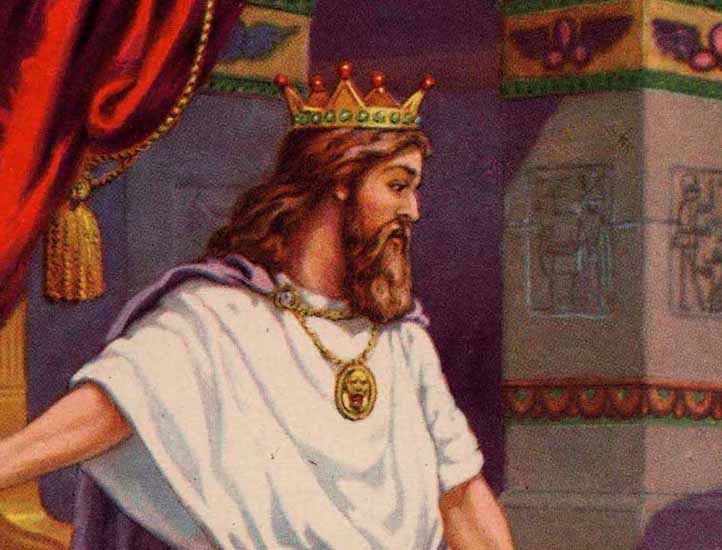
kingdavidlion


One of the biggest failures of David was his failure to live out God’s design for marriage and family. The fact that he ignored what God said about marriage was devastating to his children and many people around them.


To listen to the sermon, click the play button:


To download, right click on the link (or do whatever you do on a Mac) and save it to your computer: Download 2 Samuel Part 2

2 Samuel #2 . 2 Samuel 3:2-5;13-16

Second Samuel Chapters one through five give us the history of a half-hearted civil war between Saul’s family and David’s followers. But right in the middle, chapter three interrupts the war narrative to tell us briefly about the sons that David had during this time, and about his wives. There are some significant things to say about this interlude. I could have put it before or after the war discussion. Since I am writing this the week before father’s day (in the USA) I’ll cover it now, and we’ll get to the war next week.

Six sons of David are named in 3:2-5, and each one came from a different wife. The Old Testament does not offer many outright condemnations of polygamy. Yet it unflinchingly and consistently records the negative results of having more than one spouse. And there are passages that warn against it, even especially for kings.

Of David’s sons named in this passage, Chileab, Ithream and Shephatiah are mentioned only here in the history of Israel (though the same passage is repeated in 1 Chronicles 3). It is reasonable, therefore, to assume that they died in infancy or childhood; because of their absence in later genealogies it is virtually certain that they died before they themselves had children. David’s three surviving sons prove the brokenness that results from ignoring God’s intended plan for marriage and families.

The first survivor is Amnon. When he grew up he raped his half-sister Tamar, who was Absalom’s full sister. Absalom, the next one, had Amnon murdered for what he did. Later, he started a civil war with his father David, and made him flee for his life. Adonijah was a schemer who also tried to seize control of the kingdom when David was old and weak. He was ultimately executed by his half-brother Solomon.

There is one more note in chapter three concerning marriage. In verses 13-16 David demands that his wife Michal, Saul’s daughter, be returned to him. It is true that at one time, it seemed like David and Michal were in love (1 Samuel 18:20). But the marriage has been dissolved for a long time by this point, and David’s main motivation appears to be to unify the kingdom – joining the house of Saul and the house of David once more. He may have also been concerned that if Michal had any children, her second husband might claim them as rightful heirs of the throne of Israel. But her second husband loved her very much. He followed her all the way to the borders of David’s kingdom, weeping that he was losing her. This is an awful, tragic event.

It is a fact that David had many wives and many children by them. It is also a fact that the resulting family was full of greed, lust, hatred, murder, mayhem and grief. David was a man after God’s heart in many ways. But in his role as a husband and father, he failed spectacularly, as men of power and fame frequently do.

I did not plan out the texts this way, but I happen to be writing this just prior to Father’s day. So I want to point out a few things here that seem relevant to fatherhood. First, David’s failure as a father began with his failure as a husband. The strife in his family began with the fact that David ignored God’s plan for marriage, which is laid out clearly in Genesis 1 and 2 which describe marriage as the joining of one man and one woman for life. Once David ignored that, things went downhill. We might excuse him for marrying again after being separated from Michal. That divorce was beyond his control. But he continued to add wives like state-stickers on the back of a retired couple’s RV.

In those days, polygamy was a sign that the polygamist was rich and powerful. Many wives were a sign of status, sort of like a brand new Mercedes-Benz these days, only more expensive. It was expected that powerful men would have many wives. I believe that part of David’s motivation in marrying so many women was to gain respect in the eyes of his followers and in the eyes of foreign leaders. I’m sure he also wanted extra wives for other reasons, and the culture merely gave him an excuse. The truth is, David caved in to cultural pressure about marriage. And in doing so, he ignored a very clear warning from Moses that even kings were not to take many wives:

14 “When you enter the land the LORD your God is giving you, take possession of it, live in it, and say, ‘I will set a king over me like all the nations around me,’ 15 you are to appoint over you the king the LORD your God chooses… …17 He must not acquire many wives for himself so that his heart won’t go astray. He must not acquire very large amounts of silver and gold for himself. (Deut 17:14 & 17, HCSB)

There is a lot of cultural pressure on godly marriage these days also. Of course, there is the pressure to cave in and say that marriage is a joining of whoever wants to be joined, regardless of gender (or anything else). But I think the biggest cultural pressure on marriage these days is divorce. Divorce is just as much against God’s design for marriage as is polygamy. If you think it was wrong for David to have several wives, then biblically speaking, you’d better admit that divorce is wrong too. If you think gay marriage is not according to God’s plan, than you had better acknowledge that neither is divorce. The only difference is that our society accepts divorce, but not polygamy (at least not yet). It may soon accept gay marriage, or even stranger moralities concerning marriage, but we as Christians need to understand what the Bible says, and hold to it, regardless of what our culture does. There are loopholes in the law that allow unscrupulous people and companies to legally cheat and scam others. Does that mean it is OK for Christians to make money by doing those things? Of course not. Legality is not the same as morality. The law in Nevada says prostitution is legal there. Does that mean it is OK for a Christian woman to choose that for a career – as long as she lives in Nevada? Of course not. Government laws are not the same as God’s standards, and we can’t expect them to be. In the same way, it doesn’t matter what any human government says about marriage. What God says is the only relevant thing, and Jesus was sky-clear about marriage:

3 Some Pharisees approached [Jesus] to test Him. They asked, “Is it lawful for a man to divorce his wife on any grounds? ”

4 “Haven’t you read,” He replied, “that He who created them in the beginning made them male and female,” 5 and He also said: “For this reason a man will leave his father and mother and be joined to his wife, and the two will become one flesh? 6 So they are no longer two, but one flesh. Therefore, what God has joined together, man must not separate.”

7 “Why then,” they asked Him, “did Moses command us to give divorce papers and to send her away? ”

8 He told them, “Moses permitted you to divorce your wives because of the hardness of your hearts. But it was not like that from the beginning. 9 And I tell you, whoever divorces his wife, except for sexual immorality, and marries another, commits adultery.”

It would be nice if our legal system reflected our Christian morality. But there are already so many places in which it does not. If we make disciples and Jesus changes the hearts of people, they will do what is right, even if the law says it is OK to do wrong. If we all really followed Jesus and really let him use each of use to make disciples, gay marriage would not even be an issue. I wish Christians in America would quite fussing about gay marriage and instead let their hearts be broken in repentance over divorce, and over our failure to really submit to Jesus in all areas of our lives, especially marriage.

Now, what if you have already had a divorce and have remarried? I’ve said it before and I’ll say it again. These instructions are for you right now. What’s past is past. Live each present moment in step with the Holy Spirit. If you are married now, regardless of which number your marriage is, stay married to this one. Make it work, starting now. I think this principle is illustrated (in a negative way) by what David did to Michal. He tore her away from a man who deeply loved her. David destroyed another marriage and another family by trying to “undo” his divorce. The whole thing was a big disaster, as divorce always is. We’ll learn later that neither he nor Michal were happy about how it worked out after they were married again. So don’t try to undo your present marriage, whether it is your first or your fifth.

If your present marriage is truly intolerable (and often we exaggerate how bad it is) then it does appear that you can get divorced without sinning – as long as you never marry anyone but your present spouse again. In other words, for a Christian, divorce should lead to lifetime singleness, or reconciliation with your estranged spouse. The one exception where a person is free to get divorced and marry someone else is explained by Jesus – if your spouse (not you) commits adultery. Even there, Jesus does say that you must divorce – only that you may.

But before you decide that your marriage is intolerable, I want to suggest to you that marriage is a live thing. Things will get bad – for a while. They always do. They will also get better. If you stay with it, that is inevitable too. And then they will get rocky, and then better again. That’s life. Marriage is the most intimate relationship available to human beings. Two human beings relating that closely are bound to cause trouble for each other. But they can also be a source of incredible strength and joy to each other, if they stick with it. At its best, marriage gives us glimpses into the very nature of God. At its worst, it forces us to confront our own flaws and foibles, and maybe gives us a glimpse into the heartache that the Lord feels when we turn away from him. Either way, it’s a good thing. Notice I didn’t say easy but rather, good.

When David ignored God’s plan for marriage, it led to disaster for his children. Not only did his children suffer, but many around them suffered also. In other words, David’s disregard of God’s view of marriage was not merely a personal choice that affected only him – in his case it affected hundreds of people. In fact, his son Solomon followed in David’s polygamous footsteps and it destroyed and entire nation of people.

A huge amount of research has been done concerning children and divorce. Though children often seem to bounce back and handle things well at first, the long term consequences of divorce upon children are deep, troubling, and difficult to resolve. The struggles of children of divorce range from physical health problems to emotional trauma, depression and problems with future relationships. On this father’s day, I say to dads: If you are serious about being a good father, start by being a good and faithful husband to the mother of your children.

I’m sure David was under a lot of pressure. Everyone around accepted polygamy, especially for a man in his situation. But I believe that if David had been truly willing to follow the Lord in this area of his life, the Holy Spirit would have given him the strength to do so. I know the same is true for us. I think Kari and I have a great marriage. But trust me, we have our negative times like everyone else. But the grace of God is always available to us to help us in our struggles – all we have to do is submit to God’s design and reach out for that grace.

WHOSE LIFE IS IT?

WalledCity2

…Christianity is above all, a faith rooted in hope for the future. This life offers only partial fulfillment. Nothing makes sense until we allow eternity into our calculations…

…You won’t earn any favors with God by hating or hurting people whom you think are God’s enemies. People do turn away from God and do evil, and God does not want them to do that. But he doesn’t hate them — He grieves over them, as he grieved over Saul…

To listen to the sermon, click the play button:


To download, right click on the link (or do whatever you do on a Mac) and save it to your computer:
Download 2 Samuel Part 1
2 Samuel # 1. Chapters 1 & 2.

We just finished the book of 1 Samuel. However, that book leaves off in the middle of the action, so to speak. It doesn’t tell us what happened to David after Saul died. The reason for this is that originally, First and Second Samuel were one book. The Jews who translated the Old Testament into Greek divided this history into two books. Probably the division arose because Greek uses vowels, where Hebrew does not. This means that the Greek translation is much longer than the original Hebrew. As a result, it had to be put into two separate scrolls – the “first,” and “second.”

For now, we will continue on with the historical record, at least until we get to a reasonable stopping point – so that means we’re jumping into what we call the book of 2 Samuel. Bear in mind as we study it, however that it all part of one work.

Last time I read the lament that David wrote about Saul. But there were a few things which preceded that. David and his men had fought a battle of their own with the Amalekites, who had attacked when everyone else in the region was off to the Israelite-Philistine war. David returned to his burned home. Two days after he got back, a man came from the north, bringing news of the great battle in the valley of Jezreel.

This man got the main news correct – Israel lost the battle, and Saul and Jonathan were killed. But then his story diverges from the one recorded in 1 Samuel 31. The writer does not make editorial comments, but it is clear that whoever wrote it regarded 1 Samuel 31 as the accurate record of events, and the story of this stranger as embellishments and lies.

Jewish tradition holds that the man who came to David with this story was actually the son of Doeg the Edomite, whom they also suppose was Saul’s armor bearer. They think his claim to be an Amalekite was to hide from David the fact that his father was the infamously evil Doeg. There is nothing in the text one way or another to tell us if this is so or not, but it is possible that Doeg was elevated to the status of Saul’s personal armor bearer and guard, after he did him the favor of killing the priests when no one else would. If this man is Doeg’s son (and Doeg was Saul’s armor bearer), it would explain his presence close to Saul, and how was able to take Saul’s crown and escape.

He claims that the Philistine chariots were coming close to Saul. This shows us, the readers, that he is not being completely truthful. He probably said it to try and justify to David why he (allegedly) ended Saul’s life. Chariots were formidable weapons that the Philistines had, and the Israelites did not (at this time). It would be the modern equivalent of tanks closing in on an infantry position. If the chariots were close, then indeed all was certainly lost. However, we know that Saul was on Mount Gilboa, and the messenger even affirms this. There were no roads (the way we think of roads) in those days. Chariots simply did not work well, if at all, on road-less, forested mountainsides. Therefore, it is extremely unlikely that they used chariots on the mountain where Saul died.

David, experienced warrior that he is, probably sensed right then there was something wrong with the story. Even how the messenger begins is quite suspicious: “I happened to be on Mount Gilboa…” He “just happened” to be near king Saul in the middle of a battle? Not likely.

It was clear however, that this man thought claiming to have killed Saul would make him a favorite with David. Whoever he was, he completely misunderstood David. This was because he assumed that deep down, David was not really serious about being the Lord’s man; or perhaps since he was part of Saul’s retinue, he had never heard anyone talk about David’s strong faith. He condemns himself with his lie.

16 And David said to him, “Your blood be on your head, for your own mouth has testified against you, saying, ‘I have killed the LORD’s anointed.’”

David had him executed immediately for the crime of killing Saul. Once again, as harsh as this seems, it is a reflection of David’s humble heart and in a way, a reflection of how the Lord felt about Saul. God is not happy that Saul is dead. Neither is God’s servant. David, by executing this man shows everyone that there is nothing to be gained by lies or treachery or unnecessary bloodshed. If anyone they thought they could ingratiate themselves to David with that kind of behavior, their illusions would be shattered. God didn’t want Saul dead, and neither did David. You won’t earn any favors with God by hating or hurting people whom you think are God’s enemies. People do turn away from God and do evil, and God does not want them to do that. But he doesn’t hate them — He grieves over them, as he grieved over Saul. Saul was destroyed by himself and his own choices, not by God. You can destroy your own life, as Saul did, but the Lord is never out to destroy you.

Now that Saul is dead. David’s reason for staying out of Israel is gone. His main obstacle to becoming king and fulfilling the Lord’s calling has been removed. David knows he was anointed to be the next king of Israel. A large portion of the population knows this also. I think a lot of people at this point would move ahead and “just go for it.”

Not David. The first thing he does is ask God what he should do. He does not assume anything. I think the reason for this is that David wasn’t trying to establish his own kingdom – instead, he was trying to be God’s servant. His attitude is not, “how can I behave so that God can help me?” That’s was Saul’s basic approach to life. But David’s heart is this: “Lord, what do you want to do next?” He did not view God as his assistant in achieving his goals. Instead, he felt that his whole life was God’s own project. His role was to try and assist God, not the other way around. David’s anointing and his destiny were not about David – they were about the Lord. So become king is not David’s idea nor his goal – his goal is to serve the Lord.

As I have pointed out before, David is one of the people in the Old Testament who sheds light on what Jesus is like (that is, David is a “type” of Christ). Jesus expressed this same attitude of being here for the Father’s purposes in John 8:28 and 12:49 (among other places)

28 So Jesus said to them, “When you have lifted up the Son of Man, then you will know that I am he, and that I do nothing on my own authority, but speak just as the Father taught me. (John 8:28, ESV)

49 For I have not spoken on my own authority, but the Father who sent me has himself given me a commandment-what to say and what to speak. (John 12:49, ESV)

This is not complicated, but it is HUGE when it comes to living out our faith practically. It is so easy to fall into the idea that the life of faith is about God helping us each achieve our own destiny. We make this seem good and spiritual, because we assume that our destiny was created by God. And of course, it is. But it isn’t about us. It is about God. However, when we think that it is about us, we inevitably get angry or disappointed with God when he fails to do things for us that we think would bring about our destiny.

Our true destiny is to bring glory and honor and praise to God – not to meet our own personal goals. Achieving that destiny is God’s business from beginning to end. Some people, like David, brought glory to God in very public ways, like becoming a well-known leader. Others do it quietly, like being a loving wife and mother, or praying regularly for others.

Now, I think it would be wrong to assume that David didn’t care either way if he became king. First, he wanted what God wanted, and God did want that. Second, because God wanted to work in this way through him, David was drawn to it. He wanted to lead because he was created for it. So I am sure that David really wanted to become king. Even so, he subordinated his own desires to God, because he understood that it wasn’t really about him. Like Samuel’s mother, he had real desires that he acknowledged, but at the same time, he also surrendered them to God.

This is important, because right after he asked God what to do, David received a partial fulfillment of God’s calling on him. The Lord told David to return to Israel, to the town of Hebron in the territory of Judah. When he did that, the tribe of Judah received him as their king. Judah was one of the largest, most powerful and prestigious tribes. In future generations from David, Judah became its own independent country and most of the Jews living today come from that tribe (that’s why they are called Jews). Even so, being king over just one tribe and about one third of the territory of Israel isn’t exactly what David thought the Lord had planned for him. It is sort of a fulfillment of God’s promise and calling. He is a king. But he isn’t the king of the whole nation.

There is potential here for David to become frustrated. After all, you could not make any argument that Saul was more worthy than David, but even so, Saul’s kingdom was much larger than David’s (during this period of time). Samuel anointed David when David was perhaps fourteen years old. At first it seemed like everything was falling into place. He grew a little, killed the giant and became a famous warrior and trusted member of the king’s court, all while he was very young. But since then, it has been a lot harder. Now, David is thirty years old. Probably fifteen years have gone by since he was anointed to be king. That’s a long time – half of his entire life so far. And now finally he is – one of two kings of Israel. It will be seven more years before he becomes king of all Israel.

This partial fulfillment is also a type of Christ. The kingdom of Jesus Christ has only come in part so far. Jesus reigns over the hearts of those who will let him, but not everything is under his rule, as it will be when this world ends. Speaking of Jesus, Paul writes:

9 For this reason God highly exalted Him and gave Him the name that is above every name, 10 so that at the name of Jesus every knee will bow — of those who are in heaven and on earth and under the earth — 11 and every tongue should confess that Jesus Christ is Lord, to the glory of God the Father. (Phil 2:9-11, HCSB)

But currently, at the name of Jesus, not every knee does bow, not every does worship. There is a part of Jesus’ exaltation and kingship that is still in the future. It is not fully here yet. The writer of Hebrews says:

7 You made him lower than the angels for a short time; You crowned him with glory and honor 8 and subjected everything under his feet. For in subjecting everything to him, He left nothing that is not subject to him. As it is, we do not yet see everything subjected to him. 9 But we do see Jesus — made lower than the angels for a short time so that by God’s grace He might taste death for everyone — crowned with glory and honor because of His suffering in death. (Heb 2:7-9, HCSB) (added italicization)

We do not yet see everything subjected to Jesus.

In the same way, we too wait, having only partially what has been promised us. Paul writes to the Ephesians:

11 We have also received an inheritance in Him, predestined according to the purpose of the One who works out everything in agreement with the decision of His will, 12 so that we who had already put our hope in the Messiah might bring praise to His glory. 13 When you heard the message of truth, the gospel of your salvation, and when you believed in Him, you were also sealed with the promised Holy Spirit. 14 He is the down payment of our inheritance, for the redemption of the possession, to the praise of His glory. (Eph 1:11-14, HCSB)

We haven’t received the whole inheritance yet. We have the Holy Spirit as a down payment­ – we have only part of what has been promised us. This means that Christianity is above all, a faith that is all about hope. We know this world doesn’t fully satisfy. True justice isn’t available here and now. True, unblemished joy is scarce and temporary. True satisfaction, contentment and fulfillment are always elusive. Those who don’t surrender their hearts to Jesus get angry at God because of this. But they aren’t listening. The true fulfillment of God’s love for us and his promises to us comes after this world ends. We don’t have to make the credits outweigh the debits in this life. We don’t have to have everything we have dreamed of before we die. It is still coming. It was still coming for David. It is even now, still coming for Jesus, who is not yet king over everything. And it is still coming for us.

RELIGION WITHOUT RELATIONSHIP IS DEADLY

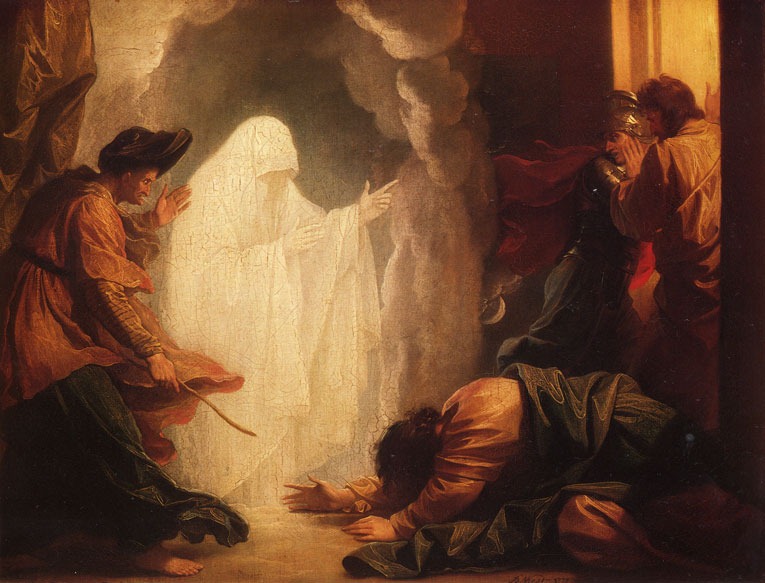
witchofendor2

Saul begins to reap the deadly benefits of religion without relationship.

To listen to the sermon, click the play button:

To download, right click on the link (or do whatever you do on a Mac) and save it to your computer: Download 1 Samuel Part 27

1 SAMUEL PART#27. Chapter 28

Remember all that we have learned about king Saul. One of the most important things we discovered is that he was a religious man, but not a man of faith. Time after time, when he felt he could somehow use or exploit God, he did so. But when he was confident in himself, or when he felt that God had nothing to offer him, he ignored God. He had the trappings of religion and he used them to control others and manipulate God. But he did not live in a day to day walk of faith, trusting God in all things, relating to him, loving him. The depths of Saul’s spiritual poverty are revealed in 1 Samuel chapter 28.

Saul, having no real trust in God, was terrified when he saw the Philistines. Now consider something. Every time Saul was involved in a battle with the Philistines up to this point, God saved the Israelites. The Lord used Jonathan in chapter 13, and David in chapter 17, and several other times. But none of that seemed to make any difference to Saul. He was just as scared and faithless as he had always been.

I want to pause and say something about that here. Sometimes we think that if God just did a miracle for us, then we would really trust him. If we saw the Lord do something really great, then we wouldn’t doubt, then we wouldn’t disobey or draw back in fear. But that wasn’t the case with Saul. God’s previous miracles didn’t matter. The same was true with the first Israelites who came out of Egypt. They saw many miracles. Their food and water were daily miracles. And yet it did not help them to have faith and surrender to the Lord.

Jesus addressed this issue in his own ministry. Though he did many miracles, often people came and demanded miracles on the spot – basically asking him to prove himself to them. Jesus addressed this Luke 11:27-29:

27 As He was saying these things, a woman from the crowd raised her voice and said to Him, “The womb that bore You and the one who nursed You are blessed! ” 28 He said, “Even more, those who hear the word of God and keep it are blessed! ” 29 As the crowds were increasing, He began saying: “This generation is an evil generation. It demands a sign, but no sign will be given to it except the sign of Jonah. (Luke 11:27-29, HCSB)

John records that many miracles (‘signs’) still did not convince people who did not want to be convinced:

37 Even though He had performed so many signs in their presence, they did not believe in Him. (John 12:37, HCSB)

In another place, Jesus told a story about a poor man named Lazarus, and a rich man. At the end of the story, the rich man found himself in hell. He begged that someone be sent from heaven to tell his family the truth about the afterlife. Jesus concludes the story like this:

31 “But he told him, ‘If they don’t listen to Moses and the prophets, they will not be persuaded if someone rises from the dead.’ ” (Luke 16:31, HCSB)

When people in the New Testament say “Moses and the Prophets” they mean “the bible” since that was as much Bible as they had at that time. What Jesus is saying is this: if you don’t trust God’s word and the promises in scripture, no amount of miracles will cause you to trust.” The problem can’t be fixed by a miracle. That is both hard and good for us to remember. Seeing is not believing. With God, believing is seeing.

So Saul, in spite of all that he has seen God do, is a religious pretender, not a man of real faith. Therefore, now, facing the Philistines, he is quaking in fear. It says that he inquired of the Lord. As before, Saul doesn’t go to the Lord unless he thinks God can do something for him. So now, he inquires of the Lord only out of fear and a desire to manipulate God. It doesn’t tell us what Saul was asking God. I think it is most likely that he made an animal sacrifice to the Lord, and was hoping for some prophecy that God was pleased with the sacrifice, and would give Saul the victory. But he didn’t hear anything by way of the “sacred dice” (the urim and thummin) or through prophets, or in dreams. Basically, Saul is demanding another sign here, before he will really trust God. He has had God’s help all his life, but he still won’t trust the Lord without some kind of additional sign.

God has been working on Saul all of his life. Remember how he called him to be king? Remember how he gave him the victory at Jabesh Gilead? Remember how even after Saul proved to be useless to God, God kept pursuing Saul’s heart, sending him a troubling spirit to get him to turn to the Holy Spirit for relief? Saul has had decades to surrender his heart to the Lord. The Lord has never quit trying to win him over. I think this lack of a sign is one more chance for Saul to surrender his heart. The Lord has put him in a crisis where he has the same two choices he has always had: 1. Trust God, or 2. Manipulate God and other people to control his own destiny, and get the outcome he wants. Before this, Saul has always chosen #2. He doesn’t know it, but this will be his last chance to give his heart to the Lord.

Tragically, Saul once again chooses to try to control his own life and outcomes, rather than trusting God. When he doesn’t hear from the Lord, trust is not even an option. Saul simply must find some way to manipulate God into saying what he wants to hear, or doing what he wants God to do. So he seeks out a medium, or witch, or spiritist, or whatever you want to call it.

Deuteronomy 18:9-14 says this:

10 There shall not be found among you anyone who burns his son or his daughter as an offering, anyone who practices divination or tells fortunes or interprets omens, or a sorcerer 11 or a charmer or a medium or a necromancer or one who inquires of the dead, 12 for whoever does these things is an abomination to the LORD. And because of these abominations the LORD your God is driving them out before you. 13 You shall be blameless before the LORD your God, 14 for these nations, which you are about to dispossess, listen to fortune-tellers and to diviners. But as for you, the LORD your God has not allowed you to do this.

These practices were part of the reason for Holy War, which Saul failed to carry out as king. Not only were the people of God not supposed to do these things, they were supposed to wipe out those who did. Such things separate people from God and put them under the influence of hell. Saul did make some attempt to stamp out the practice of the occult, but obviously he wasn’t entirely successful. And now he is willing to deliberately abandon faith in God, abandon his previous laws against these things, and seek help from the dead.

Here is the final proof of Saul’s internal condition. Religion is just something to be used and manipulated, and if one approach doesn’t work to accomplish his aim, he’ll try another. So he and a few of his men disguise themselves and go to the witch. The disguise is actually pretty pathetic. The woman lives not far from the battlefield. Her visitor is the tallest man she’s ever seen, and he wants to talk to the ghost of the prophet Samuel. It doesn’t take a genius to figure out it is Saul. So at first she thinks it is a trap. Then when she is convinced, she pretends that the ghost of Samuel told her who Saul was.

Now it is natural to wonder, what really happened here? Was the woman a charlatan who made it all up? Was there really a spiritual presence there? And if so, was it really Samuel?

To answer that, we need to consider what the Bible says about life after death. Certainly, the entire New Testament teaches that at the end of time, there will be a judgment day. Those who rejected Jesus will be thrown into a lake of fire with the devil and his demons. Those who receive him will be physically resurrected to an eternal, joyful existence.

But there is that period of time in between. Samuel was in the period, as is every person who has died up until today (except for Jesus). Some people believe that in that “between-time,” you are unaware of existence until judgment day, at the end of time. Others believe, as I do, that there is a period of time when dead souls are either with Jesus in joy and freedom, or in hell. The presence of Moses and Elijah with Jesus in Matthew 17, suggests this very strongly. Jesus painted this picture of life after death in his story of Lazarus and the rich man. Revelation 6:9-11 shows people who have died, yet are aware and are waiting for the final judgment day and the resurrection. Actually several passages in Revelation suggest that there is life with Jesus between death and the physical resurrection that will occur at the end of time.

Therefore in order to believe that it really was the spirit of Samuel, we have to believe that some people on earth – mediums, fortune tellers etc. – have the power to pull people out of the presence of God and back to earth so we can talk to them. I don’t buy it for second.

There is another reason to believe that this was not really Samuel. God chose not to answer Saul when Saul wanted some reassurance. He did not answer through the urim, or through the prophets or in dreams. If God would chose not to speak to Saul through these holy and righteous means, why would he then work through the unrighteous means of a medium – basically rewarding Saul’s wicked behavior?

Even beyond these most significant facts, there are other things in the text which suggest that this was not Samuel. Saul himself could not see the spirit – he had to ask the medium what he looked like. Her reply was very vague: “An old man wearing robes.” That’s pretty much how I picture Samuel myself. Saul accepted this description as true, but there is nothing in it that actually identifies Samuel personally.

Finally, there is the message that Saul got from this apparition. Once again we need to question why God would speak through this illegitimate means after not answering by any legitimate route. But secondly, listen to the tone of the message. It is angry, bitter and hopeless. There is no encouragement. There is not even any opportunity for repentance. Not too long after this, Saul becomes wounded and commits suicide, rather than fight on with courage. I personally believe that his encounter with this evil spirit contributed to that act.

I do believe that there was something spiritual going on here – something creepy and utterly evil. Remember the other Saul, in the New Testament, the one who repented and came to Jesus, and later was known as Paul? He encountered a girl who could tell the future. But it was an evil spirit that gave her the power of limited fortune telling (Acts 16:16-19). I met someone once, who used to be involved in fortune telling, and spirit communication for money. She became a Christian and rejected all that. We asked her what was involved in it. She said that sometimes, she was just tricking people by being observant, and making vague statements combined with educated guesses. But she also told us that sometimes, she was aware of a spiritual presence which gave her information – which she now realizes was a demon.

I personally believe that Saul unknowingly sought (and received) an audience with a demon, masquerading as Samuel. Saul was rewarded with the kind of the thing you would expect from a demon: condemnation and hopelessness. By turning to witchcraft and séance to try and control his life, he was turning his back utterly on God and seeking help from hell. And he got exactly what you might expect from hell.

So where to do we go with this text?

First, if this isn’t too obvious, don’t play around with séances, spirit-guides, mediums, psychics and so on. That stuff comes straight out of the pit of hell, and you are inviting the depths of hell into your life if you fool with it. Saul’s results were dramatic and self-destructive.

I find some reminders here about religion. There are many people like Saul who go to church and talk the religious talk as a way to manipulate God or influence others. It became a way of life for Saul, and ultimately it destroyed him. God never gave up on him, but by his empty religious spirit, Saul took himself out of God’s jurisdiction. I hate religion. I love Jesus, but I hate religion. I think maybe God hates it too. Religion is about appearance and manipulation. Real faith is about surrendering your heart to the One who created you, and cares about you more than anyone else in the universe. Saul had plenty of religion. David had faith.

There is also a caution here about how you view miracles. I’ve seen miracles. I love it when God does them. But my faith does not depend on them, and I know I cannot demand them from God, on my cue. We sometimes think (like Mike and the Mechanics) that all we need is a miracle. Not so. All we need is the Lord, and to get him all we need is faith to believe he is there and to trust him. Miracles are real, and great, but if we make them necessary to trusting God, we are in trouble. Jesus himself warned against that attitude.

I think there are many times when we get ourselves into situations like Saul’s. We come face to face with a problem. We can try to manage and control life ourselves; or we can trust the Lord and surrender to him. I pray that we make the second choice, not the first.

I guess the main message is the same message we hear over and over through scripture: Trust the Lord. Base that trust on his word and his promises, not on anything else.

TRUST AND TIMING

When God sends your enemy into your cave with his pants down, unable to see you in the dark,  how do you know that it isn’t God’s will for you to kill him?

engediwaterfall

To listen to the sermon, click the play button:

To download, right click on the link (or do whatever you do on a Mac) and save it to your computer: Download 1 Samuel Part 23

1 Samuel #23. (Chapter 23:14 – Chapter 24:20)

This is one of my favorites stories in the entire history of David. I think what David does, and what he refrains from doing in 1 Samuel 24, shows more courage, faith and heart for God than any of his amazing feats in battle. This is David at his best.

I want to briefly summarize the end of chapter 23, since we did not cover it in detail anywhere else. After David left the town of Keilah, he took his men and went into the wilderness on the other side of the Judean mountains. It may have been more green there 3,000 years ago, but these days, it is mostly desert. It was farther away from Saul, and in terrain that was significantly more rugged. Even so, Saul pursued David there, hoping to capture or kill him. During this time, Jonathan came secretly to David, and “encouraged him in his faith in God.” They renewed their friendship.

The people of the region betrayed David, as the citizens of Keilah had done. When you read the Psalms that David wrote, you will often find references to treacherous people, liars and friends who betray. This is because this sort of thing happened to David astonishingly often. In spite of his integrity and the help he brought to others, in spite of his faithfulness to God and respect for Saul as king, people were quick to believe the worst of him, and spread lies about him, and betray him to Saul.

I don’t know about you, but this encourages me. I think my natural expectation is that if I surrender my life to Jesus and have integrity in letting him live through me, people will see it, and like it, and praise God for it. I expect a positive response to God’s life shining through me. I expect good results, and favor with people. But Jesus said we ought to expect the opposite:

18 “If the world hates you, understand that it hated Me before it hated you. 19 If you were of the world, the world would love you as its own. However, because you are not of the world, but I have chosen you out of it, the world hates you. 20 Remember the word I spoke to you: ‘A slave is not greater than his master.’ If they persecuted Me, they will also persecute you. If they kept My word, they will also keep yours. 21 But they will do all these things to you on account of My name, because they don’t know the One who sent Me. (John 15:18-21, HCSB)

He explains that there is blessing for us in this situation:

10 Those who are persecuted for righteousness are blessed, for the kingdom of heaven is theirs. 11 “You are blessed when they insult and persecute you and falsely say every kind of evil against you because of Me. 12 Be glad and rejoice, because your reward is great in heaven. For that is how they persecuted the prophets who were before you. (Matt 5:10-12, HCSB)

Peter, in his first letter, also talks about this:

19 For it brings favor if, mindful of God’s will, someone endures grief from suffering unjustly. 20 For what credit is there if you sin and are punished, and you endure it? But when you do what is good and suffer, if you endure it, this brings favor with God. (1Pet 2:19-20, HCSB)

13 And who will harm you if you are deeply committed to what is good? 14 But even if you should suffer for righteousness, you are blessed. Do not fear what they fear or be disturbed, (1Pet 3:13-14, HCSB)

Seeing the life of David, and hearing what the New Testament says, gives me hope. Being a person with a heart for God is not necessarily a way to get a whole bunch of people to like you. It isn’t a road to sure success. It is often the opposite. But I cling to these promises that there is great blessing for us in those sorts of trials, sooner or later. At this point for David, he experienced the persecution, but not the blessing.

At one point, David was almost caught. He and his men were in a valley or canyon, and Saul and his men were coming down another valley on the opposite side of the mountain. They were gaining on David. But before they could close, messengers found Saul, reporting that the Philistines were attacking elsewhere in Israel. Saul had to break off the pursuit. Once again, I want to point out that David did not know what his future held. He didn’t know for sure what God was doing, and he might very well have been caught. In that particular incident, it was merely lucky timing that saved him.

And then comes the incident described in chapter 24. This is later. Saul is back to his new hobby of trying to find David and kill him. He and his men are traipsing around the rugged desert and mountain terrain where, according to rumour, David is hiding. They aren’t having any luck. David appears to be miles away. One day, Saul has to relieve himself, and he goes into a cave alone for privacy. It just happens to be the cave where David and some of his men are holed up.

I want to make sure we understand the scenario. David was anointed by Samuel to be God’s chosen instrument. It was understood along with that, that he was supposed to be Israel’s next king. Israel’s present king – Saul – who is no longer God’s instrument, has been trying for a long time to kill David. Now Saul is alone, unarmed and unaware, standing right in front of David, night-blind, back-turned with his pants down. Saul could not be more helpless.

David’s men believe that this is a gift from God. Now is the time for David to kill Saul, and become king himself. I suspect that nine people out of ten would agree with David’s men. Killing Saul at that moment would have been easily justifiable self-defense – after all, Saul was there for the express purpose of killing David. Saul was acting contrary to God’s stated will and purposes – he was trying to kill God’s chosen instrument. So killing Saul would be not only self-defense, but also protection of God’s work in the world. I don’t believe there was a person living at the time who would have blamed David.

David creeps forward, knife held low and ready. He raises his arm to strike…and then lowers it, and quietly cuts off the corner of Saul’s robe. He creeps back to his men, and a furious but quiet argument ensues. Now David’s men, seeing that he will not kill Saul, are eager to do the deed themselves. Once again, who could have blamed David if he had let one of his men do it? Not only would he have the justifications listed already, but he could always claim that it wasn’t actually him who killed Saul, and he really didn’t want it to happen. But David argues vehemently, and commands his men not to touch Saul. Finally, Saul leaves the cave and the opportunity is lost.

I imagine the cave was up on the slope of a hill or something. After Saul has gone down a little ways, David emerges, and calls to Saul. He shows him the corner of his robe and says:

11 See, my father! Look at the corner of your robe in my hand, for I cut it off, but I didn’t kill you. Look and recognize that there is no evil or rebellion in me. I haven’t sinned against you even though you are hunting me down to take my life. 12 “May the LORD judge between you and me, and may the LORD take vengeance on you for me, but my hand will never be against you. 13 As the old proverb says, ‘Wickedness comes from wicked people.’ My hand will never be against you. (1Sam 24:11-13, HCSB)

All this wisdom from a man not yet thirty years old. But of course, it wasn’t really David’s wisdom – it was the Spirit of God at work within David. I think the key is verse 12: “May the Lord judge between you and me, and may the Lord take vengeance on you for me, but my hand will never be against you.” David literally refused to take matters into his own hands. Remember when Saul was about to lose the entire southern portion of Israel? His army was deserting him, Samuel wasn’t showing up, and so Saul held a worship service merely for the purpose of getting people to stick around. Saul took matters into his own hands. But David will not do that. His trust is not in what he can do, but in what God will do.

However, there is a natural question. When God sends your enemy into your cave with his pants down, unable to see in the dark, facing away from you, how do you know that it isn’t God’s will for you to kill him? I mean, we’ve already offered many reasons why no one would condemn David for doing it. So how did David know he shouldn’t do it?

I think there are two answers. The first is one that I never get tired of talking about: we need to live in a day-by-day, moment-by-moment relationship with the Lord. The ten commandments told David not to murder, but it could have justifiably been called self-defense, or war, not murder. There is no rule-book that covers this scenario. David, like us, had to rely on a connection of faith with the Lord. Through that faith, the Lord communicated to him that it would be wrong. We might say David just knew it in his heart. The reason he knew it in his heart is because God put that knowledge there through the faith-relationship.

Second, in context of this faith relationship, what God showed David was that to kill Saul at this point would be taking matters into his own hands, rather than trusting. I believe that there are times when God calls us to act speedily and courageously without hesitation. But there are also times when the Lord calls us to let opportunities pass by, and trust Him to bring about his purposes in his own way. Personally, I think the second way is harder, and in our culture we almost never think that way. We typically assume that if we see a means to meet our goals, it is God giving us that chance, and we should take it. Sometimes, that may indeed be true. But sometimes the Lord calls us to wait and trust so we can receive it from him, not get it by our own effort.

Consider this: if David had killed Saul at this point, he might always afterwards wonder if God really wanted him to be king, or if he had made himself king. And there was something that was more important to David than reaching his goal of becoming king. It was more important to him to be right with God than to achieve his ambitions. So he says, “Yes, I’d like God to judge you Saul, for what you’ve done. But my priority is not to judge you, nor to make my goals happen. My priority is to be right with the Lord.”

What’s your priority? Think of something that you really, truly want. Now imagine that the power to make it happen is in your hand. Would you do it, even if you knew in your heart that God didn’t want you to?

Now, I don’t want the message to be that we are just not as righteous as David. David wasn’t any better than us. He just learned to trust God, and he made the trust the primary and most important part of his life. The message is not “you aren’t as good as David.” The message is: Trust God. I’ll say it again: Trust God. The thing that you want so much, the thing that you are convinced is even God’s will for you – God will take care of that. David eventually did become king. It didn’t happen that day. In fact it was still years away. But God did take care of it. He worked it out the best way possible.

So trust him.

WHAT DOES GOD REALLY FEEL ABOUT THE MESS YOU’RE IN?

WalledCity

As God’s “anointed one” David’s life and actions give us insight into what Jesus is like. When God’s people get themselves into trouble, both David and Jesus are eager to come to our aid.

To listen to the sermon, click the play button:

To download, right click on the link (or do whatever you do on a Mac) and save it to your computer: Download 1 Samuel Part 22

1 Samuel #22. God’s Heart for

Rescue. 1 Samuel 23:1-13

We are reading a book of the Bible that is primarily a record of history. Theologians call this kind of Biblical writing, “narrative.” In Sunday school, we all called them “bible stories.” The gospels – the bible stories about Jesus – are narrative. So is the book of Acts. So also, is much of the Old Testament. Whenever we read narrative we should keep in mind that there are three basic layers to it.

First, narrative parts of the Bible are descriptions of actual historical events. Archaeology has consistently confirmed and correlated the bible stories we read. Skeptics used to claim that it was all made up – but in trying to prove that, they instead proved how historically reliable the Bible is.

Even so, we need to realize that this history was written with a purpose in mind. This is true of all history, by the way. Dr Mark Cheathem will soon have a new volume published about Andrew Jackson. It will tell readers about Andrew Jackson and his life, to be sure. But Dr Cheathem will also be telling the events of Jackson’s life from a definite perspective, and building a case that it is a valid perspective. His main thesis is that Jackson’s life was shaped by his own perception of himself as part of the Southern gentry class. In a similar way, the Bible tells us real history, with a certain particular perspective. [For more information about Dr. Cheathem and his books go to http://mcheathem.wordpress.com/] The perspective used in the Bible is that God was at work in these events, and the writers, inspired by God, record how God was interacting with humans through the incidents that are recorded. So we not only look at the historical events, but, trusting that God inspired the writers, we look at how God was at work in them.

Finally, we recognize that God is still telling the story, and he uses the Bible to communicate with us today, to tell us how he is at work in us and around us today. The bible is there to help us know God better through Jesus Christ. So as we read, we look for how he wants to communicate with us in this very moment, and how it helps us to know Jesus better, and walk in relationship with him.

In 1 Samuel 23:1-13, David hears that the town of Keilah, near both the cave of Adullam and the forest of Hereth, is under attack by the Philistines. As soon as David hears of it, he has two immediate reactions. First, he wants to go rescue them. Second, he chooses to ask the Lord if he should do that. Remember, both a prophet and priest were with David at this point, and I am sure that together, the three of them asked God about it. David’s first reaction was exactly what God wanted. His heart, and David’s heart, was to deliver his people.

But David’s men said to him, “Look, we’re afraid here in Judah; how much more if we go to Keilah against the Philistine forces! ” (1Sam 23:3, HCSB)

Remember David now has about six hundred men with him. The way war was waged in those days, it is possible that some of them had previously been sent to help Saul for a short time in some of his battles. These citizen-soldiers usually just stayed for one battle or one short campaign, and they were not as significant as the professional warriors. Generally, they just hung around, and if the battle went well, they provided manpower for pursuing enemies; if the battle went badly, they would have been the first to flee. Because these men were so low in society, however, it is possible that very few of them had any experience at warfare. Certainly, aside from David, none of them were professional warriors – yet. Quite simply, they were afraid.

Last time when Saul wanted his men to take action he spoke to them sarcastically and accusingly. David does neither. Probably mostly out of concern for his men, he asks the Lord a second time. When they hear another affirmative, David wastes no more time. He leads them into battle, and they win a resounding victory, saving the town of Keilah.

But all is not well. No doubt David and his men were tired of living in the forest and the cave. So they weren’t in a hurry to leave Keilah – a real town with houses and even a wall. They were glad to hang out in civilization for a while. Saul hears that they are there, and declares: “God has handed him over to me, for he has trapped himself by entering a town with barred gates.”

I want to pause and point out two things. The first is a small difference. In all David’s interactions with God in this passage, he calls him “the Lord.” Saul calls him “God.” “The Lord,” is the way most English translations express the Hebrew personal name for God. So, in fact, it is a more casual and intimate way to talk to God. To picture it another way, say you were talking about a man named John Smith. David is calling him “John” and Saul is calling him “Mr. Smith.” I think this is a reflection of their different relationships with God. To Saul, God is a distant Supreme Being, one that might possibly be manipulated into helping him (Saul). To David, he is a close personal relation, a friend in all times.

The second thing I want to highlight is their different approach to God’s guidance. David pauses and talks to the Lord multiple times on many occasions. He asks what God wants to do in every situation. Four times in these thirteen verses, we see David seeking God’s guidance. On other hand, Saul simply assumes that God exists to assist him to fulfill his (Saul’s) own ambitions. In these verses, he doesn’t once seek to know what God wants him to do.

Let me state this even more clearly. In Saul’s mind, the whole point of God’s existence is to help Saul have the kind of life he wants. God is his assistant. But in David’s mind and heart, he (David) exists to serve God and carry out his will on earth. He is God’s servant, and even calls himself that exact thing in verse ten. I think that these two attitudes compete for dominance in everyone who believes in the existence of God. Is God there to help us live our lives – or are we here to express His Life and fulfill His Purpose here on earth? In other words, is my life about me (with God as a help and support to me), or is my life about God (with me as his valued tool and helper)? I think we all know the correct answer to that question. But practically speaking, many Christians live as if God is their servant, not the other way round. It is so easy to start thinking that the main point of God is to do good things for me. The truth is, the main point of my life is to let God work through me.

The citizens of Keilah are apparently not very grateful to David for his help. There is no record of any expression of thanks. Instead, when David asks the Lord if it is safe to stay there, the Lord tells him that the people of Keilah will hand David and his men over to Saul, if he stays. Saul’s intention is to surround the city and destroy it, with David and his men inside. It does not say so overtly, but it is quite possible that it was a citizen of the town who went to Saul with the information that David was there.

This is ironic. The people of Keilah rejected their rescuer. They sent for Saul to come and capture David. In rejecting God’s anointed one, the citizens of Keilah were inviting their own destruction. In their rejection of David, they were destroying themselves.

Thankfully for everyone, David sought God’s guidance, as he did so frequently, and he led his men back into the wilderness, saving both himself and the town of Keilah, yet once again.

Now, we have heard the history of what happened. We have noticed how God was involved back then. But what does this mean for you today? How is the Lord using this to speak to you, to help you know Jesus better and walk with him?

Remember that David is a type of Christ. God used his life to show us what the ultimate “anointed one” is like. One of the things I think the Lord shows us here is that the heart of God is to rescue us. David, anointed with God’s spirit, heard of people who were in trouble and oppressed, and his first response was, “Can I go save them? Please?” God’s heart is for redemption. He sees people in trouble and oppressed, and he says to the anointed one, “rescue them!” Jesus’ heart is for your rescue. I know there are many things that happen in this life which we don’t understand. But we can’t doubt that God loves us and wants to save us. He came in the flesh, he gave up his body in tortuous suffering to rescues us. His heart is for our redemption. Whatever you face, you are not forgotten. There is One who sees you as precious and valuable. His heart is for your ultimate salvation, for your best good.

David rescued the people of Keilah. Today, three thousand years later, it makes no difference to those people. But the redemption we get through God’s Ultimate anointed one is eternal. It is the redemption of our spirits, souls and eventually the re-making and resurrection of our bodies. Three thousand years from now, the redemption of Jesus will still make all the difference in the universe.

Sometimes, like the people of Keilah, we don’t welcome the one who delivers us. Their rejection of David is pretty poor behavior. Here, he has just saved them, but now they turn around and try to have him killed. When we reject Jesus, it is just as offensive and ugly. He gave his life for us. Some people would like his salvation, but want nothing to do with him – they don’t want a daily relationship with him. Perhaps he interferes with our lives in ways we don’t like. When we reject God’s anointed redeemer, we are inviting not freedom, but destruction into our lives. Let their behavior caution us to receive what God wants to do in our lives.

Maybe you identify with David’s men. You aren’t a professional, like he is. Perhaps God, through Jesus, is inviting you into something new and scary that you aren’t sure you are ready for. Maybe you’ve been invited to take part in a prayer ministry. You think, “I’ve been around church. I’ve prayed out loud a few times, but I’m not experienced like some other people.” When God’s anointed (Jesus) invites you into his mission, don’t shrink back. David’s rabble weren’t fighters at this point. But out of that same group came the greatest warriors in the history of Israel.

Maybe you think you don’t have the background to pray for others, or to share your faith with your neighbor, or make a stand for God. You might be right. You probably don’t have the right background. But neither did David’s men. All they really needed was enough trust to follow where God’s anointed one led them. That’s all we need. We small, no-account group of Jesus-followers might be exactly the tools God chooses to use.

Let the Lord speak to you right now.

THE HEART OF THE MATTER

God is not concerned with your appearance or religious activities. He wants your heart.

1 SAMUEL #14


david1


To listen to the sermon, click the play button:

To download, right click on the link (or do whatever you do on a Mac) and save it to your computer: Download 1 Samuel Part 14


I mentioned last time how we need to understand the Old Testament in the light of the New Testament. It contains the first two acts of a three-act play. It won’t make sense until you also see the end. It is all about Jesus. If we just read the Old Testament alone, we get a message that seems to contain a lot about following rules and a mean, incomprehensible God. But every once in a while we get a hint that this is a set up for something more to come – the more that was fully explained and fulfilled in Jesus. In 1 Samuel 16, we get another of these hints.

Saul struggled with insecurity. In his fears he did not turn to God for mercy and grace – instead, he tried to control and manipulate God through religion. He did not want a relationship of trust in the Almighty – he just wanted an Almighty who would do what he (Saul) wanted him to. When it came right down to it, Saul wanted God to serve him, not the reverse. Ultimately, he rejected God, and so God let him go his own way.

The prophet Samuel grieved over this turn of events, and even over Saul personally. This shows us something of the man Samuel was. He knew it was wrong for the people to want a king. He knew that Saul was insecure and not a true follower of the Lord. But Samuel hated to see him fail, hated that he had turned away from God. He knew that because of Saul’s own choices, God could not do anything more with him, but even so, he was sad for Saul.

The Lord told Samuel to go anoint the one who would be the next king of Israel. It is interesting to note that Samuel, for all his care for Saul, had no illusions about what kind of man he was. He thought Saul would have him killed if he found out he was anointing another person to be king. Even so, he obeyed and went to the home of Jesse, a descendant of Judah who lived in Bethlehem.

He had Jesse bring his sons with him to a sacrifice that they offered to the Lord. When Samuel saw Jesse’s oldest son, he was impressed.

When they came, he looked on Eliab and thought, “Surely the LORD’s anointed is before him.” But the LORD said to Samuel, “Do not look on his appearance or on the height of his stature, because I have rejected him. For the LORD sees not as man sees: man looks on the outward appearance, but the LORD looks on the heart.” (1 Sam 16:6-7, ESV)

This one of those times when the curtain is drawn back, the Old Testament shows plainly what God is after. It may be one of the most important verses in the Old Testament. God looks at the heart. The word for “heart” is a form of the Hebrew word “leb.” This is a word with a rich meaning, just as “heart” is in English. In German leben – a very similar sounding word – means life. In Hebrew this word means innermost being, intellect, the center of a person or thing.

Writer Brent Curtis points out how important the heart is:

We describe a person without compassion as “heartless,” and we urge him or her to “have a heart.” Our deepest hurts we call “heartaches.” Jilted lovers are “brokenhearted.” Courageous soldiers are “bravehearted.” The truly evil are ‘black-hearted” and saints have “hearts of gold.” If we need to speak at the most intimate level we ask for a “heart-to-heart” talk. “Lighthearted” is how we feel on vacation. And when we love someone as truly as we may, we love “with all our heart.” But when we lose our passion for life, when a deadness sets in which we cannot seem to shake, we confess, “My heart’s just not in it.”

Curtis adds, “it is in our heart that we first hear the voice of God and it is in the heart that we come to know him and live in his love…For above all else, the Christian life is a love affair of the heart.”

Brent Curtis & John Eldredge, The Sacred Romance

Continue reading “THE HEART OF THE MATTER”