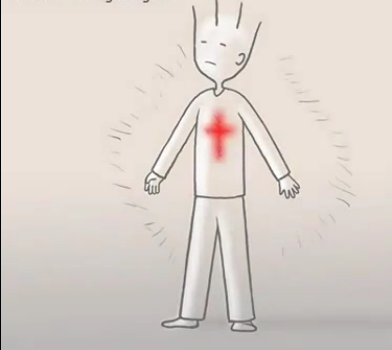
WHAT DO YOU WANT?


Even when we don’t really know what we are asking, Jesus invites us to ask. He invites us to take the risk of hoping, and trusting him.

To listen to the sermon, click the play button:

To download, right click on the link (or do whatever you do on a Mac) and save it to your computer: Download Matthew Part 70

Matthew #71. Matthew 20:17-34

Please read Matthew 20:17-34. I don’t have space to put it here. If you are listening, of course, I’ll read it to you, but you still might want to follow along in your Bible.

Matthew does not tell us the name of the mother of James and John (who was the wife of Zebedee). Therefore, for convenience in writing, I will refer to her as “Mother Z.”

Matthew begins chapter 20 by telling us that they were going up to Jerusalem. This is significant. Starting with chapter 21, everything we read takes place in and around Jerusalem during the last week of Jesus’ life before his crucifixion. Matthew records that right after Peter confessed that Jesus was the Messiah, the son of God, Jesus began speaking to them of his upcoming death (Matthew 16:21). Matthew records a second prediction in 17:22-23. Here in 21:18-19, he reminds them for the third time that he will be killed, mentioning for the first time that it will be by crucifixion. Obviously the disciples didn’t understand it the first time, because Peter tried to rebuke Jesus over it. The second time, Matthew records that the disciples were distressed, while both Luke and Mark record that they didn’t really understand what Jesus was talking about (Mark 9:32 & Luke 9:45). About this third prediction, Luke says:

34They understood none of these things. This saying was hidden from them, and they did not grasp what was said. (Luke 18:34, HCSB)

Matthew, in our text for this time, doesn’t tell us explicitly that the disciples did not understand, but I think it is clear from the request of James and John they did not grasp that Jesus was speaking quite literally. I would guess that it “went over their heads,” so to speak, and all they really understood was that something big was about to happen. The way I picture it is this: James and John went to say goodbye to their family, since they were leaving Galilee (their home region) for a while. Like any good mother, Mother Z asked them where they were going, and why, and so on. I think their response was probably something like this:

“We don’t know for sure, but Jesus seems really serious about it. He keeps talking about big stuff happening in Jerusalem. He says he’s going to die, but we think that’s just him being negative, or maybe trying to get us hyped up for the big push to make him King, you know, to get us ready for the struggle. In any case, we think he’s going to ‘go for it,’ when we get to Jerusalem.”

Here’s what I think is quite clear: Crucifixion was not their paradigm. They didn’t get it because it wasn’t what they were looking for, it wasn’t the way they were thinking. It didn’t fit what their vision for what was supposed to happen, so it more or less went over their heads.

Anyway, Mother Z, being a good mother, decides that before all the big stuff goes down in Jerusalem, she needs to make sure her boys get what they deserve. When she says she wants them to sit at the right and left of Jesus, what she means is, she wants them to be the “top” two, after Jesus. James, the elder, would be at the right, in the number 1 position after Jesus. John, at the left, would be number 2.

Although this is Mother Z’s request, clearly, James and John are in agreement with it, since they were right there with her when she asked of it of Jesus. Jesus’ response to them comes in three parts.

First, he says: “You don’t know what you are asking.” Their paradigm is not crucifixion. Do you think Mother Z would have asked to have James crucified on the right of Jesus, and John on the left? Obviously not. They had no real grasp of what was coming. They were looking for earthly glory, and soon. Jesus knew that nothing of the sort was in store for him, or for any of his followers. They had no idea what they were asking for.

Next, Jesus asks if they are able to drink the cup he is about to drink. I doubt this would have been clear to the Zebedee family. In the Passover celebration, four cups are shared by all those present: the cup of instruction, the cup of sanctification and blessing, the cup of instruction, the cup of redemption and the cup of thanksgiving. The cups represent Freedom, Deliverance, Redemption and Thanksgiving. None of these sound too bad. I’d be ready to drink of those cups.

But Jesus had another cup in mind: the cup of God’s wrath against sin:

6Exaltation does not come from the east, the west, or the desert,

7for God is the Judge: He brings down one and exalts another. 8

For there is a cup in the LORD’s hand,

full of wine blended with spices, and He pours from it.

All the wicked of the earth will drink, draining it to the dregs. (Ps 75:6-8, HCSB)

17Wake yourself, wake yourself up!

Stand up, Jerusalem, you who have drunk the cup of His fury

from the hand of the LORD;

you who have drunk the goblet to the dregs — the cup that causes people to stagger. (Isa 51:17, HCSB)

32This is what the Lord GOD says:

You will drink your sister’s cup, which is deep and wide.

You will be an object of ridicule and scorn, for it holds so much.

33You will be filled with drunkenness and grief,

with a cup of devastation and desolation, the cup of your sister Samaria.

34You will drink it and drain it. (Ezek 23:32-34, HCSB)

This is the “cup” of which Jesus prayed in the Garden of Gethsemane:

42“Father, if You are willing, take this cup away from Me — nevertheless, not My will, but Yours, be done.” (Luke 22:42, HCSB)

James, John and Mother Z had no idea of this when they made their request. Again, it wasn’t their paradigm.

As it happened, of course, about ten years later, James was beheaded for preaching about Jesus. Many years after that, John was imprisoned. They did indeed drink the cup of suffering, but by the time their sufferings came, they understood that the Kingdom of Jesus is not of this world, and his glory is not usually here and now. They understood then that Jesus drank the cup of God’s wrath that should have been directed against all humankind and our sin.

The third part of Jesus’ response to the Zebedee family came when the other ten apostles heard about the request. I’m sure an argument broke out along lines like these:

Andrew: “But I was the first one to follow him!”

Peter: “And I was next. Plus I’m the only one besides Jesus who ever walked on water.”

Philip: “Sure, boys, but I started following him the very next day after you guys, and I brought Nat the day after that.” (Nathaniel nods vigorously).

Thomas: “What kind of evidence do you boys have, to back up those claims?”

And so on…

Jesus settled them down, and said this:

“You know that the rulers of the Gentiles dominate them, and the men of high position exercise power over them. 26It must not be like that among you. On the contrary, whoever wants to become great among you must be your servant, 27and whoever wants to be first among you must be your slave; 28just as the Son of Man did not come to be served, but to serve, and to give His life — a ransom for many.” (Matt 20:25-28, HCSB)

He knows what James & John and Mrs. Z were after. But his kingdom has a completely different set of values and rules. This is perhaps one of the most counter-cultural teachings of Jesus, particularly in the world as it is today. When I was a kid, I remember reading about famous artists, thinkers, writer and composers and realizing that most of them were not well known until after they died. Their considerable achievements were only appreciated later. I think even just during my own lifetime, our culture has swung almost to the opposite end of the spectrum. We glorify and honor people while they are alive for achieving almost nothing. What have the Kardashians accomplished? What lasting positive contribution to society have they made? Even as soon as a few decades from now, people will wonder why they were famous, and possibly even look at it as a sign of the decline of Western civilization. I could name dozens of other examples. Even the actors and actresses we venerate – what have they done? They’ve made millions of dollars by pretending to be people who do important things. They look terrific because they won the genetic lottery, and in some cases, because they spend upwards of two hundred thousand dollars per year to look good. But why do we honor them?

Years ago (this will show my age) I was talking with a friend about the pop-star, Madonna. He said, “I know her message is awful, but you’ve got to admire her for doing it what it takes to sell records and become seriously famous.”

No, I don’t have to admire her for “doing what it takes.” Jesus says that’s not how the kingdom of God works. The world admires people who go out there and make things happen for themselves, who are bold and audacious. Sometimes it seems almost as if the world will believe anyone who says, “Look at me – I’m great!”

Even in the Christian culture, we have begun to focus on “Christian celebrities” as if they are somehow great in the kingdom of God. We give our admiration to Christian singers and certain Christian preachers as if they are great just because they are well known. Jesus says those people are nothing. The great ones are the humble servants.

In fact, if you want to be great in God’s kingdom, you probably won’t be well known in the world. Awhile back I bought a book called “Embracing Obscurity.” I haven’t finished it yet, but the reason I bought it is because of the author’s name: Anonymous. I don’t know who wrote the book. But I love the fact that she or he was willing to take these words of Jesus so seriously that it meant not allowing his or her name to be published.

See, that’s something important for us to remember. I always kind of romanticize being God’s servant leader. I imagine that, really, lots and lots of people are going to see what I humbly do for God’s kingdom, and recognize how great I am for being so humble.

Seriously, I am that bad. But I think we need to consider that when we are truly great in God’s kingdom, we truly will not be recognized for it. Even in the church, humble servants – which Jesus calls greatness in his kingdom – are not usually recognized as great. We can take comfort in this: our Father in Heaven sees, and is preparing our reward (Matt 6:1, 4, 8, 18).

In verses 29-33, Matthew describes the healing of two blind men near Jericho. When I first began to study this passage, verses 29-33 seemed almost like they were tacked on as an afterthought, as if Matthew thought, “Oh yeah, that’s when the blind men were healed.” And, though the gospel writers are sometimes not very concerned with the exact order of events, the healing of the blind men probably did take place on the way to Jerusalem. In order to avoid going through Samaritan territory, Jews traveling from Galilee to Jerusalem often traveled down the valley of the Jordan river to Jericho, and from there went up to Jerusalem. Since the blind men were healed outside Jericho, Matthew probably records it at this point because that’s when it happened.

But there is something else that connects the two stories, though it may not be obvious at first. Both incidents reveal how Jesus responded to specific requests from someone. In each case, the response was different, and I think perhaps we can learn something from these two incidents, taken together.

In both situations, Jesus said, “What do you want?” I think this should encourage us, when we pray, to ask the Father for what we really want. Even though he was not going to give Mother Z and her boys exactly what they asked for, he still encouraged them to ask. And it does not seem like he was upset over their thick-headedness. He had every right to be. He had just finished saying he was going up to Jerusalem to die, to give his life for others, and here they come, requesting glory for themselves when he claims the crown. They were impossibly obtuse and thickheaded. There are other times in Matthew (and the other gospels) when Jesus says something like: “You of little faith,” or “Why are you so slow to understand?” But not here. He welcomes their request, even though it is misguided. The request eventually results in a conversation that was very important.

Outside of Jericho, the blind men make a ruckus, and Jesus says the same thing to them that he did to Mother Z: “What do you want?” I’m not sure what to make of this. I should think it was obvious what they wanted. But for some reason, Jesus was inviting them to ask specifically for what they wanted.

Sometimes this might be a little harder than you realize at first. If we say a kind of general prayer about something, we can hedge against disappointment. We can pretend that we just wanted God involved in some way; we don’t have to admit what is really going on with us. But put yourself in the shoes of the blind men. They have really had no hope for anything to change in their lives. But now, by inviting them to ask, Jesus is inviting them to hope, and when we hope there is always the possibility we will be disappointed. Jesus is asking them to take that risk, the risk of trust.

They take the risk, and tell him specifically what they want. This time, as opposed to the incident with Mother Z and the boys, he simply and directly answers their request. Matthew records that not only were they healed, but they began to follow Jesus. I think we can assume that these two were probably among the 120 Jesus followers who were still together after the crucifixion.

All of this encourages us, I think, to be direct and specific with the Lord in prayer. Ask for what you really want – take the risk that praying in this way involves; the risk of trust and hope.

In the case of James & John and Mother Z, they didn’t get exactly what they were asking for. In fact, they didn’t even know what they were asking. Sometimes, I think I am like that. I ask for something, and actually, I don’t really have any idea what all it might involve. This incident shows me that I can trust Jesus not to give me what I ask for, if I’m asking for the wrong thing. It also shows me I can trust him to use my prayers, even so, perhaps to help me learn something.

But I am also encouraged to take that specific risk of trust, to ask for what I want, to admit I want it, and can’t get it for myself. I am inspired to risk hope. When what I want is good and right, Jesus may answer me like he did the blind men, and simply and directly do what I have been hoping, even if it seems impossible.

Let’s pause now in prayer, and allow this text to continue to speak to us. Is there some way in which you need to allow the Lord to challenge your paradigm? Are you thinking of things the way the world does, or the way the kingdom of God works?

Is there something that Jesus is inviting you to ask of him? He doesn’t promise to automatically do what you want, but even when he doesn’t, he can make the asking productive. Is inviting you into the risk of hope and trust?


GIVING THANKS EVEN WHEN IT’S HARD

tgiving

Giving thanks is a way to really take hold of, and receive, what God has done and who he is. It is a key component in faith, grace and peace.


To listen to the sermon, click the play button:

To download, right click on the link (or do whatever you do on a Mac) and save it to your computer: Download Thanksgiving 2014 Sermon


THANKSGIVING

Thanksgiving has become an American holiday and tradition, but it does originate from deep, Christian spiritual roots. One of the things that I find interesting is that many of significant Thanksgiving celebrations early in the history of America took place in the middle of very difficult times.

The “original thanksgiving” took place in the New England settlement of Pilgrims during the sixteen-hundreds. It is true that at the time they celebrated, they had a good harvest. But they had just gone through an incredibly difficult year in which large numbers of the Pilgrims had perished from disease and malnutrition. From a simple cataloging of bad events versus good, they had much more to be upset about than to be thankful for. Yet they held a three day feast, thanking God for his blessings.

The first national day of thanksgiving was proclaimed by the brand-new American government in 1777. It is true, at the time many people were elated by the American victory over the British at Saratoga. But also at the time of the proclamation, the British still occupied the capital city of the new country (which was Philadelphia at that point) and also held New York City and several significant southern cities. The war was far from over, and times were still quite desperate, and yet they called for a national day of prayer, thankfulness, and repentance toward God.

Considering this history, perhaps it is appropriate that Thanksgiving became an official national holiday during the middle of the Civil War. Once again, the war was far from over, and many desperate times and terrible battles were both behind and ahead. Yet President Lincoln wrote of the many blessings that persisted in spite of war, and said:

It has seemed to me fit and proper that they should be solemnly, reverently and gratefully acknowledged as with one heart and voice by the whole American people. I do therefore invite my fellow citizens in every part of the United States, and also those who are at sea and those who are sojourning in foreign lands, to set apart and observe the last Thursday of November next, as a day of Thanksgiving and Praise to our beneficent Father who dwelleth in the Heavens. And I recommend to them that while offering up the ascriptions justly due to Him for such singular deliverances and blessings, they do also, with humble penitence for our national perverseness and disobedience, commend to his tender care all those who have become widows, orphans, mourners or sufferers in the lamentable civil strife in which we are unavoidably engaged, and fervently implore the interposition of the Almighty Hand to heal the wounds of the nation and to restore it as soon as may be consistent with the Divine purposes to the full enjoyment of peace, harmony, tranquility and Union.

It isn’t my intention to give a history lesson. But I want to point out explicitly that the early Americans seemed eager and able to thank God, even in the middle of significant hardship. In fact, the American Thanksgiving tradition arose more from hardship and war than from peace and prosperity. Even more, I want to point out that this idea of thanking God at all times, even in difficult circumstances, is a biblical practice.

Job chapter one records a series of calamites that befall Job, a righteous man. At the end of it all, this is what he did:

20 At this, Job got up and tore his robe and shaved his head. Then he fell to the ground in worship 21 and said:

“Naked I came from my mother’s womb,

and naked I will depart.

The LORD gave and the LORD has taken away;

may the name of the LORD be praised.”

Psalm 69 was written by someone who felt he was “poor and in pain.” His appropriate response was to thank the Lord:

But as for me — poor and in pain — let Your salvation protect me, God. I will praise God’s name with song and exalt Him with thanksgiving. (Ps 69:29-30, HCSB)

Paul says, “Good, bad, normal, it doesn’t matter. Give thanks all the time.”

Rejoice always! Pray constantly. Give thanks in everything, for this is God’s will for you in Christ Jesus. (1Thess 5:16-18, HCSB)

And let the peace of the Messiah, to which you were also called in one body, control your hearts. Be thankful. Let the message about the Messiah dwell richly among you, teaching and admonishing one another in all wisdom, and singing psalms, hymns, and spiritual songs, with gratitude in your hearts to God. And whatever you do, in word or in deed, do everything in the name of the Lord Jesus, giving thanks to God the Father through Him. (Col 3:15-17, HCSB)

Devote yourselves to prayer; stay alert in it with thanksgiving. (Col 4:2, HCSB)

The older I get, the more I am inclined to believe that thankfulness is a key part in receiving the grace and love and joy that are offered to us through Jesus Christ. I have long known that when I confess my sins to the Lord and repent, what really helps me to feel forgiven is the act of thanking him for that forgiveness. When we thank God, we are, in a way, reaching out and receiving what we thank him for. We are agreeing with what the Bible says about his graciousness and love toward us; we affirming something true about the nature of God. We are saying, “Yes, I have received your love and grace,” and as we declare that to be true, it somehow becomes more real to us. I think this is one of the reasons that the New Testament is so clear about the fact that whenever we pray, part of our praying should involve thankfulness to the Lord. Thankfulness breeds faith and grace.

Thankfulness also leads to peace and contentment. Philippians 4:5-7 teaches that thankful prayer is an antidote to worry:

Let your graciousness be known to everyone. The Lord is near. Don’t worry about anything, but in everything, through prayer and petition with thanksgiving, let your requests be made known to God. And the peace of God, which surpasses every thought, will guard your hearts and minds in Christ Jesus. (Phil 4:5-7, HCSB)

Yes, it is good and proper to ask God for what we need, and to share our burdens with him. It is also important to thank him as we offer up those prayers. Through turning our burdens over with thankfulness, we experience the peace of God, which is beyond understanding. The fact that it is beyond understanding means that sometimes we will experience peace when our circumstances suggest that we shouldn’t be able to do so. It is thankfulness, at least in part, which leads to this sort of peace in all circumstances.

I have found that thankfulness (and the benefits of peace, grace and faith which come with it) can be encouraged by some self-discipline. Sometimes, it is helpful to just make myself start thanking God. I don’t like mornings, and I’m not usually very happy until after mid-morning. But, stepping into the shower grumpy and irritated, I can begin by thanking the Lord for running hot water, and then soap, and then a towel. I can thank him that I have my own bathroom. That reminds me that I have my own house to live in, and it is plenty for my whole family. I can go on, and thank the Lord for warm, clean socks, and the existence of coffee, and then for my wife and children. You see how it goes: once we get started, there are an endless stream of things to thank the Lord for. I think one thing that is biblically appropriate is to frequently thank Jesus for his sacrifice for us, and for his promise of eternal life to us.

Thank the Lord today and this week, and let him encourage thankfulness in your heart!

Thanks again for making use of Clear Bible.

I want to remind you again that we are a listener-supported ministry, and that means, first and foremost, that we are supported by your prayers. We need and value your prayers for us.

Please pray that this ministry will continue to be a blessing to those who hear it. Ask God, if it is his will, to touch even more lives with these messages. Ask him to use this ministry in making disciples of Jesus Christ.

Please also pray for our finances. Pray for us to receive what we need. Please pray for us in this way before you give anything. And then, as you pray, if the Lord leads you to give us a gift, please go ahead and do that. But if he doesn’t want you to give to us, that is absolutely fine. We don’t want you to feel bad about it. We want you to follow Jesus in this matter. But do continue to pray for our finances.

If the Lord does lead you to give, just use the Paypal Donate button on the right hand side of the page. You don’t have to have a Paypal account – you can use a credit card, if you prefer. You can also set up a recurring donation through Paypal.

You could also send a check to:

New Joy Fellowship

625 Spring Creek Road

Lebanon, TN 37087

Just put “Clear Bible” in the memo. Your check will be tax-deductible. Unfortunately, we cannot do the tax deductible option with the paypal donate button, however the money does go directly to support this ministry.


Thank for your prayers, and your support!

DO YOU REALLY RECEIVE WHEN YOU ASK?

knock

The reasons for not receiving what we have asked for in prayer are real and legitimate. Sometimes we become discouraged because we aren’t able to see the entire picture, just as our children are sometimes disappointed with our answers to their requests, even when our answer is good for them. But Jesus does promise a good response from our heavenly Father, and we can rely on that!


To listen to the sermon, click the play button:

To download, right click on the link (or do whatever you do on a Mac) and save it to your computer: Download Matthew Part


Matthew #22 . Chapter 7:7-11

There are many parts of the Sermon on the Mount that are challenging in many ways. Jesus’ standards for morality are challenging. Words like “Blessed are you when men cast insults at you and persecute you,” are not easy to digest. But the words of Matthew 7:7-11 are difficult in another way. They are wonderful words, gracious words. The difficulty is they seem almost too good to be true. Let’s take a look.

“Keep asking, and it will be given to you. Keep searching, and you will find. Keep knocking, and the door will be opened to you. For everyone who asks receives, and the one who searches finds, and to the one who knocks, the door will be opened. What man among you, if his son asks him for bread, will give him a stone? Or if he asks for a fish, will give him a snake? If you then, who are evil, know how to give good gifts to your children, how much more will your Father in heaven give good things to those who ask Him! (Matt 7:7-11, HCSB)

The truth is, brothers and sisters, this is just plain good news. We have a Father in heaven who loves us. He is the Creator of the universe, the one true Supreme Being, and he cares about you. He loves you more perfectly than you love your own children. And he wants to give you good gifts. He wants to answer your prayers.

There isn’t much that this particular passage needs by way of explanation. It says exactly what it seems to say – that God loves you, and he will answer your prayers in accordance with his love for you.

But I (and I assume others) sometimes have a difficult time with this passage, because so often it appears that God is not answering our prayers. Sometimes the gift doesn’t seem to come, that which is sought is never found and the door is not opened. Why does this happen at times? Can we really rely on Jesus’ words?

The answer is yes. The reasons for our experience of what we call “unanswered prayer” are several, but I believe is starts with God’s desire to answer us by giving us “good gifts” (NIV), or “that which is good” (NAS).

Jesus makes the comparison to earthly parents, so let’s start there. Sometimes my children ask me for things that are not good, or things that are good only in small measure. Candy is a great example. It sure feels good going down, and a little bit of it is fine, but too much of it is bad. When my kids were young, and they asked for candy when they had already had as much as was good for them, I said no. Now, even though my answer to their request is negative, that “no” is a good gift to my children – it protects them, and keep them healthy. I am giving them something good in response to their request, even though it wasn’t what they wanted. God deals with us the same way. So we need to understand that sometimes the good gift God gives is the answer of “no” to our prayers.

Sometimes the problem with candy is the timing. Maybe my kids haven’t had any sweets all day, and they ask for candy right before supper. Even though they haven’t had any candy yet, I will say no, because to give it to them now would prevent them from receiving the healthy nutrients I’m going to give them for supper in just a few minutes. Again, it is this way with the Lord. At times we may not see that he is withholding one request in order to grant another, after which he can also give us the first request.

Another issue that sometimes comes up is capacity. When they were little, and we lived in the city with a yard about the size of a pickup truck, the kids wanted a Saint Bernard dog. I knew, however, that neither they nor our yard had the capacity to deal with that gift at that time. There was simply not enough space for dog like that and our kids were not yet responsible enough to take care of it by themselves; I also had serious questions about how much it would cost to feed a Saint Bernard. So the answer was “no” for that time. I felt that as their capacity to handle the gift increased, hopefully the answer could become “yes.” In the same way, we often pray for good things that are beyond our capacity to handle. Perhaps we want fame or fortune when our character is not yet equipped to deal with it. Fame and fortune have destroyed many a soul. Maybe we want to be married, but we aren’t emotionally or spiritually ready for it; perhaps we want to own a business or get a promotion that would end up sucking up so much time and energy that we would drift away from God. Maybe we want a job that we would only end up losing because we aren’t really capable yet of doing it.

Think of God as an all-wise bartender. One person asks for a drink, and the Bartender gladly serves her. Another asks, and the Bartender won’t serve him, because even one drink would make him drunk. Another can handle one drink, but once she starts, she won’t quit until she’s feeling the buzz, and she has no one to give her a ride home; the Bartender refuses her also. Another has already had a drink or two, and Bartender won’t serve him, because he’s had enough already. People drinking in a bar are rarely good judges of their own capacity for alcohol. Sometimes we are also poor judges of what we really need from God, and whether we can really handle what we are asking for.

Not even Jesus’ first disciples always knew what they were asking for:

Then James and John, the sons of Zebedee, approached Him and said, “Teacher, we want You to do something for us if we ask You.” “What do you want Me to do for you? ” He asked them. They answered Him, “Allow us to sit at Your right and at Your left in Your glory.” But Jesus said to them, “You don’t know what you’re asking. Are you able to drink the cup I drink or to be baptized with the baptism I am baptized with? ” (Mark 10:35-38, HCSB)

They thought they were asking for glory; Jesus knew that what they were asking for meant incredible suffering for them. Sometimes the greatest good God can give us is to answer us with a “no” or a “not yet.”

Another possibility with unanswered prayer is that what you are asking God for is not good at all. Believe it or not, there are people who ask God to aid or support their sinful lifestyles, and then become bitter when he doesn’t. A classic example of this is the Indigo Girls song Hey Jesus. In the song, a woman is praying to Jesus that her unmarried live-in lover doesn’t leave her. She becomes bitter toward God when the prayer is not answered the way she wants it to be. But you might as well not pray if you are asking God to help you sin. This goes along with what James says in James 4:3

“When you ask you do not receive, because you ask with wrong motives, that you may spend what you get on your pleasures.”

Also, the apostle John writes:

“This is the confidence we have in approaching God: that if we ask anything according to his will, he hears us. And if we know that he hears us – whatever we ask – we know that we have what we asked of him.” (I John 5:14-15)

Obviously, if we want God to help us sin, that is not according his will. On the other side, John is saying, “If your prayer falls within Biblical guidelines of what God desires, you can be sure that he pays attention to it.” Prayers which are within God’s general will, as revealed in the Bible, will be answered with something good (remember, “no” or “not now” can be as much of a good answer as “yes.”)

One more reason we may not receive the good thing we have asked for is because it involves another person’s choice to reject God. When our prayers involve the decisions of other people (for example, suppose you are praying for someone to come to know Jesus) we ought to remember that the Lord still gives people the option to say “no” to him. God chooses not to force people to do what he wants; he wants our love to be real, and so we all have the freedom to choose. In other words, sometimes you cannot find what you seek because someone else has chosen to ignore God.

There is a final issue that is part of the difficulty of Matthew 7:7-11. James identifies it when he writes:

If any of you lacks wisdom, he should ask God, who gives generously to all without finding fault, and it will be given to him. But when he asks, he must believe and not doubt, because he who doubts is like a wave of the sea, blown and tossed by the wind. That man should not think he will receive anything from the Lord; he is a double-minded man, unstable in all he does.” (James 1:5-8)

The truth is, “ask and you shall receive” is very simple, direct and gracious. But often we have a hard time believing it. The very fact that we don’t believe it prevents us from taking advantage of this promise. We don’t believe it, so we don’t really ask in faith or expectation, if we even ask at all. And since we don’t ask in faith and expectation, we don’t receive what we ask for. And since we don’t receive what we ask for, we feel that our lack of faith has been justified, so we have even less faith next time we ask. It is a vicious cycle of unbelief. Often we enter into this cycle because our starting point is skepticism. We read Matthew 7:7-11 and our first response is: “I’m not so sure about that. Prove it God!” And because that is our starting point, we don’t give God a chance to really prove it, because we aren’t really praying with the faith that he is good and that he answers prayers to our benefit. It comes down simply to faith. God said it, do we believe it?

These reasons for not receiving what we have asked for in prayer are real and legitimate. Sometimes we become discouraged because we aren’t able to see the entire picture, just as our children are sometimes disappointed with our answers to their requests, even when our answer is good for them. But I think that the Holman Christian Standard Bible (HCSB) captures an important part of what Jesus says. The Greek verbs “ask, seek and knock” are each in the present tense, active voice and imperative mood. That’s why I think the HCSB has it best, because it translates it: “keep asking, keep searching, keep knocking.” To capture the imperative mood, we might even put an exclamation point after each phrase: Keep on asking! Keep on searching! Keep on knocking!

Yes, there are times, when because God is a good Father, his answer will be “no” or “wait.” But clearly, Jesus wants us to understand that many times God will answer “Yes!” or “Of course! I’d love to!” God really does want us to come to Him with our requests. And He delights to respond to them with good things even more than we delight to give our children good things. The Father wants us to keep on coming to Him, keep on searching, keeping on knocking.

Thanks again for making use of Clear Bible.

I want to remind you again that we are a listener-supported ministry, and that means, first and foremost, that we are supported by your prayers. We need and value your prayers for us.

Please pray that this ministry will continue to be a blessing to those who hear it. Ask God, if it is his will, to touch even more lives with these messages. Ask him to use this ministry in making disciples of Jesus Christ.

Please also pray for our finances. Pray for us to receive what we need. Please pray for us in this way before you give anything. And then, as you pray, if the Lord leads you to give us a gift, please go ahead and do that. But if he doesn’t want you to give to us, that is absolutely fine. We don’t want you to feel bad about it. We want you to follow Jesus in this matter. But do continue to pray for our finances.

If the Lord does lead you to give, just use the Paypal Donate button on the right hand side of the page. You don’t have to have a Paypal account – you can use a credit card, if you prefer. You can also set up a recurring donation through Paypal.

You could also send a check to:

New Joy Fellowship

625 Spring Creek Road

Lebanon, TN 37087

Just “Clear Bible” in the memo. Your check will be tax-deductible. Unfortunately, we cannot do the tax deductible option with the paypal donate button, however the money does go directly to support this ministry.


Thank for your prayers, and your support!

MODEST RIGHTEOUSNESS

jesus-loves-us

People are supposed to glorify God for the character of Jesus they see in us. They are not supposed to glorify us for the spiritual things they see us doing.


To listen to the sermon, click the play button:

To download, right click on the link (or do whatever you do on a Mac) and save it to your computer: Download Matthew Part 19


Matthew #19 . Matthew 6:1-20

Matthew 6:1 records Jesus moving on to a new subject. He has given us examples of Christian character in action. Now he begins to speak about the practice of religion. He introduces the topic like this:

“Be careful not to practice your righteousness in front of people, to be seen by them. Otherwise, you will have no reward from your Father in heaven. (Matt 6:1, HCSB)

At first, this sounds a little odd, coming from Jesus, because as part of the very same sermon, he has just said, in Matthew 5:14-16

“You are the light of the world. A city situated on a hill cannot be hidden. No one lights a lamp and puts it under a basket, but rather on a lampstand, and it gives light for all who are in the house. In the same way, let your light shine in front of people, so that they may see your good works and give glory to your Father in heaven. (Matt 5:14-16, HCSB)

So which is it? Should we be careful not to practice our righteousness in front of people, to be seen by them? Or should we let our light shine in front of people so that they see our good works and give glory to God? Although it sounds like Jesus is contradicting himself, let’s give him the benefit of the doubt. I think, obviously, he is referring to two different situations.

In Matthew 5:14-16, He has just finished describing the character traits of someone who trusts and follows Himself. When we studied those verses we saw that, in fact, disciples are supposed are supposed to let Jesus manifest His own character through our lives. It is immediately after that where he says, “You are the salt of the earth, you are the light of the world…” and then, “Let your light shine. Let people see it.” What it amounts to is this: we are supposed to let people see Jesus in us. We are supposed to let him live in us and through us in such a way that other people see it, and are drawn, not to us, but to God.

Now, in 6:1, Jesus is talking about something else entirely. We have to understand the culture of the Jewish people during the time of Jesus. In some ways, it was very different from many places today. Religion was a big deal to them. If you were religious, you were respected and admired. Practicing your religion in a very public way was one means to get people to think well of you. Jesus says, your faith should not be about what other people think. You should be concerned only what God thinks. We could summarize the two different situations like this: People are supposed to glorify God for the character of Jesus they see in us. They are not supposed to glorify us for the spiritual things they see us doing.

The end result is supposed to be that people “give glory to your Father in heaven.” If they are giving honor or glory to you, that is when you should be hiding your good works, or at least directing people to look away from you, toward God who is working in and through you.

In fact Jesus says that if you act religious in order to get the reward of praise from other people, that is exactly what you get – and nothing more.

So, we should be public with our faith in our faith in ways that show off the character of Jesus and point people toward him. And we should be private in our practices with things that would tend to call attention to ourselves and our own activities. As one bible commentator put it succinctly: “Show when tempted to hide, and hide when tempted to show.”

Jesus gives three examples of when we should “hide” rather than “show.” These are things we should do because we want to do them for God, to please him and get closer to him. No one else needs to know about them. If we are serious about helping those who are poor, it shouldn’t matter whether or not we get credit for it. The main point is that we do what are led by God to do to help. If we are sincere about praying and fasting to get closer to God, then it doesn’t matter that no one else sees you doing it. The point is, you are trying to be closer to God, and He sees that.

Basically Jesus says, “You can do it to be praised by other people, or you can do for God. If you do it for the praise of other people, you have not done it for God.”

Jesus starts with the subject of giving to the poor. He makes the main point about doing this for God, not others. He then says, “But when you give to the poor, don’t let your left hand know what your right hand is doing, (Matt 6:3, HCSB).” I think the idea here is that we shouldn’t even be doing this to feel good about ourselves. Don’t let your left hand be proud that your right hand gave to the poor. Do it only for God, and for the poor. Now, of course, when you give to a ministry through your local church, someone will know about it. When your local church engages in ministry to the poor, people will need to talk about it, to help make others aware of the opportunity to be involved. We can’t help these things, and I don’t think we should worry about it too much. But we should give for the sake of God and for the sake of the poor, not for the sake of our reputation. God sees your heart, and he’ll know what your goal is.

Jesus uses a second example: prayer. He starts with the example of the Pharisees, who often prayed in public, not because they were moved to turn to the Lord, but because they wanted people to see them doing it. We shouldn’t be legalistic about this. After all, Paul says we should pray without ceasing (1 Thessolonians 5:17), so you ought to be praying while you are out and about. I pray in public sometimes, because I’m always talking to God. But I try to do so in a way that no one notices me doing it. My favorite method is to pretend I’m talking into a cell-phone ear-piece :-). At many other times, I just pray with my “mental voice.”

Now, Jesus is not trying to ban all instances of people praying out loud in the presence of others. In fact, the New Testament records many times when Christians gathered together specifically to pray together. Since some of those prayers have been recorded in the Bible, it is obvious that people often prayed out loud in those situations. Some examples come from: Acts 1:13-14; Acts 2:46; Acts 3:1; Acts 12:12; Acts 16:25; Acts 20:36; and Acts 21:5. In Matthew 18:19, Jesus says that he pays special attention when two or more Christians gather to pray. The rest of the New Testament commands Christians to come together and pray: Ephesians 6:18-19; Colossians 4:2-3; 1 Timothy 2:8; James 5:16, among many other places. The point is, when we do come together and pray, we do it to be in the Lord’s presence together. We don’t do it to impress each other, or show each other how spiritual we can sound. We are simply having a conversation with God together.

I myself am often greatly encouraged when other Christians pray out loud with me. Their concern for what we pray about, and their quiet faith, often provides much-needed support for me.

I do, however, sometimes find myself among people who don’t seem to know what Jesus said about this subject. Unfortunately you don’t have to go very far to find people who pray in ways that seem calculated to whip up energy and enthusiasm among the people who are present. When you step back and listen, it sounds much more like a performance for others than a real conversation with God.

Jesus adds another thought into the mix. The pagan worshippers in ancient times used to babble on and on and use many words in an attempt to get their deities to hear them. He tells his disciples not to do that.

I suppose I am about to hurt some feelings, but I want us to take this seriously. Suppose I was to ask my Dad if I could borrow his truck. While I’m asking, I might think of a few other things I want to say to him. I would probably proceed like this: “Hi Dad. I was wondering if you could loan me the truck on Thursday. I’d really appreciate it. Thanks for all the times you’ve helped in the past. Oh, and the kids would really like it if you could play a card game with them on Thursday. Thanks! Love you!”

Suppose instead, I approached this conversation the way a lot of Christians approach prayer. It might sound like this:

“Oh Dad, dearest Dad, I just come to you today, Dad, I just come to you and praise you, because you are the owner of the truck, the RED truck, the DODGE truck, the truck that has done so much, and meant so much for us over the years. Dad, I really just want to ask you, Dad, if, Dad, you might find it in your plan to let me borrow the truck once more, Dad. And Dad, I just want you to know that I know the truck belongs to you, Dad. It is your truck, Dad. The truck doesn’t belong to me, Dad, it is yours. I just want to use it, Dad, if that that’s OK with you.

Dad, let your BOAT be hauled with that truck, Dad! Yes, Dad, let your BOAT be hauled, Dad! I say, Dad, let your BOAT be hauled your TRAILER used! Yes Dad! Your boat be hauled, your trailer used.

I just want you to know that I love you, Dad. I love you Dad. Oh, I really just love you, Dad. And Dad, I just want to say, Dad… I just want to say that my children…I just want to say that my children, Dad, they just want to play cards with you, Dad. They just want to play cards. Just with you, Dad. Oh, Dad. Oh Dad. Oh Dad, oh Dad, oh Dad.”

I am not trying to offend anybody. But if you are offended by this, think of what God feels! If it is offensive for me to portray a conversation like this, think how offensive it might be to God that we call this sort of thing “prayer!”

I’m serious. Jesus said it, not me. Don’t pray to impress others. Don’t babble on and use many words; your Heavenly Father already knows what you need. How offensive to think that you have the power to convince him to listen by using that sort of blather!

Jesus goes on by giving us a method of praying. We call it’s the Lord’s prayer. I think it is fine to use a prayer in and of itself, because that helps us to remember it well. But more importantly, it is a format for praying. Let me break it down briefly:

1. Our Father in Heaven…Start by recognizing that through Jesus Christ, God has become your loving Father. He cares for you and loves you.

2. Let Your name be honored as holy…Continue by praising God for who He is, for his holiness. Ask him to keep making you holy, and keep helping others to know and grow in His holiness

3. Your kingdom come, your will be done, on earth as it is in heaven…Pray for God’s purposes and ruler-ship to extend in your own life, and in the world. Invite him to be your king. Invite him to be king in specific ways in your life, in the lives of those you know, and in the world. Ask for him to do his work (to fulfill his purposes or “will”).

4. Give us today our daily bread…Pray for what you need for today: spiritually, physically and emotionally.

5. And forgive us our debts, as we also have forgiven our debtors… Confess your sins and receive his forgiveness. If you need to, make a decision to forgive others, and offer them that forgiveness.

6. And do not bring us into temptation, but deliver us from the evil one…Pray for protection from the devil, sin and temptation.

Hopefully as we pray this way, we will do so in simple faith, and not with an attempt to try to impress others or God by self-conscious, spiritual-sounding phrases, repetition, or many unnecessary words.

Jesus gives one more example of righteousness that should be different from the Pharisees: fasting. It seems clear that Jesus expects that his disciples will give to the poor, pray and fast. He doesn’t say, “Don’t do these things.” Instead, he says, “When you do these things, do it like this…” So fasting should be something that Jesus-followers do, at least occasionally.

What is fasting? The basic activity in fasting is going without. The most common form of fasting is going without food for a period of time. Others ways of fasting include going without meat, or without coffee, or without TV or just about anything else you can think of. I myself prefer to abstain from food when I fast, since going without other things does not seem to affect me as profoundly as not eating. Some people fast by going without food during the day and eating only an evening meal for a specific length of time. Some drink only water; others drink diluted fruit juices. Since I want to encourage you to try fasting, I suggest you try a method that is challenging for you, and yet still sounds “do-able.”

My own experience of fasting has not reflected what I might have thought before I tried it. I used to think that fasting was about having the strength and self-discipline to “do without” for God. I thought it was about commitment and dedication and “getting serious” about God and prayer. The more I fast, however, the more I realize that it is just the opposite. In my experience anyway, fasting is more about weakness and surrender before God than it is about the strength to do without food. Fasting is humbling – it puts me in a place of need. Without food, I feel in a physical way my spiritual helplessness and dependence upon God. Fasting is not a way of demonstrating my strength – it is a way of acknowledging my weakness and my utter need for Jesus. It seems to me that fasting is like holding a door open for Jesus to come in and work in a special way.

Every time I feel a hunger pang, I am reminded of my need for Jesus, of my helplessness without him. I remember that I need him even more than I need food. And when I feel those hunger pains, I am also reminded to pray, to talk to him in the middle of whatever else I’m doing.

One thing Jesus obviously knew is that when you fast without showing others you are doing it, it is like your little secret, between Jesus and you. This makes you feel closer, somehow.

My best experiences of fasting are when I do it in the middle of my everyday routine. When I take a day away from everything, and make the whole day about fasting, it usually doesn’t go so well. My very worst experience of fasting was when a group of us tried to fast together; in other words, we weren’t doing it as Jesus tells to, in secret. I wonder if that’s why it was such a bad experience for me.

Jesus concludes the entire section with these thoughts:

“Don’t collect for yourselves treasures on earth, where moth and rust destroy and where thieves break in and steal. But collect for yourselves treasures in heaven, where neither moth nor rust destroys, and where thieves don’t break in and steal. For where your treasure is, there your heart will be also. (Matt 6:19-21, HCSB)

The Pharisees had an eye on what they would get here and now from giving, prayer and fasting. Jesus reiterates three times that if we do these things to be admired by people, that is all the reward we get. But if we do them for God, then God himself stores up treasure for us where it can never fade or be taken away. Jesus says, invest in heaven by pleasing God; don’t invest in getting approval from human beings. These things: giving to the poor in secret, praying simply, and often alone and fasting in secret are all ways of investing our lives in the future-life we will have with God in heaven. It keeps our hearts and minds from being focused on the pathetic, temporary things we might get out of this life, and instead, pulls our hearts to the glorious, unfading joy we have waiting for us.

~

Thanks again for making use of Clear Bible.

I want to remind you again that we are a listener-supported ministry, and that means, first and foremost, that we are supported by your prayers. We need and value your prayers for us.

Please pray that this ministry will continue to be a blessing to those who hear it. Ask God, if it is his will, to touch even more lives with these messages. Ask him to use this ministry in making disciples of Jesus Christ.

Please also pray for our finances. Pray for us to receive what we need. Please pray for us in this way before you give anything. And then, as you pray, if the Lord leads you to give us a gift, please go ahead and do that. But if he doesn’t want you to give to us, that is absolutely fine. We don’t want you to feel bad about it. We want you to follow Jesus in this matter. But do continue to pray for our finances.

If the Lord does lead you to give, just use the Paypal Donate button on the right hand side of the page. You don’t have to have a Paypal account – you can use a credit card, if you prefer. You can also set up a recurring donation through Paypal.

You could also send a check to:

New Joy Fellowship

625 Spring Creek Road

Lebanon, TN 37087

Just “Clear Bible” in the memo. Your check will be tax-deductible. Unfortunately, we cannot do the tax deductible option with the paypal donate button, however the money does go directly to support this ministry.


Thank for your prayers, and your support!

HOW SHOULD YOU PRAY?

prayergroup

For to pray is to open the door unto Jesus. And that requires no strength. It is only a question of our wills. Will we give Jesus access to our needs? That is the one great and fundamental question in connection with prayer. – Ole Hallesby

To listen to the sermon, click the play button:

To download, right click on the link (or do whatever you do on a Mac) and save it to your computer: Download Experiencing Life Together Part 4

Experiencing Life Together #4. Acts 2:42-47: Prayer

When you pray, don’t babble like the idolaters, since they imagine they’ll be heard for their many words. Don’t be like them, because your Father knows the things you need before you ask Him. (Matt 6:7-8, HCSB)

“I assure you: Anything you ask the Father in My name, He will give you. Until now you have asked for nothing in My name. Ask and you will receive, so that your joy may be complete. (John 16:23-24, HCSB)

“Keep asking, and it will be given to you. Keep searching, and you will find. Keep knocking, and the door will be opened to you. For everyone who asks receives, and the one who searches finds, and to the one who knocks, the door will be opened. What man among you, if his son asks him for bread, will give him a stone? Or if he asks for a fish, will give him a snake? If you then, who are evil, know how to give good gifts to your children, how much more will your Father in heaven give good things to those who ask Him! (Matt 7:7-11, HCSB)

Prayer is the final of four things that those first Christians were devoted to. Remember, that word “devoted” means that they held closely to it, they committed to persisting in prayer in spite of resistance and struggle. Prayer was a defining characteristic of their lives.

If you have never read a Christian classic, we highly recommend Prayer by Ole Hallesby. It is possibly one of the best books on prayer ever written. As we begin to look at prayer this week, in connection with God’s plan for the church, and for all Christians, consider some of what Hallesby says:

To pray is nothing more involved than to let Jesus into our needs. To pray is to give Jesus permission to employ His powers in the alleviation of our distress…

The results of prayer are, therefore, not dependent upon the powers of the one who prays. His intense will, his fervent emotions, or his clear comprehension of what he is praying for are not the reasons why his prayers will be heard and answered. Nay, God be praised, the results of prayer are not dependent on these things…

For to pray is to open the door unto Jesus. And that requires no strength. It is only a question of our wills. Will we give Jesus access to our needs? That is the one great and fundamental question in connection with prayer.

One of the reasons Hallesby’s book is so helpful is that he takes the mystery and “hocus-pocus” out of prayer. Explained like it is above, prayer no longer seems like such a difficult enterprise. It even seems (gasp!) like anyone could do it.

There are two core questions that arise when we read that the first Christians devoted themselves to prayer. First: how did they make prayer central to their lives? What does a life devoted to prayer look like? And second is the question of methodology: how did they pray? What did it sound like? What “method” did they use?

The first question is perhaps the most important for us. The apostle Paul exhorts the Thessalonians to “pray continually.” How can this take place? How can a life be devoted to prayer? The first thing is to get rid of the idea that prayer is a formalized ritual wherein a person comes to God with a list of petitions and presents them in as spiritual a manner as possible. If that were the case, no one could “pray continually” (even super-Christians have to sleep!) And though it might still be theoretically possible to devote our lives to prayer, frankly it sounds like it would be pretty boring. You’d need to become a monk and have others support you and make knee pads for you. However, as Hallesby says, prayer is simply giving Jesus access to our lives. If we endeavor to be open to Jesus at all times and in all places, we will end up devoting ourselves to prayer. If we make a habit of opening up to Jesus in every situation, we will learn how to pray continually. I don’t want to minimize the power and usefulness of concentrated, deliberate prayer. Even so, we need to see that prayer is more than just the ten minutes we set aside, during which we list our requests and concerns to God. Prayer is a constant, ongoing connection with the Lord, which learns to release every aspect of our thoughts, circumstances and lives into the care of the loving heavenly Father.

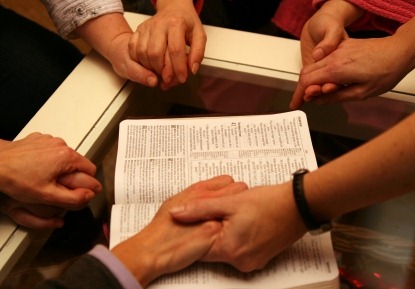
Most often we simply think of prayer in terms of those special times when we purpose to pray. We sit down, fold our hands, (or lay them on someone) and then pray. Sometimes, we may wonder why these times aren’t more meaningful, or why we don’t experience more of God when we do it. For some, the answer to this is that they are not praying at any other times as they go throughout the day. What I mean is, some people go through the whole day without consciously giving Jesus access, and sort of keep prayer in its allotted time slot with their quiet time, or with cell. In short, many of us only really pray when that is our consciously stated purpose for the time. Now it is important to set aside specific times when we do nothing except pray. But these are supposed to be just the pinnacle times of a whole life that is bathed in a constant referral of things to God. When we begin to live this way, we will start to yearn for times when we are doing nothing but praying, and we will start to experience His peace and presence more fully in those special times. What I’m trying to say is that we need to look at what we call “prayer times” (set aside for prayer and nothing else) as special times, while we give Jesus access at all times. It is true that there is no life devoted to prayer without those “special times” set aside purposefully for prayer alone. But there is also no devotion to prayer if we try to fit all of our praying just into those “special times” only. God designed prayer not just for the “prayer closet” but also for the construction site, the office and the ball field. He made things in such a way that our praying can take up a lifetime, in a very real and useful way. Make an experiment of this during the next week. Try to give Jesus access into whatever you are doing or saying, at each moment of your day. As concerns or people come to your mind, refer them to Him. When you need to make decisions, give Him permission to help you. You may find that sometimes you want to stop for a moment for more deliberate prayer. Perhaps that would be all right too. J

The second major question was: how did they pray? Frankly, the only reason this is important at all, is because it can become a hindrance to prayer. Often people are intimidated by considering the praying of other people. We feel that we could never pray like them. In this connection, let’s consider a few more comments from Ole Hallesby:

Prayer is something deeper than words…Prayer is a definite attitude of our hearts toward God, an attitude which He in heaven immediately recognizes as prayer, an appeal to His heart. Whether it takes the form of words or not does not mean anything to God, only to ourselves.

What is this spiritual condition? What is that attitude of heart which God recognizes as prayer?

Hallesby explains that there are two essential conditions that, when taken together, God recognizes as prayer: helplessness and faith. Helplessness combined with faith equals prayer. Helplessness without faith is simply despair. Faith without helplessness is arrogance. But put the two together, and you have prayer.

Prayer and helplessness are inseparable. Consider the helplessness of a baby, which so moves the hearts of its parents. A baby cannot formulate words, but its helplessness and dependence are a powerful appeal to the parents. Just as parents are continually occupied in helping their helpless newborn, so God is attuned to the cries of His helpless, dependent children. God does not “help those who help themselves.” If we ask God for something, but are actually relying on some other source for help, are we really praying? Are we truly depending helplessly on God? This helplessness applies also to our own inability to pray. When we feel so sin-ridden and worldly that we cannot see how our prayers can be answered, our very helplessness arises as a prayer to the Father.

Faith is also inseparable from prayer. Without faith, a person does not even turn to Jesus for help in the first place. Prayer is a definite thing. We cannot simply claim some kind of vague feeling about “the universe,” and claim “I’m praying all the time.” The “faith” part of praying means that our hearts and minds are truly turned toward God, and looking to Him for help, grace, comfort and, yes, answers.

I would like to add “looking to God alone.” What I mean is, all our help comes ultimately from God, even if it comes by means of another human being sometimes. For instance, suppose you are sick. It is only common sense to go to a doctor. I have done so, many times. But even as I go to the doctor, my hope and trust are in God, more than the doctor. I trust that it is God who will work through the doctor. There is nothing wrong with praying for healing, and then seeing a doctor. But even as I submit to the care of the doctor, my trust in in God for healing, through whatever means he chooses.

Now, God does not need some kind of tremendous level of faith to help Him answer our prayers – He just needs enough faith for us to truly say “yes Jesus,” to open the door and allow Him access. In case we might feel too helpless to have faith, or be concerned that we do not have a enough faith when we pray, let’s hear again from our friend Ole:

You and I can now tell how much faith we need in order to pray. We have faith enough when we in our helplessness turn to Jesus.

So you see, it doesn’t much matter how the first Christians prayed. They allowed themselves to be helpless before God, and they had enough faith to ask Him in to their lives and into specific situations. That’s all we need to do as well. I honestly don’t think God cares how your prayer sounds. He isn’t concerned about how long or short your prayers are. All he wants is access, and he can teach you how to have a life devoted to prayer.

I want to add a few more practical suggestions. You may have heard people say, “All we can do now, is pray.” The attitude behind that statement, is that prayer is a last resort. I want to encourage you instead, to make prayer a first response. If we think prayer is not really “doing something,” or that it isn’t helpful to people, then we don’t really understand what prayer is all about.

Another suggestion is to get into the habit of praying with other believers. I don’t mean, “have prayer meetings.” I mean make prayer more a part of everyday conversation. When I was a young man, I had several mentors who modeled this beautifully. Many times we would be talking about things, and some concern or need or struggle would come up. In the middle of the conversation, my mentors would stop and say, “let’s pray about that right now.” We would pray, and then go on talking. I admit, I have lost this habit in recent years, but I would like to get back to it, and I encourage you to do the same. It feels a little funny at first, when you are the one to say “let’s pray about that right now,” but I know from experience that others will be tremendously blessed by that.

For those of you who are worshipping in house church networks or cell churches, I want to emphasize how important prayer is to your effectiveness at making disciples. Prayer is what will cause you and others to grow in Jesus. Prayer is what will bring new people to Jesus. Prayer is what will heal your relationships and change the lives of those we pray for. Prayer is what will address the sicknesses and needs in your life, and the lives of those you want to reach. If your group is praying group, you will have a great impact for God’s kingdom.

FOUR CHARACTERISTICS OF THE EARLY CHURCH

biblehands

Fellowship (love in action) does not always come easily to the church, and perhaps it did not come easily even for the very first group of believers. Even so, this was something they persisted in and stuck with, in spite of difficulty at times.

To listen to the sermon, click the play button:

To download, right click on the link (or do whatever you do on a Mac) and save it to your computer: Download Experiencing Life Together Part 3

Experiencing Life Together #3

FOUR THINGS TO WHICH THE EARLY CHURCH WAS DEVOTED. Acts 2:42

As we come together to experience the Power, Presence and Purpose of Jesus, it may be useful to consider any Biblical patterns that exist for the Church. Biblically speaking, a lot of freedom is given to believers in how they structure local congregations. However there is a pretty clear Biblical pattern for the values that ought to drive local churches, and the practical results that those values ought to show. Perhaps one of the most useful and descriptive passages in discovering God’s pattern for the church is found in acts Chapter 2:42-47. This is a descriptive passage, not a prescriptive one; even so, we can learn from the example presented here and it seems wise to consider carefully the characteristics of that first growing Christian congregation.

“They devoted themselves to the apostles’ teaching and to the fellowship, to the breaking of bread and to prayer.

Everyone was filled with awe, and many wonders and miraculous signs were done by the apostles. All the believers were together and had everything in common. Selling their possessions and goods, they gave to anyone as he had need. Every day they continued to meet together in the temple courts. They broke bread in their homes and ate together with glad and sincere hearts, praising God and enjoying the favor of all the people. And the Lord added to their number daily those who were being saved.”

In this passage, we find four things that the early church was devoted to and three things that resulted from such devotion. We will examine each of the seven characteristics one by one . This week, we will consider the four things the church was devoted to. Next week, we will focus especially on one of those four things — prayer. And after that, we will consider the three things their resulted from their devotion.

First, I want to mention this word, “devoted.” The idea behind the Greek term, is a that a group of people are together earnest, persevering, diligent and devoted to something. In other words, they didn’t just “say a prayer.” They were earnest and diligent about praying; they persisted and persevered in their prayers, even when they did not receive immediate answers. They didn’t just “listen to a sermon.” They diligently persevered in learning what Jesus said and did, and what it meant. They persisted in applying it to their lives, even when at first it didn’t feel like it made anything better.

I think this idea is very important. What we really believe as Christians is that spiritual reality is more real and important than what we call “physical” reality. I don’t mean the physical isn’t real, or that it doesn’t matter; but Christians believe the spiritual is the more powerful of the two. That means we persist in our devotion to these things, even when the physical reality is whispering to us that we are stupid and silly to do so. We persist in them because they make a difference in spiritual reality Eventually, that difference will also affect the physical realm, but even if it does not do so during our lifetimes, we trust in what we don’t see. That is what faith is: “the reality of what is hoped for; the certainty of what is not seen.” (Hebrews 11:1)

1. They devoted themselves to the apostles teaching. The early church was founded on the testimony of the apostles. They listened as Peter, James and John and others repeated to them the teachings of Jesus. They heard these great leaders expounding upon those teachings and explaining the meaning of the death and resurrection of Jesus Christ. The apostles also taught the early church the meaning of the Old Testament and how Jesus fulfilled its promises and prophecies. Unfortunately, today we no longer have the apostles. But we do still have their teachings — they are found in the New Testament. The New Testament is in fact the written form of the teaching of the apostles. It is not much of a leap to say that when we see that the first characteristic of the early church was that they were devoted to the apostles teaching, the parallel characteristic for the present-day church should be that we are devoted to the Bible. How can we do this practically in our church, and specifically in the house-church?

a. We ought to commit to the authority of the scriptures. The church was founded on the teaching of the Bible, and so also should our lives be founded on the teachings of the Bible. The Bible is the final authority in all things for all believers. Practically speaking, the house-church should have an understanding that scripture is the basis for everything we do and say in our group. This doesn’t mean we never talk about football scores, but it does mean that as we encourage one another and share with one another, we do so with a sense that we are all together under the authority of scripture.

b. We study scripture. To some of you, “study” may sound like a dirty word. It doesn’t have to be that way however. Try setting aside a special time each week (like Sunday nights) to study the Bible. As a starting point, read the scripture passage that goes with that week’s sermon notes, think about it, and then read the sermon notes over. The “Word” time during the house-church meeting is supposed to be mainly for application, rather than study. If you come to house-church and you haven’t read the sermon notes or the passage, you will probably not get much out of the word time, and the other people in the house-church will miss out on the insight and thoughts you might have had for them, if you had taken just a bit of time to read. I don’t think reading them on the way to house-church gives God’s Word the respect such a remarkable book deserves.

c. Apply the scripture to your life. After you have studied scripture, you should ask “what does it mean to me? How should I live differently or what comfort should I take from this?” Although God’s word is supposed to inform our thinking, the great value of it is that it not only transforms our minds, but our very lives as well. God’s word illuminates our path – what we are to do, how we are to live.

2. The second characteristic of the early church is that they were devoted to fellowship. The Greek word used in Acts 2:42 for “fellowship” is Koinonia. A helpful way to translate this word might be “community.” Now it is obvious from the context that the word does not mean “town” or “locality” so we might clarify things by saying it means Christian community. In other words, these first Christians devoted themselves to each other. In fact, this was their way of living out in a practically what Jesus said in John 13:24-25:

A new command I give you: Love one another. As I have loved you, so you must love one another. By this all men will know that you are my disciples, if you love one another.

Fellowship is just Christian love in action. It is the “nuts and bolts” of people in the body of Christ (the church) loving each other. In this context, It is helpful to remember that when they devoted themselves to the fellowship, the word “devoted” implies that this was something they worked on and stuck with, “in spite of resistance or struggle.” Fellowship (love in action) does not always come easily to the church, and perhaps it did not come easily even for the very first group of believers. Even so, this was something they persisted in and stuck with, in spite of difficulty at times.

3. The third characteristic of the early church is that they were devoted to the “breaking of bread.” This phrase (“the breaking of the bread”) refers to the Celebration of the Lord’s Supper. Paul uses it in 1 Corinthians to describe Holy Communion, and the language parallels that of the gospels as well. It took some years before it was called anything but “the breaking of the bread.” How can this be made a practical characteristic of house-church life? First, I believe it meant that the message of human sin and God’s sacrifice to forgive that sin, was central to their lives. The Lord’s Supper tells this basic message of Christianity every time it is celebrated. Second, I believe their devotion to the Lord’s Supper was evidence of an ongoing hunger and thirst for more of God in their lives. The central meaning of the Lord’s Supper is the Presence of Jesus. So in house-church, we can be intentional about the core Christian message of man’s sin and God’s loving forgiveness, and we can be intentional about nurturing a hunger for Jesus.

4. The fourth thing that the early church was devoted to is prayer. Prayer, both together and alone, was central to their experience of church. Because prayer is so important to the life of any house-church, we will devote a week entirely to that subject (next week).

As you consider this passage of scripture, allow yourself to dream. What would your house-church look like if you were devoted to the Bible, to fellowship, to the breaking of bread, and to prayer? Does this vision excite you at all? How would your life be different if you are a part of such a dynamic group? And, how will you be a part of making this happen?

Professional Level Prayer?

prayer

Too many Christians pray out loud in ways that are downright silly. We use fancy words. We repeat ourselves like idiots. Jesus told us not to do that. He taught us to pray simply and directly.

Next week, I’ll preach a real sermon again. This week we did some work-shopping in church about sermon from last time. So for the blog, I’ll post some thoughts I’ve been chewing on lately.

I’ve spent a fair amount of time lately, thinking about how people pray publicly. It’s a bad habit I have. What strikes is me is how common it is for Christians to ignore what Jesus said about public prayer. And the worst offenders are usually the “very holy and mature” believers. This often makes other Christians feel unworthy and second class, because they can’t pray like these believers who really know how to “pray up a storm.”

I recently took a Sunday off and attended a different church. They had a guest speaker who was very inspiring and entertaining. Afterwards, he invited people up for prayer and ministry. He had them stand in a group, and he prayed over them through the microphone. He probably prayed for five or ten minutes. His prayer was powerful – at least externally. His prayer was full of emotion. His prayer was full of words. His prayer wore me out, and I wasn’t even one of the people who went up for ministry.

I am continually struck by the widespread ignorance among “mature” Christians concerning Jesus’ own words about prayer, and about Jesus’ own actions when it came to bringing healing and deliverance.

Here’s what Jesus said:

1 “Beware of practicing your righteousness before other people in order to be seen by them, for then you will have no reward from your Father who is in heaven. (Matthew 6:1)

5 “And when you pray, you must not be like the hypocrites. For they love to stand and pray in the synagogues and at the street corners, that they may be seen by others. Truly, I say to you, they have received their reward. 6 But when you pray, go into your room and shut the door and pray to your Father who is in secret. And your Father who sees in secret will reward you.

7 “And when you pray, do not heap up empty phrases as the Gentiles do, for they think that they will be heard for their many words. 8 Do not be like them, for your Father knows what you need before you ask him. (Matthew 6:5-8. Followed by the Lord’s Prayer)

Let me tell you, I’ve heard a lot of people pray in a way that seems aimed at showing others that they are good at it. I’ve heard an awful lot of empty phrases and extra words heaped up over the years. I have several thoughts about this.

First, I wonder this: do these people even know that Jesus said these things? These words of Jesus come from one of the best known portions of scripture: The Sermon on the Mount. Specifically, Jesus spoke them right before “the Lord’s prayer” in Matthew chapter six. So these people who pray such impressive sounding prayers may actually be very young in the faith and even ignorant of the bible. If you hear someone praying in a way that seems designed to impress others, you should understand, that is not the prayer of a mature believer. If you hear someone heaping up words and fine-sounding phrases, that person still has a lot of growing to do. Don’t be intimidated by them. PLEASE, don’t feel like you have to copy them.

Now, I have no doubt that some of these professional-level creators of empty phrases know what Jesus said. If so, then they are being disobedient. They are like Moses, who didn’t believe it was enough to simply speak to the rock, but also had to put on a show, striking the rock twice and acting out in front of the Israelites (Numbers 20:1-12). Jesus said, do not be like them. Do not be like the people who think they will be heard because of their many words. Do not be like the people who heap up empty phrases when they pray. And yet so many Christians – even leaders of churches and ministries – are exactly like this when they pray.

Another question is raised in my mind. What kind of relationship do these folks have with Jesus that they talk to him in this way? Jesus invites us into an intimate, real, loving daily relationship with himself. He came explicitly to remove the barriers between us and God. Yet when people heap up these empty phrases and pray impressively in front of others, it doesn’t sound like they are particularly close to him. I have never, not even when I was very young, gone to my human father and spoken like this:

“Father, Oh Father who gave birth to me; Father you have provided for me, father; Father, I just want you, father, to reach out, father, and touch me father, and just give me a peanut butter sandwich. Because, father, you are the king of peanut butter sandwiches. As far as I know, you invented peanut butter. As far as I know, you invented bread. You are the one who feeds me, you are the one who makes the money, and then you take the money and deposit it in the bank, O father, because you are wise. And then father, you take your debit card, and you are the one who goes to the store, you are the one who buys the bread and the peanut butter. You might buy Jiffy, or Peter Pan or even the generic store brand father, but you are the one who does it. And then you take it home in our 2005 Buick, father, because in your wisdom, that is the car you chose to purchase. And then father, you are the one who takes the bread, and the knife and the peanut butter and creates the sandwich, all for me. Even though I don’t deserve it father, because I failed to clean my room this morning. From my birth you have been giving me these delicious sandwiches, father, and I want you now father, to give me another one. Peanut Butter. Oh I ask you for peanut butter. I yearn for peanut butter, father. Peanut butter; peanut butter; peanut butter.”

If I did speak to my earthly father in this way, what would it say about the kind of relationship I have with him? Unless I was joking around with him, it would reveal that our relationship is strange and twisted; almost certainly unhealthy. This kind of talk shows that I

don’t interact at a very intimate level with my father. In fact, it strongly suggests that I am very uncomfortable relating to him. I am speaking to him in a way that I would never use to speak to a close friend. It unveils a belief that I think I must use a lot of words and a lot of inane flattery to get him to do what almost any other father would do if his child simply said, “Dad, could you make me a peanut butter sandwich?” Jesus said much the same thing:


11 What father among you, if his son asks for a fish, will give him a snake instead of a fish? 12 Or if he asks for an egg, will give him a scorpion? (Luke 11:11-12).

These long, repetitive, wordy prayers are either mere show for others, or they reveal a distant, impoverished relationship with God that is completely unlike the one that Jesus came to give us.

Now, I have had conversations with people who make the point that sometimes we are praying not just to God for ourselves, but to God on behalf of others and in front of others. Therefore, the way we pray out loud can be used to encourage those around us. I agree with this entirely. Jesus prayed out loud to encourage his followers in their faith. Here is one example:

“Father, I thank You that You heard Me. 42 I know that You always hear Me, but because of the crowd standing here I said this, so they may believe You sent Me.” 43 After He said this, He shouted with a loud voice, “Lazarus, come out! ”

This doesn’t sound much like most of the public prayers I hear in churches and prayer meetings. It’s simple. “Father, I am praying this out loud so others can hear and believe that you are working through my prayer.” Then the ministry time, the altar call for all who need a resurrection in their life. It consists of three words. Three.

You see, if we are praying out loud to encourage others to put their trust in Jesus and to get closer to him, we should consider if our words actually do that or not. A long prayer with a lot of empty and fine sounding phrases – what does that communicate to those who listen? I think it gives listeners these kinds of ideas:

Prayer is a skill. It takes a lot of work. It takes a lot of repetition. We can’t just ask for what we need – we must set it in a context, we must use holy words and phrases, we must prove our earnestness by making it long. We need to keep talking to make God show up and do something.

In fact, Jesus didn’t pray that way, and he didn’t teach us to pray that way either. To repeat:

Do not be like them, for your Father knows what you need before you ask him.

So if you are praying out loud to benefit others (which I agree is a good thing) remember – it does NOT benefit others if you are praying like a pagan with a lot of fancy words and fine phrases. It doesn’t benefit others to make prayer sound like a professional-level skill.

We often make the same mistakes in prayer and altar ministry. I am continually struck by the fact that when I offer to pray for others, either God will show up, or he won’t. For example, I’ve prayed for many people to receive the gift of tongues. Many times, the Lord has given the person I’m praying for that gift. Sometimes, he has not given it. Whether it happens or not, I always pray basically the same prayer: “Lord, please give (name) the gift of tongues right now. Amen.” Our Father knows if the person needs the gift or not. I don’t have to stand there thinking up words to say while God makes up his mind. If he wants to do it, he does. If he doesn’t, my long winded prayers won’t change his mind.

Look at the way Jesus did ministry:

“Lazarus, come out.” (resurrection ministry)

“Get up and walk” (healing ministry)

“Little girl, get up” (resurrection ministry)

“Thank you father for the food. Please bless it” (providence ministry for five thousand)

“Come out of him,” (deliverance ministry)

“Receive the Holy Spirit (baptism in the Holy Spirit)

In these examples, Jesus uses an average of eight words. I have to admit, I made up the prayer about the feeding of the five thousand – it could have been a lot longer. Or a lot shorter. But the others are verbatim quotes from the gospels. Jesus is simple and direct.

You see, I think we, like Moses, are afraid to leave it that simple. If we keep talking, maybe God will show up just to make us quit. Or, if we keep talking, maybe we can cover up the fact that no one is getting healed tonight.

Thus, our ministry times often reflect a confusing contradictory message. The overall gist of it goes like this: “God has a gift he wants to give you now. He wants to give it to you, so come up to receive it. Now, once you come up to receive it you can’t just receive it. We have to work hard and pray long so that you can get it.”

Jesus never did ministry that way. The disciples after Pentecost never did ministry that way. And the fact that so many churches do engage in ministry that way sends the wrong message to people about prayer and about Jesus himself.

I think two of the biggest causes for this kind of praying and ministry are fear and self-reliance. If we keep it short and simple, will God really do it? Maybe if we pray long and hard, we can kind of motivate God to do what we ask. We are afraid to simply say, “Jesus come and do this please,” because what if he doesn’t? The reason that scares us is because we have forgotten that this is all about him, not us. We will end up looking silly if we speak less than fifteen words during our ministry time and nothing happens. But it isn’t supposed to be about how we look. It is supposed to be about what Jesus wants to do.

And so we buy into the idea that a longer, better-sounding prayer is in fact a better prayer. Because that gives us a measure of control. We start to believe we can make it happen if only we pray correctly. We want to believe that we can do something to make God show up. Because doing something is easier than waiting quietly in faith.

Most of the people I know who pray and do ministry with heaps of empty words are good-hearted people. I believe that many of them have a much closer relationship with Jesus than their prayers would lead you to suspect. But I think they are sincerely misled in this matter. Maybe you have been too. It isn’t complicated. Jesus made it quite clear in his teachings and in his examples: Keep it short and simple and trust God to do what you are asking.