RELIGION WITHOUT RELATIONSHIP IS DEADLY

witchofendor2

Saul begins to reap the deadly benefits of religion without relationship.

To listen to the sermon, click the play button:

To download, right click on the link (or do whatever you do on a Mac) and save it to your computer: Download 1 Samuel Part 27

1 SAMUEL PART#27. Chapter 28

Remember all that we have learned about king Saul. One of the most important things we discovered is that he was a religious man, but not a man of faith. Time after time, when he felt he could somehow use or exploit God, he did so. But when he was confident in himself, or when he felt that God had nothing to offer him, he ignored God. He had the trappings of religion and he used them to control others and manipulate God. But he did not live in a day to day walk of faith, trusting God in all things, relating to him, loving him. The depths of Saul’s spiritual poverty are revealed in 1 Samuel chapter 28.

Saul, having no real trust in God, was terrified when he saw the Philistines. Now consider something. Every time Saul was involved in a battle with the Philistines up to this point, God saved the Israelites. The Lord used Jonathan in chapter 13, and David in chapter 17, and several other times. But none of that seemed to make any difference to Saul. He was just as scared and faithless as he had always been.

I want to pause and say something about that here. Sometimes we think that if God just did a miracle for us, then we would really trust him. If we saw the Lord do something really great, then we wouldn’t doubt, then we wouldn’t disobey or draw back in fear. But that wasn’t the case with Saul. God’s previous miracles didn’t matter. The same was true with the first Israelites who came out of Egypt. They saw many miracles. Their food and water were daily miracles. And yet it did not help them to have faith and surrender to the Lord.

Jesus addressed this issue in his own ministry. Though he did many miracles, often people came and demanded miracles on the spot – basically asking him to prove himself to them. Jesus addressed this Luke 11:27-29:

27 As He was saying these things, a woman from the crowd raised her voice and said to Him, “The womb that bore You and the one who nursed You are blessed! ” 28 He said, “Even more, those who hear the word of God and keep it are blessed! ” 29 As the crowds were increasing, He began saying: “This generation is an evil generation. It demands a sign, but no sign will be given to it except the sign of Jonah. (Luke 11:27-29, HCSB)

John records that many miracles (‘signs’) still did not convince people who did not want to be convinced:

37 Even though He had performed so many signs in their presence, they did not believe in Him. (John 12:37, HCSB)

In another place, Jesus told a story about a poor man named Lazarus, and a rich man. At the end of the story, the rich man found himself in hell. He begged that someone be sent from heaven to tell his family the truth about the afterlife. Jesus concludes the story like this:

31 “But he told him, ‘If they don’t listen to Moses and the prophets, they will not be persuaded if someone rises from the dead.’ ” (Luke 16:31, HCSB)

When people in the New Testament say “Moses and the Prophets” they mean “the bible” since that was as much Bible as they had at that time. What Jesus is saying is this: if you don’t trust God’s word and the promises in scripture, no amount of miracles will cause you to trust.” The problem can’t be fixed by a miracle. That is both hard and good for us to remember. Seeing is not believing. With God, believing is seeing.

So Saul, in spite of all that he has seen God do, is a religious pretender, not a man of real faith. Therefore, now, facing the Philistines, he is quaking in fear. It says that he inquired of the Lord. As before, Saul doesn’t go to the Lord unless he thinks God can do something for him. So now, he inquires of the Lord only out of fear and a desire to manipulate God. It doesn’t tell us what Saul was asking God. I think it is most likely that he made an animal sacrifice to the Lord, and was hoping for some prophecy that God was pleased with the sacrifice, and would give Saul the victory. But he didn’t hear anything by way of the “sacred dice” (the urim and thummin) or through prophets, or in dreams. Basically, Saul is demanding another sign here, before he will really trust God. He has had God’s help all his life, but he still won’t trust the Lord without some kind of additional sign.

God has been working on Saul all of his life. Remember how he called him to be king? Remember how he gave him the victory at Jabesh Gilead? Remember how even after Saul proved to be useless to God, God kept pursuing Saul’s heart, sending him a troubling spirit to get him to turn to the Holy Spirit for relief? Saul has had decades to surrender his heart to the Lord. The Lord has never quit trying to win him over. I think this lack of a sign is one more chance for Saul to surrender his heart. The Lord has put him in a crisis where he has the same two choices he has always had: 1. Trust God, or 2. Manipulate God and other people to control his own destiny, and get the outcome he wants. Before this, Saul has always chosen #2. He doesn’t know it, but this will be his last chance to give his heart to the Lord.

Tragically, Saul once again chooses to try to control his own life and outcomes, rather than trusting God. When he doesn’t hear from the Lord, trust is not even an option. Saul simply must find some way to manipulate God into saying what he wants to hear, or doing what he wants God to do. So he seeks out a medium, or witch, or spiritist, or whatever you want to call it.

Deuteronomy 18:9-14 says this:

10 There shall not be found among you anyone who burns his son or his daughter as an offering, anyone who practices divination or tells fortunes or interprets omens, or a sorcerer 11 or a charmer or a medium or a necromancer or one who inquires of the dead, 12 for whoever does these things is an abomination to the LORD. And because of these abominations the LORD your God is driving them out before you. 13 You shall be blameless before the LORD your God, 14 for these nations, which you are about to dispossess, listen to fortune-tellers and to diviners. But as for you, the LORD your God has not allowed you to do this.

These practices were part of the reason for Holy War, which Saul failed to carry out as king. Not only were the people of God not supposed to do these things, they were supposed to wipe out those who did. Such things separate people from God and put them under the influence of hell. Saul did make some attempt to stamp out the practice of the occult, but obviously he wasn’t entirely successful. And now he is willing to deliberately abandon faith in God, abandon his previous laws against these things, and seek help from the dead.

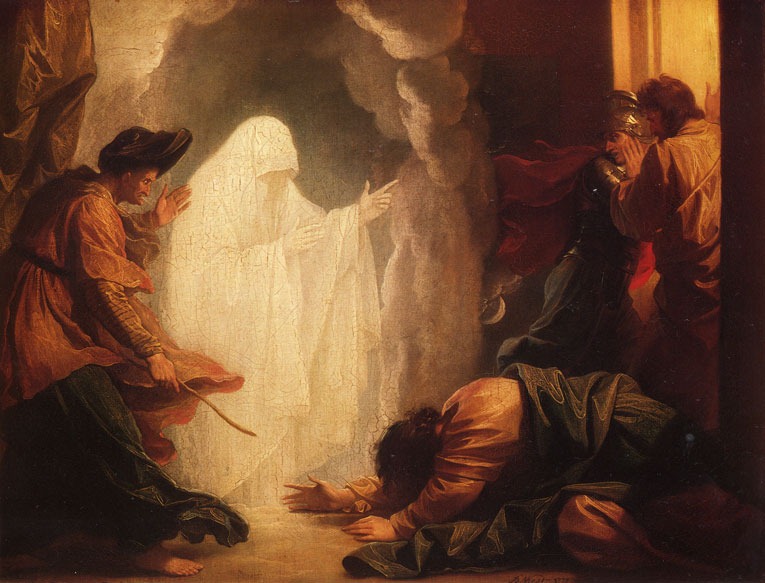
Here is the final proof of Saul’s internal condition. Religion is just something to be used and manipulated, and if one approach doesn’t work to accomplish his aim, he’ll try another. So he and a few of his men disguise themselves and go to the witch. The disguise is actually pretty pathetic. The woman lives not far from the battlefield. Her visitor is the tallest man she’s ever seen, and he wants to talk to the ghost of the prophet Samuel. It doesn’t take a genius to figure out it is Saul. So at first she thinks it is a trap. Then when she is convinced, she pretends that the ghost of Samuel told her who Saul was.

Now it is natural to wonder, what really happened here? Was the woman a charlatan who made it all up? Was there really a spiritual presence there? And if so, was it really Samuel?

To answer that, we need to consider what the Bible says about life after death. Certainly, the entire New Testament teaches that at the end of time, there will be a judgment day. Those who rejected Jesus will be thrown into a lake of fire with the devil and his demons. Those who receive him will be physically resurrected to an eternal, joyful existence.

But there is that period of time in between. Samuel was in the period, as is every person who has died up until today (except for Jesus). Some people believe that in that “between-time,” you are unaware of existence until judgment day, at the end of time. Others believe, as I do, that there is a period of time when dead souls are either with Jesus in joy and freedom, or in hell. The presence of Moses and Elijah with Jesus in Matthew 17, suggests this very strongly. Jesus painted this picture of life after death in his story of Lazarus and the rich man. Revelation 6:9-11 shows people who have died, yet are aware and are waiting for the final judgment day and the resurrection. Actually several passages in Revelation suggest that there is life with Jesus between death and the physical resurrection that will occur at the end of time.

Therefore in order to believe that it really was the spirit of Samuel, we have to believe that some people on earth – mediums, fortune tellers etc. – have the power to pull people out of the presence of God and back to earth so we can talk to them. I don’t buy it for second.

There is another reason to believe that this was not really Samuel. God chose not to answer Saul when Saul wanted some reassurance. He did not answer through the urim, or through the prophets or in dreams. If God would chose not to speak to Saul through these holy and righteous means, why would he then work through the unrighteous means of a medium – basically rewarding Saul’s wicked behavior?

Even beyond these most significant facts, there are other things in the text which suggest that this was not Samuel. Saul himself could not see the spirit – he had to ask the medium what he looked like. Her reply was very vague: “An old man wearing robes.” That’s pretty much how I picture Samuel myself. Saul accepted this description as true, but there is nothing in it that actually identifies Samuel personally.

Finally, there is the message that Saul got from this apparition. Once again we need to question why God would speak through this illegitimate means after not answering by any legitimate route. But secondly, listen to the tone of the message. It is angry, bitter and hopeless. There is no encouragement. There is not even any opportunity for repentance. Not too long after this, Saul becomes wounded and commits suicide, rather than fight on with courage. I personally believe that his encounter with this evil spirit contributed to that act.

I do believe that there was something spiritual going on here – something creepy and utterly evil. Remember the other Saul, in the New Testament, the one who repented and came to Jesus, and later was known as Paul? He encountered a girl who could tell the future. But it was an evil spirit that gave her the power of limited fortune telling (Acts 16:16-19). I met someone once, who used to be involved in fortune telling, and spirit communication for money. She became a Christian and rejected all that. We asked her what was involved in it. She said that sometimes, she was just tricking people by being observant, and making vague statements combined with educated guesses. But she also told us that sometimes, she was aware of a spiritual presence which gave her information – which she now realizes was a demon.

I personally believe that Saul unknowingly sought (and received) an audience with a demon, masquerading as Samuel. Saul was rewarded with the kind of the thing you would expect from a demon: condemnation and hopelessness. By turning to witchcraft and séance to try and control his life, he was turning his back utterly on God and seeking help from hell. And he got exactly what you might expect from hell.

So where to do we go with this text?

First, if this isn’t too obvious, don’t play around with séances, spirit-guides, mediums, psychics and so on. That stuff comes straight out of the pit of hell, and you are inviting the depths of hell into your life if you fool with it. Saul’s results were dramatic and self-destructive.

I find some reminders here about religion. There are many people like Saul who go to church and talk the religious talk as a way to manipulate God or influence others. It became a way of life for Saul, and ultimately it destroyed him. God never gave up on him, but by his empty religious spirit, Saul took himself out of God’s jurisdiction. I hate religion. I love Jesus, but I hate religion. I think maybe God hates it too. Religion is about appearance and manipulation. Real faith is about surrendering your heart to the One who created you, and cares about you more than anyone else in the universe. Saul had plenty of religion. David had faith.

There is also a caution here about how you view miracles. I’ve seen miracles. I love it when God does them. But my faith does not depend on them, and I know I cannot demand them from God, on my cue. We sometimes think (like Mike and the Mechanics) that all we need is a miracle. Not so. All we need is the Lord, and to get him all we need is faith to believe he is there and to trust him. Miracles are real, and great, but if we make them necessary to trusting God, we are in trouble. Jesus himself warned against that attitude.

I think there are many times when we get ourselves into situations like Saul’s. We come face to face with a problem. We can try to manage and control life ourselves; or we can trust the Lord and surrender to him. I pray that we make the second choice, not the first.

I guess the main message is the same message we hear over and over through scripture: Trust the Lord. Base that trust on his word and his promises, not on anything else.

More Mistakes, More Grace


1 SAMUEL #26. CHAPTER 27:1-12

David was not a great hero of the faith because he was particularly righteous. He became one of the Bible’s great ones because whenever he failed, he returned to the Lord seeking mercy, and went back to trusting God again.

To listen to the sermon, click the play button:


To download, right click on the link (or do whatever you do on a Mac) and save it to your computer: Download 1 Samuel Part 26


Many people have the misunderstanding that David only failed spiritually once in his life, in the matter with Bathsheba. If you have been following this sermon series, however, you will have noticed that in fact, David has already failed a number times in his life, both spiritually and in terms of achieving his goals. The picture we have of David is not a man who was almost perfect. Instead, he is a very flawed human being. But he was a person who was always willing to admit his mistakes, and he continually looked to the Lord (not to himself or to others) for forgiveness, help and encouragement.

Chapter twenty-seven records yet another time when David failed spiritually. The last time the Lord spoke to David about where he should be making his base, he said, through the prophet Gad, that David should stay in the land of Israel, in the territory of the Tribe of Judah (1 Samuel 22:5).

David did that for several years, but it was brutal. He and his men couldn’t live in a town for fear that Saul would catch them. If they stayed in a town, but escaped before Saul got to them, it was likely that Saul would punish the citizens of that place. So David and his men lived in caves and outdoors. They couldn’t farm to support themselves. There were six-hundred of them, so they couldn’t hunt or gather enough food either. They relied on friends and strangers to help them through their tough times. But often, the people alerted Saul to their location, and they found themselves running for their lives. They continued to barely survive, but it didn’t look (at least on the outside) like they were doing anything constructive.

At one point, it looked like David had convinced Saul to leave him alone, by sparing Saul’s life in the cave. But Saul eventually came back, and David was so surprised, he had to go see for himself. Last time we saw how David once again dramatically showed Saul that he meant him no harm. This caused Saul to leave again, but you can almost see the wheels turning in David’s head, as he realizes that Saul will never leave him alone for good. If sparing his life the first time would not convince Saul that David was a loyal subject, nothing could.

There is something else that the text mentions that we haven’t talked about yet. These men were young, but many of them, including David, had families (v.2). Living like they were, it must have been hard on their wives and children.

So David does something uncharacteristic – he makes a unilateral decision without consulting the Lord. The last thing he heard on the subject was that he should stay in the territory of Judah. Without asking God again, he takes his men and their families and goes to the territory of the Philistines. The Hebrew shows David’s thoughts to be something like this: “There is nothing good left for me. So I’ll go to the Philistines.”

Now, we should be careful stating absolutely that David was sinning here. The scripture doesn’t say one way or the other. But I think we can say that to do this without asking God was unusual for David, and it did not reflect the relationship of trust in the Lord that he normally had. In fact, it seems more like something that Saul would do, than David. At the very least, it looks like David made a decision that was based more on fear, hopelessness and weariness than on faith. We can also see that as a result, he put himself in a position where he had to be deceptive.

He went back to Achish, king of the Philistine city of Gath – the same place he went when he first fled from Saul (chapter 21). No doubt Achish has heard what David has been doing since he left last time, and he knows now that David is not insane. Even so, David might be a powerful ally. He is bringing six-hundred men who have been hardened by the wilderness and by some battles. He is technically the enemy of Saul, king of Israel. So Achish once again allows David to take refuge in his territory. He sees the potential in an alliance, and also the potential danger in picking a fight with David and his six-hundred hard men.

This time, however, David is a little wiser, and seeks to keep physical distance between himself and the king. He asks if he and his men can stay in some town out in the country, away from the capital, Gath. So Achish gave David the town of Ziklag to live in.

Four hundred years before, when Joshua led the people of Israel across the Jordan river, the entire land was given to the Israelites by God. They still had to enter in and take possession of the land by driving out the pagan tribes – but the Lord promised to be with them and help them do that. However, no tribe truly trusted God enough to fully possess what he had promised. So the town of Ziklag was supposed to belong to the tribe of Judah – but they had never actually taken possession of it, being too afraid to challenge the Philistines. Now, David – a man from the tribe of Judah – receives this little town as a gift, without any fight at all.

We could look at this and say, “Oh, I guess David did the right thing after all, because things began to work out for him.” But I don’t think so. Just a little more than a year after David went to the Philistines, David’s problem with Saul was solved, and he was free to live in any city in Israel. This would have happened whether or not he had gone to live in Philistine territory. So I don’t think the gift of Ziklag was God’s endorsement on David’s actions. Instead, I think it shows us how gracious God is. Even when David was afraid and more or less ran away, the Lord blessed him, and through him, blessed his people. The Lord did not allow David’s fear and lack of faith to hinder what He (God) wanted to do. Though David didn’t deserve it, God used him anyway. Though David didn’t deserve it, God allowed he and his men to have a time of relative rest and stability. God continues to work, no matter what happens. Our own failure will never stop him from being at work.

There is something else that strikes me. Right or wrong, now that David has done this, the Lord moves forward from here, and he leads David to do the same. Remember in chapter 15, earlier in Saul’s reign, the Lord told Saul to wipe out the tribe called the Amalekites? Saul only partly obeyed. He didn’t carry out the war the way the Lord asked. But now David begins a campaign of raids against the Amalekite clans. In each raid, he completely wiped out everyone he found. This was something that God wanted to happen. We don’t have time and space to re-hash all the discussion about Holy War, where we considered why God might want to do this. Go back to http://tinyurl.com/7zuaqcv to review this subject. The point here, is that David, even after he messed up, is back on track. He is letting the Lord accomplish his purposes through his (David’s) life. David and his men were warriors, with the hearts and desires that go along with that. So the Lord used them just as he made them. Even so, there is an obedience here. They weren’t fighting just anyone they could find. They were letting the Lord fight His battles through them, making war only when and where the Lord led them to.

Unfortunately, David had to engage is some deliberate deception at this point. King Achish wanted to know what he was up to. So David replied accurately, but deceptively. He said he was raiding in the southern territories of Judah and Israel. Technically, that was true. All that land was supposed to belong to Israel, including the places where David fought the Amalekites. But he certainly was not fighting other Israelites. Even so, he let Achish believe that he was making war on his own countrymen.

Now, we might say that David’s deception was part of the war between Israel and the Philistines, and therefore it is justified. After all, Achish was actually David’s enemy, though they were in a temporary truce. So it is almost like a spy lying to the enemy – it is an act of war, not a sin. I won’t say that interpretation is definitely wrong. And in the short term, David’s deception allowed him and his men to be at peace, and to advance God’s agenda.

Even so, David’s deception led to problems in the future – even as it had in the past. It put him in a very awkward position not too long after this. He had to be saved from that position by people and circumstances beyond his control. In fact, I suspect it was the Lord who saved him from the consequences of his own lies.

In the long run, true honesty is always the best policy. The fact that David put himself in a position where he basically had to lie, is one reason that I suspect that God did not lead him to go live among the Philistines. In addition, I am not sure why David and his men could not have raided the Amalekites from their base in the Wilderness of Judah, and thus gained much needed supplies and food.

Here are some things that I personally take away from this passage:

One thing that strikes me is how the Lord moves forward with us and with his plan, even when we take a wrong turn. We don’t go back to where we screwed up and do it over. Instead, the Lord mercifully picks us up where we are, gets us back on track. He didn’t make David go back to Judah and start over. Instead he adapted his plan, accounting for David’s mistake.

As we have seen before, the main goal in the life of faith is to trust God. If we do that, our behavior will naturally be pleasing to God. And even when we fail, if we return to a place of faith and trust, God is overwhelmingly gracious. Despite David’s failure, God gave him stability and rest, and through him, restored to Israel one of the towns that had been given them. Despite David’s failure, he continued to use him and bless him. I can trust that the Lord will deal with me in the same. I know I am not perfect – not in behavior, not even in how well I trust God. Because of Jesus, my failure is not the final word, not the most important factor. God’s grace is always a bigger factor than my failure. God has a way of turning failure into gracious victory and blessing. That takes a lot of pressure off me.

What is the Holy Spirit saying to you?

THE BLOODLESS BATTLE

DavidSparesSaul

IT USUALLY TAKES MORE COURAGE TO REFRAIN FROM ANGER AND RETRIBUTION, THAN TO ACT ON IT

To listen to the sermon, click the play button:

To download, right click on the link (or do whatever you do on a Mac) and save it to your computer: Download 1 Samuel Part 25

1 Samuel #25. 1 Samuel Chapter 26:1-25

Often when I teach through the Bible, I am looking for tightly focused themes and messages in each passage. That works pretty well in the teaching portions of scripture. But often, when we get to narrative history, I feel like each passage is a box of chocolates: a lot of variety, a few surprises, but all of it is sweet.

I want to point out again David’s precarious situation. He trying to lead and support 600 men who can’t stay in one place. In fact, they can’t stay in any civilized place, because the king has declared him an outlaw, under the death sentence. He is dependent upon gifts from friends and strangers. He is also vulnerable to these same people, if they choose to betray them. We don’t know for sure how long David lived this way, but it was certainly years – maybe even as long as a decade.

One of the reasons I like to point this out is because many churches and popular preachers seem to suggest that if you have faith in God, everything will always go well for you. By implication, if things do not go well with you, it must because you don’t have enough faith, or you are not righteous enough. David was an imperfect human being, but he did live in faith. In fact he had a great deal of trust in the Lord, and always repented from his sins, and was willing to humbly learn to do better.

Even so, for many years, it did NOT go well with David. I just want to make sure that no one reading this ever falls prey to the teaching that if life is tough on you, it is because you don’t have enough faith, or you are a bad Christian or something like that. Also, I want to make sure you don’t believe that you can earn favors from God by being righteous, or saying the right words or having the right kind of faith.

I do want to say, however, that David became the great man he was because of faith. Sometimes things went very well for him and sometimes they didn’t. But how it was going on the outside was not as important to David as the quality of his relationship with the Lord. And because that relationship was more important to David than anything else, God was able to use him in amazing ways, and also to bless David without David thinking he had earned it.

Wouldn’t it be wonderful to receive all of life as blessing, whether or not it looks that way outwardly? If we could do that, it wouldn’t matter much to us whether circumstances were good or bad. We would always be experiencing life as blessing. David was getting there.

In chapter 26, David is still in a time of outward difficulty. But we will quickly see that things are very good with his heart. Once more, the Ziphites betrayed David – the same people who almost got him killed in chapter 23. They knew where David was, and they told Saul to come and get him. As far as we know, Saul had left David alone since the incident when David spared his life in the cave. But the Ziphites basically tempted Saul to sin. Having betrayed David once, this group of people probably thought that if David were not killed, he would take retribution on them if he had the chance, so they may have been quite urgent and persuasive in trying to get Saul to start hunting David again.

David can hardly believe it, so he takes a few men on a reconnaissance mission to see if Saul really has come. One of them is Abishai. Abishai is the son of David’s sister Zeruiah, which made him David’s nephew. Since David was the youngest of ten, it is quite possible that he and Abishai are basically the same age, or even that Abishai is a little older. They might have spent a lot of time together as boys. At this point, they are both probably in their early or mid-twenties, in the prime of physical power and maybe a little inclined to try something crazy.

The two of them decide to sneak into the heart of Saul’s encampment at night. This is the desert, so the soldiers probably did not have tents. The picture seems to be that Saul chose his sleeping spot, and then the whole army arranged themselves around him, with his bodyguard closest to him and the rest around them in a rough circle. David and Abishai crept through the entire circle of sleeping men and came to Saul sleeping soundly, along with Abner, the chief of Saul’s bodyguard.

All this appears somewhat similar to chapter 24, but only superficially. Almost every detail is different. Saul doesn’t come alone into the cave where David and his men were waiting. Instead David creeps with only one companion into the middle of Saul’s camp. This time it wasn’t Saul almost finding David where he was hiding, it was David finding Saul where he was camped openly. Before, David was passive. This time he initiated the action.

I think that it is not coincidence that this happened shortly after David’s interactions with Nabal. In chapter 24, we have the record of how David was tested, in the cave with Saul, and he passed that test. But with Nabal, he failed. He fully intended to take matters into his own hands regarding Nabal, and was saved from sin only by the wisdom of Abigail. Now, once more, he gets the chance to take matters into his own hands, or trust the Lord.

Verse 12 says that the Lord put a deep sleep on Saul and the army, which made this whole incident possible. It is almost as if the Lord is giving David a chance to see if he really learned his lesson with Nabal. It isn’t just a test – obviously, God knew what was in David’s heart. But David may not have been sure of himself. He may have had times where he thought about the incident with Nabal, and condemned himself, and wished he had behaved differently. The Lord is giving him a second chance, a “do-over.”

Abishai hasn’t matured in that way at any rate. He asks permission to kill Saul. It would be all over. The good times could begin. The days of wandering homeless, despised by people around, in danger all the time, could all be ended by one swift spear thrust. As before, it was a powerful temptation. Who could blame David? In Saul’s mind, anyway, they were enemies. It would be an act of war. It wouldn’t even be David who struck the blow.

But David has learned his lesson thoroughly. He says:

10“As the LORD lives, the LORD will certainly strike him down: either his day will come and he will die, or he will go into battle and perish. 11 However, because of the LORD, I will never lift my hand against the LORD’s anointed. Instead, take the spear and the water jug by his head, and let’s go.” (1Sam 26:10-11, HCSB)

He saw the battle with Goliath as the Lord’s fight. So he sees the struggle with Saul. It isn’t his, really – it is God’s business, and David trusts God to take care of it in His own time and in His own way.

As morning breaks, from a safe distance, David calls and awakens the camp. He shows them the spear and the water jug he has taken from Saul’s side. David is young and strong, and he has accomplished an amazing, bloodless feat of arms. So he teases Abner, Saul’s commander for a moment. I get the feeling he is rejoicing in what he and Abishai just did. But then, once again he respectfully confronts Saul with his wrongdoing. Like Abigail did with David, so David does with his king, Saul. He shows Saul he is wrong; he reminds him of true righteousness in God’s eyes – but he does it all with respect. You might say that David is submissive to the authority of Saul, but he is not subservient or a doormat.

At the end of the discussion, David shows where his trust is:

23 May the LORD repay every man for his righteousness and his loyalty. I wasn’t willing to lift my hand against the LORD’s anointed, even though the LORD handed you over to me today. 24 Just as I considered your life valuable today, so may the LORD consider my life valuable and rescue me from all trouble.” (1Sam 26:23-24, HCSB)

He doesn’t ask Saul to treat him the way he treated Saul. Instead, he declares that he trusts the Lord to treat him with righteousness and love.

Throughout this, Saul seemed to be full of remorse. But he was remorseful last time two, after David spared his life in the cave. David has learned something important from Saul: Remorse is not the same as repentance. Saul let his emotions rage through him uncontrolled. Sometimes he was full of murderous fury; sometimes he was full of regret and sorrow. But the regret and sorrow did not lead to true repentance for Saul – they were just feelings he had sometimes. So, even though Saul invites David to come back with him, David does not do it. Saul is in God’s hands, but David is wise enough not to trust him.

It’s another great story, and I love it just for the daring deeds and passion and trust in God. But what does it mean for us now? What does the Lord want to say to us through this passage today?

One of the things that catches my attention here is that David and Abishai accomplished a daring exploit, a great feat of war – yet without violence or bloodshed. If you are a young man, particularly, you may sometimes yearn to do something daring or great. Often it is easiest to imagine doing this in the context of some kind of violence – saving comrades during a battle, or saving your family from the bad guys. There is nothing wrong with the desire to do daring deeds, or with having a warrior-spirit. In fact, it is a good thing, used by god. By trusting the Lord, David allowed his warrior-spirit to be used and satisfied without committing violence.

Along with that, David shows that withholding violence takes more courage than doing something violent. With one violent act, his troubles could have over. It was much harder – it was a much greater deed – to leave Saul unharmed. I think we can all learn from that. Jesus told us to turn the other cheek. It takes a lot more courage to do that than to take matters into our hands, and protect ourselves. It takes courage not to reply with harsh words or gossip when someone hurts us. It takes courage to not repay hurt with hurt.

As we read the Old Testament especially, I think it is helpful to ask: “Where is Jesus in this text?” Remember, David is sometimes a “type of Christ.” What this means is that God used David at times to show the world what the real Messiah (Jesus) is like – to people who would never get the chance to know Jesus in their earthly life.

This passage does show us a little bit of what Jesus is like. Like David, Jesus is a mighty warrior, forever in the prime of life, full of bravery and wisdom; ultimately and absolutely victorious over his enemies.

David held back from harming Saul, who, without a doubt, deserved to be harmed by David. In the same way Jesus holds back the punishment that we all richly deserve. Jesus told us to love our enemies, to pay back evil with good. David did that very thing. Jesus forgave the people who were crucifying him, even as they did the deed.

Here’s something else that I think is very significant. David did not know at the time that the Lord was using him to show the world what Jesus was like. He didn’t realize how significant his actions were. But because he lived in trust and obedience, many people in his generation, and for a thousand years after, had some idea of what the Messiah was like.

We don’t always know when someone has a chance to see Jesus through us. We can’t always tell when the Lord is doing that. Very often the opportunity comes when we least feel like it. There was a huge temptation for David to act precisely opposite of how Jesus is. So in the same way, it may be in our toughest moments that God uses us to show Jesus to the world.

What is the Holy Spirit saying to you right now?

The Grace-Full Woman

abigail&david


Abigail is a true hero of faith, a woman, full of womanly grace and wisdom, who saved the day as only a woman could.


1 SAMUEL #24

To listen to the sermon, click the play button:


To download, right click on the link (or do whatever you do on a Mac) and save it to your computer: Download 1 Samuel Part 24


This is another one of those delightful incidents recorded in 1 Samuel. One of the reasons I love it is because once more, this is not a story that anyone near that time in history would make up. It shows up the champion David as an impulsive hothead, and the real hero of this incident is a woman.

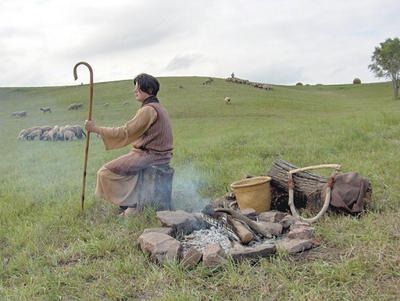
As we know, David and his six hundred men were hiding out in wilderness areas. Saul had been shamed into leaving him alone, since David refused to kill him when he had the chance. Even so, David did not settle in a town or with others. Obviously, things with Saul were not completely resolved, and he did not want to endanger any town or family by living with them. Though David was living in wild areas, he and his men did have some contact with others. Shepherds took flocks into the wilderness to graze, sometimes for months at a time. When David and his men encountered them, they protected them and their flocks from wild animals and robbers.

It takes a lot of food to keep six hundred men on their feet, and it doesn’t seem likely that they could have hunted and gathered enough. It is almost certain that David’s men had to rely upon the generosity and kindness of others to keep them supplied. Even so, they never took what wasn’t theirs, but protected the property of those they encountered.

I like knowing this about David. Here was the man who would become the greatest king known to Israel, and not only is he in hiding, but he is barely holding on, dependent upon donations from kind friends and strangers. David wasn’t just a lucky guy who had everything fall into place for him. He spent a significant portion of time in real need, and he never would have made it without help. This is humbling, but the fact that David lived this way encourages me when I feel humbled by my own needs.

After they had been protecting the shepherds and flocks of a wealthy man named Nabal for some time, David sent messengers, asking if Nabal could help him. The messengers pointed out that not only had David never taken anything from him, but had protected his property from bandits and other dangers. At the time, Nabal was cashing in by selling fleeces from sheep that David had protected, and also slaughtering many sheep and feasting. It was a time of great plenty for Nabal, who had a small empire of flocks, herds and servants.

Now it says that Nabal was a harsh man, evil in his dealings. His response shows that this bad reputation was justified. Not only did he refuse to give anything to David, he deliberately and provocatively insulted him and his men. In short, he was a jerk.

David’s response was understandable. Even so, it was not righteous. He left 200 men to guard their hideout, and took 400 men to destroy all that Nabal owned, and to kill him. Nabal’s behavior was despicable. It’s easy to see why David flew into a rage. But that does not justify David’s intent to destroy the man.

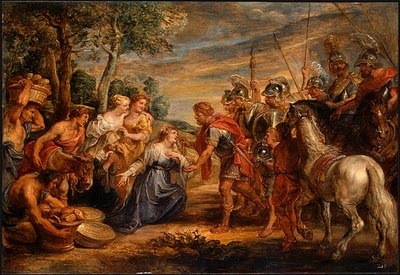
At that point, we meet the heroine, Abigail. She is Nabal’s wife. Some of Nabal’s men come to her, and explain what has happened. She makes some immediate emergency decisions, and goes out to meet David with plenty of food and supplies for his men.

Now, some of you have heard me preach through New Testament passages that teach us about biblical roles for women and for men. I think of Abigail as an amazing example of a woman who was used by God as a woman – not as a man. This is how it might look sometimes as we engage in the gender dance the Lord has designed for us. Abigail is smarter than everyone around her at this point in time. She is wiser. For a while, she is the only one who is truly committed to doing what is righteous, and she had to deal with two men in leadership who both wanted to do wrong. But she approaches the situation with an amazing womanly grace and uniquely feminine strength.

She offers David gifts for himself and his men, which was the right thing to do. She also apologized for her husband. There is a play on words here. His name, Nabal, would have been pronounced “nu-bawl.” A Hebrew word for foolish or worthless is pronounced “nu-bawl-uh.” It’s a little like saying “Stu is just like his name: stupid.” (Deepest apologies to anyone named Stu who might be reading this).

Throughout the narrative it is clear that Abigail places herself in David’s hands, and under his authority. However, while she is clearly submissive, she is not subservient. She does not hold back from exhorting David to do what is right. She reminds him of God’s promises to him. She reminds him that he himself knew it was wrong to take things into his own hands by killing Saul. This is a similar situation. She encourages him to trust the Lord, not his own strength, and to trust the Lord’s promises to him. She points out gently that destroying Nabal is something he will probably regret later, and would be a shameful blemish on his record of trusting the Lord. She does it all with womanly grace and attractiveness.

There is no doubt that Abigail was in the right, while both David and her husband were wrong. Even so, there is no sense in this narrative that Abigail has somehow taken on the role of a man, or acted out of a sense of authority or leadership over either one of them. This is one example of what biblical submission can look like. You can see it is not subservience, or rolling over and accepting whatever men want to say or do. In her submission, her grace and wisdom were powerful and attractive. Abigail is a beautiful example of a woman who plays a significant role in God’s kingdom without violating what the Holy Spirit says elsewhere in scripture about gender roles.

And here is something significant: she really got David’s attention. I suspect that David, being in the foul mood he was in, would have reacted angrily to a man who came and told him he was being stupid and making a mistake. But Abigail, with her womanly grace, completely disarmed him. He repented, and freely confessed that she was right and he was wrong.

32 Then David said to Abigail, “Praise to the LORD God of Israel, who sent you to meet me today! 33 Your discernment is blessed, and you are blessed. Today you kept me from participating in bloodshed and avenging myself by my own hand. (1Sam 25:32-33, HCSB)

They parted, but obviously, David never forgot the exchange. Abigail went home. She was in a tough place, because now that she had dealt with one angry man, she had to deal with another. We have to read between the lines, but everything I see here suggests that Abigail was trusting the Lord to work out that conversation also. The next morning she told her husband straight out, what she had done. He had a seizure from which he never recovered. The Lord took care of it for her.

When David heard Nabal was dead, presumably after the period of mourning, he asked Abigail to be his wife, and she consented. I think it is obvious that David was deeply impressed by her grace and wisdom.

Now, since it comes up at the end of this passage, I’ll comment briefly on polygamy (having multiple wives). David was married to Michal, Saul’s daughter, but after David fled, Saul married her off to someone else. So when David married Abigail, he was technically unmarried. However, he also married another woman during this same general period of time, Ahinoam.

The Bible does record many men, some of them heroes of the faith like David, having more than one wife. Sometimes, no comment is made upon whether this is a good thing or bad thing. However, the majority of the time, the Bible records that polygamy generally leads to bad results. Jacob had two wives, and the bible records that as a result, there was a huge amount of family strife. Samuel’s father had two wives, and the bible records that it led to family strife. Solomon had nine-hundred wives, and it destroyed his faith, and led the whole country astray. The result of David’s several wives was also ultimately strife between the half-brothers that were his sons. So it is true that the bible doesn’t specifically condemn polygamy – but it certainly doesn’t endorse it either. It happened, and the bible records things that really happened.

One final thought: Jesus clearly taught that marriage was originally intended by God to be between a single man and a single woman. The rest of the New Testament also affirms that in marriage, two are to become one. That idea doesn’t fit at all with polygamy.

So what do we do with all this? If you are a man considering having more than one wife, forget it. But seriously, what does the Lord say to us here?

I do think Abigail can be a great example for girls and women to aspire to. She had beauty, wisdom and courage and she used them all graciously as only a woman could.

For both men and women, perhaps you find yourself between a rock and a hard place like Abigail was. She didn’t waste time trying to figure it all out. She trusted the Lord, and did the first thing that needed to be done. In the end, the Lord took care of it all.

Maybe like me, you are encouraged by David’s humble life at this point. If God’s chosen instrument had to ask for help, it must be OK for us to also ask for help at times. True, it is humbling, but that isn’t usually a bad thing.

Perhaps like David, you might be tricked into responding to someone or some event with rage and anger and hasty action. Maybe the Lord is telling you to slow down and take a step back and ask him what true wisdom is in this situation.

As him now, what he wants to say to you

RESURRECTION LIFE: ARE YOUR DREAMS SHATTERED?

How do you react to broken dreams? Do you seek life in things and people apart from Jesus, or do you recognize that True Life is only in him. We have movie clips this, so enjoy the message!

To listen to the sermon, click the play button:

 
To download, right click on the link (or do whatever you do on a Mac) and save it to your computer:
Download the Easter Message


It’s always a challenge for me to preach about the Resurrection of Jesus. It is the central truth of our faith. Jesus physically rose from death; you either believe it or you don’t. In the past I have offered many facts and logical arguments that tell us it is reasonable to believe it. But this year I want to look at the difference it makes in our lives. It makes a huge difference in eternity, of course – the difference between heaven and hell. But it starts to make a difference right now, in the choices we make, and in how we deal with disappoint and grief here in this life.

One of my favorite movies of all time is Cast Away starring Tom Hanks. Hanks’ character, named “Chuck,” is on the verge of proposing to his girlfriend Kelly, the love of his life. But he has to take a business trip first. Over the Pacific Ocean, his plane goes down. He survives the next four years completely alone on a deserted island. Finally, he is rescued. But four years with no word is a long time. When he returns, he finds that everyone had given up on him, and considered him dead. Even his true love Kelly, had mourned him, and then moved on. She is now married, with a toddler.

Naturally, when Chuck returns – from the dead, so to speak – it is traumatic to both of them. Chuck drives to see Kelly at her house in the middle of the night, as the rain pours down. They both say goodbye in a heartbreaking scene, where much is left unsaid. Then, as Chuck pulls down the driveway, Kelly comes running out in the rain, calling his name. They stand in the rain, hugging and kissing. Then Kelly says:

“I always knew you were alive, I knew it. But everybody said I had to stop saying that, that I had to let you go.” Kelly pauses while they stare at each other. “I love you. You’re the love of my life.”

After another long pause while they look at each other, Chuck says, “I love you too Kelly, more than you’ll ever know.”

They get into Chuck’s car and sit in silence. But they both know that Kelly has to go back home, that it is too late for them to ever be together like that again. And so he drives her back up the driveway, and leaves her there.

There is a lot of tragedy in this scene that is simply the result of circumstances that neither one of them could control. But there is also the tragedy that Kelly gave up on Chuck, even when deep in her heart, she knew that she shouldn’t stop hoping. So she settled for life as best as she could get it. She quit working on her dream to be a professor. She married a decent man and had a child. And so when Chuck came back, it was too late. She had already made another life for herself, and there was no place for Chuck in it anymore.

This is heartbreaking, but it is, after all, just a movie. Even so, I think this part of the movie taps into a spiritual truth. It reveals the struggle of faith that we have sometimes as Christians. Our Lover – Jesus – has been gone for a long time now. All around us, voices tell us to give up, to move on, to settle for life as best as we can get it. But if we do that, we find, like Kelly, that when Jesus returns, we have no room for him in our lives anymore.

Jesus’ very first disciples struggled with this. They traveled with Jesus, watched his miracles and heard him preach. They came to believe that he was God’s chosen Messiah – true God in the flesh, their only true hope for salvation and real life. And then he was killed. Now they didn’t know what to do with all their hopes and dreams. It was all over. On the third day after his death, some of these disciples went on a short journey. A stranger joined them as they walked and asked them why they seemed so sad. They told the stranger about Jesus and all he had done and said, and then they told him how Jesus had been handed over and killed. They end with a brief and poignant expression of their loss and confusion:

“But we were hoping that he was the one who was about to redeem Israel.”

You can almost hear the pain in their words. Things didn’t turn out the way they planned. They were sure they were following God. They were sure they had it right, and that their future was bright with their savior. They are hurt and lost. They had put their hope in Jesus, and now Jesus wasn’t there anymore.

Only he was.

He was right next to them. He was the very stranger that they were talking to. This is extremely important. In our everyday life experience, we may feel far removed from the resurrection of Jesus. We may feel like it has nothing to do with us, like from now on we just have to get on with life as best we can. But Jesus is walking right next to us. Feeling or no feeling, whether we can perceive it somehow or not, the Resurrection of Jesus was real, and the resurrection life that he offers us is just as real.

The disciples’ lack of faith is surprising. Jesus told them exactly what was going to happen. He said several times that he would be taken captive by the authorities and executed, and then that he would rise from death on the third day. They didn’t want to believe the part about him dying, until they had no choice. They wouldn’t accept what he was saying. Peter told him not to have such a negative outlook. The others heard too, but it bounced off their skulls like water off a duck. They simply didn’t get it. And then when he did die, they still didn’t believe the part where he told them he would rise again physically. So the death of Jesus destroyed them mentally and emotionally. They were completely lost.

Sometimes, we are like those disciples. Jesus told us exactly what is going to happen. He said we would have trouble in this world (John 16:33), but he also told us not to let our hearts be troubled (John 14:1). Living in a world of sin, we will experience sorrow and grief. But living in faith in Jesus Christ, those sorrows and griefs are not the final word. They are not as real as the great reality that is coming for those who trust Jesus. The pain and severe disappointment experienced by those disciples walking along the road was real. But the man walking beside them was real too, and he had already overcome their grief, even before they were aware of it. The reality of his resurrection was greater than the reality of their sorrow, whether they knew it or not.

I think the danger we face as believers in the risen Messiah is that, like those other disciples, we forget the promises of Jesus, or we think he is not close, not next to us. And so, in the meantime, we try to just go on and get some kind of life and hope for ourselves.

There is another poignant scene in the film Cast Away. For four years alone on the island, Chuck had no companion. So he began to talk to a volleyball that had a face-shaped bloodstain on it. He called it Wilson. In a strange way, he grew to care for the volleyball and became deeply attached to it. When he is sailing to try and find help, the volleyball comes loose from where it is tied. Chuck tries to swim after it but he is held back by a rope that attaches him to the raft. He finally needs to make a choice whether to hold on to raft, which is his only chance at living and seeing Kelly again – or swimming after the volleyball, and drowning with it in his arms.

He reluctantly chooses life, but he cries his heart out at the loss of Wilson. It may be just a stupid volleyball, but it is all he has had for four long years. It is hard to blame Chuck for being so broken up after he lets Wilson go. We can understand it and even feel some of his pain. In the context of the whole movie, it is actually a very moving scene. And yet even though it is perfectly understandable, we know (and even the character Chuck knows) that ultimately, it is just a volleyball. It isn’t a real person. It isn’t worth giving your life for.

Sometimes I think we spend half our lives like Chuck in that scene, tugging on the end of the rope, not quite sure whether we are going to give up the raft, or give up the volleyball. Chuck’s problem was that after four years alone, part of him actually believed that Wilson was a real person. He wasn’t sure of the truth. He may not have been fully convinced that the raft would really bring him back to civilization and real people. Because of his experience, Wilson seemed more real, more important than the raft.

We are like that sometimes. This life sometimes seems so much more real than the Resurrection Life that Jesus told us about. The things we can have here tempt us to believe the lie that they are more real and more important than our eternal future. This is understandable. It is understandable also to have a hard time giving them up, just like Chuck had difficulty letting go of Wilson. But even though we understand, and it is hard, the choice is perfectly and completely clear. There is nothing in this life that is worth holding on to if it keep us from the real Life that Jesus offers us.

Will we hold onto something that is ultimately worthless, or will we give it up for real life? To give it up requires faith. It requires us to trust that there is a real resurrection, that real life is still waiting for us. We can see and touch the fake things, like Chuck could touch and see the volleyball Wilson. But those things are not as real and true as what awaits us when we trust in Jesus. Jesus said:

1 “Your heart must not be troubled. Trust in God; trust also in Me. 2 In My Father’s house are many dwelling places; if not, I would have told you. I am going away to prepare a place for you. 3 If I go away and prepare a place for you, I will come back and receive you to Myself, so that where I am you may be also. 4 You know the way to where I am going.”

5 “Lord,” Thomas said, “we don’t know where You’re going. How can we know the way? ” 6 Jesus told him, “I am the way, the truth, and the life. No one comes to the Father except through Me. 7 “If you know Me, you will also know My Father. From now on you do know Him and have seen Him.” (John 14:1-7)

The fact of the resurrection tells us that there is real life waiting for us. There is still true love possible. Our dreams have not been shattered and lost. We just need to recognize that the time is not yet. We are in the dress rehearsal, the practice before the real game begins. We are camping in a tent, not living in our home. We are practicing to love, practicing to be great.

One of the things that helped Chuck through, was his hope of the life that existed away from his island. So I want us to dwell for a little bit on the resurrection life that waits for us, away from this little island that we mistakenly call life.

I think a lot Christians have the feeling that the resurrection life will be a never ending worship service. Let me be honest with you. I am a pastor, and that thought does not excite me. Don’t get me wrong, I love to worship the Lord with other believers. But I also love to fish, to hike and come around the corner of ridge to a new vista I’ve never seen before. I love to just hang out and laugh with my family and close friends. I like to write, and read and experience moving stories. I believe amazing worship will be part of our experience of resurrection life. But I think there will also be so much more.

John Eldredge writes that you cannot hope for something you do not desire. The overwhelmingly good news is that resurrection life is where our deepest, strongest, purest desires are fulfilled. The desire for intimacy that sometimes we get confused with a desire for only sex – that intimacy will be fulfilled in resurrection life. The desire to be deeply connected to beauty – the thing that causes us to ache when see a beautiful person, or an awe-inspiring view, or hear uplifting music – that will be fulfilled. The desire to be significant, to be recognized for who you are and for the God-given gifts you have – that will be fulfilled in resurrection life. That thing in your that loves to rise to the occasion and meet challenges – that will find its ultimate expression in resurrection life.

We won’t be ghosts or angels, floating around somewhere. Jesus was not resurrected as a spirit – he had a physical body. On several occasions after he was raised, he sat down and ate with the disciples. He promises us resurrection bodies also (1 Corinthians 15). He promises us a new heavens and new earth (Revelation 21 & 22) where will live and love and do the things we love to do, and be connected to God and to each other without the destruction and cruelty of sin and sorrow.

I will never get the love I am seeking from human beings. I may never be recognized for who I am I this life. My talents might go unappreciated. I might have to toil and spend a lot of time doing things I don’t really want to do. If this life is all there is, that would be tragic. But if all that is fulfilled in the next life, in my resurrection, which Jesus made possible – then what I face here and now is bearable. It isn’t the final word. I’m not getting too old – I’m actually getting closer to the fulfillment of all I want as I age.

I’ve heard an expression: “Some people are so heavenly-minded, they are no earthly good.” I detest that expression. It is entirely false. I have never met anyone who is too heavenly-minded. And the most resurrection-oriented people I know are the ones who have done the most for the Lord and for their fellow human beings here and now. It is only when we lost sight of resurrection that we become focused on making ourselves happy here and now, whatever the cost.

Think back to Kelly, from Cast Away. Deep in her heart, she knew Chuck was alive. But she lost faith. She gave up that hope and settled for what she could get at the moment. Because of that, she missed out forever on the life she might have had with Chuck if she had only held on.

We who are Christians know that Jesus is alive. We know it through faith. We know there is more life, better life waiting for us with him. We know it. But everyone keeps saying we have to move on. Everyone tells us we shouldn’t spend so much time thinking about it. Sometimes it feels like God hasn’t come through. But we know better. Don’t let go of that knowledge. Don’t give up that hope. Don’t fill your life with other things, don’t make yourself a life apart from the one who truly loves you and is coming back for you, no matter how long it seems.

He is Risen!

WHAT DOES GOD REALLY FEEL ABOUT THE MESS YOU’RE IN?

WalledCity

As God’s “anointed one” David’s life and actions give us insight into what Jesus is like. When God’s people get themselves into trouble, both David and Jesus are eager to come to our aid.

To listen to the sermon, click the play button:

To download, right click on the link (or do whatever you do on a Mac) and save it to your computer: Download 1 Samuel Part 22

1 Samuel #22. God’s Heart for

Rescue. 1 Samuel 23:1-13

We are reading a book of the Bible that is primarily a record of history. Theologians call this kind of Biblical writing, “narrative.” In Sunday school, we all called them “bible stories.” The gospels – the bible stories about Jesus – are narrative. So is the book of Acts. So also, is much of the Old Testament. Whenever we read narrative we should keep in mind that there are three basic layers to it.

First, narrative parts of the Bible are descriptions of actual historical events. Archaeology has consistently confirmed and correlated the bible stories we read. Skeptics used to claim that it was all made up – but in trying to prove that, they instead proved how historically reliable the Bible is.

Even so, we need to realize that this history was written with a purpose in mind. This is true of all history, by the way. Dr Mark Cheathem will soon have a new volume published about Andrew Jackson. It will tell readers about Andrew Jackson and his life, to be sure. But Dr Cheathem will also be telling the events of Jackson’s life from a definite perspective, and building a case that it is a valid perspective. His main thesis is that Jackson’s life was shaped by his own perception of himself as part of the Southern gentry class. In a similar way, the Bible tells us real history, with a certain particular perspective. [For more information about Dr. Cheathem and his books go to http://mcheathem.wordpress.com/] The perspective used in the Bible is that God was at work in these events, and the writers, inspired by God, record how God was interacting with humans through the incidents that are recorded. So we not only look at the historical events, but, trusting that God inspired the writers, we look at how God was at work in them.

Finally, we recognize that God is still telling the story, and he uses the Bible to communicate with us today, to tell us how he is at work in us and around us today. The bible is there to help us know God better through Jesus Christ. So as we read, we look for how he wants to communicate with us in this very moment, and how it helps us to know Jesus better, and walk in relationship with him.

In 1 Samuel 23:1-13, David hears that the town of Keilah, near both the cave of Adullam and the forest of Hereth, is under attack by the Philistines. As soon as David hears of it, he has two immediate reactions. First, he wants to go rescue them. Second, he chooses to ask the Lord if he should do that. Remember, both a prophet and priest were with David at this point, and I am sure that together, the three of them asked God about it. David’s first reaction was exactly what God wanted. His heart, and David’s heart, was to deliver his people.

But David’s men said to him, “Look, we’re afraid here in Judah; how much more if we go to Keilah against the Philistine forces! ” (1Sam 23:3, HCSB)

Remember David now has about six hundred men with him. The way war was waged in those days, it is possible that some of them had previously been sent to help Saul for a short time in some of his battles. These citizen-soldiers usually just stayed for one battle or one short campaign, and they were not as significant as the professional warriors. Generally, they just hung around, and if the battle went well, they provided manpower for pursuing enemies; if the battle went badly, they would have been the first to flee. Because these men were so low in society, however, it is possible that very few of them had any experience at warfare. Certainly, aside from David, none of them were professional warriors – yet. Quite simply, they were afraid.

Last time when Saul wanted his men to take action he spoke to them sarcastically and accusingly. David does neither. Probably mostly out of concern for his men, he asks the Lord a second time. When they hear another affirmative, David wastes no more time. He leads them into battle, and they win a resounding victory, saving the town of Keilah.

But all is not well. No doubt David and his men were tired of living in the forest and the cave. So they weren’t in a hurry to leave Keilah – a real town with houses and even a wall. They were glad to hang out in civilization for a while. Saul hears that they are there, and declares: “God has handed him over to me, for he has trapped himself by entering a town with barred gates.”

I want to pause and point out two things. The first is a small difference. In all David’s interactions with God in this passage, he calls him “the Lord.” Saul calls him “God.” “The Lord,” is the way most English translations express the Hebrew personal name for God. So, in fact, it is a more casual and intimate way to talk to God. To picture it another way, say you were talking about a man named John Smith. David is calling him “John” and Saul is calling him “Mr. Smith.” I think this is a reflection of their different relationships with God. To Saul, God is a distant Supreme Being, one that might possibly be manipulated into helping him (Saul). To David, he is a close personal relation, a friend in all times.

The second thing I want to highlight is their different approach to God’s guidance. David pauses and talks to the Lord multiple times on many occasions. He asks what God wants to do in every situation. Four times in these thirteen verses, we see David seeking God’s guidance. On other hand, Saul simply assumes that God exists to assist him to fulfill his (Saul’s) own ambitions. In these verses, he doesn’t once seek to know what God wants him to do.

Let me state this even more clearly. In Saul’s mind, the whole point of God’s existence is to help Saul have the kind of life he wants. God is his assistant. But in David’s mind and heart, he (David) exists to serve God and carry out his will on earth. He is God’s servant, and even calls himself that exact thing in verse ten. I think that these two attitudes compete for dominance in everyone who believes in the existence of God. Is God there to help us live our lives – or are we here to express His Life and fulfill His Purpose here on earth? In other words, is my life about me (with God as a help and support to me), or is my life about God (with me as his valued tool and helper)? I think we all know the correct answer to that question. But practically speaking, many Christians live as if God is their servant, not the other way round. It is so easy to start thinking that the main point of God is to do good things for me. The truth is, the main point of my life is to let God work through me.

The citizens of Keilah are apparently not very grateful to David for his help. There is no record of any expression of thanks. Instead, when David asks the Lord if it is safe to stay there, the Lord tells him that the people of Keilah will hand David and his men over to Saul, if he stays. Saul’s intention is to surround the city and destroy it, with David and his men inside. It does not say so overtly, but it is quite possible that it was a citizen of the town who went to Saul with the information that David was there.

This is ironic. The people of Keilah rejected their rescuer. They sent for Saul to come and capture David. In rejecting God’s anointed one, the citizens of Keilah were inviting their own destruction. In their rejection of David, they were destroying themselves.

Thankfully for everyone, David sought God’s guidance, as he did so frequently, and he led his men back into the wilderness, saving both himself and the town of Keilah, yet once again.

Now, we have heard the history of what happened. We have noticed how God was involved back then. But what does this mean for you today? How is the Lord using this to speak to you, to help you know Jesus better and walk with him?

Remember that David is a type of Christ. God used his life to show us what the ultimate “anointed one” is like. One of the things I think the Lord shows us here is that the heart of God is to rescue us. David, anointed with God’s spirit, heard of people who were in trouble and oppressed, and his first response was, “Can I go save them? Please?” God’s heart is for redemption. He sees people in trouble and oppressed, and he says to the anointed one, “rescue them!” Jesus’ heart is for your rescue. I know there are many things that happen in this life which we don’t understand. But we can’t doubt that God loves us and wants to save us. He came in the flesh, he gave up his body in tortuous suffering to rescues us. His heart is for our redemption. Whatever you face, you are not forgotten. There is One who sees you as precious and valuable. His heart is for your ultimate salvation, for your best good.

David rescued the people of Keilah. Today, three thousand years later, it makes no difference to those people. But the redemption we get through God’s Ultimate anointed one is eternal. It is the redemption of our spirits, souls and eventually the re-making and resurrection of our bodies. Three thousand years from now, the redemption of Jesus will still make all the difference in the universe.

Sometimes, like the people of Keilah, we don’t welcome the one who delivers us. Their rejection of David is pretty poor behavior. Here, he has just saved them, but now they turn around and try to have him killed. When we reject Jesus, it is just as offensive and ugly. He gave his life for us. Some people would like his salvation, but want nothing to do with him – they don’t want a daily relationship with him. Perhaps he interferes with our lives in ways we don’t like. When we reject God’s anointed redeemer, we are inviting not freedom, but destruction into our lives. Let their behavior caution us to receive what God wants to do in our lives.

Maybe you identify with David’s men. You aren’t a professional, like he is. Perhaps God, through Jesus, is inviting you into something new and scary that you aren’t sure you are ready for. Maybe you’ve been invited to take part in a prayer ministry. You think, “I’ve been around church. I’ve prayed out loud a few times, but I’m not experienced like some other people.” When God’s anointed (Jesus) invites you into his mission, don’t shrink back. David’s rabble weren’t fighters at this point. But out of that same group came the greatest warriors in the history of Israel.

Maybe you think you don’t have the background to pray for others, or to share your faith with your neighbor, or make a stand for God. You might be right. You probably don’t have the right background. But neither did David’s men. All they really needed was enough trust to follow where God’s anointed one led them. That’s all we need. We small, no-account group of Jesus-followers might be exactly the tools God chooses to use.

Let the Lord speak to you right now.

REBEL WITH A CAUSE

Adullam-Cave-interior_fjenkins 090211

David was God’s chosen king, the rightful heir to the throne of Israel. But for a time he had to live hiding in his own kingdom. While he did a few unlikely characters joined him, and were molded into the future heroes of Israel.

The rightful King of this world, Jesus, is here incognito, so to speak, and he calls us to join him in a campaign of rebellion against the usurper, Satan.

To listen to the sermon, click the play button:

To download, right click on the link (or do whatever you do on a Mac) and save it to your computer: Download 1 Samuel Part 20

1 Samuel #20. 1 Samuel 22:1-2

Last time we saw how David took the time to make one last stop to worship the Lord. He almost certainly lost a chance to go home to Bethlehem one last time. He did this because he wanted to be in the presence of the Lord once more. He wanted to hear what God had to say to him in this difficult circumstance. Those things were more important to him than home, family or even the certain help he would have received in Bethlehem. After stopping at the temple, he spent some time in Philistine territory. Realizing he’d made a mistake, he fled from there, and ended up hiding and living in a cave near a place called Adullam.

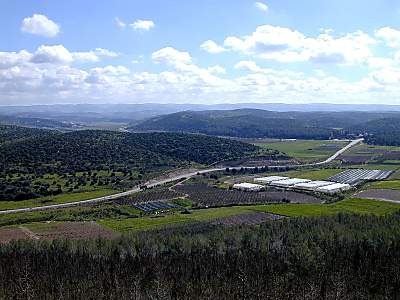
Elah_Valley_from_Azekah_tb_n022201

Pause for a moment and consider how low David has fallen. He was anointed to be God’s chosen instrument, ultimately, to be the king. He served as a feared and honored warrior – he was, in fact, a national hero. He was the son in law of the king. He had lived in comfort and honor. Now he is hiding for fear of his life, in a cave. Caves are not known for their comfort. There is nothing soft to sleep on. There is no natural light. There are no bathrooms, so after a while of living there, it would smell pretty ripe. And yet, David’s heart didn’t falter. He did not appear to think he was somehow too good to live that way. Arthur W. Pink commented on this:

“The high favorites of Heaven are sometimes to be located in queer and unexpected places. Joseph in prison, the descendants of Abraham laboring in the brick-kilns of Egypt, Daniel in the lions’ den, Jonah in the great fish’s belly, Paul clinging to a spar in the sea, forcibly illustrate this principle. Then let us not murmur because we do not now live in as fine a house as do some of the ungodly; our “mansions” are in Heaven!”

Sometimes I think we Christians in the Western world are a little soft. God loves to bless his people, but his main purpose for us in this world is not that we merely feel comfortable. David was God’s chosen instrument, just as we Christians are today. And the Lord was with him in the cave, perhaps even more potently than when David finally lived in a palace. We need to take the long view, the view of eternity. What happens here and now is not the end. I like where I live right now, but it is a dump compared to my permanent home in heaven. David knew that was true for him as well.

There are two Psalms that show in the title that they were written by David “in the cave.” Unfortunately for David, he spent time hiding in several different caves, at different periods in his life. So we can’t know for sure that these were written in the caves near Adullam. But there’s a good chance that either one or both of Psalm 57 and 142 were written at this point in his life. Remember, the Psalms are not collected in chronological order, so 142 could easily have been written before 57.

Both Psalms start with David expressing fear and anguish at his dangerous and uncertain situation. But both end with him declaring his trust in the Lord, and his praise to him. The last line of Psalm 142 says, “The righteous will gather around me; because you deal generously with me.”

This is a declaration of trust. It is also an optimistic take on what actually happened shortly afterwards. David’s brothers and his father’s whole family came to live with him in the cave. He was no longer all alone – his family shared in his hardship and persecutions. In addition, more men joined him until there were about 400 altogether. The text says that these men were all either “desperate, in debt or discontented.” It doesn’t sound exactly like “the righteous.” It sounds more like a ragtag band of malcontents and ne’er-do-wells. David’s family aside, these sound not like the cream of the crop, but rather the sludge of society.

However, they all agreed upon one thing – David was now their leader. This was actually a pretty big deal. As we will learn in a moment, Saul the King felt that anyone who helped David was committing treason, and he sentenced them to death. So when these men gave their allegiance to David, they forfeited their lives. There was no going back. If David failed to vindicate himself, they were dead men.

In the Old Testament, sometimes we encounter people or events that theologians call “a type of Christ.” What they mean is, sometimes God used historical events or individuals to show the world what Jesus was like, even though Jesus had not come yet. It is a foreshadowing – a partial picture of what the real messiah will look like. These “types of Christ” serve two purposes. First they were for the people in Old Testament times, to help them understand what God is really like, and how he really saves people. Remember, Romans 3:25-26 tells us that even people in Old Testament times were saved through Jesus, as God looked ahead to what he was going to do at the cross. And so there are these shadows and parts of pictures that gave people a sense of what was to come. Second, these “types” are there to strengthen our faith. Even the Old Testament is all about Jesus, and so when we read it, we should be looking for Jesus and how it shows Him to us.

By the time Jesus walked the earth, even the Jewish Pharisees believed that many of the people and incidents in the Old Testament were pictures of the coming Messiah. In particular, the Jews felt that David’s life and character would help them to identify what the Messiah was like. David was anointed with oil and with the Holy Spirit to be God’s uniquely chosen instrument. Both the Hebrew word “Messiah” and the Greek “Christ” mean simply “anointed one.” Jesus Christ means “Jesus, Anointed One.” So some of the life of David, the anointed one, looks ahead to the ultimate Anointed One.

In this particular case, there are several significant comparisons. David was God’s chosen anointed one, and yet he was rejected by the leader of the nation. He lived with integrity and didn’t do anything wrong, yet he was forced to live as an outcast. Jesus was God in flesh, the Ultimate Anointed One, and yet he was rejected by the status quo of Israel. He too was an outcast. David accomplished miraculous things in battle against the Philistines. Once he and another warrior were surrounded by Philistines in an open field. They stood back to back and killed three hundred enemies that day.

Jesus also performed many miraculous signs – healings, driving out demons, calming storms and more. He destroyed demonic enemy strongholds.

There is one “type of Christ” in this passage that I want to dwell on a little bit longer, and that is the followers of God’s anointed. The men that followed David were of no account. They were shiftless and in trouble, the dregs of society. And yet mostly from these ragtag 400, came some of the mightiest names in the history of Israel. There was an exclusive trio of warriors, known as “the three.” One of these was the warrior that stood back to back with David when they were surrounded. There was a larger elite force of “thirty mighty men.” From what we can tell, they all started out among this group of no-name, no-account people.

In the same way, the important members of society did not join the ragtag band of Jesus’ disciples. Instead he got tax-collectors, prostitutes and smelly, calloused fishermen. He had his “three” – Peter, James and John. He had his twelve then beyond that, a few more.

The followers of David had to be kind of desperate to go to him. They were literally giving up everything to join him. If he didn’t come through, they were lost. There was no halfway commitment. This wasn’t, “I’ll go hang with David for a while, and if it doesn’t work out, I can always go back.” No it was an irrevocable alignment with David, breaking off the loyalties of the past.

Jesus calls for that kind of allegiance from us also. He doesn’t want us to come to him, keeping our options open in case something we like better comes along. Jesus talked to his disciples about this very thing, and Peter expressed the kind of commitment they made to him:

66 After this many of his disciples turned back and no longer walked with him. 67 So Jesus said to the Twelve, “Do you want to go away as well?” 68 Simon Peter answered him, “Lord, to whom shall we go? You have the words of eternal life, 69 and we have believed, and have come to know, that you are the Holy One of God.” (John 6:66-69, ESV)

Just as David’s followers were desperate and poor, Jesus calls to the broken and poor in spirit. Let’s face it, it hard to really give ourselves over to Jesus unless we realize that without him, we are lost. Paul describes it like this:

26 Brothers, consider your calling: Not many are wise from a human perspective, not many powerful, not many of noble birth. 27 Instead, God has chosen what is foolish in the world to shame the wise, and God has chosen what is weak in the world to shame the strong. 28 God has chosen what is insignificant and despised in the world — what is viewed as nothing — to bring to nothing what is viewed as something, 29 so that no one can boast in His presence. 30 But it is from Him that you are in Christ Jesus, who became God-given wisdom for us — our righteousness, sanctification, and redemption, 31 in order that, as it is written: The one who boasts must boast in the Lord. (1Cor 1:26-31, HCSB)

Let’s be honest. Sometimes it seems like it might be more exciting to be one of David’s men than to follow Jesus. I mean, as I read this, I think this real history was likely the inspiration for the legend of Robin Hood, and even if Robin Hood was real, he might have been inspired to his deeds by this very story. There are battles, betrayals, secret hiding places, defections. It is all very well to say David is a type of Christ, but following Jesus might sometimes seem more boring. I mean we go to work or school and come home and do stuff, go to bed and then get up and do it all again. Sometimes we’re so bored, we make excitement for ourselves.

I think that is all because we fail to recognize the spiritual reality that exists with and alongside our world, hidden, but no less real. What David was involved with physically, we are engaged in spiritually. David was the king who was chosen by God, but rejected by many of the people. He lived almost as an agent in enemy territory, gathering those few worthless people who had nowhere else to turn to help him. In the same way, C.S. Lewis describes our life of following Jesus like this:

Enemy occupied territory – that’s what this world is. Christianity is the story of how the rightful King has landed, you might say landed in disguise, and is calling us all to take part in a great campaign of sabotage.

–C. S. Lewis, Mere Christianity

You see, though the battle is more spiritual than physical, it is no less real for all that. We have a faithful, loving intrepid leader. We are undercover – living as part of society, but not living for the same purposes as the rest of the world. Sometimes perhaps we need to wake up, and open up our lives to be more engaged in this secret mission. We need to be more aware of how the Lord wants to work, to be more aware of the people he is bringing across our paths and into our lives.

Joining the Rebel King paints a target on our backs, a target his enemies would love to use. But if we trust him and submit to his leadership, he will mold us into mighty men and women of faith, significant in God’s kingdom forever.

WHERE DO YOU RUN TO?

david323


What or who do you turn to in trouble or hardship? Why?

1 Samuel #19. God as Refuge 1 Samuel Chapter 21

To listen to the sermon, click the play button:

To download, right click on the link (or do whatever you do on a Mac) and save it to your computer: Download 1 Samuel Part 19

The excitement, adventure and romance of David’s life are not over yet – not by a long shot. So I encourage you to take to hear the message of these true stories. When something grabs your attention, shocks you, or stirs your heart, pause and ask the Lord to speak to you through it. Pay attention to how the Lord is appealing to your heart through the life of David. I trust that you can and will continue to do that, even when we move through the text a little more pedantically.

We left David just after he made a daring midnight escape, assisted by his young wife. He fled to the tabernacle of the Lord, which was being kept at a place called Nob, outside of Jerusalem. In fact, Nob was probably located at the place we now call the Mount of Olives. We are so used to thinking of the biblical capital city of Israel as Jerusalem, but Jerusalem at this time was controlled by foreigners known as Jebusites. David, at the time of his escape, was in Saul’s home-town, Gibeah, which was north of Nob.

The logical thing for David to do first was to stop at his home in Bethlehem, just a few miles further on from Nob. There, it is certain that his family would supply him for a longer journey. However, by stopping at Nob, even though it was on the way, David probably delayed long enough for Saul’s men to get to Bethlehem before him – any reasonably smart person would assume that David would go there first. In other words, by stopping, David gave up his chance to go home and get certain help from people loyal to him by blood. So why did he go to Nob and give up that up?

We can certainly speculate about the answer to that question. He might have been afraid that Saul would punish his family. Even so, there is no reason Saul wouldn’t punish them anyway, because Saul could not have been sure that David had not, in fact, been to Bethlehem. Perhaps David was being cunning, and staying away from places he’d be expected. That’s definitely a possibility, but I think we can learn the real answer from the words of David himself.

1 O God, You are my God; I eagerly seek You.

I thirst for You;

my body faints for You

in a land that is dry, desolate, and without water.

2 So I gaze on You in the sanctuary

to see Your strength and Your glory.

3 My lips will glorify You

because Your faithful love is better than life. (Psalm 63:1-3)

Or again:

1 I am at rest in God alone;

my salvation comes from Him.

2 He alone is my rock and my salvation,

my stronghold; I will never be shaken. (Psalm 62:1-2)

For David, God was his family. He was the most important family, and the most certain help in times of trouble. Even though David went far beyond most of his contemporaries in his relationship with God, we need to remember that in those days, worship was oriented at the tabernacle. The presence of God was believed to be most real there. And before the time of Jesus, there was something unique and special about the tabernacle (and later, the temple). And so David was faced with a choice. He could go into exile and hiding without ever seeing his family again, or without ever worshipping at the tabernacle again. He chose God over his family. He couldn’t stand the thought of leaving without spending one more time in the presence of God in a special way.

In addition, he saw the Lord as a very real help in times of trouble. And so he chose to seek whatever help he might get from the Lord, trusting in the Lord’s help even more than the certain assistance he would have received from his family. Besides what we know of David’s heart from the psalms, the confirmation is also given in the next chapter. In 1 Samuel 22:10 we learn that David “inquired of the Lord” while he was there.

From verse 2 onwards, David refers to companions who are with him. So apparently a few people loyal to him went along when he fled. If we read this in isolation, we might think that David was embellishing the story for Ahimelech, the chief priest. In fact, Jesus refers to this very incident, and confirms that David had some men with him.

Another thing we notice in this text is that David tells a lie. He claims to be on a mission for Saul. I’m ashamed to say that when I first read this, I excused this behavior, because after all, he was fleeing for his life. But David’s lie leads to an awful slaughter, later on. The priest Ahimelech, and almost his entire family, were later murdered by Saul for helping David. Now Ahimelech, had he known the truth, may still have chosen to help David. But in that case, his death would have been the result of his own choice. As it was, David, by his lie, made the choice that led to the tragedy later on. It may seem harsh to point out that David sinned here. But you see, David had the right to risk his own life. He did not have the right to deceive someone else into risking his own life, and the lives of his wife and children. He ought to have given Ahimelech that choice by telling him the truth.

The priest gives David and his men some of the holy bread. In the tabernacle, (and later, in the temple) there was a table that held twelve loaves of bread. This was called the “bread of the presence.” The twelve loaves represented the twelve tribes of Israel, sitting in the presence of the Lord. Each week, the priests baked twelve fresh loaves, and took the old ones off. Those old loaves were supposed to be eaten only be the priests and their families, since they were consecrated and considered holy. Ahimelech makes the choice to give some of this consecrated bread to David and his men. 1000 years later, Jesus officially approved this action. He taught that this incident demonstrates that the goal of worship activities is to bring us closer to God – not to serve empty religion and mindless tradition.

In addition to the bread, David obtains the sword of Goliath. Obviously, at some point, he had given it to the priests. This again shows us something about David’s heart. He never looked at his victory over the giant as his personal success. It was God’s victory, on behalf of the entire nation. So he placed the sword in the Lord’s sanctuary, so that all who worshiped could see a physical reminder of God’s power and grace and care for his people.

However, at this point his life, David needs a weapon. So he takes the sword back. It must have done the same thing for him that it did for the worshipers. It would have reminded him of how the Lord cared about him, and fought his battles for him.

After this David fled to the only place he thought he could be safe from Saul – to the Philistines. Once again, we are limited by writers who did not take the time or sheepskin for complete explanations about what happened, or what David could possibly have been thinking. It’s true that now David was Saul’s enemy. As the old saying goes, “the enemy of my enemy, is my friend.” And so he may have expected the Philistines to welcome him. In addition, war in those days was conducted very differently. There were often rules and even a kind of etiquette. It is possible that it would have been very bad form to kill an enemy when you met him away from the battle field; even more so if he came to your town of his own free will.

Even so, David seems to have overlooked the fact that he has killed thousands of Philistines in battle. Though they did not immediately kill or imprison him, the Philistine leaders felt pretty sour about their king welcoming the man who had killed so many of their soldiers and friends. They reminded the king of this, and David realizes that he is not in a good position. So he pretends to be insane until they let him wander off and escape once more.

One of the most remarkable aspects of this part of David’s tumultuous life is his attitude and heart through it all. It is true that he failed and gave in to fear by lying to Ahimelech. But through the rest of it, his heart remained steadfast, trusting in God alone for help. He wrote a psalm shortly after he escaped from the Philistines. Considering his circumstances, what he wrote is remarkable. Here is part of it:

1 I will praise the LORD at all times; His praise will always be on my lips.

2 I will boast in the LORD; the humble will hear and be glad.

3 Proclaim Yahweh’s greatness with me; let us exalt His name together.

4 I sought the LORD, and He answered me and delivered me from all my fears.

5 Those who look to Him are radiant with joy; their faces will never be ashamed.

6 This poor man cried, and the LORD heard him and saved him from all his troubles.

7 The Angel of the LORD encamps around those who fear Him, and rescues them.

8 Taste and see that the LORD is good. How happy is the man who takes refuge in Him! 9 You who are His holy ones, fear Yahweh, for those who fear Him lack nothing. (Ps 34:1-9, HCSB)

Let’s listen to the Lord for what he would say to us through 1 Samuel 21. Consider some of these questions:

Where do you run to when you are in trouble? Who, or what do you see as your most reliable help in trouble? Is it to the Lord? If not, why not? Take heart from David’s example, and let it encourage you to consider the Lord your best and most certain help. Learn from David that seeking the Lord is even more important than any other kind of assistance you might find.

Maybe your temptation is to cave in to fear, like David did when he lied. His lie had awful consequences. We don’t get to know what would have happened if he had told Ahimelech the truth, but it could hardly have been any worse than what did happen. Maybe the Lord is calling you to be honest in a situation where honesty could ruin a relationship or at least get you in trouble. But before you do, remember the awful consequences to dishonesty.

And what reminds you of God’s power, grace and help given to you in the past? What can encourage you like Goliath’s sword encouraged David? Take a few minutes now to listen to the Lord.

YOUR PART IN THE GREAT STORY

You have a part in the never-ending story of God’s redemption in this world. There is danger, intrigue and hardship, but also joy, romance and adventure.

1 SAMUEL #18. Chapters 19-20

To listen to the sermon, click the play button:

To download, right click on the link (or do whatever you do on a Mac) and save it to your computer: Download 1 Samuel Part 18

Last time we saw that Saul, having closed the door to God’s Holy Spirit, was overwhelmed by an evil spirit and he tried to kill David, God’s chosen instrument. Now you would think this would be the signal for David to quit, and find other employment. But apparently David assumed that this was just a temporary fit of insanity. The manifestation of the demon that afflicted Saul seems to have looked a lot like paranoid-schizophrenia. So David apparently took it somewhat in stride, and put it down to “one of those fits the king has.” But even when the evil spirit is somewhat abated, Saul, unknown to David, has made a decision that he wants him dead.

Saul tells his advisors, including his son Jonathan, to kill David. Jonathan succeeds in talking some sense into his father, and Saul relents. David is once more welcome at court. But even so, Saul’s heart has not fundamentally changed. There is another battle with the Philistines, and David, relying on God and the talents God gave him, wins another great victory. This arouses Saul’s jealousy again, and again, overwhelmed by an evil spirit, he tries to kill David himself.

Fool me once, shame on you, fool me twice, shame on me, as the saying goes. This time David gets the message. So does his wife, Saul’s daughter Michal. She urges him to run away that very night. You can imagine the tearful passionate goodbyes, and the cool night air as David climbs out the window, and she pulls in the rope that he used. She makes up an image of David, complete with a hairy head, to fool his pursuers, and puts it in their bed.

In the morning Saul’s men come for David, and Michal reports that he is sick, buying more precious time for David to get away. Then men go back to Saul, then return with orders to bring David on his sick bed for Saul to kill him. The deception is discovered, but Michal blames David, saying that he threatened her.

David flees to Samuel, where the Lord protects him from Saul’s men, and even Saul himself. Confused and grieved, David secretly returns and seeks out Jonathan, who agrees to help him. They set up a test to find out if Saul was serious about killing David, and a secret rendezvous point, and even a code.

Their test proves that Saul is serious about killing David. Jonathan sadly makes his way to the rendezvous. He shoots arrows, and then calls out to his helper to look further on for the arrows. This is the signal for David to flee for his life. After sending his young helper back to the town with his weapons, Jonathan and David meet for the last time. They re-affirm their friendship, and then David departs, never to see his best friend alive again.

As I considered this section of scripture for this message, I was looking for some hidden gem of a verse, or some principles to apply to our lives. But what really captured me was the story. It is a true story of adventure, romance, danger, intrigue, battle and conspiracy. There are many novels that do not have plots this exciting. And what I want to suggest to you today, is that the story IS the message.

The events of David’s life call to us. There is a mission for the hero to be part of something greater than himself – to be God’s chosen instrument. There is love and romance in the midst of the adventure. There are friends like brothers. There is a deadly enemy who seeks the life the hero. There are setbacks, plot twists, codes and conspiracies. And yet, through exciting twists and turns, with the help of his love and his friends, the hero escapes and lives to fight another day. I don’t know about you, but in my unguarded moments, I realize that I want some of this in my own life. I want adventure, romance, joy. I want a mission in something that matters, something that is greater than myself.

Now, David was a good-hearted man of faith. Even so, you have to imagine that not all this was easy for him. He had experienced God’s call on his life. He had felt the beauty of God’s creation, the heart-swelling form of music, the joy of friendship, the ecstasy of love, the fierce rush of battle. All these things spoke to his heart and told him that God was good, and that God had given him a part in a great adventure. But that wasn’t the only message that David got. His brothers told him he was arrogant, callow and irresponsible. Saul’s actions told him he was in grave danger, and his life was worthless. He was driven from his wife and friends; he lost his career and it was too dangerous to return to his family. I have no doubt that the devil used these things to tell David that it was a cold cruel world, that God wasn’t really there for him, that in fact, his life had no meaning. What he said to Jonathan at one shows how he was feeling:

But truly, as the LORD lives andas your soul lives, there is but a step between me and death.” 1 Samuel 20:3

David wrote many songs and poems (which we now call Psalms) when he was in trouble. Psalms 3-6 are a small sample of these. He was often worried and distressed. He was harried and hard-pressed. He expressed his fear and doubt at times.

When we look at the life of David from start to finish it is obvious that God was calling to him and working in his life. We can see that David was involved in a purpose greater than himself. We might even envy the adventures he had. But I am not sure that these things were always so obvious to David.

I want to suggest that we are in the middle of a story ourselves, and we are faced with the same dilemma as David, the same two messages. We hear something that tugs at our heart in beautiful music; we sense something eternal when we are very close to the one we love; we feel God when we look on the glory of his creation. Scattered throughout our lives are the echoes of God’s voice, calling to our hearts, telling us that there is something greater, good and wonderful. We are called to be part of a greater purpose. Our hearts were made for a great intimacy. Even the fact that we want these things to be true is a sign for us.

But there is a deadly enemy after us, no less than he was after David. And so things happen to us that make it seem like life is meaningless. We get hurt in ways that suggest we should shut up our hearts, and not listen to the echoes of God’s voice. We get the message that we can’t ever really get the real life we yearn for, so we should settle for drugs, or alcohol, or even work or money or human relationships, or mindless entertainment.

Sometimes this perspective hard to see, because we are inside the story of our lives. In Lord of the Rings, JRR Tolkien records a moment when Sam and Frodo muse about the bigger picture, the story of their lives.

“I suppose it’s often that way. The brave things in the old tales and songs, Mr Frodo: adventures, as I used to call them. I used to think they were things the wonderful folk of the stories went out and looked for, because they wanted them, because they were exciting and life was a bit dull, a kind of sport as you might say. But that’s not the way of it, with the tales that really mattered, or the ones that stay in the mind. Folks seem to have been just landed in them usually – their paths were laid that way, as you put it. But I expect they had lots of chances, like us, of turning back, only they didn’t. And if they had, we shouldn’t know, because they’d have been forgotten.”

“Take any [story] that you’re fond of. You may know, or guess what kind of a tale it is, happy-ending or sad-ending, but the people in it don’t know. And you don’t want them to.”

“…Why to think of it, we’re in the same tale [as the ancient stories] still! Don’t the great tales never end?”

“No, they never end as tales,” said Frodo. “But the people in them come and go when their part’s ended. Our part will end later – or sooner.” (from The Two Towers by JRR Tolkien)

Looking at David’s life story, if we could, we might say to him, “Hang in there! Don’t give up hope. God will make your life into a beautiful, exciting, inspiring story.” But David didn’t know that. He was faced with a choice. He could believe the echoes of God in his life, or he could believe the message that the devil tried to give him through the bad things that happened to him. David made the choice of faith, and the world is better for it.

You may not see it, but you are inside a very old, ongoing story. You are in the same story as David was. If you trust in Jesus, you are one of the chosen instruments of the Holy Spirit in your lifetime. You will have plenty of opportunities to turn back. You have an enemy that can only win if you do turn back, and he is doing all in his power to make you believe that there is no story, and you are not part of anything greater. Don’t believe him. Trust instead in the goodness, greatness, love and joy of God. As the writer of Hebrews says:

35 So don’t throw away your confidence, which has a great reward. 36 For you need endurance, so that after you have done God’s will, you may receive what was promised. 37 For yet in a very little while, the Coming One will come and not delay. 38 But My righteous one will live by faith; and if he draws back, I have no pleasure in him. 39 But we are not those who draw back and are destroyed, but those who have faith and obtain life. (Heb 10:35-39, HCSB)

THE HEART OF THE MATTER

God is not concerned with your appearance or religious activities. He wants your heart.

1 SAMUEL #14


david1


To listen to the sermon, click the play button:

To download, right click on the link (or do whatever you do on a Mac) and save it to your computer: Download 1 Samuel Part 14


I mentioned last time how we need to understand the Old Testament in the light of the New Testament. It contains the first two acts of a three-act play. It won’t make sense until you also see the end. It is all about Jesus. If we just read the Old Testament alone, we get a message that seems to contain a lot about following rules and a mean, incomprehensible God. But every once in a while we get a hint that this is a set up for something more to come – the more that was fully explained and fulfilled in Jesus. In 1 Samuel 16, we get another of these hints.

Saul struggled with insecurity. In his fears he did not turn to God for mercy and grace – instead, he tried to control and manipulate God through religion. He did not want a relationship of trust in the Almighty – he just wanted an Almighty who would do what he (Saul) wanted him to. When it came right down to it, Saul wanted God to serve him, not the reverse. Ultimately, he rejected God, and so God let him go his own way.

The prophet Samuel grieved over this turn of events, and even over Saul personally. This shows us something of the man Samuel was. He knew it was wrong for the people to want a king. He knew that Saul was insecure and not a true follower of the Lord. But Samuel hated to see him fail, hated that he had turned away from God. He knew that because of Saul’s own choices, God could not do anything more with him, but even so, he was sad for Saul.

The Lord told Samuel to go anoint the one who would be the next king of Israel. It is interesting to note that Samuel, for all his care for Saul, had no illusions about what kind of man he was. He thought Saul would have him killed if he found out he was anointing another person to be king. Even so, he obeyed and went to the home of Jesse, a descendant of Judah who lived in Bethlehem.

He had Jesse bring his sons with him to a sacrifice that they offered to the Lord. When Samuel saw Jesse’s oldest son, he was impressed.

When they came, he looked on Eliab and thought, “Surely the LORD’s anointed is before him.” But the LORD said to Samuel, “Do not look on his appearance or on the height of his stature, because I have rejected him. For the LORD sees not as man sees: man looks on the outward appearance, but the LORD looks on the heart.” (1 Sam 16:6-7, ESV)

This one of those times when the curtain is drawn back, the Old Testament shows plainly what God is after. It may be one of the most important verses in the Old Testament. God looks at the heart. The word for “heart” is a form of the Hebrew word “leb.” This is a word with a rich meaning, just as “heart” is in English. In German leben – a very similar sounding word – means life. In Hebrew this word means innermost being, intellect, the center of a person or thing.

Writer Brent Curtis points out how important the heart is:

We describe a person without compassion as “heartless,” and we urge him or her to “have a heart.” Our deepest hurts we call “heartaches.” Jilted lovers are “brokenhearted.” Courageous soldiers are “bravehearted.” The truly evil are ‘black-hearted” and saints have “hearts of gold.” If we need to speak at the most intimate level we ask for a “heart-to-heart” talk. “Lighthearted” is how we feel on vacation. And when we love someone as truly as we may, we love “with all our heart.” But when we lose our passion for life, when a deadness sets in which we cannot seem to shake, we confess, “My heart’s just not in it.”

Curtis adds, “it is in our heart that we first hear the voice of God and it is in the heart that we come to know him and live in his love…For above all else, the Christian life is a love affair of the heart.”

Brent Curtis & John Eldredge, The Sacred Romance

Continue reading “THE HEART OF THE MATTER”