TRUTH AND CONSEQUENCES

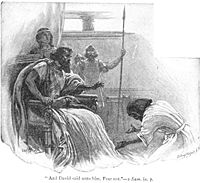
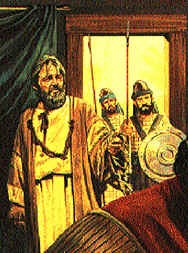
Nathan_confronts_David

Do not let the consequences of your sins make you doubt God’s forgiveness. Sometimes, when we experience the difficult consequences of what we’ve done, or failed to do, it feels like God is still mad us, like maybe we are not forgiven. That’s a trap of the devil. If you have repented in faith, you are forgiven. But sometimes, those consequences remain. The Lord will give you extra grace to face those things also, if you seek him.

To listen to the sermon, click the play button:

To download, right click on the link (or do whatever you do on a Mac) and save it to your computer: Download 2 Samuel Part 13

2 SAMUEL #13. 2 SAMUEL CHAPTER 12

If you are reading this, please pause, and read 2 Samuel chapter 12 first. The message in the text is pretty plain, and I am not going to go over the whole story in detail. So read the chapter, then come back and read the rest of this.

The story at the very beginning of 2 Samuel 12 is a wonderful portion of scripture in many ways. The prophet Nathan tells the story to David. It’s an allegory, or a parable. The beauty of it, is that David hears the story and engages fully with it. He absorbs what happened, and feels very strongly about it. And then, Nathan turns it around and says, “You are the man! The story is about you.”

Besides being a very powerful part of this chapter, I think Nathan’s approach tells us something about the bible. I have said before, and I stand by it, that the whole bible, including the Old Testament, is about Jesus. The first and most important purpose of the bible is to introduce us to Jesus, and to help us get to know him better. So whenever we read any part of the bible, we should ask the Holy Spirit: “Where is Jesus here? Show me Jesus.” But part of getting to know Jesus is also about getting to know the things in our own lives that either help or hurt our relationship with him. So the famous Danish theologian and philosopher, Soren Kierkegaard, told people that when they read the bible, they should say, “this is about me.” And I agree with that, at least in the way that he meant. It is about Jesus first, but in a secondary way, related to that, the bible exposes our own attitudes, thoughts and ways of approaching life. In a way, the bible is to us, what Nathan’s story is to David. We are supposed to read and engage. We should ask “where is Jesus?” But we should also ask, “where I am, here? What does this bible passage tell me about myself, in relationship to Jesus?”

Nathan goes on and catalogues the outrageous sins of David. But I don’t think he needed to. Almost all people have a deeply seated sense of justice. Nathan appealed to that in David through the story, and I think David was convicted as soon as Nathan said, “you are the man.”

13 David responded to Nathan, “I have sinned against the LORD.”

Then Nathan replied to David, “The LORD has taken away your sin; you will not die. 14 However, because you treated the LORD with such contempt in this matter, the son born to you will die.”

Now, the statement “I have sinned against the Lord,” seems a little inadequate, considering what David had done. I would have wanted more. But God knew what was in David’s heart. And we know what was in his heart at this point in time, because immediately after this, David wrote it down. You can find in the bible in Psalm 51. This psalm was written right after Nathan confronted him about Bathsheba. The whole psalm is still today one of the most powerful expressions of repentance every written. Here is just part of it:

1 Be gracious to me, God,

according to Your faithful love;

according to Your abundant compassion,

blot out my rebellion.

2 Wash away my guilt

and cleanse me from my sin.

3 For I am conscious of my rebellion,

and my sin is always before me.

4 Against You — You alone — I have sinned

and done this evil in Your sight.

So You are right when You pass sentence;

You are blameless when You judge.

God knew that David had repented truly in his heart, and so David was forgiven. I want to remind you how huge this forgiveness is, how amazing God’s grace is. Remember that God didn’t send Nathan to confront David about Bathsheba and Uriah until after the child was born. I suspect that prior to committing adultery, David had been drifting away from the Lord. Probably nothing dramatic, but I would guess that as life got easier and more full for him, he focused less and less on God. In time, he drifted far enough to commit the dramatic sins he did: adultery, lying, conspiracy to murder, deceiving others into conspiracy to murder. Then nine more months passed, without him returning to the Lord or repenting on his own. All told, I would guess that it was a least a year – perhaps several – that David was really not at all on track with God.

I think this is important, because the depth and depravity of David’s sin show us the vastness of God’s forgiveness and grace. This wasn’t just a little slip. This was an attitude of lust, murder, lying and self-reliance that continued for some time. God did not forgive David because it was just a little slip up. He forgave him, because you can’t out-sin God’s grace.

If God can forgive David – who spent at least a year turning his back on God, and did such horrible things – he will certainly also forgive us when we repent. Don’t believe the lie that you have fallen too far, or been away from God for too long. His grace is bigger than that.

Now, David was truly forgiven. But his sin resulted in some bad things. When we read this, it sounds like God said, “I forgive you, but I’m still going to punish you.” Here’s where we must interpret the Old Testament in the light of the New Testament. I don’t think it is so much God actively punishing David, as David reaping what he has sowed.

Think of it this way: If you throw a rock and break a window, the owner of the window may forgive you. But the window will still be broken. Because of the window-owner’s forgiveness, you won’t be prosecuted for vandalism. Because of that forgiveness, you won’t have to pay for the window. But forgiveness does not un-break the glass. There will still be a mess to clean up and a gaping hole in the house.

Or suppose I tell my young child not to touch a hot stove. The child does so. Now, she has disobeyed me. She has also burned her hand. Did I burn her hand as a punishment for disobedience? Of course not. The burn was a natural and unavoidable consequence when she chose not to obey me. In fact, the very reason form my commandment “do not touch the stove” was to keep her from suffering any burn. I will certainly forgive her for disobeying me. But that won’t change the fact that she burned her hand.

Remember, David’s greatest failure prior to this was also due to his sin concerning his relationships with women. He had married six wives prior to this (2 Samuel 3:2-5), and in addition, had several concubines, who were, in effect, legalized mistresses. All this was in clear violation of what the Lord had said through Moses (Deuteronomy 17:14-17). I think when Nathan tells David what is going to happen in his family, it is not just about Bathsheba – it is about his whole problem of lust and ignoring God’s word about marriage. When David committed adultery with Bathsheba, it was only another manifestation of what he had been doing already by marrying more than one wife. And so I think the “punishment” here is simply a natural result of what David has done wrong for many years.

There are reasons for what the Lord tells us to do, and to avoid. Very often, he is trying to help us avoid painful consequences.

Now, what about the child dying? How is that a mere consequence of David’s sin? Honestly, I don’t have the answers, I just know Jesus, who does. He doesn’t always share them with us. But I have two thoughts.

First, infant mortality was fairly high in those days. It may be that the child was going to die anyway, and the Lord was simply predicting it, and telling David ahead of time that he wouldn’t change his mind.

Second, in those days it was a very shameful thing to be born as a result of adultery. This is what we call an “illegitimate child.” The other word for such a child is “bastard.” I’m not being crude – that’s what the word means. The fact that even today, that word is a very derogatory and demeaning insult, shows how shameful it was in times past. I’m not saying it makes sense – it is never the child’s fault, of course. But an illegitimate child in those days would have suffered for the sins of his parents all his life. If that child went on to be with Jesus, it was a mercy that he didn’t live long enough to be reviled and cursed and shamed all his life.

Now, I said you can’t out-sin God’s grace. That’s true. I want you to hear that and believe it. You cannot do something that Jesus’ death on the cross did not pay for. But there are two important things to bear in mind, things that are taught by this passage.

First, David was able to receive God’s grace because he admitted he was wrong, admitted his need for forgiveness, and turned away from sin. In short, he repented. You can’t out-sin God’s grace, but God’s grace does you no good if you pretend that you don’t need it. It does you no good if you do not accept God’s judgment upon the evil of your sin, and repent of it. Grace is there and there is plenty of it, but we can only receive it through repentance and faith. I’m not putting it all back on you to repent correctly. But I’m just trying to make sure everyone understands – this isn’t universalism. God offers grace to everyone, but not everyone believes they need it, and not everyone believes he offers it, or that it is sufficient. If someone writes me a check for a million dollars, it doesn’t do me any good unless I

a. Want the money in the first place. This starts with me believing I have a need for it.

b. Believe that the check is valid

c. Put a and b to work by going to the bank and depositing the check.

There is a second thing here. David, when he was confronted with sin, repented. He believed he needed forgiveness. He sought that forgiveness from God, and he received it. He was forgiven. Most of the evidence seems to indicate that after this, he went back to trusting the Lord with all of his heart. Psalm 51 certainly seems to show us that. In addition, when David faces the consequences that Nathan predicts, he remains steadfast in faith, responding like the David of old to trouble and adversity.

So what does all this say to you?

First, read the bible. The bible serves us like Nathan the prophet served David. It shows us God’s perspective on things, it helps us to see things in a new light.

Second, this passage shows us the importance of repentance. Through Jesus, God has done everything needed to restore our relationship with him, and forgive us. But we need to believe we need and to believe he offers it. We need to turn away from our own selfish life, and let our life belong fully to the Lord.

Third, do not let the consequences of your sins make you doubt God’s forgiveness. Sometimes, when we experience the difficult consequences of what we’ve done, or failed to do, it feels like God is still mad us, like maybe we are not forgiven. That’s a trap of the devil. If you have repented in faith, you are forgiven. But sometimes, those consequences remain. The Lord will give you extra grace to face those things also, if you seek him.

Pause right now, and ask the Holy Spirit to speak to you.

David & Bathsheba

davidandbathsheba

Even in this dark time of selfish passion, betrayal, conspiracy and murder, God shows us that he is never far, that his love is constant and always available.


To listen to the sermon, click the play button:


To download, right click on the link (or do whatever you do on a Mac) and save it to your computer: Download 2 Samuel Part 12


2 Samuel #12 . 2 Samuel Chapter 11

Unfortunately for David, this is the second most well-known incident in his life. Most of us know how he killed the giant when he was a boy. And most of us know how he committed adultery as a middle-aged man. Hopefully we have learned there is so much more to him than those two things, but there is no doubt that 2 Samuel chapter 11 records a very dark time in David’s spiritual life.

Since we’ve been going through the book sequentially, we can set in its context. Chapter 10 records a war started by the Ammonites. For perhaps a year, David’s army fought the Arameans – allies of the Ammonites. After they were defeated, David sent his military commander, Joab, after the Ammonites themselves. Many preachers have made a big deal out of the fact that David didn’t go with the army this time. I’m not sure how important that was. He did not go out with them the year before this either, at least, not at first (2 Samuel 10:7 & 17). David was maybe around fifty years old at this point, and it would be natural for campaigns to start to get physically more demanding for him. Not only that, but as king of a growing nation, he certainly had responsibilities other than war. In any case, when the army went off to war, David stayed in Jerusalem. I think the main reason this is significant is because of what happened to Bathsheba’s husband later.

One evening, walking on the roof of the palace, David observes a beautiful woman bathing in a nearby dwelling.

3 So David sent someone to inquire about her, and he reported, “This is Bathsheba, daughter of Eliam and wife of Uriah the Hittite.”

Bathsheba’s identity is interesting. She was the wife of Uriah the Hittite. Uriah was one of David’s “thirty mighty men,” among the most famous and honorable warriors in Israel, part of the faithful band that fought alongside David and did great deeds. “The thirty” (there were actually 31) are listed in 2 Samuel 23 and again in 1 Chronicles 11. Bathsheba is also the daughter of Eliam. That name appears elsewhere only as another one of the thirty. Not all of them survived as long as David, and it seems that perhaps not all of them had been with David since his days in hiding – some might have become part of “the thirty” later on. So the picture we get is that Bathsheba was the daughter of one of David’s elite warriors, probably one from the very beginning. When she grew up, she married another one of that elite band (who may have been considerably younger than both David and her father). She had might have met David when she was a child, but if so, he probably had not seen her since she grew up and got married. In any case, her family life had probably been bound up with David as long as she could remember.

When David finds out who she is, he sends for her. In his own mind, he may have fooled himself into thinking he only wanted to greet her and remember her father with her – we don’t really know. But when she came to the palace, he slept with her.

It’s hard to know what part Bathsheba played in all this. There are some scholars who believe that this was basically rape. He sent for her, and she came and was forced to do his bidding. Certainly, his proposal would have put her in a very difficult position in those days it was a pretty big deal to defy your king. In addition, given her identity, David would have been the bright star in her sky all of her life – both the life of her father and her husband had been intimately bound to him. So she may have been a little star-struck. And there is no doubt that David was the initiator of the sin. It would not have happened without him pursuing it.

But on the other hand, it’s hard to imagine a woman bathing naked (as she probably was) without checking all angles to make sure no one could see her. So she may have let David see her. In addition, there is no record of her protesting. Knowing David, if Bathsheba had reminded him of the right thing to do, as Abigail once had (1 Samuel 25:26-31), it is likely that David would have repented of his intentions and praised her righteousness, as he did in the case of Abigail (1 Samuel 25:32-34). We also know that none of the Old Testament writers, including the one who wrote 2 Samuel, were shy about calling rape what it was (cf. 2 Samuel 13:14). However, that is not what they called this. My conclusion is that they both sinned deliberately, but that David was the one who really made it happen.

Now David compounded the sexual sin with several others, and I want to talk about those things. But I don’t want to gloss over the first sin here. One of the reasons the church is now on the ropes in our culture, barely able to continue to maintain that homosexual behavior is sinful, is that decades ago, we quit publicly emphasizing that sex was made for marriage, and marriage alone. Adultery is a sin. Sex between umarried people is also a sin, according to the bible. The New Testament calls it “porneia.” Old English translations write is “fornication” and newer ones call it “sexual immorality.” In some ways “sexual immorality” is a better translation, because the word really means “any sexual activity that is not between a man and the woman he is married to.”

So “porneia” includes lust, sex before marriage, adultery, homosexual sex and all shades of those things. Jesus said it was evil in Mark 7:21-23. Some of the other verse that condemn porneia as sinful are: Romans 13:3, 1 Corinthians 6:9-18; Galatians 5:19; Ephesians 5:5 and many more. You have heard it here, if nowhere else: the bible teaches that God created sex, and that it is good. Also, and very important, it was created for marriage, and any kind of sex outside of marriage is sinful. You may disagree with that idea, but that is what the Bible actually says. Sex in marriage is good. Sex outside of marriage, in any form, is sinful. So don’t listen to anyone who says David’s main sin was lying, covering up and then the murder. Those were sins too. But the first sin, just as bad as all the rest, was sex with someone he was not married to.

As I pointed out, David didn’t stop there. After the deed was done, Bathsheba sent him word that she was pregnant. Now it wasn’t just a problem of sinning against God, Bathsheba and her husband. It was a problem of other people finding out about it. I think this attitude is very revealing. It is utterly unlike David for most of his life, but in this case, he is far more concerned about what others think than he is about what God thinks. God already knew about the sin, but David didn’t seem worried until he realized that others would find out.

Now, there was something very serious about others finding out. The penalty for adultery in ancient Israel was supposed to be death. Both David and Bathsheba were supposed to be stoned to death, according to the laws of Moses. (Deuteronomy 22:22). So in David’s mind, their own lives were at stake.

Everything that happened after Bathsheba got pregnant was the result of David trying to handle the situation himself, with his own resources. He tried to correct the situation without admitting his guilt or seeking forgiveness.

So his first attempt is essentially to try and undo what he did. He brings Uriah home to be with his wife, so everyone will think the baby is legitimate. It an almost childish effort to make things right. You can picture David thinking (but not saying) “I slept with your wife. But it should have been you, so now you do it.” But unfortunately for everyone, Uriah had apparently taken vows that were common for elite soldiers in those days. Such warriors sometimes pledged to not sleep with their wives until the war was won, and the whole army was home again. This cut back on desertions (because they’d be breaking a vow if they went home and resumed normal relations with their wives), motivated soldiers to fight, and contributed to a sense of camaraderie. Uriah was a man of great integrity, committed to keeping his vows. David even enticed into getting drunk (thus causing him to sin in that way); but even in his drunken state, he would not go home.

Notice the difference here. Uriah knows that if he goes home and sees his wife, he is very likely to give in to temptation. So he doesn’t even go there. David, on the other hand, in a premeditated act, brought the woman into his home. Temptation is easiest to resist on the very front end. If you take a spoonful of ice-cream, it is much harder to resist having a big bowl. It’s easier to refrain if you don’t even taste it.

So David’s first plan didn’t work. Instead of confessing and repenting, he keeps trying to fix it on his own. No doubt, certain thoughts had probably crossed his mind. If only Uriah were killed in battle, then I could marry Bathsheba and the baby would be legitimate. He is a soldier, after all. These things do happen. From that sort of thinking, it isn’t such a stretch to move to actually giving some orders to make that more likely. It was a cruel irony that David trusted Uriah himself to carry the orders for his own death to Joab, the commander of the army.

It is uncertain how much Joab knew. He knew Uriah had been recalled to Jerusalem. So when he got the orders, he probably assumed that Uriah had displeased David in some way, but that David preferred him to die in battle, rather than to dishonor one of the thirty through public execution. Afterwards, of course, Joab had to have figured out what happened. But in this way David tricked Joab into being an accomplice in murder. Joab did as David asked, and put Uriah in a difficult place in the battle, where he was killed. Unfortunately, Uriah didn’t die alone, but other soldiers died alongside him, unnecessarily.

So David committed adultery, got Uriah to sin by becoming drunk, got Joab to sin as an accomplice to murder, and then got Uriah and several others killed to cover it all up. As the final verse of the chapter says:

However, the LORD considered what David had done to be evil. (2 Samuel 11:27)

So, what does all this mean for us today?

One thing, as I have said, is that it is a reminder of God’s standard for sexual morality. It doesn’t matter what the culture says. Sex was made by God, to be celebrated in marriage between one man and one woman. Anything other than that is sin. Period. That really is what the bible says. If you doubt me, look up the verses I referenced earlier, or email me or comment, and I’ll show you even more. As Christians, we need to hold to that standard. Our failure to do so is part of what is wrong with our culture today.

Something else we might get out of this, is a strategy for dealing with temptation. David first looked. Then he investigated. Then he brought Bathsheba closer, and then he sinned. If, as soon as he saw her, he had turned away, perhaps spent some time with one of his many wives, he probably would not have done all the evil that he did. It is easier to resist temptation at the very beginning. Don’t play with the idea of doing something you know is wrong – it will burn you.

There is another thing I noticed here. It is interesting to realize when this happens. It isn’t when David is afraid for his life. It isn’t when people are betraying him, or when after twenty years, he finds himself back in a cave again. No, David’s failure was during time of prosperity and security. We almost always look on struggle as bad and lack of struggle as good. Don’t get me wrong. I’m the same way. I like it when everything is going my way without a bump in the road. But the truth is, times of prosperity and security can be the most dangerous spiritual times of all. Jospeh Excell, a bible commentator of the nineteenth century, said it like this:

“The likelihood is that the great prosperity that was now flowing in upon David in every direction had had an unfavourable effect upon his soul.”

Sometimes, we think the goal is to get to a place where everything is smooth and there are no struggles. But maybe that’s like thinking how safe we would be if only we could get to the very edge of a cliff and sleep there. Physical prosperity and ease are not always good for the soul.

How about this: where is Jesus in this passage? In some ways, that isn’t quite a fair question, because the story is longer than just chapter 11. The whole passage goes on. But we can see Jesus quite clearly here too. However, this time, it isn’t in David. That’s important. David was not the Messiah. God often used him to show the world what the Messiah was like, but God was not dependent upon David alone. In this passage, he shows us Jesus through the good man, Uriah.

Uriah did not do anything wrong. In fact, it was both David and Bathsheba who wronged Uriah. By the law of Moses, they were supposed to die for the sin they committed against him. But instead, he died for them. He did no wrong, even when he was tempted. He was obedient, and carried the orders for his own execution with him. When ordered by Joab, he went into battle, to his death, in order to save those who had sinned against him.

This is exactly what Jesus did for us. We have sinned against God (Romans 3:23). We deserve death and hell as penalty for our sin (Romans 6:23). Jesus came to earth in obedience to the Father, carrying the orders for his own execution(Philippians 2:8). When he was tempted he did no wrong (Hebrews 4:15). And yet Jesus died instead of us, so that we could live eternally (Romans 3:25; 1 Timothy 2:6; John 3:16).

Jesus is constantly calling to us, reminding us who he is, and how much he cares for us. Even in this awful story of betrayal and murder, Jesus is calling to us, saying “See how I love you! See what I was willing to do for you, even in face of the worst evil you could conceive.” No evil can overcome that kind of grace and good. That grace is ours if we simply confess we need it, turn way from our sins, and receive it.

A LIFETIME OF FREE LUNCHES

king's table

David’s counter-intuitive actions show us that the heart of Jesus is to seek out and love the lost and broken — even those who think they are God’s enemies.

To listen to the sermon, click the play button:

To download, right click on the link (or do whatever you do on a Mac) and save it to your computer: Download 2 Samuel Part 10

2 Samuel #10 . 2 Samuel Chapter 9

2 Samuel chapter 9 contains an interesting anecdote about David. I assume that the Lord allowed this to be included in the bible for a reason, so let’s look at it.

2 Samuel 4:4 tells us that Saul’s son Jonathan had a son named Mephibosheth. He was just a little boy of five years old when his father Jonathan was killed in the battle with the Philistines. In the chaos that followed that battle, Mephibosheth’s nurse fled with him, and at some point there was an accident. The text says the nurse fell, presumably with the child in her arms, and Mephibosheth was permanently crippled in both feet.

If you remember, Jonathan was Saul’s firstborn son. Mephibosheth was Jonathan’s only surviving son. That means that he was Saul’s rightful heir. But if you remember, it was Jonathan’s brother, Ish-bosheth, who claimed the throne and fought with David. What this means is that Mephibosheth’s life was probably in danger from his uncle and the war leader, Abner. No doubt, those who took care of him believed he was also in danger from David. So the adults in his life took him into hiding.

The fact that Mephibosheth was even alive was obviously not well known, and his location appears to have been a secret. He had probably lived in fear most of his life, thinking that both his own uncle, and then David, must have wanted him dead. Most civilizations in those days were not kind to people with disabilities, and certainly made no effort to make life easier for them. Especially a man who could not work or fight was considered somehow less of a man. So Mephibosheth was an outcast because his birth made him a threat to others, and he was doubly outcast because he was a cripple. There is little doubt that he spent most of his life hiding in both fear and shame.

Now once David was well-established as king and he had a little time to reflect, he wanted to honor the memory of his dear friend Jonathan. So he began looking for anyone in Saul’s remaining family he could help. His attendants found a man who had been one of the chief servants of Saul’s household, a man named Ziba. David said to Ziba

“Is there anyone left of Saul’s family that I can show the kindness of God to? ”

David’s choice of words here is interesting. If you have been a church-goer for a while, you’ve probably heard a sermon on the Greek word agape, which mean “sacrificial, selfless love.” The Hebrew word David uses for “kindness” is essentially the equivalent of agape. In Hebrew is pronounced “hesed” (but it should sound like you are clearing your throat on the ‘h’). It is often translated “everlasting love,” or “faithful love.” It is usually used to describe God’s love for his people. I think the sense of what David is saying is, “I want to show the family of Saul the faithful love of God.” In a moment I will explain why I think this is so significant.

Ziba reveal the existence and location of Mephibosheth. Ziba is a complex person, and we’ll learn more about him later. I think it is quite possible that he was hoping David was being deceptive, and actually wanted to completely eliminate the entire family of Saul. But Ziba played his cards close to the chest, and simply gave David the information he wanted. So David brought Mephibosheth out of hiding, gave the ancestral lands of Saul, and ordered Ziba and his family to work the land and manage it. This wasn’t entirely a bad deal for Ziba – it was a position of great responsibility and some honor, and they would be able to make a good living. But he may have wanted Saul’s inheritance for himself, because later there is trouble between Ziba and Mephibosheth.

David also gave Mephibosheth a permanent place to eat at the royal table, which was a great honor, and also meant that Mephibosheth would be provided for the rest of his life. Mephibosheth’s reaction is understandable. He says,

“What is your servant that you take an interest in a dead dog like me? ”

These things really happened – they were real historical occurrences. I’ve shared many reasons at various times to believe that the bible is historically reliable. Even so, we need to realize that the writers did not record every single incident in the lives of those they wrote about; and many documents were lost or not included in the bible. As Christians we believe that the Holy Spirit guided the process all the way through. He prompted people to write what they wrote, he allowed the loss of some documents and the exclusion of others. The Holy Spirit had a purpose for including this particular piece of the bible (and in fact, every piece). The writer himself was may have been unaware of that purpose. Jesus told his disciples that the entire Old Testament points to him. I think this is one more place where the Holy Spirit used something from the life of David to show people what the true and ultimate messiah would be like. David’s actions here reveal the heart of Jesus in him. This really happened – it isn’t an allegory. But we can still use it a little bit like a spiritual allegory, and learn about the heart of Jesus from second Samuel nine. Jesus once told the following story:

1 All the tax collectors and sinners were approaching to listen to Him. 2 And the Pharisees and scribes were complaining, “This man welcomes sinners and eats with them! ” 3 So He told them this parable: 4 “What man among you, who has 100 sheep and loses one of them, does not leave the 99 in the open field and go after the lost one until he finds it? 5 When he has found it, he joyfully puts it on his shoulders, 6 and coming home, he calls his friends and neighbors together, saying to them, ‘Rejoice with me, because I have found my lost sheep! ’ 7 I tell you, in the same way, there will be more joy in heaven over one sinner who repents than over 99 righteous people who don’t need repentance (Luke 15:1-8, HCSB)

Jesus’ heart is for the lost and the broken. He has a special tenderness for those who think they are worthless. He doesn’t wait for people to straighten themselves up and come looking for God. Instead, he goes after them, seeks them himself.

David reflected this with Mephibosheth. He didn’t wait for someone in Saul’s family to summon the courage to find him. Instead, David sent people out looking for someone to show God’s faithful love to. This one reason I think that Hebrew word is so important. David wanted to bring God’s faithful love into the life of Mephibosheth. Jesus wants to bring that same love into our lives.

Mephibosheth was afraid of David. Technically he was David’s enemy. As the grandson of Saul, he could have made a claim to Israel’s throne. Most middle-eastern leaders in David’s situation would have found him in order to put him to death. In addition, Mephibosheth felt he was damaged goods – a worthless man who couldn’t work or fight. No self-respecting life-insurance agent would ever write a policy on him, because clearly he was worth more dead than alive. I think when he called himself a dead dog, it wasn’t just an expression. More than likely, he really thought of himself that way.

But the king sought out this worthless “dead dog.” He brought him out of exile. He gave honor to the man who had none. He made others serve him. And he gave him a permanent place at the royal table, making him essentially a prince, a son of the man who by rights should kill him.

Technically, we should be the enemies of Jesus. Because of our ancestors and tragedies in our own life, we belong in the kingdom of the devil. We aren’t worth much in the eyes of the world. And truthfully, a lot of people hide from God in various ways. They completely avoid him, or deny that he exists and spend their days as far from him as possible. Others hide in religion, using empty words and good works as a way to avoid actually dealing with him face to face.

But Jesus doesn’t leave us there. He doesn’t wait for us to come to him. He seeks us, and brings us back from exile. He himself restores us as rightful citizens of his kingdom. He honors us, and declares that we are not worthless, but rather worth his attention and love. Not only that, but he gives us a permanent place with him – eternal life in relationship with him. And he treats us as his own children, inheritors of the promises of God.

David’s treatment of Mephibosheth is a signal for us that this how Jesus will treat us, if we let him. All Mephibosheth had to do is come when David summoned him, and gratefully place his life in David’s hands, allowing David to show him God’s everlasting and gracious love. That’s all we have to do with Jesus. Mephibosheth didn’t have to make himself acceptable to David, or earn what was given him. In fact, Mephibosheth had done nothing to deserve the kindness David showed him. We can’t earn God’s grace and kindness either. But he showers it on us freely if we will come when he calls and trust our lives into his hands.

The Church is NOT a building

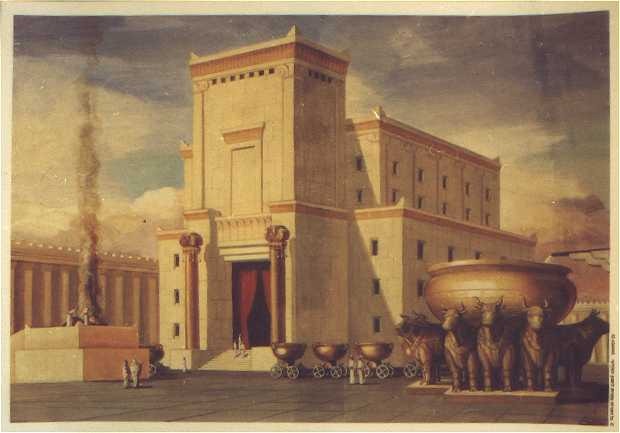
firsttemple

Not a single church building that now exists will remain after Jesus returns. NOT ONE. But every single disciple that we make will be there with us. Let’s not waste time and money building what is after all, a fake church. I mean it. A building is not a church, no matter how many crosses and altars you slap on it. Let’s put our time into building disciples. We do that by walking with God, walking with others and working in the kingdom. Let’s build a real house of God in that way!

To listen to the sermon, click the play button:

To download, right click on the link (or do whatever you do on a Mac) and save it to your computer: Download 2 Samuel Part 7

2 Samuel #7 . 2 Samuel Chapter 7; 1 Chronicles 17

Last time we looked at how the ark of the covenant was brought to Jerusalem. 2 Samuel describes the event with one chapter. However, 1 Chronicles takes three chapters to recount the same thing. What we learn from 1 Chronicles is that David set up various ministries for the priests and Levites: not just the priests who offer sacrifices, but also professional worship musicians and song-writers, full time door-keepers, administrators and so on. There were probably more than 100 full time ministers taking care of the ark and of the tabernacle. But after all, when it was all said and done, the place for all this amazing ministry was just a very old tent.

The tent was put together in the days of Moses, more than four-hundred years before. Israel has a dry climate, but I have to imagine that sometime during four-hundred years, there had been mold. I’m sure there were rips and scuffs, and it is a good guess that there were a lot of patches by this point in time. David talked to Nathan about it. He said, “Look, here I am in a palace – and God lives in a tent.” The implication, not spoken explicitly, is that it is time to build a permanent place of worship. Nathan the prophet said, “Go and do all that is on your heart, for the LORD is with you.”

I want to talk about Nathan’s response here. I understand it pretty well. It is a no-brainer at so many levels. First, Nathan felt (rightly) that David was in tune with the Lord and walking with him. Nathan said, “the Lord is with you.” I’ve said things like that to people. I will say “I know that you are in tune with the Lord – you aren’t just going off your own way. So stay in tune with him, and trust that he will lead you as you do what you feel you are supposed to do.” I don’t say that to everyone, by the way, but David was not just anyone – he was in tune with God. So, when a person who is humbly walking with God feels that she wants to honor God in some particular way, it’s an easy call – God probably put it on her heart. So, in such situations, I usually say, go for it. That’s exactly what Nathan said to David.

Second, David’s intention appeared to be obviously the right thing to do. How can it be right that David lives in a palace, while the place to worship the God of the entire universe is literally an old, moldy, patched tent? God deserves our best, right? How could it ever be a bad thing to build a really nice place of worship? How could it ever be a good thing to have to worship in an old tent? So Nathan answered immediately – before even talking to God about it. I mean some things, are obvious, aren’t they?

Wrong.

God had something in mind much bigger than just a place of worship. He had in mind the transformation of the human race. That transformation has everything to do with the Messiah – the Savior – and nothing at all to do with the building where people worship. And so, contrary to all expectations and common sense, both David and Nathan were wrong.

Now, this topic is one of my “pet subjects,” theologically. Even so, please don’t check out at this point, and say, “Oh that’s just an axe he likes to grind.” I have good biblical and historical reasons for grinding this particular axe. Let me start with this statement: a building accomplishes nothing spiritual. God said to Nathan and David:

Are you to build a house for Me to live in? 6 From the time I brought the Israelites out of Egypt until today I have not lived in a house; instead, I have been moving around with a tent as My dwelling. 7 In all My journeys with all the Israelites, have I ever asked anyone among the tribes of Israel, whom I commanded to shepherd My people Israel: Why haven’t you built Me a house of cedar? ’ (2Sam 7:5-7, HCSB)

A building is completely unnecessary to real church, and often has a negative impact on making disciples. History bears out what I am saying here. Now some of you may argue that later on God did have Solomon build a temple. But the events that followed that only bolster my argument here. Solomon did indeed build a magnificent temple. But listen to what Solomon himself said:

18 “But will God indeed dwell with man on the earth? Behold, heaven and the highest heaven cannot contain you, how much less this house that I have built! (2Chr 6:18, ESV)

Even more important, it was precisely at that point in time – during the time of Solomon and his temple – when the people of Israel began to go astray again and worship other things. The temple did not help in the least, and an argument might be made that it hurt. Solomon’s temple was destroyed four hundred years later, and another was made. Four hundred years after that, king Herod built a third temple to please the Jewish people who were his subjects. It was even more magnificent than Solomon’s temple. Even with these amazing temples, the Jews utterly failed to walk with God. Let me make it very clear – the magnificent temple of the Jews did not help them when it came to actually receiving God’s salvation in Jesus Christ.

Jesus himself found the most receptive hearts far away from the temple – in the outlying areas of Palestine, not in Jerusalem. The temple did not help people recognize who Jesus was. Not only that, but there is something else. Jesus apparently was regular in going to the synagogues. But most of his real ministry and disciple-making took place outside of weekly worship services.

After the time of Jesus, the church worshipped in private homes, in small groups, for almost three hundred years. Even now, that period stands as one of the most effective disciple-making eras in history. After Christianity finally became legal in the Roman empire, Christians began building buildings for their churches. The emergence of this trend of building physical church buildings coincides with the beginning of a long decline in Christianity. In fact, it wasn’t long after this that Europe entered what we call “the dark ages.” We can’t blame all of the problems of the dark ages on church buildings, but it was a period where Christianity was focused on buildings and institutions, and did very little real disciple-making that truly transformed lives.

A building dedicated to worship sometimes has practical value. However, a lot of church buildings are used for only a few hours each week – which doesn’t seem very practical after all. If the bible and history teach us anything about worship-buildings, it is that they often lead believers to live with the wrong focus, and sometimes to entirely miss the point.

I want to be honest here. I think one of the reasons New Joy Fellowship (our church here in Lebanon, TN) has not grown much numerically is because we have not built a church building. I think a lot of folks were up for that – to build something we could look at and see and touch and say “We did that. That’s ours.” I deeply wish that people would be that committed to building a life that belongs entirely to Jesus and to living for his purposes. I think a lot of people who might otherwise come back to our worship after visiting just don’t feel like it is really “church” without a church building. I want to be blunt – this is because they don’t understand what church really is. You see when we have a building, we can divert our attention to religious activity that keeps God at arm’s length. But when there is no building, you are confronted with what it is really about: walking with God, walking in fellowship with each other, and working in God’s kingdom. If you have a building you can “have church” without those things. But if you don’t have a building, and you don’t have those things, you don’t have a church. It’s easier to have a building – you can pretend to be a church without really engaging with Jesus.

I’m not saying it is wrong for churches to build their own buildings to worship in. But I am saying it is unnecessary, and often it slows down spiritual growth and disciple-making.

Let’s see what Jesus said about worshipping in a particular building:

21 Jesus said to her, “Woman, believe me, the hour is coming when neither on this mountain nor in Jerusalem will you worship the Father. 22 You worship what you do not know; we worship what we know, for salvation is from the Jews. 23 But the hour is coming, and is now here, when the true worshipers will worship the Father in spirit and truth, for the Father is seeking such people to worship him. 24 God is spirit, and those who worship him must worship in spirit and truth.” (John 4:21-24)

Jesus essentially says here that worship is not about a place. It is about turning to God in spirit and truth. In fact, that is the kind of worship God is seeking, not people who just want to go to a certain place. God said to David, look, the place of worship for the past four-hundred years has been that moldy tent, wherever it happens to be parked. Why do you suddenly think that isn’t good enough?

So, what does all this do for your relationship with God today? First, I want to encourage you to hold on to the understanding that a real church is a community of people who trust Jesus and walk in fellowship with God, and in fellowship with one another, and allow God to use their lives for his kingdom purposes. It has nothing to do with where, when or in what building they worship.

David and Nathan were both godly men who thought at first that a building for God was important. So don’t feel bad if you have thought that in the past. But understand, God told Nathan and David, “No, it isn’t important. I don’t want a building right now.”

The focus that God wanted (which we will examine more next week) was on his work to bring salvation into the world. He wanted his people receive the Messiah and put their trust in him. That is the focus he wants for us also. Jesus said:

19 Again, I assure you: If two of you on earth agree about any matter that you pray for, it will be done for you by My Father in heaven. 20 For where two or three are gathered together in My name, I am there among them.” (Matt 18:19-20, HCSB)

The word “where” means “whatever place you happen to be in.” The full presence of God, and full authority of heaven is found among God’s people gathered together, not in a building somewhere.

Now, I want to speak directly to New Joy Fellowship and to the people of Life Together Churches for a few moments. It’s easy to say “come help us build a building.” People understand that. It’s a helpful thing to motivate people. It is a simple vision to grasp and it is less threatening than real discipleship.

But I want to challenge you to present new people with a vision to “come help us build disciples.” Think about it this way. Not a single church building that now exists will be there in the New Creation. Not – One. But every single disciple that we make will be there with us. Let’s not waste time and money building what is after all, a fake church. I mean it. A building is not a church, no matter how many crosses and altars you slap on it. Let’s put our time into real church. We can present the vision clearly and simply. We want to make disciples. We do that by walking with God, walking with others and working in the kingdom. Let’s build a real house of God in that way!

Is Jesus Really King?

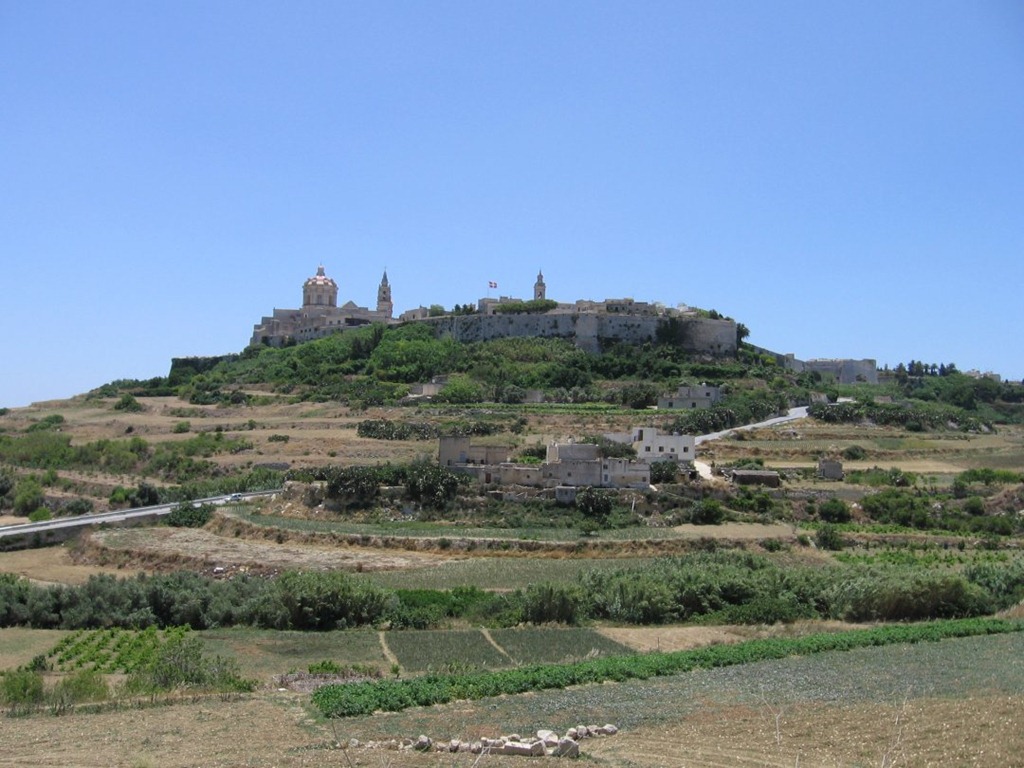
Mt Zion

Christianity isn’t about gritting our teeth and trying to be good. It is about surrendering to Jesus as the king of our lives.

To listen to the sermon, click the play button:

To download, right click on the link (or do whatever you do on a Mac) and save it to your computer: Download 2 Samuel Part 4

2 Samuel #4 . 2 Samuel Chapter 5.

After Abner died, his coalition fell apart, and the leaders of Israel came to David to ask him to become their king. 1 Chronicles 12:23-40 describes this incident in more detail than 2 Samuel 5. (By the way, it appears that the books of Samuel are more chronologically-oriented than 1 Chronicles. Also, the writer of Samuel is far more critical of David than the writer of Chronicles.) In Chronicles, specific leaders and groups of leaders are named, showing that a large number of influential people from all twelve tribes came to make David king. Chronicles records that they feasted and celebrated joyfully.

Back to the text in 2 Samuel. These leaders gave three reasons why they wanted to finally receive David as their king. First, they said, “you are our flesh and blood.” They were saying, “you aren’t a foreigner, that we should fight you – we are all Israelites after all. Judah is part of Israel.” They were recognizing that Saul’s attitude was wrong.

Second, the leaders said to David, “you were the one who used to lead us out to battle, and bring us back safely.” They are remembering his faithful service to Saul, which perhaps David thought had gone forgotten and unrewarded. David had already been their leader in the past, though that service was not officially acknowledged up until now. As a leader, he had accomplished great victories, and brought the troops back more safely that he would have in defeat.

Finally, they were acknowledging that God himself had chosen David to be their king. They were at last submitting to God’s plan for his people. They said: The LORD also said to you, ‘You will shepherd My people Israel and be ruler over Israel.’ ” They are acknowledging at last that God had a call on David’s life, and it was God’s will for him to be their king.

As always, I think it is helpful when we read to the Old Testament, to ask “where is Jesus here? How does this reveal Jesus to me?” Well, Jesus, is the rightful king of every Christian. That is God’s desire for us. He should be the ruler over everything in our lives. But even though David was chosen by God to be the king, he waited patiently until the people accepted that and submitted their lives to him joyfully. Even though the Lordship of Jesus is God’s will for us, we have not all submitted to that. Jesus is waiting patiently for us to submit all areas of our lives joyfully to him. Does Jesus determine how you spend your money? Does he determine how you spend your time or energy? Is it the words of Jesus that you speak to you family and friends and co-workers?

Jesus should be king over our lives for some of the same reasons that Israelites gave for submitting to David. Jesus is fully God, yes, but it is also our flesh and blood – he is fully human, just like us Hebrews 2:14-18 says:

14 Now since the children have flesh and blood in common, Jesus also shared in these, so that through His death He might destroy the one holding the power of death — that is, the Devil — 15 and free those who were held in slavery all their lives by the fear of death. 16 For it is clear that He does not reach out to help angels, but to help Abraham’s offspring. 17 Therefore, He had to be like His brothers in every way, so that He could become a merciful and faithful high priest in service to God, to make propitiation for the sins of the people. 18 For since He Himself was tested and has suffered, He is able to help those who are tested. (Heb 2:14-18, HCSB)

Jesus is our flesh and blood. He belongs to us and we to him. In Jesus, God became more accessible, more understandable, by taking on, forever, human nature. He has a right to be king of humans, because he is a human. He can sympathize with us and understand our struggles.

Second, Jesus is originator and creator of everything. He is our protector and sustainer. He has already helped us, already served us, already kept us safe. He has already suffered and died on our behalf. By virtue of how he has already served us, he deserves to be our Lord.

Finally, it God’s desire that we surrender entirely to Jesus (Philippians 2:9-11). He is the rightful and chosen king of our lives. This is God’s desire – that we allow Jesus to live his life through us, as the owner of our lives. If you feel a little frustrated for David that it took the Israelites so long to accept what God was doing, consider accepting what God wants for your own life!

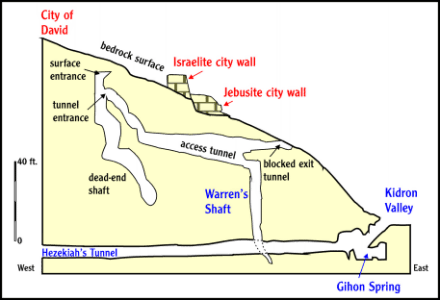
Verses 6-12 of 2 Samuel 5 tells us about Jerusalem. Up until that time, Jerusalem was controlled by a pagan tribe of people known as the Jebusites. They were a sub-tribe of Amorites – one of the non-Israelites tribes that the Israelites were supposed to conquer and drive out. However, there were steep ravines to the south, west and east of Jerusalem, and at the top of the slope, the walls began.

Jebusite Jerusalem Diagram

It was a formidable fortress. The Israelites had defeated several kings of Jerusalem and had burned the city itself once (perhaps before it had walls), but they had never managed to capture it and hold it. Now, with walls, the Jebusites are confident that no one could take it. We should understand that it was much smaller in those days. The Jebusite City of Jerusalem covered only about 12 acres on the very top of the end of the ridge. This area is known as Mount Zion. In the following years, the city spread out greatly, and in modern times, Mt Zion is just one hill in the very large metropolis that is Jerusalem.

In spite of its reputation and history of being impossible to conquer, one of David’s first acts as king of all Israel was to attempt it. David shows here that he is smart and cunning, as well as courageous and strong. Water for the city was collected from the spring of Gihon, which was near the bottom of the Kidron valley, on the east side of the city.

waterway diagram jerusalem

There was a shaft or tunnel that went through the hill down to the spring, so that the Jebusites could get water without going outside the city walls. David learned of this. It is quite possible that he observed Jebusites drawing water there back when he was worshipping God at the tabernacle, when it was kept across the Kidron valley, at Nob (now known as the Mount of Olives). In any case, he determined that the way to take the city was to infiltrate men up the water tunnel. It was a very narrow space, and the men would certainly have had to go one by one, gathering at the top before the assault. That is what David did, with his nephew Joab leading the way and killing the first enemy. By doing that, Joab cemented his position as commander of David’s armies. The city fell without any destruction to the walls, and David made it the new capital of Israel.

These are the actions of a brilliant leader. First, it was terrific military strategy to make use of the water shaft, and attack the Jebusites from within the city. Second, Jerusalem was still an impregnable fortress, an excellent choice for the seat of government in troubled times. Afterward, David built towers covering the entrance to the water shaft, so no one would take the city the same way he had.

Third, it was an extraordinary diplomatic move. David was from the tribe of Judah and up until this time, his capital was a city of Judah. Saul had been from Benjamin, and had made his home town into the center of power. But Jerusalem did not belong to any of the tribes – it was held by the Jebusites. So when David captured it, it became truly an Israelite city. No tribe could claim it, and no tribe would be offended that it was the capital city. It belonged no one, and yet at the same time, to everyone. It was not quite centrally located, but it was close.

By the way, some secular archaeologists dispute the existence of David (they choose to ignore the incredible documentary reliability of the Old Testament). However, a water shaft from the spring of Gihon leading up to Mount Zion was discovered in the 1860s. It doesn’t have David’s name on it, of course, but once more, the Bible told us of it before archeologists discovered it. joab_water_shaft

In the 1980’s archaeologists were convinced that this shaft was dug after the time of David. But more recent work suggests that the water tunnel originally occurred naturally, long before David’s time. It also now appears that it being used by humans before the time David came along.

The point is, the book of Samuel describes things that are actually still there. In a sense you might say that if the bible is right, there should be evidence of a water shaft in that location, and sure enough, there is not only evidence, but the actual tunnel itself.

Now, once more, let’s ask the question: How does this part of the text reveal Jesus to us? What does it say about him, or our relationship with him?

Sometimes we really want Jesus to be king over all our lives, but there are parts our lives that seem like they will never be changed. Maybe you think you will never be able to stop drinking. Some folks struggle with other particular sins that they feel they can never conquer. Perhaps you think, “I am a person who easily gets depressed. That’s just who I am. Nothing is going to change that.” Or, “I’m angry. That’s just my nature, and it’s never going to change.” We might feel like there are parts of our lives that Jesus simply won’t be able to conquer, places where we just can’t let him be king. Maybe you feel like that about some loved one in your life. You think “Jesus can never get into his life.”

The Jebusites thought they were invulnerable. They had an impressive fortress. But one crack, big enough to fit one man at a time, led to their downfall, and then the city belonged to the king. Jesus is a warrior like David. He is wise and cunning like David. If there is just one little crack, one place where you can say “yes” to Jesus, he can exploit it, and use it to conquer the evil in your life. He can get to people that you think are invulnerable to him.

So if you are concerned about someone else in your life, I say trust him. Ask him to do his work on your loved one. And if the problem is in your own life, I say, simply give him a “yes.” Find some way to say “yes, Jesus. I don’t think I can ever give up drinking [or whatever], but I give you permission to try and take over that part of my life.” Watch what he can do if you just give him the tiny crack of your willingness.

So, where you can, welcome Jesus as your king. Surrender your life to him, submit to him. Let it be his life from now on. And where you can’t do that, where there is a fortress around your heart, just give him a tiny crack. Just be willing for him to make the attempt.

How is the Holy Spirit speaking to you today?

TRADING EVIL FOR GOOD

Abner was a corrupt, ambitious politician. But not even a man who gained control of an entire nation through dirty politics can stop God from working. And it turns out that all that selfish evil work was turned into God’s work. We can trust God’s good intentions and his ability to fulfill them, no matter what appearances say.

2 SAMUEL PART 3. CHAPTERS 2-5

To listen to the sermon, click the play button:

To listen to the sermon, click the play button:


To download, right click on the link (or do whatever you do on a Mac) and save it to your computer:
Download 2 Samuel Part 3

Chapters two through five of second Samuel describe the years after David was made king of Judah, but before he became king of all Israel. There is some natural confusion about the time period involved, because the text puts it like this:

Abner son of Ner, commander of Saul’s army, took Saul’s son Ish-bosheth and moved him to Mahanaim.  He made him king over Gilead, Asher, Jezreel, Ephraim, Benjamin — over all Israel. Saul’s son Ish-bosheth was 40 years old when he began his reign over Israel; he ruled for two years. The house of Judah, however, followed David.  The length of time that David was king in Hebron over the house of Judah was seven years and six months. (2Sam 2:8-11, HCSB)

We are going to go into the political history of all this for moment. 3000 year old politics might seem confusing, irrelevant and boring to you. But please bear with me, for a short time, because I think once we understand the politics, we will actually understand better what the Lord wants to say to us today.

Ish-bosheth (try to say that name quickly!) was clearly not king for the entire time of David’s reign over Judah alone. To put it another way, for five of the years that David was king over Judah, the rest of Israel had no king at all. Those five years may have been split between a time before Ish-bosheth’s rule and after. Or they might have come all before-hand, or all after. There is no way to tell for sure, but here is my guess:

After Saul’s death there was a great deal of confusion among the northern tribes of Israel. Many Israelites were now living in subservience to the Philistines, who had conquered a good portion of the country. The others had no leader or central organization to turn to for national identity. Remember, Saul was the very first king of Israel, and just a generation or so before him, the people had no king, no single leader. So when Saul died, and three of his four sons with him, the tribes reverted back to how they had lived before-hand – as a federation of tribes, loosely connected, but without a strong national identity. Some of them may have recalled Samuel’s warnings about having a king – and they had seen that Saul didn’t work out so well. So I suspect that there were several years immediately following Saul’s death without any strong desire or impetus to get another king.

In the meantime, the writer of the book of Samuel says that there was a war between Saul’s family and David’s. The text says that Abner became more and powerful in the family of Saul (3:6). Abner was Saul’s nephew or cousin, depending on how you read the Hebrew. He had also been Saul’s chief war-leader. It looks as though it was mainly Abner and his ambitions who opposed David’s kingship over all Israel. It took him some time to pull all his plans together. David was king for probably five years, while Abner blocked his every attempt to lead the whole nation. Meanwhile Abner himself was making connections, re-establishing a national identity, and finally setting up Saul’s son as the new king, but with himself as the real power-holder.

I think there are several understandable (but not justifiable) reasons for Abner’s actions. As Saul’s chief general, he had been the second most powerful man in Israel. With Saul dead and everything in confusion, all that went away. I think Abner wanted to go back to the way it was. I think he loved the power and position and wealth, and he was trying to regain it. In addition, Abner had been Saul’s right-hand man since the beginning. He was already there when David killed Goliath. So I imagine he had completely internalized Saul’s attitude toward David. Along with that, he may have felt that David was just like him – a great warrior, to be sure, but not a king. They had served Saul together for a short time – who was David to now pretend he was a king? Why did David think he was better than everyone else? He was a warrior, just like Abner, not a king. Finally, remember when Saul was hunting David, and David and his nephew Abishai stole Saul’s spear and water-bottle? Afterwards, they mocked Abner in front of Saul and his men. So there may have been some personal animosity there also, fueling Abner’s ambitions.

At some point, Abner was finally able to get the other Israelites to declare Ish-bosheth king over “all Israel.” But I think realistically, we have to assume that Ish-bosheth was more or less just a figurehead. The real driving force behind the civil war and behind Ish-bosheth’s monarchy, was Abner. In fact, we see this reflected when Ish-bosheth was afraid to argue with Abner (3:11), and because once Abner dies, the whole thing comes apart.

Now, I want to pause for a moment to consider this. It seems to me that Abner was not a very admirable man. Later on, we’ll see that he was completely willing to switch his allegiance to David when he realized that David was going to win. Abner was an unscrupulous political hatchet-man looking only for his own gain and ambition. We have plenty of people like that today. Sometimes modern-day politics drives me crazy, because the people in power seem to get there, and hold onto their power, through blatant dishonesty and corruption and scheming. Sometimes it helps to calm me down to realize that this has been going on for at least three-thousand years, since Abner lived that long ago.

But there is more than that here for us. Abner was a scoundrel. For five years, he carried out his schemes successfully. For two more years, it seemed that he had achieved his ambition. For seven years total, it seemed that he had thwarted David and thwarted God. And yet all the work that Abner did for himself and his selfish ambitions, ended up serving God’s purposes and plans for David.

You see, the nation was fractured after the death of Saul. It was Abner who reunited them. It was he who encouraged them to return to a sense of national identity. It was Abner who got Israel to commit once more to having one king over the whole nation. And once that was done, God handed that united kingdom over to his chosen servant David.

If David had become king right after Saul, he would have inherited a kingdom that was disorganized, disheartened and fractured. He would have had to do the work of rallying the tribes and unifying them. But instead, he simply watched while his enemy did the work for him, and watched while God turned it over to him.

This is incredibly encouraging for me. There are long periods of time in my life where I think that God’s will is being thwarted, or that evil is prevailing, and unscrupulous people are successful. But God knows what he is doing. He will use it all, sooner or later, to accomplish his purposes. Not even a man who gained control of an entire nation through dirty politics can stop God from working. And it turns out that all that selfish evil work was turned into God’s work.

Let’s continue on with the historical events. After Ish-bosheth became king, there was a significant battle between his men and David’s. The location of this battle, and of Ish-bosheth’s headquarters, is telling. The battle took place in the heart of the territory belonging to tribe of Benjamin – the tribe of Saul, Ish-bosheth and Abner. Ish-bosheth’s headquarters were located far to the east, across the Jordan valley. This means that by this point, David’s kingdom of Judah was starting to dominate the surrounding areas.

The rest of chapter 2 describes the battle, beginning with the tragic death of twelve young men from each side. If your response is “that’s horrible,” then you got the message. After the twenty-four young men killed each other, the men of Judah fell upon Abner’s men and crushed them. Abner and his forces flat out ran away.

During the chase David’s nephew Ashael fixes upon Abner. Ashael is the brother of Joab and Abishai, the sons of David’s sister Zeruiah. He probably knows that Abner personally is the main source of this war, and he seems determined to kill him, maybe thinking that he could end the war once for all.

Now, we come to the curious sense of honor that often restrained the brutality of war in those days. Abner saw Ashael pursuing him. He knew who Ashael was, and he warned him off.

 Abner said to him, “Turn to your right or left, seize one of the young soldiers, and take whatever you can get from him.” But Asahel would not stop chasing him.  Once again, Abner warned Asahel, “Stop chasing me. Why should I strike you to the ground? How could I ever look your brother Joab in the face? ”

Nowadays we think in terms of total war. But war in those days was a curious mixture of unimaginable brutality combined with strangely restraining rules of honor. Abner and Joab have just been commanding their men to kill each other in hand to hand combat – the most brutal, personal kind of war there is. And yet, Abner now is extremely reluctant to kill one of the chief leaders of the enemy. However, Ashael would not stop. So finally Abner did. The language seems to indicate that Abner stopped with his spear sticking out, butt-first behind him. His intent was probably to knock the wind out of Ashael, and bruise him to the point where he would stop pursuing him. But Ashael was running so fast that blunt end of the spear pierced him through the body and killed him.

The pursuit continued until Abner rallied his men on a hilltop. He called to Joab to stop, and again, following those curious rules of war, Joab agreed to let them go.

Not long after, Abner had a falling-out with king Ish-bosheth. I think he could see the writing on the wall, and he knew that David was going to prevail. The argument with Ish-bosheth was the final breaking point, and Abner decided to change his allegiance, to gain power in David’s new kingdom. He openly promises Ish-bosheth that he will turn the whole kingdom over to David. Chapter 3, verse 11 shows us that Ish-bosheth was indeed merely a figurehead, while Abner held the real power:

Ish-bosheth could not answer Abner because he was afraid of him. (2Sam 3:11, HCSB)

After this, Abner opened negotiations with David. He came to visit David in Hebron, and he left just before David’s nephew and war-leader, Joab, got back from a trip. Remember, Ashael, whom Abner recently killed in the battle, was Joab’s younger brother. Unknown to David, Joab sent messengers to Abner to bring him back. Abner believed he was there under the agreement of truce and safe passage that David had made with him. So he was taken by surprise when Joab pulled him aside and stabbed him, killing him.

David’s reaction to Abner’s death was just like his reaction to Saul’s death. I don’t think David had any illusions about what kind of man Abner was. He had known him for a long time, and Abner had been trying as hard as Saul to put an end to David. Even so, David refused to treat him like an enemy. Instead, he deplored the actions of Joab. David immediately declared that what Joab had done was wrong, and he prayed for God to repay him for it. He made Joab tear his clothes and mourn for Abner, the man who had killed his brother. He publicly praised Abner, and publicly condemned Joab.

Not long after this, with no Abner there to hold it together, Ish-bosheth was betrayed and killed. The murderers brought David his head, believing that David would be pleased to have his rival dead. But David treated them just as he had the Amalekite who claimed to have killed Saul – he has them executed.

This makes three times in five chapters that David punished people who claimed to have killed his enemies. I think we need to pay attention to it. Saul was clearly David’s enemy – he tried to kill him numerous times. Abner was clearly David’s enemy – he too tried to kill David by way of helping Saul. Later, as we see in these chapters, his own ambitions put him opposed to David. Ish-Bosheth, if not David’s enemy, was clearly opposed to David, and to David’s kingship over Israel.

And yet David mourned each of these men. He reacted strongly and negatively to those who caused their deaths. He was not pleased when they died, and he was not pleased with those who killed them. We have seen that David is man with many faults and failings. But we have also seen that however imperfect, he was a man with a real and living faith in the real and living God.

I think what this tells us is two things about David. First, he had perspective. He could look beyond personal rivalry, jealousy and even personal attacks. In the end, David was never willing to consider another Israelite – one of God’s chosen people – to be his enemy. In fact, when we read these chapters carefully, we find that David himself never participated in these battles against other Israelites. David wasn’t stupid. He knew ambition and fear and hatred when he saw it. But he never took it personally, and he didn’t consider the people themselves to be his enemies.

I think there is another lesson here for us. Sometimes we get caught up in personality conflicts and humans who frustrate or oppose us. But the real enemy are the demonic forces that only use and influence other humans (Ephesians 6:12). Other human beings are not the enemy. Particularly, if we follow the example of David, other Christians may often be misled and used by the devil, but they are never our real enemies.

Second, David always returned to trusting God. I would have been very concerned about Abner and his schemes. I would have been upset that for seven years, Abner succeeded. But David simply trusted God and waited. The ultimate result is that his enemy Abner did a lot of hard work on David’s behalf, and David got to reap the benefits – all for God’s glory.

One final thought. Abner, and to some degree the other Israelites, either resisted or passively ignored God’s choice for king. Ultimately, David still became the king, and it was the best possible thing – even for all the people who did not want him at first. Sometimes we resist God’s Lordship in our lives. It would be better for us than us running things ourselves, but we fight it anyway. It is better for us in the long run to let God have his way.

WHOSE LIFE IS IT?

WalledCity2

…Christianity is above all, a faith rooted in hope for the future. This life offers only partial fulfillment. Nothing makes sense until we allow eternity into our calculations…

…You won’t earn any favors with God by hating or hurting people whom you think are God’s enemies. People do turn away from God and do evil, and God does not want them to do that. But he doesn’t hate them — He grieves over them, as he grieved over Saul…

To listen to the sermon, click the play button:


To download, right click on the link (or do whatever you do on a Mac) and save it to your computer:
Download 2 Samuel Part 1
2 Samuel # 1. Chapters 1 & 2.

We just finished the book of 1 Samuel. However, that book leaves off in the middle of the action, so to speak. It doesn’t tell us what happened to David after Saul died. The reason for this is that originally, First and Second Samuel were one book. The Jews who translated the Old Testament into Greek divided this history into two books. Probably the division arose because Greek uses vowels, where Hebrew does not. This means that the Greek translation is much longer than the original Hebrew. As a result, it had to be put into two separate scrolls – the “first,” and “second.”

For now, we will continue on with the historical record, at least until we get to a reasonable stopping point – so that means we’re jumping into what we call the book of 2 Samuel. Bear in mind as we study it, however that it all part of one work.

Last time I read the lament that David wrote about Saul. But there were a few things which preceded that. David and his men had fought a battle of their own with the Amalekites, who had attacked when everyone else in the region was off to the Israelite-Philistine war. David returned to his burned home. Two days after he got back, a man came from the north, bringing news of the great battle in the valley of Jezreel.

This man got the main news correct – Israel lost the battle, and Saul and Jonathan were killed. But then his story diverges from the one recorded in 1 Samuel 31. The writer does not make editorial comments, but it is clear that whoever wrote it regarded 1 Samuel 31 as the accurate record of events, and the story of this stranger as embellishments and lies.

Jewish tradition holds that the man who came to David with this story was actually the son of Doeg the Edomite, whom they also suppose was Saul’s armor bearer. They think his claim to be an Amalekite was to hide from David the fact that his father was the infamously evil Doeg. There is nothing in the text one way or another to tell us if this is so or not, but it is possible that Doeg was elevated to the status of Saul’s personal armor bearer and guard, after he did him the favor of killing the priests when no one else would. If this man is Doeg’s son (and Doeg was Saul’s armor bearer), it would explain his presence close to Saul, and how was able to take Saul’s crown and escape.

He claims that the Philistine chariots were coming close to Saul. This shows us, the readers, that he is not being completely truthful. He probably said it to try and justify to David why he (allegedly) ended Saul’s life. Chariots were formidable weapons that the Philistines had, and the Israelites did not (at this time). It would be the modern equivalent of tanks closing in on an infantry position. If the chariots were close, then indeed all was certainly lost. However, we know that Saul was on Mount Gilboa, and the messenger even affirms this. There were no roads (the way we think of roads) in those days. Chariots simply did not work well, if at all, on road-less, forested mountainsides. Therefore, it is extremely unlikely that they used chariots on the mountain where Saul died.

David, experienced warrior that he is, probably sensed right then there was something wrong with the story. Even how the messenger begins is quite suspicious: “I happened to be on Mount Gilboa…” He “just happened” to be near king Saul in the middle of a battle? Not likely.

It was clear however, that this man thought claiming to have killed Saul would make him a favorite with David. Whoever he was, he completely misunderstood David. This was because he assumed that deep down, David was not really serious about being the Lord’s man; or perhaps since he was part of Saul’s retinue, he had never heard anyone talk about David’s strong faith. He condemns himself with his lie.

16 And David said to him, “Your blood be on your head, for your own mouth has testified against you, saying, ‘I have killed the LORD’s anointed.’”

David had him executed immediately for the crime of killing Saul. Once again, as harsh as this seems, it is a reflection of David’s humble heart and in a way, a reflection of how the Lord felt about Saul. God is not happy that Saul is dead. Neither is God’s servant. David, by executing this man shows everyone that there is nothing to be gained by lies or treachery or unnecessary bloodshed. If anyone they thought they could ingratiate themselves to David with that kind of behavior, their illusions would be shattered. God didn’t want Saul dead, and neither did David. You won’t earn any favors with God by hating or hurting people whom you think are God’s enemies. People do turn away from God and do evil, and God does not want them to do that. But he doesn’t hate them — He grieves over them, as he grieved over Saul. Saul was destroyed by himself and his own choices, not by God. You can destroy your own life, as Saul did, but the Lord is never out to destroy you.

Now that Saul is dead. David’s reason for staying out of Israel is gone. His main obstacle to becoming king and fulfilling the Lord’s calling has been removed. David knows he was anointed to be the next king of Israel. A large portion of the population knows this also. I think a lot of people at this point would move ahead and “just go for it.”

Not David. The first thing he does is ask God what he should do. He does not assume anything. I think the reason for this is that David wasn’t trying to establish his own kingdom – instead, he was trying to be God’s servant. His attitude is not, “how can I behave so that God can help me?” That’s was Saul’s basic approach to life. But David’s heart is this: “Lord, what do you want to do next?” He did not view God as his assistant in achieving his goals. Instead, he felt that his whole life was God’s own project. His role was to try and assist God, not the other way around. David’s anointing and his destiny were not about David – they were about the Lord. So become king is not David’s idea nor his goal – his goal is to serve the Lord.

As I have pointed out before, David is one of the people in the Old Testament who sheds light on what Jesus is like (that is, David is a “type” of Christ). Jesus expressed this same attitude of being here for the Father’s purposes in John 8:28 and 12:49 (among other places)

28 So Jesus said to them, “When you have lifted up the Son of Man, then you will know that I am he, and that I do nothing on my own authority, but speak just as the Father taught me. (John 8:28, ESV)

49 For I have not spoken on my own authority, but the Father who sent me has himself given me a commandment-what to say and what to speak. (John 12:49, ESV)

This is not complicated, but it is HUGE when it comes to living out our faith practically. It is so easy to fall into the idea that the life of faith is about God helping us each achieve our own destiny. We make this seem good and spiritual, because we assume that our destiny was created by God. And of course, it is. But it isn’t about us. It is about God. However, when we think that it is about us, we inevitably get angry or disappointed with God when he fails to do things for us that we think would bring about our destiny.

Our true destiny is to bring glory and honor and praise to God – not to meet our own personal goals. Achieving that destiny is God’s business from beginning to end. Some people, like David, brought glory to God in very public ways, like becoming a well-known leader. Others do it quietly, like being a loving wife and mother, or praying regularly for others.

Now, I think it would be wrong to assume that David didn’t care either way if he became king. First, he wanted what God wanted, and God did want that. Second, because God wanted to work in this way through him, David was drawn to it. He wanted to lead because he was created for it. So I am sure that David really wanted to become king. Even so, he subordinated his own desires to God, because he understood that it wasn’t really about him. Like Samuel’s mother, he had real desires that he acknowledged, but at the same time, he also surrendered them to God.

This is important, because right after he asked God what to do, David received a partial fulfillment of God’s calling on him. The Lord told David to return to Israel, to the town of Hebron in the territory of Judah. When he did that, the tribe of Judah received him as their king. Judah was one of the largest, most powerful and prestigious tribes. In future generations from David, Judah became its own independent country and most of the Jews living today come from that tribe (that’s why they are called Jews). Even so, being king over just one tribe and about one third of the territory of Israel isn’t exactly what David thought the Lord had planned for him. It is sort of a fulfillment of God’s promise and calling. He is a king. But he isn’t the king of the whole nation.

There is potential here for David to become frustrated. After all, you could not make any argument that Saul was more worthy than David, but even so, Saul’s kingdom was much larger than David’s (during this period of time). Samuel anointed David when David was perhaps fourteen years old. At first it seemed like everything was falling into place. He grew a little, killed the giant and became a famous warrior and trusted member of the king’s court, all while he was very young. But since then, it has been a lot harder. Now, David is thirty years old. Probably fifteen years have gone by since he was anointed to be king. That’s a long time – half of his entire life so far. And now finally he is – one of two kings of Israel. It will be seven more years before he becomes king of all Israel.

This partial fulfillment is also a type of Christ. The kingdom of Jesus Christ has only come in part so far. Jesus reigns over the hearts of those who will let him, but not everything is under his rule, as it will be when this world ends. Speaking of Jesus, Paul writes:

9 For this reason God highly exalted Him and gave Him the name that is above every name, 10 so that at the name of Jesus every knee will bow — of those who are in heaven and on earth and under the earth — 11 and every tongue should confess that Jesus Christ is Lord, to the glory of God the Father. (Phil 2:9-11, HCSB)

But currently, at the name of Jesus, not every knee does bow, not every does worship. There is a part of Jesus’ exaltation and kingship that is still in the future. It is not fully here yet. The writer of Hebrews says:

7 You made him lower than the angels for a short time; You crowned him with glory and honor 8 and subjected everything under his feet. For in subjecting everything to him, He left nothing that is not subject to him. As it is, we do not yet see everything subjected to him. 9 But we do see Jesus — made lower than the angels for a short time so that by God’s grace He might taste death for everyone — crowned with glory and honor because of His suffering in death. (Heb 2:7-9, HCSB) (added italicization)

We do not yet see everything subjected to Jesus.

In the same way, we too wait, having only partially what has been promised us. Paul writes to the Ephesians:

11 We have also received an inheritance in Him, predestined according to the purpose of the One who works out everything in agreement with the decision of His will, 12 so that we who had already put our hope in the Messiah might bring praise to His glory. 13 When you heard the message of truth, the gospel of your salvation, and when you believed in Him, you were also sealed with the promised Holy Spirit. 14 He is the down payment of our inheritance, for the redemption of the possession, to the praise of His glory. (Eph 1:11-14, HCSB)

We haven’t received the whole inheritance yet. We have the Holy Spirit as a down payment­ – we have only part of what has been promised us. This means that Christianity is above all, a faith that is all about hope. We know this world doesn’t fully satisfy. True justice isn’t available here and now. True, unblemished joy is scarce and temporary. True satisfaction, contentment and fulfillment are always elusive. Those who don’t surrender their hearts to Jesus get angry at God because of this. But they aren’t listening. The true fulfillment of God’s love for us and his promises to us comes after this world ends. We don’t have to make the credits outweigh the debits in this life. We don’t have to have everything we have dreamed of before we die. It is still coming. It was still coming for David. It is even now, still coming for Jesus, who is not yet king over everything. And it is still coming for us.

SAUL’S FINAL CHOICE

saul's death

The Lord is constantly there, always waiting for an opportunity to forgive us, be gracious to us and receive us into His Life and Joy. The tragedy of  Saul’s life is that to the bitter end he chose to go his own way instead. The Lord did not rejoice at the death of the self-absorbed, manipulative man. Instead, He grieved.

To listen to the sermon, click the play button:

To download, right click on the link (or do whatever you do on a Mac) and save it to your computer: Download 1 Samuel Part 30

1 Samuel #30. The Death of Saul

1 Samuel ends with the death of king Saul, recorded in chapter 31. While David was returning home, and then pursuing the Amalekites who had destroyed his town and taken his family, the Philistines and the Israelites began a great battle.

As I mentioned before, the Philistines were in the valley of Jezreel, which was the only relatively easy way to get from the Mediterranean coast into the Jordan Valley of Israel. Saul’s forces were on a mountain ridge to the south of the valley, a place called Mount Gilboa. When the Philistines began to move east toward the Jordan, Saul moved to attack them and block them.

The picture below is of the actual area (with present day roads, reservoirs and buildings that would not have been there at the time, of course). The Philistines were invading through the valley in the left of the picture, starting in the foreground and pushing toward the Jordan valley in the distance. The Israelites were positioned on the ridges to the right. The little hill labeled “Tell Jezreel” was probably not there.

clip_image002

The massive Philistine army turned to destroy the Israelites. This was a good strategic move, because if they left them alone on the mountain, the Philistines couldn’t be secure in the valley. It was a rout. Israel’s army fell apart. Jonathan and his brothers were killed. I want us to consider some things in the following verses:

3 When the battle intensified against Saul, the archers caught up with him and severely wounded him. 4 Then Saul said to his armor-bearer, “Draw your sword and run me through with it, or these uncircumcised men will come and run me through and torture me.” But his armor-bearer would not do it because he was terrified. Then Saul took his sword and fell on it. 5 When his armor-bearer saw that Saul was dead, he also fell on his own sword and died with him. 6 So on that day, Saul died together with his three sons, his armor-bearer, and all his men. (1Sam 31:3-6, HCSB)

Verse 3 contains some ambiguous Hebrew expressions. Most English translations make it seem like Saul was severely wounded before he committed suicide. That is certainly one possible way of translating it, and probably a good one. But even so, it is quite possible that Saul was not wounded at all, but only in despair. An almost literal translation would be this:

“The battle became a great burden upon Saul. When the archers came within range of him, he was deeply traumatized.”

The “burden” of battle could be intense physical combat. However, that doesn’t make sense when we learn that the enemy archers have only just come into range. If he was fighting hand to hand, archers would be irrelevant. They would not shoot, for fear of hitting their own men. So Saul was not even involved in actual combat. Therefore the “intensity” of the battle, was purely psychological for Saul.

It says that Saul was deeply traumatized. We already know that the intensity of the battle is psychological for Saul, not physical. “Traumatized” can mean physically wounded of course, and it isn’t wrong to translate it that way. Even so, knowing that what is happening with Saul is already psychological, it is not wrong either to interpret the trauma as emotional distress, rather than a physical wound.

I believe that this is reinforced by his armor-bearer’s response, when Saul asked him to kill him. The armor-bearer would not kill Saul, “because he was terrified,” (verse 4). What was he afraid of? If Saul was mortally wounded, why would the armor bearer be afraid to finish what was inevitable anyway? No, I think Saul’s mood and his words are what scared the armor-bearer.

The night before the battle is when Saul went to the witch of Endor, and consulted with a demonic spirit who masqueraded as Samuel. If you remember, that spirit had spoken only words of condemnation and despair to Saul. Saul accepted this message and believed it as if it was truly Samuel speaking. So, here’s how I think it went down: You have a man who has his entire life been insecure, erratic and manipulative. He is a control freak in a situation where he does not have control. He has recently accepted and believed the words of a demon. He is deeply emotionally troubled by the battle long before it even comes near him. When he sees that the archers are finally in range, he suffers deep psychological trauma – and then takes his own life. In other words, he gave up even before all was truly lost. The words of the demon were a self-fulfilling prophecy, in large part because Saul believed them and acted accordingly.

Now, I want to write about something that most Christians don’t talk much about: Suicide. It’s right there in the text, so I think the Holy Spirit wants to deal with the subject. But before we get into it, let’s get one thing clear. You may have known someone who committed suicide. Sadly, I’ve known several. It doesn’t do anyone any good to wonder whether that person died in faith, or if he went to hell. That’s not the point of what we are about to consider. What’s done is done. I cling to the biblical truth that God is far more gracious and merciful than I can comprehend.

But right now, I want to talk to and about the living. If you are reading this, you are alive, and these words are for you, not for someone who has already died. Don’t waste your wondering how to apply these words to someone else – these are for you, for me, for the living.

Saul’s suicide was clearly an evil, demonically influenced act. It was his lack of faith that prompted him to take his own life. It was his lack of trust in the Lord, combined with the fact that he believed and agreed with demonic words. He acted as he believed. If you are ever tempted to suicide, please understand – you are being tempted by a demonic power. Do not listen to demons. Do not agree with them.

In the 1990’s Dr. Jack Kevorkian became famous for helping 120 people patients commit suicide. It opened up a national debate about a person’s “right” to deliberately take her own life. But G.K. Chesterton has some insightful thoughts about killing oneself. He says:

The man who kills a man, kills a man. The man who kills himself, kills all men; as far as he is concerned, he wipes out the whole world.

His point is clear, but we don’t often think about it. The person who commits suicide does not merely kill herself. From her point of view, she is killing the whole world. Her intentions are as demonic as Hitler’s (who also committed suicide, by the way). Suicide looks at the world and says, “As far as I am concerned, there is nothing worthwhile in the entire universe. I would be just as well off if the whole world is destroyed.” If that doesn’t sound like Satan, I don’t know what does.

It is not a private decision that affects only yourself. It is a cruel and arrogant judgment against the entire world. Sometimes the suicidal person knows this. They are angry at loved ones, and they want to hurt those people as well as themselves. Suicide is not just self-destruction – it destroys everyone who knows you. If that doesn’t sound demonic, I don’t know what does.

Some Christians may say: “Well, I want to get to heaven. I’m tired of the struggles of this world – I want to be in the peace and rest of eternity with Jesus.” But that is so much like Saul’s attitude. Saul always insisted upon his own way. He manipulated, fumed and got depressed and sought help from demons – all to get his own way. Like the ultimate spoiled brat, when he realized that this time there is simply no way it is going to happen, he would rather die. We Christians are supposed to live in trust – not in control. We don’t get to determine how and when we die. To do that is to put yourself the place of God.

Now, Jonathan and his brothers died too. Their result was the same as Saul’s. And yet it was entirely different. They died fighting for their country and for each other. Chesterton writes about such people:

A martyr is a man who cares so much for something outside of him, that he forgets his own personal life. A suicide is a man who cares so little for anything outside him, that he wants to see the last of everything.

He even mentions the battlefield. This is how Jonathan acted, and how Saul should have acted.

A solider surrounded by enemies, if he is to cut his way out, needs to combine a strong desire for living with a strange careless about dying. He must not merely cling to life, for then he will be a coward and will not escape. He must not merely wait for death, for then he will be a suicide and will not escape. He must seek his life in a spirit of furious indifference to it; he must desire life like water and yet drink death like wine.

Jonathan showed courage. Saul showed demonic self-centeredness. I don’t think Saul’s death was the result of God’s judgment. It was the result of a lifetime of Saul’s self-absorbed choices, culminating in the final ultimate act of selfishness. About Saul, you can say for certain, “he chose his own fate.”

Even so, Saul’s story ends with people who loved God mourning for him. I think this is because they were led by the Holy Spirit. God always wanted Saul to turn to Him and trust him. And so after he dies, the Spirit of God moved two groups of people to honor Saul in a special way.

After the battle, the Israelites in the nearby parts of Jordan valley fled. The Philistines took over their towns, among them a town named Beth-Shan, which has been the site of an archeological dig for many years in modern times. They found Saul’s body, cut off his head, and hung the corpse on the wall of Beth-Shan. There is a reason that we call brutal, ignorant cruel people “Philistines,” even today. They did the same with Saul’s sons.

The residents of town further south in the hills on the other side of the Jordan heard about this. That town was Jabesh-Gilead – the place of Saul’s very first battle, the town that had been shamed for centuries, but which Saul had rescued. They remembered how Saul had saved them and finally removed their shame. So they sent a commando-type unit through the night to Beth-Shan. They stole Saul’s body, and those of his sons, from the Philistines, and brought them back to Jabesh-Gilead. They burned the bodies and then buried the bones with honor. It was a bittersweet end to the reign of Saul, coming full circle to the beginning when he was younger, and did trust God. I think their actions were a reflection of the Lord’s sorrow at Saul’s choices. Saul chose his own way, and he suffered the consequences. But I do not believe that was God wanted. He gave the Saul the freedom to choose, and I believe he was sorrowful for what the king chose. The Lord reveals this same attitude in Ezekiel 33:11

11 Tell them: As I live” — the declaration of the Lord GOD — “I take no pleasure in the death of the wicked, but rather that the wicked person should turn from his way and live. Repent, repent of your evil ways! Why will you die, house of Israel? (Ezek 33:11, HCSB)

A second person who reveals this attitude toward Saul is David. Remember, David had the Spirit of God in a way that was special in those days. Often, he is a type of Christ – he reveals the kinds of actions and attitudes that the true Messiah has. And so when he heard of Saul’s death, he wept in sorrow. Because he was human, I’m sure he was more upset about the loss of his friend Jonathan than the death of Saul. But he reveals the heart of God. The Lord was never against Saul. He always wanted him to turn back, repent and receive grace. Inspired by God, David wrote a beautiful lament, recorded in 2 Samuel 1:19-27

19 The splendor of Israel lies slain on your heights.

How the mighty have fallen!

20 Do not tell it in Gath,

don’t announce it in the marketplaces of Ashkelon,

or the daughters of the Philistines will rejoice,

and the daughters of the uncircumcised will gloat.

21 Mountains of Gilboa,

let no dew or rain be on you,

or fields of offerings,

for there the shield of the mighty was defiled —

the shield of Saul, no longer anointed with oil.

22 Jonathan’s bow never retreated,

Saul’s sword never returned unstained,

from the blood of the slain,

from the bodies of the mighty.

23 Saul and Jonathan,

loved and delightful,

they were not parted in life or in death.

They were swifter than eagles, stronger than lions.

24 Daughters of Israel, weep for Saul,

who clothed you in scarlet, with luxurious things,

who decked your garments with gold ornaments.

25 How the mighty have fallen in the thick of battle!

Jonathan lies slain on your heights.

26 I grieve for you, Jonathan, my brother.

You were such a friend to me.

Your love for me was more wonderful

than the love of women.

27 How the mighty have fallen

and the weapons of war have perished!

The greatest tragedy of Saul’s life is that the Lord always loved him, continually reached out to him, never stopped offering his grace – and yet Saul refused it, preferring to try and control things himself. He did not surrender his own will to God. But God’s love and grace and forgiveness were never more than heartbeat away, if only he had turned to receive them. And so when Saul died, the heart of God was to lament his loss.

WELL-GOTTEN GAINS

WadiBesor


David’s undeserved generosity is a picture of the grace of God to us – who do not deserve the goodness God gives us.


To listen to the sermon, click the play button:


To download, right click on the link (or do whatever you do on a Mac) and save it to your computer: Download 1 Samuel Part 29


1 Samuel #29. Chapter 30

Remember last week, we read that David traveled 130 miles or so north with the Philistine army, and then returned. It took them three days on the return trip. That’s a pace of around 40 or more miles per day. Because of events which happened later on, I assume that they had some beasts of burden with them – either donkeys or camels or both (horses were never used widely in ancient Israel). That’s a very fast walk or slow jog for 10 hours (not counting rests) for humans. It is basically the same for either donkeys or camels. Even if they rode the entire way, they were being bounced and swayed for hour upon hour, probably traveling from just before dawn to a little after dark.

It was long distance at an exhausting pace. And when they got home, they found their town burned to the ground, and their wives and children taken for slaves.

Last time we examined David’s reactions in detail. After grieving, and after holding on to the Lord with all his strength, David and his men worshipped, and ask God what he wanted to do.

When he was convinced that God did indeed want him to pursue the Amalekites, David and his men set out again, possibly late on the same day that they arrived home. They came to a place called Wadi Besor. It’s hard to pin down the exact location today, but it was somewhere in what is now southern Israel, probably near Gaza, but further inland. My best guess is that it formed a kind of psychological border between the dry land and the extreme desert. Now remember, they have come from the northern part of Israel (where they were with the Philistines) to the extreme south. Two-hundred of the six-hundred men were too exhausted to continue. These men had traveled a round trip of almost 300 miles in a matter of days, either by foot, or by slow, uncomfortable animals. Exhaustion was nothing to be ashamed of. David left them with some of their provisions, and carried on, lighter and faster.

They encountered a lone Egyptian slave out in the desert, almost dead from hunger, thirst and exposure. David and his men treated him kindly, giving him food and water. As he revived, they asked for information. There is no doubt that they hoped to get good intelligence from him when they stopped to help him, but even so, they helped him before they knew he could help them. This is in stark contrast to how the Amalekites had treated this slave. Though they had plenty of loot, when he took sick, they left him in the desert with nothing.

As it turns out, the Egyptian helped them find the place where the Amalekites had stopped. No doubt they figured both Philistines and Israelites (whom they had raided) were still engaged in battle (as indeed they were). The Amalekites thought they were safe, so they stopped to celebrate their victory, to engage in eating and drinking what they had won, and probably to do worse things with the women they had captured.

David and his men fell upon them like an avenging fury. Four hundred Amalekites escaped, but the rest were killed. That statistic tells you something about the kind of warrior David was, and the men he had with him. The number of Amalekites that escaped was equal to the total number of men that David used in the attack. In other words, the Amalekites outnumbered David’s men considerably. David and his men had traveled several hundred miles in a matter of days, and yet David achieved total victory. It is true that David and some of his men were exceptional warriors. But I think it is impossible to look at this without seeing a miracle of God.

David recovered not only his own family and those of his men, but virtually everything that the Amalekites had taken from them. In addition, they recovered the loot that the Amalekites had taken from the Philistines and other Israelites in their expedition. So they ended up with far more than they had even before Ziklag was destroyed. The end of chapter thirty devotes some time to talking about what happened to all this stuff. There is a reason for that, so we will look at it too.

First, some of David’s men were not inclined to share with those who collapsed in exhaustion at the edge of the desert. David could have gone along with that, and no one would have blamed him. On the other hand, he would also have been within his rights as their leader to rebuke the miserly ones harshly, if he did not like their attitudes. Again, he chooses neither typical reaction. Instead, he speaks as a companion, urging them to do right:

23 But David said, “My brothers, you must not do this with what the LORD has given us. He protected us and handed over to us the raiders who came against us. 24 Who can agree to your proposal? The share of the one who goes into battle is to be the same as the share of the one who remains with the supplies. They will share equally.” (1Sam 30:23-24, HCSB)

His main point is very important. David feels clearly that it was the Lord who gave them the victory; therefore all that they gained from the Amalekites belongs not to them, but to God. It is the Lord’s loot, so to speak. Yes they worked for it. But even so, it was given by God. He says they shouldn’t be selfish “with what the Lord has given us.” David wants to distribute his gains with an understanding that it all came from the Lord.

It was not the fault of the 200 that they were not strong enough. And they did play an important strategic purpose, guarding a portion of their equipment. And it isn’t as if they those 200 had not already shared in many battles and hardships with the others. David would rather err on the side of kindness and generosity. This policy apparently become law when David was king – the ones who guarded the baggage received an equal share with those who fought.

There are two important points in connection with this. First, it shows that David continually placed his trust in God, not in his own strength or the strength of his warriors. In some ways, giving the baggage-guards equal shares would make some people more inclined to stay back and guard in the future. After all, guarding the baggage is safer than fighting the battle, and the pay will now be the same. But David is not worried about weakening his army. He trusts God – he doesn’t have to try and motivate people to help him – he trusts that God will be all the help he needs.

Second, this is where David again shows us a type of Christ. Jesus told a parable about workers in a field in Matthew 20:1-16. The basic point Jesus made is that the person who comes to him at the end of her life will receive the same eternal life as the one who followed Jesus for all her days. This can be seen as offensive. When I work harder than another person, but I get paid the same amount, something in me doesn’t like that – even if I agreed beforehand to work for that amount. But what David’s actions show us is a picture of the grace of God. God’s grace is not fair. If it was fair, no one would be allowed to have it all, and it wouldn’t be grace. No, God graciously gives us what we do not deserve at all – and so here David mirrors that. The bible clearly says that no one has the capacity to be good enough to get to heaven or earn God’s love or favor. But when something concrete like this happens, it forces us to see what that really means.

After everyone has received his own possessions back, plus a share of spoils, there is still more left over. David also uses this extra wealth as if it belongs to God, not to him.

First, he sent a portion to the elders at Bethel (verse 27). This could be the town of Bethel. But in Hebrew “Beth-el” means “house of God.” So far, we don’t know of any special connection between David and the town of Bethel. Considering that, and knowing David’s heart for God, I think that probably the best translation is that David’s first gifts were given to the “house of God” – meaning the tabernacle where the Ark was kept and where all Israel went to worship God.

Next, he sent gifts to a variety of towns and people. I think verse 31 sums up what he was doing. He was giving back “to all the places where David and his men had roamed.” He had depended on the generosity of others for years. Now, as soon as he has the chance, he returns the generosity. I don’t think he is trying to pay them back – I think it is gift of thanks, in honor of God.

Now, what do we do with this?

I have met people before who are proud of what they have accomplished, and who are unwilling to admit that they ever had God’s help with anything. “I’ve worked hard for what I have” is their underlying attitude. But David and his men clearly worked hard for what they gained also. They traveled 300 miles and fought a battle at the end of it. But even so, David receives it not as something he got for himself, but as a gift from God.

I want to encourage all of us to understand that everything we have ultimately comes from God – even if we feel we worked hard for it. A lot of people in this world work harder every day than your toughest day at work, and barely get enough to stay warm and fed. What makes your hard work better than theirs? Nothing, of course.

Now, I am not trying to condemn anyone. The point I want to make however, is that even the opportunity to be rewarded for hard work comes from the Lord. What I want us to understand is that everything that we have has been loaned to us by God, even if we work for it. It is His, not ours. If you aren’t sure about this, just ask yourself – how long do you get to keep what you have worked for? When you die, it isn’t yours anymore. It’s all given to us in trust, for us to use for God’s purposes. So like David, this first thing to do with it, is give some back to His work, and then to bless those we are led to bless, and then yes, to keep some to enjoy for ourselves.

The most important thing for us to understand from 1 Samuel 30, however, is God’s grace. We don’t deserve it. No one does. The men who waited at the edge of the desert simply failed physically. They couldn’t keep up. They didn’t journey as far. They didn’t risk their lives fighting to recover even their own families and goods, let alone the extra goods. Notice that those men did not speak up or argue, because the others were correct. But David spoke up for them, on their behalf. God shows his gracious heart through his servant David.

We have all failed, like those men. We haven’t done what we needed to do to get salvation for ourselves or our loved ones. We don’t have any excuse, or any claim upon the goodness of God. And yet, God gives us what we do not deserve. He blesses us abundantly with his love, his forgiveness, his acceptance, his favor, the material things we need to live, and especially his presence in our lives. I exhort you, receive from Him in faith right now, everything you need physically, spiritually and emotionally.

HOLDING ON


davidcontemplates


When we are faced with trouble we have several options. Maybe we blame and abuse ourselves and slip into self-absorbed despair. Perhaps we blame others and feel better by thinking about that. Maybe we are more positive, and jump and try to control and fix the situation. David did not do any of these things. Instead, he simply held on to God.


To listen to the sermon, click the play button:


To download, right click on the link (or do whatever you do on a Mac) and save it to your computer: Download 1 Samuel Part 28


1 Samuel #28. 1 Samuel Chapter 29. David in Jeopardy (again).

A few weeks ago we observed that though David went to live among the Philistines without consulting God, things seemed to go well for him. But starting this chapter, and culminating in the next two, we will learn why it was a mistake. Remember, though, even though David made this mistake, God was gracious and continued to work for David and through him.

At the beginning of chapter 28, David gets put in a very difficult position. He has deceived king Achish of Gath into believing that he has been attacking Israelites. So when all the Philistines together begin a campaign against the Israelites, Achish invites David along. In fact, it sounds almost like a test of loyalty. He says to David, “you know of course, you and your men must come along with me.” I love David’s answer. “Good. You will find out what I can do.” Notice, he doesn’t say who he is going to do it to. I think David secretly meant, “Good, you’ll find out what kind of warrior I am when I have to fight you.” Achish, believing as he does that David has truly defected to the Philistines, does not catch the possible double meaning. Instead, he feels that David has passed the test of loyalty, and he even offers David to be his lifetime bodyguard. So David is on his way to the war between the Philistines and Israelites – but he is on the wrong side.

Now, I want you to picture how it was for David and his men. David has consistently refused to hurt Saul. They have never attacked fellow Israelites. But now, suddenly, they are marching to war against Saul and the people of Israel, allied with their long-time hated enemies, the Philistines. I can’t imagine that David’s men were happy about this.

They will have two choices. First, they could do what they appear to be doing, which is, to remain allies with the Philistines, and fight on their side during the battle. This could create considerable emotional and spiritual turmoil. They may find themselves facing friends and relatives, and truthfully, they don’t believe in the righteousness of the Philistine cause for war. If they do this, they will be traitors, and Saul, for all his unfair suspicions in the past, will be proved right in the end. If they win, they will have destroyed their country, and no on in Israel would ever accept David as king again. If they lose, they will have destroyed themselves.

Their second choice is to betray the Philistines in the middle of the battle. But that would be problematic for several reasons. First, it shows them as faithless to the Philistines who have treated them fairly kindly for more than a year. Also, if they do that, they will be immediately fighting behind enemy lines, surrounded by the enemy army. Casualties would be very heavy. Another thing is, the Israelites may not understand what David’s men were doing, and if they were able to fight through and link up with Saul’s army, the Israelites might start fighting them anyway. Remember there were no cell phones or radios for them to communicate their intentions to the Israelite army. Finally, Saul’s history shows that even extreme demonstrations of loyalty do not convince him for long. There is no guarantee that turning on the Philistines would actually win Saul’s favor. Saul might even take the battle as an opportunity to kill David, even if he knows that David is helping him.

This is not a good time for David. It is possible that he wrote Psalm 38 at this time (though not certain):


1 O LORD, rebuke me not in your anger,
nor discipline me in your wrath!
2 For your arrows have sunk into me,
and your hand has come down on me.
3 There is no soundness in my flesh
because of your indignation;
there is no health in my bones
because of my sin.
4 For my iniquities have gone over my head;
like a heavy burden, they are too heavy for me.

…..
12 Those who seek my life lay their snares
those who seek my hurt speak of ruin

and meditate treachery all day long.

We don’t know what David would have done – it is not clear in the text. I suspect that he had some vague thought that Saul might be killed in the battle, and then he could rally the Israelites himself. We’ll never know, however, because the Philistines interfered. David was allied with king Achish of Gath. But there were five Philistine kings all together. Each Philistine King ruled over a city and some surrounding territory. When the other four kings saw that Achish had David and 600 Hebrew warriors with him, they objected strenuously. They couldn’t trust him, and so reluctantly, Achish sent David back to the town he had given him, Ziklag. David objects to Achish, and I’m not sure if the objection was genuine, or merely to maintain the deception that he was truly loyal.

In any case, it seems to me that the Lord arranged things to get David out of a very difficult position. David had placed himself there, by deceiving Achish about who he was raiding over the past year. It was his own fault that he was between a rock and hard place. But the Lord extricated him anyway. This is more evidence of God’s incredible, undeserved grace.

So David and his men did not take part in the battle, but traveled home to Ziklag. It took them three days to get back, and when they arrived they received a horrible shock – it was burned to the ground, and all their wives, children and possessions were gone. The Amalekites were very wily. They had seen that the Philistines and Israelites had focused all their attention on one another. So they raided all the through the southern territories of both peoples, finding only defenseless towns and villages, for all the men had gone off to war.

David and his men were devastated at the loss of their families. It says:

4 Then David and the people who were with him raised their voices and wept until they had no more strength to weep. (1Sam 30:4, ESV)

When the grief was over, anger kicked in. But it was chiefly anger against David. His men had fairly good reasons to complain. David had led them to settle with the Philistines in the first place. David had not let them be at peace in Ziklag, but had raided the Amalekites, arousing their ire. David had decided to deceive the Philistines into thinking they were allies. Therefore it was David’s fault that they had marched away with the Philistine armies, leaving their families defenseless. The men talked not just of mutiny, but of stoning David to death. Stoning wasn’t considered murder – it was considered just punishment for gross wrongdoing.

Try and get inside the mind of David for a minute. There is no doubt that he himself had made a mess of things. He didn’t have many good options to start with, with Saul chasing him, and people betraying him, but even so, all his choices of the past 18 months had led to this mess. He had lost his own family. He had lost the families of his faithful men, and all the possessions they had finally been able to accumulate after years of homelessness. Now his men were turning on him.

There were several options for David at that point. He could have said, “yes, go ahead and stone me.” That would have been the response of despair and giving up. He could have been angry. War leaders in those days had a great deal of authority over their men. He was, after all, God’s anointed. He could have rebuked his men, and blamed them for some of what happened. After all, there is no doubt that they had been happier in Ziklag than wandering homeless in the desert. He would have been within his rights to execute the ringleaders of the rebellion. He could have tried to fix the problem himself immediately, trusting in his own strength and wisdom to pull off some kind of miracle.

Instead, it says:

But David strengthened himself in the LORD his God. (1 Samuel 30:6)

The word “strengthened himself” is the Hebrew word transliterated “chazaq.” It means to seize upon, to lay hold of with obstinate persistence. The sense it gives us, is that David focused and fastened his heart, mind, soul and strength on God and God alone, and held on for dear life. He did not immediately try to fix anything or even to defend himself. He just held on to the Lord.

Once more, we see evidence of David’s faith-filled heart. There is no doubt that he has already made some very bad decisions in his life. He is in a mess created by some of those unfortunate choices right now. But his instinct is always to turn back to the Lord. That is the life of faith. It isn’t about performing perfectly, or even performing well. It is about grabbing ahold of the Lord through faith, and holding on for dear life, through good and bad, through the evil brought about by others and the messes brought about by yourself. This, and this alone, is what made David such a great man.

We can see how David’s focus on the Lord brought him back on track. He already knew that the Amalekites were God’s enemies. Clearly, they have already attacked, and this is war. It was certainly David’s right to pursue them and bring them to battle if he could. It would be easy just to assume, and then act. But David, after strengthening himself in the Lord, also humbles himself, assuming nothing, wanting earnestly to hear from God. So before doing anything else, he inquires of the Lord.

Once more, “inquiring of the Lord” most likely involved a sacrifice and a worship service, and possibly even a fellowship meal. It wasn’t a quick thing. But David took the time to worship the Lord, and to lead his men to do the same, before anything else was done.

I want to pause and consider a few things here. I hope David’s life is showing us that perfection is not necessary – only faith is. But think for a moment about your typical response when you are in difficulties. Do you waste time and energy blaming yourself? Do you tend to trust yourself to come up with a solution? Do you want to control the situation and work it out, essentially save yourself? Or maybe your response is depression and despair. You might tend to think the worst will happen to you, so you may as well get resigned to your fate. Perhaps you even blame yourself and accept that you deserve the disaster because you brought it on yourself. Maybe you typically take another approach – you blame others, and get angry at them when things don’t go well. It helps you feel better or more righteous to say it is someone else’s fault.

I think we all tend toward one or more of these things when trouble comes. I want to encourage us, however, to be more like David. He didn’t do any of these. Instead, he fastened his hope and trust on the Lord. Like a bulldog latching on and not letting go, he focused on God with all his soul, heart and strength. All the energy that he might have put into controlling the situation, or blaming others or blaming himself – he put into holding on to the Lord. Don’t put your energy into blame, or self-abuse. Don’t even put your energy into fixing things. Put all your focus into obstinate faith. This is just as true even when you know it is all your own fault.

It is also possible that David wrote Psalm 91 somewhere around this time, either while he strengthened himself in the Lord, or perhaps after his battle with the Amalekites. But whether or not he wrote it, then it is relevant here:

1 He who dwells in the shelter of the Most High; will abide in the shadow of the Almighty.
2 I will say to the LORD, “My refuge and my fortress, my God, in whom I trust.”
3 For he will deliver you from the snare of the fowler; and from the deadly pestilence.
4 He will cover you with his pinions,
and under his wings you will find refuge; his faithfulness is a shield and buckler.
5 You will not fear the terror of the night, nor the arrow that flies by day,
6 nor the pestilence that stalks in darkness, nor the destruction that wastes at noonday.
7 A thousand may fall at your side,
ten thousand at your right hand,
but it will not come near you.
8 You will only look with your eyes
and see the recompense of the wicked.

9 Because you have made the LORD your dwelling place-
the Most High, who is my refuge-
10 no evil shall be allowed to befall you, no plague come near your tent.
11 For he will command his angels concerning you; to guard you in all your ways.
12 On their hands they will bear you up, lest you strike your foot against a stone.
13 You will tread on the lion and the adder; the young lion and the serpent you will trample underfoot.
14 “Because he holds fast to me in love, I will deliver him; I will protect him, because he knows my name.
15 When he calls to me, I will answer him;
I will be with him in trouble;
I will rescue him and honor him.
16 With long life I will satisfy him
and show him my salvation