1 SAMUEL #27: DARING DEEDS BY DAVID

Photo by Belle Co on Pexels.com

Saul had abused his power and mistreated David in several despicable ways. But David’s main complaint was that Saul was cutting him off from worshipping in God’s sanctuary, and from God’s people. Even so, once again David refrained from harming Saul when he had the chance. In this incident David reminds us that we need fellowship with God’s people. He also shows again what Jesus is like: he does not treat us as our sins deserve, but instead showers grace on us unconditionally.

To listen to the sermon, click the play button:

For some people, the player above may not work. If that happens to you, use the link below to either download, or open a player in a new page to listen.

To download, right click on the link (or do whatever you do on a Mac) and save it to your computer: Download 1 Samuel Part 27

1 SAMUEL #27. 1 SAMUEL CHAPTER 26;1-25

Often when I teach through the Bible, I am looking for tightly focused themes and messages in each passage. That works pretty well when we encounter the teaching genre in scripture. But often, when we get to narrative history, I feel like each passage is a box of chocolates: a lot of variety, a few surprises, but all of it is sweet.

I want to point out again David’s precarious situation. He was trying to lead and support 600 men who couldn’t stay in one place. In fact, they couldn’t stay in any civilized place, because the king had declared David an outlaw, under a death sentence. He was dependent upon gifts from friends and strangers. He was also vulnerable to those same people if they chose to betray David and his men. We don’t know for sure how long David lived this way, but it was certainly years – maybe even as long as a decade.

One of the reasons I like to point this out is because many churches and popular preachers seem to suggest that if you have faith in God, everything will always go well for you. By implication, if things do not go well with you, it must be because you don’t have enough faith, or you are not righteous enough. David was an imperfect human being, but he did live in faith. In fact he had a great deal of trust in the Lord, and always repented from his sins, and was willing to humbly learn to do better.

 Even so, for many years, it did NOT go well with David. I just want to make sure that no one reading this ever falls prey to the teaching that if life is tough on you, it is automatically because you don’t have enough faith, or you are a bad Christian or something like that. Sometimes, by our own choices, we do make life harder than it needs to be. But sometimes, life is just hard, for no reason that we can understand. Certainly David had a heart for God and a great deal of integrity, and those did not save him from trouble and hardship.

Also, I want to make sure you don’t believe that you can earn favors from God by being righteous, or saying the right words or having the right kind of faith. We live by God’s grace. If we had to earn God’s favor, no one would ever earn anything good. You don’t understand the gospel if you think you can earn blessings by being righteous, or saying the right things, or having the right kind of faith. David was not the only person in the Bible who had great faith, but a difficult life.

I do want to say, however, that David became the great man he was because of his faith. Sometimes things went very well for him and sometimes they didn’t. But how it was going on the outside was not as important to David as the quality of his relationship with the Lord. And because that relationship was more important to David than anything else, God was able to use him in amazing ways, and also to bless David without David thinking he had earned it.

Wouldn’t it be wonderful to receive all of life as blessing, whether or not it looks that way outwardly? If we could do that, it wouldn’t matter much to us whether circumstances were good or bad. We would always be experiencing life as blessing. David was getting there.

In chapter 26, David was still in a time of outward difficulty. But we will quickly see that things were very good with his heart. Once more, the Ziphites betrayed David – the same people who almost got him killed in chapter 23:19. They knew where David was, and they told Saul to come and get him. As far as we know, Saul had left David alone since the incident when David spared his life in the cave. But the Ziphites basically tempted Saul to sin. Having betrayed David once, this group of people probably thought that if David were not killed, he would take retribution on them if he had the chance, so they may have been quite urgent and persuasive in trying to get Saul to start hunting David again.

Apparently, David could hardly believe it, so he took a few men on a reconnaissance mission to see if Saul had really started hunting him again. One of the men he brought with him was Abishai. Abishai was one of the sons of David’s sister Zeruiah, which made him David’s nephew. Abishai’s brother Joab became the commander of David’s armies later on. If you remember, among David’s men eventually there were “the Three” who became outstanding warriors, and then “the Thirty” who were also an elite force of great fighters among David’s other men. Here is what it says about Abishai elsewhere:

18 Abishai, Joab’s brother and son of Zeruiah, was leader of the Three. He raised his spear against 300 men and killed them, gaining a reputation among the Three. 19 Was he not more honored than the Three? He became their commander even though he did not become one of the Three. (2 Samuel 23:18-19, HCSB)

Now, for those of you who are Bible geeks, like me, you might find a translation that says Abishai was commander of the thirty, rather than the three. In fact, the translators of the ESV couldn’t make up their minds about this, and older editions read like the HCSB (above) and newer editions have Abishai as commander of the thirty, rather than the three. The problem is that while most ancient texts read like the HCSB (quoted above) two well regarded ancient texts have it the other way, and it seems to make a bit more sense the other way – how could he be chief of the three, if he wasn’t one of the three? This is one of those “major issues” in Bible translation, but of course, it isn’t really that important. What is clear, no matter which way is correct, is that Abishai is one of the greatest warriors alive during David’s lifetime.

Since David was the youngest of ten, it is possible that even though he was technically Abishai’s uncle the two of them might have been basically the same age. It is even possible that Abishai was a little older. They might have spent a lot of time together as boys. At this point, they were both probably in their early or mid-twenties, in the prime of physical power and maybe a little inclined to try something crazy.

The two of them decided to sneak into the heart of Saul’s encampment at night. This was the desert, so the soldiers probably did not have tents. The picture seems to be that Saul chose his sleeping spot, and then the whole army arranged themselves around him, with his bodyguard closest to him and the rest spread around them generally. David and Abishai crept through the entire group of three thousand sleeping men and came to Saul sleeping soundly, along with Abner, the chief of Saul’s bodyguard.

This incident appears somewhat similar to the one in chapter 24. Certainly, the result, and the main point (David sparing Saul) is virtually the same. However, other than that, almost every detail is different. Saul didn’t come alone into a cave where David and his men were waiting. Instead David crept with only one companion into the middle of Saul’s camp. This time it wasn’t Saul almost finding David where he was hiding, it was David finding Saul where he was camped openly. Before, David was passive. This time he initiated the action.

I think that it is no coincidence that this second opportunity to harm Saul was given to David after his interactions with Nabal and Abigail. In chapter 24, we have the record of how David was tested in the cave with Saul, and he passed that test. But with Nabal, he failed. He fully intended to take matters into his own hands regarding Nabal, and was saved from sin only by the wisdom of Abigail. Now, once more, he gets the chance to either take matters into his own hands, or trust the Lord.

It is almost as if the Lord was giving David a chance to see if he really had learned his lesson from the incident with Nabal. It isn’t just a test – obviously, God already knew what was in David’s heart. But David may not have been sure of himself. He may have had times where he thought about the incident with Nabal, and condemned himself, and wished he had behaved differently. The Lord was giving him a second chance, a “do-over.” In the Torah, it says all legal issues must be established by at least two witnesses. Now there were two occasions that “witnessed” David’s commitment to not harm Saul, and to not take matters into his own hands. Those incidents were witnessed by both Saul’s men, and David’s followers also.

Abishai however, did not yet have David’s wisdom. He asked permission to kill Saul with Saul’s own spear. By the way, in one of Abishai’s exploits (recorded elsewhere) he killed three hundred men with a spear in one battle, so he knew how to use that weapon. He’s not just boasting when he says one thrust would do it. It would be all over. The good times could begin. The days of wandering homeless, despised by people around them, in danger all the time, could all be ended by one swift spear thrust. As before, it was a powerful temptation. Who could blame David? In Saul’s mind, anyway, they were enemies. It would be an act of war. It wouldn’t even be David who struck the blow.

But David had learned his lesson thoroughly. He said:

10“As the LORD lives, the LORD will certainly strike him down: either his day will come and he will die, or he will go into battle and perish. 11 However, because of the LORD, I will never lift my hand against the LORD’s anointed. Instead, take the spear and the water jug by his head, and let’s go.” (1Sam 26:10-11, HCSB)

He saw the battle with Goliath as the Lord’s fight. So now he sees the struggle with Saul. It isn’t his own fight at all, really – it is God’s business, and David trusted God to take care of it in His own time and in His own way.

As morning broke, from a safe distance, David called and awakened the camp. He showed them the spear and the water jug he had taken from Saul’s side. David was young and strong, and he had accomplished an amazing, bloodless feat of arms. So he teased Abner, Saul’s commander for a moment. I get the feeling he was rejoicing in what he and Abishai just did. Maybe he was “crowing” just a little bit. But then, once again he respectfully confronted Saul with his wrongdoing. Like Abigail did with David, so David now did with his king, Saul. He showed Saul he was wrong; he reminded him of true righteousness in God’s eyes – but he did it all with respect. You might say that similar to Abigail’s attitude toward David, David was submissive to the authority of Saul, but he was not subservient or a doormat.

Review the history of abuse Saul has heaped on David: He refused to honor his promises to the conqueror of Goliath. He didn’t reward him with money for killing Goliath, like he had promised to do. He initially didn’t allow David to marry his daughter (as he had promised). Then he made David pay a bride price for the privilege, even though he had promised that killing Goliath satisfied the bride price. He sent David on the most dangerous missions against the Philistines. He threw a spear at him, twice. He tried to have him killed. Then after David fled, several times Saul pursued him with thousands of warriors, to try and kill him.  Even after David spared his life in the cave, here is Saul again, trying to kill him.

But listen to what David’s biggest complaint about Saul is:

For they have driven me from my home, so I can no longer live among the LORD’s people, and they have said, ‘Go, worship pagan gods.’ 20 Must I die on foreign soil, far from the presence of the LORD? (1 Samuel 26:19-20, NLT)

Saul’s worst offense, in David’s eyes, is that he is cutting him off from the people of God. David can’t go and worship at the sanctuary any more. Remember, things were different before Jesus came. God’s presence was in the sanctuary in a special way, and David was denied access to that. This is his biggest concern.

At the end of the discussion, David showed where his trust is:

23 May the LORD repay every man for his righteousness and his loyalty. I wasn’t willing to lift my hand against the LORD’s anointed, even though the LORD handed you over to me today. 24 Just as I considered your life valuable today, so may the LORD consider my life valuable and rescue me from all trouble.” (1Sam 26:23-24, HCSB)

He didn’t ask Saul to treat him the way he treated Saul. Instead, he declared that he trusted the Lord to treat him with righteousness and love.

Throughout this, Saul seemed to be full of remorse. But he was remorseful last time too, after David spared his life in the cave. David has learned something important from Saul: Remorse is not the same as repentance. Saul let his emotions rage through him uncontrolled. Sometimes he was full of murderous fury; sometimes he was full of regret and sorrow. But the regret and sorrow did not lead to true repentance for Saul – they were just feelings he had sometimes. So, even though Saul invited David to come back with him, David did not do it. Saul was in God’s hands, but David was wise enough not to trust him.

It’s another great story, and I love it just for the daring deeds and passion and trust in God. But what does it mean for us now? What does the Lord want to say to us through this passage today?

When I read this at first, I am tempted to see it as a reason to admire David and Abishai. Here are two deadly warriors who, between just the two of them, can overcome hundreds of enemies at a time. And now, they seem to be showing us that in addition to a capacity for incredible violence on the battlefield, they can move as silently as stalking cats. But verse twelve paints us a different picture. It says that it was the Lord who made this whole incident possible. It was the Lord who made a deep sleep fall on the entire army. It wasn’t the skill of David and Abishai. This was an opportunity given by the Lord.

David shows that withholding violence takes more courage than doing something violent. With one violent act, his troubles could have been over. It was much harder – it was a much greater deed – to leave Saul unharmed. I think we can all learn from that. Jesus told us to turn the other cheek. It takes a lot more courage to do that than to take matters into our hands, and protect ourselves. It takes courage not to reply with harsh words or gossip when someone hurts us. It takes courage to not repay hurt with hurt.

As we read the Old Testament especially, I think it is helpful to ask: “Where is Jesus in this text?” Remember, David is sometimes a “type of Christ.” What this means is that God used David at times to show the world what the real Messiah (Jesus) is like – to people who would never get the chance to know Jesus in their earthly life.

This passage does show us a little bit of what Jesus is like. Like David, Jesus is a mighty warrior, forever in the prime of life, full of bravery and wisdom; ultimately and absolutely victorious over his enemies.

David held back from harming Saul, who, without a doubt, deserved to be harmed by David. In the same way Jesus holds back the punishment that we all richly deserve. Jesus told us to love our enemies, to pay back evil with good. David did that very thing. Jesus forgave the people who were crucifying him, even as they did the deed.

Here’s something else that I think is very significant. David did not know at the time that the Lord was using him to show the world what Jesus was like. He didn’t realize how significant his actions were. But because he lived in trust and obedience, many people in his generation, and for a thousand years after, had some idea of what the Messiah was like.

We don’t always know when someone has a chance to see Jesus through us. We can’t always tell when the Lord is doing that. Very often the opportunity comes when we least feel like it. There was a huge temptation for David to act precisely opposite of how Jesus is. So in the same way, it may be in our toughest moments that God uses us to show Jesus to the world.

The other thing that speaks to me here is David’s strong desire to worship God with other believers, his desire to be counted among all God’s people. I think today in the Western world, we sometimes forget how important this is. Through Jesus, the Holy Spirit lives inside of us, so it’s easy to begin to think we don’t need any other Christians to help us. But David had the Holy Spirit, also, and the Spirit caused him to yearn to be in fellowship with God’s people, and to worship with them. Sometimes the way we do church in the Western world is a bit messed up, and it doesn’t really reflect God’s design for church. I have a friend who has several valid criticisms of Evangelicals in America. But my friend takes it too far. He says that he is “in church” whenever he has coffee with fellow Christians, or goes to a barbeque with them, so he doesn’t need to be part of a local church. That is not what scripture says. It is vitally important for believers to be in real community with other believers, and especially to learn the Bible together, worship and pray together, and together renew Jesus’ covenant with us through the Lord’s Supper (Acts 2:42). David understood how important it was to worship with, and be connected to, God’s people.

What is the Holy Spirit saying to you right now?

THERE’S A NEW MESSIAH IN TOWN…

messiah

Jesus consistently claimed that he should have the first place, and primary authority, in our lives. He did not say, “God loves you, now go do whatever you want, as long as it is loving and kind.” He said, “God loves you. Now, let me own your life in such a way that you are living for my purposes, under my authority.” Like it or not, that is what the statement about the Messiah being the Lord means. Later on, he calls himself “the master” (23:10). Is he your master? Is he not only your savior, but your Lord, your commander in chief? If not I encourage you to repent, and let him be.

To listen to the sermon, click the play button:

To download, right click on the link (or do whatever you do on a Mac) and save it to your computer:
Download Matthew Part 81

Matthew #81.  Matthew 22:41-6; 23:1-12

Starting in the middle of chapter 21, the conflict between Jesus and the religious leaders begins to heat up. We have seen that most of chapter 23 covers a series of ways in which the religious leaders tried to trick Jesus into saying something that would either make him unpopular, or force the authorities to arrest him. They were trying to put Jesus on the defensive.

At the end of the chapter, after answering their malicious questions, Jesus begins firing back.

He starts with a question about the Messiah. His quote is from Psalm 110. The Jews in the time of Jesus most definitely considered this psalm to be a prophecy about the Messiah. In this instance, Jesus has the leaders caught both coming and going.

In the first place, one of the reasons the Pharisees were upset with Jesus is because, starting just a day or two before this, the crowds were calling him “the Son of David,” which was basically the same thing as calling him “Messiah.”

9Then the crowds who went ahead of Him and those who followed kept shouting: Hosanna to the Son of David! He who comes in the name of the Lord is the blessed One! Hosanna in the highest heaven! (Matt 21:9, HCSB)

15When the chief priests and the scribes saw the wonders that He did and the children shouting in the temple complex, “Hosanna to the Son of David! ” they were indignant 16and said to Him, “Do You hear what these children are saying? ” (Matt 21:15-16, HCSB)

(By the way “son,” in this case, is just a metaphorical way of saying “direct descendant.”) By bringing up the question, “Whose son is the Messiah,” Jesus was be reminding the religious leaders of who the people thought he was. But they could not deny what everyone knew about Messianic prophecy, so they reluctantly admit that the Messiah will be called a “Son of David.”

But now, Jesus does something surprising. The crowds have been calling him “Son of David.” He has forced the Pharisees to admit that the Messiah is supposed to be “a Son of David.” Already, Jesus has made his point: He is claiming to be the Messiah. But he doesn’t stop there. He adds something that none of his listeners expect. Using this well-known Messianic Psalm (Psalm 110), he shows that David calls the Messiah “Lord.” In other words, the Messiah is not only the son of David, but also, the Son of God. Jesus is claiming even greater authority than most people at that time would attribute to the Messiah. Even so, the Pharisees cannot dispute what the Psalm says, nor how Jesus interprets it. For the people who heard this dialogue, most of them knowledgeable concerning the Bible, Jesus was saying, clear as could be:

  1. I am the Messiah.
  2. As Messiah, I am the same in nature as God himself.

The thing that drove the religious leaders crazy is that they couldn’t actually dispute his logic. They didn’t believe he was the Son of David, of course, but they didn’t really have any way to argue with him.

Jesus doesn’t stop there. Having established that he is the Messiah and that he has the authority of God, he starts to attack the illegitimate authority of the religious leaders. Even so, he begins by acknowledging that they do have a certain, limited authority. He says they are “seated in the chair of Moses.”

2“The scribes and the Pharisees are seated in the chair of Moses. 3Therefore do whatever they tell you, and observe it. But don’t do what they do, because they don’t practice what they teach. (Matt 23:2-3, HCSB)

I think “the chair of Moses” meant probably one of two things (or possibly, both). First, it appears that in synagogues in those days, there was actually a special chair in which teachers would sit while they taught the scriptures. The word “scribes” in this text is sometimes translated “teachers of the law,” which is basically accurate. So Jesus might be saying, “When they are teaching the scriptures, you should listen to them.” The fact is, for the most part, Jesus agreed with the theology of the Pharisees and scribes. When they taught the scriptures, they were worth listening to, although, obviously, he did not approve of it when they went beyond what the Bible says, and began teaching man-made regulations.

Second, I think that Jesus may have had in mind the following passage from the book of Deuteronomy:

8“If a case is too difficult for you — concerning bloodshed, lawsuits, or assaults — cases disputed at your gates, you must go up to the place the LORD your God chooses. 9You are to go to the Levitical priests and to the judge who presides at that time. Ask, and they will give you a verdict in the case. 10You must abide by the verdict they give you at the place the LORD chooses. Be careful to do exactly as they instruct you. 11You must abide by the instruction they give you and the verdict they announce to you. Do not turn to the right or the left from the decision they declare to you. 12The person who acts arrogantly, refusing to listen either to the priest who stands there serving the LORD your God or to the judge, must die. You must purge the evil from Israel. 13Then all the people will hear about it, be afraid, and no longer behave arrogantly. (Deut 17:8-13, HCSB)

So, Jesus might also be saying that people should abide by the “legal” decisions that were given by the religious leaders, because that was good and proper to do, and was helpful in keeping the peace.

It may be that he meant one or the other of these two things, or possibly, both. If I had to decide, I would guess that Jesus was talking mainly about their religious authority to settle disputes.

Even so, after pointing out that the religious leaders have a certain, limited, legitimate authority, he goes on to show the many ways in which their practice and teaching is not legitimate.

First, he says, they don’t practice what they themselves teach. He will expound on this later in chapter 23. Second, he says they put burdens on people, but won’t help them. This is in stark contrast to Jesus’ own words from Matthew 11:28-30

28“Come to Me, all of you who are weary and burdened, and I will give you rest. 29All of you, take up My yoke and learn from Me, because I am gentle and humble in heart, and you will find rest for yourselves. 30For My yoke is easy and My burden is light.” (Matt 11:28-30, HCSB)

The Pharisees and scribes made following God all about rules and regulations. As if there were not enough difficult things to follow already, they added things. They “explained” the laws of the Old Testament by adding their own rules about what it meant to follow those laws. So, in the example I have used before, “Remember the Sabbath and keep it holy” became a very long list of things you had to do, and refrain from doing. The things on that list were not originally commanded by God; rather they were added by the religious leaders.

In addition to adding their own rules and pretending that they were God’s commands, the religious leaders were all about their own power and position. Jesus says they love to be observed by others.  Verse 5 says they “enlarge their phylacteries.” A phylactery was a little leather box containing portions of scripture. It was a misguided, very literal, fulfillment of Deuteronomy 6:4-9:

4“Listen, Israel: The LORD our God, the LORD is One. 5Love the LORD your God with all your heart, with all your soul, and with all your strength. 6These words that I am giving you today are to be in your heart. 7Repeat them to your children. Talk about them when you sit in your house and when you walk along the road, when you lie down and when you get up. 8Bind them as a sign on your hand and let them be a symbol on your forehead. 9Write them on the doorposts of your house and on your gates. (Deut 6:4-9, HCSB)

So the religious leaders literally created little boxes, put portions of the scripture in them (often verses 4-5, above) and tied them on their heads and arms, and put them on doorposts and gates. In the time of Jesus, some of the leaders were making these boxes (phylacteries) very big and noticeable. Jesus, is probably slyly pointing out that though they make their phylacteries ostentatious, they are not taking seriously the command to let God’s words be in their hearts. The leaders are doing it simply in order to be noticed and praised by people.

The tassels were a similar phenomenon, made to remind the people of Israel of God’s commands. Again, the leaders in Jesus’ time were making very large noticeable tassels to make sure everyone knew that they were really religious.

Jesus also points out how the leaders love the places of honor at banquets, in synagogues, and to be recognized in the marketplace as particularly religious people. He then instructs his own followers to be different. I want us to pay special attention to verses 8-12:

8“But as for you, do not be called ‘Rabbi,’ because you have one Teacher, and you are all brothers. 9Do not call anyone on earth your father, because you have one Father, who is in heaven. 10And do not be called masters either, because you have one Master, the Messiah. 11The greatest among you will be your servant. 12Whoever exalts himself will be humbled, and whoever humbles himself will be exalted. (Matt 23:8-12, HCSB)

In some ways, this statement represents God as a Trinity. The Father, is obviously God the Father, and “Master,” says Jesus, is himself, the Messiah. But the “Teacher” is the Holy Spirit. Consider these words of Jesus, recorded by John:

12“I still have many things to tell you, but you can’t bear them now. 13When the Spirit of truth comes, He will guide you into all the truth. For He will not speak on His own, but He will speak whatever He hears. He will also declare to you what is to come. 14He will glorify Me, because He will take from what is Mine and declare it to you. (John 16:12-14, HCSB)

So Jesus says, you have one teacher, God the Holy Spirit, one Father, God the Father, and one Master, Jesus Messiah, God the Son. Although the Christian doctrine of God as a Trinity is not explicitly spelled out here, clearly, Jesus has it in mind. In addition, his message is plain: leaders do not stand in the place of God.

I want to point something out, before we get to applications. There are many people who believe that the Bible was either written, or at least heavily edited, by church leaders, in order to give themselves power. If that were so, they surely should have removed this passage, because it says that we all should humble ourselves before God, and even that leaders should not take special titles. In particular, since Jesus says no one should be called “father,” you would think that the Roman Catholics, who call their priests “father,” would have removed this verse. This is one of the many, many places where it is obvious that the Bible was not shaped by religious leaders for their own power or benefit.

Now, let’s look at applications. First, I think we need to see that Jesus consistently claimed that he should have the first place, and primary authority, in our lives. He did not say, “God loves you, now go do whatever you want, as long as it is loving and kind.” He said, “God loves you. Now, let me own your life in such a way that you are living for my purposes, under my authority.” That is what the statement about the Messiah being the Lord means. Later on, he calls himself “the master” (23:10). Is he your master? Is he not only your savior, but your Lord, your commander in chief? If not I encourage you to repent, and let him be.

Second, when I see Jesus’ criticisms of the religious leaders, I notice that he does not throw out the baby with the bathwater. In other words, he says, “They do say some things that are good and right. They do have a measure of proper authority.” Too often, I think we tend to judge people and their words and actions with an “all or nothing approach.” Either we accept all of what they say and do, or we reject all of it. Jesus did not do that, even with these leaders for whom he has many harsh words. When the leaders appropriately express the Word of God, Jesus says that his followers should listen. When people exercise authority that is properly given to them, we should obey. Obviously, when people go beyond their proper authority, or teachers go beyond the Word of God, we no longer have to listen and obey. But we should keep in mind that God can use anyone, and just because someone is rude, or mean, or angry, that doesn’t mean that everything he says is completely wrong.

Third, when Jesus refers to the burden that the leaders put on the people, I cannot help but remember his own invitation, which I mentioned earlier, to come to Him and find rest for our souls. In contrast to the religious leaders, He invites us not to do more, but rather to trust more. Is there some area of your life where he is inviting you to trust him, and rest from doing it for yourself?

Finally, in the last few verses, he makes it very clear that God holds all authority, and human beings do not. He invites us all to become humble, and to serve. Is there some place where you have been tempted to “exalt yourself?” Or, perhaps, is Jesus using the text today to encourage and bless you for being humble?

Let the Holy Spirit continue to speak to you about these things.

BUT WAIT…THERE’S MORE!

scroll

At times, we don’t experience the gracious heart of God in daily life, because we insist that God must be gracious in the particular way we want him to

To listen to the sermon, click the play button:


To download, right click on the link (or do whatever you do on a Mac) and save it to your computer:
Download 2 Samuel Part 8
I promised I wouldn’t preach the same sermon yet again, and I won’t. However, I do want to preach this time from the same text as the last sermon. Last time we looked at what this text meant for who we are as Christians, and how we should function as a church. But there is a lot more here to consider as well.

The first thing that struck me when I read this was the safety and freedom there is in living in daily relationship with God. God doesn’t allow our misguided good intentions to go unchecked. Both Nathan and David had their hearts in the right place. They were sincere. Both of them, however, were sincerely wrong. Even so, because they were keeping in step with the Lord, they were able to hear when the Lord corrected them. And the Lord did correct them. He didn’t say, “shoot, they got it wrong again. Oh well.” No, when they didn’t get it right away, he spoke to them again. So we can trust God’s leadership. Picture someone walking with a friend who is blind and using a cane. They come the corner of a street where there is traffic. The friend says quietly, “stop here.” The blind person doesn’t hear it, and keeps walking. Of course the guide is going to repeat himself, more loudly, and maybe even grab onto his blind friend, to prevent him from being hurt. Do we expect any less from God?

Now, one important thing here is that Nathan and David really did want to do whatever God wanted in this situation. They weren’t insisting on their own way. So when they made the wrong choice, they were able to hear the Lord when he spoke to them about it. Unfortunately, sometimes we are like a blind person who says to our guide, “I don’t trust you, so I won’t go where you are taking me.” We ignore Him when he says “turn here,” or “stop there.” Then, sad to say, often we blame God the bad things that result from our unwillingness to listen to him. But when Nathan and David were open, the Lord kept them moving in the right direction, and they were able to hear it.

This is tremendously comforting to me. Sometimes, we get so caught up in wanting to do the right thing that we become almost paralyzed with fear that we will make the wrong choice. We think, “If I screw this up, it will be disaster. I could destroy God’s plan for my life. I could destroy my chance at happiness.” Maybe we’re looking at a job or career move. Maybe we’re buying a house, or choosing a college or deciding what we want to be when we grow up. Maybe we’re trying to decide if we should marry someone or not. Brothers and sisters in Jesus, we can have tremendous freedom, hope and joy in these choices. If we truly want God to do what he wants in and through our lives, then step forward boldly and make your best choice. If you are wrong, the Lord will correct you. We don’t have to be experts at hearing from God. But we have to be open to letting him do whatever he wants. If we maintain that openness, we’ll be able to hear it if we start down a path where he doesn’t want us to go.

The fact that we really can trust the Lord to guide us is wonderfully comforting. It is part of God’s grace. But wait, there’s even more. David, good-hearted man that he was, was thinking like this: “God chose me. He delivered me from Saul. He gave me victory over the Philistines. I have a secure place and even my own palace. God’s done so much for me. Now, I want to do something for God.” So he said, “I will build you a house, God.”

But God said this: “No. I know you want to do something for me. But I want to do more for you. You want to build me a house. Instead, I am going to build you a house.” The word used for “house” is the same all the way through. It is the Hebrew word pronounced “va’yit.” This is a pretty flexible word. It is used for David’s palace, for describing a dwelling and also for family, line of descendants and so on. I think the Lord deliberately inspired the writer to use the same word, in order to emphasize what he was doing. He was piling on the grace.

What God promises is that David will have a descendant who will rule forever. David’s descendant will preside over the kingdom of God. This is a prophecy. Now, I have said before that prophecy is kind of like viewing a mountain range from a long way away. It looks like all the mountains are next to each other in a line across the horizon. But when you actually get into the mountains, you often find a great gap between peaks that looked like they were right next to each other when viewed from a distance. In the same way, it looks like all parts of the prophecy are supposed to take place at the same time; yet when it comes you find that parts of prophecy were fulfilled a few years after, and others hundreds of years later. Here, the prophecy is not a perfect revelation. But it shows that there will be a descendant of David who reigns forever. This descendant will be chastised and punished – just as Jesus was punished for our sins. God will do something eternal through this person. There are a few things here that may refer to Solomon, but clearly, the prophecy is talking mainly about Jesus.

God didn’t just say that David was his favorite choice for king. He didn’t just give him victory over a giant. He didn’t just take care of him in those years of hardship and trouble. He didn’t just protect David during battle and make him victorious – often against overwhelming odds. He didn’t just actually make David king. He didn’t just deliver David from his enemies and give him a secure place to live and rule. He also promised (and delivered generations later) that David’s name and family line would be honored forever. He promised that the messiah would be descended from David. He is showering grace after grace upon David. You can’t out-give God.

David, understandably, was overwhelmed. He went and “sat before Lord.” And then he prayed. David says something very important in verse nineteen that seems to be lost in translation in many English versions of the bible. He says,

What You have done so far was a little thing to You, Lord GOD, for You have also spoken about Your servant’s house in the distant future. And this is a revelation for mankind, Lord GOD. (2Sam 7:19, HCSB)

In the NIV this reads: “Is this your usual way of dealing with man?” In the NAS it says “And this is the custom of man.” But the literal Hebrew says this: “And this the torah mankind, Lord God.”

The Hebrew word “torah” has various related meanings, as many words do. It can mean custom or rule. But the most common meaning is “law of God.” In fact, during the time of Jesus, torah is one of two terms that describe God’s revelation in the Bible. When a Jew said “the torah (law) and the prophets” he meant “the word of God as revealed in the bible.”

So what David is really saying here is also a kind of prophecy. He is saying that this promise of the descendant who will come – this promise of a messiah who will reign forever – is God’s very word for mankind. It is a law and a promise for all humanity. The gospel of John describes the Messiah (Jesus) like this:

In the beginning was the Word, and the Word was with God, and the Word was God. (John 1:1)

And the Word became flesh and dwelt among us (John 1:14)

One thousand years before John, in this text, David said, “this promise of a Messiah is the Word of God.”

In verse 21 David says this:

Because of your promise, and according to your own heart, you have brought about all this greatness, to make your servant know it.

This shows us that the promise is according to God’s own heart. Some translations have “will” but “heart” is more literal. This promise reveals the generous, gracious, loving, wise heart of God.

So let’s make this personal right now. Do you believe that this extreme graciousness is according to the heart of God? Even more personal – do you believe that this great grace is the way that God deals with you?

Let me remind you about David. He lied in a moment of pressure. He blew his top when he was insulted. He ignored what God said about marriage. He was not perfect. God was not gracious to David because David deserved it. David did not deserve it. God was gracious because that is the heart of God.

So set aside any thought of “well, I don’t deserve God to treat me that way.” Of course you don’t. Neither do I. Neither did David. Do you understand and believe that if you let him, God will deal with you in the same way he dealt with David?

I would guess that a lot of us don’t experience God in this way, and sometimes we believe that we cannot. There are reasons for this.

At times, I think we don’t experience the gracious heart of God in day to day life, because we insist that God must be gracious in the particular way we want him to. We want a better income, and so if he doesn’t do that, even though he is offering us tremendous joy through relationships with dear friends, we don’t really receive that grace. We want healing, and so we spurn the grace he offers us to grow and have joy even in pain. We want our spouse to change, and so we don’t want to receive the grace the Lord offers us through that person – just as he is. When we have an attitude of entitlement – “God must provide grace in exactly the way I want it” – it is difficult to really receive.

Jesus was full of sorrow at the way so many people refused the grace he has to offer:

37 “Jerusalem, Jerusalem! She who kills the prophets and stones those who are sent to her. How often I wanted to gather your children together, as a hen gathers her chicks under her wings, yet you were not willing! (Matt 23:37, HCSB)

At other times, we don’t recognize the gracious heart of God because we have allowed lies about God into our lives, especially through difficult events. A child dies. A spouse leaves. And we interpret those events in such a way that we begin to distrust the heart of God. The first problem creeps in when we insist on understanding everything. Why did the child have to die? I’m not saying we can’t ever honestly struggle with our pain, but I do believe that sometimes the answers to those questions are simply bigger than we can understand. When we demand that everything must make sense in a way that we can understand, it is easy to start to believe that God isn’t the good Person that the Bible tells us he is. Don’t get me wrong. If you follow this blog, you know I am an intellectual, and I’m all for using your mind. But the human mind is finite. Trying to understand an infinite God is not logical. At times, faith calls us to trust even beyond our understanding. When we can’t understand, we are faced with a choice – will we trust that God’s heart is good and gracious towards us in ways we can’t comprehend, or will we demand that the universe function according our own personal sense of justice and goodness? This text calls us to trust is that the heart of God is good and full of gracious intentions for us.

The Church is NOT a building

firsttemple

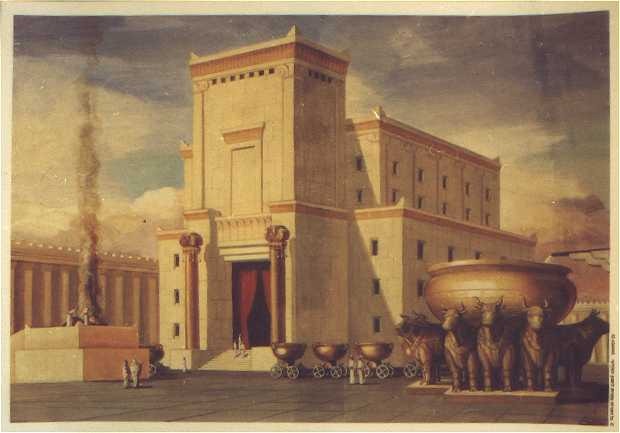
Not a single church building that now exists will remain after Jesus returns. NOT ONE. But every single disciple that we make will be there with us. Let’s not waste time and money building what is after all, a fake church. I mean it. A building is not a church, no matter how many crosses and altars you slap on it. Let’s put our time into building disciples. We do that by walking with God, walking with others and working in the kingdom. Let’s build a real house of God in that way!

To listen to the sermon, click the play button:

To download, right click on the link (or do whatever you do on a Mac) and save it to your computer: Download 2 Samuel Part 7

2 Samuel #7 . 2 Samuel Chapter 7; 1 Chronicles 17

Last time we looked at how the ark of the covenant was brought to Jerusalem. 2 Samuel describes the event with one chapter. However, 1 Chronicles takes three chapters to recount the same thing. What we learn from 1 Chronicles is that David set up various ministries for the priests and Levites: not just the priests who offer sacrifices, but also professional worship musicians and song-writers, full time door-keepers, administrators and so on. There were probably more than 100 full time ministers taking care of the ark and of the tabernacle. But after all, when it was all said and done, the place for all this amazing ministry was just a very old tent.

The tent was put together in the days of Moses, more than four-hundred years before. Israel has a dry climate, but I have to imagine that sometime during four-hundred years, there had been mold. I’m sure there were rips and scuffs, and it is a good guess that there were a lot of patches by this point in time. David talked to Nathan about it. He said, “Look, here I am in a palace – and God lives in a tent.” The implication, not spoken explicitly, is that it is time to build a permanent place of worship. Nathan the prophet said, “Go and do all that is on your heart, for the LORD is with you.”

I want to talk about Nathan’s response here. I understand it pretty well. It is a no-brainer at so many levels. First, Nathan felt (rightly) that David was in tune with the Lord and walking with him. Nathan said, “the Lord is with you.” I’ve said things like that to people. I will say “I know that you are in tune with the Lord – you aren’t just going off your own way. So stay in tune with him, and trust that he will lead you as you do what you feel you are supposed to do.” I don’t say that to everyone, by the way, but David was not just anyone – he was in tune with God. So, when a person who is humbly walking with God feels that she wants to honor God in some particular way, it’s an easy call – God probably put it on her heart. So, in such situations, I usually say, go for it. That’s exactly what Nathan said to David.

Second, David’s intention appeared to be obviously the right thing to do. How can it be right that David lives in a palace, while the place to worship the God of the entire universe is literally an old, moldy, patched tent? God deserves our best, right? How could it ever be a bad thing to build a really nice place of worship? How could it ever be a good thing to have to worship in an old tent? So Nathan answered immediately – before even talking to God about it. I mean some things, are obvious, aren’t they?

Wrong.

God had something in mind much bigger than just a place of worship. He had in mind the transformation of the human race. That transformation has everything to do with the Messiah – the Savior – and nothing at all to do with the building where people worship. And so, contrary to all expectations and common sense, both David and Nathan were wrong.

Now, this topic is one of my “pet subjects,” theologically. Even so, please don’t check out at this point, and say, “Oh that’s just an axe he likes to grind.” I have good biblical and historical reasons for grinding this particular axe. Let me start with this statement: a building accomplishes nothing spiritual. God said to Nathan and David:

Are you to build a house for Me to live in? 6 From the time I brought the Israelites out of Egypt until today I have not lived in a house; instead, I have been moving around with a tent as My dwelling. 7 In all My journeys with all the Israelites, have I ever asked anyone among the tribes of Israel, whom I commanded to shepherd My people Israel: Why haven’t you built Me a house of cedar? ’ (2Sam 7:5-7, HCSB)

A building is completely unnecessary to real church, and often has a negative impact on making disciples. History bears out what I am saying here. Now some of you may argue that later on God did have Solomon build a temple. But the events that followed that only bolster my argument here. Solomon did indeed build a magnificent temple. But listen to what Solomon himself said:

18 “But will God indeed dwell with man on the earth? Behold, heaven and the highest heaven cannot contain you, how much less this house that I have built! (2Chr 6:18, ESV)

Even more important, it was precisely at that point in time – during the time of Solomon and his temple – when the people of Israel began to go astray again and worship other things. The temple did not help in the least, and an argument might be made that it hurt. Solomon’s temple was destroyed four hundred years later, and another was made. Four hundred years after that, king Herod built a third temple to please the Jewish people who were his subjects. It was even more magnificent than Solomon’s temple. Even with these amazing temples, the Jews utterly failed to walk with God. Let me make it very clear – the magnificent temple of the Jews did not help them when it came to actually receiving God’s salvation in Jesus Christ.

Jesus himself found the most receptive hearts far away from the temple – in the outlying areas of Palestine, not in Jerusalem. The temple did not help people recognize who Jesus was. Not only that, but there is something else. Jesus apparently was regular in going to the synagogues. But most of his real ministry and disciple-making took place outside of weekly worship services.

After the time of Jesus, the church worshipped in private homes, in small groups, for almost three hundred years. Even now, that period stands as one of the most effective disciple-making eras in history. After Christianity finally became legal in the Roman empire, Christians began building buildings for their churches. The emergence of this trend of building physical church buildings coincides with the beginning of a long decline in Christianity. In fact, it wasn’t long after this that Europe entered what we call “the dark ages.” We can’t blame all of the problems of the dark ages on church buildings, but it was a period where Christianity was focused on buildings and institutions, and did very little real disciple-making that truly transformed lives.

A building dedicated to worship sometimes has practical value. However, a lot of church buildings are used for only a few hours each week – which doesn’t seem very practical after all. If the bible and history teach us anything about worship-buildings, it is that they often lead believers to live with the wrong focus, and sometimes to entirely miss the point.

I want to be honest here. I think one of the reasons New Joy Fellowship (our church here in Lebanon, TN) has not grown much numerically is because we have not built a church building. I think a lot of folks were up for that – to build something we could look at and see and touch and say “We did that. That’s ours.” I deeply wish that people would be that committed to building a life that belongs entirely to Jesus and to living for his purposes. I think a lot of people who might otherwise come back to our worship after visiting just don’t feel like it is really “church” without a church building. I want to be blunt – this is because they don’t understand what church really is. You see when we have a building, we can divert our attention to religious activity that keeps God at arm’s length. But when there is no building, you are confronted with what it is really about: walking with God, walking in fellowship with each other, and working in God’s kingdom. If you have a building you can “have church” without those things. But if you don’t have a building, and you don’t have those things, you don’t have a church. It’s easier to have a building – you can pretend to be a church without really engaging with Jesus.

I’m not saying it is wrong for churches to build their own buildings to worship in. But I am saying it is unnecessary, and often it slows down spiritual growth and disciple-making.

Let’s see what Jesus said about worshipping in a particular building:

21 Jesus said to her, “Woman, believe me, the hour is coming when neither on this mountain nor in Jerusalem will you worship the Father. 22 You worship what you do not know; we worship what we know, for salvation is from the Jews. 23 But the hour is coming, and is now here, when the true worshipers will worship the Father in spirit and truth, for the Father is seeking such people to worship him. 24 God is spirit, and those who worship him must worship in spirit and truth.” (John 4:21-24)

Jesus essentially says here that worship is not about a place. It is about turning to God in spirit and truth. In fact, that is the kind of worship God is seeking, not people who just want to go to a certain place. God said to David, look, the place of worship for the past four-hundred years has been that moldy tent, wherever it happens to be parked. Why do you suddenly think that isn’t good enough?

So, what does all this do for your relationship with God today? First, I want to encourage you to hold on to the understanding that a real church is a community of people who trust Jesus and walk in fellowship with God, and in fellowship with one another, and allow God to use their lives for his kingdom purposes. It has nothing to do with where, when or in what building they worship.

David and Nathan were both godly men who thought at first that a building for God was important. So don’t feel bad if you have thought that in the past. But understand, God told Nathan and David, “No, it isn’t important. I don’t want a building right now.”

The focus that God wanted (which we will examine more next week) was on his work to bring salvation into the world. He wanted his people receive the Messiah and put their trust in him. That is the focus he wants for us also. Jesus said:

19 Again, I assure you: If two of you on earth agree about any matter that you pray for, it will be done for you by My Father in heaven. 20 For where two or three are gathered together in My name, I am there among them.” (Matt 18:19-20, HCSB)

The word “where” means “whatever place you happen to be in.” The full presence of God, and full authority of heaven is found among God’s people gathered together, not in a building somewhere.

Now, I want to speak directly to New Joy Fellowship and to the people of Life Together Churches for a few moments. It’s easy to say “come help us build a building.” People understand that. It’s a helpful thing to motivate people. It is a simple vision to grasp and it is less threatening than real discipleship.

But I want to challenge you to present new people with a vision to “come help us build disciples.” Think about it this way. Not a single church building that now exists will be there in the New Creation. Not – One. But every single disciple that we make will be there with us. Let’s not waste time and money building what is after all, a fake church. I mean it. A building is not a church, no matter how many crosses and altars you slap on it. Let’s put our time into real church. We can present the vision clearly and simply. We want to make disciples. We do that by walking with God, walking with others and working in the kingdom. Let’s build a real house of God in that way!