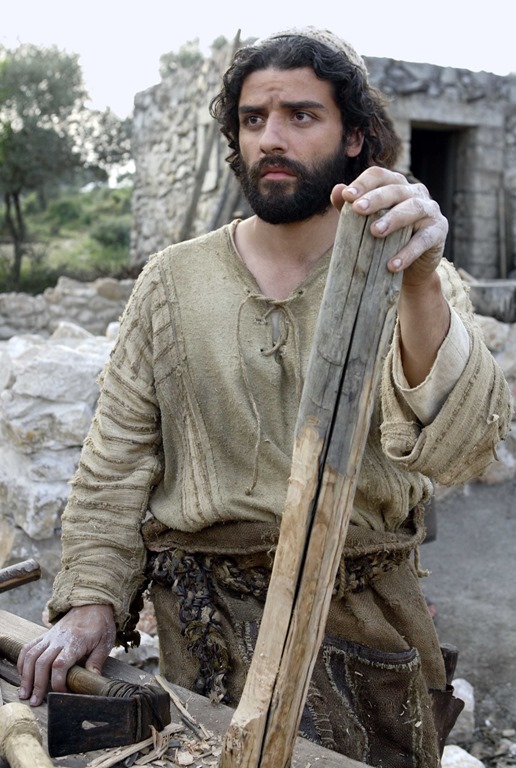
2025 ADVENT WEEK 4: ALMOST THERE

Photo by Adi K on Pexels.com

This is the final advent sermon of Wade Jones, friend to me (Tom) and to the Life Together Churches network.

We are almost there. And it is appropriate in this Advent season to take that expression several different ways. We are almost to that moment when we celebrate the birth of the Incarnate God in Jesus the Messiah. We are almost to that moment when He breaks into our lives to win a decisive victory. We are almost to that moment when He makes all creation new and right under His complete authority and the new life begins in all its fullness. We are almost there…but we are not there yet. And God uses this Advent season so richly in my life, and in our lives, to help us experience the tension that comes from living in a space where the light is always just beginning to dawn. The sun has not risen yet, but He is about to rise. And as certain as we are of the dawn that is coming, as much as we are able to see by the glow that is beginning to give light, we still live in a world with shadows and dimness. As the Apostle Paul says in First Corinthians 13:12, “For now we see in a mirror, dimly, but then face to face.”

As I write this, Tom and Kari’s daughter Elise is back in the hospital, and she is struggling. By the time you read and discuss this, she may be back home and doing much better. That’s what I am praying for. We know that eventually she will be fully healed. That’s where our hope ultimately lives. But in the dimness now, we don’t know what the next days, weeks, and months hold. What a strange thing it is to live in the timelines of God, where our state a thousand years from now is in some ways more certain than our state tomorrow. And that is where we are. We wait for God to finish forever what He has begun in Jesus.

Once again, it is good to be with you at New Joy Fellowship and the other churches in Tom’s network. I am Wade Jones, a pastor at Priest Lake Christian Fellowship and part of the Hilperts’ extended family. And today we will engage the last Sunday of Advent together. It’s interesting to me the way I have bounced around the gospel of Matthew in this Advent season – beginning in chapter 24, then going back to chapter 3, forward again to chapter 11, and now, as Advent draws to a close, we go to almost the beginning of the gospel. We are going to skip reading the genealogy part, although there is much to learn from it. In fact, the Swiss reformer Zwingli said, “The Genealogy of Jesus, if understood correctly, contains the essential theology or the main message of the Reformation.” I won’t get into all that today, but I will point out that Matthew is grounding today’s passage in the history of Israel, beginning with Abraham, the father of the nation, going through David, the great king, to the lesser-known figures after the return from exile, and finally bringing us to Joseph, who is the husband of Mary, the mother of Jesus the Messiah.

For Matthew, it is critical to situate the life and work of Jesus firmly in the history of God’s work through His people Israel. Jesus is not some sudden departure from what God has been doing for centuries; rather, He is the culmination of all that God has been doing from the very beginning.  We will talk about some of that as we go through this passage today. Let’s go to the text now. I am going to read from the Gospel of Matthew 1:18-25.

18 The birth of Jesus Christ came about this way: After His mother Mary had been engaged to Joseph, it was discovered before they came together that she was pregnant by the Holy Spirit. 19 So her husband Joseph, being a righteous man, and not wanting to disgrace her publicly, decided to divorce her secretly.

20 But after he had considered these things, an angel of the Lord suddenly appeared to him in a dream, saying, “Joseph, son of David, don’t be afraid to take Mary as your wife, because what has been conceived in her is by the Holy Spirit. 21 She will give birth to a son, and you are to name Him Jesus, because He will save His people from their sins.”

22 Now all this took place to fulfill what was spoken by the Lord through the prophet:

23 See, the virgin will become pregnant
and give birth to a son,
and they will name Him Immanuel,

which is translated “God is with us.”

24 When Joseph got up from sleeping, he did as the Lord’s angel had commanded him. He married her 25 but did not know her intimately until she gave birth to a son. And he named Him Jesus.”

After taking us through the genealogy, Matthew begins this passage with another Old Testament allusion. He chooses the Greek word genesis for the birth of Jesus. This is not an unusual word choice, to be sure, but for any Jewish readers it would immediately connect them to the very beginning of the story. “In the beginning…” from Genesis 1:1, and now a new genesis, a new beginning, a new entry of God into His creation is here. The echoes of Creation surround the Incarnation and birth of the Son of God.

Matthew tells us this story primarily through Joseph’s eyes. In most of our Christmas storybooks or plays, we combine Luke and Matthew’s information so that we don’t leave anything out, but today I want to pay attention to how Matthew, under the inspiration of the Holy Spirit, has chosen to tell the story. Why does he share from Joseph’s perspective? I think he is being pretty intentional with this choice. And it connects to the genealogy he has just taken his readers through.

For us, as twenty-first century Gentile readers, the title “Son of David” is one we could acknowledge belongs to Jesus, but it’s one we don’t think about very much. In fact, at times, the Gentile church has tended to overlook (at best) the Jewish nature of our Messiah. We can forget that we are grafted into the root that God established in Israel, and sometimes that forgetting has had tragic consequences. But if when we read Matthew’s gospel, he is going to make it very clear that Jesus is the climax of a plan that God has been working on for generations, for centuries. And that plan is rooted in the children of Abraham.

For first-century Jews, the title “Son of David” was not an afterthought. It was a key component of their Messianic expectations. When the Messiah comes, He is going to be another David. And while Jesus will redirect some of those expectations, and outright refuse others, God’s people were right to expect King David’s successor to appear. Jesus is coming as the answer to hundreds of years of prayer and prophecy, which Matthew is going to repeatedly point out – including explicitly in this passage. So, it is important to Matthew and his readers to know that the lineage of Jesus through Joseph, who was His father legally if not biologically, can be traced back to David. Jesus is a descendant of the great king.

By pointing us to Joseph, Matthew may also be highlighting one of the aspects of response to God. In Luke’s gospel, Mary is more passive – she receives what God is doing in her and through her. In Matthew’s gospel, God acts, and His actions call for Joseph to take action in response.

(As an aside, neither of these are better or worse ways to respond. Both are appropriate ways that both men and women will respond to God at times. God is always the primary actor, but sometimes His actions call for us to wait patiently for Him to act, and sometimes His actions call for us to act in response. Matthew tends to emphasize the ways we can act in response – think about the judgment scene in Matthew 25, for example. We cannot act to deliver ourselves, but we can and do sometimes act in response to the deliverance that God has provided.)

So, who is this Joseph, besides a many-times-great-grandson of King David? Matthew describes him as a man who is righteous or just. That is, someone who is concerned with obedience to God. Don’t hear this in legalistic terms. Think about Psalm 119: the longest chapter in the Bible filled with 176 verses of inspired affirmation of the goodness of knowing what God wants from His children. Like the psalmist, Joseph knows that the way to a real life is through doing what God has asked us to do. And part of that is the sexual integrity He expects from His children.

Now, Joseph has found out that his fiancée is pregnant, and he is one of two people who can be absolutely certain that the baby is not his. At this point, he has the right to make this a scandal and make Mary pay for her betrayal, but, because he is a man who seeks the heart of God, he has decided not to make this any worse for her than it has to be. He is going to end the engagement quietly and let her go. (Many of you already know this: first-century Jewish culture took engagement very seriously. It was almost a marriage except that the bride and groom did not live together or have a sexual relationship until the wedding day. But in other ways, their commitment to each other was already considered to be in place. From all Joseph could have known, Mary had to have violated this covenant agreement – whether willingly or unwillingly — so he couldn’t, in good conscience, go forward with the marriage.)

Think about how painful this must have been for Joseph! We know how the story is going to develop, so it’s easy for us to just move right one from verse 18 to verse 20. But Joseph had to live in verses 18 and 19 for at least a little while. We don’t know how long. But even if it was just one afternoon, what a miserable, disappointing, heartbreaking afternoon that must have been for him. And Matthew doesn’t give us a calendar. This part of the hurt may have lasted for days or weeks before God tells him more of the story.

I want to sit with that thought for a moment. Joseph had done nothing wrong. He wasn’t jumping to any conclusions based on gossip. And the emotions he felt, the struggle he faced, was one I think many of us can identify with on at least some level. What do you do when it seems that a decision you thought you had made well, made prayerfully, made in line with God’s will, turns out to be something completely different than what you had expected? Yes, God is going to make it all right (at least as far as Joseph’s relationship with Mary). But that doesn’t negate the wrestling that Joseph had to do in the meantime, as he lived through verse 19.

And it’s likely that we are all going to spend significant parts of our lives in our own versions of verse 19. We’ve made thoughtful decisions. We have sought the will of God and wise counsel. We’ve prayed about it and set out on a course of action, confident that we are walking in the will of the God we honor. And then things take a turn. The business goes under. The friendship falls apart. The new house has black mold. And while we believe that God will always act to redeem, we don’t know what the timetable will be. How will we react in the meantime? As we wait through Advent, can we be okay as people who can still wait on God in trust when things appear to be falling apart?

Waiting doesn’t always mean passivity. Joseph is taking steps to deal with the crisis in his life, and he is trying to take them in ways that honor God. I find great comfort in this part of the story. When Joseph is about to miss what God is doing, even though he is trying to follow Him, God shows up. He doesn’t leave him hanging out there forever (maybe for a while – a painful while, but not forever). Instead, He shows up to Joseph with an angelic messenger in a dream – the first of three times that a messenger of God will appear to Joseph in a dream. And each time, God tells him to change course – to stop something he was planning to do or doing and begin to do something different. In a way, there is an echo here of what it will mean when John and then Jesus tell Israel to “Repent, for the kingdom of heaven is at hand.” It’s time to turn your head, change your direction, and go a different way so that you can participate fully in the surprising thing that your God is doing.

In this case, once he comes to terms with what God is telling him, I imagine this “repentance” would have been pleasant for Joseph. No, you don’t have to abandon this woman that you were planning to spend your life with. And no, she hasn’t been unfaithful to you. This is actually something that I have caused to happen. So, stop planning for the divorce, and resume your plans for the wedding and the marriage. You and Mary still have work to do together.

By the way, notice here that Matthew does not really try to explain or defend the birth of Jesus to a virgin mother. He, like Luke, just accepts it as something that is known by faithful believers to be true. The gospels give us hints that questions – and not polite ones – were asked about the circumstances of Jesus’ birth, and to an extent, the gospel writers are just setting the record straight. “This is what it was actually like.” No pagan mythological encounters. No detailed biological mechanics. Just a straightforward statement that God did this, and we accept it. Honestly, when we look at the rest of Jesus’ life, death, and finally resurrection, this is just one incredible part of a long miraculous story. And if our modern ears have trouble with it, that says more about us than it does about Jesus. If we are Christians, we believe in a God who does impossible things. The virgin birth is one of them.

Now, I do wonder if it was hard for Joseph to accept this at first. I mean, it does seem rather strange to us. But remember (and hear Matthew’s intended echoes here), this is not the first time that God has been involved in the conception of a child. Yes, this One is different. This One is unique – the unique Son of the Father who has existed together with Him and the Holy Spirit since well before the creation began. And also, this difference is in line with ways that God has acted throughout the history of His people. Joseph, as a righteous Jewish man, would have known that. Go back to the beginning of Israel, with Abram and Sarai (yes, before their names changed). God promised a son to a couple that was way too old to have a child. They struggled to believe it and even tried to find ways to help God with His plan (which was a terrible idea, as it generally is). But eventually, God gave Isaac. And He gave Samsom to Manoah and his anonymous wife. And He gave Samuel to Hannah and Elkanah. Does Joseph fully grasp the mystery that the Eternal God is already incarnate in his fiancée’s womb? I seriously doubt it. Does he know that he serves a God who has caused miraculous births before? Absolutely he does. And based on that knowledge of what God has done in the past, he is ready to accept that He is doing something similar now, and that God wants him – Joseph – to be a part of it.

So, Joseph acts. Now remember, his action is in response to God’s. Joseph doesn’t cause the Incarnation. Joseph doesn’t bring God to be Immanuel with His people, present with them as an embodied part of Israel. But he does have a part to play. And he does it. He puts down the idea of divorce and picks up his pregnant fiancée, along with the snide comments, and damage to his reputation, and possible loss of business that will come with it. He marries her and takes cold showers until the child is born. He accepts a burden that he can’t even imagine at this point, although it will start to become clear early on when he and his family have to flee the country. And in doing so, he becomes the man that will raise the Son of David and the Son of God.

Church, what surprising thing is God asking you to respond to in this Advent season? Oh, He isn’t going to ask any of us to raise His Son – that job only needed to be done once. But I assume that most everyone listening to or reading this message is trying to live a righteous and just life in response to the love of God shown to us in Christ Jesus. He has come, as this passage says, to save His people from their sins. And there are ways He would like us to respond to that. There are good works, as the Apostle Paul says in Ephesians 2:10, “which God prepared beforehand that we should walk in them.” A lot of them are going to be like the life Joseph was living before the dream. We listen to the Word of God and do what He says. Love our neighbors and our enemies, put off anger and drunkenness and greed, put on humility and gentleness and peace. But sometimes – and maybe more often than we might expect – there will be something specific. Something unique. A work that God prepared ahead of time planning for you – no one else, you – to do.

That work may be like what He asked of Joseph. It may require you to lay aside legitimate emotional hurt. It may require you to ignore the way it will look to others. It may mean that you end up having to leave a relatively settled, comfortable life behind for a few years or longer. It might even mean you attract the unwanted attention of the wealthy and powerful when your obedience threatens the cultural or political narratives that serve their purposes.

Here’s what we know. If we listen to God, what He accomplishes in and through us will be good. Not necessarily my specific good – I’m not sure what Joseph personally got out of all this. But the good of His people. The good of His creation. The good of His purpose and plan to “gather together in one all things in Christ, both which are in heaven and which are on earth – in Him.” (Ephesians 1:10)

Jesus is coming. The new Creation is coming. The day of the Lord is coming. And if we listen to Him, if we respond to Him, if we lay aside our own agendas to agree with Him and live His way – we will rejoice when the sun finally does crest the top of the hill and we are fully immersed in the Light. Until then, we respond to Him and we wait.
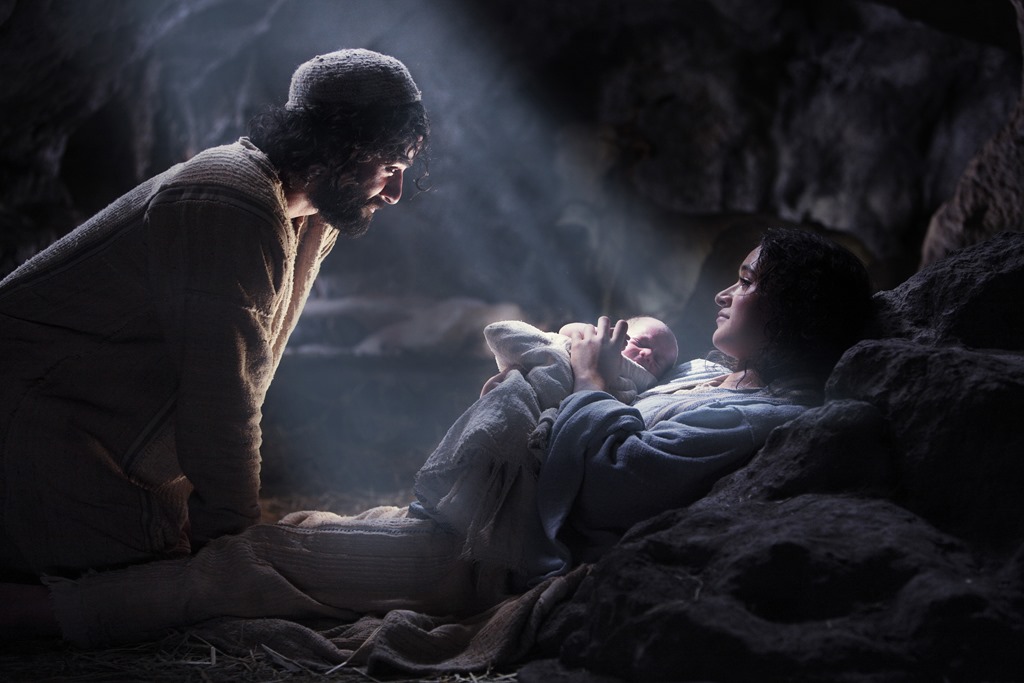
Step-Dad to God’s Son

DF-09134
Nativity
,  
May 18, 2006
Photo by Jaimie Trueblood/newline.wireimage.com

To license this image (9139053), contact NewLine:
U.S. +1-212-686-8900 / U.K. +44-207 659 2815 / Australia +61-2-8262-9222 / Japan: +81-3-5464-7020
+1 212-686-8901 (fax)
info@wireimage.com (e-mail)
NewLine.wireimage.com (web site)

The Christmas Story in the Bible has a lot of heroes, and few villains, but one of the most overlooked heroes is the Step-Father of God’s son – Joseph. The fact is, Joseph is man of profound faith and steadfastness. His example is one that could help us.


To listen to the sermon, click the play button:

To download, right click on the link (or do whatever you do on a Mac) and save it to your computer: Download Christmas 2015

Christmas Eve 2015


Matthew 1:18-25; 2:13-15; 2:19-23

The Christmas Story in the Bible has a lot of heroes, and few villains, but one of the most overlooked heroes is the Step-Father of God’s son – Joseph. The fact is, Joseph is man of profound faith and steadfastness. His example is one that could help us.

Let’s consider his situation. Back in those days, engagement was a big deal – in fact it was almost as big of a deal as marriage. So when it says Joseph was engaged to Mary, this was no casual thing. Engagement involved what we might consider marriage vows, and engagements were not usually broken off except for some very serious causes, like the discovery that one partner was unfaithful. An engaged couple still hadn’t had the ceremony and begun to live together, but in general, they were considered to be as committed to each other as a married couple. Unwed pregnancy was also a very big deal in those days. Jewish law actually provided that a woman who was unfaithful to her husband could be stoned to death. By the time of the New Testament, that didn’t happen very often any more, partly because the Romans put a stop to it, but it was still there in the Jewish law. Even without that, it was a major scandal for an unmarried woman to have a child.

So here is Joseph, engaged, and he finds out his fiancée is pregnant – and of course, it wasn’t his baby. Even in this day and age, that would be enough for most men to call off a relationship.

A few years ago, I shared what the wedding day would have meant to Mary – it would have been the biggest, best day of her life. But this was also true of Joseph. On that day – and most likely, only on that day, in his entire life – he would feel like a king, and eat like a king. Your wedding was the highlight of life in a place where the poverty was soul-crushing. I’m sure Joseph was looking forward to that day.

Everything we read about Joseph tells us he was a good, decent man. He still cares enough for Mary that he doesn’t want her to suffer public disgrace, so he plans to break of the engagement quietly and discreetly. Even so, think of the hurt and humiliation he must feel! Even before they are properly married, this woman has cheated on him. All his happy dreams for the future are shattered around him by this humiliating betrayal.

So, after making his plans, he goes to bed. He has a dream in which an angel of the Lord tells him what’s really going on with Mary. Now, I want you to consider something. They knew just as much about the birds and bees back then as we do now. It’s not like they thought, “Oh sure, every so often you’re gonna have a virgin get pregnant, even though she’s never been with a man.” And in Hebrew culture, the idea of God impregnating someone was borderline blasphemy. The ancient Greeks worshiped Gods who were sort of like really big and powerful human beings. Their gods, from time to time, would get enamored with some beautiful human woman and come down and have an affair. But this is not at all the type of God that the Jews (or we) believe in. To a Jewish man, this is a strange and almost blasphemous idea.

So here’s Joseph. In his mind, he’s already been made a fool and rejected. Now some sort of angelic being comes in a dream, and says, “don’t worry, she’s still a virgin, she hasn’t been unfaithful. God put the baby in there through his Holy Spirit.”

I think my response might have been, “Yeah, right. Whatever.” But here is Joseph, being played for an even bigger fool than before, and what is his response?

“When Joseph got up from sleeping, he did as the Lord’s angel had commanded him. He married her, but did not know her intimately until she gave birth to a son. And he named him Jesus. (Matt 1:24-25)

Joseph was confronted with a crisis of faith. He had a choice. He could follow proper social convention and save face for himself and protect his injured pride. Or he could step out into the wild abyss of faith, risking ridicule and humiliation. He chose faith. And though we don’t often make a big deal of it, he is truly one of the heroes of faith in the Bible.

There’s another thing, too. Okay, he accepts in faith that God is in this. But now, think of it: Joseph was going to be God’s step-dad. Seriously! There’s a song by Michael Card that I love. The picture is of Joseph standing there, holding Jesus as a baby, rocking him to sleep. And he’s thinking, “How can I do this? How can I be a father to the son of God?” Again, he faced the choice. He could have said, “This is ridiculous. I can’t do this!” He could have made all kinds of objections: “I can’t provide him with the education he will need. I can’t even be sure I’ll be able to feed and clothe this child. How do I raise him? How do I discipline him? Will I need to discipline him?”

But, as before, he responded in faith. The first few chapters of Matthew show us a man who relied on God, was sensitive to him, and responded quickly and obediently to the prompting of the Holy Spirit. He marries Mary, just as the angel told him, though it is almost certain that the ceremony was nothing like the celebration involved in a normal Jewish wedding.

Mary has the baby, and they stay in Bethlehem for about two years. Then, after a visit from the Magi, the Lord tells Jospeh to move the whole family down to Egypt. This is a major journey. And of course, Egypt is a whole other country. But Joseph doesn’t hesitate. The same thing happens a few years later: the Holy Spirit tells him to go back, and even which town to settle in. Joseph does it.

I think that it is no accident that Joseph was the kind of man who heard from God. God picked not only Mary, but Mary and Joseph together. Joseph was ready to hear from God. He was probably the sort of man who wanted to be closer to God, wanted to hear from him. He remained sensitive to him and willing to make the hard choices of faith over feelings, faith over conventional wisdom, faith over fear. He made the choice of faith time after time.

Joseph is great example to us. Christmas can give us sweet, warm fuzzy feelings. But when we really think about it, that little child is confronting us with a choice. Will we believe and accept that the Creator of the universe willingly joined himself to a human egg, laid aside the privileges of divinity, and became this little baby? We really believe that here, in this frail, impoverished child, with the young, inexperienced mother and the plain, ordinary step-father, is the salvation of the world? Are we willing to take action on that choice of faith?

I hope Joseph’s example will encourage us to say, “yes.” If Joseph can look that stupid, so can we. If he can marry a pregnant woman, be step-father to God’s son, move all around the world because he heard something in a dream, we can certainly give up our pride, and trust this little child Jesus with our lives now, and our eternal future.

HOW STUPID DO YOU LOOK?

be stupid

Joseph, husband of Mary, risked shame and humiliation, and stepped into the wild abyss of faith in God. It made his life uncomfortable at times, but it also made him a hero, honored by his step-son, Jesus.

To listen to the sermon, click the play button:


To download, right click on the link (or do whatever you do on a Mac) and save it to your computer: Download Matthew Part 2

Matthew #2. 1:18-25

The first installment on the book of Matthew got a little long, and I did not have a chance to tell you about Matthew himself, or anything general about the book.

There is nothing in the book of Matthew itself that tells us who wrote it. However, all of the writings of the early Church assume that it was Matthew, apostle of Jesus. In fact, Matthew is the most quoted book of the New Testament among the early church writings. We have no evidence that proves them wrong in thinking that Matthew was the author, and there are some facts that suggest logically that he was. For instance, Matthew was Jew, but as a tax collector, he would have had extensive dealings with non-Jews, which means he would have been even more fluent in Greek than many of his fellow Jews, certainly more so than John, who grew up in Galilee. And indeed we find that his Greek is indeed more polished and literate than any of John’s writings.

In Matthew 9:9, the author records this incident:

As Jesus went on from there, He saw a man named Matthew sitting at the tax office, and He said to him, “Follow Me! ” So he got up and followed Him. (Matt 9:9, HCSB)

Both Luke and Mark record this same incident, but they call the person in question by the name “Levi.”

In all the lists of the twelve apostles (Matt 10:2-24; Mark 3:16-19; Luke 6:13-16; Acts 1:13) Matthew is mentioned, but no Levi. However, Matthew 10:3 points out that this Matthew was previously a tax collector. All the evidence then, is that Levi and Matthew are one and the same person, known by two different names. Perhaps, like Paul and Peter, this “Levi” preferred to take on a new name after following Jesus, to separate himself from his old life. Certainly, as a former tax-collector, hated by all, he had many reasons to want to go by a new name.

Luke and Mark (as well as Matthew) record that this individual left tax-collecting and began to follow Jesus. Tax collectors were considered to be particularly despicable people. The Roman empire demanded taxes from the provinces to run the empire, and the rulers of the provinces demanded additional taxes to run the province. They empowered some people to be tax collectors on their behalf to acquire this money. The tax collectors could call upon soldiers if someone refused to pay, so they were feared and hated. In this way, tax collectors were considered traitors – they collaborated with foreign rulers against their own people. Not only that, but the government did not care if the tax-man collected “extra” for himself. The government wanted what it asked for, but beyond that, it was up to the tax collector to decide if he wanted to keep more for himself. Needless to say, most tax collectors made themselves rich by over-taxing the people. It was nothing less than legalized robbery. If anyone objected, the tax-man would have them arrested and imprisoned. Several times throughout the gospels it mentions sinners…and tax collectors. In other words, tax collectors were in a class of evil all by themselves. Matthew Mark and Luke all record this incident:

After this, Jesus went out and saw a tax collector named Levi sitting at the tax office, and He said to him, “Follow Me! ” So, leaving everything behind, he got up and began to follow Him. Then Levi hosted a grand banquet for Him at his house. Now there was a large crowd of tax collectors and others who were guests with them. But the Pharisees and their scribes were complaining to His disciples, “Why do you eat and drink with tax collectors and sinners? ” Jesus replied to them, “The healthy don’t need a doctor, but the sick do. I have not come to call the righteous, but sinners to repentance.” (Luke 5:27-32, HCSB)

Matthew was generally hated by all, considered by his fellow Jews to be a traitor, collaborator and thief. He was in a specially bad class of sinners. This made his experience with Jesus all the more powerful. Jesus came to him at the tax office. In fact, Jesus might have been there to pay his own taxes, and even as Matthew robbed him shamelessly, Jesus called him to follow him. Jesus accepted his invitation to come to his house, and ate with him. When questioned, Jesus said he came exactly to save such people. This must have affected Matthew deeply. Certainly, it changed the direction of his entire life.

Throughout the gospel, Matthew quotes the Old Testament frequently. Remember, at that time, there were two versions of the Old Testament. One was the Hebrew text, used in synagogues in Judea and Galilee and surrounding areas. But there was also the Septuagint, the Greek translation of the Old Testament, used in Egypt, and in other areas of the world, father away from the Jewish nation. Matthew quotes sometimes from the Hebrew, and sometimes from the Septuagint, as it seems to please him. This shows that he was very familiar with both versions. Maybe one way to look at this is how I use the New Testament in my sermons. Frequently, I quote an English version of the New Testament when I’m referring to it. But occasionally, I study the Greek closely, and I use my own translation of the Greek. So Matthew sometimes quotes the Septuagint, but other times appears to be quoting the Hebrew version (which, of course, he translates back into Greek, since his entire writing is in Greek). Again, we have the impression of a man who is literate, and well educated.

Most people think Matthew was writing for Jewish Christians, since he talks so much about the Old Testament. They may be right, since he describes some Jewish customs and words that he does not bother to explain. But the fact that he uses the Old Testament so much should be important even to Gentile Christians. Particularly today, it is helpful for us to understand how the Old Testament bears witness to the Messiah, Jesus Christ.

Now, let’s move on to the next few verses: Chapter 1:18-25

Concerning the birth of Jesus, Luke’s gospel tells us a lot about the perspective of Mary. Many scholars think, probably correctly, that Luke met Mary while she was still living, and heard her stories. But Matthew gives us more of Joseph’s point of view. All four gospels speak of Jesus interacting with his mother and brothers when he is grown up, but there is no mention of Joseph after Jesus was about twelve years old. This suggests very strongly that Joseph had died by the time Jesus started his ministry at age thirty. So where did Matthew get his information about Joseph? The logical conclusion is that Jesus himself told his disciples about his step-dad. I find this fascinating, and it makes me all the more interested in the little that we know of Joseph.

In my opinion, Joseph, step-father to Jesus, is one of the most overlooked and under-appreciated heroes of faith. He was a man of profound faith and steadfastness. His example is one that could help us.

Let’s consider his situation. Back in those days, engagement was a big deal – in fact it was almost as big of a deal as marriage. So when it says Joseph was engaged to Mary, this was no casual thing. Engagement involved what we might consider marriage vows, and engagements were not usually broken off except for some very serious causes, like the discovery that one partner was unfaithful. An engaged couple still hadn’t had the ceremony and begun to live together, but in general, they were considered to be as committed to each other as a married couple. Unwed pregnancy was also a very big deal in those days. Jewish law actually provided that a woman who was unfaithful to her husband could be stoned to death. By the time of the New Testament, that didn’t happen very often any more, partly because the Romans put a stop to it, but it was still there in the Jewish law. Even without that, it was a major scandal for an unmarried woman to have a child.

So here is Joseph, engaged, and he finds out his fiancée is pregnant – and of course, it wasn’t his baby. Even in this day and age, that would be enough for most men to call off a relationship. Everything we read about Joseph tells us he was a good, decent man. He still cares enough for Mary that he doesn’t want her to suffer public disgrace, so he plans to break of the engagement quietly and discreetly. Even so, think of the hurt and humiliation he must feel! Even before they are properly married, this woman has cheated on him. All his happy dreams for the future are shattered around him by this humiliating betrayal.

So, after making his plans, he goes to bed. He has a dream in which an angel of the Lord tells him what’s really going on with Mary. Now, I want you to consider something. They knew just as much about the birds and bees back then as we do now. It’s not like they thought, “Oh sure, every so often you’re gonna have a virgin get pregnant, even though she’s never been with a man.” And in Hebrew culture, the idea of God impregnating someone was borderline blasphemy. The ancient Greeks worshiped Gods who were sort of like really big and powerful human beings. Their gods, from time to time, would get enamored with some beautiful human woman and come down and have an affair. But this is not at all the type of God that the Jews (or we) believe in. To a Jewish man, this is a strange and almost blasphemous idea.

DF-03244
Nativity
,  
May 18, 2006
Photo by Jaimie Trueblood/newline.wireimage.com

To license this image (8837793), contact NewLine:
U.S. +1-212-686-8900 / U.K. +44-207 659 2815 / Australia +61-2-8262-9222 / Japan: +81-3-5464-7020
+1 212-686-8901 (fax)
info@wireimage.com (e-mail)
NewLine.wireimage.com (web site)

Matthew enters his first Old Testament reference in this account of the birth of Jesus. It comes from Isaiah 7:14

See, the virgin will become pregnant; and give birth to a son, and they will name Him Immanuel (which means, “God is with us”)

So here’s Joseph. In his mind, he’s already been made a fool and rejected. Now some sort of angelic being comes in a dream, and says, “don’t worry, she’s still a virgin, she hasn’t been unfaithful. God put the baby in there through his Holy Spirit.”

I think my response might have been, “Yeah, right. Whatever.” But here is Joseph, being played for an even bigger fool than before, and what is his response?

“When Joseph got up from sleeping, he did as the Lord’s angel had commanded him. He married her, but did not know her intimately until she gave birth to a son. And he named him Jesus. (Matt 1:24-25)

Joseph was confronted with a crisis of faith. He had a choice. He could follow proper social convention and save face for himself and protect his injured pride. Or he could step out into the wild abyss of faith, risking ridicule and humiliation. He chose faith. Remember, Joseph didn’t even have a waking angel visitation. It was all in a dream. But he clearly received what the scripture said, the quotation from Isaiah. He chose to trust what God had said in the bible, even though it made him look a fool. And Jesus, his step-son remembered him, and commended him for it. Though we don’t often make a big deal of it, Joseph is truly one of the heroes of faith in the Bible.

There’s another thing, too. Okay, he accepts in faith that God is in this. But now, think of it: Joseph was going to be God’s step-dad. Seriously! There’s a song by Michael Card that I love. The picture is of Joseph standing there, holding Jesus as a baby, rocking him to sleep. And he’s thinking, “How can I do this? How can I be a father to the son of God?” Again, he faced the choice. He could have said, “This is ridiculous. I can’t do this!” He could have made all kinds of objections: “I can’t provide him with the education he will need. I can’t even be sure I’ll be able to feed and clothe this child. How do I raise him? How do I discipline him? Will I need to discipline him?”

But, as before, he responded in faith. The first few chapters of Matthew show us a man who relied on God, was sensitive to him, and responded quickly and obediently to the prompting of the Holy Spirit.

I also think that it is no accident that Joseph heard from God. God picked not only Mary, but Mary and Joseph together. Joseph was ready to hear from God. He was probably the sort of man who wanted to be closer to God, wanted to hear from him. He remained sensitive to him and willing to make the hard choices of faith over feelings, faith over conventional wisdom, faith over fear. He made the choice of faith time after time.

Joseph is great example to us. We think about the birth of Jesus in connection with Christmas, and warm fuzzy feelings. But when we really think about it, that little child is confronting us with a choice. Will we believe and accept that the Creator of the universe willingly joined himself to a human egg, laid aside the privileges of divinity, and became this little baby? We really believe that here, in this frail, impoverished child, with the young, inexperienced mother and the plain, ordinary step-father, is the salvation of the world? Are we willing to take action on that choice of faith?

I hope Joseph’s example will encourage us to say, “yes.” If Joseph can look that stupid, so can we. If he can marry a pregnant woman, be step-father to God’s son, move all around the world because he heard something in a dream, we can certainly give up our pride, and trust this little child Jesus with our lives now, and our eternal future.