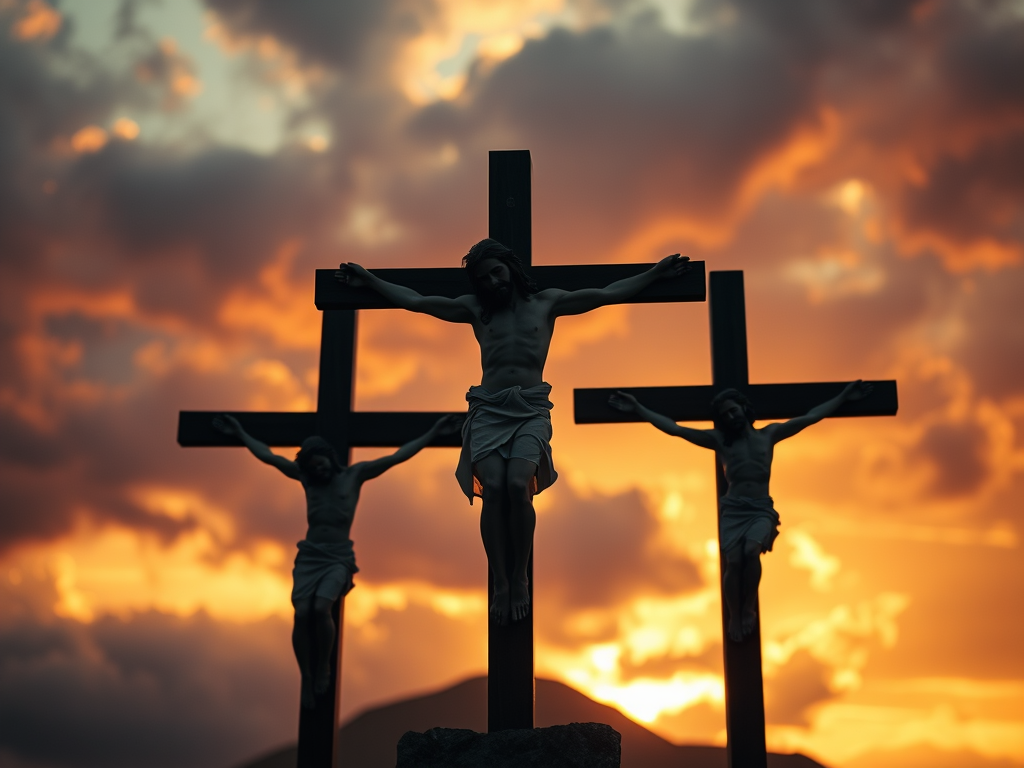
2 SAMUEL #28: THE LORD SAVES

The very end of the book of Samuel encourages us to put our hope in the only appropriate place: God’s mercy. We don’t need to waste time wishing for a great leader. We don’t need to waste our hopes and dreams on things that will always, eventually, let us down. Instead, the Lord is continually calling us to look to him for our greatest and most enduring hope. Sometimes that call from the Lord comes through judgment, but even then, the ultimate purpose is to bring us back to the Lord.

To listen to the sermon, click the play button:

For some people, the player above may not work. If that happens to you, use the link below to either download, or open a player in a new page to listen. You can also find us on Spotify at https://open.spotify.com/show/6KKzSHPFT466aXfNT2r9OD

To download, right click on the link (or do whatever you do on a Mac) and save it to your computer: Download 2 Samuel Part 28

2 SAMUEL #28. 2 SAMUEL 24:1-25

This is our very last sermon on the book of Samuel (which includes both 1st and 2nd Samuel). Remember it began with the prayer of a godly woman, who desperately wanted a baby, but, at the same time, she wanted it only on God’s terms. So the Lord gave her Samuel, who became a great prophet and leader for Israel. As Samuel grew older, the people began to fear. His sons were nothing like him, and the people were worried about what would happen when Samuel left. So, they asked for a king. In Saul they got the kind of king they wanted: Big, and impressive looking. But Saul had deep fears and insecurities, and time and time again, he refused to trust the Lord. Instead, when he was worried, he took control of things, rather than trusting the Lord, or doing things the way the Lord commanded. Then came David, and we followed his life from the time he was an unknown shepherd, through his slaying of Goliath, his many victories as a battle-leader for Saul, and then his trials and sufferings when Saul tried for years to have him killed. Then David became king, and in general, he was a good one, deeply concerned, above all, with what the Lord wanted. David failed horribly during his middle-aged years, but he returned to whole-heartedly following the Lord.

When we read 2 Samuel chapter 24, it seems like the whole book of Samuel ends rather abruptly. But when we understand that it is the final part of a six-part epilogue, it begins to make more sense.

Up through the end of the chronological narrative, in chapter twenty, David appears to be an inspiring hero, a wise and just leader. Yes, we learned of his failings during the years with Bathsheba, but following that, he returned to being the man whose one goal was to please the Lord. By the end of 2 Samuel chapter 20 (the end of the chronological narrative) readers are bound to be very impressed by David, because he really was an extraordinary and admirable person.

David’s amazingness is one reason for the epilogue at the end of the book. The author of Samuel wants to make sure we aren’t confused. This book isn’t about David, it’s about the Lord. So the author is using this epilogue to show us that not even an earthly leader like David is the answer for our hopes and fears. He keeps pointing us back to the Lord himself. Remember that this epilogue is written in ancient chiastic structure, which involves sections that mirror one another. The very first part of the epilogue told of a famine that came upon the land because of a terrible sin committed by Saul. This last part, which mirrors the first, is about a plague that came upon the land because of a sin committed by David. In the first part, we learned that the only way they could atone for Saul’s sin was to execute seven men from his family. Now we learn that at some point, David also committed a similar sin that affected the entire country. I feel pretty confident that this was not at the end of David’s life, but rather some point when he was younger. Remember, this epilogue is not set out chronologically.

This same incident is also recorded in 1 Chronicles 21. I’ll be using some things from that passage to help us understand the situation. It says in this text that the Lord was angry at Israel, and stirred up David to take a census. In 1 Chronicles 21, it says that Satan, plotting against Israel, incited David to sin by taking a census. Either way, we can see that the consequence of David’s sin was that all Israel suffered. I think one of the first questions should be, “Was it God or was it Satan?” As I have mentioned in previous messages, there are several other places in the Old Testament where the Lord used evil spirits to accomplish his purposes: Judges 9:23-24, 1 Kings 22:18-23, 1 Samuel 16:14, and Job 1:6-12. In each case the picture we get is the Lord allowing an evil spirit to affect a particular person or group. In each case, the evil spirit wants to do the evil, but must get permission from God first. God’s permission to the evil spirit seems to be limited to what will accomplish his (God’s) purpose. In most of these cases, the purpose is to bring judgment, and if possible, repentance. [For a longer discussion of this issue please go to one of my previous sermons: Does God Send Evil Spirits?]

So it is entirely consistent to see God allowing a limited evil influence upon David in order to accomplish his purposes. It was Satan who tempted David, but it was ultimately God who allowed that temptation to happen. The answer to our first question then is: both. It was both God and the devil.

The next natural question is, “Why did God let this happen?” My most honest answer is, “I don’t know for sure.” I do have some ideas, however.

Clearly, the Lord felt that, at this point in time, there was something not right in David’s heart – and also not right in the hearts of the people. Again, we don’t know exactly when this happened. In fact, I suspect that this may have happened before David sinned with Bathsheba, during the time when he had begun to drift away from the Lord for a season.

Let’s start with a clear biblical understanding of sin and punishment and judgment. There is only one satisfactory and just punishment for sin. According to the Bible that one appropriate punishment is eternal separation from God. Since God is the source of all Life and all Good, that separation means death and unimaginable suffering. So if David and the people of Israel were not killed and sent away from God’s presence forever (that is, hell) then they were not being punished for doing wrong. They were being judged. There is a difference. It was God’s punishment for our sins that Jesus took upon himself.

In the Bible, God’s judgment establishes that his actions are right and good, and that ours are wrong and sinful. God uses judgment to try and get people to repent and turn to Him and receive life, hope and forgiveness through Jesus. Judgment always has this purpose: to turn people back to the Lord. It isn’t vindictiveness or anger or even righteous punishment. It is an extreme measure of love. It is like amputating a limb to keep the deadly cancer from spreading, or taking the car keys away from someone who drinks too much. It seems harsh, but it is intended for good, for love.

So God allowed the sin in the hearts of David and his people to be revealed through temptation, and then he brought judgment to turn them back to Himself.

When I was fifteen I tore open the back of my heel in an accident, and had to have stitches. It was in Papua New Guinea, and the healthcare I received was, unfortunately, typical for third world countries at the time. The wound became infected. It sealed up on the outside, but underneath, it was filled with pus and infection. Left alone, it would have looked all right, but eventually it would have developed gangrene and rotted my foot and leg, finally killing me. My dad realized what was happening. He made me lie down, while he clamped my leg to hold it still. He squeezed around the wound and it was incredibly painful. The wound burst open and what came out was truly disgusting. For almost a week afterward I had a gaping, weeping hole in my heel. I still have a scar there. But it was absolutely necessary that the infection be exposed and cleaned out.

So, the Lord exposed what was hidden in the hearts of David and of the people, and then cleaned the infection, though it was a painful, awful-seeming process. My dad inflicted pain upon me in order to bring about my healing. He didn’t cause the infection, but he did cause me pain in order to first expose it, and then eliminate it. So God did not cause the problem in the hearts of his people, but he loved them enough to engage in the painful process of exposing it and judging it, to bring them back to himself.

Now, another question that I have is: what was so bad about taking a census? Moses did it twice – because God told him to. So why shouldn’t David do it? How did the census expose the sin of David and of Israel? I think this is also an important question to ask.

I have to admit, this part is speculative. Here are some possible reasons. Perhaps it was pride. Maybe David wanted to know how great his kingdom was. Or maybe he was contemplating a new conquest that was not sanctioned by the Lord, and he wanted to know if his army was big enough to do it. Another possibility is that he was afraid of rebellion, and was using the census to ferret out any potential enemies. The men of Judah and those of the other tribes were recorded separately. So maybe David was afraid, and was trying to see if the men of Judah had enough soldiers to defeat the other tribes if it came to civil war again.

In any case, it did not arise from faith. Romans 14:23 says: “For whatever does not proceed from faith is sin.” We want a book of rules, so we can just take care of things on our own, and not make the effort of staying close to the Lord. Rule 447, paragraph 8, section c: “Do not ever take a census.” But living that way actually separates us from God, because it allows us to function “righteously” without really interacting with him. Even if we do the right thing, it needs to be because we are living in right relationship. Taking a census is not always wrong. But David was not walking in faith.

Here is one other possible problem with this census, and it is the one I am inclined to think most likely. It could be that David ordered it to be conducted in a way that violated something the Lord said in Exodus 30:11-16.

The LORD spoke to Moses: “When you take a census of the Israelites to register them, each of the men must pay a ransom for himself to the LORD as they are registered. Then no plague will come on them as they are registered. Everyone who is registered must pay half a shekel according to the sanctuary shekel. This half shekel is a contribution to the LORD. Each man who is registered, 20 years old or more, must give this contribution to the LORD. The wealthy may not give more and the poor may not give less than half a shekel when giving the contribution to the LORD to atone for your lives. Take the atonement money from the Israelites and use it for the service of the tent of meeting. It will serve as a reminder for the Israelites before the LORD to atone for your lives.”  (Exod 30:11-16, HCSB)

The point of this was to recognize that the Lord owns all of the people. They don’t own themselves – they owe their lives to the Lord. In the same way, no leader (for example, like David) owns the people – they all belong to God. It may be that the people did not want to pay the census fee, nor did David want to require it of them. This exposed that in their hearts they were not serious about belonging to God as a people. This may be the sin in the hearts of the people that God was exposing.

With the sin exposed, God acted in judgment, to bring the people back to himself. Because David repented so quickly, the Lord gave David a choice about the form of judgment: three months of rebellion and battle, or three years of famine, or three days of a plague. David chose the last one, as I would have. He trusted God’s mercy (in the form of the plague) more than the “mercy” of a human enemy.

As the plague was coming to Jerusalem, David apparently had a vision of God’s angel striking the people. He cried out for mercy for them, pleading with God to limit the judgment to himself, to strike him and save the people. God did not do that—not yet—but he did end the plague at that point. The angel in the vision stopped. David’s plea to be punished instead of the people echoes the heart of the ultimate chosen one, Jesus, whom God did punish in place of all sinful people.

What follows is very interesting. The Lord sent the prophet Gad, who told David to make sacrifices and offerings on the spot where he saw the angel stop. If you remember, Jerusalem in David’s time was fairly small, maybe ten or fifteen acres. It was on the tip of a ridge, with deep ravines to the east and west and south. Behind David’s city to the north, the ridge rose to the top of the mountain. It was there, at the top of that ridge or mountain, where David went to offer his sacrifices. This was about 1/3 of a mile from the north wall. The picture below gives you a rough sense of the geography, though it is not 100% accurate.

David found the land was owned by a Jebusite, not an Israelite. Refusing to take it as a gift, David purchased the land, and made offerings and sacrifices there. This ridge-top was the very place where Abraham had taken his son Isaac, when he obeyed God’s call to sacrifice him. On that mountaintop, Isaac, not knowing what was to come, asked what they were going to use for a sacrifice. Abraham answered prophetically, saying, “God Himself will provide the lamb for the burnt offering, my son.” (Gen 22:8, HCSB). God stopped Abraham when he saw that he was willing to give up even his son. Instead, God planned to give his own son. And so on this same spot, almost eight hundred years later, the plague was stopped. On this same spot, David offered his life in exchange for his people, but again, the Lord refused that sacrifice, looking ahead to the time he would offer his own son. On this same spot, purchased by David, Solomon later built the temple of the Lord. This temple became a meeting place between the Lord and his people, a place where sacrifices were offered to reconcile the people with the Lord and each other. So, the author of Samuel, who lived in the next generation after the temple was built, is saying: “Don’t waste your energy wanting another king like David. Instead, pay attention to the presence of God among his people.”

The New Testament teaches us that those sacrifices were all a shadow, pointing toward the ultimate sacrifice of Jesus to save people from their sins. The writer of Hebrews writes about the temple, and its purpose:

9 This is an illustration pointing to the present time. For the gifts and sacrifices that the priests offer are not able to cleanse the consciences of the people who bring them. 10 For that old system deals only with food and drink and various cleansing ceremonies—physical regulations that were in effect only until a better system could be established.
11 So Christ has now become the High Priest over all the good things that have come. He has entered that greater, more perfect Tabernacle in heaven, which was not made by human hands and is not part of this created world. 12 With his own blood—not the blood of goats and calves—he entered the Most Holy Place once for all time and secured our redemption forever. (Hebrews 9:9-12, NLT)

In other words, even though the writer of Samuel did not know it, this epilogue points beyond David, even beyond the temple, and to the eternal atonement that Jesus secured for us. The message is that we need atonement, and only God himself can truly provide it. And not only that, but God has provided it, through Jesus Christ, the descendant of David.

We human beings tend to make the same mistakes in each generation. Many people in our country are very focused on politics and on the “culture wars.” But our main focus should be on Jesus Christ, and reconciliation with the Lord through him.

What are the things you tend to put your hope in? A job? Your skill or experience? Your family? Your investments, your house? All these are good things when they are held in the right place of importance in our lives. But as good as it is to enjoy the blessings God gives us, our only hope should be found in Jesus Christ alone.

How has the Lord spoken to you through the book of Samuel?

2 SAMUEL #26: THE LAST WORDS OF A GREAT KING

David’s last words speak of the goodness of authority when it is used well; especially when it is exercised with a recognition that all authority comes from God, and we are all accountable to him.  The heart of David’s words reveal that he was resting fully on the promises that the Lord had made to him. May we, too, rest completely on God’s promises to us, and upon the covenant that he established with us through the messiah, Jesus Christ.

To listen to the sermon, click the play button:

For some people, the player above may not work. If that happens to you, use the link below to either download, or open a player in a new page to listen. You can also find us on Spotify at https://open.spotify.com/show/6KKzSHPFT466aXfNT2r9OD

To download, right click on the link (or do whatever you do on a Mac) and save it to your computer: Download 2 Samuel Part 26

2 SAMUEL #26. The Last Words of David. 2 Samuel 23:1-7

1 Now these are the last words of David:
The oracle of David, the son of Jesse,
the oracle of the man who was raised on high,
the anointed of the God of Jacob,
the sweet psalmist of Israel:
2 “The Spirit of the LORD speaks by me;
his word is on my tongue.
3 The God of Israel has spoken;
the Rock of Israel has said to me:
When one rules justly over men,
ruling in the fear of God,
4 he dawns on them like the morning light,
like the sun shining forth on a cloudless morning,
like rain that makes grass to sprout from the earth.
5 “For does not my house stand so with God?
For he has made with me an everlasting covenant,
ordered in all things and secure.
For will he not cause to prosper
all my help and my desire?
6 But worthless men are all like thorns that are thrown away,
for they cannot be taken with the hand;
7 but the man who touches them
arms himself with iron and the shaft of a spear,
and they are utterly consumed with fire.” (2 Samuel 23:1-7, ESV)

Chapter 23:1-7 contains “the last words of David.” This is not meant to be literal, but it is a picturesque way of saying “these are the thoughts David was having at the end of his life, this was something he wrote near the end.” All of these verses (1-7) are in the form of Hebrew poetry. Hebrew poetry does not usually rhyme. It is about “parallel thoughts.” You can see the parallelism if you just read it carefully. My Bible separates the parallel thoughts by starting new lines. I’ll do it here with two slashes, like this: “//.” So we have: “The last words of David//the declaration of the son of Jesse//the declaration of the man raised on high//the one anointed by the God of Jacob//the favorite singer of Israel” You can see that each phrase gives us a parallel description of David. First he is named, then he is the son of Jesse, and so on. They are parallel thoughts about who David was.

Next come David’s own words. Verses two and three express poetically that David is sharing insights that he received from the Lord.

The first insight is that when someone rules a group of people in justice, and in the fear of the Lord, it is a wonderful, positive thing. I think sometimes, even yet today, it is hard for us to grasp what life was like for people in the ancient middle east. Existence was difficult, brutal and short. When someone had wealth and power, they used that power to benefit themselves, and their family and friends. If you did not have wealth or power, and were not related to someone who did, you were out of luck. Of course, that meant that, by far, most people were out of luck. The powerful would do to you whatever they could get away with, if they thought it would benefit them, and often, that was a lot. They might simply take your things, including your home. If you were a man, they might take your wife or daughter, if they found them attractive. If you were a woman, you had no rights even to your own person. So David’s words here are revolutionary:

“The one who rules the people with justice,
who rules in the fear of God,
4 is like the morning light when the sun rises
on a cloudless morning,
the glisten of rain on sprouting grass.”

David is saying that a ruler does not get to do whatever he wants. Even kings themselves are under a greater authority—God. The only responsible way to exercise authority is by being under authority yourself. In other words, no matter how much authority or influence we might have, we must use it with a recognition that we are accountable before God for the way we use it. When we do that, it is a wonderful blessing.

Do a thought experiment with me. Picture a policeman. He has the authority to compel you to obey the law. If you refuse to obey him when he gives you a lawful order, he has the authority to use force to compel you to obey, or to enact consequences on you if you don’t obey. But the key here is that what he is telling you to do is a lawful order. If he stops you while you are driving and demands to see your driver’s license, that is a lawful order. The policeman is himself acting appropriately under authority – the authority of the laws and regulations that say the police can stop you and ask for your license. However, if he stops you and demands that you give him all your money, the policeman is no longer acting “under authority.” No law gives him the authority to take your money. Therefore, when he is not himself under authority, he has no real authority to exercise.

Or imagine a boss. Suppose you work at a place of business that has a dress code, or uniforms, for employees. In that situation, your boss, under the authority of the rules of employment, has the right (the authority) to tell you how to dress. If you show up to work dressed inappropriately, she has the authority to enact consequences on you for that. But if the boss sees you when you are not working, she does not have the authority to tell you what to wear. In that situation she is not under authority as your supervisor, therefore she has no authority over what you wear.

We take all this as a matter of course. But these things were not always obvious, especially not during David’s lifetime. The idea that the king himself must be under God’s authority in order to exercise authority was revolutionary. The only reason we think it’s normal is because we live in a civilization that was profoundly shaped by the bible, including David’s words right here. When David said these things, it was an amazing thought: even the king has no appropriate authority unless he himself remains under the authority of God.

By the way, I think this is one reason that the Lord inspired Nathan the prophet to tell the story he did when he confronted David about Bathsheba and Uriah. David himself was passionate about people not abusing their authority. When he saw that he himself had been abusing his authority, it broke him. So, now, at the end of his life, David wants people to remember that even he himself had to remain under God’s authority.

Jonathan Leeman, in his book Authority, describes two different kinds of authority. The first is an authority to command. This is the authority to compel others to obey by causing serious consequences for those who disobey. A policewoman has that kind of authority. Bosses and owners have that sort of authority as well, at least in the workplace. Parents have that sort of authority over young children.

The second kind of authority is an authority of counsel. This is an authority that can strongly recommend a course of action, however, if someone wants to disregard it, the person with counsel authority cannot make someone else listen to them or compel them to obey them, or enact serious consequences upon them.

Most adult humans in the western world do have certain areas where they exercise appropriate authority. If you are a business owner, you have authority over your employees. If you are a boss, or supervisor, or team-lead, you have authority over others at your workplace. Even if you are a server at a restaurant, you have a kind of authority over the restaurant patrons. You can tell them not to go into the kitchen, or not to be disruptive. They must wait on your service before they can order or eat. Parents, of course, exercise significant authority over their children. Many children have authority over their pets. Even parents of adult children have a kind of authority over their grown children, in that their words feel “weighty,” to their kids. We can easily brush off something said by a random stranger, but it’s harder to ignore the words of a parent, even when we are grown.

Authority can be abused—I would guess we all know that. But do we know that when authority exists and is used properly, under the authority of God, it is, in fact, a blessing? Without God-blessed parental authority many children would die, or be treated cruelly. Without lawful authority the strong and wealthy would take whatever they wanted, and the rest of us would not be able to stop them. Authority that recognizes that God is over everything is a force for good. It allows families and societies to flourish in safety.

In verse five, David moves on. I spent a lot of time and labor trying to get at the Hebrew of this verse, because there is something that is not evident in the English translations. The closest is the ESV, which typically is the most literal. But let me give it to you in a “literal-ish” translation so you can see something going on in Hebrew:

Indeed, is it not right, my house, with God?

Indeed, an everlasting covenant he made with me, being arranged in the whole and being secured

Indeed, all of my salvation and every desire

Indeed, will he not bring to fruition?

There are four phrases, each one beginning with the Hebrew word that I have translated here “indeed.” The word is a conjunction that can be used as “for,” “and,” “but” and several other possibilities depending on context, but the point is, in Hebrew these four phrases each begin with the same word.  This sets apart this verse from the others, and also makes us pay attention to each of the phrases.

In the first place, David has confidence that his house is indeed right with God. Now, he is not claiming to be innocent before God. But he is confident that the Lord has made things right with his entire family line. Indeed, it is about the covenant that the Lord made with David in 2 Samuel 7:8-17, the covenant of a messiah, a descendant of David, who will reign forever. David does not feel confident because of anything within himself. No, he is confident because the Lord made a covenant—a solemn agreement—with David, and the Lord arranged it, and the Lord secured it. The promise is not contingent upon David: it is the Lord’s doing from first to last. In case we missed it, David is talking, indeed, about all of his salvation, all of his desire, which, indeed, the Lord himself will bring to fulness.

This is the core of David’s last word and testimony, and it is that all his hope is in the coming of the promised Messiah, a descendant of David, and David dares to trust this hope because it is the Lord who made the covenant, the promise, and he who will make it happen.

Once again we see that the writer of Samuel is pointing us to something beyond just David. David’s own hope was not in himself, but in the Lord, and the Lord’s promises, especially in the promised messiah. We too, should not hope in a worldly leader, government, or system, nor even in our own talent or hard work, but in the promises of God, and in salvation through his promised Messiah, Jesus Christ. All our hopes and desires should be, like David, fixed on the promises of God, and upon the messiah, Jesus Christ. When that is the case, we can find rest and peace in our hearts, even as David himself did.

This last saying of David is put forward in a kind of shortened chiastic structure. The first part talks about the goodness of God when people live under his authority. The middle part, the “main point,” is the one we’ve just looked at, which is that our hope should be firmly rooted in the eternal promises of God, our desire should be for his chosen Messiah. Next, the ending part is a kind of reverse mirror of the first part: the fate of people who do not live under the Lord’s authority, and who do not hope in the promises of his covenant. Such people are like thorns. You can’t even touch them, lest you hurt yourself. Instead, thorns are killed by cold iron and then destroyed by hot fire. In the same way, for those who reject the authority of the Lord, the end is one to consider soberly.

All right, so where does this leave you? Perhaps you need to give some thought to the areas in your life where you have some authority. Maybe you need to remember that we can only properly be in authority if we are under authority, especially, under the authority of the Lord.

The writer of the book of Samuel probably lived two generations after David. The kingdom of Israel that David had worked so hard to create and secure was now split in half. The kings of both new kingdoms were not remotely like David. I suspect that people during that time were inclined to look at the past, especially to the time of David, and wish that they could have another king like him. But the author of this book is saying: “Don’t waste time wanting another David to come along. Instead, want what David himself wanted.” The heart of David’s last words are his trust in the promises of God. All his desire is wrapped up in what God promised. His heart is at peace because he believes what God has said.

I’m at an age where it’s easy to look back at earlier parts of my life and wish things were like that again. I’m tempted to want to somehow regain things that are lost in the past. But the message here is this: what’s past is past, and even back then it wasn’t everything you needed. Instead, like David, let’s learn to desire the Lord and the fulfillment of his promises above everything else.

One of my prayers for myself is that I desire what God has promised more than I desire anything else. When what we desire most is the Lord himself, our innermost being is fully satisfied. Often, I find that I have all sorts of other desires competing with my desire for the Lord. Sometimes, I have to pray kind of like this: “Lord, I want to want you more than anything. Please work in me so that I desire most what you want me to desire most.” That is a prayer that he loves to answer. All he requires is our willingness for him to make it so.

May we, too, trust God and be at rest in our souls.

Revelation #38: The Danger of Superficial Grace

business care clean clinic
Photo by Pixabay on Pexels.com

It is our job to warn those who reject Jesus, but not to condemn them. On the other hand, when we tell people there is no judgment for sin, we are treating their brokenness superficially. We are misleading people that God loves, people whom he wants to repent, and that makes him angry. In Jesus alone is the perfect balance of grace and judgment.

To listen to the sermon, click the play button:

To download, right click on the link (or do whatever you do on a Mac) and save it to your computer:
Download Revelation Part 38

Revelation #38. Revelation 19:11 – 21. The Danger of Superficial Grace

I appreciate your patience with these sermon notes. I know I am not producing them as fast as before. The truth is, even as I write this, I am in severe pain, sick to my stomach, and I just generally feel awful. I will not allow all that to stop me, but sometimes I simply can’t help from slowing me down.

With the praise in heaven offered at the beginning of this chapter, and the announcement of the marriage of the Lamb, we have officially entered the second-to-last section of Revelation. I am not quite so sure of my own accuracy in dividing up this part of Revelation, but even if I get the chiastic structure somewhat wrong, we can still receive much simply from the text itself. In any case, I call this section: “The Seven-Part Victory of Jesus.” Today, we will cover the first part of the victory of Jesus, which is the first defeat of Satan, covered in verses 19:11 – 20:3.

In the second section of the book of Revelation, we had the seven seals. The first seal was a rider on a white horse. Our analysis of the text showed that that rider represented the gospel going out into all the world. It was an indication that we presently live in a time of grace, a time when no one is being judged for their sins. Instead, God has been appealing for people to repent, and receive the grace that is in Christ Jesus. Now, in the sixth (and connected to the second) section of Revelation, we have a new rider on a white horse. Listen to the description of this rider. He is:

called Faithful and True, and He judges and makes war in righteousness. 12 His eyes were like a fiery flame, and many crowns were on His head. He had a name written that no one knows except Himself. 13 He wore a robe stained with blood, and His name is the Word of God.

Along with the vast majority of commentators throughout history, I believe that this rider represents Jesus. Since no human being is perfect, no human being could judge and make war in righteousness. The description of his eyes matches that of the description of Jesus in the first part of the book of Revelation. But the clincher is the last part: he is called the word of God. Remember, this book of Revelation was transmitted to us through the apostle John. Listen to what John says about Jesus and his gospel:

1 In the beginning was the Word, and the Word was with God, and the Word was God. 2 He was in the beginning with God. 3 All things were made through him, and without him was not anything made that was made. 4 In him was life, and the life was the light of men. 5 The light shines in the darkness, and the darkness has not overcome it.
6 There was a man sent from God, whose name was John. 7 He came as a witness, to bear witness about the light, that all might believe through him. 8 He was not the light, but came to bear witness about the light.
9 The true light, which gives light to everyone, was coming into the world. 10 He was in the world, and the world was made through him, yet the world did not know him. 11 He came to his own, and his own people did not receive him. 12 But to all who did receive him, who believed in his name, he gave the right to become children of God, 13 who were born, not of blood nor of the will of the flesh nor of the will of man, but of God.
14 And the Word became flesh and dwelt among us, and we have seen his glory, glory as of the only Son from the Father, full of grace and truth. 15 (John bore witness about him, and cried out, “This was he of whom I said, He who comes after me ranks before me, because he was before me.’”) 16 For from his fullness we have all received, grace upon grace. 17 For the law was given through Moses; grace and truth came through Jesus Christ. 18 No one has ever seen God; the only God, who is at the Father’s side, he has made him known. (John 1:1-18)

So, it is crystal clear that “the word of God,” means Jesus.

In our text today, Jesus has another name, which no one knows except himself (verse 12). I think we are told this in order to remind us that Jesus, being in very nature God, is far beyond our comprehension. We will never be able to fully understand him, and we certainly cannot control him, or judge him. I believe it says that his clothes are dipped in blood to remind us of the sacrifice that he made for us, and for all people.

These things are very important for us as we consider this text. The first white horse came to signify a time of grace, when God’s offer of forgiveness through Jesus Christ is given to all the world, and his judgment is withheld. But now judgment is coming and it is coming through Jesus Christ himself.

We have seen all the way through the book of Revelation that time and time again, people are given opportunities to repent. But this text tells us that there will come a day when that time really is over. God’s patience is vast, and he takes no pleasure in the death of the unrighteous.

11 Say to them, As I live, declares the Lord God, I have no pleasure in the death of the wicked, but that the wicked turn from his way and live; turn back, turn back from your evil ways, for why will you die, O house of Israel? (Ezekiel 33:11)

But in order to bring his people into a place of eternal joy and eternal safety, he must, at last, judge those who reject him. Revelation clearly depicts these two truths: that God is reluctant to condemn anyone, but that there will come a day when he will indeed do so, in order to usher in the new heavens and new earth for those who have not rejected him.

Again, it is Jesus himself who is sent to do the judging. I believe the reminder of his sacrifice (his clothes dipped in blood), and the fact that he has a hidden name, are there to make his right to judge all the more compelling. He is God, we are not, and we can never truly know him, or put him in a box. Also, the fact that he himself shed his own blood for us and suffered the torment of hell for us, makes his right to judge indisputable. He has already taken this terrible judgment upon himself. But if we refuse to let him do that, there is no alternative. We will have to own the judgment for ourselves, which means we become objects of God’s wrath.

This is very important, because Christians seem to be confused about judgment, and the confusion cuts two different ways. On the one hand, some people seem to think that it is their job to bring judgment and condemnation on those who are not Christians. Obviously, this text shows us that that is wrong: it is the right of Jesus, and Jesus alone. I think the following analogy might be helpful:

Imagine that you have a friend who regularly cheats on her taxes. You have another friend who happens to work for the Internal Revenue Service. You know for a fact, from your IRS friend, that sometime soon the government is going to crack down on tax fraud. Sooner or later, if your friend continues her pattern of cheating on taxes, she will get caught, and she will go to prison. Now, it is not your job to catch her, nor to throw her in prison. But what you can do – and what you should do, if you really love your friend – is to warn her about the coming judgment. You aren’t bringing legal proceedings against her, you are not trying to have her thrown in prison; those things are not your job.

However, many Christians seem to be handing out condemnation tickets to non-Christians whom they do not like. But that is not our job; we have no right to do such a thing. What we can do, and should do, is to warn our non-Christian friends about the coming judgment, and to appeal to them to receive the grace and mercy of Jesus Christ instead, while there is still time. There’s a big difference between warning, and condemning. There is a very large difference also, between those who claim to be Christians, and those who do not. If someone claims to be part of the body of Christ, and under the authority of Jesus, and yet they are continuing in a long-term pattern of blatant sin, we do have the right to talk to them. The judging of those who are not believers is not our task. The apostle Paul helps to clarify this. Below, When Paul says “bears the name of brother” we need to remember that most Jesus-followers called each other brother and sister. The word “Christian” was still not widely used. So “brother” means “Christian.” :

9 I wrote to you in my letter not to associate with sexually immoral people— 10 not at all meaning the sexually immoral of this world, or the greedy and swindlers, or idolaters, since then you would need to go out of the world. 11 But now I am writing to you not to associate with anyone who bears the name of brother if he is guilty of sexual immorality or greed, or is an idolater, reviler, drunkard, or swindler—not even to eat with such a one. 12 For what have I to do with judging outsiders? Is it not those inside the church whom you are to judge? 13 God judges those outside. “Purge the evil person from among you.” (1 Corinthians 5:9-13)

So it is not our job to judge those who are outside the body of Christ. We are only to warn. And even when it comes to judging those within the body of Christ, Jesus and the apostles gave very specific criteria. It is not a matter of anybody and everybody going around condemning people. There is a very clear process for church discipline. It is mostly a matter for the church leadership, and only in rare cases does it involve everyone in the church.

There is another error that Christians make that this text corrects. Many, many Christians these days seem to think that there is no final judgment at all. They say things like: “It’s all about love. Love conquers all. All we have to do is love. Period.” In a way, they are right. But love is much bigger than they seem to realize. For love to be real, there must be an alternative; and the alternative to loving God is evil. Therefore, as part of his love, Christ brings true, final and complete judgment upon those who reject his loving salvation. Remember the name that no one knows? We cannot put Jesus in a box. Very often, those who want to say that Jesus is only loving, and never judges, are putting him in a box of their own making. This text is crystal clear, for those who reject Jesus, there is a thorough and terrible judgment awaiting.

When we tell people – whether Christian or not – that there is no judgment for sin, no penalty for rejecting the grace offered in Jesus, we are acting as false prophets. Jeremiah spoke about people like this:

14 They have treated My people’s brokenness superficially,
claiming, “Peace, peace,”
when there is no peace. (Jeremiah 6:14)

When we tell people there is no judgment for sin, we are treating their brokenness superficially. We are misleading people that God loves, people whom he wants to repent, and that makes him angry.

Isaiah also saw that people did not like to talk about the fact that one day God will indeed judge the earth:

9 For these are rebellious people, deceitful children, children unwilling to listen to the Lord’s instruction.
10 They say to the seers, “See no more visions !” and to the prophets,“ Give us no more visions of what is right! Tell us pleasant things, prophesy illusions. 11 Leave this way, get off this path,
and stop confronting us with the Holy One of Israel!” (Isaiah 30:9-11)

People in the time of Isaiah didn’t want to hear about a God who holds people accountable for their sins. Neither do people in 21st century. But we are not acting truly lovingly if we hide the truth.

Paul warned Timothy about people like this, who will go looking for people to affirm their ideas, and avoid those who tell them the truth about God as revealed in the Bible.

I solemnly charge you before God and Christ Jesus, who is going to judge the living and the dead, and because of His appearing and His kingdom: 2 Proclaim the message; persist in it whether convenient or not; rebuke, correct, and encourage with great patience and teaching. 3 For the time will come when they will not tolerate sound doctrine, but according to their own desires, will multiply teachers for themselves because they have an itch to hear something new. 4 They will turn away from hearing the truth and will turn aside to myths. (2 Timothy 4:1-4)

We do no one any favors by hiding the truth. This book of Revelation is as much holy Scripture as any of the Gospels. And, honestly, you cannot read the Gospels, paying attention, without seeing that Jesus judges everyone based upon how they respond to himself. The message of shallow love; love that only affirms and never confronts, is not the message of Jesus. It is true that the Holy Spirit appeals to all people, inviting them in love into salvation through Jesus. But the reason for God’s passionate desire to be reconciled to people is that if they refuse, they will face terrible judgment, and that judgment will come from Jesus Himself. John captures both God’s love, and his judgment, perfectly. But we need to read past the first, very familiar part, and on to the end, in order to get the complete picture.

16 “For God so loved the world, that he gave his only Son, that whoever believes in him should not perish but have eternal life. 17 For God did not send his Son into the world to condemn the world, but in order that the world might be saved through him. 18 Whoever believes in him is not condemned, but whoever does not believe is condemned already, because he has not believed in the name of the only Son of God. (John 3:16-18)

So what we do with this? What does it mean for us, as we engage in real Christian community, go to work, spend time with our families, and so on? For me, it is always good to remember the difference between warning, and condemning. Warning someone about a coming disaster is an act of love. When we appeal to people to repent of their sins, and escape judgment, our love for those people should be evident. The less loving my warning sounds, the more likely it is that I am leaning towards condemning someone.

This passage, for me, is still a reminder of the grace of God. Jesus has not yet come as an avenging warrior. We are still in a time of grace. We have seen throughout the book of Revelation that God gives opportunity after opportunity to all people, in the hopes that some might repent, receive his grace, and escape the coming judgment. If there was no coming judgment, all of that would be sort of silly; even pointless. But the fact that there is a coming judgment makes God’s grace shine all the more clearly.

This passage also reminds me that the time of grace will one day have an end. For every single person, that end is no farther off than the end of their mortal lives here on earth. Those who preach love, and no judgment whatsoever, are false prophets; they are treating people’s brokenness superficially. This is not loving at all.

Finally, the purpose of the coming judgment is so that God can bring his people into a new heavens and a new earth; a perfect world without sorrow, hatred, or fear. The end goal of judgment is a glorious, loving future with God.

Let the Holy Spirit speak to you about all this now.

Unwrapping Jesus

woman doing gift wrapping
Photo by freestocks.org on Pexels.com

Isaiah unpacks the greatest gift the world has ever had. 

To listen to the sermon, click the play button:

To download, right click on the link (or do whatever you do on a Mac) and save it to your computer:
Download Christmas 2018

Christmas Eve 2018. Isaiah 9:6

I’ve had trouble getting in the Christmas spirit this year. A big surgery two weeks ago kinda put the damper on things. I wish I could sit back and enjoy Christmas, but I don’t feel well physically. As I’ve aged, presents hold less appeal for me, too. I’ve started to think, maybe now that I’m an adult, Christmas isn’t really for me. It’s for the kids. It’s for the homeless. It’s for people who don’t have so much to do, or have enough money to get really cool gifts. But it isn’t for me, a middle-aged responsible adult.

As I’ve prepared this message this week, I realize I’m wrong. I don’t know about presents or “the spirit of Christmas,” but the meaning of Christmas is for me. It is for you too. For all of us. The central thing we Christians celebrate at this time of year is the gift of God’s presence in our lives. And that is for me, not just kids or others. And it really is for us, at all times.

Many years ago, centuries before Jesus was even born, Isaiah, prophesying by the Holy Spirit, described several key components of God’s present to us – Jesus Christ. He wrote this:

For to us a child is born,

to us a son is given,

and the government will be on his shoulders.

And he will be called

Wonderful Counselor, Mighty God,

Everlasting Father, Prince of Peace. (Isaiah 9:6)

The first thing we ought to note from this passage is that the child is born “to us” and given “to us.”  God did not come to earth for any other reason than our benefit.  Jesus did not come for himself, nor for “someone else” but to us.  Soren Kierkegaard, the famous Danish existentialist, always encouraged people to read the Bible as if it were a personal message for them.

“When you read God’s Word, in everything you read, continually say to yourself: It is I to whom it is speaking, it is I about whom it is speaking…”

So when we read this passage from Isaiah, the words “to us” are not a mistake.  The son was born to us he was given, to us – the message is for us.  Jesus is not an abstraction that exist for those “other people” – he was not just given to Jews or to those really “spiritual” people.  He was given for you and for me.  This is an important signal, a reminder for those who read Isaiah 9:6 that it is relevant.  The prophecy is not just a fascinating historical event, that was fulfilled two thousand years ago – it is relevant to us in our time, our situations, our individual lives. Christmas is for you. It continues even in these days.

So what exactly is this relevant message?

The government will be on his shoulders.  I grew up in a third world country, where the government was frequently entertaining, but never very efficient.  I remember as a youth of twelve, getting off of a plane in L.A., touching US soil for the first time in several years.  We were to be here for three months.  As the car drove smoothly down the empty, early morning freeway, I thought to myself, “Wow, we’re in America.  The government really works here.”  I suppose it was primarily the absence of potholes on the freeway that inspired that thought.  Since that time, of course, I have become as cynical as the next person about the American government. I don’t want to get sidetracked, but it has been a very long time since I’ve had any confidence that the United States government really operates to the benefit of most of the citizens. Of course, the New Guinean government was worse. For those of you who think you might emigrate if it gets really bad, where would you go? You think anywhere is else is better?

Truthfully, no earthly government is perfect.  However, Isaiah tells us that this child, the one given to us, is the one who is ultimately responsible for everything. The fate of the world rests on his shoulders, not on any government or official.

Our hope is not in our government, or any earthly government – our hope in Jesus.  When Pontius Pilate asked Jesus about government (as a governor, it was topic that interested him) Jesus responded that his  (Jesus’) kingdom is not of this world.  In other words, Jesus is not interested in establishing physical ruler-ship of the world at this time – in spite of the fact that the Jehovah’s witness cult says he is.  He is concerned with the government of our souls, lives and our eternal future.  Whom we pay taxes to is not generally his concern, other than that he wants us to obey the laws of the lands where we live.  The Bible does say that there will come a day when Jesus will return and then he will rule the world as  King might.  However, the time and circumstances of that are not our concern.  We can simply put our trust in him, as one finally responsible for what happens. I know earthly government frustrates us sometimes, but we need to take longer view, an eternal perspective on government.

Now this child, this one given to us, the one who bears the weight of the world on his shoulders, has been given several significant names. First, he is called wonderful.  In many translations it says “wonderful counselor” but the Hebrew is probably more like “wonderful – comma – counselor.” In other words, they are two separate descriptions of Jesus.  Another way to say “wonderful” might be  “miracle-full.”  Jesus, when he lived on earth, was certainly wonderful in this sense.  Many signs and wonders accompanied his birth – the star, the angels, the wise men and so on.  He did many signs and wonders during his ministry – turning water into wine, healing people, driving out demons, walking on water.  And because he is given to us as well, he wants to continue to work wonders in our lives – reconciling and restoring relationships, healing us and even doing more supernatural miracles as well.

Next, he is the counselor.  Counselor has two major implications of course.  It can refer to someone who helps another with inner healing, and also to someone who gives counsel, or advice.  Jesus does both.  Sometimes we might have struggles in relationships, or a question about how to handle a situation.  Sometimes in our small groups, our temptation is to try and counsel each other – but Jesus is the real counselor. Our real job is simply to connect people with Jesus and His counsel.  He has the wisdom of God.  He stands close by, supporting, listening, encouraging, as good counselor would. If we are honest with ourselves and with him, he can lead us into inner healing, both directly, and through other believers. Another connotation of “counselor” is “comforter.”  Jesus offers us comfort as a counselor – he is there to love us and support us in time of need.

Mighty God.  I think that this name of Jesus is put as the third of the five names for a reason.  It stands, alone, in the center of the other four.  The other four all point to it.  It is, in fact – wait for it – chiastic structure. Jesus is not just some benign, divine uncle, simply there to our beck and call.  He is God.  There is an allegiance that his existence demands on our lives.  Yes, he wants to work miracles for us, yes he wants to be our comforting counselor, but also, he is our God.  He wants to be our ruler.  He is not under our control – but he seeks for us to joyfully submit to His control.  At the heart of the truth about this child is the fact that the God of the universe did come himself to be with us.  Christmas, and this child, is about God’s presence in our lives, and His desire to bring us into a relationship with Him, and to become King of our lives.

Everlasting Father. This is interesting. Isaiah is anticipating the birth of a child that hasn’t even been conceived yet, and he calls this baby a “father.” I think there are several things going on here. First, this is a clear prophecy that the messiah will be God himself in human flesh. Only God was known as “everlasting father.” Isaiah is saying, this child, born to us, will be more than human. He will be eternal God come into the world. Second, fatherhood in those days was significant because it had to do with inheritance. All that your father owned was yours also, even before his death. Isaiah tells us that this “eternal father” is born to us. Through Jesus we gain an eternal inheritance that will never fade or spoil. Third, through Jesus, we get the perfection of fatherhood. Fatherhood is essential to the development of children. An absent or negative father can derail a child for life. A positive and present father goes a long way toward giving the child what he/she needs to succeed in life. In this country we are in a crisis of fatherhood.  Many fathers are negative or even absent altogether.  Yet here, the promise is that this Christ-child will make up for what our earthly fathers lacked.  He can and will fill that most essential void in our lives and even in the lives of our children.  He will treat us like a good father should – He wants to be present in our lives, giving us affection and support, protection and guidance.

Prince of Peace.  “Shalom” is the Hebrew word for peace.  It does not just mean absence of war or “inner calmness” – it means, wholeness, wellness, harmony.  At the heart of Jesus’ peace is reconciliation with God.  Without this reconciliation with God, all the inner calmness in the world is pointless.  Through Jesus, through the child, we can have this peace with God, and the wellness, wholeness and harmony that come with it.

I want to return to the part that I skimmed over before: unto us a son is given.

In ancient Israel, it was tremendously important to people that they have a son to carry on the family name. They saw themselves as belonging to God in groups of families, clans, tribes and then as a nation. If you didn’t have a son, your name would die out, and be remembered no more among the people of God. Therefore, this promise of a son would have meant to those first listeners that they would always have a place in the kingdom of God. This promise of a son meant that they would always belong to God. It means the same thing today. “The Son,” is Jesus, and through him we will belong to God eternally. As the apostle John wrote:

And this is the testimony: God has given us eternal life, and this life is in His Son.
The one who has the Son has life. The one who doesn’t have the Son of God does not have life. I have written these things to you who believe in the name of the Son of God, so that you may know that you have eternal life. 1 John 5:11-13

There is a story told about a man who came home from work one evening, tired and worn out, simply wanting to relax.  As he collapsed into the easy chair with the newspaper, his young son came up to him, wanting to his attention.  The father, unable to muster up much energy, found a picture of the world in his newspaper, and tore it up into small pieces.  He gave the pieces to his son and said, “Here’s a puzzle for you do.  See if you can put the world back together.”  He knew this would occupy his boy for quite some time, since the child did not know his world geography very well.  However in just a few minutes, the boy came back with the puzzle completed, all the countries in the right places

“How did you do that so quickly?” asked the father, amazed.

“It was easy!” replied the boy.  “On the back side of the paper was  a picture of a child.  As soon as I got the child right, the whole world was right.”

That’s sort of how it is with Jesus.  When we get THE CHILD right, our world becomes whole again.

Will you receive the promise of a son this year? Will you receive this child, who rules the universe, the wonderful counselor, everlasting father, mighty God, Prince of peace?

Merry Christmas!

WHO DO *YOU* SAY JESUS IS?

Who is

Just as it was in the time of the disciples, many people have opinions about Jesus. Some of those opinions have little basis in fact. Many of them are generally positive. But the key question is: who do you say Jesus is? If you don’t know enough to answer, this may be a good place to start.


To listen to the sermon, click the play button:

To download, right click on the link (or do whatever you do on a Mac) and save it to your computer: Download Matthew Part 52


Matthew #52 . Matthew 16:13-20 (Part A)

Now when Jesus came into the district of Caesarea Philippi, he asked his disciples, “Who do people say that the Son of Man is?”

And they said, “Some say John the Baptist, others say Elijah, and others Jeremiah or one of the prophets.”

He said to them, “But who do you say that I am?”

Simon Peter replied, “You are the Christ, the Son of the living God.”

And Jesus answered him, “Blessed are you, Simon Bar-Jonah! For flesh and blood has not revealed this to you, but my Father who is in heaven. And I tell you, you are Peter, and on this rock I will build my church, and the gates of hell shall not prevail against it. I will give you the keys of the kingdom of heaven, and whatever you bind on earth shall be bound in heaven, and whatever you loose on earth shall be loosed in heaven.”

Then he strictly charged the disciples to tell no one that he was the Christ. (Matt 16:13-20, ESV2011)

It is worth taking a long look at these eight verses, because there is so much packed into this one small passage. First, Jesus asks, “Who do people say the Son of Man is?” I hope you have noticed by now, that sometimes Jesus referred to himself as “the Son of Man.” We considered this briefly before, but I will add some information here. The prophet Ezekiel, when he records God speaking, says something like this: “He said to me, ‘Son of man, speak to the people of Israel and say…’” Ninety-three times Ezekiel records God calling him “son of man,” in this way. The significance of this is that in the case of Ezekiel God chose human flesh to speak his words. I think sometimes that Jesus called himself “son of man” to remind those around him (who would have been familiar with the prophecies of Ezekiel) that he was speaking God’s words to them.

I also believe that at a certain level Jesus found it unique that he was not just “God-the-Son” as he was before he came into the world, but now he was also “son of man,” like Ezekiel, a human instrument of God speaking. You might say, humanity was a kind of new identity for Jesus, and so he often called himself by that name.

There is further significance. Two particular passages in the Old Testament which prophesy about the coming Messiah call him “a son of man.”

I continued watching in the night visions, and I saw One like a son of man coming with the clouds of heaven. He approached the Ancient of Days and was escorted before Him. He was given authority to rule, and glory, and a kingdom; so that those of every people, nation, and language should serve Him. His dominion is an everlasting dominion that will not pass away, and His kingdom is one that will not be destroyed. (Dan 7:13-14, HCSB)

So, by this phrase Jesus is reminding others that he is a messenger from God, embracing his human nature (new since his birth from Mary) and also embracing and reminding others of his identity as the Messiah.

He asks the disciples what others say about him. The answers are interesting. Every one of them is someone who has already died. John the Baptist had already been beheaded at this point, and obviously, many people did not hear anything about Jesus until after John’s death. Hearing his preaching and seeing miracles, perhaps they supposed that John had somehow been resurrected. At the very least, they assumed that spirit of John was somehow manifesting in Jesus.

Elijah, Jeremiah and the other prophets had all died centuries before. Again, the people are either believing that one of the prophets has come back to life, or that Jesus is somehow manifesting the spirit of such a person. All the answers share this in common: the people believed that Jesus was either the physical or spiritual embodiment of some great godly person from the past.

What it amounts to is this: In the general opinion of the people, there was something special about Jesus. However, the answers reveal something else. Though they are willing to give Jesus special honor, they are not willing to grant him the status of being the Messiah, the Lord and savior.

I think this is significant, because most of the world still views Jesus with a similar attitude. Like the people who were alive during his time on earth, many people throughout history and even today, agree that Jesus was something special. The prophet Mohammed attributed many miracles to Jesus, and even said that Jesus lived a sinless life. But Mohammed and Muslims will not grant Jesus the status of Messiah and Lord. They call him only a prophet, no more. Mormons and Jehovah’s witnesses have a special honor for Jesus also. Hindu religious leaders often praise Jesus for his teachings, as do many Buddhists, and even some atheists. Even Jews respect Jesus as an important Rabbi. But all of them stop short of Peter’s confession.

Peter said: “You are the Christ, the Son of the living God.” What does this mean, exactly?

“Christ” is simply the Greek word for the Hebrew “Messiah,” which literally means, “anointed one.” That may or may not be not be helpful. The basic meaning of “Messiah/Christ” is: God’s unique, Holy-Spirit-empowered servant by whom He will save His people and accomplish His purposes in the world. Though many people “foreshadowed” what the Messiah would be like (like David), the Old and New Testaments teach that there is only one true Messiah.

What about: “Son of the Living God?” This means more than meets the eye at first. John, who present at the time, wrote this about Jesus’ son-ship:

In the beginning was the Word, and the Word was with God, and the Word was God. He was with God in the beginning. All things were created through Him, and apart from Him not one thing was created that has been created. Life was in Him, and that life was the light of men. That light shines in the darkness, yet the darkness did not overcome it. (John 1:1-4)….

The Word became flesh and took up residence among us. We observed His glory, the glory as the One and Only Son from the Father, full of grace and truth. (John testified concerning Him and exclaimed, “This was the One of whom I said, ‘The One coming after me has surpassed me, because He existed before me.’ ”) Indeed, we have all received grace after grace from His fullness, for the law was given through Moses, grace and truth came through Jesus Christ. No one has ever seen God. The One and Only Son — the One who is at the Father’s side — He has revealed Him. (John 1:14-18, HCSB)

Here John, teaches us that the “Son-ship” of Jesus means that he shares the same essence with God the Father. There is one God, not three, and yet he is revealed to us in three persons (not three gods): Father, Son and Holy Spirit. One human being = one person. But God is greater than human beings. For God (and God alone) one God = three persons. This is not something we can understand entirely. It is not the type of thing that human beings would ever make up. If you were creating a religion, or even just refining one, you would either go with polytheism (many separate Gods) or single monotheism (just one God, with one “person”), or monism (everything in the universe is just a part of one big whole). All of those are easy to understand and easy to explain. In a man-made religion, these types of verses I am sharing right now would end up in the trash can. On the other hand, if, as we claim, God is infinite and we are not, it stands to reason that we would not be able to fully understand His nature, which gives the Christian doctrine of the Trinity (that is what we are talking about here) a ring of truth that is missing from polytheism, single-monotheism and monism.

To get back to the main point, we know that “Son of God” means that Jesus shared the same essence with God the Father, and directly manifested the glory and purpose of God in a specific time in the history of our planet.

Paul says similar things. In the following passage, he also connects the Son-ship of Jesus (and his shared essence with God) to his work as the Messiah/Christ:

[God the Father] has rescued us from the domain of darkness and transferred us into the kingdom of the Son He loves. We have redemption, the forgiveness of sins, in Him. He is the image of the invisible God, the firstborn over all creation. For everything was created by Him, in heaven and on earth, the visible and the invisible, whether thrones or dominions or rulers or authorities — all things have been created through Him and for Him. He is before all things, and by Him all things hold together. He is also the head of the body, the church; He is the beginning, the firstborn from the dead, so that He might come to have first place in everything. For God was pleased to have all His fullness dwell in Him, and through Him to reconcile everything to Himself by making peace through the blood of His cross — whether things on earth or things in heaven. (Col 1:13-20, HCSB)

So “Messiah/Christ” and “Son of God,” go together. Jesus was fully God (one “person” of the One true, three-person God) before the creation of the world. Nothing was created apart from Him doing the creating. Yet he came to earth and took on human flesh, and became not only God the Son, but also “the son of man,” having human nature as we do. He did this because he was the Messiah, the one who ultimately defeated sin and evil through his death on the cross.

Peter may not have understood every single nuance of this at the moment of his confession in Matthew 16:16, but this is what he was saying, this was his confession; this is what it means to say that Jesus is the Christ, the Son of the Living God.

There are many opinions about Jesus. Our world today is no different in this respect than that of the first disciples. Only the very ignorant refuse to believe that he was a real historical person. Many people recognize the influence he has had on the world, and explain it by calling him a prophet, a great teacher, an angel or something else.

But I believe Jesus asks us the same question that he put to his disciples: “Who do you say I am?”

I don’t want to be overdramatic, but this question is the key question in all of life. Who do you say Jesus is?

The world says all sorts of things about Jesus. Ultimately, however, we each have to grapple personally with what we believe about him. I have a friend who isn’t a Christian. Once, at the end of an email, he said: “Maybe you could put in a good word for me at the pearly gates.”

I responded with this: “My word is no good in heaven. But I can introduce you to the Guy that I’m counting on to get me in.”

It isn’t enough that our friends or relatives know who Jesus is. It isn’t enough to rely on the opinions of educated people about Jesus, or the opinions of religious people, or of wonderful people, or of someone you met at a party. We are all confronted with the same question as the disciples: who do you say Jesus is?

Hopefully, as you have followed along with these sermons, you have learned a thing or two about Jesus. Matthew has recorded that up to this point, Jesus has fulfilled more than a dozen different Old Testament prophecies about the Messiah, including things Jesus couldn’t manipulate, like the manner and place of his birth, and his early life in Egypt. John the Baptist testified that Jesus was the Messiah. At Jesus’ baptism, a voice from heaven said “This is my beloved son. I take delight in him!”

In the sermon on the Mount, Jesus claims greater authority than Moses. He claims to be the fulfillment of the Old Testament. He says that he is the narrow gate. He prophesies that people will call him “Lord,” and drive out demons in his name and do good works in his name.

So far from Matthew we have seen Jesus heal lepers, and blind people, and lame people, and sick people, and a dead girl. He has healed by touching, and also by simply speaking a word. He has driven out demons. He has miraculously fed 18,000 people or more. We have seen him claim the authority to forgive sins, and then prove that claim by healing a paralyzed man. We have seen him calm a storm and walk on water.

We have heard Jesus say that following him will bring persecution – but that we should follow him anyway. He claims that if we acknowledge him publicly, he will recognize us before the Father in Heaven – he seems to assume that his recognition in this way is all-important. Jesus has called himself the Lord of the Sabbath, and said that the Father in heaven has entrusted all things to him. We have heard him tell the followers of John the Baptist that he is fulfillment of Old Testament prophecies about the Messiah. He has claimed to have authority over all demonic powers because his power comes from Heaven. He promises to give us rest for our souls, and he did not stop people from worshiping him.

We have spent fifty-two weeks getting to this point in Matthew; there are many more claims and miracles by Jesus than those I have referenced here, and we are only a little more than halfway through Matthew’s gospel. I think when you look at them all together like this, it makes an impact. Clearly, Jesus is not a great teacher, or a great man in any way, if all these claims are false. But if they are true…?

I think sometimes in my own walk of faith, I get caught up in me. I think and pray about what I want God to do in my life. At other times, I am into intercessory prayer: I want God to do something in the lives of others, or the world at large. But today I want us to remember: it is all about Jesus. Jesus is who he is, whether we believe it or not, whether we even think about it or not. And the foundation of our faith should be recognizing Jesus for who is, and worshipping him. This confession of Peter is the great foundational truth of all people who call themselves Christians. It is worth contemplating.

So, I ask you today: who do you say Jesus is?

Thanks again for making use of Clear Bible.

I want to remind you again that we are a listener-supported ministry, and that means, first and foremost, that we are supported by your prayers. We need and value your prayers for us.

Please pray that this ministry will continue to be a blessing to those who hear it. Ask God, if it is his will, to touch even more lives with these messages. Ask him to use this ministry in making disciples of Jesus Christ.

Please also pray for our finances. Pray for us to receive what we need. Please pray for us in this way before you give anything. And then, as you pray, if the Lord leads you to give us a gift, please go ahead and do that. But if he doesn’t want you to give to us, that is absolutely fine. We don’t want you to feel bad about it. We want you to follow Jesus in this matter. But do continue to pray for our finances.

If the Lord does lead you to give, just use the Paypal Donate button on the right hand side of the page. You don’t have to have a Paypal account – you can use a credit card, if you prefer. You can also set up a recurring donation through Paypal. We can make this tax-deductible if you just mention that it want it to be so in the “note” part of the transaction.

You could also send a check to:

New Joy Fellowship

917 Canyon Creek Drive

Lebanon, TN 37087

Just put “Clear Bible” in the memo. Your check will be tax-deductible.

Thank for your prayers, and your support!

Taking the Bible Literally

inkpenhand

We need to understand not only the context of the verses, and the history and the culture; we must also understand that not everything in the bible was meant to be taken directly. We need to pay attention to the genre of each part of the bible.


To listen to the sermon, click the play button:

To download, right click on the link (or do whatever you do on a Mac) and save it to your computer: Download Understanding the Bible Part 6

Understanding the Bible #6

We’ve considered the origins of the bible. We’ve established it’s historicity and reliability. Last time we began to learn a few simple rules for reading the bible and understanding it properly. The first rule was to read the bible in context. It is rarely helpful to read a verse or two, without understanding what came before it. What comes after all increases our understanding. We also need to read the bible in its historical and cultural context. In other words, we ought to understand what it really meant to the people who first heard it or read it, in their culture, before we will be able to properly apply it to our own lives.

Today, I want to look at another important principle of reading the bible: Pay attention to Genre. Another way to look at this rule is this: What kind of writing are you reading? There are many different kinds of literature (writing) in the bible. We need to be aware of them, and consider the writing style before we try to apply the bible directly to our lives. We have already learned that the bible is actually sixty-six different books, written by dozens of different people from dozens of different walks of life. Some parts of the bible are laws. Others are records of family history. There is also great deal of official “court” or government history. There are genealogies – lists and records of family names. Some of the bible is prophecy, and there are at least two different kinds of prophecy. There is a great deal of poetry and song in the bible. The book of Proverbs is mostly made up of, well, proverbs – wise sayings. There are four accounts of the ministry and teachings of Jesus (we call them “gospels.”) Within Jesus’ teachings are a unique kind of literature called parables. There are a number of letters written by Jesus’ apostles to anyone who wants to follow Him.

I have just listed ten major genres, or types of writing, found in the bible. We need to pay attention to these when we read the bible. We will need to read poetry with a very different approach than we use when we read one of Paul’s letters to Jesus-followers. When we read a historical section, we ought to treat it differently than we treat a prophecy.

I will deal with laws in a sermon all by itself. Today, let’s consider briefly how we might approach the other different genres in the bible.

History: This includes both family history and court/government history. Historical narrative is the record or “story” of real people and real events. As we learned previously, there is no reason to doubt the bible when it gives us historical narrative, and plenty of reasons to believe it. So we read it as a record of something that actually happened. We can get spiritual lessons from historical sections of the bible, but we ought to keep in mind that history isn’t primarily a parable, or an allegory – it is a record of what happened. Because of that, history isn’t always ideal. David committed adultery and murder. The record of those sinful actions is not a teaching telling us that it is okay for leaders to do such things. It is simply telling us what David actually did, not what we ought to do, or even what he ought to have done. In the historical situations, we look at how God dealt with people and nations in the events of their lives, and learn how God may deal with us at times. We look at mistakes and failures, and learn lessons concerning what we ought to avoid. We look at victories, and learn how to trust God to work through us. We see God’s faithful love at work in the past, and take encouragement from it.

Genealogies. I admit, this is the hardest genre for me. Lists of families and names just don’t seem to bring me a lot of spiritual benefit. But every so often, God blesses me through one of the genealogical lists in the bible. For instance, when we start to look at the genealogy of Jesus, listed in Matthew 1:1-17, and investigate what the bible says about some of the ancestors of Jesus, it is a blessing. Many of the physical ancestors of Joseph (in other words, Jesus’ earthly family) and even of Mary (she was related to Joseph) were scoundrels. Two of the women were prostitutes! Yet we see that God gave them grace, and used them anyway. He removed their shame and through them, brought the Messiah into the world. I have found similar lessons in other genealogies. The trick is to look up the people listed, and see what you can learn about them.

Prophecy: I’ve mentioned before that reading biblical prophecy is like looking at a range of distant mountains. From a distance, the mountains look like they are all right next to each other, but when you get closer, you find they are a series of ridges and peaks that go on for some time. The mountains aren’t all lined up side by side, as it looks from a long ways away. From the prophet’s perspective (which is how it is written down in the bible) it looks like all of the future will happen at one time. In reality, as you get closer, some things are fulfilled centuries before other things. So Isaiah talks about the destruction of Jerusalem (which happened 200 years after he prophesied), the return of the exiles from Babylon (which happened 70 years after the destruction of Jerusalem) the coming of the Messiah (which happened about 700 years after he prophesied) and the end of the world (which, as far as I know, hasn’t happened yet). These prophesies about various times are jumbled in amongst each other.

Prophecy also has a message to us in the present, regardless of the predictive element of it. Most of the prophets spoke to people about how to relate to God, and how God loves us, and longs to forgive and care for us. These words are still relevant today. So the comfort spoken to the exiles who would return to Jerusalem is also spoken to us, who seek peace and comfort in the Lord today.

Prophecies are not direct teachings however. We need to understand them in their historical context (as we spoke about last time) and be careful with directly and literally importing everything a prophet says to our own time.

Apocalyptic Prophecy: Parts of Ezekiel, Daniel, Zechariah, and Revelation contain a specialized form of prophecy called “Apocalyptic Prophecy.” This genre features vivid imagery, key numbers and tends to be extremely confusing. Apocalyptic often reads like someone’s strange dream. Almost nothing in apocalyptic prophecy should be taken at face value. The images and numbers are usually symbolic. For instance in Revelation, the number twelve is very significant. There were twelve tribes in ancient Israel. There were twelve apostles. Therefore, the number twelve is a symbol for “the people of God.” It’s like a code. In Revelation chapter 7, it talks about 144,000 people who were sealed. This just means “the entire amount of God’s people from both Israel and the Church.” 12 tribes of Israel (representing God’s people before the time of Jesus) times 12 Apostles (representing the church, God’s people since the time of Jesus). 12 x 12 = 144. Get it? You will need help to understand what the images and numbers in apocalyptic prophecy mean. And to be honest, there are still things in apocalyptic literature that no one really understands for sure. A study bible will help, but more than anything, let the clear portions of the bible lead you in understanding what is not clear.

Gospels. There are four books that give us historical records of the life and teachings of Jesus Christ. We read these as we would read history, with two exceptions:

1. When the gospels record the teaching of Jesus, we understand it as teaching. In other words, it isn’t just history. It is also the teaching which Jesus Christ intends us to learn, understand and follow. We must learn it context, like everything else. But it isn’t just a historical curiosity. We are meant to learn it and follow it.

2. Jesus used parables extensively. Almost always, a parable is a story that is not supposed to be taken literally, and it makes just one (at most two) main points. Don’t follow rabbit trails when you deal with a parable. Stick to the main one or two points. So, consider the parable of the good Samaritan. The main point of the story is that the Lord wants us to look after anyone in need – even our natural enemies. He wants us to treat all the people we encounter as “neighbors.” The parable is not there to teach us that priests are all naturally bad people, or that we should regularly travel from Jerusalem to Jericho, or that we should pay for homeless people to stay in hotels. Stick to the main point.

Letters. Much of the New Testament is made up of letters written by the apostles to Christians. These letters generally contain teaching, exhortation and encouragement. We are meant to receive them as teaching and instruction. Generally, once we understand the historical and textual context, we take these things basically literally.

Poetry and Song. Poetic language is often not supposed to be taken literally. For our scripture this week, let’s look at Psalm 19.

1 The heavens declare the glory of God,

and the sky1 proclaims the work of His hands.

2 Day after day they pour out speech;

night after night they communicate knowledge.2

3 There is no speech; there are no words;

their voice is not heard.

4 Their message3 has gone out to all the earth,

and their words to the ends of the world.

In the heavens4 He has pitched a tent for the sun.

5 It is like a groom coming from the5 bridal chamber;

it rejoices like an athlete running a course.

6 It rises from one end of the heavens

and circles6 to their other end;

nothing is hidden from its heat.

First, notice that this is laid out like a poem or song. In fact, in the heading of Psalm 19, there is the note: “For the Choir Director.” Most modern bible translations will lay out poetic language in this way, even though we have no music for it, and it does not rhyme in English. This layout is the translators’ way of showing us it is a song, poem or poetic prophesy. Much of Isaiah and Jeremiah and Job is laid out in this way. This lay-out is our first cue for how we should interpret the passage.

Now, in the case of Psalm 19, the writer (David) even tells us the language is poetic. In verse one, he says the heavens declare God’s glory, and pour forth speech. In verse two, he clarifies that we aren’t supposed to take that literally – it’s a word-picture, a metaphor. The sky doesn’t actually talk.

In verses 3-6 David describes the sun. Now, think for a moment. Does this mean that the Bible teaches us that the sky is an actual covering like a tent? Do these verses teach us that the sun actually rejoices? Does it mean that no place on earth can be cold when the sun is out?

The answer to all of those questions, is, of course, no. The language is poetic. We aren’t supposed to take it literally. The point is that God created the sky and all we observe in it, and by the things he set in motion in the sky, we can learn about God. This isn’t a straightforward teaching. It is a song, with metaphors and similes and creative ways of expressing things. We can learn things from it (that God sends messages to us through his creation) but we get that message differently than we do when Paul says the same thing in Acts 14:15-17 and Romans 1:19-20

What can be known about God is evident among them, because God has shown it to them. For His invisible attributes, that is, His eternal power and divine nature, have been clearly seen since the creation of the world, being understood through what He has made. As a result, people are without excuse. (Rom 1:19-20, HCSB)

This verse from Romans says basically the same thing as Psalm 19, but in a very different style. That is why genre is important for understanding. Many people make grave mistakes about the bible when they don’t consider the genre. We don’t have to. It is mostly common sense, but we simply have to remember to pay attention.