THE PEOPLE OF HOPE

resurrectionmatt2017

You may not believe Jesus was actually, physically raised from the dead. But there is no question that every single writer of the New Testament did believe it – and most of them claimed to be eye-witnesses. True or not, this isn’t a fairy tale, or an allegory.

To download, right click on the link (or do whatever you do on a Mac) and save it to your computer:
Download Matthew Part 99

Matthew #99.  Matthew 27:62-28:15

Many people seem to have the feeling that the Bible is a bit like a fairy tale. In a fairy tale, all sorts of strange and magical things happen. In the Bible, all sorts of strange and miraculous things happen. It’s somewhat understandable that some people get confused, especially if they don’t read fairy tales, or the Bible, very often.

Even so, the Bible is very unlike a fairy tale in several respects. In the first place, fairy tales take place in a vague and imaginary place. The classic beginning to one is “once upon a time, in a kingdom far away,” or some such variation. If you searched for the time and place where the events in a fairy tale took place, you would not be able to find them: they don’t physically exist.

The same is true of the people in the stories. When did Snow White live? Where was she born? In what year did the evil queen take power? It is silly to ask such questions, because clearly, when you are dealing with a fairy tale, you aren’t supposed to think it really happened.

Another thing is that in fairy tales, we accept magical and improbable events as simply ordinary parts of the story. Returning to Snow White, there is no explanation given as to why a mirror could talk to a queen. These things aren’t considered out of the ordinary, in the context of the tale. Of course the mirror can talk. The story doesn’t tell us how or why.

Let’s set this in contrast to our text today. Matthew 28:1-8 tells of a miracle. You might say, it tells of THE miracle, the most significant one that has ever happened: the resurrection of Jesus Christ from death.

THE miracle didn’t happen “Once upon a time,” or “far away in a strange Kingdom.” Matthew tells us where it happened: Jerusalem. The place where it happened still exists today. The people in the story of the resurrection are likewise real people. Pontius Pilate was really a Roman governor – all historians agree about that. Romans really did crucify people. Caiaphas really was a High Priest in Jerusalem. There really was a temple there. People really did and said the kinds of things that Matthew describes. The only resemblance to a fairy tale is that Matthew says something unusual happened: Jesus Christ was truly physically dead, and then later, he was truly physically alive.

However, the miracle of the resurrection is not treated as if such things happen all the time. Matthew records it as amazing and astonishing to everyone who learned of it. No one in the story of Snow White is amazed that the mirror talks, or that a kiss could cure a fatal illness. But miracles in the Bible, including the resurrection, are always treated as remarkable. It’s not like, according to the Bible, people rise from the dead all the time. In fact, no miracle is considered “commonplace;” by definition a miracle is something extremely unusual and amazing.

Matthew also deals with the skepticism of his readers. There was a counter story, circulated by some, that the disciples had stolen the body. Matthew tells us about it and explains how the story was concocted. How did Matthew know all this? Remember two of Jesus followers – Joseph of Arimathea, and Nicodemus – were members of the Jewish ruling council. They were probably there as these decisions were made.

By the way, when Matthew says the story is told “even today” that “today” was only twenty years after Jesus was raised from the dead. I don’t know about you, but I can easily remember the major events in my life from twenty years ago. My oldest child was three, and my youngest was one. I had recently started a church in which many wonderful things took place. Almost all of those who were part of that church are still around, and could verify the many stories I tell about it. The same was true with Matthew. Most of those who witnessed the resurrection (more than 500, before Jesus returned to heaven) were still alive at this point. The apostle Paul explains, a few years after Matthew wrote his gospel:

3For I delivered to you as of first importance what I also received: that Christ died for our sins in accordance with the Scriptures, 4that he was buried, that he was raised on the third day in accordance with the Scriptures, 5and that he appeared to Cephas, then to the twelve. 6Then he appeared to more than five hundred brothers at one time, most of whom are still alive, though some have fallen asleep. 7Then he appeared to James, then to all the apostles. 8Last of all, as to one untimely born, he appeared also to me. (1Cor 15:3-8, ESV2011)

You may not believe Jesus was actually, physically raised from the dead. But there is no question that every single writer of the New Testament did believe it – and most of them claimed to be eye-witnesses. True or not, this isn’t a fairy tale, or an allegory. If the New Testament described what it does, only without miracles, everyone would believe it: it describes real places, real people, and real first-century culture. People only disbelieve parts of it because they have a pre-existing bias against miracles.

The point of all of Jesus’ teaching hinges on the resurrection. We have seen throughout the book of Matthew that in a variety of different ways, Jesus claimed to be one with God. He continually acted as if the most important thing was how people responded to Him. Numerous times, he predicted not only his own death, but also his resurrection. If he wasn’t God, and he wasn’t raised from the dead, then much of his teaching doesn’t really make sense, and he would have to be considered an arrogant narcissist. We would also have to admit, that his major prediction – that of his resurrection – didn’t come true, so he certainly couldn’t be Divine.

This means that resurrection is incredibly powerful, and incredibly joyful. It means that what Jesus said is true! We are forgiven for our sins! We are empowered by the Holy Spirit to forgive and love others! If we submit our hearts, minds and souls to Jesus, we, like him, will be raised from the dead ourselves!

The first people to see Him alive – the women – responded with fear and joy. The fear part is that you don’t see a dead person come to life…really, ever. It filled them with awe. The joy is that everything he said was now proved to be true, and this man who filled them with peace, grace and love was still alive!

Christians, more than any other group on earth, are people of hope. The ultimate hope of Hindus is to cease to exist as individual personalities. The hope of Buddhists is to cease to exist entirely. Atheists have no real hope – they believe that death means the end of existence, which, though they usually refuse to admit it – makes all of life meaningless. Jews believe in a resurrection, but it’s a bit tough to know if you really qualify. Muslims hope they’ve been good enough to live in paradise, but the end, even for good Muslims, is very much in doubt. Allah makes no promises.

Only Christians, out of all the major world religions, have the concrete hope that we will be resurrected with new bodies to inhabit a new creation and live glorious eternal life, free from pain and sorrow. And that hope is based entirely upon the resurrection of Jesus, and therefore, our relation to him. If we entrust ourselves entirely to Jesus, and give him free reign in our lives, we are promised that wonderful, eternal future.

That promise makes a difference, even here and now. As I write this in February of 2017, I have been struggling with chronic pain for more than two years. For the past 8 months or so, it has become much worse. Even doctors at the world-renowned Mayo Clinic will not promise me that I will ever be free of this pain. But Jesus does. I may not be free of it in this life, but I will in the next. Through Jesus resurrection, I have the assurance that I will have  new body, perfected, and ideally suited to the new creation. There is more out there than this life can offer me. That gives me hope to endure anything. It can do the same for you.

WHAT ABOUT THE NO-ACCOUNT, GOOD-FOR-NOTHING PEOPLE?

food-center-lottridgejpg-3029818111ede755_large

Jesus came first to the backwaters; the boondocks; the sticks. He went to where people felt shame and humiliation and hopelessness. He brought light to dark places. He still does.

To listen to the sermon, click the play button:

To download, right click on the link (or do whatever you do on a Mac) and save it to your computer: Download Matthew Part 8

Matthew #8 . Matthew 4:12-16

We’re going to cover some historical and cultural details this week. Please have patience with this. First, I believe it will pay off in understanding what the Holy Spirit might want to say to you today, through these verses. Second, this information will useful many times as we continue our study of Matthew’s Gospel.

Apparently some time passed between chapter four, verse eleven, and verse twelve; we don’t know how much. We do know that the gospel of John records events that must have occurred between Jesus’ baptism and the beginning of his ministry in Galilee. Particularly, John the Baptist pointed out Jesus to Andrew and Philip, who then introduced him to Peter and Nathaniel and perhaps others. In any case, after a period of time, John the Baptist was put into prison by Herod Antipas, son of Herod the Great who had killed all the babies in Bethlehem. At that time, Jesus went back to the region of Galilee, and remained there for some time.

The region is named for the Sea of Galilee, which is a very large freshwater lake. At its widest points, the lake is thirteen miles long, north to south (21 km) and eight miles wide, east to west (13 km). The total surface area is about sixty-four square miles (166 square km). If you walked the entire shoreline of the lake, you would go about fifty-one miles.

Just to be confusing, the Sea of Galilee is also called Lake Tiberias and the lake of Gennesaret. In modern Israel it is sometimes known as Kinneret. To make matters even worse, the New Testament also refers to two towns (on the shore of the lake) with the same names as the lake: Tiberias and Gennesaret.

By the time of Jesus, the area around the lake had a checkered past and a questionable reputation. It was the ancestral home of the tribes of Zebulon, Napthali and Mannaseh. After the time of Solomon, when the Israelites split into two kingdoms, this area, being in the north, went with the Northern kingdom, of course (usually known as “Israel” while the Southern kingdom was called “Judah.”). The Northern kingdom was ruled from the city of Samaria, which was some distance from the lake. During its existence, The kings of Israel did not want their people going south to Jerusalem to worship (because it was in the kingdom of Judah), so they set up their own worship system in the north. They quickly became corrupted in their beliefs, and began to abandon worship of the One true God, instead, worshiping like the pagans. Though prophets called them to repent, they did not, and the Northern Kingdom was eventually wiped out by Assyrian invaders in about 723 BC (in other words, more than 700 years before Jesus was born). The people were deported and scattered around the Assyrian Empire.

The Assyrians resettled people from other places into the region of the old Northern Kingdom of Israel. There were still a few Israelites living there, and they began to intermarry with the foreigners. As time went on, they developed a kind of hybrid-Israelite religion, believing in the first five books of the Old Testament, but interpreting them differently, and not accepting the books of the prophets (i.e. the rest of the Old Testament). These hybrid-Israelites with their hybrid-religion became known as Samaritans, because Samaria was still the chief city of the area (all this is a simplification, but it gives you the general idea).

In terms of theology, it might have been a bit like the differences between Mormons and Christians. Mormons and Christians have a lot of outward similarities. At times, Mormons will even call themselves Christians. However, Christians know that there are profound differences between the Christian faith and the Mormon religion. We would say that it is totally inaccurate to consider Mormons the same as Christians. In the same way, Samaritans regarded themselves as a division of Judaism, but the Jews did not feel that way.

North of Samaria was the sea of Galilee. For a long time, no Israelites or Jews lived there, but a few hundred years before Jesus, Jews began to re-colonize the area around the lake. Those people saw themselves as connected with Jerusalem and Judea (previously known as “Judah”) in the south, and not a part of their nearer neighbors, the Samaritans, who were in between them and Judea. Immediately surrounding Galilee were other foreign powers. In fact, Jewish Galilee could really only claim the west side of the lake. The other parts of the lake, and the regions to the north, east and south-east were all inhabited by Gentiles (non-Jews).

Here is a map that roughly shows the territories involved. You can see Galilee near the top.

clip_image002

When Jesus was a boy in Egypt, the Jews in Galilee, being some distance from Judea, had tried to rebel the son of Herod the Great. It was a bloody, violent rebellion, and was put down ruthlessly, with the assistance of the Romans.

When you put this all together, it is not surprising that, although it was an area full of natural beauty, Galilee was considered to be an undesirable, no-account sort of place. It was surrounded by foreigners who did not worship God. It was far from the center of power and learning (Jerusalem). It had a history of violence and war and turning away from God. People in Jerusalem thought of Galilee the same way that people in New York City might think of the remote valleys of Appalachia. It may be pretty, but who would want to actually live there? The whole region was depressed, with nothing worthwhile going on, it was populated by “rednecks.”

If wanted to start a movement, and really influence people; if you really wanted to be someone, Galilee was not the place to go. It had been a no-account backwards place for seven-hundred years. But Jesus specifically chose Galilee as the starting place for his ministry. This depressed, hillbilly haven was where people first heard the good news of Jesus Christ. Jesus’ first miracle was performed in one of its towns (Cana). The Messiah grew up there. The light of the world (as John calls Jesus) first shined in this place. Matthew records that this fulfilled another Old Testament prophecy, Isaiah 9:1-2.

Land of Zebulun and land of Naphtali, along the sea road, beyond the Jordan, Galilee of the Gentiles! The people who live in darkness have seen a great light, and for those living in the shadowland of death, light has dawned. (Matt 4:15-16, HCSB)

Let’s just pause here a moment and see if the Lord has anything to say to you through this. It isn’t just about where Jesus chose to live. It is about the fact that he knew that this place and these people were held in contempt; he knew that they felt shame, and that is why he went there. He did this because He cares deeply about people who are overlooked by others, people who are living in shame, people who are considered no-account.

Perhaps you have felt overlooked. Maybe you’ve believed that you are unimportant. Maybe you have shame placed upon from something you’ve done, or by how others have treated you. Jesus isn’t afraid of your shame; he’s not worried about being tainted by your humiliation. He comes to you, deliberately, and says, “Let me remove your shame. Let me shine the light of my grace into your life. Let me show you that you are important to me, and I am the only one that really matters.”

Possibly you feel that you have been “walking in darkness” for a while now. Could it be that the Lord is saying to you: “A light is coming to you. You won’t be in darkness forever!”

As for being unimportant, or doing unimportant things, listen to what the Holy Spirit says through Paul in 1 Corinthians 1:26-30

Brothers, consider your calling: Not many are wise from a human perspective, not many powerful, not many of noble birth. Instead, God has chosen what is foolish in the world to shame the wise, and God has chosen what is weak in the world to shame the strong. God has chosen what is insignificant and despised in the world — what is viewed as nothing — to bring to nothing what is viewed as something, so that no one can boast in His presence. But it is from Him that you are in Christ Jesus, who became God-given wisdom for us — our righteousness, sanctification, and redemption, (1Cor 1:26-30, HCSB)

Jesus came to take our shame and humiliation upon himself. He came to take our checkered pasts, our sordid family histories. He came to shine light into places that may have been dark for centuries. If you think you are of no account, or you are not worthy, then know this: he came exactly for you. He comes to us all, continually. Open your heart to the light.

~

Clear Bible is a listener supported ministry. We reach more than 15,000 people each year with clear, understandable bible teaching.

 We ask you internet readers/listeners to pray for us. Seriously, before you give any financial support, please give us some prayer support. We value that more than anything else. Pray for this ministry to touch lives. Pray also for financial provision for my family and me.

But then, as you pray, do ask the Lord if he wants you to give financially as well. Be assured, after a small fee to Paypal, 100% of your donations will go to help support my family and me in ministry. In turn, supporting this blog means that you are helping to bless more than 15,000 people each year who visit this blog.

 If most of our subscribers gave just five or ten dollars each month, (or even less, if everyone pitched in) we would be in good shape. It’s easy to set up a recurring donation when you click the Paypal donate button that is located on the right hand side of this page, down just a little ways.

 You could also send a check to:

New Joy Fellowship

625 Spring Creek Road

Lebanon, TN 37087

 Your check will be tax-deductible. Unfortunately, we cannot do the tax deductible option with the paypal donate button, however the money does go directly to support my family and me.

 Thank for your prayers, and your support!

THE JOY OF HOPE

joy

Joy seems to be connected to hope. The more superficial your hope, the more superficial your joy. And so, from that most powerful and eternal of hopes, comes the most powerful and lasting joy. When our largest and deepest hope is rooted in eternity, no circumstance, no trouble, hardship or grief can prevent us from having joy. And that is the picture of joy that we get from the Bible.

To listen to the sermon, click the play button:

To download, right click on the link (or do whatever you do on a Mac) and save it to your computer: Download Galatians Part 20

Galatians #20 . Chapter 5:22

Last week, we looked at what Paul calls the “works” of the flesh. This time, we’ll dig into his description of the “fruits” of the Spirit. When Paul calls the one “works” and the other “fruits,” it is definitely intentional. He isn’t just using a literary device to make the letter more interesting to read. I believe that Paul means us to understand that there is something completely different in the character of the Spirit, versus the character of the flesh. Not only do they desire what is opposed to each other, but they also operate in completely different ways.

The flesh exerts energy. The word “works” is actually the Greek word from which we get our English term, “energy.” The flesh involves effort and “push” and, well, work. And the energy of the flesh results in all those things Paul wrote about in verses 19-21.

But the Spirit operates in a completely different way. It is not about energy and effort and working. It is about bearing fruit. This picture was originally given by Jesus, in John 15:

I am the true vine, and My Father is the vineyard keeper. Every branch in Me that does not produce fruit He removes, and He prunes every branch that produces fruit so that it will produce more fruit. You are already clean because of the word I have spoken to you. Remain in Me, and I in you. Just as a branch is unable to produce fruit by itself unless it remains on the vine, so neither can you unless you remain in Me.

I am the vine; you are the branches. The one who remains in Me and I in him produces much fruit, because you can do nothing without Me. If anyone does not remain in Me, he is thrown aside like a branch and he withers. They gather them, throw them into the fire, and they are burned. If you remain in Me and My words remain in you, ask whatever you want and it will be done for you. My Father is glorified by this: that you produce much fruit and prove to be My disciples. (John 15:1-8, HCSB; italics applied for emphasis)

Bearing fruit is a passive activity. I don’t mean that we never do anything. But I mean that real spiritual fruit is not the result of our great effort; it is the result of our great trust in Jesus. Spiritual fruit grows in us as we get closer to Jesus. The more we trust Jesus and obey him and grow closer to him, the natural result will be the fruit of the Spirit. It isn’t up to you to generate energy. It isn’t up to you to push and strive. Instead, sink your roots deep into Jesus, into his love and into his Word (the bible). The fruit of Spirit has both a power and a peace behind it. The fruit illustration, used by Jesus and by Paul, shows us that the key to the Christian life is to remain close to Jesus, and indeed, to keep getting closer to him. What we do flows out of our connection to Jesus. In fact, Jesus points out that we don’t do anything ourselves. He says, “apart from me, you can do nothing.” He bears the fruit through us, as we trust him, and give him access to our lives.

I’m cautious when it comes to speaking about different “styles” of ministry or spirituality. Even so, I have come to have a distrust of people who are always going and always pushing. They may be doing wonderful things “for God,” but I wonder sometimes if is really Jesus working through them, or if it is more them working hard from the effort of their own flesh. And I certainly distrust those who demand that other Christians be always pushing and energetic and doing a lot of activities.

Don’t misunderstand me. I’m not saying a good Christian never does anything. But there is a difference between doing something out of self-effort and self-esteem and obligation, and doing something because Jesus, living in you, wants to do it. There is either guilt or stress or competition behind the one; there is joy and peace behind the other.

I want to talk a little bit about some of these fruits of the Spirit, because sometimes, we have a superficial idea of what they mean.

Love. This is the Greek word agape. It does not mean “a feeling of attraction.” It doesn’t mean “brotherly or friendly affection.” Agape (love) is a decision to value and honor another person, and place them and their interests equal to your own (or even ahead of your own). Sometimes feelings are associated with it; sometimes they are not. You can actually feel bad, or even negative, toward someone, and still make a choice to “agape” them – to honor them, value them, and make their interests and needs a high priority. This is impossible to do out of self-effort or flesh. It comes from God.

Joy. Let’s not get confused about this one. Joy is not a superficial pleasure found in the present moment. It is not merely a human emotional response to good or pleasant circumstances. Over and over again, the Bible talks about joy in the midst of difficulty and suffering. Here are just a few examples:

Though the fig tree should not blossom, nor fruit be on the vines, the produce of the olive fail and the fields yield no food, the flock be cut off from the fold and there be no herd in the stalls, ​yet I will rejoice in the LORD; I will take joy in the God of my salvation. GOD, the Lord, is my strength; he makes my feet like the deer’s; he makes me tread on my high places. (Hab 3:17-19, ESV2011)

Habakkuk declares that he is rejoicing in the Lord. He takes joy in the God of his salvation. His circumstances are, frankly, rotten. But his joy is rooted not in what is going on externally in his life, but in his relationship with God.

Therefore, since we have been declared righteous by faith, we have peace with God through our Lord Jesus Christ. We have also obtained access through Him by faith into this grace in which we stand, and we rejoice in the hope of the glory of God. And not only that, but we also rejoice in our afflictions… (Rom 5:1-3, HCSB)

Paul says that we rejoice in the hope of the glory of God, and we do so, even in our afflictions. Affliction does not bring pleasure. It does not naturally result in happiness. But joy is possible in affliction. That joy, says Paul, comes from our hope in God and his work in us to make us righteous and give us grace.

For our gospel did not come to you in word only, but also in power, in the Holy Spirit, and with much assurance. You know what kind of men we were among you for your benefit, and you became imitators of us and of the Lord when, in spite of severe persecution, you welcomed the message with joy from the Holy Spirit. (1Thess 1:5-6, HCSB)

The Thessalonians went through severe persecution, and were filled with joy from the Holy Spirit in the midst of it.

We want you to know, brothers, about the grace of God granted to the churches of Macedonia: During a severe testing by affliction, their abundance of joy and their deep poverty overflowed into the wealth of their generosity. (2Cor 8:1-2, HCSB)

Again, the Macedonian Christians experienced a severe testing by affliction and, at the same time, an abundance of joy.

When I was a young single man, I found myself living in a city I did not like, doing a job I did not like, with very few friends, little money and some difficult relationships with co-workers. At the same time, I was filled with joy. The joy came from the fact that I was falling in love with a young woman who was falling in love with me. Even so, Kari lived almost four-hundred miles away. My daily reality was not very pleasant. I didn’t have joy from my circumstances. But my joy was in my growing relationship with Kari – even though she was not physically present with me. Believe it or not, young folks, this was before the Internet, email and cell phones. We talked on the phone once in a while, but mostly, we wrote letters to each other. Though I hoped and yearned for us to be together, I did not need Kari’s physical presence with me in order to have joy in our relationship. That joy was independent of anything else that was going on in my life.

Christian joy, Holy-Spirit-joy is very similar. You don’t need to have great circumstances going on in order to have it. Spirit-joy comes from your relationship with Jesus. It comes from your hope of eternal life with him. Matthew Henry writes this:

The joy and peace of believers arise chiefly from their hopes. What is laid out upon them is but little, compared with what is laid up for them; therefore the more hope they have the more joy and peace they have.

I think Matthew Henry is on to something. Paul says to the Romans:

Now may the God of hope fill you with all joy and peace as you believe in Him so that you may overflow with hope by the power of the Holy Spirit. (Romans 15:13)

Joy seems to be connected to hope. This makes a great deal of sense. The more superficial your hope, the more superficial your joy. If you hope to find donuts at church, and you do find them there, you may have a momentary burst of joy, but it will not last much longer than the final bite. It is a small hope, and therefore a small joy. When we hope for things that will not last, we will have joy that does not last.

We also find, strangely, that when a shallow hope is fulfilled, joy diminishes. A few months ago, I was looking forward toward a two-day block of free time that I would have when I was in California for a conference. I was hoping to spend time climbing in Joshua Tree National Park. That hope gave me joy for two or three months. Now that I have been there and done that, and it is no longer something to look forward to, I get less joy when I think about it. Now, this is not true of more meaningful hopes. I still get a great deal of joy from my relationship with Kari. But that relationship is life-long, and much deeper than a trip to California, or a donut.

This is why we get the greatest, most powerful and enduring joy from our hope of heaven, and hope of an entirely restored relationship with God and all of his new creation. It is a hope that will not be fulfilled in this life. It is a love that cannot be marred by our circumstances or our failures. And so from that most powerful and eternal of hopes, comes the most powerful and lasting joy. When our largest and deepest hope is rooted in eternity, no circumstance, no trouble, hardship or grief can prevent us from having joy. And that is the picture of joy that we get from the Bible.

Now, feelings of joy can come and go. But I suspect that we can tap into those joyful feelings more reliably when we fix our hope more fully on being close to Jesus and the wonder of the New Creation that comes after this life.

It seems to me that far too many people think like this: “I’ll deal with eternal matters at some point when I have the time. Right now, I need to focus on getting my next raise, and putting my kids through college.” Maybe it isn’t about a raise or college, but too often, we focus on superficial and shallow hopes, and as a result we have only superficial and shallow joys. We think it is most important to deal with what is immediately in front of us. However, even though it seems like eternal life and Jesus are “out there,” if we focus on them, and put our hope on them right now, it makes a huge difference in our level of joy, right now.

This wasn’t exactly my original plan for this message, but that’s okay. I assume that some of you needed to hear this about hope and joy this morning. Take a minute to ask the Holy Spirit what he is saying to you right now. Be sure and be willing to do whatever he asks you to do as a result of what he is saying.

WHERE IS YOUR HOPE?

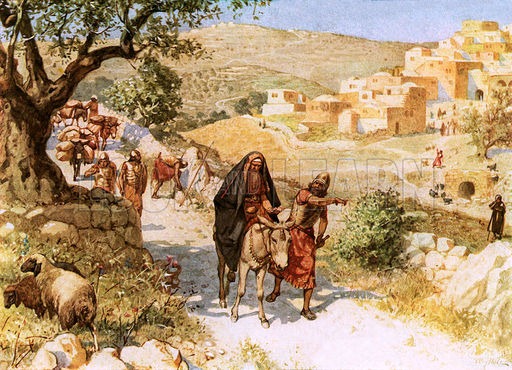
David, fleeing from Jerusalem, is cursed by Shimei.  William Hole, Old Testament History (Eyre and Spottiswoode, c 1925 )

Leaders and governments come and go. So do countries and nations. Israel’s hope was not in David’s leadership, but in God’s faithfulness and sovereignty. Our hope is the same. If we are shaken by an election, for good or for bad, then to that extent, our faith is not truly grounded in an eternal God who promises us an eternal hope. This isn’t just about elections. This is about anything in life that threatens to shake us.

To listen to the sermon, click the play button:

To download, right click on the link (or do whatever you do on a Mac) and save it to your computer: Download 2 Samuel Part 17

2 Samuel #17 . 2 Samuel Chapter 17

This is not a political sermon, so just bear with me through the first few paragraphs, and you’ll see that there is some rich spiritual application.

I think it is safe to say that the election in the United States this past week reveals that we often deeply divided as a nation. Although the electoral college victory for Barak Obama was clear and decisive, the margin int he popular vote was less than 3%. These division may cause us dismay. Sometimes it may seem that the atmosphere is far to bitter and partisan. Many people are dismayed by politicians themselves — so many of them seem willing to push the envelope of ethical behavior extremely far.

The scripture that we are looking at today is especially relevant in these times. David was good king; in fact, he was God’s choice for king. But Absalom sounded good, looked good and deceived enough good people, and recruited enough schemers, to take power and send his dad David running for his life. Politically, things looked bad for Israel. How could the country be so ignorant as to let this smooth-talking, charming megalomaniac come to power? Obviously, there were still many who supported David, and who felt that Absalom was a very bad choice for king. But they were defeated and silenced. God’s choice no longer mattered. Righteousness and right didn’t matter. Instead, power went to the one who was most ruthless and clever. Those who were wise and aware in Israel, who trusted the Lord, must have been deeply dismayed.

At the end of 2 Samuel chapter 15, we learn that when David fled from his son Absalom, he left behind a kind of spy network. Two priests who were loyal to David stayed in the city – Zadok and Abiathar. Their two sons – Ahimaaz and Jonathan stayed outside the city, ready to relay messages to David. David also had a friend and advisor named Hushai. Hushai stayed behind and pretended to betray David, and so became an false advisor to Absalom, a kind of double agent.

David had another close friend who was an advisor. This man was named Ahithophel. 2 Samuel 16:23 says this:

Now the advice Ahithophel gave in those days was like someone asking about a word from God — such was the regard that both David and Absalom had for Ahithophel’s advice. (2Sam 16:23, HCSB)

This man truly did betray David. He supported Absalom and threw his lot in entirely with him. It is quite likely that when David wrote psalm 55, it was primarily Ahithophel whom he had in mind. He said these things:

Now it is not an enemy who insults me — otherwise I could bear it; it is not a foe who rises up against me — otherwise I could hide from him. But it is you, a man who is my peer, my companion and good friend! We used to have close fellowship; we walked with the crowd into the house of God. (Ps 55:12-14, HCSB)

…My friend acts violently against those at peace with him; he violates his covenant. His buttery words are smooth, but war is in his heart. His words are softer than oil, but they are drawn swords. (Psalm 55:20-21)

When David first heard that Ahithophel had betrayed him, he prayed for the Lord to confound his advice and to defeat him. He says similar things in Psalm 55. There is something here that intrigues me. If you read the Psalms especially, David is never shy about praying for destruction to come upon evil and evil-doers. Whenever I read such things, I cringe a little bit. I think most modern Christians do. It sounds so simplistic to our sophisticated ears. These types of prayers seem to assume that we are good, not bad, and we have the ability to discern who the bad ones are. I don’t think I’ve ever heard modern Christians pray that way. Now, Jesus did say to love our enemies and to pray for those who persecute us. So I think we ought to do that. But have we ever considered that part of our prayers could be asking God to frustrate and confound the schemes of unrighteous and wicked people? Here’s another sample from David:

Let those who seek to take my life be disgraced and confounded. Let those who wish me harm be driven back and humiliated. Let those who say to me, “Aha, aha! ” be horrified because of their shame. (Ps 40:14-15, HCSB)

If we pray in faith, trusting that God knows who truly needs to be confounded frustrated, and who doesn’t I think it is appropriate at times to pray against the success of those who appear to be against God. I’m not saying that we get to judge who those people are – I’m just saying that we can appeal to God to restrain and defeat wickedness, trusting him to judge who is wicked and who is not.

Ahithophel certainly appeared to become a wicked person. His first advice to Absalom was that he publicly violate the women of David’s harem, who had been left behind when David fled. This was a symbolic cultural gesture, expressing contempt for David, and showing the people that he had completely cowed and defeated him. The possession of the King’s wives was a way of solidifying his own claim to be the new king.

Absalom took that advice, fulfilling Nathan’s prophecy that David’s wives would be treated publicly as David treated Uriah’s wife privately. The Hebrew leaves a little bit of room for interpretation. Absalom’s men pitched tents in public view – on the roof of the palace. The text says that Absalom “went in” to the women. It could mean that he raped them. But in the customs of those days, when a married woman was alone with a man who was not her husband, it was a disgrace. Whether or not anything happened, it was assumed that something had. So, whatever happened, from that time forth, those women were treated as if they had been raped. In those days, the custom (not biblical, just cultural) was that no other man would ever again be with them. They would have no place with their previous husband, nor any chance of a new one. However, after the rebellion was all over, David made sure that they were well cared for for the rest of their lives.

Ahithophel’s next advice was cunning and probably would have been effective. He told Absalom to pursue David quickly, to strike and kill him while he was still on the run, and end any doubt about who was king. But Absalom chose to also ask Hushai, David’s secret agent in the palace. Hushai gave advice that sounded excellent. He reminded Absalom that David was a cunning, fearsome old warrior, and that some of the Thirty were also with him. It would be no small thing to take such heroes on without enough preparation or force. David and Abishai (who was with him) had once killed six hundred men in a single battle, just between the two of them. Hushai suggested that Absalom could not risk bad news like a battle gone wrong, so early in his bid for power. The Lord heard David’s prayer, and Ahithophel’s scheme was frustrated.

Ahithophel’s reaction seems completely out of proportion. He goes and hangs himself. The text doesn’t really tell us why. I have a few theories, but they are only guesses. One thought is that Ahithophel reacted a little bit like Judas did one thousand years later, when he betrayed Jesus. Ahithophel may have realized that what he had done was wrong, and failed to believe that he could be forgiven and restored. So rather than repent and trust the mercy of God, he listened to lies of the devil that there was no forgiveness or hope, and destroyed himself.

The text does give us one clue. It says that Ahithophel did killed himself after he realized that his advice had not been followed. It could be that in his wisdom, he realized even at that early stage that if they didn’t kill David quickly, then they would inevitably lose. He may have seen right then that Absalom’s rebellion was doomed to failure. Rather than wait through all the turmoil and then be executed by David, he decided to put his affairs in order and deprive David the satisfaction of doing justice upon his body.

In any case, David’s prayer against evil was answered quite clearly.

Chapter 17 verses 17-29 read like an adventure novel. Hushai didn’t know at this point if Absalom would follow his advice or Ahithophel’s, and so he activated the spy network, warning David to flee across the Jordan river that very night. A servant girl went out from the palace bearing a message to the sons of the two priests. But the activity was noticed, and the two young men were pursued as they carried the message to the fleeing king. They took refuge in the courtyard of a friend, hiding in the well. The woman of the house spread canvas out over the well, and covered it with grain, so that no one even knew it was there. The soldiers of Absalom searched, but failed to discover the hidden well. Afterward, the young men continued on and successfully delivered their message, with the result that David and his household fled further on to safety.

So what do we do with all this? Let me be clear as I offer the first application. I am not saying that president Barak Obama is evil or unrighteous or that he is not God’s choice for president. I am not saying either that he is God’s first choice to be our president. But I know that whether or not he is God’s choice for president, many informed faithful Christians are very concerned that he has been reelected.

I want to point out that people have been following the Lord for thousands of years, and really only in the last three hundred years have human beings had consistent opportunities to choose their own government. Christian faith thrives in freedom. Christian faith thrives in oppression. God is not hindered by unrighteous rulers – if he were, Christianity would never have survived. So if you are thrilled that president Obama has been reelected, good. Just remember your hope should be in the Lord, not in a ruler. If you are dismayed, remember the same thing.

Leaders and governments come and go. So do countries and nations. Israel’s hope was not in David’s leadership, but in God’s faithfulness and sovereignty. Our hope is the same. If we are shaken by an election, for good or for bad, then to that extent, our faith is not truly grounded in an eternal God who promises us an eternal hope. David, as he fled from his murderous son, wrote this:

Cast your burden on the LORD, and He will sustain you; He will never allow the righteous to be shaken. (Psalm 55:22)

This isn’t just about elections. This is about anything in life that threatens to shake us. What does it mean, “he will never allow the righteous to be shaken?” When David wrote that, he had lost all that he had worked so hard for decades to attain. He was in danger of losing his life. His own son was trying to kill him. But he says, “the Lord will never allow the righteous to be shaken.” Obviously, he did not mean that things would never be hard. Obviously, he did not meant that the future on earth would never look bleak. What he meant is that our faith in the Lord looks beyond the here and now. You may wonder, “am I one of ‘the righteous’?” You are, if you trust Jesus. The promise of scripture is that Jesus imparts his own righteousness to us. This is not based upon what we have done, but rather on our faith in what he has done for us.

I think it is helpful to see David’s heart of faith in his extremely difficult and discouraging circumstance. Paul writes to the Philippians. He mentions people who are focused mainly on what is happening here and now:

They are focused on earthly things,but our citizenship is in heaven, from which we also eagerly wait for a Savior, the Lord Jesus Christ. (Philippians 3:20)

We are citizens of heaven. We have the same eternal king today that we had two weeks ago, the same leader that our predecessors in faith had two thousand years ago. Our best future is ahead of us, and nothing can take it away. It is difficult when life is unpleasant, or hard, or full of sorrow. But circumstances did not fundamentally shake David. They don’t have to shake your either. Set your hope fully in your eternal future with Jesus.