For some people, the player above may not work. If that happens to you, use the link below to either download, or open a player in a new page to listen. You can also find us on Spotify at https://open.spotify.com/show/6KKzSHPFT466aXfNT2r9OD
To download, right click on the link (or do whatever you do on a Mac) and save it to your computer: Download Lament Part 2
Once again, I will be adding things in the recorded audio sermon that may not show up in the written version. Please consider listening to the audio.
Paul writes in 1 Corinthians 13, the famous chapter on love, that among the many things that is true of divine love is this: “…love keeps no record of wrongs” (v. 5).
If you lament however, and pour out your complaint to the Lord, as David did in Psalm 142 (discussed last week), it may seem that you are doing exactly that. Yet, I am trying to make the case that there is a difference between lamenting, in which you identify the specific nature of your troubles, and in keeping a record of wrongs. The two can look very much alike, but what distinguishes them is your “why.”
If you take offense and allow yourself to become bitter, you view everything in your life through the lens of what was done to hurt you. You become a victim. To everyone who will listen, you will recite in detail what various people did to hurt you. You do this in order to receive sympathy and support for your case against those who injured you. There is a tone of resentment that seeps through these discussions. This is evidence that your heart is unhealed and it is a clear indication that you need both healing in your heart and you need to learn to cancel the debt of the person or people who have hurt you. By the way, this is a bit different than processing your hurt with people who can help you heal. The person who has taken offense is someone who doesn’t plan to heal. They just want to complain.
(Tom here, now, for this paragraph) We should remember that it is possible take offense at God, and even resent him. In such cases, we might complain to him, but our complaint to God has no trust, no hope. In such cases we are merely expressing our dissatisfaction, and we want to show not that we trust God, but rather, that it seems he has failed us. This was the kind of grumbling that the people of Israel did in their journey between Egypt and the Promised Land.
By contrast, the lamenter’s focus is one of trust in God. He or she has a purpose in verbally identifying the specific nature of his or her troubles in order to invite God into them. This process is very similar to asking God to heal your physical body. Usually when you do that you are very familiar with the particular ailment that you want God to heal. You mention it by name. When you are asking Him for healing, it is likely you will say something like, “Lord, I would like you to heal my back…” Or, “Please heal my skin cancer…”
When you do that, you are not offended by the problem. You certainly don’t like the thing that afflicts you, but you want to identify it in order to bring it to the Lord for healing. That’s what we are doing when we are lamenting and pouring out our complaint to the Lord. This is why doing so is not grumbling or murmuring.
What I’m recommending in this series is identifying to God the things that are creating misery, anguish, torment, grief, relational loss, anger, or even a sense of rejection in your life.
I am encouraging you to get specific in your lamenting to God about the particular nature of the pain you are feeling. Perhaps you have experienced a relational injury and you know that eventually, it will be to your benefit to get to a place of forgiving the person who hurt you. That’s good, but you won’t get there by pretending everything is okay. It’s much more authentic and beneficial to you if you talk to God about how you were injured. What was said that you find hurtful? Christians often make the mistake of prioritizing forgiving someone over receiving healing for the pain that sets them up for future resentment. If you attempt to forgive before you lean into your pain and bring it to the Lord, you short circuit the process. In order to be able to authentically cancel someone’s relational debt, you must not minimize what happened. It may be that there are a hundred other people who have experienced worse than what you experienced, but if what happened to you hurt you, it matters. So begin there. Feel your feelings. They are there to serve you. It was God who gave you the capacity to feel. Your feelings are like spiritual nerve endings which inform you of an injury. Pay attention to them. Identify them. Say out loud how someone’s actions make you feel. Did they make you feel shamed? Accused? Condemned? Judged? Insulted? Disrespected? Dishonored? Misunderstood? Rejected? Exploited? Victimized? Abused? Admitting them is an important first step to healing. Admit them and lament them. Grieve them. And, invite God in.
Lamenting is good for your spiritual health. It keeps you from imploding. It helps you avoid fakery. Lamenters understand that you don’t have to “fake it till you make it.” Lamenters are not image managers. They get comfortable letting it all hang out because they know God is a God of big shoulders. He’s not fussy– not annoyed by the lamenter’s anger, frustration, hatred or by the raw language they may use to express their frustration. Why? Because a lamenter is turning toward God in his pain.
Grumbling is not good for your health. Grumbling causes you to focus on your problems. The grumbler is stuck in a rut because He stopped inviting God in. He or she is actually keeping God at arms length. Grumbling is the breeding ground for resentment. The grumbler has an entitlement mindset and his temporary disappointment with God becomes permanent because He views God as someone who was supposed to help Him cope. He views God like an illicit drug– something to make him feel better. In their hearts, grumblers feel that God is a means to an end, and they feel he has failed to do for them what they expect him to do. In other words, the grumbler’s world is oriented around him/her self and not around what delights God. Perhaps it never was.
It’s been occurring to me a lot lately that this way of thinking, that is, the one that is based on orienting my life around myself is a counterfeit version of real Christianity. The real disciple of Jesus is called to a life that is oriented around, centered in and based on Jesus of Nazareth. It’s normal for every person, including every genuine follower of Jesus to want things to go well. It’s normal to work hard at making life work, however we define that. BUT and this is a big “but,” but an actual follower of Jesus has embraced the idea that it is right, good and holy to forsake literally everything to follow Jesus, to surrender every agenda, every longing, every ache, every hope, dream and ambition in favor of living to please the Savior. He or she adopts and begins, over the course of time, to embody the motto, “not my will, but Yours be done.” He or she has come to the realization that he or she must be grounded in the value that God’s Kingdom is his/her first priority (Matthew 6:24).
A lamenter can sound a lot like a grumbler. The thing that makes lamenting different is the reason behind your complaining. The lamenter is turning to God, not away from God and inviting God into his or her hardships. Doing this can lead to some questions, questions like “Why?” This question usually bubbles out of the profound confusion that disables the lamenter. The lamenter’s pain is profound, and his/her confusion is great. He or she simply must ask, “Why?” Next week we’ll lean into this question more fully.
We have now entered the final section of 2 Samuel. It is arranged according to a typical ancient middle eastern pattern: chiastic structure. This first section shows us that the problem of sin is much worse than we usually imagine. It is meant to show us that we have no hope unless God does something to save us. Thankfully, he has, through Jesus Christ.
To listen to the sermon, click the play button:
For some people, the player above may not work. If that happens to you, use the link below to either download, or open a player in a new page to listen.
To download, right click on the link (or do whatever you do on a Mac) and save it to your computer: Download 2 Samuel Part 23
2 SAMUEL #23. 2 SAMUEL 20:1-14
If you look at 2 Samuel chapters 21-24, they seem, at first glance, a bit messy, and even random. These chapters don’t seem to fit with everything else that has been going on. One of the things that is confusing is that up until now, the life of David has been going on mostly from beginning to end. In this last section, however, things appear to be more random, and there are stories from all throughout David’s life.
Some skeptics use this last section as the basis for claiming that these were all just stories that were embellished and put together more or less randomly over time, rather than a carefully written book by an author who had reliable source material and who wrote close to the time of David.
In fact, I myself believe that the narrative arc (that is, the main story) of 2 Samuel ends at chapter 20. However, in chapters 21, 22, 23 and 24, we have a kind of epilogue, a carefully structured end to the book of Samuel. It is not random or haphazard at all.
In our modern western way of thinking we often use outlines like this:
Introduction
Part I
Part II
Part III
Summary/Conclusion.
In ancient middle eastern societies, they also had their own practices in making points. One of them is called “chiastic structure.” A chiastic outline looks like this:
Part A
Part B
Part X (Middle Part)
Part B1 (connects back to part B in some way)
Part A1 (connects back to part A in some way)
If you just look at this arrangement on the page, it looks like the left-hand side of an “X,” or , possibly, a “greater than” sign from mathematics, with the wide end on the left, pointing to the right. This is where it gets its name, since the Greek letter “Chi” (pronounced “kai”) looks like an English “X.”
There are variations on this structure, but you get the idea. As it turns out we can see that 2 Samuel chapters 21-24 form a chiastic structure like this:
A. Plague that ends with an atonement (21:1-14)
B. Battles and Warriors (21:15-22)
X. David’s Psalm (22:1-51)
X1 David’s Last words (23:1-7)
B1 More about warriors and battles (23:8-39)
A1 Another plague and atonement (24:1-25)
When we see it like this, it becomes apparent that this material was carefully arranged, not randomly thrown in at the end. It is arranged differently than a modern author might do it, but by looking at the arrangement, we can better understand what this material would mean to the original readers, and then think about how that meaning could apply to us.
So, in the first place, we need to know that this material is not chronological. Meaning, we are now done with the story of David moving from his youth to his older years. These chapters do add to David’s story, but we are not meant to think that all of these things happened in order, or after the rebellion of Absalom. In fact, it is quite clear that the incident in chapter 25:13-17 actually happened before the one described in 21:15-17. In fact, the one in chapter 25:13-17 occurred when David was much younger, during the events described by chapter 5:17-25.
We will take this section piece by piece. The first piece is in chapter 21:1-14. It could have happened any time during the reign of David. I’m inclined to think it happened before Absalom rebelled, mostly because there is no mention of David’s sin with Bathsheba, or any other disturbance in Israel. Also, because it concerns the family of Saul, I expect it was earlier in David’s reign.
The situation was this:
It started with a famine. This is equivalent to a modern-day economic recession or depression. Times were tough, families were struggling. After three years of this, David began to wonder if there was a spiritual reason for the hardship. When he worshipped and inquired of the Lord (probably through the prophet Gad, and through the Urim and Thummim, the “holy dice”) he learned that the famine was because of something king Saul had done.
There was a group of people known as the Gibeonites. They were not Israelites, but when Israel invaded in the time of Joshua, the Gibeonites had tricked the leaders of Israel into swearing an oath that they would not destroy the Gibeonites. So they had lived for more than four hundred years in Israel’s territory. According to the old agreement, they were essentially a tribe of servant-class people for the Israelites. They kept their part of the agreement, working as laborers for the Israelites, and remaining peaceful. But at some point not recorded elsewhere in the bible, Saul had tried to wipe them out. Essentially, he tried to commit genocide, similar to what Adolf Hitler did to the Jews in the 1930s and ‘40s. Apparently he slaughtered a great many of them, but obviously not all.
Stop for a moment here. The famine came along years later. Saul was dead. The whole nation had repudiated Saul’s family, and chosen David. David had never done anything like Saul’s slaughter. David is now leading the nation, and he had never hurt the Gibeonites. But the entire nation was still punished, years later, for what Saul did.
My first response to this is to think that it was not fair. Why should David’s kingdom pay for something David did not do? Why should the people suffer for a crime they had no part in?
But there is another question here also, and it is equally valid: Why should the Gibeonites suffer? Why should they be denied justice? Would it be right to ignore the crimes that were done to them?
When David heard what the problem was, he spoke to the Gibeonites directly.
He asked the Gibeonites, “What should I do for you? How can I make atonement so that you will bring a blessing on the LORD’s inheritance? ” (2Sam 21:3, HCSB)
There is a key concept here: atonement. The idea is that harm done must be made right; justice must be appeased. When you break a window, you atone for it by paying for a new window. But how do you atone for something like genocide? It would be appalling and offensive to simply suggest we should “just forget about it.”
The Gibeonites told David that they would like to execute seven of Saul’s descendants. David made sure to protect Mephibosheth, son of Jonathan. The seven who were executed were Armoni and Mephibosheth (a different one) – sons of Saul by his concubine Rizpah. The other five were sons of Merab, Saul’s oldest daughter (thus, they were Saul’s grandchildren). If you remember, Merab was originally supposed to be David’s wife. They were hanged, and their bodies were left exposed.
I think there is an important cultural difference between the ancient world and our own. We think of the individual as the most important unit of society. So, we defend the rights of individuals to be free. Our laws primarily protect individuals. But in the ancient world, a person’s family identity was much more important than their individual personhood. So, even though the individuals who were executed did not themselves, murder the Gibeonites (at least we don’t know for sure that they did), both the other Israelites, and they, themselves, would recognize that guilt upon their family is the same as guilt upon them. The execution would not have seemed as unjust to ancient Israelites as it does to us. Family identity, and family honor and shame, was much more important to them than the rights of individuals.
Does this story disturb you at all? I hope so. In such passages, we are meant to be shocked, horrified and put off. This is how bad sin is. This is how completely unattainable holiness is.
In many areas of our lives, we accept that things must add up. If we want lunch from a restaurant, we must pay for it. If we aren’t willing to pay the price, we do not get the food. If we work for x number of hours, we should get paid for those hours. If our employer is unwilling to pay what was agreed, the employment contract is broken. The only way to fix it is for the employer to give what is owed. If we break something that doesn’t belong to us, we must pay for it to be repaired, or replaced.
For another example, we sometimes say, “there is no such thing as a free lunch.” Someone pays for it, even if it isn’t you. The food had to come from somewhere. Someone had to work to grow it, harvest it and cook it.
We understand that similar things are true in the laws of physics that govern the universe. If you jump off a cliff, you will fall to the bottom of it, and if the cliff is high and the bottom is solid, you will die. No one says, “That’s not fair. I want to be able to jump off this cliff without dying.” We understand physical actions have real world consequences.
But for some reason, we seem to think that in terms of moral actions, nothing must be paid for, and nothing has to add up, nothing has to have consequences. We readily accept that there is no such thing as a free lunch, but do we know that there is no such thing as a free lie, or free adultery, or free robbery? Why in the world would we think that moral behavior is exempted from the laws that are so clear in the rest of the universe? Immoral behavior incurs a “moral cost” that will be paid, one way or another.
Imagine you get drunk, and crash your car right into my living room. That action incurs a physical cost. Someone will bear the cost of that accident. If you, or your insurance company don’t pay, then I must bear the cost. If I say, “I’m not paying,” and you also refuse to pay, then I will bear the even greater cost of watching my house become unlivable because the front wall is open to the weather. The cost is there, whether we want it to be or not. It will get paid, one way or another.
This is also true of moral behavior. When we sin, it MUST be accounted for. The balance must be reconciled. Deep down, we know this. It would be a permanent obscenity upon the human race if no one had tried to bring justice upon the perpetrators of the Jewish holocaust. We know that. If someone entered a school and shot dozens of schoolchildren, it would be an insult to all humanity if we simply let the murderer go free. In the case of both of those incidents, however, the moral cost is even more than can be paid by the perpetrators. Executing the school shooter will not eliminate the horrible burden of grief and loss that he caused all of the families of his victims. Such a person cannot make up for his actions. The cost is too great.
If sin isn’t atoned for, it lasts. The cost is too great, and the consequences last. There is no statute of limitation. In the case of the Gibeonites, the atonement required was gruesome and was itself full of tragedy.
This passage shows us the futility of what some religions call “karma.” If it is true that “what goes around, comes around,” then we are doomed. If we need to make up for all of our sins not only in this life, but also for past lives, we will never find rest for our souls. If the sins of previous generations are on our heads, there is no hope. If even “only” our own sins are accounted to us, there is no hope.
Now, if you read this passage, and you think about what I’m saying, there are two possible responses. One response is to say, “Wow! I really need to straighten out my act and get serious.” If that’s your response, you still don’t get it. If this makes you think you need to get it together, you still don’t understand how bad this is.
The only appropriate response to this passage is: “If this is the way things are, I’m dead meat.”
We are all dead meat.
Saul’s sons and grandsons were dead meat. There wasn’t anything they could do to avoid a shameful death. According to the moral law – according to God, if we understand this passage correctly – they deserved it. Nothing would be right until they got what was coming to them.
This is how it stands in the universe. The moral equation must add up. The only way to make it add up is for you to suffer and die. But even though that is the most any of us can pay, that is not really enough. Too many Christians don’t take it seriously enough. When someone tries to straighten out her life and live morally, to be a good person for God, she isn’t taking this seriously.
Imagine a homeless bum who is stupid-drunk. In his intoxication, he kills a woman – someone else’s wife and mother. Now imagine he sobers up, and realizes he’s done something bad. In response, to try and make up for it, he offers the family all the money he has, which amounts to $17.
“I’ve given them everything I have,” he says. “It’ll just have to be enough.”
It’s an insult. It is offensive that he would even offer it, let alone that he would try to pretend that it could make up for what he did, even if it is everything he has. That is just how ridiculous and offensive it is to suppose that we can be good enough to make up for the times when we sin. We are dead meat.
That is what this passage is all about. You have no hope. You have no options. You deserve to die and your attempt to make up for things is so pathetic that it is offensive.
Thankfully, these are not the only verses in the bible. Thankfully, the Lord loves us too much to leave us without hope. But get this straight: there is no hope in your behavior. There is no hope in you straightening out and doing better next time. You can’t dig yourself out of this pit – the walls will come crashing in and bury you.
Too many churches give the impression that Christianity is about getting your act together. It isn’t. That’s entirely false. If you think you can get your act together enough to make up for your moral failings, you aren’t a Christian. Sometimes I think Christians don’t get excited about the “Good News” because they haven’t taken the bad news seriously enough.
The accounts of morality must be balanced. But we can’t do it. And that is why Jesus came to earth. The most appropriate response should be profound gratefulness.
Jesus took our sins upon himself. The balance was paid out through his torturous death. Through faith in him, we were punished by his death. That is what we call atonement. There is no other hope of settling the score.
But in Jesus, that hope is real and true. There isn’t anything you can do. And so he did it all. Our part is to trust that, and accept it with gratitude, and live like it’s true. When we truly believe both the bad news and the good news, Jesus changes us from the inside out. When we know we truly don’t have to measure up, there is a tremendous freedom and joy that brings us even closer to God. We will actually start to live better lives, but not to try and make up for something, rather because we trust that God has already done it,
Pause now, and let the Holy Spirit speak to you today.
After Absalom was dead, and his rebellion put down, David encountered various individuals and groups who had conspired against him, or used the situation in some way to their own advantage. These people ranged from cowards to treasonous quislings. David, once again with the power of kingship, chose not to punish them, but rather, to forgive them. His kindness and grace to such despicable people comes across as offensive; outrageous, even. In this way, David reminds us once more of the Messiah, Jesus Christ, whose forgiveness to undeserving people is also outrageous. God’s grace is for those who don’t deserve it. We must never forget that.
To listen to the sermon, click the play button:
For some people, the player above may not work. If that happens to you, use the link below to either download, or open a player in a new page to listen.
To download, right click on the link (or do whatever you do on a Mac) and save it to your computer: Download 2 Samuel Part 21
2 Samuel #21 . 2 Samuel Chapter 19:9-43
The second half of chapter 19 appears to be mostly a detailed record of the political history of that time. This was valuable and significant to the ancient Israelites who lived not long after David’s time. It is still interesting today to historians, and bible-geeks like me. But what is the point of it really?
I know I’ve mentioned this before, but I think it is important to revisit it periodically. We all tend to forget. The Holy Spirit made sure first that this history was written; second, that it was preserved through the years; and third, that it was included in the bible. So there must be some reason for this. There must be some way the Lord wants to speak through it to Christians living today.
Sometimes, in order to hear what the Lord wants to say today, we first need to understand it better. So please bear with me. I think we’ll find some fruitful bible application here if we pay attention to details that might otherwise seem tedious.
Here’s the situation. David’s army has defeated and killed Absalom, who had rebelled against him and set himself up as king in David’s place. There were no computers or telephones or newspapers in those days, so it took a while for the news of David’s victory to spread. Meanwhile, David seems to have waited. This might seem a little bit strange. But remember who David is. He has many faults, to be sure, but he has never grasped at power. Instead, he always waited for the Lord, even refusing to take opportunities to gain the kingdom when he was younger. It is my opinion that once Nathan confronted him about the Bathsheba incident, David once again became like the person he was when he was younger. All of his confidence was once more in the Lord. So here, he once more waits until he is sure that the Lord still wants him as king. He doesn’t want the civil war to continue, so he waits until he is sure he can return in peace. This is David once more at his best, trusting the Lord.
The writer of Samuel often makes a distinction between the tribe of Judah and the other eleven tribes of Israel. Often when he writes “Israel” he appears to mean the tribes as distinct from the tribe of Judah. This shows us that there was some tension between those two factions even in the time of David. In the time of David’s grandsons, the nation was split. Judah absorbed most of the tribe of Benjamin and became a separate nation named “Judah” (from which we get the word, “Jew”). The other ten tribes formed a kingdom to the north of Judah, which was called “Israel.” I’m of the opinion that it was shortly after this split that someone took the writings of the prophets Samuel, Nathan and Gad, along with some official court history, and made it all into the books of First and Second Samuel.
After Absalom’s rebellion, people from the other tribes began talking about inviting David back officially, and officially receiving him once more as king.
Now Israel had fled every man to his own home. 9 And all the people were arguing throughout all the tribes of Israel, saying, “The king delivered us from the hand of our enemies and saved us from the hand of the Philistines, and now he has fled out of the land from Absalom. 10 But Absalom, whom we anointed over us, is dead in battle. Now therefore why do you say nothing about bringing the king back?”
Apparently, the people really had committed to Absalom. They said he was the one they had anointed to be king over them. This wasn’t as strange as it might seem. After all, he was the king’s son and heir. I’m sure many people assumed that sooner or later, Absalom would be king anyway, and why not have him in the full vigor of his youth? But now, he was gone. I would have thought that at this point it was a clear choice to go back to David, but the people still seemed at a loss. Even so, from most of the tribes, sentiment turned back toward David.
But the tribe of Judah did not seem to know what to do. At first, this seems strange, since David was from the tribe of Judah. But then, so was Absalom, David’s son. Absalom’s rebellion was conceived and carried out in Hebron, the chief city of Judah. Absalom’s military commander, Amasa, was a relative of his (and David’s) from the tribe. In fact, most of his inner circle were probably from Judah. In other words, although they were David’s people, they were also Absalom’s people, and they were probably chiefly responsible for the rebellion.
David reached out to them. He sent a message to the leaders of the tribe of Judah, saying,
‘Why should you be the last to restore the king to his palace? The talk of all Israel has reached the king at his house. 12 You are my brothers, my flesh and blood. So why should you be the last to restore the king? ’ 13 And tell Amasa, ‘Aren’t you my flesh and blood? May God punish me and do so severely if you don’t become commander of the army from now on instead of Joab! ’ ” 14 So he won over all the men of Judah, and they sent word to the king: “Come back, you and all your servants.” (2Sam 19:11-14, HCSB)
As David made his way back, he was met at the Jordan river by a host of people who wanted the honor of escorting him to Jerusalem. What follows was a slightly sickening display of sycophancy. People ended up arguing amongst themselves about who got to show David honor, and who was honoring him more (19:40-43).
Along with the leaders of the tribe of Judah, one of the first people to come meet him was Shimei. You may remember him from 2 Samuel 16:5-13, which we covered in Part 18 of this sermon series. This was the man who cursed David and pelted him with rocks and dust as he fled from Absalom. When David was down, he piled on with insults and taunting, rubbing David’s face in the humiliation, exulting in David’s misfortune and shame. Shimei did not just mess up and make a mistake – what he did was clear and deliberate. Now that David was king again, Shimei came fawning to him like a disobedient dog, begging forgiveness. Clearly, he wouldn’t have had this attitude of Absalom had won. I don’t know about you, but I think that Shimei was pond-scum. His behavior and attitude are despicable, detestable, the lowest and ugliest forms of hypocrisy and cowardice. He is a jerk, plain a simple, the kind of person I want nothing to do with.
And David forgave him.
Stop for a second, and think on that. Let it sink in.
Let’s be honest. David’s forgiveness and compassion are offensive. Abishai, brother of Joab suggests, as he did before, that Shimei would be a more attractive person if his head was removed. I tend to agree with Abishai. But David did not.
Does this remind you of anything? The love and compassion of Jesus were also offensive. The Pharisees were offended that he would eat with tax collectors and known sinners. He allowed a prostitute to kiss his feet in public, and wash them. It offended them.
I think once more, this text is a far-off picture of Jesus, the ultimate anointed savior of God’s people. It isn’t really about David, it is about Jesus, his wisdom and love, and how people respond to him. So let’s consider the rest of this text in that light.
We’ve been talking about Shimei. His sin was obvious and deliberate. There was no excuse for it. It wasn’t a momentary slip. It revealed an ugly character. Even so, David offered him forgiveness and redemption. Jesus does the same. That’s right, Jesus came to redeem and forgive class-A jerks, cowards and crawling hypocrites. It is offensive sometimes, to think Jesus would forgive someone that I want to hate so much. But he does.
Abishai was like me. Shimei’s character was clear to him. He was offended by David’s compassion and mercy. But David rebuked him. Sometimes we really are offended by the idea that Jesus would forgive certain people. Would he forgive a child-molester? Based on what I know of the bible, the answer is “yes.” Jesus is king, and he can forgive who he pleases. He does not answer to us.
But as an illustration, I do want to finish the story of Shimei, though it does not end for many years. When David was dying, he told Solomon to watch out for Shimei. So, even though David forgave him, he certainly saw the truth about what kind of person he was. Solomon made a just and fair ruling for Shimei, allowing him to live in peace if he would show his obedience and faithfulness by never leaving Jerusalem. Shimei, revealing his true character, agreed, but then ignored the agreement when it became inconvenient. As a result, Solomon had him executed. So in the end, forgiveness did Shimei no good, because he did not allow it to touch his heart and change the kind of person he was.
In the same way, the forgiveness of Jesus does not help those who don’t truly repent, who don’t allow him to work in their lives. Jesus sees all, so we can let ultimate judgment rest with him. He knows what’s really in each person’s heart, and responds accordingly. You can’t be truly repentant without letting God’s love change you.
Back to David, the next person to arrive was Ziba. At this point, Ziba was revealed as a trickster and manipulator, because right behind him was Mephibosheth, whom Ziba was supposed to serve. Mephibosheth revealed how Ziba took advantage of his disability, and took the donkey that was supposed to be for him, and lied, telling David that Mephibosheth rejoiced over David’s trouble. Mephibosheth had not washed his clothes, or cared for his hair or feet since David left. In those days, anyway, it was not possible to fake long fingernails and toenails. Mephibosheth’s physical condition proved that he was telling the truth.
So, David reversed his previous declaration, that Ziba should have all of Mephibosheth’s property, which was, no doubt, why Ziba lied in the first place.
Even so, even though he tried to trick his master Mephibosheth, David told Mephibosheth to divide the land between him and Ziba. This amounts to forgiveness, and even a reward, for the trickster and manipulator, Ziba. There it is again, that offensive forgiveness.
Mephibosheth’s response shows that his loyalty was always true. He didn’t care about the land, as long as David was safe, and king again. I mentioned before that Mephibosheth is a great picture of God’s grace. Unlike Shimei, the grace he received through David changed him permanently. He didn’t just want what David could give him. He wanted the best for the king that saved him, and he wanted fellowship with him, whether he had blessings from him or not. Mephibosheth rejoiced that David was back and safe, far more than he rejoiced about being vindicated in the dispute with Ziba.
This is an encouragement to me to have a similar attitude. It isn’t about what Jesus can do for me in this life. It isn’t about me getting what I think I deserve, or being proved right. It is about loving Jesus and being in relationship with him. You can’t manufacture that. It only comes when you love Jesus for who he is. If you feel like you lack that kind of love (as I often do), ask the Holy Spirit to give it to you.
One of the people who helped David in his exile was an old man named Barzillai. David blessed him and rewarded him, though again, Barzillai wanted no other reward than the safety of the king, and in fact, was too old to enjoy any of the blessings David wants to bestow. So too, I find it helpful to remember that even though Jesus sometimes offends me by his radical forgiveness of people whom I think are undeserving, he does also love his faithful servants. He does not forget them, or offer them less than anyone else. Maybe, like Barzillai, we don’t enjoy the blessings in this life. Even so, Jesus offers us blessing and joy that can never spoil or fade.
Another group to consider is the leaders of the tribe of Judah. They made a deliberate choice to follow Absalom instead of David. But before they even repented, David was reaching out to them, forgiving them, restoring them to a relationship with him. So Paul writes about Jesus in Romans 5:
For while we were still helpless, at the appointed moment, Christ died for the ungodly. For rarely will someone die for a just person — though for a good person perhaps someone might even dare to die. But God proves His own love for us in that while we were still sinners, Christ died for us! (Rom 5:6-8, HCSB)
Jesus’ love and forgiveness is given time and again to those who don’t deserve it – because no one deserves it. So, if you think you are unworthy, you are correct. But that doesn’t stop Jesus from giving you grace and forgiveness anyway. You may think someone else is unworthy. You are also correct about that. But if you don’t want the Lord to forgive them, you cannot have forgiveness yourself. We are all unworthy. Instead of being resentful about how God forgives others, be grateful about how he forgives you.
Abishai was not the only one who took offense at the mercy of God that David showed to all who would see. The ten other tribes of Israel were also offended that even though they were the ones who first talked of bringing David back, it was the tribes of Judah and Benjamin who got the honor of doing so.
In Jesus’ time, the Pharisees were also offended at Jesus’ graciousness. In those days, the Roman government and the provincial government were corrupt and horribly oppressive. Roman soldiers often raped local women and got away with no repercussions. Government officials took whatever they wanted, including, at times, the daughters of Jewish families. Tax collectors were Jewish people who worked for these awful Romans and got them the money they needed to maintain their power. Not only that, but they could collect whatever tax they wanted. So if the Roman and local taxes equaled six months labor, the tax collector could add whatever he wanted on top of that to make himself rich. Some people ended up as slaves because they couldn’t pay their taxes. Therefore, tax collectors were deeply hated, and with good reason. They were like Nazi collaborators in German occupied Holland or France during WWII. And yet Jesus forgave tax collectors. He fellowshipped with them. It was offensive.
God offers not only amazing grace. He offers outrageous grace. This is good news, and a tremendous comfort for those who know they need it, but it can be dangerous when we think only certain people should be allowed to receive God’s grace. The very essence of grace is that it is given to those who don’t deserve it.
I think that may be a key. If the forgiveness and mercy of God to others offends you, is it possible that perhaps you do not realize how much you yourself need that same grace? Jesus said:
“Blessed is the one who is not offended by me.” (Matthew 11:5-6, ESV)
David knew that his son Absalom had to be stopped, and so he did what was necessary to make that happen. Even so, David always wanted reconciliation with Absalom. This is typical of how David viewed his enemies. Showing us the heart of God, David usually loved his enemies, and longed to be reconciled with them. In the same way, except even more, God loves every human being, and wants us to return to him, no matter what we’ve done. It was while we were God’s enemies that Christ died for us.
To listen to the sermon, click the play button:
For some people, the player above may not work. If that happens to you, use the link below to either download, or open a player in a new page to listen.
To download, right click on the link (or do whatever you do on a Mac) and save it to your computer: Download 2 Samuel Part 20
2 SAMUEL #20: 2 SAMUEL 18:1–19:8
Second Samuel chapter eighteen records the end of Absalom’s rebellion, and of Absalom himself. If you remember, David fled for his life across the Jordan river and to the city of Mahanaim. This was about ten miles east of the Jordan river, up in the mountains, about halfway between the Dead Sea and the Sea of Galilee. It was within the nation of Israel at the time (now it is part of the country of Jordan). It was a fair distance over rough country from Jerusalem, if you were traveling on foot.
There, David gathered an army of those who were still loyal to him. Six-hundred to one-thousand soldiers had fled with David. The bible doesn’t tell us how many more he found, but the Jewish historian Josephus says that he had four thousand men when he went to fight the army of his son Absalom (I don’t know where Josephus got his information). The bible doesn’t tell us how many men Absalom had either, but considering the casualties listed in 18:7, there must have been many.
David created military units with lines of communication, devised a battle plan, and prepared to go out with his men. But his men convinced him to stay in the city of Mahanaim while they fought on his behalf. This made sense. Absalom had to kill only one man–David—in order to win. David had the humility and wisdom to recognize this, and so he listened to his men and stayed behind. But he gave his three chief commanders clear orders to “deal gently, for my sake, with the young man, Absalom” (2 Samuel 18:5). Many of his regular foot soldiers were present, and overheard those orders. It is very likely that they passed on this information to soldiers who weren’t close enough to hear.
Many of those who fought for David were probably veterans of his earlier campaigns. They remain today some of the most famous warriors in history. Certainly, David had most of the best military leaders of the nation on his side, even though he was at a disadvantage in numbers. Their strategy had been devised with the help of David himself. It is quite likely that David chose to go to the city of Mahanaim precisely because it was in the Forest of Ephraim, since the terrain there would help him in the upcoming battle. The area is not forested today, but it remains rugged and mountainous, as it was in those times also (see picture at left). In the rough terrain and the forest, the advantage of greater numbers that Absalom had would have been largely neutralized. David’s smaller, more experienced force had a better chance there than in a pitched battle in an open area.
This rough terrain was forested in David’s time
Absalom’s army was out-maneuvered, out-led and out-fought. They were defeated. The scripture records that many men perished in the rough terrain, in addition to those lost in battle, totaling 20,000 in all. In previous teachings I have explained the difficulties of numbers of soldiers in Hebrew. If you think it would be more realistic if the number was 2,000 men, by all means, go with that. The Hebrew could read either way.
In the defeat, Absalom fled on his mule. He went under the twisted, low-hanging branches of an oak tree, and his head was caught in the branches. The mule kept going, and left him hanging there, unable to touch the ground, and apparently unable to extricate himself from the tree. The text simply says that Absalom was caught by his head. It is the Jewish historian Josephus who claims it was, in particular, Absalom’s beautiful thick hair, about which he was so conceited, that trapped him.
Remember, David wanted his men to deal gently with Absalom. In a pitched battle, that could have been very difficult. If he was well and wielding weapons, and defended by others, it might have been impossible to take him prisoner without severely wounding him or even killing him. But here was the perfect opportunity to bring him back to David whole and unharmed. He was helpless and disarmed, a threat to no one. The first Israelite to discover this went and found Joab, David’s chief general, and told him. But Joab, instead of seeing this as a stroke of extreme good fortune, allowing him to capture Absalom without anyone getting hurt, took advantage of his helplessness and attacked him as he hung there. No doubt not wanting to be the only guilty party, he recruited ten young soldiers to assist him, so that the blame was shared. Absalom was struck dead.
I think that there was probably some bad blood between Absalom and Joab. It seems likely that previously, Joab had a soft spot for the charismatic prince. He helped Absalom get permission to return to Israel after he had murdered his brother. Even after that, Joab helped David and Absalom reunite. But Absalom had been arrogant and high-handed with Joab, and it was doubtful he had ever thanked him. In addition, Absalom had tricked Joab, making him an unwitting assistant in the rebellion. Finally, he never invited Joab to join him, which would have hurt Joab’s pride. So I think it is quite likely that Joab bore special grudges against Absalom, and that he killed him as much for his own sake as for David’s.
David first heard the news that the battle was won, and he was glad. But shortly after that, he heard that his son had been killed. He was overcome by grief and he lamented loudly. As a result, the victorious army marched into the city without the celebration and joy that were normal when the battle was won.
Joab, never deterred, rebuked David. He pointed out, honestly, correctly, that it was almost an insult to his men. Then Joab expresses what is really on his heart:
6 You love your enemies and hate those who love you! Today you have made it clear that the commanders and soldiers mean nothing to you. In fact, today I know that if Absalom were alive and all of us were dead, it would be fine with you!
Joab never understood David’s kindness, forbearance and love toward those who tried to destroy him: Saul, Abner and Ish-bosheth, to name a few. The world was black and white to Joab—there was our side (the good guys) and everyone who was against us (the bad guys). But David was God’s chosen instrument because he had a heart that God could use to show the world what the coming savior was really like. David, expressing God’s heart, encountered very few people that he truly hated or called enemies. He had a more nuanced view, and always hoped for reconciliation with those who hated him.
Even so, David was not a blind idealist. He did what had to be done. So he fought when it was necessary. But he always wished for reconciliation, and the death of those who called themselves his enemies grieved him. In this case, although he still grieved for his son, he was humble enough to recognize that Joab was right, and he was shaming the men who had risked their lives for him. So he went out to them and congratulated them.
I really want us to hear the heart of God through this part of David’s life. There are people who have turned their backs on God. God doesn’t hate them. There are people who mock God and rejoice at insulting and offending and even persecuting those who follow Him. God doesn’t hate them. There are people who have twisted the truth about God into manipulative and evil false religions that oppress millions of people. God doesn’t hate them. People may set themselves up as enemies of God, but God does not see it that way. He does see the reality – that some people hate him and have rebelled against him, even as Absalom did to David. Like David, God understands that at times it is necessary to put and end to the schemes of evil people. But he also looks at each one of them and sees a unique human being whom he loves deeply.
I have to admit. I’m more often tempted to be like Joab than like David. But listen:
10 For if, while we were enemies, we were reconciled to God through the death of His Son, then how much more, having been reconciled, will we be saved by His life! (Rom 5:10, HCSB)
We ourselves were once in Absalom’s place. We were enemies of God. God did not hate us. He reconciled us to himself. How can we turn and hate others when we’ve received such grace?
The bible is clear that some human beings can and do choose their own destruction rather than admit their need for God. God allows them to do that, or else love for God could never be real. But like David, he grieves deeply when people choose their own destruction. It happens, but he is never happy about it.
11 Tell them: As I live” — the declaration of the Lord GOD — “I take no pleasure in the death of the wicked, but rather that the wicked person should turn from his way and live. Repent, repent of your evil ways! Why will you die, house of Israel? (Ezek 33:11, HCSB)
Sometimes when we’ve been wandering away from God, we stay away because we think that God feels about us the way we deserve. Sometimes we think he feels about us the way we have felt against him. The prodigal son went home with a prepared speech, hoping he might be given a place among his father’s servants. But his father saw him from a distance and ran toward him, arms thrown open to welcome him back and to restore him to the family. That is how he is with us.
But while the son was still a long way off, his father saw him and was filled with compassion. He ran, threw his arms around his neck, and kissed him. (Luke 15:20, HCSB)
By the way, in ancient Middle Eastern culture, important men never ran in public. To run in public was humiliating for such men. But the Father of the prodigal didn’t care. He ran. That’s how God feels about us, even when we are his enemies, even when we think he couldn’t possibly love us after what we’ve done and where we’ve been.
While Jesus was being tortured to death, he prayed for the people who were killing him, saying, “Father, forgive them!” (Luke 24:34).
Peter betrayed Jesus in his darkest hour. Jesus forgave him and restored him. He welcomed him back into a relationship of trust, even after what Peter did. Paul persecuted those who trusted Jesus. He had them arrested and even executed. But Jesus welcomed him and forgave him when Paul repented. Jesus himself said:
7 I tell you, in the same way, there will be more joy in heaven over one sinner who repents than over 99 righteous people who don’t need repentance. (Luke 15:7, HCSB)
The plan, of course, is that the 99 righteous people, already living in God’s grace, rejoice along with Jesus and the angels of heaven.
David knew that he had been forgiven much. He had sinned horribly and yet, repented and received forgiveness. He hoped for the same thing for Absalom. This is a reflection of Jesus’ hope for us. Jesus sees us as we are, but he loves us anyway. He doesn’t hate you, and he never will. He wants the best for you, and he knows that comes only when you trust him. If you have already returned to him, why don’t you share the good news with others who also may not know that he longs to show them grace and compassion?
Sometimes it can feel like God is punishing us for our sins and failures. Thankfully, the Bible tells us that only Jesus received the righteous punishment for our sins. However, often, our sins do have natural consequences, which is one reason God wants us to stay away from sinning. At times, even though we are truly forgiven, we have to face those consequences. David, a man with a heart for God, shows us the way, and highlights the incredible grace of God’s forgiveness and ongoing presence with us.
To listen to the sermon, click the play button:
For some people, the player above may not work. If that happens to you, use the link below to either download, or open a player in a new page to listen.
To download, right click on the link (or do whatever you do on a Mac) and save it to your computer:
Download 2 Samuel Part 15
I felt it was important to spend an entire message talking about repentance, and David’s beautiful psalm when he finally turned back to the Lord after the affair with Bathsheba. But we sort of skipped over another part of what Nathan said to David, and it is also significant:
10 Now therefore the sword shall never depart from your house, because you have despised me and have taken the wife of Uriah the Hittite to be your wife.’ 11 Thus says the LORD, ‘Behold, I will raise up evil against you out of your own house. And I will take your wives before your eyes and give them to your neighbor, and he shall lie with your wives in the sight of this sun. 12 For you did it secretly, but I will do this thing before all Israel and before the sun.’”
13 David said to Nathan, “I have sinned against the LORD.”
And Nathan said to David, “The LORD also has put away your sin; you shall not die. 14 Nevertheless, because by this deed you have utterly scorned the LORD, the child who is born to you shall die.” 15 Then Nathan went to his house. (2 Samuel 12:10-15, ESV)
David was truly forgiven. But Nathan declared that even so, David’s sin would result in some terrible things. He says first that “the sword shall never depart from your house.” What he means is that David’s family, and even his descendants, will be constantly engaging in violence, war and strife.
Next he says that evil, or disaster, will rise against David from within his own house (again “house” here means family).
Nathan goes on to say that just as David secretly had an affair with someone else’s wife, a person close to David will sin sexually in public. In fact, as it turned out, two of his sons sinned in this way, as we will see.
Finally, Nathan declares that though David is forgiven, and will not be killed for his sin, the child conceived in adultery will die.
When we read all this, it sounds like God said, “I forgive you, but I’m still going to punish you.” Here’s where we must interpret the Old Testament in the light of the New Testament.
We know that the punishment for sins fell upon Jesus Christ, not on sinners. This was true even for people like David, who lived before the time of Jesus:
23 For everyone has sinned; we all fall short of God’s glorious standard. 24 Yet God, in his grace, freely makes us right in his sight. He did this through Christ Jesus when he freed us from the penalty for our sins. 25 For God presented Jesus as the sacrifice for sin. People are made right with God when they believe that Jesus sacrificed his life, shedding his blood. This sacrifice shows that God was being fair when he held back and did not punish those who sinned in times past, 26 for he was looking ahead and including them in what he would do in this present time. God did this to demonstrate his righteousness, for he himself is fair and just, and he makes sinners right in his sight when they believe in Jesus. 27 Can we boast, then, that we have done anything to be accepted by God? No, because our acquittal is not based on obeying the law. It is based on faith. 28 So we are made right with God through faith and not by obeying the law. (Romans 3:23-28, NLT, italic formatting added by me for emphasis)
This text clearly says that God held back and did not punish those who sinned in times past, because he was looking ahead and including them in “what he would do in this present time;” in other words, in Jesus Christ. Therefore, we cannot say that God was punishing David for his sin. But if God isn’t punishing David, what is going on here, then?
I think Nathan is revealing to David not a punishment for sin, but rather the consequences of it.
Think of it this way: If you throw a rock and break a window, the owner of the window may forgive you. But the window will still be broken. Because of the window-owner’s forgiveness, you won’t be prosecuted for vandalism. Because of that forgiveness, you won’t have to pay for the window. But forgiveness does not un-break the glass. There will still be a mess to clean up and a gaping hole in the house. Rain might come into that hole before it is fixed, and cause even greater damage to the surrounding wall. Burglars or vandals might use the broken window to enter the house and cause more problems. The forgiveness does not automatically eliminate those consequences. A burglar doesn’t say, “Look, an open window that I can use to sneak into the house! What’s that you say? The guy who broke that has been forgiven? Rats! Foiled again.” No, the burglar just goes on into the house. The fact that the window-breaker is forgiven is irrelevant to him, as it is to rain, and all sorts of other possible damage.
Or suppose I tell my young child not to touch a hot stove. The child does so. Now, she has disobeyed me. She has also burned her hand. Did I burn her hand as a punishment for disobedience? Of course not. The burn was a natural and unavoidable consequence when she chose not to obey me. In fact, the very reason for my commandment “do not touch the stove” was to keep her from suffering any burn. I will certainly forgive her for disobeying me. But that won’t change the fact that she burned her hand. Depending on how bad it is, she may carry the scar of that burn for the rest of her life.
Remember, David’s greatest failure prior to this was also due to his sin concerning his relationships with women. He had married six wives before this (2 Samuel 3:2-5), and in addition, had many concubines, who were, in effect, mistresses with official, legal standing. All this was in clear violation of what the Lord had said through Moses (Deuteronomy 17:14-17), or, to put it clearly, it was against God’s revealed word. In other words, he sinned by marrying more than one woman and by having mistresses. I think when Nathan tells David what is going to happen in his family, it is not just about Bathsheba – it is about his whole problem of lust and ignoring God’s word about marriage. You might say that the Bathsheba incident represented the tip of the iceberg of David’s sin. And so I think the “punishment” here that Nathan pronounces is simply a natural result of the way David had been sinning for many years.
David’s many sexual sins also created a severely messed up and dysfunctional family. His children did not grow up in the family structure that God intended from the first to be a blessing to human beings. As a result, David’s own children were emotionally and spiritually unhealthy, and much strife came about from that. In fact, most of the consequences that Nathan prophesied were brought about by David’s sons. Thanks to David, his own sons grew up with a twisted view of marriage and sex, which led to rape and ultimately rebellion.
You see, there are reasons for what the Lord tells us to do, and to not do. Not only does our sin trample on God’s holy character, but it also hurts us when we commit it. Very often, if we disobey God, we suffer painful consequences. So, because David ignored God’s commands about sex and marriage for years, he generated enormously negative consequences for himself and for others.
Now, what about the child dying? How is that a mere consequence of David’s sin? Honestly, I don’t have the answers, I just know Jesus, who does. He doesn’t always share them with us. But I have two thoughts.
First, infant mortality was fairly high in those days. It may be that the child was going to die anyway, and the Lord was simply predicting it, and telling David ahead of time that he wouldn’t change his mind.
Another possibility is as follows. In those days it was a very shameful thing to be born as a result of adultery. This is what we call an “illegitimate child.” The other word for such a child is “bastard.” I’m not being crude – that’s what the word means. The fact that even today that word is a very derogatory and demeaning insult shows how shameful it was in times past. I’m not saying it makes sense – it is never the child’s fault, of course. But an illegitimate child in those days would have suffered for the sins of his parents all his life. If instead that child went on to be with Jesus, it was a mercy that he didn’t live long enough to be reviled and cursed and shamed all his life.
Now, I said you can’t out-sin God’s grace. That’s true. I want you to hear that and believe it. You cannot do something that Jesus’ death on the cross did not pay for. But there are two important things to bear in mind, things that are taught by this passage.
First, David was able to receive God’s grace because he admitted he was wrong, admitted his need for forgiveness, and turned away from sin. In short, he repented. You can’t out-sin God’s grace, but God’s grace does you no good if you pretend that you don’t need it. It does you no good if you do not accept God’s judgment upon the evil of your sin, and repent of it. Grace is there and there is plenty of it, but we can only receive it through repentance and faith.
Let me be clear about repentance, as well. Repentance means you turn away from the sinful things you have been doing, and go the opposite direction, toward the Lord. While you are turned toward the Lord, you may fail and sin again, but repentance means you earnestly intend to do differently in the future, even if you can’t quite always make good on that intention. To put it another way, repentance is not merely asking for forgiveness. It is a deep commitment to stop sinning. You may still sin, but in your heart you do not want to sin, and you do not intend to keep on sinning deliberately.
Some people, who do not understand repentance, use God’s grace as an excuse to keep on sinning. They want what sin offers, and think something like this: “Well, it doesn’t matter, because God forgives me anyway. I know it’s wrong, but I want to keep on doing it, and since God forgives me anyway, I might as well keep sinning.”
Brothers and sisters, that is not repentance. That is an attitude that will eventually separate you from God’s grace. You have to choose between your sin and God’s grace. You can’t deliberately continue in both at the same time.
The apostle Paul recognized that some people might take the attitude that they can keep sinning without repentance, but he makes it very clear that this attitude shows that you have not really repented:
1 Well then, should we keep on sinning so that God can show us more and more of his wonderful grace? 2 Of course not! Since we have died to sin, how can we continue to live in it? (Romans 6:1-2, NLT)
7 “But,” someone might still argue, “how can God condemn me as a sinner if my dishonesty highlights his truthfulness and brings him more glory?” 8 And some people even slander us by claiming that we say, “The more we sin, the better it is!” Those who say such things deserve to be condemned. (Romans 3:7-8, NLT)
Again, I’m not saying that if you repent you will never sin that way again. But I am saying that when you repent, it is your genuine intention to never sin that way again. You may not achieve that intention, but even if you fail again, you continue on the path toward God and away from sin.
I’m not putting it all back on you to repent correctly. But I’m just trying to make sure everyone understands – this isn’t universalism. God offers grace to everyone, but not everyone believes they need it, and not everyone believes he offers it, or that it is sufficient. And if you believe you can have God’s grace without turning away from yourself and your sinful desires and habits, you do not know the Bible:
17 From that time Jesus began to preach, saying, “Repent, for the kingdom of heaven is at hand.” (Matthew 4:17, ESV)
14 Jesus came into Galilee, proclaiming the gospel of God, 15 and saying, “The time is fulfilled, and the kingdom of God is at hand; repent and believe in the gospel.” (Mark 1:14-15, ESV)
45 Then he opened their minds to understand the Scriptures, 46 and said to them, “Thus it is written, that the Christ should suffer and on the third day rise from the dead, 47 and that repentance for the forgiveness of sins should be proclaimed in his name to all nations, beginning from Jerusalem. (Luke 24:45-47, ESV)
30 The God of our fathers raised Jesus, whom you killed by hanging him on a tree. 31 God exalted him at his right hand as Leader and Savior, to give repentance to Israel and forgiveness of sins. (Acts 5:30-31, ESV)
20 I did not shrink from declaring to you anything that was profitable, and teaching you in public and from house to house, 21 testifying both to Jews and to Greeks of repentancetoward God and of faith in our Lord Jesus Christ. (Acts 20:20-21, ESV)
In the verses above, I have italicized the word repentance so you see my point more quickly. You do see it, right? Repentance is an essential part of the gospel. It is the beginning, and it is necessary if we are to receive God’s grace.
David, when he was confronted with sin, repented. He believed he needed forgiveness. He sought that forgiveness from God, and he received it. He was forgiven. Most of the evidence seems to indicate that after this, he went back to trusting the Lord with all of his heart. Psalm 51 certainly seems to show us that. In addition, we’ll see that when David faced the real-life consequences that Nathan predicted, he remained steadfast in faith, responding like the David of old to trouble and adversity.
So what does all this say to you?
First, read the bible. The bible serves us like Nathan the prophet served David. It shows us God’s perspective on things, it helps us to see things in a new light.
Second, this passage shows us the importance of repentance. Through Jesus, God has done everything needed to restore our relationship with him, and forgive us. But we have to believe we need it, and believe he offers it. We need to turn away from our own self-oriented life, and let our life belong fully to the Lord. Again, repentance doesn’t mean perfection. But it means your heart is turned away from sin and sinful desires, and toward God. Sins become an aberration, not simply a matter of course.
Third, do not let the consequences of your sins make you doubt God’s forgiveness. Sometimes, when we experience the difficult consequences of what we’ve done, or failed to do, it feels like God is still angry at us, like maybe we are not forgiven. That’s a trap of the devil. If you have repented in faith, you are forgiven. But sometimes, those consequences remain. The Lord will give you extra grace to face those things also, if you seek him. In fact, the next several chapters in 2 Samuel are all about the consequences of David’s sin, and how David faced them. We’ll see that it seems like David returned to being the man who leaned wholly on God in trouble and sorrow. So, if we face consequences for our sins, we too can be close to God and lean entirely on him, even if what we face is our own fault. God has indeed forgiven you. Trust him, trust his forgiveness and love, and lean on him in every situation you face in life.
Pause right now, and ask the Holy Spirit to speak to you.
Through David’s journey, we learn about the perniciousness of sin, the depth of God’s grace and the importance of genuine repentance. This compelling narrative not only highlights the transformative power of God’s love but also encourages us to reflect on our own lives and seek a renewed heart and spirit. Our only hope is a new, clean heart and a new, right spirit. God gives us those things because of his own amazing grace.
To listen to the sermon, click the play button:
For some people, the player above may not work. If that happens to you, use the link below to either download, or open a player in a new page to listen.
To download, right click on the link (or do whatever you do on a Mac) and save it to your computer: Download 2 Samuel Part 14
If you are reading this, please pause, and read 2 Samuel chapter 12:1-14 first. The message in the text is pretty plain, and I am not going to go over the whole story in detail. So read the chapter, then come back and read the rest of this. Today we are going to focus mostly on Psalm 51, which David wrote soon after this incident in his life.
Remember the situation: David committed adultery with Bathsheba, and she got pregnant. He covered it up by arranging to have her husband killed in battle. David did not appear to repent.
Not long after this, the prophet Nathan came to the king. He told David about a rich man in Israel who had a great flock of sheep, goats and other animals, and a poor man who had nothing except one little lamb who was his beloved pet. The rich man had a visitor, and he was obliged to feed the visitor. But rather than take one of his own vast herd, he extorted the one beloved pet from the poor man, killed it, and fed it to his visitor, while the poor man was helpless to prevent it.
David was enraged by the injustice of what the rich man had done, and furious that such a thing would happen in Israel while he was king. He demanded to know the name of the rich man, so he could punish him for such blatant extortion and injustice.
Nathan said: “You are the man. This story is about you.”
Besides being a very powerful part of this chapter, I think Nathan’s approach tells us something about the bible. I have said before, and I stand by it, that the whole bible, including the Old Testament, is about Jesus. The first and most important purpose of the bible is to introduce us to Jesus, and to help us get to know him better. So whenever we read any part of the bible, we should ask the Holy Spirit: “Where is Jesus here? Show me Jesus.” But part of getting to know Jesus is also about getting to know the things in our own lives that either help or hurt our relationship with him. So the famous Danish theologian and philosopher, Soren Kierkegaard, told people that when they read the bible, they should say, “this is about me.” And I agree with that, at least in the way that he meant. It is about Jesus first, but in a secondary way, related to that, the bible exposes our own attitudes, thoughts and ways of approaching life. In a way, the bible is to us what Nathan’s story is to David. We are supposed to read and engage. We should ask: “Where is Jesus?” But we should also ask, “Where am I in this text? What does this bible passage tell me about myself, in relationship to Jesus?”
Nathan goes on and catalogues the outrageous sins of David. But I don’t think he needed to. Almost all people have a deeply seated sense of justice. Nathan appealed to that in David through the story, and I think David was convicted as soon as Nathan said, “you are the man.”
13 David responded to Nathan, “I have sinned against the LORD.”
Then Nathan replied to David, “The LORD has taken away your sin; you will not die. 14 However, because you treated the LORD with such contempt in this matter, the son born to you will die.”
Now, the statement “I have sinned against the Lord,” seems a little inadequate, considering what David had done. I would have wanted more. But God knew what was in David’s heart. And wetoo, know what was in his heart at this point in time, because immediately after this, David wrote it down. You can find it in the bible in Psalm 51. This psalm was written right after Nathan confronted him about Bathsheba. The whole psalm is still today one of the most powerful expressions of repentance ever written.
I think Psalm 51 is amazing at so many levels. It is a powerful part of scripture, and contains much important truth. And yet, this amazing and helpful part of the Bible came about because of terrible sins. Therefore, one of the things this psalm shows us is that God can bring good out of any situation, even good out of our own horrible, deliberate sins. But we should also recognize that it wasn’t as if the sin is what generated this amazing part of the bible. It was David’s repentance from sin. I have said before, and I’ll say it again: this is what made David a man after God’s heart. Not that he never sinned, but that he always repented, and returned humbly to God, and gave up both sinning, and trying to justify his sins.
The important truths begin with the very first verse, in the way that David asks for forgiveness. He could have said, “Forgive me, Lord. After all, I am your chosen king.” He might have written: “Lord, if you don’t forgive me, all the amazing things you’ve done in my life up until now would be wasted.” Another possibility: “Forgive me, or the enemies of Israel will be encouraged. If you let something bad happen to me because of this sin, your people will be without a leader.”
He could also have made the claim—correctly—that compared to others, he had lived a mostly righteous life. Before this, he had followed the Lord even in spite of great suffering. He had refused to kill king Saul – twice – when he had him in his power. There was a lot of credit he could have claimed.
If David had lived in our time, he might have said, “Hey, love is love. I can’t help that Bathsheba and I fell in love. I can’t believe there is anything wrong with our love. And if only our society was more open, I wouldn’t have had to get Uriah killed.”
But instead of any of this, David asks for forgiveness on the basis of one thing alone: God’s hesed; that is, the faithful, covenant love that God has for his people. By doing so, David is saying: “I have no claim on you for forgiveness. I don’t deserve it. I dare to ask for forgiveness only because I know that you are a loving God. Please forgive me because of your own good and loving character.”
One of the things that is so amazing here is that it is a thousand years before Jesus. We might have expected David to offer sin-sacrifices at the tabernacle, and then consider that he had fulfilled his duty. In other words, he might have expected God to forgive him based on offering the right sacrifices. But he recognized (and he says it explicitly in verses 16-17) that sacrifices mean nothing unless his heart is in it. He knows that there is nothing he can do to earn God’s forgiveness, and no good he has done in the past is enough to “make up” for his sin. His only hope is that God will have mercy on him. No one can be righteous enough to please God. Instead, we depend entirely on God’s willingness to have mercy on us.
In verses 3-6 David expounds on this. He fully confesses his sin and brokenness, and he goes out of this way to show that he is not making excuses. There is no hope in excuses. There is no excuse. When speaking of his sin, David uses three words, translated by the ESV as: “transgression,” “iniquity,” and “sin.” Transgression describes a moral revolt against God. This is the part inside of us that rises up and says, “I know what’s right and wrong, but I want what I want, and I’m going to get it for myself even if it’s wrong.”
Iniquity describes an internal character of sinfulness. David says: “I was born in iniquity,” (verse 5). He means he was born with a flawed and sinful nature. The New Testament describes this as our flesh. We are all deeply flawed, and I don’t mean the wonderful and beautiful quirks of personality we each have. Something deep inside all of us is perversely wired to go against God, broken and twisted from birth, always oriented away from God.
Finally, David uses the word “sin.” Sin (or sins) describes the wrong, bad action. His affair was a sin. The arranged murder was a sin. But it is important to see that sins are just the tip of the iceberg. It starts with a broken and twisted internal character, and then desire that rises up in rebellion against God, and bears fruit with the actual wrong action. This reminds me of what James wrote:
13 And remember, when you are being tempted, do not say, “God is tempting me.” God is never tempted to do wrong, and he never tempts anyone else. 14 Temptation comes from our own desires, which entice us and drag us away. 15 These desires give birth to sinful actions. And when sin is allowed to grow, it gives birth to death. (James 1:13-15, NLT)
David says something interesting in verse 4: “Against you, you only, have I sinned and done what is evil in your sight, so that you may be justified in your words and blameless in your judgment.” When we first read this, it can sound surprising. Surely David sinned against Uriah as well, by committing adultery with his wife, and then by having him killed! How is it that David says his sin is against only God? Although this sounds wrong at first, it turns out to be quite accurate, and important – perhaps even more important today than it was when David wrote it.
In the first place, think of it like this: If there was no God, there would be no such thing as sin. Atheists believe this, and if they were right about the non-existence of God, they would also be correct about the non-existence of sin. If there is no God, even the idea that it is wrong to hurt someone else is just an arbitrary, made-up human rule. If there was no God, what David did to Uriah would be a tragedy for Uriah personally, but without God, who has the authority or power to declare it was a sin? David got away with it, after all, and he was the most powerful person in the region. Without God, that’s just the way the world works, and we need to live with it. So, you see, there can be no true moral evil unless there is some true, absolute standard.
The Bible tells us that the absolute standard is God’s holy character. Therefore, all sins are ultimately and finally sins against God. They are a violation of God’s holy character, and against his design for the human beings he made. There is no way to sin against another person without sinning against God as well.
Next, ask which is worse: violating the trust of another human being, or violating God’s? As a very imperfect analogy, suppose you kill your neighbor’s dog. Obviously, this is terrible for the dog, and it was wrong for you to hurt the dog. But the heart of your sin is really against your neighbor who loves the dog and is responsible for it. Obviously any human is more important than a dog, and in the same way, God is infinitely more important than any human being.
David is not saying that he did not wrong Uriah. Instead his point is that all sin is ultimately against God, and since God is infinitely greater, his sin against God is the heart of the issue. If he had not sinned against God, he certainly would not have sinned against Uriah.
This is especially important because in our world today, many people claim that nothing is really sinful if it doesn’t “hurt someone else.” So, for example, it is claimed, pornography doesn’t hurt anyone, so it’s not wrong to view it. Of course, they are wrong about pornography not hurting anyone. Hundreds, if not thousands, of former porn stars have testified that performing porn devastated them emotionally, spiritually, and sometimes physically. Some of those same women, while they were still performers, claimed that they really enjoyed it. But later, when they owned the truth of the matter, they confessed that in fact, porn was intensely destructive to them. In addition, some of the performers are undoubtedly women who are forced or coerced into it one way or another; no better off than sex slaves. But even if everyone was truly willing to do it, and happy about it later in life, porn is still a sin against God. We can’t say “it doesn’t hurt anyone,” because even if we lived in a fantasy world where all porn performers truly wanted to do it, it would still be a sin against God.
The same arguments are made about virtually any activity engaged in by consenting adults. We claim that the only sin is when someone doesn’t consent. But David puts us straight: all sin is sin against God. Even though it appears that Bathsheba went along with it willingly (thus, there was consent), they were both sinning, because God’s holy character intends sex for marriage alone. We can’t get ourselves off the hook by saying “I didn’t hurt anyone,” or even “I didn’t coerce anyone.” No, because all sin is against God, we have no defense. David, for his part, did not pretend to have a defense. He says: “therefore you are right when you speak, and justified when you judge me.”
In verse seven, David again affirms that it must be God who cleanses him; God alone can forgive and purify, and no one can earn it. David can’t make up for what he’s done. Verses 10-12 are the heart of this hard-hitting psalm:
10 Create in me a clean heart, O God,
and renew a right spirit within me.
11 Cast me not away from your presence,
and take not your Holy Spirit from me.
12 Restore to me the joy of your salvation,
and uphold me with a willing spirit. (Psalms 51:10-12, ESV)
The problem is not just our actions. Our actions come from what is inside of us. David wants an enduring solution, one that will actually stop him from sinning again. I know many well-meaning Christians who get this confused. Many people, after sinning like David, might say something like this. “OK, from now on, I’m not going to go up on my rooftop alone. I’ll always have a guy with me up there, to make sure I’m not watching women bathe. In fact, I’ll give my wife the key to my rooftop, and she can go up there anytime, to make sure I don’t have any views of women bathing on their own rooftops, and we’ll build a wall if I do. Next, I’m going to have Nathan as my accountability partner. Finally, I won’t stay home from the wars anymore, because I might get bored and so get into trouble.”
All that is reasonably good, but it misses the point. David didn’t sin because he happened to see Bathsheba naked. He sinned because from birth, his heart was filled with iniquity. He sinned because he didn’t take that inborn iniquity seriously. Now, after these terrible actions, David knows that the problem is inside. It’s a problem he, personally, cannot fix. So he asks the Lord to give him a new heart, a righteous spirit. That is the only real hope he has to stop sinning. That is the only real hope any of us have.
I have never committed adultery, nor conspired to have someone murdered. But my heart is no better than David’s. The same iniquity inside David that led him to rebel against God is inside me, also. I’m not just saying that merely as a theological truth – I know myself well enough to know, experientially, that it is true about my heart. It is good to protect ourselves against temptation. But it is not enough. We need, along with David, to ask for a brand new heart from the Lord.
God answered David’s prayer for a new and clean heart. He answered that prayer for all mankind through Jesus. When Jesus came, he made it clear that the human heart is the real problem; and that is exactly why he came to redeem us. And the power of God for redemption is so great that it was both David and Bathsheba who became physical ancestors of Jesus who brought us that salvation. If he can turn their sin around and provide, through it, salvation for all humankind, he can also renew our hearts and spirits. Like David, let’s ask him.
Let us also see how grievously David sinned, and recognize the all-sufficiency of God’s forgiveness. I suspect that prior to committing adultery, David had been drifting away from the Lord. Probably nothing dramatic, but I would guess that as life got easier and more full for him, he focused less and less on God. In time, he drifted far enough to commit the dramatic sins he did: adultery, lying, conspiracy to murder, deceiving others into conspiracy to murder. Then nine more months passed, without him returning to the Lord or repenting on his own. We know this because Nathan didn’t confront David until after the child conceived in adultery was born. All told, I would guess that it was at least a year – perhaps several – that David was really not at all on track with God.
I think this is important, because the depth and depravity of David’s sin show us the vastness of God’s forgiveness and grace. This wasn’t just a little slip. This was an attitude of lust, murder, lying and self-reliance that continued for some time. God did not forgive David because it was just a little slip-up. It wasn’t. It was at least a year or two of wandering further and further away from God. But God forgave David because of his own loving nature. He laid the sins of David upon Jesus (Romans 3: 26).
If God can forgive David – who spent at least a year (but almost certainly more) turning his back on God and did such horrible things – he will certainly also forgive us when we repent. Don’t believe the lie that you have fallen too far or been away from God for too long. His grace is bigger than that. He will also give us a clean heart and right spirit, through Jesus Christ, physical descendant of David and Bathsheba.
This is one of the darkest times in David’s life. However, even when David failed, God made his grace known. Through the good man, Uriah, God showed the world that the Messiah would die for our sins.
To listen to the sermon, click the play button:
For some people, the player above may not work. If that happens to you, use the link below to either download, or open a player in a new page to listen.
To download, right click on the link (or do whatever you do on a Mac) and save it to your computer: Download 2 Samuel Part 13
Unfortunately for David, this is the second most well-known incident in his life. Most of us remember how he killed the giant when he was a boy. And most of us remember that he committed adultery as a middle-aged man. Hopefully we have learned there is so much more to him than those two things, but there is no doubt that 2 Samuel chapter 11 records a very dark time in David’s spiritual life.
Since we’ve been going through the book sequentially, we can now set it in its context. Chapters eight and ten record a war started by the Ammonites. For perhaps a year, David’s army fought the Arameans and others who were allies of the Ammonites. Eventually, David himself led the armies that defeated those allies. After they were defeated, David sent his military commander, Joab, after the Ammonites themselves. Many preachers have made a big deal out of the fact that David didn’t personally go out with the army this time. However, I’m not convinced that his decision to stay at home was spiritually significant. He did not go out with them the year before this either, at least, not at first (2 Samuel 10:7 & 17). David was maybe around fifty years old at this point, and it would be natural for campaigns to start to get physically more demanding for him. Even more than that, as king of a growing nation, he certainly had responsibilities other than war. In any case, when the army went off to war, David stayed in Jerusalem.
In ancient Israel most buildings had flat roofs, and people used their rooftops the way modern people might use a deck, patio, porch or veranda. It was a place to relax, and enjoy, especially in the evening and at night. So it would have been quite normal for David to be out on his roof, relaxing, in the late afternoon and evening. One evening, walking on the roof of the palace, David observed a beautiful woman bathing in a nearby dwelling.
3 So David sent someone to inquire about her, and he reported, “This is Bathsheba, daughter of Eliam and wife of Uriah the Hittite.”
Bathsheba’s identity is interesting. She was the wife of Uriah the Hittite. Uriah was one of David’s “thirty mighty men,” among the most famous and honorable warriors in Israel, part of the faithful band that fought alongside David and did great deeds. “The thirty” (there were actually 31) are listed in 2 Samuel 23 and again in 1 Chronicles 11. Bathsheba was also the daughter of Eliam. That name appears elsewhere only as another one of the thirty. Not all of them survived as long as David, and it seems that perhaps not all of them had been with David since his days in hiding – some might have become part of “the thirty” later on. So the picture we get is that Bathsheba was the daughter of one of David’s elite warriors, probably one of those who was with him from the very beginning. When she grew up, she married Uriah, another one of that elite band, a younger man, who likely joined the thirty later on. Bathsheba might have met David when she was a child, but if so, there’s a good possibility that he had not seen her since she grew up and got married. In any case, her family life had been bound up with David as long as she could remember. It is also likely that Bathsheba was quite young. She was married, and obviously had the ability to get pregnant, but so far she did not have any children. From this we can guess that she had not been married very long. These factors suggest that she was possibly less than twenty years old.
When David found out who she was, he sent for her. In his own mind, he may have fooled himself into thinking he only wanted to greet her and remember her father with her – we don’t really know. But when she came to the palace, they had sex.
It’s hard to know what part Bathsheba played in all this. There are some scholars who believe that this was basically rape: He sent for her, and she came and was forced to do his bidding. Certainly, it would have been very hard for her to say no. In those days it was a pretty big deal to defy your king. In addition, given her identity, David would have been the bright star in her sky all of her life – both the life of her father and her husband had been intimately bound to him. So, she may have been a little awestruck, and very flattered, also making it hard to say no. There is no doubt that David was the initiator of the sin. It would not have happened without him pursuing it.
On the other hand, it’s hard to imagine a woman bathing naked (as she almost certainly was) without checking all angles to make sure no one could see her. In fact, it is certain that David often walked on the roof of his palace, and just as certain that Bathsheba must have seen him from her own house on other occasions. She surely knew that he would be able to see her from his roof. Also, the evening was the most likely time for him to be there. So I’m convinced that Bathsheba deliberately bathed in full view of her king. I am not implying that this makes the whole incident her own fault, far from it. But I don’t think she was coerced. I think she also actively participated in this sin.
Also, there is no record of her protesting. Knowing David, if Bathsheba had reminded him of the right thing to do, as Abigail once had (1 Samuel 25:26-31), it is likely that David would have repented of his intentions and praised her righteousness, as he did in the case of Abigail (1 Samuel 25:32-34). We also know that none of the Old Testament writers, including the one who wrote 2 Samuel, were shy about calling rape what it was (cf. 2 Samuel 13:14). However, that is not what they called this. My conclusion is that they both sinned deliberately, but that David was the one who really made it happen.
Now, David compounded the sexual sin with several others, and I will talk about those things. But I don’t want to gloss over the first sin here. One of the reasons the church is now on the ropes in our culture is that decades ago, we quit publicly emphasizing that sex was made for marriage, and marriage alone. Adultery is a sin. Sex between unmarried people is also a sin, according to the bible. The New Testament calls these things “porneia.” Old English translations write it “fornication” and newer ones call it “sexual immorality.” In some ways “sexual immorality” is a better translation, because the word really means “any sexual activity that is not between a man and the woman he is married to.”
So sexual immorality (porneia) includes lust, sex before marriage, adultery, homosexual sex and all shades of those things. Jesus said it was evil in Mark 7:21-23. Some of the other verses that condemn sexual immorality as sinful are: Romans 13:3, 1 Corinthians 6:9-18; Galatians 5:19; Ephesians 5:5. There are many, many more. You have heard it here, if nowhere else: the bible teaches that God created sex, and that it is good. Also, and very important, it was created for marriage, and any kind of sex outside of marriage is sinful. You may disagree with that idea, but that is what the Bible actually says, all over the place. Sex in marriage is good. Sex outside of marriage, in any form, is sinful. So don’t listen to anyone who says David’s main sin was lying, covering up and then the murder. Those were sins too. But the first sin, just as bad as all the rest, was sex with someone he was not married to.
I know it’s hard for people to go against our culture. But very rarely will you talk to an older person who says, “I wish I had had more casual sex when I was young.” Or, “it’s been really beneficial to my marriage that I had sex with lots of people before I met my wife.” When we reject God’s plan for sexuality, the result is brokenness and pain.
You may have noticed that verse 4 says that Bathsheba had been “purifying herself from her uncleanness.” Leviticus 15:19-28 instructs women to bathe seven days after the ending of their menstrual period. Though they may not have realized it, the timing of this would have been near the time of ovulation, the period when women were most likely to get pregnant. And so it happened in this case. Bathsheba soon sent David word that she was pregnant.
Because Bathsheba had gone through her menstrual period while her husband was off at war, there could be no doubt that the baby was from adultery.
Once Bathsheba became pregnant it wasn’t only a problem of sinning against God and Bathsheba’s husband. It was complicated now by the fact that other people were going to find out about it. I think David’s attitude when he found out about the pregnancy is very revealing. It is utterly unlike David for most of his life, but in this case, he was far more concerned about what others would think than he was about what God thought. God already knew about the sin, but David didn’t seem worried until he realized that others would find out.
Now, there was something very serious about others finding out. The penalty for adultery in ancient Israel was supposed to be death. Both David and Bathsheba were supposed to be stoned to death, according to the laws of Moses. (Deuteronomy 22:22). So in David’s mind, their own lives were at stake.
Everything that happened after Bathsheba got pregnant was the result of David trying to handle the situation himself, with his own resources. The biggest problem is that he tried to correct the situation without admitting his guilt or seeking forgiveness.
David brought Uriah home to be with his wife, so everyone would think the baby was legitimate. It is an almost childish effort to make things right. You can picture David thinking (but not saying) “I slept with your wife. But it should have been you, so now you do it.” But unfortunately for everyone, Uriah had apparently taken vows that were common for elite soldiers in those days. Such warriors sometimes pledged to not sleep with their wives until the war was won, and the whole army was home again. This cut back on desertions (because they’d be breaking a vow if they went home and resumed normal relations with their wives), motivated soldiers to fight, and contributed to a sense of camaraderie. Uriah was a man of great integrity, committed to keeping his vows. David even enticed him into getting drunk (thus causing him to sin in that way); but even in his drunken state, he would not go home and break his vow by being with his wife.
Notice the difference between David and Uriah here. Uriah knew that if he went home and saw his wife, he would be very likely to give in to temptation and break his vow of celibacy during war. So he didn’t even go there. David, on the other hand, in a premeditated act, brought the woman into his home. Temptation is easiest to resist on the very front end. If you take a spoonful of ice-cream, it is much harder to resist having a big bowl. It’s easier to refrain if you don’t even taste it.
So David’s first plan didn’t work. Instead of confessing and repenting, he kept trying to fix it on his own. No doubt, certain thoughts had probably crossed his mind. If only Uriah were killed in battle, then I could marry Bathsheba and the baby would be legitimate. He is a soldier, after all. These things do happen. From that sort of thinking, it isn’t such a stretch to move to actually giving some orders to make that more likely. It was a cruel irony that David trusted Uriah himself to carry the orders for his own death to Joab, David’s nephew, and the commander of the army.
It is uncertain how much Joab knew. He knew Uriah had been recalled to Jerusalem. So when he got the orders, he probably assumed that Uriah had displeased David in some way, but that David preferred him to die in battle, rather than to dishonor one of the thirty through public execution. Afterwards, of course, Joab must have figured out what happened. But in this way David tricked Joab into being an accomplice in murder. Joab did as David asked, and put Uriah in a difficult place in the battle, where he was killed. Unfortunately, Uriah didn’t die alone, and other soldiers died alongside him, unnecessarily.
So David committed adultery, got Uriah to sin by becoming drunk, got Joab to sin as an accomplice to murder, and then got Uriah and several others killed to cover it all up. As the final verse of the chapter says:
However, the LORD considered what David had done to be evil. (2 Samuel 11:27)
So, what does all this mean for us today?
One thing, as I have said, is that it is a reminder of God’s standard for sexual morality. It doesn’t matter what the culture says. Sex was made by God, to be celebrated in marriage between one man and one woman. Anything other than that is sin. Period. That really is what the bible says. If you doubt me, look up the verses I referenced earlier, or email me or comment, and I’ll show you even more. As Christians, we need to hold to that standard. When we look at the world around us, so much of the pain and hurt and hopelessness comes from the fact that people have ignored the Bible’s teaching in this area. It leads to divorce, broken families, fatherless children, people unable to maintain normal healthy relationships, and many more tragic results. There is forgiveness in Jesus for everyone. But God’s commands about sexuality are to protect us from harm, and it’s best to avoid being a cause of that harm.
Something else we might get out of this is a strategy for dealing with temptation. David first looked. Then he investigated. Then he brought Bathsheba closer, and then he sinned. If, as soon as he saw her, he had turned away, perhaps spent some time with one of his many wives, he probably would not have done all the evil that he did. It is easier to resist temptation at the very beginning. Don’t even play with the idea of doing something you know is wrong – it will burn you.
There is another thing I noticed here. It is interesting to realize when this happens. It isn’t when David is afraid for his life. It isn’t when people are betraying him, or when after twenty years, he finds himself back in a cave again. No, David’s failure was during a time of prosperity and security. We almost always look on struggle as bad and lack of struggle as good. Don’t get me wrong. I’m the same way. I like it when everything is going my way without a bump in the road. But the truth is, times of prosperity and security can be the most dangerous spiritual times of all. Jospeh Excell, a bible commentator of the nineteenth century, said it like this:
“The likelihood is that the great prosperity that was now flowing in upon David in every direction had had an unfavourable effect upon his soul.”
Sometimes, we think the goal is to get to a place where everything is smooth and there are no struggles. But maybe that’s like thinking how safe we would be if only we could get to the very edge of a cliff and sleep there. Physical prosperity and ease are not always good for the soul.
How about this: where is Jesus in this passage? In some ways, that isn’t quite a fair question, because the story is longer than just chapter 11. The whole passage goes on. But we can see Jesus quite clearly here too. However, this time, it isn’t in David. That’s important. David was not the Messiah. God often used him to show the world what the Messiah was like, but God was not dependent upon David alone. In this passage, he shows us Jesus through the good man, Uriah.
Uriah did not do anything wrong. In fact, it was both David and Bathsheba who wronged Uriah. By the law of Moses, they were supposed to die for the sin they committed against him. But instead, he died for them. He did no wrong, even when he was tempted. He was obedient and carried the orders for his own execution with him. When ordered by Joab, he went into battle, to his death, in order to save those who had sinned against him.
This is exactly what Jesus did for us. We have sinned against God (Romans 3:23). We deserve death and hell as the penalty for our sin (Romans 6:23). Jesus came to earth in obedience to the Father, carrying the orders for his own execution (Philippians 2:8). When he was tempted, he did no wrong (Hebrews 4:15). And yet Jesus died instead of us, so that we could live eternally (Romans 3:25; 1 Timothy 2:6; John 3:16).
Jesus is constantly calling to us, reminding us who he is, and how much he cares for us. Even in this awful story of betrayal and murder, Jesus is calling to us, saying “See how I love you! See what I was willing to do for you, even in the face of the worst evil you could conceive.” No evil can overcome that kind of grace and good. That grace is ours if we simply confess we need it, turn way from our sins, and receive it.
This text shows us just how vast is the distance between God and us. It shows how much we need Jesus and just how much God went through in order to bring us back to him.
To listen to the sermon, click the play button:
For some people, the player above may not work. If that happens to you, use the link below to either download, or open a player in a new page to listen.
To download, right click on the link (or do whatever you do on a Mac) and save it to your computer: Download 2 Samuel Part 6
2 Samuel #6. 2 Samuel 6:1-10
After David defeated the Philistines decisively and captured Jerusalem, he decided that he should bring the Ark of the Lord to Jerusalem, the new capital city of Israel. Remember, the Ark was a wooden box plated with gold, with carved angel’s wings over it. Inside the box were the stone tablets of the ten commandments, and possibly part the staff that Aaron, the High Priest, had used. At this point in time, the Ark would have been about four-hundred years old. If you remember, back even before Saul became the first king of Israel, the Israelites had taken the Ark into battle with them, trusting in the Ark to save them. The Lord was not pleased by this, because they were treating the Ark as if it were an idol, using it the way the pagan people around them used idols. So the Lord let them be defeated, since they were not actually trusting the Lord Himself. During the battle, the Philistines captured the Ark. After this the Lord showed his power to the Philistines, and wherever they put the Ark, trouble came upon them. Finally, they sent the Ark back to the Israelites. That story is told in 1 Samuel chapters 4-6, and we covered it in part 4 of the sermon series on 1 Samuel. The ark ended up at a place in Israel called Kiriath-jearim (also called Baalah of Judah).
Now, a few decades later, David and his elite warriors went to that place to bring the Ark back to Jerusalem. It was on the property of a man named Abinadab. His sons, Uzzah and Ahio walked beside the cart that held the Ark while David and his men celebrated along the way. And then this happened:
6 But when they arrived at the threshing floor of Nacon, the oxen stumbled, and Uzzah reached out his hand and steadied the Ark of God. 7 Then the LORD’s anger was aroused against Uzzah, and God struck him dead because of this. So Uzzah died right there beside the Ark of God. 8 David was angry because the LORD’s anger had burst out against Uzzah. He named that place Perez-uzzah (which means “to burst out against Uzzah”), as it is still called today. 9 David was now afraid of the LORD, and he asked, “How can I ever bring the Ark of the LORD back into my care?” 10 So David decided not to move the Ark of the LORD into the City of David. Instead, he took it to the house of Obed-edom of Gath. 11 The Ark of the LORD remained there in Obed-edom’s house for three months, and the LORD blessed Obed-edom and his entire household. (2 Samuel 6:5-11, NLT)
Here we have the two major themes of this text. First is this: God is so Holy, so different and “other” that he is inapproachable. If it means death to touch the mere representation of God’s presence, who can endure his actual presence? This was shocking and horrifying to David. It even made him angry. I think we forget that the Holiness of God is shocking, terrifying and horrifying. It may even make us angry. Why does God behave so inexplicably?
One of the things that makes the Bible unique is that it contains things like David’s response. The story isn’t only that God killed Uzzah. Part of the story is also that this event made David angry and upset. That is a comfort to me, because it kind of makes me upset, also. It shows us that it isn’t wrong for this sort of thing to get our attention, and it isn’t wrong even for it to bother us.
I don’t want us to gloss over this too quickly. Many people read these types of things in the Bible and think they are the first ones ever to be shocked by this sort of thing, or to question God about it. But here is David, shocked and angry at God in the very moment that this happened. It is shocking. If we are not shocked by this, we don’t really get the message. God’s holiness is shocking, terrifying, unfathomable. It should leave us saying, “Well then how could we ever be close to God? How could anyone ever please him?”
So, don’t feel bad if, like David, these kinds of things in the Bible upset you. That’s normal. But don’t stop with simply being upset by it. Pursue it. Ask the Lord to help you understand such things. Let’s pursue it together right now.
One thing we ought to know right away is that David, his men, and the priests were not transporting the Ark the way God had commanded through Moses. Moses was very clear about how the ark was to be moved from place to place:
12 You shall cast four rings of gold for it and put them on its four feet, two rings on the one side of it, and two rings on the other side of it. 13 You shall make poles of acacia wood and overlay them with gold. 14 And you shall put the poles into the rings on the sides of the ark to carry the ark by them. 15 The poles shall remain in the rings of the ark; they shall not be taken from it. (Exodus 25:12-15, NLT)
However, David and his men put the ark in a cart. If the Ark had been carried by the poles—as God commanded—no one would have had to worry about it slipping off a cart and falling to the ground. So, in the first place, they were ignoring God’s command, which is never a wise thing to do. We won’t cover the latter part of the chapter until next time, but we see that this error was corrected when they moved the Ark again later. Verse 13 shows us that this second move was accomplished with human beings carrying the Ark by the poles, not riding in an ox-cart. In any case, it does seem that this incident would have been avoided if they had taken God’s commands seriously. When God commanded the Ark be moved this way, it was to protect people from accidentally touching it. We often don’t realize, or perhaps we just forget, that God’s commands are there to protect us.
One of the things that might bother us is that Uzzah himself was only trying to protect the Ark. He didn’t want it to fall on the ground. How can that be such a terrible thing? However, by doing this, there were two assumptions that Uzzah was making. First, he assumed that God himself was incapable of protecting the Ark. He thought it was up to him to protect God’s glory. This reveals a lack of faith. Remember the recent history: The enemies of Israel had captured the Ark, but God used it to show them his glory, and then also he made sure that the Ark was returned to Israel. In spite of that, Uzzah assumed that in this instance, God would not take care of his glory, or the Ark. In other words, he didn’t have real faith in God.
The second assumption Uzzah made is that it would be better for the Ark to touch him than to touch the ground. He thought he himself was more holy and sanctified than the very earth that was created by God. In other words he didn’t really believe in his own sinfulness, nor in God’s complete holiness.
Now, even with that explained, I still think this passage is troubling. I suspect the reason it bothers us so much is because it is about the Holiness of God, and that is not something we truly understand, or even think about much.
Sometimes I think because of the grace given in Jesus, we forget why that grace is so important and so unbelievable. We forget the huge gulf that separated human beings from God. Without Jesus, if we were simply to wrongly touch a representation of a holy God, we could be killed, like Uzzah. There was an irreconcilable gap between us and God. But since Jesus intervened, we no longer live in that situation, and we often forget how serious the problem would be without him.
One question that I hear quite often is, “Doesn’t God just accept us as we are?” Actually, no. If he could do that, there would have been no need for Jesus to sacrifice himself. Well then, can’t God do anything? Why couldn’t he have made it so that he could just accept us?
God can do anything, but the one thing he willnot do is change his own nature. God is the most wonderful, glorious, amazing, loving being in all of existence. To change his nature would be to change the very nature of reality, and it would be an unbelievably terrible thing for all creation if God changed his nature. If God changed his nature, there would be no hope that human beings would ever be better than they have been. Hatred, jealousy, strife, murder, rape, torture, selfishness and so on would become eternal, with no hope of any change, ever. So, because of our sinful flesh, God instead chose to sacrifice himself in order to change our nature.
At times, we might be tempted to think, “Are we really so bad? I mean I can be a bit selfish sometimes, but am I really so awful that my very nature had to be changed?” But we often forget that the problem is deeper than our behavior. Individual sins are about what we do, and some people are pretty good at minimizing those—at least the ones that others can see. But Jesus made it clear that sin is not only about behavior, it is also about what is in our hearts. So, he said, for example, that the Law of Moses tells us not to murder. But if we have murder in our hearts, even if we don’t act on it, we are guilty.
21 “You have heard that it was said to your ancestors, ‘Never murder. Whoever murders will answer for it in court.’ 22 But I can guarantee that whoever is angry with another believer will answer for it in court. Whoever calls another believer an insulting name will answer for it in the highest court. Whoever calls another believer a fool will answer for it in hellfire. (Matthew 5:21-22, GW)
You see, sin is a disease that is passed on genetically to every human being. In some people, that disease has obvious and radical effects. In others, we don’t see much of it on the outside. But every single person carries the disease. The thing that made Hitler such a monster is inside all of us. Most of us don’t let it get so out of control, but it’s there:
20 And then Jesus added, “It is what comes from inside that defiles you. 21 For from within, out of a person’s heart, come evil thoughts, sexual immorality, theft, murder, 22 adultery, greed, wickedness, deceit, lustful desires, envy, slander, pride, and foolishness. 23 All these vile things come from within; they are what defile you.” (Mark 7:20-23, NLT)
Because sin is inside of every human, we would be destroyed by the presence of God. God has to change us before he can welcome us into his presence. Through Jesus, it is the power of God that does the changing, not our own work and effort. Without that work, God’s holiness would destroy us, just like it did to Uzzah.
There is nothing I can think of that really illustrates the holiness of God adequately. But let me take a few tries at it. I’ve mentioned in other sermons about the chemical reaction that occurs when pure sodium is put into water. Sodium is a soft metal, a chemical element. It literally explodes when it comes into contact with water. When you are done reading this sermon, do an internet search for pure sodium and water, and watch a few videos; they are highly entertaining. I found one in which the reaction blows up a toilet. The point is because of the laws of physics and chemistry, sodium cannot exist in its pure form in water. If you bring the two substances together, the sodium explodes. The intrinsic properties of each substance prevents them from being together.
In the same way, sin cannot continue to exist in the presence of God’s holiness. You might say that it, too, explodes. This is because of the intrinsic nature of sin, and of God’s holiness. You might say that if a sinful person touched even a representation of the one true holy God (as Uzzah did) that person would die instantly. That’s what happened in our passage today.
Here’s another illustration. Though we don’t do it any longer, for a number of years we raised goats, pigs, and chickens on our little farm. Except for when we had to bottle feed baby animals, we did not generally allow these animals in the house with us. Think about it for a minute. Why don’t we allow pigs in the kitchen? Why don’t we allow goats to stand on our table and eat with us? Why do we care if they defecate on the table while we eat?
It starts with this – we are other than these animals. They are fundamentally different than us. I think most people would be willing to agree that pigs are not humans, and that goats do not behave according to human standards. Even though goats often stand and poop into their own food trough, and that is quite natural for them, there is something in us that rebels against having a farm animal defecate on the table where we eat. We simply do not tolerate it. It revolts us. This revulsion is deep and instinctive, showing us that the differences between us and our animals are also deep and persistent. We love our animals but we can still be revolted by their behavior. We love them, but we refuse to let their behavior into our home. We must place limits on how and when those animals can be with us.
We do allow some animals in our home – dogs and cats. But part of why we allow this is because we train them to behave according to our standards. Even so, most people still don’t allow dogs or cats to eat food off the table, and certainly they aren’t allowed to defecate on it.
When our dog Mario went out and rolled in manure – as dogs like to do naturally at times – we insisted upon cleaning him up before we let him back in the house. Imagine that instead, after rolling in manure, he decided to try and clean himself up, still having no more than a dog’s understanding of the world. Dogs lick themselves a little bit, but they can’t reach most of their backs, or any of their heads, and they don’t clean themselves even as much as cats do. Mario might lick his own tail a little bit, and then think his efforts should make him acceptable to us, but there’s no way he could actually clean himself well enough to meet our standards. We had to do the work of making him clean. And we were willing to do that work, to make him clean, because we loved him and wanted him to be with us. But he couldn’t be with us while he was covered in manure. Our human nature would not tolerate it. It was unacceptable.
Why can’t we just accept the animals as they are, and allow the goats to defecate in our food, and the dog to come into the house covered in manure? Sometimes it is hard to explain why we can’t allow such things, but we can’t. We are too different. It is simply not in our nature to accept such things, while it is in the nature of the animals to do such things.
So, because we are born sinful in nature, it is natural for us to behave in ways that God simply cannot accept. Remember, though, it’s not just about what we do. Sin is inside us, even when we behave properly. God’s nature is even more different from ours than a pig’s nature is different from a human’s. Our sin is far worse to God than manure on a dog is to us. The idea of an animal pooping in our food is only a poor reflection of how revolting our sin is.
Our attempts to clean ourselves up are as pathetic as our dog Mario’s attempts. On our own, we don’t even really understand what it is to be cleansed. We need God to do the work of cleaning us up. And he is willing to do that work, because he loves us and wants us to be with him.
Once in a while, our dog would manage to sneak into the house covered in manure. On those occasions my reaction was swift and shocking. I moved quickly and loudly to keep him from transferring manure to our carpet, or to us. He couldn’t have understood me if I had tried to explain it to him reasonably, so I had to get his attention in a way that might have seemed shocking and horrifying to him.
So it is with God. His response to Uzzah is shocking and horrifying. David became afraid, and even angry, when he saw it, and said, “how can the ark of the Lord ever come to me?” Meaning, “how could I ever be close to a God who is like this?”
But what the Lord did for us in Jesus is to give us a new nature. This is one of the reasons I think it is so important to realize that when we are in Jesus, (that is, when we have received him through faith) we are no longer fundamentally sinful. God cannot fellowship with fundamentally sinful beings. He has cleaned us up, changed us in ways we could not change ourselves.
Even though that was still in the future during the time of David, the Lord found ways to communicate that was his plan. And he included even those who lived before the time of Jesus in that plan:
For God presented Jesus as the sacrifice for sin. People are made right with God when they believe that Jesus sacrificed his life, shedding his blood. This sacrifice shows that God was being fair when he held back and did not punish those who sinned in times past, for he was looking ahead and including them in what he would do in this present time. (Romans 3:25-26)
So, if God has taken care of the problem, why is this text in 2 Samuel still here for us, who have trusted in Jesus to do these things for us? Why do we need this part of the Bible?
Imagine a friend comes over to your house, and while you are doing something else, he notices a bill open on your table. He decides to pay it for you. If that was a thirty-dollar phone bill, you’d be grateful, but not wildly so. It would be really sweet of him to pay that bill, and you’d thank him, and it would be a fairly restrained thankfulness. But imagine instead, he paid your mortgage. Not your monthly payment, but the whole mortgage—all $200,000 that you still owe on your house. That would be an entirely different kind of situation, with an entirely different level of thankfulness. Texts like this one in 1 Samuel Six show us just how much God has done for us, of how overwhelmingly thankful we ought to be.
I think we can view this text with three thoughts: First, we often need to be reminded of God’s precious holiness. God has not changed. He is still as holy now as he was then. When we understand his greatness, his “other-ness” it should lead us to be in awe of him. Scripture says in several places that “the fear of the Lord is the beginning of wisdom” (e.g. Proverbs 9:10 & 15:33; Psalm 111:10). We need to relearn that God is awesome, powerful, and that without Jesus we are incapable of interacting with him on our own terms.
Second, we need to remember how truly horrible and unacceptable our sin is. If you imagine how revolting it would be to eat food in which pigs have defecated, you are only beginning to think of how horrible our sins are to a holy God. Our sins keep us from fellowship with God. Imagine your dog covered in manure, standing on your table, pooping in your food. Would you hug that dog before getting him off the table and cleaning him up? Our sin is worse than that for God’s holy nature.
Third, we need to remember how amazing God’s grace is. He came as a human so that he could take our sin upon himself. He sacrificed himself to make us into new people who can now fellowship with God. He didn’t just pay a phone bill, he paid off our entire debt. And then on top of that, ensured that we will never owe anything again, and on top of that, he has piled blessing after blessing. When we know the size of our debt, the huge gap that was between us and God, we can begin to be appropriately thankful.
Thanks to Jesus, we can have God’s presence in our lives. He has done the work to clean us. He has changed our nature so that we are not destroyed by God’s holiness if we get close to him.
21 Christ was without sin, but for our sake God made him share our sin in order that in union with him we might share the righteousness of God. (2 Corinthians 5:21, GNT)
Let’s thank him and praise him right now! Next time we will consider what all this means for worship.
Saul had abused his power and mistreated David in several despicable ways. But David’s main complaint was that Saul was cutting him off from worshipping in God’s sanctuary, and from God’s people. Even so, once again David refrained from harming Saul when he had the chance. In this incident David reminds us that we need fellowship with God’s people. He also shows again what Jesus is like: he does not treat us as our sins deserve, but instead showers grace on us unconditionally.
To listen to the sermon, click the play button:
For some people, the player above may not work. If that happens to you, use the link below to either download, or open a player in a new page to listen.
To download, right click on the link (or do whatever you do on a Mac) and save it to your computer: Download 1 Samuel Part 27
1 SAMUEL #27. 1 SAMUEL CHAPTER 26;1-25
Often when I teach through the Bible, I am looking for tightly focused themes and messages in each passage. That works pretty well when we encounter the teaching genre in scripture. But often, when we get to narrative history, I feel like each passage is a box of chocolates: a lot of variety, a few surprises, but all of it is sweet.
I want to point out again David’s precarious situation. He was trying to lead and support 600 men who couldn’t stay in one place. In fact, they couldn’t stay in any civilized place, because the king had declared David an outlaw, under a death sentence. He was dependent upon gifts from friends and strangers. He was also vulnerable to those same people if they chose to betray David and his men. We don’t know for sure how long David lived this way, but it was certainly years – maybe even as long as a decade.
One of the reasons I like to point this out is because many churches and popular preachers seem to suggest that if you have faith in God, everything will always go well for you. By implication, if things do not go well with you, it must be because you don’t have enough faith, or you are not righteous enough. David was an imperfect human being, but he did live in faith. In fact he had a great deal of trust in the Lord, and always repented from his sins, and was willing to humbly learn to do better.
Even so, for many years, it did NOT go well with David. I just want to make sure that no one reading this ever falls prey to the teaching that if life is tough on you, it is automatically because you don’t have enough faith, or you are a bad Christian or something like that. Sometimes, by our own choices, we do make life harder than it needs to be. But sometimes, life is just hard, for no reason that we can understand. Certainly David had a heart for God and a great deal of integrity, and those did not save him from trouble and hardship.
Also, I want to make sure you don’t believe that you can earn favors from God by being righteous, or saying the right words or having the right kind of faith. We live by God’s grace. If we had to earn God’s favor, no one would ever earn anything good. You don’t understand the gospel if you think you can earn blessings by being righteous, or saying the right things, or having the right kind of faith. David was not the only person in the Bible who had great faith, but a difficult life.
I do want to say, however, that David became the great man he was because of his faith. Sometimes things went very well for him and sometimes they didn’t. But how it was going on the outside was not as important to David as the quality of his relationship with the Lord. And because that relationship was more important to David than anything else, God was able to use him in amazing ways, and also to bless David without David thinking he had earned it.
Wouldn’t it be wonderful to receive all of life as blessing, whether or not it looks that way outwardly? If we could do that, it wouldn’t matter much to us whether circumstances were good or bad. We would always be experiencing life as blessing. David was getting there.
In chapter 26, David was still in a time of outward difficulty. But we will quickly see that things were very good with his heart. Once more, the Ziphites betrayed David – the same people who almost got him killed in chapter 23:19. They knew where David was, and they told Saul to come and get him. As far as we know, Saul had left David alone since the incident when David spared his life in the cave. But the Ziphites basically tempted Saul to sin. Having betrayed David once, this group of people probably thought that if David were not killed, he would take retribution on them if he had the chance, so they may have been quite urgent and persuasive in trying to get Saul to start hunting David again.
Apparently, David could hardly believe it, so he took a few men on a reconnaissance mission to see if Saul had really started hunting him again. One of the men he brought with him was Abishai. Abishai was one of the sons of David’s sister Zeruiah, which made him David’s nephew. Abishai’s brother Joab became the commander of David’s armies later on. If you remember, among David’s men eventually there were “the Three” who became outstanding warriors, and then “the Thirty” who were also an elite force of great fighters among David’s other men. Here is what it says about Abishai elsewhere:
18 Abishai, Joab’s brother and son of Zeruiah, was leader of the Three. He raised his spear against 300 men and killed them, gaining a reputation among the Three. 19 Was he not more honored than the Three? He became their commander even though he did not become one of the Three. (2 Samuel 23:18-19, HCSB)
Now, for those of you who are Bible geeks, like me, you might find a translation that says Abishai was commander of the thirty, rather than the three. In fact, the translators of the ESV couldn’t make up their minds about this, and older editions read like the HCSB (above) and newer editions have Abishai as commander of the thirty, rather than the three. The problem is that while most ancient texts read like the HCSB (quoted above) two well regarded ancient texts have it the other way, and it seems to make a bit more sense the other way – how could he be chief of the three, if he wasn’t one of the three? This is one of those “major issues” in Bible translation, but of course, it isn’t really that important. What is clear, no matter which way is correct, is that Abishai is one of the greatest warriors alive during David’s lifetime.
Since David was the youngest of ten, it is possible that even though he was technically Abishai’s uncle the two of them might have been basically the same age. It is even possible that Abishai was a little older. They might have spent a lot of time together as boys. At this point, they were both probably in their early or mid-twenties, in the prime of physical power and maybe a little inclined to try something crazy.
The two of them decided to sneak into the heart of Saul’s encampment at night. This was the desert, so the soldiers probably did not have tents. The picture seems to be that Saul chose his sleeping spot, and then the whole army arranged themselves around him, with his bodyguard closest to him and the rest spread around them generally. David and Abishai crept through the entire group of three thousand sleeping men and came to Saul sleeping soundly, along with Abner, the chief of Saul’s bodyguard.
This incident appears somewhat similar to the one in chapter 24. Certainly, the result, and the main point (David sparing Saul) is virtually the same. However, other than that, almost every detail is different. Saul didn’t come alone into a cave where David and his men were waiting. Instead David crept with only one companion into the middle of Saul’s camp. This time it wasn’t Saul almost finding David where he was hiding, it was David finding Saul where he was camped openly. Before, David was passive. This time he initiated the action.
I think that it is no coincidence that this second opportunity to harm Saul was given to David after his interactions with Nabal and Abigail. In chapter 24, we have the record of how David was tested in the cave with Saul, and he passed that test. But with Nabal, he failed. He fully intended to take matters into his own hands regarding Nabal, and was saved from sin only by the wisdom of Abigail. Now, once more, he gets the chance to either take matters into his own hands, or trust the Lord.
It is almost as if the Lord was giving David a chance to see if he really had learned his lesson from the incident with Nabal. It isn’t just a test – obviously, God already knew what was in David’s heart. But David may not have been sure of himself. He may have had times where he thought about the incident with Nabal, and condemned himself, and wished he had behaved differently. The Lord was giving him a second chance, a “do-over.” In the Torah, it says all legal issues must be established by at least two witnesses. Now there were two occasions that “witnessed” David’s commitment to not harm Saul, and to not take matters into his own hands. Those incidents were witnessed by both Saul’s men, and David’s followers also.
Abishai however, did not yet have David’s wisdom. He asked permission to kill Saul with Saul’s own spear. By the way, in one of Abishai’s exploits (recorded elsewhere) he killed three hundred men with a spear in one battle, so he knew how to use that weapon. He’s not just boasting when he says one thrust would do it. It would be all over. The good times could begin. The days of wandering homeless, despised by people around them, in danger all the time, could all be ended by one swift spear thrust. As before, it was a powerful temptation. Who could blame David? In Saul’s mind, anyway, they were enemies. It would be an act of war. It wouldn’t even be David who struck the blow.
But David had learned his lesson thoroughly. He said:
10“As the LORD lives, the LORD will certainly strike him down: either his day will come and he will die, or he will go into battle and perish. 11 However, because of the LORD, I will never lift my hand against the LORD’s anointed. Instead, take the spear and the water jug by his head, and let’s go.” (1Sam 26:10-11, HCSB)
He saw the battle with Goliath as the Lord’s fight. So now he sees the struggle with Saul. It isn’t his own fight at all, really – it is God’s business, and David trusted God to take care of it in His own time and in His own way.
As morning broke, from a safe distance, David called and awakened the camp. He showed them the spear and the water jug he had taken from Saul’s side. David was young and strong, and he had accomplished an amazing, bloodless feat of arms. So he teased Abner, Saul’s commander for a moment. I get the feeling he was rejoicing in what he and Abishai just did. Maybe he was “crowing” just a little bit. But then, once again he respectfully confronted Saul with his wrongdoing. Like Abigail did with David, so David now did with his king, Saul. He showed Saul he was wrong; he reminded him of true righteousness in God’s eyes – but he did it all with respect. You might say that similar to Abigail’s attitude toward David, David was submissive to the authority of Saul, but he was not subservient or a doormat.
Review the history of abuse Saul has heaped on David: He refused to honor his promises to the conqueror of Goliath. He didn’t reward him with money for killing Goliath, like he had promised to do. He initially didn’t allow David to marry his daughter (as he had promised). Then he made David pay a bride price for the privilege, even though he had promised that killing Goliath satisfied the bride price. He sent David on the most dangerous missions against the Philistines. He threw a spear at him, twice. He tried to have him killed. Then after David fled, several times Saul pursued him with thousands of warriors, to try and kill him. Even after David spared his life in the cave, here is Saul again, trying to kill him.
But listen to what David’s biggest complaint about Saul is:
For they have driven me from my home, so I can no longer live among the LORD’s people, and they have said, ‘Go, worship pagan gods.’ 20 Must I die on foreign soil, far from the presence of the LORD? (1 Samuel 26:19-20, NLT)
Saul’s worst offense, in David’s eyes, is that he is cutting him off from the people of God. David can’t go and worship at the sanctuary any more. Remember, things were different before Jesus came. God’s presence was in the sanctuary in a special way, and David was denied access to that. This is his biggest concern.
At the end of the discussion, David showed where his trust is:
23 May the LORD repay every man for his righteousness and his loyalty. I wasn’t willing to lift my hand against the LORD’s anointed, even though the LORD handed you over to me today. 24 Just as I considered your life valuable today, so may the LORD consider my life valuable and rescue me from all trouble.” (1Sam 26:23-24, HCSB)
He didn’t ask Saul to treat him the way he treated Saul. Instead, he declared that he trusted the Lord to treat him with righteousness and love.
Throughout this, Saul seemed to be full of remorse. But he was remorseful last time too, after David spared his life in the cave. David has learned something important from Saul: Remorse is not the same as repentance. Saul let his emotions rage through him uncontrolled. Sometimes he was full of murderous fury; sometimes he was full of regret and sorrow. But the regret and sorrow did not lead to true repentance for Saul – they were just feelings he had sometimes. So, even though Saul invited David to come back with him, David did not do it. Saul was in God’s hands, but David was wise enough not to trust him.
It’s another great story, and I love it just for the daring deeds and passion and trust in God. But what does it mean for us now? What does the Lord want to say to us through this passage today?
When I read this at first, I am tempted to see it as a reason to admire David and Abishai. Here are two deadly warriors who, between just the two of them, can overcome hundreds of enemies at a time. And now, they seem to be showing us that in addition to a capacity for incredible violence on the battlefield, they can move as silently as stalking cats. But verse twelve paints us a different picture. It says that it was the Lord who made this whole incident possible. It was theLord who made a deep sleep fall on the entire army. It wasn’t the skill of David and Abishai. This was an opportunity given by the Lord.
David shows that withholding violence takes more courage than doing something violent. With one violent act, his troubles could have been over. It was much harder – it was a much greater deed – to leave Saul unharmed. I think we can all learn from that. Jesus told us to turn the other cheek. It takes a lot more courage to do that than to take matters into our hands, and protect ourselves. It takes courage not to reply with harsh words or gossip when someone hurts us. It takes courage to not repay hurt with hurt.
As we read the Old Testament especially, I think it is helpful to ask: “Where is Jesus in this text?” Remember, David is sometimes a “type of Christ.” What this means is that God used David at times to show the world what the real Messiah (Jesus) is like – to people who would never get the chance to know Jesus in their earthly life.
This passage does show us a little bit of what Jesus is like. Like David, Jesus is a mighty warrior, forever in the prime of life, full of bravery and wisdom; ultimately and absolutely victorious over his enemies.
David held back from harming Saul, who, without a doubt, deserved to be harmed by David. In the same way Jesus holds back the punishment that we all richly deserve. Jesus told us to love our enemies, to pay back evil with good. David did that very thing. Jesus forgave the people who were crucifying him, even as they did the deed.
Here’s something else that I think is very significant. David did not know at the time that the Lord was using him to show the world what Jesus was like. He didn’t realize how significant his actions were. But because he lived in trust and obedience, many people in his generation, and for a thousand years after, had some idea of what the Messiah was like.
We don’t always know when someone has a chance to see Jesus through us. We can’t always tell when the Lord is doing that. Very often the opportunity comes when we least feel like it. There was a huge temptation for David to act precisely opposite of how Jesus is. So in the same way, it may be in our toughest moments that God uses us to show Jesus to the world.
The other thing that speaks to me here is David’s strong desire to worship God with other believers, his desire to be counted among all God’s people. I think today in the Western world, we sometimes forget how important this is. Through Jesus, the Holy Spirit lives inside of us, so it’s easy to begin to think we don’t need any other Christians to help us. But David had the Holy Spirit, also, and the Spirit caused him to yearn to be in fellowship with God’s people, and to worship with them. Sometimes the way we do church in the Western world is a bit messed up, and it doesn’t really reflect God’s design for church. I have a friend who has several valid criticisms of Evangelicals in America. But my friend takes it too far. He says that he is “in church” whenever he has coffee with fellow Christians, or goes to a barbeque with them, so he doesn’t need to be part of a local church. That is not what scripture says. It is vitally important for believers to be in real community with other believers, and especially to learn the Bible together, worship and pray together, and together renew Jesus’ covenant with us through the Lord’s Supper (Acts 2:42). David understood how important it was to worship with, and be connected to, God’s people.
Psalm 51 is a remarkable part of scripture. David committed horrific sins, including murder. And yet the Holy Spirit did not give up on him, and eventually brought forth this precious and powerful psalm as a result of that horrible sin and tragedy. David identifies the deepest need of anyone who really understands themselves: a new heart, a clean spirit. And through David and Bathsheba physically, God brought a savior to the world who gives us that new heart.
To listen to the sermon, click the play button:
For some people, the player above may not work. If that happens to you, use the link below to either download, or open a player in a new page to listen.
To download, right click on the link (or do whatever you do on a Mac) and save it to your computer: Download Psalms Part 7
PSALMS #7: PSALM 51.
King David is famous for many things: killing Goliath, being a great warrior and leader, being fair and just. He was not only a manly man, but also a sensitive and passionate one: he was a skilled musician and prolific songwriter, and his heart was constantly oriented toward worship and spiritual things. Unfortunately, along with all the good, David is also known for a spectacular failure: his affair with Bathsheba, and the killing of her husband.
David spent years in a tough situation, hiding from both king Saul, and the Philistines. Then in a battle that was disastrous for Israel, Saul was killed. Finally, the way was open for David to step into his destiny as the next king of Israel. There were still significant bumps on the road, but at last David became king of all Israel, and he led his people into becoming the dominant power in the region. He eliminated the immediate threats to Israel, and then began attacking countries further away, expanding the kingdom. Although he was a formidable warrior and great leader, at some point, his advisors made him stop participating in battles personally, because the whole country depended on his leadership, so it was too risky for him to be exposed to the weapons of the enemy.
So it was that David found himself in Jerusalem while his army was away elsewhere, conquering more territory. This man of action suddenly had a lot of time on his hands. One evening, from his palace, probably the tallest building in Jerusalem, he noticed a beautiful woman, bathing. Most likely, he saw her naked, since people don’t usually bathe with their clothes on. David immediately ordered his men to find her, and bring her to him. The woman, as we know, was named Bathsheba, and her husband, Uriah, was away at the war. It is possible that David seduced her, but it is also possible that Bathsheba could not have said “no” even if she wanted to. Even if she did, technically, have the choice to not sleep with him, David was the most famous and powerful man in the entire region. She would have felt a great deal of pressure to please him.
The affair was bad enough. But then she got pregnant. David, like so many men after him, decided to try and cover it up. He brought Uriah back from the war, and urged him to go home and sleep with his wife, Bathsheba. The plan, obviously, would be for Bathsheba to pretend that the child was Uriah’s, not David’s. However, in those days, it was traditional for soldiers to abstain from sex until after the battle was over. Back on the front line, Uriah’s fellow soldiers were still in danger, and in solidarity with them, and possibly also out of a superstitious fear that he might jeopardize victory, Uriah chose not to sleep with his wife. David even got him drunk, and sent him home, hoping that would erode his self control, but Uriah remained steadfast.
That self-control and integrity cost Uriah not only his wife, but his life. David gave up, and sent Uriah back to the front line. He had Uriah carry sealed orders to the commanding officer. Those orders were that Uriah should be sent to the fiercest part of the battle, and then his fellow soldiers were to withdraw from him, so that he would be killed in battle. In other words, David made Uriah carry the orders for his own murder.
It’s even worse when we realize that Uriah was one of David’s “thirty mighty men,” part of a faithful core of warriors who had been loyal to David in the difficult days before he became king. He was David’s faithful follower, who had endured many hardships with, and for, David, and now David slept with his wife, and then had him killed.
David did not appear to repent. Not long after this, the prophet Nathan came to the king. He told David about a rich man in Israel who had a great flock of sheep, goats and other animals, and a poor man who had nothing except one little lamb who was his beloved pet. The rich man had a visitor, and he was obliged to feed the visitor. But rather than take one of his own vast herd, he extorted the one beloved pet from the poor man, killed it, and fed it to his visitor, while the poor man was helpless to prevent it.
David was enraged by the injustice of what the rich man had done, and furious that such a thing would happen in Israel, where he was king. He demanded to know the name of the rich man, so he could punish him for such blatant extortion and injustice.
Nathan said: “You are the man.”
Shocked and horrified, David finally admitted his terrible sins. He repented, and he expressed his remorse and repentance by writing Psalm 51.
I think Psalm 51 is amazing at so many levels. It is a powerful part of scripture, and contains much important truth. And yet, this amazing and helpful part of the Bible came about because of terrible sins. Therefore, one of the things this psalm shows us is that God can bring good out of any situation, even good out of our own horrible, deliberate sins.
The important truths begin with the very first verse, in the way that David asks for forgiveness. He could have said, “Forgive me, Lord. After all, I am your chosen king.” He might have written: “Lord, if you don’t forgive me, all the amazing things you’ve done in my life up until now would be wasted.” Another possibility: “Forgive me, or the enemies of Israel will be encouraged. If you let something bad happen to me because of this sin, your people will be without a leader.”
He could also have made the claim – correctly – that compared to others, he had lived a mostly righteous life. Before this, he had followed the Lord even in spite of great suffering. He had refused to kill king Saul – twice – when he had him in his power. There was a lot of credit he could have claimed. But instead he asks for forgiveness on the basis of one thing alone: God’s hesed; that is, the covenant love that God has for his people. By doing so, David is saying: “I have no claim on you for forgiveness. I don’t deserve it. I dare to ask for forgiveness only because I know that you are a loving God. Please forgive me because of your own good and loving character.”
One of the things that is so amazing here is that it is a thousand years before Jesus. We might have expected David to offer sacrifices at the tabernacle, and then consider that he had fulfilled his duty. In other words, he might have expected God to forgive him based on offering the right sacrifices. But he recognizes (and he says it explicitly in verses 16-17) that sacrifices mean nothing unless his heart is in it. He knows that there is nothing he can do to earn God’s forgiveness, and no good he has done in the past is enough to “make up” for his sin. His only hope is that God will have mercy on him. This is one half of the very same gospel preached by Jesus and the apostles a thousand years later. No one can be righteous enough to please God. Instead, we depend entirely on God’s willingness to have mercy on us.
In verses 3-6 David expounds on this. He fully confesses his sin and brokenness, and he goes out of this way to show that he is not making excuses. There is no hope in excuses. There is no excuse. When speaking of his sin, David uses three words, translated by the ESV as: “transgression,” “iniquity,” and “sin.” Transgression describes a moral revolt against God. This is the part inside of us that rises up and says, “I know what’s right and wrong, but I want what I want, and I’m going to get it for myself even if it’s wrong.”
Iniquity describes an internal character of sinfulness. David says: “I was born in iniquity,” (verse 5). He means he was born with a flawed and sinful nature. The New Testament describes this as our sinful flesh. We are all deeply flawed, and not all of those flaws are wonderful and beautiful. Some part of us is broken and twisted from birth, always oriented away from God.
Finally, David uses the word “sin.” Sin (or sins) describes the wrong, bad action. His affair was a sin. The arranged murder was a sin. But it is important to see that sin is just the tip of the iceberg. It starts with a broken and twisted internal character, and then desire that rises up in rebellion against God, and bears fruit with the actual wrong action. This reminds me of what James wrote:
13 And remember, when you are being tempted, do not say, “God is tempting me.” God is never tempted to do wrong, and he never tempts anyone else. 14 Temptation comes from our own desires, which entice us and drag us away. 15 These desires give birth to sinful actions. And when sin is allowed to grow, it gives birth to death. (James 1:13-15, NLT)
David says something interesting in verse 4: “Against you, you only, have I sinned and done what is evil in your sight, so that you may be justified in your words and blameless in your judgment.” When we first read this, it can sound surprising. Surely David sinned against Uriah as well, by committing adultery with his wife, and then by having him killed! How is it that David says his sin is against only God? Although this sounds wrong at first, it turns out to be quite accurate, and important – perhaps even more important today than it was when David wrote it.
In the first place, think of it like this: If there was no God, there would be no such thing as sin. Atheists believe this, and if they were right about the non-existence of God, they would also be correct about the non-existence of sin. If there is no God, even the idea that it is wrong to hurt someone else is just an arbitrary, made up human rule. If there was no God, what David did to Uriah would be a tragedy for Uriah personally, but without God, who has the authority or power to declare it was a sin? David got away with it, after all, and he was the most powerful person in the region. Without God, that’s just the way the world works, and we need to live with it. So, you see, it can’t be a real sin unless there is some absolute standard.
The Bible tells us that the absolute standard is God’s holy character. Therefore, all sins are ultimately and finally sins against God. They are a violation of God’s holy character, and against his design for the human beings he made. There is no way to sin against another person without sinning against God as well.
Next, ask which is worse: violating the trust of another human being, or violating God’s? As a very imperfect analogy, suppose you kill your neighbor’s dog. Obviously, this is terrible for the dog, and it was wrong for you to hurt the dog. But the heart of your sin is really against your neighbor who loves the dog and is responsible for it. Obviously any human is more important than a dog, and in the same way, God is infinitely more important than any human being.
David is not saying that he did not wrong Uriah. Instead his point is that all sin is ultimately against God, and since God is infinitely greater, his sin against God is the heart of the issue. If he had not sinned against God, he certainly would not have sinned against Uriah.
This is especially important because in our world today, many people claim that nothing is really sinful if it doesn’t “hurt someone else.” So, for example, it is claimed, pornography doesn’t hurt anyone, so it’s not wrong to view it. Of course, they are wrong about pornography not hurting anyone. Hundreds, if not thousands, of former porn stars have testified that performing porn devastated them emotionally, spiritually, and sometimes physically. In addition, some of the performers are undoubtedly women who are forced or coerced into it one way or another; no better off than sex slaves. But even if everyone was truly willing to do it, and happy about it later in life, porn is still a sin against God. We can’t say “it doesn’t hurt anyone,” because even if we lived in a fantasy world where it didn’t, it would still be a sin against God.
The same arguments are made about virtually any activity engaged in by consenting adults. We claim that the only sin is when someone doesn’t consent. But David puts us straight: all sin is sin against God. Even if Bathsheba went along with it willingly, they were both sinning, because God’s holy character intends sex for marriage alone. We can’t get ourselves off the hook by saying “I didn’t hurt anyone,” or even “I didn’t coerce anyone.” No, because all sin is against God, we have no defense. David, for his part, did not pretend to have a defense. He says: “therefore you are right when you speak, and justified when you judge me.”
In verse seven, David again affirms that it must be God who cleanses him; God alone can forgive and purify, and no one can earn it. David can’t make up for what he’s done. Verses 10-12 are the heart of this hard-hitting psalm:
10 Create in me a clean heart, O God, and renew a right spirit within me. 11 Cast me not away from your presence, and take not your Holy Spirit from me. 12 Restore to me the joy of your salvation, and uphold me with a willing spirit. (Psalms 51:10-12, ESV)
The problem is not just our actions. Our actions come from what is inside of us. David wants an enduring solution. I know many well-meaning Christians who get this confused. Many people, after sinning like David, might say something like this. “OK, from now on, I’m not going to go up on my rooftop alone. I’ll always have a guy with me up there, to make sure I’m not watching women bathe. In fact, I’ll give my wife the key to my rooftop, and she can go up there anytime, to make sure I don’t have any views of women’s bath houses, and we’ll build a wall if I do. Next, I’m going to have Nathan as my accountability partner. Finally, I won’t stay home from the wars anymore, because I might get bored and so get into trouble.”
All that is reasonably good, but it misses the point. David didn’t sin because he happened to see Bathsheba naked. He sinned because from birth, his heart was filled with iniquity. He sinned because he didn’t take that inborn iniquity seriously. Now, after these terrible actions, David knows that the problem is inside. It’s a problem he, personally, cannot fix. So he asks the Lord to give him a new heart, a righteous spirit.
I have never committed adultery, nor conspired to have someone murdered. But my heart is no better than David’s. The same transgression inside David that led him to rebel against God is inside me, also. I’m not just saying that as a theological truth – I know myself well enough to know, experientially, that it’s true about my heart. It is good to protect ourselves against temptation. But it is not enough. We need, along with David, to ask for a brand new heart from the Lord.
God answered David’s prayer for a new and clean heart. He answered that prayer for all mankind through Jesus. When Jesus came, he made it clear that the human heart is the real problem; and that is exactly why he came to redeem us. And the power of God for redemption is so great that it was both David and Bathsheba who became physical ancestors of Jesus who brought us that salvation. If he can turn their sin around and provide, through it, salvation for all humankind, he can also renew our hearts and spirits. Like David, let’s ask him.





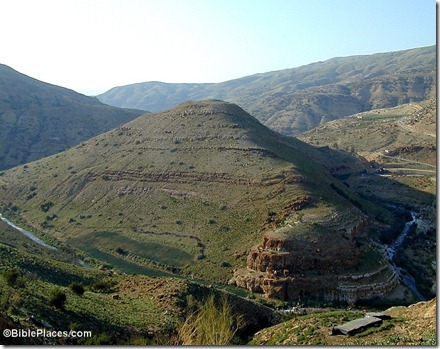






 Clear Bible