ADVENT 2025, WEEK 3.

Thanks again to Wade Jones for helping us out during this time while we are trying to help our daughter, Elise.

To listen to the sermon, click the play button:

For some people, the player above may not work. If that happens to you, use the link below to either download, or open a player in a new page to listen.

You can also find us on Spotify at https://open.spotify.com/show/6KKzSHPFT466aXfNT2r9OD

(This will open to the latest sermon. You can search from there if you are looking for a previous one)

Matthew 11:2-11 – Advent Week Three
December 14, 2025

            New Joy Fellowship, thank you for letting me be with you again this week. I don’t think I actually introduced myself last week. My name is Wade Jones, and I am one of the pastors at Priest Lake Christian Fellowship in Antioch, Tennessee, as well as a good friend of your pastor Tom. I’m filling in through the Advent and Christmas season this year so that Tom and Kari can focus on Elise and her health. Lord, have mercy and heal Elise. Amen.

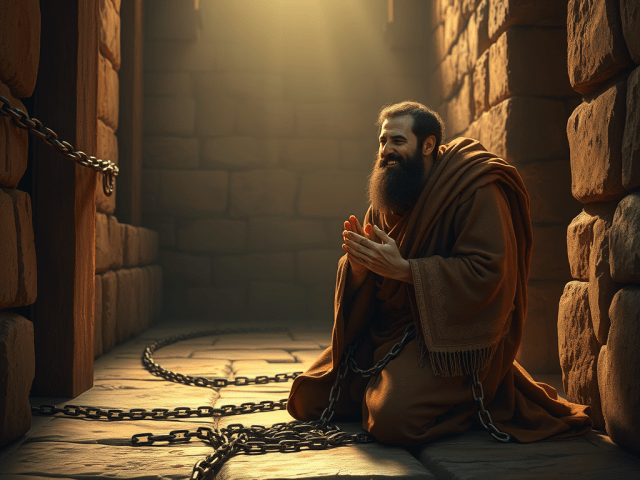
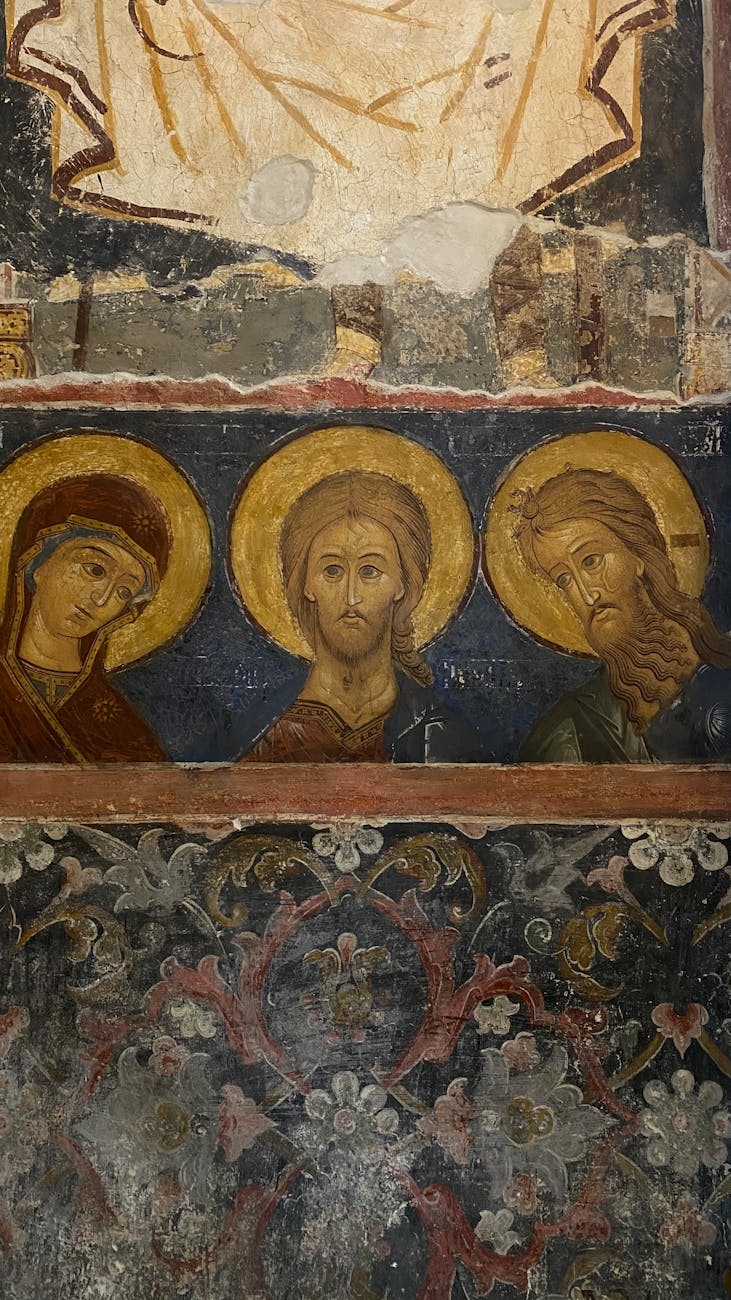
As we enter this week into the third week of Advent, we are again engaging with John the Baptist. Last week, Jesus was “off-stage,” and John was the focus, with the family of the Herods in the background. This week, the Herods are still an important part of the setting and the context, and the conflict between the kingdom of Herod and those like him and the kingdom of heaven remains a major part of the narrative. However, it is now John who has exited the stage, and Jesus has taken the center. This is what John saw coming in Matthew chapter three, and what he was looking forward to. But as we will see in today’s reading, the way things have unfolded in the time period between chapter three and chapter eleven has raised some questions in John’s mind. I want to look at two things in this passage: John’s question to Jesus and Jesus’ answer to John’s question. But first, let’s catch up on where we are in the story Matthew is giving us.

Not long after last week’s passage in Matthew 3, where John announced that he was preparing the way for the coming Anointed One of God, Jesus came to John for baptism and went into the desert. After His temptation there, Jesus hears about John’s arrest and begins His own public ministry. John stays in prison for the rest of his life, but he continues to hear about Jesus and His ministry. That’s what leads to the question John has in today’s passage. I’m going to read from Matthew 11:2-11.

When John, who was in prison, heard about the deeds of the Messiah, he sent his disciples to ask him, “Are you the one who is to come, or should we expect someone else?”

Jesus replied, “Go back and report to John what you hear and see: The blind receive sight, the lame walk, those who have leprosy are cleansed, the deaf hear, the dead are raised, and the good news is proclaimed to the poor. Blessed is anyone who does not stumble on account of me.”

As John’s disciples were leaving, Jesus began to speak to the crowd about John: “What did you go out into the wilderness to see? A reed swayed by the wind? If not, what did you go out to see? A man dressed in fine clothes? No, those who wear fine clothes are in kings’ palaces. Then what did you go out to see? A prophet? Yes, I tell you, and more than a prophet. 10 This is the one about whom it is written:

“‘I will send my messenger ahead of you,
    who will prepare your way before you.’

11 Truly I tell you, among those born of women there has not risen anyone greater than John the Baptist; yet whoever is least in the kingdom of heaven is greater than he.”

     In Matthew chapter three, John seems pretty clear about Jesus and who He is. Now, he has questions. And I think these questions are real. Some scholars suggest that John is really only asking these questions for his disciples’ benefit, or that he is not serious about his question in some way. I don’t think that takes John very seriously as a human being. And I think sometimes we are tempted to do that with the people we read about in Scripture. We want to make them “heroes of the faith,” and in that light, we have trouble processing the truth that they were (with the exception of Jesus, of course), human beings who were just as susceptible to sin and doubt and failure as we are. I think when we do that, we miss one of the main points of the story of the Bible, which is a story of a perfect and righteous God who continues to work redemptively with a bunch of flawed and sinful human beings. All that to say, I think John was having some real questions. And I think we can understand why.

            John was expecting a Messiah who would quickly bring judgment and fire, to set right the injustice of this world and putting the people of God in their rightful place as partners with YHWH in governing the world He had created. Instead, a Herod had locked John up (and will, in fact, kill him soon – you can read about that in Matthew 14). And meanwhile, Jesus doesn’t appear to be doing anything about the unjust systems of the kingdoms of this world. Instead, He is going about doing things that are good, to be sure, but not at all the good John was expecting.

            Can’t we relate to that? It is so easy, at least it is for me, to decide that based on what I know of God and His character, I can predict what He is going to do, and when He is going to do it. And then when He doesn’t operate on my schedule, or when things go in a direction I did not expect, I can fall into discouragement, doubt, and even despair. And all that can happen for me without the additional challenges of being incarcerated as a religious prisoner simply for saying things that God has said are true.

I think we should take John’s question at face value: Jesus, I really believed You were the Messiah who was coming to bring judgment to God’s enemies and relief to His people, but I don’t hear You taking the steps that would seem to me to lead to those results. Did I miss it? Is there another Messiah coming?

One other factor to consider here: remember, John is the last of the Old Testament prophets. That means he has sporadic, occasional experiences with the Holy Spirit. The Spirit of God comes on him, gives him words to speak or actions to perform as He did with Elijah, Isaiah, Ezekiel and so many others. But the Holy Spirit is not a permanent presence in John’s life – that is one of the things that shift for us with the death and resurrection of Jesus, but we’ll have to talk about that another time. And like any responsible prophet, John can question whether or not he heard the Lord as clearly as he thought he did. Prophets can make mistakes, not by being dishonest (unless they are false prophets), but simply by being human. John knows that he has sent followers to Jesus because of what the Spirit of God told him about Jesus. He feels some responsibility. And now, he needs to know if he has made a mistake.

What John does next is really wise. He asks Jesus directly. At least, as directly as he can while locked up. He sends some of his own disciples to Jesus with a direct question: was I right about You, or was I wrong? I love this approach from John. He doesn’t rely on his own ability to figure it out. He doesn’t let his potential frustration with Jesus, or with YHWH, drive a wedge between them. He doesn’t just stew in self-pity and disappointment. He goes directly with his questions and expects to receive an answer. And that in itself is a beautiful example for us. When God doesn’t act and respond in the ways that we expect Him to, what are we going to do with our discouragement? I encourage us to act like John – go directly to Him and ask, “What’s going on? Why are You doing things this way? This is not how I thought You would handle the situation – did I miss it? Are You who I think You are?”

Brothers and sisters, I believe if we are honest with ourselves and our faith, we are going to have questions like this. If God has not surprised you yet, follow Him a little longer. He will. And while the pleasant surprises rarely raise questions for me, the unpleasant ones definitely do. If John could ask this question, we can too. And I regularly do. In fact, we’ve been in the middle of those questions for years with Tom and his pain (as well as others in our fellowship at Priest Lake). And now, we ask them with Elise as well. “God, we know You can heal. We are confident that You intend to give us resurrected bodies that are fully healed. Why not do some of that now for these people we care about?” Whether or not we understand His answers – and sometimes I do, but sometimes I don’t – I think it is good and right for our relationship with Him for us to ask the questions.

And in Matthew 11, Jesus doesn’t seem to take any issue with the question John’s disciples bring to Him. He takes the question seriously, but He doesn’t take offense at it. And He answers it indirectly, which I think He does on purpose. So often, Jesus responds to a question by addressing the deeper needs under the question. He could just tell John’s disciples: “Yes, I’m the Messiah. John was right.” Instead, he answers the question in a way that is both practically wise, and more importantly, an invitation for John, John’s disciples, and the crowd following Jesus to engage more deeply with the question of what God intends to do in and through His Messiah.

Let’s dispense with the practical reason first. We’ve been talking for two weeks about the conflict between the kingdom of this world, which Herod and his descendants exemplify, and the kingdom of heaven, which John prophesied and Jesus is inaugurating. We already know that Herod the Great, the dad of the Herod who imprisoned John, wiped out all the baby boys in a village to eliminate a potential threat to his kingdom. There’s no reason to think that his son’s response will be any different. If someone in the crowd carries word back to this Herod that Jesus, John’s cousin, has declared Himself the new David, God’s anointed king over Israel, then this conflict may come to a head sooner than God intends. Jesus has work to do before His execution, and He doesn’t want word to get out too soon to the wrong people. Remember how often He tells someone He has healed, “Don’t tell anyone about this.”? His answer to John is a little bit cryptic, and it’s intended to be that way.

But the cryptic answer has another, bigger purpose. Even John, great as he was, has a different picture of what it means for Jesus to be Messiah. Jesus lists all these works that we, two thousand years later, think of as actions of the Messiah: healing the blind, the lame, the leper, returning the dead to life, speaking good news to the poor and oppressed. Because we know the whole story, because the writers of the gospels and the rest of the New Testament have explained some of the prophecies to us, we see these as Messianic actions. But first century Jews did not. Who is their model for God’s Anointed? David. Now, David did some pretty spectacular things – like the time he took down Goliath. But none of these miracles Jesus lists bring David to mind, do they? They sound like actions of God’s people, and they were actions first century Jews associated with the kingdom of heaven. But they weren’t supposed to happen yet. John was expecting the same order: first judgment on the rebellious powers of this world’s kingdom, then an age of healing, liberation, and real life will begin. They expect judgment to precede mercy.

I can understand their perspective. From one angle, what good does it do to heal someone, or return someone to life, or bring the poor out of poverty, or set free the slave, in a world that is still full of disease, death, oppression, and slavery? Doesn’t it make sense to abolish the cause first, then deal with the effects? What good does it do to proclaim freedom when the Herods and the Romans still appear to have power? They believe that until they have national liberation, healing and good news for the poor are not especially relevant – they can’t last. But Jesus is offering a new way of understanding God’s timeline. Judgment is absolutely coming – for Israel, for Rome, for every world power before or since – and one day, for us. But God is going to bring mercy first, then judgment. What Jesus is doing is bringing the reality of the kingdom of heaven into the middle of the world dominated by the kingdom of Herod. He is offering an appetizer for the banquet that is coming – a taste of the feast that God will set out for all His people in the new heavens and the new earth.

And He knows this is going to be a challenge. It’s not the kind of neat and tidy solution that we would like – or at least think we would like. But when I get worked up and stressed out in my desire for God to eradicate all evil, it’s good for me to ask myself, “What about the evil that remains in me? What about the evil that remains in those I love? I don’t really want God’s fire there yet, do I?” Our desire for God’s judgment is generally directed toward those people over there. But God doesn’t have “those people over there.” All human beings are His children, and He does not desire that any of them should perish, but that all should come into the life that the kingdom of heaven brings. So He initiates the breakthrough of the kingdom of heaven through the merciful healing, reconciling, and saving power of Jesus. In doing that, He challenges our belief that mercy is for “us” and judgment for “them.” And Jesus recognizes this challenge: “Blessed is the man who does not fall away on account of me.” In other words, “I know I’m doing this differently than you expected, John. In fact, I’m doing it differently than almost anyone expected. You’re going to have to watch and listen to me to develop your definition of Messiah; you can’t use your definition of Messiah as a filter for what I do and say.”

With John’s question, we enter a long section of Matthew’s gospel where Jesus is defining for us what Messiah is going to mean. John isn’t the last one to ask these questions. Religious leaders will ask them. Family members will ask them. The crowds around Him will ask them. And His closest followers will ask them. But Matthew is leading us to chapter 16, where Peter identifies Jesus as the Messiah, the Son of God. Not that they understand it all even then, but the disciples have come to a point where Jesus becomes the starting point for understanding God and what He is doing, instead of insisting that He fit into the models they have devised (not that they don’t still try – it takes the fact of the Resurrection and the presence of the Holy Spirit to fully deal with those misconceptions).

Brothers and sisters, this remains the challenge Jesus puts in front of us. I don’t agree with a lot of what the French philosopher Voltaire said, but he is right on with this one: “In the beginning God created man in His own image, and man has been trying to repay the favor ever since.” This is one of the primary reasons for the opposition to Jesus in His own day, and in every generation since then: We keep thinking we know what kind of God we want, and what we want Him to act like. Sometimes those pictures come from evil places in ourselves or our culture – but often, like with John the Baptist, they come from desires that sound right, and that are partially in line with God. But any picture of God that begins with me is, inherently, wrong. My brain, my heart, my will are never going to be mature and complete enough to actually develop a framework for God that is totally correct. Instead of beginning with me, I have to begin with God. And God has told us that His nature is most fully revealed in the Incarnation of the Son, Jesus. It is Jesus who displays most completely the nature of the Godhead in a way that we have some chance to comprehend. We won’t get it fully right – but it’s the only right place for us to begin. That is what Jesus is asking John to do in this passage: start with what you see me doing and hear me saying and let that define what it means to be the Messiah.

As we get ready to wrap up this week, let me pose some questions for each of us to ponder.

  • What do I see and hear God doing in my life and the world around me?
  • Where do I experience tensions between what God appears to be doing and the things I would expect Him to do?
  • When does it bother me for God to act with mercy first, especially when I don’t yet see the judgment coming?
  • How can the Holy Spirit help me remove the filters of my expectations for God so that I can see Him more clearly?
  • How do I develop trust that what God is doing is right even when it doesn’t make sense to me and may not meet the needs I feel most painfully in this moment?

Brothers and sisters, the kingdom of heaven is breaking into our lives, and sometimes it will do that in ways that disappoint or disturb us. This week, as we draw closer to the celebration of the birth of Jesus, may God help us receive Him as He is, and not as we would have Him to be. Amen.

ADVENT WEEK 2, 2025

Photo by George Becker on Pexels.com

I was very excited to do an Advent series this year. I had a pretty strong sense of what we might do. However, before I was putting the final touches on my first Advent sermon, we found out that my youngest daughter has a rare and very serious kind of bone cancer. I’ve spent most of the past two weeks sitting by her hospital bed, along with my wife, her siblings, and may friends. I would deeply appreciate your prayers for her.

My friend Wade Jones, who did the Serenity Prayer series for us, called and offered to share his own advent sermons, so that I can be with my family in all the ways I am needed. I am very grateful to Wade for helping us out.

Without further ado, here’s Wade:

To listen to the sermon, click the play button:

<p>For some people, the player above may not work. If that happens to you, use the link below to either download, or open a player in a new page to listen.

You can also find us on Spotify at https://open.spotify.com/show/6KKzSHPFT466aXfNT2r9OD

(This will open to the latest sermon. You can search from there if you are looking for a previous one)

Matthew 3:1-12 – Advent Week Two
December 7, 2025

       This morning as I begin this sermon, I feel pretty significantly conflicted. On one hand, I am glad to be back with New Joy Fellowship and the churches in Tom’s network. And I always enjoy preaching during this season of Advent as we engage the coming of Christ (past, present and future). It is such a season of hope and joy and expectation. And at the same time, the reason I am preaching for a few weeks – the serious illness of Tom and Kari’s daughter Elise – is deeply painful. I feel an emotional tension between what I want Advent to be about, and what, this year, Advent is for the Hilpert family and all of us who love them.

       In some ways, this tension is inherent in Advent. Advent is full of God’s promises about what it means for Jesus to come as Messiah, and Advent takes place in the middle of a world in which those promises are not yet fully realized. And that isn’t really the main direction I’m going today, but it is impossible for me to start without acknowledging the truth of the pain that is an important part of our community here right now. So, I’m going to pray for Elise and her family and then move into today’s Advent message.

       Father, You love Elise and her family. You are able to heal. We have seen You heal. And we ask You to heal in ways that show Your Glory to the world and Your love to and for Elise. You tell us to ask You for what we need and desire, and so we ask for her complete healing. And even as we ask this, we also trust You to do what is good and right. Your will, not mine be done. In the name of Jesus our Deliverer, Amen.

       One of the most familiar figures of Advent is John the Baptist. Last of the great prophets of the Old Testament (I know Matthew is in the New Testament, but John really belongs to the stream before Jesus, not the one after). The one whose birth was announced to his priestly father in the temple and the announcement was so surprising that Zechariah’s reaction got him muted for months. The same child who leapt in his mother’s womb in recognition of the Messiah that Mary was carrying in her pregnancy. But all those stories come to us from Luke’s gospel, and we are reading today from Matthew’s. Since the Holy Spirit was at work on purpose in guiding each of those men in how they told the story of Jesus, let’s take a look at how Matthew is setting the stage for John the Baptist. What is he telling us about John’s role in announcing the coming of Jesus, the Advent of the promised Messiah?

       Matthew begins with a genealogy – not of John, of course, but of Jesus. And he tells us more about Joseph than Mary. An angel tells Joseph to stay with his pregnant fiancée. Magicians come from the East to visit and worship the baby after His birth. And then an angel appears again to Joseph warning him to run for Egypt because the local king, Herod, is trying to have the baby killed. Then Joseph has a third angelic dream telling him that Herod is dead, and they can come back home – but since Herod’s son is ruling Judea, they go north to Nazareth in Galilee instead.

Not a word about Zechariah, Elizabeth, or John yet. In fact, if I counted right, the personal name that is mentioned most often in the first two chapters of Matthew is actually Herod. More than Mary, more than Joseph, more than Jesus. I think that’s on purpose. Matthew is setting up the conflict between the heir of King David, the true Messiah, and the kingdom that Herod and those like him rule over. It’s in the middle of this conflict that we come to today’s passage: Matthew 3:1-12. Let’s read that together.

3 1In those days John the Baptist came, preaching in the wilderness of Judea 2 and saying, “Repent, for the kingdom of heaven has come near.” 3 This is he who was spoken of through the prophet Isaiah:

“A voice of one calling in the wilderness, ‘Prepare the way for the Lord,
    make straight paths for him.’”

4 John’s clothes were made of camel’s hair, and he had a leather belt around his waist. His food was locusts and wild honey. 5 People went out to him from Jerusalem and all Judea and the whole region of the Jordan. 6 Confessing their sins, they were baptized by him in the Jordan River.

7 But when he saw many of the Pharisees and Sadducees coming to where he was baptizing, he said to them: “You brood of vipers! Who warned you to flee from the coming wrath? 8 Produce fruit in keeping with repentance. 9 And do not think you can say to yourselves, ‘We have Abraham as our father.’ I tell you that out of these stones God can raise up children for Abraham. 10 The ax is already at the root of the trees, and every tree that does not produce good fruit will be cut down and thrown into the fire.

11 “I baptize you with water for repentance. But after me comes one who is more powerful than I, whose sandals I am not worthy to carry. He will baptize you with[c] the Holy Spirit and fire. 12 His winnowing fork is in his hand, and he will clear his threshing floor, gathering his wheat into the barn and burning up the chaff with unquenchable fire.”

Wow! John the Baptist hits the gospel of Matthew like a lightning bolt out of a clear blue sky. He just shows up. And he shows up dressed like Elijah, the Old Testament prophet who wore a garment made of hair and a leather belt around his waist (2 Kings 1:8). Now if Elijah is known for anything, it’s probably the conflicts he had with King Ahab and his wife, Jezebel: drought, famine, the epic divine battle with the prophets of Baal on Mt. Carmel, the death sentence on Elijah’s head after that, and the confrontation over Naboth’s vineyard. Do you see what Matthew is setting up here? The parallels to John’s life and death? John is coming to denounce the way that God’s people have turned from their loyalty to Him. Oh, they don’t serve crude idols anymore (the exile pretty much broke that), but they are not wholeheartedly devoted to YHWH above all else and exclusive of all other priorities. They have their own agendas and aims. And all that means when God draws near, just as in the days of Elijah and Ahab, it’s going to create real issues for anyone who is trying to make the kingdom of this world work.

“In those days” … well, really, it’s been almost thirty years from chapter 2 to chapter 3. Jesus is now a grown man, although we don’t meet Him in today’s reading. We do hear about Him though. But that isn’t where John begins. And even the famous quote from Isaiah isn’t where John begins. The first words John the Baptist speaks here are these: “Repent, for the kingdom of heaven is near.” There it is, right out in the open. The things Herod was afraid of when the Magi reported to him: another king is coming, and he is going to take your throne. In fact, the king is already here, although no one recognizes Him yet. Jesus will begin His public ministry in the next chapter. And here are the first words Jesus speaks when He begins to preach: “Repent, for the kingdom of heaven is near.” (Matthew 4:17) He picks up where John left off when John got arrested.

What does it mean for us to “Repent, for the kingdom of heaven is near.” Let me start by telling what John (and later Jesus) is not saying. He is not saying, “One day you will die, and when you do you will go to either heaven or hell, so you need to say the sinner’s prayer now so that you can go to heaven when you die instead of hell.” John (and Jesus) might agree with all of that, but that is not what either of them are proclaiming in their preaching. No, the coming kingdom that they are proclaiming is not “coming someday, maybe thousands of years from now.” It literally “has come near.” When Jesus shows up, YHWH is beginning to reclaim His rule over all the nations. And John is looking out at the children of Israel and recognizing that yet again, as has happened so many times in their history, the children of Israel are not ready for their God to show up. He is coming, and if Israel does not change, it’s going to be a disaster.

That’s why we get the quote from Isaiah: Prepare the way for the Lord! God is headed this way. His arrival is imminent. And I have just looked at the roads, and they are a mess. Is this really the way you want to welcome your God? N.T. Wright observes that by and large, most of the time we keep our houses relatively clean. But the standard for day-to-day clean that we live in suddenly feels insufficient when you hear a knock on the door and it is the king. (Or maybe your mother or grandmother has come for a surprise visit.) Things that are “good enough” for just us suddenly look like glaring problems in the light of an important and prestigious visitor who we’d really like to impress – and maybe one we’d like to ask for a favor.

That is a part of what John is saying to Israel. You think you are ready for God to show up. Why? Because you’re doing better than the nations around you? Because you Pharisees rigorously keep the Law and honor the Prophets (or at least you try to)? Because you Sadducees are maintaining the Temple and its sacrifices? Yes, do all those things – but you are settling for half-measures. The God who is coming to take up His throne among you is not looking for surface compliance, or trying to do enough to get by, or checking the right boxes. He is asking for – really, He is demanding – all of it! He is coming to rule, not only Israel, but the entire world system that has been in rebellion against Him. And you who should be ready for Him to do that think that what you are offering is good enough to get by! John is telling them that they are sadly mistaken. The God of Israel and of all creation will not be satisfied with anything less than all of it. And they have not given Him all of it.

They need to repent! Now, what are they repenting of? We tend to think of repentance in terms of particular sins. I told this lie. I said this word in anger. I had too much to drink. I took a second look at her because she was hot. I responded judgmentally to an action my neighbor took. John would agree with repenting of all those – but it goes deeper. It’s not the actions themselves. It’s the attitude of rebellion against God that they indicate. Those actions are just symptoms of the real problem. And the real problem often comes down to this: I don’t really want God to be King. At least, I don’t want Him to be King of all of it. And that’s not going to fixed by a plan to “stop cussing in 21 days.” It requires a deeper change; a change of identity.

Look at what John says to the religious leaders (both groups): Don’t count on being children of Abraham to save you from the consequences of your self-centered lives. What you have as Jews is not enough (of course, for pagan Gentiles the gap is even greater, but John is talking to Jews). Is the throne room vacant and ready for God to take His seat, or do you still think that you have a right to determine how and when that will happen? Do you have a God that needs to meet your conditions and satisfy your requirements so that you can let Him be in charge? If that’s where you are, Israel – and it is! – the ax and the fire are coming for you.

I want to take a breath here. Some of you might be hearing me say, “You have to have it all together or when God shows up, you are condemned.” Let me be clear. That’s why we need Jesus. That’s why He came to us through the incarnation, born of the virgin Mary, through a life as God fully in the flesh of a man. That’s why the suffering, the death, the burial, and the resurrection were all needed. Because we were never going to get it right. We had to have God visit us in the person of Jesus Christ to take our humanity and transform it into something that could bear the weight of the presence and the glory of God. And He has done that. What John’s baptism could not accomplish, our baptism into Jesus has. We are saved by grace, through trust in the person of Jesus Christ, not by anything we do or don’t do. And also…

Israel was saved by grace as well. The Exodus was grace. The times of deliverance through the judges were grace. The victory over the Philistines through Saul and David was grace. The return from exile was grace. But grace does demand a response. And the response is to let the Gracious Deliverer be king. To turn our back on Herod in all his forms and live in the kingdom of heaven that is already breaking into our lives.

Israel was about to miss it. Not all Israel. Peter, James, and John got it (eventually). Mary Magdalane and Mary (Jesus’ mother) and Salome got it (maybe a little more quickly). Paul got it, even if he had to be hit over the head with it. But in large part, Israel missed it. And the hellfire of Rome would rain down on them and they would be demolished as a nation and a people in ways that would take hundreds of years or more to recover from. What John saw coming, what Jesus saw coming, came to pass. The kingdom of heaven showed up, and the people of God were not ready for it. God Himself appeared, and His people didn’t recognize Him or respond to Him.

Brothers and sisters, Israel was not unique. And they certainly weren’t uniquely wrong. So now, as those who have been grafted into Israel, how do we respond differently? Certainly, the presence of the Holy Spirit in us helps. But I think we face some of the same challenges as Israel – and we could miss it too. So, what does it look like for us to “repent, because the kingdom of heaven is here.”

The kingdom of Herod (and those like him) is sneaky. Most of us aren’t in danger of falling into the obvious rebellions. But the Pharisees weren’t either. And yet, they could fall into the trap of deciding for God what His reign would look like. For one thing, they knew who belonged and who didn’t. There were “good people” and “bad people,” and God was for the “good people” and against the “bad people.” And then Jesus showed up and hung out with all the wrong people. People who could do nothing for Him. People who were broken, needy, and a mess. And He chose to welcome them into the kingdom while some of the “good people” stayed outside. Am I trying to tell God who does and doesn’t deserve His mercy, His time and attention? Then I need to repent, because the kingdom of heaven is here.

The Sadducees had a different route figured out. They knew how important the Temple worship was, and they were willing to work with the kingdoms of this world to keep things going at the temple. If giving in a little to Herod here and Pilate there meant they kept freedom to worship as God had commanded, wasn’t that a worthwhile trade? A few decades later Christians would face the question of offering a pinch of incense to the emperor to escape death. It seems like a small trade-off, doesn’t it? But God, the King of heaven, wants all of us – not some, or most, but all. Am I willing to give the kings of this world something, even something small, to make it easier for me to live the way I want to live? Where am I willing to collaborate with principalities or powers because “that’s just what you have to do to get by in this world”?

John is not concerned about getting by in this world. And he ends up dead. Jesus was not concerned about getting by in this world. And he ends up dead. Stephen, James, Peter, Polycarp, Justin, and centuries of faithful followers decided that they would live for and in the kingdom of heaven. And they ended up dead. “Repent, for the kingdom of heaven is near” isn’t a guarantee that you’ll die for your faith. In our context that seems unlikely at the moment. But I think it does guarantee that we will be uncomfortable. That as we live by the teachings of Jesus, we will seem ridiculous. That our abandonment of common sense for the Word of God will cost us in our jobs, our finances, our relationships. But the thing is, the kingdom of heaven really is here. Jesus really has already begun to reign. And we are called to be citizens of the kingdom of heaven forever, beginning now. May God help us by His Holy Spirit to do just that. Amen.

PHILIPPIANS #2: EVERYDAY SAINTS

Photo by Marina Leonova on Pexels.com

The Holy Spirit, through Paul, begins this letter by mentioning several significant names. Even today, these names apply to you and me in various important ways.

To listen to the sermon, click the play button:

For some people, the player above may not work. If that happens to you, use the link below to either download, or open a player in a new page to listen.

You can also find us on Spotify at https://open.spotify.com/show/6KKzSHPFT466aXfNT2r9OD (This will open to the latest sermon. You can search from there if you are looking for a previous one)

To download, right click on the link (or do whatever you do on a Mac) and save it to your computer: Download Philippians Part 2

Philippians #2. 1:1-2. Every Day Saints

1 Paul and Timothy, servants of Christ Jesus, To all the saints in Christ Jesus who are at Philippi, with the overseers and deacons:2 Grace to you and peace from God our Father and the Lord Jesus Christ. Philippians (1:1-2, ESV)

There is a great deal in just these two verses. I’m not sure that Paul himself knew how much significance would attach to this simple greeting, but it is the Holy Spirit who makes the Bible living and active, and the Spirit wastes no words. Paul’s words here are consistent with important truths that are found elsewhere in the Bible.

In the first half of my life, back when people actually wrote letters, they “signed” them at the end. If you didn’t recognize the handwriting, or if it was printed/typewritten, you looked at the end to see who it was from. In ancient times, however, it was the opposite. Letter writers in the first century A.D./C.E. stated who was writing at the very beginning of a letter. So Paul and Timothy identified themselves as the writers of this letter to the Philippians at the beginning. In fact, in a way, Paul begins the letter with a little bit of “name dropping.” I’ll explain.

Often, in his letters, Paul included his title as an apostle. It seems to me that he normally did that in situations where it was important that the senders recognize his calling, and therefore his authority to say what he said. He even does this in his letters to Timothy, his dear friend. However, I think he included his title in Timothy’s letters so that if Timothy got pushback when he taught and ministered as Paul urged him to, Timothy could say: “Look, the apostle Paul himself said this in his letter to me.” But here, Paul simply identifies himself as a servant of Christ Jesus (and Timothy also). There are several reasons. First, this letter speaks warmly and affectionately to the Christians at Philippi. Paul isn’t worried about their doctrine, and he doesn’t need to remind them of his authority in Christ. He’s writing as a friend.

By adding Timothy’s name, I don’t think he means to say that Timothy helped to compose the letter. The letter sounds like pure Paul, based upon his other writings. Instead, Timothy is included because he was well known to the Philippians, wished to send them his greetings, and surely he affirmed everything Paul was saying. It is possible that Timothy acted as a secretary, and took down Paul’s dictation of the letter.

I think Paul avoids the title of “apostle” because throughout much of the letter he speaks on the theme of humility. So, even as “Jesus did not consider equality with God something to be grasped, (2:6)” so Paul demonstrates that he doesn’t need to grasp at the title of honor: “apostle.”

Rather than “apostle,” Paul identifies himself as a servant of Christ Jesus. The word that the ESV translates “servant” is the Greek word “doulos.” (in this text it is actually “douloi,” the plural form of the word). We don’t really have a good English word for doulos (the feminine singular is “doule”). Literally, it means “slave.” But douloi (slaves) in the ancient Roman Empire were often very different from our modern idea of slaves. Many, if not a majority, of douloi were slaves only for a fixed period of time, often about twenty years. Many of them were paid. They often held very trusted positions, handling money and making business decisions for their masters. Many were allowed to marry, and their children did not automatically belong to their master. Even so, they were more than employees. A doulos/doule was considered a member of his/her master’s household. The upholding of the honor of the household was a serious business, and they were expected to be part of it. They could not seek other employment, and they were not free to leave unless given a certificate of manumission (manumission means “officially released from slavery”). Generally speaking, they had to do whatever their owner told them to do, and they could be physically punished if they refused.

So you see, they had more freedom and opportunity than, for example, the African slaves used by Southern plantation owners in America before the American Civil War. Even so, douloi were not exactly free. The closest equivalent I can think of in modern life would be an active-duty member of the military. An active duty Marine, for example, owes a certain period of his life to the Marine Corps. During that period, he must obey those who outrank him, and he must, generally, do what the Marine Corps tells him to do. He can’t simply say “I don’t want to,” or hold an outside job, or live wherever he feels like living. He can be punished for disobedience. The Marines “own” him for a period of time, even though he is paid, and might rise to a position of great responsibility within the Corps. For as long as he is a Marine, his mission in life is what the Marines tell him it is. Certainly, a Roman doulos/doule was worse off than a modern Marine, but somewhat comparable even so, and not nearly such a bad position compared to a plantation slave.

Here’s the startling thing: Partway into the letter, Paul says that Jesus Christ came as a doulos. So when Paul identifies himself and Timothy as slaves, he is doing so in imitation of his master, Jesus.

There’s another thing about Paul’s choice of words here. He wants us to understand that if we are Christians, all of us, also, should become douloi of Jesus Christ. In Jesus, we have the best Master possible. But our position is one where we do not belong to ourselves. We belong to Jesus. We ought to do what Jesus tells us to do. We can end up with a lot of freedom and responsibility, but it should all be in service to Jesus. Our lives are not our own—they belong to Jesus.

Paul, after calling himself and Timothy douloi, now has some words that he calls the Philippians. First, he calls them “saints.” The literal Greek translation of hagiois is “holies.” The Latin translation of it is sanctus, from where we get our English “saints.” Unfortunately, church history and modern culture have combined to lead us to misunderstand what it means to be a saint. In the understanding of many people today, a saint is a particularly holy person; someone whose personal holiness is much greater than that of “ordinary Christians.” The Roman Catholic church even has created specific criteria, and an institutional process for deciding if someone was a saint. A saint, in these terms, is often someone who died for their faith. In addition, someone of heroic virtue might become a saint (think Mother Theresa here, who is now known as Saint Theresa). Finally, if well-attested miracles were attributed to a person, those might qualify them for sainthood.

However, none of that church tradition reflects what the New Testament clearly says about sainthood. In the New Testament, there is only one way to become a saint, and there is only one kind of saint. Saints are people who have entrusted their lives to Jesus and received his grace. To put it simply: according to the New Testament, every true Christian is a saint, a “holy.”

The reason for this is that all of the holiness that every Christian has within them is imparted by Jesus Christ. We have that teaching right here in Philippians. Paul writes in chapter 1, verse 11 that he wants his readers to be: “filled with the fruit of righteousness that comes through Jesus Christ.” In other words, their righteousness comes not from their own works, but through Jesus Christ. In the same way, in chapter 2, he says:

13 for it is God who works in you, both to will and to work for his good pleasure. (Philippians 2:13, ESV)

In other words, we are saints because of God’s good work in us, not our  own “personal holiness.” To the Corinthians, he wrote:

21 For our sake he made him to be sin who knew no sin, so that in him we might become the righteousness of God. (2 Corinthians 5:21, ESV)

Through Jesus, we are “the righteousness of God.” Along this same theme, Romans 8 says:

1 There is therefore now no condemnation for those who are in Christ Jesus. 2 For the law of the Spirit of life has set you free in Christ Jesus from the law of sin and death. 3 For God has done what the law, weakened by the flesh, could not do. By sending his own Son in the likeness of sinful flesh and for sin, he condemned sin in the flesh, 4 in order that the righteous requirement of the law might be fulfilled in us, who walk not according to the flesh but according to the Spirit. (Romans 8:1-4, ESV)

We dare to call ourselves “holies” not because we have any holiness we have gained for ourselves, but rather, because, through faith, God has included us in the holiness of Jesus Christ. If we say, “I’m no saint,” we are insulting the holiness of Jesus Christ himself, because that is what God has put into us. When we look at it that way, if we truly believe Jesus is who he claimed to be, we must agree that we are saints. Otherwise, we are saying that Jesus himself is not holy. On the other hand, the only way to boast about our holiness is to boast about Jesus Christ.

27 Then what becomes of our boasting? It is excluded. By what kind of law? By a law of works? No, but by the law of faith. 28 For we hold that one is justified by faith apart from works of the law. Romans (3:27-28, ESV)

28 God has chosen what is insignificant and despised in the world — what is viewed as nothing — to bring to nothing what is viewed as something, 29 so that no one can boast in His presence. 30 But it is from Him that you are in Christ Jesus, who became God-given wisdom for us — our righteousness, sanctification, and redemption, 31 in order that, as it is written: The one who boasts must boast in the Lord. (1 Corinthians 1:28-31, HCSB)

So, for the sake of Christ, we ought to insist that we are indeed saints, which is to say, people who have been made holy. However, to say that is not to lift ourselves up, but rather it glorifies the Lord, who makes us holy. Part of the idea of holiness is that we are “set apart.” A holy thing is used for special purposes. So, we are set apart from those who reject Jesus. That doesn’t make us intrinsically better than others. But it does mean that there will always be some tension between us and the ways of the world. Because we are set apart by the holiness of Jesus, we don’t fully belong to the world. The ways of the world are different in many respects from the way we are called to live. Jesus put it like this:

18 “If the world hates you, know that it has hated me before it hated you. 19 If you were of the world, the world would love you as its own; but because you are not of the world, but I chose you out of the world, therefore the world hates you. (John 15:18-19, ESV)

Paul drops two more names, in addition to servants and saints: overseers and deacons. He writes to “all the saints who are at Philippi, with overseers and deacons.” He doesn’t mean that overseers and deacons are not saints. But he is mentioning two main types of church leaders during New Testament times.

Let’s start with overseers. This is the Greek word episkopos, from which we get our English word Episcopal. It also evolved, via Latin and Old English, into our English word: “bishop.” When Paul used it, however it simply meant “overseer,” or, in today’s language: “supervisor.” In the New Testament, it is used interchangeably with the word for “elder” and also “pastor.”

5 This is why I left you in Crete, so that you might put what remained into order, and appoint elders in every town as I directed you— 6 if anyone is above reproach, the husband of one wife, and his children are believers and not open to the charge of debauchery or insubordination. 7 For an overseer, as God’s steward, must be above reproach. He must not be arrogant or quick-tempered or a drunkard or violent or greedy for gain, 8 but hospitable, a lover of good, self-controlled, upright, holy, and disciplined. 9 He must hold firm to the trustworthy word as taught, so that he may be able to give instruction in sound doctrine and also to rebuke those who contradict it. (Titus 1:5-9, ESV)

In Acts 21:1 Paul called the elders of the churches in Ephesus to meet with him. In verse 28, he says:

28 Pay careful attention to yourselves and to all the flock, in which the Holy Spirit has made you overseers, to care for the church of God (Acts 20:28, ESV)

1 Peter chapter 5 has all three terms together:

1 So I exhort the elders among you, as a fellow elder and a witness of the sufferings of Christ, as well as a partaker in the glory that is going to be revealed: 2 shepherd the flock of God that is among you, exercising oversight, (1 Peter 5:1-2, ESV)

The word “shepherd” in Peter’s letter is the verb form of “pastor,” and “oversight” is the verb form of overseer/episkopos. So we can see that all three words are used interchangeably in the New Testament.

Basically, churches were led in spiritual growth by a team of elders/overseers/pastors. Some of those elders might have been more prophetically-minded, others more teaching-minded, others more mission minded. But the people responsible for leading house churches, and groups of house churches, were known as elders, or overseers, or pastors. So Paul is making special mention of those were responsible for the spiritual leadership of the church.

Paul also mentions deacons. Deacons were people who were responsible for the financial and physical part of the church. The appointing of the very first deacons came about in this way:

1 At that time, as the number of disciples grew, Greek-speaking Jews complained about the Hebrew-speaking Jews. The Greek-speaking Jews claimed that the widows among them were neglected every day when food and other assistance was distributed.
2 The twelve apostles called all the disciples together and told them, “It’s not right for us to give up God’s word in order to distribute food. 3 So, brothers and sisters, choose seven men whom the people know are spiritually wise. We will put them in charge of this problem. 4 However, we will devote ourselves to praying and to serving in ways that are related to the word.” (Acts 6:1-4, NLT)

So, while elders/overseers imitated the apostles by focusing on prayer and teaching the word, setting the spiritual direction of the church, the deacons were involved in helping out with the practical concerns of the church: the distribution of money, service to the poor and elderly, and so on. The elders/overseers generally worked together with the deacons. I believe this is why Paul mentions both overseers and deacons. All of the house churches at Philippi got together and sent Paul some financial support—that is one reason he’s writing this letter. So Paul specifically mentions overseers, because they would have prayed about the gift, and then counseled the churches to go ahead with it, and the deacons would have been the ones who took the practical steps to make it happen.

 I don’t think this format of church leadership is necessary for all churches; the New Testament doesn’t command it. But I’m inclined to think that a Biblical way of doing church is a pretty good model.

There is a final name that Paul drops: that of Jesus Christ. He and Timothy are not just dulois/servants in general, they are servants of Jesus Christ. The Philippians (and us) are not sort of generalized saints. We are saints only in Jesus Christ. Finally, Paul declares grace and peace to us from God our Father, in the name of Jesus Christ.

Let’s change gears: how might this apply to your life? Do you know that you are a saint? Behavior follows belief. If you believe you are fundamentally sinful, you won’t be able to stop yourself from sinning. But if you trust that Jesus has imparted his holiness into your life, you begin to see things differently, and act differently. I don’t mean anyone gets perfect on this side of heaven, but I am convinced that we act as we believe. If we believe we are “holies” our behavior will look much more like that is true than if we don’t believe it. It helps to remember that we are holy in Jesus Christ, not on our own.

How about the name of “servant/slave?” Do you believe that you fully belong to Jesus, that your life is not your own, but his? From birth until death, God’s intention is that you are on a mission in this world, a mission that is from and with God. He supplies what we need to pursue that mission, but our lives are for him, not for ourselves. And Jesus is not asking of us anything he did not do himself. He came in human form, and became a servant/slave himself.

What about the way Paul honors church leaders? I have no big complaints about the people I serve, but there are many of you visiting Clear Bible whom I have never met. Do you honor your local pastors, elders and deacons? Do you let them know that you appreciate their service, which can sometimes involve self-sacrifice? Do you prayerfully listen to your overseers/elders/pastors when they teach, or give you personal counsel?

Finally, how do you remind yourself of all the treasures you have in Christ? Do you know, remember that you are in Christ? What difference does that make in your life? If it doesn’t make much difference, why not? Or, are you someone who is not yet in Christ? To receive him is simple. Turn away from your sins (you won’t be able to do it perfectly, but start with the intention to do your best). Lean on Jesus. Ask him, in your own words, to take your life, to bring you into his kingdom.

Let the Holy Spirit apply these names to your life right now.

PHILIPPIANS #1: INTRODUCTION

Paul and his companions were a part of some very eventful happenings in the Roman Colony of Philippi.

To listen to the sermon, click the play button:

For some people, the player above may not work. If that happens to you, use the link below to either download, or open a player in a new page to listen.

You can also find us on Spotify at https://open.spotify.com/show/6KKzSHPFT466aXfNT2r9OD (This will open to the latest sermon. You can search from there if you are looking for others)

To download, right click on the link (or do whatever you do on a Mac) and save it to your computer: Download Philippians Part 1

PHILIPPIANS #1: BACKGROUND, INTRODUCTION AND THE ENTIRE BOOK

We are going to begin a new series on the book of Philippians. I am excited for this. Philippians is one of my favorite books. It is a letter, written by the apostle Paul, to the Christians in the city of Philippi. Clearly, Paul had a warm relationship with the Philippian Christians, and the whole book is suffused with affection and joy.

Let’s start with a little bit of background on the city of Philippi, and some of the people and events associated with it.

In the book of Acts, we first hear about the city of Philippi shortly after Luke joins Paul and his companions. Luke was in a city named Troas on the western coast of Asia minor, not extremely far, as the crow flies, from Philippi. This is the first time that Luke, in his book of Acts, starts to write as if he himself were part of the events. Instead of writing: “they went and did this,” as he did for the first fifteen or so chapters of the book of Acts, Luke writes: “we went and did this.”

Luke traveled with Paul and his companions to Macedonia, after Paul had a vision in a dream that he was supposed to proclaim the gospel in that region. They landed at a Macedonian port (Neapolis), and then the companions traveled together to Philippi, which Luke describes as “a leading city of Macedonia.” After the events which took place in Philippi, it reads as if Luke is no longer accompanying Paul and his companions. In Acts chapter 20, Luke once again rejoins Paul—at Philippi—as he travels towards Jerusalem. The best guess is that this is after a period of about eight years. It seems clear that Luke made Philippi his home for that eight year period.

Paul’s first visit to Philippi was quite eventful. These events are described in Acts chapter 16:11-40. I will read these verses on the audio version of this sermon. If you are reading my words right now, I encourage you to stop for a moment, and go and read those same verses in your own Bible.

(I’m trusting that you have now read those verses). So, obviously, some major and unusual things took place with the beginnings of Christianity in Philippi. It was a very exciting time for the new Christians there.

Philippi was named after King Philip of Macedonia, father of Alexander the Great. Later it was conquered by the Romans, and was the site of a decisive battle in the Roman civil war that took place as a result of the assassination of Julius Caesar (this was roughly 42 years before the birth of Jesus Christ). Twelve years later (30 BC), when Octavian/Augustus became Caesar, he made Philippi a Roman colony. This meant that citizens of Philippi, which is in Macedonia (north of Greece) had exactly the same rights and privileges as Romans who lived in Rome. City business was conducted in Latin, rather than Greek. Citizens were exempt from Roman taxes, and could own property just like Romans who lived in Rome. This was one reason that Paul’s status as a Roman citizen was such a big deal to the Philippians. They had violated his civil rights as a Roman in a Roman colony. To them, it was a shameful act, and they wanted it forgotten and covered up immediately.

I have done a little bit of ministry that sometimes reminds me of Paul and Silas (or Barnabas). My great friend Peter Churness and I have traveled to meet people we had not met previously, and stayed in strangers’ homes while we did some teaching, and eventually helped organize churches in those places. Some of you listening or reading are among those people. I have to say that staying in someone’s home, there is a closeness of fellowship that develops, especially if you keep in touch over a period of time. When we read Paul’s letter, we can hear the warmth he feels for these people.

So, when did Paul write this? It appears that he wrote it while he was awaiting trial in front of Caesar. In the book of Acts, near the end, we read that Paul, facing charges from local Jewish authorities who wanted him dead, made an appeal for Caesar to hear his case. This was his right as a Roman citizen. It appears that Paul wrote to the Philippians when he was in Rome, waiting for that trial. So, this would have been shortly after the ending of the book of Acts, in about 62 AD. Just from reading between the lines, it seems like the Philippians sent Paul a gift of money to support him while he awaited trial. It was delivered by a messenger named Epaphroditus and others. The others presumably returned to Philippi (about 800 miles away) but Epaphroditus was ill, and had to stay with Paul for some time. After he recovered fully, Paul wrote a letter to send with him back to the Philippians.

Some of you know how important I think it is to read the Bible the way it was written, that is, book, by book. You know that I also think it is vitally important to understand the textual context of any given verse. Happily, Philippians is a short book, which can be read quite quickly. So, I will complete this message by reading the entire book to you, so that we understand the context of the various parts. If you are a reader, more than a listener, please go and read the whole book of Philippians right now. It shouldn’t take much more than 20 minutes. Have some paper and a pen handy and briefly note down the verses that speak to you, and why. Next time, we’ll start in on the text in detail.

LAMENT #6: MY GOD, WHY HAVE YOU FORSAKEN ME?

Once again, during this series I encourage you to listen to the sermon, rather than simply reading the text. My right arm is in a sling, and I cannot type effectively. I am using voice dictation software to type these words, as well as any other content that I add to pastor Kevin’s message. Sometimes the results are not entirely accurate. I add things in the audio message that I cannot type out.

To listen to the sermon, click the play button:

For some people, the player above may not work. If that happens to you, use the link below to either download, or open a player in a new page to listen. You can also find us on Spotify at https://open.spotify.com/show/6KKzSHPFT466aXfNT2r9OD

To download, right click on the link (or do whatever you do on a Mac) and save it to your computer: Download Lament Part 6

Grumbling vs Lamenting #6. Psalm 22

Today I want to explore the lament of Jesus from the cross. He is echoing the lament of David in Psalm 22. The Lord Jesus only quoted the first line, but it will be good to read the first two verses:

My God, my God, why have you forsaken me?

    Why are you so far from saving me,

    so far from my cries of anguish?

My God, I cry out by day, but you do not answer,

    by night, but I find no rest.

(Psalm 22:1-2)

    Have you ever stopped to consider that Jesus actually felt forsaken, abandoned and alone in those moments when He was languishing on the cross? Or, is it your opinion that He said these words so we’d connect the dots back to this messianic psalm which predicted the events of the day He was crucified?

   To be entirely honest, until recently I (Kevin) never seriously considered that Jesus actually felt forsaken. I suspect that this is because I imagined that as God the Son He couldn’t possibly have felt that way. I don’t think I’m alone in this perception. However I remind myself that Jesus was not only God the Son, He was also an actual human being who felt psychological pain (“…he was a man of sorrows and acquainted with grief”– Isaiah 53:3) and physical pain (he experienced scourging, the crown of thorns and crucifixion, an unthinkably brutal form of torture which inevitably ends in death– Matthew 27:27-35). 

Scripture shows us that during the course of His life, first as the son of Mary and Joseph and later as an adult, he sat at the feet of elders and learned (Luke 2:41-51), He experienced physical maturation (Luke 2:52), hunger (Matthew 4:2), thirst (John 19:28), exhaustion (Matthew 8:24) and such things as anger and frustration (Mark 9:19). Also, we know that He experienced the unsettling effects of being tempted “in all ways as we are” and yet He didn’t sin (Hebrews 4:15).

I have come to believe that Jesus truly felt forsaken while He was on the cross. I  base this perspective on some things Jesus said and some things that we observe about Him.

In the Garden, on the night of His betrayal, He admitted to His followers, “I’m overwhelmed with sorrow to the point of death” (Matthew 26:38). Note the word “overwhelmed.” Such a strong word. Dictionary.com defines it as “being completely overcome in mind or feeling.” Overwhelmed? Yes, that’s the word the scholars think best represents the Greek word which is used in this text. Too strong for your taste? Some translations use the words, “crushed,” or “consumed.” Much to think about. Then, there’s “sorrow” so terrible that it was lethal (“unto death”).

Then we have His famous prayer that ends with “Not My will, but Yours be done.” We love to give that our attention but it would be good for us to spend some time thinking about, maybe even camping on: “Father, if possible, let this cup pass Me by,” before saying, “Yet not My will…”

Jesus had a will that was independent of His Father’s. He clearly reveals, doesn’t He, that He wanted the cup of suffering to “pass Him by?”

Then if we go back in the narrative about Jesus’ suffering, in the days leading up to His time in the Garden of Gethsemane, we see that He acknowledges to His followers, “I have a baptism to be baptized with, and how great is my distress until it is accomplished” (Luke 12:50). Have you ever thought of Jesus being distressed? He was and He didn’t hide it from His disciples.

Then we see that His disciples observed, “And being in agony…his sweat became like great drops of blood falling down to the ground” (Luke 22:44).

Based on these things, can you consider that your Savior actually felt forsaken? Might this help you when you feel abandoned and alone in your suffering?

(Tom now) And the Bible seems to tell us that we do not have to suffer complete abandonment by God, like Jesus did. In fact, Scripture teaches that through faith, we live in spiritual union with Christ. In fact the way the apostle Paul puts it is this:

20 I have been crucified with Christ. It is no longer I who live, but Christ who lives in me. And the life I now live in the flesh I live by faith in the Son of God, who loved me and gave himself for me. Galatians 2:20

The idea is that Jesus himself lives his life through ours. That means that when we suffer, Jesus himself suffers along with us. In other words we ourselves are never abandoned or forsaken in the way that Jesus was. He is with us even in suffering; perhaps, especially in suffering. So in the first place, as Kevin says, we can know that Jesus understands what we are going through. But even more, we can lean on him, trusting he is there even when we don’t perceive him, knowing that he is feeling the abandonment and hopelessness along with us.

I want to close with some words from the Gospel transformation study Bible. It comes from the note found at Luke 22:42:

 Jesus has previously given his disciples (including us) instructions on praying (11:1–13; 18:1–8). Here he models one of the most important and universal truths about what our prayer life should be like. Jesus expresses his desires and even laments before the Father with full honesty and humility (22:44). He desires to be delivered from the pain and suffering he is facing (v. 42). Yet there is something in his prayer that is even more important than his requests. It is his acknowledgment of God’s sovereignty and goodness in all situations and his glad submission to whatever God’s greater plan might be: “Nevertheless, not my will, but yours, be done” (v. 42). This is the banner that should fly over all of our prayer requests. It is the heart of childlike faith that honors God and blesses us. We can pray bold prayers, knowing that God is our Father, through our adoption based on the work of Christ. Yet we can also rest in confidence that since he is our Father, even his denials of our requests can only be what is best for us—as can be his granting us “far more abundantly than all that we ask or think” (Eph. 3:20).

2 SAMUEL #6: THE SHOCKING PROBLEM WITH HOLINESS

This text shows us just how vast is the distance between God and us. It shows how much we need Jesus and just how much God went through in order to bring us back to him.

To listen to the sermon, click the play button:

For some people, the player above may not work. If that happens to you, use the link below to either download, or open a player in a new page to listen.

To download, right click on the link (or do whatever you do on a Mac) and save it to your computer: Download 2 Samuel Part 6

2 Samuel #6. 2 Samuel 6:1-10

After David defeated the Philistines decisively and captured Jerusalem, he decided that he should bring the Ark of the Lord to Jerusalem, the new capital city of Israel. Remember, the Ark was a wooden box plated with gold, with carved angel’s wings over it. Inside the box were the stone tablets of the ten commandments, and possibly part the staff that Aaron, the High Priest, had used. At this point in time, the Ark would have been about four-hundred years old. If you remember, back even before Saul became the first king of Israel, the Israelites had taken the Ark into battle with them, trusting in the Ark to save them. The Lord was not pleased by this, because they were treating the Ark as if it were an idol, using it the way the pagan people around them used idols. So the Lord let them be defeated, since they were not actually trusting the Lord Himself. During the battle, the Philistines captured the Ark. After this the Lord showed his power to the Philistines, and wherever they put the Ark, trouble came upon them. Finally, they sent the Ark back to the Israelites. That story is told in 1 Samuel chapters 4-6, and we covered it in part 4 of the sermon series on 1 Samuel. The ark ended up at a place in Israel called Kiriath-jearim (also called Baalah of Judah).

Now, a few decades later, David and his elite warriors went to that place to bring the Ark back to Jerusalem. It was on the property of a man named Abinadab. His sons, Uzzah and Ahio walked beside the cart that held the Ark while David and his men celebrated along the way. And then this happened:

6 But when they arrived at the threshing floor of Nacon, the oxen stumbled, and Uzzah reached out his hand and steadied the Ark of God. 7 Then the LORD’s anger was aroused against Uzzah, and God struck him dead because of this. So Uzzah died right there beside the Ark of God.
8 David was angry because the LORD’s anger had burst out against Uzzah. He named that place Perez-uzzah (which means “to burst out against Uzzah”), as it is still called today.
9 David was now afraid of the LORD, and he asked, “How can I ever bring the Ark of the LORD back into my care?” 10 So David decided not to move the Ark of the LORD into the City of David. Instead, he took it to the house of Obed-edom of Gath. 11 The Ark of the LORD remained there in Obed-edom’s house for three months, and the LORD blessed Obed-edom and his entire household. (2 Samuel 6:5-11, NLT)

Here we have the two major themes of this text. First is this: God is so Holy, so different and “other” that he is inapproachable. If it means death to touch the mere representation of God’s presence, who can endure his actual presence? This was shocking and horrifying to David. It even made him angry. I think we forget that the Holiness of God is shocking, terrifying and horrifying. It may even make us angry. Why does God behave so inexplicably?

One of the things that makes the Bible unique is that it contains things like David’s response. The story isn’t only that God killed Uzzah. Part of the story is also that this event made David angry and upset. That is a comfort to me, because it kind of makes me upset, also. It shows us that it isn’t wrong for this sort of thing to get our attention, and it isn’t wrong even for it to bother us.

I don’t want us to gloss over this too quickly. Many people read these types of things in the Bible and think they are the first ones ever to be shocked by this sort of thing, or to question God about it. But here is David, shocked and angry at God in the very moment that this happened. It is shocking. If we are not shocked by this, we don’t really get the message. God’s holiness is shocking, terrifying, unfathomable. It should leave us saying, “Well then how could we ever be close to God? How could anyone ever please him?”

So, don’t feel bad if, like David, these kinds of things in the Bible upset you. That’s normal. But don’t stop with simply being upset by it. Pursue it. Ask the Lord to help you understand such things. Let’s pursue it together right now.

One thing we ought to know right away is that David, his men, and the priests were not transporting the Ark the way God had commanded through Moses. Moses was very clear about how the ark was to be moved from place to place:

12 You shall cast four rings of gold for it and put them on its four feet, two rings on the one side of it, and two rings on the other side of it. 13 You shall make poles of acacia wood and overlay them with gold. 14 And you shall put the poles into the rings on the sides of the ark to carry the ark by them. 15 The poles shall remain in the rings of the ark; they shall not be taken from it. (Exodus 25:12-15, NLT)

However, David and his men put the ark in a cart. If the Ark had been carried by the poles—as God commanded—no one would have had to worry about it slipping off a cart and falling to the ground. So, in the first place, they were ignoring God’s command, which is never a wise thing to do. We won’t cover the latter part of the chapter until next time, but we see that this error was corrected when they moved the Ark again later. Verse 13 shows us that this second move was accomplished with human beings carrying the Ark by the poles, not riding in an ox-cart. In any case, it does seem that this incident would have been avoided if they had taken God’s commands seriously. When God commanded the Ark be moved this way, it was to protect people from accidentally touching it. We often don’t realize, or perhaps we just forget, that God’s commands are there to protect us.

One of the things that might bother us is that Uzzah himself was only trying to protect the Ark. He didn’t want it to fall on the ground. How can that be such a terrible thing? However, by doing this, there were two assumptions that Uzzah was making. First, he assumed that God himself was incapable of protecting the Ark. He thought it was up to him to protect God’s glory. This reveals a lack of faith. Remember the recent history: The enemies of Israel had captured the Ark, but God used it to show them his glory, and then also he made sure that the Ark was returned to Israel. In spite of that, Uzzah assumed that in this instance, God would not take care of his glory, or the Ark. In other words, he didn’t have real faith in God.

The second assumption Uzzah made is that it would be better for the Ark to touch him than to touch the ground. He thought he himself was more holy and sanctified than the very earth that was created by God. In other words he didn’t really believe in his own sinfulness, nor in God’s complete holiness.

Now, even with that explained, I still think this passage is troubling. I suspect the reason it bothers us so much is because it is about the Holiness of God, and that is not something we truly understand, or even think about much.

Sometimes I think because of the grace given in Jesus, we forget why that grace is so important and so unbelievable. We forget the huge gulf that separated human beings from God. Without Jesus, if we were simply to wrongly touch a representation of a holy God, we could be killed, like Uzzah. There was an irreconcilable gap between us and God. But since Jesus intervened, we no longer live in that situation, and we often forget how serious the problem would be without him.

One question that I hear quite often is, “Doesn’t God just accept us as we are?” Actually, no. If he could do that, there would have been no need for Jesus to sacrifice himself. Well then, can’t God do anything? Why couldn’t he have made it so that he could just accept us?

God can do anything, but the one thing he will not do is change his own nature. God is the most wonderful, glorious, amazing, loving being in all of existence. To change his nature would be to change the very nature of reality, and it would be an unbelievably terrible thing for all creation if God changed his nature. If God changed his nature, there would be no hope that human beings would ever be better than they have been. Hatred, jealousy, strife, murder, rape, torture, selfishness and so on would become eternal, with no hope of any change, ever. So, because of our sinful flesh, God instead chose to sacrifice himself in order to change our nature.

At times, we might be tempted to think, “Are we really so bad? I mean I can be a bit selfish sometimes, but am I really so awful that my very nature had to be changed?” But we often forget that the problem is deeper than our behavior. Individual sins are about what we do, and some people are pretty good at minimizing those—at least the ones that others can see. But Jesus made it clear that sin is not only about behavior, it is also about what is in our hearts. So, he said, for example, that the Law of Moses tells us not to murder. But if we have murder in our hearts, even if we don’t act on it, we are guilty.

21 “You have heard that it was said to your ancestors, ‘Never murder. Whoever murders will answer for it in court.’ 22 But I can guarantee that whoever is angry with another believer will answer for it in court. Whoever calls another believer an insulting name will answer for it in the highest court. Whoever calls another believer a fool will answer for it in hellfire. (Matthew 5:21-22, GW)

You see, sin is a disease that is passed on genetically to every human being. In some people, that disease has obvious and radical effects. In others, we don’t see much of it on the outside. But every single person carries the disease. The thing that made Hitler such a monster is inside all of us. Most of us don’t let it get so out of control, but it’s there:

20 And then Jesus added, “It is what comes from inside that defiles you. 21 For from within, out of a person’s heart, come evil thoughts, sexual immorality, theft, murder, 22 adultery, greed, wickedness, deceit, lustful desires, envy, slander, pride, and foolishness. 23 All these vile things come from within; they are what defile you.” (Mark 7:20-23, NLT)

Because sin is inside of every human, we would be destroyed by the presence of God. God has to change us before he can welcome us into his presence. Through Jesus, it is the power of God that does the changing, not our own work and effort. Without that work, God’s holiness would destroy us, just like it did to Uzzah.

There is nothing I can think of that really illustrates the holiness of God adequately. But let me take a few tries at it. I’ve mentioned in other sermons about the chemical reaction that occurs when pure sodium is put into water. Sodium is a soft metal, a chemical element. It literally explodes when it comes into contact with water. When you are done reading this sermon, do an internet search for pure sodium and water, and watch a few videos; they are highly entertaining. I found one in which the reaction blows up a toilet. The point is because of the laws of physics and chemistry, sodium cannot exist in its pure form in water. If you bring the two substances together, the sodium explodes. The intrinsic properties of each substance prevents them from being together.

In the same way, sin cannot continue to exist in the presence of God’s holiness. You might say that it, too, explodes. This is because of the intrinsic nature of sin, and of God’s holiness. You might say that if a sinful person touched even a representation of the one true holy God (as Uzzah did) that person would die instantly. That’s what happened in our passage today.

Here’s another illustration. Though we don’t do it any longer, for a number of years we raised goats, pigs, and chickens on our little farm. Except for when we had to bottle feed baby animals, we did not generally allow these animals in the house with us. Think about it for a minute. Why don’t we allow pigs in the kitchen? Why don’t we allow goats to stand on our table and eat with us? Why do we care if they defecate on the table while we eat?

It starts with this – we are other than these animals. They are fundamentally different than us. I think most people would be willing to agree that pigs are not humans, and that goats do not behave according to human standards. Even though goats often stand and poop into their own food trough, and that is quite natural for them, there is something in us that rebels against having a farm animal defecate on the table where we eat. We simply do not tolerate it. It revolts us. This revulsion is deep and instinctive, showing us that the differences between us and our animals are also deep and persistent. We love our animals but we can still be revolted by their behavior. We love them, but we refuse to let their behavior into our home. We must place limits on how and when those animals can be with us.

We do allow some animals in our home – dogs and cats. But part of why we allow this is because we train them to behave according to our standards. Even so, most people still don’t allow dogs or cats to eat food off the table, and certainly they aren’t allowed to defecate on it.

When our dog Mario went out and rolled in manure – as dogs like to do naturally at times – we insisted upon cleaning him up before we let him back in the house. Imagine that instead, after rolling in manure, he decided to try and clean himself up, still having no more than a dog’s understanding of the world. Dogs lick themselves a little bit, but they can’t reach most of their backs, or any of their heads, and they don’t clean themselves even as much as cats do. Mario might lick his own tail a little bit, and then think his efforts should make him acceptable to us, but there’s no way he could actually clean himself well enough to meet our standards. We had to do the work of making him clean. And we were willing to do that work, to make him clean, because we loved him and wanted him to be with us. But he couldn’t be with us while he was covered in manure. Our human nature would not tolerate it. It was unacceptable.

Why can’t we just accept the animals as they are, and allow the goats to defecate in our food, and the dog to come into the house covered in manure? Sometimes it is hard to explain why we can’t allow such things, but we can’t. We are too different.  It is simply not in our nature to accept such things, while it is in the nature of the animals to do such things.

So, because we are born sinful in nature, it is natural for us to behave in ways that God simply cannot accept. Remember, though, it’s not just about what we do. Sin is inside us, even when we behave properly. God’s nature is even more different from ours than a pig’s nature is different from a human’s. Our sin is far worse to God than manure on a dog is to us. The idea of an animal pooping in our food is only a poor reflection of how revolting our sin is.

Our attempts to clean ourselves up are as pathetic as our dog Mario’s attempts. On our own, we don’t even really understand what it is to be cleansed. We need God to do the work of cleaning us up. And he is willing to do that work, because he loves us and wants us to be with him.

Once in a while, our dog would manage to sneak into the house covered in manure. On those occasions  my reaction was swift and shocking. I moved quickly and loudly to keep him from transferring manure to our carpet, or to us. He couldn’t have understood me if I had tried to explain it to him reasonably, so I had to get his attention in a way that might have seemed shocking and horrifying to him.

So it is with God. His response to Uzzah is shocking and horrifying. David became afraid, and even angry, when he saw it, and said, “how can the ark of the Lord ever come to me?” Meaning, “how could I ever be close to a God who is like this?”

But what the Lord did for us in Jesus is to give us a new nature. This is one of the reasons I think it is so important to realize that when we are in Jesus, (that is, when we have received him through faith) we are no longer fundamentally sinful. God cannot fellowship with fundamentally sinful beings. He has cleaned us up, changed us in ways we could not change ourselves.

Even though that was still in the future during the time of David, the Lord found ways to communicate that was his plan. And he included even those who lived before the time of Jesus in that plan:

For God presented Jesus as the sacrifice for sin. People are made right with God when they believe that Jesus sacrificed his life, shedding his blood. This sacrifice shows that God was being fair when he held back and did not punish those who sinned in times past, for he was looking ahead and including them in what he would do in this present time. (Romans 3:25-26)

So, if God has taken care of the problem, why is this text in 2 Samuel still here for us, who have trusted in Jesus to do these things for us? Why do we need this part of the Bible?

Imagine a friend comes over to your house, and while you are doing something else, he notices a bill open on your table. He decides to pay it for you. If that was a thirty-dollar phone bill, you’d be grateful, but not wildly so. It would be really sweet of him to pay that bill, and you’d thank him, and it would be a fairly restrained thankfulness. But imagine instead, he paid your mortgage. Not your monthly payment, but the whole mortgage—all $200,000 that you still owe on your house. That would be an entirely different kind of situation, with an entirely different level of thankfulness. Texts like this one in 1 Samuel Six show us just how much God has done for us, of how overwhelmingly thankful we ought to be.

I think we can view this text with three thoughts: First, we often need to be reminded of God’s precious holiness. God has not changed. He is still as holy now as he was then. When we understand his greatness, his “other-ness” it should lead us to be in awe of him. Scripture says in several places that “the fear of the Lord is the beginning of wisdom” (e.g. Proverbs 9:10 & 15:33; Psalm 111:10). We need to relearn that God is awesome, powerful, and that without Jesus we are incapable of interacting with him on our own terms.

Second, we need to remember how truly horrible and unacceptable our sin is. If you imagine how  revolting it would be to eat food in which pigs have defecated, you are only beginning to think of how horrible our sins are to a holy God. Our sins keep us from fellowship with God. Imagine your dog covered in manure, standing on your  table, pooping in your food. Would you hug that dog before getting him off the table and cleaning him up? Our sin is worse than that for God’s holy nature.

Third, we need to remember how amazing God’s grace is. He came as a human so that he could take our sin upon himself. He sacrificed himself to make us into new people who can now fellowship with God. He didn’t just pay a phone bill, he paid off our entire debt. And then on top of that, ensured that we will never owe anything again, and on top of that, he has piled blessing after blessing. When we know the size of our debt, the huge gap that was between us and God, we can begin to be appropriately thankful.

Thanks to Jesus, we can have God’s presence in our lives. He has done the work to clean us. He has changed our nature so that we are not destroyed by God’s holiness if we get close to him.

21 Christ was without sin, but for our sake God made him share our sin in order that in union with him we might share the righteousness of God. (2 Corinthians 5:21, GNT)

Let’s thank him and praise him right now! Next time we will consider what all this means for worship.

SERENITY PRAYER #10: REASONABLY HAPPY IN THIS LIFE…

Photo by Anna Tarazevich on Pexels.com

What kind of happiness should Christians desire? How does that come into our life as we follow Jesus? What does the bible say about the happiness of those who follow Jesus?

To listen to the sermon, click the play button:

For some people, the player above may not work. If that happens to you, use the link below to either download, or open a player in a new page to listen.

To download, right click on the link (or do whatever you do on a Mac) and save it to your computer: Download Serenity Prayer Part 10

Matthew 5:1-12; 1 Thessalonians 4:13-14

Imagine with me for a moment that you are talking to a friend or relative you haven’t seen in several years. It may be at a family get-together, or a friend’s wedding, or a high school class reunion. You talk for a few minutes about life, catching up on the events of the last few years, and then the other person asks you a question: “Are you happy?” How would you respond? What does it mean to be happy – even reasonably happy? This week, as we continue to meditate on the Serenity Prayer, we will take a look at that question. But first, let’s pray.

            Over the last several weeks, we have been asking God for several things: serenity, courage, wisdom, the ability to be present and enjoy this moment, acceptance, trust, surrender. And now we finally get to the end result. What is it that we are hoping all these things produce in our lives? There are probably several right answers to that question, but the Serenity Prayer provides an answer connected to happiness – reasonable happiness in this life, and supreme happiness in the life to come. Next week we will talk about our happiness in the life to come, but this week we are focused on the here and now – what does it mean to live a life that is reasonably happy?

            One of the first things we need to confront is one of our culture’s idols. Our culture has idolized happiness. It has become a critical – maybe the critical – way to evaluate any decision. If you do X, will it make you happy? I’m not suggesting that we shouldn’t consider happiness at all, but it needs to be way down the list. Too many people have walked away from callings, responsibilities, marriages, and even God Himself because they didn’t feel like they were happy where they were. I’m not saying this to heap coals of guilt on anyone who has made those decisions in the past – I’ve made some of them myself. If that’s a part of your story, grace upon grace to you – God is faithful to forgive. But if we want to live the life that God is giving us through Jesus Christ, if we want to walk out what He has been offering us as we pray this prayer, we need to make decisions moving forward that are not primarily directed toward our happiness.

You see, happiness is actually not an aiming point. It’s not a goal. It is, instead, a byproduct of pursuing the right aims, of moving toward the right goals. If we set out to find happiness, it will almost certainly elude us. But if we set out to find the things that God is calling us to, if we set out to live the life He is offering us, then at least at times, we are going to encounter happiness along the way. Not always – as the prayer says, we are “reasonably” happy in this life. Something more and better is ahead of us, and we will talk about that next week. But in the meanwhile, we can expect to have some measure of happiness in this life – particularly if we are looking for something else.

            What should we look for? Well, I am going to point us to the Beatitudes: Jesus’ first public teaching in the gospel of Matthew. Jesus’ disciples gather to listen to Him in what we have come to call the Sermon on the Mount, and Jesus begins by telling them what the good life looks like. In most translations, these beatitudes begin with the word “blessed.” And frankly, I generally like that, because of what I’ve already said about how misplaced our pursuit of happiness can become. But the handful of translations that choose the word “happy” to begin these statements aren’t doing a bad job either. I’m not a Greek scholar, but I’m fairly well-trained in the language, and it’s a valid choice for the Greek word makarios. But what does it mean to say that Jesus begins by speaking the blessing of happiness over His listeners?

            Let me detour for just a minute here. I’ve spent this year reading through the Bible with three close friends, and one part of my intention in doing that is to listen to the whole story with fresh ears. In doing that, there are some words that I’ve recognized that I may have a more partial understanding of than I’ve thought. It is ridiculously easy for us to bring our own meanings to the text of the Bible, and so I’ve been asking the Holy Spirit to clarify the meanings of some key words based on how God is using them in telling His story. And I’d like to do that with “happy” in the Beatitudes. If we start with our definition of happiness and try to make what Jesus says fit into it, we are probably going to miss at least some of what He is saying. But what if we start by saying, “Jesus is about to teach us what really brings happiness,” and then let that shape how we understand what happiness is and means, and how it functions in our lives? I think if we do that, we may come closer to realizing that reasonable happiness in this life. Let’s read this text. (Matthew 5:1-12) As I read, I’m going to intentionally use the word “happy” in place of the familiar “blessed,” (as the Good News Translation does).

1Now when Jesus saw the crowds, He went up on the mountain; and after He sat down, His disciples came to Him. And He opened His mouth and began to teach them, saying,
“Happy are the poor in spirit, for theirs is the kingdom of heaven.
“Happy are those who mourn, for they will be comforted.
“Happy are the gentle, for they will inherit the earth.
“Happy are those who hunger and thirst for righteousness, for they will be satisfied.
“Happy are the merciful, for they will receive mercy.
“Happy are the pure in heart, for they will see God.
“Happy are the peacemakers, for they will be called sons of God.
10 “Happy are those who have been persecuted for the sake of righteousness, for theirs is the kingdom of heaven.

11 “Happy are you when people insult you and persecute you, and falsely say all kinds of evil against you because of Me. 12 Rejoice and be glad, for your reward in heaven is great; for in this same way they persecuted the prophets who were before you.”

            Obviously, we could do an entire series on the teaching of Jesus in these verses. But for our purposes, I want to focus on just two of them, and help us see how understanding what Jesus is saying about happiness in those two verses can help us understand what it will mean for us to be reasonably happy in this life, and how it may challenge our internal definitions and desires for happiness. And I believe what we discover in those two examples can probably be applied to the others as well with time, meditation on God’s Word, and prayer.

            Of all the statements Jesus makes here, the one that seems most counter-intuitive if we think in terms of happiness is verse four, “Happy are those who mourn, for they will be comforted.” As I tend to define it, happiness and mourning are almost polar opposites. If I am mourning, then I have lost something – or more likely, someone – that I did not want to lose. I am grieving that loss. And this is where I believe we need to begin to redefine our picture of happiness. Is Jesus calling us to be happy because we have experienced loss? No. Why does He say we can be happy? Because we will be comforted. Paul talks about this in 1 Thessalonians 4:13-14,

13 Brothers and sisters, we do not want you to be uninformed about those who sleep in death, so that you do not grieve like the rest of mankind, who have no hope. 14 For we believe that Jesus died and rose again, and so we believe that God will bring with Jesus those who have fallen asleep in him.

Neither Paul nor Jesus is telling us that we should not be sad (although that false message has crept into some aspects of American Christianity). What they are both telling us is that our sadness is different, and even includes a dimension of happiness, because we believe that our mourning isn’t the final answer.

 There is a strong connection here to what we have talked about in the last two weeks, “Trusting that God will make all things right if we surrender to His will.” Why can our mourning bring us to happiness? Because we believe that God is able to make things right. That doesn’t mean we sit back in our loss and do nothing. Think about the three parables of loss in Luke 15. A sheep is lost, a coin is lost, a son is lost. The shepherd who lost his sheep goes looking for it in the countryside until he finds it. The woman who lost her coin turns the house upside down until she finds it. And what about the father who lost his son? Well, he doesn’t go looking. Finding people and restoring relationships with them is more complicated than chasing down a sheep or a coin. But the father was watching as he waited. Even watching and waiting can be active in the kingdom of God. And what happens in each of these parables when what has been lost is now found? They have a party! The anxiety, fear, and frustration of the search has been replaced by joy that spreads through the whole neighborhood! A part of what Jesus calls us to in this Beatitude is to believe, even as we mourn, that a party is coming. And to let that belief bring us some modicum of happiness, even as we mourn.

That blend of happiness and pain is obvious in another of the Beatitudes: “

11 Happy are you when people insult you and persecute you, and falsely say all kinds of evil against you because of Me.”

Let this sentence challenge how you (and I) have been defining happiness. If happiness is primarily a product of my circumstances, then this sentence makes no sense. I don’t enjoy being insulted, excluded, lied about, and left out – not to mention the more physical persecutions and punishments that were waiting for many of Jesus’ listeners that day. If happiness means feeling good about what is happening in my life because I’m getting what I want, then I couldn’t possibly be happy in the middle of this kind of response from people around me. But what if I have been learning to accept hardships as a pathway to peace? What if God has been teaching me how to accept with serenity the things I cannot change? Because my ability to change what someone thinks of me or how they treat me is pretty limited. If I make it my goal in life to ensure that no one says anything evil about me, then I’d be better off going down to the beach and yelling at the tide to keep it from coming in. But what if I learn to accept life on life’s terms? To surrender to God’s will that allows me to suffer in these ways, and trust that He will make it right…eventually?

            And that’s what Jesus goes on to say in the next verse: “12 Rejoice and be glad, for your reward in heaven is great; for in this same way they persecuted the prophets who were before you.” How do we find happiness in the middle of persecution? One, we recognize that a day is coming when God will make this right. We are confidently hoping to enjoy the Presence of God forever (what reward could be greater?) And two, we see that we are finding our place among the people of God. This is what has always happened for people who are devoted to God and committed to Him above everything else. Whether we are going around making prophetic proclamations or not, when we live as citizens of the coming kingdom, we are setting ourselves up to be mocked, scorned, and ridiculed. And the good news is, we are in good company! The painful opposition we face is the same painful opposition the faithful people of God have almost always faced.

            I believe if we took the time, we would see the same theme running through each of the Beatitudes: that we can be reasonably happy in this life because we trust that living as citizens of the heavenly kingdom is a part of our learning to live the eternal lives that God is preparing for us and preparing us for. Now, it won’t “work” in this world. We will see other people accumulate more wealth, get more honor and recognition, satisfy desires that are not kingdom-oriented, benefit from stirring up conflict, and get what they want in the short term. And at times, that will be painful for us. But we can find reasonable happiness in knowing that God is the one who will ultimately be responsible for our well-being, and we are preparing ourselves for eternal life with Him by living now in ways that really don’t work in the kingdom of this world, but will work admirably in the kingdom of heaven that has begun to break into this world, and will eventually, when Christ returns, overwhelm it.

            Now, that is only going to produce reasonable happiness. We aren’t going to be ecstatic and bubbly all the time – honestly, I wonder about the well-being of people who come across that way. But we also aren’t dragging around with our faces cast to the ground, morosely hanging on until Jesus comes back. And our ability to be reasonably happy is connected to our willingness to surrender, as we talked about last week from Philippians 4. Paul was able to be reasonably happy because he had learned to accept life on life’s terms – to experience contentment in whatever circumstances God had given him as he lived out his calling in a broken, sinful world. Paul could see Jesus at work in the circumstances of his life, whether they were good or bad, and because Jesus was at work, Paul could engage his life as a child of God. The abundant life that Jesus promises us in John 10 isn’t just coming one day in the resurrection. It has already begun. And since it has already begun, we get to experience, at least in part, the joy that will one day be ours forever.

            It’s probably been obvious as we go through the message today that we can’t really talk about our reasonable happiness in this life without talking about our supreme happiness in the next. They are inextricably connected – our happiness here is rooted in the happiness that is to come. And we’ll talk about that more next week.

With that said, let’s close again this week with the Serenity Prayer. I hope you’ll join with me as we pray. As I mentioned earlier, I have changed the wording to make it a communal prayer.

God, grant us the serenity to accept the things we cannot change, the courage to change the things we can, and the wisdom to know the difference.

Living one day at a time, enjoying one moment at a time, accepting hardships as a pathway to peace.

Taking, as Jesus did, this sinful world as it is, not as we would have it to be.

Trusting that He will make all things right if we surrender to His will – that we may be reasonably happy in this life and supremely happy with Him forever.

May God teach us to experience reasonable happiness this week as we wait for Him. In the name of Jesus, Amen.

SERENITY PRAYER #9: If I Surrender to His will…

To listen to the sermon, click the play button:

For some people, the player above may not work. If that happens to you, use the link below to either download, or open a player in a new page to listen.

To download, right click on the link (or do whatever you do on a Mac) and save it to your computer: Download Serenity Prayer Part

If I Surrender to His Will

2 Timothy 3:16-17; Daniel 3:16-18 Philippians 4:11-13; Matthew 26:39-44; John 5:19

As we get close to the end of the Serenity Prayer, last week and this week are really where the rubber hits the road for me. I can rightly ask God for all kinds of help with the serenity, courage, and wisdom I need to live in the present, enjoy the moment, and accept the hardships that come with life. But if I don’t trust Him, as we talked about last week, my ability to receive those gifts and put them into practice is going to be very limited. And if that trust in God doesn’t lead to my surrender to His will, as we will talk about this week, then I am risking a life of idolatry. What do I mean by that? Well, let’s pray together and then find out.

            This phrase – if I surrender to His will – has two parts. We’re going to start with what I consider the easier one first and then tackle the harder one. If I am going to surrender to God’s will, then obviously I have to know what His will is. But it won’t take long to realize that there are lots of different opinions on what God’s will is, and on what He must want. Some of those contradict each other, so they can’t all be right. If I want to know God’s will, how do I do that? How do I sort through the competing claims to understand what God wants in my life?

            Let’s start with the foundation – if you want to know God’s will, begin by reading the Bible. And I would say, the whole thing. Learn the whole story, from creation to re-creation. And continue to read it again and again and again. God has revealed so much about His character, His desires, and yes, His will for us in the inspired Scripture.

 “16All Scripture is given by inspiration of God, and is profitable for doctrine, for reproof, for correction, for instruction in righteousness, 17that the man of God may be complete, thoroughly equipped for every good work.” (2 Timothy 3:16-17)

God has revealed Himself to us thoroughly in His Word, particularly when we read it as believers who are united with the Word who was made flesh and filled with the Spirit of God. And while the Bible does not typically contain answers about which job we should take, or which car to buy, or whether to choose this restaurant or that one for dinner (or to stay home instead), God does use His Word to lay out the parameters for His will as we make daily decisions.

            I like the analogy of a football game (for those of you who are not football fans, I do apologize, but the analogy really works). In the Bible, God has laid out the dimensions of the field, defined what is out of bounds, and set a general framework of rules for the game. But that does not tell us who should play which position, what style of offense and defense we should play, or whether or not to go for it on fourth and two. God’s specific will for us has to be worked out in the context of our lives – think of Him as the head coach in this analogy – but His specific will is going to be revealed somewhere within the background of the playing field He has already set in place. We play the game of life as He designed it to be played.

            You may feel like I’m spending a lot of time on something that should be obvious, but I can tell you that in over 20 years as a pastor, I’ve found that sometimes people are certain God is wanting something that He has already told us He does not want. I’ll give an old example from my days on the mission field. The pastor of the most dynamic, vibrant church in town came before the congregation and announced that God had told him to divorce his wife because she was not sufficiently supportive of his ministry. Not because she had broken their marriage vows. Not because she had abandoned him, or was abusing him, or was caught in addiction and refusing to get help. But because she had a different picture of church ministry than he did. I can tell you that while I’ve had to wrestle with some difficult and convoluted marriage dilemmas over the years, there is nothing in the Word of God anywhere that allows a Christian man to divorce his wife in order to further his ministry. It’s just not there. And while that is a dramatic and obvious example, I could list many others over the years of people who believed God was leading them to do something that He clearly was not. We need to know well the revelation of God in Scripture so that we can identify the times when our ideas about what God might want come into conflict with what He says there. “Did God really say…?” is the oldest trick in the book – and if we know the Book, we have a better chance to recognize that.

            The next thing I believe we need in discerning the will of God is community. Even when I know what God says in His Word, I find it easier than I’d like it to be to justify, manipulate, or otherwise finagle the words of Scripture to find a verse that I can pull out in support of what I want. That’s where I need God to build a healthy church family of people around me who know me and love me well enough to help me discern what it is that God wants. We talked about this some when we talked about wisdom in week four, but I don’t think we can say it enough. God has always put His people into communities, large and small, so that we can listen, pray, talk, and discern the will of God together. We are designed to live the Christian life in community – it is inherently a team sport, not an individual one. And often the ideas that I have in my head about what it is that God wants sound much different when I say them out loud to a trusted brother or sister. I can fool myself into thinking that God wants what I wish He wanted; when I bring other people into the picture, they can often see much more clearly. In fact, if I could change one thing about the Serenity Prayer, I would change it from an individual prayer to a corporate one. And since this is just a prayer that someone wrote, not Scripture, I actually can do that, and in fact, when I pray at the close of these last few lessons, I will pray the prayer communally – “we” instead of “I.”

            Third, look at what God is doing in your life. What doors is He opening? Which ones has He shut? What gifts and resources has He given you? And as Henry Blackaby describes in Experiencing God, look back over your shoulder. How has God used you in the past? What are the marker stones He has laid down in your history? How do the circumstances of your life inform what God may be asking you to do (or to stop doing)?

            And finally, pray. I don’t mean wait until the end to pray – pray throughout this process. Pray as you read the Word of God, and ask God to show you what He wants you to see. Pray as you talk about your decision with brothers or sisters, and ask God to highlight things that are said that can point you in the right direction. Pray as you look at your circumstances, and ask God to bring things to mind that can be directional markers. And pray as you process all those moving pieces of community, history, and what is in your own heart – processing them against the backdrop of God’s eternally accurate and valid Word.

            At the end of all that, as we said in the discussion on wisdom, you may still not have certainty, but your odds of honoring God with your decisions have gone up tremendously. And you have come to know Him better as you have spent time seeking His will. Now comes the hard part: surrendering to that will.

            Surrender is not a word that immediately conjures up lots of positive associations in our mind. It’s connected to things like this: give up, lose, defeat. We place a high value in our culture on winning, hanging in there, succeeding. So why do we have this word in the middle of our spiritual lives that indicates that we are not enough? That we have to quit? Well, it’s a matter of what we are quitting. In order to surrender to God’s will, what we have to give up is our own will – our right to decide for ourselves what we will do and how we will do it. In C.S. Lewis’s book, The Great Divorce, Lewis says this: “There are only two kinds of people in the end: those who say to God, ‘Thy will be done,’ and those to whom God says, in the end, ‘Thy will be done.’” God has given us free will. We have the ability to make choices. But He has given us that ability so that we can, in turn, offer it back to Him. We can decline the option to make our own decisions and, instead, surrender that option back to the One who gave it to us. Let’s look at the three examples of this from Scripture.

            Our first example comes from the Old Testament book of Daniel. It’s a familiar story. In Daniel chapter 3, the Babylonian king Nebuchadnezzar sets up a golden image and decrees that at its dedication, everyone in attendance must bow down and worship the golden image. Three of the officials in attendance were captives from Judah: Hananiah, Mishael, and Azariah. We know them better by the names the Babylonian officials gave them: Shadrach, Meshach, and Abednego. When everyone else bowed down to Nebuchadnezzar’s idol, those three refused. They were brought before the king and given a chance to “repent” of their defiance – they got another chance to bow. Now, in this case, discerning the will of God was not particularly challenging. It was pretty obvious to godly Jews that worshipping other gods was a significant part of what had gotten them exiled in the first place. These three men knew what God’s will was. But their response of surrender is impressive, and an excellent model for us to imitate. Here is their reply: “

16 Shadrach, Meshach, and Abednego replied, “O Nebuchadnezzar, we do not need to defend ourselves before you. 17 If we are thrown into the blazing furnace, the God whom we serve is able to save us. He will rescue us from your power, Your Majesty. 18 But even if he doesn’t, we want to make it clear to you, Your Majesty, that we will never serve your gods or worship the gold statue you have set up.” (Daniel 3:16-18, NLT) 

This is what it means to trust that God will make all things right if we surrender to His will. It includes the acknowledgement that God’s will may not be what we want. The three men wanted to live. They were confident that God had the ability to preserve their lives, and they hoped that He would. But even if He did not, that changed nothing about their obedience, their surrender to His will. If obedience to God meant death, then they would take it and trust that His will for them was still good. After his attempt to kill them by burning them to death in a great furnace, even King Nebuchadnezzar grasps what they are doing and why (at least for a little while). In Daniel 3:28, he says, “Praise be to the God of Shadrach, Meshach, and Abednego, who has sent his angel and rescued his servants! They trusted in him and defied the king’s command and were willing to give up their lives rather than serve or worship any god except their own God.” The three young men gave up their ability to direct and protect their own lives because they trusted that whatever God did, it would be better than choosing their own will over His.

            These three men faced a literal, concrete idol. But idolatry comes in many forms. At its heart, idolatry is placing anything other than the One True God at the center of our lives, our wills, our decision-making. Most of us are not going to bow down to a golden image any time soon – but what are the powers and principalities that may sneak onto the throne of our lives? Where do we bow to our comfort? Our security? Our longing for life to follow the plans we have made? Or even our desire to exercise the right we have to make decisions for ourselves? That, too, can be an idol, and place us at the center of our own lives. We are not the center, and we are not designed to be the center. God, and only God, can occupy the throne – anything else is idolatry.

            Now, surrendering to God’s will is not always a matter of life or death, like it was for the three men in Daniel (at least not immediately). Sometimes, it is simply about accepting the direction God has for our lives, even if it makes our lives more difficult. You’ve noticed by now how interconnected the lines of this prayer are. Surrendering to God’s will may mean accepting the hardships He allows as a pathway to peace. Paul talks about this type of surrender in Philippians 4:11-13, Paul says,

 “11 I am not saying this because I am in need, for I have learned to be content whatever the circumstances. 12 I know what it is to be in need, and I know what it is to have plenty. I have learned the secret of being content in any and every situation, whether well fed or hungry, whether living in plenty or in want. 13 I can do all this through Him who gives me strength.”

In this passage, Paul is in the middle of thanking the Philippians for the support they’ve recently sent him. He’s glad to get money, clothes, food, or supplies that will make his stay in prison more bearable for him. At the same time, he is not insisting that he must have these things in order to be okay. If God’s will allows Paul to be in prison, he will accept it. If God’s will sets him free, he will accept it. Paul trusts God enough to give up his freedom, his position, his status, and even the meeting of his daily need for food, if God’s will allows him to be in those situations. He has thoroughly let go, quit, resigned, and surrendered his will to the will of his Master, Jesus.

            And it is Jesus who most clearly illustrates for us what it looks like to surrender His will to the will of His Father. We see it clearly in the garden. Three times, Jesus asks His Father to take away the cup of betrayal and execution if it is possible. And each time, after He expresses the passionate desire of His heart, He ends His prayer by choosing to surrender His will to the will of His Father. (Matthew 26:39-44) But this act of surrender on the eve of His death was nothing new. In fact, Jesus had lived His entire life in surrender to the Father. As early as 12 years old, He is saying to His parents (in response to their frantic search for Him) that His priority is to be about His Father’s business. Even though it creates tension with the Jewish expectations of a twelve-year-old boy, Jesus was already laying down control of His life and giving it to His Father. This continued throughout His ministry. John’s gospel highlights this with multiple mentions of the way Jesus paid attention to the timing and leading of His Father. Nothing happens in the gospel until the time has come. And John makes it clear that the time does not come when others want it to, or even when Jesus Himself wants it to, but when the Father knows it is the right time. He highlights this in Jesus’ discourse with the Jewish leaders in John 5. When they challenge Jesus’ actions of healing on the Sabbath,

 “19 Jesus gave them this answer: ‘Very truly I tell you, the Son can do nothing by Himself; He can do only what He sees His Father doing, because whatever the Father does the Son also does.’” (John 5:19)

How total is this surrender! Everything Jesus does, He does by looking to the Father and taking direction from Him. He says it again in verse 30:

 30By myself I can do nothing; I judge only as I hear, and My judgment is just, for I seek not to please Myself but Him who sent Me.” (John 5:30)

Jesus’ life is not lived for His own benefit or at His own direction; it is lived at the direction of the Father and to please Him. And His language echoes what He will say to His disciples in John 15:5,

“I am the vine; you are the branches. If you remain in Me and I in you, you will bear much fruit; apart from Me you can do nothing.”

Our lives will not bear fruit if we live them out of our own will, but when we live them in union with Jesus, when we surrender to the Father’s will as He did, then incredible things can happen! And also, lots and lots of mundane, boring things that very few will see or value, but that surrender brings glory to God just as much as the dramatic gestures. In fact, don’t be fooled into thinking that it’s only important to surrender to God in the big moments. Our decisions in those big moments are shaped by the quiet, day-to-day decisions we have made to give up the right to live life the way we want in order to live it as God has directed us to live.

            As we close, please remember that this is all a prayer. I am not encouraging any of us to try to work harder to surrender or force ourselves to give up. That is largely fruitless, at least it has been in my life. Instead, I am asking us to pray that God will do this for us. If I am going to surrender to His will, it will be because His Holy Spirit is at work in me empowering me to surrender. That’s an odd phrase – getting the power to give up power – and I believe it is absolutely vital to living the life that God has for us in Christ Jesus. It’s time for us to raise the white flag, admit that we have failed to run our own lives well, and we will fail again, unless God takes our lives and our wills into His hands and we surrender them to Him – day by day, hour by hour, decision by decision. And when we do that, we can trust Him to bring about what is Good.

With that said, let’s close again this week with the Serenity Prayer. I hope you’ll join with me as we pray. As I mentioned earlier, I have changed the wording to make it a communal prayer.

God, grant us the serenity to accept the things we cannot change, the courage to change the things we can, and the wisdom to know the difference.

Living one day at a time, enjoying one moment at a time, accepting hardships as a pathway to peace.

Taking, as Jesus did, this sinful world as it is, not as we would have it to be.

Trusting that He will make all things right if we surrender to His will – that we may be reasonably happy in this life and supremely happy with Him forever.

May God give each of us the gift of surrender this week. In the name of Jesus, Amen.

HEAVEN, PART 3. WHAT DID JESUS HIMSELF PROMISE US?

Photo by Asad Photo Maldives on Pexels.com

Greetings, and Happy New Year!

This is the third (of four) in the series about Heaven from pastor Peter Churness.

To listen to the sermon, click the play button:

For some people, the player above may not work. If that happens to you, use the link below to either download, or open a player in a new page to listen.

To download, right click on the link (or do whatever you do on a Mac) and save it to your computer: Download Heaven Part 3

Peter preaches from an outline, and does not provide a written version, but below is a rough outline.

Jesus promised three major things about life after death:

  • 1. A home.
  • 2. Rewards
  • 3. A wedding (his own presence, fully with us).

Three major application points:

  • 1. Cultivate longing for your eternal home.
  • 2. Live in both worlds at once
  • 3. Evaluate your eternal investment portfolio.

1 PETER #14: AN ETHNICITY OF HOLINESS

Photo by Angela Roma on Pexels.com

Jesus is the way of salvation, the only way. Every other path is doomed to keep a person separated from the goodness of God. If you reject Jesus, there are severe natural consequences – even more severe than rejecting gravity at the top of a cliff.

But rejecting Jesus is not the only possibility. Even those who once rejected him have the opportunity to turn back (that is, repent) and receive him, as long as they are still drawing breath. For those who do receive him, the consequences are wonderful: we are specially selected children, we are inducted into the priest-order of King Jesus, we are an ethnicity of holiness, and God’s specially-obtained people.

To listen to the sermon, click the play button:

For some people, the player above may not work. If that happens to you, click below to either download, or play from a new page:

To download, right click on the link (or do whatever you do on a Mac) and save it to your computer: Download 1 Peter Part 15

1 PETER #14. 1 PETER 2:9-10

There are many advantages to going verse by verse through books of the Bible. There are also a few disadvantages. One potential drawback is that we might forget the larger context of a passage. It’s all there, if we go back and look at it, and it’s all there within the overall sermon series – but sometimes individual sermons are focused on very small portions of the text, as we are today.

Therefore, let me remind you of our context. The verses just before this were about the contrast between those who receive Jesus, the cornerstone, the foundation of everything, and those who reject him. We focused last time on those who reject Jesus. Truth is sometimes hard. Only one person actually wins a race. That’s tough on everyone else who competes. Two plus two equals four; not three, not five, and six is right out. If you choose to “reject gravity,” and jump off a cliff you will fall downwards, and your body will suffer severe consequences, and this will happen to every single person who tries it. Not a single person will get to fall upwards, just by chance. So, Jesus is the way of salvation, the only way. Every other path is doomed to keep a person separated from the goodness of God. If you reject Jesus, there are severe consequences – even more severe than rejecting gravity at the top of a cliff.

But rejecting Jesus is not the only possibility. For those who receive him, the consequences are wonderful. And even those who once rejected him have the opportunity to turn back (that is, repent) and receive him, as long as they are still drawing breath. Also, the larger context is talking about how we who trust Jesus are God’s people, people that God is blessing, and using to show the world his glory. It is in this context, and after speaking about the consequences of rejecting Jesus, that Peter writes these verses:

9 But you are a chosen race, a royal priesthood, a holy nation, a people for his possession, so that you may proclaim the praises of the one who called you out of darkness into his marvelous light. 10 Once you were not a people, but now you are God’s people; you had not received mercy, but now you have received mercy.

(1 Peter 2:9-10, CSB)

In some ways, the key to these words is in verse 10, so I’ll go backwards. Peter is writing to primarily Gentile (that is, non-Jewish) Christians – this is obvious from verse 10:

Once you were not a people, but now you are God’s people; you had not received mercy, but now you have received mercy.

God made many promises to the physical descendants of Abraham. He chose them out of all the people of the world to be his own special people, to show His glory, grace and goodness to the world. They were special, in a way that no other people were special. It was widely believed by the Jews that no one else could be called “God’s special people.”

Now, says Peter, all of those promises made to the physical descendants of Abraham are applied to those who receive Jesus – whether or not they are physical descendants of Abraham. Belonging to God is not about ethnicity, or ancestry, but about your standing with Jesus Christ.

So, when we read verse nine, we need to understand that Peter is talking about promises that were once thought to apply only to the people of Israel, and now, he is describing how they apply to everyone who receives Jesus Christ.

When we receive Jesus, a number of consequences cascade into place. First, we are a chosen race. In my amateur, Greek-hacker way, I might put the Greek like this: “specially-selected descendants.” Through Jesus, God has specially selected us to be his children. We find that all along, God wanted us. It is not a matter of an indifferent God waiting around to see if we would choose him. No, He was the one who chose us the whole time. I’m sure Peter had in mind some of the verses of the Old Testament:

Yet the LORD set his heart in love on your fathers and chose their offspring after them, you above all peoples, as you are this day.

(Deut 10:15, ESV)

And you shall be to me a kingdom of priests and a holy nation.’ These are the words that you shall speak to the people of Israel.”

(Exodus 19:6, ESV)

We are chosen in Jesus. Because we have entrusted ourselves to Jesus, we have become the specially selected children of God. The promises above are for us.

Second, we are a kingly priesthood. In the Old Testament, there was an ancestral separation between those who could become priests, and those who could become kings. Priests had to be from the tribe of Levi, and from the clan of Aaron. In ancient Israel, no one else could be a legitimate priest. Kings, on the other hand were supposed to be from the tribe of Judah, descended from David. No priest could be a king, and vice versa. But in Jesus, the two came together. He is the rightful king because he is a descendant of David. He is the rightful High Priest because his sacrifice once and for all established the forgiveness of sins. So now God has chosen new “descendants of Jesus” who can be both royal, and priestly at the same time. Isaiah spoke prophetically about this:

but you shall be called the priests of the LORD;
they shall speak of you as the ministers of our God;

(Isaiah 61:6, ESV)

John mentions it in Revelation – not prophetically, but rather as one of the things established by the work of Jesus:

To him who loves us and has set us free from our sins by his blood, 6 and made us a kingdom, priests to his God and Father ​— ​to him be glory and dominion forever and ever. Amen.

(Revelation 1:5-6, CSB)

We talked about what it means to be priests in #12 of this series on 1 Peter. The short version is that it means: 1. We have direct access to God, 2. We have an indispensable place in the church, which is called “the body of Christ,” 3. We are all God’s representatives in the world and, 4. We offer spiritual sacrifices to God: through praising him, submitting to God’s will, and giving him our very selves.

Peter adds here that our priesthood is “royal.” This is added first and foremost to show that we are not priests like the Old Testaments Levites, nor even the descendants of Aaron. We are priests in the line of Jesus. He is the only royal priest, and so, we too, are royal, because we are in Jesus.

The next result of being in Jesus is that we are a holy people. The more-or-less literal Greek reads: “an ethnicity of holiness.” To be Christian has nothing to do with physical ethnicity. Christianity, from the very beginning, has been a religion of every nation, ethnicity and language, and our vision of heaven is firmly multi-ethnic. Part of the reason for this is that our physical/genetic ethnicity is now not as important as our spiritual ethnicity. Our spiritual ethnicity is the ethnicity of holiness. Another way of saying this is that our “true ethnicity” is based not upon physical birth, but upon spiritual birth; that is, upon the fact that Jesus Christ has made us holy.

We can praise God for our physical ancestry. We can see how God worked in our ancestors to bring glory to Himself, and grace to us. It’s good to celebrate it. It is also good to celebrate our positive or neutral cultural differences as part of the multi-faceted glory of God. So, for instance, be proud of being African-American. Be in awe of the glory of God that preserved your ancestors through slavery to bring you to this point in time. Enjoy your cultural traditions. Invite friends of different ethnic groups.

Or, be proud of your scrappy Irish ancestors, who overcame all sorts of obstacles in the past to bring you to where you are today. Celebrate St. Patrick’s day (as a Christian). Or, if you are a Scandinavian, celebrate your heritage with lutefisk festivals. You Germans, and German-descended, celebrate Bach, polka, and sauerkraut. Again, everyone invite your friends of different cultural backgrounds to celebrate together with you (except you Scandinavians: lutefisk could start a war).

However, all of us should recognize that there is something much greater and more glorious, and far more important than our physical ancestry: our spiritual ethnicity. If we are Christians, our spiritual heritage, our ethnicity as God’s people, trumps everything else. Peter is saying that all of us can claim the spiritual heritage of the Old Testament (and, of course, the new). The promises made to God’s people are made to us. Our identity as the specially selected people of God is more important, and should be more dominant, than any other possible identity.

On the negative side, I might put it like this: If you feel like race or culture separates you from a fellow-Christian, you have not fully embraced God’s promises.

On the positive side, we need to recognize that we have more in common (for instance) with a Christian from thousands of miles away, who is from a different country, and speaks a different language, than we do with a non-Christian neighbor who looks and sounds just like us. This isn’t to say that we should be uncaring toward our non-Christian neighbor. But our “primary group” so to speak, the group we call “our people,” is not defined by physical ethnicity, culture or language. It is defined by Jesus Christ.

The phrase is “ethnicity of holiness.” We’ve just talked about the “ethnicity” part of that. Let’s consider the “holiness” part. I think a lot of Christians, upon hearing that word, might say, “well, that’s not me then, because I am not holy.” My dear fellow holy-people, we really need to get over ourselves. The holiness of God’s people is not our own. I am not considered holy because I have been a particularly good person. I am holy for one reason only: because I belong to Jesus, and he has imparted his own holiness to me. For a Christian, being holy does not start with our behavior – it starts with the behavior of Jesus Christ.

Consider the following analogy: I am an indifferent gardener. Sometimes, I might leave a garden hose, with a sprayer nozzle attached to it, lying in the dirt for months at a time. When I finally decide to water something, I attach the hose to the tap, and then turn it on. It takes several seconds for the water to come through. When the water starts to come out of the sprayer, it comes in fits and starts, because the other end of the hose has dirt in it. Also, parts of the sprayer are clogged with dirt. Sometimes the hose is kinked, and I have to straighten it out to get more than a few drips. The water isn’t coming through steadily, and what does come through is actually kind of dirty. Now, does this mean the water coming out of the tap is dirty, or that the pressure is bad? Of course not. It is the hose that is kinked and dirty, and also the sprayer, and the dirt and kinks impair the flow of the water, and makes it look dirty. But the water itself is pure and clean at the source. Over time, I find the kinks and straighten them, and the water washes the dirt out of the hose, and out of the sprayer, and eventually, I have clean water coming through a fully functioning sprayer.

The hose is not the source of the water – it is merely a vehicle for the water. The same is true of the sprayer-attachment.

The water is the holiness of Christ. We are the hose and the sprayer. We don’t generate holiness – it comes through us. At first, that holiness doesn’t look very “holy,” because we have plenty of dirt in us. At first, it only comes through in dirty-looking drips and drabs. Over time, the holiness of Christ begins to unkink us, and clean us up from the inside out. Unfortunately, it takes a lifetime – the dirt is caked on thick and tough, and the kinks are hardened in. But over time, the holiness does begin to flow better, and look cleaner. Again, however, that is not because we are generating holiness ourselves – it is the holiness of Christ working its way through us.

I don’t think it is very helpful to ask how close we are to having pure water. The more helpful thing to do is to surrender ourselves more and more fully to Jesus, and let him take care of the unkinking, let him worry about how quickly, or slowly, the dirt is removed, so that the water flows freely.

The third thing is that we are a people for his possession. Another way to express the Greek is that we were “specially-obtained” by and for God. He went to great lengths to get us, to make us his own.

All that brings us to the final thing. There is a purpose for God making us his specially selected children, a royal priesthood, an ethnicity of holiness, specially obtained by and for God. To paraphrase the end of verse nine, the purpose is so that God can use us to show the world how wonderful He is.

Sometimes, I end with practical suggestions for applying scripture to our lives. Today my practical suggestion is this: Believe the word of God. Trust that it is true. God has specially selected you to be part of his people. Trust it! Lean into it! God has inducted you into a holy priesthood in the order of King Jesus. Believe it, then act like you believe it. The Father has made you an ethnicity of holiness. Trust it is true, and act as you believe. Receive your fellow Christians as family, no matter what they look like or sound like. The Father has gone to great lengths to make us his people. Believe it! Receive his special attention and love. Finally, let him work through you to show the world how wonderful he is. If we believe and trust all that these verses say, then we will naturally be letting God show his glory to the world.