FOUR CHARACTERISTICS OF THE EARLY CHURCH

biblehands

Fellowship (love in action) does not always come easily to the church, and perhaps it did not come easily even for the very first group of believers. Even so, this was something they persisted in and stuck with, in spite of difficulty at times.

To listen to the sermon, click the play button:

To download, right click on the link (or do whatever you do on a Mac) and save it to your computer: Download Experiencing Life Together Part 3

Experiencing Life Together #3

FOUR THINGS TO WHICH THE EARLY CHURCH WAS DEVOTED. Acts 2:42

As we come together to experience the Power, Presence and Purpose of Jesus, it may be useful to consider any Biblical patterns that exist for the Church. Biblically speaking, a lot of freedom is given to believers in how they structure local congregations. However there is a pretty clear Biblical pattern for the values that ought to drive local churches, and the practical results that those values ought to show. Perhaps one of the most useful and descriptive passages in discovering God’s pattern for the church is found in acts Chapter 2:42-47. This is a descriptive passage, not a prescriptive one; even so, we can learn from the example presented here and it seems wise to consider carefully the characteristics of that first growing Christian congregation.

“They devoted themselves to the apostles’ teaching and to the fellowship, to the breaking of bread and to prayer.

Everyone was filled with awe, and many wonders and miraculous signs were done by the apostles. All the believers were together and had everything in common. Selling their possessions and goods, they gave to anyone as he had need. Every day they continued to meet together in the temple courts. They broke bread in their homes and ate together with glad and sincere hearts, praising God and enjoying the favor of all the people. And the Lord added to their number daily those who were being saved.”

In this passage, we find four things that the early church was devoted to and three things that resulted from such devotion. We will examine each of the seven characteristics one by one . This week, we will consider the four things the church was devoted to. Next week, we will focus especially on one of those four things — prayer. And after that, we will consider the three things their resulted from their devotion.

First, I want to mention this word, “devoted.” The idea behind the Greek term, is a that a group of people are together earnest, persevering, diligent and devoted to something. In other words, they didn’t just “say a prayer.” They were earnest and diligent about praying; they persisted and persevered in their prayers, even when they did not receive immediate answers. They didn’t just “listen to a sermon.” They diligently persevered in learning what Jesus said and did, and what it meant. They persisted in applying it to their lives, even when at first it didn’t feel like it made anything better.

I think this idea is very important. What we really believe as Christians is that spiritual reality is more real and important than what we call “physical” reality. I don’t mean the physical isn’t real, or that it doesn’t matter; but Christians believe the spiritual is the more powerful of the two. That means we persist in our devotion to these things, even when the physical reality is whispering to us that we are stupid and silly to do so. We persist in them because they make a difference in spiritual reality Eventually, that difference will also affect the physical realm, but even if it does not do so during our lifetimes, we trust in what we don’t see. That is what faith is: “the reality of what is hoped for; the certainty of what is not seen.” (Hebrews 11:1)

1. They devoted themselves to the apostles teaching. The early church was founded on the testimony of the apostles. They listened as Peter, James and John and others repeated to them the teachings of Jesus. They heard these great leaders expounding upon those teachings and explaining the meaning of the death and resurrection of Jesus Christ. The apostles also taught the early church the meaning of the Old Testament and how Jesus fulfilled its promises and prophecies. Unfortunately, today we no longer have the apostles. But we do still have their teachings — they are found in the New Testament. The New Testament is in fact the written form of the teaching of the apostles. It is not much of a leap to say that when we see that the first characteristic of the early church was that they were devoted to the apostles teaching, the parallel characteristic for the present-day church should be that we are devoted to the Bible. How can we do this practically in our church, and specifically in the house-church?

a. We ought to commit to the authority of the scriptures. The church was founded on the teaching of the Bible, and so also should our lives be founded on the teachings of the Bible. The Bible is the final authority in all things for all believers. Practically speaking, the house-church should have an understanding that scripture is the basis for everything we do and say in our group. This doesn’t mean we never talk about football scores, but it does mean that as we encourage one another and share with one another, we do so with a sense that we are all together under the authority of scripture.

b. We study scripture. To some of you, “study” may sound like a dirty word. It doesn’t have to be that way however. Try setting aside a special time each week (like Sunday nights) to study the Bible. As a starting point, read the scripture passage that goes with that week’s sermon notes, think about it, and then read the sermon notes over. The “Word” time during the house-church meeting is supposed to be mainly for application, rather than study. If you come to house-church and you haven’t read the sermon notes or the passage, you will probably not get much out of the word time, and the other people in the house-church will miss out on the insight and thoughts you might have had for them, if you had taken just a bit of time to read. I don’t think reading them on the way to house-church gives God’s Word the respect such a remarkable book deserves.

c. Apply the scripture to your life. After you have studied scripture, you should ask “what does it mean to me? How should I live differently or what comfort should I take from this?” Although God’s word is supposed to inform our thinking, the great value of it is that it not only transforms our minds, but our very lives as well. God’s word illuminates our path – what we are to do, how we are to live.

2. The second characteristic of the early church is that they were devoted to fellowship. The Greek word used in Acts 2:42 for “fellowship” is Koinonia. A helpful way to translate this word might be “community.” Now it is obvious from the context that the word does not mean “town” or “locality” so we might clarify things by saying it means Christian community. In other words, these first Christians devoted themselves to each other. In fact, this was their way of living out in a practically what Jesus said in John 13:24-25:

A new command I give you: Love one another. As I have loved you, so you must love one another. By this all men will know that you are my disciples, if you love one another.

Fellowship is just Christian love in action. It is the “nuts and bolts” of people in the body of Christ (the church) loving each other. In this context, It is helpful to remember that when they devoted themselves to the fellowship, the word “devoted” implies that this was something they worked on and stuck with, “in spite of resistance or struggle.” Fellowship (love in action) does not always come easily to the church, and perhaps it did not come easily even for the very first group of believers. Even so, this was something they persisted in and stuck with, in spite of difficulty at times.

3. The third characteristic of the early church is that they were devoted to the “breaking of bread.” This phrase (“the breaking of the bread”) refers to the Celebration of the Lord’s Supper. Paul uses it in 1 Corinthians to describe Holy Communion, and the language parallels that of the gospels as well. It took some years before it was called anything but “the breaking of the bread.” How can this be made a practical characteristic of house-church life? First, I believe it meant that the message of human sin and God’s sacrifice to forgive that sin, was central to their lives. The Lord’s Supper tells this basic message of Christianity every time it is celebrated. Second, I believe their devotion to the Lord’s Supper was evidence of an ongoing hunger and thirst for more of God in their lives. The central meaning of the Lord’s Supper is the Presence of Jesus. So in house-church, we can be intentional about the core Christian message of man’s sin and God’s loving forgiveness, and we can be intentional about nurturing a hunger for Jesus.

4. The fourth thing that the early church was devoted to is prayer. Prayer, both together and alone, was central to their experience of church. Because prayer is so important to the life of any house-church, we will devote a week entirely to that subject (next week).

As you consider this passage of scripture, allow yourself to dream. What would your house-church look like if you were devoted to the Bible, to fellowship, to the breaking of bread, and to prayer? Does this vision excite you at all? How would your life be different if you are a part of such a dynamic group? And, how will you be a part of making this happen?
HOW DO WE KNOW THE BIBLE IS TRUE?

GreekNT6

If you are a Christian for any length of time, sooner or later you’ll probably have a thought like this: “What if this is all made up? What if none of it is real?”

To listen to the sermon, click the play button:

To download, right click on the link (or do whatever you do on a Mac) and save it to your computer: Download Galatians Part 3

Galatians #3 . Chapter 1:11-12

Now I want you to know, brothers, that the gospel preached by me is not based on human thought. For I did not receive it from a human source and I was not taught it, but it came by a revelation from Jesus Christ. (Gal 1:11-12, HCSB)

Apparently, the people who were misleading the Galatians said something like this: “Look, Paul is just a human being. We are teaching you based upon the authority of many wise rabbis who have gone before us. But here he is, coming along making up new stuff. He got what he learned from the apostles in Jerusalem, and put his own spin on it. He isn’t even a real apostle.”

But Paul responds here. Remember last time, we talked about the different “false gospels” that we encounter from time to time. Now, Paul talks about the source of the true gospel.

The first apostles were considered reliable teachers of the true gospel, because they had known Jesus personally, and he had personally chosen them. Paul was a little different. He had not known Jesus when Jesus was alive. In fact, Paul was a Pharisee, considered by those in Jerusalem to be one of the rising young bright stars of Judaism. He saw the followers of Jesus as a threat to Judaism, and he persecuted the Christians, causing them to be arrested, and many times, causing them to be executed. But on a trip he was taking to arrest and kill more Christians, Jesus appeared to Paul in a vision. We have a partial record of this in Acts 9:1-18. We don’t know everything that Jesus said to Paul in that appearance, but apparently the Holy Spirit revealed the true gospel to him. Just a few days after encountering Jesus this way, this is what Paul did:

Immediately he began proclaiming Jesus in the synagogues: “He is the Son of God.” But all who heard him were astounded and said, “Isn’t this the man who, in Jerusalem, was destroying those who called on this name and then came here for the purpose of taking them as prisoners to the chief priests? ” But Saul grew more capable and kept confounding the Jews who lived in Damascus by proving that this One is the Messiah. (Acts 9:20-22, HCSB)

Paul had been an anti-Christian. Just a few days after his conversion he was preaching so powerfully that the Jews in Damascus could not dispute him. Where did he learn the message of the gospel that he preached? He had only been a Christian for a few days. Paul tells us, right here in Galatians: it was revealed to him by Jesus himself. Paul, talking about the message of gospel, given by Jesus, tells the Corinthians:

Last of all, as to one abnormally born, [Jesus] also appeared to me. For I am the least of the apostles, unworthy to be called an apostle, because I persecuted the church of God. But by God’s grace I am what I am, and His grace toward me was not ineffective. However, I worked more than any of them, yet not I, but God’s grace that was with me. Therefore, whether it is I or they, so we proclaim and so you have believed. (1Cor 15:8-11, HCSB)

The point is, Paul got the message from the same place that the other apostles got it: from Jesus Christ himself. Paul then passed it along to the churches. The source for our gospel is the same as the source for the early Christians: the teaching of the apostles who knew Jesus Christ (including Paul). Today, we call that teaching “The New Testament.”

I have friends who think the New Testament was made up by people who wanted to gain power through religion. Now, I’ve covered this in the past, but I suppose it’s possible that some of you have forgotten, and also that others never did hear this. Paul felt that it was important for the Galatians to understand that the message about Jesus came from God, not from human beings. I think it is important for us to understand the same thing.

So, the gospel we believe comes from the New Testament. Where did that come from?

Historians can determine the date of ancient documents through a variety of methods. They can look at the writing materials that were used, and compare them to materials used at known dates and places. They can study the language, and compare it to various time periods to see if it is similar (or not) to other writings in various eras. They can check some historical references with other documents, and against the discoveries of archaeology.

When more than one copy of an ancient document is discovered, scholars compare the various copies. If all the copies say the same thing, scholars conclude that they have accurately preserved what was originally written. Where copies vary, scholars consider which copies are older, and how many copies say the same thing, and how many contain the variant. This way, they can reasonable determine what the original said, even when they don’t have the original to study.

A book called Gallic Wars was supposed to have been written sometime around 50 B.C., dictated by Julius Caesar to a scribe. Historians believe that this book is what it claims to be, and was written in the time of Caesar. Even so, the oldest actual manuscript they have of this book is a copy of a copy (and so on) that was actually made 1,000 years after Caesar. The idea is, the book was made, and then as it fell into disrepair, new copies were made, and as those copies got older, new copies were made of the first copies, and so on. They have discovered ten ancient copies of Gallic Wars, with the oldest one, as I said, 1,000 years later than the original. This is considered an excellent historical document for that period in history (which is very close to the New Testament).

Another ancient book is Annals by Tacitus. This too, is considered an excellent source, written around 100 AD (or CE, if you prefer). Today, twenty ancient texts of Tacitus’ writing exist. The oldest is a copy that was made in 1100 AD – 1000 years after Tacitus wrote the original. With regard to Annals, no historian seriously disputes that they were indeed written by Tacitus. Most also accept that what Tacitus wrote has been accurately preserved.

How do these excellent sources compare to the New Testament?

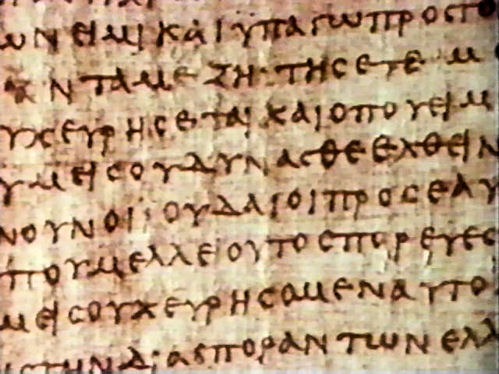
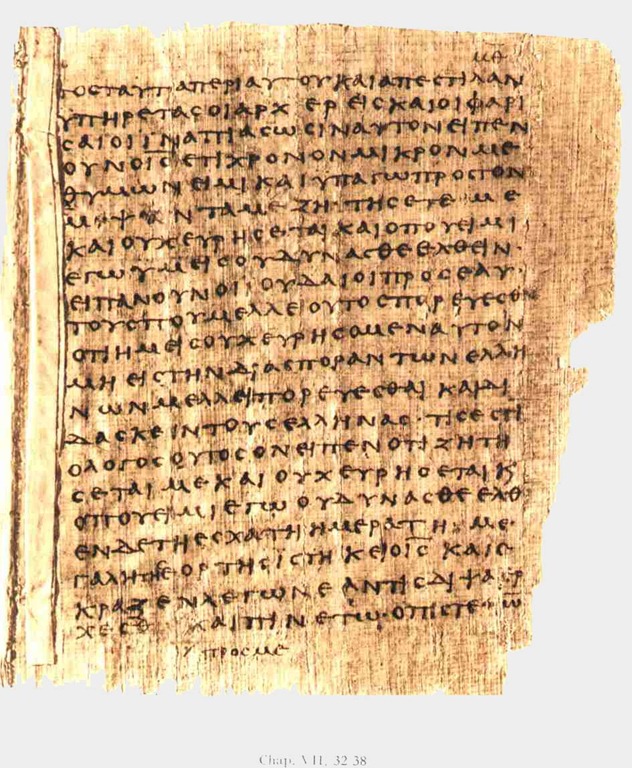
GreekNT3A fragment of parchment containing part of the book of John has been discovered. This piece is believed to be either part of the original written by the apostle himself, or a copy that was made within forty years. A fragment of Matthew has been discovered that most scholars believe was part of the very parchment written by Matthew himself. Other fragments, and even whole books of New Testament, date from within a hundred years of the time of the apostles. The oldest complete copy of the New Testament is about 150 years removed from the time of the apostles. This is far, far better than any other ancient document that exists.

Compared to twenty ancient copies of Tacitus, or ten of Julius Caesar, scholars have discovered roughly 5,500 very ancient copies of the New Testament in Greek (the original language), and an additional 19,000 ancient copies in other languages like Syrian, Latin and Coptic. For hundreds of years, scholars have been comparing these manuscripts to one another. If all or most of the texts show that John wrote “Jesus wept,” than we can be pretty darn sure that John did in fact write, “Jesus wept.” In addition to all these actual copies of the New Testament, we have extensive quotations of the books of the New Testament contained in letters and writings from early Christians, dating from the time of the apostles and on.

With the overwhelming number of copies and the various languages, scholars have found some variations in part of the New Testament. These variations are all very small, and none of them change the essential meaning of any New Testament passage. By the way if you have an NIV version of the bible, it will make a footnote of every major textual variation. Here’s an example of a major variation:

In Luke 23:42, Luke writes that the thief on the cross said, “Jesus remember me when you come into your kingdom.” The NIV version of the bible makes a footnote there is enough evidence to note a variant manuscript reading. The variant would read like this: “Jesus remember me when you come with your kingly power.” You may say: “What’s the big deal with that? What does it change? Doesn’t it mean the same thing?” That, of course, is the point. It changes nothing significant. Nor do any of the “significant” variants. If you have an NIV Bible you can scan the bottom of the text as you flip through the pages and see all the significant variants.

Because of the great number of copies which all record the same words, and because they are so ancient, we can be quite sure that the New Testament we read today is the truly and accurately preserved teaching of the apostles of Jesus Christ.

Every year around Easter, the National Geographic society trots out a documentary or story about the “lost gospels” or the “books that should have been included in the bible.” It’s true that there are a few ancient documents about Jesus that are not included in the New Testament. But there are huge differences between them and the New Testament.

GNT2

We know historically that by around 250 AD at the latest, virtually all Christians were using the twenty-seven books that make up our present day New Testament. The New Testament was not officially defined by a conference of Churches until sometime in the mid 300’s AD, but for all intents and purposes it was well established even earlier than that.

There were several things that caused a book to be included in the New Testament.

  1. The New Testament book had to be connected to an apostle (either written by an apostle, as in the case of Paul’s letters, or written by someone who associated closely with one or more apostles, as in the case of Luke and Mark). So the ancient book, The Apocalypse of Peter, though it names an apostle in the title, was never recognized in any early writing, or by any other evidence, as having anything to do with the real historical Peter. Needless to say, it isn’t in the bible.
  2. The New Testament book had to enjoy widespread early use among churches. For example, the Gospel of John was used and recognized in churches all over the known world by a very early date; whereas the “Gospel of Judas” was never really recognized outside of Alexandria, Egypt and that at a fairly late date, by people who weren’t even Christians. Again, by at least 250 AD, virtually all churches were using a common set of apostolic writings – this set of books was later called “The New Testament.”
  3. The New Testament writings had to agree with generally accepted Christian doctrine. In the 140s AD, a man named Marcion came up with his own very twisted version of Christianity and listed various writings which he thought should be considered sacred. He and his “New Testament” were rejected by almost all churches, because they were contrary to the teachings that the churches had held since the time of the apostles.

I guess what I am saying to you today, is the same thing that Paul was trying to say to the Galatians. I want you to know brothers and sisters, that this gospel that we received and have believed does not come from human beings. It was preserved by human beings, and we can see that it was preserved accurately. But it came from Jesus Christ. But there is even more. John recorded that Jesus said this:

“I have spoken these things to you while I remain with you. But the Counselor, the Holy Spirit — the Father will send Him in My name — will teach you all things and remind you of everything I have told you. “Peace I leave with you. My peace I give to you. I do not give to you as the world gives. Your heart must not be troubled or fearful. (John 14:25-27, HCSB)

And a little later, he said this:

When the Spirit of truth comes, He will guide you into all the truth. For He will not speak on His own, but He will speak whatever He hears. He will also declare to you what is to come. He will glorify Me, because He will take from what is Mine and declare it to you. (John 16:13-14, HCSB)

The Holy Spirit inspired and guided those who wrote down the gospel. And the Spirit guided the process by which these writings were either preserved, or not preserved. We know that there was a third letter which Paul wrote to the Corinthians, which is lost to history. The Holy Spirit caused that happen – that letter was not part of what the Spirit wanted preserved.

All Scripture is inspired by God and is profitable for teaching, for rebuking, for correcting, for training in righteousness, so that the man of God may be complete, equipped for every good work. (2Tim 3:16-17, HCSB)

We have the written words of the true gospel in the form of the New Testament. And we also have the Holy Spirit, given to us through Jesus, who continues to remind us what Jesus said, and guides us to receive and understand the truth of God’s Word. It doesn’t come from human beings who made it up for their own purposes.

If you are a Christian for any length of time, sooner or later you’ll probably have a thought like this: “What if this is all made up? What if none of it is real?” Don’t feel bad about having those thoughts. Instead, remember this: It is entirely reasonable to believe that the New Testament is the unaltered teaching of those who knew Jesus, whom Jesus chose as his apostles. All the evidence says so. It is reasonable to believe that that they believed what they wrote, since most of them gave their lives for that belief (incidentally, they didn’t get power or wealth out of it). But it does require faith to believe that their writings are true, and inspired by the Holy Spirit. It requires faith to believe that Spirit continues to speak through the New Testament today. That faith means we risk being foolish. It means we risk believing something that isn’t true – that risk is the nature of faith. But when we embrace that faith, the Holy Spirit makes these words real and relevant in our lives today.

For the word of God is living and effective and sharper than any double-edged sword, penetrating as far as the separation of soul and spirit, joints and marrow. It is able to judge the ideas and thoughts of the heart. (Heb 4:12, HCSB)

The true gospel, not made by human beings, can speak directly to your heart and to your attitudes. It can convict you of sin, comfort you with grace and lead you closer to the true and living God. It can and will change your life eternally.