For some people, the player above may not work. If that happens to you, use the link below to either download, or open a player in a new page to listen. You can also find us on Spotify at https://open.spotify.com/show/6KKzSHPFT466aXfNT2r9OD
To download, right click on the link (or do whatever you do on a Mac) and save it to your computer: Download Lament Part 6
Grumbling vs Lamenting #6. Psalm 22
Today I want to explore the lament of Jesus from the cross. He is echoing the lament of David in Psalm 22. The Lord Jesus only quoted the first line, but it will be good to read the first two verses:
My God, my God, why have you forsaken me?
Why are you so far from saving me,
so far from my cries of anguish?
My God, I cry out by day, but you do not answer,
by night, but I find no rest.
(Psalm 22:1-2)
Have you ever stopped to consider that Jesus actually felt forsaken, abandoned and alone in those moments when He was languishing on the cross? Or, is it your opinion that He said these words so we’d connect the dots back to this messianic psalm which predicted the events of the day He was crucified?
To be entirely honest, until recently I (Kevin) never seriously considered that Jesus actually felt forsaken. I suspect that this is because I imagined that as God the Son He couldn’t possibly have felt that way. I don’t think I’m alone in this perception. However I remind myself that Jesus was not only God the Son, He was also an actual human being who felt psychological pain (“…he was a man of sorrows and acquainted with grief”– Isaiah 53:3) and physical pain (he experienced scourging, the crown of thorns and crucifixion, an unthinkably brutal form of torture which inevitably ends in death– Matthew 27:27-35).
Scripture shows us that during the course of His life, first as the son of Mary and Joseph and later as an adult, he sat at the feet of elders and learned (Luke 2:41-51), He experienced physical maturation (Luke 2:52), hunger (Matthew 4:2), thirst (John 19:28), exhaustion (Matthew 8:24) and such things as anger and frustration (Mark 9:19). Also, we know that He experienced the unsettling effects of being tempted “in all ways as we are” and yet He didn’t sin (Hebrews 4:15).
I have come to believe that Jesus truly felt forsaken while He was on the cross. I base this perspective on some things Jesus said and some things that we observe about Him.
In the Garden, on the night of His betrayal, He admitted to His followers, “I’m overwhelmed with sorrow to the point of death” (Matthew 26:38). Note the word “overwhelmed.” Such a strong word. Dictionary.com defines it as “being completely overcome in mind or feeling.” Overwhelmed? Yes, that’s the word the scholars think best represents the Greek word which is used in this text. Too strong for your taste? Some translations use the words, “crushed,” or “consumed.” Much to think about. Then, there’s “sorrow” so terrible that it was lethal (“unto death”).
Then we have His famous prayer that ends with “Not My will, but Yours be done.” We love to give that our attention but it would be good for us to spend some time thinking about, maybe even camping on: “Father, if possible, let this cup pass Me by,” before saying, “Yet not My will…”
Jesus had a will that was independent of His Father’s. He clearly reveals, doesn’t He, that He wanted the cup of suffering to “pass Him by?”
Then if we go back in the narrative about Jesus’ suffering, in the days leading up to His time in the Garden of Gethsemane, we see that He acknowledges to His followers, “I have a baptism to be baptized with, and how great is my distress until it is accomplished” (Luke 12:50). Have you ever thought of Jesus being distressed? He was and He didn’t hide it from His disciples.
Then we see that His disciples observed, “And being in agony…his sweat became like great drops of blood falling down to the ground” (Luke 22:44).
Based on these things, can you consider that your Savior actually felt forsaken? Might this help you when you feel abandoned and alone in your suffering?
(Tom now) And the Bible seems to tell us that we do not have to suffer complete abandonment by God, like Jesus did. In fact, Scripture teaches that through faith, we live in spiritual union with Christ. In fact the way the apostle Paul puts it is this:
20 I have been crucified with Christ. It is no longer I who live, but Christ who lives in me. And the life I now live in the flesh I live by faith in the Son of God, who loved me and gave himself for me. Galatians 2:20
The idea is that Jesus himself lives his life through ours. That means that when we suffer, Jesus himself suffers along with us. In other words we ourselves are never abandoned or forsaken in the way that Jesus was. He is with us even in suffering; perhaps, especially in suffering. So in the first place, as Kevin says, we can know that Jesus understands what we are going through. But even more, we can lean on him, trusting he is there even when we don’t perceive him, knowing that he is feeling the abandonment and hopelessness along with us.
I want to close with some words from the Gospel transformation study Bible. It comes from the note found at Luke 22:42:
Jesus has previously given his disciples (including us) instructions on praying (11:1–13; 18:1–8). Here he models one of the most important and universal truths about what our prayer life should be like. Jesus expresses his desires and even laments before the Father with full honesty and humility (22:44). He desires to be delivered from the pain and suffering he is facing (v. 42). Yet there is something in his prayer that is even more important than his requests. It is his acknowledgment of God’s sovereignty and goodness in all situations and his glad submission to whatever God’s greater plan might be: “Nevertheless, not my will, but yours, be done” (v. 42). This is the banner that should fly over all of our prayer requests. It is the heart of childlike faith that honors God and blesses us. We can pray bold prayers, knowing that God is our Father, through our adoption based on the work of Christ. Yet we can also rest in confidence that since he is our Father, even his denials of our requests can only be what is best for us—as can be his granting us “far more abundantly than all that we ask or think” (Eph. 3:20).
For some people, the player above may not work. If that happens to you, use the link below to either download, or open a player in a new page to listen. You can also find us on Spotify at https://open.spotify.com/show/6KKzSHPFT466aXfNT2r9OD
To download, right click on the link (or do whatever you do on a Mac) and save it to your computer: Download Lament Part 1
Numbers 14:1-4; 26-28 & Psalm 142
When I was a young pastor, I used to meet weekly with another pastor who was about 18 years older than me. His name is Kevin McClure. We met almost every week for about seven years. Kevin and I encouraged one another, learned from one another, and became friends. I don’t see him very often any more (2 times in the last two years) but I still consider him a dear friend, and precious brother in Christ.
Kevin writes a weekly email called the E-pistle. The E-pistles are generally fairly short and pithy. Kevin might take several weeks to offer short teachings on one subject, and then move on to another topic. Recently, he started an E-pistle series on the topic of Lament and Grumbling. I found his thoughts interesting and helpful.
For the next several weeks, I’m going to be laid up after rotator cuff surgery, which will add a layer on top of my “normal” pain. So, I got Pastor Kevin’s permission to use his E-pistles on Grumbling vs. Lamenting. I know that many of you prefer to listen. Kevin is retired, which means he is too busy to record these as sermons 😊. So, with Kevin’s permission, I’ll read what he has written, and, at times, add a few thoughts of my own. I probably won’t mess much with what Kevin has written, because I won’t be able to type for a few weeks. So if you normally read, you might want to consider listening to this series instead; otherwise you might miss some of the sermon. Usually, I’ll probably use 2-3 E-pistle episodes as one sermon. In general, I would say that 80-95% of what I say in the recording will be Kevin’s words, and, depending on the message, 5-20% will be clarifications or other comments that I add.
If you are blessed by this series, please consider leaving a comment below, and I’ll share the comments with pastor Kevin McClure.
Ever grumble? If you are familiar with Scripture, you know that God doesn’t look kindly at it (Numbers 14:27). He was very upset by the grumbling and murmuring of some of the people whom He liberated from Egyptian slavery. In spite of what God had done for them when He provided a miraculous deliverance from Egyptian oppression, in spite of the way He led them through the Red Sea and demonstrated His presence quite supernaturally in a pillar of fire by night and a pillar of loud by day– in spite of all of this, some of His people whined every time it looked like they’d be facing another trial. There seemed to be little trust in God. Grumbling and murmuring dishonors God and sets you up for additional trouble.
The New Testament isn’t soft on grumbling either. Check out the following words by Paul: “Do everything without complaining or arguing…” (Philippians 2:14,15). James takes a dim view of it too: “”Do not grumble against one another, brothers, so that you will not be judged…” (5:9)
On the other hand, God seems to welcome laments. These have the tone of a complaint but they are different. How? The people who are recorded as lamenting are worshippers, psalmists, who like the murmurers are suffering, but unlike them, they turn to God in their pain. They ask the questions every suffering person will eventually ask if he or she is actually paying attention. They ask, “Why?” and “How long?” and “Where are You?”
Jesus Himself lamented. Remember, “My God, My God, why have You forsaken me?” That’s a lament. Lamenting is an honest way to pour out your troubles and invite God into them.
Over the course of the next few weeks I want to address the upside of being absolutely honest with God about the pain you are feeling in your suffering– identifying it and presenting it to Him to invite Him into it. We’ll explore a number of things, eventually getting to the three questions the lamenting psalmists ask.
During the days of Moses’ leadership, grumblers incurred God’s wrath because they were ungrateful and because they did not invite God into their concerns. In essence, they spurned God, belly-aching, but not inviting Him in. Lamenters also face pain. But in their suffering they cry out to God. Consider Psalm 142:
A psalm of David, regarding his experience in the cave. A prayer. 1 I cry out to the LORD; I plead for the LORD’s mercy. 2 I pour out my complaints before him and tell him all my troubles. 3 When I am overwhelmed, you alone know the way I should turn. Wherever I go, my enemies have set traps for me. 4 I look for someone to come and help me, but no one gives me a passing thought! No one will help me; no one cares a bit what happens to me. 5 Then I pray to you, O LORD. I say, “You are my place of refuge. You are all I really want in life. 6 Hear my cry, for I am very low. Rescue me from my persecutors, for they are too strong for me. 7 Bring me out of prison so I can thank you. The godly will crowd around me, for you are good to me.” (Psalms 142, NLT)
David probably prayed this before he wrote it. This “complaint” bubbled out of him when he was in a cave. When was he in a cave? He may have been in a cave a time or two when he was shepherding his dad’s sheep, but more than likely, he’s talking about the time he was hiding from King Saul, who was trying to kill him (1 Samuel 24). In this psalm, he specifically mentions being in trouble. So, if he’s referring to the incident I think he is, his very life was at risk. That’s serious trouble. Unlike a grumbler who would simply harp about his situation, he talks to the Lord. Why? Because God had shown David many times that He is trustworthy. David didn’t hide from God that he didn’t like his situation. It’s okay to do that, especially if you invite God into it.
It takes faith to invite God into your troubles. You might be low on faith at the moment. When you go through trouble, your faith takes a lot of hits and it can influence you to question whether God really cares. You might feel like you are really shaky. That’s okay. If you’ve never gotten to that place, it’s probably because you haven’t been tried to the extreme. When you have faced extreme pain, pain that leaves you feeling unstable, when you feel like your soundness of mind is hardly hanging on by a thread, you are probably not feeling strong in faith. That’s okay! It’s okay! That’s a great time to talk to God and ask Him to bolster your faith. Ask Him to help you find Him in the pain. It’s certainly fine to even ask Him to deliver you out of your suffering– remember Someone saying, “Father, if possible, let this cup pass me by…?” Yes, even Jesus prayed that way. Yes, we know he also added, “yet not my will, but Yours be done” but we sometimes fail to linger in that place where our pain instructs us to cry for deliverance. This is another subject that I hope to explore some day in an E-pistle, but for now I just want to mention that Christians are far less in touch with their humanity than Jesus was.
If you’ve never done this, write out your prayer-complaint to God. What is it that you are facing that is so distressing? What would you like Him to do about it? Add that too. More on this next week.
The writer of Samuel is using his epilogue (closing part of the book) to emphasize certain themes again and again. One of the most important of these ideas is this: The Lord is the only source of salvation and hope. Even if the people imagined that a king like David could save them again, David’s own words point them not to any human leader, but to the Lord himself.
To listen to the sermon, click the play button:
For some people, the player above may not work. If that happens to you, use the link below to either download, or open a player in a new page to listen. You can also find us on Spotify at https://open.spotify.com/show/6KKzSHPFT466aXfNT2r9OD
To download, right click on the link (or do whatever you do on a Mac) and save it to your computer: Download 2 Samuel Part 25
1 SAMUEL #25. 1 SAMUEL CHAPTER 22:1-51.
Let’s remember where we are. The narrative history of the book of Samuel ended with 2 Samuel chapter 20. Chapter 21 does describe a historical incident, but it’s out of chronological order—it happened much earlier in David’s reign. Chapters 21-25 form a six part epilogue, organized according to an ancient writing style called chiastic structure. I want to remind us of the overall picture of this epilogue, because we have now come to the center of the structure.
Part A: A sin, and the need for atonement
Part B: God’s provision of salvation for his people, even when David becomes too old to fight
Part X (our section today): A psalm of David proclaiming that the Lord saves
Part X1: A psalm of David proclaiming that the Lord works through leaders
Part B1: The warriors who helped David save and lead Israel
Part A1: A sin, and the need for atonement, and God’s provision for it.
So we see that our section today (which is all of chapter 22) is building on what has come before.
2 Samuel chapter 22 is almost identical to Psalm 18, but there are quite a few differences between the Hebrew text of 2 Samuel 22 and Psalm 18, and some of those show up in the English translations. Almost all of those differences are due to the fact that the book of Psalms was gathered together and compiled a few centuries after the book of Samuel was written. During those intervening centuries, written Hebrew changed somewhat. Whoever collected the Psalms into one collection updated and standardized them so that all of the psalms used the same, latest form of Hebrew. Our verses today were written in the older form of Hebrew. The small differences between 2 Samuel 22 and Psalm 18 do not change any major teaching of the Bible (nor indeed any minor one).
The beginning of 2 Samuel 22 says:
“1 And David spoke to the LORD the words of this song on the day when the LORD delivered him from the hand of all his enemies, and from the hand of Saul.”
Because of the mention of Saul, and a few other things in the psalm, most Bible scholars think that David wrote this when he was a fairly young man, probably around the time when he first became king of all Israel.
Remember, the first section of this epilogue was about the seriousness of sin and the need for atonement. Next came the crisis of the giants, and how the Lord made sure to provide a warrior to save Israel from each one. Now, in the first part of the psalm, David makes the overall theme perfectly clear: God alone is our salvation:
“The LORD is my rock and my fortress and my deliverer, 3 my God, my rock, in whom I take refuge, my shield, and the horn of my salvation, my stronghold and my refuge, my savior; you save me from violence. 4 I call upon the LORD, who is worthy to be praised, and I am saved from my enemies. (2 Samuel 22:2-4, ESV)
The people of Israel may have begun to feel that David was their savior. He saved them from the first giant. He fought the Philistines and won many battles for Israel. He outlasted the unstable, volatile, king Saul. As a new young king, he defeated the Philistines again, more completely. But here he says clearly that salvation and deliverance come only from the Lord. He, David, is not Israel’s savior. That title belongs to the Lord.
Verse 4 is a concept that appears throughout the Bible. To call on the name of the Lord is to worship him, and to give over your life to serving and worshipping him. Abraham “called on the name of the Lord.” So did Isaac and Jacob. Moses and the prophets urged the people to “call on the name of the Lord.”
The apostles made it clear that to call upon the name of the Lord was, in fact, the same thing as receiving and worshipping Jesus Christ. The apostle Peter quoted from one of the prophets when he urged people to receive Jesus:
21 And it shall come to pass that everyone who calls upon the name of the Lord shall be saved.’ (Acts 2:21, ESV)
Paul wrote:
13 For “everyone who calls on the name of the Lord will be saved.” (Romans 10:13, ESV)
To call upon God’s name is to look to him earnestly and trustfully for help. It is to recognize that the only true help comes from the Lord, the only true salvation or deliverance comes from him alone. And as I said, the apostles taught that this was the same thing as receiving Jesus.
So calling on the name of the Lord is not simply saying the name “Yahweh,” or even “Jesus.” It means to worship the Lord, and to follow him, to allow your whole life to belong to him. David, for all his faults, did indeed do that.
In the next section of the psalm, verses 5-7, David talks about being in very serious distress. He called out to God for help in his particular situation. The way I read it, he is talking about the precarious way he lived for almost fifteen years. King Saul wanted him dead, so it wasn’t safe for him to go north into Israel. The Philistines wanted him dead, so it wasn’t safe among them, to the west. If he strayed too far south, the Amalekites were ready to get him. The wilderness he lived in was no picnic either. At different times during that period of his life, David faced all of those dangers.
The person who put together the book of Samuel included this psalm because he wants us to remember that following God did not always mean life was easy for David. We can therefore expect that sometimes life will be hard for us, even if we are faithfully following God.
Next, David gives us a very pictorial, metaphorical representation of how God responded to save him. The most remarkable thing about this is that God in all his majesty and power, cared deeply about David, and came to save him. Again, it was not David who delivered Israel, but the Lord who saved both David and Israel. David ends this section with this:
17 “He sent from on high, he took me; he drew me out of many waters. 18 He rescued me from my strong enemy, from those who hated me, for they were too mighty for me. 19 They confronted me in the day of my calamity, but the LORD was my support. 20 He brought me out into a broad place; he rescued me, because he delighted in me. (2 Samuel 22:17-20, ESV)
The next section of the psalm, verses 21-25, is probably the hardest one to stomach. In it David claims that God dealt with him according to his (David’s) own righteousness. In the first place, that can make it sound like we have to be good people before God will help us. Second, we know that David was far from perfect. We know that even before the terrible sins he committed in the Bathsheba incident, he still sometimes forgot to ask the Lord for guidance, or, at other times, he was hot-headed and angry. He didn’t listen to what the Lord said about having many wives.
However, remember, David wrote this in his youth, long before he sinned with Bathsheba and had Uriah murdered. And I think that David, when he talks about being “blameless” here, means that he faithfully followed the Lord in not killing Saul, and in not trying to steal the kingdom for himself. In other words, he isn’t claiming to be blameless in every area of his life, but rather, he is talking specifically about the way he waited patiently for God to make him king, and the times he refused to kill Saul.
Remember when Saul promised that whoever killed the giant would marry his oldest daughter, and be made rich? Saul broke those promises to David. Not only that, but he added conditions onto his public promises. Saul made David kill an additional 100 Philistines before he allowed him to marry his youngest daughter. David did not complain about the broken promises, nor use them as an excuse to serve Saul poorly. Instead, he continued to faithfully serve Saul, even when Saul treated him badly. David is thinking about specific things like this when he says he was “blameless.”
He is saying, in fact, that he knows the Lord gave him the kingdom, because he did get the kingdom for himself. He was “righteous” in not assassinating Saul, and in not leading a rebellion. He goes on:
26 “To the faithful you show yourself faithful; to those with integrity you show integrity. 27 To the pure you show yourself pure, but to the crooked you show yourself shrewd. (2 Samuel 22:26-27, NLT)
This section includes amazing promises, and serious warnings. First, this isn’t about earning our salvation. It’s more like this: if we allow the Lord to build a straight, open pipeline within our hearts and minds, then God can show us his love and goodness directly. When we trust the Lord, He uses that to build an open channel to show us his love and goodness.
On the other hand, when we don’t trust God, we tend to make deals with him, or try to manipulate him into giving us what we want, no matter what. We ourselves throw twists and curves and complications into our relationship with God, and then we blame him because he seems tricky and shrewd to us.
This isn’t actually all that complicated. Imagine a good human father who has two sons. He showers both sons with love, and he also creates strong boundaries with discipline. The first son, Peter, responds by trusting his dad, even when he isn’t always happy about the boundaries, or when he doesn’t understand them. The second son, Eric, wants what he wants, right now. He doesn’t see his dad’s boundaries as loving—he only sees that his dad appears to be denying him what he wants. So he tries his best to subvert the rules, and manipulate his dad, and get what he wants. Peter’s relationship with his dad is likely to be warm and loving, and not super complicated. But Eric will have a totally different experience with the same loving father. Because Eric himself has not responded to his dad in love and trust, his dad will have to find additional ways to discipline him, different ways to relate to him, and get through to him. Because Eric is so fixated on what he wants, his perception is that his dad is standing in the way of that. Therefore, Eric will not easily be able to have an open, honest, loving relationship with his dad, even though it’s the same dad that Peter has, who loves Eric just as much as he loves Peter.
Honestly, I think perhaps David was thinking of Saul when he wrote this part of the Psalm. Both David and Saul served the same loving God. But they had a totally different experience of God because David responded to God in trusting faith, while Saul only tried to use and manipulate God. When we try to make deals with God, or manipulate him, we find that these things backfire on us.
David finished this part of the psalm with this thought:
28 You save a humble people; but your eyes are on the haughty to bring them down. (2 Samuel 22:28, ESV)
This is another concept that is echoed and re-echoed throughout the Bible—in both the Old and New Testaments.
Here are two examples from the New Testament:
6 But he gives more grace. Therefore it says, “God opposes the proud but gives grace to the humble.”7 Submit yourselves therefore to God. Resist the devil, and he will flee from you. 8 Draw near to God, and he will draw near to you. Cleanse your hands, you sinners, and purify your hearts, you double-minded. 9 Be wretched and mourn and weep. Let your laughter be turned to mourning and your joy to gloom. 10Humble yourselves before the Lord, and he will exalt you. (James 4:6-10, ESV)
Clothe yourselves, all of you, with humility toward one another, for “God opposes the proud but gives grace to the humble.” 6 Humble yourselves, therefore, under the mighty hand of God so that at the proper time he may exalt you, 7 casting all your anxieties on him, because he cares for you. (1 Peter 5:5-7, ESV)
If we try to claim that we have something worthwhile to offer God, something with which to bargain, we will find God hard and inaccessible. If we think we don’t really need God, or that we can stand in judgment of him, we find that he opposes us. But if we approach him with true humility, with a understanding and attitude that we have nothing whatsoever to bargain with, no claim on him, no reason he should be kind to us, we find that he reaches out toward us in love and grace.
David continues in this psalm with a lot of words about his victories in battles, but if we pay attention as we read it, we notice that David always insists that it is the Lord who brought him victory, not his own skill or athleticism. He can “run through a troop” because the Lord enables him to do it. Over and over, in different ways, David tells us that the Lord alone is the source of hope and salvation. He is not king because he is an amazing person. He is king because God chose him. He did not win battles because he was a great warrior. He won them because he looked humbly to God, and God fought for him. We are meant to hear it clearly: God is the only source of hope and salvation.
One thought is that the way we approach God can have a large influence on our relationship with him. If we approach him like Saul, if our ultimate commitment is to ourselves, or to our own goals and desires, we might find that God seems difficult and tricky. If we approach him with pride or preconditions, we might feel almost like God opposes us. But if we approach him with open faith, and the humility to receive everything from him, even if some of what we receive we’d rather not have, we will find that God is kind and gracious and loving. He opposes the proud, but gives grace to the humble. If you feel like God has been opposing you lately, give thought to whether you have been humble enough to trust him in all things.
Finally, we need to train our hearts and minds to look to the Lord alone for salvation. And “salvation” doesn’t mean “everything goes the way we want it to.” It means that God has us in his hands, that he will be with us no matter what we face in this present life, and in the life to come we will find joy beyond imagining with the Lord, and with his people.
As David grew older and became less of a force on the battlefield, the people of Israel must have wondered what was going to happen when he was gone. The writer of Samuel reminds us that it was never David who saved them, but rather, it was the Lord who saved them, whether through Samuel, Saul, David, or the next generation. This encourages us to not make idols out of the methods the Lord uses to bless us. We don’t need anything but the Lord himself.
To listen to the sermon, click the play button:
For some people, the player above may not work. If that happens to you, use the link below to either download, or open a player in a new page to listen.
To download, right click on the link (or do whatever you do on a Mac) and save it to your computer: Download 2 Samuel Part 24
Last time we looked at the gruesome story of how Saul’s evil deeds against the Gibeonites created a need for atonement. We considered the overall message that we human beings are dead meat. We cannot be good enough to atone for sin. But the writer of the book of Samuel does not want to leave us with the wrong impression. So, in this next section of the epilogue, he tells about some people who were quite remarkable. The incidents described here probably took place near the end of David’s reign.
The first incident was when David was an older man. He was fighting the Philistines, and in the battle came face to face with a particularly fearsome Philistine warrior, a descendant of giants. As David faltered, his nephew Abishai came to assist him, and they struck down the Philistine. It was at this point in David’s life that his elite warriors convinced him not to risk his own life in battle anymore.
I want to talk about Abishai for just a second. He was the second of three brothers. From oldest to youngest they were: Joab, Abishai, Asahel. Their father probably died young, since his name is not mentioned, and when Asahel also died young, he was buried next to their father. Their mother was Zeruiah, David’s sister. This made Abishai David’s nephew. Abishai’s brother Joab had his conflicts with David, and we have seen that Joab was a complex man, but among other things, he murdered three people. We assume that he killed many in battle also, but Joab murdered Abner, Absalom and Amasa in cold blood. Two of those (Absalom and Amasa) were Joab’s own cousins. Abishai, the one who helped David against the Philistine, Ishbi-benob, was a fearsome warrior, but there is no indication that he was a murderer, like his brother Joab. He was eager to kill David’s enemies, but unlike Joab, when David said “no,” Abishai listened. I like to think that Abishai was a physically gifted warrior who rejoiced to use those gifts, but who listened to David, and to the Lord.
Abishai is listed as the chief of the “Thirty Mighty Men” of David (there were actually thirty-seven). On one occasion he killed three hundred Philistines with his spear in a single battle. After David, and “the three” (mightiest men), Abishai was considered the most fearsome warrior in Israel. He was younger than David, and so on the occasion listed here, he was able to help him against the Philistine Ishbi-benob, who was descended from giants. The text doesn’t say so, but we can safely assume that they were unusually large and strong men, even if they weren’t as big as the Goliath killed by David.
Next came Sibbecai. He is listed in 1 Chronicles 11:29 as being one of David’s thirty mighty men, but he is not found by that name in the list here in 2 Samuel chapter 23. Chapter 23:7 mentions Mebunnai the Hushathite, and that might be a different name for the same person. 1 Chronicles also mentions that he was a commander of an army division. In any case, Sibbecai/Mebunnai killed another descendent of the giants, named Saph.
Next with have Elhanan. He was also one of the thirty mighty men, and he killed another man named Goliath from the same city (Gath) as David’s Goliath. 1 Chronicles 20:5 puts it like this:
5 And there was again war with the Philistines, and Elhanan the son of Jair struck down Lahmi the brother of Goliath the Gittite, the shaft of whose spear was like a weaver’s beam. (1 Chronicles 20:5, ESV)
My assumption is that “Goliath” was a kind of a family name, and David killed an older member of the family, and then, years later, Elhanan killed a younger brother, or possibly even the son of the original Goliath. I think that’s the most likely, and it fits best with both texts.
Then we have a final descendant of the giants, a man of large stature, with some kind of genetic anomaly that gave him six fingers on each hand, and six toes on each foot. He was killed by yet another nephew of David: Jonathan, son of David’s brother, Shimei. David’s family produced some fearsome warriors.
Now, what do we make of this? Why did the author of the book of Samuel put this in here? Let’s back out and remember the big picture. All the way back at the beginning of the history recorded in this book, Israel was a mess, with no one to guide them. God used a righteous woman, Hannah, to bring Samuel into the world. God then used Samuel to lead the people, give them direction, and provide deliverance from their enemies. But as Samuel grew old, the people grew afraid. Samuel’s sons were not like him. Who was going to lead Israel next? God provided Saul, the kind of King the people really wanted: big and impressive-looking. Saul began well, but after some time, he faltered because of fear and insecurity. When Israel was challenged by a giant, Saul had no answer. The Lord brought David forward, and the young man (probably a teenager) killed the giant, and then became the most fearsome battle leader that had yet lived. Eventually David became king, and he led the people well, but at times even he failed and faltered. And now—this is where we get to this text today—now, David is too old to fight giants any more.
What will happen? Who will save the people from their enemies now? David, the brilliant battle-leader, created an empire. For the first and only time, Israel became a regional power, uncowed by either Egypt to the south or Mesopotamia to the north and east. But now the battle leader is too old to lead. Who will protect and save Israel?
These four younger men step in to fill David’s shoes. Now, we have not one, but four giant-slayers. However, the point is not that these four younger men will replace David, or even that one of them will. The point is this: It is the Lord himself who always provides salvation. He was the one who raised up Samuel. The Lord was the one who raised up Saul, and then, when Saul fell, brought David. The people of Israel do not need to fear. Their hope should never have been in Samuel, Saul or even David, in the first place. Their salvation comes from the Lord himself. Even when David can no longer fully use his tremendous gifts, the Lord protects Israel. We are meant to understand this: Even when the time comes for David to die, the Lord will be with his people.
Again and again, the people of Israel were tempted to put their hope in a human being: first Samuel, then Saul, and then David. And the Lord did indeed use all three of those men to deliver and protect his people. But the writer of Samuel is showing us: “Look it continues! The people change, but the one constant is this: The Lord is our salvation.” And of course, David himself knew this to be true. The people don’t need David, or any other particular individual. They only need the Lord.
I think sometimes we need to hear this message as well. We put our hopes on the way God might save us, instead of God himself. When we do that, we create idols. One purpose of the book of Samuel is to show that God did indeed bless Israel through David, but not to make an idol of him, and not to depend on God always using someone like that.
For instance, a few years ago there was a popular Christian teacher named Ravi Zacharias. He encouraged and helped a great number of people, probably millions. He passed away in 2020. Around the time of his death it came out that he had engaged in sexual misconduct over the course of about five years. As far as I know, the accusations have been proved credible. I spoke with someone who had trouble processing this. She felt like she had been blessed by Ravi’s ministry, and even strengthened in her faith by his words. But how could she square that with the kind of man he had been in secret?
I helped her to see that it was the Lord who had blessed her and strengthened her faith. Yes, he used Ravi Zacharias to bring those blessings, but the source wasn’t Ravi, it was the Lord. The blessings were real, no matter what kind of man he was. Just as David was a very imperfect man whom God used to bless his people, so today, we ought to avoid making human beings into idols. Let’s receive God’s blessings, however he brings them, but let’s trust the source of those blessings, which is the Lord, not any human being, or human process. That way, we can receive God’s goodness, even when the people who bring it to us turn out to be less than perfect.
Or, maybe we trust in something else, like our job, or work ethic, or physical stamina, or our good marriage, or our savings account. God does indeed bless us through things like these. But if we find ourselves saying “As long as I have my health…” or, “as long as I have a good marriage…” or, “as long as I have a good investment portfolio…” we might be in danger of idolizing that thing. We don’t need any “as long as.” The Lord can bless us apart from such things as well. If we lose something like one of those things, all is not lost. David and the Israelites lost David’s giant-killing skills. It didn’t matter. The Lord protected them anyway. Whatever else we might lose, we cannot lose the Lord, and he is all we truly need:
28 And we know that for those who love God all things work together for good, for those who are called according to his purpose. 29 For those whom he foreknew he also predestined to be conformed to the image of his Son, in order that he might be the firstborn among many brothers. 30 And those whom he predestined he also called, and those whom he called he also justified, and those whom he justified he also glorified.
31 What then shall we say to these things? If God is for us, who can be against us? 32 He who did not spare his own Son but gave him up for us all, how will he not also with him graciously give us all things? 33 Who shall bring any charge against God’s elect? It is God who justifies. 34 Who is to condemn? Christ Jesus is the one who died—more than that, who was raised—who is at the right hand of God, who indeed is interceding for us. 35 Who shall separate us from the love of Christ? Shall tribulation, or distress, or persecution, or famine, or nakedness, or danger, or sword? 36 As it is written, “For your sake we are being killed all the day long; we are regarded as sheep to be slaughtered.” 37 No, in all these things we are more than conquerors through him who loved us. 38 For I am sure that neither death nor life, nor angels nor rulers, nor things present nor things to come, nor powers, 39 nor height nor depth, nor anything else in all creation, will be able to separate us from the love of God in Christ Jesus our Lord. (Romans 8:28-39, ESV)
Really pay attention to what the Holy Spirit is saying to you today.
After Absalom was dead, and his rebellion put down, David encountered various individuals and groups who had conspired against him, or used the situation in some way to their own advantage. These people ranged from cowards to treasonous quislings. David, once again with the power of kingship, chose not to punish them, but rather, to forgive them. His kindness and grace to such despicable people comes across as offensive; outrageous, even. In this way, David reminds us once more of the Messiah, Jesus Christ, whose forgiveness to undeserving people is also outrageous. God’s grace is for those who don’t deserve it. We must never forget that.
To listen to the sermon, click the play button:
For some people, the player above may not work. If that happens to you, use the link below to either download, or open a player in a new page to listen.
To download, right click on the link (or do whatever you do on a Mac) and save it to your computer: Download 2 Samuel Part 21
2 Samuel #21 . 2 Samuel Chapter 19:9-43
The second half of chapter 19 appears to be mostly a detailed record of the political history of that time. This was valuable and significant to the ancient Israelites who lived not long after David’s time. It is still interesting today to historians, and bible-geeks like me. But what is the point of it really?
I know I’ve mentioned this before, but I think it is important to revisit it periodically. We all tend to forget. The Holy Spirit made sure first that this history was written; second, that it was preserved through the years; and third, that it was included in the bible. So there must be some reason for this. There must be some way the Lord wants to speak through it to Christians living today.
Sometimes, in order to hear what the Lord wants to say today, we first need to understand it better. So please bear with me. I think we’ll find some fruitful bible application here if we pay attention to details that might otherwise seem tedious.
Here’s the situation. David’s army has defeated and killed Absalom, who had rebelled against him and set himself up as king in David’s place. There were no computers or telephones or newspapers in those days, so it took a while for the news of David’s victory to spread. Meanwhile, David seems to have waited. This might seem a little bit strange. But remember who David is. He has many faults, to be sure, but he has never grasped at power. Instead, he always waited for the Lord, even refusing to take opportunities to gain the kingdom when he was younger. It is my opinion that once Nathan confronted him about the Bathsheba incident, David once again became like the person he was when he was younger. All of his confidence was once more in the Lord. So here, he once more waits until he is sure that the Lord still wants him as king. He doesn’t want the civil war to continue, so he waits until he is sure he can return in peace. This is David once more at his best, trusting the Lord.
The writer of Samuel often makes a distinction between the tribe of Judah and the other eleven tribes of Israel. Often when he writes “Israel” he appears to mean the tribes as distinct from the tribe of Judah. This shows us that there was some tension between those two factions even in the time of David. In the time of David’s grandsons, the nation was split. Judah absorbed most of the tribe of Benjamin and became a separate nation named “Judah” (from which we get the word, “Jew”). The other ten tribes formed a kingdom to the north of Judah, which was called “Israel.” I’m of the opinion that it was shortly after this split that someone took the writings of the prophets Samuel, Nathan and Gad, along with some official court history, and made it all into the books of First and Second Samuel.
After Absalom’s rebellion, people from the other tribes began talking about inviting David back officially, and officially receiving him once more as king.
Now Israel had fled every man to his own home. 9 And all the people were arguing throughout all the tribes of Israel, saying, “The king delivered us from the hand of our enemies and saved us from the hand of the Philistines, and now he has fled out of the land from Absalom. 10 But Absalom, whom we anointed over us, is dead in battle. Now therefore why do you say nothing about bringing the king back?”
Apparently, the people really had committed to Absalom. They said he was the one they had anointed to be king over them. This wasn’t as strange as it might seem. After all, he was the king’s son and heir. I’m sure many people assumed that sooner or later, Absalom would be king anyway, and why not have him in the full vigor of his youth? But now, he was gone. I would have thought that at this point it was a clear choice to go back to David, but the people still seemed at a loss. Even so, from most of the tribes, sentiment turned back toward David.
But the tribe of Judah did not seem to know what to do. At first, this seems strange, since David was from the tribe of Judah. But then, so was Absalom, David’s son. Absalom’s rebellion was conceived and carried out in Hebron, the chief city of Judah. Absalom’s military commander, Amasa, was a relative of his (and David’s) from the tribe. In fact, most of his inner circle were probably from Judah. In other words, although they were David’s people, they were also Absalom’s people, and they were probably chiefly responsible for the rebellion.
David reached out to them. He sent a message to the leaders of the tribe of Judah, saying,
‘Why should you be the last to restore the king to his palace? The talk of all Israel has reached the king at his house. 12 You are my brothers, my flesh and blood. So why should you be the last to restore the king? ’ 13 And tell Amasa, ‘Aren’t you my flesh and blood? May God punish me and do so severely if you don’t become commander of the army from now on instead of Joab! ’ ” 14 So he won over all the men of Judah, and they sent word to the king: “Come back, you and all your servants.” (2Sam 19:11-14, HCSB)
As David made his way back, he was met at the Jordan river by a host of people who wanted the honor of escorting him to Jerusalem. What follows was a slightly sickening display of sycophancy. People ended up arguing amongst themselves about who got to show David honor, and who was honoring him more (19:40-43).
Along with the leaders of the tribe of Judah, one of the first people to come meet him was Shimei. You may remember him from 2 Samuel 16:5-13, which we covered in Part 18 of this sermon series. This was the man who cursed David and pelted him with rocks and dust as he fled from Absalom. When David was down, he piled on with insults and taunting, rubbing David’s face in the humiliation, exulting in David’s misfortune and shame. Shimei did not just mess up and make a mistake – what he did was clear and deliberate. Now that David was king again, Shimei came fawning to him like a disobedient dog, begging forgiveness. Clearly, he wouldn’t have had this attitude of Absalom had won. I don’t know about you, but I think that Shimei was pond-scum. His behavior and attitude are despicable, detestable, the lowest and ugliest forms of hypocrisy and cowardice. He is a jerk, plain a simple, the kind of person I want nothing to do with.
And David forgave him.
Stop for a second, and think on that. Let it sink in.
Let’s be honest. David’s forgiveness and compassion are offensive. Abishai, brother of Joab suggests, as he did before, that Shimei would be a more attractive person if his head was removed. I tend to agree with Abishai. But David did not.
Does this remind you of anything? The love and compassion of Jesus were also offensive. The Pharisees were offended that he would eat with tax collectors and known sinners. He allowed a prostitute to kiss his feet in public, and wash them. It offended them.
I think once more, this text is a far-off picture of Jesus, the ultimate anointed savior of God’s people. It isn’t really about David, it is about Jesus, his wisdom and love, and how people respond to him. So let’s consider the rest of this text in that light.
We’ve been talking about Shimei. His sin was obvious and deliberate. There was no excuse for it. It wasn’t a momentary slip. It revealed an ugly character. Even so, David offered him forgiveness and redemption. Jesus does the same. That’s right, Jesus came to redeem and forgive class-A jerks, cowards and crawling hypocrites. It is offensive sometimes, to think Jesus would forgive someone that I want to hate so much. But he does.
Abishai was like me. Shimei’s character was clear to him. He was offended by David’s compassion and mercy. But David rebuked him. Sometimes we really are offended by the idea that Jesus would forgive certain people. Would he forgive a child-molester? Based on what I know of the bible, the answer is “yes.” Jesus is king, and he can forgive who he pleases. He does not answer to us.
But as an illustration, I do want to finish the story of Shimei, though it does not end for many years. When David was dying, he told Solomon to watch out for Shimei. So, even though David forgave him, he certainly saw the truth about what kind of person he was. Solomon made a just and fair ruling for Shimei, allowing him to live in peace if he would show his obedience and faithfulness by never leaving Jerusalem. Shimei, revealing his true character, agreed, but then ignored the agreement when it became inconvenient. As a result, Solomon had him executed. So in the end, forgiveness did Shimei no good, because he did not allow it to touch his heart and change the kind of person he was.
In the same way, the forgiveness of Jesus does not help those who don’t truly repent, who don’t allow him to work in their lives. Jesus sees all, so we can let ultimate judgment rest with him. He knows what’s really in each person’s heart, and responds accordingly. You can’t be truly repentant without letting God’s love change you.
Back to David, the next person to arrive was Ziba. At this point, Ziba was revealed as a trickster and manipulator, because right behind him was Mephibosheth, whom Ziba was supposed to serve. Mephibosheth revealed how Ziba took advantage of his disability, and took the donkey that was supposed to be for him, and lied, telling David that Mephibosheth rejoiced over David’s trouble. Mephibosheth had not washed his clothes, or cared for his hair or feet since David left. In those days, anyway, it was not possible to fake long fingernails and toenails. Mephibosheth’s physical condition proved that he was telling the truth.
So, David reversed his previous declaration, that Ziba should have all of Mephibosheth’s property, which was, no doubt, why Ziba lied in the first place.
Even so, even though he tried to trick his master Mephibosheth, David told Mephibosheth to divide the land between him and Ziba. This amounts to forgiveness, and even a reward, for the trickster and manipulator, Ziba. There it is again, that offensive forgiveness.
Mephibosheth’s response shows that his loyalty was always true. He didn’t care about the land, as long as David was safe, and king again. I mentioned before that Mephibosheth is a great picture of God’s grace. Unlike Shimei, the grace he received through David changed him permanently. He didn’t just want what David could give him. He wanted the best for the king that saved him, and he wanted fellowship with him, whether he had blessings from him or not. Mephibosheth rejoiced that David was back and safe, far more than he rejoiced about being vindicated in the dispute with Ziba.
This is an encouragement to me to have a similar attitude. It isn’t about what Jesus can do for me in this life. It isn’t about me getting what I think I deserve, or being proved right. It is about loving Jesus and being in relationship with him. You can’t manufacture that. It only comes when you love Jesus for who he is. If you feel like you lack that kind of love (as I often do), ask the Holy Spirit to give it to you.
One of the people who helped David in his exile was an old man named Barzillai. David blessed him and rewarded him, though again, Barzillai wanted no other reward than the safety of the king, and in fact, was too old to enjoy any of the blessings David wants to bestow. So too, I find it helpful to remember that even though Jesus sometimes offends me by his radical forgiveness of people whom I think are undeserving, he does also love his faithful servants. He does not forget them, or offer them less than anyone else. Maybe, like Barzillai, we don’t enjoy the blessings in this life. Even so, Jesus offers us blessing and joy that can never spoil or fade.
Another group to consider is the leaders of the tribe of Judah. They made a deliberate choice to follow Absalom instead of David. But before they even repented, David was reaching out to them, forgiving them, restoring them to a relationship with him. So Paul writes about Jesus in Romans 5:
For while we were still helpless, at the appointed moment, Christ died for the ungodly. For rarely will someone die for a just person — though for a good person perhaps someone might even dare to die. But God proves His own love for us in that while we were still sinners, Christ died for us! (Rom 5:6-8, HCSB)
Jesus’ love and forgiveness is given time and again to those who don’t deserve it – because no one deserves it. So, if you think you are unworthy, you are correct. But that doesn’t stop Jesus from giving you grace and forgiveness anyway. You may think someone else is unworthy. You are also correct about that. But if you don’t want the Lord to forgive them, you cannot have forgiveness yourself. We are all unworthy. Instead of being resentful about how God forgives others, be grateful about how he forgives you.
Abishai was not the only one who took offense at the mercy of God that David showed to all who would see. The ten other tribes of Israel were also offended that even though they were the ones who first talked of bringing David back, it was the tribes of Judah and Benjamin who got the honor of doing so.
In Jesus’ time, the Pharisees were also offended at Jesus’ graciousness. In those days, the Roman government and the provincial government were corrupt and horribly oppressive. Roman soldiers often raped local women and got away with no repercussions. Government officials took whatever they wanted, including, at times, the daughters of Jewish families. Tax collectors were Jewish people who worked for these awful Romans and got them the money they needed to maintain their power. Not only that, but they could collect whatever tax they wanted. So if the Roman and local taxes equaled six months labor, the tax collector could add whatever he wanted on top of that to make himself rich. Some people ended up as slaves because they couldn’t pay their taxes. Therefore, tax collectors were deeply hated, and with good reason. They were like Nazi collaborators in German occupied Holland or France during WWII. And yet Jesus forgave tax collectors. He fellowshipped with them. It was offensive.
God offers not only amazing grace. He offers outrageous grace. This is good news, and a tremendous comfort for those who know they need it, but it can be dangerous when we think only certain people should be allowed to receive God’s grace. The very essence of grace is that it is given to those who don’t deserve it.
I think that may be a key. If the forgiveness and mercy of God to others offends you, is it possible that perhaps you do not realize how much you yourself need that same grace? Jesus said:
“Blessed is the one who is not offended by me.” (Matthew 11:5-6, ESV)
David knew that his son Absalom had to be stopped, and so he did what was necessary to make that happen. Even so, David always wanted reconciliation with Absalom. This is typical of how David viewed his enemies. Showing us the heart of God, David usually loved his enemies, and longed to be reconciled with them. In the same way, except even more, God loves every human being, and wants us to return to him, no matter what we’ve done. It was while we were God’s enemies that Christ died for us.
To listen to the sermon, click the play button:
For some people, the player above may not work. If that happens to you, use the link below to either download, or open a player in a new page to listen.
To download, right click on the link (or do whatever you do on a Mac) and save it to your computer: Download 2 Samuel Part 20
2 SAMUEL #20: 2 SAMUEL 18:1–19:8
Second Samuel chapter eighteen records the end of Absalom’s rebellion, and of Absalom himself. If you remember, David fled for his life across the Jordan river and to the city of Mahanaim. This was about ten miles east of the Jordan river, up in the mountains, about halfway between the Dead Sea and the Sea of Galilee. It was within the nation of Israel at the time (now it is part of the country of Jordan). It was a fair distance over rough country from Jerusalem, if you were traveling on foot.
There, David gathered an army of those who were still loyal to him. Six-hundred to one-thousand soldiers had fled with David. The bible doesn’t tell us how many more he found, but the Jewish historian Josephus says that he had four thousand men when he went to fight the army of his son Absalom (I don’t know where Josephus got his information). The bible doesn’t tell us how many men Absalom had either, but considering the casualties listed in 18:7, there must have been many.
David created military units with lines of communication, devised a battle plan, and prepared to go out with his men. But his men convinced him to stay in the city of Mahanaim while they fought on his behalf. This made sense. Absalom had to kill only one man–David—in order to win. David had the humility and wisdom to recognize this, and so he listened to his men and stayed behind. But he gave his three chief commanders clear orders to “deal gently, for my sake, with the young man, Absalom” (2 Samuel 18:5). Many of his regular foot soldiers were present, and overheard those orders. It is very likely that they passed on this information to soldiers who weren’t close enough to hear.
Many of those who fought for David were probably veterans of his earlier campaigns. They remain today some of the most famous warriors in history. Certainly, David had most of the best military leaders of the nation on his side, even though he was at a disadvantage in numbers. Their strategy had been devised with the help of David himself. It is quite likely that David chose to go to the city of Mahanaim precisely because it was in the Forest of Ephraim, since the terrain there would help him in the upcoming battle. The area is not forested today, but it remains rugged and mountainous, as it was in those times also (see picture at left). In the rough terrain and the forest, the advantage of greater numbers that Absalom had would have been largely neutralized. David’s smaller, more experienced force had a better chance there than in a pitched battle in an open area.
This rough terrain was forested in David’s time
Absalom’s army was out-maneuvered, out-led and out-fought. They were defeated. The scripture records that many men perished in the rough terrain, in addition to those lost in battle, totaling 20,000 in all. In previous teachings I have explained the difficulties of numbers of soldiers in Hebrew. If you think it would be more realistic if the number was 2,000 men, by all means, go with that. The Hebrew could read either way.
In the defeat, Absalom fled on his mule. He went under the twisted, low-hanging branches of an oak tree, and his head was caught in the branches. The mule kept going, and left him hanging there, unable to touch the ground, and apparently unable to extricate himself from the tree. The text simply says that Absalom was caught by his head. It is the Jewish historian Josephus who claims it was, in particular, Absalom’s beautiful thick hair, about which he was so conceited, that trapped him.
Remember, David wanted his men to deal gently with Absalom. In a pitched battle, that could have been very difficult. If he was well and wielding weapons, and defended by others, it might have been impossible to take him prisoner without severely wounding him or even killing him. But here was the perfect opportunity to bring him back to David whole and unharmed. He was helpless and disarmed, a threat to no one. The first Israelite to discover this went and found Joab, David’s chief general, and told him. But Joab, instead of seeing this as a stroke of extreme good fortune, allowing him to capture Absalom without anyone getting hurt, took advantage of his helplessness and attacked him as he hung there. No doubt not wanting to be the only guilty party, he recruited ten young soldiers to assist him, so that the blame was shared. Absalom was struck dead.
I think that there was probably some bad blood between Absalom and Joab. It seems likely that previously, Joab had a soft spot for the charismatic prince. He helped Absalom get permission to return to Israel after he had murdered his brother. Even after that, Joab helped David and Absalom reunite. But Absalom had been arrogant and high-handed with Joab, and it was doubtful he had ever thanked him. In addition, Absalom had tricked Joab, making him an unwitting assistant in the rebellion. Finally, he never invited Joab to join him, which would have hurt Joab’s pride. So I think it is quite likely that Joab bore special grudges against Absalom, and that he killed him as much for his own sake as for David’s.
David first heard the news that the battle was won, and he was glad. But shortly after that, he heard that his son had been killed. He was overcome by grief and he lamented loudly. As a result, the victorious army marched into the city without the celebration and joy that were normal when the battle was won.
Joab, never deterred, rebuked David. He pointed out, honestly, correctly, that it was almost an insult to his men. Then Joab expresses what is really on his heart:
6 You love your enemies and hate those who love you! Today you have made it clear that the commanders and soldiers mean nothing to you. In fact, today I know that if Absalom were alive and all of us were dead, it would be fine with you!
Joab never understood David’s kindness, forbearance and love toward those who tried to destroy him: Saul, Abner and Ish-bosheth, to name a few. The world was black and white to Joab—there was our side (the good guys) and everyone who was against us (the bad guys). But David was God’s chosen instrument because he had a heart that God could use to show the world what the coming savior was really like. David, expressing God’s heart, encountered very few people that he truly hated or called enemies. He had a more nuanced view, and always hoped for reconciliation with those who hated him.
Even so, David was not a blind idealist. He did what had to be done. So he fought when it was necessary. But he always wished for reconciliation, and the death of those who called themselves his enemies grieved him. In this case, although he still grieved for his son, he was humble enough to recognize that Joab was right, and he was shaming the men who had risked their lives for him. So he went out to them and congratulated them.
I really want us to hear the heart of God through this part of David’s life. There are people who have turned their backs on God. God doesn’t hate them. There are people who mock God and rejoice at insulting and offending and even persecuting those who follow Him. God doesn’t hate them. There are people who have twisted the truth about God into manipulative and evil false religions that oppress millions of people. God doesn’t hate them. People may set themselves up as enemies of God, but God does not see it that way. He does see the reality – that some people hate him and have rebelled against him, even as Absalom did to David. Like David, God understands that at times it is necessary to put and end to the schemes of evil people. But he also looks at each one of them and sees a unique human being whom he loves deeply.
I have to admit. I’m more often tempted to be like Joab than like David. But listen:
10 For if, while we were enemies, we were reconciled to God through the death of His Son, then how much more, having been reconciled, will we be saved by His life! (Rom 5:10, HCSB)
We ourselves were once in Absalom’s place. We were enemies of God. God did not hate us. He reconciled us to himself. How can we turn and hate others when we’ve received such grace?
The bible is clear that some human beings can and do choose their own destruction rather than admit their need for God. God allows them to do that, or else love for God could never be real. But like David, he grieves deeply when people choose their own destruction. It happens, but he is never happy about it.
11 Tell them: As I live” — the declaration of the Lord GOD — “I take no pleasure in the death of the wicked, but rather that the wicked person should turn from his way and live. Repent, repent of your evil ways! Why will you die, house of Israel? (Ezek 33:11, HCSB)
Sometimes when we’ve been wandering away from God, we stay away because we think that God feels about us the way we deserve. Sometimes we think he feels about us the way we have felt against him. The prodigal son went home with a prepared speech, hoping he might be given a place among his father’s servants. But his father saw him from a distance and ran toward him, arms thrown open to welcome him back and to restore him to the family. That is how he is with us.
But while the son was still a long way off, his father saw him and was filled with compassion. He ran, threw his arms around his neck, and kissed him. (Luke 15:20, HCSB)
By the way, in ancient Middle Eastern culture, important men never ran in public. To run in public was humiliating for such men. But the Father of the prodigal didn’t care. He ran. That’s how God feels about us, even when we are his enemies, even when we think he couldn’t possibly love us after what we’ve done and where we’ve been.
While Jesus was being tortured to death, he prayed for the people who were killing him, saying, “Father, forgive them!” (Luke 24:34).
Peter betrayed Jesus in his darkest hour. Jesus forgave him and restored him. He welcomed him back into a relationship of trust, even after what Peter did. Paul persecuted those who trusted Jesus. He had them arrested and even executed. But Jesus welcomed him and forgave him when Paul repented. Jesus himself said:
7 I tell you, in the same way, there will be more joy in heaven over one sinner who repents than over 99 righteous people who don’t need repentance. (Luke 15:7, HCSB)
The plan, of course, is that the 99 righteous people, already living in God’s grace, rejoice along with Jesus and the angels of heaven.
David knew that he had been forgiven much. He had sinned horribly and yet, repented and received forgiveness. He hoped for the same thing for Absalom. This is a reflection of Jesus’ hope for us. Jesus sees us as we are, but he loves us anyway. He doesn’t hate you, and he never will. He wants the best for you, and he knows that comes only when you trust him. If you have already returned to him, why don’t you share the good news with others who also may not know that he longs to show them grace and compassion?
These two chapters of the Bible show us that David has returned to the confident, humble faith of his youth. He is willing to take on personal danger in order to spare others. When people insult him, he refuses to punish them, but patiently entrusts himself to the Lord. In this, he reminds us of Jesus, the Messiah. The way people responded to David at this point in his life also show us the ways that various people react to Jesus.
To listen to the sermon, click the play button:
For some people, the player above may not work. If that happens to you, use the link below to either download, or open a player in a new page to listen.
To download, right click on the link (or do whatever you do on a Mac) and save it to your computer: Download 2 Samuel Part 18
2 Samuel #18 . 2 Samuel Chapters 15:1-16:29
Some weeks we get into details about a text. This week, we’re going to fly through two chapters. Even so, we’re only going to cover one part of a much larger story concerning David’s son Absalom. There is a kind of smorgasbord of spiritual truths here. Feast on whatever the Lord has to say to you through this today.
After David restored Absalom to his official position as prince, Absalom began laying the groundwork for a coup. He started by running a popularity contest against David – a contest David didn’t even know was going on.
Absalom was good looking. Once he was “official” again, he began to act charmingly also. He spent time with the people. He appeared to sympathize with their problems. Very subtly, he planted doubts in their minds about David. When they tried to honor him as their prince, he forestalled them, and treated them as equals and good friends. By doing this, Absalom won the hearts of a great many people.
David was a worshipper of God and a warrior. Though he failed at times, he rarely compromised his principles. Almost always, David cared much more about what God thought of him than what the people thought. It wasn’t that he didn’t care about his people—it’s just that his way of caring and leading was oriented toward seeking the Lord, and leading the nation based upon what God wanted. For David, it wasn’t about being popular or satisfying the desires of the people. He felt, rightly, that if he was right with the Lord, then the Lord could use him to do his will for the nation of Israel.
However, the people were not as concerned with God as they were with themselves. So they were susceptible to someone like Absalom, who also appeared to be concerned with their desires. Absalom made sure he looked good. He always appeared sympathetic and engaging.
David was “old school.” He wasn’t a friend to the people—he was a leader. He stuck to his guns, because he believed right was right.
The people loved Absalom because they loved themselves more than God. If it was a choice between someone who followed God or someone who made them feel good, they wanted the one who made them feel good. We’ve already seen some things about Absalom’s character. He was ambitious for himself. He was arrogant. He wanted his own way, and worked to get it, regardless of the cost to others. He never admitted wrong, never repented, never said “thank you,” or “sorry.” But the people saw only the engaging, personable, friendly guy. They were too concerned with outward appearances.
There is no record of Absalom ever consulting the Lord about anything. And ultimately, he was not the Lord’s choice for king. But the people didn’t think about such things. They were already ready to repeat the mistake they made with Saul.
There is a classic scene in J.R.R. Tolkien’s Lord of the Rings. The four hobbits have met a tall, stern, grim looking man. He tells them that he was sent by their friend, the wizard Gandalf to help them. They discuss whether or not they can trust him. Finally, Frodo, leader of the hobbits says something like this:
“I think one of the enemy’s spies would – well, seem fairer and feel fouler, if you understand.”
In other words appearances are often deceiving. So it was with Absalom. He seemed fairer and better than David. But on the inside he was already rotten. He looked and seemed like the better leader. But it was the grim, steadfast old David who was the best king the people could have had, in fact, as history showed, one of the best kings Israel ever had.
I spend time on all this because I think we are often like the people who were duped by Absalom. It’s so easy to judge by external things like looks and charm. It’s so easy to fall for a leader or lover who looks good and makes you feel good about yourself and himself – at least superficially. This is also true of ideas. Ideas and principles that make you feel good about yourself can be very seductive.
I want to encourage the people of God to not judge by shallow things like appearance or personal charm, or even by feelings. Sometimes it takes some hard work to realize that goodness doesn’t always immediately feel good.
In any case, Absalom was able to win over enough people to attempt a coup to dethrone David (and probably kill him). It is interesting to see David’s attitude toward his son. He had no illusions about Absalom. As soon as he heard the news, he knew that his son would kill him if he could. Even so, that never changed David’s love for him. Later we’ll see that when it came to battle, David tried to protect Absalom, and he was deeply grieved when his son was killed. David did what he had to, to protect himself and take care of the kingdom God had given him – but he never wavered in his love for his son.
That is sometimes how it is with us and the Lord. The Lord has no illusions about us. He knows who we truly are—the good, and also the bad. And yet, God loves us with an unwavering love anyway. He’s always hoping we can be saved from destroying ourselves. He’s always hoping we will reconcile with him rather than be killed.
Here is where we begin to see that David has returned to the steadfast trust in the Lord that he had as a young man. Absalom began his coup in the city of Hebron. David got the news when he was in Jerusalem. If you remember, Jerusalem at that time was a walled city on top of a ridge, with an internal water source. Years earlier, David and his men had conquered the city through the water shaft, but David quickly built defenses to stop that happening again, now that he had the city. Before the water shaft was protected, people had considered Jerusalem to be unconquerable, and so now it was even more so. Therefore, the commonsense option for David was to shut the gates of Jerusalem and make Absalom try to conquer the city. Even if Absalom were able to surround Jerusalem entirely, it would have taken a year or two to starve them out. During that time, other allies might have come to David’s aid, or Absalom’s followers might have second thoughts. However, that route would have involved a lot of hardship for the people of Jerusalem, and many of Absalom’s men would also have been killed. David said:
“Hurry! If we get out of the city before Absalom arrives, both we and the city of Jerusalem will be spared from disaster.” (2 Samuel 15:14)
So, instead of staying where it was safe, David left the city, and allowed Absalom to come in unopposed. This shows that David was willing to trust God. He didn’t need to hold on to the advantage of the walled city. Instead, he spared the people much suffering, and took the burden upon himself.
Because of this choice, David had to run for his life. This had to be tough for him. When David was a young man, for more than a decade he had lived on the run in the wilderness. Life was physically difficult in those days. He was not respected or honored for who God made him to be. He was not recognized for his gifts. God’s promises did not seem to be fulfilled. Finally, he came through all of that and became king. If you remember, just a few years later, he ended up back in one of his old hide-outs, eluding the Philistine invaders (2 Samuel 5:17-25). He came through that. And now, well into middle age – perhaps almost sixty years old, he was back yet again, running for his life, not respected, not living out what God had promised him. In some ways, this might have been even harder. When he was young, he didn’t know exactly how it would feel to be king. But now, he knew what he was missing. And now too, he had a family to take care of. He brought his wives with him. Solomon was probably about ten years old at this point. There were other children also. I should note that he left his ten concubines behind him, because that comes up later on.
But in spite of this hardship, David did not turn away from the Lord. This would have been a time when it would be very easy to be bitter. David followed God faithfully for most of his life. True, he had failed at times, but he certainly had more than his share of trouble. Did he really deserve things to be this bad, for this many years of his life? Following God did not spare him from trouble and hardship. But he had a better hope than just a comfortable life on earth. And so as he went, we can see the grace oozing out of him. When people insulted him, he was not angry. He didn’t demand help from anyone. He went out in humility and trust.
The people seemed to have had three basic reactions to David during this period of his life. The first is shown to us in the person of Ziba. If you remember, Ziba was the man whom David made manager of the estate of Mephibosheth, son of Jonathan, whom David had treated so kindly. Ziba gathered some much needed supplies and brought them to David. This was a welcome thing, and a great help to David. But it turns out that perhaps Ziba did this deceptively, for his own gain. We find out later that Ziba lied about Mephibosheth, slandering him in the hope that if David triumphed over Absalom, he, Ziba, would be rewarded with Mephibosheth’s estate. Mephibosheth, if you remember, was lame, and so Ziba took advantage of that to come see David, while not allowing his master to come. So Ziba supported David, but with the purpose of gaining something in the end. On the other hand he likely had very little to lose by doing what he did if David never came back. After all, it wasn’t his own food that he gave David. He surely took it from Mephibosheth’s supplies. There were others who doubtless supported David by way of hedging their bets, hoping to gain his favor if he triumphed, and having little to lose if he didn’t.
There was a second common reaction to David in all of this. Shimei was a relative of Saul’s, and he cursed David, throwing dust and stones at him as he left Jerusalem. David’s response reveals that he is once more a man whose heart belongs entirely to God. David’s nephew Abishai, one of his great warriors, offered to go relieve Shimei of his head (Abishai was the brother of Joab). But David restrained him. Nathan had told David (2 Samuel 12:10-12) that one of the consequences of his sin would be rebellion from within his own family. David was back to his good place in his relationship with God. His circumstances were a mess, but once more, his heart was fixed entirely on the Lord. So when Shimei cursed him, David humbly accepted whatever the Lord was doing. He trusted the Lord to straighten things out, if Shimei was wrong. There were others, obviously, who sided with Absalom and rebelled against David. David’s personal advisor, Ahithophel was one prominent one. It may be that David wrote Psalm 55 at this point. The close friend that David refers to in that Psalm was very likely Ahithophel.
Finally, a third group of people remained steadfastly with David, come what may. Ittai was a Philistine warrior who had left his home; he led a battalion of six hundred Philistines who had pledged allegiance to David. David released them from their pledge and urged them to return to their homeland, but they refused. For them it was not about being blessed or having good times. They were in it for forever, for good or for bad, no matter what. The two priests, Zadok and Abiathar, were like that, as was one of David’s advisors, Hushai. David sent them back to Jerusalem as spies, and they remained loyal to him.
Remember how David is a “type of Christ?” It shows up again here. Jesus did not return the curses and insults of those who reviled him. I think it is helpful for us to look at how people responded to David, and see ourselves, in how we respond to Jesus.
There are some people who follow Jesus, or at least, who are sympathetic to him, because even though they aren’t sure about him, they want to keep their options open. Maybe they want something from him. So they hedge their bets. They come to church. They try to manipulate Jesus into blessing them, in case he is in a position to do so. But they aren’t following him because he is the chosen one of God. They are doing it in hope for their own gain.
Others simply reject Jesus, particularly when it seems like he’s not a winner. These folks may seem to go along with the Lord for a while. But when something comes along that seems more attractive, or that makes them feel better about themselves, they desert the Lord and go along with the new thing. Sometimes they may reject Jesus because they mistakenly thought that the main thing he was supposed to do was make their lives on earth better, and when trouble came, they weren’t spiritually prepared.
And finally, there are those who remain faithful through everything. Sometimes their faithfulness costs them a great deal of suffering and hardship. Sometimes it brings peace or joy. But they follow in the certain hope that this life could never hold everything they want or desire. They are seeking their heavenly home. The book of Hebrews talks about them, and people like those loyal to David:
13 These all died in faith without having received the promises, but they saw them from a distance, greeted them, and confessed that they were foreigners and temporary residents on the earth. 14 Now those who say such things make it clear that they are seeking a homeland. 15 If they were thinking about where they came from, they would have had an opportunity to return. 16 But they now desire a better place — a heavenly one. Therefore God is not ashamed to be called their God, for He has prepared a city for them. (Heb 11:13-16, HCSB)
Let the Holy Spirit speak to you today. Maybe you need correction because your focus is on external things. Perhaps, like those who listened to Absalom, you are swayed by what looks good or what makes you feel good, and you need to be reminded not to judge based upon shallow appearances.
Or, maybe you need to be reminded that the life of faith always has ups and downs, that real saints throughout the ages have had many struggles in their lives. The trick is not to avoid struggles, but to let God’s grace surround you, and come out of you, when you are in them.
Maybe you are being challenged about the way you follow Jesus. Maybe you have been focusing more on your own personal gain. Perhaps you are susceptible, because of pain or struggle, to rejecting Jesus all together. Hear God’s gracious invitation to faith today.
After his son committed a horrific crime, David was caught between the need for justice, and his love for his son. He didn’t know how to reconcile justice and love, so he did nothing. God faces the same dilemma with us, his children. But God did satisfy the demand of justice, while at the same time, satisfying his great love for us. 2 Samuel 13 reminds us of why it was so important for Jesus to do what he did for us.
To listen to the sermon, click the play button:
For some people, the player above may not work. If that happens to you, use the link below to either download, or open a player in a new page to listen.
To download, right click on the link (or do whatever you do on a Mac) and save it to your computer: Download 2 Samuel Part 16
This is surely one of the most difficult passages in the entire bible. There are a few others like it, but that doesn’t make it any better. The first twenty verses describe a rape. The detail of the actual sin is not graphic, but the writer takes time to describe the premeditation that went before it. It is all the more awful because it was also incestuous. The bare facts are that David’s eldest son Amnon raped his half-sister, Tamar.
Leviticus 18:9 and 20:17 expressly forbid sexual relationships between brother and sister – even half-siblings, which they were. In fact, it is forbidden, even between adopted siblings. And of course rape—of any person—is always forbidden. But this is one of the cases where even the most non-religious do not need to be told that this was a vile, despicable, evil act. Even without the bible, the vast majority of human beings still know that this is wrong at every level.
Amnon, the one who committed the crime, was the firstborn son of David, and heir to the throne. He was the crown prince. Chileab, David’s second son, is not mentioned anywhere here, so it is probable that he died when he was younger. Therefore, the next in line after Amnon was Absalom, David’s third’s son, full brother of Tamar.
A quick language note. When it says that Amnon “loved” Tamar, it is the Hebrew word ahab, (pronounced something like uh-hahbv). This is a flexible word with many different meanings, just like “love” in English. It can mean romantic love, or friendship love. But it is not the word hesed, God’s unfailing covenant love, which we have previously learned about.
When we read the passage, modern readers might be surprised and wonder at Tamar’s attitude after the rape. Ancient Israelites thought very differently about certain aspects of sexuality than we do. Of course it was a horrific act of violence that was done to Tamar. But following that, she seemed to want to remain with Amnon. Amnon, however, once he had satisfied his lust, despised his sister:
15 Then suddenly Amnon’s love turned to hate, and he hated her even more than he had loved her. “Get out of here!” he snarled at her. 16 “No, no!” Tamar cried. “Sending me away now is worse than what you’ve already done to me.” But Amnon wouldn’t listen to her. 17 He shouted for his servant and demanded, “Throw this woman out, and lock the door behind her!” 18 So the servant put her out and locked the door behind her. She was wearing a long, beautiful robe, as was the custom in those days for the king’s virgin daughters. 19 But now Tamar tore her robe and put ashes on her head. And then, with her face in her hands, she went away crying. (2 Samuel 13:15-19, NLT)
Of course the rape was horrible and traumatic. But why would she say that sending her away was even worse? It’s like this: Even worse than the sense of personal violation was her sense of public shame in the culture of that time and place.
Because Amnon had raped her, she was no longer a virgin. Because of that, no other man would ever consider marrying her, even though it wasn’t her fault in any way. It’s unfair and stupid, but that’s the way the culture was at the time. So, if Amnon had not kicked her out, but instead had gone to David and gained permission to marry her, Tamar would have at least been able to retain a respectable standing in the community. Her only chance of living an honorable life was if Amnon married her.
The brutal reality is, she would have had no expectation of marrying for love, anyway. She was a princess in 1000 B.C., and her marriage would probably have come about as part of a political bargain. She would not expect to even know her husband before hand. So if Amnon had married her, it would not have been much different, from her perspective, than what she expected anyway.
But his rejection meant that she now would never be married. Not only that, but in those days, having children was a very big deal. If Amnon rejected her, Tamar could be certain that she would never have children, because no one else would ever marry her. The rape was one event that was over quickly. I’m not minimizing it, but clearly, for Tamar herself, there were other factors that were equally important. Because Amnon refused to “make an honest woman of her,” her shame, and her loneliness were going to continue for the rest of her life. So he not only violated her personally and stole her virginity, but by also kicking her out he doomed her to lifelong shame and loneliness. In one way you might say that in Tamar’s mind, it wasn’t fully rape until Amnon revealed that he didn’t want to marry her. Once he showed that, the full weight of her tragedy came down on her.
This is probably difficult for most people in Western culture to understand. I have spoken to Muslims, and people who live in Muslim nations, who, even today, understand Tamar’s perspective.
Obviously, it was horrible for Tamar. This event also had to be hard for David. He surely must have thought that Amnon was following in his own footsteps: He sees a woman he wants, and he takes her. Only, Amnon’s sin was even worse than David’s, because it was rape, and incest. So David’s sin has been multiplied and is even worse in the second generation. Nathan’s prophetic words are beginning to come true.
Two years later came another horrific crime. Absalom, Tamar’s full brother, was furious with his half-brother Amnon, for the rape. We learn a great deal more about Absalom later, and so I think it is safe to assume that Absalom also saw that taking revenge for the rape would clear the way for himself to become the crown-prince – David’s primary heir, and heir to the throne.
So Absalom waited and schemed. Eventually (two years later), he invited Amnon and his other brothers to a feast, where he had Amnon murdered.
Not only did Amnon follow in David’s footsteps with lust and sexual sin, but now Absalom has followed David by committing conspiracy to murder.
There are clearly so many troubling things in this text, but one of them is a bit subtle. If we pay attention, we notice that David, apparently, did not do anything about the rape. Why is this? It might be that this frustrated Absalom, and led him to the sin of murder, and later on, rebellion. So what do we make of David’s inaction?
There are several possible explanations, of course, but I want to focus on three main ones.
First, in all fairness, the text doesn’t actually say when David learned of the crime of rape. It just says that he was furious when he found out. So there is the possibility that he found out only shortly before Absalom held his murderous feast. The text does show that David hesitated when Absalom wanted to invite Amnon to the feast, perhaps thinking of the rape, and wondering if there would be strife between his two sons. If David had only learned about the rape shortly before the feast, then it could be that Absalom took matters into his own hands before David himself had a chance to do anything.
A second way to look at it is this: Amnon committed a terrible crime. But David had done something similar, himself. Thus it might be that David found it too difficult to judge his son harshly for doing something like what he himself did. He might have felt like a hypocrite. What David did was lust. Lust is not merely sexual – lust means demanding that we have what we want, on our own terms, no matter what. So you can lust after food, power, money, success, the perfect body – anything that you demand to have, and work to get, regardless of the consequence. So the root sin—lust—was the same in both David and his son Amnon, though it took different outward forms. Therefore, David’s own sin may have cost him the moral fortitude to be a just and righteous ruler of his own family and kingdom. I see this quite often in our own culture. There is so much sin going around, that everyone is afraid to call any of it wrong, because people might point the finger back and say, “what about you?”
But if we have accepted God’s judgment of our sin, repented and received forgiveness, we should not feel bad calling sin the evil that it is. If we can agree that it is evil in us, it shouldn’t be a problem saying it is evil everywhere.
But there is a third possibility, and this is the one I favor, because I think it is true to the character of David, and to the overall message of scripture. I think David did not hold Amnon accountable, because he was trying (though failing) to reconcile justice and mercy; truth and forgiveness. The crime was real, and heinous. It had to be punished. And yet the punishment, at the very least, (according to Leviticus 18:29) was that Amnon should be stripped of all of his rights as a prince, and a citizen, and exiled for life. Some interpretations of the law might have even meant the death penalty. So to bring justice meant that David would be separated forever from his first born son. David clearly loved Amnon, as shown by the fact that he grieved for him for three years after his death. David, manifesting the heart of God, had a deep commitment to justice. David, manifesting the heart of God, had a deep love for his children. But David could not find a way to reconcile both that justice and that love. To follow love would mean justice would not be satisfied. To follow justice meant love would be forsaken.
And here, once again, is Jesus. God faced the same dilemma as David, only on a much larger scale. All of his children—all of us—have harbored sin and wickedness in our hearts. We have all fallen. We may not have sinned outwardly as heinously as Amnon, but the thing in Amnon’s heart that made him sin is also in our hearts. Amnon manifested what is in every human heart, and that shows us the deep need for justice. The law says we should be punished by eternal separation from our heavenly king and father. God will not violate that law. But he also loves us with an everlasting, deep, wild, love and he will not compromise that, either.
David could not reconcile love and justice, so he did nothing. But God did do something to reconcile the two. He sent Jesus. Justice for all of our sins was done—upon Jesus. Our unrighteousness was severely punished. It was punished in the person of Jesus Christ. Justice was done upon his body and soul. Jesus became a human precisely so that he could take that punishment upon himself. But because he was pure and remained God, that punishment did not destroy him like it would have destroyed us. And so, because of Jesus, justice was done. And because of Jesus, God can show his love to us, with no barrier.
We are made right with God by placing our faith in Jesus Christ. And this is true for everyone who believes, no matter who we are.
For everyone has sinned; we all fall short of God’s glorious standard. Yet God, with undeserved kindness, declares that we are righteous. He did this through Christ Jesus when he freed us from the penalty for our sins. For God presented Jesus as the sacrifice for sin. People are made right with God when they believe that Jesus sacrificed his life, shedding his blood. This sacrifice shows that God was being fair when he held back and did not punish those who sinned in times past, for he was looking ahead and including them in what he would do in this present time. God did this to demonstrate his righteousness, for he himself is fair and just, and he declares sinners to be right in his sight when they believe in Jesus. Romans 3:22-26 (New Living Translation)
As I said last time, we do need to receive, through faith, the justice and love offered by God. It has been accomplished for us, but if we do not believe we need it, or if we do not trust we have it, or if we don’t want it – it does us no good. If we are unwilling to repent, if we want our sin more than we want God, we are rejecting the sacrifice of Jesus.
Unfortunately for him, Absalom shows us that this is true. He did not seek justice from his father. He did not trust the king to satisfy the demands of justice. Instead, he took matters into his own hands. In the next chapter, we see that when Absalom wanted something from David he knew how to get it. When he wanted to be pardoned, and later restored, he was persistent and cunning until David responded. But in the case of Amnon and Tamar, Absalom never even tried to get David to do anything. In fact, from the start, he pretended that the incident meant nothing to him.
Perhaps he didn’t trust David to be both loving and just. I think also, he didn’t trust his father, the king to take care of him.
I think it is also almost certain that Absalom realized there was an opportunity here for him. Tamar’s rape gave him an excuse to remove Amnon, the one person ahead of him in the succession to David’s throne, so that it would not look like ambition, but rather an attempt at justice. The reason Absalom had for murdering his brother might just make David and the people sympathetic enough so that when it was all over, they would still accept Absalom as the next heir to the throne. I think is likely that at some point, Absalom decided to do this for both revenge and in order to become the next king.
Absalom did not seek justice from David for his sister. But even if he had, and David refused, it did not give him the right to commit a sin himself. We might do this with God in lesser ways and in lesser situations, and in some ways, it is worse for all that. David was king. He had the right to deal with Amnon however he saw fit, even if it didn’t meet Absalom’s expectations. As it turned out, David gave Absalom himself mercy rather than justice. Absalom surely had no right to demand that David withhold mercy from someone else.
God is our king. He has the right to deal with his creations however he sees fit. When it comes down to it, at great cost to himself God offers us mercy rather than justice. Do we have the right to demand justice for some person or situation, even while we depend upon his mercy for ourselves?
Sometimes we try to take matters into our own hands because God doesn’t seem to be doing anything. I think when we do that, it can lead us down a path toward rebellion, just as it did with Absalom.
What Amnon did demands justice. Justice was given, through Jesus. That allows love to also be given, and reconciliation to happen. Let the Holy Spirit speak to you today about the need for both, and about accepting both things from the Lord.
Sometimes it can feel like God is punishing us for our sins and failures. Thankfully, the Bible tells us that only Jesus received the righteous punishment for our sins. However, often, our sins do have natural consequences, which is one reason God wants us to stay away from sinning. At times, even though we are truly forgiven, we have to face those consequences. David, a man with a heart for God, shows us the way, and highlights the incredible grace of God’s forgiveness and ongoing presence with us.
To listen to the sermon, click the play button:
For some people, the player above may not work. If that happens to you, use the link below to either download, or open a player in a new page to listen.
To download, right click on the link (or do whatever you do on a Mac) and save it to your computer:
Download 2 Samuel Part 15
I felt it was important to spend an entire message talking about repentance, and David’s beautiful psalm when he finally turned back to the Lord after the affair with Bathsheba. But we sort of skipped over another part of what Nathan said to David, and it is also significant:
10 Now therefore the sword shall never depart from your house, because you have despised me and have taken the wife of Uriah the Hittite to be your wife.’ 11 Thus says the LORD, ‘Behold, I will raise up evil against you out of your own house. And I will take your wives before your eyes and give them to your neighbor, and he shall lie with your wives in the sight of this sun. 12 For you did it secretly, but I will do this thing before all Israel and before the sun.’”
13 David said to Nathan, “I have sinned against the LORD.”
And Nathan said to David, “The LORD also has put away your sin; you shall not die. 14 Nevertheless, because by this deed you have utterly scorned the LORD, the child who is born to you shall die.” 15 Then Nathan went to his house. (2 Samuel 12:10-15, ESV)
David was truly forgiven. But Nathan declared that even so, David’s sin would result in some terrible things. He says first that “the sword shall never depart from your house.” What he means is that David’s family, and even his descendants, will be constantly engaging in violence, war and strife.
Next he says that evil, or disaster, will rise against David from within his own house (again “house” here means family).
Nathan goes on to say that just as David secretly had an affair with someone else’s wife, a person close to David will sin sexually in public. In fact, as it turned out, two of his sons sinned in this way, as we will see.
Finally, Nathan declares that though David is forgiven, and will not be killed for his sin, the child conceived in adultery will die.
When we read all this, it sounds like God said, “I forgive you, but I’m still going to punish you.” Here’s where we must interpret the Old Testament in the light of the New Testament.
We know that the punishment for sins fell upon Jesus Christ, not on sinners. This was true even for people like David, who lived before the time of Jesus:
23 For everyone has sinned; we all fall short of God’s glorious standard. 24 Yet God, in his grace, freely makes us right in his sight. He did this through Christ Jesus when he freed us from the penalty for our sins. 25 For God presented Jesus as the sacrifice for sin. People are made right with God when they believe that Jesus sacrificed his life, shedding his blood. This sacrifice shows that God was being fair when he held back and did not punish those who sinned in times past, 26 for he was looking ahead and including them in what he would do in this present time. God did this to demonstrate his righteousness, for he himself is fair and just, and he makes sinners right in his sight when they believe in Jesus. 27 Can we boast, then, that we have done anything to be accepted by God? No, because our acquittal is not based on obeying the law. It is based on faith. 28 So we are made right with God through faith and not by obeying the law. (Romans 3:23-28, NLT, italic formatting added by me for emphasis)
This text clearly says that God held back and did not punish those who sinned in times past, because he was looking ahead and including them in “what he would do in this present time;” in other words, in Jesus Christ. Therefore, we cannot say that God was punishing David for his sin. But if God isn’t punishing David, what is going on here, then?
I think Nathan is revealing to David not a punishment for sin, but rather the consequences of it.
Think of it this way: If you throw a rock and break a window, the owner of the window may forgive you. But the window will still be broken. Because of the window-owner’s forgiveness, you won’t be prosecuted for vandalism. Because of that forgiveness, you won’t have to pay for the window. But forgiveness does not un-break the glass. There will still be a mess to clean up and a gaping hole in the house. Rain might come into that hole before it is fixed, and cause even greater damage to the surrounding wall. Burglars or vandals might use the broken window to enter the house and cause more problems. The forgiveness does not automatically eliminate those consequences. A burglar doesn’t say, “Look, an open window that I can use to sneak into the house! What’s that you say? The guy who broke that has been forgiven? Rats! Foiled again.” No, the burglar just goes on into the house. The fact that the window-breaker is forgiven is irrelevant to him, as it is to rain, and all sorts of other possible damage.
Or suppose I tell my young child not to touch a hot stove. The child does so. Now, she has disobeyed me. She has also burned her hand. Did I burn her hand as a punishment for disobedience? Of course not. The burn was a natural and unavoidable consequence when she chose not to obey me. In fact, the very reason for my commandment “do not touch the stove” was to keep her from suffering any burn. I will certainly forgive her for disobeying me. But that won’t change the fact that she burned her hand. Depending on how bad it is, she may carry the scar of that burn for the rest of her life.
Remember, David’s greatest failure prior to this was also due to his sin concerning his relationships with women. He had married six wives before this (2 Samuel 3:2-5), and in addition, had many concubines, who were, in effect, mistresses with official, legal standing. All this was in clear violation of what the Lord had said through Moses (Deuteronomy 17:14-17), or, to put it clearly, it was against God’s revealed word. In other words, he sinned by marrying more than one woman and by having mistresses. I think when Nathan tells David what is going to happen in his family, it is not just about Bathsheba – it is about his whole problem of lust and ignoring God’s word about marriage. You might say that the Bathsheba incident represented the tip of the iceberg of David’s sin. And so I think the “punishment” here that Nathan pronounces is simply a natural result of the way David had been sinning for many years.
David’s many sexual sins also created a severely messed up and dysfunctional family. His children did not grow up in the family structure that God intended from the first to be a blessing to human beings. As a result, David’s own children were emotionally and spiritually unhealthy, and much strife came about from that. In fact, most of the consequences that Nathan prophesied were brought about by David’s sons. Thanks to David, his own sons grew up with a twisted view of marriage and sex, which led to rape and ultimately rebellion.
You see, there are reasons for what the Lord tells us to do, and to not do. Not only does our sin trample on God’s holy character, but it also hurts us when we commit it. Very often, if we disobey God, we suffer painful consequences. So, because David ignored God’s commands about sex and marriage for years, he generated enormously negative consequences for himself and for others.
Now, what about the child dying? How is that a mere consequence of David’s sin? Honestly, I don’t have the answers, I just know Jesus, who does. He doesn’t always share them with us. But I have two thoughts.
First, infant mortality was fairly high in those days. It may be that the child was going to die anyway, and the Lord was simply predicting it, and telling David ahead of time that he wouldn’t change his mind.
Another possibility is as follows. In those days it was a very shameful thing to be born as a result of adultery. This is what we call an “illegitimate child.” The other word for such a child is “bastard.” I’m not being crude – that’s what the word means. The fact that even today that word is a very derogatory and demeaning insult shows how shameful it was in times past. I’m not saying it makes sense – it is never the child’s fault, of course. But an illegitimate child in those days would have suffered for the sins of his parents all his life. If instead that child went on to be with Jesus, it was a mercy that he didn’t live long enough to be reviled and cursed and shamed all his life.
Now, I said you can’t out-sin God’s grace. That’s true. I want you to hear that and believe it. You cannot do something that Jesus’ death on the cross did not pay for. But there are two important things to bear in mind, things that are taught by this passage.
First, David was able to receive God’s grace because he admitted he was wrong, admitted his need for forgiveness, and turned away from sin. In short, he repented. You can’t out-sin God’s grace, but God’s grace does you no good if you pretend that you don’t need it. It does you no good if you do not accept God’s judgment upon the evil of your sin, and repent of it. Grace is there and there is plenty of it, but we can only receive it through repentance and faith.
Let me be clear about repentance, as well. Repentance means you turn away from the sinful things you have been doing, and go the opposite direction, toward the Lord. While you are turned toward the Lord, you may fail and sin again, but repentance means you earnestly intend to do differently in the future, even if you can’t quite always make good on that intention. To put it another way, repentance is not merely asking for forgiveness. It is a deep commitment to stop sinning. You may still sin, but in your heart you do not want to sin, and you do not intend to keep on sinning deliberately.
Some people, who do not understand repentance, use God’s grace as an excuse to keep on sinning. They want what sin offers, and think something like this: “Well, it doesn’t matter, because God forgives me anyway. I know it’s wrong, but I want to keep on doing it, and since God forgives me anyway, I might as well keep sinning.”
Brothers and sisters, that is not repentance. That is an attitude that will eventually separate you from God’s grace. You have to choose between your sin and God’s grace. You can’t deliberately continue in both at the same time.
The apostle Paul recognized that some people might take the attitude that they can keep sinning without repentance, but he makes it very clear that this attitude shows that you have not really repented:
1 Well then, should we keep on sinning so that God can show us more and more of his wonderful grace? 2 Of course not! Since we have died to sin, how can we continue to live in it? (Romans 6:1-2, NLT)
7 “But,” someone might still argue, “how can God condemn me as a sinner if my dishonesty highlights his truthfulness and brings him more glory?” 8 And some people even slander us by claiming that we say, “The more we sin, the better it is!” Those who say such things deserve to be condemned. (Romans 3:7-8, NLT)
Again, I’m not saying that if you repent you will never sin that way again. But I am saying that when you repent, it is your genuine intention to never sin that way again. You may not achieve that intention, but even if you fail again, you continue on the path toward God and away from sin.
I’m not putting it all back on you to repent correctly. But I’m just trying to make sure everyone understands – this isn’t universalism. God offers grace to everyone, but not everyone believes they need it, and not everyone believes he offers it, or that it is sufficient. And if you believe you can have God’s grace without turning away from yourself and your sinful desires and habits, you do not know the Bible:
17 From that time Jesus began to preach, saying, “Repent, for the kingdom of heaven is at hand.” (Matthew 4:17, ESV)
14 Jesus came into Galilee, proclaiming the gospel of God, 15 and saying, “The time is fulfilled, and the kingdom of God is at hand; repent and believe in the gospel.” (Mark 1:14-15, ESV)
45 Then he opened their minds to understand the Scriptures, 46 and said to them, “Thus it is written, that the Christ should suffer and on the third day rise from the dead, 47 and that repentance for the forgiveness of sins should be proclaimed in his name to all nations, beginning from Jerusalem. (Luke 24:45-47, ESV)
30 The God of our fathers raised Jesus, whom you killed by hanging him on a tree. 31 God exalted him at his right hand as Leader and Savior, to give repentance to Israel and forgiveness of sins. (Acts 5:30-31, ESV)
20 I did not shrink from declaring to you anything that was profitable, and teaching you in public and from house to house, 21 testifying both to Jews and to Greeks of repentancetoward God and of faith in our Lord Jesus Christ. (Acts 20:20-21, ESV)
In the verses above, I have italicized the word repentance so you see my point more quickly. You do see it, right? Repentance is an essential part of the gospel. It is the beginning, and it is necessary if we are to receive God’s grace.
David, when he was confronted with sin, repented. He believed he needed forgiveness. He sought that forgiveness from God, and he received it. He was forgiven. Most of the evidence seems to indicate that after this, he went back to trusting the Lord with all of his heart. Psalm 51 certainly seems to show us that. In addition, we’ll see that when David faced the real-life consequences that Nathan predicted, he remained steadfast in faith, responding like the David of old to trouble and adversity.
So what does all this say to you?
First, read the bible. The bible serves us like Nathan the prophet served David. It shows us God’s perspective on things, it helps us to see things in a new light.
Second, this passage shows us the importance of repentance. Through Jesus, God has done everything needed to restore our relationship with him, and forgive us. But we have to believe we need it, and believe he offers it. We need to turn away from our own self-oriented life, and let our life belong fully to the Lord. Again, repentance doesn’t mean perfection. But it means your heart is turned away from sin and sinful desires, and toward God. Sins become an aberration, not simply a matter of course.
Third, do not let the consequences of your sins make you doubt God’s forgiveness. Sometimes, when we experience the difficult consequences of what we’ve done, or failed to do, it feels like God is still angry at us, like maybe we are not forgiven. That’s a trap of the devil. If you have repented in faith, you are forgiven. But sometimes, those consequences remain. The Lord will give you extra grace to face those things also, if you seek him. In fact, the next several chapters in 2 Samuel are all about the consequences of David’s sin, and how David faced them. We’ll see that it seems like David returned to being the man who leaned wholly on God in trouble and sorrow. So, if we face consequences for our sins, we too can be close to God and lean entirely on him, even if what we face is our own fault. God has indeed forgiven you. Trust him, trust his forgiveness and love, and lean on him in every situation you face in life.
Pause right now, and ask the Holy Spirit to speak to you.
Through David’s journey, we learn about the perniciousness of sin, the depth of God’s grace and the importance of genuine repentance. This compelling narrative not only highlights the transformative power of God’s love but also encourages us to reflect on our own lives and seek a renewed heart and spirit. Our only hope is a new, clean heart and a new, right spirit. God gives us those things because of his own amazing grace.
To listen to the sermon, click the play button:
For some people, the player above may not work. If that happens to you, use the link below to either download, or open a player in a new page to listen.
To download, right click on the link (or do whatever you do on a Mac) and save it to your computer: Download 2 Samuel Part 14
If you are reading this, please pause, and read 2 Samuel chapter 12:1-14 first. The message in the text is pretty plain, and I am not going to go over the whole story in detail. So read the chapter, then come back and read the rest of this. Today we are going to focus mostly on Psalm 51, which David wrote soon after this incident in his life.
Remember the situation: David committed adultery with Bathsheba, and she got pregnant. He covered it up by arranging to have her husband killed in battle. David did not appear to repent.
Not long after this, the prophet Nathan came to the king. He told David about a rich man in Israel who had a great flock of sheep, goats and other animals, and a poor man who had nothing except one little lamb who was his beloved pet. The rich man had a visitor, and he was obliged to feed the visitor. But rather than take one of his own vast herd, he extorted the one beloved pet from the poor man, killed it, and fed it to his visitor, while the poor man was helpless to prevent it.
David was enraged by the injustice of what the rich man had done, and furious that such a thing would happen in Israel while he was king. He demanded to know the name of the rich man, so he could punish him for such blatant extortion and injustice.
Nathan said: “You are the man. This story is about you.”
Besides being a very powerful part of this chapter, I think Nathan’s approach tells us something about the bible. I have said before, and I stand by it, that the whole bible, including the Old Testament, is about Jesus. The first and most important purpose of the bible is to introduce us to Jesus, and to help us get to know him better. So whenever we read any part of the bible, we should ask the Holy Spirit: “Where is Jesus here? Show me Jesus.” But part of getting to know Jesus is also about getting to know the things in our own lives that either help or hurt our relationship with him. So the famous Danish theologian and philosopher, Soren Kierkegaard, told people that when they read the bible, they should say, “this is about me.” And I agree with that, at least in the way that he meant. It is about Jesus first, but in a secondary way, related to that, the bible exposes our own attitudes, thoughts and ways of approaching life. In a way, the bible is to us what Nathan’s story is to David. We are supposed to read and engage. We should ask: “Where is Jesus?” But we should also ask, “Where am I in this text? What does this bible passage tell me about myself, in relationship to Jesus?”
Nathan goes on and catalogues the outrageous sins of David. But I don’t think he needed to. Almost all people have a deeply seated sense of justice. Nathan appealed to that in David through the story, and I think David was convicted as soon as Nathan said, “you are the man.”
13 David responded to Nathan, “I have sinned against the LORD.”
Then Nathan replied to David, “The LORD has taken away your sin; you will not die. 14 However, because you treated the LORD with such contempt in this matter, the son born to you will die.”
Now, the statement “I have sinned against the Lord,” seems a little inadequate, considering what David had done. I would have wanted more. But God knew what was in David’s heart. And wetoo, know what was in his heart at this point in time, because immediately after this, David wrote it down. You can find it in the bible in Psalm 51. This psalm was written right after Nathan confronted him about Bathsheba. The whole psalm is still today one of the most powerful expressions of repentance ever written.
I think Psalm 51 is amazing at so many levels. It is a powerful part of scripture, and contains much important truth. And yet, this amazing and helpful part of the Bible came about because of terrible sins. Therefore, one of the things this psalm shows us is that God can bring good out of any situation, even good out of our own horrible, deliberate sins. But we should also recognize that it wasn’t as if the sin is what generated this amazing part of the bible. It was David’s repentance from sin. I have said before, and I’ll say it again: this is what made David a man after God’s heart. Not that he never sinned, but that he always repented, and returned humbly to God, and gave up both sinning, and trying to justify his sins.
The important truths begin with the very first verse, in the way that David asks for forgiveness. He could have said, “Forgive me, Lord. After all, I am your chosen king.” He might have written: “Lord, if you don’t forgive me, all the amazing things you’ve done in my life up until now would be wasted.” Another possibility: “Forgive me, or the enemies of Israel will be encouraged. If you let something bad happen to me because of this sin, your people will be without a leader.”
He could also have made the claim—correctly—that compared to others, he had lived a mostly righteous life. Before this, he had followed the Lord even in spite of great suffering. He had refused to kill king Saul – twice – when he had him in his power. There was a lot of credit he could have claimed.
If David had lived in our time, he might have said, “Hey, love is love. I can’t help that Bathsheba and I fell in love. I can’t believe there is anything wrong with our love. And if only our society was more open, I wouldn’t have had to get Uriah killed.”
But instead of any of this, David asks for forgiveness on the basis of one thing alone: God’s hesed; that is, the faithful, covenant love that God has for his people. By doing so, David is saying: “I have no claim on you for forgiveness. I don’t deserve it. I dare to ask for forgiveness only because I know that you are a loving God. Please forgive me because of your own good and loving character.”
One of the things that is so amazing here is that it is a thousand years before Jesus. We might have expected David to offer sin-sacrifices at the tabernacle, and then consider that he had fulfilled his duty. In other words, he might have expected God to forgive him based on offering the right sacrifices. But he recognized (and he says it explicitly in verses 16-17) that sacrifices mean nothing unless his heart is in it. He knows that there is nothing he can do to earn God’s forgiveness, and no good he has done in the past is enough to “make up” for his sin. His only hope is that God will have mercy on him. No one can be righteous enough to please God. Instead, we depend entirely on God’s willingness to have mercy on us.
In verses 3-6 David expounds on this. He fully confesses his sin and brokenness, and he goes out of this way to show that he is not making excuses. There is no hope in excuses. There is no excuse. When speaking of his sin, David uses three words, translated by the ESV as: “transgression,” “iniquity,” and “sin.” Transgression describes a moral revolt against God. This is the part inside of us that rises up and says, “I know what’s right and wrong, but I want what I want, and I’m going to get it for myself even if it’s wrong.”
Iniquity describes an internal character of sinfulness. David says: “I was born in iniquity,” (verse 5). He means he was born with a flawed and sinful nature. The New Testament describes this as our flesh. We are all deeply flawed, and I don’t mean the wonderful and beautiful quirks of personality we each have. Something deep inside all of us is perversely wired to go against God, broken and twisted from birth, always oriented away from God.
Finally, David uses the word “sin.” Sin (or sins) describes the wrong, bad action. His affair was a sin. The arranged murder was a sin. But it is important to see that sins are just the tip of the iceberg. It starts with a broken and twisted internal character, and then desire that rises up in rebellion against God, and bears fruit with the actual wrong action. This reminds me of what James wrote:
13 And remember, when you are being tempted, do not say, “God is tempting me.” God is never tempted to do wrong, and he never tempts anyone else. 14 Temptation comes from our own desires, which entice us and drag us away. 15 These desires give birth to sinful actions. And when sin is allowed to grow, it gives birth to death. (James 1:13-15, NLT)
David says something interesting in verse 4: “Against you, you only, have I sinned and done what is evil in your sight, so that you may be justified in your words and blameless in your judgment.” When we first read this, it can sound surprising. Surely David sinned against Uriah as well, by committing adultery with his wife, and then by having him killed! How is it that David says his sin is against only God? Although this sounds wrong at first, it turns out to be quite accurate, and important – perhaps even more important today than it was when David wrote it.
In the first place, think of it like this: If there was no God, there would be no such thing as sin. Atheists believe this, and if they were right about the non-existence of God, they would also be correct about the non-existence of sin. If there is no God, even the idea that it is wrong to hurt someone else is just an arbitrary, made-up human rule. If there was no God, what David did to Uriah would be a tragedy for Uriah personally, but without God, who has the authority or power to declare it was a sin? David got away with it, after all, and he was the most powerful person in the region. Without God, that’s just the way the world works, and we need to live with it. So, you see, there can be no true moral evil unless there is some true, absolute standard.
The Bible tells us that the absolute standard is God’s holy character. Therefore, all sins are ultimately and finally sins against God. They are a violation of God’s holy character, and against his design for the human beings he made. There is no way to sin against another person without sinning against God as well.
Next, ask which is worse: violating the trust of another human being, or violating God’s? As a very imperfect analogy, suppose you kill your neighbor’s dog. Obviously, this is terrible for the dog, and it was wrong for you to hurt the dog. But the heart of your sin is really against your neighbor who loves the dog and is responsible for it. Obviously any human is more important than a dog, and in the same way, God is infinitely more important than any human being.
David is not saying that he did not wrong Uriah. Instead his point is that all sin is ultimately against God, and since God is infinitely greater, his sin against God is the heart of the issue. If he had not sinned against God, he certainly would not have sinned against Uriah.
This is especially important because in our world today, many people claim that nothing is really sinful if it doesn’t “hurt someone else.” So, for example, it is claimed, pornography doesn’t hurt anyone, so it’s not wrong to view it. Of course, they are wrong about pornography not hurting anyone. Hundreds, if not thousands, of former porn stars have testified that performing porn devastated them emotionally, spiritually, and sometimes physically. Some of those same women, while they were still performers, claimed that they really enjoyed it. But later, when they owned the truth of the matter, they confessed that in fact, porn was intensely destructive to them. In addition, some of the performers are undoubtedly women who are forced or coerced into it one way or another; no better off than sex slaves. But even if everyone was truly willing to do it, and happy about it later in life, porn is still a sin against God. We can’t say “it doesn’t hurt anyone,” because even if we lived in a fantasy world where all porn performers truly wanted to do it, it would still be a sin against God.
The same arguments are made about virtually any activity engaged in by consenting adults. We claim that the only sin is when someone doesn’t consent. But David puts us straight: all sin is sin against God. Even though it appears that Bathsheba went along with it willingly (thus, there was consent), they were both sinning, because God’s holy character intends sex for marriage alone. We can’t get ourselves off the hook by saying “I didn’t hurt anyone,” or even “I didn’t coerce anyone.” No, because all sin is against God, we have no defense. David, for his part, did not pretend to have a defense. He says: “therefore you are right when you speak, and justified when you judge me.”
In verse seven, David again affirms that it must be God who cleanses him; God alone can forgive and purify, and no one can earn it. David can’t make up for what he’s done. Verses 10-12 are the heart of this hard-hitting psalm:
10 Create in me a clean heart, O God, and renew a right spirit within me. 11 Cast me not away from your presence, and take not your Holy Spirit from me. 12 Restore to me the joy of your salvation, and uphold me with a willing spirit. (Psalms 51:10-12, ESV)
The problem is not just our actions. Our actions come from what is inside of us. David wants an enduring solution, one that will actually stop him from sinning again. I know many well-meaning Christians who get this confused. Many people, after sinning like David, might say something like this. “OK, from now on, I’m not going to go up on my rooftop alone. I’ll always have a guy with me up there, to make sure I’m not watching women bathe. In fact, I’ll give my wife the key to my rooftop, and she can go up there anytime, to make sure I don’t have any views of women bathing on their own rooftops, and we’ll build a wall if I do. Next, I’m going to have Nathan as my accountability partner. Finally, I won’t stay home from the wars anymore, because I might get bored and so get into trouble.”
All that is reasonably good, but it misses the point. David didn’t sin because he happened to see Bathsheba naked. He sinned because from birth, his heart was filled with iniquity. He sinned because he didn’t take that inborn iniquity seriously. Now, after these terrible actions, David knows that the problem is inside. It’s a problem he, personally, cannot fix. So he asks the Lord to give him a new heart, a righteous spirit. That is the only real hope he has to stop sinning. That is the only real hope any of us have.
I have never committed adultery, nor conspired to have someone murdered. But my heart is no better than David’s. The same iniquity inside David that led him to rebel against God is inside me, also. I’m not just saying that merely as a theological truth – I know myself well enough to know, experientially, that it is true about my heart. It is good to protect ourselves against temptation. But it is not enough. We need, along with David, to ask for a brand new heart from the Lord.
God answered David’s prayer for a new and clean heart. He answered that prayer for all mankind through Jesus. When Jesus came, he made it clear that the human heart is the real problem; and that is exactly why he came to redeem us. And the power of God for redemption is so great that it was both David and Bathsheba who became physical ancestors of Jesus who brought us that salvation. If he can turn their sin around and provide, through it, salvation for all humankind, he can also renew our hearts and spirits. Like David, let’s ask him.
Let us also see how grievously David sinned, and recognize the all-sufficiency of God’s forgiveness. I suspect that prior to committing adultery, David had been drifting away from the Lord. Probably nothing dramatic, but I would guess that as life got easier and more full for him, he focused less and less on God. In time, he drifted far enough to commit the dramatic sins he did: adultery, lying, conspiracy to murder, deceiving others into conspiracy to murder. Then nine more months passed, without him returning to the Lord or repenting on his own. We know this because Nathan didn’t confront David until after the child conceived in adultery was born. All told, I would guess that it was at least a year – perhaps several – that David was really not at all on track with God.
I think this is important, because the depth and depravity of David’s sin show us the vastness of God’s forgiveness and grace. This wasn’t just a little slip. This was an attitude of lust, murder, lying and self-reliance that continued for some time. God did not forgive David because it was just a little slip-up. It wasn’t. It was at least a year or two of wandering further and further away from God. But God forgave David because of his own loving nature. He laid the sins of David upon Jesus (Romans 3: 26).
If God can forgive David – who spent at least a year (but almost certainly more) turning his back on God and did such horrible things – he will certainly also forgive us when we repent. Don’t believe the lie that you have fallen too far or been away from God for too long. His grace is bigger than that. He will also give us a clean heart and right spirit, through Jesus Christ, physical descendant of David and Bathsheba.






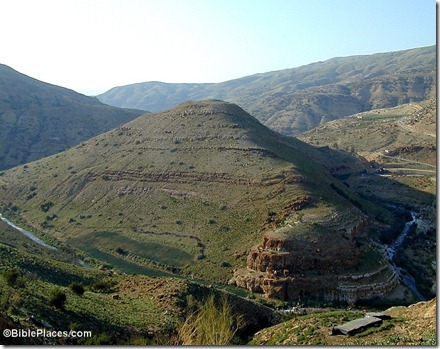




 Clear Bible