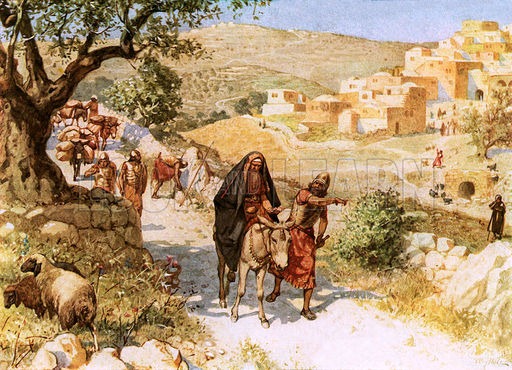
WHERE IS YOUR HOPE?

David, fleeing from Jerusalem, is cursed by Shimei.  William Hole, Old Testament History (Eyre and Spottiswoode, c 1925 )

Leaders and governments come and go. So do countries and nations. Israel’s hope was not in David’s leadership, but in God’s faithfulness and sovereignty. Our hope is the same. If we are shaken by an election, for good or for bad, then to that extent, our faith is not truly grounded in an eternal God who promises us an eternal hope. This isn’t just about elections. This is about anything in life that threatens to shake us.

To listen to the sermon, click the play button:

To download, right click on the link (or do whatever you do on a Mac) and save it to your computer: Download 2 Samuel Part 17

2 Samuel #17 . 2 Samuel Chapter 17

This is not a political sermon, so just bear with me through the first few paragraphs, and you’ll see that there is some rich spiritual application.

I think it is safe to say that the election in the United States this past week reveals that we often deeply divided as a nation. Although the electoral college victory for Barak Obama was clear and decisive, the margin int he popular vote was less than 3%. These division may cause us dismay. Sometimes it may seem that the atmosphere is far to bitter and partisan. Many people are dismayed by politicians themselves — so many of them seem willing to push the envelope of ethical behavior extremely far.

The scripture that we are looking at today is especially relevant in these times. David was good king; in fact, he was God’s choice for king. But Absalom sounded good, looked good and deceived enough good people, and recruited enough schemers, to take power and send his dad David running for his life. Politically, things looked bad for Israel. How could the country be so ignorant as to let this smooth-talking, charming megalomaniac come to power? Obviously, there were still many who supported David, and who felt that Absalom was a very bad choice for king. But they were defeated and silenced. God’s choice no longer mattered. Righteousness and right didn’t matter. Instead, power went to the one who was most ruthless and clever. Those who were wise and aware in Israel, who trusted the Lord, must have been deeply dismayed.

At the end of 2 Samuel chapter 15, we learn that when David fled from his son Absalom, he left behind a kind of spy network. Two priests who were loyal to David stayed in the city – Zadok and Abiathar. Their two sons – Ahimaaz and Jonathan stayed outside the city, ready to relay messages to David. David also had a friend and advisor named Hushai. Hushai stayed behind and pretended to betray David, and so became an false advisor to Absalom, a kind of double agent.

David had another close friend who was an advisor. This man was named Ahithophel. 2 Samuel 16:23 says this:

Now the advice Ahithophel gave in those days was like someone asking about a word from God — such was the regard that both David and Absalom had for Ahithophel’s advice. (2Sam 16:23, HCSB)

This man truly did betray David. He supported Absalom and threw his lot in entirely with him. It is quite likely that when David wrote psalm 55, it was primarily Ahithophel whom he had in mind. He said these things:

Now it is not an enemy who insults me — otherwise I could bear it; it is not a foe who rises up against me — otherwise I could hide from him. But it is you, a man who is my peer, my companion and good friend! We used to have close fellowship; we walked with the crowd into the house of God. (Ps 55:12-14, HCSB)

…My friend acts violently against those at peace with him; he violates his covenant. His buttery words are smooth, but war is in his heart. His words are softer than oil, but they are drawn swords. (Psalm 55:20-21)

When David first heard that Ahithophel had betrayed him, he prayed for the Lord to confound his advice and to defeat him. He says similar things in Psalm 55. There is something here that intrigues me. If you read the Psalms especially, David is never shy about praying for destruction to come upon evil and evil-doers. Whenever I read such things, I cringe a little bit. I think most modern Christians do. It sounds so simplistic to our sophisticated ears. These types of prayers seem to assume that we are good, not bad, and we have the ability to discern who the bad ones are. I don’t think I’ve ever heard modern Christians pray that way. Now, Jesus did say to love our enemies and to pray for those who persecute us. So I think we ought to do that. But have we ever considered that part of our prayers could be asking God to frustrate and confound the schemes of unrighteous and wicked people? Here’s another sample from David:

Let those who seek to take my life be disgraced and confounded. Let those who wish me harm be driven back and humiliated. Let those who say to me, “Aha, aha! ” be horrified because of their shame. (Ps 40:14-15, HCSB)

If we pray in faith, trusting that God knows who truly needs to be confounded frustrated, and who doesn’t I think it is appropriate at times to pray against the success of those who appear to be against God. I’m not saying that we get to judge who those people are – I’m just saying that we can appeal to God to restrain and defeat wickedness, trusting him to judge who is wicked and who is not.

Ahithophel certainly appeared to become a wicked person. His first advice to Absalom was that he publicly violate the women of David’s harem, who had been left behind when David fled. This was a symbolic cultural gesture, expressing contempt for David, and showing the people that he had completely cowed and defeated him. The possession of the King’s wives was a way of solidifying his own claim to be the new king.

Absalom took that advice, fulfilling Nathan’s prophecy that David’s wives would be treated publicly as David treated Uriah’s wife privately. The Hebrew leaves a little bit of room for interpretation. Absalom’s men pitched tents in public view – on the roof of the palace. The text says that Absalom “went in” to the women. It could mean that he raped them. But in the customs of those days, when a married woman was alone with a man who was not her husband, it was a disgrace. Whether or not anything happened, it was assumed that something had. So, whatever happened, from that time forth, those women were treated as if they had been raped. In those days, the custom (not biblical, just cultural) was that no other man would ever again be with them. They would have no place with their previous husband, nor any chance of a new one. However, after the rebellion was all over, David made sure that they were well cared for for the rest of their lives.

Ahithophel’s next advice was cunning and probably would have been effective. He told Absalom to pursue David quickly, to strike and kill him while he was still on the run, and end any doubt about who was king. But Absalom chose to also ask Hushai, David’s secret agent in the palace. Hushai gave advice that sounded excellent. He reminded Absalom that David was a cunning, fearsome old warrior, and that some of the Thirty were also with him. It would be no small thing to take such heroes on without enough preparation or force. David and Abishai (who was with him) had once killed six hundred men in a single battle, just between the two of them. Hushai suggested that Absalom could not risk bad news like a battle gone wrong, so early in his bid for power. The Lord heard David’s prayer, and Ahithophel’s scheme was frustrated.

Ahithophel’s reaction seems completely out of proportion. He goes and hangs himself. The text doesn’t really tell us why. I have a few theories, but they are only guesses. One thought is that Ahithophel reacted a little bit like Judas did one thousand years later, when he betrayed Jesus. Ahithophel may have realized that what he had done was wrong, and failed to believe that he could be forgiven and restored. So rather than repent and trust the mercy of God, he listened to lies of the devil that there was no forgiveness or hope, and destroyed himself.

The text does give us one clue. It says that Ahithophel did killed himself after he realized that his advice had not been followed. It could be that in his wisdom, he realized even at that early stage that if they didn’t kill David quickly, then they would inevitably lose. He may have seen right then that Absalom’s rebellion was doomed to failure. Rather than wait through all the turmoil and then be executed by David, he decided to put his affairs in order and deprive David the satisfaction of doing justice upon his body.

In any case, David’s prayer against evil was answered quite clearly.

Chapter 17 verses 17-29 read like an adventure novel. Hushai didn’t know at this point if Absalom would follow his advice or Ahithophel’s, and so he activated the spy network, warning David to flee across the Jordan river that very night. A servant girl went out from the palace bearing a message to the sons of the two priests. But the activity was noticed, and the two young men were pursued as they carried the message to the fleeing king. They took refuge in the courtyard of a friend, hiding in the well. The woman of the house spread canvas out over the well, and covered it with grain, so that no one even knew it was there. The soldiers of Absalom searched, but failed to discover the hidden well. Afterward, the young men continued on and successfully delivered their message, with the result that David and his household fled further on to safety.

So what do we do with all this? Let me be clear as I offer the first application. I am not saying that president Barak Obama is evil or unrighteous or that he is not God’s choice for president. I am not saying either that he is God’s first choice to be our president. But I know that whether or not he is God’s choice for president, many informed faithful Christians are very concerned that he has been reelected.

I want to point out that people have been following the Lord for thousands of years, and really only in the last three hundred years have human beings had consistent opportunities to choose their own government. Christian faith thrives in freedom. Christian faith thrives in oppression. God is not hindered by unrighteous rulers – if he were, Christianity would never have survived. So if you are thrilled that president Obama has been reelected, good. Just remember your hope should be in the Lord, not in a ruler. If you are dismayed, remember the same thing.

Leaders and governments come and go. So do countries and nations. Israel’s hope was not in David’s leadership, but in God’s faithfulness and sovereignty. Our hope is the same. If we are shaken by an election, for good or for bad, then to that extent, our faith is not truly grounded in an eternal God who promises us an eternal hope. David, as he fled from his murderous son, wrote this:

Cast your burden on the LORD, and He will sustain you; He will never allow the righteous to be shaken. (Psalm 55:22)

This isn’t just about elections. This is about anything in life that threatens to shake us. What does it mean, “he will never allow the righteous to be shaken?” When David wrote that, he had lost all that he had worked so hard for decades to attain. He was in danger of losing his life. His own son was trying to kill him. But he says, “the Lord will never allow the righteous to be shaken.” Obviously, he did not mean that things would never be hard. Obviously, he did not meant that the future on earth would never look bleak. What he meant is that our faith in the Lord looks beyond the here and now. You may wonder, “am I one of ‘the righteous’?” You are, if you trust Jesus. The promise of scripture is that Jesus imparts his own righteousness to us. This is not based upon what we have done, but rather on our faith in what he has done for us.

I think it is helpful to see David’s heart of faith in his extremely difficult and discouraging circumstance. Paul writes to the Philippians. He mentions people who are focused mainly on what is happening here and now:

They are focused on earthly things,but our citizenship is in heaven, from which we also eagerly wait for a Savior, the Lord Jesus Christ. (Philippians 3:20)

We are citizens of heaven. We have the same eternal king today that we had two weeks ago, the same leader that our predecessors in faith had two thousand years ago. Our best future is ahead of us, and nothing can take it away. It is difficult when life is unpleasant, or hard, or full of sorrow. But circumstances did not fundamentally shake David. They don’t have to shake your either. Set your hope fully in your eternal future with Jesus.


Is the God of Old Testament Different from the God of the New?

1 Samuel #4

ebenezer2

To listen to the sermon, click the play button:

To download, right click on the link (or do whatever you do on a Mac) and save it to your computer: Download 1 Samuel Part 4

1 Samuel 6:13 through 1 Samuel 7:15

We left off last week where the Philistines put the Ark of the Covenant into a cart, and hooked it up to two cows who had been separated from their calves. Rather than return home to their calves, the cows pulled the cart into Israelite territory. They stopped near the town of Beth-shemesh, which was a town given to the tribe of Levi. The tribe of Levi (Levites) were the priests for the people of Israel.

The cart came into the field of Joshua of Beth-shemesh and stopped there. A great stone was there. And they split up the wood of the cart and offered the cows as a burnt offering to the LORD. And the Levites took down the ark of the LORD and the box that was beside it, in which were the golden figures, and set them upon the great stone. And the men of Beth-shemesh offered burnt offerings and sacrificed sacrifices on that day to the LORD. (1 Samuel 6:14-15)

The Ark had come home, so to speak. The Lord had refused to let the Israelites manipulate him through the Ark; he had erased their idea that it was a kind of lucky rabbit’s foot. Next, he used the Ark to show the Philistines that he was more real and powerful than the idols and demons they worshiped. But now, he brought it back to Israel. Even so, the Lord does not seem to be finished with the lesson. This perplexing incident is recorded:

And he struck some of the men of Beth-shemesh, because they looked upon the ark of the LORD. He struck seventy men of them, and the people mourned because the LORD had struck the people with a great blow. Then the men of Beth-shemesh said, “Who is able to stand before the LORD, this holy God? And to whom shall he go up away from us?” So they sent messengers to the inhabitants of Kiriath-jearim, saying, “The Philistines have returned the ark of the LORD. Come down and take it up to you.” (1Sam 6:19-21, ESV)

The Old Testament has several stories like this. They can be confusing and perplexing. A few years ago I was reading through Leviticus for my daily devotions. I did this almost to dare God to speak to me through Leviticus, which is some pretty dry reading at the points when you can understand it. I got nothing out of it for almost two weeks. Then I read a story from chapter ten. Two priests sacrificed “unauthorized incense” and God burned them up instantly. I said, “What’s up with that, Lord? That doesn’t sound like you. It doesn’t sound my Father, my Comforter, my never failing Friend.” Then I read Leviticus 10:3

I will show my holiness among those who come to me. I will show my glory to all the people.

So also, the Israelites say when they are struck down for disrespecting the ark: “Who is able to stand before the Lord, this holy God?

When I was a teenager, my High School science teacher took a very small piece of pure sodium (which exists as a soft metal) and put it into a tub of water. It immediately began to hiss and steam, and then suddenly the sodium exploded into flames. Pure sodium cannot exist in water. It burns up and explodes in the presence of water, becoming a different chemical in the process.

In the same way, though we often forget it, sin cannot exist in the presence of God. It burns up, explodes and is destroyed. It isn’t a matter of God not tolerating sin – the very nature of God destroys it. The problem of course, is that we human beings are born with a sinful nature. This means that there is no way for us to get close to God without being destroyed. Who is able to stand before the Lord, this holy God? Who indeed? No one with sin in him. So in the time of the Old Testament, unless people took the extreme precautions laid out by God, they were destroyed if they even did something like touch the ark improperly, or offer unauthorized incense.

The difference between these incidents I read about in Old Testament, and my own experience of relationship with God, is the work of Jesus. Jesus took all of our sin – past, present and future – into himself. When Jesus took that sin into himself, “God made him who knew no sin, to be sin for us, so that we might become the righteousness of God,” (2 Corinthians 5:21). Because Jesus was in nature God, and as a human was not himself sinful, the sin which God laid on him could be destroyed with destroying Jesus also.

So now, through Jesus, we are no longer in a situation where the presence of God destroys us. Now his holiness is not a problem that keeps us apart, because our sin has been removed. This is one reason why I say that if we are in Jesus, we don’t have a sinful nature anymore. If we did, the Holy Spirit could not live in us, and we would be destroyed by God’s presence.

In any case, the point I want us to get from this passage is this: the way the Old Testament tells us of God is not inconsistent with the way God is revealed by the New Testament. They are not two different Gods. But through faith in Jesus, we are reconciled to the holiness of God in a way that people were not. This passage, above all, reminds me of my deep need for Jesus.

The writer of 1 Samuel continues the narrative, twenty years later. An entire generation grew up. Previously, under the leadership of Eli, Hopni and Phinehas, the people were disconnected from God, and they didn’t care. They were arrogant, sure of themselves, sure they could manipulate God through the ark. They blamed God in their defeat, and tried to force him to give them victory.

But after their defeat, and their difficult experiences with the ark, the new generation grew up in humility. By the way, this was Samuel’s generation. He was probably in the middle of it, age-wise, and he led them spiritually. This generation didn’t take anything for granted. 7:2 says that a time came when they lamented for God. For once it wasn’t their circumstances that they were upset about. They truly repented. They wanted to be close the Lord. Samuel told them that they needed to get rid of the idols in their lives, to stop seeking comfort and hope in anything that was not the Lord.

And Samuel said to all the house of Israel, “If you are returning to the LORD with all your heart, then put away the foreign gods and the Ashtaroth from among you and direct your heart to the LORD and serve him only, and he will deliver you out of the hand of the Philistines.” So the people of Israel put away the Baals and the Ashtaroth, and they served the LORD only. (1 Sam 7:3-4)

So they got rid of the idols. They were serious about following Him.

What happened next is something that I think surprises most of us in America these days. They turned to the Lord with their whole hearts and then things got worse. While they were gathered to worship God, the Philistines attacked. For some reason, preachers in America have been telling us for awhile now that if you just start following Jesus, everything will go well for you. Funny thing – Jesus never said that. Following Jesus, giving their whole lives to him, brought plenty of trouble to Peter, Paul, John James, Barnabas and many others. Following God brought trouble and hardship to Jeremiah, Ezekiel and yes, to Samuel’s generation.

It’s a bad idea to turn back to God in the hope that doing so will make your life go more smoothly. It just ain’t necessarily so. The great thing about Samuel and his generation was that they wanted to follow God because they believed he was the one true God. They dedicated their lives to him because it was good and right, and their hope was in God alone. If he gave them victory, that would be very good indeed. But they planned to follow him regardless.

One of the reasons I get so angry at people who preach that following Jesus brings mainly prosperity and peace is that when trouble comes, those who believe that lie are undone spiritually and emotionally. A common reaction among those who believe this is that if they experience trouble, either they must have failed to follow God, or God is not truly real. They won’t allow for the idea that God might lead us directly into trouble sometimes.

The truth is, not only did Jesus promise persecution and trouble (Matt 6:10-11; John 16:33), but we also have spiritual enemies who will do whatever they can to make trouble for us – the devil and his demons (Eph 6:12; 1 Peter 5:8-10). The older I get, the more I think we should be surprised if we are truly seeking the Lord with all our hearts, and we experience no opposition at all. At the very least, we should be deeply grateful for those times. I’m not trying to make you depressed. I’m only suggesting that we take what Jesus said seriously:

I have said these things to you, so that in me you may have peace. In the world you will have tribulation. But take heart; I have overcome the world.” (John 16:33, ESV)

So how did Samuel’s generation react when the Philistines attacked them? Naturally, they were afraid. No one with any sense at all wants to fight in a war. No one really wants suffering or tribulation. At the same time, they faced it with courage, and asked the Lord humbly for help. They didn’t assume he would deliver them, but they asked for it, in case he would. They didn’t try to manipulate him; they didn’t blame him. They just asked for his help, and they seemed ready to trust him and follow him whether or not he gave it at that particular time.

As it happened, the Lord helped them. The text says that he “thundered against the Philistines with a great and loud voice” (7:10). As I have pointed out before, these older manuscripts were often originally written on animal skins. If you wanted to explain things in detail, you had to go out and kill another animal to make another manuscript. So the thunder is not explained. It may even be an expression that was common in those days, something almost like slang, that we don’t understand the full meaning for nowadays. In any case, it was clear that the Lord intervened, and protected his people on that occasion.

As the Philistines, fled, the Israelites chased them. Where the battle stopped, Samuel set up a stone, and called “Ebenezer,” which means, “stone of help.” It was a way for the people to remember how God helped them that day.

Sometimes it may be helpful for people of faith these days to have our own “stones of help” – something that reminds us of specific times when God helped us. One way to set up an “Ebenezer” is to keep a journal, and record the times when God helped. For other folks, it might be a song that you listened to frequently during a time when God was especially present or helpful. I know of some Christians who collect rocks, and each rock reminds them of something the Lord has done. The principle is to have a helpful, concrete way to remember times when God’s presence was obvious to you.

Take a minute to reflect on what the Lord is saying to you through 1 Samuel 6:13 through 7:15. Do you need to be reminded of your need for Jesus? Do you need to remember that in Jesus, your sin has been thoroughly removed and is no longer a barrier between you and the Lord? Is the Lord calling you to come back to him with your whole heart, like Samuel’s generation? Perhaps you need to be reminded that trouble is a normal part of life when you are walking with the Lord. Or perhaps today you need to set up an “Ebenezer” – a reminder of God’s presence and help in your life. Let him speak to you.

The Woman Who Wanted

mother


To listen to the sermon, click the play button:


To download, right click on the link (or do whatever you do on a Mac) and save it to your computer: Download 1 Samuel Part 1


This is the first in a new series on the book of 1 Samuel. This is an exciting and interesting historical book, and many of the most famous bible stories come from it. It is always important to have a little background about a biblical book, so that we can understand it in context. The events recorded in 1 Samuel took place roughly three-thousand years ago.

This was a very unsettling time in the history of the people of Israel. It was roughly four-hundred years after the time of Moses and the Exodus. The Israelites certainly had their problems in the wilderness, but at the end of it all, they had entered the promised land as a united nation, under strong leadership. However, once they began to settle the land, they splintered back into a loose confederation of tribes. Worse, they ignored the Lord’s command to drive out and completely eliminate the pagan cultures around them in the land. What followed was a few hundred years of the darkest times in their history. They forgot God, and began to adopt the pagan practices of the peoples around them – the very people whom they were supposed to drive out. They were oppressed by those same people, and frequently various areas and tribes of Israel were almost slaves to other cultures. God did not forget them. He used the negative circumstances to remind them about Him. When they prayed for his help, He answered and saved them, but usually within a generation or so, they forgot Him again, and went back to a cycle of worshiping false gods, being oppressed by the surrounding people. Then they remembered God again, and asked for his help, and so the cycle continued. The people were ignorant of God, brutal, and divided. At the time recorded by 1 Samuel this had been going on for long, most people probably felt like this was just how life was. There was certainly no reason to hope or expect that anything could ever change and be permanently different.

The nation of Israel was supposed to be united by their common faith, and they were meant to function as a nation by following God, as they had during the Exodus. Because God was supposed to be the King, technically they were all free. But because they weren’t following the Lord, it wasn’t working. Instead of freedom, they generally alternated between chaos and oppression.

At the time that this particular historical record begins, the spiritual leadership was as bad as the rest of the country. Eli, the High Priest was short-sighted and a weak leader. His sons Hophni and Phineas were self serving – they took every opportunity to abuse the power they had over the people. None of them actively led the country from a position of faith in the Lord or obedience to Him.

1 Samuel 1:1-2:11 records how the Lord began to change all this, not just for a few years, or even just a generation but for the long term. It was an unlikely and surprising beginning. God didn’t call a hero to defeat the enemies of Israel (he had already done that many times over the past few hundred years, and it never lasted). He did not raise up someone to campaign for unity among the tribes. God did not lead anyone to go on a crusade to clean up corruption among the priests, or to start a movement to educate the ignorant children in the outlying areas. If Hollywood screenwriters were making a movie, any one of those choices might be their storyline.

But God did something different and unexpected. He began with a woman who just wanted to be a mother. Her name was Hannah. Her deepest desire was to have a child. She turned her desire over to the Lord, even while continuing to desperately want it. And the Lord pursued his goals through her life and those desires.

Hannah was married to a man named Elkanah. He had a second wife, called Peninnah. He almost certainly married Peninnah only because Hannah couldn’t have children. Chapter 1:5 and 1:8 record that Elkanah loved Hannah deeply. But in those days, having children was simply not considered optional. The culture considered it a curse from the Lord if a couple could not conceive. God blessed Adam and Eve and told them to be fruitful and multiply (Genesis 1:28). If someone could not do that, they figured it must mean that God’s blessing wasn’t on them. Besides that, children were the only source of “social security.” When someone got too old to work, he relied on his children to take care of him. Finally, having children ensured that the family name would continue, and be included among God’s people (Israel) for another generation.

All this is why a man like Elkanah, who seemed to have a genuine love for Hannah, would go the length of marrying a second woman just to have children. By the way, some folks say that the Old Testament endorses polygamy without reservation. That is not exactly true. It records that some men had many wives, and it does not condemn them, but it almost always also describes that situation in a negative light. This is true here also. Elkanah had two wives, and there was rivalry and jealousy and strife between them. This was true also of Jacob, even though his wives were sisters. Solomon, had hundreds of wives and scripture makes it clear that it was his downfall.

Anyway, Hannah’s lack of children meant several things to her. First, she thought it meant God somehow had something against her. It had led to the destruction of her married happiness and love with Elkanah. Finally, if Elkanah were die before she did, there would be no one to take care of her in old age. As we can see, the issue was both emotional and practical. There was deep hurt and pain wrapped up in Hannah’s barrenness, as well as practical concern about the future.

One year, when the family was at the annual worship pilgrimage, Hannah reached a breaking point. I love her attitude in 1:9-18. She is another one of those unsung heroines of the faith. I think what makes her so special is that she surrenders her desire to the Lord, while at the same time, she honestly acknowledges it. She tells Eli, the priest:

I am a woman with a broken heart. I haven’t had any wine or beer; I’ve been pouring out my heart before the Lord. Don’t think of me as a wicked woman; I’ve been praying from the depth of my anguish and resentment. (1 Samuel 1:15-16)

Many Christians in this day and age would encourage you to pursue your desire as if it was somehow holy just because you had it. They paint a picture of God as if he was there for the sole purpose of making your life comfortable and giving you anything you want. They preach a gospel of personal gain here and now. There are other Christians (though less common these days) who treat every personal desire as if it is evil; they suggest the only way to deal with any desire for anything personal is to get rid of it.

Hannah did not follow either path. She desired a child. She wasn’t going to pretend that she didn’t, and she wasn’t going to pretend that she thought her desire was wrong or sinful. She let God hear her anger, anguish and resentment. At the same time, as she asked God to fulfill her desire, she surrendered it back to him. Verses 10-11 in the message version record it this way:

Crushed in soul, Hannah prayed to God and cried and cried — inconsolably. Then she made a vow:

“Oh, God-of-the-Angel-Armies, If you’ll take a good, hard look at my pain, If you’ll quit neglecting me and go into action for me By giving me a son, I’ll give him completely, unreservedly to you. I’ll set him apart for a life of holy discipline.” (1 Sam 1:10-11)

Some people may look at this part of Hannah’s prayer as making a bargain with God. But I think it is a little different than that. Hannah will not let go of her desire. She’s asking for a son, not the strength to go on being barren. And yet, while not letting go, she does surrender that desire to God. It isn’t completely clear in the Message version of the bible, but what she is pledging is that when he is old enough, she will physically bring the child to the tent of meeting and he will stay there with the priests and serve the Lord. The child will not stay with Hannah or her family. In a sense, Hannah is saying, “I want to be a mother. But I also want to surrender to you. So if you do make me a mother, I will turn around and live as I was not a mother again. You will gain a child Lord, not me.” So, yes, in a sense it was a bargain. But I don’t see how else Hannah could both hold on to her desire and surrender it at the same time. It is this bravery and honesty that makes her a great woman of faith in my eyes.

To help us understand what Hannah did, I want to put in simplistic and shallow terms. It is as if you prayed, “Lord, please give me one million dollars. If you do, I will give all one million dollars to the church.” Now, looking at it that way, you may say, “What would be the point of that?” We see no point in that because our desire is either not real or not surrendered. If our desire isn’t real, then we don’t want one million dollars so badly that we’re willing to give it all up again just to say we did have it once. If it is isn’t surrendered, then we don’t want one million dollars unless we can keep some of it, or all of it.

Hannah’s desire was real, and it was truly surrendered. The result of that true and surrendered desire was a baby boy named Samuel. Because Hannah surrendered him to the Lord, the Lord was able to use him to change the course of Israel’s history.

The Lord needed both Hannah’s desire AND her surrender to do what he did through her. If she had kept the desire for a child, but did not give that up to the Lord, Samuel would not have been raised in the house of the Lord and become the greatest spiritual leader since Moses. If Hannah had not truly desired a child as deeply as she did, she probably would not have been driven to surrender him in the first place.

Israel was in a bad place spiritually and politically. Society was fractured, life was dangerous, people were ignorant. God did change everything for them. And he did it through a simple woman who was honest about her desire to be a mother while also surrendering that desire. That’s not how we expect Him to save society. But he often works in these unexpected ways.

So what about you? What are the deep desires of your heart? Are you willing to be honest about them? And are you willing to surrender them to the Lord at the same time? God needs people who are willing to follow in Hannah’s footsteps. I think the psalmist was talking about people like Hannah when he wrote:

Delight yourself in the LORD, and he will give you the desires of your heart. (Ps 37:4, ESV)

LIVING LIFE IN REVERSE

PART I:  GET YOUR BUT IN LINE

Genesis 29:16-35


Download “Living in Reverse Part I”

We know that God loves us. We know that through Jesus, we are forgiven. We keep our faith in Him. But where we really struggle, is with ourselves. I’m glad I’m forgiven. And I know that I am. But (notice that pernicious little word!) I wish I didn’t sin so much. I wish my life was easier to live. I wish I didn’t worry. I wish I was more compassionate. I wish I wasn’t so lazy.

I know (or at least I think I do) how God wants me to be. So I try to be more like that, but I often fail. After I fail, I say sorry to God. I know that I have forgiveness in Jesus, and that forgiveness is always available. So I get that forgiveness, and then off I go to try again. Sometimes I even try harder. I might even get it together for awhile, but sooner or later I crash and burn again.

Maybe after awhile, I realize I haven’t been very bright. I think, “Ohhh…Jesus has given me the Holy Spirit to help me!” So I get back on the horse, determined to try harder, and succeed this time with the Spirit’s help. And maybe for awhile it goes better. I stop and consciously ask for God’s help to live the life of a Christian. I ask for help when I am tempted. Maybe I also get connected to other Christians, and seek help and support from them. That helps too, because God has given us each for that very purpose.

Now it goes better. But the truth is, it is still a lot of work. And the truth is, though maybe I fail less frequently, I still fail plenty often.

Whole shelves of books have been dedicated to help people like me pull it together. Some of them are quite helpful. Somehow though, I can’t seem to make the improvements permanent or consistent.

Andrew Murray seems to know what I’m going through. He puts it like this:

“The idea they have of grace is this – that their conversion and pardon are God’s work, but that now, in gratitude to God, it is their work to live as Christians, and follow Jesus. There is always the thought of a work to be done, and even though they pray for help, still the work is theirs. They fail continually, and become hopeless; and the despondency only increases the helplessness.” (Abide in Christ)

We tend of think of it like this: ultimate failure, and the power of death and hell, are defeated through Jesus. Now, once we trust in Jesus we can play the game “safely” so to speak. So we can try and fail and try and fail as much as we need to, without being in danger of going to hell.

But does that really sound like “good news?” We are “free” to pursue a cycle of failure? Andrew Murray adds this:

“Dear souls! How little they know that the abiding in Christ is just meant for the weak, and so beautifully suited to their feebleness. It is not the doing of some great thing, and does not demand that we first lead a very holy and devoted life. No, it is simply weakness entrusting itself to a Mighty One to be kept – the unfaithful one casting self on One who is altogether trustworthy and true. Abiding in him [living the Christian life] is not a work that we have to do as the condition for enjoying his salvation, but a consenting to let Him do all for us, and in us, and through us. It is a work he does for us – the fruit and the power of His redeeming love. Our part is simply to yield, to trust and to wait for what He has engaged to perform.” (Abide in Christ).

Now that sounds like good news. Maybe too good. In order to lay hold of this, we need to begin by talking about your but.

Before you can truly grasp everything that Jesus has done for us; before you can take hold of the riches we have in Christ, you need to get your but straightened out.

I am talking, of course, about your B-U-T, not your b-u-t-t. What were you thinking?

We all have buts in life. (All right, insert whatever joke you like here, and then move on). What I mean is, we all say things like this:

Things are going well now, but who knows what will happen in the future?

I know God promises to take care of me, but things aren’t going well right now.

Generally, I have a good marriage, but sometimes he drives me crazy.

I would love to read my bible more, but I just don’t have the time.

I know God has forgiven me, but I still sin, and I don’t always feel forgiven.

There is something I have noticed – we give the most power, the most credibility, to what we put after the but. What we say after the but is what we think is the dominant thing about our reality. The first thing may be some kind of factor, but what we put after the but is more or less the final word on the subject.

What we need to learn, is to put what God says after the but. This is an act of will, but before that even, it is an act of faith. Nothing you hear this weekend will make sense until you agree to put God’s Word after the but.

I want us to look at the life of someone in the Bible who learned to do this. She is one of the least known, least talked-about heroines of faith in the Bible. Her name is Leah. Leah was the daughter of a man named Laban. Her story picks up in Genesis chapter 29. The bible says Leah had “weak eyes.” We don’t really know what this means, but it seems to mean that she was ugly. Right after this it says: “but her sister Rachel was shapely and beautiful.” Notice the but. It was probably one of the dominant “buts” in Leah’s life.

One day their cousin Jacob, whom they had never met, came from a far country. Jacob ended up working for his uncle Laban (Leah’s father). Jacob fell in love with Rachel, Leah’s sister. He told his uncle he would work for seven years as a dowry, and Laban agreed. Only, when the time came, Laban tricked Jacob. Brides in those days were heavily veiled, and the wedding took place at night – and there was no electricity. So Laban gave his older daughter, Leah, in marriage to Jacob, and Jacob didn’t find out until the light of the next morning. Laban offered to let Jacob marry Rachel too, if he worked another seven years. So after Jacob and Leah had been married just one week, a new wedding took place, and Jacob got Rachel at last. Then he had another seven years to work.

Needless to say, they were not one big happy family. We don’t know if Leah loved Jacob, or wanted to marry him. But we do know that Jacob did not love Leah, and had never wanted to marry her. Almost certainly, the reason her father had tricked Jacob in that way was because he thought it was unlikely that he would ever be able to marry her off. In other words, she was so ugly, her father had to trick someone into marrying her. Almost certainly, Leah knew this. She was ugly, not stupid.

Naturally, Jacob favored Rachel. He loved her, not Leah. Leah’s only consolation was that she had children fairly easily, while Rachel went for a long time with none. When Leah’s first son (Reuben) was born, she said, “The Lord has seen my affliction; surely my husband will love me now (Genesis 29:32).” Notice that her focus was on her unhappy situation, and she hopes the fact that she bore him the first child will change it. When her second son (Simeon) came along she said, “The Lord heard I was unloved, and gave me this son also (Genesis 29:33).” Still, her dominant reality is that Jacob doesn’t love her. After her third son was born, she was still focused on her struggles, saying, “at last my husband will become attached to me, because I have borne him three sons (Genesis 29:34).”

Now we know that it takes nine months to make a baby. There was no birth control in those days, but in general, when a woman is breastfeeding, that sometimes helps prevent pregnancy. Back in those days, children were probably breastfed pretty consistently for at least a year. So it reasonable to assume at least two years between each child. When you throw in the fact that Jacob had another wife, and everything that was involved in the family dynamics, it may have been more like three years, or even more between children. So Leah went between six and nine years, while the dominant fact in her life was that her husband did not love her.

But (notice the but) by the time her fourth son arrives, something has changed. There is no evidence that Jacob ever changed his attitude very much toward her. Reasonably, at least eight years might have passed by this point, perhaps a many as twelve or more. Say, a decade; ten long years of realizing her marriage will never be what she dreamed it might be. But listen to what she says when this fourth son, Judah, is born: “This time, I will praise the Lord (29:35).”

Leah is no longer fixated on what she lacks in her life. She isn’t trying to get Jacob to change anymore. Instead, her focus is on the Lord, and his love and favor for her. Her struggle had been with God and with her husband. But when she gave birth to Judah, she has given up the fight – in a positive way. Her troubles have led her to a place where she looks to God to meet her needs, and can receive his love and mercy with joy and thankfulness. I’m sure that Leah still struggled. I think it is only reasonable to assume that emotionally, her situation never changed much. Certainly, the Bible never records that Jacob changed his attitude toward her. But she came to the point where the dominant thing in her life was not her struggle, or her unfilled needs, but rather, God’s awesome love for her.

Genesis 29:31 says that when the Lord saw that Leah was unloved, he opened her womb. In other words, the Lord was the one who gave Leah these children; and even more, he gave them to her because he saw that her husband did not love her. Now, at first, her response was basically this: “Good! This child will change my situation. This child will make my husband love me.” But think about it. God gave the children to Leah, not as tools to coerce Jacob’s love – the Lord gave Leah children because the Lord loved her. He was showing her that regardless of what Jacob thought of her, He loved her. She was not unloved. At first she missed the point. She was still putting Jacob’s lack of love after the but. Finally however, she got it. When Judah was born, she praised the Lord. She finally saw that these children would not make her loved – they showed her that she was already loved.

Sometimes when we pray, God changes our situation, and makes it better. Sometimes, he leaves us in the same circumstances. When he does that, his desire is that our lives can be so filled with him, that the negative aspects of our situation pale in comparison. When Kari and I first started dating, I was in job situation that I didn’t like, living in a city I didn’t care for, with few real friends nearby. I remember sitting in a meeting at work, filled with joy. I wasn’t joyful because I was in the meeting. I wasn’t joyful because I liked where I was living, or because I was making much money, or that I liked my work. None of those things were true. But I was joyful because I knew that wherever I was, whatever I was doing, Kari loved me.

Now, I don’t mean to be negative, but the kind of joy that came when I first knew that Kari loved me, does not sustain me in the same way eighteen years later. We still love each other. It is still a big thing in my life that Kari loves me. But no human being has the power to fill you with joy consistently for a long period of time. Only God’s love is that strong.

I think that was the kind of place Leah finally reached. Jacob still didn’t love her. He probably never would. But God did, and the fact that God loved her was more important than the fact that her husband did not.

This is the key to “Living after the But.” Remember, whatever you put after “but” is the dominant reality to you. For many years, Leah probably said something like this: “I know God loves me, but my husband does not. I’m just a third wheel.” Finally, after the birth of Judah, she started thinking this way: “I know Jacob never wanted to marry me. He may never love me the way I want him to. But God loves me and cares for me.” The only thing that really changed for Leah is which thing she put after the “But.” However, I think it transformed everything for her.

I suspect that in the next few messages I have to preach, you might hear some things that cause you to think “but….” I want you to remind yourself to put the correct thing after the but.

The apostle Paul said something very important in 2 Corinthians 4:16-18:

Therefore we do not give up. Even though our outer person is being destroyed, our inner person is being renewed day by day. For our momentary light affliction is producing for us an absolutely incomparable eternal weight of glory. So we do not focus on what is seen, but on what is unseen. For what is seen is temporary, but what is unseen is eternal.

This verse teaches us something important about the nature of reality. Part of reality is seen. That is, we can perceive it with the senses. This part of reality changes. It proceeds through time. It has a beginning and an end. We might call it the “natural realm” or “this world,” Paul says that this part of reality is temporary. That doesn’t mean it is meaningless. In the broad scheme of things, this seen and temporary part of reality is where God works in us and through us for his own glory. What happens in the seen, in the here and now of time, has an effect on where we are in the other part of reality. In this world, we have struggle and change and process and need and growing and sowing and reaping.

The other part of reality is unseen and eternal. It is outside of time. We might call it the eternal realm, or eternity. It is the realm of the uncreated, of ultimate reality, of complete and wholeness where things are settled. This is the ultimate dwelling of God. When God appeared to Moses and Moses asked him his name, God said “I AM.” That is an idea of the eternal realm. There is no time there.

The bible says that Jesus Christ is the same yesterday today and forever (Hebrews 13:8). That is is not true in this world, in the temporary part of reality. Jesus is not walking around Palestine today like he was two thousand years ago. When he was thirty he was physically changed from how he looked and acted when he was three. But in the eternal realm, that is true. Jesus existed before the creation of the earth. He exists now. He always will exist. His eternal spirit never has changed, never will change.

Maybe this is obvious, but these verses in 2 Corinthians show us that the eternal realm is greater, more powerful, and more permanent than the temporary realm of this world. We don’t mean that this world doesn’t matter or is an illusion. God made it. God even entered it himself as a human being, bound in time. So it is important. We are just acknowledging that what the bible says is true: the unseen realm is greater than the seen. We are supposed to focus on the unseen more than on the seen.

Both realms co-exist. They interact with each other. The bible teaches that we live in both at the same time – even as Jesus did. But simply for illustration it may help to think of a line between them. Above the line is the eternal, unseen realm. Below the line is the temporary, seen world.

In these terms, we need to put the truths that exist “above the line” – the eternal unchanging truths – after the but.

We deal with things below the line constantly. That’s what Paul was talking about in 2 Corinthians 4:16-18. His outer person (below the line) was being destroyed. But…BUT his inner person (above the line) was being constantly renewed. His affliction is momentary – but the glory is eternal. He focuses therefore on what is unseen and eternal. He puts those things after the but.

Now, I want the Holy Spirit to make this practical for you. What have you been putting after the but? Has your dominant reality been what God says? Or have you given more power and credence to your circumstances, or how you feel, or what your mind tells you logically? Take a moment to think about it. Let the Lord bring to mind what you have reversed right now.

Your dominant reality might be very negative, and very powerful. Leah spent her whole life thinking, “but I’m ugly.” Long years of marriage only added, “and I’m unwanted, and I’ll never get the chance to be with someone who does want me.” That’s powerful stuff. And it was all true. She never was loved by her husband or anyone else in that way.

But…BUT – there was another thing that was true. It was true that she was made in the image of God. It was true that God loved her. It was true that God wanted her. She let God’s love become her dominant reality. She let his word be the final word.

We need to learn to believe that what God says is more real than what we think or feel.

I am not saying that your struggles aren’t real. I am not saying that you aren’t dealing with things that are truly bad, or difficult or wrong. But I am saying that God’s Word is more true, more powerful. It is an act of faith to believe it.

What is Communion? 1 Corinthians #18. 1 Cor 11:17-31

Jesus_At_The_Lords_Supper


Download 1 Corinthians Part 18

Three weeks ago Paul’s comments about food sacrificed to idols taught us some things about what we call The Lord’s Supper, or Communion. We learned that to take the bread and wine in faith is to enter into community with Jesus, to fellowship with him in a special way. It is also a special kind of communion or fellowship with other believers who take the bread and wine with us.

1 Corinthians 11:17-33 is also about the Lord’s Supper. As we get into this today, you might be tempted to think “Pastor Tom has some kind of bee in his bonnet about Communion. He’s really pushing this right now.” But that’s not accurate. If were up to me, I would not preach about Communion again so soon. However, this is one of the reasons I think it is important to preach through books of the Bible, passage by passage. When we go through the bible this way, I am not the one setting the agenda. I’m not thinking of some topic we ought to cover. In the same way, I am not following some theological group’s preaching plan for the “church year.” Instead, the Holy Spirit sets the agenda through the text of the Bible each week. And so, once more on the menu this week is some teaching about Communion. In obedience to the Holy Spirit, we’ll look at it, and see what He has to say about it this time.

In order to fully understand this passage, I want to remind you of the historical context. All Christians for the first 300 years after Jesus met in small groups in homes. Sometimes they had the use of a public meeting place also, like a rented room, or a synagogue. In the case of the Corinthians, the Christians had been violently expelled from the synagogue, and it is virtually certain that they met in the homes of church members. In those days, houses were not usually very large, and few, if any of the Corinthians were noble and wealthy (see 1:26). People would come to the houses to eat, celebrate communion, and then talk about the bible and pray. Communion was celebrated as part of the meal, as it was in the last Passover that Jesus held with his disciples.

In Corinth, the few wealthiest people would be there first, because they would have the most flexibility in their time. The poorer laborers almost certainly had to work until dark, and so came later. It was even harder for the slaves, who obviously would have had difficulty gaining the liberty to go to a church meeting. Those who were financially better off were likely the ones who provided the bulk of the food. They had an opportunity to show wonderful Christian love by providing a meal that their poorer fellow-Christians couldn’t normally afford. But what actually happened was that they started eating right away, and by the time the poorer folks and the slaves arrived, there was precious little left. Paul notes that some of the early-comers were even drunk by the time the latest arrived!

We already learned from 1 Corinthians 10:14-31 that communion is special connection with Jesus and with each other. It is one way in which God touches us with his grace. This way of conducting their meal did not reflect the communion that they had with each other, nor the full depth of the connection they had with Jesus through the Lord’s Supper. In a sense, they had begun to treat communion as if it were some little ceremony tacked on to the end of the meal, almost like a fortune cookie.

In verses 23-26, Paul reminds them of the words of Jesus. These are the words I say every time we celebrate communion. If you have celebrated the Christian Passover with us, you understand the context and meaning of these words better than 90% of Christians living today. It is conjecture, but it is a very good guess that it was a special piece of bread, the afikomen – the “bread of life” which Jesus broke and over which he spoke these words. After all, in John 6:35 Jesus said, “I am the bread of life.” Through communion, Jesus is inviting us to feast our spirits on his life and presence.

Continue reading “What is Communion? 1 Corinthians #18. 1 Cor 11:17-31”

The Dance. 1 Corinthians 11:3-16

Download 1 Corinthians Part 16

There are seven passage in the New Testament which teach clearly and openly about the roles of men and women in the church and in the family. This is one of them. There is a great deal to explore in this passage. Too much for a single, ½ hour sermon. So I will break this up over two weeks. Please understand, if you only read this message, you are missing out on half of the message, and your understanding of what I am saying will be incomplete. Please do not quote me or assume you know what I am saying until you have heard or read both messages.

There are typically two responses to passages like this one. The first is to simply accept it without any real study. This usually results in rules that say women should wear hats or head-coverings, and women should “keep in their place” (meaning they have very little real input in church or family). I call this approach Traditionalism. I don’t think it does justice to what the bible really says.

The second reaction is to recognize how different this teaching is from our culture today, and find some way to interpret it that ends up either being meaningless, or even meaning the opposite of what it actually says. I call this approach Evangelical Feminism, and I think this also ends up failing to really appreciate what the Bible says. In fact, I think Evangelical Feminism lays the foundation that ends up in plain old heresy.

I am not saying that my parents taught me this, but I grew up basically thinking along Evangelical Feminist lines. In my teen years I heard some ways to dismiss the teaching of this passage and others like it. Basically, I accepted the argument that this passage is specifically and only for the culture of Corinth in the 1st Century, and it really doesn’t apply to us anymore. I categorically rejected any notion that there were some roles that should be held only by men or some that should be held only by women.

I was in college before I heard anyone seriously argue that these passages actually mean something in today’s world. I didn’t like the person who made the argument, and I dismissed it out of hand. A few years later, some people that I truly respected told me that they believed there was something to this, and the six other passages which teach about gender-roles. I began to be a bit more open, but I still maintained Evangelical Feminism.

Finally in seminary I looked into it for myself, and I was humbled to find out that I had been careless in my approach to the Bible about this subject.

The fact is, I think most Christians end up at either extreme. Traditionalists use passages like this to repress and even oppress women. Evangelical Feminists do theological gymnastics to make the same passages meaningless, and end up re-writing the Bible to say whatever suits them. But there is a middle road, the way of Truth.

It is true, part of this passage is just cultural application. But part of it is the teaching of important eternal truths. And we should bear in mind that this is just one of seven passages, all of which teach the same eternal truths about men and women.

The cultural aspects have to do with hairstyle. Paul says:

If it is a disgrace for a woman to have her hair cut or shaved off, she should cover her head.

The question is, what if it is not a disgrace for a woman to have short hair? The fact is, Paul seems to be basing his application instructions upon the hairstyles of his time. Again he writes:

14 Does not the very nature of things teach you that if a man has long hair, it is a disgrace to him, 15 but that if a woman has long hair, it is her glory?

The question arises again – is long hair a disgrace to men? That appears to be a fairly superficial thing that changes with the times.

However, we make a grave mistake if we say that this entire passage is merely a discussion of how Christians should wear their hair in 1st Century Corinth. In fact, if we dismiss the whole passage as cultural, we have greatly weakened the biblical case for two vital ministry roles that are open to women.

Paul’s teaching here is quite clear: women can and should pray in public, and women can and should prophesy in public. This is the only New Testament passage that explicitly endorses women in these ministries. So if we say the whole thing is cultural, then the idea of women prophesying and praying is also only a cultural accommodation to the 1st Century.

The fact is, we have two things going on this passage:

  • First, there is the teaching of a universal truth about men and women

  • Second, there is an application of that truth to 1st Century Corinth.

The specific application (in this case, hairstyles during worship) may or may not be relevant today, but we still need to seek to apply the universal truth to our situation.

The universal truths expressed here are basically this:

  • The male gender is the spiritual head of the female gender, just as Christ is the spiritual head of the church and the Father is the spiritual head of Christ (v. 3).

    • This is a result of how we are created (Genesis 1:27). It is demonstrated in Genesis 2, by the fact that Eve was created to be a helper-companion to Adam, to fulfill him and to join with him in caring for the world (v. 8-10).

  • Even so, men and women are not independent of each other – they need to work as a team (v. 11).

  • In worship and in the conduct women’s ministries, these truths should be reflected in some appropriate way (v. 10).

This is exactly the same basic message that we find in the other six New Testament teaching passages which deal explicitly with gender roles. For example, Ephesians 5:22-23:

Wives, submit to your own husbands as to the Lord, for the husband is the head of the wife as Christ is the head of the church. He is the Savior of the body.

This idea of “headship” is troubling to us in the Western World in the 21st century. But it is an often repeated idea in the Bible. Here, Paul connects the idea both to the nature of God (v.3) and also to how we were created(v.8). If we look at these two things, we might gain a better understanding of what exactly this relationship means.

The bible describes God as a Trinity: The Father, the Son and the Holy Spirit. He is one God. There are not three Gods, but only one. The bible also teaches that he exists as three persons at the same time. So the Father is God, but he is not the Son or the Spirit. The Son, Jesus Christ, is God, but he is not the Father or the Spirit. The Spirit is God, but he is not the Son or the Father.

The Father, Son and Holy Spirit are equal to each other. We worship all three persons as one God. We pray to all three. There is not one that is “better” than another one – they have the same God-nature.

Even so, the Father, Son and Holy Spirit have different roles. It was Jesus Christ, the Son who took on human flesh and walked physically in this world. It was he who died for us, not the Father or the Spirit. It is the Spirit who lives in our hearts and imparts the power and life of God to us, not the Father or the Son. It was the Father, who sent the Son, not the Son who sent himself. It was the Father who said “this is my Son, in whom I am well pleased.”

The fact that the Son has the role of the Son does not make him less important than the Father. The Spirit’s role does not make him more important than the Son. They are equal, but different.

So when Paul says, “and the head of the woman is man, and the head of Christ is God,” it does not mean inequality. What it means is that men and women have different roles. Like the Trinity, Men and women are equal. Like the Trinity, men and women are different. Men and women were made for different roles.

Paul makes reference to Genesis in 1 Cor 11:8. There are two passages from the first part of Genesis that I want to briefly consider. The first is Genesis 1:27

26 Then God said, “Let us make man in our image, in our likeness, and let them rule over the fish of the sea and the birds of the air, over the livestock, over all the earth, and over all the creatures that move along the ground.”

27 So God created man in his own image, in the image of God he created him; male and female he created them (emphasis mine).

We were made in the image of God. We have just seen that God exists equally and the same in nature, but different in personality and role. It seems clear that Paul is referencing this exact idea. The fact that “God is the head of Christ” has nothing to do with equality – it is about role. In the same way “man is the head of woman” is not about equality. It is about role.

In addition, we see that the different roles of the Trinity give the Father, Son and Spirit opportunities to give each other honor and glory. The Son gives honor and glory to the uniqueness of the Father. The Father lifts up the Son above all things. The Spirit gives glory to both. This giving of honor and glory to the each other does not erase the distinctions between the three Persons. Even though the Father glorifies the Son, and they are equal, they are still different, and live out of their different roles. In fact, they could not honor each other in this way unless they really did have different roles. Their different roles provide an opportunity for them to honor, bless and love one another. The Father does not relinquish his Fatherhood, or change the Son into the Father. He gives him glory as the Son. The Son does not glorify the Father for coming to earth, but for being the Father. All three Persons, acting out their different roles, complete the Trinity, and they work together as a team for a common purpose.

In the same way, because men and women are different, and have different roles, we have the opportunity to honor and love one another in special ways. When we erase those differences and those roles, we also erase the opportunity for men to honor women as women and for women to honor men as men. There is unique glory and honor in being female. There is unique glory and honor in being male. But if we say that men and women must be not only equal, but also the same, we are eliminating those honors.

Paul also references Genesis chapter 2, which describes Adam being created first, and getting lonely, and being unfulfilled, even in sinless paradise. Eve is then created, to fulfill Adam, and to assist him in the mission of humanity, which at that time was to manage God’s creation. The Bible uses the term “helper-companion” to describe Eve’s role.

If Eve had nothing unique to bring, why was Adam lonely? If Eve had nothing unique to bring, then why did God make her? It wasn’t just about reproduction. God certainly could have designed that differently. So woman was created to fulfill a unique role, one that man could not fulfill, the role of helper-companion. In the same way, woman was not created to fulfill man’s role. That would imply that either man or woman is redundant. But woman is not a redundancy, nor is man.

We have a situation today where there is great confusion about this. In many places, Eve, instead of seeking her unique created purpose, is trying to do Adam’s job. Meanwhile, Adam, for the most part, is happy to let Eve do it, because he is too cowardly to risk a fight, and he is prone to be passive anyway. I believe that is the reason that New Testament teaches explicitly about this subject no less than seven times.

The other thing we have done is to separate the genders. We act as if we have a whole bunch of independent missions in life which are not necessarily connected. A man has his ministry, and a woman has her ministry. But Paul disagrees. He writes:

11 In the Lord, however, woman is not independent of man, nor is man independent of woman.

The teaching of 1 Corinthians 11:3-16 is a correction to the independence we try to have from each other. Here is a summary of what we have learned so far:

  • Men and women are created in the image of God to be equal

  • Men and women are created in the image of God to be different and have different roles. The spiritual role of men is “head” and the spiritual role of woman is “helper companion.” (*We have not yet considered how to apply this).

  • Men and women are created to function as a team.

A few months ago, as I was praying about this whole topic, I felt like the Holy Spirit gave a me word. The word was “dance.” After that, I watched “Dancing with the Stars” a few times, to try and understand what He might be getting at. I think “Dance” describes very well the Lord’s plan for relationships and roles between men and women.

  • First, a couple’s dance is usually more appealing and attractive than just one person dancing by himself or herself. This goes along with Paul’s insistence that men and women are not independent from each other. Both are necessary in this spiritual dance.

  • Second, them and women have different steps in a dance. If the woman did the same steps as the man (or vice versa) the dance would not be beautiful. It would chaotic. In the same way, this reflects that fact that men and women have different roles. The steps each one takes, complements the actions of the other.

  • The man leads the dance. And yet, one of his primary goals in leading is to show off the beauty and grace his partner, the woman. His leadership does not make him better, or even necessarily draw attention to himself. We found this same principle at work in the Trinity. The Father does not glorify himself, but glorifies the Son. The Son glorifies the Father. So in the gender-dance, leadership is a role, but it does not mean that the leader is better or more valuable.

Please check back next week for the second part of our study of this passage.

Communion: Remembrance, Or More


Download 1 Corinthians Part 15

Paul finally returns to the question that began his rambling: is it OK to eat food that has been sacrificed to idols? In actually answering this question, he provides us with some interesting and important teaching on another subject also: the significance of the Lord’s Supper.

Theologians call it the Eucharist. Some regular people call it the Lord’s Supper. Others call it communion. Honestly, I like the term Communion, and I’ll share why in just a moment.

Paul compares idol worship to true Christian worship. He says:

The cup of blessing that we bless, is it not a participation in the blood of Christ? The bread that we break, is it not a participation in the body of Christ? (1 Cor 10:16)

I think it is quite obvious that Paul is referring to the Lord’s Supper. The word “participation” here is also translated “sharing.” The Greek word is koinonia. It is often translated “fellowship,” but especially it is the main word for “community” or “communion.” What Paul means is that to eat the bread and to drink the wine is to enter into community with Jesus. When you are in community, it means that you have relationship with those in the community. It means that you interact, you communicate. People in community are committed to each other at some level. So as we participate in communion, we are connected with Jesus in some way. There is some kind of commitment implied between us and the Lord. There is some kind of communication that takes place between Him and us.

There is also community among the people who take communion together:

Because there is one bread, we who are many are one body, for we all partake of the one bread (1 Cor 10:17)

Paul further explains by mentioning the temple sacrifices practiced by the people of Israel. In every sacrifice except the burnt offering, the worshipers would bring an animal to be killed. Part of the animal would be burned on the altar, symbolically giving it to God. Part of it would be given to the priests and temple workers to eat. The rest of it would be eaten by those who came to worship. In other words, eating the sacrificed animal was an act of faith, an act of worship and an act of community. You wouldn’t even be there to eat if you didn’t have faith. You wouldn’t be there if you didn’t belong somehow to the group that was offering the sacrifice. Eating and drinking connected you to God and to those with whom you ate. In the same way, says Paul, eating and drinking communion is an act of faith, an act of worship and an act of Christian community. It connects us with the Lord, and it connects us with each other.

Now,There are three widely held differing views about Communion. The first one, held generally by Roman Catholics, is called “transubstantiation.” They believe that when the priest/pastor speaks the words spoken by Jesus, the bread and the wine miraculously turn into the actual flesh and blood of Jesus Christ. After all, Jesus said “this is my body, this is my blood.” Thus, the significance of communion in this view is that you are physically imbibing Jesus.

Another view is held by many Baptists, Methodists and others. They would say that communion is all about remembrance. After all, Jesus said “do this in remembrance of me.” So they would say that significance of communion is that it reminds of Jesus and his sacrifice for us. 500 years ago, during the time of the Reformation, the Roman Catholic church was saying that communion (which they called and still call “mass”) was actually a ceremony wherein Jesus sacrificed himself for us again. In other words, every mass was a new sacrifice of Jesus’ body and blood. Partly in reaction to this, many reformers rejected any idea of anything “mystical” about communion. To avoid the clearly unbiblical idea of re-sacrificing Jesus, they maintained that there was nothing at all to communion except a remembrance.

A third perspective has traditionally been held by Lutherans. They would say, “yes, it is a remembrance.” They would also say when Jesus says “this is my body, this is my blood” he is saying that when we do this, he is offering us his presence in some way. They reject the idea of a “re-sacrifice” but they point to verses like these in 1 Corinthians and say “there is something more here than only remembering.” There is, in fact, communion with Jesus and with other believers.

The reason I share this is because you may have had questions about communion. Sometimes, people are concerned about what happens to the bread crumbs or the extra wine. Are we throwing pieces of Jesus on the floor, or dumping him down the sink? That concern, of course, comes out of the Roman Catholic view that the bread and wine physically turn into Jesus. I don’t think so. I think communion bread crumbs are like any other bread crumbs.

Some of you may have heard of, or experienced “close communion.” Churches who practice close communion do not allow just anyone to receive communion. You must be a member of the church or denomination. The idea behind this makes sense. If communion is indeed a participation in community with Jesus and other believers, you should be a part of the community. If you don’t trust Jesus, it doesn’t seem appropriate to participate in communion. And if you don’t trust Him, you aren’t truly part of the community of those who do.

Even so, I think “close communion” goes a little too far. That is why I usually say something like “if you trust Jesus, you are welcome to receive the Lord’s Supper.” Who am I to determine if you really trust Jesus or not? Only you and the Lord really know if you trust Him. So I leave it up to every individual to decide if it’s appropriate for him or her to participate in communion. But it is something I think we should all take seriously. There should be no pressure to take part in communion if you aren’t sure you believe.

I want to point out that Paul’s words here indicate that when we participate in communion, there is something that happens here beyond the daily connection that believers already have with Jesus through the Holy Spirit. Paul is writing to people who believe, and that means they have the Holy Spirit. It is clear from 1 Corinthians chapters 12-14 that the Corinthians have also been filled with the Holy Spirit. Even so, he indicates that in communion, there is some connection with the Lord that is different from our day to day Christian faith of walking with Jesus through the power of the Spirit.

I think the Roman Catholic idea that we are taking in the physical flesh and blood of Jesus is more than the Bible actually says. But I also think the idea of some of the reformers, that it is only a remembrance, is less than what the Bible says. Paul is speaking here of some kind of connection that takes place through the eating of the bread and the drinking of the wine. This connection is not carefully defined, but it is clearly indicated. What is all amounts to, is that through communion, we can be connected to Jesus, and to each other, in a special way. The traditional Lutheran way of saying this is that it is a “means of grace.” It is a special way in which God’s grace can touch us. Lutherans (and others) tend to forget, however, that it is also a special way in which we are also connected with each other – with fellow believers.

So, going forward, as we participate in communion I want to encourage you to receive it in the understanding and in the faith that through the eating and drinking, God wants to connect with you in a special way. I often think of it as a tangible touch from the Lord. As my body touches the bread and the wine, so God’s grace just as truly touches me. At the same time, I also encourage you to bear in mind that as we take it together, we are connected to each other in God’s family. We are in community together.

It is from this understanding of Communion that Paul concludes his thoughts about eating food sacrificed to idols. Remember, there are three contexts in which the Corinthians might encounter meat sacrificed to idols: in the meat market, at a dinner party, or at the temple sacrifice ceremony itself.

Paul says not to worry about whatever they buy in the meat market. God is the only God, and everything is his, so enjoy the good cheap meat. When it comes to eating at someone else’s house, Paul’s attitude is similar. Go head, enjoy. However, he says even then to be careful of the conscience of of the people you are eating with. If there is another Christian present who might be compromised in faith if you eat it, then don’t eat it. Paul makes it clear that there is nothing wrong with it, but that we should be concerned about the conscience of others.

But the third context is different. The temple sacrifice is a little like communion. It is a participation in worship. It is a joining with others in their religion. And, says Paul, it is a participation in demons. This is just a side note, but Paul clearly says here that there are demonic powers behind some of the pagan worship. Elsewhere in the New Testament (particularly in the book of Acts) we have seen that demons have some limited power to enact “miracles.” So even though there is no other God, pagan worship is not harmless.

Paul finally ends this section with a terrific summary:

So, whether you eat or drink, or whatever you do, do all to the glory of God. Give no offense to Jews or to Greeks or to the church of God, just as I try to please everyone in everything I do, not seeking my own advantage, but that of many, that they may be saved.

1 Corinthians #13. Paul’s Example


Download 1 Corinthians Part 13

As always, it is important to study the bible in context. Remember that last week, Paul was tackling the issue of whether it was OK or not to eat meat that had been sacrificed to pagan idols. In chapter 8, he more or less bypassed that question, and said, “the point is, not what you are free to do, but how your actions affect your fellow Christians.”

Chapter nine, our text for this week, is a continuation of that theme, however Paul continues it with very personal examples. He describes for the Corinthians how he himself has refrained from exercising his freedom in order to encourage them in their own faith.

As we saw in the first section of the letter, and particularly in chapters 3 & 4, a little bit of Paul’s personal frustration comes out here. Paul went to Corinth and ministered to these people. He sacrificed so much that they never even knew about. And now, they sort of disrespect him. His underlying attitude is a little bit like this:

Don’t you see that I myself am free? I am an apostle, for Pete’s sake, and if anyone disputes it, at the very least I am your apostle. I’m free to do all kinds of things that I refrain from doing – and I refrain from them for your sake. The least you can do is have a little concern for your fellow believers.

So the main point is really a continuation and an illustration of what he said in chapter eight: that they ought to be willing to adjust their behavior in order to encourage and strengthen others in the church. In addition, however, because of the illustrations, Paul uses, there is much valuable teaching here about other subjects as well. Since we got the main point last week, this time we’ll look at the specific subjects that Paul brings up in chapter nine.

In Paul’s frustration with the Corinthians, he begins to enumerate exactly what his rights and freedoms are. First, he reiterates that he is an apostle, a leader in the church. The implication is that they owe him some respect, and that they ought to willingly support and follow his leadership. The New Testament is full of instructions for believers to listen to, and follow their spiritual leaders:

The elders who direct the affairs of the church well are worthy of double honor, especially those whose work is preaching and teaching.1 Timothy 5:17

Obey your leaders and submit to them, for they keep watch over your souls as those who will give an account, so that they can do this with joy and not with grief, for that would be unprofitable for you. Hebrews 13:17

Not many of you should presume to be teachers, my brothers, because you know that we who teach will be judged more strictly. James 3:1

Paul is an apostle, and especially, he is their apostle. They owe him their respect, though clearly, by his tone here, he has not insisted on it previously, nor have they really given it to him.

Next, Paul adds that he has the right to be married. This is another right and freedom that he has not insisted upon. In fact, he gave up that right in order to more fully dedicate his life to preaching the gospel (remember 7:8 & 7:32-35). It is a right that he chose not to exercise so that he could better serve people like the Corinthians.

I just want to mention a historical note here. As I’m sure you are aware, the Roman Catholic church forbids ordained priests from getting married. Sometimes they use the example of Paul, and the things he wrote here, and in 1 Corinthians 7 as justification for that. However, Paul’s entire point here is based on the fact that he could get married if he chose to. This passage in fact, teaches that pastors/priests and church leaders are certainly free to marry. And the Roman Catholic doctrine, though it cites biblical passages, actually came from the Pope, not the bible, and the Pope did not make that decree until around 1000 AD.

Paul’s next right is the right to financial compensation for his work as a teacher and preacher of God’s Word. I might as well just get this out in the open: obviously, this part of text is somewhat personal for me. I make my own living by preaching and teaching the bible. I might get a few hundred extra dollars from writing every year, but my profession and livelihood come as a pastor. I also want to say that I feel tremendously blessed that this is so. In addition, I am not teaching on this because of some lack that I feel from New Joy Fellowship. This is in the text for this week, and so I want to teach it faithfully, as I try to do every week, no matter what the topic is.

I have heard some Christians (not many, but certainly some) suggest that this text means that there should not be any such thing as a paid pastor, or at least, not one who makes his whole living from teaching God’s word. But just as it was with Paul’s words about marriage, the entire point Paul is making depends on the fact that he does have a right to be paid for preaching. In fact, he makes the case quite strongly. He says the claim is from the scriptures (meaning, for him, the Old Testament) and not from human authority. It can’t get much clearer than verse 14:

In the same way, the Lord commanded that those who proclaim the gospel should get their living by the gospel.

This isn’t the only place Paul teaches this. He writes to Timothy (keep in mind, the term “elder” is interchangeable with “pastor”):

The elders who direct the affairs of the church well are worthy of double honor, especially those whose work is preaching and teaching. For the Scripture says, “Do not muzzle the ox while it is treading out the grain,” and “The worker deserves his wages.” (1 Timothy 5:17-18)

There is clearly a principle here that God’s people have responsibility to financially support those who are called to preach the Bible. I say that not in an angry, demanding way, but rather in a sort of happy wonder that I get to do this for a living, and that it really is a good and righteous thing.

Paul’s point is that he had a right to receive a salary from the Corinthians, and yet he never did. This is not to say that Paul never received financial compensation from any church. It is almost certain that the church at Antioch helped support his missionary efforts. We know that at on more than one occasion he received financial support from the church at Philippi (Philippians 4:14-20). Even when he was at Corinth, after Silas and Timothy arrived, Paul stopped making tents (his other profession) and devoted himself fully to preaching (Acts 18:5). This means that someone was paying for his food, lodging and other expenses. It just wasn’t the Corinthians.

The following is a succinct summary of what Paul is saying overall:

But I have made no use of any of these rights, nor am I writing these things to secure any such provision. (9:15)

Again, his arguments depend on the fact that he actually has these rights, and that the normal thing would be for him to make use of them. Remember the context is about what freedoms or rights the Corinthians have. Basically, Paul is saying “Look at me! Look at all I’ve given up for you. Why don’t you take the same attitude towards each other?”

In verse 19-23, Paul expounds on the lengths to which he is willing to go so that people could become faithful disciples of Jesus. Though he is free, he’ll act like a slave. Though he is a Jew, he’ll become as a Gentile; though he is free from Jewish law, he’ll behave according to it. His whole focus is on how he can bring someone closer to Jesus. His heart is focused on heaven, and the reward he will have there (see 1 Corinthians 3:1-23, and the accompanying sermon notes [1 Corinthians #4]), and so he is willing endure discomfort here and now for the sake of others. He’s running to win the prize (verses 24-27).

There is a great missionary principle here. Paul never compromised on the message of the gospel. But he is willing to present it in different ways that are culturally relevant to those whom he is trying to reach.

Now, I want to offer a brief explanation here. I had a conversation with someone last week about chapter 8. If we don’t think about this carefully, it sounds like we need to submit to any stupid little rule in order to not put any obstacle in front of our fellow Christians. It seems almost like someone with a bunch of petty spiritual neuroses could control the way we live. We’ll talk about this a little more at the end of chapter 10, when Paul wraps up the whole discussion. But I want to point out now, the issue is not whether you offend someone – the issue is whether your actions hurt their conscience.

Suppose someone thinks it’s a sin to wear blue-jeans in church. Unfortunately, I’ve learned that this is not a hypothetical situation. Now, if you wear blue-jeans, and this causes the other person to also wear them – while he believes in his heart it is wrong – then you have injured his conscience. For his sake it would be better to stick with the dockers.

But often times people who have these ridiculously restrictive ideas are not in danger of violating their own conscience. They just want you to behave according to their conscience. If you don’t, it won’t change their behavior or their mind. They’ll think you’re sinning in Levi’s but they would still never put on a pair. In that case, wearing blue jeans will not damage the person’s conscience – it will just offend him.

Paul himself didn’t back down from offending people. Such people are not weak, but rather proud. Paul’s main focus here is to tell us to care for each other, and encourage one another in faith, and not do anything that would endanger the faith of someone else.

Love & Liberty. 1 Corinthians Part 12. 1 Cor 8:1-12

Download 1 Corinthians Part 12

In order to better understand 1 Corinthians 12 we should learn a little about the historical context. You may remember from the introduction to 1 Corinthians, that Paul wrote this letter in response to a letter that the Corinthians sent him, and also in response to the report some visitors from Corinth gave him about the church.

In 1 Corinthians 7:1 Paul says, “now concerning the matters about which you wrote…” Apparently chapter 8 is continuing to address some things that the Corinthians wrote about in their letter to Paul. The topic for this chapter is food (almost certainly meat) that had been sacrificed to idols.

In those days, meat was a relatively rare commodity. There was no refrigeration of course, so all meat had to be eaten within a day or two of the slaughter. Even as recently as the 19th century, one of the great attractions for joining the British army was that all soldiers were given a ration of meat every day. Daily meat was rare enough to make this a big selling point for recruiters. In the 1st century (when Paul wrote this) meat was at least that scarce, if not more so.

When I was a child, my family sometimes went to live in small villages in Papua New Guinea for weeks at a time. The situation there was similar, as regards meat. We ate vegetables and rice. Meat was only for special occasions of celebration and feasting. Once an animal was slaughtered, it had to be eaten with a day or two.

In 1st Century Corinth, the main occasions for eating meat would be connected one way or another with the worship of idols and false gods. If it was a feast day or some other special day of worship in the pagan religion, people would go the temple and slaughter an animal. Part of the animal might be burned on an altar, or left in front of the idol. Another portion would be given to the priests. A third portion would be given back to the worshipers to feast with. Sometimes families would make a sacrifice or have an idol feast for some personal reason, and the meat was divided the same way. On feast days especially, the priests and temple workers would often end up with more meat than they could eat before it spoiled. So they would sell the rest in the city meat market. If the animal was large, the family celebrating might also have too much meat, and likewise, sell the extra. Alternatively, the family would sometimes invite friends and relatives over for more feasting after the pagan worship, in order to use up the rest of meat.

So during or immediately after pagan worship celebrations, meat would be more available, and less expensive than at other times. But a lot of that meat would have been originally part of pagan worship ceremonies to idols and false gods.

Not only that, but for a poor family, they might have a chance to eat free meat by going with friends to a pagan temple, or by eating at the houses of friends who had just sacrificed at the temple.

Apparently the Christians at Corinth were divided over whether it was OK to eat meat that had been involved in pagan worship, or whether it was wrong. We don’t know know for sure, but is possible that when Paul says “we know that all of us possess knowledge” he is quoting their letter to him. From this, and from the tone of his response, it sounds like at least some of the believers at Corinth were saying, “Look, we know that there is only God, and idols are nothing. So we are free to eat whatever we want, whenever and wherever we want to.”

Paul responds in two parts. The first part of his answer is here in chapter eight. He gets into a very involved discussion and then concludes his answer in chapter 10. But there appears to be two distinct issues here. The first is, “is it OK, in general to eat meat that might have been sacrificed to an idol?” The second question is, “is it OK to attend the idol feasts themselves and eat there?”

Paul’s answer in chapter eight is to change the subject.

It isn’t that he doesn’t have an answer – he gives the answers fairly definitely in chapter 10. But his point in chapter eight is that the issue is not really about eating meat, but rather about looking out for each other as brothers and sisters in Christ.

It is set up like this. In Paul’s opinion, nothing is unclean.

6 Therefore let no one pass judgment on you in questions of food and drink, or with regard to a festival or a new moon or a Sabbath. 17 These are a shadow of the things to come, but the substance belongs to Christ. 18 Let no one disqualify you, insisting on asceticism…(Colossians 2:16-18)

There are some things in the bible that are neither commanded nor forbidden. We should not accept someone judging us regarding something like that. When it is not commanded or forbidden, we can keep a clear conscience about our own behavior, whatever we choose.

At the same time, Paul recognizes that not everyone is in the same place with regard to conscience. Some of the Corinthians had previously been Jews; they had never in their lives worshiped idols, nor believed that there was anything to an idol. Therefore eating meat used in sacrifice, or even eating at the temple, presented no problem to them.

On the other hand, many of the Christians in Corinth used to worship those very same idols. Going to the temple might suck them back into that lifestyle and belief system. In some cases, they felt that even eating something offered at the pagan temple would be sinful. Paul says, even though they are technically free from all that, if they believe it is wrong and then do it, they have succumbed to sin in terms of their intentions. They have violated their own conscience.

Once when they were younger, one of my children took a swing at one of her siblings. She wasn’t terribly coordinated, and the punch did not connect at all – she punched air. So technically, she did nothing wrong. But obviously, it was her intention to punch her sibling in the face. I disciplined her just as if the punch had connected. I did this because obviously something in her heart needed to be corrected, even if she failed to carry out the deed. It is the same here.

Suppose I point a gun at someone, believing it is loaded, and pull the trigger. If the gun is not loaded, I will not actually harm the person. Even so, I could be arrested and convicted for attempted murder. The fact that I did not actually do wrong does not change the fact that I intended to.

Paul, writing about basically the same subject as 1 Corinthians 8 in Romans 14, puts it this way:

But whoever has doubts is condemned if he eats, because the eating is not from faith. For whatever does not proceed from faith is sin. (Romans 14:23)

So a person who eats idol-meat, believing it is wrong, has deliberately done something they think is wrong. In that person’s heart, he made a choice to do wrong, even though the action itself is morally neutral. Paul’s conclusion about all of it is this:

20Do not, for the sake of food, destroy the work of God. Everything is indeed clean, but it is wrong for anyone to make another stumble by what he eats.21It is good not to eat meat or drink wine or do anything that causes your brother to stumble. (Romans 14:20-21)

The point is not what you are free to do, but rather, how your actions affect your brothers and sisters in Jesus Christ.

Now, I haven’t been invited to any idol-feasts lately. I couldn’t tell you if I have ever eaten meat sacrificed to an idol (though considering how I grew up, my chances are better than yours). So what does this mean for us today? Is it just a historical curiosity, or is there a principle here that helps us even now?

I think the principle is clear: when something is neither commanded nor forbidden by the bible, we should internally hold on to our freedom, while externally behaving in such a way so as to encourage our brothers and sisters in Christ.

These days, many Christians aren’t sure about alcohol. Some drink to excess and never worry about it. Others feel that even a sip would be sinful. It is clear to me that Jesus and his disciples drank alcohol in the form of wine. Paul wrote to Timothy to drink a little wine for his health. But the New Testament also clearly says that drunkenness is a sin. It is listed alongside adultery and homosexual behavior in 1 Corinthians 6, which we studied a few weeks ago.

So for myself personally, I have a clear conscience drinking a glass of wine with dinner, or having one alcoholic beverage over the course of an evening. I have never been drunk. Praise the Lord, I’ve never even been tempted to drink too much.

But I know some people who think it is categorically wrong. If I am around someone who feels that way, I won’t drink anything at all, so that I don’t throw them into confusion, or cause them to violate their own conscience.

Likewise, I know some people who can’t stop with just one drink. If they have one drink, they are going to have at least three or four (or maybe a lot more), and they won’t stop until the alcohol affects them. They can’t drink without at least getting “buzzed.” Unfortunately, that usually means they would be legally considered drunk if they were driving. Those people may or may not feel alcohol is wrong. But I won’t drink when I’m around them either, for fear of encouraging them to drink too much.

I am settled in my own mind that I’m free to drink alcohol without abusing it. I have a clear conscience about my occasional use of it. But in terms of where and when I have some, my concern is not about my own freedom, but about the spiritual welfare of the people I am with.

There are other things like this. Some Christians feel that dancing is wrong. Others have issues with certain foods. Some believers feel that you have to observe certain Christian festivals or ceremonies. Some people feel it is wrong to shop on Sunday. I am convinced in my own mind about my freedom in Jesus Christ. Even so, I am willing to alter my behavior so as not to cause harm to another believer in Jesus. Paul puts it this in Romans 14:13. [When he says “brother” he means “person who believes in Jesus Christ, whether male or female.”]

13Therefore let us not pass judgment on one another any longer, but rather decide never to put a stumbling block or hindrance in the way of a brother.

Far from being some ancient and irrelevant problem of the Corinthians, the whole concept of food sacrificed to idols is very relevant today. Ask the Lord to speak to you about this right now.

NEW YEAR’S 2011

Download New Year’s 2011

I love Christmas. There’s no way you could call me a Christmas scrooge. I like the spirit of the season. I enjoy getting gifts and I like giving them too. But when it comes to New Year I have mixed feelings. On the one hand, some New Year’s traditions appeal to me. I think it’s a good thing to look at where you have been for the past year, and then evaluate and consider possible adjustments in your life for the next year. Hanging out with your loved ones and considering how important they are to you, is also a great New Year’s tradition.

There are other traditions that aren’t so great, like beginning the brand new year by getting falling-down drunk. I also don’t care for the tradition that there is no more eggnog available in stores after New Year’s Eve. And there is one New Year tradition to which I emphatically say, “bah humbug.”

New Year’s resolutions.

Let’s face it, almost nobody keeps them. Nobody remembers them. Do you remember your resolutions for last year? But it’s not just that New Year’s resolutions don’t really accomplish anything for most people. The fact is, New Year’s resolutions, the way our culture practices them, reinforce a false understanding of spiritual reality and human nature. New Year’s, when we make resolutions, is a time when we reaffirm our belief in the power of the flesh.

Consider your most typical sorts of resolutions. We resolve to lose weight. Most of us don’t ever think about how, we just say we want to. We resolve to exercise three times a week. We resolve to say one nice thing every day, or to finish writing a book, or even to read the bible every day. Maybe we resolve not to get falling-down drunk next New Year’s Eve.

None of those resolutions are bad. New Year’s resolutions are full of good intentions.

Three things draw us to New Year’s resolutions. First, we see there is a problem. There are things in our lives that should be addressed. This is a very positive thing, and it is the only part of the resolution concept that I approve of.

But we also gravitate toward resolutions because we are inclined to believe that we have the power within ourselves to change ourselves and make the world a better place.

Third, we tend to make New Year’s resolutions because our focus on what is in this world, instead of our eternal future. I’m not saying it’s bad to lose weight. I want to be healthy. I want to look like my old svelte self. But whether I lose weight or not, I will die someday. When this body is gone, it really won’t matter whether or not I lost weight in 2011. Most of the things we resolve at New Year’s don’t matter eternally. I’m sure some people make eternal-oriented resolutions, but the vast majority of our focus is on things that really don’t matter very much.

New year’s resolutions fail so often for two reasons.

First, they are ultimately self centered. I resolve to do this. I resolve not to do that. The focus of almost every resolution is self. Even an unselfish resolution – like saying something uplifting every day – are not focused on all the encouraging things there are to say – but rather, on the fact that I am going to say them.

Second, they rely on the power of the flesh. Aren’t you the same person that failed to keep your New Year’s resolutions last year? Isn’t the reason that you need to lose weight in 2011 because you failed to control your diet in 2010 (for me, the answer would be “yes!”)? Isn’t the reason you are resolving to exercise is because you have not been exercising? What makes us think that the mere passing of a certain date will make us able to do what we have not done yet?

It is a fake chance to start over – to start over in exactly the same manner you failed before. It is doing what you have always done, and expecting a different result. The reason I’m talking so much about New Year’s resolutions, is because it isn’t just New Year’s. We tend to live our whole lives this way.

Generally, we recognize when we have problems. But our approach to solving them is to put hope in the same flawed person who got you your problems in the first place – you. We think we can pull ourselves up by our own bootstraps. We’ll think we’ll just act differently next time. But we can’t. We are trying to live not by the grace of “receive” but by the law of “do.”

God has a different approach to our problems. He would like to kill the sinful flesh. In fact, when we turn our lives over to Jesus, that is exactly what he does. Through faith, baptism buries us with Christ – our sinful flesh is dead and buried. We want to keep resurrecting it, so to speak, and trying to make it work for us. But the bible says, it’s dead. Let it rest in peace. Paul puts it this way:

I have been crucified with Christ and I no longer live, but Christ lives in me. The life I live in the body, I live by faith in the Son of God, who loved me and gave himself for me. (Galatians 2:20)

So, you don’t get to make New Year’s resolutions anymore, because you are dead. The life you have now is the life of faith, not flesh. It is the Life of Jesus Himself that shall be lived out through you now. Are you going to bind the life of Jesus to some barely-relevant, ultimately meaningless New Year’s resolution?

Colossians 3:1-4, says this:

Since, then, you have been raised with Christ, set your hearts on things above, where Christ is seated at the right hand of God. Set your minds on things above, not on earthly things. For you died, and your life is now hidden with Christ in God. When Christ, who is your life, appears, then you also will appear with him in glory.

You died. Your flesh is counted as dead in God’s eyes. There’s nothing there anymore to fix or reform. You’re trying to put make-up on a corpse, and the result is only grotesque. Why are we messing around like this anymore? Paul says to fix our eyes and our focus on our real life – the eternal life that is ours with Jesus. It’s already in heaven, hidden until Jesus returns. That is where our focus should be for the New Year, not with what is already dead and dying.

Now, you may say, but Tom, what if there is something that really should change in my life, something that may have eternal significance, like getting into a habit of daily bible reading?

I’m so glad you asked.

When I was thirteen years old, I read a book called the Cross and the Switchblade, by David Wilkerson. It was the exciting true story of how a small-town pastor in Pennsylvania began a ministry to gang members in New York City. There was crime and fighting and it was a great book. Also in the book, was the story of how David Wilkerson got filled with the Holy Spirit when he was thirteen. I wanted that to happen to me, so I prayed that God would fill me with the Holy Spirit

As far I could see, nothing happened. I didn’t feel any different. I didn’t speak in tongues. Sometime, not long after that, I finished mowing our lawn. It was my favorite time of day, and our spot in Papua New Guinea was really quite pretty. I looked around and said, “God, you are so beautiful, I’m going to read the Bible every day from now on.”

That wasn’t the first time I tried to read the Bible regularly. I had started many times before, and never got much further than Exodus. But it was the first time I’d tried to read the bible after I asked to be filled with the Holy Spirit. I read a chapter that night. I read the next chapter the next night. For some reason, I didn’t start in Genesis this time. I read the psalms first. Then the New Testament. Then I went back a read a few books in the Old Testament. Ten years passed…and I had never missed a single day of bible reading until I was about 23.

Now, it wasn’t New Year’s when that happened. I didn’t think about some resolution I wanted to make. But the life of God, living through me (not my flesh) resolved in me to do this. I really don’t think I can credit myself with anything here. What thirteen year old boy decides to take up bible reading? What teenager can stick to a promise to read the Bible every day? Not me. It was the Holy Spirit, living in me, that brought forth the resolution, and the power to carry it out.

What we need in 2011, is not more effort. We need more Holy Spirit. We need to hear from him, to obey when he speaks, and trust that he – not us – will carrying it out through us, using His power.

Take a moment right now with the Lord. Ask him to fill you again with his Holy Spirit. Or ask him to do so for the first time!

Now sit quietly a minute more. Let Him speak to you about 2011, about your life, about His life that he wants to live through you. Be aware this next week, of how he might speak to you. And trust him for the power to do what he wants to in you and through you!