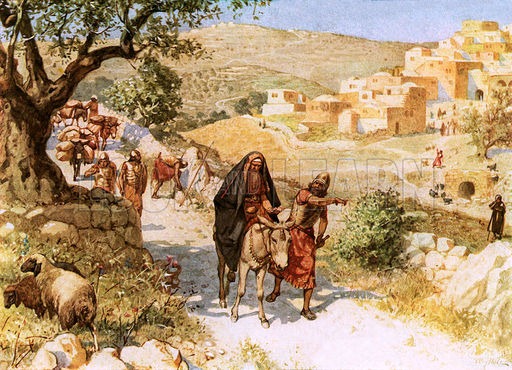
2 SAMUEL #20: HOW DOES GOD FEEL ABOUT HIS ENEMIES?

David knew that his son Absalom had to be stopped, and so he did what was necessary to make that happen. Even so, David always wanted reconciliation with Absalom. This is typical of how David viewed his enemies. Showing us the heart of God, David usually loved his enemies, and longed to be reconciled with them. In the same way, except even more, God loves every human being, and wants us to return to him, no matter what we’ve done. It was while we were God’s enemies that Christ died for us.

To listen to the sermon, click the play button:

For some people, the player above may not work. If that happens to you, use the link below to either download, or open a player in a new page to listen.

To download, right click on the link (or do whatever you do on a Mac) and save it to your computer: Download 2 Samuel Part 20

2 SAMUEL #20: 2 SAMUEL 18:1–19:8

Second Samuel chapter eighteen records the end of Absalom’s rebellion, and of Absalom himself. If you remember, David fled for his life across the Jordan river and to the city of Mahanaim. This was about ten miles east of the Jordan river, up in the mountains, about halfway between the Dead Sea and the Sea of Galilee. It was within the nation of Israel at the time (now it is part of the country of Jordan). It was a fair distance over rough country from Jerusalem, if you were traveling on foot.

There, David gathered an army of those who were still loyal to him. Six-hundred to one-thousand soldiers had fled with David. The bible doesn’t tell us how many more he found, but the Jewish historian Josephus says that he had four thousand men when he went to fight the army of his son Absalom (I don’t know where Josephus got his information). The bible doesn’t tell us how many men Absalom had either, but considering the casualties listed in 18:7, there must have been many.

David created military units with lines of communication, devised a battle plan, and prepared to go out with his men. But his men convinced him to stay in the city of Mahanaim while they fought on his behalf. This made sense. Absalom had to kill only one man–David—in order to win. David had the humility and wisdom to recognize this, and so he listened to his men and stayed behind. But he gave his three chief commanders clear orders to “deal gently, for my sake, with the young man, Absalom” (2 Samuel 18:5). Many of his regular foot soldiers were present, and overheard those orders. It is very likely that they passed on this information to soldiers who weren’t close enough to hear.

Many of those who fought for David were probably veterans of his earlier campaigns. They remain today some of the most famous warriors in history. Certainly, David had most of the best military leaders of the nation on his side, even though he was at a disadvantage in numbers. Their strategy had been devised with the help of David himself. It is quite likely that David chose to go to the city of Mahanaim precisely because it was in the Forest of Ephraim, since the terrain there would help him in the upcoming battle. The area is not forested today, but it remains rugged and mountainous, as it was in those times also (see picture at left). In the rough terrain and the forest, the advantage of greater numbers that Absalom had would have been largely neutralized. David’s smaller, more experienced force had a better chance there than in a pitched battle in an open area.
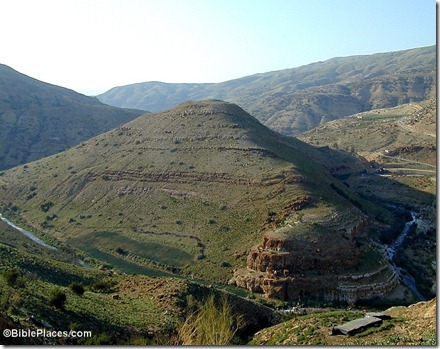
This rough terrain was forested in David’s time  

Absalom’s army was out-maneuvered, out-led and out-fought. They were defeated. The scripture records that many men perished in the rough terrain, in addition to those lost in battle, totaling 20,000 in all. In previous teachings I have explained the difficulties of numbers of soldiers in Hebrew. If you think it would be more realistic if the number was 2,000 men, by all means, go with that. The Hebrew could read either way.

In the defeat, Absalom fled on his mule. He went under the twisted, low-hanging branches of an oak tree, and his head was caught in the branches. The mule kept going, and left him hanging there, unable to touch the ground, and apparently unable to extricate himself from the tree. The text simply says that Absalom was caught by his head. It is the Jewish historian Josephus who claims it was, in particular, Absalom’s beautiful thick hair, about which he was so conceited, that trapped him.

Remember, David wanted his men to deal gently with Absalom. In a pitched battle, that could have been very difficult. If he was well and wielding weapons, and defended by others, it might have been impossible to take him prisoner without severely wounding him or even killing him. But here was the perfect opportunity to bring him back to David whole and unharmed. He was helpless and disarmed, a threat to no one. The first Israelite to discover this went and found Joab, David’s chief general, and told him. But Joab, instead of seeing this as a stroke of extreme good fortune, allowing him to capture Absalom without anyone getting hurt, took advantage of his helplessness and attacked him as he hung there. No doubt not wanting to be the only guilty party, he recruited ten young soldiers to assist him, so that the blame was shared. Absalom was struck dead.

I think that there was probably some bad blood between Absalom and Joab. It seems likely that previously, Joab had a soft spot for the charismatic prince. He helped Absalom get permission to return to Israel after he had murdered his brother. Even after that, Joab helped David and Absalom reunite. But Absalom had been arrogant and high-handed with Joab, and it was doubtful he had ever thanked him. In addition, Absalom had tricked Joab, making him an unwitting assistant in the rebellion. Finally, he never invited Joab to join him, which would have hurt Joab’s pride. So I think it is quite likely that Joab bore special grudges against Absalom, and that he killed him as much for his own sake as for David’s.

David first heard the news that the battle was won, and he was glad. But shortly after that, he heard that his son had been killed. He was overcome by grief and he lamented loudly. As a result, the victorious army marched into the city without the celebration and joy that were normal when the battle was won.

Joab, never deterred, rebuked David. He pointed out, honestly, correctly, that it was almost an insult to his men. Then Joab expresses what is really on his heart:

6 You love your enemies and hate those who love you! Today you have made it clear that the commanders and soldiers mean nothing to you. In fact, today I know that if Absalom were alive and all of us were dead, it would be fine with you!

Joab never understood David’s kindness, forbearance and love toward those who tried to destroy him: Saul, Abner and Ish-bosheth, to name a few. The world was black and white to Joab—there was our side (the good guys) and everyone who was against us (the bad guys). But David was God’s chosen instrument because he had a heart that God could use to show the world what the coming savior was really like. David, expressing God’s heart, encountered very few people that he truly hated or called enemies. He had a more nuanced view, and always hoped for reconciliation with those who hated him.

Even so, David was not a blind idealist. He did what had to be done. So he fought when it was necessary. But he always wished for reconciliation, and the death of those who called themselves his enemies grieved him. In this case, although he still grieved for his son, he was humble enough to recognize that Joab was right, and he was shaming the men who had risked their lives for him. So he went out to them and congratulated them.

I really want us to hear the heart of God through this part of David’s life. There are people who have turned their backs on God. God doesn’t hate them. There are people who mock God and rejoice at insulting and offending and even persecuting those who follow Him. God doesn’t hate them. There are people who have twisted the truth about God into manipulative and evil false religions that oppress millions of people. God doesn’t hate them. People may set themselves up as enemies of God, but God does not see it that way. He does see the reality – that some people hate him and have rebelled against him, even as Absalom did to David. Like David, God understands that at times it is necessary to put and end to the schemes of evil people. But he also looks at each one of them and sees a unique human being whom he loves deeply.

I have to admit. I’m more often tempted to be like Joab than like David. But listen:

10 For if, while we were enemies, we were reconciled to God through the death of His Son, then how much more, having been reconciled, will we be saved by His life! (Rom 5:10, HCSB)

We ourselves were once in Absalom’s place. We were enemies of God. God did not hate us. He reconciled us to himself. How can we turn and hate others when we’ve received such grace?

The bible is clear that some human beings can and do choose their own destruction rather than admit their need for God. God allows them to do that, or else love for God could never be real. But like David, he grieves deeply when people choose their own destruction. It happens, but he is never happy about it.

11 Tell them: As I live” — the declaration of the Lord GOD — “I take no pleasure in the death of the wicked, but rather that the wicked person should turn from his way and live. Repent, repent of your evil ways! Why will you die, house of Israel? (Ezek 33:11, HCSB)

Sometimes when we’ve been wandering away from God, we stay away because we think that God feels about us the way we deserve. Sometimes we think he feels about us the way we have felt against him. The prodigal son went home with a prepared speech, hoping he might be given a place among his father’s servants. But his father saw him from a distance and ran toward him, arms thrown open to welcome him back and to restore him to the family. That is how he is with us.

But while the son was still a long way off, his father saw him and was filled with compassion. He ran, threw his arms around his neck, and kissed him. (Luke 15:20, HCSB)

By the way, in ancient Middle Eastern culture, important men never ran in public. To run in public was humiliating for such men. But the Father of the prodigal didn’t care. He ran. That’s how God feels about us, even when we are his enemies, even when we think he couldn’t possibly love us after what we’ve done and where we’ve been.

While Jesus was being tortured to death, he prayed for the people who were killing him, saying, “Father, forgive them!” (Luke 24:34).

Peter betrayed Jesus in his darkest hour. Jesus forgave him and restored him. He welcomed him back into a relationship of trust, even after what Peter did. Paul persecuted those who trusted Jesus. He had them arrested and even executed. But Jesus welcomed him and forgave him when Paul repented. Jesus himself said:

7 I tell you, in the same way, there will be more joy in heaven over one sinner who repents than over 99 righteous people who don’t need repentance. (Luke 15:7, HCSB)

The plan, of course, is that the 99 righteous people, already living in God’s grace, rejoice along with Jesus and the angels of heaven.

David knew that he had been forgiven much. He had sinned horribly and yet, repented and received forgiveness. He hoped for the same thing for Absalom. This is a reflection of Jesus’ hope for us. Jesus sees us as we are, but he loves us anyway. He doesn’t hate you, and he never will. He wants the best for you, and he knows that comes only when you trust him. If you have already returned to him, why don’t you share the good news with others who also may not know that he longs to show them grace and compassion?


2 SAMUEL #18: SUPERFICIAL CHARM OR GENUINE GODLY CHARACTER?

These two chapters of the Bible show us that David has returned to the confident, humble faith of his youth. He is willing to take on personal danger in order to spare others. When people insult him, he refuses to punish them, but patiently entrusts himself to the Lord. In this, he reminds us of Jesus, the Messiah. The way people responded to David at this point in his life also show us the ways that various people react to Jesus.

To listen to the sermon, click the play button:

For some people, the player above may not work. If that happens to you, use the link below to either download, or open a player in a new page to listen.

To download, right click on the link (or do whatever you do on a Mac) and save it to your computer: Download 2 Samuel Part 18

2 Samuel #18 .  2 Samuel Chapters 15:1-16:29

Some weeks we get into details about a text. This week, we’re going to fly through two chapters. Even so, we’re only going to cover one part of a much larger story concerning David’s son Absalom. There is a kind of smorgasbord of spiritual truths here. Feast on whatever the Lord has to say to you through this today.

After David restored Absalom to his official position as prince, Absalom began laying the groundwork for a coup. He started by running a popularity contest against David – a contest David didn’t even know was going on.

Absalom was good looking. Once he was “official” again, he began to act charmingly also. He spent time with the people. He appeared to sympathize with their problems. Very subtly, he planted doubts in their minds about David. When they tried to honor him as their prince, he forestalled them, and treated them as equals and good friends. By doing this, Absalom won the hearts of a great many people.

David was a worshipper of God and a warrior. Though he failed at times, he rarely compromised his principles. Almost always, David cared much more about what God thought of him than what the people thought. It wasn’t that he didn’t care about his people—it’s just that his way of caring and leading was oriented toward seeking the Lord, and leading the nation based upon what God wanted. For David, it wasn’t about being popular or satisfying the desires of the people. He felt, rightly, that if he was right with the Lord, then the Lord could use him to do his will for the nation of Israel.

However, the people were not as concerned with God as they were with themselves. So they were susceptible to someone like Absalom, who also appeared to be concerned with their desires. Absalom made sure he looked good. He always appeared sympathetic and engaging.

David was “old school.” He wasn’t a friend to the people—he was a leader. He stuck to his guns, because he believed right was right.

The people loved Absalom because they loved themselves more than God. If it was a choice between someone who followed God or someone who made them feel good, they wanted the one who made them feel good. We’ve already seen some things about Absalom’s character. He was ambitious for himself. He was arrogant. He wanted his own way, and worked to get it, regardless of the cost to others. He never admitted wrong, never repented, never said “thank you,” or “sorry.” But the people saw only the engaging, personable, friendly guy. They were too concerned with outward appearances.

There is no record of Absalom ever consulting the Lord about anything. And ultimately, he was not the Lord’s choice for king. But the people didn’t think about such things. They were already ready to repeat the mistake they made with Saul.

There is a classic scene in J.R.R. Tolkien’s Lord of the Rings. The four hobbits have met a tall, stern, grim looking man. He tells them that he was sent by their friend, the wizard Gandalf to help them. They discuss whether or not they can trust him. Finally, Frodo, leader of the hobbits says something like this:

“I think one of the enemy’s spies would – well, seem fairer and feel fouler, if you understand.”

In other words appearances are often deceiving. So it was with Absalom. He seemed fairer and better than David. But on the inside he was already rotten. He looked and seemed like the better leader. But it was the grim, steadfast old David who was the best king the people could have had, in fact, as history showed, one of the best kings Israel ever had.

I spend time on all this because I think we are often like the people who were duped by Absalom. It’s so easy to judge by external things like looks and charm. It’s so easy to fall for a leader or lover who looks good and makes you feel good about yourself and himself – at least superficially. This is also true of ideas. Ideas and principles that make you feel good about yourself can be very seductive.

I want to encourage the people of  God to not judge by shallow things like appearance or personal charm, or even by feelings. Sometimes it takes some hard work to realize that goodness doesn’t always immediately feel good.

In any case, Absalom was able to win over enough people to attempt a coup to dethrone David (and probably kill him). It is interesting to see David’s attitude toward his son. He had no illusions about Absalom. As soon as he heard the news, he knew that his son would kill him if he could. Even so, that never changed David’s love for him. Later we’ll see that when it came to battle, David tried to protect Absalom, and he was deeply grieved when his son was killed. David did what he had to, to protect himself and take care of the kingdom God had given him – but he never wavered in his love for his son.

That is sometimes how it is with us and the Lord. The Lord has no illusions about us. He knows who we truly are—the good, and also the bad.  And yet, God loves us with an unwavering love anyway. He’s always hoping we can be saved from destroying ourselves. He’s always hoping we will reconcile with him rather than be killed.

Here is where we begin to see that David has returned to the steadfast trust in the Lord that he had as a young man. Absalom began his coup in the city of Hebron. David got the news when he was in Jerusalem. If you remember, Jerusalem at that time was a walled city on top of a ridge, with an internal water source. Years earlier, David and his men had conquered the city through the water shaft, but David quickly built defenses to stop that happening again, now that he had the city. Before the water shaft was protected, people had considered Jerusalem to be unconquerable, and so now it was even more so. Therefore, the commonsense option for David was to shut the gates of Jerusalem and make Absalom try to conquer the city. Even if Absalom were able to surround Jerusalem entirely, it would have taken a year or two to starve them out. During that time, other allies might have come to David’s aid, or Absalom’s followers might have second thoughts. However, that route would have involved a lot of hardship for the people of Jerusalem, and many of Absalom’s men would also have been killed. David said:

“Hurry! If we get out of the city before Absalom arrives, both we and the city of Jerusalem will be spared from disaster.” (2 Samuel 15:14)

So, instead of staying where it was safe, David left the city, and allowed Absalom to come in unopposed. This shows that David was willing to trust God. He didn’t need to hold on to the advantage of the walled city. Instead, he spared the people much suffering, and took the burden upon himself.

Because of this choice, David had to run for his life. This had to be tough for him. When David was a young man, for more than a decade he had lived on the run in the wilderness. Life was physically difficult in those days. He was not respected or honored for who God made him to be. He was not recognized for his gifts. God’s promises did not seem to be fulfilled. Finally, he came through all of that and became king. If you remember, just a few years later, he ended up back in one of his old hide-outs, eluding the Philistine invaders (2 Samuel 5:17-25). He came through that. And now, well into middle age – perhaps almost sixty years old, he was back yet again, running for his life, not respected, not living out what God had promised him. In some ways, this might have been even harder. When he was young, he didn’t know exactly how it would feel to be king. But now, he knew what he was missing. And now too, he had a family to take care of. He brought his wives with him. Solomon was probably about ten years old at this point. There were other children also. I should note that he left his ten concubines behind him, because that comes up later on.

But in spite of this hardship, David did not turn away from the Lord. This would have been a time when it would be very easy to be bitter. David followed God faithfully for most of his life. True, he had failed at times, but he certainly had more than his share of trouble. Did he really deserve things to be this bad, for this many years of his life? Following God did not spare him from trouble and hardship. But he had a better hope than just a comfortable life on earth. And so as he went, we can see the grace oozing out of him. When people insulted him, he was not angry. He didn’t demand help from anyone. He went out in humility and trust.

The people seemed to have had three basic reactions to David during this period of his life. The first is shown to us in the person of Ziba. If you remember, Ziba was the man whom David made manager of the estate of Mephibosheth, son of Jonathan, whom David had treated so kindly. Ziba gathered some much needed supplies and brought them to David. This was a welcome thing, and a great help to David. But it turns out that perhaps Ziba did this deceptively, for his own gain. We find out later that Ziba lied about Mephibosheth, slandering him in the hope that if David triumphed over Absalom, he, Ziba, would be rewarded with Mephibosheth’s estate. Mephibosheth, if you remember, was lame, and so Ziba took advantage of that to come see David, while not allowing his master to come. So Ziba supported David, but with the purpose of gaining something in the end. On the other hand he likely had very little to lose by doing what he did if David never came back. After all, it wasn’t his own food that he gave David. He surely took it from Mephibosheth’s supplies. There were others who doubtless supported David by way of hedging their bets, hoping to gain his favor if he triumphed, and having little to lose if he didn’t.

There was a second common reaction to David in all of this. Shimei was a relative of Saul’s, and he cursed David, throwing dust and stones at him as he left Jerusalem. David’s response reveals that he is once more a man whose heart belongs entirely to God. David’s nephew Abishai, one of his great warriors, offered to go relieve Shimei of his head (Abishai was the brother of Joab). But David restrained him. Nathan had told David (2 Samuel 12:10-12) that one of the consequences of his sin would be rebellion from within his own family. David was back to his good place in his relationship with God. His circumstances were a mess, but once more, his heart was fixed entirely on the Lord. So when Shimei cursed him, David humbly accepted whatever the Lord was doing. He trusted the Lord to straighten things out, if Shimei was wrong. There were others, obviously, who sided with Absalom and rebelled against David. David’s personal advisor, Ahithophel was one prominent one. It may be that David wrote Psalm 55 at this point. The close friend that David refers to in that Psalm was very likely Ahithophel.

Finally, a third group of people remained steadfastly with David, come what may. Ittai was a Philistine warrior who had left his home; he led a battalion of six hundred Philistines who had pledged allegiance to David. David released them from their pledge and urged them to return to their homeland, but they refused. For them it was not about being blessed or having good times. They were in it for forever, for good or for bad, no matter what. The two priests, Zadok and Abiathar, were like that, as was one of David’s advisors, Hushai. David sent them back to Jerusalem as spies, and they remained loyal to him.

Remember how David is a “type of Christ?” It shows up again here. Jesus did not return the curses and insults of those who reviled him. I think it is helpful for us to look at how people responded to David, and see ourselves, in how we respond to Jesus.

There are some people who follow Jesus, or at least, who are sympathetic to him, because even though they aren’t sure about him, they want to keep their options open. Maybe they want something from him. So they hedge their bets. They come to church. They try to manipulate Jesus into blessing them, in case he is in a position to do so. But they aren’t following him because he is the chosen one of God. They are doing it in hope for their own gain.

Others simply reject Jesus, particularly when it seems like he’s not a winner. These folks may seem to go along with the Lord for a while. But when something comes along that seems more attractive, or that makes them feel better about themselves, they desert the Lord and go along with the new thing. Sometimes they may reject Jesus because they mistakenly thought that the main thing he was supposed to do was make their lives on earth better, and when trouble came, they weren’t spiritually prepared.

And finally, there are those who remain faithful through everything. Sometimes their faithfulness costs them a great deal of suffering and hardship. Sometimes it brings peace or joy. But they follow in the certain hope that this life could never hold everything they want or desire. They are seeking their heavenly home. The book of Hebrews talks about them, and people like those loyal to David:

13 These all died in faith without having received the promises, but they saw them from a distance, greeted them, and confessed that they were foreigners and temporary residents on the earth. 14 Now those who say such things make it clear that they are seeking a homeland. 15 If they were thinking about where they came from, they would have had an opportunity to return. 16 But they now desire a better place — a heavenly one. Therefore God is not ashamed to be called their God, for He has prepared a city for them. (Heb 11:13-16, HCSB)

Let the Holy Spirit speak to you today. Maybe you need correction because your focus is on external things. Perhaps, like those who listened to Absalom, you are swayed by what looks good or what makes you feel good, and you need to be reminded not to judge based upon shallow appearances.

Or, maybe you need to be reminded that the life of faith always has ups and downs, that real saints throughout the ages have had many struggles in their lives. The trick is not to avoid struggles, but to let God’s grace surround you, and come out of you, when you are in them.

Maybe you are being challenged about the way you follow Jesus. Maybe you have been focusing more on your own personal gain. Perhaps you are susceptible, because of pain or struggle, to rejecting Jesus all together. Hear God’s gracious invitation to faith today.

2 SAMUEL #16: THE STRUGGLE BETWEEN JUSTICE AND LOVE

After his son committed a horrific crime, David was caught between the need for justice, and his love for his son. He didn’t know how to reconcile justice and love, so he did nothing. God faces the same dilemma with us, his children. But God did satisfy the demand of justice, while at the same time, satisfying his great love for us. 2 Samuel 13 reminds us of why it was so important for Jesus to do what he did for us.

To listen to the sermon, click the play button:

For some people, the player above may not work. If that happens to you, use the link below to either download, or open a player in a new page to listen.

To download, right click on the link (or do whatever you do on a Mac) and save it to your computer: Download 2 Samuel Part 16

This is surely one of the most difficult passages in the entire bible. There are a few others like it, but that doesn’t make it any better. The first twenty verses describe a rape. The detail of the actual sin is not graphic, but the writer takes time to describe the premeditation that went before it. It is all the more awful because it was also incestuous. The bare facts are that David’s eldest son Amnon raped his half-sister, Tamar.

Leviticus 18:9 and 20:17 expressly forbid sexual relationships between brother and sister – even half-siblings, which they were. In fact, it is forbidden, even between adopted siblings. And of course rape—of any person—is always forbidden. But this is one of the cases where even the most non-religious do not need to be told that this was a vile, despicable, evil act. Even without the bible, the vast majority of human beings still know that this is wrong at every level.

Amnon, the one who committed the crime, was the firstborn son of David, and heir to the throne. He was the crown prince. Chileab, David’s second son, is not mentioned anywhere here, so it is probable that he died when he was younger. Therefore, the next in line after Amnon was Absalom, David’s third’s son, full brother of Tamar.

A quick language note. When it says that Amnon “loved” Tamar, it is the Hebrew word ahab, (pronounced something like uh-hahbv). This is a flexible word with many different meanings, just like “love” in English. It can mean romantic love, or friendship love. But it is not the word hesed, God’s unfailing covenant love, which we have previously learned about.

When we read the passage, modern readers might be surprised and wonder at Tamar’s attitude after the rape. Ancient Israelites thought very differently about certain aspects of sexuality than we do. Of course it was a horrific act of violence that was done to Tamar. But following that, she seemed to want to remain with Amnon. Amnon, however, once he had satisfied his lust, despised his sister:

15 Then suddenly Amnon’s love turned to hate, and he hated her even more than he had loved her. “Get out of here!” he snarled at her.
16 “No, no!” Tamar cried. “Sending me away now is worse than what you’ve already done to me.”
But Amnon wouldn’t listen to her. 17 He shouted for his servant and demanded, “Throw this woman out, and lock the door behind her!”
18 So the servant put her out and locked the door behind her. She was wearing a long, beautiful robe, as was the custom in those days for the king’s virgin daughters. 19 But now Tamar tore her robe and put ashes on her head. And then, with her face in her hands, she went away crying. (2 Samuel 13:15-19, NLT)

Of course the rape was horrible and traumatic. But why would she say that sending her away was even worse? It’s like this: Even worse than the sense of personal violation was her sense of public shame in the culture of that time and place.

Because Amnon had raped her, she was no longer a virgin. Because of that, no other man would ever consider marrying her, even though it wasn’t her fault in any way. It’s unfair and stupid, but that’s the way the culture was at the time. So, if Amnon had not kicked her out, but instead had gone to David and gained permission to marry her, Tamar would have at least been able to retain a respectable standing in the community. Her only chance of living an honorable life was if Amnon married her.

The brutal reality is, she would have had no expectation of marrying for love, anyway. She was a princess in 1000 B.C., and her marriage would probably have come about as part of a political bargain. She would not expect to even know her husband before hand. So if Amnon had married her, it would not have been much different, from her perspective, than what she expected anyway.

But his rejection meant that she now would never be married. Not only that, but in those days, having children was a very big deal. If Amnon rejected her, Tamar could be certain that she would never have children, because no one else would ever marry her. The rape was one event that was over quickly. I’m not minimizing it, but clearly, for Tamar herself, there were other factors that were equally important. Because Amnon refused to “make an honest woman of her,” her shame, and her loneliness were going to continue for the rest of her life. So he not only violated her personally and stole her virginity, but by also kicking her out he doomed her to lifelong shame and loneliness. In one way you might say that in Tamar’s mind, it wasn’t fully rape until Amnon revealed that he didn’t want to marry her. Once he showed that, the full weight of her tragedy came down on her.

This is probably difficult for most people in Western culture to understand. I have spoken to Muslims, and people who live in Muslim nations, who, even today, understand Tamar’s perspective.

Obviously, it was horrible for Tamar. This event also had to be hard for David. He surely must have thought that Amnon was following in his own footsteps: He sees a woman he wants, and he takes her. Only, Amnon’s sin was even worse than David’s, because it was rape, and incest. So David’s sin has been multiplied and is even worse in the second generation. Nathan’s prophetic words are beginning to come true.

Two years later came another horrific crime. Absalom, Tamar’s full brother, was furious with his half-brother Amnon, for the rape. We learn a great deal more about Absalom later, and so I think it is safe to assume that Absalom also saw that taking revenge for the rape would clear the way for himself to become the crown-prince – David’s primary heir, and heir to the throne.

So Absalom waited and schemed. Eventually (two years later), he invited Amnon and his other brothers to a feast, where he had Amnon murdered.

Not only did Amnon follow in David’s footsteps with lust and sexual sin, but now Absalom has followed David by committing conspiracy to murder.

There are clearly so many troubling things in this text, but one of them is a bit subtle. If we pay attention, we notice that David, apparently, did not do anything about the rape. Why is this? It might be that this frustrated Absalom, and led him to the sin of murder, and later on, rebellion. So what do we make of David’s inaction?

There are several possible explanations, of course, but I want to focus on three main ones.

First, in all fairness, the text doesn’t actually say when David learned of the crime of rape. It just says that he was furious when he found out. So there is the possibility that he found out only shortly before Absalom held his murderous feast. The text does show that David hesitated when Absalom wanted to invite Amnon to the feast, perhaps thinking of the rape, and wondering if there would be strife between his two sons. If David had only learned about the rape shortly before the feast, then it could be that Absalom took matters into his own hands before David himself had a chance to do anything.

A second way to look at it is this: Amnon committed a terrible crime. But David had done something similar, himself. Thus it might be that David found it too difficult to judge his son harshly for doing something like what he himself did. He might have felt like a hypocrite. What David did was lust. Lust is not merely sexual – lust means demanding that we have what we want, on our own terms, no matter what. So you can lust after food, power, money, success, the perfect body – anything that you demand to have, and work to get, regardless of the consequence. So the root sin—lust—was the same in both David and his son Amnon, though it took different outward forms. Therefore, David’s own sin may have cost him the moral fortitude to be a just and righteous ruler of his own family and kingdom. I see this quite often in our own culture. There is so much sin going around, that everyone is afraid to call any of it wrong, because people might point the finger back and say, “what about you?”

But if we have accepted God’s judgment of our sin, repented and received forgiveness, we should not feel bad calling sin the evil that it is. If we can agree that it is evil in us, it shouldn’t be a problem saying it is evil everywhere.

But there is a third possibility, and this is the one I favor, because I think it is true to the character of David, and to the overall message of scripture. I think David did not hold Amnon accountable, because he was trying (though failing) to reconcile justice and mercy; truth and forgiveness. The crime was real, and heinous. It had to be punished. And yet the punishment, at the very least, (according to Leviticus 18:29) was that Amnon should be stripped of all of his rights as a prince, and a citizen, and exiled for life. Some interpretations of the law might have even meant the death penalty. So to bring justice meant that David would be separated forever from his first born son. David clearly loved Amnon, as shown by the fact that he grieved for him for three years after his death. David, manifesting the heart of God, had a deep commitment to justice. David, manifesting the heart of God, had a deep love for his children. But David could not find a way to reconcile both that justice and that love. To follow love would mean justice would not be satisfied. To follow justice meant love would be forsaken.

And here, once again, is Jesus. God faced the same dilemma as David, only on a much larger scale. All of his children—all of us—have harbored sin and wickedness in our hearts. We have all fallen. We may not have sinned outwardly as heinously as Amnon, but the thing in Amnon’s heart that made him sin is also in our hearts. Amnon manifested what is in every human heart, and that shows us the deep need for justice. The law says we should be punished by eternal separation from our heavenly king and father. God will not violate that law. But he also loves us with an everlasting, deep, wild, love and he will not compromise that, either.

David could not reconcile love and justice, so he did nothing. But God did do something to reconcile the two. He sent Jesus. Justice for all of our sins was done—upon Jesus. Our unrighteousness was severely punished. It was punished in the person of Jesus Christ. Justice was done upon his body and soul. Jesus became a human precisely so that he could take that punishment upon himself. But because he was pure and remained God, that punishment did not destroy him like it would have destroyed us. And so, because of Jesus, justice was done. And because of Jesus, God can show his love to us, with no barrier.

We are made right with God by placing our faith in Jesus Christ. And this is true for everyone who believes, no matter who we are.

 For everyone has sinned; we all fall short of God’s glorious standard.  Yet God, with undeserved kindness, declares that we are righteous. He did this through Christ Jesus when he freed us from the penalty for our sins.  For God presented Jesus as the sacrifice for sin. People are made right with God when they believe that Jesus sacrificed his life, shedding his blood. This sacrifice shows that God was being fair when he held back and did not punish those who sinned in times past, for he was looking ahead and including them in what he would do in this present time. God did this to demonstrate his righteousness, for he himself is fair and just, and he declares sinners to be right in his sight when they believe in Jesus. Romans 3:22-26 (New Living Translation)

As I said last time, we do need to receive, through faith, the justice and love offered by God. It has been accomplished for us, but if we do not believe we need it, or if we do not trust we have it, or if we don’t want it – it does us no good. If we are unwilling to repent, if we want our sin more than we want God, we are rejecting the sacrifice of Jesus.

Unfortunately for him, Absalom shows us that this is true. He did not seek justice from his father. He did not trust the king to satisfy the demands of justice. Instead, he took matters into his own hands. In the next chapter, we see that when Absalom wanted something from David he knew how to get it. When he wanted to be pardoned, and later restored, he was persistent and cunning until David responded. But in the case of Amnon and Tamar, Absalom never even tried to get David to do anything. In fact, from the start, he pretended that the incident meant nothing to him.

Perhaps he didn’t trust David to be both loving and just. I think also, he didn’t trust his father, the king to take care of him.

I think it is also almost certain that Absalom realized there was an opportunity here for him. Tamar’s rape gave him an excuse to remove Amnon, the one person ahead of him in the succession to David’s throne, so that it would not look like ambition, but rather an attempt at justice. The reason Absalom had for murdering his brother might just make David and the people sympathetic enough so that when it was all over, they would still accept Absalom as the next heir to the throne. I think is likely that at some point, Absalom decided to do this for both revenge and in order to become the next king.

Absalom did not seek justice from David for his sister. But even if he had, and David refused, it did not give him the right to commit a sin himself. We might do this with God in lesser ways and in lesser situations, and in some ways, it is worse for all that. David was king. He had the right to deal with Amnon however he saw fit, even if it didn’t meet Absalom’s expectations. As it turned out, David gave Absalom himself mercy rather than justice. Absalom surely had no right to demand that David withhold mercy from someone else.

God is our king. He has the right to deal with his creations however he sees fit. When it comes down to it, at great cost to himself God offers us mercy rather than justice. Do we have the right to demand justice for some person or situation, even while we depend upon his mercy for ourselves?

Sometimes we try to take matters into our own hands because God doesn’t seem to be doing anything. I think when we do that, it can lead us down a path toward rebellion, just as it did with Absalom.

What Amnon did demands justice. Justice was given, through Jesus. That allows love to also be given, and reconciliation to happen. Let the Holy Spirit speak to you today about the need for both, and about accepting both things from the Lord.

Does God Hate Anyone?

absalom-death-granger


There are people who have turned their backs on God. God doesn’t hate them. There are people who mock God and rejoice at insulting and offending and even persecuting those who follow Him. God doesn’t hate them. People may set themselves up as enemies of God, but God does not see it that way. He does see the reality – that some people hate him and have rebelled against him, even as Absalom did to David. But he also looks at each one of them and sees a unique human being whom he loves deeply.


To listen to the sermon, click the play button:


To download, right click on the link (or do whatever you do on a Mac) and save it to your computer: Download 2 Samuel Part 18


2 Samuel #18 . 2 Samuel Chapter 18

Second Samuel chapter eighteen records the end of Absalom’s rebellion, and of Absalom himself. If you remember, David fled for his life across the Jordan river and to the city of Mahanaim. This was about ten miles east of the Jordan river, up in the mountains, about halfway between the Dead Sea and the Sea of Galilee. It was within the nation Israel at the time (now it is part of Jordan) but a fair distance over rough country from Jerusalem, if you were traveling on foot.


Mahanaim1

There, David gathered an army of those who were still loyal to him. Six-hundred to one-thousand soldiers had fled with David. The bible doesn’t tell us how many more he found, but the Jewish historian Josephus says that he had four thousand men when he went to fight the army of his son Absalom (I don’t know where Josephus got his information). The bible doesn’t tell us how many men Absalom had either. David ordered his men, devised a battle plan, and prepared to go out. But his men convinced him to stay in the city while they fought on his behalf. This made sense. Absalom had to kill only one man – David – in order to win. David had the humility and wisdom to recognize this, and so he listened to his men and stayed behind. But he gave his three chief commanders clear orders to “deal gently, for my sake, with the young man, Absalom” (2 Samuel 18:5).


Many of those who fought for David were probably veterans of his earlier campaigns. They remain today some of the most famous warriors in history. Certainly David had most of the best military commanders of the nation on his side, even though he was at a disadvantage in numbers. Their strategy had been devised with the help of David himself. It is quite likely that David chose to go to the city of Mahanaim precisely because it was in the Forest of Ephraim. The area is not forested today, but it remains rugged and mountainous, as it was in those times also. In the rough terrain and the forest, the advantage of greater numbers that Absalom had might have been largely neutralized. David’s smaller, more experienced force had a better chance there than in a pitched battle in an open area.

Absalom’s army was out-maneuvered, out-led and out-fought. They were defeated. The scripture records that many men perished in the rough terrain. The text records that 20,000 men perished, more killed by forest than by the battle. In previous teachings I have explained the difficulties of numbers in Hebrew. If you think it would be more realistic if the number was 2,000 men, by all means, go with that. The Hebrew could read either way.

This rough terrain was forested in David’s time

In the defeat, Absalom fled on his mule. He went under the twisted, low-hanging branches of an oak tree, and his head was caught in the branches. The mule kept going, and left him hanging there, unable to touch the ground, and apparently unable to extricate himself from the tree. The text simply says that Absalom was caught by his head. It is the Jewish historian Josephus who claims it was, in particular, Absalom’s beautiful thick hair, about which he was so conceited, that trapped him.

Remember, David wanted his men to deal gently with Absalom. In a pitched battle, that could have been very difficult. If he was well and wielding weapons, and defended by others, it might have been impossible to take him prisoner without severely wounding him or even killing him. But here was the perfect opportunity to bring him back to David whole and unharmed. He was helpless and disarmed, a threat to no one. The first Israelite to discover this, found Joab, David’s chief general, and told him. But Joab, instead of seeing this a stroke of extreme good fortune to capture Absalom without anyone getting hurt, took advantage of his helplessness and attacked him as he hung there. No doubt not wanting to be the only guilty party, he recruited ten young soldiers to assist him, so that the blame was shared. Absalom was struck dead. Now I want to point out that there was probably some bad blood between Absalom and Joab. Joab had apparently had a soft spot for him. He helped Absalom get permission to return to Israel after he had murdered his brother. Joab helped David and Absalom reunite. But Absalom had been arrogant and high-handed with Joab, and it was doubtful he had ever thanked him. So I think it is quite likely that Joab bore special grudge against him, and that he killed him as much for his own sake as for David’s.

David first heard the news that the battle was won, and he was glad. But shortly after that, he heard that his son had been killed. He was overcome by grief and he lamented loudly. As a result, the victorious army marched into the city without the celebration and joy that were normal when the battle was won.

Joab, never deterred, rebuked David. He pointed out, probably correctly, that it was almost an insult to his men. Then Joab expresses what is really on his heart:

6 You love your enemies and hate those who love you! Today you have made it clear that the commanders and soldiers mean nothing to you. In fact, today I know that if Absalom were alive and all of us were dead, it would be fine with you!

Joab never understood David’s kindness and love toward those who tried to destroy him: Saul, Abner and Ish-bosheth, to name a few. The world was black and white to Joab – those with us, and those against us. But David was God’s chosen instrument because he had a heart that God could use to show the world what the coming savior was really like. David, expressing God’s heart, saw very few people that he truly hated or called enemies. Even so, David was not a blind idealist. He did what had to be done. So he fought when it was necessary. But he always wished for reconciliation, and the death of those who called themselves his enemies grieved him. In this case, although he still grieved for his son, he was humble enough to recognize that Joab was right, and he was shaming the men who had risked their lives for him. So he went out to them and congratulated them.

I really want us to hear the heart of God through this part of David’s life. There are people who have turned their backs on God. God doesn’t hate them. There are people who mock God and rejoice at insulting and offending and even persecuting those who follow Him. God doesn’t hate them. There are people who have twisted the truth about God into manipulative and evil false religions that oppress millions of people. God doesn’t hate them. People may set themselves up as enemies of God, but God does not see it that way. He does see the reality – that some people hate him and have rebelled against him, even as Absalom did to David. But he also looks at each one of them and sees a unique human being whom he loves deeply.

10 For if, while we were enemies, we were reconciled to God through the death of His Son, then how much more, having been reconciled, will we be saved by His life! (Rom 5:10, HCSB)

The bible is clear that some human beings can and do choose their own destruction rather than admit their need for God. God allows them to do that, or else love for God could never be real. But like David, he grieves deeply when people choose their own destruction. It happens, but he is never happy about it.

11 Tell them: As I live” — the declaration of the Lord GOD — “I take no pleasure in the death of the wicked, but rather that the wicked person should turn from his way and live. Repent, repent of your evil ways! Why will you die, house of Israel? (Ezek 33:11, HCSB)

Sometimes when we’ve been wandering away from God, we stay away because we think that God feels about us the way we deserve. Sometimes we think he feels about us the way we have felt against him. The prodigal son went home with a prepared speech, hoping he might be given a place among his father’s servants. But his father saw him from a distance and ran toward him, arms thrown open to welcome him back and to restore him to the family. That is how he is with us.

But while the son was still a long way off, his father saw him and was filled with compassion. He ran, threw his arms around his neck, and kissed him. (Luke 15:20, HCSB)

While Jesus was being tortured to death, he prayed for the people who were killing him, saying, “Father, forgive them!” (Luke 24:34).

Peter betrayed Jesus in his darkest hour. Jesus forgave him and restored him. He welcomed him back into a relationship of trust, even after what Peter did. Paul persecuted those who trusted Jesus. He had them arrested and even executed. But Jesus welcomed him and forgave him when Paul repented. Jesus himself said:

7 I tell you, in the same way, there will be more joy in heaven over one sinner who repents than over 99 righteous people who don’t need repentance. (Luke 15:7, HCSB)

The plan, of course, is that the 99 righteous people, already living in God’s grace, rejoice along with Jesus and the angels of heaven.

David knew that he had been forgiven much. He had sinned horribly and yet, repented and received forgiveness. He hoped for the same thing for Absalom. This is a reflection of Jesus’ hope for us. Jesus sees us as we are, but he loves us anyway. He doesn’t hate you, and he never will. He wants the best for you, and he knows that comes only when you trust him. If you have already returned to him, why don’t you share the good news with others who also may not know

WHERE IS YOUR HOPE?

David, fleeing from Jerusalem, is cursed by Shimei.  William Hole, Old Testament History (Eyre and Spottiswoode, c 1925 )

Leaders and governments come and go. So do countries and nations. Israel’s hope was not in David’s leadership, but in God’s faithfulness and sovereignty. Our hope is the same. If we are shaken by an election, for good or for bad, then to that extent, our faith is not truly grounded in an eternal God who promises us an eternal hope. This isn’t just about elections. This is about anything in life that threatens to shake us.

To listen to the sermon, click the play button:

To download, right click on the link (or do whatever you do on a Mac) and save it to your computer: Download 2 Samuel Part 17

2 Samuel #17 . 2 Samuel Chapter 17

This is not a political sermon, so just bear with me through the first few paragraphs, and you’ll see that there is some rich spiritual application.

I think it is safe to say that the election in the United States this past week reveals that we often deeply divided as a nation. Although the electoral college victory for Barak Obama was clear and decisive, the margin int he popular vote was less than 3%. These division may cause us dismay. Sometimes it may seem that the atmosphere is far to bitter and partisan. Many people are dismayed by politicians themselves — so many of them seem willing to push the envelope of ethical behavior extremely far.

The scripture that we are looking at today is especially relevant in these times. David was good king; in fact, he was God’s choice for king. But Absalom sounded good, looked good and deceived enough good people, and recruited enough schemers, to take power and send his dad David running for his life. Politically, things looked bad for Israel. How could the country be so ignorant as to let this smooth-talking, charming megalomaniac come to power? Obviously, there were still many who supported David, and who felt that Absalom was a very bad choice for king. But they were defeated and silenced. God’s choice no longer mattered. Righteousness and right didn’t matter. Instead, power went to the one who was most ruthless and clever. Those who were wise and aware in Israel, who trusted the Lord, must have been deeply dismayed.

At the end of 2 Samuel chapter 15, we learn that when David fled from his son Absalom, he left behind a kind of spy network. Two priests who were loyal to David stayed in the city – Zadok and Abiathar. Their two sons – Ahimaaz and Jonathan stayed outside the city, ready to relay messages to David. David also had a friend and advisor named Hushai. Hushai stayed behind and pretended to betray David, and so became an false advisor to Absalom, a kind of double agent.

David had another close friend who was an advisor. This man was named Ahithophel. 2 Samuel 16:23 says this:

Now the advice Ahithophel gave in those days was like someone asking about a word from God — such was the regard that both David and Absalom had for Ahithophel’s advice. (2Sam 16:23, HCSB)

This man truly did betray David. He supported Absalom and threw his lot in entirely with him. It is quite likely that when David wrote psalm 55, it was primarily Ahithophel whom he had in mind. He said these things:

Now it is not an enemy who insults me — otherwise I could bear it; it is not a foe who rises up against me — otherwise I could hide from him. But it is you, a man who is my peer, my companion and good friend! We used to have close fellowship; we walked with the crowd into the house of God. (Ps 55:12-14, HCSB)

…My friend acts violently against those at peace with him; he violates his covenant. His buttery words are smooth, but war is in his heart. His words are softer than oil, but they are drawn swords. (Psalm 55:20-21)

When David first heard that Ahithophel had betrayed him, he prayed for the Lord to confound his advice and to defeat him. He says similar things in Psalm 55. There is something here that intrigues me. If you read the Psalms especially, David is never shy about praying for destruction to come upon evil and evil-doers. Whenever I read such things, I cringe a little bit. I think most modern Christians do. It sounds so simplistic to our sophisticated ears. These types of prayers seem to assume that we are good, not bad, and we have the ability to discern who the bad ones are. I don’t think I’ve ever heard modern Christians pray that way. Now, Jesus did say to love our enemies and to pray for those who persecute us. So I think we ought to do that. But have we ever considered that part of our prayers could be asking God to frustrate and confound the schemes of unrighteous and wicked people? Here’s another sample from David:

Let those who seek to take my life be disgraced and confounded. Let those who wish me harm be driven back and humiliated. Let those who say to me, “Aha, aha! ” be horrified because of their shame. (Ps 40:14-15, HCSB)

If we pray in faith, trusting that God knows who truly needs to be confounded frustrated, and who doesn’t I think it is appropriate at times to pray against the success of those who appear to be against God. I’m not saying that we get to judge who those people are – I’m just saying that we can appeal to God to restrain and defeat wickedness, trusting him to judge who is wicked and who is not.

Ahithophel certainly appeared to become a wicked person. His first advice to Absalom was that he publicly violate the women of David’s harem, who had been left behind when David fled. This was a symbolic cultural gesture, expressing contempt for David, and showing the people that he had completely cowed and defeated him. The possession of the King’s wives was a way of solidifying his own claim to be the new king.

Absalom took that advice, fulfilling Nathan’s prophecy that David’s wives would be treated publicly as David treated Uriah’s wife privately. The Hebrew leaves a little bit of room for interpretation. Absalom’s men pitched tents in public view – on the roof of the palace. The text says that Absalom “went in” to the women. It could mean that he raped them. But in the customs of those days, when a married woman was alone with a man who was not her husband, it was a disgrace. Whether or not anything happened, it was assumed that something had. So, whatever happened, from that time forth, those women were treated as if they had been raped. In those days, the custom (not biblical, just cultural) was that no other man would ever again be with them. They would have no place with their previous husband, nor any chance of a new one. However, after the rebellion was all over, David made sure that they were well cared for for the rest of their lives.

Ahithophel’s next advice was cunning and probably would have been effective. He told Absalom to pursue David quickly, to strike and kill him while he was still on the run, and end any doubt about who was king. But Absalom chose to also ask Hushai, David’s secret agent in the palace. Hushai gave advice that sounded excellent. He reminded Absalom that David was a cunning, fearsome old warrior, and that some of the Thirty were also with him. It would be no small thing to take such heroes on without enough preparation or force. David and Abishai (who was with him) had once killed six hundred men in a single battle, just between the two of them. Hushai suggested that Absalom could not risk bad news like a battle gone wrong, so early in his bid for power. The Lord heard David’s prayer, and Ahithophel’s scheme was frustrated.

Ahithophel’s reaction seems completely out of proportion. He goes and hangs himself. The text doesn’t really tell us why. I have a few theories, but they are only guesses. One thought is that Ahithophel reacted a little bit like Judas did one thousand years later, when he betrayed Jesus. Ahithophel may have realized that what he had done was wrong, and failed to believe that he could be forgiven and restored. So rather than repent and trust the mercy of God, he listened to lies of the devil that there was no forgiveness or hope, and destroyed himself.

The text does give us one clue. It says that Ahithophel did killed himself after he realized that his advice had not been followed. It could be that in his wisdom, he realized even at that early stage that if they didn’t kill David quickly, then they would inevitably lose. He may have seen right then that Absalom’s rebellion was doomed to failure. Rather than wait through all the turmoil and then be executed by David, he decided to put his affairs in order and deprive David the satisfaction of doing justice upon his body.

In any case, David’s prayer against evil was answered quite clearly.

Chapter 17 verses 17-29 read like an adventure novel. Hushai didn’t know at this point if Absalom would follow his advice or Ahithophel’s, and so he activated the spy network, warning David to flee across the Jordan river that very night. A servant girl went out from the palace bearing a message to the sons of the two priests. But the activity was noticed, and the two young men were pursued as they carried the message to the fleeing king. They took refuge in the courtyard of a friend, hiding in the well. The woman of the house spread canvas out over the well, and covered it with grain, so that no one even knew it was there. The soldiers of Absalom searched, but failed to discover the hidden well. Afterward, the young men continued on and successfully delivered their message, with the result that David and his household fled further on to safety.

So what do we do with all this? Let me be clear as I offer the first application. I am not saying that president Barak Obama is evil or unrighteous or that he is not God’s choice for president. I am not saying either that he is God’s first choice to be our president. But I know that whether or not he is God’s choice for president, many informed faithful Christians are very concerned that he has been reelected.

I want to point out that people have been following the Lord for thousands of years, and really only in the last three hundred years have human beings had consistent opportunities to choose their own government. Christian faith thrives in freedom. Christian faith thrives in oppression. God is not hindered by unrighteous rulers – if he were, Christianity would never have survived. So if you are thrilled that president Obama has been reelected, good. Just remember your hope should be in the Lord, not in a ruler. If you are dismayed, remember the same thing.

Leaders and governments come and go. So do countries and nations. Israel’s hope was not in David’s leadership, but in God’s faithfulness and sovereignty. Our hope is the same. If we are shaken by an election, for good or for bad, then to that extent, our faith is not truly grounded in an eternal God who promises us an eternal hope. David, as he fled from his murderous son, wrote this:

Cast your burden on the LORD, and He will sustain you; He will never allow the righteous to be shaken. (Psalm 55:22)

This isn’t just about elections. This is about anything in life that threatens to shake us. What does it mean, “he will never allow the righteous to be shaken?” When David wrote that, he had lost all that he had worked so hard for decades to attain. He was in danger of losing his life. His own son was trying to kill him. But he says, “the Lord will never allow the righteous to be shaken.” Obviously, he did not mean that things would never be hard. Obviously, he did not meant that the future on earth would never look bleak. What he meant is that our faith in the Lord looks beyond the here and now. You may wonder, “am I one of ‘the righteous’?” You are, if you trust Jesus. The promise of scripture is that Jesus imparts his own righteousness to us. This is not based upon what we have done, but rather on our faith in what he has done for us.

I think it is helpful to see David’s heart of faith in his extremely difficult and discouraging circumstance. Paul writes to the Philippians. He mentions people who are focused mainly on what is happening here and now:

They are focused on earthly things,but our citizenship is in heaven, from which we also eagerly wait for a Savior, the Lord Jesus Christ. (Philippians 3:20)

We are citizens of heaven. We have the same eternal king today that we had two weeks ago, the same leader that our predecessors in faith had two thousand years ago. Our best future is ahead of us, and nothing can take it away. It is difficult when life is unpleasant, or hard, or full of sorrow. But circumstances did not fundamentally shake David. They don’t have to shake your either. Set your hope fully in your eternal future with Jesus.

FORGIVENESS WITHOUT REPENTANCE

absalom2

If God is so loving, why can’t He just forgive us, no matter what? Why do we have to repent? Why does he require us to believe and to trust him? Absalom shows us the answer to that question.

To listen to the sermon, click the play button:

To download, right click on the link (or do whatever you do on a Mac) and save it to your computer: Download 2 Samuel Part 15

2 SAMUEL #15. CHAPTER 14.

The next five chapters of 2 Samuel all relate to David’s son, Absalom. In some ways, even the last chapter (13) was the beginning of his story. If you remember, Absalom’s half-brother, Amnon raped Tamar, who was Absalom’s full sister. Absalom waited, and plotted, and then had Amnon killed – thus taking revenge, and at the same time, becoming the next heir to the throne. However, when it was done, Absalom fled in fear to Geshur, the kingdom of his grandfather Talmai (his mother’s father).

After three years, David finally came to terms with the death of his firstborn son, Amnon. Then he began to realize that he had also lost his next son, Absalom, because of his crime. The scripture says that his heart went out to his son Absalom. Chapter fourteen tells the story of how Absalom was restored to David. But it also shows us that the restoration was not complete on Absalom’s part.

The commander of David’s army’s was Joab. He was also David’s nephew, and companion through most of David’s life. The text says that he observed how David’s heart went out to Absalom. Joab resolved to do something about this. Joab is a complex character, and it is hard to say what his true motivation might have been. He might have been trying get back into David’s good graces. If you remember, since Joab murdered Saul’s old general, Abner, David had distanced himself from him. On the other hand, maybe Joab thought, “David is getting old, and it would be a good idea if the next king felt indebted to me.” Finally, Joab probably had known Absalom since he was a baby, and perhaps the old warrior had a soft spot for the charismatic young prince. Joab had a history of deceptive, manipulative behavior, and perhaps he was even proud of Absalom for murdering his brother Amnon like he did. Finally, it is possible that somehow Absalom contacted Joab in secret and asked for his assistance. In any case, Joab decided to help Absalom.

Notice right away that Joab did not approach David directly. This suggests that the relationship between he and David was indeed under strain. So Joab found a woman who was clever and a good actress, and they set up a scenario. Their approach is actually very similar to that of Nathan the prophet. The woman told David a story about how one of her sons killed the other. Now, everyone wanted to put the living son to death, which would leave her twice bereaved. David, unsuspecting, pronounced judgment, declaring that the surviving son should be protected. The woman even got him to swear by the Lord that he would stand by his judgment. Immediately afterwards, prompted by Joab, she asks David why then, he has not dealt with his own son in the same way. Here, she says something very perceptive.

We will certainly die and be like water poured out on the ground, which can’t be recovered. But God would not take away a life; He would devise plans so that the one banished from Him does not remain banished. (2Sam 14:14, HCSB)

This is actually a kind of prophecy. The woman is right about the heart of God. God did indeed devise a plan to bring back the ones banished from him. As I said last time, this all helps us to understand why Jesus came and died. So, once more, this text is showing us Jesus. I won’t preach the same sermon again, but it is strongly represented again here in this text. Our own sin has cut us off from God. We are banished from his presence. Yet he deeply loves us. So he devised a way to be reconciled to us again. That Way, is Jesus Christ.

Unfortunately for him, the account of Absalom is all about what happens when someone ultimately rejects that reconciliation. David brought him back to Jerusalem. But David is not God. His heart goes out to his son, but he doesn’t know what to do with the sin in his son. So Absalom is allowed to live in Jerusalem, but he is not allowed into the royal presence.

Now, we start to see a little bit of the character of Absalom. There is no record of him ever repenting of his sin of murder. There is no record of him even acknowledging that it was wrong or even a mistake. He certainly did not plead his case with David, or anyone else. Instead the text reveals him as a man who was determined to get what he wanted out of life, and to achieve his own ambitions.

Being allowed to return home was not enough for Absalom. He wanted to be back in David’s favor. Clearly, as we read on in the text, we see that his goal is not to be reconciled to his father, but rather to become the next heir to the throne. He wants to have David’s official approval, so that he can be king after him.

Absalom sends for Joab, to have him intercede on his behalf once more. But Joab stays away. There are several possibilities for Joab’s reaction. Absalom, being who he was, had probably never even thanked Joab for bringing him back from exile. Joab may be upset with him for that. Also, since David had distanced himself from Absalom, perhaps Joab thought it best if he stayed away too, considering the tension that already existed between himself and the king.

The prince (Absalom) had a few alternatives when Joab did not respond to his summons. He could have sent thanks and apologies to him. He could have sent him gifts. He could have at least humbly acknowledged his indebtedness and his ongoing need of Joab. Instead, he set fire to one of Joab’s fields. That tells you something about the character of Absalom. He is too proud to humble himself. He doesn’t care very much about the struggle and suffering of others. He is quick to action, perhaps even arrogant. He never even apologizes to Joab – in fact, he blames him, implying that is was Joab’s own failure to respond that got his barely field burned.

All he cares about is getting what he wants. He wanted Joab’s attention, so he got it – at Joab’s expense. Joab accedes to Absalom’s request, and gets him an audience with the king. David officially forgives his son and restores him to his princely position.

The text tells us something else about Absalom. We know from chapter 13 that his sister was exceptionally beautiful. Now we learn that he names his daughter after her, and she is also very beautiful. And Absalom himself is a flawless physical specimen. In other words, he is just like me. (For those of you who don’t know me well, that was a hilarious joke). Absalom is a beautiful person, from a family of beautiful people. He is rich and famous. The closest I could come with a modern-day analogy would be a member of the Kennedy family.

But like Saul before him, Absalom’s appearance is not a reflection of his inner character. As the subsequent chapters show, Absalom was all about Absalom. Being a “beautiful person” on the outside only hid the ugliness on the inside. For just a small insight into what he was really like, think about this. The text says he shaved his head every year. A year’s growth of his hair weighed five pounds, based on the royal standard (v.26). How did the writer know what it weighed? Because Absalom weighed it himself (same verse). This guy was full of himself.

Now, Absalom’s life was not over at this point. But, just as with Saul, there are some warning signs that he going the wrong direction. Think about it this way. He was not interested in a close relationship with his father. Instead, his main interest was what his father would do for him, and how he could use his father to get the life he wanted.

Sadly, this is how many people relate to God. We want him to forgive our sins so we can go to heaven, not hell. We want him to do certain things for us so that our lives go the way we want them to. We want to use him as a tool, an assistant to help us accomplish our goals. The goal of being close to God is way down the list, if it is even on the list. And we often assume that the best way for us to feel close to him, is for him to bless us.

Absalom could have made the case that what he wanted was good and right. After all, surely his brother Amnon – a rapist – should not have been allowed to become king. And regardless, now that Amnon is dead, it is Absalom’s right and privilege to become David’s heir, and the next king. But he did not trust his father to do what is right – he decided he knew better than the king. He chose to take care of things himself, to put himself in a position to be the crown-prince again, not to humbly wait and receive it as a gift. He was arranging his own life the way he wanted. In this, he was completely the opposite of David, who always waited patiently for God to use him however God wanted.

Sometimes we can be like Absalom. Maybe we feel that what we want for ourselves is good and righteous. Maybe, it even is! Even so, do we try to arrange for it ourselves, or do we put our trust the Lord to do in and through us what he wants to accomplish? Certainly, there is a time for action. But I think if we look inside ourselves, we can tell the difference between when we are responding to the prompting of the Holy Spirit, and when we are stressing and scheming and arranging things so that we get what we want.

There is something else here that is important for us to notice. Absalom’s father, the true king, forgave him for his horrible sin. He restored him to a place of honor. But pay attention – Absalom never did repent. When David was confronted with his sin, he confessed that what he did was wrong. He took responsibility for it. His heart was deeply moved with sorrow for what he had done. He humbly threw himself on the mercy of God and sought forgiveness. Absalom did none of these things.

I’ve often heard people ask something like this: “If God is so loving, why can’t He just forgive us, no matter what? Why do we have to repent? Why does he require us to believe and to trust him?” Absalom shows us the answer to that question. David forgave him, without requiring him to turn away from his sin. He forgave him without making Absalom return to a positive relationship with himself. Ultimately, it did Absalom no good, and in fact, it allowed him to hurt many others until he finally destroyed himself.

Absalom is a living illustration of the fact that when a person receives forgiveness without repenting and trusting, that forgiveness ultimately cannot help him. David’s forgiveness did not require Absalom to change. Certainly, David must have hoped that he would change, but he didn’t require it. As we will see when we read on, because Absalom did not repent and did not change, his relationship with his father remained broken. The forgiveness that David offered him could not save him from the brutal death that he deserved, and in fact, received.

It is the same with the Lord. As the wise woman prophesied, God has made a way to bring back his banished ones. In the person of Jesus, by his torturous death on the cross, God has reconciled both justice and love. Now, through Jesus, he offers that forgiveness to every human being. However, the forgiveness does not help those who refuse to repent. It won’t save those who refuse to admit their real need for forgiveness, who are unwilling to let God restore the broken relationship between them. When we insist upon our own way, as Absalom did, the father sadly allows us to have it, but it brings only destruction upon ourselves and those around us.

Let the Holy Spirit speak to you today.