WHAT IS HEAVEN LIKE?

heaven

We are like caterpillars, wondering if we will still get to munch leaves when we emerge from the cocoon, but we haven’t even dreamed of the possibility of drinking nectar from flowers. In other words, I think the kinds of questions we have probably don’t even apply.

But we Christians are people of real hope. What awaits us cannot be understood, on this side of the border, but the only One who has truly been both places has given us glimpses, glimpses that are intended for our joy.
To listen to the sermon, click the play button:

To download, right click on the link (or do whatever you do on a Mac) and save it to your computer:
Download Matthew Part 79

Matthew #79  Matthew 22:23-33

Matthew 22:15-40 records three instances where the religious leaders tried to trap Jesus with difficult questions. They were attempting to make him either discredit himself in front of the people, or trick him into saying something that would get him arrested by the authorities.

Last time we covered the question of taxes. One thing I failed to mention was this: at this point, Jesus was probably not terribly concerned about getting arrested. The time had come. So his response, showing us that politics are basically irrelevant for his followers, was given not to keep himself out of prison, but rather, to teach his followers to trust God, not government.

The next question comes from a group called the Sadducees. The Sadducees did not believe in the resurrection (that’s why they were so sad, you see?). They were sort of social and cultural Jews, more than anything. They didn’t really take God or spiritual things very seriously. To whatever extent they actually engaged in religion, they only really paid attention to the first five books of the Bible, known as the Torah, or Law. In many ways, that makes them a little bit like the  liberal “Reformed” Jews of today. The text that the Sadducees refer to is Deuteronomy 25:5.

5“When brothers live on the same property and one of them dies without a son, the wife of the dead man may not marry a stranger outside the family. Her brother-in-law is to take her as his wife, have sexual relations with her, and perform the duty of a brother-in-law for her. 6The first son she bears will carry on the name of the dead brother, so his name will not be blotted out from Israel. (Deut 25:5-6, HCSB)

There were two issues that were addressed by this law in ancient Israel. The first was one of the inheritance of the land. The land was God’s direct, physical gift to the ancient people of Israel. They did not buy and sell property as casually as we do today. Every tribe, and even every family, had a plot of land that was their special inheritance from the Lord. If a particular family had no son, the land of the father’s family was in danger of being lost. In addition, the family name would no longer be remembered – it would be a dead-end, so to speak. So it was the duty of the closest relative who was willing, to marry the widow, and provide an heir to the dead man. The firstborn son of the widow and the relative (her new husband) would be considered not the man’s son, but rather, the son of the widow’s first husband. This meant that the land-inheritance would remain in the family, and also that the dead man’s family line would be continued.

The second issue that this addressed was the status of the widow. With neither son nor husband to take care of her, such a widow would be in a difficult situation. Women did not usually inherit property on their own, so she would have no home, and no real place in society. This law was intended to protect such widows, and keep them on the family land. The book of Ruth in the Old Testament is much concerned with this law. Ruth provided a real service to her mother-in-law, Naomi, by staying with her after they were both widowed, and marrying the nearest relative of her dead husband. This insured the family line of Naomi’s dead husband and sons would be continued. The man who married Ruth, by doing so, also saved Ruth and Naomi from a life of poverty and danger.

By the time of Jesus, however, this ancient law was no longer in common use. For one thing, the Jews no longer had direct control over their own land, so the problem of inheriting land was not as pressing. The law still taught the principle that God’s people should care for widows and the destitute in society, but it was no longer a matter of obeying the law literally through the marriage of relatives.

I think the Sadducees presented this question to Jesus for three reasons. First, they were trying to trap Jesus in the same way that people try to ‘trap’ Christians today. I hear these types of things all the time today: “Doesn’t the Bible say we should kill all of our enemies? Doesn’t it say we should execute homosexuals?” It is the practice of taking verses out of textual and historical context, and trying to trick someone into saying something stupid. But even by the time of Jesus, these types of verses were not applied directly and literally. It is not merely a matter of what it says, but also of how we interpret it.

Secondly, their argument was that Moses commanded this law so that the name of the dead brother “will not be blotted out from Israel.” In other words, they are saying that the only “life after death” in the eyes of the ancients was that the family name should be carried on. The law seemed to be given, in their eyes, precisely because there was no resurrection.

Finally, their question was a kind of sly mockery: “When a widow or widower remarries, won’t the resurrection be a mess? Who is married to whom?” They want to show that the resurrection is a silly idea.

Let’s take the biggest issue first: the fact that the scripture does teach resurrection from the dead. The resurrection is central to the teaching of Jesus, and also to the teachings of the apostles, and to all true Christians throughout history. As the apostle Paul writes:

12Now if Christ is proclaimed as raised from the dead, how can some of you say, “There is no resurrection of the dead”? 13But if there is no resurrection of the dead, then Christ has not been raised; 14and if Christ has not been raised, then our proclamation is without foundation, and so is your faith. (1Cor 15:12-14, HCSB)

No resurrection, no Christian faith. It is as simple as that. I have preached extensively on the resurrection in the past, and I will do so again later on in this sermon-series on Matthew. For now, let’s consider Jesus’ response to the Sadducees. As I mentioned, they typically only recognized that Torah (the first five books of the Bible) as legitimate. Jesus quoted extensively from the other books of the Old Testament, so clearly, he disagreed with them about that. Even so, he meets them on their own turf. He says, basically, “You want to talk about resurrection, but you want to limit the debate to the Torah? How about this one: ‘I am the God of Abraham, Isaac and Jacob.’”

In case you miss the significance of what Jesus is saying, let me spell it out. When God appeared to Moses, he did not say, “I was the God of Abraham, Isaac and Jacob.” He did not say, “Abraham followed me, back when he was alive.” Instead, the Torah records that God used the present tense, indicating that Abraham, Isaac and Jacob were somehow still alive, more than four hundred years after they died. According to God, he still was their God. How could he be their God, unless they were still, in some way, alive? That is the point Jesus is making.

I want us to notice something about all this. Clearly, Jesus treated the scriptures with great respect. He shows us there is sometimes significance even in the tense of the words used in the Bible.

Now, sometimes I think for Christians today, we tend to say, “Yes, yes, I believe in the resurrection, but what is this business about no marriage?” If your marriage is difficult, perhaps this sounds like good news. But if you have a good marriage, this seems like kind of a sad revelation. If you are single, you might also be disappointed, lest you die before you experience marriage. For a large number of people, marriage greatly enhances the joy and satisfaction of life. Let’s be honest about something else: this also makes some people wonder about sex in heaven. The Bible says that the only time sex is good and right is within marriage. Some people may wonder if this passage means that there is no sex in heaven, and some might be disappointed with that thought. All of these questions come down to this: How can heaven be, well, heaven, without marriage and/or sex?

The answer is something like this: we cannot really understand what it is going to be like, but it will be better than we can imagine. John writes:

Dear friends, we are God’s children now, and what we will be has not yet been revealed. We know that when He appears, we will be like Him because we will see Him as He is. (1 John 3:2 HCSB)

Jesus said we will be like the angels, but that is not particularly helpful. John, talking about the return of Jesus, says, “we don’t yet know what we will be.”

Paul considers the same issue in 1 Corinthians 15. The following passage is rather long, but I think it’s worth including the whole thing:

35But someone will say, “How are the dead raised? What kind of body will they have when they come? ” 36Foolish one! What you sow does not come to life unless it dies. 37And as for what you sow — you are not sowing the future body, but only a seed, perhaps of wheat or another grain. 38But God gives it a body as He wants, and to each of the seeds its own body.

39Not all flesh is the same flesh; there is one flesh for humans, another for animals, another for birds, and another for fish. 40There are heavenly bodies and earthly bodies, but the splendor of the heavenly bodies is different from that of the earthly ones. 41There is a splendor of the sun, another of the moon, and another of the stars; for one star differs from another star in splendor.

42So it is with the resurrection of the dead: Sown in corruption, raised in incorruption; 43sown in dishonor, raised in glory; sown in weakness, raised in power; 44sown a natural body, raised a spiritual body. If there is a natural body, there is also a spiritual body. 45So it is written: The first man Adam became a living being; the last Adam became a life-giving Spirit. 46However, the spiritual is not first, but the natural, then the spiritual. 47The first man was from the earth and made of dust; the second man is from heaven. 48Like the man made of dust, so are those who are made of dust; like the heavenly man, so are those who are heavenly. 49And just as we have borne the image of the man made of dust, we will also bear the image of the heavenly man.

50Brothers, I tell you this: Flesh and blood cannot inherit the kingdom of God, and corruption cannot inherit incorruption. (1Cor 15:35-50, HCSB)

We are like seeds, wondering what happens after we are planted, but having no point of reference. I once grew zucchini squash in my garden. The seeds are smooth and flat, roughly the size of a fingernail, but oval shaped. There is a kind of beveled border all around the edge of the seed. The seed is cream colored. Now, that seed is pure zucchini. There is nothing in the seed that is anything other than zucchini. It contains every part of the DNA of a full zucchini plant. And yet, the seed is nothing at all like the whole plant – in fact it isn’t even very much like the zucchini squash. The plant is green. It grows to over two feet tall, and more than four feet around of spreading green stalks and leaves. The flowers are long and yellow or orange. The zucchini “fruit” is a foot long or more, with white flesh and dark green skin. The seeds do not change their essential nature. The DNA of the grown plant is the same as the DNA of the seed that dies to produce the plant. You might say the plant is the seed, as it was meant to become. Yet the plant is also so much more than the seed. And no matter how long you took, you would never be able to imagine the plant merely from looking at the seed.

Another illustration comes from the caterpillar and the butterfly. The caterpillar is not much like a butterfly. It is slow and ugly and it must crawl on the ground. The butterfly is pretty. It flies, flitting nimbly from flower to flower. And yet they are the same. The caterpillar becomes the butterfly. The butterfly that emerges is the caterpillar, but transformed into an entirely different mode of existence.

We are like caterpillars, wondering if we will still get to munch leaves when we emerge from the cocoon, but we haven’t even dreamed of the possibility of drinking nectar from flowers. In other words, I think the kinds of questions we have probably don’t even apply. There may not be munching leaves after the chrysalis, but there is flying, and drinking nectar. There may not be marriage in heaven, but there may be something better, something so much better that we haven’t even imagined it. In fact, I think we can count on that.

For myself, I see three or four areas where the Holy Spirit speaks to me through this text. First, I recognize that many people today use the same sort of “trap” used by the Sadducees. They take a scripture out of its historical, cultural and textual context, and then try to play “gotcha.” I love Jesus’ response: “You are deceived, because you don’t know the Scriptures or the power of God.” He wasn’t just being mean, he was stating the facts. We need to remember that many people are deceived and don’t know either the scriptures, nor the power of God. We should not let them discourage us.

Jesus responds to these ignorant, deceived people by instructing them. He pays careful attention to the scripture, and honors what it says. I don’t know that any of them changed their minds, but I’m sure it encouraged the disciples, and it did, at least, provide the Sadducees with the opportunity to hear the truth and repent.

This passage also encourages me to think about the resurrection. God himself speaks of the dead as if they were still alive! Christianity is a faith that is built upon the hope of a good, eternal future where our very selves are purified, redeemed and continue on in glorious existence.

We may not be aware of how unique this is, even among world religions. Hindus believe that it takes approximately 8,400,000 reincarnations before you can reach nirvana. Therefore, the chances are not very good that you are anywhere close to the ultimate goal. Even then, the Hindu vision of the ultimate goal is that you lose your sense of individuality and become absorbed into the impersonal, cosmic one-ness that is God. In other words, for all intents and purposes, you will cease to exist as you. That doesn’t sound very hopeful.

Tibetan Buddhists, likewise, have this as their goal: to utterly cease to exist. They believe that the only way to escape suffering is to do so. Again, this is not what I would consider true hope.

In Islam, there is a vision of an eternal paradise in which people continue to exist as individuals. However, in Muslim heaven it is much better to be a man than a woman. Unlike the Christian vision of the resurrection which we have been considering, it just sounds a lot like a nice life on earth, especially for men. Also, though one can wish for paradise, there are very few ways to have real hope that you will get there. It is almost always an uncertainty, which is perhaps, why proportionately more Muslims are willing to die for the “cause,” since that way offers more of a guarantee of heaven.

But we Christians are people of real hope. What awaits us cannot be understood, on this side of the border, but the only One who has truly been both places has given us glimpses, glimpses that are intended for our joy and hope.
Jesus Supports Big Government!

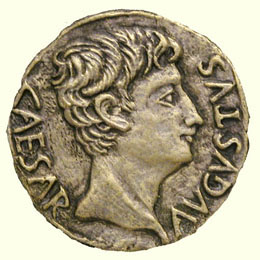
caesar denarius

Please do not comment on the title. Read the whole blog first!

Christianity is not a political revolutionary movement, or a political movement of any sort. We do not achieve our goals through government, and we are not stopped from achieving them by government. We should pray for, and be at peace with, governing authorities, as much as we can be without disobeying Jesus. But generally, government just doesn’t matter. What does matter is this: human beings are made in the image of God. We owe our ultimate allegiance to Him. 

To listen to the sermon, click the play button:

To download, right click on the link (or do whatever you do on a Mac) and save it to your computer:
Download Matthew Part

Matthew #78. Matthew 22:15-22

I want to humbly ask you to remember us in your prayers. We are sustained physically and spiritually as you pray for us, and for this ministry. Continue to ask the Lord to fulfill every purpose he has for each of these messages, and to use them to make and build-up disciples of Jesus Christ. Please continue to remember our financial needs in your prayers as well. If you feel led to give as well as praying, use the “donate” tab at the top of the blog, and the page there will tell you how. We would love it if you would pick a day of the week to remember us in prayer!

In verses 22:15-45, Matthew records three incidents in which the religious leaders tried to embarrass Jesus with a trick question, and one instance where Jesus, in a way, gets them back with his own question.

The first question comes from the representatives of the Pharisees, accompanied by the Herodians. A little cultural/historical background is helpful here. The Herodians were those people who openly supported the ruler-ship of the family of King Herod the Great. I think it is no mistake that the Pharisees sent their representatives with the Herodians, rather than coming themselves. Herod’s family, and the Herodians who supported them, were generally hated. Imagine your country has been invaded and conquered by a foreign power. The conquerors have installed a new government that will do what they want, and they will try to control you through this new government. The people who support the new government are the Herodians.

The reason the Pharisees are doing anything with them at all is to try and trap Jesus with a trick question. If he endorses taxation, it will be unpopular with the people, and it may even be seen as an endorsement of the oppression of the Romans and Herodians. But if he openly says there should be no taxation, the Herodians will be right there to witness it, and it could very likely lead to his imprisonment by either them, or the Romans. Remember, this was not a free society, where anyone had the right to say what he pleased. If the Romans or Herodians didn’t like what Jesus was saying, they would have no reservations about putting him in prison, and there were no laws stopping them from doing so.

It seems like the perfect trap. Either he gets put in prison, or he publicly supports a hugely unpopular government, and loses a large number of his own followers.

In those days there were a number of different sorts of coins (there was no paper money). Some of the coins were used only in local regions or provinces; these were stamped with the image of the governor or ruler of the province. There were other coins that were used throughout the Roman empire. These coins were stamped with the image of the Emperor. Obviously, when paying taxes to the Roman Empire, one used the Roman coins which were stamped with the Emperor’s image.

Jesus points this out, and then says his famous line, “Give to Caesar the things that are Caesar’s.” But it is his second line that contains the real zinger. Most of the Jews who were listening probably knew the Old Testament pretty well; certainly the representatives of the Pharisees did. Genesis 1:27 says this:

27So God created man in His own image; in the image of God he created him; male and female he created them. (Genesis 1:27)

It is a foundational fact of both Jewish and Christian theology that human beings are created “in the image of God.” Therefore, when Jesus adds: “and give to God what is God’s,” everyone listening would have understood that Jesus was referring to Genesis 1:27, and the fact that human beings bear God’s image. So coins have the Emperor’s image; Jesus says, “Fine, give them to the Emperor.” But people bear God’s image, therefore, human beings belong not to the government, but to God. We may owe taxes to Caesar, but we owe our very lives to God.

As I write these words, I am thoroughly disgusted with the political and governmental climate in the country where I live – and yet, it is probably better here than most other places in the world. I think, in this day and age, it is important to remember how Jesus viewed government. I believe I can sum up Jesus’ attitude toward human government in one word: irrelevant.

The government at the time of Jesus was incredibly corrupt and oppressive. There was no free speech. Freedom of religion was limited. Taxation was crushing. Laws were arbitrary and brutally enforced. The rich and powerful were firmly in control, and they arranged things for their own benefit, and were, to a large extent, above the law. In the midst of this situation, enters the Son of God, with the power of God, on the mission of God, and he did not do anything to change the government. In fact, he rejected the times when people attempted to get him involved in government:

14When the people saw the sign He had done, they said, “This really is the Prophet who was to come into the world! ” 15Therefore, when Jesus knew that they were about to come and take Him by force to make Him king, He withdrew again to the mountain by Himself. (John 6:14-15, HCSB)

Jesus had opportunities to make political changes. He deliberately rejected these opportunities. Time and time again Jesus spoke about a government, a “kingdom,” but it was not an earthly kingdom. He was concerned with the kingdom of Heaven. He never suggested that earthly government should be used to create or support, or accomplish the purposes of His kingdom. When questioned by governmental authorities about his political position, this is what Jesus said:

36Jesus answered, “My kingdom is not of this world. If my kingdom were of this world, my servants would have been fighting, that I might not be delivered over to the Jews. But my kingdom is not from the world.” (John 18:36, ESV2011)

When questioned about taxes, as here in this passage today, Jesus says, basically: “Pay your taxes. But give your life to God.”

I think Christians, particularly in the Western world, would do well to pay close attention to this. Christian Conservatives need to hear this: The government in Jesus’ time was large, inefficient and imposed unjust taxation. It limited freedom of speech and religion. Yet, Jesus did not try to reform the government. His goal was not (is not!) to create a wonderful, free, political system. He came for human beings, made in the image of God.

Christian liberals also need to hear something. During the time of Jesus, the people in power were the rich fat-cats who controlled everything for their own benefit. The government did nothing for the poor. The government was fundamentally unfair, and it allowed rampant unfairness to flourish. Yet, Jesus did not try to reform the government. His words about loving and caring for others were not spoken to representatives of government, but rather, to his followers. He never advocated for government as a solution for poverty, or in fact, anything.

Not only did Jesus not advocate the government as a solution for anything, but also he did not speak out against it as a problem. He treats government almost like the weather: it is what it is. Jesus spoke truth to power. But in his teachings, government is more or less irrelevant as a means to helping human beings.

Unless you are reading this from someplace where you could go to prison for speaking the thoughts I am expressing here, you are in a better political system than Jesus. But in that situation, Jesus didn’t try to make things politically fair. His concern is much bigger than politics.

I want us to remember that the church that Jesus established has always survived, and even thrived, in places where the government was powerful and unjust. For the first three hundred years after Jesus, it was illegal to be Christian in the Roman Empire, and often, Christians were brutally persecuted. After Islam took over most of the Middle East in the seventh century, the government was generally oppressive toward followers of Jesus. Christians have not enjoyed much freedom in communist countries. There has never been a time when Christians enjoyed political freedom all over the entire world. There is always someplace where culture, or government, or both, is unfavorable to Jesus followers, and to our ministry of hope in Jesus Christ. And that government opposition has always been completely ineffective in silencing the message of the gospel.

The Bible teaches that we should be good citizens, as far as it is possible without disobeying God.

13Submit to every human authority because of the Lord, whether to the Emperor as the supreme authority 14or to governors as those sent out by him to punish those who do what is evil and to praise those who do what is good. 15For it is God’s will that you silence the ignorance of foolish people by doing good. 16As God’s slaves, live as free people, but don’t use your freedom as a way to conceal evil. 17Honor everyone. Love the brotherhood. Fear God. Honor the Emperor. (1Pet 2:13-17, HCSB)

Scripture also tells us to pray for those who have political power:

1First of all, then, I urge that petitions, prayers, intercessions, and thanksgivings be made for everyone, 2for kings and all those who are in authority, so that we may lead a tranquil and quiet life in all godliness and dignity. 3This is good, and it pleases God our Savior, 4who wants everyone to be saved and to come to the knowledge of the truth. (1Tim 2:1-4, HCSB)


It also teaches us to speak truth to those in power, and stand up against the government when it tries to make us disobey God, or silence the message of Jesus Christ.

27“For, in fact, in this city both Herod and Pontius Pilate, with the Gentiles and the people of Israel, assembled together against Your holy Servant Jesus, whom You anointed, 28to do whatever Your hand and Your plan had predestined to take place. 29And now, Lord, consider their threats, and grant that Your slaves may speak Your message with complete boldness. (Acts 4:27-29, HCSB)

 26Then the commander went with the temple police and brought them in without force, because they were afraid the people might stone them. 27After they brought them in, they had them stand before the Sanhedrin, and the high priest asked, 28“Didn’t we strictly order you not to teach in this name? And look, you have filled Jerusalem with your teaching and are determined to bring this man’s blood on us! ” 29But Peter and the apostles replied, “We must obey God rather than men. (Acts 5:26-29, HCSB)

I don’t believe it is a bad thing to be politically active, if you feel the Lord calling you to it. These days, in many places in the world, we have wonderful governmental systems that allow ordinary citizens to work for change. It is entirely appropriate, at times, to make use of those opportunities. It is good and right to speak truth to those in power. But as we do that, we need to remember several things.

  1. Our hope is not in government, nor in political change.
  2. Neither government nor politics can stop the ongoing work of Jesus in this world.
  3. Our mission as Jesus followers is not to create a better government, but to make disciples of all peoples. Jesus did not suggest government as a means for doing this.

Christianity is not a political revolutionary movement, or a political movement of any sort. We do not achieve our goals through government, and we are not stopped from achieving them by government. We should pray for, and be at peace with, governing authorities, as much as we can do so without disobeying Jesus. But generally, government just doesn’t matter.

What does matter is this: human beings are made in the image of God. We owe our ultimate allegiance to Him. As I write this, we are in an election year in the United States. A lot of American Christians are pretty upset about what has happened both this year, and in recent years, with politics.

Let me suggest a few questions to help us gain the perspective of Jesus about government.

Maybe you are upset that the system seems to reward big corporations, and make the rich richer. But are you as concerned about selfishness and greed in your own life as you are about those things in politics?

Perhaps you feel that the political elites in this country seem to be able to do as they please. But are you as interested in holding yourself accountable as you are in holding them accountable?

Are you upset about taxation, and having your money go to things that you don’t support, like abortion? What about this: where else does your money go right now? Are you using it to support missions? Are you using it to help impoverished families around the world? Are you using it to support the teaching and preaching of the gospel?

Some folks are concerned about the possibility that freedom of speech and religion is diminishing in the Western world. But let me ask this: are you even using it? Are you sharing your faith with your co-workers and friends and neighbors? Are you offering to pray for them? If you aren’t doing it now, why does it matter if someone makes a law against it?

You see, the things we get upset about in government are sometimes the things that Jesus wants to address in our lives.

We belong to God, not the government. I’ve shared some of the correction that Jesus’ words here bring to us. But his words also bring hope. We belong to God. Human beings do not have any ultimate power over us. We can be at peace, regardless of what happens politically. As Jesus said, earlier in Matthew:

28Don’t fear those who kill the body but are not able to kill the soul; rather, fear Him who is able to destroy both soul and body in hell. 29Aren’t two sparrows sold for a penny? Yet not one of them falls to the ground without your Father’s consent. 30But even the hairs of your head have all been counted. 31So don’t be afraid therefore; you are worth more than many sparrows. (Matt 10:28-31, HCSB)

No matter what happens, we are in His hands, and he cares for us more than any government ever could.

THE GOOD NEWS INVOLVES REPENTANCE

repentance-cross2

To hear many churches, the message of the gospel is this: “Jesus loves you. Now you are free to do whatever you want, as long as admit that you are a sinner, counting on Jesus to forgive you.” Brothers and sisters, that is not the message of the Gospel of Grace. That is not what Jesus preached, and it not what the apostles preached. Jesus and the apostles preached repentance and faith.

To listen to the sermon, click the play button:


To download, right click on the link (or do whatever you do on a Mac) and save it to your computer:

Download Matthew Part 76

Matthew #76  Matthew 21:28-45

I want to remind all of you that we most certainly depend upon your prayers for us, in very real and practical ways. Right now we could use prayers for guidance, encouragement and for the Lord to continue to use these messages as he wants. We would also appreciate it if you would pray for financial provision for us as we move into the summer months, which are always harder, financially. If you would like to partner with us financially, please click the “donate” tab, above to learn how. Thank you for your prayers!

I want us to remember that the verses today are continuation of Jesus’ conversation with the religious leaders about John the Baptist, and whether or not he (and Jesus) preached with the authority of God.

Jesus continues that discussion by laying out an allegory; sometimes we call it the parable of the two sons. He makes it clear how that parable applies to the religious leaders. Next, he tells another parable. There are two important themes running throughout all of Jesus’ words today: Repentance and Faith.

In the story about the two sons, the key thing about the first son is that he changed his mind (verse 29). Jesus then reminds the people that when John came along, preaching repentance, the tax collectors and prostitutes believed him. They repented and they believed. But the religious leaders did not believe John, and they did not change their minds.

I want us to be clear on this. A number of people are fatally confused about the attitude of Jesus towards sinners on the one hand, and Pharisees and religious leaders on the other. The sinners to whom Jesus refers here are not entering the kingdom of God because they are sinners. They are entering because they repented and believed. The religious leaders are not excluded because they are religious. They are excluded because they will not repent and trust Jesus.

Too often, people take this attitude: “Well, Jesus really didn’t like religious people, but he liked sinners. I’m a sinner, so I’m probably better off than all those church goers.” But that misses the point. No one is better off without repentance and faith. Being religious does not help you. Being a sinner does not help you. Your only hope is repentance and faith.

The vineyard story is also all about repentance, and the lack thereof. The vineyard Owner sends two groups of servants. Each time the tenants of the vineyard, who owe a debt to the owner, mistreat and reject them. Finally, the Owner sends his son. Not only do they reject him, but they kill him.

The Owner was very kind and patient. He gave the tenants many opportunities to repent – but they reject every single change they were given. As a result, the Owner destroys them, and seeks new tenants.

We in the Western world have become confused about Jesus and his teaching. To hear many churches, the message of the gospel is this: Jesus loves you. Now you are free to do whatever you want, as long as admit that you are a sinner, counting on Jesus to forgive you.

Brothers and sisters, that is not the message of the Gospel of Grace. That is not what Jesus preached, and it not what the apostles preached. Jesus and the apostles preached repentance and faith. They call us to turn away from our sins and from living for ourselves, and to put all of our hope and trust in Jesus Christ alone, and to live for Him. That is the message Jesus is giving to the religious leaders here. He is pointing out how they have failed to repent, and how they have failed to trust Him. In case this passage alone does not convince you, let me remind you of a few others. Jesus himself consistently calls people to repentance:

31 Jesus replied to them, “The healthy don’t need a doctor, but the sick do. 32I have not come to call the righteous, but sinners to repentance. (Luke 5:31-32, HCSB)

 20 Then He proceeded to denounce the towns where most of His miracles were done, because they did not repent (Matt 11:20, HCSB)

17 From then on Jesus began to preach, “Repent, because the kingdom of heaven has come near! ” (Matt 4:17, HCSB)

At that time, some people came and reported to Him about the Galileans whose blood Pilate had mixed with their sacrifices. 2And He responded to them, “Do you think that these Galileans were more sinful than all Galileans because they suffered these things? 3No, I tell you; but unless you repent, you will all perish as well! 4Or those 18 that the tower in Siloam fell on and killed — do you think they were more sinful than all the people who live in Jerusalem? 5No, I tell you; but unless you repent, you will all perish as well! (Luke 13:1-5, HCSB)

Jesus also taught his disciples to teach others to repent. He did this both before and after his resurrection:

 12 So they went out and preached that people should repent. (Mark 6:12, HCSB)

44 Then He told them, “These are My words that I spoke to you while I was still with you — that everything written about Me in the Law of Moses, the Prophets, and the Psalms must be fulfilled.” 45Then He opened their minds to understand the Scriptures. 46He also said to them, “This is what is written: The Messiah would suffer and rise from the dead the third day, 47and repentance for forgiveness of sins would be proclaimed in His name to all the nations, beginning at Jerusalem. 48You are witnesses of these things. (Luke 24:44-48, HCSB)

Repentance was a key part of the message that the apostles consistently taught after the resurrection of Jesus and the coming of the Holy Spirit:

38Repent,” Peter said to them, “and be baptized, each of you, in the name of Jesus Christ for the forgiveness of your sins, and you will receive the gift of the Holy Spirit. 39For the promise is for you and for your children, and for all who are far off, as many as the Lord our God will call.” 40And with many other words he testified and strongly urged them, saying, “Be saved from this corrupt generation! ” (Acts 2:38-40, HCSB)

19 Therefore repent and turn back, so that your sins may be wiped out, that seasons of refreshing may come from the presence of the Lord” (Acts 3:19, HCSB)

30 “Therefore, having overlooked the times of ignorance, God now commands all people everywhere to repent, 31because He has set a day when He is going to judge the world in righteousness by the Man He has appointed. He has provided proof of this to everyone by raising Him from the dead.” (Acts 17:30-31, HCSB)

20 Instead, I preached to those in Damascus first, and to those in Jerusalem and in all the region of Judea, and to the Gentiles, that they should repent and turn to God, and do works worthy of repentance. (Acts 26:20, HCSB)

Repentance is not a work we do to earn our way into heaven. It the humbling of ourselves, giving up both our pride and efforts to be self-righteous, and also giving up our sins. To repent means to turn back, to go a completely different way. If you can read these words, it is not too late for you to repent. Jesus can handle whatever horrible thing you’ve done, whatever you’ve left undone, and even whatever terrible thing was done to you. But you need to drop it, to turn away from it, and turn to Him. To repent is to fully own the fact that you have been wrong, with no excuses, and then to turn away from it, for all intents, forever.

Now, our turning away forever almost never happens perfectly. But it does mean that you are going a different direction now. You may fall down sometimes as you walk in the new direction. You probably won’t walk it perfectly. But after you repent, your direction is different than it was before. Once in a while, perhaps, you fall back into the same actions as before. But your overall direction is new, oriented toward God, not away from him.

Let me give you an example. Suppose there is a Christian man who wants more of Jesus in his marriage. He is not happy with his marriage. He is unhappy with his wife. Now, the Holy Spirit, working in this man, shows him that he often makes cutting remarks to and about his wife. The Holy Spirit is calling him to repent. Repentance is not saying “Yeah, I know that’s wrong. It’s just hard because she never does what I want. Sorry.” It is isn’t even saying “I admit that I do that, and I admit that it’s wrong.” I repeat: To repent is to fully own the fact that you have been wrong, with no excuses, and then to turn away from it, for all intents, forever.

Again this doesn’t happen perfectly at first. In the case of the man with the unhappy marriage, he commits to turning away from cutting down his wife. Suppose normally he makes an average of six cutting remarks each day. When he first repents, he is so sincere that for a week, he makes none. But after a while, he loses some of his focus, and he goes back to making some cutting remarks, but maybe now only three each day. The Holy Spirit reminds him again, and he renews his repentance and consciously relies on the Holy Spirit to help him, and he gets it down to two cutting remarks each day. He realizes he needs help, and so he asks a Christian friend to pray for him about this, and to hold him accountable by asking him about it regularly. Now, the man usually does not make any cutting remarks to or about his wife at all. As time goes on, prompted by the life of Jesus inside him, he begins to actually compliment and encourage his wife. From time to time, he still slips and makes a nasty comment, but it is no longer a habit, and for the most part, he has become kind and encouraging to his wife. Within a year or two, his attitude is transformed, and he and his wife are closer than they have been for years.

I think that is a realistic picture of what the fruit of repentance looks like. Sometimes Jesus transforms us dramatically in a single moment. But a lot of the time, what is actually happening is that  he starts the process all, in one moment, and then for a period of time we are “working out our salvation” (Philippians 2:12).

A lot of people admit their sins, but do not really repent of them. Many people feel, in the heat of a moment, that they want to do better next time, and even resolve to do so, but they do not fundamentally commit to going a different way forever. If you are a Christian, and have struggled with the same thing over and over again, and you don’t seem to make any progress, ask the Lord to show you if you have truly repented in that area of your life. If the Bible says you need to repent, or if the Holy Spirit shows that you need to repent, then make a decision to turn back from that (action, habit, attitude) forever. Don’t worry about whether you will fail again at times: make the commitment to turn away from it forever, and invite the Holy Spirit to give you the strength to keep that commitment.

Let me add one more thing. What Jesus and the apostles preached was repentance accompanied by faith. Truly repenting of our sins is impossible without the help of the Holy Spirit. We repent away from sin, and toward Jesus. This is why Jesus quoted Psalm 118 to the religious leaders. Here’s the quote, in context:

19 Open the gates of righteousness for me;

I will enter through them

and give thanks to the LORD.

 20 This is the gate of the LORD;

the righteous will enter through it.

 21 I will give thanks to You

because You have answered me

and have become my salvation.

 22 The stone that the builders rejected

has become the cornerstone.

 23 This came from the LORD;

it is wonderful in our eyes. (Psalm 118:19-23, HCSB)

Jesus quotes this to show them quite clearly that he is the gate through which everyone enters. He is salvation. He is the cornerstone, which, though rejected by many, is the object of true faith and salvation. Matthew records that the religious leaders understood what he was saying, and hated him for it (Matt 21:45-46).

But the fact remains that we are called not only to repentance, but also to faith. The Greek New Testament generally uses the same word for belief, trust and faith. Theologically speaking, when we are talking about Jesus, I think the most appropriate word is trust. When we trust someone, we are giving them power over our lives.

For example, if we trust a bank with our money, that means that the bank, not us, keeps our money on our behalf. When we trust a friend to drive us someplace, that means the friend has control of the car, and where it goes. When we trust someone to run and errand for us, we have given that person the power to take care of whatever that errand is.

So Jesus invites us to turn away from our sins, and turn toward him in trust. Paul describes his experience of doing this as follows:

I have been crucified with Christ 20 and I no longer live, but Christ lives in me. The life I now live in the body, I live by faith in the Son of God, who loved me and gave Himself for me. (Gal 2:19-20, HCSB)

Paul is “crucified with Christ” – that is repentance, a complete turning away from his old life where he was in charge. Now he lives by faith – trust – in the Son of God. Jesus has control of his life.

You may wonder, “how can I get that for myself?” The Holy Spirit grants us both repentance and faith. If you want them, ask for them! I promise you, that is a prayer he will answer.

WHAT DO YOU WANT?


Even when we don’t really know what we are asking, Jesus invites us to ask. He invites us to take the risk of hoping, and trusting him.

To listen to the sermon, click the play button:

To download, right click on the link (or do whatever you do on a Mac) and save it to your computer: Download Matthew Part 70

Matthew #71. Matthew 20:17-34

Please read Matthew 20:17-34. I don’t have space to put it here. If you are listening, of course, I’ll read it to you, but you still might want to follow along in your Bible.

Matthew does not tell us the name of the mother of James and John (who was the wife of Zebedee). Therefore, for convenience in writing, I will refer to her as “Mother Z.”

Matthew begins chapter 20 by telling us that they were going up to Jerusalem. This is significant. Starting with chapter 21, everything we read takes place in and around Jerusalem during the last week of Jesus’ life before his crucifixion. Matthew records that right after Peter confessed that Jesus was the Messiah, the son of God, Jesus began speaking to them of his upcoming death (Matthew 16:21). Matthew records a second prediction in 17:22-23. Here in 21:18-19, he reminds them for the third time that he will be killed, mentioning for the first time that it will be by crucifixion. Obviously the disciples didn’t understand it the first time, because Peter tried to rebuke Jesus over it. The second time, Matthew records that the disciples were distressed, while both Luke and Mark record that they didn’t really understand what Jesus was talking about (Mark 9:32 & Luke 9:45). About this third prediction, Luke says:

34They understood none of these things. This saying was hidden from them, and they did not grasp what was said. (Luke 18:34, HCSB)

Matthew, in our text for this time, doesn’t tell us explicitly that the disciples did not understand, but I think it is clear from the request of James and John they did not grasp that Jesus was speaking quite literally. I would guess that it “went over their heads,” so to speak, and all they really understood was that something big was about to happen. The way I picture it is this: James and John went to say goodbye to their family, since they were leaving Galilee (their home region) for a while. Like any good mother, Mother Z asked them where they were going, and why, and so on. I think their response was probably something like this:

“We don’t know for sure, but Jesus seems really serious about it. He keeps talking about big stuff happening in Jerusalem. He says he’s going to die, but we think that’s just him being negative, or maybe trying to get us hyped up for the big push to make him King, you know, to get us ready for the struggle. In any case, we think he’s going to ‘go for it,’ when we get to Jerusalem.”

Here’s what I think is quite clear: Crucifixion was not their paradigm. They didn’t get it because it wasn’t what they were looking for, it wasn’t the way they were thinking. It didn’t fit what their vision for what was supposed to happen, so it more or less went over their heads.

Anyway, Mother Z, being a good mother, decides that before all the big stuff goes down in Jerusalem, she needs to make sure her boys get what they deserve. When she says she wants them to sit at the right and left of Jesus, what she means is, she wants them to be the “top” two, after Jesus. James, the elder, would be at the right, in the number 1 position after Jesus. John, at the left, would be number 2.

Although this is Mother Z’s request, clearly, James and John are in agreement with it, since they were right there with her when she asked of it of Jesus. Jesus’ response to them comes in three parts.

First, he says: “You don’t know what you are asking.” Their paradigm is not crucifixion. Do you think Mother Z would have asked to have James crucified on the right of Jesus, and John on the left? Obviously not. They had no real grasp of what was coming. They were looking for earthly glory, and soon. Jesus knew that nothing of the sort was in store for him, or for any of his followers. They had no idea what they were asking for.

Next, Jesus asks if they are able to drink the cup he is about to drink. I doubt this would have been clear to the Zebedee family. In the Passover celebration, four cups are shared by all those present: the cup of instruction, the cup of sanctification and blessing, the cup of instruction, the cup of redemption and the cup of thanksgiving. The cups represent Freedom, Deliverance, Redemption and Thanksgiving. None of these sound too bad. I’d be ready to drink of those cups.

But Jesus had another cup in mind: the cup of God’s wrath against sin:

6Exaltation does not come from the east, the west, or the desert,

7for God is the Judge: He brings down one and exalts another. 8

For there is a cup in the LORD’s hand,

full of wine blended with spices, and He pours from it.

All the wicked of the earth will drink, draining it to the dregs. (Ps 75:6-8, HCSB)

17Wake yourself, wake yourself up!

Stand up, Jerusalem, you who have drunk the cup of His fury

from the hand of the LORD;

you who have drunk the goblet to the dregs — the cup that causes people to stagger. (Isa 51:17, HCSB)

32This is what the Lord GOD says:

You will drink your sister’s cup, which is deep and wide.

You will be an object of ridicule and scorn, for it holds so much.

33You will be filled with drunkenness and grief,

with a cup of devastation and desolation, the cup of your sister Samaria.

34You will drink it and drain it. (Ezek 23:32-34, HCSB)

This is the “cup” of which Jesus prayed in the Garden of Gethsemane:

42“Father, if You are willing, take this cup away from Me — nevertheless, not My will, but Yours, be done.” (Luke 22:42, HCSB)

James, John and Mother Z had no idea of this when they made their request. Again, it wasn’t their paradigm.

As it happened, of course, about ten years later, James was beheaded for preaching about Jesus. Many years after that, John was imprisoned. They did indeed drink the cup of suffering, but by the time their sufferings came, they understood that the Kingdom of Jesus is not of this world, and his glory is not usually here and now. They understood then that Jesus drank the cup of God’s wrath that should have been directed against all humankind and our sin.

The third part of Jesus’ response to the Zebedee family came when the other ten apostles heard about the request. I’m sure an argument broke out along lines like these:

Andrew: “But I was the first one to follow him!”

Peter: “And I was next. Plus I’m the only one besides Jesus who ever walked on water.”

Philip: “Sure, boys, but I started following him the very next day after you guys, and I brought Nat the day after that.” (Nathaniel nods vigorously).

Thomas: “What kind of evidence do you boys have, to back up those claims?”

And so on…

Jesus settled them down, and said this:

“You know that the rulers of the Gentiles dominate them, and the men of high position exercise power over them. 26It must not be like that among you. On the contrary, whoever wants to become great among you must be your servant, 27and whoever wants to be first among you must be your slave; 28just as the Son of Man did not come to be served, but to serve, and to give His life — a ransom for many.” (Matt 20:25-28, HCSB)

He knows what James & John and Mrs. Z were after. But his kingdom has a completely different set of values and rules. This is perhaps one of the most counter-cultural teachings of Jesus, particularly in the world as it is today. When I was a kid, I remember reading about famous artists, thinkers, writer and composers and realizing that most of them were not well known until after they died. Their considerable achievements were only appreciated later. I think even just during my own lifetime, our culture has swung almost to the opposite end of the spectrum. We glorify and honor people while they are alive for achieving almost nothing. What have the Kardashians accomplished? What lasting positive contribution to society have they made? Even as soon as a few decades from now, people will wonder why they were famous, and possibly even look at it as a sign of the decline of Western civilization. I could name dozens of other examples. Even the actors and actresses we venerate – what have they done? They’ve made millions of dollars by pretending to be people who do important things. They look terrific because they won the genetic lottery, and in some cases, because they spend upwards of two hundred thousand dollars per year to look good. But why do we honor them?

Years ago (this will show my age) I was talking with a friend about the pop-star, Madonna. He said, “I know her message is awful, but you’ve got to admire her for doing it what it takes to sell records and become seriously famous.”

No, I don’t have to admire her for “doing what it takes.” Jesus says that’s not how the kingdom of God works. The world admires people who go out there and make things happen for themselves, who are bold and audacious. Sometimes it seems almost as if the world will believe anyone who says, “Look at me – I’m great!”

Even in the Christian culture, we have begun to focus on “Christian celebrities” as if they are somehow great in the kingdom of God. We give our admiration to Christian singers and certain Christian preachers as if they are great just because they are well known. Jesus says those people are nothing. The great ones are the humble servants.

In fact, if you want to be great in God’s kingdom, you probably won’t be well known in the world. Awhile back I bought a book called “Embracing Obscurity.” I haven’t finished it yet, but the reason I bought it is because of the author’s name: Anonymous. I don’t know who wrote the book. But I love the fact that she or he was willing to take these words of Jesus so seriously that it meant not allowing his or her name to be published.

See, that’s something important for us to remember. I always kind of romanticize being God’s servant leader. I imagine that, really, lots and lots of people are going to see what I humbly do for God’s kingdom, and recognize how great I am for being so humble.

Seriously, I am that bad. But I think we need to consider that when we are truly great in God’s kingdom, we truly will not be recognized for it. Even in the church, humble servants – which Jesus calls greatness in his kingdom – are not usually recognized as great. We can take comfort in this: our Father in Heaven sees, and is preparing our reward (Matt 6:1, 4, 8, 18).

In verses 29-33, Matthew describes the healing of two blind men near Jericho. When I first began to study this passage, verses 29-33 seemed almost like they were tacked on as an afterthought, as if Matthew thought, “Oh yeah, that’s when the blind men were healed.” And, though the gospel writers are sometimes not very concerned with the exact order of events, the healing of the blind men probably did take place on the way to Jerusalem. In order to avoid going through Samaritan territory, Jews traveling from Galilee to Jerusalem often traveled down the valley of the Jordan river to Jericho, and from there went up to Jerusalem. Since the blind men were healed outside Jericho, Matthew probably records it at this point because that’s when it happened.

But there is something else that connects the two stories, though it may not be obvious at first. Both incidents reveal how Jesus responded to specific requests from someone. In each case, the response was different, and I think perhaps we can learn something from these two incidents, taken together.

In both situations, Jesus said, “What do you want?” I think this should encourage us, when we pray, to ask the Father for what we really want. Even though he was not going to give Mother Z and her boys exactly what they asked for, he still encouraged them to ask. And it does not seem like he was upset over their thick-headedness. He had every right to be. He had just finished saying he was going up to Jerusalem to die, to give his life for others, and here they come, requesting glory for themselves when he claims the crown. They were impossibly obtuse and thickheaded. There are other times in Matthew (and the other gospels) when Jesus says something like: “You of little faith,” or “Why are you so slow to understand?” But not here. He welcomes their request, even though it is misguided. The request eventually results in a conversation that was very important.

Outside of Jericho, the blind men make a ruckus, and Jesus says the same thing to them that he did to Mother Z: “What do you want?” I’m not sure what to make of this. I should think it was obvious what they wanted. But for some reason, Jesus was inviting them to ask specifically for what they wanted.

Sometimes this might be a little harder than you realize at first. If we say a kind of general prayer about something, we can hedge against disappointment. We can pretend that we just wanted God involved in some way; we don’t have to admit what is really going on with us. But put yourself in the shoes of the blind men. They have really had no hope for anything to change in their lives. But now, by inviting them to ask, Jesus is inviting them to hope, and when we hope there is always the possibility we will be disappointed. Jesus is asking them to take that risk, the risk of trust.

They take the risk, and tell him specifically what they want. This time, as opposed to the incident with Mother Z and the boys, he simply and directly answers their request. Matthew records that not only were they healed, but they began to follow Jesus. I think we can assume that these two were probably among the 120 Jesus followers who were still together after the crucifixion.

All of this encourages us, I think, to be direct and specific with the Lord in prayer. Ask for what you really want – take the risk that praying in this way involves; the risk of trust and hope.

In the case of James & John and Mother Z, they didn’t get exactly what they were asking for. In fact, they didn’t even know what they were asking. Sometimes, I think I am like that. I ask for something, and actually, I don’t really have any idea what all it might involve. This incident shows me that I can trust Jesus not to give me what I ask for, if I’m asking for the wrong thing. It also shows me I can trust him to use my prayers, even so, perhaps to help me learn something.

But I am also encouraged to take that specific risk of trust, to ask for what I want, to admit I want it, and can’t get it for myself. I am inspired to risk hope. When what I want is good and right, Jesus may answer me like he did the blind men, and simply and directly do what I have been hoping, even if it seems impossible.

Let’s pause now in prayer, and allow this text to continue to speak to us. Is there some way in which you need to allow the Lord to challenge your paradigm? Are you thinking of things the way the world does, or the way the kingdom of God works?

Is there something that Jesus is inviting you to ask of him? He doesn’t promise to automatically do what you want, but even when he doesn’t, he can make the asking productive. Is inviting you into the risk of hope and trust?

Short Pause in New Sermons

Hey folks,

I’m sure some of you have noticed that you haven’t been getting any new messages for a few weeks. Since August, I’ve been battling a persistent health problem, and we are now in kind of an intensive phase to try and get it fixed. It does not appear to be life-threatening in any way.

In our local church, we are going to be doing something different for the next 6-8 weeks. During that time, when I can, I’ll be going back through my sermon archives and posting some previous messages. If you want a vote about what I might post, you can look at the archives tab (above) and request something that interests you.

If you are one of our many wonderful prayer supporters, you can add my healing to the list.

Thanks so much,

Pastor Tom

Help us understand how you use this blog

Hey folks,

It’s the end of the year, and I’m trying to do some evaluation of our ministry these days. I know how many of you get this by email, and I know how many visitors we get to the site. What isn’t clear to me is how many of you are reading or listening to the messages, nor how often. If you would, please take the time to fill out the following poll. It should take less than a minute. If you don’t, I’ll assume that means that you don’t often read or listen to the messages I post. That’s fine, I’m just trying figure it out.

LEAVING ALL FOR JESUS: THE HAPPY, FUN SIDE!

happy

Following Jesus is not a reliable way to wealth, health and earthly security. But Jesus is unequivocally promising his disciples that their sacrifices will not go unnoticed or unrewarded.

To listen to the sermon, click the play button:

To download, right click on the link (or do whatever you do on a Mac) and save it to your computer: Download Matthew Part 69


Matthew #69. Matthew 19:27-30

27Then Peter responded to Him, “Look, we have left everything and followed You. So what will there be for us? ”28Jesus said to them, “I assure you: In the Messianic Age, when the Son of Man sits on His glorious throne, you who have followed Me will also sit on 12 thrones, judging the 12 tribes of Israel.29And everyone who has left houses, brothers or sisters, father or mother, children, or fields because of My name will receive 100 times more and will inherit eternal life.30But many who are first will be last, and the last first. (Matt 19:27-30, HCSB)

After the encounter with the rich young ruler, and the discussion about the difficulties of riches, Peter points out to Jesus that he and the others did what the rich young ruler was unwilling to do. In all of the Gospels, the disciples are usually portrayed as very human and fallible. In some ways, this is both a very human moment for Peter, but also a touching one. Peter sees the rich young man keeping his great wealth. But he, and James, and John, and Matthew, and perhaps some of the others, left thriving businesses to follow Jesus. They didn’t have the same kind of wealth as the rich young man, but at least those four certainly appeared to have viable livelihoods until they started following Jesus. You almost get the sense that as Peter watches him walk away he wonders “Did I do the right thing? Was this guy smarter than me?” I don’t see Peter here as a failure, or dense. Instead, I think he is just being very real. He left an actual business, and actual way of making a living, for something very insubstantial: faith. Peter was a fisherman. You can see fish, you can smell them, and you can trade them for coins that you hold in your hand. He owned boats and nets and sails and oars – real things that hold real value for people. But you can’t see faith, you can’t smell it, and you can’t touch it physically. You certainly can’t trade it for money. It is only natural for him to be insecure from time to time. It is only natural to wonder: “What kind of future can I really have, when I have left everything that might have given me security?” Following Jesus can feel very lonely at times, especially when you see others who are not as “sold out” as you are, and yet they appear to be thriving in this life.

Especially in these types of sermons, I feel a little funny pausing to ask for your prayers, because I have all these fine words about giving up everything to follow Jesus. But the truth is, we all need help in that journey, me no less than anyone else. We don’t do this on our own. So I do deeply appreciate your prayers for this ministry of Bible Teaching. I believe the Lord works when we invite him to, so please invite him to work in and through this ministry, and to provide for us. Thank you!

It seems like these days, most Christians make one of two errors when we start talking about Jesus rewarding his followers. The first error, I mentioned last time: the prosperity gospel. Some people, calling themselves Christians, teach that following Jesus is a way to wealth, health and prosperity. We considered this in the previous message in this series. But there is another error. For some Christians, perhaps because of the falsehood represented by the prosperity gospel, it has become “unfashionable” to talk about being rewarded for faith. However, clearly, in our passage for today, Jesus promises rewards to those who make sacrifices for him.

Mark and Luke record Jesus as also saying that his followers will receive some of these rewards “in this time” (Mark 10:30; Luke 18:30). In fact Mark has, “now, in this time.” I think there are three things to consider about this.

First, there are a few main Greek words for “time.” One is hora which is literally, “hour.” Another is hemera which is literally “day.” A third is kronos, which you may recognize in English as the root of chronological, or chronograph. It refers to specific moments. A fourth word is kairos which is used to designate a special or proper moment in time, as in “My time has come.” Kairos is the word Jesus uses in Mark and Luke. So it isn’t necessarily “chronological time” (that would be kronos) – it is the proper time, the right moment in which the apostles will receive their reward.

Second, let’s suppose for a minute that we should take it literally as “in this very moment.” The fact is, Peter and the others did not receive literal houses and fields and so on in that moment, nor did they literally receive them during their lives on earth. But it could be something like this: at the moment they made their sacrifice for Jesus, their reward in heaven was set apart, and reserved for them. So, in a sense, they received their reward immediately, but they had no way to make use of it until after they had died and gone to be with Jesus. By the way, this does not contradict the first point.

A third idea is that in following Jesus they found 100 times the joy that they might have had with the families that they left in order to follow the Lord; they found 100 times the peace and security that they might have had from possessions and money; They found, leaving home for Jesus, that they were at home anywhere in the world in his presence. That sort of reward begins now, in this life, and continues on in eternity.

I think it is clear that Jesus is not speaking literally. When he says they will receive brothers and sisters, I highly doubt that he means their mothers will conceive and give birth to more siblings for them. But they did indeed find relationships with other Jesus-followers that became as close and wonderful as those between brothers and sisters. They did not receive literal houses; and yet, within a very short period of time they could go to almost any city in the Roman empire and find a house where they would be welcomed, where the Jesus-following owners would invite them to stay and be refreshed.

By the way, I have found this true in my own life, going all the way back to my childhood as a missionary kid. We left behind friends, uncles, aunts, and grandparents when we went overseas. But we found people there who are now just as close and dear to us as our blood relatives. I have many “aunts and uncles,” dozens of “cousins.” I too, have houses all over the world where I know I would be welcome. In terms of relationships, I have already been richly rewarded for following Jesus.

I could even say the same, in terms of “fields.” I don’t love cities. We live in a semi-rural area, on ten acres of land. Ten acres is really nice – much better than the tiny little lot we came from, but we do have neighbors on either side of us, probably 100 yards away or less. Shortly after we moved here, we met the man who owns 400 acres and a tall hill, running up against back of our property. He invited us to go hiking on his land anytime we wanted to. His is a beautiful piece of land, with trees and rocks and little creeks and from the top of the hill, views that go on for twenty miles or more. One day I was hiking up there, and I prayed, “Lord, why can’t we have all this?” (yes, sometimes I’m that shallow). I don’t hear audible voices from God, but sometimes I get a sense of a “conversation” between He and I. What I heard that day was: “What is that you want here that you don’t have? Did you want to pay to keep the meadows mowed? Did you want maintain the fences or pay taxes on the land?”

I realized that I “had” the land in any way I wanted it – which was simply to roam around and explore and look at wildlife and views. I don’t own it, of course, and I’m deeply grateful to my neighbor for letting me hike there, but I don’t have to own it to enjoy it. So sometimes, when we give up ownership for the Lord, he gives us the enjoyment of things we don’t own. And frankly, I probably enjoy my neighbor’s land more because I don’t have to maintain it.

Now, I don’t want to get too caught up in material things. I am saying that Jesus promises some sort of sense of being blessed for following him, even here and now. But of course, the main reward is spiritual things, not physical. I also think it is clear that many times scripture uses things we can see and touch – like fields, houses, brothers and sisters, to describe spiritual truths that we cannot fully grasp, this side of heaven. So, for instance, part of our reward in the spiritual realm, will be something sort of like a house is to us in physical realm. It isn’t necessarily an actual house, but maybe something like the joy and security and rest you get from a physical house will be given to you in some way (100-fold, says Jesus!).

Again, following Jesus is not a reliable way to wealth, health and earthly security. But Jesus is unequivocally promising his disciples that their sacrifices will not go unnoticed or unrewarded.

At first, the promise seems a little, well, underwhelming. We give up real things like houses and fields and boats and money, and we get insubstantial things like love and joy and peace. We give up things we can hold and smell and touch for things that we don’t actually “get” until after we die. But stop and think about it for a minute. We know that everyone dies. In the entire history of earth, no one has ever managed to take a single physical thing from this world with them when they die. So we know that whatever we accumulate here – the things we smell, and touch and hold – are temporary, and useless to us after we die. But Jesus offers us rewards we can have even after death. It’s like he is saying, “If you give me your monopoly money, your pretend money, I will give you solid gold ingots.” We are trading the temporary for the eternal, and that’s a darn good trade. As missionary-martyr Jim Elliot said:

He is no fool who gives what he cannot keep to gain what he can never lose.

Jesus says something else here, in verse 30, that I find tremendously comforting:

But many who are first will be last, and the last first.

At first, I felt ashamed that these words comfort me, but, as usual, Jesus is saying something very profound and important. As a Christian, it is a great temptation for me to compare myself to others, especially when I’m feeling insecure. Peter might have been comparing himself to the rich young ruler. The young man kept his wealth, and Peter gave up his own. In this life, it appeared that the young man had made the wise decision, and Peter the foolish one. Peter had nothing, the rich man had everything. But Jesus says, “things are not always going to be the way they seem right now. Those who appear to be making it here and now, those who are ‘winning’ by the standards of the world might actually be ultimately losing. In the same way, those who appear to be ‘last,’ the losers, they might be the ones coming in ‘first.’”

What I get from this is that it is pointless to compare yourself with others. We can’t see, here and now, whether who is really “getting ahead.” As much as we might feel like we are being left behind, left out, the opposite may be true.

I think it is important to remember that this life is not all there is, and that sometimes, the greatest rewards are the hardest to quantify. Jesus is telling us that he will not forget what we have given up for him, and he will not fail to reward it, starting now in some ways, but more fully in the Life to come.

ONE FLESH, PART II

One Flesh Part II

When you take those vows, God himself gets involved. To put it another way, it’s not just your marriage, it is God’s marriage: he is part of it; Jesus said so right here. So when you make decisions about marriage, you are not just deciding about your own life. Something bigger than yourself, bigger than your personal happiness or fulfilment is going on here.

If we take Jesus at his word, and trust him, we may have to learn that his blessings are found differently than we want, but we will receive grace and joy through them, nonetheless.

To listen to the sermon, click the play button:

To download, right click on the link (or do whatever you do on a Mac) and save it to your computer: Download Matthew Part 66


Matthew #66 Matthew 19:1-12

Let’s revisit what Jesus said about divorce and marriage in Matthew 19:1-12:

1When Jesus had finished this instruction, He departed from Galilee and went to the region of Judea across the Jordan.2Large crowds followed Him, and He healed them there.3Some Pharisees approached Him to test Him. They asked, “Is it lawful for a man to divorce his wife on any grounds? ”

4“Haven’t you read,” He replied, “that He who created them in the beginning made them male and female,”5and He also said: “For this reason a man will leave his father and mother and be joined to his wife, and the two will become one flesh?6So they are no longer two, but one flesh. Therefore, what God has joined together, man must not separate.”

7“Why then,” they asked Him, “did Moses command us to give divorce papers and to send her away? ”

8He told them, “Moses permitted you to divorce your wives because of the hardness of your hearts. But it was not like that from the beginning.9And I tell you, whoever divorces his wife, except for sexual immorality, and marries another, commits adultery.”

10His disciples said to Him, “If the relationship of a man with his wife is like this, it’s better not to marry! ”

11But He told them, “Not everyone can accept this saying, but only those it has been given to.12For there are eunuchs who were born that way from their mother’s womb, there are eunuchs who were made by men, and there are eunuchs who have made themselves that way because of the kingdom of heaven. Let anyone accept this who can.” (Matt 19:1-12, HCSB)

Last week we considered what this means for divorce, and what to do in various situations involving divorce. But I want to move off of that topic now, because the real point here is not divorce, but marriage. In marriage God creates a one-flesh entity in the spiritual realm. We looked briefly at this last week, but I want to revisit it in depth now. So, to reiterate what Jesus said: First, marriage is part of God’s original plan and intention at creation. To put it plainly: God created marriage, and he has purposes for it. Second, marriage is made for “male and female.” If you don’t like it, don’t get angry at me – I am merely repeating Jesus’ words. Third, Jesus says that in marriage, God somehow mystically joins the man and the woman into one entity. The book of Genesis calls this “one flesh,” and so does Jesus. Finally, Jesus says that since God created marriage, and somehow joins the man and woman together into this one-flesh entity, that human beings should not undo it.

There is a lot here, so I’ll just jump in. Jesus claims that God established marriage at the same time he created human beings. From a logical standpoint, if this is true, we should find that virtually every culture in the history of the world has some sort of idea of marriage. In fact, this is exactly what we find. Some cultures have allowed men to have more than one wife at the same time, some tiny fraction have allowed women to have more than one husband at the same time. But every single culture in the world has some idea that men and women should be joined together in a lasting agreement, and that this joining is the basis for having children and creating stable families. It is only extremely recently that this idea has been questioned, and only then in one set of cultures that derives from Europe – what we might call “Western Culture.” In most cultures of the world even still, people believe that children should be born to married parents, and that marriage is an important thing that should be honored, and not looked upon casually. In short, history bears witness to Jesus’ claim that marriage is universal to human beings.

Now, I want us to take a close look at this business that in marriage, God creates a “one-flesh entity.” First, we cannot escape the fact that sex (between a married couple) is central to this idea. If you go back and read Genesis chapter two, there is no doubt that this was part of what it meant to become “one flesh.” Paul takes this for granted when he is writing about sexual morality in 1 Corinthians 6:15-20. Jesus also makes it clear here, because he says the one thing that destroys this “one fleshness” between husband and wife, is sexual immorality.

Sex is God’s gift to seal and strengthen the one-flesh entity that He calls marriage. It isn’t just a bodily function, like eating or sleeping. It has the power to create and strengthen a spiritual union. That is what it is made to do. That’s why the bible talks so much about sexual issues. This all means two things: that sex belongs only in marriage, and also that sex does belong in marriage – in other words it should be a part of every marriage. It is powerful thing that can help your one-flesh union with your spouse if you make use of it in marriage. It can tear your marriage apart if you ignore it, or take it outside of marriage.

But the one-flesh unity is more than just sex. As I have said, Jesus describes it as a spiritual union. My wife Kari and I are not just individuals any more: we are part of something that God has got involved in; something bigger than just ourselves. This is tremendously important for Christians to remember. When you take those vows, God himself gets involved. To put it another way, it’s not just your marriage, it is God’s marriage: he is part of it; Jesus said so right here. So when you make decisions about marriage, you are not just deciding about your own life. Something bigger than yourself, bigger than your personal happiness or fulfilment is going on here.

Our culture suffers from a number of extremely powerful, extremely common, delusions about love and marriage. We believe that love is a feeling. We believe that this feeling of love cannot be resisted, nor (so we believe) can it be created where it is not already felt. We believe that love is about feeling complete and fulfilled with another person. We believe that the point of love and marriage is our own personal fulfillment and happiness. We believe that out there somewhere is “the one.” By this, we mean “the one person who was made for me, who will bring me that feeling of love and fulfillment.” Some people don’t get married for fear that they may not yet have found “the one.” Others get divorced, sure that they married “the wrong one.” Sometimes, the only reason couples stay together is that they are afraid of ending up alone, but they go through a lifetime doubting whether they married the right person.

Since Western culture has come to believe such things, marriages are no longer honored or valued, and divorce rates have risen to around 50%, while unwed parenthood has also risen dramatically. The result is children who do not have the emotional stability and security that comes with being in a home where both parents are married to each other. The result of that has been increased emotional distress, increased drug use, increased violent crime, and increased poverty. I am not making this up. Long term studies on divorce and parenthood have proved these things since at least the 1990s. Once again, I am not trying to make anyone who is divorced feel badly, and of course there are exceptions – obviously, not all children of divorce turn to drugs etc.. I am merely trying to make the case that perhaps Jesus knew what he was saying when he said “What God has joined together, let no one separate.” Our culture is falling apart in all kinds of ways, and the failure of marriage has a lot to do with it.

Let me point out something that 99% of Christians today seem to miss when they read this passage. When Jesus tells these people that marriage is a one-flesh entity created by God, something that should not be separated once joined, he is talking to people who are in arranged marriages. Very, very few people in the time of Jesus chose their own spouses. Even those few who had the opportunity usually made the choice mostly based upon financial considerations and social pressures, not love or attraction. I think it would be quite safe to say that fewer than 1% of the people at that time married “for love.” That’s correct: They didn’t even get to choose their own spouses, they never even got to seek “the one,” and yet Jesus says: “God has joined you together into a one-flesh entity; don’t separate it.” Let me put it this way “the one” for you is the one you are married to right now.

This is tremendously important. Marriage isn’t all about you. God has bigger things in mind. Frequently, God uses our marriages (if we let him) to help us grow, and growing is usually a painful process. If we let it, marriage can teach us true unselfishness. It can show us how to love someone even when they don’t deserve our love. It can teach us to serve another without reward. In marriage, we can learn patience, and self-sacrifice, and compassion and forgiveness, and communication, and endurance. In marriage we develop character.

There can be a lot of fun and reward in marriage, too. But the things I’ve just mentioned usually come with struggle, effort and sometimes pain. Both the fun and fulfilling, and also the struggle and pain, are part of God’s one-flesh plan.

For many centuries, people knew that even in arranged marriages, love could grow – even what we might call “romantic love.” There is song from the classic musical, “Fiddler On the Roof.” In it, the main character, Tevya, sings a song asking his wife, “Do you love me?” They were in an arranged marriage, and had never even met before their wedding day. The conclusion of this sweet song is that they learned to love each other.

I don’t care if you are in an arranged marriage, or if you made a mistake finding the “the one,” or even if you actually found “the one”: you still must learn to love each other, and you can learn to love each other. Part of God’s plan for your marriage is to make you more holy and loving, and this absolutely means that at times, you will be made also uncomfortable. But there is also great reward in learning to love your spouse, and building on the foundation of God’s one-flesh unity.

Now, when the disciples hear Jesus’ words, and realize everything this means, their response is:

10His disciples said to Him, “If the relationship of a man with his wife is like this, it’s better not to marry! ”

11But He told them, “Not everyone can accept this saying, but only those it has been given to.12For there are eunuchs who were born that way from their mother’s womb, there are eunuchs who were made by men, and there are eunuchs who have made themselves that way because of the kingdom of heaven. Let anyone accept this who can.” (Matt 19:1-12, HCSB)

I want to make sure and clarify something. When Jesus says “Not everyone can accept this saying” he means the statement “It is better not to marry.” I think this becomes obvious by what he says next, which is to discuss people who do not marry. The word “eunuch” here refers to a man who has been castrated – that is, his testicles have been removed. Some ancient cultures did this to certain boys because it made them unable to reproduce. They were sometimes used to guard important women (because there was no danger of rape or an affair). Eunuchs were also sometimes used as government officials, because they would not have a conflict of interest between their family and their duties.

Jesus says: “not everyone can live like a eunuch.” He means obviously, not everyone can voluntarily be unmarried and celibate. Jesus mentions three kinds of eunuchs Some, says Jesus, were born that way: meaning some people were born with less of a “drive,” and they can be content without getting married. He may here be also referring to homosexuals, who do not have a strong desire to marry the opposite sex. In any case, he is speaking of them figuratively as “eunuchs.” These people would still have all their “equipment” so to speak. Others, he says, have obviously been made that way by men. These are the typical eunuchs of Jesus’ times, the ones who (in those days) were taken and castrated. Third, he says, some have made themselves that way for the sake of the kingdom of heaven. These are people like the apostle Paul, or Jesus himself, who deliberately chose to remain single and celibate so that they could better serve God. When Jesus says “Let anyone accept this who can,” what he means is, if you can go through life celibate, than do so, and use your singleness for the kingdom of God. If you can’t, go ahead and get married. Paul reiterates this very thing in 1 Corinthians 7:

6I say the following as a concession, not as a command.7I wish that all people were just like me. But each has his own gift from God, one person in this way and another in that way.8I say to the unmarried and to widows: It is good for them if they remain as I am.9But if they do not have self-control, they should marry, for it is better to marry than to burn with desire. (1Cor 7:6-9, HCSB)


25About virgins: I have no command from the Lord, but I do give an opinion as one who by the Lord’s mercy is trustworthy.26Therefore I consider this to be good because of the present distress: It is fine for a man to remain as he is.27Are you bound to a wife? Do not seek to be loosed. Are you loosed from a wife? Do not seek a wife.28However, if you do get married, you have not sinned, and if a virgin marries, she has not sinned. But such people will have trouble in this life, and I am trying to spare you. (1Cor 7:25-28, HCSB)

Paul is saying that you have basically two options: You can get married and become one-flesh with your spouse, or you can remain single and celibate (for those who don’t know, “celibate” means “not having sex with anyone). He is basically reiterating what Jesus said in Matthew nineteen.

It used to be that Western Culture recognized the single-celibate lifestyle as legitimate and normal. There was a place in society for the forever-bachelor or the forever-spinster. Joan of Arc, Queen Elizabeth I, Clara Barton (founder of the Red Cross), Jane Austen, Susan B. Anthony and Florence Nightingale are a few famous women who remained single for a lifetime. Besides Jesus and the apostle Paul, famous “lifelong eunuchs” among men include Beethoven, Thomas Aquinas, Henry David Thoreau, Isaac Newton and both Orville and Wilbur Wright. In recent times, a very wise and insightful Christian thinker and writer was Henri Nouwen. Towards the end of his life, he admitted that he was a homosexual. However, he chose to remain “a eunuch” for the sake of Jesus, and did not regret the choice. As a single man, the time he put into reflection, study and writing was a great blessing for the kingdom of God.

In contrast to the teaching of the bible, I recently read an article on the Huffington Post that described “twelve [different] terms that are related to sexual and romantic identities.” We used to have just people. Then we had “Straight” and “Gay.” Then we went to LGBT. Now, according to the Huffington Post article, we are looking at LGBTALDPZ and several more. If I had read that article fifteen years ago, I would have thought it was humorous satire, something like an Onion piece. However it is not. Unfortunately, there is no way to reconcile this. The bible teaches us to aspire to either lifelong marriage, or lifelong celibacy. Of course there is forgiveness and grace and comfort for us when we fail, there is hope of healing and wholeness when are broken, but we need to remain clear about the standard.

I’ve focused a lot on the negatives here: marriage isn’t about your happiness; if you want to be single then you must also be celibate; we are going against the grain of the culture, and so on. But I am convinced that the Lord gives us these commands because he also has tremendous blessings for us when we live by them. If we take Jesus at his word, and trust him, we may have to learn that his blessings are found differently than we want, but we will receive grace and joy through them, nonetheless.


Thanks again for making use of Clear Bible.

I want to remind you again that we are a listener-supported ministry, and that means, first and foremost, that we are supported by your prayers. We need and value your prayers for us.

Please pray that this ministry will continue to be a blessing to those who hear it. Ask God, if it is his will, to touch even more lives with these messages. Ask him to use this ministry in making disciples of Jesus Christ.

Please also pray for our finances. Pray for us to receive what we need. Please pray for us in this way before you give anything. And then, as you pray, if the Lord leads you to give us a gift, please go ahead and do that. But if he doesn’t want you to give to us, that is absolutely fine. We don’t want you to feel bad about it. We want you to follow Jesus in this matter. But do continue to pray for our finances.

If the Lord does lead you to give, just use the Paypal Donate button on the right hand side of the page. You don’t have to have a Paypal account – you can use a credit card, if you prefer. You can also set up a recurring donation through Paypal. We can make this tax-deductible if you just mention that it want it to be so in the “note” part of the transaction.

You could also send a check to:

New Joy Fellowship

917 Canyon Creek Drive

Lebanon, TN 37087

Just put “Clear Bible” in the memo. Your check will be tax-deductible.

Thank for your prayers, and your support!

DYING IN ORDER TO LIVE

follow Jesus to cross

The yoke and the burden of Christ are his cross. To go one’s way under the sign of the cross is not misery and desperation, but peace and refreshment for the soul, it is the highest joy. Then we do not walk under our self-made laws and burdens, but under the yoke of him who knows us and walks under the yoke with us. Under his yoke we are certain of his nearness and communion. It is he whom the disciple finds as he lifts up his cross. – Dietrich Bohnhoeffer


To listen to the sermon, click the play button:

To download, right click on the link (or do whatever you do on a Mac) and save it to your computer: Download Matthew Part 56


Matthew #56 . Matthew 16:20-27

Last time we began to talk about the call of Jesus to take up the cross and follow him. Let’s review his words:

Then he strictly charged the disciples to tell no one that he was the Christ.

From that time Jesus began to show his disciples that he must go to Jerusalem and suffer many things from the elders and chief priests and scribes, and be killed, and on the third day be raised.

And Peter took him aside and began to rebuke him, saying, “Far be it from you, Lord! This shall never happen to you.”

But he turned and said to Peter, “Get behind me, Satan! You are a hindrance to me. For you are not setting your mind on the things of God, but on the things of man.”

Then Jesus told his disciples, “If anyone would come after me, let him deny himself and take up his cross and follow me. For whoever would save his life will lose it, but whoever loses his life for my sake will find it. For what will it profit a man if he gains the whole world and forfeits his soul? Or what shall a man give in return for his soul?

For the Son of Man is going to come with his angels in the glory of his Father, and then he will repay each person according to what he has done.

Truly, I say to you, there are some standing here who will not taste death until they see the Son of Man coming in his kingdom.” (Matt 16:20-28, ESV2011)

I admit, I was deliberately vague about what exactly it means to “deny yourself, take up your cross, and follow Jesus.” Instead, last time we considered that this is indeed the call of Jesus, and in general it contradicts the values of the world around us. We also considered that the cross can bring us unexpected joy.

So this time I want to dwell on what, more specifically, is the call of the cross? What does it mean to follow Jesus by taking up our cross?

Before we do that, once again I want to thank you for listening, and remind you that we deeply appreciate your prayers for this ministry. I believe in the power of prayer, and I’m grateful for you asking our Father in heaven to use this ministry, to bless it, and to supply all our needs. I don’t want you think I’m requesting prayer as a covert way of asking for money. We really do value your prayers most of all. It is possible, of course, that as you pray, Lord leads you to give us some financial support. Obviously, if he does, please go ahead and do that. But if he doesn’t want you to give to us, that is absolutely fine. We don’t want you to feel bad about it. We want you to follow Jesus in this matter. But please do continue to pray for us, regardless.

If the Lord does lead you to give, just use the Paypal Donate button on the right hand side of the page. You don’t have to have a Paypal account – you can use a credit card, if you prefer. You can also set up a recurring donation through Paypal. We can make this tax-deductible if you just mention that it want it to be so in the “note” part of the transaction. You could also send a check to:

New Joy Fellowship

917 Canyon Creek Drive

Lebanon, TN 37087

Just put “Clear Bible” in the memo. Your check will be tax-deductible.

Thank for your prayers, and your support!

Now, back to the text. Let me start by clarifying what it does not mean. It is not ordinary human suffering. You may have heard the expression: “That’s just my own cross to bear.” That saying is almost always used wrongly, at least in the sense of what Jesus meant here. For instance, suppose someone with arthritis says, “This arthritis is my cross to bear.” That is not at all the kind of thing Jesus is talking about here. How do I know that Jesus didn’t mean things like arthritis? To put it bluntly, arthritis is painful and difficult, but is not a consequence of following Jesus. Jesus clearly tells us here that the cross is all about following him.

Not everyone has arthritis, but most people suffer in some way. This is true of people who follow Jesus and true of those who do not. Obviously, not all suffering is a consequence of being his disciple. Also it is important to realize Jesus doesn’t call us to have arthritis – sometimes things like that just happen because we live in a fallen world.

On the other hand, the cross is always about Jesus. So what does the call of the cross involve?

First, death to self. Jesus says we must deny ourselves and not seek to save our own lives, but lose our lives for his sake. This is not a call to suicide. But it is a call to make Jesus even more important than everything, including (perhaps especially) yourself. Ordinary flesh rebels at this thought. I mean, let’s be honest. For most us, the default “most important thing” is ourselves.

What could possibly motivate us to be willing to put the needs of someone else above our own? What could possibly induce us to be willing to even die for someone else? A few remarkable individuals might die for another for the sake of duty or honor. But I think for most of us the answer to those questions is: love. We can put the needs of another above our own needs as an act of love. We can die for another, say a spouse or child, motivated by love.

I think we need to understand the call of Jesus in this light. I think for most of us, the only way to do this is to love Jesus more than anything else.

Obviously, I am not talking about romantic/erotic love. I’m talking about making a choice and a commitment to value and honor Jesus above all else. The better we know him, the easier it is to do this. This is one reason it is so important for us to have regular habits of Bible reading, prayer, fellowship with other Christians, and regular, solid Bible teaching. These things help us to know Jesus better which help us also to love him better. They lay the only reasonable groundwork for being able to deny ourselves and follow him, even when it involves dying to our own desires, and perhaps even martyrdom. Matthew records that Jesus already said this once before:

Whoever loves father or mother more than me is not worthy of me, and whoever loves son or daughter more than me is not worthy of me. And whoever does not take his cross and follow me is not worthy of me. Whoever finds his life will lose it, and whoever loses his life for my sake will find it. (Matt 10:37-39, ESV2011)

To sum up this point: the cross means that I love Jesus so much that I am truly willing to give up anything for his sake. This isn’t about feeling guilty when we fail to do so, but we need to live with an ongoing recognition that the focal point of the universe is Jesus, not ourselves, and not anyone else.

Another aspect of “taking up your cross” is that it means accepting shame and rejection and even sometimes persecution. It involves following in the footsteps of Jesus, who was (and is still) rejected and scorned by many people.

“If the world hates you, understand that it hated Me before it hated you. If you were of the world, the world would love you as its own. However, because you are not of the world, but I have chosen you out of it, the world hates you. Remember the word I spoke to you: ‘A slave is not greater than his master.’ If they persecuted Me, they will also persecute you. If they kept My word, they will also keep yours. But they will do all these things to you on account of My name, because they don’t know the One who sent me. (John 15:18-21, HCSB)

This is part of the cross we take up to follow Jesus – that the people around will not understand, and in many cases will even hate us. I think sometimes it surprises us that Christians are considered by many to be hateful and bigoted. But if people slandered Jesus, why should we be surprised when we are slandered today?

For me, it has been a perplexing thing to have others who call themselves Christians speaking mockingly and hatefully about those of us who seem to be serious about following Jesus and believing the bible. However, it may be helpful for us to remember that those who first persecuted Jesus and his followers were religious people who claimed to be of the same faith as Jesus and the disciples. Saul (who later became Paul, the apostle) viciously persecuted the followers of Jesus in the name of God. I think today, more than ever for the past 500 years, we have a large number of people who are willing to call themselves Christian, but who also willfully ignore what the Bible teaches. It isn’t right, and it isn’t fair, but it is part of the cross of Jesus to be misunderstood, criticized, and ostracized even by others who claim to follow the same God.

Paul, who was both persecutor, and persecuted, notes this in many places. Here is a small sample:

For the message of the cross is foolishness to those who are perishing, but it is God’s power to us who are being saved. (1Cor 1:18, HCSB)

But if I, brothers, still preach circumcision, why am I still being persecuted? In that case the offense of the cross has been removed. (Gal 5:11, ESV2011)

But we preach Christ crucified, a stumbling block to the Jews and foolishness to the Gentiles. Yet to those who are called, both Jews and Greeks, Christ is God’s power and God’s wisdom, because God’s foolishness is wiser than human wisdom, and God’s weakness is stronger than human strength. (1Cor 1:23-25, HCSB)

The cross of Christ means, among other things, that we will be considered foolish, dangerous, evil and offensive. This is happening more and more even in historically Christian-friendly societies. However, we in the West have not even begun to suffer when you consider how Christians are persecuted in other places around the world. Many countries have laws limiting the expression of Christian faith. Others include laws that make Christians “second class citizens.” From North Africa, east to Indonesia and north to China, there are Christians being imprisoned, physically assaulted and even killed for following Jesus. As far as I know, since Jesus was crucified and for two-thousand years since, at least some of his followers have been persecuted in at least some places in the world. Jesus said to expect it. This part of what it means to take up our crosses.

Not everything about taking up the cross is hard and negative. One thing that it means is that we are dead to sin. That should be positive and encouraging for us.

Do you not know that all of us who have been baptized into Christ Jesus were baptized into his death? We were buried therefore with him by baptism into death, in order that, just as Christ was raised from the dead by the glory of the Father, we too might walk in newness of life. For if we have been united with him in a death like his, we shall certainly be united with him in a resurrection like his. We know that our old self was crucified with him in order that the body of sin might be brought to nothing, so that we would no longer be enslaved to sin. For one who has died has been set free from sin. Now if we have died with Christ, we believe that we will also live with him. (Rom 6:3-8, ESV2011)

Taking up our cross means that we recognize that in regard to sin, our flesh is as good as dead. The old sinner, Tom, has been killed with Jesus on the cross. I need to remember this, and trust that it is true, every day. I’m dead to sin. Sin has no relationship with a dead body, and sin has no relationship to me. Now, I am not claiming that I never commit sins, but the disease of sin has been killed in me, though some symptoms might linger. In the eyes of God, the sin problem is over. And so every day I need to take up my cross, and trust again that I am dead to sin, and live accordingly.

To sum it all up, when I take up my cross, I die to myself in order to live for Jesus. Paul says this so eloquently in Galatians 2:19-20

I have been crucified with Christ and I no longer live, but Christ lives in me. The life I now live in the body, I live by faith in the Son of God, who loved me and gave Himself for me. (Gal 2:19-20, HCSB)

I think it is important to understand that what many churches market as “Christianity” is really woefully lacking compared to what Jesus actually calls us to. Being a Christian is so much more than merely subscribing to a certain set of truths – though those truths are important. Instead, it is about selling out completely for Jesus Christ – loving Him with heart, mind, soul and strength, and dying to ourselves, dying to sin and being willing to undergo anything for His sake.

All this is not simply so that we can learn more about discipleship, instead, I want us to hear the invitation of the Lord here. All he needs from us is our willingness – he will take care of the rest. Martin Luther frames the call of Jesus to discipleship in this way:

Discipleship is not limited to what you can comprehend – it must transcend all comprehension. Plunge into the deep waters beyond your own comprehension, and I will help you to comprehend even as I do… You cannot find it yourself, so you must let me lead you as though you were blind men. Wherefore it is not you, no man, no living creature, but I myself, who instruct you by my Word and Spirit in the way you should go.

Now, I realize that all of this might sound a little bit “heavy.” But remember what we talked about last time: when we accept the cross we enter a life of joy. It is not the pleasure or comfort that the world seeks, but it is true joy. When we give up on ourselves, and accept the will of Jesus for our lives, we find a peace and grace and the joy that cannot be found any other way. Dietrich Bonhoeffer wrote about this in his excellent book, The Cost of Discipleship. But Bonhoeffer did not just write about it, he lived it. Ultimately, he gave his life for the sake of Jesus; he was executed in Nazi Germany because his Christian faith was a threat to Hitler’s regime. When he speaks of the cross, and the cost of discipleship, he has authority, because he lived it. So, I think we can trust him when he shares about the strange joy that comes through accepting the cross of Jesus.

But Jesus invites all who travail and are heavy laden to throw off their own yoke and take his yoke upon them – and his yoke is easy, and his burden is light. The yoke and the burden of Christ are his cross. To go one’s way under the sign of the cross is not misery and desperation, but peace and refreshment for the soul, it is the highest joy. Then we do not walk under our self-made laws and burdens, but under the yoke of him who knows us and walks under the yoke with us. Under his yoke we are certain of his nearness and communion. It is he whom the disciple finds as he lifts up his cross.

THE COST OF FOLLOWING JESUS

self grave

We are not necessarily called to an life of increasing comfort and ease. We are not called specifically to get more and more financially secure. We aren’t even directly called to success, or even excellence. What we are definitely called to is the cross. A faith that says: “Yes I believe, but not so much that I would give up my life for him,” is not a faith that truly grasps who Jesus is.


To listen to the sermon, click the play button:

To download, right click on the link (or do whatever you do on a Mac) and save it to your computer: Download Matthew Part 55


Matthew #55 . Matthew 16:20-27

I’m afraid that I’m going to have to take this section slowly also. Don’t blame me: blame Jesus, for saying such profound things. Let’s start with this:

And He gave the disciples orders to tell no one that He was the Messiah. (Matt 16:20, HCSB)

It is natural to read this, do a double take and then go “Say What?! Why wouldn’t he want people to know that he is the Messiah?” We have considered this briefly before, when Jesus told various people that he healed to keep silent about who healed them. In fact Jesus gives us a clue by what he says next:

From then on Jesus began to point out to His disciples that He must go to Jerusalem and suffer many things from the elders, chief priests, and scribes, be killed, and be raised the third day. (Matt 16:21, HCSB)

In fact, he says this partly as an explanation for why they should not tell people that he is the Messiah. As far as Jesus was concerned, there were three dangers with the disciples telling people he was the Messiah at this point. The first thing is that if enough people genuinely trusted him as Peter and the others did, no one would ever crucify him – and his crucifixion was a necessary part of his mission on earth. The other possibility is that his support among the people would grow so quickly that the authorities would have him killed before he was done training his apostles. Third, his work as the Messiah would not complete until the resurrection, the ascension and the coming of the Holy Spirit. His disciples simply would not grasp the whole message until all that had happened. They really were not supposed to start evangelizing until Pentecost.

Next comes Peter’s misplaced rebuke:

Then Peter took Him aside and began to rebuke Him, “Oh no, Lord! This will never happen to You! ”

But He turned and told Peter, “Get behind Me, Satan! You are an offense to Me because you’re not thinking about God’s concerns, but man’s.” (Matt 16:22-23, HCSB)

Remember how just a few minutes earlier, Jesus was giving Peter the keys the kingdom? Here we discover that those keys can’t lock something that the Lord has already decided be opened, or unlock what the Lord has decided to close. I think this little exchange is extremely relevant in our world today. The essence of it this: Peter, thinking he has the authority of God to do so, is trying to bypass the cross. He is trying to assert man’s perspective, completely missing, and even possibly trying to reject, God’s view.

This is one of the reasons I find the prosperity gospel, with all its emphasis on success, so offensive. What is even worse is that many churches who do not preach “prosperity” still often (perhaps unwittingly) pick up on the “success mentality.” Bigger is always assumed to be better. More people, more followers, more money is assumed to mean more kingdom impact. For far too many people, externally measurable success must mean God’s approval.

Perhaps they forget that greatest impact ever had on earth for the kingdom of God was made by a single person who died alone, rejected and abandoned. Perhaps they forget that the Holy Spirit spread the gospel in the early days of Christianity by dismantling the Jerusalem mega-church and scattering its members all over the place (really. Read Acts 8). Perhaps they forget that Abraham was a nomad with no permanent home, or that the anointed king, David, wandered for years like a criminal in the wilderness, or that Ezekiel, Jeremiah and Daniel were rejected and persecuted, and very few people listened to them. The writer of Hebrews reminds of others who

experienced mockings and scourgings, as well as bonds and imprisonment. They were stoned, they were sawed in two, they died by the sword, they wandered about in sheepskins, in goatskins, destitute, afflicted, and mistreated. The world was not worthy of them. They wandered in deserts and on mountains, hiding in caves and holes in the ground. (Heb 11:36-38, HCSB)

The world was not worthy of them. Too often, we want to be worthy of the world, instead of realizing that the rejection of the world often is a sign that we are on the right path. Peter wanted to do things the world’s way. “We’ve got the Messiah. Now it’s on to glory! Come on, Jesus, no more of this nonsense about dying and being rejected – you’re the Messiah.” In the language of many Christians today, it might be something like this: “Your words have power. Don’t speak the negative. Speak only the good, and it will come to pass. Stop speaking about death and pain. This will never happen to you. Claim the victory!”

We want to go straight to the glory, and skip the pain. That’s understandable; it’s human nature. Even Jesus himself was tempted in that way. But we forget something that Jesus said right here: that the true path to glory always leads through the cross:

Then Jesus said to His disciples, “If anyone wants to come with Me, he must deny himself, take up his cross, and follow Me. For whoever wants to save his life will lose it, but whoever loses his life because of Me will find it. What will it benefit a man if he gains the whole world yet loses his life? Or what will a man give in exchange for his life? (Matt 16:24-26, HCSB)

Jesus never promised to enrich us in this life. He never said that everything would work out the way we want it to. He never said “Speak what you want and it will come into being.” He never said, “make it your goal to have a big church.” Instead, what he said was, “You want to follow me? Then deny yourself, your wants, and be ready to die to everything except me. If necessary, be ready to even physically die for me.”

Now, I am not trying to eliminate any hope you have for a better life now. We can find great joy, satisfaction, peace, love, grace and fulfillment in following Jesus, even in this life. But to follow Jesus in the first place, we have to deny ourselves and take up our cross. Joy in this life starts when we give up on the world’s way of doing things, and quit wanting what the world says we should want. To put it plainly, to get the joy that Jesus offers, we need to accept the cross.

Let’s look at the apostle Paul for an example. He did not live a life free from all trouble or hardship. He did not accumulate wealth, or have a nice house, or a great means of transportation (or anything equivalent to a nice car). For Jesus’ sake, he was beaten, imprisoned, slandered, and mocked. Even some of the people that he taught did not really respect him. He wasn’t considered an impressive public speaker. He started a number of churches, yet all of them were pretty small while he was in charge. Some of them apparently did not remain very spiritually healthy. A few them apparently didn’t last. He even had chronic health issues that were never cleared up (as far as we know). There is very little about Paul’s life that is attractive to the world. There are even very few Christians (at least in America) who aspire to be like Paul in these ways.

And yet, Paul, through his writing, records what he considers a good life. He was engaged in interesting, challenging and fulfilling work. He got to travel extensively. He found joy in his calling, and even in his daily experiences. From the outside, Paul’s life looks pretty tough. But from the inside, from his own perspective, he lived in joy.

And in this I rejoice. Yes, and I will rejoice because I know this will lead to my deliverance through your prayers and help from the Spirit of Jesus Christ. My eager expectation and hope is that I will not be ashamed about anything, but that now as always, with all boldness, Christ will be highly honored in my body, whether by life or by death. For me, living is Christ and dying is gain. (Philippian 1:18-21)

Paul wrote this while in prison, while other people were trying to take away his influence in the church! Even in these circumstances, he had joy. I don’t think it was a shallow happiness – it was an abiding sense that the life and power of Jesus in him were greater than the worst that the world could throw at him.

He wrote to the Corinthians:

We are pressured in every way but not crushed; we are perplexed but not in despair; we are persecuted but not abandoned; we are struck down but not destroyed. We always carry the death of Jesus in our body, so that the life of Jesus may also be revealed in our body. (2Cor 4:8-10, HCSB)

He was not “living the dream life” at least, not as the world sees it, but he was living out the call of the cross: carrying the death of Jesus in his body so that the life of Jesus would also be revealed. He found great joy in living this way:

I have great confidence in you; I have great pride in you. I am filled with encouragement; I am overcome with joy in all our afflictions. (2Cor 7:4, HCSB)

The bible is very clear that we can have joy on the inside, regardless of what happens on the outside:

Consider it a great joy, my brothers, whenever you experience various trials, knowing that the testing of your faith produces endurance. But endurance must do its complete work, so that you may be mature and complete, lacking nothing. (Jas 1:2-4, HCSB)

Therefore, since we have been declared righteous by faith, we have peace with God through our Lord Jesus Christ. We have also obtained access through Him by faith into this grace in which we stand, and we rejoice in the hope of the glory of God. And not only that, but we also rejoice in our afflictions, because we know that affliction produces endurance, endurance produces proven character, and proven character produces hope. This hope will not disappoint us, because God’s love has been poured out in our hearts through the Holy Spirit who was given to us. (Rom 5:1-5, HCSB)

Paul answered Jesus’ call to take up his cross daily and follow. He did find hardship in doing so. But he also found hope, peace and joy, time after time:

Now may the God of hope fill you with all joy and peace as you believe in Him so that you may overflow with hope by the power of the Holy Spirit. (Rom 15:13, HCSB)

I wrote this very thing so that when I came I wouldn’t have pain from those who ought to give me joy, because I am confident about all of you that my joy will also be yours. (2Cor 2:3, HCSB)

I don’t say this out of need, for I have learned to be content in whatever circumstances I am. I know both how to have a little, and I know how to have a lot. In any and all circumstances I have learned the secret of being content — whether well fed or hungry, whether in abundance or in need. I am able to do all things through Him who strengthens me. Still, you did well by sharing with me in my hardship. (Phil 4:11-14, HCSB)

We are not necessarily called to an life of increasing comfort and ease. We are not called specifically to get more and more financially secure. We aren’t even directly called to success, or even excellence. What we are definitely called to is the cross. It is true, the Lord promises glory – but that comes later. Jesus’ own life demonstrates that:

Make your own attitude that of Christ Jesus, who, existing in the form of God, did not consider equality with God as something to be used for His own advantage. Instead He emptied Himself by assuming the form of a slave, taking on the likeness of men. And when He had come as a man in His external form, He humbled Himself by becoming obedient to the point of death — even to death on a cross. For this reason God highly exalted Him and gave Him the name that is above every name, so that at the name of Jesus every knee will bow — of those who are in heaven and on earth and under the earth — and every tongue should confess that Jesus Christ is Lord, to the glory of God the Father. (Phil 2:5-11, HCSB)

Yes, Jesus is now exalted, and he shall be even more exalted when every single soul confesses the truth of who he is, like Peter did. But before all that, he emptied himself in humility and obedience and suffered humiliation, rejection and death. We can’t skip the cross. The only path to glory is through it.

I want to take more time later and talk about specifically what it means to follow Jesus by taking up your cross. But for now, I think the first thing is to hear the call and respond to it. We need to understand that this foolishness in the eyes of the world. We need to give up our own ambitions and take Jesus on his terms, not our own.

It is a life involving sacrifice – what do “deny yourself” and “lose your own life” mean if not some sort of sacrifice? But Christians like Paul show us that when we take Jesus on his terms, when we give up our own, it is also a life of joy, wonder, fulfillment, peace and grace.

Too many Christians treat this as optional. We think, “I’ll agree that my sins need to be forgiven. I’ll gladly receive that forgiveness through Jesus. But this business about taking up my cross, denying myself, dying to self – that’s kind of extreme. That’s only for hard-core Christians.” And, God help us, too many of us pastors, fearing to lose church members, have let people continue to think this way. We’ve acted as if there is “Hard-core Christianity,” and “Christianity-lite.”

But listen again to Jesus:

Now great crowds were traveling with Him. So He turned and said to them: “If anyone comes to Me and does not hate his own father and mother, wife and children, brothers and sisters — yes, and even his own life — he cannot be My disciple. Whoever does not bear his own cross and come after Me cannot be My disciple. (Luke 14:25-27, HCSB)

Clear enough for you? There is no “Christianity-lite.” The call is let Him own your life.

You might say that this is the other side of the coin of belief. If we affirm Peter’s confession, with all that it means, then Jesus has the only claim on our ultimate allegiance. If we really believe Jesus is the Messiah, son of God, then we must believe that he has the right to ask everything of us; that nothing, not even our own desires, not even our own life on earth, should be more important to us than him. This is why there is no “Christianity-lite.” A faith that says: “Yes I believe, but not so much that I would give up my life for him,” is not a faith that truly grasps who Jesus is.

Imagine you are trapped in a burning building. Through the smoke and the flames a Firefighter emerges. He tells you that he has 15 years’ experience fighting fires; not only that, but the building you are in is owned by his Father and he knows it like the back of his hand. He says “Follow me, and I will lead you to safety. I may have to ask you to do some pretty scary things at certain points, and you’re going to have to trust me . But if you do what I say I promise you, you will be saved.”

So you follow the Firefighter as he leads you through smoky corridors and strange doorways. Suddenly you come to a place where the path in front of you is filled with flames and fallen debris. The Firefighter says, “the flames are not thick. Put this blanket over you, hold my hand, and I will take you through safely.” If you truly trust the Firefighter, you will do what he says.

But suppose, at this point, you balk and say, “No. I can’t do that, it’s too scary. I’m sure there must be some other way that you haven’t thought of.” The fact that you will not do what he asks reveals that, actually, you do not really believe that he knows the best way to save you. You can say that you believe he is a Firefighter with a lot of experience. You can say that you believe this is his Father’s building and he knows his way around. But if you won’t listen to him when things get tough, it shows that you only trust him as long as there is no risk involved. In fact, you don’t really believe what he has told you.

If Jesus is who he says he is, then he has the right to tell us to follow him through the cross. If he truly is “Messiah, son of God,” with all that it means (which we have studied these last few weeks) then when he says “take up your cross,” we can trust him. Believing that Jesus is Messiah, son of God means trusting him as calls us to the cross. They are one and the same thing. If he has the authority to call us to deny ourselves and even to die for him, then he must be the Messiah, the son of God. If he does not have the authority to do that, then he is not the Messiah, the son of God. The way we respond to this call of the cross reveals what we truly believe.

John records that many people, when confronted with these things, quit following Jesus:

After this many of his disciples turned back and no longer walked with him. So Jesus said to the Twelve, “Do you want to go away as well?” Simon Peter answered him, “Lord, to whom shall we go? You have the words of eternal life, and we have believed, and have come to know, that you are the Holy One of God.” (John 6:66-69, ESV2011)

Peter’s words here, as before, are words of faith. He truly believes that Jesus is the Messiah, the son of God, so what alternative does he have, but to follow him? There is no halfway-Christianity.

Now obviously, we struggle. There are days I whine and complain about having to deny myself. There are days I don’t deny myself. But I don’t think Jesus expects us to follow him perfectly. He knows that our minds and hearts are clouded by our battle with our own flesh, influenced by the sinful world and confused by the devil. What he wants is for us to be on the road of following him and not our own road. I am not just going along with him until his way diverges from what I want. I’m not walking with him only as long as the two of us are going the same direction. However imperfect and weak I am, I am his. I may fall down on the road while following him, I may sometimes have to stop and gather my courage, but I am not on some other road. I think that’s what he’s after.

Next time we will consider more thoroughly what it means to take up our crosses. But we don’t need to know any more than we do at the moment to say “yes” to Jesus.

Why don’t you ask the Holy Spirit right now to give you the strength to do that?

Thanks again for making use of Clear Bible.

I want to remind you again that we are a listener-supported ministry, and that means, first and foremost, that we are supported by your prayers. We need and value your prayers for us.

Please pray that this ministry will continue to be a blessing to those who hear it. Ask God, if it is his will, to touch even more lives with these messages. Ask him to use this ministry in making disciples of Jesus Christ.

Please also pray for our finances. Pray for us to receive what we need. Please pray for us in this way before you give anything. And then, as you pray, if the Lord leads you to give us a gift, please go ahead and do that. But if he doesn’t want you to give to us, that is absolutely fine. We don’t want you to feel bad about it. We want you to follow Jesus in this matter. But do continue to pray for our finances.

If you feel led to give, click on the “donate” tab above for more information about how.