1 SAMUEL #6. BAD CHOICES, GOOD GOD.

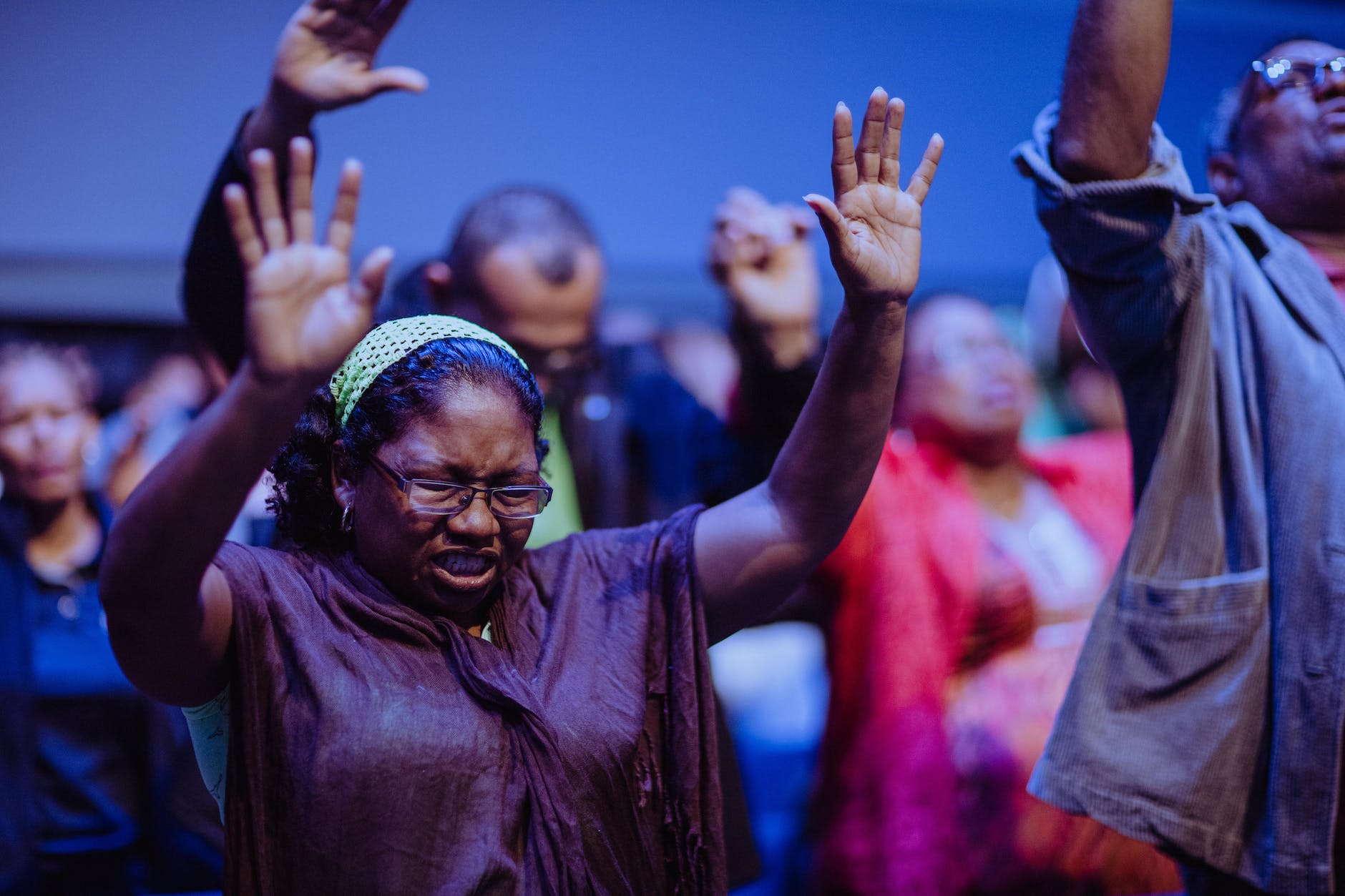
Photo by Liza Summer on Pexels.com

Samuel thought the Israelites were making a bad choice. Even though he was a wise, mature, man of God, he did not assume he was right, but instead, he brought their request to the Lord. Surprisingly, the Lord told Samuel that he was right, that what the people wanted was bad…but then he said he would grant their request anyway. The wrong choice of the Israelites led to pain and heartache. But God did not abandon them. He used their wrong choice to bring about good things even so.

To listen to the sermon, click the play button:

For some people, the player above may not work. If that happens to you, use the link below to either download, or open a player in a new page to listen.

To download, right click on the link (or do whatever you do on a Mac) and save it to your computer: Download 1 Samuel Part 6

1 Samuel # 6. Kingship, Freedom and Responsibility. 1 Samuel 7:18–8:1-22

The battle recorded in 1 Samuel chapter seven ended when Samuel was in his twenties. Verses 13-17 summarize much of the rest of his life. He led Israel, listening to the Lord, and telling them what the Lord had to say, helping them to understand what it means to follow him, and encouraging them to actually do it. And the people seemed to respond to his leadership. After those first tumultuous twenty years or so, things went well for that generation. The Philistine threat was greatly reduced. There was peace and people seemed to want to listen to the Lord. What began with a simple woman wanting to become a mother, had brought peace, joy and goodness to thousands and thousands of people.

As he aged, Samuel tried to groom his two sons to lead Israel as he had. But it looked like they were headed down the same path as Hophni and Phinehas, the wicked sons of Eli, who had been in charge when Samuel was very young. History seemed poised to repeat itself. Samuel’s sons were dishonest – they took bribes to settle disputes, instead of judging fairly.

People Samuel’s age and older probably remembered what it was like back in the days of Eli, and were afraid of going back to those dark times. In any case, the people gathered and told Samuel they wanted him to find them a king. This was a bad idea for many reasons. The most important thing against it was that the people of Israel were supposed to see God himself as their king.

 I love Samuel’s response. The same little boy that was ready to hear God, still wanted to hear him as an older man.

One bible version says, “the request displeased Samuel.” The Hebrew word for “displeased” actually means to “ruin or spoil.” So it could mean that Samuel was upset about it – it ruined his heart. Or maybe he thought that the Israelites were going to spoil a very good thing. I think that is the best way to translate it, considering what followed.

So the first part of Samuel’s response is that he thinks it is a bad idea. He has good reasons for thinking so, and history basically proved him right. But, while that is what he thinks, he doesn’t just come right back with that. Instead, the second part of his response is to pray about what the people have said. So, Samuel was a humble God-follower. He was experienced and wise. He was a proven and popular leader. But he did not assume that his own well-considered opinion was automatically right. Instead, he asked God about it.

Samuel’s attitude is definitely one worth learning from. When I have to make decisions about something, or deal with others, too often I know I’m right, and when I know I’m right, I think I don’t have to ask the Lord about it. Now, I’m not talking about things that the Bible is very clear about – like who Jesus is, or whether it is wrong to lie. In those types of things, where the Bible is clear, we can be confident. In other words, we don’t have to pray: “Lord should I advise my co-worker to lie to our boss?” The answer is obvious from scripture. We don’t have to ask God whether or not we should lie, or get drunk, or cheat someone.

However, there are many situations where God hasn’t given us a set of rules or a manual, and instead, we are supposed to rely on him to reveal his will in various situations. Should you take the new job or not? Does the Lord think it’s a good idea for you to go to that party? Should your let your kids go on the overnight trip? Does the Lord want you to talk to your co-worker about what the bible says in this situation? In such situations rather than relying on a set of rules, the Lord wants us to come to him directly, like Samuel did.

What God said to Samuel is surprising, puzzling and (I think) extremely interesting.

The LORD said to Samuel, “Do everything the people request of you. For it is not you that they have rejected, but it is me that they have rejected as their king.

1 Samuel 8:7

So, let’s get this straight. God is saying, “Samuel, you have it right. When they ask for a king, they are rejecting me as king. This is a bad idea. So go ahead and help them get a king.”

Say what?

I think there are several things going on here. First, Samuel may have felt that he had personally failed as a leader. After he led them for a lifetime as a prophet, the people of Israel said, “we don’t want a prophet anymore. We want a king.” So Samuel probably felt that he had somehow failed to teach them or encourage them in their relationship with God. He may also have felt bad about the choices his sons had made. The Lord was saying first of all “No Samuel, it isn’t you. You haven’t failed. They aren’t rejecting you, they are rejecting me.”

Sometimes this is a word we need to hear from the Lord. Maybe you have a family member you’ve been praying with or for. Maybe there’s a friend who has sought your advice. And yet the relative or the friend has ultimately decided to ignore what you have shared with them. Your prayers don’t seem effective. That person is going her own way, and that way is to move farther away from the Lord. Perhaps the Lord wants to say to you right now, “My beloved child, that person has not rejected you. She is rejecting my will for her life. Don’t take it personally. Don’t feel that you are a failure. This is about Me, not you.”

I want to talk for a minute about what the Lord meant when he said the Israelites were rejecting Him as their king. Since the time of Abraham, the people of Israel were not ruled by kings. For four hundred years in Egypt, and another four-hundred after they came to the promised land, the people were supposed to live free, with God as their only king. They were supposed to answer to Him – above any earthly authority.

I am fascinated by how similar this is to the basic political philosophy of the Founding Fathers of the United States of America. Laura Ingalls Wilder wrote about her life growing up on the American Frontier during the late 1800s. In Little Town on the Prairie she makes some observations that are surprisingly relevant to our text today. One year, the new town she was living in celebrated the fourth of July. As part of the celebration, they read aloud the Declaration of Independence. After that, the crowd sang “My Country ‘Tis of Thee” ending with this verse, causing Wilder to reflect:

Long may our land be bright; With Freedom’s holy light. Protect us by Thy might; Great God our King.

The crowd was scattering away then, but Laura stood stock still. Suddenly she had a completely new thought. The Declaration and the song came together in her mind, and she thought: God is America’s king.

She thought: Americans won’t obey any king on earth. Americans are free. That means they have to obey their own consciences. No king bosses Pa; he has to boss himself. Why (she thought) when I am a little older, Pa and Ma will stop telling me what to do, and there isn’t anyone else who has a right to give me orders. I will have to make myself be good.

Her whole mind seemed to be lighted up by that thought. This is what it means to be free. It means, you have to be good. “Our father’s God’s, author of Liberty — ”  The Laws of Nature and of Nature’s God endow you with a right to life and liberty. Then you have to keep the laws of God, for God’s law is the only thing that gives you the right to be free. (Little Town on the Prairie, page 76)

The problem is, it didn’t work very well for the people of Israel. Most people didn’t want to live that way. This is what God meant when he said to Samuel that the Israelites were not rejecting Samuel, but God himself. They were saying, “It is too hard to have to listen to what God says for ourselves. It is too much responsibility for us to do what is right. Give us a king to lead us. He can tell us what to do. He can listen to God and be responsible for what happens.”

There is a deeper truth here. Whenever we reject the Lord, we are actually rejecting freedom. We tend to think of it the other way around. We think God gives us rules to follow and that is the opposite of being free. I want the teenagers reading this to pay careful attention, because you are at an age where you crave freedom. True freedom only exists with true responsibility. What that means is, you can’t really be free unless you are also really responsible.

Think about it like this. Suppose you are sixteen years old, and you want the freedom to go wherever you want, whenever you want to. In other words, you want the freedom to drive your own car. In order to get that freedom, you must take on the responsibility of learning how to drive, and you must take on the responsibility of learning the traffic laws, and abiding by them, and maintaining your license, and maintaining your car and paying for gas. If you were in our family, you had to have a job, and pay for insurance as well. You get the idea? You can be free, but in order to be free, you must also be responsible. If you don’t want to be responsible enough to do these things, you won’t be free to drive either.

Ever since Adam and Eve sinned, we human beings want to be free without being responsible. But that never works. The two things simply go together. What the Israelites finally admitted is that they would rather not be free, if it meant they actually had to be responsible for their own relationships with God. They were saying, “we don’t want to grow up spiritually. It’s too hard. We would rather give up our freedom, so that we don’t have to be responsible for ourselves.”

In exchange for their freedom, the Israelites thought they would get real security. The king would protect them. The king would make the hard choices. They could see the king, talk to him, and he would be easier to deal with than an invisible God.

In verses 9-18, the Lord through Samuel told the people that this was exactly the choice they were making. He warned them that the king would take away their freedom. But they said that they still wanted a king.

I think we do the same thing when we rely too much on Christian leaders or on religious rules that aren’t really in the Bible. Hearing God through other believers is a valuable thing, a gift that the Lord sometimes gives us. I definitely need to hear what God says to me through other Jesus-followers. We all need a community of believers to help us as we follow the Lord. But we can’t rely on others alone; we are all supposed to connect with the Lord individually also. It’s a kind of spectrum – we need to rely on both the Christian community and also our own individual relationship with God, and keep the two in balance.

These things require effort and personal responsibility. It’s easier just to have someone tell you what to do. Some people find it easier to have an extensive list of rules that can apply to every situation. That way you don’t have to actually deepen your relationship with God, to learn to hear him, to put in the time required to get close to him. This theme – the tension between following God closely, or, instead, trying to live only by rules and leaders, will occur several times throughout the books of Samuel.

God’s response to the people is fascinating. What they want is a bad idea. They will ruin his plan for them to be free as they follow him. And yet, he says to Samuel, “Let them go ahead with it. In fact, help them pick a king.” Basically he said to the people: “I’ll give you what you want, but it will frustrate you in the end. In the end it will just bring you back to the same place.”

This is one of those places in the Bible where we see clearly two things that seem contradictory, and yet they are both true. God gives everyone free will. He let the Israelites choose something that was not what he wanted for them. They truly had a choice, and they used it to choose against God’s plan. But then, once they made their free choice, God began to work his will in and through the circumstances that their choice created. They got to have their free choice. And yet God’s will was not ultimately thwarted, and he began to work. Before we are done with 1-2 Samuel we will see some really amazing ways God used the poor choice of these people to have a king. It is a reflection of Romans 8:28:

We know that all things work together for the good of those who love God: those who are called according to His purpose.

Romans 8:28

All things – even our own bad choices – are used by God to accomplish his purposes in and through us. God let the Israelites ruin his plan for a nation that lived free from tyranny and served only Him. In fact, before he ever made the universe, he knew this would happen. He didn’t stop them. But he didn’t give up on them either. He continued to work with them, in them and through them.

As we read the Old Testament, it is helpful to remind ourselves how it points to Jesus. What about this text? Does it tell us something about what life is like while following Jesus? Does it remind us what Jesus is like, or what he did for us? I think it does. Obviously, the idea of balancing our dependence upon others with a strong individual relationship with the Lord is important for following Jesus. Samuel also gives us an example: rather than relying on his own wisdom and experience, he checked with the Lord, and was willing to hear something counter-intuitive.

The Lord’s own response shows us his character, the same character that Jesus Christ displayed. The people rejected him, but he did not abandon them.

Sometimes we are like the Israelites. We want what we want, even when someone (perhaps even the Lord) has warned us it is a bad idea. Yet God can work through even our mistakes. Now, this doesn’t mean it’s a good idea to completely ignore God, because he’ll make it work out anyway. The Israelites experienced a lot of pain and heartache from their bad choices, but it did not separate them from the love of God. We may experience pain and heartache. But if we continue in faith, if we continue on in Jesus, God will work out all things in some way to our good.
1 SAMUEL #5. THE POEPLE WHO REPENTED

Photo by Luis Quintero on Pexels.com

The ancient Israelites faced tremendous cultural pressure to worship false gods. But even when they finally resolved to follow the Lord with all of their hearts, things did not go well for them at first. This passage reminds us of God’s holiness. It reminds us that we need Jesus. It shows us the parallels between the ancient Israelites, and us today. It shows us that it is good and helpful to deliberately reminisce about times past when we had powerful experiences with God.

To listen to the sermon, click the play button:

For some people, the player above may not work. If that happens to you, use the link below to either download, or open a player in a new page to listen.

To download, right click on the link (or do whatever you do on a Mac) and save it to your computer: Download 1 Samuel Part 5

First Samuel #5. 1 Samuel 6:13-7:17. Repentance.

We left off last time where the Philistines put the Ark of the Covenant into a cart, and hooked it up to two cows who had been separated from their calves. Rather than return home to their calves, the cows pulled the cart into Israelite territory. They stopped near the town of Beth-shemesh, which was a town given to the tribe of Levi. The tribe of Levi (Levites) were the priests for the people of Israel.

13 The people of Beth-shemesh were harvesting wheat in the valley, and when they looked up and saw the ark, they were overjoyed to see it. 14 The cart came to the field of Joshua of Beth-shemesh and stopped there near a large rock. The people of the city chopped up the cart and offered the cows as a burnt offering to the LORD. 15 The Levites removed the ark of the LORD, along with the box containing the gold objects, and placed them on the large rock. That day the men of Beth-shemesh offered burnt offerings and made sacrifices to the LORD. (1 Samuel 6:13-15, HCSB)

The Ark had come home, so to speak. Remember, the Lord had refused to let the Israelites manipulate him through the Ark; he had erased their idea that it was a kind of lucky rabbit’s foot. Next, he used the Ark to show the Philistines that he was more real and powerful than the idols and demons they worshiped. And now, he brought it back to Israel. Even so, the Lord does not seem to be finished with the lesson. This perplexing incident is recorded:

And he struck some of the men of Beth-shemesh, because they looked upon the ark of the LORD. He struck seventy men of them, and the people mourned because the LORD had struck the people with a great blow. Then the men of Beth-shemesh said, “Who is able to stand before the LORD, this holy God? And to whom shall he go up away from us?” So they sent messengers to the inhabitants of Kiriath-jearim, saying, “The Philistines have returned the ark of the LORD. Come down and take it up to you.” (1Sam 6:19-21, ESV)

The Old Testament has several stories like this. They can be confusing and perplexing. A few years ago I was reading through Leviticus for my daily devotions. I did this almost to dare God to speak to me through Leviticus, which is some pretty dry reading at the points when you can even understand it. I got nothing out of it for almost two weeks. Then I read a story from chapter ten. Two priests sacrificed “unauthorized incense” and God burned them up instantly. I said, “What’s up with that, Lord? That doesn’t sound like you. It doesn’t sound like my Father, my Comforter, my never failing Friend.” Then I read Leviticus 10:3

I will show my holiness among those who come to me. I will show my glory to all the people.

So also, the Israelites say when they are struck down for disrespecting the ark: “Who is able to stand before the Lord, this holy God?

When I was a teenager, my High School science teacher took a very small piece of pure sodium (which exists as a soft metal) and put it into a tub of water. It immediately began to hiss and steam, and then suddenly the sodium exploded into flames. Pure sodium cannot exist in water. It burns up and explodes in the presence of water, becoming a different chemical in the process.

Just for grins, below is a video of two guys dropping pure sodium into a toilet. It’s pretty dramatic, especially if you start at about 3:10 into the video.

All right, hope you enjoyed that. The video was kind of fun and whimsical, but it portrays a physical reality: two elements that simply cannot coexist. In the same way, though we often forget it, sin cannot exist in the presence of God. It burns up, explodes and is destroyed. It isn’t a matter of God not tolerating sin – the very nature of God destroys it. The problem however, is that we human beings are born in sinful flesh – from our very birth, we are corrupted by a nature that rebels against God. This means that there is no way for us to get close to God without being destroyed. Who is able to stand before the Lord, this holy God? Who indeed? Certainly, no one with sin in him or her. So in the time of the Old Testament, unless people took the extreme precautions laid out by God, they were destroyed if they even did something like touch the ark improperly, or offer unauthorized incense. In the case of our text today, it might be that some people actually looked inside the ark at the stone tablets, or possibly that they gloated over the fact that they were now in charge of it.

The difference between these incidents I read about in the Old Testament, and my own experience of relationship with God, is the work of Jesus. Jesus took all of our sin – past, present and future – into himself. When Jesus took that sin into himself,

“God made him who knew no sin, to be sin for us, so that we might become the righteousness of God,” (2 Corinthians 5:21).

Because Jesus was in nature God, and as a human was not himself sinful, the sin which God laid on him could be destroyed without destroying Jesus also.

So now, through Jesus, we are no longer in a situation where the presence of God destroys us. Now his holiness is not a problem that keeps us apart, because our sin has been removed. This is one reason why I say that if we are in Jesus, we don’t have a sinful nature anymore. If we did, the Holy Spirit could not live in us, and we would be destroyed by God’s presence. We continue to battle with the effects of a body corrupted by sin, but in Christ we have been given a spirit that is holy in God’s sight.

In any case, the point I’m making is this: the way the Old Testament describes God is not inconsistent with the way God is revealed by the New Testament. They are not two different Gods. In fact, we don’t really understand how much we need Jesus without passages like this in the Old Testament. Now, through faith in Jesus, we are reconciled to the holiness of God in a way that in those days, people were not. This passage, above all, reminds me of my deep need for Jesus.

The writer of 1 Samuel continues the narrative, twenty years later. An entire new generation grew up. Previously, under the leadership of Eli, Hopni and Phinehas, the people were disconnected from God, and they didn’t care. They were arrogant, sure of themselves, sure they could manipulate God through the ark. They blamed God in their defeat, and tried to force him to give them victory.

But after their defeat, and their difficult experiences with the ark, the new generation grew up in humility. By the way, this was Samuel’s generation. He was probably in the middle of it, age-wise, and he led them spiritually. This generation didn’t take anything for granted.

2 A long time passed after the ark came to stay at Kiriath Jearim. For 20 years the entire nation of Israel mournfully sought the LORD. (1 Samuel 7:2, GW)

Finally, for a sustained period of time, the Israelites were humbly seeking God. For once it appears that it wasn’t their circumstances that they were upset about. They truly repented. They actually wanted to be close to the Lord. Samuel told them that they needed to get rid of the idols in their lives, to stop seeking comfort and hope in anything that was not the Lord.

And Samuel said to all the house of Israel, “If you are returning to the LORD with all your heart, then put away the foreign gods and the Ashtaroth from among you and direct your heart to the LORD and serve him only, and he will deliver you out of the hand of the Philistines.” So the people of Israel put away the Baals and the Ashtaroth, and they served the LORD only. (1 Sam 7:3-4)

The “Ashtaroth” means the idols made in the image of the goddess Ashtoreth, a Canaanite deity of war and fertility. Baal was the most important male god, and Ashtoreth the most important female one. Typically, every family had copies of idols to these gods. It may seem obvious to us that the Israelites should get rid of these false gods if they wanted to worship the Lord. But if we think that, we may not really understand the culture of that time.

We need to remember that in the first place, four-hundred years before, the Israelites had failed to do as God commanded, and displace the Canaanite peoples (like the Philistines) who lived in the Promised Land. As a result, for four hundred years the people of Israel had been influenced by the pagan cultures that lived around them. Though they often had small wars, just as often they traded with the pagan peoples, and sometimes, even though they weren’t supposed to, they married people from these pagan groups. In other words, there was a lot of peaceful interaction between the Israelites, and those who worshipped pagan gods. This interaction exerted a lot of cultural pressure on God’s people.

The Israelites were literally the only people in the entire world who were supposed to believe in only one God. The kind of cultural pressure they felt to at least believe that there were other gods is similar to the type of cultural pressure we might feel today if we believed the world is flat. Israelites would have felt inferior, not smarter, for believing in just one God.

“Of course there are other gods,” said the people around them. “Everyone knows that. It’s obvious. Yahweh might be the god of Israel, but he can’t be the only god. That’s ridiculous. You might as well say the sky is brown. You people are ignorant twits.”

Practically speaking, a lot of Israelites caved into this pressure. Many of them probably believed that Yahweh was indeed Israel’s special god, but that, obviously, other gods must exist. And the gods Baal and Ashtoreth had been in the land long before the Israelites and Yahweh came along. It made sense, even if you were going to worship Yahweh primarily, to make sure you didn’t get on the bad side of the local gods that were here before you and your god.

It made even more sense when you realized that if you worshipped other gods, you’d get to eat meat more often. People didn’t eat meat very often in every day life. But animal sacrifice and then feasting on the animal, were a regular part of many worship rituals. So, if you worshipped lots of gods, you got to eat meat more frequently.

Some pagan gods were also worshipped with fertility rituals. In these, women were encouraged to have sex with any man at the festival who wanted to, in order to get the god/goddess to bless the harvest. If you lusted after the spouse of one of your neighbors, you might get a chance to indulge your lust if you all worshipped these pagan gods. Even if your lust was more general, there were obvious reasons to participate in these rituals. It’s possible that some of the cultural pressure even came from pagan women inviting Israelite men to such ceremonies. And actually, these festivals were not exclusively heterosexual, either.

I hope you can see that actually, the Israelites faced the same types of cultural pressures that Biblical Christians face today. After about 500 CE, up until quite recently, a lot of the dominant cultures in the world believed in only one true God. But we’re back to ancient times again, now, in that respect. Christians are considered strange and backwards for believing that there is only one way to God, or even just one God. It’s hard to maintain our true beliefs when everyone around us thinks we are obviously wrong, and also thinks we are ignorant and bigoted for believing as we do.

We’re also back to a culture that thinks we are stupid for not indulging our every desire as fully as we want to. How silly is it to only have sex within marriage? There are plenty of temptations and opportunities to do otherwise. How silly is it not to indulge your every desire whenever you can?

Everyone around us is doing it. Everyone around us thinks we are stupid, and even dangerous for our beliefs. So, it shouldn’t be too hard to understand the ancient Israelites.

In Samuel’s generation, however, under his leadership, the people found courage. They listened to Samuel, and quit worshipping the false gods, and remained faithful to the one true God.

What happened next is something that I think surprises most of us in America these days. They turned to the Lord with their whole hearts and then things got worse. While they were gathered to worship God, the Philistines attacked. For some reason, preachers in America have been telling us for awhile now that if you just start following Jesus, everything will go well for you. Funny thing – Jesus never said that. Following Jesus, giving their whole lives to him, brought plenty of trouble to Peter, Paul, John James, Barnabas and many others. Following God brought trouble and hardship to Jeremiah, Ezekiel and yes, to Samuel’s generation.

It’s a bad idea to turn back to God in the hope that doing so will make your life go more smoothly. It just ain’t necessarily so. The great thing about Samuel and his generation was that they wanted to follow God because they believed he was the one true God. They dedicated their lives to him because it was good and right, and their hope was in God alone. If he gave them victory, that would be very good indeed. But they planned to follow him regardless. They turned their hearts to the Lord before Samuel told them that he would deliver them.

One of the reasons I get so angry at people who preach that following Jesus brings mainly prosperity and peace is that when trouble comes, those who believe that lie are undone spiritually and emotionally. A common reaction among those who believe this is that if they experience trouble, either they must have failed to follow God, or God is not truly real. They won’t allow for the idea that God might lead us directly into trouble sometimes.

The truth is, not only did Jesus promise persecution and trouble (Matt 6:10-11; John 16:33), but we also have spiritual enemies who will do whatever they can to make trouble for us – the devil and his demons (Eph 6:12; 1 Peter 5:8-10). The older I get, the more I think we should be surprised if we are truly seeking the Lord with all our hearts, and we experience no opposition at all. At the very least, we should be deeply grateful for those times. I’m not trying to make you depressed. I’m only suggesting that we take what Jesus said seriously:

 I have said these things to you, so that in me you may have peace. In the world you will have tribulation. But take heart; I have overcome the world.” (John 16:33, ESV)

So how did Samuel’s generation react when the Philistines attacked them? Naturally, they were afraid. No one with any sense at all wants to fight in a war. No one really wants suffering or tribulation. At the same time, they faced it with courage, and asked the Lord humbly for help. They didn’t assume he would deliver them, but they asked for it, in case he would. They didn’t try to manipulate him; they didn’t blame him. They just asked for his help, and they seemed ready to trust him and follow him whether or not he gave it at that particular time.

As it happened, the Lord helped them. The text says that he “thundered against the Philistines with a great and loud voice” (7:10). As I have pointed out before, these older manuscripts were often originally written on either papyrus, or animal skins. If you wanted to explain things in detail, you had to go out and kill another animal to make another manuscript. In the case of papyrus, though it was a paper-like substance, it was also time consuming and costly to make, and it wore out quickly. So you didn’t write down any more than you really had to. Therefore, the thunder is not explained, because the writer didn’t think it was as important as the main thing, which is that God did something to deliver his people. It may even be an expression that was common in those days, something almost like slang, that we don’t understand the full meaning for nowadays. In any case, it was clear that the Lord intervened, and protected his people on that occasion.

As the Philistines, fled, the Israelites chased them. Where the battle stopped, Samuel set up a stone, and called it “Ebenezer,” which means, “stone of help.” It was a way for the people to remember how God helped them that day.

Sometimes it may be helpful for people of faith these days to have our own “stones of help” – something that reminds us of specific times when God helped us. This sort of remembrance can be helpful when we face the pressures of a culture that mocks and denigrates us for worshipping the God of the Bible.

One way to set up an “Ebenezer” is to keep a journal, and record the times when God helped. For other folks, it might be a song that you listened to frequently during a time when God was especially present or helpful. I know of some Christians who collect rocks, and each rock reminds them of something the Lord has done. These days, photographs aren’t a bad way to remember what God has done for you, though you might want to create a special “Ebenezer” album to preserve photos that remind you of what God has done for you. The principle is to have a helpful, concrete way to remember times when God’s presence was obvious to you.

Take a minute to reflect on what the Lord is saying to you through 1 Samuel 6:13 through 7:15. Do you need to be reminded of your need for Jesus? Do you need to remember that in Jesus, your sin has been thoroughly removed and is no longer a barrier between you and the Lord? Is the Lord calling you to come back to him with your whole heart, like Samuel’s generation? Maybe you are really feeling the culture’s pressure to believe there are many ways to God, or many lifestyles that are equally acceptable for those who follow Jesus (in spite of what the Bible says about that). Maybe you need to be encouraged to stay strong.

Perhaps you need to be reminded that trouble is a normal part of life, even when you are walking with the Lord. Or perhaps today you need to set up an “Ebenezer” – a reminder of God’s presence and help in your life. Let him speak to you.

1 SAMUEL #2. THE WOMAN WHO BELIEVED GOD WAS IN CONTROL

Photo by Pixabay on Pexels.com

The idea that God is in control raises many objections for some people, but even before her situation was totally changed, Hannah found peace, comfort and joy in the fact that God is entirely in control.

To listen to the sermon, click the play button:

For some people, the player above may not work. If that happens to you, use the link below to either download, or open a player in a new page to listen.

To download, right click on the link (or do whatever you do on a Mac) and save it to your computer: Download 1 Samuel Part 2

1 SAMUEL #2. 1 SAMUEL 2:1-11

Not long ago, we were looking at various psalms. I said at the beginning of the series on the psalms that in every case where we know the author of a given psalm, it was written by a man. I want to make sure I was clear though, that there is still the possibility that some of the psalms were written by women, it’s just that we don’t know which ones might have been. However, here we have a psalm that we know for certain was written by a woman: Hannah, mother of Samuel.  I might call this particular psalm an example of “prophetic poetry.” Hannah is proclaiming God’s truth through poetic language, and there are several important truths to look at here. One reason I call it prophetic is because even though Hannah wrote this about her own life, in a big-picture kind of way, it reflects what God is doing, and will do, for the entire nation of Israel during the lifetime of her children and grandchildren.

When Hannah says, in verse 1 that her “horn is lifted by the Lord,” she is using pictorial language that would have been understood by the people of her time, but probably not by most modern readers. The horn was a symbol of strength, power and victory. So by saying this, she means that the Lord has given her strength, and victory.

No doubt Hannah was thinking of her husband’s second wife, Penninah, when she writes about her adversaries, or says things like: “Do not boast so proudly.” But the things she writes about could apply to the whole nation of Israel. The whole nation was poor and needy, seemingly neglected by God, at that time. Other nations dominated the Israelites, and were proud and boastful about their power. But God was about to give the Israelites strength and honor, in part, through Hannah’s son, Samuel. The mighty nations around them were about to be humbled, while the poor and needy Israelites would soon find themselves to be a dominant power in the region.

The heart of Hannah’s psalm is verses 6-9:

6 The LORD brings death and gives life;
He sends some to Sheol, and He raises others up.
7 The LORD brings poverty and gives wealth;
He humbles and He exalts.
8 He raises the poor from the dust
and lifts the needy from the garbage pile.
He seats them with noblemen
and gives them a throne of honor.
For the foundations of the earth are the LORD’S;
He has set the world on them.

1 SAMUEL 2:6-9

This is not just about Hannah’s life, nor even just the life of Israel. These verses declare an important truth that is often hard for us to get our heads around: God really is in control of everything.

Before we dive deeper into this, I want to make  sure to reiterate another biblical truth: human beings are responsible for their own actions. The Bible makes that very clear. We are held accountable for what we do. That is one reason we need Jesus: because every human being does sin, and break faith with God. We need forgiveness, and that forgiveness is found only through Jesus Christ. If we weren’t responsible for our own actions, we could not be considered accountable for our sins. But we are accountable for what we do, and since we all sin, that means we need Jesus.

22 God puts people right through their faith in Jesus Christ. God does this to all who believe in Christ, because there is no difference at all: 23 everyone has sinned and is far away from God’s saving presence. 24 But by the free gift of God’s grace all are put right with him through Christ Jesus, who sets them free. 25-26 God offered him, so that by his blood he should become the means by which people’s sins are forgiven through their faith in him.

(Romans 3:22-26, GNT)

Sometimes the Bible describes two truths that need to be held in tension with one another. On the one hand, we are responsible for our own actions. On the other hand, as Hannah tells us here, God is entirely in control.

I want to share two analogies to help us wrap our heads around this. The first comes from the laws of physics. In general at the level of our everyday experience, physical things are either particles, or waves. A particle is something with physical mass in a specific place. Think of a piece of wood. The wood is made up of a bunch of particles. They don’t move, and they weigh something – they have mass. For an example of a wave, think about sound. You don’t have “a piece of sound.” It doesn’t really weigh anything. Instead, sound is a wave that acts on the air ( or other medium) through which it travels, pushing it in wave patterns that act against our eardrums. So you have particles, or you have waves.

And yet, when you get to quantum physics, suddenly some things can act like both particles and waves, especially light. Light appears to be both a particle, and a wave. It doesn’t really make sense, but it’s true anyway. Both things are true. In the same way, the Bible describes two truths that seem in conflict: we are entirely responsible for our own free choices, and, at the same time, God is entirely in control.

Here’s another analogy. I write murder mysteries – I like to say I kill people for fun and profit (to be clear, I’m talking about making up stories where certain people die, not real killing). Early on I noticed that sometimes, as I was writing, I “realized” that my characters wanted to do and say things that I hadn’t originally planned for them. I have since found out from other writers that this is fairly normal.

Now, I’m the author, the only author of my books. No one in my books can do anything at all unless I write it. At the same time, I’ve realized if I want to write stories that ring true, I have to allow my characters to choose things that are consistent with the kind of people I’ve made them to be, and sometimes those things surprise me, or turn out to be different from what I had originally planned for them. In my first book, there are two main bad guys. I had plans for one of them to repent of his wrongdoing at the end. But when I got to that point in the story, I realized that the kind of man that he was, and the choices he had made up to that point meant that he would not really repent. He was too proud, for one thing. I could have made him repent, but it would have made a bad story. My readers would have known that I, as the author, intruded on the story and forced it. They would have sensed that the story did not reflect reality, that my characters were not real people, free to make real choices. Now, on the other hand, even when I allowed the character to choose a different path, I was the one writing it. He couldn’t have moved a muscle without me. But on the other hand, he “chose” something different from my original plan. The path he chose turned out worse for him than I wanted it to be.

So, what does this have to do with 1 Samuel 2:6-9? Human beings are truly morally free agents. We are responsible for what we do. But, at the same time, nothing that happens is out of God’s control. He allows us to do things that he wishes we would not do, but nothing in this world is ever out of his control. Both things are true at the same time.

All right, having established both of those truths, I want to, like Hannah, spend some time focusing on the truth that God is in control. I think most of us understand instinctively that human beings are free agents, responsible for the choices we make. But we often struggle to believe that even so, God is in control, and we can trust him. Some people think that if God is really in control, he must be some kind of monster, because so many horrible things happen in this life, and if he is in control, why can’t he stop them?

That kind of question is worth a whole book, not just a paragraph or two in the middle of a sermon. But I’ll offer two suggestions. First, because we human beings do, in fact, make free choices for a which we are responsible, we often make a big mess of things. For instance, God did not choose the Second World War. It was largely the choices made by leaders in Nazi Germany and Imperial Japan that made that happen (along with other choices by leaders in other countries). It’s true, God could have stopped it, but if so, he would have had to take away human free will. And when you take away human free will, you take away love.

The essence of love is that one has a choice to love, or not love. If you take away the choice to not love, then love itself is no longer real. But to not love a perfect, good God is ultimately to choose evil. Even indirect suffering, like sickness and death, is a result of the fact that the first humans chose to rebel against God. So my own intense chronic pain is the result of the fact that sin is in the world. It isn’t anyone’s fault in particular (unless maybe Adam and Eve’s) but it is a result of the fact that human beings as a race chose to not love God, and so corrupted not only human DNA, but the entire natural creation. In other words, it is not God’s direct doing. If all human beings had chosen to never forsake God, I wouldn’t be in pain, babies wouldn’t be born disabled, and human beings wouldn’t hurt one another. So if God brought an end to suffering by making it impossible to choose anything that leads to suffering, then he would also make it impossible to truly love.

The second thing is that the bible’s teaching that God is in control of everything is an invitation for us to trust him. When we respond to that invitation, and do, in fact, trust him, the result is often wonderful grace and comfort.

 I will have to stop writing this soon, and take a break, because it is becoming difficult to maintain focus through the intense pain that I am experiencing at this moment. Even with this level of pain, the knowledge that God is in control of my pain has brought me deep and wonderful comfort.

(I’ve had my break. In fact, it’s the next day now). Let’s start with the alternative. If God does not want my pain to continue, and yet it does continue (as it has), that would mean he is not all-powerful. It would mean that I am at the mercy of something stronger than God. It would mean that there are forces other than my own choice, that can take me away from God’s plan for my life, and keep me from his help. If God is not in control of my pain, we live in a horrific world where not even God can help us in our suffering. If God is not in control of my suffering, then I am utterly alone. Life is very difficult, and I am beyond God’s help. That is not a helpful, or comforting idea.

Now, someone might ask, “But Tom, if God could change someone’s terrible circumstances, and yet he doesn’t do it, doesn’t that make God cruel, or at the very least, uncaring?”

The thought behind that question often causes people to lose their faith. Thankfully, I didn’t experience my eight years of suffering until I had already experienced almost forty years of following God. So, I couldn’t abandon my faith over my suffering, because I already knew God too well. I have experienced too much, studied too much, thought too much, to convince myself that God isn’t real, or that he isn’t loving, or that he isn’t powerful. What I did have to learn is that I don’t know what God knows, and in many circumstances, I am simply not capable of comprehending why he might do something, or not do something. God’s control, even of my suffering invites me to trust him beyond my own understanding.

Little children don’t always know why their parents do things. Sometimes parents take their children to a cold room, where a stranger in a white coat stabs a needle into the child. How could loving parents do that? Are the parents not strong enough to protect their children from being stabbed with needles by strangers? Does this mean the parents don’t care about their children?

Sometimes, if the child is seriously ill, parents make their children go through far worse things than just being poked with needles. Childhood cancer and chemotherapy come to mind as examples of this. The children in those cases are often too young to really understand why they have to suffer in this way. Their only real hope of peace and comfort is to trust their parents; trust that their parents love them, and want the best for them, and are in fact, making sure that everything that happens is for their best good.

Hannah’s viewpoint was one of trust. Remember, at this point, she had borne Samuel, and then brought him to live apart from her. She had other children, but that was not until later. She wrote this psalm before everything turned out better for her. That’s trust! She learned, and gave us an example of, the kind of joy and peace that comes when we trust that God is in control of all things.

This is our best chance for peace and comfort as well. We often won’t understand why we, or our loved ones might have to suffer. But, I tell you, speaking from personal experience, the best path to peace and comfort is in admitting that I don’t know what God knows, and trusting that he loves me, even when I can’t understand what is happening.

If ever I begin to doubt that love, the best antidote is to look at Jesus. He literally went through hell for me, so I cannot doubt that I am indeed loved. That helps me trust in a God who is indeed in control. I pray you can do the same.

PSALMS #8: WATER IN A THIRSTY LAND. (PSALM 63)

Judean Desert. Photo by Leon Mauldin. leonmauldin.blog.

When times are difficult, or spiritually dry, David urges us to dwell upon the memories of spiritually good times to encourage our hearts to remain steadfast.

To listen to the sermon, click the play button:

For some people, the player above may not work. If that happens to you, use the link below to either download, or open a player in a new page to listen.

To download, right click on the link (or do whatever you do on a Mac) and save it to your computer:
Download Psalms Part 8

The Superscription for this psalm indicates that David wrote it while he was in the wilderness of Judah. There are a few times in his life that this might describe. When he was young, even before he was anointed to be the next king, or had killed Goliath, David was a shepherd for his father’s flocks of sheep. In those days, shepherds spent extensive time in the wilderness alone with the sheep. However, sheep need a fair amount of grass, which requires a certain amount of water, which doesn’t really fit the description here.

Some commentators think that David wrote this when he was much older, fleeing from the rebellion of his son Absalom. But the description of the land where David went at that time doesn’t match very well either. In his lifetime, there was a great forest near where David fled from Absalom. However, here, David talks of a dry and thirsty land, a weary land without water.

Therefore, I believe David wrote this during the period when he was running and hiding from king Saul. I think he is talking about the desert that is southeast of Jerusalem, and to the west of the Dead Sea, in Israel. At certain times of year, you can stand on a mountainside, and see for miles and miles, and there is hardly any vegetation visible at all. That area gets less than 8 inches of rain per year, which is a little bit less than the low desert outside of Phoenix, AZ (not the mountains, the flatlands). It is a very desolate place. David spent a couple of years in that area, avoiding king Saul’s unjustified jealous rage. I imagine that there were many days when David hiked through the dry, dusty mountains, hot, parched, and yearning for the sight and taste of fresh, cool water.

I want to point out the obvious here, that once again, David is not writing from a place of comfort and safety. In fact, he was struggling to survive in a hostile wilderness, and he was there because a very powerful person was trying to kill him. Even so, his focus was on the goodness of God.

I have wondered sometimes if David wrote this psalm not only in the wilderness, but also while fasting. Fasting from food, combined with prayer and focus on God, loosens our bonds to the world around us, and reminds us that we need God even more than we need food. It tends to sharpen our desire to be close to God. Certainly, this psalm seems to have those characteristics. David says that he thirsts for God. He says that the presence of God will satisfy him, like rich food satisfies a person. He says God’s love is better than life itself. If you find yourself dry spiritually, fasting might be a way to increase your hunger and thirst for God. If you’ve never done it, start out small – maybe stop eating after your evening meal one day, and don’t eat again until the following evening. Use the hunger pangs to remind you to pray, and to remind you that you need God even more than food.

David clearly understood that he could pray in all situations. Even so, he, and virtually all the Israelites of that time, felt that the truest, best way to worship God was at the tabernacle. This was the “holy tent” which contained the altar, for sacrifice, and the inner sanctuary into which God infused his presence in a special way. Personal prayer would tide you over for a while, but the presence of God was at the tabernacle in a special way that it was not elsewhere. You could make sacrifices and offerings to God only at the tabernacle. This is important to understand because during this time of his life David was cut off from the tabernacle. For the years in which David was “on the run,” it was set up near King Saul’s hometown, about five miles from Jerusalem. So, if David went to the tabernacle, Saul would easily capture and kill him.

Therefore, David was missing the special presence of God that, during his lifetime, could only be found through worshipping at the tabernacle. This psalm speaks of his longing to experience that presence again, to have the joy of worshipping God in the presence of his people.

Let’s consider David’s situation, and begin to apply this psalm to our lives. Because of the sacrifice and resurrection of Jesus, God sent his Holy Spirit to all people. Now, there is not just one place where God is present. He is present within all people who trust Jesus. We can worship God virtually anywhere, anytime. However, there remains something special about the gathering of God’s people together for worship. The Greek word for “church” means “the intentional gathering of God’s people.” Though “church” can happen almost anywhere, it cannot happen with just one person, and it cannot happen without intentionality. So, though our situation is not exactly the same as David’s, it still has some similarity. God is present in a special way when we gather with other believers to worship, pray, and apply his word. There is also something important and unique that happens when we take communion together, and that is not meant to happen individually. Sometimes, I think we don’t value that enough, or we think there is no difference between worshipping God with his people, or doing so on our own. I encourage you to recognize that God did not intend us to be a bunch of spiritually independent free agents. He wants us to worship him in community with other believers, and to receive communion together, and when we do so, something special happens. Like David, it is good to learn to long for, and desire, that special blessing.

There is another piece. At times, believers today experience spiritually dry periods. Maybe you are not cut off from worship and communion with God’s people, but even so, spiritually, it feels like you are in a dry and weary land. Though perhaps there was a time you delighted in the presence of God, and felt filled spiritually, there can also come times when you don’t feel the presence of God in a close way like you used to. If that happens to you, or is happening right now, do not panic. It does happen at times. Sometimes it even lasts years. For anyone in that situation, I think this psalm can be very helpful.

Now, of course, sometimes our own sin separates us from God. If you feel distant from God, the first thing to check is the state of your own soul. Have you been sinning without repenting? Have you been justifying your wrongdoing to yourself or to God? Such things will indeed create spiritual dry times, and make us feel far from God. Some sins are obvious, and you know you’ve committed them, even if you don’t want to admit it. And we don’t generally have to wonder if something is a sin, because for most things, the Bible makes it very clear. But if you are still not sure what is going on in your heart, it is a simple matter to ask God. Pray that he will show you. David prayed this very thing in other psalms:

23 Search me, O God, and know my heart; test me and know my anxious thoughts. 24 Point out anything in me that offends you, and lead me along the path of everlasting life.

(Psalms 139:23-24, NLT)

This is a prayer that God will certainly answer. When he does, we must be honest enough with ourselves to accept the truth that God shows us. Thankfully, if it is sin that is making you feel distant from God, the cure is simple: repent, and turn to Jesus. We have no excuses for any of our sins, but we have a defense: Jesus Christ, and the sacrifice he made to cleanse us from sins. When we confess our sins, repent, and turn to Jesus alone for hope of forgiveness, we have that forgiveness.

However, in David’s case, it was not his own sin that was cutting him off from a sense of God’s special presence. Sometimes, this is true of us, as well. If you have examined yourself, and you have prayed for God to reveal any hidden problems, you may find that you are still in a dry place. This is not necessarily your fault. So what can we do?

In the first place, David, cut off from the special presence of God, chooses to remember the wonderful times he has had with God in the past. He writes: “I have looked upon you in the sanctuary, beholding your power and glory.” God already knows what David is telling him. David isn’t writing to remind God – he’s reminding himself. So, we too, can help ourselves during dry times by reminding ourselves of the many wonderful things God has done for us in the past. We can, and should, dwell in the memories of times when we felt close to God. At times, we might be tempted to feel bad about this, like we are “living in the past,” and have no ongoing experience of God’s presence. But I’m not sure it’s ever a bad thing to dwell on times you have felt close to God. Sometimes, good spiritual memories can be very helpful and sustaining.

David also says he will praise God as long as he lives, and lift up his hands to God, and sing for joy. He is choosing to worship God in whatever ways he can, even though he can’t go to the tabernacle for now. He is not focused on what he is missing. Instead, he is doing whatever he can do at the moment. I think this is a path for us, also. With a little self-discipline, we can learn to thank God, and praise him, even when life isn’t going the way we want it to. Remember, at this point in his life, David is not just cut off from the sanctuary alone. He has been branded a criminal, with a bounty on his head. People are trying to kill him, and he has to move around somewhat frequently, and a lot of the time he is living in caves. But he chooses to praise God, lift up his hands, and sing. The choice is not about how he feels. We can make those same choices, and we might be surprised at how much it helps us to praise God in all things.

Next, David commits to remembering God, and meditating on Him. He will discipline his mind to think about what God has done, and what his character is like. David did not have the advantage of a written Bible to carry around with him. But we do. When we feel cut off from God’s presence, we can still read the Bible. We can discipline our minds to think about what God is like, and to remember his steadfast love. Whether or not we feel God’s love, this fact remains: Jesus died for our sins. That is worth remembering, and meditating on.

David writes: “My soul clings to you.” I love this. Whatever else is happening, David is clinging to God. It is a great example for us. We cling to the Lord when times are good and happy, and we cling to him when we are in a dry and weary place. We can become oblivious to the hard, dry place where we are, and focus entirely on the good, sweet, fresh presence of God. This is the essence of trust. This is what it means to be a believer: to cling to God through Jesus Christ.

The ending of this psalm has a slightly different tone. David has been earnestly seeking God, and it’s easy to identify with him, and then all of a sudden he seems to get angry and bloodthirsty:

9 But those who seek to destroy my life shall go down into the depths of the earth; 10 they shall be given over to the power of the sword; they shall be a portion for jackals. 11 But the king shall rejoice in God;
all who swear by him shall exult, for the mouths of liars will be stopped.

(Psalms 63:9-11, ESV)

There are many psalms that contain things like this. In fact, this is pretty tame compared to some of what we find. But what are we to make of this? In the first place, as I mentioned at the beginning, David is in this situation because of the evil of other people. He is cut off from God’s presence because of Saul, who has rejected God’s will, and who has almost unlimited power in Israel. David has no court to appeal to, no police who will protect him, no way to get justice. However, here, he is expressing confidence that God will make sure that justice is done. Notice that David does not say: “I will send my enemies to the depths of the earth,” or “I will kill them, and leave them as food for jackals.” Instead, he is saying, “I trust that God will make sure justice eventually prevails.” We can know that this was indeed David’s attitude, because two different times he had the opportunity to kill Saul, but very deliberately he chose not to do it. He trusted that God would bring justice.

The last part, about the king, might also be confusing. One possibility is that David is referring to himself, because even though he is not yet the official king, he has already been anointed to be the monarch. Another possibility is that he believed that the reason Saul was trying to kill him was because of advisors who were lying to Saul about David. That helps make sense out of David’s line: “the mouths of liars will be stopped.”

However we interpret the part about the king, what do we do with these last two verses, which sound slightly bloodthirsty? How do we apply them to our own situation?

In the first place, we should remember Paul’s words from Ephesians 6:12

12 For we are not fighting against flesh-and-blood enemies, but against evil rulers and authorities of the unseen world, against mighty powers in this dark world, and against evil spirits in the heavenly places.

(Ephesians 6:12, NLT)

All Christians do indeed have enemies, very real ones. They are the evil spiritual powers who rebelled against God along with Satan. They seek to destroy us. It is appropriate for us to want God to put an end to them, to their warfare against us. We can use verses like these in the psalms to ask God to deliver us from powers of evil.

There are also times when we experience injustice in this world, and probably many more times when we see others who do. Yet, often, we cannot really do anything about it. Although it is good and right to work for justice in ways that are legal and godly, we trust that final justice is not up to us, but to God. In such moments, we can learn with David to remember and trust that God will eventually make sure justice is done.

What is the Lord saying to you today through this Psalm?

PSALMS #7. PSALM 51: A BATH GONE HORRIBLY WRONG

Photo by Vlada Karpovich on Pexels.com

Psalm 51 is a remarkable part of scripture. David committed horrific sins, including murder. And yet the Holy Spirit did not give up on him, and eventually brought forth this precious and powerful psalm as a result of that horrible sin and tragedy. David identifies the deepest need of anyone who really understands themselves: a new heart, a clean spirit. And through David and Bathsheba physically, God brought a savior to the world who gives us that new heart.

To listen to the sermon, click the play button:

For some people, the player above may not work. If that happens to you, use the link below to either download, or open a player in a new page to listen.

To download, right click on the link (or do whatever you do on a Mac) and save it to your computer: Download Psalms Part 7

PSALMS #7: PSALM 51.

King David is famous for many things: killing Goliath, being a great warrior and leader, being fair and just. He was not only a manly man, but also a sensitive and passionate one: he was a skilled musician and prolific songwriter, and his heart was constantly oriented toward worship and spiritual things. Unfortunately, along with all the good, David is also known for a spectacular failure: his affair with Bathsheba, and the killing of her husband.

David spent years in a tough situation, hiding from both king Saul, and the Philistines. Then in a battle that was disastrous for Israel, Saul was killed. Finally, the way was open for David to step into his destiny as the next king of Israel. There were still significant bumps on the road, but at last David became king of all Israel, and he led his people into becoming the dominant power in the region. He eliminated the immediate threats to Israel, and then began attacking countries further away, expanding the kingdom. Although he was a formidable warrior and great leader, at some point, his advisors made him stop participating in battles personally, because the whole country depended on his leadership, so it was too risky for him to be exposed to the weapons of the enemy.

So it was that David found himself in Jerusalem while his army was away elsewhere, conquering more territory. This man of action suddenly had a lot of time on his hands. One evening, from his palace, probably the tallest building in Jerusalem, he noticed a beautiful woman, bathing. Most likely, he saw her naked, since people don’t usually bathe with their clothes on. David immediately ordered his men to find her, and bring her to him. The woman, as we know, was named Bathsheba, and her husband, Uriah, was away at the war. It is possible that David seduced her, but it is also possible that Bathsheba could not have said “no” even if she wanted to. Even if she did, technically, have the choice to not sleep with him, David was the most famous and powerful man in the entire region. She would have felt a great deal of pressure to please him.

The affair was bad enough. But then she got pregnant. David, like so many men after him, decided to try and cover it up. He brought Uriah back from the war, and urged him to go home and sleep with his wife, Bathsheba. The plan, obviously, would be for Bathsheba to pretend that the child was Uriah’s, not David’s. However, in those days, it was traditional for soldiers to abstain from sex until after the battle was over. Back on the front line, Uriah’s fellow soldiers were still in danger, and in solidarity with them, and possibly also out of a superstitious fear that he might jeopardize victory, Uriah chose not to sleep with his wife. David even got him drunk, and sent him home, hoping that would erode his self control, but Uriah remained steadfast.

That self-control and integrity cost Uriah not only his wife, but his life. David gave up, and sent Uriah back to the front line. He had Uriah carry sealed orders to the commanding officer. Those orders were that Uriah should be sent to the fiercest part of the battle, and then his fellow soldiers were to withdraw from him, so that he would be killed in battle. In other words, David made Uriah carry the orders for his own murder.

It’s even worse when we realize that Uriah was one of David’s “thirty mighty men,” part of a faithful core of warriors who had been loyal to David in the difficult days before he became king. He was David’s faithful follower, who had endured many hardships with, and for, David, and now David slept with his wife, and then had him killed.

David did not appear to repent. Not long after this, the prophet Nathan came to the king. He told David about a rich man in Israel who had a great flock of sheep, goats and other animals, and a poor man who had nothing except one little lamb who was his beloved pet. The rich man had a visitor, and he was obliged to feed the visitor. But rather than take one of his own vast herd, he extorted the one beloved pet from the poor man, killed it, and fed it to his visitor, while the poor man was helpless to prevent it.

David was enraged by the injustice of what the rich man had done, and furious that such a thing would happen in Israel, where he was king. He demanded to know the name of the rich man, so he could punish him for such blatant extortion and injustice.

Nathan said: “You are the man.”

Shocked and horrified, David finally admitted his terrible sins. He repented, and he expressed his remorse and repentance by writing Psalm 51.

I think Psalm 51 is amazing at so many levels. It is a powerful part of scripture, and contains much important truth. And yet, this amazing and helpful part of the Bible came about because of terrible sins. Therefore, one of the things this psalm shows us is that God can bring good out of any situation, even good out of our own horrible, deliberate sins.

The important truths begin with the very first verse, in the way that David asks for forgiveness. He could have said, “Forgive me, Lord. After all, I am your chosen king.” He might have written: “Lord, if you don’t forgive me, all the amazing things you’ve done in my life up until now would be wasted.” Another possibility: “Forgive me, or the enemies of Israel will be encouraged. If you let something bad happen to me because of this sin, your people will be without a leader.”

He could also have made the claim – correctly – that compared to others, he had lived a mostly righteous life. Before this, he had followed the Lord even in spite of great suffering. He had refused to kill king Saul – twice – when he had him in his power. There was a lot of credit he could have claimed. But instead he asks for forgiveness on the basis of one thing alone: God’s hesed; that is, the covenant love that God has for his people. By doing so, David is saying: “I have no claim on you for forgiveness. I don’t deserve it. I dare to ask for forgiveness only because I know that you are a loving God. Please forgive me because of your own good and loving character.”

One of the things that is so amazing here is that it is a thousand years before Jesus. We might have expected David to offer sacrifices at the tabernacle, and then consider that he had fulfilled his duty. In other words, he might have expected God to forgive him based on offering the right sacrifices. But he recognizes (and he says it explicitly in verses 16-17) that sacrifices mean nothing unless his heart is in it. He knows that there is nothing he can do to earn God’s forgiveness, and no good he has done in the past is enough to “make up” for his sin. His only hope is that God will have mercy on him. This is one half of the very same gospel preached by Jesus and the apostles a thousand years later. No one can be righteous enough to please God. Instead, we depend entirely on God’s willingness to have mercy on us.

In verses 3-6 David expounds on this. He fully confesses his sin and brokenness, and he goes out of this way to show that he is not making excuses. There is no hope in excuses. There is no excuse. When speaking of his sin, David uses three words, translated by the ESV as: “transgression,” “iniquity,” and “sin.”  Transgression describes a moral revolt against God. This is the part inside of us that rises up and says, “I know what’s right and wrong, but I want what I want, and I’m going to get it for myself even if it’s wrong.”

Iniquity describes an internal character of sinfulness. David says: “I was born in iniquity,” (verse 5). He means he was born with a flawed and sinful nature. The New Testament describes this as our sinful flesh. We are all deeply flawed, and not all of those flaws are wonderful and beautiful. Some part of us is broken and twisted from birth, always oriented away from God.

Finally, David uses the word “sin.” Sin (or sins) describes the wrong, bad action. His affair was a sin. The arranged murder was a sin. But it is important to see that sin is just the tip of the iceberg. It starts with a broken and twisted internal character, and then desire that rises up in rebellion against God, and bears fruit with the actual wrong action. This reminds me of what James wrote:

13 And remember, when you are being tempted, do not say, “God is tempting me.” God is never tempted to do wrong, and he never tempts anyone else. 14 Temptation comes from our own desires, which entice us and drag us away. 15 These desires give birth to sinful actions. And when sin is allowed to grow, it gives birth to death. (James 1:13-15, NLT)

David says something interesting in verse 4: “Against you, you only, have I sinned and done what is evil in your sight, so that you may be justified in your words and blameless in your judgment.” When we first read this, it can sound surprising. Surely David sinned against Uriah as well, by committing adultery with his wife, and then by having him killed! How is it that David says his sin is against only God? Although this sounds wrong at first, it turns out to be quite accurate, and important – perhaps even more important today than it was when David wrote it.

In the first place, think of it like this: If there was no God, there would be no such thing as sin. Atheists believe this, and if they were right about the non-existence of God, they would also be correct about the non-existence of sin. If there is no God, even the idea that it is wrong to hurt someone else is just an arbitrary, made up human rule. If there was no God, what David did to Uriah would be a tragedy for Uriah personally, but without God, who has the authority or power to declare it was a sin? David got away with it, after all, and he was the most powerful person in the region. Without God, that’s just the way the world works, and we need to live with it. So, you see, it can’t be a real sin unless there is some absolute standard.

The Bible tells us that the absolute standard is God’s holy character. Therefore, all sins are ultimately and finally sins against God. They are a violation of God’s holy character, and against his design for the human beings he made. There is no way to sin against another person without sinning against God as well.

Next, ask which is worse: violating the trust of another human being, or violating God’s? As a very imperfect analogy, suppose you kill your neighbor’s dog. Obviously, this is terrible for the dog, and it was wrong for you to hurt the dog. But the heart of your sin is really against your neighbor who loves the dog and is responsible for it. Obviously any human is more important than a dog, and in the same way, God is infinitely more important than any human being.

David is not saying that he did not wrong Uriah. Instead his point is that all sin is ultimately against God, and since God is infinitely greater, his sin against God is the heart of the issue. If he had not sinned against God, he certainly would not have sinned against Uriah.

This is especially important because in our world today, many people claim that nothing is really sinful if it doesn’t “hurt someone else.” So, for example, it is claimed, pornography doesn’t hurt anyone, so it’s not wrong to view it. Of course, they are wrong about pornography not hurting anyone. Hundreds, if not thousands, of former porn stars have testified that performing porn devastated them emotionally, spiritually, and sometimes physically. In addition, some of the performers are undoubtedly women who are forced or coerced into it one way or another; no better off than sex slaves. But even if everyone was truly willing to do it, and happy about it later in life, porn is still a sin against God. We can’t say “it doesn’t hurt anyone,” because even if we lived in a fantasy world where it didn’t, it would still be a sin against God.

The same arguments are made about virtually any activity engaged in by consenting adults. We claim that the only sin is when someone doesn’t consent. But David puts us straight: all sin is sin against God. Even if Bathsheba went along with it willingly, they were both sinning, because God’s holy character intends sex for marriage alone. We can’t get ourselves off the hook by saying “I didn’t hurt anyone,” or even “I didn’t coerce anyone.” No, because all sin is against God, we have no defense. David, for his part, did not pretend to have a defense. He says: “therefore you are right when you speak, and justified when you judge me.”

In verse seven, David again affirms that it must be God who cleanses him; God alone can forgive and purify, and no one can earn it. David can’t make up for what he’s done. Verses 10-12 are the heart of this hard-hitting psalm:

10 Create in me a clean heart, O God,
and renew a right spirit within me.
11 Cast me not away from your presence,
and take not your Holy Spirit from me.
12 Restore to me the joy of your salvation,
and uphold me with a willing spirit. (Psalms 51:10-12, ESV)

The problem is not just our actions. Our actions come from what is inside of us. David wants an enduring solution. I know many well-meaning Christians who get this confused. Many people, after sinning like David, might say something like this. “OK, from now on, I’m not going to go up on my rooftop alone. I’ll always have a guy with me up there, to make sure I’m not watching women bathe. In fact, I’ll give my wife the key to my rooftop, and she can go up there anytime, to make sure I don’t have any views of women’s bath houses, and we’ll build a wall if I do. Next, I’m going to have Nathan as my accountability partner. Finally, I won’t stay home from the wars anymore, because I might get bored and so get into trouble.”

All that is reasonably good, but it misses the point. David didn’t sin because he happened to see Bathsheba naked. He sinned because from birth, his heart was filled with iniquity. He sinned because he didn’t take that inborn iniquity seriously. Now, after these terrible actions, David knows that the problem is inside. It’s a problem he, personally, cannot fix. So he asks the Lord to give him a new heart, a righteous spirit.

I have never committed adultery, nor conspired to have someone murdered. But my heart is no better than David’s. The same transgression inside David that led him to rebel against God is inside me, also. I’m not just saying that as a theological truth – I know myself well enough to know, experientially, that it’s true about my heart. It is good to protect ourselves against temptation. But it is not enough. We need, along with David, to ask for a brand new heart from the Lord.

God answered David’s prayer for a new and clean heart. He answered that prayer for all mankind through Jesus. When Jesus came, he made it clear that the human heart is the real problem; and that is exactly why he came to redeem us. And the power of God for redemption is so great that it was both David and Bathsheba who became physical ancestors of Jesus who brought us that salvation. If he can turn their sin around and provide, through it, salvation for all humankind, he can also renew our hearts and spirits. Like David, let’s ask him.

PSALMS #6: BAD TIMES, GOOD PRAISE. PSALM 34.

Photo by M Venter on Pexels.com

When we read psalm thirty-four, and then find out what was going on with David that caused him to write it, it can be surprising. This psalm of praise, joy, and trust was written during one of the most desperate times of his life. We too, can find hope, peace and joy, no matter what we might be going through.

To listen to the sermon, click the play button:

For some people, the player above may not work. If that happens to you, use the link below to either download, or open a player in a new page to listen.

To download, right click on the link (or do whatever you do on a Mac) and save it to your computer: Download Psalms Part 6

Psalm thirty-four is one of my personal favourites. When I was in university, I learned a song that is made up entirely of words from this psalm. The song doesn’t contain the whole psalm, but all of the words of the song come from it. We use the song in our yearly Passover seder, and so for me, psalm thirty-four is a reminder of joy and thanksgiving, gathering with family and friends in the presence of the Lord.

Before we actually look at the words of the psalm, let’s dig into the background. There is a superscription (that is a note attached to the psalm in the original Hebrew text) to this psalm which reads: “Of David, when he changed his behavior before Abimelech, so that he drove him out, and he went away.” This sounds a lot like the incident described in 1 Samuel 21:10-15, with one exception. The person mentioned here before the psalm is Abimelech, but the name of the king of Gath in 1 Samuel 21 is Achish. However, like many ancient leaders, he probably had more than one name. It is also possible that Achish is his name, and Abimelech is a title, like “Pharoah.” (The Philistine civilization was relatively small and brief, and we don’t know everything there is to know about it).

Anyway, the situation was this: David was warned by Jonathan that king Saul was absolutely determined to kill him. So David fled to the Philistine city of Gath. Remember, the Philistines were the mortal enemies of the Israelites, and David had already, by this point, killed many of them in battle. This shows us how entirely desperate he was: he was trying to hide among his enemies. He left with absolutely nothing: no food, not even a weapon. Shortly after he arrived in Gath, he was recognized. Some of the Philistines said, “Isn’t this David, the hero of the Israelites? Aren’t the Israelites singing songs about how many of us Philistines he has killed in battle?” They grabbed him, and brought him before their leader: Achish/Abimelech. This was a terribly dangerous moment. David had just escaped one enemy, only to be captured by another. He had the idea to pretend that he was insane. The leader of Gath saw him acting like someone who had lost his wits, and in disgust, he told his men to escort David out of town. It isn’t clear if he believed that it was David, gone mad, or just a generic madman that his men had brought to him. Either way, they kicked him out of town without harming him seriously. He fled from there, and went and hid in a cave. So it was a tense time, and a very narrow escape for David. However, in the end, he was safe (for the moment), from both Saul, and the Philistines. Afterwards, David wrote this psalm. With all of that in mind, let’s see what David has to say.

1 I will bless the LORD at all times;
his praise shall continually be in my mouth.
2 My soul makes its boast in the LORD;

let the humble hear and be glad.
3 Oh, magnify the LORD with me,
and let us exalt his name together!

4 I sought the LORD, 
and he answered me
and delivered me from all my fears.

5 Those who look to him 
are radiant,
and their faces shall never be ashamed.

6 This poor man cried, 
and the LORD heard him
and saved him out of all his troubles.

7 The angel of the LORD encamps
around those who fear him, and delivers them.

8 Oh, taste and see that the LORD is good!
Blessed is the man who takes refuge in him!

9 Oh, fear the LORD, you his saints,
for those who fear him have no lack!

10 The young lions suffer want and hunger;
but those who seek the LORD lack no good thing.

11 Come, O children, listen to me;
I will teach you the fear of the LORD.
12 What man is there who desires life
and loves many days, that he may see good?
13 Keep your tongue from evil
and your lips from speaking deceit.
14 Turn away from evil and do good;
seek peace and pursue it.

15 The eyes of the LORD are toward the righteous
and his ears toward their cry.
16 The face of the LORD is against those who do evil,
to cut off the memory of them from the earth.

17 When the righteous cry for help, the LORD hears
and delivers them out of all their troubles.

18 The LORD is near to the brokenhearted
and saves the crushed in spirit.

19 Many are the afflictions of the righteous,
but the LORD delivers him out of them all.
20 He keeps all his bones;
not one of them is broken.

21 Affliction will slay the wicked,
and those who hate the righteous will be condemned.

22 The LORD redeems the life of his servants;
none of those who take refuge in him will be condemned. 

In the first place, the psalm shows us that in his time of great danger and fear, David put his hope entirely in the Lord. David isn’t just praising God because he happens to be happy. He isn’t writing a psalm like this because he’s never had any problems or experienced trouble. Already by this point in his life, he had faced a literal giant, and been in many battles. And then, just before writing this, he was in the very tricky situation I described above. So we can’t accuse David of being unrealistic about the serious challenges people face in their lives. Even so, he maintains that it is good and right to put our faith in the Lord, and praise him at all times.

Second, as I mentioned, David wrote this sometime relatively soon after his narrow escape from both Saul, and the Philistines. However, even then, though the immediate danger was suspended for the moment, he was still in a pretty precarious position. He had to go live in a cave in order to hide from Saul’s men, and also from the Philistines. In other words, he had enemies in all directions around him. He had no guarantee even about the source of his next meal.

Therefore, when he wrote this psalm, it was almost certainly the lowest point in David’s life so far. Things had started so well, and then came crashing down spectacularly. He was anointed by Samuel to be Israel’s next king. Not long after, he challenged Goliath, and won. Then he became Israel’s foremost warrior, and he spent time also moonlighting as a musician. He became a personal favourite of King Saul. He even married Saul’s daughter. It seemed like everything was on track. His career was moving forward. But then suddenly, everything fell apart. Saul tried to kill him. His best friend warned him to run for his life. He left with nothing – no food, not even a weapon. He couldn’t even find shelter hiding anonymously with Israel’s enemies. So, finally, he ends up in the cave.

But David shows remarkable perspective. He had a great deal to complain about. Things had gone from terrific, to bad, to worse, to “living-all-alone-in-a-hole-in-the-ground.” But instead of complaining, he remembered that God had saved his life. I might have been complaining about why God allowed such things to happen. David, however, thanked God for saving him. Not only that, but he wrote this:

8 Oh, taste and see that the LORD is good!

Blessed is the man who takes refuge in him!

Clearly, there is something going on here that transcends David’s actual experience. I don’t think he means: “Oh, how wonderful it is that that I’ve lost everything, and I was almost murdered twice and now I live in a cave with nothing to my name.” But something in his experience of God was much more significant to him than his experience of fear and loss. I do hesitate to use the word “experience,” here. True spiritual things transcend mere feelings. But at some level David connected with the truth of God’s love and care for him, even when his circumstances told him otherwise. I believe the essence of that connection was faith.

If you have read many of these messages, you have probably picked up on the fact that I have some kind of health issue. The short version is, I have a never ending phantom kidney stone. I am in a great deal of pain almost all the time. I am in pain as I write this. Sometimes, I feel sorry for myself, especially when other difficult things happen to me. At times, I think it is healthy to vent my feelings of frustration, and even to complain to God. We have already considered a psalm in which David did that. However, though God can handle our complaints, too much complaining is not good for us. Although venting my feelings can be cathartic, if I continue to complain for very long, I start to feel worse again. What does reliably help my heart is to surrender in faith to what the scripture says about God’s goodness and love. When I trust, in spite of the circumstances of my life, that God is good and that he loves me, it lifts my spirit, and brings me peace. I think that is exactly what is going on with David in this psalm.

David invites us to taste and see that the Lord is good. How do we do that? I think it begins with thanksgiving. For my part, I have learned that it is important for me to thank him for all things, and especially for the difficult things in my life; even for my literal pain. I am learning to trust that the Lord is with me in the middle of this suffering, and therefore, I can thank him for it.

You might say: “Great thought, Tom, but that’s not going to happen for me.” I might say: “Sure. How’re things working out for you doing it your way? Are you finding peace and grace in the midst of your struggles?” So, I encourage you to try it, even if it is hard, at first to thank God for difficult circumstances. I don’t mean feel thankful, I mean say “thank you” to God for what troubles you. You might be surprised at how much just that one act of will can change your heart.

You can almost feel David’s joy and peace in this psalm. The only explanation for it is that he trusted God beyond what he could see and feel. He said, “I will bless the Lord at all times.” This isn’t the peace of “everything is all right at this moment.” It is the peace of: “I have a hope that no tragedy on earth can destroy or touch.”

The overall point I am making is that in order to taste and see God’s goodness, we have to start by trusting that he is indeed good, whether or not we can feel his goodness at the moment. We taste his goodness when we surrender our own insistence that God do things our way, and instead trust that he is indeed good. Again, I think one way to help us do that is through thanksgiving.

Some of the verses in this psalm raise certain issues for me. There are many such troublesome verses in other psalms as well. For instance:

9 Oh, fear the LORD, you his saints,

for those who fear him have no lack!

10 The young lions suffer want and hunger;

but those who seek the LORD lack no good thing.

The reason this verse troubles me is because it seems to me that at times, I have suffered a lack of good things. For instance, in my particular case, I think it’s fair to say that while, like all human beings, I struggle and fail, at the same time, I do, by any reasonable measure, fear the Lord, and seek the Lord. Even so, I lack healing. Setting aside my own issue, I have travelled all over the world, and there are millions of Christians in other countries, even today, who lack good things like freedom, justice, access to good medical care, and even sufficient food. What do we do with this?

One thing to keep in mind with verses like this, is that this, like all psalms, is poetry. Because of the genre (poetry) we know we aren’t meant to take this in a overly literal way. The psalm invites us to enter into praising God. It also expresses certain truths, but those truths are general, and they are consciously exaggerated in order to express the feeling that David wants to convey. So this is not meant to be a straightforward teaching telling us that all believers will always have every single thing that they think they need. Instead, it invites us to see how good God is to his people, and how much he cares for them.

Secondly, and most importantly, we only receive all the fulness of God’s promises in eternity. That is, we don’t get the “full package” until we die in faith, and then stand with Jesus in our resurrected bodies. So, in that sense, we could say: “The Lord promises that he will completely, and utterly deliver us from every single trouble that we experience in this life.” He does promise that. And we get that total and complete deliverance, along with our new resurrected bodies, in the New Creation. Until then, we still do get some good from God, even when we don’t deserve it. But the complete version of the promise must wait until we step into eternity. Some people might think that’s a bit of a raw deal, but actually, if it were the other way round, that would be the raw deal.

Let’s do a thought experiment to understand why. Imagine you are a kid at a game arcade. In order to play any of the games, you need tokens that only work in that arcade. The tokens will also allow you to buy any of the food sold on the property. As it happens, your dad is a billionaire. You say, “Hey Dad, why don’t you give me a hundred million game tokens, so I can play these games and eat here whenever I want to?”

He says: “I’ll give you some tokens, because I love you, and like seeing you enjoy yourself. But too much time here, and too much of this cheap food would actually be bad for you.” Almost certainly, you don’t understand how just having fun and eating hot dogs could be bad for you. But your dad goes on: “What I actually want to give you is a hundred million dollars in real money. Then you can use it, even when you leave this place. But I have to wait until you are ready to handle it.”

Would you rather have a hundred million dollars worth of game tokens that you can only use in the arcade, or a hundred million dollars of legal tender? Obviously, any mentally competent adult would pick the real money. The game tokens are of limited use. When the kid gets older, he’ll probably stop enjoying the games that much, and he’ll certainly be sick of the cheap hot dogs and stale chips that the concession stand serves. The dad refrains from giving his child everything the child wants in order to give him something far, far better.

So, God does give us good things to enjoy in this present life. But his best promises are only fully realized in our eternity with Him. Jesus told us that the best kind of treasure is the stuff that lasts forever:

19 “Don’t store up treasures here on earth, where moths eat them and rust destroys them, and where thieves break in and steal. 20 Store your treasures in heaven, where moths and rust cannot destroy, and thieves do not break in and steal. 21 Wherever your treasure is, there the desires of your heart will also be.

(Matthew 6:19-21, NLT)

The best “good thing” I can have in this life will still be destroyed. At most, I will get to enjoy whatever it is until I die. But the Lord promises good to us that will last forever. He is still kind to us, to bless us and give us many things to enjoy in this present life. But those are weak and cheap compared to the real things, which we will be able to enjoy for eternity.

David writes: “The righteous person faces many troubles, but the LORD comes to the rescue each time,” (verse 19, NLT). So we aren’t promised a trouble-free life. In fact, that verse says that those who follow the Lord will indeed face many struggles. But we do not face them alone. And again, the promise will be completely fulfilled in the New Creation, but even now we get partial fulfillments.

Finally, there is this: “The LORD redeems the life of his servants; none of those who take refuge in him will be condemned.” The Lord is merciful. If we take refuge in Him, we will not be condemned. Hear these promises. Trust that they are true, and receive them, and praise him in response.

PSALMS #5: PSALM 19:1-14

Photo by Adi K on Pexels.com

Psalm 19 is among what I call the “outstanding chapters” of the Bible. It speaks to our hearts with a vibrant resonance. It also speaks to our minds. It demonstrates the two main ways in which we learn who God is, and what he is like.

To listen to the sermon, click the play button:

For some people, the player above may not work. If that happens to you, use the link below to either download, or open a player in a new page to listen.

To download, right click on the link (or do whatever you do on a Mac) and save it to your computer: Download Psalms Part 5

Psalm 19

For the choir director; a psalm of David.

The heavens declare the glory of God,
and the sky displays what his hands have made.

One day tells a story to the next.
One night shares knowledge with the next
        without talking,
        without words,
        without their voices being heard.

 ⌞Yet,⌟ their sound has gone out into the entire world,
their message to the ends of the earth.

He has set up a tent in the heavens for the sun,
        which comes out of its chamber like a bridegroom.
        Like a champion, it is eager to run its course.
        It rises from one end of the heavens.
        It circles around to the other.
        Nothing is hidden from its heat.

The teachings of the LORD are perfect.
They renew the soul.

The testimony of the LORD is dependable.
It makes gullible people wise.

The instructions of the LORD are correct.
They make the heart rejoice.

The command of the LORD is radiant.
It makes the eyes shine.

The fear of the LORD is pure.
It endures forever.

The decisions of the LORD are true.
They are completely fair.

        They are more desirable than gold, even the finest gold.
        They are sweeter than honey, even the drippings from a honeycomb.

         As your servant I am warned by them.
        There is a great reward in following them.

Who can notice every mistake?
Forgive my hidden faults.

Keep me from sinning.
Do not let anyone gain control over me.

        Then I will be blameless,
        and I will be free from any great offense.

May the words from my mouth and the thoughts from my heart
be acceptable to you, 
O LORD, my rock and my defender. (Psalm 19:1-14, God’s Word version)

Psalms #5. Psalm 19:1-14.

Sometimes, in our local churches, when I am unable to complete a sermon, we read a Bible chapter together, and talk about it. When we do that, I try to pick sections of scripture that I think of as “outstanding Bible chapters;” these are sections of scripture whose words and ideas have spoken particularly strongly to Christians throughout the ages. There are a lot of them, of course. I would consider psalm 19 to be among those “outstanding” Bible chapters. There are many reasons for this.

One of the reasons I believe psalm 19 belongs among the Bible “greats” is because it clearly demonstrates something important about how God communicates with us. The first part of the psalm (verses 1-6), shows us that nature speaks to us about God and his glory. Specifically, David writes about the sky, but the basic idea applies to the entire natural world. We considered this briefly in the last message on the psalms, noting that God speaks to us by giving us good gifts (Acts 14:17). This is more specific: God speaks to us through the natural world, which is his own creation. The New Testament also affirms this idea:

19 What can be known about God is clear to them because he has made it clear to them. 20 From the creation of the world, God’s invisible qualities, his eternal power and divine nature, have been clearly observed in what he made. As a result, people have no excuse.

(Romans 1:19-20, GW, formatting added for emphasis).

We can clearly observe aspects of God through what he has made; through creation. Often science helps us here. By the way, there is no necessary contradiction between faith and science. I meet people who say, “I’m not a Christian. I believe science.” I usually say, “I am a Christian, and I believe science, too.” In fact my undergraduate degree is a bachelor’s of science, which means I took more hard-science courses than humanities classes. A year ago I spent several months reading books about molecular biology just because it interested me. A few years before that it was astrophysics. I love science; it is a way of learning amazing things about the world. And the more we learn about the world (often through science) the more we learn about our amazing God. Science is not a replacement for God, it’s just a way of learning and discovering things; a very good and useful way.

So, I don’t think Christians need to be unscientific people. For instance, we don’t need to completely oppose the theory of evolution; it could be that God uses evolution to shape his creation. What we must reject however, is the idea that anything in nature (evolution, or any other process) happens without God’s purposeful intention. And, however God brought life into its present form, it is obviously incredibly complex, and wonderful. So many different species of creatures “just happen” to fit perfectly within their environment, and with other species. So many of the processes of life, especially at the level of molecular biochemistry, are intricately and ingeniously formed. We can see in nature that God is mind-blowingly intelligent, and creative, and orderly. The entire natural world shows the glory of God, and you have to be deliberately obtuse to believe it all happened by random chance, with no intelligent design or purpose.

When my youngest daughter was five years old, we were hiking in a national park on a mountainside. The trail passed along some rocks that looked almost like stair-steps. She said: “Daddy, those look almost like someone made them.”

A short way further along we came across some other stair-steps. Pieces of pine logs, stripped of bark, lay neatly across the slope of the trail, and they were backfilled with fine gravel. The steps were orderly in appearance, level, regular-looking, and very convenient. My daughter knew nothing about the national park service, nor had she heard that any humans built or maintained trails. But she said: “Daddy, I know those steps were made by people.”

I looked around the mountainside. There were lots of dead pine trees, still standing, but stripped of bark by a beetle infestation. They could have fallen across the trail to make the stair-fronts. There were many little streams and seeps of water in sight. The water could have eroded the rock into smaller pieces like gravel, and washed it up behind the logs to form those steps across the trail.

But even a five year old child could tell that those simple stair-steps on the trail were built by purposeful intelligence. It was obvious just by looking at them, even to a small child. Most of what we find in nature, even especially at the level of molecular biology is far more complicated and far more orderly than those particular trail steps built by the national park service. It  does not take a genius to deduce that some kind of purposeful intelligence is behind the order and complexity we find in nature.

I want to add one more thing about science and faith. Occasionally I meet someone who says: “I believe in science,” as if it is somehow the same sort of thing as faith in God. But to think that way is to completely misunderstand what science is. It is exactly the same thing as saying, “I believe in my tape measure.” Now, it makes perfect sense to believe that the measurements on your tape measure are valid. You believe the results you get when you measure something. That’s all science is: a way to measure things, a way to learn more about the things we can apprehend with our five senses. But if you believe “in” science, you have made it into a religion. It becomes not just a way to study the things around us, but a way of viewing the world. But science is not, properly speaking, a world view. Many people get confused about this. If we are talking about the value of the world, or the essential nature of human souls, or the meaning of life, what is right and wrong (or if such things even exist), and so on, we have moved beyond what science can actually study. Once science starts talking about anything that cannot be measured or quantified with our five physical senses (or equipment designed to enhance those senses), it ceases to be scientific. If a scientist tries to call anything either morally good or morally wrong, she is no longer doing science. If she tries to make it seem like science can explain the intrinsic meaning or significance of something, that person is no longer acting like a scientist. If a scientist tries to tell you that some thing or another proves that there is no creator, he is speaking about things that science cannot actually prove, or even study.

But there are also many scientists who have faith. David writes specifically about the sky; both the daytime sky, and that of the night. As for the day, I imagine part of what he was thinking about included the beauty of sunrise and sunset. He says the night sky, like the sky during the day, also “speaks.” Hugh Ross is a well respected astronomer. When he was young, he was an atheist, but the more he studied the complexities of the stars and the universe, the more he became convinced that the universe is the work of an intelligent being. One day, he came across this psalm, psalm nineteen, and he thought: “Yes! The sky is speaking to me about the Creator!” He became a Christian. Later he founded an excellent organization called “Reasons to Believe” (RTB). Today they maintain a terrific website that contains a lot of high-level scientific scholarship, along with good Bible scholarship. If you are interested by how modern science and the Christian faith fit together, I strongly encourage you to check them out at http://www.reasons.org

So, David tells us that nature “speaks” to us about God without using words. Theologians picked up on this idea many centuries ago, and sometimes they talk about “the book of nature.” We also call this “general revelation,” because through nature, God reveals himself in a general way to all people, at all times (though we are often not listening).

So, from general revelation (nature) we can easily deduce that there is an intelligent Creator. We can see that the Creator is orderly, creative, vastly intelligent, and endlessly powerful, awe-inspiring, sometimes terrifying, and also, good and beautiful. But we can’t deduce the God of the Bible from nature alone. David knows this, and verse seven, he starts talking about another way that God reveals himself to us: through the law of the Lord. In the translation above, God’s Word [GW] it says “the teachings of the Lord.” In many ways, that is a better way to understand it, but the Hebrew word is actually “law.”

I’ve mentioned this term before. In Hebrew it is “torah,” and it means far more than our English word “law.” Anyone can read the book of nature. But the torah means God’s special revelation, his spoken/written Word, given to specific people at specific times and places. God’s Word tells us things that we could not find out from creation alone. He has to reveal it to us, and he has done so through Moses, through people like David himself, through the prophets, and through the apostles. In other words, whenever we read the term “the law” in the Old Testament, in general it is appropriate to think of it as “the Bible,” which is also God’s Word.

In the GW version above, David uses several other words to describe God’s special revelation: testimony, instructions, commands and decisions. All of this is mainly poetic, but it does reflect an important truth: The words of the Bible come to us through many different types of writing, which we call genres. Sometimes it comes as direct instructions. Sometimes as laws, or in other places as poetry, or prophetic utterances, or teachings, or letters, or narrative history. When we read it, we ought to take into account those genres, as well as the historical and cultural context of the writing.

For instance, right here in this psalm, when David says God sets up a tent in the heavens for the sun, we understand that he is speaking poetically. The Bible is not teaching us that there is an actual physical tent somewhere up in the sky where the sun stays at night. It’s a poetic metaphor. Taking the bible seriously means we need to pay attention to the type of writing that it is, and understand it accordingly.

In verses 12-14, it seems like David is responding to the fact that God reveals himself to human beings. From both nature, and the Word, David realizes that God is awesome and holy, and he, David, is not. He asks God to forgive him, and protect him, and then asks that his words and his thoughts and intentions all be acceptable before God.

So what do we do with all this? I think we can, and should, remember to look at the world around us with appreciation and wonder, and let that wonder direct our thoughts and hearts to God who made it all. Throughout my life, I have heard many people say something like: “When I’m outdoors in the woods, or on the water, that’s my church.” On the one hand, I like that sentiment. It’s not entirely wrong. The beauty and marvel of the natural world should lead us to worship God.

However, there’s part of it that I think is wrong. On its own, praising God for the natural world, and feeling drawn close to him that way is not enough. How do I know this? Because God has also revealed himself through his Word. We can, and should, also learn to look at the Bible with appreciation and wonder, just as we do the natural world. That is part of David’s main point here. We should let the scriptures lead us to joyful worship. David says that every aspect of God’s specially revealed word is wonderful, trustworthy, reliable, good, and correct. God’s Word renews the soul, makes people wise, makes the heart rejoice, makes the eyes shine, is completely right, and endures forever. It is infinitely precious, and there is great reward in following it.

Not only that, but God’s Word itself tells us that we should worship God in fellowship with other believers, singing, praying and encouraging one another together, regularly. For just one example of this principle:

23 Let us hold tightly without wavering to the hope we affirm, for God can be trusted to keep his promise. 24 Let us think of ways to motivate one another to acts of love and good works. 25 And let us not neglect our meeting together, as some people do, but encourage one another, especially now that the day of his return is drawing near.

(Hebrews 10:23-25, NLT)

So, you should absolutely encounter the Lord through nature. You should certainly praise him for his amazing creation. And, you should, just as much, learn to encounter God in his Word (the Bible) and also, in worship and fellowship with his people. The “book of nature” alone is not enough for us to be rightly related to God. If it was, Jesus would not have needed to come. We could all be redeemed, stop sinning, and receive the power to love one another, just by spending time outdoors.  No, we Christians need to learn from both nature and from the Bible. We need to value both of them highly. Nature alone cannot be our church.

So how is the Lord using this psalm – this part of his revealed word – to speak to you today? Do you need to be reminded to let the natural world speak to you about the beauty and wonder of God? Do you need to remember that science – used correctly – is not an enemy, but rather, a friend, to faith? Perhaps the Lord wants you to learn to appreciate his beauty and wonder by spending more time reading and studying the Bible. Or, maybe you need encouragement to continue to have fellowship and community with other people who have faith.

Let him continue to speak to you right now!

PSALMS #4: A SECURE, JOYFUL LIFE: PSALM SIXTEEN.

Photo by Jill Wellington on Pexels.com

David shows us what it looks like to have a life that is fully centered on the Lord, and on the love, security and joy that we can find only in Him.

To listen to the sermon, click the play button:

For some people, the player above may not work. If that happens to you, use the link below to either download, or open a player in a new page to listen.

To download, right click on the link (or do whatever you do on a Mac) and save it to your computer: Download Psalms Part 4

PSALMS #4. PSALM 16:1-11

Once again, I want us to begin by letting this psalm engage us at the level of heart and soul. Stop, and pray, and ask the Lord to engage your spirit and emotions as you read this psalm. Now read it. I have formatted it below to try and show the poetic parallels.

PSALM 16: A MIKTAM OF DAVID.

1 Preserve me, O God, for in you I take refuge.
     2 I say to the LORD, “You are my Lord;
     I have no good apart from you.”

3 As for the saints in the land, 
     they are the excellent ones,
     in whom is all my delight.

4 The sorrows of those who run after another god shall multiply;
     their drink offerings of blood I will not pour out
     or take their names on my lips.

5 The LORD is my chosen portion and my cup;
     you hold my lot.
     6 The lines have fallen for me in pleasant places;
     indeed, I have a beautiful inheritance.

7 I bless the LORD 
     who gives me counsel;
     in the night also my heart instructs me.

8 I have set the LORD always before me;
     because he is at my right hand, I shall not be shaken.
     9 Therefore my heart is glad, and my whole being rejoices;
     my flesh also dwells secure.

10 For you will not abandon my soul to Sheol,
or let your holy one see corruption.

11 You make known to me the path of life;
in your presence there is fullness of joy;
at your right hand are pleasures forevermore.

This psalm is a song of praise, and also a declaration of trust in the Lord. It is attributed to David, and the apostle Peter also confirms that David wrote it (more on that below). The very first line is “Preserve me, O God, for in you I take refuge.” I don’t think this means that David is in trouble when he writes this psalm – the rest of it, for the most part is joyful and peaceful. But it is a declaration of trust. David is announcing that his security is in God, not in any earthly thing. The remainder of the psalm makes this quite clear. He declares his full allegiance to God: “You alone are my Lord.”

David also says, “I have no good apart from you.” I don’t think David means that his life is so terrible that he has nothing good going on except God. Instead, what he means is that every good thing he has in life comes through the hands of God, and is a gift from God. Every good thing in his life has only one source: God. This reminds me of something written by James:

16 So don’t be misled, my dear brothers and sisters. 17 Whatever is good and perfect is a gift coming down to us from God our Father, who created all the lights in the heavens. He never changes or casts a shifting shadow.

(James 1:16-17, NLT)

Among the gifts to enjoy for those who love God are other people who also love God. That’s the point of verse three. David delights in those who, like him, have God as their greatest treasure. Verse four gives us a contrast: if we learn to love God himself as our greatest treasure, and we treasure others who do so, we find that we do not want to participate with those who are pursuing other things. We may be friends with such people, and even love them, but we do not go the way they are going, or pursue the things they pursue.

However, I don’t think we should miss the main point David is making: the greatest treasure is God himself, not his gifts. He demonstrates this again in verse five. Let’s start with the idea of “cup,” as David means it here. In the Bible, sometimes the word “cup” is used in a metaphysical way. In psalm 23, David says, in a way similar to here: “my cup overflows.” At other times, the prophets speak about the “cup of God’s wrath.” When James and John ask Jesus for a special position in the Kingdom of God, Jesus asks: “Are you able to drink the cup that I drink?” So, used as it is in psalm sixteen, the cup means: “the present and future that God has planned for me.” David is saying: I choose the cup that God offers me. I will drink in the life that he gives me, including all the blessings he chooses to give, and all the hardship that he allows. As it turned out, David’s life included both many hardships and many blessings. His life was very full, and almost never boring.

David also uses three key terms: portion, lot, and boundary lines. When the people of Israel came into the land of Canaan, God, through Moses, gave careful instructions about how the land was to be divided up between the tribes, and clans and families of Israel. Portions, lots, and boundary lines all refer to the dividing, and inheritance, of the land. In those days, in that part of the world, virtually all wealth came from land. Land allowed you to grow grain and pasture animals, so that you had enough to eat. It was security. It was sacred. Someone without land had nothing. Land-inheritance was a sacred right for Israelites; the land was given to them, and their families, in perpetuity, by God himself.

Now, David writes that he finds his inheritance beautiful. That could mean he is delighted with his ancestral lands. However, the way he puts it makes me think that he is saying something that would be shocking to those who first heard it. He says first: “The Lord is my chosen portion and my cup; you hold my lot.” I think he is saying, “rather than my ancestral land, I choose the Lord. I choose him even above my land. He is the inheritance I want, and He is beautiful. He is everything I want and need.”

This fits with the psalm as a whole. To understand how shocking this sentiment is, imagine someone who inherits a sizable amount of money from his or her parents. With diligent management, that money will provide a lifelong income for this person. But that person says: “Forget the money. All I want is the Lord. He is worth more to me than my inheritance. I choose Him as my inheritance.”

David goes on to bless the Lord for counsel. God directs him, and gives him wisdom. It seems to me that is a wisdom that comes through the head, and thinking. I find it interesting that he adds: “In the night also, my heart instructs me.” He had an instinctive awareness that God speaks to us through our hearts, as well as our heads. This is part of his joyful experience of following the Lord: the Lord speaks to his head, and to his heart.

Again in verse eight he declares that his faith gives him more security than land, or anything else on earth. He once more proclaims his delight in God’s presence with him. He has chosen God above all else, and this means that his greatest treasure cannot be taken from him. He rejoices in God with everything within himself.

The last three verses are very interesting. From David’s perspective, it looks like, because of his faith in God, he is not afraid to die. The writers of the New Testament saw this part of the psalm as a prophecy about Jesus, and the resurrection of Jesus. In the book of Acts, after the Holy Spirit was poured on the apostles and the group of close disciples, the apostle Peter preached a sermon. He explained what was happening with the Holy Spirit being poured out on the believers, and then he spoke about the resurrection of Jesus. He quoted directly from this psalm, psalm sixteen, and after quoting it, he said:

29 “My friends, I must speak to you plainly about our famous ancestor King David. He died and was buried, and his grave is here with us to this very day. 30 He was a prophet, and he knew what God had promised him: God had made a vow that he would make one of David’s descendants a king, just as David was. 31 David saw what God was going to do in the future, and so he spoke about the resurrection of the Messiah when he said,
‘He was not abandoned in the world of the dead;
his body did not rot in the grave.’
32 God has raised this very Jesus from death, and we are all witnesses to this fact. 33 He has been raised to the right side of God, his Father, and has received from him the Holy Spirit, as he had promised. What you now see and hear is his gift that he has poured out on us.

(Acts 2:29-33, GNT)

So what does all this mean for us?

I think David is a model for us. He shows us the joy, comfort and security we have when we choose the Lord above all else. The best this world can offer us is only temporary joy, temporary pleasure, temporary security. But when our deepest treasure is God, we can be joyful and secure even when things are not great in our outward circumstances. He writes:

8 I have set the LORD always before me;

because he is at my right hand, I shall not be shaken.

9 Therefore my heart is glad, and my whole being rejoices;

my flesh also dwells secure.

As it turned out for David, this was an extremely important lesson, one that he must have relied on again and again during the many occasions when his life was in danger, and he had nothing to his name. He writes that because the Lord is at his right hand, he shall not be shaken. Well, we know that his circumstances were shaken again and again. But he was not shaken, because everything he really wanted and needed he had in the Lord.

Something else is worth remembering here. David is saying that his entire life is centered around the Lord. As we think about this we should remember that David was not a priest, nor was he any kind of full time minister for his vocation. David felt this way about the Lord, and arranged his life around his relationship with the Lord, and he kept up that heartfelt attitude to the Lord in the midst of “ordinary life.” He didn’t retire to a monastery (those hadn’t yet been invented). We know that David loved to worship with others who loved the Lord, and he did so joyfully whenever he had the chance. But his life was spent mostly as a warrior, and a king (and also a short gig as a professional musician).

As I just mentioned, for a time he was a professional musician for King Saul. He also engaged in military maneuvers, and in battles. He spent many years actively running for his life from other military units. Later, he became a king, and he had to have meetings with advisors, and engage in formal ceremonies, and do a lot of administration. In short, he always had a “secular job.” He wasn’t just sitting around praying, and contemplating God. And yet, whatever he was doing (with the exception of one or two horrible sins) he did with an awareness of God’s presence, and a desire to be used by God. He was a full-time God lover in all that he did.

I think this is a very important point. Sometimes, we compartmentalize our faith. On Sundays, we get encouraged in faith, and we seriously think about the role of the Lord in our life. But it’s easy to forget the presence of God in the middle of a phone call with a superior who is blaming you to cover her own mistakes. It’s easy to forget that we can be secure in the Lord when we’ve just been laid off, or when someone we love tells us that they are angry with us. It’s also easy to forget our Lord when we are kicking back with our friends and some cold beverages.

But the kind of faith that we read about in the Bible is meant to be for every day, and every situation. We are followers of Jesus (who is the Lord) at all times: at work, with our families, and when we are relaxing, or with friends. David understood, and rejoiced, that faith is a way of life. We don’t merely “practice it” on Sunday mornings, or whenever we happen to remember. It is full time. David shows us that anyone, no matter what their circumstances can live a life that is centered on the Lord.

I also think it is really important to connect with David’s word: “Apart from you, I have no good thing.” This doesn’t mean that the only good in the world comes through Christians, or things created by Christians; that is not remotely what it says. But it does mean that every bit of true joy we’ve ever had was originated by God, and brought to us by God, whether we know it or not. Paul, preaching a sermon in the town of Lystra, said this:

We are here to announce the Good News, to turn you away from these worthless things to the living God, who made heaven, earth, sea, and all that is in them. 16 In the past he allowed all people to go their own way. 17 But he has always given evidence of his existence by the good things he does: he gives you rain from heaven and crops at the right times; he gives you food and fills your hearts with happiness.”

(Acts 14:15-17, GNT)

All good things come originally from God, and we can and should receive them as such. I receive a lot of music as goodness from God, even when I know the musicians don’t believe in Him. He exists, and he is kind to us, and sometimes uses us to bless others, whether we believe it or not. The same is true of many books I read. It is true in the company of the people we love, and in awe-inspiring encounters with nature. These moments of joy, happiness and goodness are hints of what life is like in the full presence of God. Right now, our sin prevents us from experiencing more, but we are promised the fullness of God’s joy in the New Creation. I think that is what David means when he writes:

in your presence there is fullness of joy;

at your right hand are pleasures forevermore. (Psalm 16:11, ESV)

I think it is good for us to learn to recognize the goodness of God in every moment of joy and happiness we experience. The more we do so, the more we will start to feel the way David feels, as expressed in this psalm. It is easier to love God, and choose him above all else, when we realize how wonderful he is, and how kind he has been to us. This is not something we can do just once. I think the key is to develop a habit of gratitude, and a habit of recognizing the hand of God in everything around us.

Let the Holy Spirit speak to you right now!

PSALMS #3: A PSALM OF LAMENT (PSALM SIX)

Photo by Kat Smith on Pexels.com

Psalm six is a good example of a psalm of lament. There is a pattern here that shows us what a life of faith looks like when times are difficult. It begins with genuine honesty: “I’m struggling. This is rotten. I feel awful.” Then as David, we ask for help: “Deliver me Lord! Be gracious to me! save me!” And then finally, we trust that God does indeed hear our prayers, and will certainly take notice of them. We don’t minimize what we are feeling. But at the same time, we trust and acknowledge that God is more powerful than all things, including our struggles, and we entrust ourselves to him, resting in the faith that he loves us and will deliver us in his way and time. We are honest, but we also cling to God in faith, and that requires that we trust him even when we don’t yet see how he will make it right.

To listen to the sermon, click the play button:

For some people, the player above may not work. If that happens to you, use the link below to either download, or open a player in a new page to listen.

To download, right click on the link (or do whatever you do on a Mac) and save it to your computer: Download Psalms Part 3

PSALMS #3: PSALM SIX

I know that some of you prefer to read these messages, rather than listen to the audio version. I myself typically prefer to read something, rather than listen to it, if there is a choice. Also, I’m a writer, so I love it when people like to read.

Even so, every so often it seems to me that the Holy Spirit moves me in a special way when I’m preaching one of these messages, a way that doesn’t quite show up in the written version. This message is one of those times. So, I’m encouraging you to listen to the audio version. If you have time, I’d be thrilled if you read it first, and then listen, and then tell me what you think, because maybe my perception about this is wrong. In any case, I do encourage you to listen this time.

Let’s get a couple of “technical” details out of the way, before we jump into Psalm 6. Some Bibles have created titles for various psalms. For psalm six, the ESV has “O Lord Deliver My Life” written in bold type. This is not part of the text of the actual Bible – it is a title added by the publishing company. There is however, something written in Hebrew before the psalm begins:

“To the choirmaster: with stringed instruments; according to The Sheminith. A Psalm of David.”

These words are not really part of the psalm itself, but they are technically in the text of the Hebrew Bible. Clearly, as with many psalms, they were added by the time the book of psalms was gathered together. Just a reminder: “of David” could mean that David himself wrote the psalm. It could also mean that it was written “in the tradition of David’s psalms.” For simplicity’s sake, I’m just going to refer to the writer as David.

“The Sheminith,” means something like “the eighth,” or “to the eighth.” Some people speculate that it refers to an eight-stringed instrument. Others suggest it is a musical instruction having to do with scales/octaves (there are eight whole-steps in a musical octave). This shows us that at some point, psalm six was probably used musically, probably in worship.

One more little note that is helpful when we read the Old Testament in English. The name of God that God revealed to Moses is “YHWH” which we usually pronounce “Yahweh,” (there are actually no official vowels in Hebrew). The Hebrew people, however, would not say “Yahweh” for fear of taking God’s name in vain. So instead, when they saw “YHWH” in the text of the Bible, they would read it out loud as “Adonai,” which can mean “Lord.” As a result of this tradition, most English Bibles translate “YHWH” as “LORD.” So when you see “LORD” as in this psalm, the Hebrew word is actually “Yahweh.” Also, sometimes the name given to God in the Hebrew text is: “Adonai YHWH.” In those cases it is usually translated “the Lord God.” (Just for additional confusion, the term “Jehovah” is what you get when you combine the Hebrew letters in “YHWH” with the vowel sounds of the Hebrew word “Adonai.”) I say all this, however, so that you can see that David is using the personal name for God – Yahweh – as he prays. He is praying specifically to the God of Israel, and he calls him by his special, personal name.

I chose this psalm because it is a good representative of a type of psalm that we might call “a prayer for help” or “a lament.” There are many other psalms that are similar to this one in both language and structure. Also, this is one of the shorter ones of its type, so it’s easier to cover the whole thing in one sermon.

Before we “analyze” this psalm, take a moment to feel it first. This is one important thing about the psalms – they weren’t written primarily to “teach” but rather to engage us at the level of heart and soul. So, let it engage your heart and soul. Feel what the psalmist feels. Enter into his experience and relate it to your own life. If you want to, speak the words out loud yourself as a prayer, thinking about your own life as you do so. If you can’t relate personally, think about someone you know who might relate to this psalm. (If you’re really stumped you can think of me: I felt very much like the writer of this psalm several times while working on this message). Before you do that, pause for prayer, and ask the Lord to speak to you through this scripture today.

Now, ready? Read the psalm:

1O LORD, rebuke me not in your anger,
     nor discipline me in your wrath.

2 Be gracious to me, O LORD, for I am languishing;
heal me, O LORD, for my bones are troubled.

3 My soul also is greatly troubled.
 But you, O LORD—how long?

4 Turn, O LORD, deliver my life;
save me for the sake of your steadfast love.

5 For in death there is no remembrance of you;
in Sheol who will give you praise?

6 I am weary with my moaning;
          every night I flood my bed with tears;
          I drench my couch with my weeping.

          7 My eye wastes away because of grief;
          it grows weak because of all my foes.

8 Depart from me, all you workers of evil,
for the LORD has heard the sound of my weeping.

9 The LORD has heard my plea;
the LORD accepts my prayer.

10 All my enemies shall be ashamed and greatly troubled;
they shall turn back and be put to shame in a moment. 

I think this particular psalm was probably written by David himself, so I’ll call him “him,” or “David.” Obviously, David is experiencing some kind of pain and suffering, possibly physical. Certainly, he is also experiencing turmoil of the heart, because he says so pretty plainly.

In the ESV, it says, “Be gracious to me LORD, for I am languishing.” We don’t often use the word “languishing” any more, which is a shame, because it’s a great word. It means “slowly wasting away,” or “slowly falling apart.” David’s life is slowly coming apart. In short, he is suffering. Some people assume that the main problem is sickness, because he asks God to heal him, and he mentions his bones. But the Hebrew word for heal, like the English one, can mean physical healing, as well as emotional or spiritual restoration, or even cultural restoration (as in “Lord, heal our country.”)

We know that David was a man of faith, and even if it wasn’t David who wrote this, the words of the psalm itself express faith in God. So I think the first thing to engage with is this: The life of faith sometimes involves suffering, pain and inner turmoil. David was not somehow “out of faith,” when he wrote this. He addresses the psalm to God, and clearly believes that God alone is the source of all deliverance, help and salvation. Someone with no faith would not talk to God, certainly not the way David does here. Even so, he is miserable as he writes this, and he does not pretend otherwise.

This brings me to a second point: People of faith should be honest about where they are physically, emotionally and mentally. Frankly, a lot of Christians in America are terrible about this. In fact, some seem to believe that if you admit you are struggling, that amounts to a lack of faith. I’ve met many people who have really tough stuff going on in their lives, and they say things like: “Well, it’s not ideal, but I’m just believing things are going to turn around.”

They seem to think that if they admit that they are having a hard time, it somehow means that they are letting God down; they apparently believe it indicates a lack of faith, or weak faith, to say: “Life is really hard right now.” They think faith means always thinking positive thoughts, or always looking on the bright side.

However, I’d say it’s the other way around. If you can’t be honest with yourself, God and others, you probably don’t have much faith. You think God is so fragile, he can’t handle it if you are unhappy. Or maybe you believe that God will only come through for you if you show the right attitude, and it seems to me that means you have faith in your own actions more than in God. Maybe it’s a kind of faith in your own faith, if you know what I mean. You might be putting your trust in the fact that you are saying the right kinds of things, and maintaining the right kind of positive attitude. But that is not faith in God.

Even more troubling, some people believe they can control God by always sounding like they have faith (though they wouldn’t describe it as controlling God, that’s what they are trying to do). In other words, they think that if they never acknowledge the negative, it motivates God to “honor” their “faith.” Again, this is a sort of faith in your own actions and attitudes, more than faith in God.

The same people often claim things like: “we speak things into existence.” So they are afraid of saying something negative, because then maybe the negative thing will happen to them. This is superstitious garbage, but unfortunately it is taught by many prominent ministers who use those ideas to make themselves a lot of money from fearful people.

In contrast, right here in the psalm, we find David, the greatest King of Israel, the one who is known as a man after God’s own heart saying: “I’m falling apart. My soul is in turmoil. I’m soaking my sheets every night with my tears. I am so grieved, I can hardly see any more.” If David, the true man of God, wasn’t afraid to say such things, we shouldn’t be either. I think real faith requires that kind of honesty, and if we avoid it, it is because of fear, not faith.

Considering all the negative feelings that are expressed, Psalm Six might be called a kind of lament. Bible commentator Rolf Jacobson says this:

Lament is not the absence of faith or an expression of faith being tempted into despair. To lament is to speak precisely from the position of faith, from a position which recognizes that the Lord hears the cries of those who suffer and is not indifferent to them. To lament is to lay claim to God’s hesed with the faithful expectation that the Lord will vindicate the lowly.

(The New International Commentary, Old Testament: Book of Psalms, psalm 6. I will explain the term “hesed” shortly)

Now, having made that point, I stand by it. I have something else to say also, not to contradict what I’ve just written, but to explain it, and add to it. There are some folks who are not afraid to be honest when they are struggling. They own the fact that their hearts are sad and troubled. But some of those people forget what else is in this psalm. They end up making their own troubles the dominant thing, the main thing. They own their struggles but they forget the lesson here about trusting God. They say: “I am troubled. End of story.” They make everything about their struggles, rather than about God. But that’s not how David approaches his problems at all. He owns his struggle, but he also trusts God.

Where do we see David trusting God? In the very first line, David asks God for mercy and grace.  In verse four, he prays for deliverance. In verses 8-10, David expresses confidence that God has indeed heard his prayer, and will answer him in due time.

So that is the next piece I think we ought to pay attention to. We should not only be honest about our struggles, but we should also make our problems submit to our faith. What I mean is, we should say, “I’m struggling. This is rotten. I feel awful.” Then as David, we ask for help: “Deliver me Lord! Be gracious to me! save me!” And then finally, we should trust that God does indeed hear our prayers, and will certainly take notice of them: “The Lord accepts my plea, the Lord has heard my prayer (verse 8).” We don’t minimize what we are feeling. But at the same time, we trust and acknowledge that God is more powerful than all things, including our struggles, and we entrust ourselves to him, resting in the faith that he loves us and will deliver us in his way and time. We are honest, but we also cling to God in faith, and that requires that we trust him even when we don’t yet see how he will make it right.

I want to focus on verse four for a minute. This is the heart of David’s prayer:

4 Turn, O LORD, deliver my life;

save me for the sake of your steadfast love.

There are two key words in Hebrew here that are worth knowing for all Christians. The first is “turn,” which, in Hebrew, is sub (pronounced “shoob”). It means to turn around, to change course. In many contexts, it means “to repent.” David is asking the Lord to change the whole course of events, to turn everything around. Sub is a powerful word, and, as I say, it’s worth knowing for the future. The point here is that David is not asking for just a minor adjustment. He’s asking God to change the whole course of the future. In other words, David feels he is close to dying, and he wants God instead to save his life. It is important to realize that for David, whatever he’s struggling with is a very big deal, and he needs a major intervention from God.

The second word comes at the end of the verse. In the ESV it is translated “steadfast love.” The Hebrew word is hesed (pronounced heh-sed, except use a faint clearing-of-the-throat sound with the first ‘h’). In some ways, it is the agape of the Old Testament, but some of the shades of meaning are slightly different. I might define hesed as unconditional, everlasting love that expresses itself by acting on behalf of the one who is loved. God’s hesed is found in his covenant to care for his people faithfully.

When David asks God to save him, he gives this reason: “for the sake of your hesed.” It is connected to God’s covenant with his people. This is important. David is saying “help me because you have promised to be my God. Help me because you are loving by nature.” Not: “Help me because I’m showing my faith by being positive and minimizing negative words.” Not:“help me because I need it,” or “help me because I ask it,” and certainly not “because I deserve it.” Instead, it is: “help me, because that would be according to your own character and your own promise to your people.”

Many people, when they are struggling, try to make bargains with God. “God, if you just help me now, I’ll give up this, or I’ll do that.” That is never the way of faith. In reality, we have nothing to bargain with. God doesn’t need anything from us. When he wants us to give up something, or start doing something else, it is always for our own benefit, not his. Instead, our only hope, as David knows, is to give up on trying to offer God anything, and appeal to God’s own character, and to the love that he showed us in Jesus Christ. And when we cry for help, we know for certain that God does love us, and that he does have our best interests at heart. We know it because Jesus gave up his own life, and went through unimaginable suffering to save us. Though we may not understand what he is doing, we always have a solid basis to trust God’s love for us.

David ends his lament in faith. He trusts that the Lord has heard his prayer. He declares to his enemies that God is his God, and will indeed come through for him. I think this psalm encourages us to be honest, but also to have faith, as David did.

Let the Holy Spirit speak to you today.

PSALMS #2: THE WAY OF THE BLESSED.

Photo by Alexander Kovalev on Pexels.com

To listen to the sermon, click the play button:

For some people, the player above may not work. If that happens to you, use the link below to either download, or open a player in a new page to listen.

To download, right click on the link (or do whatever you do on a Mac) and save it to your computer: Download Psalms Part 2

PSALMS#2: THE BLESSED WAY. PSALM 1:1-6

1 Blessed is the man
          who walks not in the counsel of the wicked,
          nor stands in the way of sinners,
          nor sits in the seat of scoffers;

2 but his delight is in the law of the LORD,
and on his law he meditates day and night.

3 He is like a tree planted by streams of water
          that yields its fruit in its season,
          and its leaf does not wither.
          In all that he does, he prospers.

4 The wicked are not so,
but are like chaff that the wind drives away.

5Therefore the wicked will not stand in the judgment,
nor sinners in the congregation of the righteous;

6for the LORD knows the way of the righteous,
but the way of the wicked will perish.

Last time we did an introduction to the book of psalms. We considered what it is, and how the book was formed, and who wrote it, and when. We also looked at the structure of Hebrew poetry. Without being too technical, the thing to look for in Hebrew poetry (and songwriting) is parallelism. The poets group thoughts in parallel to one another. Sometimes they are parallels that reiterate an idea. At other times, the parallels are set in contrast to one another. As best as I could, I tried to format psalm one (above) to show the parallels, and how they are grouped.

Psalm 1 is a “wisdom” psalm. It is a poem, or song that was made to help us vividly picture something wise that we should remember, and, especially, that we should put into action.

With that in mind, let’s dig in to the psalm.

It starts with this overall thought: Blessed is the one who does not find himself, or herself, in the company of those who reject God. Notice the poetic triple-parallel about these godless ones: walk, stand, sit. In other words, we are talking about all of life.

Notice also, if you use a good translation, the blessed one is, in fact, one person, where as the godless ones involve three groups of people. The implication is that to be blessed, to shape your life around God’s Word (which is here called “the law”), means that you might feel alone against the crowd. It’s easy to find people walking in the counsel of the wicked, or making their stand with sinners, or sitting and mocking those who are different from them. The one who meditates on God’s Word looks strange and alone in comparison. This reminds me a bit of what Jesus said:

13 “Enter by the narrow gate. For the gate is wide and the way is easy that leads to destruction, and those who enter by it are many. 14 For the gate is narrow and the way is hard that leads to life, and those who find it are few. (Matthew 7:13-14, ESV)

Walking in the counsel of the wicked implies behavior. Those who shape their behavior based upon the advice of godless ones around them are not blessed. They are listening to people who refuse to listen to God, and acting accordingly. Standing implies declaring allegiance. Some people choose to stand with a sinful lifestyle, to persist in ignoring God’s revelation (the Bible) and to commit themselves to a way other than God’s way. Sitting gives us a picture of someone settled into a position. These are so settled that now not only do they behave according to the advice of those without God, not only do they take a stand with wickedness, but they openly mock, insult and deride those who do follow God.

In a way this seems to paint a picture of a process for someone who has turned away from God. It starts by listening to those who do not listen to God, taking their advice, behaving accordingly. It continues as a person commits more and more to godless ways, and identifies him/her self with those who reject God’s word. It ends up with the person openly insulting and mocking those who do follow God.

Let’s consider the opposite picture, the one who is blessed. The primary thing that sets this person apart is that he/she delights in the law of the Lord, and meditates on it constantly.

It is worth taking time to think about the word “law.” It is used quite frequently in the psalms, and it usually has the same meaning in most cases. But it is not exactly the meaning we typically think of for the word “law” in this day and age. When we hear “law” we usually think of rules and regulations. The law (we think) is something we must obey, or we will get in trouble with the authorities.

However, the Hebrew word is “torah,” and one primary meaning of that is “instruction.” Most particularly, the law/torah is the special, divine revelation given to the people of Israel by God himself through Moses. In other words, for the ancient Israelis, “the law” meant “the Bible.” So, for Christians today, if you read the word “law” in the psalms, it is usually appropriate to think “God’s Word,” or “the Bible.”

It is certainly true of psalm 1 that we should think of “the law” as “God’s Word.” So the thing that makes someone blessed and sets her apart from others, is God’s Word. The blessed person shapes her life around what God has revealed to human beings. She thinks about it throughout the day. She builds her life upon it. She is like a tree by a constant water source.

Here in Tennessee, a generic tree is not a particularly impressive picture. I can see literally hundreds of trees from the windows of my house, maybe thousands. But when we read this psalm, we should remember that to those in ancient Israel, a large tree was something unusual and impressive, and no tree would reach any kind of large size without a regular supply of water. Much of the climate of Israel was (and still is) quite dry. Some of it is outright desert, and other areas could maybe be called semi-arid. There is only one major river in the whole country, the Jordan, though there were (and are) various smaller streams. Some of the streams only flow when it rains. Even as far back as the time of Abraham, large trees were so rare in some areas that they were used as landmarks.

When they came to the land of Canaan, 6 Abram passed through the land to the place at Shechem, to the oak of Moreh. (Genesis 12:5-6, ESV)

A large tree would be an inviting sight, offering shade, shelter and sustenance to travelers.

So, the one who builds his life on God’s Word is like a great tree, alone in a dry, hot land. He can only thrive there because he is constantly tapped in to refreshing and life-giving water: the Word of God. Like a big tree in that part of the world, the one who builds on God’s Word is different from others, and obviously so, and because he is rooted in God’s word, he can become a source of comfort to those around him.

Such a person, planted and rooted in God’s word yields fruit in season. That means that God uses this person’s life to accomplish his purposes. She becomes a blessing to others. It is wise to pay attention to the little phrase: “in season,” also. In other words, there is a time for fruit to show up on the tree, and there is a time when fruit is being created through all sorts of internal processes, but cannot yet be seen. I think a lot of Christians put pressure on themselves if they do not see constantly some concrete way in which God is using them. But there are seasons when God works on us internally, and fruit is not yet visible externally. Fruits have seasons, and so does the Christian life.

 The one who builds his life on God’s word does not wither. The Israelis lived in a climate that sometimes included harsh, desert-like conditions. So too, the person of faith might have to live at times through very difficult things. The idea is not that such a person will have no difficulties, but rather, that the difficulties will not destroy him.

Finally, the one who builds on God’s Word prospers. This is another word that I think has changed over time in our culture. Mostly, we think prospering means getting rich, or, at the very least, that things are going well for us. But that is only one possible shade of meaning from the Hebrew word. It means to move forward purposefully, to prevail against hinderances. Honestly, I think a much better one-word translation into English would be “thrives.” The one who builds on God’s word thrives, whether things are going well, or not. For those who build on God’s word the momentum of their lives is moving in the right direction, through difficulty and through good times. God’s direction prevails in their lives. I think we need to be realistic about this, also. It doesn’t mean we always feel good, or feel like God’s will is prevailing in us at each moment. But looking back, we find that today, we are further along, closer to God’s will than we were a year ago, and five years ago. On any given individual day or moment we might go backwards or forward, but over time, the prevailing direction is toward God.

In verse four, we again contrast this to the wicked. Instead of like a giant, immovable tree, slowly growing, bearing fruit in season, thriving  spiritually, the wicked are like chaff that the wind drives away. Let me explain “chaff.” In the days that this was written, the Israelis, like all people at the time, were farmers. In Israel, they grew a lot of grain, like wheat and barley and oats. When the grain had been harvested, farmers would beat the heads of the plants (where the grain kernels are attached) to loosen it up, and knock the kernels of grain loose from the rest of the plant. Now they had a kind of dusty mess in which there were grain kernels, but also the inedible pieces, which were called “chaff.”  Then they would go to a windy hilltop, and throw it all up into the hard-blowing air. The kernels of grain were heavier than the chaff (the inedible parts of the plants), and they would fall back onto a cloth laid out for that purpose. But the chaff was as light as dried leaves and dust, and would be whipped away by the wind.

The picture is that the wicked amount to nothing. For all of their standing against God, for all of their mocking, they come to empty dust in the end, whipped off into the wind. There is meant to be a huge contrast between a mighty oak, rooted deep into the soil by an everlasting stream, and dust that blows away in the wind and is gone. There is almost no comparison. The wicked are no-account, meaningless, just dust that blows away to reveal the good grain that is kept.

The psalmist adds:

5Therefore the wicked will not stand in the judgment,

nor sinners in the congregation of the righteous;

The point here is that the wicked will not be able to endure God’s judgment. When God calls people to account, the wicked will come to nothing, their schemes will crumble to dust. They will not be found anywhere, and only the righteous will be left.

And then, the final parallel thoughts:

6for the LORD knows the way of the righteous,

but the way of the wicked will perish.

Although the ESV which I’ve just quoted, is most true to the literal Hebrew, other translations capture the sense of it a bit better. When it says the Lord “knows,” that word contains a wealth of meaning. In this context, it means that the Lord watches over the righteous, guiding, guarding and protecting them. It is a very comforting thought, a picture of God actively caring for, and looking out for, the righteous ones.

Now, for many years verses like this about “the righteous” in the Old Testament bothered me. I know myself, and I know there is a lot of unrighteousness within me, even still today. I used to wonder if I really would be in the congregation of the righteous, or if maybe I would be blown away with the wicked. But this is an example of where it is helpful to ask “Where is Jesus?” in this psalm. It is true, I am unrighteous within myself. But through Jesus Christ, God has declared me righteous. This is not because of anything I have done, but solely because of what Jesus has done.

21 But now God’s way of putting people right with himself has been revealed. It has nothing to do with law, even though the Law of Moses and the prophets gave their witness to it. 22 God puts people right through their faith in Jesus Christ. God does this to all who believe in Christ, because there is no difference at all: 23 everyone has sinned and is far away from God’s saving presence. 24 But by the free gift of God’s grace all are put right with him through Christ Jesus, who sets them free. 25-26 God offered him, so that by his blood he should become the means by which people’s sins are forgiven through their faith in him. (Romans 3:21-26, GNT)
21 Christ was without sin, but for our sake God made him share our sin in order that in union with him we might share the righteousness of God. (2 Corinthians 5:21, GNT)

Through Jesus, and through him alone, I am called “righteous” by God. Through the Holy Spirit, as I trust him, God imparts the righteousness of Jesus to me. He brings me into spiritual union with Jesus. I don’t deserve it, but God offers me that righteousness even so. So, when I read any psalm, and I read “the righteous” I think first of all of Jesus, who is ultimately the only truly righteous human being to have lived, but I can also include myself in “the righteous” because of Jesus. I can’t claim my own righteousness, but I can, through faith, claim the righteousness of Jesus. And so because of Jesus, all the promises given to “the righteous” are also given to me. And they are given to anyone and everyone who puts all of their trust and hope in Jesus. Through Jesus, these wonderful promises are ours.

Through Jesus, we can be like a mighty tree in a dry land, secure in faith, watched over by our loving Lord.