You may not believe Jesus was actually, physically raised from the dead. But there is no question that every single writer of the New Testament did believe it – and most of them claimed to be eye-witnesses. True or not, this isn’t a fairy tale, or an allegory.
To download, right click on the link (or do whatever you do on a Mac) and save it to your computer: Download Matthew Part 99
Matthew #99. Matthew 27:62-28:15
Many people seem to have the feeling that the Bible is a bit like a fairy tale. In a fairy tale, all sorts of strange and magical things happen. In the Bible, all sorts of strange and miraculous things happen. It’s somewhat understandable that some people get confused, especially if they don’t read fairy tales, or the Bible, very often.
Even so, the Bible is very unlike a fairy tale in several respects. In the first place, fairy tales take place in a vague and imaginary place. The classic beginning to one is “once upon a time, in a kingdom far away,” or some such variation. If you searched for the time and place where the events in a fairy tale took place, you would not be able to find them: they don’t physically exist.
The same is true of the people in the stories. When did Snow White live? Where was she born? In what year did the evil queen take power? It is silly to ask such questions, because clearly, when you are dealing with a fairy tale, you aren’t supposed to think it really happened.
Another thing is that in fairy tales, we accept magical and improbable events as simply ordinary parts of the story. Returning to Snow White, there is no explanation given as to why a mirror could talk to a queen. These things aren’t considered out of the ordinary, in the context of the tale. Of course the mirror can talk. The story doesn’t tell us how or why.
Let’s set this in contrast to our text today. Matthew 28:1-8 tells of a miracle. You might say, it tells of THE miracle, the most significant one that has ever happened: the resurrection of Jesus Christ from death.
THE miracle didn’t happen “Once upon a time,” or “far away in a strange Kingdom.” Matthew tells us where it happened: Jerusalem. The place where it happened still exists today. The people in the story of the resurrection are likewise real people. Pontius Pilate was really a Roman governor – all historians agree about that. Romans really did crucify people. Caiaphas really was a High Priest in Jerusalem. There really was a temple there. People really did and said the kinds of things that Matthew describes. The only resemblance to a fairy tale is that Matthew says something unusual happened: Jesus Christ was truly physically dead, and then later, he was truly physically alive.
However, the miracle of the resurrection is not treated as if such things happen all the time. Matthew records it as amazing and astonishing to everyone who learned of it. No one in the story of Snow White is amazed that the mirror talks, or that a kiss could cure a fatal illness. But miracles in the Bible, including the resurrection, are always treated as remarkable. It’s not like, according to the Bible, people rise from the dead all the time. In fact, no miracle is considered “commonplace;” by definition a miracle is something extremely unusual and amazing.
Matthew also deals with the skepticism of his readers. There was a counter story, circulated by some, that the disciples had stolen the body. Matthew tells us about it and explains how the story was concocted. How did Matthew know all this? Remember two of Jesus followers – Joseph of Arimathea, and Nicodemus – were members of the Jewish ruling council. They were probably there as these decisions were made.
By the way, when Matthew says the story is told “even today” that “today” was only twenty years after Jesus was raised from the dead. I don’t know about you, but I can easily remember the major events in my life from twenty years ago. My oldest child was three, and my youngest was one. I had recently started a church in which many wonderful things took place. Almost all of those who were part of that church are still around, and could verify the many stories I tell about it. The same was true with Matthew. Most of those who witnessed the resurrection (more than 500, before Jesus returned to heaven) were still alive at this point. The apostle Paul explains, a few years after Matthew wrote his gospel:
3For I delivered to you as of first importance what I also received: that Christ died for our sins in accordance with the Scriptures, 4that he was buried, that he was raised on the third day in accordance with the Scriptures, 5and that he appeared to Cephas, then to the twelve. 6Then he appeared to more than five hundred brothers at one time, most of whom are still alive, though some have fallen asleep. 7Then he appeared to James, then to all the apostles. 8Last of all, as to one untimely born, he appeared also to me. (1Cor 15:3-8, ESV2011)
You may not believe Jesus was actually, physically raised from the dead. But there is no question that every single writer of the New Testament did believe it – and most of them claimed to be eye-witnesses. True or not, this isn’t a fairy tale, or an allegory. If the New Testament described what it does, only without miracles, everyone would believe it: it describes real places, real people, and real first-century culture. People only disbelieve parts of it because they have a pre-existing bias against miracles.
The point of all of Jesus’ teaching hinges on the resurrection. We have seen throughout the book of Matthew that in a variety of different ways, Jesus claimed to be one with God. He continually acted as if the most important thing was how people responded to Him. Numerous times, he predicted not only his own death, but also his resurrection. If he wasn’t God, and he wasn’t raised from the dead, then much of his teaching doesn’t really make sense, and he would have to be considered an arrogant narcissist. We would also have to admit, that his major prediction – that of his resurrection – didn’t come true, so he certainly couldn’t be Divine.
This means that resurrection is incredibly powerful, and incredibly joyful. It means that what Jesus said is true! We are forgiven for our sins! We are empowered by the Holy Spirit to forgive and love others! If we submit our hearts, minds and souls to Jesus, we, like him, will be raised from the dead ourselves!
The first people to see Him alive – the women – responded with fear and joy. The fear part is that you don’t see a dead person come to life…really, ever. It filled them with awe. The joy is that everything he said was now proved to be true, and this man who filled them with peace, grace and love was still alive!
Christians, more than any other group on earth, are people of hope. The ultimate hope of Hindus is to cease to exist as individual personalities. The hope of Buddhists is to cease to exist entirely. Atheists have no real hope – they believe that death means the end of existence, which, though they usually refuse to admit it – makes all of life meaningless. Jews believe in a resurrection, but it’s a bit tough to know if you really qualify. Muslims hope they’ve been good enough to live in paradise, but the end, even for good Muslims, is very much in doubt. Allah makes no promises.
Only Christians, out of all the major world religions, have the concrete hope that we will be resurrected with new bodies to inhabit a new creation and live glorious eternal life, free from pain and sorrow. And that hope is based entirely upon the resurrection of Jesus, and therefore, our relation to him. If we entrust ourselves entirely to Jesus, and give him free reign in our lives, we are promised that wonderful, eternal future.
That promise makes a difference, even here and now. As I write this in February of 2017, I have been struggling with chronic pain for more than two years. For the past 8 months or so, it has become much worse. Even doctors at the world-renowned Mayo Clinic will not promise me that I will ever be free of this pain. But Jesus does. I may not be free of it in this life, but I will in the next. Through Jesus resurrection, I have the assurance that I will have new body, perfected, and ideally suited to the new creation. There is more out there than this life can offer me. That gives me hope to endure anything. It can do the same for you.
It is very important for us to understand that death of Jesus fundamentally changed forever the way human beings relate to God. We live after that world-changing event, after his death has broken every barrier between us and God.
To listen to the sermon, click the play button:
To download, right click on the link (or do whatever you do on a Mac) and save it to your computer: Download Matthew Part
Matthew #98. Matthew 27:51-61
Christianity is a faith deeply grounded in, and connected to history. The Bible is not a book of fairy tales. Scholars have confirmed, countless times, that the people in the Bible were real people, the places were real places and the events that are recorded actually happened.
According to our faith, the death and resurrection of Jesus were the pivotal moments in all history. Something happened at that time in Jerusalem that is unique in all of human existence. You might expect that a moment so special might look or feel different than other moments. All four gospel writers confirm that it did indeed.
Matthew, Mark and Luke all record a three hour darkness, leading up to the death of Jesus, from the sixth, to the ninth hour. (Matt 27:45; Mark 15:33; Luke 23:44). This was not an eclipse: eclipses do not last that long. It may have been simply heavy cloud cover, but that’s not exactly what they say. Also, cloud cover that is that dark usually turns into a storm quickly, and passes quickly, but everyone agrees that this darkness lasted three hours. At the very least, we could say that it wasn’t coincidence that the clouds were so heavy that day that it felt like darkness.
At the moment of Jesus’ death, the curtain in the temple was torn into two (more on that in a moment) and there was an earthquake that split open rocks. Earthquakes are not unknown in Jerusalem, but it is interesting, to say the least, that one occurred the very moment of Jesus’ death. Also, in order to split rocks, it would have to be a very violent earthquake indeed. Matthew also says many dead people came alive from their tombs, but he also mentions that they showed up after the resurrection, not immediately after Jesus’ death.
He also writes this:
54When the centurion and those with him, who were guarding Jesus, saw the earthquake and the things that had happened, they were terrified and said, “This man really was God’s Son! ” (Matt 27:54, HCSB)
Luke and Mark also tell us about this centurion. A centurion in the Roman legions was something like a Master Sergeant in the Marines today. He had the primary responsibility for one-hundred, hard-bitten, violent, unruly legionnaires. It was up to him to make sure that his “century” (100 men) obeyed the orders of officers, kept their equipment maintained, marched in formation, and maintained discipline. He had to force these mean, angry, violent men to do what he told them to. He had probably seen men die, and certainly, he had seen men beaten and whipped. He’d probably been in some brawls and seen and done some nasty things. In other words, a centurion had to be one tough, no-nonsense son-of-gun.
Something about the way Jesus died touched this hard-bitten, cynical, violent man to the core. He makes what is in the New Testament, a basic declaration of faith: “Surely this man (Jesus) was really God’s Son!” We don’t know what all went into this man’s faith. I tend to believe it was a combination of the way Jesus handled himself on the cross, along with the physical signs of darkness and violent earthquake.
We don’t know a lot more about this centurion, but I have some speculations. John records one moment when he and Jesus’ mother were close enough to the cross to hear Jesus speak. Mathew, Mark and Luke tell us that most of the time, the women were all standing off, watching at a distance. So, how do the gospel-writers know what Jesus said and did on the cross? How do they know what he said and did at Pontius Pilate’s trial? I suspect that this centurion ended up as a member of the early church. He was certainly there, right at the foot of the cross. He was probably there at Roman headquarters, when Pilate questioned Jesus. He may be the source of some of that information. Of course, Jesus himself could also be the source of that information, after his resurrection. In any case, I think it is testimony to the uniqueness of Jesus’ death that a Roman centurion came to faith because he witnessed it.
Another one of the unique events was that the curtain in the temple sanctuary was torn in two (Luke 23:45; Matt 27:51; Mark 15:38). This is actually a tremendously significant event, but we need to understand more about the temple to know why.
The temple at the time of Jesus was actually a complex of buildings. There were two large courtyards which contained various covered porticos, and other rooms and smaller courts around the edges, but within the walls of the larger courtyards. One courtyard was generally for women and Gentiles, with a sub-court for lepers. A second, more exclusive courtyard was for only Israelite men. Within this inner courtyard was the “sanctuary” which we might think of as the “main building” of the temple. The sanctuary was also called ‘the holy place” (actually, the English word “sanctuary” comes directly from the Latin for “holy place.”) Only priests could enter the sanctuary, where they would change out bread on the altar of bread, and offer incense on the altar designated for that, and light candles. The priests were divided into divisions for these duties, and then chosen by lot. To enter the sanctuary was probably a once-in-a-lifetime event, even for priests. The sanctuary was a large rectangular room. One end of the sanctuary was curtained off, from wall to wall, and floor to ceiling. Behind that curtain was the “most holy place,” or “holy of holies” (sanctum santorum, in Latin – a phrase some people still use in different contexts). It was believed by the Israelites that the very presence of God dwelt in the most holy place of the temple. Only the high priest could enter the most holy place, and only once each year, to offer atonement for the sins of the people.
The message of all this was that the presence God was separated from the vast majority of the people at all times. Women, gentiles and lepers could not even enter the courtyard that surrounded the sanctuary. Israelite men couldn’t enter the sanctuary. Even priests almost never got to go into the sanctuary, and inside the sanctuary, the curtain kept them from the most holy place.
It is very important for us to understand that death of Jesus fundamentally changed forever the way human beings relate to God. We live after that world-changing event, so we can’t really conceive of what it was like before. But the Old Testament gives us glimpses of it. Before the death of Jesus, some tribes of people were so beyond redemption that they had to be entirely wiped out (Deuteronomy 7:1-6). Before Jesus’ crucifixion, God’s holiness could kill you if you simply worshipped at the wrong time, or in the wrong way (Leviticus 10:1-3). Before Jesus, God’s holiness could kill if you simply reached out to prevent a holy artifact from falling off a cart (2 Samuel 6:1-7). Before the death of Jesus, more than half of those who wanted to worship could not even enter the courtyard where the sanctuary was built. Almost all of the remaining half could not enter the sanctuary itself. The message was this: “We need God, but his holiness destroys us, because of our sin. We have to stay separated from him in order to be safe.”
But Jesus, by his death, ripped down the barrier between us and God. The physical tearing of the curtain in the sanctuary was a manifestation of the spiritual reality that Jesus accomplished by his death. He has definitely destroyed the barriers between us and God.
Now, let’s make this real in our own lives. What are the barriers that you feel between you and God? What keeps you distant from him? I want you to pause and think about this. Let the Holy Spirit bring things to mind.
After you have thought about that for a moment, ask yourself this question: “Did the death of Jesus remove this barrier?” (Hint: the answer is “yes.”)
The next question is this: if the death of Jesus removed the barriers between me and God, how do I “take hold” of that? What I mean is, it’s fine to say the barrier was removed, but what if I feel like it is still there? How do I live in the truth that it is gone?
The centurion shows us the way: repentance and faith. If you hold on to your sin – that is, you do not repent, and turn away (however imperfectly), then you yourself are holding the barrier in place. Repentance drops that barrier. Faith – as the centurion shows us – is simply trusting it is true. Yes, Jesus is the son of God. Yes, his death did remove the barrier between me and God. I am going to act and feel as if this was really true. The more you do so as an act of will, the more real it becomes in your life.
The death of Jesus changed history. It changed everything. Will you let it change you?
God’s grace is free to us, but it was not free to Him. It was very costly. It is free in the same sense that a diamond is free to the girl who is getting engaged. It is freely given, but it cost the giver a great deal. And like the diamond engagement ring, it is offered not just as a trinket, but as an invitation into a lifelong relationship that will change the course of our future forever.
To listen to the sermon, click the play button:
To download, right click on the link (or do whatever you do on a Mac) and save it to your computer: Download Matthew Part 97
Matthew #97 Matthew 27:11-50
[This is a slightly longer message than usual. Be prepared, if you are listening, to take 35 minutes or so. If you are reading, please be ready for just a few more words than normal.]
At this point, I want to consider the extreme suffering of Jesus – all of which was for us. Some of you will read this long after I post it. In “real time,” as I write, it is only a few weeks until Christmas. This may seem like a weird topic to cover during this season of joy and goodwill. But consider this: I have already mentioned that in Jesus’ life on earth, every single moment that included physical or emotional pain, was suffering on our behalf. Even a stubbed toe was suffering that Jesus did not have to experience, but that he endured for our sake. So, in a way, his atonement for our sin began with his birth.
Of course the atonement could not be complete without his death. He came into the world for exactly this purpose: to die, to receive in himself what we deserved. Let’s consider what that meant for him, physically, spiritually and emotionally. As always, many other sermons might be preached on these same verses. I am choosing to focus on just the one thing, although I do think it is the most important thing in this text. By the way, even if you don’t normally “share” things online, I think this would be a good one to share.
Jesus was killed by torture. There is really no other way to say it. It began with three beatings during the course of about eighteen hours. First, Jesus was taken to the high priest’s house – and you can bet they weren’t gentle in the taking. Most likely they pushed him and perhaps even struck him on their way there. After the mock trial, he was surrounded by an angry mob, and beaten with fists (Matthew 26:67-68; Mark 14:65; Luke 22:63-64). At least some of the blows were to his head. This kind of beating alone would probably put most of us in the hospital, at least overnight. Picture an LA street gang finding the member of a rival gang alone, and deciding to teach him a lesson. You can imagine several people holding the poor man up, while others took turns punching him. It is possible that Jesus sustained a concussion from this, and certainly he received multiple bruises; possibly even broken ribs or teeth. Remember, there was no pain medication in those days.
Next, they took him to the Roman governor, Pontius Pilate, who did not live in Jerusalem, but was there to try and keep the peace during the Passover festival. A standard Roman response to suspected trouble makers was to have them “scourged.” Pilate had this done to Jesus. In common language, this means he was whipped – that is, beaten with an instrument designed to inflict pain on human beings. Instead of one “tail” to the whip, it had several strips leather. At the end of each strip was fastened rocks or bits of glass or even pieces of lead. So each strike of the whip caused multiple gashes, laying open the flesh, and bruising the muscles as well. Most probably Jesus was given the 39 lashes, which had been known to kill people occasionally. Remember, Jesus had been beaten up by a mob, just hours earlier. In addition to his other injuries, Jesus certainly lost a lot of blood from the whipping, and perhaps sustained more broken ribs. Between these two beatings, the overall physical shock to his body was enormous. Coming so close together, there is no doubt that many men would have died from the combination of these two traumas.
After that, Jesus was turned over to the Roman cohort for crucifixion. Before they did their job, however, the entire cohort had fun mocking him; a cohort was made up of about 500 brutal, hardened soldiers. They jammed a crown made of thorns on his head. They took a staff most likely made out of a cane stem (something like bamboo, but smaller in diameter) and gave it to him, and then took it away and used it to beat him over the head. This cane rod would probably not have created any serious injury, unless it was used to strike Jesus on the face, and thus open up cuts on his cheeks. Even so, they were likely hitting the crown of thorns, driving thorns into his head, and the direct blows themselves would have been very painful.
But all that stuff – physical punishment which could easily have killed many men – was only preliminary to the suffering which killed the Son of God. After these severe beatings, they strapped a big beam to his back and made him carry it a mile or two. The beam was likely equivalent to a 4”x4”, perhaps six or eight feet long. Considering what he had been through, it was no wonder he needed help. When they got to the place, they put metal spikes through his hands, into the crosspiece. Though tradition pictures these as going through the palms of the hands, it is more likely that they put the spikes through his wrists between the two bones of the forearm, so that the flesh would not tear away and drop him from the cross. Either way, that alone would have been painful beyond belief. His legs were slightly bent, and then they pressed his feet, one on top of the other, and drove a spike through them into the upright beam of the cross. Tradition pictures a kind of triangular piece of wood for his feet to rest on, but this is doubtful. Then they raised it up.
At this point, Jesus had two choices. He could let the weight of his body hang from his wrists, tearing away at the flesh, and rubbing on bare bone. Or he could straighten his legs, and push up against the spike driven through his feet, inflaming the wounds there, and grinding against broken metatarsals and tendons. Each movement probably drove splinters into his raw, lacerated back. If he had an itch, he couldn’t even scratch it. If he had to go to the bathroom, it would be right there in front of everyone.
Over time, victims of crucifixion spend more and more time hanging from their arms, since pushing up on the spike through the feet was intensely painful, and required effort. As Jesus’ body weight pulled on his arms, and kept them above shoulder-level, his lungs gradually began to fill with fluid, and breathing became difficult. The only relief for this came from thrusting against the spike in the feet. By pushing himself up this way, he could straighten his body and breathe more freely. But the pain was such that no one could endure this for long. It also required strength and energy. He was undoubtedly weakened by his beatings to start with, and as his body grew weaker through this torture, he got less and less air. In this position, fluid also collected around his heart, putting pressure on it. As a result the organs slowly got less blood and oxygen.
Incidentally, this was why, late in the day, they broke the legs of the other men who were crucified alongside Jesus. By breaking their legs, it became impossible for them to straighten up and get air, and so they died more rapidly.
Jesus was taken to the Roman governor early in the morning. He was put up on the cross before noon, possibly as early as eight or nine in the morning. He endured this suffering until it killed him, about eight hours later. It killed him, either by filling his lungs with fluid and suffocating him, or by the pressure of the fluids surrounding his heart, which could have caused it to stop.
This was actually a relatively short time for death by crucifixion. When we read the gospels, we find that Pilate was surprised when he heard that Jesus had died by late afternoon. But then, most people being crucified were not beaten three times within hours before they were put on the cross.
But the suffering wasn’t only physical. He also went through emotional and spiritual agony.
First, he endured the anticipation of suffering. He knew, long before what happened, what was waiting for him. When I have some special event approaching in the future, anticipation is almost half the joy of it. I enjoy the feeling of looking forward to a good thing coming. But the reverse is also true. If you know about something you dread that is coming up, part of the negative experience is anticipating what you don’t want to go through. It is clear that Jesus knew about his approaching suffering, and that he dreaded it. That is why he said hours before he experienced any physical torment:
“My soul is overwhelmed with sorrow to the point of death. Stay here and keep watch with me.”
39 Going a little farther, he fell with his face to the ground and prayed, “My Father, if it is possible, may this cup be taken from me. Yet not as I will, but as you will.” (Matt 26:36-39)
He also experienced humiliation. He was the King of the Universe, the very One whom everyone around him professed to worship. And yet, in order to accomplish his purpose, he had to allow them to mock him, to spit on him, to humiliate him as if they were right and he was wrong. There was a physical aspect to the humiliation as well. It is a terrible experience to be a man, and be struck, and yet not be able to strike back. Also, they almost certainly stripped him completely naked when the put him on the cross, again a humiliating experience.
In addition, Jesus experienced abandonment. All his followers ran away and left him to his fate. His faithful lieutenant, Peter, denied him publicly. But even worse, he was abandoned by God. 2 Corinthians 5:20 says this:
God made him who had no sin to be sin for us, so that in him we might become the righteousness of God.
God the Father abandoned Jesus the Son in a way that he has never abandoned any human being, ever, nor ever will. The bible teaches us that if we choose to reject God’s grace through Jesus, then ultimately God allows us to do that. In other words, God doesn’t reject us, but he gives us the freedom to reject Him. If we choose that, we will experience what it is like to be without God – but it will be our doing not His. He does not willingly forsake us. But in the case of Jesus on the cross, it was the opposite. Jesus never turned away from the Father. He followed him obediently, and perfectly to the end. But when the Father made Jesus into sin – for our sake – He turned away and abandoned him. He had to, if Jesus indeed took our sin on himself. This is why Jesus cries out:
46About three in the afternoon Jesus cried out with a loud voice, “Elí, Elí, lemá sabachtháni?” that is, “My God, My God, why have You forsaken Me?” (Matt 27:46, HCSB)
Now, I want us to consider something. When I think about the horrible suffering that Jesus experienced, it’s hard to contemplate. But there are many other things in this life that are hard to contemplate as well. For instance, it is hard to contemplate the horror of rape. It is hard to truly grasp the awfulness of murder. We don’t like to think this way, but even the sins which we think aren’t so bad are so far removed from God’s holiness that they are as fully horrific to God as the suffering Jesus experienced. The extremity of Jesus’ suffering shows us the extremity of our sin. All this is the depth of God’s love for us. This is picture of the true horror of our sin. This crucifixion is the gulf that would exist between us and God if Jesus had not taken our place.
The cross is also justice for sin. This is what makes forgiveness possible. We can’t just wave our hands and say “it doesn’t matter.” When we hurt others, it matters. When we offend God, it makes a difference. There are a lot of people who like to say, “It’s OK to do whatever you like, as long as you don’t hurt anyone.” But what if you hurt God? He has told us, in the bible what matters to Him, what drives a wedge between us and him. Why is it OK to hurt him, but not anyone else? A sin that is only against God is just as much a sin as something which hurts another person.
Jesus, by his suffering, has endured what sin deserves – all sin. I can forgive the person who did something horrible to me because there was punishment and suffering for the evil that was done. It was made right, and justice was done for that sin, to Jesus, on the cross.
23For all have sinned and fall short of the glory of God. 24They are justified freely by His grace through the redemption that is in Christ Jesus. 25God presented Him as a propitiation through faith in His blood, to demonstrate His righteousness, because in His restraint God passed over the sins previously committed. 26God presented Him to demonstrate His righteousness at the present time, so that He would be righteous and declare righteous the one who has faith in Jesus. (Rom 3:23-26, HCSB)
No other faith takes sin or forgiveness seriously enough. You can’t just wave your hand and say, “it doesn’t matter,” as Buddhism does. One reason Buddhist monks dedicate their lives to separation from the world and to meditation is that you have to concentrate very hard and remain very isolated to believe that the suffering caused by sin in this world doesn’t matter.
You can’t say, “You’ll make it up next time you’re re-incarnated,” as Hinduism does. Since nobody is perfect, all you would do is rack up more “karma-debt” with each new life. Even Islam and Judaism say, essentially: “Well, you do your best, and God forgives the rest.” But why? On what basis can God allow un-holiness into his holy presence? If he could do such a thing, it means that God isn’t really holy, and therefore that moral standards are not actually real; in short, that anything goes. We like “anything goes” if it means we can do whatever we want, but it becomes intolerable when someone else can do whatever they like to us with no consequences. If there is no moral standard, we live a world of senseless brutality, and all kindness and love mean nothing. Even what think of as moral good is meaningless. If nothing is evil, nothing is good either.
That is why it was necessary for sin to be accounted for. Justice must be done. Sin must have consequences. If not, there is no such thing as goodness or grace. If not, we cannot survive in the presence of a holy God. It is only through this extreme suffering of Jesus that sin could be dealt with. The Lord has made a way to take away the power of sin, and still allow goodness and grace and love to flourish.
There is one more thing about the cross. Scripture tells us that there is a mysterious spiritual truth: when we trust that Jesus did this for us, it was not only he who died there. We too, died with Jesus to sin.
Or are you unaware that all of us who were baptized into Christ Jesus were baptized into His death? Therefore we were buried with Him by baptism into death, in order that, just as Christ was raised from the dead by the glory of the Father, so we too may walk in a new way of life. For if we have been joined with Him in the likeness of His death, we will certainly also be in the likeness of His resurrection. For we know that our old self was crucified with Him in order that sin’s dominion over the body may be abolished, so that we may no longer be enslaved to sin, since a person who has died is freed from sin’s claims. Now if we died with Christ, we believe that we will also live with Him, because we know that Christ, having been raised from the dead, will not die again. Death no longer rules over Him. For in light of the fact that He died, He died to sin once for all; but in light of the fact that He lives, He lives to God. So, you too consider yourselves dead to sin but alive to God in Christ Jesus. (Rom 6:3-11, HCSB)
This cross that killed Jesus also killed our sin. This is now also our death. This is why we can be free from guilt – our sins were punished with this severe and just punishment. About a year ago, I was speaking with a murderer. I mean it, this man was just released from prison after doing time for murder. He was marveling at the fact that he could be forgiven. It was this horrible crucifixion death that punished his terrible sin of murder, and he is putting his faith in Jesus that this is so. He doesn’t need to feel guilt anymore, because his murder was paid for – not by his ten years of prison time, but by the death of Jesus. I think when we feel guilt, it is usually because we have not considered how fully our sin was punished on the cross. The extreme suffering of the Perfect Man was enough for you, for me, for the world.
As we consider all this, I want us to be very aware of one thing. God’s grace is free to us, but it was not free to Him. It was very costly. It is free in the same sense that a diamond is free to the girl who is getting engaged. It is freely given, but it cost the giver a great deal. And like the diamond engagement ring, it is offered not just as a trinket, but as an invitation into a lifelong relationship that will change the course of our future forever. A single woman doesn’t accept a diamond ring from the man she loves and then go on in her life without him, except for maybe occasionally remembering him fondly. No, the diamond is not just a gift – it is an invitation to a new life. When she accepts that gift, she also accepts that invitation, and enters a new relationship, a relationship that is strengthened and reaffirmed daily as they make their lives together. The acceptance of that gift is life-changing.
What Jesus did for us on the cross – the grace that God offer us – is far more precious than any diamond ring that ever has, or ever will, exist. It should not be received any less casually than a marriage proposal. To receive this gift is also to accept the invitation to a new life. It is to give your life to Jesus, to commit to Him for forever, to live in a daily relationship with him. It is life-transforming.
If you’ve never received that gift, never really accepted that invitation to a new life, now is the time. Pause and do it now. There are no special words, just your willingness and acceptance and surrender to God’s love.
The older I get, the more I am inclined to believe that thankfulness is a key part in receiving the grace and love and joy that are offered to us through Jesus Christ. When we thank God, we are, in a way, reaching out and receiving what we thank him for. We are agreeing with what the Bible says about his graciousness and love toward us; we affirming something true about the nature of God. We are saying, “Yes, I have received your love and grace,” and as we declare that to be true, it somehow becomes more real to us.
To listen to the sermon, click the play button:
To download, right click on the link (or do whatever you do on a Mac) and save it to your computer: Download Thanksgiving Message
THANKSGIVING
[I preached this two years ago, and if anything, it is even more relevant today. In case you didn’t memorize at the time, here, once again, are some helpful, Biblical thoughts about giving thanks].
Thanksgiving has become an American holiday and tradition, but it does originate from deep, Christian spiritual roots. One of the things that I find interesting is that many of significant Thanksgiving celebrations early in the history of America took place in the middle of very difficult times.
The “original thanksgiving” took place in the New England settlement of Pilgrims during the sixteen-hundreds. It is true that at the time they celebrated, they had a good harvest. But they had just gone through an incredibly difficult year in which large numbers of the Pilgrims had perished from disease and malnutrition. From a simple cataloging of bad events versus good, they had much more to be upset about than to be thankful for. Yet they held a three day feast, thanking God for his blessings.
The first national day of thanksgiving was proclaimed by the brand-new American government in 1777. It is true, at the time many people were elated by the American victory over the British at Saratoga. But also at the time of the proclamation, the British still occupied the capital city of the new country (which was Philadelphia at that point) and also held New York City and several significant southern cities. The war was far from over, and times were still quite desperate, and yet they called for a national day of prayer, thankfulness, and repentance toward God.
Considering this history, perhaps it is appropriate that Thanksgiving became an official national holiday during the middle of the Civil War. Once again, the war was far from over, and many desperate times and terrible battles were both behind and ahead. Yet President Lincoln wrote of the many blessings that persisted in spite of war, and said:
It has seemed to me fit and proper that they should be solemnly, reverently and gratefully acknowledged as with one heart and voice by the whole American people. I do therefore invite my fellow citizens in every part of the United States, and also those who are at sea and those who are sojourning in foreign lands, to set apart and observe the last Thursday of November next, as a day of Thanksgiving and Praise to our beneficent Father who dwelleth in the Heavens. And I recommend to them that while offering up the ascriptions justly due to Him for such singular deliverances and blessings, they do also, with humble penitence for our national perverseness and disobedience, commend to his tender care all those who have become widows, orphans, mourners or sufferers in the lamentable civil strife in which we are unavoidably engaged, and fervently implore the interposition of the Almighty Hand to heal the wounds of the nation and to restore it as soon as may be consistent with the Divine purposes to the full enjoyment of peace, harmony, tranquility and Union.
It isn’t my intention to give a history lesson. But I want to point out explicitly that the early Americans seemed eager and able to thank God, even in the middle of significant hardship. In fact, the American Thanksgiving tradition arose more from hardship and war than from peace and prosperity. Even more, I want to point out that this idea of thanking God at all times, even in difficult circumstances, is a biblical practice.
Job chapter one records a series of calamities that befall Job, a righteous man. At the end of it all, this is what he did:
20 At this, Job got up and tore his robe and shaved his head. Then he fell to the ground in worship 21 and said:
“Naked I came from my mother’s womb,
and naked I will depart.
The LORD gave and the LORD has taken away;
may the name of the LORD be praised.”
Psalm 69 was written by someone who felt he was “poor and in pain.” His appropriate response was to thank the Lord:
But as for me — poor and in pain — let Your salvation protect me, God. I will praise God’s name with song and exalt Him with thanksgiving. (Ps 69:29-30, HCSB)
Paul says, “Good, bad, normal, it doesn’t matter. Give thanks all the time.”
Rejoice always! Pray constantly. Give thanks in everything, for this is God’s will for you in Christ Jesus. (1Thess 5:16-18, HCSB)
And let the peace of the Messiah, to which you were also called in one body, control your hearts. Be thankful. Let the message about the Messiah dwell richly among you, teaching and admonishing one another in all wisdom, and singing psalms, hymns, and spiritual songs, with gratitude in your hearts to God. And whatever you do, in word or in deed, do everything in the name of the Lord Jesus, giving thanks to God the Father through Him. (Col 3:15-17, HCSB)
Devote yourselves to prayer; stay alert in it with thanksgiving. (Col 4:2, HCSB)
The older I get, the more I am inclined to believe that thankfulness is a key part in receiving the grace and love and joy that are offered to us through Jesus Christ. I have long known that when I confess my sins to the Lord and repent, what really helps me to feel forgiven is the act of thanking him for that forgiveness. When we thank God, we are, in a way, reaching out and receiving what we thank him for. We are agreeing with what the Bible says about his graciousness and love toward us; we affirming something true about the nature of God. We are saying, “Yes, I have received your love and grace,” and as we declare that to be true, it somehow becomes more real to us. I think this is one of the reasons that the New Testament is so clear about the fact that whenever we pray, part of our praying should involve thankfulness to the Lord. Thankfulness breeds faith and grace.
Thankfulness also leads to peace and contentment. Philippians 4:5-7 teaches that thankful prayer is an antidote to worry:
Let your graciousness be known to everyone. The Lord is near. Don’t worry about anything, but in everything, through prayer and petition with thanksgiving, let your requests be made known to God. And the peace of God, which surpasses every thought, will guard your hearts and minds in Christ Jesus. (Phil 4:5-7, HCSB)
Yes, it is good and proper to ask God for what we need, and to share our burdens with him. It is also important to thank him as we offer up those prayers. Through turning our burdens over with thankfulness, we experience the peace of God, which is beyond understanding. The fact that it is beyond understanding means that sometimes we will experience peace when our circumstances suggest that we shouldn’t be able to do so. It is thankfulness, at least in part, which leads to this sort of peace in all circumstances.
I have found that thankfulness (and the benefits of peace, grace and faith which come with it) can be encouraged by some self-discipline. Sometimes, it is helpful to just make myself start thanking God. I don’t like mornings, and I’m not usually very happy until after mid-morning. But, stepping into the shower grumpy and irritated, I can begin by thanking the Lord for running hot water, and then soap, and then a towel. I can thank him that I have my own bathroom. That reminds me that I have my own house to live in, and it is plenty for my whole family. I can go on, and thank the Lord for warm, clean socks, and the existence of coffee, and then for my wife and children. You see how it goes: once we get started, there are an endless stream of things to thank the Lord for. I think one thing that is Biblically appropriate is to frequently thank Jesus for his sacrifice for us, and for his promise of eternal life to us.
Thank the Lord today and this week, and let him encourage thankfulness in your heart!
We are all capable of being very self-righteous and very blind – you aren’t safe from it just because all your friends tell you that you are open minded. A whole set of things that is called “open minded” is, in fact, just a new set of beliefs that is actually closed to alternative views. That leads me to the other application. This passage may be an encouragement to you when you are unfairly judged and insulted by our culture, and people who have bought into the new cultural values.
To listen to the sermon, click the play button:
To download, right click on the link (or do whatever you do on a Mac) and save it to your computer: Download Matthew Part 95
Matthew #95. Matthew 26:57-66
We are continuing with the last night of Jesus life before the crucifixion.
None of this happened quite the way the enemies of Jesus had planned. Originally, they did not want to kill Jesus during the festival of unleavened bread, which started that very day, with the Passover (Matthew 26:5). Judas surprised them by delivering Jesus to them on Thursday night. It wasn’t ideal, but they decided to go with it. However, the timing forced them to have their trial that very night, because they wanted Jesus to be sentenced to death by the Romans before the Sabbath began, on Friday night. Otherwise, they would have violated the Sabbath by doing business with the Romans.
I want to pause and absorb this. In putting an innocent man to death, they were very concerned that they not break any of their man-made rules about the Sabbath. It gets even worse. It is almost fascinating to see how far the Jewish religious rulers were willing to go to keep pretending that what they did was righteous. It was wrong, by Jewish law, to hold a trial at night. But their desire to be done before the Sabbath forced them to do so. Even so, in order to maintain their sense of personal righteousness, they waited until after daybreak to pronounce the verdict, so they could claim that technically, it was not done at night (Mark 15:1).
Another rule of Jewish law was that everything had to be established by two or more witnesses:
15“One witness cannot establish any wrongdoing or sin against a person, whatever that person has done. A fact must be established by the testimony of two or three witnesses. (Deut 19:15, HCSB)
But the trial of Jesus was assembled so hastily that no one had time to brief the witnesses and coordinate their testimony. After several came forward with various accusations that did not match each other, finally two came forward who claimed that Jesus said something about tearing down the temple, and rebuilding it in three days. Mark records that even these two did not fully agree with one another (Mark 14:59). Jesus did, in fact, say something much like this, though the “temple” he was referring to was his body.
18So the Jews replied to Him, “What sign of authority will You show us for doing these things? ” 19Jesus answered, “Destroy this sanctuary, and I will raise it up in three days.”
20Therefore the Jews said, “This sanctuary took 46 years to build, and will You raise it up in three days? ” 21But He was speaking about the sanctuary of His body. 22So when He was raised from the dead, His disciples remembered that He had said this. And they believed the Scripture and the statement Jesus had made. (John 2:18-22, HCSB)
During his trial, his accusers took this to be a statement by Jesus that he was God, since only God could accomplish a feat like destroying the temple and rebuilding it in three days. In other words, they thought it was blasphemy.
In all of this, Jesus did not defend himself. This fulfilled Isaiah 53:7
7He was oppressed and afflicted, yet He did not open His mouth. Like a lamb led to the slaughter and like a sheep silent before her shearers, He did not open His mouth. 8He was taken away because of oppression and judgment; and who considered His fate? For He was cut off from the land of the living; He was struck because of my people’s rebellion. (Isa 53:7-8, HCSB)
Apparently there was still some question about whether or not the testimony of these two was good enough, therefore the High Priest asks Jesus directly if he is the Messiah. Jesus’ reply is quite clear:
64“You have said it,” Jesus told him. “But I tell you, in the future you will see the Son of Man seated at the right hand of the Power and coming on the clouds of heaven.”
65Then the high priest tore his robes and said, “He has blasphemed! Why do we still need witnesses? Look, now you’ve heard the blasphemy! (Matt 26:64-65, HCSB)
You can see that up to this point, the High Priest was a bit concerned about the quality of the evidence. But now he says: “Why do we still need witnesses?” In other words, everyone present (which was certainly more than two or three) heard Jesus’ words, giving them the required number of witnesses that would agree.
Here’s an interesting thought though: Jesus’ words would have been blasphemy only if they were not true. It’s only blasphemy to claim to be the Messiah if you are not the Messiah. It’s only blasphemy to claim to be God if you are not God. There’s no doubt that Jesus’ words would have been shocking and offensive to the Jewish people of time. But neither the High Priest, nor any of the Sanhedrin (religious ruling council), bothered to investigate whether or not the statement of Jesus was true. They didn’t review the evidence of his miracles, or consider the record of his teachings. They simply pronounced him guilty because he threatened their world view. Their self-righteousness blinded them to the truth.
When I seek application from this passage, it runs in two different directions. First, how often are we like these religious leaders? How often do we refuse to let Jesus threaten our world-view? How often are we so self-righteous that we are blinded to the truth right in front of us?
Whenever we begin to be more concerned with our way of doing things, or our particular rules, than we are about God himself, we are in danger of becoming like the Sanhedrin. For instance some religious people might be so against dancing that they forget that some kinds of dancing might honor the Lord (as David did, when he danced in worship). Some of us might get so wrapped up in “honoring the Sabbath,” that we make Sundays the most burdensome day of the week. We might hold such strong views about baptism or communion, or worship styles, that we forget the very purpose of those things. Sometimes we mix up cultural conservatism and Christianity. The two share some (but not all) values, however they aren’t the same thing. Don’t make the mistake of thinking that to be a Christian, you must vote a certain way, or belong to a certain political party. To be a Christian, Jesus alone commands all your allegiance.
By the way, blind self-righteousness is not the exclusive domain of those who go to church. Our culture is in the midst of a transition to a new set of values, and many who embrace the new values are just as self-righteous and blind as traditionally religious people; sometimes, maybe more so.
After the Presidential election of 2016, a friend of mine made an angry post on Facebook, accusing all Trump supporters of being racist, misogynistic, dishonest and greedy. She then said, in the very next sentence, that she wanted to live in a world where people respected and cared for each other, regardless of how different they were, completely missing the irony that she herself disrespected, made assumptions about, and judged, those who voted differently than her.
The point I’m making is that we are all capable of being very self-righteous and very blind – you aren’t safe from it just because all your friends tell you that you are open minded. A whole set of things that is called “open minded” is, in fact, just a new set of beliefs that is actually closed to alternative views. That leads me to the other application. This passage may be an encouragement to you when you are unfairly judged and insulted by our culture, and people who have bought into the new cultural values. Bible-believing Christians have been mocked for many years in most areas of popular culture. If you bring this up with non-Christians, however, you are likely to be insulted as a whiner, and told you are the one in power, and you are the one oppressing others.
The truth is, our culture has begun a radical shift away from Biblical values and morals. Christian thinking and Christian values are increasingly being pushed to the fringes of society. It is becoming more and more acceptable to mock and insult Christians. We are accused of being “haters” for simply believing what the Bible says about sexual morality. We are accused of being sexist and racist and homophobic and narrow minded. Examples of sexist and racist Christians can be found, of course, but in general, our culture is becoming inclined to believe those things of all of us, whether or not it is true.
I believe this will get only worse for some time to come in Western Culture. There is a vast temptation to join with this cultural shift so that the people around us don’t think badly of us. Many Christians have already given up the Bible as a significant source of truth, because they don’t want to look bad in our current culture.
It is helpful for us to remember Jesus, who was accused utterly unfairly. The accusations against him, and against first Century Christians, were exactly the reverse of the truth. But they came anyway. How will we handle such things when they come to us? I believe the example of Jesus should be a comfort to us. The accusations against him were unfair and unjust. They were lying. But Jesus did not fight back. As Peter writes:
21For you were called to this, because Christ also suffered for you, leaving you an example, so that you should follow in His steps. 22He did not commit sin,and no deceitwas found in His mouth; 23when He was reviled, He did not revile in return; when He was suffering, He did not threaten but entrusted Himself to the One who judges justly. 24He Himself bore our sins in His body on the tree, so that, having died to sins, we might live for righteousness; you have been healed by His wounds. 25For you were like sheep going astray, but you have now returned to the Shepherd and Guardian of your souls. (1Pet 2:21-25, HCSB)
Peter encourages his fellow believers repeatedly as they face the ridicule and slander of those who reject Christian truth:
1Therefore, since Christ suffered in the flesh, equip yourselves also with the same resolve — because the one who suffered in the flesh has finished with sin — 2in order to live the remaining time in the flesh, no longer for human desires, but for God’s will. 3For there has already been enough time spent in doing what the pagans choose to do: carrying on in unrestrained behavior, evil desires, drunkenness, orgies, carousing, and lawless idolatry. 4So they are surprised that you don’t plunge with them into the same flood of wild living — and they slander you. 5They will give an account to the One who stands ready to judge the living and the dead. (1Pet 4:1-5, HCSB)
Once more:
12Dear friends, don’t be surprised when the fiery ordeal comes among you to test you as if something unusual were happening to you. 13Instead, rejoice as you share in the sufferings of the Messiah, so that you may also rejoice with great joy at the revelation of His glory. 14If you are ridiculed for the name of Christ, you are blessed, because the Spirit of glory and of God rests on you. (1Pet 4:12-14, HCSB)
Let the Holy Spirit apply his Word to your life today.
We think we could do a lot for God’s kingdom with twelve legions of angels. Or twelve million dollars, or twelve thousand people in our congregation, or – you get the picture. We think big and powerful is always good. We think we could do so much for God if only we had ______. But Jesus didn’t have ______. Alone, with no weapons, no money, no power, Jesus accomplished the greatest thing for God’s kingdom that has ever been done.
To listen to the sermon, click the play button:
To download, right click on the link (or do whatever you do on a Mac) and save it to your computer: Download Matthew Part 94
Matthew #94. Matthew 26:47-74
A lot of the so-called “contradictions” of the Bible take place in this section of the gospels. There are small details that differ between Matthew, Mark, Luke and John. Some are details about what time certain things happened, or where exactly Jesus was taken, and when. For instance, John records that they took Jesus first to the house of Annas, who was the former High-Priest, and father-in-law to the current High-Priest, Caiaphas. John says that after that, they took him also to the house of Caiaphas. The other gospels record only that Jesus was taken to the house of Caiaphas. This isn’t actually a contradiction, but merely an omission. Matthew doesn’t say that Jesus was not taken to Annas, but rather, he simply doesn’t mention it. John agrees with the others that Jesus was also taken to the house of Caiaphas.
I haven’t examined each so-called contradiction in that much detail, but I suspect that they could all be reconciled in similar ways. The truth is, all four gospels substantially agree about what was said and done during this twenty-four hour period. In a court of law, four eye-witnesses that agreed so thoroughly would be considered very powerful evidence. The fact that each gospel writer has his own unique perspective of those events is normal, and to be expected. In addition, the fact that there are small differences is powerful evidence that the gospels were not made up after the fact. If it really happened, you would expect everyone to have some slightly different memories of it. If it was made up, or edited later, all four gospels would say exactly the same thing. Once more, we find what we would expect to find if the Bible is what it claims to be.
As we examine the text, again I remind you that there might be dozens of worthwhile teachings from this passage, all of which would be good and useful for disciples of Jesus. I’m simply giving you what the Holy Spirit gives me about this text at this time.
The first thing that jumps out to me are Jesus’ words to Judas: “Friend, why have you come?” Jesus knew why Judas had come. He already knew that Judas would betray him – we saw that in 26:21-25. So, why ask the question?
I think it is one more final opportunity for Judas to repent. We saw how Jesus gave Judas the opportunity to repent during the last supper (see Matthew #91), but once more Jesus is opening the door for Judas. I think he is saying, “Why did you follow through? Why, after I warned you, did you still do this? You should have stayed away.” I think even at this point, Judas could have repented. Jesus still would have been captured, but Judas could have broken down, asked Jesus for forgiveness, and come back to him. As we will see, he did not.
Next, comes the swordplay. John tells us that it was Peter who struck the blow, and that the man who lost his ear was a man named Malchus, a servant of the high priest. Luke tells us that Jesus healed the man. They all four tell us that Jesus put a stop to the violence almost immediately.
52Then Jesus told him, “Put your sword back in its place because all who take up a sword will perish by a sword. 53Or do you think that I cannot call on My Father, and He will provide Me at once with more than 12 legions of angels? 54How, then, would the Scriptures be fulfilled that say it must happen this way? ”
55At that time Jesus said to the crowds, “Have you come out with swords and clubs, as if I were a criminal, to capture Me? Every day I used to sit, teaching in the temple complex, and you didn’t arrest Me. 56But all this has happened so that the prophetic Scriptureswould be fulfilled.”
Then all the disciples deserted Him and ran away. (Matt 26:52-56, HCSB)
Verse 52, of course, is the source of the famous quote: “Those who live by the sword will die by the sword.” I think this is worth unpacking a little bit.
First, we see in the New Testament a change from the Old. During Old Testament times, the people of Israel were often used by God militarily to punish rebellious nations. God even used the armies of pagan nations to discipline Israel. But in the New Testament, we have a change. Jesus now says that those who live by the sword will die by the sword. In other words, the time for God’s people to use physical violence for God’s purposes is over.
In political and religious discussions, it is common for non-Christians to say: “The Bible teaches violence to God’s enemies. How can you be so critical of other religions like Islam, which teaches the same?” But the Christian Bible does not approve violence as a means for Christians to advance God’s Kingdom. In Christianity, the New Testament supersedes the Old Testament; that is, we interpret the Old Testament through the lens of the New. If there is a difference, the New Testament supersedes the Old. Therefore, we see that Jesus taught that now, since His own death and resurrection that redeemed us, violence is not an appropriate way to advance the kingdom of God. I can only say that though Christians have sometimes claimed the support of the Bible in using violence, they did so in ignorance of the teaching of Jesus, who, after all, also told us to turn the other cheek when we are struck, and to love our enemies. In addition, the New Testament teaches us that the real battle is not physical, but spiritual. Paul writes:
10Finally, be strengthened by the Lord and by His vast strength. 11Put on the full armor of God so that you can stand against the tactics of the Devil. 12For our battle is not against flesh and blood, but against the rulers, against the authorities, against the world powers of this darkness, against the spiritual forces of evil in the heavens. (Eph 6:10-12, HCSB)
Christians, either in the past, or in the present, who interpret the Bible to condone violence (except in self-defense) are using bad and invalid interpretation practices. They are out of step with the entire history of Christian theology. Though the crusades and the Spanish Inquisition used violence in the name of Jesus, it cannot be justified with consistent Bible interpretation; it can’t be justified with words of Jesus himself. Christian theology has always been consistent on this.
Jesus, in his words to Peter about the sword, is saying this: “That isn’t how it works, Peter. If it worked that way, I could call down legions of angels to force people to submit to me.” Instead, in the spiritual battle, Jesus chose the way of humility, submission and even suffering. God’s kingdom comes about through those sorts of things. We see that Peter, later in life, learned this lesson well. He writes to Christians in Asia Minor:
19For it brings favor if, mindful of God’s will, someone endures grief from suffering unjustly. 20For what credit is there if you sin and are punished, and you endure it? But when you do what is good and suffer, if you endure it, this brings favor with God. 21For you were called to this, because Christ also suffered for you, leaving you an example, so that you should follow in His steps.
22He did not commit sin, and no deceit was found in His mouth; 23when He was reviled, He did not revile in return; when He was suffering, He did not threaten but entrusted Himself to the One who judges justly.
24He Himself bore our sins in His body on the tree, so that, having died to sins, we might live for righteousness; you have been healed by His wounds. 25For you were like sheep going astray, but you have now returned to the Shepherd and Guardian of your souls. (1Pet 2:19-25, HCSB, some parts made bold by me for emphasis)
I think there is a related lesson here, also. The kingdom of God is not made real, or advanced, through human beings forcing it. James writes:
for man’s anger does not accomplish God’s righteousness. James 1:20 (HCSB)
Jesus himself says, “How would the scriptures be fulfilled if I used all of the tremendous force at my disposal? How could the Kingdom of God be accomplished?”
We don’t think this way. We think we could do a lot for God’s kingdom with twelve legions of angels. Or twelve million dollars, or twelve thousand people in our congregation, or – you get the picture. We think big and powerful is always good. We think we could do so much for God if only we had ______. But Jesus didn’t have ______. Alone, with no weapons, no money, no power, Jesus accomplished the greatest thing for God’s kingdom that has ever been done.
The kingdom is advanced, as Peter says, when we follow in Christ’s footsteps of suffering and humility. Many times I have seen people seek to advance the kingdom, not through violence per se, but through what I would call “force.”
I think I may have done that myself. I fancy myself a pretty intelligent guy. I’ve read a few books in my time, and I remember a lot of what I read. Every so often I meet someone who claims to be an atheist. This used to get me very excited, because I have yet to meet someone who can out-argue me about the reality of God and the reliability of the Bible. But the truth is, my arguments – which have plenty of intellectual “force” – have never convinced anyone to become a Christian. I have helped to lead a number of people into God’s kingdom, but it never came about through any kind of “force” at all. The kingdom of God doesn’t happen through violence or force.
I’ll leave you with one additional thought. The kingdom of God comes through suffering and humility: and that is scary. As Jesus embraced this right before their very eyes, as he declared that the scriptures were being fulfilled in their presence, the disciples ran away. I can’t help but think that if they had really known the end of the story, they might have stuck around. But even though Jesus had told them it would all be OK in the end, they were so shocked and terrified by what was happening, they fled. It was a mistake they never made again afterwards.
Sometimes, the suffering and humility that goes along with following Jesus might be scary or unpleasant. But Jesus has already told us how it will end. There is no reason to fear. To run away would be silly. It sometimes feels horrible in the middle of it, but the ending is better than we can imagine.
Let the Holy Spirit continue to speak to you about these verses today.
All of the suffering that Jesus endured (and we haven’t even got to the worst of it, yet), he did for you. Every moment of his life, every stubbed toe, headache, splinter or cold, every time he was tired, hungry, lonely or in pain – it was all voluntary, and all of it was for you.Sometimes God is a mystery, and it seems like he’s distant, like he doesn’t care about us. The actions of Jesus show us definitively and conclusively that he loves us.
To listen to the sermon, click the play button:
To download, right click on the link (or do whatever you do on a Mac) and save it to your computer: Download Matthew Part
Matthew #93. Matthew 26:31-45
With these verses, we enter the time period that is often called “the passion of our Lord.” I don’t like the expression, because it comes from people showing off their ancient language skills, and frankly, it doesn’t really make sense in English. Here’s why people call it “the passion.” One of the Greek words for suffering is “patho;” it is often found in the form “pascho.” In addition, one of the Latin words for suffering is “passio” (and Latin was used almost exclusively in the Medieval Church). From these, we get our English word, “passion.” However, the meaning of “passion” in English has changed. These days “passion” does not mean “suffering.” Even so, now you understand why the suffering of Jesus is called his “passion” by silly people who don’t care if they are understood by the general population.
As always, I want to remind you that several legitimate, Biblically-sound sermons might be preached on any given passage of scripture. In these last few chapters of Matthew especially, we could easily spend several weeks finding new and important things in just one passage. We could talk about prayer, or the weakness of the disciples. As I’ve prayed and studied this time, however, what the Holy Spirit has impressed upon me is to focus on Jesus, and his suffering for us.
I want to make sure we have the correct understanding of the suffering of Jesus. It would be easy to say, “You know, I don’t know what the big deal is. Jesus was God, so how hard was it, really, to go through the crucifixion?” I am going to explain this as non-theologically as possible. In some ways, maybe what I say will be simplistic, but I think it might help us.
When Jesus entered Mary’s womb, not only was he gaining his human body, but he was also leaving heaven, and all of its advantages, behind him. Paul describes it like this, writing to the Philippians:
5Make your own attitude that of Christ Jesus, 6who, existing in the form of God, did not consider equality with God as something to be used for His own advantage. 7Instead He emptied Himself by assuming the form of a slave, taking on the likeness of men. And when He had come as a man in His external form, 8He humbled Himself by becoming obedient to the point of death — even to death on a cross. (Phil 2:5-8, HCSB)
You may have heard the expression, “I’ll take you on with one hand tied behind my back!” In a real sense, that’s what Jesus was doing. In taking on human flesh, Jesus also voluntarily left behind all the power and privilege of his divine nature. He kept his own divinity “tied behind his back,” so to speak. He voluntarily limited himself to complete dependence on the Father.
So, for example, when Jesus did miracles, he wasn’t doing them with his own divine power as God-the-Son. Instead, the Father was doing them through Jesus, as Jesus trusted the Father and allowed Him to work. When Jesus knew what was coming in the future and prophesied about it, it wasn’t because he was making use of his own divine knowledge as God-the-Son. Instead, he knew these things only because the Father chose to reveal them to him. In the same way, there were some things that the Father did not choose to reveal to Jesus – such as the time of his return to earth (Matthew 24:36). Jesus chose to do and know only what the Father directed. The apostle John records several times when Jesus referred to this state of things:
19So Jesus said to them, “Truly, truly, I say to you, the Son can do nothing of his own accord, but only what he sees the Father doing. For whatever the Father does, that the Son does likewise. For the Father loves the Son and shows him all that he himself is doing. And greater works than these will he show him, so that you may marvel. (John 5:19-20, ESV2011)
36But the testimony that I have is greater than that of John. For the works that the Father has given me to accomplish, the very works that I am doing, bear witness about me that the Father has sent me. (John 5:36, ESV2011)
28So Jesus said to them, “When you lift up the Son of Man, then you will know that I am He, and that I do nothing on My own. But just as the Father taught Me, I say these things. 29The One who sent Me is with Me. He has not left Me alone, because I always do what pleases Him.” (John 8:28-29, HCSB)
All of this was completely voluntary on the part of Jesus. He did not have to do it. Without sinning or doing any sort of wrong, he could have said, “You know what, Father? I’m tired of living without indoor plumbing. Take me home.” He could have said, “I’m sick of being insulted and mocked by these ignorant, rebellious, arrogant people. Let’s pull the plug on this operation.”
Of course, if Jesus had done that, we would all be destined to burn in Hell for eternity. But that’s what we deserve, anyway. It would not have been wrong for Jesus to leave us to that fate. His entire life on earth was by his own choice, and it was all done for my sake and yours. Every headache, every splinter and stubbed toe, every moment of loneliness, every hunger-pang – every single moment of it was voluntary. He never would have had to experience fatigue, or sickness or grief or pain. Every time he was misunderstood, mocked, insulted or mistreated, it was his own choice to remain on earth and endure it – for our sake. Sometimes, we consider the suffering of a little baby who was born with a disease, and think how terrible and pointless that such a young an innocent child should be afflicted. Yet Jesus was more innocent than even a newborn baby. His suffering was even less deserved.
So first, we understand that the voluntary and innocent suffering of Jesus began at the moment of his birth, and continued throughout his entire life. As I said, every stubbed toe and every headache, cold, splinter, or fever, was undeserved suffering. And now, in Matthew 26, Jesus is coming to the very worst of it all. Let me make this clear – not only did Jesus suffer tremendously for our sake, and not for himself in any way – but at any moment, he had the option of ending it, and not going through the suffering. This must have been an enormously appealing option during the worst of his afflictions, and one that he could have taken without doing any wrong. Part of his suffering, therefore, involved denying himself the righteous option of getting out of it.
I think that sometime between when Judas left to get the temple soldiers, and when Jesus entered the Garden of Gethsemane, was the beginning of the final, and most intense suffering of Jesus on our behalf. Once more, I want to make it clear that every single moment of his time on earth was a voluntary hardship, and part of his overall suffering for us. But, of course, there is no doubt that the last eighteen hours or so, were an incredibly intense conclusion, without which, the other suffering would have been pointless.
This last, intense suffering starts with betrayal, weakness and abandonment among Jesus’ closest friends. It’s easy to look at Jesus as above all human emotion, but I don’t think so at all. He willingly subjected himself to everything it means to be human.
17Therefore, He had to be like His brothers in every way, so that He could become a merciful and faithful high priest in service to God, to make propitiation for the sins of the people. 18For since He Himself was tested and has suffered, He is able to help those who are tested. (Heb 2:17-18, HCSB)
And so, though we look at Judas through the lens of twenty centuries, Judas was, in fact, one of Jesus’ best friends. It must have been very, very hard for Jesus to realize that someone whom he has spent so much time with, someone he had invested so much in, had utterly rejected him.
Next, came the knowledge that his other followers, though they didn’t deliberately betray him, were ultimately going to abandon him in his hour of need.
Most of us have not experienced the kind of physical pain that Jesus did. We haven’t experienced the depth of emotional suffering – but we have experienced some of the same kinds of things. Our friends did not betray and leave us while we were dying (you couldn’t be reading this, otherwise), but if you live very long, you will experience that loneliness that comes with feeling that someone has abandoned you, or failed to care for you the way you expected. Jesus experienced that with an intensity that was incredibly deep. No one stood beside him in his hour of need. His closest friends couldn’t even stay awake while he agonized in prayer, and they abandoned him shortly after.
Not only was Jesus abandoned by his disciples, but also by God himself. We know that at some point, God-the-Father withdrew his presence and support from Jesus. We know that the arrangement was that God laid upon Jesus all of the sins of the world – our sins, and treated him as our sins deserved:
He made the One who did not know sin to be sin for us, so that we might become the righteousness of God in Him. (2Cor 5:21, HCSB)
God presented Him as a propitiation through faith in His blood, to demonstrate His righteousness, because in His restraint God passed over the sins previously committed. (Rom 3:25, HCSB)
This necessarily meant separation from the Father. For all of eternity, the Father, Son and Holy Spirit had lived in unbroken fellowship and one-ness. Even when Jesus came to earth as a human, though the relationship had to be different, there still was fellowship. But sometime during this night – I think, perhaps, not long after Judas left the supper – the Father deliberately withdrew his presence. For the first time in eternity, Jesus was completely separated from God – in a way that no human being has yet experienced. Romans 3:25 above says that God withheld the full punishment for human sin, and laid it all on Jesus. That means that no one has felt the full consequences of sin to the extent experienced by Jesus. No one has been cut off from God in the way Jesus was. No one has yet been so thoroughly rejected by God, as Jesus. The Bible says that at the end of time, those who do not repent and trust Jesus will also experience the hell of eternal separation from God. But until that time, only Jesus has experienced what that is like.
I think that the intensity and grief of Jesus’ prayers in the garden reflect that this separation had either begun, or had happened by that point.
So, what do we do with all of this? What does it mean for us? First, I think we can be quite confident that Jesus understands everything you may be going through when you struggle in your relationships with other people. He’s been lonely. He’s been betrayed. He’s been abandoned. The people closest to him didn’t seem to care.
Jesus also understands what it feels like to be abandoned by God – in ways that we may never feel. He can empathize with every kind of relationship-pain we might suffer.
Another thing I take away is this: Jesus is for you; he loves you. All of this that he went through (and we haven’t even got to the worst of it, yet), he did for you. Sometimes God is a mystery, and it seems like he’s distant, like he doesn’t care about us. The actions of Jesus show us definitively and conclusively that he loves us.
When Jesus predicts his betrayal, his disciples don’t doubt his words. But each one doubts himself. Each one thinks: “I know I love him. How could I ever do that to him? And yet, I know, I really do know, what is inside me. I know I’m capable of it. But please don’t let it be me.”
They were making a mistake. What they were actually afraid of was failing. But what Jesus was talking about was not failing. They were not going to accidentally betray him. The betrayer knew what he was doing when he did it. It was deliberate, and pre-meditated; a clear choice to make a break with Jesus.
To listen to the sermon, click the play button:
To download, right click on the link (or do whatever you do on a Mac) and save it to your computer: Download Matthew Part
Matthew #91. Matthew 26:14-25; 31-35
In chapter 26, Matthew begins to tell of the events that led up to the death of Jesus. The story of Judas is told in bits and pieces, because it was happening behind the scenes, at the same time as other events.
The chief priests and the Jewish religious ruling council (also called the Sanhedrin) decided to eliminate the Jesus problem. They were probably provoked by Jesus’ triumphal entrance to Jerusalem. Remember, though Matthew (and we) take a long time to get through the events of Jesus’ last days, we are talking about less than a week. Jesus rode into town on Sunday. During the next few days, he cleared the merchants out of the temple, and taught several parables that directly confronted the ways of the religious leaders. It was on Wednesday that the religious rulers gathered and decided to get rid of him:
3Then the chief priests and the elders of the people assembled in the palace of the high priest, who was called Caiaphas, 4and they conspired to arrest Jesus in a treacherous way and kill Him. 5“Not during the festival,” they said, “so there won’t be rioting among the people.” (Matt 26:3-5, HCSB)
They had two major problems. The first was that Jesus was extremely popular with the crowds: the Sunday afternoon entrance to Jerusalem had proved that. It was easy enough to find him when he was teaching people, but if they arrested him in public, in front of the people, it would provoke a riot, and get the religious leaders into trouble with the Romans, who had the ultimate political authority in Jerusalem. The Romans did not tolerate public uprisings. So they needed a way to lay hands on Jesus in some quiet, out-of-the-way location.
The second problem is that they did not technically have the authority to put Jesus to death. Matthew’s narrative explains how they overcame that issue, later on.
In stepped Judas, who declared himself willing to solve the first problem for them. He said he would take them to Jesus when the Lord was in some quiet, unpopulated location. For his service, he agreed to take thirty pieces of silver. This is equivalent to about $15,000 in 2016 America. The amount seems to be prophetic, but we won’t get the full understanding of just how until chapter 27:
12Then I said to them, “If it seems right to you, give me my wages; but if not, keep them.” So they weighed my wages, 30 pieces of silver. 13“Throw it to the potter,” the LORD said to me — this magnificent price I was valued by them. So I took the 30 pieces of silver and threw it into the house of the LORD, to the potter. (Zech 11:12-13, HCSB)
There has been a lot of discussion through the centuries about the motives of Judas. When we get to chapter 27, we will see that he felt a certain amount of remorse about what he did. I intend to preach an entire message on that, so I won’t go into it here. I will say, however, that John records that Judas was a thief, who helped himself privately from the common funds used to support Jesus and the disciples in their ministry (John 12:4-6). In addition, all of the apostles attribute bad motives to him. Luke records that he was influenced by Satan (Luke 22:3) and John agrees with this (John 13:2, also verse 27).
In the meantime, the Passover meal is prepared. Jesus and his disciples go to celebrate it. The Passover is most definitely supposed to be a happy time – a time when God’s people remember and celebrate what God has done for them. But Jesus, at some point during the meal, makes his statement that one of the twelve would betray him.
As the questions come up, he says: “The one who dipped his hand with me in the bowl – he will betray me.” Matthew is giving us his own perspective of that night. John remembers it slightly differently. Speaking of himself, he writes:
25So he leaned back against Jesus and asked Him, “Lord, who is it? ” 26Jesus replied, “He’s the one I give the piece of bread to after I have dipped it.” When He had dipped the bread, He gave it to Judas, Simon Iscariot’s son. 27After Judas ate the piece of bread, Satan entered him. Therefore Jesus told him, “What you’re doing, do quickly.” (John 13:25-27, HCSB)
Obviously, the others didn’t quite catch the whole exchange. In fact, the way meals were eaten in those days, pretty much everyone would have been breaking off pieces of unleavened bread and dipping them into common bowls of charoset (an apple mixture), or meat broth, or spices. So it wasn’t like Judas was the only one to have done it during the meal. This, however fulfilled another prophecy from the Old Testament:
9Even my friend in whom I trusted, one who ate my bread, has raised his heel against me. (Ps 41:9, HCSB)
Just pause for a moment here, and picture the scene. These men have been with Jesus for three years. They have absolutely uprooted their lives for him. They’ve left businesses and families and lives back home, just to be with him. There have been compensations. Something about Jesus makes them feel that they are in the presence of true goodness. Something about him is just right, and it is very powerful. They know how much he loves them. They’ve seen miracles and heard the very words of God. They don’t always understand him, but they do love Him. And now, this man that they love like a Father – maybe even like a Master – is telling them that one of them will betray Him.
This is hard news. They still can’t quite accept that he is going to die. They are still holding on to the idea that all his predictions about his upcoming death were figurative, not literal. But this betrayal thing is serious.
The reaction of the eleven innocent apostles is beautiful and touching. Each one says in turn to Jesus, “Is it I, Lord?”
Notice that they don’t doubt his words. But each one doubts himself. Each one thinks: “I know I love him. How could I ever do that to him? And yet, I know, I really do know, what is inside me. I know I’m capable of it. But please don’t let it be me.”
They were making a mistake. What they were actually afraid of was failing. But what Jesus was talking about was not failing. They were not going to accidentally betray him. The betrayer knew what he was doing when he did it. It was deliberate, and pre-meditated; a clear choice to make a break with Jesus.
And that brings us to one of the reasons Jesus brought up the subject, and Matthew recorded it for us. Judas, like the others, asked “Is it I?” Of course, he was only trying to keep up appearances. He had already taken the money to do the deed. He knew it was himself. But Jesus shows Judas that he also knows. Jesus’ response is two Greek words: “You say.” It could be translated as either “So you say,” or “You said it.” John records that after this, Jesus told Judas:
Jesus said to him, “What you are going to do, do quickly.” Now no one at the table knew why he said this to him. Some thought that, because Judas had the moneybag, Jesus was telling him, “Buy what we need for the feast,” or that he should give something to the poor. (John 13:27-29, ESV2011)
So Jesus clearly let Judas know that he knew. I believe that in this moment, Jesus was giving Judas one last chance to repent. He was giving Judas every opportunity to turn away from his betrayal – even just a few hours before Judas did his deed.
Let’s make all of this practical in our lives now. I have met many, many, Christians who are afraid that they will betray Jesus; in short, they are afraid that they will utterly reject him, and lose their salvation.
Now, of course, there are two schools of thought about this. One is that once you are saved, you can’t lose your salvation. Without debating the various verses, let me say that sometimes this results in people who think that they have a guaranteed ticket to heaven, even though they do not actually trust Jesus in their everyday lives. At one particular moment in their lives, they felt some emotion, and walked down the aisle, and “got saved;” maybe even baptized, too. However, it has been a long time since they have had much to do with Jesus. They live as they please; their lives are about their own ambitions and desires. God doesn’t really figure into their lives, not in a real way. They ignore the sin in their lives; in fact, sin doesn’t really bother them. The fact that their lives are distant from Jesus doesn’t really bother them.
Some folks might say these are Christians who have fallen away. Others might say that those folks probably weren’t ever true believers in the first place. I don’t think we have to quantify that. What may have happened in the past is needless speculation. All I know is this: If people can live in an ongoing pattern of sin without their consciences troubling them, then it is very doubtful that Jesus lives within them presently, and doubtful that they are saved at this point in time.
Now, I do think there are some genuine Jesus-followers who try to live in sin for a while, but it tears them apart inside, at least in the beginning, because they know they are sinning, and the Holy Spirit inside them keeps asking them to stop. If, however, a person is content to live in an ongoing pattern of sin, and it does not bother that person’s conscience, such an individual is probably not someone who genuinely trusts Jesus; at least not any more.
But I want to speak to the other group: these are people who have indeed trusted Jesus, and surrendered their lives to him. However, at times they are weak, and they fail. They worry that in their failure, they will utterly reject Jesus. I think this is something like what the disciples were feeling when each of them asked, “Is it I, Lord?”
But look at this from the outside. There was no way they could accidentally do what Jesus was talking about. What Judas did was pre-meditated and deliberate. In the same way, I do not believe that a genuine Christian can “accidentally” reject Jesus and turn away. Unfortunately we can (and do!) fail; sometimes frequently. But that is a different matter. Jesus addressed this at the end of the supper, when he told them that Peter would deny him, and the others would all desert him:
31 Then Jesus said to them, “Tonight all of you will run away because of Me, for it is written: I will strike the shepherd, and the sheep of the flock will be scattered. 32 But after I have been resurrected, I will go ahead of you to Galilee.”
33 Peter told Him, “Even if everyone runs away because of You, I will never run away! ”
34 “I assure you,” Jesus said to him, “tonight, before the rooster crows, you will deny Me three times! ”
35 “Even if I have to die with You,” Peter told Him, “I will never deny You! ” And all the disciples said the same thing.
Jesus knew they would fail. They didn’t reject Him, but in their moments of weakness, they did not stand by Him. It was a failure; a big one. It did need to be forgiven, and it was ultimately forgiven. Jesus instructs them to meet up with Him again in Galilee, after it is all over: in other words, “I know you are going to mess up, but come back to me. Don’t stay away from me. Come on back and meet me, and receive my grace again.”
It is good and right to try not to sin. But I do not believe that those of us who trust Jesus need to live in constant fear that we will somehow reject Jesus altogether. No matter what your theology tells about whether or not that happens at all, I think we can all agree that that sort of thing can’t happen by accident.
If you are still worried about these things, the only antidote I know is to actually trust the words of the Bible. Even if you don’t worry about this often, it is a wonderful thing to pause and meditate upon the many wonderful promises of God’s love and forgiveness:
1My little children, I am writing you these things so that you may not sin. But if anyone does sin, we have an advocate with the Father — Jesus Christ the Righteous One. 2 He Himself is the propitiation for our sins .(1John 2:1, HCSB)
13And when you were dead in trespasses and in the uncircumcision of your flesh, He made you alive with Him and forgave us all our trespasses. 14He erased the certificate of debt, with its obligations, that was against us and opposed to us, and has taken it out of the way by nailing it to the cross. 15He disarmed the rulers and authorities and disgraced them publicly; He triumphed over them by Him. (Col 2:13-15, HCSB)
31What then are we to say about these things? If God is for us, who is against us? 32He did not even spare His own Son but offered Him up for us all; how will He not also with Him grant us everything? 33Who can bring an accusation against God’s elect? God is the One who justifies. 34Who is the one who condemns? Christ Jesus is the One who died, but even more, has been raised; He also is at the right hand of God and intercedes for us. 35Who can separate us from the love of Christ? Can affliction or anguish or persecution or famine or nakedness or danger or sword? 36As it is written: Because of Youwe are being put to death all day long;we are counted as sheep to be slaughtered. 37No, in all these things we are more than victorious through Him who loved us. 38For I am persuaded that not even death or life, angels or rulers, things present or things to come, hostile powers, 39height or depth, or any other created thing will have the power to separate us from the love of God that is in Christ Jesus our Lord! (Rom 8:31-39, HCSB)
OK, the part about hell is a little ways into the message. But here’s a teaser: The essence of love is choice. For love to be real there must be an alternative to it, some other choice that could be made. It is that choice, choosing a person when you don’t have to, that is the essence of love.So what is the alternative to loving God? What would it be like to be completely separate from the loving Creator of the universe, to be apart from every good, loving, holy thing that exists in the universe? That alternative is what we call “hell.” Hell exists precisely because God is truly loving. If there was no hell, there would be no true love.
To listen to the sermon, click the play button:
To download, right click on the link (or do whatever you do on a Mac) and save it to your computer: Download Matthew Part 89
Matthew #89 Matthew 25:31-46
We considered the parable of the sheep and the goats last time. There are still a few things about the text that I would like to talk about. I realize that when we read this parable, it will naturally raise a number of questions about things that are really outside the scope of the text alone. The two that stand out to me are these: “Do good works get us into heaven?” And, “Is hell real?” Since those related questions are pretty important to the Christian faith, I want to look at them before we move on from this text.
At first reading, the passage makes it sound like people will get into heaven based entirely upon how they treat the poor and needy. As we learned last time, we need to refine that to “poor and needy fellow Christians.” Even so, that still leaves us with the problem that it looks like we get into heaven based upon our own good works. Is it true? Did Jesus really teach that we enter heaven based upon what we do?
Now, I did refer to the answer to this question when we talked about the parable of the talents. But even if you already know the answer, I think it is helpful to go through the process, so that as you do, you “practice” interpreting the Bible.
First, let’s look at a possible answer from the text itself. Consider verse 34:
34Then the King will say to those on his right, ‘Come, you who are blessed by my Father, inherit the kingdom prepared for you from the foundation of the world. (Matt 25:34, ESV2011)
We tend to read over such things quickly, but there is something startling here. The sheep are invited to enter “the kingdom prepared for you from the foundation of the world.” This makes it sound like these people were chosen for the kingdom long before they did any good works; in fact, before they were born.
When we study difficult things in scripture, it is helpful to look at other verses that address the same subject. With that in mind, let’s consider what Paul writes in Ephesians (I’ll italicize parts, for emphasis):
4For He chose us in Him, before the foundation of the world, to be holy and blameless in His sight. In love 5He predestined us to be adopted through Jesus Christ for Himself, according to His favor and will, 6to the praise of His glorious grace that He favored us with in the Beloved. (Ephesians 1:4-6 HCSB)
Now, this brings up another difficult subject, that of predestination. I don’t intend to get into that just now, but my point is, Jesus said that the kingdom was prepared for his own people (the sheep) from the foundation of the world. Paul, inspired by the Holy Spirit, and passing on to us and explaining the teaching of Jesus, says the same thing. So the sheep could not be chosen, or saved, by anything they did. Their salvation was given to them first, long before they did anything. Their actions simply reflected the fact that they belonged to that kingdom.
So the kingdom was given to them by grace, not by any works they had done. But they did their good works because they already belonged to the kingdom. This reminds me of another verse from Ephesians:
8For you are saved by grace through faith, and this is not from yourselves; it is God’s gift — 9not from works, so that no one can boast. 10For we are His creation, created in Christ Jesus for good works, which God prepared ahead of time so that we should walk in them. (Eph 2:8-10, HCSB)
The good works that the sheep did were prepared ahead of time for themby God, just like the Kingdom they were invited to enter.
Let’s make sure we have all of this very clear. The New Testament teaches that we cannot earn our salvation. We are forgiven for our sins, restored to a healthy, joyous relationship with God, and given eternal life, only because of the work Jesus has already done for us. We receive those gifts only by God’s grace, through trusting Jesus Christ, not through any works that we do. Here are some of the verses which teach this clearly. I’ve italicized parts of them, for emphasis:
We too all previously lived among them in our fleshly desires, carrying out the inclinations of our flesh and thoughts, and we were by nature children under wrath as the others were also. But God, who is rich in mercy, because of His great love that He had for us, made us alive with the Messiah even though we were dead in trespasses. You are saved by grace! Together with Christ Jesus He also raised us up and seated us in the heavens, so that in the coming ages He might display the immeasurable riches of His grace through His kindness to us in Christ Jesus. For you are saved by grace through faith, and this is not from yourselves; it is God’s gift — not from works, so that no one can boast. (Eph 2:3-9, HCSB)
Where then is boasting? It is excluded. By what kind of law? By one of works? No, on the contrary, by a law of faith. For we conclude thata man is justified by faith apart from the works of the law. (Rom 3:27-28, HCSB)
He has saved us and called us with a holy calling, not according to our works, but according to His own purpose and grace, which was given to us in Christ Jesus before time began. This has now been made evident through the appearing of our Savior Christ Jesus, who has abolished death and has brought life and immortality to light through the gospel. (2Tim 1:9-10, HCSB)
He saved us — not by works of righteousness that we had done, but according to His mercy, through the washing of regeneration and renewal by the Holy Spirit. He poured out this Spirit on us abundantly through Jesus Christ our Savior, so that having been justified by His grace, we may become heirs with the hope of eternal life. (Titus 3:5-7, HCSB)
Yet we know that no one is justified by the works of the law but by faith in Jesus Christ. And we have believed in Christ Jesus, so that we might be justified by faith in Christ and not by the works of the law, because by the works of the law no human being will be justified. (Gal 2:16-17, ESV)
So we have these many, clear verses telling us that salvation is a gracious gift, not a reward for good works. But then we have this passage here in Matthew, and several other passages in the New Testament, that seem very concerned with how we behave:
I say then, walk by the Spirit and you will not carry out the desire of the flesh. For the flesh desires what is against the Spirit, and the Spirit desires what is against the flesh; these are opposed to each other, so that you don’t do what you want. But if you are led by the Spirit, you are not under the law.
Now the works of the flesh are obvious: sexual immorality, moral impurity, promiscuity, idolatry, sorcery, hatreds, strife, jealousy, outbursts of anger, selfish ambitions, dissensions, factions, envy, drunkenness, carousing, and anything similar. I tell you about these things in advance — as I told you before — that those who practice such things will not inherit the kingdom of God.
But the fruit of the Spirit is love, joy, peace, patience, kindness, goodness, faith, gentleness, self-control. Against such things there is no law. Now those who belong to Christ Jesus have crucified the flesh with its passions and desires. Since we live by the Spirit, we must also follow the Spirit. We must not become conceited, provoking one another, envying one another. (Gal 5:16-26, HCSB)
20If anyone says, “I love God,” yet hates his brother, he is a liar. For the person who does not love his brother he has seen cannot love the God he has not seen. 21And we have this command from Him: The one who loves God must also love his brother. (1John 4:20-21, HCSB)
14What good is it, my brothers, if someone says he has faith but does not have works? Can his faith save him?
15If a brother or sister is without clothes and lacks daily food 16and one of you says to them, “Go in peace, keep warm, and eat well,” but you don’t give them what the body needs, what good is it?
17In the same way faith, if it doesn’t have works, is dead by itself. 18But someone will say, “You have faith, and I have works.” Show me your faith without works, and I will show you faith from my works. 19You believe that God is one; you do well. The demons also believe — and they shudder.
20Foolish man! Are you willing to learn that faith without works is useless? 21Wasn’t Abraham our father justified by works when he offered Isaac his son on the altar?
22You see that faith was active together with his works, and by works, faith was perfected. (Jas 2:14-22, HCSB)
Forgiveness and salvation are offered to us as God’s free gift in Jesus Christ. We don’t earn it in any way. But we also need to understand this: a true, living faith will result in good works. A true living faith will express itself in love for fellow-Christians. A true and living faith will fight against sin in your life.
If you continue to live in an ongoing pattern of sin, or if you do not love your fellow Jesus-followers, it may be because you do not have true faith in Jesus Christ. As James says: What good is it, my brothers, if someone says he has faith but does not have works? Faith without works is not real faith.
Now, I don’t mean to imply that when you are a Christian, you just can’t help yourself from doing good works, and you should sit on your hands until the impulse to do good overtakes you. Good works often require self-discipline. They aren’t always enjoyable. Sometimes you must make yourself do them even when you don’t feel like it. But the point is, you do them because you love and trust Jesus, not because you think they will earn you special points with God. You do them because it is in you to do them (even if that “in you” looks like self-discipline). And it is in you to do them because your faith is real. Again, particularly in this passage of Matthew, the good works we are talking about is to love, and do good to other Christians.
Now, there is an important contrast between the fate of the sheep and that of the goats. The place of the sheep was prepared for them from the foundation of the world. But the place to which the goats were sent was not originally intended for them. Listen to what Jesus says:
41“Then he will say to those on his left, ‘Depart from me, you cursed, into the eternal fire prepared for the devil and his angels. (Matt 25:41, ESV2011)
There is the contrast. The kingdom of God’s people has been prepared “for you” from the foundation of the world. The eternal fire was prepared “for the devil and his angels.” In other words, though people will be sent there, God intended it originally for the devil and demons, not for human beings. I want to tread lightly here, since we are touching on some very profound subjects. But I think we should understand this: God’s desire is for all people to be saved.
3This is good, and it is pleasing in the sight of God our Savior,4who desires all people to be saved and to come to the knowledge of the truth. 5For there is one God, and there is one mediator between God and men, the man Christ Jesus, 6who gave himself as a ransom for all, which is the testimony given at the proper time. 7For this I was appointed a preacher and an apostle ( I am telling the truth, I am not lying), a teacher of the Gentiles in faith and truth. (1Tim 2:3-7, ESV2011)
Although this is God’s desire, many, many people thwart God’s desire, and he allows them to do so. Clearly, in this parable, as well as many other points throughout the gospels, Jesus thinks of hell as a real place into which some human beings will go. Just in case you aren’t sure, consider these other verses, just from the book of Matthew alone (there are more in the other gospels, also):
13 “Enter by the narrow gate. For the gate is wide and the way is easy that leads to destruction, and those who enter by it are many. 14For the gate is narrow and the way is hard that leads to life, and those who find it are few. (Matt 7:13-14, ESV2011)
If your right eye causes you to sin, gouge it out and throw it away. For it is better that you lose one of the parts of your body than for your whole body to be thrown into hell. And if your right hand causes you to sin, cut it off and throw it away. For it is better that you lose one of the parts of your body than for your whole body to go into hell! (Matt 5:29-30, HCSB)
Don’t fear those who kill the body but are not able to kill the soul; rather, fear Him who is able to destroy both soul and body in hell. (Matt 10:28, HCSB)
The rest of the New Testament also affirms the teachings of Jesus about hell. Even so, recently it has become unfashionable to believe in hell. The endlessly repeated question is this: “If God is so loving, why does he send some people to hell?”
That question reveals our huge cultural misunderstanding of love. Love is not something you “fall into.” Love is not something you “can’t help.” The essence of love is choice. If you know someone has no choice but to “love” you, you do not feel loved at all. You feel loved when you know the other person has the alternative not to love you, but does anyway. Think about it: Forcing someone to love you is technically impossible. The very idea of forcing is antithetical to love. For love to be real there must be an alternative to it, some other choice that could be made. It is that choice, choosing a person when you don’t have to, that is the essence of love.
So, God doesn’t have to love us. We don’t have to love God. But what is the alternative choice to God’s love, and loving him back? What does rejecting God mean? What would it be like to be completely separate from the loving Creator of the universe, to be apart from every good, loving, holy thing that exists in the universe? That alternative is what we call “hell.”
Hell exists precisely because God is truly loving.
If there was no hell, there would be no true love.
And now we are back to the parable of the sheep and the goats. The exact difference between them is that the sheep exhibited the love of God in action to fellow Jesus-followers, and the goats did not do so. Their actions revealed their inner choices about God’s love.
Let’s make sure we have this all straight:
Salvation is a free, unearned gift of God, offered in the context of love.
Those who reject that gift, who choose not to love God, will go to hell, which the New Testament teaches is a real place, or state of being, that is utterly separated from God and all goodness.
Those who receive God’s salvation in faith will express it by loving their fellow Christians.
Those who do not love their fellow-Christians are shown, by that lack of love, to not have true faith.
What Jesus and the apostles consistently taught is that love-in-action should be expressed first toward our fellow-Christians. It can (and should) overflow to our world-at-large, but it will only truly do so if we actually love one another. I realize that this is almost counter-cultural, at least to American Christians these days. But it is unquestionably what the New Testament teaches.
To listen to the sermon, click the play button:
To download, right click on the link (or do whatever you do on a Mac) and save it to your computer: Download Matthew Part 88
Matthew #88. Matthew 25:31-46
PLEASE BEGIN BY READING MATTHEW 25:31-46
Our passage for this time is a parable, and parables are usually intended only to make one or two main points. When we get down to it, the points Jesus is making are pretty broad and straightforward.
I do realize that other issues are raised by this story, but I want to start by taking the text for what it is. If we need to, I’ll address the other issues in the next sermon.
First, let’s remember our context. Jesus has been talking about the end of the world, and the fact that his followers need to be prepared for it. In verses 14-30, he tells a parable to illustrate what he means about being prepared: we should use our lives, and everything we have been given as managers. We don’t own what we call our “stuff,” and we don’t even own our lives; therefore we should invest what we have been given in the interests of the Master.
In the next parable – our text for this time – he is now giving us a specific example of what it means to invest ourselves in God’s kingdom. The example he gives is this: we should care for our fellow Jesus-followers.
I think many of us, when we read the passage today, have a certain picture of what this looks like. We think we are supposed to go out on the streets and find people who are hungry, or inadequately clothed, and give them food and clothing. We think we should go visit random people in jail or hospital. If we examine our thoughts carefully, we would find a disconnect between doing those things, and how we live our daily lives. Even at best, most of us probably picture dashing out and doing “homeless ministry” once a week, and then coming back to our “normal life.”
Those sorts of thoughts would have been strange to most Christians in New Testament times, but not for the reasons you might imagine. Some of you may be a little unfocused, and perhaps you didn’t notice something important about Jesus’ words. Let me say it again with emphasis: this parable teaches us that we should care for our fellow Christians.
Let’s look at the text:
40“And the King will answer them, ‘I assure you: Whatever you did for one of the least of these brothers of Mine, you did for Me.’ (Matt 25:40, HCSB)
In the New Testament, the Greek word adelphon (“brothers”) can mean, obviously, “male siblings.” Far more often, throughout the New Testament, the word is used to mean, in general, “followers of Jesus, whether male or female.” Now, unless Jesus is talking specifically about James, and Jude (his half-brothers, each of whom wrote a book of the New Testament), he means “my followers.” The context shows us that he was obviously not talking about James and Jude. The “sheep” in this parable are commended for feeding, clothing, welcoming and visiting followers of Jesus, specifically.
One of the great tragedies of modern Christianity is that we have lost this understanding. We think we should do good “for the poor and needy.” Then, we fervently hope that the “poor and needy” are some remote group out there that we can keep separate from our own lives. We have no actual relationship with the poor and needy, and we typically skip over helping people with whom we do have relationships. Far too often people in churches throw money at a problem, or rush out and spend an evening serving food to the homeless, or spend two weeks on a mission trip, but we always go back to a kind of status quo of not really living in meaningful community with one another. We’ll serve food to the homeless, but ignore the lonely single person in our church who would enjoy coming over for dinner once in a while. We pay a pastor to go visit the sick and those in prison, and we thank the Lord that we, personally don’t have to do such things, because we just don’t have the time. We will give money to a homeless shelter, but balk at opening our home to a visiting missionary.
Don’t misunderstand me, I think it is good to give money to organizations that genuinely help to relieve poverty in the world (like Compassion International). I think it is worthwhile to go serve supper to strangers at a homeless shelter. Short term mission trips don’t usually give much real, long-term help to the people in the countries that are visited, but they do have some value in opening the eyes of Americans to different cultures and conditions around the world.
So those are OK. But did you know that virtually every example of charitable giving in the New Testament, and almost every single instruction about such giving, refers to either providing financial support to those who teach the Bible, or to helping other Christians?
What Jesus and the apostles consistently taught is that love-in-action should be expressed first toward our fellow-Christians. It can (and should) overflow to our world-at-large, but it will only truly do so if we actually love one another. I realize that this is almost counter-cultural, at least to American Christians these days. But it is unquestionably what the New Testament teaches. It is certainly what Jesus is teaching in this parable, as I have already pointed out, by saying “to the least of these, my brothers.”
Consider these other verses, which are only a few of many. Bear in mind that “brothers” in each of these verses means “fellow Christians.” I have italicized certain parts to make my point clear. The first is another one from Jesus, found earlier in the book of Matthew:
40 “The one who welcomes you welcomes Me, and the one who welcomes Me welcomes Him who sent Me. 41 Anyone who welcomes a prophet because he is a prophet will receive a prophet’s reward. And anyone who welcomes a righteous person because he’s righteous will receive a righteous person’s reward. 42 And whoever gives just a cup of cold water to one of these little ones because he is a disciple — I assure you: He will never lose his reward! ”
Again, Jesus is teaching the value of love-in-action toward other people who follow Him. Next, John records these words of Jesus:
34“I give you a new command: Love one another. Just as I have loved you, you must also love one another. 35By this all people will know that you are My disciples, if you have love for one another.” (John 13:34-35, HCSB)
This verse is frequently ignored. The world does not know we are His disciples because we do good deeds for the world, or show the world how much we love them. Instead, the world will see Christians loving and caring for each other, and the beauty of that testimony will show outsiders that we follow Jesus. Trust me, when the world sees Christians fighting, and gossiping and hurting one another, they are not seeing Jesus there. Who would want to become a Jesus follower, if it means joining a group that barely tolerates its members, but tries to show love only toward outsiders? Or who would want to join a “community” where you will hardly get to know each other? The first Christian church grew, in part, because people were attracted by the warm, loving, family-style relationships they found there.
Here are a few more passages:
6 The one who is taught the message must share all his good things with the teacher. 7Don’t be deceived: God is not mocked. For whatever a man sows he will also reap, 8because the one who sows to his flesh will reap corruption from the flesh, but the one who sows to the Spirit will reap eternal life from the Spirit. 9So we must not get tired of doing good, for we will reap at the proper time if we don’t give up. 10Therefore, as we have opportunity, we must work for the good of all, especially for those who belong to the household of faith. (Gal 6:6-10, HCSB)
10Love consists in this: not that we loved God, but that He loved us and sent His Son to be the propitiation for our sins. 11Dear friends, if God loved us in this way, we also must love one another. 12No one has ever seen God. If we love one another, God remains in us and His love is perfected in us. (1John 4:10-12, HCSB)
20If anyone says, “I love God,” yet hates his brother, he is a liar. For the person who does not love his brother he has seen cannot love the God he has not seen. 21And we have this command from Him: The one who loves God must also love his brother. (1John 4:20-21, HCSB)
14What good is it, my brothers, if someone says he has faith but does not have works? Can his faith save him? 15If a brother or sister is without clothes and lacks daily food 16and one of you says to them, “Go in peace, keep warm, and eat well,” but you don’t give them what the body needs, what good is it? 17In the same way faith, if it doesn’t have works, is dead by itself. (James 2:14-15)
Am I wrong about all this? Aren’t these all commands for Christians to love each other? Don’t you dare say, “Yes, sure, but we must also love the world.” Don’t you dismiss this lightly! You need to start where Jesus and the apostles start, which is this: love your fellow Christians. You cannot properly love those outside the faith if you don’t love your fellow-Christians.
In fact, the whole point of our text today is that if you don’t love your fellow Christians, there is probably something wrong with your faith, and with the relationship you have with God. Lack of love for fellow Christians may be a symptom of the fact that you are a goat, not a sheep.
The church in New Testament times became like a family for those who followed Jesus. Sometimes you fight and wrangle with those in your family. But in the end, you are committed to one another, and you take care of each other.
One reason we have such trouble loving each other is because, by and large, we don’t have these close, family-style relationships with other Christians. The way we engage in church is often a major obstacle to this. Worshipping together is one part of loving fellow believers. But it is only one small part. The first Christians understood this, and they not only worshipped together, but they shared their lives with each other.
8We cared so much for you that we were pleased to share with you not only the gospel of God but also our own lives, because you had become dear to us. (1Thess 2:8, HCSB)
42And they devoted themselves to the apostles’ teaching, to the fellowship, to the breaking of bread, and to the prayers. 43Then fear came over everyone, and many wonders and signs were being performed through the apostles. 44Now all the believers were together and held all things in common. 45They sold their possessions and property and distributed the proceeds to all, as anyone had a need. 46Every day they devoted themselves to meeting together in the temple complex, and broke bread from house to house. They ate their food with a joyful and humble attitude, 47praising God and having favor with all the people. And every day the Lord added to them those who were being saved. (Acts 2:42-47, HCSB)
Even Christians who were strangers to each other recognized that they were bound together in love and common faith. On one of their journeys, Paul and his companions arrived in a strange city, and sought out the Christians in that place. There they fellowshipped, and stayed with these strangers for a week. Luke describes it:
2Finding a ship crossing over to Phoenicia, we boarded and set sail. 3After we sighted Cyprus, leaving it on the left, we sailed on to Syria and arrived at Tyre, because the ship was to unload its cargo there. 4So we found some disciples and stayed there seven days. Through the Spirit they told Paul not to go to Jerusalem. 5When our days there were over, we left to continue our journey, while all of them, with their wives and children, escorted us out of the city. After kneeling down on the beach to pray, 6we said good-bye to one another. Then we boarded the ship, and they returned home. (Acts 21:2-6, HCSB)
These days, most of us just go to church on Sunday, and then go home. That is not Christian fellowship, and real Christian love doesn’t develop well in those circumstances. In contrast, the Christians of the New Testament walked through life together. They spent time in each other’s homes, they ate together, they laughed together, they fought with each other at times, they forgave each other, they grieved together and celebrated together. If one of them was in need, they helped each other. They lived in real Christian community, and developed real love for each other.
Notice that in the parable of Jesus, the sheep are surprised. “When did I do that?” they ask. This is because when you are in real, loving community with others, good works come naturally. Visiting sick people that you love comes naturally. Visiting prisoners that you love is easy. When someone you love is in need, the normal, natural thing to do is to help them.
Some folks might say, “OK, but in my circle of Christian community, everyone has enough food, clothing and a place to live. So how can I really practice this?”
That’s an excellent question, and I’m so glad you asked it. There are two answers that might be helpful. First, perhaps your Christian community needs to be open to welcoming some Christian brothers and sisters who don’t have it all together yet. In other words, maybe, as a group, you need to include some Christian people who aren’t like you.
Second, I believe that the needs listed in Jesus’ parable can also be understood spiritually. Perhaps there is a person in your group who is not literally a stranger, but who feels lonely. You can minister to them as “the stranger,” in this parable, and invite them to be more a part of your lives. Maybe there is someone else who is not literally in prison, but who suffers from the “imprisonment” of depression. You could make room in your schedule to spend more time with that person. There are all sorts of spiritual and emotional needs that we could minister to, even among those who are physically OK.
If we are to really live as this ministering Christian community, however, several things must happen. First, we must find a relatively small group of Christians with whom to be in community. You can’t have real community and fellowship with a hundred people at once. Second, within that community, we must commit to being vulnerable and open about our struggles. This is an emotional and psychological risk, but we can’t minister to one another if we don’t know what each person needs. Third, all of this takes time. Most people in America probably need to cut something else out of their schedule in order to have real Christian community, and thus to minister in the ways Jesus is talking about. We need to be available to each other outside of Sunday morning.
Now, you might consider all this and say: “Wow. I’m in trouble. I don’t much care for my fellow Christians, and I’m not really in true fellowship or community with other believers.” So what do you do about it?
Here’s my advice, for what it’s worth. First, do not try and fake it. I mean seriously, do you think God won’t know whether or not your love for your fellow Christians is genuine? If your good works do not come from genuine trust in Jesus, and real love for fellow-believers, you aren’t going to fool God.
Second, admit that you have a problem. Confess it to God, and, if it seems appropriate, to others.
Third, ask God for help. Part of this means giving God permission to change your lifestyle. I remember a time when I realized I didn’t really love my Christian brothers and sisters. I also realized that if I was really going to learn to do it, I would have to change my lifestyle, so that I could be in real Christian community with others. I’m an introvert, and that thought was extremely scary. But I confessed my sin, I asked God for help, and I gave him permission to work in my life as He pleased. God responded to those prayers. My comfortable, introverted little life was changed, and to my great surprise, I have been consistently grateful that it did. I feel tremendously blessed by all the people I have come to know so well, and I can honestly say that I love them. I’ve never wanted to go back to the “faith in isolation” that I used to have.





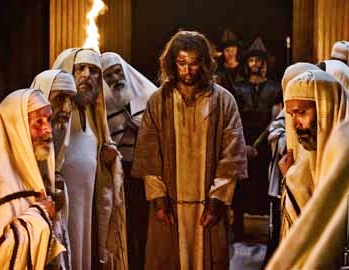




 Clear Bible