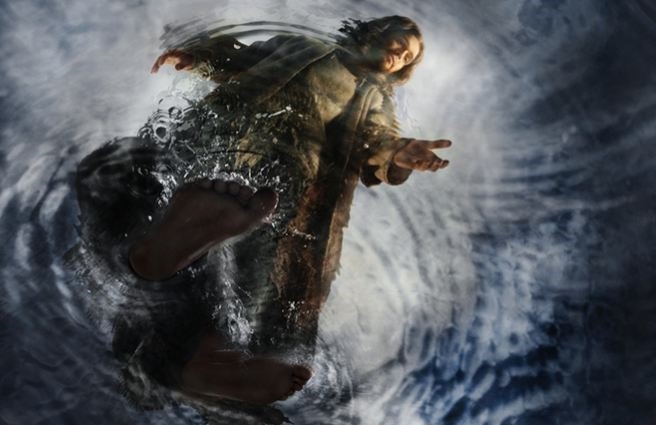
THE COST OF FOLLOWING JESUS

self grave

We are not necessarily called to an life of increasing comfort and ease. We are not called specifically to get more and more financially secure. We aren’t even directly called to success, or even excellence. What we are definitely called to is the cross. A faith that says: “Yes I believe, but not so much that I would give up my life for him,” is not a faith that truly grasps who Jesus is.


To listen to the sermon, click the play button:

To download, right click on the link (or do whatever you do on a Mac) and save it to your computer: Download Matthew Part 55


Matthew #55 . Matthew 16:20-27

I’m afraid that I’m going to have to take this section slowly also. Don’t blame me: blame Jesus, for saying such profound things. Let’s start with this:

And He gave the disciples orders to tell no one that He was the Messiah. (Matt 16:20, HCSB)

It is natural to read this, do a double take and then go “Say What?! Why wouldn’t he want people to know that he is the Messiah?” We have considered this briefly before, when Jesus told various people that he healed to keep silent about who healed them. In fact Jesus gives us a clue by what he says next:

From then on Jesus began to point out to His disciples that He must go to Jerusalem and suffer many things from the elders, chief priests, and scribes, be killed, and be raised the third day. (Matt 16:21, HCSB)

In fact, he says this partly as an explanation for why they should not tell people that he is the Messiah. As far as Jesus was concerned, there were three dangers with the disciples telling people he was the Messiah at this point. The first thing is that if enough people genuinely trusted him as Peter and the others did, no one would ever crucify him – and his crucifixion was a necessary part of his mission on earth. The other possibility is that his support among the people would grow so quickly that the authorities would have him killed before he was done training his apostles. Third, his work as the Messiah would not complete until the resurrection, the ascension and the coming of the Holy Spirit. His disciples simply would not grasp the whole message until all that had happened. They really were not supposed to start evangelizing until Pentecost.

Next comes Peter’s misplaced rebuke:

Then Peter took Him aside and began to rebuke Him, “Oh no, Lord! This will never happen to You! ”

But He turned and told Peter, “Get behind Me, Satan! You are an offense to Me because you’re not thinking about God’s concerns, but man’s.” (Matt 16:22-23, HCSB)

Remember how just a few minutes earlier, Jesus was giving Peter the keys the kingdom? Here we discover that those keys can’t lock something that the Lord has already decided be opened, or unlock what the Lord has decided to close. I think this little exchange is extremely relevant in our world today. The essence of it this: Peter, thinking he has the authority of God to do so, is trying to bypass the cross. He is trying to assert man’s perspective, completely missing, and even possibly trying to reject, God’s view.

This is one of the reasons I find the prosperity gospel, with all its emphasis on success, so offensive. What is even worse is that many churches who do not preach “prosperity” still often (perhaps unwittingly) pick up on the “success mentality.” Bigger is always assumed to be better. More people, more followers, more money is assumed to mean more kingdom impact. For far too many people, externally measurable success must mean God’s approval.

Perhaps they forget that greatest impact ever had on earth for the kingdom of God was made by a single person who died alone, rejected and abandoned. Perhaps they forget that the Holy Spirit spread the gospel in the early days of Christianity by dismantling the Jerusalem mega-church and scattering its members all over the place (really. Read Acts 8). Perhaps they forget that Abraham was a nomad with no permanent home, or that the anointed king, David, wandered for years like a criminal in the wilderness, or that Ezekiel, Jeremiah and Daniel were rejected and persecuted, and very few people listened to them. The writer of Hebrews reminds of others who

experienced mockings and scourgings, as well as bonds and imprisonment. They were stoned, they were sawed in two, they died by the sword, they wandered about in sheepskins, in goatskins, destitute, afflicted, and mistreated. The world was not worthy of them. They wandered in deserts and on mountains, hiding in caves and holes in the ground. (Heb 11:36-38, HCSB)

The world was not worthy of them. Too often, we want to be worthy of the world, instead of realizing that the rejection of the world often is a sign that we are on the right path. Peter wanted to do things the world’s way. “We’ve got the Messiah. Now it’s on to glory! Come on, Jesus, no more of this nonsense about dying and being rejected – you’re the Messiah.” In the language of many Christians today, it might be something like this: “Your words have power. Don’t speak the negative. Speak only the good, and it will come to pass. Stop speaking about death and pain. This will never happen to you. Claim the victory!”

We want to go straight to the glory, and skip the pain. That’s understandable; it’s human nature. Even Jesus himself was tempted in that way. But we forget something that Jesus said right here: that the true path to glory always leads through the cross:

Then Jesus said to His disciples, “If anyone wants to come with Me, he must deny himself, take up his cross, and follow Me. For whoever wants to save his life will lose it, but whoever loses his life because of Me will find it. What will it benefit a man if he gains the whole world yet loses his life? Or what will a man give in exchange for his life? (Matt 16:24-26, HCSB)

Jesus never promised to enrich us in this life. He never said that everything would work out the way we want it to. He never said “Speak what you want and it will come into being.” He never said, “make it your goal to have a big church.” Instead, what he said was, “You want to follow me? Then deny yourself, your wants, and be ready to die to everything except me. If necessary, be ready to even physically die for me.”

Now, I am not trying to eliminate any hope you have for a better life now. We can find great joy, satisfaction, peace, love, grace and fulfillment in following Jesus, even in this life. But to follow Jesus in the first place, we have to deny ourselves and take up our cross. Joy in this life starts when we give up on the world’s way of doing things, and quit wanting what the world says we should want. To put it plainly, to get the joy that Jesus offers, we need to accept the cross.

Let’s look at the apostle Paul for an example. He did not live a life free from all trouble or hardship. He did not accumulate wealth, or have a nice house, or a great means of transportation (or anything equivalent to a nice car). For Jesus’ sake, he was beaten, imprisoned, slandered, and mocked. Even some of the people that he taught did not really respect him. He wasn’t considered an impressive public speaker. He started a number of churches, yet all of them were pretty small while he was in charge. Some of them apparently did not remain very spiritually healthy. A few them apparently didn’t last. He even had chronic health issues that were never cleared up (as far as we know). There is very little about Paul’s life that is attractive to the world. There are even very few Christians (at least in America) who aspire to be like Paul in these ways.

And yet, Paul, through his writing, records what he considers a good life. He was engaged in interesting, challenging and fulfilling work. He got to travel extensively. He found joy in his calling, and even in his daily experiences. From the outside, Paul’s life looks pretty tough. But from the inside, from his own perspective, he lived in joy.

And in this I rejoice. Yes, and I will rejoice because I know this will lead to my deliverance through your prayers and help from the Spirit of Jesus Christ. My eager expectation and hope is that I will not be ashamed about anything, but that now as always, with all boldness, Christ will be highly honored in my body, whether by life or by death. For me, living is Christ and dying is gain. (Philippian 1:18-21)

Paul wrote this while in prison, while other people were trying to take away his influence in the church! Even in these circumstances, he had joy. I don’t think it was a shallow happiness – it was an abiding sense that the life and power of Jesus in him were greater than the worst that the world could throw at him.

He wrote to the Corinthians:

We are pressured in every way but not crushed; we are perplexed but not in despair; we are persecuted but not abandoned; we are struck down but not destroyed. We always carry the death of Jesus in our body, so that the life of Jesus may also be revealed in our body. (2Cor 4:8-10, HCSB)

He was not “living the dream life” at least, not as the world sees it, but he was living out the call of the cross: carrying the death of Jesus in his body so that the life of Jesus would also be revealed. He found great joy in living this way:

I have great confidence in you; I have great pride in you. I am filled with encouragement; I am overcome with joy in all our afflictions. (2Cor 7:4, HCSB)

The bible is very clear that we can have joy on the inside, regardless of what happens on the outside:

Consider it a great joy, my brothers, whenever you experience various trials, knowing that the testing of your faith produces endurance. But endurance must do its complete work, so that you may be mature and complete, lacking nothing. (Jas 1:2-4, HCSB)

Therefore, since we have been declared righteous by faith, we have peace with God through our Lord Jesus Christ. We have also obtained access through Him by faith into this grace in which we stand, and we rejoice in the hope of the glory of God. And not only that, but we also rejoice in our afflictions, because we know that affliction produces endurance, endurance produces proven character, and proven character produces hope. This hope will not disappoint us, because God’s love has been poured out in our hearts through the Holy Spirit who was given to us. (Rom 5:1-5, HCSB)

Paul answered Jesus’ call to take up his cross daily and follow. He did find hardship in doing so. But he also found hope, peace and joy, time after time:

Now may the God of hope fill you with all joy and peace as you believe in Him so that you may overflow with hope by the power of the Holy Spirit. (Rom 15:13, HCSB)

I wrote this very thing so that when I came I wouldn’t have pain from those who ought to give me joy, because I am confident about all of you that my joy will also be yours. (2Cor 2:3, HCSB)

I don’t say this out of need, for I have learned to be content in whatever circumstances I am. I know both how to have a little, and I know how to have a lot. In any and all circumstances I have learned the secret of being content — whether well fed or hungry, whether in abundance or in need. I am able to do all things through Him who strengthens me. Still, you did well by sharing with me in my hardship. (Phil 4:11-14, HCSB)

We are not necessarily called to an life of increasing comfort and ease. We are not called specifically to get more and more financially secure. We aren’t even directly called to success, or even excellence. What we are definitely called to is the cross. It is true, the Lord promises glory – but that comes later. Jesus’ own life demonstrates that:

Make your own attitude that of Christ Jesus, who, existing in the form of God, did not consider equality with God as something to be used for His own advantage. Instead He emptied Himself by assuming the form of a slave, taking on the likeness of men. And when He had come as a man in His external form, He humbled Himself by becoming obedient to the point of death — even to death on a cross. For this reason God highly exalted Him and gave Him the name that is above every name, so that at the name of Jesus every knee will bow — of those who are in heaven and on earth and under the earth — and every tongue should confess that Jesus Christ is Lord, to the glory of God the Father. (Phil 2:5-11, HCSB)

Yes, Jesus is now exalted, and he shall be even more exalted when every single soul confesses the truth of who he is, like Peter did. But before all that, he emptied himself in humility and obedience and suffered humiliation, rejection and death. We can’t skip the cross. The only path to glory is through it.

I want to take more time later and talk about specifically what it means to follow Jesus by taking up your cross. But for now, I think the first thing is to hear the call and respond to it. We need to understand that this foolishness in the eyes of the world. We need to give up our own ambitions and take Jesus on his terms, not our own.

It is a life involving sacrifice – what do “deny yourself” and “lose your own life” mean if not some sort of sacrifice? But Christians like Paul show us that when we take Jesus on his terms, when we give up our own, it is also a life of joy, wonder, fulfillment, peace and grace.

Too many Christians treat this as optional. We think, “I’ll agree that my sins need to be forgiven. I’ll gladly receive that forgiveness through Jesus. But this business about taking up my cross, denying myself, dying to self – that’s kind of extreme. That’s only for hard-core Christians.” And, God help us, too many of us pastors, fearing to lose church members, have let people continue to think this way. We’ve acted as if there is “Hard-core Christianity,” and “Christianity-lite.”

But listen again to Jesus:

Now great crowds were traveling with Him. So He turned and said to them: “If anyone comes to Me and does not hate his own father and mother, wife and children, brothers and sisters — yes, and even his own life — he cannot be My disciple. Whoever does not bear his own cross and come after Me cannot be My disciple. (Luke 14:25-27, HCSB)

Clear enough for you? There is no “Christianity-lite.” The call is let Him own your life.

You might say that this is the other side of the coin of belief. If we affirm Peter’s confession, with all that it means, then Jesus has the only claim on our ultimate allegiance. If we really believe Jesus is the Messiah, son of God, then we must believe that he has the right to ask everything of us; that nothing, not even our own desires, not even our own life on earth, should be more important to us than him. This is why there is no “Christianity-lite.” A faith that says: “Yes I believe, but not so much that I would give up my life for him,” is not a faith that truly grasps who Jesus is.

Imagine you are trapped in a burning building. Through the smoke and the flames a Firefighter emerges. He tells you that he has 15 years’ experience fighting fires; not only that, but the building you are in is owned by his Father and he knows it like the back of his hand. He says “Follow me, and I will lead you to safety. I may have to ask you to do some pretty scary things at certain points, and you’re going to have to trust me . But if you do what I say I promise you, you will be saved.”

So you follow the Firefighter as he leads you through smoky corridors and strange doorways. Suddenly you come to a place where the path in front of you is filled with flames and fallen debris. The Firefighter says, “the flames are not thick. Put this blanket over you, hold my hand, and I will take you through safely.” If you truly trust the Firefighter, you will do what he says.

But suppose, at this point, you balk and say, “No. I can’t do that, it’s too scary. I’m sure there must be some other way that you haven’t thought of.” The fact that you will not do what he asks reveals that, actually, you do not really believe that he knows the best way to save you. You can say that you believe he is a Firefighter with a lot of experience. You can say that you believe this is his Father’s building and he knows his way around. But if you won’t listen to him when things get tough, it shows that you only trust him as long as there is no risk involved. In fact, you don’t really believe what he has told you.

If Jesus is who he says he is, then he has the right to tell us to follow him through the cross. If he truly is “Messiah, son of God,” with all that it means (which we have studied these last few weeks) then when he says “take up your cross,” we can trust him. Believing that Jesus is Messiah, son of God means trusting him as calls us to the cross. They are one and the same thing. If he has the authority to call us to deny ourselves and even to die for him, then he must be the Messiah, the son of God. If he does not have the authority to do that, then he is not the Messiah, the son of God. The way we respond to this call of the cross reveals what we truly believe.

John records that many people, when confronted with these things, quit following Jesus:

After this many of his disciples turned back and no longer walked with him. So Jesus said to the Twelve, “Do you want to go away as well?” Simon Peter answered him, “Lord, to whom shall we go? You have the words of eternal life, and we have believed, and have come to know, that you are the Holy One of God.” (John 6:66-69, ESV2011)

Peter’s words here, as before, are words of faith. He truly believes that Jesus is the Messiah, the son of God, so what alternative does he have, but to follow him? There is no halfway-Christianity.

Now obviously, we struggle. There are days I whine and complain about having to deny myself. There are days I don’t deny myself. But I don’t think Jesus expects us to follow him perfectly. He knows that our minds and hearts are clouded by our battle with our own flesh, influenced by the sinful world and confused by the devil. What he wants is for us to be on the road of following him and not our own road. I am not just going along with him until his way diverges from what I want. I’m not walking with him only as long as the two of us are going the same direction. However imperfect and weak I am, I am his. I may fall down on the road while following him, I may sometimes have to stop and gather my courage, but I am not on some other road. I think that’s what he’s after.

Next time we will consider more thoroughly what it means to take up our crosses. But we don’t need to know any more than we do at the moment to say “yes” to Jesus.

Why don’t you ask the Holy Spirit right now to give you the strength to do that?

Thanks again for making use of Clear Bible.

I want to remind you again that we are a listener-supported ministry, and that means, first and foremost, that we are supported by your prayers. We need and value your prayers for us.

Please pray that this ministry will continue to be a blessing to those who hear it. Ask God, if it is his will, to touch even more lives with these messages. Ask him to use this ministry in making disciples of Jesus Christ.

Please also pray for our finances. Pray for us to receive what we need. Please pray for us in this way before you give anything. And then, as you pray, if the Lord leads you to give us a gift, please go ahead and do that. But if he doesn’t want you to give to us, that is absolutely fine. We don’t want you to feel bad about it. We want you to follow Jesus in this matter. But do continue to pray for our finances.

If you feel led to give, click on the “donate” tab above for more information about how.

THE KEYS TO THE KINGDOM

keys

A man was meant to be doubtful about himself, but undoubting about the truth; this has been exactly reversed. Nowadays the part of a man that a man does assert is exactly the part he ought not to assert–himself. The part he doubts is exactly the part he ought not to doubt–the Divine Reason. – GK Chesterton


To listen to the sermon, click the play button:

To download, right click on the link (or do whatever you do on a Mac) and save it to your computer: Download Matthew Part 54


Matthew #54 . Matthew 16:13-20 Part C

Jesus says something in these verses that a lot of people wish he had explained a bit more:

“And I tell you, you are Peter, and on this rock I will build my church, and the gates of hell shall not prevail against it. I will give you the keys of the kingdom of heaven, and whatever you bind on earth shall be bound in heaven, and whatever you loose on earth shall be loosed in heaven.”

Many hundreds of years later, after Christianity had become legal and the church had changed from local gatherings of Jesus-followers into a centralized, power-holding institution, these verses were used to justify the position of Pope in the Roman Catholic church. The theory goes that here, Jesus is establishing the office of “Pope,” his chief representative on earth, and installs Peter as the first one. The idea is that this passage teaches that Jesus invests Peter (and his successors) with the “keys of the kingdom.” By the way, this is where we get the popular image of Saint Peter greeting people in front of the “pearly gates;” it is because Peter supposedly has the keys.

Now, I want to point out that a lot of “interpretation” must go into it to make this passage establish the Roman Catholic Papacy. In other words, it doesn’t call Peter the “Pope” or explicitly establish the institution of the Papacy in plain, unequivocal language. I am not saying this to make Roman Catholics angry. The reason I point it out is to show, once again, that clearly, the New Testament we have today is the very same one that was written by the apostles who knew Jesus Christ personally. It was not tampered with by generations who came after the apostles. Certainly, the Roman Catholic church, if it had changed or edited the bible, would have made this passage much more clearly about the Papacy.

Though I do not agree with the Roman Catholic application of this passage, it is not my intention here to attack the Papacy. I think we have more useful things to do with this passage. So may I simply suggest some other ways to understand this passage, and apply them to our lives?

First, it is somewhat interesting to know that in Greek, Jesus is making a play on words. Let me give it to you somewhat literally with the Greek words, and then I’ll explain.

“And I say to you that you are Petros and upon this petra I will build of me the church.”

The Greek word that we translate “Peter” is “petros,” and it means rock. It is the special name that Jesus gave Jesus (prior to this point, we should remember). The second word Jesus uses is petra, which means, more or less, “rock formation.” It is not the same word as the name “Peter,” and it cannot be an affectionate nickname for him, because it is in the feminine gender.

So it seems very doubtful that it is Peter personally upon whom Jesus says he will build his church. I think it is far more likely that Jesus says “upon this rock I will build my church” because he is making a play on words. Bible commentator Matthew Henry reminds us that we don’t get to see expressions and body language in the bible. He writes:

Others, by this rock, understand Christ; “Thou art Peter, thou hast the name of a stone, but upon this rock, pointing to himself, I will build my church.” Perhaps he laid his hand on his breast, as when he said, Destroy this temple (John ii. 19), when he spoke of the temple of his body.

In other words, Jesus could have pointed to himself when he said “upon this rock.” Another possibility is that Jesus meant that he would build the church on the foundation of what Peter has just said, his confession that Jesus is Messiah and son of God, with all that means. I personally favor this interpretation, because, in fact, that is what has happened. The one thing that unifies true Christians all over the world is that Jesus Christ is the Messiah, true God, true man, who died to cleanse us from sin and rose to show his power and give us new life. That is, and always has been, the foundation of the Church (and by “the church” I do not mean any particular institution, but rather, the true spiritual fellowship of those who trust Jesus Christ, no matter where they “attend church”). I am not arguing against the Papacy (though given enough provocation, I would). I am insisting however, that the foundation of the true church is not the apostle Peter, nor the Papacy, but the true confession that Jesus is Messiah and Lord. That has always been true, and I think even most Roman Catholics would agree that without this foundational belief, the Papacy itself would be meaningless.

I want to highlight another thing here. Jesus says, “I will build my church, and the gates of hell will not prevail against it.” Virtually every time the New Testament uses the word “church” it is a Greek word, simply meaning, “the gathering of people with a common purpose .” (Greek: ekklesia; you may recognize that the English word, ecclesiastic comes from this term). In context, of course, it means “the gathering of people who have faith in Jesus.” At its most essential level, that is what a church is – a group of people who are connected to one another and gather together intentionally, and who have faith in Jesus. So the church that Jesus will build refers to the true spiritual fellowship that includes all who trust and obey Him as Lord and Messiah. We aren’t talking about a particular institution, denomination or congregation.

I love that Jesus promises He will build it. It reminds me a little of Psalm 127:1

Unless the LORD builds a house, its builders labor over it in vain; unless the LORD watches over a city, the watchman stays alert in vain. (Ps 127:1, HCSB)

Sometimes we get caught up in the future of the church on earth. Sometimes we are concerned about local congregations; at other times we worry about the whole thing. Jesus is the builder of the church. We can trust him to do it. And the gates of hell can’t withstand the onslaught of grace and truth that comes from those who trust and obey Jesus. This picture not one of the church defending itself while hell attacks – it is the reverse. The idea is that church will attack hell itself, and overcome it through the power of Jesus.

Now, Jesus says some other things also. He adds: “I will give you the keys of the kingdom of heaven, and whatever you bind on earth shall be bound in heaven, and whatever you loose on earth shall be loosed in heaven.” I need to teach with integrity here. In Greek, “you” is singular. In other words, Jesus directed these comments specifically to Peter, not to all the disciples. However, this is not a problem for me, nor should it be for you. God directed many promises specifically to Abraham. He made the first promise of the Messiah specifically to Eve. He made many promises directly and personally to David. This is how the Lord works throughout scriptures: He speaks to specific people at specific times and places, and yet his promises also encompass all come after, those who believe. The individuals who first received them stood as representatives of those who would come after, and believe what God had said.

So Paul writes, for example:

Just as Abraham believed God, and it was credited to him for righteousness, then understand that those who have faith are Abraham’s sons. Now the Scripture saw in advance that God would justify the Gentiles by faith and told the good news ahead of time to Abraham, saying, All the nations will be blessed through you. So those who have faith are blessed with Abraham, who had faith. (Gal 3:6-9, HCSB)

Matthew Henry writes of our verses in Matthew 16:

The Old Testament promises relating to the church were given immediately to particular persons, eminent for faith and holiness, as to Abraham and David; which yet gave no supremacy to them, much less to any of their successors; so the New-Testament charter is here delivered to Peter as an agent, but to the use and behoof of the church in all ages, according to the purposes therein specified and contained.

The gift and promise here is for every believer in Jesus Christ, Son of God. Paul says, if we have the faith of Abraham, we also have the promises that were given to him. I add, if we have the faith that Peter had, we also have the promises given to him. So, yes, these words (in Matthew 16) were spoken directly and specifically to Peter. However, Jesus says almost exactly the same thing a little while later, when he is teaching about how to deal with his followers who are struggling with sin:

I assure you: Whatever you bind on earth is already bound in heaven, and whatever you loose on earth is already loosed in heaven. (Matt 18:18, HCSB)

The second time Jesus says it (in 18:18) the Greek “you” is plural – in other words, the next time Jesus says this, he makes it clear that he is talking to all of his disciples. John records Jesus saying something similar. John’s Greek is pretty rudimentary (though better than mine) but he makes it clear that Jesus is talking to all the disciples when he says:

Jesus said to them again, “Peace to you! As the Father has sent Me, I also send you.” After saying this, He breathed on them and said, “Receive the Holy Spirit. If you forgive the sins of any, they are forgiven them; if you retain the sins of any, they are retained.” (John 20:21-23, HCSB)

So, what is this business of binding loosing that Jesus promises to Peter, the disciples and, through them, to us? To understand it, we need one more brief note about the Greek. The HCSB is the best English translation of these verses that I have found, and I have used it in this message. However, I’d like to give you the most literal rendering I can:

Whatever you might bind on earth, it shall have already been bound in heaven; whatever you might loosen on earth, it shall have already been loosened in heaven.

The point is this. It is not about us, or even Peter, telling heaven what to do. It is Peter (and us) expressing on earth what has already been decided in heaven. By the way, this is confirmed by Peter’s screw-up just a few verses later. Jesus says he has to go to Jerusalem and die. Peter, probably flush with these words of Jesus, tries to “bind” the upcoming death of Jesus.

Then Peter took Him aside and began to rebuke Him, “Oh no, Lord! This will never happen to You! ”

But He turned and told Peter, “Get behind Me, Satan! You are an offense to Me because you’re not thinking about God’s concerns, but man’s.” (Matt 16:22-23, HCSB)

To put it mildly, Peter’s “binding” of something contrary to God’s will did not work out very well. We can see from this incident that Jesus did not give Peter a blank check. Just because Peter wanted it or said it did not mean it was God’s will. Jesus tells him “you are not thinking about God’s concerns, but man’s.” In that case, Peter has no authority to bind or loosen anything. Nor, thankfully, does anyone else. So this authority to bind or loose is simply the authority for a human being to express the will of Heaven on earth. To the extent that we express what has already been bound or loosed in heaven, we have authority. To the extent we do not, we have no authority. Whatever we “bind” isn’t actually bound unless it is also heaven’s will. But if it is, according to the scripture, according to God’s will, we puny humans have the authority to declare it done.

Jesus is saying that he will use human instruments to do his will and work in the world. When a Christian declares the good news, it is as if Jesus himself is speaking. When a Christian preaches the law, it is as if Jesus himself is speaking.

In a way this goes beyond our typical approach of “in my humble opinion.” No, if it has already been done in heaven, then it is not just my humble opinion. My words spoken in heaven’s authority do have heaven’s authority. GK Chesterton wrote:

What we suffer from to-day is humility in the wrong place. Modesty has moved from the organ of ambition. Modesty has settled upon the organ of conviction; where it was never meant to be. A man was meant to be doubtful about himself, but undoubting about the truth; this has been exactly reversed. Nowadays the part of a man that a man does assert is exactly the part he ought not to assert–himself. The part he doubts is exactly the part he ought not to doubt–the Divine Reason.

Saying “that’s just my opinion” makes you the important part of the equation: It’s your opinion. It asserts you, not the truth you are declaring. Instead, we might say, “I know I personally am nothing, but this is what the Bible says…” My opinion is not worth sharing. But the Truth? I don’t need to be reticent about that, because it is not my personal property.

All of this leads to a natural question: How do we know that what we are doing has already been done in heaven?

Jesus has already given us some clues. Remember how he taught the disciples (and us) to pray? “Your will be done, your kingdom come, on earth as it is heaven.” When we pray this way, the Lord often answers by helping us to get in step with his will and his kingdom. So, to “bind” or “loosen” correctly, we should learn to pray for the kingdom and will of heaven in our lives, and on earth.

Second, Jesus says all this to Peter after Peter’s confession that Jesus is the Messiah, the Son of the Living God, with all that means. We must make sure that what we “bind” or “loosen” is consistent with this confession, with who Jesus truly is.

Let me give you an example of “binding” and one of “loosening.”

Many years ago, a married man who professed to be a Christian began having an affair. When he was found out, he did not respond with repentance or sorrow for his sin. Instead, he tried to justify the affair. He invited the other woman to live with he and his wife, and told me that he wasn’t having an affair at all, he had just married a second wife, like Jacob or David. His wife, who had major self-esteem struggles at that point, went along with it, but it was a terrible, awful experience for her.

Finally, I had a very difficult conversation with him. I know what the Bible says about marriage and sex. I know what it says about sin generally, and repentance, and persisting in sin. I said to him, “You are trying to justify this, but I am here, in front of you, meeting your eyes, speaking with my voice and I am telling you, with the authority of Jesus, that you are living in sin. No one is perfect, and the Lord forgives all who repent, but you have not repented; instead, you keep on in a lifestyle of sin, claiming there is nothing wrong with it. The longer you wait to repent, the worse it will be for you. If you continue to refuse to repent, eventually your choice to hold on to sin will take you so far from God that you will be destroyed. You can’t get there by accident. You know what you are doing. Just in case you wonder, I am telling you, I am warning you, this sin will destroy you if you don’t repent.”

I grieve to tell you that this man never did repent. He was a good friend, and I cared about him deeply. He held on to his sin. He was thirty-five at the time this began, and though he smoked, and drank too much, he was in pretty good health. Quickly after this, however, his health failed, and he died within ten years.

I was “binding” his sins. In other words, I was communicating the biblical truth that if we do not repent, if we persist in an ongoing lifestyle of sin when we know better, if we refuse to even admit we are sinning, we are actually refusing the forgiveness that Jesus offers us. This is neither more nor less than what the bible says about it. I wasn’t “acting on my own authority.” I was saying what the bible says. Sometimes, hopefully not very often, we need somebody to confront us with physical presence (I do not mean violence I just mean simply being there) and a physical voice and say “knock it off! You are doing wrong and it needs to stop.” Sometimes we need somebody in front of us who can point out our self-deception and tear apart our self-serving justifications. Actually, this need is well known in secular addiction treatment, and it is called an “intervention.”

This “binding,” though necessary, is often a very difficult thing. But when you think about it, it is actually just one more way in which God can show grace to sinners. This man knew what the Bible said about sex and marriage. He knew when he started the affair that he was wrong. But through a fellow believer (in this case it was me) God was giving him yet one more chance. The Lord had every right to hold him accountable for what he knew, and yet God sent me to plead with him one more time. Far from being judgmental, this was the Lord doing all that he could to try and bring this man to repentance.

Now let me give you a happier example. Around that same time, a different young man came to me. He confessed that he was addicted to pornography. He was attending a local seminary to become a pastor, and he was sure that his sin had disqualified him from ministry; he wasn’t even sure, deep in his heart, that he was forgiven. The main difference between this guy and the first man was that this second young man was deeply broken up about his sin. He did not try to justify it. He did not want to do it any longer. He knew the bible pretty well, and so I reminded him of these verses, and then said, “OK, now look me in the eye. You can see my face, you can hear my voice. Jesus is speaking to you right now just as surely as I am. And what he says, and what I say, is that you are entirely forgiven. There is no condemnation for those who are in Christ Jesus (Romans 8;1). You have been made clean by the word that is spoken to you (John 15). If you are in Christ, you are a new creation; the old has passed away, the new has come (2 Corinthians 5;17). Your sin was absolutely destroyed on the cross. Your real life is in heaven with God (Colossians 3), your spirit is seated with Christ in heavenly places (Ephesians 1). You are dead to sin, yes really (Col 3, Romans 6). You – are – forgiven.”

Now, obviously I was quoting various Scriptures: either verbatim or repeating the gist of it. This young man could have looked in his Bible and found the same verses and read them for himself. But there is something powerful and gracious about hearing somebody else directly tell you what the Lord says in the Bible. It is vital for us to interact with the Lord alone. But it is also vital for us to be connected to each other and to sometimes hear another person declare the truth of Scripture to you.

Some of us are very suspicious of our own motives, and so we don’t easily let our own selves off the hook. For people like that, it can be a wonderful, grace-filled experience to have someone else look you in the eye and say “You are forgiven. You truly are.” This is the gift that Jesus gives Peter, and to the whole church: that we can hear flesh and blood speak the truth to us. Jesus is saying, “I am giving you authority to speak my words to each other, so that you don’t have to wonder if it is real or not; you don’t have to question your own motives.”

So when Kathy says, “I am telling you what you are doing is a sin,” you know that you need to knock it off. And when Tom says to you, “you are forgiven,” you really are forgiven.

Let the Lord speak to you today.


Thanks again for making use of Clear Bible.

I want to remind you again that we are a listener-supported ministry, and that means, first and foremost, that we are supported by your prayers. We need and value your prayers for us.

Please pray that this ministry will continue to be a blessing to those who hear it. Ask God, if it is his will, to touch even more lives with these messages. Ask him to use this ministry in making disciples of Jesus Christ.

Please also pray for our finances. Pray for us to receive what we need. Please pray for us in this way before you give anything. And then, as you pray, if the Lord leads you to give us a gift, please go ahead and do that. But if he doesn’t want you to give to us, that is absolutely fine. We don’t want you to feel bad about it. We want you to follow Jesus in this matter. But do continue to pray for our finances.

If the Lord does lead you to give, just use the Paypal Donate button on the right hand side of the page. You don’t have to have a Paypal account – you can use a credit card, if you prefer. You can also set up a recurring donation through Paypal. We can make this tax-deductible if you just mention that it want it to be so in the “note” part of the transaction.

You could also send a check to:

New Joy Fellowship

917 Canyon Creek Drive

Lebanon, TN 37087

Just put “Clear Bible” in the memo. Your check will be tax-deductible.

Thank for your prayers, and your support!

THE BLESSING OF FAITH

BLESSING OF FAITH

All of this should be cause for great comfort for us – our very belief is evidence of God’s work in us. If you, like Peter, believe that Jesus is the Messiah, the Son of the Living God, you are blessed! It means that God himself is at work in your heart. It means that our trials and grief and suffering in this life are not the full story.


To listen to the sermon, click the play button:

To download, right click on the link (or do whatever you do on a Mac) and save it to your computer: Download Matthew Part 53


Matthew #53 . Matthew 16:13-20 (Part B)

Bible passages like the one we have been studying these past few weeks strike me as extremely important. As I have been working on these past few messages, I have found myself hoping and praying that more and more people can hear them.

That is one reason I deeply appreciate your partnership in prayer. It is a great joy to me to know that some of you are praying along with us that the Lord uses this ministry to get his message out to the world. We aren’t the only ministry preaching God’s word, not by a long shot; but I truly believe that we do have responsibility for one small part of what God wants to do in the world during our lifetimes. Please pray that his purposes are fulfilled in and through Clear Bible. Please pray for protection and provision for me and my family.

Another thing I’d like prayer for is the idea of getting more “space” on the internet to archive more sermons. The hosting for our sermons is relatively inexpensive, but it is also limited. I recently had to delete about a hundred old sermons in order to make room for new ones. The great thing about the internet is that someone could come along and benefit from this sermon years from now. But to make that possible, we’re going to have change some things. Pray for guidance in this process, and technical help.

We value your prayer partnership above all. We do also welcome your financial partnership, if the Lord leads you to give. Please don’t feel guilty or bad if he does not. If the Lord does lead you to give financially, you can, just use the Paypal Donate button on the right hand side of the page. You don’t have to have a Paypal account – you can use a credit card, if you prefer. You can also set up a recurring donation through Paypal. We can make this tax-deductible if you just mention that it want it to be so in the “note” part of the transaction.

You could also send a check to:

New Joy Fellowship

917 Canyon Creek Drive

Lebanon, TN 37087

Just put “Clear Bible” in the memo. Your check will be tax-deductible.

Thank for your prayers, and your support!

~

Last time we considered the substance of Peter’s statement that Jesus is the Christ (Messiah), Son of the Living God. Theologians sometimes call a statement like this a “confession.” Many people think “confessing” is the same as “admitting,” but there are subtle and important differences. To confess in a biblical sense means “to say with,” or “to agree with the truth.” So, when we confess our sins, we are agreeing with the truth that the Bible teaches about those actions: namely, that they are wrong (they are sins) and also that we have done them. You see, it isn’t just admitting that we sin, it is agreeing with what the bible says about it. Confession can also be positive. You may have been in a church service where everyone said the Apostles’ Creed together. The pastor probably said something like: “Let us confess our faith together in the words of the Apostles’ Creed.” We are agreeing with the truth – thus, confessing. So Peter is agreeing with something that was already true – the identity of Jesus.

Now Jesus tells us several very important things about this confession:

He says, “Blessed are you, Simon Bar-Jonah! (literally, “Simon, son of Jonah”). This confession blesses those who make it. Actually, it is hard to overstate how much blessing comes from truly believing and confessing that Jesus is the Messiah, the Son of the Living God. To agree with this truth, to submit to the implications of it – that is, to personally submit to Jesus Christ and put your trust in Him – this is the only path to Life, according to the Bible. Jesus says elsewhere:

“I am the way, the truth, and the life. No one comes to the Father except through Me. (John 14:6, HCSB)

John writes:

The one who believes in the Son of God has this testimony within him. The one who does not believe God has made Him a liar, because he has not believed in the testimony God has given about His Son. And this is the testimony: God has given us eternal life, and this life is in His Son. The one who has the Son has life. The one who doesn’t have the Son of God does not have life. I have written these things to you who believe in the name of the Son of God, so that you may know that you have eternal life. (1John 5:10-13, HCSB)

That Life starts now. Even now, before we die, through Jesus we can find increasing wholeness in our spirits and souls. Even now, we can begin to experience love, joy, peace, patience, kindness, gentleness, goodness faithfulness and self-control in increasing measures.

But of course, it doesn’t stop when we die. The bible is pretty clear that we can’t even begin to grasp the wonder and joy and hope of the life to come, but it gives us some very exciting hints. I think this is one of the great biblical truths, one of the great Christian hopes. Our trials and grief and suffering in this life are not the full story. The Life after death – promised in Jesus alone – gives meaning and hope and joy to all things now, even the ones that seem to defy explanation. 1 Corinthians says:

What eye did not see and ear did not hear, and what never entered the human mind — God prepared this for those who love Him. (1Cor 2:9, HCSB)

Life begins now, but it continues on into eternity in a way that has “never entered the human mind.” If this is not so, says Paul:

If we have put our hope in Christ for this life only, we should be pitied more than anyone. (1Cor 15:19, HCSB)

Our hope is much, much greater than simply a good life for 100 years on earth. This life we have in Jesus makes sense of things that are otherwise terrible tragedies.

For I consider that the sufferings of this present time are not worth comparing with the glory that is going to be revealed to us. (Rom 8:18, HCSB)

Now in this hope we were saved, yet hope that is seen is not hope, because who hopes for what he sees? But if we hope for what we do not see, we eagerly wait for it with patience. (Rom 8:24-25, HCSB)

We know that all things work together for the good of those who love God: those who are called according to His purpose. (Rom 8:28, HCSB)

All of this begins with truly confessing, along with Peter, that Jesus is the Messiah, the Son of the Living God. Those who confess it are blessed.

There is another thing. Jesus tells Peter he is blessed because “flesh and blood” did not reveal it to Peter, but rather the Father in Heaven. The only reason Peter is able to really trust and obey Jesus as Messiah and Lord, is because the Father has enabled him to do so. Paul put it like this:

Now concerning what comes from the Spirit: brothers, I do not want you to be unaware. You know that when you were pagans, you used to be led off to the idols that could not speak. Therefore I am informing you that no one speaking by the Spirit of God says, “Jesus is cursed,” and no one can say, “Jesus is Lord,” except by the Holy Spirit. (1Cor 12:1-3, HCSB)

Obviously, anyone can pronounce the words “Jesus is Lord.” But what Paul means is that no can say it and truly believe it unless God has enabled him or her to do so. I think this is exactly what Jesus is saying to Peter. If you truly believe Jesus is Lord and Messiah, it is because God has done something in your heart. This is true of all believers. To make Peter’s confession (and believe it) is a sign that God is at work in us, and we are saved. There are many places in the bible that demonstrate that faith in Jesus as the Messiah comes about as a gift from God. I will italicize the relevant parts in the following verses:

Now God has revealed these things to us by the Spirit, for the Spirit searches everything, even the depths of God. For who among men knows the thoughts of a man except the spirit of the man that is in him? In the same way, no one knows the thoughts of God except the Spirit of God. Now we have not received the spirit of the world, but the Spirit who comes from God, so that we may understand what has been freely given to us by God.  (1Cor 2:10-12, HCSB)

This is a reiteration of what Jesus said to Peter. This confession is given to us through the Holy Spirit.

For you are saved by grace through faith, and this is not from yourselves; it is God’s gift — not from works, so that no one can boast. For we are His creation, created in Christ Jesus for good works, which God prepared ahead of time so that we should walk in them. (Eph 2:8-10, HCSB)

This is very clear – even our faith is “not from ourselves, it is God’s gift.”

[Jesus said]: “No one can come to Me unless the Father who sent Me draws him, and I will raise him up on the last day.” (John 6:44, HCSB)

It’s hard to be clearer than that. If we come to Jesus, it is because the Father has drawn us.

He made known to us the mystery of His will, according to His good pleasure that He planned in Him for the administration of the days of fulfillment — to bring everything together in the Messiah, both things in heaven and things on earth in Him. (Eph 1:9-10, HCSB)

The mystery of the Messiah was made known to us by God, just as it was to Peter.

For it has been given to you on Christ’s behalf not only to believe in Him, but also to suffer for Him, (Phil 1:29, HCSB)

To believe in the Messiah was “given to us.”

For it is God who is working in you, enabling you both to desire and to work out His good purpose. (Phil 2:13, HCSB)

God is the one working in us for His good purpose.

I give thanks to my God for every remembrance of you, always praying with joy for all of you in my every prayer, because of your partnership in the gospel from the first day until now. I am sure of this, that He who started a good work in you will carry it on to completion until the day of Christ Jesus. (Phil 1:3-6, HCSB)

The “good work” is salvation – and it was started in us by God Himself, and will be carried to completion by Him.

All of this should be cause for great comfort for those of us who believe – our very belief is evidence of God’s work in us. If you, like Peter, believe that Jesus is the Messiah, the Son of the Living God, you are blessed! It means, among many wonderful things, that God himself is at work in your heart.

But what about those who do not believe? Does this mean God isn’t at work in them, or doesn’t care about them? Not at all. The verses I have already shared make it clear that even faith is a gift from God. But, because God wants love to be real, the choice to receive God must also be real. Scripture shows that though we don’t create our own faith, or accomplish our own salvation, human beings can refuse and reject the gift that the Lord offers. I’ll share some more verses, again marking important parts with italics. Jesus says, later in Matthew:

“Jerusalem, Jerusalem! She who kills the prophets and stones those who are sent to her. How often I wanted to gather your children together, as a hen gathers her chicks under her wings, yet you were not willing! (Matt 23:37, HCSB)

For thus said the Lord GOD, the Holy One of Israel, “In returning and rest you shall be saved; in quietness and in trust shall be your strength.” But you were unwilling, and you said, “No! We will flee upon horses”; therefore you shall flee away; and, “We will ride upon swift steeds”; therefore your pursuers shall be swift. (Isa 30:15-16, ESV2011)

The Lord’s desire is always for all of us to receive the gift of grace through faith when he offers us. But some people are not willing. Some people say “No.” The negative result is their own responsibility, not the Lord’s fault.

Woe to them, for they fled from Me; destruction to them, for they rebelled against Me! Though I want to redeem them, they speak lies against Me. (Hos 7:13, HCSB)

“You stiff-necked people with uncircumcised hearts and ears! You are always resisting the Holy Spirit; as your ancestors did, so do you. (Acts 7:51, HCSB)

God does enables us to receive his grace through faith, but he does not force us to do so. Also, the fact that someone has so far resisted God’s grace does not mean he or she always will. The apostle Paul violently rejected Jesus for a number of years; but finally he repented and did receive grace and salvation through the Messiah.

Now, I want to make something clear. Jesus’ words to Peter are also words to us. We don’t need to go around wondering if we have rejected God or not. Although we are called to continue trusting and obeying Jesus, we don’t need to do it perfectly, and we don’t need to fear that we will somehow accidentally reject him in the future. As we trusted him to save us, we can trust him to continue to keep us. Your very faith is evidence that God has got you. You don’t have to worry.

Let’s close by meditating on one of my favorite passages of scripture:

What then are we to say about these things? If God is for us, who is against us? He did not even spare His own Son but offered Him up for us all; how will He not also with Him grant us everything? Who can bring an accusation against God’s elect? God is the One who justifies. Who is the one who condemns? Christ Jesus is the One who died, but even more, has been raised; He also is at the right hand of God and intercedes for us.

Who can separate us from the love of Christ? Can affliction or anguish or persecution or famine or nakedness or danger or sword? As it is written: Because of You we are being put to death all day long; we are counted as sheep to be slaughtered.

No, in all these things we are more than victorious through Him who loved us. For I am persuaded that not even death or life, angels or rulers, things present or things to come, hostile powers, height or depth, or any other created thing will have the power to separate us from the love of God that is in Christ Jesus our Lord! (Rom 8:31-39, HCSB)

WHO DO *YOU* SAY JESUS IS?

Who is

Just as it was in the time of the disciples, many people have opinions about Jesus. Some of those opinions have little basis in fact. Many of them are generally positive. But the key question is: who do you say Jesus is? If you don’t know enough to answer, this may be a good place to start.


To listen to the sermon, click the play button:

To download, right click on the link (or do whatever you do on a Mac) and save it to your computer: Download Matthew Part 52


Matthew #52 . Matthew 16:13-20 (Part A)

Now when Jesus came into the district of Caesarea Philippi, he asked his disciples, “Who do people say that the Son of Man is?”

And they said, “Some say John the Baptist, others say Elijah, and others Jeremiah or one of the prophets.”

He said to them, “But who do you say that I am?”

Simon Peter replied, “You are the Christ, the Son of the living God.”

And Jesus answered him, “Blessed are you, Simon Bar-Jonah! For flesh and blood has not revealed this to you, but my Father who is in heaven. And I tell you, you are Peter, and on this rock I will build my church, and the gates of hell shall not prevail against it. I will give you the keys of the kingdom of heaven, and whatever you bind on earth shall be bound in heaven, and whatever you loose on earth shall be loosed in heaven.”

Then he strictly charged the disciples to tell no one that he was the Christ. (Matt 16:13-20, ESV2011)

It is worth taking a long look at these eight verses, because there is so much packed into this one small passage. First, Jesus asks, “Who do people say the Son of Man is?” I hope you have noticed by now, that sometimes Jesus referred to himself as “the Son of Man.” We considered this briefly before, but I will add some information here. The prophet Ezekiel, when he records God speaking, says something like this: “He said to me, ‘Son of man, speak to the people of Israel and say…’” Ninety-three times Ezekiel records God calling him “son of man,” in this way. The significance of this is that in the case of Ezekiel God chose human flesh to speak his words. I think sometimes that Jesus called himself “son of man” to remind those around him (who would have been familiar with the prophecies of Ezekiel) that he was speaking God’s words to them.

I also believe that at a certain level Jesus found it unique that he was not just “God-the-Son” as he was before he came into the world, but now he was also “son of man,” like Ezekiel, a human instrument of God speaking. You might say, humanity was a kind of new identity for Jesus, and so he often called himself by that name.

There is further significance. Two particular passages in the Old Testament which prophesy about the coming Messiah call him “a son of man.”

I continued watching in the night visions, and I saw One like a son of man coming with the clouds of heaven. He approached the Ancient of Days and was escorted before Him. He was given authority to rule, and glory, and a kingdom; so that those of every people, nation, and language should serve Him. His dominion is an everlasting dominion that will not pass away, and His kingdom is one that will not be destroyed. (Dan 7:13-14, HCSB)

So, by this phrase Jesus is reminding others that he is a messenger from God, embracing his human nature (new since his birth from Mary) and also embracing and reminding others of his identity as the Messiah.

He asks the disciples what others say about him. The answers are interesting. Every one of them is someone who has already died. John the Baptist had already been beheaded at this point, and obviously, many people did not hear anything about Jesus until after John’s death. Hearing his preaching and seeing miracles, perhaps they supposed that John had somehow been resurrected. At the very least, they assumed that spirit of John was somehow manifesting in Jesus.

Elijah, Jeremiah and the other prophets had all died centuries before. Again, the people are either believing that one of the prophets has come back to life, or that Jesus is somehow manifesting the spirit of such a person. All the answers share this in common: the people believed that Jesus was either the physical or spiritual embodiment of some great godly person from the past.

What it amounts to is this: In the general opinion of the people, there was something special about Jesus. However, the answers reveal something else. Though they are willing to give Jesus special honor, they are not willing to grant him the status of being the Messiah, the Lord and savior.

I think this is significant, because most of the world still views Jesus with a similar attitude. Like the people who were alive during his time on earth, many people throughout history and even today, agree that Jesus was something special. The prophet Mohammed attributed many miracles to Jesus, and even said that Jesus lived a sinless life. But Mohammed and Muslims will not grant Jesus the status of Messiah and Lord. They call him only a prophet, no more. Mormons and Jehovah’s witnesses have a special honor for Jesus also. Hindu religious leaders often praise Jesus for his teachings, as do many Buddhists, and even some atheists. Even Jews respect Jesus as an important Rabbi. But all of them stop short of Peter’s confession.

Peter said: “You are the Christ, the Son of the living God.” What does this mean, exactly?

“Christ” is simply the Greek word for the Hebrew “Messiah,” which literally means, “anointed one.” That may or may not be not be helpful. The basic meaning of “Messiah/Christ” is: God’s unique, Holy-Spirit-empowered servant by whom He will save His people and accomplish His purposes in the world. Though many people “foreshadowed” what the Messiah would be like (like David), the Old and New Testaments teach that there is only one true Messiah.

What about: “Son of the Living God?” This means more than meets the eye at first. John, who present at the time, wrote this about Jesus’ son-ship:

In the beginning was the Word, and the Word was with God, and the Word was God. He was with God in the beginning. All things were created through Him, and apart from Him not one thing was created that has been created. Life was in Him, and that life was the light of men. That light shines in the darkness, yet the darkness did not overcome it. (John 1:1-4)….

The Word became flesh and took up residence among us. We observed His glory, the glory as the One and Only Son from the Father, full of grace and truth. (John testified concerning Him and exclaimed, “This was the One of whom I said, ‘The One coming after me has surpassed me, because He existed before me.’ ”) Indeed, we have all received grace after grace from His fullness, for the law was given through Moses, grace and truth came through Jesus Christ. No one has ever seen God. The One and Only Son — the One who is at the Father’s side — He has revealed Him. (John 1:14-18, HCSB)

Here John, teaches us that the “Son-ship” of Jesus means that he shares the same essence with God the Father. There is one God, not three, and yet he is revealed to us in three persons (not three gods): Father, Son and Holy Spirit. One human being = one person. But God is greater than human beings. For God (and God alone) one God = three persons. This is not something we can understand entirely. It is not the type of thing that human beings would ever make up. If you were creating a religion, or even just refining one, you would either go with polytheism (many separate Gods) or single monotheism (just one God, with one “person”), or monism (everything in the universe is just a part of one big whole). All of those are easy to understand and easy to explain. In a man-made religion, these types of verses I am sharing right now would end up in the trash can. On the other hand, if, as we claim, God is infinite and we are not, it stands to reason that we would not be able to fully understand His nature, which gives the Christian doctrine of the Trinity (that is what we are talking about here) a ring of truth that is missing from polytheism, single-monotheism and monism.

To get back to the main point, we know that “Son of God” means that Jesus shared the same essence with God the Father, and directly manifested the glory and purpose of God in a specific time in the history of our planet.

Paul says similar things. In the following passage, he also connects the Son-ship of Jesus (and his shared essence with God) to his work as the Messiah/Christ:

[God the Father] has rescued us from the domain of darkness and transferred us into the kingdom of the Son He loves. We have redemption, the forgiveness of sins, in Him. He is the image of the invisible God, the firstborn over all creation. For everything was created by Him, in heaven and on earth, the visible and the invisible, whether thrones or dominions or rulers or authorities — all things have been created through Him and for Him. He is before all things, and by Him all things hold together. He is also the head of the body, the church; He is the beginning, the firstborn from the dead, so that He might come to have first place in everything. For God was pleased to have all His fullness dwell in Him, and through Him to reconcile everything to Himself by making peace through the blood of His cross — whether things on earth or things in heaven. (Col 1:13-20, HCSB)

So “Messiah/Christ” and “Son of God,” go together. Jesus was fully God (one “person” of the One true, three-person God) before the creation of the world. Nothing was created apart from Him doing the creating. Yet he came to earth and took on human flesh, and became not only God the Son, but also “the son of man,” having human nature as we do. He did this because he was the Messiah, the one who ultimately defeated sin and evil through his death on the cross.

Peter may not have understood every single nuance of this at the moment of his confession in Matthew 16:16, but this is what he was saying, this was his confession; this is what it means to say that Jesus is the Christ, the Son of the Living God.

There are many opinions about Jesus. Our world today is no different in this respect than that of the first disciples. Only the very ignorant refuse to believe that he was a real historical person. Many people recognize the influence he has had on the world, and explain it by calling him a prophet, a great teacher, an angel or something else.

But I believe Jesus asks us the same question that he put to his disciples: “Who do you say I am?”

I don’t want to be overdramatic, but this question is the key question in all of life. Who do you say Jesus is?

The world says all sorts of things about Jesus. Ultimately, however, we each have to grapple personally with what we believe about him. I have a friend who isn’t a Christian. Once, at the end of an email, he said: “Maybe you could put in a good word for me at the pearly gates.”

I responded with this: “My word is no good in heaven. But I can introduce you to the Guy that I’m counting on to get me in.”

It isn’t enough that our friends or relatives know who Jesus is. It isn’t enough to rely on the opinions of educated people about Jesus, or the opinions of religious people, or of wonderful people, or of someone you met at a party. We are all confronted with the same question as the disciples: who do you say Jesus is?

Hopefully, as you have followed along with these sermons, you have learned a thing or two about Jesus. Matthew has recorded that up to this point, Jesus has fulfilled more than a dozen different Old Testament prophecies about the Messiah, including things Jesus couldn’t manipulate, like the manner and place of his birth, and his early life in Egypt. John the Baptist testified that Jesus was the Messiah. At Jesus’ baptism, a voice from heaven said “This is my beloved son. I take delight in him!”

In the sermon on the Mount, Jesus claims greater authority than Moses. He claims to be the fulfillment of the Old Testament. He says that he is the narrow gate. He prophesies that people will call him “Lord,” and drive out demons in his name and do good works in his name.

So far from Matthew we have seen Jesus heal lepers, and blind people, and lame people, and sick people, and a dead girl. He has healed by touching, and also by simply speaking a word. He has driven out demons. He has miraculously fed 18,000 people or more. We have seen him claim the authority to forgive sins, and then prove that claim by healing a paralyzed man. We have seen him calm a storm and walk on water.

We have heard Jesus say that following him will bring persecution – but that we should follow him anyway. He claims that if we acknowledge him publicly, he will recognize us before the Father in Heaven – he seems to assume that his recognition in this way is all-important. Jesus has called himself the Lord of the Sabbath, and said that the Father in heaven has entrusted all things to him. We have heard him tell the followers of John the Baptist that he is fulfillment of Old Testament prophecies about the Messiah. He has claimed to have authority over all demonic powers because his power comes from Heaven. He promises to give us rest for our souls, and he did not stop people from worshiping him.

We have spent fifty-two weeks getting to this point in Matthew; there are many more claims and miracles by Jesus than those I have referenced here, and we are only a little more than halfway through Matthew’s gospel. I think when you look at them all together like this, it makes an impact. Clearly, Jesus is not a great teacher, or a great man in any way, if all these claims are false. But if they are true…?

I think sometimes in my own walk of faith, I get caught up in me. I think and pray about what I want God to do in my life. At other times, I am into intercessory prayer: I want God to do something in the lives of others, or the world at large. But today I want us to remember: it is all about Jesus. Jesus is who he is, whether we believe it or not, whether we even think about it or not. And the foundation of our faith should be recognizing Jesus for who is, and worshipping him. This confession of Peter is the great foundational truth of all people who call themselves Christians. It is worth contemplating.

So, I ask you today: who do you say Jesus is?

Thanks again for making use of Clear Bible.

I want to remind you again that we are a listener-supported ministry, and that means, first and foremost, that we are supported by your prayers. We need and value your prayers for us.

Please pray that this ministry will continue to be a blessing to those who hear it. Ask God, if it is his will, to touch even more lives with these messages. Ask him to use this ministry in making disciples of Jesus Christ.

Please also pray for our finances. Pray for us to receive what we need. Please pray for us in this way before you give anything. And then, as you pray, if the Lord leads you to give us a gift, please go ahead and do that. But if he doesn’t want you to give to us, that is absolutely fine. We don’t want you to feel bad about it. We want you to follow Jesus in this matter. But do continue to pray for our finances.

If the Lord does lead you to give, just use the Paypal Donate button on the right hand side of the page. You don’t have to have a Paypal account – you can use a credit card, if you prefer. You can also set up a recurring donation through Paypal. We can make this tax-deductible if you just mention that it want it to be so in the “note” part of the transaction.

You could also send a check to:

New Joy Fellowship

917 Canyon Creek Drive

Lebanon, TN 37087

Just put “Clear Bible” in the memo. Your check will be tax-deductible.

Thank for your prayers, and your support!

JESUS-FOLLOWERS SHOULD AVOID RELIGIOUS PEOPLE


jesusfeet3

The Pharisees were the hard-core legalists, who had no room for trust, or even Jesus, in all their rules. The Sadducees were the cultural “progressives” who compromised in order to fit in with secular society. Faith in a literal messiah was too crude for them, the bible and moral standards unimportant. Jesus said to beware of *both* of these types of religious people.


To listen to the sermon, click the play button:

To download, right click on the link (or do whatever you do on a Mac) and save it to your computer: Download Matthew Part51


Matthew #51. Matthew 16:1-12

Our text this week is another one of those “drive-through” passages of Scripture, at least it has been so for me. You know what I mean: it’s a part of the Bible that you read through pretty quickly, more or less skimming, and then you go on to something more interesting. As always, what helps me to truly engage with the text is to ask questions. And Matthew 16:1-12 presents us with one (at least) very intriguing question.

Here’s the setup. Sometime after the feeding of the 4000, two different groups, the Pharisees and the Sadducees, approach Jesus and basically ask him to prove that he is a Messiah. In essence, They’re asking him to do a magic trick. This is the second time that Pharisees have made such a request, but the first time for the Sadducees. The previous occasion is recorded in Matthew 12:38-42, and we covered it in depth in the sermon: Matthew #40.

Jesus here basically gives them two brief answers. First, he suggests that if they want a sign, they should consider “the signs of the times.” In other words, if they were to step back and look at his ministry so far as a whole, and compare it to the Old Testament, it would be obvious to them that he was the Messiah. Second, he clearly declines to do a miracle-on-the-spot for them. As I mentioned in Matthew #40, and also last time, miracles have a very limited value in convincing people to follow Jesus, and Jesus obviously knew that. Instead, as in Matthew chapter 12, Jesus tells them to look for “the sign of Jonah.” This is a reference to his coming death, burial and resurrection.

After this, they leave, and as they are traveling, the disciples realize that no one has brought along bread to eat. Once again, here is another thing that would not have been included by people making up a religion, or shaping a Bible text to suit their own purposes. The 12 apostles were the founders of the church, heroes of the faith. The New Testament is verifiably their own teaching and writing. If I was making up a religion, I would be reluctant to portray the sources of my doctrine as a bunch of silly fools. Yet, here, as in many places, the apostles look like a bunch of idiots.

First, it’s just stupid that with 12 people traveling together, no one remembered to bring food. Set aside what comes after (which is even worse), just look at it for what it is: they are totally disorganized and impractical. Personally, I think it is genuinely humorous.

Jesus hears their discussion and inserts this cryptic comment: “Watch out and beware of the yeast of the Pharisees and Sadducees.” This is where the disciples look even worse. They’ve just had an encounter with the Pharisees and Sadducees. Not long before that they were present at the feeding the 4000. And yet, they think that Jesus is saying that the Pharisees and Sadducees make bad bread. After all that they’ve been through they are still concerned about physical bread.

Jesus straightens them out, and makes it clear that what he means is that they should beware of the teaching of the Pharisees and the Sadducees. This for me is the most interesting part of the passage, and the one that begs the question: What is the teaching of the Pharisees and the Sadducees? In other words, what was Jesus warning them about?

First, I think it is reasonable to assume that one of the things Jesus is warning his disciples about is the attitude of the Pharisees and Sadducees when they demanded a sign. I want to make sure we understand that there is a difference between having honest doubts which we bring to Jesus, and demanding that Jesus meet our specifications before we will agree to trust him. The apostle Thomas had honest doubts about the resurrection of Jesus, and he expressed them, not as a demand that the Lord somehow prove himself, but merely voicing his inner struggle. I think this is good and right and appropriate. Most Christians struggle with doubt at one point or another. I think it’s a good thing to be honest about those doubts, to express them, but also to be vulnerable and open before the Lord as we seek answers. In other words, we express our inner turmoil, but we don’t demand that God has to meet all of our requirements before we trust him. This attitude of faith combined with honest struggle is beautifully captured by the man who said in Mark 9:24, “I believe, but help my unbelief.”

The Pharisees and Sadducees, however, were demanding that Jesus perform according to their specifications. They are not coming to Jesus and an attitude of struggling faith looking for help. Instead, they are essentially coming to him and saying, “We won’t accept you or listen to you until you prove yourself to us to our satisfaction.” Their starting point is not faith-with-struggle, but rather, a desire to discredit Jesus altogether.

So when Jesus tells his disciples to beware of their teaching, I think he is warning them about this attitude of extreme skepticism. We have already seen that miracles have a very limited value for convincing people who do not want to be convinced. Jesus is saying, “Don’t be like them. Struggling with doubt is one thing, but demanding that the Messiah, the son of God who created the universe, must explain himself to your satisfaction is something completely different.”

I think this is probably the first thing that Jesus means when he tells them to be where the teaching of the Pharisees and Sadducees. But when we investigate further, we find that the teaching of the Pharisees is very different from the teaching of the Sadducees. To lump them together seems almost silly. So does Jesus have anything else in mind with this warning?

To find the answer to that question we need to know more about each group. Let’s start with the Pharisees. In many ways, the Pharisees had a lot in common with Jesus. They took the Old Testament and Jewish religion seriously, they believed in resurrection, and in the Messiah. They were zealous, in fact they were hard-core religious conservatives, and quite popular with ordinary people, though they considered themselves set-apart from the ordinary folks.

However, in their zeal, the Pharisees made God’s Word into sets of external duties, and they made all sorts of extra rules that aren’t found in the Old Testament. Sometimes, they used these extra rules as loopholes to get around other rules. For instance, they said that in order to honor the Sabbath and keep it holy, you could only travel so many steps from your house on a Saturday. However, if on another day, you stashed some bread some distance from your house, when it came to the Sabbath, that stash of your food became the “new border of your house,” so you could travel to that location without counting any of the steps you took against your Sabbath total. Deuteronomy 5:14 commands the Jews to even rest their animals (like donkeys) on the Sabbath. However, the Pharisees made rules declaring that riding a donkey didn’t count as making it work unless you carried a switch to spur it on. In other words, though the Pharisees said they believed in the rules, but were constantly making more rules that helped them get around the ones they didn’t like.

Long before the time of the Pharisees, Moses told the Israelites the essence of what it really meant to be the people of God

“Listen, Israel: The LORD our God, the LORD is One. Love the LORD your God with all your heart, with all your soul, and with all your strength. These words that I am giving you today are to be in your heart. (Deut 6:4-6, HCSB)

But the Pharisees took loving God out of it. They took heart and soul out of it. They turned it into a matter of following rules, and when the rules seemed to too hard, they made new laws that helped them get around the difficult ones. It would have been hard to be a Pharisee and follow all the rules. That’s why they were considered hard-core. But it is much easier to follow rules than to have true internal righteousness, to have true love for God, to really follow him with all your heart, soul and strength. By their rule-following, they eliminated the need for a Messiah to address sin and heal hearts. Their rule-following left no room for forgiveness, no room, in fact, for the work of Jesus.

So, although the Pharisees supposedly thought that the Bible was important and authoritative, more important and more authoritative to them were their own rules and ways of doing things. And by these rules, they had taken the heart out of following God, and taken away the need for a Savior from sin.

The Sadducees were quite different. In the three centuries or so before the birth of Jesus, there was a lot of tumult in the land of Israel. For several hundred years, the Ptolemy dynasty of Greece ruled the area. During this time, a number Jews decided they wanted to fit in with the dominant culture around them. A movement arose among them to adopt the intellectual and philosophical ways of Greek society, and to abandon the more primitive-seeming, “hard-core” approach of classic Jewish religion. The Jews who took this approach became known as Sadducees. They wanted political power and intellectual respectability. The Old Testament was not terribly important to them, per se, and though they certainly considered themselves “Jews,” it was more in a cultural sense than anything to do with their core beliefs. They accommodated to and adapted to the dominant culture, abandoning much of the teaching of the Old Testament in order to do so. When the Roman Empire became dominant, the Sadducees had no trouble switching their allegiance to the Romans, who had adopted much of Greek culture themselves.

The Sadducees also rejected Jesus, but for different reasons than the Pharisees. The Sadducees did not take the Jewish scriptures seriously, so, in the first place, they did not even believe in the Messiah as an actual person. Secondly, they felt that the whole concept of Messiah was politically dangerous – it might lead to strife and even violence and war. Finally, that whole approach to religion was out of style with elites such as they, maybe even gauche. The claims, teachings and actions of the actual person, Jesus Christ, simply did not fit with their world-view.

Under normal circumstances, the Pharisees and Sadducees came down on opposite sides of most issues. They were, in general, political opponents. In some ways, you might say the Pharisees were the “conservatives” and the Sadducees were the “progressives.” But on one thing they agreed: they did not want Jesus challenging their dearly-held beliefs and lifestyle.

So, what else might Jesus have meant by: “beware the teaching of the Pharisees and Sadducees?”

I think we might say that Jesus is warning us about two different problems that come in with religion. One is legalism (associated with the Pharisees). Legalists believe that if they just do the right things, they will be considered right with God. They tend to ignore issues of the heart, mind and soul, and focus only on behavior. Many legalists, like the Pharisees, also find convoluted ways to excuse and justify their own bad behavior, making them also hypocrites. Beware of their teaching!

Unfortunately, sometimes legalists appear to have a lot in common with true Jesus-followers. Jesus had much more in common with the Pharisees than the Sadducees. Officially, legalists generally believe the right things. But there is very little room for Jesus in their rule-following. They’ve taken the heart out of it, literally.

The second thing Jesus warns about is, for lack of a better term, “social religion.” In our day and time, this is associated with religious people who tend toward the “left” end of the political/social spectrum. Personal morality has very little importance for the socially religious. Truth is seen as “flexible,” and the Bible is not particularly valued. What they do value is the respect of the culture around them. They want to fit in with what the majority thinks and does. They do not change the culture around them, though they might wish to think that they do. They will readily attack conservative minorities, thereby hoping to appear as if they are challenging the status quo, when in fact, they are merely agreeing with society at large. Beware of their teaching!

The important thing is that both reject Jesus. They take different paths, and reject him for different reasons, but this is what we must beware of. Hard-core religious legalists may “officially” approve of Jesus but they don’t really want to surrender control to him. They prefer to seek safety in following rules and making others do the same. On the other hand, socially “progressive” Christians may also “officially” approve of Jesus, but when that means anything like admitting the need to be forgiven for actual personal sin, or supporting Jesus’ standards of personal moral conduct, they shudder and back away. They want religion that does not require personal surrender or personal change; they want a religion that is approved by the society around them. The actual teachings of Jesus tend to be too extreme and too absolute to get much approval from culture, so progressives also, set Him aside.

None of this is new. Jesus clearly knew it, as we see from our text today. The apostles also knew it. Paul writes:

For the Jews ask for signs and the Greeks seek wisdom, but we preach Christ crucified, a stumbling block to the Jews and foolishness to the Gentiles. (1Cor 1:22-23, HCSB)

I was going to say that both legalism and progressivism tempt me, but I want to be honest, and the truth is, legalism has never really attracted me. I just don’t have enough energy or desire for control to be a legalist. However, I do know a number of people who struggle with it, and many more who were brought up in it. I think one of the appeals of legalism is that it feels “safe.” You know what you have to do, and how you have to do it. Very little trust is involved. Of course, that is the problem.

For example, a legalist I knew in Lutheran seminary insisted that if a pastor would simply hold worship services using the correct and approved liturgy, then all the people in the congregation would be spiritually well. This is trust in performing external duties, not trust in Jesus. Simply doing the liturgy the correct way is also a lot easier and more straightforward than walking with Jesus daily in faith. I’ve met legalists here in the South who feel that if you simply “get saved” (answer an altar call), get baptized, and go to church regularly, you can do whatever you want with the rest of your life. This is trust in performance, not real trust in, and surrender to, Jesus.

Legalism is also difficult for true Jesus followers, because legalists are often technically correct in their doctrine; often our argument with legalists is not about core beliefs, but rather about how to apply them.

My temptation is usually more in the other direction. I am little bit of an intellectual guy, and I want the respect of other intellectuals. Jesus-followers at times have had the reputation of being ignorant and bigoted, and not only do I think that is wrong, but I also want to prove it is wrong. I’m tempted to show that I am smart, that I’m not so bad. I want the respect of the culture at large. I realize how silly it sounds to say that I actually believe a man was raised from the dead, and is still alive, 2000 years later. I realize how bigoted it sounds (these days) to simply repeat the moral standards taught by the bible. I am tempted, therefore, by the Sadducee-style approach to religion. A vague and non-demanding “faith message” is not threatening to our culture. But a call to personal commitment to an unseen Messiah who also wants to transform us into new creations – that doesn’t fly so well. These days, people are saying to those who believe in biblical morality “You are the wrong side of history.” That’s the kind of thing the Sadducees paid attention to. When they heard things like that, they changed to suit the culture. Jesus says of them, “Beware!”

So where does this all take us? What is Lord saying to you about this? If you have honest doubts that you share in openness, I think probably you are fine. But some people may be tempted to insist that Jesus meet all their personal requirements of “faith” before they will follow him. That’s something to consider, and watch out for. Perhaps you’ve struggled with legalism. Maybe you feel that if you just do your duty (church-going, following a dress-code, praying a certain way) you are fine. Perhaps you need to remember that Jesus invites you into a daily, living relationship of faith – of trust in him, not in your own doing. Or, possibly you are like me. You don’t like to be thought of as “on the wrong side of history.” You want respect, and you are tempted to alter your beliefs or biblical moral standards to get it. But Jesus was persecuted by society at large – in fact, by the Sadducees, who had some political clout. He said that his disciples should expect the same. Compromise is not the answer – trust in Jesus is.

Thanks again for making use of Clear Bible.

I want to remind you again that we are a listener-supported ministry, and that means, first and foremost, that we are supported by your prayers. We need and value your prayers for us.

Please pray that this ministry will continue to be a blessing to those who hear it. Ask God, if it is his will, to touch even more lives with these messages. Ask him to use this ministry in making disciples of Jesus Christ.

Please also pray for our finances. Pray for us to receive what we need. Please pray for us in this way before you give anything. And then, as you pray, if the Lord leads you to give us a gift, please go ahead and do that. But if he doesn’t want you to give to us, that is absolutely fine. We don’t want you to feel bad about it. We want you to follow Jesus in this matter. But do continue to pray for our finances.

If the Lord does lead you to give, just use the Paypal Donate button on the right hand side of the page. You don’t have to have a Paypal account – you can use a credit card, if you prefer. You can also set up a recurring donation through Paypal. We can make this tax-deductible if you just mention that it want it to be so in the “note” part of the transaction.

You could also send a check to:

New Joy Fellowship

917 Canyon Creek Drive

Lebanon, TN 37087

Just put “Clear Bible” in the memo. Your check will be tax-deductible.

Thank for your prayers, and your support!

MAYBE FIXING EVERYTHING DOESN’T FIX EVERYTHING

perfect life

Jesus truly cares about our trials and struggles, and sometimes he does alleviate them. We should not be embarrassed or ashamed to ask him for help with earthly problems. Jesus should be the most significant factor in any situation for us. Even so, having our troubles “fixed” often leaves us unchanged, and that’s not always a good thing.


To listen to the sermon, click the play button:

To download, right click on the link (or do whatever you do on a Mac) and save it to your computer: Download Matthew Part 50


Matthew #50 . Matthew 15:29-38

Greetings, dear friends. This week I will be writing about, among other things, how the presence of Jesus should be the most important factor to believers in all circumstances. In terms of energy, time, talent and finances it often seems like I am inadequate to the callings the Lord has for me. But just as the most important thing for the 4000 hungry people to know was that Jesus was among them, so it is with me, and you too, I might add.

For this reason, I invite you to pray with me for the ministry of Clear Bible.

Please pray that the Lord will provide every need to keeping making this ministry what He wants it to be. Pray it will continue to be a blessing to those who hear it. Ask God, if it is his will, to touch even more lives with these messages. Ask him to use this ministry in making disciples of Jesus Christ.

Please also pray for our finances. Pray for us to receive what we need. God really is our true provider, so please do pray for us in this way before you give anything. And then, as you pray, if the Lord leads you to give us a gift, please go ahead and do that. But if he doesn’t want you to give to us, that is absolutely fine. We don’t want you to feel bad about it. We want you to follow Jesus in this matter.

If the Lord does lead you to give, just use the Paypal Donate button on the right hand side of the page. You don’t have to have a Paypal account – you can use a credit card, if you prefer. You can also set up a recurring donation through Paypal. We can make this tax-deductible if you just mention that it want it to be so in the “note” part of the transaction.

You could also send a check to:

New Joy Fellowship

917 Canyon Creek Road

Lebanon, TN 37087

(this is a new address by the way. It is merely an administrative change).

Just put “Clear Bible” in the memo. Your check will be tax-deductible.

Thank for your prayers, and your support!

~

One of the arguments made by skeptics is that the Bible, as we have it today, was shaped and “redacted,” by early Christian communities. In other words, goes the theory, over the first few hundred years of Christianity, various Christian communities changed some of what was originally written, and made up other parts out of thin air. Of course, this theory is destroyed by the known facts of how the Bible came to be. With vast numbers of complete and partial manuscripts in various languages, with a few surviving portions of manuscripts dating back to the time of the apostles, and large numbers of surviving papyri dating to within one generation of the apostles, we know that early Christian communities changed nothing. If they had, we would find widely varying readings in the various surviving manuscripts, with significantly variant readings clearly centered in geographical areas. Instead, we find that by A.D. 250, virtually all Christians across the known world (at the time) were using essentially the same New Testament texts. This occurred while Christianity was still an illegal, persecuted religion, so no one got any wealth or power from what is written in the bible.

Matthew 15:29–38 is another one of those passages that would only be included if the Bible is in fact what it claims to be. In other words, if you were in an early Christian community deciding what the Bible was going to be, you would almost certainly leave this out. If you haven’t already, go ahead and read the text. Now, think about it. We already have the feeding of the 5000. In that story, Jesus healed a bunch of people, and then fed them all with a few fish and some pieces of bread. In this story, we have almost the same thing. Jesus heals a bunch of people, spends three days with them, and then feeds them all with a few fish and some pieces of bread. The main differences appear to be that the second crowd was with Jesus for three days (instead of just one), and there were 4000 men (plus women and children), instead of 5000 (plus women and children). We also have different numbers of bread and fish and of baskets of leftovers.

Why would we include this second story? We already have a story just like it. The answer is simple: the reason Matthew included this story is because it really happened. It wasn’t put in by an early Christian community because they had some sort of agenda; this story does not advance any agenda beyond that of the first mass-feeding. A made-up gospel would simply leave it out. No, the only reason to include this story is because this is what actually happened. By the way, Jesus and his disciples have a conversation in Matthew 16, in which they refer to both incidents.

We might ask, why then, did Jesus repeat this miracle? We can ask this in true faith; it is a reasonable question. Sometimes, however, I think we hyper spiritualize what we read in the Bible. Sometimes the answer is very simple and straightforward. I think the reason Jesus fed the 4000, even though he had previously fed the 5000, was because, at that particular time, he was with the 4000 and they were hungry. In other words, it wasn’t some sort of additional lesson, or spiritual parable. He wasn’t proving a point. He happened to be there with those people. They were in need, and so he healed them; they were hungry, and so he fed them. It was simply Jesus providing for needy people.

Now, I believe this is true, and I think it is the main reason we have this text. I also believe that the Holy Spirit can, and does, use every part of the Scripture, and so I also think that we can hear God speak to us through this text.

First, I want us to notice something about our desires and their fulfillments as we look at this passage. Matthew tells us that he’s only counting men (in a census, only men were counted, which was a good thing for the people when it came to war and taxes). Conservatively, if you assume only one woman and one child for every two men present, on this occasion, Jesus fed about 8,000 people. On the previous occasion it would have been 10,000. So, between the two incidents, Jesus miraculously fed 18,000 people (possibly many more). In addition, he healed many of those people. I am sure that many of them desperately wanted healing for themselves or their family members before they went to see Jesus. I’m sure that many of them were very tired and hungry before Jesus fed them. Well, they got what they wanted: they were healed and then fed. They came to the Lord, asking him to meet their needs, and he did. But what was the result?

Luke tells us that when the dust had all settled after the crucifixion and resurrection, there were about 120 people (men, women and children) who followed Jesus. We don’t know for sure who each one of those 120 people were, but we know that the twelve followed him before the feeding of the five or four thousands. We know also about many women who were already his followers before this, along with several people whom were not present when he fed the five thousand, or the four, but became followers later, in Jerusalem. What this means is that at most, out of 18,000 people who received miraculous healing and miraculous food, fewer than 100 ended up following Jesus. That’s about one half of 1%. It is possible, of course that not a single one of these 18,000 people were among the 120 disciples at the time of Jesus’ resurrection.

The reason I bring this up is because it speaks to the heart of a lie that we human beings tell ourselves so often. We think that if God would just show himself we would put our faith in him. We believe that if God would simply fix our difficult situation everything would change for us. There are many Christian circles where it is popular to say “you cannot minister to a person’s spiritual needs until you have ministered to her physical needs.” But all these ideas are destroyed by this fact: Jesus Christ himself ministered to the physical needs of more than 18,000 people, and virtually none of them followed him; virtually none of them were fundamentally or permanently changed.

Our true need is not for God to simply alleviate our suffering, for him to deal with the thing that we think is bothering us the most. Don’t get me wrong, I’m all for the alleviation of suffering, particularly my own. But I do not think it accomplishes as much as we suppose it does. In the lives of these 18,000 people, it did not accomplish much spiritually, it did not fundamentally change the lives, or eternal destinies, of very many of them.

When I have a friend who is not a believer, and is suffering in some way, I usually pray that the Lord would alleviate his suffering. In that situation, I also often tell my friend I am praying for him. I have this idea that if God will simply intervene, my friend will become a believer, surrender his life to Jesus, and be changed forever. But this business about the feeding of the thousands shows me that that is not necessarily the case. Perhaps (!) the Lord is wiser than me when he chooses not to intervene miraculously. Maybe fixing everything doesn’t actually fix everything.

Jesus addressed physical pain, and physical needs, because he loved people, and the Father allowed him to help them. And I think this is another important lesson to take from the passage: Jesus cares, and sometimes Jesus does something about suffering. If nothing else, this passage shows us that he has great compassion on those who suffer. He did his miracles of healing and feeding, not because it led to more people following him, not because through it, more people received his salvation, but simply because it broke his heart to see them in need.

He did not need to do this miracle to show the people something about who he was as the Messiah – he had already done that with the feeding of the 5000. But he cared about the fact that these people were also hungry. He had just provided physical healing for number of them, and he did not want to send them off on a long journey with nothing to sustain them; he did not want hunger to undo the physical healing he had already brought. He cared about their hunger, he cared about their need, and combining his compassion with power, he met that need. The book of Hebrews says “Jesus Christ is the same yesterday, today and forever (Hebrews 13:8).” That means that Jesus is still like this today: he still cares about our physical needs, and he still meets them, perhaps even miraculously at times. Maybe you need to hear this word for you today: Jesus cares about you, about every single thing in your life.

I don’t think I’m contradicting my earlier point. I think we need to put our own struggles and sufferings in perspective. We need to realize that if Jesus were to miraculously solve all our problems, we would still have a deep need for him. We need to recognize that the resolution of all earthly obstacles does not actually accomplish very much for us in eternity. Even so, Jesus truly does care about our present, earthly trials and struggles, and sometimes he does alleviate them. We should not be embarrassed or ashamed to ask him for help with earthly problems.

There is another thing I find interesting here: the response of the disciples when Jesus suggested that they should provide food for the crowd. It’s easy to judge them; after all they were in this same situation, probably no more than a year or two before (Matthew does not tell us how much time has passed since the feeding of the 5000). To me, their response seems almost incredible, at least on the surface: “Where could we get enough bread in this desolate place to fill such a crowd?” Seriously? Did they learn nothing from the first time?

However, I think perhaps when we judge the disciples in this way we are not being entirely fair. First, it isn’t like Jesus is producing food out of thin air every day. From day-to-day, week to week, month-to-month they are eating with Jesus in the normal way. In fact, we know from Luke that they were generally dependent on help from others for their daily necessities (Luke 8:1-3). It is likely that they themselves had experienced times when they wondered whether or not they would get a meal. Clearly, Jesus did not miraculously provide food on every single occasion when there was a need.

Second, I find that when I am in a place of need, I still often doubt the Lord, even though he has so clearly provided in the past. I think this is human nature, and it may be one of the reasons why the Lord grants so very few Christians the dangerous position of financial security. We are meant to keep looking to him for all we need, and very few of us really do look to him until we are in need. There is something about our relationship with the Lord that keeps inviting us to trust, and in order to truly trust, doubt must be possible. In any case, I have to admit, I’m still sometimes not expecting Jesus to do anything, still sometimes surprised when he does. How often do I, like the disciples in this text, expect that Jesus will not really do anything?

This is a reminder to me to keep looking to him. Once again, I don’t think this a contradiction to anything I said earlier. I don’t think God’s provision turns people into disciples. However, for those of us who have already begun to follow Jesus, it is vital that we remember God as the most important factor in every situation. We have eight thousand hungry people, what shall we do? Look to Jesus. We have a bill we can’t pay, what shall we do? Look to Jesus. We have a broken relationship that we can’t fix, what shall we do? Look to Jesus. Maybe you are lonely, or dissatisfied with life, or overwhelmed. The presence and will of Jesus should be the deciding factor for us in all circumstances.

GRACE FROM HARSH WORDS

Canaanite Woman

When we recognize that we are sinners, that we are in desperate need of Jesus, but with no right to ask anything of him, then we can receive the only grace that will save us. I don’t mean that we should spend a lot of time feeling guilty. But the truth is, we cannot receive grace until we believe that we are in desperate need, and yet we deserve nothing. And in this situation, faith inspires us to ask anyway, assures us that there is grace for the humble and repentant.


To listen to the sermon, click the play button:

To download, right click on the link (or do whatever you do on a Mac) and save it to your computer: Download Matthew Part 49


Matthew #49 . Matthew 15:21-28

This is one of those places in scripture that is very troubling when you read it through quickly. It just doesn’t sound like Jesus, at least, not until we stop and consider it more carefully.

Jesus is in the region of Tyre and Sidon, the area, where long ago, Elijah healed the dead son of a Gentile woman, while the nation of Israel suffered under famine. A Gentile woman comes to Jesus, asking for help for her demon possessed daughter. Now, I would think this would be right up Jesus’ alley. He has delivered people from demons before and there is no question that he has the power to do what she asks. It is in the tradition of the great prophet, Elijah. In addition, demonization represents the one power that all Christians would call “the enemy.” It seems obvious that Jesus would want to strike a blow against this sort of thing. Not only that, but we have come to see Jesus as a person of great compassion, and this is an opportunity to combine that gracious mercy with a blow against the enemy.

And yet, when this Canaanite woman comes to Jesus, he flat-out ignores her. And when he finally does pay attention to her, his words are almost insulting, and appear to be designed to send her away in shame. But I do not think that what we see on the surface truly reflects the heart of Jesus. In fact, in this incident I believe, we have again an example of how he sees into the heart of each one, and endeavors to give each person what they truly need.

The woman continues her pleading until the disciples are so distracted that they ask Jesus to do something. Jesus’ reply, when it finally comes, sounds harsh: “I was sent only to the lost sheep of Israel.” Somehow, the woman gains admittance into Jesus’ presence and again she begs him to heal her daughter. Again Jesus’ reply is appears unsympathetic, quoting what some commentators believe was probably a common proverb. In any case, it certainly sounds severe. The woman replies, comparing herself with a dog licking the crumbs from the children’s table. Jesus, apparently satisfied, grants her request.

How shall we understand this incident? Is Jesus truly so uncaring? Why did he deal with woman as he did? Ole Hallesby offers some insightful words about this incident:

Every time Jesus sees that there is a possibility of giving us more than we know how to ask, He does so. And in order to do so He often has to deal with us in ways which are past our finding out……

Jesus had somewhat the same thing in mind with the Canaanitish woman when He delayed and postponed the answer to her prayer, first by remaining painfully silent and then by using some sharp, harsh words. he wanted to give her more than a healed daughter. He wanted to give her something for herself besides.

Jesus is seeing something here that we don’t initially see: the heart-need of the Canaanite woman. In his response, he is seeking to address that need. I’m not sure the woman herself was aware of the need in her heart until Jesus got her attention by responding so strangely.

She comes to him initially because she has an obvious external problem: her daughter is tormented by a demon. I think most sensible people understand her position. She has a problem. It’s a serious one; a spiritual one, and here is Jesus who has shown himself willing and able to deal with issues like this. That’s all she wants from him: to heal her daughter. To her (and, I suspect, to us) this seems fairly simple and straightforward.

But Jesus wants to do more than simply fix her problem. This is another aspect of something Jesus said earlier:

“Don’t collect for yourselves treasures on earth, where moth and rust destroy and where thieves break in and steal. But collect for yourselves treasures in heaven, where neither moth nor rust destroys, and where thieves don’t break in and steal. For where your treasure is, there your heart will be also. (Matt 6:19-21, HCSB)

The woman is looking at the here and now. What she wants is not bad, but it is not eternal. The healing of her daughter is not a treasure that would last forever; in fact, we know this for certain, because both the woman and her daughter are now dead. Jesus wants to give her something that will last forever, a treasure that will neither spoil nor fade.

Let’s look at the progression. I admit, I am reading between the lines a little bit here, but when we are done, I think you’ll agree that looking at the passage in this way gives us a satisfactory understanding of why Jesus would behave like this.

At first, the woman is upset about her daughter. Her mind is focused almost entirely on her daughter’s situation. When she comes to Jesus at first, she is not interested in him for his own sake; she simply wants her daughter to be healed.

When Jesus does not respond at all to her request, it creates tension for the woman. Now, for the first time, she is thinking about something besides her daughter’s condition. She is now also wondering why Jesus won’t even speak to her. In this way, by ignoring her, Jesus is beginning to get her attention. She was upset about her daughter; now she is also upset about Jesus. He has started the process of moving her focus away from her problem and toward himself.

As I believe Jesus had hoped, the woman does not give up, and keeps asking for help. I think, however, that now she was interested not only in the help of Jesus, but also in his behavior. The disciples appear to have less patience than Jesus, and finally they plead with him to respond to her, if for no other reason than to simply get her off their backs.

Jesus’ response, when it finally comes, must have been very unsatisfactory to the woman:

He replied, “I was sent only to the lost sheep of the house of Israel.”

However, this does not deter her. She kneels before him, and says simply, “Lord help me.” Again, this is reading between the lines, but this is not the same as her initial request. She does not mention her daughter this time. She simply asks him to help her. I think she is beginning to see that she has a bigger need than simply the healing of her daughter.

I think Jesus sees the change in her. However, he wants to make sure she really understands, so his response is still apparently very callous:

He answered, “It isn’t right to take the children’s bread and throw it to their dogs.”

Jesus is trying to help her understand grace. She has no more right to ask anything of him than the dogs have to the food of children. The first lesson of grace is that we desperately need it; the second lesson is that we do not deserve it, cannot demand it, and could never earn it. Her response shows that she gets it:

“Yes, Lord,” she said, “yet even the dogs eat the crumbs that fall from their masters’ table! ”

She understands that she has nowhere to turn but Jesus, and no hope apart from him. She understands also that Jesus owes her nothing, and she has no right to ask. The greatness of her faith is that with this understanding, she asks anyway.

When she acknowledged that she was indeed in the position of “the dogs” – completely dependent on the grace and favor of the Master – then she received the very unmerited grace and blessing that she desired. And because Jesus had brought her to this place by her harsh words, she received God’s grace not only in the healing of her daughter, but in the healing of her soul, as a helpless, needy sinner. Though his response seemed harsh, he succeeded in giving her not only what she wanted, but what her deepest need required.

This is one of the reasons it is so important for Christians to remember the seriousness of sin. If we do not recognize that we are sinners, that we are in desperate need of Jesus, but with no right to ask anything of him, then we cannot receive the only grace that will save us. I don’t mean that we should spend a lot of time trying to make people feel guilty. But the truth is, we cannot receive grace until we understand that we are in exactly the same position as that Canaanite woman: we are in desperate need, and yet we deserve nothing. And in this situation, faith inspires us to ask anyway, assures us that even though our Savior sometimes gets our attention with harsh words, there is grace for the humble and repentant.

There’s something else about this passage that I think is quite important. If we walk with Jesus long enough, sooner or later he will appear to us in the same way that he appeared to this Canaanite woman: unresponsive, distant, and even harsh. We might want something from him that appears to be simple, straightforward and like something he would obviously want to do for us. And yet, sometimes he doesn’t seem to respond at all, and at other times he appears to respond with a harsh or callous answer. When this happens, I want us to remember this Canaanite woman. From Jesus’ response she learned and acknowledged her true position of dependency upon grace; and yet her faith led her to keep seeking Jesus, in spite of the disappointment with how he was initially.

I think it may help for us to remember that sometimes Jesus has a vision that is bigger than our vision, that he often wants to give us much more than the small things that we ask for. The Canaanite woman was not looking for saving faith. She wasn’t looking for eternal life, even though that was so much better than the temporary healing she sought for her daughter. However, because she persisted in faith, she received both things. Sometimes, the Lord appears distant, or even harsh, because he is trying to get our attention. Our focus is so often on present things that will not last, while He wants to give us something eternal. He’s trying to get our eyes off of our problems and onto himself.

Will you allow him to do that in your life today? Allow him to remind you of your desperate need, and the fact that you deserve nothing from him. Allow the Scripture to strengthen your faith however that even when we have no standing, the Lord is gracious, and his heart goes out to those who seek him in humility and repentance.

Hallesby is a source of rich application for this text. How many times have we stormed heaven with an unanswered prayer request, crying out again and again, in distress, because the Lord says not a word to us? How often the Lord’s response to our prayers seems delayed so long, or harsh when it comes. Yet, we see in the way he dealt with the Syro-phoenician woman that his intent is always to give us more than what we ask for. He desires not only that are needs are met, but that we live in greater and closer reliance on Him and His promises. He wants us to see that we have no other hope.

Thanks again for making use of Clear Bible.

I want to remind you again that we are a listener-supported ministry, and that means, first and foremost, that we are supported by your prayers. We need and value your prayers for us.

Please pray that this ministry will continue to be a blessing to those who hear it. Ask God, if it is his will, to touch even more lives with these messages. Ask him to use this ministry in making disciples of Jesus Christ.

Please also pray for our finances. Pray for us to receive what we need. Please pray for us in this way before you give anything. And then, as you pray, if the Lord leads you to give us a gift, please go ahead and do that. But if he doesn’t want you to give to us, that is absolutely fine. We don’t want you to feel bad about it. We want you to follow Jesus in this matter. But do continue to pray for our finances.

If the Lord does lead you to give, just use the Paypal Donate button on the right hand side of the page. You don’t have to have a Paypal account – you can use a credit card, if you prefer. You can also set up a recurring donation through Paypal. We can make this tax-deductible if you just mention that it want it to be so in the “note” part of the transaction.

You could also send a check to:

New Joy Fellowship

625 Spring Creek Road

Lebanon, TN 37087

Just put “Clear Bible” in the memo. Your check will be tax-deductible.

Thank for your prayers, and your support!

THE COSTLY, FREE GIFT

marriage-proposal

God’s grace is free to us, but it was not free to Him. It was very costly. It is free in the same sense that a diamond is free to the girl who is getting engaged. It is freely given, but it cost the giver a great deal. And like the diamond engagement ring, it is offered not just as a trinket, but as an invitation into a lifelong relationship that will change the course of our future forever.

To listen to the sermon, click the play button:

To download, right click on the link (or do whatever you do on a Mac) and save it to your computer: Download Easter Message 2015


EASTER 2015

LIFE FROM DEATH


On Good Friday, we remember the crucifixion of Jesus – how we was killed by torture on a Roman cross. On Easter Sunday, we celebrate his resurrection – the fact that he physically came alive again and appeared to many of his followers. But the truth is, the two go together. If we had a crucifixion with no resurrection, the result would be simply despair. It would mean that Jesus was not who he said he was, and there would be no hope for us for forgiveness or eternal life. But a resurrection without the crucifixion first would also be meaningless. Jesus wouldn’t be dead in the first place, so there would be no need for one. But if Jesus simply revealed his full glory, and then went back to heaven, it would be great for him, and everything he said would be proven true…but we would still have no way of receiving forgiveness or eternal life.

Mostly, each year on Easter Sunday, I preach on the resurrection. Go figure. But the resurrection is only one half of a two-part equation. So, in order to set the resurrection in its proper context, I want to spend most of my time this Easter, talking about Jesus’ death – the other, indispensable half of the story.

Jesus was killed by torture. There is really no other way to say it. It began with three beatings during the course of about eighteen hours. First, Jesus was taken to the high priest’s house – and you can bet they weren’t gentle in the taking. Most likely they pushed him and perhaps even struck him on their way there. Once there, he was surrounded by an angry mob, and beaten with fists (Matthew 26:67-68; Mark 14:65; Luke 22:63-64). At least some of the blows were to his head. This kind of beating alone would probably put most of us in the hospital, at least overnight. Picture an LA street gang finding the member of a rival gang alone, and deciding to teach him a lesson. You can imagine several people holding the poor man up, while others took turns punching him. It is possible that Jesus sustained a concussion from this, and certainly he received multiple bruises; possibly even broken ribs or teeth. Remember, there was no pain medication in those days.

After a mock trial from the Jewish religious leaders, they took him to the Roman governor, Pontius Pilate, who did not live in Jerusalem, but was there to try and keep the peace during the Passover festival. A standard Roman response to suspected trouble makers was to have them “scourged.” Pilate had this done to Jesus. In common language, this means he was whipped – not horse-whipped, but beaten with an instrument designed to inflict pain on human beings. Instead of one “tail” to the whip, it had several strips leather. At the end of each strip was fastened rocks or bits of glass or even pieces of lead. So each strike of the whip caused multiple gashes, laying open the flesh, and bruising the muscles as well. Most probably Jesus was given the 39 lashes, which had been known to kill people occasionally. Remember, Jesus had been beaten up by a mob, just hours earlier. In addition to his other injuries, Jesus certainly lost a lot of blood from the whipping, and perhaps sustained more broken ribs. Between these two beatings, the overall physical shock to his body was enormous. Coming so close together, there is no doubt that many men would have died from the combination of these two traumas.

After that, Jesus was turned over to the Roman cohort for crucifixion. Before they did their job, however, the entire cohort had fun mocking him. This involved about 600 brutal, hardened soldiers. They jammed a crown made of thorns on his head. They took a staff most likely made out of a cane stem (something like bamboo, but smaller in diameter) and gave it to him, and then took it away and used it to beat him over the head. This cane rod would probably not have created any serious injury, unless it was used to strike Jesus on the face, and thus open up cuts on his cheeks. Even so, they were likely hitting the crown of thorns, driving thorns into his head, and the direct blows themselves would have been very painful.

But all that stuff – physical punishment which could easily have killed many men – was only preliminary to the suffering which killed the Son of God. After these severe beatings, they strapped a big beam to his back and made him carry it a mile or two. The beam was likely equivalent to a 4”x4”, perhaps six or eight feet long. Considering what he had been through, it was no wonder he needed help. When they got to the place, they put metal spikes through his hands, into the crosspiece. Though tradition pictures these as going through the palms of the hands, it is more likely that they put the spikes through his wrists between the two bones of the forearm, so that the flesh would not tear away and drop him from the cross. Either way, that alone would have been painful beyond belief. His legs were slightly bent, and then they pressed his feet, one on top of the other, and drove a spike through them into the upright beam of the cross. Tradition pictures a kind of triangular piece of wood for his feet to rest on, but this is doubtful. Then they raised it up.

At this point, Jesus had two choices. He could let the weight of his body hang from his wrists, tearing away at the flesh, and rubbing on bare bone. Or he could straighten his legs, and push up against the spike driven through his feet, inflaming the wounds there, and grinding against broken metatarsals and tendons. Each movement probably drove splinters into his raw, lacerated back. If he had an itch, he couldn’t even scratch it. If he had to go to the bathroom, it would be right there in front of everyone.

Over time, victims of crucifixion spend more and more time hanging from their arms, since pushing up on the spike through the feet was intensely painful, and required effort. As Jesus’ body weight pulled on his arms, and kept them above shoulder-level, his lungs gradually began to fill with fluid, and breathing became difficult. The only relief for this came from thrusting against the spike in the feet. By pushing himself up this way, he could straighten his body and breathe more freely. But the pain was such that no one could endure this for long. It also required strength and energy. He was undoubtedly weakened by his beatings to start with, and as his body grew weaker through this torture, he got less and less air. In this position, fluid also collected around his heart, putting pressure on it. As a result the organs slowly got less blood and oxygen.

Incidentally, this was why, late in the day, they broke the legs of the other men who were crucified alongside Jesus. By breaking their legs, it became impossible for them to straighten up and get air, and so they died more rapidly.

Jesus was taken to the Roman governor early in the morning. He was put up on the cross before noon, possibly as early as eight or nine in the morning. He endured this suffering until it killed him, about eight hours later. It killed him, either by filling his lungs with fluid and suffocating him, or by the pressure of the fluids surrounding his heart, which could have caused it to stop.

This was actually a relatively short time for death by crucifixion. When we read the gospels, we find that Pilate was surprised when he heard that Jesus had died by late afternoon. But then, most people being crucified were not beaten three times within hours before they were put on the cross. Jesus’ suffering began not when he was put on the cross, but in the early hours of the morning, with the first beating.

But the suffering wasn’t only physical. He also went through emotional and spiritual agony.

First, he endured the anticipation of suffering. He knew, long before what happened, what was waiting for him. When I have some special event approaching in the future, anticipation is almost half the joy of it. I enjoy the feeling of looking forward to a good thing coming. But the reverse is also true. If you know about something you dread that is coming up, part of the negative experience is anticipating what you don’t want to go through. It is clear that Jesus knew about his approaching suffering, and that he dreaded it. That is why he said hours before he experienced any physical torment:

“My soul is overwhelmed with sorrow to the point of death. Stay here and keep watch with me.”

39 Going a little farther, he fell with his face to the ground and prayed, “My Father, if it is possible, may this cup be taken from me. Yet not as I will, but as you will.” (Matt 26:36-39)

He also experienced humiliation. He was the King of the Universe, the very One whom everyone around him professed to worship. And yet, in order to accomplish his purpose, he had to allow them to mock him, to spit on him, to humiliate him as if they were right and he was wrong. There was a physical aspect to the humiliation as well. It is a terrible experience to be a man, and be struck, and yet not be able to strike back. In addition, they almost certainly stripped him completely naked when the put him on the cross.

In addition, Jesus experienced abandonment. All his followers ran away and left him to his fate. His faithful lieutenant, Peter, denied him publicly. But even worse, he was abandoned by God. 2 Corinthians 5:20 says this:

God made him who had no sin to be sin for us, so that in him we might become the righteousness of God.

God the Father abandoned Jesus the Son in a way that he has never abandoned any human being, ever, nor ever will. The bible teaches us that if we choose to reject God’s grace through Jesus, then ultimately God allows us to do that. In other words, God doesn’t reject us, but he gives us the freedom to reject Him. If we choose that, we will experience what it is like to be without God – but it will be our doing not His. He does not willingly forsake us. But in the case of Jesus on the cross, it was the opposite. Jesus never turned away from the Father. He followed him obediently, and perfectly to the end. But when the Father made Jesus into sin – for our sake – He turned away and abandoned him. He had to, if Jesus indeed took our sin on himself.

Now, I want us to consider something. When I think about the horrible suffering that Jesus experienced, it’s hard to contemplate. But there are many other things in this life that are hard to contemplate as well. For instance, it is hard to contemplate the horror of rape. It is hard to truly grasp the awfulness of murder. We don’t like to think this way, but even the sins which we think aren’t so bad are so far removed from God’s holiness that they are as fully horrific to God as the suffering Jesus experienced. The extremity of Jesus’ suffering shows us the extremity of our sin. All this is the depth of God’s love for us. This is picture of the true horror of our sin. This crucifixion is the gulf that would exist between us and God if Jesus had not taken our place.

The cross is also justice for sin. This is what makes forgiveness possible. We can’t just wave our hands and say “it doesn’t matter.” When we hurt others, it matters. When we offend God, it makes a difference. There are a lot of people who like to say, “It’s OK to do whatever you like, as long as you don’t hurt anyone.” But what if you hurt God? He has told us, in the bible what matters to Him, what drives a wedge between us and him. Why is it OK to hurt him, but not anyone else? A sin that is only against God is just as much a sin as something which hurts another person.

Jesus, by his suffering, has endured what sin deserves – all sin. I can forgive the person who did something horrible to me because there was punishment and suffering for the evil that was done. It was made right, and justice was done for that sin.

No other faith takes sin or forgiveness seriously enough. You can’t just wave your hand and say, “it doesn’t matter,” as Buddhism does. One reason Buddhist monks dedicate their lives to separation from the world and to meditation is that you have to concentrate very hard and remain very isolated to believe that the suffering caused by sin in this world doesn’t matter.

You can’t say, “You’ll make it up next time you’re re-incarnated,” as Hinduism does. Since nobody is perfect, all you would do is rack up more “karma-debt” with each new life. Even Islam and Judaism say “Well, you do your best, and God forgives the rest.” But why? On what basis can God allow un-holiness into his holy presence? If he could do such a thing, it means that God isn’t really holy, and therefore that moral standards are not actually real; in short, that anything goes. We like “anything goes” if it means we can do whatever we want, but it becomes intolerable when someone else can do whatever they like to us with no consequences. If there is no moral standard, we live a world of senseless brutality, and all kindness and love mean nothing. Even what think of as moral good is meaningless. If nothing is evil, nothing is good either.

That is why it was necessary for sin to be accounted for. Justice must be done. Sin must have consequences. If not, there is no such thing as goodness or grace. If not, we cannot survive in the presence of a holy God. It is only through this extreme suffering of Jesus that sin could be dealt with. The Lord has made a way to take away the power of sin, and still allow goodness and grace and love to flourish.

There is one more thing about the cross. Scripture tells us that there is a mysterious spiritual truth: when we trust that Jesus did this for us, it was not only he who died there. We too, died with Jesus to sin.

Or are you unaware that all of us who were baptized into Christ Jesus were baptized into His death? Therefore we were buried with Him by baptism into death, in order that, just as Christ was raised from the dead by the glory of the Father, so we too may walk in a new way of life. For if we have been joined with Him in the likeness of His death, we will certainly also be in the likeness of His resurrection. For we know that our old self was crucified with Him in order that sin’s dominion over the body may be abolished, so that we may no longer be enslaved to sin, since a person who has died is freed from sin’s claims. Now if we died with Christ, we believe that we will also live with Him, because we know that Christ, having been raised from the dead, will not die again. Death no longer rules over Him. For in light of the fact that He died, He died to sin once for all; but in light of the fact that He lives, He lives to God. So, you too consider yourselves dead to sin but alive to God in Christ Jesus. (Rom 6:3-11, HCSB)

This cross that killed Jesus also killed our sin. This is now also our death. This is why we can be free from guilt – our sins were punished with this severe and just punishment. Just last night I was speaking with a murderer. I mean it, this man was just released from prison after doing time for murder. He was marveling at the fact that he could be forgiven. It was this horrible crucifixion death that punished his terrible sin of murder, and he is putting his faith in Jesus that this is so. He doesn’t need to feel guilt anymore, because his murder was paid for – not by his ten years of prison time, but by the death of Jesus. I think when we feel guilt, it is usually because we have not considered how fully our sin was punished on the cross. The extreme suffering of the Perfect Man was enough for you, for me, for the world.

And now, the new resurrection life that Jesus has can also fill our spirits with eternal life. You see, sin had to die, yes. But what then? If our sin is dead, and we are dead, that takes care of the problem…except that we are dead.

But Jesus didn’t stay dead. And just as he invites us to place our sins on him, and die with him, so he invites us to put our faith in him, to live resurrection life with him.

Jesus’ resurrection proved that his suffering was not in vain. It means that it truly was all on our behalf, and not for his own sake. It means that death is no longer the end, or just the dark doorway into into an evil eternity of suffering or oblivion, but rather just a portal that we pass through into eternal life and joy. As the writer of Hebrews says:

Let us fix our eyes on Jesus, the author and perfecter of our faith, who for the joy set before him endured the cross, scorning its shame, and sat down at the right hand of the throne of God. (Hebrews 12:2)

As we consider all this, I want us to be very aware of one thing. God’s grace is free to us, but it was not free to Him. It was very costly. It is free in the same sense that a diamond is free to the girl who is getting engaged. It is freely given, but it cost the giver a great deal. And like the diamond engagement ring, it is offered not just as a trinket, but as an invitation into a lifelong relationship that will change the course of our future forever. A single woman doesn’t accept a diamond ring from the man she loves and then go on in her life without him, except for maybe occasionally remembering him fondly. No, the diamond is not just a gift – it is an invitation to a new life. When she accepts that gift, she also accepts that invitation, and enters a new relationship, a relationship that is strengthened and reaffirmed daily as they make their lives together. The acceptance of that gift is life-changing.

What Jesus did for us on the cross – the grace that God offer us – is far more precious than any diamond ring that ever has, or ever will, exist. It should not be received any less casually than a marriage proposal. To receive this gift is also to accept the invitation to a new life. It is to give your life to Jesus, to commit to Him for forever, to live in a daily relationship with him. It is life-transforming.

If you’ve never received that gift, never really accepted that invitation to a new life, now is the time. Pause and do it now. There are no special words, just your willingness and acceptance and surrender to God’s love.

Let us thank him for that gift today!

He is risen!

Thanks again for making use of Clear Bible.

I want to remind you again that we are a listener-supported ministry, and that means, first and foremost, that we are supported by your prayers. We need and value your prayers for us.

Please pray that this ministry will continue to be a blessing to those who hear it. Ask God, if it is his will, to touch even more lives with these messages. Ask him to use this ministry in making disciples of Jesus Christ.

Please also pray for our finances. Pray for us to receive what we need. Please pray for us in this way before you give anything. And then, as you pray, if the Lord leads you to give us a gift, please go ahead and do that. But if he doesn’t want you to give to us, that is absolutely fine. We don’t want you to feel bad about it. We want you to follow Jesus in this matter. But do continue to pray for our finances.

If the Lord does lead you to give, just use the Paypal Donate button on the right hand side of the page. You don’t have to have a Paypal account – you can use a credit card, if you prefer. You can also set up a recurring donation through Paypal. We can make this tax-deductible if you just mention that it want it to be so in the “note” part of the transaction.

You could also send a check to:

New Joy Fellowship

625 Spring Creek Road

Lebanon, TN 37087

Just put “Clear Bible” in the memo. Your check will be tax-deductible.

Thank for your prayers, and your support!

WALKING ON WATER AND SINKING

Jesus-walking-on-water

…When things go well, that is not proof that we are doing what God wants; and when things go badly that is not proof that we are doing something wrong…

…Where do you see Jesus? Is there some way in which you want to be with Jesus, doing what he is doing, a way that looks crazy or impossible? I suggest that you say, like Peter, “Lord if it is you, call me to come to you in this context.”

To listen to the sermon, click the play button:

To download, right click on the link (or do whatever you do on a Mac) and save it to your computer: Download Matthew Part


Matthew #47. Matthew 14:22-36

Jesus was on a real roll for these few days. Just as the feeding of the five-thousand accomplished a number of important things, so did his next miracle.

After the big picnic, he knew that some people had the wrong idea, and wanted to make him king, wanted to follow him simply because he had fed them for free. So he dismissed the people, sent his disciples away and withdrew by himself to a remote place, where he talked to the Father. Finally, he had some time alone with the Father to process his grief over John, and to be strengthened through prayer. It was after this that Jesus came to the disciples who were in the middle of the lake in their boat.

As I read this Scripture I find myself asking, why did Jesus do this?

The first answer is ridiculously simple, and yet I think it is one reason for Jesus’ action. He did it because he wanted to catch up with his disciples, and he didn’t have his own boat, and walking is faster than swimming. That’s right: I think the first reason for this miracle is that Jesus found it the most practical way to rejoin his friends.

Second, I think it is obvious that he used the opportunity to show his disciples yet again that he is the promised Messiah.

Third, as with the feeding of the 5000, Jesus used this miracle as a chance to teach his disciples, and us, some important things. It is on this – what we can learn from this incident – that I want to focus.

First, I want us to notice something. Jesus explicitly told his disciples to get in the boat and start back across the lake, and when they did, the wind was against them. In those days, in that part of the world, they had not yet developed the type of sail which allows a boat to move forward close to the direction from which the wind is coming. In short, when the wind was behind them they could use the sail, but when it was coming from the general direction in which they wished to travel they had to row. Jesus knew the wind was against them and he sent them out anyway.

I think this demonstrates an important principle about following Jesus. I’m not sure where we get it, but a lot of Christians seem to think that if we are following Jesus our lives should be easy. In some ways I understand why we might think this way. When we surrender our lives to God and follow Jesus, we are starting to live the way our Creator intends us to live. This naturally makes certain things better in our lives. If we learn from Jesus how to love others sacrificially, our family life is likely to be happier and more peaceful that if we don’t obey Jesus in this way. If we obey what the Scripture says about not getting drunk we are likely to wake up with fewer headaches and fewer regrets. If we follow God’s plan for sexuality, our relationships will be more stable, our children will grow up in loving families and we will not contract sexually transmitted diseases. I could go on like this about any number of topics, but you get the idea.

On the other hand, there is no promise that everything will be easy if we simply follow Jesus, and in fact there is plenty of evidence to the contrary. This particular passage shows us that. The disciples were doing exactly what Jesus told them to, and it wasn’t going well. After hours of struggling they had only made it a mile away from shore. The truth is, it would have been much easier if they had turned around and let the wind blow them back to where they had started. If they wanted easy, they should have done exactly the opposite of what Jesus told them. This encourages me. When I am encountering difficulties, that doesn’t necessarily mean I have made a mistake; it doesn’t mean that I have messed up God’s plan for me. When things go well, that is not proof that we are doing what God wants; and when things go badly that is not proof that we are doing something wrong. This Scripture teaches us not to judge our actions and decisions based upon results.

There is another thing I want us to notice. When Jesus came to them, walking on the water, they were afraid. I imagine that the whole picture was surreal. The HCSB says that they cried out “it’s a ghost!” The Greek word used for ghost is phantasm. You have to remember, many of us have heard the story all of our lives, but none of the disciples had heard any such thing. They were the first ones to experience it. It wasn’t like they had the thought somewhere in the back of their consciousness, “Oh yeah, the Messiah is going to walk on water.” The Old Testament scriptures did not say the Messiah would do this (they don’t say he wouldn’t, either). Nothing whatsoever prepared them to see Jesus coming towards them in this way. This is another lesson for us. Jesus often approaches us in ways that we do not expect; ways that we do not recognize at first.

Now, there are limits to this. I don’t mean that Jesus will somehow suddenly reveal himself as Buddha; or that he will show you some secret knowledge which contradicts the Bible. Our faith is based in the understanding that the Bible is God’s word revealed to human beings. I have preached extensively in the past about why we can trust that the Bible is reliable. Once we go beyond the Bible or contradict it, our faith is meaningless; if we don’t trust that the Scripture is the word of God there is no reason to believe in Jesus in the first place. However, it is important to understand that while the Bible tells us what we need to know, it does not give us all knowledge in the universe. It is quite possible, likely even, that Jesus can surprise us even if we know and trust the Scriptures. Just as the Messiah walking on the water was not predicted by the Old Testament, it was not contradicted by it either.

On the one hand, it is perfectly acceptable for us to be surprised and even fearful when Jesus shows up in a way that we did not expect. As he sees their fear, he calls out to them, “It is I, do not be afraid!” He is comforting them and reassuring them that this new strange thing they are seeing is in fact himself. I think we can trust that Jesus will do the same for us.

Now let’s take a look at how Jesus and Peter interacted during this incident.

I have thought through how I might react in a similar situation, and have come to the conclusion that I am nothing like the apostle Peter. Here are some things I might have said: “Lord, if it is you then please do something about this wind.” Or, “Lord, if it is you, then hurry up and get into the boat.” Here’s another: “Lord, if it is you, will you please explain what you are doing and what is going on?”

But Peter’s response is something that I think is worth aspiring to. He had a little bit of faith, but he wanted more. One of the things that fascinates me about this whole incident is that Peter did not have to get out of the boat. It was Peter who said to Jesus, “call me to come.” It was not Jesus who insisted Peter get out of the boat. I believe this tells us something about Peter. He wanted everything he could possibly have with Jesus. He didn’t want to get to heaven and find out he could have walked on water, or raised the dead, or healed the sick or anything else he could have done. He wanted to push in to everything Jesus had for him. Now, Jesus did not rebuke the other eleven for staying in the boat, but I believe he laughed with delight when he heard Peter’s request. He was glad to show Peter the amazing things Peter could do with his (Jesus’) help. And we see the later fruit of Peter’s desires to apprehend by faith all that Jesus had for him. It was Peter who was the first of the apostles to heal a lame man. It was he who preached aloud in tongues and saw more than 3,000 people converted at one time. It was he who raised Dorcas from the dead, and who was the first to bring the gospel to non-Jews. It was he who walked out of Herod’s prison without a scratch, faithfully following the angel God sent, even though he was pretty sure it was just a dream, just as he had once thought Jesus on the water was a dream.

Now, if we look at this text carefully, Peter does not seem to be asking to walk on water just so that he can say he walked on water. He did not say, “Lord, if it is you, empower me to walk on water in general,” or “Lord, if it is you, tell me to run two laps around the boat.” What he said was, “Lord, tell me to come to you.” What Peter was after was being close to Jesus. He saw Jesus out there and it filled him with love and admiration and inspiration. Just as a child who wants to be like his dad, Peter wanted to be where Jesus was and do what Jesus did. For Peter, the point was not the miracle, but Jesus. He wanted to be where Jesus was, even when that place looked dangerous and uncertain. He wanted to know that the wind and the waves could not stop him from coming to Jesus.

At first, Peter’s faith holds up. He is actually walking on the water toward Jesus! Now, I would think this is even more difficult than we imagine. Forget about sinking: simply walking and keeping your balance on a moving surface that is going up and down underneath you has got to be very difficult. And then comes verse 30:

But when he saw the strength of the wind, he was afraid. And beginning to sink he cried out, “Lord, save me! ”

jesus-walks-on-waterPeter’s first impulse was inspired by Jesus. His heart and his mind were fixed on Jesus; his goal was Jesus. But then something happened: he looked around at his environment. He started paying attention to his circumstances rather than to Jesus. And when he quit looking at Jesus and started focusing on what was going on around him, he became afraid; and when he became afraid, he sank.

But it was all good! Jesus was there, and Jesus made sure he didn’t go under. Peter got soaking wet and probably cold; he had a good scare, but ultimately, everything came out okay.

It seems to me that we can find some obvious applications to our own lives here. First, it is worth aspiring to the kind of faith and focus on Jesus that Peter shows us. He wasn’t the kind of guy to cower in the boat, and because of that, the Holy Spirit was able to use him in wonderful ways later on.

Second, this whole thing reminds me of Hebrews chapter 12:

Therefore, since we also have such a large cloud of witnesses surrounding us, let us lay aside every weight and the sin that so easily ensnares us. Let us run with endurance the race that lies before us, keeping our eyes on Jesus, the source and perfecter of our faith, who for the joy that lay before Him endured a cross and despised the shame and has sat down at the right hand of God’s throne. (Heb 12:1-2, HCSB)

Peter’s goal all along was Jesus, and when he kept his heart and attention focused on Jesus, he was able to walk on water. I have met people who would love to “walk on water” so to speak, but I wonder how much of their desire is about wanting to do amazing things as opposed to wanting to be like Jesus and to be close to him. There have been times in my own life when I was so excited about the idea of doing something amazing by faith that my focus was more on what I was trying to accomplish than it was on Jesus. But Peter’s focus, at least in the beginning, was all on Jesus. It shouldn’t be about the amazing things we want to do. Instead, it should be that we want to join Jesus where we see him at work, even if that place looks very strange and impossible.

With that foundation firmly in mind, where do you see Jesus? Where is it that you want him to invite you to join him? Jesus did not command any of the disciples to join him on the water, but Peter wanted to, even though it looked crazy. Is there some way in which you want to join with Jesus, a way that looks crazy or impossible? I suggest that you say, like Peter, “Lord if it is you, call me to come to you in this context.”

And then, no matter where we are in faith, one of the keys is keeping our eyes fixed on Jesus, and as much as possible, ignoring the wind and the waves around us. If we want to live by faith, we cannot find security in our circumstances. Our circumstances will often scare us; they may sink us. Like Peter, we are most safe when we keep her eyes fixed on Jesus.

The other thing I love about this, is that Peter was safe. What he tried to do was crazy. Through faith, he was able to do it for a while, but ultimately he failed. What I want to point out is that his failure was not fatal. “Peter” is just the word for “rock” in Greek. I wonder how much fun Jesus and the other disciples had talking about relative buoyancy of rocks. “Hey, Peter! You float like a rock!” Or, “Nice going…Rock!” Even so, Peter was the only one who even bothered to try, and he was no worse off for it. I think this should encourage us. When we step out in faith we may succeed, or we may fail. Either way, Jesus is there.

Be still for a few minutes now, and listen to what the Holy Spirit has to say to you today.

Are you looking at Jesus, or the wind and waves

Thanks again for making use of Clear Bible.

I want to remind you again that we are a listener-supported ministry, and that means, first and foremost, that we are supported by your prayers. We need and value your prayers for us.

Please pray that this ministry will continue to be a blessing to those who hear it. Ask God, if it is his will, to touch even more lives with these messages. Ask him to use this ministry in making disciples of Jesus Christ.

Please also pray for our finances. Pray for us to receive what we need. Please pray for us in this way before you give anything. And then, as you pray, if the Lord leads you to give us a gift, please go ahead and do that. But if he doesn’t want you to give to us, that is absolutely fine. We don’t want you to feel bad about it. We want you to follow Jesus in this matter. But do continue to pray for our finances.

If the Lord does lead you to give, just use the Paypal Donate button on the right hand side of the page. You don’t have to have a Paypal account – you can use a credit card, if you prefer. You can also set up a recurring donation through Paypal. We can make this tax-deductible if you just mention that it want it to be so in the “note” part of the transaction.

You could also send a check to:

New Joy Fellowship

625 Spring Creek Road

Lebanon, TN 37087

Just put “Clear Bible” in the memo. Your check will be tax-deductible.

Thank for your prayers, and your support!

WHAT DO YOU DO WHEN YOU DON’T HAVE ENOUGH?


feed5K


It isn’t what you bring that makes a difference. What makes the difference is that you bring it to Jesus. He can take the little you have and make it enough – more than enough.


To listen to the sermon, click the play button:

To download, right click on the link (or do whatever you do on a Mac) and save it to your computer: Download Matthew Part 46


Matthew #46 . Matthew 14:12-21

NOTE: THIS IS ANOTHER MESSAGE THAT WILL PROBABLY BE MORE MEANINGFUL IF YOU LISTEN TO THE AUDIO VERSION. IN THE AUDIO, I INVITE YOU TO LISTEN AND GET INTO IT WITH YOUR IMAGINATION.

I love this particular passage of scripture. In one elegant action, Jesus accomplishes so much. First, he shows his miraculous power once more. Second, he takes care of a bunch of hungry people. Third, he uses it as an extremely effective object lesson for his disciples.

Before we start into the “meat” of this scripture, however, let me address a very common, but ill-conceived idea about the feeding of the five-thousand. Many people read about this miracle and say, “Oh, I know what happened here. All the people actually had food with them, and Jesus simply got them to share. The real miracle is that Jesus got ordinary people to share with each other.” I have heard more than one person add something like, “To me, that’s a much bigger miracle than producing a bunch of food.”

To which, I say, politely, “That is a load of male-bovine defecation” (figure it out).

I say this for several reasons. First, the reason most people gravitate toward the idea that the miracle was “sharing” is because they believe in sharing, but they don’t really believe Jesus was capable of providing more food than was there to start with. In other words, it starts from a point of disbelief.

Second, the idea is in itself nonsensical. Everyone ate, and there was a significant amount left over. If there was no miraculous provision by Jesus, then obviously, everyone had more than enough to start with. In other words, in this scenario, sharing wasn’t even required. If that’s the case, the “miracle” is reduced to the fact that Jesus got a bunch of people to sit down and eat their supper. I could see the miraculous aspect of this if they were all three-year olds, but for adults, that is ridiculous.

Third, this was widely reported as a miracle, and it made a huge impression on the people. People don’t generally get excited and worked up just because they heard that some other people ate supper. They don’t usually see it as a messianic sign that one man can get five-thousand people to unpack their bagged lunches and eat them at dinner time. But clearly, the disciples, and the others who were there, took this event as a sign that Jesus was someone special. John records their reaction to the feeding of the five thousand.

When the people saw the sign He had done, they said, “This really is the Prophet who was to come into the world! ” Therefore, when Jesus knew that they were about to come and take Him by force to make Him king, He withdrew again to the mountain by Himself. (John 6:14-15, HCSB)

This response makes no sense if all Jesus did was to get them to eat the food they had already brought.

All right, now that we have settled that if anything happened here at all, it was miraculous, let’s get on with it. As we have sometimes done in the past, I want to invite you to put yourself into the middle of the situation with Jesus.

It’s been a difficult time. You just heard that John the Baptist died. You and some of the other disciples knew John pretty well – in fact, it was John who first told you about Jesus. But Jesus knew him even better than you did. The news of his execution has hit you all hard. Jesus wants to get away from it all for a while, and you agree whole-heartedly. You all climb into Simon-Peter’s boat and head across the lake. The trip is peaceful and healing, but not long after you put ashore, far from any town, people start showing up. Someone must have overheard where Jesus was going, and now they are all here, begging for him to heal their diseases and illnesses.

Jesus is tired and full of grief, but when he looks at the people, you can see his heart going out to them. He closes his eyes for a minute in silent prayer, and then starts going through crowd, healing those who need it, and then speaking about the kingdom of heaven. More and more people keep coming, until there are enough to populate a small town, and even more.

It’s been a long afternoon, and now evening is coming along. You start getting hungry, and then it hits you – what about all these people? You cut across the lake in the boat with Jesus, but these folks spent a good portion of the day walking, and if they make it home at all tonight, it will be very late.

“Jesus,” you say. “You better get these people going before it gets too late. They’re going to get hungry, and there is no place here to get food.”

But then it gets weird. Jesus says, “They don’t need to go. You give them something to eat.”

Now seriously, this isn’t fair. You didn’t want these people here in the first place. Jesus was the one who encouraged them to stay when they started showing up. He’s the one who got you into the situation, and now he tells you to figure it out? You look around the crowd. You would have to work for about nine months and save every single penny of it in order to buy enough bread for everyone to have a small bite. In truth, the cost represents more money than you expect to save in a lifetime. You ask around, after a while, what you come up with is five small loaves of barely bread and two dried fish, each one less than ½ a pound.

You take it to Jesus. Now, honestly, you do that more just to show him how impossible the situation is, than for any other reason. He looks at you with a big, slow smile.

“Perfect,” he says.

He starts by thanking the Father for the pathetic little meal. Then he breaks off some of the bread, and about half of one of the fish, and hands the food to Peter. “Go on and break off pieces, and give it to the people,” says Jesus. He breaks off more bread, and another piece of fish, and hands it James, with the same instruction. Next comes John, and then Judas, and then Philip. You sit down, because at this point, the food is all gone. But it isn’t. Jesus gives some to Nathaniel and then Thomas. He motions to you, and hands you a surprisingly large chunk of fish, and some bread. “Don’t skimp now,” he says, grinning. “Give people as much as they want.” He’s crazy. You know you will run out before you have fed four people.

You find a skinny old man who hasn’t yet been served by the others. He looks so hungry and thin, you don’t have the heart to deny him. You break off a big piece of fish, and tear your loaf of bread in half, and give it to him. Next is a young man, at the age where one is hungry all the time. You give him some, and he asks for more. You tear off some more, surprised there is any left. As you go through the crowd, it dawns on you. No matter how much you hand out, you still have plenty left to give the next person.

It keeps going like that, and once you are done serving, you sit down and eat until you are full. Afterwards, each of you grabs a fish-sorting basket from Peter’s boat, and you go around collecting what the people couldn’t eat.

Later, when you think about it, the whole thing reminds you of how the Lord dealt with your ancestors when they left Egypt. He led them to the desert, where they grew hungry, and then he fed them, to demonstrate that they could and should rely upon him for everything. You recall Deuteronomy 8:3

He humbled you by letting you go hungry; then He gave you manna to eat, which you and your fathers had not known, so that you might learn that man does not live on bread alone but on every word that comes from the mouth of the LORD. (Deut 8:3, HCSB)

All right, now, let’s make this practical in our own lives right now. First, of course, Jesus did this particular miracle in this way to show the people that he was the messiah. His actions are a very close parallel of how the Lord dealt with the people of Israel during the Exodus. They could hardly miss the significance of it all. He led them into the wilderness where they experienced their need, and then he satisfied that need.

Second, this is often exactly how Jesus deals with us. Jesus allowed a difficult situation to develop, and then left it to the disciples, to see what they would do. More than once, I have faithfully followed Jesus to the best of my ability, and I wind up, figuratively speaking, alone and hungry in the wilderness. Instead of great results from trying to be faithful to Jesus, I end up feeling like I’m worse off than I was before. And then comes the worst part. Like the disciples, I go to him with the problem and he says, “Look at your own resources. What have you got? What will you do?”

I’m sure the disciples first thought this was unfair. Jesus got them into this – why should they be the ones to figure a way out? But that wasn’t Jesus’ point, and it isn’t his point when he does this with us. His point is this: whatever resources you have – when you bring them to Him – are enough. Five loaves of bread split between five thousand people is one one-thousandth of a loaf of bread for everyone. It is pathetic, even laughable. We are supposed to look at our resources and see how hopeless it is without Jesus. But when we bring what we have to Jesus – even when it is as pathetic as five loaves and two fish among five thousand – Jesus can turn it into enough.

You probably aren’t reading this on a deserted hillside in Galilee with five-thousand hungry people. But you might be in the middle of another difficult situation, one that seems impossible. Perhaps you are in a very troubled place in one of your important relationships. Maybe you are in the midst of work or career difficulties. Maybe your struggle has to do with finances, or health. It might seem like you got into this mess in the first place by trying to follow Jesus. It might feel like he’s asking you to care of everything.

Take a moment right now, and bring to mind a situation that seem difficult or impossible for you. Stop reading for a bit, if you need to, and enter into that situation. Now picture Jesus. Let him ask you to give him your resources. It’s OK if your resources are pathetic. In fact, imagine him as he looks at the inadequacies you bring to this situation and smiles a big smile, and says “Perfect.”

You see, it isn’t what you bring that makes a difference. What makes the difference is that you bring it to Jesus. He can take the little you have, and make it enough – more than enough.

Now, Jesus did ask the disciples to trust him. He provided the food. He supplied the miracle. But he asked his disciples to trust him, and to act on that trust. They took what he gave, and went out the crowd and gave it away. So also, he asks you to trust him. He will provide. He will take your pathetic resources and make them more than enough. But he wants you to trust that, and act on that trust. Listen as he tells you what to do right now, and then obey.

Thanks again for making use of Clear Bible.

I want to remind you again that we are a listener-supported ministry, and that means, first and foremost, that we are supported by your prayers. We need and value your prayers for us.

Please pray that this ministry will continue to be a blessing to those who hear it. Ask God, if it is his will, to touch even more lives with these messages. Ask him to use this ministry in making disciples of Jesus Christ.

Please also pray for our finances. Pray for us to receive what we need. Please pray for us in this way before you give anything. And then, as you pray, if the Lord leads you to give us a gift, please go ahead and do that. But if he doesn’t want you to give to us, that is absolutely fine. We don’t want you to feel bad about it. We want you to follow Jesus in this matter. But do continue to pray for our finances.

If the Lord does lead you to give, just use the Paypal Donate button on the right hand side of the page. You don’t have to have a Paypal account – you can use a credit card, if you prefer. You can also set up a recurring donation through Paypal. We can make this tax-deductible if you just mention that it want it to be so in the “note” part of the transaction.

You could also send a check to:

New Joy Fellowship

625 Spring Creek Road

Lebanon, TN 37087

Just put “Clear Bible” in the memo. Your check will be tax-deductible.

Thank for your prayers, and your support!