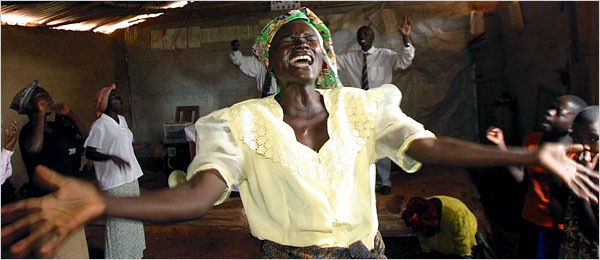
YOU’RE DEAD MEAT!!

To listen to the sermon, click the play button:

Download “Living in Reverse Part 3

LIVING IN REVERSE PART 3.

This is actually the third part in a series called Living in Reverse, but due to a speaking engagement, a vacation and then an illness, it has been almost a month since the second part was posted. So I want to remind us of where we are. We began the series by looking at the life of Leah, and how she learned to make God’s love and God’s view of her more important than her life circumstances. We call this “Living after the But.” We need to understand that the final and most important factor in any situation, feeling, thought or circumstance, is what God says and does. Second, we looked at the life of Elijah, and how God showed him that true Life is not in our external circumstances – not even in how God may or may be changing them. True Life is found in the Spirit, and God designed it to flow through our spirits into our souls and then our behavior.

With all that in mind, we will move on. I want us to begin this time by considering how much our actions are affected by what we believe.

In the 1850s, people began to keep track of how fast a man could run one mile. The time-pieces back then were fully accurate enough to make across the board comparisons to modern times. For almost a hundred years, no one was able to run a mile faster than four minutes and several seconds. There was a general consensus that no human being could run a mile in less time than four minutes.

One of the fastest mile-runners in the world in the 1950s was Roger Bannister. On 2 May 1953, he made an attempt on the British record at Oxford. Bannister ran 4:03.6, shattering a previous record set in 1945. "This race made me realize that the four-minute mile was not out of reach," said Bannister. What I want to point out is that it was at this point that Bannister began to believe that he could run a mile in less than four minutes.

A year later, on May 6, 1954, Roger Bannister broke the four minute mile barrier, completing it in 3:59.4. I contend that he was able to do this simply because he believed he could. For a hundred years, no had run a mile in less than four minutes. Most people believed it couldn’t be done. Bannister believed, and a year later it became reality. Now, once Bannister proved a man could run a mile in less than four minutes, what do you think happened? Now everyone believed it could be done. Bannister’s record was broken less than two months after he set it. His record and subsequent faster records were broken five more times during the next decade. In a hundred years, no one had run a four minute mile. But once one man did it, and others believed it could be done, dozens began to do it. During the past sixty years, it is estimated that more than 850 people have run a sub four minute mile. Let me state it clearly: In the first hundred years, not a single person ran a sub-four minute mile. In the past sixty years since that record was first broken, almost nine-hundred people have done it.

Now you could probably make a case for nutrition and a more sports-oriented culture to explain some of this. But I personally believe that the biggest difference between the first hundred years of records, and the last sixty, is that now people believe it can be done.

Your belief affects how you act, what you attempt, and what you achieve. If you want to change the results you are getting, you must start by changing your belief. At the family camp where I recently spoke, another speaker observed that preachers have two basic options: to ask you to do something, or to ask you to believe something. I would add that we can also impart information and inspiration. This week, I will give you some information, but my main purpose is to encourage you to believe something that God says in the Bible. When you believe it, it may change your life. You may find that you are living with a perspective that you used to think was impossible.

This what I am asking you to believe: When you trust Jesus, you are dead to sin.

Many of us come out of a Lutheran background. The writers of the old “Green Hymnal” did not do us any favors when they had us say, week after week, for decades: “I am in bondage to sin.” Many us, Lutheran or not, have used the NIV bible translation for years. The NIV is generally a great translation, but they didn’t do us any favors when they translated the Greek word “sarx” as “sinful nature” when really what it means is “flesh.”

There is another problem. Our experience tells us that we are capable of sinning a lot, and sinning horribly. We get angry. We lie. We cheat. We are dishonest. We lust. We get drunk. When we combine the reality that we still sin, with the concept of bondage to sin and sinful nature, we have an entire generation – maybe two – of Christians who have grown up believing that even after we have come to Jesus, we are fundamentally sinful beings.

We recognize that the Bible actually says something that sounds different than this. And so we reconcile it by saying this: “I know I am redeemed by Jesus. But I also have this sinful nature living in me that I will have to fight with until I die.” But brothers and sisters, the story is different than that. Read carefully:

  • By no means! How can we who died to sin still live in it? Do you not know that all of us who have been baptized into Christ Jesus were baptized into his death? We were buried therefore with him by baptism into death.. (Rom 6:2-4 ESV)

  • We know that our old self was crucified with him in order that the body of sin might be brought to nothing, so that we would no longer be enslaved to sin. For one who has died has been set free from sin (Romans 6:6-7)

  • So you also must consider yourselves dead to sin and alive to God in Christ Jesus (Romans 6:11)

  • Likewise, my brothers, you also have died to the law through the body of Christ, so that you may belong to another, to him who has been raised from the dead, in order that we may bear fruit for God (Romans 7:4)

  • But now we are released from the law, having died to that which held us captive, so that we serve in the new way of the Spirit and not in the old way of the written code (Romans 7:6)

  • Set your minds on things that are above, not on things that are on earth. For you have died, and your life is hidden with Christ in God. (Colossians 3:3)

  • For through the law I died to the law, so that I might live to God. I have been crucified with Christ. (Gal 2:19-20, ESV)

  • If with Christ you died to the elemental spirits of the world, why, as if you were still alive in the world, do you submit to regulations (Col 2:20, ESV)

  • The saying is trustworthy, for: ​​​​​​​​​​​​​​​​​​​​​​​​​If we have died with him, we will also live with him; ​​​ (2 Tim 2:11, ESV)

  • He Himself bore our sins in His body on the tree, so that, having died to sins, we might live for righteousness (1 Pet 2:24, HCSB)

  • For the love of Christ controls us, because we have concluded this: that one has died for all, therefore all have died; and he died for all, that those who live might no longer live for themselves but for him who for their sake died and was raised. From now on, therefore, we regard no one according to the flesh. Even though we once regarded Christ according to the flesh, we regard him thus no longer. Therefore, if anyone is in Christ, he is a new creation. The old has passed away; behold, the new has come. (2 Cor 5:14-17, ESV)

Just a quick note. I have run into some folks who want to debate what part of us, exactly, was crucified with Christ. What died? I think this is a little bit beside the point. Paul says variously, “our old self” or “I” or “you.” He is not terribly specific or theological about it. I have my professional theological opinion, but let’s not get side tracked.

The point is, in Jesus Christ, you have died in such a way that the connection between you and sin is broken. Paul says we are dead to the law. Think about it. There are no laws for dead people. A dead person is beyond the law. Imagine you committed a horrible crime, and you were sentenced to life in prison without the possibility of parole. Once you are dead, your sentence is over. They bury you in the prison graveyard, and you are done. Once you are dead, the law can require nothing more from you. Paul says “You are released from the law. You died to what held you captive.”

And we are dead to sin: “So you also must consider yourselves dead to sin and alive to God in Christ Jesus.” He says this in several places. Peter also says it.

The point then, is not really what part of us died. The point is that we need go forward, from this point, believing that in Jesus Christ, we have died to sin and to the law that keeps us on the hook for sins we commit. The connection between us and sin, us and the law is so thoroughly broken, it is like trying to get a dead person to keep serving a prison sentence. It’s over. There is no more connection.

You see, I spent years trying to make myself behave better. I thought my old self was still alive. I thought I still had some deep internal connection to sin. And so I kept trying to reform myself, and always failing Finally, I saw that God doesn’t try to reform the Tom. Instead, he killed him. In Jesus, the new Tom – at least the spirit of the new Tom – has already been raised. And there is no connection between that new Tom and sin. When I began to really believe that – that I am truly dead to sin – I began to sin less.

Do you believe that your old self is dead and buried with Christ through his death? Do you believe that you are dead to sin? Do believe that you are no longer enslaved to sin? Do you believe that the old has passed away and the new has come? Do you count yourself dead to sin but alive to Jesus?

I find that the biggest objection this idea is that it is not usually our daily experience. We feel like the old us is still there. We don’t feel like we are free from sin. We feel like the law still applies to us and holds us captive. We don’t feel new, and like we are living according the Spirit and not flesh.

Now is the time we must remember the first two messages in this series. If you never heard them or read them, stop reading this, and go back and get those first two messages. You see? Our experience is telling us one thing and God is telling us another. What should we put after the but? Our experience, or God’s word? God’s word, of course. We should say it something like this. “I know that in my flesh, there is still a struggle with sin – BUT God says I am dead to sin. I know I feel like I have sinful nature – BUT God says my old self was crucified with Christ.”

Then, remember Elijah. Where does real life come from – the flesh and the soul, or the spirit? The spirit, of course. What is eternal, and more powerful? The spirit. And where is is that the old self is dead and the new is come? The spirit. The spirit trumps flesh and soul.

Now, this is a deep concept. I will take next week to talk about the struggles with have with sin, and how that fits into it all.

But for now, I am calling you to believe what God says, and give it more power than your feelings and your experiences. I am calling you to draw life not from what is happening in soul and flesh, but in what God has done and is doing in your spirit.

You see, if you believe that you have a sinful nature, how are you going to act? You are going to sin, of course, because that is what someone with a sinful nature does. As I said at the beginning, what you believe ultimately determines how you will act. You cannot consistently or for very long, act in opposition to what you truly believe.

If you trust Jesus, at the most important place, in the heart of your being, you are not a sinner. I am not saying you never commit sins. But you are not a sinful nature. And the part of you that is holy and blameless and perfect will outlast the part of you that still struggles. The place in which you are dead to sin is more powerful, more enduring and more important than the place where you struggle. Life comes from the Lord, through place where you are already dead to sin.

We need to believe that when God says we died with Christ, we really did die.

I killed a snake one time. I blew it half with a shotgun. The snake was dead, there was absolutely no question about that. There was a the head, with a little piece of neck, and there was the body, completely separate. But the mouth kept opening and closing like it was trying to bite something. The body twisted and coiled and uncoiled for ten or fifteen minutes afterward.

All that twisting and coiling and movement looked like life – but it wasn’t life. It was merely the death throes. If I was a really dumb veterinarian, I could have wasted time and energy treating the dead snake that acted like it was alive. But there was no life there.

Our old person can sometimes act as if it is still alive. We still get the impulses and signals that seem to show that our old self is alive and well. But this is nothing but death throes. There is no life there. If we work to try and kill it again, or try and reform it, we are wasting time and energy in a futile exercise.

Paul says, “don’t gratify the flesh.” Our old body is rotting in the prison graveyard. We don’t have to follow the prison rules any more. We don’t have to try and make up for the laws we broke before. Satan is the one who comes to you and says: see all the twisting and turning and activity – you have a sinful nature and it is alive and well. But the Bible never says anywhere that our old self got un-crucified. It never suggests that the old nature got resurrected. It is is a lie of the devil. He’s trying to get you to live as if you are still alive, back in the prison of your sinful self.

Here’s the thing: he can’t put you back in prison. But if you don’t believe what God says – if you don’t put God’s word after the but – the devil and your flesh can trick you into living as if you were still in prison.

Now, I will talk next week more about this struggle with the devil and the flesh, and how it all fits together. But for this week I am calling you to faith. I am asking to believe that what God says is really true:

In Christ, you have already died. In Christ you are not sinful. You are not divided into good and evil. You are holy and blameless and without reproach.

Yes sin in your flesh is still writhing around in its death throes. But it is already dead. Pay it no mind. Instead fix your eyes on Jesus, put your focus on the unseen and eternal truth – you old self is dead and your true self is alive in perfection with Jesus.

REAL LIFE

LIVING IN REVERSE PART II: ELIJAH AND THE TRUE SOURCE OF LIFE

1 KINGS 19:1-13. JOHN 6:26-36


Download “Living in Reverse Part II”

Elijah-cloud-cmg

There is a story from the Old Testament that has always fascinated me. It’s about the prophet Elijah. God used Elijah to confront Ahab, king of Israel, and his evil wife Jezebel, who were worshiping false gods, and leading the whole country away from God. God told Elijah that it wouldn’t rain for three years. Elijah had enough faith to tell the king and queen that this would happen, and that it was God’s judgment. This was a great act of faith and courage. Even so, he hid from the king and queen for most of the time of the drought.

At the end of three years, God told him to stop hiding and confront them. In that confrontation, God showed himself powerful, and the false gods, of course, proved false. All the people were ready to listen to Elijah, rather than the king. So, in accordance with Old Testament law, he had them execute all the false prophets for blasphemy.

Next, Elijah prayed for God to make it rain again. It didn’t happen at first, but Elijah persevered in prayer, and the cloud formed and a great storm broke. This was an amazing victory for God, and Elijah was central to it.

Immediately afterward, the queen sent Elijah a message. She had already killed many of the prophets of the Lord, and she told Elijah that he was dead meat. She was sending men to kill him.

The great prophet, flush with all the amazing things God had just done….ran away. He went a very long distance away. At first God just patiently comforted him. Elijah went further. Then God came and told Elijah to get ready. He said he was about show Elijah His presence.

And he said, “Go out and stand on the mount before the LORD.” And behold, the LORD passed by, and a great and strong wind tore the mountains and broke in pieces the rocks before the LORD, but the LORD was not in the wind. And after the wind an earthquake, but the LORD was not in the earthquake. And after the earthquake a fire, but the LORD was not in the fire. And after the fire, a thin silence.

Many translations say, “a still small voice.” But it is an odd Hebrew expression that is hard to capture. I’m not much of a Hebrew scholar, so I’m mostly relying on the research of others. But a literal rendering might be “a voice, silent and intangible.” What is a “silent voice?” But what is fascinating, is that when Elijah heard the silent voice, he went out and listened to the Lord. The presence of God was in calm silent voice in a way that it was not in all kinds of noise and thunder.

There was a great wind – strong enough to split rocks. Obviously God’s presence was around, but the heart of God was not in the wind. The same was true of the earthquake and the fire.

Now, why did God do this? Why send the wind and the earthquake and the fire. Did he need to impress Elijah? And why send those things, if that was not really his presence?

I think there was a lesson here for Elijah.

Remember Elijah’s recent life. He confronted the king and queen – that was awesome! God was with him. But they didn’t listen That was a real letdown. Then he predicted and prayed in drought and famine as judgment. God was at work again, making things happen – how thrilling. But the king and queen still didn’t listen, and continued in their evil, idol-worshiping ways, and Elijah ran away in fear. That was a bust. After three years in hiding, he confronted the rulers again. God showed up by burning up Elijah’s sacrifice! The people followed his commands! Then when Elijah prayed, God ended the drought. This was amazing!

But the queen remained evil, and killed many other followers of God, and put out a contract to kill Elijah. All the fire and excitement went out of Elijah, leaving him like a wet kitten. He ran in fear for his life.

You see what was going on? Elijah was drawing his life from what was going on externally. When things were going well on the outside, Elijah was doing well. When God was working miracles and Elijah was feeling bold, everything was great. But when things were going badly, Elijah was not doing well. When the king and queen refused to repent, when they threatened him, he was discouraged. He was a coward.

We might say, “So what?” Isn’t it normal to do well when things are good, and to feel discouraged when things are not good?”

God was saying to Elijah: “No. It doesn’t have to be that way. My life is not in the external things. My Life is not in things going well, and my life is not absent when things are bad.”

And so God sent a storm. Raging wind, splitting rocks, this beats any tornado you’ve ever heard of. It was noise, excitement, huge, awe-inspiring. But the LORD was not in the storm. So he sent an earthquake. Nothing is solid anymore, everything is shaken. There is nothing to hold on to, no security. But the LORD was not in the earthquake. Then came the fire. I’ve heard many people – even preachers – pray for God to “send your fire.” But the LORD was not in the fire.

Now, obviously, God sent the wind, caused the earthquake, lit the fire. So he was in them in a sense – they resulted from his action. But the true presence of God was not in those things that he sent and did. The true presence of God was a silent, calm voice that spoke into Elijah’s spirit.

We look for God in action. We want Him to do external things for us and for others. We want Him to show off His power. And there are times when that is exactly what He also wants to do, and He does it. But we need to understand – the deepest presence of God cannot be found in external things. It is found as he communicates with our spirit. And in the spirit, it doesn’t matter what storms, what fires, what earthquakes are happening on the outside – for bad or for good. In the spirit, where true life can always be found through Jesus, it is calm and still.

We seek life externally. We try to stop the downs and live in the ups. We try to organize our physical environment. We try to reform our behavior, to learn to how cope. But God is not in the externals, not in the deepest sense. Elijah’s externals were not all bad. In fact, some of the miracles God did through him were downright awesome. But they were still externals. God did them, yes. God used them, yes. But the Lord showed Elijah that those external things could not be a source of life and power for him. You can’t draw life from Externals.

We keep trying to live like Elijah. We want to maximize the victories, and minimize the defeats. We want it to be all “wow! God!” times, and no “uh-oh, Jezebel” times. But just stop and think about this for a moment. Has anyone, in the history of mankind, ever been able to make that happen? Has anyone ever lived moving only from victory to victory, all ups, no downs? Of course not. Elijah didn’t. Peter didn’t. Paul didn’t. Jesus in his physical life here on earth, had his setbacks here on earth. His hometown wouldn’t accept him, and their lack of faith prevented him from working the way he wanted to there. The leaders of the people – including the religious elite – rejected him. His own closest disciples consistently misunderstood him and his message. The book of Hebrews tells us that Jesus was tested in every way, just as we were (Hebrews 4;15). The word for “tested” or “tempted” is the Greek word pronounced “peiradzo.” Some English translations say “tempted” but it doesn’t really mean just temptation to sin. It means undergoing trials to determine an outcome. In other words, this is life. Everyone faces the trials. No one, not the prophets, not the apostles, not even the Son of God is exempt .

If Jesus could not throw a lasso around life and make it behave for him, do you really think you can?

Now, when we face the idea that this is just how life is – that can be a daunting idea. You mean the rest of my life, I’m going to go up, and down, and up and down? I’m going to win victories – and then be defeated. I’m going to see God at work…and then I won’t see him at work. I’m going to live a holy life — and then I’m going to sin. And then I’m going live holy again.

The reason that idea is so daunting to us, is because we are trying to get life here and now. We are trying to get life out of our behavior. We are trying to get life out of our externals, like money, or success or relationships, or sex or drugs or alcohol or even…religion.

Brothers and sisters, there is no life there. There is no life in mood-altering substances. That’s easy, we know that – even addicts know it, but they can’t seem to stop looking there. There is no life in money or success or accomplishment. Read Ecclesiastes. It’s been tried. There is no life in partying. There is no life in abstaining. I’m not saying that they are morally equal – but I am saying that you can’t get real life out of either excess or self-denial.

There is no life in “living for God.” That’s right. If you are living for God with your own will and effort, you will not find life in it – not lasting life, not the streams of living water which flow from within and cause you to never thirst again.

To understand all this fully we need a brief lesson on our human anatomy, at least from God’s perspective. There are three essential parts to a human being: body, soul and spirit.

For the word of God is living and active, sharper than any two-edged sword, piercing to the division of soul and of spirit, of joints and of marrow, and discerning the thoughts and intentions of the heart. Heb 4:12 (ESV)

May God himself, the God of peace, sanctify you through and through. May your whole spirit soul and body be kept blameless at the coming of your Lord Jesus Christ. The one who calls you is faithful, and he will do it. (1 Thessalonians 5:23-24)

We each have a body. We know what that is. Our body life is what our body does – what we do and say, how we behave. We also have a soul. The Greek word in the New Testament for “soul” is “psuche” which have changed in English to “psyche.” Just like that English word, the soul is your personality, your emotions, your thoughts and decisions.

The third part of a human being is the Spirit. The New Testament word for Spirit is a lot like the word for breath. The spirit is the part of the human that interacts directly with God.

Your soul provides the connection between spirit and body. It functions almost like a valve through which the life of the spirit can flow to our behavior.

We are aware of our bodies. We are aware of what is going on in our souls. But we are less aware of our spirit. Just like Elijah.

One of the problems with living our lives with an external focus, is that we can only get external results by doing that. Jesus pointed it out to his disciples:

“Be careful not to practice your righteousness in front of people, to be seen by them. Otherwise, you will have no reward from your Father in heaven. So whenever you give to the poor, don’t sound a trumpet before you, as the hypocrites do in the synagogues and on the streets, to be applauded by people. I assure you: They’ve got their reward! But when you give to the poor, don’t let your left hand know what your right hand is doing,so that your giving may be in secret. And your Father who sees in secret will reward you. “Whenever you pray, you must not be like the hypocrites, because they love to pray standing in the synagogues and on the street corners to be seen by people. I assure you: They’ve got their reward! But when you pray, go into your private room, shut your door, and pray to your Father who is in secret. And your Father who sees in secret will reward you. (Matthew 6:1-7 emphasis added)

He says the same sorts of things about other observances. Notice the contrast – the people who focus on externals get an external reward – that is, they get the result of their behavior here and now on earth. Their reward – at best – is temporary. Those who focus on the spiritual reality get an eternal reward from their Father in heaven. When we live our life from externals, then that’s all we get – the external result. That’s our reward. And that is temporary, not eternal.

God says the Spirit is what is most important.

Therefore we do not give up. Even though our outer person is being destroyed, our inner person is being renewed day by day.For our momentary light affliction is producing for us an absolutely incomparable eternal weight of glory.So we do not focus on what is seen, but on what is unseen. For what is seen is temporary, but what is unseen is eternal. (2 Cor 4:16-18)

And it is from the spirit – connected to His Holy Spirit through the work of Jesus – that life comes; real life, life that does not change and fluctuate and sometimes desert us. Once we are in Jesus, that life is always there. It is always available, though we often forget it. That is because it doesn’t come from our behavior. We can’t control it by manipulating our circumstances, or even our own actions. It doesn’t come from our thoughts or feelings. It comes from the spirit – a place that Elijah found was still and silent, and the voice of God is quiet. And the only way we can access it is by believing that what God says is true. We receive it only through faith.

Jesus talked about this with some people one time. They had just eaten a big meal that he provided for them. We call it the feeding of the 5,000. He said to them:

“I assure you: You are looking for Me, not because you saw the signs, but because you ate the loaves and were filled. Don’t work for the food that perishes but for the food that lasts for eternal life, which the Son of Man will give you, because God the Father has set His seal of approval on Him.”

“What can we do to perform the works of God? ” they asked.

Jesus replied, “This is the work of God — that you believe in the One He has sent.”

“What sign then are You going to do so we may see and believe You? ” they asked. “What are You going to perform?Our fathers ate the manna in the wilderness, just as it is written: He gave them bread from heaven to eat.

Jesus said to them, “I assure you: Moses didn’t give you the bread from heaven, but My Father gives you the real bread from heaven. For the bread of God is the One who comes down from heaven and gives life to the world.”

Then they said, “Sir, give us this bread always! ”

These people experienced a little of how Jesus could change their body life and maybe their soul life. But they don’t know anything about the spirit. Jesus challenges them on it. He says “don’t work for food that perishes.” In other words, don’t look for life in the body or the soul.

So they said, basically, “what should we work for? How do we get life?”

His reply is crystal clear: “This is the work of God — that you believe in the One He has sent.” But they utterly miss the point. They go right back to looking for body and soul life. They say “show us! Prove it to us in the body. After some more conversation, Jesus again makes it clear:

“I am the bread of life,” Jesus told them. “No one who comes to Me will ever be hungry, and no one who believes in Me will ever be thirsty again. But as I told you, you’ve seen Me, and yet you do not believe.”

The life is not in your behavior. It is not in your thoughts and feelings. It is in Jesus, and the only way to get it is to believe he offers it to you!

LIVING LIFE IN REVERSE

PART I:  GET YOUR BUT IN LINE

Genesis 29:16-35


Download “Living in Reverse Part I”

We know that God loves us. We know that through Jesus, we are forgiven. We keep our faith in Him. But where we really struggle, is with ourselves. I’m glad I’m forgiven. And I know that I am. But (notice that pernicious little word!) I wish I didn’t sin so much. I wish my life was easier to live. I wish I didn’t worry. I wish I was more compassionate. I wish I wasn’t so lazy.

I know (or at least I think I do) how God wants me to be. So I try to be more like that, but I often fail. After I fail, I say sorry to God. I know that I have forgiveness in Jesus, and that forgiveness is always available. So I get that forgiveness, and then off I go to try again. Sometimes I even try harder. I might even get it together for awhile, but sooner or later I crash and burn again.

Maybe after awhile, I realize I haven’t been very bright. I think, “Ohhh…Jesus has given me the Holy Spirit to help me!” So I get back on the horse, determined to try harder, and succeed this time with the Spirit’s help. And maybe for awhile it goes better. I stop and consciously ask for God’s help to live the life of a Christian. I ask for help when I am tempted. Maybe I also get connected to other Christians, and seek help and support from them. That helps too, because God has given us each for that very purpose.

Now it goes better. But the truth is, it is still a lot of work. And the truth is, though maybe I fail less frequently, I still fail plenty often.

Whole shelves of books have been dedicated to help people like me pull it together. Some of them are quite helpful. Somehow though, I can’t seem to make the improvements permanent or consistent.

Andrew Murray seems to know what I’m going through. He puts it like this:

“The idea they have of grace is this – that their conversion and pardon are God’s work, but that now, in gratitude to God, it is their work to live as Christians, and follow Jesus. There is always the thought of a work to be done, and even though they pray for help, still the work is theirs. They fail continually, and become hopeless; and the despondency only increases the helplessness.” (Abide in Christ)

We tend of think of it like this: ultimate failure, and the power of death and hell, are defeated through Jesus. Now, once we trust in Jesus we can play the game “safely” so to speak. So we can try and fail and try and fail as much as we need to, without being in danger of going to hell.

But does that really sound like “good news?” We are “free” to pursue a cycle of failure? Andrew Murray adds this:

“Dear souls! How little they know that the abiding in Christ is just meant for the weak, and so beautifully suited to their feebleness. It is not the doing of some great thing, and does not demand that we first lead a very holy and devoted life. No, it is simply weakness entrusting itself to a Mighty One to be kept – the unfaithful one casting self on One who is altogether trustworthy and true. Abiding in him [living the Christian life] is not a work that we have to do as the condition for enjoying his salvation, but a consenting to let Him do all for us, and in us, and through us. It is a work he does for us – the fruit and the power of His redeeming love. Our part is simply to yield, to trust and to wait for what He has engaged to perform.” (Abide in Christ).

Now that sounds like good news. Maybe too good. In order to lay hold of this, we need to begin by talking about your but.

Before you can truly grasp everything that Jesus has done for us; before you can take hold of the riches we have in Christ, you need to get your but straightened out.

I am talking, of course, about your B-U-T, not your b-u-t-t. What were you thinking?

We all have buts in life. (All right, insert whatever joke you like here, and then move on). What I mean is, we all say things like this:

Things are going well now, but who knows what will happen in the future?

I know God promises to take care of me, but things aren’t going well right now.

Generally, I have a good marriage, but sometimes he drives me crazy.

I would love to read my bible more, but I just don’t have the time.

I know God has forgiven me, but I still sin, and I don’t always feel forgiven.

There is something I have noticed – we give the most power, the most credibility, to what we put after the but. What we say after the but is what we think is the dominant thing about our reality. The first thing may be some kind of factor, but what we put after the but is more or less the final word on the subject.

What we need to learn, is to put what God says after the but. This is an act of will, but before that even, it is an act of faith. Nothing you hear this weekend will make sense until you agree to put God’s Word after the but.

I want us to look at the life of someone in the Bible who learned to do this. She is one of the least known, least talked-about heroines of faith in the Bible. Her name is Leah. Leah was the daughter of a man named Laban. Her story picks up in Genesis chapter 29. The bible says Leah had “weak eyes.” We don’t really know what this means, but it seems to mean that she was ugly. Right after this it says: “but her sister Rachel was shapely and beautiful.” Notice the but. It was probably one of the dominant “buts” in Leah’s life.

One day their cousin Jacob, whom they had never met, came from a far country. Jacob ended up working for his uncle Laban (Leah’s father). Jacob fell in love with Rachel, Leah’s sister. He told his uncle he would work for seven years as a dowry, and Laban agreed. Only, when the time came, Laban tricked Jacob. Brides in those days were heavily veiled, and the wedding took place at night – and there was no electricity. So Laban gave his older daughter, Leah, in marriage to Jacob, and Jacob didn’t find out until the light of the next morning. Laban offered to let Jacob marry Rachel too, if he worked another seven years. So after Jacob and Leah had been married just one week, a new wedding took place, and Jacob got Rachel at last. Then he had another seven years to work.

Needless to say, they were not one big happy family. We don’t know if Leah loved Jacob, or wanted to marry him. But we do know that Jacob did not love Leah, and had never wanted to marry her. Almost certainly, the reason her father had tricked Jacob in that way was because he thought it was unlikely that he would ever be able to marry her off. In other words, she was so ugly, her father had to trick someone into marrying her. Almost certainly, Leah knew this. She was ugly, not stupid.

Naturally, Jacob favored Rachel. He loved her, not Leah. Leah’s only consolation was that she had children fairly easily, while Rachel went for a long time with none. When Leah’s first son (Reuben) was born, she said, “The Lord has seen my affliction; surely my husband will love me now (Genesis 29:32).” Notice that her focus was on her unhappy situation, and she hopes the fact that she bore him the first child will change it. When her second son (Simeon) came along she said, “The Lord heard I was unloved, and gave me this son also (Genesis 29:33).” Still, her dominant reality is that Jacob doesn’t love her. After her third son was born, she was still focused on her struggles, saying, “at last my husband will become attached to me, because I have borne him three sons (Genesis 29:34).”

Now we know that it takes nine months to make a baby. There was no birth control in those days, but in general, when a woman is breastfeeding, that sometimes helps prevent pregnancy. Back in those days, children were probably breastfed pretty consistently for at least a year. So it reasonable to assume at least two years between each child. When you throw in the fact that Jacob had another wife, and everything that was involved in the family dynamics, it may have been more like three years, or even more between children. So Leah went between six and nine years, while the dominant fact in her life was that her husband did not love her.

But (notice the but) by the time her fourth son arrives, something has changed. There is no evidence that Jacob ever changed his attitude very much toward her. Reasonably, at least eight years might have passed by this point, perhaps a many as twelve or more. Say, a decade; ten long years of realizing her marriage will never be what she dreamed it might be. But listen to what she says when this fourth son, Judah, is born: “This time, I will praise the Lord (29:35).”

Leah is no longer fixated on what she lacks in her life. She isn’t trying to get Jacob to change anymore. Instead, her focus is on the Lord, and his love and favor for her. Her struggle had been with God and with her husband. But when she gave birth to Judah, she has given up the fight – in a positive way. Her troubles have led her to a place where she looks to God to meet her needs, and can receive his love and mercy with joy and thankfulness. I’m sure that Leah still struggled. I think it is only reasonable to assume that emotionally, her situation never changed much. Certainly, the Bible never records that Jacob changed his attitude toward her. But she came to the point where the dominant thing in her life was not her struggle, or her unfilled needs, but rather, God’s awesome love for her.

Genesis 29:31 says that when the Lord saw that Leah was unloved, he opened her womb. In other words, the Lord was the one who gave Leah these children; and even more, he gave them to her because he saw that her husband did not love her. Now, at first, her response was basically this: “Good! This child will change my situation. This child will make my husband love me.” But think about it. God gave the children to Leah, not as tools to coerce Jacob’s love – the Lord gave Leah children because the Lord loved her. He was showing her that regardless of what Jacob thought of her, He loved her. She was not unloved. At first she missed the point. She was still putting Jacob’s lack of love after the but. Finally however, she got it. When Judah was born, she praised the Lord. She finally saw that these children would not make her loved – they showed her that she was already loved.

Sometimes when we pray, God changes our situation, and makes it better. Sometimes, he leaves us in the same circumstances. When he does that, his desire is that our lives can be so filled with him, that the negative aspects of our situation pale in comparison. When Kari and I first started dating, I was in job situation that I didn’t like, living in a city I didn’t care for, with few real friends nearby. I remember sitting in a meeting at work, filled with joy. I wasn’t joyful because I was in the meeting. I wasn’t joyful because I liked where I was living, or because I was making much money, or that I liked my work. None of those things were true. But I was joyful because I knew that wherever I was, whatever I was doing, Kari loved me.

Now, I don’t mean to be negative, but the kind of joy that came when I first knew that Kari loved me, does not sustain me in the same way eighteen years later. We still love each other. It is still a big thing in my life that Kari loves me. But no human being has the power to fill you with joy consistently for a long period of time. Only God’s love is that strong.

I think that was the kind of place Leah finally reached. Jacob still didn’t love her. He probably never would. But God did, and the fact that God loved her was more important than the fact that her husband did not.

This is the key to “Living after the But.” Remember, whatever you put after “but” is the dominant reality to you. For many years, Leah probably said something like this: “I know God loves me, but my husband does not. I’m just a third wheel.” Finally, after the birth of Judah, she started thinking this way: “I know Jacob never wanted to marry me. He may never love me the way I want him to. But God loves me and cares for me.” The only thing that really changed for Leah is which thing she put after the “But.” However, I think it transformed everything for her.

I suspect that in the next few messages I have to preach, you might hear some things that cause you to think “but….” I want you to remind yourself to put the correct thing after the but.

The apostle Paul said something very important in 2 Corinthians 4:16-18:

Therefore we do not give up. Even though our outer person is being destroyed, our inner person is being renewed day by day. For our momentary light affliction is producing for us an absolutely incomparable eternal weight of glory. So we do not focus on what is seen, but on what is unseen. For what is seen is temporary, but what is unseen is eternal.

This verse teaches us something important about the nature of reality. Part of reality is seen. That is, we can perceive it with the senses. This part of reality changes. It proceeds through time. It has a beginning and an end. We might call it the “natural realm” or “this world,” Paul says that this part of reality is temporary. That doesn’t mean it is meaningless. In the broad scheme of things, this seen and temporary part of reality is where God works in us and through us for his own glory. What happens in the seen, in the here and now of time, has an effect on where we are in the other part of reality. In this world, we have struggle and change and process and need and growing and sowing and reaping.

The other part of reality is unseen and eternal. It is outside of time. We might call it the eternal realm, or eternity. It is the realm of the uncreated, of ultimate reality, of complete and wholeness where things are settled. This is the ultimate dwelling of God. When God appeared to Moses and Moses asked him his name, God said “I AM.” That is an idea of the eternal realm. There is no time there.

The bible says that Jesus Christ is the same yesterday today and forever (Hebrews 13:8). That is is not true in this world, in the temporary part of reality. Jesus is not walking around Palestine today like he was two thousand years ago. When he was thirty he was physically changed from how he looked and acted when he was three. But in the eternal realm, that is true. Jesus existed before the creation of the earth. He exists now. He always will exist. His eternal spirit never has changed, never will change.

Maybe this is obvious, but these verses in 2 Corinthians show us that the eternal realm is greater, more powerful, and more permanent than the temporary realm of this world. We don’t mean that this world doesn’t matter or is an illusion. God made it. God even entered it himself as a human being, bound in time. So it is important. We are just acknowledging that what the bible says is true: the unseen realm is greater than the seen. We are supposed to focus on the unseen more than on the seen.

Both realms co-exist. They interact with each other. The bible teaches that we live in both at the same time – even as Jesus did. But simply for illustration it may help to think of a line between them. Above the line is the eternal, unseen realm. Below the line is the temporary, seen world.

In these terms, we need to put the truths that exist “above the line” – the eternal unchanging truths – after the but.

We deal with things below the line constantly. That’s what Paul was talking about in 2 Corinthians 4:16-18. His outer person (below the line) was being destroyed. But…BUT his inner person (above the line) was being constantly renewed. His affliction is momentary – but the glory is eternal. He focuses therefore on what is unseen and eternal. He puts those things after the but.

Now, I want the Holy Spirit to make this practical for you. What have you been putting after the but? Has your dominant reality been what God says? Or have you given more power and credence to your circumstances, or how you feel, or what your mind tells you logically? Take a moment to think about it. Let the Lord bring to mind what you have reversed right now.

Your dominant reality might be very negative, and very powerful. Leah spent her whole life thinking, “but I’m ugly.” Long years of marriage only added, “and I’m unwanted, and I’ll never get the chance to be with someone who does want me.” That’s powerful stuff. And it was all true. She never was loved by her husband or anyone else in that way.

But…BUT – there was another thing that was true. It was true that she was made in the image of God. It was true that God loved her. It was true that God wanted her. She let God’s love become her dominant reality. She let his word be the final word.

We need to learn to believe that what God says is more real than what we think or feel.

I am not saying that your struggles aren’t real. I am not saying that you aren’t dealing with things that are truly bad, or difficult or wrong. But I am saying that God’s Word is more true, more powerful. It is an act of faith to believe it.

RESURRECTION

1 CORINTHIANS #26 (1 Corinthians 14:35-15:11)

jesus_resurrection

There is something 1 Corinthians 14:34-35 that I want to deal with briefly. Paul writes:

As in all the churches of the saints, the women should keep silent in the churches. For they are not permitted to speak, but should be in submission, as the Law also says. If there is anything they desire to learn, let them ask their husbands at home. For it is shameful for a woman to speak in church.

We have already covered the overall topic of gender relationships in depth when we looked for two weeks at the first part of chapter 11. If you missed that, please go back and read or listen to those two messages. You won’t get the full understanding by only reading this sermon. Even so, I want to cover this passage briefly, because it causes trouble for many modern readers of the bible, especially in Western culture. It also gives us a good practical example of how to interpret the bible, especially when you don’t understand something, or when the bible appears to contradict itself.

Paul has already acknowledged that is appropriate for women to pray and prophesy in church (1 Corinthians 11:1-16). Now he says they should keep silent. What is going on here? First, when we interpret the bible, we give the Holy Spirit the benefit of the doubt. In any other book we read, we start with the assumption that the author will try not to contradict himself. So in general, if a statement appears contradictory, in order to understand it, we try first to see if there is a way to interpret it that is not at odds with what has already been said. Not only should we give the Holy Spirit a chance, but we ought to also give Paul (the human instrument of the Spirit in this case), some credit for being the obviously intelligent person he is. Is he likely to contradict himself so blatantly just a page or so later in the same letter?

Therefore, plain common sense shows us that “women must keep silent” does not apply to absolutely every situation in church. We already know it doesn’t apply to women prophesying and praying. So there must be some specific context that Paul is talking about here, where women should keep silent. What would that context be? (Men, insert the joke of your choice here, but you laugh at your own risk…)

In all seriousness, the context of this statement is Paul’s description of an orderly worship service. We already know that women can pray and prophesy, so it isn’t the worship service in general where women must keep silent. Paul describes a few different people speaking, and then he says: “let the others evaluate what is said.” Remember, at that time, there was no New Testament yet. So it was a more difficult thing to determine if a prophecy or word was really from the Holy Spirit or not. Therefore, after someone spoke, Paul wanted the Corinthians to discuss what was said, and evaluate whether or not it seemed to really come from the Lord.

Reading this statement in context, it seems that this “evaluation discussion” is where Paul would like the women to keep quiet. From chapter 11 we learned that God created men and women to fulfill different roles: like dancers have different parts in a couples’ dance, or players have different positions on a football team. Paul describes those roles in terms of submission (for women) and headship (for men). We already covered what this means in our study of 1 Corinthians 11, but I simply want to remind us that biblical submission doesn’t mean subservience or devaluation, and biblical headship does not mean domination or control.

Paul connects this idea of women being quiet during the “evaluation discussion” to biblical submission. If you remember from chapter 11, God holds men uniquely accountable for the spiritual direction of their churches and families. Even though Eve was the one who took the apple and committed the first sin, Adam was the one who was held responsible for leading the human race into sin. So, when the church was basically deciding theology, it made sense that the ones who would be held responsible (the men) were the ones who ought to make the decision, and provide the final evaluation. When we also consider the word “to keep silent” might also be translated “hold your peace” our picture is more complete. Women indeed may have something to say about doctrine, but men are the ones who will be held responsible. So when it comes to a discussion of doctrine, women should hold their peace. Paul adds that if they have questions or concerns, they should share them with their husband at home. Once again the picture here is of a gender-dance, or a team. Everyone has something to contribute, but it is all done in order and with a recognition of how God made us to be, and what our roles are.

—-

Let’s move on now, to chapter fifteen. This is one of the longest sections in the whole letter, and Paul devotes it all to discussing the resurrection of Jesus Christ. Apparently, some of the Christians at Corinth were suggesting that there was no resurrection from the dead. Paul says this in verse 12:

Now if Christ is proclaimed as raised from the dead, how can some of you say that there is no resurrection of the dead?

It isn’t clear exactly what these skeptics were saying. They may not have been denying that Jesus rose – but at the very least they were claiming that there was no resurrection for anyone else. And it is possible that they even scoffed at the idea of Jesus rising from the dead. Remember, these are people who claim to be Christians. Paul spent more time with this church than any other church he started, except in Ephesus. Sometimes when I read his letters to them, I wonder what went wrong.

By the way, this kind of weird heresy has been repeated at various times in history by those who claimed to be Christians. Karl Baarth, one of the most influential Lutheran Theologians of the 20th Century, believed in the resurrection, but claimed it didn’t matter whether or not Jesus was actually raised. His protege, Rudolf Bultman, went the whole way, and claimed that Jesus was not. I always wanted to meet them and ask them, “So why do you call yourself a Christian and what is the point of your faith?”

So Paul goes back to basic Christian doctrine. This is it in a nutshell – Jesus Christ died for our sins. He was buried. And then he was raised from the dead. This is the message given by Paul and all the apostles. It is the bedrock of the Christian faith. Without the death, burial and resurrection of Jesus, there is no such thing as Christianity. So he writes to the Corinthians, that this is:

…the gospel I proclaimed to you; you received it and have taken your stand on it. You are also saved by it, if you hold to the message I proclaimed to you — unless you believed for no purpose. (verse 1-2)

Paul is writing to them maybe twenty-five or thirty years after Jesus was raised from the dead. Today (in 2011) it would be as if I wrote to you about the attempted assassination of Ronald Reagan in 1981. Many of us were alive, and we remember hearing about it right after it happened. We could certainly still find and talk to many of the people who were there when it occurred. The man who shot Reagan is still alive. Many of the secret service agents and other government workers who were there, are still alive.

At the time of Paul’s letter, the resurrection of Jesus was similarly recent. Paul says, besides himself, there were more than five hundred people who saw Jesus alive after his death, burial and resurrection. Most of those eye-witnesses to the resurrection were still alive when Paul wrote. The Corinthians had apparently met Peter, who was one of the witnesses.

I think we forget that we have this kind of evidence for the resurrection. Yes, it was a long time ago. But so was Julius Caesar, and Cleopatra, and Alexander the Great – and we believe the events we are told about in their lives.

Jesus’ resurrection changed everything – for us, as well as for those first-century Christians. There is a real hope beyond this world. Our entire faith is based upon it. Any meaning in life depends upon it.


Tongues. 1 Corinthians #25 (1 Cor 14:1-25)

…to another speaking in different kinds of tongues, and to still another the interpretation of tongues.” (1 Corinthians 12:10)

tongues


To listen to the sermon, click the play button:

To download, right click on the link (or do whatever you do on a Mac) and save it to your computer:
Download 1 Corinthians Part 25

This week we come to the oft-maligned, oft-spoken about, gift of tongues. Simply put, the gift of tongues is a gift which God gives to a believer, that allows that person to speak out, or pray in, a language unknown to that person.

Just like there are apparently three distinct kinds of prophecy, the New Testament seems to describe three distinct gifts of ‘tongues’:

a. When someone speaks out in tongues, others hear it as a language belonging to another part of the earth (i.e. Chinese). Its use here is in evangelism and missions. The first use of tongues that the New Testament records was on the day of Pentecost, when the apostles received the Holy Spirit. They spoke out in tongues, and people from all over the civilized world heard them speaking in their own dialects. Both the wonder of this phenomenon and the message it contained, brought many people to faith in Jesus (Acts 2:1-13). This was a gift from God, for the apostles had not known the languages they were speaking.

b. A special word from God to a group of believers. In the case of this kind of gift of tongues, It must be accompanied by an interpretation. There is no way the special word can be understood without the interpretation. This is the ‘normal’ public use of tongues. Paul describes this in 1 Corinthians 14:13 and 14:27-28. Apparently, at times, believers were inspired to speak out loudly in tongues. Then they, or someone else present, would receive the meaning of what was said, from the Lord. I know that several people in our church have witnessed this at times in a powerful way.

c. A private, spiritual “prayer language.” This is the ‘normal’ private use of tongues. It is useful here if the individual is at a loss for words to pray or praise with, or for prayer for a very difficult situation, or simply to help draw a person closer to Jesus. Scripture describes this in Romans 8:26-27 (the Spirit interceding with intercessions that are beyond our capability to express) and in 1 Corinthians 14:1-18, where Paul clearly describes tongues as prayer from the Spirit, not the mind, which builds up the individual Christian and should not be used in public assemblies.

In general, most of the gifts described in this passage do not “belong" to individuals, but are given to us to bless other people with. It seems that the gift of tongues is a little bit different. The fist two gifts of tongues (see a. and b. above) are gifts that are given on a situation-by-situation basis. For example, Ted Hilpert received the gift of interpretation of tongues once, but he would not describe himself as an Interpreter. The gift was given him in just one specific instance, and has not been given since. Years ago I met a retired Lutheran Pastor named Herb Mirud (who has since gone to be with Jesus) who prayed out loud in tongues on a mission trip to Mongolia, and the Mongolians heard him speaking their language. That was the only time such a thing happened for him.

However, the third kind of tongues – the personal ‘prayer language’ that builds up the individual believer, appears to be given to those who have it, for life. The reason for this is that it is an a gift that builds up the individual so a person can use it anytime. It might also be used by one person to pray for another, and again, this can happen anytime the person decides to use it. It is a grace of God given to people to help them pray with their spirits, and not just with their minds.

There is great value in God’s gift of tongues to the church, but for some reason, tongues has been one of the most controversial topics in the church for the past forty years or so. Tongues has been maligned by all sorts of people, misunderstood, and misused. I believe this has happened in large part because of the persistent rejection of the Bible’s teaching about tongues by many charismatic and Pentecostal churches. I believe that if we who accept the supernatural workings of the Holy Spirit, taught and practiced the scriptural principles given concerning tongues, other Christians and churches would not be so quick to malign the work of the Spirit in this way.

Charismatics and Pentecostals typically make two errors regarding tongues. The first, and most dangerous theologically, is the belief that the gift of tongues is the sign of a sort of “second salvation". Some Pentecostals teach that if you do not speak in tongues, you have not been ‘fully’ saved. This view proposes that there are two stages of salvation. They would say (and I do NOT agree) that Faith in Jesus is the first, the Baptism of the Holy Spirit is the second. For them, exhibiting the gift of tongues "proves’ that you have been fully saved (in both stages). There is absolutely no Biblical justification for this teaching. In fact, in 1 Corinthians 12, Paul uses tongues as an example of a gift that not everyone has. In 1 Cor 12:30, Paul asks, “Do all speak in tongues?” The question is rhetorical, because answer in Paul’s mind is obviously “no.” A teaching related to the ‘second salvation’ falsehood, is the idea that if a person does not speak in tongues, he/she has not received the Fullness of the Holy Spirit (or the ‘Baptism’ of the Spirit). This false teaching is answered by the same scriptures I have just mentioned.

I believe that the pervasiveness of the “second salvation" idea is one of the reasons why tongues has caused so much confusion and strife. People who hear this kind of false doctrine are naturally upset, for the teaching implies that if you do not have the gift of tongues, you are not a ‘complete’ Christian, or at the very least, you are a lesser Christian. Those who know they are saved, (but have not been given tongues) come out of an experience with this kind of church with a distaste for the supernatural work of the Holy Spirit in general, and for the gift of tongues in particular.

The second error, committed by almost every charismatic church I have ever been in, is the rejection of Paul’s instructions for the use of tongues in worship. Throughout 1 Corinthians 14, Paul instructs us about tongues, its use and its place. Paul sees it as of great value in the life of the individual, but of little value in either the small group or large group unless interpretation is present. There is nothing unclear about his instructions:

If anyone speaks in a tongue, two-or at the most three-should speak, one at a time, and someone must interpret. If there is no interpreter, the speaker should keep quiet in the church and speak to himself and God. (1 Cor 14:27-28)

Charismatic churches across the board have willfully ignored this clear instruction as well as the reasons the Bible gives for the instruction. Let us examine the reasons given for being careful about the use of tongues in public:

a) An episode of tongues without interpretation is unintelligible, and is of no value for

building up the church as a whole (1 Cor 14:2,4, 6-17)

b) Tongues without interpretation are disastrous for evangelism (1 Cor 14:23).

c) Many people speaking in tongues simultaneously, and/or without interpretation is disorderly, and does not reflect God’s character, or the Holy Spirit’s desire for order in worship (1 Cor 14:33).

And yet, if you step into virtually any Charismatic worship service, at some point, you will hear the whole congregation speaking out or singing out in tongues, all at the same time. Many people describe this as a beautiful sound of praise. Sometimes, I am inclined to agree. But that does not deal with what Paul teaches here. I have heard people say that since everyone is praising God, this is just fine. That argument makes no sense to me. It is in contradiction with all three points made by these passages (above). Paul writes:

What am I to do? I will pray with my spirit, but I will pray with my mind also; I will sing praise with my spirit, but I will sing with my mind also. Otherwise, if you give thanks with your spirit, how can anyone in the position of an outsider say “Amen” to your thanksgiving when he does not know what you are saying? For you may be giving thanks well enough, but the other person is not being built up. (1 Cor 14:15-17)

His final thought about the matter is this:

If any speak in a tongue, let there be only two or at most three, and each in turn, and let someone interpret. But if there is no one to interpret, let each of them keep silent in church and speak to himself and to God. (1 Cor 14:27-28)

I sometimes wonder if many charismatic churches even know that these verses are here! Don’t get me wrong. I believe the gift of tongues is a wonderful blessing from the Lord. I personally have the third gift of tongues (the “prayer language” gift). I use it regularly. Paul says, “now I wish that you all would speak in tongues…” and I agree that it is a valuable thing. But it seems like Charismatic churches try to “prove” that they are charismatic by abusing and misusing this gift, and it grieves my heart. If you are right about something, but you resort to telling a lie in order to prove your point, in the end you only hurt your cause, even though you are correct. Charismatic churches are right to value the gift of tongues. But they hurt the work of the Holy Spirit when they so flagrantly ignore what the Bible says about where, when and how the gift is to be used. Since so many churches have flagrantly ignored scripture’s instruction in this manner, is it any wonder that the gift causes controversy?

However, simply because tongues has been misused, does not negate the fact that God offers a true gift, and the gift has great potential for benefit. Understanding the good side of tongues is just as important as being aware of the dangers.

Jackie Pullinger was a missionary to Hong Kong in the 1970s. She ended up working with many heroin addicts. She didn’t know anything about helping people kick the heroin habit. So she prayed for the addicts to receive the gift of tongues (the prayer-language gift), and then told them to pray in tongues for 15 minutes a day. When they did that, they were able to come out of addiction with no additional help.

Another friend of ours prayed in tongues to help when she experienced panic attacks, which can’t be tamed by logic. Others use it to strengthen their prayer life, or in spiritual warfare.

But I think there is even more to it than that. Paul writes that tongues is also a “sign for unbelievers” (1 Cor 14:22). What is that all about? I think it is a little like this. If you hear a group of people speaking in a foreign language, it is an indication to you that those people come from another place. Now, not all Christians, speak in tongues, but many do. This is a sign that all Christians are citizens of another place. We don’t actually belong here. Once Jesus owns us, we “ain’t from around here” any more. Our true home is in heaven (Hebrews 11:13-16).

While I don’t believe that the gift of tongues is given to all Christians, any more than the gift of prophecy, I do believe that many could have it, if they simply ask. After you ask, you need to give God your voice. What I mean is, go someplace private, and open up your mouth and vocalize. If God has given you the gift of tongues, you’ll find sounds that seem to be words coming out. Don’t worry too much about what language it may sound like.

I have heard dozens of languages in my lifetime. About one third of the world’s languages come from the Island of New Guinea, where I grew up. When you don’t know them, some of them sound like people just pretending to talk a foreign language – but they are really communicating with each other. So, when you first start praying in tongues, you may feel like it couldn’t possibly be a real language that God understands. I say, if earthly languages can sound funny, so can heavenly ones.

One time someone approached a pastor I knew and said, “I don’t get this gift of tongues. When I hear people praying in tongues, it sounds to me like baby talk.”

The pastor said, “Yeah. I think that’s exactly what it is.” His point was, even if that’s all it is, isn’t that great? Parents and grandparents love to hold a little baby who babbles and coos at them. I think God loves to hold us, even if that’s what we’re doing to interact with him when we pray in tongues.

RESURRECTION: A MATTER OF DEATH AND LIFE

Click on the “play” button to listen the sermon:

Download Link for the sermon

easter2007

RESURRECTION SUNDAY, 2011

John 11:1-53

The resurrection of Jesus Christ is the central truth on which all Christian theology depends. If Jesus wasn’t really raised from the dead, then he was a madman or megalomaniac. But if he was truly raised, then what he said was true; and he said he was God the Son, come into the world for our salvation.

I have talked before about the theological implications of the resurrection. I probably will again in the future. I have shared with you substantial evidence that supports the claim that Jesus Christ was raised from the dead. I’ll do that again in the future also. But this year, I want to talk about the resurrection in a personal way. To do that, I want to consider a different resurrection: the resurrection of Lazarus, recorded in John chapter 11:1-53. Don’t get me wrong, this is also about the resurrection of Jesus. However, I think by considering what happened in this incident, we can learn some things about Jesus’ resurrection, and the eternal life he offers us.

Jesus was at least two days of traveling from his friends Lazarus, Mary and Martha. Lazarus became seriously ill, and so the sisters sent word to Jesus. What John says next is pretty strange:

5 Now Jesus loved Martha, her sister, and Lazarus. 6 So when He heard that he was sick, He stayed two more days in the place where He was.

John connects two things that don’t seem like they should be connected. He says Jesus loved Lazarus, so when he heard Lazarus was sick, he stayed where he was. What kind of sense does that make? I can see John writing, “Jesus loved Lazarus, but when he heard he was sick, he stayed where he was anyway.” Or it would make sense to say, “Jesus loved Lazarus, so when he heard he was sick, he hurried to his side.” But John very deliberately connects the fact that Jesus loved Lazarus to the fact that he didn’t go to him, and allowed him to die.

Now, of course, that isn’t the end of the story. Jesus does go back – after Lazarus has died and been in the ground for four days. He speaks to Lazarus’ sisters, Martha and Mary. Martha says, “Lord, if you had been here, my brother would not have died.” This is actually a statement, but implied here is a question: “Why did you let him die? Why didn’t you come when we called?”

Jesus, typically, doesn’t answer her unspoken question. Instead, while their brother is still rotting in the tomb, he asks them to put their faith in him.

You see, Jesus had bigger plans for Lazarus than merely healing him from a deadly disease. He had plans for resurrection.

You can’t fault Martha and Mary and the disciples for failing to see it. It is so much bigger than anything they have thought of hoping for. They are thinking of this life. They are thinking of what seems possible, given their level of interaction with Jesus. But they are not thinking like Jesus.

23 Jesus said to her, “Your brother will rise again.” 24 Martha said to him, “I know that he will rise again in the resurrection on the last day.” 25 Jesus said to her, “I am the resurrection and the life. Whoever believes in me, though he die, yet shall he live, 26 and everyone who lives and believes in me shall never die. Do you believe this?” 27 She said to him, “Yes, Lord; I believe that you are the Christ, the Son of God, who is coming into the world.” (John 11:23-27, ESV)

I identify with Martha and the others. I usually hope for what seems somewhat realistic. Considering how they had themselves seen Jesus heal people, it was reasonable for them to hope for healing. But resurrection was outside their experience. It was outside their paradigm. So often, we are like that. We want healing and continuation of this life. Jesus wants to give us resurrection. We want what seems possible, even if unlikely. Jesus wants to give us what we haven’t even thought of yet. We want to restore things as they were. Jesus wants to let things “as they were” die, so that he can resurrect something better in its place.

I have a 16-year old Mercedes-Benz (an upgrade from our previous car, which was 21 years old). Because the car is sixteen years old, the air conditioning doesn’t work, and some of the vents aren’t functional. I can’t control the side mirrors. The horn doesn’t work either. A few of the dashboard lights don’t work as they are supposed to. The only way to lock and unlock the car is through the trunk. Don’t get me wrong, I love the car and the way it drives. It just has its little foibles.

The other day, our car wouldn’t start. Kari and I were pretty disappointed. We had a lot of driving to do the next day, and we both had to go different places. I called a man in our church who is a talented as a mechanic. He came and got it to start. We’re thrilled to have it back. Now, the air still doesn’t work. I still can’t control the side mirrors or use the horn or see the time and temperature. I still have to use the trunk to lock it up. Don’t get me wrong, I’m very grateful to our friend and very grateful to have the car working again. But it is still the same car.

But now, suppose for a moment that my friend the mechanic was very rich and generous. Imagine that when he heard the trouble I was having, he decided to buy me a brand new Mercedes-Benz. When I asked him to come fix my old car, he might have said, “No, Tom, I’m not going to do that,” all the while planning to give me a new car, a car in which everything works. I might be disappointed in my friend, not knowing his plan for me. I would be focused on getting my old car back. He would be focused on giving me something much better. I think sometimes this is how we are with Jesus. Our vision is small. Our vision is for a nice life in this imperfect world. His vision for us is for something much more glorious, more real, something far better than has occurred to us.

There is something else about this story that strikes me. In order for resurrection to occur, death must occur first. In other words, Jesus cannot resurrect something unless it dies first. To go back to the point I made earlier: Jesus loved Lazarus, therefore he let him die.

This isn’t necessarily a pleasant thought. Usually, we want to skip the dying part, and go right to the resurrection; but death is a part of the equation. Jesus said:

24 Truly, truly, I say to you, unless a grain of wheat falls into the earth and dies, it remains alone; but if it dies, it bears much fruit. (John 12:24, ESV)

This is an obvious truth when it comes to seeds. When you plant a seed, you destroy it, as a seed. But the destruction of a seed results in something new and wonderful, something that is actually much greater than seed was. In the same way, resurrection requires death. This truth is all over the bible:

24 Then Jesus told his disciples, “If anyone would come after me, let him deny himself and take up his cross and follow me. 25 For whoever would save his life will lose it, but whoever loses his life for my sake will find it. 26 For what will it profit a man if he gains the whole world and forfeits his soul? Or what shall a man give in return for his soul? (Matt 16:24-26, ESV)

When Jesus says “take up his cross” he means quite simply, “be willing to die.”

2 Set your minds on things that are above, not on things that are on earth. 3 For you have died, and your life is hidden with Christ in God. (Col 3:2-3, ESV)

20 I have been crucified with Christ. It is no longer I who live, but Christ who lives in me. And the life I now live in the flesh I live by faith in the Son of God, who loved me and gave himself for me. (Gal 2:20, ESV)

Ultimately, this means our physical death. It means that death is not something to fear. It leads to resurrection. But even now, before physical death, there are things that Jesus would like us to let go. There are ambitions, hopes, values, material things, perhaps even relationships, that we need to allow to die. [By the way, when I say “relationships” I don’t mean marriages. As always, we need to consider the whole scripture, and the Lord has made it clear that he considers marriages to be permanent in this life. Please do not interpret this message in any way that contradicts some part of the bible]. We might feel like letting go of our rights, or our dreams or material things is a terrible thing. And it might indeed be very difficult and traumatic. But there is a resurrection waiting, and sometimes the only thing holding up the glorious new life is the death that must come first.

So anyway, if you haven’t heard the story before, Jesus went ahead and raised Lazarus from death. But there is something about this resurrection I that always struck me as odd. Where is Lazarus today? Dead, of course. Jesus ascended to heaven. But Lazarus grew old and died again. In other words, the resurrection of Lazarus was a temporary thing. The real thing didn’t happen until Jesus died on the cross, and became the first one to be raised to eternal life.

I think this is a message for us also. We want Jesus to raise things that will just have to die again anyway. We gets so focused on this life, and the things in it. But the resurrection Jesus offers isn’t just the restoration of our old bodies with our flaws and problems.

Resurrection is not just a restoration of what we have right now. That was Lazarus’ resurrection, but it is not the resurrection that Jesus promises, and ultimately that Jesus himself had. Paul returns to the seed analogy:

35 But someone will ask, “How are the dead raised? With what kind of body do they come?” 36 You foolish person! What you sow does not come to life unless it dies. 37 And what you sow is not the body that is to be, but a bare kernel, perhaps of wheat or of some other grain… (1 Cor 15:35-37)

42 So is it with the resurrection of the dead. What is sown is perishable; what is raised is imperishable. 43 It is sown in dishonor; it is raised in glory. It is sown in weakness; it is raised in power. 44 It is sown a natural body; it is raised a spiritual body. If there is a natural body, there is also a spiritual body. ( 1 Cor 15:42-44)

So, in light of these things, let me ask you a few questions:

Are you wanting to fix something workable, but which the Lord wants to die? Perhaps what you are dealing with has already died, or begun to. Do the actions of Jesus puzzle you? Are you wondering why he won’t just fix it? Is your vision too small? Do you want God to do too little for you?

Are you looking for temporary resurrection – something that lasts only this world?

Are you looking for real resurrection, but you want to skip the “death part?”

Ultimately, I want us to deal directly with what Jesus says to Martha:

25 Jesus said to her, “I am the resurrection and the life. Whoever believes in me, though he die, yet shall he live, 26 and everyone who lives and believes in me shall never die. Do you believe this?”

Do you believe this? Do you believe that the resurrection is found only in Jesus? Do you believe that true life is only in him?

If you marry someone who has a vast fortune, that fortune belongs to you, through your spouse. You can use it and enjoy it. But you have it only through your relationship with your spouse. To the extent that you have your spouse, you have that fortune. If your relationship is genuine, then you live as one-flesh, and what you have, you have together.

The resurrection is in Jesus. It comes only through relationship with Him. If you have Jesus, you have the resurrection. It is as simple, and as difficult as that. You can’t get it through religious activity. You can’t get it through being good, or deep meditation. If you want Jesus, he will have you, if only you humble yourself enough to confess your needs, and to ask.


del.icio.us Tags: ,,,,

The Purpose of “things of the Spirit” 1 Corinthians #19. 1 Cor 12:1-7


Download 1 Corinthians Part 19

Paul has been talking to the Corinthians about several different topics that arose because of their letter to him, and the visit that he had with some members of the church. It is unclear whether or not the Corinthians had questions about what is in this next section (roughly, chapters 12 – 14) but in any case Paul begins by saying: “About spiritual things brothers, I do not want you to be unknowing.” Whether or not they asked, these things are important for them to know, if they want to be disciples of Jesus.

Paul begins alleviating their ignorance with this interesting statement:

No one speaking by the Spirit of God says “Jesus is cursed,” and no one can say “Jesus is Lord” except by the Holy Spirit. (v 3)

I don’t think Paul means that no one can physically utter the phrase “Jesus is Lord” without the Holy Spirit. He means, rather, that no one can truly affirm in his/her heart and believe in the Lordship of Jesus unless he/she has the Holy Spirit. There is a practical side of this. If someone claims to be a prophet and speaks a prophecy that has the ultimate result of making people more independent from God and the Lordship of Jesus, then that prophecy did not come from the Holy Spirit. If someone claims to have a new revelation from God that rejects what the Bible teaches about Jesus, and rejects Jesus as true God and true man, then that revelation did not come from the Lord. In case you are wondering how that is applicable, bear in mind that the Jehovah’s Witnesses and the Mormons have done exactly that. We can tell they are false teachings because they reject the Lordship of Jesus Christ. Their “prophetic utterances” are not from God, because they do not affirm that Jesus is Lord. Even more recently, Gwen Shamblin, founder of the Weigh Down Workshops has started a cult, rejecting the Lordship of Jesus. So if anyone is claiming to be an instrument of the Holy Spirit the end result should be that Jesus is lifted up as Lord.

Even on a more personal level, we should apply this test to people who claim to be speaking or working for God. I knew a lady once who claimed to be a prophetess. But much of her speaking seemed to glorify herself. She also claimed to have the gift of healing. One time, she retold the story of the woman who was healed when she pressed through the crowds to touch the edge of Jesus’ cloak. She then invited all the listeners to crowd around her, and touch her own clothing and be healed. The effect was that the focus was all on her. She was glorifying herself, not Jesus.

If my own preaching and teaching seems primarily to glorify myself; particularly if it seems to draw more attention to me than to Jesus, then what I say is probably not by Holy Spirit. If my preaching or teaching seems to lift up or draw attention to another human being or human institution, rather than Jesus Christ, then I may not be speaking by the Spirit of God.

You might find a church or a religious group that does not glorify a person or institution, but their teaching ends up somehow minimizing Jesus. I attended a group meeting once where three preachers spoke. Each one urged us to make ourselves better by our own efforts. Each one told us that we had the power and responsibility to make ourselves holy – on our own. They did not lift up what Jesus did for us on the cross. They did not publicly proclaim that our holiness comes only through Jesus. The Lordship of Jesus was minimized – our own efforts and good works were the main things that were lifted up. I think they were not speaking by the Spirit of God.

On the other side of things, when Jesus Christ is glorified and lifted up, we have good reason to trust the source. When credit is given to the Lord, and the human beings involved are viewed as lowly unworthy instruments who happened to be used by Him, then we can remember that Paul says, no one can truly believe and truly express the Lordship of Jesus unless the Spirit of God is in that person.

Paul adds another thought about “spiritual things:”

Now there are varieties of gifts, but the same Spirit; and there are varieties of service, but the same Lord;and there are varieties of activities, but it is the same God who empowers them all in everyone. To each is given the manifestation of the Spirit for the common good.

Paul lists three categories of things here. The first is gifts. Literally, the word used is “graces.” Many Christians call these “spiritual gifts” but because of the Greek, I prefer the term “grace-gifts.” We don’t know for sure what Paul means by “graces,” but he does use this exact word referring to healing both in verse 9 and in verse 27. The second category of “spiritual things” is service. The word used here is actually plural, and it could also be translated “ministries.” I think this is a broad category suggesting that the Holy Spirit works through those who serve the church in various capacities. Don’t be fooled by the term “ministry.” It mean service. If you serve God or others in some way, the bible calls it a “ministry.” Paul says that all these different kinds of ministries come from the Holy Spirit. The third category Paul mentions is “activities.” A more literal translation might be “energies” or “empowerments.” The word is all about supernatural power. Linguistically, this has a clear connection to obvious miracles and to exorcism (the driving out of demons).

In the following verses, Paul does not say which particular things are grace-gifts, which are ministries, and which are empowerments. The main point is, they all come from the Holy Spirit.

Now, these “spiritual things” or “things of the Spirit” have been somewhat controversial in Christian history. Some Christians claim that God doesn’t do anything miraculous anymore (although most of those folks would still agree that God sometimes heals miraculously). So to them, the entire passage that follows is basically irrelevant. But one of the reasons people came to feel that way is because other Christians have sometimes ignored the important points Paul makes here about things of the Spirit, and the result is that they fake spiritual gifts, or try to manipulate them, or take them as a sign of some special Christian status. But Paul says that the point of all these “things of the spirit” is that they glorify Jesus, and they work for the common good of those who trust him.

“Spiritual gifts” as they are often called, are not a sign of maturity. Since Paul writes about these things, it is a pretty good bet that the Corinthian Christians had these “things of the spirit.” And yet we know from the rest of the letter that in many ways they were spiritually immature, and even wrong in both their theology and practice. So we won’t make the mistake of thinking that because someone has the gift of prophecy, or tongues or healing, that it automatically means that such a person is mature in following Jesus. We will also, as we examine the next few chapters of 1 Corinthians, pay attention to what Paul says about these things and how to put them into practice. We won’t fake theses things of spirit. We won’t try to manipulate them.

On the other hand, according to the bible these things do actually exist, and when they are used according to the direction given by the Spirit through the bible (as in this passage), they bring great benefit to the whole Church. So we won’t throw out the baby with the bath water. We will seek these things of the spirit, as Paul tells us to in 12:31. And as we do, we will glorify Jesus.

As usual, Eugene Petersen, in the Message, has a pretty good handle on the meaning of these verses:

God’s various gifts are handed out everywhere; but they all originate in God’s Spirit. God’s various ministries are carried out everywhere; but they all originate in God’s Spirit. God’s various expressions of power are in action everywhere; but God himself is behind it all. Each person is given something to do that shows who God is: Everyone gets in on it, everyone benefits. All kinds of things are handed out by the Spirit, and to all kinds of people!

What is Communion? 1 Corinthians #18. 1 Cor 11:17-31

Jesus_At_The_Lords_Supper


Download 1 Corinthians Part 18

Three weeks ago Paul’s comments about food sacrificed to idols taught us some things about what we call The Lord’s Supper, or Communion. We learned that to take the bread and wine in faith is to enter into community with Jesus, to fellowship with him in a special way. It is also a special kind of communion or fellowship with other believers who take the bread and wine with us.

1 Corinthians 11:17-33 is also about the Lord’s Supper. As we get into this today, you might be tempted to think “Pastor Tom has some kind of bee in his bonnet about Communion. He’s really pushing this right now.” But that’s not accurate. If were up to me, I would not preach about Communion again so soon. However, this is one of the reasons I think it is important to preach through books of the Bible, passage by passage. When we go through the bible this way, I am not the one setting the agenda. I’m not thinking of some topic we ought to cover. In the same way, I am not following some theological group’s preaching plan for the “church year.” Instead, the Holy Spirit sets the agenda through the text of the Bible each week. And so, once more on the menu this week is some teaching about Communion. In obedience to the Holy Spirit, we’ll look at it, and see what He has to say about it this time.

In order to fully understand this passage, I want to remind you of the historical context. All Christians for the first 300 years after Jesus met in small groups in homes. Sometimes they had the use of a public meeting place also, like a rented room, or a synagogue. In the case of the Corinthians, the Christians had been violently expelled from the synagogue, and it is virtually certain that they met in the homes of church members. In those days, houses were not usually very large, and few, if any of the Corinthians were noble and wealthy (see 1:26). People would come to the houses to eat, celebrate communion, and then talk about the bible and pray. Communion was celebrated as part of the meal, as it was in the last Passover that Jesus held with his disciples.

In Corinth, the few wealthiest people would be there first, because they would have the most flexibility in their time. The poorer laborers almost certainly had to work until dark, and so came later. It was even harder for the slaves, who obviously would have had difficulty gaining the liberty to go to a church meeting. Those who were financially better off were likely the ones who provided the bulk of the food. They had an opportunity to show wonderful Christian love by providing a meal that their poorer fellow-Christians couldn’t normally afford. But what actually happened was that they started eating right away, and by the time the poorer folks and the slaves arrived, there was precious little left. Paul notes that some of the early-comers were even drunk by the time the latest arrived!

We already learned from 1 Corinthians 10:14-31 that communion is special connection with Jesus and with each other. It is one way in which God touches us with his grace. This way of conducting their meal did not reflect the communion that they had with each other, nor the full depth of the connection they had with Jesus through the Lord’s Supper. In a sense, they had begun to treat communion as if it were some little ceremony tacked on to the end of the meal, almost like a fortune cookie.

In verses 23-26, Paul reminds them of the words of Jesus. These are the words I say every time we celebrate communion. If you have celebrated the Christian Passover with us, you understand the context and meaning of these words better than 90% of Christians living today. It is conjecture, but it is a very good guess that it was a special piece of bread, the afikomen – the “bread of life” which Jesus broke and over which he spoke these words. After all, in John 6:35 Jesus said, “I am the bread of life.” Through communion, Jesus is inviting us to feast our spirits on his life and presence.

Continue reading “What is Communion? 1 Corinthians #18. 1 Cor 11:17-31”

Love & Liberty. 1 Corinthians Part 12. 1 Cor 8:1-12

Download 1 Corinthians Part 12

In order to better understand 1 Corinthians 12 we should learn a little about the historical context. You may remember from the introduction to 1 Corinthians, that Paul wrote this letter in response to a letter that the Corinthians sent him, and also in response to the report some visitors from Corinth gave him about the church.

In 1 Corinthians 7:1 Paul says, “now concerning the matters about which you wrote…” Apparently chapter 8 is continuing to address some things that the Corinthians wrote about in their letter to Paul. The topic for this chapter is food (almost certainly meat) that had been sacrificed to idols.

In those days, meat was a relatively rare commodity. There was no refrigeration of course, so all meat had to be eaten within a day or two of the slaughter. Even as recently as the 19th century, one of the great attractions for joining the British army was that all soldiers were given a ration of meat every day. Daily meat was rare enough to make this a big selling point for recruiters. In the 1st century (when Paul wrote this) meat was at least that scarce, if not more so.

When I was a child, my family sometimes went to live in small villages in Papua New Guinea for weeks at a time. The situation there was similar, as regards meat. We ate vegetables and rice. Meat was only for special occasions of celebration and feasting. Once an animal was slaughtered, it had to be eaten with a day or two.

In 1st Century Corinth, the main occasions for eating meat would be connected one way or another with the worship of idols and false gods. If it was a feast day or some other special day of worship in the pagan religion, people would go the temple and slaughter an animal. Part of the animal might be burned on an altar, or left in front of the idol. Another portion would be given to the priests. A third portion would be given back to the worshipers to feast with. Sometimes families would make a sacrifice or have an idol feast for some personal reason, and the meat was divided the same way. On feast days especially, the priests and temple workers would often end up with more meat than they could eat before it spoiled. So they would sell the rest in the city meat market. If the animal was large, the family celebrating might also have too much meat, and likewise, sell the extra. Alternatively, the family would sometimes invite friends and relatives over for more feasting after the pagan worship, in order to use up the rest of meat.

So during or immediately after pagan worship celebrations, meat would be more available, and less expensive than at other times. But a lot of that meat would have been originally part of pagan worship ceremonies to idols and false gods.

Not only that, but for a poor family, they might have a chance to eat free meat by going with friends to a pagan temple, or by eating at the houses of friends who had just sacrificed at the temple.

Apparently the Christians at Corinth were divided over whether it was OK to eat meat that had been involved in pagan worship, or whether it was wrong. We don’t know know for sure, but is possible that when Paul says “we know that all of us possess knowledge” he is quoting their letter to him. From this, and from the tone of his response, it sounds like at least some of the believers at Corinth were saying, “Look, we know that there is only God, and idols are nothing. So we are free to eat whatever we want, whenever and wherever we want to.”

Paul responds in two parts. The first part of his answer is here in chapter eight. He gets into a very involved discussion and then concludes his answer in chapter 10. But there appears to be two distinct issues here. The first is, “is it OK, in general to eat meat that might have been sacrificed to an idol?” The second question is, “is it OK to attend the idol feasts themselves and eat there?”

Paul’s answer in chapter eight is to change the subject.

It isn’t that he doesn’t have an answer – he gives the answers fairly definitely in chapter 10. But his point in chapter eight is that the issue is not really about eating meat, but rather about looking out for each other as brothers and sisters in Christ.

It is set up like this. In Paul’s opinion, nothing is unclean.

6 Therefore let no one pass judgment on you in questions of food and drink, or with regard to a festival or a new moon or a Sabbath. 17 These are a shadow of the things to come, but the substance belongs to Christ. 18 Let no one disqualify you, insisting on asceticism…(Colossians 2:16-18)

There are some things in the bible that are neither commanded nor forbidden. We should not accept someone judging us regarding something like that. When it is not commanded or forbidden, we can keep a clear conscience about our own behavior, whatever we choose.

At the same time, Paul recognizes that not everyone is in the same place with regard to conscience. Some of the Corinthians had previously been Jews; they had never in their lives worshiped idols, nor believed that there was anything to an idol. Therefore eating meat used in sacrifice, or even eating at the temple, presented no problem to them.

On the other hand, many of the Christians in Corinth used to worship those very same idols. Going to the temple might suck them back into that lifestyle and belief system. In some cases, they felt that even eating something offered at the pagan temple would be sinful. Paul says, even though they are technically free from all that, if they believe it is wrong and then do it, they have succumbed to sin in terms of their intentions. They have violated their own conscience.

Once when they were younger, one of my children took a swing at one of her siblings. She wasn’t terribly coordinated, and the punch did not connect at all – she punched air. So technically, she did nothing wrong. But obviously, it was her intention to punch her sibling in the face. I disciplined her just as if the punch had connected. I did this because obviously something in her heart needed to be corrected, even if she failed to carry out the deed. It is the same here.

Suppose I point a gun at someone, believing it is loaded, and pull the trigger. If the gun is not loaded, I will not actually harm the person. Even so, I could be arrested and convicted for attempted murder. The fact that I did not actually do wrong does not change the fact that I intended to.

Paul, writing about basically the same subject as 1 Corinthians 8 in Romans 14, puts it this way:

But whoever has doubts is condemned if he eats, because the eating is not from faith. For whatever does not proceed from faith is sin. (Romans 14:23)

So a person who eats idol-meat, believing it is wrong, has deliberately done something they think is wrong. In that person’s heart, he made a choice to do wrong, even though the action itself is morally neutral. Paul’s conclusion about all of it is this:

20Do not, for the sake of food, destroy the work of God. Everything is indeed clean, but it is wrong for anyone to make another stumble by what he eats.21It is good not to eat meat or drink wine or do anything that causes your brother to stumble. (Romans 14:20-21)

The point is not what you are free to do, but rather, how your actions affect your brothers and sisters in Jesus Christ.

Now, I haven’t been invited to any idol-feasts lately. I couldn’t tell you if I have ever eaten meat sacrificed to an idol (though considering how I grew up, my chances are better than yours). So what does this mean for us today? Is it just a historical curiosity, or is there a principle here that helps us even now?

I think the principle is clear: when something is neither commanded nor forbidden by the bible, we should internally hold on to our freedom, while externally behaving in such a way so as to encourage our brothers and sisters in Christ.

These days, many Christians aren’t sure about alcohol. Some drink to excess and never worry about it. Others feel that even a sip would be sinful. It is clear to me that Jesus and his disciples drank alcohol in the form of wine. Paul wrote to Timothy to drink a little wine for his health. But the New Testament also clearly says that drunkenness is a sin. It is listed alongside adultery and homosexual behavior in 1 Corinthians 6, which we studied a few weeks ago.

So for myself personally, I have a clear conscience drinking a glass of wine with dinner, or having one alcoholic beverage over the course of an evening. I have never been drunk. Praise the Lord, I’ve never even been tempted to drink too much.

But I know some people who think it is categorically wrong. If I am around someone who feels that way, I won’t drink anything at all, so that I don’t throw them into confusion, or cause them to violate their own conscience.

Likewise, I know some people who can’t stop with just one drink. If they have one drink, they are going to have at least three or four (or maybe a lot more), and they won’t stop until the alcohol affects them. They can’t drink without at least getting “buzzed.” Unfortunately, that usually means they would be legally considered drunk if they were driving. Those people may or may not feel alcohol is wrong. But I won’t drink when I’m around them either, for fear of encouraging them to drink too much.

I am settled in my own mind that I’m free to drink alcohol without abusing it. I have a clear conscience about my occasional use of it. But in terms of where and when I have some, my concern is not about my own freedom, but about the spiritual welfare of the people I am with.

There are other things like this. Some Christians feel that dancing is wrong. Others have issues with certain foods. Some believers feel that you have to observe certain Christian festivals or ceremonies. Some people feel it is wrong to shop on Sunday. I am convinced in my own mind about my freedom in Jesus Christ. Even so, I am willing to alter my behavior so as not to cause harm to another believer in Jesus. Paul puts it this in Romans 14:13. [When he says “brother” he means “person who believes in Jesus Christ, whether male or female.”]

13Therefore let us not pass judgment on one another any longer, but rather decide never to put a stumbling block or hindrance in the way of a brother.

Far from being some ancient and irrelevant problem of the Corinthians, the whole concept of food sacrificed to idols is very relevant today. Ask the Lord to speak to you about this right now.

NEW YEAR’S 2011

Download New Year’s 2011

I love Christmas. There’s no way you could call me a Christmas scrooge. I like the spirit of the season. I enjoy getting gifts and I like giving them too. But when it comes to New Year I have mixed feelings. On the one hand, some New Year’s traditions appeal to me. I think it’s a good thing to look at where you have been for the past year, and then evaluate and consider possible adjustments in your life for the next year. Hanging out with your loved ones and considering how important they are to you, is also a great New Year’s tradition.

There are other traditions that aren’t so great, like beginning the brand new year by getting falling-down drunk. I also don’t care for the tradition that there is no more eggnog available in stores after New Year’s Eve. And there is one New Year tradition to which I emphatically say, “bah humbug.”

New Year’s resolutions.

Let’s face it, almost nobody keeps them. Nobody remembers them. Do you remember your resolutions for last year? But it’s not just that New Year’s resolutions don’t really accomplish anything for most people. The fact is, New Year’s resolutions, the way our culture practices them, reinforce a false understanding of spiritual reality and human nature. New Year’s, when we make resolutions, is a time when we reaffirm our belief in the power of the flesh.

Consider your most typical sorts of resolutions. We resolve to lose weight. Most of us don’t ever think about how, we just say we want to. We resolve to exercise three times a week. We resolve to say one nice thing every day, or to finish writing a book, or even to read the bible every day. Maybe we resolve not to get falling-down drunk next New Year’s Eve.

None of those resolutions are bad. New Year’s resolutions are full of good intentions.

Three things draw us to New Year’s resolutions. First, we see there is a problem. There are things in our lives that should be addressed. This is a very positive thing, and it is the only part of the resolution concept that I approve of.

But we also gravitate toward resolutions because we are inclined to believe that we have the power within ourselves to change ourselves and make the world a better place.

Third, we tend to make New Year’s resolutions because our focus on what is in this world, instead of our eternal future. I’m not saying it’s bad to lose weight. I want to be healthy. I want to look like my old svelte self. But whether I lose weight or not, I will die someday. When this body is gone, it really won’t matter whether or not I lost weight in 2011. Most of the things we resolve at New Year’s don’t matter eternally. I’m sure some people make eternal-oriented resolutions, but the vast majority of our focus is on things that really don’t matter very much.

New year’s resolutions fail so often for two reasons.

First, they are ultimately self centered. I resolve to do this. I resolve not to do that. The focus of almost every resolution is self. Even an unselfish resolution – like saying something uplifting every day – are not focused on all the encouraging things there are to say – but rather, on the fact that I am going to say them.

Second, they rely on the power of the flesh. Aren’t you the same person that failed to keep your New Year’s resolutions last year? Isn’t the reason that you need to lose weight in 2011 because you failed to control your diet in 2010 (for me, the answer would be “yes!”)? Isn’t the reason you are resolving to exercise is because you have not been exercising? What makes us think that the mere passing of a certain date will make us able to do what we have not done yet?

It is a fake chance to start over – to start over in exactly the same manner you failed before. It is doing what you have always done, and expecting a different result. The reason I’m talking so much about New Year’s resolutions, is because it isn’t just New Year’s. We tend to live our whole lives this way.

Generally, we recognize when we have problems. But our approach to solving them is to put hope in the same flawed person who got you your problems in the first place – you. We think we can pull ourselves up by our own bootstraps. We’ll think we’ll just act differently next time. But we can’t. We are trying to live not by the grace of “receive” but by the law of “do.”

God has a different approach to our problems. He would like to kill the sinful flesh. In fact, when we turn our lives over to Jesus, that is exactly what he does. Through faith, baptism buries us with Christ – our sinful flesh is dead and buried. We want to keep resurrecting it, so to speak, and trying to make it work for us. But the bible says, it’s dead. Let it rest in peace. Paul puts it this way:

I have been crucified with Christ and I no longer live, but Christ lives in me. The life I live in the body, I live by faith in the Son of God, who loved me and gave himself for me. (Galatians 2:20)

So, you don’t get to make New Year’s resolutions anymore, because you are dead. The life you have now is the life of faith, not flesh. It is the Life of Jesus Himself that shall be lived out through you now. Are you going to bind the life of Jesus to some barely-relevant, ultimately meaningless New Year’s resolution?

Colossians 3:1-4, says this:

Since, then, you have been raised with Christ, set your hearts on things above, where Christ is seated at the right hand of God. Set your minds on things above, not on earthly things. For you died, and your life is now hidden with Christ in God. When Christ, who is your life, appears, then you also will appear with him in glory.

You died. Your flesh is counted as dead in God’s eyes. There’s nothing there anymore to fix or reform. You’re trying to put make-up on a corpse, and the result is only grotesque. Why are we messing around like this anymore? Paul says to fix our eyes and our focus on our real life – the eternal life that is ours with Jesus. It’s already in heaven, hidden until Jesus returns. That is where our focus should be for the New Year, not with what is already dead and dying.

Now, you may say, but Tom, what if there is something that really should change in my life, something that may have eternal significance, like getting into a habit of daily bible reading?

I’m so glad you asked.

When I was thirteen years old, I read a book called the Cross and the Switchblade, by David Wilkerson. It was the exciting true story of how a small-town pastor in Pennsylvania began a ministry to gang members in New York City. There was crime and fighting and it was a great book. Also in the book, was the story of how David Wilkerson got filled with the Holy Spirit when he was thirteen. I wanted that to happen to me, so I prayed that God would fill me with the Holy Spirit

As far I could see, nothing happened. I didn’t feel any different. I didn’t speak in tongues. Sometime, not long after that, I finished mowing our lawn. It was my favorite time of day, and our spot in Papua New Guinea was really quite pretty. I looked around and said, “God, you are so beautiful, I’m going to read the Bible every day from now on.”

That wasn’t the first time I tried to read the Bible regularly. I had started many times before, and never got much further than Exodus. But it was the first time I’d tried to read the bible after I asked to be filled with the Holy Spirit. I read a chapter that night. I read the next chapter the next night. For some reason, I didn’t start in Genesis this time. I read the psalms first. Then the New Testament. Then I went back a read a few books in the Old Testament. Ten years passed…and I had never missed a single day of bible reading until I was about 23.

Now, it wasn’t New Year’s when that happened. I didn’t think about some resolution I wanted to make. But the life of God, living through me (not my flesh) resolved in me to do this. I really don’t think I can credit myself with anything here. What thirteen year old boy decides to take up bible reading? What teenager can stick to a promise to read the Bible every day? Not me. It was the Holy Spirit, living in me, that brought forth the resolution, and the power to carry it out.

What we need in 2011, is not more effort. We need more Holy Spirit. We need to hear from him, to obey when he speaks, and trust that he – not us – will carrying it out through us, using His power.

Take a moment right now with the Lord. Ask him to fill you again with his Holy Spirit. Or ask him to do so for the first time!

Now sit quietly a minute more. Let Him speak to you about 2011, about your life, about His life that he wants to live through you. Be aware this next week, of how he might speak to you. And trust him for the power to do what he wants to in you and through you!