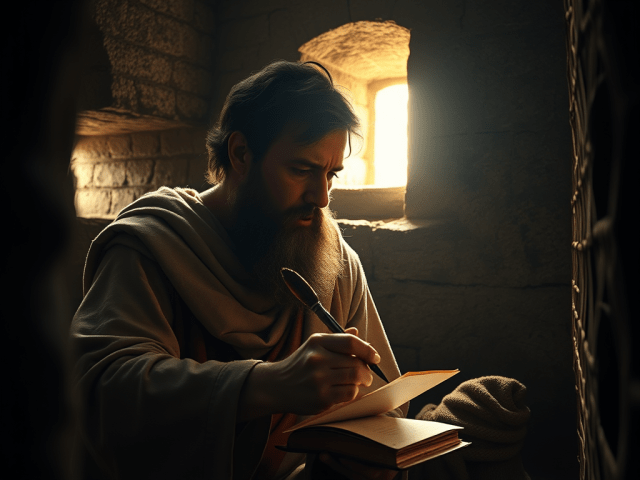
PHILIPPIANS #3: A BUFFET OF THANKSGIVING

Today we will consider Paul’s introductory prayer, offered right after his first greeting to the Philippians. These nine verses are filled with important ideas and rich food for our souls. Think of it as a kind of buffet. You may feel more hungry for the steak than the salad, and that’s fine. Maybe not every part of this passage will be equally meaningful for you. But let’s dig in and see what is on offer here.

To listen to the sermon, click the play button:

For some people, the player above may not work. If that happens to you, use the link to either download, or open a player in a new page to listen.

You can also find us on Spotify at https://open.spotify.com/show/6KKzSHPFT466aXfNT2r9OD

(This will open to the latest sermon. You can search from there if you are looking for a previous one)

PHILIPPIANS 1:3-11

3 I thank my God in all my remembrance of you, 4 always in every prayer of mine for you all making my prayer with joy, 5 because of your partnership in the gospel from the first day until now. 6 And I am sure of this, that he who began a good work in you will bring it to completion at the day of Jesus Christ. 7 It is right for me to feel this way about you all, because I hold you in my heart, for you are all partakers with me of grace, both in my imprisonment and in the defense and confirmation of the gospel. 8 For God is my witness, how I yearn for you all with the affection of Christ Jesus. 9 And it is my prayer that your love may abound more and more, with knowledge and all discernment, 10 so that you may approve what is excellent, and so be pure and blameless for the day of Christ, 11 filled with the fruit of righteousness that comes through Jesus Christ, to the glory and praise of God. (Philippians 1:3-11, ESV)

As I said in the introduction, the Philippians were a church with which Paul had few, if any, theological issues. He had deep, affectionate relationships with many in the church. So, he begins by mentioning that whenever he prays for them, he thanks the Lord, and prays with joy. Later in the letter, he will remind them explicitly that when they pray, they should do so with thanksgiving and joy.

I’ll say more about joy and thanksgiving in prayer when we get to that passage, but I do want to say something here, because it’s worth saying more than once. Sometimes, I pray about something, and when I’m done, I feel just as worried and bothered by it as I did before I prayed. But at other times, when I pray, I feel so much better afterwards. I think the difference is that during the times I don’t feel at peace, I have forgotten to thank the Lord when I pray.

When we give thanks as we pray, we are encouraging our hearts to trust the Lord. When I ask for the Lord’s help, adding “thank you,” is like saying, “I trust you to deal with this, Lord. I’ve asked you to do something, and I’m thanking you, because I trust that you have heard me, you understand my concerns, and you will do what is best.” When we thank him, we are putting the matter in the Lord’s hands, and leaving it with him. Just to be perfectly clear: saying “Thank you,” does not mean that I think the Lord will respond exactly how I want him to. It means I trust him to work in the best way, even if I don’t recognize it as the best way at this point in time. Thanking the Lord is a concrete way of releasing our concerns into the hands of the Lord.

Paul says he is thankful for the Philippians’ partnership in the gospel. The word for “partnership” is a pretty flexible word. In general it describes a close fellowship, an involvement with one another’s lives. I think Paul means a number of things by this word.

The first Philippian to become a Christian was a businesswoman called Lydia. As soon as she received Jesus, she invited Paul and his companions to stay with her. She said: “If you consider me a believer in the Lord, come and stay at my house” (Acts 16:15, HCSB). Her newfound faith immediately led her to reach out to Paul and the missionaries and partner with them by giving them a place to stay. So, from the very first day, Lydia became a partner in the gospel. Apparently the other Philippians responded in a similar way.

The partnership undoubtedly included fellowship and friendship as well. The long, ongoing connection between Paul and the Philippians testifies to genuine love and concern for one another. And, for these Philippians, the partnership also included financial giving to enable Paul to continue to preach the gospel. If you remember, one of the reasons Paul  is writing this letter is because the Philippians sent  him a financial gift, and he wants to thank them. This was not the first time they gave him financial support. At the end of the letter, Paul again thanks them, explicitly, for their financial gift. He says:

5 And you Philippians yourselves know that in the beginning of the gospel, when I left Macedonia, no church entered into partnership with me in giving and receiving, except you only. 16 Even in Thessalonica you sent me help for my needs once and again. (Philippians 4:15-16, ESV)

We’ll talk about all this more when we get to those verses, but I want to make a few quick observations. In Paul’s mind, one way to be “a partner in the gospel” is to give financially, and one of the reasons he thanks the Lord for the Philippians is because they have partnered with him in that way from the very beginning of their Christian lives. This partnership of financial giving is not something that Paul demanded, but rather, the Philippians freely chose to enter into it. We’ll unpack more about this when we get to the end of the letter.

Next Paul writes one of the most comforting verses in the New Testament:

“And I am sure of this, that he who began a good work in you will bring it to completion at the day of Jesus Christ.”

Their partnership in the gospel (and Paul’s too) began with God’s work in them. It continues until Jesus returns, and it continues as the work of the Lord. In other words, Paul is not saying, “I’m sure you will all be good Christians until Jesus returns. No, he says: “The Lord (not you), began the work within you, and it will be the Lord himself who brings it to completion.”

Sometimes we Christians get messed up in our theology. We think “Jesus forgave all of my sins by dying on the cross. Now, it’s up to me to live a good life to honor what Jesus did for me.” But that’s not the Biblical picture at all. Jesus did all that was needed to save us, and he also provides all that is needed for us to live as his people for the rest of our lives. We do not “complete” the work of Jesus by being good people after we’re saved. Jesus himself is the one who completes the work in us. From start to finish, the work is His.

Now, this is all a bit tricky. I’ve mentioned before that there are many tensions in the teaching of the Bible. This is one of them. We are saved entirely by grace. Not only that, but we live as Jesus wants us to live entirely by grace. Jesus is the one who does it within us. At the same time, we have the ability to either allow Jesus to complete his work, or to hinder him from doing the work within us. Our main job is to allow Jesus to do within us what he wants to. Sometimes, that means saying “no” to things we’d like to do, but which will hinder his work in us. Sometimes, that means saying “yes” to things we feel like we’d rather not do. It is all the work of Jesus, a work of grace. But we do have to be diligent about allowing Jesus to do what he wants to do in us and through us. And yet, don’t let this sound like a law you must follow. It is the Lord who provides the power and energy for us to be the people he wants us to be. Our part is to allow him to be at work in us. Our part is not so much to be good people, as it is just to not hinder him from making us into his people. Maybe what I’m trying to say is this: if you belong to Jesus, you will want him to guide you, and empower you to follow him. If you are consistently going your own way, and not too concerned about it, there is something wrong. On the other hand, if you belong to Jesus, he himself will empower you through the Holy Spirit to become more and more the person he wants you to be. You can allow your soul to rest as you trust him to do what you cannot do anyway.

Paul continues on in his gratefulness for the Philippians:

7 It is right for me to feel this way about you all, because I hold you in my heart, for you are all partakers with me of grace, both in my imprisonment and in the defense and confirmation of the gospel. 8 For God is my witness, how I yearn for you all with the affection of Christ Jesus.

Paul reaffirms the sense of fellowship and partnership he feels with them in the gospel. This is important. Christians are supposed to live in fellowship and partnership with other Christians. The idea of someone who is a Christian but does not belong to a church is wildly unbiblical. Even the idea of belonging to a church, but not really knowing or being involved in the lives of your fellow believers is completely against the Biblical view. When you become a Christian, you become part of the family of God, and you are supposed to become anchored to some specific part of that (i.e., a local church, and/or a small group in that church). Being a follower of Jesus involves being a partaker in the lives of other believers. This is not optional. If we don’t love others who belong to Jesus, then we need to seriously wonder if we even love Jesus.

7 Dear friends, let us love one another, because love is from God, and everyone who loves has been born of God and knows God. 8 The one who does not love does not know God, because God is love. 9 God’s love was revealed among us in this way: God sent His One and Only Son into the world so that we might live through Him. 10 Love consists in this: not that we loved God, but that He loved us and sent His Son to be the propitiation for our sins. 11 Dear friends, if God loved us in this way, we also must love one another. 12 No one has ever seen God. If we love one another, God remains in us and His love is perfected in us. (1 John 4:7-12, HCSB)

20 If anyone says, “I love God,” yet hates his brother, he is a liar. For the person who does not love his brother he has seen cannot love the God he has not seen. 21 And we have this command from Him: The one who loves God must also love his brother. (1 John 4:20-21, HCSB)

Paul’s words demonstrate his love for the Philippians. A bit later in the letter we will see that the Philippian church is not perfect, by any means, and there are struggles in the way they love one another. Even so, they kept at it, and Paul reveals his own love for Jesus by showing us that he loves his fellow-believers.

Paul adds this to his prayer for the Philippians:

9And it is my prayer that your love may abound more and more, with knowledge and all discernment, 10 so that you may approve what is excellent, and so be pure and blameless for the day of Christ, 11 filled with the fruit of righteousness that comes through Jesus Christ, to the glory and praise of God.

The first part of the prayer is about this business of loving other believers. Love should abound (that is, be plentiful, and even increase). Love should also be accompanied by knowledge and discernment. In other words, there is a time and place to discern whom we love, and how, and whether or not our fellowship with them is based upon truth and excellence. Our love should grow, and so should our discernment about who we welcome as fellow followers of Jesus. To make it clear: love does not mean that we should accept the corruption of the truth. It does not mean that we should never try to discern with whom we should fellowship. In fact, in addition to love, we need knowledge and discernment.

So, for instance, there are people who call themselves Christians who do not believe that Jesus is the only way to God. There are some who flatly deny parts of what the bible teaches: for instance, the teachings about sexuality which are so out of step with our current culture. But they have no reason for denying the Bible’s teaching on sexuality, while not denying what it says about God’s love. We can and should exercise discernment in our fellowship. I don’t have to judge the status of their salvation, but I can say that through knowledge and discernment, it is appropriate that I don’t have a great deal of fellowship with such people.

Paul ends his prayer with the hope that they will be “pure and blameless for the day of Christ, filled with the fruit of righteousness that comes through Jesus Christ, to the glory and praise of God.”

Once again we return to the comfort of verse six. The fruit of righteousness comes through Christ Jesus, not through our own efforts. The very last phrase is important as well: “to the glory and praise of God.” This is also a comfort: God’s ultimate design is that we glorify him. And he has made it so that when we are glorifying him, it is also the best thing possible for us. Because it is about God’s glory, we can be sure that God himself will complete his work in us. And because it is about God’s glory, we can trust that God’s will is good for us.

So what is the Lord speaking to you about today? Do you need to be reminded to pray with thanksgiving? Again, if you find that your prayers are not bringing you to the peace you hope for, it might be because you need to thank the Lord as you pray?

Maybe you need to be reminded about partnership in the gospel. When we become believers, we join a family, and that ultimately leads to a deep fellowship and partnership with a small group of other followers of Jesus. That partnership shares in joy and pain, in plenty and in times of need. It involves the sharing of all of our lives with one another in the cause of the gospel. Do you hear the gracious invitation of Jesus to “plug-in,” to go all in with other believers? The idea of following Jesus mostly on your own, apart from other believers, is not a Biblical idea. It is directly contrary to scripture.

I think sooner or later we all need to hear the deep comfort of verse six: It is Jesus himself who began his good work in us, and it is Jesus himself who will complete it. God’s love for us, and our future as his people, rest upon Jesus Christ, not upon our own efforts. We trust Jesus to do what needs doing in us. Our main task is to not hinder him; that is to say yes to him.

Maybe we are eager to  partner with other Christians, but we need to be reminded that discernment and knowledge are also important. There is such a thing as truth, and it matters, and even at times, knowledge and discernment should lead us into deep fellowship with some believers, and not with others who claim to be Christian.

Finally, do you need to be reminded that you were created to show a piece of God’s glory? It is a wonderful thing to remember, because it means that your whole life is God’s own project, for God’s own purposes, and those are good and wonderful.

2025 ADVENT WEEK 4: ALMOST THERE

Photo by Adi K on Pexels.com

This is the final advent sermon of Wade Jones, friend to me (Tom) and to the Life Together Churches network.

We are almost there. And it is appropriate in this Advent season to take that expression several different ways. We are almost to that moment when we celebrate the birth of the Incarnate God in Jesus the Messiah. We are almost to that moment when He breaks into our lives to win a decisive victory. We are almost to that moment when He makes all creation new and right under His complete authority and the new life begins in all its fullness. We are almost there…but we are not there yet. And God uses this Advent season so richly in my life, and in our lives, to help us experience the tension that comes from living in a space where the light is always just beginning to dawn. The sun has not risen yet, but He is about to rise. And as certain as we are of the dawn that is coming, as much as we are able to see by the glow that is beginning to give light, we still live in a world with shadows and dimness. As the Apostle Paul says in First Corinthians 13:12, “For now we see in a mirror, dimly, but then face to face.”

As I write this, Tom and Kari’s daughter Elise is back in the hospital, and she is struggling. By the time you read and discuss this, she may be back home and doing much better. That’s what I am praying for. We know that eventually she will be fully healed. That’s where our hope ultimately lives. But in the dimness now, we don’t know what the next days, weeks, and months hold. What a strange thing it is to live in the timelines of God, where our state a thousand years from now is in some ways more certain than our state tomorrow. And that is where we are. We wait for God to finish forever what He has begun in Jesus.

Once again, it is good to be with you at New Joy Fellowship and the other churches in Tom’s network. I am Wade Jones, a pastor at Priest Lake Christian Fellowship and part of the Hilperts’ extended family. And today we will engage the last Sunday of Advent together. It’s interesting to me the way I have bounced around the gospel of Matthew in this Advent season – beginning in chapter 24, then going back to chapter 3, forward again to chapter 11, and now, as Advent draws to a close, we go to almost the beginning of the gospel. We are going to skip reading the genealogy part, although there is much to learn from it. In fact, the Swiss reformer Zwingli said, “The Genealogy of Jesus, if understood correctly, contains the essential theology or the main message of the Reformation.” I won’t get into all that today, but I will point out that Matthew is grounding today’s passage in the history of Israel, beginning with Abraham, the father of the nation, going through David, the great king, to the lesser-known figures after the return from exile, and finally bringing us to Joseph, who is the husband of Mary, the mother of Jesus the Messiah.

For Matthew, it is critical to situate the life and work of Jesus firmly in the history of God’s work through His people Israel. Jesus is not some sudden departure from what God has been doing for centuries; rather, He is the culmination of all that God has been doing from the very beginning.  We will talk about some of that as we go through this passage today. Let’s go to the text now. I am going to read from the Gospel of Matthew 1:18-25.

18 The birth of Jesus Christ came about this way: After His mother Mary had been engaged to Joseph, it was discovered before they came together that she was pregnant by the Holy Spirit. 19 So her husband Joseph, being a righteous man, and not wanting to disgrace her publicly, decided to divorce her secretly.

20 But after he had considered these things, an angel of the Lord suddenly appeared to him in a dream, saying, “Joseph, son of David, don’t be afraid to take Mary as your wife, because what has been conceived in her is by the Holy Spirit. 21 She will give birth to a son, and you are to name Him Jesus, because He will save His people from their sins.”

22 Now all this took place to fulfill what was spoken by the Lord through the prophet:

23 See, the virgin will become pregnant
and give birth to a son,
and they will name Him Immanuel,

which is translated “God is with us.”

24 When Joseph got up from sleeping, he did as the Lord’s angel had commanded him. He married her 25 but did not know her intimately until she gave birth to a son. And he named Him Jesus.”

After taking us through the genealogy, Matthew begins this passage with another Old Testament allusion. He chooses the Greek word genesis for the birth of Jesus. This is not an unusual word choice, to be sure, but for any Jewish readers it would immediately connect them to the very beginning of the story. “In the beginning…” from Genesis 1:1, and now a new genesis, a new beginning, a new entry of God into His creation is here. The echoes of Creation surround the Incarnation and birth of the Son of God.

Matthew tells us this story primarily through Joseph’s eyes. In most of our Christmas storybooks or plays, we combine Luke and Matthew’s information so that we don’t leave anything out, but today I want to pay attention to how Matthew, under the inspiration of the Holy Spirit, has chosen to tell the story. Why does he share from Joseph’s perspective? I think he is being pretty intentional with this choice. And it connects to the genealogy he has just taken his readers through.

For us, as twenty-first century Gentile readers, the title “Son of David” is one we could acknowledge belongs to Jesus, but it’s one we don’t think about very much. In fact, at times, the Gentile church has tended to overlook (at best) the Jewish nature of our Messiah. We can forget that we are grafted into the root that God established in Israel, and sometimes that forgetting has had tragic consequences. But if when we read Matthew’s gospel, he is going to make it very clear that Jesus is the climax of a plan that God has been working on for generations, for centuries. And that plan is rooted in the children of Abraham.

For first-century Jews, the title “Son of David” was not an afterthought. It was a key component of their Messianic expectations. When the Messiah comes, He is going to be another David. And while Jesus will redirect some of those expectations, and outright refuse others, God’s people were right to expect King David’s successor to appear. Jesus is coming as the answer to hundreds of years of prayer and prophecy, which Matthew is going to repeatedly point out – including explicitly in this passage. So, it is important to Matthew and his readers to know that the lineage of Jesus through Joseph, who was His father legally if not biologically, can be traced back to David. Jesus is a descendant of the great king.

By pointing us to Joseph, Matthew may also be highlighting one of the aspects of response to God. In Luke’s gospel, Mary is more passive – she receives what God is doing in her and through her. In Matthew’s gospel, God acts, and His actions call for Joseph to take action in response.

(As an aside, neither of these are better or worse ways to respond. Both are appropriate ways that both men and women will respond to God at times. God is always the primary actor, but sometimes His actions call for us to wait patiently for Him to act, and sometimes His actions call for us to act in response. Matthew tends to emphasize the ways we can act in response – think about the judgment scene in Matthew 25, for example. We cannot act to deliver ourselves, but we can and do sometimes act in response to the deliverance that God has provided.)

So, who is this Joseph, besides a many-times-great-grandson of King David? Matthew describes him as a man who is righteous or just. That is, someone who is concerned with obedience to God. Don’t hear this in legalistic terms. Think about Psalm 119: the longest chapter in the Bible filled with 176 verses of inspired affirmation of the goodness of knowing what God wants from His children. Like the psalmist, Joseph knows that the way to a real life is through doing what God has asked us to do. And part of that is the sexual integrity He expects from His children.

Now, Joseph has found out that his fiancée is pregnant, and he is one of two people who can be absolutely certain that the baby is not his. At this point, he has the right to make this a scandal and make Mary pay for her betrayal, but, because he is a man who seeks the heart of God, he has decided not to make this any worse for her than it has to be. He is going to end the engagement quietly and let her go. (Many of you already know this: first-century Jewish culture took engagement very seriously. It was almost a marriage except that the bride and groom did not live together or have a sexual relationship until the wedding day. But in other ways, their commitment to each other was already considered to be in place. From all Joseph could have known, Mary had to have violated this covenant agreement – whether willingly or unwillingly — so he couldn’t, in good conscience, go forward with the marriage.)

Think about how painful this must have been for Joseph! We know how the story is going to develop, so it’s easy for us to just move right one from verse 18 to verse 20. But Joseph had to live in verses 18 and 19 for at least a little while. We don’t know how long. But even if it was just one afternoon, what a miserable, disappointing, heartbreaking afternoon that must have been for him. And Matthew doesn’t give us a calendar. This part of the hurt may have lasted for days or weeks before God tells him more of the story.

I want to sit with that thought for a moment. Joseph had done nothing wrong. He wasn’t jumping to any conclusions based on gossip. And the emotions he felt, the struggle he faced, was one I think many of us can identify with on at least some level. What do you do when it seems that a decision you thought you had made well, made prayerfully, made in line with God’s will, turns out to be something completely different than what you had expected? Yes, God is going to make it all right (at least as far as Joseph’s relationship with Mary). But that doesn’t negate the wrestling that Joseph had to do in the meantime, as he lived through verse 19.

And it’s likely that we are all going to spend significant parts of our lives in our own versions of verse 19. We’ve made thoughtful decisions. We have sought the will of God and wise counsel. We’ve prayed about it and set out on a course of action, confident that we are walking in the will of the God we honor. And then things take a turn. The business goes under. The friendship falls apart. The new house has black mold. And while we believe that God will always act to redeem, we don’t know what the timetable will be. How will we react in the meantime? As we wait through Advent, can we be okay as people who can still wait on God in trust when things appear to be falling apart?

Waiting doesn’t always mean passivity. Joseph is taking steps to deal with the crisis in his life, and he is trying to take them in ways that honor God. I find great comfort in this part of the story. When Joseph is about to miss what God is doing, even though he is trying to follow Him, God shows up. He doesn’t leave him hanging out there forever (maybe for a while – a painful while, but not forever). Instead, He shows up to Joseph with an angelic messenger in a dream – the first of three times that a messenger of God will appear to Joseph in a dream. And each time, God tells him to change course – to stop something he was planning to do or doing and begin to do something different. In a way, there is an echo here of what it will mean when John and then Jesus tell Israel to “Repent, for the kingdom of heaven is at hand.” It’s time to turn your head, change your direction, and go a different way so that you can participate fully in the surprising thing that your God is doing.

In this case, once he comes to terms with what God is telling him, I imagine this “repentance” would have been pleasant for Joseph. No, you don’t have to abandon this woman that you were planning to spend your life with. And no, she hasn’t been unfaithful to you. This is actually something that I have caused to happen. So, stop planning for the divorce, and resume your plans for the wedding and the marriage. You and Mary still have work to do together.

By the way, notice here that Matthew does not really try to explain or defend the birth of Jesus to a virgin mother. He, like Luke, just accepts it as something that is known by faithful believers to be true. The gospels give us hints that questions – and not polite ones – were asked about the circumstances of Jesus’ birth, and to an extent, the gospel writers are just setting the record straight. “This is what it was actually like.” No pagan mythological encounters. No detailed biological mechanics. Just a straightforward statement that God did this, and we accept it. Honestly, when we look at the rest of Jesus’ life, death, and finally resurrection, this is just one incredible part of a long miraculous story. And if our modern ears have trouble with it, that says more about us than it does about Jesus. If we are Christians, we believe in a God who does impossible things. The virgin birth is one of them.

Now, I do wonder if it was hard for Joseph to accept this at first. I mean, it does seem rather strange to us. But remember (and hear Matthew’s intended echoes here), this is not the first time that God has been involved in the conception of a child. Yes, this One is different. This One is unique – the unique Son of the Father who has existed together with Him and the Holy Spirit since well before the creation began. And also, this difference is in line with ways that God has acted throughout the history of His people. Joseph, as a righteous Jewish man, would have known that. Go back to the beginning of Israel, with Abram and Sarai (yes, before their names changed). God promised a son to a couple that was way too old to have a child. They struggled to believe it and even tried to find ways to help God with His plan (which was a terrible idea, as it generally is). But eventually, God gave Isaac. And He gave Samsom to Manoah and his anonymous wife. And He gave Samuel to Hannah and Elkanah. Does Joseph fully grasp the mystery that the Eternal God is already incarnate in his fiancée’s womb? I seriously doubt it. Does he know that he serves a God who has caused miraculous births before? Absolutely he does. And based on that knowledge of what God has done in the past, he is ready to accept that He is doing something similar now, and that God wants him – Joseph – to be a part of it.

So, Joseph acts. Now remember, his action is in response to God’s. Joseph doesn’t cause the Incarnation. Joseph doesn’t bring God to be Immanuel with His people, present with them as an embodied part of Israel. But he does have a part to play. And he does it. He puts down the idea of divorce and picks up his pregnant fiancée, along with the snide comments, and damage to his reputation, and possible loss of business that will come with it. He marries her and takes cold showers until the child is born. He accepts a burden that he can’t even imagine at this point, although it will start to become clear early on when he and his family have to flee the country. And in doing so, he becomes the man that will raise the Son of David and the Son of God.

Church, what surprising thing is God asking you to respond to in this Advent season? Oh, He isn’t going to ask any of us to raise His Son – that job only needed to be done once. But I assume that most everyone listening to or reading this message is trying to live a righteous and just life in response to the love of God shown to us in Christ Jesus. He has come, as this passage says, to save His people from their sins. And there are ways He would like us to respond to that. There are good works, as the Apostle Paul says in Ephesians 2:10, “which God prepared beforehand that we should walk in them.” A lot of them are going to be like the life Joseph was living before the dream. We listen to the Word of God and do what He says. Love our neighbors and our enemies, put off anger and drunkenness and greed, put on humility and gentleness and peace. But sometimes – and maybe more often than we might expect – there will be something specific. Something unique. A work that God prepared ahead of time planning for you – no one else, you – to do.

That work may be like what He asked of Joseph. It may require you to lay aside legitimate emotional hurt. It may require you to ignore the way it will look to others. It may mean that you end up having to leave a relatively settled, comfortable life behind for a few years or longer. It might even mean you attract the unwanted attention of the wealthy and powerful when your obedience threatens the cultural or political narratives that serve their purposes.

Here’s what we know. If we listen to God, what He accomplishes in and through us will be good. Not necessarily my specific good – I’m not sure what Joseph personally got out of all this. But the good of His people. The good of His creation. The good of His purpose and plan to “gather together in one all things in Christ, both which are in heaven and which are on earth – in Him.” (Ephesians 1:10)

Jesus is coming. The new Creation is coming. The day of the Lord is coming. And if we listen to Him, if we respond to Him, if we lay aside our own agendas to agree with Him and live His way – we will rejoice when the sun finally does crest the top of the hill and we are fully immersed in the Light. Until then, we respond to Him and we wait.

ADVENT 2025, WEEK 3.

Thanks again to Wade Jones for helping us out during this time while we are trying to help our daughter, Elise.

To listen to the sermon, click the play button:

For some people, the player above may not work. If that happens to you, use the link below to either download, or open a player in a new page to listen.

You can also find us on Spotify at https://open.spotify.com/show/6KKzSHPFT466aXfNT2r9OD

(This will open to the latest sermon. You can search from there if you are looking for a previous one)

Matthew 11:2-11 – Advent Week Three
December 14, 2025

            New Joy Fellowship, thank you for letting me be with you again this week. I don’t think I actually introduced myself last week. My name is Wade Jones, and I am one of the pastors at Priest Lake Christian Fellowship in Antioch, Tennessee, as well as a good friend of your pastor Tom. I’m filling in through the Advent and Christmas season this year so that Tom and Kari can focus on Elise and her health. Lord, have mercy and heal Elise. Amen.

As we enter this week into the third week of Advent, we are again engaging with John the Baptist. Last week, Jesus was “off-stage,” and John was the focus, with the family of the Herods in the background. This week, the Herods are still an important part of the setting and the context, and the conflict between the kingdom of Herod and those like him and the kingdom of heaven remains a major part of the narrative. However, it is now John who has exited the stage, and Jesus has taken the center. This is what John saw coming in Matthew chapter three, and what he was looking forward to. But as we will see in today’s reading, the way things have unfolded in the time period between chapter three and chapter eleven has raised some questions in John’s mind. I want to look at two things in this passage: John’s question to Jesus and Jesus’ answer to John’s question. But first, let’s catch up on where we are in the story Matthew is giving us.

Not long after last week’s passage in Matthew 3, where John announced that he was preparing the way for the coming Anointed One of God, Jesus came to John for baptism and went into the desert. After His temptation there, Jesus hears about John’s arrest and begins His own public ministry. John stays in prison for the rest of his life, but he continues to hear about Jesus and His ministry. That’s what leads to the question John has in today’s passage. I’m going to read from Matthew 11:2-11.

When John, who was in prison, heard about the deeds of the Messiah, he sent his disciples to ask him, “Are you the one who is to come, or should we expect someone else?”

Jesus replied, “Go back and report to John what you hear and see: The blind receive sight, the lame walk, those who have leprosy are cleansed, the deaf hear, the dead are raised, and the good news is proclaimed to the poor. Blessed is anyone who does not stumble on account of me.”

As John’s disciples were leaving, Jesus began to speak to the crowd about John: “What did you go out into the wilderness to see? A reed swayed by the wind? If not, what did you go out to see? A man dressed in fine clothes? No, those who wear fine clothes are in kings’ palaces. Then what did you go out to see? A prophet? Yes, I tell you, and more than a prophet. 10 This is the one about whom it is written:

“‘I will send my messenger ahead of you,
    who will prepare your way before you.’

11 Truly I tell you, among those born of women there has not risen anyone greater than John the Baptist; yet whoever is least in the kingdom of heaven is greater than he.”

     In Matthew chapter three, John seems pretty clear about Jesus and who He is. Now, he has questions. And I think these questions are real. Some scholars suggest that John is really only asking these questions for his disciples’ benefit, or that he is not serious about his question in some way. I don’t think that takes John very seriously as a human being. And I think sometimes we are tempted to do that with the people we read about in Scripture. We want to make them “heroes of the faith,” and in that light, we have trouble processing the truth that they were (with the exception of Jesus, of course), human beings who were just as susceptible to sin and doubt and failure as we are. I think when we do that, we miss one of the main points of the story of the Bible, which is a story of a perfect and righteous God who continues to work redemptively with a bunch of flawed and sinful human beings. All that to say, I think John was having some real questions. And I think we can understand why.

            John was expecting a Messiah who would quickly bring judgment and fire, to set right the injustice of this world and putting the people of God in their rightful place as partners with YHWH in governing the world He had created. Instead, a Herod had locked John up (and will, in fact, kill him soon – you can read about that in Matthew 14). And meanwhile, Jesus doesn’t appear to be doing anything about the unjust systems of the kingdoms of this world. Instead, He is going about doing things that are good, to be sure, but not at all the good John was expecting.

            Can’t we relate to that? It is so easy, at least it is for me, to decide that based on what I know of God and His character, I can predict what He is going to do, and when He is going to do it. And then when He doesn’t operate on my schedule, or when things go in a direction I did not expect, I can fall into discouragement, doubt, and even despair. And all that can happen for me without the additional challenges of being incarcerated as a religious prisoner simply for saying things that God has said are true.

I think we should take John’s question at face value: Jesus, I really believed You were the Messiah who was coming to bring judgment to God’s enemies and relief to His people, but I don’t hear You taking the steps that would seem to me to lead to those results. Did I miss it? Is there another Messiah coming?

One other factor to consider here: remember, John is the last of the Old Testament prophets. That means he has sporadic, occasional experiences with the Holy Spirit. The Spirit of God comes on him, gives him words to speak or actions to perform as He did with Elijah, Isaiah, Ezekiel and so many others. But the Holy Spirit is not a permanent presence in John’s life – that is one of the things that shift for us with the death and resurrection of Jesus, but we’ll have to talk about that another time. And like any responsible prophet, John can question whether or not he heard the Lord as clearly as he thought he did. Prophets can make mistakes, not by being dishonest (unless they are false prophets), but simply by being human. John knows that he has sent followers to Jesus because of what the Spirit of God told him about Jesus. He feels some responsibility. And now, he needs to know if he has made a mistake.

What John does next is really wise. He asks Jesus directly. At least, as directly as he can while locked up. He sends some of his own disciples to Jesus with a direct question: was I right about You, or was I wrong? I love this approach from John. He doesn’t rely on his own ability to figure it out. He doesn’t let his potential frustration with Jesus, or with YHWH, drive a wedge between them. He doesn’t just stew in self-pity and disappointment. He goes directly with his questions and expects to receive an answer. And that in itself is a beautiful example for us. When God doesn’t act and respond in the ways that we expect Him to, what are we going to do with our discouragement? I encourage us to act like John – go directly to Him and ask, “What’s going on? Why are You doing things this way? This is not how I thought You would handle the situation – did I miss it? Are You who I think You are?”

Brothers and sisters, I believe if we are honest with ourselves and our faith, we are going to have questions like this. If God has not surprised you yet, follow Him a little longer. He will. And while the pleasant surprises rarely raise questions for me, the unpleasant ones definitely do. If John could ask this question, we can too. And I regularly do. In fact, we’ve been in the middle of those questions for years with Tom and his pain (as well as others in our fellowship at Priest Lake). And now, we ask them with Elise as well. “God, we know You can heal. We are confident that You intend to give us resurrected bodies that are fully healed. Why not do some of that now for these people we care about?” Whether or not we understand His answers – and sometimes I do, but sometimes I don’t – I think it is good and right for our relationship with Him for us to ask the questions.

And in Matthew 11, Jesus doesn’t seem to take any issue with the question John’s disciples bring to Him. He takes the question seriously, but He doesn’t take offense at it. And He answers it indirectly, which I think He does on purpose. So often, Jesus responds to a question by addressing the deeper needs under the question. He could just tell John’s disciples: “Yes, I’m the Messiah. John was right.” Instead, he answers the question in a way that is both practically wise, and more importantly, an invitation for John, John’s disciples, and the crowd following Jesus to engage more deeply with the question of what God intends to do in and through His Messiah.

Let’s dispense with the practical reason first. We’ve been talking for two weeks about the conflict between the kingdom of this world, which Herod and his descendants exemplify, and the kingdom of heaven, which John prophesied and Jesus is inaugurating. We already know that Herod the Great, the dad of the Herod who imprisoned John, wiped out all the baby boys in a village to eliminate a potential threat to his kingdom. There’s no reason to think that his son’s response will be any different. If someone in the crowd carries word back to this Herod that Jesus, John’s cousin, has declared Himself the new David, God’s anointed king over Israel, then this conflict may come to a head sooner than God intends. Jesus has work to do before His execution, and He doesn’t want word to get out too soon to the wrong people. Remember how often He tells someone He has healed, “Don’t tell anyone about this.”? His answer to John is a little bit cryptic, and it’s intended to be that way.

But the cryptic answer has another, bigger purpose. Even John, great as he was, has a different picture of what it means for Jesus to be Messiah. Jesus lists all these works that we, two thousand years later, think of as actions of the Messiah: healing the blind, the lame, the leper, returning the dead to life, speaking good news to the poor and oppressed. Because we know the whole story, because the writers of the gospels and the rest of the New Testament have explained some of the prophecies to us, we see these as Messianic actions. But first century Jews did not. Who is their model for God’s Anointed? David. Now, David did some pretty spectacular things – like the time he took down Goliath. But none of these miracles Jesus lists bring David to mind, do they? They sound like actions of God’s people, and they were actions first century Jews associated with the kingdom of heaven. But they weren’t supposed to happen yet. John was expecting the same order: first judgment on the rebellious powers of this world’s kingdom, then an age of healing, liberation, and real life will begin. They expect judgment to precede mercy.

I can understand their perspective. From one angle, what good does it do to heal someone, or return someone to life, or bring the poor out of poverty, or set free the slave, in a world that is still full of disease, death, oppression, and slavery? Doesn’t it make sense to abolish the cause first, then deal with the effects? What good does it do to proclaim freedom when the Herods and the Romans still appear to have power? They believe that until they have national liberation, healing and good news for the poor are not especially relevant – they can’t last. But Jesus is offering a new way of understanding God’s timeline. Judgment is absolutely coming – for Israel, for Rome, for every world power before or since – and one day, for us. But God is going to bring mercy first, then judgment. What Jesus is doing is bringing the reality of the kingdom of heaven into the middle of the world dominated by the kingdom of Herod. He is offering an appetizer for the banquet that is coming – a taste of the feast that God will set out for all His people in the new heavens and the new earth.

And He knows this is going to be a challenge. It’s not the kind of neat and tidy solution that we would like – or at least think we would like. But when I get worked up and stressed out in my desire for God to eradicate all evil, it’s good for me to ask myself, “What about the evil that remains in me? What about the evil that remains in those I love? I don’t really want God’s fire there yet, do I?” Our desire for God’s judgment is generally directed toward those people over there. But God doesn’t have “those people over there.” All human beings are His children, and He does not desire that any of them should perish, but that all should come into the life that the kingdom of heaven brings. So He initiates the breakthrough of the kingdom of heaven through the merciful healing, reconciling, and saving power of Jesus. In doing that, He challenges our belief that mercy is for “us” and judgment for “them.” And Jesus recognizes this challenge: “Blessed is the man who does not fall away on account of me.” In other words, “I know I’m doing this differently than you expected, John. In fact, I’m doing it differently than almost anyone expected. You’re going to have to watch and listen to me to develop your definition of Messiah; you can’t use your definition of Messiah as a filter for what I do and say.”

With John’s question, we enter a long section of Matthew’s gospel where Jesus is defining for us what Messiah is going to mean. John isn’t the last one to ask these questions. Religious leaders will ask them. Family members will ask them. The crowds around Him will ask them. And His closest followers will ask them. But Matthew is leading us to chapter 16, where Peter identifies Jesus as the Messiah, the Son of God. Not that they understand it all even then, but the disciples have come to a point where Jesus becomes the starting point for understanding God and what He is doing, instead of insisting that He fit into the models they have devised (not that they don’t still try – it takes the fact of the Resurrection and the presence of the Holy Spirit to fully deal with those misconceptions).

Brothers and sisters, this remains the challenge Jesus puts in front of us. I don’t agree with a lot of what the French philosopher Voltaire said, but he is right on with this one: “In the beginning God created man in His own image, and man has been trying to repay the favor ever since.” This is one of the primary reasons for the opposition to Jesus in His own day, and in every generation since then: We keep thinking we know what kind of God we want, and what we want Him to act like. Sometimes those pictures come from evil places in ourselves or our culture – but often, like with John the Baptist, they come from desires that sound right, and that are partially in line with God. But any picture of God that begins with me is, inherently, wrong. My brain, my heart, my will are never going to be mature and complete enough to actually develop a framework for God that is totally correct. Instead of beginning with me, I have to begin with God. And God has told us that His nature is most fully revealed in the Incarnation of the Son, Jesus. It is Jesus who displays most completely the nature of the Godhead in a way that we have some chance to comprehend. We won’t get it fully right – but it’s the only right place for us to begin. That is what Jesus is asking John to do in this passage: start with what you see me doing and hear me saying and let that define what it means to be the Messiah.

As we get ready to wrap up this week, let me pose some questions for each of us to ponder.

  • What do I see and hear God doing in my life and the world around me?
  • Where do I experience tensions between what God appears to be doing and the things I would expect Him to do?
  • When does it bother me for God to act with mercy first, especially when I don’t yet see the judgment coming?
  • How can the Holy Spirit help me remove the filters of my expectations for God so that I can see Him more clearly?
  • How do I develop trust that what God is doing is right even when it doesn’t make sense to me and may not meet the needs I feel most painfully in this moment?

Brothers and sisters, the kingdom of heaven is breaking into our lives, and sometimes it will do that in ways that disappoint or disturb us. This week, as we draw closer to the celebration of the birth of Jesus, may God help us receive Him as He is, and not as we would have Him to be. Amen.

LAMENT #6: MY GOD, WHY HAVE YOU FORSAKEN ME?

Once again, during this series I encourage you to listen to the sermon, rather than simply reading the text. My right arm is in a sling, and I cannot type effectively. I am using voice dictation software to type these words, as well as any other content that I add to pastor Kevin’s message. Sometimes the results are not entirely accurate. I add things in the audio message that I cannot type out.

To listen to the sermon, click the play button:

For some people, the player above may not work. If that happens to you, use the link below to either download, or open a player in a new page to listen. You can also find us on Spotify at https://open.spotify.com/show/6KKzSHPFT466aXfNT2r9OD

To download, right click on the link (or do whatever you do on a Mac) and save it to your computer: Download Lament Part 6

Grumbling vs Lamenting #6. Psalm 22

Today I want to explore the lament of Jesus from the cross. He is echoing the lament of David in Psalm 22. The Lord Jesus only quoted the first line, but it will be good to read the first two verses:

My God, my God, why have you forsaken me?

    Why are you so far from saving me,

    so far from my cries of anguish?

My God, I cry out by day, but you do not answer,

    by night, but I find no rest.

(Psalm 22:1-2)

    Have you ever stopped to consider that Jesus actually felt forsaken, abandoned and alone in those moments when He was languishing on the cross? Or, is it your opinion that He said these words so we’d connect the dots back to this messianic psalm which predicted the events of the day He was crucified?

   To be entirely honest, until recently I (Kevin) never seriously considered that Jesus actually felt forsaken. I suspect that this is because I imagined that as God the Son He couldn’t possibly have felt that way. I don’t think I’m alone in this perception. However I remind myself that Jesus was not only God the Son, He was also an actual human being who felt psychological pain (“…he was a man of sorrows and acquainted with grief”– Isaiah 53:3) and physical pain (he experienced scourging, the crown of thorns and crucifixion, an unthinkably brutal form of torture which inevitably ends in death– Matthew 27:27-35). 

Scripture shows us that during the course of His life, first as the son of Mary and Joseph and later as an adult, he sat at the feet of elders and learned (Luke 2:41-51), He experienced physical maturation (Luke 2:52), hunger (Matthew 4:2), thirst (John 19:28), exhaustion (Matthew 8:24) and such things as anger and frustration (Mark 9:19). Also, we know that He experienced the unsettling effects of being tempted “in all ways as we are” and yet He didn’t sin (Hebrews 4:15).

I have come to believe that Jesus truly felt forsaken while He was on the cross. I  base this perspective on some things Jesus said and some things that we observe about Him.

In the Garden, on the night of His betrayal, He admitted to His followers, “I’m overwhelmed with sorrow to the point of death” (Matthew 26:38). Note the word “overwhelmed.” Such a strong word. Dictionary.com defines it as “being completely overcome in mind or feeling.” Overwhelmed? Yes, that’s the word the scholars think best represents the Greek word which is used in this text. Too strong for your taste? Some translations use the words, “crushed,” or “consumed.” Much to think about. Then, there’s “sorrow” so terrible that it was lethal (“unto death”).

Then we have His famous prayer that ends with “Not My will, but Yours be done.” We love to give that our attention but it would be good for us to spend some time thinking about, maybe even camping on: “Father, if possible, let this cup pass Me by,” before saying, “Yet not My will…”

Jesus had a will that was independent of His Father’s. He clearly reveals, doesn’t He, that He wanted the cup of suffering to “pass Him by?”

Then if we go back in the narrative about Jesus’ suffering, in the days leading up to His time in the Garden of Gethsemane, we see that He acknowledges to His followers, “I have a baptism to be baptized with, and how great is my distress until it is accomplished” (Luke 12:50). Have you ever thought of Jesus being distressed? He was and He didn’t hide it from His disciples.

Then we see that His disciples observed, “And being in agony…his sweat became like great drops of blood falling down to the ground” (Luke 22:44).

Based on these things, can you consider that your Savior actually felt forsaken? Might this help you when you feel abandoned and alone in your suffering?

(Tom now) And the Bible seems to tell us that we do not have to suffer complete abandonment by God, like Jesus did. In fact, Scripture teaches that through faith, we live in spiritual union with Christ. In fact the way the apostle Paul puts it is this:

20 I have been crucified with Christ. It is no longer I who live, but Christ who lives in me. And the life I now live in the flesh I live by faith in the Son of God, who loved me and gave himself for me. Galatians 2:20

The idea is that Jesus himself lives his life through ours. That means that when we suffer, Jesus himself suffers along with us. In other words we ourselves are never abandoned or forsaken in the way that Jesus was. He is with us even in suffering; perhaps, especially in suffering. So in the first place, as Kevin says, we can know that Jesus understands what we are going through. But even more, we can lean on him, trusting he is there even when we don’t perceive him, knowing that he is feeling the abandonment and hopelessness along with us.

I want to close with some words from the Gospel transformation study Bible. It comes from the note found at Luke 22:42:

 Jesus has previously given his disciples (including us) instructions on praying (11:1–13; 18:1–8). Here he models one of the most important and universal truths about what our prayer life should be like. Jesus expresses his desires and even laments before the Father with full honesty and humility (22:44). He desires to be delivered from the pain and suffering he is facing (v. 42). Yet there is something in his prayer that is even more important than his requests. It is his acknowledgment of God’s sovereignty and goodness in all situations and his glad submission to whatever God’s greater plan might be: “Nevertheless, not my will, but yours, be done” (v. 42). This is the banner that should fly over all of our prayer requests. It is the heart of childlike faith that honors God and blesses us. We can pray bold prayers, knowing that God is our Father, through our adoption based on the work of Christ. Yet we can also rest in confidence that since he is our Father, even his denials of our requests can only be what is best for us—as can be his granting us “far more abundantly than all that we ask or think” (Eph. 3:20).

GRUMBLING vs LAMENT #4: ASKING “HOW LONG?”

To listen to the sermon, click the play button:

For some people, the player above may not work. If that happens to you, use the link below to either download, or open a player in a new page to listen. You can also find us on Spotify at https://open.spotify.com/show/6KKzSHPFT466aXfNT2r9OD

To download, right click on the link (or do whatever you do on a Mac) and save it to your computer: Download Lament Part 4

Grumbling vs Lamenting #4.  Psalm 13

For the choir director: A psalm of David.
1 O LORD, how long will you forget me? Forever?
How long will you look the other way?
2 How long must I struggle with anguish in my soul,
with sorrow in my heart every day?
How long will my enemy have the upper hand?
3 Turn and answer me, O LORD my God!
Restore the sparkle to my eyes, or I will die.
4 Don’t let my enemies gloat, saying, “We have defeated him!”
Don’t let them rejoice at my downfall.
5 But I trust in your unfailing love.
I will rejoice because you have rescued me.
6 I will sing to the LORD
because he is good to me. Psalms 13

There is more to the spoken sermon than there is to the text here. My right arm is in a sling and will be for several more weeks, so I type these words through voice dictation. But when I record the sermon, I add in things that will not show up in this written version. That’s why I encourage you to listen to the audio versions of these particular sermons.

When you are facing a trial have you asked this? This psalmist, David, continues his lament with, “How long must I… have sorrow in my heart all the day?” (v. 2). Read more from this psalm and you will see some of what David was facing.

What are you facing? Illness/Chronic pain? Divorce? Conflict? Insomnia? Bankruptcy? Legal problems? Loneliness? Addiction? Depression? Abuse?

The problem with trials and suffering is that each new one can seem permanent and worse than the one which preceded it. Suffering is an inevitable part of life on this side of heaven (John 16:33). We’ve learned that some suffering comes simply because we are occupying space here on earth. Sometimes it comes because we have done something to make our situation worse. Sometimes someone else does something which makes our situation worse. Sometimes God is pruning us and bringing us into a “dark night of the soul.”

 When you experience a “dark night,” which typically lasts far longer than a single night, your circumstances may not change for the worse, but you will be exposed to a kind of purgation, a spiritual aridness that is exceedingly painful. In these seasons, it can seem impossible to go on.

I remember my first such experience with a dark night. I was pretty new to the faith and had just been baptized in the Holy Spirit. John the Baptist describes that experience as “a baptism of fire” (Matthew 3:11). I was experiencing the fire of purgation, a terribly painful purifying process. I felt like I was being turned inside out. This has been experienced and written about by many who have gone before us, the most notable perhaps, would be St. John of the Cross.

     My circumstances were not more difficult than usual. I had some good friends and a budding relationship with the woman who became my first wife, Laura. Yet, internally I was in great distress (Sadly, Laura passed away just a few years ago). I was confused about what I was experiencing. I began to fall into despair and didn’t want to live. In my deepest pain, I heard, “John 15:2!” I didn’t know what it said, so I read that verse. It says, “…every branch that bears fruit, He prunes it so that it may bear more fruit.” Then I heard the same voice say, “You’ve been bearing fruit and now I am pruning you so you will bear even more…”

     When it appears that your suffering has a purpose, it helps. I found hope but the suffering continued. The writer of the book of Hebrews indicates that we should treat all suffering as God’s discipline and something that is useful for our sanctification (Hebrews 12:7, 10).

 Then I began to wonder, “How long?” I didn’t receive an answer. I think one of the reasons we may not get a definitive answer to this question is because we’re called to walk by faith, not by sight. God wants us to keep our eyes on Him and not fixate on what we are walking through. He wants us to learn to move forward putting one foot in front of the other, even when, especially when, we are confused, afraid and feeling alone. My first dark night lasted about two years. It was hard but it was an important season in my life. It helped me to know that God doesn’t remove His presence from us even though He sometimes will remove our awareness of it.

If you can get an answer to the “why?” question, ask “How long?” You may or may not get an answer. God’s silence is sometimes an answer. Sometimes it’s an invitation to trust Him when nothing makes sense. For now, perhaps it will suffice to acknowledge that God wants you to simply proceed without any assurances that your suffering has an end date. Ouch.

(Tom here, for a bit). In fact, there is a definitive end date for all of our suffering. We have the promise that when we leave this mortal life, if we have put our hope fully in Jesus, our sufferings are at an end. Sometimes I quail at the thought that I have another thirty years or so to suffer my kidney stone pain. At the same time, I know that it won’t be forever. The Lord has been faithful to me for these past ten years of physical suffering, and I can trust him to continue to be faithful to me, and walk with me, as long as my suffering endures, and in whatever other suffering I may experience. As it says in Hebrews:

For God has said,
“I will never fail you.
I will never abandon you.”
6 So we can say with confidence,
“The LORD is my helper,
so I will have no fear.
What can mere people do to me?” (Hebrews 13:5-6, NLT)

Our culture, now more than ever, is all about instant gratification. I find myself frustrated that when I order something from a place like Amazon sometimes it takes three whole days to get to me. It’s insane that that length of time bothers me. But the economy of the entire world has grown by providing what we want ever more quickly. It makes life comfortable, but it leaves us confused, and at a loss, when things don’t work out for us the way we want them to. The promises given to us in and through Jesus are so very worth waiting for. There is literally nothing better that we could have than the fulfillment of those promises. Can we hold on in faith, knowing that what we wait for far outweighs any of the struggles we might have here and now?

The spiritual practice of lament encourages us to recognize our feelings. It isn’t wrong to feel like our struggles are long and drawn out. It isn’t wrong to say that to God, and to wish for them to end soon. But in lamenting, we don’t simply complain. What separates it from grumbling is that we also turn our hearts towards God in faith. In lamenting, in a sense, we preach to our hearts. We remind ourselves of God’s promises, and his goodness, and his presence with us in every moment.

So, go ahead and ask “how long?” You may or may not receive a satisfactory answer. You will receive a satisfactory Presence, whether or not you perceive that Presence. For the entire length of your struggle, the Lord does, and will, walk with you, no matter how long. And though we may not know exactly how long we will have to suffer, we know that there is a certain end to the suffering, and a real beginning of an incredible life free from our struggles, infinitely longer than the amount of time that we may suffer here in this life.

Here’s a promise we can speak to our hearts today, any day in which we wonder “how long?”

1 Then I saw a new heaven and a new earth, for the old heaven and the old earth had disappeared. And the sea was also gone. 2 And I saw the holy city, the new Jerusalem, coming down from God out of heaven like a bride beautifully dressed for her husband.
3 I heard a loud shout from the throne, saying, “Look, God’s home is now among his people! He will live with them, and they will be his people. God himself will be with them. 4 He will wipe every tear from their eyes, and there will be no more death or sorrow or crying or pain. All these things are gone forever.”
5 And the one sitting on the throne said, “Look, I am making everything new!” And then he said to me, “Write this down, for what I tell you is trustworthy and true.” (Revelation 21:1-5)       

2 SAMUEL #22: ARE WE WILLING TO FOLLOW JESUS WHEN HE DISAPPOINTS US?

As we consider the events of 2 Samuel chapter 20, we can see that David’s prayer for a new heart, and a willingness to obey God have been answered. After his awful mistake with Bathsheba, he returned to following the Lord faithfully, as he did when he was young. The way people responded to David at this time can inform us as we think about how we respond to Jesus Christ.

2 SAMUEL 2024 To listen to the sermon, click the play button:

For some people, the player above may not work. If that happens to you, use the link below to either download, or open a player in a new page to listen.

To download, right click on the link (or do whatever you do on a Mac) and save it to your computer: Download 2 Samuel Part 22

2 Samuel #22. 2 Samuel Chapter 20:1-26

Last week we spoke of the political situation at this point in time in Ancient Israel. There are more politics here, but be patient, I think we’ll find some good stuff.

If you remember, after David’s men defeated Absalom and Absalom was murdered by Joab, David waited, to make sure that the Lord wanted him to be king again. I think this is a really important point, and I want us to see how significant it is. If you remember, David had spent at least a couple of years “sliding” further and further away from the Lord, until he was willing to commit adultery, and then murder to cover it up. But after he was confronted by Nathan the prophet, David repented. We looked at his repentance in 2 Samuel #14. During his time of initial repentance, David wrote psalm 51. In that psalm he prayed (among other things):

10 Create in me a clean heart, O God.
Renew a loyal spirit within me.
11 Do not banish me from your presence,
and don’t take your Holy Spirit from me.
12 Restore to me the joy of your salvation,
and make me willing to obey you.
13 Then I will teach your ways to rebels,
and they will return to you. (Psalms 51:10-13, NLT)

We can now see, by David’s actions, that God answered this prayer. David has a new heart, and he is now, once again, willing to obey the Lord, and to teach the Lord’s ways to rebels. He didn’t force his way back into the kingship. In addition, he reached out to the rebels. The key leaders of the rebellion were from his own tribe, the tribe of Judah. Many of the leaders of Judah had betrayed David to follow Absalom, and afterwards they felt ashamed, and concerned about David’s attitude toward them. Even so, David reached out and forgave them, even before they came back and said sorry. He gave Judah the honor of escorting him across the Jordan River on his way back to Jerusalem.

Now, this act of forgiveness and kindness offended the leaders of the other tribes. They had not provided the key support of Absalom’s rebellion, like Judah had; they had talked of bringing David back as king even before Judah had. So they were offended that David reached out to Judah and gave them the honor of escorting him back to Jerusalem.

Apparently while David was returning to Jerusalem and all this was being discussed, a man named Sheba, from the tribe of Benjamin (Saul’s tribe), stepped up and said, essentially, “Fine then. If that’s how David wants it, let’s leave.”

He left, and most of the people of the other ten tribes followed him. The text doesn’t make this clear, but at this point, the leaders of the other tribes simply went home. They were simply choosing not to escort David to Jerusalem.

But Sheba, the man who instigated the walk-out, wanted to take it one step further. He wanted to immediately start another rebellion. However, Sheba was not like Absalom. This was not a carefully laid plot with long preparation. He was only able to get the Berites to join him. Some translations say “Bichrites,” but that is based on the Greek and Latin text of this passage. The original was written in Hebrew, and it says, “Berites.” These “Berites” were probably citizens of the town of Beeroth in Benjamin; it was almost certainly Sheba’s hometown. The Greek and Latin texts probably used “Bichrites” to make it clear that these were the followers of Sheba son of Bichri, who were almost certainly limited to the members of his own extended family (the family of Bichri, so “Bichrites”). The point is, this wasn’t a large rebellion: it was limited to the families from the town of Beeroth, or to put it another way, to the “family clan” of Bichri. So Sheba’s influence was quite limited.

Even so, David thought it best to stamp out the small rebellion quickly. He didn’t want to give it a chance to spread. So he ordered his new military commander, Amasa, to gather the troops.

When Absalom rebelled, he (Absalom) had chosen Amasa to be his general. After the rebellion failed, one of the ways that David reached out to the tribe of Judah was by promising Amasa that he was forgiven, and that he would command the army in place of Joab. Joab had murdered Abner years before this, and at that point he had David’s tolerance, but never again did David approve of him. More recently, Joab murdered David’s own son, Absalom. It happened when they were at war with Absalom, but when Joab came upon him, the battle had already been won, and Absalom was alone, unarmed and helpless. Moreover, David had commanded Joab to capture and spare Absalom if he could. Instead, Joab killed him while he hung helpless and trapped in a tree. So Joab was in disgrace, and David wanted no more part of him. So he replaced Joab with Amasa.

Another reason David made Amasa the new general was to try and mend the relationships he had with the leaders of the tribe of Judah. It was a peace offering to them, showing them he had forgiven them, restoring them to normal relations. In addition, Amasa, like Joab, was one of David’s nephews. In fact, he was Joab’s cousin.

Amasa took too long to gather the army, so in the meantime, David sent Abishai, Joab’s younger brother, after the rebel, with David’s personal force of elite warriors. Joab went along, supposedly to assist his brother. Eventually, Amasa and the army he had raised, met up with David’s forces under Abishai. Joab went up to Amasa. He deliberately allowed his sword to fall out of its sheath as he approached his cousin. He bent down and picked it up, and then, still holding the sword, reached out as if to greet Amasa. Instead, he stabbed him, killing him. This was very similar to what he had done to Abner. Immediately, he took control of the whole army again. He had one of his loyal followers cry out

“Whoever favors Joab and whoever is for David, follow Joab! ” (2 Sam 20:11, HCSB)

The implication is that if you didn’t follow Joab you were against David and for the rebel that they were pursuing. Eventually, Joab’s flunky hid the body of Amasa, so it wouldn’t distract the soldiers as they marched by.

 They pursued Sheba and his followers to the northern borders of Israel, where he took refuge in a walled city. There Joab negotiated with a woman with a reputation for wisdom. She begged Joab not to destroy the city. Joab made it clear that their war was against the rebel, not the city. So the citizens executed Sheba, and thus ended the rebellion, and saved their city from destruction.

Now, what do we make of this? It’s a petty, bloody and gruesome chapter in the history of Israel. What would the Lord say to us through it? Well, let’s remember that the whole bible is about Jesus. This chapter is here to show us something about Jesus, or something about ourselves and how we relate to him.

Let’s start with the people from the ten tribes. They began by insisting how much they wanted to honor David, but ended up snubbing him deliberately because they were offended and hurt by the way he forgave his enemies.

Sometimes we might be tempted to behave this way with Jesus. It’s easy to get disappointed with him when he behaves in ways we don’t expect. Sometimes it’s hard to accept that he loves our enemies as much as he loves us. Sometimes what he does or doesn’t do, or the things he allows to happen in our lives, are difficult to understand. Maybe he’s not answering our prayers about our marriage. Isn’t God pro-marriage? I might think: “I’m trying to do the right thing, and work on our marriage instead of giving up on it, but you’re still not answering!” It’s disappointing. Or maybe we’ve been praying for someone we love who isn’t a believer. Doesn’t God want them to be reconciled with himself? Why isn’t he answering my prayers the way I expect him to, based upon the bible? Maybe we feel like God led us to take a certain job, and now it’s not going well. It’s tempting to think: Why would you let me believe that this is what you wanted, Lord? Why would you let me take this job? There are many other possible scenarios, but you get the picture. And so, we feel disappointed in him.

Often we respond by withdrawing from him. Maybe we aren’t overtly rejecting him or rebelling, but we just “go home.” We back off. I understand the hurt feelings we can have sometimes when God doesn’t come through the way we think he ought to. I’ve had them myself, frequently. But he is the king. He can do what he wants to. He is wiser than us, and he sees things we don’t. It’s better to trust him and stay engaged.

Maybe it’s not even Jesus himself, but something he’s doing that he wanted us to be involved in. For example, suppose you feel called to help out with a ministry to the poor. You do, and you truly make a significant difference, but no one recognizes your efforts. In the meantime, they honor people who seem to deserve it less than you. So you back off. I understand backing off a situation like that. But the question is: did the Lord call you to back off, or are you just withdrawing because your feelings were hurt? That can be tough, but the way of maturity in Jesus is to listen to him more than your emotions.

What about Joab? Joab comes across as someone who was always loyal to David, even though David did things he didn’t like. But was it really loyalty? He was loyal when he agreed with David. But we see now, for at least the third time, that when Joab had different ideas, he chose his own way. In fact, this was the third time he committed murder. He did what he wanted, no matter what the king commanded. Loyalty and submission to leadership are only really revealed in hardship and especially in disagreement. If you are only loyal when you agree with a leader, then you are not loyal at all. As we have seen, whenever there was disagreement, Joab chose himself over David.

By and large, Joab looked like a loyal and faithful servant. And, throughout his life, he did a lot for David. But ultimately, he did not buy into who David was and what he was all about. He was offended by David’s compassion and forgiveness. He liked the part where they got to kill their enemies together. He didn’t like the forgiveness part, so he didn’t do that, and he did not let David’s will thwart his own designs. Joab was aligned with the right side. But his heart was all about Joab and what he felt and what he wanted. He did not actually accept  David’s wisdom and judgment if it was different from his own.

Sometimes Christians can be that way with Jesus. Usually, these days, it is the reverse of Joab. We like the love and forgiveness stuff. But when it comes to giving up our favorite sins, we choose our own way. Or maybe we’re fine to go to church and sing songs. But when it comes to forgiving someone who has hurt us badly, we hold on to the right to nurse our grudges. We like to be perceived by others as believers, but we won’t listen to the Spirit’s call to be intimately involved in the lives of other believers, or to study the bible. Jesus said something very scary in Matthew chapter seven:

“Not everyone who says to Me, ‘Lord, Lord! ’ will enter the kingdom of heaven, but only the one who does the will of My Father in heaven. On that day many will say to Me, ‘Lord, Lord, didn’t we prophesy in Your name, drive out demons in Your name, and do many miracles in Your name? ’ Then I will announce to them, ‘I never knew you! Depart from Me, you lawbreakers!’” (Matt 7:21-23, HCSB)

You can look like a Christian, act like a Christian and talk like one, but not really allow Jesus to change your life. You can even do things for Jesus, but those things won’t count if you don’t really receive him as your savior and king. Joab looked like a friend, but his actions revealed him here as someone completely separated from David and his values. We see how terrible and ugly that was in Joab. In fact, we can see that the fruit of it was pure evil: murder. The same is true for us: the fruit of our own self-will when it is asserted as better than the will of Jesus, is never good.

Finally, consider the wise woman in the town of Abel. At first, the townspeople probably received Sheba into their town willingly. But when they realized the destruction he would bring and that there was no righteousness to his cause, they were willing to get rid of him in a very final way.

This also reminds me of something Jesus said:

If your right eye causes you to sin, gouge it out and throw it away. For it is better that you lose one of the parts of your body than for your whole body to be thrown into hell. And if your right hand causes you to sin, cut it off and throw it away. For it is better that you lose one of the parts of your body than for your whole body to go into hell!  (Matt 5:29-30, HCSB)

The people of Abel realized that they had something in their midst that would lead to their downfall. They got rid of it with awful finality. Sometimes maybe we need to do something similar. Maybe you have a habit of going out after work and having a few drinks before you head home. It might be fine for now, but it could be the kind of thing that ruins your life some day. Or, maybe you fudge the numbers a little bit at work, to make it look like you are doing better than you are. You could justify that because your bosses are themselves dishonest and unfair. But someday, probably sooner than you realize, you need to come clean, or your “fudging” could destroy your life.

 Perhaps you have some activity or habit that seems OK at first, and you like it, but Jesus has made you aware that this is a problem in your life. The time to get rid of it is right now, with finality. The people of Abel were considered wise for choosing to get rid of the rebel rather than having their town destroyed. We too, sometimes need to make a wise choice that is hard, even drastic.

Let the Spirit speak to you through the text today.

2 SAMUEL #17: TRUTH AND RECONCILIATION

This Old Testament narrative reveals profound insight into redemption, forgiveness and the tension between Truth and Love. This scripture points beyond itself to Jesus Christ as the only satisfying answer to our need for both justice and reconciliation.

To listen to the sermon, click the play button:

For some people, the player above may not work. If that happens to you, use the link below to either download, or open a player in a new page to listen.

To download, right click on the link (or do whatever you do on a Mac) and save it to your computer: Download 2 Samuel Part 17

2 SAMUEL #17. 2 SAMUEL 13:37-14:24

Remember the horrible story: David’s firstborn son, Amnon, the crown prince, raped his half-sister, Tamar, who was full sister to David’s next son, Absalom. Absalom killed his half-brother Amnon, and then ran away to Geshur, which was the kingdom of his grandfather.

David mourned for his firstborn son. He had turned out to be a rapist, but nobody is just one thing, and that’s important for us to remember. This isn’t just a story, it’s about real people, who are usually a very complicated mix of good and bad. David probably mourned for what Amnon had become, as well as the loss of any opportunity for Amnon to become a better man. And certainly, David simply mourned because he lost someone he loved.

But after three years, David put Amnon’s loss behind him. Now he mourned for the second son he had lost—Absalom. But of course, Absalom wasn’t dead, just banished from Israel. Remember, when it came to Amnon, David did not know how to reconcile both love and justice, and he erred on giving love without justice.

Now, with Absalom, he is making the opposite error. He has banished him forever, which was his attempt at justice, but he has not provided for any way to love Absalom.

It is interesting that Joab is the one who does something about this state of affairs. A little history about Joab is useful here. If you remember, Joab was the son of David’s sister, Zeruiah (therefore, he was David’s nephew). He had two brothers, Abishai and Asahel. After Saul’s death, during a battle with Saul’s son’s men, Asahel insisted on fighting Saul’s old war leader, Abner. Abner didn’t want to engage with Asahel, and it seems that when he did kill him, it was almost by accident (2 Samuel 2:12-23).

Joab did not forgive Abner for killing his brother in battle, and he later tricked him and murdered him while there was a truce between them (2 Samuel 3:20-30). This shows us something about Joab. He was not like David. He did not have any use for grace or forgiveness. He didn’t even have a sense of honoring any kind of agreement with an adversary. Instead, once someone was his enemy, he wanted to kill him, no matter what. There was no change of heart for Joab. You saved the people on your own side, and you killed the ones who weren’t.

With regard to Absalom, I think Joab was thinking two things. First, Absalom had killed a rapist and I’m sure that such a thing met with Joab’s approval. That’s the sort of thing that Joab himself would have done, and had done. Joab understood it, he probably had sympathy with Absalom because he was suffering for doing the kind of thing that Joab himself would do. So, I think that Joab approved of Absalom as his kind of prince. Second, Joab knew that David did not trust him since his murder of Abner. He wanted to get back into David’s good graces. Joab thought, rightly, that David needed some kind of excuse to forgive Absalom, so he cooked up the scheme that the wise woman presented to David in chapter 14.

To finish out the story, at Joab’s prompting, a woman came and presented a story to David, much like Nathan the prophet had done in confronting  David about adultery and murder. The story was basically the same situation as the one with Absalom. As expected, David got into the story, and proclaimed that the woman should not have her only remaining son executed for murder, but that he should be given mercy.

Obviously, the point of the whole exercise was verse 13, in which she says that David’s own judgment tells him he should forgive Absalom.

13 She replied, “Why don’t you do as much for the people of God as you have promised to do for me? You have convicted yourself in making this decision, because you have refused to bring home your own banished son.

However, there are important differences in this event compared to the story told by Nathan the prophet. First, David had not sinned in any way. Absalom should have been banished. In fact, he should have been executed. Second, Absalom’s situation is actually not really like the fake situation cooked up by Joab and the woman. In her scenario, her sons got into a fight, and in the heat of the moment, one of them was killed. She had only the one remaining son, and if he was executed for murder, she would be destitute, and her family name would be erased from the people of Israel. That is not like the situation of David and Absalom at all. Absalom did not kill his brother in the heat of the moment. He waited two years, and schemed it all out carefully. It was utterly premeditated. And he was not David’s only remaining son, either.

Even so, David was willing to listen, and respond graciously. I think sometimes we in the 21st century don’t understand what a big deal that was. David was king in 1000 BC. We read his psalms in the Bible, and we see his heart for God. We see, rightly, that he was God’s man. But culturally, he was still an ancient king and warrior. Such people were held in great awe, and had as much power as any dictator that has ever lived. If you got him angry, even accidentally, you could end up dead in a heartbeat. So, the woman who told him the story was, in a very real way, risking her life. So was Joab. That is, Joab was risking both her life, and his own.

I think Joab was a complicated person. There is no doubt he felt personal loyalty to his uncle, David, and probably even admiration. He also got very frustrated with David at times, and felt that David sometimes looked weak or cowardly. Joab had seen David do amazing and courageous things, so he couldn’t believe David was actually weak, or a coward, but it is clear that he never understood David’s heart for God, and therefore he deeply disagreed with many of the decisions that David made. In addition, Joab in the past had utterly refused to forgive or reconcile with those he thought had done wrong (like Abner). Because of that, he would have no standing at all to tell David to forgive. David could rightly call him a hypocrite for suggesting that he forgive Absalom.

In any case, Joab knew that David wanted someone to tell him to bring Absalom back, and Joab knew it couldn’t be him, because David hadn’t trusted him since he murdered Abner. So Joab was trying to help David. But I think that Joab also admired Absalom for being bold enough to kill his enemy. Finally, I think perhaps Joab thought that Absalom might be king one day, and it wouldn’t hurt for the next king to owe him a favor.

So, David allowed Absalom to return to Israel, but he was forbidden to see David, the king. It was a kind of combination of justice and love, but it was a weak and ineffective one. Absalom was not grateful to either David, or Joab, and he didn’t thank either one of them. Absalom was not repentant in any way. He was, however, ambitious, and he needed to have the king’s official blessing for a little while in order to fulfill his ambitions. So, he tried to get Joab to help him again. When Joab ignored him, Absalom set fire to one of his fields. Finally, Absalom got Joab to do what he wanted, and David fully restored him as a prince in Israel. But I think Joab realized at that point that Absalom was not likely to remember that he owed favors to anyone except Absalom. Absalom’s mistreatment of Joab, and his lack of gratitude, had fatal consequences for Absalom in the future. Again, it is significant that nowhere here did Absalom show any sign of repentance or remorse.

One of the things that jumps out at me from this chapter is the tension between justice and reconciliation, between truth and love. We talked about this last time, but I want to draw out the importance of this in our relationships and churches.

We human beings are very bad at holding truth and love together at the same time. Usually, we err on one side or the other. David certainly did so. With both Amnon and Absalom, David tended to prioritize love and mercy at the expense of justice and truth. With both people, that backfired in spectacularly tragic ways.

Many churches, and even whole Christian movements, also tend to err on one side or another. I know of a small church near us where the pastor often publicly shames people who come to Sunday morning worship. I heard from someone who was there that one day he proclaimed to the church that a young woman was sleeping with her boyfriend. The pastor made this declaration while the young woman herself was present at the worship service. If his information about her was correct, the pastor was right about one thing: the young woman and her boyfriend were sinning, and they needed to know that their actions were jeopardizing their relationships with the Lord. But the way the pastor went about communicating that makes me sick to my stomach. There was no love or kindness in that pastor’s actions. He had truth, yes, but no mercy or compassion. His approach would likely generate anger, or shame, or both, but I doubt it led to repentance.

To make it perfectly clear: scripture does tell us in several places that we ought to speak to Christians who are openly sinning, and to make the truth known to them. For example:

1 Brothers and sisters, if a person gets trapped by wrongdoing, those of you who are spiritual should help that person turn away from doing wrong. Do it in a gentle way. At the same time watch yourself so that you also are not tempted. 2 Help carry each other’s burdens. In this way you will follow Christ’s teachings. (Galatians 6:1-2)

It is not OK to deliberately, consistently, live a lifestyle of sinning. The truth of scripture should be proclaimed generally, including clear words about things that God declares are sinful. Also, people who have meaningful relationships with a Christian who is living in sin should speak to that person specifically in the hopes of leading them to repentance. But the Bible tells us clearly that such a process should be done first of all in love and gentleness, and when applied to a specific person, it should begin with a private conversation. So, truth without love can be harsh and legalistic, and drive people either to despair, and sometimes to turn away from God.

On the other hand there are churches who prioritize “love” over truth. In such places, out of sensitivity to the feelings of others, the leaders proclaim that some things that the bible calls sins are not, in fact, sinful. Not even people who are openly living sinful lifestyles are confronted. The message seems to be that God affirms and loves everyone, so the way you live doesn’t actually matter. The truth about God’s holiness and justice is lost.

And frankly, love without truth ceases to be loving. If you truly love an addict, you won’t “affirm” him in his addiction. If someone is walking toward the edge of a cliff but believes she is perfectly safe, it is not loving to affirm her course of action.

I think one of the most damaging lies these days is the idea that to tell someone the truth, when the truth will force them to face the idea that they are sinful and wrong, is less loving than simply accepting them how they are, no matter what.

So, Truth without love is harsh, condemning and legalistic. It offers no hope.

Love without truth leads to compromise and eventually it fails to be loving at all. It also offers no hope for change.

I know that here in the Southeast USA, there are a number of Christians and churches who emphasize truth at the expense of love. I do not give them a pass. Truth without love ultimately condemns all people, even those who prefer truth over love. This approach does not honor Jesus Christ.

On the other hand, I think the overall practice of our culture, including a majority of churches in America and the Western world, is to try to prioritize love over truth. We don’t like to suggest that anyone is wrong, or sinful, or needs to address things that are painful, but true. We offer only affirmation, and not correction. As I just said a minute ago, when this is pushed very far, it ceases to be loving. We end up affirming people every step of the way on their journey away from God.

The wise woman who confronted David said something very profound:

14 All of us must die eventually. Our lives are like water spilled out on the ground, which cannot be gathered up again. But God does not just sweep life away; instead, he devises ways to bring us back when we have been separated from him. (2 Samuel 14:14, NLT)

This was said one thousand years before the time of Jesus. I think it was a kind of prophecy, because it sounds exactly like the gospel as we find it in the New Testament.

6 When we were utterly helpless, Christ came at just the right time and died for us sinners. 7 Now, most people would not be willing to die for an upright person, though someone might perhaps be willing to die for a person who is especially good. 8 But God showed his great love for us by sending Christ to die for us while we were still sinners. 9 And since we have been made right in God’s sight by the blood of Christ, he will certainly save us from God’s condemnation. 10 For since our friendship with God was restored by the death of his Son while we were still his enemies, we will certainly be saved through the life of his Son. 11 So now we can rejoice in our wonderful new relationship with God because our Lord Jesus Christ has made us friends of God. (Romans 5:6-11, NLT)

21 For God made Christ, who never sinned, to be the offering for our sin, so that we could be made right with God through Christ. (2 Corinthians 5:21, NLT)

27 And just as each person is destined to die once and after that comes judgment, 28 so also Christ was offered once for all time as a sacrifice to take away the sins of many people. He will come again, not to deal with our sins, but to bring salvation to all who are eagerly waiting for him. (Hebrews 9:27-28, NLT)

One of the remarkable things about this is that the New Testament writers don’t ever explicitly quote this verse from 2 Samuel. In other words, it’s not like someone thought of this verse in 2 Samuel, and then constructed the gospel to fit it. And yet, you can see that the basic idea is the same: human beings are separated from God, and are doomed to die in despair. God, in his mercy provided Jesus as a way to reconcile to God all of those who will receive him. Once again, we find the gospel in the Old Testament, but in such a way that we can see it was intended by God, rather than clever human beings.

Jesus is the answer to the struggle between truth and love, justice and reconciliation. The truth of our sins is fully evident in the things that Jesus suffered for us. Our sins—all of them—were severely punished by God through the suffering and death of Jesus. God doesn’t just give us a pass—he deals with sin as it deserves. We see how serious sin is. Sin is terrible. We can’t just say, “it’s no big deal,” when we look at the death of Jesus. We can’t say, “no, that’s not really a sin.” As it says in Romans 6:23, the wages of sin is death.

At the same time, when we look at the death of Jesus, we cannot claim, “God doesn’t love us.” We cannot say that God doesn’t want us, or that we must be cut off from him forever. We cannot say that love is too weak to help us, or that there is a limit to God’s love for us. We cannot say that anyone is beyond redemption, because to say that would be to claim that the sacrifice of Jesus was not enough.

In 2019 there was a movie called “Unplanned.” It is an extremely powerful story about a woman who became the director of a Planned Parenthood clinic because she wanted to help women. After several years working for Planned Parenthood, she was called to assist with one of the abortions – the first one she had ever witnessed. She saw the baby in the ultrasound—clearly, a tiny human being—writhing in pain, and trying to move away from the needle that was killing him. This experienced caused her to see abortion in an entirely new light. She came to believe that abortion was morally equivalent to murder. One night she broke down sobbing about her own part in the deaths of so many children. She said something like: “How can I ever be forgiven?”

This was the worst moment in the film, in my opinion, because the question was not answered satisfactorily. But there is a satisfying answer. It isn’t enough to say, “It’s OK, no one is perfect.” That is an entirely inadequate response to such turmoil of soul, and the horror of sin. On the other hand, It is horrible to say, “There is no hope, you’re going to hell.”

But what if your sins were fully punished and paid for? Could someone then be welcome in God’s kingdom? Of course.

And that is what Jesus accomplished for us. We can’t say sin doesn’t matter. If we do, we are also saying that the death of Jesus was pointless, and we are actually really good people. But if we are honest with ourselves, we know we don’t have enough goodness to make up for our selfishness.

On the other hand, we can’t say that we, or anyone else, must still pay for our sins. To say that would be to claim that the death of Jesus was not enough, that we demand more than God himself asked for.

In Jesus, love and justice are perfectly fulfilled and balanced, opening up for us a way to be fully reconciled with God, even though we deserve to be separated from him.

Receive Jesus today. Trust him. Trust the love of God that he was willing to suffer for you. Trust the justice of God that your sins have already been paid for.

2 SAMUEL #16: THE STRUGGLE BETWEEN JUSTICE AND LOVE

After his son committed a horrific crime, David was caught between the need for justice, and his love for his son. He didn’t know how to reconcile justice and love, so he did nothing. God faces the same dilemma with us, his children. But God did satisfy the demand of justice, while at the same time, satisfying his great love for us. 2 Samuel 13 reminds us of why it was so important for Jesus to do what he did for us.

To listen to the sermon, click the play button:

For some people, the player above may not work. If that happens to you, use the link below to either download, or open a player in a new page to listen.

To download, right click on the link (or do whatever you do on a Mac) and save it to your computer: Download 2 Samuel Part 16

This is surely one of the most difficult passages in the entire bible. There are a few others like it, but that doesn’t make it any better. The first twenty verses describe a rape. The detail of the actual sin is not graphic, but the writer takes time to describe the premeditation that went before it. It is all the more awful because it was also incestuous. The bare facts are that David’s eldest son Amnon raped his half-sister, Tamar.

Leviticus 18:9 and 20:17 expressly forbid sexual relationships between brother and sister – even half-siblings, which they were. In fact, it is forbidden, even between adopted siblings. And of course rape—of any person—is always forbidden. But this is one of the cases where even the most non-religious do not need to be told that this was a vile, despicable, evil act. Even without the bible, the vast majority of human beings still know that this is wrong at every level.

Amnon, the one who committed the crime, was the firstborn son of David, and heir to the throne. He was the crown prince. Chileab, David’s second son, is not mentioned anywhere here, so it is probable that he died when he was younger. Therefore, the next in line after Amnon was Absalom, David’s third’s son, full brother of Tamar.

A quick language note. When it says that Amnon “loved” Tamar, it is the Hebrew word ahab, (pronounced something like uh-hahbv). This is a flexible word with many different meanings, just like “love” in English. It can mean romantic love, or friendship love. But it is not the word hesed, God’s unfailing covenant love, which we have previously learned about.

When we read the passage, modern readers might be surprised and wonder at Tamar’s attitude after the rape. Ancient Israelites thought very differently about certain aspects of sexuality than we do. Of course it was a horrific act of violence that was done to Tamar. But following that, she seemed to want to remain with Amnon. Amnon, however, once he had satisfied his lust, despised his sister:

15 Then suddenly Amnon’s love turned to hate, and he hated her even more than he had loved her. “Get out of here!” he snarled at her.
16 “No, no!” Tamar cried. “Sending me away now is worse than what you’ve already done to me.”
But Amnon wouldn’t listen to her. 17 He shouted for his servant and demanded, “Throw this woman out, and lock the door behind her!”
18 So the servant put her out and locked the door behind her. She was wearing a long, beautiful robe, as was the custom in those days for the king’s virgin daughters. 19 But now Tamar tore her robe and put ashes on her head. And then, with her face in her hands, she went away crying. (2 Samuel 13:15-19, NLT)

Of course the rape was horrible and traumatic. But why would she say that sending her away was even worse? It’s like this: Even worse than the sense of personal violation was her sense of public shame in the culture of that time and place.

Because Amnon had raped her, she was no longer a virgin. Because of that, no other man would ever consider marrying her, even though it wasn’t her fault in any way. It’s unfair and stupid, but that’s the way the culture was at the time. So, if Amnon had not kicked her out, but instead had gone to David and gained permission to marry her, Tamar would have at least been able to retain a respectable standing in the community. Her only chance of living an honorable life was if Amnon married her.

The brutal reality is, she would have had no expectation of marrying for love, anyway. She was a princess in 1000 B.C., and her marriage would probably have come about as part of a political bargain. She would not expect to even know her husband before hand. So if Amnon had married her, it would not have been much different, from her perspective, than what she expected anyway.

But his rejection meant that she now would never be married. Not only that, but in those days, having children was a very big deal. If Amnon rejected her, Tamar could be certain that she would never have children, because no one else would ever marry her. The rape was one event that was over quickly. I’m not minimizing it, but clearly, for Tamar herself, there were other factors that were equally important. Because Amnon refused to “make an honest woman of her,” her shame, and her loneliness were going to continue for the rest of her life. So he not only violated her personally and stole her virginity, but by also kicking her out he doomed her to lifelong shame and loneliness. In one way you might say that in Tamar’s mind, it wasn’t fully rape until Amnon revealed that he didn’t want to marry her. Once he showed that, the full weight of her tragedy came down on her.

This is probably difficult for most people in Western culture to understand. I have spoken to Muslims, and people who live in Muslim nations, who, even today, understand Tamar’s perspective.

Obviously, it was horrible for Tamar. This event also had to be hard for David. He surely must have thought that Amnon was following in his own footsteps: He sees a woman he wants, and he takes her. Only, Amnon’s sin was even worse than David’s, because it was rape, and incest. So David’s sin has been multiplied and is even worse in the second generation. Nathan’s prophetic words are beginning to come true.

Two years later came another horrific crime. Absalom, Tamar’s full brother, was furious with his half-brother Amnon, for the rape. We learn a great deal more about Absalom later, and so I think it is safe to assume that Absalom also saw that taking revenge for the rape would clear the way for himself to become the crown-prince – David’s primary heir, and heir to the throne.

So Absalom waited and schemed. Eventually (two years later), he invited Amnon and his other brothers to a feast, where he had Amnon murdered.

Not only did Amnon follow in David’s footsteps with lust and sexual sin, but now Absalom has followed David by committing conspiracy to murder.

There are clearly so many troubling things in this text, but one of them is a bit subtle. If we pay attention, we notice that David, apparently, did not do anything about the rape. Why is this? It might be that this frustrated Absalom, and led him to the sin of murder, and later on, rebellion. So what do we make of David’s inaction?

There are several possible explanations, of course, but I want to focus on three main ones.

First, in all fairness, the text doesn’t actually say when David learned of the crime of rape. It just says that he was furious when he found out. So there is the possibility that he found out only shortly before Absalom held his murderous feast. The text does show that David hesitated when Absalom wanted to invite Amnon to the feast, perhaps thinking of the rape, and wondering if there would be strife between his two sons. If David had only learned about the rape shortly before the feast, then it could be that Absalom took matters into his own hands before David himself had a chance to do anything.

A second way to look at it is this: Amnon committed a terrible crime. But David had done something similar, himself. Thus it might be that David found it too difficult to judge his son harshly for doing something like what he himself did. He might have felt like a hypocrite. What David did was lust. Lust is not merely sexual – lust means demanding that we have what we want, on our own terms, no matter what. So you can lust after food, power, money, success, the perfect body – anything that you demand to have, and work to get, regardless of the consequence. So the root sin—lust—was the same in both David and his son Amnon, though it took different outward forms. Therefore, David’s own sin may have cost him the moral fortitude to be a just and righteous ruler of his own family and kingdom. I see this quite often in our own culture. There is so much sin going around, that everyone is afraid to call any of it wrong, because people might point the finger back and say, “what about you?”

But if we have accepted God’s judgment of our sin, repented and received forgiveness, we should not feel bad calling sin the evil that it is. If we can agree that it is evil in us, it shouldn’t be a problem saying it is evil everywhere.

But there is a third possibility, and this is the one I favor, because I think it is true to the character of David, and to the overall message of scripture. I think David did not hold Amnon accountable, because he was trying (though failing) to reconcile justice and mercy; truth and forgiveness. The crime was real, and heinous. It had to be punished. And yet the punishment, at the very least, (according to Leviticus 18:29) was that Amnon should be stripped of all of his rights as a prince, and a citizen, and exiled for life. Some interpretations of the law might have even meant the death penalty. So to bring justice meant that David would be separated forever from his first born son. David clearly loved Amnon, as shown by the fact that he grieved for him for three years after his death. David, manifesting the heart of God, had a deep commitment to justice. David, manifesting the heart of God, had a deep love for his children. But David could not find a way to reconcile both that justice and that love. To follow love would mean justice would not be satisfied. To follow justice meant love would be forsaken.

And here, once again, is Jesus. God faced the same dilemma as David, only on a much larger scale. All of his children—all of us—have harbored sin and wickedness in our hearts. We have all fallen. We may not have sinned outwardly as heinously as Amnon, but the thing in Amnon’s heart that made him sin is also in our hearts. Amnon manifested what is in every human heart, and that shows us the deep need for justice. The law says we should be punished by eternal separation from our heavenly king and father. God will not violate that law. But he also loves us with an everlasting, deep, wild, love and he will not compromise that, either.

David could not reconcile love and justice, so he did nothing. But God did do something to reconcile the two. He sent Jesus. Justice for all of our sins was done—upon Jesus. Our unrighteousness was severely punished. It was punished in the person of Jesus Christ. Justice was done upon his body and soul. Jesus became a human precisely so that he could take that punishment upon himself. But because he was pure and remained God, that punishment did not destroy him like it would have destroyed us. And so, because of Jesus, justice was done. And because of Jesus, God can show his love to us, with no barrier.

We are made right with God by placing our faith in Jesus Christ. And this is true for everyone who believes, no matter who we are.

 For everyone has sinned; we all fall short of God’s glorious standard.  Yet God, with undeserved kindness, declares that we are righteous. He did this through Christ Jesus when he freed us from the penalty for our sins.  For God presented Jesus as the sacrifice for sin. People are made right with God when they believe that Jesus sacrificed his life, shedding his blood. This sacrifice shows that God was being fair when he held back and did not punish those who sinned in times past, for he was looking ahead and including them in what he would do in this present time. God did this to demonstrate his righteousness, for he himself is fair and just, and he declares sinners to be right in his sight when they believe in Jesus. Romans 3:22-26 (New Living Translation)

As I said last time, we do need to receive, through faith, the justice and love offered by God. It has been accomplished for us, but if we do not believe we need it, or if we do not trust we have it, or if we don’t want it – it does us no good. If we are unwilling to repent, if we want our sin more than we want God, we are rejecting the sacrifice of Jesus.

Unfortunately for him, Absalom shows us that this is true. He did not seek justice from his father. He did not trust the king to satisfy the demands of justice. Instead, he took matters into his own hands. In the next chapter, we see that when Absalom wanted something from David he knew how to get it. When he wanted to be pardoned, and later restored, he was persistent and cunning until David responded. But in the case of Amnon and Tamar, Absalom never even tried to get David to do anything. In fact, from the start, he pretended that the incident meant nothing to him.

Perhaps he didn’t trust David to be both loving and just. I think also, he didn’t trust his father, the king to take care of him.

I think it is also almost certain that Absalom realized there was an opportunity here for him. Tamar’s rape gave him an excuse to remove Amnon, the one person ahead of him in the succession to David’s throne, so that it would not look like ambition, but rather an attempt at justice. The reason Absalom had for murdering his brother might just make David and the people sympathetic enough so that when it was all over, they would still accept Absalom as the next heir to the throne. I think is likely that at some point, Absalom decided to do this for both revenge and in order to become the next king.

Absalom did not seek justice from David for his sister. But even if he had, and David refused, it did not give him the right to commit a sin himself. We might do this with God in lesser ways and in lesser situations, and in some ways, it is worse for all that. David was king. He had the right to deal with Amnon however he saw fit, even if it didn’t meet Absalom’s expectations. As it turned out, David gave Absalom himself mercy rather than justice. Absalom surely had no right to demand that David withhold mercy from someone else.

God is our king. He has the right to deal with his creations however he sees fit. When it comes down to it, at great cost to himself God offers us mercy rather than justice. Do we have the right to demand justice for some person or situation, even while we depend upon his mercy for ourselves?

Sometimes we try to take matters into our own hands because God doesn’t seem to be doing anything. I think when we do that, it can lead us down a path toward rebellion, just as it did with Absalom.

What Amnon did demands justice. Justice was given, through Jesus. That allows love to also be given, and reconciliation to happen. Let the Holy Spirit speak to you today about the need for both, and about accepting both things from the Lord.

HOLDING ON TO HOPE

We who are Christians know that Jesus is alive. We know it through faith. We know there is more life, better life waiting for us with him. We know it. But everyone keeps saying we have to move on. Everyone tells us we shouldn’t spend so much time thinking about it. Sometimes it feels like God hasn’t come through. But we know better. Don’t let go of that knowledge. Don’t give up that hope. Don’t fill your life with other things, don’t make yourself a life apart from the one who truly loves you and is coming back for you, no matter how long it seems.

To listen to the sermon, click the play button:

For some people, the player above may not work. If that happens to you, use the link below to either download, or open a player in a new page to listen.

To download, right click on the link (or do whatever you do on a Mac) and save it to your computer:
Download Resurrection Sunday 2025

It’s always a challenge for me to preach about the Resurrection of Jesus. It is the central truth of our faith. Jesus physically rose from death; you either believe it or you don’t. In the past I have offered many facts and logical arguments that tell us it is reasonable to believe it. But this year I want to look at the difference it makes in our lives. It makes a huge difference in eternity, of course – the difference between heaven and hell. But it starts to make a difference right now, in the choices we make, and in how we deal with disappointment and grief here in this life.

One of my favorite movies of all time is Cast Away starring Tom Hanks. Hanks’ character, named “Chuck,” a FedEx executive, is on the verge of proposing to his girlfriend Kelly, the love of his life. But he has to take a business trip first, on a plane filled with FedEx packages. Over the Pacific Ocean, his plane goes down. He survives the next four years completely alone on a deserted island, aided by the contents of some of the FedEx packages. Finally, he is rescued. But four years with no word is a long time. When he returns, he finds that everyone had given up on him, and considered him dead. Even his true love, Kelly, had mourned him, and then moved on. She is now married, with a toddler.

Naturally, when Chuck returns – from the dead, so to speak – it is traumatic to both of them. Chuck drives to see Kelly at her house in the middle of the night, as the rain pours down. They both say goodbye in a heartbreaking scene, where much is left unsaid. Then, as Chuck pulls down the driveway, Kelly comes running out in the rain, calling his name. They stand in the rain, hugging and kissing. Then Kelly says:

“I always knew you were alive, I knew it. But everybody said I had to stop saying that, that I had to let you go.” Kelly pauses while they stare at each other. “I love you. You’re the love of my life.”

After another long pause while they look at each other, Chuck says, “I love you too Kelly, more than you’ll ever know.”

They get into Chuck’s car and sit in silence. But they both know that Kelly has to go back home, that it is too late for them to ever be together like that again. And so he drives her back up the driveway, and leaves her there.

If you want to watch the scene, here it is:

There is a lot of tragedy in this scene that is simply the result of circumstances that neither one of them could control. But there is also the tragedy that Kelly gave up on Chuck, gave up on hope, even when deep in her heart, she knew that she shouldn’t stop hoping. So she settled for life as best as she could get it. She quit working on her dream to be a professor. She married a decent man and had a child. And so when Chuck came back, it was too late. She had already made another life for herself, and there was no place for Chuck in it anymore.

This is heartbreaking, but it is, after all, just a movie. Even so, I think this part of the movie taps into a spiritual truth. It reveals the struggle of faith that we have sometimes as Christians. Our Lover – Jesus – has  been gone for a long time now. All around us, voices tell us to give up, to move on, to settle for life as best as we can get it. But if we do that, we find, like Kelly, that when Jesus returns, we have no room for him in our lives anymore.

Jesus’ very first disciples struggled with this. They traveled with Jesus, watched his miracles and heard him preach. They came to believe that he was God’s chosen Messiah – true God in the flesh, their only true hope for salvation and real life. And then he was killed. Now they didn’t know what to do with all their hopes and dreams. It was all over. On the third day after his death, some of these disciples went on a short journey. A stranger joined them as they walked and asked them why they seemed so sad. They told the stranger about Jesus and all he had done and said, and then they told him how Jesus had been handed over and killed. They end with a brief and poignant expression of their loss and confusion:

“But we were hoping that he was the one who was about to redeem Israel.”

You can almost hear the pain in their words. Things didn’t turn out the way they planned. They were sure they were following God. They were sure they had it right, and that their future was bright with their savior. They are hurt and lost. They had put their hope in Jesus, and now Jesus wasn’t there anymore.

Except that he was.

He was right next to them. He was the very stranger that they were talking to. This is extremely important. In our everyday life experience, we may feel far removed from the resurrection of Jesus. We may feel like it has nothing to do with us, like from now on we just have to get on with life as best we can. But Jesus is walking right next to us. Feeling or no feeling, whether we can perceive it somehow or not, the Resurrection of Jesus was real, and the resurrection life that he offers us is just as real.

The disciples’ lack of faith is surprising. Jesus told them exactly what was going to happen. He said several times that he would be taken captive by the authorities and executed, and then that he would rise from death on the third day (for instance, Luke 9:44-45 and 18:31-34).

But here’s the problem: They didn’t want to believe the part about him dying, until they had no choice. They wouldn’t accept what he was saying. Peter told him not to have such a negative outlook (Matthew 16:21-23). Because they wouldn’t accept the message of sorrow and suffering, they also, unknowingly, rejected the message of the hope. It’s all one message, and you can’t have one without the other. They had no hope because they first refused to believe the difficult part, the hard part, the suffering. I think this is really important. Sometimes, we fail to believe in the goodness of God because we reject that goodness when it comes in and through suffering.

So, when Jesus did die, they still didn’t believe the part where he told them he would rise again physically, because they hadn’t believed in the first part, either. Therefore, the death of Jesus destroyed them mentally and emotionally. They were completely lost.

Sometimes, we are like those disciples. Jesus told us exactly what is going to happen. He said we would have trouble in this world (John 16:33), but he also told us not to let our hearts be troubled (John 14:1). Living in a world of sin, we will experience sorrow and grief. But living in faith in Jesus Christ, those sorrows and griefs are not the final word. They are not as real as the great reality that is coming for those who trust Jesus. The pain and severe disappointment experienced by those disciples walking along the road was real. But the man walking beside them was real too, and he had already overcome their grief, even before they were aware of it. The reality of his resurrection was greater than the reality of their sorrow, whether they knew it or not.

I think the danger we face as believers in the risen Messiah is that, like those other disciples, we forget the promises of Jesus, or we think he is not close, not next to us. And so, in the meantime, we try to just go on and get some kind of life and hope for ourselves.

There is another poignant scene in the film Cast Away. For four years alone on the island, Chuck had no companion. So he began to talk to a volleyball (from one of the FedEx packages) that had a face-shaped bloodstain on it. He called it Wilson. In a strange way, he grew to care for the volleyball and became deeply attached to it. When he is sailing to try and find help, the volleyball comes loose from where it is tied. Chuck tries to swim after it but he is held back by a rope that attaches him to the raft. He finally needs to make a choice whether to hold on to the raft, which is his only chance at living and seeing Kelly again – or swimming after the volleyball, and drowning with it in his arms.

To watch the scene, watch below, or click here. It goes for the first 2 minutes, and then after that are other movie clips, so please stop at 2:00 in.

He reluctantly chooses life, but he cries his heart out at the loss of Wilson. It may be just a stupid volleyball, but it is all he has had for four long years. It is hard to blame Chuck for being so broken up after he lets Wilson go. We can understand it and even feel some of his pain. In the context of the whole movie, it is actually a very moving scene. And yet even though it is perfectly understandable, we know (and even the character Chuck knows) that ultimately, it is just a volleyball. It isn’t a real person. It isn’t worth giving your life for.

Sometimes I think we spend half our lives like Chuck in that scene, tugging on the end of the rope, not quite sure whether we are going to give up the raft, or give up the volleyball. Chuck’s problem was that after four years alone, part of him actually believed that Wilson was a real person. He wasn’t sure of the truth. He may not have been fully convinced that the raft would really bring him back to civilization and real people. Because of his experience, Wilson seemed more real, more important than the raft.

We are like that sometimes. This life sometimes seems so much more real than the Resurrection Life that Jesus told us about. The things we can have here tempt us to believe the lie that they are more real and more important than our eternal future. This is understandable. It is understandable also to have a hard time giving them up, just like Chuck had difficulty letting go of Wilson. But even though we understand, and it is hard, the choice is perfectly and completely clear. There is nothing in this life that is worth holding on to if it keeps us from the real Life that Jesus offers us.

Will we hold onto something that is ultimately worthless, or will we give it up for real life? To give it up requires faith. It requires us to trust that there is a real resurrection, that real life is still waiting for us. We can see and touch the fake things, like Chuck could touch and see the volleyball Wilson. But those things are not as real and true as what awaits us when we trust in Jesus. Jesus said:

1 “Your heart must not be troubled. Trust in God; trust also in Me. 2 In My Father’s house are many dwelling places; if not, I would have told you. I am going away to prepare a place for you. 3 If I go away and prepare a place for you, I will come back and receive you to Myself, so that where I am you may be also. 4 You know the way to where I am going.”

5 “Lord,” Thomas said, “we don’t know where You’re going. How can we know the way? ” 6 Jesus told him, “I am the way, the truth, and the life. No one comes to the Father except through Me. 7 “If you know Me, you will also know My Father. From now on you do know Him and have seen Him.” (John 14:1-7)

The fact of the resurrection tells us that there is real life waiting for us. There is still true love possible. Our dreams have not been shattered and lost. We just need to recognize that the time is not yet. We are in the dress rehearsal, the practice before the real game begins. We are camping in a tent, not living in our home. We are practicing to love, practicing to be great.

One of the things that helped Chuck make it through was his hope of the life that existed away from his island. So I want us to dwell for a little bit on the resurrection life that waits for us, away from this little island that we mistakenly call life.

I think a lot of Christians have the feeling that the resurrection life will be a never ending worship service. Let me be honest with you. I am a pastor, and that thought does not excite me. Don’t get me wrong, I love to worship the Lord with other believers. But I also love to fish, to hike and come around the corner of a ridge to a new vista I’ve never seen before. I love to just hang out and laugh with my family and close friends. I like to write, and read and experience moving stories. I believe amazing worship will be part of our experience of resurrection life. But I think there will also be so much more.

John Eldredge writes that you cannot hope for something you do not desire. The overwhelmingly good news is that resurrection life is where our deepest, strongest, purest desires are fulfilled. The desire for intimacy that sometimes we get confused with a desire for only sex – that intimacy will be fulfilled in resurrection life. The desire to be deeply connected to beauty – the thing that causes us to ache when we see a beautiful person, or an awe-inspiring view, or hear uplifting music – that will be fulfilled. The desire to be significant, to be recognized for who you are and for the God-given gifts you have – that will be fulfilled in resurrection life. That thing in you that loves to rise to the occasion and meet challenges – that will find its ultimate expression in resurrection life.

We won’t be ghosts or angels, floating around somewhere. Jesus was not resurrected as a spirit – he had a physical body. On several occasions after he was raised, he sat down and ate with the disciples. He promises us resurrection bodies also (1 Corinthians 15). He promises us a new heavens and new earth (Revelation 21 & 22) where will live and love and do the things we love to do, and be connected to God and to each other without the destruction and cruelty of sin and sorrow.

I will never get all the love I am seeking from human beings. I may never be recognized for who I am in this life. My talents might go unappreciated. I might have to toil and spend a lot of time doing things I don’t really want to do. If this life is all there is, that would be tragic. But if all that is fulfilled in the next life, in my resurrection, which Jesus made possible – then what I face here and now is bearable. It isn’t the final word. I’m not getting too old – I’m actually getting closer to the fulfillment of all I want as I age.

I’ve heard an expression: “Some people are so heavenly-minded, they are no earthly good.” I detest that expression. It is entirely false. I have never met anyone who is too heavenly-minded. And the most resurrection-oriented people I know are the ones who have done the most for the Lord and for their fellow human beings here and now. It is only when we lose sight of resurrection that we become focused on making ourselves happy here and now, whatever the cost.

Think back to Kelly, from Cast Away. Deep in her heart, she knew Chuck was alive. But she lost faith. She gave up that hope and settled for what she could get at the moment. Because of that, she missed out forever on the life she might have had with Chuck if she had only held on.

We who are Christians know that Jesus is alive. We know it through faith. We know there is more life, better life waiting for us with him. We know it. But everyone keeps saying we have to move on. Everyone tells us we shouldn’t spend so much time thinking about it. Sometimes it feels like God hasn’t come through. But we know better. Don’t let go of that knowledge. Don’t give up that hope. Don’t fill your life with other things, don’t make yourself a life apart from the one who truly loves you and is coming back for you, no matter how long it seems.

He is Risen!

2 SAMUEL #11: GRACE FOR THE UNWORTHY

This Old Testament story is ultimately about how Jesus Christ loves us, pursues us, and redeems us, most especially when we know we are unworthy. It is a beautiful story, the gospel, given to us through the life of David.

To listen to the sermon, click the play button:

For some people, the player above may not work. If that happens to you, use the link below to either download, or open a player in a new page to listen.

To download, right click on the link (or do whatever you do on a Mac) and save it to your computer: Download 2 Samuel Part 11

Second Samuel #11. The Kind Messiah. 2 Samuel 9;1-13

2 Samuel chapter 9 contains an interesting anecdote about David. I assume that the Lord allowed this to be included in the bible for a reason, so let’s look at it.

2 Samuel 4:4 tells us that Saul’s son Jonathan had a son named Mephibosheth. He was just a little boy of five years old when his father Jonathan was killed in the battle with the Philistines. In the chaos that followed that battle, Mephibosheth’s nurse fled with him, and at some point there was an accident. The text says the nurse fell, presumably with the child in her arms, and Mephibosheth was permanently crippled in both feet.

If you remember, Jonathan was Saul’s firstborn son. Mephibosheth was Jonathan’s only surviving son. That means that he was Saul’s rightful heir. But if you remember, it was Jonathan’s brother, Ish-bosheth, who claimed the throne and fought with David. What this means is that when he was a child, Mephibosheth’s life was probably in danger from his uncle (Ish-bosheth) and also the war leader, Abner. No doubt, those who took care of him believed he was also in danger from David. So the adults in his life took him into hiding.

The fact that Mephibosheth was even alive was obviously not well known, and his location appears to have been a secret. He had probably lived in fear most of his life, thinking that both his own uncle, and then David, must have wanted him dead. Most civilizations in those days were not kind to people with disabilities, and certainly made no effort to make life easier for them. Especially a man who could not work or fight was considered somehow less of a man. So Mephibosheth was an outcast because his birth made him a threat to others, and he was doubly outcast because he was a cripple. There is little doubt that he spent most of his life hiding in both fear and shame.

Now once David was well-established as king and he had a little time to reflect, he wanted to honor the memory of his dear friend Jonathan. So he began looking for anyone in Saul’s remaining family he could help. His attendants found a man who had been one of the chief servants of Saul’s household, a man named Ziba. David said to Ziba

“Is there anyone left of Saul’s family that I can show the kindness of God to? ”

David’s choice of words here is interesting. If you have been a church-goer for a while, you’ve probably heard a sermon on the Greek word agape, which means “sacrificial, selfless love.” The Hebrew word David uses for “kindness” is essentially the equivalent of agape. In Hebrew is pronounced “hesed” (but it should sound like you are clearing your throat on the ‘h’). It is often translated “everlasting love,” or “faithful love.” It is usually used to describe God’s love for his people. I think the sense of what David is saying is, “I want to show the family of Saul the faithful love of God.” In a moment I will explain why I think this is so significant.

Ziba revealed the existence and location of Mephibosheth. Ziba is a complex person, and we’ll learn more about him later. He was the manager of Saul’s family’s land and property. I think it is quite possible that he was hoping David was being deceptive, and that he actually wanted to completely annihilate the family of Saul, because then he (Ziba) would have that land and property for himself. But Ziba played his cards close to the chest, and simply gave David the information he wanted. So David brought Mephibosheth out of hiding, and officially turned over to him the ancestral lands of Saul, and ordered Ziba and his family to work the land and manage it. This wasn’t entirely a bad deal for Ziba – it was a position of great responsibility and some honor, and they would be able to make a good living. But he may have wanted Saul’s inheritance for himself. I say this because later on it looks like Ziba created a nasty scheme against Mephibosheth. But we’ll tackle that incident when we get to it.

David also gave Mephibosheth a permanent place to eat at the royal table. Not only was this a great honor, but it also basically meant that Mephibosheth would never again have to worry about where he would live or what he would eat. In other words, it was kind of like being given a really good permanent retirement income. Mephibosheth’s reaction is understandable. He says,

“What is your servant that you take an interest in a dead dog like me? ”

These things really happened – they were real historical occurrences. I’ve shared many reasons at various times to believe that the bible is historically reliable. Even so, we need to realize that the writers did not record every single incident in the lives of those they wrote about; and many documents were lost or not included in the bible. As Christians we believe that the Holy Spirit guided the process all the way through. He prompted people to write what they wrote, he allowed the loss of some documents and the exclusion of others. The Holy Spirit had a purpose for including this particular piece of the bible (and in fact, every piece). The writer himself may have been unaware of God’s purpose. Jesus told his disciples that the entire Old Testament points to him. I think this is one more place where the Holy Spirit used something from the life of David to show people what the true and ultimate messiah would be like. David’s actions here reveal the heart of Jesus in him. This really happened – it isn’t an allegory. But we can still use it a little bit like a spiritual allegory, and learn about the heart of Jesus from second Samuel nine. Jesus once told the following story:

1 All the tax collectors and sinners were approaching to listen to Him. 2 And the Pharisees and scribes were complaining, “This man welcomes sinners and eats with them! ” 3 So He told them this parable: 4 “What man among you, who has 100 sheep and loses one of them, does not leave the 99 in the open field and go after the lost one until he finds it? 5 When he has found it, he joyfully puts it on his shoulders, 6 and coming home, he calls his friends and neighbors together, saying to them, ‘Rejoice with me, because I have found my lost sheep! ’ 7 I tell you, in the same way, there will be more joy in heaven over one sinner who repents than over 99 righteous people who don’t need repentance (Luke 15:1-8, HCSB)

Jesus’ heart is for the lost and the broken. He has a special tenderness for those who think they are worthless. He doesn’t wait for people to straighten themselves up and come looking for God. Instead, he goes after them, seeks them himself.

David reflected this with Mephibosheth. He didn’t wait for someone in Saul’s family to summon the courage to find him. Instead, David sent people out looking for someone to show God’s faithful love to. This is one reason I think that Hebrew word is so important. David wanted to bring God’s faithful love into the life of Mephibosheth. Jesus wants to bring that same love into our lives.

Mephibosheth was afraid of David. Technically he was David’s enemy. As the grandson of Saul, he could have made a claim to Israel’s throne. Most middle-eastern leaders in David’s situation would have found him in order to put him to death. In addition, Mephibosheth felt he was damaged goods – a worthless man who couldn’t work or fight, because of his disability. No self-respecting life-insurance agent would ever write a policy on him, because clearly he was worth more dead than alive. I think when he called himself a dead dog, it wasn’t just an expression. More than likely, he really thought of himself that way.

But the king sought out this worthless “dead dog.” He brought him out of exile. He gave honor to the man who had none. He made others serve him. And he gave him a permanent place at the royal table, making him essentially a prince, a son of the man who by rights should kill him.

Technically, we should be the enemies of Jesus. Because of our ancestors, and tragedies in our own life, we belong in the kingdom of the devil. We aren’t worth much in the eyes of the world. And truthfully, a lot of people hide from God in various ways. They completely avoid him, or deny that he exists and spend their days as far from him as possible. Others hide in religion, using empty words and good works as a way to avoid actually dealing with him face to face.

But Jesus doesn’t leave us there. He doesn’t wait for us to come to him. He seeks us out, to show us the faithful love of God. He brings us back from exile. He himself restores us as rightful citizens of his kingdom. He honors us, and declares that we are not worthless, but rather worth his attention and love. Not only that, but he gives us a permanent place with him – eternal life in relationship with him. And he treats us as his own children, inheritors of the promises of God.

David’s treatment of Mephibosheth is a signal for us that this is how Jesus will treat us, if we let him. All Mephibosheth had to do is come when David summoned him, and gratefully place his life in David’s hands, allowing David to show him God’s everlasting and gracious love. That’s all we have to do with Jesus. Mephibosheth didn’t have to make himself acceptable to David, or earn what was given him. In fact, Mephibosheth had done nothing to deserve the kindness David showed him. We can’t earn God’s grace and kindness either. But he showers it on us freely if we will come when he calls and trust our lives into his hands.