Tongues. 1 Corinthians #25 (1 Cor 14:1-25)

…to another speaking in different kinds of tongues, and to still another the interpretation of tongues.” (1 Corinthians 12:10)
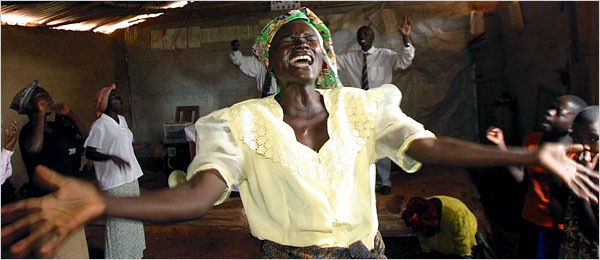
tongues


To listen to the sermon, click the play button:

To download, right click on the link (or do whatever you do on a Mac) and save it to your computer:
Download 1 Corinthians Part 25

This week we come to the oft-maligned, oft-spoken about, gift of tongues. Simply put, the gift of tongues is a gift which God gives to a believer, that allows that person to speak out, or pray in, a language unknown to that person.

Just like there are apparently three distinct kinds of prophecy, the New Testament seems to describe three distinct gifts of ‘tongues’:

a. When someone speaks out in tongues, others hear it as a language belonging to another part of the earth (i.e. Chinese). Its use here is in evangelism and missions. The first use of tongues that the New Testament records was on the day of Pentecost, when the apostles received the Holy Spirit. They spoke out in tongues, and people from all over the civilized world heard them speaking in their own dialects. Both the wonder of this phenomenon and the message it contained, brought many people to faith in Jesus (Acts 2:1-13). This was a gift from God, for the apostles had not known the languages they were speaking.

b. A special word from God to a group of believers. In the case of this kind of gift of tongues, It must be accompanied by an interpretation. There is no way the special word can be understood without the interpretation. This is the ‘normal’ public use of tongues. Paul describes this in 1 Corinthians 14:13 and 14:27-28. Apparently, at times, believers were inspired to speak out loudly in tongues. Then they, or someone else present, would receive the meaning of what was said, from the Lord. I know that several people in our church have witnessed this at times in a powerful way.

c. A private, spiritual “prayer language.” This is the ‘normal’ private use of tongues. It is useful here if the individual is at a loss for words to pray or praise with, or for prayer for a very difficult situation, or simply to help draw a person closer to Jesus. Scripture describes this in Romans 8:26-27 (the Spirit interceding with intercessions that are beyond our capability to express) and in 1 Corinthians 14:1-18, where Paul clearly describes tongues as prayer from the Spirit, not the mind, which builds up the individual Christian and should not be used in public assemblies.

In general, most of the gifts described in this passage do not “belong" to individuals, but are given to us to bless other people with. It seems that the gift of tongues is a little bit different. The fist two gifts of tongues (see a. and b. above) are gifts that are given on a situation-by-situation basis. For example, Ted Hilpert received the gift of interpretation of tongues once, but he would not describe himself as an Interpreter. The gift was given him in just one specific instance, and has not been given since. Years ago I met a retired Lutheran Pastor named Herb Mirud (who has since gone to be with Jesus) who prayed out loud in tongues on a mission trip to Mongolia, and the Mongolians heard him speaking their language. That was the only time such a thing happened for him.

However, the third kind of tongues – the personal ‘prayer language’ that builds up the individual believer, appears to be given to those who have it, for life. The reason for this is that it is an a gift that builds up the individual so a person can use it anytime. It might also be used by one person to pray for another, and again, this can happen anytime the person decides to use it. It is a grace of God given to people to help them pray with their spirits, and not just with their minds.

There is great value in God’s gift of tongues to the church, but for some reason, tongues has been one of the most controversial topics in the church for the past forty years or so. Tongues has been maligned by all sorts of people, misunderstood, and misused. I believe this has happened in large part because of the persistent rejection of the Bible’s teaching about tongues by many charismatic and Pentecostal churches. I believe that if we who accept the supernatural workings of the Holy Spirit, taught and practiced the scriptural principles given concerning tongues, other Christians and churches would not be so quick to malign the work of the Spirit in this way.

Charismatics and Pentecostals typically make two errors regarding tongues. The first, and most dangerous theologically, is the belief that the gift of tongues is the sign of a sort of “second salvation". Some Pentecostals teach that if you do not speak in tongues, you have not been ‘fully’ saved. This view proposes that there are two stages of salvation. They would say (and I do NOT agree) that Faith in Jesus is the first, the Baptism of the Holy Spirit is the second. For them, exhibiting the gift of tongues "proves’ that you have been fully saved (in both stages). There is absolutely no Biblical justification for this teaching. In fact, in 1 Corinthians 12, Paul uses tongues as an example of a gift that not everyone has. In 1 Cor 12:30, Paul asks, “Do all speak in tongues?” The question is rhetorical, because answer in Paul’s mind is obviously “no.” A teaching related to the ‘second salvation’ falsehood, is the idea that if a person does not speak in tongues, he/she has not received the Fullness of the Holy Spirit (or the ‘Baptism’ of the Spirit). This false teaching is answered by the same scriptures I have just mentioned.

I believe that the pervasiveness of the “second salvation" idea is one of the reasons why tongues has caused so much confusion and strife. People who hear this kind of false doctrine are naturally upset, for the teaching implies that if you do not have the gift of tongues, you are not a ‘complete’ Christian, or at the very least, you are a lesser Christian. Those who know they are saved, (but have not been given tongues) come out of an experience with this kind of church with a distaste for the supernatural work of the Holy Spirit in general, and for the gift of tongues in particular.

The second error, committed by almost every charismatic church I have ever been in, is the rejection of Paul’s instructions for the use of tongues in worship. Throughout 1 Corinthians 14, Paul instructs us about tongues, its use and its place. Paul sees it as of great value in the life of the individual, but of little value in either the small group or large group unless interpretation is present. There is nothing unclear about his instructions:

If anyone speaks in a tongue, two-or at the most three-should speak, one at a time, and someone must interpret. If there is no interpreter, the speaker should keep quiet in the church and speak to himself and God. (1 Cor 14:27-28)

Charismatic churches across the board have willfully ignored this clear instruction as well as the reasons the Bible gives for the instruction. Let us examine the reasons given for being careful about the use of tongues in public:

a) An episode of tongues without interpretation is unintelligible, and is of no value for

building up the church as a whole (1 Cor 14:2,4, 6-17)

b) Tongues without interpretation are disastrous for evangelism (1 Cor 14:23).

c) Many people speaking in tongues simultaneously, and/or without interpretation is disorderly, and does not reflect God’s character, or the Holy Spirit’s desire for order in worship (1 Cor 14:33).

And yet, if you step into virtually any Charismatic worship service, at some point, you will hear the whole congregation speaking out or singing out in tongues, all at the same time. Many people describe this as a beautiful sound of praise. Sometimes, I am inclined to agree. But that does not deal with what Paul teaches here. I have heard people say that since everyone is praising God, this is just fine. That argument makes no sense to me. It is in contradiction with all three points made by these passages (above). Paul writes:

What am I to do? I will pray with my spirit, but I will pray with my mind also; I will sing praise with my spirit, but I will sing with my mind also. Otherwise, if you give thanks with your spirit, how can anyone in the position of an outsider say “Amen” to your thanksgiving when he does not know what you are saying? For you may be giving thanks well enough, but the other person is not being built up. (1 Cor 14:15-17)

His final thought about the matter is this:

If any speak in a tongue, let there be only two or at most three, and each in turn, and let someone interpret. But if there is no one to interpret, let each of them keep silent in church and speak to himself and to God. (1 Cor 14:27-28)

I sometimes wonder if many charismatic churches even know that these verses are here! Don’t get me wrong. I believe the gift of tongues is a wonderful blessing from the Lord. I personally have the third gift of tongues (the “prayer language” gift). I use it regularly. Paul says, “now I wish that you all would speak in tongues…” and I agree that it is a valuable thing. But it seems like Charismatic churches try to “prove” that they are charismatic by abusing and misusing this gift, and it grieves my heart. If you are right about something, but you resort to telling a lie in order to prove your point, in the end you only hurt your cause, even though you are correct. Charismatic churches are right to value the gift of tongues. But they hurt the work of the Holy Spirit when they so flagrantly ignore what the Bible says about where, when and how the gift is to be used. Since so many churches have flagrantly ignored scripture’s instruction in this manner, is it any wonder that the gift causes controversy?

However, simply because tongues has been misused, does not negate the fact that God offers a true gift, and the gift has great potential for benefit. Understanding the good side of tongues is just as important as being aware of the dangers.

Jackie Pullinger was a missionary to Hong Kong in the 1970s. She ended up working with many heroin addicts. She didn’t know anything about helping people kick the heroin habit. So she prayed for the addicts to receive the gift of tongues (the prayer-language gift), and then told them to pray in tongues for 15 minutes a day. When they did that, they were able to come out of addiction with no additional help.

Another friend of ours prayed in tongues to help when she experienced panic attacks, which can’t be tamed by logic. Others use it to strengthen their prayer life, or in spiritual warfare.

But I think there is even more to it than that. Paul writes that tongues is also a “sign for unbelievers” (1 Cor 14:22). What is that all about? I think it is a little like this. If you hear a group of people speaking in a foreign language, it is an indication to you that those people come from another place. Now, not all Christians, speak in tongues, but many do. This is a sign that all Christians are citizens of another place. We don’t actually belong here. Once Jesus owns us, we “ain’t from around here” any more. Our true home is in heaven (Hebrews 11:13-16).

While I don’t believe that the gift of tongues is given to all Christians, any more than the gift of prophecy, I do believe that many could have it, if they simply ask. After you ask, you need to give God your voice. What I mean is, go someplace private, and open up your mouth and vocalize. If God has given you the gift of tongues, you’ll find sounds that seem to be words coming out. Don’t worry too much about what language it may sound like.

I have heard dozens of languages in my lifetime. About one third of the world’s languages come from the Island of New Guinea, where I grew up. When you don’t know them, some of them sound like people just pretending to talk a foreign language – but they are really communicating with each other. So, when you first start praying in tongues, you may feel like it couldn’t possibly be a real language that God understands. I say, if earthly languages can sound funny, so can heavenly ones.

One time someone approached a pastor I knew and said, “I don’t get this gift of tongues. When I hear people praying in tongues, it sounds to me like baby talk.”

The pastor said, “Yeah. I think that’s exactly what it is.” His point was, even if that’s all it is, isn’t that great? Parents and grandparents love to hold a little baby who babbles and coos at them. I think God loves to hold us, even if that’s what we’re doing to interact with him when we pray in tongues.


What’s Love Got to do with It? 1 Corinthians #24

CLICK ON THE PLAYER TO LISTEN TO THE AUDIO VERSION OF THE SERMON:

Download 1 Corinthians Part 24

lovepic

1 Corinthians 13:1-13.

1 Corinthians chapter 13 might be the most famous chapter in the Bible. It is often read at weddings, even when the people getting married aren’t really Christians. And truthfully, most people who aren’t believers like this chapter, and they might even feel that they agree with it. Certainly Christians like this passage also. I have used this passage when preaching at weddings. I have heard other preachers read it, and replace the word “love” with the name “Jesus.” Certainly this does tell us about love in marriage. Obviously, it teaches us about God’s love.

However, in order to understand any bible passage thoroughly, we need to pay attention to the context. Because we’ve been going through 1 Corinthians, if you’ve been with us for a while, you know the context here. This was written to the Corinthians. They were dividing over various preachers. They were suing each other. They were accepting flagrant, open, unrepentant sin. They were making a mess of the Lord’s supper. Paul just spent some time trying to make sure that they would not be ignorant of spiritual things. He told them all about prophecies, miracles, healings, tongues, words of knowledge and discernment. He admonished them to see themselves and each other as indispensable members of the body of Christ. And then he says this: “And I will show you a still more excellent way.” And then he writes what many people call “The love chapter.”

What we need to understand therefore, is this: the love chapter was written first and foremost to Christians concerning how they should love each other in the church community. It’s good to apply this to marriage. It isn’t wrong to apply this to loving all people. It’s helpful to understand God’s love in the light of this chapter. But we must understand that the primary application is to understand this and put it into practice in our own church. This is about how we relate to fellow-believers in our church community. I will suggest some other ways that this is relevant, but to really get it, let’s not lose sight of the context.

The New Testament uses three different Greek words that are translated “love.” There is eros (from which we get the English “erotic”) which is romantic or even sexual love. There is also philia which is brotherly love (hence “Philadelphia” is the “city of brotherly love”). But the word which Paul uses in 1 Corinthians 13 is agape (pronounced uh-gah-pay). It means unconditional, unselfish, sacrificial love. This is the word almost always used to describe God’s love for us. In 1 Corinthians 13, Paul is telling Christians to love each other in this way.

The apostle John writes to fellow Christians:

For this is the message that you have heard from the beginning, that we should love one another. (1 John 3:11)

John uses the word agape. In fact, throughout 1 John, he reiterates how important it is for Christians to agape (love) one another. He basically says Christianity consists in trusting and loving Jesus, and loving our fellow Christians.

This is not the only place in the New Testament that gives us that command. Jesus said:

“A new command I give you: Love one another. As I have loved you, so you must love one another. By this all men will know that you are my disciples, if you love one another.” (John 13:34-35)

Jesus’ word is also agape. Read it carefully. He is saying that it is of prime importance that we love one another. We often jump over this detail, but he makes a distinction between his disciples and the world. He doesn’t say that that others will recognize us as his disciples because we love them – but because we love each other. Of course we should show love to people outside the church. But too often we concentrate on that, and we lose sight of the fact that the command of Jesus to love those inside the church.

We may think this it could hurt our outreach if we are focused on loving each other. However, I suspect that when we are good at loving each other, the church will have a lot more appeal for people who aren’t part of it yet. Who wants to join a church where the members are always talking badly about each other? Who wants to join a church where everyone is cold to each other? And I think that until we do truly practice love for each other within the church, our ability to love those outside it is limited. Love starts at home.

The first point Paul makes is basically this: all the talent and effort in the world is pointless if we don’t engage in genuine love for each other. Paul has just finished talking about prophecy; words of knowledge and wisdom; tongues; and the spiritual gift of faith. He says all of these are worthless without love.

Notice that even things that look like love (giving away your goods and possessions, giving your body to the flames) can be done without actual love. This means that love is not just action. There is an inner commitment that distinguishes love from religious actions. I think if we look at this passage objectively, we can see that love is not just a feeling either. No feeling lasts forever – part of the nature of emotions is that they change. But Paul says agape love perseveres. He says love will still be present after the end of this world. What he is describing here simply just doesn’t fit a mere emotion. I like to define it this way: Love is a decision and commitment to value another person greatly. If it is a decision and a commitment, it doesn’t depend on how we feel. Neither does it depend on what the other person does.

Think of it — Jesus probably did not experience loving feelings while he was being crucified. People were spitting on him and mocking him, yet his death on the cross was the ultimate expression of how much he valued those very same people, as well as us. It didn’t matter what he was feeling. It didn’t matter what the people were doing to him. He was living out his commitment to value us.

Love is a decision and commitment to value another person greatly. This is not how our culture defines it. When I was a youth worker I once asked a group of teenage boys to define love. After a little thought, one of them said “Christie Brinkley.” Unfortunately, he was in tune with our culture. Our movies, our television, our music and to some extent even our books, all seem to offer the unified message that all there is to love is eros – romantic/sexual love. Once in awhile we may catch the hint that there is some other sort of love – philia – friendly, or brotherly love. There is another common expression of love in our culture which I call “selfish” love. In selfish love, I experience feelings of love because what you do for me makes me feel good. With this kind of love, you hang out with someone because generally, you feel good when you are with them. But basically, our culture thinks love is feeling. We have to identify this, and then reject it. Eros love is primarily a feeling. It has its place in marriage. But even marriage can’t be sustained only by sexual feelings. A lasting marriage needs the solid foundation of agape, which is not a feeling, but a commitment to value and honor another.

I won’t spend a lot of time on every aspect of love that Paul lists here, but I want to pick out just a few of the qualities that he names, not necessarily in any particular order:

Love is patient. One thing I’ve noticed about my fellow-Christians is that they aren’t as great as me. I want them to get with the program. I want them to grow and mature. I want them to quit fooling around with their lives and really live entirely for Jesus. I want them to quit swearing, quit getting drunk, quit falling into temptations. I want them read their bibles every day, to be consistent in coming to small groups, to be consistent coming to Sunday worship. But the truth is, God has been so patient with me in all these areas. We can be patient with each other when people don’t seem to change as fast as we want.

Some years ago I counseled with a couple who wanted to get married. There were some obstacles. The timing wasn’t quite right. The woman called me during this time, very anxious. She seemed almost desperate to get married right away. I said, “What are you worried about? If your love won’t last for two years while you wait for these things to get worked out, then you’d be better off not getting married in the first place. But if what you have is real love, you’ll still have it in two years.”

I want to be straightforward with some of the young people who read these sermon notes also. If you are in a relationship and you feel like you can’t wait until you are married until you have sex, then understand, that feeling is not love. Love is patient. If your boyfriend or girlfriend can’t wait, then understand – he or she is not motivated by love. Love is patient!

Paul also says love is not envious. That one nailed me just this week. As a man I sometimes fall into the trap of feeling like I’m validated (or not) by how successful I am. A pastor I know in our area is younger than me. He started a church about the same time as New Joy was started. I just heard again this week about how well his church is doing. I know he’s doing pretty well financially too. But agape love is not envious of the good fortune or success of others. I should be happy that God is using him. Just as I was writing this, I paused to ask the Lord for forgiveness, and to give me agape love for my fellow pastor, and brother in the Lord.

That brings me another point. As a standard of behavior, we cannot possibly hope to obtain agape love through our own human effort. We need the Holy Spirit to give us his love to love others with. He will, if we ask him, and receive it willingly.

Another thing Paul says about love is that it “keeps no record of wrongs.” In other words, love results in true forgiveness. There is no resentment or ongoing bitterness in it. This is very important when it comes to relationships in churches. Because of Jesus, God holds no record of your wrongs. How then can you, who have been so completely forgiven, refuse to let go of the wrongs that have been done to you? If you get close to people – and in church, we are supposed to get close to each other – we will get hurt from time to time. We must learn to forgive, and let those hurts go.

Paul writes in verse 7 that loves endures all things. Looking at the Greek, it might be put like this: “love always perseveres.” We don’t give up on each other. We don’t say “that’s it, I’ve had it with you, we’re done.” No, agape love perseveres through all things. This is related to what Paul says when he writes: “love never fails.” Another way to put it might be this: “love never falls from grace; it never loses its position or compromises its virtue.”

Erotic love, friendly love and selfish love are all real, and they contain parts of what love in general can be (although the Bible makes it clear that the expression of erotic love is to come within marriage only). It is tough going when you love someone who never makes you feel good. It is normal to value people with whom you have positive experiences. It is only natural to seek as a mate someone who is physically attractive to you. But these kinds of love so venerated by our culture, cannot ultimately last without agape, and they can become quite self-oriented. People have divorced their spouses to seek erotic love elsewhere when the glow faded for a time. When the sexual urge is satisfied, or at the very least in those times when the partner somehow becomes less attractive, erotic love is out the window. Others have divorced, or cut off friendships simply because “he didn’t make me feel good any more, and I need to do what is best for me” or because “the spark was gone.” This sort of love only lasts as long as you are able to perform for each other. As soon as you stop doing things that make me feel good, I will no longer feel love for you, and vice versa. In the final analysis, without the rock solid basis of a decision and commitment to value someone, (that is, agape love) all other forms of love are conditional.

Agape love can be hard work – anything that is not self-oriented can be hard work. To value someone when you do not feel particularly fond of them is not the easiest thing in the world. To serve someone when you feel almost as tired as they do, is not always immediately rewarding. But the minute we go back to relying solely on how it feels is the minute we abandon true Biblical love.

True love is not a noun, but a verb. Love is an action word. It is not really about all those nice feelings. When you truly love, you will get those neat feelings from time to time, but the substance of love is not in those feelings. The true stuff of love is in the commitment to value others.

This is the way God loves us. This is how we can be loved, even when we know that we are not loveable. God has made an ultimate commitment to us, to value us above all else. He was willing to die for the sake of that commitment. His love does not depend on us doing things to please Him or make Him feel good. His love does not depend on the attractiveness of our personality, or on any physical beauty. His love depends solely on His own will, and His will eternally is to value us and treat us as of great worth. As the writer of Hebrews says:

Because God wanted to make the unchanging nature of his purpose very clear to the heirs of what was promised, he confirmed it with an oath. God did this so that, by two unchangeable things in which it is impossible for God to lie, we who have fled to take hold of the hope offered to us may be greatly encouraged. (Hebrews 6:17-18)

God loves us with an unchanging commitment. The only way we can ever learn to love others in that way is to receive God’s love, and let Him love others through us, and allow Him to make good on our desire to make a commitment to value others.

You are Vitally Important! 1 Corinthians #23

1 Corinthians 12:12-31

bodyofchrist


Download 1 Corinthians Part 23

John J. Spillane was almost drafted twice. Two major league baseball teams wanted him because of his excellent fielding and throwing ability. But instead, the United States drafted him to fight in the Second World War.

When the U.S. Invaded Tarawa on November 20th 1943, Spillane was a corporal on board one of the few amphibious assault vehicles that made it all the way to the beach in the first wave. More than twenty Marines were inside. Once there, the vehicle stalled against a Japanese defensive wall. The Japanese soldiers began lobbing grenades into the open box of the vehicle. Spillane picked up the first one like a hot ground-ball, and threw it back. He caught the second one in mid-air, and returned that one also. He fielded another, and then another, and then yet one more. The grenades exploded back among the Japanese defenses, injuring and killing the enemies who had thrown them. One of the returned grenades silenced a machine gun. While Spillane played the deadly game of catch like a madman, his fellow Marines leaped out of the vehicle, found cover and continued their assault. A sixth grenade flew into the vehicle, and Spillane caught this one also, but the enemy had delayed before lobbing it, and it went off in Spillane’s hand. Corporal Spillane survived, though he lost his right hand. He received the Navy Cross for his valor.

This is a true story. But I want you to consider the possibilities if Corporal Spillane had chosen to respond differently.

What if Spillane had said, “I know I belong to the Marine Corps, but what I really love is baseball. I don’t see how my skills can help in this invasion. I’ll think about going along, but don’t count on me to be any use.” How wrong he would have been! It was precisely his hand-eye coordination which both made him a great baseball player and ultimately, a hero and a life saver.

What if, when the grenades started flying, he had said, “I’m not a sergeant and I’m not an officer. It’s not my job to catch these grenades. They get paid more than me, let them catch them.” Maybe there was even an officer there who would have been willing to try. It’s doubtful that he would have had enough talent to save those twenty marines that Spillane saved.

How about if Spillane had this attitude: “I know I would be the best one to save the lives of these men in this situation, but no one has ordered me to use my skills.”

What if, instead of catching grenades, he had been checking to make sure the sergeant and lieutenant were doing their jobs and getting the men out of the vehicle?

If Spillane had taken any of these attitudes, twenty men would have died in that vehicle that day. Maybe many, many more would have died because those twenty weren’t alive to carry out their combat tasks.

For almost seventeen centuries, the devil has been lying to the church, telling her that she only needs a pastor, or maybe a pastor plus a couple Sunday School Teachers. And by and large, we have bought into the lie. The result is that our individual congregations are full of talented John Spillanes who sit on their hands, watching the grenades fall while they do nothing about it. Sometimes they don’t know what incredible good they are capable of. Often times, they just think it doesn’t have anything to do with them. Other times, they try and to get others to do what they were born to do. Still others won’t step in and use their gifts unless someone else orders them to. As result, thousands perish who might have been saved.

Paul’s picture in 1 Corinthians 12:1-31 is of a body. The illustration he uses is actually quite ludicrous. Would a foot really say that it doesn’t belong to the body, just because it isn’t a hand? Would an eye say that it doesn’t need any hands? Of course not. Such a body could barely function. The whole idea is silly.

And that is exactly Paul’s point. The idea of Christians who pretend they have nothing to offer the church is plain silly. The thought that the mission of the church can be carried out by just a few individuals like pastors or deacons is just as ludicrous. The whole thing would be as tragic as a baseball player saying he can’t catch grenades and throw them back to save the lives of his friends.

Sometimes it seems like American Church in general is barely functional. At times, even individual churches appear barely functional. If a church is just kind of limping along, maybe that is because they have feet claiming they aren’t part of the body, and eyes claiming that they need no ears in the body. It is because the John Spillanes of the church are doing nothing, believing the lies that they are meant for baseball rather than life-saving.

Paul makes it very clear: each one of us has a role to play. Each one of us has something vital to offer the church, the body of Christ. We all belong. The body cannot get along without each one. The body cannot be healthy if some of its members are acting as if they aren’t needed. The body of Christ is stumbling around in the world, lame, deaf and disabled because many Christians have ignored the fact that each individual believer is called to serve a vital role in the church.

Another important point is this: we don’t all have the same function (1 Corinthians12:14-19). If someone else had tried to catch the grenades that day on Tarawa, more people probably would have died. If Spillane had tried to do the lieutenant’s job, the result would have been disastrous. Problems occur when we try to fill the role that God has given to someone else, instead of trying to live out the calling he has given us. As Paul puts its:

If the whole body were an eye, where would be the sense of hearing? If the whole body were an ear, where would be the sense of smell? (v.17)

I know I am not the only pastor in the world. But I am the only pastor who has my unique gifts, calling and experience. I will not amputate a part of the body of Christ by trying be like every other pastor, or by not fulfilling my call to teach, preach and write. You may not be the only person in the world who has a passion for social gatherings. But you may be the only one in your church with your unique approach to bringing people together for fun and fellowship. There may be someone who will never come to know Jesus except beginning through a gathering that you inspire and organize. You may be one of many people who works with kids. But there may be three or four children who need exactly your unique blend of fun, teaching and love in order to put their faith in Jesus for a lifetime.

Every person in the church is uniquely important and necessary. The body of Christ needs you.

If things had been different for John Spillane, he might have been a great baseball player. He might have been as famous as Babe Ruth, or Cal Ripken. But no matter how many fly balls he caught, no matter how many runners he threw out or home runs he hit, would they ever have amounted to the value of even one of the twenty lives he saved? He could have played a game, or saved lives. He did what was for more serious, and far more important.

My challenge to you is this: Stop playing games. Stop fooling around. Start living out your call and purpose. Your purpose in life isn’t to make money. It isn’t to be comfortable or to be prestigious. You aren’t destined for baseball, but for eternal life-saving. Paul writes this to Timothy:

Share in suffering as a good soldier of Christ Jesus. No soldier gets entangled in civilian pursuits, since his aim is to please the one who enlisted him. An athlete is not crowned unless he competes according to the rules. It is the hard-working farmer who ought to have the first share of the crops. Think over what I say, for the Lord will give you understanding in everything. (2 Timothy 2:3-7)

Peter says:

But you are a chosen race, a royal priesthood, a holy nation, a people for his own possession, that you may proclaim the excellencies of him who called you out of darkness into his marvelous light.(1 Peter 2:9)

Some of you have never really thought about the call that God has on your life. Maybe you are hearing it for the first time right now. Maybe you don’t really know what your place in the body of Christ is. Maybe you don’t see how you can be used. You will find out only if you first accept that there is a call on your life, surrender to that, and then ask the Lord to reveal it you.

I highly doubt that John Spillane had any idea beforehand what he would do in the battle for Tarawa. But when the time came, he stepped up, because he was willing, and God put into him the perfect situation to use his talents to save lives. He will do the same for you, if you ask him, and let him answer.

Is Prophecy Real Today? How can you tell? 1 Corinthians #22.


Download 1 Corinthians Part 22

Prophecy is one of the more complex “things of the Spirit” that Paul talks about here. Prophecy figures very importantly in the New Testament. Later in 1 Corinthians, Paul says:

So, my brothers, earnestly desire to prophesy, and do not forbid speaking in tongues (1 Corinthians 14:39)

He lists Prophets alongside Apostles, Pastor-Teachers and Evangelists as special gifts that God has given the church to equip the whole church for ministry.

Most of us tend to think of prophecy as predicting the future. However, there is more to it than that. In fact, there are three distinct variations in the gift of prophecy described in the New Testament.

The first sort of manifestation of prophecy is the traditional “foretelling” gift, wherein God reveals the future to the prophet, and the prophet tells others. I will call this predictive prophecy. One person through whom God gave his people the gift of predictive prophecy was Agabus. In Acts 11:28 we learn that Agabus, through the Spirit of God stood up and predicted a severe famine. Luke notes that the famine did come, during the reign of Roman Emperor Claudius. How did this gift build up the Church? First, Christians were encouraged to set aside gifts for the needy during the coming famine (Acts 11:29). Second, when the famine came to pass it must have been a faith strengthening experience for believers everywhere – God still really speaks to and through people! And finally, the fact that the famine was predicted by God must have been a source of comfort as believers realized that God not only knew about their situation, but saw it before they did. They must have felt very much in His hands.

Predictive prophecy is the easiest sort of prophecy to distinguish. The formula is very simple and is given as far back as Deuteronomy 18:21-22. If a predictive prophet’s message does not come to pass, then the Lord has not spoken and believers should not listen to him.

On the other hand, scripture teaches that even if a prophet successfully predicts the future, and yet leads people away from the Lord in some manner, that prophet is not from God (Deuteronomy 13:1-5). Pauls says something like this Galatians 1:8-9

But even if we or an angel from heaven should preach to you a gospel contrary to the one we preached to you, let him be accursed. As we have said before, so now I say again: If anyone is preaching to you a gospel contrary to the one you received, let him be accursed.

Therefore we see again the “Lordship test” of 1 Corinthians 12:1-3 at work: if a prophet somehow leads people away from honoring Jesus and his name, then that particular prophecy is not from God.

A second sort of prophecy that the new Testament speaks about is when God reveals his will for a specific situation. I call this present prophecy, because it is something God is saying he wants to do, or begin to do, right now, rather than in the future. The prime example of this in the New Testament is in Acts 13:1-3.

“In the church at Antioch there were prophets and teachers: Barnabas, Simeon called Niger, Lucius of Cyrene, Manaen (who had been brought up with Herod the tetrarch) and Saul. While they were worshipping the Lord and fasting, the Holy Spirit said, ‘Set apart for me Barnabas and Saul for the work to which I have called them.’ So after they had fasted and prayed, they placed their hands on them and sent them off.”

The prophecy uttered here is not so much a prediction of the future as it is a direction for the present. The Holy Spirit, through the gift of prophecy, revealed his will for the congregation at Antioch. We can see first that this revelation of God’s will was consistent with his Word (that is, the Bible), honored Jesus, and recognized and utilized the variety in the Body of Christ. All that is to indicate that there was good reason to trust this as a genuine prophecy. Results are not always indicative of this sort of prophecy, for I can imagine all sorts of things which might have prevented God from doing what he wanted through Barnabas and Saul (their own potential sin being one of them). In spite of that, however, the results of obedience to this prophecy were pretty spectacular in the long run!

Some of you analytical types may be wondering what the difference is between present prophecy and, say, a word of knowledge or wisdom. Ultimately, if it is a message from God, does it matter which specific name we call it? Of course not. However, it seems to me, for you categorical types, that the primary distinction is that present prophecy implies an instruction which should be followed – like sending out Barnabas and Saul.

The third sort of prophecy described by the New Testament is what Paul describes in 1 Corinthians 14:3

“But everyone who prophecies speaks to men for their strengthening, encouragement and comfort.”

This is prophecy of exhortation. This is a potent gift if you hear someone using it. It can come in a variety of styles, and can actually often appear very low key. The essence of prophecy is not how it is delivered, but rather its effect in building up the church. A prophecy of exhortation might sound like this:

I think the Lord wants us to know that we are in the center of his will right now, and that he is pleased with us. He doesn’t want us to give up hope – he wants us to press on, to stay consistent, to keep reading, praying and meeting together. He isn’t done with us yet.

Revelation chapters 2-3 contain basically prophecies of exhortation for the seven churches that John is writing to.

One person you may have heard of. whom I consider to have this sort of prophetic gift is Jack Hayford. Often musicians use their music prophetically – that is, for the strengthening, encouraging and comfort of the body of Christ. I would consider both Michael Card and the group Delirious (especially in The Cutting Edge) to have prophetic ministries through music.

Now, I have no doubt that the Lord wants to continue to use this “spiritual thing” prophecy – in our churches today. Like all of the gifts, one of the best places for it is in a small group.

However, there is a down side to prophecy, and I believe this is why it began to fall into disuse. Because it is a powerful gift, it is also powerfully attacked by the devil, and can be powerfully corrupted by people who lack integrity. Shortly after the time of the apostles some people claiming to prophets, tried to lead Christians astray (they were known as Montanists). They almost destroyed Christianity.

However, the Holy Spirit had anticipated this evil, and before this happened, inspired the writers of the New Testament to say these things:

Do not quench the Spirit. Do not despise prophecies,but test everything; hold fast what is good.Abstain from every form of evil. (1 Thessalonians 5:19-22)

But false prophets also arose among the people, just as there will be false teachers among you, who will secretly bring in destructive heresies, even denying the Master who bought them, bringing upon themselves swift destruction.And many will follow their sensuality, and because of them the way of truth will be blasphemed.And in their greed they will exploit you with false words. Their condemnation from long ago is not idle, and their destruction is not asleep. (2 Peter 2:1-3)

So the scripture clearly places a high value on prophecy, but also places a high value on testing potential prophecy, to make sure it really comes from God.

How do we know a false prophet? How do we “test everything?” Well, we just saw that we need to consider if a prediction comes true. If it is present prophecy or a prophecy of exhortation, we need Paul has already us in this passage how to know if it comes from the Holy Spirit. If the effect is to glorify Jesus (not the prophet) if it leads to people allowing Jesus to be Lord of their personal lives more and more, it’s probably from the Lord. If it has the effect of building up the church, it’s probably from God. If the opposite things are true, we should ignore it, or, in some cases, denounce it.

Some of you may be thinking, “well, I’ll probably never hear a prophet, so I don’t need to worry about it.” Don’t be too sure! I’ve heard plenty of preachers on the Television, radio and Internet, who claim to be speaking what God wants them say. Sometimes what they say results in people allowing Jesus to be Lord of their lives more fully. Sometimes they build up the church. Sometimes the main result is that the preacher gets more popular and influential and more wealthy, but there isn’t a clear sign that it really helps anyone, or glorifies God. These people need to be tested, and, as Paul says, we need to hold on to the good.

Faith Healing? Miracles? 1 Corinthians #21


Download 1 Corinthians Part 21


To another faith by the same Spirit, to another gifts of healing by that one Spirit, to another miraculous powers…” (1Cor 12:9-10)

healing


We have been looking at “spiritual things.” Paul tells the Corinthians he does not want them to be ignorant of them. I think it is safe to say that we should not be ignorant of them either. Because the goal of this passage is to alleviate our ignorance, these next two messages or so will seem very informational in style. Even so, as you read this, pray that the Lord not only informs you, but also inspires you and fills you. We don’t want to only know about spiritual things – we want these things of the Holy Spirit to be active and real in our own lives.

A gift of faith. When Paul includes faith among his examples of the workings of the Holy Spirit, he clearly does not mean saving faith in Jesus Christ. The faith we place in Jesus, the faith we exercise in giving Jesus control of our entire life, is indeed a gift of God, and it is a gift which is given to all who will receive it. In other words, if you are a Christian, you already have the gift of saving faith – faith that trusts everything to Jesus alone. The point Paul is illustrating is that God gives many different kinds of gifts, and they are all given to the church as whole. No single individual exhibits every possible gift of God for touching lives. Therefore, here, Paul is speaking about a gift of faith that some Christians do not possess – a faith that blesses the Church in a unique way beyond the faith that entrusts one’s life to Jesus. Perhaps the best way to describe this gift of faith is to offer some examples of Christians who possessed it.

James Hudson Taylor was a missionary to China in the nineteenth century, who clearly possessed the gift of faith. Hudson Taylor founded one of the world’s largest and most effective missionary societies in the face of a complete absence of financial backing, while holding to a principle that forbade members of the society to ask for any kind of material support. Taylor had only a firm conviction (a gift of faith) about God’s desire for the China Inland Mission to be formed – while all of common sense, and past history suggested that his goal was impossible. The gift of faith through J. Hudson Taylor was used by God to bless the church at large in mighty ways. Many Chinese met Jesus through the work of the China Inland Mission (CIM); many new missionary organizations were formed, inspired by God’s provision for CIM; glory was given to God as He was given opportunity to show how He provides for his children. The work of the China Inland Mission continues today, though under a different name. The gift God gave the church was one of faith to lay hold of something beyond human vision, and the result was that lives were touched!

George Müller was another through whom God gave the church at large the gift of faith. Müller founded and maintained a large orphanage, depending on God in prayer alone, for the resources to build buildings, maintain facilities and operate from day to day. The orphanages he founded, provided for and ministered to literally thousands of children in Müller’s lifetime, and the work has been continued (albeit in different form) to this day.

We can see then, that the gift of faith is given by God to his Church, to touch lives by trusting God for things that may seem impossible, perhaps even things that have never been done before. The gift of faith may be given to someone in the church for the salvation of someone who seems absolutely beyond hope. The gift of faith is exercised in starting new churches and ministries. It is a powerful gift.

Graces of healings”. The next “grace” mentioned is healing. It is interesting to note that in the Greek, both “graces” and “healings” are plural. The implication is that rather than giving one individual a certain “gift of healing,” God considers each time a person is miraculously healed to be a gift. There are some individuals through whom the gift of healing seems to be given fairly often. However the emphasis seems to be on the incidence the healing itself, rather than the person through whom it comes. Though some people clearly have “healing ministries,” any Christian might be used to bring this gift to another as they lay hands on, and pray for, a sick person.

When I pray for others to be healed, I usually do it in a small group. The Lord has healed a few of people I have prayed for in this way. Once we prayed for a lady with Crohn’s disease, the night before she was to have surgery. The next day, the doctors sent her home, saying she didn’t need surgery any more. I once prayed for a friend who was trying to quit smoking, but couldn’t seem to do it. That was 15 years ago, and he hasn’t had a cigarette since that prayer.

There is just one time in my life when I am positive I experienced miraculous healing myself. Some of you were there – it was at a church retreat a few years ago, and I was immediately healed from a kidney stone.

But quite often, when I pray for people to be healed, I don’t see anything happen. The same is usually true when others pray for healing for me. I am not alone in my mixed experiences. You could fill a library with books written about this subject. Some people claim that the problem is lack of faith. I don’t buy it. I had no faith that my friend would quit smoking when I prayed for him. I didn’t even ask for prayer about my kidney stone – I asked for pain meds (some of you can testify to this). At other times I have felt tremendous faith, either in praying for others, or in being prayed for – and nothing has happened.

I don’t think we can boil it down to a formula that always works. That is the nature of our faith-relationship with Jesus. If we had a formula for healing, then who needs Jesus? Jesus told us many times to keep praying and not give up. So I keep praying, and though sometimes people are not healed, sometimes they are.

It is important also to remember that any healing that takes place during our life on earth, (whether supernatural or “normal”) is always temporary. Jesus raised Lazarus from the dead, but eventually, years later, Lazarus died again. The judgment of sin on our physical bodies is death, and death’s effects will always be manifested sooner or later. There is no such thing as truly complete physical healing until Jesus gives us new bodies when he comes again. Perhaps this is one of the reasons Jesus did not devote his full energy to healing while he was on earth.

Miraculous powers. The Greek term describing this action of the Holy Spirit conveys the sense of dynamic power in operation. Since the term is distinguished from healing, we must assume that Paul is speaking of supernatural power manifested in some way other than healing. The New Testament brings to mind several incidences of such power. After a shipwreck, Paul was bitten by a poisonous snake and suffered no ill effects. On the island of Cyprus, Paul caused the “magician” Elymas to be struck blind. But the most pervasive New Testament example of the Spirit’s dynamic power (apart from healings and conversions) is exorcism. Jesus dramatically and unequivocally demonstrated his power by casting out evil spirits. He himself connects the exorcism of demons with the life changing activity of the Holy Spirit saying, “But if I drive out demons by the Spirit of God, then the kingdom of God has come upon you” (Matthew 12:28). The apostles, at Jesus’ command, made exorcism a significant part of their ministry, both before and after his death and resurrection. There can be no doubt that the Lord wants to continue the offensive against the powers of evil, and that he wants to do so by power of the Holy Spirit through His Church. He may indeed want to bless us with miracles of many kinds, but it is also safe to say that he wants gifts of exorcism (power) to be part of the pattern of a church that touches lives.

My former professor and mentor, Dr. Eugene Bunkowske, was a missionary in Nigeria for 22 years. When he first went there, he moved in among a tribe which had no Christians. The most prominent witch doctor of the area heard they were coming. He said, “I will put a curse on this man’s wife and his children, they will get sick and they will die, and then the missionary will go back to where he came from.”

Shortly after Bunkowske arrived, the witch doctor got sick; and then he died. Many people came to Jesus as a result of seeing the power of God manifested in this way. My friend only found out about the witch-doctor’s words later, but he believes firmly that it was the Lord, demonstrating his power and relevance to people who had been trapped in animistic religion.

More needs to be said about using the gift of powers, particularly exorcism. Jesus gives all of those who know him, spiritual authority over evil spirits. The principle is simply that Jesus is in us, and His power is greater than that of the devil (1 John 4:4). Our power is not sufficient to drive out Satan or demons, as the sons of Sceva found out (Acts 19:13-16). Jesus does promise us the power to overcome evil (Luke 10:18-20), but he cautions that if we simply drive out an evil spirit and do not see that the Holy Spirit enters in afterward, the individual will be no better off than before (Luke 11:24-26). We must also use discernment (that gift will be discussed later) in determining whether the problem is truly caused by the presence of demonic power, or something else.

There are some individuals who have a special calling to help others address demonic strongholds. It is an exhausting ministry, but also intensely rewarding. Our neighbors a few years ago were people with that calling. Some other friends of ours were struggling with their adopted son. He was diagnosed with reactive-detachment disorder, a traumatic and violent psychological syndrome that is very difficult to treat. Our friends were in despair over their son, and were on the verge of placing him permanently in an institution. I suggested that before they did that, we should take him to our neighbors who had the gift of dealing with demonic issues. We spent about three hours with boy. I can’t say it was a comfortable time. But when we were done, he no longer had the disorder. A psychaitrist later confirmed that he no longer had it. The boy’s life, and the lives of his parents, were completely changed. This is a wonderful gift for the body of Christ!

Years ago, I preached through this passage of 1 Corinthians with the goal that the church I was leading at that time should learn about these “things of the Holy Spirit.” The church was full of ordinary people. They weren’t super-Christians. They had jobs, and rent payments and car trouble and kids, just like most people. But we all agreed that we wanted the Lord to be doing these “spiritual things” among us, just as he did in the early church. And so, when someone wondered once if just maybe God wanted to say something, he spoke up, and it turned out to be a message of wisdom from the Lord. Another person was physically ill, and we laid hands on him, and prayed for him, and he was healed. Over time, the Lord did all kinds of amazing things in that church because the people were informed about these spiritual things, and they asked God to do them among us, and they were willing to take risks and possibly look foolish in order to learn.

The Lord can do that anywhere, if he has people who are willing. I pray that you are willing.


The Purpose of “things of the Spirit” 1 Corinthians #19. 1 Cor 12:1-7


Download 1 Corinthians Part 19

Paul has been talking to the Corinthians about several different topics that arose because of their letter to him, and the visit that he had with some members of the church. It is unclear whether or not the Corinthians had questions about what is in this next section (roughly, chapters 12 – 14) but in any case Paul begins by saying: “About spiritual things brothers, I do not want you to be unknowing.” Whether or not they asked, these things are important for them to know, if they want to be disciples of Jesus.

Paul begins alleviating their ignorance with this interesting statement:

No one speaking by the Spirit of God says “Jesus is cursed,” and no one can say “Jesus is Lord” except by the Holy Spirit. (v 3)

I don’t think Paul means that no one can physically utter the phrase “Jesus is Lord” without the Holy Spirit. He means, rather, that no one can truly affirm in his/her heart and believe in the Lordship of Jesus unless he/she has the Holy Spirit. There is a practical side of this. If someone claims to be a prophet and speaks a prophecy that has the ultimate result of making people more independent from God and the Lordship of Jesus, then that prophecy did not come from the Holy Spirit. If someone claims to have a new revelation from God that rejects what the Bible teaches about Jesus, and rejects Jesus as true God and true man, then that revelation did not come from the Lord. In case you are wondering how that is applicable, bear in mind that the Jehovah’s Witnesses and the Mormons have done exactly that. We can tell they are false teachings because they reject the Lordship of Jesus Christ. Their “prophetic utterances” are not from God, because they do not affirm that Jesus is Lord. Even more recently, Gwen Shamblin, founder of the Weigh Down Workshops has started a cult, rejecting the Lordship of Jesus. So if anyone is claiming to be an instrument of the Holy Spirit the end result should be that Jesus is lifted up as Lord.

Even on a more personal level, we should apply this test to people who claim to be speaking or working for God. I knew a lady once who claimed to be a prophetess. But much of her speaking seemed to glorify herself. She also claimed to have the gift of healing. One time, she retold the story of the woman who was healed when she pressed through the crowds to touch the edge of Jesus’ cloak. She then invited all the listeners to crowd around her, and touch her own clothing and be healed. The effect was that the focus was all on her. She was glorifying herself, not Jesus.

If my own preaching and teaching seems primarily to glorify myself; particularly if it seems to draw more attention to me than to Jesus, then what I say is probably not by Holy Spirit. If my preaching or teaching seems to lift up or draw attention to another human being or human institution, rather than Jesus Christ, then I may not be speaking by the Spirit of God.

You might find a church or a religious group that does not glorify a person or institution, but their teaching ends up somehow minimizing Jesus. I attended a group meeting once where three preachers spoke. Each one urged us to make ourselves better by our own efforts. Each one told us that we had the power and responsibility to make ourselves holy – on our own. They did not lift up what Jesus did for us on the cross. They did not publicly proclaim that our holiness comes only through Jesus. The Lordship of Jesus was minimized – our own efforts and good works were the main things that were lifted up. I think they were not speaking by the Spirit of God.

On the other side of things, when Jesus Christ is glorified and lifted up, we have good reason to trust the source. When credit is given to the Lord, and the human beings involved are viewed as lowly unworthy instruments who happened to be used by Him, then we can remember that Paul says, no one can truly believe and truly express the Lordship of Jesus unless the Spirit of God is in that person.

Paul adds another thought about “spiritual things:”

Now there are varieties of gifts, but the same Spirit; and there are varieties of service, but the same Lord;and there are varieties of activities, but it is the same God who empowers them all in everyone. To each is given the manifestation of the Spirit for the common good.

Paul lists three categories of things here. The first is gifts. Literally, the word used is “graces.” Many Christians call these “spiritual gifts” but because of the Greek, I prefer the term “grace-gifts.” We don’t know for sure what Paul means by “graces,” but he does use this exact word referring to healing both in verse 9 and in verse 27. The second category of “spiritual things” is service. The word used here is actually plural, and it could also be translated “ministries.” I think this is a broad category suggesting that the Holy Spirit works through those who serve the church in various capacities. Don’t be fooled by the term “ministry.” It mean service. If you serve God or others in some way, the bible calls it a “ministry.” Paul says that all these different kinds of ministries come from the Holy Spirit. The third category Paul mentions is “activities.” A more literal translation might be “energies” or “empowerments.” The word is all about supernatural power. Linguistically, this has a clear connection to obvious miracles and to exorcism (the driving out of demons).

In the following verses, Paul does not say which particular things are grace-gifts, which are ministries, and which are empowerments. The main point is, they all come from the Holy Spirit.

Now, these “spiritual things” or “things of the Spirit” have been somewhat controversial in Christian history. Some Christians claim that God doesn’t do anything miraculous anymore (although most of those folks would still agree that God sometimes heals miraculously). So to them, the entire passage that follows is basically irrelevant. But one of the reasons people came to feel that way is because other Christians have sometimes ignored the important points Paul makes here about things of the Spirit, and the result is that they fake spiritual gifts, or try to manipulate them, or take them as a sign of some special Christian status. But Paul says that the point of all these “things of the spirit” is that they glorify Jesus, and they work for the common good of those who trust him.

“Spiritual gifts” as they are often called, are not a sign of maturity. Since Paul writes about these things, it is a pretty good bet that the Corinthian Christians had these “things of the spirit.” And yet we know from the rest of the letter that in many ways they were spiritually immature, and even wrong in both their theology and practice. So we won’t make the mistake of thinking that because someone has the gift of prophecy, or tongues or healing, that it automatically means that such a person is mature in following Jesus. We will also, as we examine the next few chapters of 1 Corinthians, pay attention to what Paul says about these things and how to put them into practice. We won’t fake theses things of spirit. We won’t try to manipulate them.

On the other hand, according to the bible these things do actually exist, and when they are used according to the direction given by the Spirit through the bible (as in this passage), they bring great benefit to the whole Church. So we won’t throw out the baby with the bath water. We will seek these things of the spirit, as Paul tells us to in 12:31. And as we do, we will glorify Jesus.

As usual, Eugene Petersen, in the Message, has a pretty good handle on the meaning of these verses:

God’s various gifts are handed out everywhere; but they all originate in God’s Spirit. God’s various ministries are carried out everywhere; but they all originate in God’s Spirit. God’s various expressions of power are in action everywhere; but God himself is behind it all. Each person is given something to do that shows who God is: Everyone gets in on it, everyone benefits. All kinds of things are handed out by the Spirit, and to all kinds of people!

State of the Church Address. Feb 2011.


Download State of the Church Address 2011

Dear Brothers and Sisters in Jesus,

Usually sometime during the first few months of a new year, I like to offer a “State of the Church” message. With that in mind, I’d like to share what I think the Lord has been saying to me about New Joy Fellowship in 2011.

New Joy Fellowship is a different kind of church. We are unlike many, if not most, of the other churches in our area. Depending on your point of view, this could be either good or bad. I think, however, that at present, we are almost exactly the church that the Holy Spirit wants us to be.

Particularly in this area of the world and of the country, people view church as something to do. You do the Sunday morning service. You do Sunday School. You do programs for the church. Church represents a hub of activity and work. In addition, most church activities are “programmed” – which means that they happen because they are planned and pushed by a small leadership group, or maybe the pastor. There are some positives to this approach. Usually, with this system, there is accountability to make sure things are done, and done properly. At the end of a year it is easy to quantify what the church has accomplished, by listing the programs that were run, and the number of people who participated in them.

Obviously, this does not describe New Joy Fellowship.

There are negatives associated with the typical way of doing church. Because it is activity and program centered, it is easy to feel like you have done your good religious duty by attending or helping with a church program. It becomes something you do, rather than a relationship with Jesus that leads to loving relationships with others. It is easy to replace true interaction with God, and true love-in-action for fellow believers with simply putting time and effort into activities and programs. It becomes religion, rather than relationship.

In America, we have turned church into something you do. But real church is a community you belong to. Sure, a real church should “do stuff.” But that doing should flow out of a faith relationship with God, and love for fellow believers in the community.

As I reflect upon New Joy Fellowship, that is exactly what I see that we are. We are first of all, a community of believers. As we relate to each other, and to those we interact with at work and at home, we get involved in the mission of Jesus. We don’t have any programs for this. Even so, it happens. I tend to think of this as “real church.” Those of you who come to Sunday morning worship before the first song starts may have noticed our slogan, displayed on the wall every Sunday: Real Presence (walk with God); Real People (walk with others); Real Purpose (work in the Kingdom). That is God’s call for New Joy, and to a fair degree, we are living these things out in our church community.

Belonging to a church community like this is not as exciting as it sometimes is to “do” church the way so much of our culture does. We don’t get our name in the newspapers. There is not a lot of hype either about New Joy, or in our community.

But that does not mean that we are insignificant. God is still at work, in us and through us. 1 Corinthians 1:26-31 says this:

For consider your calling, brothers: not many of you were wise according to worldly standards, not many were powerful, not many were of noble birth. But God chose what is foolish in the world to shame the wise; God chose what is weak in the world to shame the strong; God chose what is low and despised in the world, even things that are not, to bring to nothing things that are, so that no human being might boast in the presence of God. And because of him you are in Christ Jesus, who became to us wisdom from God, righteousness and sanctification and redemption, so that, as it is written, “Let the one who boasts, boast in the Lord.”

New Joy is not powerful according to worldly standards. We are not strong or exciting. To be brutally honest, by the world’s standard of judging, we are not much at all. But praise God, those are just the kinds of people and churches that the Holy Spirit seems to delight in using. As Paul writes, the Lord loves using the little, weak, foolish and no-account things to accomplish his purposes in this world, and to shame the proud.

I had to put forth a bit of mental energy to consider how God has been using us, but when I did, I was thrilled. Last fall, I talked to our financial deacons. I wanted to make sure we were giving away 10% of what we take in as a church. They said we were close, but we weren’t giving away quite 10%. We gave that 9% or so away to missions organizations and other ministries that I know well enough to trust that it will be well used. However, the Deacons. pointed out that we also do a lot of things that aren’t “on our books” so to speak. What they meant is, we don’t have either programs or budget-line-items for much of what we actually do as a church. Instead, we walk with God and with each other, and through that the Lord motivates us for Kingdom purposes.

Lisa Fiehweg, one of our deaconesses, does a lot of her work as an attorney for children who need legal representation. Often this is because the adults in their lives have been terribly irresponsible, or even abusive. Lisa is part of our community. So it seems like at least once a year or more, we buy and gather things that these kids need. We don’t give to organization that takes care of needy children. We don’t have a program. But quite a few kids had a blessed Christmas only because Lisa is a part of our community, and we responded to the Lord’s prompting to give. A few years ago we did something similar through another Lisa, Lisa Decker.

We don’t have a “world vision program.” But Marcie has been connected to World Vision for many years. Because Marcie is part of our community over the years our little church has grown to sponsor a proportionately large number of overseas children through world vision. In the past few years we have radically changed the lives of dozens of families around the world by purchasing them cows, and helping them get fresh water.

Are you starting to see a theme here? We belong to God. We belong to each other. As we live out the truth of that together, we are working together for God’s purposes.

New Joy does not have a Middle-School evangelism program. But just a few days ago, I got a phone call from Tyler Garrels, one of our youth. He invited me to speak at a Fellowship of Christian Athletes function before his school started on Thursday. I went, and as I do from time to time, after I spoke I invited anyone who had not already done so, to give their lives and hearts to Jesus. Afterward, three people came up and told me that they did that for the very first time when I gave the invitation. Three people have a relationship with Jesus today because Tyler Garrels is part of our community, and more importantly, acted like part of our community. With a lot of time and energy and money, we might have been able to put together a middle-school evangelism event that brought the same result, but even then, I doubt it.

We all have a role to play in this community. Even the smallest, most insignificant-seeming role is vital. Tyler may not thought much of his role before. But if he wasn’t part of New Joy, and if he hadn’t invited me, those three kids probably still wouldn’t know Jesus today.

With all this mind, I think the Lord wants to say three things things to us as a church.

First, he wants to encourage us to stay in community with Him, and with one another. Hebrews 10:23-25 says this:

Let us hold fast the confession of our hope without wavering, for he who promised is faithful. And let us consider how to stir up one another to love and good works, not neglecting to meet together, as is the habit of some, but encouraging one another, and all the more as you see the Day drawing near.

Some of us may be tempted to go find excitement elsewhere. We may be tempted to take a quick look at New Joy and say, “nothing much happening here.” But don’t judge the way the world does. The Lord is at work in New Joy. We need you here, because when we are all a part of the community, when we act like we belong to the Lord and to each other, then the Lord can and does work through us. It may not look like it does in other churches, but it is real, and it is happening. Stay the course. The life of faith is a marathon, not a sprint. Our Christian relationships and our church affiliation should reflect that.

Second, I do believe that the Lord wants us to be a community that is willing to grow by adding new members. There are people in Lebanon, Wilson County and Smith County who need to be a part of New Joy. I’m not talking about us becoming a mega-church. But some of our friends, neighbors and co-workers are supposed to be here. Pray for them. Invite them. Don’t give up on them.

Third, I think the Lord wants us to hear “Well done!” I think he is pleased with our attitude, and with our results. I believe with all my heart that if we had not been here these past five years, many people would be much worse off today. We are on track. Don’t lose heart. Be encouraged. Stay the course!

What is Communion? 1 Corinthians #18. 1 Cor 11:17-31

Jesus_At_The_Lords_Supper


Download 1 Corinthians Part 18

Three weeks ago Paul’s comments about food sacrificed to idols taught us some things about what we call The Lord’s Supper, or Communion. We learned that to take the bread and wine in faith is to enter into community with Jesus, to fellowship with him in a special way. It is also a special kind of communion or fellowship with other believers who take the bread and wine with us.

1 Corinthians 11:17-33 is also about the Lord’s Supper. As we get into this today, you might be tempted to think “Pastor Tom has some kind of bee in his bonnet about Communion. He’s really pushing this right now.” But that’s not accurate. If were up to me, I would not preach about Communion again so soon. However, this is one of the reasons I think it is important to preach through books of the Bible, passage by passage. When we go through the bible this way, I am not the one setting the agenda. I’m not thinking of some topic we ought to cover. In the same way, I am not following some theological group’s preaching plan for the “church year.” Instead, the Holy Spirit sets the agenda through the text of the Bible each week. And so, once more on the menu this week is some teaching about Communion. In obedience to the Holy Spirit, we’ll look at it, and see what He has to say about it this time.

In order to fully understand this passage, I want to remind you of the historical context. All Christians for the first 300 years after Jesus met in small groups in homes. Sometimes they had the use of a public meeting place also, like a rented room, or a synagogue. In the case of the Corinthians, the Christians had been violently expelled from the synagogue, and it is virtually certain that they met in the homes of church members. In those days, houses were not usually very large, and few, if any of the Corinthians were noble and wealthy (see 1:26). People would come to the houses to eat, celebrate communion, and then talk about the bible and pray. Communion was celebrated as part of the meal, as it was in the last Passover that Jesus held with his disciples.

In Corinth, the few wealthiest people would be there first, because they would have the most flexibility in their time. The poorer laborers almost certainly had to work until dark, and so came later. It was even harder for the slaves, who obviously would have had difficulty gaining the liberty to go to a church meeting. Those who were financially better off were likely the ones who provided the bulk of the food. They had an opportunity to show wonderful Christian love by providing a meal that their poorer fellow-Christians couldn’t normally afford. But what actually happened was that they started eating right away, and by the time the poorer folks and the slaves arrived, there was precious little left. Paul notes that some of the early-comers were even drunk by the time the latest arrived!

We already learned from 1 Corinthians 10:14-31 that communion is special connection with Jesus and with each other. It is one way in which God touches us with his grace. This way of conducting their meal did not reflect the communion that they had with each other, nor the full depth of the connection they had with Jesus through the Lord’s Supper. In a sense, they had begun to treat communion as if it were some little ceremony tacked on to the end of the meal, almost like a fortune cookie.

In verses 23-26, Paul reminds them of the words of Jesus. These are the words I say every time we celebrate communion. If you have celebrated the Christian Passover with us, you understand the context and meaning of these words better than 90% of Christians living today. It is conjecture, but it is a very good guess that it was a special piece of bread, the afikomen – the “bread of life” which Jesus broke and over which he spoke these words. After all, in John 6:35 Jesus said, “I am the bread of life.” Through communion, Jesus is inviting us to feast our spirits on his life and presence.

Continue reading “What is Communion? 1 Corinthians #18. 1 Cor 11:17-31”

The Dance. 1 Corinthians 11:3-16

Download 1 Corinthians Part 16

There are seven passage in the New Testament which teach clearly and openly about the roles of men and women in the church and in the family. This is one of them. There is a great deal to explore in this passage. Too much for a single, ½ hour sermon. So I will break this up over two weeks. Please understand, if you only read this message, you are missing out on half of the message, and your understanding of what I am saying will be incomplete. Please do not quote me or assume you know what I am saying until you have heard or read both messages.

There are typically two responses to passages like this one. The first is to simply accept it without any real study. This usually results in rules that say women should wear hats or head-coverings, and women should “keep in their place” (meaning they have very little real input in church or family). I call this approach Traditionalism. I don’t think it does justice to what the bible really says.

The second reaction is to recognize how different this teaching is from our culture today, and find some way to interpret it that ends up either being meaningless, or even meaning the opposite of what it actually says. I call this approach Evangelical Feminism, and I think this also ends up failing to really appreciate what the Bible says. In fact, I think Evangelical Feminism lays the foundation that ends up in plain old heresy.

I am not saying that my parents taught me this, but I grew up basically thinking along Evangelical Feminist lines. In my teen years I heard some ways to dismiss the teaching of this passage and others like it. Basically, I accepted the argument that this passage is specifically and only for the culture of Corinth in the 1st Century, and it really doesn’t apply to us anymore. I categorically rejected any notion that there were some roles that should be held only by men or some that should be held only by women.

I was in college before I heard anyone seriously argue that these passages actually mean something in today’s world. I didn’t like the person who made the argument, and I dismissed it out of hand. A few years later, some people that I truly respected told me that they believed there was something to this, and the six other passages which teach about gender-roles. I began to be a bit more open, but I still maintained Evangelical Feminism.

Finally in seminary I looked into it for myself, and I was humbled to find out that I had been careless in my approach to the Bible about this subject.

The fact is, I think most Christians end up at either extreme. Traditionalists use passages like this to repress and even oppress women. Evangelical Feminists do theological gymnastics to make the same passages meaningless, and end up re-writing the Bible to say whatever suits them. But there is a middle road, the way of Truth.

It is true, part of this passage is just cultural application. But part of it is the teaching of important eternal truths. And we should bear in mind that this is just one of seven passages, all of which teach the same eternal truths about men and women.

The cultural aspects have to do with hairstyle. Paul says:

If it is a disgrace for a woman to have her hair cut or shaved off, she should cover her head.

The question is, what if it is not a disgrace for a woman to have short hair? The fact is, Paul seems to be basing his application instructions upon the hairstyles of his time. Again he writes:

14 Does not the very nature of things teach you that if a man has long hair, it is a disgrace to him, 15 but that if a woman has long hair, it is her glory?

The question arises again – is long hair a disgrace to men? That appears to be a fairly superficial thing that changes with the times.

However, we make a grave mistake if we say that this entire passage is merely a discussion of how Christians should wear their hair in 1st Century Corinth. In fact, if we dismiss the whole passage as cultural, we have greatly weakened the biblical case for two vital ministry roles that are open to women.

Paul’s teaching here is quite clear: women can and should pray in public, and women can and should prophesy in public. This is the only New Testament passage that explicitly endorses women in these ministries. So if we say the whole thing is cultural, then the idea of women prophesying and praying is also only a cultural accommodation to the 1st Century.

The fact is, we have two things going on this passage:

  • First, there is the teaching of a universal truth about men and women

  • Second, there is an application of that truth to 1st Century Corinth.

The specific application (in this case, hairstyles during worship) may or may not be relevant today, but we still need to seek to apply the universal truth to our situation.

The universal truths expressed here are basically this:

  • The male gender is the spiritual head of the female gender, just as Christ is the spiritual head of the church and the Father is the spiritual head of Christ (v. 3).

    • This is a result of how we are created (Genesis 1:27). It is demonstrated in Genesis 2, by the fact that Eve was created to be a helper-companion to Adam, to fulfill him and to join with him in caring for the world (v. 8-10).

  • Even so, men and women are not independent of each other – they need to work as a team (v. 11).

  • In worship and in the conduct women’s ministries, these truths should be reflected in some appropriate way (v. 10).

This is exactly the same basic message that we find in the other six New Testament teaching passages which deal explicitly with gender roles. For example, Ephesians 5:22-23:

Wives, submit to your own husbands as to the Lord, for the husband is the head of the wife as Christ is the head of the church. He is the Savior of the body.

This idea of “headship” is troubling to us in the Western World in the 21st century. But it is an often repeated idea in the Bible. Here, Paul connects the idea both to the nature of God (v.3) and also to how we were created(v.8). If we look at these two things, we might gain a better understanding of what exactly this relationship means.

The bible describes God as a Trinity: The Father, the Son and the Holy Spirit. He is one God. There are not three Gods, but only one. The bible also teaches that he exists as three persons at the same time. So the Father is God, but he is not the Son or the Spirit. The Son, Jesus Christ, is God, but he is not the Father or the Spirit. The Spirit is God, but he is not the Son or the Father.

The Father, Son and Holy Spirit are equal to each other. We worship all three persons as one God. We pray to all three. There is not one that is “better” than another one – they have the same God-nature.

Even so, the Father, Son and Holy Spirit have different roles. It was Jesus Christ, the Son who took on human flesh and walked physically in this world. It was he who died for us, not the Father or the Spirit. It is the Spirit who lives in our hearts and imparts the power and life of God to us, not the Father or the Son. It was the Father, who sent the Son, not the Son who sent himself. It was the Father who said “this is my Son, in whom I am well pleased.”

The fact that the Son has the role of the Son does not make him less important than the Father. The Spirit’s role does not make him more important than the Son. They are equal, but different.

So when Paul says, “and the head of the woman is man, and the head of Christ is God,” it does not mean inequality. What it means is that men and women have different roles. Like the Trinity, Men and women are equal. Like the Trinity, men and women are different. Men and women were made for different roles.

Paul makes reference to Genesis in 1 Cor 11:8. There are two passages from the first part of Genesis that I want to briefly consider. The first is Genesis 1:27

26 Then God said, “Let us make man in our image, in our likeness, and let them rule over the fish of the sea and the birds of the air, over the livestock, over all the earth, and over all the creatures that move along the ground.”

27 So God created man in his own image, in the image of God he created him; male and female he created them (emphasis mine).

We were made in the image of God. We have just seen that God exists equally and the same in nature, but different in personality and role. It seems clear that Paul is referencing this exact idea. The fact that “God is the head of Christ” has nothing to do with equality – it is about role. In the same way “man is the head of woman” is not about equality. It is about role.

In addition, we see that the different roles of the Trinity give the Father, Son and Spirit opportunities to give each other honor and glory. The Son gives honor and glory to the uniqueness of the Father. The Father lifts up the Son above all things. The Spirit gives glory to both. This giving of honor and glory to the each other does not erase the distinctions between the three Persons. Even though the Father glorifies the Son, and they are equal, they are still different, and live out of their different roles. In fact, they could not honor each other in this way unless they really did have different roles. Their different roles provide an opportunity for them to honor, bless and love one another. The Father does not relinquish his Fatherhood, or change the Son into the Father. He gives him glory as the Son. The Son does not glorify the Father for coming to earth, but for being the Father. All three Persons, acting out their different roles, complete the Trinity, and they work together as a team for a common purpose.

In the same way, because men and women are different, and have different roles, we have the opportunity to honor and love one another in special ways. When we erase those differences and those roles, we also erase the opportunity for men to honor women as women and for women to honor men as men. There is unique glory and honor in being female. There is unique glory and honor in being male. But if we say that men and women must be not only equal, but also the same, we are eliminating those honors.

Paul also references Genesis chapter 2, which describes Adam being created first, and getting lonely, and being unfulfilled, even in sinless paradise. Eve is then created, to fulfill Adam, and to assist him in the mission of humanity, which at that time was to manage God’s creation. The Bible uses the term “helper-companion” to describe Eve’s role.

If Eve had nothing unique to bring, why was Adam lonely? If Eve had nothing unique to bring, then why did God make her? It wasn’t just about reproduction. God certainly could have designed that differently. So woman was created to fulfill a unique role, one that man could not fulfill, the role of helper-companion. In the same way, woman was not created to fulfill man’s role. That would imply that either man or woman is redundant. But woman is not a redundancy, nor is man.

We have a situation today where there is great confusion about this. In many places, Eve, instead of seeking her unique created purpose, is trying to do Adam’s job. Meanwhile, Adam, for the most part, is happy to let Eve do it, because he is too cowardly to risk a fight, and he is prone to be passive anyway. I believe that is the reason that New Testament teaches explicitly about this subject no less than seven times.

The other thing we have done is to separate the genders. We act as if we have a whole bunch of independent missions in life which are not necessarily connected. A man has his ministry, and a woman has her ministry. But Paul disagrees. He writes:

11 In the Lord, however, woman is not independent of man, nor is man independent of woman.

The teaching of 1 Corinthians 11:3-16 is a correction to the independence we try to have from each other. Here is a summary of what we have learned so far:

  • Men and women are created in the image of God to be equal

  • Men and women are created in the image of God to be different and have different roles. The spiritual role of men is “head” and the spiritual role of woman is “helper companion.” (*We have not yet considered how to apply this).

  • Men and women are created to function as a team.

A few months ago, as I was praying about this whole topic, I felt like the Holy Spirit gave a me word. The word was “dance.” After that, I watched “Dancing with the Stars” a few times, to try and understand what He might be getting at. I think “Dance” describes very well the Lord’s plan for relationships and roles between men and women.

  • First, a couple’s dance is usually more appealing and attractive than just one person dancing by himself or herself. This goes along with Paul’s insistence that men and women are not independent from each other. Both are necessary in this spiritual dance.

  • Second, them and women have different steps in a dance. If the woman did the same steps as the man (or vice versa) the dance would not be beautiful. It would chaotic. In the same way, this reflects that fact that men and women have different roles. The steps each one takes, complements the actions of the other.

  • The man leads the dance. And yet, one of his primary goals in leading is to show off the beauty and grace his partner, the woman. His leadership does not make him better, or even necessarily draw attention to himself. We found this same principle at work in the Trinity. The Father does not glorify himself, but glorifies the Son. The Son glorifies the Father. So in the gender-dance, leadership is a role, but it does not mean that the leader is better or more valuable.

Please check back next week for the second part of our study of this passage.