ANTICIPATE CHRISTMAS

This is a message I gave a couple years ago, but I think it is still timely and relevant at this time of year. The first two minutes of the audio are a little rough, but it gets much better fairly soon.


Boy with Advent wreath


To listen to the sermon, click the play button:


To download, right click on the link (or do whatever you do on a Mac) and save it to your computer: Download Advent Anticipation


Advent 2011 . Anticipation

There are just fifteen days until Christmas as I write this. Can you feel it? The shopping carts groan under the weight of food and presents. The Christmas carols are on the radio, and the mall loudspeakers. The food has steadily increased in amount and quality, since thanksgiving. The eggnog is out, and the Christmas trees, and the manger scenes.

Like it or not, the truth is, Christmas is cultural phenomenon. And it is coming. Sometimes, as Christians, we want to fight it. The commercialism can be disgusting. The whole holiday adds a great deal of stress to every December. And everyone seems to miss the point, anyway. We don’t want to get caught up in it all, because we know that when it is all over, we’ll just be left with new stuff that will eventually become old stuff, a ten-foot-high-pile of wrapping paper, a dead tree and maybe seven extra pounds.

But why not, this year, get into the whole Christmas thing again? Get caught up in the anticipation. Get excited, let the joy infect you – and use it to let Jesus draw you closer to himself.

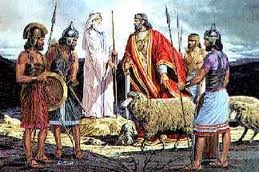
Did you know that there is really only a 1 in 365 chance that December 25 is actually the Birthday of Jesus? That’s right. No one actually knows what the day was. The best guess that scholars have is that it was in the spring, because the shepherds outside of Bethlehem may have been watching the flocks of sheep that were used in nearby Jerusalem for the Passover Celebration (which is in spring). But even that is just a guess.

In the middle 300s (AD) the Roman Emperor Constantine became a Christian. At that time, the big Celebration of the year for the Romans, was Winter Solstice. They celebrated it on December 25, because that was the first day they could tell that the days were getting longer again. It was a big time holiday. It had nothing to do with Jesus.

But Constantine, after becoming a believer, decided to make use of the pagan holiday to help people think about Jesus. So he declared December 25 to be no longer Winter Solstice, but now the commemoration of the birth of Jesus. He used the joy and pageantry in the service of the one true God.

In some ways, in our culture, Christmas has returned once more to a pagan holiday. Christmas trees come from a pagan tradition. The way stores use Christmas to drive sales is disappointing. Probably a majority of the people who celebrate Christmas, don’t care much one way or the other about Jesus. Even so, like Constantine, we can make use of it.

Think of it this way: what is it that we like about Christmas? What gives us so much anticipation and excitement. What makes it “the most wonderful time of the year?” I think most people look forward to one or more of these things:

• Time spent with loved ones.

• Rest – very few people have to work on Christmas

• Receiving gifts (and, in some cases, people look forward to giving them too)

• Food and Celebration

• Connecting with something deeper and bigger than ourselves (often through traditions).

Each of these are worthwhile things in and of themselves. We can make them even more worthwhile by using them to provide a boost to our relationship with Jesus. Let’s look at how.

TIME SPENT WITH LOVED ONES. One the greatest joys of Christmas is spending it with someone we love. One of the greatest sorrows is the first Christmas you spend after a loved one is no longer with you. Either way, use your desire to be with those you love to remind you of the promise of Jesus’ resurrection. Because of his forgiveness, and his resurrection from death, our sorrow will be turned to Joy. One day, nothing will ever part us from those we love:

Then I saw a new heaven and a new earth, for the old heaven and the old earth had disappeared. And the sea was also gone. And I saw the holy city, the new Jerusalem, coming down from God out of heaven like a bride beautifully dressed for her husband.

I heard a loud shout from the throne, saying, “Look, God’s home is now among his people! He will live with them, and they will be his people. God himself will be with them. He will wipe every tear from their eyes, and there will be no more death or sorrow or crying or pain. All these things are gone forever.” (Rev 21:1-4)

Don’t let your hearts be troubled. Trust in God, and trust also in me. 2 There is more than enough room in my Father’s home. If this were not so, would I have told you that I am going to prepare a place for you? 3 When everything is ready, I will come and get you, so that you will always be with me where I am. 4 And you know the way to where I am going.” (John 14:1-4)

REST. We love the break of Christmas. Most people don’t do unnecessary chores at Christmas. We can relax and enjoy at least a single day. But God has promised us a rest that continues, not just for one, day, but forever:

God’s promise of entering his rest still stands, so we ought to tremble with fear that some of you might fail to experience it. For this good news—that God has prepared this rest—has been announced to us just as it was to them….So there is a special rest still waiting for the people of God. For all who have entered into God’s rest have rested from their labors, just as God did after creating the world. So let us do our best to enter that rest. But if we disobey God, as the people of Israel did, we will fall. (Heb 4:1-2 & 9-11)

Then Jesus said, “Come to me, all of you who are weary and carry heavy burdens, and I will give you rest. Take my yoke upon you. Let me teach you, because I am humble and gentle at heart, and you will find rest for your souls. For my yoke is easy to bear, and the burden I give you is light.” (Matt 11:28-30)

Turn the mood of this Christmas season into leverage for helping you rest in Jesus.

RECEIVING GIFTS. What did you get for Christmas last year? To be truthful, I cannot remember without putting some serious thought to it. What I do know is this: I am usually thrilled about new gifts, but it isn’t terribly long until the thrill wears off. But the Lord gives us gifts that never spoil or fade:

“Don’t store up treasures here on earth, where moths eat them and rust destroys them, and where thieves break in and steal. Store your treasures in heaven, where moths and rust cannot destroy, and thieves do not break in and steal. Wherever your treasure is, there the desires of your heart will also be. (Matt 6:19-21)

“You fathers—if your children ask for a fish, do you give them a snake instead? Or if they ask for an egg, do you give them a scorpion? Of course not! So if you sinful people know how to give good gifts to your children, how much more will your heavenly Father give the Holy Spirit to those who ask him.” (Luke 11:11-13)

Use the joy and anticipation of gifts to help you receive what the Lord is offering us – his Holy Spirit, and an unfading eternal future.

FOOD & CELEBRATION. Often in scripture, food is used as a metaphor for fellowship with God. As we anticipate eating, and actually eat, let’s consciously invite the Lord to be a part of our lives.

Yes, I am the bread of life! Your ancestors ate manna in the wilderness, but they all died. Anyone who eats the bread from heaven, however, will never die. I am the living bread that came down from heaven. Anyone who eats this bread will live forever; and this bread, which I will offer so the world may live, is my flesh.” (John 6:47-51)

Listen! I stand at the door and knock. If anyone hears My voice and opens the door, I will come in to him and have dinner with him, and he with Me. (Revelation 3:20)

So let’s feast! Enjoy the food. And as we do, worship, and receive Jesus’ invitation to close fellowship.

CONNECTING WITH DEEPER REALITY. I think it is during this season the greatest numbers of people are really open and willing to consider something bigger than themselves. At Christmas we seem more ready to acknowledge that we want more – not just more stuff, but more –something – in our lives. That something is a relationship with Jesus, empowered by the Holy Spirit.

So this season, get into it. Enjoy the anticipation. Look forward the presents. For crying out loud, have some eggnog for me. But use it all to let God draw you closer. Use it to feed a hunger and thirst for him.

What Comes Out When you are Squeezed?

The tough times that Saul faced revealed what was inside him. What do tough times reveal about you?

1 SAMUEL PART 9. 1 SAMUEL CHAPTER 13

————


To listen to the sermon, click the play button:

To download, right click on the link (or do whatever you do on a Mac) and save it to your computer: Download 1 Samuel Part 9

———————

During his first battle as leader of Israel, Saul defeated an enemy that dominated the Eastern tribes of Israel, as well as the Jordan valley. After that victory, the people finally accepted him officially as king. Saul conscripted 3,000 professional warriors and sent everyone else home. He let his son Jonathan command 1,000 of the soldiers.

saul-sacrifice

Everything we read about Jonathan suggests he was an outstanding young man in every way. He took his 1,000 men and promptly handed the Philistines a stinging defeat. This was good, as far as it went, but basically it had the same effect has kicking a hornet’s nest, or shooting a grizzly bear with a BB gun. Jonathan inflicted damage, but he didn’t impair the power of the Philistines to make war. In addition, after almost a generation of peace with Philistines (under the leadership of Samuel), the war was beginning again. We will see as we go on that Jonathan had a warrior’s heart, and a trust in the Lord, and he wasn’t worried about stirring up Israel’s old enemy. The problem was, the rest of Israel – including his father – was worried. The news of victory was carried throughout the land, but this is how it went:

“Saul has attacked the Philistine garrison, and Israel is now repulsive to the Philistines.” (1 Samuel 13:4)

At this point, we need some historical and geographical background. Chapter 13:19-23 describes something very significant. It tells us that these events took place at the end of the Bronze Age, and the beginning of the Iron Age. Quite simply, at this point the Philistines had Iron-Age technology, and the Israelites did not. This is one clue to why the Philistines were so feared by the Israelites, and why they were such a persistent military problem. They had iron weapons, and the Israelites did not. When we keep this mind, this makes any Israelite victory over the Philistines something of a miracle.

I want to chase a side trail for just a moment. 13:5 records the number of Philistine warriors. Some translations will say 30,000 chariots and 6,000 horsemen. Other bible passages record battles involving tens and sometimes hundreds of thousands of people. This seems surprising to me; in fact unlikely. For most of history, battles did not involve hundreds of thousands of people, and rarely involved even tens of thousands. It used to trouble me as a potential issue with the reliability of the bible. However, I think the answer may lie in ancient Hebrew. Ancient Hebrew did not include any vowels. The vowel was implied by the context. Even today, Hebrew vowels are expressed as little punctuation type marks, not by actual letters. Anyway, the point is, that the word for thousand “eleph”(“lp” in Hebrew) looks exactly the same as the word for professional solider — “alluph” (also “lp” in Hebrew). Thus, 100 lp could be 100,000 people, or simply 100 professional soldiers. In addition, “eleph” (thousand) can mean a few other things as well, just as many words in English have more than one meaning (For example: Present can mean “here” or “gift” or “the current moment in time” or “to show or display.”) Remember of course, professional soldiers were usually accompanied by peasant-militia troops as well.

In addition, we have examples of parallel passages where extra zeroes have been added or dropped. 2 Samuel 10:18 records the defeat of 700 chariots; 1 Chronicles 19:18, speaking of exactly the same incident, writes 7,000. Generally, I would suspect the lower number to be correct. So if you ever read these numbers and think, “Gee, that sounds like a much bigger number than seems likely,” you can knock off a zero – and in some cases, three zeros – and still agree that the bible is faithful and reliable. The problem is simply in the translation.

In any case, we ought to understand that whatever the actual number – 3,600 or 36,000 – for the times, it was a formidable professional fighting force that the Philistines sent into Israelite territory, along with a large number of peasant-militia troops. It was a big threat in two additional ways. First, up until this point, the Philistines had stayed mostly on the coastal plain. Technically, that was Israelite territory also, given to them by the Lord when they entered the promised land, however, Israelites had never really lived there. But in the incident recorded in 1 Samuel 13, the Philistines were pushing inland, up into the mountains that had been occupied by Israelites for hundreds of years.

Secondly, the Philistine invasion recorded here nearly cut the nation of Israel in half. They pushed all the way to Micmash, which was just a few miles short of the Jordan River valley. If they moved all the way down to the Jordan, the largest tribe in Israel (Judah) would be cut off, along with the tribes of Benjamin and Dan, and roughly half of the territory of Israel would be isolated from the other tribes. In clip_image002other words, the Philistines were about to take a gigantic, and possibly fatal bite out of Israel. See the picture at left. The brown line shows the territory occupied by Israelite tribes, and the yellow is the Philistines (this is a rough approximation, just to give you an idea of the danger they were in). Micmash is the yellow dot. The red dot next to the river is Gilgal, and the red dot closer to the Philistines is Gibeah.

Israel was just a few miles and one lost battle away from a huge national catastrophe.

It is interesting to note that Saul had originally held the position at Micmash, but retreated from the Philistines down into the Jordan valley. He gathered his army at Gilgal, a town in the Jordan river valley not far from the Philistines as the crow flies, but a fairly rough walk up or down the mountains by foot. The text doesn’t explain things clearly but apparently Samuel had sent a message to Saul, telling him to wait until he came, and then they would worship the Lord and make sacrifices before commencing the battle. In other words, they wanted God’s favor and help when they went out to fight.

Now it is quite likely that Samuel’s home town was affected by this invasion. The Philistine forces may have also forced Samuel to travel a considerable distance out of his way to get to Saul – remember, they had almost cut the nation in half. In any case, days passed, and Samuel did not show up. Saul’s army got restless and afraid. No doubt, many men were thinking of their families, wanting to prepare them for the disaster, or wondering if their homes had already been overrun by the enemy. They began to desert.

So Saul took action. He decided to go ahead and lead the worship and offer the sacrifices himself. He made the burnt offering. This was animal that was killed and completely burned up. No part of it was eaten – it was all “given” to the Lord through fire. It was used to seek God’s favor, to bring God’s forgiveness or to avert judgment. Just when Saul finished, Samuel finally made it to the camp.

Now, here is what troubles me. I think many Americans, if they didn’t read any further, would approve of what Saul did. People might say, “he’s a go-getter, a self-motivated leader.” They might think, “There’s a real leader – he’s losing men so he takes bold decisive action, he makes something happen.”

But Samuel didn’t see it that way, and apparently, neither did God.

13 And Samuel said to Saul, “You have done foolishly. You have not kept the command of the LORD your God, with which he commanded you. For then the LORD would have established your kingdom over Israel forever. 14 But now your kingdom shall not continue. The LORD has sought out a man after his own heart, and the LORD has commanded him to be prince over his people, because you have not kept what the LORD commanded you.” 15 And Samuel arose and went up from Gilgal. (1Sam 13:13-15, ESV)

The prophet immediately identified that the problem was Saul’s heart. It wasn’t fixed on God. Instead we see now that Saul was not humble, but rather insecure. He was worried about the future of Israel, of course. He was worried about his own ability to keep the men with him and maintain an effective fighting force. He did not trust the Lord with these concerns. Instead, he trusted in his own action. He trusted in the offering ceremony. Clearly, Saul viewed the offerings as a tool. It was a way to keep his army together and energized; perhaps also a way to manipulate God into helping him. Saul did not offer the sacrifices to please the Lord, or because was personally repentant or worshipful. If either of those had been the case, he would have waited for Samuel, who was the one who was supposed to do such things.

Saul was in a tight spot, there’s no doubt about it. But the tense situation did not create the problem in his heart. It only revealed it. When you squeeze an orange, what comes out? Whatever is inside the orange of course, which is orange juice. Now, when you are squeezed, what comes out? Whatever is inside you, of course. If you curse and rage when you are in a tough spot, that is because cursing and rage are inside you. Jesus said:

20“What comes out of a person — that defiles him. 21 For from within, out of people’s hearts, come evil thoughts, sexual immoralities, thefts, murders, 22 adulteries, greed, evil actions, deceit, promiscuity, stinginess, blasphemy, pride, and foolishness. 23 All these evil things come from within and defile a person.” (Mark 7:7-23)

45 The good person out of the good treasure of his heart produces good, and the evil person out of his evil treasure produces evil, for out of the abundance of the heart his mouth speaks. (Luke 6:45)

When Saul was squeezed by his circumstances, he did not put his faith steadfastly in the Lord. He refused to wait on God or on other people. He let his insecurity rule him, and he chose to act, rather than depend on the Lord. When Saul was squeezed, it was fear that came out. He put his trust in the number of men he had, rather than the Lord. It was more important to him to keep as many men as possible, than it was to seek God and his favor. His situation was not easy. But it didn’t cause his heart-problem – it just revealed it.

This is all about trusting God when things don’t look good – maybe things look disastrous. If you get squeezed, what do you think will come out? What is in the treasure-store of your heart?

What if it isn’t good? What if, like Saul, you have insecurity hiding there? What if there is rage or hatred or jealousy or selfishness? I think Saul had the opportunity to repent. When he was tempted, he could have turned to the Lord, confessed his weakness, and put his trust in the Lord. I think that is what we need to do when we are squeezed, and we see there is a problem in our hearts.

There may be an application here for you if you are faced with a difficult situation. Perhaps you feel a lot of pressure just to act, to do something, to make something happen. Sometimes the Lord does lead us to do that. We’ll see that with Jonathan next time. But if the Lord is calling you to wait, or if your action would be from fear or insecurity, maybe you need to sit still and wait for God to show up. Take a moment to the Lord speak to you no

GRACE FOR YOUR MISTAKES

1 SAMUEL PART 8. (chapter 12)

saul

To listen to the sermon, click the play button:

To download, right click on the link (or do whatever you do on a Mac) and save it to your computer: Download 1 Samuel Part 8

Think for a moment about some decision you made, or action you took that you now know was a mistake. What would you change today, if you could? How would your life be different?

We all know that you can’t go back and unsay those cruel words, or un-make that decision that led you to where you are today. I’m not going to pretend that I’ve found a way to do that. But I do think that through 1 Samuel chapter 12, God is offering grace even after we have stepped out on the wrong road. It isn’t grace to go back. It is grace to go on.

In first Samuel chapter 8, the people asked God, through Samuel, to give them a king. This was a rejection of God’s plan for them as a nation. It was a choice to exchange the freedom and protection they could have had in following the Lord for the false-security of a king who would take care of them, but also rule over them. Samuel, in his wisdom knew it was a mistake. He talked to God about it, who affirmed Samuel’s instinct that it was mistake. But the people were determined.

Not only did they want a king, they wanted a certain kind of king. Their requirements were also a mistake. But the people were determined. The Lord allowed them to choose their own way. They did, and their choice was a major screw up. Even so, God let them go ahead with it, and helped them to find a king. The man who met their specifications was Saul, a big impressive looking fellow was also insecure and spiritually insensitive and ignorant.

Even so, the Lord began to use Saul right away. In choosing him, the Lord removed an old shame from many thousands of people, and set up Israel with a magnificent big champion to match a Philistine giant whom no one yet knew about.

God chose Saul through the prophet Samuel. First Samuel anointed Saul in private. Later he was chosen by God in a public assembly of the leaders of Israel. Even so, nothing really happened. After the events we looked at last time – after a great military victory – the people finally made Saul an honest king.

15 So all the people went to Gilgal, and there in the LORD’s presence they made Saul king. There they sacrificed fellowship offerings in the LORD’s presence, and Saul and all the men of Israel greatly rejoiced. 1 Sam 11:15 (HCSB)

So you see, even their approach to the king was not one of faith in the Lord and his choice. They waited until Saul gave them something of what they were looking for – military victory – before they accepted God’s help in choosing the king.

After it was finally all official, Samuel stood before the people and made a speech. That speech is the text of 1 Samuel chapter 12.

First, Samuel wanted to make sure his conscience was clear. He also wanted to draw a contrast between his own actions, and the rights of a king. Samuel has never taken anything that wasn’t his. Yet he had warned the people in 8:10-18 that the King would have the right to take many things from the people in taxes to run his household and the kingdom. The people affirmed that Samuel had been a good and fair leader. There is an almost an unspoken implication to this part of Samuel’s speech “So – in me, God gave you a good and fair leader who listened to him and did right. But you wanted a king!”

Next, Samuel reminded them of God’s faithfulness. The Lord led them out of Egypt as a great nation – but without a king. They had Moses, a prophet, and Aaron, a priest, but no king. And the Lord cared for them and provided for them. Although Samuel doesn’t mention this explicitly, the troubles the people had in the wilderness during the exodus were not due to lack of a king, but rather to disobedience to the Lord.

During the time of the Judges, the people had troubles again. But Samuel points out two things. First, the trouble was their own doing, not because they lacked a king. It came because they quit following the Lord. Second, when they repented and cried out for God’s help, he was gracious and delivered them.

11 So the LORD sent Jerubbaal, Barak, Jephthah, and Samuel. He rescued you from the power of the enemies around you, and you lived securely.

The point Samuel is making is that when they followed the Lord faithfully, he delivered them protected them, and they lived in peace and security. All this took place without a human king. The Lord was their king. Samuel is saying – look, when you were faithful to God, the old way worked just fine. God did so much for you. Even so, you are ignoring everything he did for you. You are claiming it just isn’t working out, when the reason it isn’t working out is your own stubbornness, your own turning away from God.

After the people heard this, they recognized that Samuel was right. They felt bad about what they had done, and they were afraid. I would bet that no one reading this – even you folks who live outside the United States – has asked God to give you a king. But have you asked him for something that was a mistake? Have you ever determined to go ahead your own way, and later realized it was a mistake – maybe even a huge error of judgment?

I have.

1 Samuel 12 gives a picture of how God deals with us in those kinds of situations. I always want to go back and do it over, only correctly this time. I want to have my mistakes undone. But God doesn’t work that way.

Sometimes, I enjoy playing computer games. One of the great things about computer games, is that you can screw up, you can even die – and it doesn’t matter. You just start the game over from the last point at which you saved it. I have often thought – and maybe you have too – wouldn’t it be cool if life was like a computer game? If you screw up, you just get a “do-over.” If you make a bad choice, you go back to that point and make a right choice now.

But there is something else about computer games. They are fun, but they are also meaningless. I don’t mean that it is evil or wrong to play them. But the choices you make within a computer game are meaningless. Death in a computer game is meaningless in real life. Life in a computer game is meaningless. We need to understand something here: choices without consequences have no meaning.

There is a famous old story about a young man faced with a choice to open one of two doors. Behind one is a beautiful maiden. If he chooses her door, he will be married to her immediately. Behind the other door is an angry, hungry tiger which will surely kill him. He doesn’t know which door holds the lady and which holds the tiger. The young man’s lover knows the secret of the doors. If she tells him to open the tiger-door, he will be killed in agony. But if she tells him to open the lady-door, he will be married to another woman, one who is quite beautiful, and the woman who loves him will be left alone. She signals him secretly to open the door on the right. What was behind that door?

This story has endured for over a hundred years, in part because there is an agony in knowing that their choices matter. But suppose that no matter which door he chose, the tiger would be there. Or, no matter which door he chose, he would get the princess. The story is no longer compelling if the choices do not result in some consequence.

Imagine I held in one hand a bag containing a candy bar, and in the other hand, a bag containing a piece of scrap wood that was good for nothing. If you think you might have a shot at the candy bar, it would be fun to try and make the right choice. If you knew that no matter what you chose, I would give you the wood, you wouldn’t bother even playing. If you knew that no matter what you did, I would give you the candy bar, you might be happy about the candy, but you would probably think going through the motion of choosing is pretty pointless and stupid – in fact, meaningless.

So we see that with the Israelites, the Lord gave them their free and meaningful choice. He cannot undo it without actually taking away free choice. If He undid their choice, it would mean their choices would have no consequences, and therefore no meaning, and therefore they would not actually have free choice. The same is true of our choices. So he doesn’t undo them.

God is golfer. He plays the ball from where it lies, even that is off in the bushes somewhere. But he is a master golfer. He can put a ball that is the most ridiculous position, back into play in one stroke. What he does do for the Israelites is promise to walk with them through the consequences they have brought on themselves. Samuel encourages them to walk with the Lord NOW.

20 Samuel replied, “Don’t be afraid. Even though you have committed all this evil, don’t turn away from following the LORD. Instead, worship the LORD with all your heart. 21 Don’t turn away to follow worthless things that can’t profit or deliver you; they are worthless. 22 The LORD will not abandon His people, because of His great name and because He has determined to make you His own people.

23 “As for me, I vow that I will not sin against the LORD by ceasing to pray for you. I will teach you the good and right way. 24 Above all, fear the LORD and worship Him faithfully with all your heart; consider the great things He has done for you. 25 However, if you continue to do what is evil, both you and your king will be swept away.” (1 Samuel 12:20-25)

It was not God’s plan for Israel to be led by king. Once they made that choice they had some difficult consequences to follow, as we will see. But even so, God worked through that mistake. In fact he worked through it in a mighty and amazing way. Eventually he used the monarchy of mistake as a way to bring his salvation to the entire world; Jesus, in his human ancestry, was descended from the kings of Israel.

Maybe it was a mistake for you to take the job you have right now. Perhaps the Lord was calling you to something else, but you just didn’t have the faith to take the risk. OK, so you screwed up. But don’t turn away from following the Lord. He can do great things through this. Just be sure to let him.

Maybe you married the wrong person. People think this all the time. They think that somehow they missed out on their real soul mate, and now their entire marriage was a mistake. Fine, what if it was? God can and will work through this, if you let him. Even now, don’t turn away from following the Lord. Don’t follow worthless things. God will redeem your mistake and make it beautiful, if you allow him to.

I’m not only talking about honest mistakes, either. The people of Israel knew that God didn’t want them to have a human king. They did it anyway. Sometimes we deliberately make a sinful choice. God can redeem even those choices; maybe especially those choices.

God is so good. He wants our lives to have meaning, so he allows our choices be free and real. And yet, even when we make the wrong choice, if we turn back to him, he can work through any circumstance we might create for ourselves, and make good come out of it.

HUMBLE…OR INSECURE?

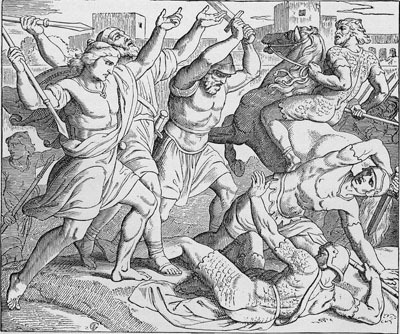
saul-nahash

1 SAMUEL #7. 1 Samuel 10:24 – 11:15

To listen to the sermon, click the play button:

To download, right click on the link (or do whatever you do on a Mac) and save it to your computer: Download 1 Samuel Part 7

I want to reiterate something that happened at the end of chapter 10, and then we’ll move on to chapter 11. Remember, Samuel anointed Saul as king of Israel when it was just the two of them in private. After being anointed king, Saul went home. As he journeyed back, his anointing was confirmed by several signs that Samuel had given him before hand – things Samuel said would happen, which then came true.

Even so, Saul did not tell anyone that Samuel had anointed him king. At first glance this looks like humility, and maybe it was. It looks like he is waiting for God to confirm it before he says anything. And yet – God already did confirm it. Maybe it is something else altogether – insecurity.

After some time, Samuel gathered the people together, and they asked the Lord to choose a king by lots. Saul was chosen. This was another powerful confirmation of Saul’s calling. But Saul hid among the baggage while it was happening. This could be humility also, but again, it could just as well be insecurity. Actually, I think it is a little bit of both. When we read the texts carefully, we can see that Saul is a very complex, very real person. I suspect that he had a lot of insecurity, but that he was also capable of genuine humility.

Briefly, I want to point out that his insecurity seems to be because he has trouble believing what God has said. Through Samuel, God told him he would be king. Through the signs, he confirmed it. Through the choices by lot, God confirmed it again. But I suspect, for the reasons I shared last week, that Saul had never really been a man of faith. He did not know God, and had not ever been very interested in Him. It’s hard to believe what God says if you don’t really know God. It’s hard to trust someone you don’t know. If you go your whole life ignoring God, then it is hard to believe it when someone tells you that God has a purpose for your life.

Listen to what happened next:

25 Then Samuel told the people the rights and duties of the kingship, and he wrote them in a book and laid it up before the LORD. Then Samuel sent all the people away, each one to his home. 26 Saul also went to his home at Gibeah, and with him went men of valor whose hearts God had touched. 27 But some worthless fellows said, “How can this man save us?” And they despised him and brought him no present. But he held his peace.

Just put yourself in Saul’s situation for a minute. You have just made king – twice. It has been confirmed by lot and by prophesied signs that came true. A future with possibilities you never dreamed of is opening up in front of you. Everyone shakes your hand and slaps you on the back, and congratulates you…and then goes home. You look around. It’s time for you to go home also. There’s nothing else to do. I can’t help thinking that this was a major let down for Saul. So he’s king. Now he’s got to go back and plow his fields.

A few warriors felt called to stick with the new king and serve him. The Lord touched them and they believed in him and stuck with him. But there were at least an equal number of people who didn’t believe in him at all, and mocked him and his calling.

I think all of this must have been disappointing, and it would not have helped his struggles in believing God and setting aside his insecurity.

Now, I want to leave Saul for a moment and go back and set the stage for what happened next. I spoke about this a little bit last time, but I want to go into more detail now. Roughly two hundred years earlier the residents of a town called Gibeah, in the tribe of Benjamin, had committed an atrocity. Rather than welcome a traveling priest, they had attempted to abuse and rape him. When they were prevented from this they raped and killed his concubine instead. In those days a concubine was considered a wife.

The priest took the dead body of his wife, and cut it up, and sent the pieces to the twelve tribes of Israel as a graphic way of letting the whole nation know what had taken place in Gibeah. Eleven of the tribes assembled – the tribe of Benjamin did not come, and Gibeah was in their territory. The other tribes demanded that the tribe of Benjamin deliver the residents of Gibeah to the rest of the nation so that justice could be done. Benjamin refused, and fought a war with the other tribes rather than punish the evil-doers. Naturally, there was a great deal of outrage against the tribe of Benjamin. The other Israelites destroyed almost the entire tribe, which numbered about 30,000 adult men, plus women and children – possibly more than 120,000 people altogether. The only survivors were six hundred Benjamite warriors who escaped into the hills. Everyone else – including women and children, had been killed.

In their rage, the other tribes had sworn an oath to not allow their daughters to marry any Benjamite. That meant that within a few years, there would be no more tribe of Benjamin. But after the war, the Israelites began to mourn for the loss of the twelfth tribe. They looked for a way to get them wives without violating their oaths, so that the tribe could be eventually restored. They found that one city in Israel had refused to go to war along with the other people – the city of Jabesh-Gilead, on the other side of the Jordan river Valley. In effect, Jabesh-Gilead had also been defending the evil doers, just passively, by refusing to fight for justice. So the rest of the Israelites took all of the unmarried women in that city, and gave them to the Benjamites to be their wives.

I mentioned some of this last week. I think the Lord’s choice of Saul was in part to remove the shame of the tribe of Benjamin. Not only was Saul from Benjamin, but he was from the town of Gibeah – the very town that had committed such shameful acts. The Lord was saying to them, “You are no longer under a cloud of shame. You are not second-class in my eyes. Your forgiveness is complete.”

But there was another group under a cloud of shame for that incident – the city of Jabesh-Gilead. They too, had defended the evil act of Benjamin, even if only passively. When Saul was made king, the shame of Benjamin and Gibeah was finally removed. But it appeared that Jabesh-Gilead was forgotten by God in all this. Their sin had not been as great, but they had suffered too, and they still lived under a cloud of shame. God is noticing Benjamin and Gibeah, but no one seems to remember poor Jabesh-Gilead.

Now, after Saul was chosen as king, things got even worse for Jabesh-Gilead. The foreign nation of Ammon came up to besiege the city. You can almost see the low self-esteem born of 200 years of shame. They don’t even pretend they will fight. They start negotiating a surrender right away, ready to give up their freedom in order to keep their lives. As often happens when a bully encounters someone with a poor sense of self-worth, the bully senses weakness, and begins to pile it on. Surrender isn’t good enough for the Ammonites. They want to rub the faces of their enemies in it. They demand that all the men have their right eyes gouged out, as one of the conditions of surrender.

The next exchange of messages sounds strange to us who are used to modern warfare. They city of Jabesh- Gilead asks for seven days to see if anyone will help them. The strange thing is that the Ammonites grant them the time. But there are three reasons for this. First, if the Ammonites don’t grant the time they will end up having to fight anyway, when there is still a chance of a bloodless victory. Second, the Ammonites probably felt that the other Israelite tribes were too disorganized to do anything within seven days anyway. Third, both the Ammonites and the people of Jabesh-Gilead seem doubtful that anyone would help them anyway. They are the black sheep of the family. Of any town in Israel, they are the least likely to be helped.

Their messengers go all over Israel. When the messengers get to Gibeah, Saul’s home town, no one thinks to go get the king. In fact, his royal majesty was plowing a field at that moment. He happens to come to town as the people were weeping over the fate of Jabesh-Gilead.

. 6 And the Spirit of God rushed upon Saul when he heard these words, and his anger was greatly kindled. 7 He took a yoke of oxen and cut them in pieces and sent them throughout all the territory of Israel by the hand of messengers, saying, “Whoever does not come out after Saul and Samuel, so shall it be done to his oxen!” Then the dread of the LORD fell upon the people, and they came out as one man.

Many of you don’t know this, but my wife has a bachelor’s degree in Biblical Studies. Years ago she did an exhaustive study on the Holy Spirit. She has pointed out to me many times that when the Holy Spirit comes on people in the Old Testament, it often seems to be almost an external thing, and God seems to use people whether or not they are close to him or in tune with him. For instance, the hero Samson was clearly ignorant of God and lived a sinful life – and yet God used him. After Jesus came, however, the Holy Spirit stopped working in that external way, and now he is connected with all who believe in Jesus through a spirit-to-spirit connection. Now the spirit is within everyone who trusts Jesus, and he flows through us and does his work from the inside out.

Saul is living in those Old Testament times, and in spite of his lack of faith, God used him. The Spirit came on him, and he acted. Even as God is using him, however, you can see his insecurity. First, he calls the people not only in his name, but also the name of Samuel, as if he is afraid they won’t come for the summons of the king alone. Second, he cuts up his oxen and sends out the pieces. Normally a middle-eastern leader in those days would say something like, “so shall I do to you if you do not fulfill your oath of loyalty to me.” But Saul says, “I will do this to your oxen.” It’s almost humorous. He has already destroyed his own oxen, and now he threatens not the people but their cattle.

Even so, God was with him. They assembled for battle and when up and destroyed the Ammonites, saving the city of Jabesh-Gilead. This no-account, shame-filled place suddenly has the tender care and affection of the entire country. Their shame also, has been forgiven and removed.

I have pointed out many of Saul’s faults, but as I said last week, God was not just trying to screw the Israelites for rejecting the Lord as their king. Saul, among all the tribes of Israel, would have been more sensitive to the shame and disgrace of Jabesh-Gilead than anyone else. His own tribe and clan had been under that same cloud until he was chosen as king. I am reminded again of 1 Corinthians, written by another man from the tribe of Benjamin, who was also called Saul:

26 Brothers, consider your calling: Not many are wise from a human perspective, not many powerful, not many of noble birth. 27 Instead, God has chosen what is foolish in the world to shame the wise, and God has chosen what is weak in the world to shame the strong. 28 God has chosen what is insignificant and despised in the world — what is viewed as nothing — to bring to nothing what is viewed as something, 29 so that no one can boast in His presence. (1Cor 1:26-29, HCSB)

Saul was chosen by the Lord. He started out well. God graciously gave him opportunity after opportunity to respond in faith. In this instance, he did.

So what does all this mean for you right now?

Maybe, like Saul, you are facing confusion, hurt and disappointment with God. Perhaps the Lord has given you a calling or done something in your life that seemed momentous. It seemed like it was all heading somewhere. But now everyone is turning out the lights and heading home, and you are left to make your way back to life as usual, and you don’t understand. You wonder what it was all about, if all these ways in which God seemed to be at work amount to nothing. I don’t have every answer for you. But I do know that Saul experienced that. In time, however, God showed him what to do and opened up the opportunity to step fully into his calling. Trust the Lord that he will do that for you also, even if it looks like it is all over right now.

On the other hand, maybe you have been dealing with insecurity, like Saul. The Lord has shown you he is real. He has spoken to your heart, revealed himself through the Bible. But you aren’t sure if you can trust him. Maybe you are afraid to step up to God’s calling. Perhaps that is because you don’t yet know him very well. Here, you can take a different path than Saul. Seek the Lord. Seek him by reading the bible, or listening to recordings of scripture passages. Seek him in music, in fellowship with other Christians, in worship. And make a decision to trust him and trust that what he says is true.

You might be someone who feels like the city of Jabesh-Gilead. For a while maybe other people shared your shame or humiliation. But now they’ve been able to move on, and you are stuck in the same old place. You feel forgotten. Maybe things have even gotten worse lately. You’ve gone from a bad place to a really dangerous or horrible place. I think the Lord would say to you, through this scripture, “do not fear! Do not give up hope. I never forget you. Sometimes I let things get a lot worse so I can then make them far, far better than ever before.”

Pause for a few moments now, and listen to what the Lord is saying. Thank him for it, and receive it with a choice of faith.

Do You Really Want God to Do What You Ask Him?

call_saul

1 SAMUEL # 6 CHAPTERS 10 & 11

THE CALLING OF SAUL

To listen to the sermon, click the play button:

To download, right click on the link (or do whatever you do on a Mac) and save it to your computer: Download 1 Samuel Part 6

This is an age-old story line, repeated all the time in books and movies. A young man goes looking for some donkeys, and comes back three days later at the king of his country.

OK, so it is isn’t a normal or well-known tale. But I love, in part because it seems almost random. Yet in that randomness, we can see God at work. That gives me comfort when events in my own life seem both ordinary and random.

In chapter 8, The elders of of Israel gathered and asked God to give them a king. They asked Samuel to ask God for that, and to show them who God wanted. Then they all went home.

The narrative suddenly switches, and 1 Samuel chapter 9 tells us about a young man who went out with his servant to look for some lost donkeys. The young man was named Saul. He was not at the meeting where the people asked for the king. He was not seeking the Lord, or going on a pilgrimage to a place of worship. He was just doing his job, which at that moment, was to find his dad’s lost donkeys.

After a few days of wandering in the hills, Saul and his servant decided to give up. As they turned back, they were near Samuel’s hometown. Saul’s servant knew this, and suggested that they ask Samuel to ask God where the donkeys are. Saul wasn’t sure about it, because they had nothing to give Samuel, but the servant had some money. Saul then said, basically, “OK, if you think it will helps us find the donkeys.” In other words, he has no desire to see a prophet in order to get closer to God, or to learn God’s will for his life. He just wants God’s help in accomplishing his own mission.

We learned at the end of chapter seven that Samuel used to travel around to various places in Israel and lead worship and judge disputes and share God’s words with the people. Even though Samuel did not live very far from Saul (compared to other areas of Israel) he had never met him. This implies that Saul had not, up to that point, been particularly interested in God. He obviously had never been to Samuel for any other purpose, and he obviously had never taken a sacrifice to worship with Samuel when he was in Saul’s area. Even now, he seeks Samuel not because he wants to know God, but because he’s lost his donkeys. His focus is not on the will of God or on relationship with God, but rather what Samuel can do for him.

So by this point, we can see something things about Saul. The first few verses tell us that he was an unusually tall and large man – the tallest man in all twelve tribes. He was also handsome. But other than that, there is nothing out of the ordinary about him. He isn’t particularly persistent. He isn’t especially patient, or spiritually sensitive. He’s just an ordinary person, except that he is very big, and impressive to look at. He had no clue what was coming.

Samuel, as always had been talking to God and listening. As we study this book, I think Samuel is becoming one of my favorite heroes of the faith. The people wanted a king. God told Samuel he would grant their request. So Samuel went back to work, and waited for God. He didn’t immediately go out and try to find a king for them. He talked to God and listened, and then, some time later, God told him when to anoint the first king. So when Saul showed up in town, Samuel was ready. He recognized him as the person God had chosen to be the answer to the request of the people of Israel. He treated Saul as if he had been expecting him (and actually, he had, since God told him to expect him) and made him a guest of honor at the feast he was going to.

After the feast, Saul was Samuel’s guest. They spoke for a long time. Later, in private, Samuel poured oil on Saul’s head, to anoint him as king of Israel. The significance of oil was that it represented the Spirit of God. The idea was, that with the oil, the Holy Spirit was poured out onto Saul, and he was to be God’s chosen instrument from now on. This is one of the big spiritual differences between the time before Jesus, and the time since his resurrection. Before Jesus, you see that God generally filled only one or two people with His Holy Spirit in each generation. It was as if he had just a few chosen instruments for each lifetime. But the prophet Joel predicted the great change that would come after the Messiah:

28 ​​​​​​​After all of this ​​​​​​I will pour out my Spirit on all kinds of people. ​​​​​​Your sons and daughters will prophesy. ​​​​​​Your elderly will have revelatory dreams; ​​​​​​your young men will see prophetic visions. 29 ​​​​​​​Even on male and female servants ​​​​​​I will pour out my Spirit in those days. (Joel 2:28-29, NET)

In Acts 2:17, on the day of Pentecost, the Lord gave his Holy Spirit to all 120 followers of Jesus. Peter quotes this prophecy from Joel and affirms that it was fulfilled from that day on. And so, from that day on, God’s chosen instruments to work in this world are every single person who trusts in Jesus. It is no longer one or two people in a generation – it is all of God’s people. We are all given the anointing of the Holy Spirit to do God’s work here and now.

READ MORE…

Continue reading “Do You Really Want God to Do What You Ask Him?”

ARE YOU TRULY FREE?

1 Samuel # 5. Kingship, Freedom and Responsibility

aslannew

GOD IS KING OF HIS PEOPLE

To listen to the sermon, click the play button:

To download, right click on the link (or do whatever you do on a Mac) and save it to your computer: Download 1 Samuel Part 5

Please read 1 Samuel 8:1-22

The battle recorded in 1 Samuel chapter seven ended when Samuel when was in his twenties. Verses 13-17 summarize most of the rest of his life. He led Israel, listening to the Lord, and telling them what the Lord had to say, helping them to understand what it means to follow him, and encouraging them to actually do it. And the people seemed to respond to his leadership. After those first tumultuous twenty years or so, things went well for that generation. The Philistine threat was greatly reduced. There was peace and people seemed listen to the Lord. What began with a simple woman wanting to become a mother, had brought peace, joy and goodness to thousands and thousands of people.

As he aged, Samuel tried to groom his two sons to lead Israel as he had. But it looked like they were headed down the same path as Hophni and Phinehas, the wicked sons of Eli, who had been in charge when Samuel was very young. History seemed poised to repeat itself. Samuel’s sons were dishonest – they took bribes to settle disputes, instead of judging fairly.

People Samuel’s age and older probably remembered what it was like back in the days of Eli, and were afraid of going back to those dark times. So the people gathered and told Samuel they wanted him to find them a king. I love Samuel’s response. The same little boy that was ready to hear God, still wanted to hear him as an old man.

One bible version says, “the request displeased Samuel.” The Hebrew word for “displeased” actually means to “ruin or spoil.” So it could mean that Samuel was upset about it – it ruined his heart. Or maybe he thought that the Israelites were going to spoil a very good thing. I think that is the best way to translate it, considering what followed.

So the first part of Samuel’s response is that he thinks it is a bad idea. He has good reasons for thinking that, and history basically proved him right. But, while that is what he thinks, he doesn’t just come right back with that. Instead, the second part of his response is to pray about what the people have said. In other words, Samuel was a humble God-follower. He was old and wise. He was a proven and popular leader. But he did not assume that his own opinion was right. Instead, he asked God about it.

Samuel’s attitude is definitely one worth learning from. When we have to make decisions about something, or deal with others, too often I know I’m right, and when I know I’m right, I think I don’t have to ask the Lord about it. Now, I’m not talking about things that the bible is very clear about – like who Jesus is, or whether it is wrong to lie. But there are many situations where God hasn’t given us a set of rules or a manual, and instead, we are supposed to rely on him to reveal his will in various situations. Should you take the new job or not? Does the Lord think it’s a good idea for you to go that party? Should your let your kids go on the overnight trip? Does the Lord want you to talk to your co-worker about what the bible says in this situation?

What God said to Samuel is surprising, puzzling and (I think) extremely interesting. He said,

The LORD said to Samuel, “Do everything the people request of you. For it is not you that they have rejected, but it is me that they have rejected as their king. (1 Sam 8:7)

So, let’s get this straight. He is saying, “Samuel, you have it right. When they ask for a king, they are rejecting me as king. This is a bad idea. So go ahead and help them get a king.”

Say what?

I think there are several things going on here. First, Samuel may have felt that he had personally failed as a leader. After he led them for a lifetime as a prophet, the people of Israel said, “we don’t want a prophet anymore. We want a king.” So Samuel may have felt that he somehow failed to teach them or encourage them in their relationship with God. He may also have felt bad about the choices his sons had made. The Lord was saying first of all “No Samuel, it isn’t you. You haven’t failed. They aren’t rejecting you, they are rejecting me.”

Sometimes this is a word we need to hear from the Lord. Maybe you have a family member you’ve been praying with or for. Maybe there’s a friend who has sought your advice. And yet the relative or the friend has ultimately decided to ignore what you have shared with them. Your prayers don’t seem effective. That person is going her own way, and that way is to move farther away from the Lord. Perhaps the Lord wants to say to you right now, “My beloved child, that person has not rejected you. She is rejecting my will for her life. Don’t take it personally. Don’t feel that you are a failure. This is about Me, not you.”

I want to talk for a minute about what the Lord meant when he said the Israelites were rejecting Him as their king. Since the time of Abraham, the people of Israel were not ruled by kings. For four hundred years in Egypt, and another four-hundred after they came to the promised land, the people were supposed to live free, with God as their only king. They were supposed to answer to Him – above any earthly authority.

The problem is, it didn’t work very well. Most people didn’t want to live that way. I am fascinated by how similar this is to the basic political philosophy of the Founding Fathers of the United States of America. Laura Ingalls Wilder wrote about her life growing up on the American Frontier during the late 1800s. In Little Town on the Prairie she makes some observations that are surprisingly relevant to our text today. One year, the new town she was living in celebrated the fourth of July. As part of the celebration, they read aloud the Declaration of Independence. After that, the crowd sang “My Country ‘Tis of Thee” ending with this verse:

Long may our land be bright; With Freedom’s holy light. Protect us by Thy might; Great God our King.

The crowd was scattering away then, but Laura stood stock still. Suddenly she had a completely new thought. The Declaration and the song came together in her mind, and she thought: God is America’s king.

She thought: Americans won’t obey any king on earth. Americans are free. That means they have to obey their own consciences. No king bosses Pa; he has to boss himself. Why (she thought) when I am a little older, Pa and Ma will stop telling me what to do, and there isn’t anyone else who has a right to give me orders. I will have to make myself be good.

Her whole mind seemed to be lighted up by that thought. This is what it means to be free. It means, you have to be good. “Our father’s God’s, author of Liberty — ” The Laws of Nature and of Nature’s God endow you with a right to life and liberty. Then you have to keep the laws of God, for God’s law is the only thing that gives you the right to be free. (Little Town on the Prairie, page 76)

This is what God meant when he said to Samuel that the Israelites were not rejecting Samuel, but God himself. They were saying, “It is too hard to have to listen to what God says for ourselves. It is too much responsibility for us to do what is right. Give us a king to lead us. He can tell us what to do. He can listen to God and be responsible for what happens.”

There is a deeper truth here. Whenever we reject the Lord, we are actually rejecting freedom. We tend to think of it the other way around. We think God gives us rules to follow and that is the opposite of being free. I want the teenagers reading this to pay careful attention, because you are at an age where you crave freedom. True freedom only exists with true responsibility. What that means is, you can’t really be free unless you are also really responsible.

Think about it like this. Suppose you are sixteen years old, and you want the freedom to go wherever you want, whenever you want to. In other words, you want the freedom to drive your own car. In order to get that freedom, you must take on the responsibility of learning how to drive, and you must take on the responsibility of learning the traffic laws, and abiding by them, and maintaining your license, and maintaining your car and paying for gas. You get the idea? You can be free, but in order to be free, you must also be responsible. If you don’t want to be responsible enough to do these things, you won’t be free to drive either.

Ever since Adam and Eve sinned, we human beings want to be free without being responsible. It never works. The two things simply go together. What the Israelites finally admitted is that they would rather not be free, if it meant they actually had to be responsible for their own relationships with God. They were saying, “we don’t want to grow up spiritually. It’s too hard. We would rather give up our freedom, so that we don’t have to be responsible for ourselves.”

In verses 9-18, the Lord through Samuel, told the people that this was exactly the choice they were making. But they said that they still wanted a king.

I think we do the same thing when we rely too much on Christian leaders or religious rules that aren’t really in the Bible. I don’t want anyone to feel bad, but sometimes people in my church come to me and say, “pastor what should I do in this situation?”

My answer is usually something like this: “Get to know the Lord through reading the bible, prayer, sermons, worship and fellowship. Learn to hear for yourself what he has to say to you. Talk to him about it yourself.” That’s not to say that I never have any God-given insight for anyone. Hearing God through other believers is a valuable thing, a gift that the Lord sometimes gives us. But the truth is, we are all supposed to connect with the Lord on our own also.

These things require effort and personal responsibility. It’s easier just to have someone tell you what to do. Some people find it easier to have an extensive list of rules that can apply to every situation. That way you don’t have to actually deepen your relationship with God, to learn to hear him, to put in the time required to get close to him.

God’s response to the people is fascinating. What they want is a bad idea. They will ruin his plan for them to be free as they follow him. And yet, he says to Samuel, “Let them go ahead with it. In fact, help them pick a king.” Basically he said, “I’ll give you what you want, but it will frustrate you in the end. In the end it will just bring you back to the same place.”

This is one of those places in the Bible where we see clearly two things that seem contradictory, and yet they are both true. God gives everyone free will. He let the Israelites choose something that was not what he wanted for them. They truly had a choice, and they used it to choose against God’s plan. But then, once they made their free choice, God began to work his will in and through the circumstances that their choice created. They got to have their free choice. And yet God’s will was not ultimately thwarted, and he began to work. It is a reflection of Romans 8:28

We know that all things work together for the good of those who love God: those who are called according to His purpose.

All things – even our own bad choices. God let the Israelites ruin his plan for a nation that lived free from tyranny and served only God. In fact, before he ever made the universe, he knew this would happen. He didn’t stop them. But he didn’t give up on them either. He continued to work with them.

Sometimes we are like the Israelites. We want what we want, even when someone (perhaps even the Lord) has warned us it is a bad idea. The Israelites experienced a lot of pain and heartache from their bad choices, but it did not separate them from the love of God. We may experience pain and heartache. But if we continue in faith, if we continue on in Jesus, God will work it out some way to our good.

Is the God of Old Testament Different from the God of the New?

1 Samuel #4

ebenezer2

To listen to the sermon, click the play button:

To download, right click on the link (or do whatever you do on a Mac) and save it to your computer: Download 1 Samuel Part 4

1 Samuel 6:13 through 1 Samuel 7:15

We left off last week where the Philistines put the Ark of the Covenant into a cart, and hooked it up to two cows who had been separated from their calves. Rather than return home to their calves, the cows pulled the cart into Israelite territory. They stopped near the town of Beth-shemesh, which was a town given to the tribe of Levi. The tribe of Levi (Levites) were the priests for the people of Israel.

The cart came into the field of Joshua of Beth-shemesh and stopped there. A great stone was there. And they split up the wood of the cart and offered the cows as a burnt offering to the LORD. And the Levites took down the ark of the LORD and the box that was beside it, in which were the golden figures, and set them upon the great stone. And the men of Beth-shemesh offered burnt offerings and sacrificed sacrifices on that day to the LORD. (1 Samuel 6:14-15)

The Ark had come home, so to speak. The Lord had refused to let the Israelites manipulate him through the Ark; he had erased their idea that it was a kind of lucky rabbit’s foot. Next, he used the Ark to show the Philistines that he was more real and powerful than the idols and demons they worshiped. But now, he brought it back to Israel. Even so, the Lord does not seem to be finished with the lesson. This perplexing incident is recorded:

And he struck some of the men of Beth-shemesh, because they looked upon the ark of the LORD. He struck seventy men of them, and the people mourned because the LORD had struck the people with a great blow. Then the men of Beth-shemesh said, “Who is able to stand before the LORD, this holy God? And to whom shall he go up away from us?” So they sent messengers to the inhabitants of Kiriath-jearim, saying, “The Philistines have returned the ark of the LORD. Come down and take it up to you.” (1Sam 6:19-21, ESV)

The Old Testament has several stories like this. They can be confusing and perplexing. A few years ago I was reading through Leviticus for my daily devotions. I did this almost to dare God to speak to me through Leviticus, which is some pretty dry reading at the points when you can understand it. I got nothing out of it for almost two weeks. Then I read a story from chapter ten. Two priests sacrificed “unauthorized incense” and God burned them up instantly. I said, “What’s up with that, Lord? That doesn’t sound like you. It doesn’t sound my Father, my Comforter, my never failing Friend.” Then I read Leviticus 10:3

I will show my holiness among those who come to me. I will show my glory to all the people.

So also, the Israelites say when they are struck down for disrespecting the ark: “Who is able to stand before the Lord, this holy God?

When I was a teenager, my High School science teacher took a very small piece of pure sodium (which exists as a soft metal) and put it into a tub of water. It immediately began to hiss and steam, and then suddenly the sodium exploded into flames. Pure sodium cannot exist in water. It burns up and explodes in the presence of water, becoming a different chemical in the process.

In the same way, though we often forget it, sin cannot exist in the presence of God. It burns up, explodes and is destroyed. It isn’t a matter of God not tolerating sin – the very nature of God destroys it. The problem of course, is that we human beings are born with a sinful nature. This means that there is no way for us to get close to God without being destroyed. Who is able to stand before the Lord, this holy God? Who indeed? No one with sin in him. So in the time of the Old Testament, unless people took the extreme precautions laid out by God, they were destroyed if they even did something like touch the ark improperly, or offer unauthorized incense.

The difference between these incidents I read about in Old Testament, and my own experience of relationship with God, is the work of Jesus. Jesus took all of our sin – past, present and future – into himself. When Jesus took that sin into himself, “God made him who knew no sin, to be sin for us, so that we might become the righteousness of God,” (2 Corinthians 5:21). Because Jesus was in nature God, and as a human was not himself sinful, the sin which God laid on him could be destroyed with destroying Jesus also.

So now, through Jesus, we are no longer in a situation where the presence of God destroys us. Now his holiness is not a problem that keeps us apart, because our sin has been removed. This is one reason why I say that if we are in Jesus, we don’t have a sinful nature anymore. If we did, the Holy Spirit could not live in us, and we would be destroyed by God’s presence.

In any case, the point I want us to get from this passage is this: the way the Old Testament tells us of God is not inconsistent with the way God is revealed by the New Testament. They are not two different Gods. But through faith in Jesus, we are reconciled to the holiness of God in a way that people were not. This passage, above all, reminds me of my deep need for Jesus.

The writer of 1 Samuel continues the narrative, twenty years later. An entire generation grew up. Previously, under the leadership of Eli, Hopni and Phinehas, the people were disconnected from God, and they didn’t care. They were arrogant, sure of themselves, sure they could manipulate God through the ark. They blamed God in their defeat, and tried to force him to give them victory.

But after their defeat, and their difficult experiences with the ark, the new generation grew up in humility. By the way, this was Samuel’s generation. He was probably in the middle of it, age-wise, and he led them spiritually. This generation didn’t take anything for granted. 7:2 says that a time came when they lamented for God. For once it wasn’t their circumstances that they were upset about. They truly repented. They wanted to be close the Lord. Samuel told them that they needed to get rid of the idols in their lives, to stop seeking comfort and hope in anything that was not the Lord.

And Samuel said to all the house of Israel, “If you are returning to the LORD with all your heart, then put away the foreign gods and the Ashtaroth from among you and direct your heart to the LORD and serve him only, and he will deliver you out of the hand of the Philistines.” So the people of Israel put away the Baals and the Ashtaroth, and they served the LORD only. (1 Sam 7:3-4)

So they got rid of the idols. They were serious about following Him.

What happened next is something that I think surprises most of us in America these days. They turned to the Lord with their whole hearts and then things got worse. While they were gathered to worship God, the Philistines attacked. For some reason, preachers in America have been telling us for awhile now that if you just start following Jesus, everything will go well for you. Funny thing – Jesus never said that. Following Jesus, giving their whole lives to him, brought plenty of trouble to Peter, Paul, John James, Barnabas and many others. Following God brought trouble and hardship to Jeremiah, Ezekiel and yes, to Samuel’s generation.

It’s a bad idea to turn back to God in the hope that doing so will make your life go more smoothly. It just ain’t necessarily so. The great thing about Samuel and his generation was that they wanted to follow God because they believed he was the one true God. They dedicated their lives to him because it was good and right, and their hope was in God alone. If he gave them victory, that would be very good indeed. But they planned to follow him regardless.

One of the reasons I get so angry at people who preach that following Jesus brings mainly prosperity and peace is that when trouble comes, those who believe that lie are undone spiritually and emotionally. A common reaction among those who believe this is that if they experience trouble, either they must have failed to follow God, or God is not truly real. They won’t allow for the idea that God might lead us directly into trouble sometimes.

The truth is, not only did Jesus promise persecution and trouble (Matt 6:10-11; John 16:33), but we also have spiritual enemies who will do whatever they can to make trouble for us – the devil and his demons (Eph 6:12; 1 Peter 5:8-10). The older I get, the more I think we should be surprised if we are truly seeking the Lord with all our hearts, and we experience no opposition at all. At the very least, we should be deeply grateful for those times. I’m not trying to make you depressed. I’m only suggesting that we take what Jesus said seriously:

I have said these things to you, so that in me you may have peace. In the world you will have tribulation. But take heart; I have overcome the world.” (John 16:33, ESV)

So how did Samuel’s generation react when the Philistines attacked them? Naturally, they were afraid. No one with any sense at all wants to fight in a war. No one really wants suffering or tribulation. At the same time, they faced it with courage, and asked the Lord humbly for help. They didn’t assume he would deliver them, but they asked for it, in case he would. They didn’t try to manipulate him; they didn’t blame him. They just asked for his help, and they seemed ready to trust him and follow him whether or not he gave it at that particular time.

As it happened, the Lord helped them. The text says that he “thundered against the Philistines with a great and loud voice” (7:10). As I have pointed out before, these older manuscripts were often originally written on animal skins. If you wanted to explain things in detail, you had to go out and kill another animal to make another manuscript. So the thunder is not explained. It may even be an expression that was common in those days, something almost like slang, that we don’t understand the full meaning for nowadays. In any case, it was clear that the Lord intervened, and protected his people on that occasion.

As the Philistines, fled, the Israelites chased them. Where the battle stopped, Samuel set up a stone, and called “Ebenezer,” which means, “stone of help.” It was a way for the people to remember how God helped them that day.

Sometimes it may be helpful for people of faith these days to have our own “stones of help” – something that reminds us of specific times when God helped us. One way to set up an “Ebenezer” is to keep a journal, and record the times when God helped. For other folks, it might be a song that you listened to frequently during a time when God was especially present or helpful. I know of some Christians who collect rocks, and each rock reminds them of something the Lord has done. The principle is to have a helpful, concrete way to remember times when God’s presence was obvious to you.

Take a minute to reflect on what the Lord is saying to you through 1 Samuel 6:13 through 7:15. Do you need to be reminded of your need for Jesus? Do you need to remember that in Jesus, your sin has been thoroughly removed and is no longer a barrier between you and the Lord? Is the Lord calling you to come back to him with your whole heart, like Samuel’s generation? Perhaps you need to be reminded that trouble is a normal part of life when you are walking with the Lord. Or perhaps today you need to set up an “Ebenezer” – a reminder of God’s presence and help in your life. Let him speak to you.

Is God on Your side?

ARE YOU ON HIS?

1 SAMUEL PART 3. CHAPTERS 4-6


ark-of-the-covenant


To listen to the sermon, click the play button:


To download, right click on the link (or do whatever you do on a Mac) and save it to your computer: Download 1 Samuel Part 3


When I was a kid, I was a little bit scared of lightning. But somewhere I had heard that rubber or plastic could protect you from electricity. Now there is a kernel of truth in that. If the rubber is between you and the electric current, the electricity can’t hurt you. But as a child, I didn’t have the complete picture. I thought that simply holding something made out of plastic or rubber would protect me from electricity.

I had a toy tomahawk that was made out of rubber. It said so, right next to “made in Hong Kong” (which is where I got it). I believed without question that if I held this tomahawk, I was safe from electricity. In New Guinea it rained a lot, and puddles formed on the top of the ground very quickly. It wasn’t uncommon for a large area in a flat field to be covered by a foot of water or more, at least for a few hours. The rain was warm enough, and it was fun to swim and splash in the low areas and the ditches. Sometimes the rain would be accompanied by lightning and thunder. In those circumstances, I took my tomahawk with me. I would frequently stand up to my knees in water in the middle of a thunderstorm, secure in the knowledge that I wouldn’t be hit by lightning because I was holding my toy rubber tomahawk.

Now, I had a piece of the truth here. It is true that rubber won’t conduct electricity. I was close to something real. But even though there was something true about rubber protecting me from electricity, I had twisted that truth into a practical application that was nothing more than superstition. It is only by God’s grace that I was never struck by lightning.

1 Samuel chapters 4-6 describe a series of events where the people of Israel were close to something real and true about God, and yet they twisted it into mere superstition. Unlike me, they paid a difficult price for it.

As we go through 1 Samuel I want to occasionally point out some important thoughts for bible study and reading. The Jews in Jesus’ time divided the Old Testament into two parts: The Law (which was the first five books of the Bible) and The Prophets (everything else). That means that even though 1 Samuel is basically a history book, it was considered by the Jews to be “prophetic” in the sense that the history recorded here teaches us many things about God. I myself might call it, “prophetic history.”

We need to read prophetic history with a different approach than we might read most of the New Testament. The truths about God are contained in the telling of historical stories, rather than in a straightforward letter or in teachings given by Jesus. So when we we are looking at the New Testament, you may have noticed that we often spent a great deal of time on just a few verses. Now, as we study prophetic history, I think that generally we need to look at whole stories, rather than merely the individual verses within those stories. I think when we read this part of the Bible, we will miss the main meanings unless we consider things in the context of the historical story that is being told.

This week, the story happens to span three chapters – four, five and six – of first Samuel. You may remember that as a very young boy Samuel started hearing God speak. One of the first things God told him was that Eli and his sons were going to be judged for being such bad leaders. This is how that happened, and more.

I mentioned before that one of the problems that the people of Israel had at this point in history, is that they had not obeyed God and driven out all the pagan people who lived in the land. As a result, they were surrounded by people who worshiped false gods and demons. When the Israelites made friends with these people, they were led away from God into the worship of these pagan gods. When they refused to worship with their pagan neighbors, those people became enemies of the Israelites, and made war on them.

One of these pagan people groups were called the Philistines. They lived in an area along the Mediterranean coast of Israel, where they had five main cities, with five main Chieftains for each one. They worshiped two main deities: Dagon and Ashtaroth. During the time of Samuel and the history recorded here, the Philistines were the biggest threat to the people of Israel.

War broke out between the Philistines and Israelites, as it often did. The Israelites were defeated in battle. They asked an interesting question:

And when the troops came to the camp, the elders of Israel said, “Why has the LORD defeated us today before the Philistines? (1 Samuel 4:3)

Another translation says, “why did the Lord let us be defeated today?” They blamed God for their defeat. They didn’t come back and say, “we stink as warriors,” or “the Philistines are really good.” They said, “it’s God’s fault.

In a sense, I understand this. God could have given them the victory, but he did not. Since it was in his power, and he didn’t do it, they blamed him. But it isn’t exactly that God made them fail. He simply did not intervene to make them succeed.

They had forgotten something that happened centuries before, when the Israelites first came into the land. At that time, their leader Joshua experienced an interesting incident:

When Joshua was near Jericho, he looked up and saw a man standing in front of him with a drawn sword in His hand. Joshua approached Him and asked, “Are You for us or for our enemies? ”

“Neither,” He replied. “I have now come as commander of the LORD’s army.” Then Joshua bowed with his face to the ground in worship and asked Him, “What does my Lord want to say to His servant? ” (Josh 5:13-14, HCSB)

You see the proper perspective is not “is God on my side or not?” but rather, “am I on God’s side or not?” In the battle with the Philistines, the Israelites blamed God for not being on their side. But they never confronted the idea that they were not necessarily on God’s side.

Isn’t this what people still do in so many situations these days? We moan and gripe: “Why didn’t God let me see the policeman before I ran the red light?” That one may seem a bit obvious – because you should not have run the red light!

But maybe our situation is more serious and complex: “Why didn’t God heal my mother?” I understand that those types of questions can be real and difficult. In some ways, they are natural. And yet, I think we have the wrong perspective if we think that God is obligated to help us and do what we want him to, rather than the other way around. The question is never “Is God on our side?” If you insist on thinking in that direction, the only appropriate question is, “Am I on His side?” Personally, I think the whole question of “sides” is counterproductive. We don’t want God to control us and make us do only the things he wants us to do. And God does not do that to us. So why do we think we should get to control him, and make him do only what we want him to?

Instead of confronting this, the Israelites did something to avoid it. They decided to ignore the problem in their relationship with God, and put their trust, not in God himself, but rather in a shadow of a him, a symbol: the ark of the covenant.

The ark of the covenant was a carved wooden box, overlaid with gold. Inside the box were the tablets on which Moses had carved the ten commandments. It was a symbol of God’s presence with his people, a symbol of the agreement that he made with them at Mount Sinai. The leaders of Israel decided to bring this box into battle with them. Many of the Israelites, no doubt, felt that if the Ark was there, God was there with them. They didn’t have to face the fact that they had turned away from him. They didn’t have to deal with all those uncomfortable ideas like repentance, and surrender to God’s purposes for their lives. All they had to do was bring a box into battle, and God would automatically fight for them.

Some of the other leaders, perhaps some of the priests, probably thought that by bringing the Ark into battle, they could manipulate God into fighting on their side. After all, if God didn’t fight and protect the Ark, it would send a message to the Philistines that God either wasn’t real or wasn’t very strong. So even if the Israelites didn’t repent and seek out a true faith-relationship with the Lord, he would still have to fight for them, to protect his own honor, to make sure the truth about him was known.

So they sent the Ark into battle. Along with it, went Hophni and Phinehas, priests, the sinful, unrepentant sons of Eli, the chief priest. Obviously, they did not take relationship with God seriously.

Here’s one lesson from this incident: never try to manipulate God.

The Israelites lost the battle. In fact, the writer records “a very great slaughter.” Among those killed were the evil priests, Hophni and Phinehas. When the news was carried to their father Eli, he fell and died. His daughter-in-law, the wife of Phinehas, went into premature labor, and she died. As she died she said, “The glory of the Lord has departed Israel.” This reveals what she and most of the people around her believed – that God lived in that box called the Ark. The deaths of this priestly family fulfilled those first words that Samuel had heard from God.

Now, God did indeed want to show the Philistines that he was real, and all powerful. But he could not do that through the Israelites, because they had rejected a true faith relationship with Him. He could not reward the Israelites for putting their faith in a gold-covered wooden box. He needed to reveal the poverty of their faith. So they lost the battle and the ark was captured.

Even so, once the Philistines had the ark, God began to confront them with their own false worship. They took it first to the temple of their idol, Dagon. The next morning, the statue of Dagon had fallen over, face down in front of the Ark. The Philistines put it back. But the morning after that Dagon had fallen again and broken into pieces. In addition to the problem with their idol, the Philistines began to get sick. Somewhat skeptical, they sent the Ark to a different Philistine city, but got the same results. Finally, they decided to see if God wanted the Ark back in Israel. They put it on a cart with some offerings of gold. They hitched the cart up to two cows that had never pulled anything. They took the calves of those cows, and penned them up at home.

We have a cow with a calf on our little farm right now. I can tell you, cows do not normally leave their calves behind. That’s why the Philistines did this. They really wanted make it hard for the Ark to go back to Israel by accident. But these cows walked away from their home pastures and their calves and went straight to an Israelite town on the border, a town that was originally set aside for the priests.

So God made it clear that he was real. He made it clear that there was significance to the agreement he had made with Israel, the agreement which the Ark represented. But at the same time, he did not affirm or reward the superstition and manipulation of the Israelites.

You see the Israelites were close to something real and true. God had made promises to be in a special relationship with them. That was true. God often intervenes to help his people. That was also true. But there were some other truths that they ignored – that the special relationship with God involves faith and surrender on the part of God’s people. By surrender, I mean that God’s people are supposed to make their lives available for God to use and work through. The old time language for this is “obedience;” sometimes that gives us the idea that we have to obey God in order to be holy, but that isn’t it. Through Jesus we have already been made holy. Our obedience is so that God can live his life through us.

These days, we are often as superstitious and manipulative as those Israelites. If you come from Lutheran, Presbyterian or Episcopal traditions, you might feel that if you just get baptized as a baby, confirmed as a teen and take communion sometimes, you will be saved. Baptism and communion and confirmation are all useful things, and they are engaged in true spiritual reality. But they are useless without faith. By themselves they won’t help you at all. If you use them and receive them in a way that strengthens your relationship of faith and obedience/surrender, then they will indeed be helpful. But if you do them for their own sake, without faith, you might as well forget it.

Those from the Baptist/Methodist/Church of Christ type traditions do the same thing, usually with an event called “getting saved.” I’ve met many people who “got saved” when they were twelve or fifteen years old. Since then, they’ve had nothing to do with God, but they are putting their trust in the fact that one day in their distant past, they walked down the aisle and “got saved.” I’m afraid this nothing more than empty superstition. There’s something real and true that can happen when a person is saved, but it must involve true faith and surrender to the living God.

Others do it with going to church. I think there are many positive reasons to come to church on a regular basis, but if you are doing it to try and get God on your side, or for him to do you a favor, I’m afraid you are in for disappointment.

All these things are like expecting a rubber tomahawk to protect you from lightning. There is something true about rubber and electricity, but it doesn’t work like a magic wand. The rubber and the electricity need to be in the right relationship to each other for the insulating power of rubber to work. There is something real and true about getting saved, baptism and the Lord’s Supper and coming to church, but it all has to come in the context of faith and surrender in relationship to Jesus Christ.

So what is the Lord saying to you right now? Have you been upset with Him because he’s not acting like he’s on your side?Have you been putting your faith in religious activity or a religious symbol instead of in Him alone? Take a moment right now to surrender your life to him in faith.

The Woman Who Wanted

mother


To listen to the sermon, click the play button:


To download, right click on the link (or do whatever you do on a Mac) and save it to your computer: Download 1 Samuel Part 1


This is the first in a new series on the book of 1 Samuel. This is an exciting and interesting historical book, and many of the most famous bible stories come from it. It is always important to have a little background about a biblical book, so that we can understand it in context. The events recorded in 1 Samuel took place roughly three-thousand years ago.

This was a very unsettling time in the history of the people of Israel. It was roughly four-hundred years after the time of Moses and the Exodus. The Israelites certainly had their problems in the wilderness, but at the end of it all, they had entered the promised land as a united nation, under strong leadership. However, once they began to settle the land, they splintered back into a loose confederation of tribes. Worse, they ignored the Lord’s command to drive out and completely eliminate the pagan cultures around them in the land. What followed was a few hundred years of the darkest times in their history. They forgot God, and began to adopt the pagan practices of the peoples around them – the very people whom they were supposed to drive out. They were oppressed by those same people, and frequently various areas and tribes of Israel were almost slaves to other cultures. God did not forget them. He used the negative circumstances to remind them about Him. When they prayed for his help, He answered and saved them, but usually within a generation or so, they forgot Him again, and went back to a cycle of worshiping false gods, being oppressed by the surrounding people. Then they remembered God again, and asked for his help, and so the cycle continued. The people were ignorant of God, brutal, and divided. At the time recorded by 1 Samuel this had been going on for long, most people probably felt like this was just how life was. There was certainly no reason to hope or expect that anything could ever change and be permanently different.

The nation of Israel was supposed to be united by their common faith, and they were meant to function as a nation by following God, as they had during the Exodus. Because God was supposed to be the King, technically they were all free. But because they weren’t following the Lord, it wasn’t working. Instead of freedom, they generally alternated between chaos and oppression.

At the time that this particular historical record begins, the spiritual leadership was as bad as the rest of the country. Eli, the High Priest was short-sighted and a weak leader. His sons Hophni and Phineas were self serving – they took every opportunity to abuse the power they had over the people. None of them actively led the country from a position of faith in the Lord or obedience to Him.

1 Samuel 1:1-2:11 records how the Lord began to change all this, not just for a few years, or even just a generation but for the long term. It was an unlikely and surprising beginning. God didn’t call a hero to defeat the enemies of Israel (he had already done that many times over the past few hundred years, and it never lasted). He did not raise up someone to campaign for unity among the tribes. God did not lead anyone to go on a crusade to clean up corruption among the priests, or to start a movement to educate the ignorant children in the outlying areas. If Hollywood screenwriters were making a movie, any one of those choices might be their storyline.

But God did something different and unexpected. He began with a woman who just wanted to be a mother. Her name was Hannah. Her deepest desire was to have a child. She turned her desire over to the Lord, even while continuing to desperately want it. And the Lord pursued his goals through her life and those desires.

Hannah was married to a man named Elkanah. He had a second wife, called Peninnah. He almost certainly married Peninnah only because Hannah couldn’t have children. Chapter 1:5 and 1:8 record that Elkanah loved Hannah deeply. But in those days, having children was simply not considered optional. The culture considered it a curse from the Lord if a couple could not conceive. God blessed Adam and Eve and told them to be fruitful and multiply (Genesis 1:28). If someone could not do that, they figured it must mean that God’s blessing wasn’t on them. Besides that, children were the only source of “social security.” When someone got too old to work, he relied on his children to take care of him. Finally, having children ensured that the family name would continue, and be included among God’s people (Israel) for another generation.

All this is why a man like Elkanah, who seemed to have a genuine love for Hannah, would go the length of marrying a second woman just to have children. By the way, some folks say that the Old Testament endorses polygamy without reservation. That is not exactly true. It records that some men had many wives, and it does not condemn them, but it almost always also describes that situation in a negative light. This is true here also. Elkanah had two wives, and there was rivalry and jealousy and strife between them. This was true also of Jacob, even though his wives were sisters. Solomon, had hundreds of wives and scripture makes it clear that it was his downfall.

Anyway, Hannah’s lack of children meant several things to her. First, she thought it meant God somehow had something against her. It had led to the destruction of her married happiness and love with Elkanah. Finally, if Elkanah were die before she did, there would be no one to take care of her in old age. As we can see, the issue was both emotional and practical. There was deep hurt and pain wrapped up in Hannah’s barrenness, as well as practical concern about the future.

One year, when the family was at the annual worship pilgrimage, Hannah reached a breaking point. I love her attitude in 1:9-18. She is another one of those unsung heroines of the faith. I think what makes her so special is that she surrenders her desire to the Lord, while at the same time, she honestly acknowledges it. She tells Eli, the priest:

I am a woman with a broken heart. I haven’t had any wine or beer; I’ve been pouring out my heart before the Lord. Don’t think of me as a wicked woman; I’ve been praying from the depth of my anguish and resentment. (1 Samuel 1:15-16)

Many Christians in this day and age would encourage you to pursue your desire as if it was somehow holy just because you had it. They paint a picture of God as if he was there for the sole purpose of making your life comfortable and giving you anything you want. They preach a gospel of personal gain here and now. There are other Christians (though less common these days) who treat every personal desire as if it is evil; they suggest the only way to deal with any desire for anything personal is to get rid of it.

Hannah did not follow either path. She desired a child. She wasn’t going to pretend that she didn’t, and she wasn’t going to pretend that she thought her desire was wrong or sinful. She let God hear her anger, anguish and resentment. At the same time, as she asked God to fulfill her desire, she surrendered it back to him. Verses 10-11 in the message version record it this way:

Crushed in soul, Hannah prayed to God and cried and cried — inconsolably. Then she made a vow:

“Oh, God-of-the-Angel-Armies, If you’ll take a good, hard look at my pain, If you’ll quit neglecting me and go into action for me By giving me a son, I’ll give him completely, unreservedly to you. I’ll set him apart for a life of holy discipline.” (1 Sam 1:10-11)

Some people may look at this part of Hannah’s prayer as making a bargain with God. But I think it is a little different than that. Hannah will not let go of her desire. She’s asking for a son, not the strength to go on being barren. And yet, while not letting go, she does surrender that desire to God. It isn’t completely clear in the Message version of the bible, but what she is pledging is that when he is old enough, she will physically bring the child to the tent of meeting and he will stay there with the priests and serve the Lord. The child will not stay with Hannah or her family. In a sense, Hannah is saying, “I want to be a mother. But I also want to surrender to you. So if you do make me a mother, I will turn around and live as I was not a mother again. You will gain a child Lord, not me.” So, yes, in a sense it was a bargain. But I don’t see how else Hannah could both hold on to her desire and surrender it at the same time. It is this bravery and honesty that makes her a great woman of faith in my eyes.

To help us understand what Hannah did, I want to put in simplistic and shallow terms. It is as if you prayed, “Lord, please give me one million dollars. If you do, I will give all one million dollars to the church.” Now, looking at it that way, you may say, “What would be the point of that?” We see no point in that because our desire is either not real or not surrendered. If our desire isn’t real, then we don’t want one million dollars so badly that we’re willing to give it all up again just to say we did have it once. If it is isn’t surrendered, then we don’t want one million dollars unless we can keep some of it, or all of it.

Hannah’s desire was real, and it was truly surrendered. The result of that true and surrendered desire was a baby boy named Samuel. Because Hannah surrendered him to the Lord, the Lord was able to use him to change the course of Israel’s history.

The Lord needed both Hannah’s desire AND her surrender to do what he did through her. If she had kept the desire for a child, but did not give that up to the Lord, Samuel would not have been raised in the house of the Lord and become the greatest spiritual leader since Moses. If Hannah had not truly desired a child as deeply as she did, she probably would not have been driven to surrender him in the first place.

Israel was in a bad place spiritually and politically. Society was fractured, life was dangerous, people were ignorant. God did change everything for them. And he did it through a simple woman who was honest about her desire to be a mother while also surrendering that desire. That’s not how we expect Him to save society. But he often works in these unexpected ways.

So what about you? What are the deep desires of your heart? Are you willing to be honest about them? And are you willing to surrender them to the Lord at the same time? God needs people who are willing to follow in Hannah’s footsteps. I think the psalmist was talking about people like Hannah when he wrote:

Delight yourself in the LORD, and he will give you the desires of your heart. (Ps 37:4, ESV)

THE WHOLE PIE

LIVING IN REVERSE, PART 8

To listen to the sermon, click the play button:


To download, right click on the link (or do whatever you do on a Mac) and save it to your computer: Download Living in Reverse Part 8


If Jesus is really going to live his life through us, it can’t be only on Sunday mornings. It can’t be just when you have your quiet time with God each day. It can’t be only Sunday mornings, quiet times and small group meetings. It can’t be only after work. It can’t be only on weekends or mission trips.

You see, in America especially, we tend to have our own goals and ambitions, and we try to wedge God into our life as one piece of a very full pie. We’d be quite happy to let Jesus have more of us, but we just don’t have the time. Our plates our full. Our time and energy is used up.

I want to challenge you to be honest with yourself for just a moment. What is it all for? What is your time used for? What do you spend your energy on? What is your busyness accomplishing? Jesus said:

“My kingdom is not of this world,” said Jesus. “If My kingdom were of this world, My servants would fight, so that I wouldn’t be handed over to the Jews. As it is, My kingdom does not have its origin here.” (John 18:36, HCSB)

Yet, we seem to be fighting and struggling to make ourselves and our loved ones a comfortable place in this world. We can’t have both our own agenda, and the agenda of Jesus.

When I graduated from High School, the senior class had an official all night party. To make things more fun (as the organizers said) we were given fake money. We could beg for more, play games for more, or make trades. At the end of the night we could use the fake money to bid in an auction for real things, like a $100 gasoline card or even a motor scooter.

A friend of mine set his heart on the motor scooter. He spent all night working like crazy to get more fake money, so he could bid on the scooter. He hardly saw his friends. He hated card games, but he played endlessly to get more fake money.

At the end of the night he had a nice little pile of fake money. Even so, a few other people pooled their fake money, and outbid everyone else, including my friend. When it was all over, he threw his fake money in the garbage, and walked away with nothing but the memory of a wasted night.

There are several key differences between my senior class party and life as we know it. One of them is that, at the end of it all, you cannot use this world’s money, goods or accomplishments to bid on anything real that lasts for eternity. What we “gain” on earth is worth even less than the fake money at that party was worth. Remember what we learned through this series on living in reverse: “Don’t work for food that perishes!” (John 6:27)

Many of us who are grown ups, and particularly Christians, have started living for our kids. We aren’t living selfishly, we are truly not. We are sacrificing our time and energy and possessions for our children. That can’t be a bad thing, can it?

I want to be compassionate and flexible here, but also bold and honest. Sometime we say we are sacrificing for our children, but we are simply using them as an excuse for why we need to work longer hours or make more money. A lot of kids would be happier with less stuff, fewer opportunities and activities and more time with their parents. Some kids know this consciously. Others don’t know they would be happier that way, because everyone else runs around busy too, and they’ve never known anything different.

Some of what we say we are doing for the sake of our children doesn’t make that much sense in the long run. When my son was nine years old, we got him involved in a local community baseball team. They practiced for two hours every Saturday. They played two evening games a week, each one usually lasting about 90 minutes. By the time we drove back and forth everywhere, we were spending about eight hours a week for a nine year old child to play a game that was he somewhat indifferent about. If we had done that for every child in our household at the same time, we would have spent almost the same amount of time as a full time job, just keeping our children in sports.

99.8% of people will never be professional sport players. The skills we encourage our kids spend countless hours developing are for playing games. I know sports teach things like hard work and teamwork and integrity. But do you honestly think that kids can’t learn those things from you, in your family at home? I guarantee you that as a child, Abraham Lincoln did not play on a school team, nor a traveling team for any sport. I am certain that the apostle Paul didn’t either, nor Jesus himself, nor Martin Luther or Florence Nightingale or any of the people who truly shaped the world in which we live today.

Sometimes sports may be a way to college scholarships, I understand that. I can’t say too much about that, since I have no idea how my kids will pay for college. But I do know this: If Jesus, living his life through them, wants to go to college, he’ll go. He’ll make a way for them. But if I haven’t taken the time to teach them about Jesus, to let them develop an life that comes from within, from His Spirit, then even if they get a fully paid scholarship to Yale, I’ve failed.

I want to say one more thing. It isn’t uncommon for a family to spend ten, twenty or even more hours per week on activities and sports. If that is you, let me ask you, what are teaching your kids, by focusing so much on external activities? Do you spend an equal amount of time teaching them to read the bible and pray and listen to the Lord? Do you teach them how to be content and to draw life from the Lord when there is nothing going on externally?

Sometimes the reason we are so busy is because we are trying to get life out of external things. David Wilcox has a great line in the song Hurricane. He writes: “When hope is gone, she confessed, that when you lay your dream to rest, you can get what’s second best, but it’s hard to get enough.”

When we try to get life externally, we need a lot of external activity, a lot of external things going on. It’s hard to get enough, because it isn’t real life. Our busyness is often a cover up, a way to avoid dealing with the fact that we are missing the internal life. And by our busyness, we often are teaching our children to seek life externally also.

CLICK TO FINISH READING THE MESSAGE:

Continue reading “THE WHOLE PIE”