Homosexuality and the Bible I: Introduction & Ground Rules

The real issue (for me, and I think most conservative Christians) is not homosexuality, but rather, the bible. It wouldn’t make any difference to me if the specific topic was something entirely different – in fact, I would greatly prefer that it was. What is at stake here is the way we view and interpret the Bible.

To listen to the sermon, click the play button:

To download, right click on the link (or do whatever you do on a Mac) and save it to your computer: Download Homosexuality & the Bible Part 1

Homosexuality and the Bible I: Introduction & Ground Rules

Greetings, dear friends. This week I will be embarking on a short series about homosexuality and the bible. This is a “hot topic” right now, and it has important implications for how we view and interpret the bible. I admit, I am fearful as I begin this. I have been marginalized by my family over this issue. I would not be surprised to find that in the future, it will be illegal to say some of things I will say in this sermon series.

For this reason, I invite you to pray with me for the ministry of Clear Bible.

Please pray that the Lord will give me the wisdom and courage to teach everything He wants me to, and nothing He does not. Ask Him to provide every need, and keeping making this ministry what He wants it to be. Pray it will continue to be a blessing to those who hear it. Ask God, if it is His will, to touch even more lives with these messages. Ask Him to use this ministry in making disciples of Jesus Christ.

Please also pray for our finances. As I write this, our family has encountered an astonishing array of unexpected expenses. Pray for us to receive what we need. God really is our true provider, so please do pray for us in this way before you give anything. And then, as you pray, if the Lord leads you to give us a gift, please go ahead and do that. But if he doesn’t want you to give to us, that is absolutely fine. We don’t want you to feel bad about it. We want you to follow Jesus in this matter.

If the Lord does lead you to give, just use the Paypal Donate button on the right hand side of the page. You don’t have to have a Paypal account – you can use a credit card, if you prefer. You can also set up a recurring donation through Paypal. We can make this tax-deductible if you just mention that it want it to be so in the “note” part of the transaction.

You could also send a check to:

New Joy Fellowship

917 Canyon Creek Road

Lebanon, TN 37087

(this is a new address by the way. It is merely an administrative change).

Just put “Clear Bible” in the memo. Your check will be tax-deductible.

Thank for your prayers, and your support!

~

I am going to take a short pause in our series on the book of Matthew in order to do a short (3-4 messages) series about homosexuality and the bible. Believe me when I say, I am not eager to do this. This topic generates a lot of emotion, most of it apparently anger. Also, I want to say up front that homosexuality, as a single issue by itself, is not a major doctrine of the bible – there are only a handful of verses specifically about it.

So why am I taking the time for three or four messages about it? First and foremost, because I believe that is what the Holy Spirit wants me to do. I think he is prompting me to do it because at this point in time, in Western culture, homosexuality is a hot topic. It is very relevant to the news and social media, to what people are thinking and talking about right now. In addition, though homosexuality is not a major point in the bible, it is being used by some people in such a way that the truth and integrity of the entire bible will be called into question. To put it bluntly, every verse in the bible that talks about homosexual behavior labels it as a sin. This is not my opinion – I’m simply stating a fact. Yet many Christians are now saying, “No, it is not a sin. The Bible was mistaken about that.” If we say the bible is wrong about this, what is to prevent another person from saying, “Well then, the bible is also mistaken about Jesus saving us from sin”?

In other words, the real issue (for me, and I think most conservative Christians) is not homosexuality, but rather, the bible. It wouldn’t make any difference to me if the specific issue was something entirely different – in fact, I would greatly prefer that it was. What is at stake here is the way we view and interpret the Bible. Trust me, I will explain further, but this an important and profound subject, which is why I will take three or four messages to do so.

Those of you who read this blog regularly know that I usually like to preach directly from scripture, and sequentially through a book of the bible. Here, I will be teaching directly from the bible, of course, but obviously these messages will be topical, rather than from one book. In this first message I want to lay some ground-rules, and set up a framework for our discussion, so it may be a little more “light” on scripture than usual. However, I think what I say can be supported by the bible. And honestly, I think Christians on all sides of the issue should be able to agree with what I write in this first installment.

Also, this, and the messages about this issue that follow it, are written specifically for Christians. I am writing to Jesus-followers and for Jesus-followers. If you are not a Jesus-follower, you are absolutely welcome to read what I have written here, but I do not expect you to agree with me, nor do I expect you to abide by the standards of Jesus-followers. If you are not sure you are a disciple of Jesus Christ, you are sitting in on someone else’s family discussion. Again, you are welcome to be here, but please do not accuse me of trying to impose Christian standards on non-Christian people.

For those of you who are Christians, I think it’s a good idea to take the same approach. Many non-Christians feel that the moral code of Christianity has no relationship to them. I am sad that they aren’t followers of Jesus, but their position on morality makes sense to me. They aren’t Christians, so why should they live like Christians? When Christians try to get such people to obey the Christian moral code, it comes off as silly at best, but possibly even offensive. The point: I think it is usually pointless and often offensive to argue about homosexuality with people who do not follow Jesus. We Christians would do well to remember this, and let it shape the way we engage socially and politically. Jesus said:

“My kingdom is not of this world,” said Jesus. “If My kingdom were of this world, My servants would fight, so that I wouldn’t be handed over to the Jews. As it is, My kingdom does not have its origin here.” (John 18:36, HCSB)

We are not called to make the governments of our countries into one big church. We are not called to “make everyone behave.” Nowhere in the bible does it suggest that the main mission of disciples of Jesus is to “build a Christian society.” We are called to make disciples. If we make enough disciples, that will result in society becoming more Christian, but the goal is not to have a country with more Christian laws, but rather, to have more disciples. We should consider this before ranting about the actions of the Supreme Court. In fact, I suspect that if conservative Christians had taken all the energy we put into politics and social reform, and instead put them into disciple-making, our culture would be at a different point right now.

I want to add another caveat. I expect that by the time I am done I will have angered and offended a large number of people on all sides of this issue. I am truly sorry if I cause anyone hurt or pain through these messages. I do ask that you read my words and consider them carefully before making judgment on me. I also ask that you do not quickly go through these messages and cherry-pick either the things you like or dislike. This is a complex issue with profound implications for a lot of things; a tweet, or a meme or a comment on Facebook are entirely inadequate to express the things we will discuss here. I will absolutely delete comments that are not thoughtful or respectful, or which reveal that you have not read and understood what I’m saying.

Please do me a favor, and give me the benefit of the doubt wherever you think I am not speaking in love. I may express myself poorly, but my intentions are honestly loving and sincere. Everything I’m about to write proceeds from love. I write because I love God, because I love the church, and because I love my gay friends and family. By love, I mean “a commitment to honor and value.” Love is not a feeling, it is a commitment to the very best for another. True love has never meant total agreement with the beloved or endorsement of every action of the beloved. If you think that you cannot love without totally agreeing with another, you do not understand love. If you think that you cannot love without endorsing every action of another, you do not understand love. Popular author Rick Warren puts it very well:

“Our culture has accepted two huge lies. The first is that if you disagree with someone’s lifestyle, you must fear or hate them. The second is that to love someone means you agree with everything they believe or do. Both are nonsense”

That’s actually a great place to begin with this subject: the first and most appropriate Christian response to those with whom we disagree is love. It does not mean we agree, and it does not mean we endorse. But it does mean that no Christian should be guilty of hating gay people. In fact, no Christian should be guilty of hating at all. There is no room in Christianity for hateful, spiteful words or violence against people simply because we disagree with them or don’t like them, or are afraid of them. To the extent that we act in unloving ways, we are not acting as true Christians. John writes:

The one who says he is in the light but hates his brother is in the darkness until now. The one who loves his brother remains in the light, and there is no cause for stumbling in him. But the one who hates his brother is in the darkness, walks in the darkness, and doesn’t know where he’s going, because the darkness has blinded his eyes. (1John 2:9-11, HCSB)

He is speaking specifically about Christians loving other Christians, (which Jesus also did in John 13:34), and many people don’t realize that. It isn’t “general love for all mankind” but love among Jesus followers. We should keep this particularly in mind, since many Christians disagree about the subject of homosexuality. However, let’s remember that we are called to love our enemies also:

But I tell you, love your enemies and pray for those who persecute you, so that you may be sons of your Father in heaven. For He causes His sun to rise on the evil and the good, and sends rain on the righteous and the unrighteous. For if you love those who love you, what reward will you have? Don’t even the tax collectors do the same? And if you greet only your brothers, what are you doing out of the ordinary? Don’t even the Gentiles do the same? (Matt 5:44-47, HCSB)

Jesus came to redeem us from many things, including hate.

I know that there are many Christian people who endorse the gay lifestyle. I intend to address that in the second message, but for now, let me speak especially to you: if you call yourself a Christian, there is no room for hate on your part either. Just because conservatives feel that homosexual behavior is a sin does not give you the right to hate them, or speak spitefully to them or about them. The same verses about loving other Christians, and loving your enemies apply equally to you. In my observation so far, there is much more hateful speech coming from those who support gay marriage than from those who do not. My experience may be different from yours, and perhaps it is unusual, but that has truly been my experience.

If you consider yourself a Christian, no matter where you stand on this issue you must turn away from hate and obey the command of Jesus to love and forgive. He said to expect persecution and unfair treatment. He said that our response to it should be to forgive and turn the other cheek. This is true for all Christians, no matter where we stand on issues concerning homosexuality.

For those of you who feel pressure and even a kind of “persecution” about this issue, let me remind you once more of the words of Jesus:

“You are blessed when they insult and persecute you and falsely say every kind of evil against you because of Me. Be glad and rejoice, because your reward is great in heaven. For that is how they persecuted the prophets who were before you. “You are the salt of the earth. But if the salt should lose its taste, how can it be made salty? It’s no longer good for anything but to be thrown out and trampled on by men. (Matt 5:11-13, HCSB)

You are being mocked, or accused falsely precisely because you are “salty.” The world tastes the difference in you, and doesn’t like it. If you find yourself at odds with the world, it may be that you aren’t “on the wrong side of history” but rather, you are the salt of the earth. Jesus said we should expect to be at odds with the larger culture on many issues. We can take comfort in that. But we must also remember, forgiveness and love are the only appropriate responses to those who persecute you.

Sometimes an action that proceeds from love is not understood by others as truly loving. However, not everything that is called “hate” is truly hate. Our culture at large understands that hate is still a sin, so it often happens that people label whatever they don’t like as “hate,” even when it isn’t. I reiterate: disagreement does not have to be hate. Not even painful words are always hateful. When a surgeon cuts a patient open, it doesn’t always feel like love – in fact, it hurts. The surgeon may or may not be successful, but her goal is always to heal, and sometimes causing pain is part of the healing process.

In the same way, sometimes words spoken in love can cause pain. This does not necessarily mean they are hateful. Sometimes the path to healing leads first through pain. Like a surgeon, sometimes love causes short-term pain in the hope of long term health. Here’s another quote, this time from Adrian Rogers:

It is better to tell the truth that hurts and then heals, than to speak a lie that comforts and then kills.

Do not be too quick to attribute hate to another person – it may be that they are doing or saying what they believe is best for you. This could be true, even if they are mistaken. Even if their words or actions hurt, they may be given with the most loving of intentions, while others may make you feel good, not because they love you, but only because they don’t want the hassle of a conflict, or because affirming you affirms their own point of view as well.

Let me make something else clear. According to Christianity, God does not hate gay people. Any Christian who says “God hates gays” does not have the authority of the Bible to do so. There is no verse in scripture that says “God hates homosexuals.” I know some people calling themselves Christians have said such things. But they have no biblical basis for saying them.

I want to plead for some common sense here. I have seen a video clip or two on the internet where some “Christian” wacko says that God hates gays, or some other terrible, hateful untrue thing about gay people. However, I firmly believe that the media pays far more attention to these things than to the millions and millions of Christians who consistently live and speak in a loving manner toward those with whom they disagree.

Think of it like this. If you watch American police/crime dramas on Television very often, you might be led to the conclusion that American policemen are constantly shooting at criminals. In actual fact, the vast majority of police officers go through their entire careers without even drawing their weapons in the line of duty, let alone actually firing them. Now, obviously, some police officers do fire their weapons in the line of duty. I have even met one. It does happen, but it is extremely unusual. However, if you rely on either TV news or TV police dramas for your information, you will be grossly mistaken about how often policemen fire guns in the line of service.

In the same way, obviously there are some idiots who call themselves Christians who say hateful things about gay people. But the vast majority of Christians do not say such things, and are not hateful, even when they have an opinion that differs from that of others. If you rely on social media or even mass news media, you will probably not have an accurate sense of how conservative Christians really respond to homosexual people. I have been involved in conservative, evangelical Christian communities all of my life, and I have never, not once, heard anyone say, live and in person, “God hates gays,” or “I hate gays.” I know it happens, but I doubt it happens as often as many people believe.

These are the ground rules we need to have a rational, calm, loving discussion about the bible and homosexuality:

· The debate about homosexuality and bible should be between Christians – in other words, preaching morality without Jesus is pointless.

· We are not called to make “Christian laws,” but followers of Jesus.

· God does not hate gays, and neither should any kind of Christian

· everything must be said and done in love;

· we must we willing to forgive one another,

· we must willing to believe that even things that hurt might be said in love,

· and we must be patient and forgiving when we are mocked, falsely accused and persecuted.

This is true for all Christians, no matter where you stand on the issues surrounding homosexuality.

Next week: what does the Bible say about homosexual behavior?

COMING DOWN THE MOUNTAIN

down-the-mountain

There was still beheading ahead of James, a life of proclaiming Jesus ahead of Peter and John, a crucifixion for Peter and a long imprisonment for John. Quite literally, they had to leave the mountain and return to the valley. But don’t miss the good news: Jesus came down the mountain with them. He hid his full glory once more, but he did not abandon them. His presence was still with them, even if it was diminished from their previous experience.


To listen to the sermon, click the play button:

To download, right click on the link (or do whatever you do on a Mac) and save it to your computer: Download Matthew Part 58


Matthew #58 . Matthew 17:1-13

Jesus ends his discussion about taking up the cross by promising this:

I assure you: There are some standing here who will not taste death until they see the Son of Man coming in His kingdom.” (Matt 16:28, HCSB)

I personally believe that Matthew 17:1-13 records the fulfillment of this promise. In short, about six days after Jesus finished talking about taking up the cross, and receiving rewards, he allowed Peter, James and John to catch a glimpse of him in his glory.

The appearance of Jesus was changed. Matthew records that his face began to shine with an intense brightness, and his clothes became bright also with a white light. The description given here is similar to the visions of some of the prophets of the Old Testament.

There was a form with the appearance of a human on the throne high above. From what seemed to be His waist up, I saw a gleam like amber, with what looked like fire enclosing it all around. From what seemed to be His waist down, I also saw what looked like fire. There was a brilliant light all around Him. The appearance of the brilliant light all around was like that of a rainbow in a cloud on a rainy day. This was the appearance of the form of the LORD’s glory. When I saw it, I fell facedown and heard a voice speaking. (Ezek 1:26-28, HCSB)

“As I kept watching, thrones were set in place, and the Ancient of Days took His seat. His clothing was white like snow, and the hair of His head like whitest wool. His throne was flaming fire; its wheels were blazing fire. (Dan 7:9, HCSB)

His body was like topaz, his face like the brilliance of lightning, his eyes like flaming torches, his arms and feet like the gleam of polished bronze, and the sound of his words like the sound of a multitude. (Dan 10:6, HCSB)

This business of light appears to be significant. Both the old and new Testaments describe a God who is “filled with light.”

Now this is the message we have heard from Him and declare to you: God is light, and there is absolutely no darkness in Him. (1John 1:5, HCSB)

He wraps Himself in light as if it were a robe, spreading out the sky like a canopy, (Ps 104:2, HCSB)

So the revelation not only shows Jesus in glory, but also shows him as Divine in nature.

In a very special way, Peter, James and John were witnesses to the hidden glory of Jesus. The law of Moses require that all facts must be established by two or three witnesses (Deuteronomy 19:15). Paul quotes this in a number of places, as does Jesus and the apostle John. This was an important part of Jewish culture by the time of Jesus. And so Jesus here has three witnesses to the unveiling of his glory. John does not describe this event specifically but I think he is referring to it when he writes this:

The Word became flesh and took up residence among us. We observed His glory, the glory as the One and Only Son from the Father, full of grace and truth. (John 1:14, HCSB)

The glory that John saw was never more fully revealed on earth than on that mountaintop. Peter refers to this event also, considering it extremely important:

For we did not follow cleverly contrived myths when we made known to you the power and coming of our Lord Jesus Christ; instead, we were eyewitnesses of His majesty. For when He received honor and glory from God the Father, a voice came to Him from the Majestic Glory: This is My beloved Son. I take delight in Him! And we heard this voice when it came from heaven while we were with Him on the holy mountain. So we have the prophetic word strongly confirmed. You will do well to pay attention to it, as to a lamp shining in a dismal place, until the day dawns and the morning star rises in your hearts. (2Pet 1:16-19, HCSB)

I am quite sure that Peter was thinking of this incredible transformation when he wrote that. And I think this is the first reason why Jesus did this. Some people complain that it would have been a lot simpler if Jesus simply let people truly see who he was as God-the-Son. Of course, if Jesus had done that, people would not be truly free to either choose or reject him – his glory was too overwhelming to deny. I’ve talked about this in past messages. The Lord wants our love for him to be real, and that means we have to be able to reject him if we choose. He says, “Blessed are those who do not see and yet believe,” (John 20:29). But at this point, Peter had already made his confession about Jesus, and James and John, along with Peter, appeared to be the disciples with the most complete faith in him. In other words, they had already freely made their choice of faith, and so it was “safe” to let them catch a glimpse of his glory – it would not force them to love Jesus, since they had already chosen Him.

We see this idea of special witnesses throughout Scripture. God does not usually show himself to the whole world at the same time, or even often a large number of people at once. Instead, he chooses people who will be witnesses to his glory and to his truth, and who will speak his word. So he chose one nation, Israel to be a witness to his reality and truth. He chose 12 apostles. And in this case he chose just three of the 12 to witness the incredible reality of his true nature, even before his resurrection. So, although he did not show himself this way to everyone, the fact was established “by two or three witnesses.”

So this is the revelation of who Jesus truly is. For a brief moment the curtain between this world and God’s eternal presence was pulled back, and Peter, James and John got to see a reality that is deeper and more true than our own.

Actually, there were two additional witnesses to the glory and divine nature of Jesus: Moses and Elijah. The appearance of these two is fascinating in many respects, and I have often use this incident to speculate about life after death in the period before the new heavens and new earth are created. However, you have to read one of my other sermons for that. Instead, here I want to talk about the significance of these two individuals appearing with Jesus as he is transformed.

Moses, of course, is responsible for the first five books of the Bible which are known collectively as the Law, or the Torah. The rest of the Old Testament is usually referred to by the Jews as “the Prophets.” So, “the Law and the Prophets” refers to the entire Old Testament. Moses, standing here with Jesus revealed in his full glory, shows us that the Law (the Torah) is a witness to the true and divine identity of Jesus. Elijah of course, was one of the prophets. He stands as a witness for the “Prophets” part of the Old Testament. In other words, Peter, James and John would get the message that not only are they witnesses to the glory of Jesus, but also the entire Old Testament (Moses and the Prophets) is a witness to Jesus. Now back up a little bit further. Peter, James and John are representatives of the apostles. Today, we have the New Testament which is made up of the writings of the apostles. So then, we have the Law, the Prophets and the Apostles as our “two or three” reliable witnesses of the identity of Jesus. Under Jewish law, this makes his identity as the glorious son of God an established fact.

If that was all a little complex for you, let me make it very simple: the entire Bible establishes that Jesus is the Messiah, the son of God, Savior of the world, the only way to be reconciled to God, the only path to eternal life. He is worthy of our praise, honor and worship.

Quite naturally, Peter and the others were thrilled and awed to be in the presence of the full glory of Jesus. Peter’s suggestion that he make tents for Jesus, Moses and Elijah might have been motivated by a desire to prolong the experience, to stay there in glory. Unfortunately for them, the revelation and experience of glory was temporary. Regretfully, that is always true on this earth. This world is not our home and so eternal joy will not be ours until we are done with it. C.S. Lewis once made a brilliant observation about this:

“The settled happiness and security which we all desire, God withholds from us by the very nature of the world: but joy, pleasure, and merriment, He has scattered broadcast. We are never safe, but we have plenty of fun, and some ecstasy. It is not hard to see why. The security we crave would teach us to rest our hearts in this world and pose an obstacle to our return to God: a few moments of happy love, a landscape, a symphony, a merry meeting with our friends, a bathe or a football match, have no such tendency. Our Father refreshes us on the journey with some pleasant inns, but will not encourage us to mistake them for home.”

— CS Lewis, the Problem of Pain

In the case of Peter, James and John, there was still the cross ahead of them. There was still beheading ahead of James, a life of proclaiming Jesus ahead of Peter and John, a crucifixion for Peter and a long imprisonment for John. In a very short time, it was time for them to come down from the mountain again. Quite literally, they had to leave the mountain and return to the valley. But don’t miss the good news: Jesus came down the mountain with them. He hid his full glory once more, but he did not abandon them. His presence was still with them, even if it was diminished from their previous experience.

And there is another sense of promise here, too. Moses spent forty years in the wilderness alone, and then another forty as shepherd to the recalcitrant sheep of Israel. He struggled and sometimes failed. Elijah had his victories, but also his great defeats, and one of the significant events of his life was a deep depression. But their struggles ended long before, and two-thousand years ago there they were, with all that behind them, sharing in the glory of Jesus. The struggles of Peter, James and John eventually ended also. Now they too are permanently living in the joy and glory of Jesus and the full power of his presence.

We may experience moments of great joy, and even moments of great closeness to the Lord. We may also have struggles ahead of us yet. However, if we are in Jesus, one day, we too will share in that never-ending experience of glory and joy with Him. In the meantime, it should help us to remember that Jesus goes with us. We don’t experience the full glory and power of his presence, yet he is here with us through the Holy Spirit, and he does not abandon us.

Let the Holy spirit speak to you today about the glory of Jesus, about the reliability of those who witnessed it, and about the continuing grace and presence of Jesus when we walk through the valleys of this world.

Thanks again for making use of Clear Bible.

I want to remind you again that we are a listener-supported ministry, and that means, first and foremost, that we are supported by your prayers. We need and value your prayers for us.

Please pray that this ministry will continue to be a blessing to those who hear it. Ask God, if it is his will, to touch even more lives with these messages. Ask him to use this ministry in making disciples of Jesus Christ.

Please also pray for our finances. Pray for us to receive what we need. Please pray for us in this way before you give anything. And then, as you pray, if the Lord leads you to give us a gift, please go ahead and do that. But if he doesn’t want you to give to us, that is absolutely fine. We don’t want you to feel bad about it. We want you to follow Jesus in this matter. But do continue to pray for our finances.

If the Lord does lead you to give, just use the Paypal Donate button on the right hand side of the page. You don’t have to have a Paypal account – you can use a credit card, if you prefer. You can also set up a recurring donation through Paypal. We can make this tax-deductible if you just mention that it want it to be so in the “note” part of the transaction.

You could also send a check to:

New Joy Fellowship

917 Canyon Creek Drive

Lebanon, TN 37087

Just put “Clear Bible” in the memo. Your check will be tax-deductible.

Thank for your prayers, and your support!
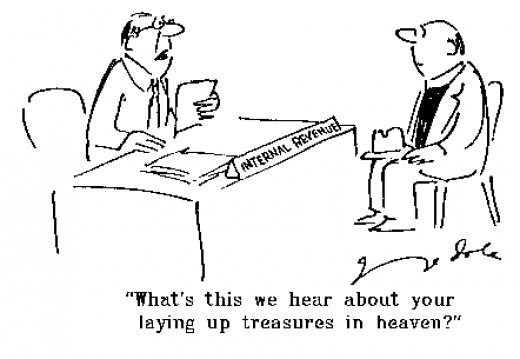
ARE THERE “EXTRA” REWARDS IN HEAVEN?

IRS Treasure in heaven

The concept of rewards in addition to simply being in heaven is one of the least-taught, least understood aspects of the New Testament. Too often we look at the subject as though in heaven we will still struggle with resentment, pride and envy.


To listen to the sermon, click the play button:

To download, right click on the link (or do whatever you do on a Mac) and save it to your computer: Download Matthew Part 57


Matthew #57 . Matthew 16:27-28

My wife recently told me that I’m still trying to pack too much into one sermon. So this time, I’ll attempt to cover only the next verse in Matthew:

For the Son of Man is going to come with His angels in the glory of His Father, and then He will reward each according to what he has done. (Matt 16:27 HCSB)

If we just stop and think about this for a moment, it could be problematic. I mean, I have always taught that we are judged based on our response to Jesus, not on the good works we have done (or failed to do). But here, it sounds like we will be rewarded based not on our faith in Jesus, but on our behavior. If we investigate, we find something puzzling: The New Testament appears to teach both things.

In his first letter to the Corinthians, Paul brings up the issue of rewards in heaven:

Now the one who plants and the one who waters are equal, and each will receive his own reward according to his own labor. (1 Cor 3:8-9)

According to God’s grace that was given to me, I have laid a foundation as a skilled master builder, and another builds on it. But each one must be careful how he builds on it. For no one can lay any other foundation than what has been laid down. That foundation is Jesus Christ. If anyone builds on that foundation with gold, silver, costly stones, wood, hay, or straw, each one’s work will become obvious, for the day will disclose it, because it will be revealed by fire; the fire will test the quality of each one’s work. If anyone’s work that he has built survives, he will receive a reward. If anyone’s work is burned up, it will be lost, but he will be saved; yet it will be like an escape through fire. (1Cor 3:10-15, HCSB)

This is one of the least understood and taught doctrines in the New Testament. Paul says the foundation is Jesus Christ. But then he talks about the quality of what we build on that foundation, and receiving rewards for what our work. But Paul makes sure we understand that it starts with the foundation of Jesus Christ; in fact, the foundation that was revealed by Peter’s confession. Let’s begin by making sure of it.

The Bible teaches in numerous places, over and over again, that we are saved only through God’s grace, which comes to us through a faith-based relationship with Jesus Christ.

Here are just a few of many, many, many verses that affirm we are not justified before God by what we do, but by God’s grace given to us when we trust Him. I’ll italicize a few parts for emphasis:

We too all previously lived among them in our fleshly desires, carrying out the inclinations of our flesh and thoughts, and we were by nature children under wrath as the others were also. But God, who is rich in mercy, because of His great love that He had for us, made us alive with the Messiah even though we were dead in trespasses. You are saved by grace! Together with Christ Jesus He also raised us up and seated us in the heavens, so that in the coming ages He might display the immeasurable riches of His grace through His kindness to us in Christ Jesus. For you are saved by grace through faith, and this is not from yourselves; it is God’s gift — not from works, so that no one can boast. (Eph 2:3-9, HCSB)

Where then is boasting? It is excluded. By what kind of law? By one of works? No, on the contrary, by a law of faith. For we conclude that a man is justified by faith apart from the works of the law. (Rom 3:27-28, HCSB)

He has saved us and called us with a holy calling, not according to our works, but according to His own purpose and grace, which was given to us in Christ Jesus before time began. This has now been made evident through the appearing of our Savior Christ Jesus, who has abolished death and has brought life and immortality to light through the gospel. (2Tim 1:9-10, HCSB)

He saved us — not by works of righteousness that we had done, but according to His mercy, through the washing of regeneration and renewal by the Holy Spirit. He poured out this Spirit on us abundantly through Jesus Christ our Savior, so that having been justified by His grace, we may become heirs with the hope of eternal life. (Titus 3:5-7, HCSB)

Yet we know that no one is justified by the works of the law but by faith in Jesus Christ. And we have believed in Christ Jesus, so that we might be justified by faith in Christ and not by the works of the law, because by the works of the law no human being will be justified. (Gal 2:16-17)

Clear enough for you? Over and over again, the New Testament teaches that we are saved when we trust Jesus Christ, and our own “good works” have nothing to do with it. So we know that our eternal destiny – whether we go to heaven or hell – is determined not by us being good enough, but by trusting Jesus. That is the foundation. Paul says, you can’t build on any other basis (1 Corinthians 3:11). If we have that foundation, we will spend eternity with Jesus and our loved ones in the New Heavens and New Earth. The whole Bible is crystal clear on that.

However, we do find many places in the New Testament, including several places in Matthew, which talk about rewards for doing good works. Now, we have just reiterated that heaven itself is not a reward for doing good. So when the New Testament talks about some kind of reward in the afterlife based upon what we do here, it cannot mean salvation. Well then, what kind of reward does Jesus mean here?

This is actually very important for how we interpret the Bible. When we read any other book, we assume that the author will not deliberately contradict herself. It should be the same with the Bible. So if the Bible says clearly (as it does) that salvation is not a reward for good behavior, but only the result of faith in Jesus; and then it says there is a reward for good works, we have to assume that the reward for good works is something other than salvation. As it turns out, there are many Bible verses that talk about these rewards. Just a few of them are Revelation 22:12; Matthew 5:11-2, 6:1-6, 17-18, 10:41-42; Luke 6:35; and this one:

7 Serve wholeheartedly, as if you were serving the Lord, not men, 8 because you know that the Lord will reward everyone for whatever good he does, whether he is slave or free. (Ephesians 6:7-8)

James writes that not many should presume to be Bible teachers, because they will be judged more strictly (James 3:1). Well, as a Bible teacher I know that my salvation will be judged based on whether or not I trust Jesus. So in what way will I be judged more strictly? The logical answer is: in the matter of my work, and any reward I might get for it.

Now, for many people, the idea of reward in heaven presents some problems. First, some people feel that it implies that there might be inequality in heaven. Second, some people feel it implies unhappiness there also.

Scripture is clear that in heaven, God wipes every tear from our eyes, and there will be no more grief or suffering or pain (Revelation 21:3-5). So rest assured, reward or not, your joy will be complete.

In addition, when we think this way, we forget that jealousy and resentment are the product of sin, the flesh and the devil. In eternity, all these things will be defeated and destroyed. We will be able to fully rejoice at the triumph of another, and bear in humble joy our own situation, unmarred by sin, bitterness, resentment or envy. Seeing someone else rewarded more than you will lead only to praise to God for his goodness, mercy and justice.

What Paul says in the Corinthians passage I quoted above is that those who have no reward will still be saved, but it will be like an escape through a fire. If we really imagine that, we get a sense for what it is like. Ultimately we will be safe, and will find joy in that. But as we initially enter heaven, if we have built poorly on the foundation of Jesus, we might find the judgment day to be harrowing.

Consider it this way: do you think it would be fair if Mother Theresa, with all her self-sacrifice, receives nothing more than me, with all my self-centeredness? We are both saved entirely by God’s grace. But shouldn’t she be rewarded somehow for the fact that in Jesus Christ, she used her life more faithfully than I used mine? Shouldn’t heaven celebrate and appreciate those who have done good things for the Lord on earth? Again, I think what we know of the kingdom of God is such that there will be no resentment involved.

Now, I want to speculate a bit on what the rewards mean. I do have some scripture that suggests what I think about this, but I can’t nail this down for sure. In other words, what I am going to share next falls more into the realm of conjecture than solid biblical teaching. In Matthew 25:14-30, Jesus tells the parable of the Talents. In it, three servants were given different resources to use on behalf of the Master. They were rewarded according to how they made use of those resources. The reward is that they were given additional resources to use, according the ability they had demonstrated.

This makes me think of rewards in heaven in terms of capacity. Picture two buckets. One bucket can hold one gallon of fresh, clear water. The other bucket can hold five gallons of beautiful clean water. Now imagine both buckets, filled to the brim. Which bucket has more water? Obviously, the one that can hold more. But they are both full. The one gallon bucket has as much water as it can possibly hold. It doesn’t have as much as the five gallon bucket, but then, it can’t. It is still completely full. I think maybe heaven will be like that. We will all be as full as we can be. But some people will be able to contain more of God’s fullness and joy than others. The ones with smaller capacity will still be completely full and satisfied – but the ones with greater capacity will experience their joy to level that the others can’t.

Here’s another way to look at it. In my left eye, my vision is about 20/100. It cannot be corrected, and so I am considered legally blind in that eye. Now, my right eye is basically fine, and it does most of the seeing work for me. I can drive, and watch movies, appreciate visual art and generally enjoy life. Where my half-blindness affects me most is in depth perception. I have a horrible time shooting a basketball. Things that are far away look equally distant from me. If I see man standing 100 yards away, and another man 200 yards away, the only way I can tell they are not next to each other is because one looks smaller than the other. I can get some experience of 3-D movies, but not the same as other people. Binoculars only work for me if I close my left eye. But I was born this way, I have never seen correctly out of my left eye, and so I’m perfectly happy with my vision: I don’t really know what I’m missing, except the basketball hoop. I don’t feel sorry for myself and I enjoy my vision fully, and I feel no lack. But if there was something I could do to get true binocular vision, I would be a fool not to do it. Though I enjoy the visual aspects of life as much as I can, wouldn’t it be great if I could somehow exercise my eyes to get full range of vision?

One more analogy. When I was younger, I could eat all day long, and it did not affect my weight, my health or even how I felt. Now that I am older, I can’t eat so much, and certainly, what I eat has greater consequences for my body. I even get full faster. Sometimes I find myself at an event a party where there are all kinds of delicious food. At such times, I wish I could eat like I did when I was younger. I could enjoy more of that delicious food, if my metabolism was still young. I have a close friend who has aged differently than me. He can’t eat like he’s twenty, but he can still eat more than I can, with fewer consequences. Sometimes I envy him. I wonder if I had made different choices, if I might still have been able to enjoy as much food as he does. Now, what if I had the chance to get that metabolism back, so I could enjoy delicious food all the time without feeling too full, gaining weight or negatively affecting my health? There’s a billion dollar industry trying to sell people exactly that: everyone wants that.

You can get that, in heaven. You’ll have all the delicious food you can handle. But maybe some people will be able to handle more. I think this is probably how rewards in heaven will work. Everyone will be happy. They will get as much joy as they can handle. But if they had made different choices while they were living on this earth, they might have been able to experience much more in heaven. C.S. Lewis explores some of these ideas a little bit in his excellent and entertaining book, The Great Divorce, which is all about Heaven (it has nothing to do with divorce; the title was not well chosen). He speculates that perhaps even after we get there, we can still increase our capacity to experience more joy and fullness.

I used to say that heaven itself was enough reward for me, and so it should be – it is, in fact, far more than I deserve. Even so, what a fool I would be to waste any opportunity to enjoy heaven to the fullest possible capacity! Think of it like this: Do you really want to make a deliberate choice to enter heaven by the skin of your teeth, with the minimum possible capacity to enjoy it? That is an attitude that comes not from the Spirit, but from the flesh. And it is ridiculous, when you think about it. It’s like a teenager saying, “I don’t care about my future after High School. As long as I’m alive and can work a minimum wage job, I’ll be fine. So right now I’m not going to study or learn or prepare for the future. What is important is not life after graduation, but only life right now.” Some people have that attitude, but it is a very short-sighted one, and most people who do take that approach end up regretting it within a few years.

Jesus’ words should encourage us to take a more spiritual approach to the future, and to the here and now. It should be helpful to know that we do or endure here and now does not go unnoticed. It should motivating to think of the joy that awaits all of us who trust Jesus.

Thanks again for making use of Clear Bible.

I want to remind you again that we are a listener-supported ministry, and that means, first and foremost, that we are supported by your prayers. We need and value your prayers for us.

Please pray that this ministry will continue to be a blessing to those who hear it. Ask God, if it is his will, to touch even more lives with these messages. Ask him to use this ministry in making disciples of Jesus Christ.

Please also pray for our finances. Pray for us to receive what we need. Please pray for us in this way before you give anything. And then, as you pray, if the Lord leads you to give us a gift, please go ahead and do that. But if he doesn’t want you to give to us, that is absolutely fine. We don’t want you to feel bad about it. We want you to follow Jesus in this matter. But do continue to pray for our finances.

If the Lord does lead you to give, just use the Paypal Donate button on the right hand side of the page. You don’t have to have a Paypal account – you can use a credit card, if you prefer. You can also set up a recurring donation through Paypal. We can make this tax-deductible if you just mention that it want it to be so in the “note” part of the transaction.

You could also send a check to:

New Joy Fellowship

917 Canyon Creek Drive

Lebanon, TN 37087

Just put “Clear Bible” in the memo. Your check will be tax-deductible.

Thank for your prayers, and your support!

DYING IN ORDER TO LIVE

follow Jesus to cross

The yoke and the burden of Christ are his cross. To go one’s way under the sign of the cross is not misery and desperation, but peace and refreshment for the soul, it is the highest joy. Then we do not walk under our self-made laws and burdens, but under the yoke of him who knows us and walks under the yoke with us. Under his yoke we are certain of his nearness and communion. It is he whom the disciple finds as he lifts up his cross. – Dietrich Bohnhoeffer


To listen to the sermon, click the play button:

To download, right click on the link (or do whatever you do on a Mac) and save it to your computer: Download Matthew Part 56


Matthew #56 . Matthew 16:20-27

Last time we began to talk about the call of Jesus to take up the cross and follow him. Let’s review his words:

Then he strictly charged the disciples to tell no one that he was the Christ.

From that time Jesus began to show his disciples that he must go to Jerusalem and suffer many things from the elders and chief priests and scribes, and be killed, and on the third day be raised.

And Peter took him aside and began to rebuke him, saying, “Far be it from you, Lord! This shall never happen to you.”

But he turned and said to Peter, “Get behind me, Satan! You are a hindrance to me. For you are not setting your mind on the things of God, but on the things of man.”

Then Jesus told his disciples, “If anyone would come after me, let him deny himself and take up his cross and follow me. For whoever would save his life will lose it, but whoever loses his life for my sake will find it. For what will it profit a man if he gains the whole world and forfeits his soul? Or what shall a man give in return for his soul?

For the Son of Man is going to come with his angels in the glory of his Father, and then he will repay each person according to what he has done.

Truly, I say to you, there are some standing here who will not taste death until they see the Son of Man coming in his kingdom.” (Matt 16:20-28, ESV2011)

I admit, I was deliberately vague about what exactly it means to “deny yourself, take up your cross, and follow Jesus.” Instead, last time we considered that this is indeed the call of Jesus, and in general it contradicts the values of the world around us. We also considered that the cross can bring us unexpected joy.

So this time I want to dwell on what, more specifically, is the call of the cross? What does it mean to follow Jesus by taking up our cross?

Before we do that, once again I want to thank you for listening, and remind you that we deeply appreciate your prayers for this ministry. I believe in the power of prayer, and I’m grateful for you asking our Father in heaven to use this ministry, to bless it, and to supply all our needs. I don’t want you think I’m requesting prayer as a covert way of asking for money. We really do value your prayers most of all. It is possible, of course, that as you pray, Lord leads you to give us some financial support. Obviously, if he does, please go ahead and do that. But if he doesn’t want you to give to us, that is absolutely fine. We don’t want you to feel bad about it. We want you to follow Jesus in this matter. But please do continue to pray for us, regardless.

If the Lord does lead you to give, just use the Paypal Donate button on the right hand side of the page. You don’t have to have a Paypal account – you can use a credit card, if you prefer. You can also set up a recurring donation through Paypal. We can make this tax-deductible if you just mention that it want it to be so in the “note” part of the transaction. You could also send a check to:

New Joy Fellowship

917 Canyon Creek Drive

Lebanon, TN 37087

Just put “Clear Bible” in the memo. Your check will be tax-deductible.

Thank for your prayers, and your support!

Now, back to the text. Let me start by clarifying what it does not mean. It is not ordinary human suffering. You may have heard the expression: “That’s just my own cross to bear.” That saying is almost always used wrongly, at least in the sense of what Jesus meant here. For instance, suppose someone with arthritis says, “This arthritis is my cross to bear.” That is not at all the kind of thing Jesus is talking about here. How do I know that Jesus didn’t mean things like arthritis? To put it bluntly, arthritis is painful and difficult, but is not a consequence of following Jesus. Jesus clearly tells us here that the cross is all about following him.

Not everyone has arthritis, but most people suffer in some way. This is true of people who follow Jesus and true of those who do not. Obviously, not all suffering is a consequence of being his disciple. Also it is important to realize Jesus doesn’t call us to have arthritis – sometimes things like that just happen because we live in a fallen world.

On the other hand, the cross is always about Jesus. So what does the call of the cross involve?

First, death to self. Jesus says we must deny ourselves and not seek to save our own lives, but lose our lives for his sake. This is not a call to suicide. But it is a call to make Jesus even more important than everything, including (perhaps especially) yourself. Ordinary flesh rebels at this thought. I mean, let’s be honest. For most us, the default “most important thing” is ourselves.

What could possibly motivate us to be willing to put the needs of someone else above our own? What could possibly induce us to be willing to even die for someone else? A few remarkable individuals might die for another for the sake of duty or honor. But I think for most of us the answer to those questions is: love. We can put the needs of another above our own needs as an act of love. We can die for another, say a spouse or child, motivated by love.

I think we need to understand the call of Jesus in this light. I think for most of us, the only way to do this is to love Jesus more than anything else.

Obviously, I am not talking about romantic/erotic love. I’m talking about making a choice and a commitment to value and honor Jesus above all else. The better we know him, the easier it is to do this. This is one reason it is so important for us to have regular habits of Bible reading, prayer, fellowship with other Christians, and regular, solid Bible teaching. These things help us to know Jesus better which help us also to love him better. They lay the only reasonable groundwork for being able to deny ourselves and follow him, even when it involves dying to our own desires, and perhaps even martyrdom. Matthew records that Jesus already said this once before:

Whoever loves father or mother more than me is not worthy of me, and whoever loves son or daughter more than me is not worthy of me. And whoever does not take his cross and follow me is not worthy of me. Whoever finds his life will lose it, and whoever loses his life for my sake will find it. (Matt 10:37-39, ESV2011)

To sum up this point: the cross means that I love Jesus so much that I am truly willing to give up anything for his sake. This isn’t about feeling guilty when we fail to do so, but we need to live with an ongoing recognition that the focal point of the universe is Jesus, not ourselves, and not anyone else.

Another aspect of “taking up your cross” is that it means accepting shame and rejection and even sometimes persecution. It involves following in the footsteps of Jesus, who was (and is still) rejected and scorned by many people.

“If the world hates you, understand that it hated Me before it hated you. If you were of the world, the world would love you as its own. However, because you are not of the world, but I have chosen you out of it, the world hates you. Remember the word I spoke to you: ‘A slave is not greater than his master.’ If they persecuted Me, they will also persecute you. If they kept My word, they will also keep yours. But they will do all these things to you on account of My name, because they don’t know the One who sent me. (John 15:18-21, HCSB)

This is part of the cross we take up to follow Jesus – that the people around will not understand, and in many cases will even hate us. I think sometimes it surprises us that Christians are considered by many to be hateful and bigoted. But if people slandered Jesus, why should we be surprised when we are slandered today?

For me, it has been a perplexing thing to have others who call themselves Christians speaking mockingly and hatefully about those of us who seem to be serious about following Jesus and believing the bible. However, it may be helpful for us to remember that those who first persecuted Jesus and his followers were religious people who claimed to be of the same faith as Jesus and the disciples. Saul (who later became Paul, the apostle) viciously persecuted the followers of Jesus in the name of God. I think today, more than ever for the past 500 years, we have a large number of people who are willing to call themselves Christian, but who also willfully ignore what the Bible teaches. It isn’t right, and it isn’t fair, but it is part of the cross of Jesus to be misunderstood, criticized, and ostracized even by others who claim to follow the same God.

Paul, who was both persecutor, and persecuted, notes this in many places. Here is a small sample:

For the message of the cross is foolishness to those who are perishing, but it is God’s power to us who are being saved. (1Cor 1:18, HCSB)

But if I, brothers, still preach circumcision, why am I still being persecuted? In that case the offense of the cross has been removed. (Gal 5:11, ESV2011)

But we preach Christ crucified, a stumbling block to the Jews and foolishness to the Gentiles. Yet to those who are called, both Jews and Greeks, Christ is God’s power and God’s wisdom, because God’s foolishness is wiser than human wisdom, and God’s weakness is stronger than human strength. (1Cor 1:23-25, HCSB)

The cross of Christ means, among other things, that we will be considered foolish, dangerous, evil and offensive. This is happening more and more even in historically Christian-friendly societies. However, we in the West have not even begun to suffer when you consider how Christians are persecuted in other places around the world. Many countries have laws limiting the expression of Christian faith. Others include laws that make Christians “second class citizens.” From North Africa, east to Indonesia and north to China, there are Christians being imprisoned, physically assaulted and even killed for following Jesus. As far as I know, since Jesus was crucified and for two-thousand years since, at least some of his followers have been persecuted in at least some places in the world. Jesus said to expect it. This part of what it means to take up our crosses.

Not everything about taking up the cross is hard and negative. One thing that it means is that we are dead to sin. That should be positive and encouraging for us.

Do you not know that all of us who have been baptized into Christ Jesus were baptized into his death? We were buried therefore with him by baptism into death, in order that, just as Christ was raised from the dead by the glory of the Father, we too might walk in newness of life. For if we have been united with him in a death like his, we shall certainly be united with him in a resurrection like his. We know that our old self was crucified with him in order that the body of sin might be brought to nothing, so that we would no longer be enslaved to sin. For one who has died has been set free from sin. Now if we have died with Christ, we believe that we will also live with him. (Rom 6:3-8, ESV2011)

Taking up our cross means that we recognize that in regard to sin, our flesh is as good as dead. The old sinner, Tom, has been killed with Jesus on the cross. I need to remember this, and trust that it is true, every day. I’m dead to sin. Sin has no relationship with a dead body, and sin has no relationship to me. Now, I am not claiming that I never commit sins, but the disease of sin has been killed in me, though some symptoms might linger. In the eyes of God, the sin problem is over. And so every day I need to take up my cross, and trust again that I am dead to sin, and live accordingly.

To sum it all up, when I take up my cross, I die to myself in order to live for Jesus. Paul says this so eloquently in Galatians 2:19-20

I have been crucified with Christ and I no longer live, but Christ lives in me. The life I now live in the body, I live by faith in the Son of God, who loved me and gave Himself for me. (Gal 2:19-20, HCSB)

I think it is important to understand that what many churches market as “Christianity” is really woefully lacking compared to what Jesus actually calls us to. Being a Christian is so much more than merely subscribing to a certain set of truths – though those truths are important. Instead, it is about selling out completely for Jesus Christ – loving Him with heart, mind, soul and strength, and dying to ourselves, dying to sin and being willing to undergo anything for His sake.

All this is not simply so that we can learn more about discipleship, instead, I want us to hear the invitation of the Lord here. All he needs from us is our willingness – he will take care of the rest. Martin Luther frames the call of Jesus to discipleship in this way:

Discipleship is not limited to what you can comprehend – it must transcend all comprehension. Plunge into the deep waters beyond your own comprehension, and I will help you to comprehend even as I do… You cannot find it yourself, so you must let me lead you as though you were blind men. Wherefore it is not you, no man, no living creature, but I myself, who instruct you by my Word and Spirit in the way you should go.

Now, I realize that all of this might sound a little bit “heavy.” But remember what we talked about last time: when we accept the cross we enter a life of joy. It is not the pleasure or comfort that the world seeks, but it is true joy. When we give up on ourselves, and accept the will of Jesus for our lives, we find a peace and grace and the joy that cannot be found any other way. Dietrich Bonhoeffer wrote about this in his excellent book, The Cost of Discipleship. But Bonhoeffer did not just write about it, he lived it. Ultimately, he gave his life for the sake of Jesus; he was executed in Nazi Germany because his Christian faith was a threat to Hitler’s regime. When he speaks of the cross, and the cost of discipleship, he has authority, because he lived it. So, I think we can trust him when he shares about the strange joy that comes through accepting the cross of Jesus.

But Jesus invites all who travail and are heavy laden to throw off their own yoke and take his yoke upon them – and his yoke is easy, and his burden is light. The yoke and the burden of Christ are his cross. To go one’s way under the sign of the cross is not misery and desperation, but peace and refreshment for the soul, it is the highest joy. Then we do not walk under our self-made laws and burdens, but under the yoke of him who knows us and walks under the yoke with us. Under his yoke we are certain of his nearness and communion. It is he whom the disciple finds as he lifts up his cross.

THE COST OF FOLLOWING JESUS

self grave

We are not necessarily called to an life of increasing comfort and ease. We are not called specifically to get more and more financially secure. We aren’t even directly called to success, or even excellence. What we are definitely called to is the cross. A faith that says: “Yes I believe, but not so much that I would give up my life for him,” is not a faith that truly grasps who Jesus is.


To listen to the sermon, click the play button:

To download, right click on the link (or do whatever you do on a Mac) and save it to your computer: Download Matthew Part 55


Matthew #55 . Matthew 16:20-27

I’m afraid that I’m going to have to take this section slowly also. Don’t blame me: blame Jesus, for saying such profound things. Let’s start with this:

And He gave the disciples orders to tell no one that He was the Messiah. (Matt 16:20, HCSB)

It is natural to read this, do a double take and then go “Say What?! Why wouldn’t he want people to know that he is the Messiah?” We have considered this briefly before, when Jesus told various people that he healed to keep silent about who healed them. In fact Jesus gives us a clue by what he says next:

From then on Jesus began to point out to His disciples that He must go to Jerusalem and suffer many things from the elders, chief priests, and scribes, be killed, and be raised the third day. (Matt 16:21, HCSB)

In fact, he says this partly as an explanation for why they should not tell people that he is the Messiah. As far as Jesus was concerned, there were three dangers with the disciples telling people he was the Messiah at this point. The first thing is that if enough people genuinely trusted him as Peter and the others did, no one would ever crucify him – and his crucifixion was a necessary part of his mission on earth. The other possibility is that his support among the people would grow so quickly that the authorities would have him killed before he was done training his apostles. Third, his work as the Messiah would not complete until the resurrection, the ascension and the coming of the Holy Spirit. His disciples simply would not grasp the whole message until all that had happened. They really were not supposed to start evangelizing until Pentecost.

Next comes Peter’s misplaced rebuke:

Then Peter took Him aside and began to rebuke Him, “Oh no, Lord! This will never happen to You! ”

But He turned and told Peter, “Get behind Me, Satan! You are an offense to Me because you’re not thinking about God’s concerns, but man’s.” (Matt 16:22-23, HCSB)

Remember how just a few minutes earlier, Jesus was giving Peter the keys the kingdom? Here we discover that those keys can’t lock something that the Lord has already decided be opened, or unlock what the Lord has decided to close. I think this little exchange is extremely relevant in our world today. The essence of it this: Peter, thinking he has the authority of God to do so, is trying to bypass the cross. He is trying to assert man’s perspective, completely missing, and even possibly trying to reject, God’s view.

This is one of the reasons I find the prosperity gospel, with all its emphasis on success, so offensive. What is even worse is that many churches who do not preach “prosperity” still often (perhaps unwittingly) pick up on the “success mentality.” Bigger is always assumed to be better. More people, more followers, more money is assumed to mean more kingdom impact. For far too many people, externally measurable success must mean God’s approval.

Perhaps they forget that greatest impact ever had on earth for the kingdom of God was made by a single person who died alone, rejected and abandoned. Perhaps they forget that the Holy Spirit spread the gospel in the early days of Christianity by dismantling the Jerusalem mega-church and scattering its members all over the place (really. Read Acts 8). Perhaps they forget that Abraham was a nomad with no permanent home, or that the anointed king, David, wandered for years like a criminal in the wilderness, or that Ezekiel, Jeremiah and Daniel were rejected and persecuted, and very few people listened to them. The writer of Hebrews reminds of others who

experienced mockings and scourgings, as well as bonds and imprisonment. They were stoned, they were sawed in two, they died by the sword, they wandered about in sheepskins, in goatskins, destitute, afflicted, and mistreated. The world was not worthy of them. They wandered in deserts and on mountains, hiding in caves and holes in the ground. (Heb 11:36-38, HCSB)

The world was not worthy of them. Too often, we want to be worthy of the world, instead of realizing that the rejection of the world often is a sign that we are on the right path. Peter wanted to do things the world’s way. “We’ve got the Messiah. Now it’s on to glory! Come on, Jesus, no more of this nonsense about dying and being rejected – you’re the Messiah.” In the language of many Christians today, it might be something like this: “Your words have power. Don’t speak the negative. Speak only the good, and it will come to pass. Stop speaking about death and pain. This will never happen to you. Claim the victory!”

We want to go straight to the glory, and skip the pain. That’s understandable; it’s human nature. Even Jesus himself was tempted in that way. But we forget something that Jesus said right here: that the true path to glory always leads through the cross:

Then Jesus said to His disciples, “If anyone wants to come with Me, he must deny himself, take up his cross, and follow Me. For whoever wants to save his life will lose it, but whoever loses his life because of Me will find it. What will it benefit a man if he gains the whole world yet loses his life? Or what will a man give in exchange for his life? (Matt 16:24-26, HCSB)

Jesus never promised to enrich us in this life. He never said that everything would work out the way we want it to. He never said “Speak what you want and it will come into being.” He never said, “make it your goal to have a big church.” Instead, what he said was, “You want to follow me? Then deny yourself, your wants, and be ready to die to everything except me. If necessary, be ready to even physically die for me.”

Now, I am not trying to eliminate any hope you have for a better life now. We can find great joy, satisfaction, peace, love, grace and fulfillment in following Jesus, even in this life. But to follow Jesus in the first place, we have to deny ourselves and take up our cross. Joy in this life starts when we give up on the world’s way of doing things, and quit wanting what the world says we should want. To put it plainly, to get the joy that Jesus offers, we need to accept the cross.

Let’s look at the apostle Paul for an example. He did not live a life free from all trouble or hardship. He did not accumulate wealth, or have a nice house, or a great means of transportation (or anything equivalent to a nice car). For Jesus’ sake, he was beaten, imprisoned, slandered, and mocked. Even some of the people that he taught did not really respect him. He wasn’t considered an impressive public speaker. He started a number of churches, yet all of them were pretty small while he was in charge. Some of them apparently did not remain very spiritually healthy. A few them apparently didn’t last. He even had chronic health issues that were never cleared up (as far as we know). There is very little about Paul’s life that is attractive to the world. There are even very few Christians (at least in America) who aspire to be like Paul in these ways.

And yet, Paul, through his writing, records what he considers a good life. He was engaged in interesting, challenging and fulfilling work. He got to travel extensively. He found joy in his calling, and even in his daily experiences. From the outside, Paul’s life looks pretty tough. But from the inside, from his own perspective, he lived in joy.

And in this I rejoice. Yes, and I will rejoice because I know this will lead to my deliverance through your prayers and help from the Spirit of Jesus Christ. My eager expectation and hope is that I will not be ashamed about anything, but that now as always, with all boldness, Christ will be highly honored in my body, whether by life or by death. For me, living is Christ and dying is gain. (Philippian 1:18-21)

Paul wrote this while in prison, while other people were trying to take away his influence in the church! Even in these circumstances, he had joy. I don’t think it was a shallow happiness – it was an abiding sense that the life and power of Jesus in him were greater than the worst that the world could throw at him.

He wrote to the Corinthians:

We are pressured in every way but not crushed; we are perplexed but not in despair; we are persecuted but not abandoned; we are struck down but not destroyed. We always carry the death of Jesus in our body, so that the life of Jesus may also be revealed in our body. (2Cor 4:8-10, HCSB)

He was not “living the dream life” at least, not as the world sees it, but he was living out the call of the cross: carrying the death of Jesus in his body so that the life of Jesus would also be revealed. He found great joy in living this way:

I have great confidence in you; I have great pride in you. I am filled with encouragement; I am overcome with joy in all our afflictions. (2Cor 7:4, HCSB)

The bible is very clear that we can have joy on the inside, regardless of what happens on the outside:

Consider it a great joy, my brothers, whenever you experience various trials, knowing that the testing of your faith produces endurance. But endurance must do its complete work, so that you may be mature and complete, lacking nothing. (Jas 1:2-4, HCSB)

Therefore, since we have been declared righteous by faith, we have peace with God through our Lord Jesus Christ. We have also obtained access through Him by faith into this grace in which we stand, and we rejoice in the hope of the glory of God. And not only that, but we also rejoice in our afflictions, because we know that affliction produces endurance, endurance produces proven character, and proven character produces hope. This hope will not disappoint us, because God’s love has been poured out in our hearts through the Holy Spirit who was given to us. (Rom 5:1-5, HCSB)

Paul answered Jesus’ call to take up his cross daily and follow. He did find hardship in doing so. But he also found hope, peace and joy, time after time:

Now may the God of hope fill you with all joy and peace as you believe in Him so that you may overflow with hope by the power of the Holy Spirit. (Rom 15:13, HCSB)

I wrote this very thing so that when I came I wouldn’t have pain from those who ought to give me joy, because I am confident about all of you that my joy will also be yours. (2Cor 2:3, HCSB)

I don’t say this out of need, for I have learned to be content in whatever circumstances I am. I know both how to have a little, and I know how to have a lot. In any and all circumstances I have learned the secret of being content — whether well fed or hungry, whether in abundance or in need. I am able to do all things through Him who strengthens me. Still, you did well by sharing with me in my hardship. (Phil 4:11-14, HCSB)

We are not necessarily called to an life of increasing comfort and ease. We are not called specifically to get more and more financially secure. We aren’t even directly called to success, or even excellence. What we are definitely called to is the cross. It is true, the Lord promises glory – but that comes later. Jesus’ own life demonstrates that:

Make your own attitude that of Christ Jesus, who, existing in the form of God, did not consider equality with God as something to be used for His own advantage. Instead He emptied Himself by assuming the form of a slave, taking on the likeness of men. And when He had come as a man in His external form, He humbled Himself by becoming obedient to the point of death — even to death on a cross. For this reason God highly exalted Him and gave Him the name that is above every name, so that at the name of Jesus every knee will bow — of those who are in heaven and on earth and under the earth — and every tongue should confess that Jesus Christ is Lord, to the glory of God the Father. (Phil 2:5-11, HCSB)

Yes, Jesus is now exalted, and he shall be even more exalted when every single soul confesses the truth of who he is, like Peter did. But before all that, he emptied himself in humility and obedience and suffered humiliation, rejection and death. We can’t skip the cross. The only path to glory is through it.

I want to take more time later and talk about specifically what it means to follow Jesus by taking up your cross. But for now, I think the first thing is to hear the call and respond to it. We need to understand that this foolishness in the eyes of the world. We need to give up our own ambitions and take Jesus on his terms, not our own.

It is a life involving sacrifice – what do “deny yourself” and “lose your own life” mean if not some sort of sacrifice? But Christians like Paul show us that when we take Jesus on his terms, when we give up our own, it is also a life of joy, wonder, fulfillment, peace and grace.

Too many Christians treat this as optional. We think, “I’ll agree that my sins need to be forgiven. I’ll gladly receive that forgiveness through Jesus. But this business about taking up my cross, denying myself, dying to self – that’s kind of extreme. That’s only for hard-core Christians.” And, God help us, too many of us pastors, fearing to lose church members, have let people continue to think this way. We’ve acted as if there is “Hard-core Christianity,” and “Christianity-lite.”

But listen again to Jesus:

Now great crowds were traveling with Him. So He turned and said to them: “If anyone comes to Me and does not hate his own father and mother, wife and children, brothers and sisters — yes, and even his own life — he cannot be My disciple. Whoever does not bear his own cross and come after Me cannot be My disciple. (Luke 14:25-27, HCSB)

Clear enough for you? There is no “Christianity-lite.” The call is let Him own your life.

You might say that this is the other side of the coin of belief. If we affirm Peter’s confession, with all that it means, then Jesus has the only claim on our ultimate allegiance. If we really believe Jesus is the Messiah, son of God, then we must believe that he has the right to ask everything of us; that nothing, not even our own desires, not even our own life on earth, should be more important to us than him. This is why there is no “Christianity-lite.” A faith that says: “Yes I believe, but not so much that I would give up my life for him,” is not a faith that truly grasps who Jesus is.

Imagine you are trapped in a burning building. Through the smoke and the flames a Firefighter emerges. He tells you that he has 15 years’ experience fighting fires; not only that, but the building you are in is owned by his Father and he knows it like the back of his hand. He says “Follow me, and I will lead you to safety. I may have to ask you to do some pretty scary things at certain points, and you’re going to have to trust me . But if you do what I say I promise you, you will be saved.”

So you follow the Firefighter as he leads you through smoky corridors and strange doorways. Suddenly you come to a place where the path in front of you is filled with flames and fallen debris. The Firefighter says, “the flames are not thick. Put this blanket over you, hold my hand, and I will take you through safely.” If you truly trust the Firefighter, you will do what he says.

But suppose, at this point, you balk and say, “No. I can’t do that, it’s too scary. I’m sure there must be some other way that you haven’t thought of.” The fact that you will not do what he asks reveals that, actually, you do not really believe that he knows the best way to save you. You can say that you believe he is a Firefighter with a lot of experience. You can say that you believe this is his Father’s building and he knows his way around. But if you won’t listen to him when things get tough, it shows that you only trust him as long as there is no risk involved. In fact, you don’t really believe what he has told you.

If Jesus is who he says he is, then he has the right to tell us to follow him through the cross. If he truly is “Messiah, son of God,” with all that it means (which we have studied these last few weeks) then when he says “take up your cross,” we can trust him. Believing that Jesus is Messiah, son of God means trusting him as calls us to the cross. They are one and the same thing. If he has the authority to call us to deny ourselves and even to die for him, then he must be the Messiah, the son of God. If he does not have the authority to do that, then he is not the Messiah, the son of God. The way we respond to this call of the cross reveals what we truly believe.

John records that many people, when confronted with these things, quit following Jesus:

After this many of his disciples turned back and no longer walked with him. So Jesus said to the Twelve, “Do you want to go away as well?” Simon Peter answered him, “Lord, to whom shall we go? You have the words of eternal life, and we have believed, and have come to know, that you are the Holy One of God.” (John 6:66-69, ESV2011)

Peter’s words here, as before, are words of faith. He truly believes that Jesus is the Messiah, the son of God, so what alternative does he have, but to follow him? There is no halfway-Christianity.

Now obviously, we struggle. There are days I whine and complain about having to deny myself. There are days I don’t deny myself. But I don’t think Jesus expects us to follow him perfectly. He knows that our minds and hearts are clouded by our battle with our own flesh, influenced by the sinful world and confused by the devil. What he wants is for us to be on the road of following him and not our own road. I am not just going along with him until his way diverges from what I want. I’m not walking with him only as long as the two of us are going the same direction. However imperfect and weak I am, I am his. I may fall down on the road while following him, I may sometimes have to stop and gather my courage, but I am not on some other road. I think that’s what he’s after.

Next time we will consider more thoroughly what it means to take up our crosses. But we don’t need to know any more than we do at the moment to say “yes” to Jesus.

Why don’t you ask the Holy Spirit right now to give you the strength to do that?

Thanks again for making use of Clear Bible.

I want to remind you again that we are a listener-supported ministry, and that means, first and foremost, that we are supported by your prayers. We need and value your prayers for us.

Please pray that this ministry will continue to be a blessing to those who hear it. Ask God, if it is his will, to touch even more lives with these messages. Ask him to use this ministry in making disciples of Jesus Christ.

Please also pray for our finances. Pray for us to receive what we need. Please pray for us in this way before you give anything. And then, as you pray, if the Lord leads you to give us a gift, please go ahead and do that. But if he doesn’t want you to give to us, that is absolutely fine. We don’t want you to feel bad about it. We want you to follow Jesus in this matter. But do continue to pray for our finances.

If you feel led to give, click on the “donate” tab above for more information about how.

THE KEYS TO THE KINGDOM

keys

A man was meant to be doubtful about himself, but undoubting about the truth; this has been exactly reversed. Nowadays the part of a man that a man does assert is exactly the part he ought not to assert–himself. The part he doubts is exactly the part he ought not to doubt–the Divine Reason. – GK Chesterton


To listen to the sermon, click the play button:

To download, right click on the link (or do whatever you do on a Mac) and save it to your computer: Download Matthew Part 54


Matthew #54 . Matthew 16:13-20 Part C

Jesus says something in these verses that a lot of people wish he had explained a bit more:

“And I tell you, you are Peter, and on this rock I will build my church, and the gates of hell shall not prevail against it. I will give you the keys of the kingdom of heaven, and whatever you bind on earth shall be bound in heaven, and whatever you loose on earth shall be loosed in heaven.”

Many hundreds of years later, after Christianity had become legal and the church had changed from local gatherings of Jesus-followers into a centralized, power-holding institution, these verses were used to justify the position of Pope in the Roman Catholic church. The theory goes that here, Jesus is establishing the office of “Pope,” his chief representative on earth, and installs Peter as the first one. The idea is that this passage teaches that Jesus invests Peter (and his successors) with the “keys of the kingdom.” By the way, this is where we get the popular image of Saint Peter greeting people in front of the “pearly gates;” it is because Peter supposedly has the keys.

Now, I want to point out that a lot of “interpretation” must go into it to make this passage establish the Roman Catholic Papacy. In other words, it doesn’t call Peter the “Pope” or explicitly establish the institution of the Papacy in plain, unequivocal language. I am not saying this to make Roman Catholics angry. The reason I point it out is to show, once again, that clearly, the New Testament we have today is the very same one that was written by the apostles who knew Jesus Christ personally. It was not tampered with by generations who came after the apostles. Certainly, the Roman Catholic church, if it had changed or edited the bible, would have made this passage much more clearly about the Papacy.

Though I do not agree with the Roman Catholic application of this passage, it is not my intention here to attack the Papacy. I think we have more useful things to do with this passage. So may I simply suggest some other ways to understand this passage, and apply them to our lives?

First, it is somewhat interesting to know that in Greek, Jesus is making a play on words. Let me give it to you somewhat literally with the Greek words, and then I’ll explain.

“And I say to you that you are Petros and upon this petra I will build of me the church.”

The Greek word that we translate “Peter” is “petros,” and it means rock. It is the special name that Jesus gave Jesus (prior to this point, we should remember). The second word Jesus uses is petra, which means, more or less, “rock formation.” It is not the same word as the name “Peter,” and it cannot be an affectionate nickname for him, because it is in the feminine gender.

So it seems very doubtful that it is Peter personally upon whom Jesus says he will build his church. I think it is far more likely that Jesus says “upon this rock I will build my church” because he is making a play on words. Bible commentator Matthew Henry reminds us that we don’t get to see expressions and body language in the bible. He writes:

Others, by this rock, understand Christ; “Thou art Peter, thou hast the name of a stone, but upon this rock, pointing to himself, I will build my church.” Perhaps he laid his hand on his breast, as when he said, Destroy this temple (John ii. 19), when he spoke of the temple of his body.

In other words, Jesus could have pointed to himself when he said “upon this rock.” Another possibility is that Jesus meant that he would build the church on the foundation of what Peter has just said, his confession that Jesus is Messiah and son of God, with all that means. I personally favor this interpretation, because, in fact, that is what has happened. The one thing that unifies true Christians all over the world is that Jesus Christ is the Messiah, true God, true man, who died to cleanse us from sin and rose to show his power and give us new life. That is, and always has been, the foundation of the Church (and by “the church” I do not mean any particular institution, but rather, the true spiritual fellowship of those who trust Jesus Christ, no matter where they “attend church”). I am not arguing against the Papacy (though given enough provocation, I would). I am insisting however, that the foundation of the true church is not the apostle Peter, nor the Papacy, but the true confession that Jesus is Messiah and Lord. That has always been true, and I think even most Roman Catholics would agree that without this foundational belief, the Papacy itself would be meaningless.

I want to highlight another thing here. Jesus says, “I will build my church, and the gates of hell will not prevail against it.” Virtually every time the New Testament uses the word “church” it is a Greek word, simply meaning, “the gathering of people with a common purpose .” (Greek: ekklesia; you may recognize that the English word, ecclesiastic comes from this term). In context, of course, it means “the gathering of people who have faith in Jesus.” At its most essential level, that is what a church is – a group of people who are connected to one another and gather together intentionally, and who have faith in Jesus. So the church that Jesus will build refers to the true spiritual fellowship that includes all who trust and obey Him as Lord and Messiah. We aren’t talking about a particular institution, denomination or congregation.

I love that Jesus promises He will build it. It reminds me a little of Psalm 127:1

Unless the LORD builds a house, its builders labor over it in vain; unless the LORD watches over a city, the watchman stays alert in vain. (Ps 127:1, HCSB)

Sometimes we get caught up in the future of the church on earth. Sometimes we are concerned about local congregations; at other times we worry about the whole thing. Jesus is the builder of the church. We can trust him to do it. And the gates of hell can’t withstand the onslaught of grace and truth that comes from those who trust and obey Jesus. This picture not one of the church defending itself while hell attacks – it is the reverse. The idea is that church will attack hell itself, and overcome it through the power of Jesus.

Now, Jesus says some other things also. He adds: “I will give you the keys of the kingdom of heaven, and whatever you bind on earth shall be bound in heaven, and whatever you loose on earth shall be loosed in heaven.” I need to teach with integrity here. In Greek, “you” is singular. In other words, Jesus directed these comments specifically to Peter, not to all the disciples. However, this is not a problem for me, nor should it be for you. God directed many promises specifically to Abraham. He made the first promise of the Messiah specifically to Eve. He made many promises directly and personally to David. This is how the Lord works throughout scriptures: He speaks to specific people at specific times and places, and yet his promises also encompass all come after, those who believe. The individuals who first received them stood as representatives of those who would come after, and believe what God had said.

So Paul writes, for example:

Just as Abraham believed God, and it was credited to him for righteousness, then understand that those who have faith are Abraham’s sons. Now the Scripture saw in advance that God would justify the Gentiles by faith and told the good news ahead of time to Abraham, saying, All the nations will be blessed through you. So those who have faith are blessed with Abraham, who had faith. (Gal 3:6-9, HCSB)

Matthew Henry writes of our verses in Matthew 16:

The Old Testament promises relating to the church were given immediately to particular persons, eminent for faith and holiness, as to Abraham and David; which yet gave no supremacy to them, much less to any of their successors; so the New-Testament charter is here delivered to Peter as an agent, but to the use and behoof of the church in all ages, according to the purposes therein specified and contained.

The gift and promise here is for every believer in Jesus Christ, Son of God. Paul says, if we have the faith of Abraham, we also have the promises that were given to him. I add, if we have the faith that Peter had, we also have the promises given to him. So, yes, these words (in Matthew 16) were spoken directly and specifically to Peter. However, Jesus says almost exactly the same thing a little while later, when he is teaching about how to deal with his followers who are struggling with sin:

I assure you: Whatever you bind on earth is already bound in heaven, and whatever you loose on earth is already loosed in heaven. (Matt 18:18, HCSB)

The second time Jesus says it (in 18:18) the Greek “you” is plural – in other words, the next time Jesus says this, he makes it clear that he is talking to all of his disciples. John records Jesus saying something similar. John’s Greek is pretty rudimentary (though better than mine) but he makes it clear that Jesus is talking to all the disciples when he says:

Jesus said to them again, “Peace to you! As the Father has sent Me, I also send you.” After saying this, He breathed on them and said, “Receive the Holy Spirit. If you forgive the sins of any, they are forgiven them; if you retain the sins of any, they are retained.” (John 20:21-23, HCSB)

So, what is this business of binding loosing that Jesus promises to Peter, the disciples and, through them, to us? To understand it, we need one more brief note about the Greek. The HCSB is the best English translation of these verses that I have found, and I have used it in this message. However, I’d like to give you the most literal rendering I can:

Whatever you might bind on earth, it shall have already been bound in heaven; whatever you might loosen on earth, it shall have already been loosened in heaven.

The point is this. It is not about us, or even Peter, telling heaven what to do. It is Peter (and us) expressing on earth what has already been decided in heaven. By the way, this is confirmed by Peter’s screw-up just a few verses later. Jesus says he has to go to Jerusalem and die. Peter, probably flush with these words of Jesus, tries to “bind” the upcoming death of Jesus.

Then Peter took Him aside and began to rebuke Him, “Oh no, Lord! This will never happen to You! ”

But He turned and told Peter, “Get behind Me, Satan! You are an offense to Me because you’re not thinking about God’s concerns, but man’s.” (Matt 16:22-23, HCSB)

To put it mildly, Peter’s “binding” of something contrary to God’s will did not work out very well. We can see from this incident that Jesus did not give Peter a blank check. Just because Peter wanted it or said it did not mean it was God’s will. Jesus tells him “you are not thinking about God’s concerns, but man’s.” In that case, Peter has no authority to bind or loosen anything. Nor, thankfully, does anyone else. So this authority to bind or loose is simply the authority for a human being to express the will of Heaven on earth. To the extent that we express what has already been bound or loosed in heaven, we have authority. To the extent we do not, we have no authority. Whatever we “bind” isn’t actually bound unless it is also heaven’s will. But if it is, according to the scripture, according to God’s will, we puny humans have the authority to declare it done.

Jesus is saying that he will use human instruments to do his will and work in the world. When a Christian declares the good news, it is as if Jesus himself is speaking. When a Christian preaches the law, it is as if Jesus himself is speaking.

In a way this goes beyond our typical approach of “in my humble opinion.” No, if it has already been done in heaven, then it is not just my humble opinion. My words spoken in heaven’s authority do have heaven’s authority. GK Chesterton wrote:

What we suffer from to-day is humility in the wrong place. Modesty has moved from the organ of ambition. Modesty has settled upon the organ of conviction; where it was never meant to be. A man was meant to be doubtful about himself, but undoubting about the truth; this has been exactly reversed. Nowadays the part of a man that a man does assert is exactly the part he ought not to assert–himself. The part he doubts is exactly the part he ought not to doubt–the Divine Reason.

Saying “that’s just my opinion” makes you the important part of the equation: It’s your opinion. It asserts you, not the truth you are declaring. Instead, we might say, “I know I personally am nothing, but this is what the Bible says…” My opinion is not worth sharing. But the Truth? I don’t need to be reticent about that, because it is not my personal property.

All of this leads to a natural question: How do we know that what we are doing has already been done in heaven?

Jesus has already given us some clues. Remember how he taught the disciples (and us) to pray? “Your will be done, your kingdom come, on earth as it is heaven.” When we pray this way, the Lord often answers by helping us to get in step with his will and his kingdom. So, to “bind” or “loosen” correctly, we should learn to pray for the kingdom and will of heaven in our lives, and on earth.

Second, Jesus says all this to Peter after Peter’s confession that Jesus is the Messiah, the Son of the Living God, with all that means. We must make sure that what we “bind” or “loosen” is consistent with this confession, with who Jesus truly is.

Let me give you an example of “binding” and one of “loosening.”

Many years ago, a married man who professed to be a Christian began having an affair. When he was found out, he did not respond with repentance or sorrow for his sin. Instead, he tried to justify the affair. He invited the other woman to live with he and his wife, and told me that he wasn’t having an affair at all, he had just married a second wife, like Jacob or David. His wife, who had major self-esteem struggles at that point, went along with it, but it was a terrible, awful experience for her.

Finally, I had a very difficult conversation with him. I know what the Bible says about marriage and sex. I know what it says about sin generally, and repentance, and persisting in sin. I said to him, “You are trying to justify this, but I am here, in front of you, meeting your eyes, speaking with my voice and I am telling you, with the authority of Jesus, that you are living in sin. No one is perfect, and the Lord forgives all who repent, but you have not repented; instead, you keep on in a lifestyle of sin, claiming there is nothing wrong with it. The longer you wait to repent, the worse it will be for you. If you continue to refuse to repent, eventually your choice to hold on to sin will take you so far from God that you will be destroyed. You can’t get there by accident. You know what you are doing. Just in case you wonder, I am telling you, I am warning you, this sin will destroy you if you don’t repent.”

I grieve to tell you that this man never did repent. He was a good friend, and I cared about him deeply. He held on to his sin. He was thirty-five at the time this began, and though he smoked, and drank too much, he was in pretty good health. Quickly after this, however, his health failed, and he died within ten years.

I was “binding” his sins. In other words, I was communicating the biblical truth that if we do not repent, if we persist in an ongoing lifestyle of sin when we know better, if we refuse to even admit we are sinning, we are actually refusing the forgiveness that Jesus offers us. This is neither more nor less than what the bible says about it. I wasn’t “acting on my own authority.” I was saying what the bible says. Sometimes, hopefully not very often, we need somebody to confront us with physical presence (I do not mean violence I just mean simply being there) and a physical voice and say “knock it off! You are doing wrong and it needs to stop.” Sometimes we need somebody in front of us who can point out our self-deception and tear apart our self-serving justifications. Actually, this need is well known in secular addiction treatment, and it is called an “intervention.”

This “binding,” though necessary, is often a very difficult thing. But when you think about it, it is actually just one more way in which God can show grace to sinners. This man knew what the Bible said about sex and marriage. He knew when he started the affair that he was wrong. But through a fellow believer (in this case it was me) God was giving him yet one more chance. The Lord had every right to hold him accountable for what he knew, and yet God sent me to plead with him one more time. Far from being judgmental, this was the Lord doing all that he could to try and bring this man to repentance.

Now let me give you a happier example. Around that same time, a different young man came to me. He confessed that he was addicted to pornography. He was attending a local seminary to become a pastor, and he was sure that his sin had disqualified him from ministry; he wasn’t even sure, deep in his heart, that he was forgiven. The main difference between this guy and the first man was that this second young man was deeply broken up about his sin. He did not try to justify it. He did not want to do it any longer. He knew the bible pretty well, and so I reminded him of these verses, and then said, “OK, now look me in the eye. You can see my face, you can hear my voice. Jesus is speaking to you right now just as surely as I am. And what he says, and what I say, is that you are entirely forgiven. There is no condemnation for those who are in Christ Jesus (Romans 8;1). You have been made clean by the word that is spoken to you (John 15). If you are in Christ, you are a new creation; the old has passed away, the new has come (2 Corinthians 5;17). Your sin was absolutely destroyed on the cross. Your real life is in heaven with God (Colossians 3), your spirit is seated with Christ in heavenly places (Ephesians 1). You are dead to sin, yes really (Col 3, Romans 6). You – are – forgiven.”

Now, obviously I was quoting various Scriptures: either verbatim or repeating the gist of it. This young man could have looked in his Bible and found the same verses and read them for himself. But there is something powerful and gracious about hearing somebody else directly tell you what the Lord says in the Bible. It is vital for us to interact with the Lord alone. But it is also vital for us to be connected to each other and to sometimes hear another person declare the truth of Scripture to you.

Some of us are very suspicious of our own motives, and so we don’t easily let our own selves off the hook. For people like that, it can be a wonderful, grace-filled experience to have someone else look you in the eye and say “You are forgiven. You truly are.” This is the gift that Jesus gives Peter, and to the whole church: that we can hear flesh and blood speak the truth to us. Jesus is saying, “I am giving you authority to speak my words to each other, so that you don’t have to wonder if it is real or not; you don’t have to question your own motives.”

So when Kathy says, “I am telling you what you are doing is a sin,” you know that you need to knock it off. And when Tom says to you, “you are forgiven,” you really are forgiven.

Let the Lord speak to you today.


Thanks again for making use of Clear Bible.

I want to remind you again that we are a listener-supported ministry, and that means, first and foremost, that we are supported by your prayers. We need and value your prayers for us.

Please pray that this ministry will continue to be a blessing to those who hear it. Ask God, if it is his will, to touch even more lives with these messages. Ask him to use this ministry in making disciples of Jesus Christ.

Please also pray for our finances. Pray for us to receive what we need. Please pray for us in this way before you give anything. And then, as you pray, if the Lord leads you to give us a gift, please go ahead and do that. But if he doesn’t want you to give to us, that is absolutely fine. We don’t want you to feel bad about it. We want you to follow Jesus in this matter. But do continue to pray for our finances.

If the Lord does lead you to give, just use the Paypal Donate button on the right hand side of the page. You don’t have to have a Paypal account – you can use a credit card, if you prefer. You can also set up a recurring donation through Paypal. We can make this tax-deductible if you just mention that it want it to be so in the “note” part of the transaction.

You could also send a check to:

New Joy Fellowship

917 Canyon Creek Drive

Lebanon, TN 37087

Just put “Clear Bible” in the memo. Your check will be tax-deductible.

Thank for your prayers, and your support!

THE BLESSING OF FAITH

BLESSING OF FAITH

All of this should be cause for great comfort for us – our very belief is evidence of God’s work in us. If you, like Peter, believe that Jesus is the Messiah, the Son of the Living God, you are blessed! It means that God himself is at work in your heart. It means that our trials and grief and suffering in this life are not the full story.


To listen to the sermon, click the play button:

To download, right click on the link (or do whatever you do on a Mac) and save it to your computer: Download Matthew Part 53


Matthew #53 . Matthew 16:13-20 (Part B)

Bible passages like the one we have been studying these past few weeks strike me as extremely important. As I have been working on these past few messages, I have found myself hoping and praying that more and more people can hear them.

That is one reason I deeply appreciate your partnership in prayer. It is a great joy to me to know that some of you are praying along with us that the Lord uses this ministry to get his message out to the world. We aren’t the only ministry preaching God’s word, not by a long shot; but I truly believe that we do have responsibility for one small part of what God wants to do in the world during our lifetimes. Please pray that his purposes are fulfilled in and through Clear Bible. Please pray for protection and provision for me and my family.

Another thing I’d like prayer for is the idea of getting more “space” on the internet to archive more sermons. The hosting for our sermons is relatively inexpensive, but it is also limited. I recently had to delete about a hundred old sermons in order to make room for new ones. The great thing about the internet is that someone could come along and benefit from this sermon years from now. But to make that possible, we’re going to have change some things. Pray for guidance in this process, and technical help.

We value your prayer partnership above all. We do also welcome your financial partnership, if the Lord leads you to give. Please don’t feel guilty or bad if he does not. If the Lord does lead you to give financially, you can, just use the Paypal Donate button on the right hand side of the page. You don’t have to have a Paypal account – you can use a credit card, if you prefer. You can also set up a recurring donation through Paypal. We can make this tax-deductible if you just mention that it want it to be so in the “note” part of the transaction.

You could also send a check to:

New Joy Fellowship

917 Canyon Creek Drive

Lebanon, TN 37087

Just put “Clear Bible” in the memo. Your check will be tax-deductible.

Thank for your prayers, and your support!

~

Last time we considered the substance of Peter’s statement that Jesus is the Christ (Messiah), Son of the Living God. Theologians sometimes call a statement like this a “confession.” Many people think “confessing” is the same as “admitting,” but there are subtle and important differences. To confess in a biblical sense means “to say with,” or “to agree with the truth.” So, when we confess our sins, we are agreeing with the truth that the Bible teaches about those actions: namely, that they are wrong (they are sins) and also that we have done them. You see, it isn’t just admitting that we sin, it is agreeing with what the bible says about it. Confession can also be positive. You may have been in a church service where everyone said the Apostles’ Creed together. The pastor probably said something like: “Let us confess our faith together in the words of the Apostles’ Creed.” We are agreeing with the truth – thus, confessing. So Peter is agreeing with something that was already true – the identity of Jesus.

Now Jesus tells us several very important things about this confession:

He says, “Blessed are you, Simon Bar-Jonah! (literally, “Simon, son of Jonah”). This confession blesses those who make it. Actually, it is hard to overstate how much blessing comes from truly believing and confessing that Jesus is the Messiah, the Son of the Living God. To agree with this truth, to submit to the implications of it – that is, to personally submit to Jesus Christ and put your trust in Him – this is the only path to Life, according to the Bible. Jesus says elsewhere:

“I am the way, the truth, and the life. No one comes to the Father except through Me. (John 14:6, HCSB)

John writes:

The one who believes in the Son of God has this testimony within him. The one who does not believe God has made Him a liar, because he has not believed in the testimony God has given about His Son. And this is the testimony: God has given us eternal life, and this life is in His Son. The one who has the Son has life. The one who doesn’t have the Son of God does not have life. I have written these things to you who believe in the name of the Son of God, so that you may know that you have eternal life. (1John 5:10-13, HCSB)

That Life starts now. Even now, before we die, through Jesus we can find increasing wholeness in our spirits and souls. Even now, we can begin to experience love, joy, peace, patience, kindness, gentleness, goodness faithfulness and self-control in increasing measures.

But of course, it doesn’t stop when we die. The bible is pretty clear that we can’t even begin to grasp the wonder and joy and hope of the life to come, but it gives us some very exciting hints. I think this is one of the great biblical truths, one of the great Christian hopes. Our trials and grief and suffering in this life are not the full story. The Life after death – promised in Jesus alone – gives meaning and hope and joy to all things now, even the ones that seem to defy explanation. 1 Corinthians says:

What eye did not see and ear did not hear, and what never entered the human mind — God prepared this for those who love Him. (1Cor 2:9, HCSB)

Life begins now, but it continues on into eternity in a way that has “never entered the human mind.” If this is not so, says Paul:

If we have put our hope in Christ for this life only, we should be pitied more than anyone. (1Cor 15:19, HCSB)

Our hope is much, much greater than simply a good life for 100 years on earth. This life we have in Jesus makes sense of things that are otherwise terrible tragedies.

For I consider that the sufferings of this present time are not worth comparing with the glory that is going to be revealed to us. (Rom 8:18, HCSB)

Now in this hope we were saved, yet hope that is seen is not hope, because who hopes for what he sees? But if we hope for what we do not see, we eagerly wait for it with patience. (Rom 8:24-25, HCSB)

We know that all things work together for the good of those who love God: those who are called according to His purpose. (Rom 8:28, HCSB)

All of this begins with truly confessing, along with Peter, that Jesus is the Messiah, the Son of the Living God. Those who confess it are blessed.

There is another thing. Jesus tells Peter he is blessed because “flesh and blood” did not reveal it to Peter, but rather the Father in Heaven. The only reason Peter is able to really trust and obey Jesus as Messiah and Lord, is because the Father has enabled him to do so. Paul put it like this:

Now concerning what comes from the Spirit: brothers, I do not want you to be unaware. You know that when you were pagans, you used to be led off to the idols that could not speak. Therefore I am informing you that no one speaking by the Spirit of God says, “Jesus is cursed,” and no one can say, “Jesus is Lord,” except by the Holy Spirit. (1Cor 12:1-3, HCSB)

Obviously, anyone can pronounce the words “Jesus is Lord.” But what Paul means is that no can say it and truly believe it unless God has enabled him or her to do so. I think this is exactly what Jesus is saying to Peter. If you truly believe Jesus is Lord and Messiah, it is because God has done something in your heart. This is true of all believers. To make Peter’s confession (and believe it) is a sign that God is at work in us, and we are saved. There are many places in the bible that demonstrate that faith in Jesus as the Messiah comes about as a gift from God. I will italicize the relevant parts in the following verses:

Now God has revealed these things to us by the Spirit, for the Spirit searches everything, even the depths of God. For who among men knows the thoughts of a man except the spirit of the man that is in him? In the same way, no one knows the thoughts of God except the Spirit of God. Now we have not received the spirit of the world, but the Spirit who comes from God, so that we may understand what has been freely given to us by God.  (1Cor 2:10-12, HCSB)

This is a reiteration of what Jesus said to Peter. This confession is given to us through the Holy Spirit.

For you are saved by grace through faith, and this is not from yourselves; it is God’s gift — not from works, so that no one can boast. For we are His creation, created in Christ Jesus for good works, which God prepared ahead of time so that we should walk in them. (Eph 2:8-10, HCSB)

This is very clear – even our faith is “not from ourselves, it is God’s gift.”

[Jesus said]: “No one can come to Me unless the Father who sent Me draws him, and I will raise him up on the last day.” (John 6:44, HCSB)

It’s hard to be clearer than that. If we come to Jesus, it is because the Father has drawn us.

He made known to us the mystery of His will, according to His good pleasure that He planned in Him for the administration of the days of fulfillment — to bring everything together in the Messiah, both things in heaven and things on earth in Him. (Eph 1:9-10, HCSB)

The mystery of the Messiah was made known to us by God, just as it was to Peter.

For it has been given to you on Christ’s behalf not only to believe in Him, but also to suffer for Him, (Phil 1:29, HCSB)

To believe in the Messiah was “given to us.”

For it is God who is working in you, enabling you both to desire and to work out His good purpose. (Phil 2:13, HCSB)

God is the one working in us for His good purpose.

I give thanks to my God for every remembrance of you, always praying with joy for all of you in my every prayer, because of your partnership in the gospel from the first day until now. I am sure of this, that He who started a good work in you will carry it on to completion until the day of Christ Jesus. (Phil 1:3-6, HCSB)

The “good work” is salvation – and it was started in us by God Himself, and will be carried to completion by Him.

All of this should be cause for great comfort for those of us who believe – our very belief is evidence of God’s work in us. If you, like Peter, believe that Jesus is the Messiah, the Son of the Living God, you are blessed! It means, among many wonderful things, that God himself is at work in your heart.

But what about those who do not believe? Does this mean God isn’t at work in them, or doesn’t care about them? Not at all. The verses I have already shared make it clear that even faith is a gift from God. But, because God wants love to be real, the choice to receive God must also be real. Scripture shows that though we don’t create our own faith, or accomplish our own salvation, human beings can refuse and reject the gift that the Lord offers. I’ll share some more verses, again marking important parts with italics. Jesus says, later in Matthew:

“Jerusalem, Jerusalem! She who kills the prophets and stones those who are sent to her. How often I wanted to gather your children together, as a hen gathers her chicks under her wings, yet you were not willing! (Matt 23:37, HCSB)

For thus said the Lord GOD, the Holy One of Israel, “In returning and rest you shall be saved; in quietness and in trust shall be your strength.” But you were unwilling, and you said, “No! We will flee upon horses”; therefore you shall flee away; and, “We will ride upon swift steeds”; therefore your pursuers shall be swift. (Isa 30:15-16, ESV2011)

The Lord’s desire is always for all of us to receive the gift of grace through faith when he offers us. But some people are not willing. Some people say “No.” The negative result is their own responsibility, not the Lord’s fault.

Woe to them, for they fled from Me; destruction to them, for they rebelled against Me! Though I want to redeem them, they speak lies against Me. (Hos 7:13, HCSB)

“You stiff-necked people with uncircumcised hearts and ears! You are always resisting the Holy Spirit; as your ancestors did, so do you. (Acts 7:51, HCSB)

God does enables us to receive his grace through faith, but he does not force us to do so. Also, the fact that someone has so far resisted God’s grace does not mean he or she always will. The apostle Paul violently rejected Jesus for a number of years; but finally he repented and did receive grace and salvation through the Messiah.

Now, I want to make something clear. Jesus’ words to Peter are also words to us. We don’t need to go around wondering if we have rejected God or not. Although we are called to continue trusting and obeying Jesus, we don’t need to do it perfectly, and we don’t need to fear that we will somehow accidentally reject him in the future. As we trusted him to save us, we can trust him to continue to keep us. Your very faith is evidence that God has got you. You don’t have to worry.

Let’s close by meditating on one of my favorite passages of scripture:

What then are we to say about these things? If God is for us, who is against us? He did not even spare His own Son but offered Him up for us all; how will He not also with Him grant us everything? Who can bring an accusation against God’s elect? God is the One who justifies. Who is the one who condemns? Christ Jesus is the One who died, but even more, has been raised; He also is at the right hand of God and intercedes for us.

Who can separate us from the love of Christ? Can affliction or anguish or persecution or famine or nakedness or danger or sword? As it is written: Because of You we are being put to death all day long; we are counted as sheep to be slaughtered.

No, in all these things we are more than victorious through Him who loved us. For I am persuaded that not even death or life, angels or rulers, things present or things to come, hostile powers, height or depth, or any other created thing will have the power to separate us from the love of God that is in Christ Jesus our Lord! (Rom 8:31-39, HCSB)

WHO DO *YOU* SAY JESUS IS?

Who is

Just as it was in the time of the disciples, many people have opinions about Jesus. Some of those opinions have little basis in fact. Many of them are generally positive. But the key question is: who do you say Jesus is? If you don’t know enough to answer, this may be a good place to start.


To listen to the sermon, click the play button:

To download, right click on the link (or do whatever you do on a Mac) and save it to your computer: Download Matthew Part 52


Matthew #52 . Matthew 16:13-20 (Part A)

Now when Jesus came into the district of Caesarea Philippi, he asked his disciples, “Who do people say that the Son of Man is?”

And they said, “Some say John the Baptist, others say Elijah, and others Jeremiah or one of the prophets.”

He said to them, “But who do you say that I am?”

Simon Peter replied, “You are the Christ, the Son of the living God.”

And Jesus answered him, “Blessed are you, Simon Bar-Jonah! For flesh and blood has not revealed this to you, but my Father who is in heaven. And I tell you, you are Peter, and on this rock I will build my church, and the gates of hell shall not prevail against it. I will give you the keys of the kingdom of heaven, and whatever you bind on earth shall be bound in heaven, and whatever you loose on earth shall be loosed in heaven.”

Then he strictly charged the disciples to tell no one that he was the Christ. (Matt 16:13-20, ESV2011)

It is worth taking a long look at these eight verses, because there is so much packed into this one small passage. First, Jesus asks, “Who do people say the Son of Man is?” I hope you have noticed by now, that sometimes Jesus referred to himself as “the Son of Man.” We considered this briefly before, but I will add some information here. The prophet Ezekiel, when he records God speaking, says something like this: “He said to me, ‘Son of man, speak to the people of Israel and say…’” Ninety-three times Ezekiel records God calling him “son of man,” in this way. The significance of this is that in the case of Ezekiel God chose human flesh to speak his words. I think sometimes that Jesus called himself “son of man” to remind those around him (who would have been familiar with the prophecies of Ezekiel) that he was speaking God’s words to them.

I also believe that at a certain level Jesus found it unique that he was not just “God-the-Son” as he was before he came into the world, but now he was also “son of man,” like Ezekiel, a human instrument of God speaking. You might say, humanity was a kind of new identity for Jesus, and so he often called himself by that name.

There is further significance. Two particular passages in the Old Testament which prophesy about the coming Messiah call him “a son of man.”

I continued watching in the night visions, and I saw One like a son of man coming with the clouds of heaven. He approached the Ancient of Days and was escorted before Him. He was given authority to rule, and glory, and a kingdom; so that those of every people, nation, and language should serve Him. His dominion is an everlasting dominion that will not pass away, and His kingdom is one that will not be destroyed. (Dan 7:13-14, HCSB)

So, by this phrase Jesus is reminding others that he is a messenger from God, embracing his human nature (new since his birth from Mary) and also embracing and reminding others of his identity as the Messiah.

He asks the disciples what others say about him. The answers are interesting. Every one of them is someone who has already died. John the Baptist had already been beheaded at this point, and obviously, many people did not hear anything about Jesus until after John’s death. Hearing his preaching and seeing miracles, perhaps they supposed that John had somehow been resurrected. At the very least, they assumed that spirit of John was somehow manifesting in Jesus.

Elijah, Jeremiah and the other prophets had all died centuries before. Again, the people are either believing that one of the prophets has come back to life, or that Jesus is somehow manifesting the spirit of such a person. All the answers share this in common: the people believed that Jesus was either the physical or spiritual embodiment of some great godly person from the past.

What it amounts to is this: In the general opinion of the people, there was something special about Jesus. However, the answers reveal something else. Though they are willing to give Jesus special honor, they are not willing to grant him the status of being the Messiah, the Lord and savior.

I think this is significant, because most of the world still views Jesus with a similar attitude. Like the people who were alive during his time on earth, many people throughout history and even today, agree that Jesus was something special. The prophet Mohammed attributed many miracles to Jesus, and even said that Jesus lived a sinless life. But Mohammed and Muslims will not grant Jesus the status of Messiah and Lord. They call him only a prophet, no more. Mormons and Jehovah’s witnesses have a special honor for Jesus also. Hindu religious leaders often praise Jesus for his teachings, as do many Buddhists, and even some atheists. Even Jews respect Jesus as an important Rabbi. But all of them stop short of Peter’s confession.

Peter said: “You are the Christ, the Son of the living God.” What does this mean, exactly?

“Christ” is simply the Greek word for the Hebrew “Messiah,” which literally means, “anointed one.” That may or may not be not be helpful. The basic meaning of “Messiah/Christ” is: God’s unique, Holy-Spirit-empowered servant by whom He will save His people and accomplish His purposes in the world. Though many people “foreshadowed” what the Messiah would be like (like David), the Old and New Testaments teach that there is only one true Messiah.

What about: “Son of the Living God?” This means more than meets the eye at first. John, who present at the time, wrote this about Jesus’ son-ship:

In the beginning was the Word, and the Word was with God, and the Word was God. He was with God in the beginning. All things were created through Him, and apart from Him not one thing was created that has been created. Life was in Him, and that life was the light of men. That light shines in the darkness, yet the darkness did not overcome it. (John 1:1-4)….

The Word became flesh and took up residence among us. We observed His glory, the glory as the One and Only Son from the Father, full of grace and truth. (John testified concerning Him and exclaimed, “This was the One of whom I said, ‘The One coming after me has surpassed me, because He existed before me.’ ”) Indeed, we have all received grace after grace from His fullness, for the law was given through Moses, grace and truth came through Jesus Christ. No one has ever seen God. The One and Only Son — the One who is at the Father’s side — He has revealed Him. (John 1:14-18, HCSB)

Here John, teaches us that the “Son-ship” of Jesus means that he shares the same essence with God the Father. There is one God, not three, and yet he is revealed to us in three persons (not three gods): Father, Son and Holy Spirit. One human being = one person. But God is greater than human beings. For God (and God alone) one God = three persons. This is not something we can understand entirely. It is not the type of thing that human beings would ever make up. If you were creating a religion, or even just refining one, you would either go with polytheism (many separate Gods) or single monotheism (just one God, with one “person”), or monism (everything in the universe is just a part of one big whole). All of those are easy to understand and easy to explain. In a man-made religion, these types of verses I am sharing right now would end up in the trash can. On the other hand, if, as we claim, God is infinite and we are not, it stands to reason that we would not be able to fully understand His nature, which gives the Christian doctrine of the Trinity (that is what we are talking about here) a ring of truth that is missing from polytheism, single-monotheism and monism.

To get back to the main point, we know that “Son of God” means that Jesus shared the same essence with God the Father, and directly manifested the glory and purpose of God in a specific time in the history of our planet.

Paul says similar things. In the following passage, he also connects the Son-ship of Jesus (and his shared essence with God) to his work as the Messiah/Christ:

[God the Father] has rescued us from the domain of darkness and transferred us into the kingdom of the Son He loves. We have redemption, the forgiveness of sins, in Him. He is the image of the invisible God, the firstborn over all creation. For everything was created by Him, in heaven and on earth, the visible and the invisible, whether thrones or dominions or rulers or authorities — all things have been created through Him and for Him. He is before all things, and by Him all things hold together. He is also the head of the body, the church; He is the beginning, the firstborn from the dead, so that He might come to have first place in everything. For God was pleased to have all His fullness dwell in Him, and through Him to reconcile everything to Himself by making peace through the blood of His cross — whether things on earth or things in heaven. (Col 1:13-20, HCSB)

So “Messiah/Christ” and “Son of God,” go together. Jesus was fully God (one “person” of the One true, three-person God) before the creation of the world. Nothing was created apart from Him doing the creating. Yet he came to earth and took on human flesh, and became not only God the Son, but also “the son of man,” having human nature as we do. He did this because he was the Messiah, the one who ultimately defeated sin and evil through his death on the cross.

Peter may not have understood every single nuance of this at the moment of his confession in Matthew 16:16, but this is what he was saying, this was his confession; this is what it means to say that Jesus is the Christ, the Son of the Living God.

There are many opinions about Jesus. Our world today is no different in this respect than that of the first disciples. Only the very ignorant refuse to believe that he was a real historical person. Many people recognize the influence he has had on the world, and explain it by calling him a prophet, a great teacher, an angel or something else.

But I believe Jesus asks us the same question that he put to his disciples: “Who do you say I am?”

I don’t want to be overdramatic, but this question is the key question in all of life. Who do you say Jesus is?

The world says all sorts of things about Jesus. Ultimately, however, we each have to grapple personally with what we believe about him. I have a friend who isn’t a Christian. Once, at the end of an email, he said: “Maybe you could put in a good word for me at the pearly gates.”

I responded with this: “My word is no good in heaven. But I can introduce you to the Guy that I’m counting on to get me in.”

It isn’t enough that our friends or relatives know who Jesus is. It isn’t enough to rely on the opinions of educated people about Jesus, or the opinions of religious people, or of wonderful people, or of someone you met at a party. We are all confronted with the same question as the disciples: who do you say Jesus is?

Hopefully, as you have followed along with these sermons, you have learned a thing or two about Jesus. Matthew has recorded that up to this point, Jesus has fulfilled more than a dozen different Old Testament prophecies about the Messiah, including things Jesus couldn’t manipulate, like the manner and place of his birth, and his early life in Egypt. John the Baptist testified that Jesus was the Messiah. At Jesus’ baptism, a voice from heaven said “This is my beloved son. I take delight in him!”

In the sermon on the Mount, Jesus claims greater authority than Moses. He claims to be the fulfillment of the Old Testament. He says that he is the narrow gate. He prophesies that people will call him “Lord,” and drive out demons in his name and do good works in his name.

So far from Matthew we have seen Jesus heal lepers, and blind people, and lame people, and sick people, and a dead girl. He has healed by touching, and also by simply speaking a word. He has driven out demons. He has miraculously fed 18,000 people or more. We have seen him claim the authority to forgive sins, and then prove that claim by healing a paralyzed man. We have seen him calm a storm and walk on water.

We have heard Jesus say that following him will bring persecution – but that we should follow him anyway. He claims that if we acknowledge him publicly, he will recognize us before the Father in Heaven – he seems to assume that his recognition in this way is all-important. Jesus has called himself the Lord of the Sabbath, and said that the Father in heaven has entrusted all things to him. We have heard him tell the followers of John the Baptist that he is fulfillment of Old Testament prophecies about the Messiah. He has claimed to have authority over all demonic powers because his power comes from Heaven. He promises to give us rest for our souls, and he did not stop people from worshiping him.

We have spent fifty-two weeks getting to this point in Matthew; there are many more claims and miracles by Jesus than those I have referenced here, and we are only a little more than halfway through Matthew’s gospel. I think when you look at them all together like this, it makes an impact. Clearly, Jesus is not a great teacher, or a great man in any way, if all these claims are false. But if they are true…?

I think sometimes in my own walk of faith, I get caught up in me. I think and pray about what I want God to do in my life. At other times, I am into intercessory prayer: I want God to do something in the lives of others, or the world at large. But today I want us to remember: it is all about Jesus. Jesus is who he is, whether we believe it or not, whether we even think about it or not. And the foundation of our faith should be recognizing Jesus for who is, and worshipping him. This confession of Peter is the great foundational truth of all people who call themselves Christians. It is worth contemplating.

So, I ask you today: who do you say Jesus is?

Thanks again for making use of Clear Bible.

I want to remind you again that we are a listener-supported ministry, and that means, first and foremost, that we are supported by your prayers. We need and value your prayers for us.

Please pray that this ministry will continue to be a blessing to those who hear it. Ask God, if it is his will, to touch even more lives with these messages. Ask him to use this ministry in making disciples of Jesus Christ.

Please also pray for our finances. Pray for us to receive what we need. Please pray for us in this way before you give anything. And then, as you pray, if the Lord leads you to give us a gift, please go ahead and do that. But if he doesn’t want you to give to us, that is absolutely fine. We don’t want you to feel bad about it. We want you to follow Jesus in this matter. But do continue to pray for our finances.

If the Lord does lead you to give, just use the Paypal Donate button on the right hand side of the page. You don’t have to have a Paypal account – you can use a credit card, if you prefer. You can also set up a recurring donation through Paypal. We can make this tax-deductible if you just mention that it want it to be so in the “note” part of the transaction.

You could also send a check to:

New Joy Fellowship

917 Canyon Creek Drive

Lebanon, TN 37087

Just put “Clear Bible” in the memo. Your check will be tax-deductible.

Thank for your prayers, and your support!

JESUS-FOLLOWERS SHOULD AVOID RELIGIOUS PEOPLE


jesusfeet3

The Pharisees were the hard-core legalists, who had no room for trust, or even Jesus, in all their rules. The Sadducees were the cultural “progressives” who compromised in order to fit in with secular society. Faith in a literal messiah was too crude for them, the bible and moral standards unimportant. Jesus said to beware of *both* of these types of religious people.


To listen to the sermon, click the play button:

To download, right click on the link (or do whatever you do on a Mac) and save it to your computer: Download Matthew Part51


Matthew #51. Matthew 16:1-12

Our text this week is another one of those “drive-through” passages of Scripture, at least it has been so for me. You know what I mean: it’s a part of the Bible that you read through pretty quickly, more or less skimming, and then you go on to something more interesting. As always, what helps me to truly engage with the text is to ask questions. And Matthew 16:1-12 presents us with one (at least) very intriguing question.

Here’s the setup. Sometime after the feeding of the 4000, two different groups, the Pharisees and the Sadducees, approach Jesus and basically ask him to prove that he is a Messiah. In essence, They’re asking him to do a magic trick. This is the second time that Pharisees have made such a request, but the first time for the Sadducees. The previous occasion is recorded in Matthew 12:38-42, and we covered it in depth in the sermon: Matthew #40.

Jesus here basically gives them two brief answers. First, he suggests that if they want a sign, they should consider “the signs of the times.” In other words, if they were to step back and look at his ministry so far as a whole, and compare it to the Old Testament, it would be obvious to them that he was the Messiah. Second, he clearly declines to do a miracle-on-the-spot for them. As I mentioned in Matthew #40, and also last time, miracles have a very limited value in convincing people to follow Jesus, and Jesus obviously knew that. Instead, as in Matthew chapter 12, Jesus tells them to look for “the sign of Jonah.” This is a reference to his coming death, burial and resurrection.

After this, they leave, and as they are traveling, the disciples realize that no one has brought along bread to eat. Once again, here is another thing that would not have been included by people making up a religion, or shaping a Bible text to suit their own purposes. The 12 apostles were the founders of the church, heroes of the faith. The New Testament is verifiably their own teaching and writing. If I was making up a religion, I would be reluctant to portray the sources of my doctrine as a bunch of silly fools. Yet, here, as in many places, the apostles look like a bunch of idiots.

First, it’s just stupid that with 12 people traveling together, no one remembered to bring food. Set aside what comes after (which is even worse), just look at it for what it is: they are totally disorganized and impractical. Personally, I think it is genuinely humorous.

Jesus hears their discussion and inserts this cryptic comment: “Watch out and beware of the yeast of the Pharisees and Sadducees.” This is where the disciples look even worse. They’ve just had an encounter with the Pharisees and Sadducees. Not long before that they were present at the feeding the 4000. And yet, they think that Jesus is saying that the Pharisees and Sadducees make bad bread. After all that they’ve been through they are still concerned about physical bread.

Jesus straightens them out, and makes it clear that what he means is that they should beware of the teaching of the Pharisees and the Sadducees. This for me is the most interesting part of the passage, and the one that begs the question: What is the teaching of the Pharisees and the Sadducees? In other words, what was Jesus warning them about?

First, I think it is reasonable to assume that one of the things Jesus is warning his disciples about is the attitude of the Pharisees and Sadducees when they demanded a sign. I want to make sure we understand that there is a difference between having honest doubts which we bring to Jesus, and demanding that Jesus meet our specifications before we will agree to trust him. The apostle Thomas had honest doubts about the resurrection of Jesus, and he expressed them, not as a demand that the Lord somehow prove himself, but merely voicing his inner struggle. I think this is good and right and appropriate. Most Christians struggle with doubt at one point or another. I think it’s a good thing to be honest about those doubts, to express them, but also to be vulnerable and open before the Lord as we seek answers. In other words, we express our inner turmoil, but we don’t demand that God has to meet all of our requirements before we trust him. This attitude of faith combined with honest struggle is beautifully captured by the man who said in Mark 9:24, “I believe, but help my unbelief.”

The Pharisees and Sadducees, however, were demanding that Jesus perform according to their specifications. They are not coming to Jesus and an attitude of struggling faith looking for help. Instead, they are essentially coming to him and saying, “We won’t accept you or listen to you until you prove yourself to us to our satisfaction.” Their starting point is not faith-with-struggle, but rather, a desire to discredit Jesus altogether.

So when Jesus tells his disciples to beware of their teaching, I think he is warning them about this attitude of extreme skepticism. We have already seen that miracles have a very limited value for convincing people who do not want to be convinced. Jesus is saying, “Don’t be like them. Struggling with doubt is one thing, but demanding that the Messiah, the son of God who created the universe, must explain himself to your satisfaction is something completely different.”

I think this is probably the first thing that Jesus means when he tells them to be where the teaching of the Pharisees and Sadducees. But when we investigate further, we find that the teaching of the Pharisees is very different from the teaching of the Sadducees. To lump them together seems almost silly. So does Jesus have anything else in mind with this warning?

To find the answer to that question we need to know more about each group. Let’s start with the Pharisees. In many ways, the Pharisees had a lot in common with Jesus. They took the Old Testament and Jewish religion seriously, they believed in resurrection, and in the Messiah. They were zealous, in fact they were hard-core religious conservatives, and quite popular with ordinary people, though they considered themselves set-apart from the ordinary folks.

However, in their zeal, the Pharisees made God’s Word into sets of external duties, and they made all sorts of extra rules that aren’t found in the Old Testament. Sometimes, they used these extra rules as loopholes to get around other rules. For instance, they said that in order to honor the Sabbath and keep it holy, you could only travel so many steps from your house on a Saturday. However, if on another day, you stashed some bread some distance from your house, when it came to the Sabbath, that stash of your food became the “new border of your house,” so you could travel to that location without counting any of the steps you took against your Sabbath total. Deuteronomy 5:14 commands the Jews to even rest their animals (like donkeys) on the Sabbath. However, the Pharisees made rules declaring that riding a donkey didn’t count as making it work unless you carried a switch to spur it on. In other words, though the Pharisees said they believed in the rules, but were constantly making more rules that helped them get around the ones they didn’t like.

Long before the time of the Pharisees, Moses told the Israelites the essence of what it really meant to be the people of God

“Listen, Israel: The LORD our God, the LORD is One. Love the LORD your God with all your heart, with all your soul, and with all your strength. These words that I am giving you today are to be in your heart. (Deut 6:4-6, HCSB)

But the Pharisees took loving God out of it. They took heart and soul out of it. They turned it into a matter of following rules, and when the rules seemed to too hard, they made new laws that helped them get around the difficult ones. It would have been hard to be a Pharisee and follow all the rules. That’s why they were considered hard-core. But it is much easier to follow rules than to have true internal righteousness, to have true love for God, to really follow him with all your heart, soul and strength. By their rule-following, they eliminated the need for a Messiah to address sin and heal hearts. Their rule-following left no room for forgiveness, no room, in fact, for the work of Jesus.

So, although the Pharisees supposedly thought that the Bible was important and authoritative, more important and more authoritative to them were their own rules and ways of doing things. And by these rules, they had taken the heart out of following God, and taken away the need for a Savior from sin.

The Sadducees were quite different. In the three centuries or so before the birth of Jesus, there was a lot of tumult in the land of Israel. For several hundred years, the Ptolemy dynasty of Greece ruled the area. During this time, a number Jews decided they wanted to fit in with the dominant culture around them. A movement arose among them to adopt the intellectual and philosophical ways of Greek society, and to abandon the more primitive-seeming, “hard-core” approach of classic Jewish religion. The Jews who took this approach became known as Sadducees. They wanted political power and intellectual respectability. The Old Testament was not terribly important to them, per se, and though they certainly considered themselves “Jews,” it was more in a cultural sense than anything to do with their core beliefs. They accommodated to and adapted to the dominant culture, abandoning much of the teaching of the Old Testament in order to do so. When the Roman Empire became dominant, the Sadducees had no trouble switching their allegiance to the Romans, who had adopted much of Greek culture themselves.

The Sadducees also rejected Jesus, but for different reasons than the Pharisees. The Sadducees did not take the Jewish scriptures seriously, so, in the first place, they did not even believe in the Messiah as an actual person. Secondly, they felt that the whole concept of Messiah was politically dangerous – it might lead to strife and even violence and war. Finally, that whole approach to religion was out of style with elites such as they, maybe even gauche. The claims, teachings and actions of the actual person, Jesus Christ, simply did not fit with their world-view.

Under normal circumstances, the Pharisees and Sadducees came down on opposite sides of most issues. They were, in general, political opponents. In some ways, you might say the Pharisees were the “conservatives” and the Sadducees were the “progressives.” But on one thing they agreed: they did not want Jesus challenging their dearly-held beliefs and lifestyle.

So, what else might Jesus have meant by: “beware the teaching of the Pharisees and Sadducees?”

I think we might say that Jesus is warning us about two different problems that come in with religion. One is legalism (associated with the Pharisees). Legalists believe that if they just do the right things, they will be considered right with God. They tend to ignore issues of the heart, mind and soul, and focus only on behavior. Many legalists, like the Pharisees, also find convoluted ways to excuse and justify their own bad behavior, making them also hypocrites. Beware of their teaching!

Unfortunately, sometimes legalists appear to have a lot in common with true Jesus-followers. Jesus had much more in common with the Pharisees than the Sadducees. Officially, legalists generally believe the right things. But there is very little room for Jesus in their rule-following. They’ve taken the heart out of it, literally.

The second thing Jesus warns about is, for lack of a better term, “social religion.” In our day and time, this is associated with religious people who tend toward the “left” end of the political/social spectrum. Personal morality has very little importance for the socially religious. Truth is seen as “flexible,” and the Bible is not particularly valued. What they do value is the respect of the culture around them. They want to fit in with what the majority thinks and does. They do not change the culture around them, though they might wish to think that they do. They will readily attack conservative minorities, thereby hoping to appear as if they are challenging the status quo, when in fact, they are merely agreeing with society at large. Beware of their teaching!

The important thing is that both reject Jesus. They take different paths, and reject him for different reasons, but this is what we must beware of. Hard-core religious legalists may “officially” approve of Jesus but they don’t really want to surrender control to him. They prefer to seek safety in following rules and making others do the same. On the other hand, socially “progressive” Christians may also “officially” approve of Jesus, but when that means anything like admitting the need to be forgiven for actual personal sin, or supporting Jesus’ standards of personal moral conduct, they shudder and back away. They want religion that does not require personal surrender or personal change; they want a religion that is approved by the society around them. The actual teachings of Jesus tend to be too extreme and too absolute to get much approval from culture, so progressives also, set Him aside.

None of this is new. Jesus clearly knew it, as we see from our text today. The apostles also knew it. Paul writes:

For the Jews ask for signs and the Greeks seek wisdom, but we preach Christ crucified, a stumbling block to the Jews and foolishness to the Gentiles. (1Cor 1:22-23, HCSB)

I was going to say that both legalism and progressivism tempt me, but I want to be honest, and the truth is, legalism has never really attracted me. I just don’t have enough energy or desire for control to be a legalist. However, I do know a number of people who struggle with it, and many more who were brought up in it. I think one of the appeals of legalism is that it feels “safe.” You know what you have to do, and how you have to do it. Very little trust is involved. Of course, that is the problem.

For example, a legalist I knew in Lutheran seminary insisted that if a pastor would simply hold worship services using the correct and approved liturgy, then all the people in the congregation would be spiritually well. This is trust in performing external duties, not trust in Jesus. Simply doing the liturgy the correct way is also a lot easier and more straightforward than walking with Jesus daily in faith. I’ve met legalists here in the South who feel that if you simply “get saved” (answer an altar call), get baptized, and go to church regularly, you can do whatever you want with the rest of your life. This is trust in performance, not real trust in, and surrender to, Jesus.

Legalism is also difficult for true Jesus followers, because legalists are often technically correct in their doctrine; often our argument with legalists is not about core beliefs, but rather about how to apply them.

My temptation is usually more in the other direction. I am little bit of an intellectual guy, and I want the respect of other intellectuals. Jesus-followers at times have had the reputation of being ignorant and bigoted, and not only do I think that is wrong, but I also want to prove it is wrong. I’m tempted to show that I am smart, that I’m not so bad. I want the respect of the culture at large. I realize how silly it sounds to say that I actually believe a man was raised from the dead, and is still alive, 2000 years later. I realize how bigoted it sounds (these days) to simply repeat the moral standards taught by the bible. I am tempted, therefore, by the Sadducee-style approach to religion. A vague and non-demanding “faith message” is not threatening to our culture. But a call to personal commitment to an unseen Messiah who also wants to transform us into new creations – that doesn’t fly so well. These days, people are saying to those who believe in biblical morality “You are the wrong side of history.” That’s the kind of thing the Sadducees paid attention to. When they heard things like that, they changed to suit the culture. Jesus says of them, “Beware!”

So where does this all take us? What is Lord saying to you about this? If you have honest doubts that you share in openness, I think probably you are fine. But some people may be tempted to insist that Jesus meet all their personal requirements of “faith” before they will follow him. That’s something to consider, and watch out for. Perhaps you’ve struggled with legalism. Maybe you feel that if you just do your duty (church-going, following a dress-code, praying a certain way) you are fine. Perhaps you need to remember that Jesus invites you into a daily, living relationship of faith – of trust in him, not in your own doing. Or, possibly you are like me. You don’t like to be thought of as “on the wrong side of history.” You want respect, and you are tempted to alter your beliefs or biblical moral standards to get it. But Jesus was persecuted by society at large – in fact, by the Sadducees, who had some political clout. He said that his disciples should expect the same. Compromise is not the answer – trust in Jesus is.

Thanks again for making use of Clear Bible.

I want to remind you again that we are a listener-supported ministry, and that means, first and foremost, that we are supported by your prayers. We need and value your prayers for us.

Please pray that this ministry will continue to be a blessing to those who hear it. Ask God, if it is his will, to touch even more lives with these messages. Ask him to use this ministry in making disciples of Jesus Christ.

Please also pray for our finances. Pray for us to receive what we need. Please pray for us in this way before you give anything. And then, as you pray, if the Lord leads you to give us a gift, please go ahead and do that. But if he doesn’t want you to give to us, that is absolutely fine. We don’t want you to feel bad about it. We want you to follow Jesus in this matter. But do continue to pray for our finances.

If the Lord does lead you to give, just use the Paypal Donate button on the right hand side of the page. You don’t have to have a Paypal account – you can use a credit card, if you prefer. You can also set up a recurring donation through Paypal. We can make this tax-deductible if you just mention that it want it to be so in the “note” part of the transaction.

You could also send a check to:

New Joy Fellowship

917 Canyon Creek Drive

Lebanon, TN 37087

Just put “Clear Bible” in the memo. Your check will be tax-deductible.

Thank for your prayers, and your support!

MAYBE FIXING EVERYTHING DOESN’T FIX EVERYTHING

perfect life

Jesus truly cares about our trials and struggles, and sometimes he does alleviate them. We should not be embarrassed or ashamed to ask him for help with earthly problems. Jesus should be the most significant factor in any situation for us. Even so, having our troubles “fixed” often leaves us unchanged, and that’s not always a good thing.


To listen to the sermon, click the play button:

To download, right click on the link (or do whatever you do on a Mac) and save it to your computer: Download Matthew Part 50


Matthew #50 . Matthew 15:29-38

Greetings, dear friends. This week I will be writing about, among other things, how the presence of Jesus should be the most important factor to believers in all circumstances. In terms of energy, time, talent and finances it often seems like I am inadequate to the callings the Lord has for me. But just as the most important thing for the 4000 hungry people to know was that Jesus was among them, so it is with me, and you too, I might add.

For this reason, I invite you to pray with me for the ministry of Clear Bible.

Please pray that the Lord will provide every need to keeping making this ministry what He wants it to be. Pray it will continue to be a blessing to those who hear it. Ask God, if it is his will, to touch even more lives with these messages. Ask him to use this ministry in making disciples of Jesus Christ.

Please also pray for our finances. Pray for us to receive what we need. God really is our true provider, so please do pray for us in this way before you give anything. And then, as you pray, if the Lord leads you to give us a gift, please go ahead and do that. But if he doesn’t want you to give to us, that is absolutely fine. We don’t want you to feel bad about it. We want you to follow Jesus in this matter.

If the Lord does lead you to give, just use the Paypal Donate button on the right hand side of the page. You don’t have to have a Paypal account – you can use a credit card, if you prefer. You can also set up a recurring donation through Paypal. We can make this tax-deductible if you just mention that it want it to be so in the “note” part of the transaction.

You could also send a check to:

New Joy Fellowship

917 Canyon Creek Road

Lebanon, TN 37087

(this is a new address by the way. It is merely an administrative change).

Just put “Clear Bible” in the memo. Your check will be tax-deductible.

Thank for your prayers, and your support!

~

One of the arguments made by skeptics is that the Bible, as we have it today, was shaped and “redacted,” by early Christian communities. In other words, goes the theory, over the first few hundred years of Christianity, various Christian communities changed some of what was originally written, and made up other parts out of thin air. Of course, this theory is destroyed by the known facts of how the Bible came to be. With vast numbers of complete and partial manuscripts in various languages, with a few surviving portions of manuscripts dating back to the time of the apostles, and large numbers of surviving papyri dating to within one generation of the apostles, we know that early Christian communities changed nothing. If they had, we would find widely varying readings in the various surviving manuscripts, with significantly variant readings clearly centered in geographical areas. Instead, we find that by A.D. 250, virtually all Christians across the known world (at the time) were using essentially the same New Testament texts. This occurred while Christianity was still an illegal, persecuted religion, so no one got any wealth or power from what is written in the bible.

Matthew 15:29–38 is another one of those passages that would only be included if the Bible is in fact what it claims to be. In other words, if you were in an early Christian community deciding what the Bible was going to be, you would almost certainly leave this out. If you haven’t already, go ahead and read the text. Now, think about it. We already have the feeding of the 5000. In that story, Jesus healed a bunch of people, and then fed them all with a few fish and some pieces of bread. In this story, we have almost the same thing. Jesus heals a bunch of people, spends three days with them, and then feeds them all with a few fish and some pieces of bread. The main differences appear to be that the second crowd was with Jesus for three days (instead of just one), and there were 4000 men (plus women and children), instead of 5000 (plus women and children). We also have different numbers of bread and fish and of baskets of leftovers.

Why would we include this second story? We already have a story just like it. The answer is simple: the reason Matthew included this story is because it really happened. It wasn’t put in by an early Christian community because they had some sort of agenda; this story does not advance any agenda beyond that of the first mass-feeding. A made-up gospel would simply leave it out. No, the only reason to include this story is because this is what actually happened. By the way, Jesus and his disciples have a conversation in Matthew 16, in which they refer to both incidents.

We might ask, why then, did Jesus repeat this miracle? We can ask this in true faith; it is a reasonable question. Sometimes, however, I think we hyper spiritualize what we read in the Bible. Sometimes the answer is very simple and straightforward. I think the reason Jesus fed the 4000, even though he had previously fed the 5000, was because, at that particular time, he was with the 4000 and they were hungry. In other words, it wasn’t some sort of additional lesson, or spiritual parable. He wasn’t proving a point. He happened to be there with those people. They were in need, and so he healed them; they were hungry, and so he fed them. It was simply Jesus providing for needy people.

Now, I believe this is true, and I think it is the main reason we have this text. I also believe that the Holy Spirit can, and does, use every part of the Scripture, and so I also think that we can hear God speak to us through this text.

First, I want us to notice something about our desires and their fulfillments as we look at this passage. Matthew tells us that he’s only counting men (in a census, only men were counted, which was a good thing for the people when it came to war and taxes). Conservatively, if you assume only one woman and one child for every two men present, on this occasion, Jesus fed about 8,000 people. On the previous occasion it would have been 10,000. So, between the two incidents, Jesus miraculously fed 18,000 people (possibly many more). In addition, he healed many of those people. I am sure that many of them desperately wanted healing for themselves or their family members before they went to see Jesus. I’m sure that many of them were very tired and hungry before Jesus fed them. Well, they got what they wanted: they were healed and then fed. They came to the Lord, asking him to meet their needs, and he did. But what was the result?

Luke tells us that when the dust had all settled after the crucifixion and resurrection, there were about 120 people (men, women and children) who followed Jesus. We don’t know for sure who each one of those 120 people were, but we know that the twelve followed him before the feeding of the five or four thousands. We know also about many women who were already his followers before this, along with several people whom were not present when he fed the five thousand, or the four, but became followers later, in Jerusalem. What this means is that at most, out of 18,000 people who received miraculous healing and miraculous food, fewer than 100 ended up following Jesus. That’s about one half of 1%. It is possible, of course that not a single one of these 18,000 people were among the 120 disciples at the time of Jesus’ resurrection.

The reason I bring this up is because it speaks to the heart of a lie that we human beings tell ourselves so often. We think that if God would just show himself we would put our faith in him. We believe that if God would simply fix our difficult situation everything would change for us. There are many Christian circles where it is popular to say “you cannot minister to a person’s spiritual needs until you have ministered to her physical needs.” But all these ideas are destroyed by this fact: Jesus Christ himself ministered to the physical needs of more than 18,000 people, and virtually none of them followed him; virtually none of them were fundamentally or permanently changed.

Our true need is not for God to simply alleviate our suffering, for him to deal with the thing that we think is bothering us the most. Don’t get me wrong, I’m all for the alleviation of suffering, particularly my own. But I do not think it accomplishes as much as we suppose it does. In the lives of these 18,000 people, it did not accomplish much spiritually, it did not fundamentally change the lives, or eternal destinies, of very many of them.

When I have a friend who is not a believer, and is suffering in some way, I usually pray that the Lord would alleviate his suffering. In that situation, I also often tell my friend I am praying for him. I have this idea that if God will simply intervene, my friend will become a believer, surrender his life to Jesus, and be changed forever. But this business about the feeding of the thousands shows me that that is not necessarily the case. Perhaps (!) the Lord is wiser than me when he chooses not to intervene miraculously. Maybe fixing everything doesn’t actually fix everything.

Jesus addressed physical pain, and physical needs, because he loved people, and the Father allowed him to help them. And I think this is another important lesson to take from the passage: Jesus cares, and sometimes Jesus does something about suffering. If nothing else, this passage shows us that he has great compassion on those who suffer. He did his miracles of healing and feeding, not because it led to more people following him, not because through it, more people received his salvation, but simply because it broke his heart to see them in need.

He did not need to do this miracle to show the people something about who he was as the Messiah – he had already done that with the feeding of the 5000. But he cared about the fact that these people were also hungry. He had just provided physical healing for number of them, and he did not want to send them off on a long journey with nothing to sustain them; he did not want hunger to undo the physical healing he had already brought. He cared about their hunger, he cared about their need, and combining his compassion with power, he met that need. The book of Hebrews says “Jesus Christ is the same yesterday, today and forever (Hebrews 13:8).” That means that Jesus is still like this today: he still cares about our physical needs, and he still meets them, perhaps even miraculously at times. Maybe you need to hear this word for you today: Jesus cares about you, about every single thing in your life.

I don’t think I’m contradicting my earlier point. I think we need to put our own struggles and sufferings in perspective. We need to realize that if Jesus were to miraculously solve all our problems, we would still have a deep need for him. We need to recognize that the resolution of all earthly obstacles does not actually accomplish very much for us in eternity. Even so, Jesus truly does care about our present, earthly trials and struggles, and sometimes he does alleviate them. We should not be embarrassed or ashamed to ask him for help with earthly problems.

There is another thing I find interesting here: the response of the disciples when Jesus suggested that they should provide food for the crowd. It’s easy to judge them; after all they were in this same situation, probably no more than a year or two before (Matthew does not tell us how much time has passed since the feeding of the 5000). To me, their response seems almost incredible, at least on the surface: “Where could we get enough bread in this desolate place to fill such a crowd?” Seriously? Did they learn nothing from the first time?

However, I think perhaps when we judge the disciples in this way we are not being entirely fair. First, it isn’t like Jesus is producing food out of thin air every day. From day-to-day, week to week, month-to-month they are eating with Jesus in the normal way. In fact, we know from Luke that they were generally dependent on help from others for their daily necessities (Luke 8:1-3). It is likely that they themselves had experienced times when they wondered whether or not they would get a meal. Clearly, Jesus did not miraculously provide food on every single occasion when there was a need.

Second, I find that when I am in a place of need, I still often doubt the Lord, even though he has so clearly provided in the past. I think this is human nature, and it may be one of the reasons why the Lord grants so very few Christians the dangerous position of financial security. We are meant to keep looking to him for all we need, and very few of us really do look to him until we are in need. There is something about our relationship with the Lord that keeps inviting us to trust, and in order to truly trust, doubt must be possible. In any case, I have to admit, I’m still sometimes not expecting Jesus to do anything, still sometimes surprised when he does. How often do I, like the disciples in this text, expect that Jesus will not really do anything?

This is a reminder to me to keep looking to him. Once again, I don’t think this a contradiction to anything I said earlier. I don’t think God’s provision turns people into disciples. However, for those of us who have already begun to follow Jesus, it is vital that we remember God as the most important factor in every situation. We have eight thousand hungry people, what shall we do? Look to Jesus. We have a bill we can’t pay, what shall we do? Look to Jesus. We have a broken relationship that we can’t fix, what shall we do? Look to Jesus. Maybe you are lonely, or dissatisfied with life, or overwhelmed. The presence and will of Jesus should be the deciding factor for us in all circumstances.