THE GOOD NEWS INVOLVES REPENTANCE

repentance-cross2

To hear many churches, the message of the gospel is this: “Jesus loves you. Now you are free to do whatever you want, as long as admit that you are a sinner, counting on Jesus to forgive you.” Brothers and sisters, that is not the message of the Gospel of Grace. That is not what Jesus preached, and it not what the apostles preached. Jesus and the apostles preached repentance and faith.

To listen to the sermon, click the play button:


To download, right click on the link (or do whatever you do on a Mac) and save it to your computer:

Download Matthew Part 76

Matthew #76  Matthew 21:28-45

I want to remind all of you that we most certainly depend upon your prayers for us, in very real and practical ways. Right now we could use prayers for guidance, encouragement and for the Lord to continue to use these messages as he wants. We would also appreciate it if you would pray for financial provision for us as we move into the summer months, which are always harder, financially. If you would like to partner with us financially, please click the “donate” tab, above to learn how. Thank you for your prayers!

I want us to remember that the verses today are continuation of Jesus’ conversation with the religious leaders about John the Baptist, and whether or not he (and Jesus) preached with the authority of God.

Jesus continues that discussion by laying out an allegory; sometimes we call it the parable of the two sons. He makes it clear how that parable applies to the religious leaders. Next, he tells another parable. There are two important themes running throughout all of Jesus’ words today: Repentance and Faith.

In the story about the two sons, the key thing about the first son is that he changed his mind (verse 29). Jesus then reminds the people that when John came along, preaching repentance, the tax collectors and prostitutes believed him. They repented and they believed. But the religious leaders did not believe John, and they did not change their minds.

I want us to be clear on this. A number of people are fatally confused about the attitude of Jesus towards sinners on the one hand, and Pharisees and religious leaders on the other. The sinners to whom Jesus refers here are not entering the kingdom of God because they are sinners. They are entering because they repented and believed. The religious leaders are not excluded because they are religious. They are excluded because they will not repent and trust Jesus.

Too often, people take this attitude: “Well, Jesus really didn’t like religious people, but he liked sinners. I’m a sinner, so I’m probably better off than all those church goers.” But that misses the point. No one is better off without repentance and faith. Being religious does not help you. Being a sinner does not help you. Your only hope is repentance and faith.

The vineyard story is also all about repentance, and the lack thereof. The vineyard Owner sends two groups of servants. Each time the tenants of the vineyard, who owe a debt to the owner, mistreat and reject them. Finally, the Owner sends his son. Not only do they reject him, but they kill him.

The Owner was very kind and patient. He gave the tenants many opportunities to repent – but they reject every single change they were given. As a result, the Owner destroys them, and seeks new tenants.

We in the Western world have become confused about Jesus and his teaching. To hear many churches, the message of the gospel is this: Jesus loves you. Now you are free to do whatever you want, as long as admit that you are a sinner, counting on Jesus to forgive you.

Brothers and sisters, that is not the message of the Gospel of Grace. That is not what Jesus preached, and it not what the apostles preached. Jesus and the apostles preached repentance and faith. They call us to turn away from our sins and from living for ourselves, and to put all of our hope and trust in Jesus Christ alone, and to live for Him. That is the message Jesus is giving to the religious leaders here. He is pointing out how they have failed to repent, and how they have failed to trust Him. In case this passage alone does not convince you, let me remind you of a few others. Jesus himself consistently calls people to repentance:

31 Jesus replied to them, “The healthy don’t need a doctor, but the sick do. 32I have not come to call the righteous, but sinners to repentance. (Luke 5:31-32, HCSB)

 20 Then He proceeded to denounce the towns where most of His miracles were done, because they did not repent (Matt 11:20, HCSB)

17 From then on Jesus began to preach, “Repent, because the kingdom of heaven has come near! ” (Matt 4:17, HCSB)

At that time, some people came and reported to Him about the Galileans whose blood Pilate had mixed with their sacrifices. 2And He responded to them, “Do you think that these Galileans were more sinful than all Galileans because they suffered these things? 3No, I tell you; but unless you repent, you will all perish as well! 4Or those 18 that the tower in Siloam fell on and killed — do you think they were more sinful than all the people who live in Jerusalem? 5No, I tell you; but unless you repent, you will all perish as well! (Luke 13:1-5, HCSB)

Jesus also taught his disciples to teach others to repent. He did this both before and after his resurrection:

 12 So they went out and preached that people should repent. (Mark 6:12, HCSB)

44 Then He told them, “These are My words that I spoke to you while I was still with you — that everything written about Me in the Law of Moses, the Prophets, and the Psalms must be fulfilled.” 45Then He opened their minds to understand the Scriptures. 46He also said to them, “This is what is written: The Messiah would suffer and rise from the dead the third day, 47and repentance for forgiveness of sins would be proclaimed in His name to all the nations, beginning at Jerusalem. 48You are witnesses of these things. (Luke 24:44-48, HCSB)

Repentance was a key part of the message that the apostles consistently taught after the resurrection of Jesus and the coming of the Holy Spirit:

38Repent,” Peter said to them, “and be baptized, each of you, in the name of Jesus Christ for the forgiveness of your sins, and you will receive the gift of the Holy Spirit. 39For the promise is for you and for your children, and for all who are far off, as many as the Lord our God will call.” 40And with many other words he testified and strongly urged them, saying, “Be saved from this corrupt generation! ” (Acts 2:38-40, HCSB)

19 Therefore repent and turn back, so that your sins may be wiped out, that seasons of refreshing may come from the presence of the Lord” (Acts 3:19, HCSB)

30 “Therefore, having overlooked the times of ignorance, God now commands all people everywhere to repent, 31because He has set a day when He is going to judge the world in righteousness by the Man He has appointed. He has provided proof of this to everyone by raising Him from the dead.” (Acts 17:30-31, HCSB)

20 Instead, I preached to those in Damascus first, and to those in Jerusalem and in all the region of Judea, and to the Gentiles, that they should repent and turn to God, and do works worthy of repentance. (Acts 26:20, HCSB)

Repentance is not a work we do to earn our way into heaven. It the humbling of ourselves, giving up both our pride and efforts to be self-righteous, and also giving up our sins. To repent means to turn back, to go a completely different way. If you can read these words, it is not too late for you to repent. Jesus can handle whatever horrible thing you’ve done, whatever you’ve left undone, and even whatever terrible thing was done to you. But you need to drop it, to turn away from it, and turn to Him. To repent is to fully own the fact that you have been wrong, with no excuses, and then to turn away from it, for all intents, forever.

Now, our turning away forever almost never happens perfectly. But it does mean that you are going a different direction now. You may fall down sometimes as you walk in the new direction. You probably won’t walk it perfectly. But after you repent, your direction is different than it was before. Once in a while, perhaps, you fall back into the same actions as before. But your overall direction is new, oriented toward God, not away from him.

Let me give you an example. Suppose there is a Christian man who wants more of Jesus in his marriage. He is not happy with his marriage. He is unhappy with his wife. Now, the Holy Spirit, working in this man, shows him that he often makes cutting remarks to and about his wife. The Holy Spirit is calling him to repent. Repentance is not saying “Yeah, I know that’s wrong. It’s just hard because she never does what I want. Sorry.” It is isn’t even saying “I admit that I do that, and I admit that it’s wrong.” I repeat: To repent is to fully own the fact that you have been wrong, with no excuses, and then to turn away from it, for all intents, forever.

Again this doesn’t happen perfectly at first. In the case of the man with the unhappy marriage, he commits to turning away from cutting down his wife. Suppose normally he makes an average of six cutting remarks each day. When he first repents, he is so sincere that for a week, he makes none. But after a while, he loses some of his focus, and he goes back to making some cutting remarks, but maybe now only three each day. The Holy Spirit reminds him again, and he renews his repentance and consciously relies on the Holy Spirit to help him, and he gets it down to two cutting remarks each day. He realizes he needs help, and so he asks a Christian friend to pray for him about this, and to hold him accountable by asking him about it regularly. Now, the man usually does not make any cutting remarks to or about his wife at all. As time goes on, prompted by the life of Jesus inside him, he begins to actually compliment and encourage his wife. From time to time, he still slips and makes a nasty comment, but it is no longer a habit, and for the most part, he has become kind and encouraging to his wife. Within a year or two, his attitude is transformed, and he and his wife are closer than they have been for years.

I think that is a realistic picture of what the fruit of repentance looks like. Sometimes Jesus transforms us dramatically in a single moment. But a lot of the time, what is actually happening is that  he starts the process all, in one moment, and then for a period of time we are “working out our salvation” (Philippians 2:12).

A lot of people admit their sins, but do not really repent of them. Many people feel, in the heat of a moment, that they want to do better next time, and even resolve to do so, but they do not fundamentally commit to going a different way forever. If you are a Christian, and have struggled with the same thing over and over again, and you don’t seem to make any progress, ask the Lord to show you if you have truly repented in that area of your life. If the Bible says you need to repent, or if the Holy Spirit shows that you need to repent, then make a decision to turn back from that (action, habit, attitude) forever. Don’t worry about whether you will fail again at times: make the commitment to turn away from it forever, and invite the Holy Spirit to give you the strength to keep that commitment.

Let me add one more thing. What Jesus and the apostles preached was repentance accompanied by faith. Truly repenting of our sins is impossible without the help of the Holy Spirit. We repent away from sin, and toward Jesus. This is why Jesus quoted Psalm 118 to the religious leaders. Here’s the quote, in context:

19 Open the gates of righteousness for me;

I will enter through them

and give thanks to the LORD.

 20 This is the gate of the LORD;

the righteous will enter through it.

 21 I will give thanks to You

because You have answered me

and have become my salvation.

 22 The stone that the builders rejected

has become the cornerstone.

 23 This came from the LORD;

it is wonderful in our eyes. (Psalm 118:19-23, HCSB)

Jesus quotes this to show them quite clearly that he is the gate through which everyone enters. He is salvation. He is the cornerstone, which, though rejected by many, is the object of true faith and salvation. Matthew records that the religious leaders understood what he was saying, and hated him for it (Matt 21:45-46).

But the fact remains that we are called not only to repentance, but also to faith. The Greek New Testament generally uses the same word for belief, trust and faith. Theologically speaking, when we are talking about Jesus, I think the most appropriate word is trust. When we trust someone, we are giving them power over our lives.

For example, if we trust a bank with our money, that means that the bank, not us, keeps our money on our behalf. When we trust a friend to drive us someplace, that means the friend has control of the car, and where it goes. When we trust someone to run and errand for us, we have given that person the power to take care of whatever that errand is.

So Jesus invites us to turn away from our sins, and turn toward him in trust. Paul describes his experience of doing this as follows:

I have been crucified with Christ 20 and I no longer live, but Christ lives in me. The life I now live in the body, I live by faith in the Son of God, who loved me and gave Himself for me. (Gal 2:19-20, HCSB)

Paul is “crucified with Christ” – that is repentance, a complete turning away from his old life where he was in charge. Now he lives by faith – trust – in the Son of God. Jesus has control of his life.

You may wonder, “how can I get that for myself?” The Holy Spirit grants us both repentance and faith. If you want them, ask for them! I promise you, that is a prayer he will answer.

DOES JESUS HAVE AUTHORITY IN YOUR LIFE?

jesus teaching in temple

We need to understand that Jesus didn’t welcome sinners simply because they were sinners – he welcomed them because they humbly recognized that they needed forgiveness, repented, and put all their hope in Him. They let him change their lives. They submitted to his authority.

To listen to the sermon, click the play button:

To download, right click on the link (or do whatever you do on a Mac) and save it to your computer:
Download Matthew Part 75


Matthew #75. Matthew 21:23-27

I trust that you have noticed as we’ve gone through Matthew 21, that there are certain themes running throughout the chapter. One, is that Jesus is becoming very deliberately confrontational towards the religious leadership in Jerusalem. He is doing so in order to force them to make a choice about him, a choice which he knows will end in his own crucifixion. A second theme is that even though Jesus is doing this in order to fulfill his mission to die for the sins of the world, everything he says and does is righteous. In other words, he is not wrong to confront the religious leaders in the way that he does. I think it is appropriate to take this even a step further, and say that not only is it not wrong, it is good and righteous. The things that he says to them need to be said. They are part of his mission, not only in the sense of forcing the religious leaders to make a choice, but also in that his words are truth that needed to be spoken, and later written down by his apostles. What I mean is, if we did not need to hear the same words today, the Holy Spirit would not have inspired Matthew and the other apostles to remember them.

During this second day of Jesus’ ministry, Jesus was found teaching in the temple. It is as he is teaching that the chief priests and elders – that is, the religious leaders – confront him and ask the question of the day: “By what authority are you doing these things? Who gave you this authority?”

These are the people who feel a certain amount of ownership of their own religion, and religious observance. Jesus entered the temple, and let little children sing praises to him. He caused a riot, driving out the money changers and livestock merchants. The feeling of the religious leaders is that he has come into their place, and is acting as if he owns it. Why does he get to decide that the moneychangers shouldn’t be there? Where does he get off, teaching that the people of Israel were not fulfilling the purpose for which God created them?

One thing we should know is that already by this point in history the Jewish people had begun to develop the habit of teaching by quoting “authority.” Suppose, for instance a rabbi (which simply means “teacher) was discussing the Sabbath. The rabbi might say: “The great Rabbi Hillel used to say about the Sabbath that the chief purpose of it is rest for the soul.” The rabbi would then go on discussing Hillel’s ideas, and perhaps offering quotes from other rabbis with different ideas, and maybe finally adding his own thoughts. Rabbis most definitely did not say things like: “This is what I think about the Sabbath.” They always quoted others; that is, they taught in reference to other “authorities.”

This was not how Jesus taught at all. Earlier in Matthew, we have a great deal of Jesus’ teaching, and we see that sometimes Jesus would even go out of his way to show that he was not quoting authorities. For instance, in the sermon on the Mount, several times, he said “You have heard it said…, But I say to you…”

So the religious leaders in Jerusalem are offended by Jesus’ style of teaching, in which he seems to regard himself as the authority, and also by the way he seemed to treat the temple as if it was his own house. By confronting him while he is teaching, the religious leaders are trying to expose him in front of those he is teaching. They’re trying to remind the listeners that he is not quoting authorities.

Jesus turns the question back on them. He asks, “Where did John’s baptism come from? From heaven or from men?”

I think it is likely that many people knew that John the Baptist, before his death, had endorsed Jesus. It is unclear how many people knew that they were relatives, but many of Jesus’ disciples had started out by following John the Baptist. In a way, this is a big endorsement of the ministry of John the Baptist. Jesus is saying that John’s ministry came from the same source as his own.

This caused a big problem for the religious leaders. Many people have forgotten it now, but John the Baptist sparked a movement that lasted for more than a generation. At this point in time, John, and his ministry, were still a very big deal. John the Baptist represented a significant religious and cultural movement within Judaism.

So, the elitist leaders are afraid to say “John the Baptist was not legitimately sent by God,” because they know that will make a lot of people very angry, and they might lose their power over the people. But if they say, “John was from God,” then they would have to explain why they didn’t listen to what John said about repentance, and even more importantly, what John said about Jesus.

Like the politicians they really are, the religious leaders give an evasive answer: “We don’t know.” So Jesus responds in kind: “If you won’t answer about John’s teaching, then I won’t answer about mine.”

Has it ever occurred to you to wonder why Jesus didn’t just answer them directly? Why wouldn’t he just say: “My authority comes from God”? Before this, he was trying to lay low and finish training the disciples, and so sometimes he was evasive or enigmatic. But at this point, he knows he has less than a week to live. Why not just come out and say it? I can imagine that perhaps Jesus wanted to make sure he wasn’t arrested until after he had eaten the Passover with his disciples. Even so, directly saying “My authority comes from God” would probably not have made them arrest him much faster than they did. As it turned out, they arrested him in secret, since they were afraid of the support he had from the ordinary people. I doubt it would have happened any differently if he had answered them directly at this point. So why did he take this approach with them?

I can think of one possible reasons. First, he may have done this in order to expose their own internal dishonesty. Rather than just answering the question, he made them think. His question forced them to become aware of the choice they were making about him, and what was going on in their hearts. They couldn’t pretend they were defending the sacredness of their own religion, or the temple. They had to decide: “Are we going to accept Jesus as sent from God, or not? Does God’s authority even matter to us in this case?”

They understood that if they accepted his authority as from God, they would have to listen to him and obey him. His question made them face that, and decide.

In all of this section of Matthew – almost a quarter of the book – Jesus often sounds harsh and confrontational. As I have said, there is a practical purpose to this, in that it led to his crucifixion. But we need to realize that these words are still relevant today. When people were humble, repentant and desperate, we see Jesus being gracious, loving and compassionate. But when he encountered people who wanted to live their own lives, who rejected his authority, he made them face their true attitudes, often by speaking in ways that seem harsh to us. Jesus still presents people with a choice today: Will you accept his authority in your life, or will you hedge your bets, stall, or evade the question?

These days, we still have religious hypocrites who reject the real work of Jesus in their lives. What I see here in the Southeastern USA, is that a large number of people attend church and claim to be Christians, but in reality, they live their lives however they please. They often don’t wield religious power, but they claim, to one degree or another, that they are people of faith in Jesus. However, when they are confronted with something that Jesus says through the scripture, like: “Don’t get drunk,” or “Don’t gossip and slander,” or “Don’t have sex outside of marriage,” or “Don’t pursue money or wealth,” they are like the religious leaders Jesus confronts. Their internal attitudes are: “Nobody has the authority to tell me how to live my life,” or, “Is that part of the Bible really even relevant anymore?”

When I read these verses in Matthew, I am reminded of a similar attitude toward the authority of God and his word to his people.

1Now the serpent was the most cunning of all the wild animals that the LORD God had made. He said to the woman, “Did God really say, ‘You can’t eat from any tree in the garden’? ”

2The woman said to the serpent, “We may eat the fruit from the trees in the garden. 3But about the fruit of the tree in the middle of the garden, God said, ‘You must not eat it or touch it, or you will die.’ ”

4“No! You will not die,” the serpent said to the woman. 5“In fact, God knows that when you eat it your eyes will be opened and you will be like God, knowing good and evil.” (Gen 3:1-5, HCSB)

From the beginning, Satan has been casting doubt on the authority and reliability of what God said. Like with Adam and Eve, like the religious leaders in Jesus’ day, he tempts us to listen and agree when the serpent whispers: “Did God really say that? Do you really have to pay attention to it? Actually, God is just trying to hold you back. You’ll be better off if you don’t pay attention.”

Some people read these parts of the gospels and think, “Jesus is taking down religious people. Go Jesus!” But the problem with these leaders is not that they are religious, but that they have rejected the authority of Jesus in their life. There are plenty of people in the workplace, in bars, at the gym, in our families, who are not religious, but who reject the authority of Jesus in their lives. They are just as proud and stubborn as the religious leaders during Jesus’ time.

We need to understand that Jesus didn’t welcome sinners simply because they were sinners – he welcomed them because they humbly recognized that they needed forgiveness, repented, and put all their hope in Him. They let him change their lives. They submitted to his authority. Unlike the religious leaders, they did not say: “Where do you get the authority to tell me how to live?” Instead, they said: “I need you, your love and forgiveness. Take my life and do whatever you want with it.”

Obviously, no one is perfect. Even those of us who generally are sincere about our faith often fail to live as Jesus wants us to. They key is what happens when Jesus confronts us about it through the scripture, or other believers who are sharing scriptures. Do we hedge, and say, “Do I really have to accept the authority of Jesus [through the Bible] in this matter?” Do we listen to the serpent? Or do we say, “I’m sorry Lord! Forgive me. You have the right to every part of my life.”

I don’t think we need to be afraid every minute that we might be rejecting the authority of Jesus. The religious leaders probably were not thinking consciously about what they were doing, but Jesus, by his question, drew their attention to it. He made sure that they understood the choice they were making. He will do the same for us – if we have a problem, He will make it clear.

Perhaps he is using this scripture passage, and this sermon, to make something clear to you right now. Is there some area of your life where you are tempted to reject the authority of Jesus? Is there some way in which you are saying, “Do I really have to pay attention to that part of the Bible?”

Before we close I want to remind us again that He is merciful and gracious, and loves to show compassion to those who humbly repent and receive him. With that in mind, let him speak to you about these things right now.

JESUS INVADES YOUR “SACRED SPACE”


Sometimes, I think we forget this side of Jesus. In Jesus, both God’s judgement, and also his grace, are perfectly in harmony. Jesus’ actions weren’t reasonable. They weren’t nuanced. But they were righteous

To listen to the sermon, click the play button:

To download, right click on the link (or do whatever you do on a Mac) and save it to your computer:

Download Matthew Part 73

Matthew #73 Matthew 21:12-17

As often happens, there is more than one layer to what Jesus was doing and saying in this passage. The first layer is that Jesus is setting the political wheels in motion which will lead to his crucifixion. He is now becoming much more public and noticeable in his ministry, for the very deliberate purpose of provoking the religious leaders. He is getting in their faces, beginning the process that will force them to make a choice about him. It began with his ostentatious entry into Jerusalem. He continues it now by challenging the institution that was at the very heart of the religious elite in his day – the temple. He is actively pursuing the path that leads to crucifixion.

The second layer is that while he is doing this so that he can suffer and die as he was meant to, he is also doing it in a way that is completely righteous. Everything he says and does here is right and good and legitimate. He is not taking the attitude of “the ends justify the means.” He isn’t doing something wrong when he confronts the religious leaders in this way. His “means” of speaking truth to the leaders are just as good and righteous as his goal of dying for the sin of the world.

Sometimes, I think we forget this side of Jesus. In Jesus, both God’s judgement, and also his grace, are perfectly in harmony. Most Christians tend toward one or the other. Some of us focus on what we’re doing wrong, and how we need to fix that, and we lose sight of God’s incredible grace, forgiveness and love. Other Christians focus on the love and forgiveness so much that we lose sight of God’s holiness and the seriousness of our sin. We end up watering it down so much that we are in danger of losing sight of the truth.

Though Jesus is headed towards the cross in order to make his grace and love freely available, during this last week of his life, he often reminds us of why the cross is necessary; of how serious our sin is, and how absolute God’s holiness is. That is true in the incident we are looking at today.

Let’s start by understanding what was going on in the temple in those days.

The Old Testament commands God’s people to make animal sacrifices as a reminder of how serious their sin is, and how holy God is. The people were commanded to bring various types of animals for sacrifice, depending on the type of sacrifice, and the financial means of those coming to worship. Normally, you would sacrifice a goat or sheep at the temple. However, not everyone could afford that, so poor families were allowed to bring a pair of doves or pigeons, as it says in Leviticus:

7“But if he cannot afford an animal from the flock, then he may bring to the LORD two turtledoves or two young pigeons as restitution for his sin — one as a sin offering and the other as a burnt offering. (Lev 5:7, HCSB)

First, the animal brought for sacrifice had to be inspected by a priest to make sure it was without blemish, as was commanded in the law of Moses. However, by the time of Jesus, this system had become corrupt. Some of the priests turned away perfectly good animals, and then recommended that the family buy a different animal from one of the livestock merchants on the temple grounds. The priests would get a financial reward, or “kickback” from the merchants for every sale that was made in this way. In this way, the merchants and the priests were using the laws of Moses to extort people.

A second thing was also offensive. Since the Passover drew so many people to Jerusalem, it was the normal time when people paid their half-shekel temple tax. The specific wording of this law comes from Exodus 30:13

13Everyone who is registered must pay half a shekel according to the sanctuary shekel (20 gerahs to the shekel). This half shekel is a contribution to the LORD. (Exod 30:13, HCSB)

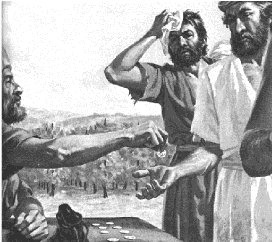
Over time, “the sanctuary shekel” became its own unit of currency. People couldn’t pay the tax with the money they made in everyday life. They had to have their money converted to “sanctuary shekels” in order to pay. Eventually money changers set up on the temple grounds and they charged a fee to convert the real money into “sanctuary money.” Sanctuary money was no good for anything but the temple tax, so the money changers made out like, well, thieves.

The third thing that was generally offensive was that the temple became a marketplace. Some people did not bother to bring animals at all, but planned to buy them at the temple. And who could blame them, since the priests were likely to rip them off if they brought their own animal? Merchants hawked doves to the poorer families, and doubtless everyone paid much more for “temple animals” then they would have anywhere else in the country. God’s holy place of worship became one of the busiest marketplaces in Jerusalem during the Passover season.

I’d like to point something out here. All four gospels make it clear that Jesus substantially interfered with all of this sort of “temple business” that was going on that day. He overturned the tables of the money changers, spilling their coins everywhere. He knocked over the stalls of those who sold pigeons and doves. He made them leave the temple complex. John records that Jesus even drove out the sheep and oxen. It would only be natural for these merchants and money changers to resist him, to try and stop him. For one man to do all this, it must have taken a great deal of physical strength, and even violence. In fact, it was a remarkable feat of physical power. I think a lot of people picture Jesus as a sort of wimpy, sensitive guy, but this gives us convincing evidence that he was capable of great strength when he wanted to be.

Now, I want us to see Jesus’ actions for what they are: extremism. God’s holiness is extreme, and uncompromising. We don’t like to remember this. I think if Jesus did something equivalent in the church today, it would meet with widespread disapproval. Let’s start with an obvious one. Jesus drove out those who sold doves, and doves were the sacrifice of choice for poor people. I can see someone saying: “Where are the lower income folks supposed to get their doves now? How could this be a loving action? It hurts the poor! What about all those who traveled from home without animals, expecting to be able to buy one at the temple? How were they supposed to make a sacrifice if they couldn’t buy their animals? You have to be reasonable. Your response has to take all the nuances into account.”

I can see other people saying, “Look, I know having a marketplace in the outer courts isn’t ideal, but ultimately it allows a greater number of people to come and worship here. It makes it easier on worshipers; it makes us more seeker friendly.”

I can see yet others saying, “Yes, I know that some of the merchants, and even some of the priests, are over-charging people. That’s deplorable, and I condemn it. But we can’t expect a perfect system in this imperfect world. It is what it is, and really, it isn’t that bad. We have to be reasonable.”

Jesus’ actions weren’t reasonable. They weren’t nuanced. But they were righteous. This was about the holiness of God. Holiness isn’t nuanced. It isn’t reasonable. It is absolute.

Jesus quoted to them from Jeremiah. Matthew records only the tail end of the passage in Jeremiah, but I want to share the beginning of it with you here:

9“Do you steal, murder, commit adultery, swear falsely, burn incense to Baal, and follow other gods that you have not known? 10Then do you come and stand before Me in this house called by My name and say, ‘We are delivered, so we can continue doing all these detestable acts’? 11Has this house, which is called by My name, become a den of robbers in your view? Yes, I too have seen it.” This is the LORD‘s declaration. (Jer 7:9-11, HCSB)

Today, we do not have a temple where we worship. We don’t have money changers who charge to turn real money into “church money.” But we have different ways in which we degrade the holiness of God through our worship. Let me suggest a few of them.

Here where I live in the Southeastern USA, a lot of people still go to church because it is considered the right thing to do. Many of those same church-goers spend the rest of the week living as if they were not Christians at all: They get drunk, they have sex outside of marriage, they make shady business deals, they treat people badly, they gossip and slander. These verses from Jeremiah are for people like that:

10Then do you come and stand before Me in this house called by My name and say, ‘We are delivered, so we can continue doing all these detestable acts’?

Going to worship will not save you if you have not humbly repented and submitted your life to Jesus Christ. You cannot be a Christian, and at the same time, live however you please. When you submit your life to Jesus Christ, you will, however slowly and imperfectly, be led to change. Don’t think you can come to church, and then say “We are delivered!” when he has no say whatsoever in how you actually live. If your faith doesn’t change you, it isn’t real faith. Jesus drove such people out of the temple.

Before some of us start feeling smug, let me speak to another group of people. To set it up, let me give you an analogy. Imagine I meet someone who tells me that he is in the United States Marine Corps.

“Wow!” I say. “Where are you stationed?”

“Well, I’m not really a part of any organized unit at the moment.”

“Oh,” I say, puzzled. “How does that work?”

“Well, the actual organization of the Marine Corps does a lot of stupid things. I don’t like to salute. I think it’s stupid. Saluting has nothing to do with actually being a Marine. On the battlefield, that stuff doesn’t matter.”

“Go on.”

“Also, when you join the Marines, they force you to make your bed perfectly, and iron your clothes perfectly, and shine your shoes and boots. None of that has anything to do with being a real Marine. Your boots aren’t going to be polished in the middle of a battle. I think it’s fake and hypocritical.”

“So you are a Marine, but you don’t actually belong to the Marine Corps.”

“That’s another stupid thing. Why should I have to sign up, and complete boot camp and do all that? I don’t enjoy all the rigid structure. That’s not the essence of being a Marine.”

“So what makes you a Marine?”

“I believe in the mission of the Corps, to protect and defend America. Sometimes I do some pushups, you know, to keep in shape.”

“So, if the Marines go into battle, they can’t count on you.”

“Oh they can count on me. I’ll fight the battles too. In my own way.”

“But not alongside them.”

“No. Because they would make me jump through all those stupid hoops.”

You get the idea. This guy is not a Marine, and never will be. It doesn’t matter how much breath he wastes claiming that he is. There are a large number of people in our Western culture who are just like him, only they apply it to being a Christian. They say something like this : “I’m a Christian, but I don’t go to church. I don’t want to be a part of all that hypocrisy, and all those politics.” So they live their own lives, giving nothing of value to the church, which the Holy Spirit calls “the body of Christ.” They think they can claim Christ while having nothing to do with his mission or his followers; his very Body. They deceive themselves, like my hypothetical “Marine Corps” solider. Again, the words of Jeremiah are chilling:

10Then do you come and stand before Me in this house called by My name and say, ‘We are delivered, so we can continue doing all these detestable acts’?

A Christian who is not connected to other Christians in regular fellowship and worship won’t be a real Christian for very long.

Let me give you one more general thought about Jesus’ actions here. By doing this, he was challenging the heart of the religious leadership. This was their sacred place, and he came busting in, acting like he had the right do whatever he pleased there – and indeed, he did have that right. So I want us to consider this question: Where is Jesus challenging your “sacred place” and asserting his right to be true God, truly in charge of your entire life? Maybe it is in one of the things already mentioned here. Maybe it is in some other area. But the big question is this: will you recognize that Jesus has the right to come and upset your world, just as he turned over the tables in the temple? Will you receive what he wants to do in your life?

In Jesus we have both God’s holiness – which brings judgement upon the entire world – and also his grace and forgiveness. We need to be reminded from this passage that our sin is nothing less than evil. You are not “OK,” you are not graded on a curve, and you are (on your own) separated from a Holy and Righteous God. If you don’t want to trust Jesus and submit to him as ruler of your life, you are like those people he drove out of the temple. Not everyone goes to heaven, Jesus made that very clear:

13“Enter through the narrow gate. For the gate is wide and the road is broad that leads to destruction, and there are many who go through it. 14How narrow is the gate and difficult the road that leads to life, and few find it. (Matt 7:13-14, HCSB)

Just let that sink in for a moment.

Now, I’m not a fan of just saying “You’re going to hell,” because you don’t have to. In Jesus, your sin is not excused, or explained away, or ignored – it is punished by crucifixion. In Jesus death, righteousness is satisfied so that you are now free to live in the grace, forgiveness and righteousness that Jesus obtained for you. It is simple to receive. What I mean is, it is not complicated – though it usually involves a battle of surrendering your will and your desires. All we need to do is repent, surrender our will to Jesus, and trust that through his work, we are indeed make right with God, and given eternal life. We don’t have to be perfect – Jesus was perfect on our behalf. But our faith in Him, and our surrender to him, will lead us to live lives that are increasingly more holy, more in line with what the Bible teaches, more in accordance with our Holy God. It happens very slowly at times, and we often fall down, or even take steps backward, but when we truly trust Jesus, it does happen – the speed at which it happens is not the important thing, but rather, that it is happening.

Many of you reading have already repented and given your lives to Jesus. If you haven’t, I encourage you to do so right now.

For those of us who have already done so, we may still need to repent of certain sins or certain areas where we have been holding out on God. Let’s do that now. Let’s allow Jesus to come into our “sacred place” and challenge even the things we hold very dear. He has the right. Let’s receive what he is doing in us.

And let’s all of us trust and receive that grace that came through Jesus so that the Holiness of God is no longer a problem for us, but rather, part of our own inheritance now and in the future.

THE KING WHO CHANGED NOTHING…AND EVERYTHING

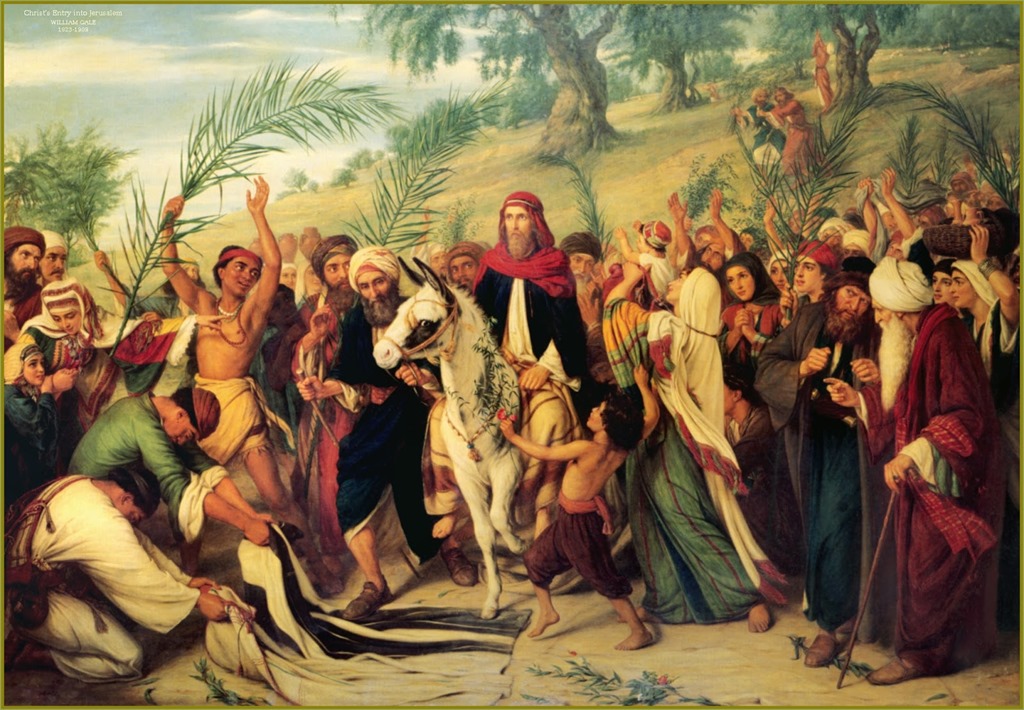
palm sunday

The crowd on Palm Sunday was looking for a king who ultimately would have been just a historical footnote. Instead, they got someone who did not change their political or economic situation at all. And yet, he changed the entire history of the world.

To listen to the sermon, click the play button:

To download, right click on the link (or do whatever you do on a Mac) and save it to your computer: Download Matthew Part 72


Matthew #72. Matthew 21:1-11

Each year, Christians celebrate and remember the last week in the life of Jesus before his resurrection. We call it “Holy Week.” For Jesus, the week began when he rode into Jerusalem on the back of a donkey, to cries of praise and celebration from the people. By Friday night of the same week, he was hanging dead on a Roman crucifix. On the very next Sunday, he rose from death; one week in total after riding into Jerusalem. Roughly one quarter of Matthew’s entire gospel is about that week, and with chapter 21, we have now entered that section of the book.

It was a kind of Holy Week for the Jews of that time too. The ancient Jewish calendar was different from ours, and sometime in March (it varies from year to year) was the beginning of the Jewish New Year. Fourteen days into the New Year, the Jews celebrated Passover – a feast commemorating their deliverance from slavery in Egypt. Following Passover was a week-long celebration – the Festival of Unleavened Bread. Although you could celebrate this wherever you lived, most Jews felt the best place to spend Passover and Unleavened Bread was in Jerusalem. Then, forty days later was the Feast of Pentecost. Picture this time of year a little bit Thanksgiving and Christmas in the United States. A lot of people traveled to be with family and loved ones. There was a delicious meal (usually the same food every year) and good feelings and a lot of gratitude. Along with it was the knowledge that you were all probably going to get together again in a bit more than a month, for Pentecost. In Israel, this was the “most wonderful time of the year.”

So there was a big crowd headed into Jerusalem that day, just three days before the Passover and the start the Festival. They were probably in a good mood. They were ready for something new and exciting to happen. Then along comes Jesus, riding on a donkey. Certainly, he could not have been the only person riding a donkey into Jerusalem that day. But Luke records that his disciples started shouting and praising God joyfully. Matthew says that the people directly in front of Jesus and those behind him took up the cry. John records that many of the people there for the festival had heard about Jesus raising Lazarus. So they went out to meet him and joined in the praises. Soon, it was a kind of uproar that stirred up the whole city:

When He entered Jerusalem, the whole city was shaken, saying, “Who is this? ” (Matt 21:10, HCSB)

The people took up the cry of Zechariah 9:9

Rejoice greatly, O daughter of Zion! Shout aloud, O daughter of Jerusalem! Behold, your king is coming to you; righteous and having salvation is he, humble and mounted on a donkey, on a colt, the foal of a donkey. (Zech 9:9, ESV2011)

That particular prophecy of Zechariah was all about salvation and deliverance. Many Jews probably felt it was fulfilled in some ways when the Maccabaeus Family led the rebellion that freed Israel from Greek rule, some hundred and sixty years before the time of Jesus. Now they were thinking that maybe God was going to do the same thing to the Romans and to king Herod, through this Jesus. They were thinking salvation all right, but political salvation.

Now the truth is, I think most of the crowd was cheering in ignorance, and for the wrong reasons. After the crucifixion, the entire number of Jesus’ followers was about 120. But this crowd sounds a lot bigger than that. It would take more than 120 people to shake up the whole city. So a lot people were cheering who didn’t know Jesus very well, or only knew of him. It was party time, and they were partying. It sounded exciting. They thought maybe they had a new Judas Maccabaeus on their hands, and maybe they were going to be free from the oppression of Rome and king Herod (Herod was not a Jew).

But why did Jesus participate in this? What Matthew records makes it sound like Jesus planned it: apparently Jesus had arranged the donkey ahead of time, and even agreed upon some sort of “password” with the owner of the animals. Luke and Mark also suggest that it was intentional on Jesus’ part. But the crowd had all the wrong reasons, so why did Jesus do it?

Matthew records one of the reasons: it fulfilled the prophecy of Zechariah 9. Some of that prophecy certainly sounds like military deliverance from oppressing nations. In fact, it mentions war against Greece, so some of it may indeed have been fulfilled by the Maccabaeus Family. Remember, however, biblical prophecies usually have multiple layers that are not necessarily fulfilled at in one piece. And there are other clues in Zechariah 9 that show us that, whatever else it was about, it was also about Jesus.

It says that the one coming to Jerusalem on the donkey is righteous. Who else is truly righteous besides Jesus? It says he is the true king. Who has the right to claim kingship, but him? Judas Maccabaeus, more than a century before, was never a true Israelite king, because he was from the tribe of Levi, not the tribe of King David, which was Judah. The prophecy says he is bringing salvation, and that he is humble and peaceful. Zechariah 9:11-12, a few verses later, also says this:

As for you also, because of the blood of my covenant with you, I will set your prisoners free from the waterless pit. Return to your stronghold, O prisoners of hope; today I declare that I will restore to you double. (Zech 9:11-12, ESV2011)

Prisoners are set free and given hope – because of the blood of the covenant. Jesus was riding into Jerusalem to shed his blood, to create the New Covenant, sealed with his blood, brought about by his death. Certainly, at the time, no one else knew that, but Jesus did. And later, John writes, the disciples remembered it (John 12:16).

So, in this act of riding into Jerusalem on a donkey, receiving the praises of the people around him, Jesus was fulfilling prophecy, and giving anyone who cared to think about it a clue that he was the promised Messiah.

I think Jesus did this for other reasons too. It was time for him to give up his life for our sins. I think he was deliberately provoking the Jewish leaders into taking the actions that would lead to his crucifixion. Up until this very last week of his earthly life, Jesus had kept a fairly low profile, and avoided popular acclaim and confrontation with the Jewish leaders. But now, I think he was deliberately antagonizing them so that they would do what had to be done.

Finally, if Jesus really is who we believe he is, he was always worthy of worship at any moment in time. So, it is only good and right that as people come to celebrate the Passover, they worshipped the true Passover lamb who would give his life so that they could be spared. It is entirely appropriate that people worship him. He said as much to the Pharisees who criticized him.

Now, as I have pointed out, even those who praised Jesus, did so with quite a bit of ignorance. Frankly, I don’t think most Christians get the point any more than the First Century Jews. The Jews got all excited about Passover and the Festival of Unleavened Bread, and I’m sure many of them forgot that it was really all about God’s deliverance. We have the same issues in America with Christmastime and Thanksgiving. We get all happy and excited, but often neglect real thankfulness or real remembrance of Jesus. And we do the same with the beginning of Christian Holy Week.

Most churches I’ve been to wave palm leaves around at some point in the Palm Sunday service. I’ve been in churches where they brought in live donkeys and camels for the occasion. People shout and jump and sing, just like the Jews did on that first Palm Sunday. Just like the Jews did in ignorance. But we should know better, now.

It reminds me of Elijah’s experience with God:

Then He said, “Go out and stand on the mountain in the LORD’s presence.” At that moment, the LORD passed by. A great and mighty wind was tearing at the mountains and was shattering cliffs before the LORD, but the LORD was not in the wind. After the wind there was an earthquake, but the LORD was not in the earthquake. After the earthquake there was a fire, but the LORD was not in the fire. And after the fire there was a voice, a soft whisper. When Elijah heard it, he wrapped his face in his mantle and went out and stood at the entrance of the cave. (1Kgs 19:11-13, HCSB)

We look for God in the excitement, the noise, the action. And there is some of God in that, sometimes. But Elijah found that the heart of God was something, deeper, quieter, more meaningful. It wasn’t wrong for the Palm Sunday crowd in Jerusalem to have a raucous celebration. It wasn’t wrong for them to want deliverance from the Romans. But the real thing, the most important thing, was deeper than that. Two-thousand years later, Judas Maccabaeus is sort of a footnote in the ancient history of the Greek empire; many of you may not have heard about him before today. And that’s what the Jews were looking for – another person to give them temporary relief, another person who would end up as just another historical footnote. But they got someone who would not change their local political situation at all. Instead, he changed the entire world.

I think we need to take notice of this. Too often, our vision is too small and limited. We just want Jesus to give us a better job, or more compliant kids, or to “fix” our spouse. Those aren’t necessarily bad things to want; it’s just that the vision is too small. What he wants to do inside our soul and spirit is so much bigger than a temporary situation fix. He has a permanent solution to the holes inside our hearts. He has brought us hope, and grace and love and permanent salvation; he has sealed it with his blood.

Zechariah’s prophecy says: “Behold, your king is coming to you, righteous and having salvation.” I say the same thing: Jesus is coming to us. Do you recognize him as your king, the one with the right to rule your life? Are you willing to be part of his real mission, not to temporarily change a little corner of your world, but to bring hope and salvation to all people for eternity? Are you willing to receive not just what you want, but what he chooses to do in your life and with your life?

Right after “Palm Sunday,” Jesus made this comment:

“I assure you: Unless a grain of wheat falls to the ground and dies, it remains by itself. But if it dies, it produces a large crop. The one who loves his life will lose it, and the one who hates his life in this world will keep it for eternal life. If anyone serves Me, he must follow Me. Where I am, there My servant also will be. If anyone serves Me, the Father will honor him. (John 12:24-26, HCSB)

Jesus literally gave up his life. The result was eternal salvation for billions. He invites us to join him – not necessarily to literally lose our physical life (though he has called some to martyrdom) but to surrender our hearts and minds and wills to him, so that in return we can receive his salvation and honor.

The party is fine, as far it goes. The celebration is fun. The happiness is good and right and genuine. But let’s use this text as an opportunity to go deeper, to engage with the real mission of Jesus, and to receive him as our true king.

WHAT DO YOU WANT?


Even when we don’t really know what we are asking, Jesus invites us to ask. He invites us to take the risk of hoping, and trusting him.

To listen to the sermon, click the play button:

To download, right click on the link (or do whatever you do on a Mac) and save it to your computer: Download Matthew Part 70

Matthew #71. Matthew 20:17-34

Please read Matthew 20:17-34. I don’t have space to put it here. If you are listening, of course, I’ll read it to you, but you still might want to follow along in your Bible.

Matthew does not tell us the name of the mother of James and John (who was the wife of Zebedee). Therefore, for convenience in writing, I will refer to her as “Mother Z.”

Matthew begins chapter 20 by telling us that they were going up to Jerusalem. This is significant. Starting with chapter 21, everything we read takes place in and around Jerusalem during the last week of Jesus’ life before his crucifixion. Matthew records that right after Peter confessed that Jesus was the Messiah, the son of God, Jesus began speaking to them of his upcoming death (Matthew 16:21). Matthew records a second prediction in 17:22-23. Here in 21:18-19, he reminds them for the third time that he will be killed, mentioning for the first time that it will be by crucifixion. Obviously the disciples didn’t understand it the first time, because Peter tried to rebuke Jesus over it. The second time, Matthew records that the disciples were distressed, while both Luke and Mark record that they didn’t really understand what Jesus was talking about (Mark 9:32 & Luke 9:45). About this third prediction, Luke says:

34They understood none of these things. This saying was hidden from them, and they did not grasp what was said. (Luke 18:34, HCSB)

Matthew, in our text for this time, doesn’t tell us explicitly that the disciples did not understand, but I think it is clear from the request of James and John they did not grasp that Jesus was speaking quite literally. I would guess that it “went over their heads,” so to speak, and all they really understood was that something big was about to happen. The way I picture it is this: James and John went to say goodbye to their family, since they were leaving Galilee (their home region) for a while. Like any good mother, Mother Z asked them where they were going, and why, and so on. I think their response was probably something like this:

“We don’t know for sure, but Jesus seems really serious about it. He keeps talking about big stuff happening in Jerusalem. He says he’s going to die, but we think that’s just him being negative, or maybe trying to get us hyped up for the big push to make him King, you know, to get us ready for the struggle. In any case, we think he’s going to ‘go for it,’ when we get to Jerusalem.”

Here’s what I think is quite clear: Crucifixion was not their paradigm. They didn’t get it because it wasn’t what they were looking for, it wasn’t the way they were thinking. It didn’t fit what their vision for what was supposed to happen, so it more or less went over their heads.

Anyway, Mother Z, being a good mother, decides that before all the big stuff goes down in Jerusalem, she needs to make sure her boys get what they deserve. When she says she wants them to sit at the right and left of Jesus, what she means is, she wants them to be the “top” two, after Jesus. James, the elder, would be at the right, in the number 1 position after Jesus. John, at the left, would be number 2.

Although this is Mother Z’s request, clearly, James and John are in agreement with it, since they were right there with her when she asked of it of Jesus. Jesus’ response to them comes in three parts.

First, he says: “You don’t know what you are asking.” Their paradigm is not crucifixion. Do you think Mother Z would have asked to have James crucified on the right of Jesus, and John on the left? Obviously not. They had no real grasp of what was coming. They were looking for earthly glory, and soon. Jesus knew that nothing of the sort was in store for him, or for any of his followers. They had no idea what they were asking for.

Next, Jesus asks if they are able to drink the cup he is about to drink. I doubt this would have been clear to the Zebedee family. In the Passover celebration, four cups are shared by all those present: the cup of instruction, the cup of sanctification and blessing, the cup of instruction, the cup of redemption and the cup of thanksgiving. The cups represent Freedom, Deliverance, Redemption and Thanksgiving. None of these sound too bad. I’d be ready to drink of those cups.

But Jesus had another cup in mind: the cup of God’s wrath against sin:

6Exaltation does not come from the east, the west, or the desert,

7for God is the Judge: He brings down one and exalts another. 8

For there is a cup in the LORD’s hand,

full of wine blended with spices, and He pours from it.

All the wicked of the earth will drink, draining it to the dregs. (Ps 75:6-8, HCSB)

17Wake yourself, wake yourself up!

Stand up, Jerusalem, you who have drunk the cup of His fury

from the hand of the LORD;

you who have drunk the goblet to the dregs — the cup that causes people to stagger. (Isa 51:17, HCSB)

32This is what the Lord GOD says:

You will drink your sister’s cup, which is deep and wide.

You will be an object of ridicule and scorn, for it holds so much.

33You will be filled with drunkenness and grief,

with a cup of devastation and desolation, the cup of your sister Samaria.

34You will drink it and drain it. (Ezek 23:32-34, HCSB)

This is the “cup” of which Jesus prayed in the Garden of Gethsemane:

42“Father, if You are willing, take this cup away from Me — nevertheless, not My will, but Yours, be done.” (Luke 22:42, HCSB)

James, John and Mother Z had no idea of this when they made their request. Again, it wasn’t their paradigm.

As it happened, of course, about ten years later, James was beheaded for preaching about Jesus. Many years after that, John was imprisoned. They did indeed drink the cup of suffering, but by the time their sufferings came, they understood that the Kingdom of Jesus is not of this world, and his glory is not usually here and now. They understood then that Jesus drank the cup of God’s wrath that should have been directed against all humankind and our sin.

The third part of Jesus’ response to the Zebedee family came when the other ten apostles heard about the request. I’m sure an argument broke out along lines like these:

Andrew: “But I was the first one to follow him!”

Peter: “And I was next. Plus I’m the only one besides Jesus who ever walked on water.”

Philip: “Sure, boys, but I started following him the very next day after you guys, and I brought Nat the day after that.” (Nathaniel nods vigorously).

Thomas: “What kind of evidence do you boys have, to back up those claims?”

And so on…

Jesus settled them down, and said this:

“You know that the rulers of the Gentiles dominate them, and the men of high position exercise power over them. 26It must not be like that among you. On the contrary, whoever wants to become great among you must be your servant, 27and whoever wants to be first among you must be your slave; 28just as the Son of Man did not come to be served, but to serve, and to give His life — a ransom for many.” (Matt 20:25-28, HCSB)

He knows what James & John and Mrs. Z were after. But his kingdom has a completely different set of values and rules. This is perhaps one of the most counter-cultural teachings of Jesus, particularly in the world as it is today. When I was a kid, I remember reading about famous artists, thinkers, writer and composers and realizing that most of them were not well known until after they died. Their considerable achievements were only appreciated later. I think even just during my own lifetime, our culture has swung almost to the opposite end of the spectrum. We glorify and honor people while they are alive for achieving almost nothing. What have the Kardashians accomplished? What lasting positive contribution to society have they made? Even as soon as a few decades from now, people will wonder why they were famous, and possibly even look at it as a sign of the decline of Western civilization. I could name dozens of other examples. Even the actors and actresses we venerate – what have they done? They’ve made millions of dollars by pretending to be people who do important things. They look terrific because they won the genetic lottery, and in some cases, because they spend upwards of two hundred thousand dollars per year to look good. But why do we honor them?

Years ago (this will show my age) I was talking with a friend about the pop-star, Madonna. He said, “I know her message is awful, but you’ve got to admire her for doing it what it takes to sell records and become seriously famous.”

No, I don’t have to admire her for “doing what it takes.” Jesus says that’s not how the kingdom of God works. The world admires people who go out there and make things happen for themselves, who are bold and audacious. Sometimes it seems almost as if the world will believe anyone who says, “Look at me – I’m great!”

Even in the Christian culture, we have begun to focus on “Christian celebrities” as if they are somehow great in the kingdom of God. We give our admiration to Christian singers and certain Christian preachers as if they are great just because they are well known. Jesus says those people are nothing. The great ones are the humble servants.

In fact, if you want to be great in God’s kingdom, you probably won’t be well known in the world. Awhile back I bought a book called “Embracing Obscurity.” I haven’t finished it yet, but the reason I bought it is because of the author’s name: Anonymous. I don’t know who wrote the book. But I love the fact that she or he was willing to take these words of Jesus so seriously that it meant not allowing his or her name to be published.

See, that’s something important for us to remember. I always kind of romanticize being God’s servant leader. I imagine that, really, lots and lots of people are going to see what I humbly do for God’s kingdom, and recognize how great I am for being so humble.

Seriously, I am that bad. But I think we need to consider that when we are truly great in God’s kingdom, we truly will not be recognized for it. Even in the church, humble servants – which Jesus calls greatness in his kingdom – are not usually recognized as great. We can take comfort in this: our Father in Heaven sees, and is preparing our reward (Matt 6:1, 4, 8, 18).

In verses 29-33, Matthew describes the healing of two blind men near Jericho. When I first began to study this passage, verses 29-33 seemed almost like they were tacked on as an afterthought, as if Matthew thought, “Oh yeah, that’s when the blind men were healed.” And, though the gospel writers are sometimes not very concerned with the exact order of events, the healing of the blind men probably did take place on the way to Jerusalem. In order to avoid going through Samaritan territory, Jews traveling from Galilee to Jerusalem often traveled down the valley of the Jordan river to Jericho, and from there went up to Jerusalem. Since the blind men were healed outside Jericho, Matthew probably records it at this point because that’s when it happened.

But there is something else that connects the two stories, though it may not be obvious at first. Both incidents reveal how Jesus responded to specific requests from someone. In each case, the response was different, and I think perhaps we can learn something from these two incidents, taken together.

In both situations, Jesus said, “What do you want?” I think this should encourage us, when we pray, to ask the Father for what we really want. Even though he was not going to give Mother Z and her boys exactly what they asked for, he still encouraged them to ask. And it does not seem like he was upset over their thick-headedness. He had every right to be. He had just finished saying he was going up to Jerusalem to die, to give his life for others, and here they come, requesting glory for themselves when he claims the crown. They were impossibly obtuse and thickheaded. There are other times in Matthew (and the other gospels) when Jesus says something like: “You of little faith,” or “Why are you so slow to understand?” But not here. He welcomes their request, even though it is misguided. The request eventually results in a conversation that was very important.

Outside of Jericho, the blind men make a ruckus, and Jesus says the same thing to them that he did to Mother Z: “What do you want?” I’m not sure what to make of this. I should think it was obvious what they wanted. But for some reason, Jesus was inviting them to ask specifically for what they wanted.

Sometimes this might be a little harder than you realize at first. If we say a kind of general prayer about something, we can hedge against disappointment. We can pretend that we just wanted God involved in some way; we don’t have to admit what is really going on with us. But put yourself in the shoes of the blind men. They have really had no hope for anything to change in their lives. But now, by inviting them to ask, Jesus is inviting them to hope, and when we hope there is always the possibility we will be disappointed. Jesus is asking them to take that risk, the risk of trust.

They take the risk, and tell him specifically what they want. This time, as opposed to the incident with Mother Z and the boys, he simply and directly answers their request. Matthew records that not only were they healed, but they began to follow Jesus. I think we can assume that these two were probably among the 120 Jesus followers who were still together after the crucifixion.

All of this encourages us, I think, to be direct and specific with the Lord in prayer. Ask for what you really want – take the risk that praying in this way involves; the risk of trust and hope.

In the case of James & John and Mother Z, they didn’t get exactly what they were asking for. In fact, they didn’t even know what they were asking. Sometimes, I think I am like that. I ask for something, and actually, I don’t really have any idea what all it might involve. This incident shows me that I can trust Jesus not to give me what I ask for, if I’m asking for the wrong thing. It also shows me I can trust him to use my prayers, even so, perhaps to help me learn something.

But I am also encouraged to take that specific risk of trust, to ask for what I want, to admit I want it, and can’t get it for myself. I am inspired to risk hope. When what I want is good and right, Jesus may answer me like he did the blind men, and simply and directly do what I have been hoping, even if it seems impossible.

Let’s pause now in prayer, and allow this text to continue to speak to us. Is there some way in which you need to allow the Lord to challenge your paradigm? Are you thinking of things the way the world does, or the way the kingdom of God works?

Is there something that Jesus is inviting you to ask of him? He doesn’t promise to automatically do what you want, but even when he doesn’t, he can make the asking productive. Is inviting you into the risk of hope and trust?

WHEN GOD IS GENEROUS WITH SOMEONE OTHER THAN YOU…


vineyard workers

The combination of these two things – that God has the right to do as he pleases, and also that he is generous and good – should call us to trust him. We can’t control him, we often can’t understand him, but he is trustworthy.


To listen to the sermon, click the play button:

To download, right click on the link (or do whatever you do on a Mac) and save it to your computer: Download Matthew Part 70


Matthew #70. Matthew 20:1-16

For those of you who have followed this blog in “real time” you know that we have had a substantial break since the last sermon I posted on the book of Matthew. My health is much improved, though I sometimes still have “bad days,” when I am in a certain amount of pain. The doctors believe they have stopped the cause of the kidney stones which damaged one kidney, and the nerves of the other. Overall, I am feeling much better, and I am back to a completely normal life. I thank you very much for your prayers.

As always, I want to ask you to continue to pray for us and for this ministry. We want the Lord to be at work in and through these messages. Pray for continued healing, for the Lord’s working through me as I continue to preach, for our encouragement, and also for our finances. If you feel led to contribute financially, use the “donate” tab at the top of the page, and you’ll find a few different options. Regardless of whether or not you give financially, we deeply, deeply appreciate your prayers.

We are going to continue where we left off in Matthew, but I want to remind us of the context.

In Matthew 19:16-30, Jesus began speaking with his disciples about rewards. They encountered a rich young man who wasn’t willing to give up what he had in this life in order to follow Jesus. That sparked a discussion about wealth, money and giving up things to be a disciple of Jesus. In the last installment (Matthew #69) we considered the kinds of non-material rewards that Jesus promised in this life and the next.

Jesus continued the discussion with a parable. Christians sometimes call it the Parable of the Vineyard Workers.

1“For the kingdom of heaven is like a landowner who went out early in the morning to hire workers for his vineyard. 2After agreeing with the workers on one denarius for the day, he sent them into his vineyard. 3When he went out about nine in the morning, he saw others standing in the marketplace doing nothing. 4To those men he said, ‘You also go to my vineyard, and I’ll give you whatever is right.’

So off they went. 5About noon and at three, he went out again and did the same thing. 6Then about five he went and found others standing around, and said to them, ‘Why have you been standing here all day doing nothing? ’

7“ ‘Because no one hired us,’ they said to him. “ ‘You also go to my vineyard,’ he told them. 8When evening came, the owner of the vineyard told his foreman, ‘Call the workers and give them their pay, starting with the last and ending with the first.’

9“When those who were hired about five came, they each received one denarius. 10So when the first ones came, they assumed they would get more, but they also received a denarius each. 11When they received it, they began to complain to the landowner: 12‘These last men put in one hour, and you made them equal to us who bore the burden of the day and the burning heat! ’

13“He replied to one of them, ‘Friend, I’m doing you no wrong. Didn’t you agree with me on a denarius? 14Take what’s yours and go. I want to give this last man the same as I gave you. 15Don’t I have the right to do what I want with my business? Are you jealous because I’m generous? ’

16“So the last will be first, and the first last.” (Matt 20:1-16, HCSB)

Just before this, Jesus promised rewards to his disciples for their labors, and for the sacrifices they have made. He was speaking, in a sense, of their rights and privileges as his followers. But now, in this parable, he speaking of the rights and privileges of God to do as he pleases. Bible commenter William Kelly puts it like this:

Peter said,’, We have left all, and followed Thee,” and the Lord assures him that it would not be forgotten; but He immediately adds the parable of the householder. Here we find, not the principle of rewards. or righteous recognition of the service done by His people, but God’s own rights, His own sovereignty. Hence there are no differences here – no one specially remembered because he had won souls to Christ, or left all for Christ. The principle is, that while God will infallibly own every service and loss for the sake of Christ, yet He maintains His own title to do as He will.

The idea is this: “Look, you’ve been promised that what you have given up is not for nothing. Your sacrifice will be remembered and even rewarded. At the same time, your sacrifice and your reward should be no basis for boasting, or setting yourself up as better. And there is no room for jealousy if you should feel that God has been particularly generous with someone else. He has also done for you what he promised.

The first generation of Christians to read Matthew’s Gospel would have been immediately reminded of the situation between Jews and Gentile Christians. The Jews were God’s people before any other. The Gentiles were not called until almost two-thousand years after Abraham. But God promises to bless and save both Gentiles and Jews through the Messiah, Jesus Christ, even though the Gentiles are relative late-comers. There is no advantage in being a Jew – all are saved by the same Messiah, as promised originally. This parable would have helped the Gentile believers to realize God’s wonderful kindness and grace to them, and it would have been a warning to the Jewish believers not to resent the Gentiles, or think of themselves as better.

The Jewish-Gentile thing isn’t much of an issue for us anymore, but let’s consider a few ways in which this parable can apply to us.

Let me make this practical in my own life, in the hopes that it might help you see how it applies in yours. I think, over the years of my life and ministry, I have often given things up to follow Jesus. I have given up jobs that would have paid better, or that were more secure. I’ve devoted almost my entire adult life to following Jesus and serving him. I am sometimes like Peter: “Lord, what do I get in return for all that?” I shared a little about some of my experiences in Matthew part #69. But I also sometimes struggle with another feeling: jealousy.

I’m not normally jealous of people who have more money than me (though I’m not immune to that). But I struggle with being jealous of those whom God treats differently than he does me. I have friends and family members who have a different experience of following Jesus than I do. For me, I have often had to struggle through a lot of work and prayer and confusion during transitions in life. But for several people I know, things just always seems to fall into place almost effortlessly. They need a new a job, and the perfect one is offered to them the very day that they realize they need it. That sort of thing has never really happened for me, and I sometimes get jealous of how God treats them.

But this parable tells me that the Lord has the right to do as he pleases with his servants. If he wants me to struggle while he wants to grant others easy transitions, that his business, not mine.

Perhaps for you it’s something different. Maybe someone you know seems to have terrific and easy friendships, while for you, friendship is always a struggle. Or perhaps you look around and everyone seems to be doing better financially than you are. You’ve been faithful with your money, you’ve given generously to God’s work, but still you struggle, while others around you seem able to waste more than you make in a week.

Now, I don’t mean that we never have any part in making our own lives more difficult. You may struggle with friendships because you are self-absorbed or unkind. You may struggle with finances because you have a shopping addiction. These are things we should consider and pray about. But sometimes, it seems like it is just God’s sovereign choice – the Master doing what he chooses to do. If it is, we could stand to remember that he has the right to do those things. This parable certainly encourages us not to engage in envy.

I think there is another important reminder to us. In our Christian culture today, there is a strong movement that seems to think if we speak a certain way, or have enough faith, or do the right things, then God owes us. Some people seem to think of it almost like a law of physics: “If we do these things, then God must reward us in this way.” This parable reminds us that God does not owe us. He doesn’t owe us an explanation, or anything else. He is the Master, we are not. It is His vineyard, to do with as he pleases, not ours.

At the same time, there is another message worth hearing: the Master is very generous. There is no question that the workers who came late did not deserve what they were paid, but the Master chose to bless them with generosity anyway. It was not because of their work, it was because of his generous nature. So, though although God does not owe us, we should trust that he is generous and good.

The combination of these two things – that God has the right to do as he pleases, and also that he is generous and good – should call us to trust him. We can’t control him, we often can’t understand him, but he is trustworthy.

YOUR BEST LIFE IS NOT NOW

RESURRECTION SUNDAY, 2016

raising laz


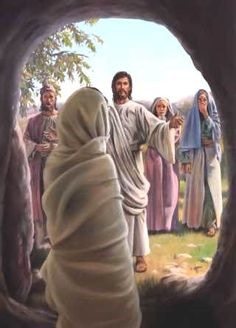
When people or things in our life die, we want to know why God didn’t prevent it. Perhaps he has something better in mind than fixing this imperfect life here and now.


To listen to the sermon, click the play button:


To download, right click on the link (or do whatever you do on a Mac) and save it to your computer: Download Easter 2016


John 11:1-53

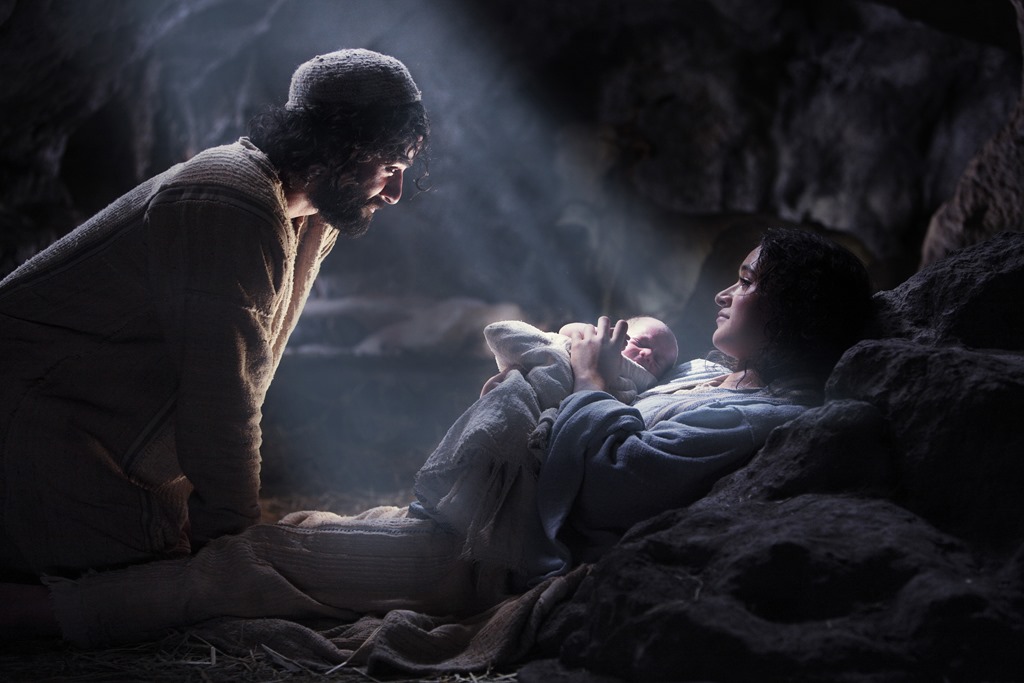
I’ll bet you never guess what I want to talk about this week. That’s right. I’m going to teach about the birth of Jesus. Just kidding of course.

The resurrection of Jesus Christ is the central truth on which all Christian theology depends. If Jesus wasn’t really raised from the dead, then he was a madman or megalomaniac. But if he was truly raised, then what he said was true; and he said he was God the Son, come into the world for our salvation.

I have talked before about the theological implications of the resurrection. I probably will again in the future. I have shared with you substantial evidence that supports the claim that Jesus Christ was raised from the dead. I’ll do that again in the future also. But this year, I want to talk about the resurrection in a personal way. To do that, I want to consider a different resurrection: the resurrection of Lazarus, recorded in John chapter 11:1-53. Don’t get me wrong, this is also about the resurrection of Jesus. However, I think by considering what happened in this incident, we can learn some things about Jesus’ resurrection, and the eternal life he offers us.

Jesus was at least two days of traveling from his friends Lazarus, Mary and Martha. Lazarus became seriously ill, and so the sisters sent word to Jesus. What John says next is pretty strange:

5 Now Jesus loved Martha, her sister, and Lazarus. 6 So when He heard that he was sick, He stayed two more days in the place where He was.

John connects two things that don’t seem like they should be connected. He says Jesus loved Lazarus, so when he heard Lazarus was sick, he stayed where he was. Sometimes it is helpful to pay attention to the connecting words like “so,” and “therefore.” I checked the Greek, and sure enough, “so” is a good translation. But what kind of sense does that make? I can see John writing, “Jesus loved Lazarus, but when he heard he was sick, he stayed where he was anyway.” Or it would make sense to say, “Jesus loved Lazarus, so when he heard he was sick, he hurried to his side.” But John very deliberately connects the fact that Jesus loved Lazarus to the fact that he didn’t go to him, and allowed him to die.

Now, of course, that isn’t the end of the story. Jesus does go eventually back – after Lazarus has died and been in the ground for four days. He speaks to Lazarus’ sisters, Martha and Mary. Martha says, “Lord, if you had been here, my brother would not have died.” This is actually a statement, but implied here is a question: “Why did you let him die? Why didn’t you come when we called?”

We know the end of this particular story. Jesus had bigger plans for Lazarus than merely healing him from a deadly disease. He had plans for resurrection. But Martha couldn’t see those plans.

I think that often our deepest struggles with God are like this. We run into trouble because frequently, God is working from an eternal perspective, and we are not. He knows things we can’t know, things we will never know on earth, and maybe not even in eternity. He has purposes that are greater and better than we have thought. And so, what looks like death and tragedy to us looks like an opportunity for resurrection to him.

You can’t fault Martha and Mary and the disciples for failing to see it. It is so much bigger than anything they have thought of hoping for. They are thinking of this life. They are thinking of what seems possible, given their level of interaction with Jesus. But they are not thinking like Jesus.

23 Jesus said to her, “Your brother will rise again.”

24 Martha said to him, “I know that he will rise again in the resurrection on the last day.” 25 Jesus said to her, “I am the resurrection and the life. Whoever believes in me, though he die, yet shall he live, 26 and everyone who lives and believes in me shall never die. Do you believe this?”

27 She said to him, “Yes, Lord; I believe that you are the Christ, the Son of God, who is coming into the world.” (John 11:23-27, ESV)

Jesus doesn’t answer her unspoken question. Instead, while their brother is still rotting in the tomb, he asks them to put their faith in him. He asks for faith before they have any reason to give it.

I identify with Martha and the others. I usually hope for what seems somewhat realistic. Considering how they had themselves seen Jesus heal people, it was reasonable for them to hope for healing. But resurrection was outside their experience. It was outside their paradigm. So often, we are like that. We want healing and continuation of this life. Jesus wants to give us resurrection. We want what seems possible, even if unlikely. Jesus wants to give us what we haven’t even thought of yet. We want to restore things as they were. Jesus wants to let things “as they were” die, so that he can resurrect something better in its place.

I have a very old Mercedes-Benz. Because the car is so old, a number of things don’t work correctly. I can’t control the side mirrors. The horn doesn’t work either. A few of the dashboard lights don’t function as they are supposed to. Water leaks into the trunk in heavy rain. The only way to lock and unlock the car is through the trunk. Don’t get me wrong, I love the car and the way it drives – still drives like a Mercedes. It just has its little foibles.

One day, our car wouldn’t start. Kari and I were pretty disappointed. We had a lot of driving to do the next day, and we both had to go different places. I called a man in our church who is a talented as a mechanic. He came and got it to start. We’re thrilled to have it back. None of the other things got fixed. I still can’t control the side mirrors or use the horn or see the time and temperature. I still have to use the trunk to lock it up. Don’t get me wrong, I’m very grateful to our friend and very grateful to have the car working again. But it is still the same car.

But now, suppose for a moment that my friend the mechanic was very rich and generous. Imagine that when he heard the trouble I was having, he decided to buy me a brand new Mercedes-Benz. So, imagine that when I asked him to come fix my old car, he said, “No, Tom, I’m not going to do that,” all the while planning to give me a new car, a car in which everything works. I might be disappointed in my friend, not knowing his plan for me. I would be focused on getting my old car back. He would be focused on giving me something much better. I think sometimes this is how we are with Jesus. Our vision is small.

Our vision is for a nice life in this imperfect world. We want “our best life now.” Jesus promises that our best life will never be now, on this earth, and we should be glad of it. His vision for us is for something much more glorious, more real, something far better than anything that has occurred to us.


There is something else about this story that strikes me. In order for resurrection to occur, death must occur first. In other words, Jesus cannot resurrect something unless it dies first. To go back to the point I made earlier: Jesus loved Lazarus, therefore he let him die.

This isn’t necessarily a pleasant thought. Usually, we want to skip the dying part, and go right to the resurrection; but death is a part of the equation. Jesus said:

24 Truly, truly, I say to you, unless a grain of wheat falls into the earth and dies, it remains alone; but if it dies, it bears much fruit. (John 12:24, ESV)

This is an obvious truth when it comes to seeds. When you plant a seed, you destroy it, as a seed. But the destruction of a seed results in something new and wonderful, something that is actually much greater than seed was.

It is true also with the caterpillar. When the caterpillar goes into the chrysalis, for all intents and purposes, its life as a caterpillar is over. It will never again crawl on the ground or eat leaves. But instead, it will fly, and drink sweet nectar from flowers.

In the same way, resurrection requires death. This truth is all over the bible:

24 Then Jesus told his disciples, “If anyone would come after me, let him deny himself and take up his cross and follow me. 25 For whoever would save his life will lose it, but whoever loses his life for my sake will find it. 26 For what will it profit a man if he gains the whole world and forfeits his soul? Or what shall a man give in return for his soul? (Matt 16:24-26, ESV)

When Jesus says “take up his cross” he means quite simply, “be willing to die.”

2 Set your minds on things that are above, not on things that are on earth. 3 For you have died, and your life is hidden with Christ in God. (Col 3:2-3, ESV)

20 I have been crucified with Christ. It is no longer I who live, but Christ who lives in me. And the life I now live in the flesh I live by faith in the Son of God, who loved me and gave himself for me. (Gal 2:20, ESV)

Ultimately, this means our physical death. It means that death is not something to fear. It leads to resurrection. But even now, before physical death, there are things that Jesus would like us to let go. There are ambitions, hopes, values, material things, perhaps even relationships, that we need to allow to die. [By the way, when I say “relationships” I don’t mean marriages. As always, we need to consider the whole scripture, and the Lord has made it clear that he considers marriages to be permanent in this life. Please do not interpret this message in any way that contradicts some part of the bible]. We might feel like letting go of our rights, or our dreams or material things is a terrible thing. And it might indeed be very difficult and traumatic. But there is a resurrection waiting, and sometimes the only thing holding up the glorious new life is the death that must come first.

So anyway, if you haven’t heard the story before, Jesus went ahead and raised Lazarus from death. But there is something about this resurrection I that always struck me as odd. Where is Lazarus today? Dead, of course. Jesus ascended to heaven. But Lazarus grew old and died again. In other words, the resurrection of Lazarus was a temporary thing. The real thing didn’t happen until Jesus died on the cross, and became the first one to be raised to eternal life.

I think this is a message for us also. We want Jesus to raise things that will just have to die again anyway. We get so focused on this life, and the things in it. But the resurrection Jesus offers isn’t just the restoration of our old bodies with our flaws and problems.

Resurrection is not just a restoration of what we have right now. That was Lazarus’ resurrection, but it is not the resurrection that Jesus promises, and ultimately that Jesus himself had. Paul returns to the seed analogy:

35 But someone will ask, “How are the dead raised? With what kind of body do they come?” 36 You foolish person! What you sow does not come to life unless it dies. 37 And what you sow is not the body that is to be, but a bare kernel, perhaps of wheat or of some other grain… (1 Cor 15:35-37)

42 So is it with the resurrection of the dead. What is sown is perishable; what is raised is imperishable. 43 It is sown in dishonor; it is raised in glory. It is sown in weakness; it is raised in power. 44 It is sown a natural body; it is raised a spiritual body. If there is a natural body, there is also a spiritual body. ( 1 Cor 15:42-44)

So, in light of these things, let me ask you a few questions:

Are you wanting to fix something workable, but which the Lord wants to die? Perhaps what you are dealing with has already died, or begun to. Do the actions of Jesus puzzle you? Are you wondering why he won’t just fix it? Is your vision too small? Do you want God to do too little for you?

Are you looking for temporary resurrection – something that lasts only this world?

Are you looking for real resurrection, but you want to skip the “death part?”

Ultimately, I want us to deal directly with what Jesus says to Martha:

25 Jesus said to her, “I am the resurrection and the life. Whoever believes in me, though he die, yet shall he live, 26 and everyone who lives and believes in me shall never die. Do you believe this?”

Do you believe this? Do you believe that the resurrection is found only in Jesus? Do you believe that true life is only in him?

If you marry someone who has a vast fortune, that fortune belongs to you, through your spouse. You can use it and enjoy it. But you have it only through your relationship with your spouse. To the extent that you have your spouse, you have that fortune. If your relationship is genuine, then you live as one-flesh, and what you have, you have together.

The resurrection is in Jesus. It comes only through relationship with Him. If you have Jesus, you have the resurrection. It is as simple, and as difficult as that. You can’t get it through religious activity. You can’t get it through being good, or deep meditation. If you want Jesus, he will have you, if only you humble yourself enough to confess your needs, and to ask.

That involves repenting of your sins, and also of your inward sin – that commitment you have to being king or queen of your own life. And then we simply invite Jesus in, and trust him to take over. If you would like, do that right now.

Step-Dad to God’s Son

DF-09134
Nativity
,  
May 18, 2006
Photo by Jaimie Trueblood/newline.wireimage.com

To license this image (9139053), contact NewLine:
U.S. +1-212-686-8900 / U.K. +44-207 659 2815 / Australia +61-2-8262-9222 / Japan: +81-3-5464-7020
+1 212-686-8901 (fax)
info@wireimage.com (e-mail)
NewLine.wireimage.com (web site)

The Christmas Story in the Bible has a lot of heroes, and few villains, but one of the most overlooked heroes is the Step-Father of God’s son – Joseph. The fact is, Joseph is man of profound faith and steadfastness. His example is one that could help us.


To listen to the sermon, click the play button:

To download, right click on the link (or do whatever you do on a Mac) and save it to your computer: Download Christmas 2015

Christmas Eve 2015


Matthew 1:18-25; 2:13-15; 2:19-23

The Christmas Story in the Bible has a lot of heroes, and few villains, but one of the most overlooked heroes is the Step-Father of God’s son – Joseph. The fact is, Joseph is man of profound faith and steadfastness. His example is one that could help us.

Let’s consider his situation. Back in those days, engagement was a big deal – in fact it was almost as big of a deal as marriage. So when it says Joseph was engaged to Mary, this was no casual thing. Engagement involved what we might consider marriage vows, and engagements were not usually broken off except for some very serious causes, like the discovery that one partner was unfaithful. An engaged couple still hadn’t had the ceremony and begun to live together, but in general, they were considered to be as committed to each other as a married couple. Unwed pregnancy was also a very big deal in those days. Jewish law actually provided that a woman who was unfaithful to her husband could be stoned to death. By the time of the New Testament, that didn’t happen very often any more, partly because the Romans put a stop to it, but it was still there in the Jewish law. Even without that, it was a major scandal for an unmarried woman to have a child.

So here is Joseph, engaged, and he finds out his fiancée is pregnant – and of course, it wasn’t his baby. Even in this day and age, that would be enough for most men to call off a relationship.

A few years ago, I shared what the wedding day would have meant to Mary – it would have been the biggest, best day of her life. But this was also true of Joseph. On that day – and most likely, only on that day, in his entire life – he would feel like a king, and eat like a king. Your wedding was the highlight of life in a place where the poverty was soul-crushing. I’m sure Joseph was looking forward to that day.

Everything we read about Joseph tells us he was a good, decent man. He still cares enough for Mary that he doesn’t want her to suffer public disgrace, so he plans to break of the engagement quietly and discreetly. Even so, think of the hurt and humiliation he must feel! Even before they are properly married, this woman has cheated on him. All his happy dreams for the future are shattered around him by this humiliating betrayal.

So, after making his plans, he goes to bed. He has a dream in which an angel of the Lord tells him what’s really going on with Mary. Now, I want you to consider something. They knew just as much about the birds and bees back then as we do now. It’s not like they thought, “Oh sure, every so often you’re gonna have a virgin get pregnant, even though she’s never been with a man.” And in Hebrew culture, the idea of God impregnating someone was borderline blasphemy. The ancient Greeks worshiped Gods who were sort of like really big and powerful human beings. Their gods, from time to time, would get enamored with some beautiful human woman and come down and have an affair. But this is not at all the type of God that the Jews (or we) believe in. To a Jewish man, this is a strange and almost blasphemous idea.

So here’s Joseph. In his mind, he’s already been made a fool and rejected. Now some sort of angelic being comes in a dream, and says, “don’t worry, she’s still a virgin, she hasn’t been unfaithful. God put the baby in there through his Holy Spirit.”

I think my response might have been, “Yeah, right. Whatever.” But here is Joseph, being played for an even bigger fool than before, and what is his response?

“When Joseph got up from sleeping, he did as the Lord’s angel had commanded him. He married her, but did not know her intimately until she gave birth to a son. And he named him Jesus. (Matt 1:24-25)

Joseph was confronted with a crisis of faith. He had a choice. He could follow proper social convention and save face for himself and protect his injured pride. Or he could step out into the wild abyss of faith, risking ridicule and humiliation. He chose faith. And though we don’t often make a big deal of it, he is truly one of the heroes of faith in the Bible.

There’s another thing, too. Okay, he accepts in faith that God is in this. But now, think of it: Joseph was going to be God’s step-dad. Seriously! There’s a song by Michael Card that I love. The picture is of Joseph standing there, holding Jesus as a baby, rocking him to sleep. And he’s thinking, “How can I do this? How can I be a father to the son of God?” Again, he faced the choice. He could have said, “This is ridiculous. I can’t do this!” He could have made all kinds of objections: “I can’t provide him with the education he will need. I can’t even be sure I’ll be able to feed and clothe this child. How do I raise him? How do I discipline him? Will I need to discipline him?”

But, as before, he responded in faith. The first few chapters of Matthew show us a man who relied on God, was sensitive to him, and responded quickly and obediently to the prompting of the Holy Spirit. He marries Mary, just as the angel told him, though it is almost certain that the ceremony was nothing like the celebration involved in a normal Jewish wedding.

Mary has the baby, and they stay in Bethlehem for about two years. Then, after a visit from the Magi, the Lord tells Jospeh to move the whole family down to Egypt. This is a major journey. And of course, Egypt is a whole other country. But Joseph doesn’t hesitate. The same thing happens a few years later: the Holy Spirit tells him to go back, and even which town to settle in. Joseph does it.

I think that it is no accident that Joseph was the kind of man who heard from God. God picked not only Mary, but Mary and Joseph together. Joseph was ready to hear from God. He was probably the sort of man who wanted to be closer to God, wanted to hear from him. He remained sensitive to him and willing to make the hard choices of faith over feelings, faith over conventional wisdom, faith over fear. He made the choice of faith time after time.

Joseph is great example to us. Christmas can give us sweet, warm fuzzy feelings. But when we really think about it, that little child is confronting us with a choice. Will we believe and accept that the Creator of the universe willingly joined himself to a human egg, laid aside the privileges of divinity, and became this little baby? We really believe that here, in this frail, impoverished child, with the young, inexperienced mother and the plain, ordinary step-father, is the salvation of the world? Are we willing to take action on that choice of faith?

I hope Joseph’s example will encourage us to say, “yes.” If Joseph can look that stupid, so can we. If he can marry a pregnant woman, be step-father to God’s son, move all around the world because he heard something in a dream, we can certainly give up our pride, and trust this little child Jesus with our lives now, and our eternal future.

PREPARING FOR THE END OF THE WORLD

end world


To listen to the sermon, click the play button:


To download, right click on the link (or do whatever you do on a Mac) and save it to your computer: Download Advent Part 2


Advent Week 3 (sermon #2). Matthew 24:36-44

As you are probably aware, there are only seventeen shopping days left until Christmas. This is the season when we remember how God selflessly surrendered the powers of his divinity and came to us as a helpless human baby. We typically commemorate this by generously cursing the people who steal our parking places at the mall, and mediating peacefully on new credit card debt while we drift off to sleep.

Of course, there is something else we can do as the days lead up toward Christmas. We can spend the time and energy in expectation. We can focus on the coming of some really cool Christmas presents! Ha Ha! Just a little pastoral humor for you there. Actually, while the time leading up to Christmas can be a wonderful time of remembrance and focusing on Jesus’ birth, it is also a time that can help us think about Jesus’ next physical visit to our world – his triumphant return. In fact, that is the traditional purpose of the church season of Advent, which we are now in.

As we read in the Bible about the things that led up to the birth of Jesus, it becomes obvious that the people living at the time did not know exactly what was coming, but all the signs and prophecies pointed to this: God was going to act in History. Mary, Joseph, Zechariah, Elizabeth, John the Baptist, Anna and Simeon – all experienced things and remembered prophecies that encouraged them to get ready for the Lord to come to his people. None of them understood completely how it was all going to play out, but they believed and they acted in obedience and prepared for the Lord’s arrival.

Now, where are we today? Jesus has already come as a baby. He grew up. He sacrificed his innocent life for us. And he was raised from the dead, and left our world physically. It’s wonderful to remember that. It helps our faith. I also want to encourage us to also do what those faithful believers did before that all happened – to prepare for the coming of Jesus. In our case it is not his coming as a baby, but rather his coming into our lives personally, and of course, his triumphant return to earth. To help us do that I want to look at some things Jesus said before he left us. Please read Matthew 24:36-44 in your Bible.

This teaching of Jesus occurred during the week before he was crucified. Just prior to saying this, Jesus said that it will be possible to notice and consider “the signs of the times” that indicate his return is near. His next statement is this: “No one knows about that day or hour, not even the angels in heaven, nor the Son, but only the Father.” Now, I have met people who like to describe in detail what everything will be like just prior to the ending of world. I’ve met others who feel that they can guess with some degree of accuracy when it will come. I think, if we consider carefully what Jesus is saying here about his return, we will realize two things:

1. It is possible to recognize the “season” just prior to Jesus’ triumphant physical return to earth.

2. It is not possible to accurately predict specific details about the future, just prior to the return of Jesus, nor the exact time it will happen. Even Jesus himself did not know, prior to his leaving our world.

I think the Lord has set things up like this because he wants his followers to live in a state of continual expectation of his return. Look at this way: if we knew that Jesus would come back exactly at 9:00AM on November 2, 2027, I think we would all relax a bit and say, “well, I don’t have to bother about that for quite a while yet.” Let’s face it – some of us wouldn’t start to get ready for his return until 8:15 that morning. But if we look at this little passage, we can see that the point Jesus is making is that we should always be ready. The fact is this: it could be any day now. It could be today.

Jesus indicates that the season of his return can be recognized. Are we in that season? I think so. I recognize, however, that the apostle Paul thought so too. Fifteen hundred years later, and 500 years before now, Martin Luther thought he was living close to the end times. This doesn’t discourage me in the least, because I believe Jesus wants every generation of his followers to live as though his return is imminent. Some of the things that indicate to me that the season of Jesus return might be near are these: the formation of the Jewish nation in 1947; The dramatic increase in the number of lives lost through war in the twentieth century; the incredible spread of immorality and godlessness in the world. I think huge natural disasters like the tsunami a few years ago are also significant.

But even if I am mistaken in one sense, consider this. It is entirely accurate to say that, for all intents and purposes, Jesus will return by the end of my lifetime. When you die, it has virtually same effect, for you, as if it was the end of time, and Jesus has returned. At the time of your death you will meet Jesus face to face. Your existence on the old earth will have ended for you. If you think this old world will keep spinning in space for another 4 billion years, fine. But you won’t be on it for much longer, all things considered. It is not given to us to know when we die. I may get in a car wreck next week, and for me, Jesus has returned. So you also must be ready, because “the Son of Man will come at an hour when you do not expect him.”

Jesus says it will be like the days of Noah. Virtually every culture that keeps any sort of history, has a historical tradition that includes a story very much like Noah and the ark. The Samburu people, living in the near-desert of Northern Kenya have a flood story. The people of India have one too, as do those in Indonesia, and around the world. There is debate about whether the flood was worldwide or local, but the historical and genetic evidence is that all people on earth are descended from one family, a family which apparently survived a great flood. The people in the days of Noah were warned about the flood. It didn’t seem to them like anything would ever change. Noah took 300 years to build the boat, and probably even he wondered if it would really come. But one day it did, and it destroyed everyone but the family that believed and prepared for it.

The return of Jesus may seem like it is a long way off. It may seem like things will never change. But those who ignore history are doomed to repeat it.

So how can we be ready? How do we “keep watch” as Jesus said? First, we need to receive and welcome Jesus as he comes to us right now. Consider Hebrews 3:7: “So as the Holy Spirit says, Today if you hear his voice do not harden your hearts as you did in the rebellion” 2 Corinthians 6:1-2 adds this thought: “As God’s fellow workers we urge you not to receive God’s grace in vain. For he says, “In the time of my favor I heard you, and in the day of salvation I helped you.” I tell you, now is the time of God’s favor, now is the day of salvation.”

Jesus’ coming happened yes, at Bethlehem when he was born as a baby. And yes, He will come again in Judgment. But right now, He comes to us every day. He comes to us to spend time with us. Maybe that is time in prayer and meditating on the scriptures, or time going for walk and talking to him as well as listening to him. He comes to us, wanting to bless other people through us. Are you receiving him today? Maybe you’ve never received him into your life at all before. If not, please pray a simple prayer, something like this: Lord Jesus, I want to receive you in my life. I need your forgiveness and love and grace. Please come now and take over my heart and my will, and live your life through me. Thank you for hearing and responding. AMEN.

There’s really no point in getting all excited about the return of Jesus if we aren’t interested in the ways he comes to us right now. But if we have received in him into our lives, I think, as I said earlier, he would like us to live each day in expectation of his return. How would you live today if you knew, absolutely for sure, that Jesus was coming back at 11:00PM tonight. Would you express your love to your friends and family? Who would you spend time with? What would you say to people? How would you spend your time on the last day in history? Now, why can’t you do some of that every day, no matter how many or few days you have left? Why can’t you regularly tell people about Jesus? Why can’t you always affirm your loved ones and express your love for them? Why can’t you just avoid sin, just for today? Why can’t you fully surrender to Jesus every day?

It’s not a gimmick – Jesus really is going to back, whether we are ready or not. Instead, it’s grace – he’s told us he is. He wants to live his life through us, in the expectation of what he will do when he comes back. Will you let him?

YOU ARE TOO OLD!

old

In the season of Advent, we remember that God is still acting in this world, that Jesus has promised to return ,and that God still wants to bless and use His people, no matter who they are in the eyes of the world.


To listen to the sermon, click the play button:


To download, right click on the link (or do whatever you do on a Mac) and save it to your computer: Download Advent 2015 #1

Advent 2015 #1 . Luke 1:5-25; 57-80

If you are following along with our series in the book of Matthew in real time, this is not it. I preached Matthew #69 just at the end of November. Now, for the next four weeks, we’ll be focusing on the seasons of Advent and Christmas.

Bear with me a few moments while I explain what we call “The Church Year.” After Christianity became legal in the Roman empire, Christian churches began to have more contact with one another, and it wasn’t long before “the church” was also an institution with an organizational structure and a hierarchy. There were, of course, a lot of negatives about this. However, one of the positives was a sense of unity that extended among virtually all Christians. One way that unity was preserved was through having all churches reading the same scriptures as other churches each week; this later became known as the lectionary. The lectionary was organized around “church seasons.” There are some small variations, but in general the seasons are: Advent, Christmas, Epiphany, Lent, Easter, Pentecost and “after Pentecost,” (sometimes call “ordinary time”). Each season has a kind “character” to it. For instance, Christmas is all about the birth of Jesus and the significance of His incarnation. Lent is a time many Christians use to reflect on the suffering of Jesus, and to engage in personal repentance. Easter is about the resurrection, and so on.

I want to emphasize that these church seasons are not given to us by the bible; they are traditions, and no true Christian would say that it is necessary to observe them in order to be a follower of Jesus. One of the negatives of the church year is that it means that huge portions of the bible will never be read in churches which strictly observe it, since those churches focus only on the lectionaries given for each season. Even so, I think we can benefit at times from the traditions associated with the church year.

For me particularly, Advent is one of the seasons that I find very helpful. Advent actually marks the beginning of the church year, and starts four Sundays prior to Christmas. I use the season of Advent, with its traditional readings, to help me get the most out of what the rest of the world calls “the holiday season.”

The focus of Advent is helpful to me, because it takes my eyes off of the commercial aspects of Christmas and the holidays. It even takes me out of simply sentimentally reflecting on the birth of Jesus Christ. The theme and scriptures of Advent remind me that Jesus has promised to return. They encourage me to focus on what Jesus is still doing, and will do in the future. It keeps my hope focused on eternity, and my work focused on how God would use me here and now.

Now, I am going to go ahead and show the weakness of the church year by using some scripture that is not in any of the traditional Advent readings. I think, however, that these verses can help us get our focus in order for this season.

One of the overlooked figures surrounding the birth of Jesus Christ is the father of Jesus’ cousin John. John’s father was Zechariah, a priest. In the year when both Jesus and John were born, Zechariah was chosen for the rare honor of offering incense during the sacrifice. Priesthood was determined by birth – they had to be descended from the first priest, Aaron. Each priest served with others in his division for two weeks every year; Zechariah was in the division of Abijah. Duties were assigned by random lot. Jewish documents suggest that at that time, a priest would have such an honor only once in his entire lifetime, and many priests never had the chance. To be chosen for this duty would be the highlight of Zechariah’s life.

One interesting note is that from all this we might take a stab at finding out what time of year Jesus was actually born. Zechariah’s priestly division was the eighth out of twenty-four, and so we can estimate when he was serving at the temple. The Jewish new year varied a little bit each year, but the best guess for that year would be that Zechariah encountered the angel sometime in May or June. Luke says “after those days,” Zechariah’s wife Elizabeth conceived John. Five months later, the angel visited Mary, and then Luke says “in those days” Mary came to Elizabeth’s house. So if it all happened immediately, that would mean John was born in April of the following year, and Jesus in September. But we don’t know exactly how much “after those days” and “in those days” really means. If there was a lag time of just two months total in those two flexible periods, then Jesus was indeed born in December. The exact date of his birth doesn’t really matter, of course. I just think it is interesting, after all the years I’ve heard “Jesus wasn’t even born on Christmas” to find that the evidence shows it is quite possible, maybe even likely, that he was born, if not on December 25, sometime close to it.

The innermost part of the temple was called “the holy of holies,” or, “most holy place.” In it (originally, before they were lost) was the ark of the covenant, a pot of manna and the staff of Aaron. This was where the Hebrews believed that God’s presence remained. A thick curtain separated the “most holy place” from the “holy place.” In this second, larger space stood a table with bread, which was renewed every seven days. Also here was a seven branched golden lampstand (something like a Menorah) and finally, the altar of incense. Zechariah would have been accompanied into the Holy Place by two assistants carrying coals and incense, whom would withdraw and leave Zechariah alone in the sanctuary to complete the ceremony. Meanwhile, a large gathering was worshipping out in the courtyard, which means it may have been a Sabbath day.

Now, I want to set the stage a little bit. Zechariah and Elizabeth are described as “blameless.” I don’t think Luke means they never sinned, but rather, they conducted themselves in faith and integrity for their whole lives. This is significant when we learn that they don’t have any children. In the first chapter of Genesis, God blessed the first human beings and told them to “be fruitful and multiply.” For thousands of years, Jewish culture saw this as a sign that children are God’s blessing; they also believed that when people could not have children, it was because God was somehow displeased with them. Many people felt that such couples must have sinned in some way, so that God prevented them from having this blessing. It is true that Abraham and Sarah did not have children until old age, and Hannah, the mother of Samuel also was barren for a long time before Samuel. Even so, it is virtually certain that their childlessness was a source of very real emotional pain for Zechariah and Elizabeth. They must have wondered what they had done wrong. It is quite possible that others in their community thought that they had been particularly sinful, for God to withhold children from them. Zechariah and Elizabeth may even have felt angry with God – after all, they had lived in faith and integrity, but still, God withheld this blessing from them. By the time Zechariah was chosen to burn incense in the temple, both of them were obviously older than normal child-bearing age. In fact, a fair description of them would be “old.”

In temple alone, Zechariah would have been praying for the worshipers and for the nation of Israel. At this point, an angel appears to him. I think it is interesting to note that Luke records that it appears “to the right” of the altar of incense. There is nothing particularly significant about the position of the angel, and that reinforces the authenticity of this scripture. Luke is carefully recording a story that had been told and remembered in detail, even unimportant details. For me, it is one of those hundreds of little things that rings true in the biblical accounts of history.

As recorded elsewhere in scripture, the appearance of the angel was awe-inspiring, provoking a kind of fear. Like so many angels before, this one begins by saying: “Do not fear.” The angel goes on, telling Zechariah, “your prayer has been heard,” and then explaining that he is about to become a father. One thing that isn’t clear is what Zechariah’s prayer actually was. As a priest, it was his duty to pray for the people. He might also have been praying for himself and his wife. The fact is, God’s answer, foretold through the angel, addresses both Zechariah’s personal desires, and his prayers for people of God. On the personal level, Zechariah and Elizabeth are going to have the joy of parenthood. On the larger level, their child will be used by God to do significant spiritual things for the people of Israel. By the way, this follows a familiar pattern from the Old Testament. Sarah and Abraham longed for a child of their own, and in finally fulfilling their desires, God began the nation of Israel. Samson’s parents were also childless until an angel announced to his parents that he would be born; but Samson wasn’t just for his parents – he would also be used by God to deliver Israel. Hannah was full of grief because she could not have children, and finally God answered her prayers and gave her a child, Samuel. But Samuel was not just a blessing to his mother – he became one of the greatest prophet-leaders in history.

In light of all the people in Israel’s history who had famous babies after long barrenness, Zechariah’s response might seem surprising. He questions how it can happen, since both he and Elizabeth are getting along in years. But at another level, I think it is entirely understandable. First, there is the issue of age. In ancient Israel, older people were given respect, and yet, at another level no one expected much of them. Healthcare then was not anything like it is today, and people then could not expect to remain active as long as they do today. So, Zechariah knows that he is nearing the twilight of his life. Since that is the case, why would God possibly choose him, not only to be a father, but to be the father of someone that God was going to use in great ways? It just didn’t seem likely. In his response to the angel, he mentions Elizabeth. It is clear that he thinks of her in the same way as he thinks of himself: too old.

Second, and I am reading into the text a little bit here, I wonder if Zechariah, at some level, thought that God was being too good to him. Here he was, in the holy place of the temple, standing where very few Israelites would ever get to stand in their lifetimes. He is been blessed with this great honor, and now God is coming along saying “I’m going to bless you even more.” It just seemed too good to be true.

Third, in spite of the fact that in the past God granted previously barren women the ability to have children, he certainly did not do that for every barren woman in history. In addition, all that happened a long time before Zechariah was born. The latest incident that I mentioned above was that of Hannah and Samuel, and that occurred about 1000 years before Zechariah stood in the temple that day. In other words, though I’m sure Zechariah believed that God had done this sort of thing in the past, and he probably even believed that theoretically, God could do it now, it was a whole different thing to believe that God was actually going to do it now, and for him. I mean, I have a hard enough time believing that God will repeat miracles that I have seen with my own eyes in my own lifetime, so I can’t blame Zechariah for saying “How can I know this will happen?”

Now, I want us to see how God responds to Zachariah’s weakness. First, of course, Zechariah is rebuked for his lack of faith. Then, as now, the Lord is seeking people who will trust him wholeheartedly, and he makes it clear that Zachariah failed in this. This is an important message for us: all the Lord wants from us is trust. He wants us to trust his promises, to trust his goodness, to trust his word.

But I want us to see the incredible grace that God gives to this old man. First, we need to understand, it was not that Zachariah had no faith at all, but his faith was weak. I’m sure he wanted to believe it. He did not say “I don’t believe a word of it.” Instead, his question was: “how can I know for sure?” God’s response is both a rebuke for Zachariah’s failure to trust wholeheartedly and at the same time a gracious answer to Zachariah’s desire to know for sure that God was going to do this:

20Now listen! You will become silent and unable to speak until the day these things take place, because you did not believe my words, which will be fulfilled in their proper time.” (Luke 1:20, HCSB)

Do you see what is going on here? His lack of faith is both disciplined, and answered. The angel made it so he couldn’t talk. Certainly, this must have involved some hardship for Zachariah, but it was not, after all a very terrible thing, and it was temporary. I think most of us could learn a lot, and even perhaps find some unexpected peace, if we were forced into nine months of silence. [Spouses, insert your jokes at each other’s expense here] At the same time, the fact that he couldn’t talk would have been a constant reminder to him that the words of God were true and trustworthy. Even while disciplining Zachariah, God gave him the answer that he desired.

Afterwards, when the child was born Zachariah demonstrated his faith by naming him what the angel told him to name him. At this point, he was released from his silence. Luke records that Zachariah was filled with the Holy Spirit, and began to praise God. I think this is very important. When Zachariah was focused on what he wanted, and upon his own unworthiness and unfitness, his faith was weak. But now his focus is all on God; his focus is not on the gift of his son John, but on the giver of the gift: God himself. The words he spoke at this point have lived on for 2000 years in Luke’s gospel.

So, what is all this have to do with us? What would the Holy Spirit say to you through the Scriptures?

The first and most obvious one to me is that God can use anyone. Think about what God was doing at this point in history. He used an Emperor to take a census which ultimately caused the Messiah to be born in Bethlehem in fulfillment of prophecy. He used an unwed teenage girl to become the mother of his own Son. He used a humble carpenter to become the stepfather of the son of God. And he used an old man and an old woman who had already had a full and blessed life to bring even greater blessing into the world: John the Baptist, who in turn prepared the way for the Messiah.

Not too long ago, Yogi Berra, the famous baseball player, died. One of his famous sayings was: “It ain’t over till it’s over.” For a guy who said a lot of silly things, that one is very profound. If you are alive enough to read or listen to this sermon, it ain’t over for you, not yet. The Lord still wants to bless the world through you. Before you say, “But how can he possibly use me?” I want to remind you that that is more or less what Zachariah was asking. I’ll be honest: I don’t know how he will use every single person. However, I do have a suggestion: pray. Prayer, in and of itself, is a powerful force for God’s work in the world. When you pray, you invite God into the things you are praying for, and he shows up where he’s invited, and where he shows up, he does his work and accomplishes his purposes. When you pray you are partnering with God to release his power into the world. Every single one of us can pray, which means that God can use every single one of us in amazing ways. In addition, it was as Zachariah prayed that the Lord showed him what else he wanted to do in and through his life.

Another thing I get from the story of Zachariah is that God is good; so very, very good. Zachariah had already received the honor of burning incense in the holy place. He lived a long and full life. Then he was promised a son, and when he doubted the promise he was given a sign to show him that it was true, and to help his faith. This is one blessing after another heaped upon Zachariah and Elizabeth, even towards the end of a blessed life. This encourages me to trust the goodness of God.

Finally, Zachariah reminds me to focus more on the giver then on the gift. John was a tremendous gift for Zachariah and Elizabeth. But by the time he was born, Zachariah had learned that the greatest gift he would ever have was the grace and love of God, and nothing could ever take that away. I hope and pray that you and I can also have that same perspective.

As we consider that Jesus not only came 2000 years ago, but also promised to return, let’s try to learn from Zechariah. God is still working in the world. He wants to involve you in what he is doing, no matter how unqualified you might feel.

Let the Holy Spirit speak to you now.

Thanks again for making use of Clear Bible.

I want to remind you again that we are a listener-supported ministry, and that means, first and foremost, that we are supported by your prayers. We need and value your prayers for us.

Please pray that this ministry will continue to be a blessing to those who hear it. Ask God, if it is his will, to touch even more lives with these messages. Ask him to use this ministry in making disciples of Jesus Christ.

Please also pray for our finances. Pray for us to receive what we need. Please pray for us in this way before you give anything. And then, as you pray, if the Lord leads you to give us a gift, please go ahead and do that. But if he doesn’t want you to give to us, that is absolutely fine. We don’t want you to feel bad about it. We want you to follow Jesus in this matter. But do continue to pray for our finances.

If the Lord does lead you to give, just use the Paypal Donate button on the right hand side of the page. You don’t have to have a Paypal account – you can use a credit card, if you prefer. You can also set up a recurring donation through Paypal.

You could also send a check to:

New Joy Fellowship

625 Spring Creek Road

Lebanon, TN 37087

Just “Clear Bible” in the memo. Your check will be tax-deductible. Unfortunately, we cannot do the tax deductible option with the paypal donate button, however the money does go directly to support this ministry.


Thank for your prayers, and your support!