WAS JESUS JUDGEMENTAL?

winnow3

While Jesus is not a judgmental figure, the whole world is judged by its response to him. He does “separate the wheat from the chaff,” simply by being who he is.

When we trust Jesus and continue on in that trust, God the Father includes us in all the grace and blessings of Jesus.

To listen to the sermon, click the play button:

To download, right click on the link (or do whatever you do on a Mac) and save it to your computer: Download Matthew Part 6

Matthew #6. 3:11-17

Some people have called John the Baptist “The Last Old Testament Prophet.” The Old Testament prophets often pointed out the sins of the Israelites, and of the nations around them, and warned that God would bring judgment upon them if they did not repent. John had a similar message, but there were two key differences. First, while the Old Testament prophets aimed their message at whole nations, John’s message is for individuals. He isn’t calling the nation of Israel to repent – he is calling you to repent. Second, the Old Testament prophets predicted (correctly, it turns out) that judgment would come about through war and destruction. But the judgment that John saw coming was to come about from an individual – the Messiah.

Matthew records a difference between John’s baptism and that of Jesus: John’s was symbolic of repentance; the baptism of Jesus would accomplish something internally – it would bring “the Holy Spirit and fire.” John says some things about Jesus that may seem a little strange to us:

“His winnowing shovel is in his hand, and he will clear his threshing floor and gather his wheat into the barn. But the chaff he will burn up with fire that never goes out.”

First, this is strange to us, because we don’t know what a winnowing shovel is, and maybe not even chaff. Back in those days, when people harvested wheat, they would generally take it to a threshing floor. Usually, this was simply a wheatheadcleared, flat area on a hilltop. They would beat the heads of the grain, either by gathering stalks and bashing the heads on the ground, or maybe by hitting the heads with a stick or wooden hammer. They would throw the empty stalks aside. What was left was a mixture of wheat grains, very short pieces of stalk and pieces of the outer part of the wheat seed structure, called “chaff.” At this point, the famers would take a winnowing shovel. They would scoop up the mixture of wheat grains and chaff, and throw it up into the wind that blew across the hilltop. The chaff is lighter than the wheat grain, so the wind would carry that away, while the grain fell back to the ground on the threshing floor. Obviously, the grain was collected and stored. The chaff was sometimes burned up. This picture is one of getting rid of useless material that you do not want, and refining and saving what you do want.

winnow1

Now that we understand what John is saying, it is still strange to us, in that we often do not think of Jesus as bringing judgment. There is no question that judgment is what John means. Those who belong to God are going to found and refined and saved, and those who do not are going to blow off in the wind, and, after, be burned in the fire. John’s main point is: “It’s time to get ready! Repent, be among those who are saved!”

I think in our modern times, we view Jesus as just mellow and loving and sort of “all encompassing.” That is reinforced by many bible verses in which Jesus declares God’s love, and many other bible verses which teach that grace and forgiveness come through Jesus Christ.

But the bible also teaches that Jesus is the dividing point between those who will be saved, and those who won’t. Jesus is the meeting point for both grace and judgment, salvation and condemnation. Even Jesus taught this:

Jesus told him, “I am the way, the truth, and the life. No one comes to the Father except through Me. (John 14:6, HCSB)

In Jesus, we know the way, the truth and life. But without Jesus, we are lost. This is both grace and judgment. It is important to understand though, that the judgment and condemnation come only when we reject Jesus. John explains in his gospel:

For God did not send His Son into the world that He might condemn the world, but that the world might be saved through Him. Anyone who believes in Him is not condemned, but anyone who does not believe is already condemned, because he has not believed in the name of the One and Only Son of God. “This, then, is the judgment: The light has come into the world, and people loved darkness rather than the light because their deeds were evil. (John 3:17-19, HCSB)

Thus, everyone in the whole world is judged by how they respond to Jesus. If they respond in faith, the result is grace and salvation. But those who reject Jesus are separating themselves from God’s grace and life:

And this is the testimony: God has given us eternal life, and this life is in His Son. The one who has the Son has life. The one who doesn’t have the Son of God does not have life. I have written these things to you who believe in the name of the Son of God, so that you may know that you have eternal life. (1John 5:11-13, HCSB)

So, while Jesus is not a judgmental figure, the whole world is judged by its response to him. He does “separate the wheat from the chaff,” simply by being who he is. If you are in Jesus, you are the wheat, you are safe in God’s storehouse. If you are not in Jesus, you are the chaff.

Throughout history, Jesus has been this dividing point. Many people are willing to look at Jesus as a good moral teacher. Many more are happy to acknowledge him as a prophet. But when it comes to putting faith in Him as fully God (God the Son, one God along with the Father and the Spirit) and as a personal savior, many people seem to balk. I have had many cordial conversations about religion with my Muslim friends. One time, a friend and I had a long talk, and he said, “Tom, we have so much in common. But there is just one point that is a problem. You worship Jesus as God. According to Islam this is the one thing that will send you to hell.”

I said to him, “That’s interesting, Abdul, because that is the one problem I see, also. You don’t worship Jesus as God, and according to Christianity, this is the one thing that will send you to hell.”

Neither one of us was upset with the other. Most Muslims I have met in America are very open to talk about religion without getting upset. But we had both arrived at the same conclusion: Jesus was the point of division. How we respond to Jesus meant life or death, heaven or hell. Though we differed on which response went which way, we agreed that our attitude toward Jesus was the defining thing. Jesus’ very life and message sorts out who belongs to God and who does not.

If you haven’t put your trust in Jesus, if you haven’t surrendered your life to him, now would be the time. You are either in Christ, or you are not. If you are in Jesus, you are in God’s favor. If you are not in Jesus, you are not in God’s favor, and you are in judgment.

By in Jesus, I mean you are continually trusting him as you go through life. It is a daily (sometimes hourly) habit of continuing to believe who Jesus is, what he has done for us, how he feels about us, and continuing to rest upon it. This is not a one shot deal. This is not a situation where you just say, “Well I got baptized, so I’m good now.” Or “Well, I got saved five years ago, so I’m good now.” This is a process of continually putting our trust in Jesus, day by day. That is what it means to be “in Jesus,” and we are saved and safe, only in Jesus. I’m not saying that you have to work hard and live the Christian life on your own strength in order to be in Jesus. But I am saying that to be in Jesus, you need to continually rest in Him with trust in what his Word says, and in what he has done for us.

After John has been talking about Jesus, Jesus himself showed up and asked to be baptized. I’ve mentioned previously that John and Jesus probably knew each other before this; in fact John responded in faith to Jesus when they were both still babies in the womb! So when Jesus asks to be baptized, John is shocked.

But John tried to stop Him, saying, “I need to be baptized by You, and yet You come to me? ” Jesus answered him, “Allow it for now, because this is the way for us to fulfill all righteousness.” Then he allowed Him to be baptized. (Matt 3:14-15, HCSB)

I think what Jesus was saying there was all about his mission, his very reason for coming into the world. He came to take on humanity, and the sin of humanity. Jesus entered into repentance for that on our behalf. He identified with us through John’s baptism. It was the first public step in fulfilling his mission to bring righteousness to the world. 2 Corinthians 5:21 says:

God made the One who did not know sin to be sin for us, so that we might become the righteousness of God in Him. (2Cor 5:21, HCSB)

Jesus was baptized as part of that “becoming sin” for us. I don’t mean he became sinful, but I mean he identified with our sinful humanity, and God eventually (at the cross) placed all of the sin of the world upon him, so that we could be called righteous by placing our faith in him.

Matthew writes:

After Jesus was baptized, He went up immediately from the water. The heavens suddenly opened for Him, and He saw the Spirit of God descending like a dove and coming down on Him. And there came a voice from heaven: This is My beloved Son. I take delight in Him! (Matt 3:16-17, HCSB)

“This is my Beloved son, I take delight in him!” These words came from heaven not only at Jesus’ baptism, but also again, on a mountainside, as recorded in Matthew 17:5-6.

While he was still speaking, suddenly a bright cloud covered them, and a voice from the cloud said: This is My beloved Son. I take delight in Him. Listen to Him! When the disciples heard it, they fell facedown and were terrified. (Matt 17:5-6, HCSB)

The apostle Peter wrote about this in his second letter. He says that the repetition of this voice from heaven means that the message is “strongly confirmed.”

For we did not follow cleverly contrived myths when we made known to you the power and coming of our Lord Jesus Christ; instead, we were eyewitnesses of His majesty. For when He received honor and glory from God the Father, a voice came to Him from the Majestic Glory: This is My beloved Son. I take delight in Him! And we heard this voice when it came from heaven while we were with Him on the holy mountain. So we have the prophetic word strongly confirmed. You will do well to pay attention to it, as to a lamp shining in a dismal place, until the day dawns and the morning star rises in your hearts. (2Pet 1:16-19, HCSB)

Peter says we would do well to pay attention to this. So let’s pay attention to it.

First, I think this reminds us that it’s all about Jesus. Sometimes we get confused, and we think faith is all about what Jesus did for us. That’s important, but when we look at things that way, it puts the focus on ourselves. Quite apart from us, Jesus is focal point of history. This word from heaven reminds us that.

Second in Jesus (see above) this is God’s attitude toward us. When we trust Jesus and continue on in that trust, God the Father includes us in all the grace and blessings of Jesus.

Praise the God and Father of our Lord Jesus Christ, who has blessed us in Christ with every spiritual blessing in the heavens. For He chose us in Him, before the foundation of the world, to be holy and blameless in His sight. In love He predestined us to be adopted through Jesus Christ for Himself, according to His favor and will, to the praise of His glorious grace that He favored us with in the Beloved. We have redemption in Him through His blood, the forgiveness of our trespasses, according to the riches of His grace that He lavished on us with all wisdom and understanding… We have also received an inheritance in Him (Eph 1:3-8,11 HCSB)

The New Testament is full of verses explaining that in Christ, we have what God gives Christ. In other words, if we are in Christ, God looks at us, and has the same attitude toward us that he has toward Jesus himself. So, in Jesus, God is looking at us, and saying “You are my son, my daughter. I am so pleased with you.” Really. I know we are inclined to think that can’t be right, but listen to the Holy Spirit through Isaiah:

Let the wicked one abandon his way and the sinful one his thoughts; let him return to the LORD, so He may have compassion on him, and to our God, for He will freely forgive. “For My thoughts are not your thoughts, and your ways are not My ways.” This is the LORD’s declaration. (Isa 55:7-8, HCSB)

God viewing us “through the lens of Jesus,” so to speak, doesn’t make sense to us. But it makes sense to him. So, if you trust Jesus today, I want you to hear these words spoken to Jesus, applied also to you: You are his beloved son or daughter. He looks at you, in Jesus Christ, and say, “I am so pleased with you.”

~

Clear Bible is a listener supported ministry. We reach more than 15,000 people each year with clear, understandable bible teaching.

 We ask you internet readers/listeners to pray for us. Seriously, before you give any financial support, please give us some prayer support. We value that more than anything else. Pray for this ministry to touch lives. Pray also for financial provision for my family and me.

But then, as you pray, do ask the Lord if he wants you to give financially as well. Be assured, after a small fee to Paypal, 100% of your donations will go to help support my family and me in ministry. In turn, supporting this blog means that you are helping to bless more than 15,000 people each year who visit this blog.

 Some of you may have noticed that I am also a novelist. Often, people have misconceptions about authors. Most of us, including me, make a part-time income through writing, and no more. In other words, we aren’t “raking it in” somewhere else. Now, we trust the Lord to provide, and I don’t want you to give out of guilt or fear. I just don’t want you to get the idea that your donations will only be an “extra” for us somehow.

 If most of our subscribers gave just five or ten dollars each month, (or even less, if everyone pitched in) we would be in good shape. It’s easy to set up a recurring donation when you click the Paypal donate button that is located on the right hand side of this page, down just a little ways.

 You could also send a check to:

New Joy Fellowship

625 Spring Creek Road

Lebanon, TN 37087

 Your check will be tax-deductible. Unfortunately, we cannot do the tax deductible option with the paypal donate button, however the money does go directly to support my family and me.

 Thank for your prayers, and your support!

DYSFUNCTIONAL FAMILY TREE

geneaology

Jesus looked at this family of cheats, liars, adulterers; broken by sin, riddled with failures, and said “these are my people.”


To listen to the sermon, click the play button:


To download, right click on the link (or do whatever you do on a Mac) and save it to your computer: Download Matthew Part 1


Matthew #1 . Introduction, and Chapter 1:1

We are going to begin a study of Matthew, the first book of the New Testament. In order to understand it better, I want us to begin with some historical and cultural background.

There are roughly four-hundred years between the last historical events recorded in the Old Testament, and the time of Jesus’ birth. A lot happened during that time. I can’t go over it all in detail, but I’ll try to sketch out a rough outline of it, highlighting the things that are important for us to keep in mind as we read the New Testament, and the book of Matthew in particular. This background will come up several different times as we go through Matthew, so keep a copy of this handy, or bookmark this page on the internet.

The last thing recorded in the Old Testament is the return of the exiled Jews from Babylon/Persia. Ezra, Nehemiah and a few of the prophets speak about this time, when the Jews were granted special privileges in the Persian empire, and allowed to rebuild Jerusalem and the temple, which had been destroyed by the Babylonians. During the time of the exile, and afterwards, Jews began building and using synagogues. even after a new temple was built, there were now Jews living all over the world. So they used synagogues – kind of like a “local church” as a place to gather and worship and teach about God.

The Jews living in their homeland were not independent, exactly. They were under the authority of Persian governors. But communication was slow, and the vast Persian empire was fairly inefficient, so they had a measure of autonomy. The language used through the Persian empire was Aramaic. That was the language used in government communications and business transactions. All around the Jews were communities of other groups of people, also under the Persian empire. They had to use Aramaic to communicate with these people. As generations passed, Aramaic became the main language spoken by the Jews. Hebrew was still used in the synagogues for the most part, and some people still spoke it. It wasn’t a dead language, exactly, but Aramaic was usually the primary language spoken by the Jews. However, by 200 years before Jesus, so few of the Jews who lived in Egypt spoke Hebrew that they translated the Hebrew scriptures (the Old Testament) into Greek.

Even before Alexander the Great, the Persian empire had begun to crumble, as Greek civilization flourished and grew in strength. Eventually, the Jewish homeland came under the control of Greek rulers. The Greeks deliberately tried to spread their values, language and way of life to the areas they had conquered. This practice of spreading Greek culture is called “Hellenization.” Certainly by the time of Jesus, the language that everyone used for business and government was Greek.

About 160 years before Jesus, one of the Greek rulers of the Jewish homeland became very aggressive in Hellenizing the Jews. He got personally involved in appointing the Jewish high priest. Some Jews embraced the Greek way of life, and were willing to compromise their faith in accepting it. Others remained staunchly committed to the true faith. Eventually the Greek ruler, sick of all the unrest, decided to stamp out the entire Jewish religion. He entered the temple and desecrated it, offering a blasphemous sacrifice on the altar. But he had gone too far. The whole country revolted, led by a Jewish priest named Judas Maccabaeus. The Greek ruler eventually relented, and on December 25, 165 BC, the temple was cleansed and rededicated. Even today, the Jewish people – including non-religious ones – celebrate this event. It is called Hanukkah.

Judas Maccabaeus, however wanted more than just religious freedom. He continued to lead the rebellion to get political freedom also. He died before that goal was achieved, but the fight was carried on by his family, who are called Hasmoneans. One of his brothers eventually won independence for the Jews. The Hasmoneans were a priestly family, descended from Aaron. The office of priest was supposed to be hereditary, from the tribe of Levi. The High Priest was supposed to be descended from Aaron, brother of Moses. Therefore the first Hasmonean ruler, and all those after him, functioned as both King, and High Priest.

The Jews had independence for about seventy years. They even expanded their kingdom somewhat, dominating the territory formerly known as Edom, now Idumea. The Idumeans were historic rivals of the Jews, dating back the time they descended from Jacob’s brother, Esau.

Outside of their homeland, the Greek empires fell to the power of Rome, although the Romans embraced Greek culture, and approved of Hellenization, continuing to spread it in their conquests. Meanwhile, the Hasmoneans began fighting each other for power. In this power struggle, one of the Hasmonean contenders fled to Idumea, and sought help from the governor there, Antipater.

Seeing the turmoil in the area, the Roman General Pompey led an army into the Jewish homeland, put an end to all the fighting, and himself entered the temple, and stood personally in the Holy of Holies, to show his dominance. This was another desecration, though not as bad as the last. It embittered the Jews against the Romans, however.

The Roman empire went through some internal struggles (between Pompey and Julius Caesar). The Idumean governor, Antipater, threw his support behind Caesar. Caesar was victorious. It is unlikely that Caesar knew much about the Jewish religion. He probably viewed Antipater as a Jew. He rewarded Antipater by granting Jews everywhere special privileges, and making him governor of Judea. The Jews, however, saw Antipater as a pretender, and indeed, the new governor was not a Jew either by birth (he was an Idumean/Edomite) or by practice of religion. They poisoned him.

More fighting and rebellion broke out. One of Antipater’s sons, Herod, escaped the turmoil and made his way to Rome, where he had an audience with Caesar’s successor, Antony. Antony appointed Herod King of Judea in 40 BC. Three years later, with the help of the Romans, Herod conquered the kingdom that had been given to him. This is the Herod who was king (by the support, and under the authority, of Rome) when Jesus was born. He is known as “Herod the Great.”

Herod tried to please his Jewish subjects by building them a new and magnificent temple. But remembering that the Hasmoneans had been both priests and kings, he was afraid to let them continue as high priests. Instead of allowing the Jewish practice of the High Priesthood being passed along through family, Herod took upon himself the authority of appointing the Jewish high priests. Thus, he exerted control over the Jewish religion, though he himself was not a Jew and did not practice it. Not surprisingly, the Jews hated him.

Herod taxed the people in order to administer his kingdom, and frankly, to increase his own wealth. The Romans taxed the province to cover their own expenses also. The tax collectors at every level took extra for themselves. So the people were oppressed by foreign powers, and kept in crushing poverty by unjust, overwhelming taxation. Not so long ago, their ancestors had been free. It is no wonder that they were looking for a Messiah to deliver them.

As I mentioned, the Greeks succeeded in making Greek the language used in business, government, and interactions between people with different primary languages. Therefore, Matthew, and all of the New Testament writers, wrote in Greek.

Matthew begins the book like this: The book of the genealogy of Jesus Christ, son of Abraham, son of David. Considering that a genealogy follows this verse, that’s probably right. But there is a nuance here. The Greek word for genealogy is “genesis.” At its basic level, it means, beginning, or origin. The word that Matthew uses is also the title of the first book of the Old Testament in Greek – the book of Genesis. It is possible that Matthew used this word to imply that in Jesus Christ, there is a new beginning. We’ve had the genesis of the creation of the world, and now, Matthew is bringing us the genesis of the redemption of the world.

As we go through the book of Matthew, we’ll find that he often points out things that are of particular concern to Jewish people (as opposed to Gentiles). No place is more true of that than this genealogy. He begins by pointing out that Jesus is a son of Abraham – that is a true Jew, unlike king Herod. He then calls Jesus the son of David – that is, he has the true lineage of a king, unlike Judas Maccabaeus and the Hasmoneans, who were descended from the wrong tribe to be kings.

Matthew list three “sets” of fourteen generations. These should not be taken as only father-to-son generations. In one place, we know from the books of Kings and Chronicles that Matthew skips from one man to his great-great grandson. So when it says “Uzziah, the father of Jotham” it would more accurate to say, “Uzziah, the ancestor of Jotham.” Most likely, Most likely simply wants to highlight the main people in the line of Jesus. In the Jewish thinking of that day, it is entirely legitimate to skip a few generations when listing a family history. Doing that allows Matthew to make his point, without being overly technical.

Now, some of you may say, “This is Joseph’s family. Jesus was not blood-related to Joseph.” That’s true, of course. But Jesus was adopted by Joseph. The adopted child is just as much an heir as the child by blood. Through adoption, these are the legitimate ancestors of Jesus Christ; just as, through spiritual adoption, we are the legitimate heirs of God’s kingdom through Jesus.

Jesus Christ was born into a human family. His human ancestors included kings. You may wonder how it was that a descendant of the ancient kings was unknown, and unrecognized as royal. Let me give you an illustration of how this could be: I am the king of Serbia. Really. Well, actually, I would be the king of Serbia, if Serbia was still a monarchy, and if several thousand people who are ahead of me in the line of succession were to die, including my own mother and sister and nephew. So, although my ancestry can be traced back (on one side of the family) to a Serbian king, it doesn’t really matter because Serbia doesn’t have kings any more, and even if they did, there are other people more directly in the line of descent.

So, with Jesus, his ancestors can be traced back to King David and beyond, but that doesn’t mean he was in the direct line of inheritance for the throne, and anyway, the Jewish people had not had a king for 500 years before Jesus came into the world.

This list of Jesus’ human ancestors includes some shocking people, and some seemingly insignificant ones too. Matthew starts the list with Abraham. Abraham was a man of faith. But he had his failures. He slept with his slave Hagar; in fear, he lied to kings about his wife Sarah, telling them she was his sister. Isaac, Abraham’s son, was a pretty solid guy. But Jacob, the next in line was a trickster, a con man. He had two wives, and also slept with two different slave girls.

Judah was the next ancestor of Jesus. He was one of the ten brothers who sold their own sibling Joseph as a slave. Matthew records that the line is traced through Judah’s son Perez, who was born to him by Tamar. Tamar was actually Judah’s daughter in law. After her first two husbands died, Judah would not allow her to marry his last son (which, by law, he was supposed to do). So she disguised herself as a prostitute, and Judah, not recognizing her, slept with her, and so the next ancestor of Jesus – Perez – was conceived.

A few generations later came Salmon. Salmon married a prostitute named Rahab (and she wasn’t even an Israelite either) and they had Boaz. Boaz married a foreigner who had been married before, and they had the next ancestor of Jesus.

A while later came King David. David was perhaps the most noble ancestor Jesus had. Yet he had major moral failures also. He committed adultery and murdered the husband of the woman he had sinned with. Then he married that woman, and she became the mother of the next ancestor of Jesus Christ. That’s right, at least one set of Jesus’ ancestors were adulterers. Matthew even remembers her, not as the Queen, nor as David’s wife, but rather “the wife of Uriah” (Uriah was her first husband, the one David had killed).

In fact, in this entire list, Matthew mentions only four mothers: Tamar, Rahab, Ruth, and the wife of Uriah (who was called Bathsheba). Aside from Ruth, the most significant thing about these women is that they were involved in major sins committed by both the mothers and fathers mentioned here. And even Ruth was a foreigner, an outsider to the people of Israel. In other words, it almost seems like Matthew is trying to draw attention to the checkered past of Jesus’ family.

In 1:7-11, Matthew continues with a recitation of the royal ancestors of Jesus proceeding from David until the time of Exile. There are a couple of great kings in this list. Hezekiah was a good ruler and man of faith. Josiah was too. But both of them failed to raise their children in faith. And most of this list is a remembrance of bad kings. Here are a couple of the individuals mentioned:

Manasseh did evil in the eyes of the Lord (2 Kings 21:2)

Ahaz was twenty years old when he began to reign, and he reigned sixteen years in Jerusalem. And he did not do what was right in the eyes of the LORD his God, as his father David had done, but he walked in the way of the kings of Israel. He even burned his son as an offering, according to the despicable practices of the nations whom the LORD drove out before the people of Israel. (2 Kings 16:2-3)

And he [Joram] walked in the way of the kings of Israel, as the house of Ahab had done, for the daughter of Ahab was his wife. And he did what was evil in the sight of the LORD. (2 Kings 8:18)

And he [Amon] did what was evil in the sight of the LORD, as Manasseh his father had done.He walked in all the way in which his father walked and served the idols that his father served and worshiped them. (2 Kings 20:20-21).

You get the picture. Let’s put it plainly. The human ancestors of Jesus the Messiah were a bunch of lecherous, fornicating, murdering, idol-worshiping, faithless thugs. This is the heritage that Jesus was born into. You see it’s not just that Jesus was born into poverty and humility in human terms. He was also born into a heritage of spiritual poverty and spiritual shame. This is the heritage that we all share as human beings. This is what Jesus took upon himself.

When I consider all these, three things occur to me. The first is that Jesus’ humanity extended to having a dysfunctional family, and relatives that did shameful things. Although he himself committed no sins, the sin that corrupted the entire human race was a part of his human heritage. For our sake, he took that heritage upon himself.

God made him who had no sin, to be sin for us, that we might become the righteousness of God. (2 Cor 5:21)

That began at the moment of Jesus’ conception. That sin-heritage was completely and inextricably bound with the humanity that Jesus inherited from Mary, and even from his adopted family in Joseph.

Second, it seems clear that the Holy Spirit inspired Matthew to deliberately include these particular people in the recounting of Jesus’ human heritage. The Lord seems to be pointing out that he can and does use even deeply flawed people. Some of these ancestors of Jesus never repented, and everything I know about the bible suggests that many of them will be in Hell, not heaven. But even so, God used them, willing or unwilling.

Third, even these deeply flawed people can be redeemed. As I just mentioned, some of them rejected God’s grace. But others – like Judah and David and Josiah – repented and received redemption. In fact, that is why Jesus came – to bring the redemption that had to come both from humanity and from God. Jesus, eternally God, but born human on a particular day in history, is the only way for that redemption to be total and effective. He bore in his nature the weakness of humanity and the strength of divinity.

I want you to think about it like this: alone, out of every human that has ever been born, Jesus got to choose his own birth family. And this is the one he chose. These are his people. These liars, cheats, and thugs, these rejected outsiders and failures are his people – by choice!

You and I are his people. One of the greatest tragedies that I ever see is people thinking that they are not “good enough” for Jesus. If you are a cheat, an adulterer, a murderer, an outsider, come join the family. You’ll fit right in with Jesus’ family. I know the church sometimes makes it hard, because we do try to behave better than that, and we know the standard is better than that. But the starting place for everyone in relationship to Jesus is right where you are, at this very moment. Jesus didn’t wait for his family to get cleaned up before he joined them. Instead, he joined them; then he cleaned them up himself.

Maybe you know someone who feels like they already have too many disadvantages to ever become a redeemed, holy follower of Jesus. Maybe you feel like that. Maybe you feel like you could never have anything to do with a Holy God. Well, just look at where this Holy Messiah came from. He didn’t have a better family than you. He wasn’t born in a nicer place. He took on all the disadvantages that humanity has to offer, so that HE could offer YOU every advantage of heaven. all you need to do is have the faith to believe the gift is truly given to you, and to reach out and receive it.


~

I want to briefly make you aware of our situation. This ministry (Clear Bible) until recently was supported by our local church. However, we have had some changes there, and we are now a house church. Today, we have about 8 families. Our church cannot fully support me financially any longer.


In contrast, about 430 people subscribe to this blog, and an additional 300 or so each week come and visit the site. In other words, by far, most of the people who benefit from this ministry are not part of our little church.


I’m asking you internet readers/listeners to pray for us. Seriously, before you give any financial support, please give us some prayer support. I value that more than anything else. Pray for this ministry to touch lives. Pray also for financial provision for my family and me.

But then, as you pray, do ask the Lord if he wants you to give financially as well. Be assured, after a small fee to Paypal, 100% of your donations will go to help support my family and me in ministry. In turn, supporting this blog means that you are helping to bless more than 15,000 people each year who visit this blog.


Some of you may have noticed that I am also a novelist. Often, people have misconceptions about authors. Most of us, including me, make a part-time income through writing, and no more. In other words, we aren’t “raking it in” somewhere else. Now, we trust the Lord to provide, and I don’t want you to give out of guilt or fear. I just don’t want you to get the idea that your donations will only be an “extra” for us somehow.


If most of our subscribers gave just five or ten dollars each month, (or even less, if everyone pitched in) we would be in good shape. It’s easy to set up a recurring donation when you click the Paypal donate button that is located on the right hand side of this page, down just a little ways.


You could also send a check to:

New Joy Fellowship

625 Spring Creek Road

Lebanon, TN 37087


Your check will be tax-deductible. Unfortunately, we cannot do the tax deductible option with the paypal donate button, however the money does go directly to support my family and me.


Thank for your prayers, and your support!
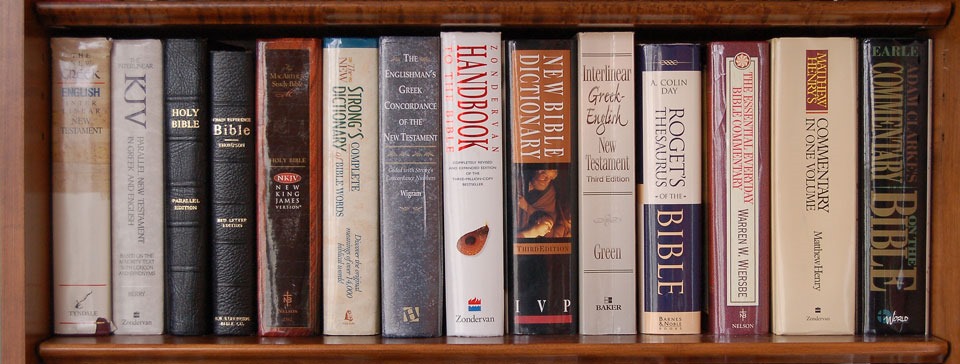
PRACTICAL BIBLE STUDY TOOLS

bible-study-960.6062528

Here are some practical resources and tools for understanding the bible better.

To listen to the sermon, click the play button:

To download, right click on the link (or do whatever you do on a Mac) and save it to your computer: Download Understanding the Bible Part 10

Understanding the Bible #10.

To close out our series on understanding the bible, I want to offer you some practical things that will help you understand and study the bible for yourself.

First, to really get a grasp on things, you need the right tools. Though a lot of the bible is easy to understand, bible scholarship is, in fact an ancient and scholarly discipline. You don’t need an advanced degree to get a lot out of the bible, but it really is worth a little time and effort on your part to understand it better. In other words, if you are going to look at the bible as a primary source of wisdom and guidance for your life (and I highly recommend that you do; not only that, the first message in this series explains why you should consider doing so) you should take it seriously.

Start with a high-quality, understandable modern-English translation. I know about the King-James-Version-only people out there. I’m not trying to make anyone angry, but frankly the arguments for using the King James translation are short-sighted, ignorant, and mostly just plain wrong. The most “intellectual” sounding argument for the KJV is that it is based on a certain set of Greek Texts known as the Textus Receptus. The KJV-only crowd maintains that the other Greek Texts are corrupted by false-doctrine. I’ve already explained to you about the huge number of ancient copies of the New Testament in Greek (in part 3 of this series). The textual variants (also spoken of in part 3) are stunningly insignificant. In other words, there is not actually much difference between the textus recptus and what we call the “majority text” (which is the basis for most other bible translations). From time to time, when I’m studying the bible, I compare the two. This isn’t a comprehensive study, but I’ve found only two “significant” differences, and in both cases, it was proven long ago that the textus receptus was altered. Even so, those differences do not change any major doctrine.

Of course, all that is for the New Testament. The source-documents of the Old Testament is the same for virtually all bibles.

If the majority text was so different from the textus receptus, then long ago, two branches of Christianity would have developed, based upon the two different textual traditions. That hasn’t happened, because the only major difference between the King James Version (KJV) and modern English translations, is that the KJV has to be translated not only from Greek to English, but also from early 17th century English into modern English. In other words, the main difference is that the KJV isn’t very understandable to modern English speakers.

Sorry for the rant. To continue, I highly recommend the English Standard Version (ESV) and also the Holman Christian Standard Bible (HCSB). Both of them are highly accurate compared with the original Greek and Hebrew. The ESV renders the Greek and Hebrew a little more literally – as much like “word for word” as possible. The HCSB is also very accurate, but is willing to “bend” a little to make it more readable.

You can buy both of these bible versions online, or at many local bookstores or bookstore chains. You can also get them free with various bible apps or software programs. I highly recommend getting a study bible version of one of these translations. A study bible is a bible that has notes (usually on the lower half of the page) giving background and explanation about the verses you are reading. Study bibles are a very helpful tool when you are just getting started, and even as you learn more. I’ve placed a “Bible Study Resources” page into my Amazon a-store. Most of the resources I mention here are available for sale there, including the ESV Study Bible, the HSCB Apologetics Study Bible, and my standard from about 1986-2007, the Concordia Self-Study Bible. If you click through from here, the price will be the same as directly from Amazon, but I’ll get a few nickels for commission.

I have an inexpensive Android tablet, and on it, I use the free Olive Tree Bible Study app (I don’t get a commission for anything but the resources on my Amazon a-store. I’m just sharing resources that I think are good). Look it up in Google Play, or from your apple device. The link here will take you to their free Bible translations page, which includes my two favorite translations, the ESV and the HCSB. I paid extra to get the ESV Study Bible notes, to attach to whatever translation I’m reading in the app.

I also found a great web-based study bible, built on the HCSB, at https://www.mystudybible.com/

Many of you have asked about how to learn the cultural and historical background that is so important for understanding the bible. Certainly, blogs like this one, and reliable, solid preachers and teachers are a good place to start. I also recently found Fred Wright’s Manners and Customs of Bible Times as a free PDF download. You can right-click the link in the previous sentence, and download it. It’s a great historical/cultural resource. It was written in 1953, but all bible-times were before that, so it’s still accurate!

I also highly recommend Eerdmans’ Handbook to the Bible, which is easy to find in my a-store. I own the British version of this, which was given to me by my parents when I was thirteen years old. The information I learned from it is still helpful to me today, and I still occasionally use it as a reference. Zondervan’s Handbook to the Bible is the latest version of that, but I have not personally looked at it to see what they might have changed.

Another very helpful Bible Study tool in this day and age is a good computer program for Bible Study. Over the years, I have paid hundreds of dollars for various versions of three different programs (QuickVerse, PC Study Bible and Logos). However, three years ago I settled on a fourth, free program that is truly excellent: The Word. If you do end up using and appreciating The Word, I encourage you to donate something to the program’s creator Konstantinos Stergiou – I did (and I get nothing from this – I just think the guy deserves to be blessed for his amazing work, offered for free). The program may take a little while to learn, but it’s worth it. There are hundreds of free add-on resources you can use with The Word to enhance your Bible Study, and there are paid modules as well, if you are interested.

If you are staying “old school” and prefer physical books, I do recommend that you get a bible that includes both cross references, and a concordance in the back. A cross reference is like a footnote – it is a suggestion of other bible verses that talk about the same topic as the verse that is noted. You can learn a lot by following the cross references to other parts of the bible. This helps the bible to “explain itself,” so to speak. A concordance is a list of words that appear in the bible, and where. There are some stand-alone exhaustive concordances, but most study bibles have decent partial-concordances in the back. They are helpful for finding verses if you only remember a key word, or for helping you understand how certain words are used throughout scripture.

Come back to this sermon series from time to time – we’ve covered a lot of ground that should help you understand the bible better as you encounter parts of it that seem difficult.

All right, let’s say you have assembled your tools. You have a book on the historical and cultural background of the bible. You have a study bible, or bible app, with the ability to find cross references and search for specific words. Maybe you have a computer program, or a web-based bible-software program. Now what?

Let me give you simple way to get more out of your bible.

Remember, as you read, read it in context. Learn about the history and culture, as necessary. Pay attention to the genre. Check cross references. Remember to use the clear parts of the bible to help you understand what is not clear. Look up key words in a dictionary and concordance. And then do this: SPECK.

Look at the passage you want to study, and go through SPECK, one letter at time.

S – read the verses and see if there is a sin identified here. Is the Lord calling you to repent of it? Is he warning you to stay away from it?

P – read the verses again, this time looking for promises. Is the Lord speaking to you through a promise here? If you are ambitious, you can also look for prophecies (which also begin with “p”).

E – read the verses yet again, now looking for encouragement and exhortation. How does the Lord want to cheer you on through these verses? How is he calling you to keep going?

C – now read through your passage and see if there any commands to consider. Is the Lord asking you to respond to him in a certain way through these verses?

K – read a fifth time. Is there any information or knowledge that you have gained from these verses?

After you SPECK, I encourage you to write a short note/prayer to the Lord. Something simple like this:

Lord, as I read John 3:16-18, I see that sometimes I sin by not trusting you. But I also hear your promise that as I trust you, you save me. You don’t condemn me. Thank you for your mercy and grace! Increase my trust in you! Help me to trust you in these things that are going on in my life right now, as well as for eternal life. AMEN

Writing down your thoughts or prayers help to solidify God’s word to you in your mind and heart. If you do it regularly over time, later it becomes a source of encouragement and hope to go back and see how God has spoken to you throughout the years.

I hope this series has been of help you to you understanding where the bible came from, why we can trust it, and how to understand it. I’d love to hear your comments and questions.

~

I want to briefly make you aware of our situation. This ministry (Clear Bible) until recently was supported by our local church. However, we have had some changes there, and we are now a house church. Today, we have about 8 families. Our church cannot fully support me financially any longer.

 In contrast, about 430 people subscribe to this blog, and an additional 300 or so each week come and visit the site. In other words, by far, most of the people who benefit from this ministry are not part of our little church.

 I’m asking you internet readers/listeners to pray for us. Seriously, before you give any financial support, please give us some prayer support. I value that more than anything else. Pray for this ministry to touch lives. Pray also for financial provision for my family and me.

But then, as you pray, do ask the Lord if he wants you to give financially as well. Be assured, after a small fee to Paypal, 100% of your donations will go to help support my family and me in ministry. In turn, supporting this blog means that you are helping to bless more than 15,000 people each year who visit this blog.


Some of you may have noticed that I am also a novelist. Often, people have misconceptions about authors. Most of us, including me, make a part-time income through writing, and no more. In other words, we aren’t “raking it in” somewhere else. Now, we trust the Lord to provide, and I don’t want you to give out of guilt or fear. I just don’t want you to get the idea that your donations will only be an “extra” for us somehow.

 If most of our subscribers gave just five or ten dollars each month, (or even less, if everyone pitched in) we would be in good shape. It’s easy to set up a recurring donation when you click the Paypal donate button that is located on the right hand side of this page, down just a little ways.

 You could also send a check to:

New Joy Fellowship

625 Spring Creek Road

Lebanon, TN 37087

 Your check will be tax-deductible. Unfortunately, we cannot do the tax deductible option with the paypal donate button, however the money does go directly to support my family and me.

 Thank for your prayers, and your support!

WHAT IF JESUS DIDN’T SAY IT?

words in red

We tend to place a high value on Jesus’ words – the “words in red,” and we should. But we should place the same value on the entire New Testament. After all, the source is exactly the same.


To listen to the sermon, click the play button:

To download, right click on the link (or do whatever you do on a Mac) and save it to your computer: Download Understanding the Bible Part 9


Understanding the Bible #9.

As we’ve gone through this series, I’ve heard a few questions people have asked that I think are worth delving into. Recently, someone showed me a post on Facebook. The caption said: “What Jesus said about Homosexuality” Underneath it was…nothing. That’s accurate, in a technical sense, but not the complete story. For one thing, Jesus’ apostles did say some things about the subject, elsewhere in the New Testament. In any case, the point, presumably, is that Christians should not be saying anything about it, since Jesus didn’t. A similar issue was raised by an Albanian man that I spoke with in Corfu, Greece last fall. He argued that Jesus never claimed to be God – instead, that claim was made by the apostles, not Jesus himself.

Both of these arguments depend upon the same kind of faulty reasoning, and the same silly and inconsistent approach to the bible. The first part of it goes like this: “It’s supposed to be all about Jesus, right? So I’ll listen only to the words of Jesus. What the apostles wrote doesn’t matter.”

Let’s look at this by using another issue, one that is not controversial today. Here it is, another thing that is technically true: Jesus never said anything about slavery. Think about that for a moment. What does that mean? Did Jesus endorse slavery? Does that mean we Christians should not call slave-trading wrong and sinful?

Now, class it’s time to see if you’ve been paying attention. Does anyone remember where the New Testament came from? How is that we know what Jesus said in the first place? The apostles heard it, taught it, and wrote it down. To put it another way, it is the apostles who gave us the words of Jesus. If you don’t want to pay attention to what the apostles wrote, than you cannot pay attention to what Jesus said either, since we got that from the apostles.

Let’s look at it another way. Earlier in this series, we found a lot of evidence to suggest that the apostles wrote reliably and accurately about real historical events and situations, and also about Jesus and his teaching. There is no legitimate reason to accept the gospels, which were written by his apostles, but not the other writings of the other apostles. If you believe that the apostles correctly recorded that Jesus said, “Love your neighbor,” you have exactly the same reasons for believing that the apostles are passing on the teaching of Jesus when they tell us that slave-trading is evil (1 Timothy 1:10) – even though we cannot find Jesus directly saying so in the gospels.

To put it simply: the entire New Testament is the teaching of, and about Jesus. It all comes from the same source – the Holy Spirit, who inspired the apostles to remember and write. We know what Jesus said, because the apostles wrote it down. Although the letters of the New Testament are in a different form than the gospels, they are still the teachings of Jesus, passed on by the apostles. In other words, what Paul writes in Romans should be just as important to us as what Jesus says in the book of Mark.

There’s another thing. John makes it clear that his own gospel does contain every single word that Jesus ever said. The way he puts it, not even the other three gospels would suffice to write down everything Jesus did and said:

And there are also many other things that Jesus did, which, if they were written one by one, I suppose not even the world itself could contain the books that would be written. (John 21:25, HCSB)

Jesus told the apostles that the Holy Spirit would remind them of what he said, and make it clear to them, and also tell them other things that they need to know:

“I still have many things to tell you, but you can’t bear them now. When the Spirit of truth comes, He will guide you into all the truth. For He will not speak on His own, but He will speak whatever He hears. He will also declare to you what is to come. He will glorify Me, because He will take from what is Mine and declare it to you. Everything the Father has is Mine. This is why I told you that He takes from what is Mine and will declare it to you. (John 16:12-15, HCSB)

We believe, as Jesus said, that the Holy Spirit reminded the apostles what Jesus said, and also revealed other important truth to them, and guided them as they wrote it down. That applies, not just to the gospels, but to the entire New Testament. In this passage, Jesus himself says that after he leaves this world, the Spirit would guide them into truth that they had not yet received from him. So, if you don’t believe the Holy Spirit inspired Paul to write what Jesus thinks about slave-trading, why do you believe he inspired Luke to write that Jesus has concern for the poor?

The first answer to the person who claims that Jesus said nothing about a given topic is to see whether that topic shows up anywhere else in the New Testament. If it does, than you can be sure, it is the teaching of Jesus. Technically, it’s true that Matthew, Mark, Luke and John do not record any direct quotes of Jesus that use the word “slave-trader.” But Paul, inspired by the Holy Spirit to share the teaching of and about Jesus, does say something about it.

Some people will argue that Paul did not know Jesus personally, and so his letters are not the real teaching of Jesus. We went over all that in part #3 of this series. Paul claimed that Jesus appeared to him specially, quite some time after his resurrection, and opened his mind to know and understand the Good News (Gal 12:1-16; 1 Corinthians 15:8-10; 2 Corinthians 12:1-7). The other apostles, the ones who had actually known Jesus, affirmed that Paul was preaching and teaching the true message of Jesus (Gal 2:6-10; 2 Peter 3:15-16; Acts 9:22-30; 15:1-35). In fact, all throughout the book of Acts we have ample evidence that Paul was accepted early on as an apostle of Jesus, and his teaching was in accord with the rest of the apostles.

Let me say it again: the entire New Testament, including the letters of Paul, is the teaching of Jesus, passed on by the Holy Spirit, through the apostles. We have all sorts evidence to affirm this, and none to contradict it.

Saying “I only believe or follow the words in red [Jesus’ words],” is in fact, silly and illogical. The “words in red” came from the same place as the rest of the New Testament – the apostles. If you don’t believe the apostles were inspired by the Holy Spirit and the memory of Jesus’ teachings to write what they wrote in their letters, there is no reason to believe that they got the words of Jesus in the gospels correct either. Of course, I’ve already shared, earlier in the series, the many reasons I think the apostles got it all right.

This series has been here to answer questions you might have about the bible, or how to understand it. Because of that, I want to explore one more side of the “Jesus didn’t say anything about this…” question. Last week, in a small group meeting, I pointed out that Jesus never said anything about slavery. One of our excellent teenagers said, “Yeah, but doesn’t the golden rule kind of cover that?” In words, though he didn’t specifically talk about slavery, Jesus did say, “Do unto others as you would have them do unto you.” In other words, according to the teaching of Jesus, if you don’t think you’d like being a slave yourself, you shouldn’t make slaves of anyone else.

This is a great point. Jesus did not overtly condemn prostitution, child-pornography, or incest, either. But you don’t have to be a trained theologian to recognize that Jesus often said things that apply to a whole host of different situations. In Matthew 19:1-6. Jesus made a broad, sweeping statement about human sexual relationships. He said that God created sex for marriage between a man and a woman. Any kind of sex outside of the marriage relationship is called, in Greek, “porneia.” The most popular English bibles translate this “sexual immorality,” or “immorality.” Jesus didn’t name all the possibilities included in “sexual immorality,” but he made it clear that he meant anything sexual outside of one-woman/one man marriage. In Matthew 15:19, among other places, he makes it clear that all sexual immorality creates a problem with God’s moral law. Now, Jesus fulfilled the moral law on our behalf, and if we trust him, we are forgiven. If we really do trust him, he is now living inside us, and he doesn’t want our lives to be used in that way anymore – it goes against his Holy nature, and he has placed that Holy nature inside of us. Therefore, as Jesus-followers, we are supposed to stop it if we’ve done it, and stay away from it from now on. If we need help to do so, we can receive that help from the Holy Spirit and from other believers. The rest of the New Testament affirms all this.

The point is not to condemn anyone who has sinned in this way. The point is, Jesus did in fact teach about all human sexuality, even if he didn’t specifically name certain sins. If we claim to follow him, we should at least be heading in the direction he points, even if we follow imperfectly.

This turns out be the case concerning most of the other things that Jesus did not specifically talk about. And, as we have said, even when Jesus didn’t say something specifically in one of the gospels, we have the rest of the New Testament which also reliably passes on the teaching of and about Jesus.

~

A completely different question was raised in one our discussions in our house-church. Some people wanted to know more about what we call “apocalyptic prophecy.” I mentioned this kind of scripture briefly in part six of the series. We’ll go over it again here with a little more depth because some folks had further questions about it, and truthfully, apocalyptic prophecy represents one of the most misunderstood and misused parts of the bible.

Apocalyptic prophecy is fairly rare in the bible. Most of it is found in parts of Ezekiel, Daniel, Zechariah and revelation (and a few other chapters, scattered throughout some of the other prophetic books). This genre features vivid imagery, key numbers and tends to be extremely confusing. Apocalyptic often reads like someone’s strange dream. The apocalyptic parts of the bible often appear to be talking about the “end times” (the period of history right before the end of the world), and they are frequently used by cults to come up with all sorts of weird doctrines.

We have to read it in context. Particularly important is to understand the historical and cultural context in which the prophet lived. We need to understand that the language of apocalyptic is definitely not literal, or teaching or even narrative. It is poetic and even mystical. We need to hold firmly to the clear and easily understandable portions of the bible, and use those to aid our understanding of apocalyptic prophecy. With apocalyptic, I am even willing say that we should be open to the possibility that we won’t completely clearly understand what is meant. We should never use apocalyptic in a way that contradicts what is already clear in different parts of the bible.

One of the worst abuses of apocalyptic prophecy is to use it as kind of a road-map, or detailed timeline of the end-times. It is most definitely not intended to be anything like that. Concerning the end of the world, and his return, Jesus said,

“Now concerning that day and hour no one knows — neither the angels in heaven, nor the Son — except the Father only. (Matt 24:36, HCSB)

That is clear. Therefore, we should not interpret apocalyptic prophecy as a definitive roadmap to the end times. If it clearly gave us a timeline to the return of Jesus and the end of the old world, then Jesus would have been wrong in saying that no one can know for sure when it will be. Apocalyptic prophecy may tell us the types of things that will happening, but it certainly can’t be specific enough so that people will then be able to say “Aha! According to Revelation, the world will definitely end within the next three to five years!”

The main apocalyptic parts of the bible were prophesied to God’s people when they were severely oppressed by powerful foreign empires. Ezekiel and Daniel spoke to those who lived as captives under the Babylonians, Persians and Medes. Zechariah, not long after, prophesied to people who were trying to re-establish a colony of Jews in Israel, surrounded by powerful and lawless nations around them. John wrote Revelation at a time when the Roman Emperor, Domitian, pursued the active persecution of Christians. Domitian was aided in this by some Jewish communities who saw Christianity as blasphemy, and wanted it destroyed.

Because virtually all apocalyptic prophecy was written in similar historical circumstances, there are certain features that we can learn about all of it. Because it was written to people under foreign oppression, it contains images and pictures that would have been understandable to those who heard them, but almost incomprehensible to outsiders. In other words, apocalyptic was a kind of code language to people in persecution. The code is not about some secret key to the end-times – what the code hides are words of judgment upon the oppressors, and encouragement and hope for the oppressed.

The problem is that we today, are mostly outsiders. It’s hard for us to understand the significance of the weird visions and dreams of apocalyptic literature. The first step in understanding is to realize that we do not understand, and we need to investigate a lot more before we can see these prophecies the same way the original hearers understood them.

But here is one thing that can help: The main message of the apocalyptic prophecies is consistently one of hope; God has not forgotten his people, and he will take steps to deliver them and to bring justice against those who have persecuted them. He is still active in history, he still has plans, and he intends to carry them out.

We get caught up in what, specifically, those plans are. But the point is more that God has them, than that we are supposed to know them in great detail. Take, for example, the book of Revelation. It was written to Christians who were suffering under the oppression Roman government, which was aided by angry Jewish communities. When we look at the book from a big-picture perspective, we see that again and again, it repeats these messages:

  • · The Lord knows that you are suffering, and he hasn’t forgotten you.
  • · Those who oppress you will be judged for what they have done
  • · God has a plan to redeem and save you
  • · God hasn’t stopped acting in history. He has plans to bring human history to the place where he wants it to be
  • · Death, and the end of history are things for believers to look forward to – God’s plans for you are wonderful, and go far beyond this life on our present earth.

These are the main things we are supposed to get from Revelation. Often we fail to get these wonderful messages of grace, because we are too caught up in things like trying to figure out which individual the anti-Christ is. But all we really need to know is that the anti-Christ is bad, and God has plans for defeating him and protecting you from him. While he does that, you will not be forgotten, and the Lord will be with you in your trials.

Let me try and give you an example of understanding apocalyptic prophecy. Revelation 13:1-10 describes a “beast.” I’m almost certain that the first readers of Revelation would have understood that the “beast” was a code word for the Roman Empire and its emperor, Domitian. Domitian demanded that everyone in the Roman world worship the Emperor as a divine being. He severely persecuted everyone who refused to do so (Jews were exempted from this, but not Christians). The first Christians to read Revelation would easily have identified what John’s vision described.

But in this day and age, the same message could apply to Christians who suffer under Islamic persecution. In such places, Muslims demand that everyone must confess: “Allah is God, and Mohammed is his Prophet.” Like the beast of Revelation 13, Islam has authority in many places to blaspheme (according to Christians) and to persecute those who do not agree with them or worship as Muslims.

In this way, we can see that apocalyptic prophecy can remain relevant and encouraging to Christians throughout history. My advice is to consider apocalyptic prophecy in this way, and abandon any silly attempts to use it as a timeline of the end times.

Well, we’ve covered a lot of ground this time. Hopefully, it all helps as we learn to understand the bible.

GRACE FROM A STUPID LAW

silly-string-illegal-law-parade

Even the dumbest-seeming parts of the bible can turn out to have a profound message of grace. Instead of dismissing them, we should pray for help in understanding them, and then apply what we know about how to understand the bible.

To listen to the sermon, click the play button:

To download, right click on the link (or do whatever you do on a Mac) and save it to your computer: Download Understanding the Bible Part 8


Understanding the Bible #8

We recently looked at how to interpret the laws we find in the bible. To help us solidify our understanding of that, let’s put together what we have learned, and look at some Old Testament laws.

In the very first part of this series, I mentioned a verse that at first seems offensive and barbaric. Deuteronomy 22:28-29 requires that when a virgin (who is not betrothed to anyone) is raped, her rapist should pay her family 50 shekels.

Not long ago I read a blog that used this verse as an excuse to avoid the moral laws contained in the bible. The Blogger’s basic point was this: “If we don’t want to obey the bible and deal with rapists in this way, what right do we have to insist that people should obey the bible about things like sexual purity, or honesty, or loving our neighbor?”

It’s kind of a cheap shot, an easy way to call any Christian a hypocrite, because nobody literally follows all those old laws anymore. So, if insist that the bible teaches that you should love your neighbor, you’re a hypocrite unless you try to deal with rapists by having them pay their victim’s family 50 shekels. On the surface, it is a nifty argument, but it is also ignorant and dishonest.

If you haven’t read the rest of this series, I strongly encourage you to go back and read them all. That will help you tremendously in understanding how we approach such things. For those who have read, you know that there are three kinds of laws. This law about rapists was clearly about crime and punishment in the ancient nation of Israel – what we call a civil law. So right away, we should be aware that we cannot apply it directly and literally. In fact, to do so, might violate the laws of the country in which you live. This law was meant to be directly applied to ancient Israel. In addition, we know that this law (like all of the Old Testament laws) was fulfilled spiritually in Jesus.

But there is more. The New Testament tells us that everything that was written in the bible – even the Old Testament laws – was written for our instruction. We don’t obey it as we would obey the civil laws of the country in which we live. We trust that Jesus has fulfilled the spiritual purpose for that law. But we also believe and understand that this law contains some underlying principle or teaching that will instruct, inform or encourage us as we seek to follow Jesus. In other words, we don’t simply throw it out. We still see this law as valid – in the sense that it must teach us something true and worthwhile, even now.

At first glance, everything about Deuteronomy 22:28-29 seems repulsive to 21st Century Western culture. Unless we start off with the belief that the Holy Spirit can teach us something worthwhile here, we will simply ignore it, or wish it wasn’t in the bible. But if we go forward believing that we can learn something, we will be surprised and rewarded.

Let’s apply what we have learned. First, we must read it in context. The blogger I mentioned only said that the rapist must pay the parents of the victim fifty shekels. He did not consider the whole context. Deuteronomy chapters 21 and 22 contain many civil laws for ancient Israel. Many of the laws in this section of the bible are concerned with situations where there are no witnesses to establish exactly what happened. Deuteronomy 21:1-9 is about unsolved murders. 22:13-21 is about a he-said/she-said situation, where a husband claims his betrothed bride was unfaithful to him. 22:23-27 is about rape. If a woman claims it was rape, and yet it occurred with people around and she didn’t cry for help, then it may have been consensual. On other hand, when a woman claims she was raped where there were no people to hear her cry for help, she is to be believed. That leads us to the verses we are looking at:

“If a man meets a virgin who is not betrothed, and seizes her and lies with her, and they are found, then the man who lay with her shall give to the father of the young woman fifty shekels of silver, and she shall be his wife, because he has violated her. He may not divorce her all his days. (Deut 22:28-29, ESV2011)

First, we see that the situation is ambiguous. The “meeting” may refer to meeting in open country, where there are no witnesses to verify what happened. In other words, this may or not be consensual. There’s something else important here. The woman who is raped is in specific circumstance – she is a virgin, and she is not yet betrothed to anyone. This is important, as we move on. Notice this also: the punishment is not merely that the rapist pay a fine – he must also marry the young woman, and he may never divorce her.

Now, again, at first blush, this addition of marriage does not seem to help. In fact, it seems like it makes it even worse. However, as we have learned, let’s consider the historical and cultural context of this law.

Women in the ancient Middle East generally lived in situations that we consider terrible today. Since most men are physically stronger than most women, men generally did what they wanted with and to women. To save her from abuse and poverty, in those days, a woman needed a man who would protect her from other men, and provide her with food and shelter. Without such a protector-provider, her future would be very bleak indeed.

Women were expected to be virgins when they were married (which was usually between ages 13-18). No self-respecting man would marry a previously unmarried girl unless she was a virgin. Therefore, a young woman who had been raped would be considered unmarriageable – no one would ever be interested in her. A betrothed woman who was raped, was considered as if she was already married. The rape would not end the betrothal, or stop the marriage. But a young woman who was raped, and not betrothed, would probably never find a husband willing to marry her. As a result she would never have the protection and provision that a husband offered. She would become an object of abuse and scorn for any man who wanted to mistreat her. Her future would most likely be in prostitution and begging.

We need to remember also that virtually all marriages were arranged. Many people found that love could grow and blossom in an arranged marriage, but almost no one expected to start out by loving the person they would marry. First came marriage, then came love.

So what it all amounts to is this: A young woman who was raped before betrothal had an incredibly bleak future. She would be an outcast, abused and forgotten for the rest of her days. Instead of allowing this to happen, God, through Moses commanded that such a young woman must be protected and provided for – for the rest of her life. That is what marriage did for women in those days. By marrying her, without the possibility of divorcing her, her rapist became committed to providing for her and protecting for her entire life. He was on the hook for her bills and her reputation until he died. His payment was not just fifty-shekels – it was a lifetime of providing for his victim’s needs.

Now, I know, it sounds horrible that she would have to live with her rapist. But remember there is ambiguity here – the rape may not have actually been a rape. In other words, she might have been a willing lover, in which case she would probably be happy to be with the man in question. The law prevented the man from using her, and then casting her aside. And even if it was rape, the young woman would not have expected to love her husband anyway – certainly not at first. Rape is a tragedy, and this certainly was not a perfect solution. But it was a solution that provided extensive ongoing care and protection for the rape victim. It kept her from the almost certain fate of being abused by other men. It made the rapist responsible for the life he would have ruined, and there was no way he could get out of it by divorcing her.

Before we dismiss this as barbaric, compare it to our own laws about rape.

Today, when a man rapes a woman and is convicted, he goes to prison. The average sentence served by a convicted rapist is about five years. While he is in prison all of his physical needs are provided for – food, shelter, clothing and medical care. And yet there is no law in our current system that requires the rapist to provide any of these things to the victim. We focus exclusively on locking up the perpetrator. The victim is on her own. Now of course, there are programs and groups for rape victims, but they are not part of the legal system, and they are optional, and they are not paid for by the people who commit the crime.

Who are the barbarians now?

This crazy Old Testament law about rape, the one we think is so terrible, actually contains a powerful message: look after those who have been hurt; provide for the one who has been deprived of a future. Care for the victim, and make the criminal undertake all of the costs.

Shouldn’t we be more concerned about helping victims than we are? Shouldn’t we make sure that we take care of the most vulnerable people in our society and protect them from abuse?

You see, when we understand this law, we see that it reveals God’s concern for the vulnerable, his desire to provide for those who need provision, and protect those who have no protection. Those are not messages that we should scorn, or ignore, or throw out.

So, to answer the blogger, we still see this law as valid. Don’t you think it is still appropriate for Christians to protect and provide for those who, through no fault of their own, are needy and vulnerable? We aren’t hypocrites. We still value this, and every law. We value and seek to apply the principle, the reason behind the law. When we find that reason, we still seek to apply it appropriately to our present times.

I hope you care coming to see the incredible value of the bible as we go through this series. Even a “stupid law,” such as the one from Deuteronomy 22:28-29, turns out to be an expression of God’s grace and care.